


If you’re looking for a long-distance cycle route steeped in history, culture and ancient tradition, it’s time to consider Portugal’s ‘Route 66’: the Portugal N2 cycle route.
National Road N2 offers some of the best road cycling in Portugal. It’s one of the most varied and best cycling routes in Europe. This 739-kilometre route traverses the length of the country, from its mountainous north in Trás-os-Montes, to the verdant valleys of the south in the Barrocal Algarve.
Portugal’s N2 road crosses four mountain ranges, 11 rivers, and 35 municipalities, with a menu of local gastronomical delights and world-famous wine to fuel your journey of rich Roman heritage.
Pedro Pedrosa, a keen cyclist and Portugal A2Z Walking and Biking Co-Founder, has in-depth knowledge about Portugal’s cycling routes. Here, he shares his tips for how to cycle the N2 road, and why this life-affirming journey is one to add to the bucket list.

Pedro Pedrosa is a keen cyclist and co-founder of Portugal A2Z Walking and Biking.
He says "Portugal A2Z was founded in 2006 and is passionate about bringing exceptional experiences to our clients. We offer you authentic experiences in the most exclusive places in Portugal taking you to the most historic and wild landscapes in the country."

We love to introduce our community to cycling businesses, destinations and ideas that we think are genuinely interesting. Portugal A2Z Walking and Biking caught our attention because of its focus on cycling in Portugal, which felt like a natural fit for Epic Road Rides and our readers. We were therefore pleased to work with the Portugal A2Z Walking and Biking team on this article.
Portugal A2Z Walking and Biking paid for this advertisement feature. Our decision to collaborate reflects our view that the brand is relevant to our readers; it is not a formal approval, audit or guarantee of its services. Unless we expressly say otherwise, we have not personally taken the trip described or independently verified information supplied by Portugal A2Z Walking and Biking.
As with any travel purchase, please check the latest trip details, terms and customer protections directly with Portugal A2Z Walking and Biking before booking. Any booking is made with Portugal A2Z Walking and Biking, not Epic Road Rides.
To get a feel for what cycling the N2 route is like, take a look at this short video:
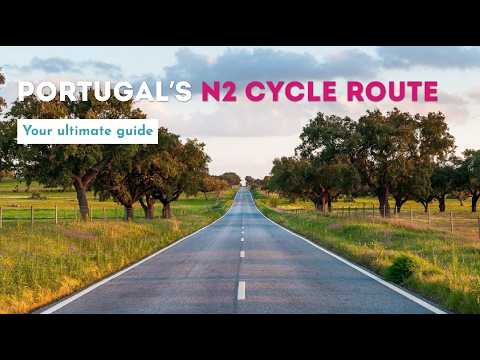 There's a Youtube video here!
I'm fine with Youtube cookies
1. Why cycle the N2 in Portugal?
Cycling the 739-kilometre N2 route is a unique way to discover the historic and diverse heartland of Portugal. It’s one of the only roads in the world that spans a whole country in its entirety. It runs through Portugal “end to end”, crossing the mountainous regions in the north and ends at the gorgeous beaches in the south.
Born from the foundations of ancient Roman Roads that once crossed the Iberian province of Lusitania, its ancient roots have earned it the title of the ‘most mythical road in the country’. It holds a treasure trove of history to unearth: Roman spas in Chaves, the 2,000 year old UNESCO World Heritage site of the Alto Douro Wine Region and Faro’s ancient city walls to name only a few.
Add to that, beautiful landscapes with countless panoramic views, big climbs and rewarding, sweeping descents, plus plenty of bike lanes on the way – it really is one of the best long distance bike rides in Europe!
2. Give us a feel for what each day on an N2 bike trip is like.
Cycling the N2 can take between 5 and 12 days, depending on the distance you’d like to cover each day, how much time you want to spend exploring and how challenging you want your experience to be.
There are many things to explore and no two days are the same as the landscape is constantly changing. You’ll pass through cities, past castles, churches, ancient villages and small towns, over some of the country’s most important rivers and five mountain ranges (while passing alongside five others).
On top of that you cycle through many wine production regions and 18 Protected Areas and sites integrated in the Natura 2000 Network, including a UNESCO World Heritage site in the Douro Valley.
Here’s a flavour of what to expect on our 11-day tour, which features 8 days of cycling:
Day 1 and 2: Arrive in Portugal and transfer to Chaves
Most guests arrive by airplane in the enchanting city of Porto. We will welcome you there and transfer you to the city center.
On the second day, we transfer to Chaves, where the adventure begins. You’ll have time to explore this historic city, including its Roman bridge of Trajan and thermal baths, before the big start.

Zero kilometre marker in Chaves (photo credit: Ride Across Portugal)
Day 3: Cycling Chaves to Régua (95 kilometres)
Start your epic ride at the zero-kilometre milestone in Chaves. Ride the mountain roads of the Trás-os-Montes region and descend into the stunning Douro Valley. This historic Alto Douro wine region is a UNESCO World Heritage site, offering twisted, contoured landscapes and over 2,000 years of winemaking history. You finish the day in Peso da Régua, right by the Douro River.


Day 4: Cycling Régua to Viseu (85 kilometres)
Prepare for a challenging start! Leaving the Douro River behind, you immediately begin the ascent towards the historical town of Lamego. The climbing continues from there until you conquer the Mezio summit at 1,000 metres of elevation. After cresting the “Giant of the North”, you will ride towards Castro Daire before reaching Viseu, a city steeped in sacred art and religious architecture.
Day 5: Cycling Viseu to Aguieira Lake (71 kilometres)
This is a shorter cycling day, allowing for some recovery. You will cycle along the Ecopista do Dão, a beautiful greenway built on an old railway line running parallel to the N2. It offers a traffic-free route through the breathtaking landscapes of the Dão river.
Day 6: Cycling Aguieira to Pedrógão (90 kilometres)
Follow the Mondego River before entering the spectacular Lousã mountain range. This stage rewards you with panoramic mountain views and rich biodiversity as you tackle some challenging climbs. You will pass through Pedrógão Grande and finish near the Cabril Dam, one of the biggest dams in Portugal.
Day 7: Cycling Pedrógão to Montargil (125 kilometres)
Follow the Zêzere River as you leave the northern and central mountains behind to enter the flatter landscapes of the Alentejo. Tracing the route of the Tejo River towards Montargil, you’ll cycle through tranquil countryside and whitewashed villages. The beautiful cork trees begin to dominate the scenery here and will accompany you until the end of the trip.


Day 8: Cycling Montargil to Odivelas (Alentejo) (120 kilometres)
After the mountains of previous days, enjoy the flattest section of the N2 route. Expect kilometres of inviting, straight roads and easier terrain. Along the way, pay a visit to Montemor-o-Novo to discover its ancient castle and historical monuments before ending the day in Odivelas.
Day 9: Cycling Odivelas to Almodôvar (80 kilometres)
Ride through the endless tranquility of the Baixo Alentejo. Keep an eye out for wildlife such as owls, red kites, and storks. After passing the mining village of Aljustrel, you reach the plains of Castro Verde, a UNESCO Biosphere Reserve famous for its birdlife, including the Iberian Imperial Eagle.

The 670 kilometre marker! (photo credit: Portugal A2Z Walking & Biking)
Day 10: Cycling Almodôvar to Faro (80 kilometres)
Take in the ever-changing landscape en route to the Algarve for your final challenge. You will climb the Caldeirão mountain range, passing the iconic Barranco do Velho. Enjoy the sweeping descent and the pure beauty of the heritage road as you sail into Faro and its historic marina, completing your journey from north to south!

Arrival in the Algarve! (photo credit: Ride Across Portugal)
Day 11: Transfer to Faro Airport
When all the cycling is done, it’s time to return home with incredible memories, a heart full of joy and wonder and hopefully not too many sore muscles. We’ll take you to Faro airport.
Sponsor Message
Cycle Portugal's N2 with Portugal A2Z
Like what you're reading?
To find out more about riding the N2 with the team at Portugal A2Z, head to Portugal A2Z's website.
Note: Portugal A2Z offer fixed date departures for their supported N2 cycle tour on 17 May and 20 September 2025. Outside of those dates, they are delighted to provide groups of eight or more with their own private N2 tour departure (supported or guided). Get in touch with Portugal A2Z to find out more!
Got a question for Portugal A2Z Walking and Biking?
Fill out this form and we will pass it to Portugal A2Z Walking and Biking who aim to reply (within 24 hours wherever they can!)
3. What’s the best time of year to attempt Portugal’s end to end cycle ride?
While the N2 is open all year round, choosing the right season can make the difference between a good trip and an unforgettable one. Portugal has a diverse climate, and because this route covers the entire length of the country, you will experience significant changes in temperature and weather patterns from North to South.
The “Golden Window”: Spring and Autumn
Based on our years of experience running this tour, the absolute best times to cycle the N2 are May to June and September to October.
- Spring (May/June): The countryside is incredibly green, and the wildflowers are in full bloom, especially in the Alentejo. The rivers are full, and the temperatures are perfect for long days in the saddle.
- Autumn (September/October): This is harvest season! Riding through the Douro Valley during the grape harvest (vindimas) is a magical experience, with the vineyards turning beautiful shades of gold and russet. The weather is generally stable and warm, without the scorching heat of mid-summer.
Why we choose these dates
At Portugal A2Z, we schedule our fixed-departure supported tours precisely during these prime months (typically May and September) to ensure riders get the best balance of weather, scenery, and daylight hours.
Summer and Winter considerations
- Summer: While the north is pleasant, the Alentejo and Algarve regions can get extremely hot in July and August, often exceeding 35°C (95°F). If you choose to ride in summer, early starts are essential.
- Winter: The south remains mild and sunny, but be prepared for rain and colder temperatures in the northern mountains and the Trás-os-Montes region.
4. How fit do you have to be to cycle the N2?
Because the N2 is entirely paved, a road bike is the undisputed king of this route. The surface quality is generally good, allowing for fast rolling, but the terrain demands specific choices to ensure you enjoy the 739 kilometers from start to finish.
The Bike: Carbon and Disc Brakes
We strongly recommend a lightweight carbon road bike equipped with hydraulic disc brakes. You will be tackling significant elevation gains in the North (like the Mezio and Lousã climbs), followed by long, sweeping descents where confident braking is essential. At Portugal A2Z, our fleet consists of high-performance carbon frames designed for endurance, with upgrade options for electronic shifting (Di2) to ensure precise gear changes even under load.
The “Secret Weapon”: E-Road Bikes
Don’t let the mountains intimidate you. If you want to keep up with faster friends or simply enjoy the views without the suffering on the steeper gradients, an E-Road bike is a game-changer. We offer lightweight electric road bikes (with systems like the Bosch SX) that look and feel like a traditional road bike but give you that extra smooth push when the road points to the sky.
Gearing: Save your legs!
Do not underestimate the accumulated fatigue of several days of riding. We recommend a “climbing friendly” cassette paired with a compact crankset. You will thank us when you are spinning comfortably up the Serra do Caldeirão on Day 10!
Clothing: Be ready for everything
Since you are crossing the country from North to South, versatility is key:
- Layering: Bring a lightweight rain jacket and arm warmers for the cooler mornings in the mountains.
- Heat Management: For the Alentejo plains, lightweight, breathable jerseys are essential.
- Safety: While the N2 is safe, we always recommend running daytime rear lights for visibility, especially in shady forest sections or tunnels.
A2Z Support
If you ride with us, we take care of the logistics. We provide 2 water bottles and an A2Z Jersey, plus our support van is always nearby with mechanical assistance, so you can focus purely on the ride.


5. What are the best cycling climbs of the N2?
The best cycling climbs of the N2 route in Portugal are concentrated in the mountain ranges of the north and central regions, providing both a physical challenge and rewarding views.
The Mezio Summit (The Giant of the North)
The longest and most iconic climb of the entire adventure begins immediately after leaving Peso da Régua (Day 4). Prepare yourself for a continuous ascent as you leave the Douro River behind, climbing approximately 30 kilometres until you reach the Mezio summit. At 1,000 metres of elevation, this is one of the highest points of the route, marking the transition from the Douro Valley into the Beira Alta region.
The Lousã Mountain Range
In the centre of Portugal (Day 6), the segment between Aguieira and Pedrógão presents a different type of challenge. As you enter the Lousã mountain range, you will encounter two of the hardest climbs on the N2. These roads are famous for their rich biodiversity and panoramic views over the Zêzere River valley, rewarding your effort with spectacular scenery before you reach the Cabril Dam.
The Caldeirão Range (The Final Challenge)
Just when you think the climbing is over, the Algarve welcomes you with one last test (Day 10). The climb up the Caldeirão mountain range to Barranco do Velho is the final hurdle before the coast. It is a beautiful, winding road through cork oak forests that signifies the gateway to the south, followed by a well-deserved descent all the way to Faro.
6. Where are the flatter areas along the N2?
After conquering the mountain ranges of the North and Center, your legs will welcome the flatter terrain of the Alentejo region. The transition begins as you follow the Zêzere River (Day 7) and notice the landscape changing: mountains give way to rolling hills, and pine forests are replaced by cork oaks and olive groves.
The “Recovery” Zone: Montargil to Odivelas
The truest “recovery” section regarding elevation — though usually a longer day in distance — occurs between Montargil and Odivelas (Day 8). This is widely considered the flattest section of the entire N2. Here, you will find long, straight roads that allow you to find a steady rhythm. It’s the perfect opportunity to relax your climbing muscles and enjoy the tranquility of the countryside, passing through whitewashed villages and historical stops like Montemor-o-Novo.
The Castro Verde Plains
Continuing south towards Almodôvar (Day 9), you will ride through the Castro Verde plains. This area is a UNESCO Biosphere Reserve and offers gentle, rolling terrain. It is a haven for birdwatching (look out for the Great Bustard or the Iberian Imperial Eagle) and serves as a peaceful mental and physical warm-up before you tackle the final mountain range of the Algarve.
7. What’s your favourite part of the N2 cycling route – and why?
There are so many fascinating parts along this historic and beautiful road, it’s difficult to choose!
Douro Valley
One place that always stands out with riders is the Douro Valley, which we ride through on day two of our seven day N2 cycling tour.
The winding Douro River, the verdant slopes of its valley, with small villages and vineyards in the twisted contours of the Alto Douro Wine Region with its UNESCO World Heritage status, make it a really spectacular place to ride.
Plus, the delicious local cuisine in this region is one of the most important treasures, with all of the typical dishes made with locally cultivated products.
Greenway alongside the N2
Another favourite part of the N2 route is in the centre region, between Viseu and Santa Comba Dão (which also includes the district of Aveiro), where we can take the option to divert off the N2 and cycle on a stunning greenway built on disused railway lines.
The Ecopista do Dão is 49 kilometres long and runs along the banks of the River Dão before leaving the river to take in views of the mountains and neighbouring vineyards.
It is an easy ride as the greenway is flat with no climbs, and is completely traffic free, so you can sit back and enjoy the views.


Sponsor Message
Cycle Portugal's N2 with Portugal A2Z
Like what you're reading?
To find out more about riding the N2 with the team at Portugal A2Z, head to Portugal A2Z's website.
Note: Portugal A2Z offer fixed date departures for their supported N2 cycle tour on 17 May and 20 September 2025. Outside of those dates, they are delighted to provide groups of eight or more with their own private N2 tour departure (supported or guided). Get in touch with Portugal A2Z to find out more!
Got a question for Portugal A2Z Walking and Biking?
Fill out this form and we will pass it to Portugal A2Z Walking and Biking who aim to reply (within 24 hours wherever they can!)
8. What is there to see along the N2 route?
You’ll experience the diversity, history and cultural heritage of an entire country when riding Portugal’s N2 route.
Discover the thermal baths and Roman bridge of Trajan in Chaves, the 2,000-year-old Douro Valley wine making region and its Museum, vineyards and fantastic food. There’s also the Cabril Dam in Pedrógão Grande, one of Portugal’s biggest dams, gothic churches and ancient castles.
Wildlife enthusiasts will also appreciate the chance to see endangered wildlife such as the Iberian Imperial eagle, in the gorgeous plains of Castro Verde, with its UNESCO Biosphere Reserve.
You’ll also discover the kindness from local communities who live and work along the N2 as they welcome you into their world.
It’s an unforgettable journey of discovery into the heartland of Portugal and you can never see everything at once, so we see many riders returning for more on our Portugal cycle tours.

Crossing Alcacovas (photo credit: Portugal A2Z Walking & Biking)
9. Self-supported vs supported N2 trip?
After you’ve decided when to do your N2 cycling trip in Portugal (more on that above), the next question is how quickly you want to ride it (versus spend more time and really explore it).
After that, it’s time to consider whether a self-guided, guided or a supported tour is best for you.
Self-guided tours
Self-guided cycling in Portugal is ideal if you’re looking to be flexible and customise your N2 experience.
A self-guided N2 cycling tour can be completed over as many days as you would like and features a loose daily itinerary with an N2 route map and destination accommodation for you to reach.
On a self-guided tour you manage your own time and can be flexible on your journey, choosing which places you’ll visit along the way.
Guided tours
Guided cycling tours in Portugal include a more structured daily itinerary, with guided activities discovering the ancient traditions, local myths, and unique stories that the N2 route has to offer.
A local guide with both professional training and exciting personal experiences will take you to some of must-see attractions on the route. As well as taking the pressure off the travel and planning process, guided cycling tours are also a great opportunity to meet other travellers and locals.
On our guided cycling tours, all equipment and meals are taken care of by the travel company team, so you can just ride your bike and enjoy the experience without any responsibilities.
If you would like to find out more about a supported N2 cycling tour with A2Z Portugal, read more about our N2 tours. Note that this is for a supported trip but we are happy to provide a guide for an additional fee.
Supported tours
Supported cycling tours are a hybrid of self-guided and guided options.
You get the flexibility and customisation in planning your trip, but with support along the route from a support van as well as services like daily briefings.
These are a perfect option for those looking for freedom to plan their own awesome trip, but the security of knowing all the logistics are taken care of.
If you would like to find out more about a supported N2 cycling tour with A2Z Portugal, read more about our N2 tours. In 2026, Portugal A2Z are running fixed date departures that anyone can join. Outside of those dates, we also offer this service for groups of eight or more. Get in touch with Portugal A2Z to find out more!


10. What is the N2 passport?
The N2 passport is a pocket guide that’s used to collect stamps along the N2 route.
It’s a fun way to add something extra to your journey, bringing a host of new experiences and interactions with local businesses and communities in each of the 35 municipalities crossed by the N2 road.
It was created by the Association of Municipalities of the National Road Route 2 (AMREN2) and you can pick up your passport from a Tourist Information Centre to begin your extra adventure along the N2. The tourist office in Chaves can be found at Terreiro da Cavalaria if you’re starting your ride there.
It’s worth pointing out that in a few cases some of the destinations are up to 30 kilometres off the main N2 route, so you’ll be adding distance onto your ride to collect a stamp. However, the warm welcome of the people you’ll meet and extra experiences you’ll have on your epic ride will make it all the more worthwhile!
11. Are there any books about cycling the N2?
You can find out more about cycling the N2 in this comprehensive travel guide, titled “Foge comigo”.
This book features detailed information about the N2 road and everything you can find along it. You can buy it via that link and also at some tourist offices and local establishments along the N2 (e.g. accommodation, restaurants and shops selling regional products). It is available in Portuguese and English.
A new, pocket-sized version for cyclists is due to be released with suggestions of quieter alternatives to some of the busier sections of the road.
Sponsor Message
Cycle Portugal's N2 with Portugal A2Z
Like what you're reading?
To find out more about riding the N2 with the team at Portugal A2Z, head to Portugal A2Z's website.
Note: Portugal A2Z offer fixed date departures for their supported N2 cycle tour on 17 May and 20 September 2025. Outside of those dates, they are delighted to provide groups of eight or more with their own private N2 tour departure (supported or guided). Get in touch with Portugal A2Z to find out more!
Got a question for Portugal A2Z Walking and Biking?
Fill out this form and we will pass it to Portugal A2Z Walking and Biking who aim to reply (within 24 hours wherever they can!)
12. What are your best tips for people cycling in Portugal/cycling the N2 for the first time?
Weather
Be prepared for different climate conditions and hot and cold weather. The ever-changing landscapes bring a host of different temperatures so being prepared will pay off in the long run (or ride)!
Safety
We are often asked “Is the N2 safe?”.
We say, a (conditional) yes. Of course, no road is ever completely safe when it’s an open road that anyone may use. In the case of the N2, it’s also very long so there will always be some sections that are more busy than others. You need to take all the usual precautions – for example we recommend cycling safely, using lights in case of reduced visibility and wearing visible clothing.
But relatively speaking, the N2 is a pretty quiet road that we find our customers just love cycling.
Restaurants and places to stay
There are plenty of cycling friendly cafes and restaurants along the N2 route, and if you’re staying overnight along the route, many hotels have safe cycle storage.
Bike shops
Along the way when passing the cities, towns and villages there are plenty of bike shops with repair services. Of course, when customers travel with us we will also be on hand to help and advise if there are any mechanical problems!
Support
If you’re doing a DIY trip, research the bike shops along the route and make sure you know how to get to them if you need to take a pit stop en route.

An N2 sign (photo credit: Portugal A2Z Walking & Biking)
Food
There is a variety of regional sweet and savoury delicacies to choose from on this trip.
On the savoury side, Pastéis de Chaves – a puff-pastry semi-circle filled with veal – is a great way to start off the trip while you are in the north of Portugal. In Autumn, chestnuts are also a must.
Around Lamego, you can try the traditional Bôla – bread stuffed with charcuterie meats – or a variety of charcuterie and wines from the region.
Goatling is a seasonal dish that’s typical in the last trimester of the year. Chanfana – prepared with goat and available all year – is traditional in the mountains of central Portugal.
River lamprey from the Mondego river is also a seasonal delicacy, available from February to April.
When talking about regional sweet treats, there is no town in Portugal that doesn’t have its specialty! On the N2, some you may find are Cristas de Galo and Pitos de Santa Luzia (around Vila Real), lemon and honey based candy from Régua (Rebuçados da Régua), Cornos de Penude (available in Penude in January), Bolo-podre (“rotten cake”) in Castro Daire, Viriatos in Viseu, Palha de Abrantes (in Abrantes) and a wide variety of conventual sweets in Lorvão.
Reaching Faro, small almond-based cakes with several shapes will allow you to end the trip on a sweet note!
Training
Finally, it is very important to maintain a sustainable training routine, seeking out hills or varied terrain, attempting to simulate the type of riding you’ll find on the N2. Build a good level of fitness to enjoy this tour to its fullest, and make sure you’re comfortable for consecutive big kilometre days.
N2 or En2?
You might notice references to both the N2 and EN2. They are the same thing! EN2 stands for “Estrada Nacional 2”. It’s often abbreviated to N2.


13. Tell us more about N2 cycling tours with Portugal A2Z
Portugal A2Z Walking & Biking, established in 2006, specialises in creating unique cycling experiences across Portugal. The company focuses on crafting authentic adventures in some of the country’s most stunning locations, including the mythical N2.
The goal is to go beyond the typical tourist itinerary, offering trips that immerse riders in Portuguese culture, connect them with locals, and provide a deeper understanding of the region.
In terms of N2 cycling tours, Portugal A2Z offers fixed date and private departures on supported trips. For private departures, we’re also happy to provide a guide where guests prefer, as an additional service.
Please get in touch to find out more!
What’s next?
- Like this article? Take a look at the Atlantic Ring Route, guide to Alentejo and guide to cycling in the Douro Valley.
- Check out our pick of the best tours in Portugal for more inspiration!
- Self-guided bike tours in Portugal, for the best bike tour routes and how to plan
- Cycling the Algrave: gravel, road or touring? To compare the different options for cycling across the Algrave
- For more information on cycling in Portugal, read our guides.
- To get the lowdown on more cycling regions and routes in Portugal take a look at this overview guide to cycling Portugal.
Got a question for Pedro?
Fill out this form and we will send it to Pedro. We aim to get you an answer within 24 hours where possible!Pedro Pedrosa is a keen cyclist and co-founder of Portugal A2Z Walking and Biking.
He says "Portugal A2Z was founded in 2006 and is passionate about bringing exceptional experiences to our clients. We offer you authentic experiences in the most exclusive places in Portugal taking you to the most historic and wild landscapes in the country."
Last Reviewed: 16 February 2026
First Published: 21 March 2023
The contents of this website are provided for general information purposes only. It is not intended to amount to advice and you should not rely on it. You should carry out your own due diligence and risk assessments and take professional advice. Views expressed by interviewees or other users of this website do not necessarily represent our views. We make no representations, warranties or guarantees, whether express or implied, that the content on our website is accurate, complete or up to date. If you use any information or content on this website, download from, or otherwise obtain content or services through our website, it is entirely at your own discretion and risk. Epic Road Rides Ltd disclaims all liability and responsibility arising from any reliance placed on the information and content on this website. Find out more here.
Sponsor Message
Cycle Portugal's N2 with Portugal A2Z
Like what you're reading?
To find out more about riding the N2 with the team at Portugal A2Z, head to Portugal A2Z's website.
Note: Portugal A2Z offer fixed date departures for their supported N2 cycle tour on 17 May and 20 September 2025. Outside of those dates, they are delighted to provide groups of eight or more with their own private N2 tour departure (supported or guided). Get in touch with Portugal A2Z to find out more!
Got a question for Portugal A2Z Walking and Biking?
Fill out this form and we will pass it to Portugal A2Z Walking and Biking who aim to reply (within 24 hours wherever they can!)
Thanks for sharing. I am off to Portugal in the New Year and will return in September to cycle N2. I am glad I found your blog. Great overview and lots of helpful information on N2.
Planning on cycling the n2 south -north with my wife early -mid April 2023. We prefer self supported but wondered if you offered / could advise on return travel or other ways to get bikes home. The perennial challenge of long distance a to b bike tours!
Hi Simon, I don’t know about return travel, apologies, but hopefully someone else reading this might be able to help you. Have a great trip!