
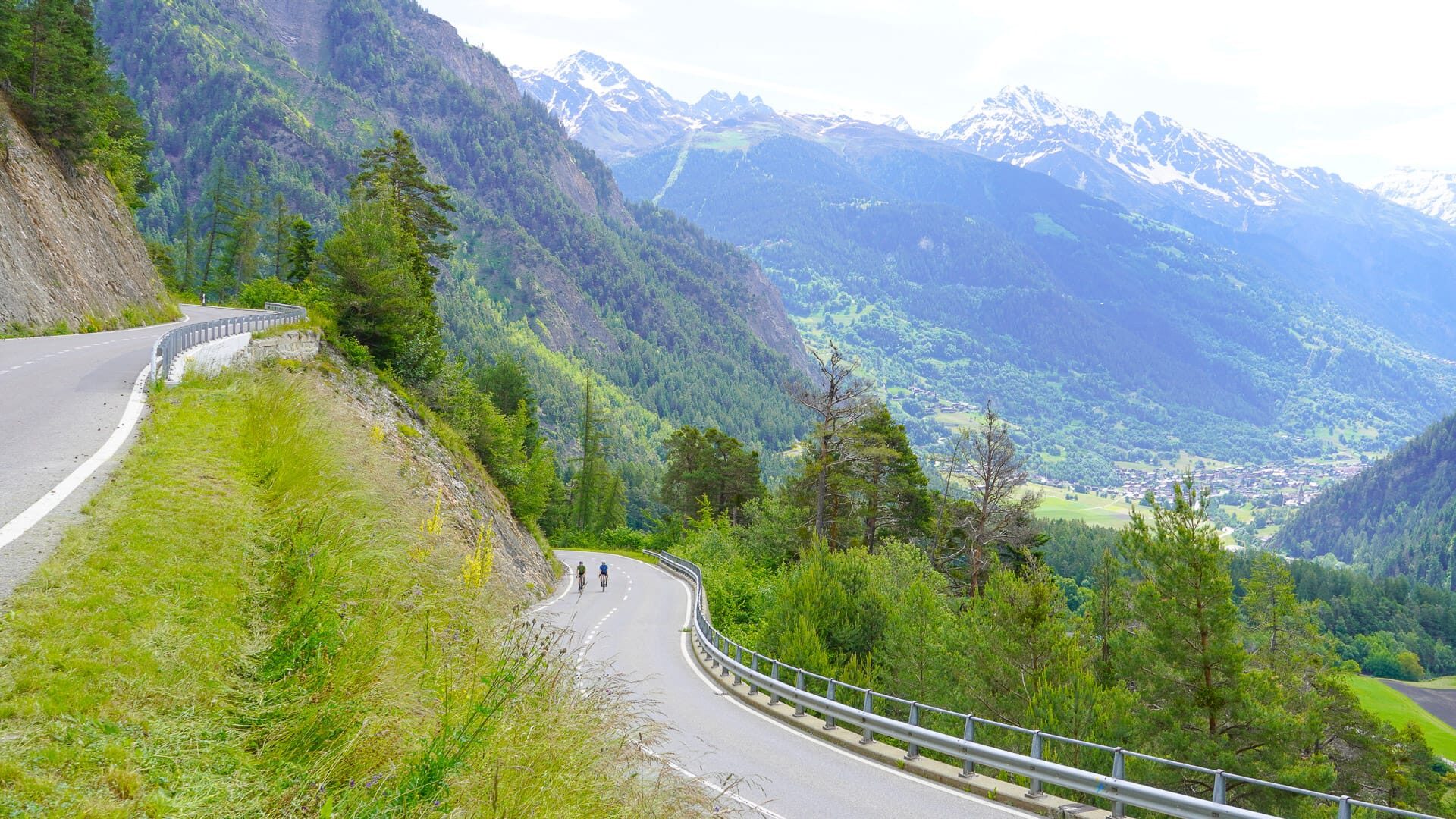
Cycling in Switzerland still feels like something of a secret among many riders. We know the country for huge mountains, immaculate roads and legends such as Fabian Cancellara, but compared with neighbouring France and Italy, Switzerland often flies under the radar when cyclists are planning their next Alpine trip.
That feels surprising once you have ridden here. Switzerland offers many of the ingredients cyclists spend years searching for: iconic mountain passes, beautifully engineered roads, dramatic scenery and a huge variety of riding packed into a relatively small area. You can ride through vineyards in the morning, climb high Alpine cols in the afternoon and finish beside a glacial lake, all within a single day.
But it’s not all high mountains: cycling routes in Switzerland range from high Alpine loops and mountain passes to lake circuits, rolling countryside and well-signposted national cycle routes.
This guide shares our pick of four cycling routes in Switzerland from Epic Road Rides’ existing Switzerland guides:
- Frienisberg Panoramic Route, Bern: Best for leisure riders looking for a shorter route near Bern, with manageable climbing and a mix of road, dirt road and forested/wild trail.
- Tour du Lac Léman, Lake Geneva: Best for endurance riders looking for a long lake loop with modest climbing, Swiss and French sections, and regular towns and cafés along the way.
- Albula Pass and Julier Pass, St Moritz/Engadin: Best for experienced Alpine riders looking for a high-altitude route with two major Swiss passes and a big-mountain feel.
- 5 giant cycling climbs of the Swiss Alps, Verbier: Best for strong climbers looking for a tough Alpine route with major elevation gain and classic Swiss mountain roads.
Switzerland can look intimidating on a map. The Alps dominate much of the country, and many of its most famous rides involve serious climbing. But that is only part of the picture. There are also lake loops, city-based rides, e-bike-friendly routes and cross-country cycling routes that make Switzerland more adaptable than many riders expect.
We hope you enjoy this pick – and let us know your favourite ride in Switzerland in the comments below!

Clare Dewey is a cyclist with a passion for travel. She set up epicroadrides.com in 2018 to help make it easy for cyclists to explore the world by bike. Today her mission is still inspiring cyclists to discover new places on two wheels - and doing what she can to make sure they have the best possible time while they're there. Clare has visited 50+ destinations around the world, many of them by bike.
Want to connect with Clare? Find her over on LinkedIn.
Always check current travel information and advice. For visitors from the UK, the UK government travel information pages are here.
Table of contents
- Part 1: Our pick of the best cycling routes in Switzerland
- Part 2: Logistics of planning a cycling trip in Switzerland
- Part 3: Tips for planning cycling routes in Switzerland
Part 1: Our pick of the best cycling routes in Switzerland
Switzerland offers a wide range of riding within a relatively compact country. Some cyclists come for high mountain passes and long climbs. Others are better suited to lake loops, rolling countryside, mixed-surface routes or signposted national cycling routes.


Why cycle in Switzerland?
For riders looking for mountain passes and classic Alpine experiences, stronger road cyclists will inevitably have the most options available. Switzerland does not hold back when it comes to climbing. That said, there are also quieter valley routes and less demanding days available, and e-bikes have made many of these mountains more accessible than ever before.
Summary of the routes we’ve picked
The four routes below are deliberately different from one another. Together, they give a useful snapshot of what cycling in Switzerland can offer, from the Alps around Verbier and St Moritz to the countryside near Bern and the loop around Lake Geneva.
| Route and region | Distance/elevation gain | Best for |
| Frienisberg Panoramic Route in Bern | 43 kilometres / 590 metres | Leisure riders |
| Tour du Lac Léman in Lake Geneva | 170 kilometres / 800 metres | Endurance riders |
| Albula Pass and Julier Pass in St Moritz | 100 kilometres / 2,250 metres | Strong climbers |
| 5 giant cycling climbs of the Swiss Alps in Verbier | 87 kilometres / 3,018 metres | Strong climbers |
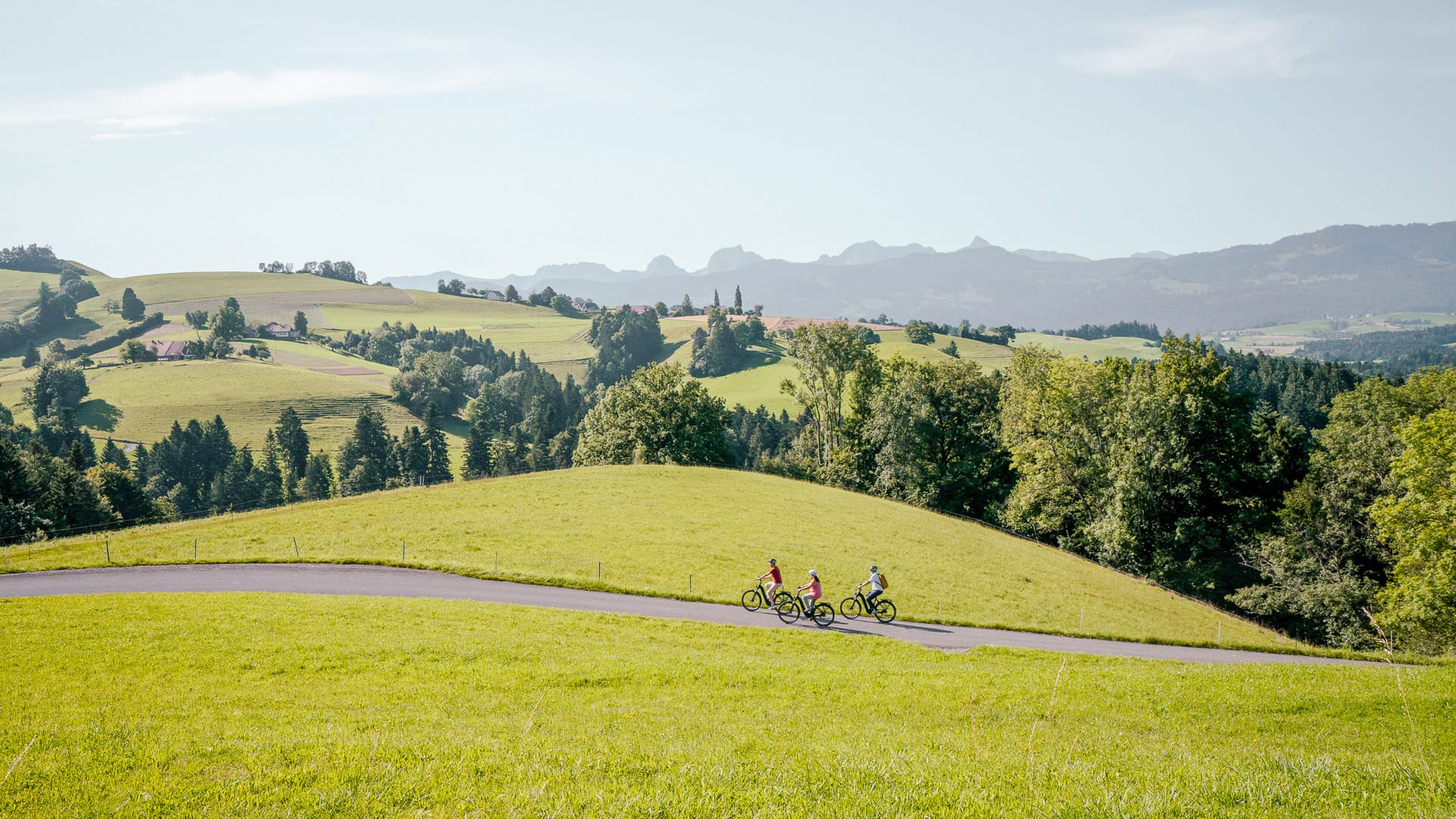
1. Frienisberg Panoramic Route, Bern
Best for leisure riders looking for a shorter route near Bern, with manageable climbing and a mix of road, dirt road and forested/wild trail.
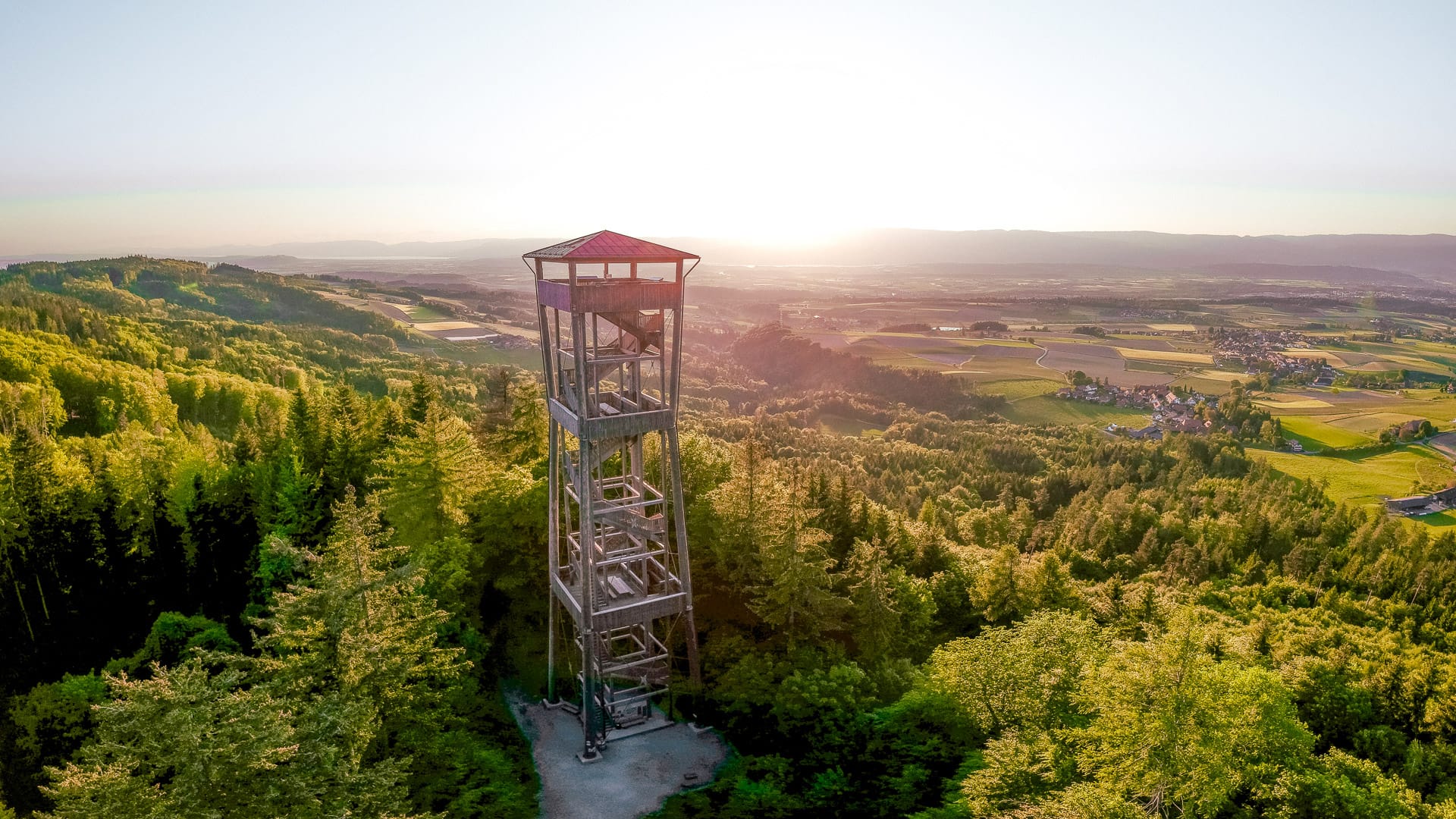
Chutzenturm tower along the Fernsicht route in the Frienisberg region (photo credit: Bern Welcome)
Summary
The Frienisberg Panoramic Route is a circular mixed-surface ride around the Frienisberg plateau near Bern. It combines road sections, asphalt, dirt road and forested/wild trail, with wide views towards the Seeland, Bern and, on clear days, the Bernese Alps.
Start/finish
Bern
Distance
43 kilometres.
Elevation gain
590 metres.
Surface
Mixed surface, including asphalt, road, dirt road and forested/wild trail, with a very short connecting path and some bumpier sections.
Our view
This is the most approachable route in the article in terms of distance and climbing, but the mixed surface means it is not a pure road ride. It is a good fit for riders on gravel bikes, hybrids or suitable e-bikes who want a scenic route near Bern without committing to a huge mountain day.
It also helps show another side of cycling in Switzerland: city access, signed routes, rolling farmland and views of the Alps rather than constant climbing.
More information
Read our full guide to cycling in Bern.
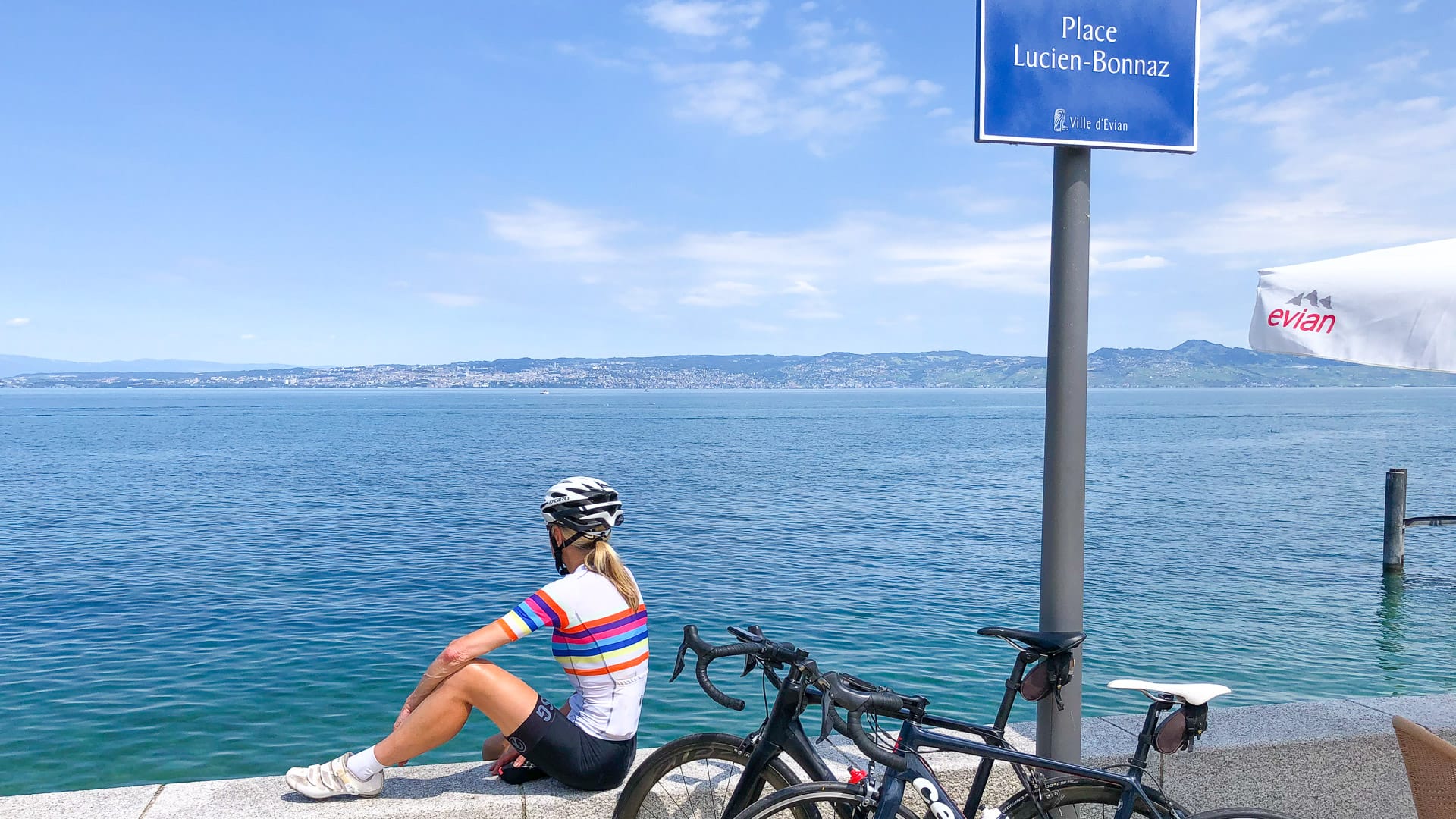
2. Tour du Lac Léman, Lake Geneva
Best for endurance riders looking for a long lake loop with modest climbing, Swiss and French sections, and regular towns and cafés along the way.
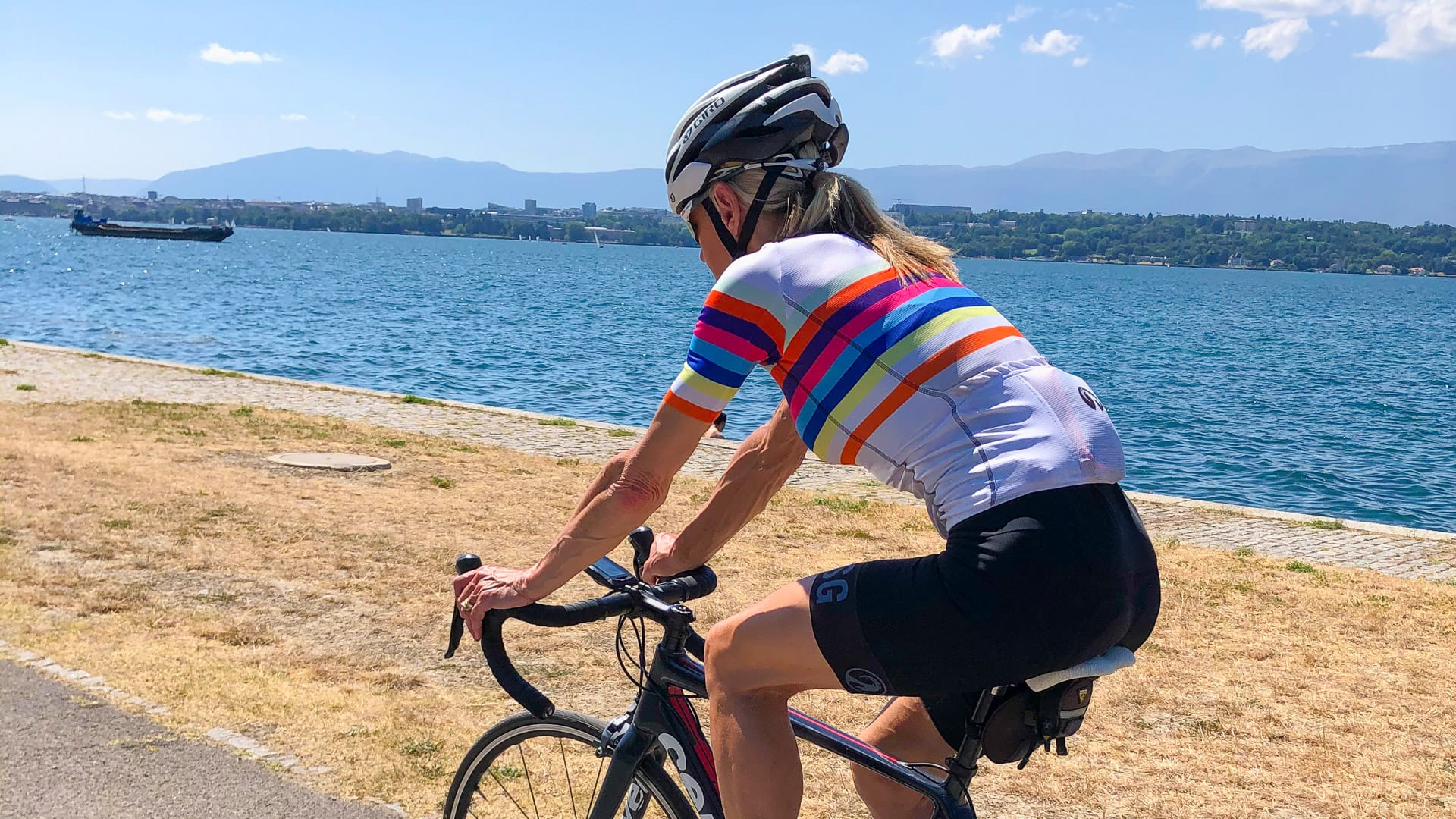
Approaching Geneva (credit: John Vicars)
Summary
The Tour du Lac Léman is a full loop of Lake Geneva, also known as Lac Léman. It crosses both Switzerland and France and follows a well-signed cycle route around the lake.
Start/finish
Geneva, or another lakeside town on the route.
Distance
170 kilometres.
Elevation gain
Just over 800 metres.
Surface
Road and cycle lanes.
Our view
This is the route for cyclists who want distance and scenery without a high-mountain climbing day. It is still a long ride, but the elevation gain is modest compared with the Alpine routes above.
It is also a useful reminder that cycling in Switzerland is not only about passes. Lake Geneva crosses the Switzerland–France border, following the Swiss and French shores of the lake. The lake-based route with mountain views, towns and cafés along the way.
More information
Read our full guide to the Tour du Lac Léman.
3. Albula Pass and Julier Pass, St Moritz/Engadin
Best for experienced Alpine riders looking for a high-altitude route with two major Swiss passes and a big-mountain feel.
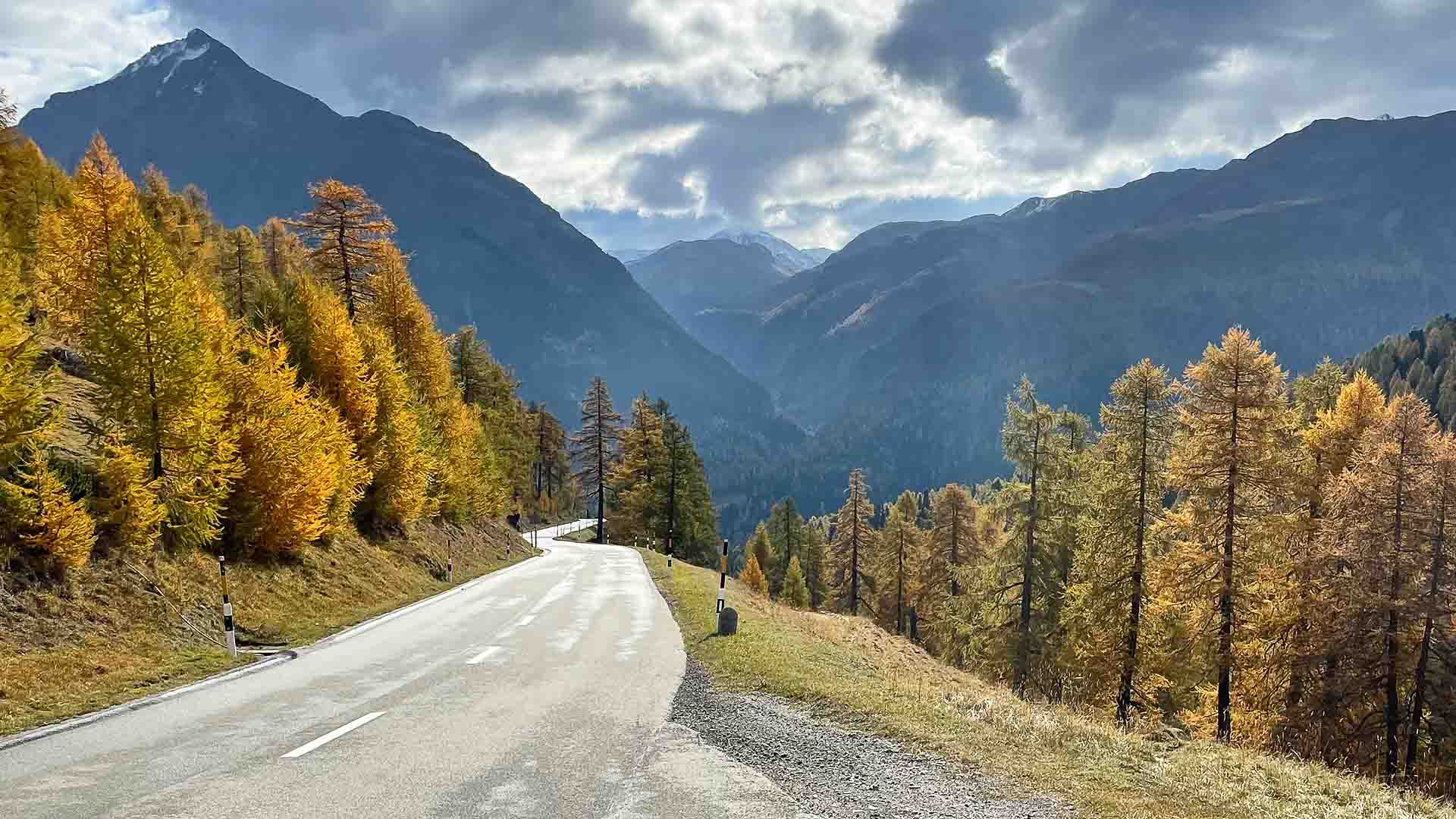
The view back down the Albula Pass towards La Punt (photo credit: Patrick Quayle)
Summary
This route showcases high-altitude riding in the Engadin Valley. It links the Albula Pass and Julier Pass, two major road cycling climbs in eastern Switzerland.
Start/finish
Champfèr.
Distance
100 kilometres.
Elevation gain
2,250 metres.
Surface
Road.
Our view
The Albula and Julier passes are an eastern Switzerland mountain option, which create a proper Alpine ride, but the character is different from Verbier. The Engadin feels high, open and remote, with big mountain views and a strong sense of riding through one of Switzerland’s classic pass regions.
More information
Read our full guide to the Albula Pass and Julier Pass route.
4. 5 giant cycling climbs of the Swiss Alps, Verbier
Best for strong climbers looking for a tough Alpine route with major elevation gain and classic Swiss mountain roads.

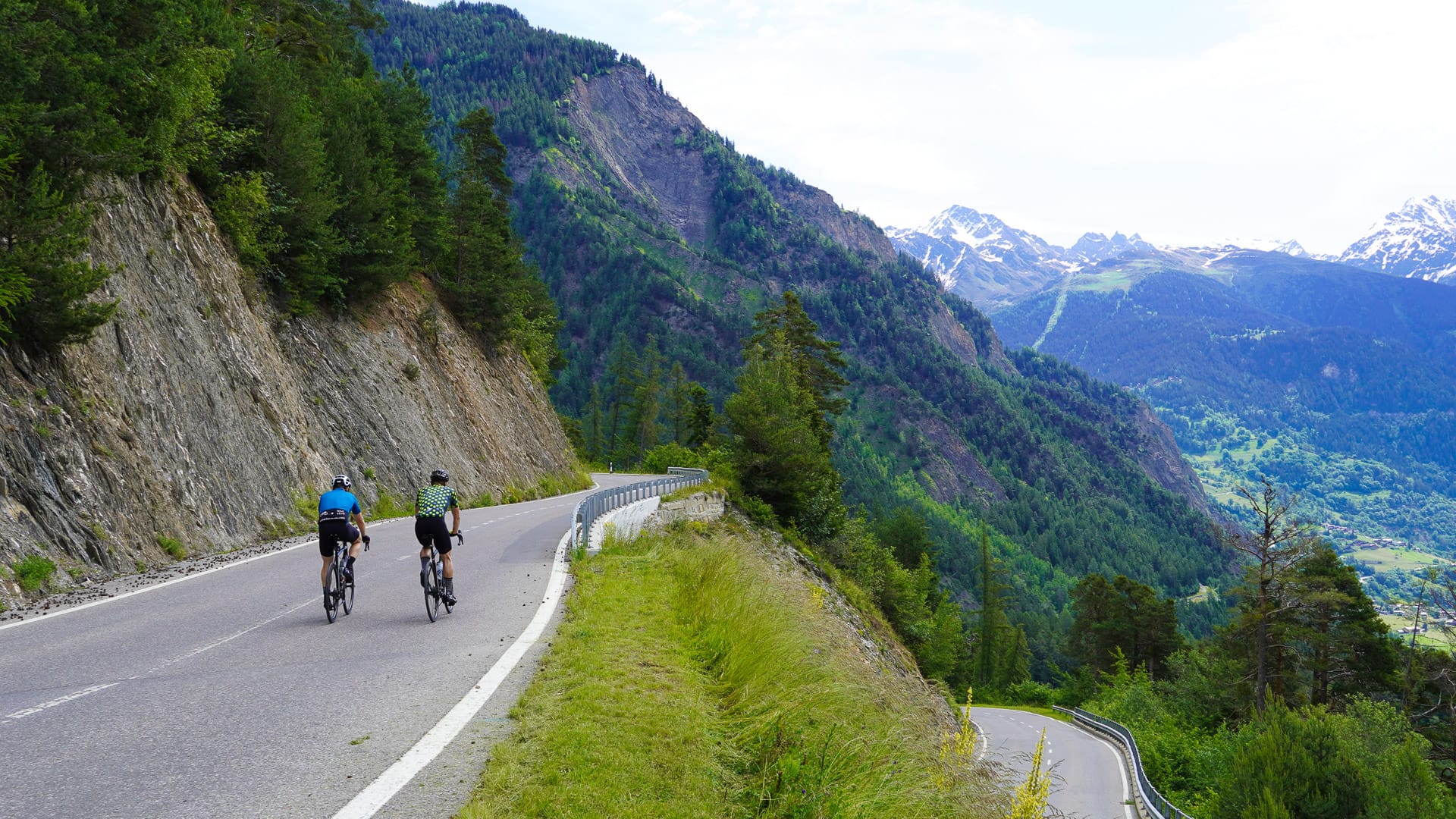
The climb up Petite Forclaz is on a well-maintained mountain road with amazing views!
Summary
This is the toughest route in the article and the one most focused on classic Swiss Alpine climbing. It starts and finishes in Verbier and links major climbs including Planches, Petite Forclaz, Champex, Fouly and Verbier.
Start/finish
Verbier, Valais.
Distance
87 kilometres.
Elevation gain
3,018 metres.
Surface
Road
Our view
Choose this route if you want a serious climbing day in the Swiss Alps. It is short enough on paper to look manageable, but the elevation gain makes it a demanding ride. Expect mountain roads, vineyards, traditional villages and long climbs where pacing matters.
This is the route in this article for riders who want a big day out rather than a gentle introduction to cycling in Switzerland.
More information
Read our full guide to the 5 giant cycling climbs of the Swiss Alps and our in-depth guide to the Verbier region.
Other notable routes
Swiss National Bike Routes/Eurovelo routes
The Swiss National Routes are the national cycling route network of Switzerland. There are currently nine such long-distance cycling routes criss-crossing the Swiss nation and these were established mainly to promote biking in Switzerland and bicycle tourism.
Like Eurovelo routes, the cycle routes are signposted with red signposts and can be found on the My Switzerland website or the Swiss Mobility app.
National Bike Routes through the Valais region
The Rhone Route runs through the magnificent mountain scenery of the Valais on charming, quiet paths along the Rhone.
It leads along the famous palm-lined promenades of Lake Geneva and the picturesque Lavaux vineyards and ends at cosmopolitan Genève.
The first stage from Andermatt over the Furka Pass to Goms is a tough one.
That’s why leisure cyclists would be better advised to start in Oberwald and follow the Rhone through the sun-drenched high valley. The route then continues down towards Brig with its Stockalper Castle.
The Rhone brushes the Pfyn-Finges Nature Park, the wine-growing village of Salgesch, the castles of Sion and leads along Lake Geneva’s promenade of palm trees, past the vineyards in the UNESCO World Heritage Property of Lavaux until it ends in the cosmopolitan city of Geneva or continues as Euro Cycle Route 17 to the Mediterranean.
Tourist highlights
- Furka Pass/Belvédère, walk to the Rhone glacier and its source
- Brig, Stockalper Palace dating from the 17th century
- St. Maurice, the oldest monastery in the Abendland (1,500 years)
- Lavaux, the vineyard terraces of the UNESCO World Heritage Property
- Geneva, International Red Cross and Red Crescent Museum
Do you recommend the National Bike Routes?
The routes are well signed, there are often fantastic views and if you are looking for an adventure on your bicycle to explore Switzerland I would highly recommend these routes.
Some of the routes use natural surfaces so it is worth planning ahead and being aware of this to avoid any surprises! You can usually plan to avoid these sections.
Part 2: Logistics of planning a cycling trip in Switzerland
Best time of year to cycle in Switzerland
The best time to cycle in Switzerland depends on the route. Lower routes around Bern and Lake Geneva generally have a longer season than high Alpine routes. Mountain passes can remain closed well into late spring or early summer, depending on snow conditions.
For high routes such as the Verbier climbs or the Albula and Julier passes, summer and early autumn are usually the safest planning windows. Even then, conditions can change quickly, so check the forecast and pass status before you ride.

Cycling amongst the snow-capped mountains
How do you get to Switzerland?
For most international visitors, Geneva and Zurich are the most convenient airports.
Both offer good onward transport links and make practical arrival points for cycling trips across different regions of the country.
One of Switzerland’s strengths is its public transport system, which is generally excellent and particularly cycle-friendly.
Trains connect most major towns and mountain regions and can make travelling with bikes surprisingly straightforward.
Hiring a car can still provide greater flexibility for riders wanting access to remote climbs or travelling with lots of equipment, but it is entirely possible to plan a cycling trip around rail travel.
What are the best places to stay for a cycling holiday in Switzerland?
The best place to stay depends partly on the type of riding you want, whether you’re looking to ride particular routes or climbs and whether you are travelling with non-cyclists or family members.
For riders focused on major mountain passes and classic Alpine climbing, the Valais region works particularly well because of the number of routes available in different directions. Staying in one location can still provide a huge amount of variety without needing to constantly move accommodation.
- Martigny and Sion make convenient bases and both have good transport connections. They sit on the valley floor, making it easy to access a wide range of routes, from flatter rides through vineyards to bigger mountain days into the surrounding Alps.
- Sion, the capital of Valais, combines practical advantages with a historic setting, while Martigny offers easy access towards the Grand St Bernard and roads leading towards France.
- For riders travelling with family or those wanting activities beyond cycling, mountain resorts such as Verbier, Crans-Montana, Zermatt and Saas-Fee can work well.
Although these places are often associated with skiing, summer brings hiking, mountain biking, lakes and other outdoor activities that make them attractive bases for mixed-interest trips.
Another advantage of Switzerland is that distances between destinations are relatively short. Even if you choose a single base, many major climbs and routes remain accessible within a reasonable ride or train journey.
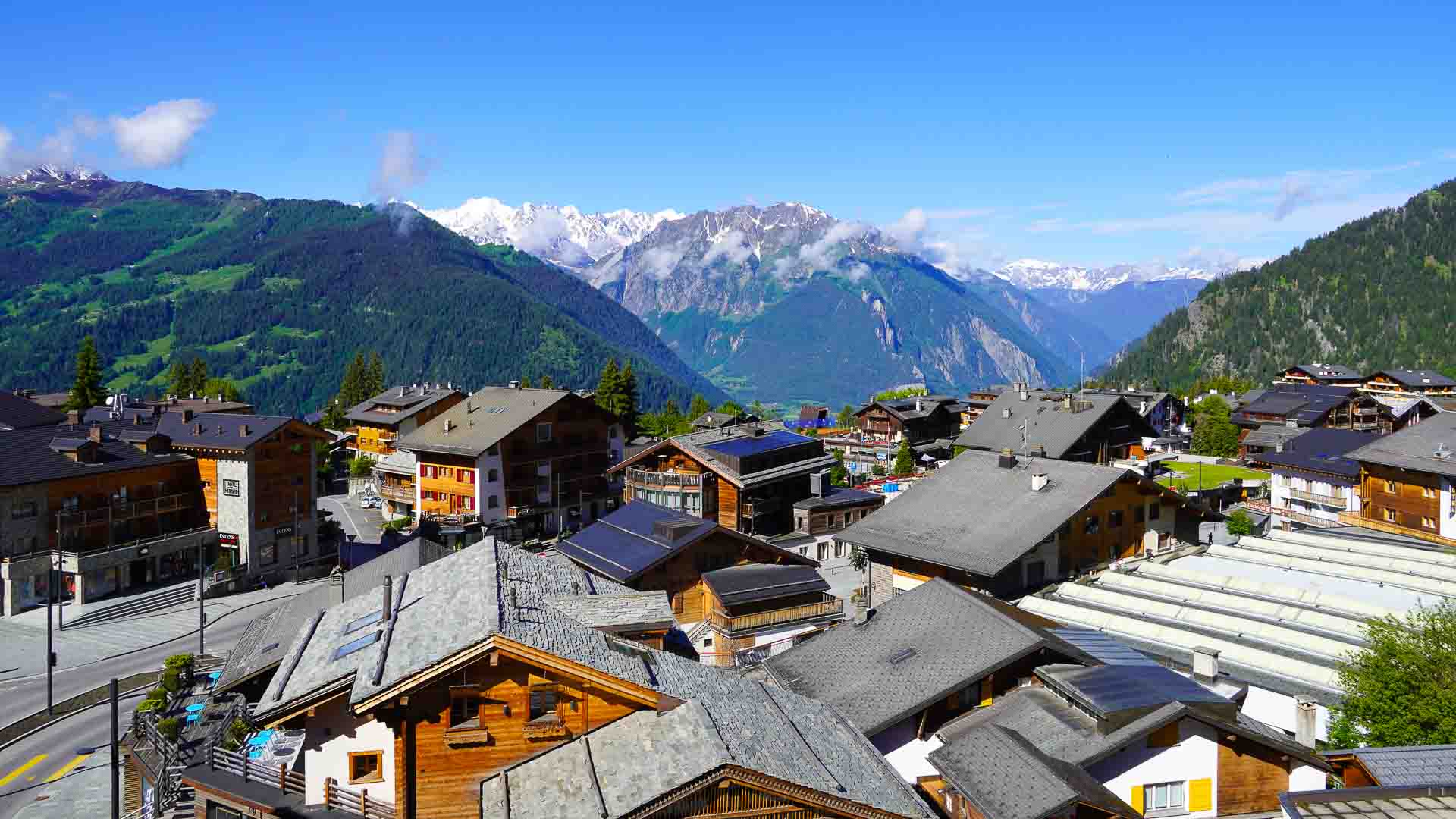
View over Verbier
What should we eat while in Switzerland?
Cycling in the mountains usually creates an excellent appetite and Switzerland has no shortage of satisfying post-ride food.
Cheese and chocolate naturally feature heavily, though local specialities vary between regions.
Classic dishes worth trying include fondue, raclette and rösti, all of which feel particularly satisfying after a long day on the bike.
If you have spent the day climbing one of Switzerland’s major mountain passes, there is usually very little guilt attached to a generous dinner afterwards.

A delicious charcuterie platter
Gear essentials for Swiss cycling routes
For Swiss mountain routes, bring low enough gearing, warm layers for descents, lights for tunnels and enough food for long climbs where services may be limited.
For lake and city-based routes, check whether your route uses cycle lanes, shared paths or short road sections.
A GPS route, power bank and offline map are useful throughout Switzerland.
Check our in-depth packing article for more detailed packing lists.
Part 3: Tips for planning cycling routes in Switzerland
Before you ride, check:
- Mountain pass opening dates.
- Weather forecast at valley and summit level.
- Whether the route uses tunnels.
- Whether lights are required.
- Whether your route crosses into France or Italy.
- Train rules for bike carriage.
- Route surface, especially on national cycling routes.
- Water and food stops on longer climbs.
- Switzerland is well set up for cycling, but it rewards careful planning. Distances can look short, yet elevation gain, altitude and weather can change the feel of a ride very quickly.

Refilling up a bottle from one of the many water fountains
What’s next?
- Cycling Switzerland, our main hub for the country.
- Cycling Verbier: Your ultimate guide, a deeper dive into this scenic region.
- Cycling Bern, a guide to the capital and cycling nearby.
Please support Epic Road Rides
A huge amount of time and effort goes into the article you’ve just read, all with the aim of helping you!
If you found what you’ve read useful, I’d really appreciate it if you dropped something in the tip jar here.
It’s a way you can say thank you and help us carry on creating top quality content with no annoying ads and no pay wall.
Looking for an organised cycling trip?
If you want someone to help you plan and book your cycling holiday, fill out this form. We aren’t a tour operator/agent but we work with lots of people who are and will do our best to put you in touch with someone that can help (within 24 hours where possible)!Clare Dewey is a cyclist with a passion for travel. She set up epicroadrides.com in 2018 to help make it easy for cyclists to explore the world by bike. Today her mission is still inspiring cyclists to discover new places on two wheels - and doing what she can to make sure they have the best possible time while they're there. Clare has visited 50+ destinations around the world, many of them by bike.
Want to connect with Clare? Find her over on LinkedIn.
Last Reviewed: 23 June 2026
First Published: 21 July 2021
The contents of this website are provided for general information purposes only. It is not intended to amount to advice and you should not rely on it. You should carry out your own due diligence and risk assessments and take professional advice. Views expressed by interviewees or other users of this website do not necessarily represent our views. We make no representations, warranties or guarantees, whether express or implied, that the content on our website is accurate, complete or up to date. If you use any information or content on this website, download from, or otherwise obtain content or services through our website, it is entirely at your own discretion and risk. Epic Road Rides Ltd disclaims all liability and responsibility arising from any reliance placed on the information and content on this website. Find out more here.
Comments