
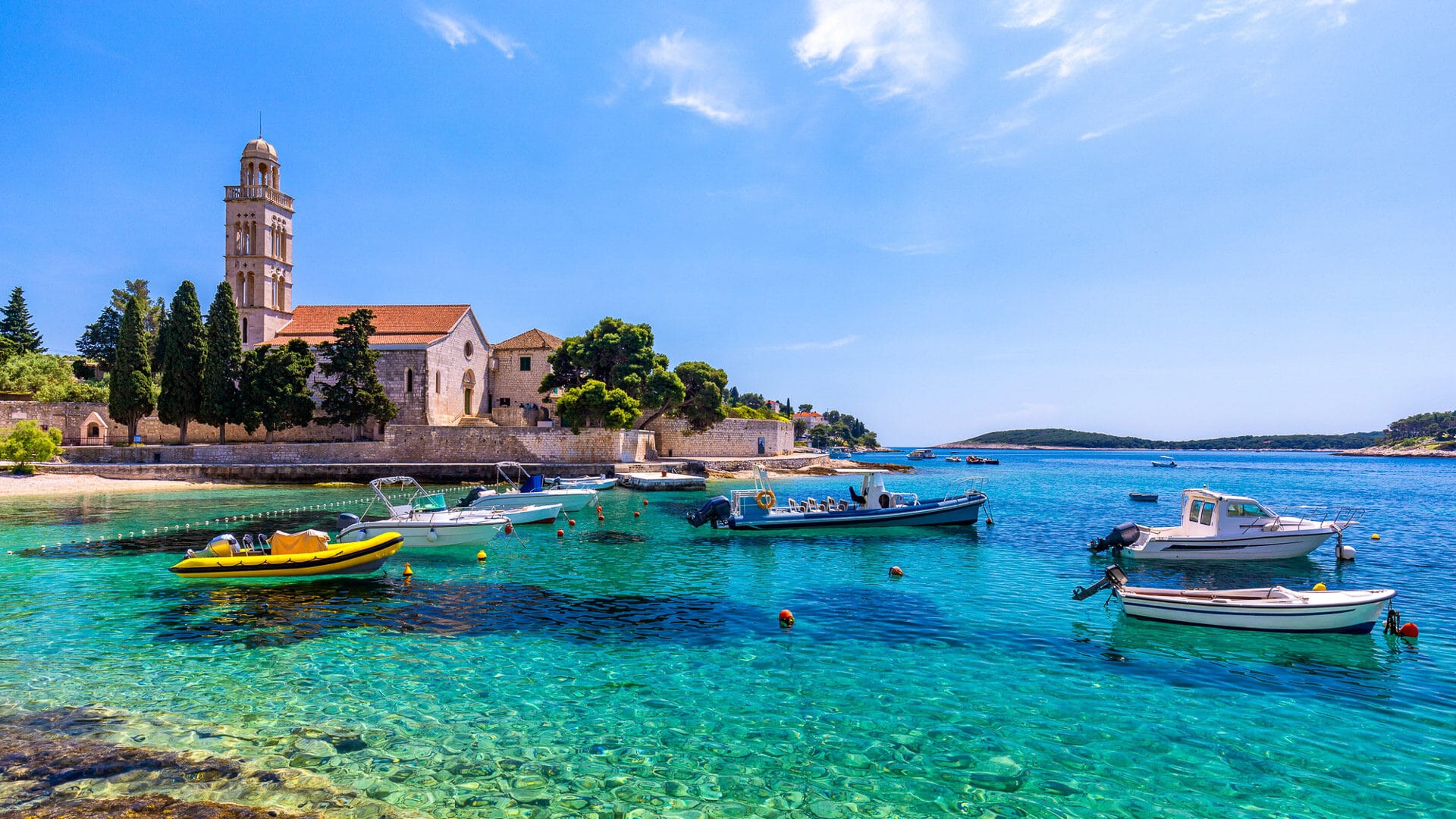
So you’re considering cycling Croatia’s islands?
A Croatia boat and bike tour can be a brilliant way to explore more than one island in a single trip. But start researching and you’ll quickly find there are lots of different options.
Do you want to sleep on the boat or stay in hotels? How much cycling do you actually want to do? Would you rather join a guided group or ride at your own pace? And, importantly, which Croatian islands do you want to explore?
In this article, we take a closer look at the different kinds of Croatia boat and bike tours, what cycling the islands is like and the things worth checking before you book.
We hope you find it useful. Enjoy!
Interested in Croatia more generally? Read our overview of Croatia from a cyclist’s perspective. Want to combine cycling in Croatia with a long-distance adventure cycling in the Balkans? Don’t miss this article.

Clare Dewey is a cyclist with a passion for travel. She set up epicroadrides.com in 2018 to help make it easy for cyclists to explore the world by bike. Today her mission is still inspiring cyclists to discover new places on two wheels - and doing what she can to make sure they have the best possible time while they're there. Clare has visited 50+ destinations around the world, many of them by bike.
Want to connect with Clare? Find her over on LinkedIn.
Croatia bike tour versus a Croatia bike and boat tour?
If you want to cycle more than one of Croatia’s islands, at some point you are probably going to need a boat.
The bigger question is how big a part of your trip you want the boat to be.
At one end of the scale, you can plan your own cycling holiday and use public ferries to move between islands. At the other, there are organised boat and bike holidays where your boat is also your accommodation. There are also trips that stay in hotels and use ferries or private boats for transfers.
Here’s what to think about.
Ferries
Croatia’s ferries make independent island hopping possible and can work well if you like organising your own cycling trips.
However, ferry timetables can have a big impact on your route. Services differ depending on the season and not every passenger boat accepts full-size bicycles.
For example, Jadrolinija currently accepts bikes on its ferry services but not on its high-speed catamarans. Other passenger operators have different policies.
So if a boat connection is essential to your itinerary, check the specific service and bike rules before you book accommodation around it.
It is also worth allowing some flexibility. Strong winds and poor sea conditions can sometimes affect sailings.
Water taxis
Private water taxis can be another way to move between Croatia’s islands, particularly on hotel-based cycling trips.
Compared with public ferries, they can offer more flexibility over departure points and timings. This may make it easier to build the boat transfer around the cycling rather than the other way around.
However, private transfers are likely to cost more than ferries and availability will depend on the route, the number of riders and the type of bikes being carried. Weather and sea conditions can also affect journeys.
If a tour uses water taxis, check how the bikes are transported, whether luggage travels with you and what happens if the planned crossing cannot operate.
Boat-based accommodation
This is probably what most people picture when they think of a Croatia boat and bike holiday.
You sleep aboard the boat, cycle during the day and then travel by water to your next island or harbour.
A number of current Croatia bike and boat holidays use motor yachts carrying roughly 30 passengers, although boat sizes and trip formats differ.
The big advantage is convenience. You unpack once and the boat moves with you. It also gives the trip a very different feel from a conventional hotel-based cycling holiday.
However, check the details carefully. Cabins can be compact and the cycling may only make up part of each day. Weather can also affect where and when a boat is able to sail.
Read more: Croatia bike and boat tours, with tips on routes, boats and what to consider before booking.
Why do a bike tour in Croatia?
One of the big attractions of cycling Croatia is the opportunity to combine riding with time beside the Adriatic.
Ride in the morning and you might finish the day in a harbour, beside a beach or within walking distance of somewhere you can swim. Depending on the itinerary, there may also be opportunities for kayaking and other watersports.
The islands also give you a natural way of breaking a cycling holiday into different areas. You can spend a day exploring one island, cross by boat and wake up somewhere completely different the next morning.
There is plenty to enjoy away from the bike too. Historic towns, local wine, olive oil and seafood all add to the appeal.
Just don’t assume that island cycling means easy cycling. Many roads climb directly away from sea level, so the metres can add up surprisingly quickly.
What is cycling in Croatia like?
Croatia enjoys a huge stretch of the Adriatic coastline – its mainland coastline is a whopping 1,777 kilometres and you add a further 4,000+ kilometres if you add the islands too. Its official Island Register includes more than 1,200 islands, islets and rocky formations.
For the purposes of this article we’ll mainly focus on cycling the Croatian islands and the nearby Pelješac Peninsula.
There are a couple reasons for this:
- Some of the main roads on Croatia’s mainland coast can get busy, particularly in summer. There are quieter alternatives, but routes sometimes have little choice but to join the main coastal roads. That does not mean every island road will be traffic-free. Towns, ferry ports and the most popular visitor areas can still get busy, particularly in July and August.
- The islands lend themselves particularly well to boat and bike tours. Cycling, ferry crossings and overnight stops in different harbour towns all become part of the journey.
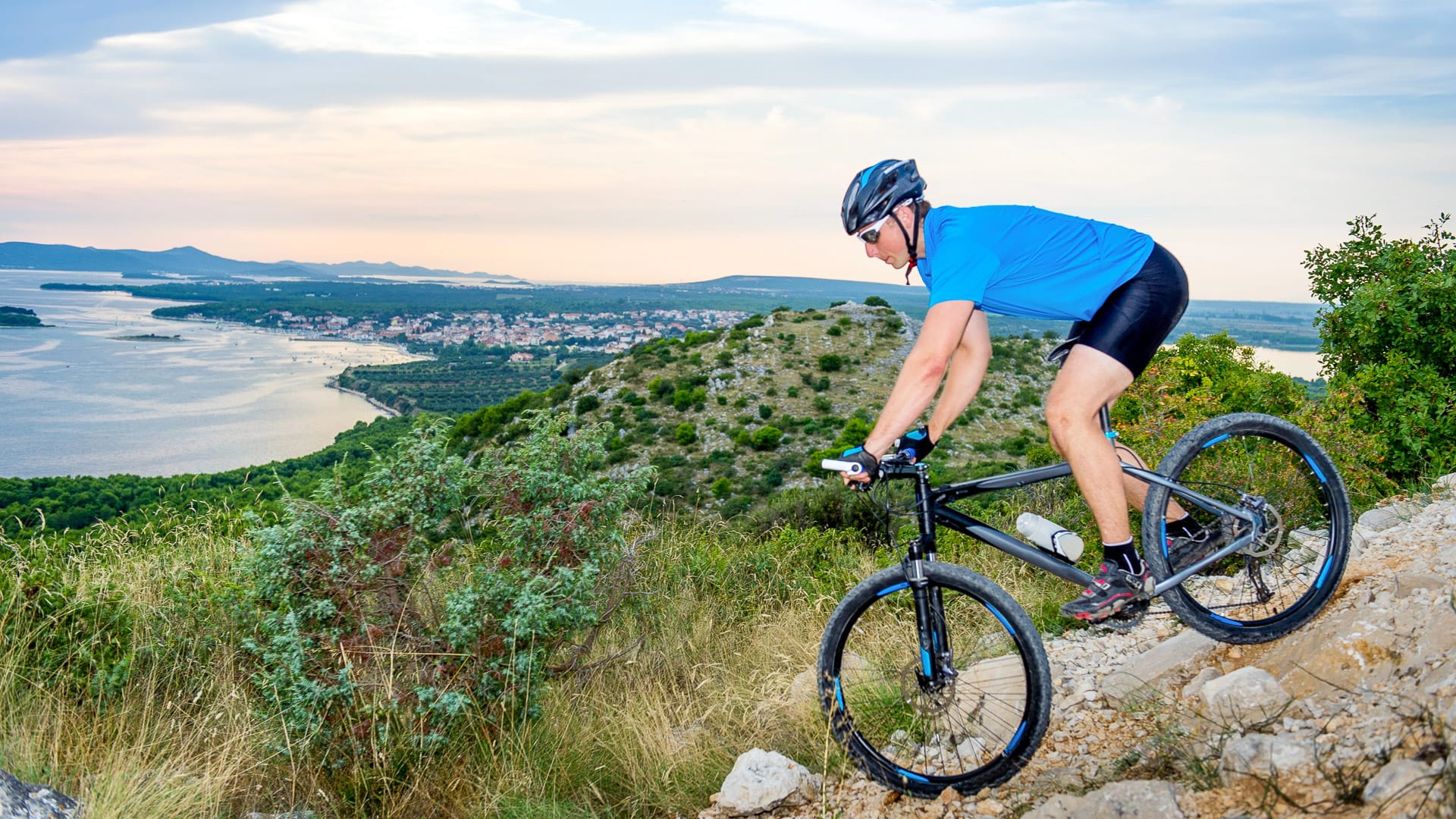
Mountain biking in Croatia
What to expect from cycling Croatia’s islands?
Expect the sea to feature heavily
Many routes climb inland before dropping back towards another bay or harbour. On a clear day, you can often see neighbouring islands across the water.
The towns differ considerably too. Hvar Town is one of Croatia’s best-known island destinations and can be extremely busy during the summer. Smaller ports and inland villages can feel quite different.
You will also see plenty of signs of the islands’ agricultural traditions. Vineyards, olive groves and dry-stone walls are common sights, while individual islands are associated with everything from lavender and wine to sheep’s cheese.
And when temperatures rise, having the sea close by is no bad thing!
Road cycling in Croatia
There are lots of paved roads that work well for road cycling, but surfaces and traffic levels depend on the island and route.
Many roads are relatively narrow and there may be little or no shoulder. Around ferry ports, traffic can also arrive in waves when a boat docks. If you are leaving a ferry at the same time as a queue of cars, it can sometimes be worth letting the first burst of traffic go ahead.
Some roads also run high above the coastline. If you are uncomfortable with exposed roads or steep drops, check the route carefully before booking.
The time of year makes a difference too. Popular coastal roads and towns tend to be much busier during July and August.
When to visit?
Spring and autumn are likely to appeal most to cyclists.
May, June, September and early October can offer warm conditions without the busiest part of the summer season.
July and August can be hot, particularly if your route involves a lot of climbing. They are also the busiest months for many of the islands.
If you travel outside peak summer, bear in mind that some ferry timetables become less frequent. Check connections for your exact travel dates rather than assuming the summer schedule operates all year.
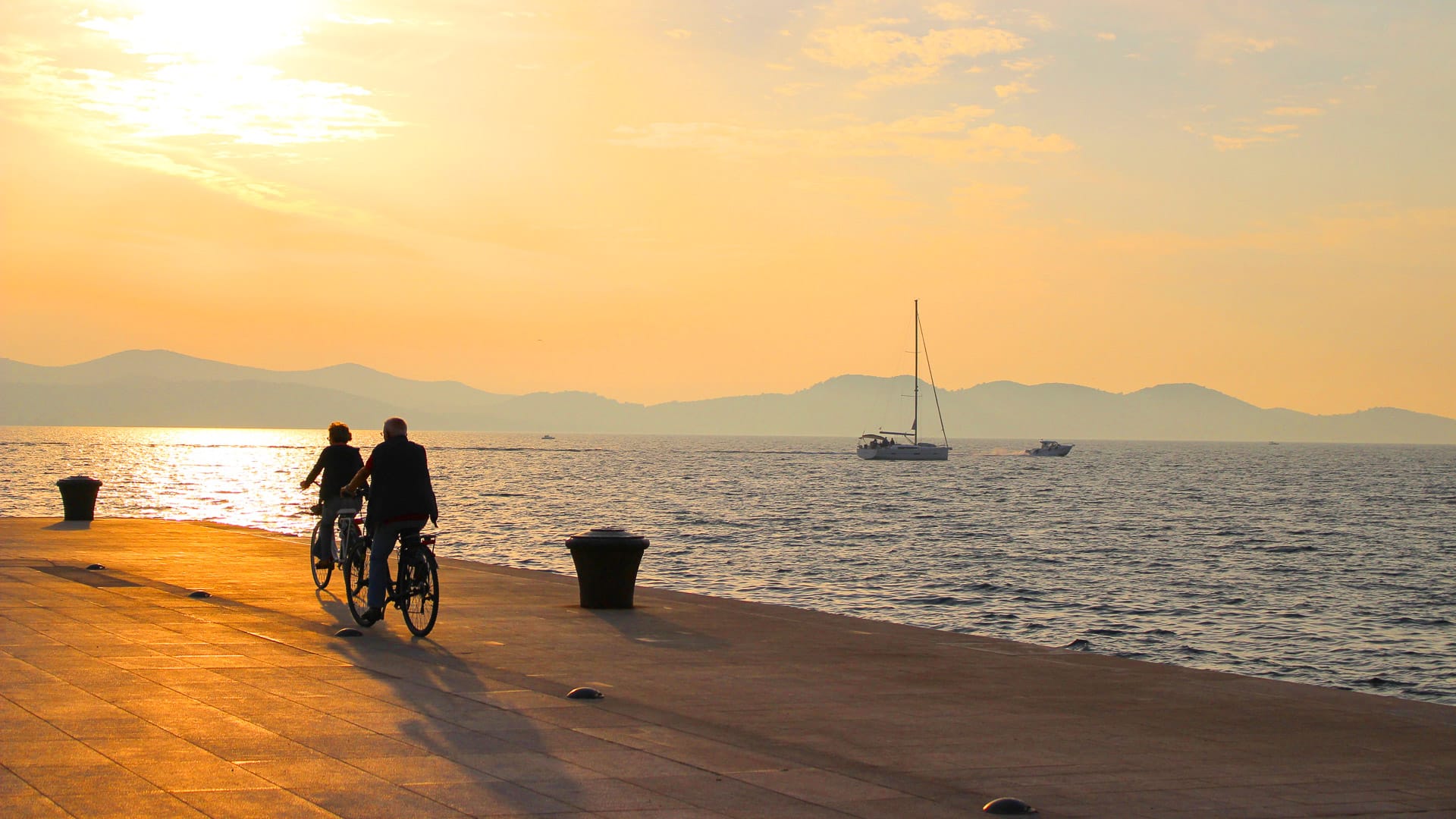
Cycling along the waterfront in Croatia
What’s the best place for a Croatia bike and boat tour?
Croatia has several areas worth considering for a cycling holiday. The right one for you will depend on the kind of riding you want and how important island hopping is to your trip.
Istria offers a mix of coastal and inland cycling, including the Parenzana Trail near Poreč and more demanding MTB and e-MTB riding around Rabac. Further south, the islands of Kvarner Bay include Krk and Rab. Dalmatia brings together mainland riding and some of Croatia’s best-known islands, including Hvar.
For a bike and boat tour, Dalmatia is particularly worth looking at. Hvar sits between Brač, Korčula and the Pelješac Peninsula, while mainland bases such as Makarska also offer opportunities to combine road cycling with ferry-supported trips to the islands.
Below, we take a closer look at some of the places you might come across when researching a Croatia bike and boat tour.
Croatia’s Southern Adriatic Islands
The islands off the Dalmatian coast are a natural place to focus an island-hopping cycling trip. Brač, Hvar and Korčula can be combined with time on the Pelješac Peninsula, giving you a mix of island roads, coastal riding and inland climbs.
When comparing tours, look carefully at how much riding is included on each island and how the boat transfers fit into the itinerary.
Brac Island
Brač is the largest island in central Dalmatia and home to Vidova gora, at 778 metres the highest point on Croatia’s islands. The island is also known for its high levels of sunshine, with around 2,700 hours a year. Combined with its rocky landscape, this can make riding feel quite exposed in warmer months.
Brač has a long tradition of olive growing, vineyards and stone working. Inland, you’ll see plenty of exposed limestone and areas cleared over generations to make cultivation easier. The island’s distinctive pale stone is still quarried today.
That should give you some idea of the riding. Brač is not simply a collection of flat roads beside the sea. Routes crossing the island can involve some proper climbing, particularly as you head inland and towards the higher parts of the island.
Supetar is the main ferry port, while Bol is one of the best-known places to stay on the southern coast. For cyclists, expect a mix of coastal roads, inland climbs, olive groves and exposed limestone landscapes.
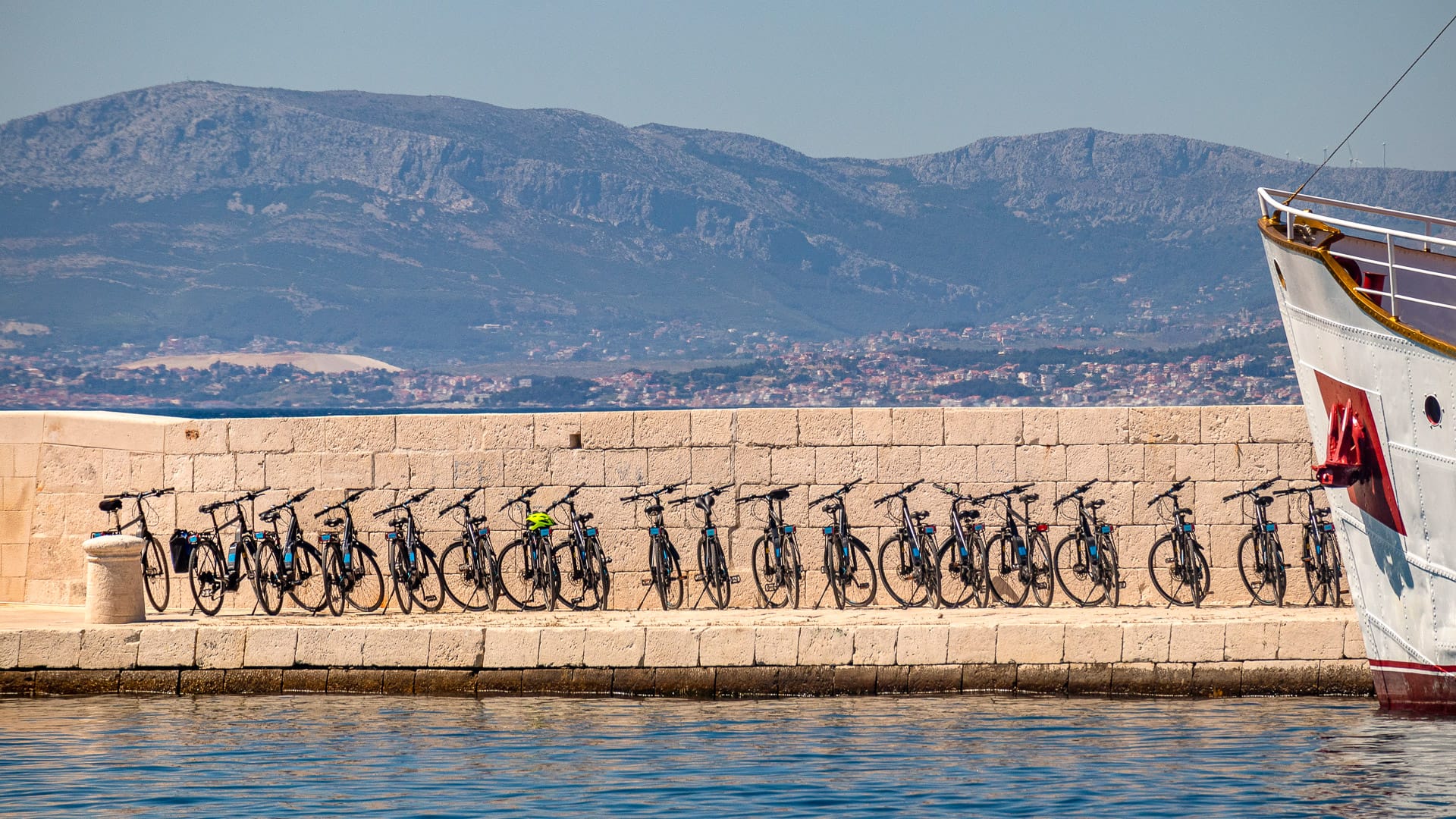
Port and pier of Postira village on Brac island
Hvar Island
Hvar is a long, narrow island off the central Dalmatian coast, between Brač, Korčula and the Pelješac Peninsula. It is easily reached by ferry from Split and is one of Croatia’s best-known islands.
For cyclists, Hvar offers a good mix of rolling inland roads, coastal sections and more demanding climbs. Inland routes pass through lavender fields, pine forests and traditional villages, while towns such as Stari Grad and Hvar Town provide plenty to explore off the bike.
Stari Grad is one of the island’s historic centres, while Hvar Town is known for its harbour and Venetian architecture.
Mountain bikers can also tackle routes towards Sveti Nikola, the highest point on Hvar at 708 metres. The riding here includes rocky trails, steeper climbing and technical descending, so check carefully whether the itinerary is designed for road, gravel or mountain bikes.
Korcula Island
Korčula is another strong option for cyclists who want plenty to do after the riding finishes.
Korčula Town sits on the eastern side of the island, looking across the narrow channel towards Pelješac. Its historic centre is known for its distinctive fishbone street layout.
Elsewhere, roads pass vineyards, olive groves and small settlements.
Vela Luka in the west is one of the island’s main ferry ports, while the eastern end provides access to the short crossing towards Pelješac.
Pljesac Peninsula
The main coast road along the Pelješac Peninsula towards Dubrovnik can be busier than the roads on the islands. The Ploče to Trpanj ferry provides another way to reach the peninsula from the mainland, while the opening of the Pelješac Bridge in 2022 means traffic heading south towards Dubrovnik no longer needs to cross the border with Bosnia and Herzegovina.
Ston, at the eastern end of the peninsula, is well worth looking out for. The town has a long history of salt production, which continues today, and is also known for its 5.5-kilometre defensive walls, the longest fortification complex in Europe.
Other Southern Islands
Have more time? Vis and Mljet are also worth considering.
Both sit a little further away from the main island-hopping routes, which can make transport more complicated. Check ferry connections carefully if you are organising the trip yourself.
Vis Island
Vis is one of the more remote islands in this part of Croatia, lying further out in the Adriatic than Hvar and Brač. Its relative isolation has helped it retain a quieter feel than some of Croatia’s better-known islands.
The island also has an interesting military history. Vis was used as a strategic military base during the Yugoslav period and was closed to foreign visitors until 1989. Reminders of this period, including tunnels and former military sites, can still be found around the island.
Stiniva Bay is one of Vis’s best-known spots, with its pebble beach enclosed by high cliffs and a narrow opening to the sea. The bay was also one of several locations on Vis used during filming of Mamma Mia! Here We Go Again in 2017.
Mljet Island
Mljet is one of the most forested islands in Croatia and is home to a rich mix of plant and animal life. Almost a third of the island, on its western side, forms part of Mljet National Park. The Park includes Veliko and Malo jezero, two seawater lakes, and almost 90% of the National Park itself is covered by forest.
Pomena, Polače and Sobra are three of the main arrival points for passenger boats, although routes and services vary depending on the season.
Mljet takes a little more planning to reach than some of Croatia’s better-connected islands. That relative remoteness, together with its forests, lakes and quieter feel, is a big part of its appeal.
Top routes and destinations for a bike and boat Croatia tour
It’s hard to narrow the highlights down, but these three sections are particularly worth looking out for:
- Korčula Town, on Korčula Island, is sometimes described as a smaller-scale Dubrovnik. Its historic centre sits beside the sea, with restaurants and cafés lining the waterfront.
- The relatively flat coastal road between Vrboska and Jelsa on Hvar makes a lovely change of pace, following the shoreline between two of the island’s best-known harbour towns.
- On the Pelješac Peninsula, the descent from the Dingač tunnel towards Trstenik harbour is another memorable stretch. The roughly 8-kilometre descent drops towards the coast, with views across the Adriatic as you approach Trstenik.
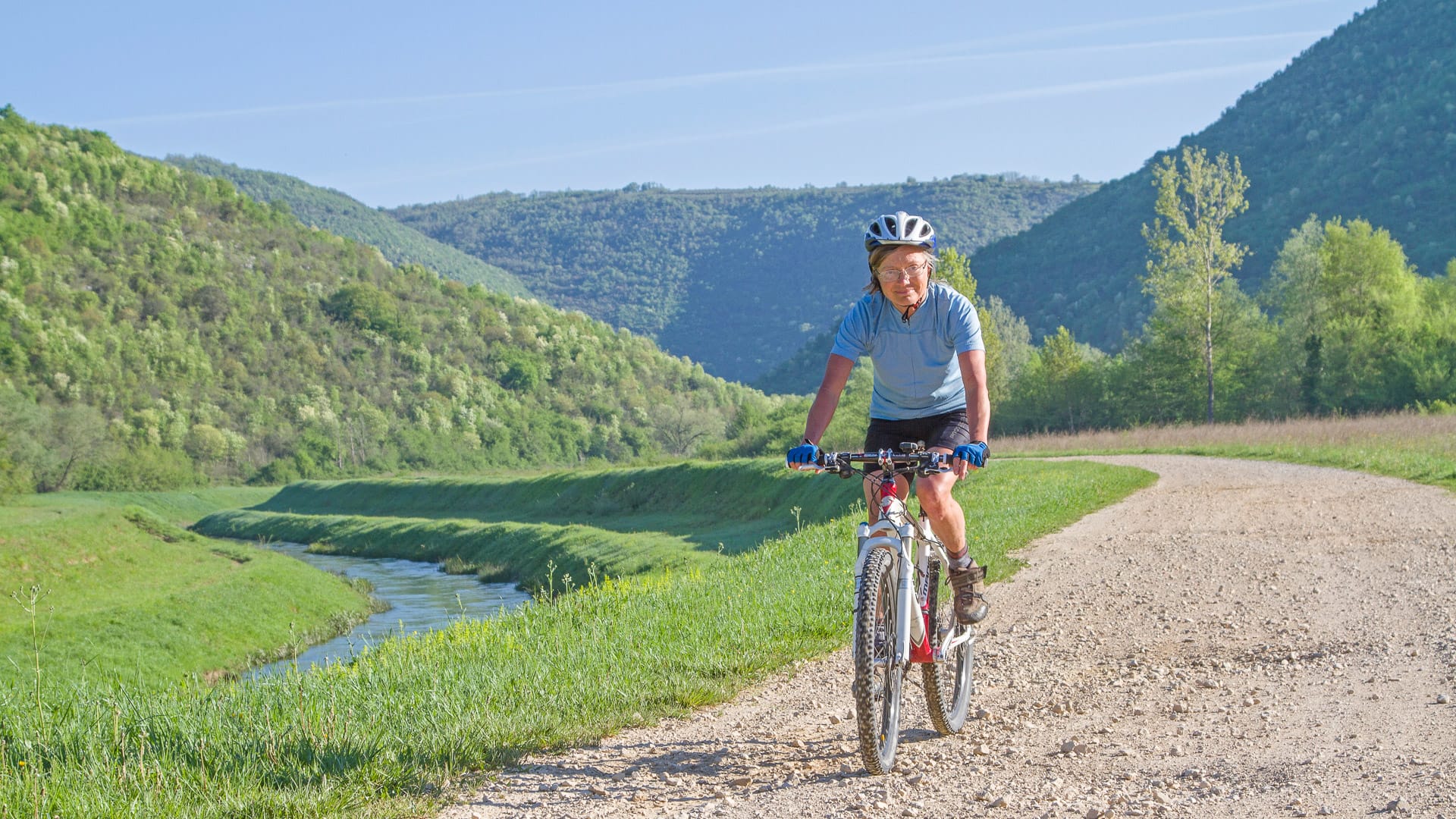
Cycling in Istria
Best of the rest
If you want to explore further, there are plenty more places to ride in Croatia:
Pag Island
Pag is known for its rocky, exposed landscape, with some parts of the island often compared to the surface of the moon. Pale limestone, dry-stone walls and salt pans all form part of the scenery, while the bora wind has helped shape the island’s distinctive landscape.
For cyclists, Pag has an extensive network of gravel roads and is particularly well suited to gravel cycling and mountain biking. There are also several climbs and viewpoints, including a climb towards Wind Farm Ravna 1 near the town of Pag, with views across the island, its salt pans and towards the Velebit mountain range.
The island is also famous for Paški sir, its distinctive sheep’s cheese, which remains an important part of Pag’s food culture.
The open landscape means there can be little shelter from the sun or wind on some routes, so it is worth carrying plenty of water and checking the conditions before setting out.
Find more route ideas and practical information in our guide to cycling in the Zadar region.
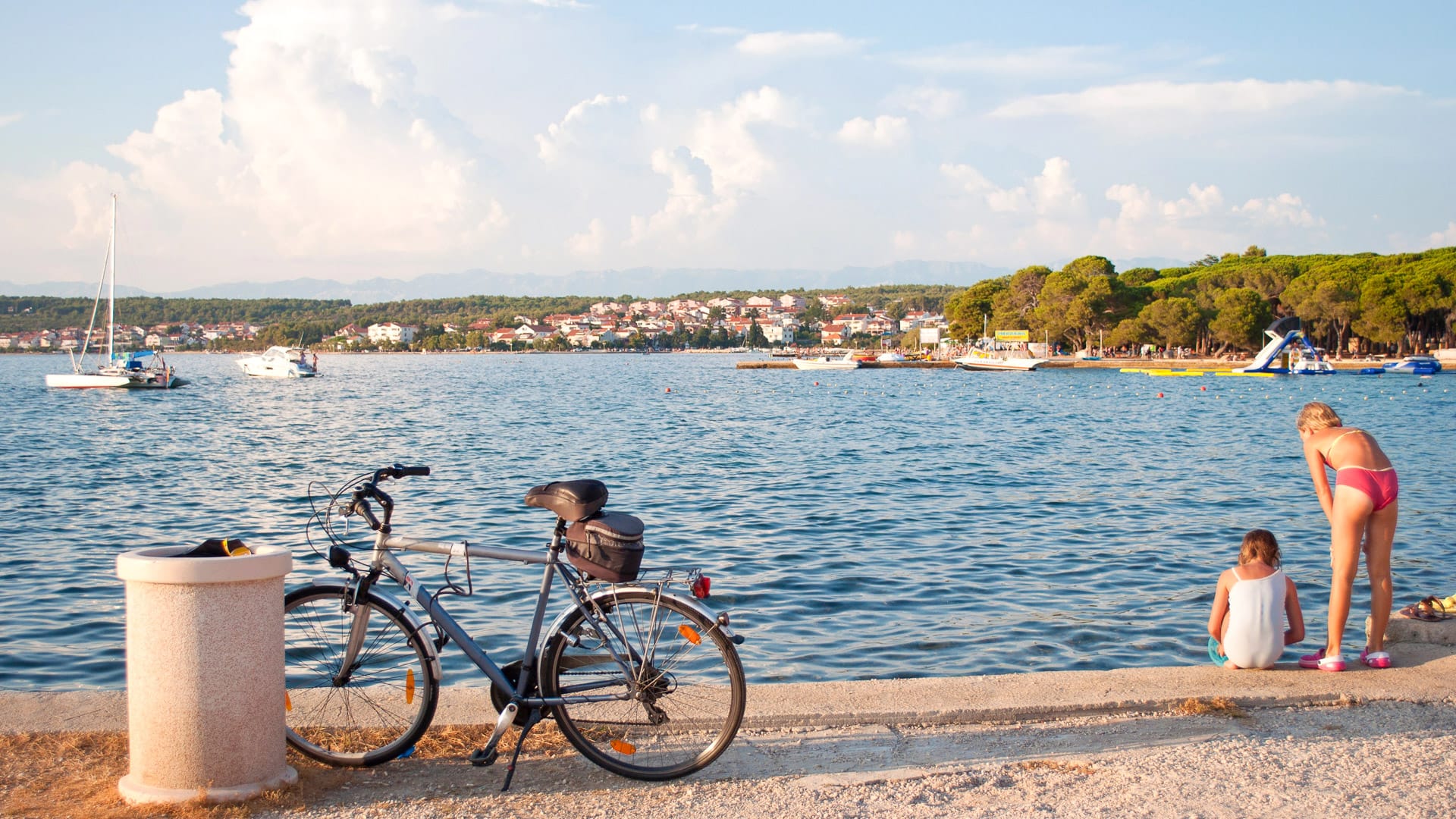
Scenic view on the town of Zadar
Losinj and Cres islands
Lošinj and Cres are two long, narrow islands in the Kvarner archipelago. They are linked at Osor by a small bridge across the narrow canal separating the islands.
Cres has large areas of relatively undeveloped countryside, with opportunities for cycling, hiking and exploring quieter coastal settlements. Lošinj has more visitor infrastructure around Mali Lošinj and Veli Lošinj, as well as cycling and other outdoor activities.
Together, the two islands lend themselves well to a multi-day cycling trip, with the road connection at Osor making it possible to ride between them without taking another ferry.
Mainland peninsula
The mainland coast has plenty to explore too.
Crikvenica is one of the harbour towns on the Kvarner coast, while further north Opatija is known for its Lungomare, a 10-kilometre waterfront promenade running from Volosko through Opatija towards Lovran.
Opatija developed as a fashionable resort during the Austro-Hungarian period and was officially declared an imperial climatic health resort in 1889. Many of the villas and grand hotels from this period remain part of the town today, with Mount Učka rising behind the coast.
On the western side of the Istrian Peninsula, Rovinj is one of Croatia’s best-known coastal towns and can get busy during the summer months. Seasonal passenger services currently link Rovinj with Venice.
Just offshore is St Andrew, better known as Red Island, which can be reached by boat. The islands around Rovinj can also be explored by kayak, giving you another option if you fancy some time off the bike.
And these are only a few possibilities. Croatia’s northern islands and coastline offer plenty more to explore if you have time to extend your cycling trip.
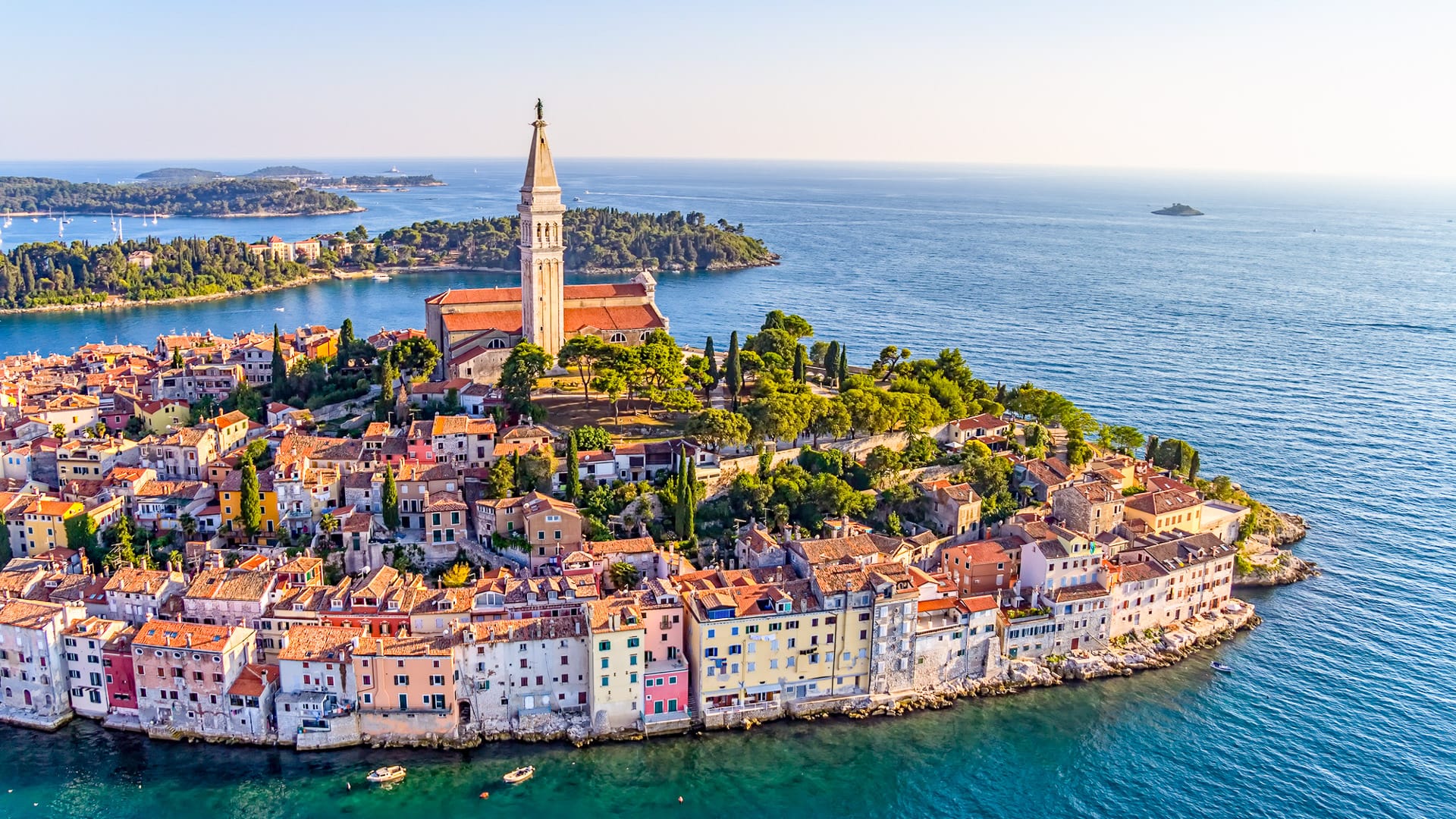
Aerial shoot of Old town Rovinj at sunset, Istra region, Croatia.
Things to consider when picking the best Croatia boat and bike tour for you
Once you have decided which part of Croatia interests you, the next step is comparing the practical details. Two trips covering the same islands can provide very different holidays.
Duration
When researching Croatia boat and bike tours, you’ll find everything from day trips to holidays lasting two weeks or more.
If you want to explore both the northern and southern island groups, allow plenty of time. Around two weeks gives you much more scope to link the different areas without spending too much of the trip travelling between them. Ferry frequency also varies by route and season, with some of the more remote islands having fewer connections.
If you’re planning to travel independently with your bike, check the rules for every sailing carefully. Jadrolinija allows bicycles on its ferries, but not on its high-speed catamarans, and other operators have their own rules.
It’s also worth building some flexibility into an independent island-hopping itinerary. There are generally more sailings during the summer, but services can also be busier at this time of year. Timetables change through the seasons and bad weather can sometimes affect sailings, so avoid making your schedule too tight.
Guided or self-guided
Here’s a table summary of some of the main differences between guided and self-guided Croatia bike and boat tours.
| Consideration | Guided tours | Self-guided tours |
| Route planning | Routes are planned for you, with a guide leading or supporting the ride. | Routes are usually provided, often as GPX files or route notes, but you navigate yourself. |
| Riding pace | You may need to follow a group pace or set schedule, depending on the tour. | You generally have more freedom to ride at your own pace and stop when you want. |
| Support | A guide or support team is usually on hand if you need help. | There is less immediate support if you have a mechanical problem or take a wrong turn. |
| Organisation | Accommodation, boat transfers and much of the day-to-day organisation are taken care of. | Inclusions vary. Some packages arrange accommodation, luggage and transfers, while others leave more to you. |
| Flexibility | The itinerary is more fixed, which can make spontaneous changes or rest days harder. | There may be more flexibility to change your plans or adjust how much you ride. |
| Ferry logistics | Ferry and boat connections are generally organised for you. | You may need to manage ferry connections and any unexpected changes yourself. |
| Cost | Guided tours can be more expensive due to the additional support provided. | Self-guided trips can cost less, although this depends on what is included. |
| Best for | Cyclists who want more support and less time spent organising logistics. | Cyclists who are comfortable navigating independently and want more freedom over their day. |
When deciding between guided and self-guided, think carefully about the amount of support you think you might need. For example:
- Do you need assistance if you puncture?
- Will you be carrying all of your own clothing, food and water you require for the day or would you prefer to refresh your supplies from a support vehicle at lunch time?
- Are you fairly self-sufficient and want to know that support is only there if you need it?
Do you need an organised tour?
We know several operators in this region, so if you’re looking for support, fill in this enquiry box and we will try and connect you.
Route
Who is a Croatia boat and bike tour for?
Croatia boat and bike tours can differ considerably in the amount and difficulty of the cycling they include. Some are designed around shorter, more leisurely rides, while others put much more emphasis on distance, climbing and time in the saddle.
It is also worth looking at how the day is structured. Some tours include regular stops at historic sites and other points of interest, while others give you longer stretches of uninterrupted riding. Think about how much sightseeing you want to do along the way.
Check the daily distances and climbing carefully too. A relatively short ride can still feel demanding if it includes repeated climbs away from sea level.
If you are joining a guided group, find out what range of abilities the tour is aimed at and how different riding speeds are managed. A group with a wide spread of fitness and experience can be harder to keep together comfortably.
Are these the islands you want to visit?
Croatia’s archipelago includes more than 1,200 islands, islets and rocky formations, so there is a lot of coastline to explore.
Look closely at the day-by-day itinerary rather than simply choosing a tour because it visits “the Croatian islands”. Which islands do you actually cycle on? How much time do you spend riding there? Are any included only as overnight or boat stops?
If there is a particular island or stretch of coastline you want to ride, make sure the tour gives you meaningful cycling time there.
Group size
Group sizes on Croatia boat and bike tours can vary considerably, so it is worth checking how many people will be on your departure before you book.
This is particularly important if everyone is expected to ride together. A larger group with a wide range of abilities can make it harder to accommodate different speeds, especially if riders are not given GPX files or the option to ride independently.
Pros and cons of bigger v smaller groups
Larger groups can work well if the social side of the trip is important to you. There may also be a better chance of finding other cyclists who ride at a similar pace.
On the other hand, bigger groups can mean more time spent regrouping, loading bikes and waiting at stops. They may also feel less flexible if you prefer to ride more independently.
Smaller groups can make it easier to accommodate different speeds and may allow for a little more flexibility during the day.
However, if you enjoy riding as part of a bigger group and want plenty of people to socialise with, a smaller departure may not suit you as well.
Also check the difference between the boat capacity and the cycling group size. A boat may carry 30 or more guests, but riders may be split into smaller groups once they are on the bikes.
Boat
Take a careful look at the boat you’ll be travelling on. It can have a bigger impact on your trip than you might initially expect.
If you’re organising your own island-hopping cycling holiday, check ferry timetables carefully and make sure bikes are accepted on the specific sailing you want to use. When boarding, follow the crew’s instructions on where and how to store your bike.
Organised Croatia bike and boat holidays use a range of vessels, from smaller boats to larger motor yachts carrying several dozen guests. This can affect everything from cabin space and onboard facilities to the time it takes to get everyone and their bikes on and off the boat.
Bike type is worth thinking about too. A boat carrying a large number of e-bikes or heavier bikes may take longer to load and unload. The size of the vessel can also affect which harbours it can use and how straightforward it is to move bikes between the boat and shore.
Also look closely at how the cycling works once you leave the boat. Do you ride together as a group? Are GPX files provided? Are there regular stops for everyone to regroup? How much of the day is spent cycling compared with sailing and sightseeing?
Finally, check what life aboard will actually be like. Cabin size, deck space, catering and other facilities can differ considerably between boats. If you’re going to be sleeping aboard for several nights, it is worth looking at the boat in as much detail as the cycling route.
Think about the level of comfort, catering and service you want, as well as how important the boat itself is to your overall holiday.
Accommodation
If you’re considering a bike and boat holiday where you sleep aboard, take a close look at the cabin arrangements before you book.
Many boats are set up mainly with twin or double cabins, so single occupancy may be limited or come with an additional supplement. If having a room to yourself is important, check availability early.
Cabins can also be more compact than a typical hotel room. Storage space varies between boats, and you may need to keep luggage in a separate locker or shared storage area, so packing light can make life aboard much easier.
If you would prefer more space, a private bathroom and the option of a single room, a hotel-based island-hopping trip may suit you better.
Meals
Before booking, check exactly which meals are included and what is provided aboard the boat or at your accommodation.
Some Croatia boat and bike trips include breakfast only, while others include additional meals or offer meal packages for an extra charge.
It is also worth thinking about how much flexibility you want. Having more meals included can make budgeting easier, but leaving some lunches and dinners free gives you more opportunity to try local restaurants and explore Croatia’s food and wine away from the boat.
Check whether drinks, snacks and meals ashore are included too, as these can add noticeably to the overall cost of the trip.
Reputation
Knowing you’re booking with a credible operator who has run trips to the region previously is key. (You can find a full list of things to consider before booking here.)
Cost
Cost is an important consideration when comparing Croatia boat and bike tours, but the headline price only tells part of the story.
Look carefully at what is included and what you will need to pay for separately. Bike hire, airport transfers, boat transfers, meals, drinks, single-room supplements and entrance fees can all make a noticeable difference to the final cost.
It is also worth looking at who is running the trip on the ground. Some tours are operated by Croatia-based companies, while others are sold by overseas businesses working with local teams. Local knowledge can be particularly useful when it comes to ferry connections, route conditions and changes to opening times or local services.
Rather than choosing on price alone, compare the full package and decide what represents good value for the kind of trip you want.
What’s next?
Croatia’s islands offer plenty of options for cyclists, whether you want a classic boat and bike holiday, a hotel-based island-hopping trip or something more independent. The key is to look closely at the riding, boat, group size and inclusions so you know exactly what kind of trip you are booking.
Have you cycled in Croatia before? We’d love to hear about your experience in the comments below.
Looking for more cycling inspiration in Croatia? Don’t miss:
- Cycling Croatia, our hub page for cycling in the country
- Cycling in Croatia: the inside guide, for an overview of the best places to ride, routes and practical planning tips
- Croatia bike and boat tours, including tips, routes and things to consider before you book
- Barge and bike tours Europe, with 11 essential tips for beginners
- Cycling Zadar, Croatia, for the best routes and places to stay
Please support Epic Road Rides
A huge amount of time and effort goes into the article you’ve just read, all with the aim of helping you!
If you found what you’ve read useful, I’d really appreciate it if you dropped something in the tip jar here.
It’s a way you can say thank you and help us carry on creating top quality content with no annoying ads and no pay wall.
Clare Dewey is a cyclist with a passion for travel. She set up epicroadrides.com in 2018 to help make it easy for cyclists to explore the world by bike. Today her mission is still inspiring cyclists to discover new places on two wheels - and doing what she can to make sure they have the best possible time while they're there. Clare has visited 50+ destinations around the world, many of them by bike.
Want to connect with Clare? Find her over on LinkedIn.
Last Reviewed: 08 September 2026
First Published: 29 February 2024
The contents of this website are provided for general information purposes only. It is not intended to amount to advice and you should not rely on it. You should carry out your own due diligence and risk assessments and take professional advice. Views expressed by interviewees or other users of this website do not necessarily represent our views. We make no representations, warranties or guarantees, whether express or implied, that the content on our website is accurate, complete or up to date. If you use any information or content on this website, download from, or otherwise obtain content or services through our website, it is entirely at your own discretion and risk. Epic Road Rides Ltd disclaims all liability and responsibility arising from any reliance placed on the information and content on this website. Find out more here.
Comments