
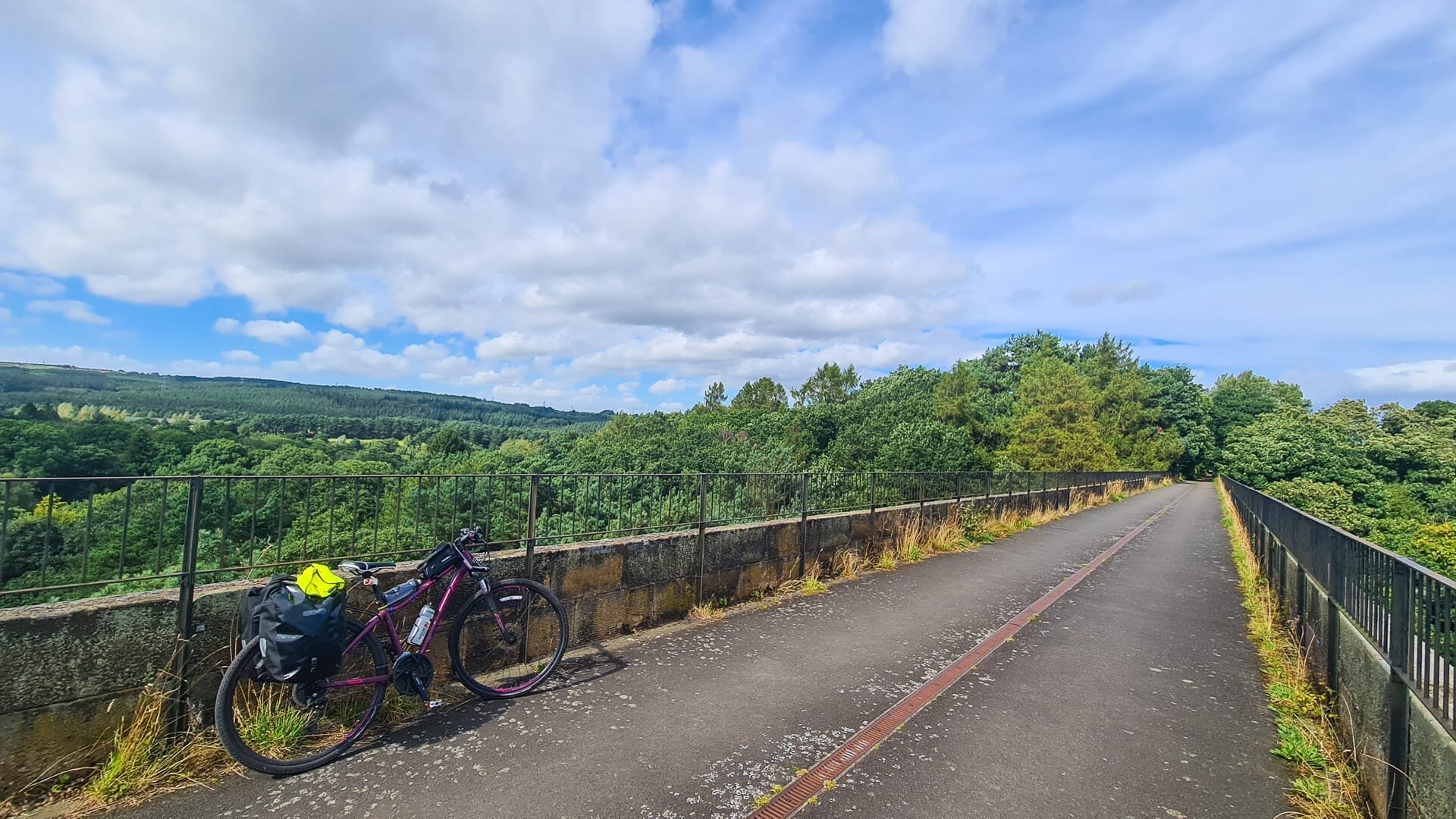
Thinking of riding the UK’s legendary Coast to Coast cycling route? There’s a reason this varied journey is on so many cyclists’ to do list!
The Sea to Sea (C2C) crosses northern England between the Irish Sea and the North Sea. There are several ways to complete it; this guide focuses on the Whitehaven to Tynemouth option, a journey of around 222 kilometres (137.5 miles).
The route is on a beautiful mix of quiet country lanes and traffic-free cycle paths through wild natural beauty and towns and villages steeped in mining heritage. The central section of the route includes some gruelling climbs to conquer, with picturesque coastal towns to be enjoyed at either end.
I live in the UK and have spent years researching and writing about cycling destinations and routes for Epic Road Rides, including the practical details riders need to consider when planning a trip like the C2C.
In this guide, we take a closer look at what to expect from the Whitehaven to Tynemouth C2C, including the main route sections, terrain, bike choice and practical tips for planning your trip.
Let’s get started!

Clare Dewey is a cyclist with a passion for travel. She set up epicroadrides.com in 2018 to help make it easy for cyclists to explore the world by bike. Today her mission is still inspiring cyclists to discover new places on two wheels - and doing what she can to make sure they have the best possible time while they're there. Clare has visited 50+ destinations around the world, many of them by bike.
Want to connect with Clare? Find her over on LinkedIn.
Be aware! As of September 2026, a section of Route 7 between Keswick and Threlkeld is closed from 7 September until the end of October 2026 while a bridge over the River Greta is replaced. The published walking diversion is not suitable for cyclists. Check the latest official route information before setting out.
Table of contents
This guide contains a lot of useful information. To help make it more digestible, we’ve broken it down into several parts:
- Part 1: An overview of the UK’s Coast to Coast cycling route
- Part 2: Why is the Coast to Coast cycling route a must-do?
- Part 3: Official C2C route sections
- Part 4: Planning for your coast to coast cycling tour
- Part 5: Riding the Coast to Coast guided v independent
Part 1: An overview of the UK’s Coast to Coast cycling route
The coast to coast cycling route from Whitehaven to Tynemouth is known as the C2C, which is officially short for Sea to Sea rather than coast to coast. It is one of the most popular long-distance bike routes in the United Kingdom.
The official Sea to Sea has two possible starting points, Whitehaven and Workington, and two possible finishes, Sunderland and Tynemouth.
This guide focuses on Whitehaven to Tynemouth, which is the classic C2C route. Current official route information lists at around 222 kilometres (137.5 miles).
Top tip! The classic C2C route is the best way to cycle to take advantage of the prevailing winds. More on this below.


Where is it?
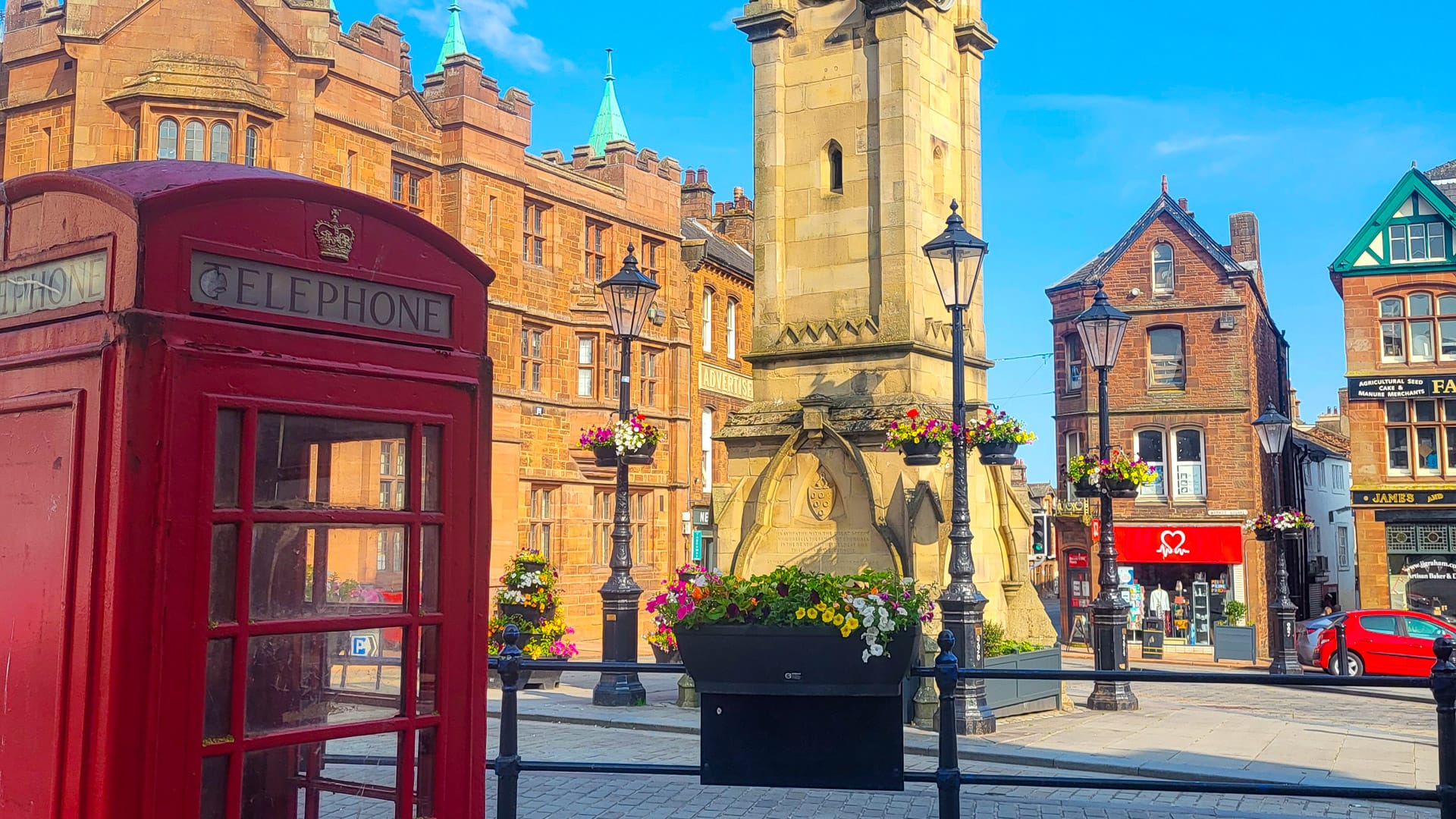
The classic C2C route travels through the counties of Cumbria, County Durham and Northumberland. It crosses the Lake District, the Eden Valley and the Pennines, and ends on the Northeast Coast.
Popular stop-off points include Keswick, Penrith, Alston and Stanhope.
You ride through national parks, remote moorland, former mining villages and historic market towns. The mix of natural beauty, cultural interest and friendly locals makes this a rewarding and memorable journey.
Variations of the route
There is no single start and finish combination for the C2C. The official Sea to Sea has two western starting points, Whitehaven and Workington, and two eastern finishes, Sunderland and Tynemouth.
Current official distances are:
- Workington to Sunderland: around 202 kilometres
- Workington to Tynemouth: 209 kilometres
- Whitehaven to Sunderland: 215 kilometres
- Whitehaven to Tynemouth: 222 kilometres
There is also a more technical Off-Road C2C. In 2024, the tougher off-road branches in Cumbria were given separate Off-Road C2C signage, including a green mountain bike symbol, and ceased to carry National Cycle Network route numbers.
History of the route
The route was created in 1994 and developed by Sustrans, a UK charity (now known as Walk Wheel Cycle Trust) that works on sustainable transport, in partnership with local authorities and cycling groups.
It was the first of the UK’s official long-distance cycle routes and helped launch the National Cycle Network (NCN).
The route was designed to be achievable for regular cyclists. It combines quiet country lanes, disused railway lines and bridleways. The C2C was also intended to support local economies and bring riders into quiet towns and villages that once relied on mining and industry, such as the market town of Alston.
Since its launch, the coast to coast has grown in popularity. Today, the route attracts 12,000 to 15,000 riders each year (source), including many charity groups taking on the challenge to raise money for a good cause.
What is the terrain like?
Be aware! There are some steep climbs on the coast to coast, particularly in the Lake District and across the Pennines.
The route includes several high points, such as Hartside Pass, which reaches 580 metres. These are followed by long, rewarding descents.
The last section of the route from Consett is on more gentle, flatter terrain.
What are the surfaces like?
The terrain is a mix of road and off-road.
About 84% of the route is on asphalt roads, 14% on unsealed but firm tracks and cycle paths and about 2% on unsealed loose tracks or cycle paths.
You can expect quiet country lanes, traffic-free cycle paths, old railway lines, bridleways and short sections of main road.
Be aware! Some surfaces are smooth and fast, while others can be rough or loose.
Top tip! A gravel or hybrid bike is a good choice if you are planning to stick to the official route. A road bike is also suitable if you are happy to use the alternative road sections. More on this below.
Is it well signposted?
Yes, the C2C coast to coast cycling route is part of the National Cycle Network and is clearly marked as Route 7. In 2024, the western section of the Whitehaven to Sunderland C2C was re-signed as National Route 7 to simplify its numbering (source). The official C2C map lists National Route 14 between Consett and Tynemouth.
Top tip! Signposts are frequent and easy to follow, especially in busier areas.
However, it is still worth carrying a map or using a GPS cycling app. Some signs can be missed at junctions or hidden by vegetation, particularly in more rural areas.
Who is the coast to coast route for?
The C2C coast to coast cycling route is ideal for a range of cyclists looking for a rewarding but challenging ride across northern England.
It best suits confident riders who enjoy climbing and can manage daily distances of up to 75 kilometres. It is a great choice for cycle tourists and groups looking for a challenge.
Be aware! The C2C is not suitable for young families or leisure riders looking for an easy cycling route. The route includes steep climbs, remote sections and road traffic in places. While parts of it are on traffic-free cycle paths, the full route requires stamina and confidence in cycling with traffic.
Part 2: Why is the Coast to Coast cycling route a must-do?
If you are looking for a ride that is rich in variety, achievement, history and beautiful scenery, you’re in the right place. There’s a reason this coast to coast cycling route is one of the most iconic long-distance rides in the UK!
A rewarding challenge
There is something deeply satisfying about cycling the coast to coast; this route takes you across the full width of Northern England, from the Irish Sea to the North Sea.
In between your coastal start and finish, you cycle hundreds of kilometres of beautiful, peaceful countryside. You’ll also conquer the scenic Hartside Summit, which sits at 580 metres of elevation and boasts panoramic views across the surrounding remote countryside.
Completing this journey provides a real achievement and is one of the reasons it’s such a popular charity challenge route.
Scenic landscapes
The coast to coast cycling route takes riders on an ever-changing journey through some of England’s most scenic natural landscapes.
Some of the standout countryside you encounter includes:
- The Lake District: home to towering mountains, vast lakes and picture-postcard towns and villages.
- Northumberland: the UK’s largest and least populated county, home to rugged fells, remote upland roads and peaceful, picturesque valleys.
- The North Pennines: an area of outstanding beauty and a designated UNESCO Global Geopark. It is known for its stark, heather-covered moorland and rich mining heritage.
Industrial heritage
The C2C cycling route offers a fascinating journey through England’s industrial and cultural past.
The route gives you a real insight into the small, rural communities that have been shaped by the region’s rich lead mining past.
Some of the history you will encounter includes:
- Former lead mining villages such as Allenheads and Nenthead, home to old lead mines.
- Cycling on the old Victorian railway lines of the Derwent Valley and Waskerley Way
- Historic market town of Alston, England’s highest market town, home to a cobbled street high street and surrounded by the scenic North Pennines.
- Castlerigg Stone Circle is a Neolithic monument in the Lake District that boasts one of the best backdrops of any British stone circle.
- Historic town of Penrith is home to medieval castle ruins

Castlerigg stone circle has a magnificent backdrop
Part 3: Official C2C route sections
Walk Wheel Cycle Trust divides the Whitehaven to Sunderland C2C into five official route sections. The Whitehaven to Tynemouth option follows the same route through to Consett, before taking National Route 14 towards Tynemouth.
Whitehaven to Keswick
The first ten miles from Whitehaven follow a surfaced path. The route then uses quiet lanes, passing Kirkland and Lamplugh before descending towards Loweswater. Whinlatter Pass provides the first major climb, followed by a descent towards Bassenthwaite and Keswick.
Keswick to Langwathby
From Keswick, the C2C continues towards Langwathby in the Eden Valley. There are alternative route options on this section, including the more challenging Old Coach Road across Matterdale Common, before the route passes Greystoke, Blencow and Penrith.
Be aware! As of September 2026, the Route 7 section between Keswick and Threlkeld is temporarily closed while a bridge over the River Greta is replaced. Check the latest official route information before riding.
Langwathby to Allenheads
Walk Wheel Cycle Trust describes this as the most mountainous part of the route, with four major climbs in around 20 miles. Hartside reaches 580 metres before the route continues towards Alston, Garrigill and the former lead-mining areas around Nenthead and Allenheads. Black Hill, at 609 metres, is the highest point on the C2C.
Allenheads to Consett
This section marks the end of the rough, hilly terrain of the North Pennines and the beginning of the former industrial landscapes of the North East. The traffic-free Waskerley Way leads towards Hownsgill Viaduct and then Consett.
Consett to Tynemouth
The official C2C map shows the Tynemouth option following National Route 14 between Consett and Tynemouth. This differs from the Whitehaven to Sunderland option, which continues east from Consett on National Route 7.
Tynemouth is one of the two official North Sea finish options for the C2C, alongside Sunderland.

View from Tynemouth Prioriy, overlooking Tynemouth Harbour
Part 4: Planning for your coast to coast cycling tour
Practicalities of C2C cycling holidays
How challenging is the cycling?
Be aware! The C2C coast to coast cycling route is a rewarding ride, but it is not an easy one. Underestimate it at your own peril.
The route includes many climbs, especially through the Lake District and over Hartside Pass (580 metres). The climbs out of Garrigill and over Whinlatter Pass are also steep and demanding.
To complete this route comfortably, you should be an experienced cyclist with a good level of fitness; this includes feeling comfortable cycling up to 75 kilometres a day over hilly terrain.
However, if you are not a strong cyclist or are worried about the hills, it’s worth considering an e-bike.
Top tip! Plan to train for at least three months before your coast to coast trip. If you aim to ride 50 kilometres on both weekend days in the month leading up to your trip, you should be well prepared for the coast to coast’s legendary hills.
When to cycle?
The best time to ride the coast to coast cycling route is between April and June or in September, when the weather is generally more settled. July and August can be warmer but often bring more rain and holiday traffic.
Be aware! It is not advisable to ride the coast to coast between November and March. Conditions can be very cold, with short daylight hours and a higher risk of ice and poor visibility.
Top tip! Whatever the season, pack for all weather conditions. You will likely face sunshine, wind and rain, all in a single day. Bring reliable waterproofs, extra clothing, sunscreen and sunglasses. More on what to pack below.
Shoe covers are also worth considering as the route is rural and roads can sometimes be muddy and wet.

Ennerdale water in the Lake District
Where to stay?
Remember to double-check bike storage arrangements (and any other services you need) before booking your accommodation as policies often change and they may charge for storage.
The coast to coast cycling route passes through national parks and popular tourist areas, so there is a wide choice of accommodation. You will find everything from five-star boutique hotels and traditional B&Bs to campsites and small guesthouses. Many places are cycle-friendly and used to welcoming riders.
However, availability can be limited. You need to book in advance, especially in peak months. You should also make sure your accommodation fits with the stages of the route and your daily mileage requirements.
Be aware! In smaller villages, options may be limited to just one or two places. However, this is all part of the charm of exploring rural Northern England.
If travelling with your own bike, check that secure overnight bike storage is available. E-bike riders should also confirm charging arrangements before booking.
What’s the best bike to ride C2C?
As mentioned previously, the coast to coast cycling route features a variety of asphalt terrain and unsealed gravel paths. However the off-road parts that are tough are always optional and there’s an alternative version on road. Likewise, the traffic-free sections on railway tracks, are nearly all on tarmac and cinder; while this can get muddy when it trains, there’s a road option too.
Bearing these things in mind, your choice will depend on whether you want to stay off-road or are happy taking the road alternative, as well as whether you’re carrying your own luggage. Whichever you opt for, check you have mudguards fitted!
- Hybrid or touring bikes – these are probably the most versatile choice, as they handle both tarmac and light off-road surfaces comfortably. They have relatively narrow tyres but the wheels are wider and stronger and the tyres are less inclined to punctures than on a road bike.
- E-bike – you could also opt for an e-bike tourer if you want some support on the climbs. With good planning, you can ride the route independently on an e-bike – just check in advance that your accommodation allows overnight charging and has secure bike storage.
- Road bikes are possible, but only if you are confident dealing with punctures and happy to stick to the tarmac alternatives, where needed. The big advantage are their skinny tyres which make for faster riding. You can’t carry a pannier bag on a road bike though; you’ll need to use your jersey pockets for whatever is not transferred with your luggage.
Is bike hire available?
Bike hire is available from several providers, including Pedal Power in Tynemouth.
Availability, bike types and collection points vary, so book ahead and confirm that the provider covers your chosen start and finish.
Is mechanical assistance available?
The route passes several bike shops that can assist with any issues you may encounter along the way, for example, Whinlatter Bike in Keswick and Aragon’s in Penrith.
However, be aware that the coast to coast also includes several long, remote sections. So, if you are cycling independently, carry the equipment you need for common problems such as punctures and make sure you know how to use it. For more serious faults, having a backup transport plan is sensible.
Tips for cycling coast to coast on the C2C
Which is the best direction to cycle the C2C?
Most people ride west to east, cycling the C2C from Whitehaven to Tynemouth, to take advantage of the prevailing wind direction.
Top tip! Winds in the UK typically blow from the west, so riding this way gives you a better chance of having the wind at your back for much of the journey. This can be a welcome boost on the longer days and steep climbs.
The gradients are generally kinder in this direction too, with longer downhill and shorter uphill sections.
How long does it take?
Most people complete the coast to coast cycling route over three to five days, depending on fitness and how much time they want to explore along the way.
Strong, experienced riders sometimes tackle it in a single day. But this is a big challenge and not typical for most regular cyclists.
Is there much traffic on the route?
The C2C uses a mix of traffic-free paths, quiet lanes and sections of road. Traffic levels vary along the route, particularly around towns and as you approach Tyneside.
Don’t assume that the whole C2C is traffic-free. Stay alert at junctions and on road sections even when the preceding part of the route has been separated from traffic.
Is there anything to be aware of on route?
The usual risks of cycling apply to riding this route.
Be aware that the road surfaces won’t be in perfect condition, especially after bad weather.
Take particular care on the descents which can be narrow and technical, even on road.
Make sure you are confident riding a bike, know how to brake and use your gears effectively.
Do I need to train?
Of course, training will make your experience of riding the C2C more pleasurable! This is a hard route with some big climbs.
But that said, if you take your time and ride an e-bike or you’re not too proud to push up the hills, then even if you’re not super fit, you can probably make it around!
What to pack?
Be aware! It can quickly get cold in the hills. This includes cooler, wet conditions.
Be prepared to pack for all seasons; you could have warm sunshine in April and even snow as late as June or July.
Bring your waterproofs, warm layers, as well as your sunglasses and suncream. Its also worth packing some gloves.
Top tip! If you are planning to carry all your gear on an independent C2C cycling tour, make sure your panniers are waterproof.
Snacks and plenty of water should also be packed for longer, more remote sections.
For more information about what to pack see our useful guide.
Is it worth extending your stay?
If time allows, it is definitely worth considering extending your stay either before or after you have completed your coast to coast ride.
Newcastle upon Tyne is a lively and welcoming city with plenty to explore if you have not visited before. It offers a mix of culture, history and great food, all set along the vibrant River Tyne. Cultural highlights include the Baltic Centre for Contemporary Art and The Glasshouse International Centre for Music, both of which are located on the city’s scenic quayside.
Whitehaven on the west coast is a friendly Cumbrian town with a strong local identity. Just nearby is St Bees Head, a dramatic stretch of coastline with towering red sandstone cliffs dating back over 200 million years.

Newcastle Quayside
How do you get back to the start?
From Newcastle Airport, you can take the Metro directly to Newcastle Central Station. From there, catch a train to Carlisle, then continue by train to Whitehaven.
Make sure to check bike carriage rules when booking, as spaces can be limited.
Be aware! There are some restrictions on the times you can travel with bikes on the metro, as well as how many bikes on board. Find out more information about travelling with your bike on the metro here.
Are there toilets on the route?
There are public toilets in larger towns along the route, such as Penrith and Keswick.
However, on quieter stretches, facilities can be limited, and you may need to take a discreet break outdoors. If you do, please be respectful of the environment and take any toilet paper with you.
Part 5: Riding the Coast to Coast guided v independent
Cycling the C2C independently
The C2C is well established as a long-distance cycling route, so experienced cycle tourers may be comfortable organising the trip themselves.
Walk Wheel Cycle Trust publishes an official C2C map covering the Whitehaven and Workington starts and the Sunderland and Tynemouth finishes. Official GPX files are also available for all four route options.
Going independently gives you more freedom over your itinerary, including how many days you ride and where you stop overnight. However, you will need to organise the practical details yourself. These include accommodation, navigation, luggage, bike transport and what to do if you have a mechanical problem.
Top tip! Routes and access can change, so check the latest official route information and closures shortly before setting off, even if you already have a GPX file.
Riding the C2C with an organised tour
For cyclists who would rather have some of the logistics taken care of, there are also operators offering organised C2C cycling trips.
Exactly what is included depends on the operator and trip. Tour operators can take care of elements such as accommodation reservations and luggage transfers, as well as providing support. Some trips also include a riding guide.
A supported trip can be particularly useful if you do not want to spend time working out overnight stops or arranging luggage transfers. It may also appeal if this is your first multi-day cycling trip or you simply want someone else to handle more of the planning.
Be aware! Check exactly what is included before booking. Bike hire, transfers, guiding, meals and mechanical support will differ between operators and packages.
Looking for support with your C2C trip?
We know several operators in this region, so if you’re looking for support, fill in this enquiry box and we will try and connect you.
What’s next?
We hope this article has helped you decide whether this iconic sea to sea cycle route is for you.
Or perhaps you have already ridden the C2C Whitehaven to Tynemouth before? Let us know your thoughts in the comments below!
For more inspiring cycling challenges, don’t miss:
- Ultimate cycling challenges in 2025
- A guide to corporate cycling challenges
- A guide to charity cycling challenges
- Best coast to coast bike rides
- World’s best long distance cycling routes
- Europe’s best long distance cycling routes
Looking for more cycling in the Lake District? You might like this guide to self-guided Lake District cycling holidays.
We think you might also enjoy our pick of the best UK bike tours, which features the coast-to-coast cycle route, or check out our in-depth guide to the Isle of Man for another UK destination to explore.
Please support Epic Road Rides
A huge amount of time and effort goes into the article you’ve just read, all with the aim of helping you!
If you found what you’ve read useful, I’d really appreciate it if you dropped something in the tip jar here.
It’s a way you can say thank you and help us carry on creating top quality content with no annoying ads and no pay wall.
Looking for an organised cycling trip?
If you want someone to help you plan and book your cycling holiday, fill out this form. We aren’t a tour operator/agent but we work with lots of people who are and will do our best to put you in touch with someone that can help (within 24 hours where possible)!Clare Dewey is a cyclist with a passion for travel. She set up epicroadrides.com in 2018 to help make it easy for cyclists to explore the world by bike. Today her mission is still inspiring cyclists to discover new places on two wheels - and doing what she can to make sure they have the best possible time while they're there. Clare has visited 50+ destinations around the world, many of them by bike.
Want to connect with Clare? Find her over on LinkedIn.
Last Reviewed: 07 September 2026
First Published: 04 July 2025
The contents of this website are provided for general information purposes only. It is not intended to amount to advice and you should not rely on it. You should carry out your own due diligence and risk assessments and take professional advice. Views expressed by interviewees or other users of this website do not necessarily represent our views. We make no representations, warranties or guarantees, whether express or implied, that the content on our website is accurate, complete or up to date. If you use any information or content on this website, download from, or otherwise obtain content or services through our website, it is entirely at your own discretion and risk. Epic Road Rides Ltd disclaims all liability and responsibility arising from any reliance placed on the information and content on this website. Find out more here.
Comments