
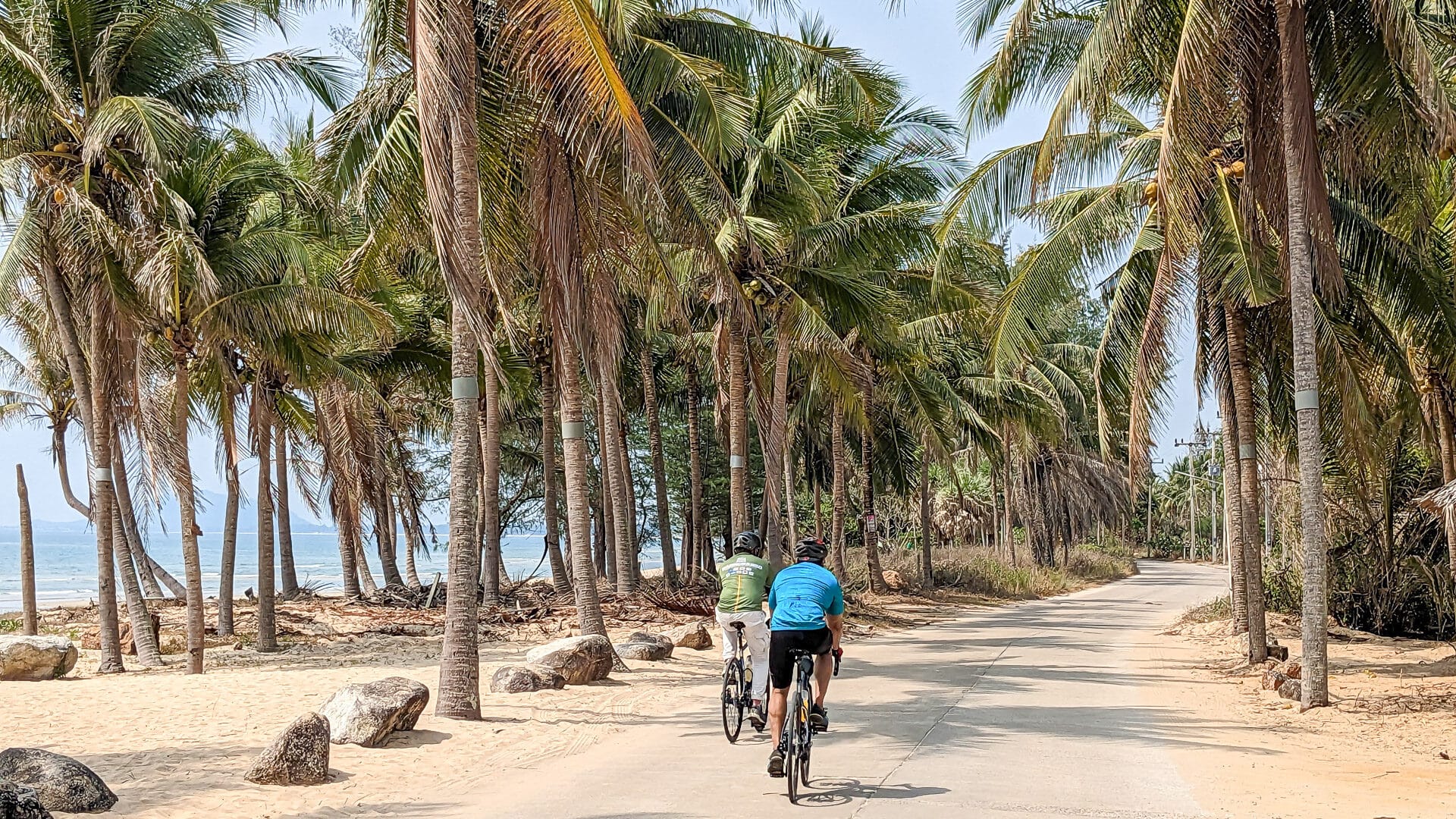

Thailand sits high on many travellers’ must-visit lists, but it’s rarely mentioned for cycling. Yet cycling in Thailand provides an amazing way to experience the country beyond the usual tourist trail.
Thailand is home to mountains in the north, rice plains in the centre and coasts and islands in the south. There’s everything you could want for a holiday: an ancient culture with breathtaking UNESCO sites, peaceful provincial towns where today’s Thai culture lives at its fullest, beaches and islands like almost nowhere else on earth.
With the right route, riders can find peaceful and scenic backroads, smooth asphalt and everyday local life away from the busiest visitor spots.
To help us understand Thailand from a cyclist’s perspective, we spoke with Nicolas Brocard, founder of LocalRoutes, a boutique cycling tour operator based in Thailand.
LocalRoutes offers small-group and self-guided cycling tours across the country, with a focus on quiet roads, local encounters, carefully planned logistics and comfortable places to stay.
Read on for Nicolas’ insight into cycling in Thailand, including where to ride, when to go, what to expect on the roads and how to choose a trip that suits your riding style.

Nicolas Brocard is the founder of LocalRoutes, a boutique cycling tour operator based in Thailand. He's been travelling since childhood, drawn to getting close to local people and cultures wherever he goes rather than staying on the surface. Over years of taking friends on his own cycling adventures, he noticed something: watching them see a place through a bicycle's pace and proximity, with the same wide-eyed curiosity he felt himself, was more rewarding than the rides themselves.
The idea for LocalRoutes first came to him in 2019, but he bought into a stable, comfortable job instead, and the idea sat on the shelf. A few years later, that job stopped being exciting, and the itch for something more purposeful won out.
A committed endurance sports enthusiast, Nicolas believes a bicycle reaches places and creates a kind of interaction with locals that no other mean of transport ever could. LocalRoutes was built on that belief: routes off the busy roads, real encounters with local life, and trips designed to feel authentic and responsible, without sacrificing comfort or safety. Nicolas now runs small-group and self-guided cycling tours across Thailand, still chasing the same thing that got him into this in the first place: the look on someone's face when they see a place properly, from a saddle.
(Photo credit: Nicolas Brocard-Saidi/Local Routes)

We love to introduce our community to cycling businesses, destinations and ideas that we think are genuinely interesting. LocalRoutes caught our attention because of its focus on Thailand, which was a country we hadn't yet written about. We were therefore pleased to work with the LocalRoutes team on this article.
LocalRoutes paid for this advertisement feature. Our decision to collaborate reflects our view that the brand is relevant to our readers; it is not a formal approval, audit or guarantee of its services. Unless we expressly say otherwise, we have not personally taken the trip described or independently verified information supplied by LocalRoutes.
As with any travel purchase, please check the latest trip details, terms and customer protections directly with LocalRoutes before booking. Any booking is made with LocalRoutes, not Epic Road Rides.
Always check current travel information and advice. For visitors from the UK, the UK government travel information pages are here.
Table of Contents
- Part 1: Why visit?
- Part 2: Overview
- Part 3: Cycling bases and routes
- Part 4: Practicalities
- Part 5: Tips
- Part 6: LocalRoutes
Sponsor Message
Considering a cycling holiday in Thailand?
LocalRoutes helps cyclists explore Thailand through carefully planned small-group and self-guided tours since 2023. Alongside Thailand, they also offer cycling tours in Bangladesh, the Philippines and Laos.
Interested? Head to the LocalRoutes website to find out more, including dates and prices.
Got a question for Nicolas Brocard from LocalRoutes?
Fill out this form and we will pass it to LocalRoutes who aim to reply (within 24 hours wherever they can!)
Part 1: Why should cyclists visit Thailand?
Thailand offers an exceptional cycling experience, combining mountain roads, quiet countryside, historic towns, tropical coastlines and distinctive regional food. For cyclists willing to look beyond the busiest tourist routes, it can also provide a much more personal view of the country and its everyday life.
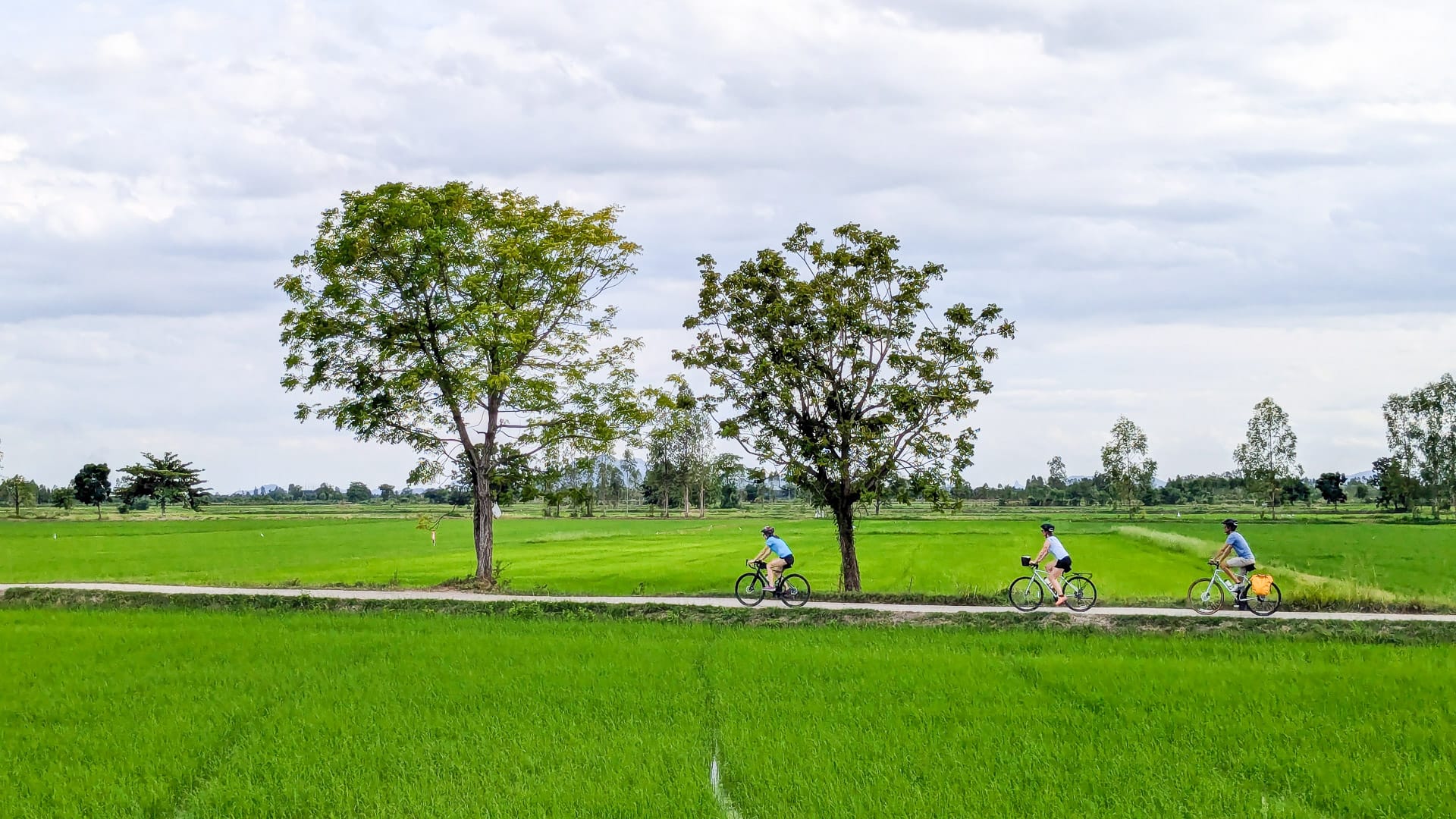
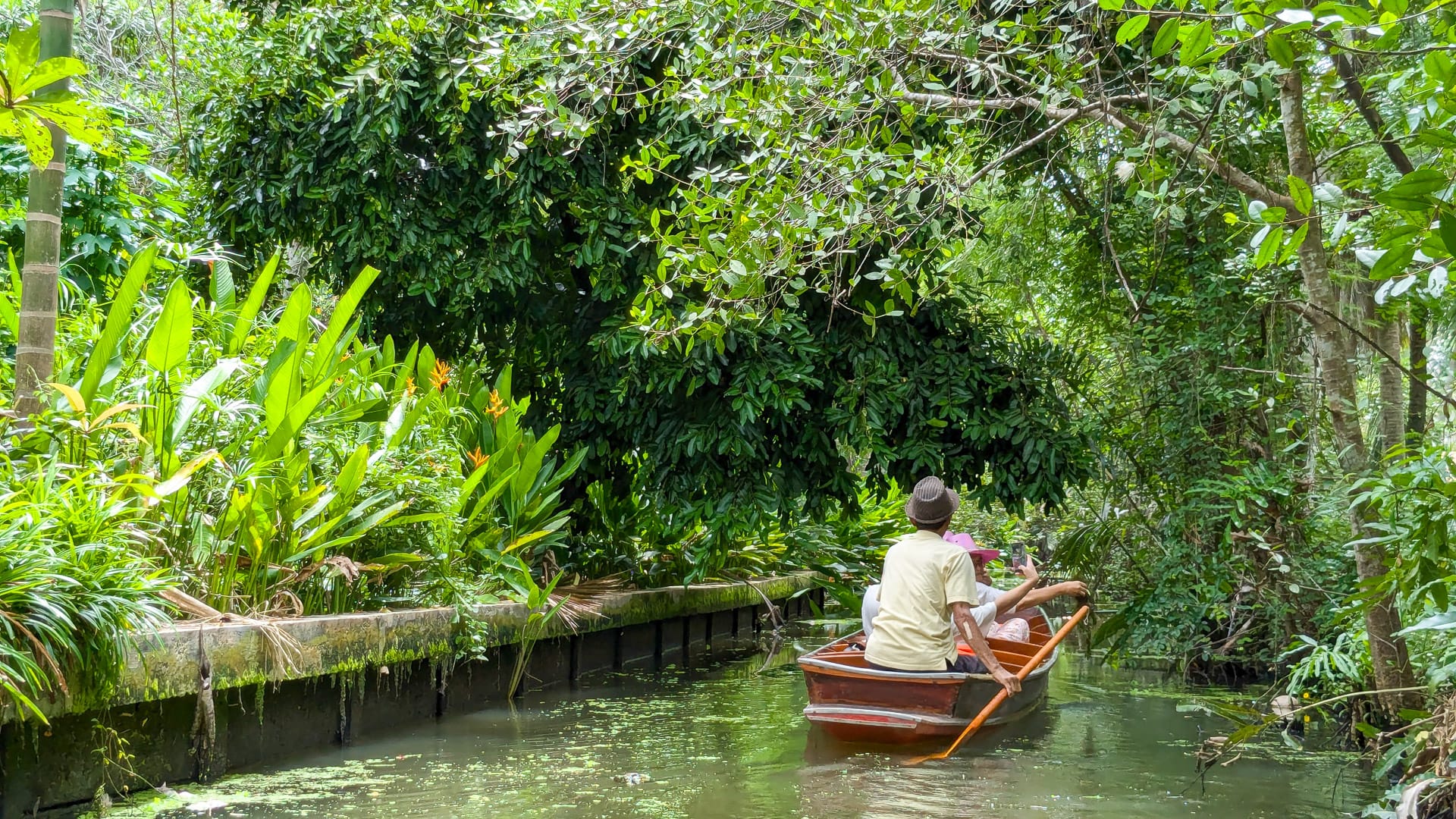
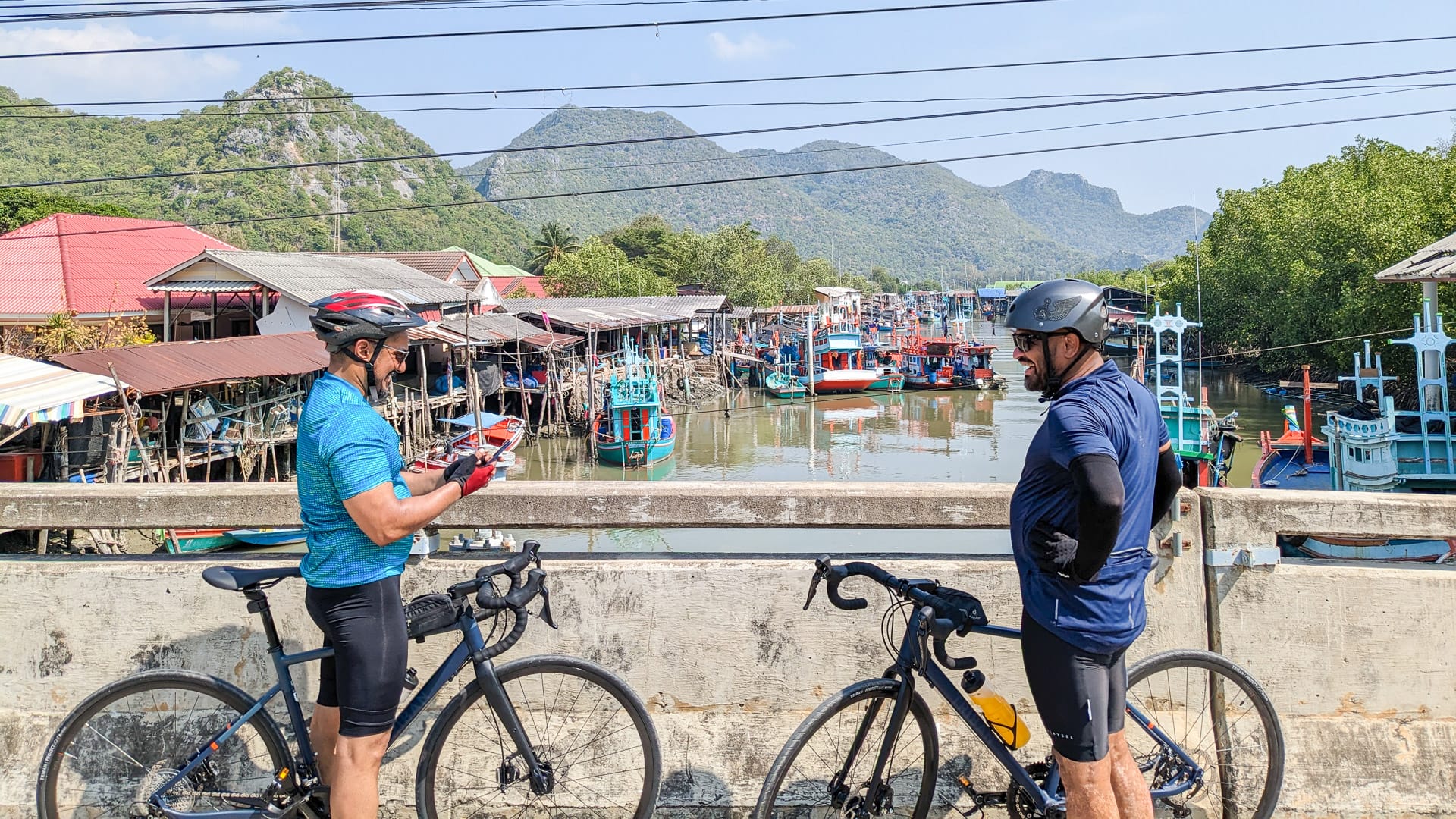
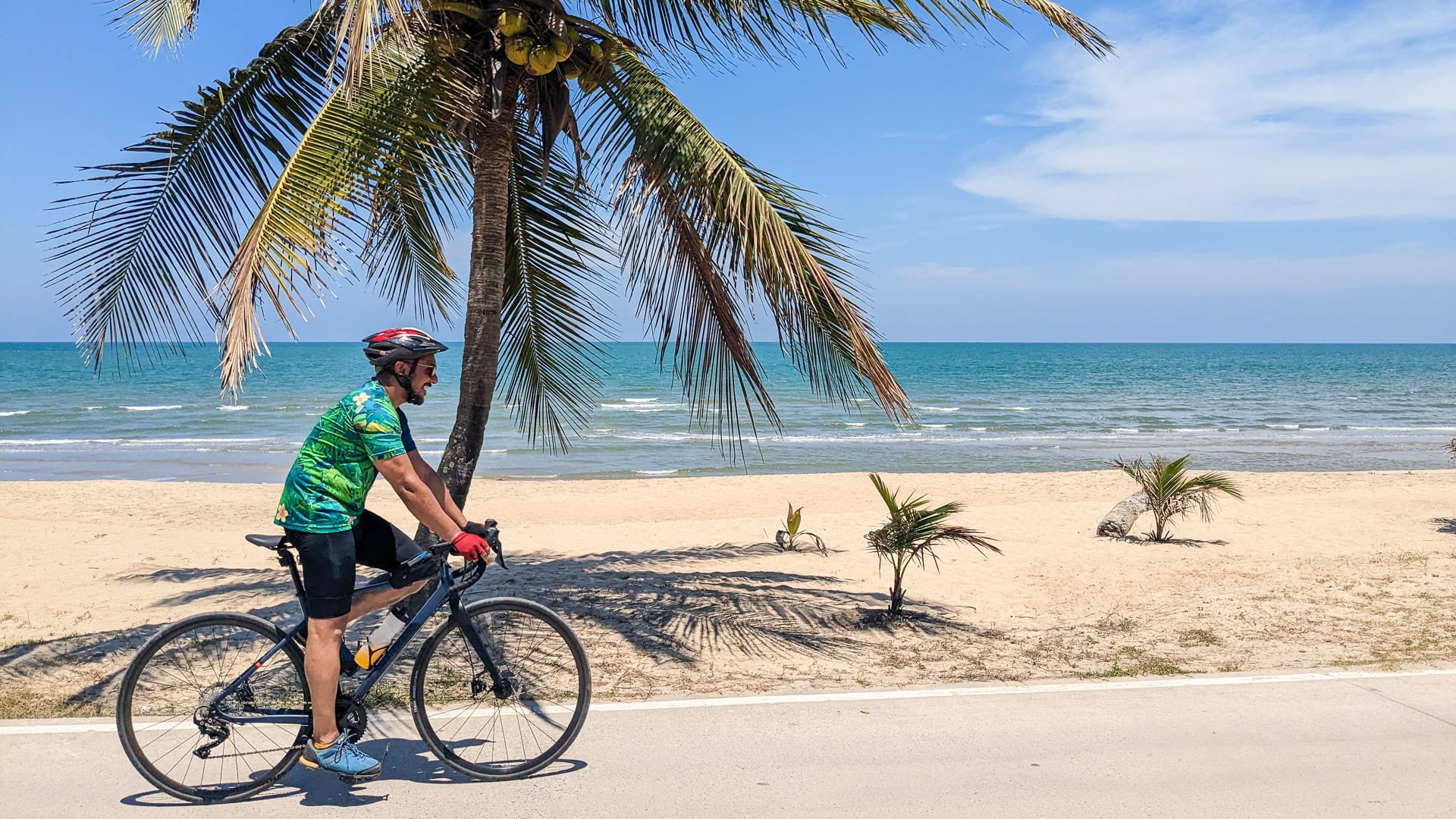
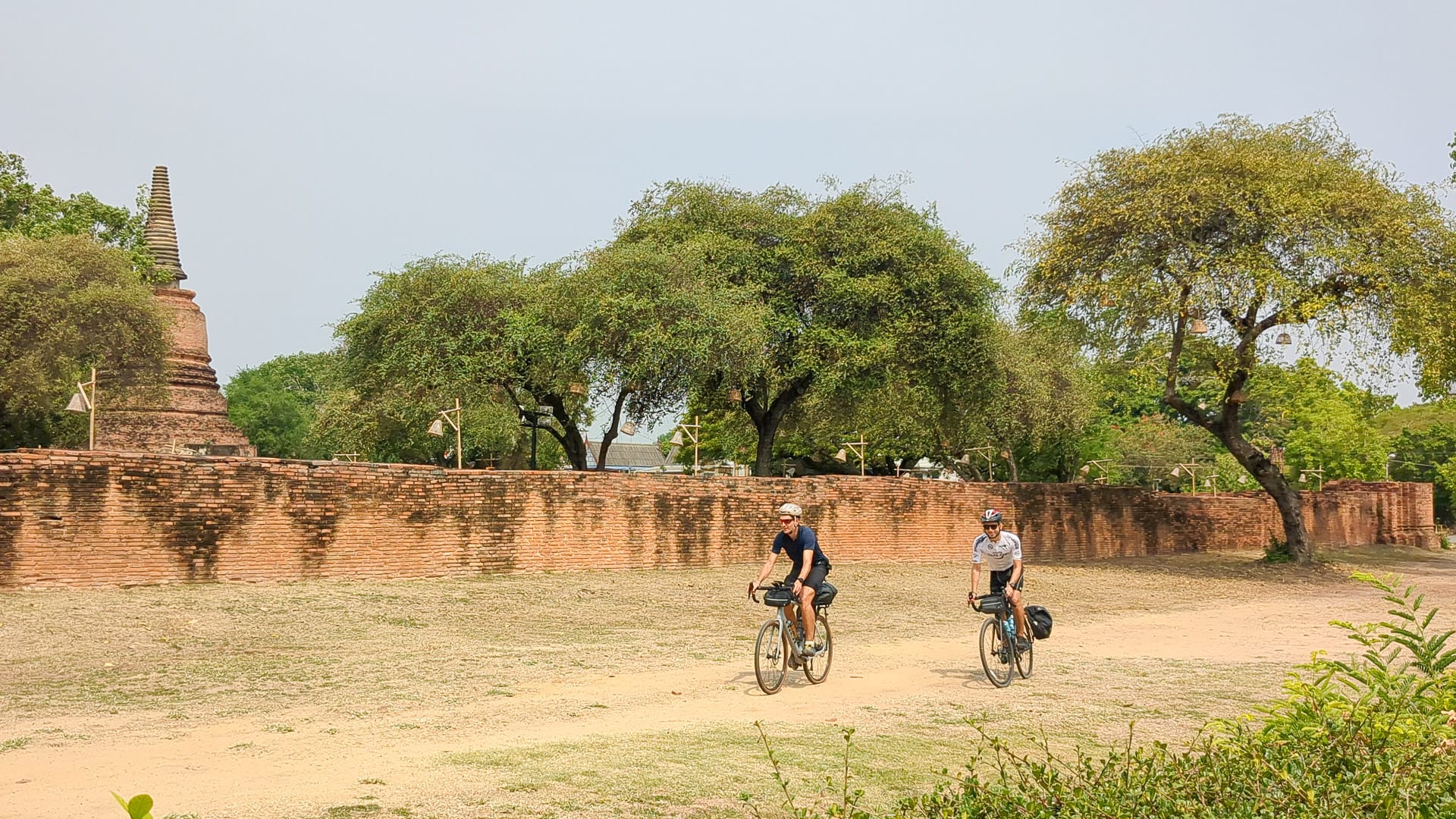
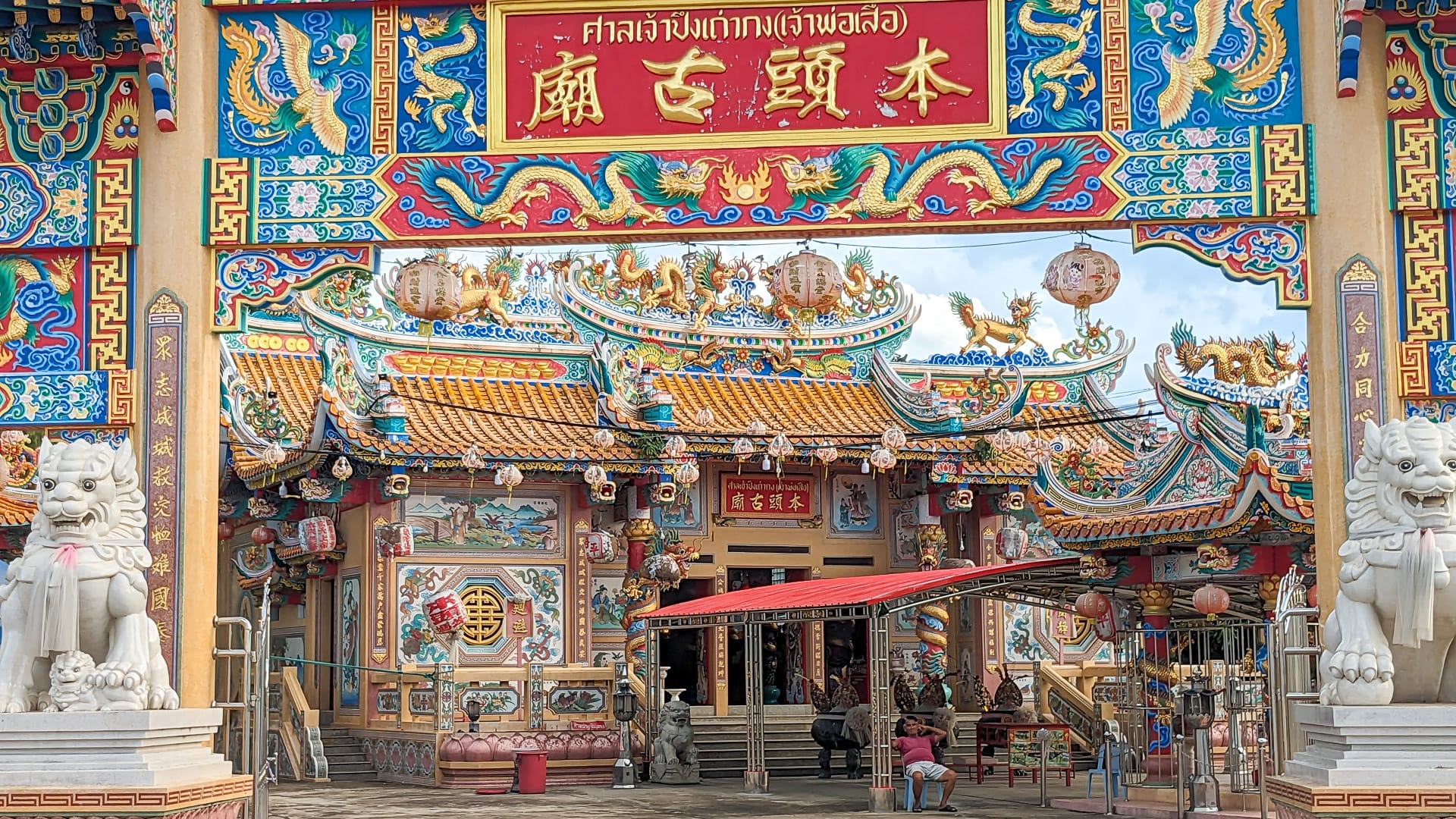
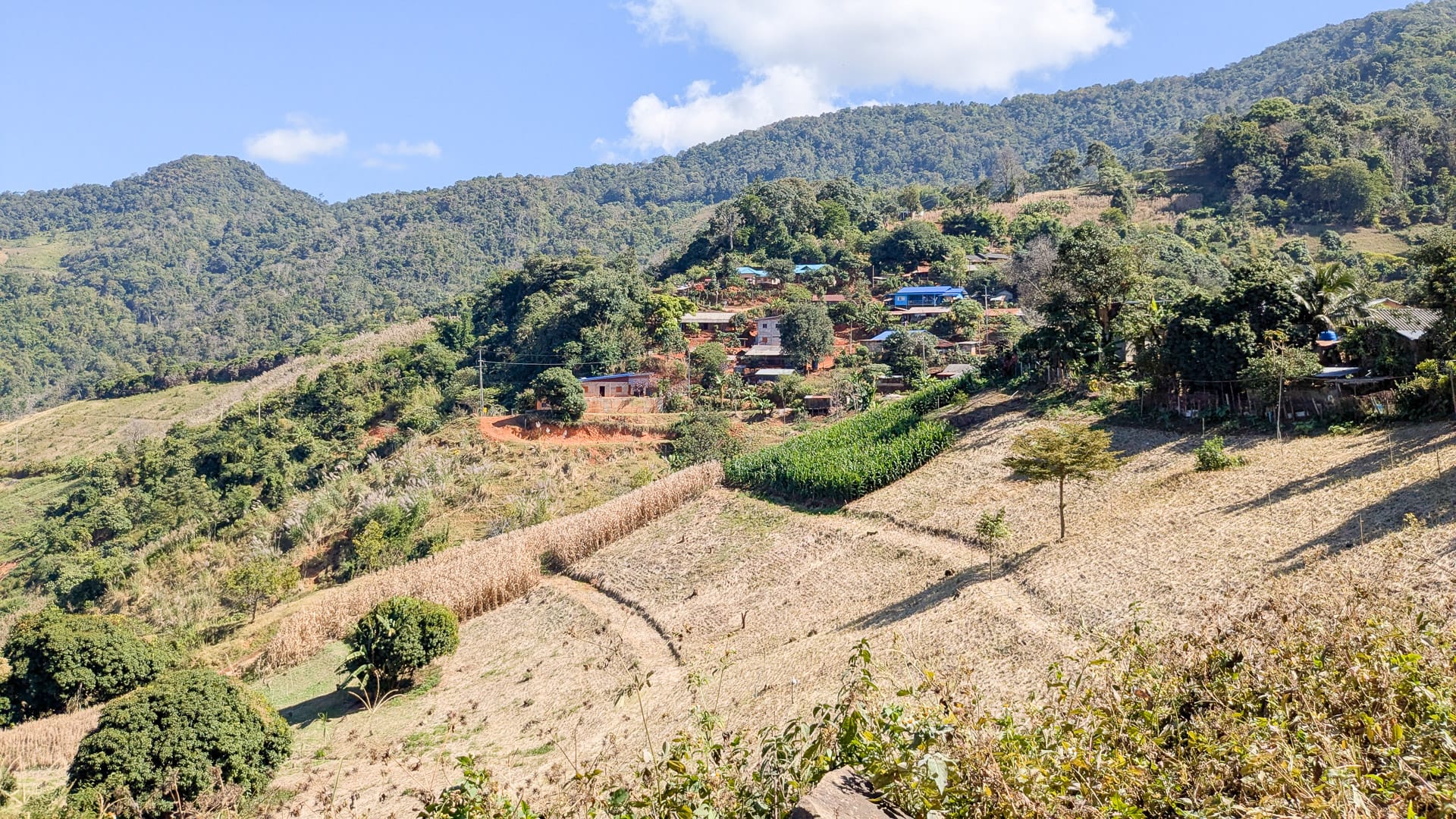
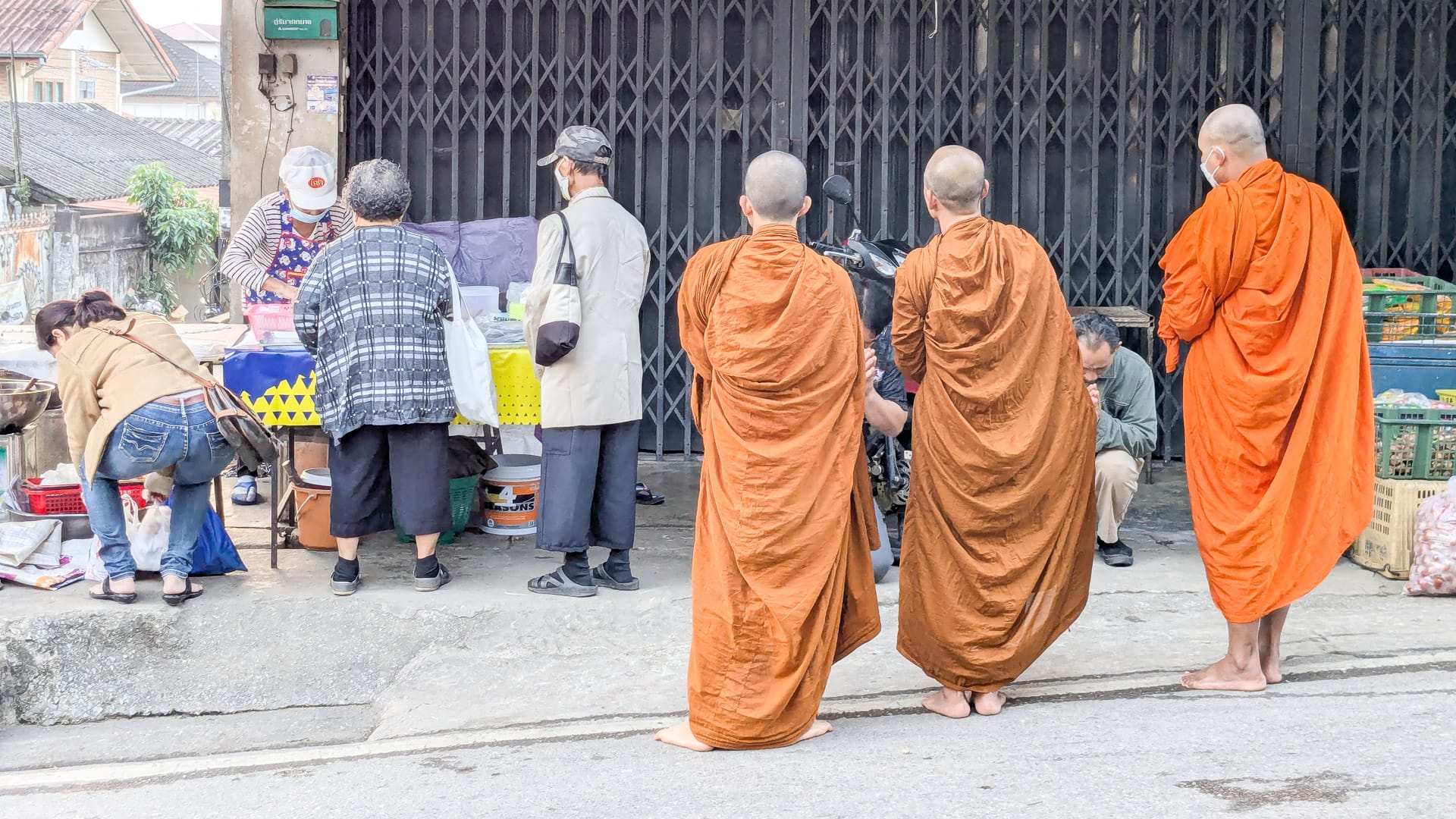
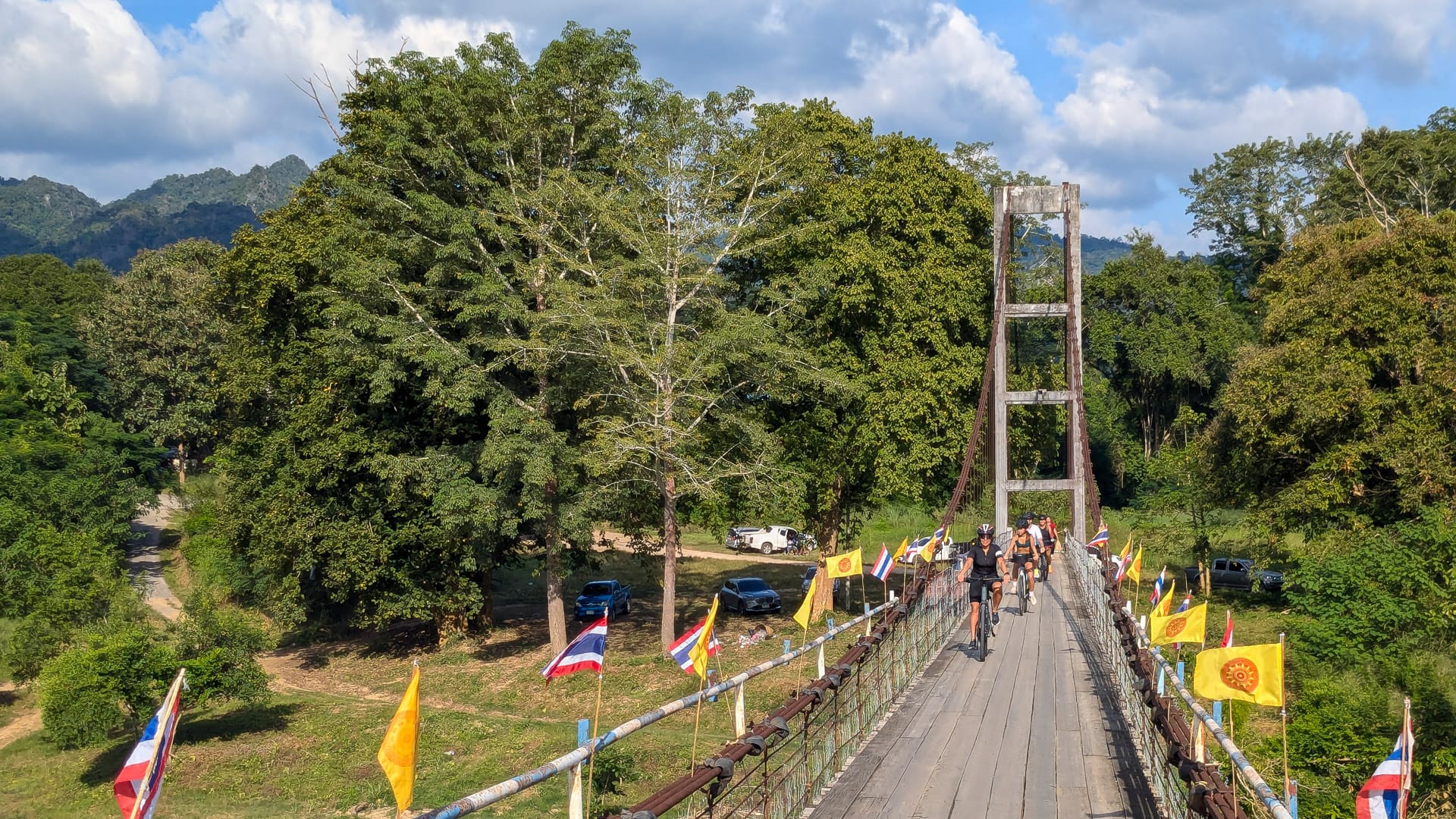
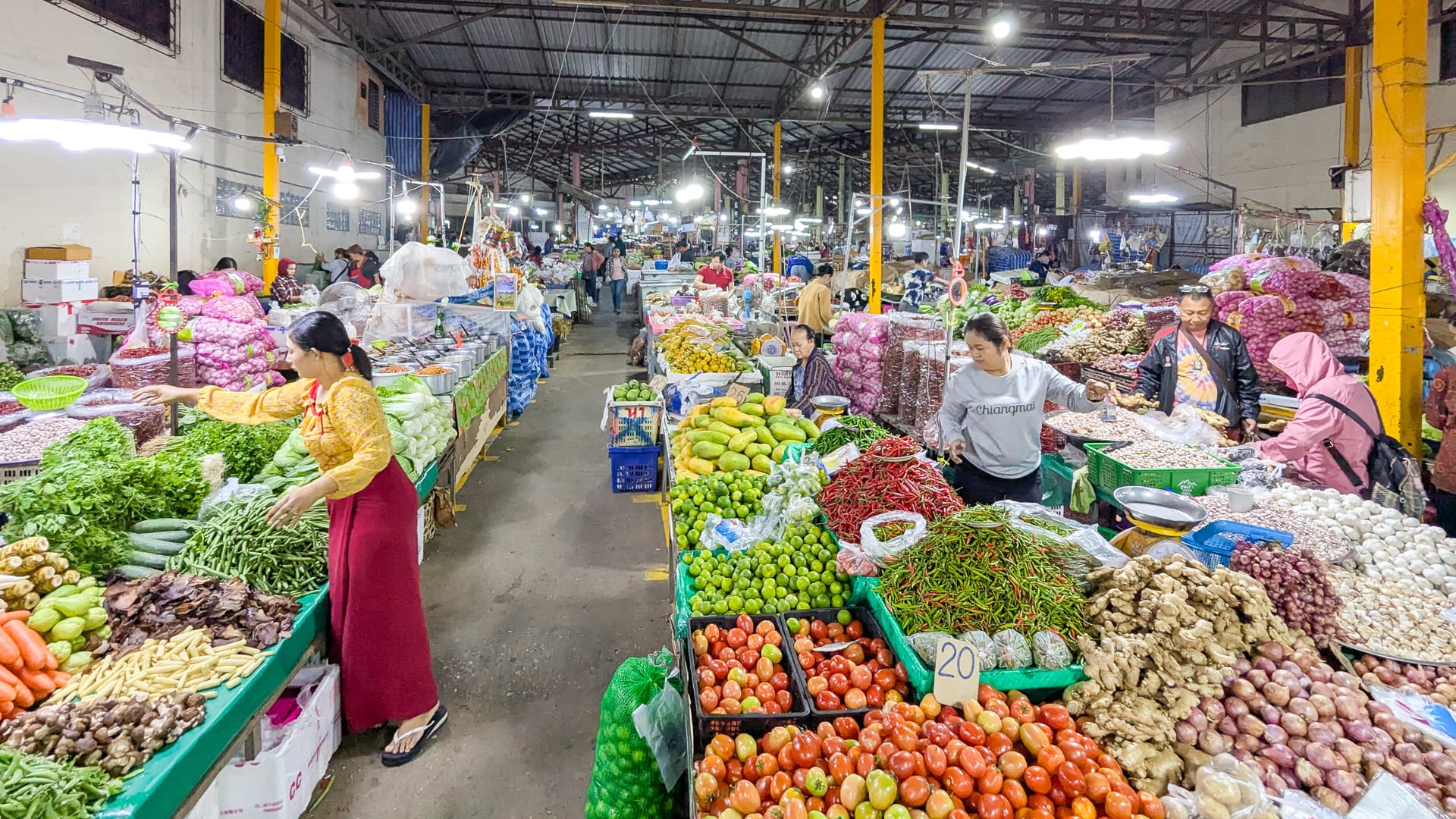
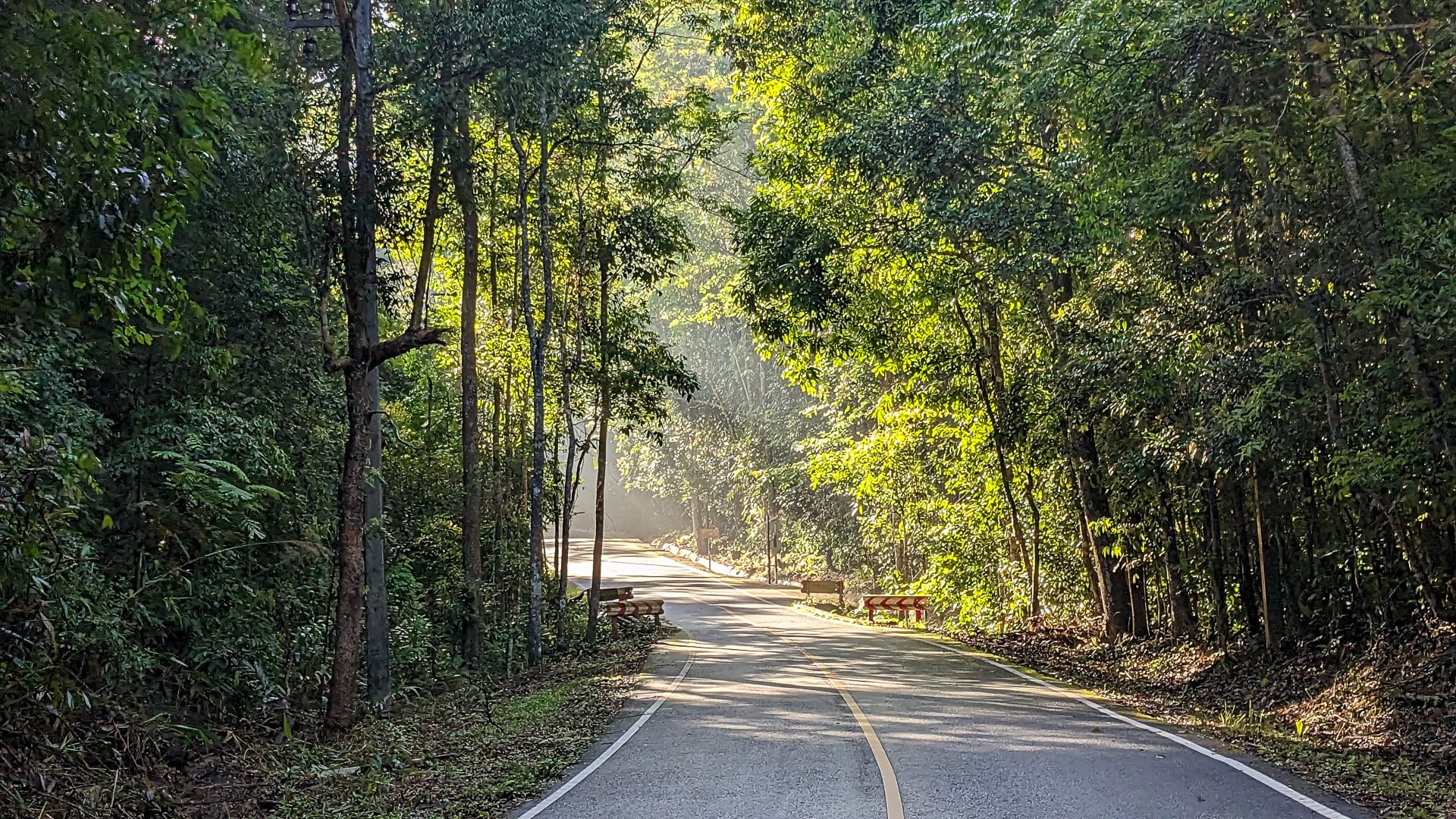
A country of striking contrasts
Thailand packs a lot into one cycling holiday. The north brings hills, forested roads and serious climbs. Central Thailand is flatter, with rice plains, provincial towns and heritage sites. The south brings coastal roads, fishing villages, beaches and islands.
This makes the country suitable for very different trips. One rider might want a leg-testing climb near Chiang Mai. Another might prefer gentle and even more authentic days through Sukhothai and the surrounding countryside. Another might be looking for a point-to-point ride towards the Gulf of Thailand or Phuket.
Culture at cycling pace
A bicycle is a useful way to slow Thailand down. Instead of moving only between headline sights, you can ride through the places in between: roadside stalls, temples, canals, rice paddies, coconut plantations and quiet villages.
This is where the country often feels most memorable. Monks still walk their morning alms rounds in small towns. Markets hum with activity. The wai, the traditional Thai greeting made with hands pressed together, is part of everyday life.
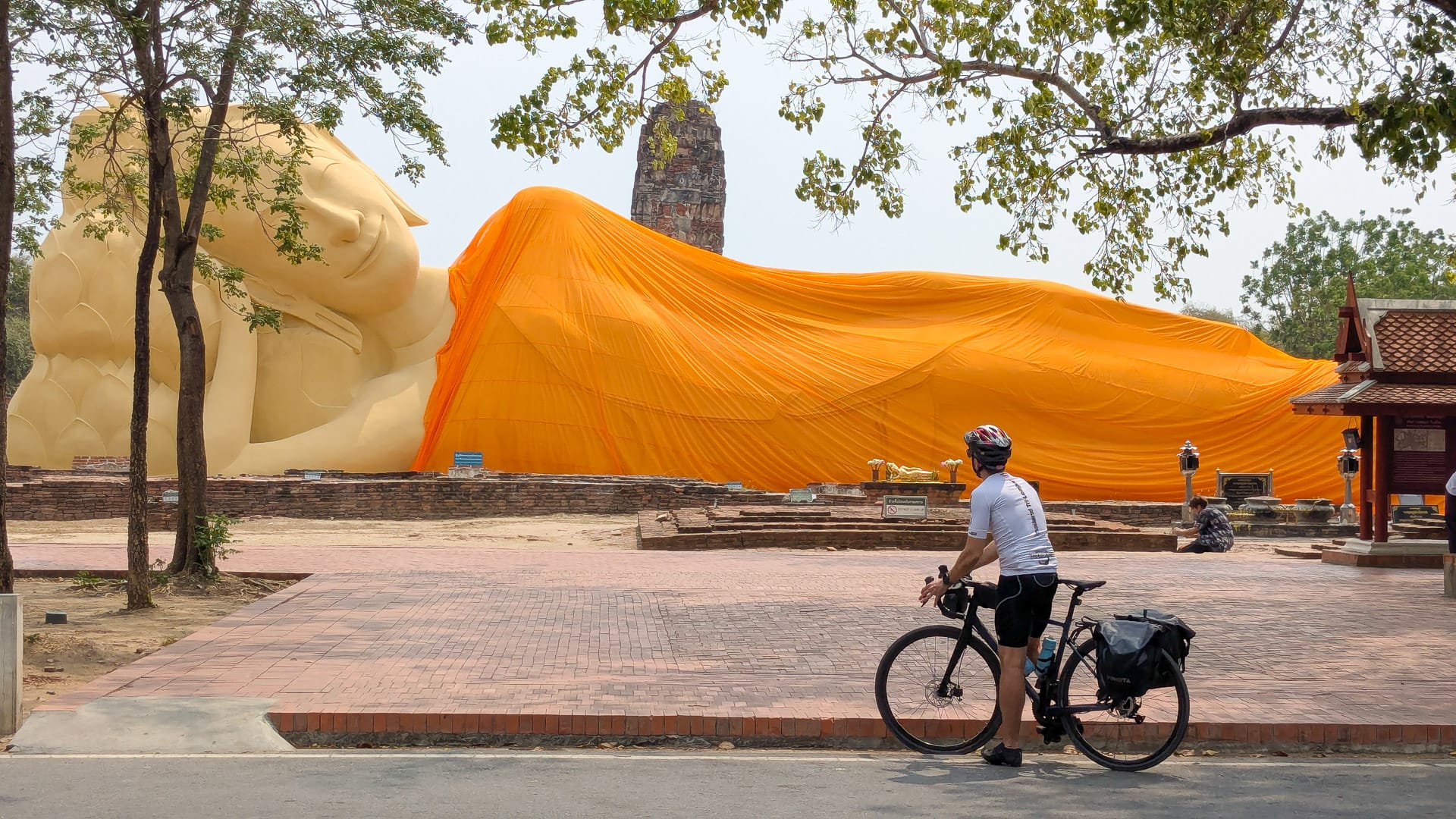
Thailand also has major cultural tourist sites that work well by bike. Ayutthaya and Sukhothai are two of the best-known examples, with temples and ruins spread across areas that suit slower exploration.
Food and hospitality
Food is one of the great pleasures of cycling in Thailand. It also changes as you move around the country.
In the north, look out for khao soi, a rich curried noodle soup with crispy noodles on top. Around Amphawa and the surrounding canals, pomelo salad is a fresh, sharp option after a hot ride. In the south, expect seafood grilled by the sea and curries with chilli and coconut milk. Central Thailand leans more towards simple rice and noodle dishes, som tam, or green papaya salad, and grilled meats from roadside restaurants.
Markets are also good places to look for khanom, the broad family of Thai sweets and snacks often made with rice flour and coconut. Some are steamed, some are grilled and some are wrapped in banana leaf. Fresh fried bananas are another roadside treat worth trying, especially when they are crisp outside and soft inside. Hospitality is a big part of the riding. Small hotels are often willing to help with bike storage, and rural roadside stops can be unexpectedly generous. A smile and a few Thai words can go a long way.
Quiet roads make the difference
Some parts of Thailand can feel busy with visitors, especially in well-known beach and city destinations. Cycling can be a good way to step away from this. On the right backroads, you are more likely to see working villages, quiet farmland, everyday local life and food stops that many visitors miss.
Thailand is not at its best by bike on the obvious main roads. The joy of the ride is usually found on smaller backroads, where traffic is lighter and the surroundings feel more local.
Good route planning matters. Many of the most enjoyable roads are not the ones a general mapping app would choose first. Local knowledge can make the difference between a functional route and a ride you remember. At LocalRoutes, we are passionate about sharing these routes with our guests.
Sponsor Message
Considering a cycling holiday in Thailand?
LocalRoutes helps cyclists explore Thailand through carefully planned small-group and self-guided tours since 2023. Alongside Thailand, they also offer cycling tours in Bangladesh, the Philippines and Laos.
Interested? Head to the LocalRoutes website to find out more, including dates and prices.
Got a question for Nicolas Brocard from LocalRoutes?
Fill out this form and we will pass it to LocalRoutes who aim to reply (within 24 hours wherever they can!)
Part 2: An overview of Thailand from a cyclist’s perspective
Where is Thailand?
Thailand sits in the heart of Southeast Asia, between Myanmar, Laos, Cambodia and Malaysia. Bangkok is the main international gateway, though Phuket and Chiang Mai can also be useful depending on your route.
For many visitors from Europe and North America, Thailand is a long-haul destination. Once there, the country is well connected by domestic flights, trains and buses. Overnight trains can also be part of the cycling experience.
What is the terrain like?
Northern Thailand is the main area for mountains and climbing. Chiang Mai is the best-known cycling base, and the wider north includes Doi Inthanon, Thailand’s highest peak at 2,565 metres.
- Doi Inthanon is one of Thailand’s headline climbs. If you are planning to ride it, check the current rules carefully. The climb can be open to one-way traffic, therefore, descending may not be permitted for safety reasons, so support or transport may be needed for the descent. We can provide the support vehicle if this situation arrises.
- The Mae Hong Son Loop is one of the most famous northern cycling routes, but it is not the only area worth considering.
- Chiang Rai is often overlooked by cyclists, despite their rural roads, mountain scenery and quieter feel. Chiang Rai is not connected to Thailand’s rail network, but it has a well-served airport.
Central Thailand is much flatter. The plains around Phitsanulok, Sukhothai and Uttaradit include smooth paved roads, easy gravel sections, heritage sites and villages that see fewer visitors.
Southern Thailand is more coastal. Expect flatter and rolling riding, coconut plantations, fishing villages, temples and access to beaches and islands. Heat and humidity still need respect, even when the terrain looks gentle.
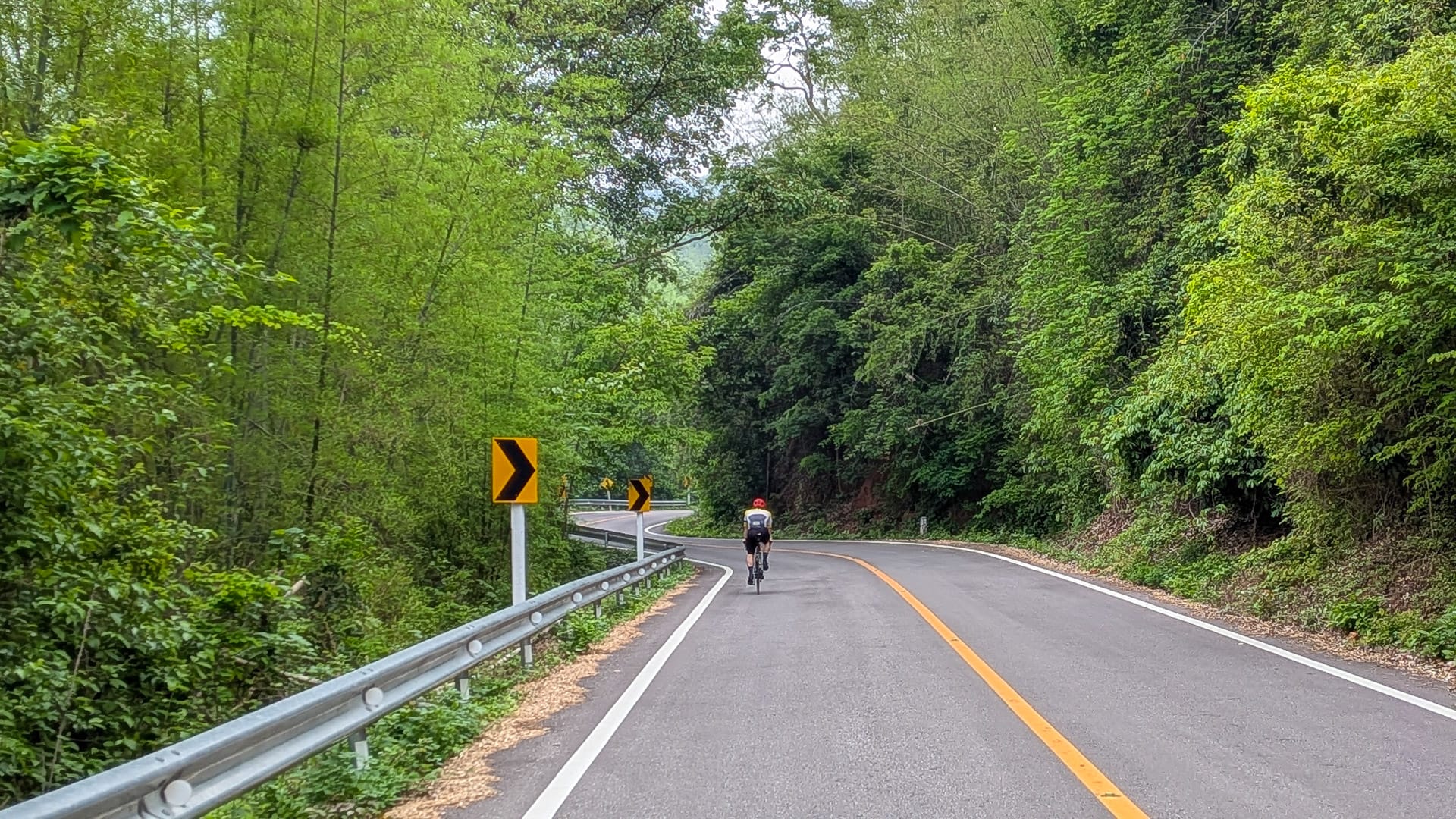
Cycling the roads of the Mae Hong Son Loop (photo credit: Nicolas Brocard-Saidi/LocalRoutes)
What are the roads like?
Thailand has limited cycling-specific infrastructure. Cycle lanes are rare, and those that exist are not always useful for longer rides.
The road surfaces themselves can be very good. Smaller paved roads are often smooth, and concrete sections can be comfortable to ride. Road bikes work well in many places. Gravel bikes are also a strong choice because they open up more route options.
Many gravel roads are hard-packed and non-technical. Some northern mountain trails are rougher and need more skill, but much of the mixed-surface riding is manageable on the right bike.
A useful routing tip is to look for roads with more digits in the road number. These tend to be smaller roads. Unnumbered local roads may be smaller again. Highways are best avoided where possible, even where cycling is technically allowed.
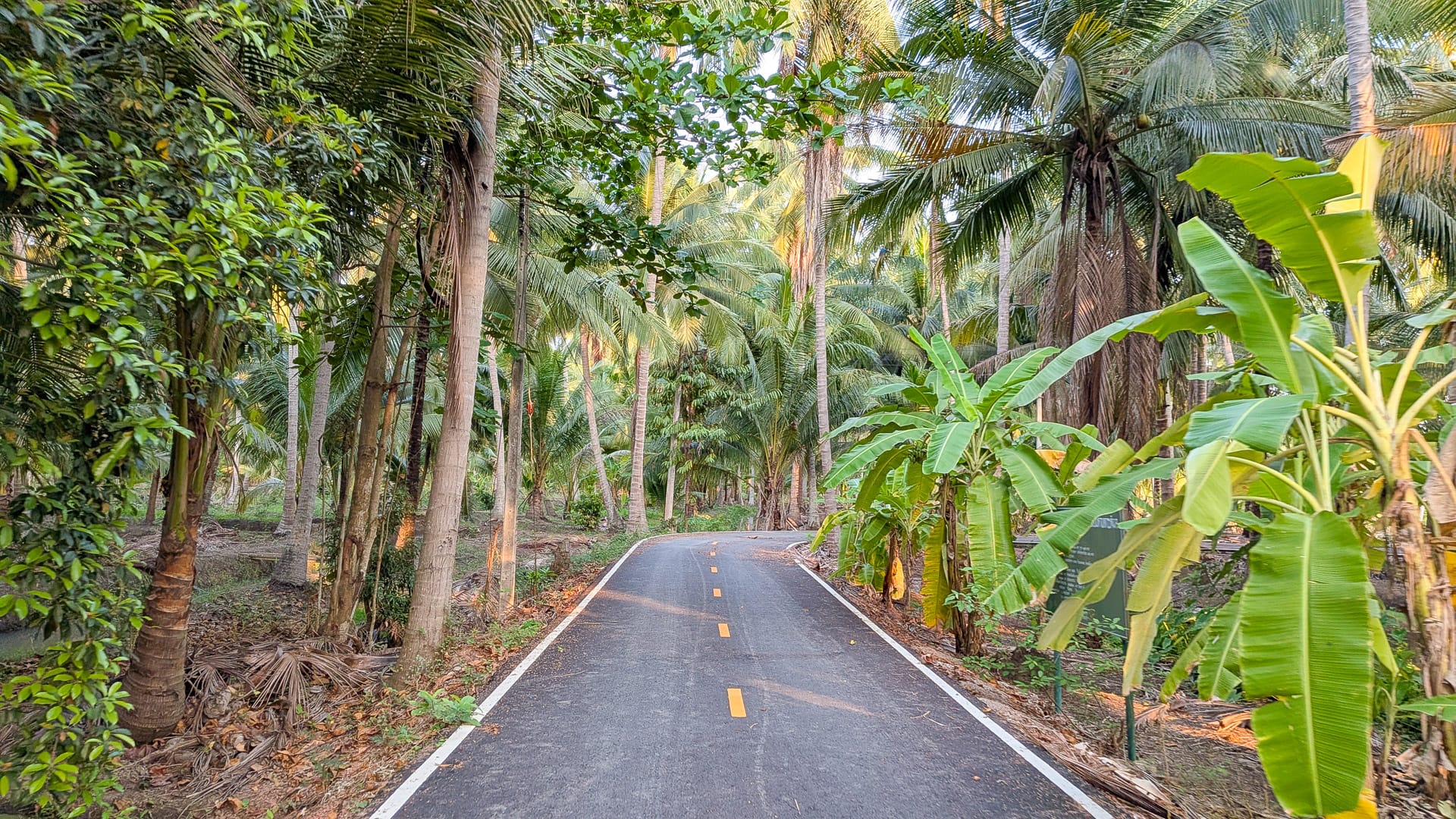
A beautiful tree-lined road in Amphawa (photo credit: Nicolas Brocard-Saidi/LocalRoutes)
What kind of cyclist is Thailand for?
Thailand can work for road cyclists, gravel riders, touring cyclists, leisure riders and families. The important thing is matching the route to the rider.
- Road cyclists will find climbs in the north and longer point-to-point rides as well as regions with less elevation but equally beautiful scenery and coastal routes.
- Gravel riders can mix smooth roads with hard-packed tracks and rural lanes.
- Leisure cyclists can focus on flatter cultural cycling routes, especially in the central plains and on parts of the Gulf coast.
Families need carefully planned daily distances and reliable accommodation. The central plains around Sukhothai, Uttaradit and Phitsanulok can work well because the terrain is flat and distances can be managed.
Sportier riders should not judge difficulty by elevation alone. Heat, humidity and distance can make even flatter rides feel harder than expected.
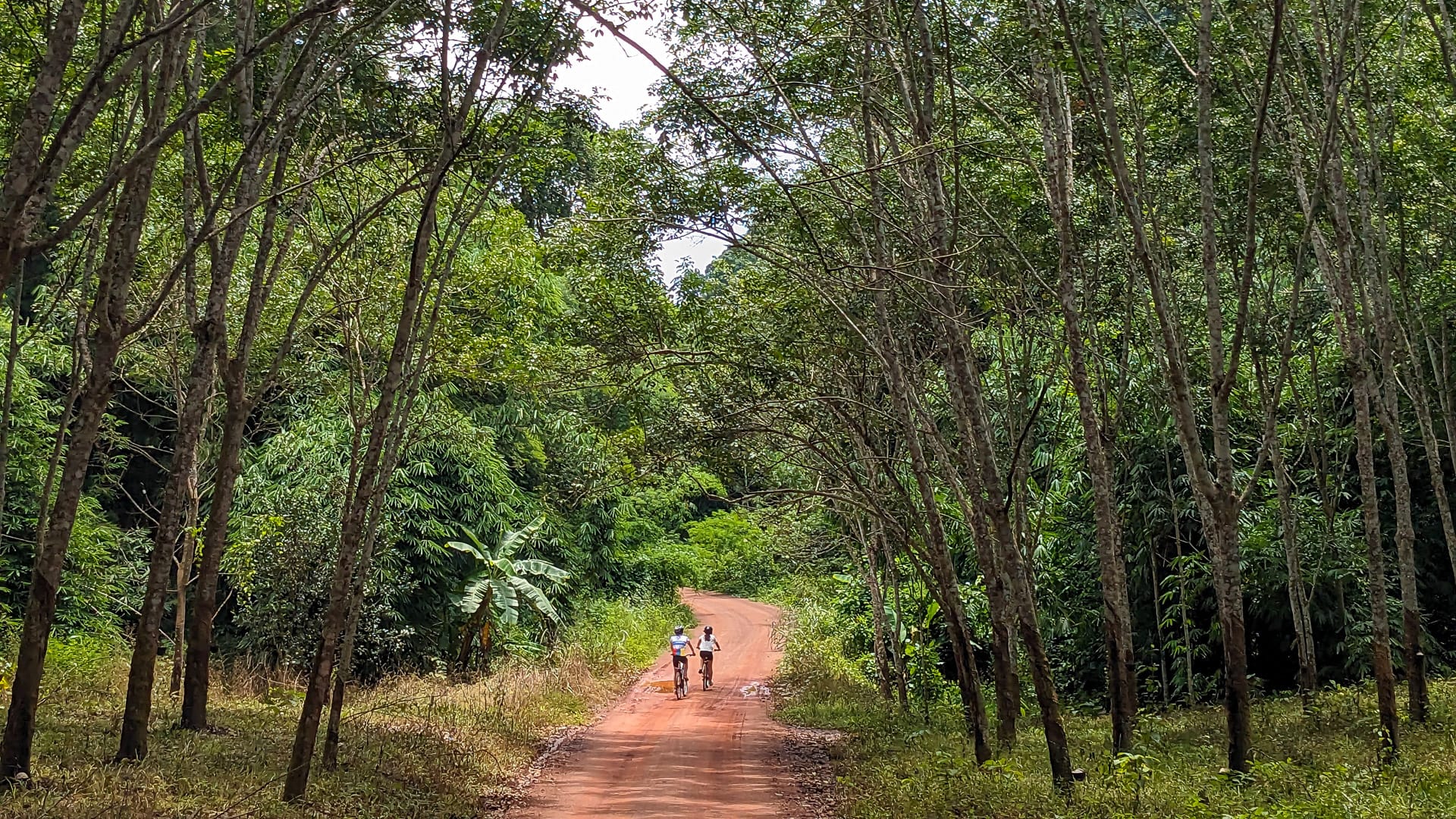
Cycling along dirt roads in Kanchanaburi (photo credit: Nicolas Brocard-Saidi/LocalRoutes)
Do you need a tour to cycle in Thailand?
Independent cycling is possible in Thailand, especially for experienced riders who are confident with route planning, heat management and logistics.
We find people come to us at Local Routes because they know a guided or self-guided tour can make the experience of planning a cycling holiday in Thailand easier. We can help with quieter cycling routes, luggage, accommodation, transport, mechanical support and local insight. This is especially useful if you want to ride point to point or avoid busy roads. Another good reason to choose a tour company like ours is our passion for the accommodation we find and the people we meet along the way. You are certain to make the most of your holiday by meeting really interesting people, whether it’s planned or happily accidental.
Sponsor Message
Considering a cycling holiday in Thailand?
LocalRoutes helps cyclists explore Thailand through carefully planned small-group and self-guided tours since 2023. Alongside Thailand, they also offer cycling tours in Bangladesh, the Philippines and Laos.
Interested? Head to the LocalRoutes website to find out more, including dates and prices.
Got a question for Nicolas Brocard from LocalRoutes?
Fill out this form and we will pass it to LocalRoutes who aim to reply (within 24 hours wherever they can!)
Part 3: What are the best cycling bases and routes in Thailand?
This section highlights the main places to stay, alongside the cycling routes that show what each destination is best suited to. It is designed to help riders choose the right base for their trip, rather than provide a complete list of every cycling area in Thailand.
The destinations are ordered by popularity and ease of access. We have also included some quieter alternatives for riders who want to explore beyond Thailand’s better-known cycling areas.
Chiang Mai
Best for riders looking for climbing, cafés and classic northern routes.
Chiang Mai is Thailand’s best-known cycling base. It is sometimes compared with Girona, thanks to its mix of city life, cafés, heritage and testing climbs.
Velo described Chiang Mai as the “Asian equivalent of Girona, Nice or Lucca”.
The riding around Chiang Mai includes steep hills, mountain roads and classic loops. It suits road cyclists who want a short riding escape with plenty to do off the bike.
Chiang Mai also works well for riders who like a morning climb followed by temples, mouth watering food, cafés and city life.
LocalRoutes’ Tour of Chiang Mai includes the routes featured in this section.
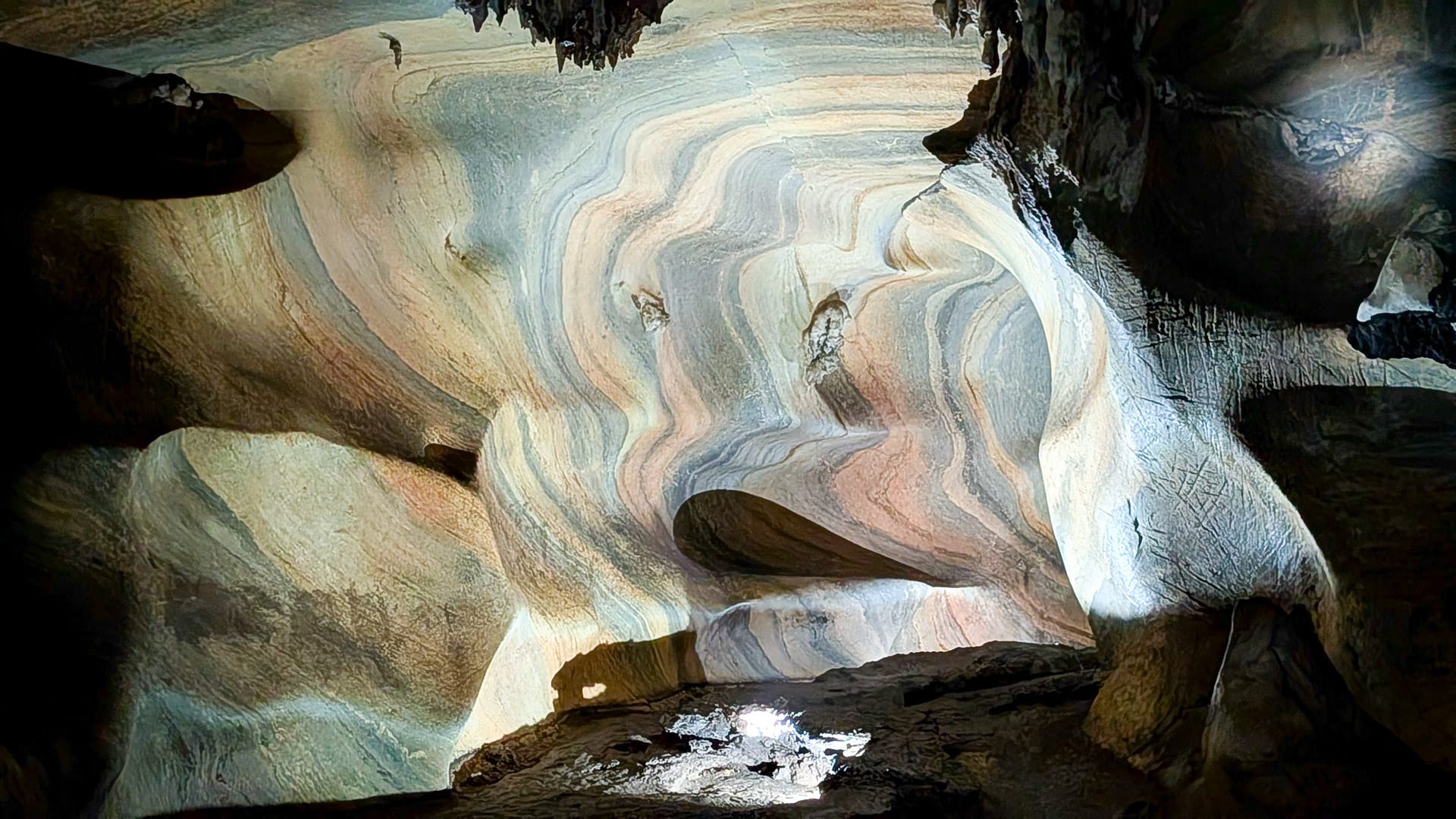
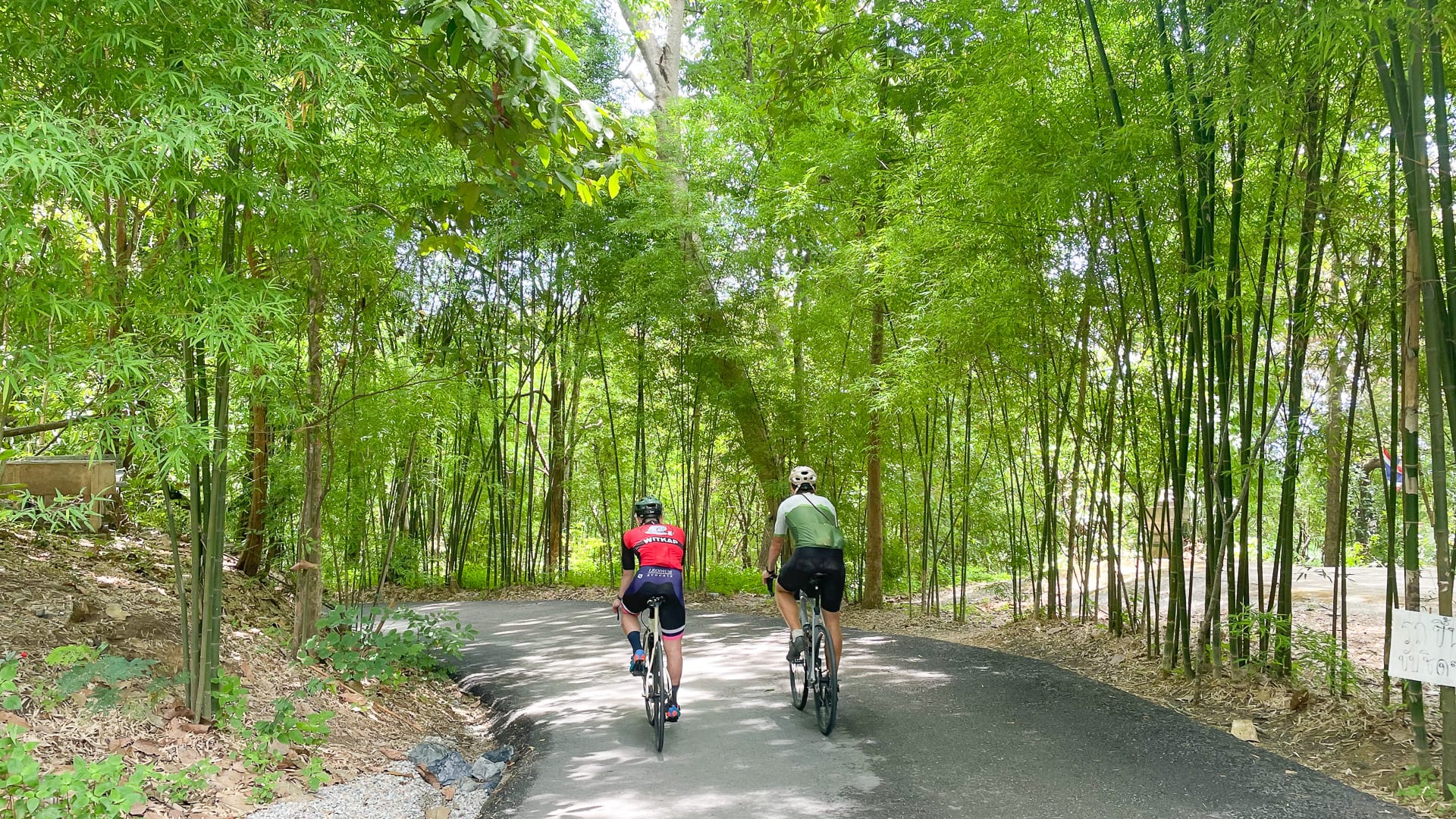
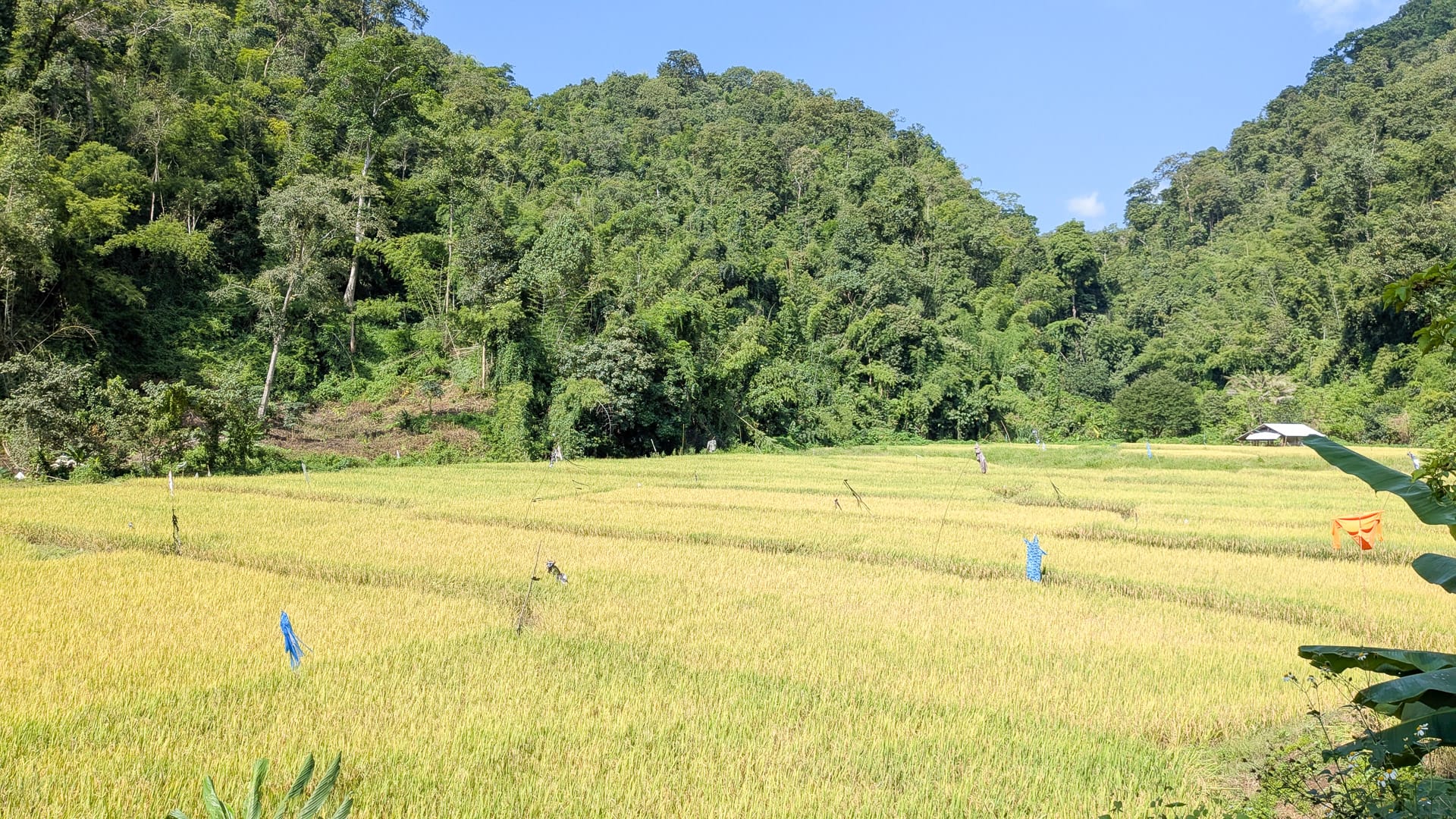
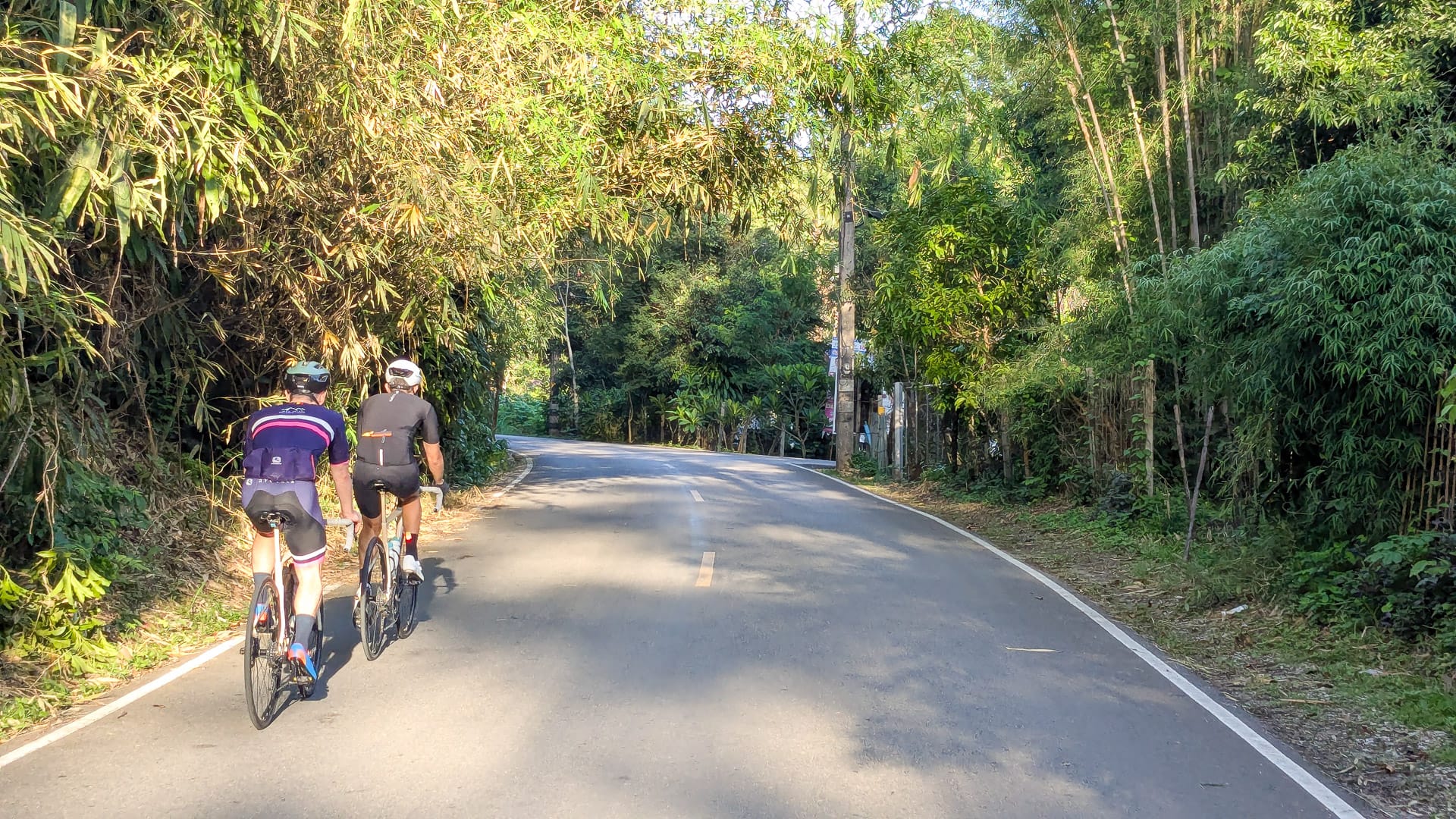
Doi Suthep climb
GPX DownloadTerms of use reminder
Best for: Road cyclists looking for a classic Chiang Mai climb.
Ride style: A compact but testing climb from the city into the hills.
This classic Chiang Mai climb starts close to the city and heads into the hills above it. The route passes some of the region’s most important temples, with the option to continue towards quieter villages higher up for coffee before returning to Chiang Mai.
It is a good way to experience northern Thailand’s climbing without committing to a full day in the mountains.
Samoeng Loop
GPX DownloadTerms of use reminder
Best for: Cyclists who want a classic Chiang Mai loop with more distance and variety.
Ride style: A road loop with climbs, descents and a useful coffee stop.
The Samoeng Loop is one of Chiang Mai’s classic rides. Expect climbs, descents and a useful coffee stop midway.
It gives riders a good sense of the terrain around the city, with enough climbing to make the day feel substantial.
Bangkok
Best for riders wanting a gateway, culture and backroad escapes.
Bangkok is not a city to treat as an open-road cycling destination. Traffic in the centre can be difficult, so the best riding usually starts after a short transfer out of town.
A short Grab transfer can take you from city traffic to quiet roads through rice paddies, canals, coconut trees and local temples.
If you are travelling with bikes, we suggest booking a GrabVan through the app rather than a Grab SUV. These nine or 11-seater vehicles usually have enough space for bikes, often without removing the front wheel, and drivers are generally happy to take them.
That said, Bangkok is a valuable base. It is Thailand’s main arrival point and gives access to canals, rice paddies, coconut groves, floating market areas, heritage temples and longer journeys towards the coast.
We can add personalise tours and include these rides as warm-up days to any of our tours starting from Bangkok, including our Self-Guided Ride by the Gulf of Thailand. They are a great introduction to cycling in Thailand before you set out on a longer route.
West Bangkok Loop
GPX DownloadTerms of use reminder
Best for: A short morning ride from the capital.
Ride style: A quiet backroad loop through rice paddies and canal-side roads.
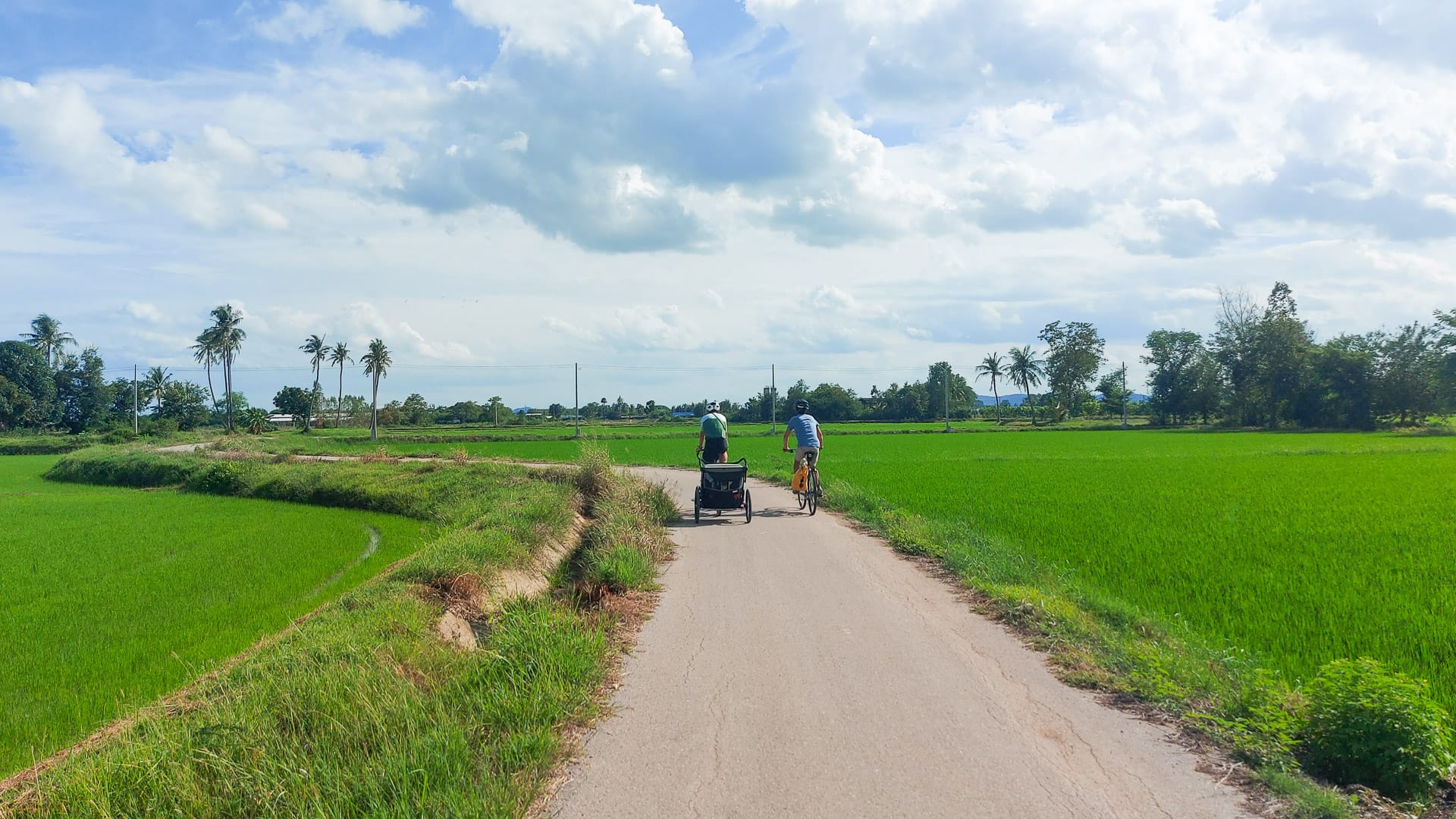
This route shows how quickly the landscape changes once you leave central Bangkok. It follows quiet canal-side roads and passes through rice paddies, with small cafés along the way.
It is a good choice for riders who want a manageable morning outing close to the city.
Ban Pong, Ratchaburi and Amphawa
GPX DownloadTerms of use reminder
Best for: Cyclists who like flat riding with a sense of journey.
Ride style: A flat route with trains, a river crossing and countryside riding.
This flat route passes rice paddies, coconut plantations, pomelo gardens and lesser-known heritage temples.
It is also a small adventure. The day can involve an early train from Bangkok to Ban Pong or Tanon Songpol, followed by a train from Maeklong, where the market on the railway tracks is found, to Mahachai. From there, riders cross the river by boat before taking a final train back to Bangkok.
The train and boat sections make this feel like a proper pedal-powered journey, not just a day ride.
Bangkok to Bang Pa-In and Ayutthaya
GPX DownloadTerms of use reminder
Best for: Riders interested in Thai history and cultural cycling.
Ride style: A backroad route from Bangkok’s outskirts to Ayutthaya.
This route adapts a classic Bangkok to Ayutthaya ride so that it uses smaller backroads and alleys from the outskirts of the city.
Ayutthaya was once the capital of the Kingdom of Siam and is now a UNESCO World Heritage site. The temples and ruins are spread out, so the area is well suited to exploration by bike.
A local train can be used for the return to Bangkok, but check bicycle carriage rules before travelling.
Phuket
Best for riders looking for beaches, training and southern route endings.
GPX DownloadTerms of use reminder
Phuket is one of Thailand’s best-known southern destinations. It can be useful for riders who want to combine cycling with beaches, islands and established holiday infrastructure.
It is not the strongest place to discover ‘everyday Thailand’ by bike, because parts of the island are very busy and touristy. However, it can work well as a training location, a beach extension or the finish point for a longer ride from Bangkok.
Route choice matters in Phuket. The better cycling is usually found by avoiding the busiest tourist roads and planning your ride carefully around traffic.
One of our favourite longer rides explores some of the most scenic roads in Phuket and beyond. The route includes views across Phang Nga Bay, where limestone karsts rise above the sea, as well as two of Phuket’s toughest and most rewarding climbs.
This route features as part of our Bangkok to Phuket Backroads tour or as an extension to our Cycle Bangkok to the Islands tour.
Amphawa
Best for: Relaxed cycling, quiet back roads and experiencing a slower-paced side of Thailand
Ride style: Well-maintained back roads and scenic cycling loops
Amphawa is a beautiful place to cycle, with small back roads that zigzag between coconut groves, pomelo plantations and canals. Life moves slowly here, the accommodation is generally good, and the former floating markets still retain their atmosphere at weekends.
Amphawa is often used as the starting point for routes from Bangkok towards Phuket.
There is no bike rental in Amphawa, so you will need to bring your own bike or hire one in Bangkok if you are not exploring Amphawa as part of an organised tour.
Amphawa can be personalised as the first day of another tour. We can add one or two days in Amphawa before the Ride by the Gulf of Thailand and Cycle Bangkok to Islands tours for example.
Kanchanaburi
Best for: Quiet cycling, Second World War history and exploring beyond the main tourist trails
GPX DownloadTerms of use reminder
Ride style: Flat back roads through rice paddies and orchards, with dirt-road options through the jungle
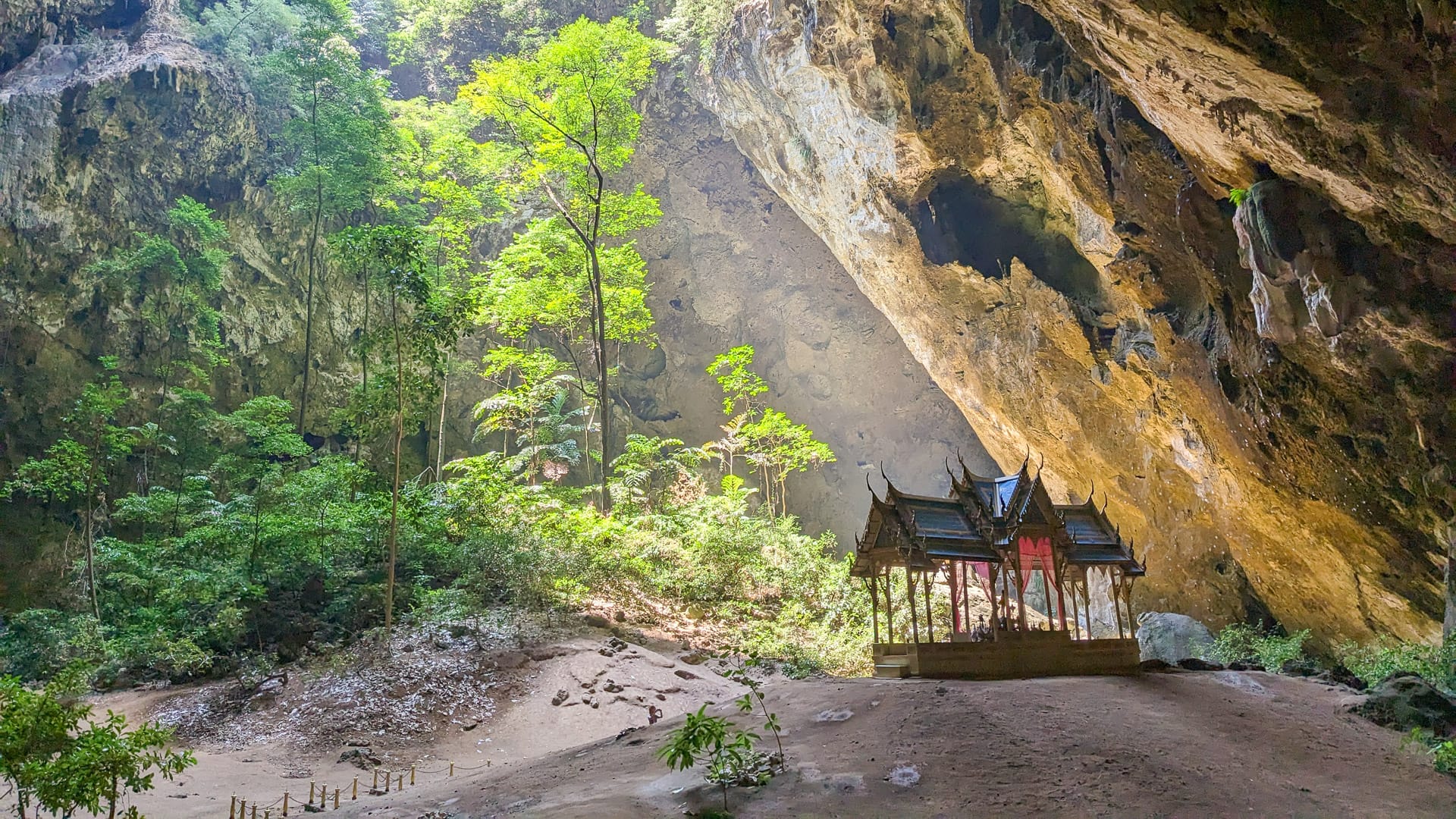
Kanchanaburi is commonly known for its Second World War history and the Death Railway, but there is much more to the region. By bike, you can follow flat back roads through rice paddies and orchards or venture further into the jungle on dirt roads.
Cycling here takes you away from the main tourist trails and offers a different perspective on the region.
In this region bikes can also be taken on local trains, allowing you to move around the region and cycle in different areas. You can usually buy your ticket at the station by showing your passport, but plan to arrive at least 20 minutes before departure to avoid rushing.
At LocalRoutes we offer a short self-guided tour around the River Kwai that visits areas of the region mostly away from the crowds. The tour can also be extended to include a day of cycling in Amphawa.
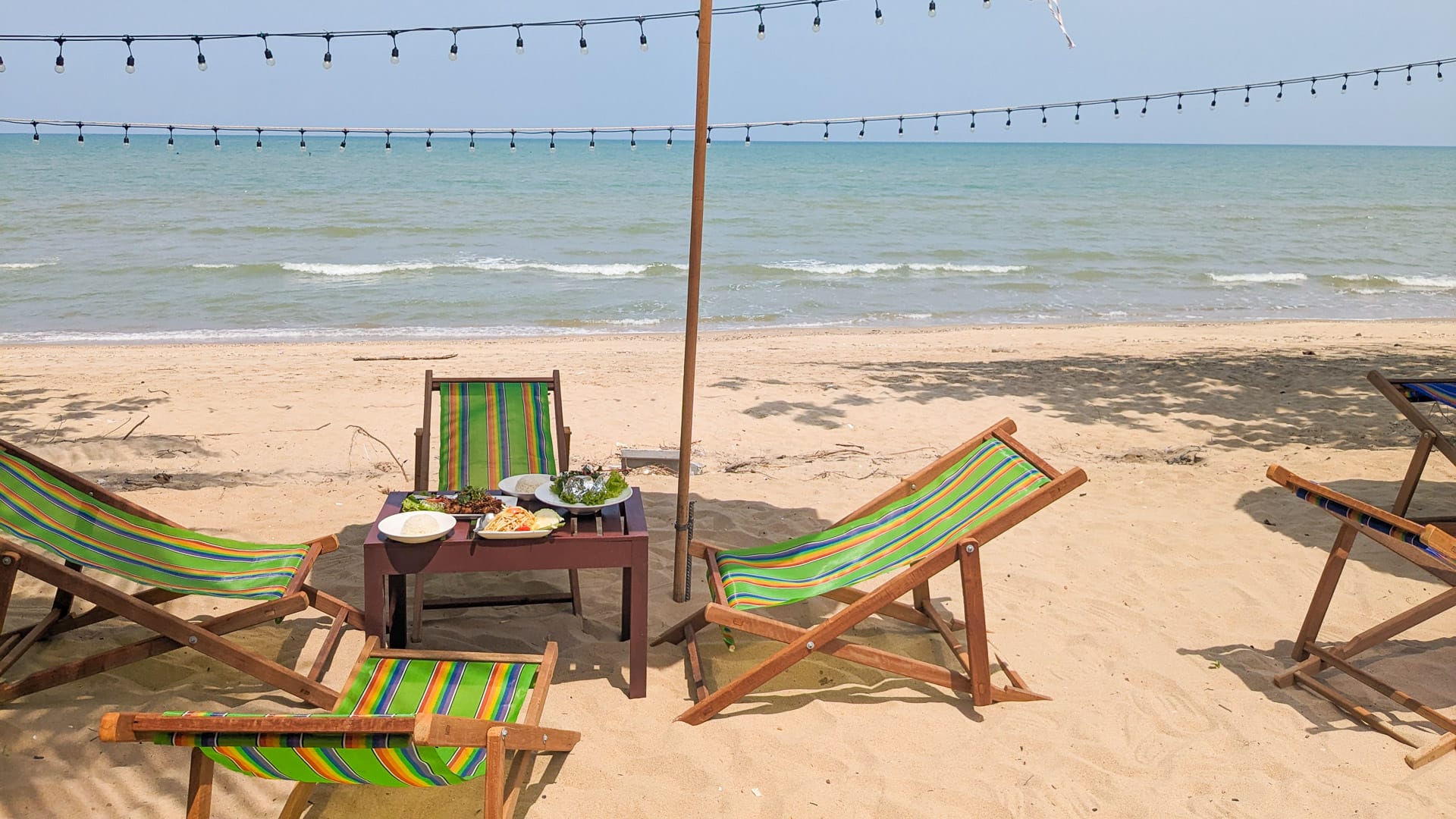
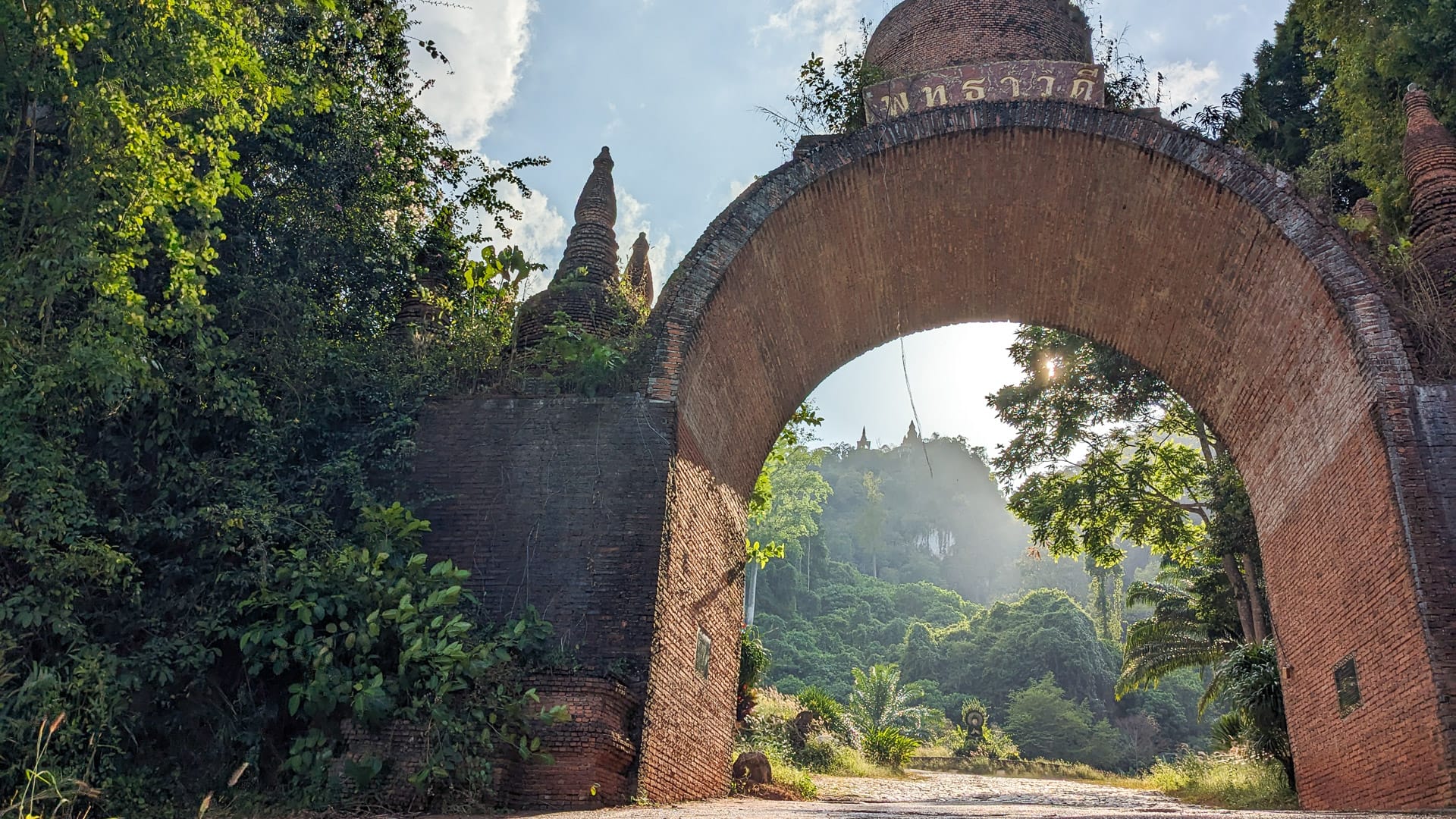
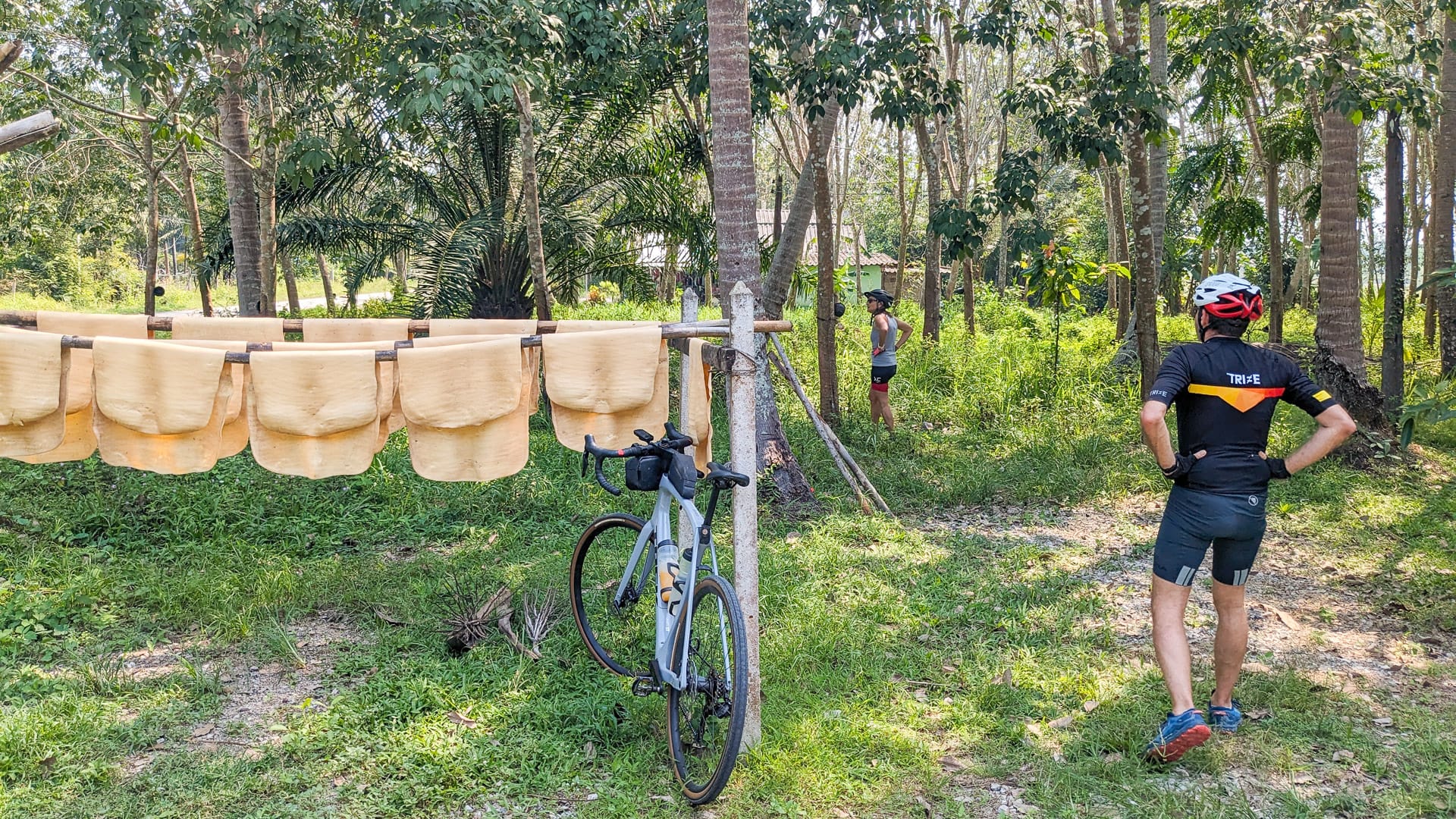
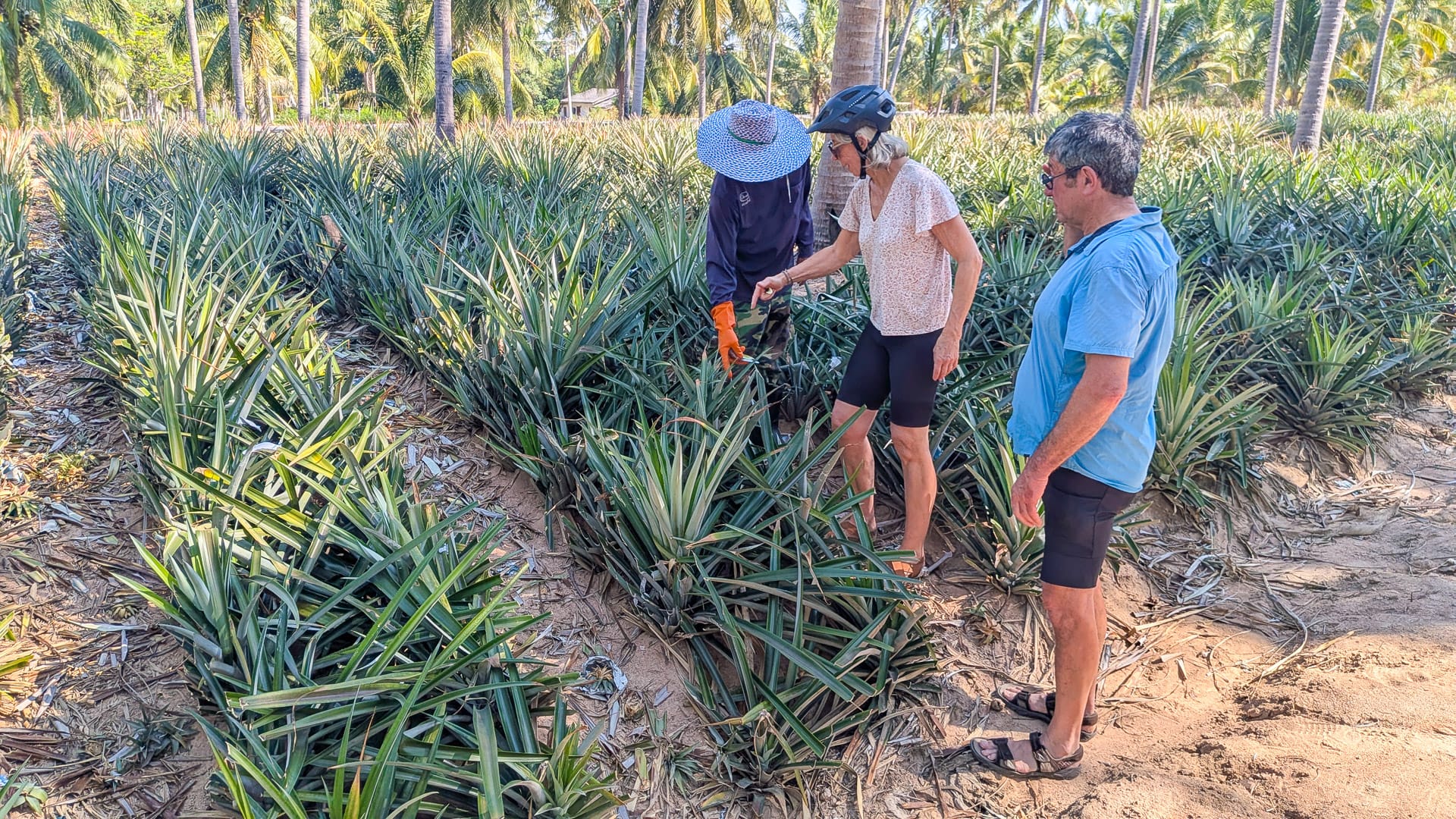
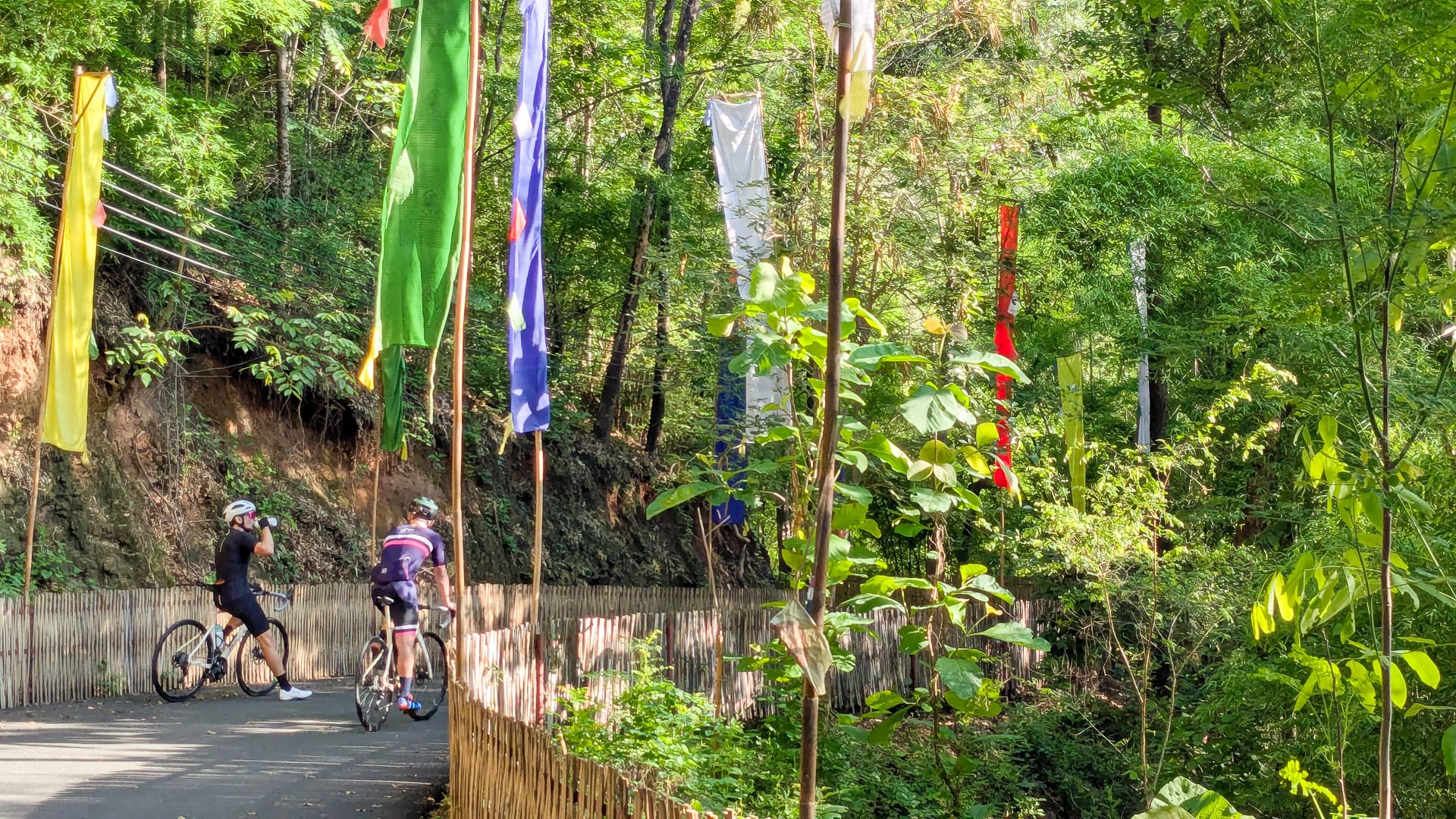
Point to point cycling routes and tours
The following LocalRoutes tours are useful examples of how a longer Thailand cycling trip can be shaped. They also show the main types of riding available: coastal, heritage, northern and point-to-point.
Bangkok to Phuket
- Riding days: 10 days
- Distance: 82 kilometres/day (820 kilometres in total of 10 days)
- Elevation gain: 367 metres/day (3,670 metres in total of 10 days)
- Start/Finish: Bangkok/Phuket
More information
Interested in this tour? Get more details about our Bangkok to Phuket Backroads tour on the website.
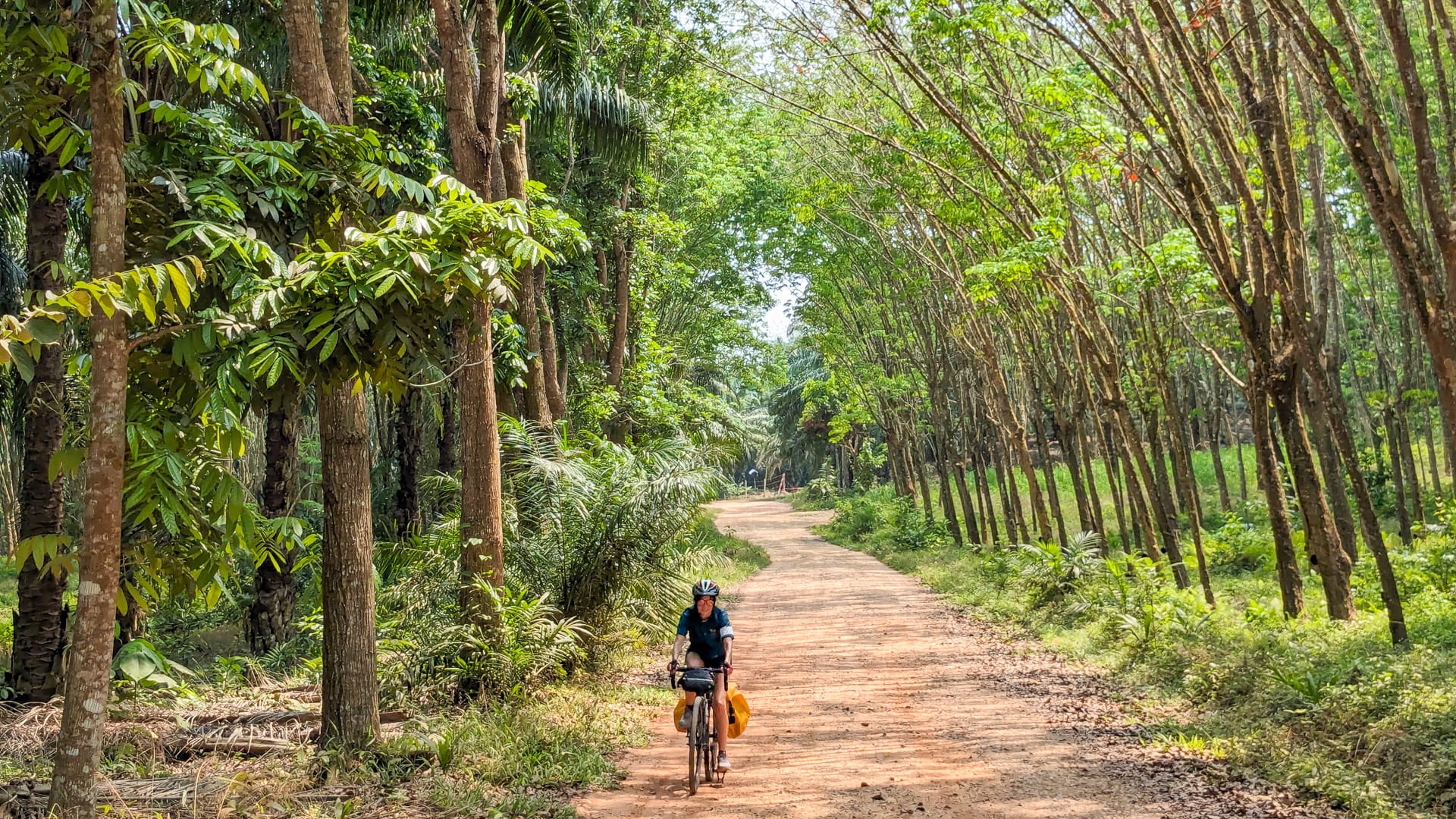
Cycling from Bangkok to Phuket (photo credit: Nicolas Brocard-Saidi/LocalRoutes)
Chiang Rai and the Golden Triangle loop
A self-guided ride through northern Thailand. It explores mountains, rice paddies and rural roads around Chiang Rai.
- Riding days: 6 days
- Distance: 73 kilometres/day (438 kilometres in total of 6 days)
- Elevation gain: 1,056 metres/day (6,336 metres in total of 6 days)
- Start/Finish: Chiang Rai
More information
Interested in this tour? Get more details about our Chiang Rai and the Golden Triangle by Bike tour on the website.
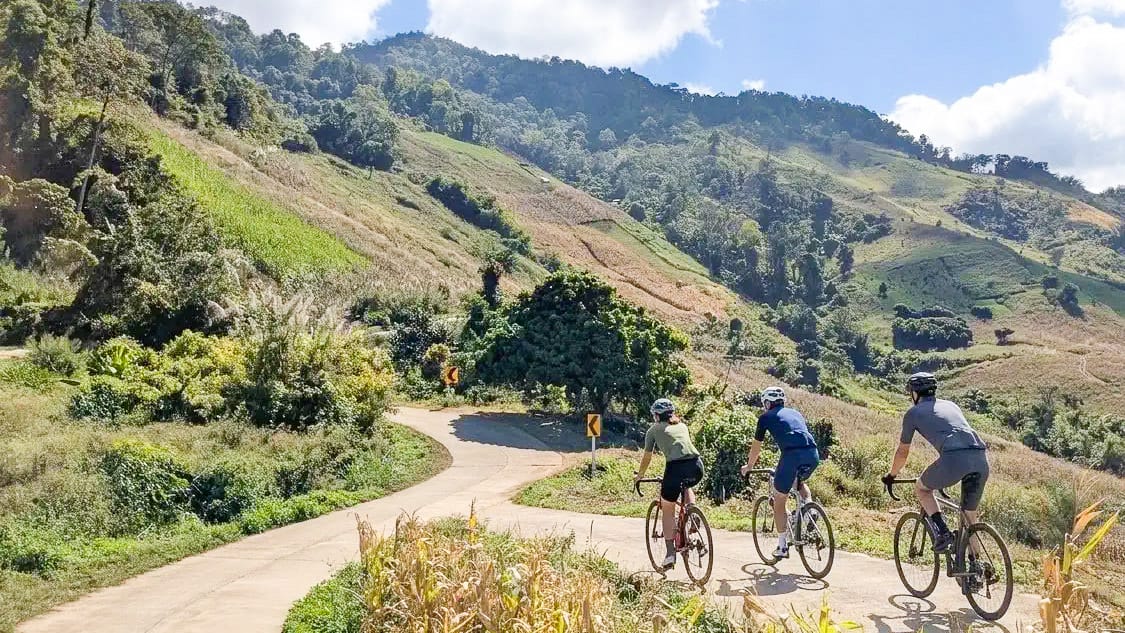
Riders near Phu Chi Fa in the Golden Triangle (photo credit: Nicolas Brocard-Saidi/LocalRoutes)
Laplae to Sukhothai
A leisure-paced tour through flat countryside and UNESCO sites such as Sukhothai. It suits riders more interested in culture and local life than big climbs.
- Riding days: 6 days
- Distance: 35 kilometres/day (210 kilometres in total of 6 days)
- Elevation gain: 30 metres/day (180 metres in total of 6 days)
- Start/Finish: Bangkok
More information
Interested in this tour? Get more details about our Thailand Heritage Plains tour on the website.
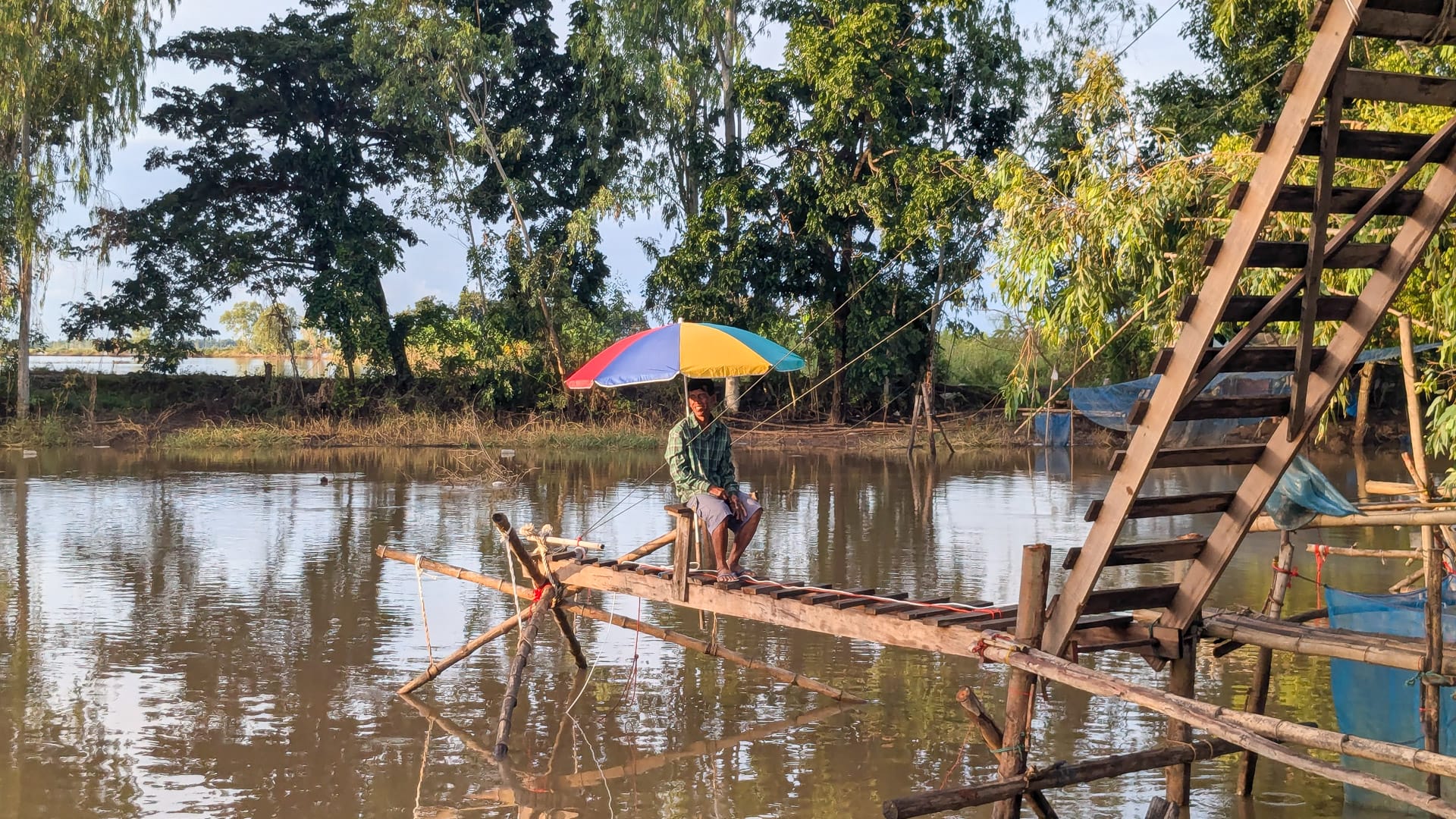
Traditional fishing in Sukhothai (photo credit: Nicolas Brocard-Saidi/LocalRoutes)
Gulf of Thailand
This tour explores coastal routes in Thailand, with fishing villages, beaches and quieter roads along the Gulf of Thailand.
- Riding days: 5 days
- Distance: 60 kilometres/day (300 kilometres in total of 5 days)
- Elevation gain: 254 metres/day (1,270 metres in total of 5 days)
- Start/Finish: Bangkok
More information
Interested in this tour? Get more details about our self-guided ride by the Gulf of Thailand tour on the website.
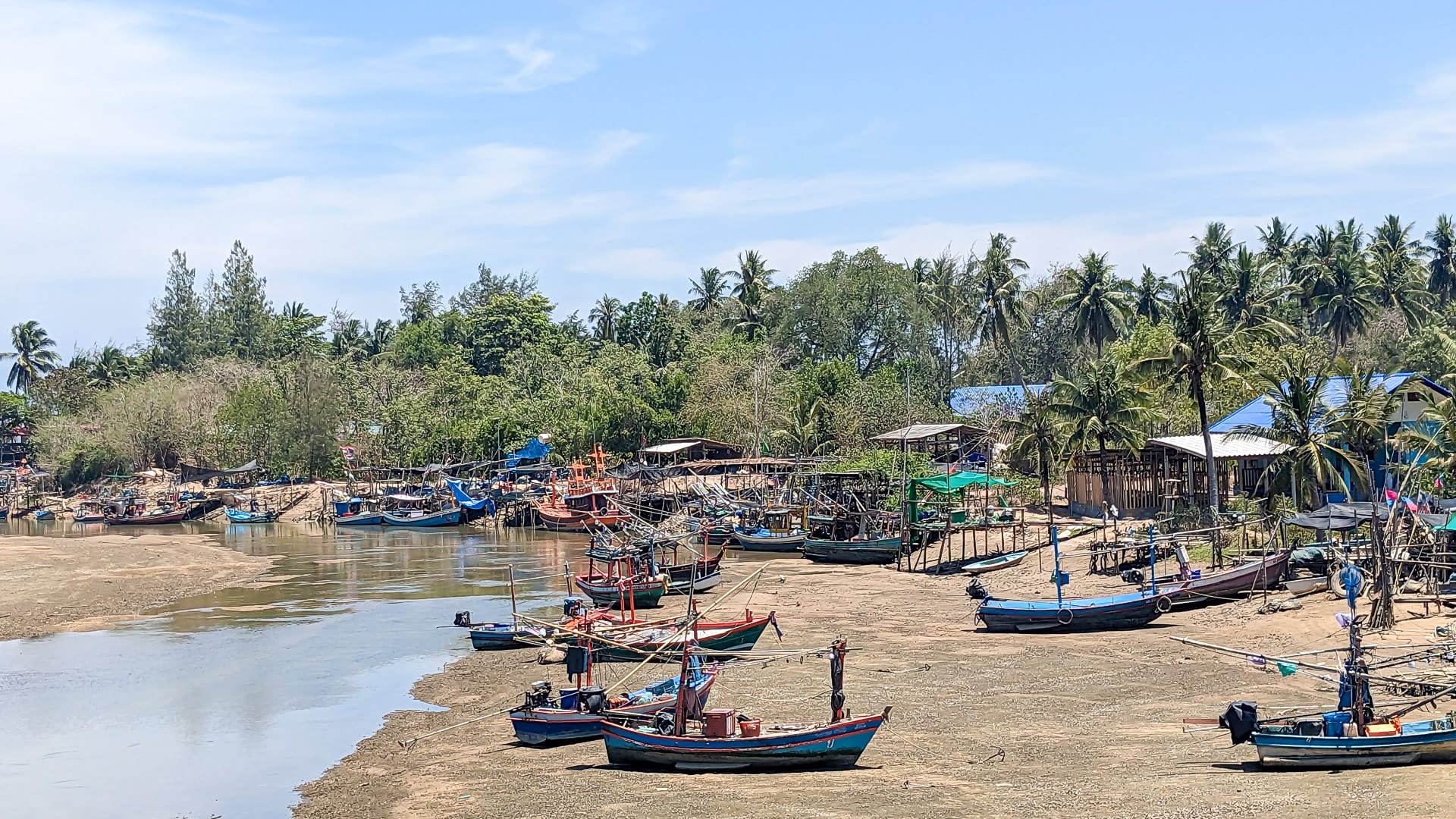
Cycling through Ban Krut on the Sunrise Coast (photo credit: Nicolas Brocard-Saidi/LocalRoutes)
Sponsor Message
Considering a cycling holiday in Thailand?
LocalRoutes helps cyclists explore Thailand through carefully planned small-group and self-guided tours since 2023. Alongside Thailand, they also offer cycling tours in Bangladesh, the Philippines and Laos.
Interested? Head to the LocalRoutes website to find out more, including dates and prices.
Got a question for Nicolas Brocard from LocalRoutes?
Fill out this form and we will pass it to LocalRoutes who aim to reply (within 24 hours wherever they can!)
Part 4: Things to know before visiting Thailand
Best time to cycle in Thailand
Thailand (excluding Gulf of Thailand)
The main cycling season in Thailand runs from late October to mid-March. This is usually the driest and most comfortable period for riding.
June to early September is the rainy season, also known as the green season. Showers are often sporadic rather than constant. They can cool the air and make the countryside very green, but riders need flexibility.
April and May are the months to treat with more caution. They are hot, with temperatures sometimes reaching 37 to 38°C, and most visiting cyclists will find the riding less comfortable. Stronger riders may still make it work, but heat management becomes central to the trip.
Burning season is another important consideration. In northern Thailand, burning season is usually between February and April, with the worst air quality often in late February and March. Smoke from agricultural burning and forest fires can reduce visibility and make riding much less enjoyable, particularly around Chiang Mai, Chiang Rai, Pai, Mae Hong Son and Nan.
As a rule of thumb, we suggest choosing a different region between early March and late May to reduce the risk of being affected by the burning season. We do not run tours in the far north during these months. Instead, Thailand’s coastal routes can be a good alternative at this time of year.
If you are planning to cycle in northern Thailand at this time of year, check current air quality before travelling and be prepared to adapt your plans.
Gulf of Thailand
The Gulf of Thailand has a slightly different weather pattern, especially around islands such as Koh Samui and Koh Phangan. These areas can see their rainier spell from September to November.
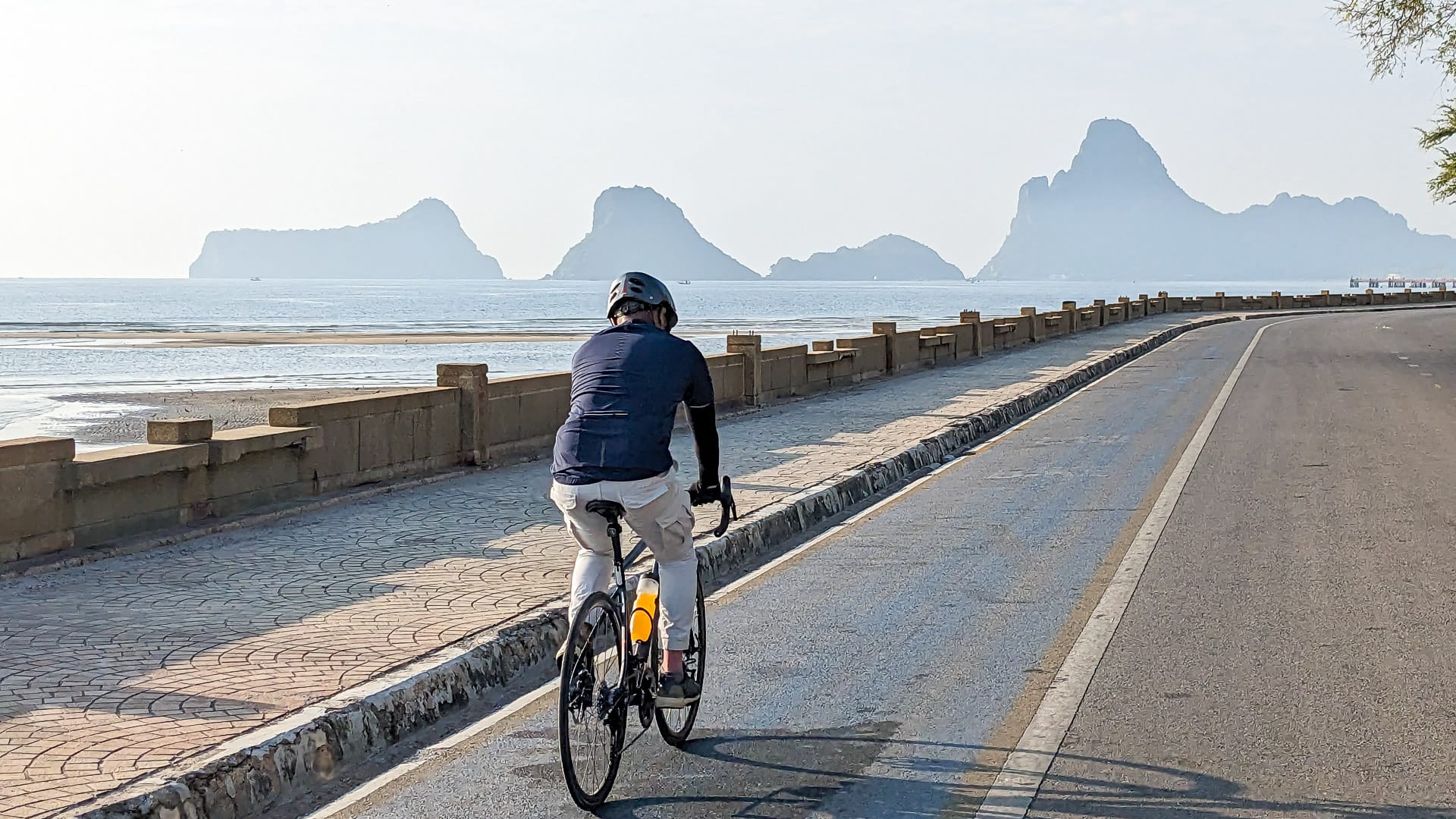
Cycling through Prachuap Khiri Khan (photo credit: Nicolas Brocard-Saidi/LocalRoutes)
Cycling events in Thailand
Thailand has several cycling events that may interest visiting riders.
Ang Khang KOM Challenge, Chiang Mai: a tough hill-climb event which usually occurs in January from Fang to Doi Ang Khang in northern Thailand. Some ramps are reported to exceed 30%.
Inthanon Challenge, Chiang Mai: a mass-participation climb near Chiang Mai, usually held in February. Riders climb around 48 kilometres from Chom Thong to the summit of Doi Inthanon.
Accommodation
Thailand is generally straightforward for cyclists when it comes to accommodation. There is no widespread bike-hotel culture or national cycling accommodation scheme, but hotels are often willing to help in usual Thai hospitality style.
Hotels
Even if hotels don’t call themselves bike-friendly, they will typically let you bring your bike to your room or help you find a room to leave it overnight. Thailand is very safe, and we’ve never heard of a traveller having an issue, nor have we. When you’re looking for a hotel, you don’t even need to search for “bike-friendly.” Just pick the place that tempts you the most.
SuanGlangNa in Phrae is a must known cyclist-friendly place to stay. The owners love cyclists and will do everything to accommodate you. The surrounding valley and mountains offer easier rides and more testing climbs, away from the better-known cycling profile of Chiang Mai.
We take pride in finding some of the best accommodation available, even in more remote parts of Thailand. We always test the places we use and often know the owners personally.
We look for the right balance between comfortable hotels, sometimes with pools, and more authentic stays that help you experience the country as it really is. Some of our routes also include charming boutique hotels that can become a real highlight of the trip.
Camping and temple stays
Camping is rarely the most practical option for a Thailand cycling trip. Clean, basic accommodation is usually affordable, and there are not many obvious places to pitch away from beaches in the south.
Some bikepackers stay overnight in temples. This can be accepted, and monks may welcome travellers kindly, but it is better kept for exceptional situations rather than used as a regular plan.
Bike hire and bike shops
Bike hire depends on where you are. Chiang Mai and Bangkok are the easiest places to arrange it. In more remote areas, bring what you need or arrange support in advance. Road bikes and touring bikes are the most commonly available rental options across Thailand. E-bikes can sometimes be found, but availability is inconsistent, so it is best to arrange these well in advance.
In Bangkok, LocalRoutes we are happy to rent out bikes from our own fleet, when available, to riders not attending a tour. We may also be able to help with logistics, including getting riders and bikes to the start of a route. Our fleet includes road bikes, gravel bikes, hybrid touring bikes and a selection of e-bikes. We also carry a wide range of sizes suitable for most cyclists, so there is usually an option to suit your riding style and requirements. Visit our website for more details and get in touch!
For riders bringing their own bike, local bike shops can often help pack bikes for flights. This typically costs around €20 to €30, including the bike box. Call a few days ahead to check cardboard bike boxes are available.
Useful bike shops include:
- Velo Thailand, Bangkok
- Probike, Bangkok
- Bike Zone Bangkok
- NK Bike Rentals, Chiang Mai
- Anek Bike, Chiang Mai
- Bike Zone, Chiang Mai
- Bike Works Phuket
- Bike Spirit Shop, Krabi
Getting to Thailand
Bangkok Suvarnabhumi Airport (BKK) is the main airport for most international visitors. Some routes from Europe, including London and Paris, fly directly into Phuket (HKT), which can be useful for southern Thailand.
If you are arriving from elsewhere in Asia, Don Mueang (DMK) and Chiang Mai (CNX) may also be useful.
Airport transfers are usually straightforward. Grab is widely used, and hotels or tour operators can pre-book vehicles.
You can also pre-book a GrabVan through the app. These nine or 11-seater vehicles usually have enough space for bikes, often without removing the front wheel. We suggest choosing a GrabVan rather than a Grab SUV, as an SUV driver may not agree to carry bikes.
Travelling around Thailand with a bike
Bikes are allowed on many long-distance trains, and overnight trains can be a memorable way to move around Thailand with a bike. Not every service is suitable, so check whether the train has the right cargo capacity.
Most overnight trains with cargo carriages accept bicycles. On the northbound route between Bangkok and Chiang Mai, trains 13 and 51 have cargo compartments. On the southbound route between Bangkok and Surat Thani, trains 85, 167 and 173 have cargo carriages.
Local trains to Kanchanaburi do not have dedicated cargo carriages, but you can usually bring your bike aboard with you. Bikes are generally safe on Thai trains, including overnight services. However, do not leave your passport or other valuables attached to or stored with your bike overnight.
The Thai Train Guide by Richard Barrow is a useful starting point for checking train information.
Bikes can often go in the luggage hold of larger long-distance buses between main cities. In smaller provincial towns, this can be less predictable and may require negotiation with the driver, so allow extra time.
Arrive at the bus station well in advance and choose a larger bus whenever possible. Minivans may not have enough room or may refuse to carry a bike. Language barriers can sometimes make arrangements more difficult, but allowing plenty of time and using a translation app such as Google Translate should help.
A support vehicle is not essential, but it can make a point-to-point trip much easier. It helps with luggage, water, transfers, route logistics and mechanical issues.
At Local Routes we can help with all of this!
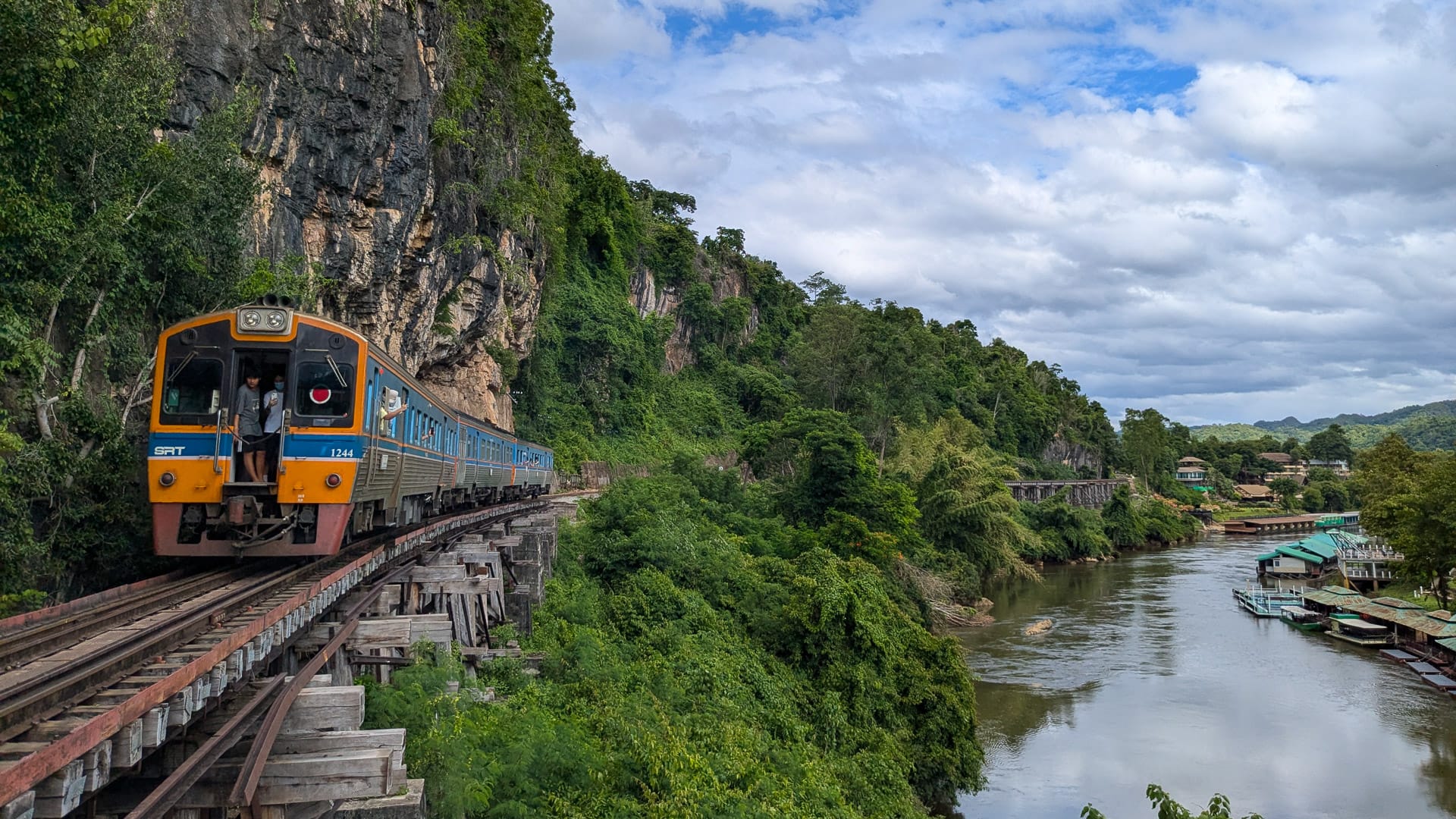
A train crossing the River Kwai in Kanchanaburi (photo credit: Nicolas Brocard-Saidi/LocalRoutes)
Sponsor Message
Considering a cycling holiday in Thailand?
LocalRoutes helps cyclists explore Thailand through carefully planned small-group and self-guided tours since 2023. Alongside Thailand, they also offer cycling tours in Bangladesh, the Philippines and Laos.
Interested? Head to the LocalRoutes website to find out more, including dates and prices.
Got a question for Nicolas Brocard from LocalRoutes?
Fill out this form and we will pass it to LocalRoutes who aim to reply (within 24 hours wherever they can!)
Part 5: Tips for cycling in Thailand
These tips focus on the practical details that make the biggest difference when cycling Thailand.
When should you start riding each day?
Start early. We usually suggest setting off at around 7:30 am, just after breakfast. Some riders prefer to leave at sunrise and stop for local snacks at a market or a full breakfast along the way.
Heat is one of the main things to plan around, and early starts usually mean cooler conditions and quieter roads. They also give you time to pause for street food, temples and markets without riding through the hottest part of the day.
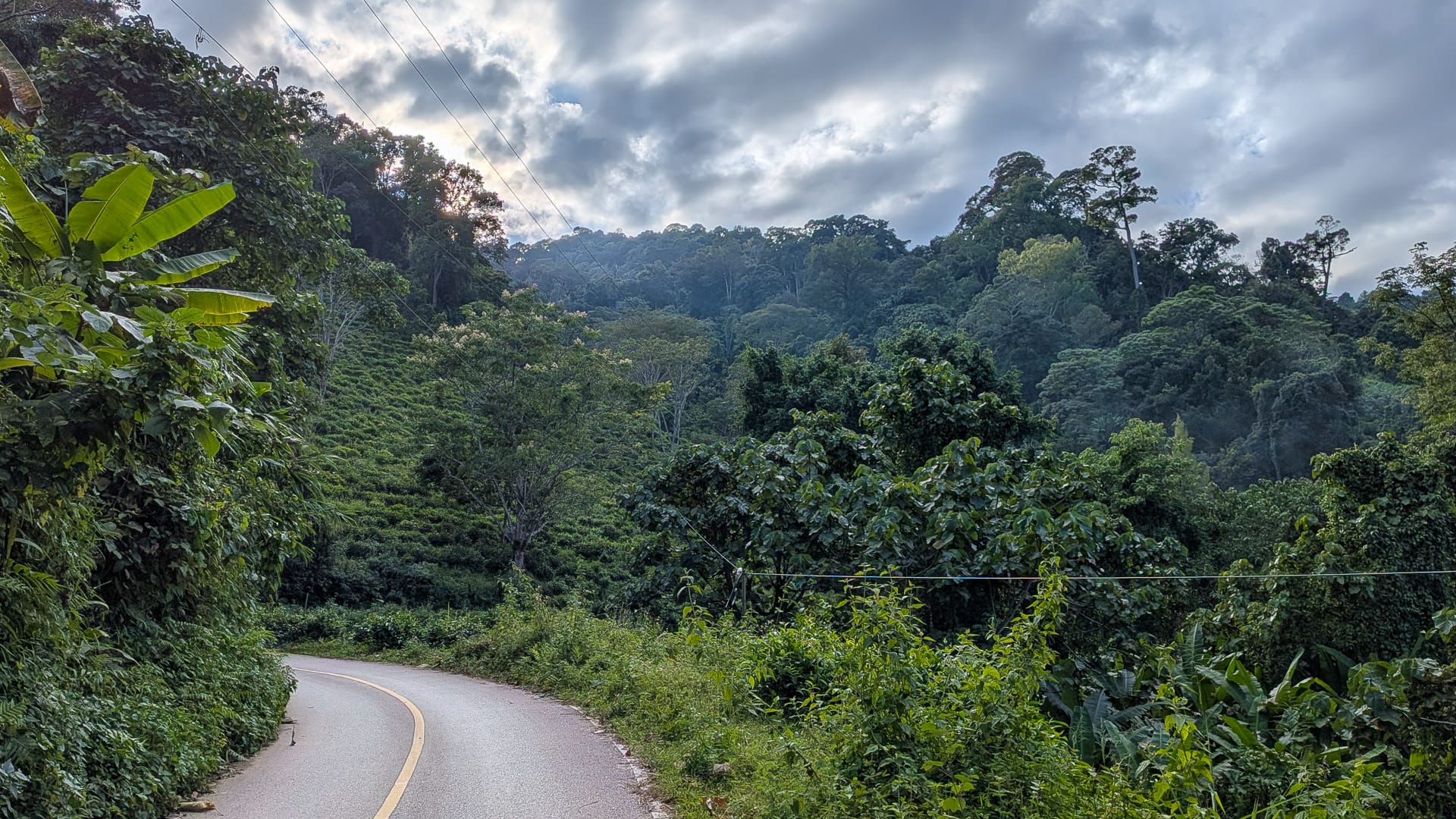
Cycling the roads of the Mae Hong Son Loop (photo credit: Nicolas Brocard-Saidi/LocalRoutes)
How should you plan your route?
Avoid highways where possible. Smaller backroads are usually more enjoyable and more comfortable for cyclists. If you are planning your own route, look for minor roads with longer road numbers and local lanes rather than the most obvious direct option.
Which side of the road do cyclists ride on?
Thailand drives on the left. This is familiar for UK riders, but cyclists arriving from elsewhere should take time to adjust, especially at junctions and roundabouts.
How much water should you carry?
Take hydration seriously. Tap water is not generally drinkable, but bottled water is widely available from convenience stores and roadside shops. Do not wait until your bottles are empty before refilling.
Depending on where you’re riding, there may be stretches of 10 to 15 kilometres without an obvious refill point. Try to keep at least one full bottle with you. Reverse-osmosis water stations in rural areas can also be useful for topping up bottles.
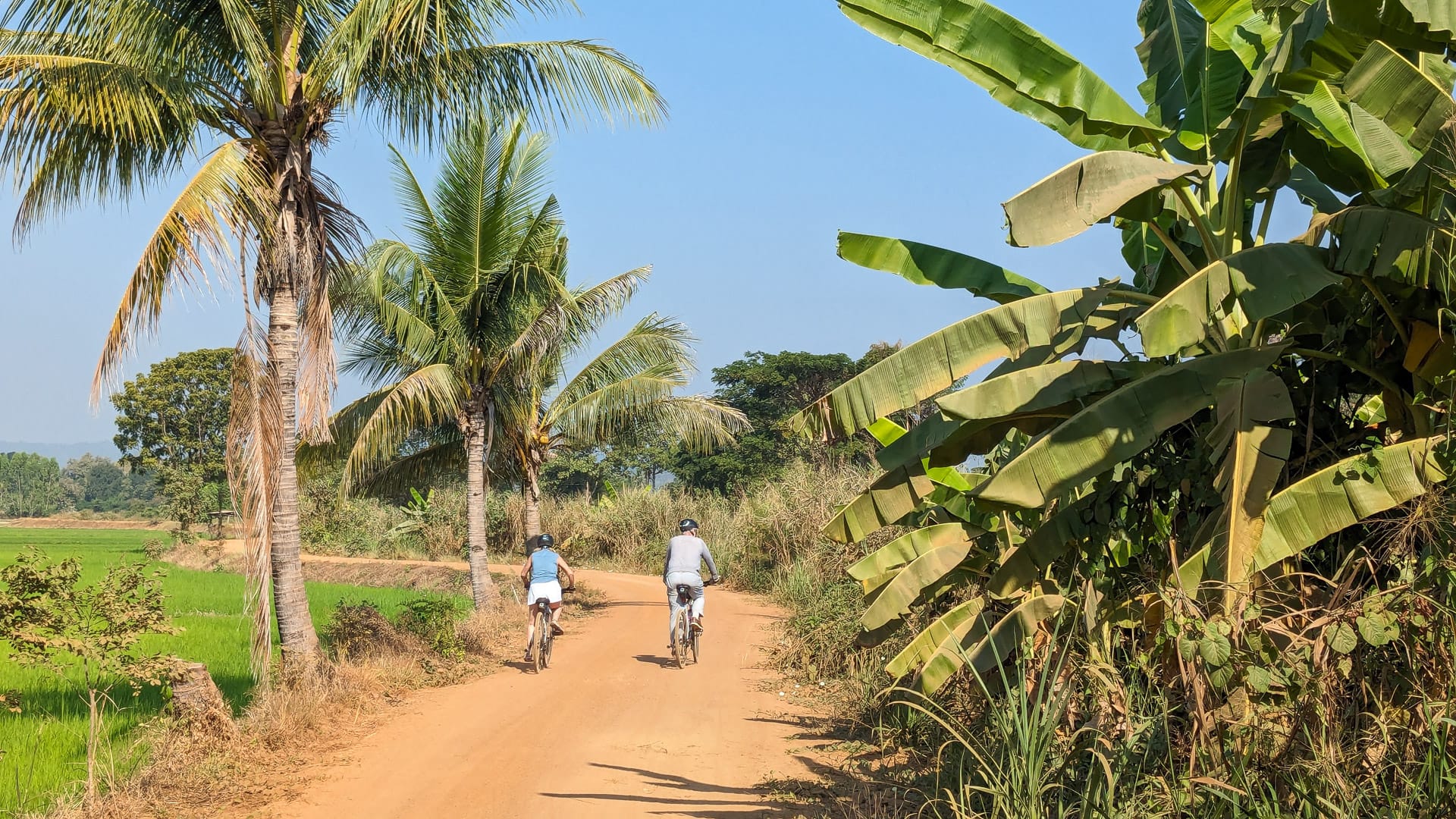
Cycling gravel roads near Si Satchanalai (photo credit: Nicolas Brocard-Saidi/LocalRoutes)
Do you need electrolytes?
Electrolytes can be useful in Thailand’s heat and humidity. Sachets are easy to find in 7-Eleven stores, which are also useful for cold drinks, snacks and air-conditioning on hot days.
What is the food like in Thailand?
Food is another reason Thailand works so well by bike. Rides can be shaped around morning markets, roadside noodle shops, fruit stalls and small local restaurants, rather than just formal café stops. Look out for khao soi in the north, pomelo salad around Amphawa, seafood on the coast, green papaya salad, khanom sweets and fresh fried bananas.
While elsewhere riders might come across som tam, pad kra pao, noodle soups, grilled skewers, fresh fruit and mango sticky rice.
For many cyclists, these simple stops become some of the most memorable parts of the trip. They also help riders slow down and connect with the places they are passing through.
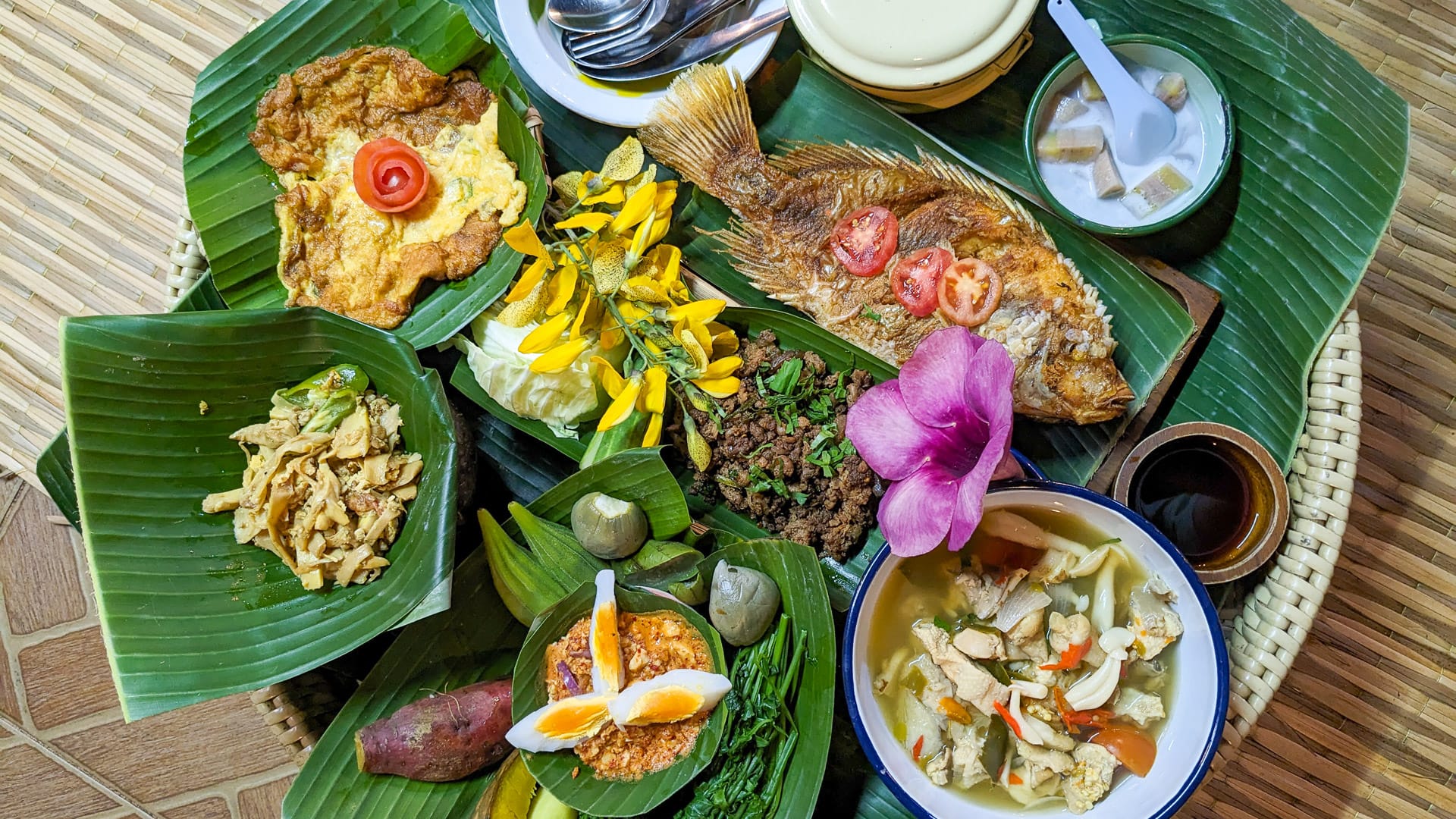
Dinner at a traditional homestay in Uttaradit (photo credit: Nicolas Brocard-Saidi/LocalRoutes)
Where should you stop for food?
Aside from markets and small local restaurants, convenience stores are useful, but small roadside shops often make better stops and help money reach communities along the route. They are also part of the fun of cycling here.
Thailand has a widely used QR code payment system, but it is generally limited to people with Thai bank accounts. Credit cards are not commonly accepted in more remote areas, so cash is usually the safest option. Make sure you carry enough for food and drinks along the route.
What kit should you pack?
Pack breathable cycling kit, a helmet, lights and high-factor, water-resistant sunscreen. A light rain jacket is useful in the rainy season, while an extra layer is sensible for northern mountain areas in winter.
MTB or gravel shoes can be more practical than road shoes. Thailand rides often include temple visits, markets and sightseeing stops, so it helps to wear shoes you can walk in.
A swimming costume is also worth packing, especially if your route includes the coast or a hotel pool.
For more information of packing, check out our in-depth guide.
What should you do about dogs?
Dogs can be a challenge on rural road, particularly if you are not comfortable around them. However, they usually bark or give chase rather than behave aggressively, and accidents are extremely rare. Most cyclists become more confident after their first day of riding.
If a dog chases, slowing down is usually better than speeding up. In most cases, the dog will quickly lose interest. If needed, stop, put a foot down and speak calmly to the dog before setting off again.
Do you need to speak Thai?
You do not need to speak Thai to cycle in Thailand, but a few words help.
A few useful words include:
- Sawasdee: hello.
- Khob khun: thank you.
- Chai / mai chai: yes / no.
- Sai / kwaa: left / right.
- Nam: water.
- Tao rai?: how much?
- Hong nam yoo tee nai?: where is the toilet?
- Mai pen rai: no worries.
“Mai pen rai” roughly means “no worries” or “it’s okay”. It is a useful phrase to understand when cycling in Thailand.
If you get a flat tyre, take a wrong turn or shelter from a sudden downpour, local people are often calm and practical rather than stressed. It is one of the small cultural details that can make riding in Thailand feel more relaxed, provided you allow time and stay flexible.
If you meet local people on the road, a smile and a respectful wave are usually appreciated.
Top Tip, download Thai on Google Translate for offline use before you travel.
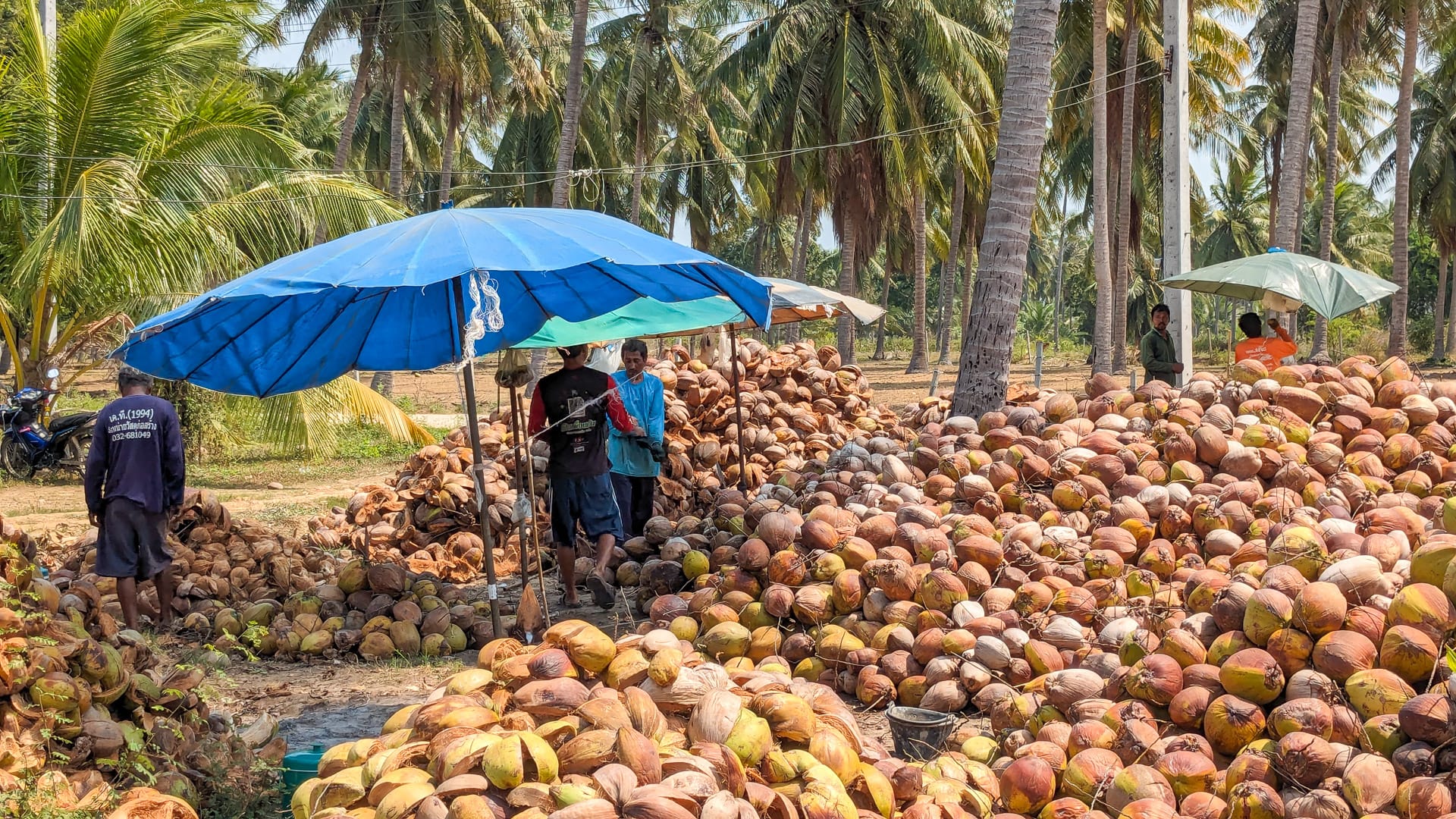
Stopping by a coconut plantation in Kui Buri (photo credit: Nicolas Brocard-Saidi/LocalRoutes)
How should you behave around temples?
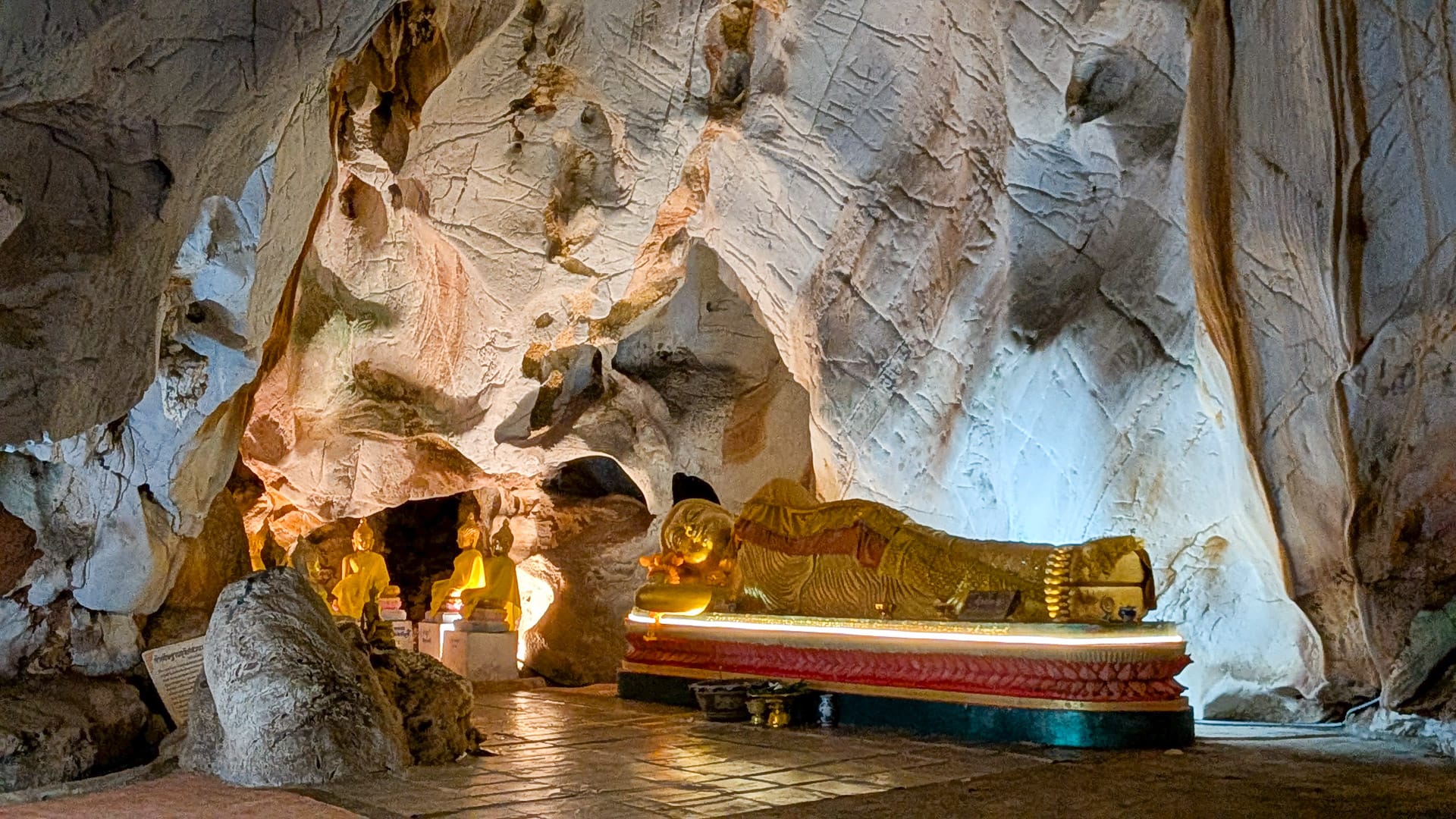
Temples are part of everyday life in Thailand. Dress appropriately for visits, remove shoes where required and be aware of monks on morning alms rounds. Men can generally visit temples in cycling kit. Women should cover their legs, so it is useful to carry a sarong or a large, lightweight scarf that can be wrapped around the waist before entering.
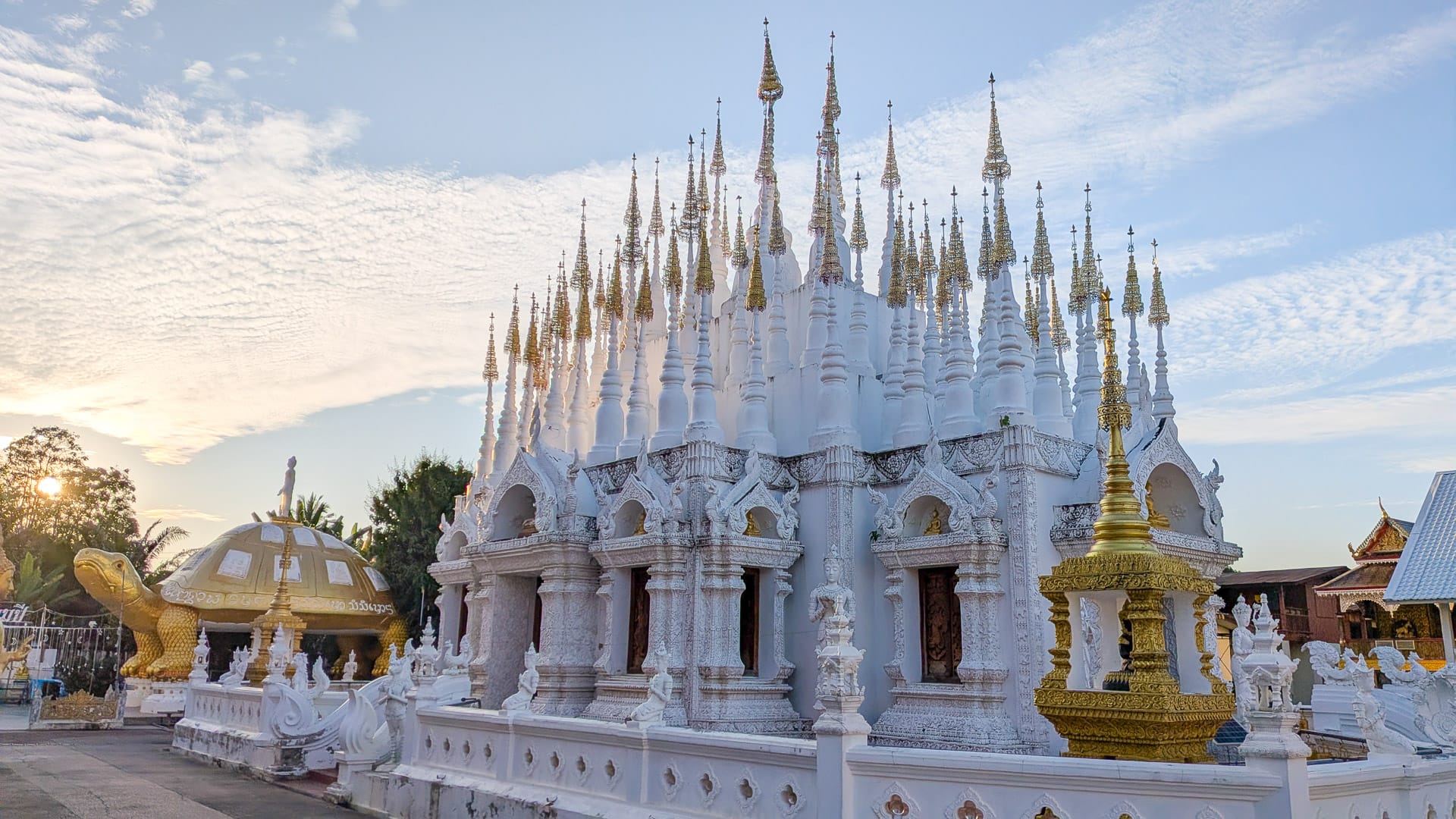
Wat Phong Sunan in Phrae (photo credit: Nicolas Brocard-Saidi/LocalRoutes)
Tell me about the monarchy?
Visitors should be aware that Thailand’s monarchy is deeply respected. Avoid making jokes, critical comments or casual remarks about the royal family, including online. This also applies to gestures, social media posts and other public comments. It’s one of those cultural points that visitors should understand before travelling, and part of being respectful while in Thailand.
You are also likely to see royal images in public places, businesses and homes. Treat these respectfully and avoid using them casually or in a way that could cause offence. If the royal anthem is played at a public event, it is customary to stand.
Thailand’s lèse-majesté laws make criticism of the monarchy a serious criminal offence. For most visitors, the key point is simply to remain neutral and respectful. You do not need detailed knowledge of royal history, but you should treat portraits of the king and other royal symbols with care.
The FCDO’s Thailand travel advice includes legal differences and safety guidance for visitors, and it’s sensible to keep this point as practical cultural awareness rather than legal commentary.
What should cyclists know about road safety in Thailand?
Thailand can be a fantastic place to cycle, but its road safety record means cyclists should be thoughtful about where and when they ride.
One issue is that many roads are good enough for vehicles to travel quickly, but the surrounding infrastructure is not always designed with cyclists in mind. Highway U-turn points can be particularly uncomfortable, as vehicles may need to cross lanes, slow suddenly or wait close to fast-moving traffic. Poor lighting, unexpected junctions, parked vehicles, limited slip roads and unclear signage can also add to the challenge.
Where possible, avoid the most direct roads between towns and look instead for quieter rural roads, local lanes and backroads. These may add distance, but they are usually more enjoyable and often give a much better insight into Thailand.
This is where local knowledge really matters. A well-planned route can help you avoid stressful roads and focus on the best riding experience. LocalRoutes can help by designing routes that prioritise quieter roads, practical logistics and support where needed, whether you choose a guided or self-guided cycling tour.
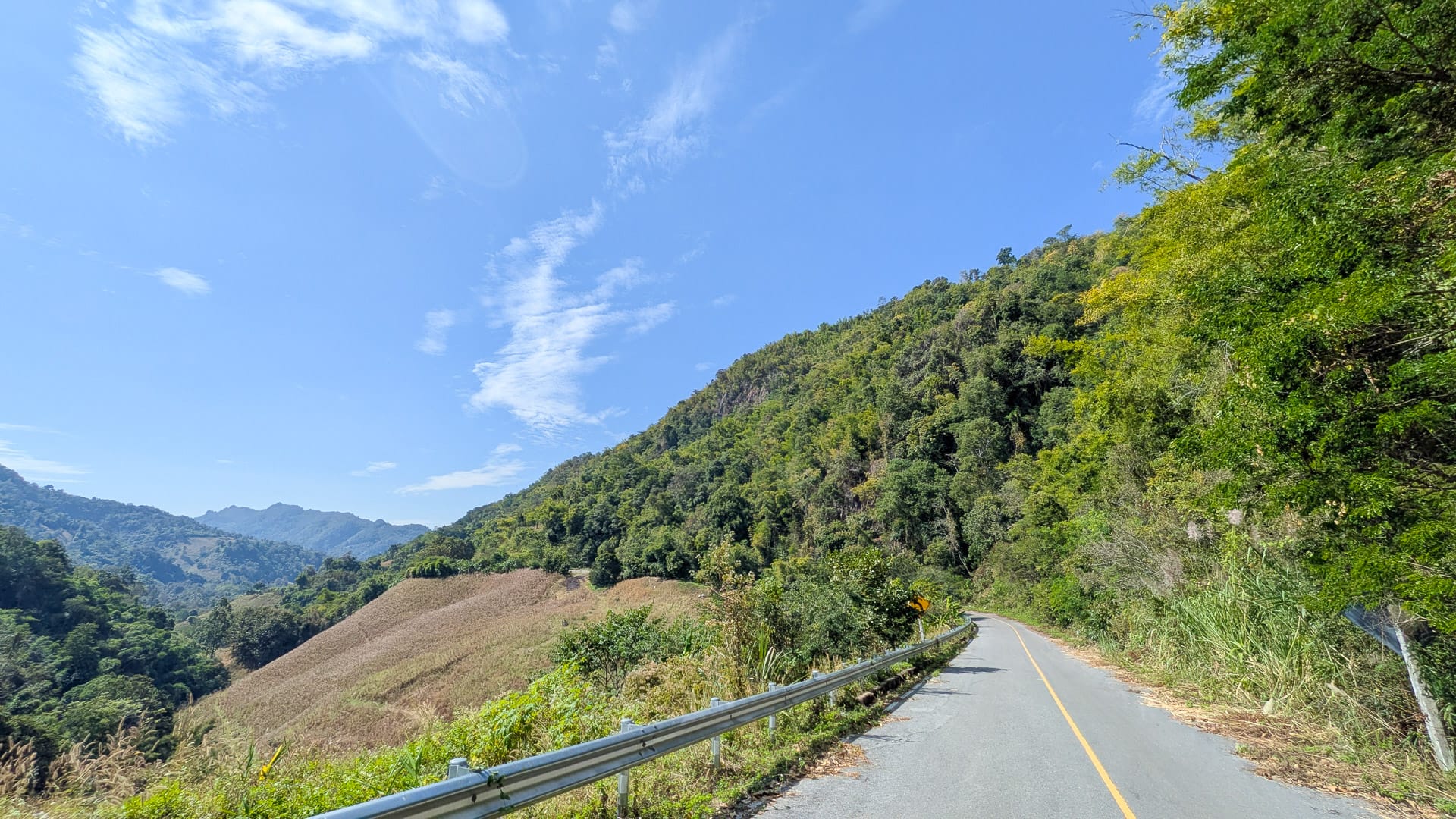
Cycling peaceful mountain roads in Phrae (photo credit: Nicolas Brocard-Saidi/LocalRoutes)
Any highway code and travel information I should be aware of?
As ever, it’s a good idea to check current travel information before you book and travel. For UK visitors, the UK government travel information pages for Thailand are here.
You should also read and follow Thailand’s highway code. Traffic drives on the left, and cyclists should keep to the left-hand side of the road. In practice, larger vehicles often take priority, so it is important to ride defensively even when you have right of way.
Traffic can be very light on smaller back roads, but you should still stay alert. One particular risk is a motorbike pulling out from a house or side road without expecting a quiet cyclist to be approaching.
Is there anything worth reading before a cycling trip to Thailand?
Two books worth considering are “Very Thai” by Philip Cornwel-Smith and “Sightseeing” by Rattawut Lapcharoensap.
“Very Thai” is a light cultural guide that can help you understand everyday Thai life. “Sightseeing” is a collection of short stories by a Thai author and makes good travel reading.
Sponsor Message
Considering a cycling holiday in Thailand?
LocalRoutes helps cyclists explore Thailand through carefully planned small-group and self-guided tours since 2023. Alongside Thailand, they also offer cycling tours in Bangladesh, the Philippines and Laos.
Interested? Head to the LocalRoutes website to find out more, including dates and prices.
Got a question for Nicolas Brocard from LocalRoutes?
Fill out this form and we will pass it to LocalRoutes who aim to reply (within 24 hours wherever they can!)
Part 6: What does LocalRoutes offer?
Who are LocalRoutes?
LocalRoutes is a boutique cycling tour operator based in Thailand. I founded it after years of planning cycling trips for friends and seeing how much closer a bicycle could bring riders to local people, cultures and places.
Our trips are designed for cyclists who want to experience Thailand beyond the usual tourist trail. We focus on small-group and self-guided cycling tours across Thailand. Our trips are built around quiet roads, local encounters, comfortable accommodation and support that helps riders enjoy the journey without taking away the sense of independence.
The aim is to give riders the right balance of independence and support. We take care of the routes, accommodation, luggage, transport and local details, so cyclists can slow down, ride at their own pace and enjoy the side of Thailand many visitors miss.
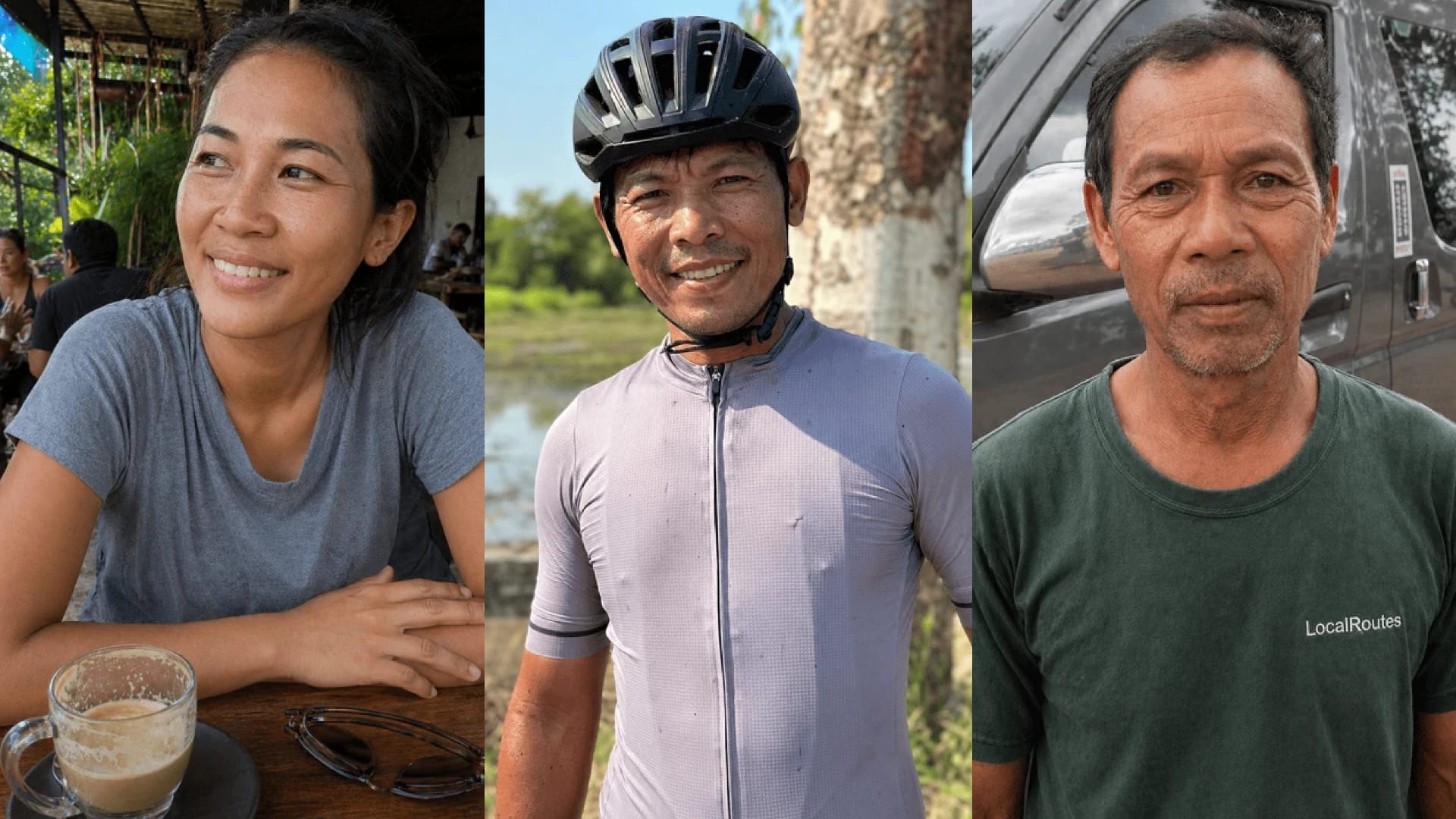
LocalRoutes team: Fong, Nok and Suwat (photo credit: LocalRoutes )
What do you offer at LocalRoutes?
Self-guided cycling tours are at the heart of LocalRoutes’ offering. They are designed for riders who want the freedom to travel independently, while still having local support and the main logistics taken care of.
Self-guided trips include access to an easy-to-use navigation and roadbook app, which provides route guidance for each day and highlights places worth stopping along the way. Luggage is transferred between hotels, while the local team remains available by phone should riders need mechanical assistance, advice or reassurance.
One of the main advantages of travelling self-guided is the flexibility. Riders can choose when to start, stop whenever something catches their eye and complete each stage at their own pace. Itineraries can also be adapted by adding or removing riding days, adjusting stage lengths, including rest days or arranging transfers before or after the trip.
For those who prefer more support on the road, LocalRoutes also offers fully guided tours. These include a support vehicle and a local guide who knows the roads and routes in detail. Guides speak both English and Thai, and also provide insight into local culture, history and everyday life along the way.
During guided rides, the guide looks after navigation, helps set an appropriate pace and organises snack and lunch stops. On private tours, the route can also be adapted during the day to suit riders’ interests, energy levels or changing conditions.
All guides are trained in first aid and basic bike mechanics, and remain in contact with the support vehicle throughout the ride. LocalRoutes operates with a maximum ratio of one guide to seven riders. The support vehicle carries luggage, provides water and snacks, and is available if a rider becomes tired, has a mechanical issue or needs assistance.
What makes your tours different?
Our focus is on the routes themselves. We spend time scouting small backroads that are safe, interesting and enjoyable to ride. These cycling routes are intended to show working villages, quiet farmland, local temples and everyday life away from the busiest tourist corridors.
Accommodation is also part of the experience. LocalRoutes handpicks guesthouses and boutique hotels for character and quality.
We personally test every place we use and often know the owners ourselves. We look for the right balance between comfortable hotels and authentic local stays, with some charming boutique hotels that become a real highlight of the trip.
Routes can be shaped around the rider too. We are always happy to adjust distance, climbing and trip length so the cycling fits the rider rather than the other way around.
What are the most popular LocalRoutes cycling tours in Thailand?
A self-guided ride at a sporty pace, with a more leisurely version available. It heads south from Bangkok through fishing villages, coconut groves and beaches, ending near Khao Sok’s lake.
- Riding days: 10 days
- Distance: 82 kilometres/day (820 kilometres in total of 10 days)
- Elevation gain: 367 metres/day (3,670 metres in total of 10 days)
- Start/Finish: Bangkok/Phuket
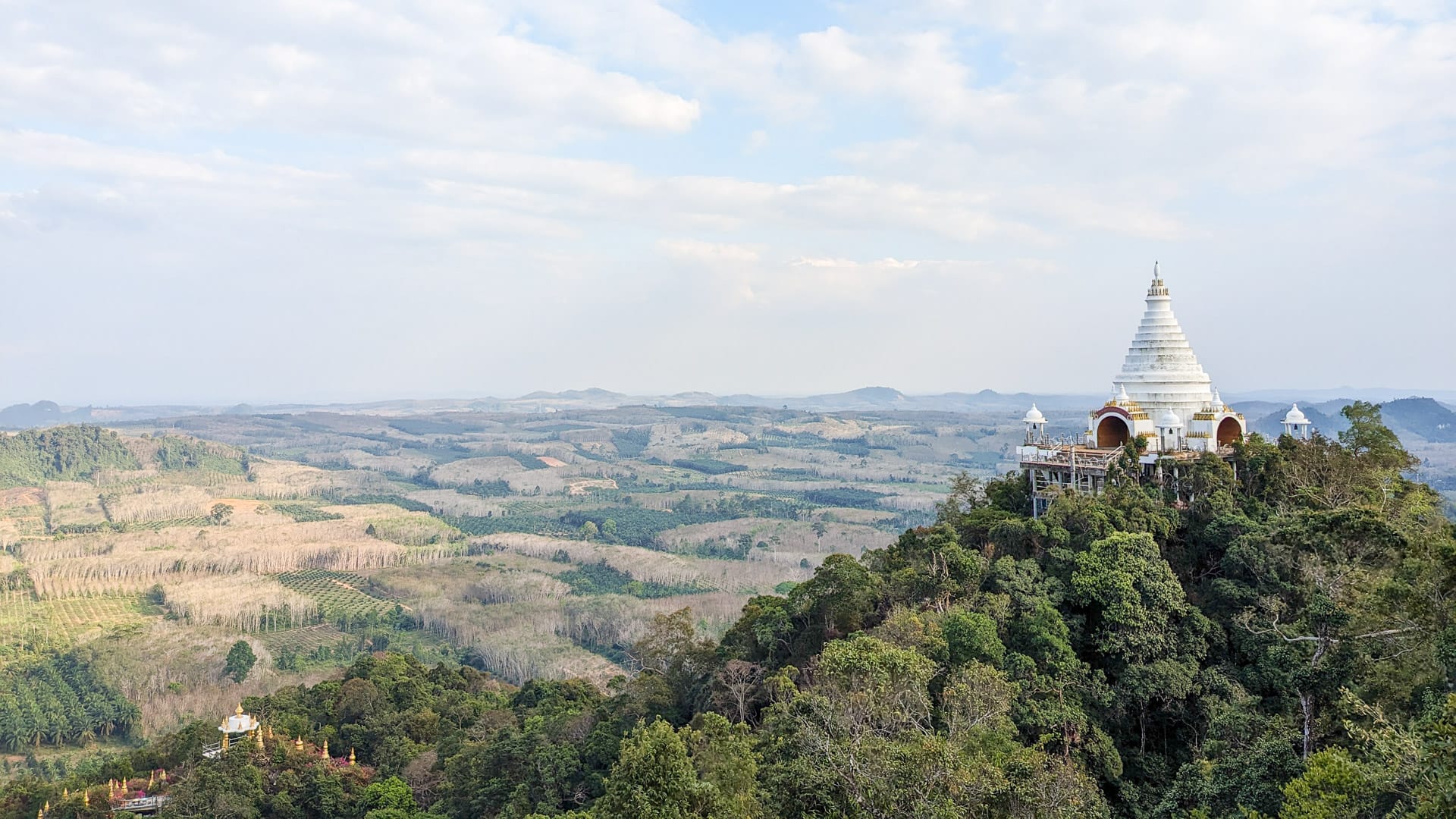
Views from a Dharma temple near Khao Sok (photo credit: Nicolas Brocard-Saidi)
Chiang Rai and the Golden Triangle by Bike
A self-guided ride through northern Thailand. It explores mountains, rice paddies and rural roads around Chiang Rai.
- Riding days: 6 days
- Distance: 73 kilometres/day (438 kilometres in total of 6 days)
- Elevation gain: 1,056 metres/day (6,336 metres in total of 6 days)
- Start/Finish: Chiang Rai
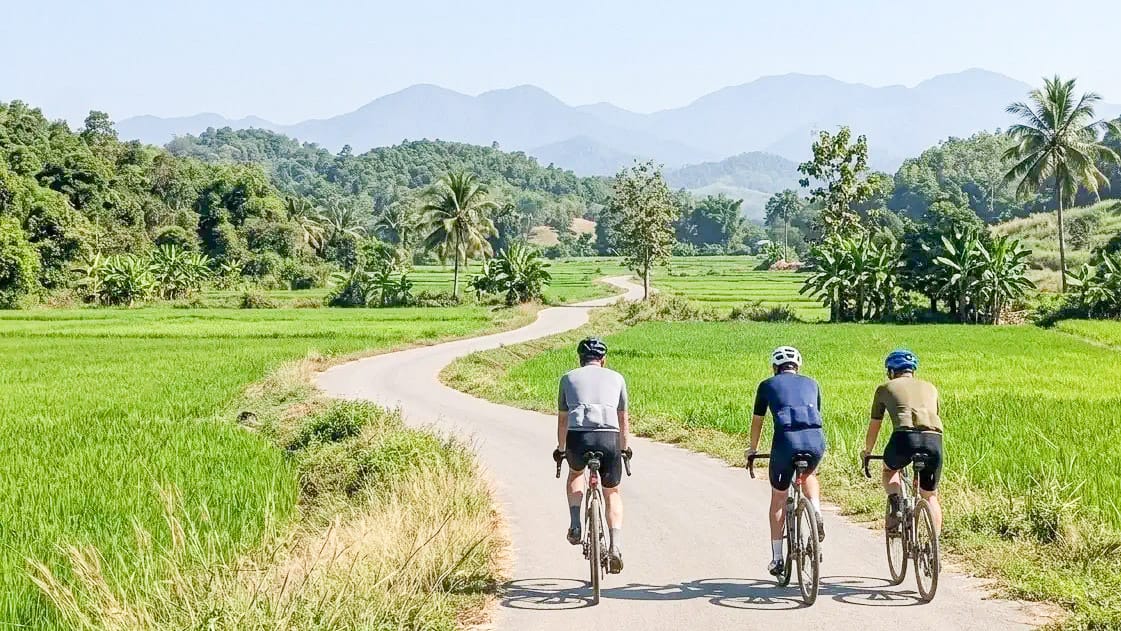
Riding the plains near Chiang Rai (photo credit: Nicolas Brocard-Saidi/LocalRoutes)
A leisure-paced tour through flat countryside and UNESCO sites such as Sukhothai. It suits riders more interested in culture and local life than big climbs.
- Riding days: 6 days
- Distance: 35 kilometres/day (210 kilometres in total of 6 days)
- Elevation gain: 30 metres/day (180 metres in total of 6 days)
- Start/Finish: Bangkok/Onward journey
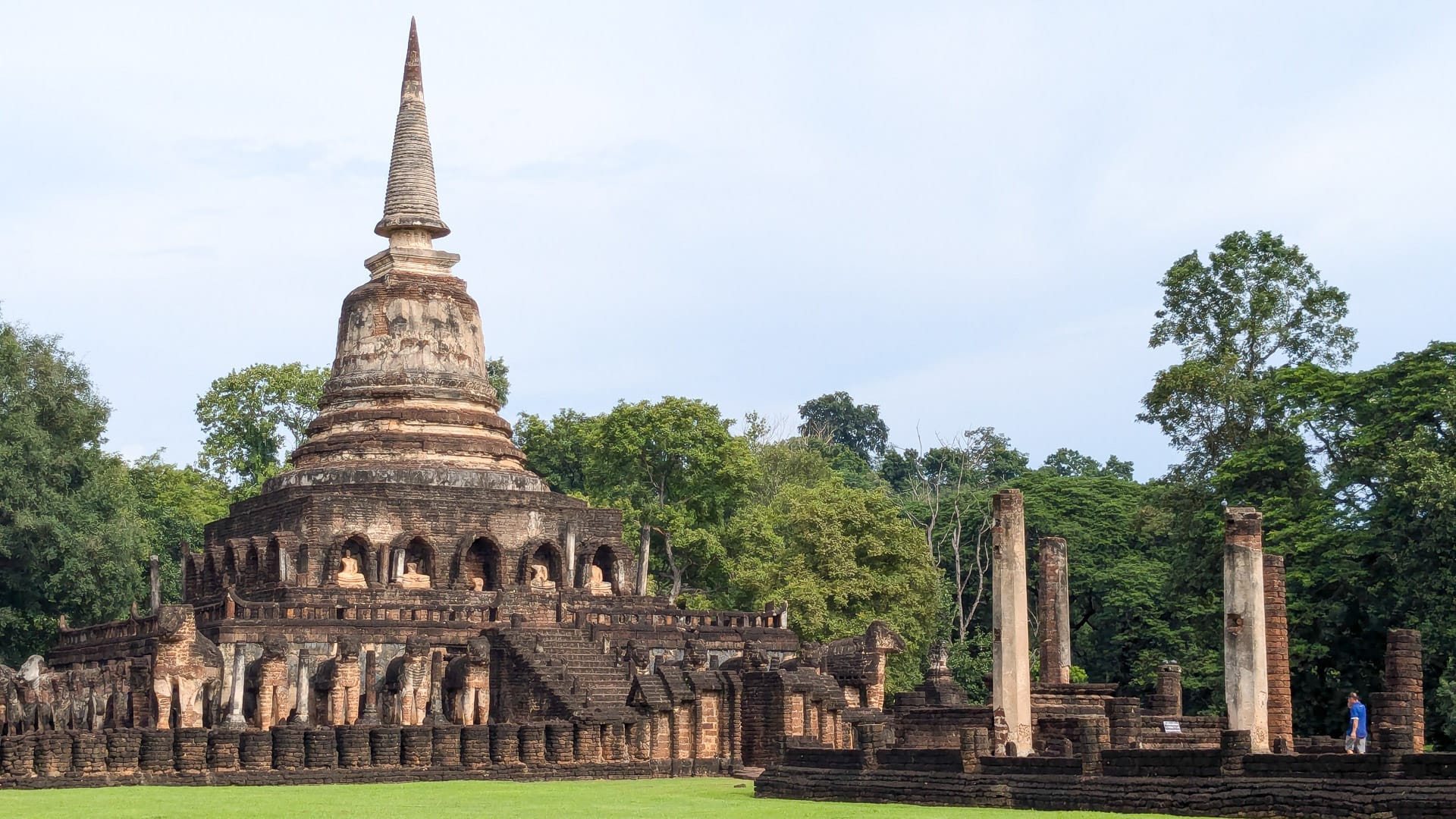
Cycling through Sukhothai’s UNESCO World Heritage Site (photo credit: Nicolas Brocard-Saidi/LocalRoutes)
Self-guided ride by the Gulf of Thailand
This tour explores coastal routes in Thailand, with fishing villages, beaches and quieter roads along the Gulf of Thailand.
- Route summary
- Riding days: 5 days
- Distance: 60 kilometres/day (300 kilometres in total of 5 days)
- Elevation gain: 254 metres/day (1,270 metres in total of 5 days)
- Start/Finish: Bangkok
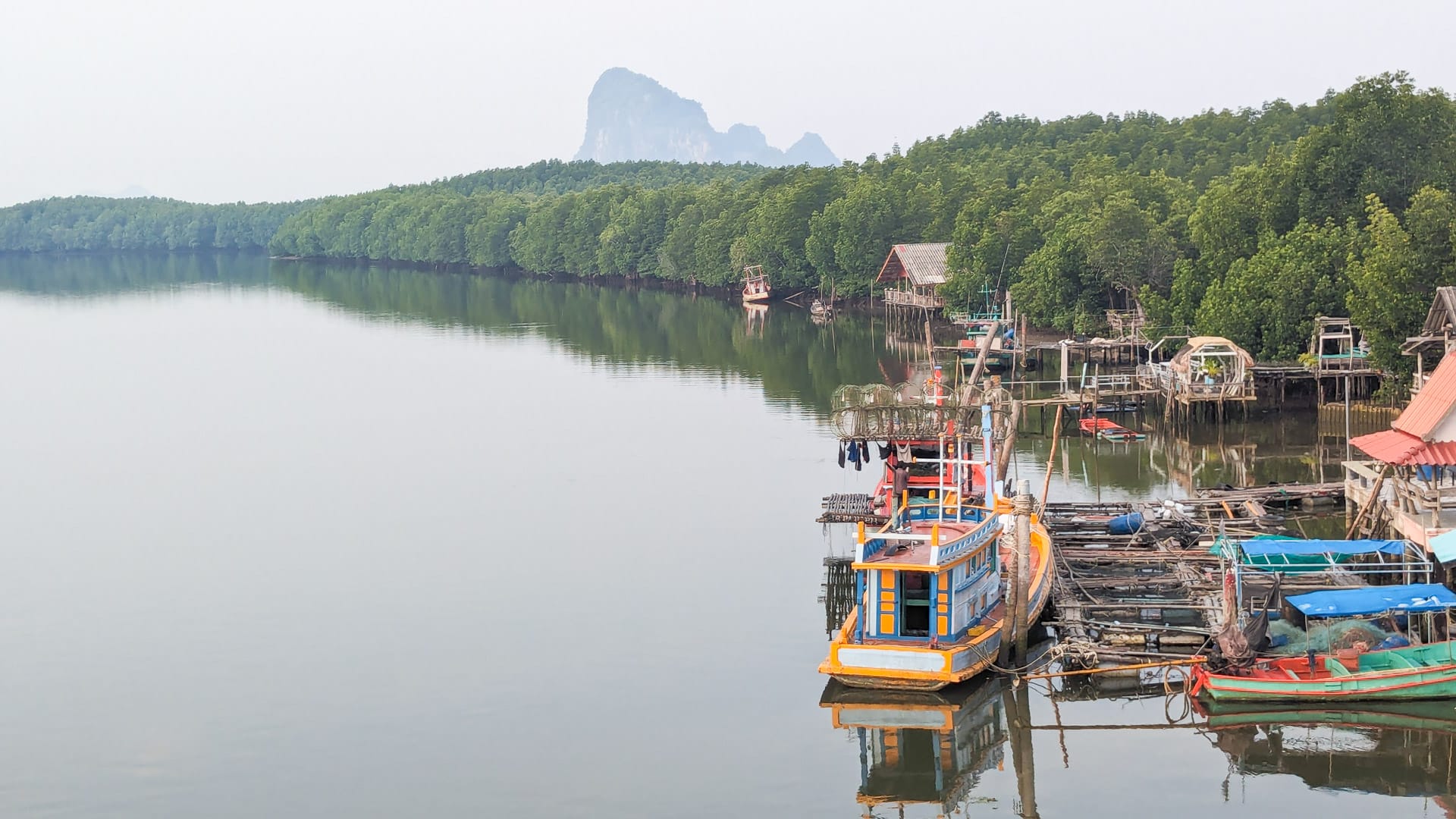
Fishing villages between Bangkok and Phuket (photo credit: Nicolas Brocard-Saidi/LocalRoutes)
How can you find out more?
Ready to start shaping your own Thailand cycling trip? Visit LocalRoutes to explore their guided and self-guided cycling tours, or get in touch to discuss the kind of riding, places and pace that would suit you best.
What’s next?
A big thank you to Nicolas Brocard of LocalRoutes for sharing his insights on cycling in Thailand, it sounds like a fascinating country to explore! Have you cycled in Thailand, or are you considering it? Comment below to tell us about your experience or ask any questions.
Looking for more cycling inspiration in Asia? Don’t miss:
- 7 of the best cycling tours in Asia, for our pick of the best Asian countries for cycling
- Cycling Singapore, for the best routes and tours in this tropical destination
- Cycling Northern Vietnam, for an overview of the region and things to know before visiting
- Cycling in South Korea: the inside guide, including the best bases for cyclists and tips
- Cycling Sarawak, Borneo, for tips on where to stay and when to visit
- Cycling in India: the inside guide, including practicalities and the best regions
- Cycling in the Alto de Letras, Colombia, for the insiders guide to the region
Got a question for LocalRoutes?
Fill out this form and we will pass it to LocalRoutes who aim to reply (within 24 hours wherever they can!)
Got a question for Nicolas?
Fill out this form and we will send it to Nicolas. We aim to get you an answer within 24 hours where possible!Nicolas Brocard is the founder of LocalRoutes, a boutique cycling tour operator based in Thailand. He's been travelling since childhood, drawn to getting close to local people and cultures wherever he goes rather than staying on the surface. Over years of taking friends on his own cycling adventures, he noticed something: watching them see a place through a bicycle's pace and proximity, with the same wide-eyed curiosity he felt himself, was more rewarding than the rides themselves.
The idea for LocalRoutes first came to him in 2019, but he bought into a stable, comfortable job instead, and the idea sat on the shelf. A few years later, that job stopped being exciting, and the itch for something more purposeful won out.
A committed endurance sports enthusiast, Nicolas believes a bicycle reaches places and creates a kind of interaction with locals that no other mean of transport ever could. LocalRoutes was built on that belief: routes off the busy roads, real encounters with local life, and trips designed to feel authentic and responsible, without sacrificing comfort or safety. Nicolas now runs small-group and self-guided cycling tours across Thailand, still chasing the same thing that got him into this in the first place: the look on someone's face when they see a place properly, from a saddle.
(Photo credit: Nicolas Brocard-Saidi/Local Routes)
First Published: 24 August 2026
This article includes details of products and/or services that we have used ourselves or which we would consider using. Some are paid features or include affiliate links or referral codes which we may earn commission from. As an Amazon Associate we earn from qualifying purchases. Please read our disclosure policy for further information.
The contents of this website are provided for general information purposes only. It is not intended to amount to advice and you should not rely on it. You should carry out your own due diligence and risk assessments and take professional advice. Views expressed by interviewees or other users of this website do not necessarily represent our views. We make no representations, warranties or guarantees, whether express or implied, that the content on our website is accurate, complete or up to date. If you use any information or content on this website, download from, or otherwise obtain content or services through our website, it is entirely at your own discretion and risk. Epic Road Rides Ltd disclaims all liability and responsibility arising from any reliance placed on the information and content on this website. Find out more here.
Sponsor Message
Considering a cycling holiday in Thailand?
LocalRoutes helps cyclists explore Thailand through carefully planned small-group and self-guided tours since 2023. Alongside Thailand, they also offer cycling tours in Bangladesh, the Philippines and Laos.
Interested? Head to the LocalRoutes website to find out more, including dates and prices.
Got a question for Nicolas Brocard from LocalRoutes?
Fill out this form and we will pass it to LocalRoutes who aim to reply (within 24 hours wherever they can!)
Comments