
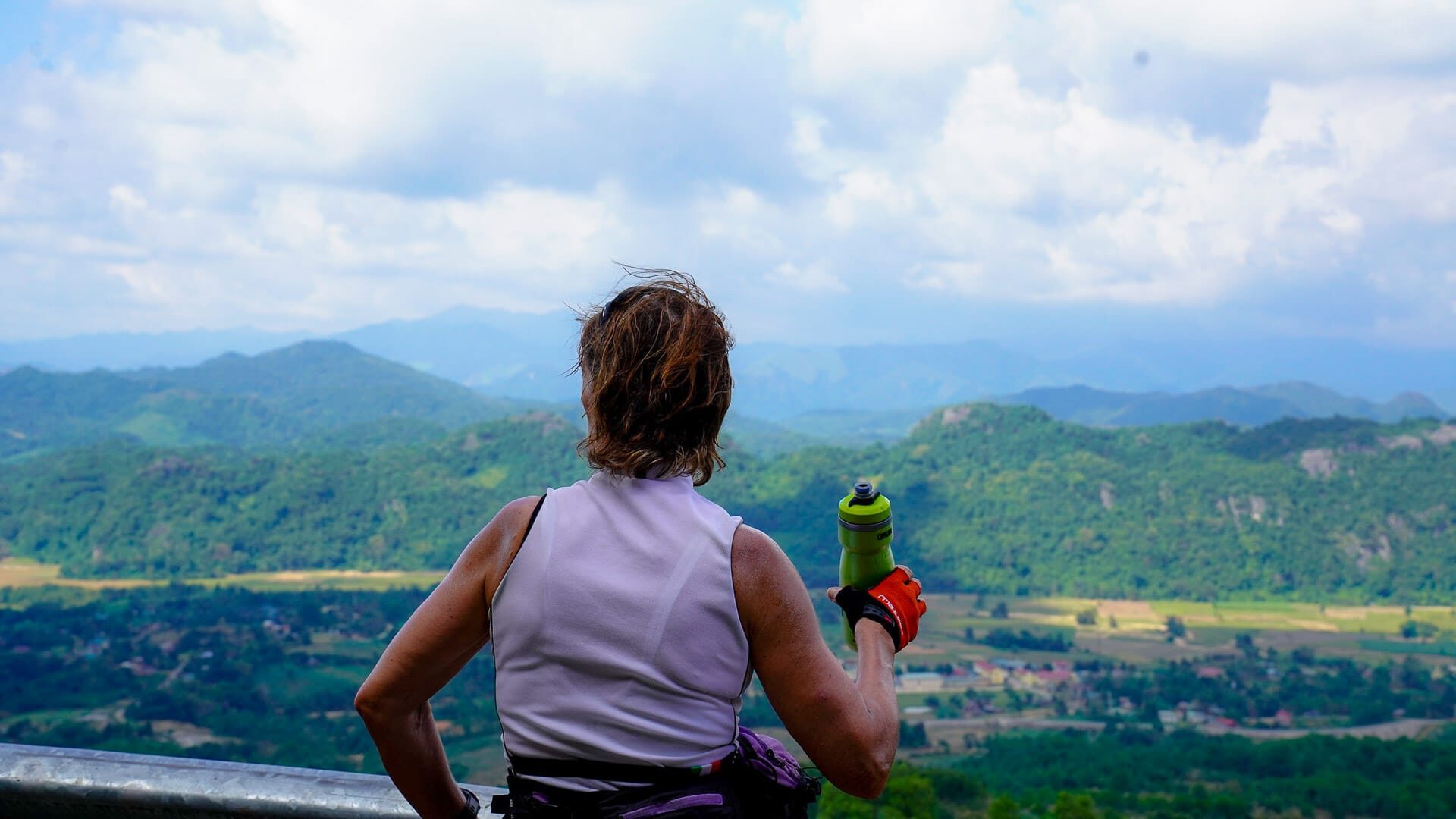

Cycling in Northern Vietnam is for riders seeking a destination that still feels adventurous, remote, and (relatively) undiscovered. Think misty mountain passes, limestone peaks, terraced rice valleys, quiet backroads and villages, where the bike gives you a way into everyday life.
Northern Vietnam may not yet feature on most cyclists’ wish lists, but that is part of the attraction. Infrastructure can be limited, and facilities are still developing, so local knowledge makes a big difference. With the right support, cyclists can access routes, communities and landscapes that would be difficult to navigate alone. A Northern Vietnam cycling tour can also make the more remote parts of the region easier to reach.
So in this article, we speak to Nguyen Tuan Linh, founder and lead route architect at Mr Linh’s Adventures. His team have been creating guided, personalised journeys across Southeast Asia since 2008, giving them the local knowledge, route-planning experience and on-the-ground network needed to make cycling in Northern Vietnam accessible. Their tours can be adapted to different fitness levels, riding styles and interests, while their guides help riders navigate remote roads, understand the places they pass through and access routes that would be difficult to piece together alone.
Nguyen shares his insight on why Northern Vietnam is such a compelling cycling destination, what riders should expect from the terrain, and how Mr Linh’s Adventures helps cyclists experience a side of Vietnam that goes well beyond the standard tourist itinerary.

Nguyen Tuan Linh is the founder and lead route architect at Mr Linh’s Adventures, a Hanoi-based travel company specialising in off-the-beaten-path journeys across Vietnam and Southeast Asia.
He has been working in adventure travel since 2008, with a focus on designing cycling and multi-activity routes in Northern Vietnam. His work centres on remote regions, local communities and carefully planned logistics.
Nguyen says his approach is shaped by both the landscape and the country’s history:
“In Vietnam, the bicycle was never just transport. It was part of daily life, especially in the north, long before modern infrastructure reached these areas. That connection still influences how we design routes today.
We focus on understanding the terrain and working with it. That means knowing how conditions change, how to move through different regions and how to create routes that feel natural rather than forced.
For us, cycling here is not just about distance. It is about reading the landscape, adapting to it and experiencing it at the right pace.”

We love to introduce our community to cycling businesses, destinations and ideas that we think are genuinely interesting. Mr Linh’s Adventures caught our attention because of its focus on these topics, which felt like a natural fit for Epic Road Rides and our readers. We were therefore pleased to work with the Mr Linh’s Adventures team on this article.
Mr Linh’s Adventures paid for this advertisement feature. Our decision to collaborate reflects our view that the brand is relevant to our readers; it is not a formal approval, audit or guarantee of its services. Unless we expressly say otherwise, we have not personally taken the trip described or independently verified information supplied by Mr Linh’s Adventures.
As with any travel purchase, please check the latest trip details, terms and customer protections directly with Mr Linh’s Adventures before booking. Any booking is made with Mr Linh’s Adventures, not Epic Road Rides.
Always check current travel information and advice. For visitors from the UK, the UK government travel information pages are here.
Table of contents:
- Part 1: Why Visit?
- Part 2: Overview
- Part 3: Cycling routes
- Part 4: Practicalities
- Part 5: Tips
- Part 6: Mr Linh’s Adventures
Sponsor Message
Looking for a Northern Vietnam bike tour?
Mr Linh’s Adventures has been organising customised tours in the region since 2008 and would love to help you plan yours!
They offer a range of multi-day cycling routes across Northern Vietnam, built around lesser-known regions, carefully planned routes and well-managed logistics.
Interested? Head over to the website to find out more.
Got a question for Nguyen Tuan Linh from Mr Linh’s Adventures?
Fill out this form and we will pass it to Mr Linh’s Adventures who aim to reply (within 24 hours wherever they can!)
Part 1: Why should cyclists visit Northern Vietnam?
Northern Vietnam stretches from the Gulf of Tonkin to the mountainous borders with China and Laos. It is one of the most geographically varied regions in Southeast Asia, and that diversity defines the riding. A North Vietnam cycling itinerary can therefore include very different landscapes and riding conditions within one trip.
This is a place where the riding is about far more than distance and elevation. From the moment you leave Hanoi, the landscape begins to shift. Lowland roads give way to bigger climbs, rougher surfaces, highland markets and communities shaped by the mountains around them. For cyclists prepared for a little unpredictability, Northern Vietnam offers a memorable alternative to more familiar cycling destinations.
Distances can be misleading. Routes that look short on a map often take longer due to elevation, road conditions and climate. Cycling is one of the best ways to experience the region, allowing you to move at a pace that reflects the terrain.
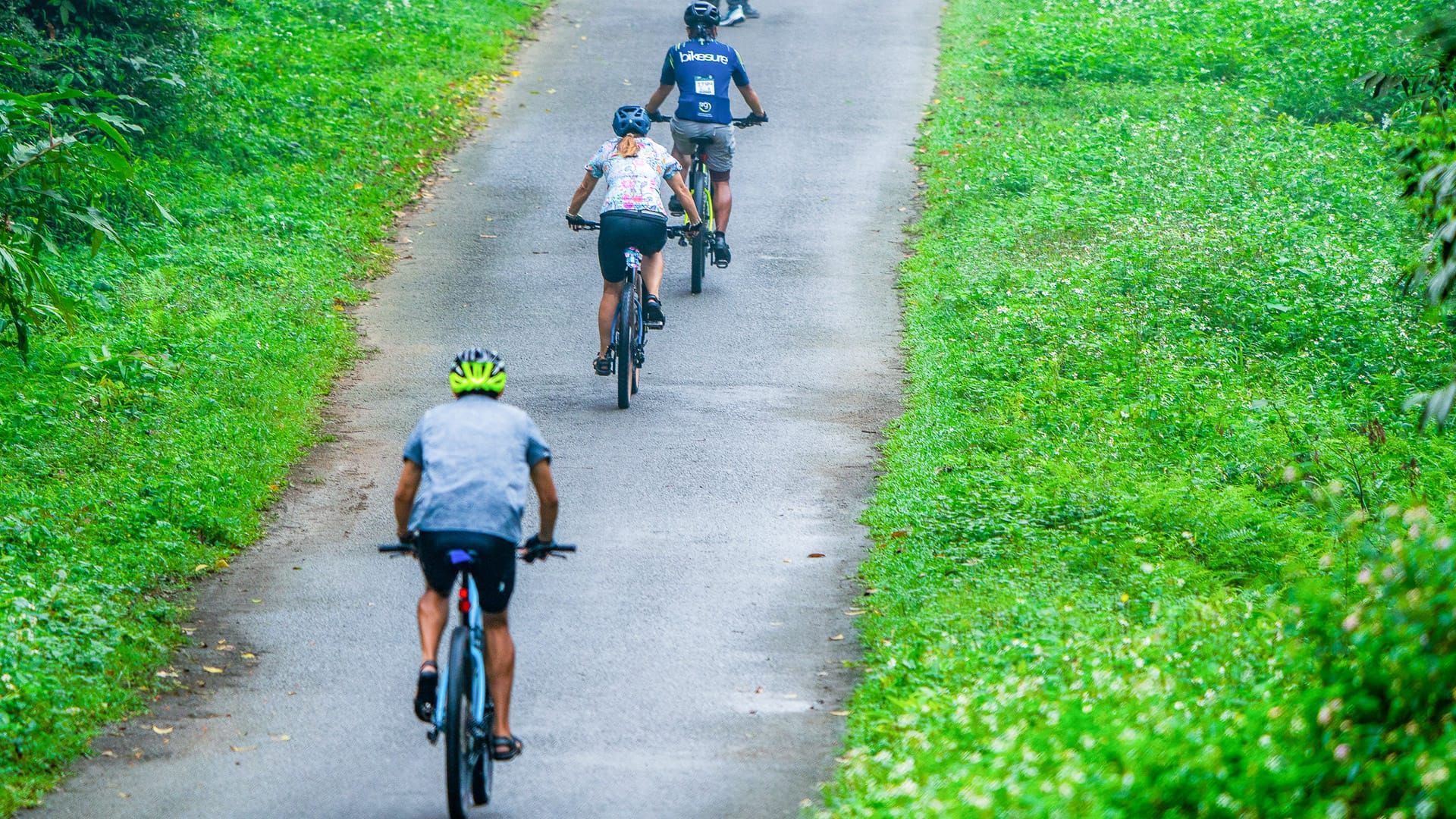
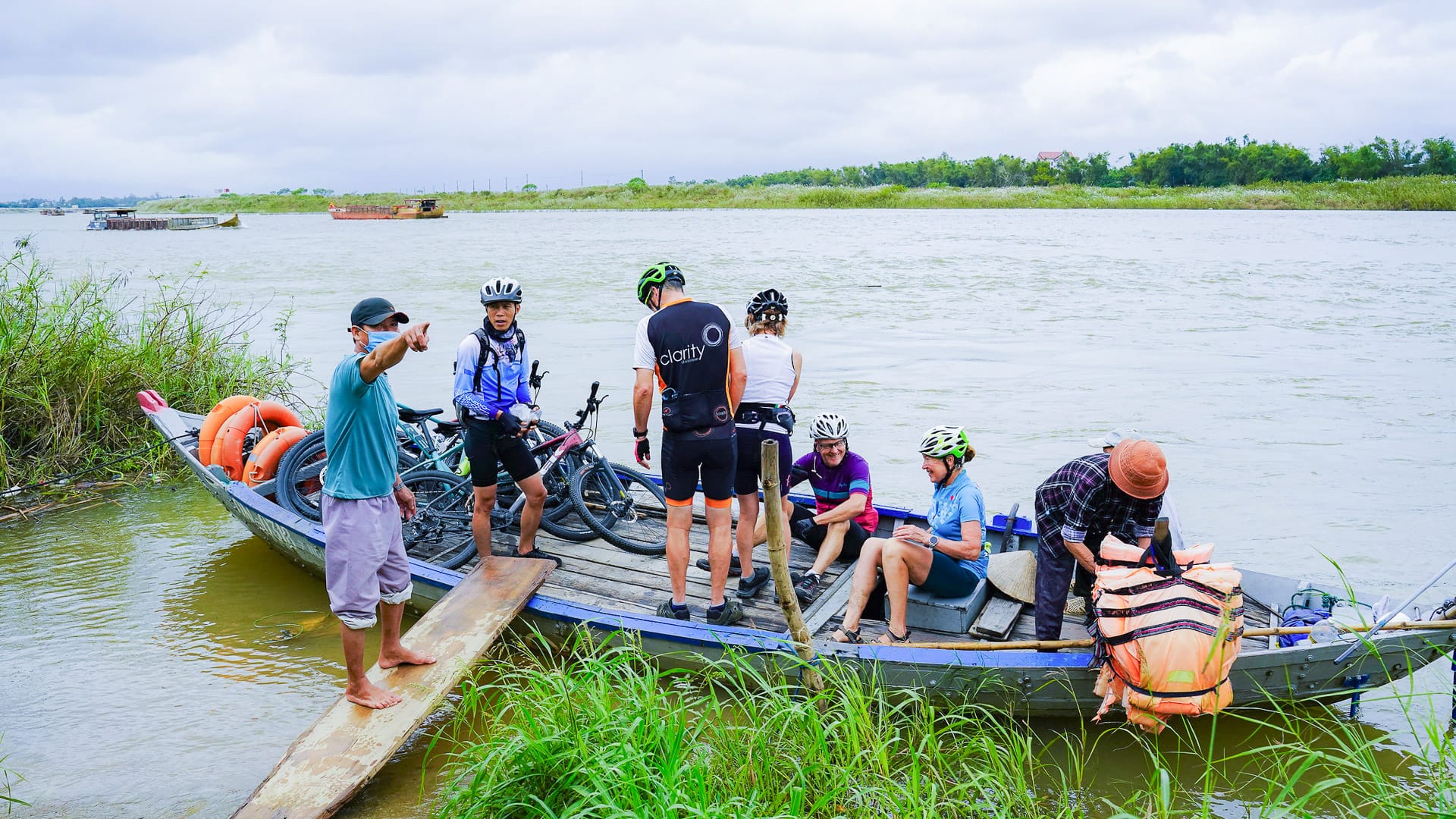
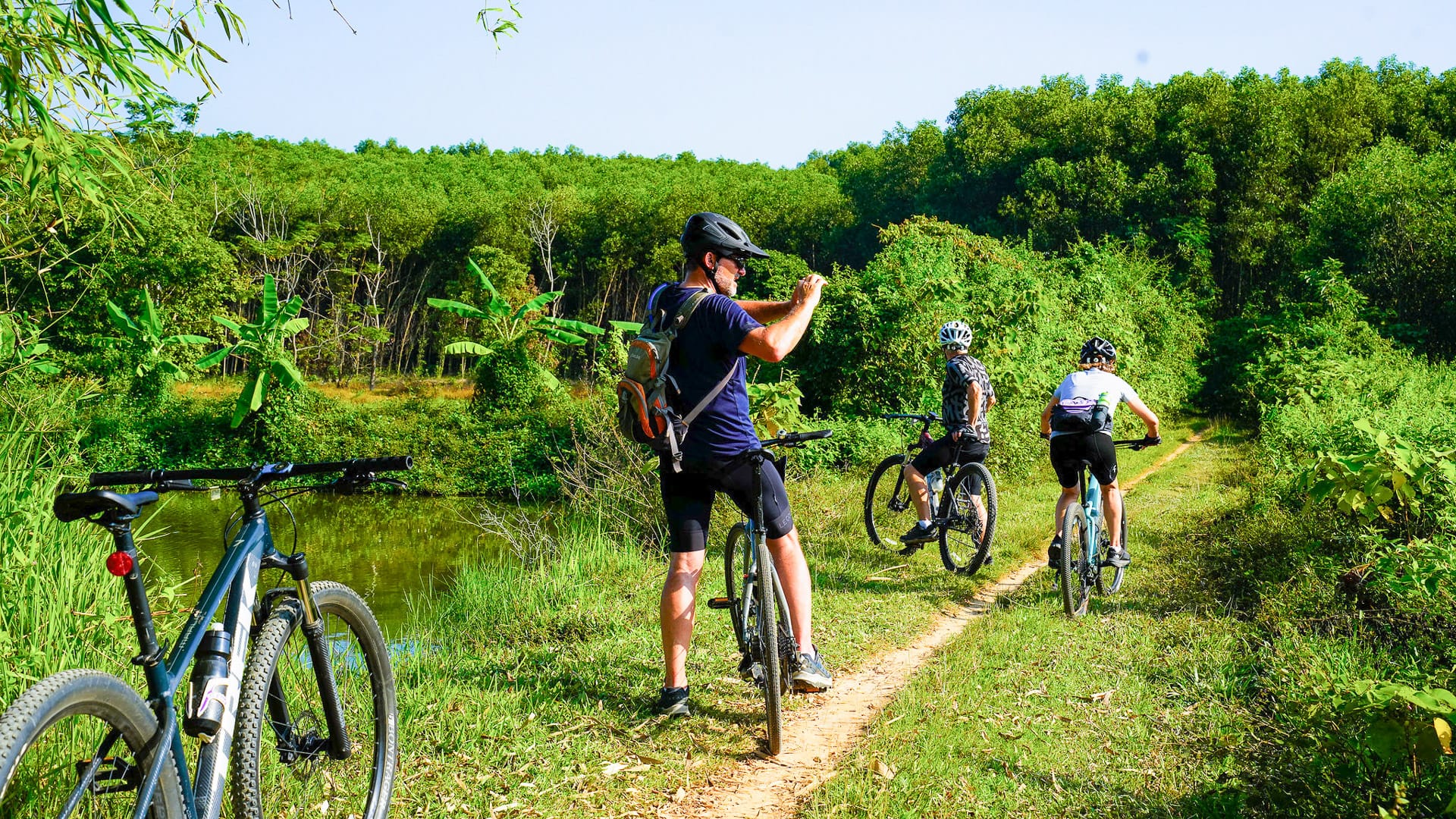
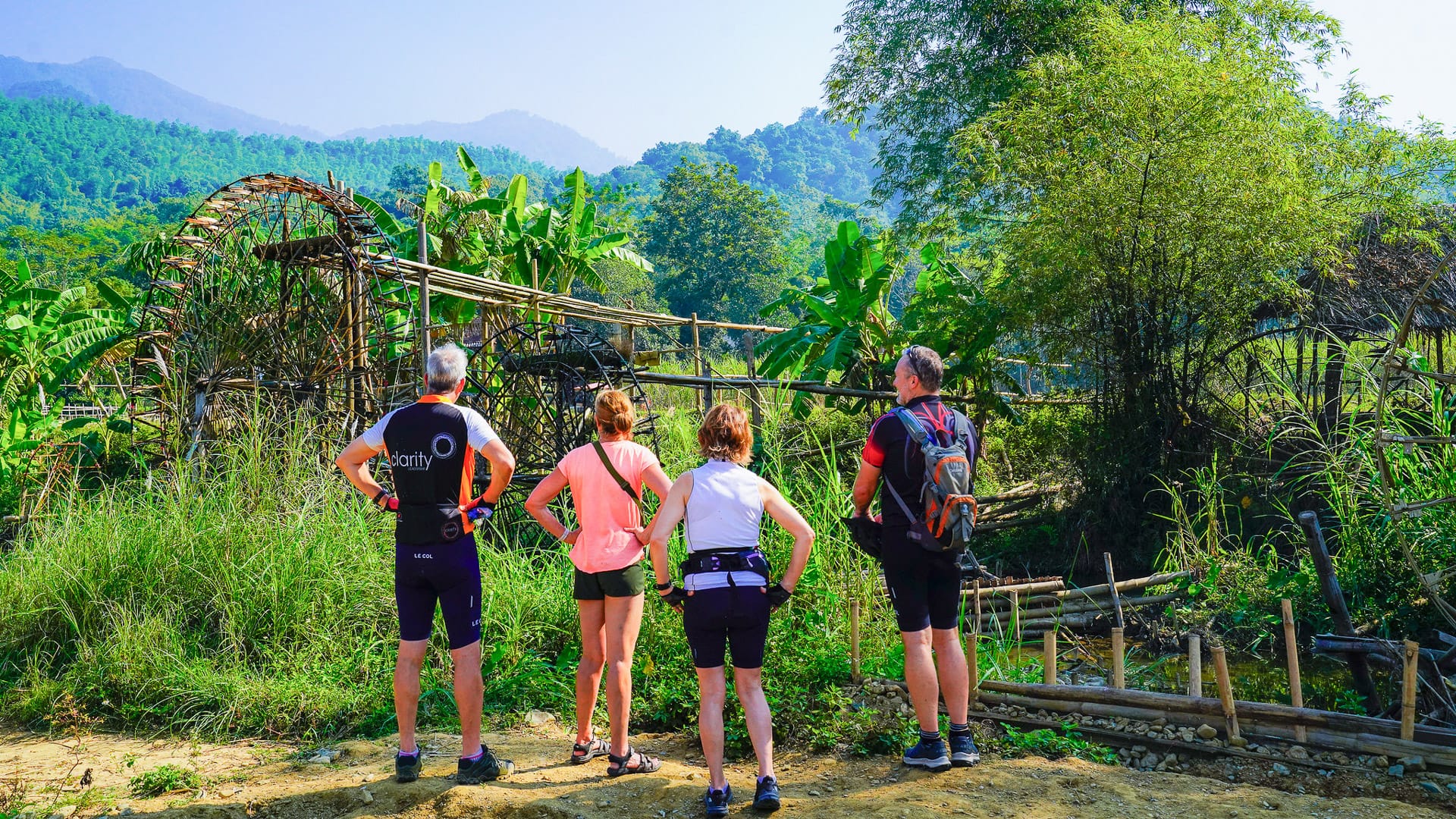
A landscape that keeps changing
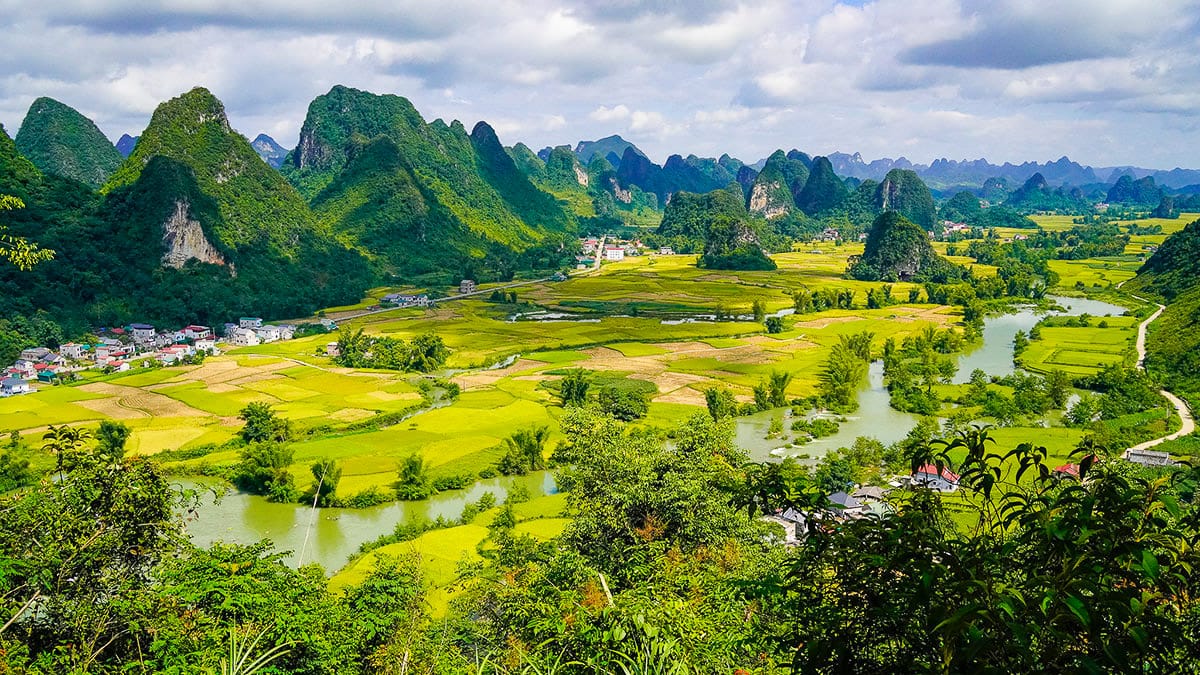
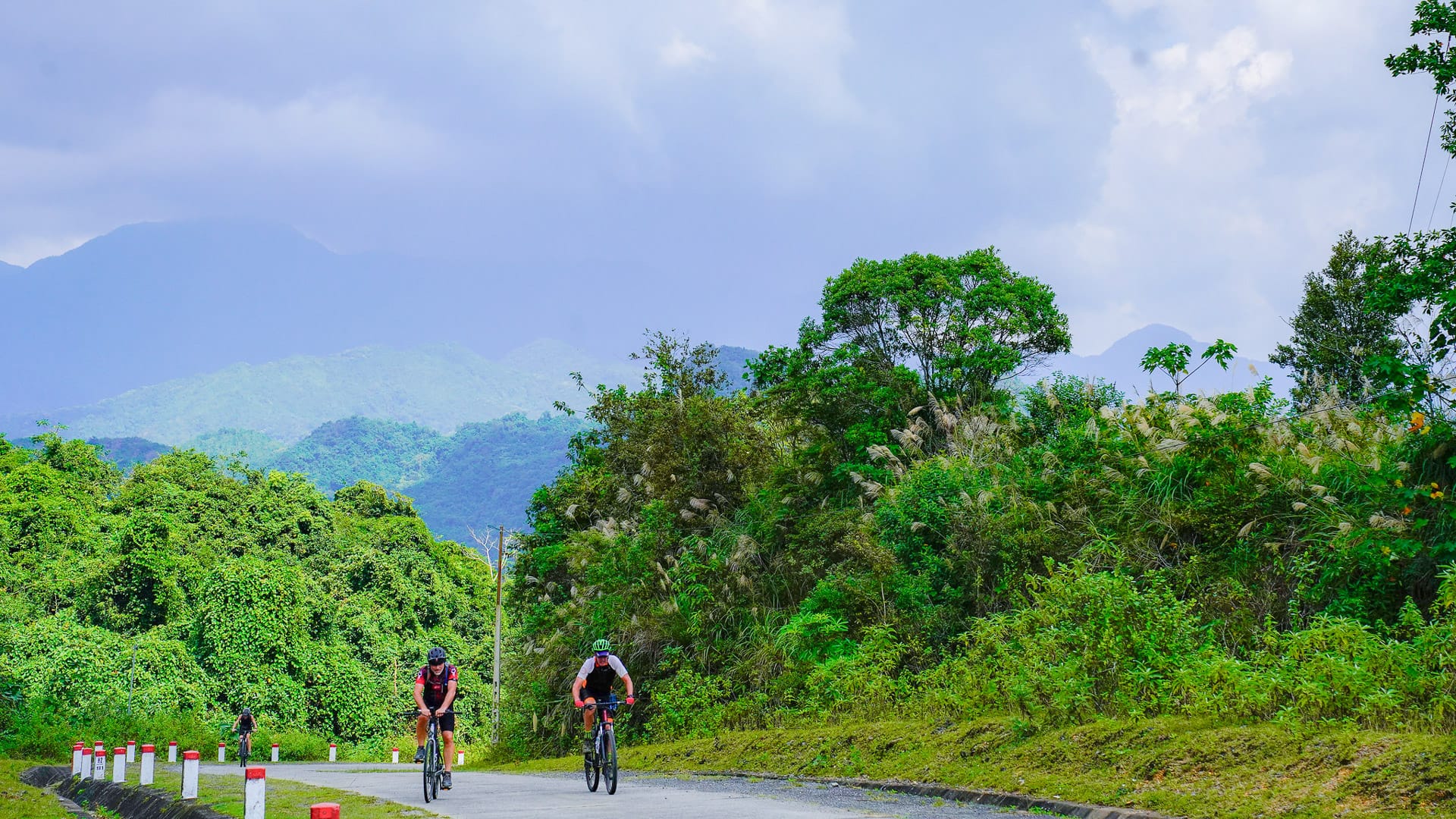
Northern Vietnam does not offer one consistent riding style. The terrain shifts constantly. Limestone karst rises from river valleys. Highland plateaus sit above the lowlands. Forested areas create long quieter sections with very little traffic.
Road surfaces vary just as much. You may start on smooth asphalt and move onto gravel or compacted village tracks within the same ride. Some routes are well used. Others are more local and less clearly marked.
Many Vietnam mountain biking itineraries focus on this part of the country because of its gravel roads, village tracks and mountain trails.
Climbing is a key part of riding here. Passes such as Ma Pi Leng and O Quy Ho involve long, sustained efforts. In areas such as Pu Luong and Ba Be National Park, gradients are steadier but still require consistent pacing.
A region where cycling still feels local
Cycling remains part of everyday life in Northern Vietnam, especially in rural areas. Before motorised transport became widespread, bicycles were widely used for transporting goods through the mountains. If you visit the region, you’ll still see locals using bicycles, particularly older people, children and street vendors in smaller towns and rural areas. In major cities, motorcycles and scooters are now the dominant mode of transport.
There are no major, organised cycling events or closed-road rides. Instead, the appeal comes from the routes themselves. Roads are generally quiet, and riding feels closely connected to the landscape and local way of life.
A more immersive way to travel
Northern Vietnam is not about moving quickly between major sights. It rewards a slower approach. Cities and towns gradually give way to rural areas where daily life follows local routines rather than fixed schedules.
You ride through working landscapes rather than tourist sites. Food is simple and local, often found in small roadside stops or village settings. Stops become part of the ride rather than separate experiences.
Welcoming local interactions
Encounters with local people are a memorable part of cycling here. In more remote areas, cyclists are still relatively uncommon, so people are likely to be interested in what you’re up to.
You may be offered tea, directions or a place to shelter from rain. This is part of everyday life rather than a service. In many areas, ethnic minority communities continue to live closely connected to the land, and visitors are received with quiet curiosity.
Sponsor Message
Looking for a Northern Vietnam bike tour?
Mr Linh’s Adventures has been organising customised tours in the region since 2008 and would love to help you plan yours!
They offer a range of multi-day cycling routes across Northern Vietnam, built around lesser-known regions, carefully planned routes and well-managed logistics.
Interested? Head over to the website to find out more.
Got a question for Nguyen Tuan Linh from Mr Linh’s Adventures?
Fill out this form and we will pass it to Mr Linh’s Adventures who aim to reply (within 24 hours wherever they can!)
Part 2: An overview of Northern Vietnam from a cyclist’s perspective
Where is Northern Vietnam?
Northern Vietnam stretches from the Gulf of Tonkin in the east to the mountainous borders with China and Laos in the north and west. It centres on Hanoi, which acts as the main gateway for travel and logistics.
From a cyclist’s point of view, the region works as a network rather than a single destination. Riding typically begins once you leave the city. From there, routes spread into several distinct areas.
To the north-east, provinces such as Ha Giang, Cao Bang and Ba Be are known for limestone ridges, deep gorges and high mountain passes. To the north-west, areas including Sapa and Pu Luong offer terraced landscapes, cooler conditions and long climbs. Further west, towards Dien Bien, the terrain becomes more remote, with quieter Vietnamese roads and fewer visitors.
Closer to Hanoi, the Red River basin provides flatter terrain and more densely populated areas. These routes are often used as transitions between regions or for easier riding days.
What is the terrain like?
Northern Vietnam’s terrain does not follow a simple gradient scale. Instead, it divides into three main riding zones.
In the north-east and along the border regions, the landscape is dominated by limestone formations and high mountain terrain. Climbs are long and often steep, with exposed sections and technical descents.
Moving west, the terrain becomes more rolling. Highland plateaus and terraced valleys create a more consistent rhythm, with steady gradients rather than sharp climbs. Areas such as Pu Luong and Yen Bai fall into this category.
Closer to the Red River, the land flattens into lowland agricultural areas. These routes are less physically demanding but still varied, often used to link more mountainous sections.
Base locations matter. Hanoi is the main hub for transport, bike setup and logistics. Towns such as Yen Bai and Nghia Lo provide good access to mid-altitude riding. Dong Van is a key base for exploring the Ha Giang region, while Dien Bien Phu works well for longer, quieter routes in the far west. Sapa and Lao Cai are also used, although they can be busier and require early starts to avoid traffic.
What are the roads like for cycling?
Expect road conditions to change frequently across the region. Main provincial roads are usually asphalt and in reasonable condition, although they can narrow without warning. Away from these routes, surfaces often change to gravel or compacted dirt. This range of surfaces also makes the north a key destination for mountain biking in Vietnam.
Traffic is mixed. On main roads, you may share space with buses, motorbikes and local vehicles. Drivers are generally aware of cyclists, but riding requires attention and confidence. In rural areas, traffic is lighter, and the pace is slower.
There is very little dedicated cycling infrastructure. You will not find many cycle lanes or signposted routes. Instead, riding relies on a network of local roads and tracks.
Be aware! Conditions can change quickly. After heavy rain, landslides are possible in mountainous areas, and smaller roads may become difficult to pass. Market days in towns can also create short sections of heavy congestion.
For planning, digital route platforms can help, but local knowledge is often more reliable, especially in remote areas. Which is where Mr Linh’s Adventures’ guides and route-planning experience can make a real difference.
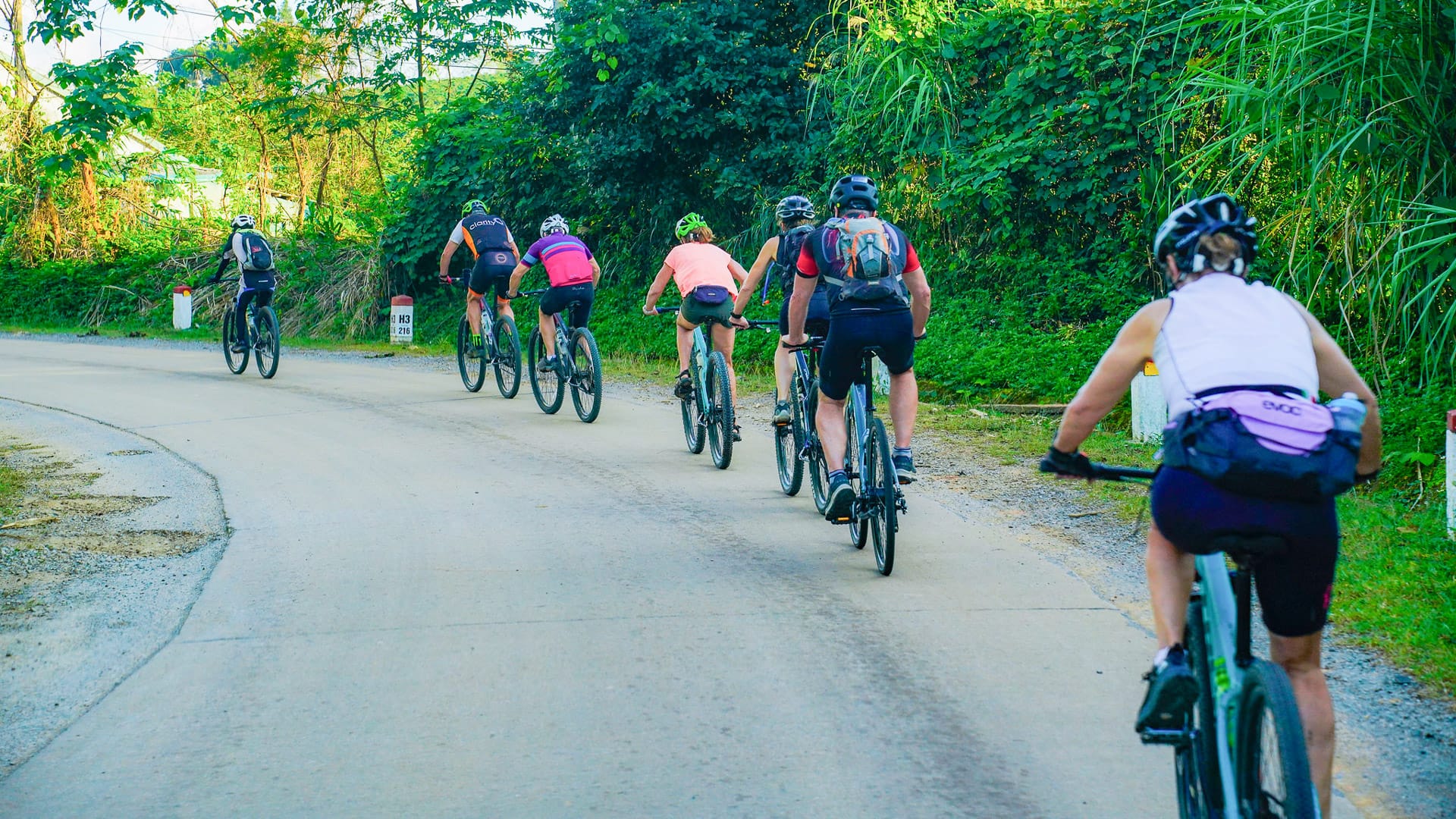
The joy of cycling together (photo credit: Mr Linh’s Adventures)
What kind of cyclist is Northern Vietnam best for?
Northern Vietnam suits cyclists who are comfortable with varied terrain and changing conditions. It is not limited to one type of riding.
Road cycling is possible on many provincial routes, although wider tyres are often useful due to surface changes. Gravel bikes are well-suited to the region, handling mixed terrain more comfortably.
Leisure cycling is possible in flatter areas, particularly near the Red River basin, but distances and conditions still require planning. This is not a destination for completely casual riding.
Fitness levels should match the terrain. Long climbs are common in the mountains, and descents require control and confidence. You do not need to be highly competitive, but a good level of endurance is important.
A gravel bike or mountain bike is often the ideal bike for riding Northern Vietnam. E-bikes are also becoming easier to hire in 2026, provided you know where to look and are clear about the kind of cycling you want to do.
Most are pedal-assist models, which means the assistance only works while you are pedalling. For a leisurely ride around Ninh Binh, a standard e-bike should be fine. For the mountain passes of Ha Giang, it’s better to opt for a sturdy e-MTB and make sure your logistics are carefully planned.
Vietnam has around 1,500 charging points for electric vehicles, but these are concentrated in the major cities, which means charging remains a real challenge in rural and mountainous areas.
Rural homestays usually have sockets, but the power supply can be unreliable, so it’s worth bringing a universal adapter and a spare cable to give yourself the best chance of charging when power is available. Public charging points for e-MTBs are virtually non-existent in mountainous areas.
If you’re a family wanting to cycle in Northern Vietnam, I’d suggest some careful route choice with picking distances and terrain to keep the experience manageable and enjoyable.
Do you need a guided tour to cycle in Northern Vietnam?
It is possible to cycle Northern Vietnam independently. However, it requires planning and flexibility.
Riding solo offers freedom and lower costs. It suits experienced cyclists who are comfortable with navigation, basic repairs and adapting to changing conditions.
The main challenge is logistics. Accommodation, route planning and translating the Vietnamese language can all require extra time and effort. In more remote areas, support is limited, and small issues can become more serious.
Supported options are widely used. Self-guided cycling tours with luggage transfers reduce the logistical burden while keeping flexibility. Fully guided cycling tours provide additional support, including route adjustments, mechanical help and local insight.
For many riders, this support allows a smoother experience, especially in remote regions where conditions can change quickly. For help planning a guided cycling tour in Northern Vietnam, take a look at Mr Linh’s Adventures, whose local guides, flexible itineraries and on-the-ground support can help simplify the logistics.
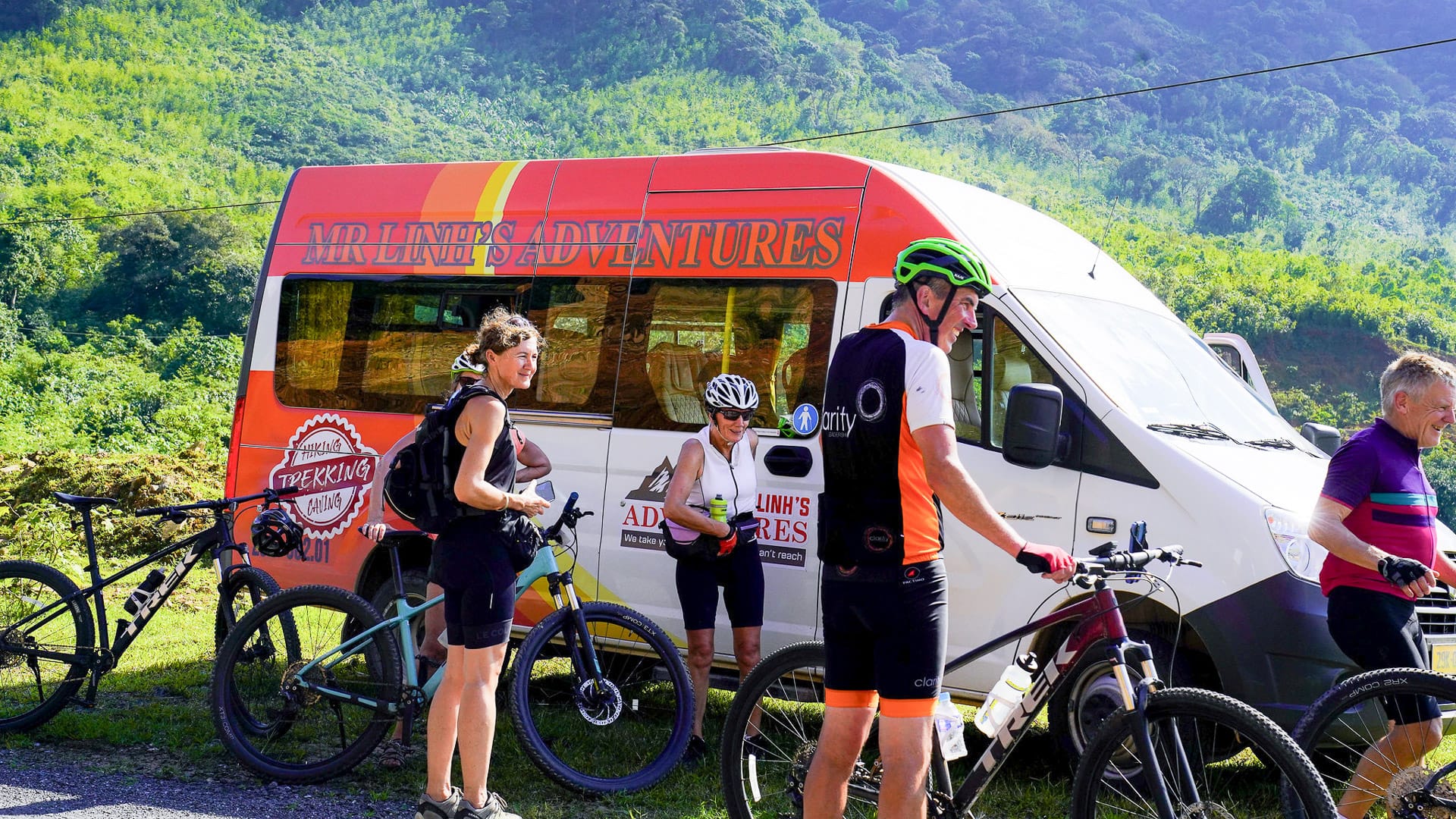
Mr Linh’s cycling support van (photo credit: Mr Linh’s Adventures)
Sponsor Message
Looking for a Northern Vietnam bike tour?
Mr Linh’s Adventures has been organising customised tours in the region since 2008 and would love to help you plan yours!
They offer a range of multi-day cycling routes across Northern Vietnam, built around lesser-known regions, carefully planned routes and well-managed logistics.
Interested? Head over to the website to find out more.
Got a question for Nguyen Tuan Linh from Mr Linh’s Adventures?
Fill out this form and we will pass it to Mr Linh’s Adventures who aim to reply (within 24 hours wherever they can!)
Part 3: What are the best cycling bases and routes in Northern Vietnam?
Northern Vietnam is best explored across multiple bases. Distances are vast, terrain changes quickly and routes are not always directly connected.
This means most trips involve moving between bases. Different areas offer different riding styles, from high mountain passes to flatter lowland routes.
Below are some of the key cycling bases in Northern Vietnam and what each one offers.
Hanoi
Hanoi, Vietnam’s capital, is the main entry point for most cycling trips in Northern Vietnam and an important logistical base before heading into more remote regions.
The city sits in the Red River Delta, where the terrain is mostly flat, with some rolling foothills to the west. Riding around Hanoi is technically straightforward, but the traffic requires attention and confidence, particularly for those not used to cycling in busy city conditions.
Routes include loops around West Lake, Hanoi’s large freshwater lake, and rides west towards Son Tay and Ba Vi, where the city begins to give way to rural roads, older villages and the foothills around Ba Vi National Park. These are useful for warm-up rides and adjusting to local conditions rather than for big climbing days.
From a tourism perspective, Hanoi offers an immediate sense of Vietnam’s history and daily life, with historic streets, markets, lakes, temples and a strong food culture. It is also the best place for bike preparation, spare parts and support services before heading north into quieter, more remote riding areas.
4 Days – North Vietnam Cycling Tour
Key statistics
424 kilometres
4,360 metres of elevation gain
Why it’s special
This refined route takes riders from Hanoi’s vibrant pulse to the north’s towering limestone tranquillity. Designed for riders who want elegant scenery and a rigorous challenge, it offers an upscale, technical escape with exclusive cultural access, boutique eco-lodges and full support for seamless logistics.
More information
Interested in this route? Get more details about Mr Linh’s 4 Days – North Vietnam Cycling Tour on the website.
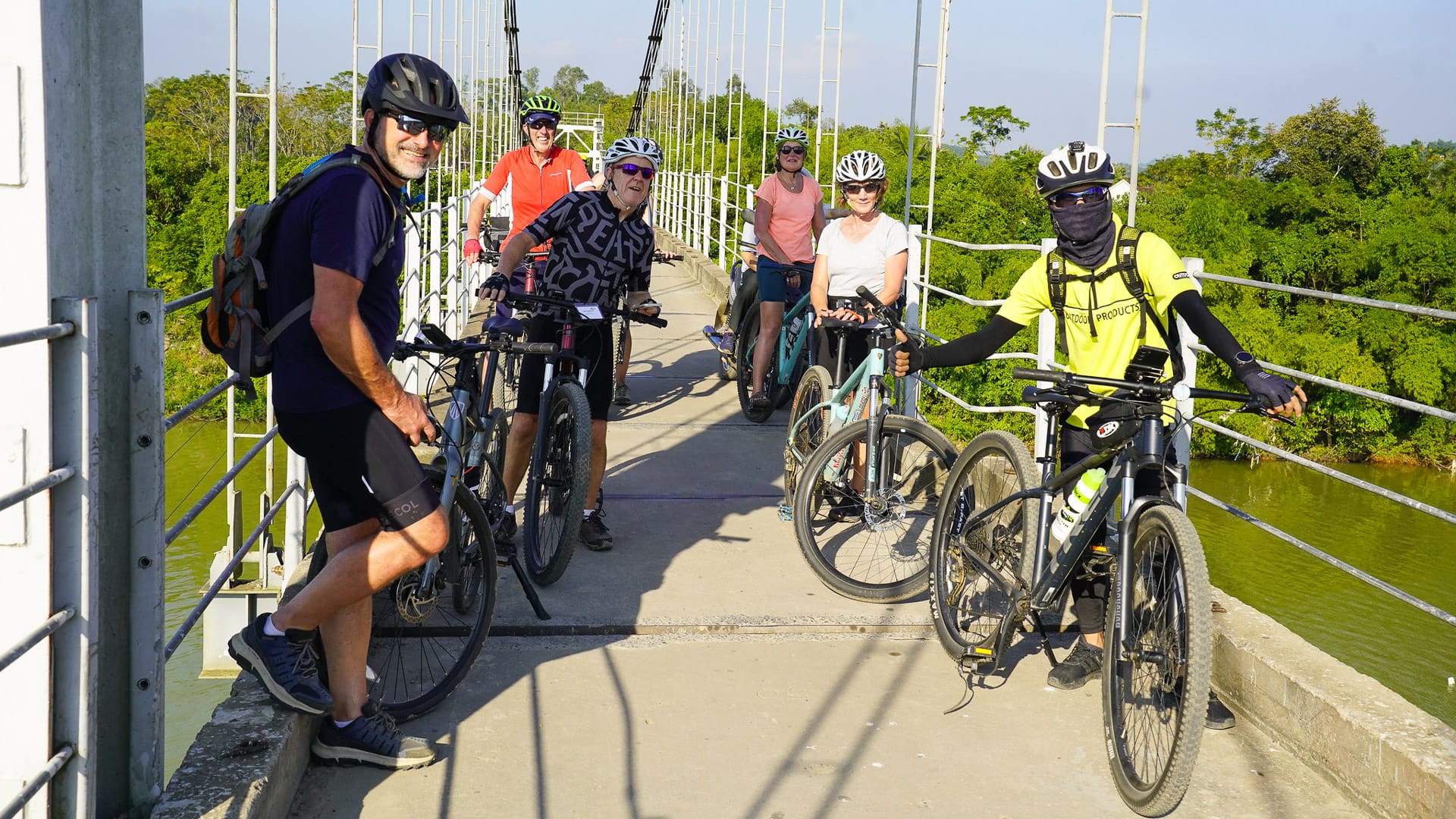
Happy riders (photo credit: Mr Linh’s Adventures)
Dong Van (Ha Giang Province)
Dong Van, a mountain town close to Vietnam’s border with China, is one of the key bases for high-mountain riding in Northern Vietnam. It sits within the Dong Van Karst Plateau, a UNESCO Global Geopark known for limestone peaks, high plateaus, deep valleys, local markets and remote villages.
This part of Northern Vietnam is far more demanding than the riding around Hanoi and the Red River lowlands. The terrain is defined by limestone karst, exposed mountain roads and high-altitude plateaus. Climbs are long and often steep, while descents can be technical, with sharp bends, changing surfaces and steep drop-offs.
Key rides include Ma Pi Leng Pass, the famous cliffside road between Dong Van and Meo Vac, with views over the Nho Que River and Tu San Canyon. Tham Ma Pass is another well-known climb, recognised for its tight hairpins and open mountain views. Riders can also link these roads into the wider Dong Van Karst Plateau circuit, one of the most demanding and memorable riding areas in Northern Vietnam.
Accommodation in Dong Van is generally simple, but well placed for early starts and access to the main climbs. For cyclists, this is where Northern Vietnam feels at its most dramatic. The riding is physically challenging and logistically more complex, but it gives access to some of the region’s most distinctive landscapes and communities.
10 Days – Far North Ethnic Roads
Key statistics
1,119 kilometres
20,935 metres of elevation gain
Why it’s special
This high-altitude odyssey crosses some of the north-west’s wildest and most vibrant landscapes, linking Hoang Su Phi’s famed terraces with Bac Ha’s rugged ridgelines. For cyclists who want raw, authentic experiences without losing creature comforts, it pairs steep climbs with intimate immersion among Hmong, Dao and Tay communities. The vibe is remote ridges, living cultures and secret roads.
More information
Interested in this route? Get more details about Mr Linh’s 10 Days – Far North Ethnic Roads tour on the website.
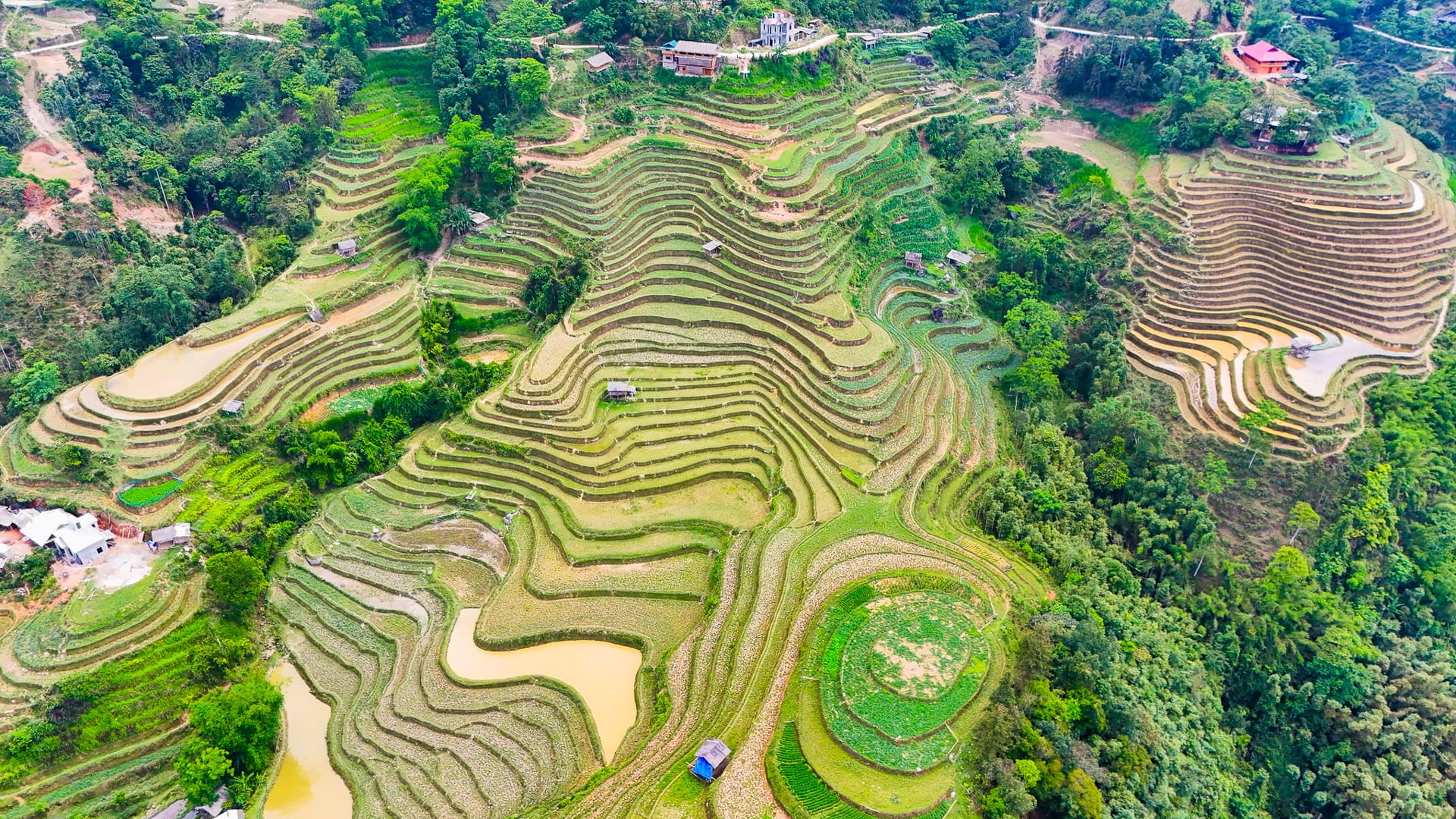
Aerial view of Ha Giang featuring terraced rice fields (photo credit: Mr Linh’s Adventures)
Ba Be National Park
Ba Be offers a quieter, more nature-focused contrast to the high-mountain riding around Dong Van. Set around Ba Be Lake, within Ba Be National Park, this area is known for limestone formations, forested slopes, caves, rivers and lakeside communities.
The terrain is generally less demanding than the big passes further north. Riders should still expect rolling roads and some short climbs, but gradients are usually gentler, making Ba Be a good option for easier rides, recovery days or riders looking for a less intense cycling experience.
Routes include loops around Ba Be Lake, rides towards Puong Cave and shorter connections between local villages. These rides are not as long or as physically demanding as the Dong Van Karst Plateau routes, but they still offer plenty of variety, with sections through forest, farmland, lakeside roads and small settlements.
From a tourism perspective, Ba Be is especially appealing for riders who want time off the bike as well as time in the saddle. The lake, caves and national park setting make it a good place to slow down, take a boat trip, visit local communities or stay in accommodation close to nature. Options include eco-lodges and homestays, which are generally simple but well suited to the area’s quieter, more rural feel.
8 Days – Northeast Vietnam by Bike
Key statistics
1,167.1 kilometres
18,257 metres of elevation gain
Why it’s special
This meticulously crafted expedition travels through Northern Vietnam’s karst heart, from Ba Be’s freshwater refuge to Ban Gioc’s dramatic border cascades, ending with a luxurious unwind in Ha Long Bay. For riders who prefer deep immersion to speed, it balances technical climbs, meaningful cultural encounters and refined comfort. The vibe is mountains, lakes, waterfalls and a “wow” around every bend.
More information
Interested in this route? Get more details about Mr Linh’s 8 Days – Northeast Vietnam by Bike tour on the website.
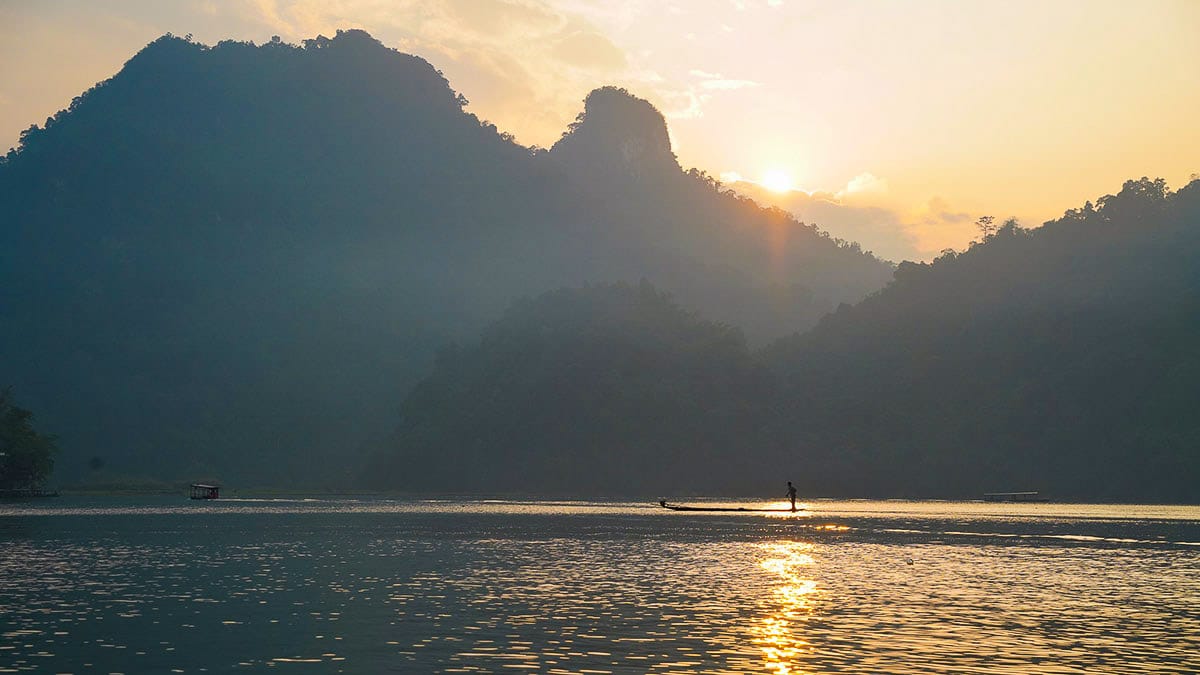
Ba Be Lake (photo credit: Mr Linh’s Adventures)
Are there any great long-distance cycling routes in Northern Vietnam?
Northern Vietnam does not have signposted or dedicated long-distance cycling routes. Instead, riding is based on a network of provincial roads, mountain passes and rural connectors.
With the right planning, these can be combined into multi-day routes that link different regions and landscapes. These routes are not fixed but follow corridors. They are typically adapted based on conditions, rider ability and logistics.
Below are two examples of longer-distance routes that show what is possible.
11 Days – Northwest Highlands by Bike
Key statistics
1,238 kilometres
24,319 metres of elevation gain
Why it’s special
This grand expedition takes riders from Mu Cang Chai’s sculpted terraces to Indochina’s storied summits. Built for seasoned riders, it alternates iconic passes such as Pha Đin with immersive encounters in H’mong and Thai villages. It is a supreme test of endurance, rewarded by Vietnam’s most impressive highland views. The vibe is high passes, deep valleys, living cultures and roads made for riding.
More information
Interested in this route? Get more details about Mr Linh’s 11 Days – Northwest Highlands by Bike tour on the website.
13 Days – Grand Northern VN Ride
Key statistics
1,563 kilometres
30,239 metres of elevation gain
Why it’s special
This definitive ride crosses Vietnam’s northern highlands, linking Ba Be’s freshwater calm with Hoang Su Phi’s terraced cliffs and Mai Chau’s living culture. Built for cyclists craving variety and discovery, it crosses Tonkin’s limestone karsts, borderlands, ethnic villages and famed passes. It is a demanding journey, rewarded by remarkable scenery and genuine human connection.
More information
Interested in this route? Get more details about Mr Linh’s Grand Northern VN Ride tour on the website.
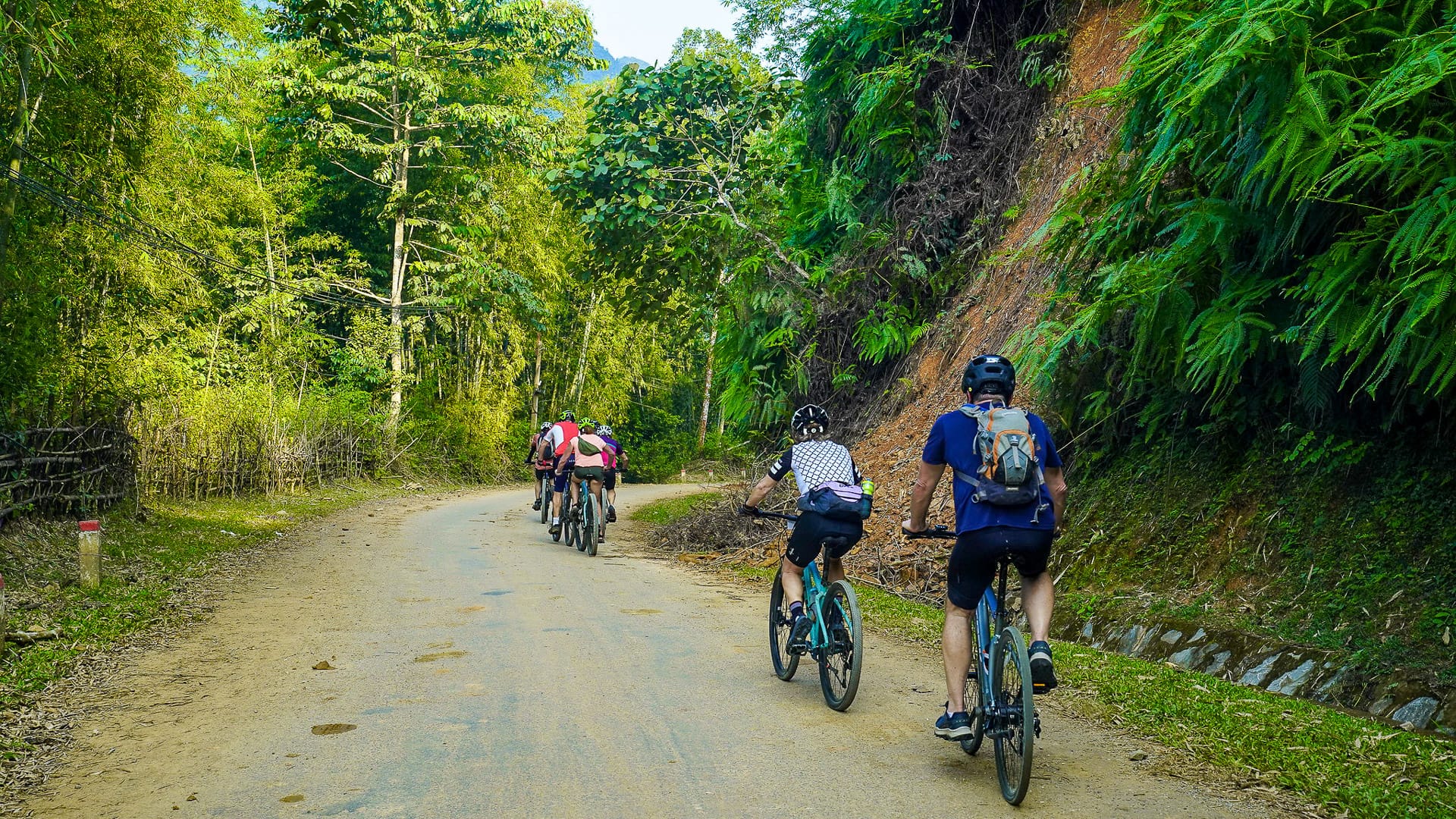
Cyclists riding through forest on a Northern Vietnam cycling tour (photo credit: Mr Linh’s Adventures)
Interested in riding a Northern Vietnam bike loop?
The 13-day Grand Northern Vietnam Cycling Tour outlined above comes closest to this type of trip. This broad circuit starts and finishes in Hanoi, taking you through Ba Be, Cao Bang, Ban Gioc, Meo Vac, Du Gia, Ha Giang, Hoang Su Phi and Tuyen Quang.
If you’re planning a north Vietnam bike loop, bear in mind that the 13-day tour is not ridden continuously from Hanoi back to Hanoi. The itinerary combines cycling with vehicle transfers, with some days focusing on selected riding sections. As the tours are bespoke, Mr Linh’s Adventures can adjust the daily distances, terrain and pacing to suit different riders.
Sponsor Message
Looking for a Northern Vietnam bike tour?
Mr Linh’s Adventures has been organising customised tours in the region since 2008 and would love to help you plan yours!
They offer a range of multi-day cycling routes across Northern Vietnam, built around lesser-known regions, carefully planned routes and well-managed logistics.
Interested? Head over to the website to find out more.
Got a question for Nguyen Tuan Linh from Mr Linh’s Adventures?
Fill out this form and we will pass it to Mr Linh’s Adventures who aim to reply (within 24 hours wherever they can!)
Part 4: Things to know before visiting Northern Vietnam
What are the key cycling events in Northern Vietnam?
Northern Vietnam does not have a strong calendar of organised cycling events.
There are no mass-participation sportives, gran fondos or closed-road rides. Most cycling here is independent or done through small guided groups.
There are occasional domestic races, including national championships, usually held in summer. These tend to focus on elite or junior riders rather than visiting cyclists. From time to time, international women’s races may pass through parts of northern Vietnam, often early in the year.
In Hanoi, there is a growing cycling community. Local clubs organise regular group rides, and visitors may be able to join if they have the right level of fitness and experience.
For most cyclists, the appeal of Northern Vietnam is not organised events. It is the routes themselves. Climbs such as Ma Pi Leng or Khau Pha offer a challenge without crowds, road closures or race infrastructure.
Where should cyclists stay in Northern Vietnam?
Northern Vietnam does not have a formal cycling accommodation accreditation scheme.
Instead, cyclist-friendly accommodation is usually defined by practical factors. These include secure bike storage, flexibility with early breakfasts and the ability to support early departures.
In cities such as Hanoi, there is a wide range of hotels, but facilities for cyclists vary. It is important to check in advance if you need secure storage or space for bike boxes.
In rural areas, accommodation is more varied. Options include small guesthouses, homestays and eco-lodges. Many are used to hosting cyclists and can be flexible, especially if you arrive as part of a tour or with prior notice.
In places such as Ba Be, homestays and eco-lodges are common. These offer a more local experience but usually with simpler facilities.
Top tip! Always confirm bike storage and any specific requirements before booking, especially in smaller or more remote locations.
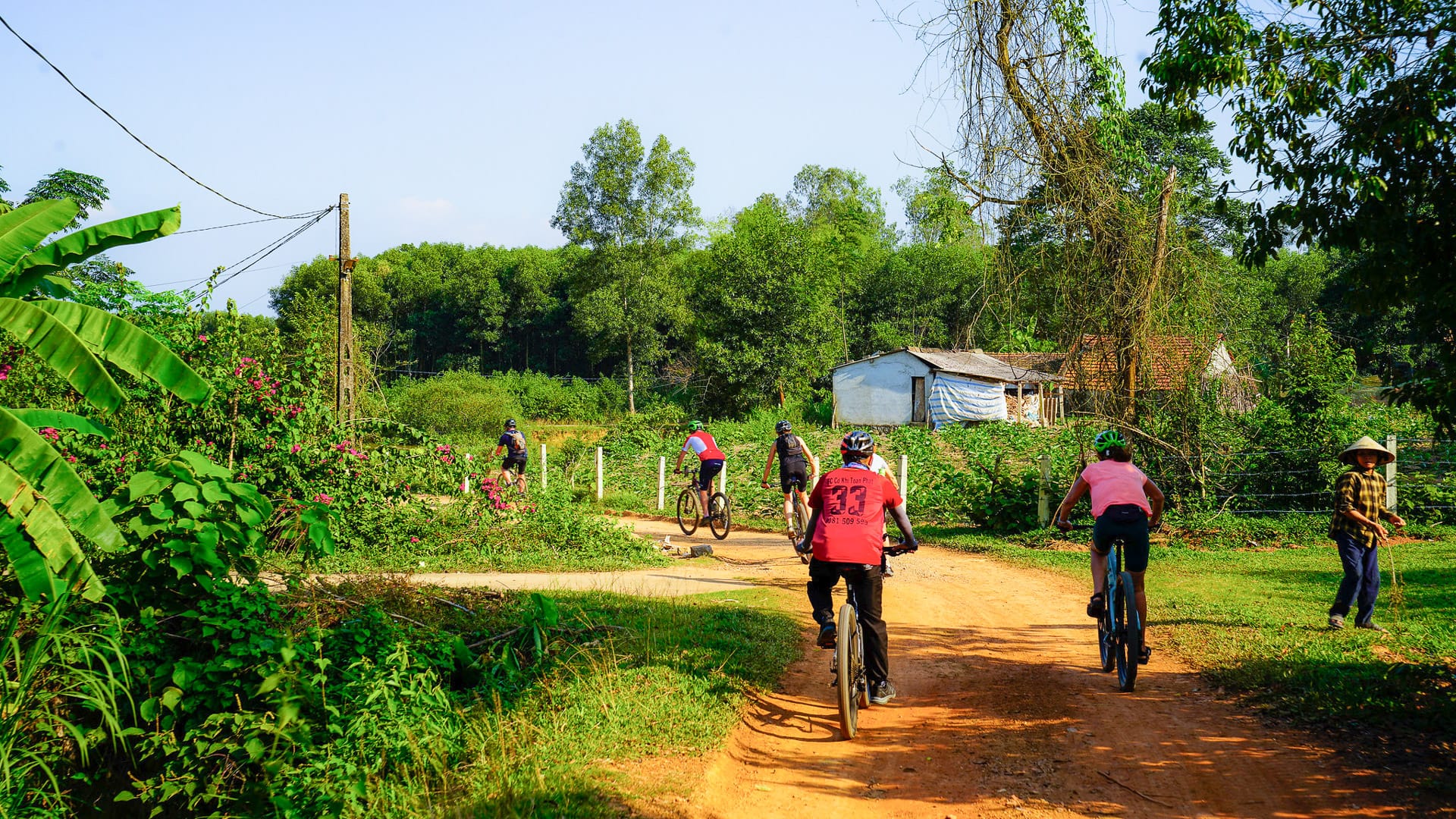
Cycling through rural villages (photo credit: Mr Linh’s Adventures)
Can you find bike hire and bike rental shops in Northern Vietnam?
Bike hire is available, but it is not as widely standardised as in many European destinations.
In Hanoi, you can find bike shops and rental providers offering road, gravel and mountain bikes. Quality and availability vary, so it is best to arrange hire in advance if you need a specific type of bike.
Outside major cities, bike shops are limited. In rural areas, basic repairs may be possible, but specialist parts and servicing are harder to find.
For this reason, many cyclists bring their own bikes or use a tour operator that provides equipment and support.
Mr Linh’s Adventures can also provide regularly serviced hire bikes, including high-end options from brands such as Giant, Trek and Marlin, helping riders avoid the logistics of travelling with their own bike. At present, bike hire is only available as part of a guided tour.
Top tip! Bring essential spares, including tubes, tyres and any specific components you rely on.
What is the best time of year to go cycling in Northern Vietnam?
Weather plays an important role when planning a cycling trip to Northern Vietnam.
The best times to visit are generally spring (March to April) and autumn (October to November). During these periods, temperatures are more comfortable and conditions are usually more stable.
Autumn is particularly popular. Skies are often clearer, temperatures are moderate and landscapes, especially rice terraces, can be at their most striking.
Winter (December to February) can also be a good option, particularly for those who prefer quieter roads. However, it can be cold in the mountains, especially at higher elevations.
Summer (June to August) is the monsoon season. Heavy rain, high humidity and the risk of landslides can make riding more challenging, especially in mountainous areas.
Be aware! Conditions vary across the region. Highland areas are cooler but more exposed to weather changes, while lowland areas such as Hanoi are hotter and more humid.
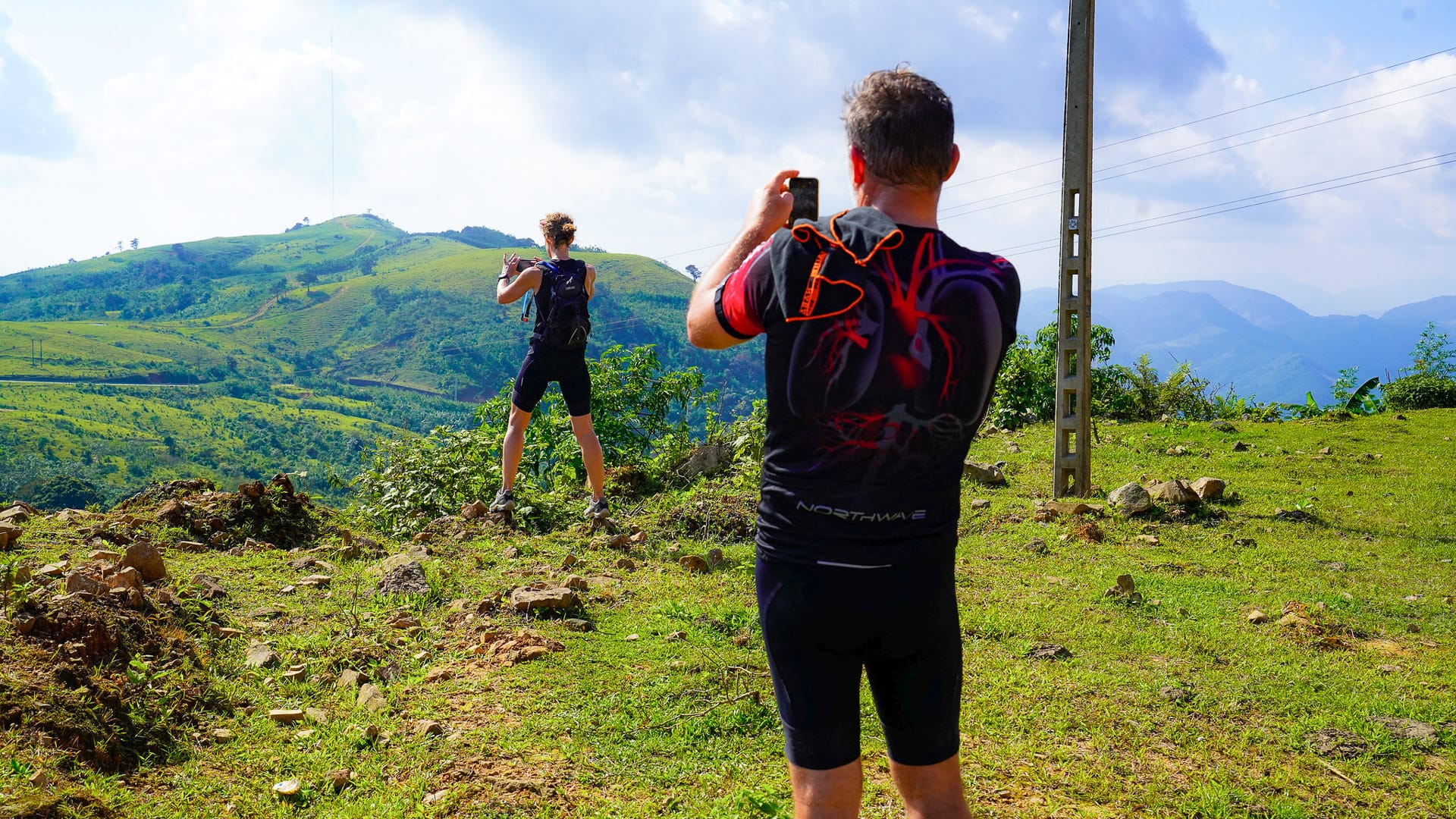
Vietnam in perspective (photo credit: Mr Linh’s Adventures)
How do you get to Northern Vietnam?
The main entry point for Northern Vietnam is Hanoi.
By air
Noi Bai International Airport (HAN) serves Hanoi and has connections to major international hubs. This is the most common way to arrive.
If travelling with a bike, check airline policies in advance. Most airlines accept bikes if packed correctly, but advance notice is often required.
By train
Hanoi Railway Station connects to other parts of Vietnam and to Lao Cai, which is the gateway to Sapa. Bikes can usually be carried if packed, but arrangements should be confirmed in advance.
Transfers and bike logistics
For travel within Northern Vietnam, private transfers are often the most practical option, especially when travelling with a bike.
Public buses rarely accommodate bike boxes, and space on trains can be limited. It is best to arrange transport in advance if you need to move your bike between regions.
Sponsor Message
Looking for a Northern Vietnam bike tour?
Mr Linh’s Adventures has been organising customised tours in the region since 2008 and would love to help you plan yours!
They offer a range of multi-day cycling routes across Northern Vietnam, built around lesser-known regions, carefully planned routes and well-managed logistics.
Interested? Head over to the website to find out more.
Got a question for Nguyen Tuan Linh from Mr Linh’s Adventures?
Fill out this form and we will pass it to Mr Linh’s Adventures who aim to reply (within 24 hours wherever they can!)
Part 5: Tips for cycling in Northern Vietnam
How safe is cycling in Northern Vietnam?
Cycling in Northern Vietnam is generally safe, but it requires awareness and confidence.
Traffic conditions vary. In cities such as Hanoi, roads can feel busy, with a constant flow of motorbikes and vehicles. Drivers use horns frequently, but this is usually to signal presence rather than aggression.
Outside urban areas, conditions are much calmer. Roads are quieter, traffic is lighter and the pace of riding is more relaxed.
Be aware! Road conditions can change quickly, especially in mountainous areas. After heavy rain, landslides and debris are possible, and some smaller roads may become difficult to pass.
Top tip! Ride predictably and stay visible. Making eye contact with drivers and signalling your movements clearly can make a big difference.
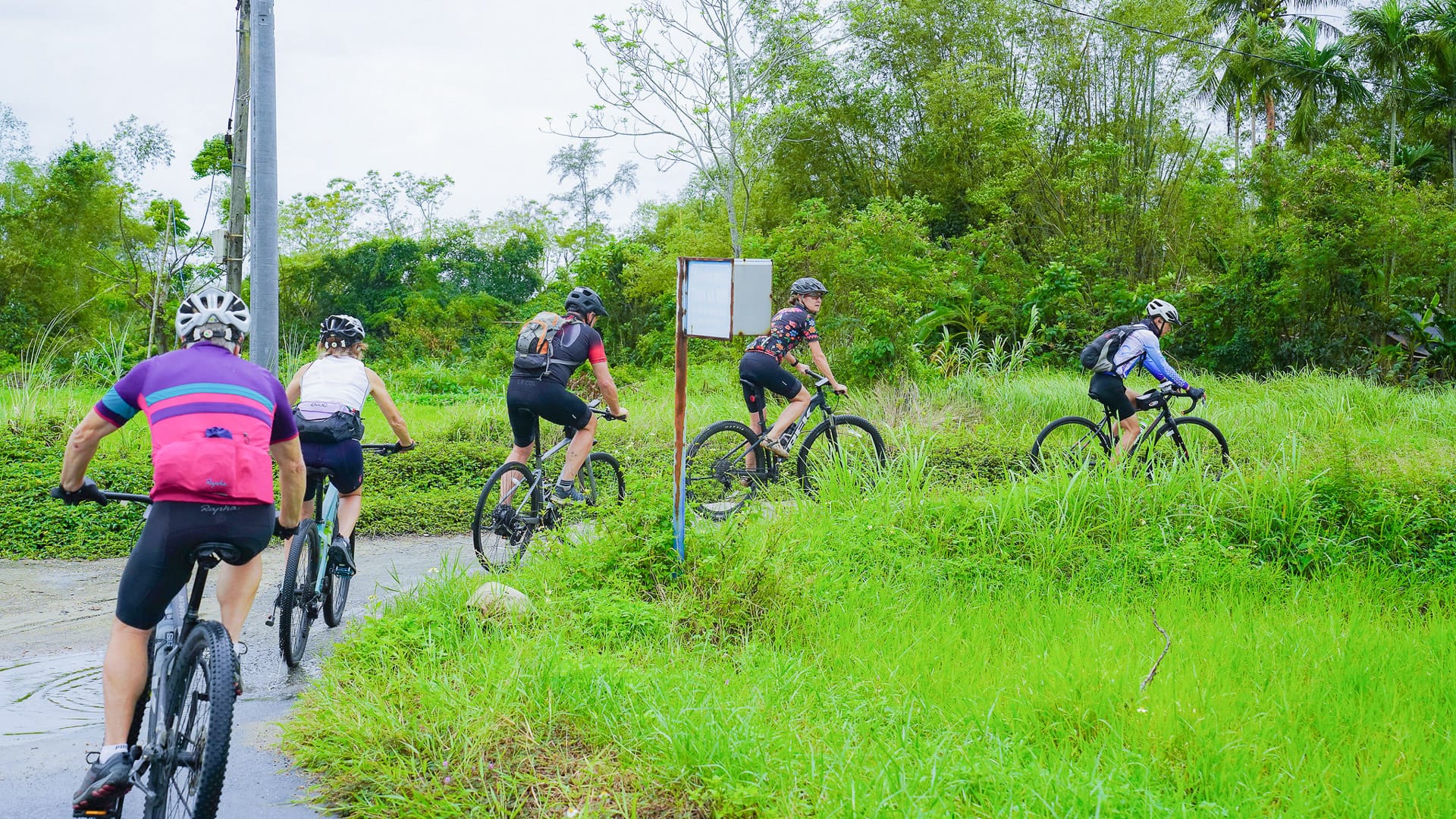
Lush green escape in Vietnam (photo credit: Mr Linh’s Adventures)
What kit should you bring?
You do not need specialist equipment beyond your usual cycling setup, but preparation is important.
A basic repair kit is essential. This should include spare tubes, a pump and tools for simple fixes, as bike shops are limited outside major towns.
Given the climate, it is also important to consider:
- Lightweight, breathable clothing for hot and humid conditions
- A waterproof layer for sudden rain showers
- Warmer layers for cooler mountain areas, especially in winter
- Dry bags or waterproof pouches to protect electronics and spare clothes, as humidity can affect both clothing and equipment
- Enough capacity to carry water on longer rides, plus electrolyte tablets to help you stay hydrated in the heat
- High-SPF sunscreen and strong insect repellent, as these can be hard to find in remote areas
- Chamois cream to help prevent chafing in humid conditions
- A power bank for your phone or GPS
- Local currency in cash for small trackside stops, coffees or local crafts in villages
Humidity can affect both clothing and equipment, so it is worth planning for this.
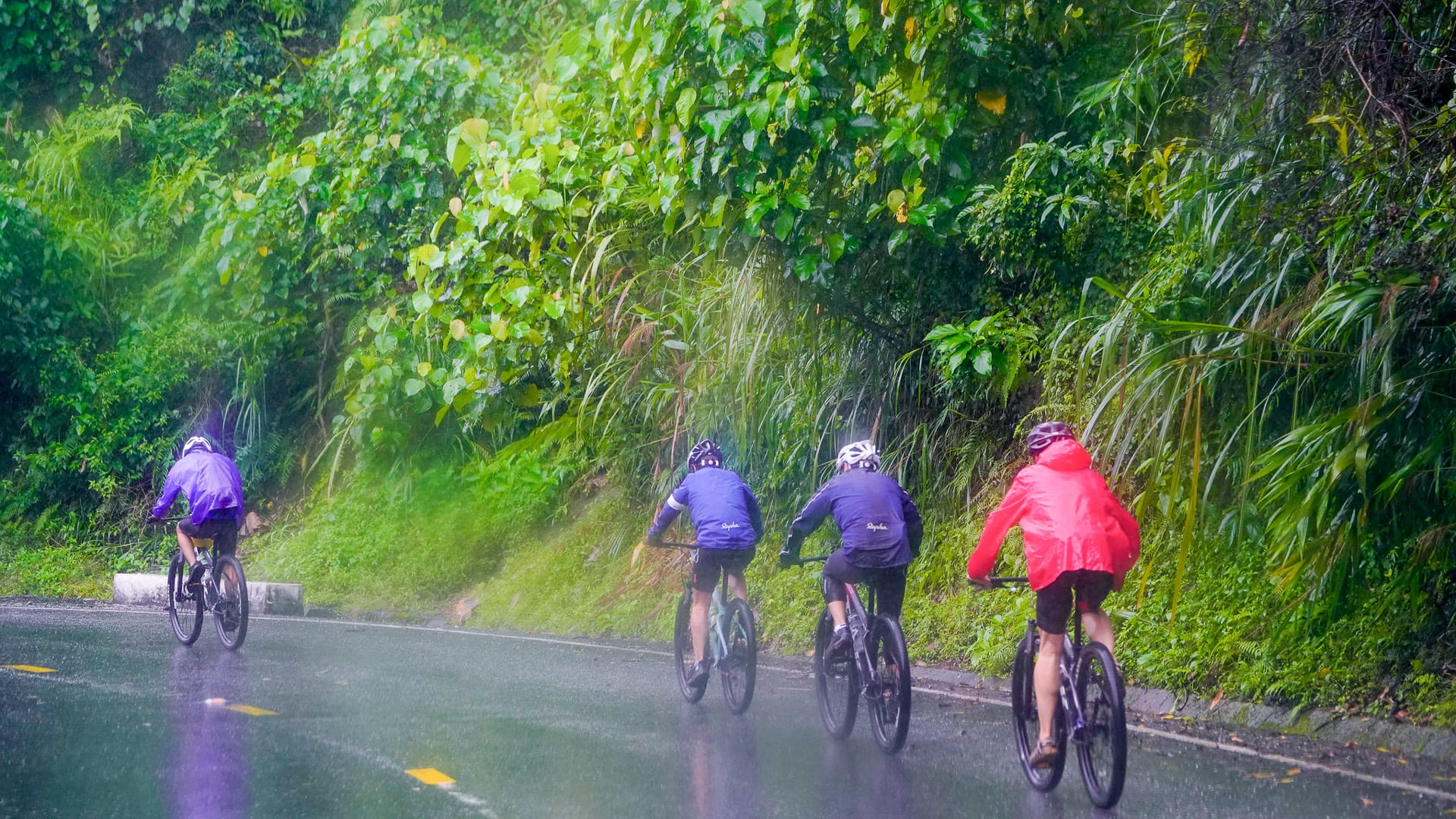
Cycling in the rain (photo credit: Mr Linh’s Adventures)
Do you need to do any training for a Northern Vietnam cycling trip?
Training requirements depend on where you plan to ride.
In flatter areas, such as the Red River basin, cycling is more accessible and does not require high levels of fitness. However, distances can still be significant.
In mountainous regions, particularly Upper Tonkin, including the Hoàng Liên Sơn range around Fansipan, Hoang Su Phi and Ha Giang, climbing is a key feature. Long ascents and technical descents are common, so it is important to be comfortable riding for extended periods.
Building endurance and pacing is more important than short bursts of power. Confidence on descents is also useful.
Do you need a car, and can you use public transport with bikes?
Public transport options for bikes are limited.
Buses rarely accept bicycles unless they are packed in a bike box or bag. Trains may carry bikes, but this usually requires advance notice and sometimes additional tickets.
Flights generally accept bikes if packed correctly, but airline policies vary and should be checked in advance.
For travel within Northern Vietnam, private transfers are often the most practical option, particularly when moving between regions. We can also arrange private transfers for you as part of our tours.
Top tip! If you are travelling with a bike box, confirm space with your transport provider before booking.
Is it easy to find food and water while cycling in Northern Vietnam?
Yes, in most areas.
Food and drink are widely available in towns and villages. Small shops and roadside stalls are common, and it is usually easy to find something to eat or drink during a ride.
Vietnamese cuisine is often the best option. Bánh mì, fresh fruit and coffee are widely available and suitable for quick stops.
In more remote areas, it is important to carry enough water, especially in hot or humid conditions. The rule is simple: never drink tap water. Stick to bottled water, or, for a more ecological approach, use a certified filtration bottle such as Sawyer Squeeze, Katadyn BeFree or Lifestraw Peak/Go, depending on your preferences.
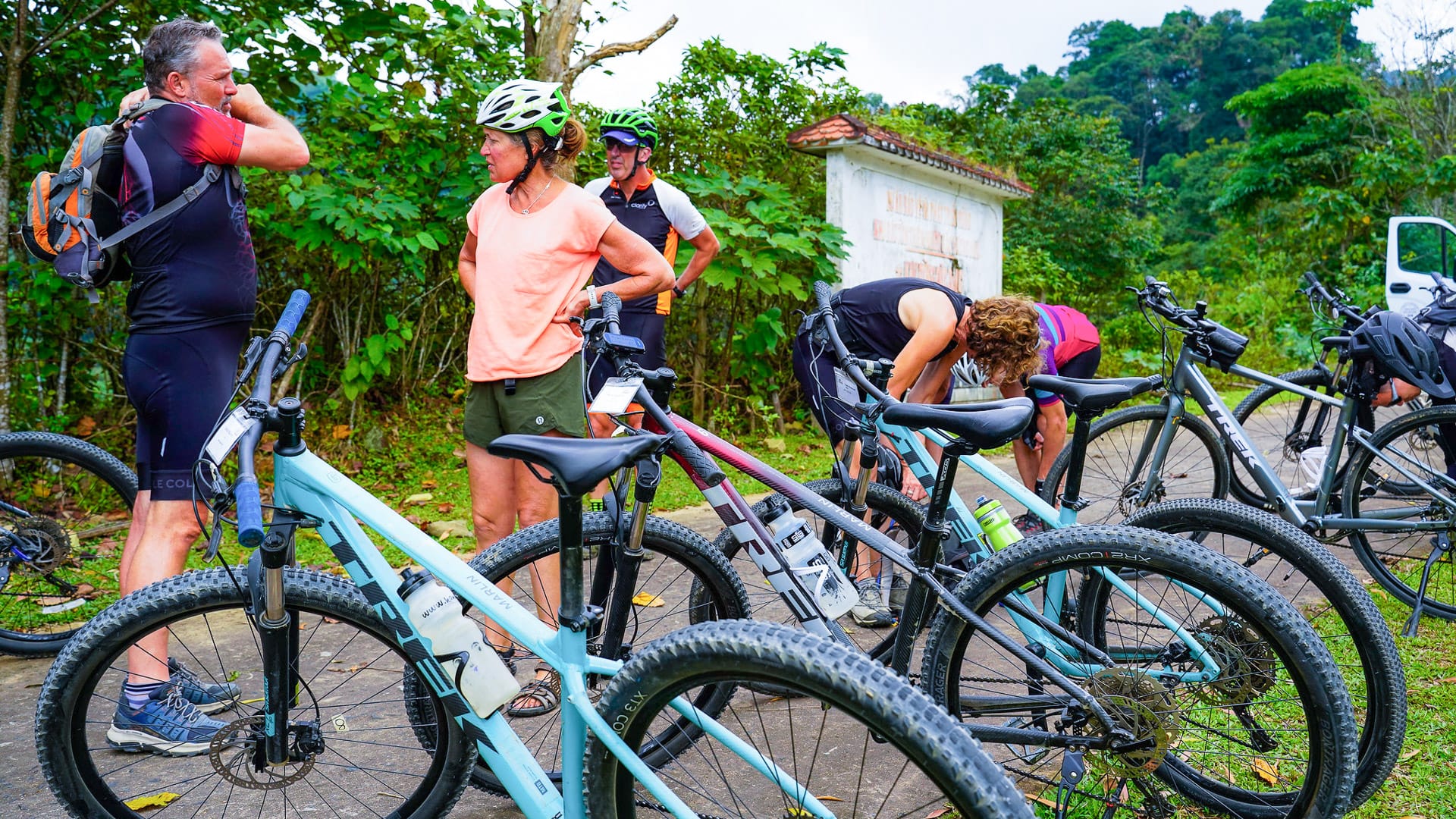
Break time (photo credit: Mr Linh’s Adventures)
What food and local culture should you know about?
Food in Northern Vietnam is simple, fresh and regionally varied.
Meals are often based around rice, noodles, vegetables and locally sourced ingredients. Street food plays an important role in daily life, especially in cities and towns. While part of the experience is discovering local food along the way, some well-known regional dishes include Thắng Cố, a traditional Hmong meat stew simmered with local spices, and Xôi Ngũ Sắc, a colourful five-coloured sticky rice dish. Around Ba Be, riders may also come across Cá Suối Nướng, locally caught mountain fish marinated with wild jungle herbs, including mắc khén, a local wild pepper, before being grilled on bamboo skewers.
Coffee is also a key part of the culture. It is strong and widely available, making it a common stop during rides.
A few cultural points to keep in mind:
- Daily life moves at a slower pace in rural areas
- Hospitality is informal and often spontaneous
- It is polite to ask before taking photos of people
- Respect local customs, especially in smaller communities. Ask before taking photos of people or private homes, dress modestly when off the bike, remove shoes before entering someone’s home, and be considerate around religious or community sites.
Do you need to speak Vietnamese?
In cities and larger towns, many people speak some English. In more remote areas, this is less common, but communication is usually still possible. Learning a few basic phrases can be helpful and is appreciated:
- Xin chào: Hello
- Cảm ơn: Thank you
- Bao nhiêu?: How much?
Top tip! A translation app can be useful, particularly in rural areas where English is less widely spoken.
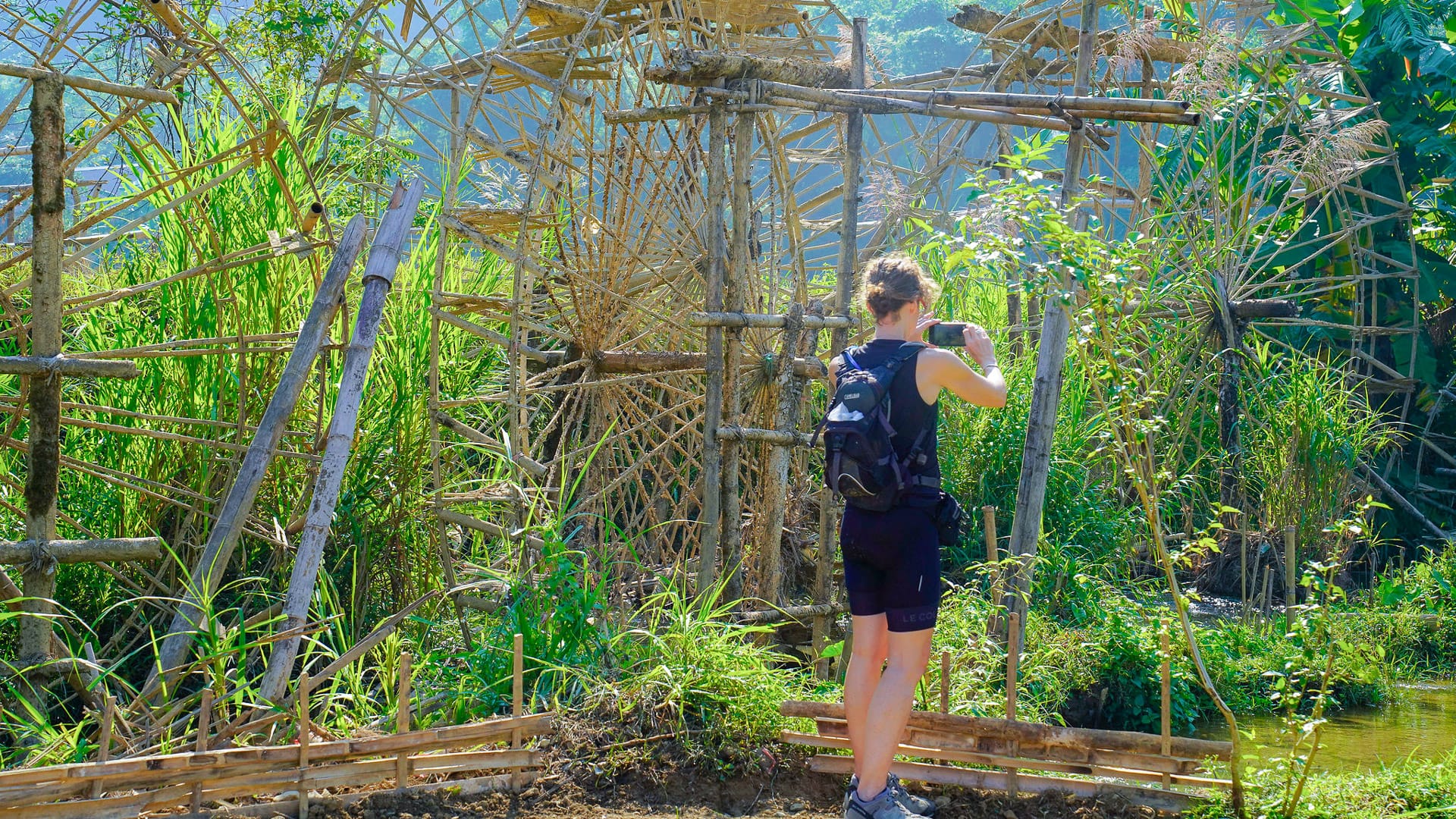
Pu Luong Nature Reserve (photo credit: Mr Linh’s Adventures)
Any highway code and travel information I should be aware of?
As ever, it’s a good idea to check current travel information before you book and travel. For UK visitors, the UK government travel information pages for Vietnam are here.
You should also read and follow Vietnam’s highway code.
Sponsor Message
Looking for a Northern Vietnam bike tour?
Mr Linh’s Adventures has been organising customised tours in the region since 2008 and would love to help you plan yours!
They offer a range of multi-day cycling routes across Northern Vietnam, built around lesser-known regions, carefully planned routes and well-managed logistics.
Interested? Head over to the website to find out more.
Got a question for Nguyen Tuan Linh from Mr Linh’s Adventures?
Fill out this form and we will pass it to Mr Linh’s Adventures who aim to reply (within 24 hours wherever they can!)
Part 6: What does Mr Linh’s Adventures offer?
Mr Linh’s Adventures focuses on designing cycling trips that go beyond standard itineraries. As a local Vietnamese family business that started out as local mountain guides, Mr Linh’s Adventures has detailed knowledge of the regions it operates in, particularly Northern Vietnam’s more remote mountain areas.
Based in Hanoi, we specialise in small-group and customised journeys across Northern Vietnam and Southeast Asia. The emphasis is on lesser-known regions, carefully planned routes and well-managed logistics. We organise a range of cycling trips, including mountain biking, gravel biking and e-bike tours, with flexible options for different types of travellers. Routes are carefully designed and checked in advance, often following less touristy roads and trails.
Mr Linh’s Adventures began operating in 2008, initially offering a range of destinations and activities, including off-the-beaten-path adventures and motorbike tours. Since 2012, we have also organised cycling tours for direct customers in the northern mountain regions. While motorbike travel remains popular for exploring remote areas, more travellers are now looking to combine cycling with sightseeing, local experiences and physical activity, creating a slower and more immersive way to experience Vietnam.
Tours are usually organised as private departures or incentive groups and can suit both independent travellers and larger groups. We can organise tours for groups ranging from 2 to 50 people. For groups of fewer than 15 riders, two tour guides can be arranged to help support the group.
Travellers can also find reviews for Mr Linh’s Adventures on Tripadvisor, Google Reviews and Facebook, although these reviews cover the full range of tours rather than cycling trips specifically.
What cycling tours are available?
Mr Linh’s Adventures offers a range of multi-day cycling routes across Northern Vietnam. We work with both experienced riders and beginners, though we particularly focus on group travel and B2B partners. We can provide both bike rental services and fully guided cycling tours.
Popular options include:
- Ha Giang and northern mountain routes: high-altitude riding across limestone landscapes and major passes
- Ba Be and Cao Bang region cycling tours: combining forest, lake and village riding
- Multi-region expeditions: longer routes linking areas such as Ba Be and the northern border regions
Trips are not fixed packages. Routes are designed around the rider, the terrain and current conditions. Prices therefore vary depending on the size of the group and the style of trip. Larger groups can usually benefit from better group pricing, while more private or luxurious tours cost more. As a guide, prices can range from around USD 60 per person per day up to USD 500 per person per day.
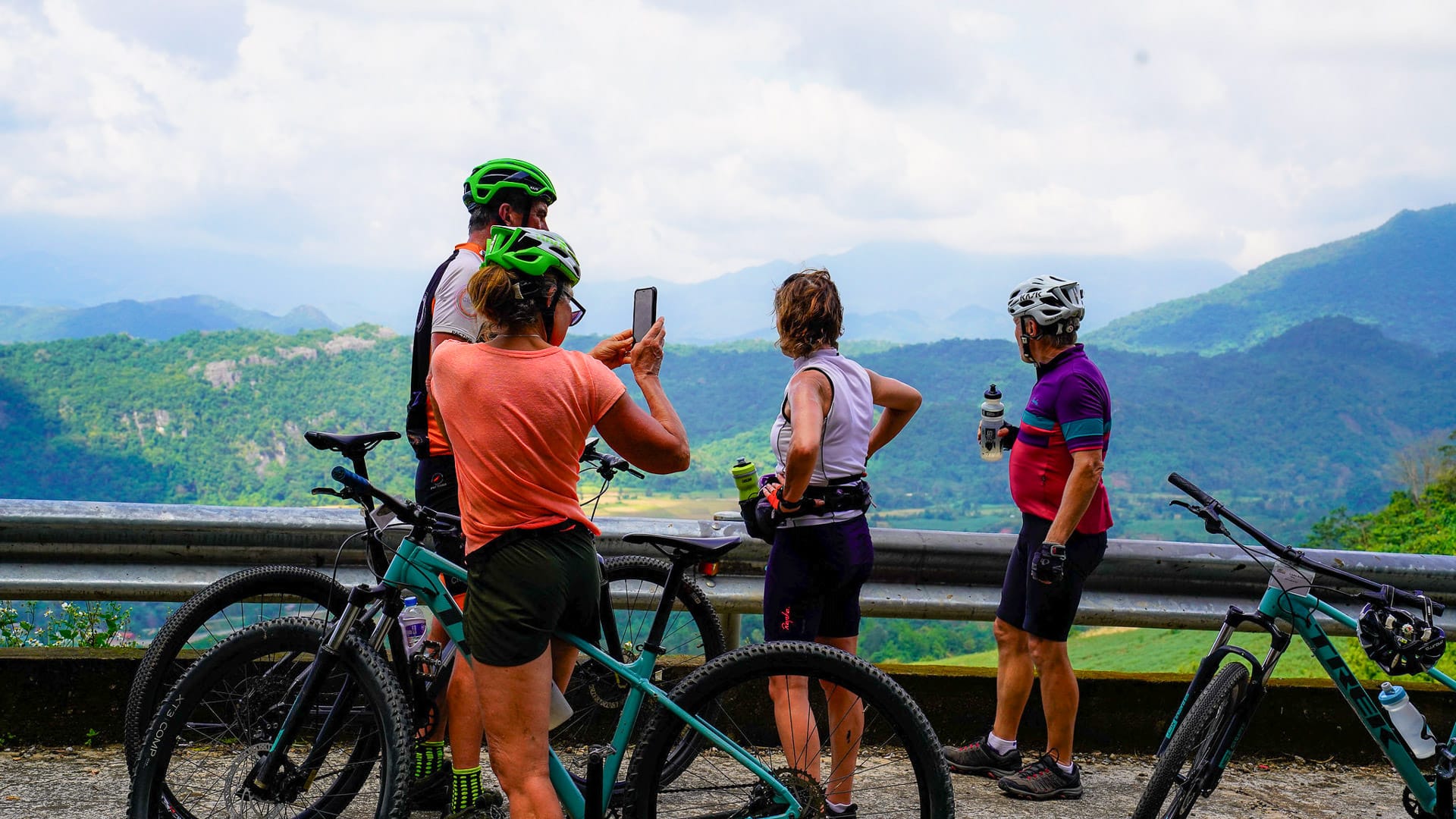
Cycling and slow travel (photo credit: Mr Linh’s Adventures)
What’s included?
Trips are structured to reduce logistical complexity and allow riders to focus on the experience. All tours include insurance in accordance with Vietnam tourism regulations, although Mr Linh’s Adventures still recommends that travellers arrange their own travel insurance to cover any additional risks.
Depending on the itinerary, this typically includes:
- Pre-ride bike setup and equipment preparation, including high-end bicycles from brands such as Giant, Trek or Marlin, all regularly serviced
- Experienced Vietnamese cycling guides who speak English, with some also speaking German and French. Guides are first-aid trained and hold international tour guide licences issued by the Vietnam National Administration of Tourism
- Dedicated support vehicles for luggage, mechanical support and route flexibility, usually with a truck or minivan and mechanic. The vehicle drops the group at the starting point, provides support during the trip and picks them up when the tour finishes, so support can move with the terrain rather than follow a fixed schedule.
- Accommodation, including eco-lodges, homestays, bungalows, three-star mountain hotels and four-star boutique-style hotels. Luxury accommodation can also be arranged on request
- Meals throughout the trip, as stated in the itinerary, with some tours also including private lunches with local families
- Permits and access arrangements for remote areas, including entrance fees, sightseeing tickets and park fees
- Trips also include private ground transportation in an air-conditioned vehicle with commercial insurance and a professional driver, unlimited mineral water during rides and meals, 24/7 hotline support, Vietnam government taxes and a price guarantee with no extra charge after confirmation.
Please note: Personal expenses, tips and gratuities, international airport costs, meals not specified in the itinerary, beverages and other services not mentioned are usually excluded.
What makes these trips different?
The main difference is how the routes are designed and delivered.
We pre-scout all our routes rather than take them from standard templates. This means the roads and routes have already been experienced and tested by the Mr Linh’s Adventures team. Before departure, the route is usually rechecked, especially where there has been special weather, and alternative routes are prepared in case of rain, landslides, road damage or other unexpected issues. This allows adjustments based on weather, road conditions and rider ability. Because Mr Linh’s Adventures also runs other adventure trips in these areas, the team knows many of the special routes and alternative ways very well, while guides provide regular updates about current road conditions.
Support is continuous but not intrusive. It is there when needed, without interrupting the flow of the ride. In practice, safety and communication are central to this. The team uses walkie-talkies so guides and support staff can communicate quickly if help is needed, and the support truck and safety team usually stay within around 3 kilometres of the group.
There is also a focus on local access. Experiences are built around existing relationships with communities rather than staged stops.
The result is a balance between remote landscapes and a well-supported riding experience. For example, if a guest has an accident or their bicycle breaks down while cycling in the mountains, the group is first stopped in a safe area. The tour leader makes sure everyone is safe, while the guide checks the guest’s condition and inspects the bike. If the guest can continue, the bike can be replaced so they can rejoin the group. If the situation is more serious, the support vehicle, mechanic and driver can collect the guest and bike and take them somewhere safe to rest. In the case of a serious injury, the guest is taken to the nearest hospital immediately, while the rest of the group can continue cycling with the tour leader and the support team looks after the injured guest.
Personalised cycling trips
Customisation is central to the approach. For now, Mr Linh’s Adventures only offers bespoke tours, although set departures may be introduced from 2027 onwards.
Cycle tours can be adapted to suit different riders by adjusting distances, terrain, pacing and the overall structure of the route.
This flexibility allows for both shorter rides and longer multi-day journeys across different regions. In Northern Vietnam’s mountain areas, routes are not necessarily the same from one day to the next. Depending on the elevation gain, difficulty level, mountain trails and dirt roads involved, cycling distances can range from around 15 kilometres to 70 kilometres per day. The approach is designed to stay flexible rather than fixed.
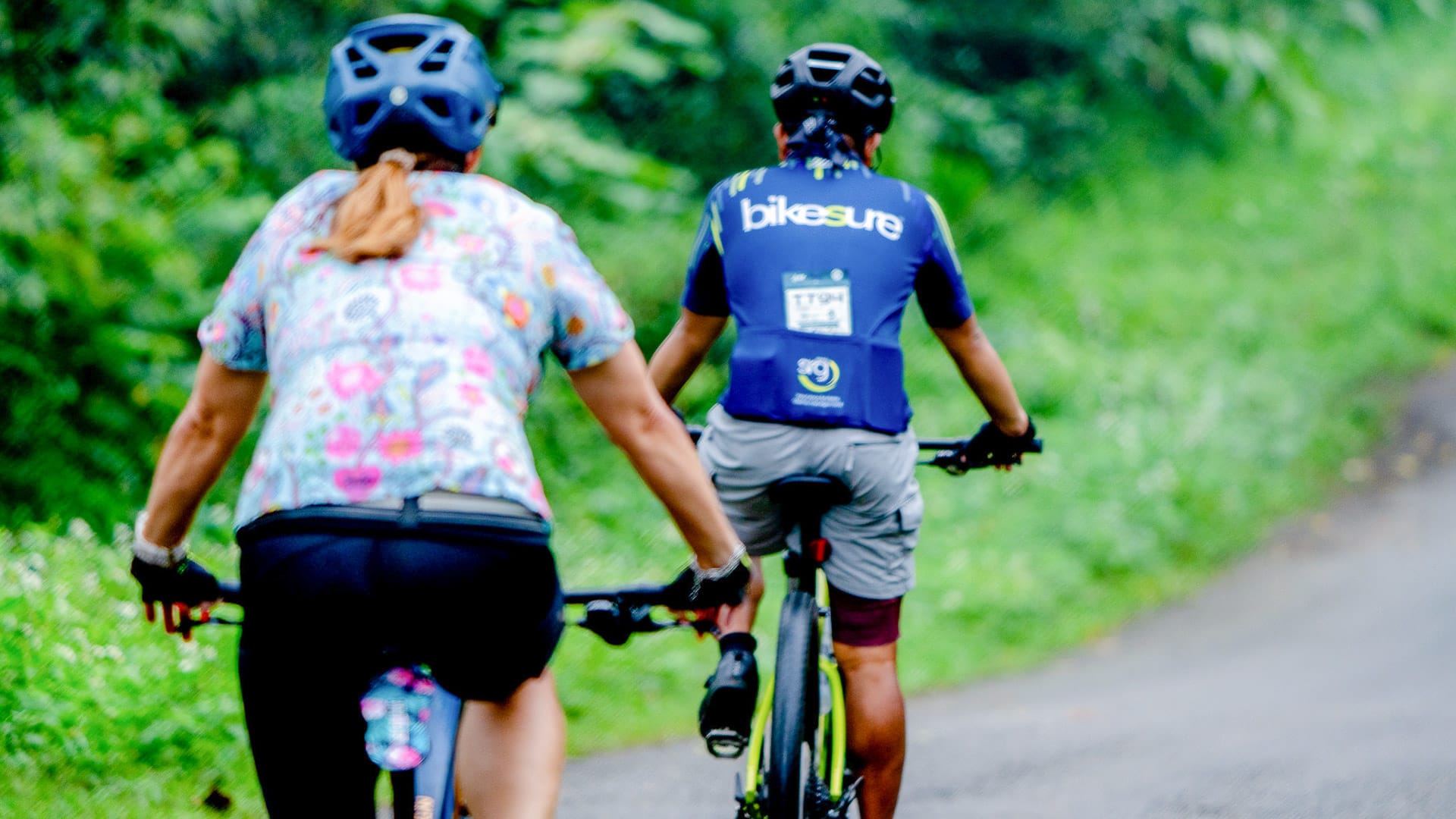
Almost alone on remote roads in northern Vietnam (photo credit: Mr Linh’s Adventures)
How can you find out more?
For more details on routes, availability and pricing, visit the Mr Linh’s Adventures website.
You can also contact the team directly to discuss your plans and create a tailored cycling trip.
What’s next?
A big thank you to Nguyen Tuan Linh of Mr Linh’s Adventures for sharing his knowledge and insights on cycling in Northern Vietnam.
Have you been on a bicycle tour of Northern Vietnam before? We’d love to hear from you! Drop us a comment below.
Looking for more inspiration? Don’t miss:
- Cycling in Vietnam: the inside guide
- 12 must-read tips for planning a cycling tour in Vietnam
- 7 of the best cycling tours in Asia
- Cycling Hanoi to Ho Chi Minh City (Vietnam North to South): what you need to know
- Thinking about Thailand? Check out our in-depth guide to Thailand
- Cycling in the Alto de Letras, Colombia: the inside guide
Got a question for Mr Linh’s Adventures?
Fill out this form and we will pass it to Mr Linh’s Adventures who aim to reply (within 24 hours wherever they can!)
Got a question for Nguyen?
Fill out this form and we will send it to Nguyen. We aim to get you an answer within 24 hours where possible!Nguyen Tuan Linh is the founder and lead route architect at Mr Linh’s Adventures, a Hanoi-based travel company specialising in off-the-beaten-path journeys across Vietnam and Southeast Asia.
He has been working in adventure travel since 2008, with a focus on designing cycling and multi-activity routes in Northern Vietnam. His work centres on remote regions, local communities and carefully planned logistics.
Nguyen says his approach is shaped by both the landscape and the country’s history:
“In Vietnam, the bicycle was never just transport. It was part of daily life, especially in the north, long before modern infrastructure reached these areas. That connection still influences how we design routes today.
We focus on understanding the terrain and working with it. That means knowing how conditions change, how to move through different regions and how to create routes that feel natural rather than forced.
For us, cycling here is not just about distance. It is about reading the landscape, adapting to it and experiencing it at the right pace.”
First Published: 04 June 2026
This article includes details of products and/or services that we have used ourselves or which we would consider using. Some are paid features or include affiliate links or referral codes which we may earn commission from. As an Amazon Associate we earn from qualifying purchases. Please read our disclosure policy for further information.
The contents of this website are provided for general information purposes only. It is not intended to amount to advice and you should not rely on it. You should carry out your own due diligence and risk assessments and take professional advice. Views expressed by interviewees or other users of this website do not necessarily represent our views. We make no representations, warranties or guarantees, whether express or implied, that the content on our website is accurate, complete or up to date. If you use any information or content on this website, download from, or otherwise obtain content or services through our website, it is entirely at your own discretion and risk. Epic Road Rides Ltd disclaims all liability and responsibility arising from any reliance placed on the information and content on this website. Find out more here.
Sponsor Message
Looking for a Northern Vietnam bike tour?
Mr Linh’s Adventures has been organising customised tours in the region since 2008 and would love to help you plan yours!
They offer a range of multi-day cycling routes across Northern Vietnam, built around lesser-known regions, carefully planned routes and well-managed logistics.
Interested? Head over to the website to find out more.
Got a question for Nguyen Tuan Linh from Mr Linh’s Adventures?
Fill out this form and we will pass it to Mr Linh’s Adventures who aim to reply (within 24 hours wherever they can!)