
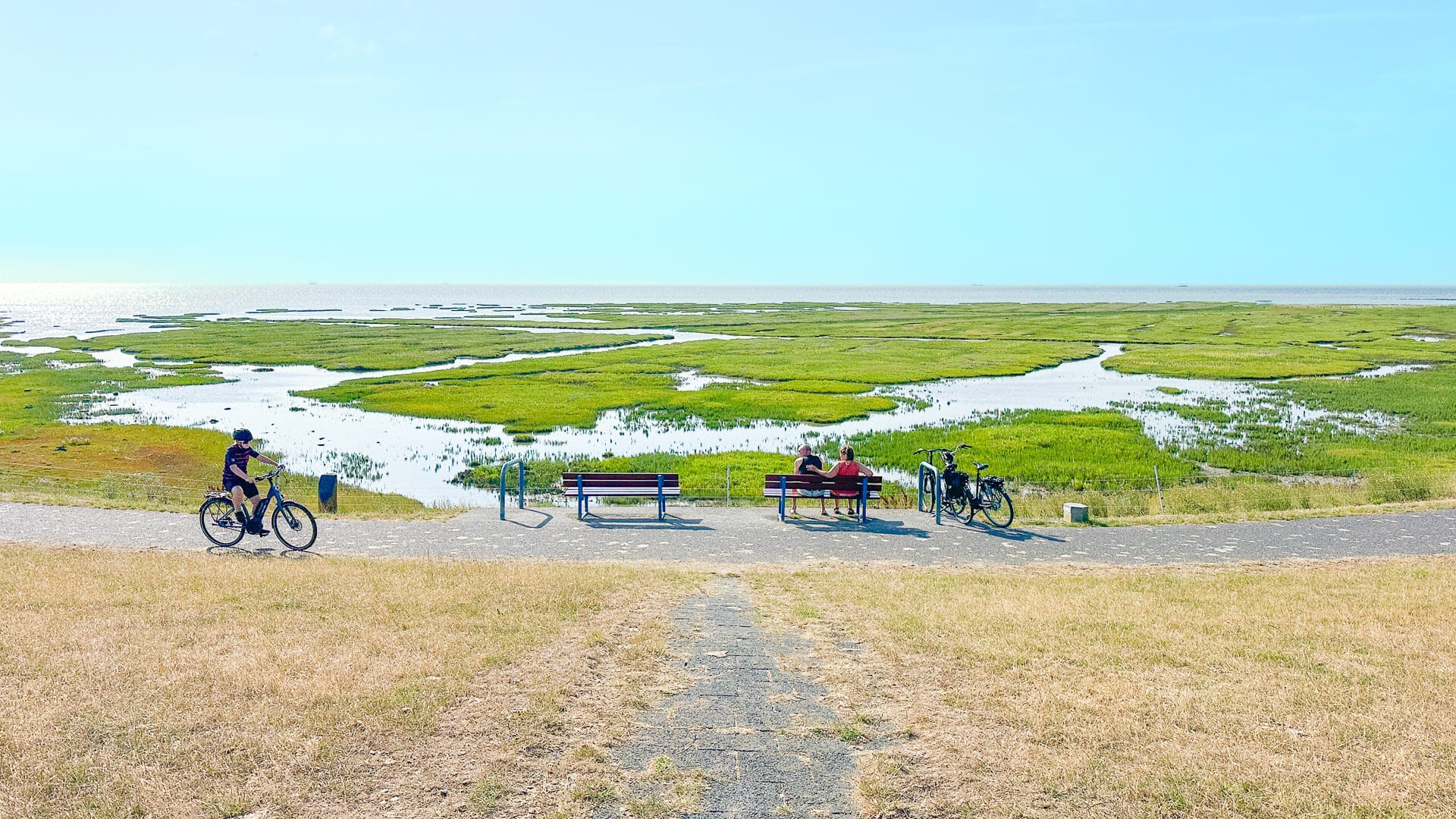
In August 2026, my daughter and I joined Boat Bike Tours’ Islandhopping Netherlands Premium tour: an eight-day journey aboard a four-masted schooner, between the freshwater IJsselmeer and the Wadden Sea, a UNESCO World Heritage Site. Five days of cycling connected North Holland, Texel, Terschelling and Friesland.
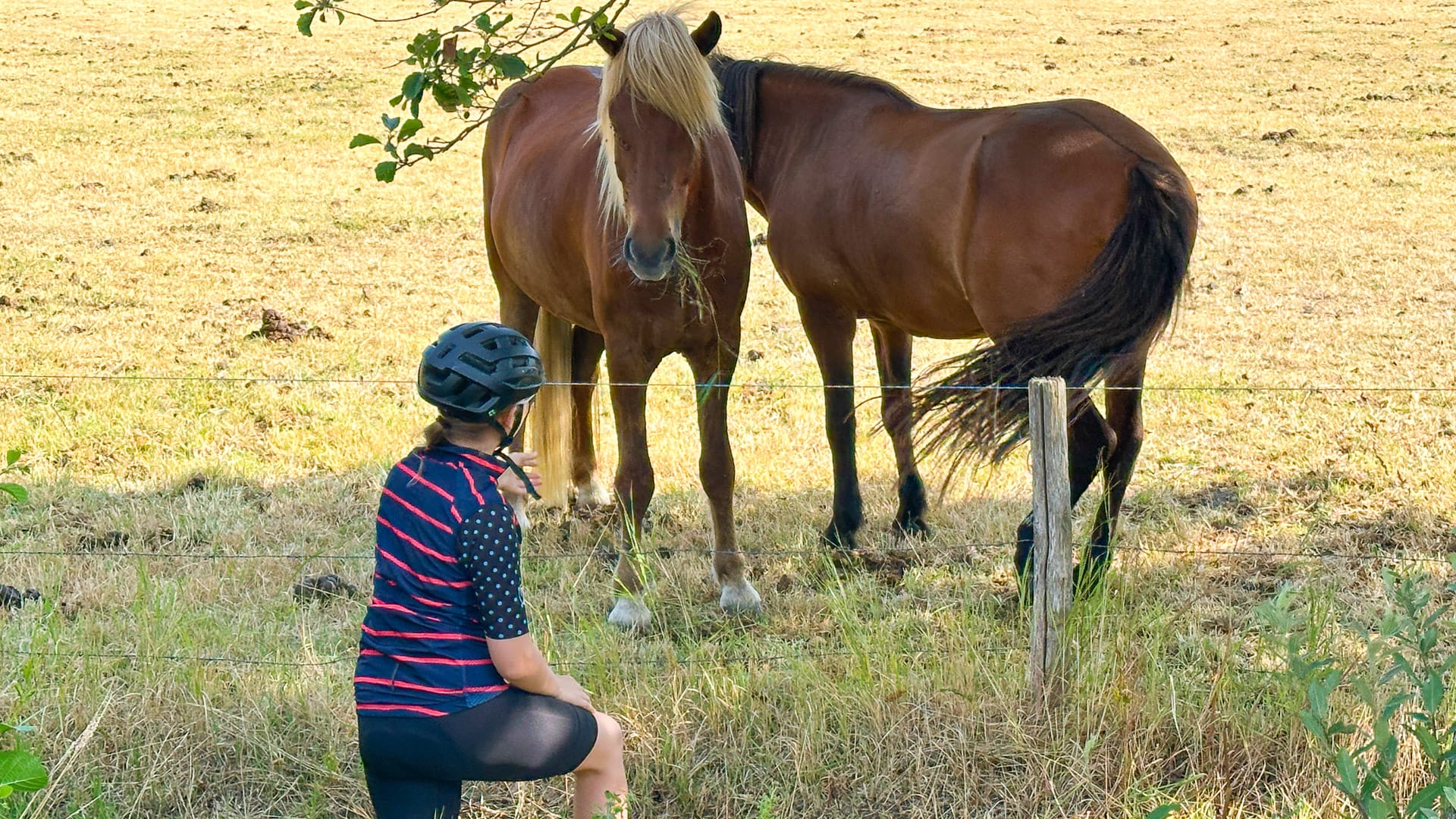
From the deck of the ship, the Wadden Sea looked like a landscape in motion: tidal channels curling between sandbanks and mussel beds, salt marshes giving way to long beaches and dune-covered islands. From the bike, the details came closer – sheep in fields below the dikes, horses beside canals, birds lifting from the shallows and old trading harbours at the water’s edge.
It was a cycling holiday, a sailing trip and a moving hotel rolled into one. Each day brought a new combination of dikes, dunes, villages and historic ports. Each evening, the same cabin, crew and dinner table were waiting. That balance – exploration by day, familiarity by night – became one of the defining pleasures of the week.
This article shares our experience of the tour on our departure: how the guided format worked in practice, what we rode each day, what life aboard was like and what we would want to know before booking.
I hope you find it useful!
Clare Dewey is a cyclist with a passion for travel. She set up epicroadrides.com in 2018 to help make it easy for cyclists to explore the world by bike. Today her mission is still inspiring cyclists to discover new places on two wheels - and doing what she can to make sure they have the best possible time while they're there. Clare has visited 50+ destinations around the world, many of them by bike.
Want to connect with Clare? Find her over on LinkedIn.
We love to introduce our community to cycling businesses, destinations and ideas that we think are genuinely interesting. Boat Bike Tours' Netherlands bike and sail tour caught our attention because we hadn't visited this part of the Netherlands previously but had heard great things. Plus we loved the boat bike format from the trip we went on last year.
Boat Bike Tours paid for this advertisement feature. Our decision to collaborate reflects our view that the brand is relevant to our readers; it is not a formal approval, audit or guarantee of its services. We have not independently verified information supplied by Boat Bike Tours.
As with any travel purchase, please check the latest trip details, terms and customer protections directly with Boat Bike Tours before booking. Any booking is made with Boat Bike Tours, not Epic Road Rides.
Always check current travel information and advice. For visitors from the UK, the UK government travel information pages are here.
The tour at a glance
If you’re short on time here is the tour at a glance:
| Tour | Islandhopping Netherlands Premium |
| Duration | 8 days / 7 nights |
| Start and finish | Enkhuizen, North Holland |
| Ship | Leafde fan Fryslân, a 64 m four-masted schooner |
| Cycling | Five riding days; advertised daily options of roughly 28–58 kilometres |
| Terrain | Very flat; mostly cycle paths and quiet roads, with some compact gravel. Note: the elevation profiles tell only part of the story. Long, exposed sections on dikes, coasts and islands can make a modest distance more demanding. In this part of the Netherlands, the wind is the hill! |
| Is it for you? | We share things to consider when deciding if it’s for you, here. |
If you’re considering the same trip, you can see the current Islandhopping Netherlands Premium itinerary, dates and prices with Boat Bike Tours.



Sponsor Message
Want to find out more about Boat Bike Tours’ Wadden Sea tours?
Boat Bike Tours' website shares more about the trip we went on here: Boat Bike Tours' Netherlands Premium.
Prefer to explore but don't need a guide aboard? Boat Bike Tours also offers an independent Sail & Bike Wadden Sea tour, without a dedicated cycling guide.
Or fill in the enquiry form below and we’ll send your question directly to Boat Bike Tours.
Got a question for Clare Dewey from Boat Bike Tours?
Fill out this form and we will pass it to Boat Bike Tours who aim to reply (within 24 hours wherever they can!)
Why cycle and sail the Wadden Sea?
To experience a landscape shaped by water
Before this trip, I knew the Netherlands as a country shaped by water and trade. I was interested in its maritime links – including the historic relationship with Indonesia – and in reaching quieter islands without organising a chain of ferries and hotels.
What I had not appreciated was how present water remains in ordinary daily life. Canals, locks and dikes are not museum pieces: they are still vital for the towns, farms and life around them.
I also hadn’t appreciated how special the UNESCO World Heritage-listed Wadden Sea is – a vast intertidal landscape of channels, mudflats, sandbanks, salt marshes, beaches and dunes. As the tide moves, land appears and disappears. Seals rest on exposed banks, birds feed in the shallows and the light changes across an enormous horizon.
To see the Wadden Sea from two perspectives
Cycling and sailing reveal different scales of the same place.
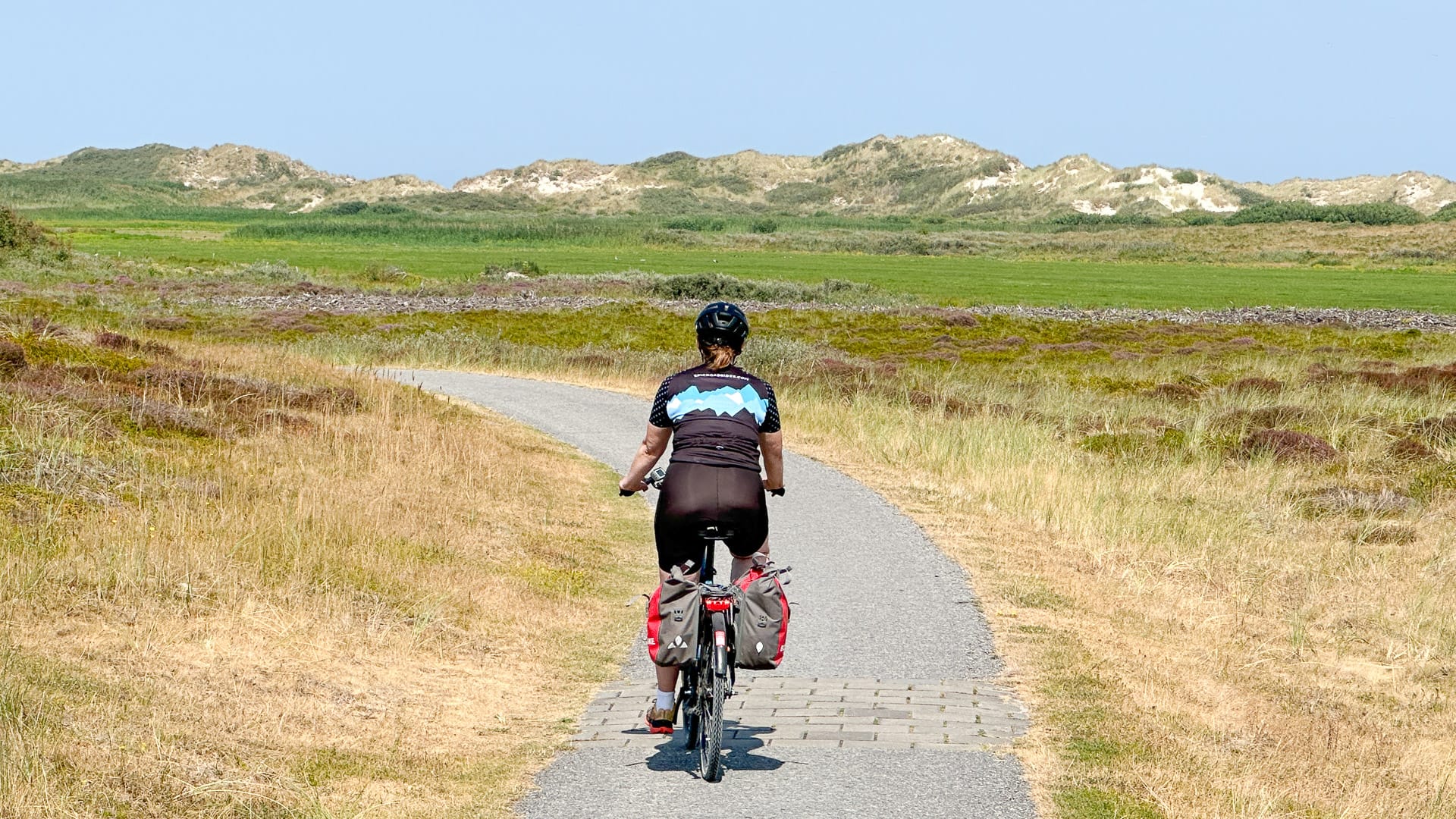
From the bike, we noticed sheep grazing beside narrow waterways, hollyhocks outside village houses, cool forest paths and the texture of brick and compact gravel beneath our tyres.
From the ship, the view widened: tidal channels, island chains, working harbours and the distance between safe passages became legible.
These different ways of viewing this gorgeous region provided an ever-changing, 360 degree view.
To explore the islands without complicated logistics
The combination of the Dutch cycle network and the ship as our moving base made island-hopping remarkably straightforward. On land, much of the riding was on separated paths or quiet lanes, so we could divert to a cheese farm, pause on a dune or explore a village at our own pace.
The ship took care of the awkward logistics. There was no need to coordinate a chain of ferries, carry our luggage between islands or check into a different hotel each night. We unpacked once, returned to the same cabin after each ride and packed again only when it was time to leave.
The experience went beyond just logistics though: our stay on board was lovely and comfortable, with a crew of six to look after us (huge thanks to Captain Peter, Sailor Leon, Guide Carol, Hostesses and Chef Petr), three course dinners and cabins cleaned daily.
To make the crossings part of the journey
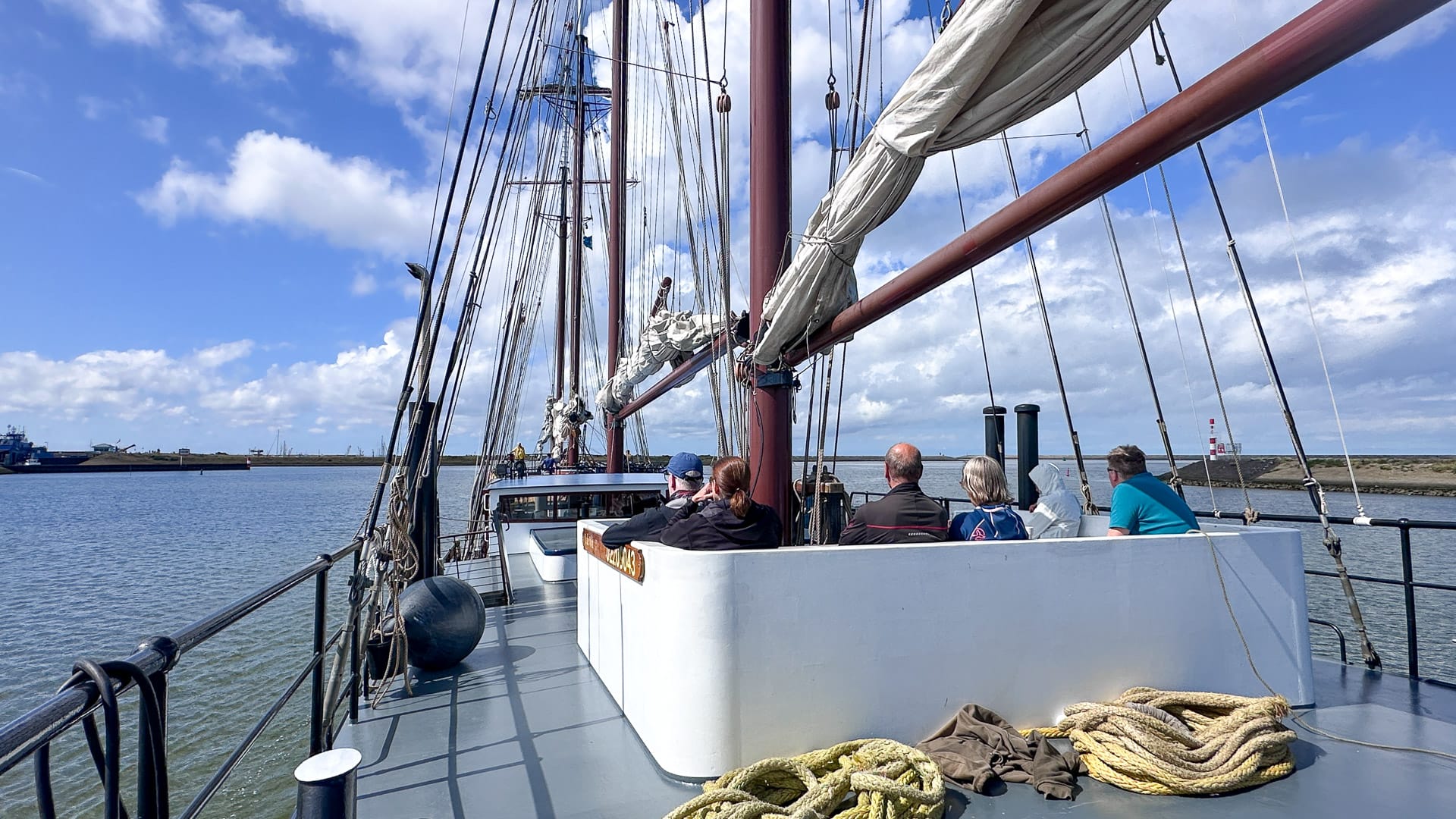
The transfers by water were a fabulous part of the interactive experience. We watched the coastline recede, looked for seals and learned why the skipper’s route depends on depth, tide and conditions. Sometimes the ship travelled under sail; most of the time, due to lack of wind or tricky tidal paths, the engine was the practical choice.
Either way, arriving at an island or old harbour from the water helped us feel connected with the water and, practically, always meant we were staying in the centre of town.


Sponsor Message
Want to find out more about Boat Bike Tours’ Wadden Sea tours?
Boat Bike Tours' website shares more about the trip we went on here: Boat Bike Tours' Netherlands Premium.
Prefer to explore but don't need a guide aboard? Boat Bike Tours also offers an independent Sail & Bike Wadden Sea tour, without a dedicated cycling guide.
Or fill in the enquiry form below and we’ll send your question directly to Boat Bike Tours.
Got a question for Clare Dewey from Boat Bike Tours?
Fill out this form and we will pass it to Boat Bike Tours who aim to reply (within 24 hours wherever they can!)
Our day-by-day Wadden Sea itinerary
A note on routes: Boat Bike Tours states that sailing and cycling plans may change for nautical, technical or meteorological reasons. Our departure did not match every detail of the standard itinerary, so treat the account below as our experience rather than a guaranteed schedule.
Day 1: arrival in Enkhuizen
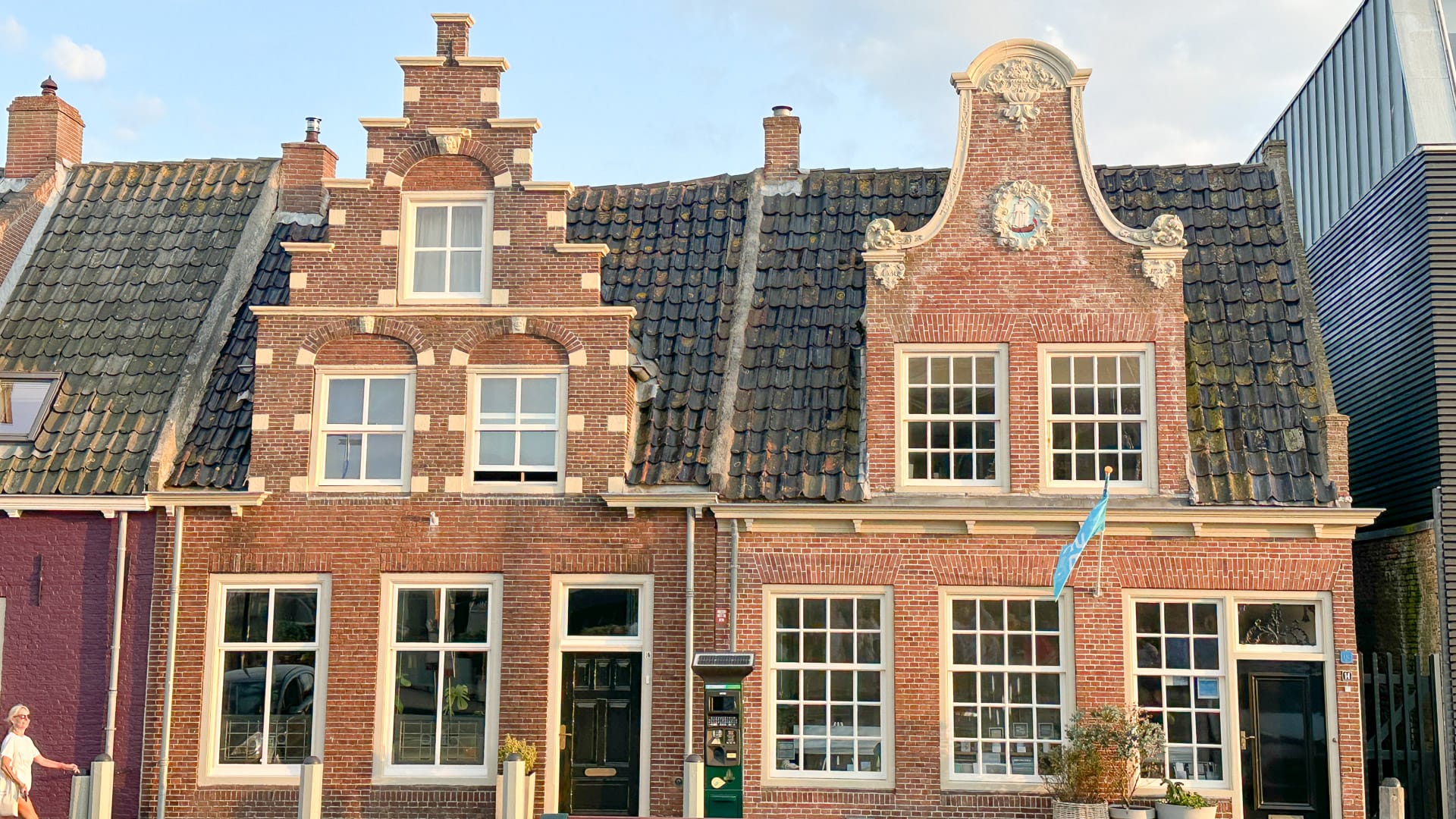
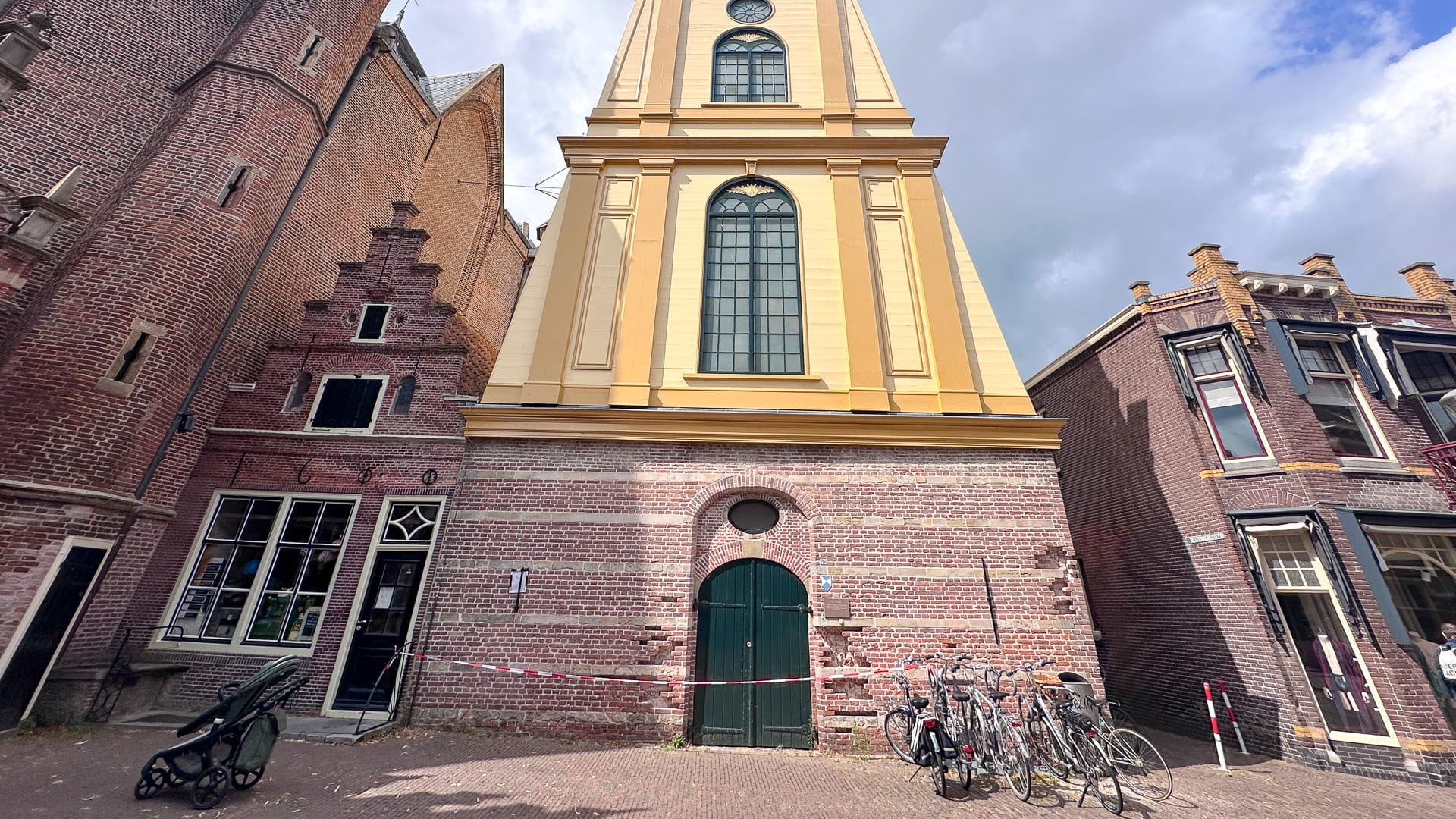
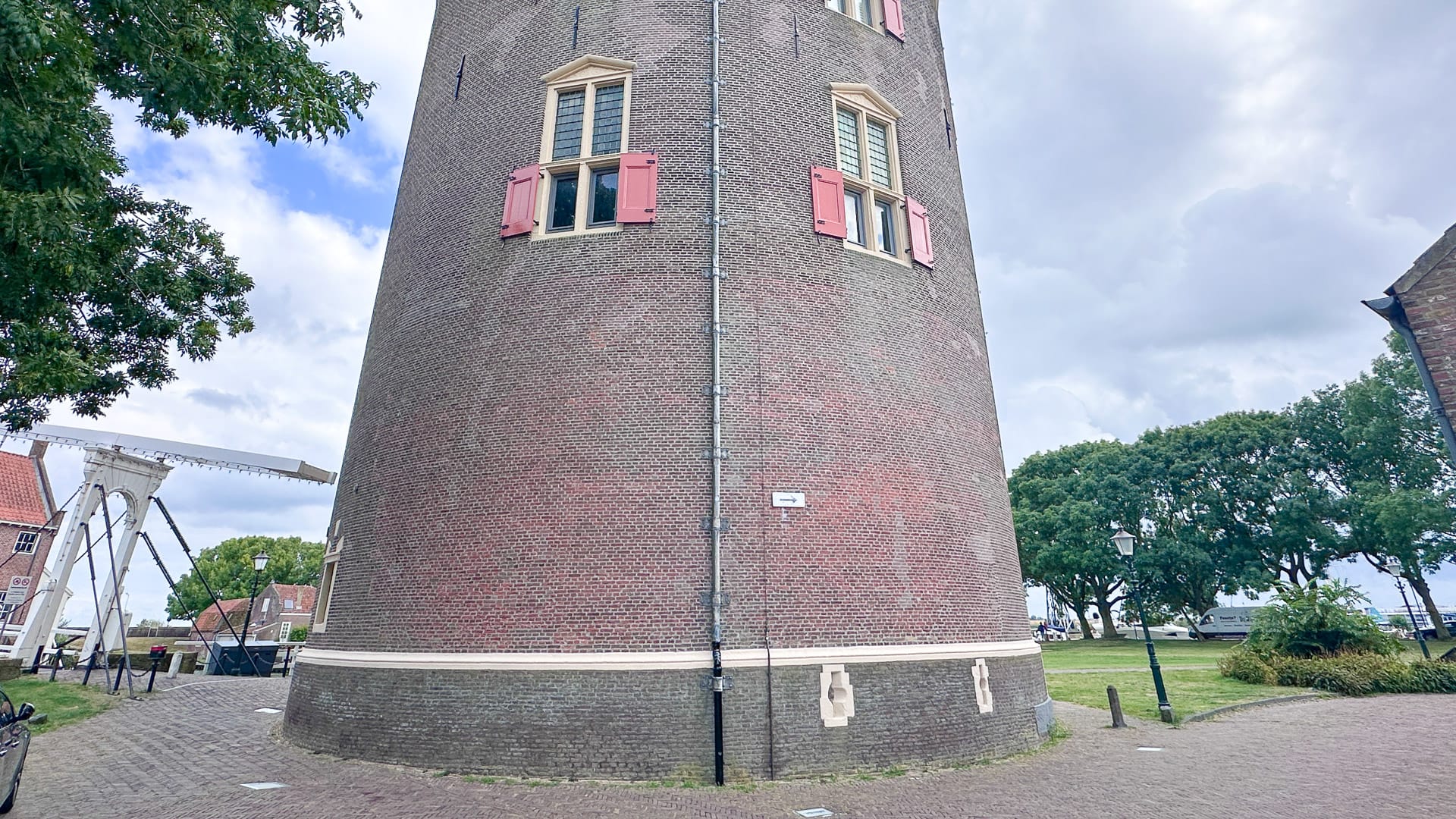
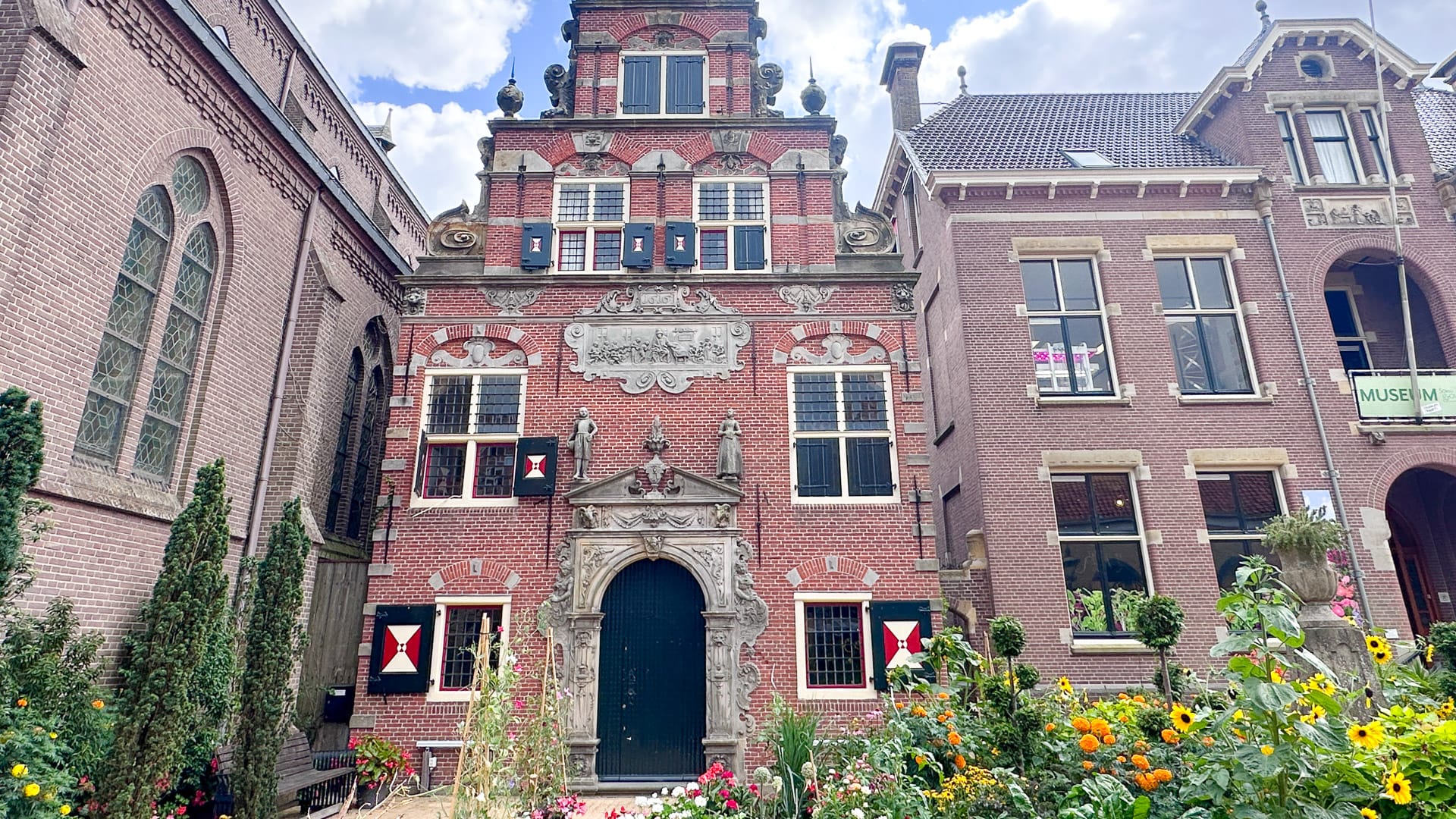
Enkhuizen immediately set the tone for the trip: it’s an old harbour town that was once the home of the Dutch merchant fleet during the Golden Age of The Netherlands. The town faces the IJsselmeer, with gabled houses, brick streets and masts above the rooftops.
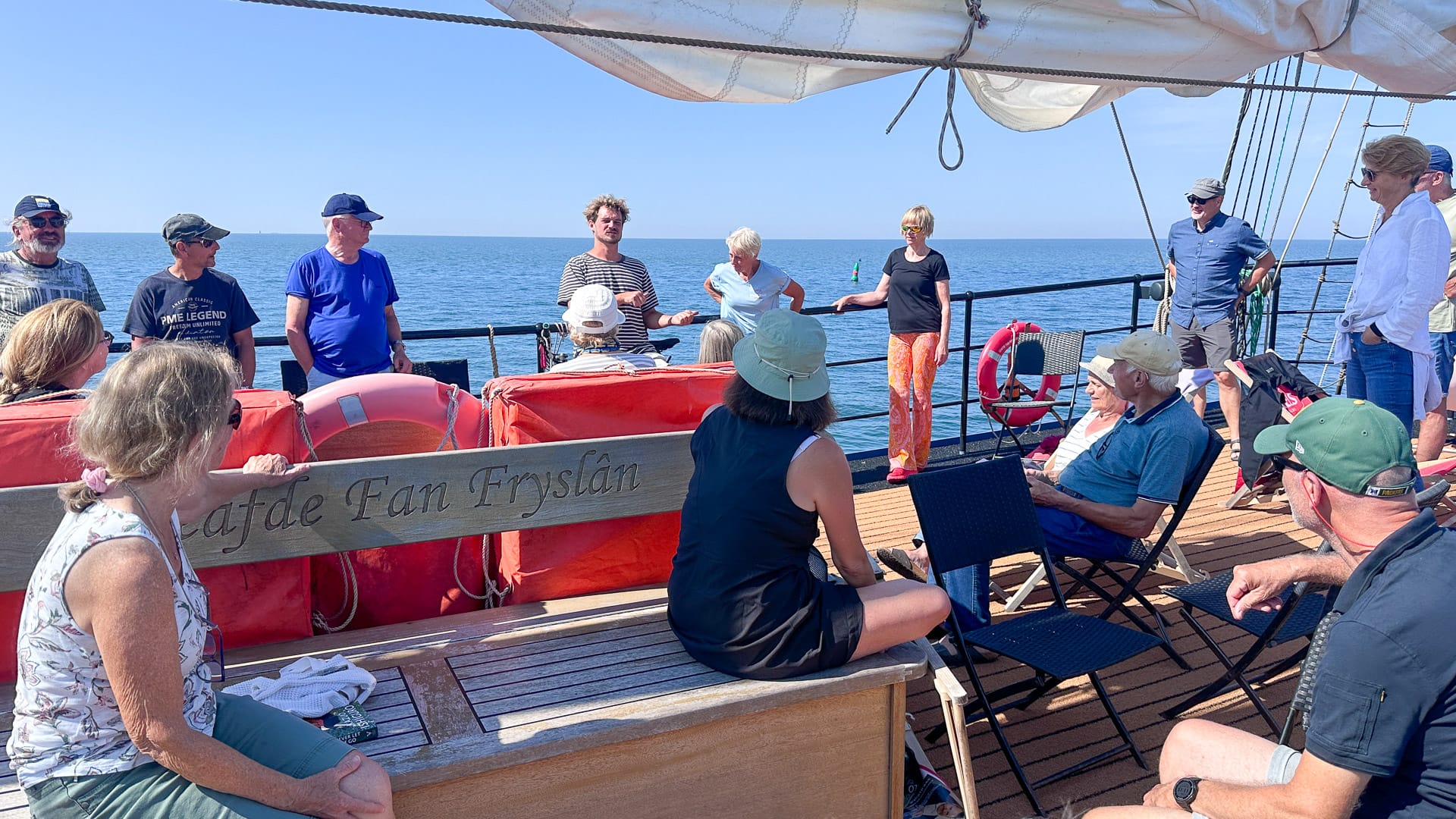
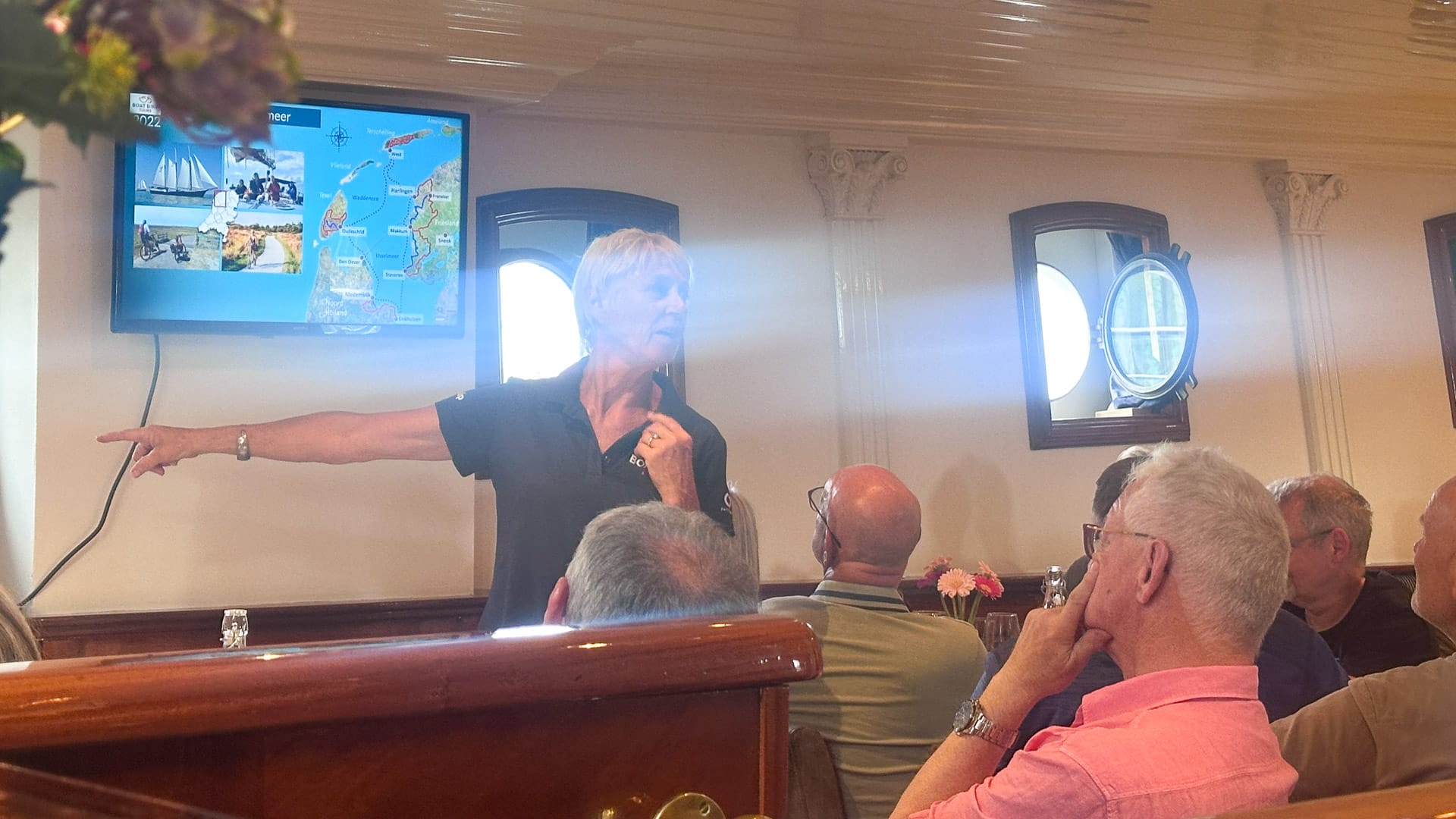
Once aboard, we met the crew, went through the safety briefing and heard how the week would work. One interesting clarification concerned the “guided” element of the cycling tour: Carol would be providing detailed daily briefings, a route overview sheet with historical notes, and riding the route. Guests were encouraged to travel at their own pace rather than form one large group (which would have been unworkable with 30+ guests!). More on this below.
Day 2: Enkhuizen, Medemblik and sailing to Texel
Route choices: 24 kilometres (with 67 metres of climbing) or 40 kilometres (with 96 metres of climbing). We rode the 40 kilometre loop.
Along the Afsluitdijk
We opted for the 40 kilometres route, leaving Enkhuizen and following the IJsselmeer shore towards Medemblik.
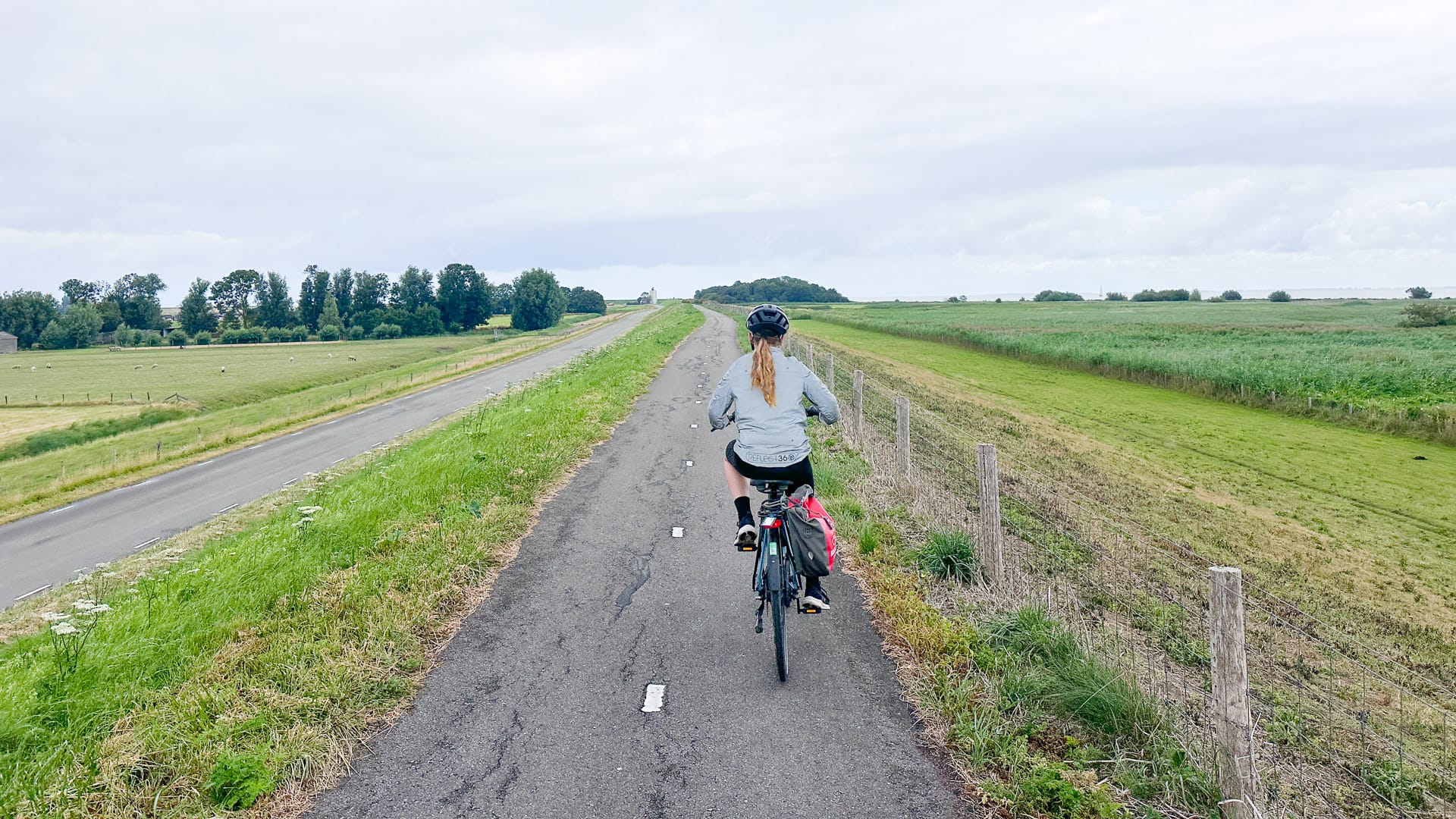
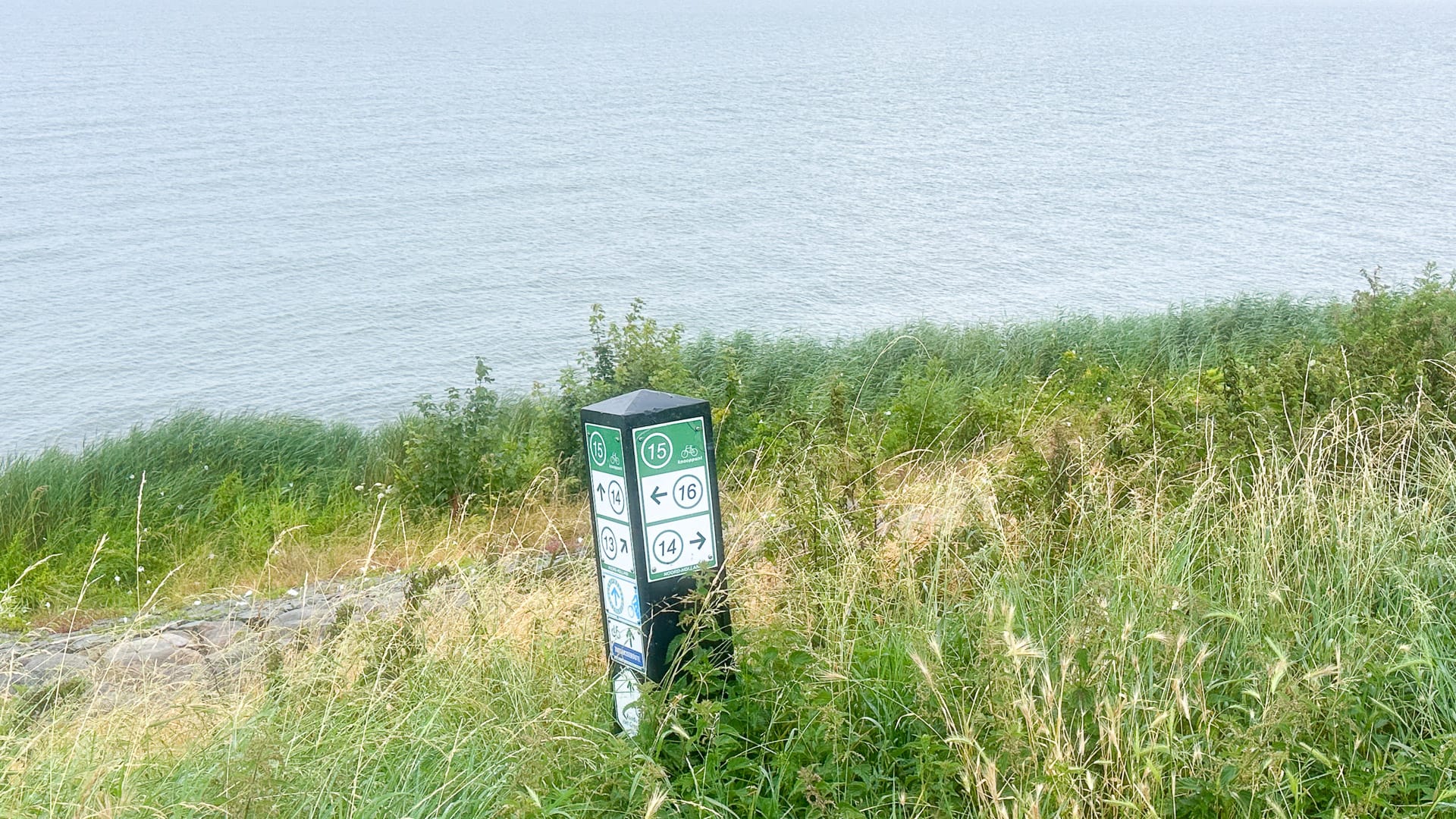
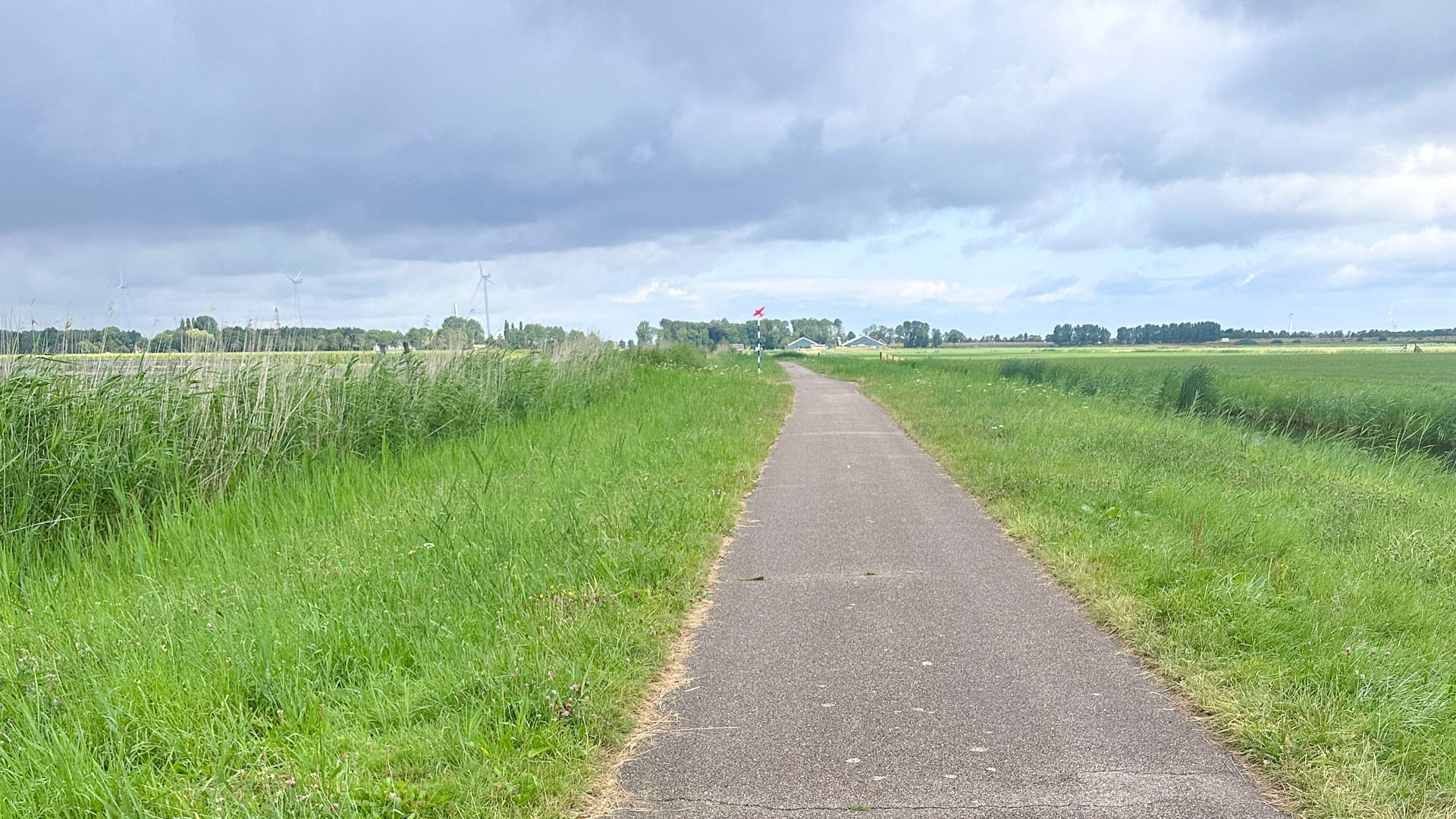
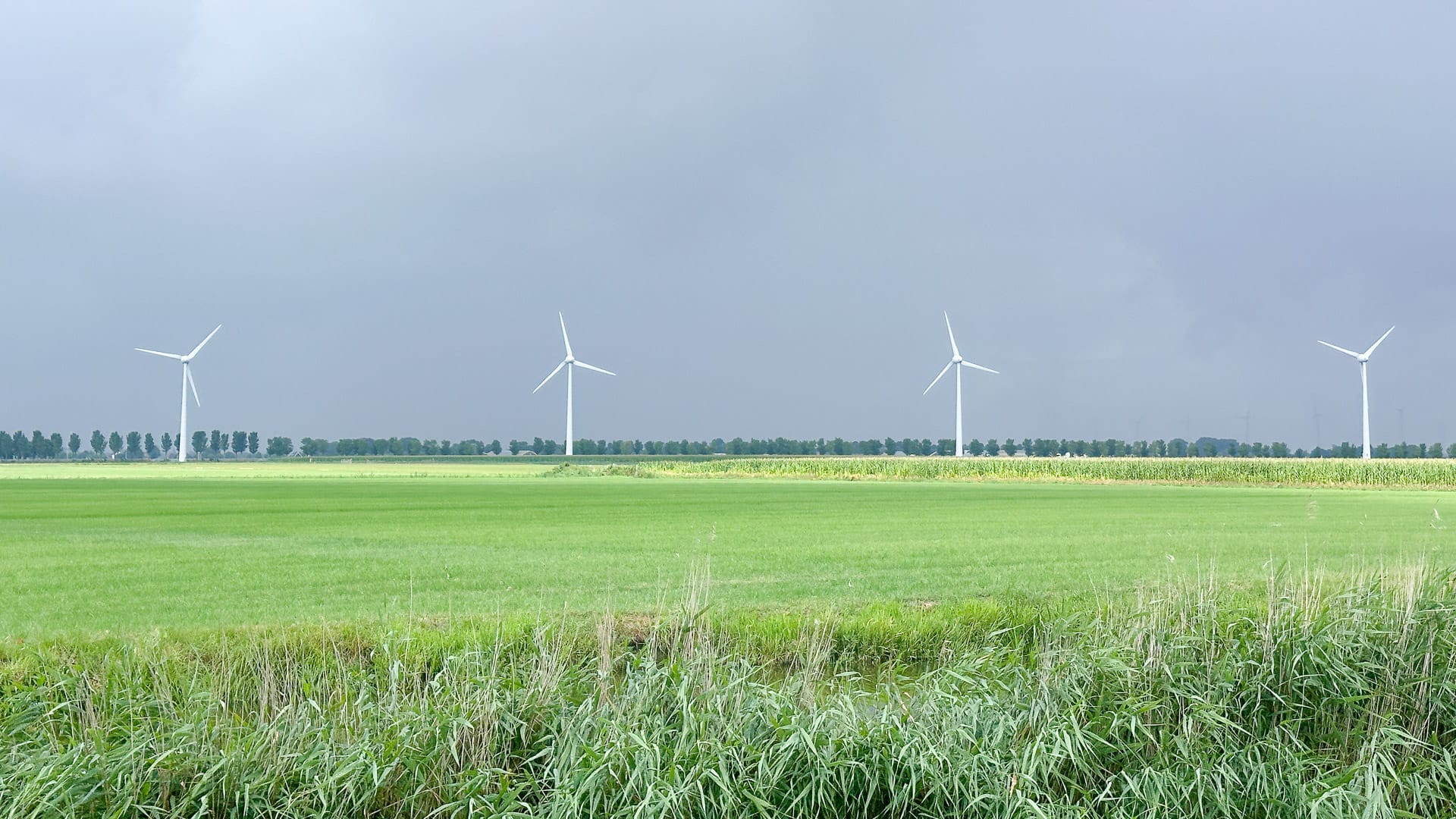
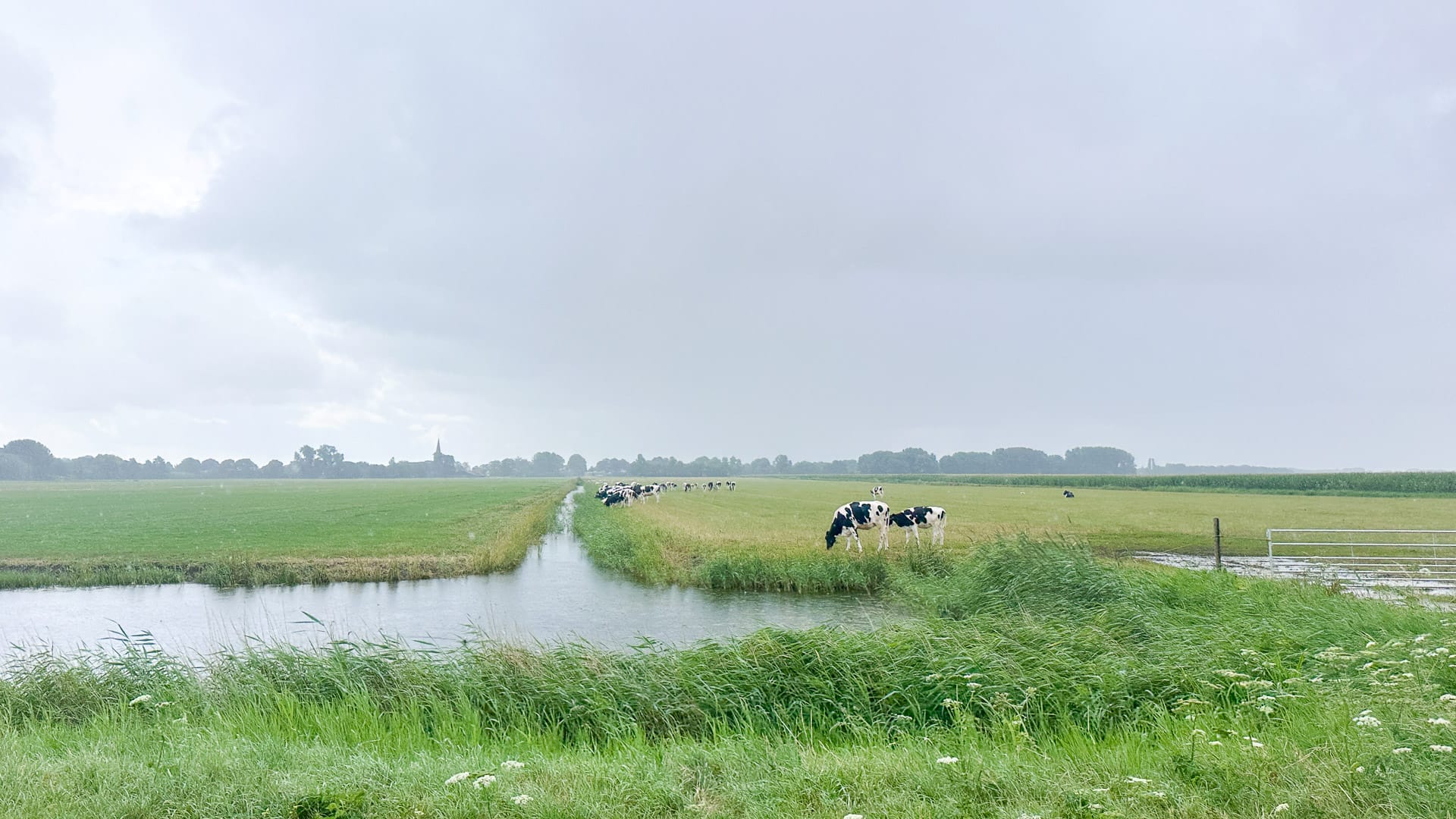
The scale of the lake is difficult to grasp from a map. The Afsluitdijk was completed in 1932, separating the former Zuiderzee from the Wadden Sea; the IJsselmeer subsequently became freshwater. Much of our route ran high on the bank between the lake and the villages behind it, giving us wide views but proving a little “blustery” when a passing rainstorm arrived!

Twisk
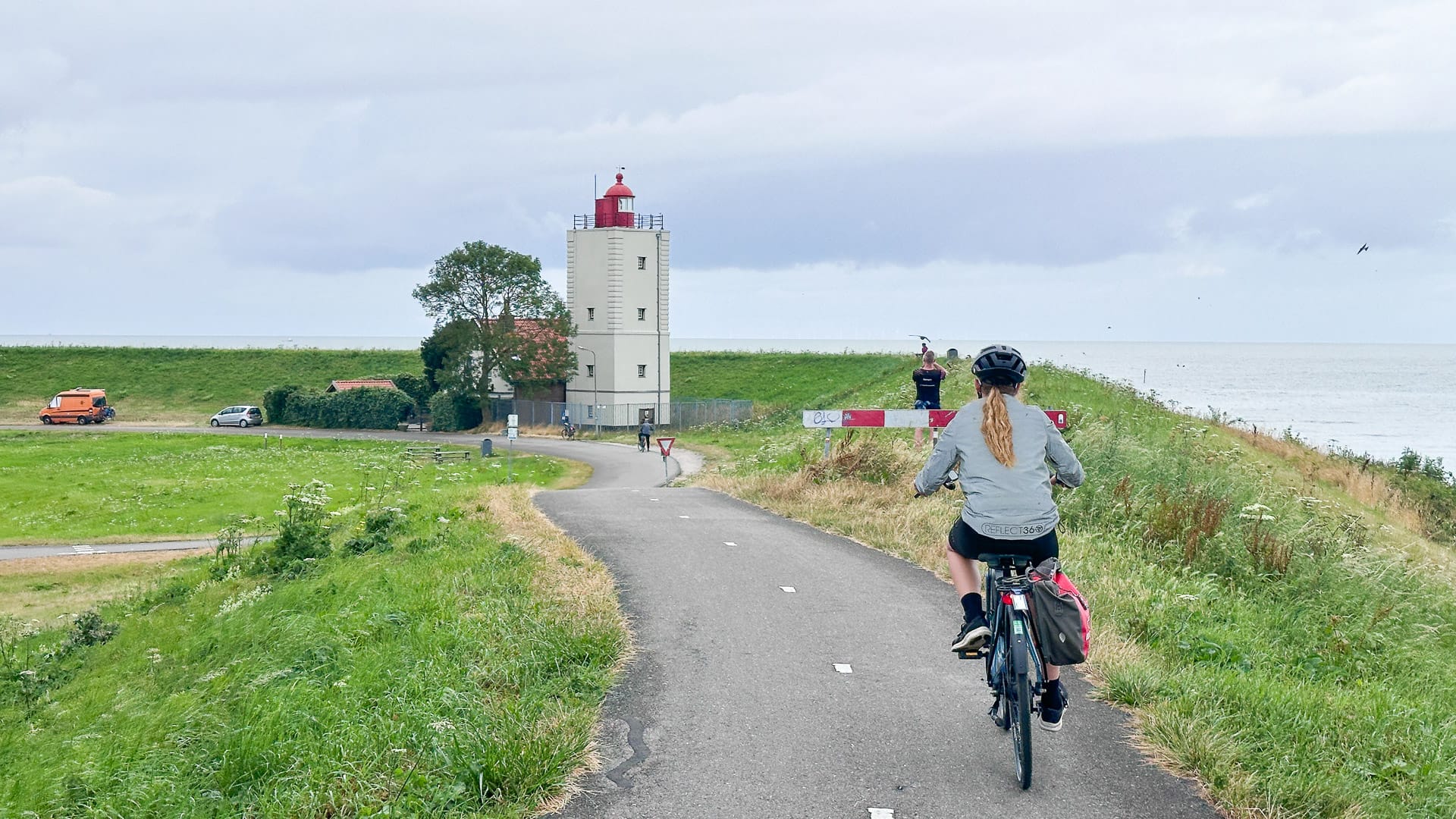
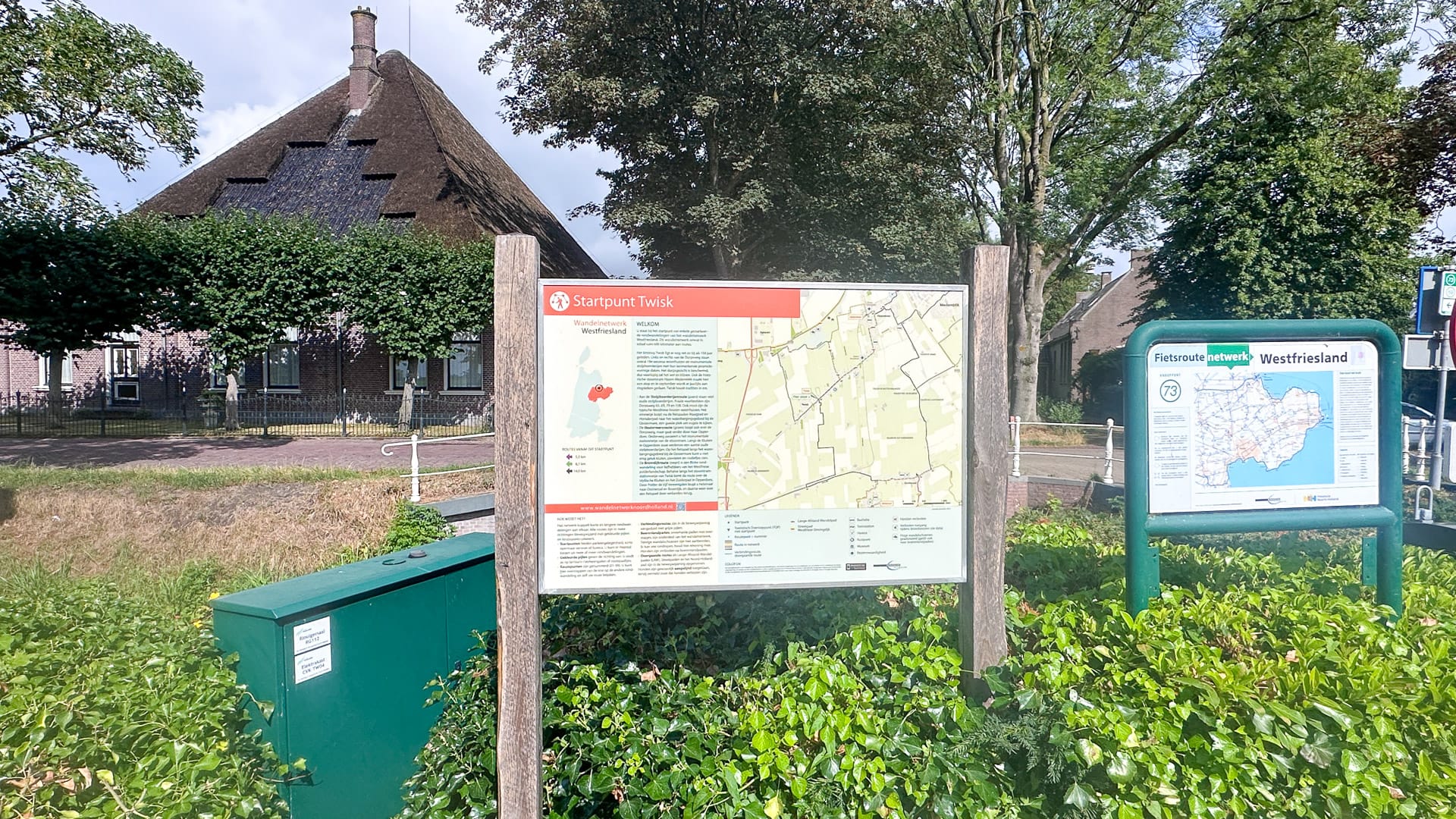
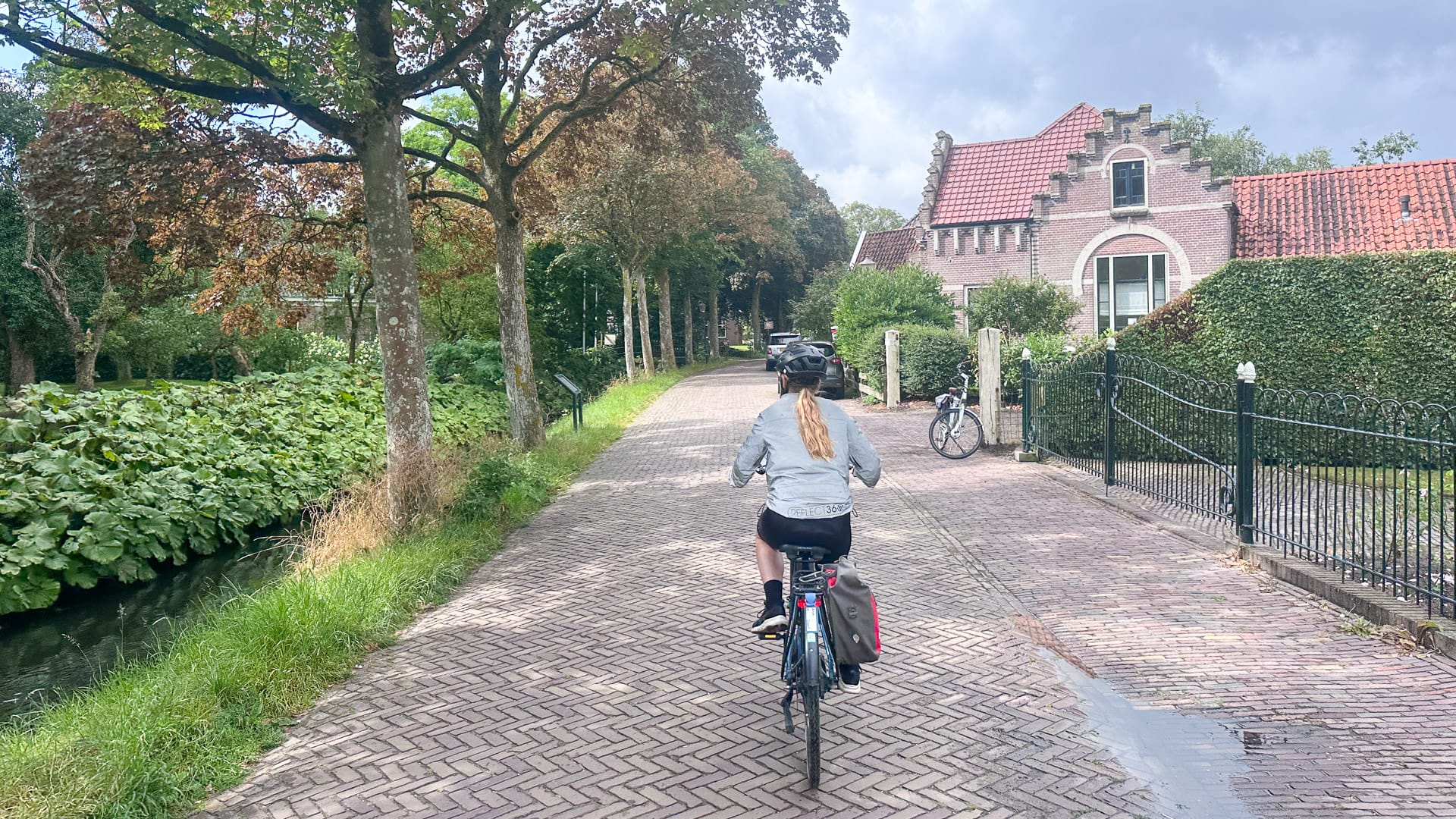
We passed the 15 metre tall De Ven lighthouse, built around 1699-1700 when these were still dangerous open waters. Turning inland, lush fields and tranquil waterways led to Twisk, an exceptionally well-preserved ribbon village. Its brick road, white bridges and traditional bell-shaped stolp farmhouses made it feel composed down to the last hydrangea. Apparently Twisk is home to 50 monuments and one of the highest densities of traditional stolp farmhouses in the Netherlands.
Medemblik
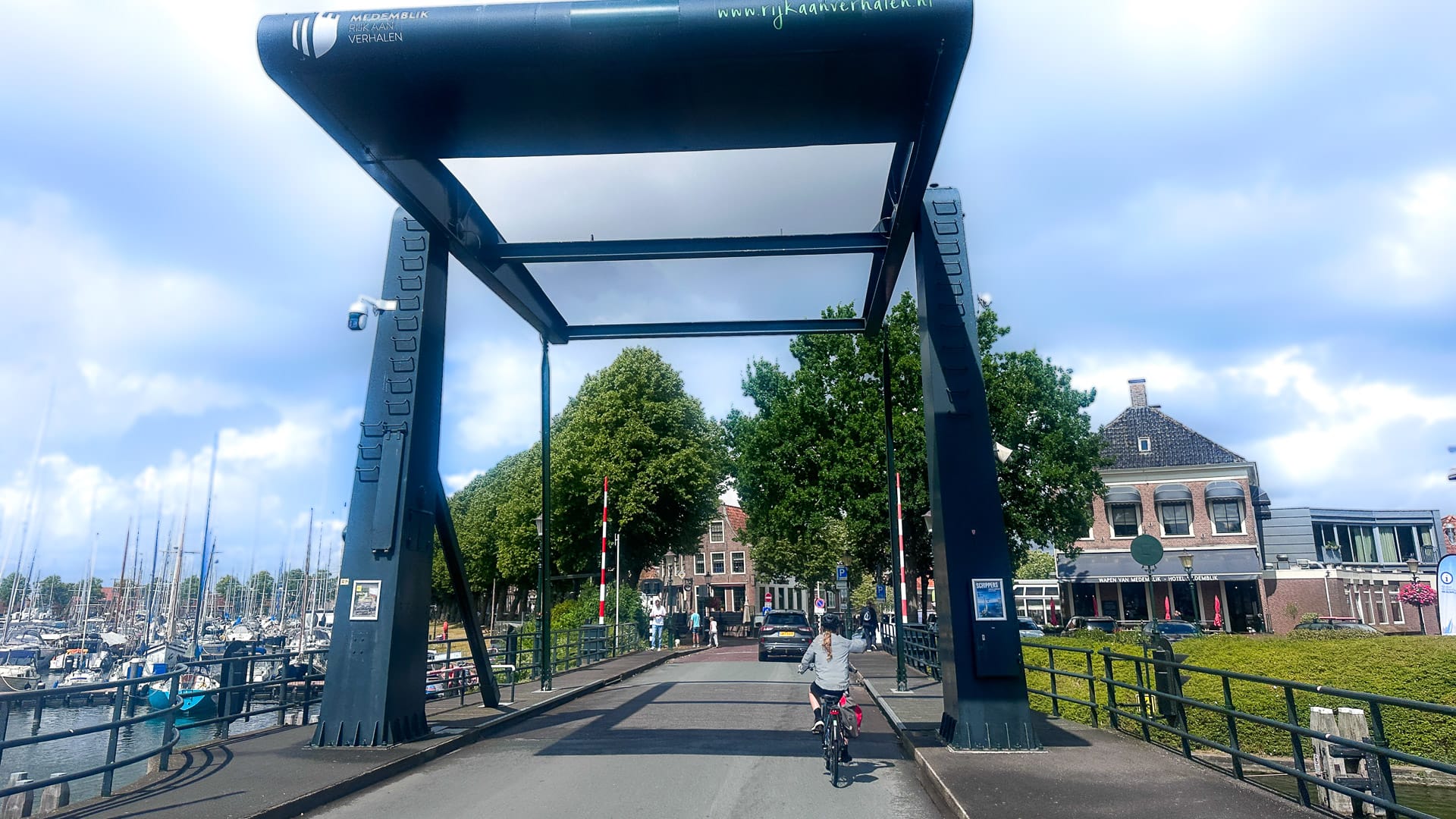
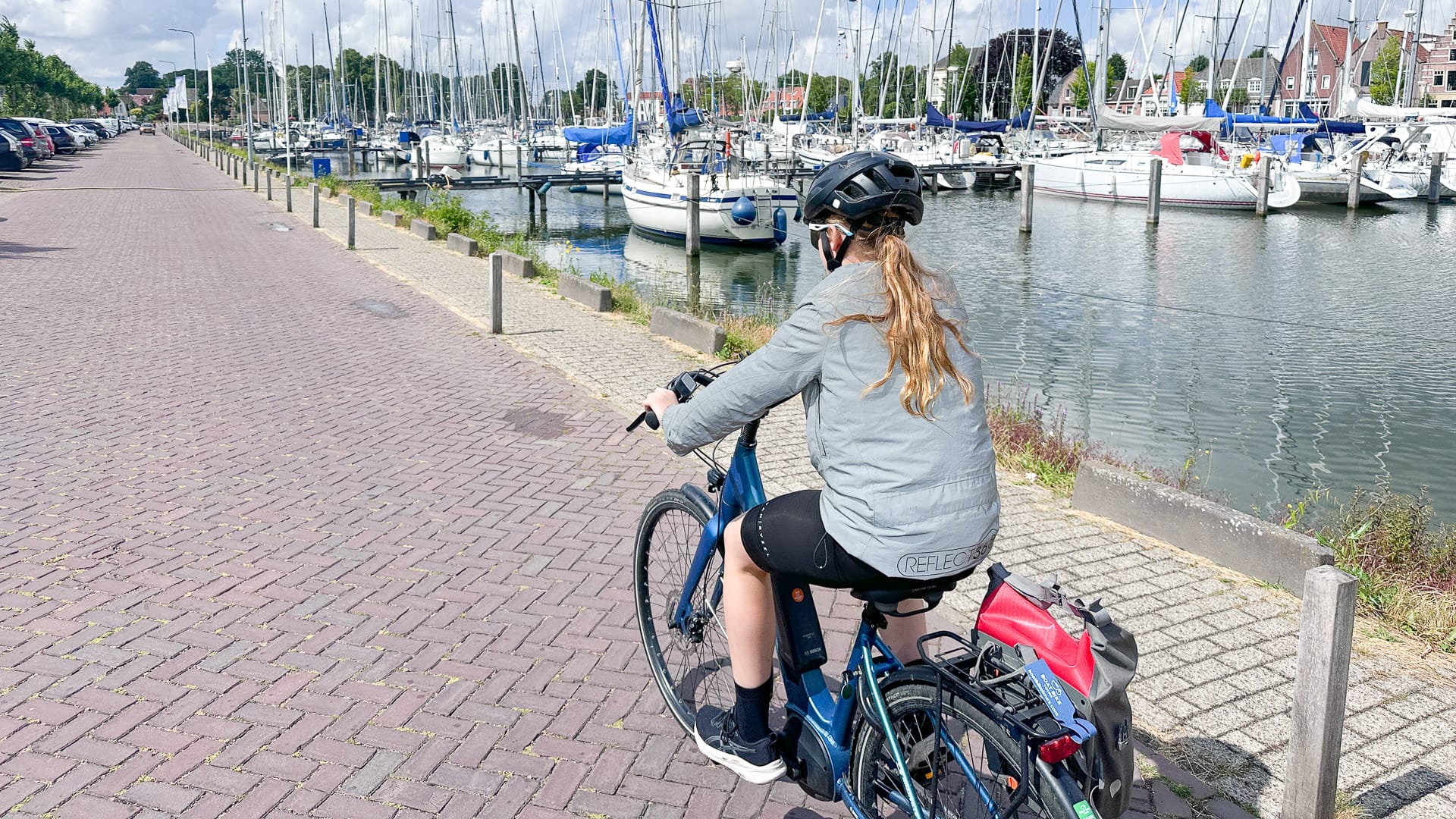
The ride finished in Medemblik, the oldest town in West Friesland. Its harbour was filled with glossy white sailing boats, while Radboud Castle recalled the days when Count Floris V sought to control the region’s trade routes.
Sailing to Texel
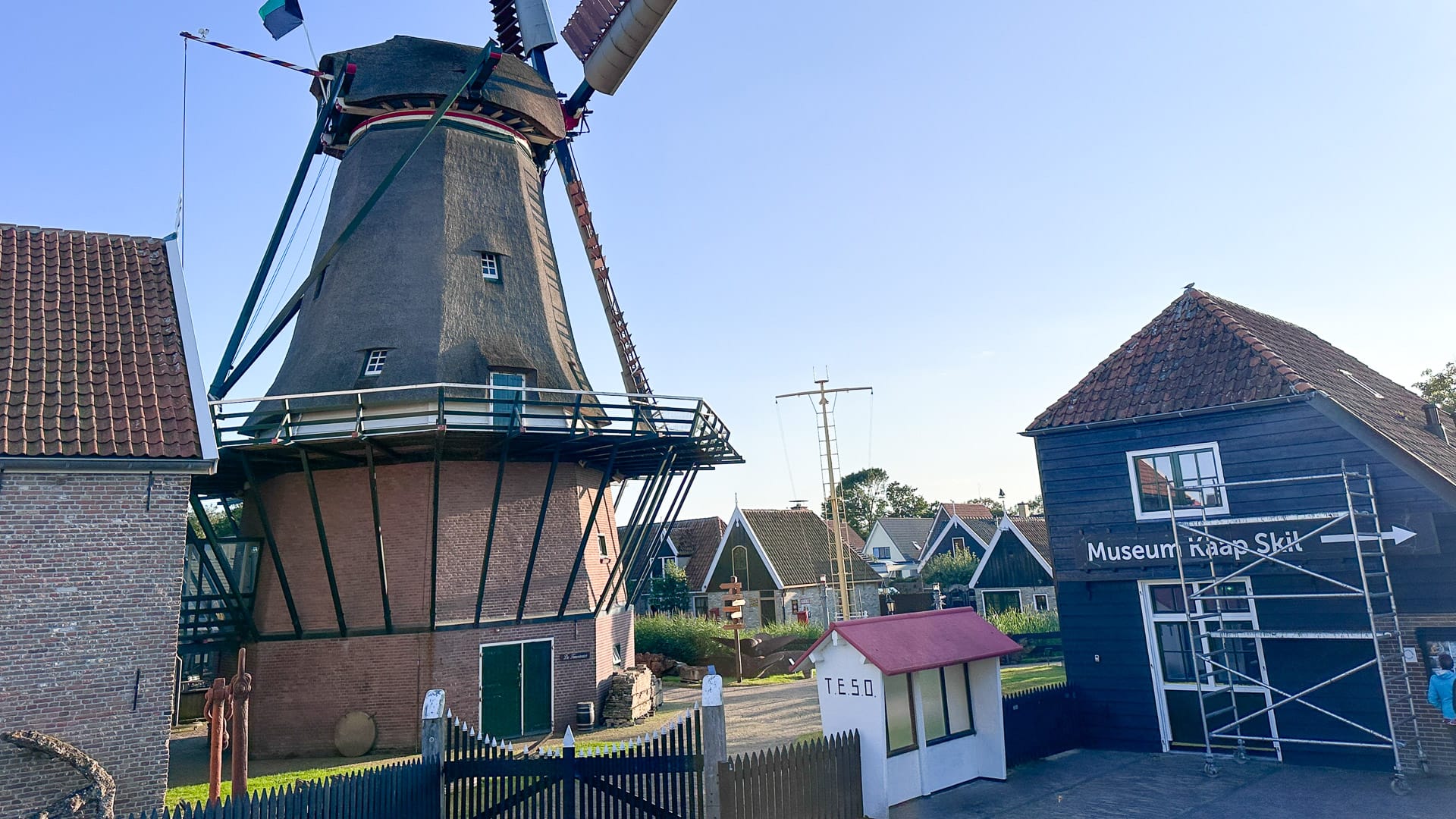
Back aboard, we passed through the locks separating the freshwater IJsselmeer from the Wadden Sea. After several hours under motor, we reached Oudeschild on Texel – pronounced “Tessel” – and our first island night.
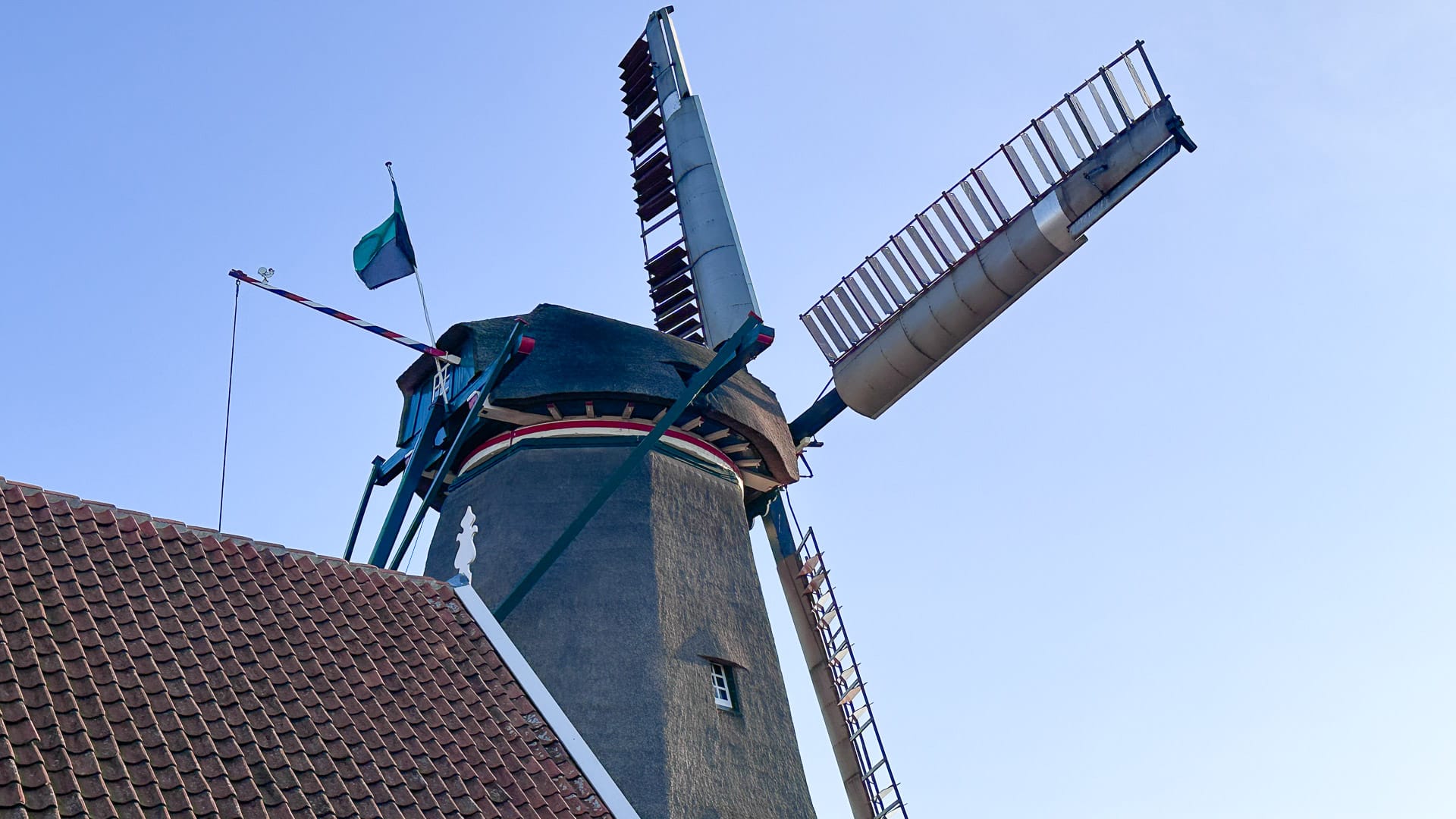
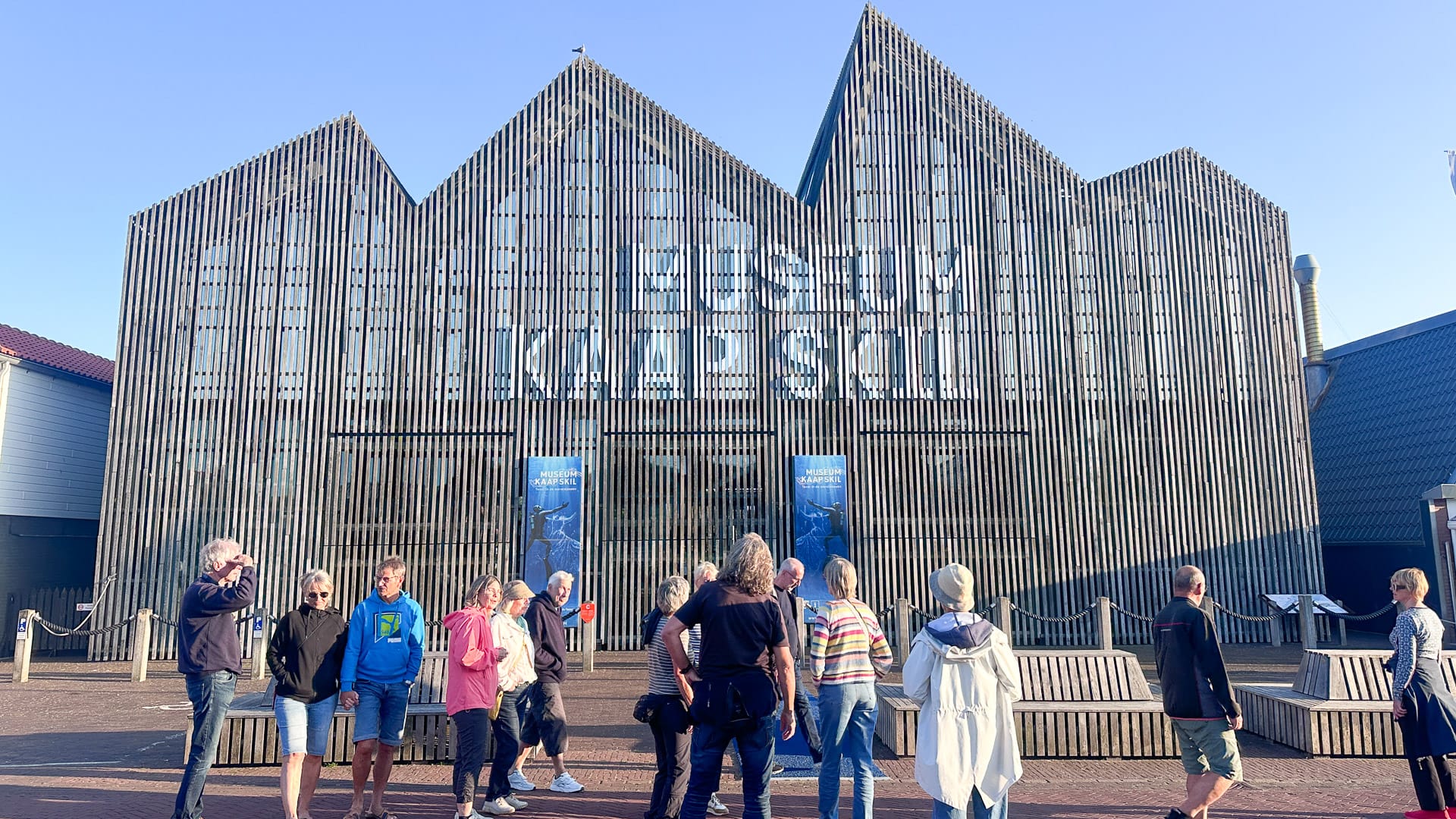
Day 3: Texel round trip from Oudeschild
Route choices: 42 kilometres (with 139 metres of climbing), 50 kilometres (with 157 metres of climbing) and 53 kilometres (with 173 metres of climbing). We rode our own 50 kilometre loop.
Carol suggested the 50 kilometres village-focused option for riders who preferred pretty towns and the 53 kilometres full island loop for those keen to see the western beaches. We created a hybrid and rode about 53 kilometres, combining pretty towns and western beaches.
Oudeschild to Ecomare
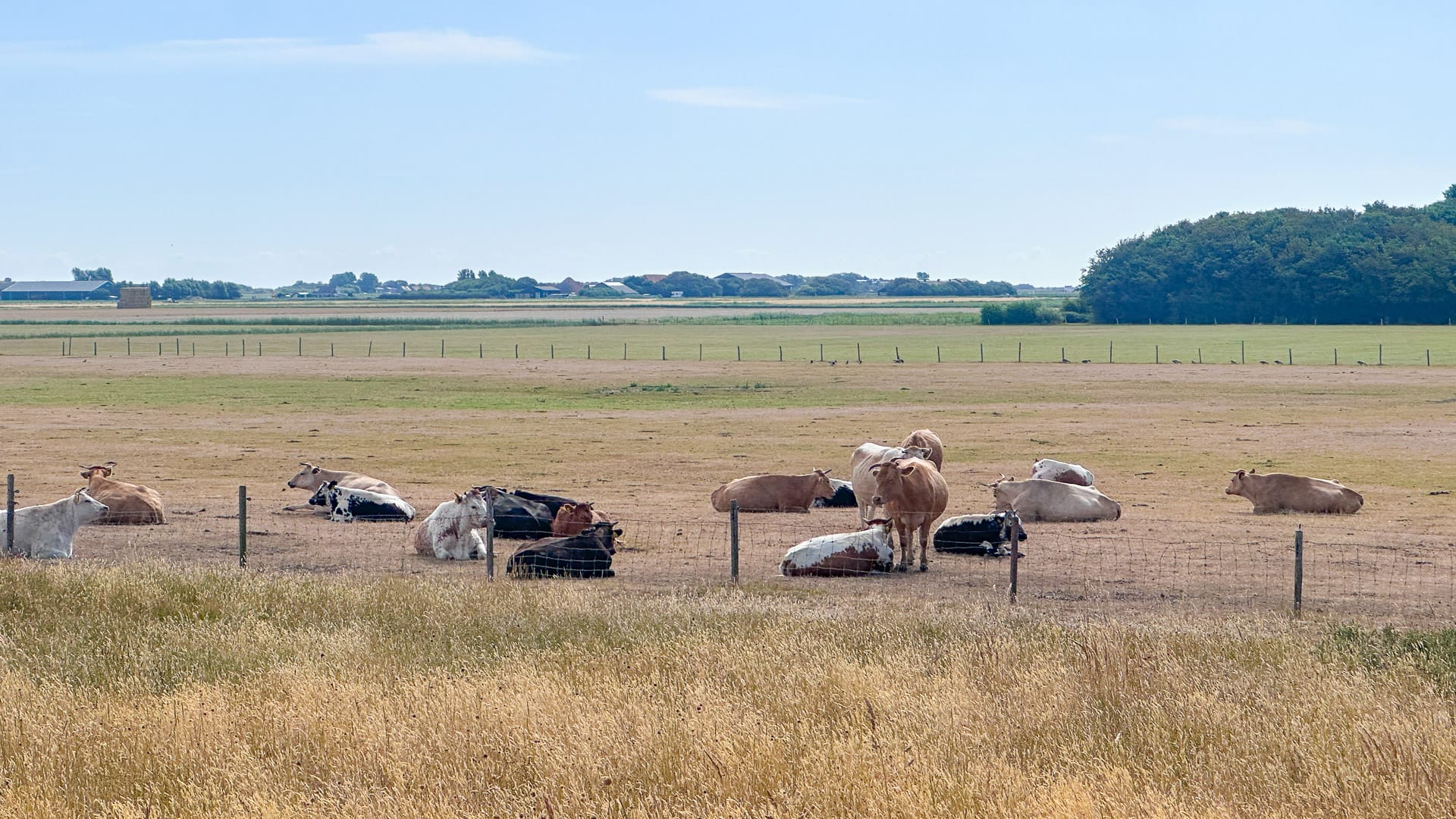
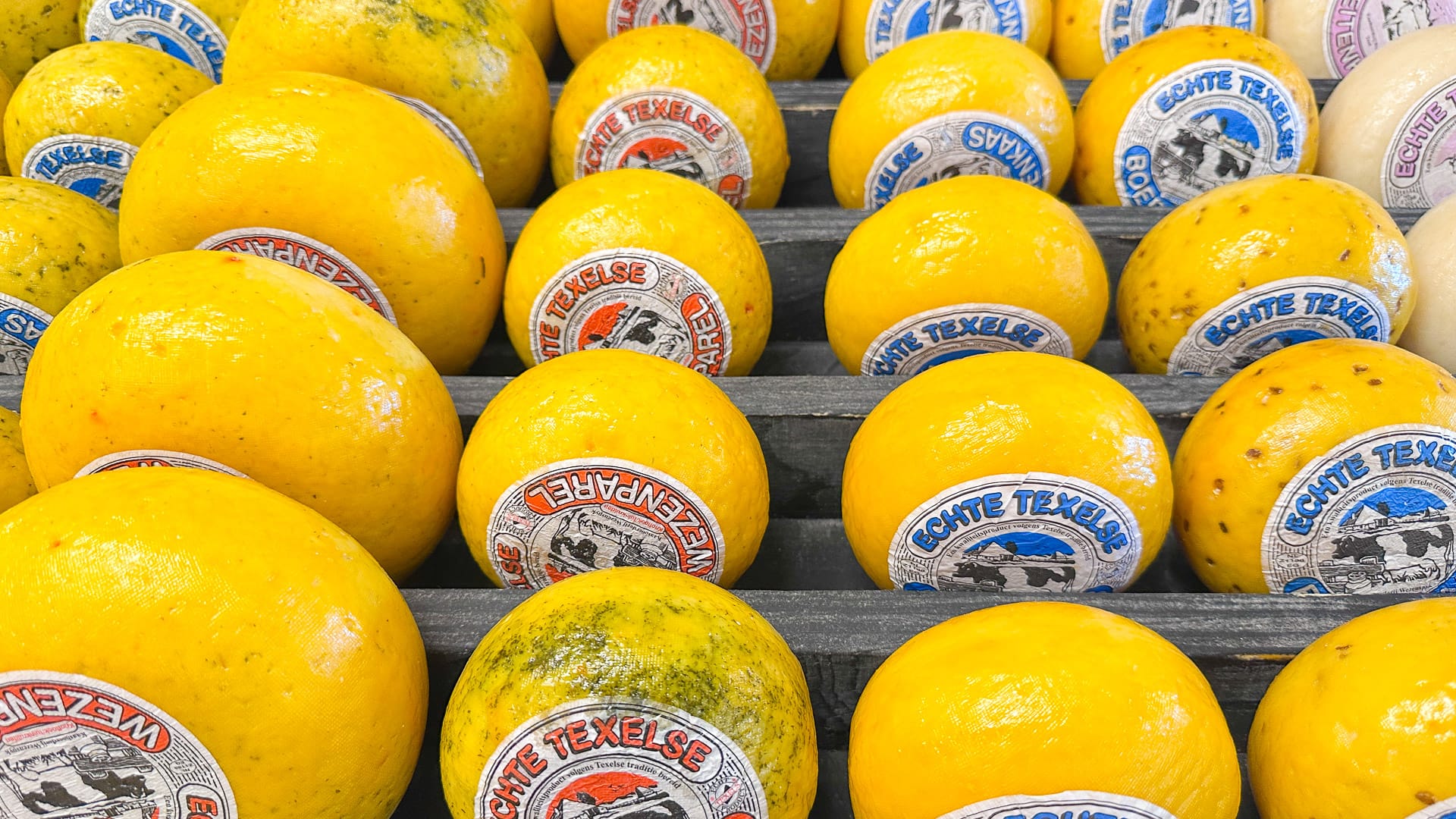
Leaving Oudeschild, the first 12 kilometres crossed small roads through farmland where sheep seemed to occupy every other field. We made a short diversion to Wezenspyk cheese farm. We were told that the farm turns around one million litres of milk into cheese each year, with most of it staying on Texel. Seeing the large rounds in storage made the island’s sheep-farming identity tangible.
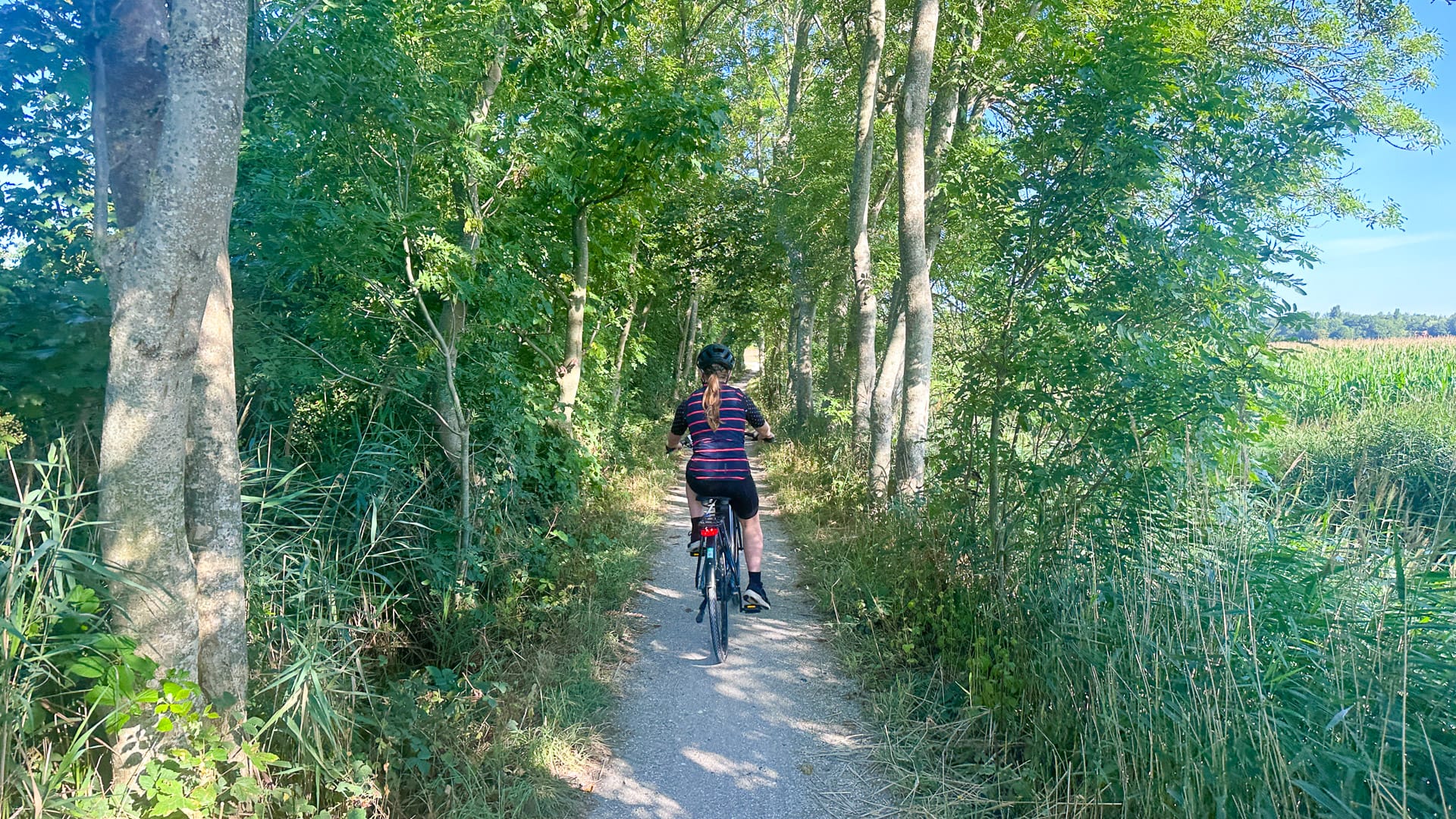
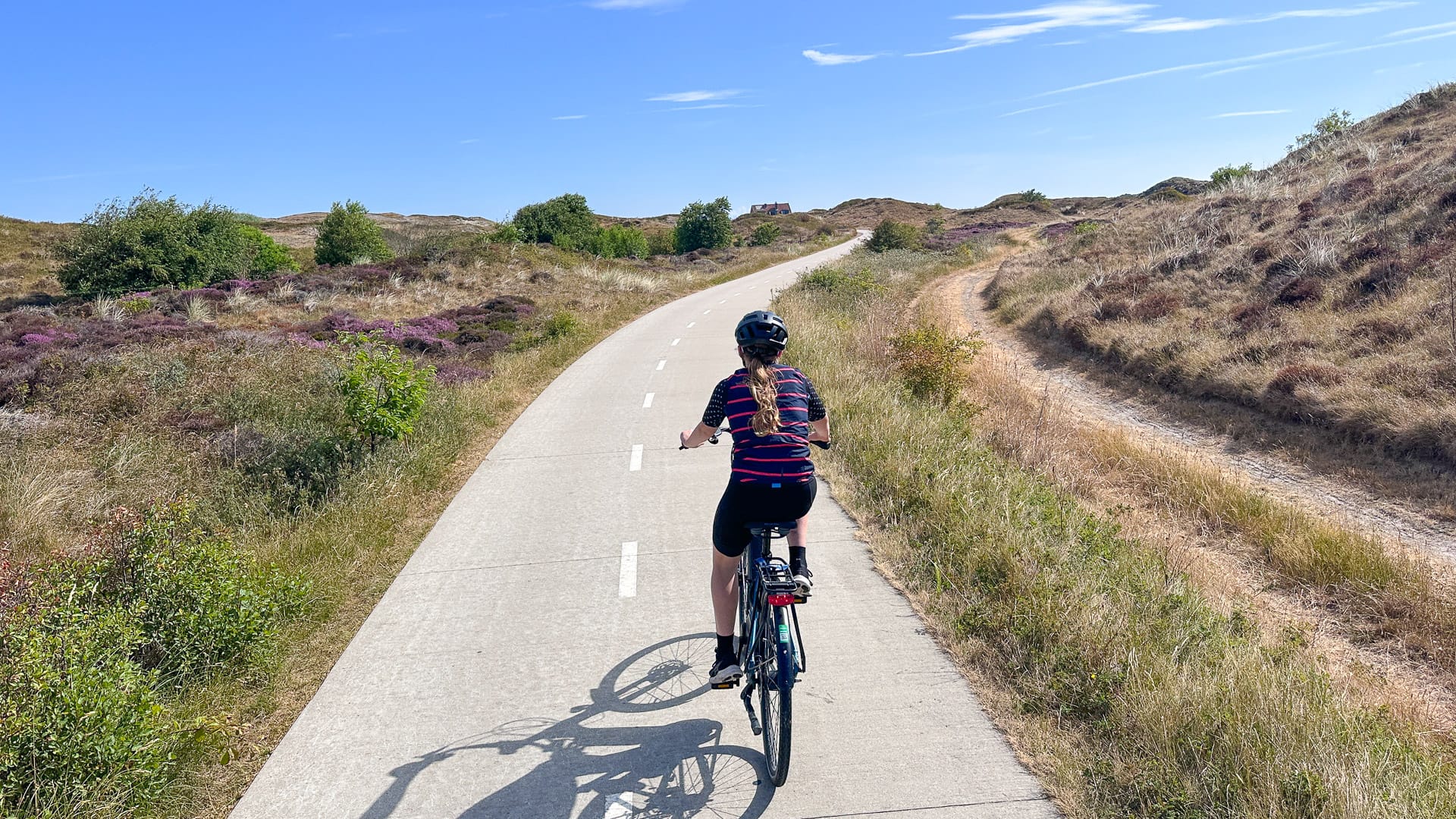
Closer to the west coast, roads gave way to a superb run of cycle paths: first through cool forest, then beside the dunes. Side roads crossed the dune line to the North Sea. We passed Ecomare, the island’s nature museum and seal sanctuary, and came to Texel’s main seaside resort, De Koog, but decided to cycle past in favour of quieter hamlets further north.

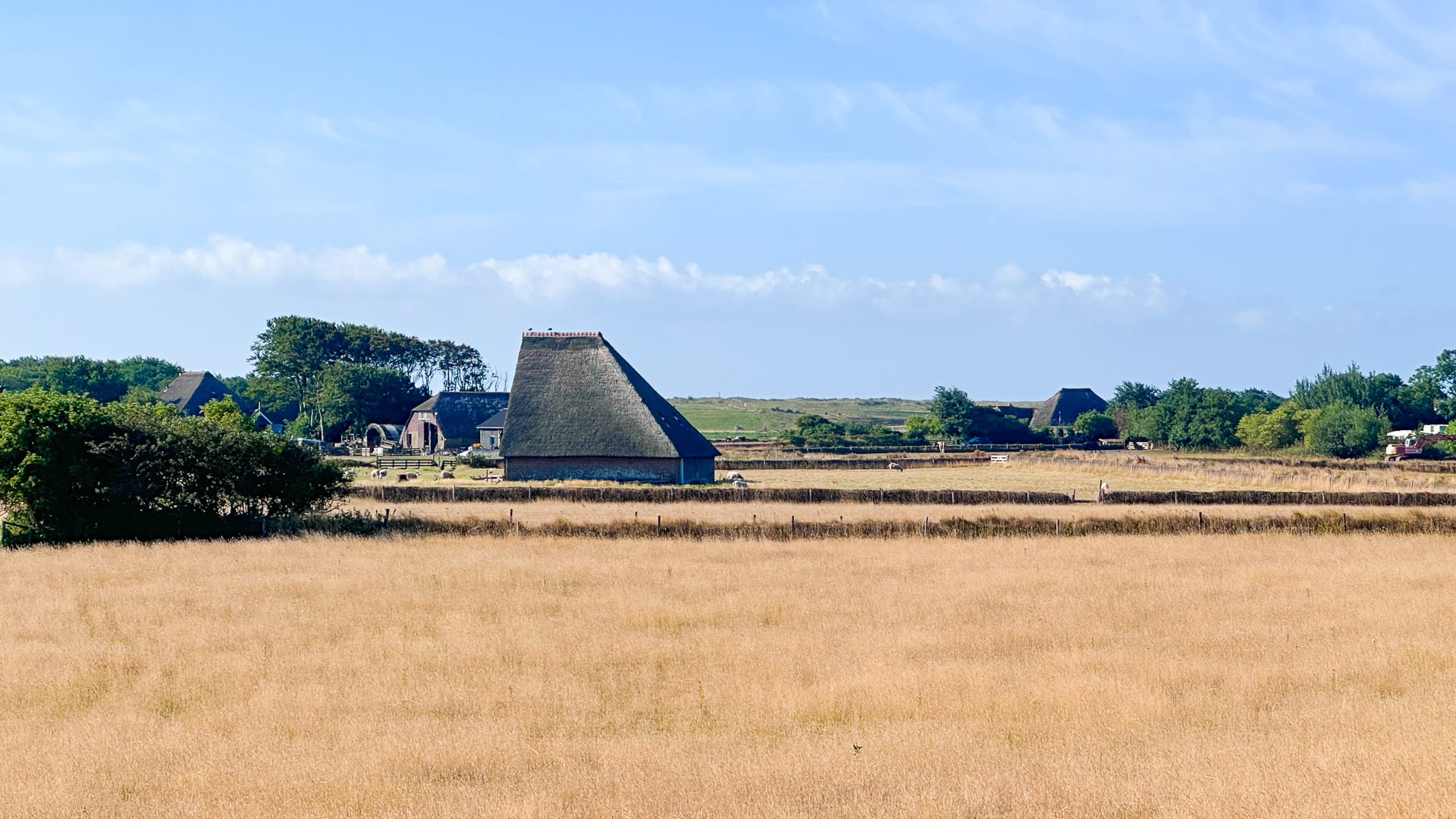

De Slufter and the northern beach
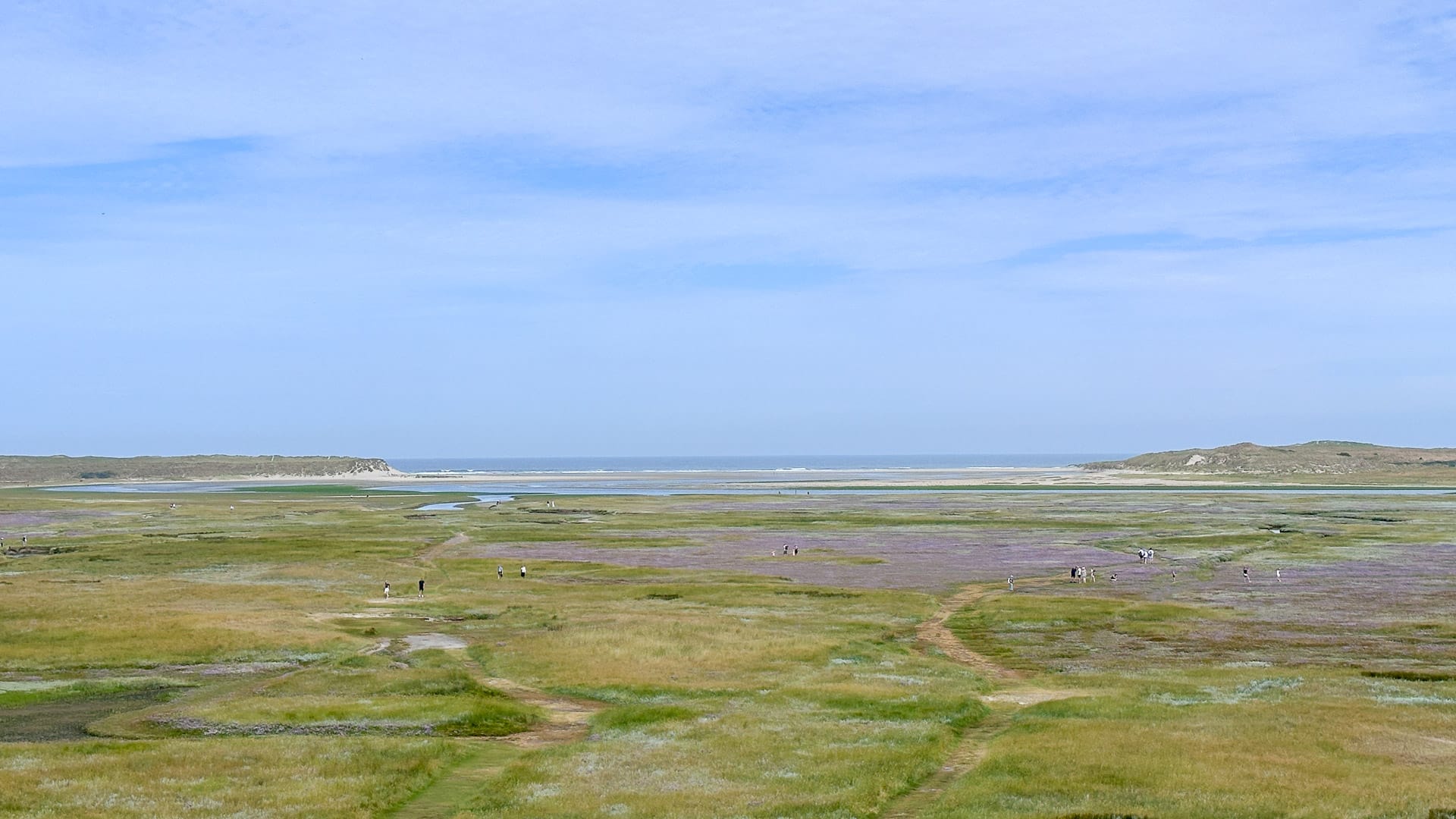
At De Slufter, a path climbed to a viewpoint over the salt-marsh plain. Sea water reaches deep into this opening in the dunes, creating a distinctive habitat. In August, a haze of purple sea lavender blanketed the lower ground.
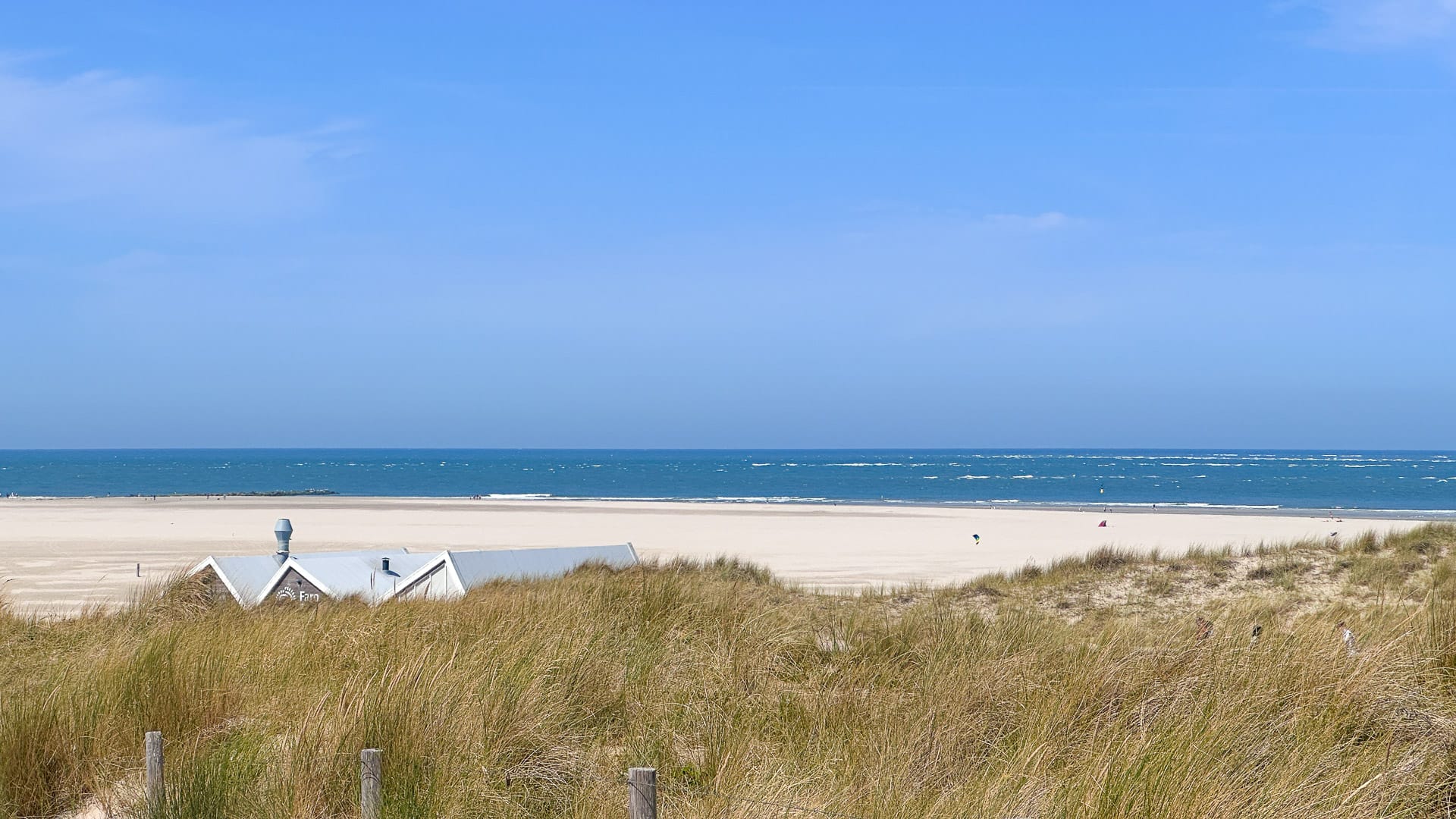
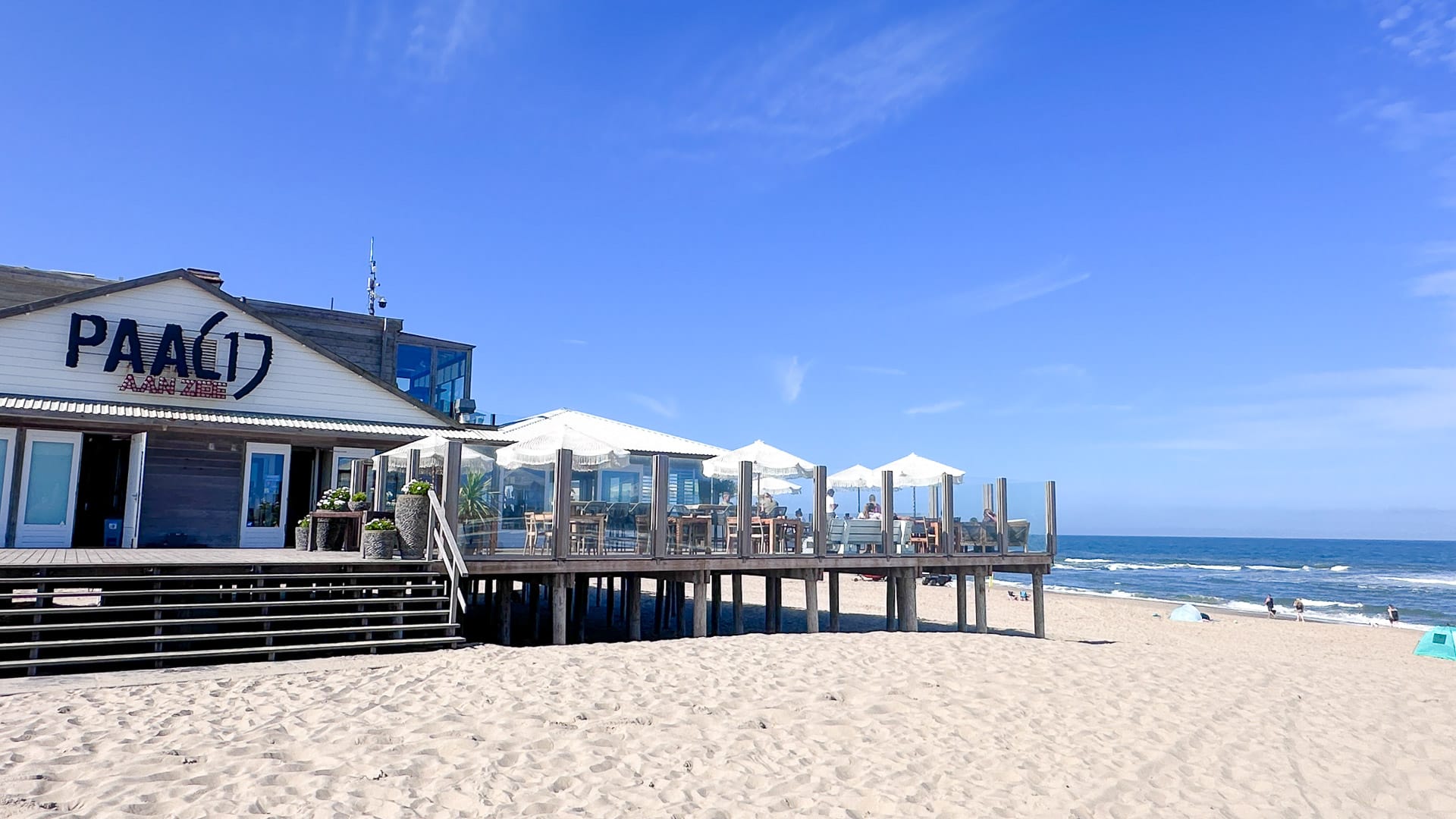
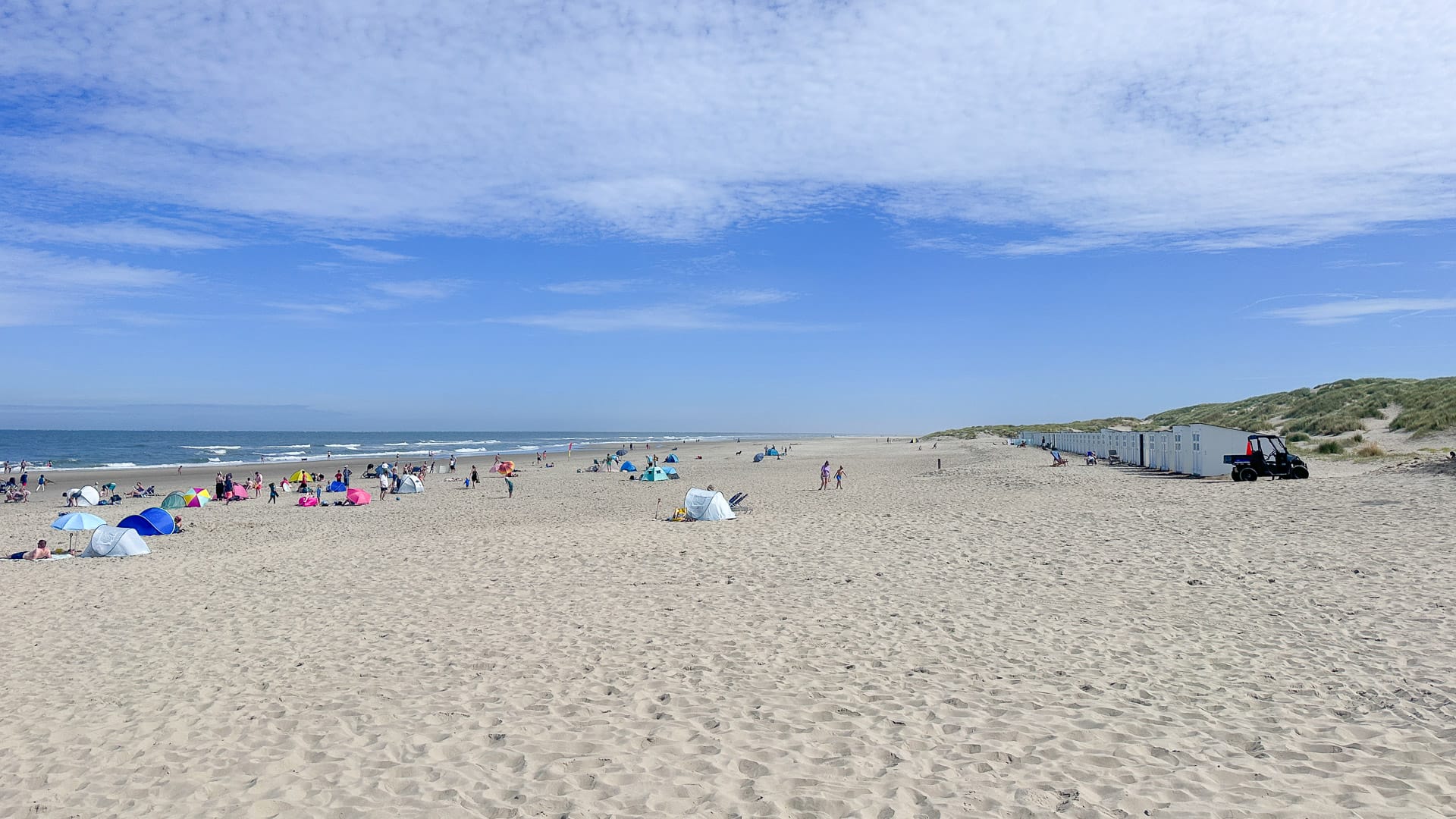
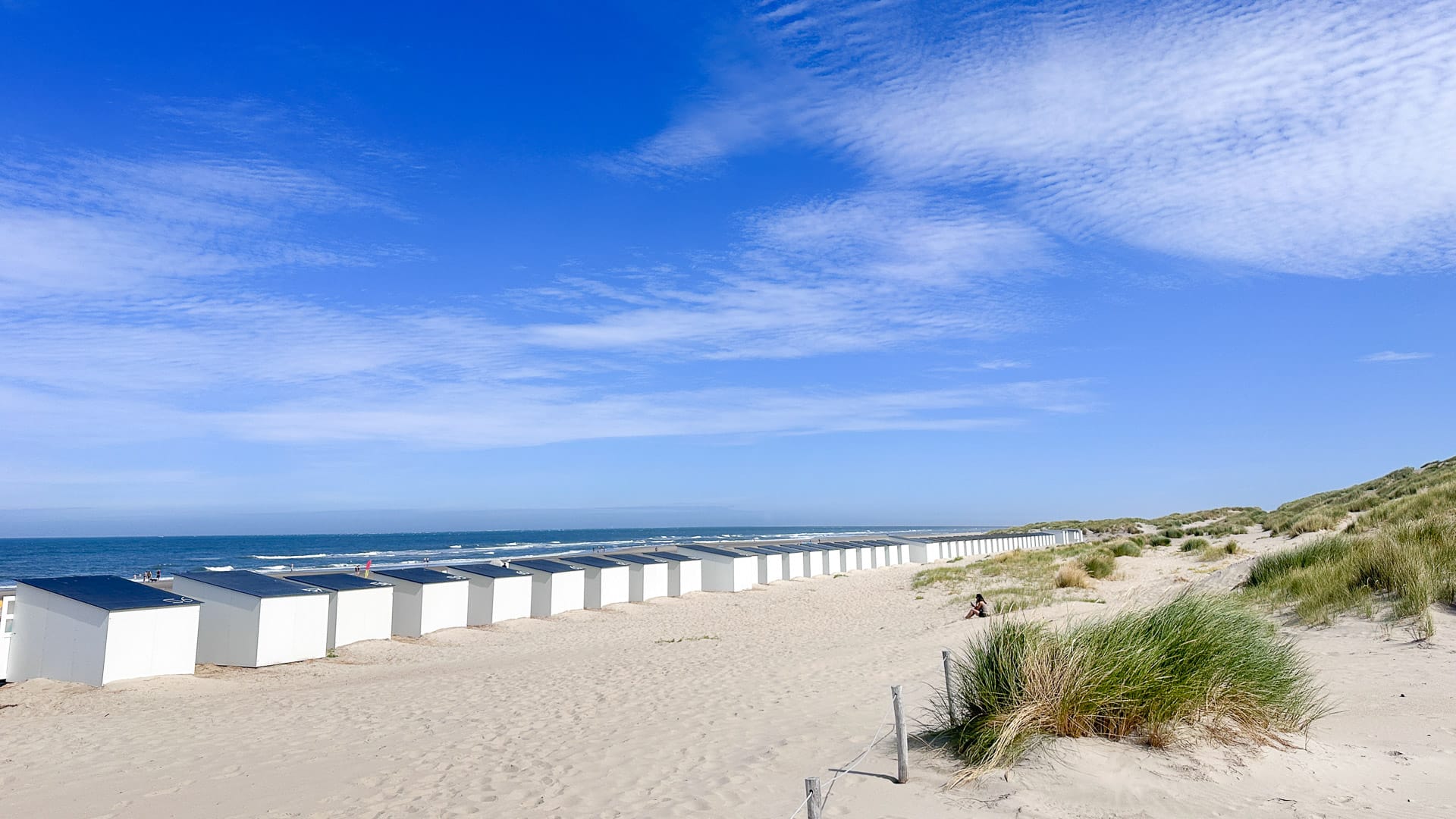
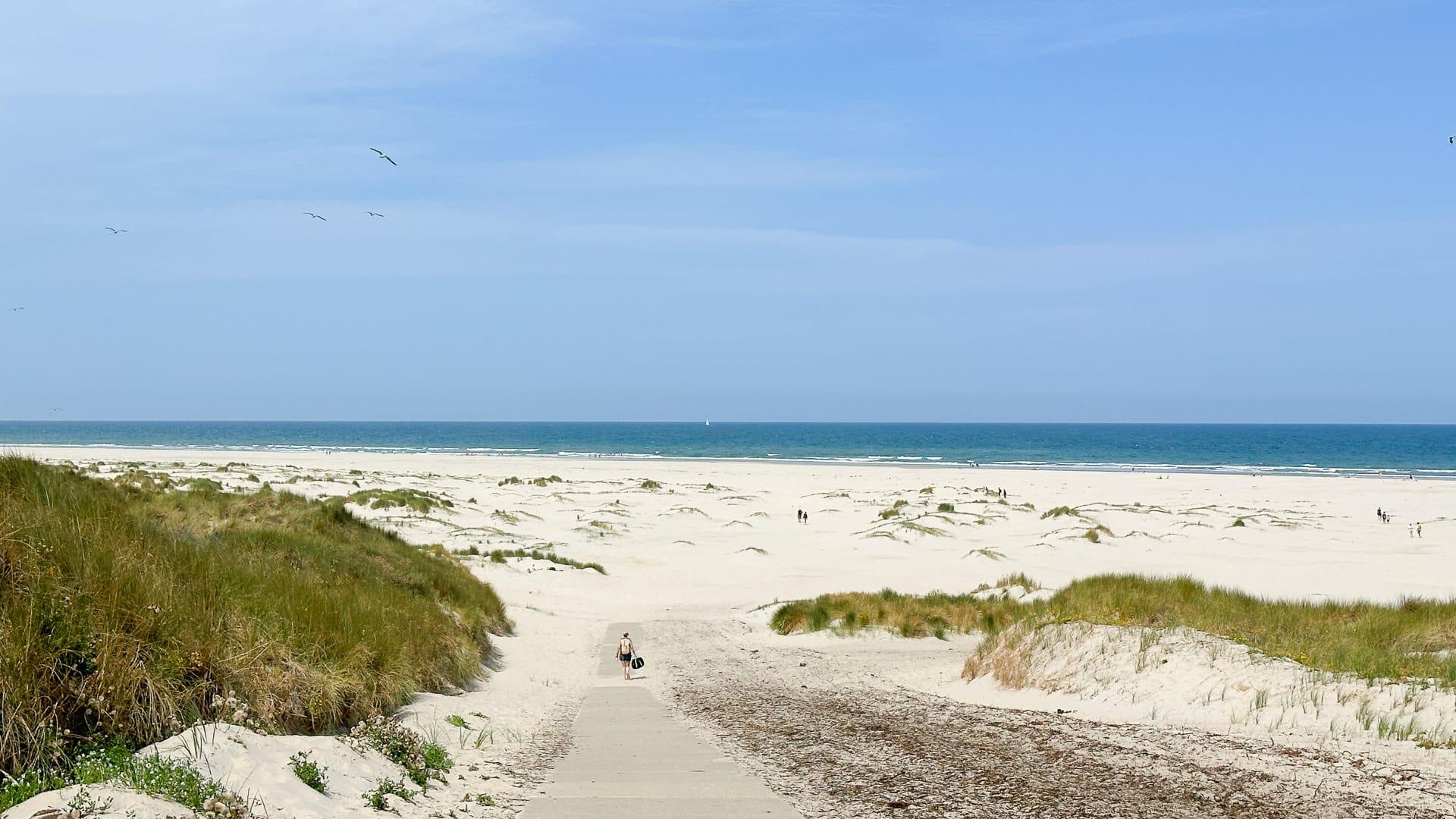
We had hoped to swim at Strand Paal 28 near De Cocksdorp. The breakers looked more suitable for surfing, so the sea stayed admired rather than swum in. Even without a swim, the long sweep of sand in both directions gave the stop a wonderful sense of space.

Lighthouse via villages to Oudeschild
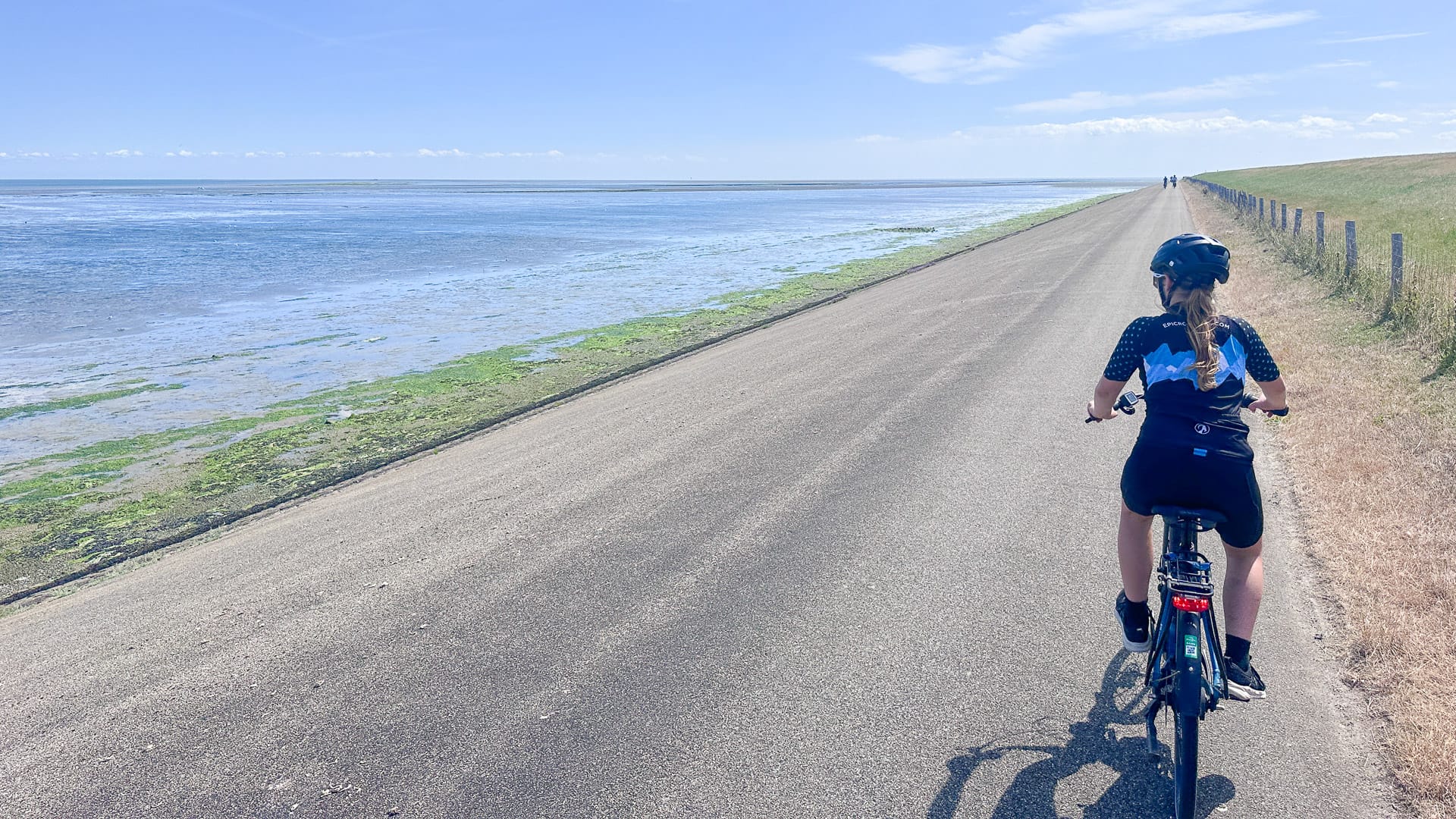
After the lighthouse at Texel’s northern tip, we turned east and rode south with the Wadden Sea beside us. It was a route made for anyone who can identify birds at a distance – and still rewarding for those of us who cannot.
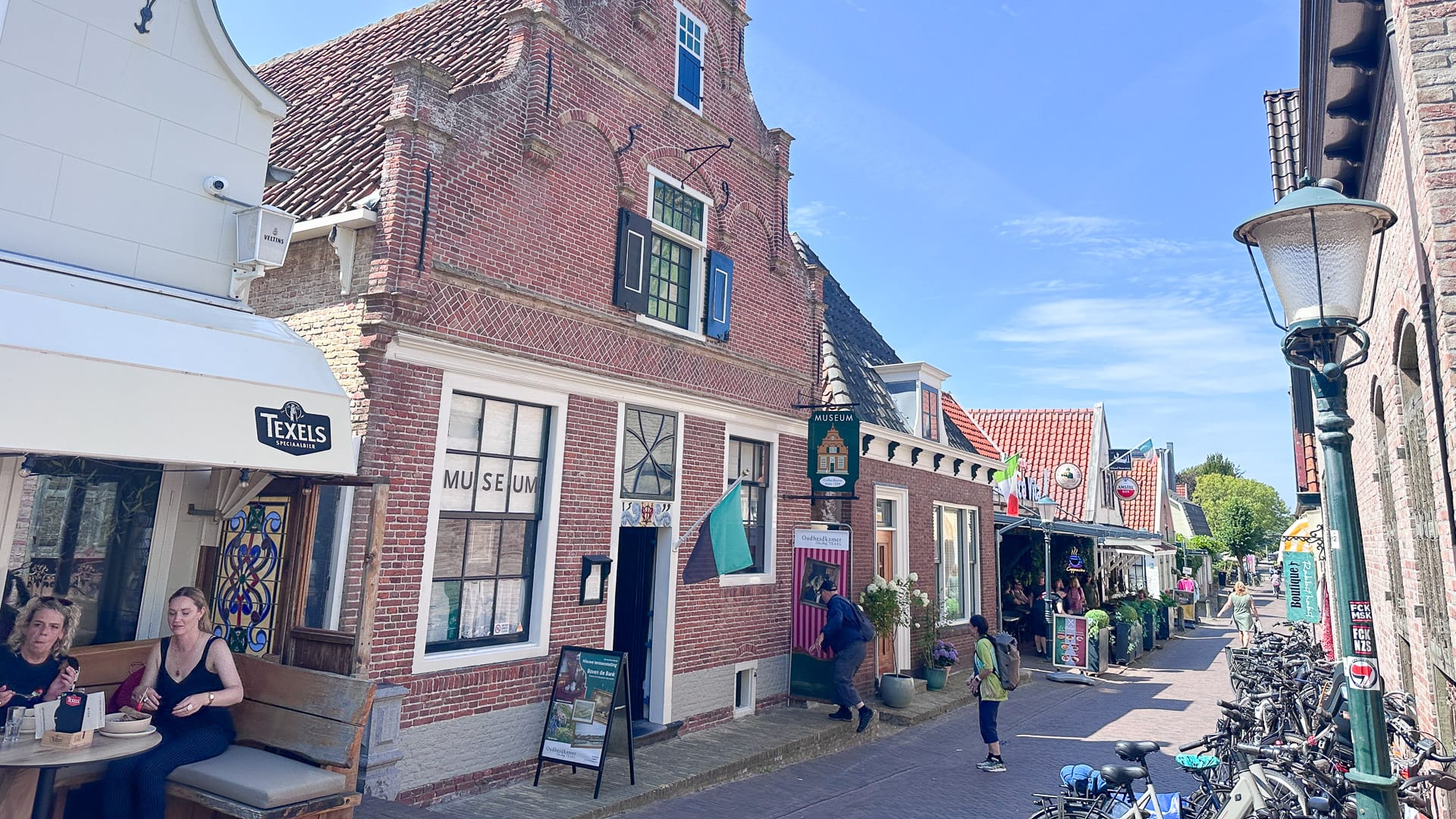
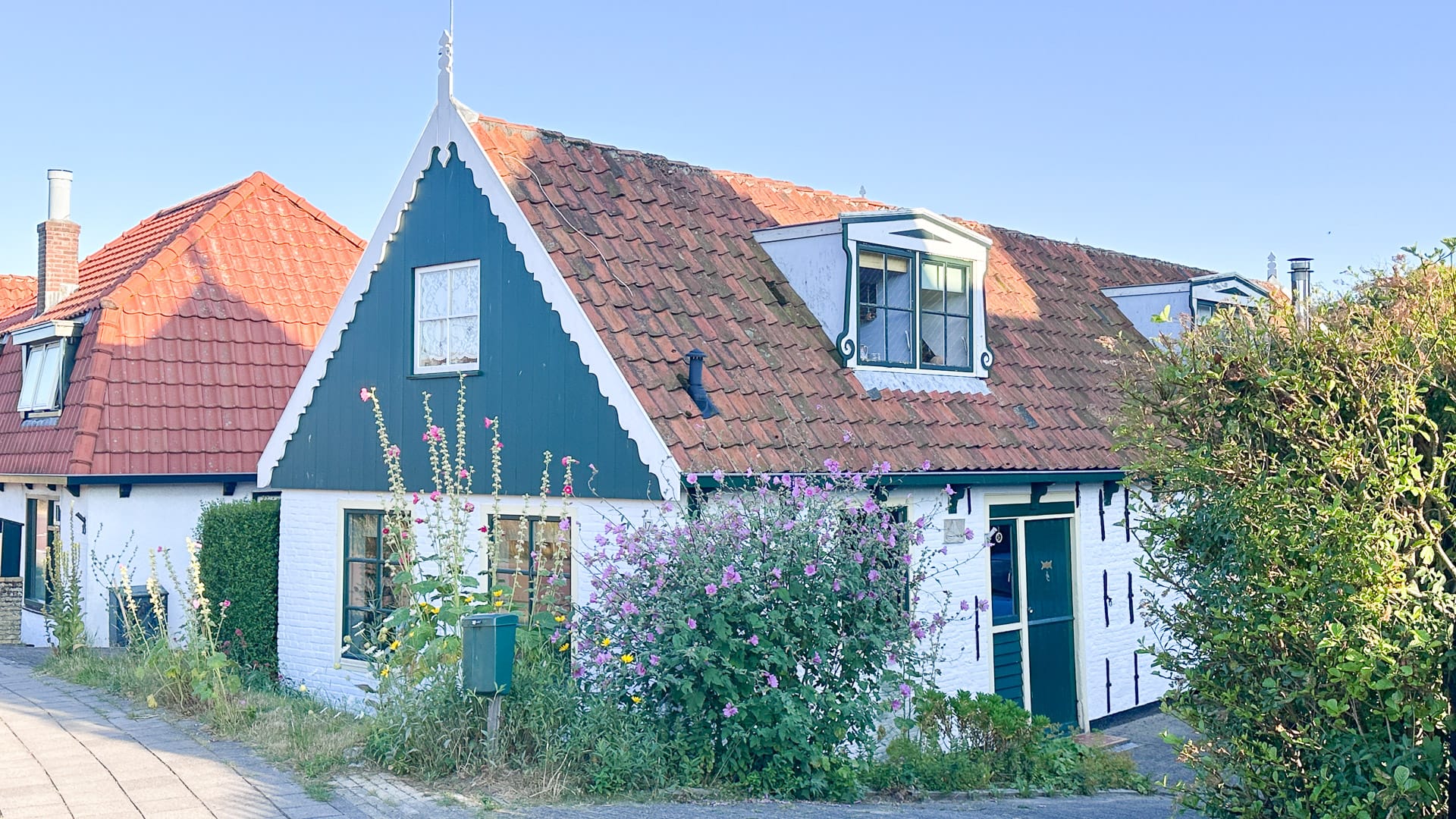
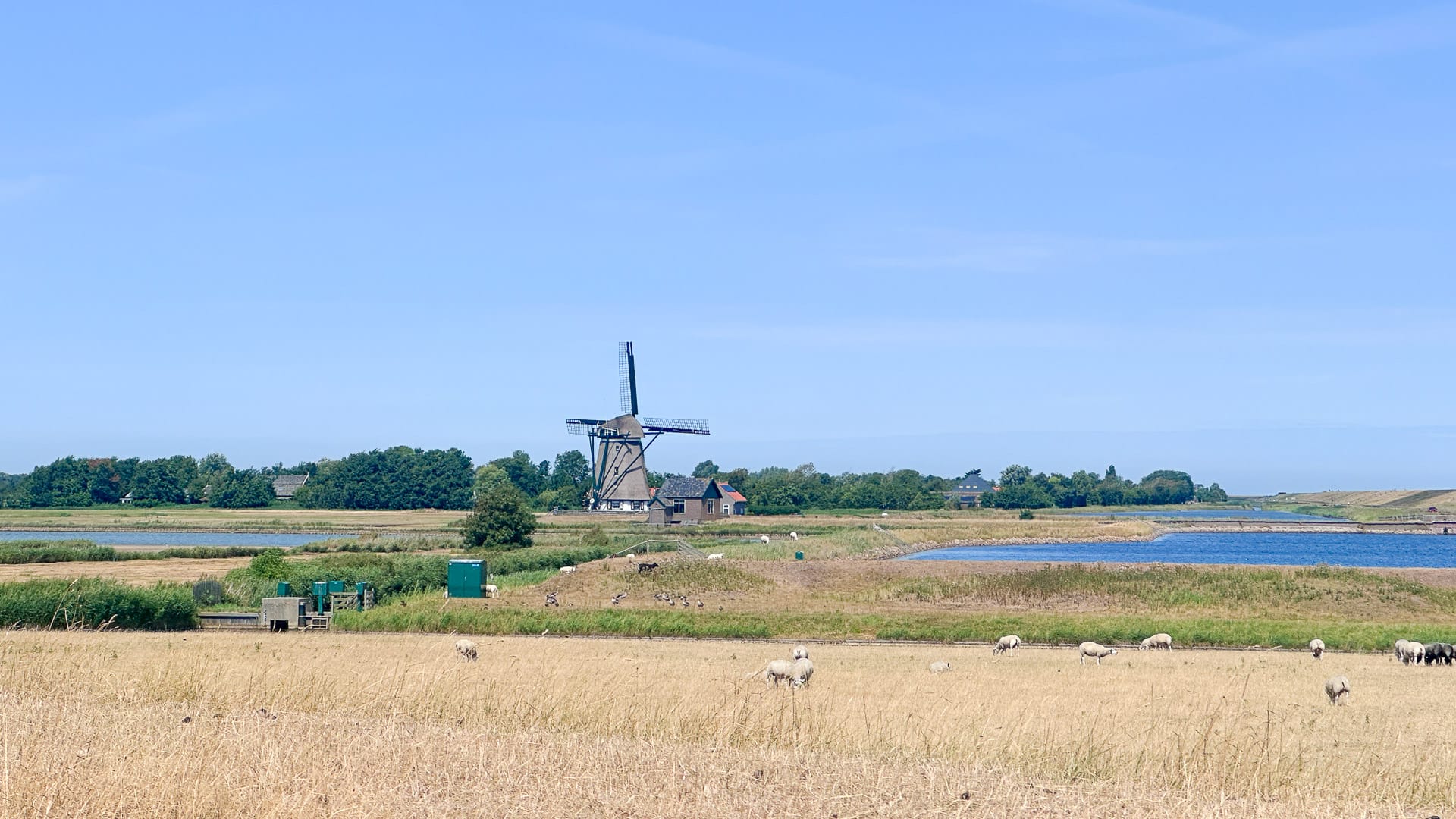
Oosterend was one of the loveliest villages of the week, with low houses and gardens bright with hollyhocks and hydrangeas. We continued via De Waal, where three women sat embroidering and another spun yarn outside the small museum: a quiet reminder of how closely Texel’s culture remains tied to sheep and wool.
Den Burg supplied a burst of shops and people before we picked up the village route back to Oudeschild. On such flat ground, the ship’s four masts were visible from several kilometres away.
Beer lovers might like to know that just outside Oudeschild sits the famous Texels Brewery; cycling tours are available so if this is your kind of thing, make sure you visit.



Day 4: Sailing from Texel to Terschelling
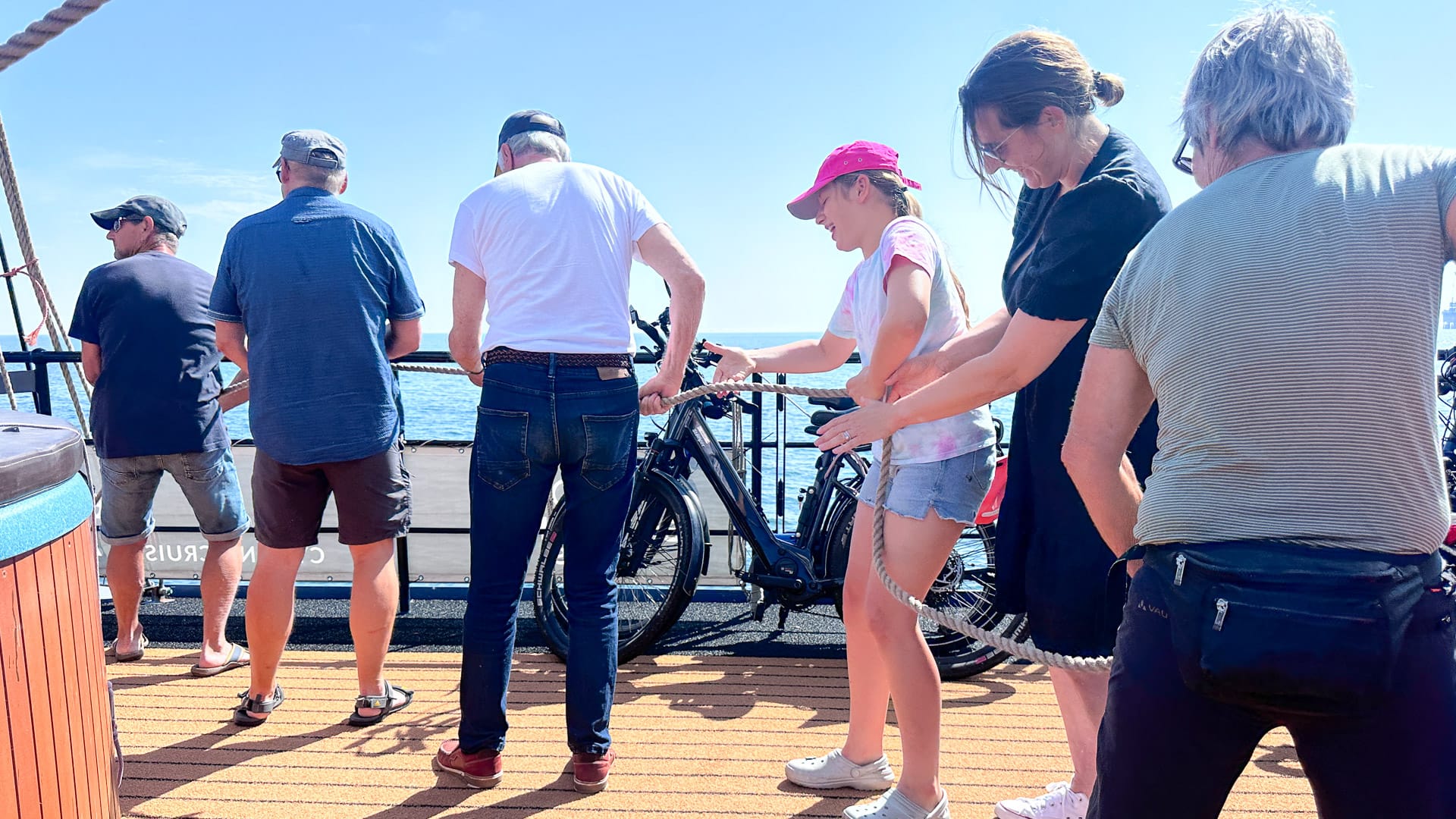
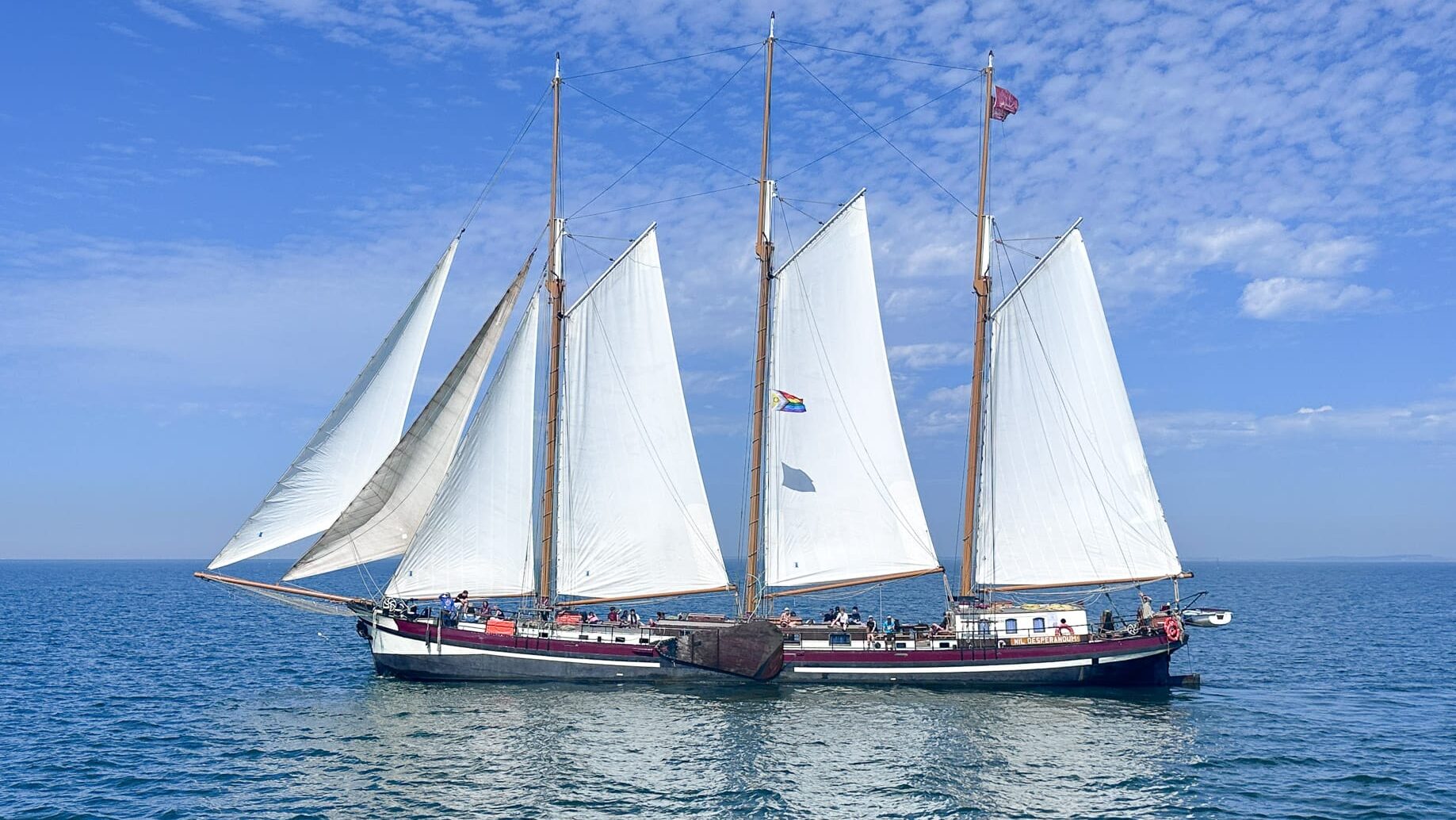
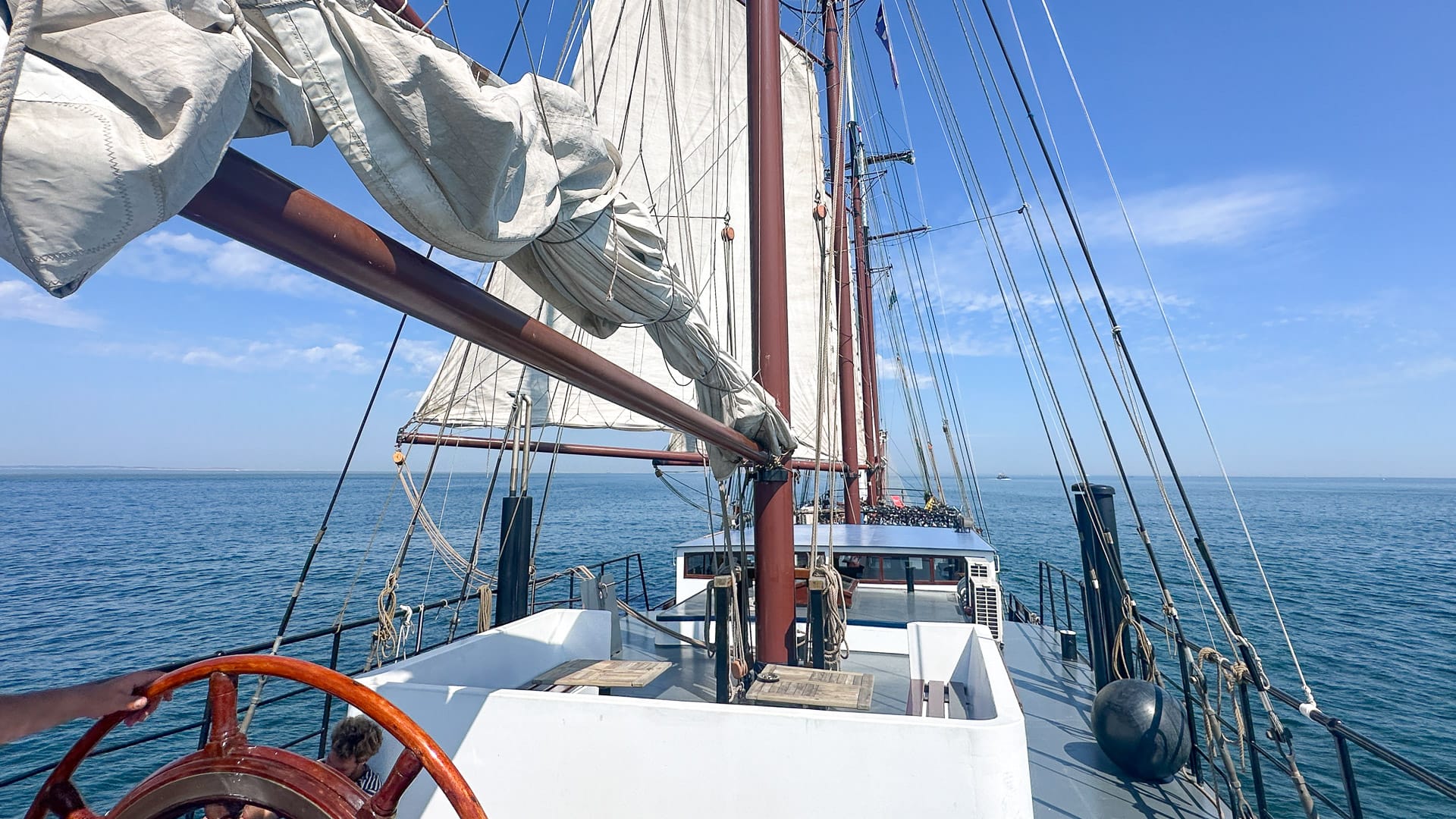
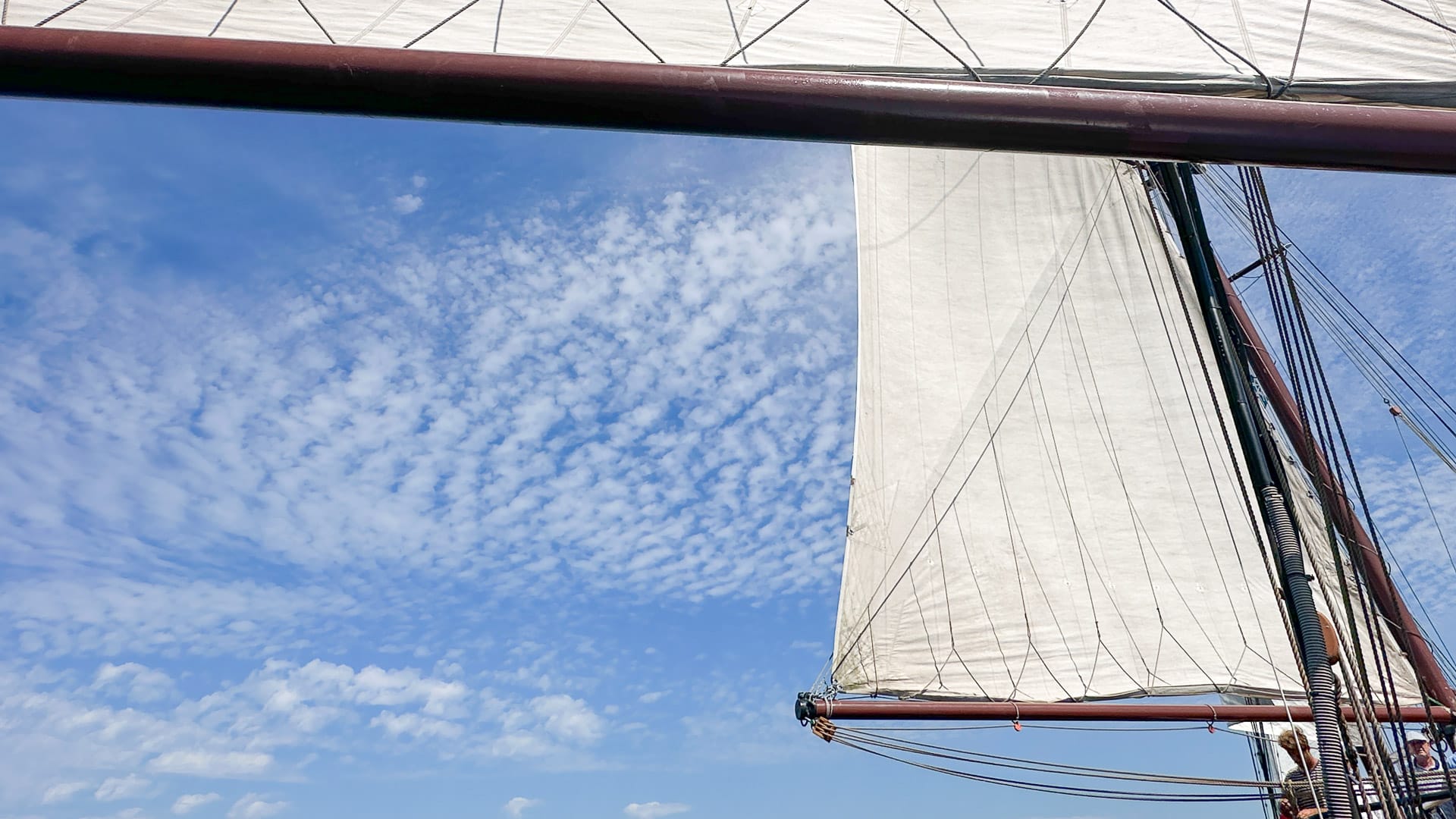
This was the week’s full sailing day. The ship first motored through a narrow deep-water channel, then the crew explained the deck routine and invited us to help. Most of us had little idea where to stand or which line did what. Here we started to understand the sequence: take up a position, pull together, secure the rope and keep clear as the vast white sails rose. When they filled, the engine became redundant; the change in sound was striking.
The Wadden Sea is full of shallows, sandbanks and channels that shift with the tide. Captain Peter’s three decades of experience were reassuring.
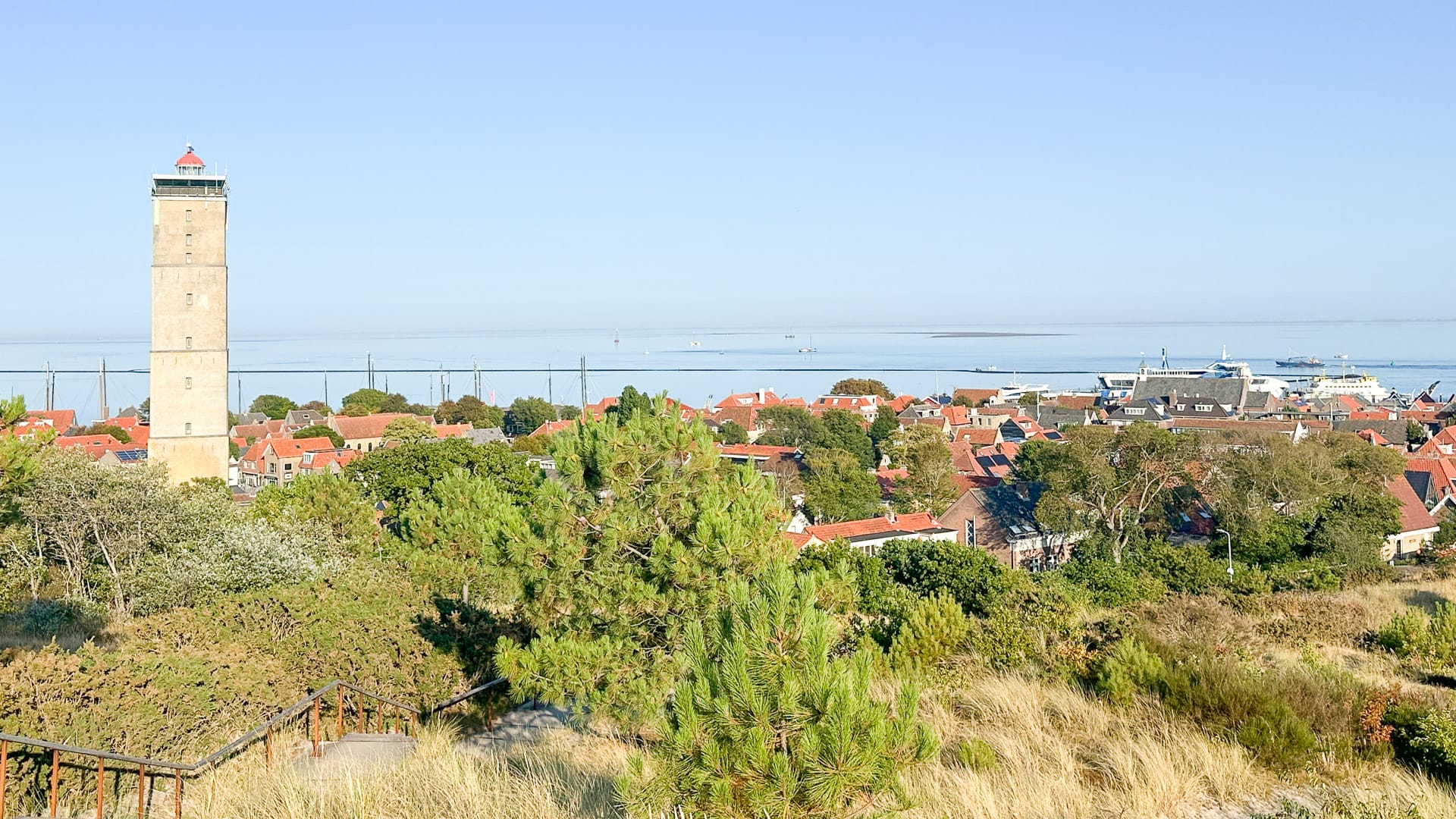
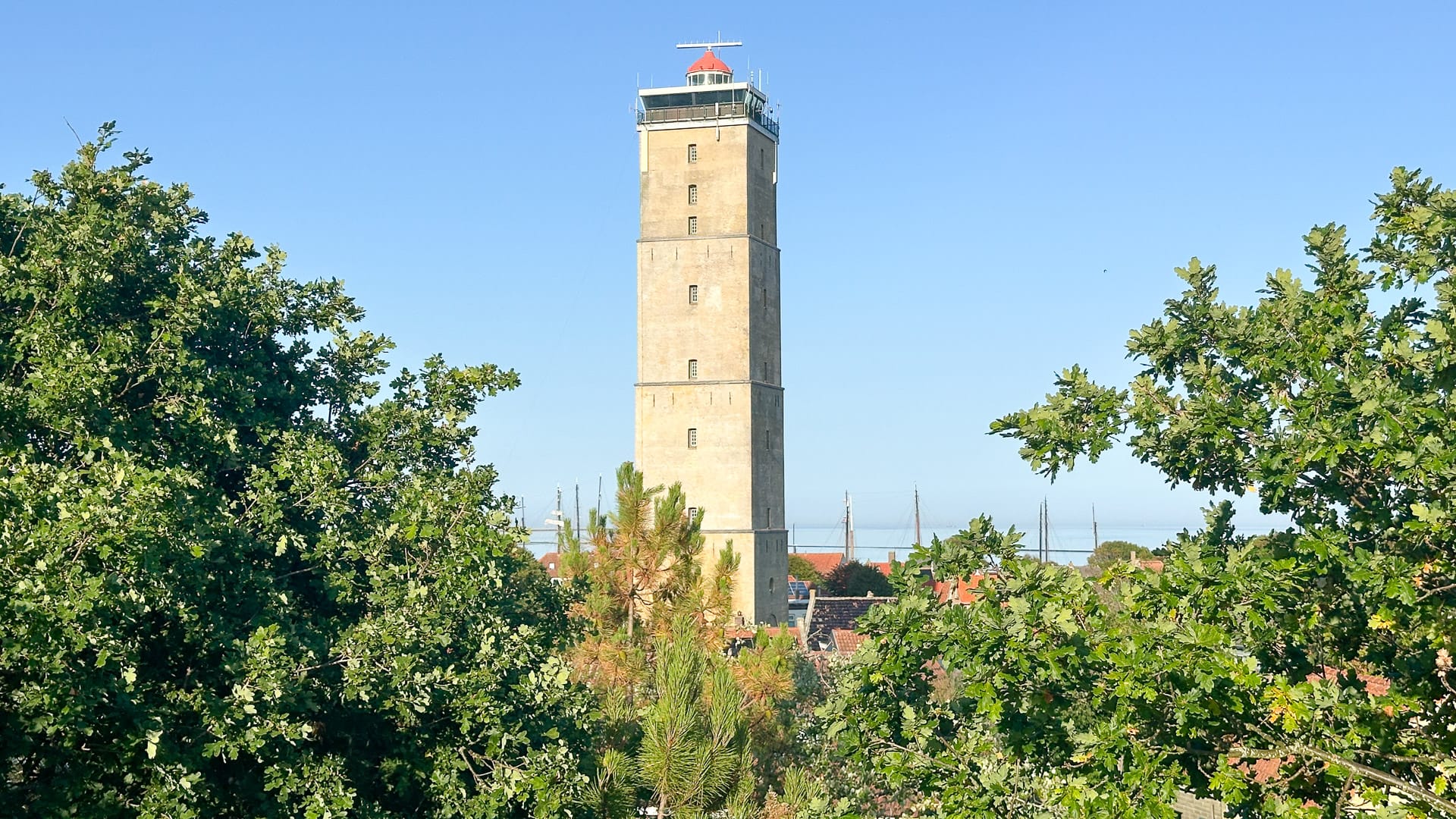
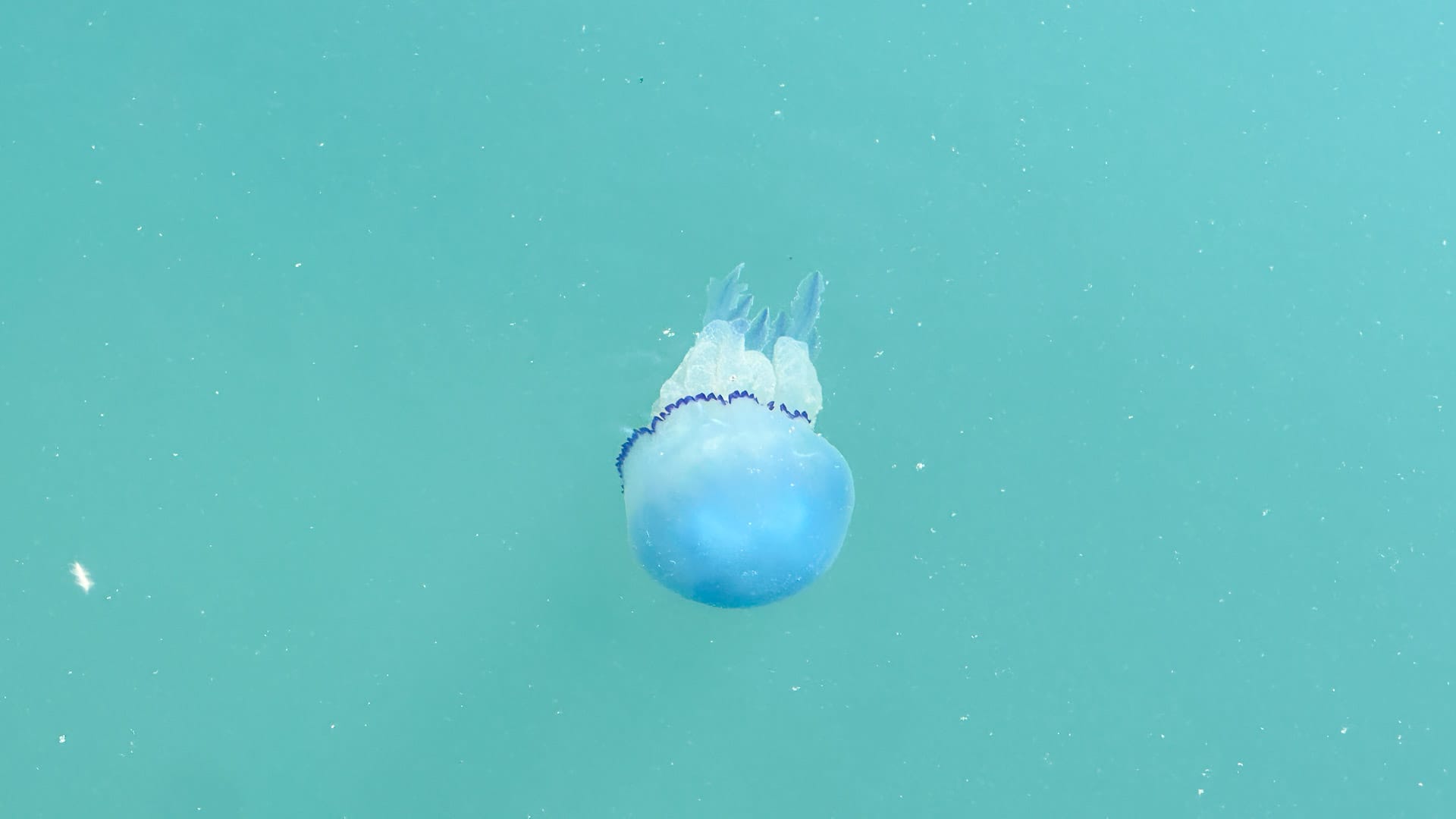
As Terschelling approached, we saw hundreds of jellyfish in the water and the square shape of the Brandaris lighthouse above West-Terschelling. Dating from 1594, it is the oldest surviving lighthouse in the Netherlands and remains staffed.
Dinner was up to each guest to source on shore that evening, giving everyone the chance to stretch their legs and explore the harbour town.

Day 5: Terschelling round trip and sailing to Harlingen
Route choices: 37 kilometres (with 107 metres of climbing) and 42 kilometres (with 151 metres of climbing). We rode the 42-kilometre loop.
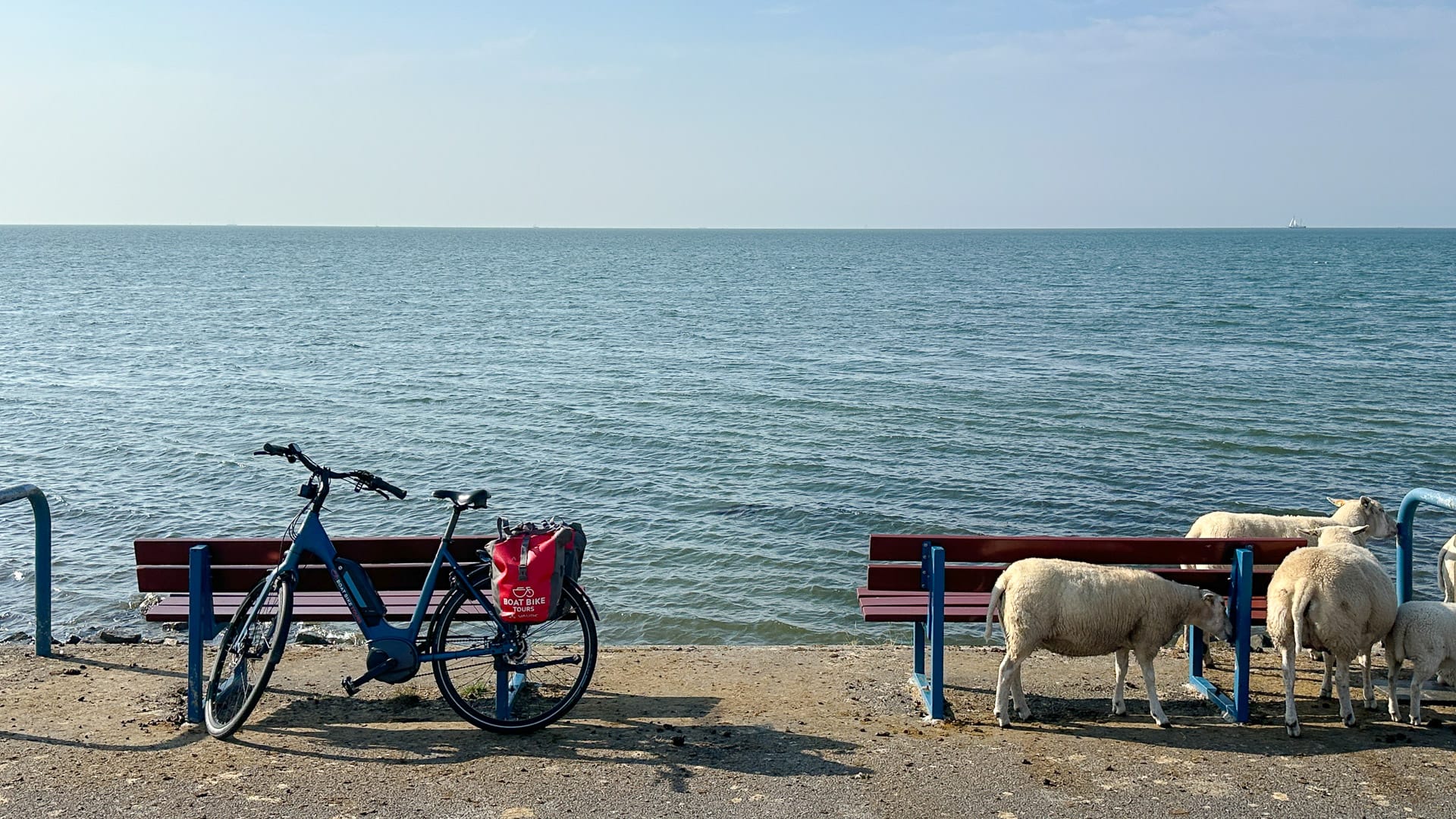
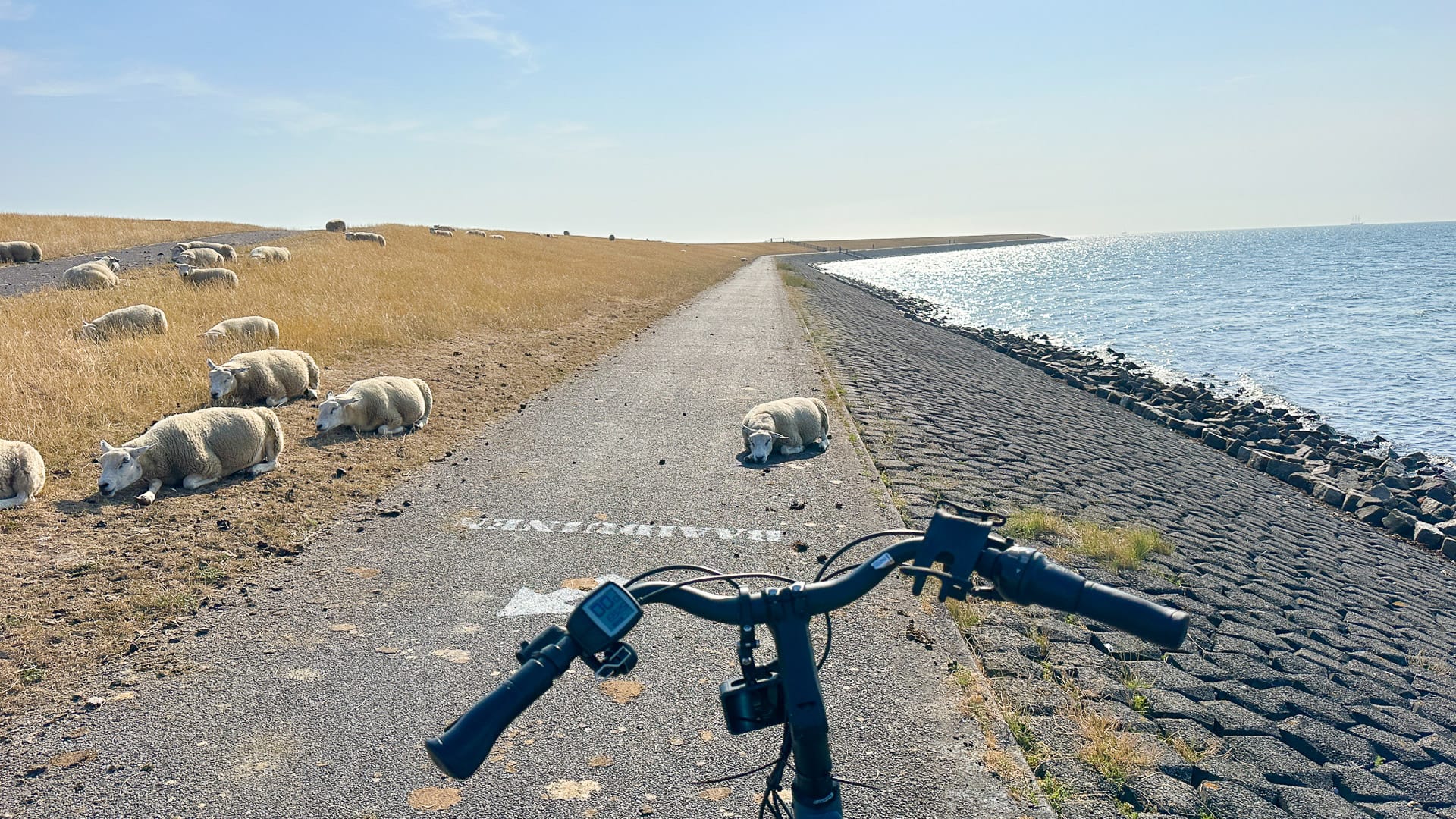
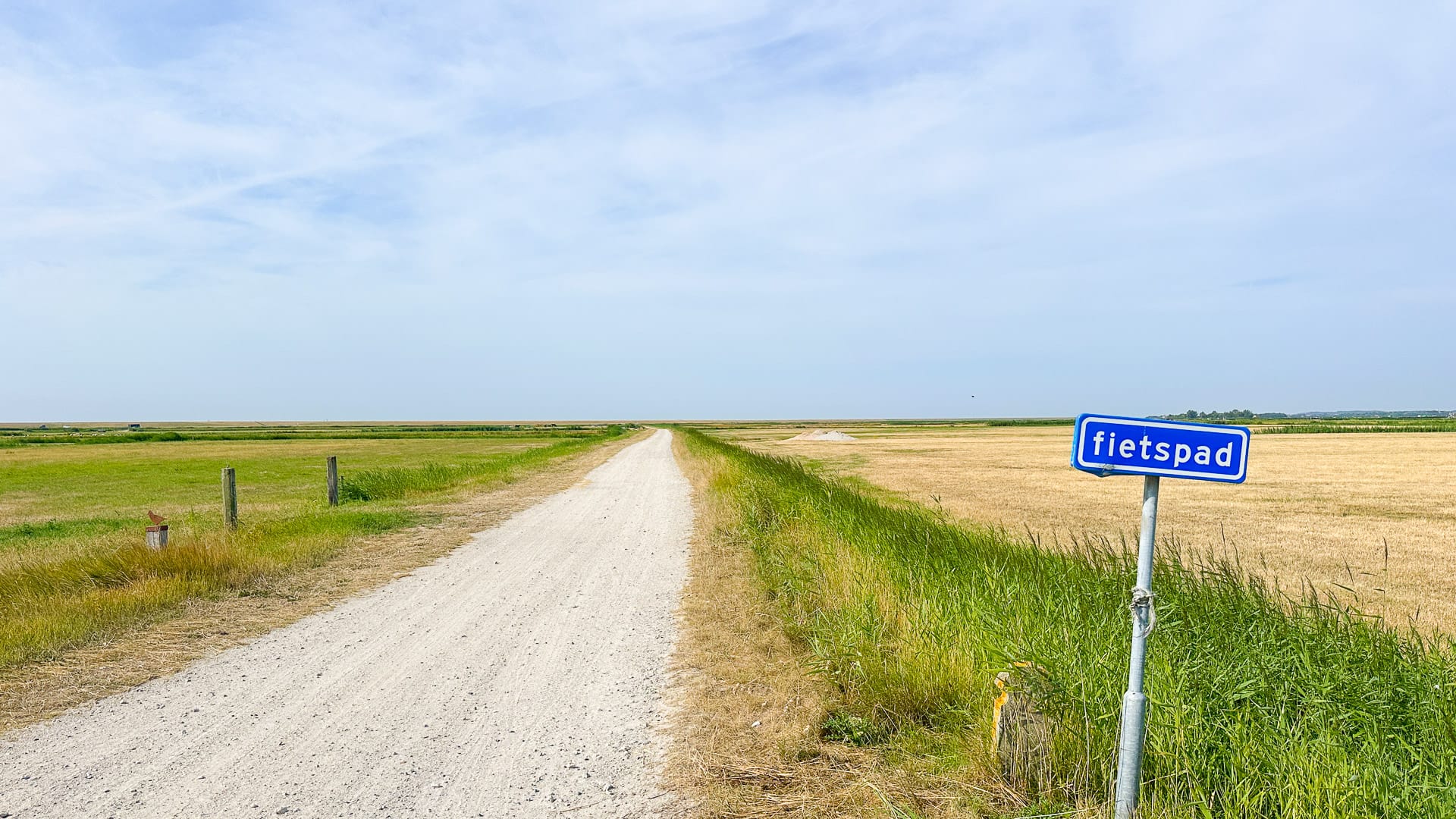
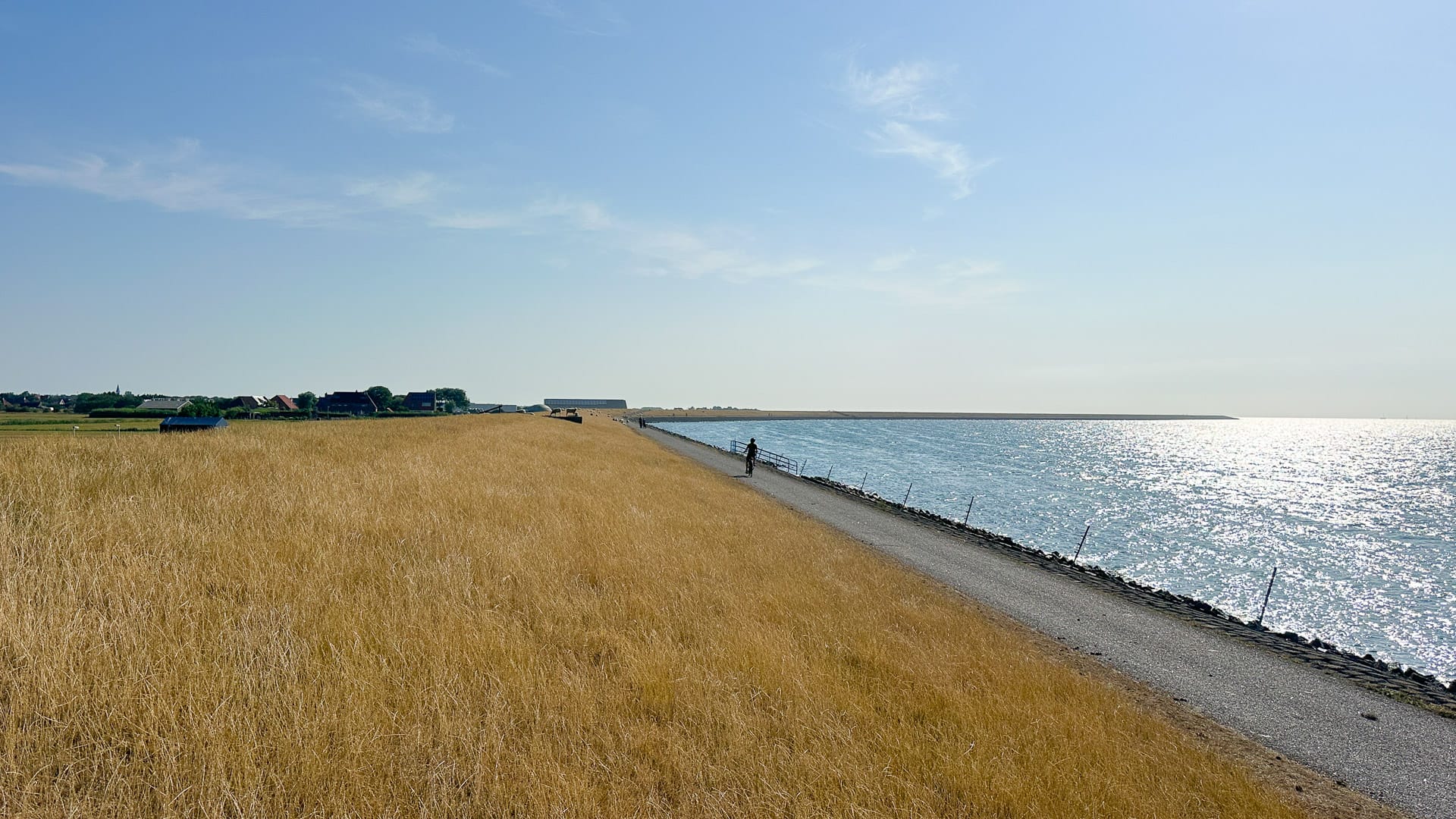
We set off in orange morning light and rode east along the bike path hugging the sea wall. Golden grasses swayed gently on the banks, sheep lay soaking up the sunshine and birds worked the shallows. It was a relaxing start to the day.
Midsland and Formerum
The route turned inland through Midsland and Formerum. The Wrakkenmuseum was one of the week’s quirkiest stops: a former farmhouse crowded with objects salvaged from beaches and wrecks around Terschelling, collected by owner and wreck diver Hille van Dieren since 1975.
Nearby, at Puur Terschelling, sleek black horses were being led in from the fields.

Boschplaat
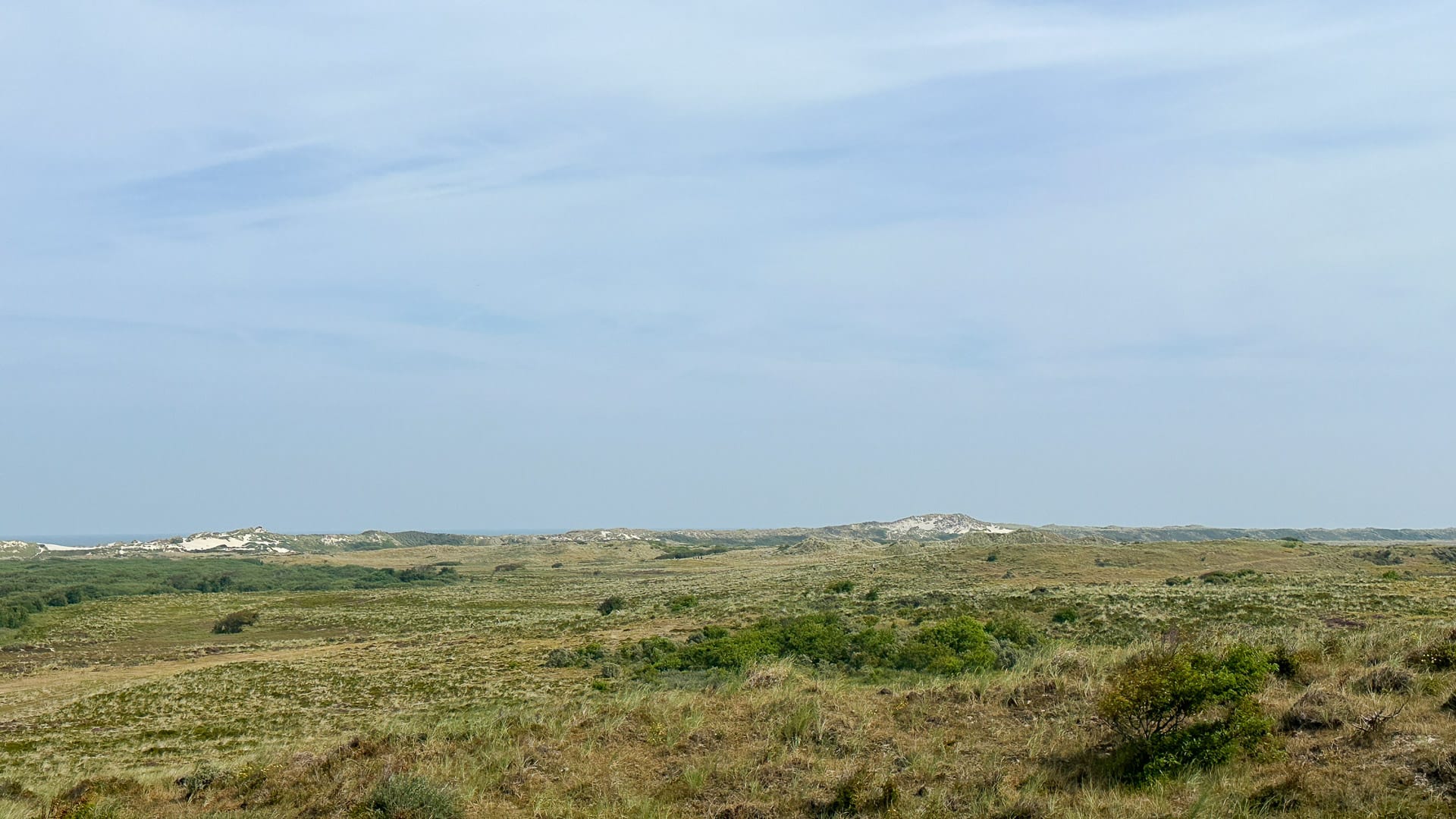
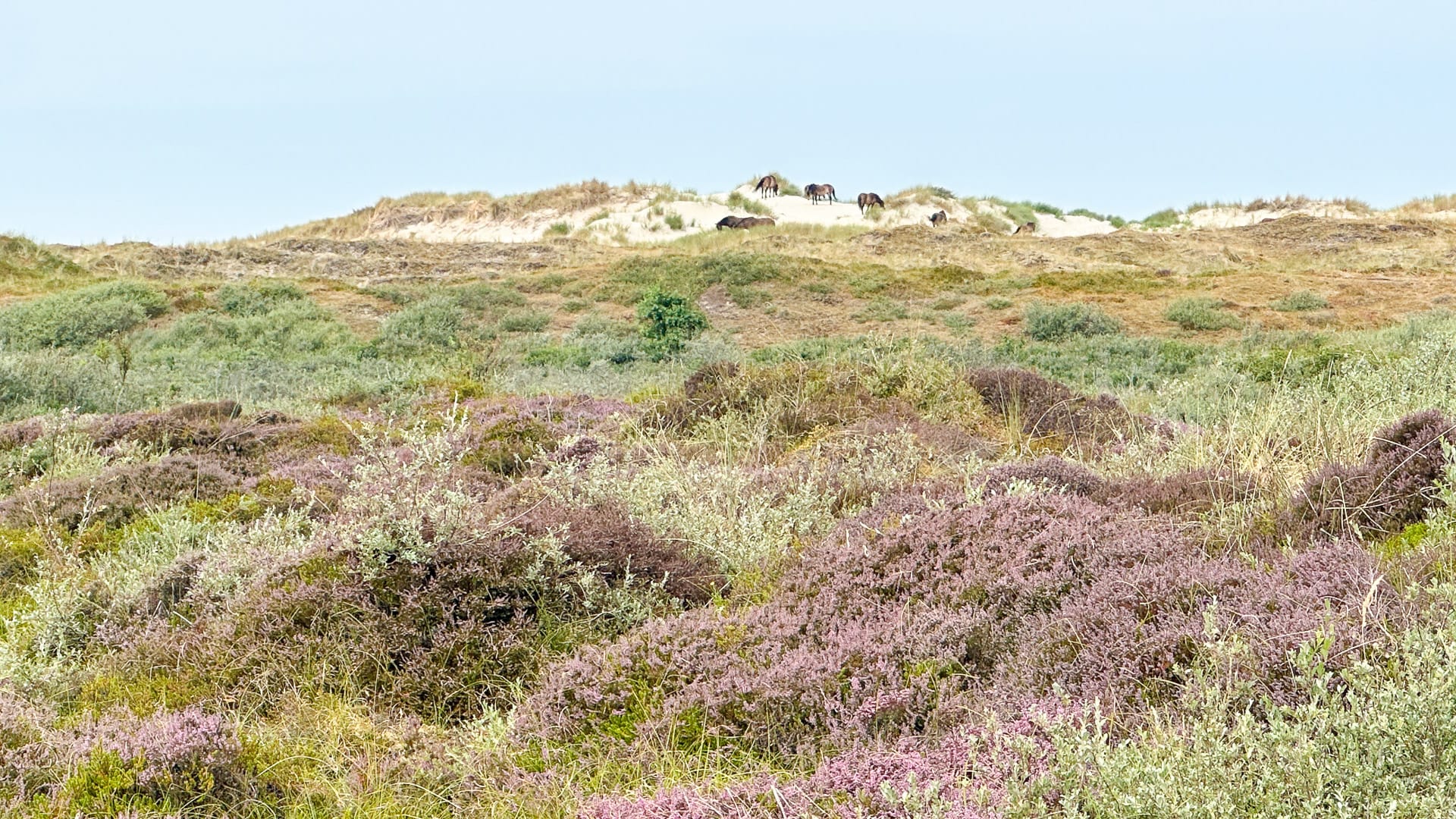
Further east, the landscape opened again into pasture, heath and dunes. De Boschplaat is a largely undeveloped nature reserve and recognised Dark Sky Park. It’s another haven for birds and home to black-winged stilts, large colonies of spoonbills and great black-backed gulls. From the viewpoint, the built-up western end of the island felt a long way away.
Beaches
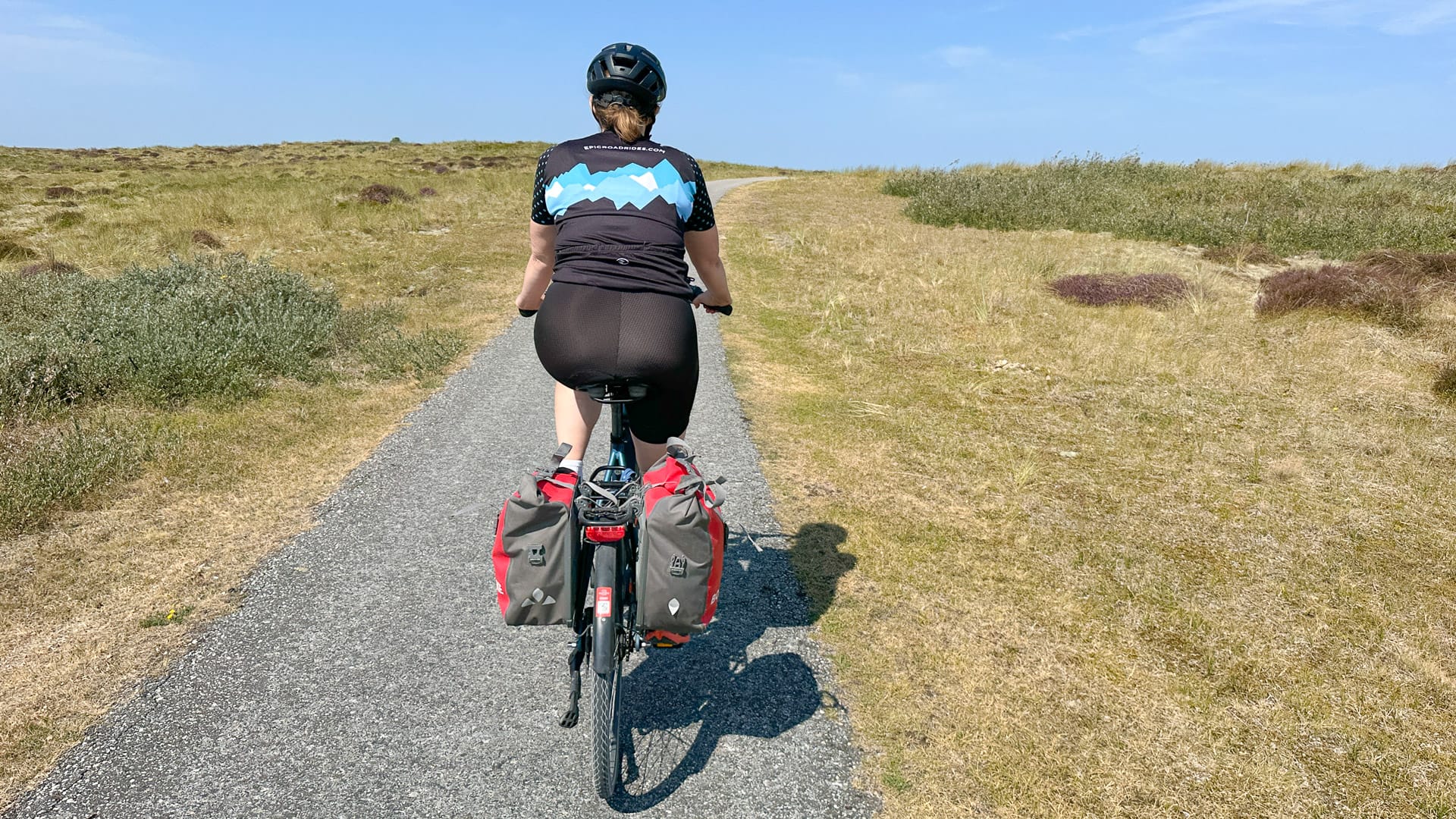
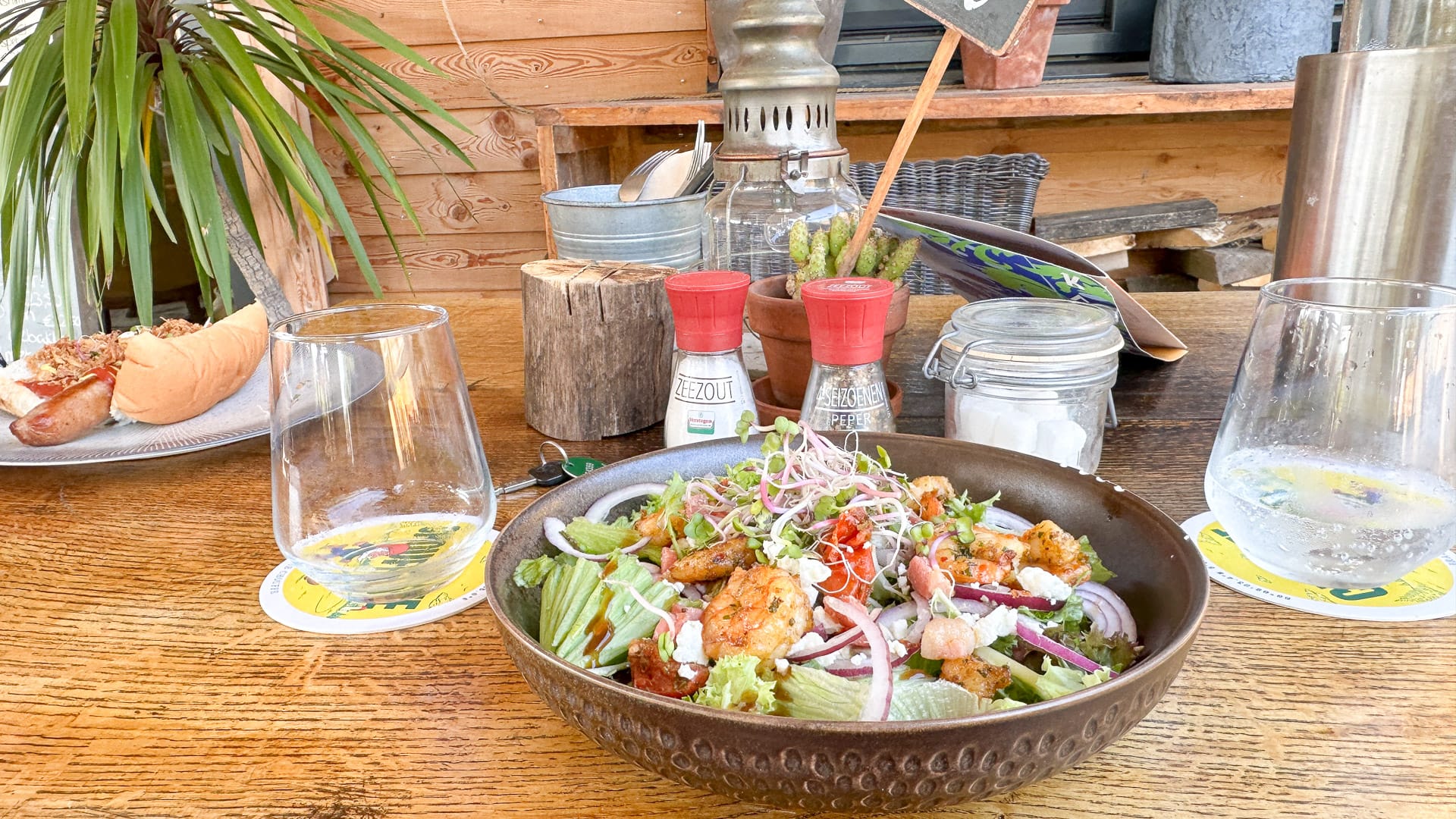
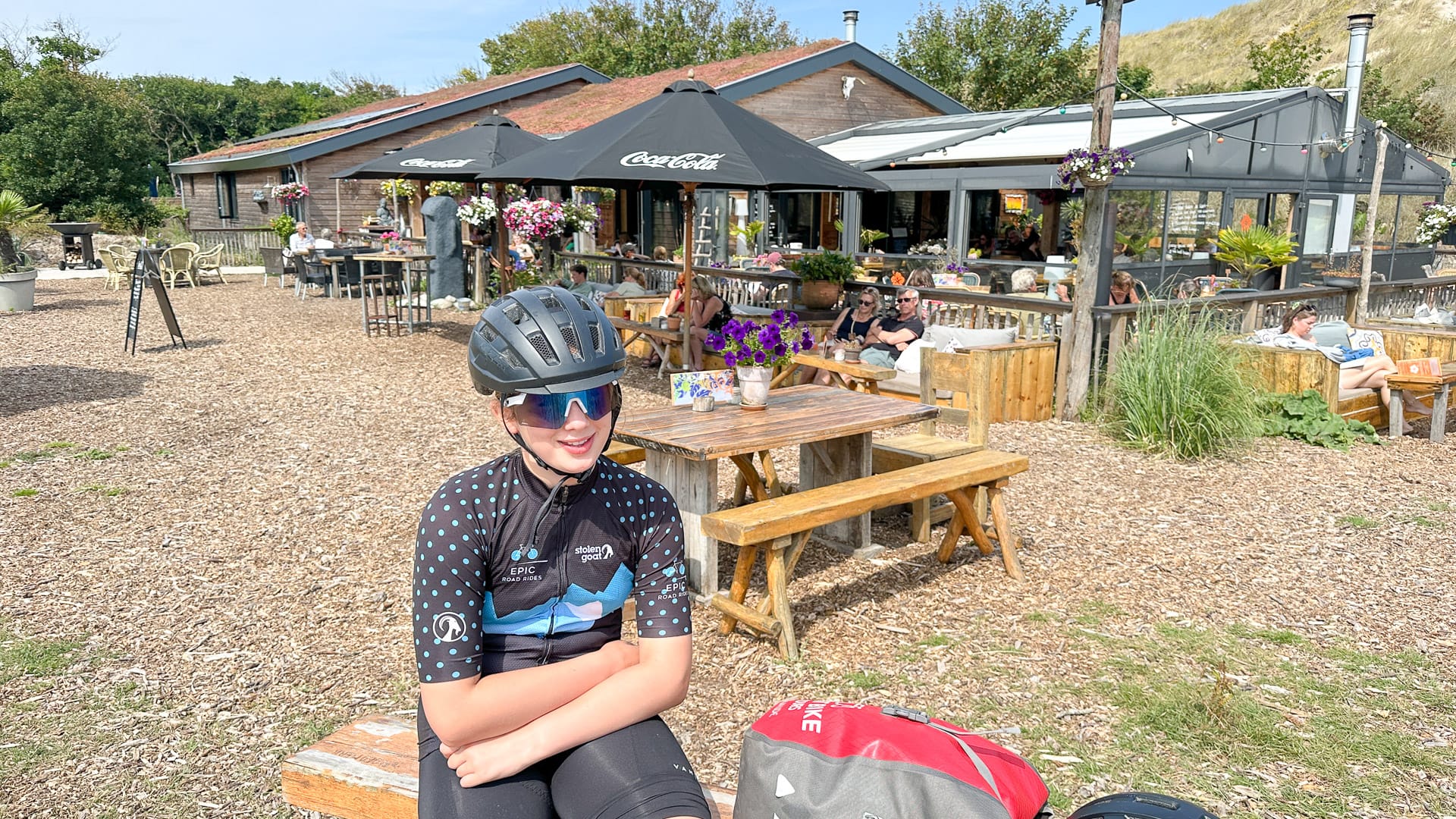
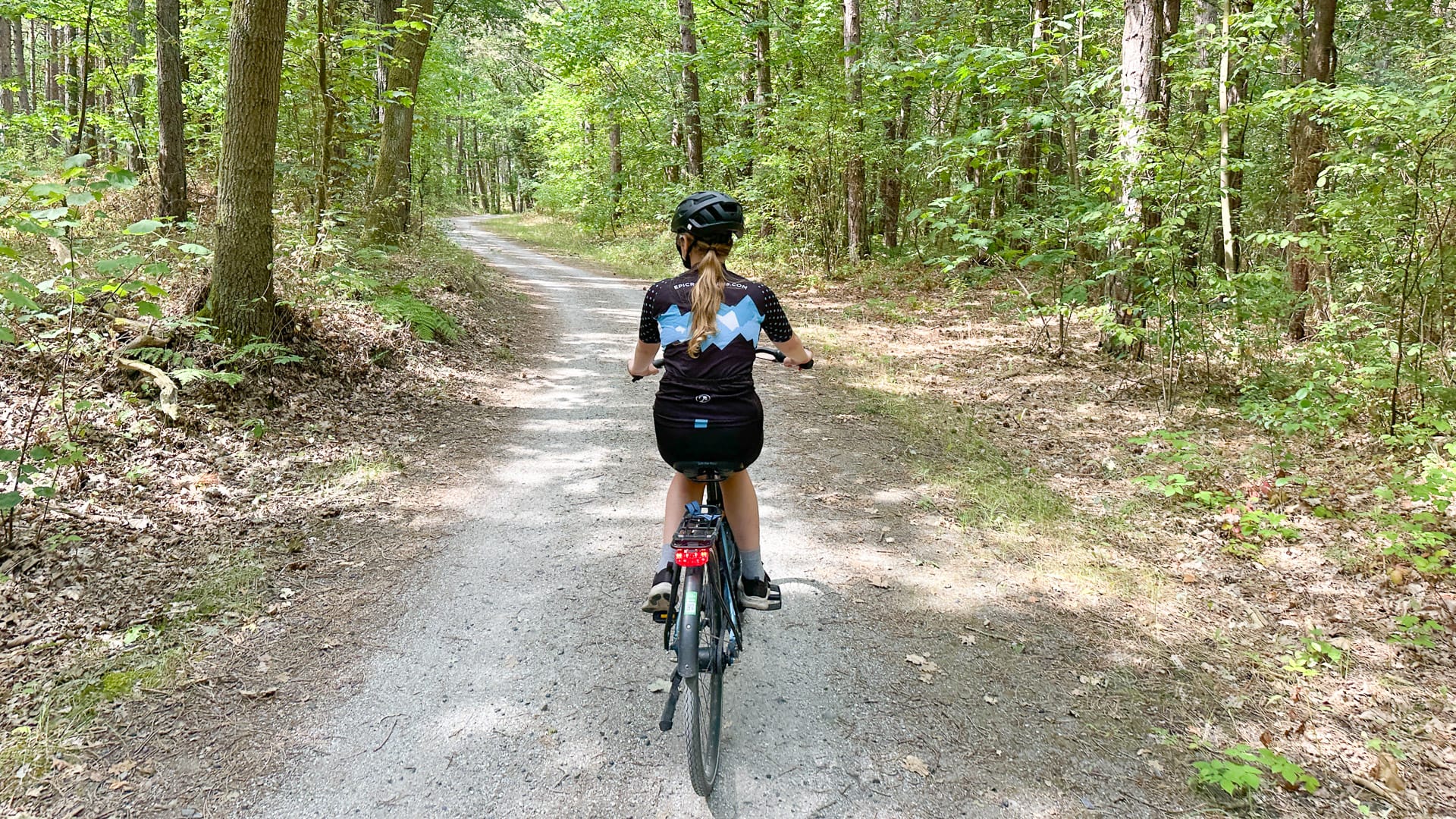
At the North Sea beach, the tide had left an enormous walk between dunes and water, so lunch won over swimming. Compact gravel tracks and shaded forest paths then carried us back towards West-Terschelling, its 400 year old lighthouse and the waiting masts of the Leafde fan Fryslân.
Sailing to Harlingen
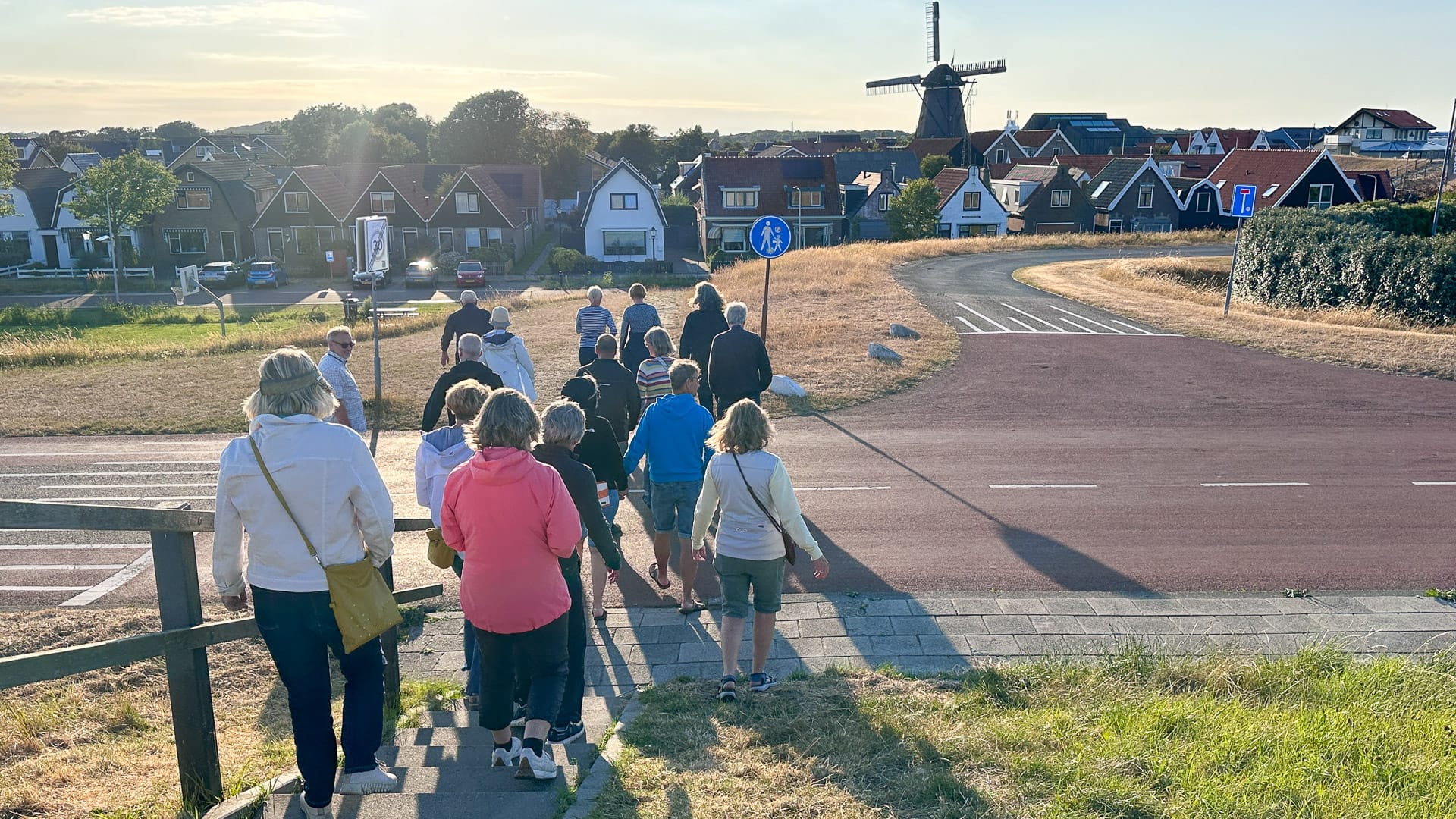
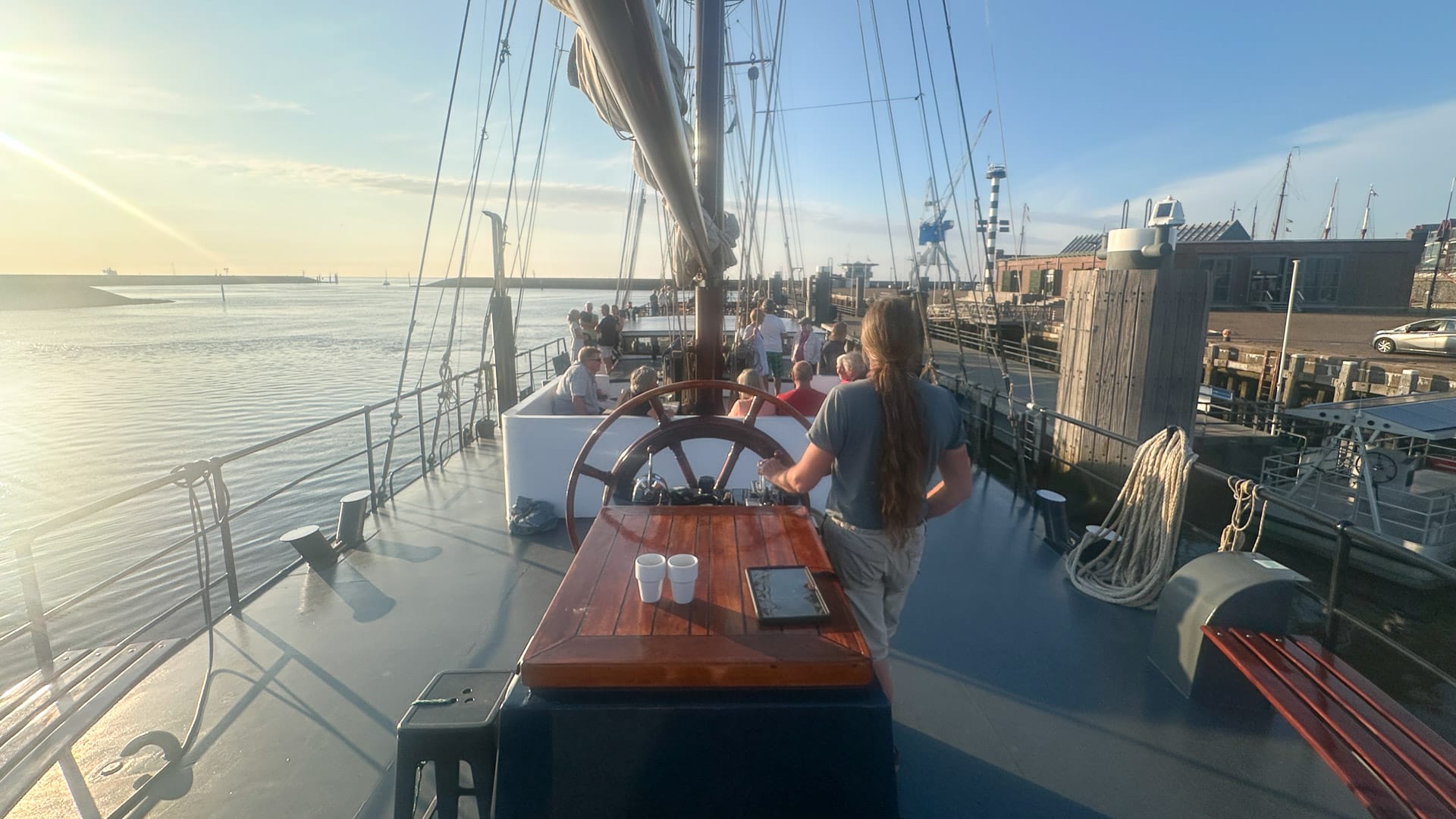
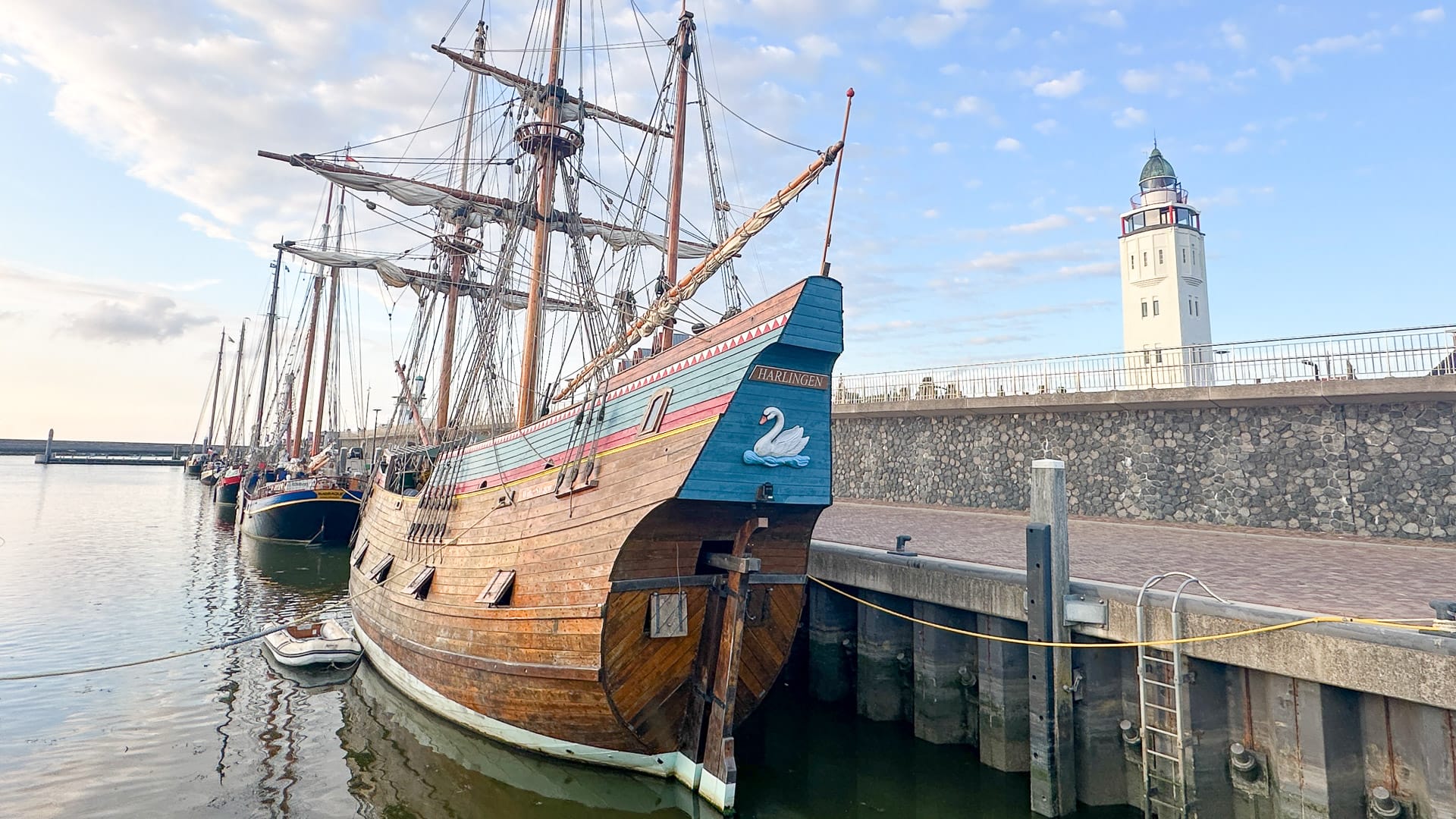
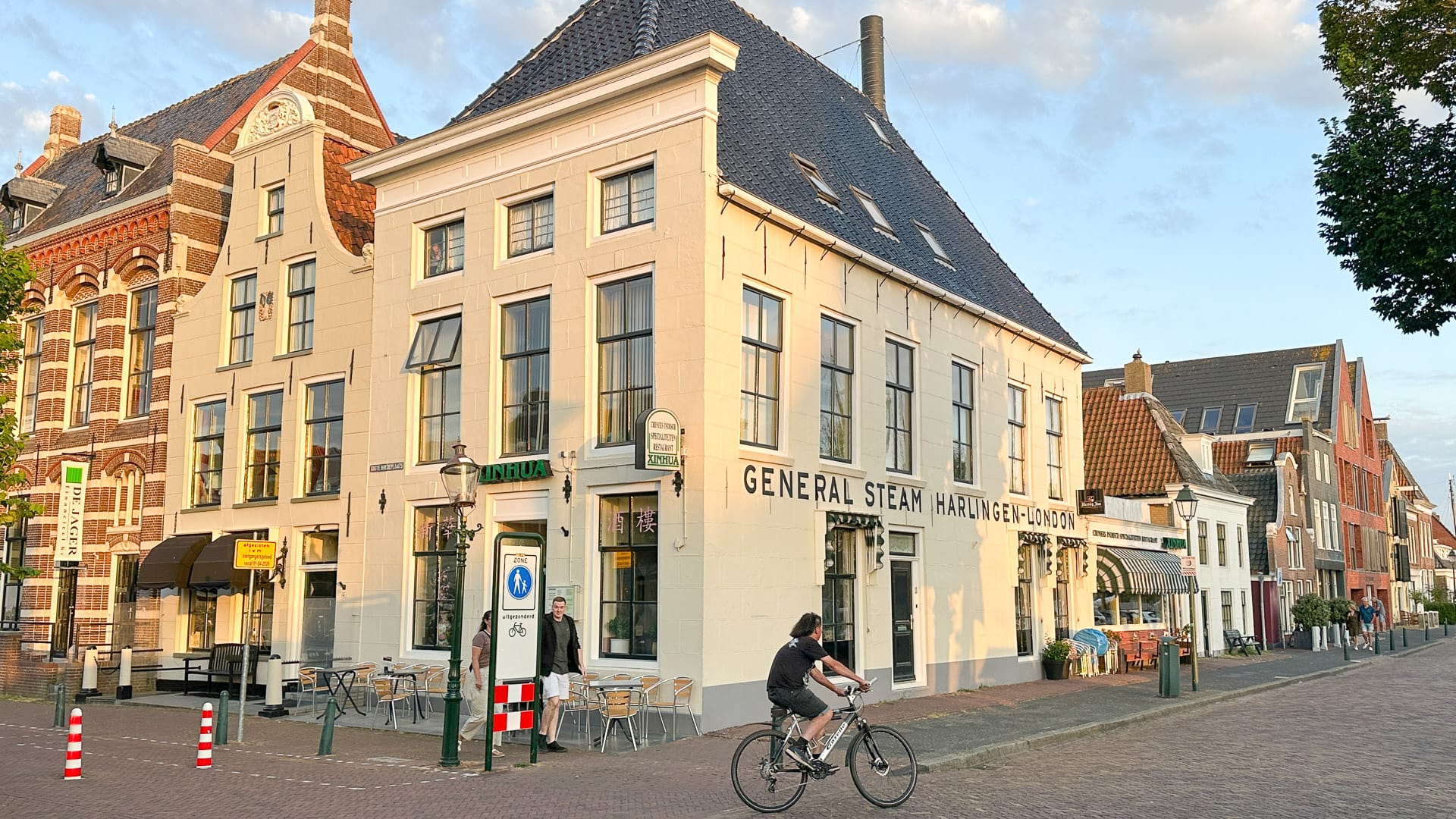
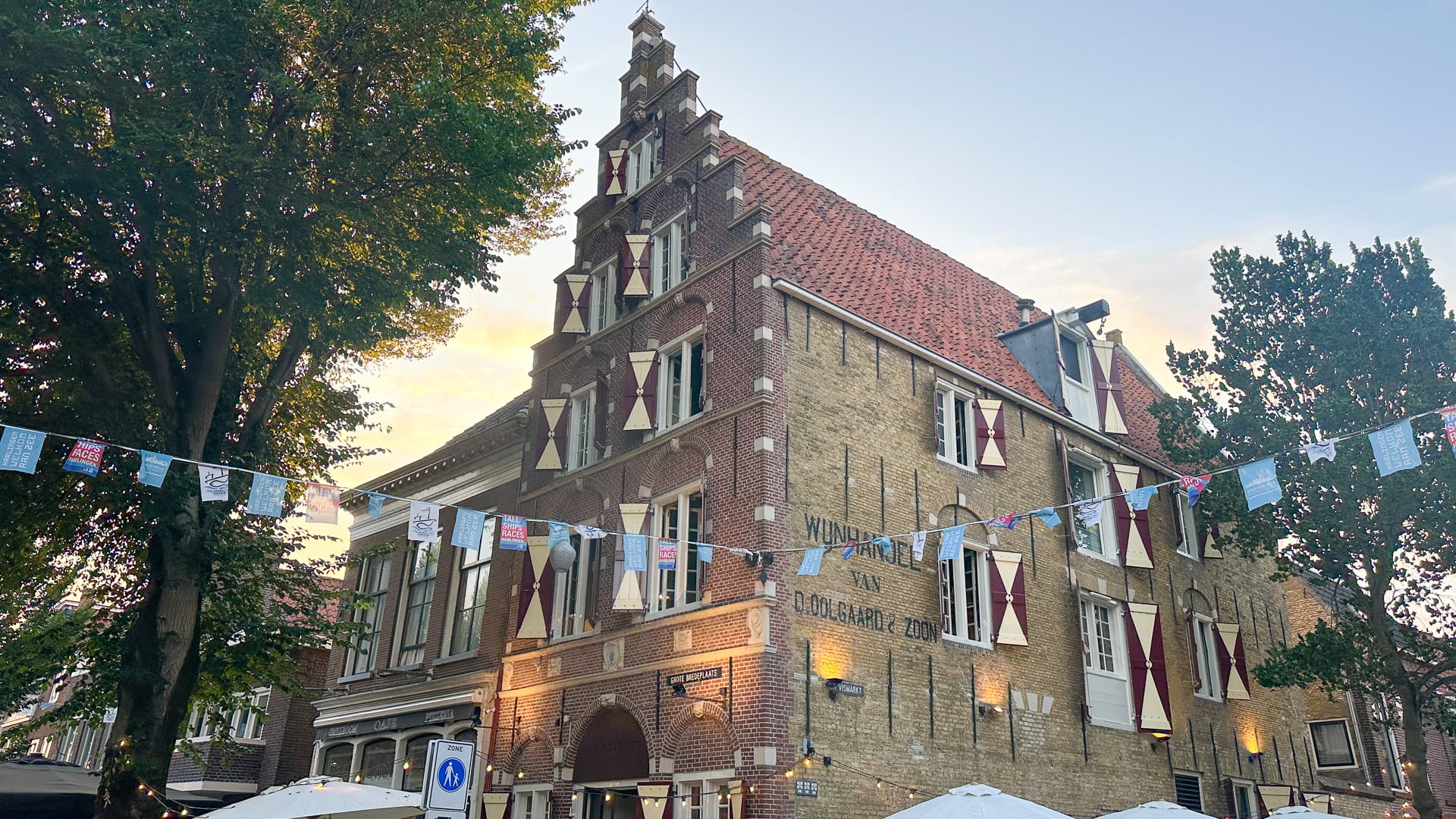
The ship crossed to Harlingen in the late afternoon. After arriving at around 20:00, Carol led an evening walk through the old port. Her stories touched on topics ranging from early Christian missionaries and historic building methods to the Baltic grain trade and connections with Sumatra.
Day 6: Harlingen, Franeker and Makkum
Route choices: 40 kilometres (with 105 metres of climbing) and 45 kilometres (with 129 metres of climbing) We rode the 45 kilometre loop.
Franeker
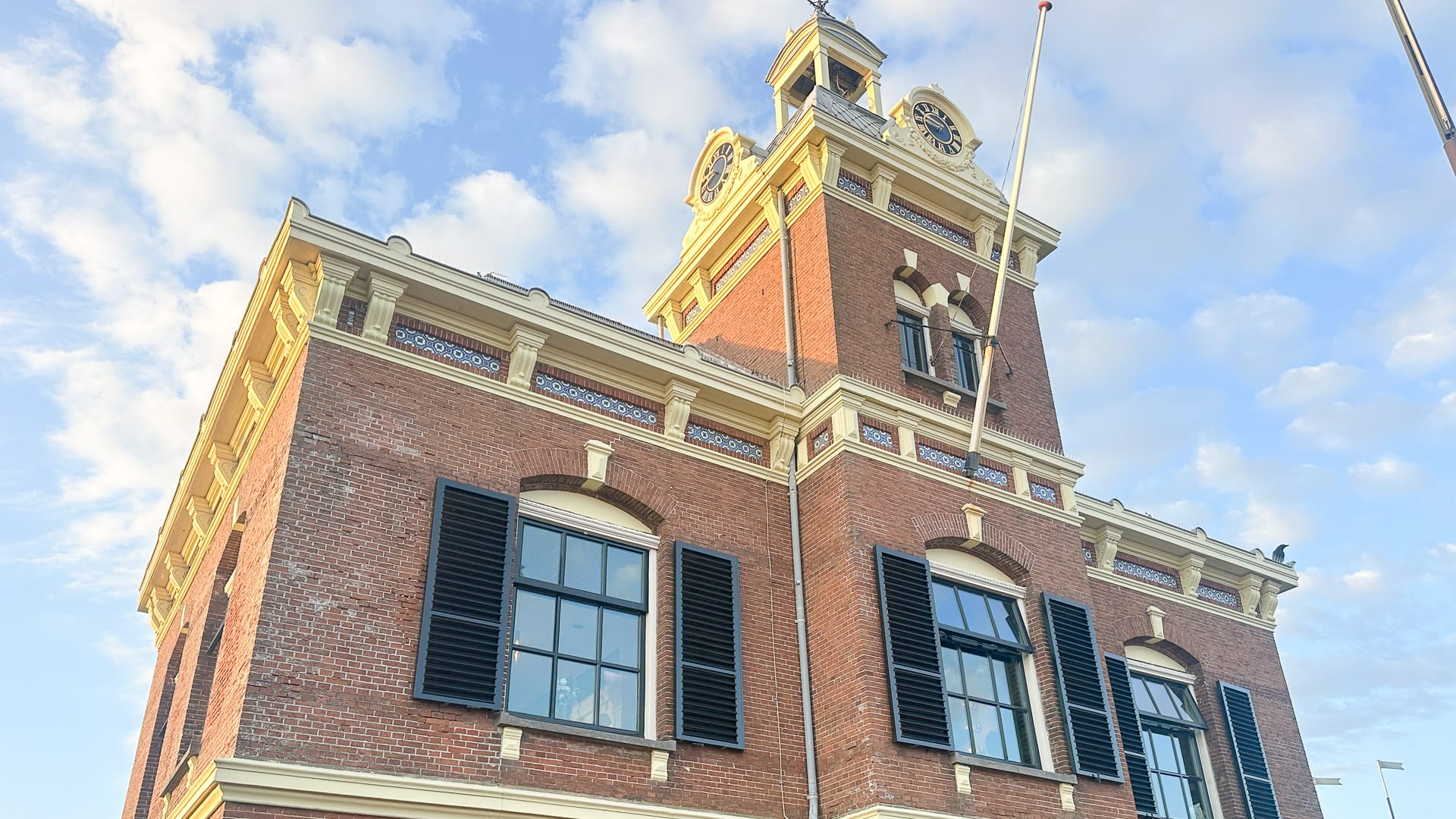
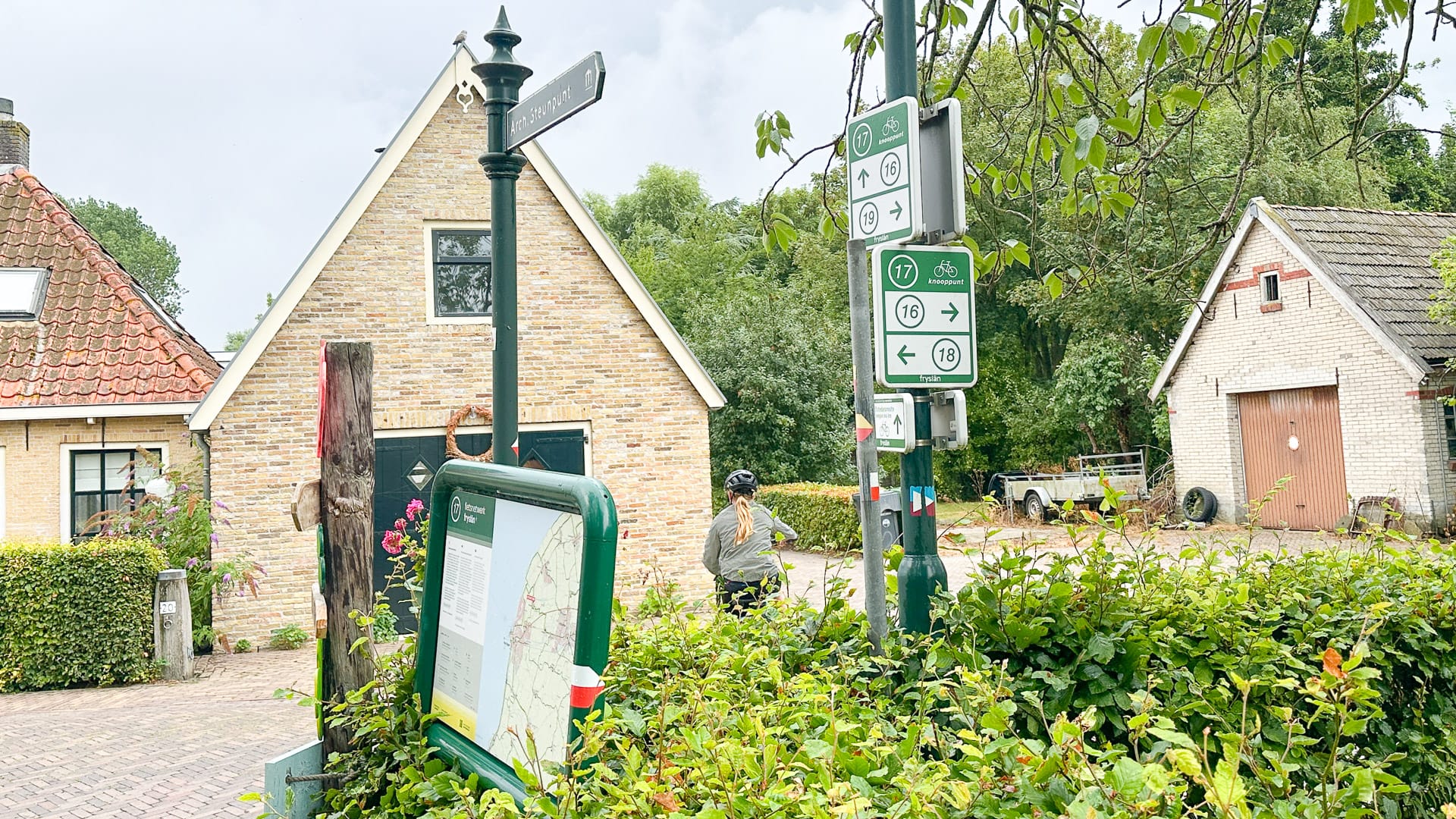
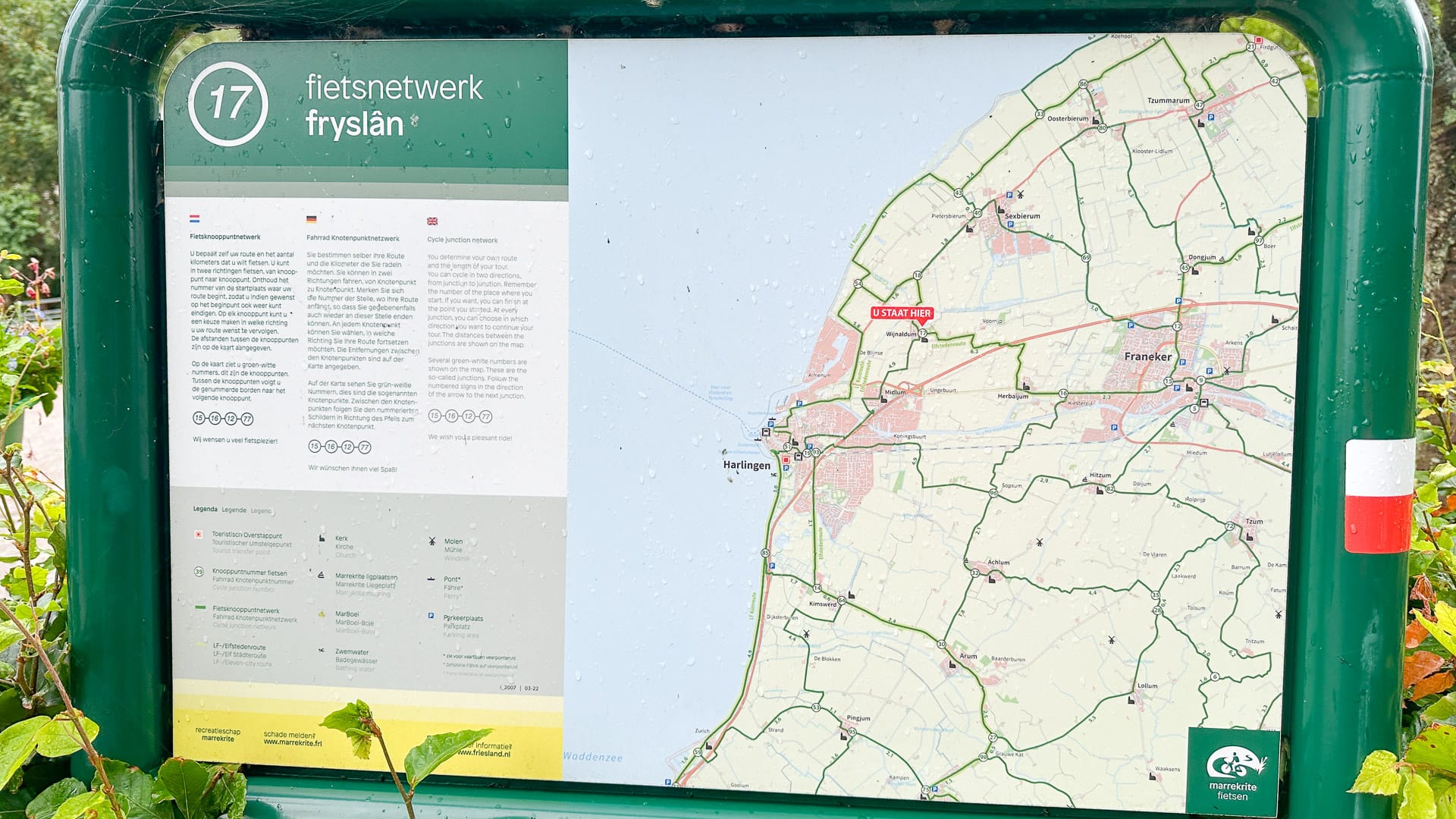
We left Harlingen beneath heavy cloud. Industry at the edge of town soon gave way to villages, fields and canals, and after roughly 14 kilometres we entered Franeker, one of Friesland’s historic Eleven Cities.
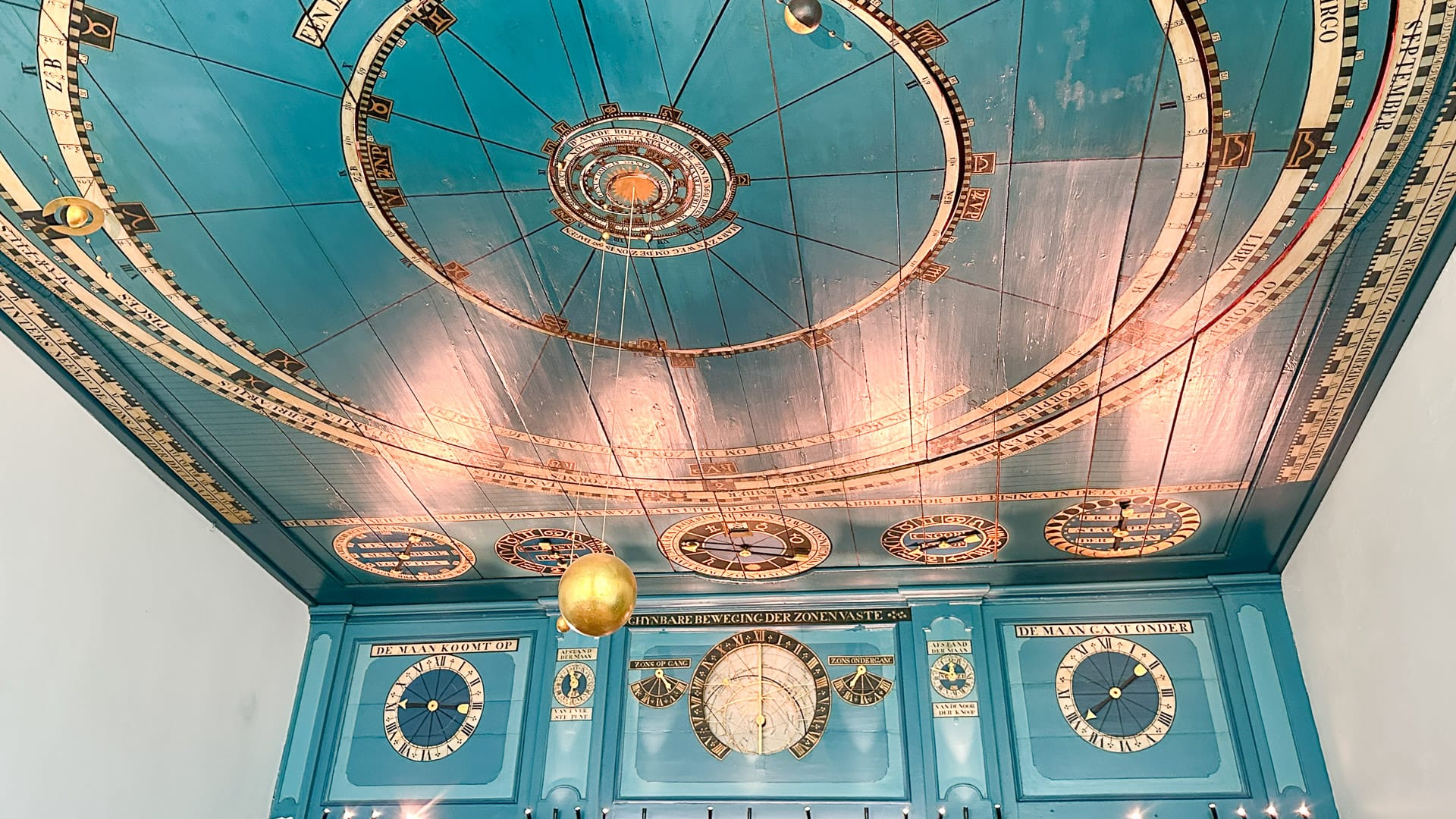
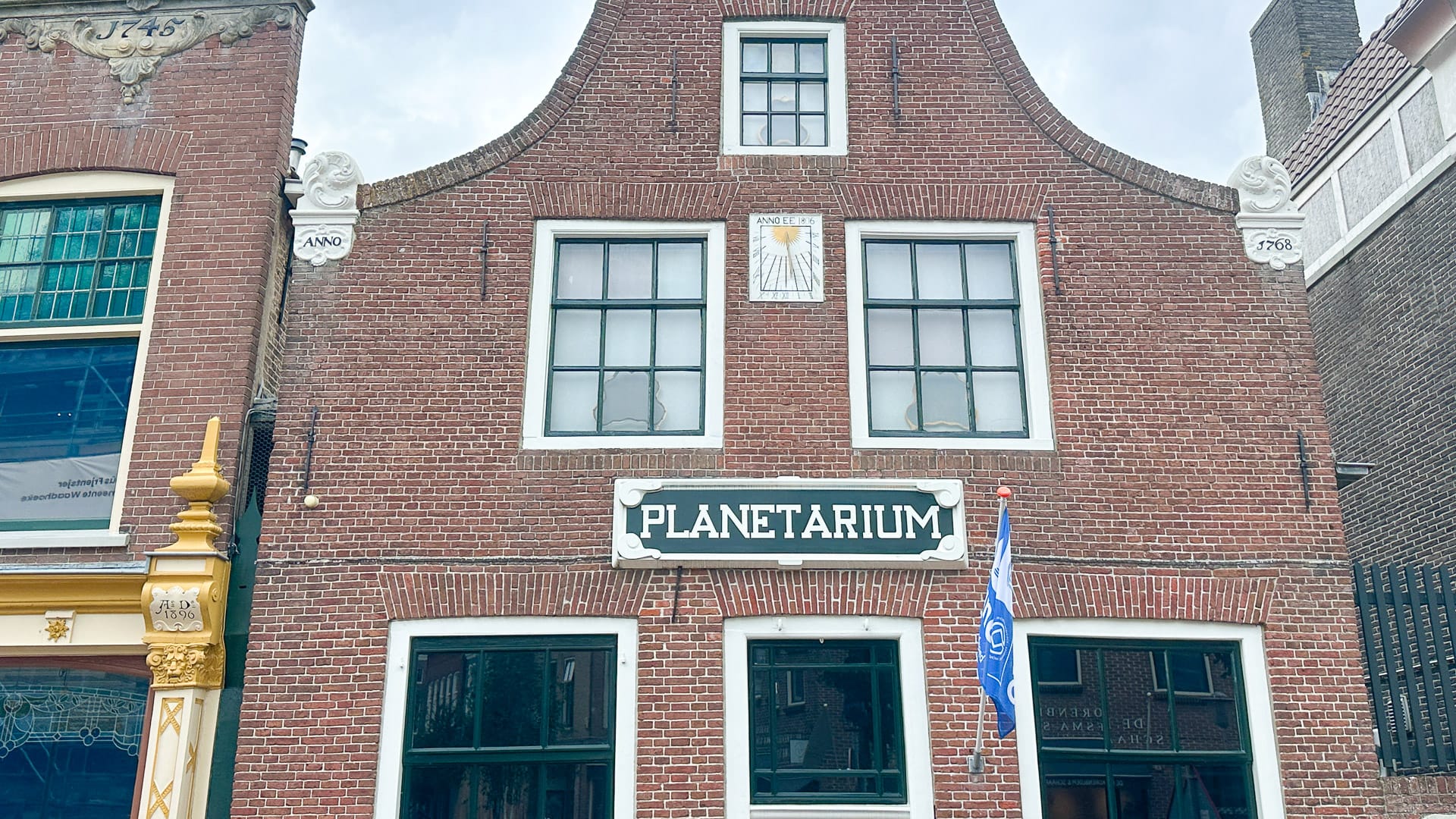
The cultural surprise of the week waited inside an ordinary canal house. In Eise Eisinga’s former living room, a working model of the solar system moves across the ceiling. Built between 1774 and 1781 and now protected by UNESCO, it still shows the positions of the planets using wooden discs, hand-forged pins, weights and a pendulum clock. After several days beneath the Wadden Sea’s huge skies, stepping into a domestic room and finding a universe overhead felt wonderfully improbable.
To Bolsward
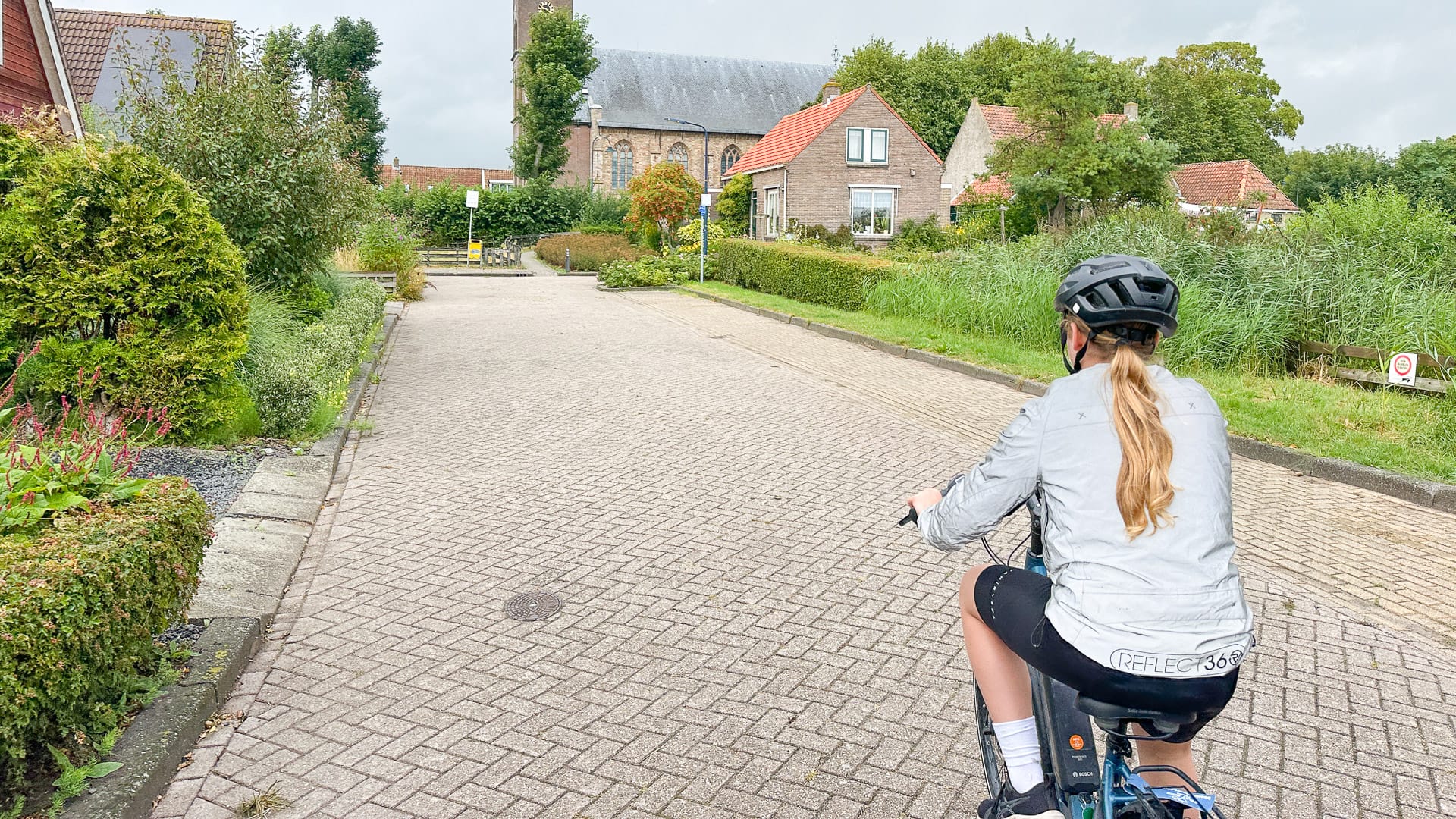
Beyond Franeker, scenic trails crossed agricultural land threaded with waterways. A stork stood in the shallows before lifting away with a fish.
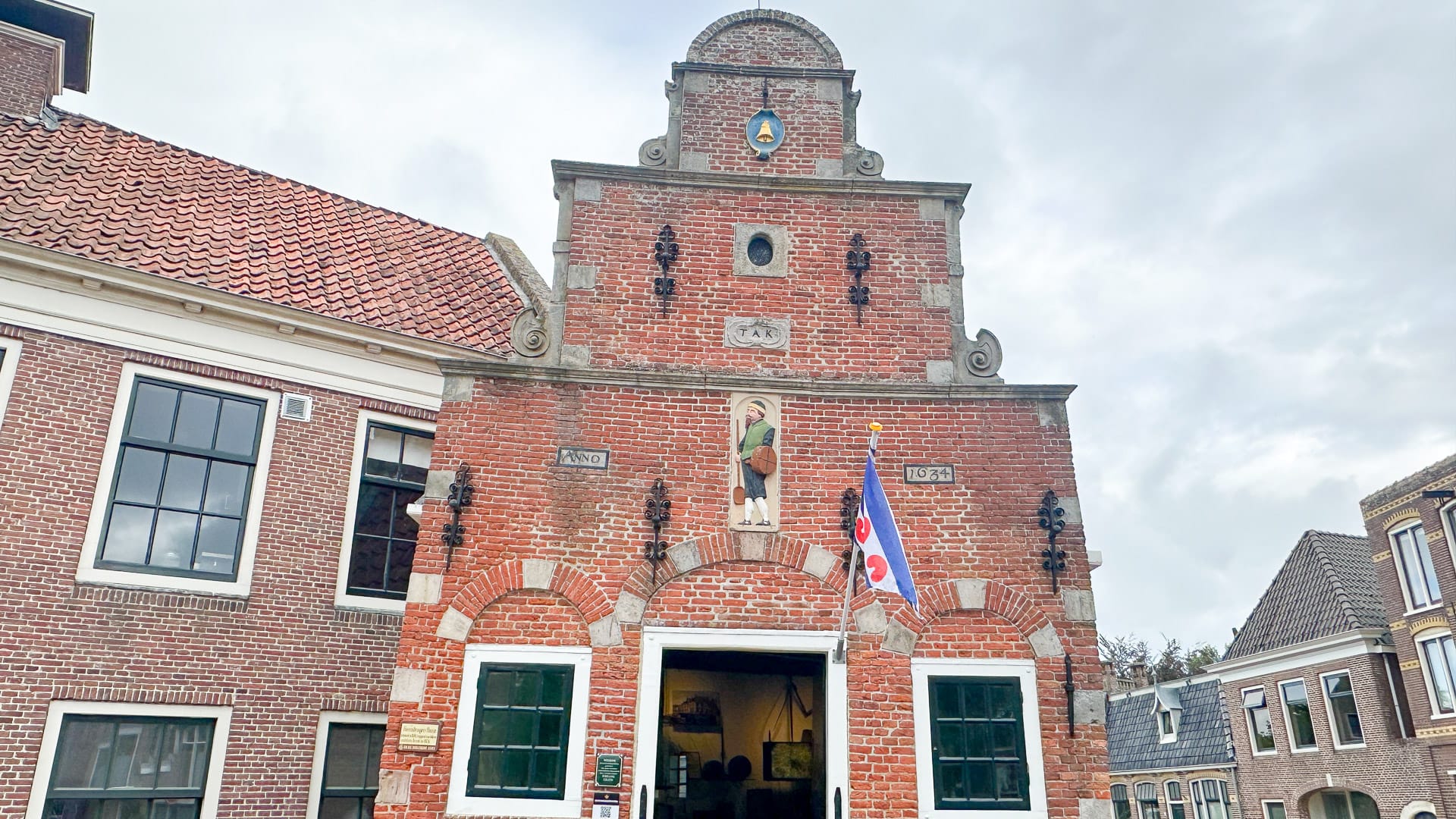
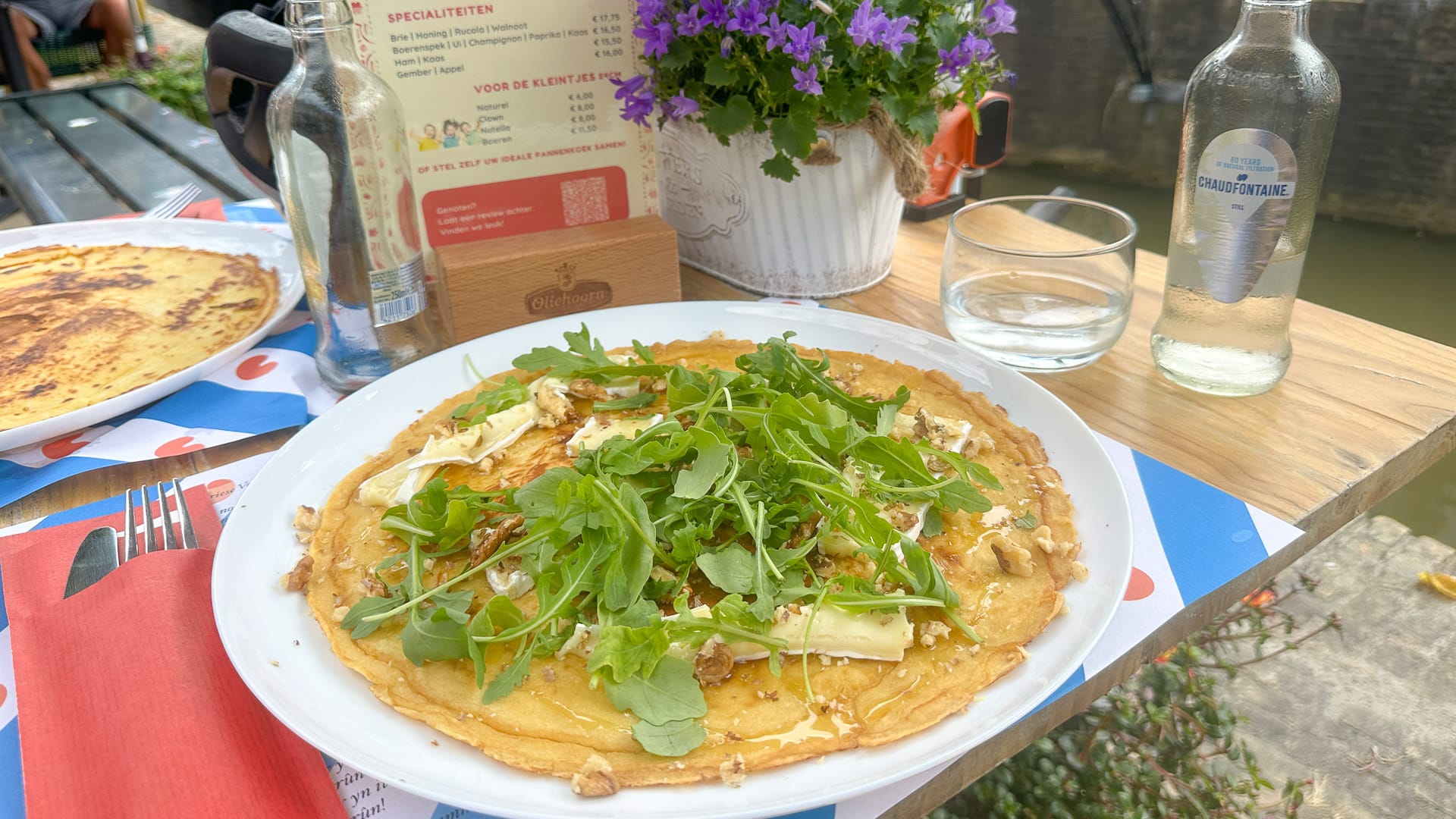
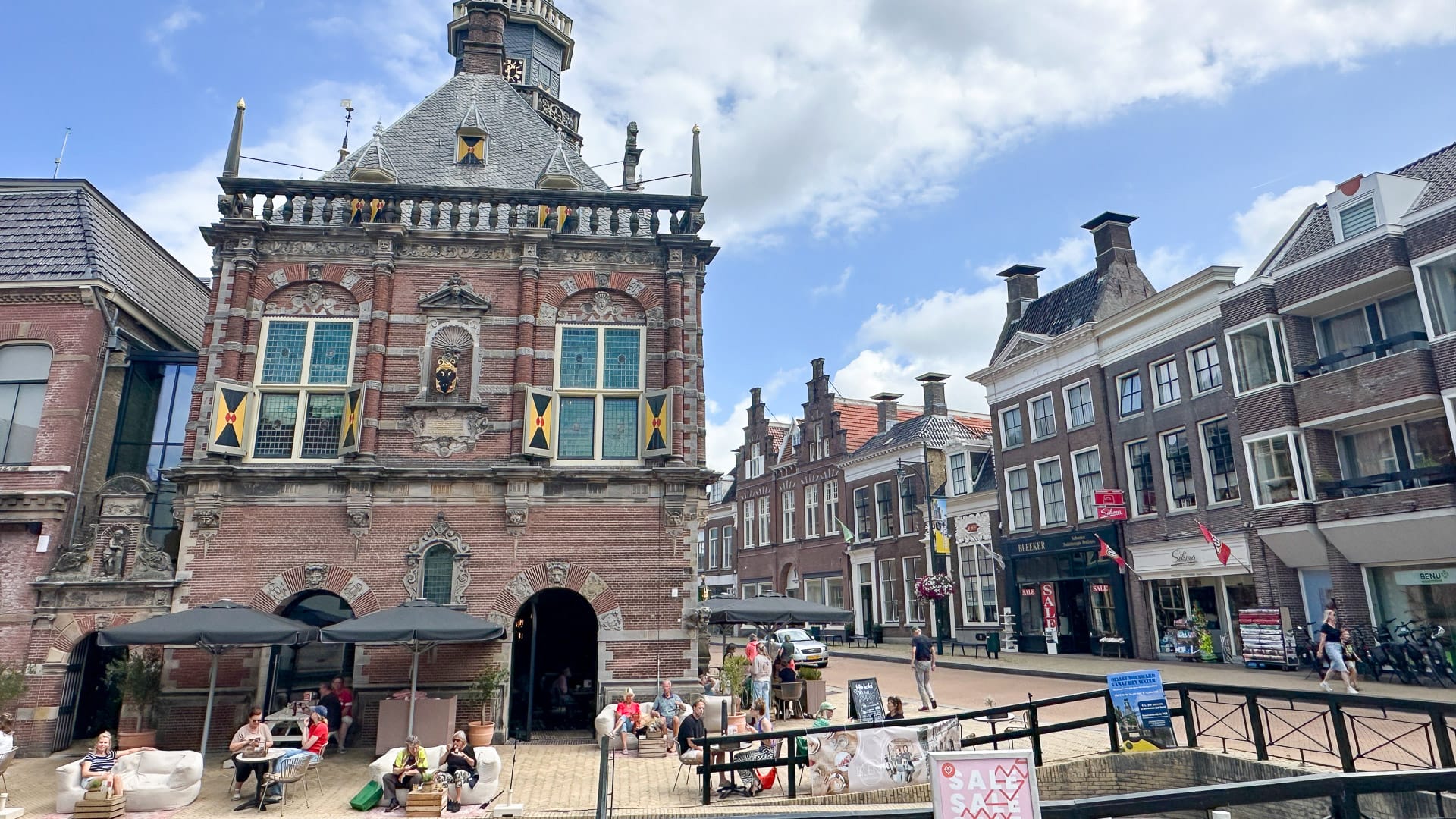
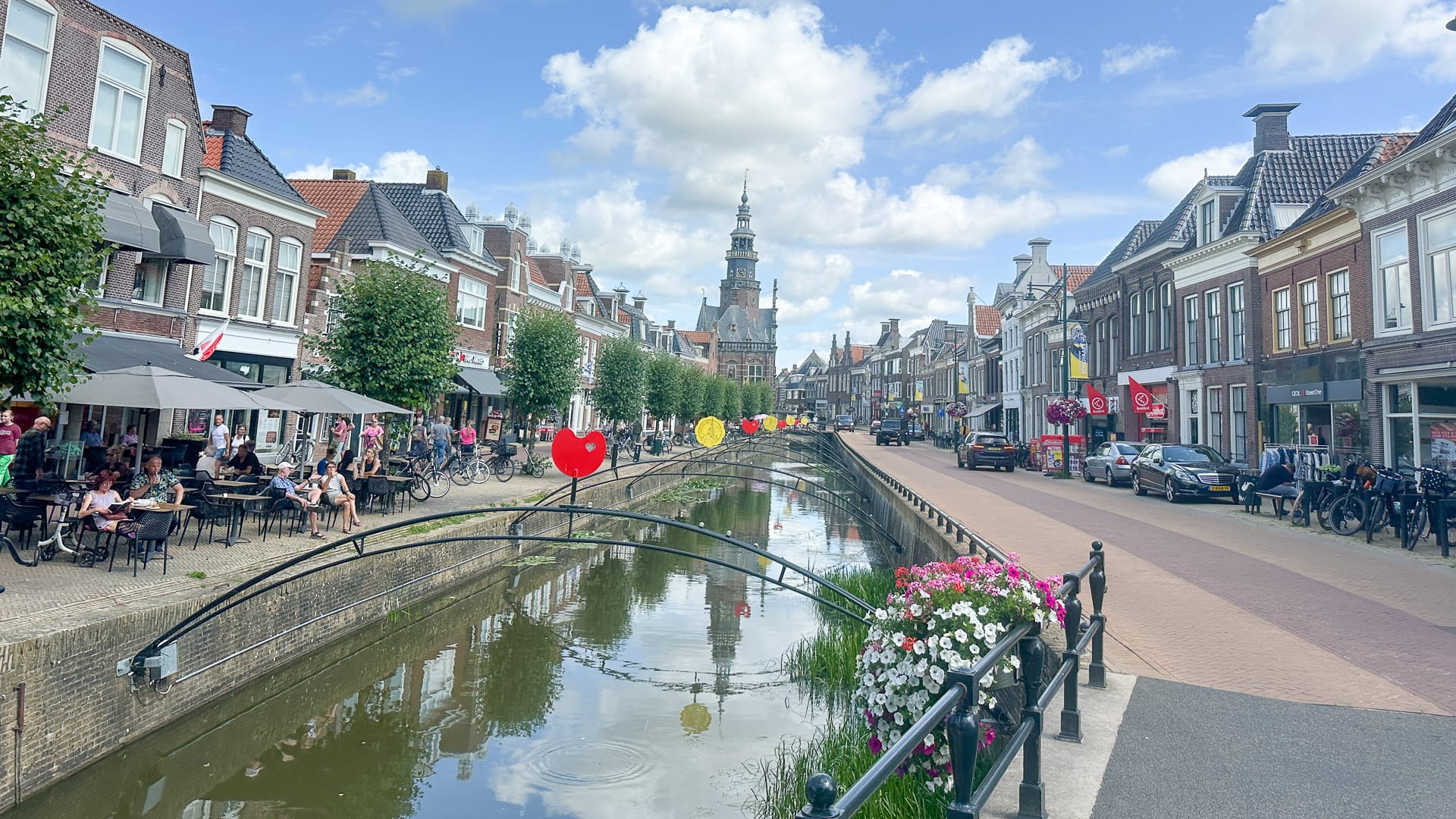
We stopped for a pancake in Bolsward, one of Friesland’s historic Eleven Cities. Its richly decorated former town hall was built between 1614 and 1617 in the distinctive Frisian Mannerist style. Once home to the council chamber and weigh house, it now forms part of the De Tiid cultural centre.
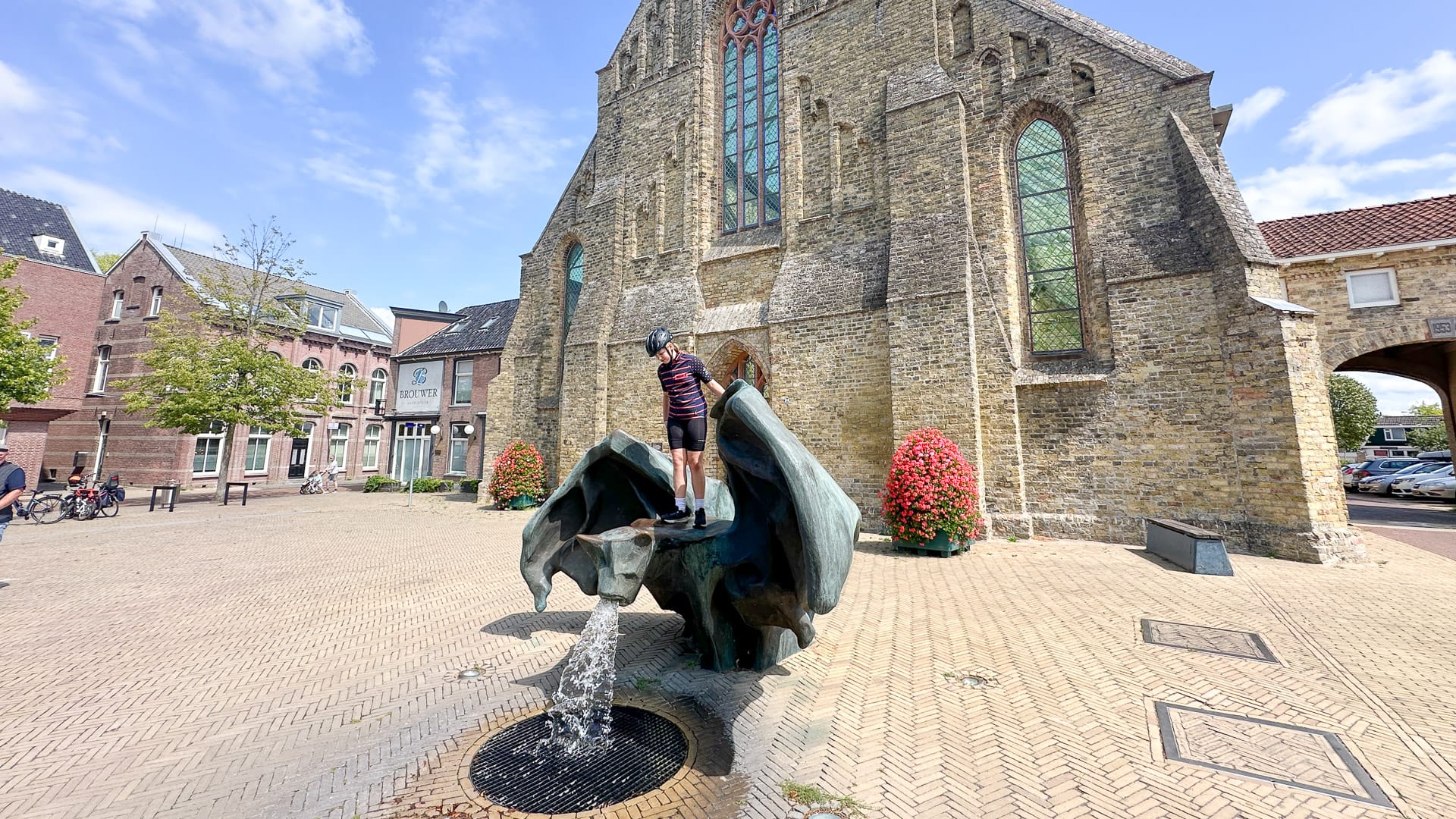
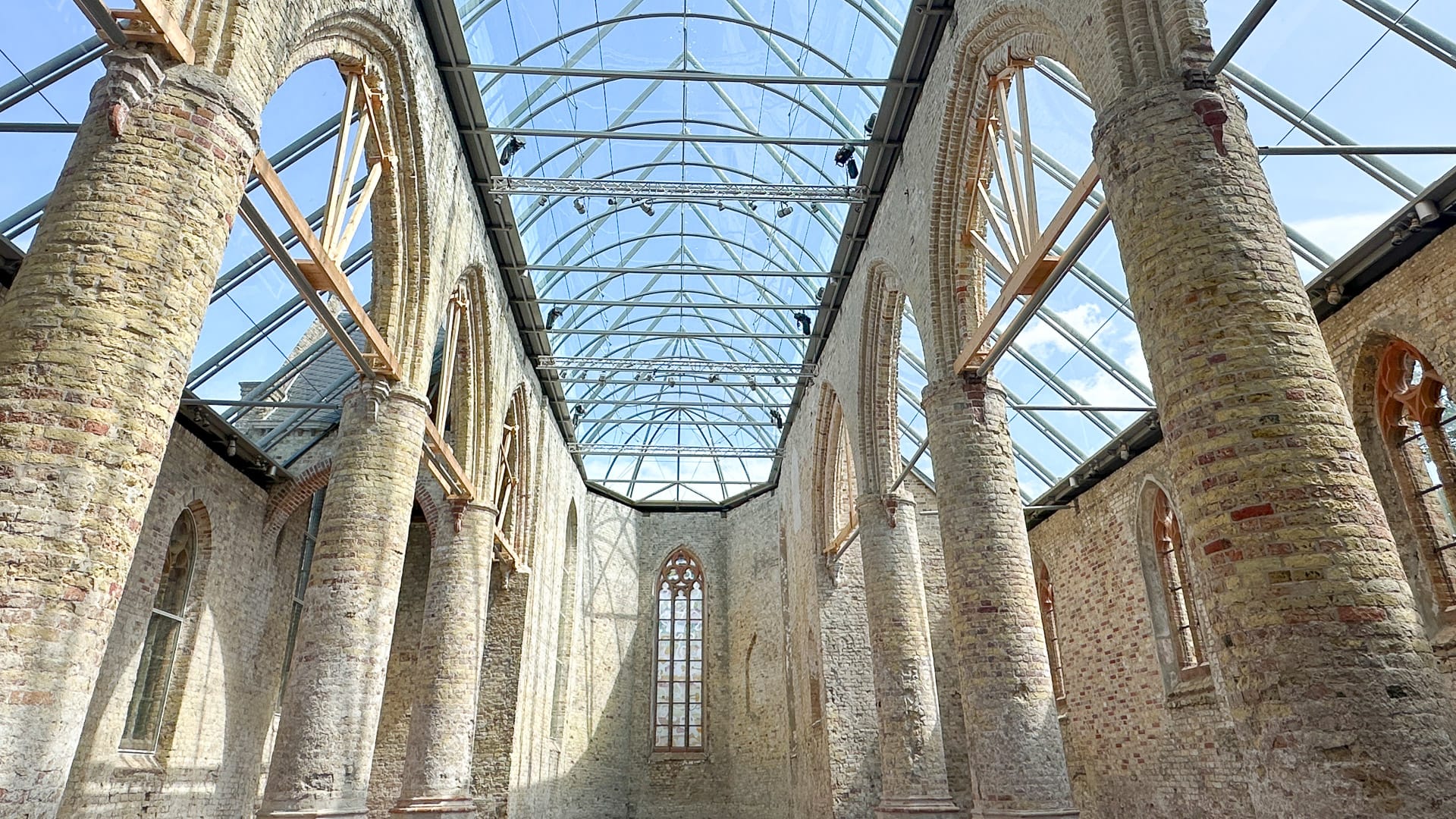
Nearby, we stepped beneath the glass canopy of the 13th-century Broerekerk. A fire destroyed the church’s roof in 1980; the transparent structure added in 2006 now shelters the surviving brick walls while preserving the character of the ruin.
By the time we left Bolsward, our raincoats were coming off and the suncream was going on. Such is the nature of the weather in the Netherlands!

Makkum
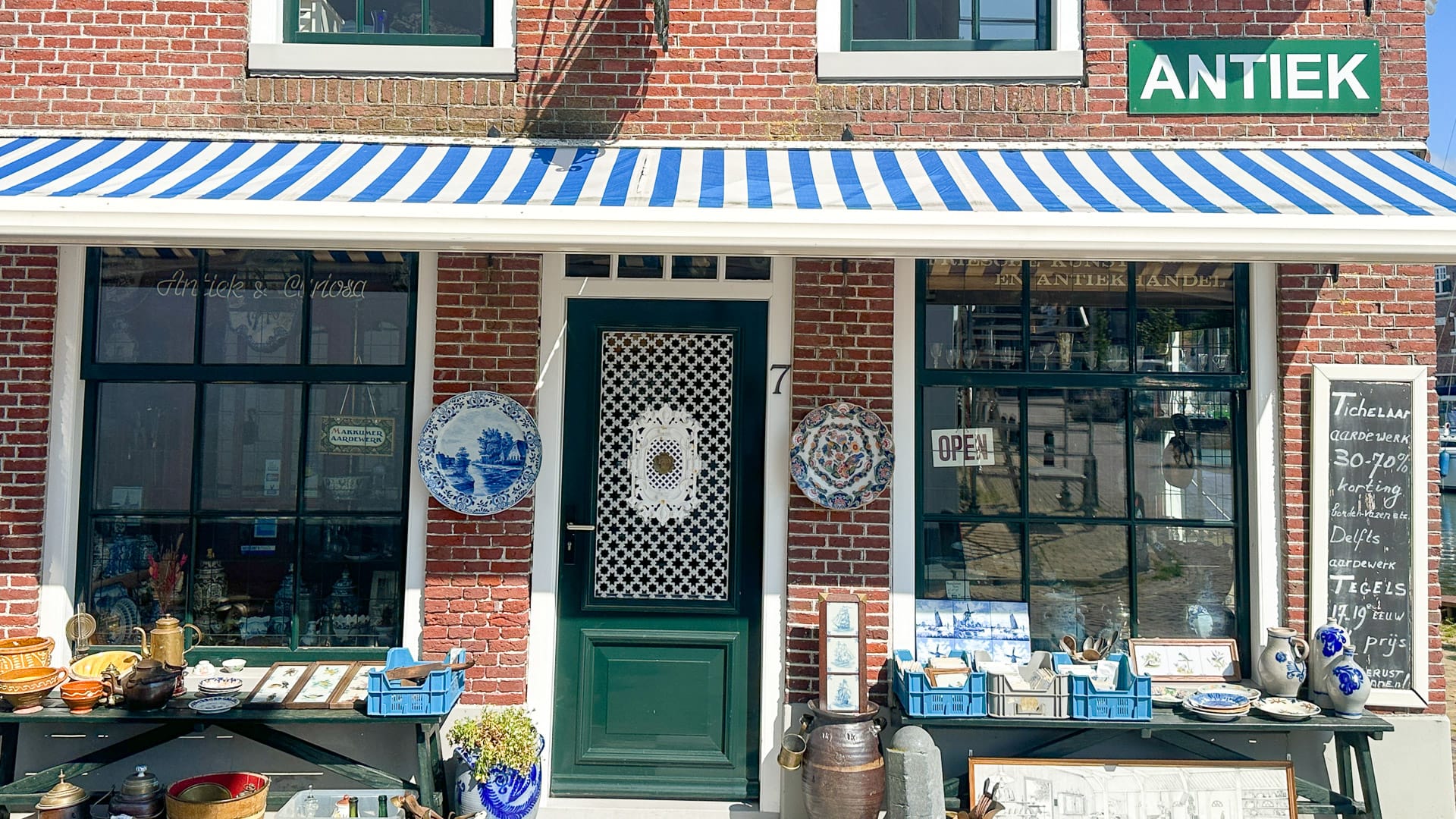
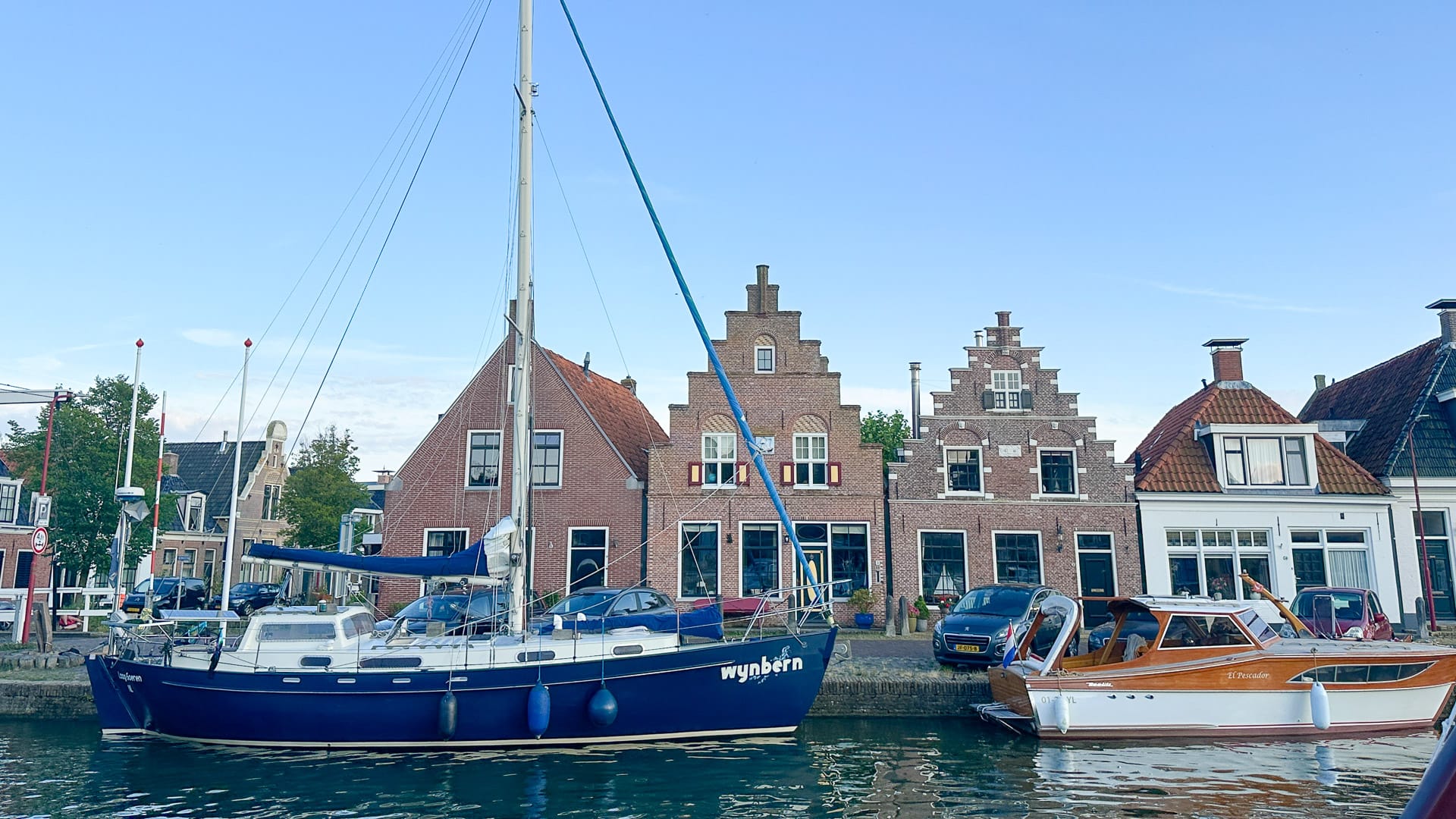
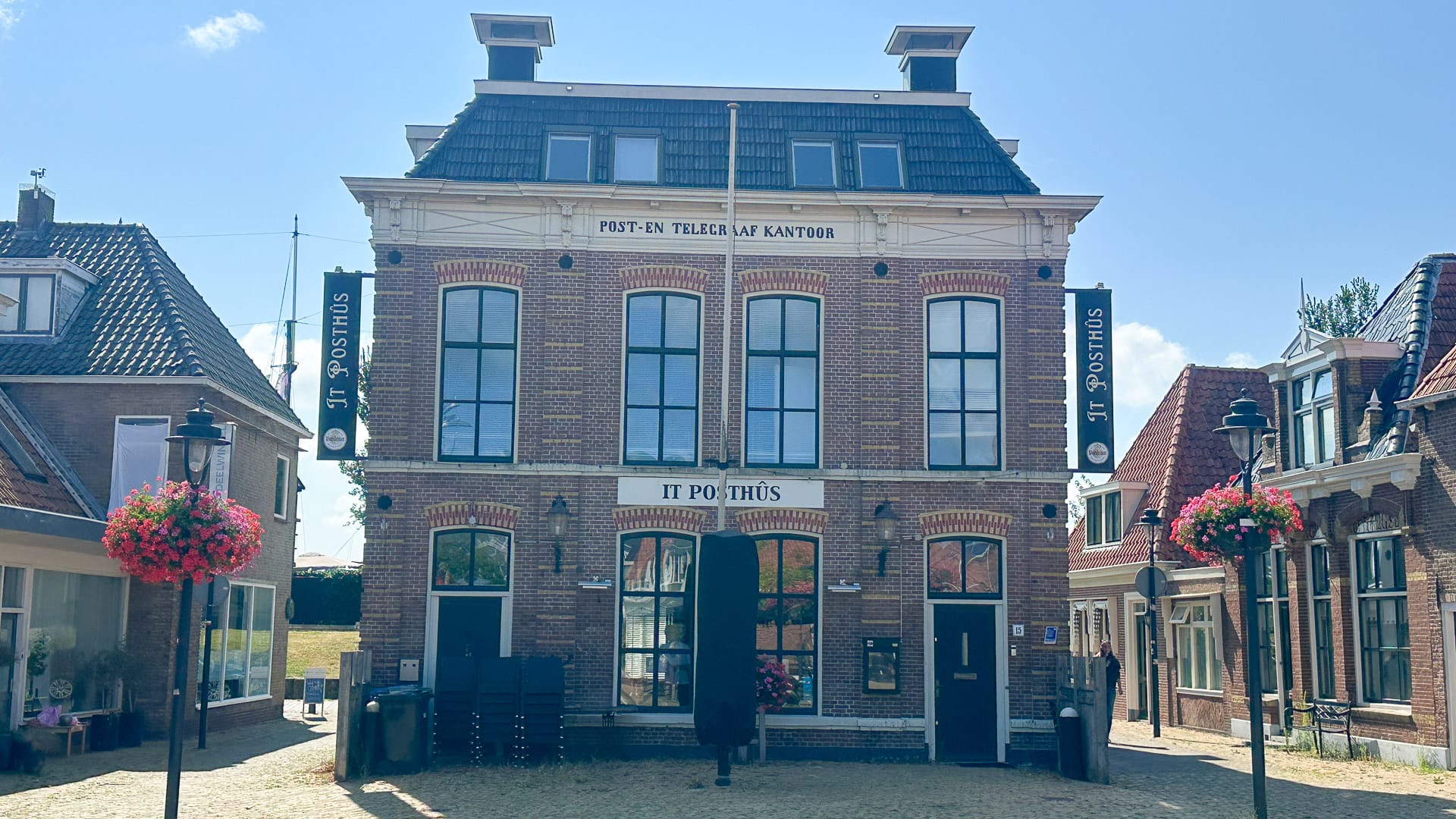
The day ended in Makkum, whose canal-side houses and central square retain traces of its past as a fishing, lime-working and trading settlement. The lime industry supported a major ceramics tradition; Royal Tichelaar, founded in 1572, remains the Netherlands’ oldest ceramic company.
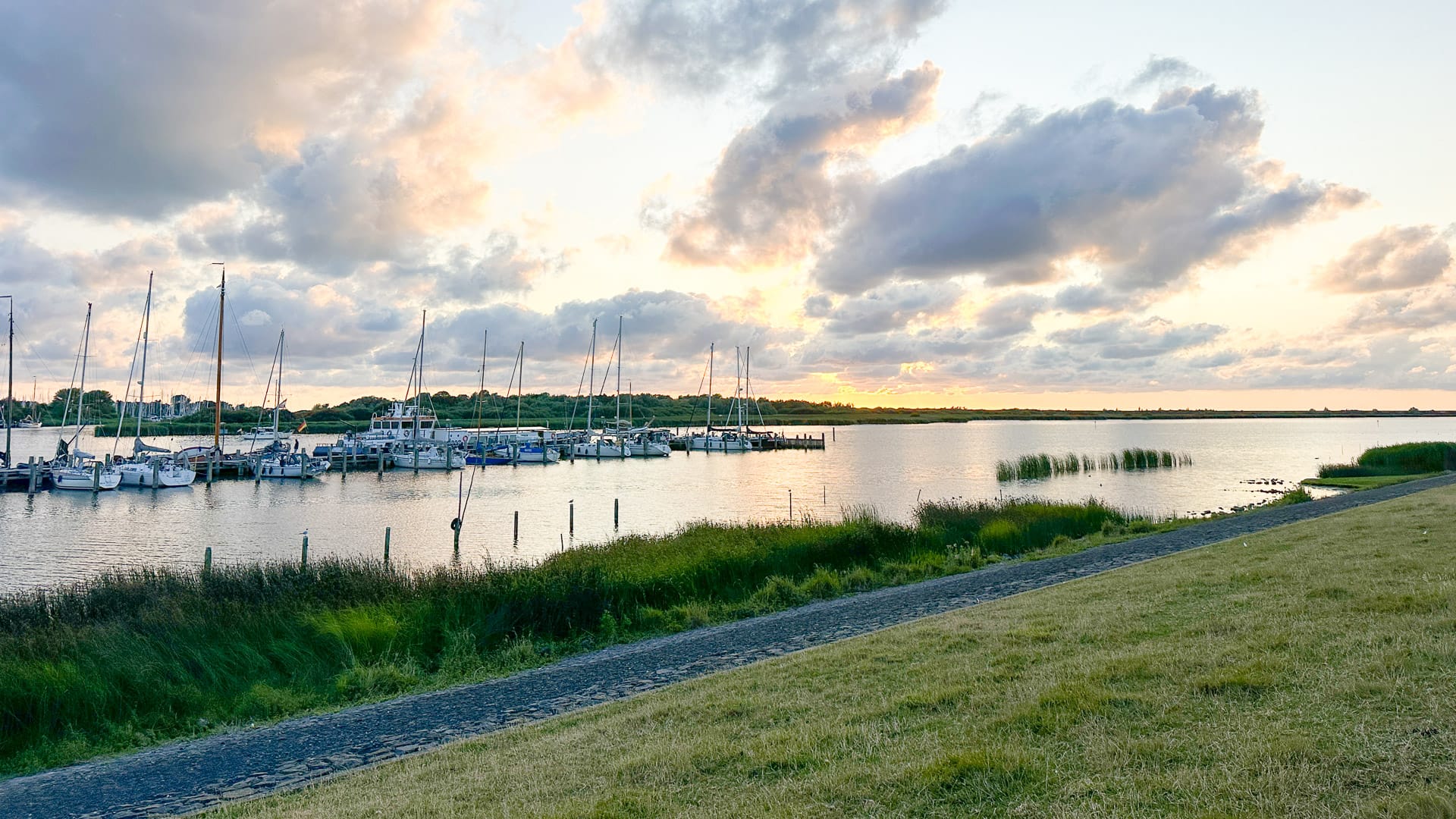
The orange evening sun shone down on the red brick houses flanking the canals, the sun dappled the glassy evening water and all felt relaxed and at ease.
Day 7: Makkum, the Frisian lakes, Stavoren and Enkhuizen
Route choices: 30 kilometres (with 76 metres of climbing) or 49 kilometres (with 131 metres of climbing). We rode the 49 kilometre route.
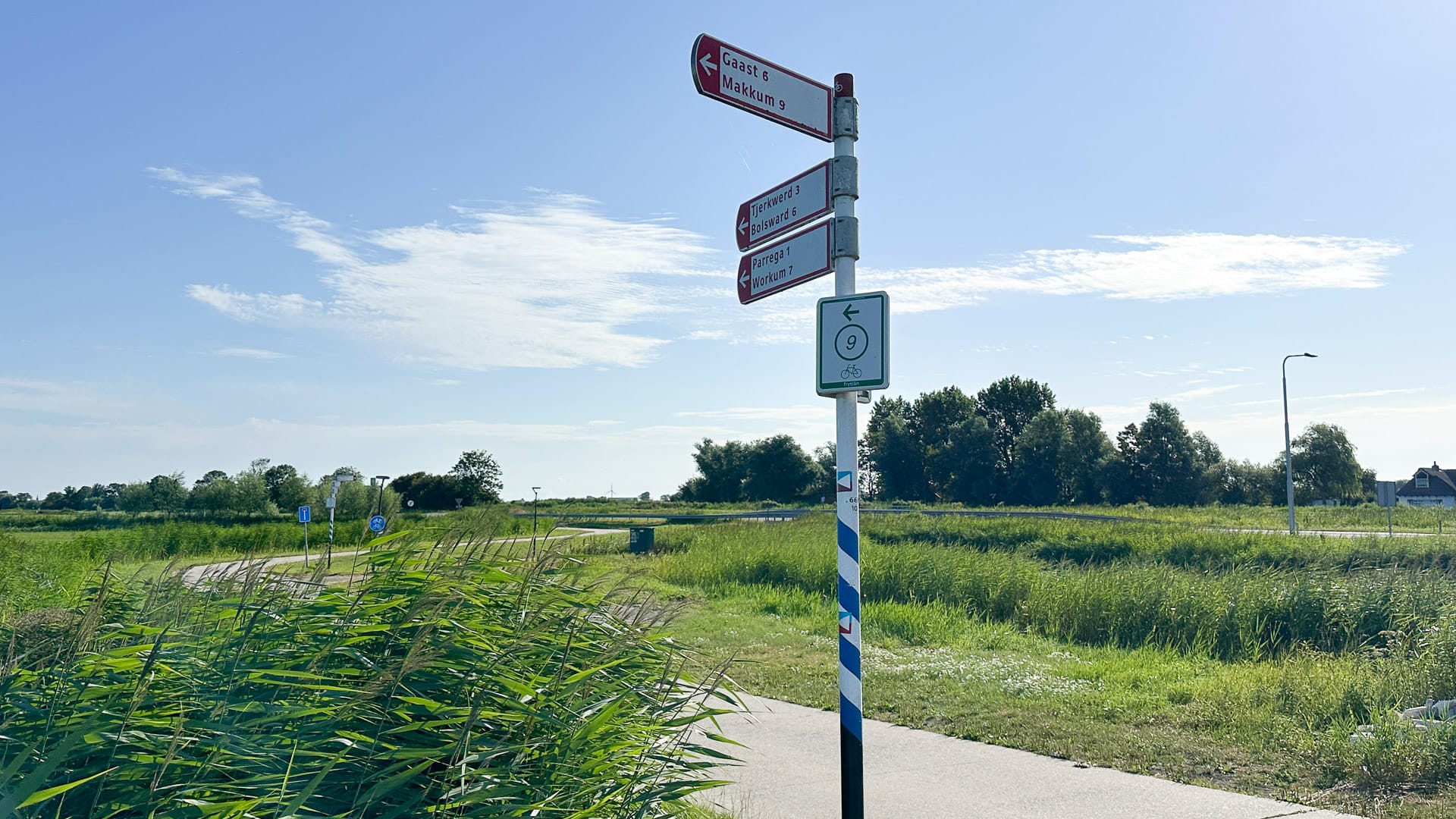
Makkum to Workum
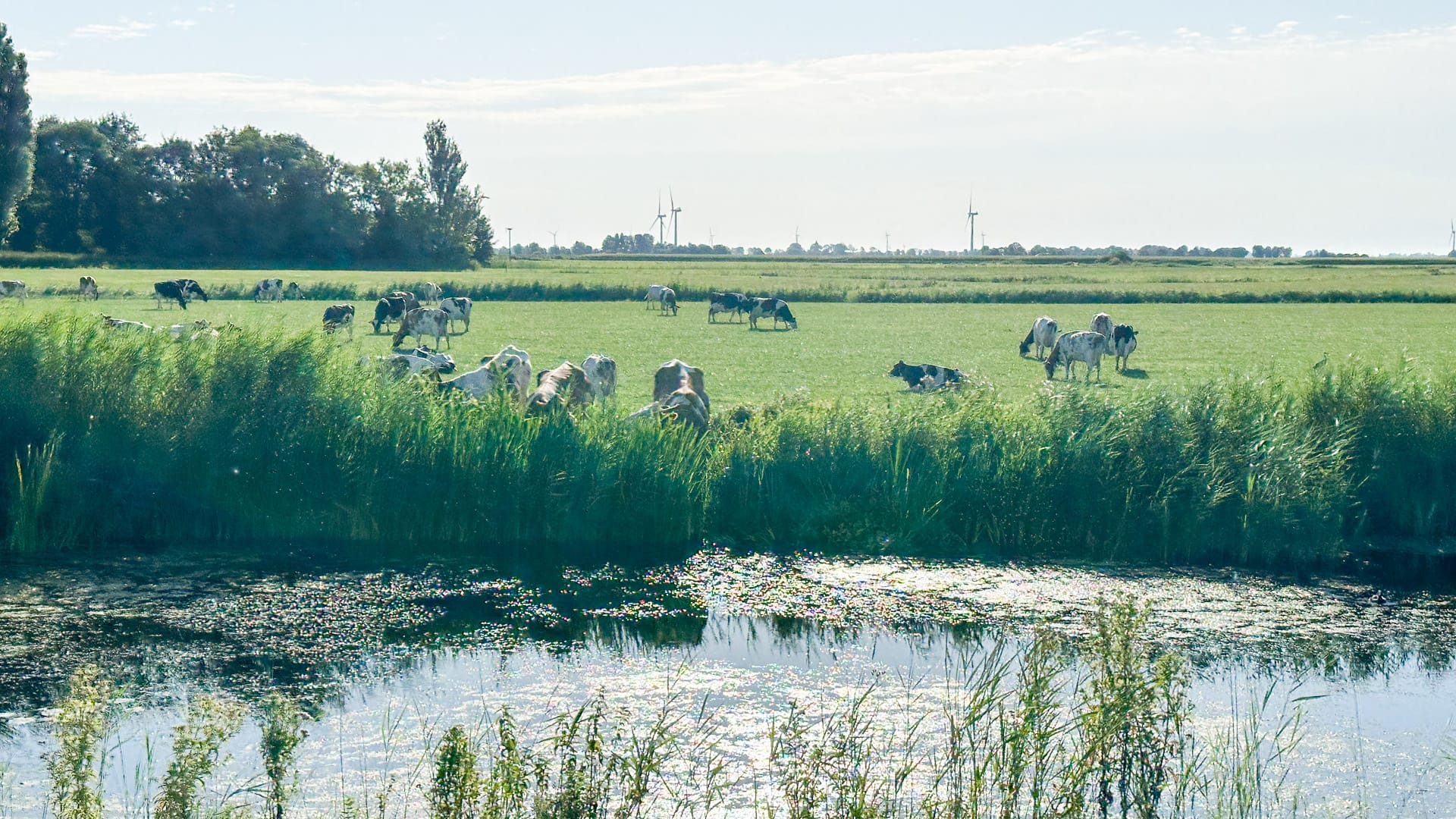
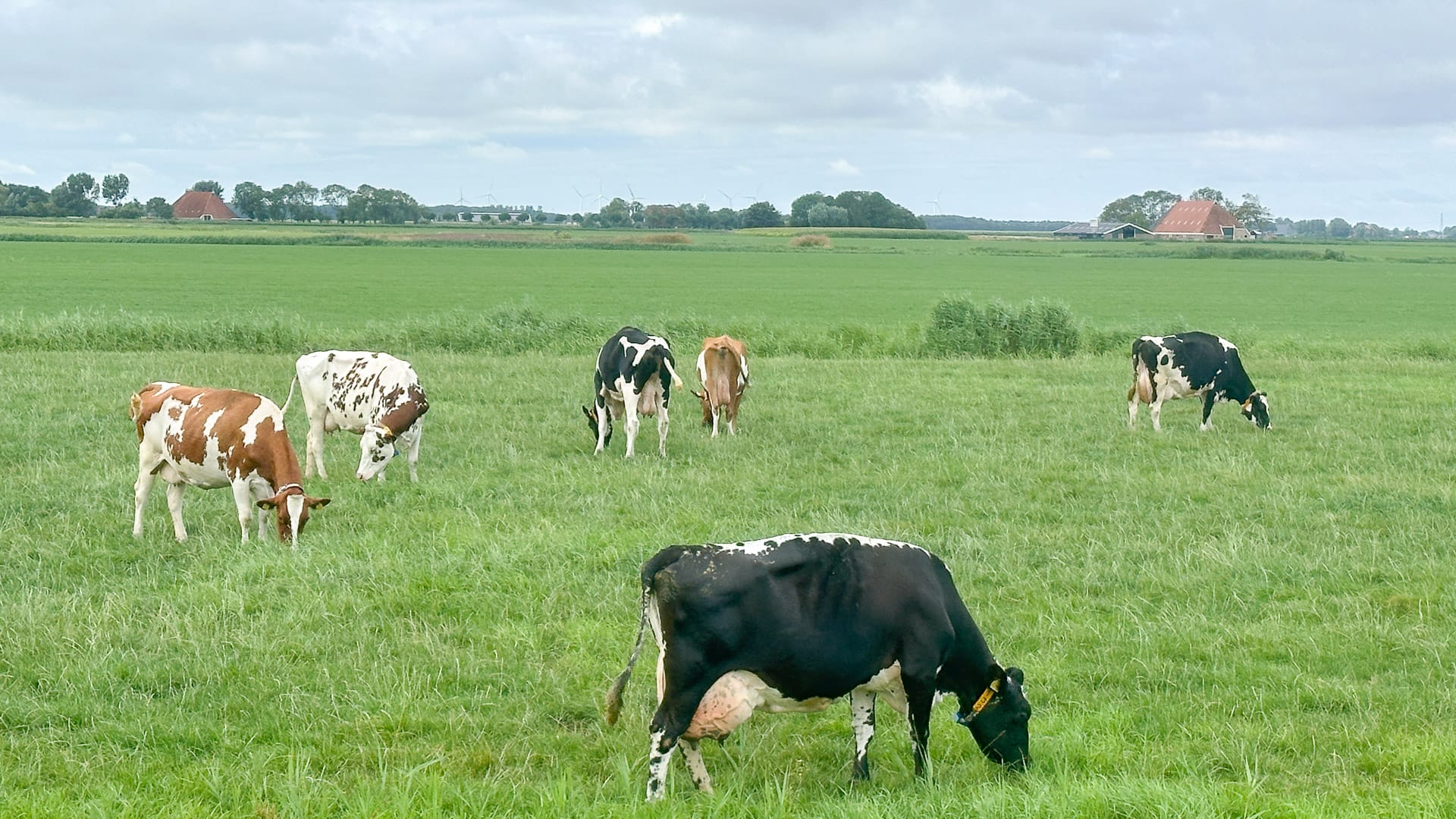
Leaving Makkum, our route wound around canals and dikes through intensely green fields. Cows, horses and sheep grazed beside enormous farmhouses with steep tiled roofs.
Near Aldegea, broad lakes appeared, dotted with the shallow-draught sailing boats typical of Friesland. A tiny ferry carried us and half a dozen other cyclists over the channel near Gaastmeer before we continued to Workum, another of the Eleven Cities. Its central square, De Merk, is enclosed by handsome old brick buildings.
Hindeloopen and Stavoren
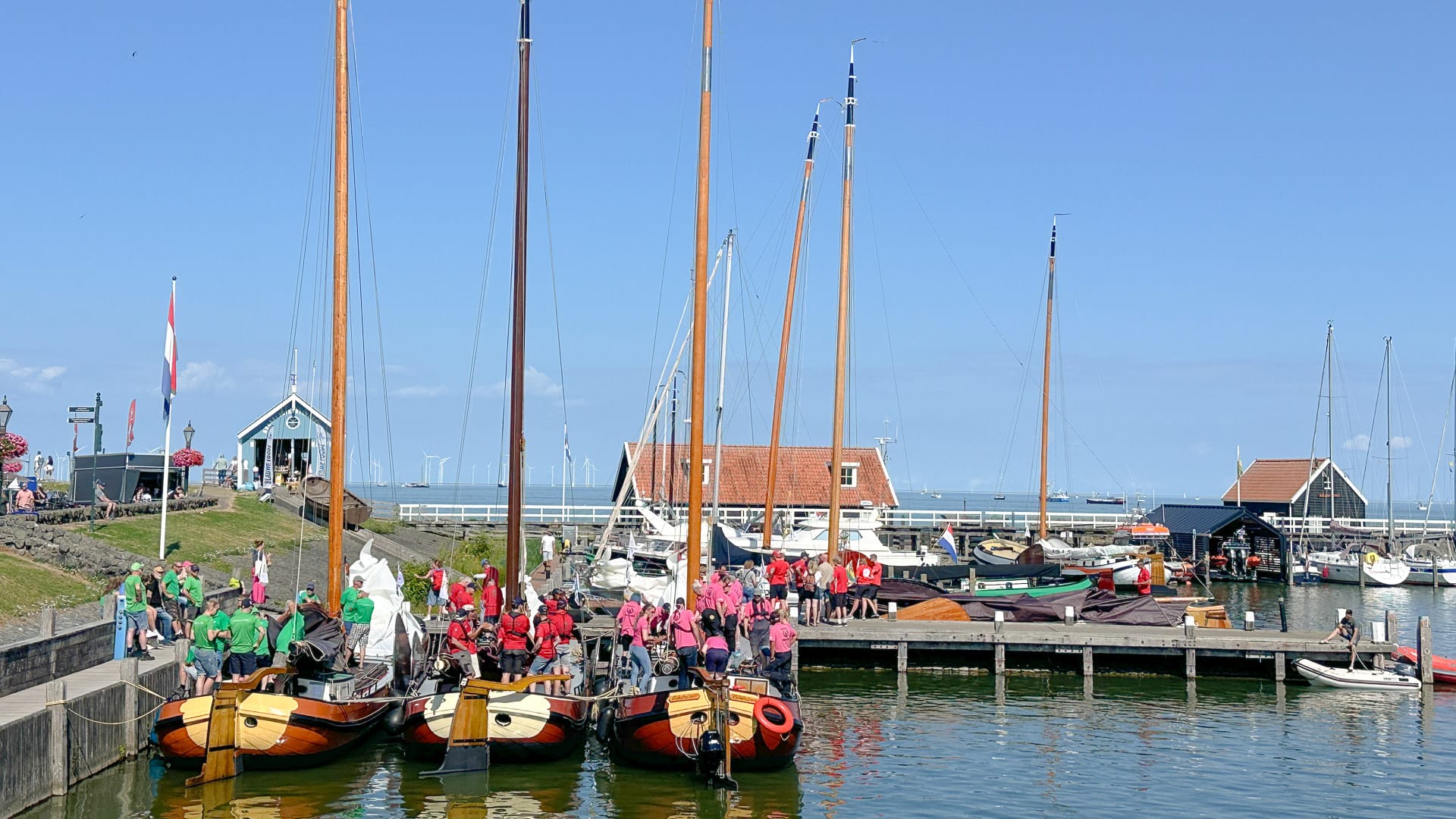
A few kilometres later, Hindeloopen was busy with a regatta. The old port is known for its distinctive decorative painting, but on a sunny Saturday the boats and spectators commanded most of the attention.
The last kilometres followed the IJsselmeer dike to Stavoren.
From there, the ship crossed the lake to Enkhuizen for the final night aboard. Sadly, we were not aboard! Due to family commitments, we had to leave the boat at Stavoren and so weren’t around for the final sailing back to Enkhuizen that evening.
Day 8: departure from Enkhuizen
Breakfast and goodbyes followed by departures home.
A wonderful end to a wonderful trip!
Sponsor Message
Want to find out more about Boat Bike Tours’ Wadden Sea tours?
Boat Bike Tours' website shares more about the trip we went on here: Boat Bike Tours' Netherlands Premium.
Prefer to explore but don't need a guide aboard? Boat Bike Tours also offers an independent Sail & Bike Wadden Sea tour, without a dedicated cycling guide.
Or fill in the enquiry form below and we’ll send your question directly to Boat Bike Tours.
Got a question for Clare Dewey from Boat Bike Tours?
Fill out this form and we will pass it to Boat Bike Tours who aim to reply (within 24 hours wherever they can!)
What was it like aboard the Leafde fan Fryslân?
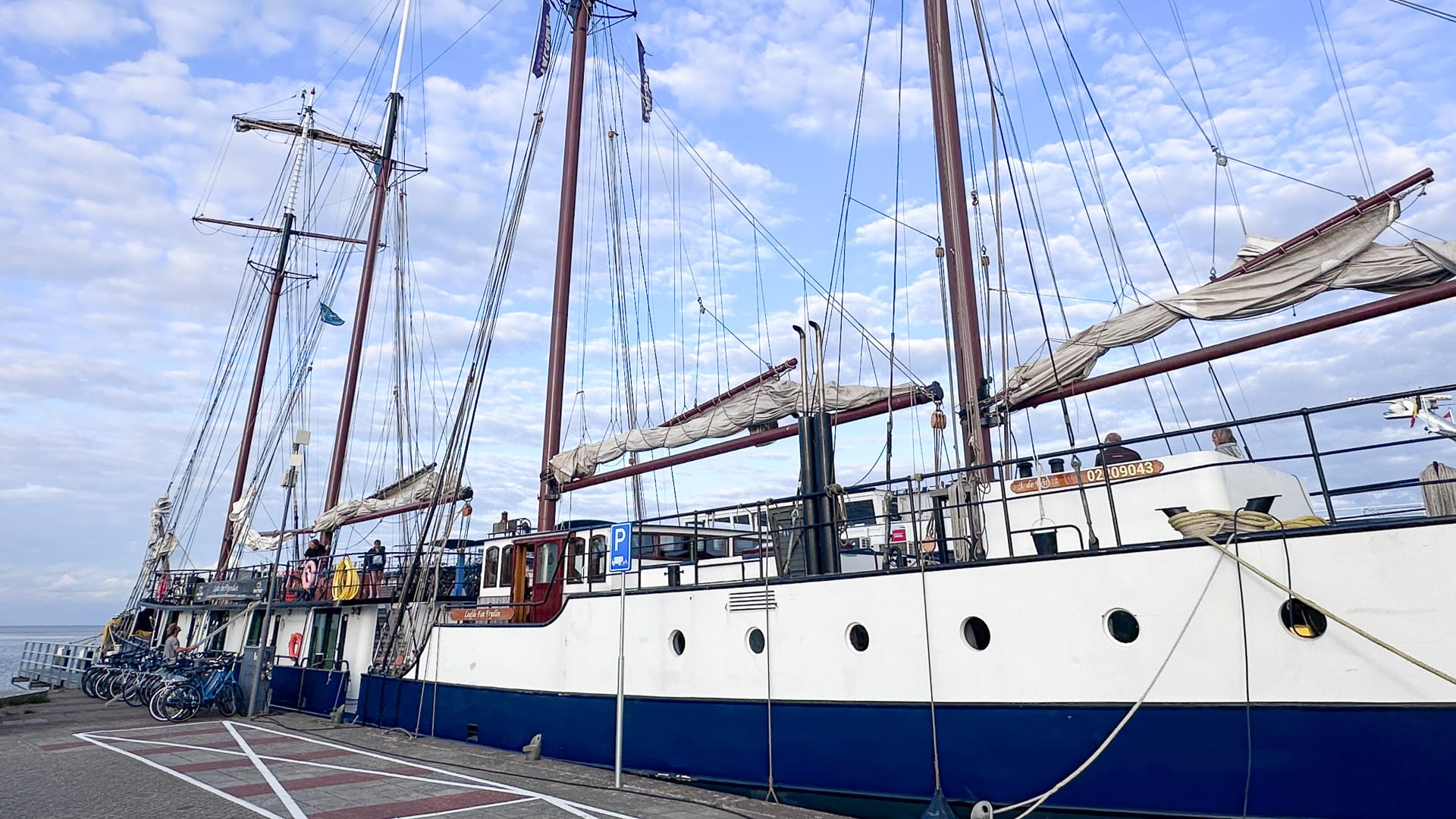
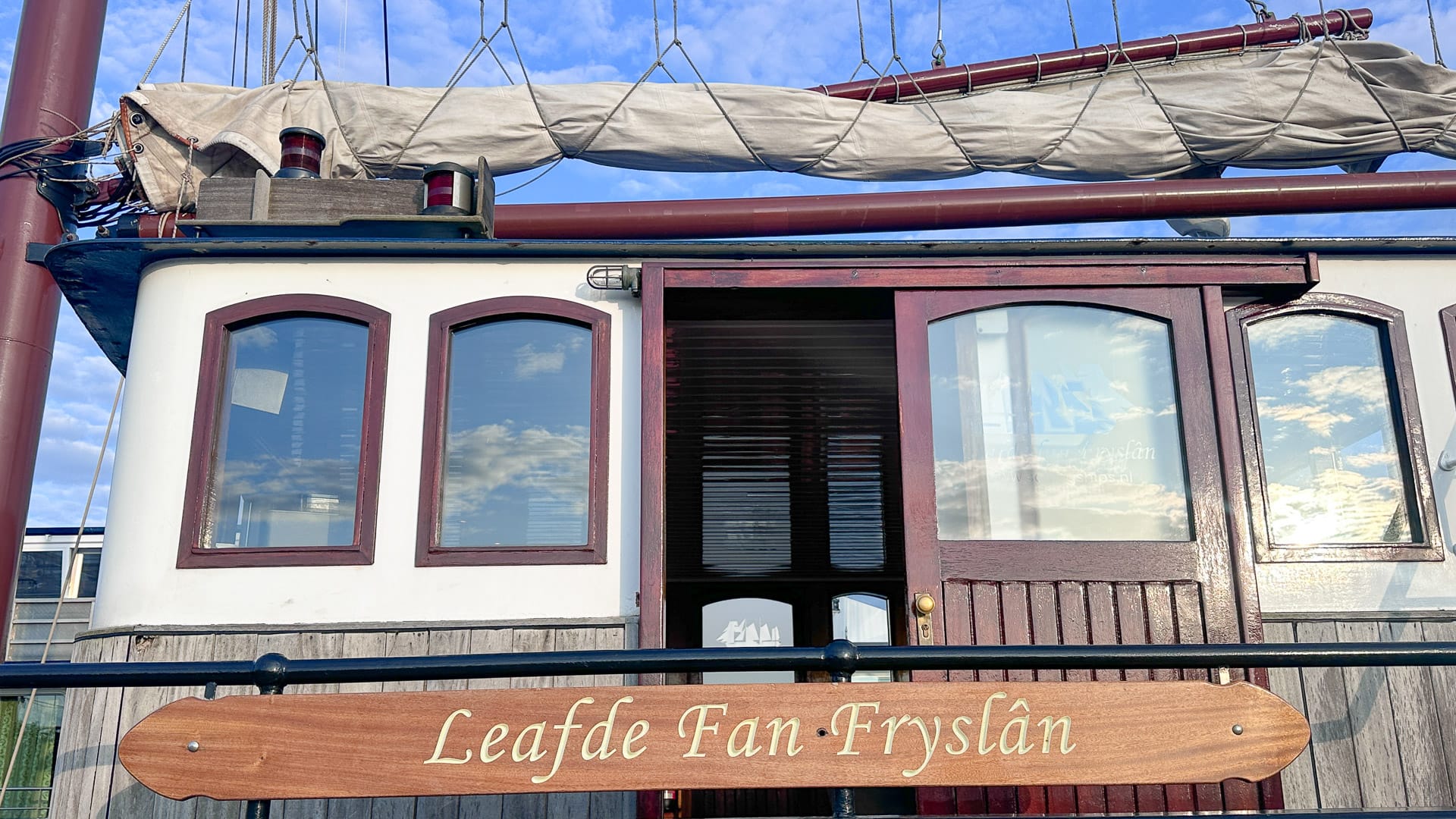
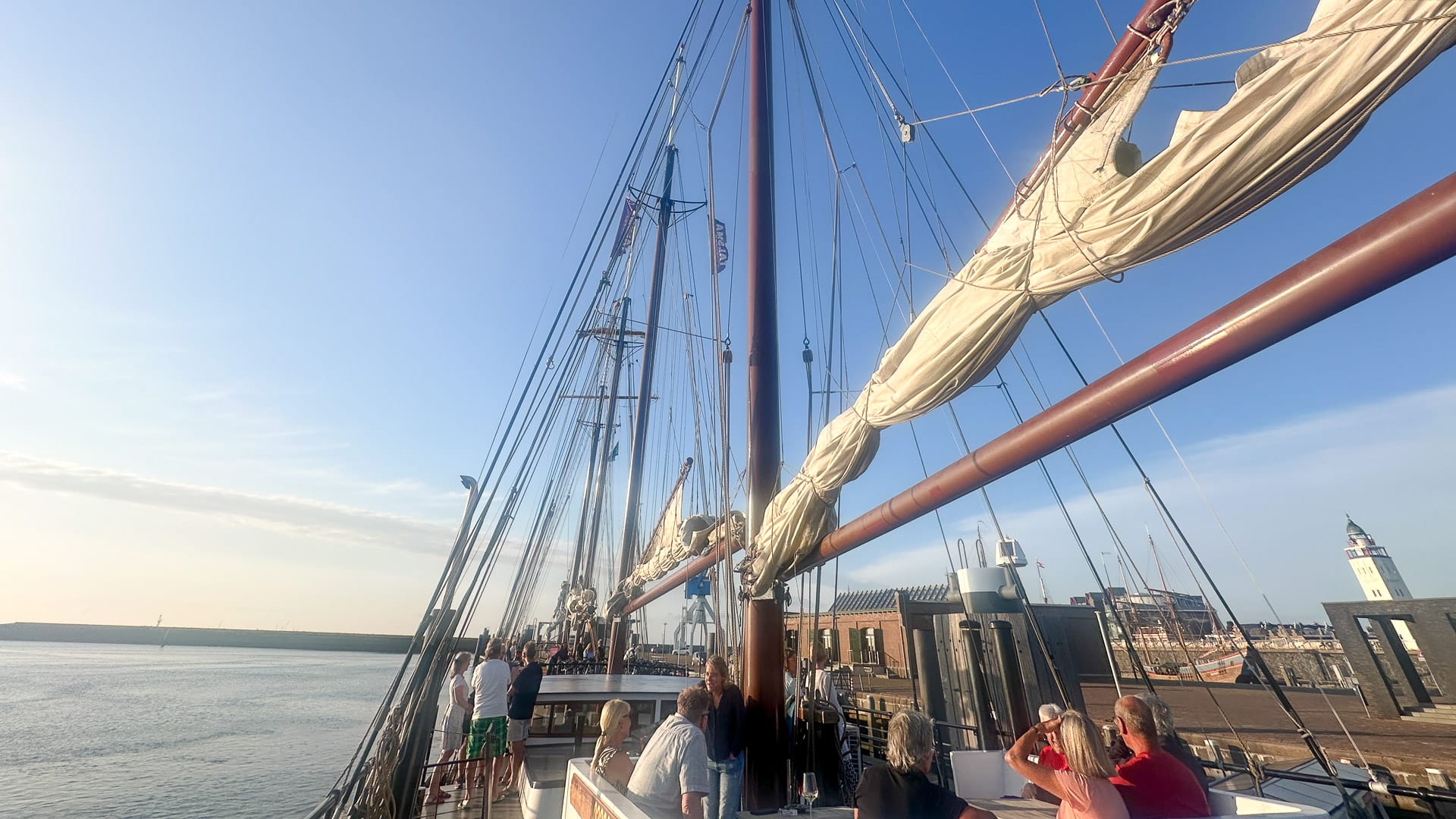
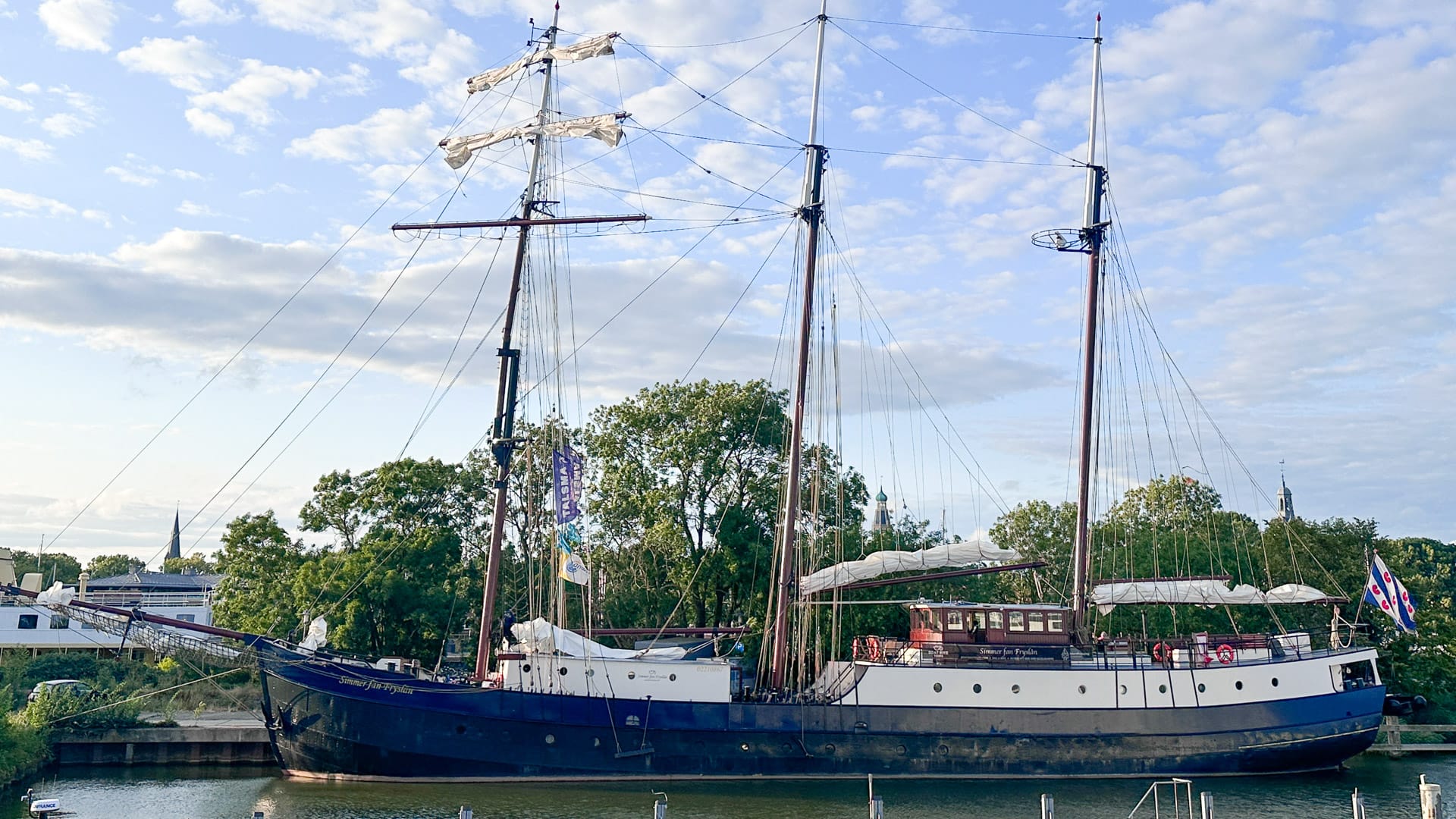
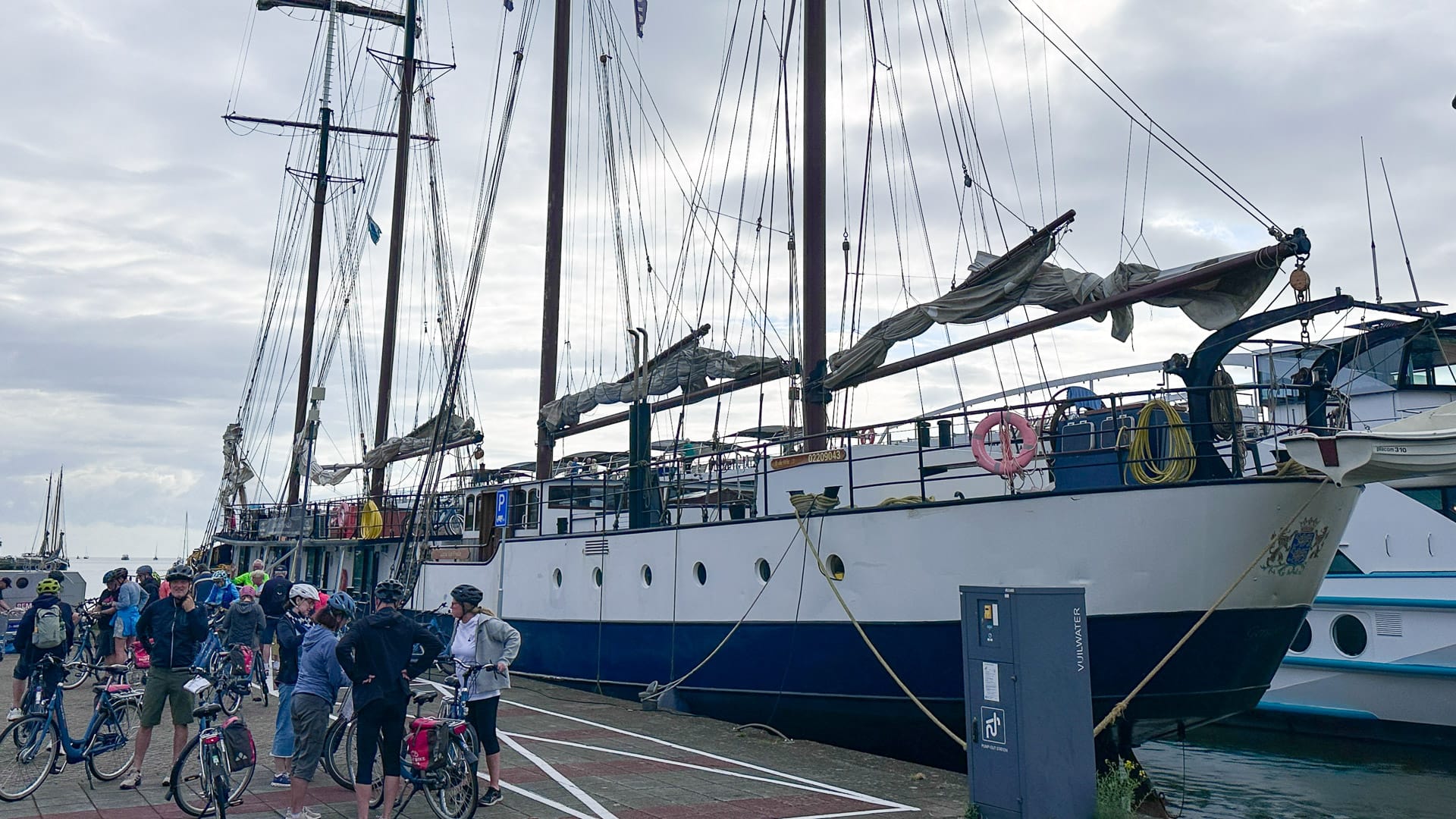
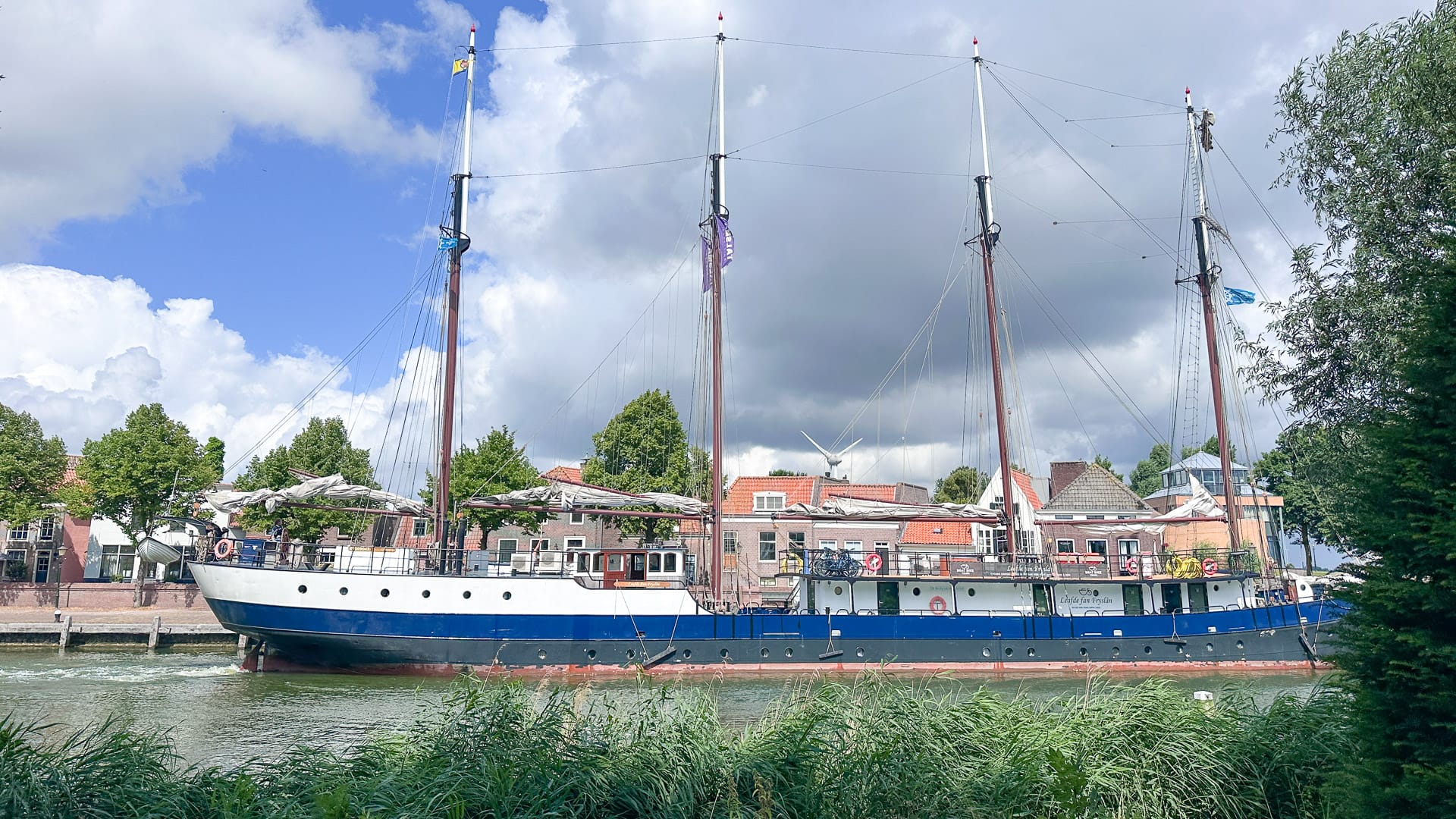
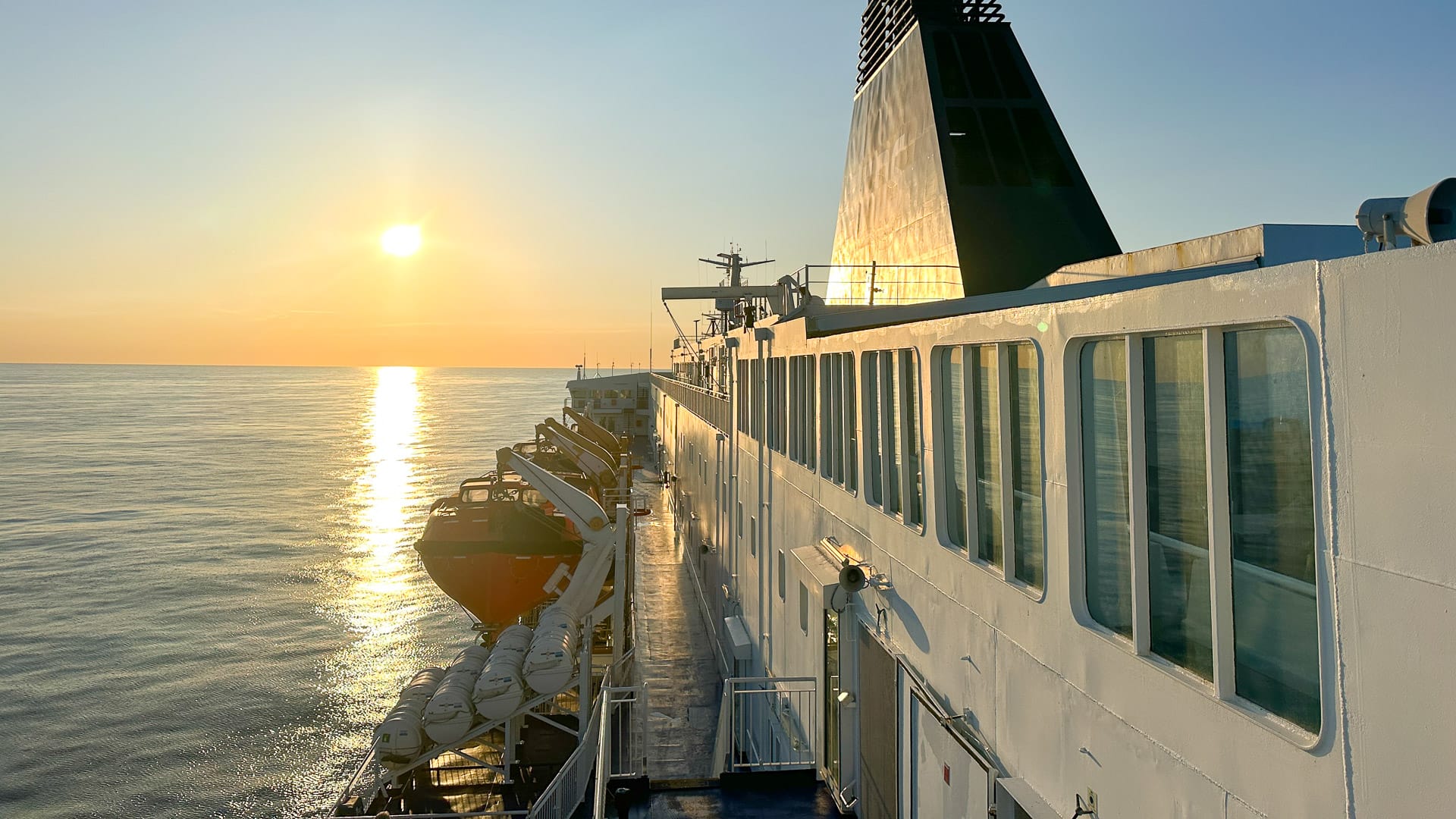
The Leafde fan Fryslân is a 64 m schooner with four masts, 760 m² of sail and space for up to 38 passengers in 20 cabins. It entered service for sail-and-bike trips in 2018 and was lengthened by 14 m in winter 2023-24, when a fourth mast was also added. This added the spacious suites above deck.
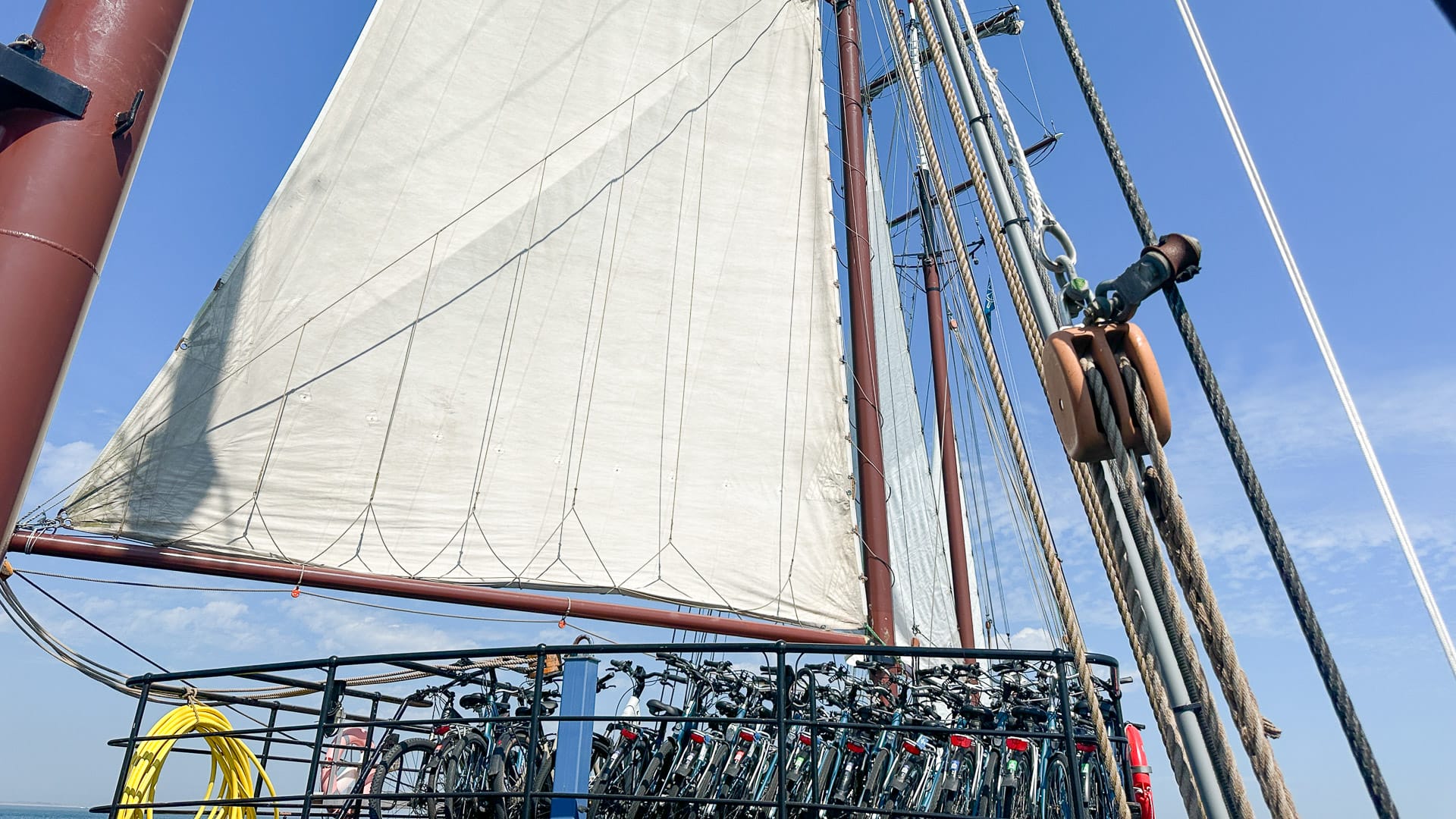
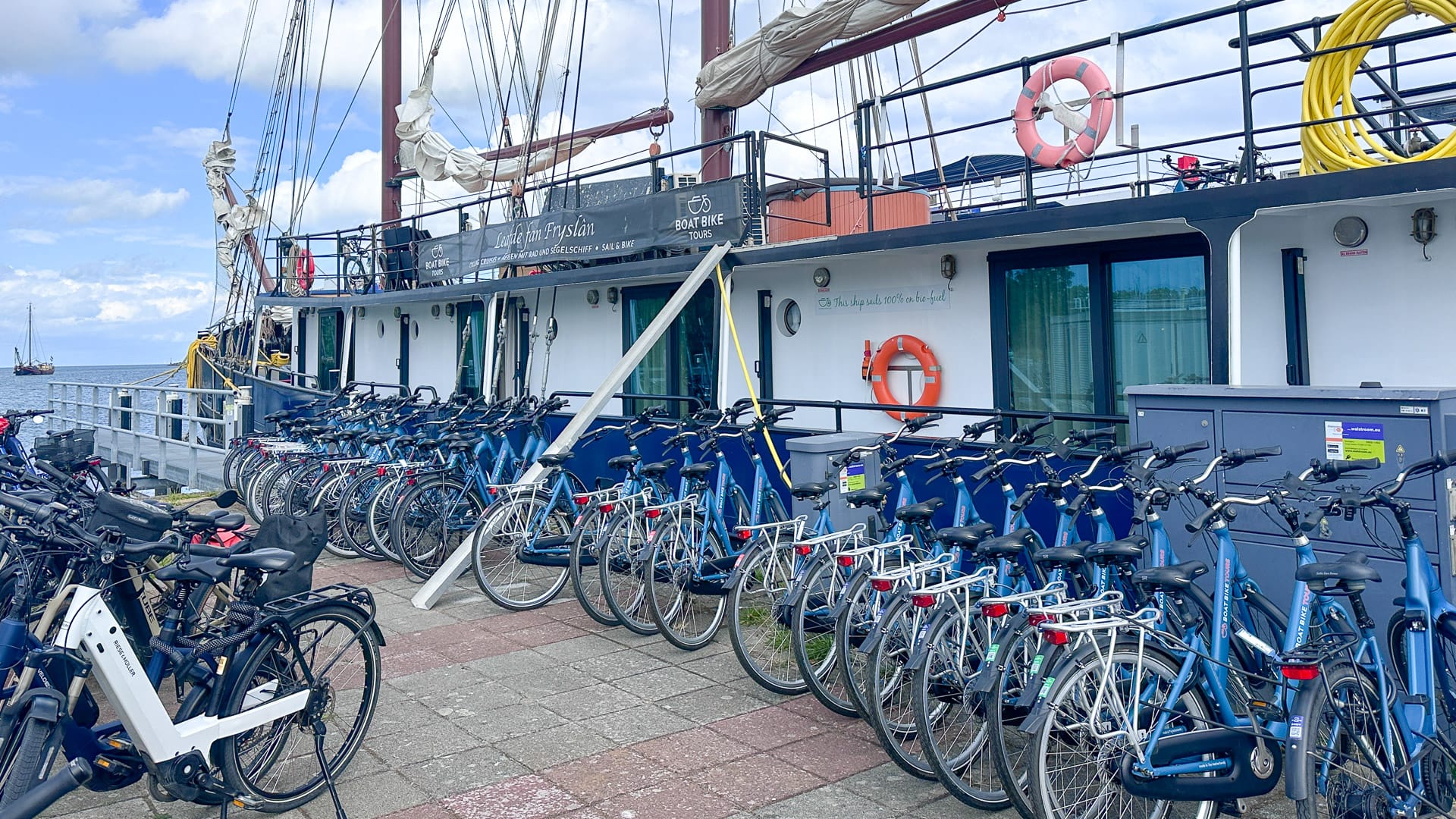
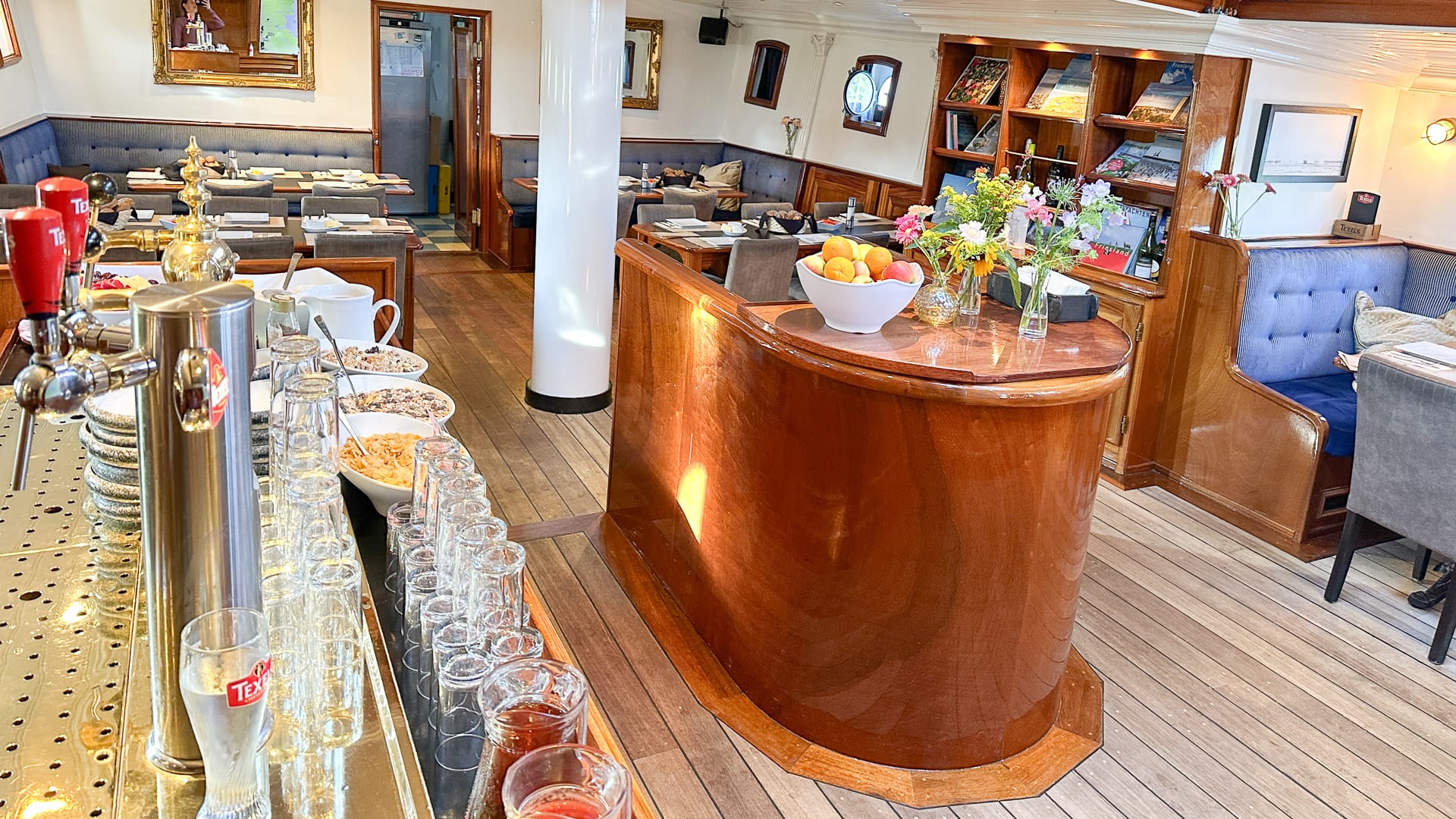
The main indoor spaces are an air-conditioned restaurant on the lower deck and a panoramic lounge and bar in the wheelhouse. Outside, the deck provides seating and the best sense of the landscape; there is also a jacuzzi (though sadly it wasn’t operational while we were there). Bikes are stored aboard the deck between rides.
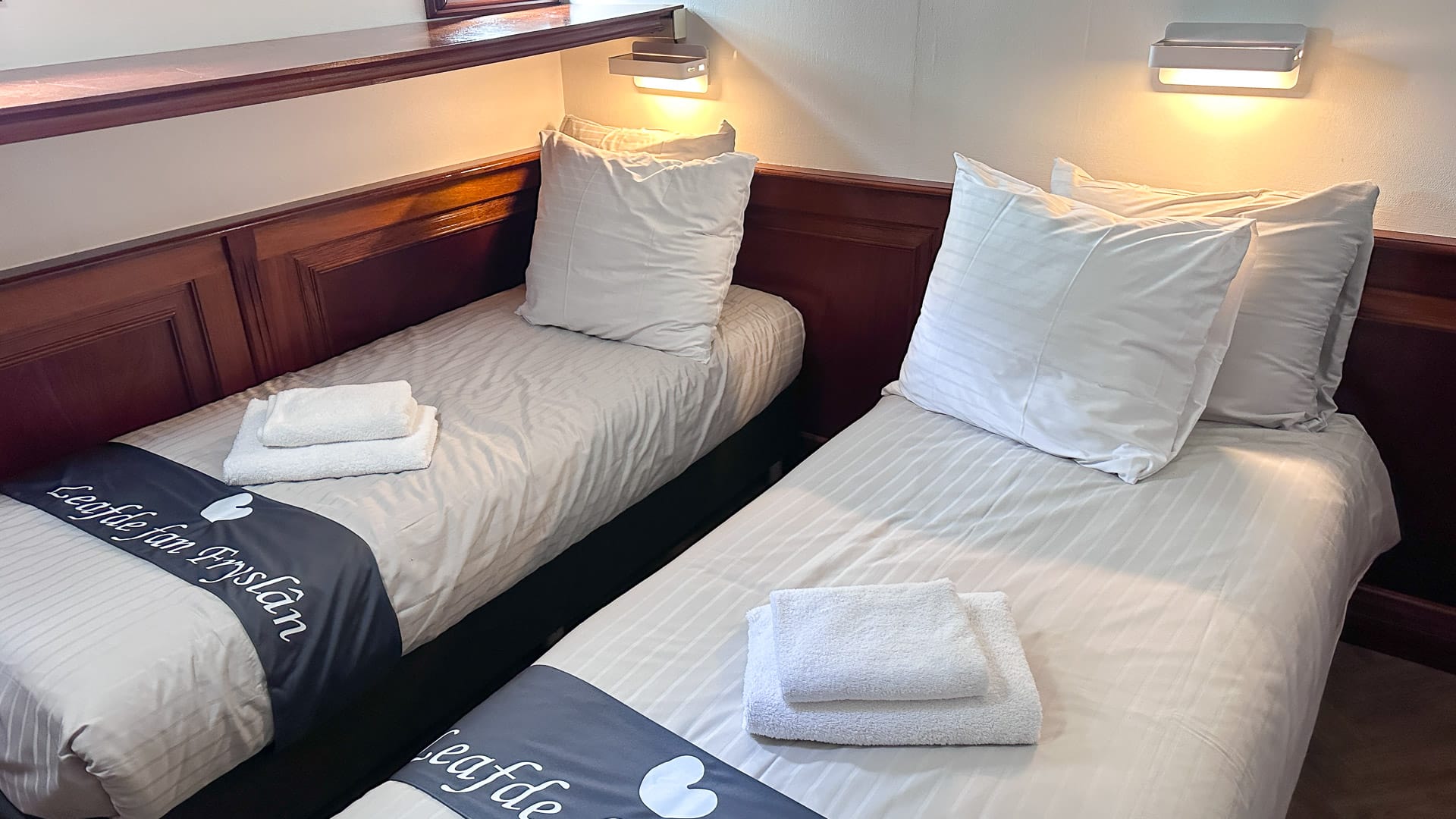
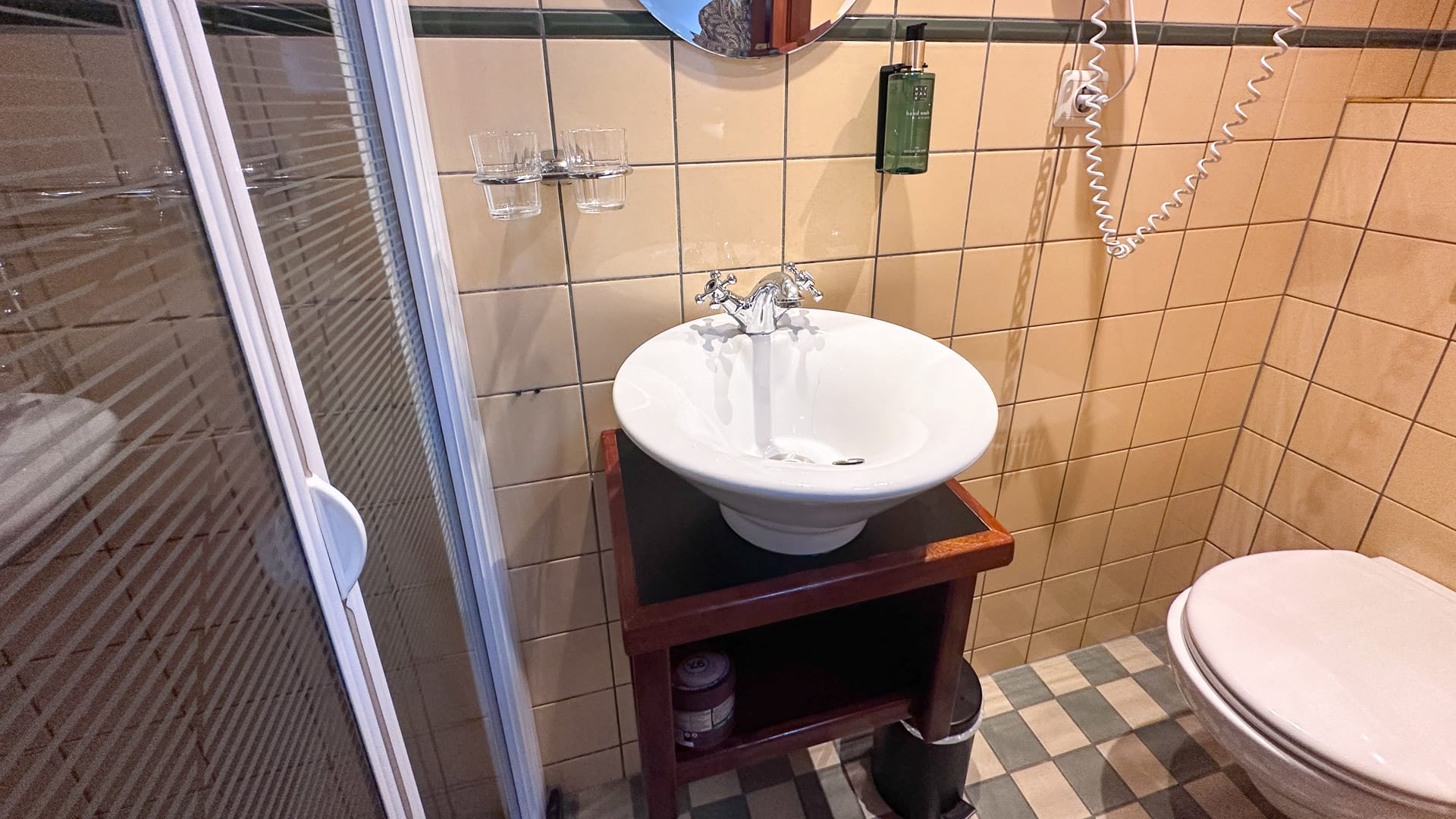
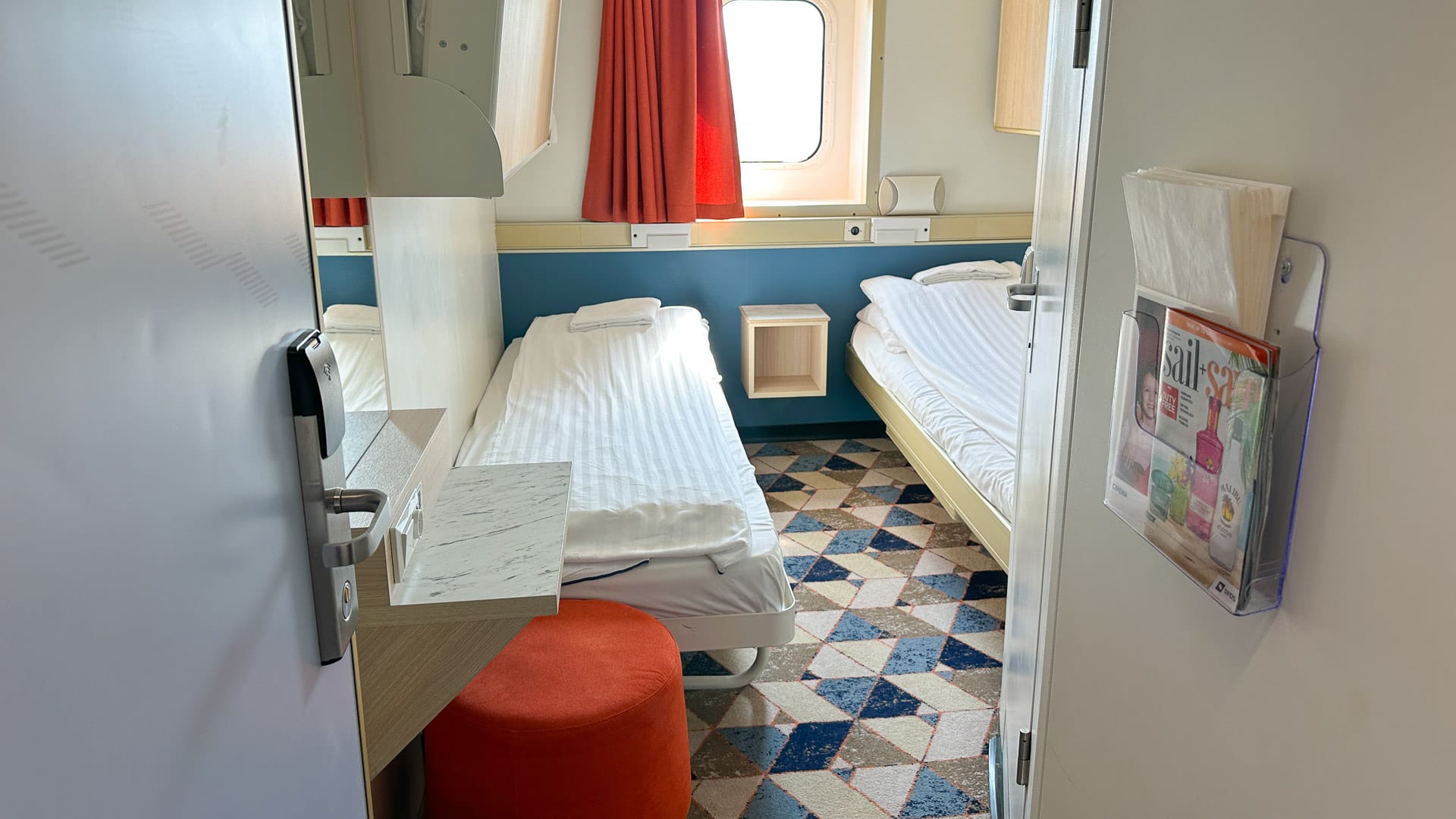
Cabins vary considerably. The lower deck has twin, single and junior-suite options from 7 to 12 m²; the four upper-deck suites are 18 m² and include a small private balcony. All have an en-suite private shower room, air conditioning, a hairdryer, safe and 230 V socket. Check the deck plan carefully, especially if space, stairs or natural light matter to you.
You can see the tour information, current cabin options and ship details on Boat Bike Tours’ website.
The social side
On our departure there were 34 guests, mainly from Germany and the Netherlands, with the British and Canadian contingent limited to three (my daughter and me and one other person). The group consisted largely of couples, alongside solo guests and one party of six.
For plenty of guests, it was their first trip with Boat Bike Tours; for some, it was their first cycle tour of any kind.
Meals
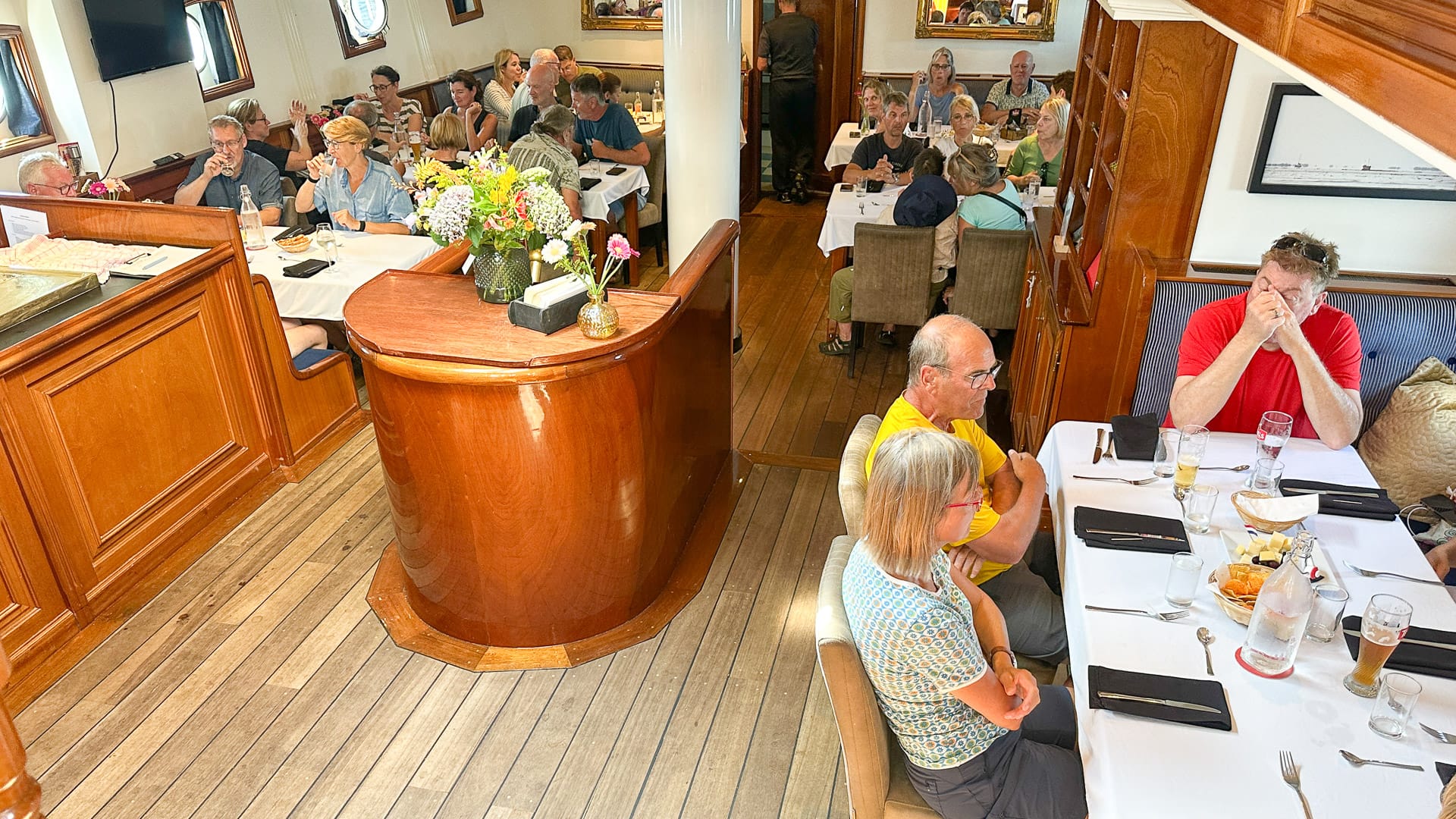
Breakfast was generally at 08:00, cycling began around 09:00 and dinner was at 18:00. Those fixed points gave the days structure, while the lounge, deck and shared tables created easy opportunities to talk. English was not always the common language, so the atmosphere varied by table, but the communal format was welcoming rather than forced.
Food aboard and along the route
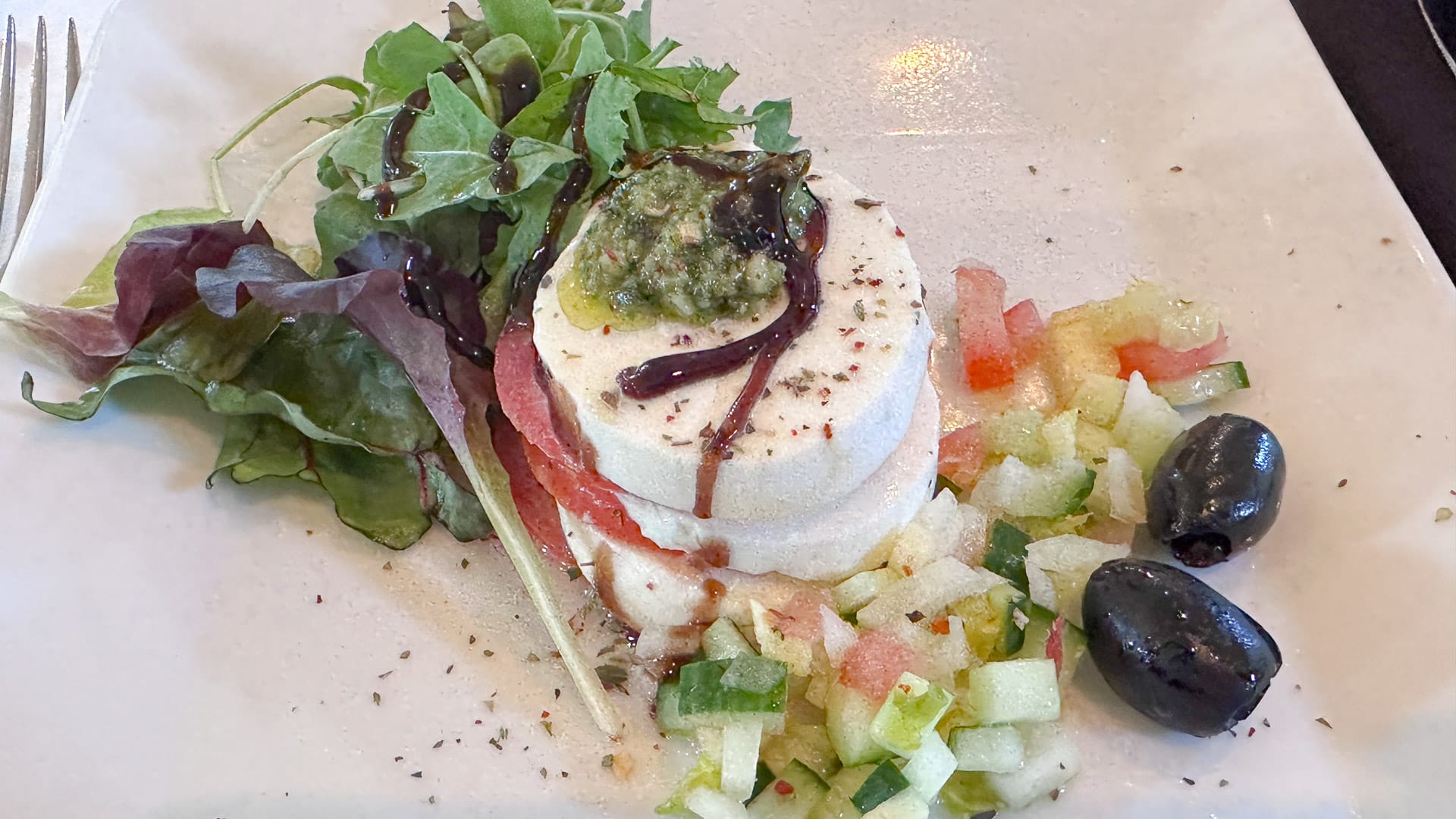
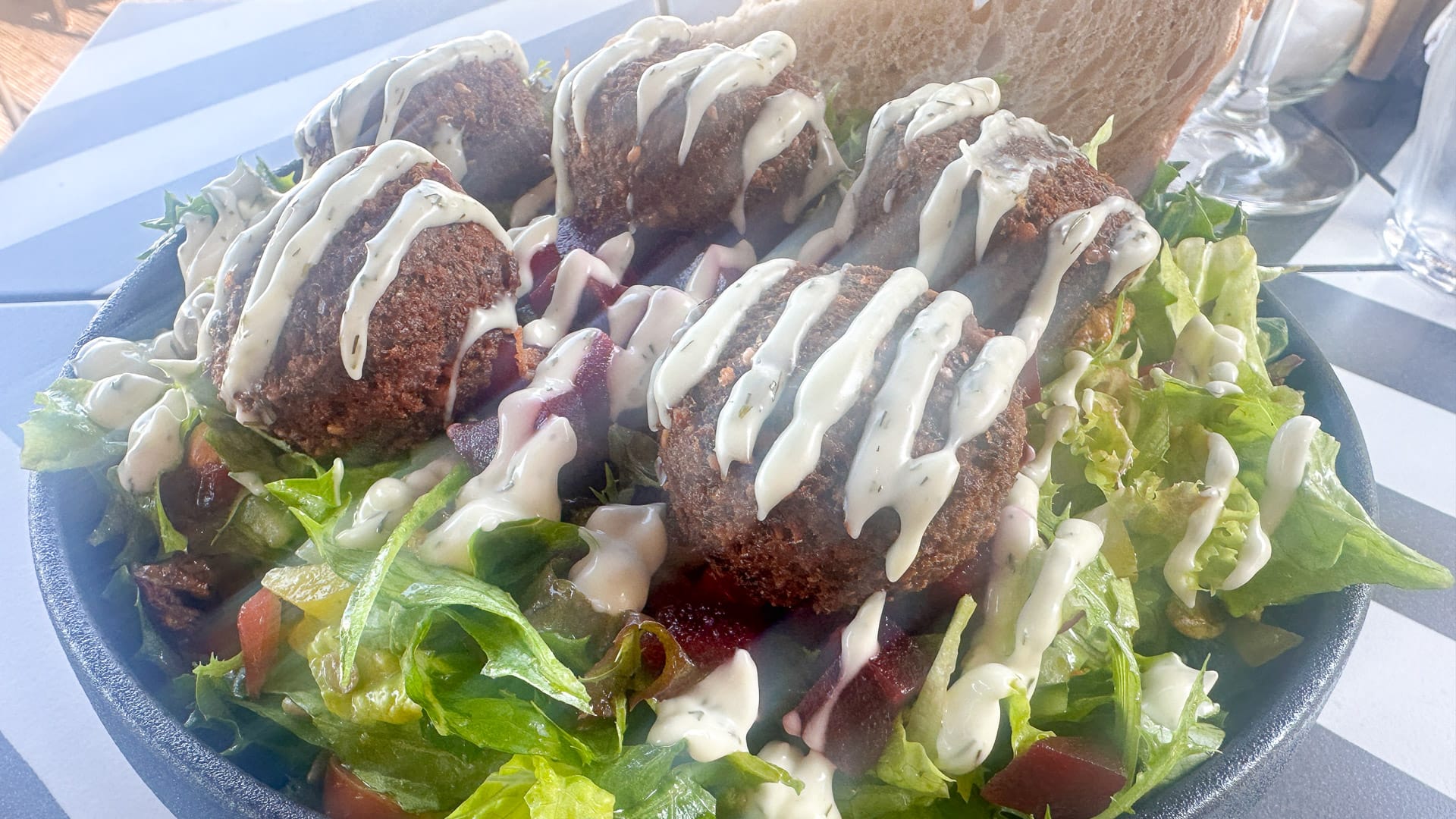
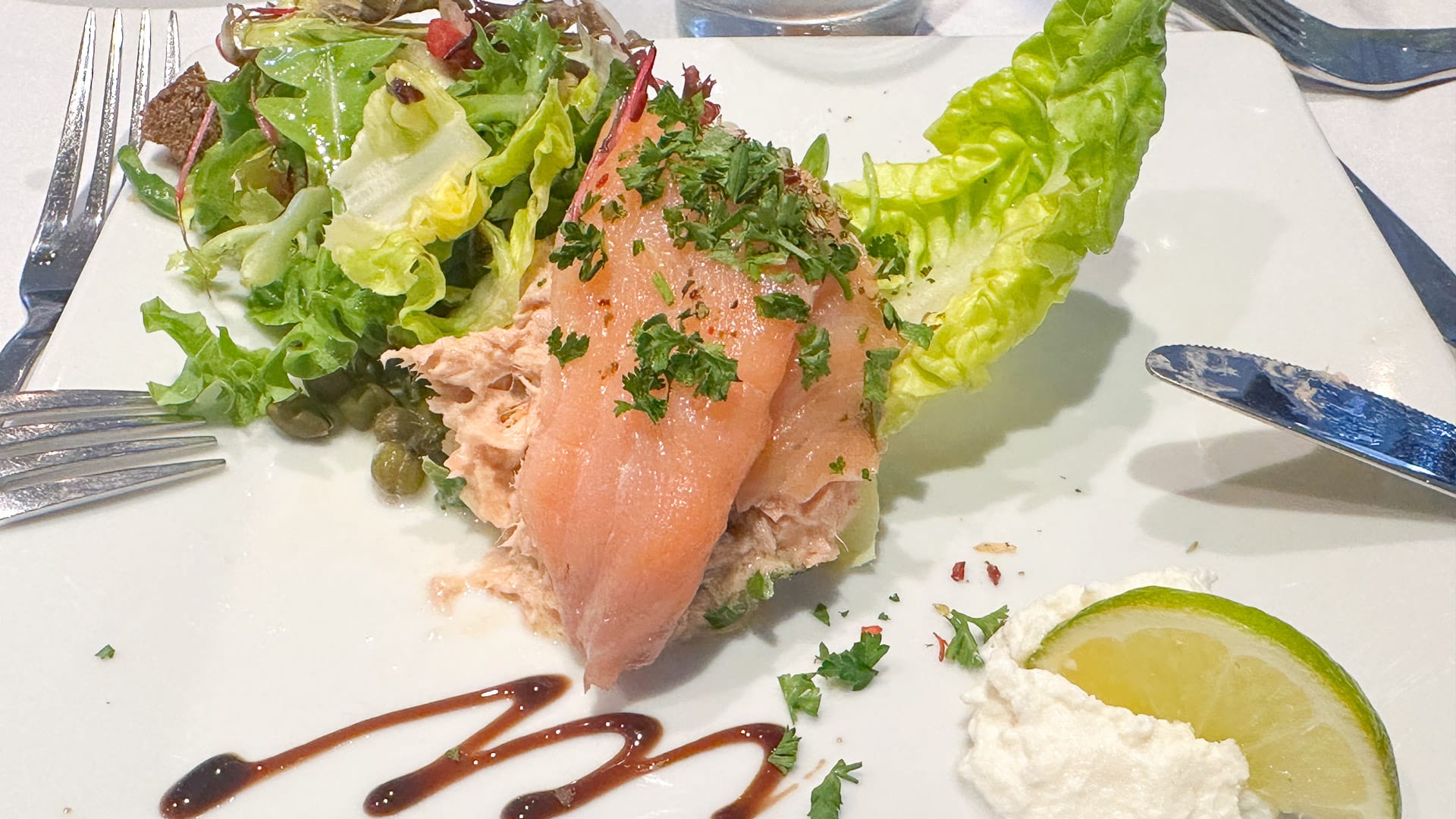
Aboard, the published package includes seven breakfasts, five packed lunches, one lunch served during the sailing day and six three-course dinners. There is no dinner aboard on Terschelling. Breakfast provisions were generous enough to make a packed lunch and carry snacks, which was useful especially when cafés were closed on Monday.
What impressed us most was the craft behind the meals. Producing fresh breakfasts, packed lunches and three-course dinners for a full ship would be demanding in any kitchen; doing it in a compact galley, with limited storage and a moving weekly route, made Petr the chef’s work one of the quiet achievements of the trip.
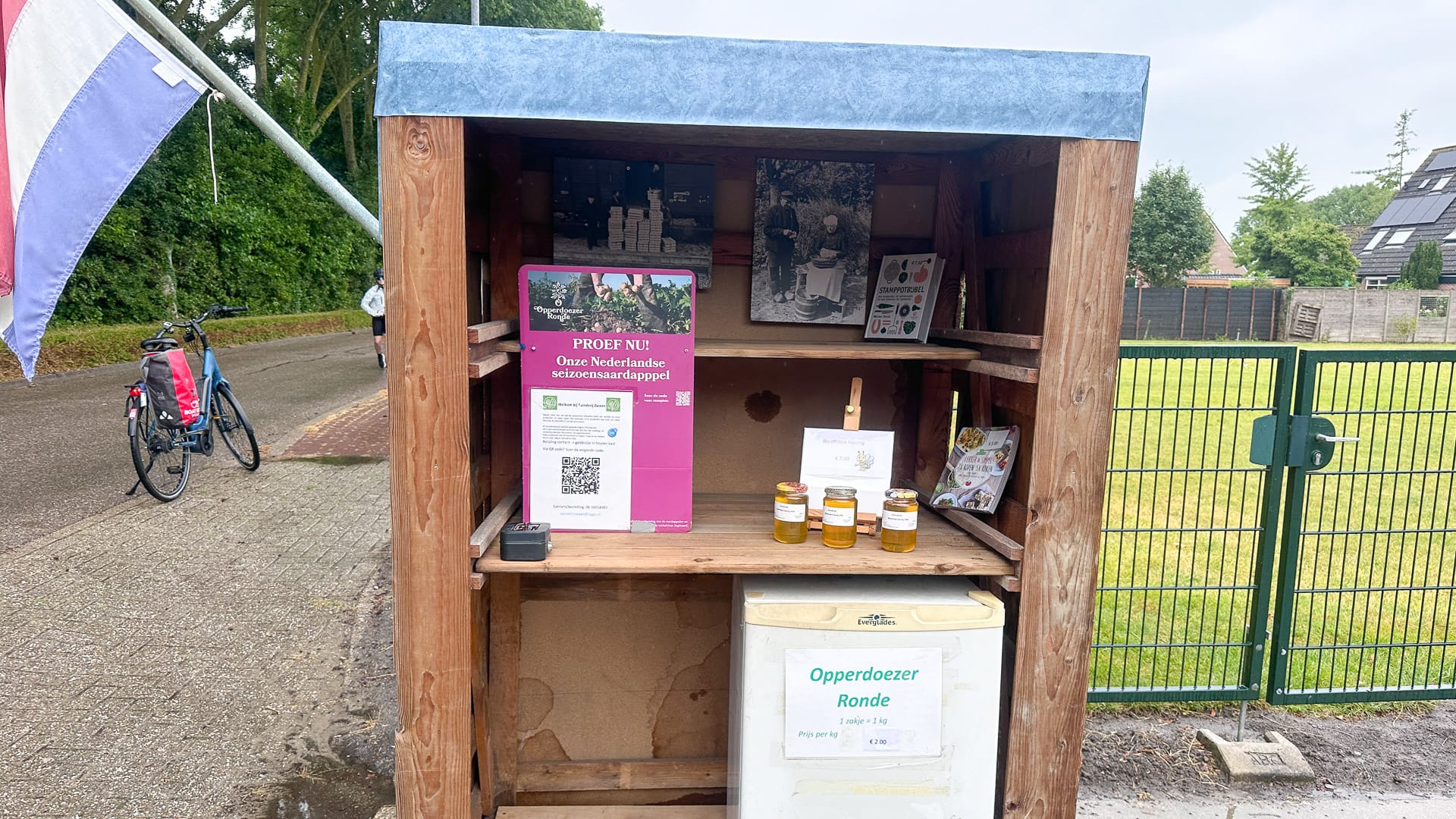
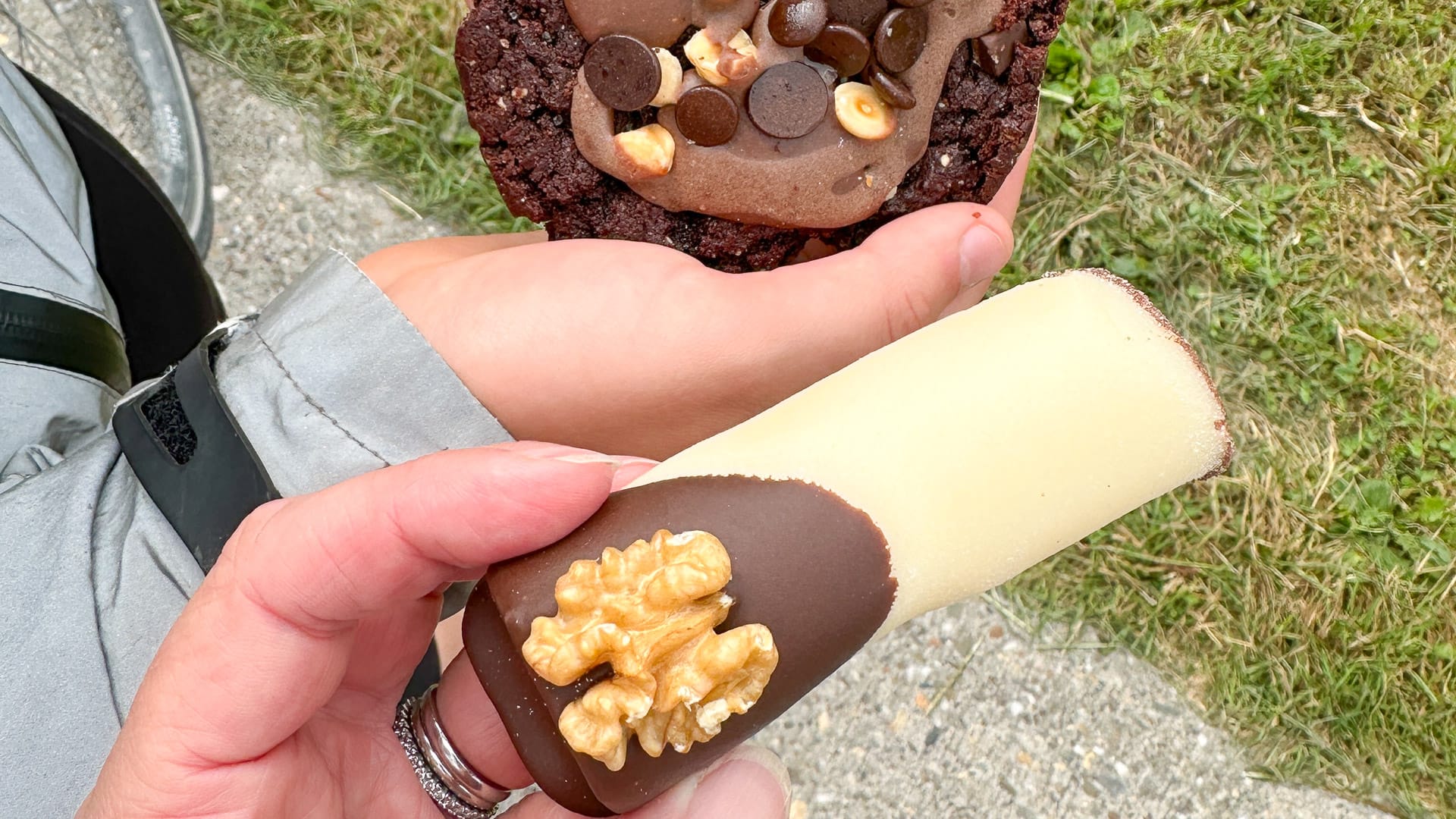
Along the journey, Texel appeared in sheep’s cheese, sheep-milk ice cream and local beer; Terschelling in cranberries, which local tradition says arrived in a barrel washed ashore from an American ship more than a century ago. Island cafés now turn them into cakes, jam, juice and liqueur.
Check the current tour inclusions with Boat Bike Tours before booking, as these can change between departures.
How did the guided cycling work?
The tour included a guide, but it was not what you might expect from a guided tour. We had one dedicated tour leader, Carol, for 34 guests. She ran detailed briefings, explained route choices and points of interest, supplied daily overview sheets and was present on the road, but nearly everyone rode alone, with their own companion or small group.
For us, that combination worked well. We benefited from local context and practical support without having to match someone else’s pace. It did, however, require basic self-sufficiency. We were expected to navigate, manage our time and deal with a minor issue such as a puncture.
Ask what “guided” will mean on your departure date if riding together or having immediate mechanical help is important to you.
The independent alternative
Boat Bike Tours also operates a separate independent Wadden Sea itinerary. On that version, the crew provides daily briefings and guests follow the routes without a dedicated cycling leader. The same ship may operate both formats at different times of year.
If you like the Wadden Sea itinerary but don’t need a cycling guide, you can compare it with Boat Bike Tours’ independent Wadden Sea tour.
Which to choose?
Choose the guided premium trip if historical explanation, local tips and a named person on the route will add confidence or interest.
Consider the independent version if you are comfortable navigating, prefer maximum freedom and do not need tour leaders on the road.
In either case, the sailing plan remains the skipper’s responsibility and may change with the elements.
What were the rental bikes and navigation like?
Bikes
Boat Bike Tours offers upright touring bikes and e-bikes. The published touring-bike specification includes a low-step aluminium frame, at least seven gears, flat pedals, an adjustable gel saddle, frame lock and puncture-resistant tyres. E-bikes use a 400 Wh battery with three assistance levels.
You can request to bring your own bike or e-bike, but space is limited. Check compatibility and reserve a place when booking rather than arriving with a bike unannounced.
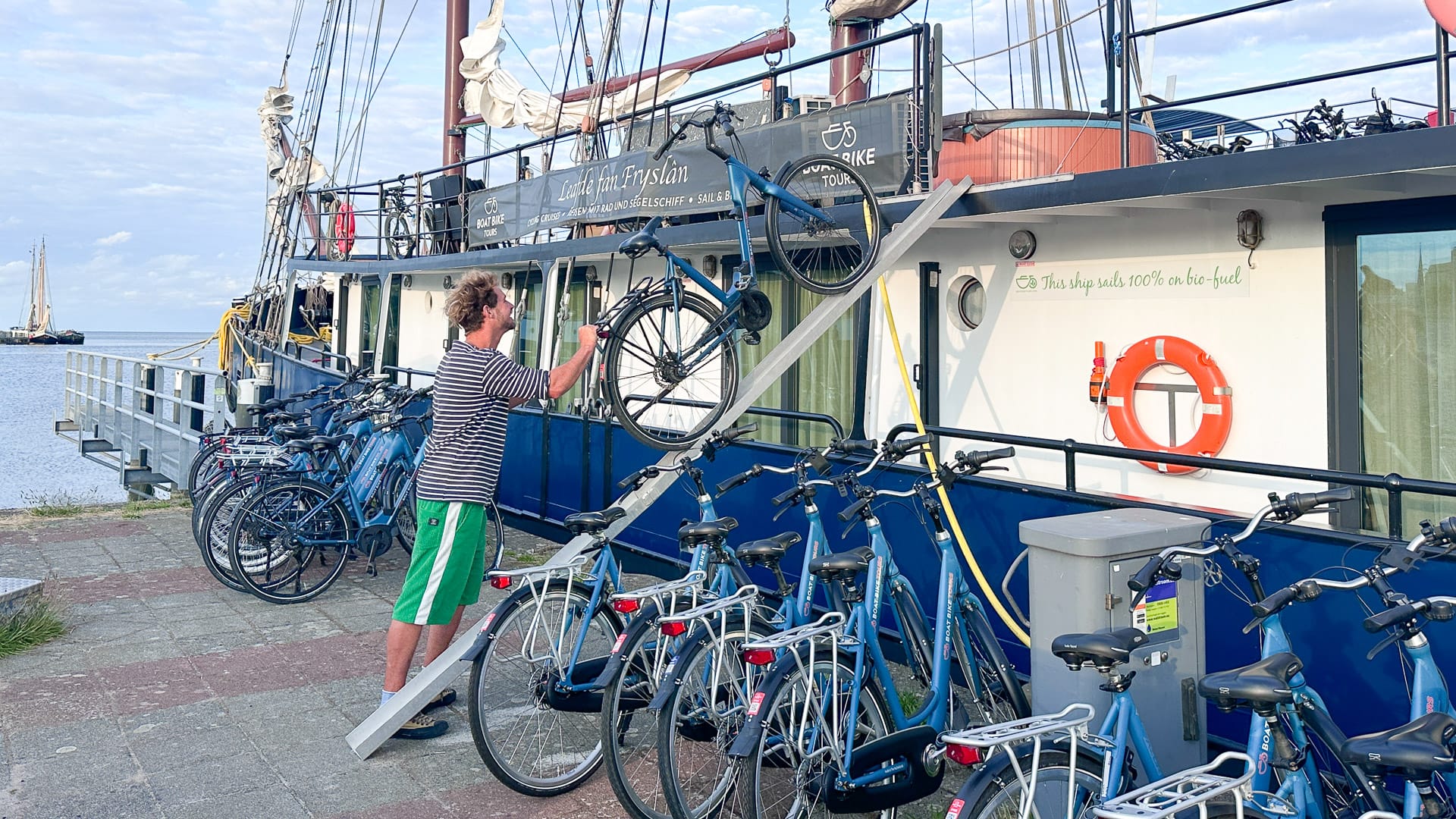
A masterclass in getting 30 bikes onto a boat!
Navigation
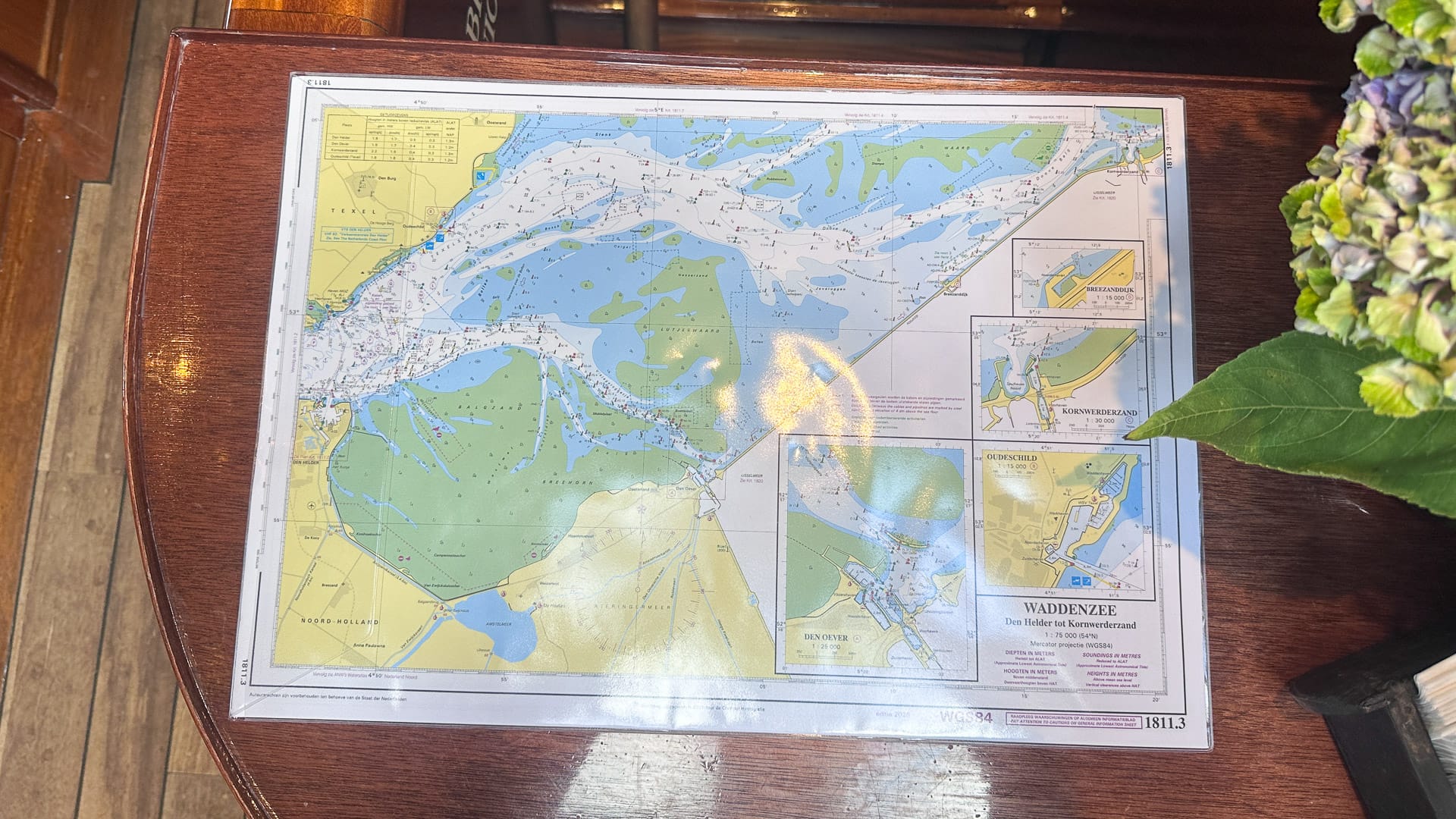
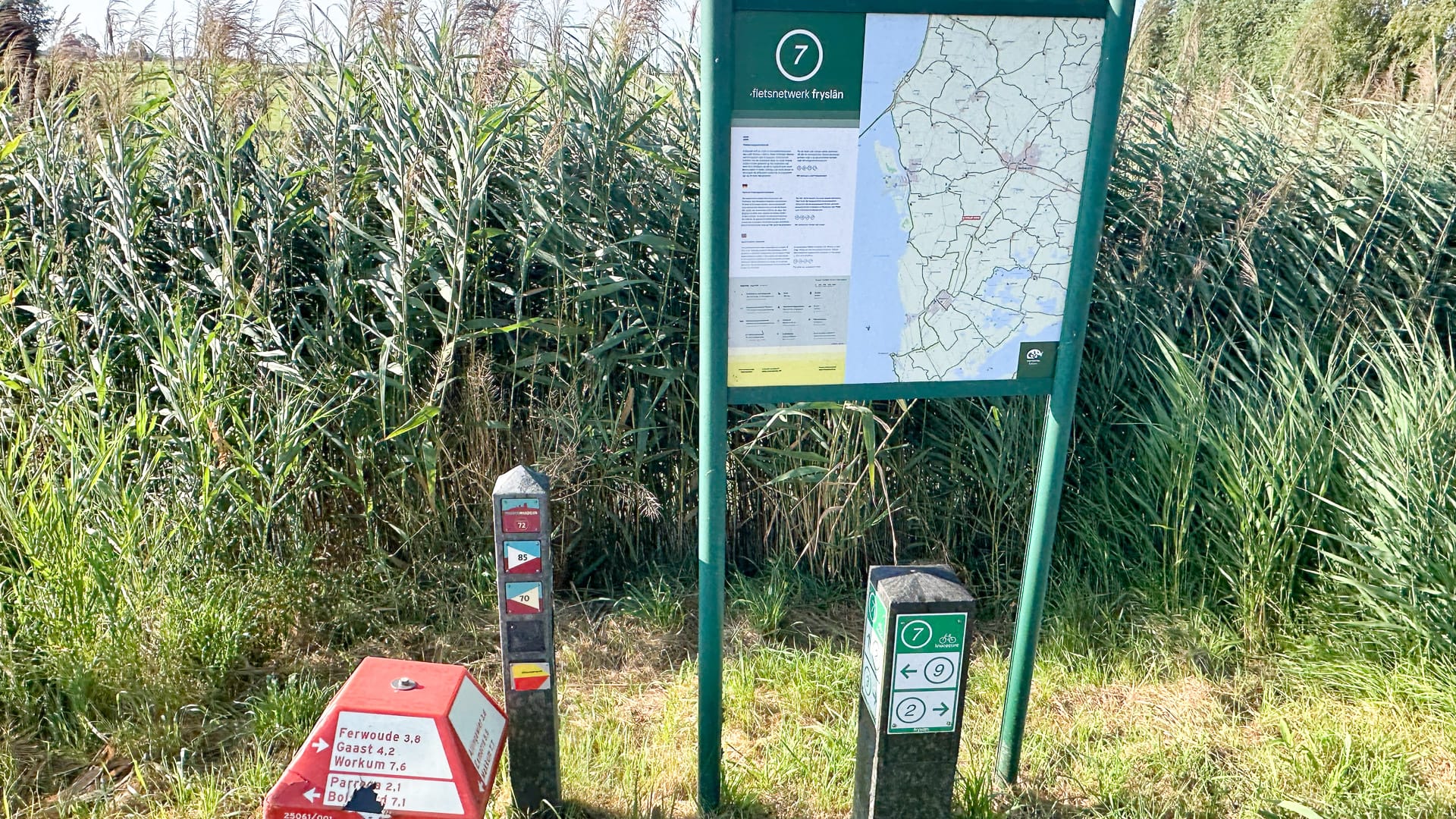
Ride with GPS was our main navigation tool, backed up by the map and daily printed route sheets. Bikes came supplied with phone holders and there were also map cases to keep things dry for those who preferred paper maps.
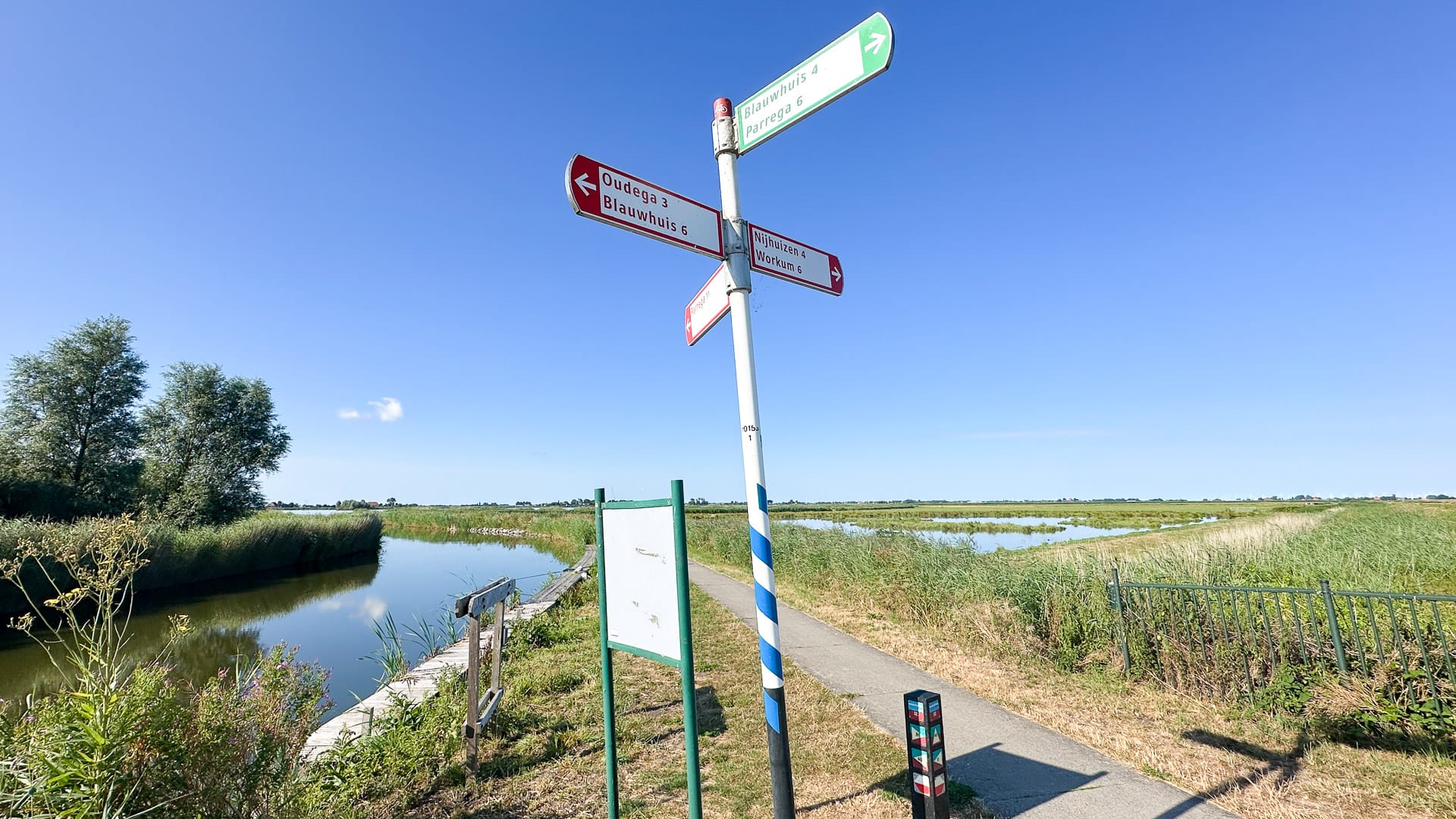
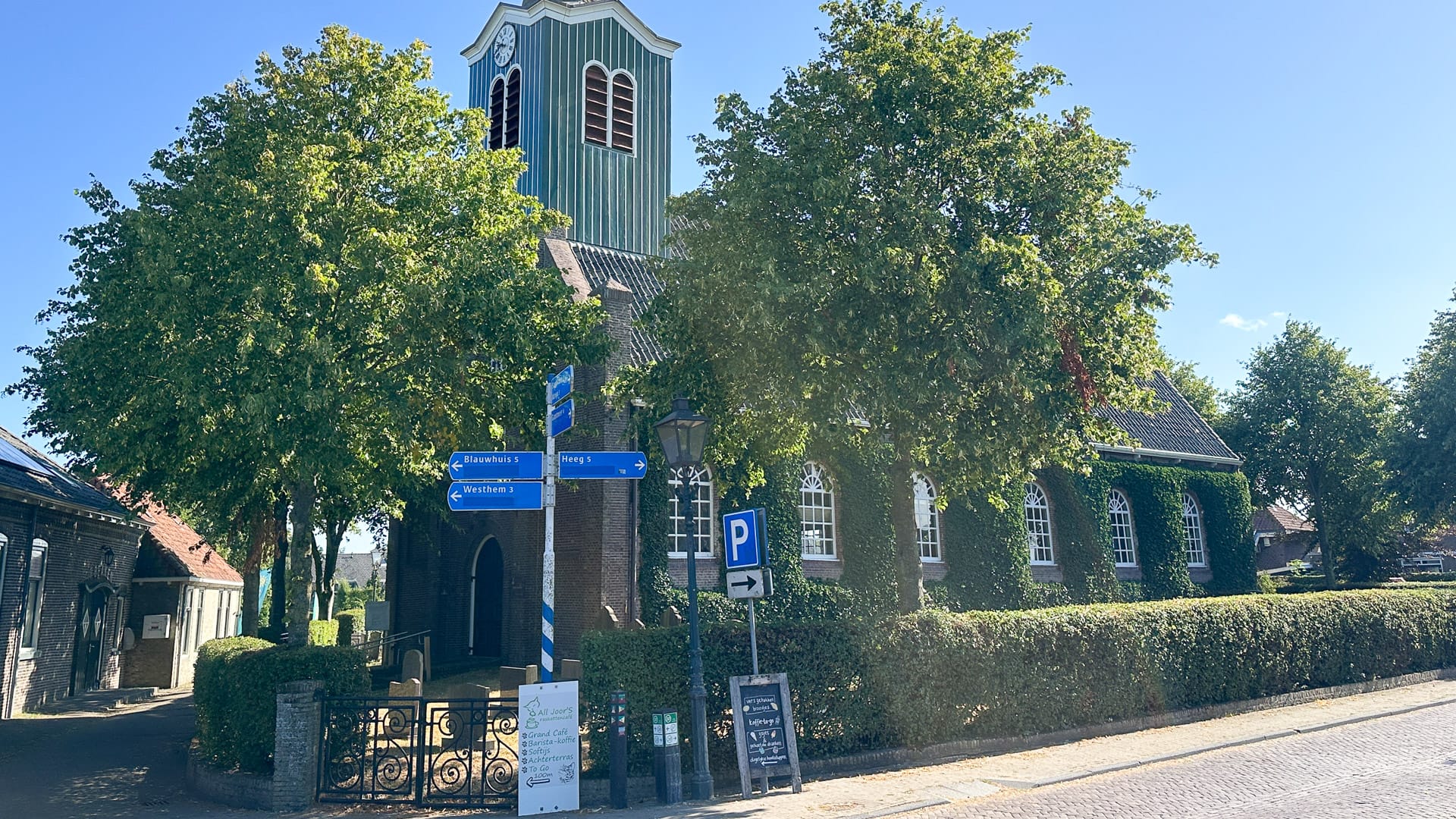
We found that the route was generally easy to follow, although a few instructions did not perfectly match the current road layout. Keeping an eye on signs as well as the screen was sensible.
If you’re depending on your phone for navigation and taking photos, it’s a good idea to pack a power bank.

Even the best laid routes sometimes get diverted…
Is this Netherlands boat and bike tour for you?
This is a relaxed, accessible adventure rather than a performance-focused cycling holiday. The daily distances are manageable, the infrastructure is excellent and the route is flexible, but the islands, tidal waters and working sailing ship stop the experience feeling tame.
Who is likely to enjoy it?
- First-time cycle tourists. Several people aboard were on their first cycling holiday, and the easy terrain, route briefings and clear daily rhythm made the trip a low-pressure introduction.
- Riders who like independence with support nearby. Carol, our tour leader, explained the routes and points of interest in detail and was out on the road, but we were free to ride at our own pace and in our own groups.
- Nature and culture enthusiasts. Salt marshes, dunes, sheep fields, birdlife, old trading towns, local artisans and museums meant there was always a reason to stop.
- Sociable travellers. Most guests were couples or friends, but there were also solo travellers. Shared tables and communal spaces make it easy to meet people.
- Anyone who dislikes packing every morning. The boat carries your luggage and travels while you ride, so there is no hotel change and no daily suitcase shuffle.
- Travellers seeking a comfortable way to visit the islands. Accommodation on Texel and Terschelling can be expensive in summer; sleeping aboard makes island-hopping simple.
Who may find it less suitable?
- Cyclists who want climbing, fast group riding or a training camp. This is leisure touring on flat terrain, with plenty of stops and no expectation that everyone will ride together.
- Experienced sailors hoping for a hands-on sailing course. Guests can help when conditions allow, but this is a large commercial vessel and the crew remain firmly in charge.
- Travellers who dislike communal dining. Breakfast and dinner are shared, usually at tables of four to eight, and this is an important part of life aboard.
- Anyone who wants guaranteed sunshine or daily sea swimming. Our August weather was generally gorgeous, but it changed quickly; the North Sea beaches can be rough and we saw enough jellyfish to make us think twice.
- Habitual latecomers. On several days, the sailing ship had to leave at a set time. Missing it would be a much bigger problem than missing a hotel check-in.
- Families. This trip is not focused on families and my daughter was the only child. Boat Bike Tours have some wonderful family friendly cycling tours if that’s what you want. Check out the trip in Greece last year and their Croatia itinerary too.
Sound like your sort of trip? Boat Bike Tours has the current dates, cabin options and availability here.
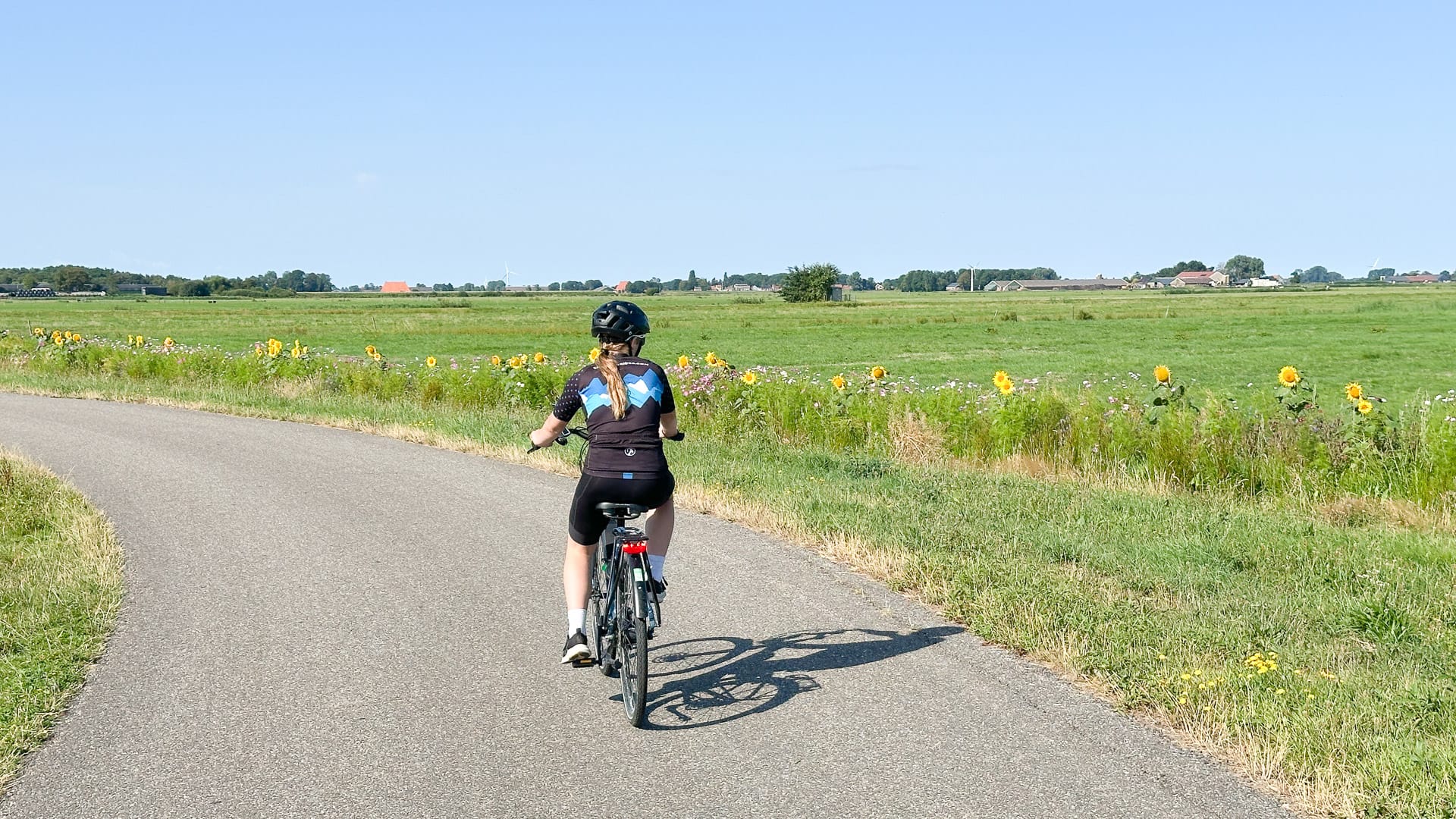
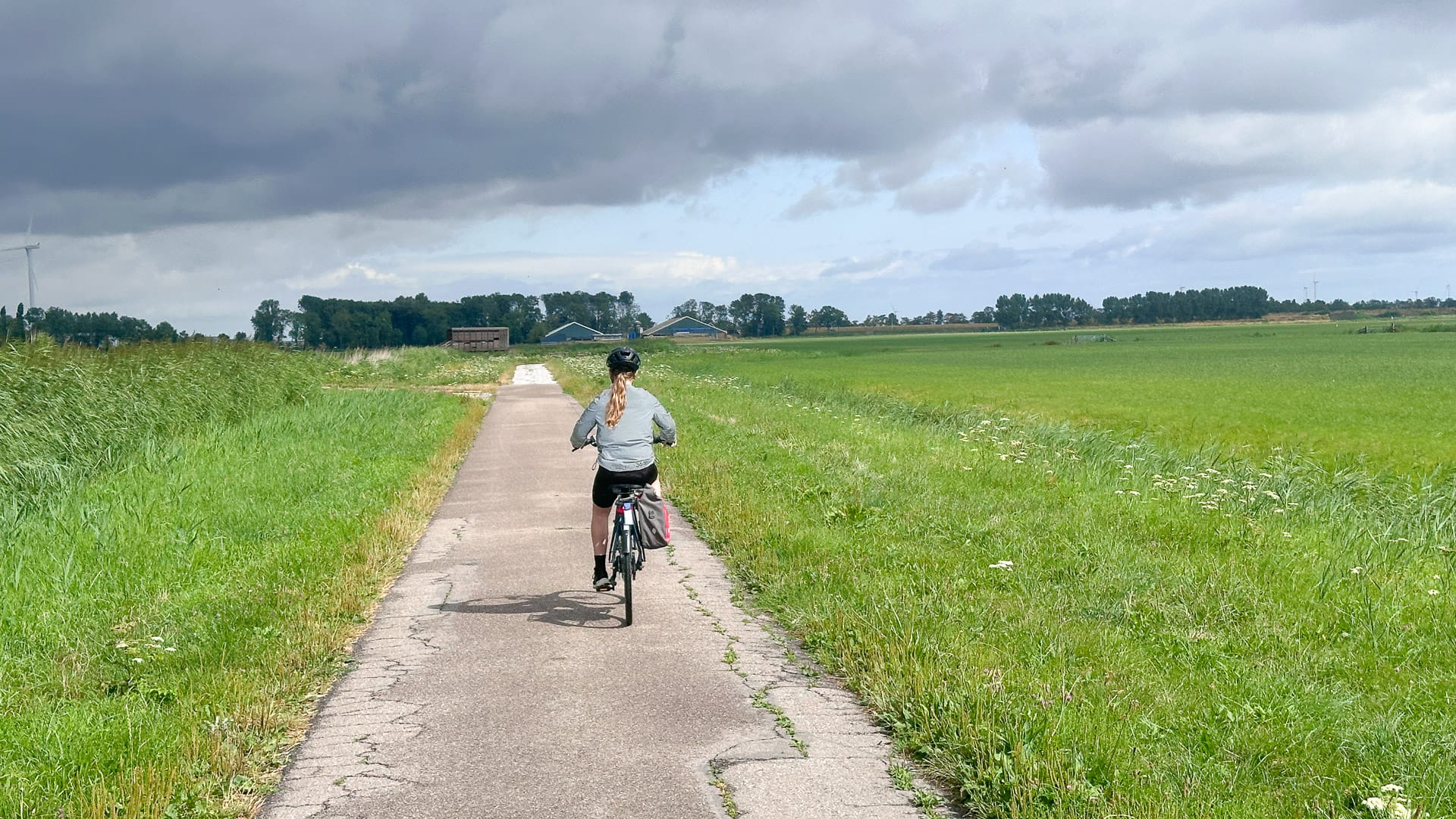
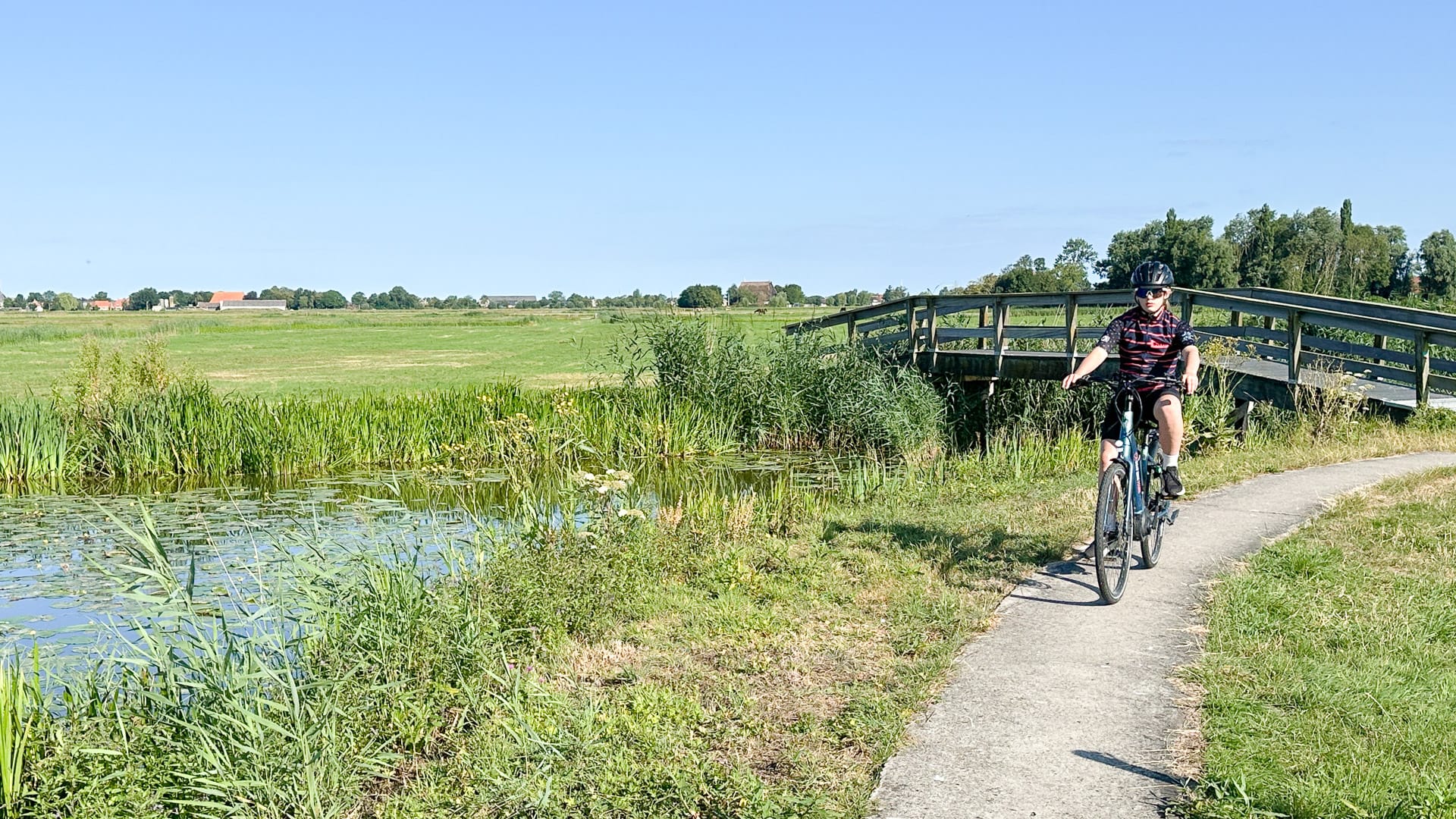
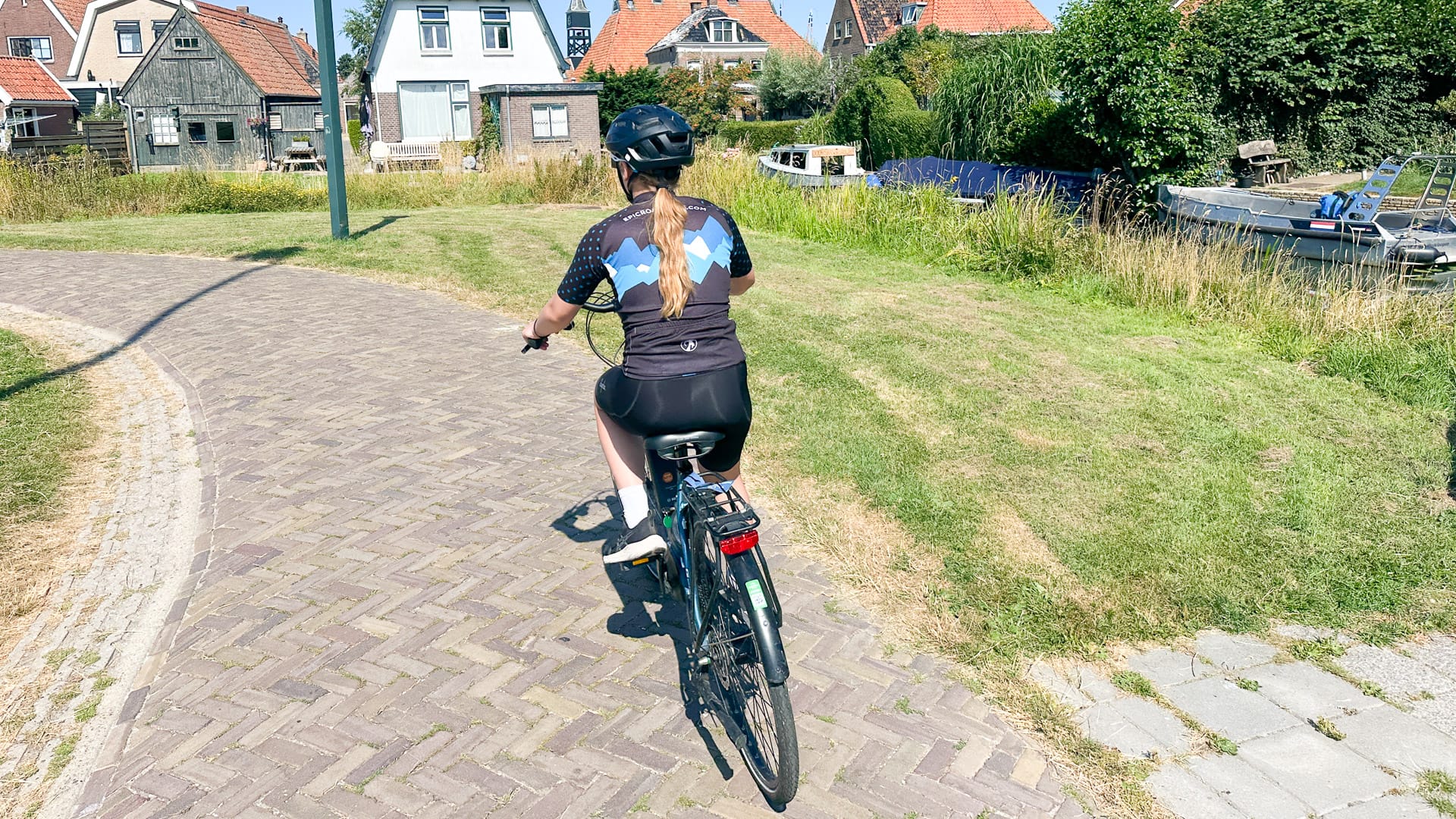
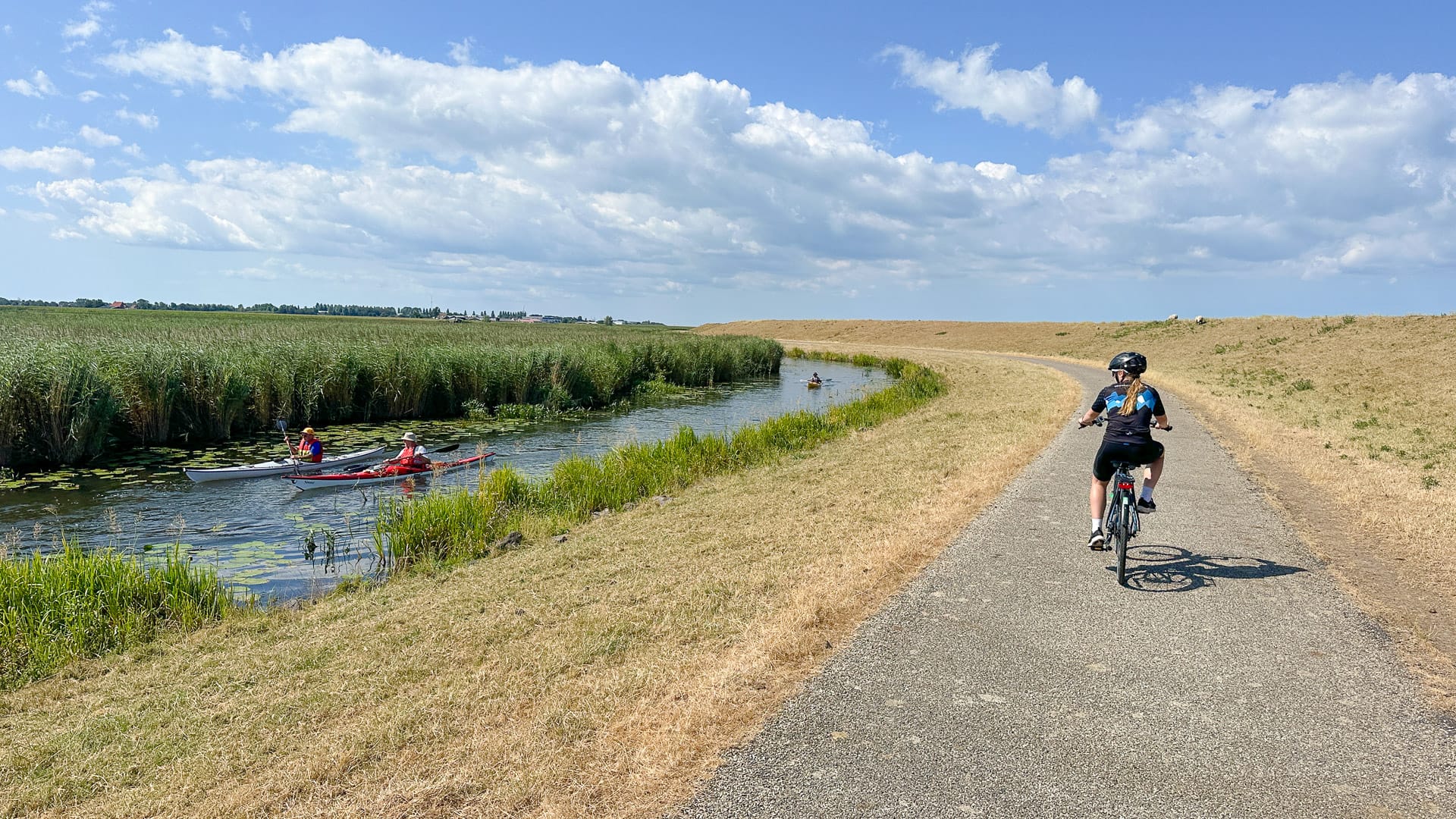
Cycling through the Friesland countryside towards Workum (day 7)
Wadden Islands v Ionian Islands: how this trip compared with our Greek boat and bike trip
In August 2025, I was lucky enough to spend a week drifting around the Ionian Islands. This is my article about the experience.
There were many similarities between the trips: great staff, comfortable accommodation, excellent food, a good atmosphere amongst guests, lots of fresh air and time outside.
Two trips in and I remain a big fan of this kind of holiday – but I think it’s helpful to note that not every bike and boat tour is the same.
Here are some of the key differences I spotted between the Greece boat and bike trip and this one:
- Our Wadden Sea week involved substantially more cycling than the Greek boat and bike trip: roughly 40-50 kilometres on many days rather than 10-20 kilometres, and usually at our own pace rather than as one riding group.
- The Netherlands itinerary also felt more predictable; there were very few changes to the published schedule (although any sailing itinerary remains subject to conditions) or expected meal times.
- The Greek trip offered many more opportunities to swim and had a livelier family dynamic.
- Dinner time on the Wadden Sea ship felt more formal – for example, the food was a three-course meal served with white tablecloths.
- The Wadden Sea ship felt more recently renovated, and our cabin had twin beds rather than bunk beds – of course, the bed set up varies massively between ships and also note that the Wadden Sea trip was a premium level trip whereas the Greek wasn’t.
- The Dutch ship was larger and felt very stable; there was barely any motion from the sea.
These are just my anecdotal observations: ships, groups and conditions vary significantly, so compare the vessel and itinerary carefully rather than assuming every boat and bike holiday works the same way.
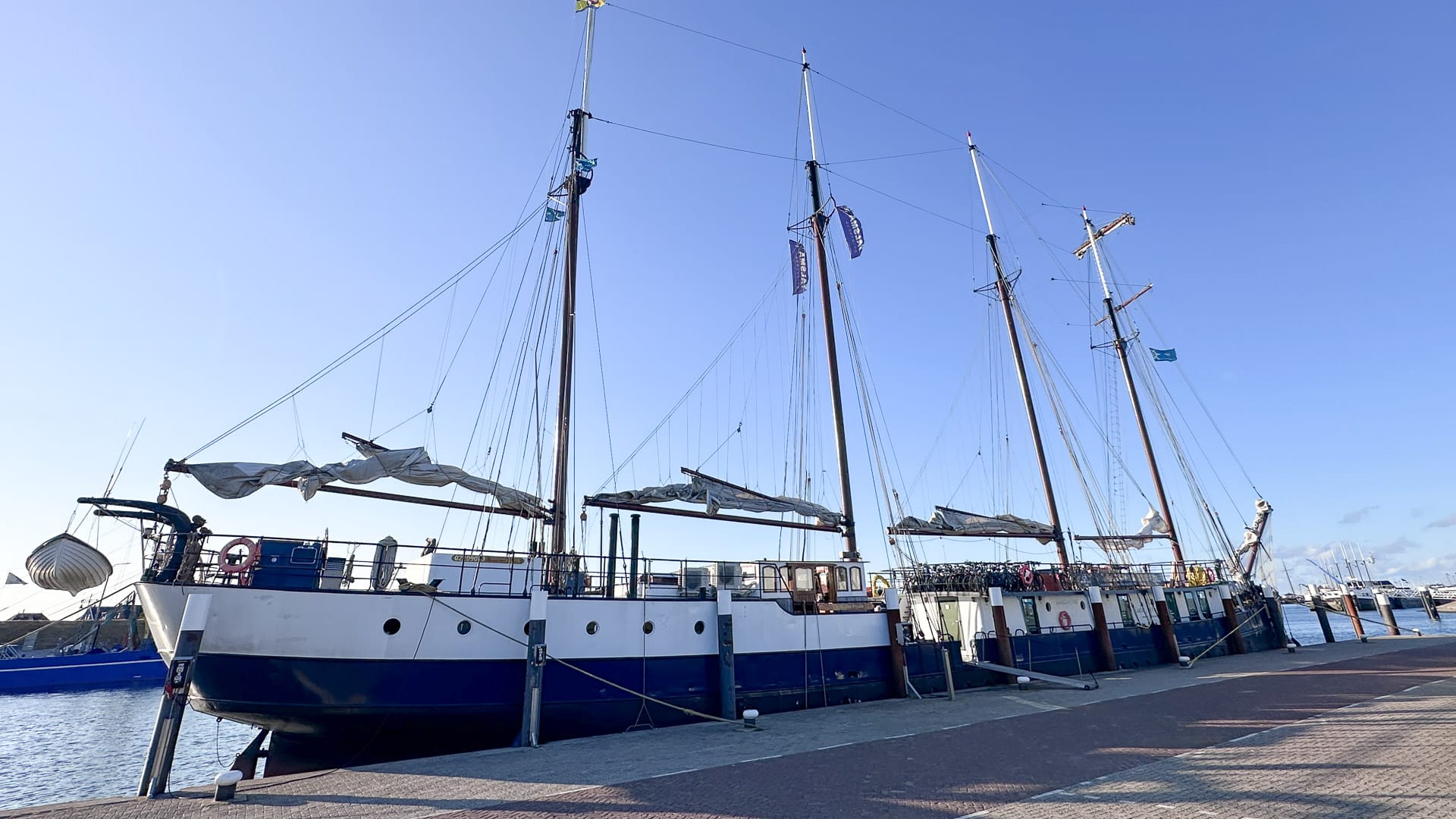
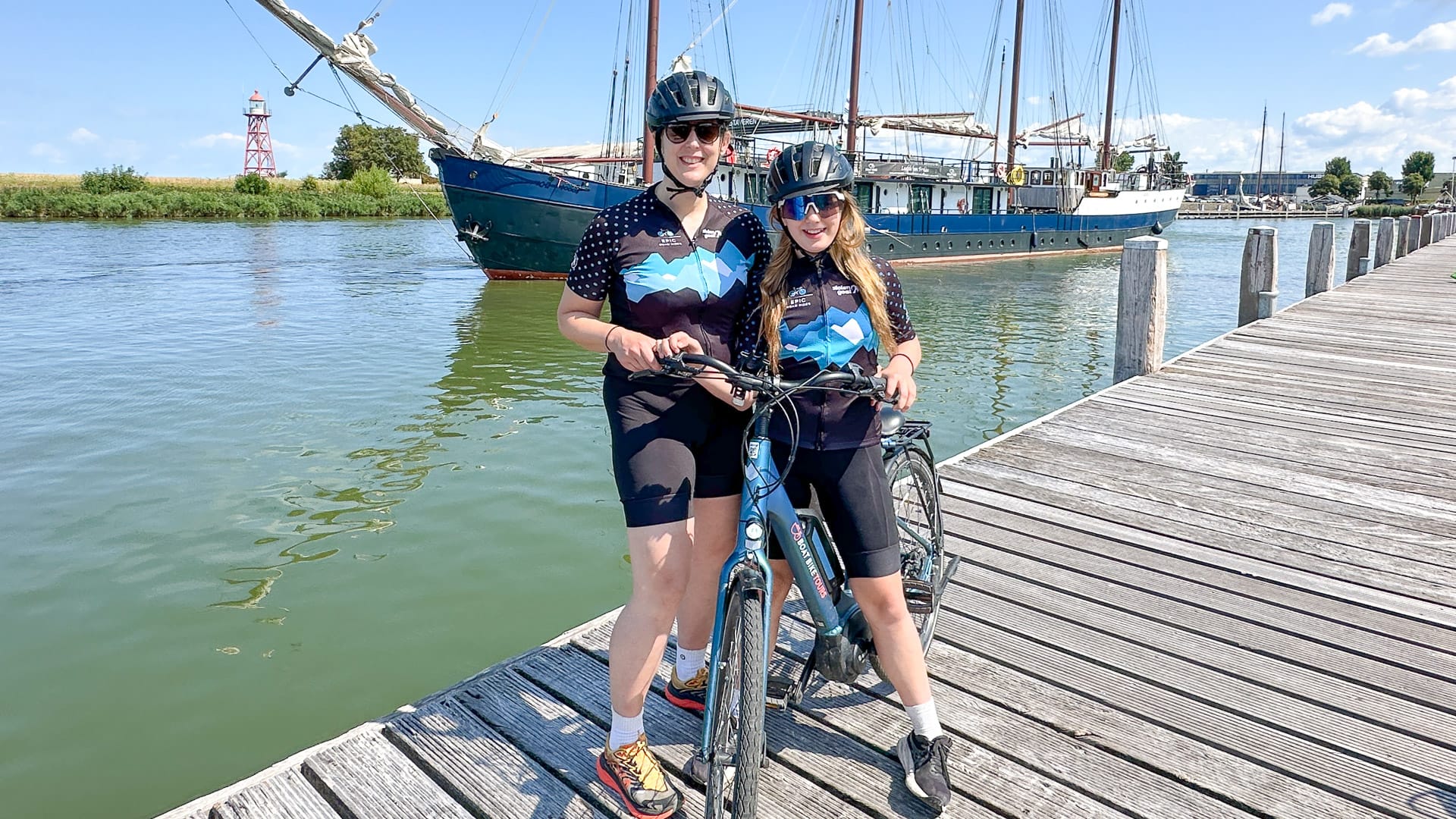
The Leafde Fan Fryslân boat moored in Oudeschild, Texel (day 2)
Practical tips for a Wadden Sea boat and bike tour
Pack for a real North Sea summer
Temperatures during our August week were mostly around 20°C, with blue skies and comfortable riding temperatures. It also included an hour of wind and driving rain, a cool crossing and a day when threatening cloud broke into strong sunshine by lunch. That variation made the trip feel real and kept the landscape changing, but it also rewarded layers.
- Bring a proper waterproof jacket and, if you dislike wet legs, waterproof trousers.
- Pack a warm mid-layer for the deck and evenings, even in summer.
- Use padded shorts and cycling gloves for consecutive cycling days.
- Bring non-slip, closed-toes casual shoes for moving around the ship.
- Pack binoculars if birds and seals are a priority.
- Use soft-sided luggage and don’t over-pack: even the larger cabins have finite storage.
- Carry a power bank and download the routes before leaving the ship.
- Consider earplugs if you are a light sleeper; a working vessel has engines, ropes, footsteps and early activity.
Set realistic expectations about sailing
The sailing element on our departure was lighter than we had expected. Guests helped with ropes on a few occasions, but the ship mostly used its engine. That is not a failure of the concept: safe passage through shallow tidal waters, arrival times and the available breeze all constrain when a vessel of this size can sail.
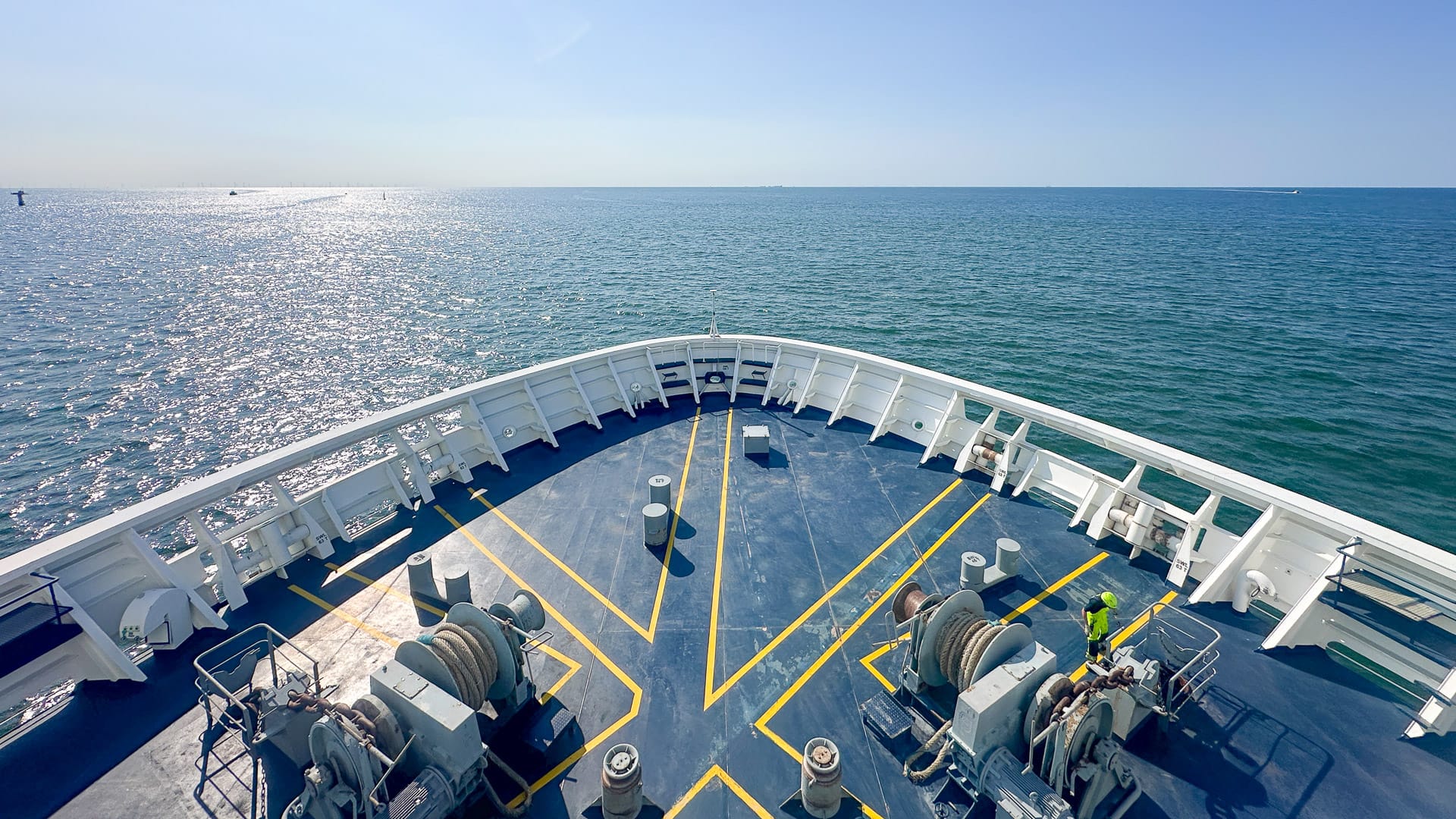
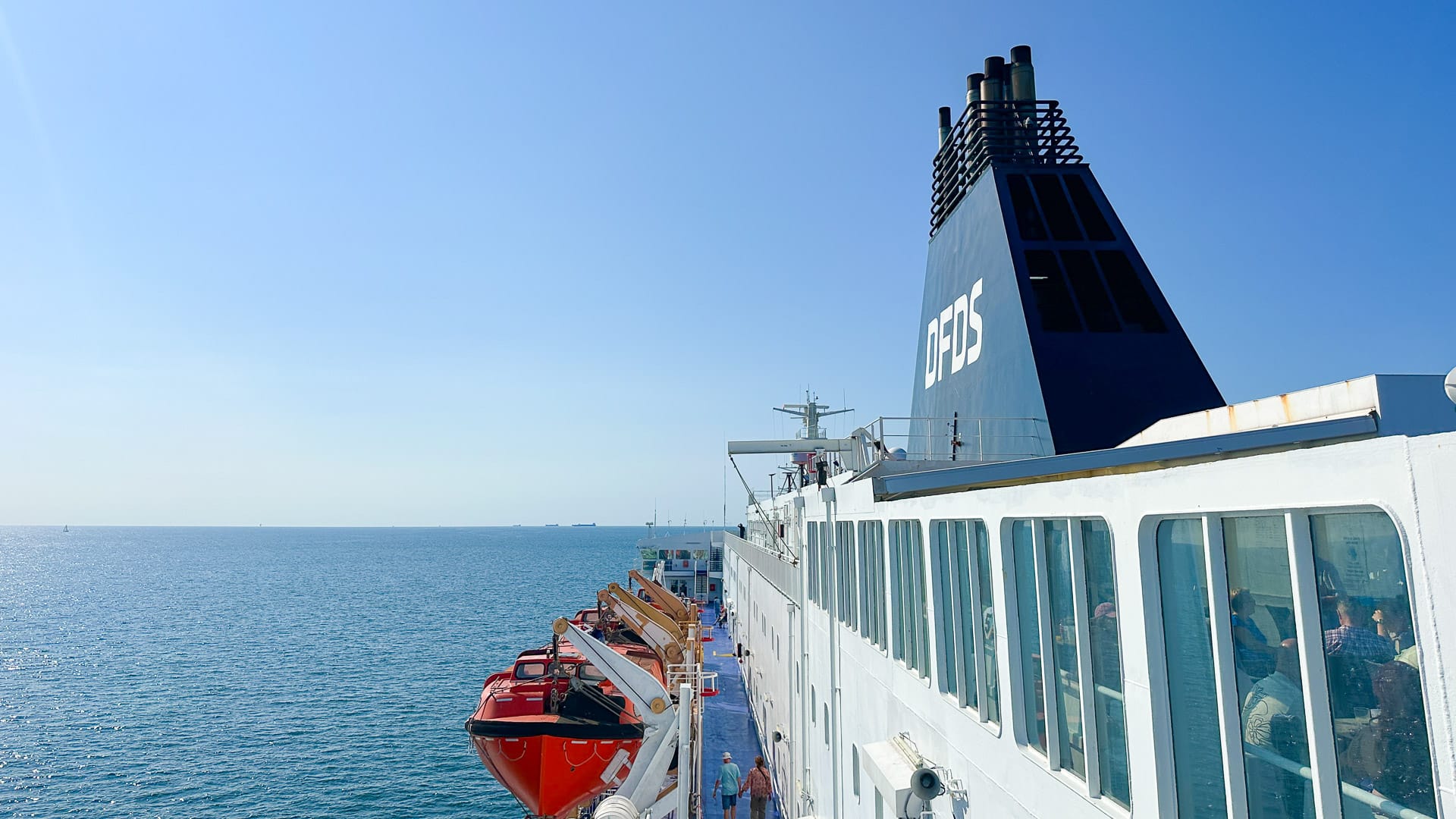
We found that the ship moved very little during our week, even while crossing open water. Conditions vary, so anyone prone to seasickness should still bring their usual medication, but our experience was much steadier than a small yacht or some Mediterranean crossings.
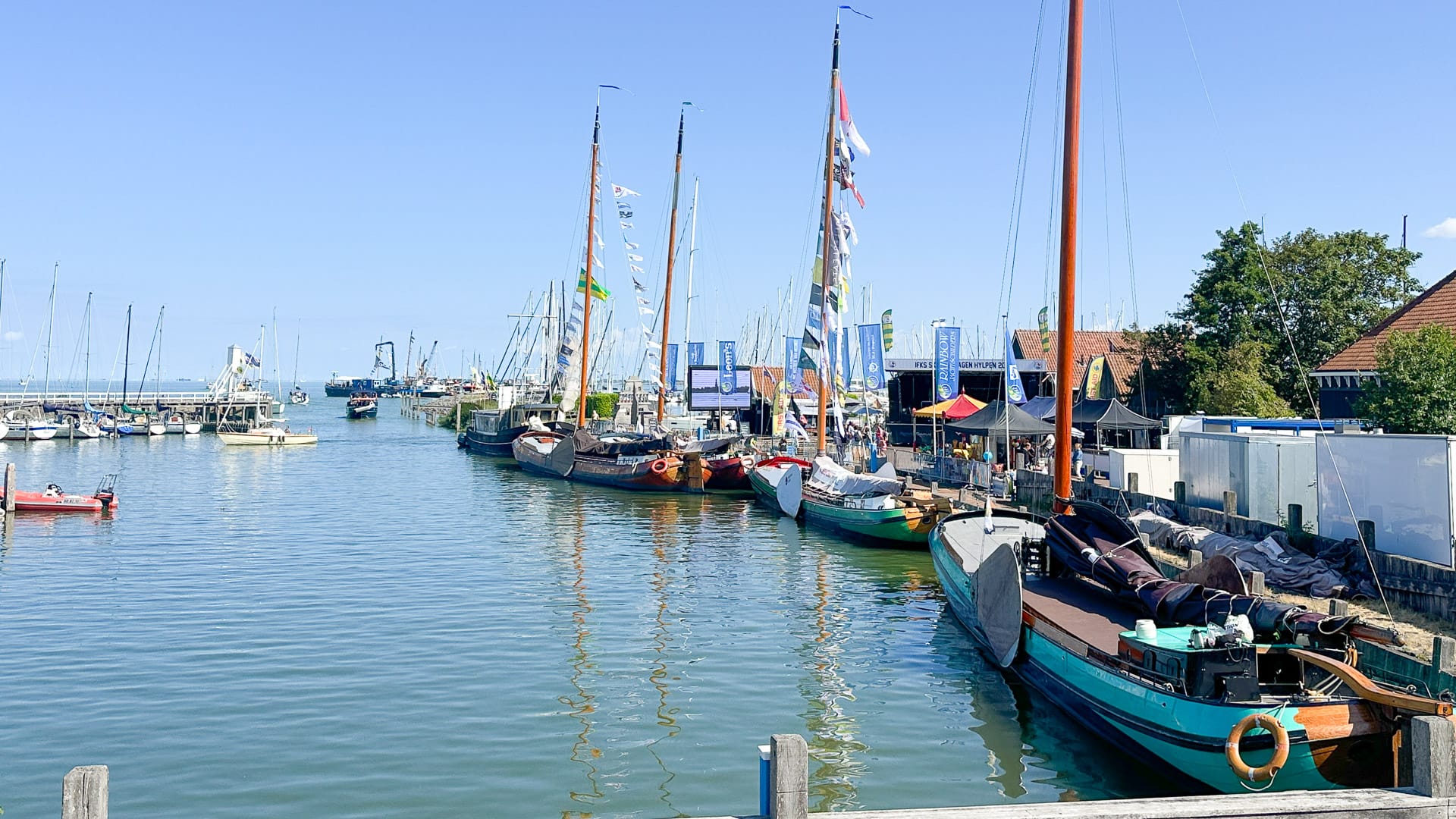
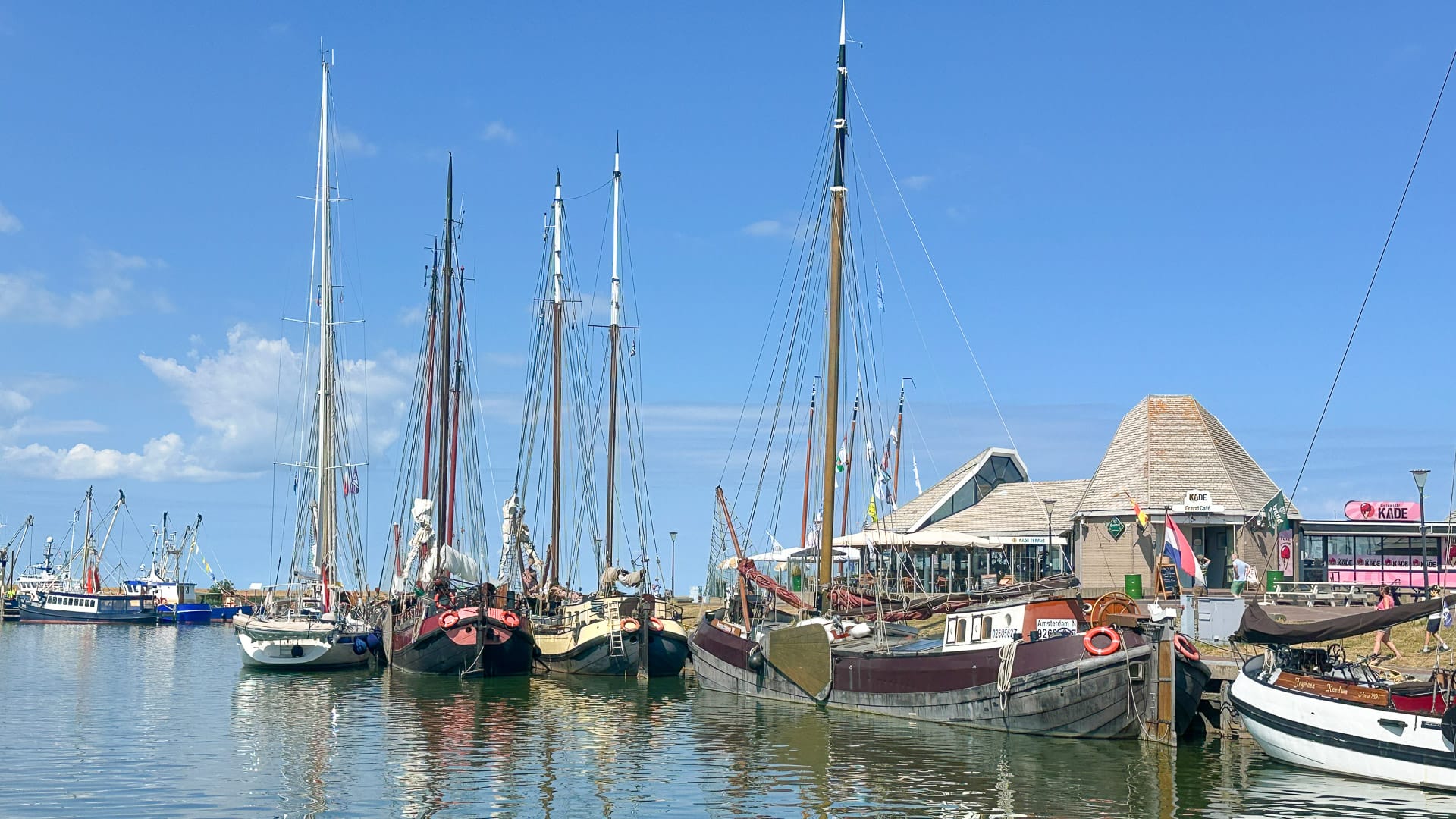
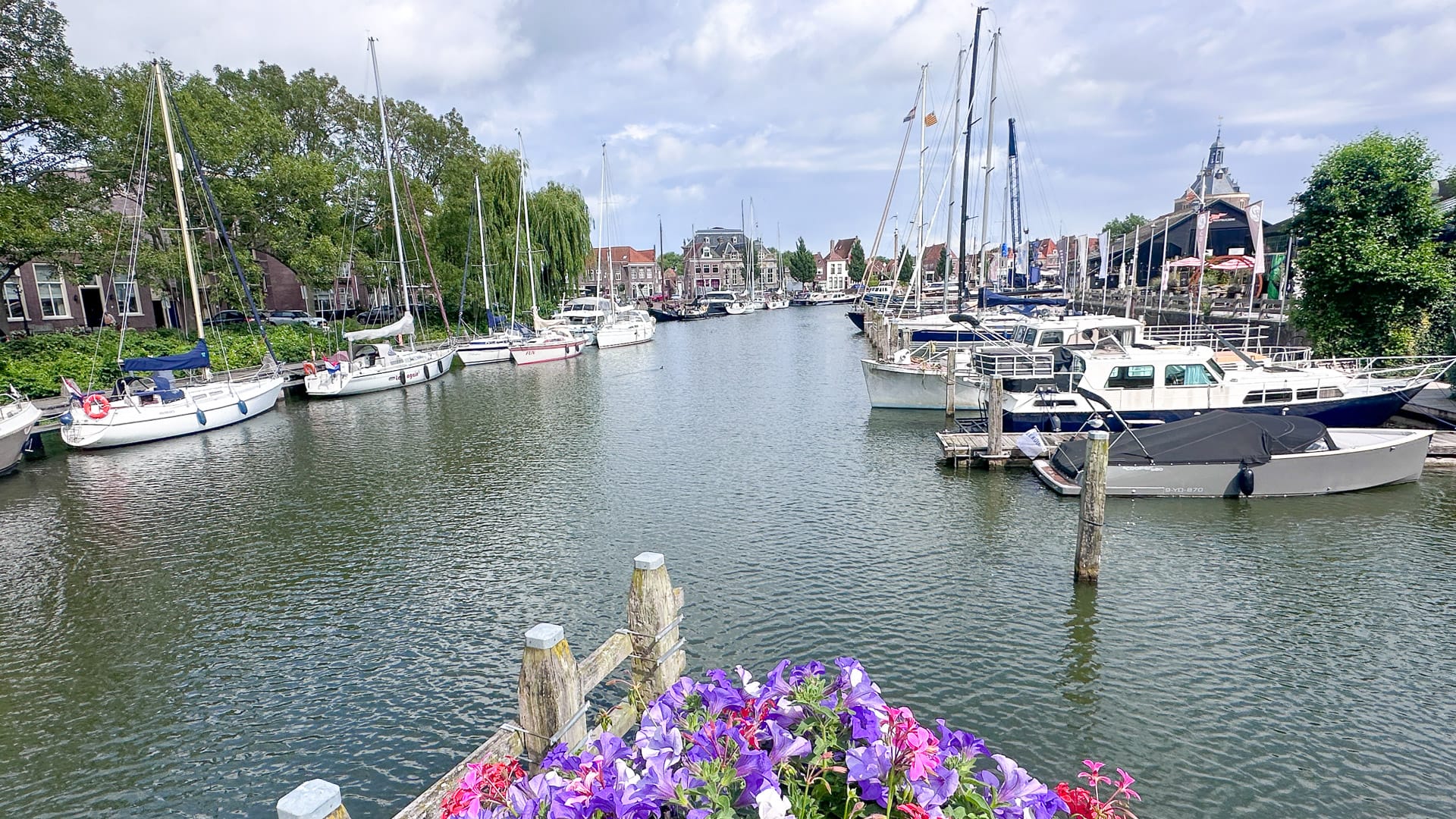
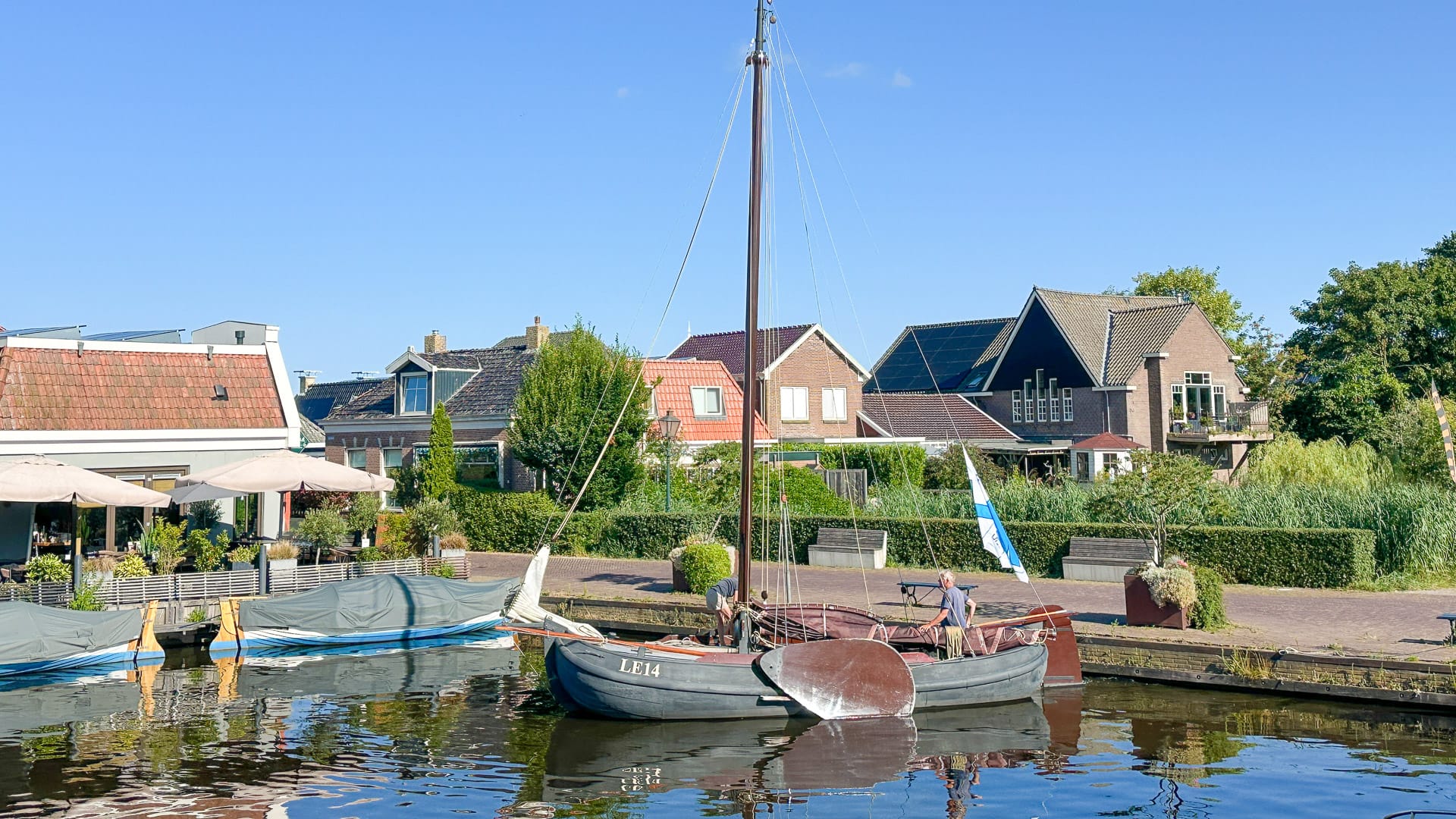
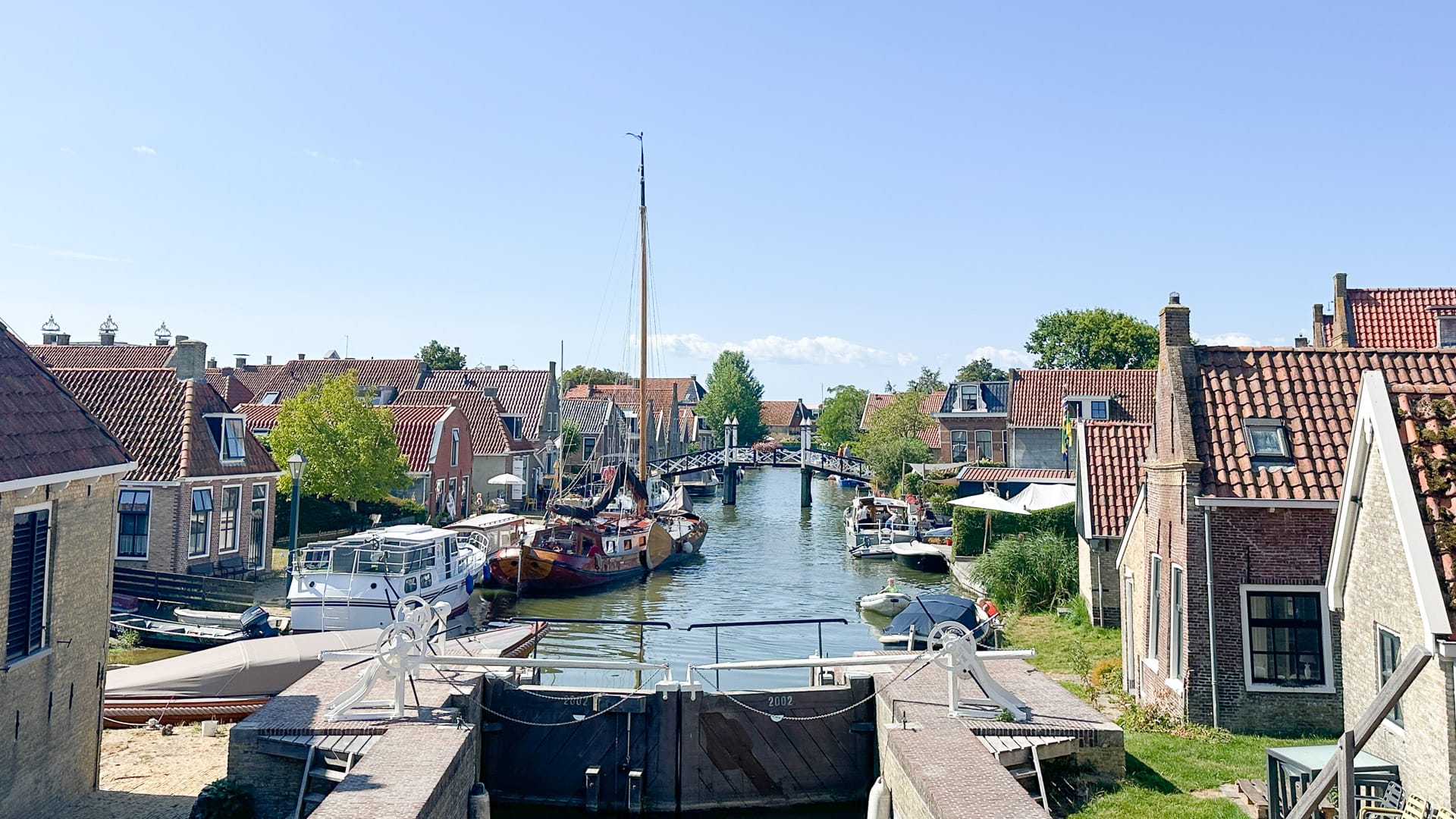
Boats lining the waterways in Hindeloopen on our day seven ride
Getting to Enkhuizen
Enkhuizen is served by train and the embarkation point is close to the station and historic centre.
The published embarkation time is 14:00 on most departures, with luggage drop-off generally possible from 11:00; check the instructions for your specific date.
It is worth allowing time to look around Enkhuizen before boarding or after disembarkation. The old harbour, streets and waterfront make a much better buffer than a rushed connection.
What we would tell a friend before booking
- Read the ship and cabin descriptions carefully. “Boat and bike” covers vessels with very different layouts and levels of comfort.
- Consider the other guests aboard the boat; if you are travelling with family, your children may have more fun on one of the multi-adventure family trips than a trip focused on adults. You could also speak with Boat Bike Tours about the nationality and language mix on the departures you’re considering.
- Ask how the guided format will operate on your departure. On ours, guidance meant briefings, information and a leader on the route, not a single peloton.
- Ask before booking if you’re specifically focused on one element of the trip, for example sailing rather than motoring, the jacuzzi or a particular town, do speak with Boat Bike Tours before you book to check this will definitely form part of your experience and isn’t likely to be unavailable.
- Do not make swimming central to your plans. There are beautiful beaches, but distance to the water, breakers, temperature and marine life can all intervene.
- Treat return times as firm. The ship may be sailing to the next harbour while you are still finishing your coffee.
- Expect the itinerary to remain flexible. Wind, tide, weather and harbour access can affect the sailing order and cycling timings.
- Stay on marked routes through dunes, salt marshes and bird habitat, and give resting seals plenty of space. The Wadden Sea’s apparent emptiness is part of a busy living ecosystem.
Sponsor Message
Want to find out more about Boat Bike Tours’ Wadden Sea tours?
Boat Bike Tours' website shares more about the trip we went on here: Boat Bike Tours' Netherlands Premium.
Prefer to explore but don't need a guide aboard? Boat Bike Tours also offers an independent Sail & Bike Wadden Sea tour, without a dedicated cycling guide.
Or fill in the enquiry form below and we’ll send your question directly to Boat Bike Tours.
Got a question for Clare Dewey from Boat Bike Tours?
Fill out this form and we will pass it to Boat Bike Tours who aim to reply (within 24 hours wherever they can!)
Final thoughts: would we recommend cycling and sailing the Wadden Sea?
Yes, definitely – for cyclists who want a manageable, varied tour with cultural and natural texture.
What made the trip special for me was the accumulation of different experiences: riding from freshwater lake to tidal sea, hours spent outside in fresh air, the orangey morning and evening light by the water, crossing islands under four masts, hearing Dutch history from a local guide and never having to repack.
Some of the moments that stayed with me were almost empty of “sights”: tyres humming along a dyke path, sheep calling across a field, water tapping against the hull. They were small reminders that this landscape rewards attention more than speed.
The trip felt like a cycling holiday with a distinctive maritime framework. The rides were long enough to shape each day, while the ship made the geography possible and gave the week its rhythm. I would choose the guided format again for the briefings and stories, while still valuing the freedom to ride independently.
If our experience sounds like the right balance for you, you can check Boat Bike Tours’ latest departures and availability here
We travelled in August 2026 on the Islandhopping Netherlands Premium tour aboard the Leafde fan Fryslân, as guests of Boat Bike Tours. Itineraries, staffing and inclusions can change, so check the current tour page and your booking confirmation before travel.
Got questions? Leave a comment below and we’ll try to help!
Got a question for Clare?
Fill out this form and we will send it to Clare. We aim to get you an answer within 24 hours where possible!Clare Dewey is a cyclist with a passion for travel. She set up epicroadrides.com in 2018 to help make it easy for cyclists to explore the world by bike. Today her mission is still inspiring cyclists to discover new places on two wheels - and doing what she can to make sure they have the best possible time while they're there. Clare has visited 50+ destinations around the world, many of them by bike.
Want to connect with Clare? Find her over on LinkedIn.
First Published: 02 September 2026
The contents of this website are provided for general information purposes only. It is not intended to amount to advice and you should not rely on it. You should carry out your own due diligence and risk assessments and take professional advice. Views expressed by interviewees or other users of this website do not necessarily represent our views. We make no representations, warranties or guarantees, whether express or implied, that the content on our website is accurate, complete or up to date. If you use any information or content on this website, download from, or otherwise obtain content or services through our website, it is entirely at your own discretion and risk. Epic Road Rides Ltd disclaims all liability and responsibility arising from any reliance placed on the information and content on this website. Find out more here.
Sponsor Message
Want to find out more about Boat Bike Tours’ Wadden Sea tours?
Boat Bike Tours' website shares more about the trip we went on here: Boat Bike Tours' Netherlands Premium.
Prefer to explore but don't need a guide aboard? Boat Bike Tours also offers an independent Sail & Bike Wadden Sea tour, without a dedicated cycling guide.
Or fill in the enquiry form below and we’ll send your question directly to Boat Bike Tours.
Got a question for Clare Dewey from Boat Bike Tours?
Fill out this form and we will pass it to Boat Bike Tours who aim to reply (within 24 hours wherever they can!)
Comments