
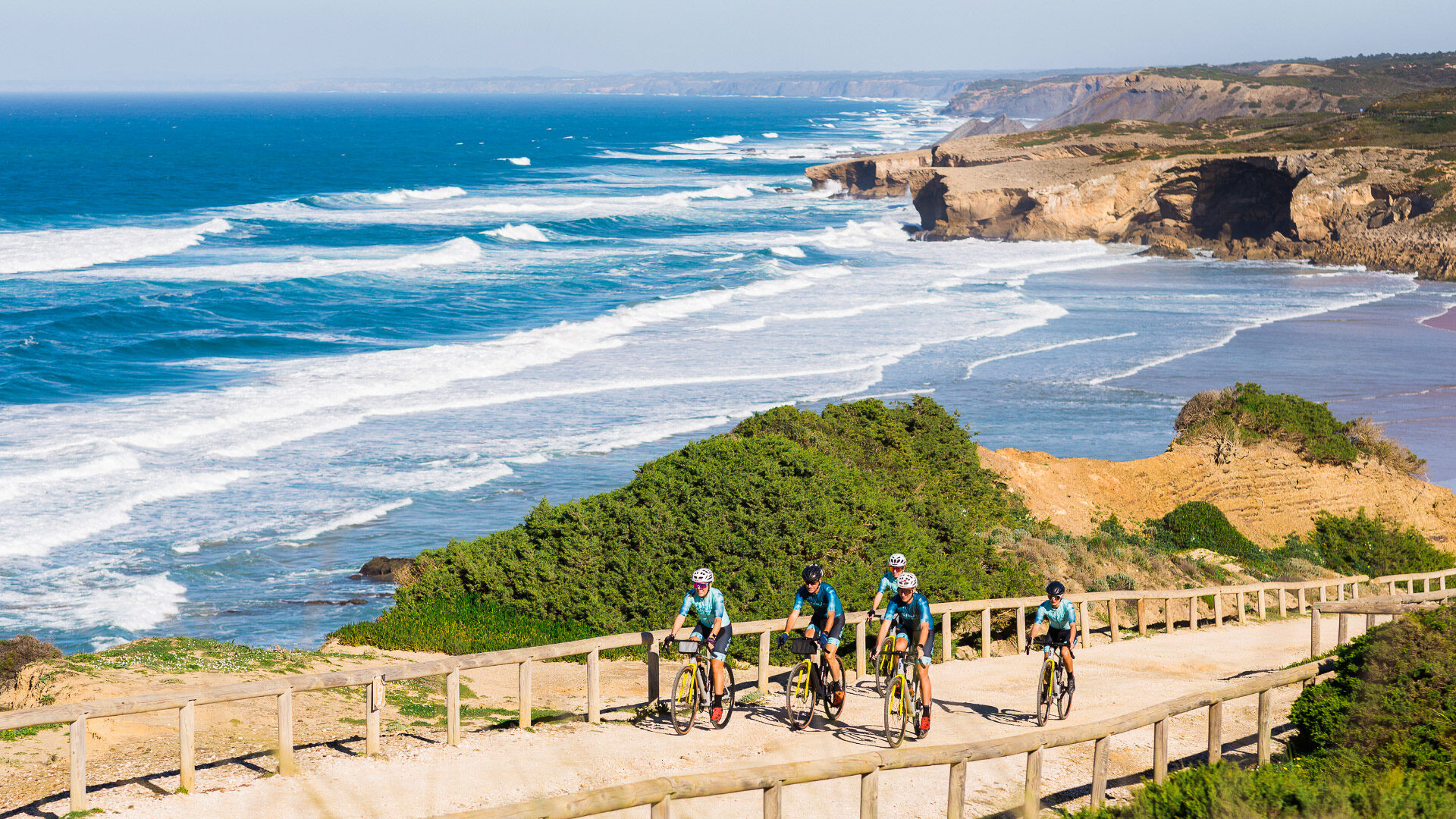

Cycling across the Algarve is one of the best ways to experience Portugal’s southernmost region, but the right route depends on the kind of rider you are. You can cross the Algarve by gravel bike, follow a road cycling route through the inland hills and mountains, or take a gentler coastal touring route based on EuroVelo 1.
To help compare the options, we spoke to Marco Fernandes from Bikesul Cycling Tours, an Algarve-based cycling specialist offering gravel, road and touring trips in the region. Bikesul Cycling Tours (“Bikesul”) helps riders with route planning, bike rental, accommodation, luggage transfers and navigation support, which can make a point-to-point ride across the Algarve much easier to organise.
In this article, Marco talks us through three Bikesul routes for cycling across the Algarve: a 385 kilometre gravel route, a 440 kilometre road route and a 300 kilometre coastal touring route based on EuroVelo 1. Each starts in Tavira and finishes in Sagres, but each suits a different kind of rider.
In short, choose:
- gravel if you want variety and adventure
- road if you want climbs and quiet tarmac, and
- EuroVelo 1 touring if you want an easier coastal journey with more time for towns, sandy beaches and nature reserves.
The guide below compares the routes by distance, terrain, difficulty, bike choice and practicalities, so you can decide which Algarve bike holiday is the best fit for you.
Over to Marco!
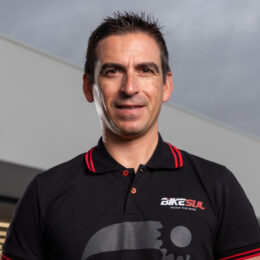
Marco Fernandes has been involved in cycling for most of his life, beginning with road cycling in his youth and later competing as a professional mountain biker. Later Marco worked for the Portuguese Cycling Federation and he continues to collaborate on the Cyclin'Portugal project.
Since 2018, Marco has been coordinating the Tours and Rentals department at Bikesul Portugal, a leading bike rental company in the south of Portugal which also operates as a KTM Bike Industries concept store in Guia, Albufeira. Bikesul organises and promotes cycling holidays in Portugal and Spain, as well as corporate events and daily tours.

We love to introduce our community to cycling businesses, destinations and ideas that we think are genuinely interesting. Bikesul caught our attention because of its focus on cycling in Portugal, which felt like a natural fit for Epic Road Rides and our readers. We were therefore pleased to work with the Bikesul team on this article.
Bikesul paid for this advertisement feature. Our decision to collaborate reflects our view that the brand is relevant to our readers; it is not a formal approval, audit or guarantee of its services. Unless we expressly say otherwise, we have not personally taken the trip described or independently verified information supplied by Bikesul.
As with any travel purchase, please check the latest trip details, terms and customer protections directly with Bikesul before booking. Any booking is made with Bikesul, not Epic Road Rides.
Always check current travel information and advice. For visitors from the UK, the UK government travel information pages are here.
Table of contents
This article contains a lot of useful information. To help make it more digestible, we’ve broken it down into several parts:
- Part 1: Why cycle across the Algarve?
- Part 2: Route options
- Part 3: Gravel vs road vs touring
- Part 4: Bikesul tours
- Part 5: Practical tips
- Part 6: Final takeaway
Sponsor Message
Considering cycling across the Algarve?
Bikesul has been running cycling holidays in the Algarve since 2017.
They offer a range of self-guided, assisted and guided tours across the region, including gravel, road, touring, and mountain biking experiences.
Interested? Head to the Bikesul website to find out more, including dates and prices.
Got a question for Marco Fernandes from Bikesul?
Fill out this form and we will pass it to Bikesul who aim to reply (within 24 hours wherever they can!)
Part 1: Quick answer: why cycle across the Algarve and what’s the best route?
Why cycle across the Algarve?
The Algarve is Portugal’s southernmost region. It’s known for its mild climate and is often described as having around 300 days of sunshine a year, as well as golden beaches, limestone cliffs, fishing villages, historic towns and quieter inland hills. Cycling gives you the perfect way to explore this part of Portugal at the perfect speed.
What’s the best way to cycle across the Algarve?
In this article, I share three cycle routes; the best route across the Algarve for you will depend on your fitness, bike and preferred riding style.
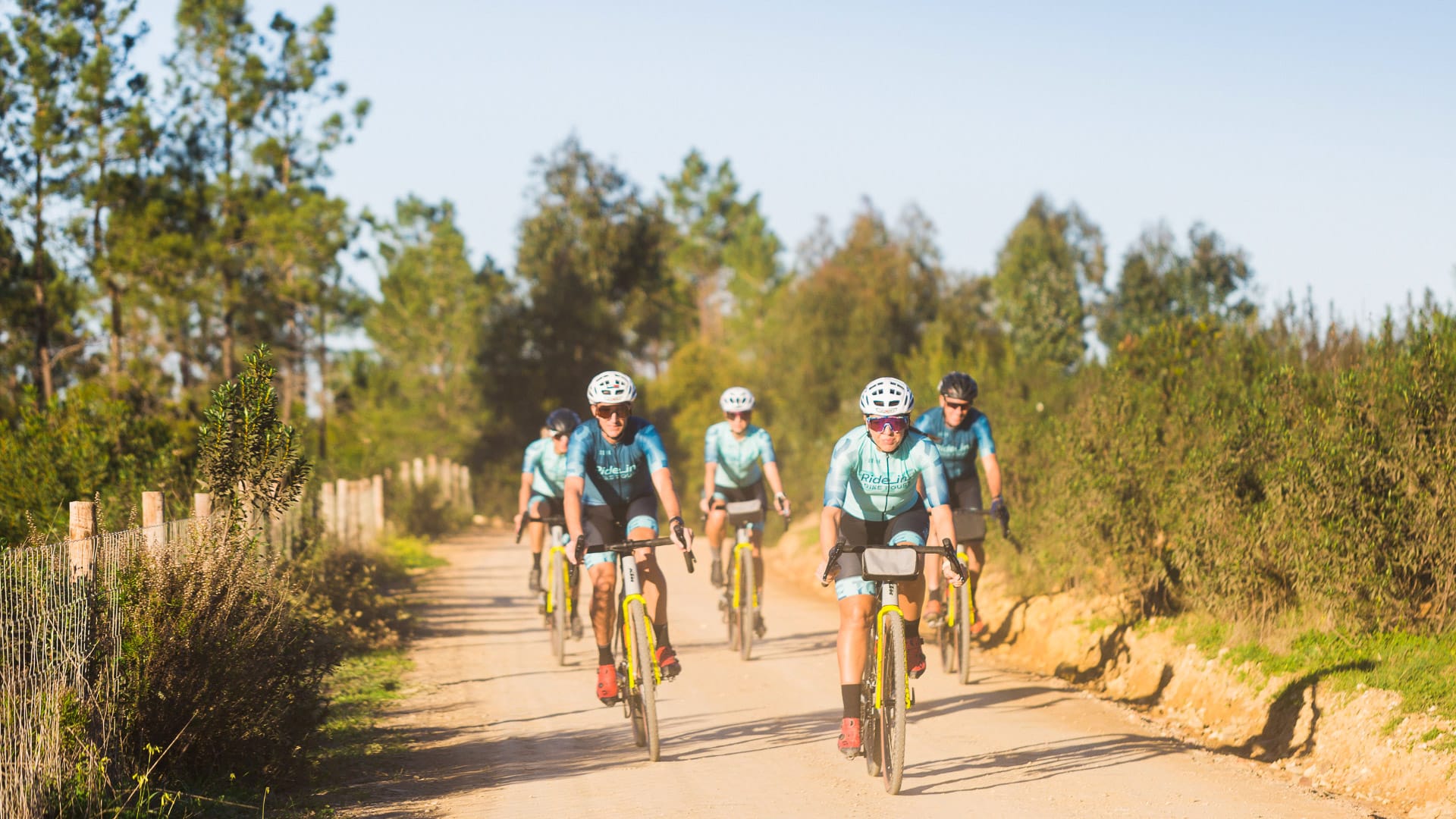
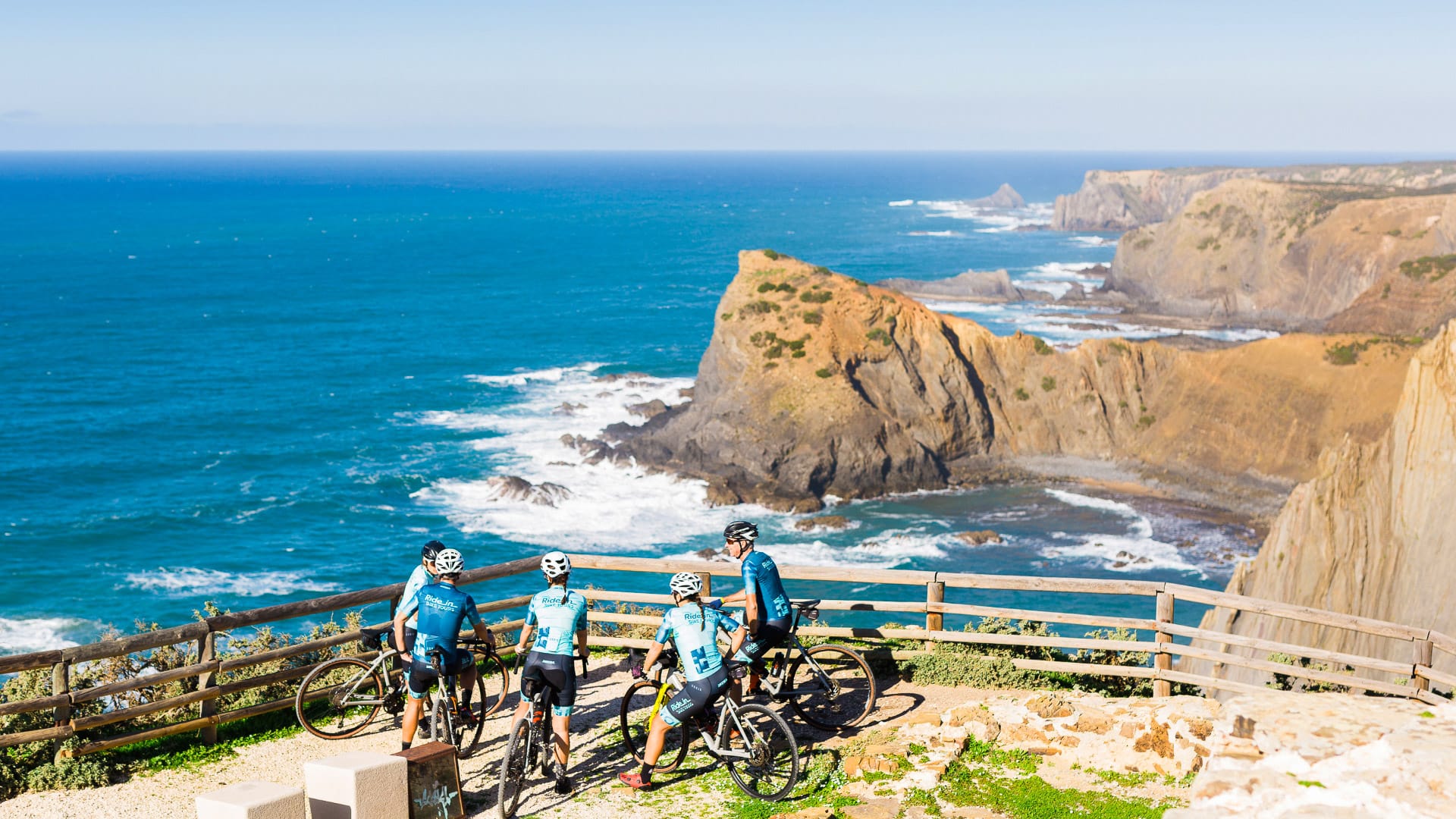
Choose the gravel route if you want variety and adventure, with a mix of coastal tracks, inland villages, gravel roads and the Monchique mountains. It suits riders who are confident on gravel and want a more adventurous way to cross the Algarve. Read more in Option 1 below.
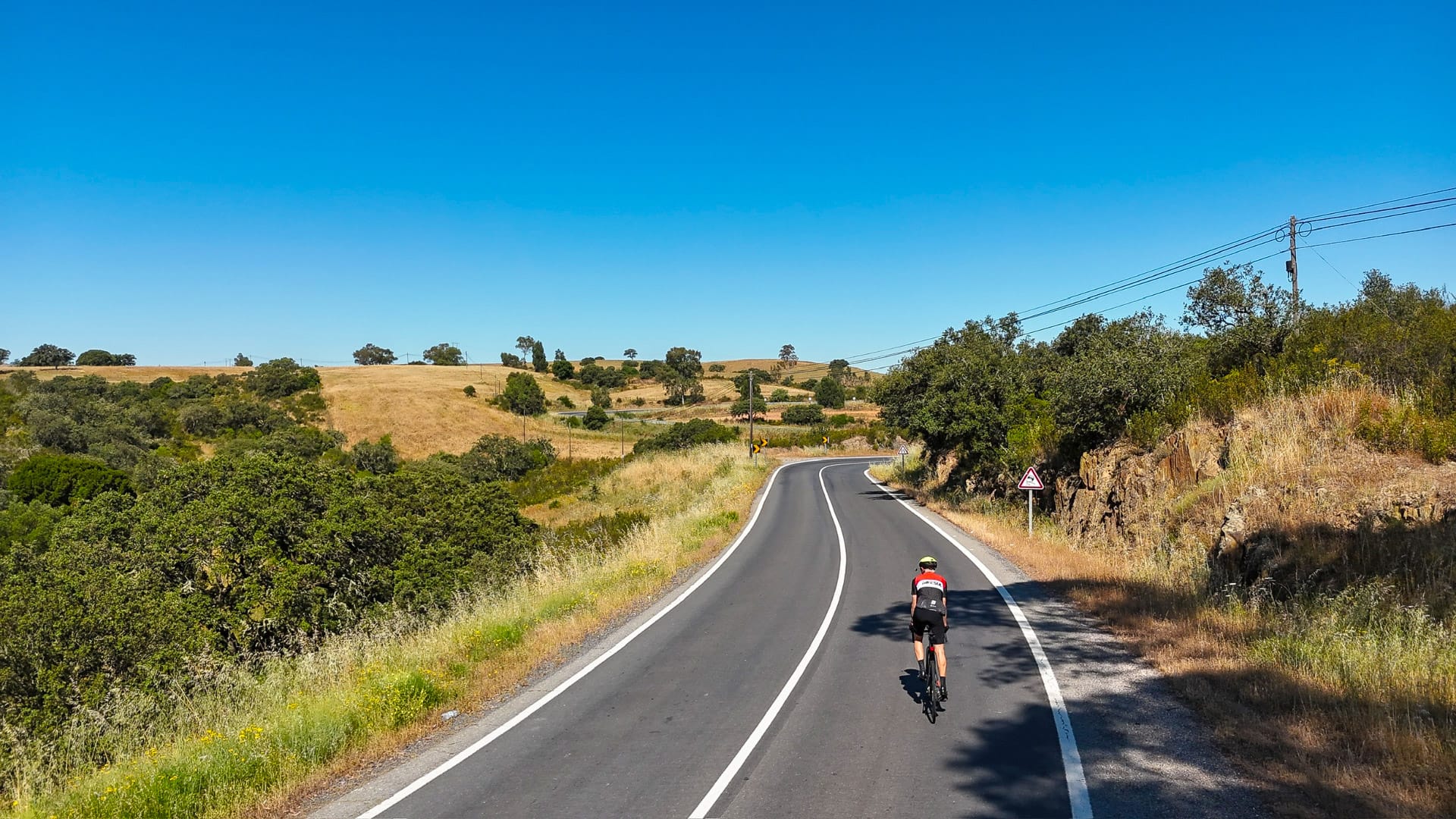
Choose the road route if you want a challenging ride, with longer days, quiet roads, climbs and classic Algarve cycling terrain that features in the annual pro race, the Volta ao Algarve. The road route is designed for cyclists who want to explore the best road cycling in the Algarve. It includes roads often used in the Volta ao Algarve and takes in the Serra do Caldeirão, the N124 and the climb to Fóia. It suits road cyclists who want a point-to-point ride with climbs, long views and quiet roads. Read more in Option 2 below.
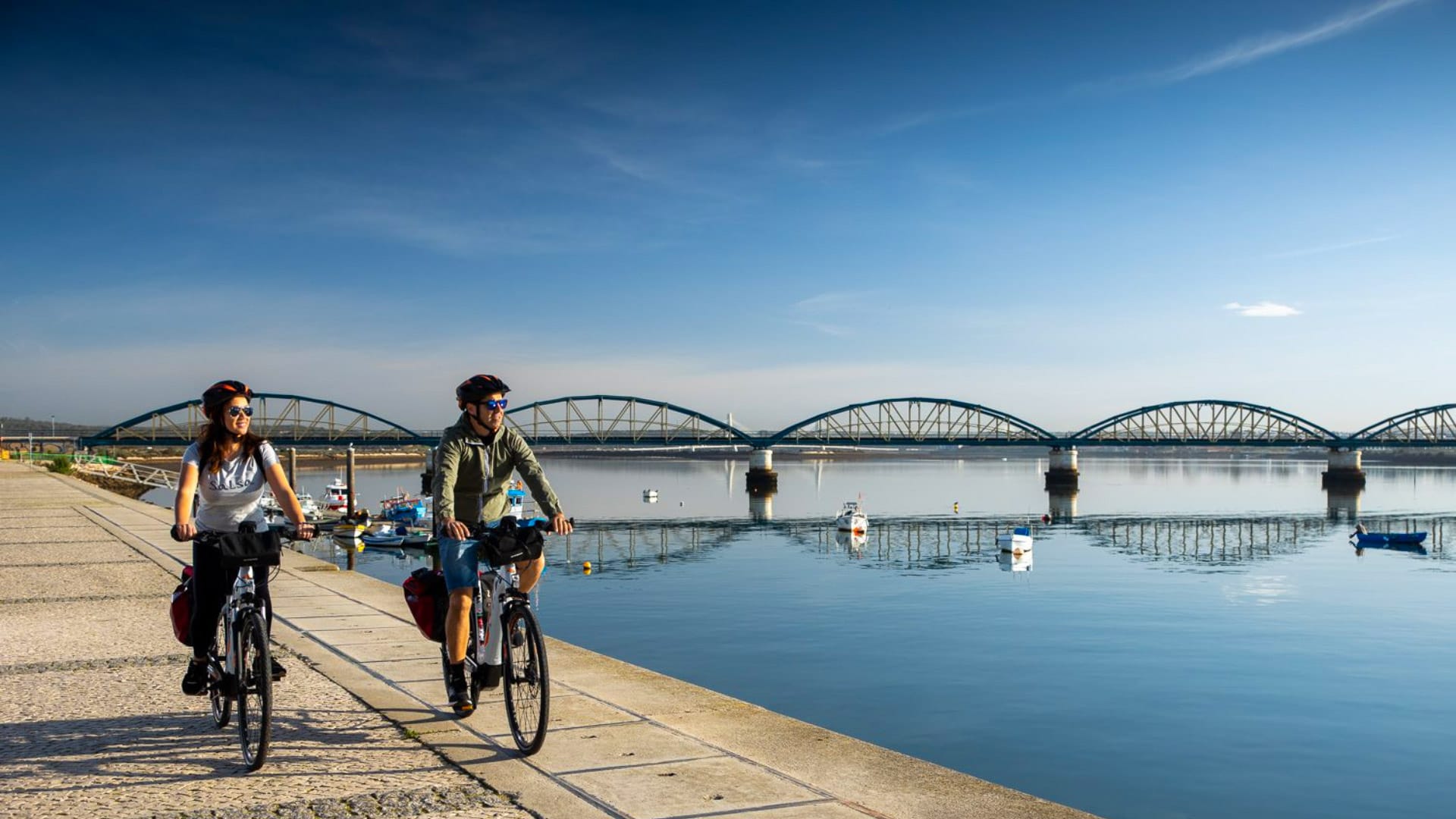
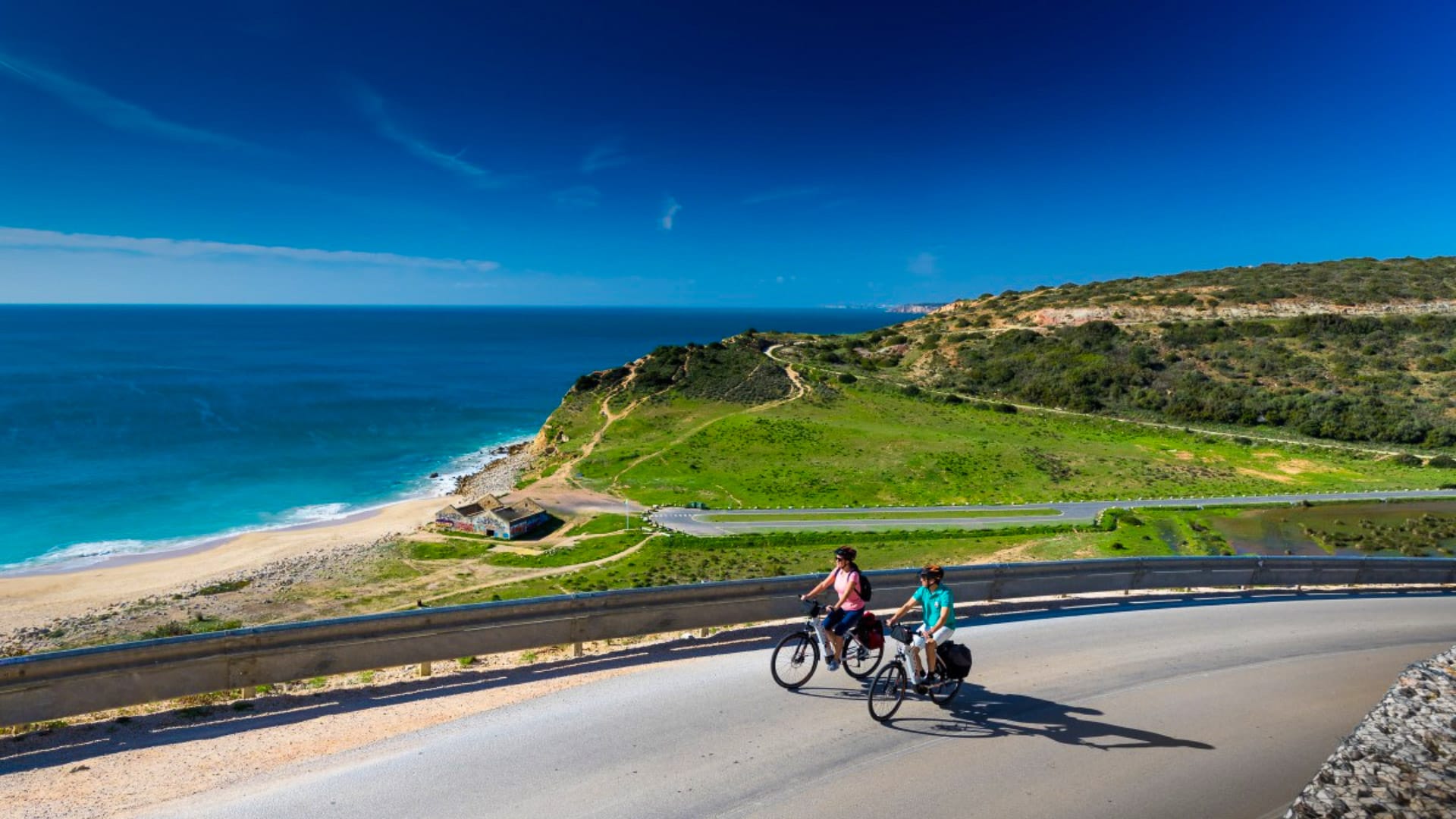
Choose the EuroVelo 1 touring route if you want the easiest option that’s full of impressive coastline scenery. It follows the Algarve coastline from east to west and gives riders more time in coastal towns, villages and nature reserves. Read more in Option 3 below.
If one of these routes sounds like your kind of trip, Bikesul can help with the practical details, from bike rental and route files to accommodation, luggage transfers and local support.
Sponsor Message
Considering cycling across the Algarve?
Bikesul has been running cycling holidays in the Algarve since 2017.
They offer a range of self-guided, assisted and guided tours across the region, including gravel, road, touring, and mountain biking experiences.
Interested? Head to the Bikesul website to find out more, including dates and prices.
Got a question for Marco Fernandes from Bikesul?
Fill out this form and we will pass it to Bikesul who aim to reply (within 24 hours wherever they can!)
Part 2: Want to cycle across the Algarve? Here’s how the options compare
This article compares three Bikesul routes that cross the region from east to west: gravel, road and a touring route based on EuroVelo 1.
Each route starts in Tavira and finishes in Sagres. However, the riding experience is very different. I’ve summarised the differences below:
Route comparison at a glance
Gravel route
Best for: gravel riders who want variety, adventure and a mix of coast, countryside and mountains.
Distance: 385 kilometres.
Riding days: five stages.
Start/finish: Tavira to Sagres.
Surface: gravel roads, trails and quiet asphalt roads.
Difficulty: intermediate.
Family suitability: not suggested for children under 16, baby seats or trailers.
Suggested bike: gravel bike or e-gravel bike.
Key highlights: Ria Formosa, Barrocal, Monchique, Costa Vicentina and Sagres.
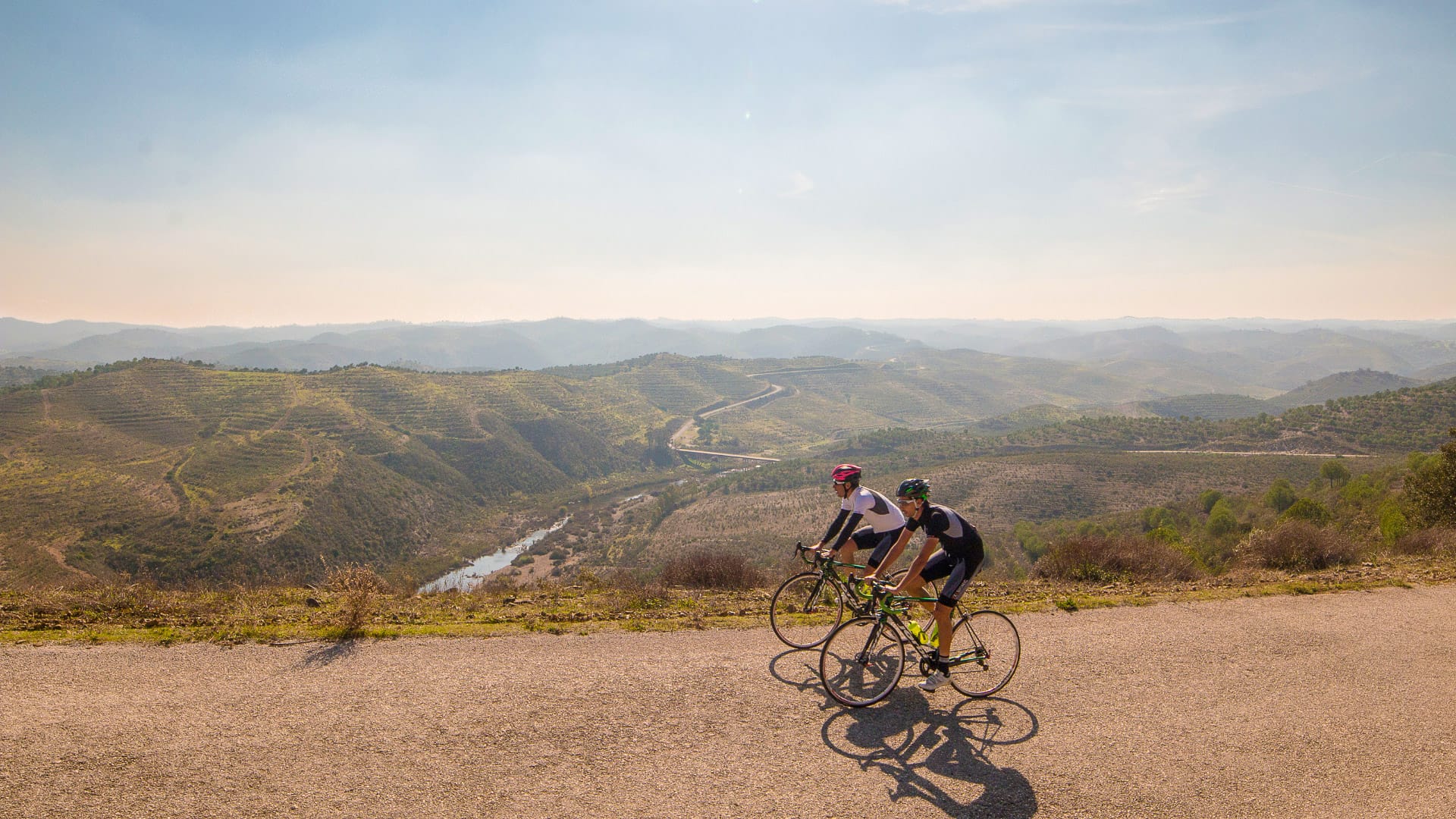
Plenty of car-free roads in the Tavira hills to explore the inland countryside and improve fitness (photo credit: LUIS SILVA/REGIÃO DE TURISMO DO ALGARVE)
Road route
Best for: road cyclists who want longer days, climbs and quiet roads.
Distance: 440 kilometres.
Riding days: five stages.
Start/finish: Tavira to Sagres.
Surface: road.
Difficulty: intermediate.
Family suitability: not suitable for families with children.
Suggested bike: road bike, e-gravel bike with road tyres or touring e-bike.
Key highlights: Guadiana River, Serra do Caldeirão, N124, Fóia and Cabo de São Vicente.
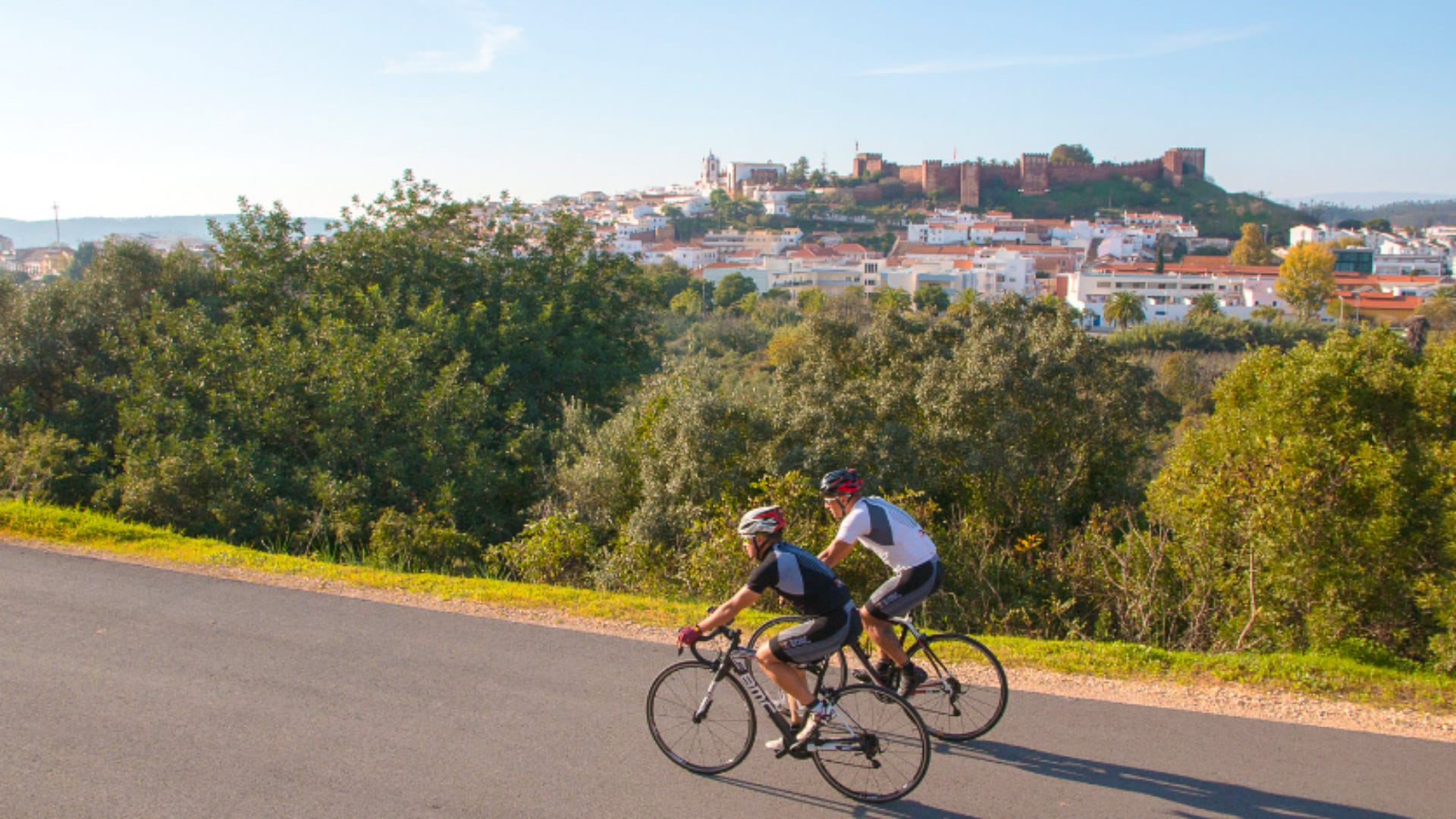
Cycling Across the Algarve trip, arriving in Silves with the medieval castle highlighted (photo credit: LUIS SILVA/REGIÃO DE TURISMO DO ALGARVE)
EuroVelo 1 touring route
Best for: leisure cyclists, touring riders and well-prepared families who want a coastal journey that’s full of salt pans, islands and wildlife that’s memorable to behold.
Distance: 300 kilometres.
Riding days: five cycling days.
Start/finish: Tavira to Sagres.
Surface: mainly coastal route, with some gravel and sandy sections.
Difficulty: easy.
Family suitability: suitable for families, with careful planning around daily distances, traffic, road crossings and children’s confidence on the bike.
Minimum age: 14 years old
Suggested bike: touring bike, e-touring bike, gravel e-bike or e-MTB.
Key highlights: Castro Marim, Ria Formosa, Faro, Lagos, Ponta da Piedade and Sagres.
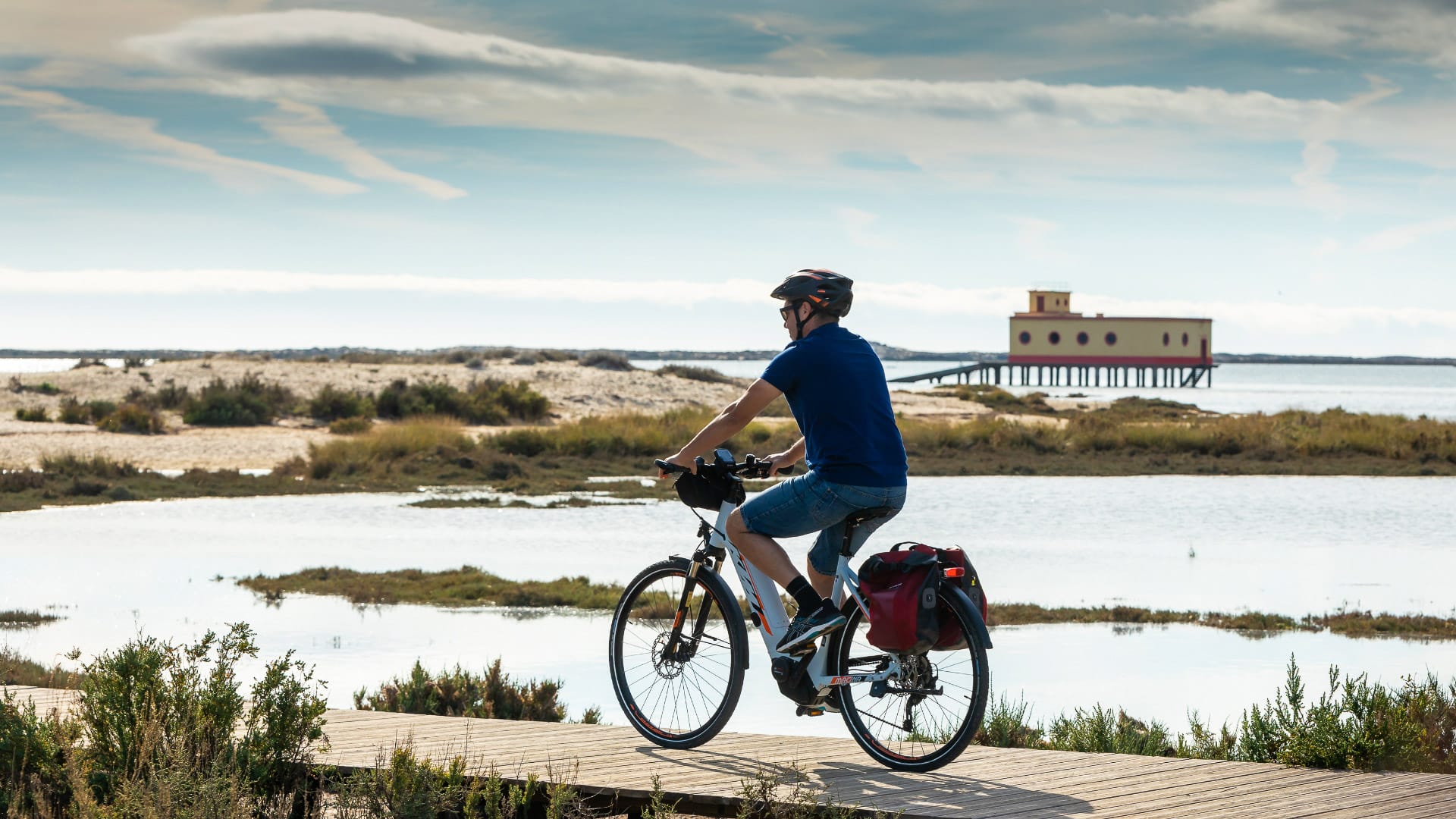
Cycling along Ria Formosa near Fuzeta on the EuroVelo 1 route (photo credit: Bikesul)
Sponsor Message
Considering cycling across the Algarve?
Bikesul has been running cycling holidays in the Algarve since 2017.
They offer a range of self-guided, assisted and guided tours across the region, including gravel, road, touring, and mountain biking experiences.
Interested? Head to the Bikesul website to find out more, including dates and prices.
Got a question for Marco Fernandes from Bikesul?
Fill out this form and we will pass it to Bikesul who aim to reply (within 24 hours wherever they can!)
Part 3: Gravel vs road vs touring across the Algarve: which route is right for you?
Option 1: gravel cycling across the Algarve
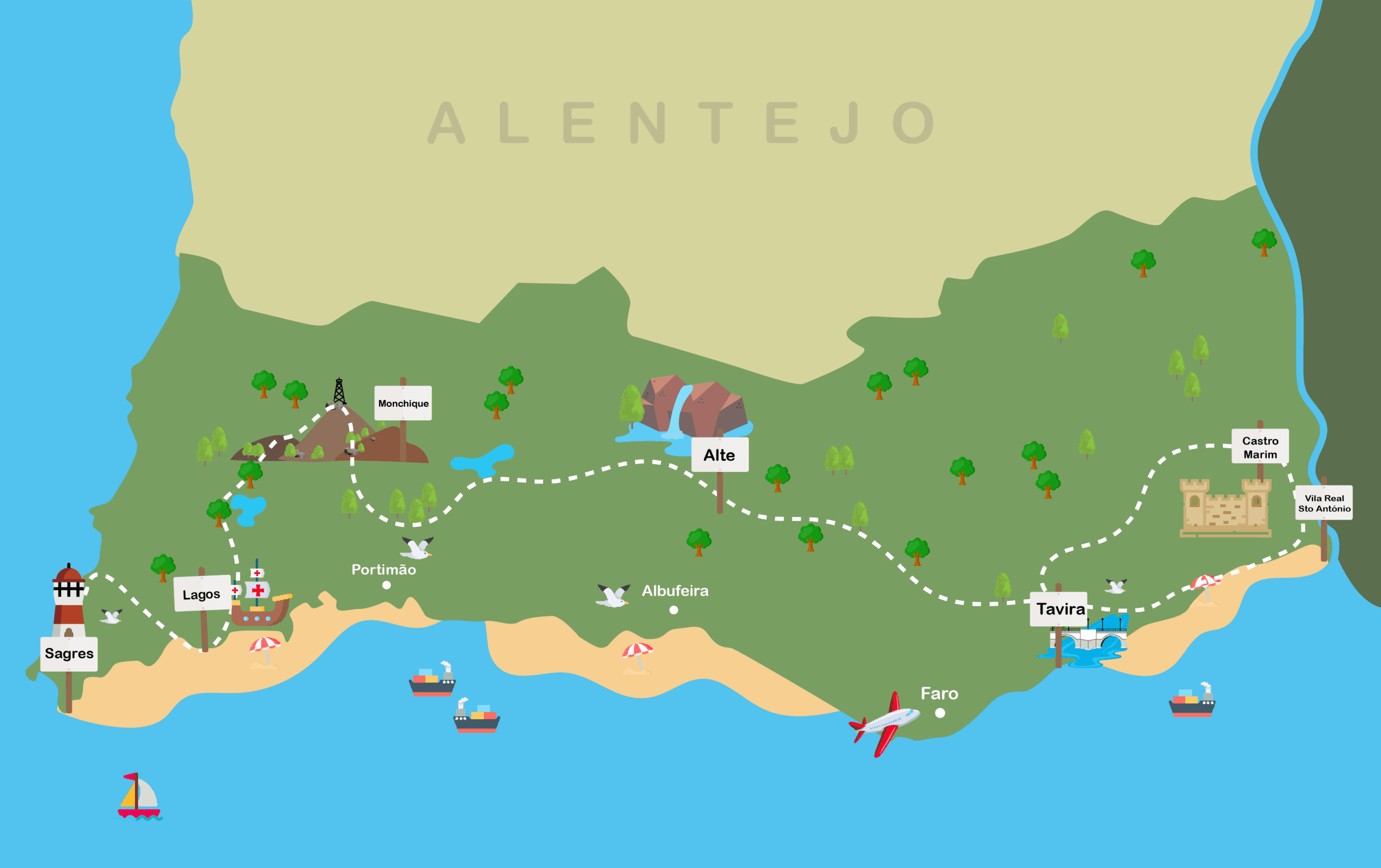
Gravel cycling across the Algarve tour route map (map credit: Bikesul)
Gravel route overview
Bikesul’s Algarve gravel cycling holiday starts in Tavira and finishes in Sagres. The route covers 385 kilometres in five stages.
The route combines coastal riding, countryside gravel roads, quiet asphalt roads and a mountain section through Monchique. It finishes near Sagres, close to the south-western edge of mainland Portugal.
The route is designed for intermediate riders. It is suitable for cyclists with medium gravel skills and fitness.
What are the highlights of the gravel route?
The first major highlight is the eastern Algarve and Ria Formosa. This section includes coastal riding, salt pans and flat riding with wide views across the landscape.
The Barrocal area gives the route a more rural feel. It passes local farms, small villages and the recently recognised Algarvensis UNESCO Global Geopark.
The Monchique mountain range adds the biggest climbing challenge. Fóia is the highest point in the Algarve, at 902 metres above sea level.
The final part of the route follows the Costa Vicentina. This section includes wild gravel roads, Atlantic views, sandy beaches, surf spots and cliffs before the route reaches Cabo de São Vicente, at the south-western tip of mainland Europe, and Sagres.
I really love this programme, as it combines the best that the Algarve can offer: diverse scenery, coastal riding, countryside exploring, challenging hilly climbs with panoramic views over the region, dramatic cliffs, powerful Atlantic waves and pristine wild beaches.
Along this cycling trip, you will be able to stop in local coffee shops and meet the friendly locals.
How hard is the gravel route?
We class the gravel route as intermediate. Daily distances range from 60 to 85 kilometres, with a mix of gravel and quiet asphalt roads.
The maximum climbing in a day is around 1,200 metres. Most of the route is suitable for riders with medium experience, though there are some short sections of loose gravel.
Bikesul does not suggest this route for children under 16. It is also not suitable for those with baby seats or trailers.
We suggest riders should train for at least six to eight hours per week before the trip.
What bike do you need for the gravel route?
A gravel bike is the natural choice for this route. Riders can use a regular gravel bike or an e-gravel bike.
We can provide carbon gravel bikes with Di2 groupsets, aluminium gravel bikes with racks and panniers, and e-gravel bikes with a Bosch Performance SX motor and 400Wh battery.
Note that there are no dedicated charging stations on the route. For our clients, Bikesul supplies chargers, and riders can charge during lunch, snack or drink stops, as well as at their accommodation.
Example day-by-day gravel itinerary
Find out more about Bikesul’s gravel itinerary
Check the Bikesul website for more information on their Algarve gravel cycling itinerary.
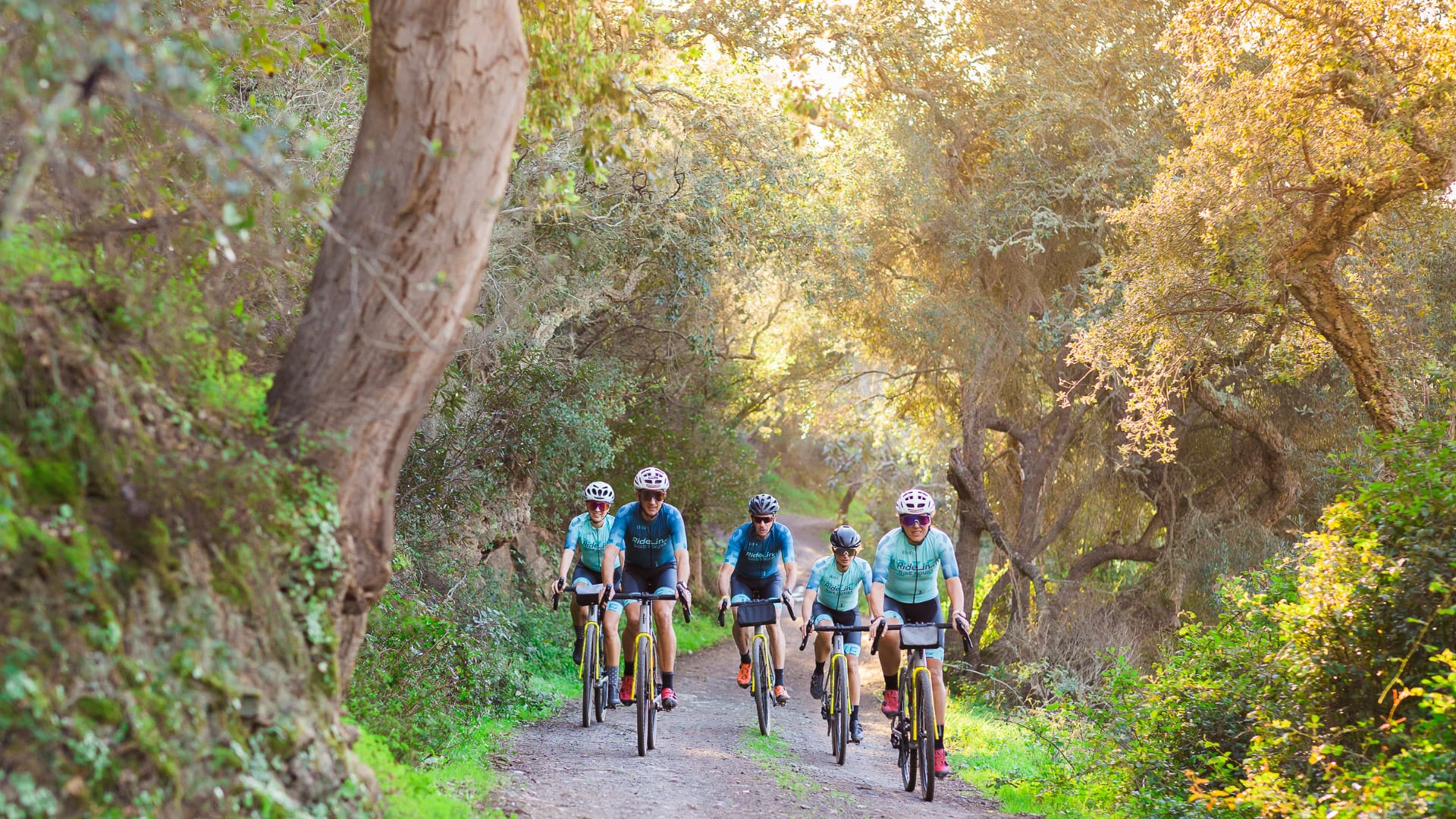
Gravel riding through the typical countryside landscape of Barrocal in the Algarve (photo credit: Bikesul)
Option 2: road cycling across the Algarve
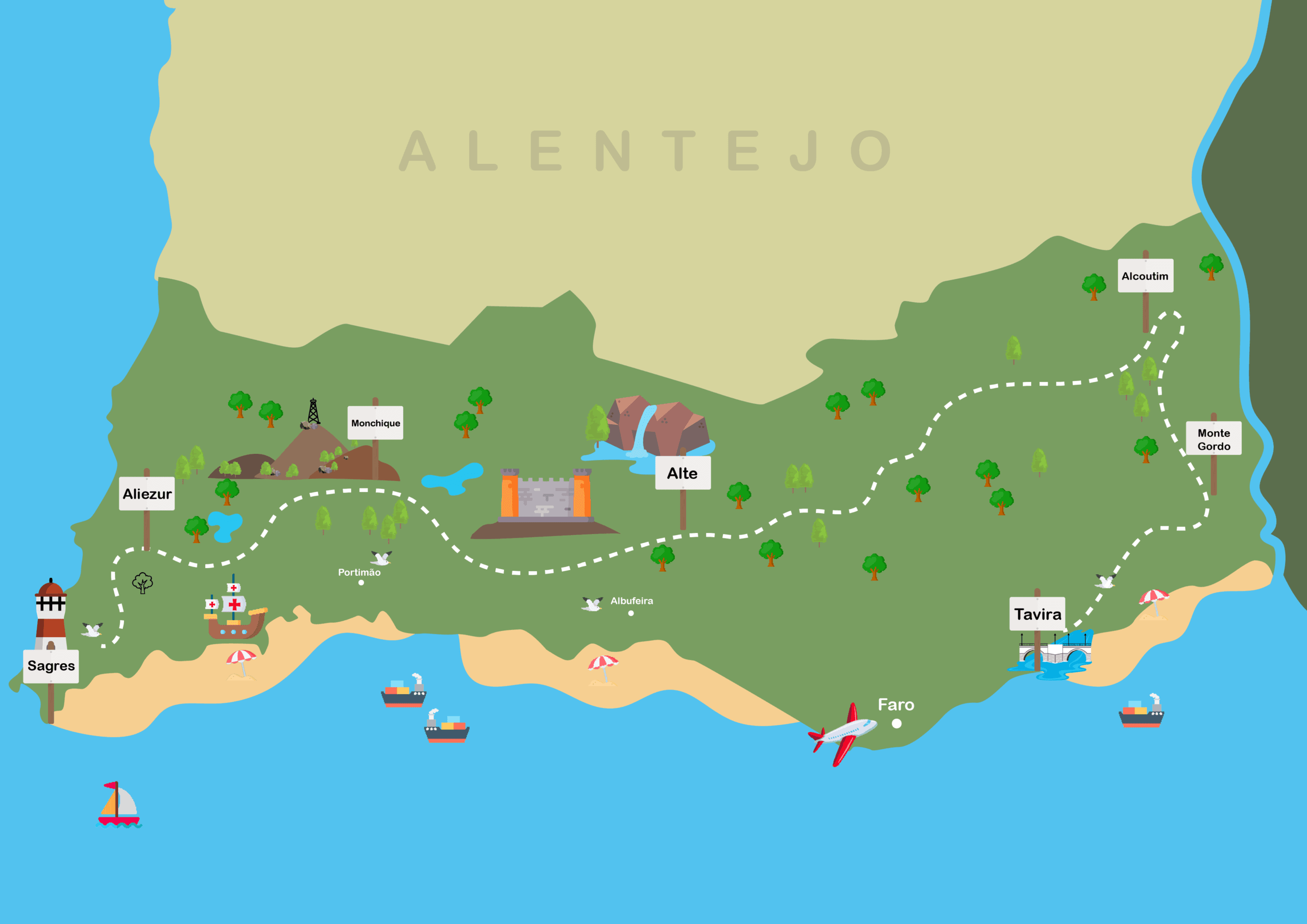
Cycling Across the Algarve road tour route map (map credit: Bikesul)
Road route overview
The road cycling route also starts in Tavira and finishes in Sagres. It covers 440 kilometres and is designed for intermediate road cyclists.
The aim is to explore some of the best road cycling in the Algarve. Many of these roads are used in the Volta ao Algarve, the UCI ProSeries race held each February.
This route is about quiet roads, climbs, inland scenery and a point-to-point journey across the region.
What are the highlights of the road route?
The Guadiana River section is one of the key highlights. The route heads towards Alcoutim, close to the Spanish border, and includes views across the river between Portugal and Spain, before leading you to the traditional village of Alcoutim.
The Serra do Caldeirão section follows the quiet N124 road through the Algarve’s interior. This part of the ride passes remote villages, hills and valleys, with a fabulous landscape and natural setting.
In the traditional village of Alte, you can visit the most famous cycling café in the Algarve, Germano Bike Café, located just 100 metres from your accommodation. Just a few metres south of it, you can also find the lovely hidden waterfall, Queda do Vigário.
The Monchique section includes the climb to Fóia, the highest peak in the Algarve at 902 metres. From the top, riders get wide views over the western Algarve.
The route also includes Silves, Caldas de Monchique, Aljezur, the Vincentine Coast, Cabo de São Vicente, at the south-western tip of mainland Europe, and Sagres.
How hard is the road route?
Bikesul rates the road route as intermediate. Ride time is usually between three and six hours per day, depending on pace.
The route includes rolling terrain, longer climbs and some steep gradients. One section towards the Guadiana includes gradients of up to 20%.
The average daily distance for this trip is around 85 to 90 kilometres, with approximately 1,000 metres of climbing per day.
We suggest riders should train for at least four to six hours per week before the trip.
The route is not suitable for families with children.
What bike do you need for the road route?
A road bike is the main choice for this route. Bikesul mentions carbon road bikes with Ultegra Di2 12-speed and carbon road bikes with Ultegra 11-speed.
Bikesul can also supply e-gravel bikes with road tyres or touring e-bikes.
Example day-by-day road itinerary
| Day | What happens | What to expect |
| Day 1 | Arrival in Tavira | Transfer from Faro to Tavira. Bike fitting, briefing and time to explore Tavira or take an adaptation ride. |
| Day 2 | Tavira loop | River and climbing towards Alcaria do Cume. Return via Santa Catarina da Fonte do Bispo, Umbria and Morenos. |
| Day 3 | Tavira to Alcoutim | Ride via Cacela Velha, then north along the Guadiana River. Pass Azinhal, Alta Mora, Beliche and Odeleite dams before reaching Alcoutim. |
| Day 4 | Alcoutim to Alte | Ride along the EN124 through the Algarve’s interior, passing remote villages, hills and valleys before arriving in Alte. |
| Day 5 | Alte to Caldas de Monchique | Continue west via Silves and climb towards Monchique and Fóia. Finish in Caldas de Monchique. |
| Day 6 | Caldas de Monchique to Sagres | Ride through Monchique, Marmelete and Aljezur, then continue along part of the Vincentine Coast to Cabo de São Vicente and Sagres. |
| Day 7 | Departure | Transfer after breakfast, unless extending the trip. |
Find out more about Bikesul’s road itinerary
Visit the Bikesul website to learn more about their Algarve road cycling trip.
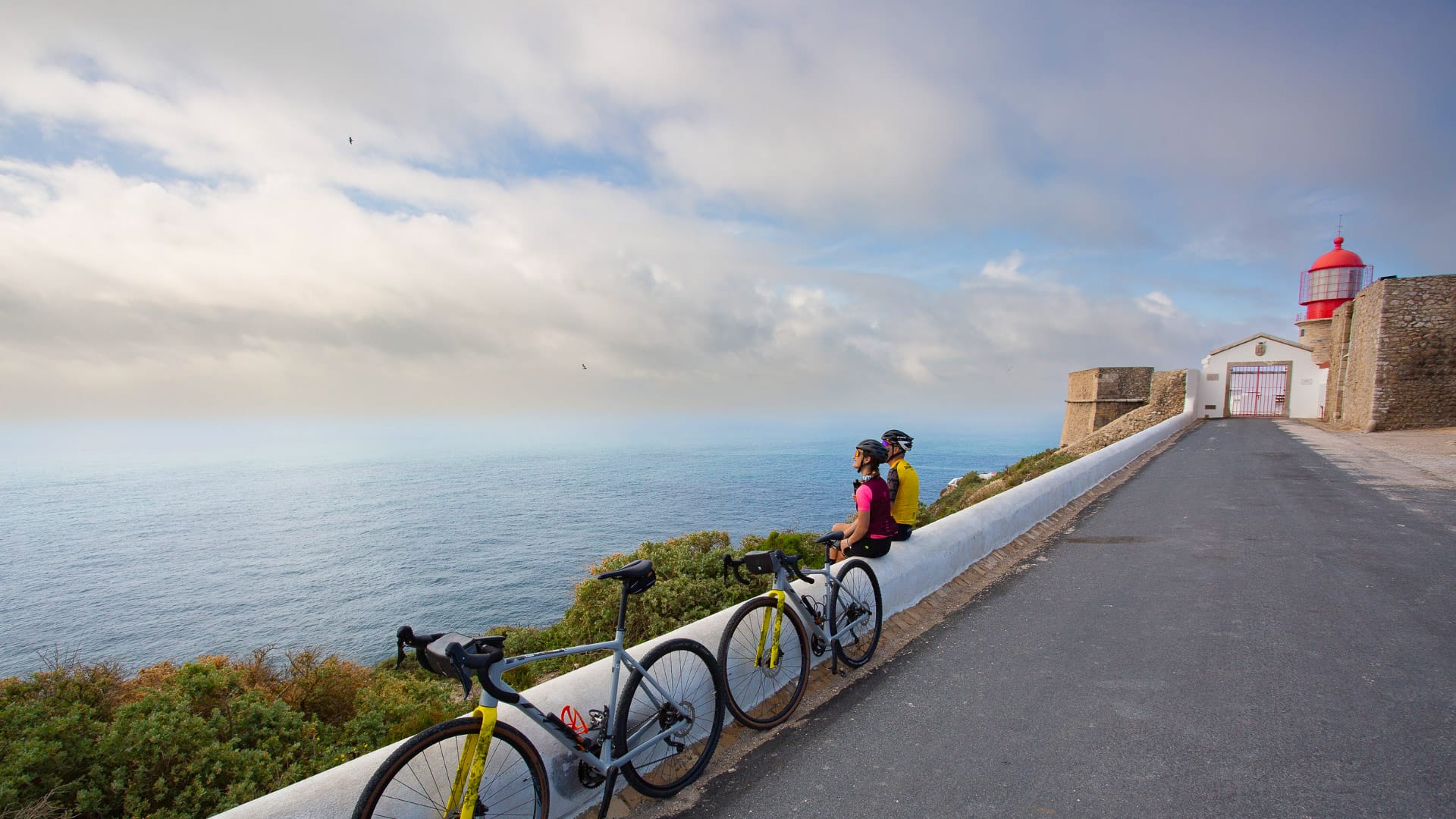
Most of our tours end in Sagres after visiting Cape St Vincent, the southernmost point of Europe (photo credit: RALF SCHANZE)
Option 3: EuroVelo 1 and cycle touring across the Algarve
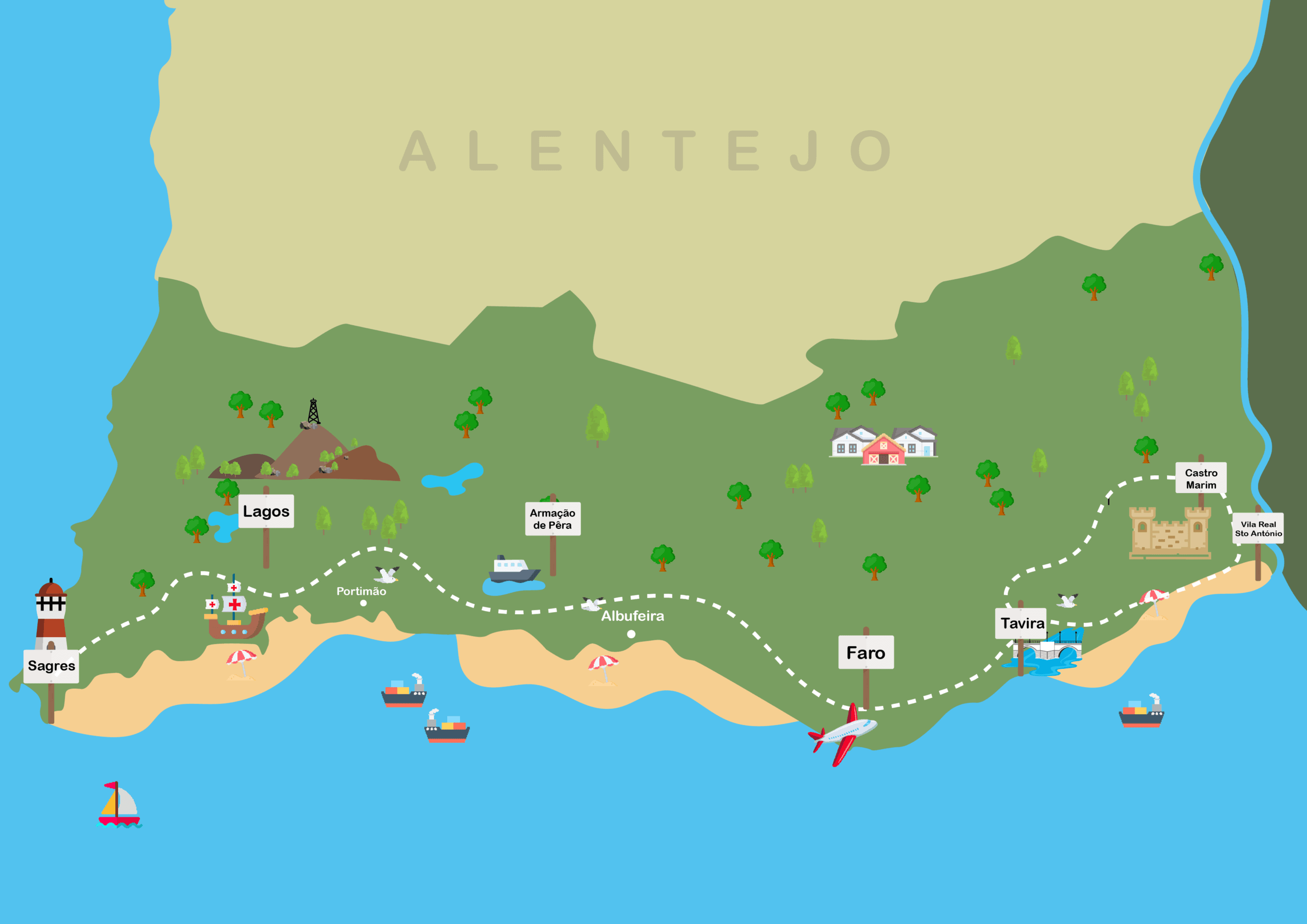
Algarve Coastline Tour – EuroVelo 1 route map (map credit: Bikesul)
EuroVelo 1 touring route overview
The Algarve section of EuroVelo 1 runs from the Spanish border near Vila Real de Santo António towards Sagres. Bikesul’s touring route is based on EuroVelo 1 and starts in Tavira before finishing in Sagres.
The route covers around 300 kilometres and includes five cycling days. It is the easiest of the three options we share in this article.
This route is focused on the coastline and loosely follows the official EuroVelo 1 route, diverging in places because we think it’s better to do so and often o share local secrets that most people don’t know about! The route is gorgeous and links salt pans, marshes, fishing villages, beaches, historic towns, coastal paths and Atlantic views.
What are the highlights of Bikesul’s take on EuroVelo 1 in the Algarve?
In the eastern Algarve, the route visits Castro Marim and Vila Real de Santo António Marshland Nature Reserve. The landscape includes tidal channels and salt pans.
Further west, the route follows Ria Formosa Nature Park, recognised as one of Portugal’s Seven Natural Wonders. This area includes barrier islands, lagoons and birdlife such as flamingos, herons and purple swamphens.
The route then passes Fuzeta, Olhão, Faro and Quinta do Lago. From there, the coastline changes from marshes and lagoons to limestone cliffs, coves and longer beaches.
Other highlights include Vilamoura, Albufeira, Armação de Pêra, Senhora da Rocha, Ferragudo, Portimão, Alvor, Lagos, Ponta da Piedade, Vila do Bispo, Cabo de São Vicente and Sagres.
The route also passes historic sites such as Sagres Fort, the Slave Market Museum, Fort of São João do Arade, Capela de Nossa Senhora da Rocha, Capela dos Ossos and the Roman bridge over the River Gilão.
How hard is Bikesul’s EuroVelo 1 tour route?
Bikesul describes the EuroVelo 1 touring route as easy. It is the best fit for riders who want a gentler cycling trip along the coast.
The terrain is mostly flat in the eastern Algarve. There are more hills in places such as Albufeira and the western section towards Sagres.
The route also includes urban sections, sandy areas and gravel roads. The final approach to Cabo de São Vicente includes gravel roads and a more exposed Atlantic landscape.
Is EuroVelo 1 in the Algarve suitable for families?
Bikesul says this route is suitable for families with children but note that the route still needs sensible planning. Families should consider daily distances, traffic, road crossings, surface type and how confident children are on the bike. Using a children’s trailer on EuroVelo 1 can also be challenging, as some sections are narrow.
What bike do you need for the touring route?
Riders can use touring e-bikes, gravel e-bikes or e-MTBs, including hardtail and full-suspension options.
There are no dedicated charging stations. Bikesul supplies a charger and bike key.
Example day-by-day touring itinerary
| Day | What happens | What to expect |
| Day 1 | Arrival in Tavira | Transfer from Faro to Tavira. Briefing, equipment handover and time to explore Tavira or visit the beach across Ria Formosa. |
| Day 2 | Tavira loop | Easy first ride along Ria Formosa, through Cacela Velha, Manta Rota, Altura, Monte Gordo, Vila Real de Santo António, Castro Marim, Monte Rei and Santa Rita. |
| Day 3 | Tavira to Faro | Ride via salt pans, Santa Luzia, Fuzeta and Olhão before reaching Faro. |
| Day 4 | Faro to Armação de Pêra | Ride past Faro Airport, Quinta do Lago, Vale do Lobo, Quarteira, Vilamoura, Falésia cliffs, Albufeira, Galé and Salgados before reaching Armação de Pêra. |
| Day 5 | Armação de Pêra to Lagos | Visit Senhora da Rocha, then ride inland via Lagoa before reaching Ferragudo, Portimão, Praia da Rocha, Alvor, Odiáxere, Meia Praia and Lagos. |
| Day 6 | Lagos to Sagres | Visit Ponta da Piedade, then ride through Aldeia da Luz, Burgau and Vila do Bispo before reaching Cabo de São Vicente and Sagres. |
| Day 7 | Departure | Transfer to the airport, unless extending the trip. |
Find out more about Bikesul’s touring itinerary
Find full details of Bikesul’s Algarve touring itinerary on their website.
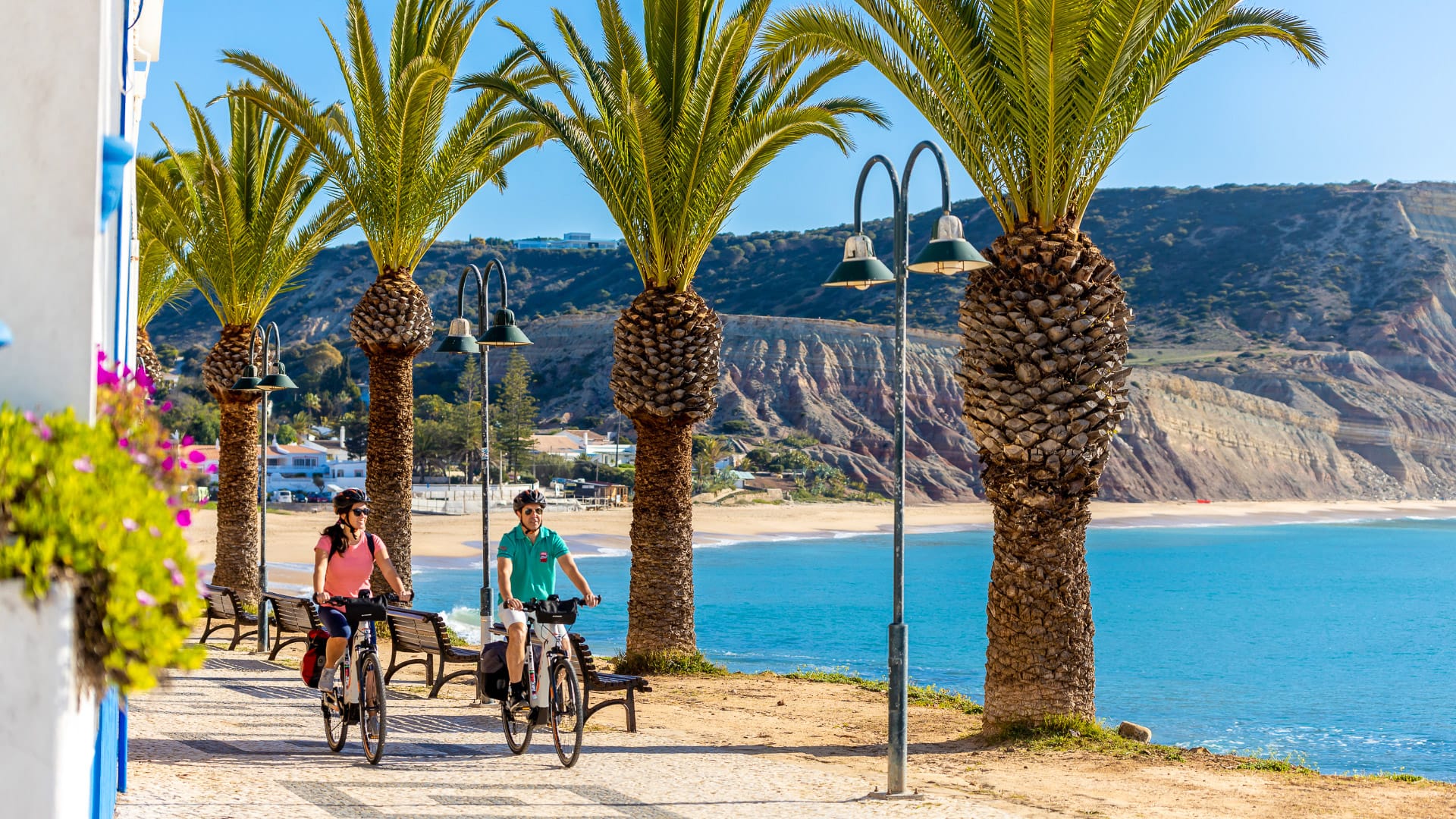
Great coastal ride in Praia da Luz along the EuroVelo 1 route (photo credit: Bikesul)
Sponsor Message
Considering cycling across the Algarve?
Bikesul has been running cycling holidays in the Algarve since 2017.
They offer a range of self-guided, assisted and guided tours across the region, including gravel, road, touring, and mountain biking experiences.
Interested? Head to the Bikesul website to find out more, including dates and prices.
Got a question for Marco Fernandes from Bikesul?
Fill out this form and we will pass it to Bikesul who aim to reply (within 24 hours wherever they can!)
Part 4: Do you need support to cycle across the Algarve?
What is involved in riding independently?
It is possible to cycle across the Algarve without support. However, riders need to organise more of the trip themselves.
This may include carrying luggage, arranging taxis or transfers, booking accommodation, planning routes and dealing with mechanical issues.
Do note that sometimes arranging luggage and transfers independently may be more expensive than booking with an operator like us! Mechanical support may also be harder and more costly to arrange if something goes wrong.
When is a self-guided or supported tour worth considering?
A self-guided or supported tour can remove many of the logistics that make a point-to-point ride complicated. Instead of arranging daily accommodation, luggage transport, bike hire, route files and transfers separately, riders can start each day with the route already planned and their overnight bag moving on to the next stop.
Our trips typically include route planning, luggage transfer, accommodation, bike rental, navigation and transfers, with self-guided, assisted and guided formats available.
Before the trip starts, a detailed travel guide is supplied with all the information and tips to help you find less obvious places of interest and alert you to any tricky sections along the route.
| Planning issue | Riding independently | Self-guided, supported or guided tour |
| Route planning | You plan and check the route yourself. | Operator provides routes, a travel guide and navigation. |
| Luggage | You carry it or arrange transfers. | Luggage is transferred between hotels. |
| Accommodation | You book each stop. | Hotels or country house accommodation are arranged. |
| Bike hire | You source your own bike. | Operator arranges bike rental. |
| Mechanical issues | You arrange help locally. | Support depends on the tour format. |
| Local tips | You rely on your own research. | Operator provides route notes and local suggestions. |
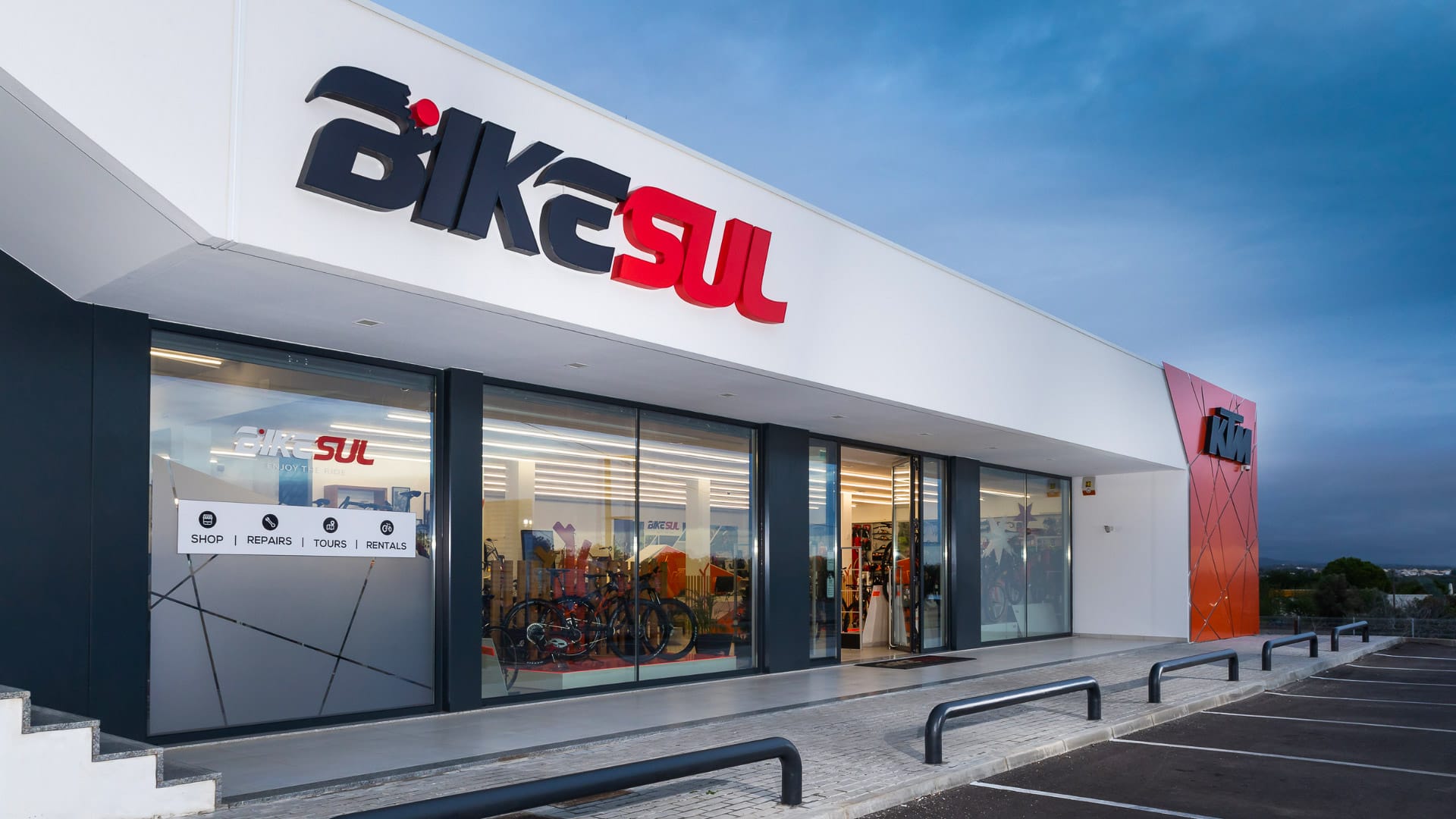
Bikesul bike store, repairs and rental service, where we prepare all the cycling adventures (photo credit: Bikesul)
How a local cycling specialist can help
Bikesul is based in Guia, just north of Alubufeira, in the Algarve. We offer gravel, road, touring and mountain bike trips as well as bike rental and route support.
Our team is local to the Algarve and has long-standing links with cycling in the region. This is relevant because many of the routes include quieter roads, small villages and local places that can be harder to find without local knowledge.
What’s special about travelling with Bikesul?
Route planning by cyclists
We carefully select the best routes and identify the best places to visit and to stop. As keen cyclists, we ride all the routes as if we were travellers ourselves. We design them to be interesting, safe and fluid, and to pass historic, cultural and natural points of interest, as well as great viewpoints. After creating the Ride with GPS route, we add POIs so they appear on the route file, together with links to more information about each one.
Professional cycling and tourism expertise
We have a dedicated professional team to provide a great cycling experience. I have worked with Bikesul since 2017. Before that, I was a coordinator at the Portuguese Cycling Federation and was responsible for Cyclin’ Portugal, a Portuguese cycling infrastructure project that included mountain bike centres and official signed cycling routes for MTB, road cycling and gravel. From 2015 to 2017, I was also responsible for technical and institutional cycling activities in southern Portugal.
We have also cooperated with public bodies responsible for promoting cycling in southern Portugal, including Região de Turismo do Algarve, Associação de Turismo do Algarve, AMAL and Turismo de Portugal, to help develop the bike tourism industry in the region.
Bikesul manager Ricardo Rodrigues is also President of the Algarve Cycling Association, the public body that coordinates and regulates cycling activity in the Algarve and South Alentejo, and has extensive experience in cycling. Bikesul also has staff with a background in tourism, who have worked with us for several years.
In addition, we usually participate in cycling and tourism workshops and meetings to stay up to date with industry developments and new trends.
Local cycling knowledge
We have extensive cycling knowledge and were born and raised in the Algarve. Most of our staff have also always been connected to cycling. Apart from daily cycling and multi-day tours, we have a 400 square metre KTM Bike Industries Concept Shop, with repair and rental services. In total, Bikesul has 14 full-time employees, most of whom have worked in cycling for several years.
High-quality bike rental fleet
We provide great bike rental services. At Bikesul, we have more than 400 bikes in our rental fleet, all from KTM Bike Industries. This includes carbon road bikes, gravel bikes, MTB hardtail and full-suspension bikes, touring and leisure bikes, children’s bikes, baby seats and children’s trailers. We also have more than 100 e-bikes in total, including e-touring, e-MTB and e-gravel bikes.
Our bikes are replaced every two to three years to help ensure they are always in good condition. Rentals can be checked and booked directly here.
For independent feedback from previous customers, you can read Bikesul’s reviews on Google and Tripadvisor.
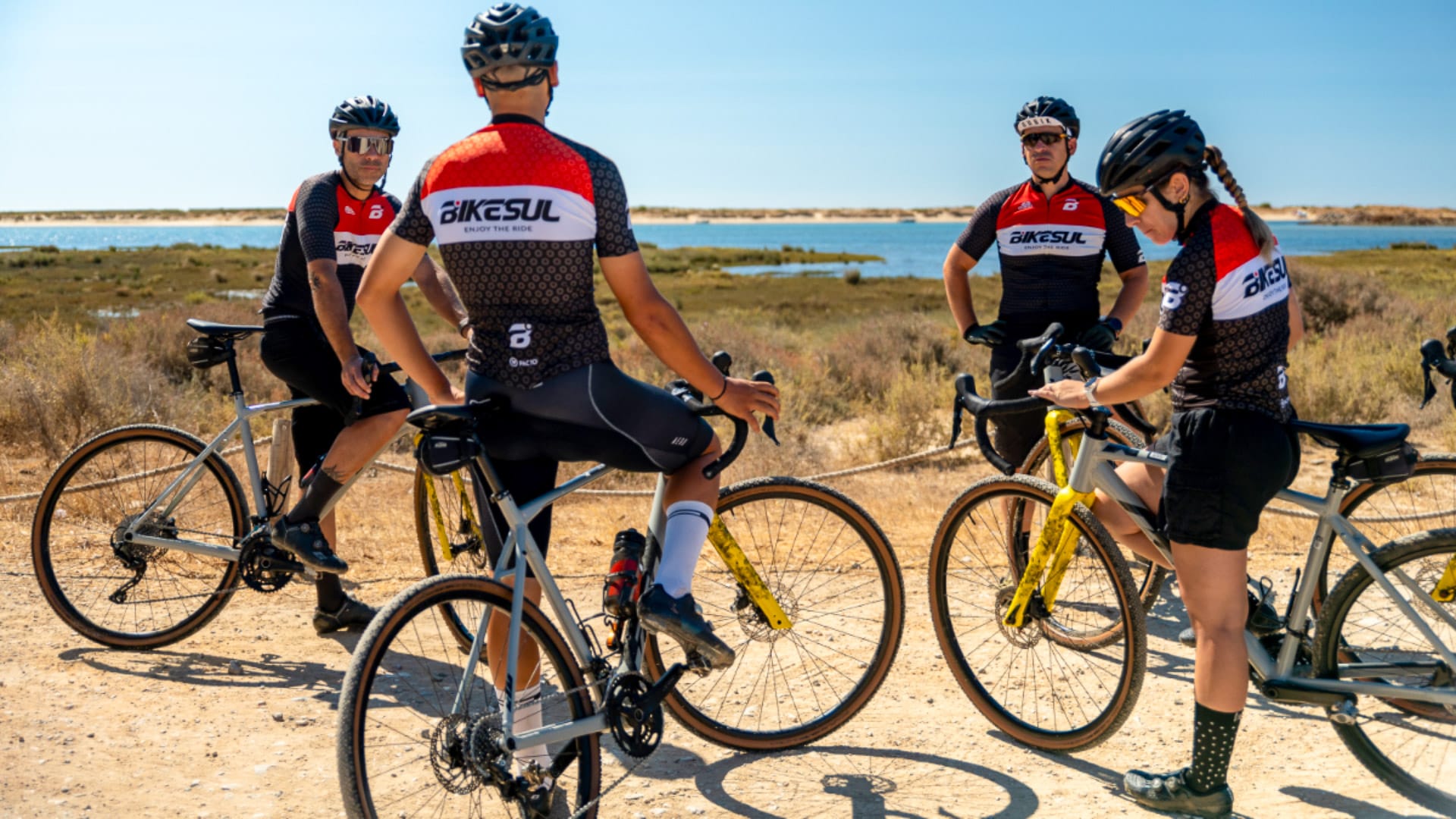
Some hidden spots in Ria Formosa can only be found with an experienced bike guide (photo credit: Bikesul)
What kind of tours does Bikesul offer?
Bikesl offer self-guided (with luggage transfer), assisted (with one person with the cyclists supporting along the route in a van) and guided bike tours (with one guide per every 8/10 persons) in the Algarve.
All trips can be customised and tailored routes can also be prepared.
What does Bikesul include in its cycling tours?
Bikesul’s tour inclusions vary by route, but typical inclusions on all trips are:
- Arrival and departure transfers (included in the tour price).
- Handpicked accommodation with breakfast.
- Bike rental (included in the tour package price). This can be excluded if you prefer to bring your own bike. In this case, Bikesul can set up and prepare your bike and store your bike box or case.
- Helmet, lock and basic repair kit.
- Luggage transfer between hotels.
- Route guide or road book with route descriptions, places of interest and route facts.
- Bikesul app with navigation or GPS device.
- Bikesul water bottle.
- Personal accident and liability insurance. While this is not travel insurance, Bikesul can provide travel insurance on request for a fair price.
On self-guided tours, we provide a 24-hour emergency phone contact, available by landline or WhatsApp, as well as an assistance contact available from 9am to 7pm by landline or WhatsApp.
If there is a mechanical issue that is not directly caused by the client, we will arrange a bike replacement or repair at no extra cost. Where possible, we will travel to the client’s location to resolve the issue as soon as possible. If the client is far from our bike shop and there is a partner bike shop nearby, we may ask the client to go there so the issue can be resolved more quickly.
If a mechanical issue is caused by the client, we can still travel to the client’s location to help, but a charge may apply for staff travel and any replacement parts.
If a rider is tired and wants to be picked up, we can also arrange this, although an extra cost applies depending on the distance from our office.
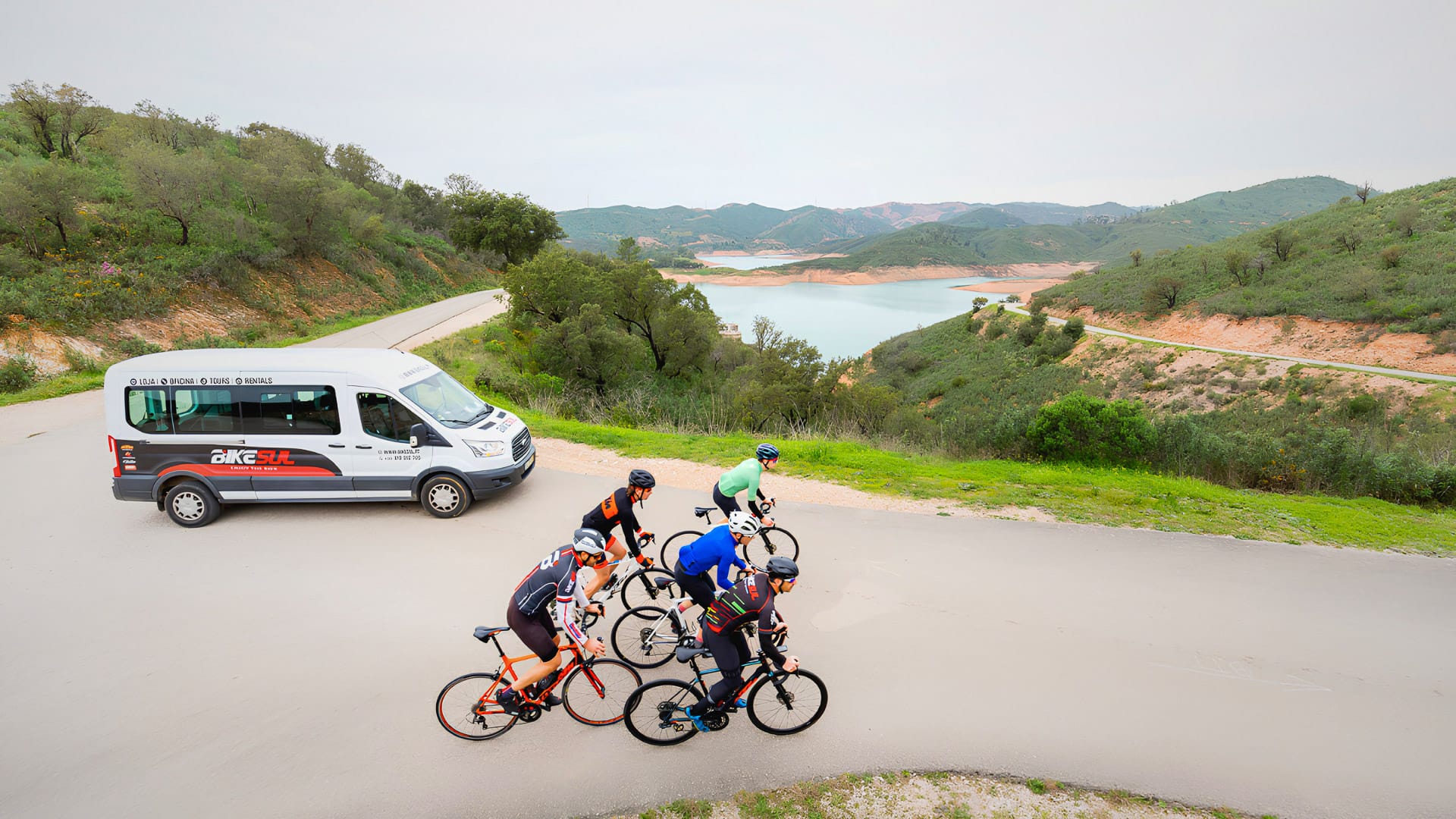
Guided and assisted group riding on the Cycling Across the Algarve trip (photo credit: Bikesul)
Which Bikesul route should you look at first?
If you want a mixed-terrain trip across the Algarve
- Route style: gravel.
- Bikesul example: Algarve Gravel Cycling Holiday.
- Why it fits: it combines coastal riding, countryside gravel, Monchique and Costa Vicentina.
If you want a road cycling challenge
- Route style: road.
- Bikesul example: Ride Across the Algarve.
- Why it fits: it uses quiet roads, climbs and classic Algarve road cycling terrain.
If you want an easier coastal trip
- Route style: touring.
- Bikesul example: EuroVelo 1 Algarve route.
- Why it fits: it follows the coast and is the easiest of the three options.
Other Bikesul tours
In addition to the three tours across the Algarve above, we also offer
Touring
- Faro to Lisbon also through the EuroVelo 1 route but along the southwest and Atlantic west coast with a different scenery.
- Bike tour through the countryside along the barrocal area of the Algarve
- Bike tour in the region of Alentejo
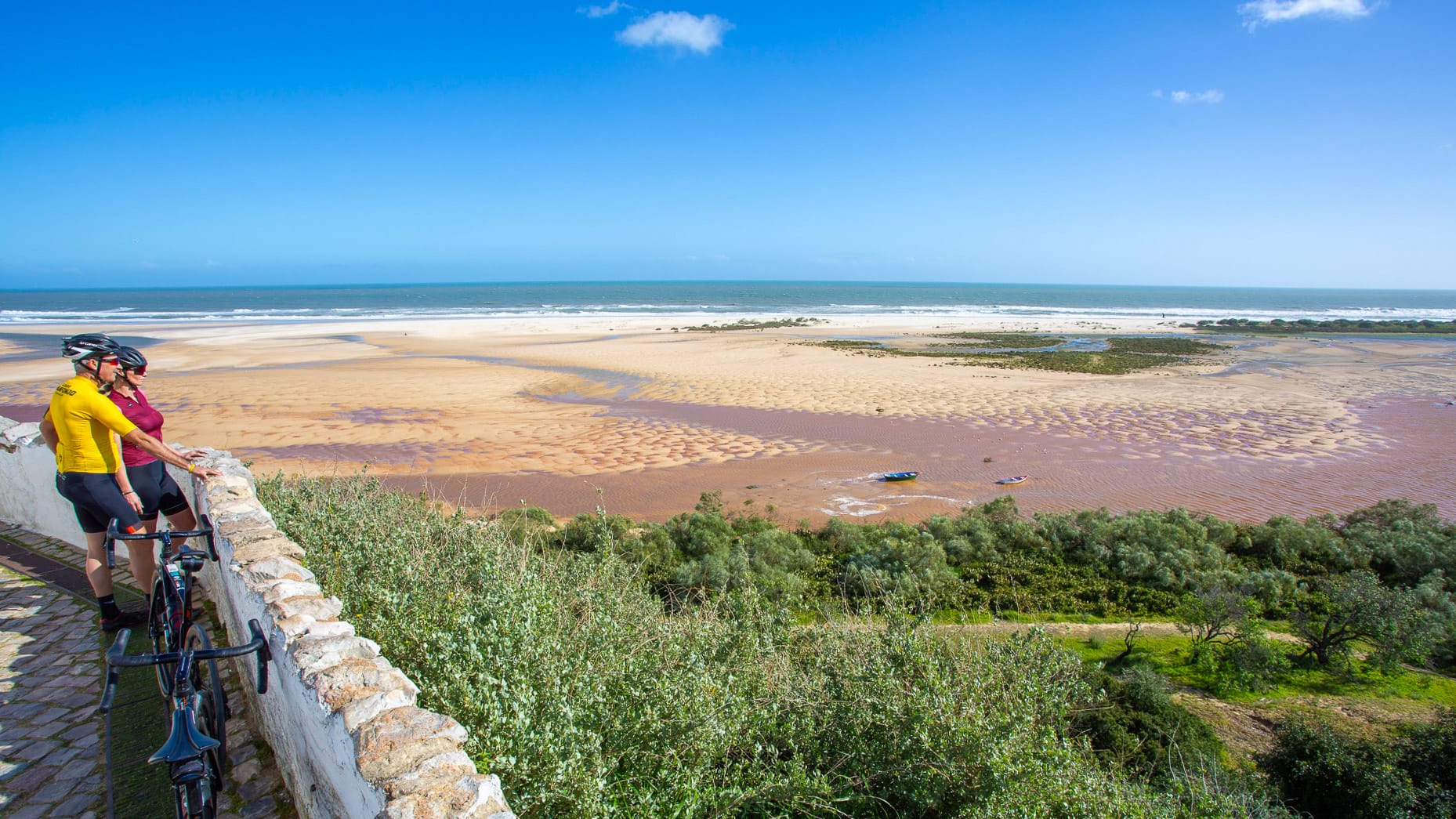
This magnificent viewpoint in Cacela Velha is a mandatory stopping point on most of our trips (photo credit: Bikesul)
Road Cycling
- Algarve Cycling Holiday that focus on 2 hubs (Tavira and Salgados) and from there the cyclist follow round loops. From Tavira to Salgados cyclists ride across the central Algarve and we take care of the luggage transfer.
- Center-based cycling trip in Salgados staying in the seafront 5* resort in central Algarve
- Cycling trip along the N2 road, from Chaves in the north of Portugal to Faro, in the Algarve (750km)
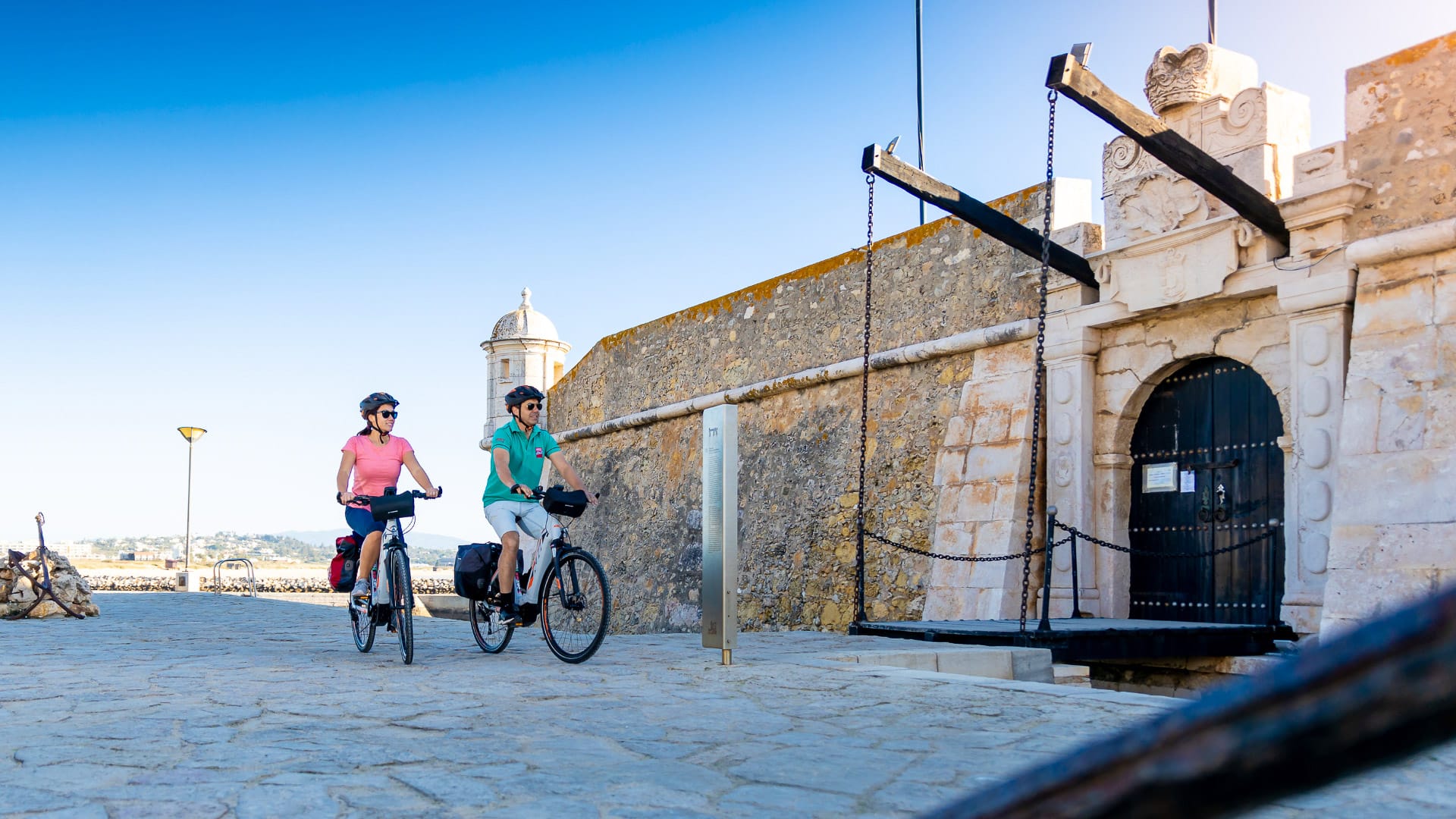
Visiting the historic sites of Lagos city (photo credit: Bikesul)
Gravel
- Algarve Gravel Trip across the Algarve featured above
- Alentejo southwest coast and Costa Vicentina
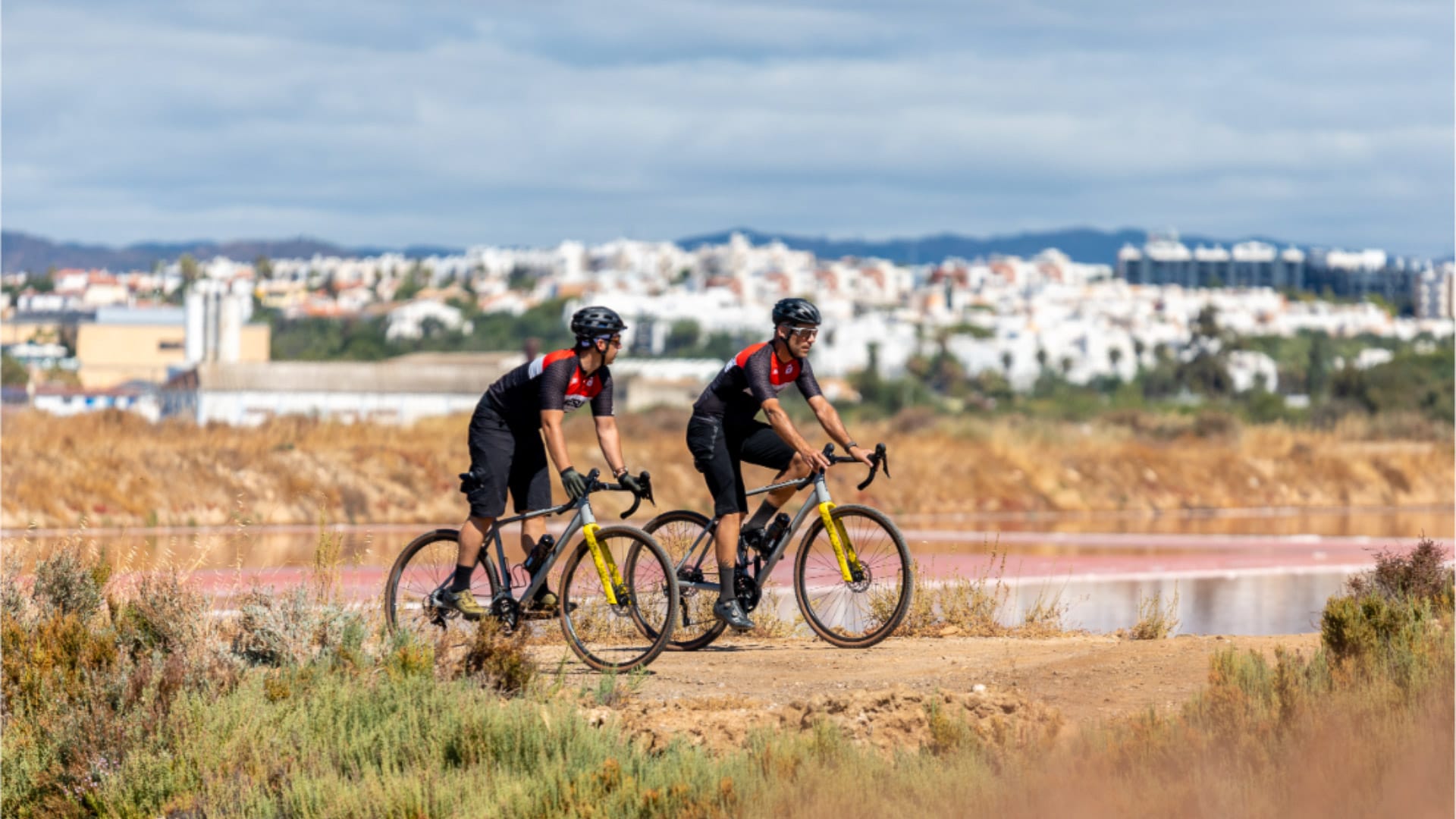
Exploring the salt pans in Ria Formosa, Tavira (photo credit: Bikesul)
Mountain bike trip
- Along the Via Algarviana route with a mix of terrain types, single tracks and scenic trails.
How to find out more
Riders can find out more by visiting Bikesul’s website or contacting by email to bookings@bikesul.pt.
If you are unsure which route best fits your fitness, bike choice or travel style, Bikesul can help you compare the gravel, road and touring options before you commit.
Sponsor Message
Considering cycling across the Algarve?
Bikesul has been running cycling holidays in the Algarve since 2017.
They offer a range of self-guided, assisted and guided tours across the region, including gravel, road, touring, and mountain biking experiences.
Interested? Head to the Bikesul website to find out more, including dates and prices.
Got a question for Marco Fernandes from Bikesul?
Fill out this form and we will pass it to Bikesul who aim to reply (within 24 hours wherever they can!)
Part 5: Practical tips before cycling across the Algarve
When is the best time of year to cycle across the Algarve?
We suggest spring and autumn as the best times for a trip.
Winter can also work well. The roads are quieter, there is less tourism and temperatures are often pleasant.
For most riders, spring and autumn are likely to offer the best balance of comfortable temperatures, daylight and quieter roads. These routes can be ridden throughout the year, but we do not generally recommend July and August, as they are very hot and much busier due to the summer high season.
The second half of June and first half of September can also be hot and busier, so riders should bear this in mind when planning their trip. Summer can be particularly hot inland and on exposed climbs, so riders should plan early starts, carry extra water and avoid underestimating the heat.
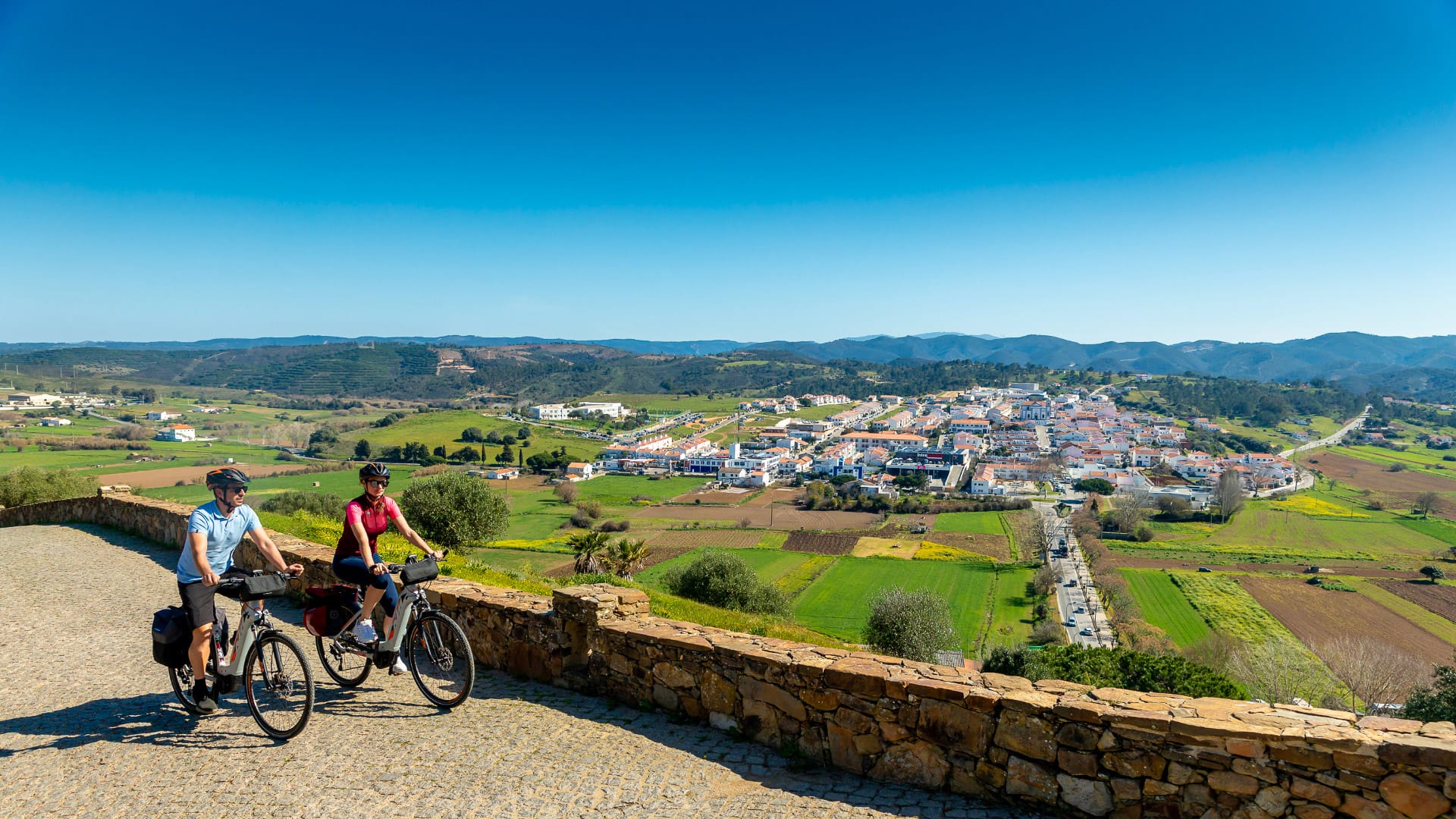
Climbing towards the medieval castle and exploring the Aljezur area along the EuroVelo 1 route (photo credit: Bikesul)
How long does it take to cycle across the Algarve?
Typical route lengths
Our gravel route covers 385 kilometres in five riding stages. Our road route covers 440 kilometres. Our EuroVelo 1 touring route covers 300 kilometres in five cycling days.
The sample Bikesul trips above are built around seven days and six nights. This includes arrival in Tavira and departure from Sagres.
On all Bikesul trips, luggage transfer between hotels is included. Clients should leave their luggage at the hotel reception, with the supplied Bikesul luggage tag attached, by 9 or 9:30am, depending on the tour. Their luggage will be delivered to the next hotel by 4:30pm.
Time on the bike
On the gravel route, each day is usually between 60 and 85 kilometres. Ride time is around four to seven hours, depending on pace and stopping time.
On the road route, ride time is usually three to six hours per day, depending on pace.
For the EuroVelo 1 touring route, the route is designed as the easiest of the three options, with five cycling days and more emphasis on coastal sightseeing, towns and nature reserves. Clients usually ride from around 9 or 9:30am to around 4 or 4:30pm, including stops along the way for exploring, drinks, gelato and lunch.
Do you need cash, or can you pay by card?
In Portugal, the currency is the euro.
Inland, some local cafés and restaurants may not take card payments. It is useful to carry some cash.
Is it easy to find food and water?
You should be able to find plenty of local shops, cafés and restaurants along the way.
Water fountains are only available in specific places. Riders should not rely on them alone.
As a rule, carry more water than you expect to need on inland, gravel and mountain sections. Coastal towns usually offer more frequent cafés and shops; inland sections can feel more remote, especially outside peak opening hours. On coastal sections, there are usually plenty of places to buy water, drinks and food, and in some areas there are also public water fountains.
Inland sections can be more isolated. In particular, the sections from Aljezur to Salir and between Silves and Monchique have some cafés, small markets and grocery shops, but they are not always open and some only accept cash payments.
This is especially important on gravel tours, where riding is usually slower and mostly off-road through the countryside. Riders should make sure they carry enough water for one to two hours of riding without stops.
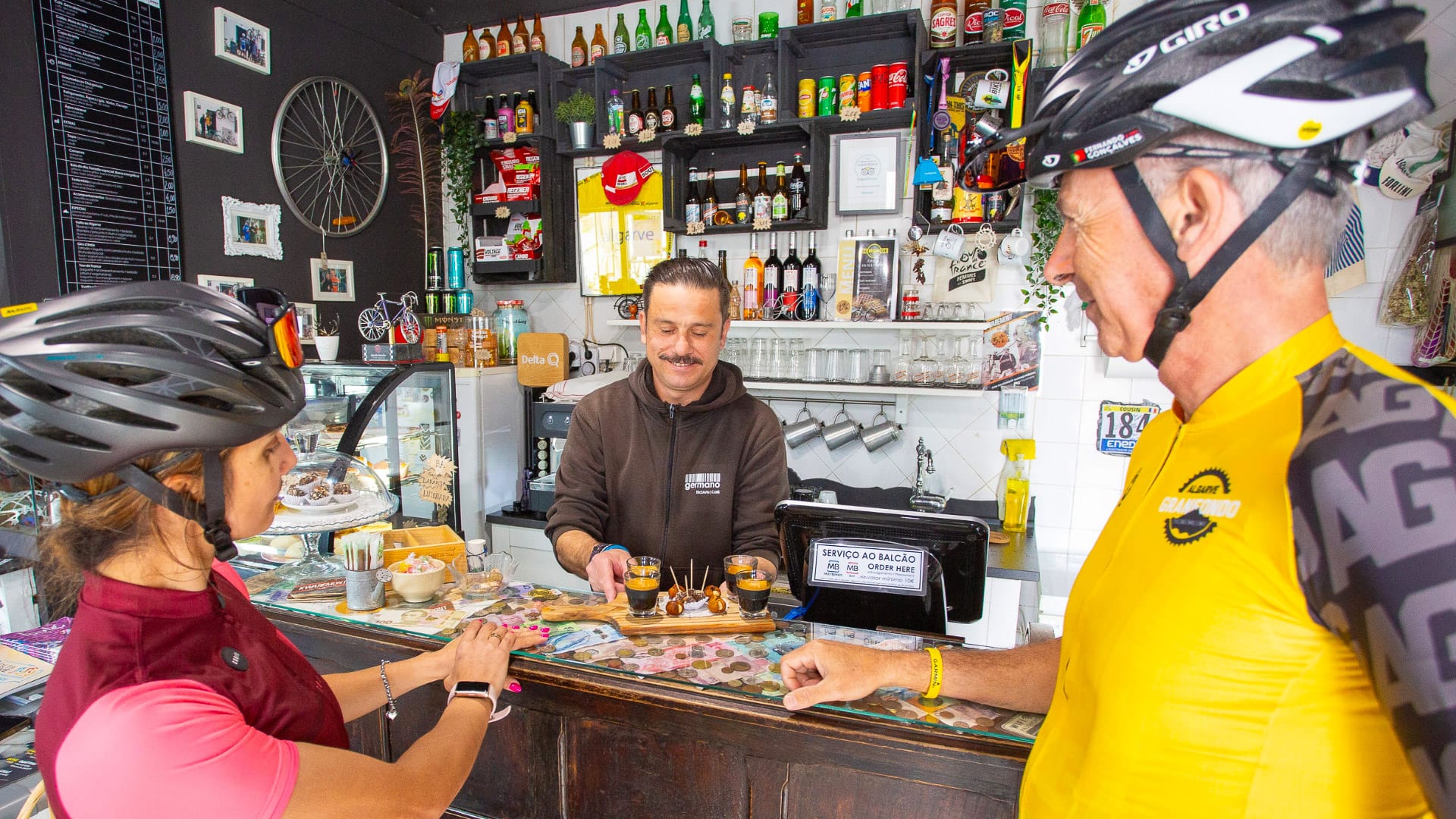
A visit to Germano Bike Café, the most famous cycling café in the Algarve, is mandatory (photo credit: RALF SCHANZE)
Where should you stay when cycling across the Algarve?
Accommodation depends on the route you choose.
Bikesul uses a mix of three-star and four-star hotels, boutique hotels, country houses and resorts.
- On the gravel route, expect four-star hotels in coastal areas such as Tavira, Lagos and Sagres, as well as country house accommodation with private bathrooms and breakfast.
- On the road route, there are plenty of options in most places, though Aljezur and Alte have fewer choices.
- On the touring route, we use small to medium-sized four-star hotels, boutique hotels and resorts.
Bike-friendly accommodation is useful because riders need secure bike storage, a good breakfast and practical support.
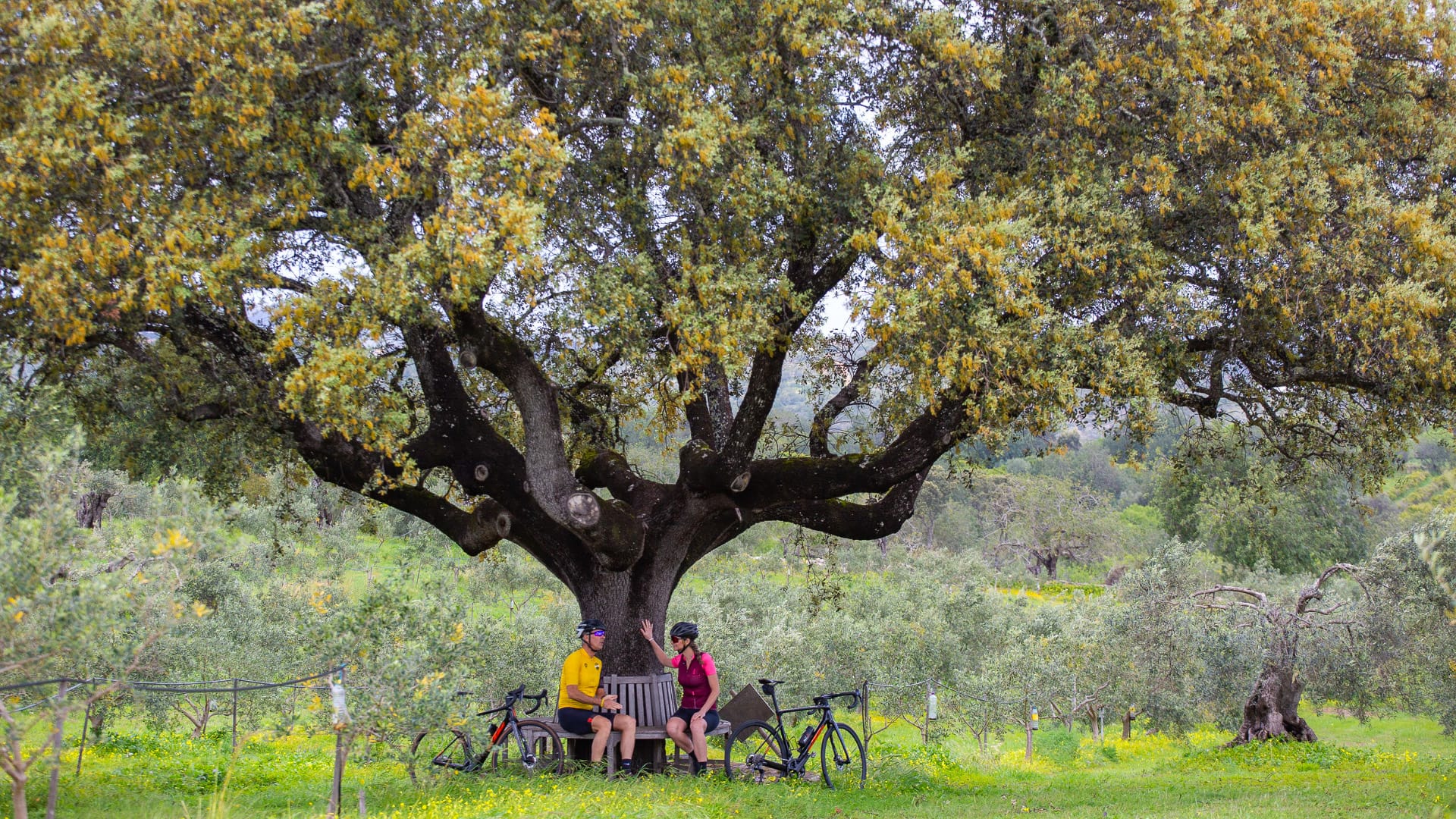
Our countryhouse accommodation in Santo Estêvão, Tavira offers relaxing spots after a day in the saddle (photo credit: RALF SCHANZE)
Are there toilets along the route?
There are public toilets in some places.
In many places, our team suggests stopping at a café, ordering a drink and using the toilet there.
Do you need to speak Portuguese?
Most local people speak English, especially in more visited areas.
Inland, some older people may only speak Portuguese, but you should be able to get by with Google Translate and some sign language!
What traffic and cycling rules should you know?
Traffic and cycling rules are broadly the same as in other European Union countries.
Depending on the tour, you may need to ride on the EN125 national road. It usually has a wide shoulder for cycling, but it is a very busy road, so cyclists need to take extra care.
On the Algarve Coastline Touring Tour, cyclists should also take care when entering and leaving Faro, especially during rush hour, from 8:30 to 10:30am and 4 to 6pm.
On the same tour, in Albufeira, cyclists cross the historic old town. There is a short section that is often crowded with pedestrians, where we usually recommend walking with the bike to avoid incidents.
Cyclists are allowed to ride side by side when there is no traffic.
Take care on descents, urban sections and places where tourist traffic is busier. Also take particular care on urban approaches, busier resort areas, descents, narrow rural roads and sections where the route briefly joins larger roads. On gravel and coastal tracks, the main issues are loose surfaces, sand, wind exposure and changing weather near the Atlantic.
What safety tips should cyclists know before riding across the Algarve?
Pay attention to heat, hydration, route navigation, loose gravel, steep descents, e-bike charging and more remote inland sections.
Unsupported riders should also think carefully about luggage, transfers and mechanical backup before starting.
We always suggest that road cyclists use rear lights, wear visible cycling clothing, signal clearly by hand when changing direction and avoid riding side by side when there is traffic.
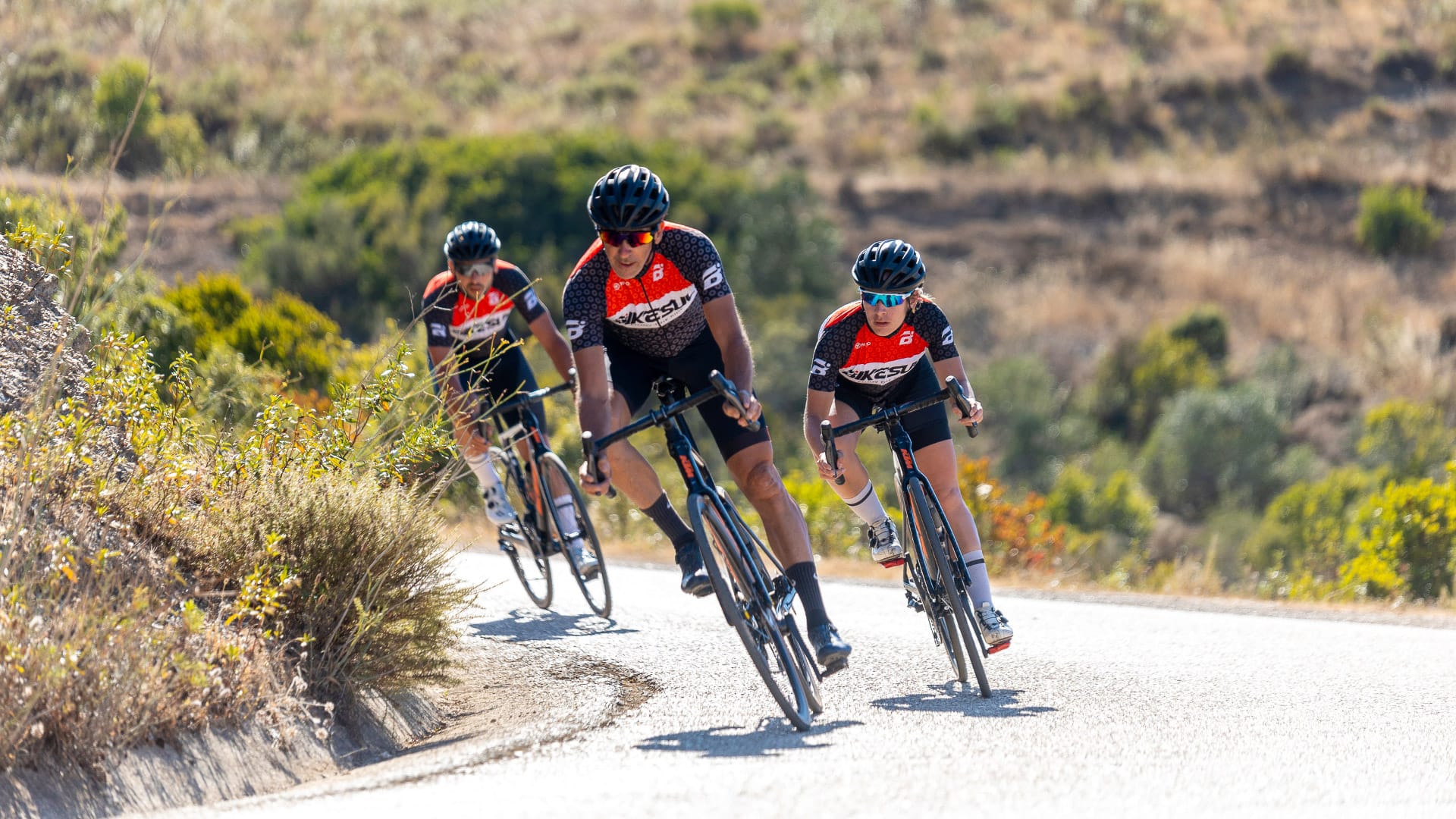
Testing descending skills on the winding roads of the Silves hills (photo credit: Bikesul)
What transport options are available if plans change?
Bikesul’s own tours include transfers from Faro Airport to Tavira and from Sagres back to Faro airport or train station.
Public transport in the Algarve is limited, so cyclists should not rely on it as the main backup option if they want to skip a cycling stage. There are some options, but they need planning.
Train
On regional trains, bike tickets do not need to be pre-booked, but there are only a limited number of bike spaces available in the first carriage. On Intercidades trains, bike tickets must be pre-booked, as there are only two bike spaces per carriage. On Alfa trains, bikes can only be taken if they are packed in a bike bag or bike box.
Bus
Bicycle transport on buses in the Algarve is only allowed under specific conditions. As a general rule, the bike must be disassembled and packed. Local urban and regional intercity buses do not have external racks and do not allow full, assembled conventional bikes on board.
Taxi/ Transfer
Some taxi services can take bikes, but this needs to be requested in advance.
The easiest option is usually to request a Bikesul transfer, which can take you, your bike and your luggage safely and easily to the next destination.
Sponsor Message
Considering cycling across the Algarve?
Bikesul has been running cycling holidays in the Algarve since 2017.
They offer a range of self-guided, assisted and guided tours across the region, including gravel, road, touring, and mountain biking experiences.
Interested? Head to the Bikesul website to find out more, including dates and prices.
Got a question for Marco Fernandes from Bikesul?
Fill out this form and we will pass it to Bikesul who aim to reply (within 24 hours wherever they can!)
Part 6: Final takeaway: the best way to cycle across the Algarve depends on the rider
Cycling across the Algarve can mean very different things depending on the route you take.
- Gravel riders can choose a more adventurous route with quiet tracks, inland villages, Monchique and the Costa Vicentina.
- Road cyclists can choose a longer and hillier route with classic Algarve roads, the N124 and Fóia.
- Touring cyclists can choose the EuroVelo 1 route for an easier coastal journey through towns, villages, beaches and nature reserves.
The key is to match the route to your fitness, bike, riding style and expectations. Once that choice is clear, cycling from Tavira to Sagres is a wonderful way to experience the Algarve. So make your choice and, come, visit us in the Algarve!
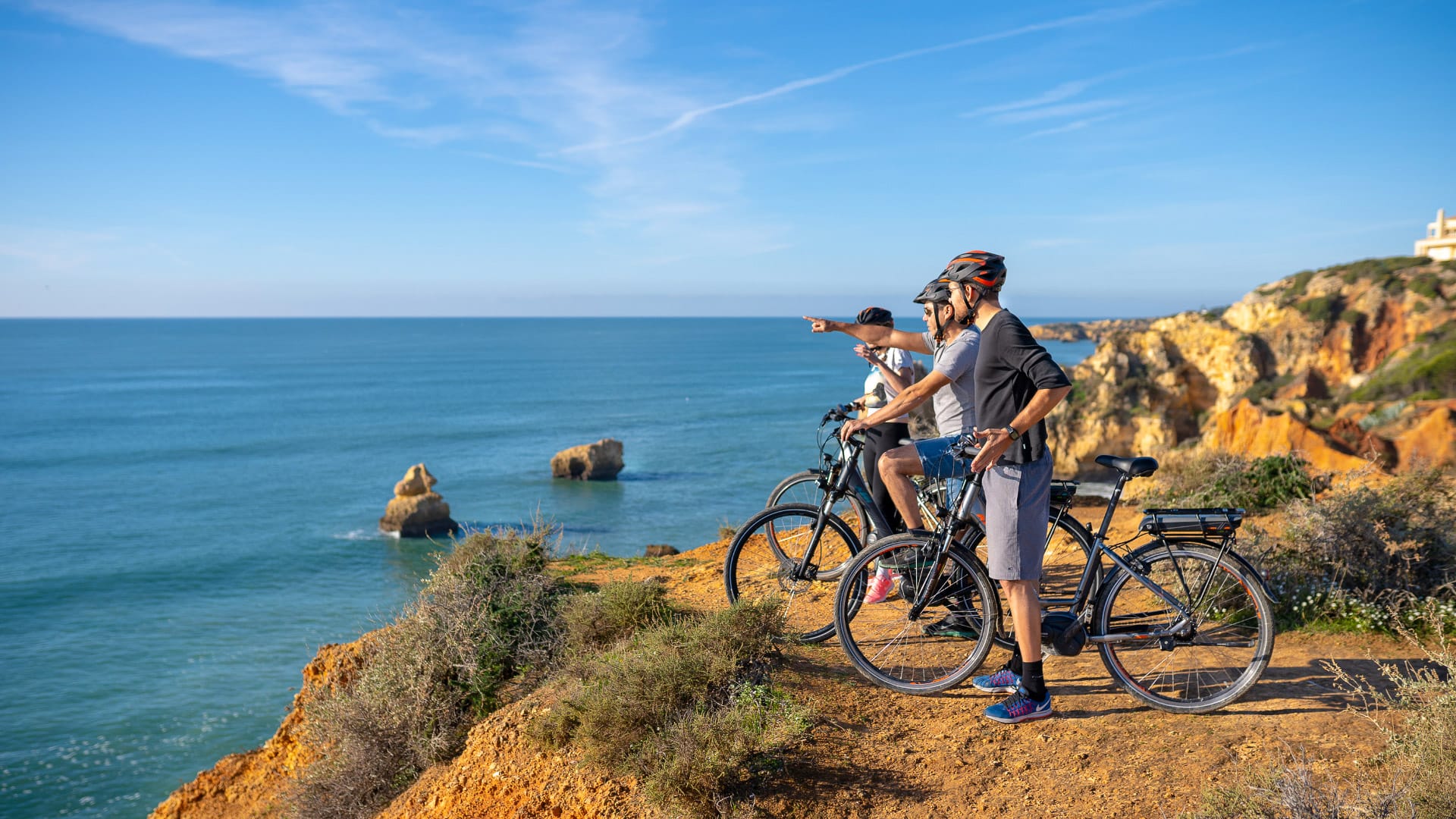
The coastal cliffs in central Algarve near Albufeira provide scenic rides and hide lovely small beaches and caves (photo credit: Bikesul)
What’s next?
Thanks to Marco Fernandes for sharing these insights into cycling across the Algarve
Looking for more exciting content on cycling in the Algarve? Don’t miss:
- Cycling Portugal, our central hub for the country.
- An insider’s guide to the best cycling in Portugal: where to ride and what to expect, for an overview of Portugal’s best cycling regions.
- Cycling Algarve, for our in-depth guide to cycling in the region.
- Cycling Viana do Castelo region, Northern Portugal, for tips on riding this lesser-known part of northern Portugal.
- Cycling Douro Valley, for insights on riding through one of Portugal’s most famous wine regions.
- Self-guided bike tours in Portugal, including 5 best bike tour routes and how to plan.
- Guide to cycling the Portuguese Camino, featuring the iconic Porto to Santiago de Compostela route.
- 4 of the best bike tours in Portugal, for more inspiration on planning a cycling holiday in Portugal.
Got a question for Bikesul?
Fill out this form and we will pass it to Bikesul who aim to reply (within 24 hours wherever they can!)
Got a question for Marco?
Fill out this form and we will send it to Marco. We aim to get you an answer within 24 hours where possible!Marco Fernandes has been involved in cycling for most of his life, beginning with road cycling in his youth and later competing as a professional mountain biker. Later Marco worked for the Portuguese Cycling Federation and he continues to collaborate on the Cyclin'Portugal project.
Since 2018, Marco has been coordinating the Tours and Rentals department at Bikesul Portugal, a leading bike rental company in the south of Portugal which also operates as a KTM Bike Industries concept store in Guia, Albufeira. Bikesul organises and promotes cycling holidays in Portugal and Spain, as well as corporate events and daily tours.
First Published: 09 June 2026
The contents of this website are provided for general information purposes only. It is not intended to amount to advice and you should not rely on it. You should carry out your own due diligence and risk assessments and take professional advice. Views expressed by interviewees or other users of this website do not necessarily represent our views. We make no representations, warranties or guarantees, whether express or implied, that the content on our website is accurate, complete or up to date. If you use any information or content on this website, download from, or otherwise obtain content or services through our website, it is entirely at your own discretion and risk. Epic Road Rides Ltd disclaims all liability and responsibility arising from any reliance placed on the information and content on this website. Find out more here.
Sponsor Message
Considering cycling across the Algarve?
Bikesul has been running cycling holidays in the Algarve since 2017.
They offer a range of self-guided, assisted and guided tours across the region, including gravel, road, touring, and mountain biking experiences.
Interested? Head to the Bikesul website to find out more, including dates and prices.
Got a question for Marco Fernandes from Bikesul?
Fill out this form and we will pass it to Bikesul who aim to reply (within 24 hours wherever they can!)
Comments