
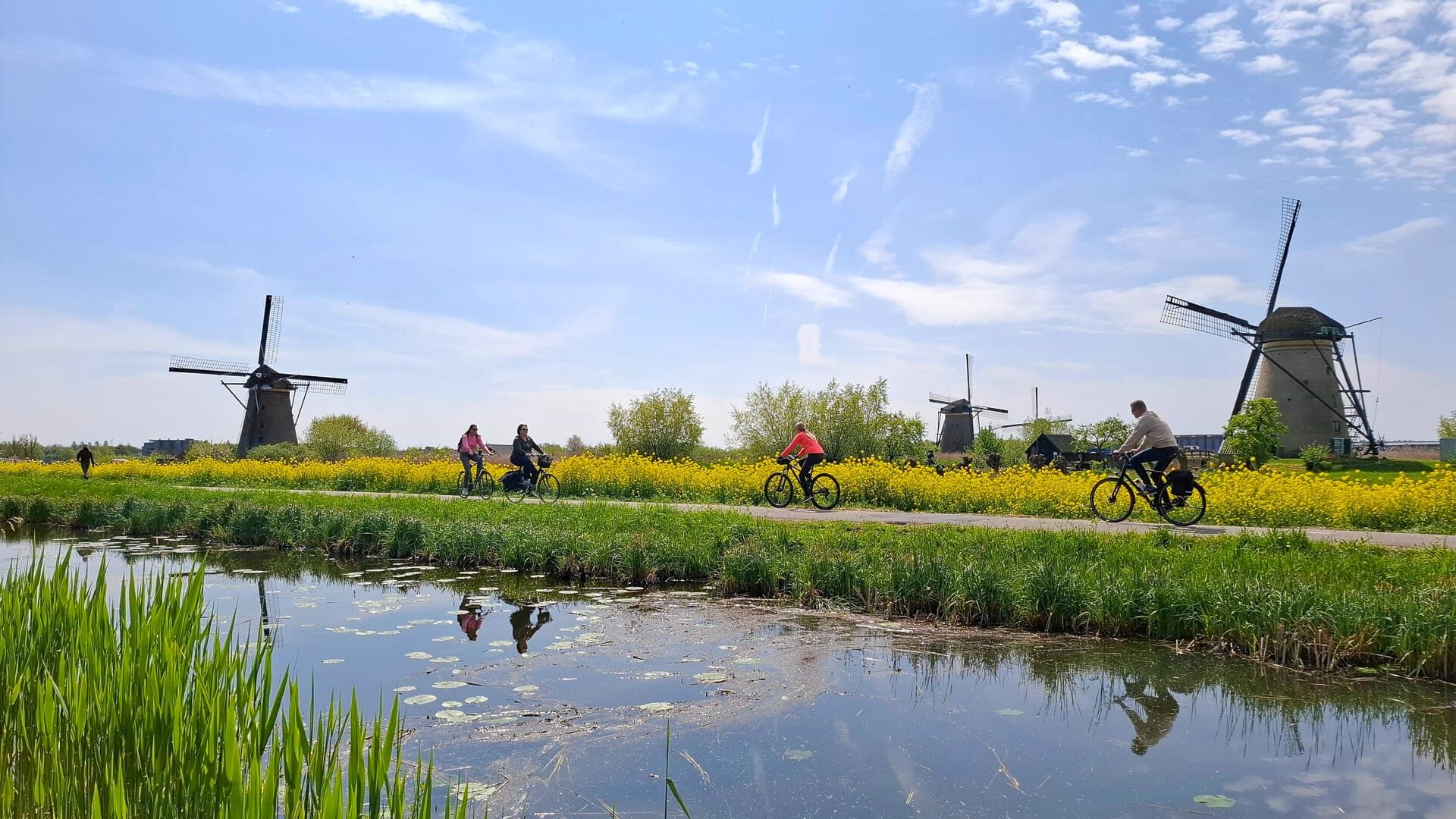

Cycling from Amsterdam to Bruges is a European classic that seamlessly connects two of Europe’s most popular (and picturesque) city break destinations.
This iconic cycling route winds over 300 kilometres through wide-open Dutch countryside crisscrossed by canals and punctuated by traditional windmills and historic towns.
Amsterdam to Bruges is a well-known bike and barge tour route. However, if you prefer to stay in hotels on dry land each night, this in-depth guide can help.
We interview Dutch cyclist Erik Andréa, who knows the route inside and out. Erik is part of the team at Dutch Bike Tours, which first launched their Amsterdam to Bruges cycling tour in 2014. Since then, it has become their bestselling Netherlands bike tour. They also offer the route in reverse (i.e. Bruges to Amsterdam) and take care of all the logistics, so you can sit back and focus on soaking up the iconic scenery from the saddle.
Read on for Erik’s insider knowledge and practical tips!

Erik Andréa is the office manager at Fietsvakantiewinkel. Erik leads a team of 14 people responsible for organisations including Dutch Bike Tours, Belgian Bike Tours and Fietsrelax.
Erik was raised with a passion for cycling, following in the tyre tracks of his father who was also a passionate cyclist. This led Erik to participate in road cycling races for more than 12 years. After starting his working career in the cruise business, he applied for the job at Fietsvakantiewinkel in early 2016 and has been there for more than nine years.
We love to introduce our community to cycling businesses, destinations and ideas that we think are genuinely interesting. Dutch Bike Tours caught our attention because of its focus on cycling in Netherlands, which felt like a natural fit for Epic Road Rides and our readers. We were therefore pleased to work with the Dutch Bike Tours team on this article.
Dutch Bike Tours paid for this advertisement feature. Our decision to collaborate reflects our view that the brand is relevant to our readers; it is not a formal approval, audit or guarantee of its services. Unless we expressly say otherwise, we have not personally taken the trip described or independently verified information supplied by Dutch Bike Tours.
As with any travel purchase, please check the latest trip details, terms and customer protections directly with Dutch Bike Tours before booking. Any booking is made with Dutch Bike Tours, not Epic Road Rides.
 There's a Youtube video here!
I'm fine with Youtube cookies
Contents of this article
The guide is jam-packed with tons of useful information. So, to help break it down, we’ve split this article into multiple parts. Here’s a quick summary:
- Part 1: An overview
- Part 2: Highlights
- Part 3: Itinerary breakdown
- Part 4: Practicalities
- Part 5: Tips
- Part 6: Dutch Bike Tours
Sponsor Message
Looking for a Netherlands cycling tour?
We’ve been delivering Netherlands cycling holidays since 2003 and would love you to join us.
We offer place-to-place self-guided holidays for cyclists in a range of regions across the country, including many routes starting and finishing in the Dutch capital Amsterdam. We have something to suit every kind of rider.
Get in touch and let's discuss!
Got a question for Erik Andréa from Dutch Bike Tours?
Fill out this form and we will pass it to Dutch Bike Tours who aim to reply (within 24 hours wherever they can!)
Part 1: An overview of the Amsterdam to Bruges cycling route
Cycling from Amsterdam to Bruges has become a hugely popular bike tour route that covers 324 kilometres between the two famous cities. As this is not a formally monitored route like the LF routes or EuroVelo routes, we don’t have official rider statistics yet. However, we proudly welcome around 800 to 1,000 guests each year on this trip, which makes it, together with our IJsselmeer trip, one of our most popular and best-booked tours.
It allows riders the opportunity to experience the beauty of the wide-open landscapes and the history of the lesser-known towns that connect two of the most famous cities in the Netherlands and Belgium.
Whilst many complete the route as part of a bike and barge trip, Dutch Bike Tours offers a place-to-place journey that includes hotel accommodation each night.
Typically, the route is completed over seven to eight days, depending on your pace, daily distances, and the headwinds. Some riders love the convenience of only packing and unpacking once while the boat does the moving for you. I personally prefer staying in hotels along the way, as it is a big part of what makes the route special. Each night brings a different place to stay, from small family-run boutique hotels to larger properties with full facilities, and even alluring, slightly old-fashioned hotels run by owners who seem to have a story about everything. That variety is what I enjoy most, and it makes the journey feel richer and more immersive than returning to the same boat each evening. More on that below.
See the map below for some of the must-see places mentioned in this article. If you hover over the map pins, you can see the place names.
Are there any route variations?
There are two ways to cycle between these two famous cities. While the route will be the same, the wind direction can make it feel like a completely different ride. You follow the same roads and stay in the same hotels either way. But a change in wind can make the days feel noticeably easier or tougher.
Top tip! For travellers arriving by car, parking in Bruges is usually cheaper than in Amsterdam.
Amsterdam to Bruges
Quite literally going from A to B, this is the most popular version of the route. That’s largely down to the fact that Amsterdam is easy to travel to from a huge range of international locations.
But be aware! If the weather isn’t in your favour, you could be in for a challenging ride. Typically, you can expect to be riding into a headwind most of the time. The Netherlands might be flat, but with all those wide-open landscapes, the famously strong winds bring their own unique challenge!
Bruges to Amsterdam
Reverse the route to cycle from Bruges to Amsterdam instead, and you’re far more likely to be swept along by a tailwind. That’s because in the Netherlands, the wind mainly comes from the west/southwest.
Dutch Bike Tours offers both variations of this classic route, enabling you to choose the option that suits you best. This article focuses on cycling from Amsterdam to Bruges.
What sort of terrain and surfaces can I expect?
The Amsterdam to Bruges cycle route is predominantly a road route, with 97% of the riding on asphalt and just 3% on gravel.
As you’d expect from a cycling tour that mainly sees you riding through the Netherlands, there’s not much in the way of hills or elevation to contend with! But remember, the wind can still make for a few challenging days in the saddle.
How do you navigate the route?
The Netherlands is home to some of the best cycling infrastructure in the world. This, combined with the famous cycling knot system (a network of numbered junctions), makes navigation a breeze.
Top tip! Special signposts guide you onto dedicated cycle bridges and cycle tunnels, reinforcing why the Netherlands is known as a true cycling country.
Dutch Bike Tours also has a dedicated app, which has the entire route in an easy-to-follow format. From my experience, I would estimate that around 30 % is on dedicated cycle paths, and more than 80% of the overall route is either on cycle paths or on quiet roads.
Learn more about navigating the Netherlands by bike in our in-depth guide.
How challenging is the Amsterdam-Bruges cycling route?
With the longest day in the saddle being just shy of 70 kilometres (44 miles), a cycling tour from Amsterdam to Bruges is accessible for most riders with a good level of base fitness.
Aside from the bridges and dikes, the route is almost completely flat. However, it’s important not to underestimate the impact of the wind, as this can make the riding feel quite challenging at times.
Is the route family-friendly?
Some cyclists have brought the whole family along on our tours, so it’s possible to get the kids involved. There is no strict minimum age for joining the trip. We rent tandems and children’s bikes, and for younger riders, there are also tag-along bikes and child seats.
However, it’s important that they have a good level of cycling fitness, and you should factor in time to break up the day with plenty of rest stops. If children are cycling independently, I would generally suggest that they are comfortable on at least a 26-inch bike. Some very experienced children can manage on a 24-inch bike, but for most, the daily distances are simply too long on smaller wheels.
Be aware! Aside from the first two days, there aren’t any options to shorten the distances by taking trains. So you should be confident that your children can complete the mileage required each day.
Part 2: Why is cycling from Amsterdam to Bruges a ‘must-do’?

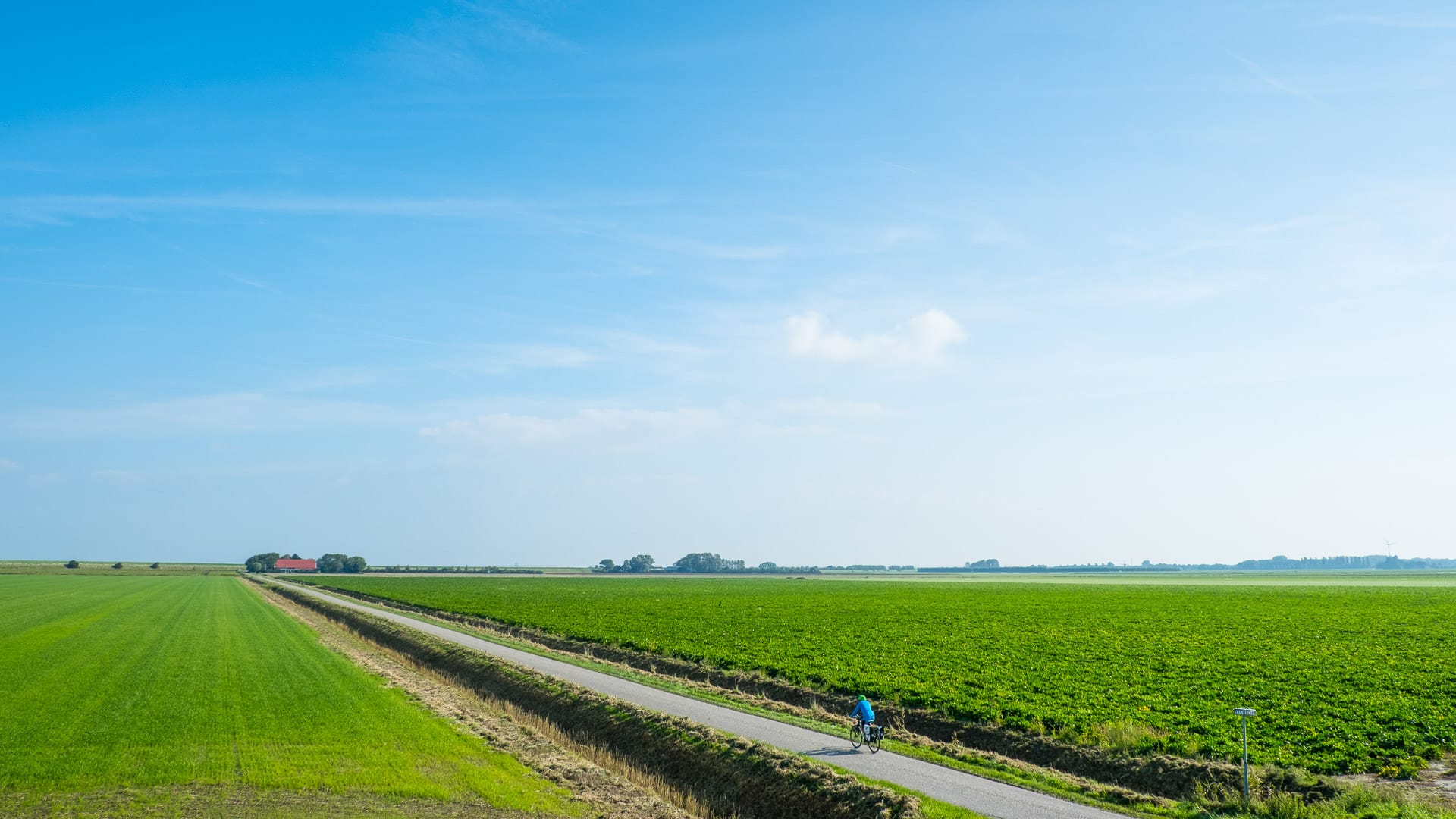
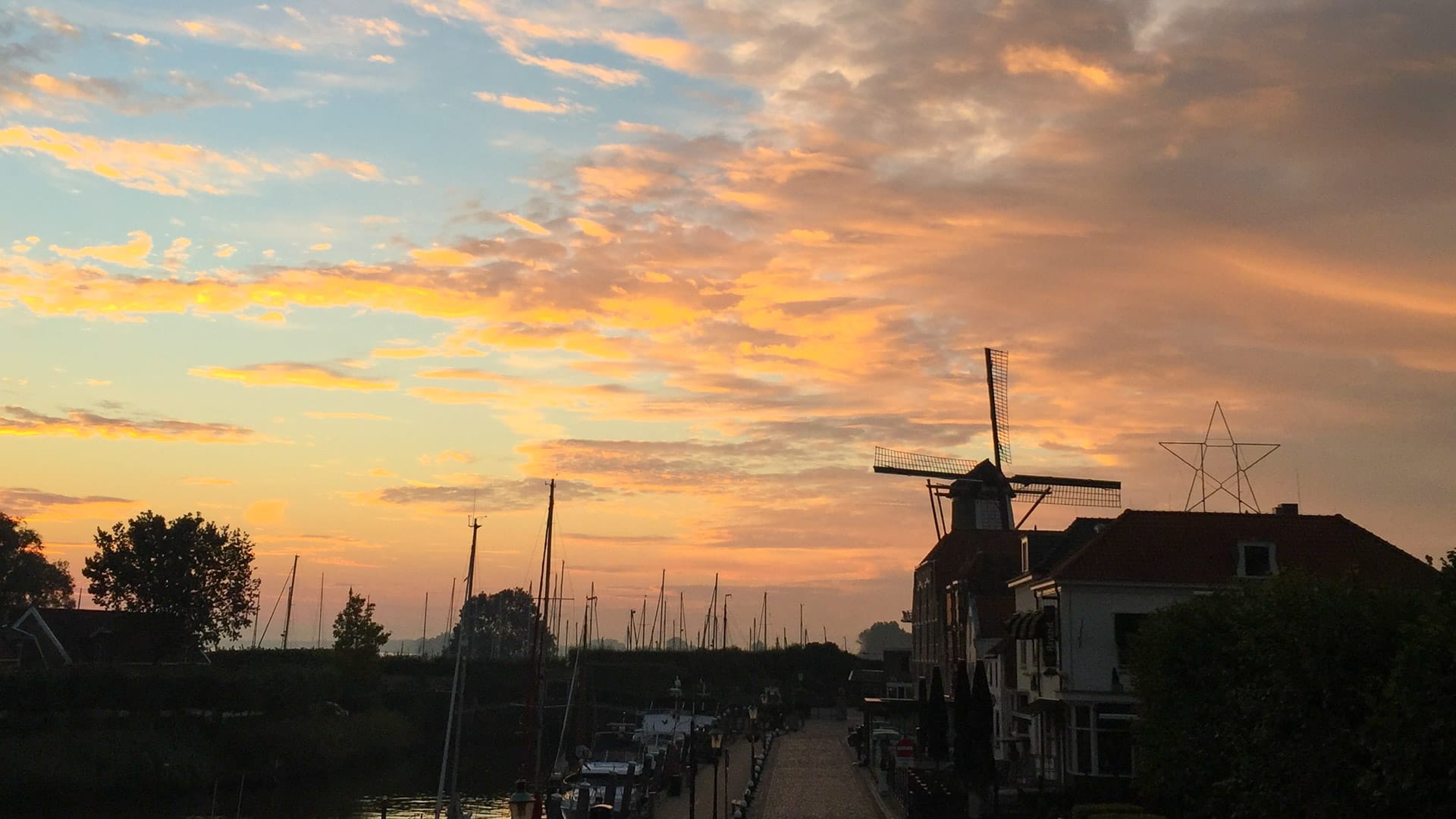
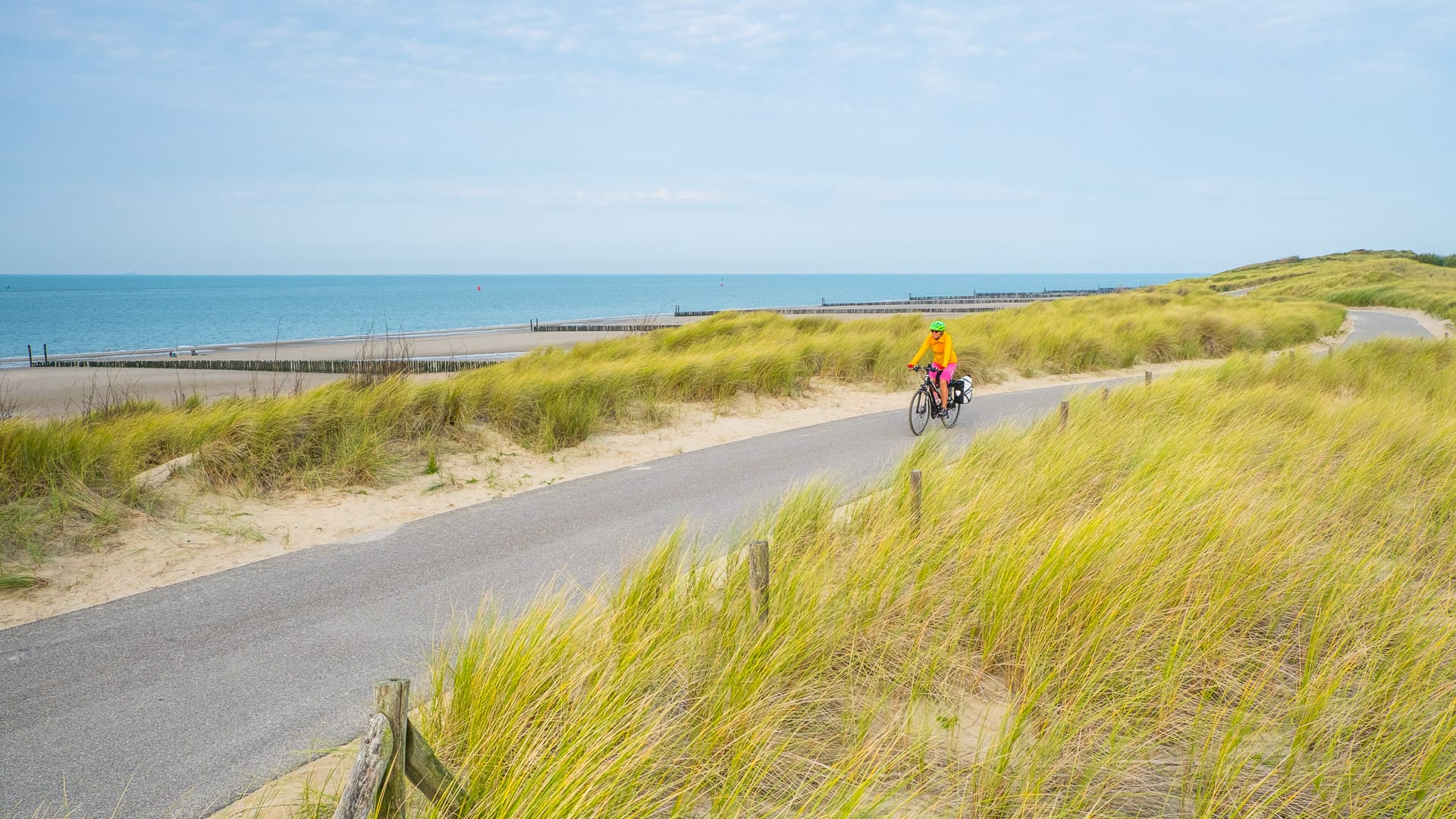
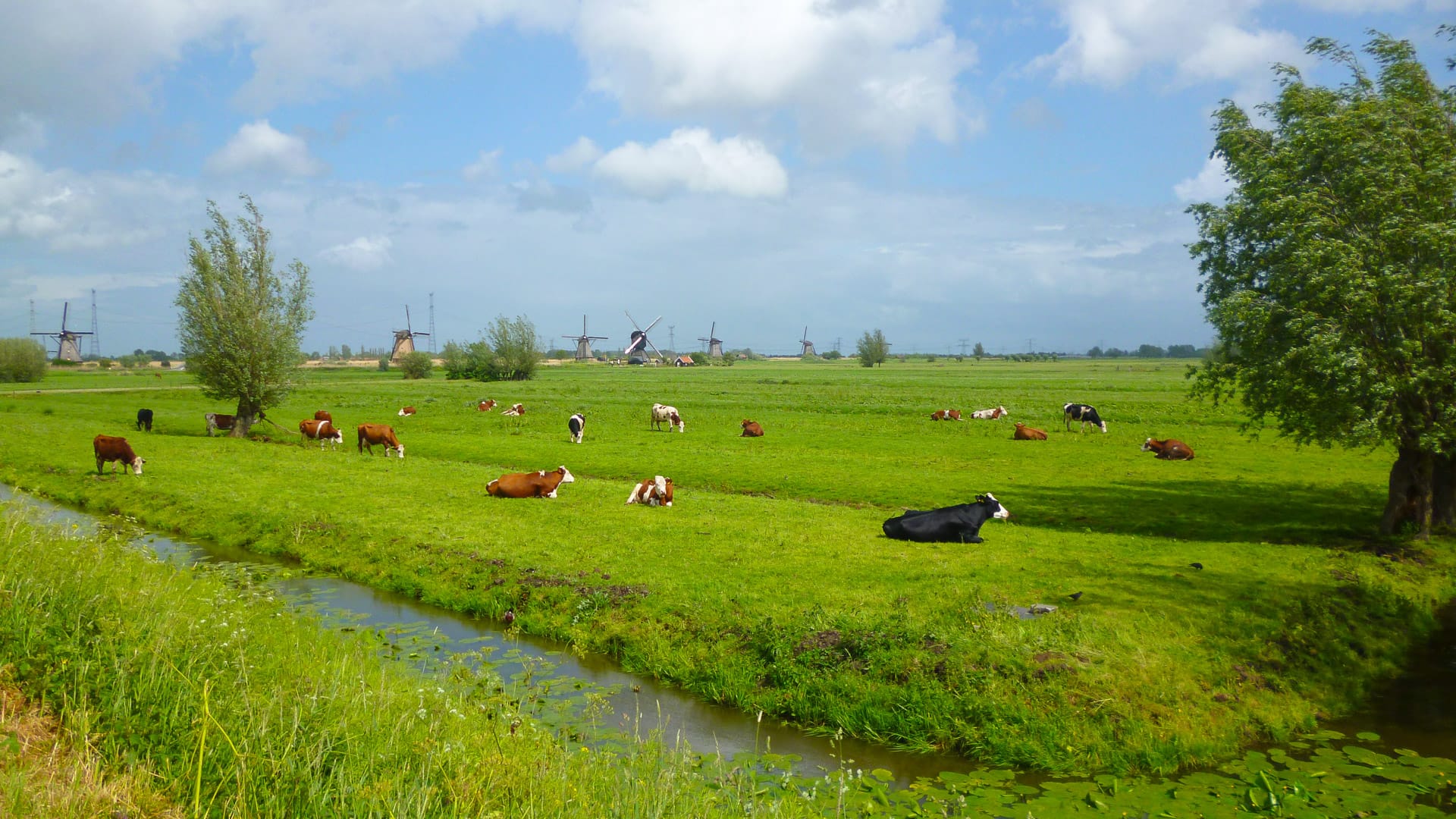


An opportunity to explore Amsterdam and Bruges on two wheels is an obvious draw. But combining the two cities into one cycling tour gives you the chance to visit the lesser-known towns in between. It also enables you to experience the surprisingly green and varied landscapes, known as the Green Heart of Holland, that connect these popular weekend getaway destinations.
Discover authentic towns and villages
Away from the major cities, this cycling route gives you the chance to visit the historical cities, small towns and villages that most tourists don’t get to see while they’re visiting the Netherlands.
This includes Gouda, famous for its namesake cheese and home to a medieval market square and towering 15th-century town hall. Dordrecht, the Netherlands’ oldest city, is another highlight of the route. There are also several beautiful, small former fortified towns such as Willemstad, Sluis, Veere and Middelburg.
Experience iconic Dutch landscapes
With such incredible cycling infrastructure, this is a route where you can truly take in the landscape you’re riding through. You’ll be surprised by just how green the Dutch countryside is, even on the outskirts of the larger cities.
Along the way, you can enjoy plenty of picturesque Dutch landscapes, from tranquil canal-side paths to quiet countryside views punctuated by the ever-present quintessential Dutch windmills.
When you ride through the nature reserve at Biesbosch National Park, keep your eyes peeled for wildlife! More on that below. And as you cycle through Zeeland, take a moment to appreciate the ongoing battle between the land and the water, from estuaries like the River Schelde to countless smaller channels.
A rewarding challenge
It might not be the hilliest cycling tour out there, but cycling from Amsterdam to Bruges still brings its own special challenge.
324 kilometres (201 miles) of riding is no mean feat, especially when it’s you versus a strong headwind.
The reward for your efforts will be plenty of stroopwaffles, Belgian waffles, triple-fried frites and other Dutch/Flanders gastronomical delights. These all taste even better after a long day pushing the pedals!
What are the highlights of the Amsterdam to Bruges cycling route?
There’s plenty to look forward to when you decide to cycle from Amsterdam to Bruges. But aside from the cities themselves, here are three top highlights our guests particularly love:
- De Biesbosch National Park: Home to one of the largest freshwater tidal regions in the world, the De Biesbosch National Park features 8,000 hectares of ever-changing streams and rivers influenced by the tides. Look out for beavers, sea eagles and ospreys, which are just some of the wildlife this unique ecosystem is home to.
- Zeelandbrug: Once the longest bridge in Europe, the Zeeland Bridge is infamous amongst local cyclists thanks to the five-kilometre-long battle you’ll likely face against the headwind. It’ll be tough, but you’ll feel a true sense of accomplishment when you reach the other side.
- Veere: There are better-known towns along the route, but Veere is a little-known gem. Small but beautiful, the streets are lined with history at every turn. You can check out the ‘Schotze Huizen’ (Scottish houses that were built for Scottish wool merchants but are now a museum) that showcase the town’s historic Scottish trade links, the impressive town hall and the imposing Campveerse tower.
Veere, a historic town in the province of Zeeland (photo credit: Dutch Bike Tours)
Sponsor Message
Looking for a Netherlands cycling tour?
We’ve been delivering Netherlands cycling holidays since 2003 and would love you to join us.
We offer place-to-place self-guided holidays for cyclists in a range of regions across the country, including many routes starting and finishing in the Dutch capital Amsterdam. We have something to suit every kind of rider.
Get in touch and let's discuss!
Got a question for Erik Andréa from Dutch Bike Tours?
Fill out this form and we will pass it to Dutch Bike Tours who aim to reply (within 24 hours wherever they can!)
Part 3: Tell us about your Amsterdam to Bruges bike tour
GPX DownloadTerms of use reminder
The Dutch Bike Tours Amsterdam to Bruges tour launched in 2014, and it’s quickly become the best-selling tour we offer. We also introduced our Bruges to Amsterdam trip in the same year. Thanks to its popularity, we soon expanded the departure days available, and for many years now, we have offered daily departures in both directions.
The Netherlands’ excellent infrastructure means it is possible to navigate this route independently. But if you prefer to have the stress of booking hotels and transporting luggage taken off your hands, that’s where our supported tour can help!
Top tip! The riding distances each day are quite accessible. All of the elevation comes from dikes and bridges, so there are no long or steep climbs to worry about. Your pace will depend on the conditions, but for the most part, you should have plenty of time to make a few stops and explore along the way.
Here’s what you can expect from the day-to-day itinerary:
Day 1: Arrive in Amsterdam
Amsterdam is a fantastic starting point for this tour with lots to explore, including the UNESCO World Heritage-listed 400-year-old canal district, fascinating museums and vibrant street culture (look out for street artists and performers!).
You’ll be hard-pressed to find a more exciting start to a cycling tour than kicking things off in the world’s ‘bicycle capital’!
Try to arrive early and make the most of what the city has to offer, then get an early night (typically at one of the bike-friendly Westcord Hotels), ready to begin your adventure on two wheels in the morning.
Day 2: Amsterdam to Gouda (68 km/ 206 metres of elevation gain)
Your first day of riding will take you away from the buzz of Amsterdam into the peace and quiet of the Netherlands’ “Groene Hartâ”, or Green Heart.
You ride through a flat landscape of polders and peat meadows surrounded by lakes and canals, with church spires and windmills punctuating the horizon. Arrive in Gouda and refuel with a stop at the famous markets – a sample of the namesake cheese will be a must after your first day in the saddle! An evening stroll through the historic Old Town is the perfect way to wind down after a day in the saddle.
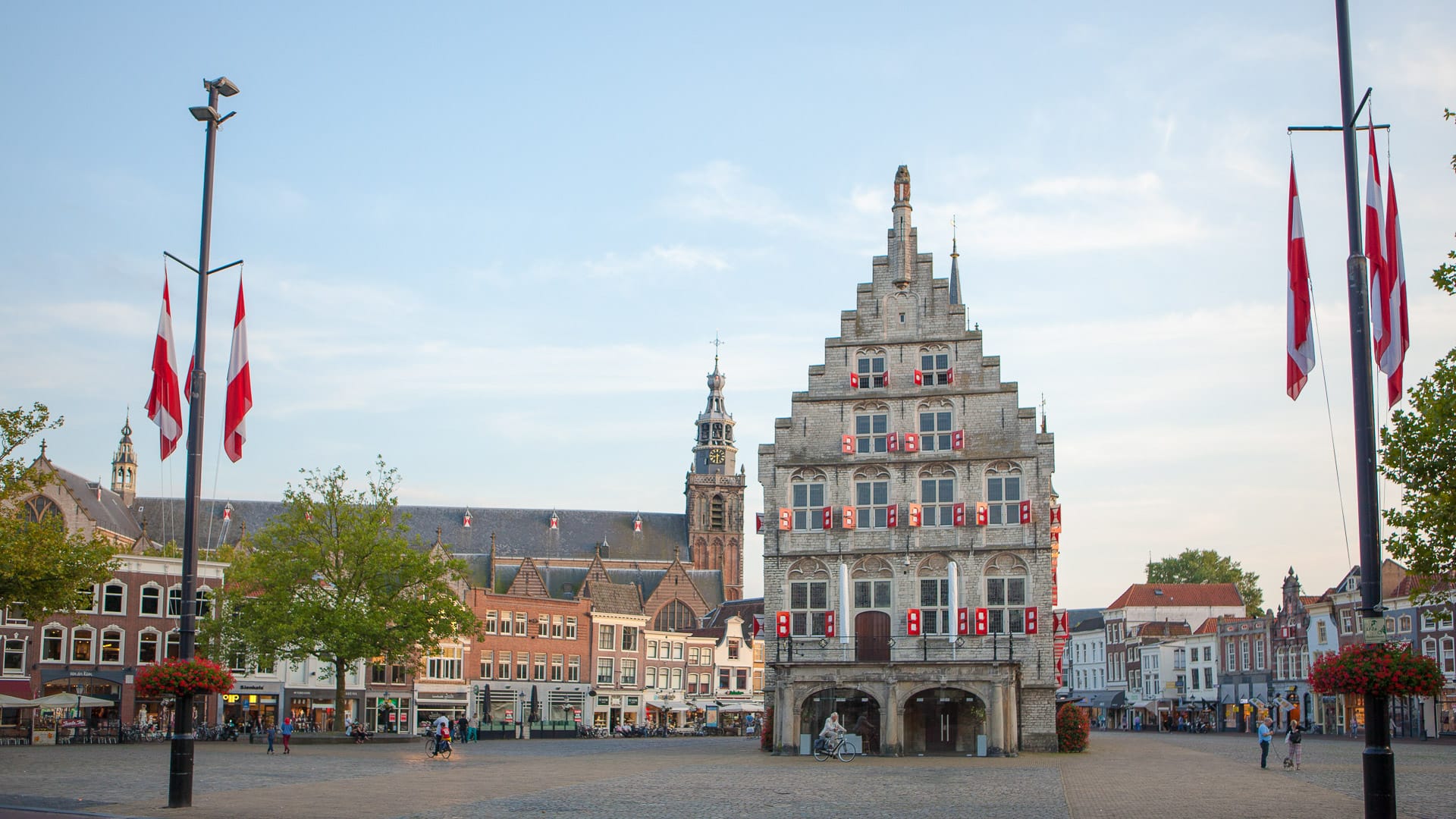
Gouda town hall (photo credit: Dutch Bike Tours)
Day 3: Gouda to Papendrecht via Dordrecht (38 km/ 113 metres of elevation gain)
On the third day of your trip, you’ll continue your ride through the green heart of Holland to Kinderdijk on a shorter day of just 38 kilometres. The impressive sight of Kinderdijk’s 19 windmills is a real highlight, and they have valiantly battled against the water to keep the land dry since 1740! They do this by pumping water out of the polders and draining it into the river, which is exactly what these windmills were built for (source).
Next up is Dordrecht, a city with a proud place in Dutch history and a lovely old centre for a coffee and stroopwafel stop. While Maastricht and Nijmegen often claim the title of oldest city, Dordrecht was the first in the Netherlands to receive official city rights, back in 1220, and you can still feel that heritage as you ride through.
After a short ferry crossing, you arrive in Papendrecht, where you will spend the night. Dordrecht is full of beautiful historic buildings, a cosy city centre, and interesting museums, but there are very few suitable hotels in the centre. The larger hotels we work with are located well outside the city, so staying in Papendrecht is the most convenient option. It is just one village before Dordrecht and it is actually closer to the city centre than the hotels south of Dordrecht. In other words, you can enjoy Dordrecht during the day, but your overnight stay is in Papendrecht.

Dordrecht canals (photo credit: Dutch Bike Tours)
Day 4: Papendrecht to Willemstad (65km/ 189 metres of elevation gain)
If the ferry is running, today gives you the chance to ride through the beautiful Biesbosch National Park. Enjoy the labyrinth of creeks and rivers in Europe’s largest wetlands and keep your eyes peeled for wildlife! You’ll ride along the edge of the National Park before you wind up in the fortified town of Willemstad.
Be aware! The ferry can be cancelled in periods of heavy wind. In our travel documents, we always suggest guests check the ferry website before setting off. If you see in time that the ferry is not running, you can follow the alternative route and cross via the bridge over the Hollandsch Diep instead. You will still reach Willemstad without any issues, but you will miss the ride through Biesbosch National Park. If you only discover the cancellation once you are already at the ferry, you may have no choice but to cycle back and reroute, so a quick check in advance can save you a lot of extra kilometres.
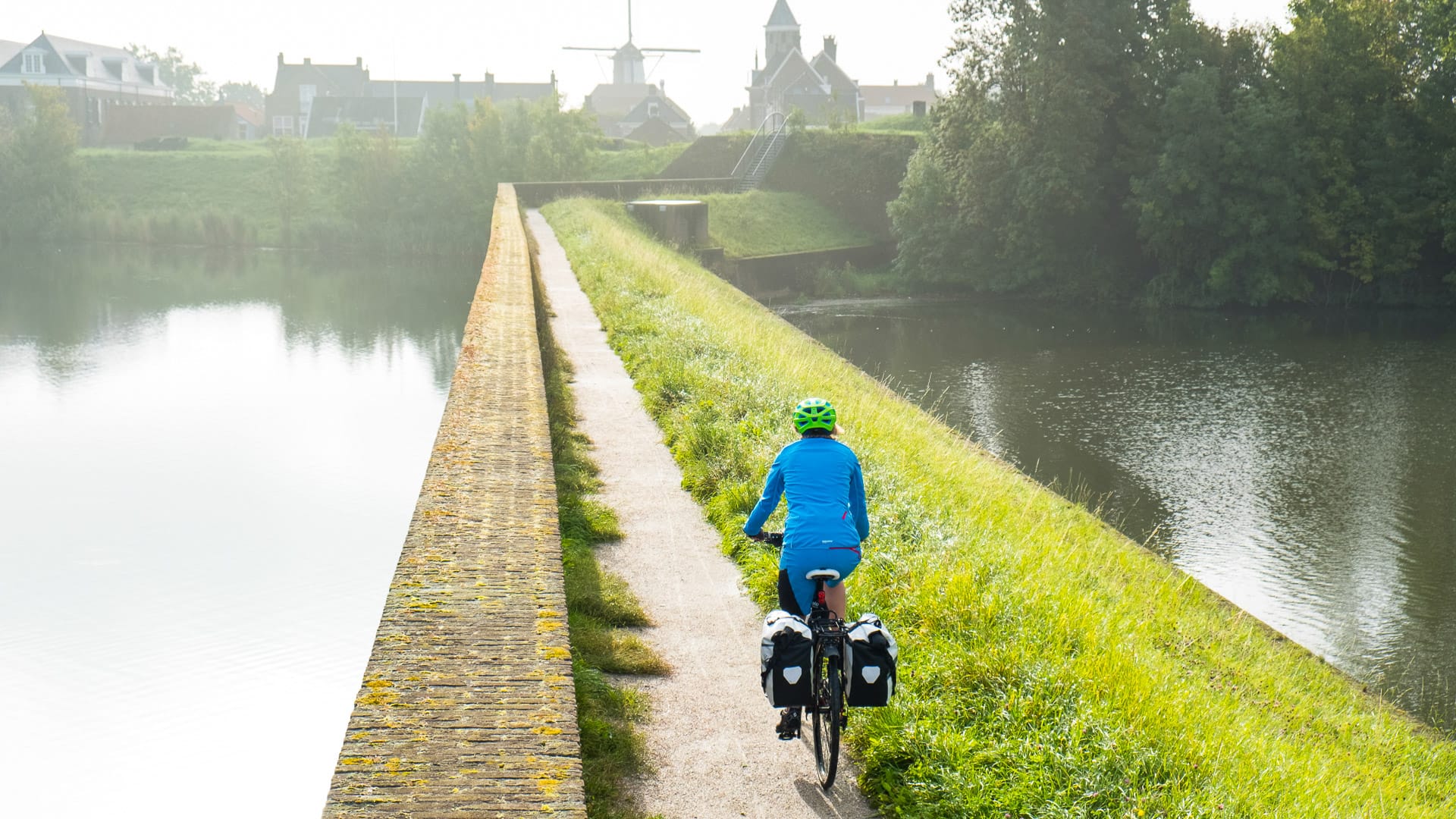
Willemstad town (photo credit: Dutch Bike Tours)
Day 5: Willemstad to Zierikzee (50km/ 113 metres of elevation gain)
The fifth day of your Amsterdam to Bruges cycling tour takes you into the province of Zeeland. Reclaimed from the sea, the region is famous for its bodies of water, beaches and delicious seafood.
A 50-kilometre ride will see you crisscross your way through the region, taking bridges and ferries as you pass through picturesque towns and a landscape of rolling dunes and peaceful countryside. The day finishes in Zierikzee, where you’ll find stories of its old port town history at every turn. Head down to the harbour and make the most of the waterside bars and restaurants, ready to take on the Zeeland Bridge the next day.

Zierikzee panorama (photo credit: Dutch Bike Tours)
Day 6: Zierikzee to Middelburg (43km/ 122 metres of elevation gain)
Wake up and get ready to face the headwind as you ride out of Zieriksee and across the infamous Zeeland Bridge towards the small town of Veere. You’ll finish the day in Middleburg, Zeeland’s capital.

City of Zierikzee (photo credit: Dutch Bike Tours)
Day 7: Middelburg to Bruges (60 km/ 122 metres of elevation gain)
Get ready for your final day in the saddle. On day 7, you’ll finally cross the border into Belgium, heading out of Middleburg via Vlissingen before catching a ferry to Zeelandic Flanders. Your first stop once you’re over the border will be the small town of Damme, which sits on the banks of the Damse Vaart.
Then, it’s only a short stretch of riding before you arrive in Bruges. Take a wander through the cobbled streets and refuel after your adventure with plenty of classic Belgian delights – you deserve it!

The Middelburg town hall (photo credit: Dutch Bike Tours)
More information
Visit Dutch Bike Tours’ website for further details, including availability and prices.
Sponsor Message
Looking for a Netherlands cycling tour?
We’ve been delivering Netherlands cycling holidays since 2003 and would love you to join us.
We offer place-to-place self-guided holidays for cyclists in a range of regions across the country, including many routes starting and finishing in the Dutch capital Amsterdam. We have something to suit every kind of rider.
Get in touch and let's discuss!
Got a question for Erik Andréa from Dutch Bike Tours?
Fill out this form and we will pass it to Dutch Bike Tours who aim to reply (within 24 hours wherever they can!)
Part 4: What do you need to know before cycling from Amsterdam to Bruges?
Ready to plan your bike tour from Amsterdam to Bruges? Here are some tips you need to know to get the logistics sorted – from the best bike to ride to where to stay and what to pack.
What is the best time of year to cycle from Amsterdam to Bruges?
The summer months of June to August typically see the best weather conditions and pleasant temperatures. You may also be able to incorporate a spot of swimming along the way! Just be prepared to meet more fellow tourists, as Zeeland is a particularly popular summer holiday destination in the Netherlands.
Dutch Bike Tours operates its Amsterdam to Bruges cycling trips from April to September. It can be quieter if you choose to go in the early spring or late summer. But of course, at these times of year, the temperatures may be a little cooler, and you’re more likely to experience rain and strong wind conditions. So pack warm layers and lightweight waterproofs.
What is the best bike for riding the Amsterdam to Bruges cycle route?
As almost all of the route is on asphalt, the Amsterdam to Bruges route is suitable for all types of bikes, including a hybrid bike or a road bike.
For less experienced cycle tourers, an e-bike can be a good option as it reduces the impact of any strong headwinds you might encounter! In the Netherlands, e-bikes are very common, which means there’s plenty of infrastructure to recharge the battery, including at restaurants and cafes.
Dutch Bike Tours has rental bike partners available in Zeeland and Zierikzee. We also offer e-bikes on all of our tours. This makes the trip accessible to a wider range of riders, especially on days when the wind plays a bigger role than the terrain.
Is mechanical assistance available?
Nothing spoils a great bike ride like a mechanical! Luckily, when you’re biking in the Netherlands, you’re never too far away from a bike shop or spare kit.
Cafes, restaurants and hotels often have basic repair kits available too. Keep an eye out for yellow Algemene Nederlands Wielrijders Bond (ANWB) service points, which are often placed outside cafes or visitor centres. Facilities with a ‘Cyclists Welcome’ label will also be equipped with the basics you need to fix a puncture. You’ll find these labels most often at hotels, campsites and B&Bs, but increasingly also at cafés, restaurants, tea gardens and visitor centres.
Top tip! It’s always a good idea to carry a puncture kit and a few basic tools in case you get caught out. Particularly, as you might find in smaller towns and villages that bike shops are closed on Sundays/Mondays. You can find out more about what else to pack for your cycling tour below.
Dutch Bike Tours offer a bike breakdown service, with someone coming to your rescue within 1.5 hours to either fix the bike on the roadside or help you get to the next hotel so you can find a local bike shop.

Kinderdijk windmills (photo credit: Elleke Haarman via Dutch Bike Tours)
What sort of accommodation can you expect?
There is a wide range of accommodation options on the Amsterdam to Bruges cycling route to suit a range of budgets and tastes, from campsites and small bed and breakfasts to boutique hotels and larger chains.
As you’d expect from one of the world’s top countries for cycling infrastructure, many hotels in the Netherlands are very bike-friendly, and they can provide local tips on the best places to get a bite to eat or alternative routes. In the larger cities, we usually work with well-known three- or four-star chain hotels, which are well set up to handle bigger groups and offer a high level of comfort and service. In smaller towns and villages, particularly in Zeeland, we use smaller boutique-style hotels, each with its own character and atmosphere. Regardless of size or style, all our hotels offer a comfortable bed, a good breakfast to start the day, and safe bike storage.
Be aware! After Dordrecht (day 3 on the tour) hotel choices become a little more limited, so it’s important to plan ahead.
For riders planning the route independently, there are also some reliable options to look out for. In Amsterdam, WestCord Hotels are a solid choice, offering good quality accommodation and excellent service. In Bruges, one of my personal favourites is Velotel Bruges, a hotel specifically designed with cyclists in mind, making it a great fit for anyone finishing the route on two wheels.
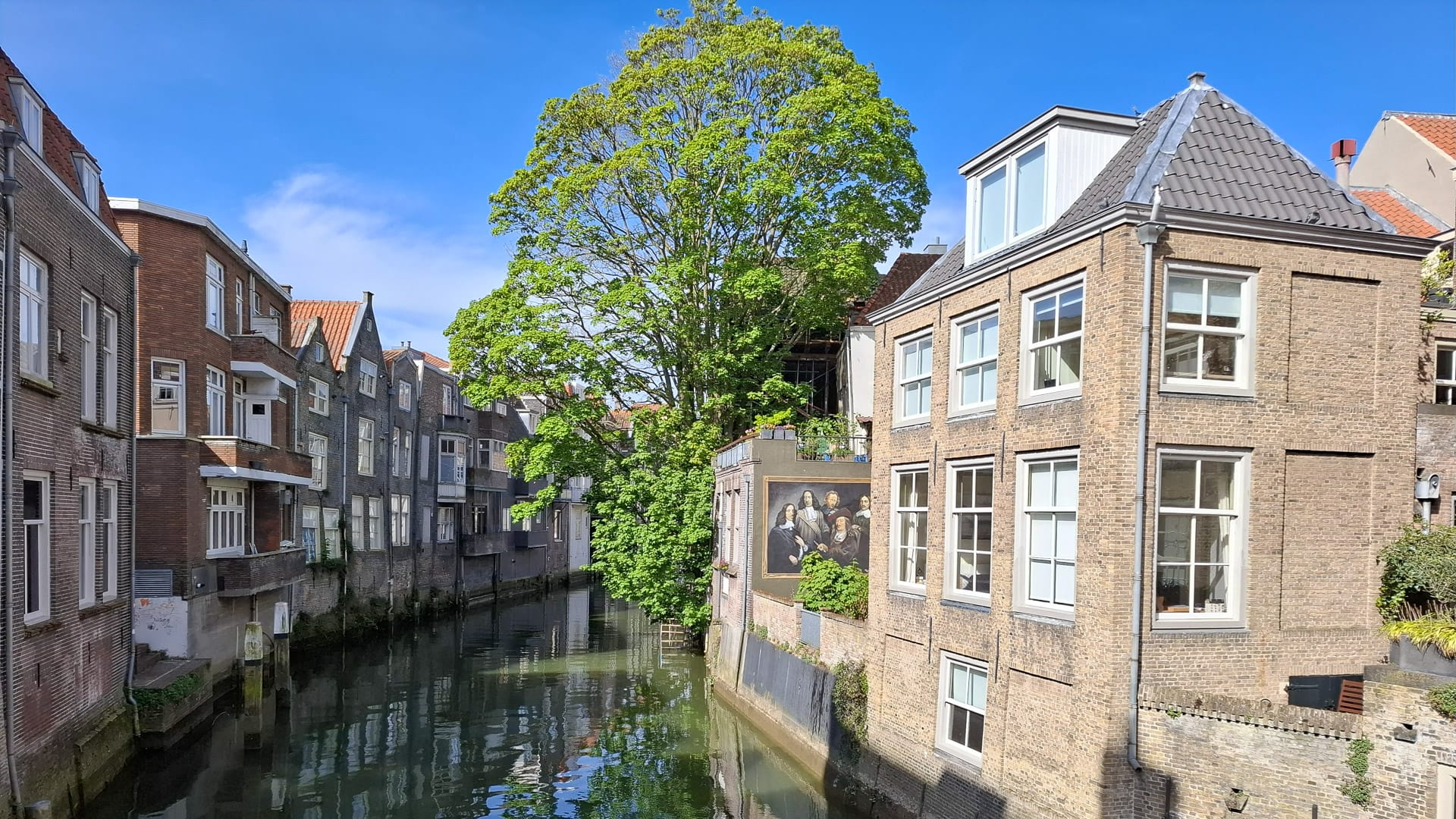
Dordrecht canals (photo credit: Elleke Haarman via Dutch Bike Tours)
How to get to Amsterdam/Bruges?
Many cyclists choose to start the route from Amsterdam because travel is easy, including by train and plane.
However, do note, parking in the city can be very expensive if you decide to travel by car.
Once your adventure is over and it’s time to head home from Bruges, you can take a train to Brussels and then take the Eurostar back to Amsterdam.
Be aware! We do not offer a transfer service, as the train connections are straightforward, and many riders are travelling on by train or flying home after the tour.
Any highway code and travel information I should be aware of?
As ever, it’s a good idea to check current travel information before you book and travel. For UK visitors, take a look at the UK government travel information pages here:
You should also read and follow the Netherlands’ and Belgium’s highway code.
Part 5: Do you have any tips for cycling the Amsterdam-Bruges route?
Do you need to do any training for the Amsterdam to Bruges cycle route?
You definitely don’t need to be an experienced cyclist to take on this route. But with several days of back-to-back riding and the potential to face some challenging wind conditions, it’s worth getting out for some rides beforehand.
In training, ensure you can comfortably ride distances up to 70 kilometres (44 miles) and put together a few consecutive days of riding to build up time on the saddle. Training doesn’t have to be too extensive, but building up a good level of endurance will help to ensure you can enjoy the ride and take in the scenery!
What should I pack?
When you’re packing for your Amsterdam to Bruges cycling holiday, there are the obvious things: your bike, your helmet, your spares and repairs and of course… your sense of adventure!
But it’s also best to pack light layers to wear on the bike, as the weather can be changeable in the Netherlands. A waterproof jacket is a good idea, as heavy rain is always possible, especially in the shoulder seasons.
Top tip! If you’ve booked a tour with luggage transport, it’s also worth having a spare set of dry cycling kit and dry casual clothes in your pannier – just in case your luggage arrives later than expected. On our tours, luggage is collected from the hotel from 09:00 and delivered to the next hotel before 17:00. If you leave early or have a fast day with a tailwind and arrive at your next hotel around 14:00, your luggage may not be there yet. Having dry clothes with you means you can change and relax comfortably while you wait, rather than staying in wet or sweaty kit.
You can find more advice on what to pack for a cycling tour in Epic Road Rides’ ultimate bike touring packing list.
Do I need to speak the local language?
You don’t need to be fluent in Dutch. Almost everyone speaks English, and most locals will switch to English as soon as they realise you’re not Dutch.
However, it’s appreciated if you attempt to speak a few words in the local language. Here are a few basic phrases:
- Hallo (Hello)
- Bedankt (Thank you)
- Spreekt u Engels? (Do you speak English?)
- Proost (Cheers)
Do I need cash?
It can be useful to have a small amount of euros with you, just in case.
But you’re more likely to find that shops and restaurants have a ‘card-only’ policy than a ‘cash-only’ one.
Is it easy to stay fuelled and hydrated?
For most parts of the route, you’ll have access to enough shops and restaurants to be able to top up on food and water supplies. But there aren’t many water fountains along the way.
Be aware! From day three to day six, you cross the Netherlands’ ‘bible belt’ where you might find that shops and restaurants are closed on Sundays. Therefore, make sure you take extra supplies with you on the bike during these days.
Are there public toilets along the route?
Some cities and towns have public toilet facilities. But for the most part, you’ll need to visit restaurants and cafes, so plan accordingly.
Can I shorten the route if I need to?
There’s a lot of water to navigate in the Netherlands, so you can make use of some of the ferries along the way if you want to cut down your riding time. The biggest is the ferry from Vlissingen to Breskens, but there’s also a ferry in Biesbosch. Most of these ferries are effectively part of the route rather than an optional shortcut. Some can shorten your day, while others are more about the experience. For example, the ferry in the Biesbosch does not shorten the ride and can actually make the day a little longer, but it is a beautiful way to travel through the wetlands. The ferry on the day you ride to Middelburg can shorten that day’s distance. The ferry from Vlissingen to Breskens is not really a choice if you are following the standard route, as it is the crossing that gets you towards Belgium.
Be aware! After the first few days, there aren’t many opportunities to cut the daily routes short and take the train. Once you’ve left Dordrecht, you will have to cycle the full distance. That said, on our Dutch Bike Tours itineraries, you often have the option to choose a slightly longer or shorter version of the day’s ride. If you are cycling independently, you can also tailor your distances by building your own route using the knooppunten junction network, which makes it easy to adjust your ride to how you are feeling.
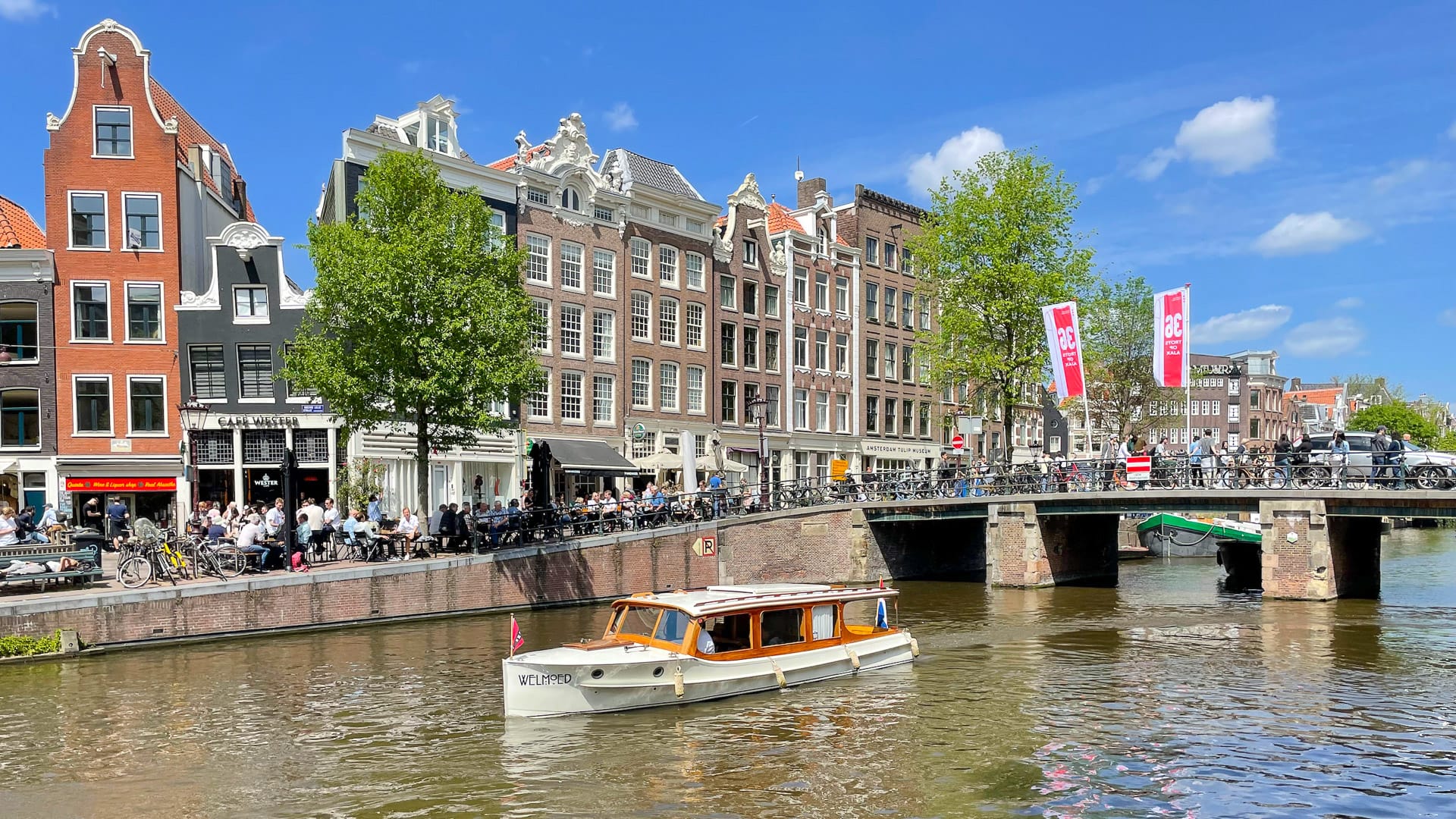
Amsterdam canals (photo credit: Dutch Bike Tours)
What should I do if I encounter strong headwinds?
Strong headwinds are often an underestimated part of cycling in the Netherlands, and especially in Zeeland. But they are simply part of the experience and what can make the trip really memorable.
From my perspective, the most important thing is not to let it become a worry. If the wind is against you, slow your pace, accept that the day might take a little longer, and remember that you’re on holiday, not racing the clock.
The best approach is really to just keep riding, settle into an easy rhythm and focus on enjoying what’s around you. The open landscapes, quiet rural roads, cosy villages and beautiful historic towns are still there, even on windy days.
Top tip! An e-bike can also make a big difference when the wind picks up, but I always recommend using the battery sensibly so you don’t run out of power too early in the day.
Are there any etiquette or traffic rules I should be aware of?
You must use the designated cycle path if one is available in the Netherlands, so pay attention to blue signs indicating a mandatory cycle path. If you do have to ride on the road, make sure you stick to the right and follow the usual traffic rules.
Cycling on pedestrianised streets and sidewalks is not allowed.
Top tip! The locals find it annoying when cyclists stop in the middle of the cycle path to check their map or phone. If you stop, make sure you get over to one side or if possible, step onto the verge to make sure you’re not in the way!
Be aware! It’s worth being extra aware when cycling in central Amsterdam. It’s a busy city with a lot of traffic and a lot of cyclists, all sharing the same space. There are plenty of cycle paths and lanes, but you do need to be comfortable riding among other road users and paying close attention to the traffic rules. If you stay predictable, signal clearly and go with the flow, cycling in Amsterdam feels more manageable, rather than intimidating.
What can I expect when I cross the border?
Crossing the border between the Netherlands and Belgium is very straightforward and almost unnoticeable.
You should always carry your passport when travelling abroad. But the chance of being asked to show it while cycling across the border is very low. There are no border controls or checkpoints, and you will simply ride from one country into the other without any interruption.
If you look closely, you might even notice the asphalt changes at the border, as from this point, Belgium maintains the road. A little later, the differences become clearer anyway, with different road signs and a slightly different feel to the houses and streets. But the actual border crossing itself is not really noticeable.
Should I book a few extra days to extend my stay in the cities?
Yes! A single night isn’t enough time to really enjoy Amsterdam and Bruges, as you’ll only really get to see the highlights. If you want to fully explore these cities, book a few extra days either side of the trip so you can spend a little more time experiencing everything they have to offer.
Top tip! The museums in Amsterdam can be extremely busy, so it’s a good idea to book your tickets in advance to avoid long queues and/or disappointment.
If you want to extend your time in Flanders, Ghent is another popular destination to consider. The city centre is beautiful, and there is a lot of culture and history to explore, such as the Castle of Laarne and Castle of Ooidonk.

Biesbosch museum (photo credit: Elleke Haarman via Dutch Bike Tours)
Part 6: What does Dutch Bike Tours offer?
Established in 2003, Dutch Bike Tours offers self-guided bike tours which take you from hotel to hotel, providing local knowledge and support to help you get the best experience while cycling in the Netherlands.
What really sets Dutch Bike Tours apart is that we are local specialists. We design and ride these routes ourselves, so the focus is always on the best cycling experience in the Netherlands. We also work hard to offer a strong price-to-quality balance, with carefully chosen hotels and beautiful, well-planned routes. Add in detailed travel documents and a navigation app that is genuinely easy to use, and it means you can enjoy the freedom of a self-guided tour while still feeling well supported throughout.
We offer two variations of the classic European route featured in this article, including:
What’s included
- Bike-friendly hotels
- Luggage transfers
- Breakfast
- Tourist taxes
- Use of the Dutch Bike Tours navigation app
- High-quality travel documents
- Seven-day service hotline
- GPS routes
Optional extras
- Bike hire, including e-bikes
- Mechanical assistance and breakdown support
Where can you find out more information about Dutch Bike Tours?
If you want to find out more about booking an Amsterdam to Bruges bike tour, you can head to the Dutch Bike Tours website for more information, including dates, availability and prices.
What’s next?
A big thank you to Erik Andréa for those detailed insights and insider tips on cycling from Amsterdam to Bruges.
Are you considering an Amsterdam to Bruges bike tour? Drop us a comment and let us know if you have any questions!
We think this route is a great way to experience a cycling tour in the Netherlands, offering a challenge without feeling like an overwhelming amount of daily mileage to get through.
- A guide to cycling in the Netherlands, for another interview with Dutch Bike Tours.
- Guide to bike and barge tours, if you fancy the idea of experiencing Amsterdam to Bruges by bike and barge instead.
- Sail and bike tours, for our Netherlands island-hopping itinerary and tips.
- Useful tips for cycling in the Netherlands, for more practical information for anyone planning a trip.
- Guide to cycling in Flanders, for more details on riding this iconic region in Belgium.
- Bike-friendly cities, for our pick of the best city breaks to consider (including Amsterdam!).
- Electric bike tours, for our top picks (including Amsterdam to Bruges)
Got a question for Erik?
Fill out this form and we will send it to Erik. We aim to get you an answer within 24 hours where possible!Erik Andréa is the office manager at Fietsvakantiewinkel. Erik leads a team of 14 people responsible for organisations including Dutch Bike Tours, Belgian Bike Tours and Fietsrelax.
Erik was raised with a passion for cycling, following in the tyre tracks of his father who was also a passionate cyclist. This led Erik to participate in road cycling races for more than 12 years. After starting his working career in the cruise business, he applied for the job at Fietsvakantiewinkel in early 2016 and has been there for more than nine years.
First Published: 05 January 2026
The contents of this website are provided for general information purposes only. It is not intended to amount to advice and you should not rely on it. You should carry out your own due diligence and risk assessments and take professional advice. Views expressed by interviewees or other users of this website do not necessarily represent our views. We make no representations, warranties or guarantees, whether express or implied, that the content on our website is accurate, complete or up to date. If you use any information or content on this website, download from, or otherwise obtain content or services through our website, it is entirely at your own discretion and risk. Epic Road Rides Ltd disclaims all liability and responsibility arising from any reliance placed on the information and content on this website. Find out more here.
Sponsor Message
Looking for a Netherlands cycling tour?
We’ve been delivering Netherlands cycling holidays since 2003 and would love you to join us.
We offer place-to-place self-guided holidays for cyclists in a range of regions across the country, including many routes starting and finishing in the Dutch capital Amsterdam. We have something to suit every kind of rider.
Get in touch and let's discuss!
Got a question for Erik Andréa from Dutch Bike Tours?
Fill out this form and we will pass it to Dutch Bike Tours who aim to reply (within 24 hours wherever they can!)
Comments