

Ultra endurance cycling is for anyone looking for a cycling challenge: one that involves long days in the saddle, a real adventure and grit when things get tough!
Ultra cycling involves far more than your average Sunday long ride. It’s about a sustained, self-reliant effort where fitness, fuelling and mindset all matter. You’ll find your limits and learn how to move them.
It is not for the fainthearted and requires plenty of preparation to enable you to undertake one successfully. On hand to help is Community Contributor Geneviève Healey, an experienced ultra rider who logs around 10,000 kilometres a year. She’s tackled events worldwide and, in 2026, will take on Bright Midnight, a 1,100-kilometre self-supported mixed-terrain bikepacking challenge in Norway.
In this article, Geneviève shares her practical tips to plan for your first ultra, training basics, the best ultra endurance events to consider and what the tough bits really feel like (plus how to overcome them!).
Want to know how to train for an ultra cycling event? Don’t miss our in-depth guide.

Geneviève is a passionate cyclist from Québec City, Eastern Canada.
She loves to travel by bike and thrives on long hours in the saddle, having participated in several ultra cycling events around the world, including in Canada, Portugal and France. Most recently she completed the BikingMan Corsica race and has also taken part in Race Across Québec, a 500 kilometre road cycling event that was held in the Laurentian's, just north of Montreal.
Alongside regularly found riding around Québec City, Geneviève contributes to Vélo Mag and Nature-Humaine. She also runs a personal blog, PinteuseBlogueuse, which highlights cycling routes that connect local microbreweries and artisanal food shops!
Part 1: What is ultra cycling?
When you start exploring the world of ultra cycling, you’ll quickly find a wide range of definitions. Some focus on distance covered. Others on the hours spent riding or the number of consecutive days on the saddle. There are also several different ultra endurance cycling event types and formats to choose from.
But to keep things simple, in this article, ultra cycling means rides which are over 300-400 kilometres in a single effort, or events totalling more than 1,000 kilometres over several days.
Whatever distance or format you choose to tackle, if you’re a cyclist who enjoys long hours on the bike and you’re not afraid of changeable weather or unexpected challenges, it’s very likely you’ll enjoy ultra cycling!


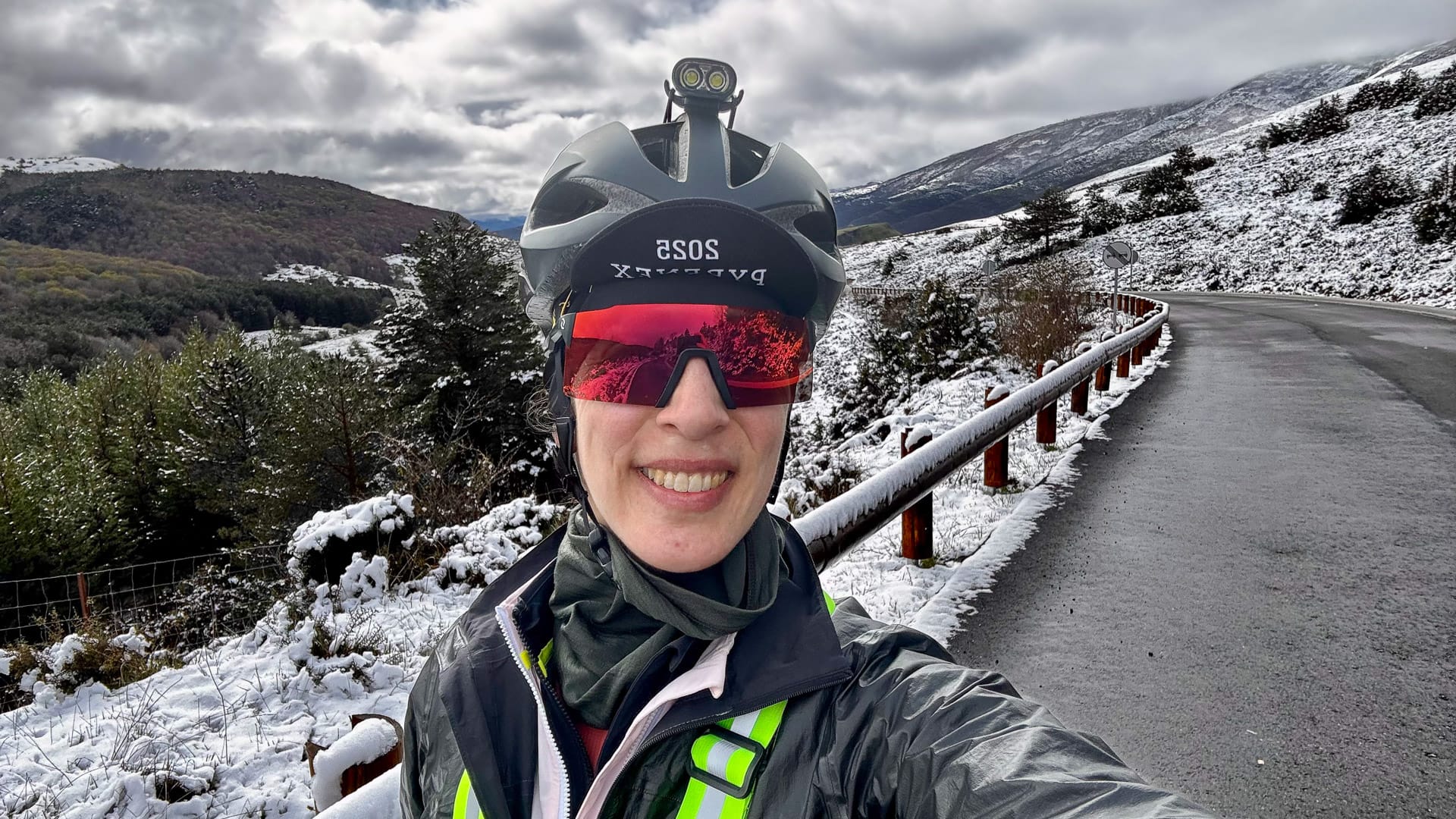

Part 2: Why should cyclists try ultra cycling?
Countless hours of pedalling across all terrains and in all weathers might not sound like an easy ride. So why are so many cyclists getting hooked on ultra endurance riding? For me, it comes down to the unique perspective you get while travelling on two wheels, and the journey of self-discovery along the way.
Ultra riding is a unique way to travel the world
Crossing a landscape and getting from point to point by bike is a wonderful way to travel and see the world. Cycling is fast enough to cover vast distances yet slow enough that you get to really experience every moment. You get a unique perspective on the world and the places you ride through. The silence of the night, the first light of dawn. Even bad weather brings an opportunity to experience the beauty and strength of nature.
It unlocks a new sense of mental and physical resilience
The long hours on the bike can be physically and mentally demanding. Self-supported events and solo adventures take a huge amount of mental resilience to keep going when things get tough. But this helps you to build your resilience in a way that also transfers into other areas of your life.
Ultra cycling takes you on a journey of self-discovery
Ultra cycling isn’t just about the distance covered and getting from A to B. It’s a personal journey, too. Endurance cycling gives us an opportunity to dive deep into ourselves, to challenge our limits and to discover who we are.
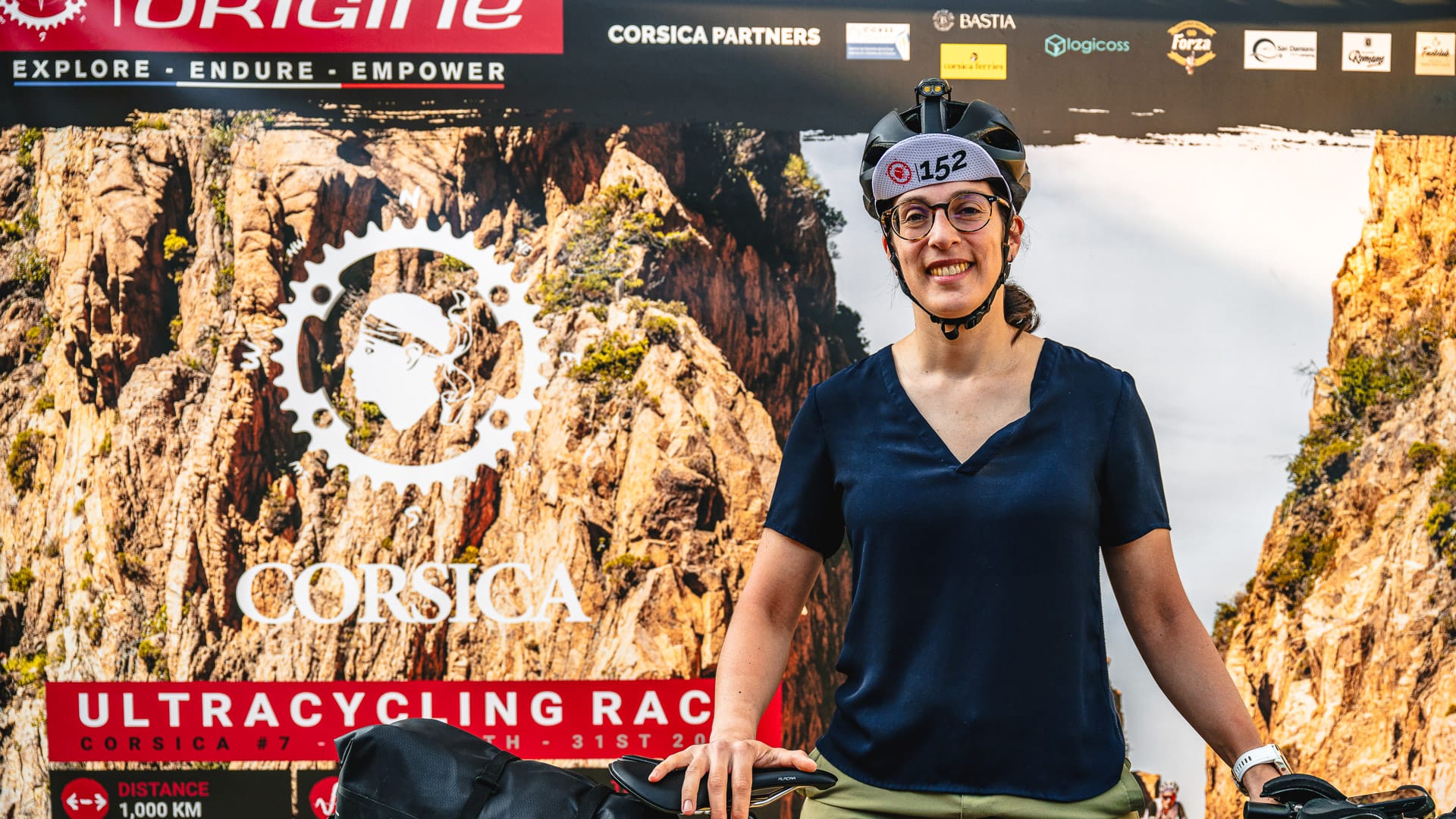
Bike and gear checking (photo credit: David St Yves)
Part 3: How do you choose the right ultra cycling event or endurance challenge?
Once you’ve decided to give ultra cycling a try, it’s time to start planning your first big ride. There’s quite a range of different events to choose from, including the adventure of self-sufficient randonneuring, the peace of road less ridden gravel bikepacking, or the ‘you versus the clock’ challenge of brevet cycling races.
The world of ultra cycling is home to events suitable for a wide range of experience levels. Ultimately, the best ultra riding challenge for you will depend on your riding experience, preferred terrain and what you want to get out of ultra cycling.
What do you suggest for first timers to ultra cycling?
It can be tempting to go all in and choose an ultra cycling race with a hard route or in a far-flung destination for your first event.
But for first timers, I think it’s best to start with something a little closer to your comfort zone. Look for an event that’s relatively close to home, or at the very least means you won’t have to fly and take your bike apart.
Top tip! For your first cycling ultra, the goal is simply to get familiar with the distance itself without other factors like travel-related fatigue or a particularly tough course getting in the way. Get some experience, and then you can start broadening your horizons.
What’s the difference between DIY ultra cycling adventures vs organised events and races?
I initially started riding longer distances solo after a bike crash which happened in a group riding event. I soon realised I enjoyed riding alone, even during the very long days on the saddle.
At first, I just created my own adventures. The great thing about creating your own long-distance challenges is you can always plan your ride to align with the weather, the time of day and even the time of year that sits within your comfort zone. There’s an element of freedom, but it also means you’re on your own out there.
I decided to start getting involved with organised ultra cycling events and races because it gave me the chance to push myself with time limits and harder routes. Race organisers often plan routes to include the most beautiful, scenic roads in the area. But these can often be quite challenging too. Another benefit of taking part in organised events and races is the added motivation of knowing you’re not the only one out there riding that route, climbing that hard hill or battling against the elements.
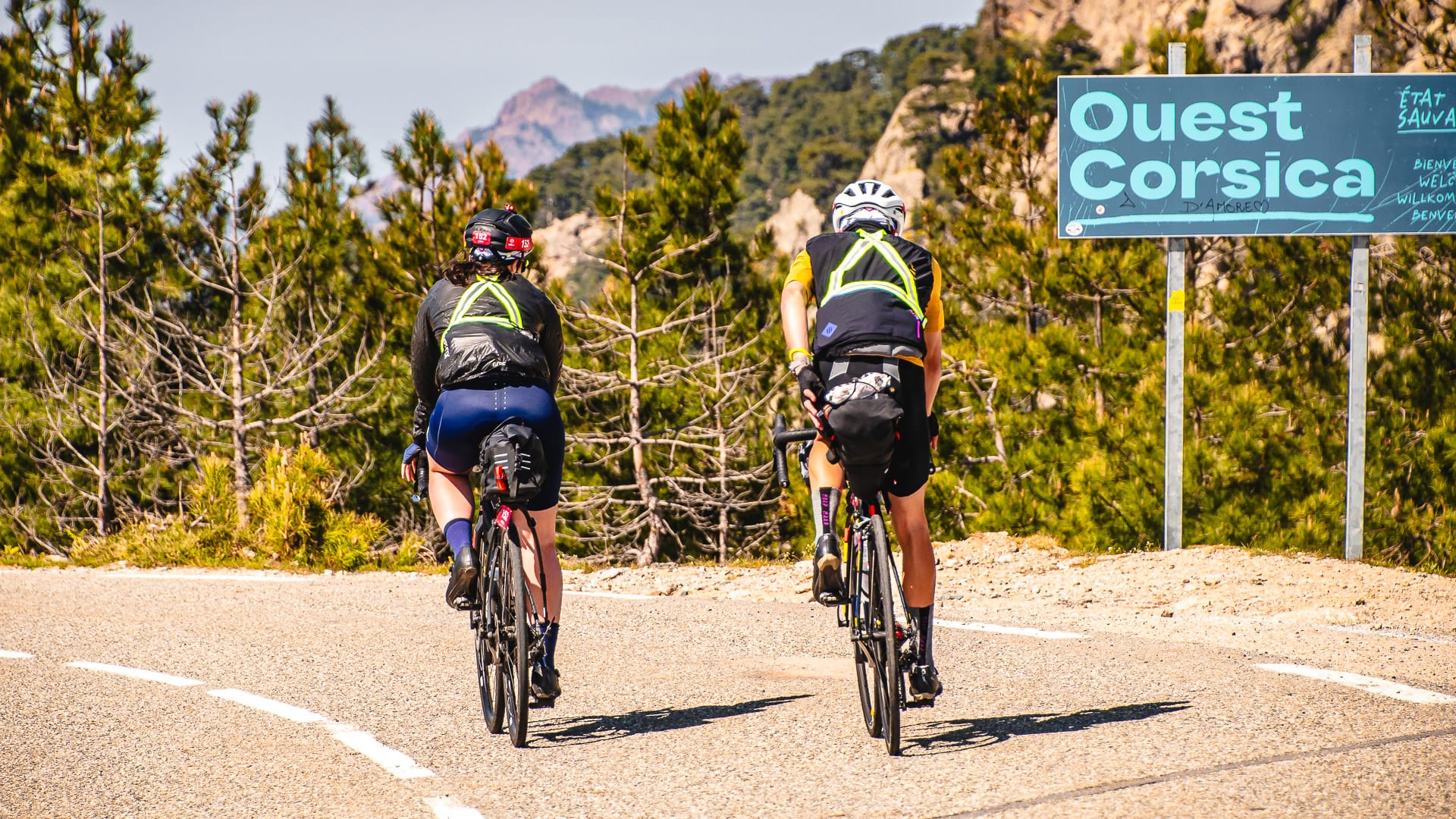
Climbing Vergio pass (photo credit: David St Yves)
What’s the difference between supported vs unsupported ultra cycling races?
Alongside different locations, distances and formats, in endurance cycling events, you also have the choice between supported and unsupported events.
There are pros and cons to both, and each has its own appeal. A supported race means you can have assistance from a support crew. They can help you out with food, mechanical issues, and provide moral support at checkpoints. A supported race allows you to push your physical limits, with the confidence that there are people out on the route to help you.
In contrast, unsupported events demand self-sufficiency. You’re not allowed outside aid, there’s no drafting and there’s certainly no shortcuts. Many ultra cyclists enjoy unsupported events because they strip the experience down to its essence. It’s just you, your bike and the road ahead. There’s a satisfaction in knowing that you covered the distance all by yourself.
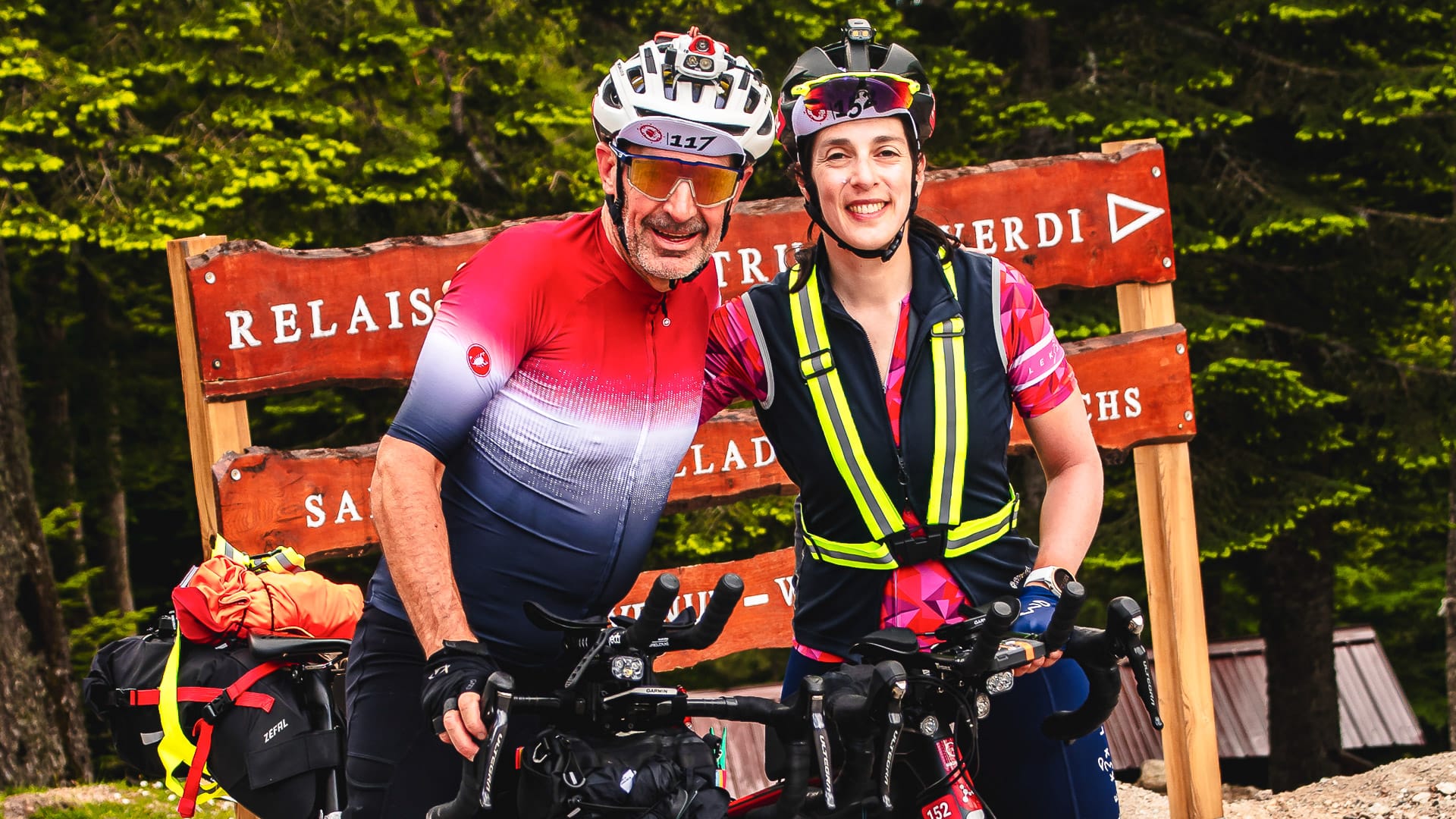
Smiling at a mountain signpost during BikingMan (photo credit: David St Yves)
Part 4: What are the most popular ultra cycling events?
There are so many ultra cycling events, races and challenges to choose from. But here’s my pick of the top three, bucket-list worthy ultra rides.
Brevets Randonneurs Mondiaux (BRM)
Best for: Riders seeking self-sufficiency and a traditional ultra cycling experience on open roads.
Key statistics
200-600 kilometres
2,000-6,000 metres of elevation gain (depending on the course)
What to expect
Brevets Randonneurs Mondiaux (BRMs) are the foundation of long-distance cycling. These events are non-competitive and emphasise endurance, planning, and self-reliance. Riders follow a fixed route, check in at control points, and aim to finish within a set time limit. There are no prizes, rankings, or support vehicles. The satisfaction comes from completing the distance on your own terms.
Many use the 200-, 300-, 400- and 600-kilometre brevets as preparation for the prestigious Paris–Brest–Paris event. There are various dates and locations worldwide, typically in the spring and early summer. BRMs are a straightforward and time-tested way to discover whether you enjoy the rhythm and focus of ultra-endurance riding.
They are part of the qualifying series for the famous Paris-Brest-Paris event.
BikingMan Series
Best for: Ultra cyclists craving adventure with a professional edge.
Key statistics
Approximately 1,000 kilometres
15,000-20,000 metres of elevation gain
What to expect
The BikingMan Series offers a structured introduction to self-supported ultra cycling with a professional level of organisation. Each event features a challenging route through dramatic terrain, from desert climbs to coastal roads. There is GPS tracking, checkpoints and clear rules. Riders are fully self-reliant but benefit from a strong community atmosphere and reliable logistics.
It’s a demanding format which combines adventure with efficiency. Expect long days, steep climbs, and minimal rest. For cyclists looking to test themselves beyond the brevets, BikingMan provides a safe yet serious next step into the world of ultra-distance cycling competitions, with various races throughout the year in a range of locations.

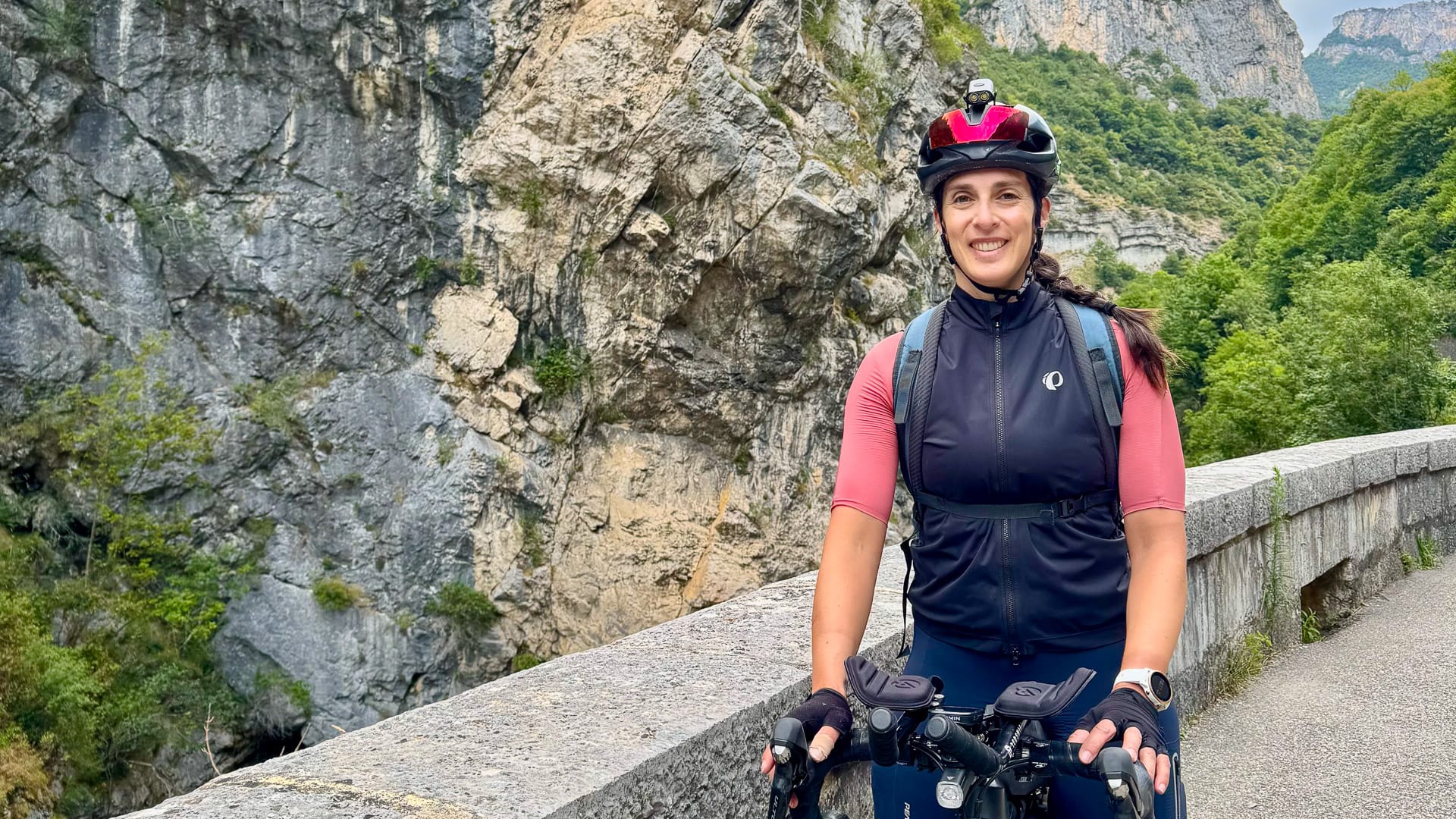
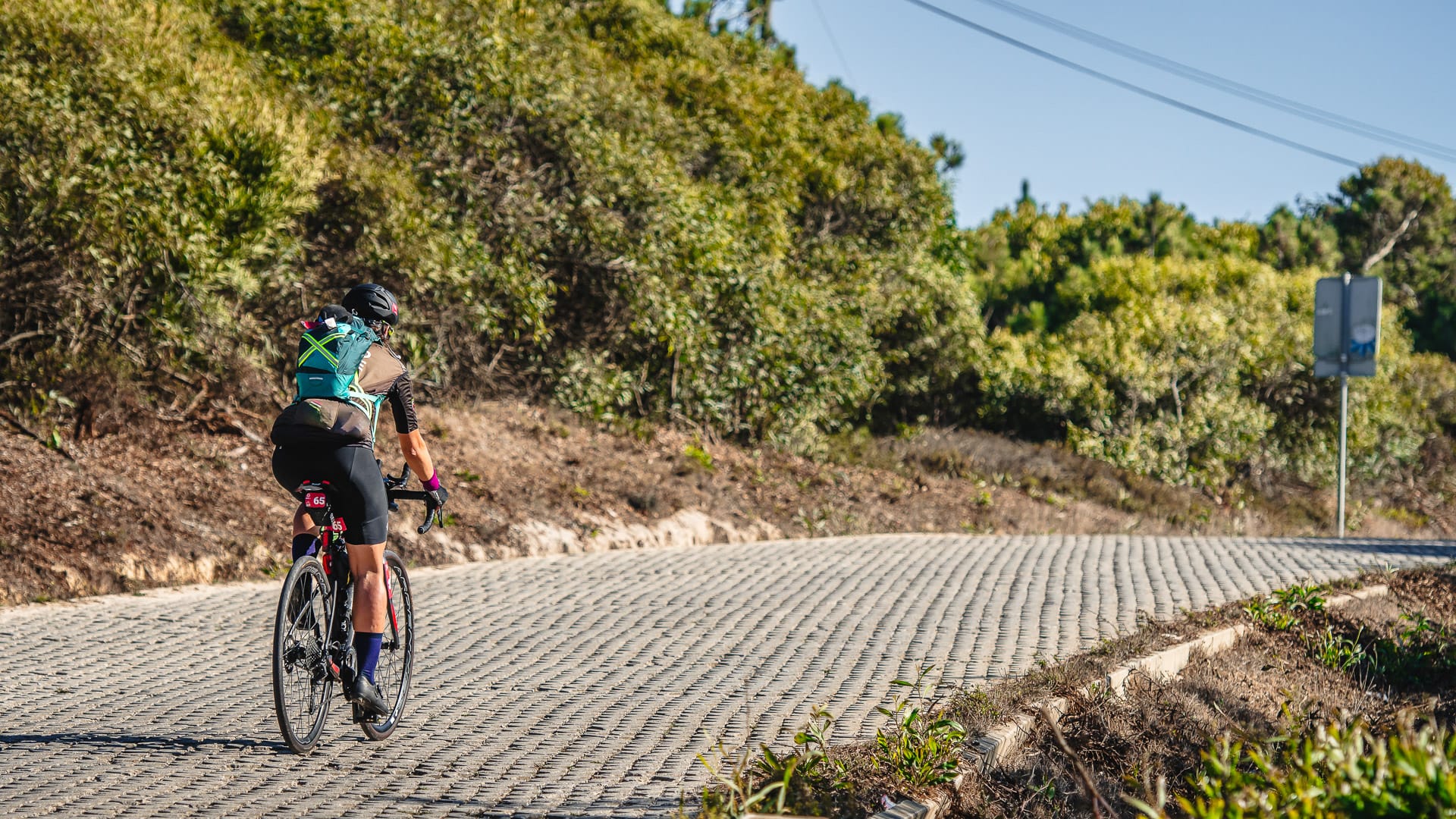
The Transcontinental Race
Best for: Cyclists who dream of crossing a continent under their own power
Key statistics
3,500-4,500 kilometres
Over 40,000 metres of elevation gain
What to expect
The Transcontinental Race is one of the toughest and most respected events in the ultra cycling world. Riders cross Europe from west to east, passing through a series of mandatory checkpoints but choosing their own route in between. It’s a self-supported event. There’s no outside help, no drafting, and no team vehicles.
Participants must manage navigation, rest, repairs, and nutrition entirely on their own. Conditions vary wildly. Riders can experience heat, rain, cold mountain passes, and long stretches of isolation. It’s as much a mental test as a physical one, demanding strategy, resilience, and consistency day after day. Finishing it is an achievement few forget.
Looking for more ultra cycling events? Don’t miss our in-depth guide – coming soon!
Part 5: What do you need to include in an ultra cycling training plan?
Improving your biking endurance is going to be key to taking on an ultra, but there are plenty of other things to think about during your preparation. Here are my top tips:
What are the gear and equipment essentials for ultra cycling?
In ultra cycling, knowing your equipment and being able to manage it in all conditions is essential.
Top tip! Remember that everything you choose to carry on your bike is going to add weight and drag, so everything should earn its place. You want to ensure your rest stops are efficient, your bike set-up is compact, and you have what you need to ensure your ride is as comfortable as possible for as long as possible.
The specific gear you’ll need will depend on the length of your ultra cycling event and the conditions you’ll be riding in. But some typical essentials include:
- Lightweight rain jacket: A very light, packable waterproof (for example, a Shakedry-style jacket) can be a genuine game-changer when conditions turn wet and cold.
- Reliable multi-tools: Essential for quick adjustments and minor repairs when you need to stay self-sufficient on the road.
- Frame bag: A great way to use that “lost space” between your legs for food, layers and spares, while keeping weight central and easy to access.
- Aero bars: Useful for an alternative riding position. Once you try them, you can’t go back! But they take time to adapt to and suit some routes better than others.
Make sure you test all your gear in all conditions: rain, cold, heat, wind and darkness. This will give you the opportunity to change anything that doesn’t work and ensure you have a reliable set-up for your event.
Of course, you want to practice your basic mechanical skills too. Make sure you can quickly change an inner tube, fix a dropped chain and carry out other roadside repairs, as most ultra cycling events require you to be self-sufficient.
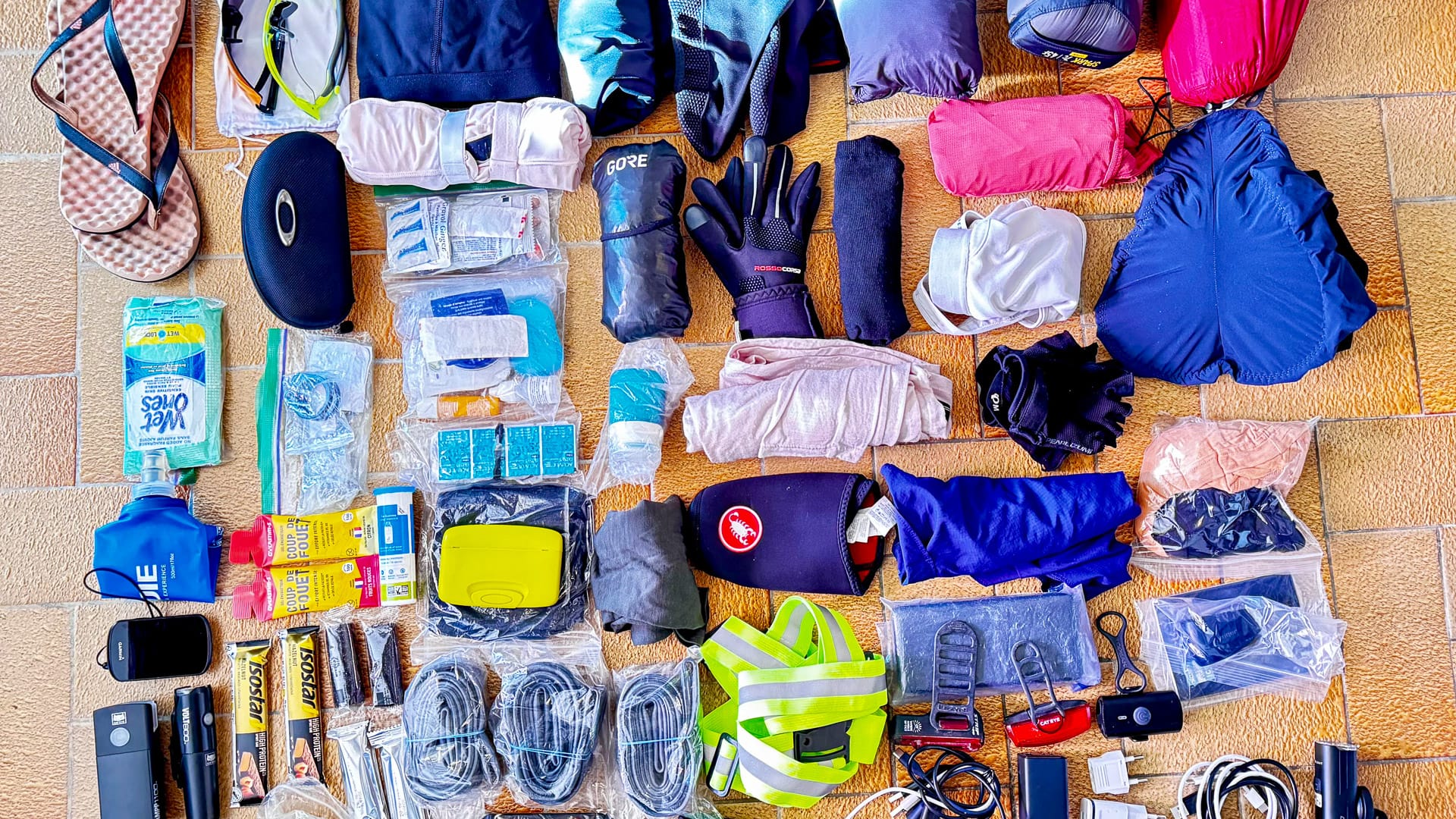
The kit I brought to the Desertus Bikus 2025 event (photo credit: Geneviève Healey)
Do you have any tips for bike shorts (and other kit)?
That’s actually quite a delicate question, because bib preferences are incredibly personal and what works wonderfully for one rider can be unbearable for another after a few hours.
That said, for long-distance riding, I would personally prioritise a bib that dries quickly, offers an easy pee-break solution for women, and if the pockets are genuinely comfortable and well-positioned, I would absolutely favour a model with pockets as well.
Comfort over many hours tends to matter far more than flashy features once you’re deep into a long ride.
As for budget, there’s unfortunately no real way around it: good bibs are expensive. Still, I would suggest looking for something durable and paying close attention to long-term user reviews, so the investment ends up being as worthwhile as possible.
For the rest of the clothing kit, some fabrics are definitely better suited than others for being worn over multiple days without needing a deep wash every night. Certain technical fibres (and especially some merino blends) tend to manage moisture and odour much better over time.
My practical advice would be to travel with two kits and alternate them: wash one by hand when arriving in the evening and let it dry overnight. If there’s no hotel or proper drying setup, things can always dry on the bike the next day — the glamorous side of long distance, as they say.
How can you prepare your cycling endurance for ultra cycling?
There are no shortcuts in ultra cycling, and that applies to training as much as the event or race itself. You’re going to have to put in the volume; there’s no way around it.
But you also must understand that it’s a long game. You can’t expect to go from zero to a thousand kilometres in a single season. It can take years, not months, to reach that stage.
Focus on building cycling endurance with plenty of long, steady rides.
Top tip! Remember, the goal isn’t just about accumulating mileage. Pay attention to how your body and your mind respond to the longer distances. Focus on recovery, test out different fuelling strategies and make sure you get rest. Above all, you’ve just got to keep showing up. Every ride builds your base, and every season of ultra endurance cycling training adds another layer.
For a practical example of what that volume can look like, you might set a clear distance goal in the months leading up to your event. For example, for the following events, this is what I aimed for:
- Desertus Bikus in April: 3,000 kilometres from January, then build steadily (ending closer to 4,000 kilometres), with much of the training done indoors due to winter conditions.
- BikingMan Corsica in May: built towards 5,000 kilometres before race day, made easier with outdoor riding, including one 200-kilometre ride, one 300 kilometre ride, and plenty of 100-kilometre rides.
Keep in mind that this kind of build works best when you already have seasons of endurance riding in your legs, so scale the numbers to your own training history and timeline.
Want to know how to train for an ultra cycling event? Don’t miss our in-depth guide.
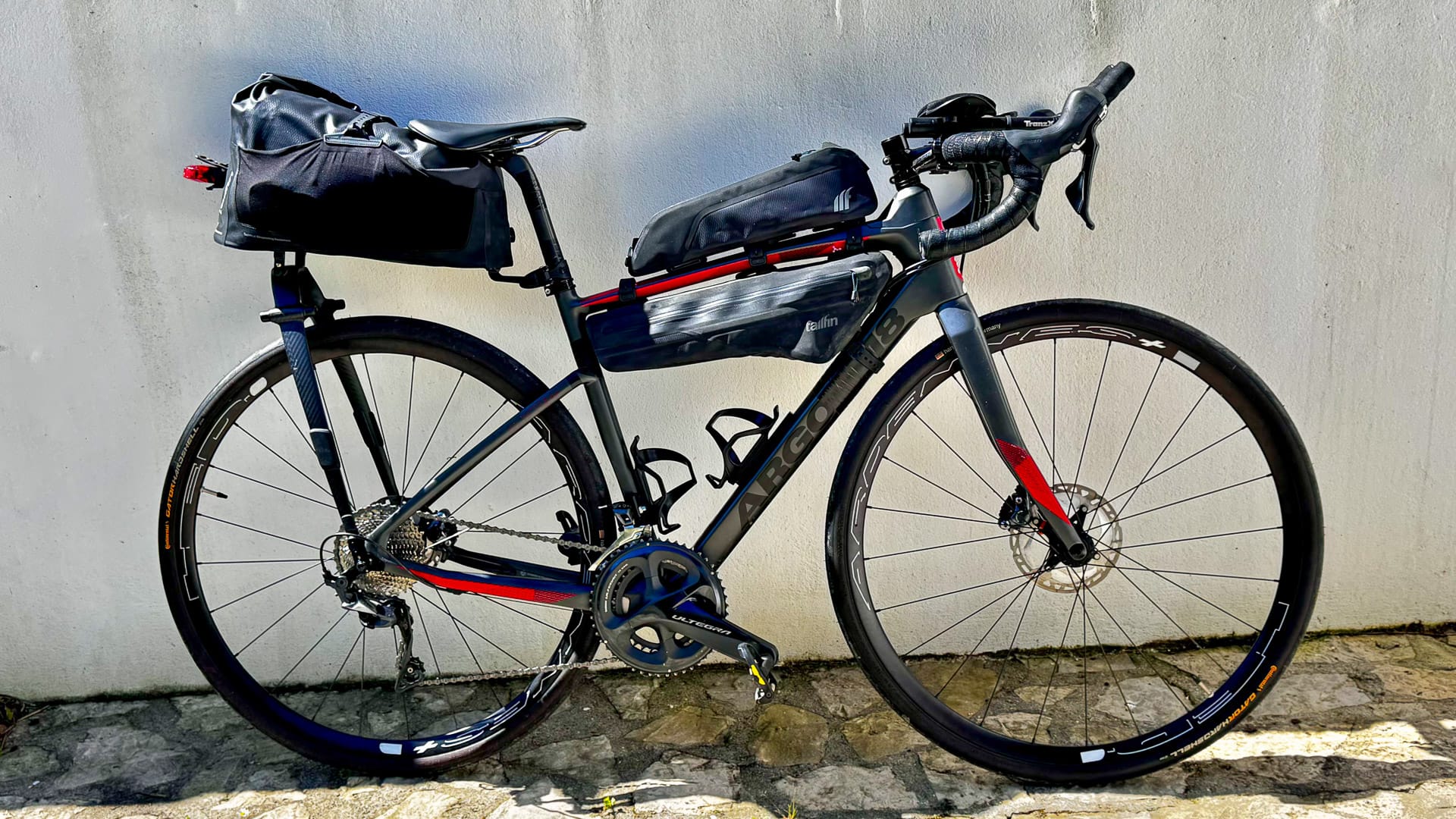
Bike setup ready to go (photo credit: Geneviève Healey)
How can you incorporate route planning into your ultra cycling training plan?
Ultra cycling is an adventure, so it’s vital that you get comfortable with navigation. You need to be able to re-route if bad weather or closed roads throw your original plan out of the window. You need to be able to make smart decisions, even when you’re tired. It’s important to know your tools and how to use them. Practice with GPS devices, paper maps and experiment with different mapping apps. The more adaptable you can be, the more freedom you’ll have. See more information on this below.
How should you mentally prepare for ultra cycling?
Preparing yourself mentally for an ultra endurance ride is just as important as the physical cycling endurance training. Your mind is what is going to keep you pedalling when your legs are screaming and you want to quit.
Mental preparation is about rehearsing for these tough moments. You can train yourself to stay on the bike when everything in you wants to stop. Here are some ways to do this:
- Build your resilience by continuing on a ride even when you want to turn back home.
- Climb the same hill over and over again.
- Go out on the bike even when the weather is bad.
- Choose to ride straight into a headwind.
- Practice riding at night.
Top tip! Endurance is all about being able to find calm in moments of discomfort. All of these uncomfortable moments in training will give you the mental strength to tackle the inevitable, unexpected challenges that your ultra event will throw your way.
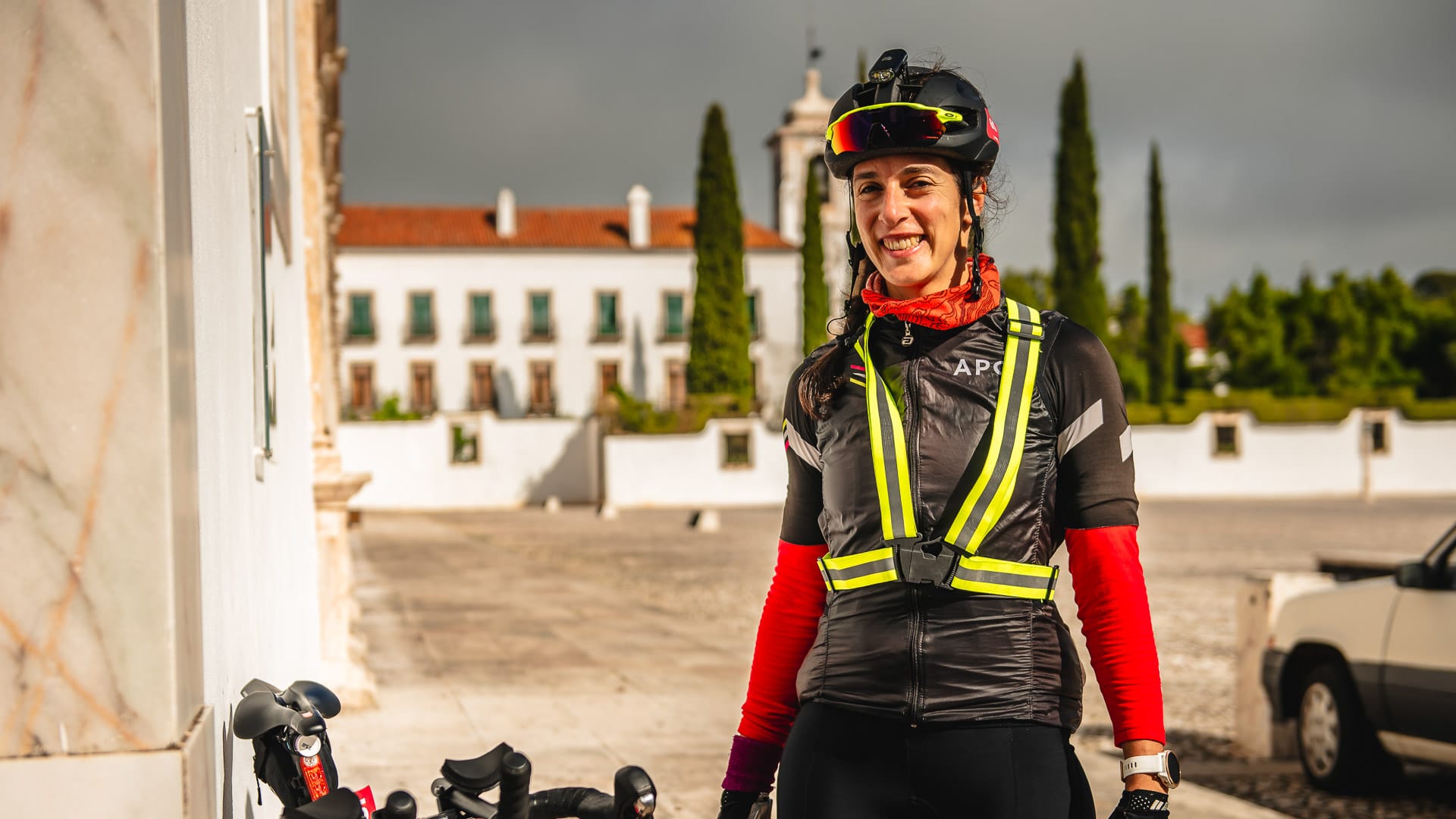
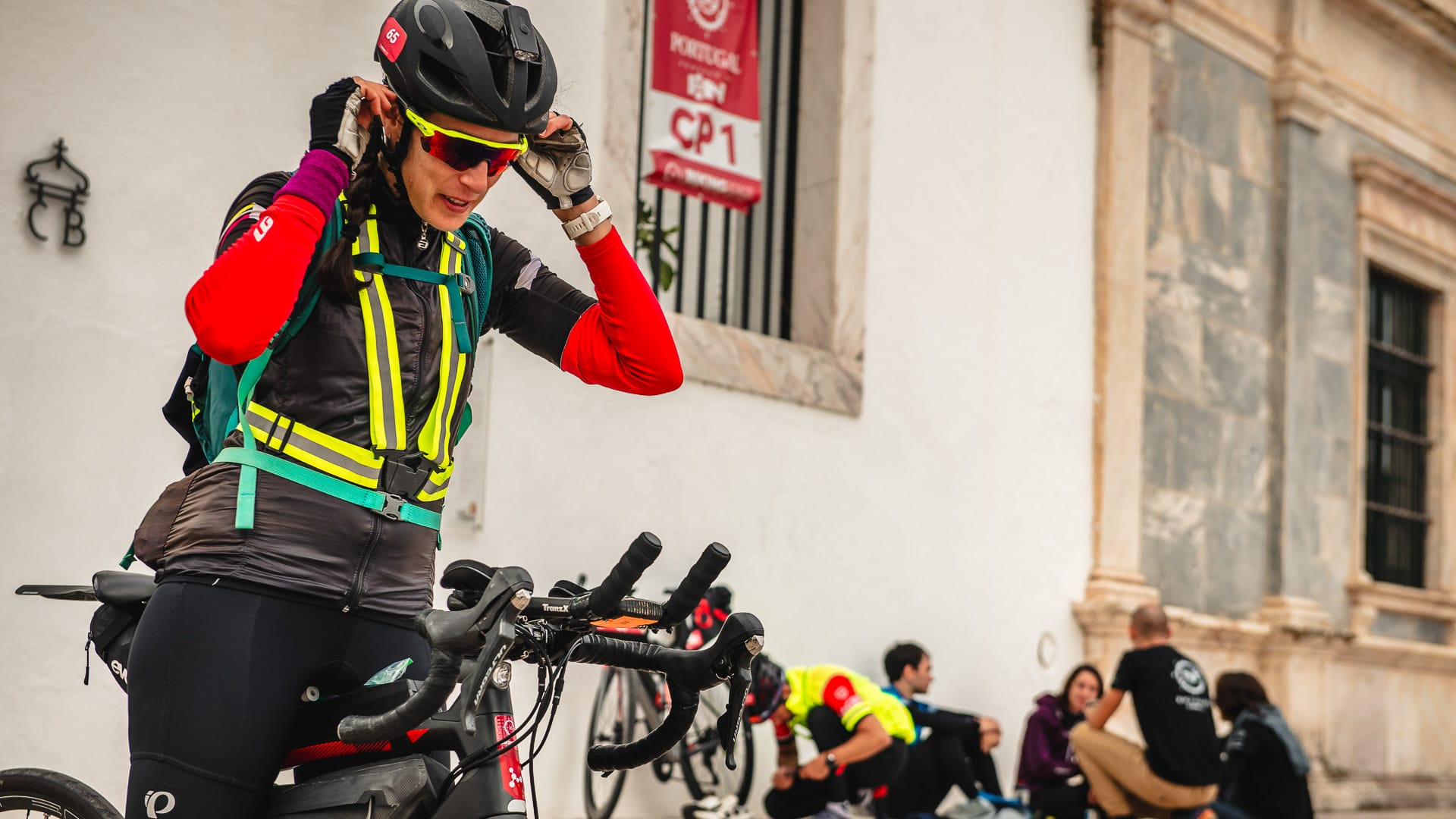
Big grins at checkpoint 1 on BikingMan Portugal (photo credit: David St Yves)
What is the best way to keep track of your ultra endurance cycling training plan?
The best way to keep track of your ultra endurance cycling training plan is the one you’ll actually use consistently.
Apps like Strava are a simple place to log your rides and see progress over time. But be mindful of the temptation to compare yourself too closely with other cyclists.
Most GPS units also link to a range of training apps, each with different strengths, so it’s worth trying a couple and sticking with the platform that makes it easiest to track your training week after week.
Part 7: What can you expect during your first ultra cycling event?
It’s inevitable you’re going to feel a mixture of nerves and excitement before your first ultra cycling race or endurance adventure. Embrace that feeling, because it’s what makes ultra riding special! Based on my experiences completing ultra cycling events all over the world, here are my top tips for getting the most out of your first big endurance ride.
Why is a pacing strategy important?
Even if you’re taking part in an ultra cycling event which has specific time limits, it’s important to keep your pace controlled from the start. You have to switch on ‘endurance mode’. Start slower than you think you should. The excitement of the start line fades quickly, but the fatigue doesn’t, so save your energy. It’s important to keep your heart rate low and your cadence smooth.
Top tip! If you’re trying to complete the event in a certain time or you’re chasing time cut-offs, the trick isn’t to try to ride faster. Instead, focus on keeping your stops as short as possible. Plan what you’ll do at each check point or aid station before you even get off your bike. Through the course of the day, being organised and efficient can help to save you a significant amount of time.
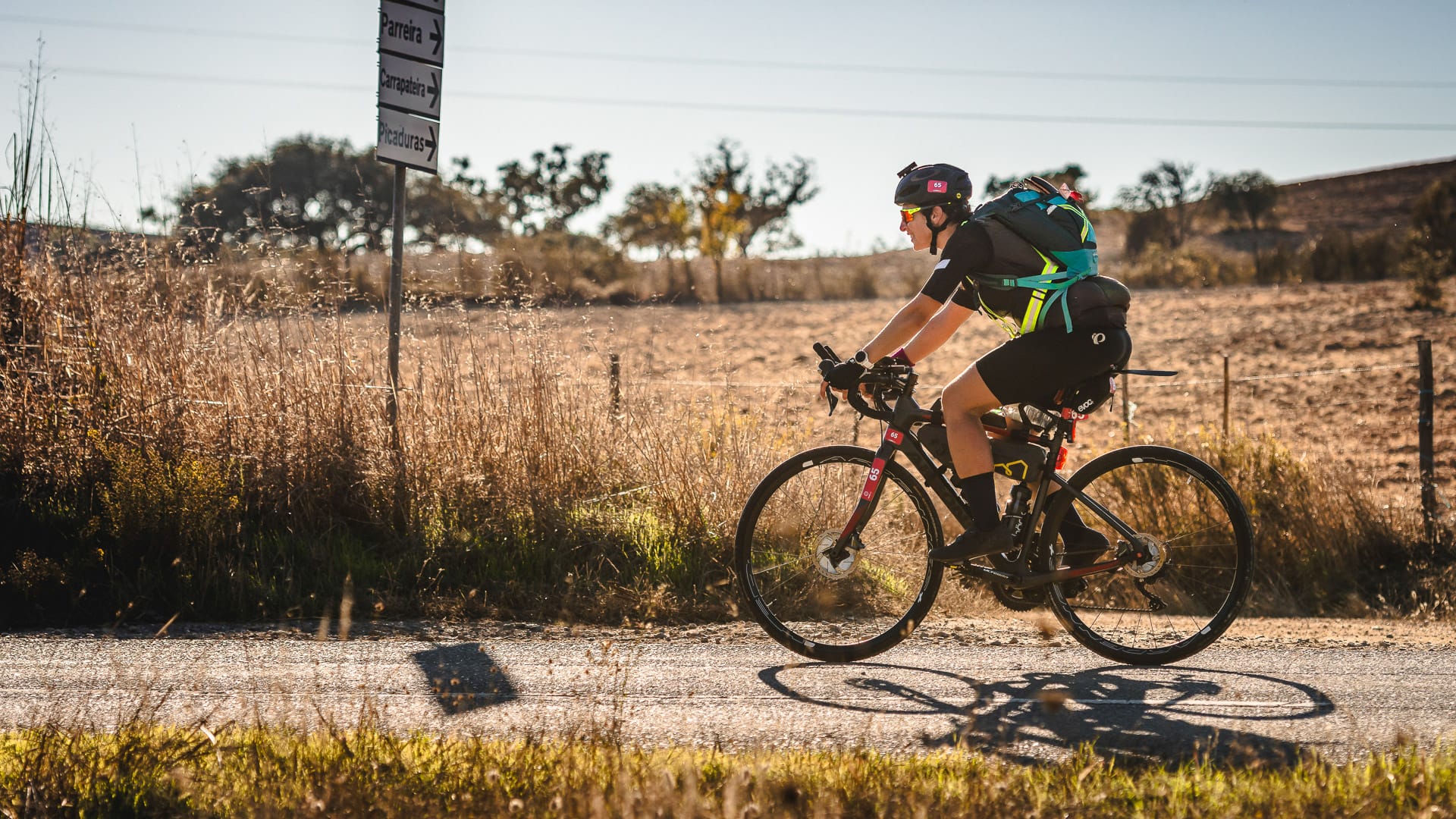
Focus during BikingMan Portugal (photo credit: David St Yves)
How can you manage nutrition for endurance cycling?
In ultra riding, your stomach can be your greatest ally or your worst enemy. Test all of your food and drink in training and remember that what works at home might not when you’re halfway across a foreign country. Carry familiar snacks, and make sure you have enough water and electrolytes to last between checkpoints.
Whenever possible, I’d also suggest sitting down for at least one or two proper meals a day. A hot meal can do wonders for your motivation!

Coffee and snacks before climbing (photo credit: Geneviève Healey)
How can you plan for navigation?
Before you set off, make sure you know how your GPS device works. Practice loading routes, finding out how to rejoin the planned route if you miss a turn and check if it has functionality to help you find food or water nearby if you need to refuel earlier than planned.
Be aware! It’s also important to remember that your GPS device can let you down, so don’t rely solely on one method of navigation. Make sure you know roughly what direction you need to be riding in so you can sense if you’re accidentally heading off route. It’s worth knowing any key towns or landmarks to help with this.
Always make sure you have a backup plan if your GPS device fails. That might be a phone with data enabled, a backup route saved in the cloud or even an old-fashioned paper map. Technology is wonderful, but batteries and electronics have their limits.
How can you manage sleep during ultra cycling races?
If your ultra cycling race is a multi-day event or requires cycling through the night, sleep is an important variable to factor in. There’s no right answer to how much and how often you should sleep during an ultra ride. Some riders try to keep sleep as minimal as possible and simply grab a few hours here and there in bus shelters or roadside motels. Others prefer a steadier approach, planning in time to sleep properly.
The best sleep strategy for ultra cycling will depend on your goals. If you’re trying to cover the distance in as short a time as possible, you might want to take the minimalist approach. Otherwise, planning for more sleep might make the entire experience more enjoyable. What’s important is that you experiment before race day. How little sleep can you function on safely? What recovery set-up works for you? Remember that sometimes taking a short nap might be more valuable than pushing on like a zombie.
What safety tips do you suggest?
It’s important to take safety seriously and make sure you do what you can to stay visible because it’s likely you’ll be riding in low lighting during the early morning and at dusk. Most events require a high-visibility gilet and functioning front and rear lights. I’d also suggest adding a small rear-view mirror to your bike and carrying a spare light or two.
Be aware! Remember that fatigue affects your awareness of what’s going on around you more than you think. With that in mind, a useful habit is to train yourself to regularly check in with both your body and your mind during rides, especially as fatigue builds.
Ask yourself:
- How am I feeling?
- Am I in a good mood?
- Am I hungry or thirsty?
- Does anything hurt?
Top tip! If something does hurt, note where it is and whether it feels like normal fatigue or something that could be developing into an injury. The more you practise this, the better you get at recognising what’s normal on long rides, what needs attention, and how to respond before fatigue starts affecting your judgement and awareness.
How can you stay mentally strong during an ultra endurance ride?
Top tip! When things get tough (and they will!), take everything back to basics. Try to focus on just one pedal stroke at a time. Break the route down into manageable sections. Focus on getting to the next checkpoint or the next café rather than thinking about how many kilometres you still have left to ride.
When frustration creeps in, try to shift your focus. Some people find music helps. I’d also suggest having a “happy food” with you for those dark moments. This should be something that makes you smile, no matter how tired you are. Ultra cycling rewards stubborn optimism more than speed, so do what you can to stay positive and just keep pedalling.
Part 8: How should you recover after an ultra cycling challenge?
Your body and mind are both going to be exhausted after an ultra cycling event. So the best suggestion I can give you for those first few days after the race is just to eat, sleep, repeat. Go back to basics and make sure your body is getting everything it needs: rest, proper meals and quiet time.
Be aware! You might also find it surprisingly hard to sleep in the days following an event because your body is still in race mode. But deep, uninterrupted sleep is the best repair tool you have, so try to find ways to wind down and give yourself plenty of opportunity to catch up on sleep.
Focus on rehydrating properly as well as eating real food. Allow yourself at least a few days completely off the bike. Take as much time as you need, and when you do start riding again, make sure you listen to your body, keep it gentle and don’t rush the process.
Some riders also experience a type of post-ride blues. That’s normal given the sudden downtime after so much buildup and intensity. Just try to be kind to yourself and remember that this recovery phase is all part of ultra cycling.
Finally, don’t forget that you have earned this rest. Treat the recovery process with the same respect you gave to the ride itself.

Geneviève exploring rolling hills near Tabernas desert, south Spain, heading through Gergal (photo credit: Timo Schaper)
What’s next?
A huge thanks to Geneviève for these detailed insights on ultra endurance cycling.
Have you taken part in ultra endurance events before? Perhaps you are looking for a new ultra distance challenge and want to enhance your training beforehand! We’d love to hear from you. Leave us a comment below.
Looking for more inspiration? Don’t miss:
- How to train for an ultra cycling event
- 7 of the best ultra cycling events
- Ultimate cycling challenges for your road cycling bucket list
- Our pick of the best cycling challenges in Europe
- Guide to Gran Fondos/ Sportives
- Our pick of the best UK Sportives
- Guide to charity cycling challenges
- Guide to cycling Corsica
Please support Epic Road Rides
A huge amount of time and effort goes into the article you’ve just read, all with the aim of helping you!
If you found what you’ve read useful, I’d really appreciate it if you dropped something in the tip jar here.
It’s a way you can say thank you and help us carry on creating top quality content with no annoying ads and no pay wall.
Got a question for Geneviève?
Fill out this form and we will send it to Geneviève. We aim to get you an answer within 24 hours where possible!Geneviève is a passionate cyclist from Québec City, Eastern Canada.
She loves to travel by bike and thrives on long hours in the saddle, having participated in several ultra cycling events around the world, including in Canada, Portugal and France. Most recently she completed the BikingMan Corsica race and has also taken part in Race Across Québec, a 500 kilometre road cycling event that was held in the Laurentian's, just north of Montreal.
Alongside regularly found riding around Québec City, Geneviève contributes to Vélo Mag and Nature-Humaine. She also runs a personal blog, PinteuseBlogueuse, which highlights cycling routes that connect local microbreweries and artisanal food shops!
First Published: 31 December 2025
The contents of this website are provided for general information purposes only. It is not intended to amount to advice and you should not rely on it. You should carry out your own due diligence and risk assessments and take professional advice. Views expressed by interviewees or other users of this website do not necessarily represent our views. We make no representations, warranties or guarantees, whether express or implied, that the content on our website is accurate, complete or up to date. If you use any information or content on this website, download from, or otherwise obtain content or services through our website, it is entirely at your own discretion and risk. Epic Road Rides Ltd disclaims all liability and responsibility arising from any reliance placed on the information and content on this website. Find out more here.
Comments