
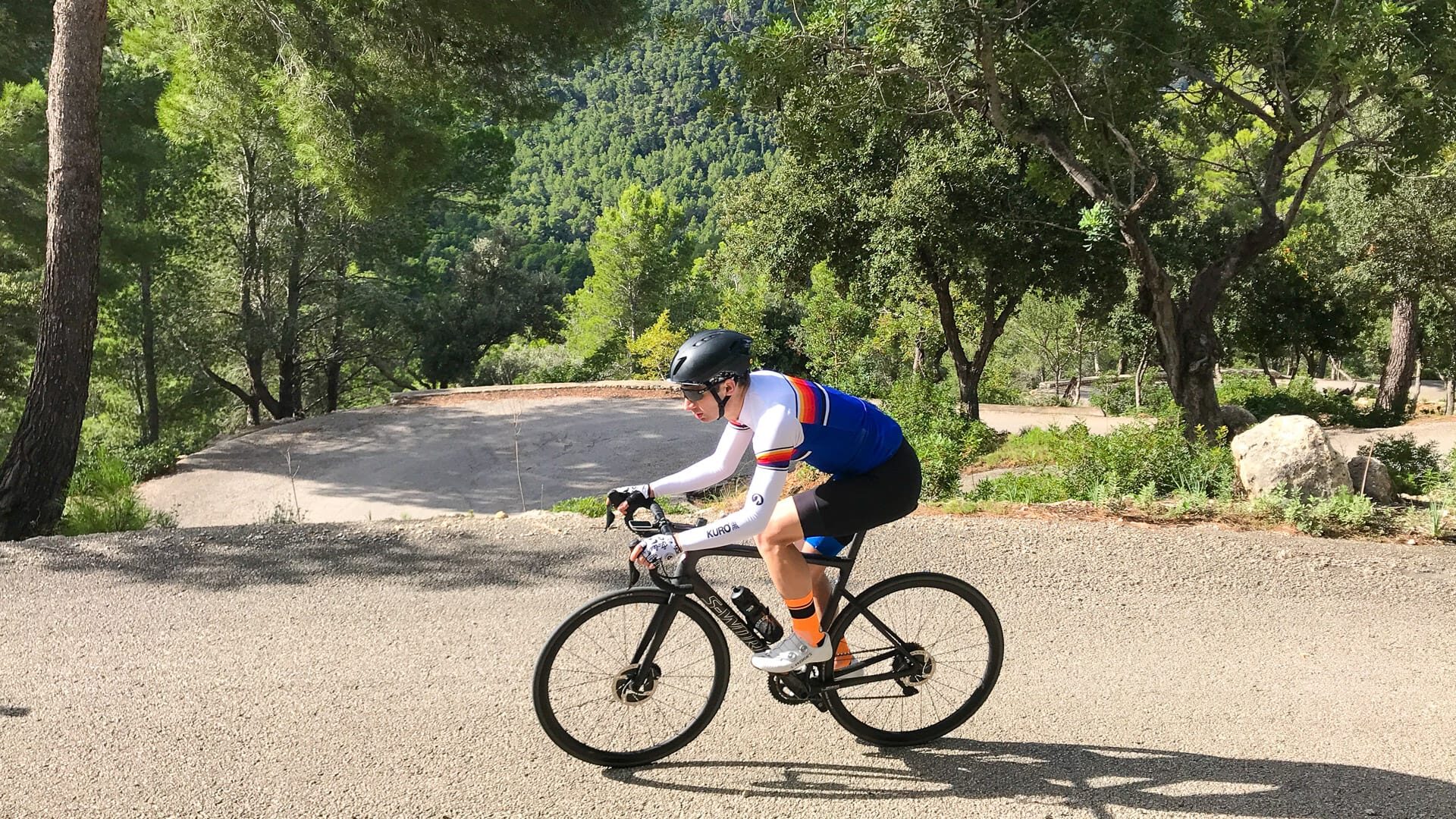
If you’re heading to Mallorca, chances are you’ve got the famous Mallorca cycling climbs on your must-do list.
But what do you do once you’ve ridden those? Or if you’re someone that prefers quiet roads to roads full of cyclists all checking off the same cycling climbs?
In this article we share insights on riding Mallorca’s most famous climbs as well as some of which you may not have heard of.
Read on to discover the best cycling climbs in Mallorca, from the popular ‘must-do’ climbs like Sa Calobra and Coll de Soller, to lesser-known climbing gems…
Clare Dewey is a cyclist with a passion for travel. She set up epicroadrides.com in 2018 to help make it easy for cyclists to explore the world by bike. Today her mission is still inspiring cyclists to discover new places on two wheels - and doing what she can to make sure they have the best possible time while they're there. Clare has visited 50+ destinations around the world, many of them by bike.
Want to connect with Clare? Find her over on LinkedIn.
What are Mallorca’s most famous cycling climbs?
As a cycling holiday destination, Mallorca is often at the forefront of every cyclist’s mind when it comes to riding. This Spanish island hosts a variety of cycling routes, from flat coastal rides and rolling interior rides, to more challenging mountain climbs.
You will also find some of the most famous climbs in the world in Mallorca. Many cyclists visit to take-on its bucket list climbs, or follow the professionals on their pre-season training camps.
So, if this is your first time cycling in Mallorca, here are five of the most famous climbs that every cyclist should tackle…
1. Sa Calobra (Coll dels Reis)
Vital statistics
| Length | 9.5 km |
|---|---|
| Height at start | 65m |
| Height at finish | 721m |
| Total elevation gain | 670m |
Where is it?
Sa Calobra enjoys an isolated location within the heart of the Escorca region of the Tramuntana mountains. This means that you will have to cycle up into the higher part of the mountains to gain access to this climb.
What makes it one of the most famous climbs in Mallorca?
This is the most famous, and one of the most challenging, climbs on the island and attracts thousands of riders each year.
The Sa Calobra climb is officially known as the Coll dels Reis and boasts over 26 twisting hairpin bends and some of the most spectacular views of the island.
Sa Calobra is a small port at sea level, so this is an out-and-back climb. This means the fantastic 9.5 kilometre descent you enjoyed initially ends up turning into a challenging climb back to the top!
Find out more
Take a look at our ride guide featuring GPX + tips.
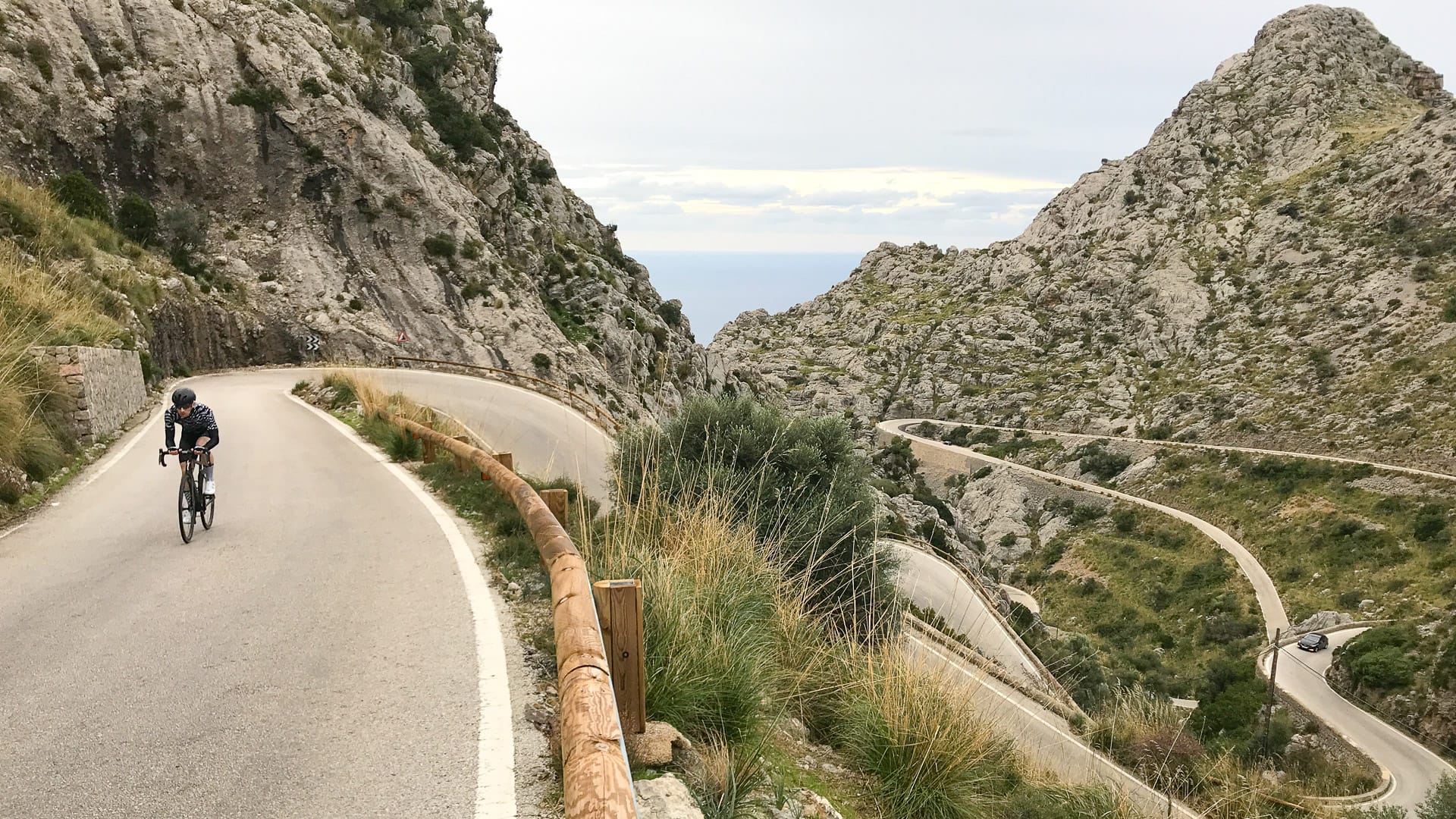
Sa Calobra climb
2. Coll de Soller
Vital statistics
| Length | 5 km |
|---|---|
| Height at start | 39m |
| Height at finish | 503m |
| Total elevation gain | 420m |
NB: Stats based on climbing this up the south side
Where is it?
Col de Soller is found approximately 23 kilometres north of Palma and 65 kilometres southwest of Port de Pollenca. The picture postcard Col de Soller climb is within Mallorca’s Serra de Tarmuntana region in the east of the island.
What makes it one of the most famous climbs in Mallorca?
Before 1997, the only direct access between Palma and the popular town of Soller was over the Coll de Soller. Now a tunnel takes this traffic, leaving cyclists to enjoy a climb that is mostly traffic-free.
There are two sides you can climb from, one from the lush, forested and shadowed northern side from Soller town, or alternatively you can choose to cycle the sun-kissed south side from Bunyola / Palma. Either way, you will enjoy a nice steady gradient and multiple switchbacks. This is a classic ride in Mallorca that is a real crowd-pleaser!
More information
Take a look at our ride guide featuring GPX + tips.
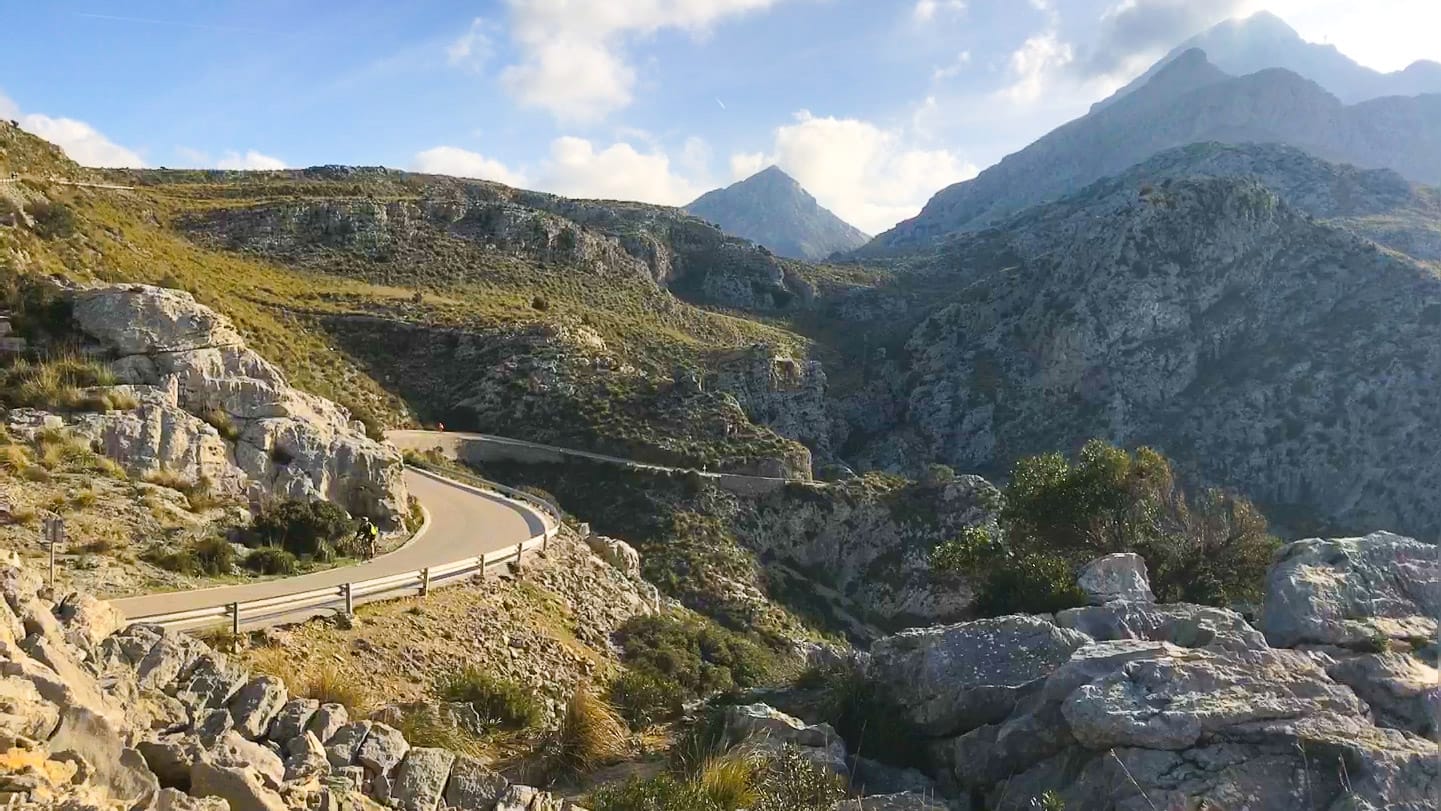
Cycling Coll de Soller
3. Puig Major
Vital statistics
| Length | 14 km |
|---|---|
| Average gradient | 6% |
| Height at start | 64m |
| Height at finish | 850m |
| Total elevation gained | 786m |
Where is it?
Puig Major is another climb located in Mallorca’s Serra de Tarmuntana region.
What makes it one of the most famous climbs in Mallorca?
Puig Major is, at 1,445 metres, the highest peak in all of the Balearic Islands. However, the highest point you can reach by road bicycle is 850 metres, found at the summit of the 14.3 kilometre climb from Soller, named Tunel de Monnaber. This climb is officially the longest climb in Mallorca with over 800 metres of elevation gain, on a wide, open road, with lovely, smooth tarmac.
As you climb, you have a clear view of the Puig Major mountain in front of you most of the way! The sense of achievement is when you reach the ‘Mirador du Tunnel’ is well worth the effort up, with a beautiful look-out spot over Soller town and the Mediterranean Sea.
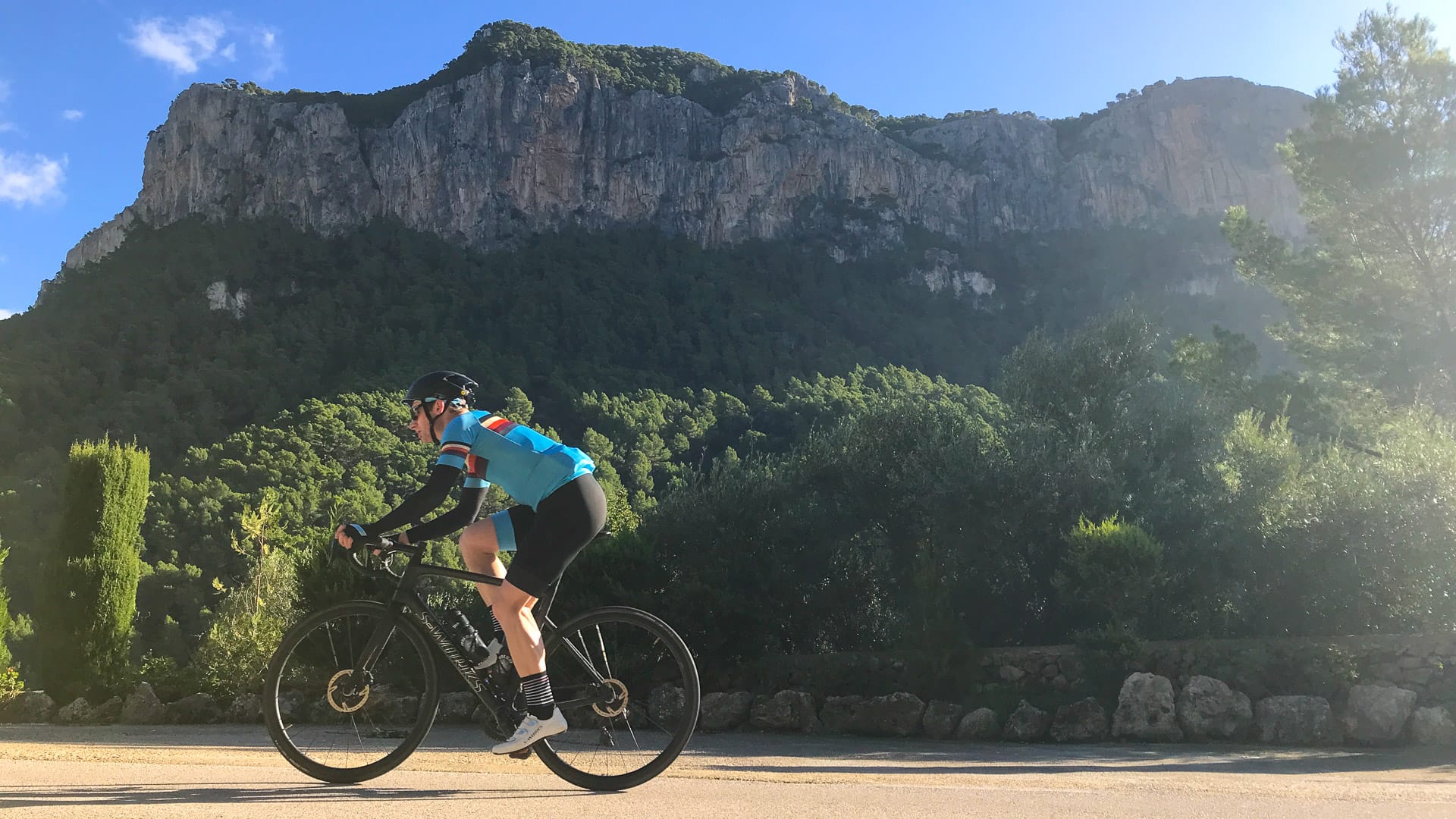
Cycling Puig Major loop
4. Coll de sa Batalla
Vital statistics
| Length | 8 km |
|---|---|
| Average gradient | 5% |
| Height at start | 0m |
| Height at finish | 576m |
| Total elevation gained | 576m |
Where is it?
Located in the far north of the island, starting from the village of Caimari, in the foothills of the Tramuntana range.
What makes it one of the most famous climbs in Mallorca?
Col de sa Batalla is a beautiful climb that seems to have it all: perfectly smooth tarmac with changes in scenery from lush forests, mountain rock faces and open panoramic views of the island.
Col de sa Batalla has an average gradient of 5%, which makes it an enjoyable climb that is accessible to most cyclists wanting to enter the Tramuntana mountain range. There is a café conveniently situated at the summit of the climb, providing extra motivation to reach the top. It’s the ideal regrouping point for you and your cycling buddies
More information
Take a look at our ride guide featuring GPX + tips.
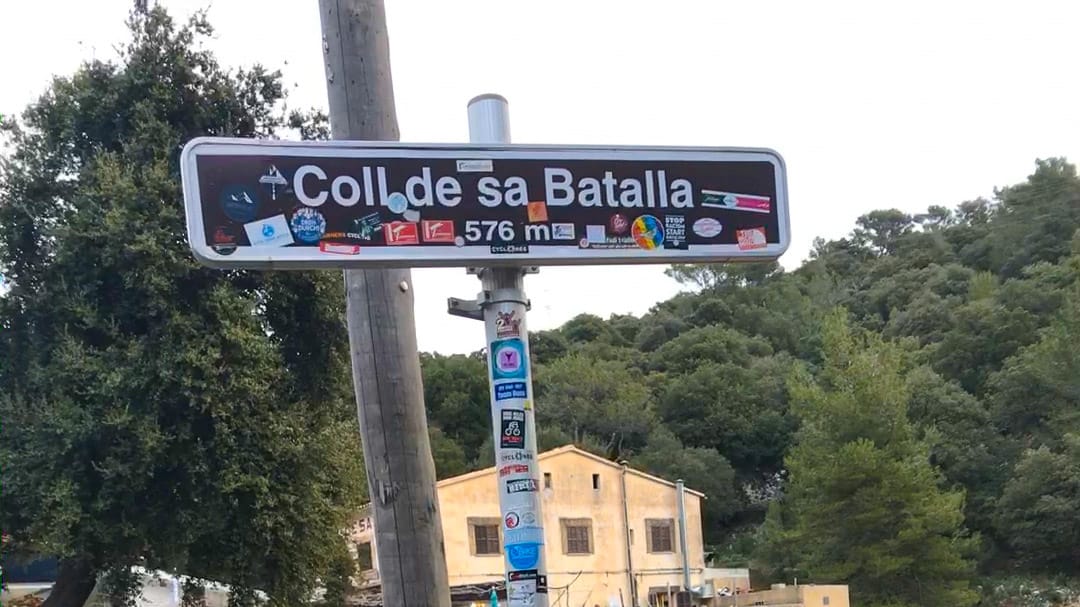
Coll de sa Batalla signage
5. Coll de Femenia
| Length | 19 km |
|---|---|
| Height at start | 0m |
| Height at finish | 537m |
| Total elevation gained | 537m |
Where is it?
Another climb is located in the north of Mallorca. It is particularly well-known to those who base themselves in the Port de Pollenca region as it offers access to the Tramuntana mountain range on the MA-10 towards Soller and Sa Calobra.
What makes it one of the most famous climbs in Mallorca?
Coll de Femenia is famous for its use in both the Ironman 70.3 and Mallorca312 sportive. It is also usually the first climb cycled by those staying in the north part of the island. Starting from Pollença, the Coll de Femenia climb has an undulating gradient and open views of the surrounding mountain peaks.
While riding, there are moments where you question where the finish is, as there are a few flatter sections. But don’t be fooled, keep riding until you reach the official sign of the ‘Coll de Femenia’. This summit exposes a magnificent view of Puig Major (1,445 metres) and the surrounding beauty of the Tramuntana mountains.
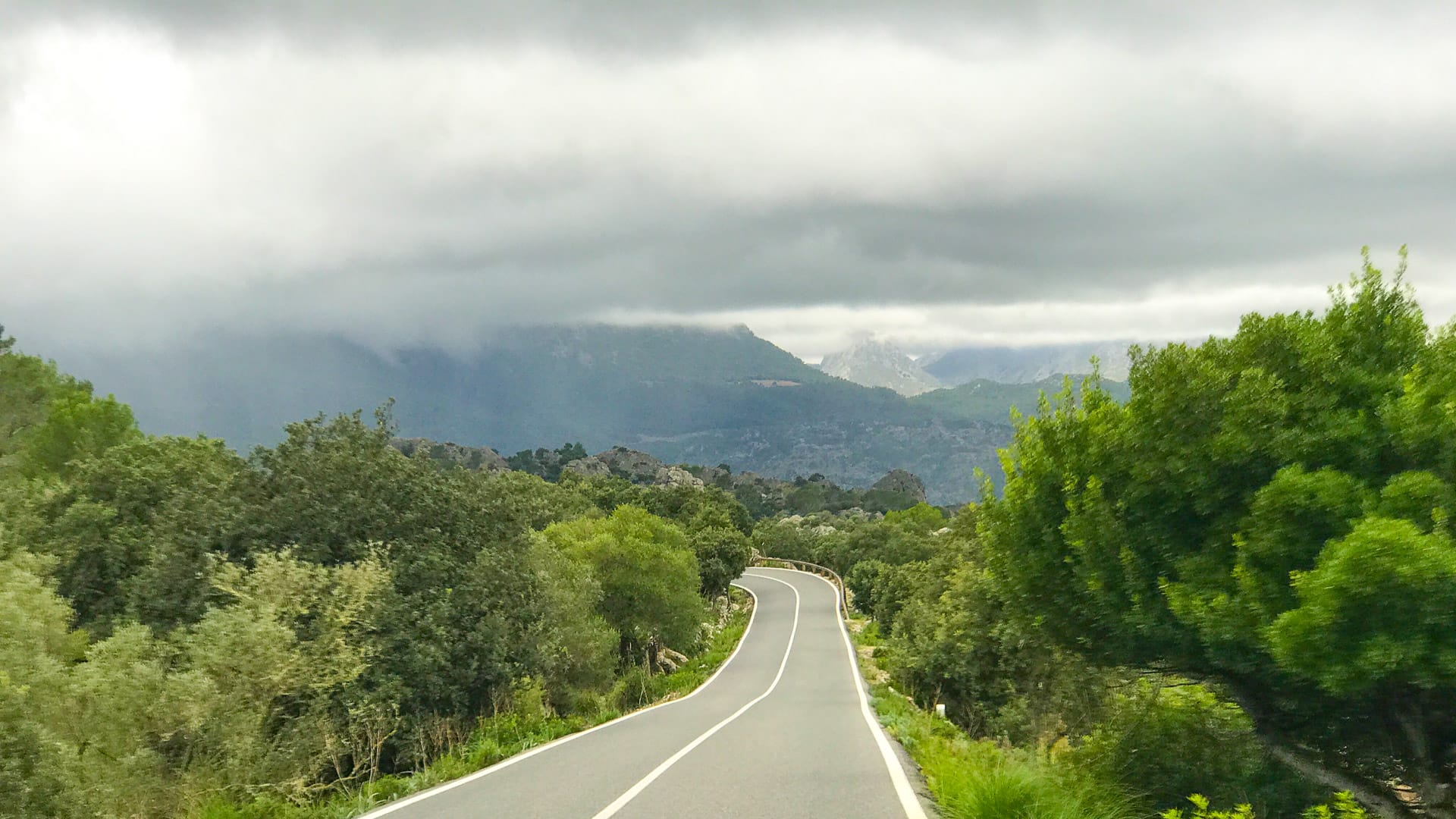
Road to the Col de Femenia, Mallorca
Some other favourite Mallorca cycling climbs (that you may not have heard of)
Check out these if you want to go a little more off the beaten track!
6. Atalaya de Albercutx
Vital statistics
| Length | 2.3 km |
|---|---|
| Average gradient | 6% |
| Height at start | 205m |
| Height at finish | 353m |
| Total elevation gain | 148m |
Where is it?
Cap de Formentor is one of Mallorca’s most famous climbs. Make sure you don’t miss this diversion off the main route!
As you leave Puerto Pollensa and ride up the first section of Formentor, the crowds cycling Mallorca usually continue on to the iconic lighthouse and miss a real gem.
After the first part of the climb, where it flattens off, there’s a right turn off the main road which leads to a rough road surface and eventually a track, but it is worth the effort.
What makes it one of the best climbs in Mallorca?
The summit sits at 380 metres above sea level and forms part of the system of fortified defence towers that were built on the island between the late sixteenth and early seventeenth century. This was one of the main lookout points to ward off the threat of pirates attempting to come ashore and loot nearby villages.
There are fabulous views from the watchtower, including the Formentor headland, the islet of Colomer, the Bay of Pollença and the Sierra del Cavall Bernat.
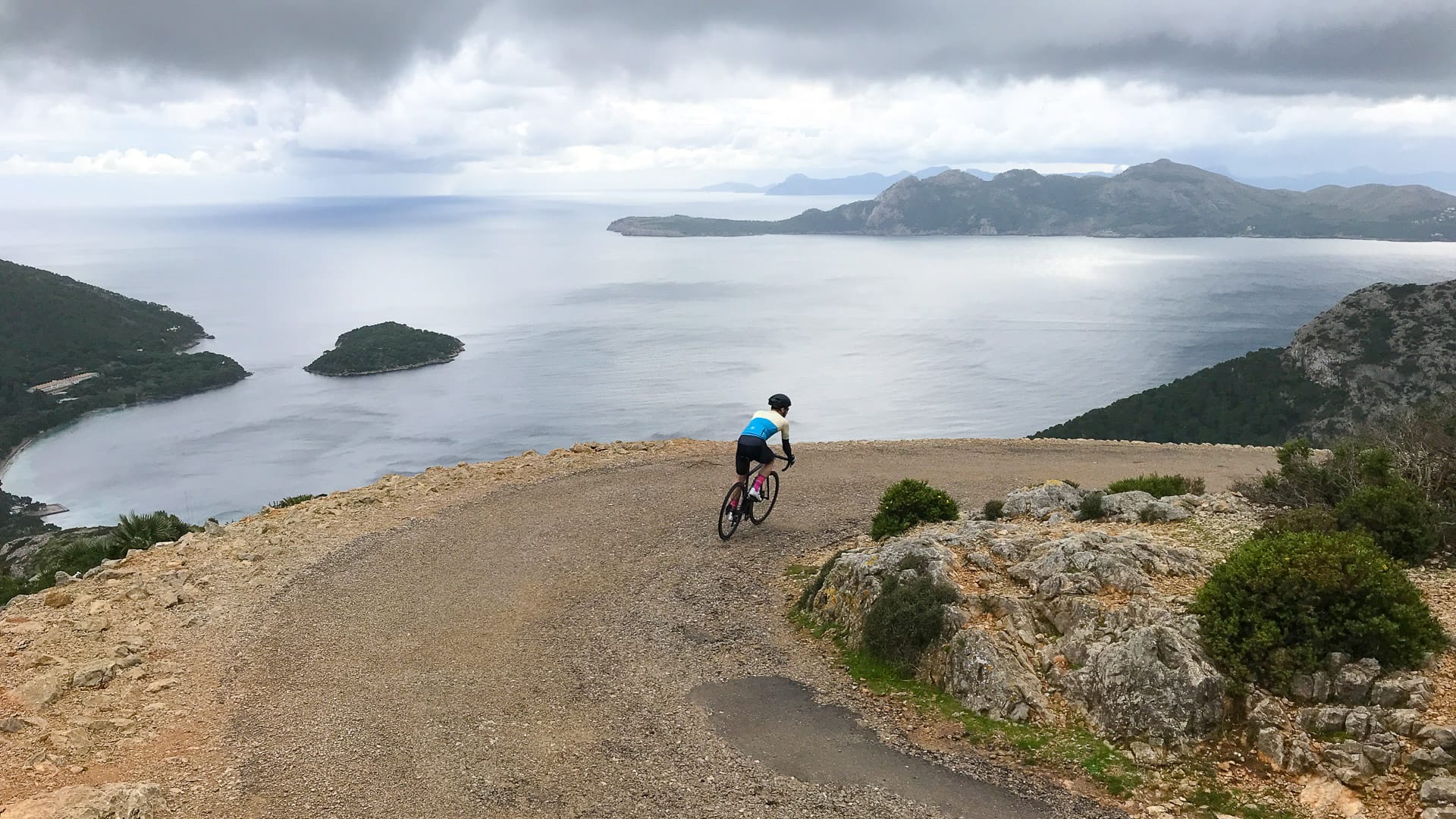
The kind of view you can expect from Atalaya de Albercutx (AKA the Pepperpot)
7. Coll d’Honor
Vital statistics
| Length | 5.4 km |
|---|---|
| Average gradient | 5.9% |
| Height at start | 200 m |
| Height at finish | 550 m |
| Total elevation gain | 350 m |
Where is it?
Coll d’Honor is the more difficult south-western climb up to the Orient valley. It starts after Bunyola, following the Ma-2100 to Orient. The gradient stays above 5% most of the time and reaches 10% on a few occasions. The last few hundred meters of Coll d’Honor has tight switchbacks that are tough and can really catch you unprepared, just when you are thinking that the end of the climb must be near.
What makes it one of the best climbs in Mallorca?
We love this Mallorca cycling climb because of the amazing hanging valley between the summit and the UNESCO World Heritage site of Orient village. Although this is a known cycling route in Mallorca, we include it in our list because it feels like you are being shown a secret place of hidden beauty midway along the Tramuntana mountain range.
You also get to experience one of the fastest and most enjoyable descents on the island as you drop down from Orient towards Alaro.
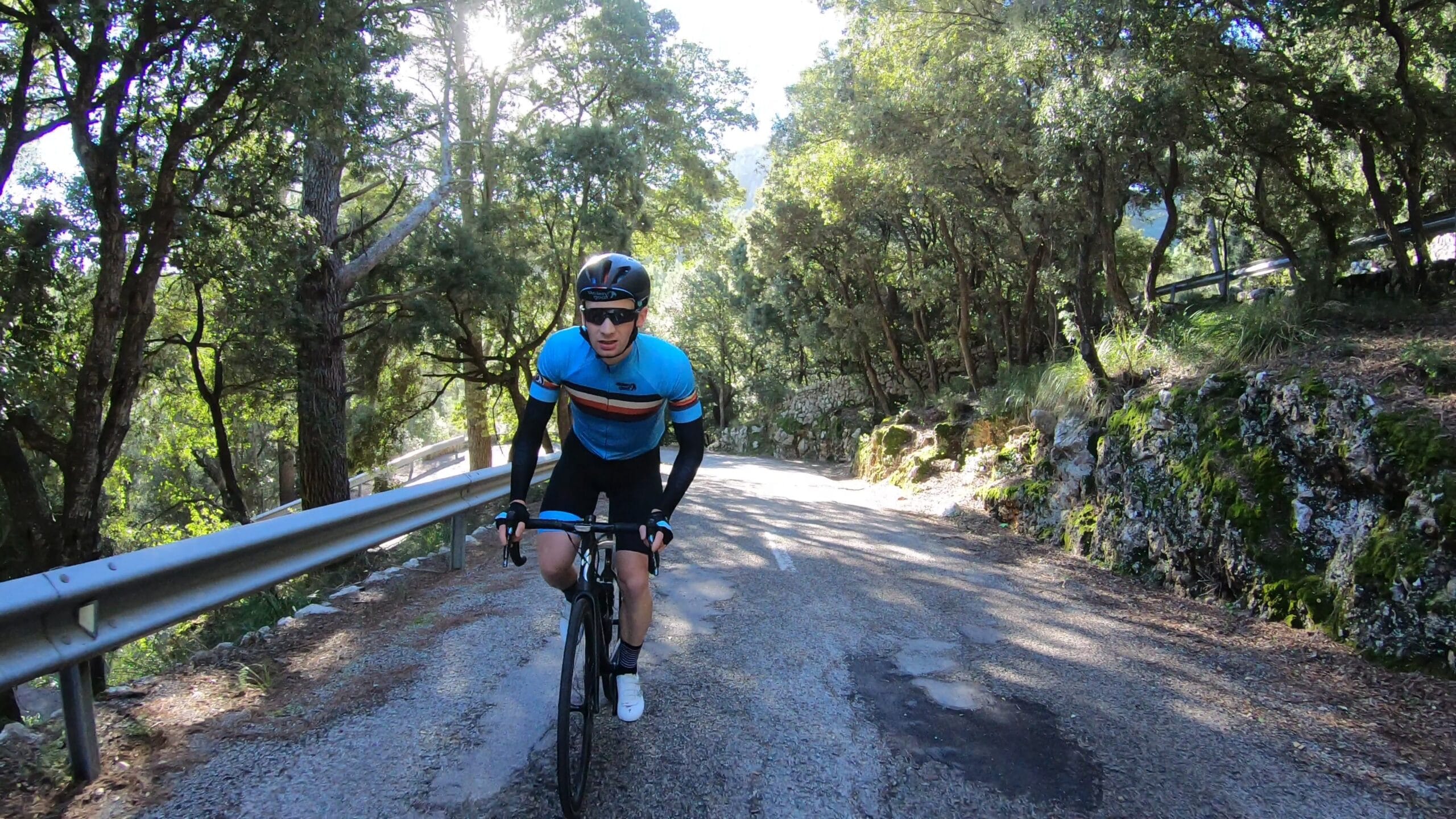
Coll d’Honor bend
8. San Salvador Monastery
Vital statistics
| Length | 5 km |
|---|---|
| Average gradient | 7% |
| Height at start | 100 m |
| Height at finish | 510 m |
| Total elevation gain | 410 m |
Where is it?
Located in the eastern part of Mallorca, the cycling climb to San Salvador Monastery is a rather steep climb with gradients up to 15%. It starts on the Ma-4011 road, near Felanitx, and finishes at the mountain top which thankfully has a very welcome café.
What makes it one of the best climbs in Mallorca?
Of all the monastery cycling climbs Mallorca has, San Salvador is the toughest. Although it’s known by cyclists, very often it’s not part of cyclists’ riding schedules as it takes people a long way from the more common cycling bases in the northeast of the island.
It’s a shame many people miss this ride out! It’s one of the most challenging monastery rides in Mallorca, has some great hairpin bends and the stunning views at the top make you feel like you’re on top of the world.
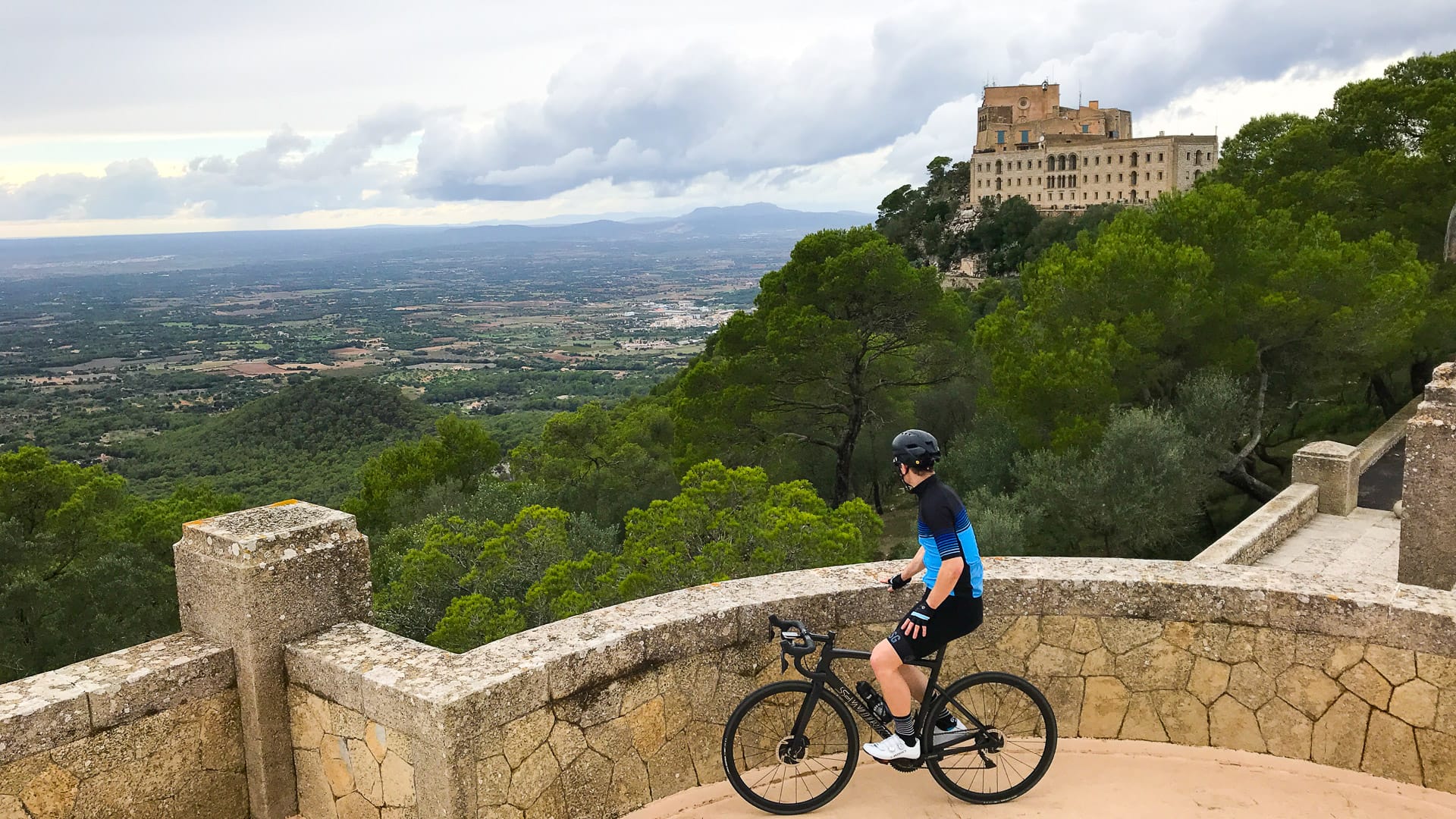
View from the top of Mallorca’s San Salvador cycling climb
9. Puig de Randa – Cura monastery
Vital statistics
| Length | 5.5 km |
|---|---|
| Average gradient | 6% |
| Height at start | 175 m |
| Height at finish | 534 m |
| Total elevation gain | 359 m |
Where is it?
The Puig de Randa climb sits all alone in the middle of the island and can be seen from miles away, instantly recognisable by its steep sides and long flat top.
From the lesser known south side, the first part of the climb is quite difficult with bend after bend and testing gradient. Then after Santuari de Nostra Senyora de Gràcia, the road merges with the route of the main climb from Randa.
What makes it one of the best climbs in Mallorca?
On a clear day this climb provides the most spectacular view to the north, of the full length of the Tramuntana range. There’s also a monastery to marvel at both for its architecture and location.
Cura Monastery is a commonly visited climb, but this climb from the south side is rarely done. It provides an interesting and challenging climb before it joins the main route to continue the climb to the summit.
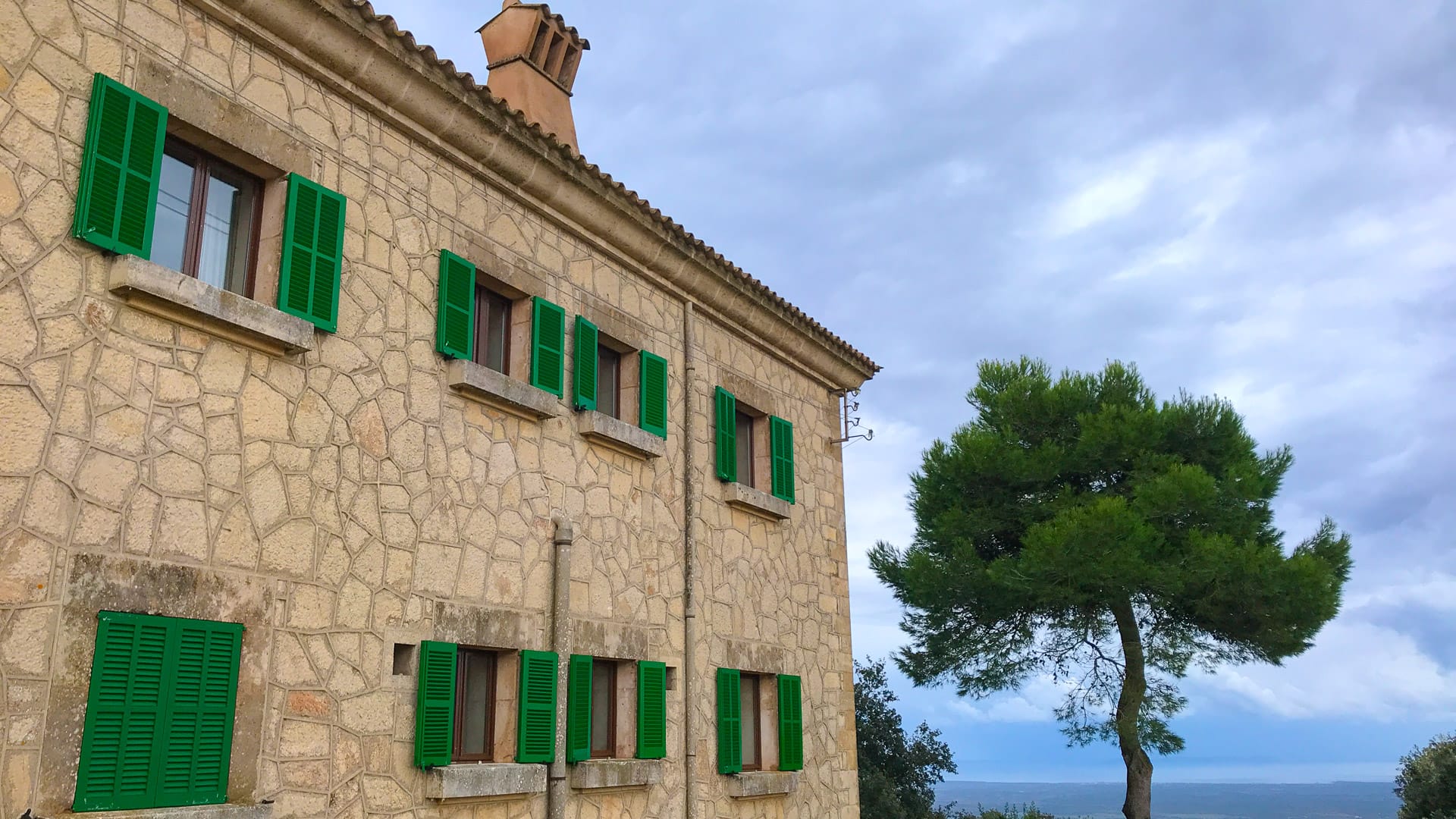
Monastery de Cura Randa and hotel
10. Ermita de Betlem
Vital statistics
| Length | 2.5 km |
|---|---|
| Average gradient | 5.7% |
| Height at start | 210 m |
| Height at finish | 372 m |
| Total elevation gain | 162 m |
Note: these figures are taken from the turn off from the main road to the top of the climb. GPS file here.
Where is it?
This fabulous Mallorca cycling climb begins a few kilometres north of the town of Arta, a lovely medieval town situated in the east of the island.
What makes it one of the best climbs in Mallorca?
It’s another hidden gem in an area of the island that’s rarely visited by cyclists.
This piece of road has a taste of the most beautiful places of Mallorca. It offers epic views, in a similar way to Formentor, the twisting turning roads of Sa Calobra and the quiet peace and tranquillity of the Coll d’Honor.
While climbing, the views of the local surroundings open up as the switchbacks go on. You then reach the summit with jaw dropping views, especially towards the northeast and Alcudia bay.
From here you descend to the Ermita de Betlem, a 200 year old Monastery, where you can take a short break before heading back up and over the switchbacks towards Arta once again.
A must visit if you want to try something different.
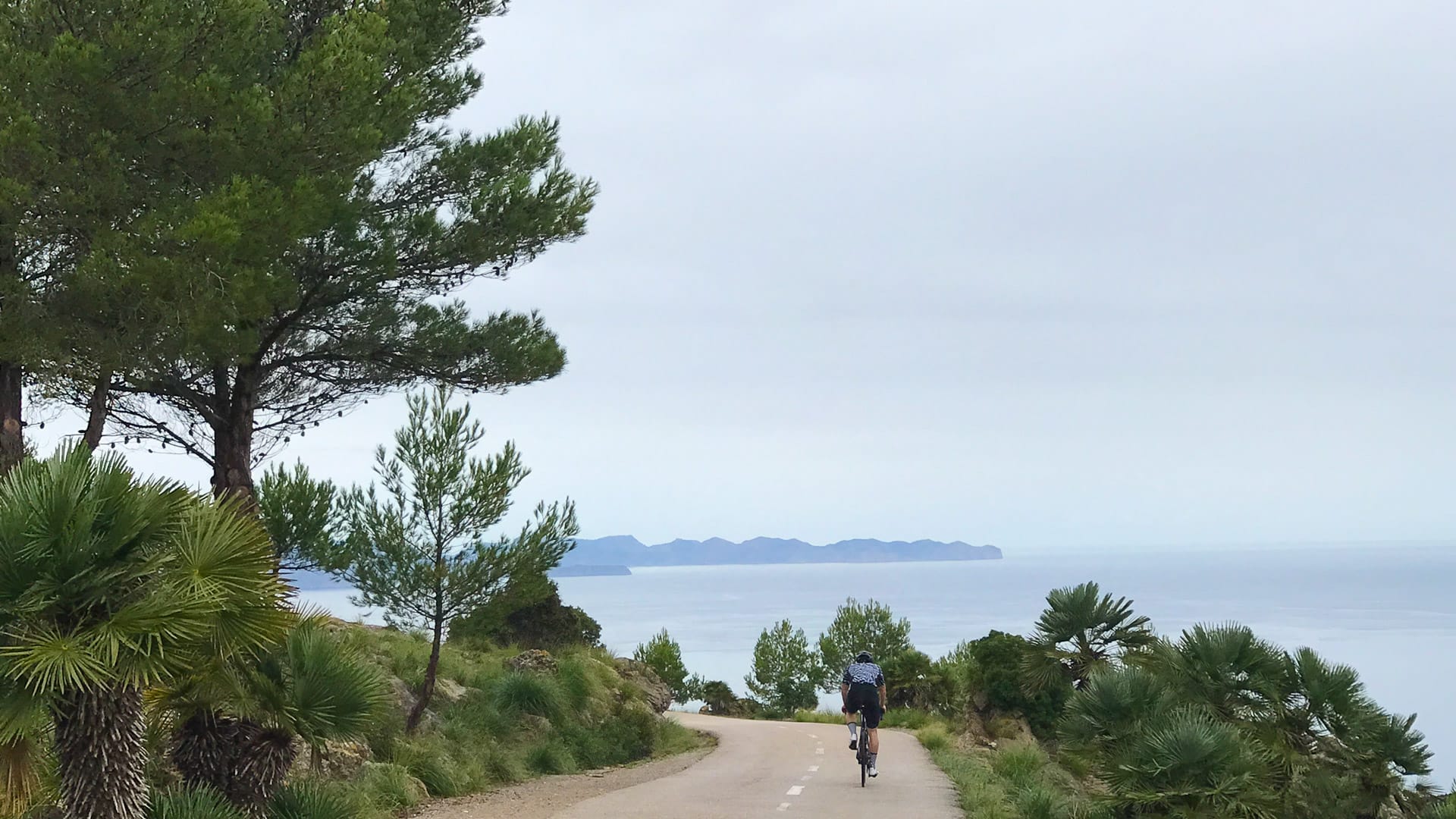
Descending down towards Ermita de Betlem
What’s next?
Don’t miss all our other fabulous articles about cycling in Mallorca:
- Ultimate guide to cycling Mallorca
- Mallorca 312 and training tips for Mallorca 312
- Best cycling routes in Mallorca
- Where to stay in Mallorca
- Tips for cycling in Mallorca
Looking for more Spanish cycling inspiration? Don’t miss our destination hub for Spain.
Please support Epic Road Rides
A huge amount of time and effort goes into the article you’ve just read, all with the aim of helping you!
If you found what you’ve read useful, I’d really appreciate it if you dropped something in the tip jar here.
It’s a way you can say thank you and help us carry on creating top quality content with no annoying ads and no pay wall.
Looking for an organised cycling trip?
If you want someone to help you plan and book your cycling holiday, fill out this form. We aren’t a tour operator/agent but we work with lots of people who are and will do our best to put you in touch with someone that can help (within 24 hours where possible)!Clare Dewey is a cyclist with a passion for travel. She set up epicroadrides.com in 2018 to help make it easy for cyclists to explore the world by bike. Today her mission is still inspiring cyclists to discover new places on two wheels - and doing what she can to make sure they have the best possible time while they're there. Clare has visited 50+ destinations around the world, many of them by bike.
Want to connect with Clare? Find her over on LinkedIn.
All metrics in this article are approximate.
Last Reviewed: 25 November 2025
First Published: 07 November 2023
The contents of this website are provided for general information purposes only. It is not intended to amount to advice and you should not rely on it. You should carry out your own due diligence and risk assessments and take professional advice. Views expressed by interviewees or other users of this website do not necessarily represent our views. We make no representations, warranties or guarantees, whether express or implied, that the content on our website is accurate, complete or up to date. If you use any information or content on this website, download from, or otherwise obtain content or services through our website, it is entirely at your own discretion and risk. Epic Road Rides Ltd disclaims all liability and responsibility arising from any reliance placed on the information and content on this website. Find out more here.
Comments