
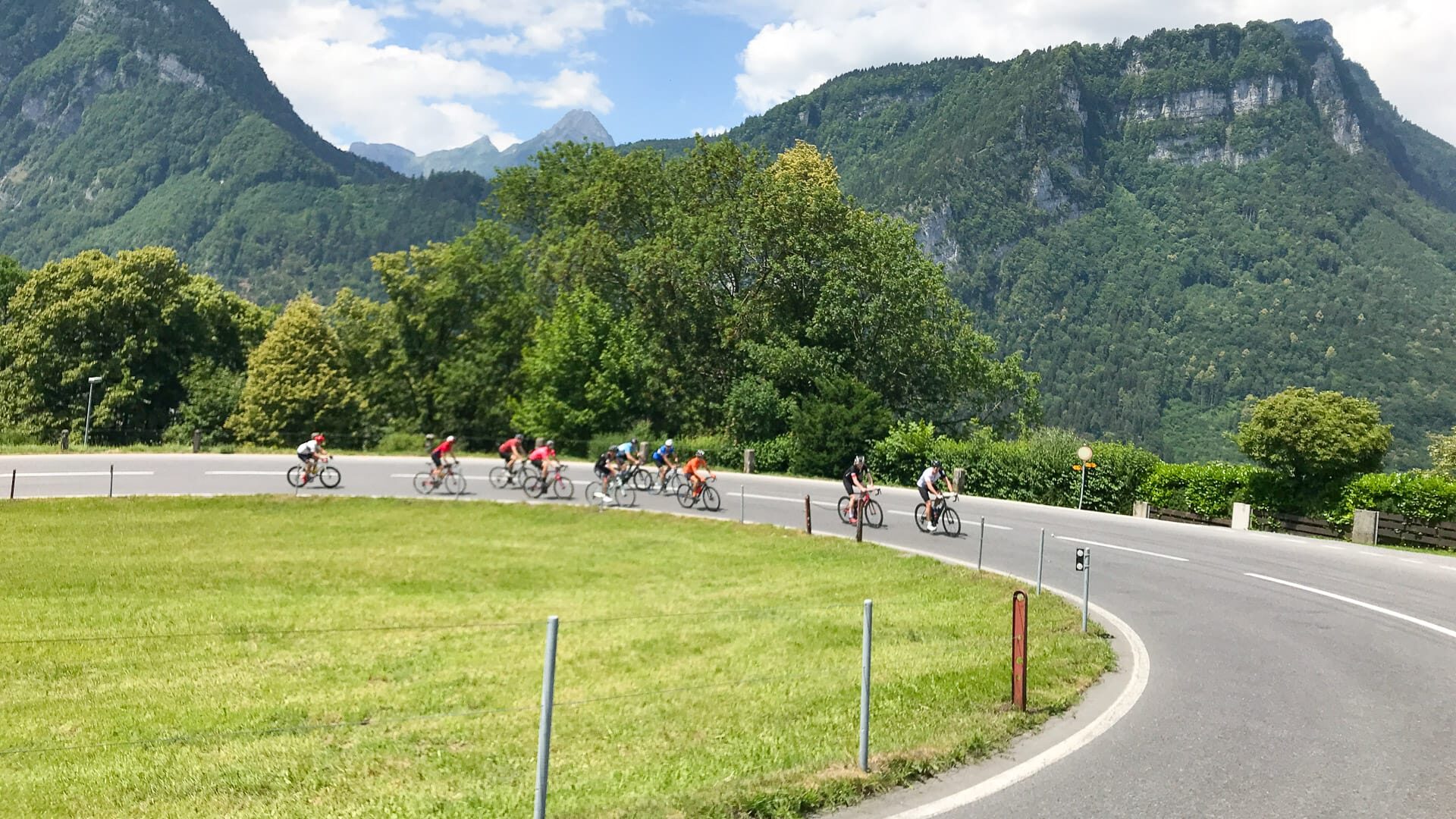
Ask any experienced cyclist and they’ll confirm – preparations for good road cycling safety need to start long before you roll into the start pen of a mountain gran fondo.
A well-prepared bike, experience of riding around others and a realistic pacing and fuelling plan will all help you manage a demanding day in the mountains. Safe cycling in this kind of event can’t be guaranteed, but good road safety habits as well as fitness will help you: reading the road ahead, anticipating other riders and adjusting to changing conditions.
We asked experienced gran fondo rider Simon Worsley to share the lessons he has learnt from riding La Marmotte eight times and other major events. His firsthand tips cover bike checks, group riding, descending, pacing, fuelling, extreme heat and what to do when something goes wrong. Simon shares his detailed route, nutrition and training advice in our La Marmotte Granfondo guide.
If you are new to mass-participation cycling, start with our guide explaining what a gran fondo or sportive is.
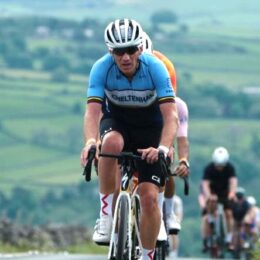
Simon Worsley’s interest in road cycling began in 1989, when he watched Greg LeMond beat Laurent Fignon by eight seconds at the Tour de France. Initially focused on the Tour, by the mid-1990s he was also following the Spring Classics and Grand Tours.
At this stage, Simon was still an occasional cyclist himself. Road cycling was a relatively niche sport in the UK, and his biggest annual ride was the British Heart Foundation’s 40-mile Cotswold charity ride.
Simon began cycling seriously in 2011 after his rugby days came to a premature end in his mid-30s. He joined Cheltenham and County Cycling Club that year and started riding with the club every Saturday and Sunday. He completed his first Marmotte in 2012.
In 2018, Simon started racing and gained his Category 3 racing licence after picking up points in Masters and Category 3 and 4 races at Maindy and Odd Down. He also competed in several road races in 2019. More recently, his racing has mainly been at Castle Combe circuit races during the summer, with occasional appearances in Cheltenham and County’s annual road race.
Simon typically rides around 10,000 kilometres each year and aims to complete the Marmotte alongside one or two other cycling trips. In recent years, he has completed the Gran Fondo versions of all the Monuments except Paris-Roubaix, as well as Strade Bianche. His cycling trips have taken him to the Alps, Dolomites, Mallorca, Girona, Tenerife and Calpe.
He is also working towards completing the top 100 UK climbs, based on Simon Warren’s book, as well as ticking off as many of the top 100 Tour de France, Italian, Spanish and Belgian climbs as possible. So far, he has ridden 11 of the 100 UK climbs, as well as 10 in France, nine in Italy, 15 in Spain and 19 in Belgium.
(photo credit: Struggle Events)
Always check current travel information and advice. For visitors from the UK, the UK government travel information pages are here.
1. Why is road cycling safety so important at a mountain gran fondo?
Mountain gran fondos are exciting but they are also risky. They often bring thousands of cyclists together on long climbs, fast descents and roads that may remain open to traffic. Add heat, altitude and fatigue, and even an experienced rider has plenty to think about. On open sections, that also means watching road traffic, the road surface, traffic signs and large vehicles.
I have learnt that strong legs are only part of the picture. Staying alert, looking after your bike and managing your effort matter throughout the day. The scale of a mountain gran fondo means that small mistakes can become more serious when you add speed, fatigue, changing weather and thousands of other riders.
2. Do you think a mountain gran fondo is suitable for a newer cyclist?
Not every gran fondo presents the same challenge. Some offer shorter courses, modest gradients and staggered starts. Others combine very long distances with major climbs, technical descents and large groups of riders. You need to pick the gran fondo that’s appropriate for your level of fitness and experience.
La Marmotte sits firmly at the demanding end. It is well marshalled and organised, but I would not suggest it as a first event for someone who is still building confidence on the bike. You need to be comfortable climbing for long periods, descending on mountain roads and riding close to cyclists whose speed and experience may differ from yours.
My suggestion is to look beyond the headline distance before entering. I would check the elevation gain, altitude, likely weather, road closures, cut-off times and the technical nature of the descents.
Also consider how much group-riding experience you have; it’s very valuable, particularly when the field remains tightly packed, and a little nervous, early in the day. If you’re not comfortable riding close to other cyclists, consider getting more experience before your first event.
Health before entering
Fitness and riding experience are part of preparing for a mountain gran fondo, but your health matters too. If you have concerns about taking part, discuss the demands of the event with a qualified healthcare professional.
Cardiac Risk in the Young (CRY) provides information about cardiac health and offers screening for people aged 14–35. If you fall outside this age group, your doctor can advise on any concerns and whether an assessment would be appropriate.
If you are still choosing a challenge, our cycling challenges for beginners and ultimate cycling challenges offer more inspiration.
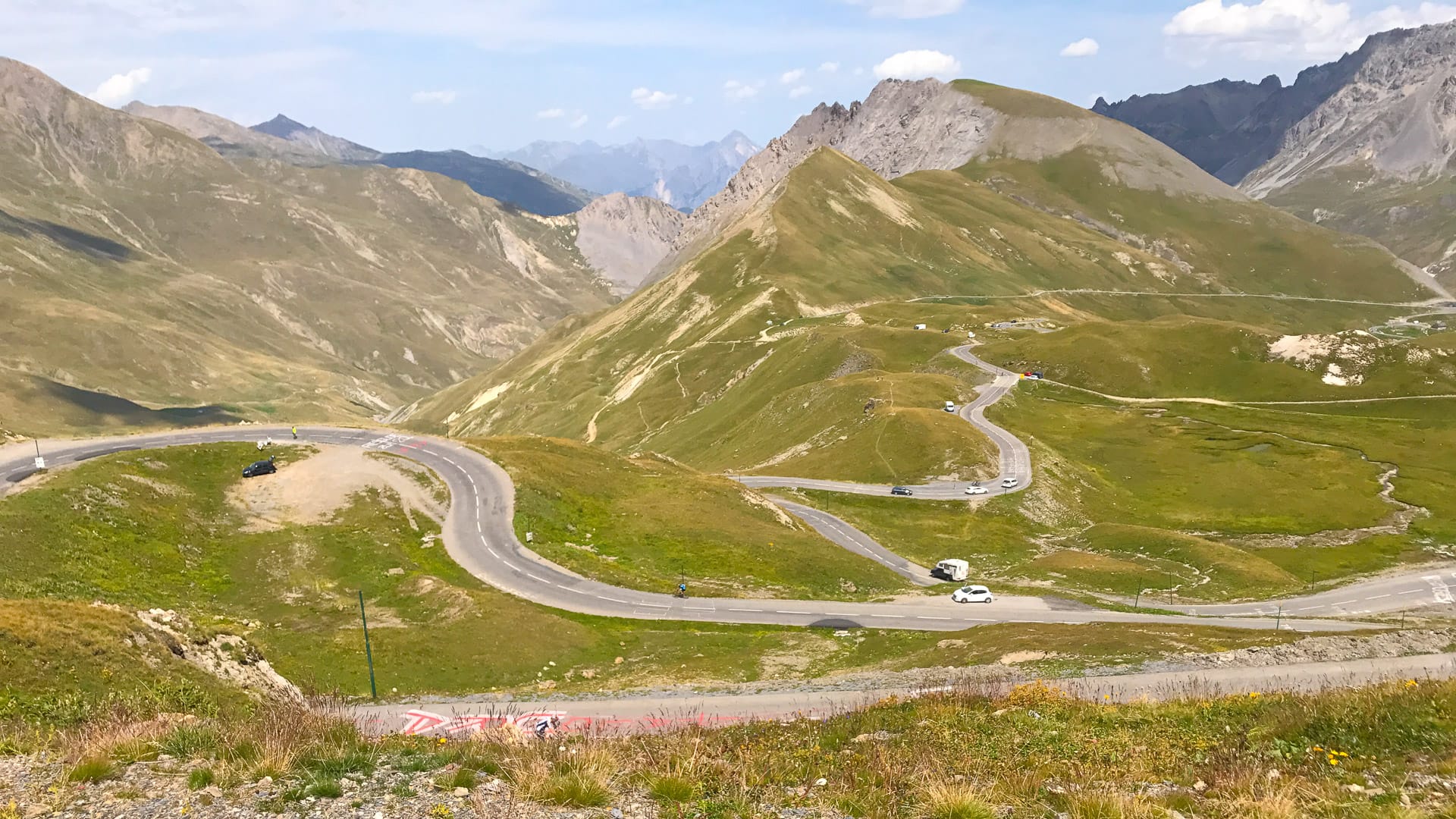
View north of Col du Galibier, towards Valloire
3. How do you prepare your bike for a mountain sportive?
Bike check pre travel
I arrange a full bike check before travelling, with particular attention to the brakes, tyres, wheels, drivetrain and bolts. I would not leave major servicing or unfamiliar component changes until the day before the event.
My pre-event bike safety check also covers what I may need before and after the timed route: a correctly fitted cycle helmet, bright or reflective clothing, and, if light levels make them necessary, bike lights. I check the local equipment rules before travelling, including any requirements for a front white light, rear light and pedal reflectors.
Check the organiser’s current requirements for helmets, lights and visibility clothing before travelling. Mountain routes can include poorly lit tunnels, so lights may be compulsory even during a daytime event. For La Marmotte, see the organiser’s equipment guidance for the edition you are entering.
Wheels and brakes
I also give wheel and brake choice particular thought when a route includes a long, steep descent. If you use rim brakes, make sure your wheel and brake-pad combination is manufacturer-approved and suitable for prolonged mountain braking. Aluminium brake tracks generally dissipate braking heat more effectively than full-carbon clincher rims, but equipment choice is only one part of safe descending.
Be self reliant
I carry the tools and spares I know how to use. Event assistance is valuable, but it may take time to arrive and cannot replace basic self-sufficiency. Basic bicycle maintenance skills also help me deal with simple problems without relying entirely on event support.
While I wouldn’t rely on a local shop for my pre-event safety check, they may be able to help if a last-minute problem appears. In Bourg d’Oisans, I have used the long-standing family-run Cycle Et Sports several times and found them quick and responsive. La Marmotte has also provided Mavic Neutral Service support at the event village and on the route.
4. How do you approach riding in a large group?
Large sportives inevitably see you riding in groups with other riders you don’t know. Sitting in with other riders can save energy, especially on exposed or gently rising roads, but it also reduces the space and time available to react. There can be some safety in numbers, but a bunch can also limit visibility and escape space.
Be predictable
I try to keep my movements predictable. I avoid overlapping the rear wheel of the rider ahead, leave room to respond and signal hazards to those behind.
Pass on signals
I also watch for calls and hand signals travelling back through the group, without following another rider blindly.
Consider road position
I also think carefully about road position, particularly when moving around another rider or preparing to overtake.
Before changing position, check what is happening ahead, alongside and behind you. Make any change gradually so riders around you have time to respond. Practise looking behind while keeping the bike travelling straight before riding in a large group.
Allow space when passing another cyclist, and avoid squeezing through narrow gaps or moving back in front of them too soon. On roads open to traffic, check for vehicles as well as cyclists. If there is not enough room to pass comfortably, wait.
For more on riding with others, see Cycling UK’s guide to riding in a group.
Tips for La Marmotte
At La Marmotte, the opening 10 kilometres towards the Col du Glandon can be busy. The Maurienne valley between the Glandon and Col du Télégraphe is another important group-riding section. It is around 20 kilometres, trends slightly uphill and is open to traffic. Finding a sensibly paced group here can conserve valuable energy. Traffic volumes can change quickly on open sections, particularly where traffic jams develop, so I never assume a group gives me protection from vehicles.
The valley also includes two sets of diagonal railway tracks. Riders near the front will often signal before the group changes its approach. Give yourself room and aim to cross rails with your wheels as close to a right angle as conditions allow. Sudden sideways movements inside a tightly packed group can create another hazard, so look ahead and move progressively.
A group can help you conserve energy, but its pace and riding should feel comfortable. There is no need to stay with riders who make you feel under pressure.
More information: Cycling UK publishes guidance on riding safely in a group.
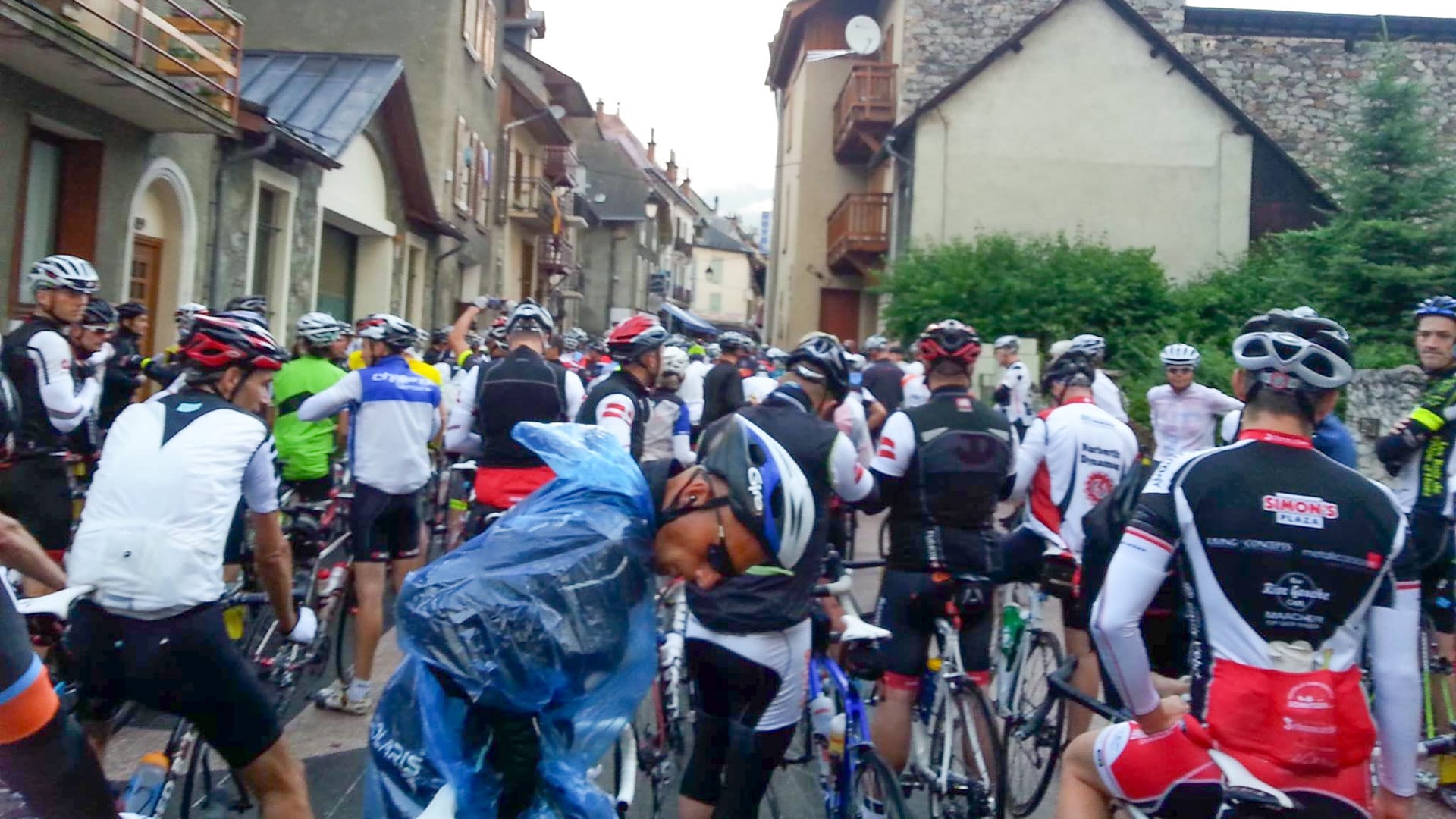
At the start of the Marmotte gran fondo (photo credit: Von Rees)
5. How do you approach a long mountain descent?
I try to relax my upper body, look through each bend and keep my line smooth. Assuming I’m riding in a country where you ride on the right, I stay to the right unless overtaking, while remaining alert to slower riders ahead and faster riders approaching from behind. I also keep my riding position stable through the bend rather than making sudden changes mid-corner.
I always leave a margin for the unexpected. A rider may brake suddenly, change line or misjudge a hairpin.
Stopping distance also increases as speed rises, and fatigue can affect concentration later in the ride.
I try to avoid dragging the brakes continuously for long periods. Controlled braking before bends gives the braking surfaces opportunities to cool, but speed and technique must remain within your ability and the conditions.
If you are not confident on mountain descents, I would practise before entering an event of this scale.
Tips for descents on La Marmotte
What is different about descending the Col du Glandon?
The Col du Glandon descent comes early in La Marmotte, when many riders are still close together. It is narrow, twisty and brings together cyclists with very different descending abilities. The descent is neutralised, so the time between the relevant timing points does not count towards your official result.
Neutralisation removes any reason to chase time, but it does not remove the risk. Accidents happen on this descent and medical support is positioned along the route. Stay calm, give other riders space and keep right if you are descending steadily.
What is the Galibier and Lautaret descent like?
Later in the day, the long descent from the Col du Galibier via the Col du Lautaret feels quite different. The road is wider, there are fewer tight hairpins and the field is usually more spread out. In my experience, it is the most enjoyable section of the route.
That does not mean switching off. The descent is long, speed builds quickly and traffic arrangements can vary. Check the event information and continue to ride within the distance you can see to be clear.
For a closer look at the area, see our guides to cycling the Col du Glandon and Croix de Fer, cycling the Col du Galibier and Lautaret and cycling Alpe d’Huez.
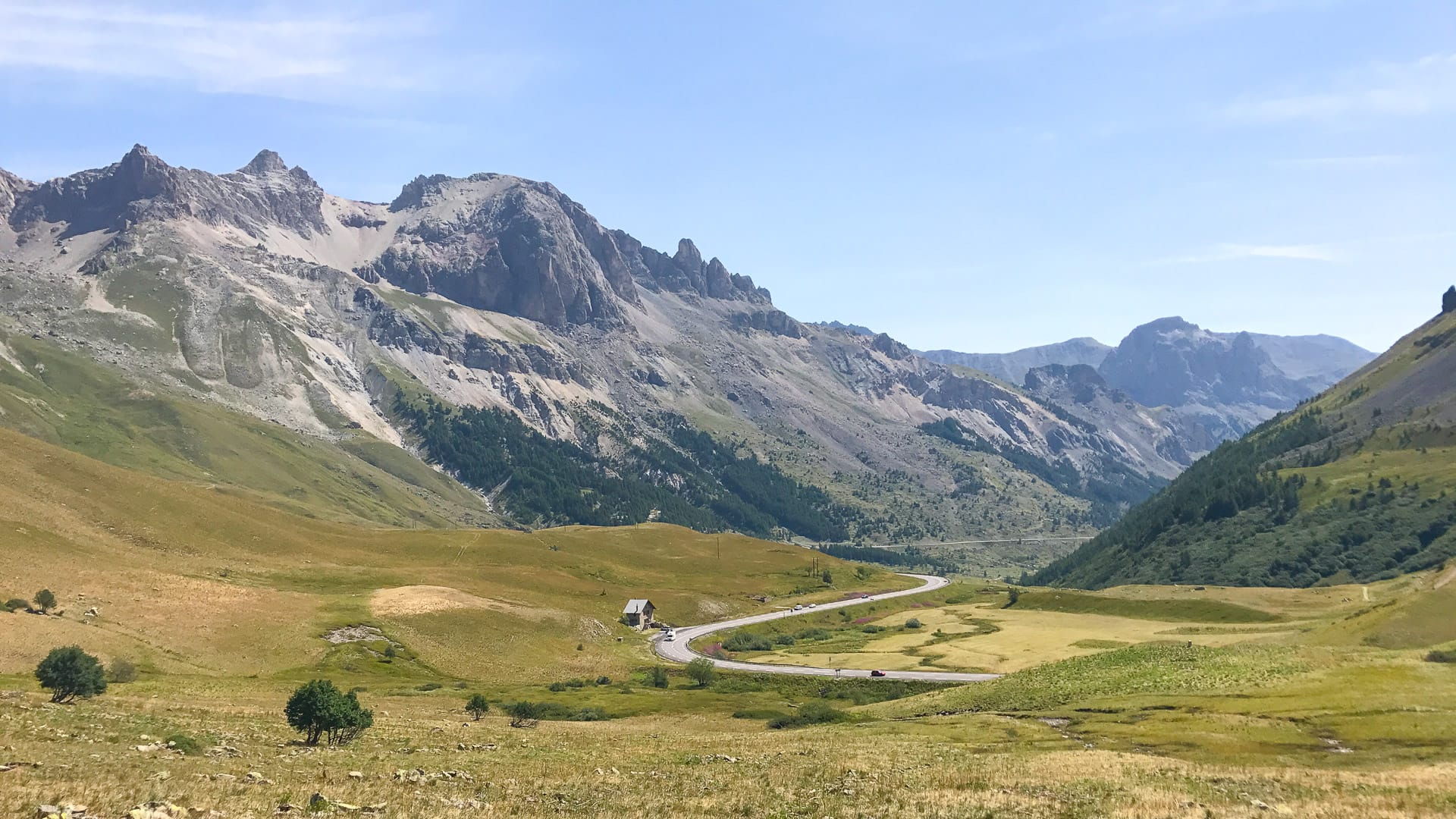
Between Col du Lautaret and Col du Galibier
6. What changes when you descend in wet conditions?
In wet conditions, I increase the gap to the rider ahead and allow more time to slow before a bend. I reduce speed before the hairpin rather than making abrupt inputs once committed to the turn.
Painted road markings and metal surfaces can become slippery. Where I cannot avoid them, I try to cross with the bike upright and the wheels travelling at 90 degrees to the relevant marking/surface.
Everything needs to become more measured in the wet, allowing for more room for error than on a dry road.
Tips for La Marmotte
Rain is not the usual Marmotte experience, but mountain weather can change quickly. I have encountered rain at two of my Marmotte participations. Most editions have been far hotter, but it is important to arrive ready for either situation.
7. How do you pace a mountain gran fondo?
The first climb can feel deceptively easy. The atmosphere is lively, the legs are fresh and other riders constantly tempt you to increase your pace. A mountain gran fondo is rarely won in the opening hour, but it can become much harder there.
Tips for La Marmotte
At La Marmotte, I try not to ride the Col du Glandon at threshold. For a trained rider pursuing a strong time, a working range around 75 to 80 per cent of functional threshold power (FTP) may be a useful personal reference. It is not a universal target. Your experience, cycle training, heat tolerance and goal for the day all matter.
Expect your available power to change as the day develops. On the Col du Galibier, the road climbs above 2,000 metres and altitude can make a familiar effort feel harder. On a hot day, you may notice the drop earlier, including on the Col du Télégraphe.
Our articles on cycling power meters, training for long-distance cycling and altitude training for cyclists explore these topics in more detail.
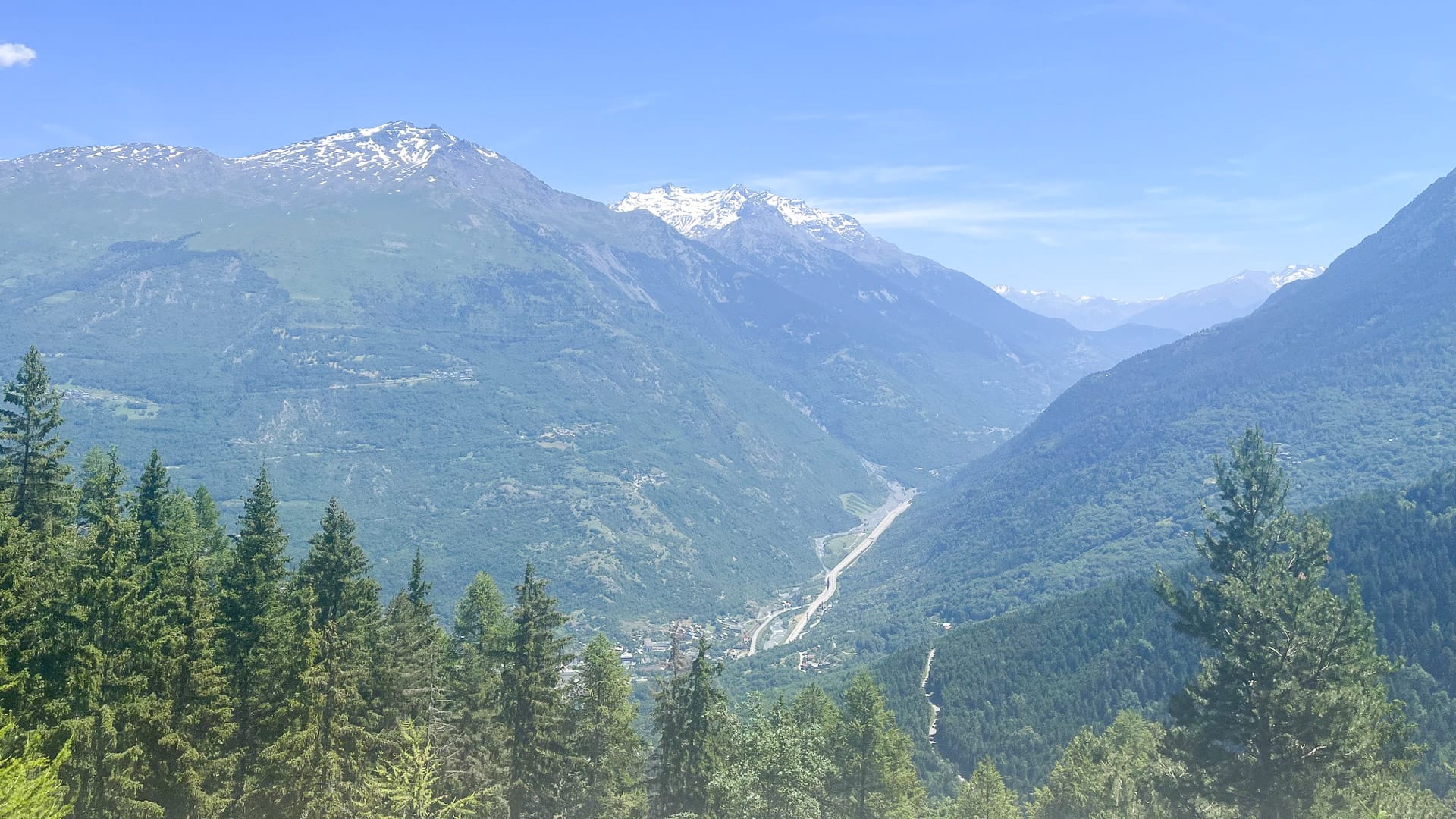
View from the top of the Col du Télégraphe (photo credit: Simon Worsley)
8. How do you manage nutrition and hydration?
Nutrition is one of the biggest changes in my own approach over recent years.
Practise your plan well before the event. Increasing carbohydrate intake suddenly can cause stomach problems, and heat may make eating and drinking more difficult. Use training rides to learn which foods, drinks and quantities you can tolerate while climbing.
I tend to carry my own bars and drink powders, then use feed stations mainly for water and energy-drink top-ups. That is partly because I am fussy about what I eat on the bike. Other riders may prefer more of the food supplied by the organiser.
Start fuelling early and keep taking on small amounts. Do not wait until the final climb to repair a deficit that has built across several hours.
Tips for La Marmotte
For hard rides such as La Marmotte, I have trained myself to take around 90 to 100 grams of carbohydrate per hour. This is my personal strategy, developed through training, rather than a target every cyclist should copy.
For assistance creating an individual plan, read our guide to what to eat when cycling long distances and our cycling snacks guide.
9. What have you learnt about heat and altitude?
I never underestimate how different the same event can feel in different weather. La Marmotte often takes place in temperatures of 30 to 35°C in the valleys and on Alpe d’Huez. Cooler editions can feel like completely different rides.
In 2026, I felt stronger and better fuelled than ever at the start. I used carbohydrates, electrolytes and salt tablets early, and I was on course for around eight hours and 30 minutes. When the temperature rose from the low 20s°C to above 30°C, my power dropped on the Col du Télégraphe. I eventually finished in nine hours and 13 minutes, 13 minutes outside my age-group gold target.
That experience was a reminder that fitness does not cancel the effects of heat. Riders who do not regularly train in hot conditions may find it especially difficult to keep eating, drinking and producing power as the temperature climbs.
Check the forecast at several elevations, not only in the valley. Carry the clothing required by the organiser and be prepared for a hot finish as well as cold or wet conditions high on the cols.
For more on preparing to ride at higher elevations, read our guide to altitude training for cyclists.

Col du Télégraphe, Valloire
10. How do you use the feed stations?
Feed stations can break up the day, but it helps to know what you will rely on before you arrive.
If time matters to you, make deliberate stops rather than drifting through every feed station. If finishing is the priority, take the time you need. In either case, check the organiser’s current feed plan and do not assume a particular product will be available.
Feed stations can also be busy, with riders slowing, stopping and rejoining the route. Allow time for your stop and follow any instructions from the organiser or marshals.
Tips for La Marmotte
At La Marmotte, the selection has included sweet and savoury food, energy products, water and energy drink. Extra water points may be added during hot weather.
The 2026 course included official feed stations in the neutral zone at the top of the Col du Glandon, at Valloire near the foot of the Col du Galibier, at the Galibier tunnel and near the foot of Alpe d’Huez. Water sprays were also available on the final climb.
La Grave can provide another useful stopping opportunity during the Galibier and Lautaret descent. I used the public water fountain and nearby toilet there in 2026, which meant I did not need to stop at the feed station before Alpe d’Huez.
11. What have you learnt from mechanical problems during an event?
My approach is to move out of the path of other riders if I can do so safely, alert a marshal and wait for event support when a problem is beyond what I can manage. I would not take a damaged bike onto a fast descent unless a qualified person had assessed it and confirmed the next step.
Tips for La Marmotte
In 2025, I broke a spoke in my front wheel while descending the Col du Glandon. I waited with a marshal while he called for guidance. I was allowed to continue carefully and was directed to the Mavic Neutral Service point at Valloire, where I was offered a spare wheel.
That experience showed the value of knowing how event support works. Save the organiser’s emergency number, note the locations of mechanical assistance and follow marshals’ instructions.
12. What should you know about getting help during a mountain gran fondo?
A mountain gran fondo is demanding, but feeling unwell should not be dismissed as part of the challenge. Your wellbeing matters more than a finishing time. Seek medical assistance if you become unwell or are concerned about an injury.
Before starting, check how to request help and report an accident. It is also worth understanding the arrangements for riders who cannot continue, including collection, possible waiting times and how to notify the organiser if you withdraw.
Tips for La Marmotte
La Marmotte’s emergency number is printed on the back of your frame plate. Save it before the start and complete the personal and emergency-contact details requested there.
The organiser’s FAQs explain what to do if you need medical or mechanical assistance, or witness an accident. They also describe the broom wagon arrangements for riders whose bikes cannot continue. Collection may involve a wait, so familiarise yourself with the current procedures before event day.
For further information before your trip, see the NHS guidance on heat exhaustion and heatstroke and the first-aid resources from St John Ambulance.
13. What do you consider when looking at event insurance?
I think insurance deserves attention before entering or travelling. I check what my existing policies cover, including organised events, racing or timed riding, medical treatment, repatriation, cancellation, bicycle damage and rescue. I do not assume that standard travel insurance includes every activity on my itinerary.
Tips for La Marmotte
La Marmotte has offered additional insurance during online entry. I choose to add it because the extra cost is small relative to the trip, but you should read the current policy wording and decide whether it meets your circumstances.
Our cycling travel insurance guide delves into questions to ask before buying cover.
14. What Marmotte-specific traffic points have you noticed?
Much of La Marmotte requires the same awareness as any ride on open roads. For example, the Maurienne valley and the climbs of the Col du Télégraphe and Col du Galibier can carry traffic, including motorbikes.
During the event, traffic controls apply to parts of the route. In 2026, the long Galibier and Lautaret descent was closed to vehicles travelling in the opposite direction, while descending traffic was restricted on Alpe d’Huez for much of the day.
The Alpe d’Huez road later reopened to vehicles travelling both uphill and downhill. When I descended at around 6pm, after finishing close to 4pm, hundreds of riders were still climbing. The added road traffic appeared to increase the heat and stress for those finishing later.
If you need to descend after finishing, do not treat it as an afterthought. Eat, drink and allow yourself to recover first. Expect riders, vehicles and pedestrians, and remember that your concentration may be lower after a long day.
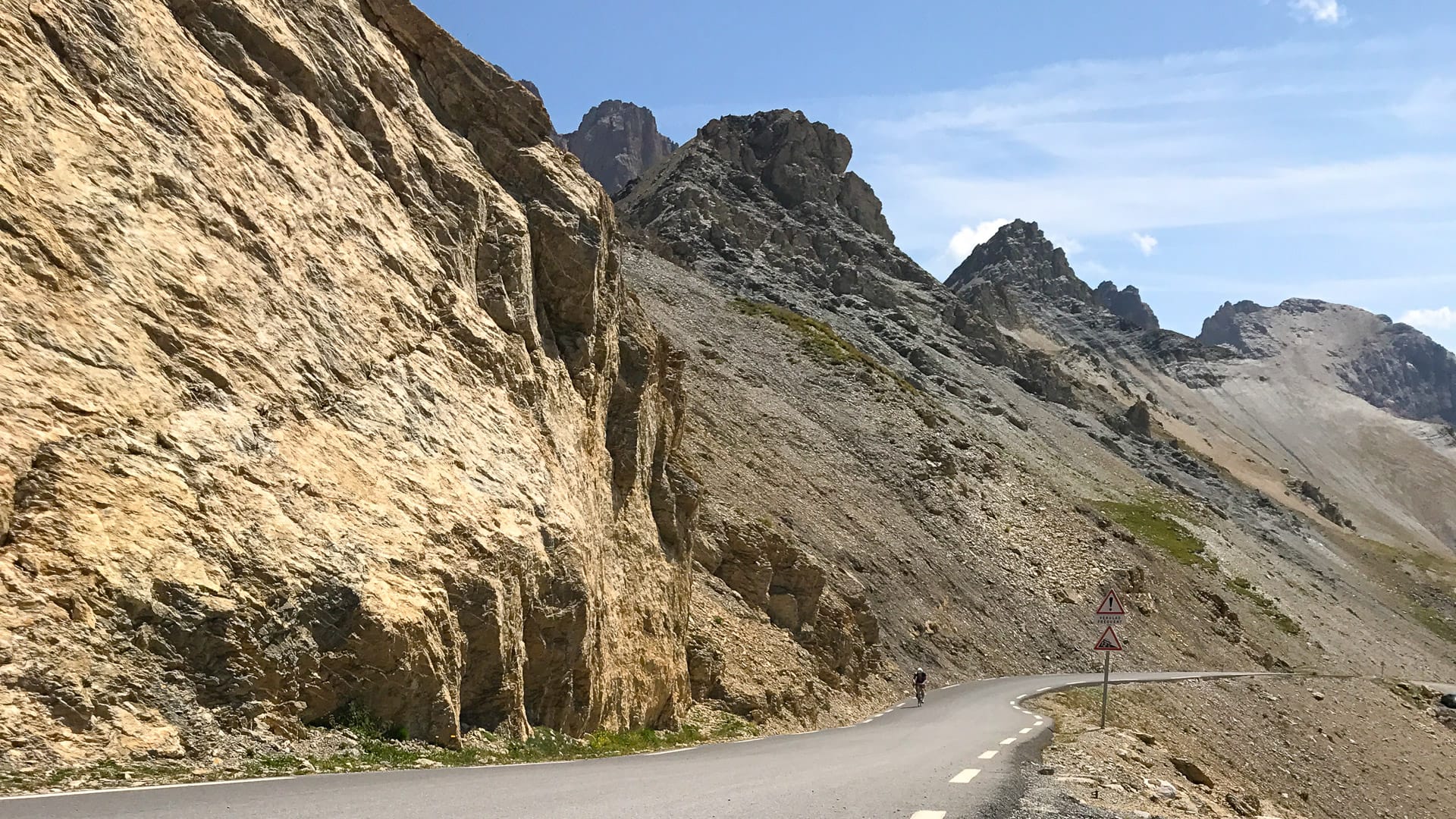
Final push to the summit of Col du Galibier
15. Any highway code and travel information you should be aware of?
As ever, it’s a good idea to check current travel information before you book and travel. For UK visitors, the UK government travel information pages for France are here.
You should also read and follow France’s highway code. An organised event does not necessarily mean the roads are closed to other traffic.
16. What are your key road cycling safety tips for a mountain gran fondo?
These cycling tips are most useful when combined with your own judgement, the organiser’s latest information and the conditions you find on the road.
- Choose an event that matches your fitness, descending confidence and group-riding experience.
- Have your bike checked before travelling and avoid untested last-minute changes.
- Ride predictably in groups, avoid overlapping wheels and communicate hazards.
- Keep right unless overtaking and leave room for other riders to make mistakes.
- Practise long descents and wet-weather braking before event day.
- Begin conservatively and use a pacing plan suited to your ability and goal.
- Develop your fuelling and hydration strategy during training.
- Prepare for heat in the valleys and colder conditions at altitude.
- Check the latest route, traffic controls, feed stations and support arrangements.
- Know how to contact event support after a crash or mechanical problem.
17. What is your final tip for someone entering a mountain gran fondo?
A mountain gran fondo asks you to make good decisions for hours at a time. Fitness helps, but awareness, preparation and patience can be just as important.
La Marmotte remains the event that keeps drawing me back. Its legendary cols, the scale of the challenge and the long sweep towards Alpe d’Huez make it a special day on the bike. Respect the route, ride within yourself and leave enough in reserve to appreciate the final climb.
What next?
A huge thanks to Simon for sharing his road cycling safety tips and his experiences from La Marmotte. We hope these insights help you feel better prepared for your next mountain gran fondo.
Planning more riding in the area? Explore our guide to cycling the Alpe d’Huez region or revisit our La Marmotte Granfondo guide.
For more preparation tips, take a look at our guides to training for long-distance cycling, what to eat when cycling long distances and cycling travel insurance.
Please support Epic Road Rides
A huge amount of time and effort goes into the article you’ve just read, all with the aim of helping you!
If you found what you’ve read useful, I’d really appreciate it if you dropped something in the tip jar here.
It’s a way you can say thank you and help us carry on creating top quality content with no annoying ads and no pay wall.
Looking for an organised cycling trip?
If you want someone to help you plan and book your cycling holiday, fill out this form. We aren’t a tour operator/agent but we work with lots of people who are and will do our best to put you in touch with someone that can help (within 24 hours where possible)!Simon Worsley’s interest in road cycling began in 1989, when he watched Greg LeMond beat Laurent Fignon by eight seconds at the Tour de France. Initially focused on the Tour, by the mid-1990s he was also following the Spring Classics and Grand Tours.
At this stage, Simon was still an occasional cyclist himself. Road cycling was a relatively niche sport in the UK, and his biggest annual ride was the British Heart Foundation’s 40-mile Cotswold charity ride.
Simon began cycling seriously in 2011 after his rugby days came to a premature end in his mid-30s. He joined Cheltenham and County Cycling Club that year and started riding with the club every Saturday and Sunday. He completed his first Marmotte in 2012.
In 2018, Simon started racing and gained his Category 3 racing licence after picking up points in Masters and Category 3 and 4 races at Maindy and Odd Down. He also competed in several road races in 2019. More recently, his racing has mainly been at Castle Combe circuit races during the summer, with occasional appearances in Cheltenham and County’s annual road race.
Simon typically rides around 10,000 kilometres each year and aims to complete the Marmotte alongside one or two other cycling trips. In recent years, he has completed the Gran Fondo versions of all the Monuments except Paris-Roubaix, as well as Strade Bianche. His cycling trips have taken him to the Alps, Dolomites, Mallorca, Girona, Tenerife and Calpe.
He is also working towards completing the top 100 UK climbs, based on Simon Warren’s book, as well as ticking off as many of the top 100 Tour de France, Italian, Spanish and Belgian climbs as possible. So far, he has ridden 11 of the 100 UK climbs, as well as 10 in France, nine in Italy, 15 in Spain and 19 in Belgium.
(photo credit: Struggle Events)
First Published: 10 November 2026
The contents of this website are provided for general information purposes only. It is not intended to amount to advice and you should not rely on it. You should carry out your own due diligence and risk assessments and take professional advice. Views expressed by interviewees or other users of this website do not necessarily represent our views. We make no representations, warranties or guarantees, whether express or implied, that the content on our website is accurate, complete or up to date. If you use any information or content on this website, download from, or otherwise obtain content or services through our website, it is entirely at your own discretion and risk. Epic Road Rides Ltd disclaims all liability and responsibility arising from any reliance placed on the information and content on this website. Find out more here.
Comments