
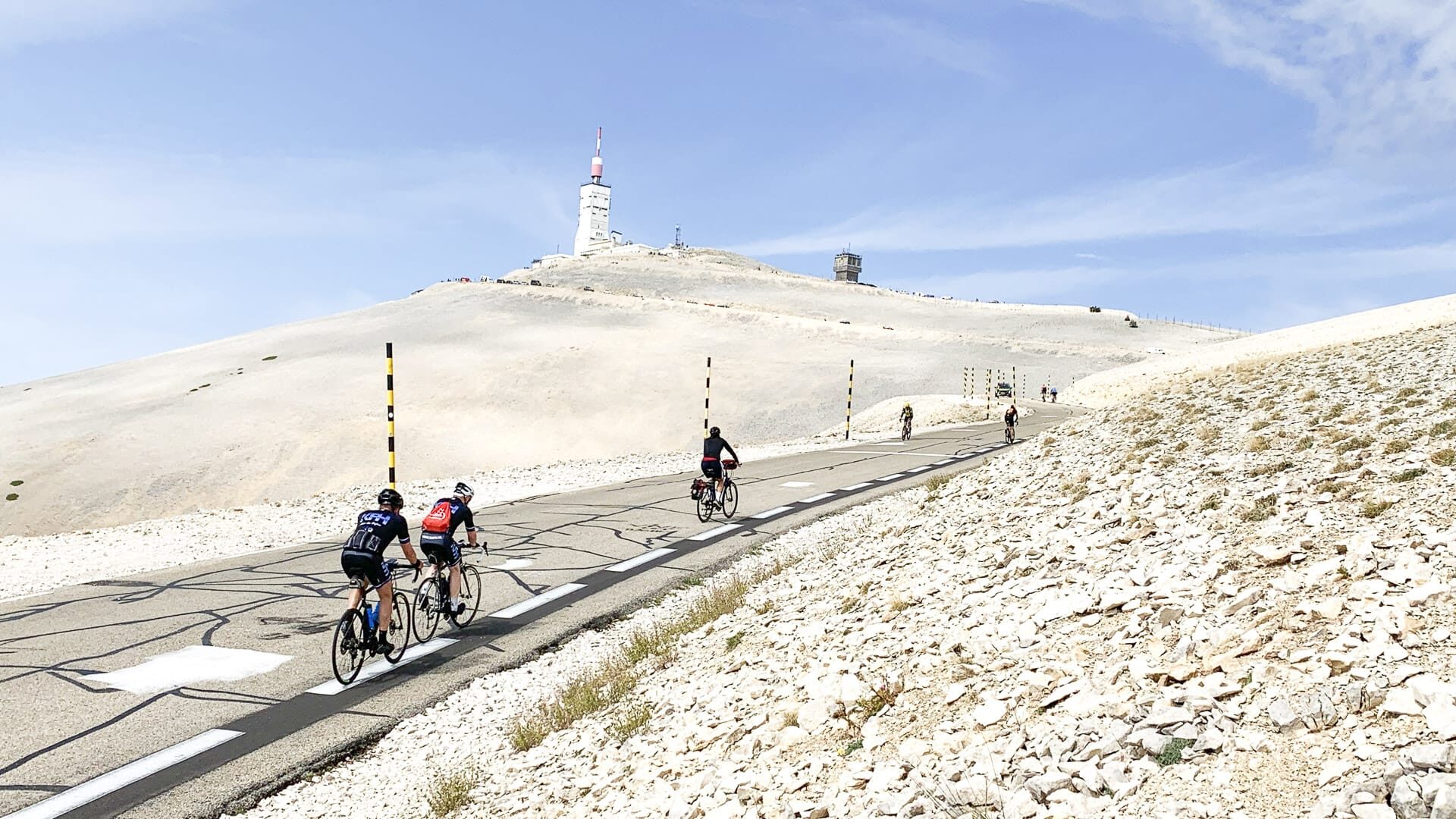
Embarking on your first mountain cycling holiday when you’re over 50 can feel a little daunting – but they’re a brilliant way to experience the world’s peaks, whether you want to ride a famous col or build a cycling holiday around great roads, food and scenery.
There is no single formula for cycling holidays for over 50s: the right trip depends on the distance, climbing, support and style of riding that suit you.
If years of watching the Tour de France, Giro d’Italia or Vuelta a España have left you wondering what it would feel like to ride those roads yourself, turning 50 or 60 can be a good point to stop saying ‘one day’ and start making a plan. These trips are not just for elite riders.
In this article, we speak to Mark Panitz, a 67-year-old Australian cyclist who describes himself as an average rider. Mark has been cycling since his 40s and has spent the past 15 years taking cycling holidays in Europe, including guided and self-guided tours in the French Alps, Pyrenees, Provence, Girona, the Dolomites and around the Stelvio Pass.
Here, Mark shares his experience and tips for planning and going on cycling holidays when you’re 50+.

Mark is a 67-year-old cyclist from Australia who describes himself as an average rider. He started cycling in his 40s and has spent around 15 years taking European cycling holidays, including guided and self-guided cycling trips, riding alone and with friends, and staying in bike hotels, guesthouses and self-catering accommodation.
- Alpe d’Huez: Mark’s first big climb and the ride that got him hooked on mountain cycling.
- Sella Ronda Bike Day: closed roads, Dolomite scenery and thousands of cyclists sharing the route.
- Col du Télégraphe and Col du Galibier: an epic day out.
And he is not done yet - there are always more places to go and more cycling experiences to have. After 15 years of these trips, Mark’s biggest lesson is that you do not need to be an elite cyclist to have the experience. For him, taking on achievable challenges, seeing new places and sharing the road with other cyclists is good for the body and soul.
Always check current travel information and advice. For visitors from the UK, the UK government travel information pages are here.
Table of contents
This article contains a lot of useful information. To help make it more digestible, we’ve broken it down into several sections:
- Part 1: Choosing the ideal over 50 cycling holiday
- Part 2: Preparing and training
- Part 3: Riding safely and managing mountain conditions
- Part 4: Practicalities
- Part 5: First-trip ideas
Part 1: How do you choose the ideal cycling holiday when you’re over 50?
Why ‘now’ is a great time to take on the mountains?
If not now, when? If you are a keen cyclist and in good health, grab the opportunity while you can as you never know what the future holds. As we age, time seems to go faster than when we were young. And unfortunately, our bodies slow down a bit too. But we are still very capable of doing great things. In a way, age gives us a greater sense of urgency to do the things we want to do or love to do.
For me, the main benefits of booking a cycling holiday were doing something I really enjoy and providing a clear goal to work towards. This applies whether the trip is your first multi-day trip or a legendary climb such as Alpe d’Huez or the Col du Tourmalet.
The aim does not have to be a fast time. The reward is more personal: once you have ridden a famous col under your own steam, no one can take that achievement away from you. It is yours forever.
Don’t let doubts get in the way
It is normal to wonder whether you are fit enough, whether you will get dropped or how you will manage the logistics of riding abroad. Those are useful questions to answer before you book, but they do not need to become reasons not to go.
The doubts before a first trip are often very ordinary: ‘Am I fit enough? Am I too old? What if I do not speak the language?’ I had these concerns before my first trip and my tip is to turn those worries into action. Once you have reached your 50s or 60s you definitely have enough life experience to deal with a few doubts. It can also help to share the goal with your partner, family or riding friends; their support and backup can make the plan feel much more achievable.
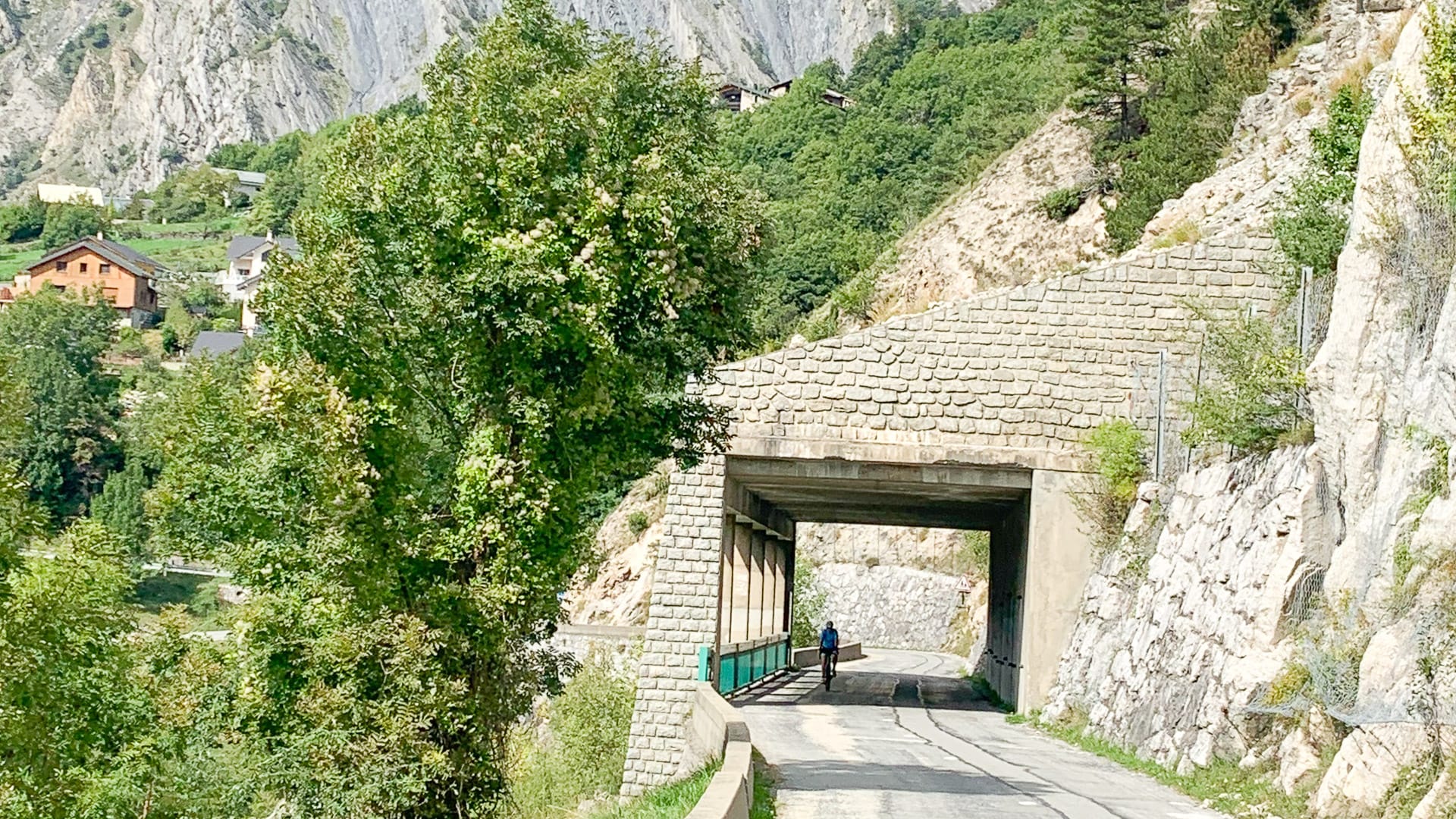
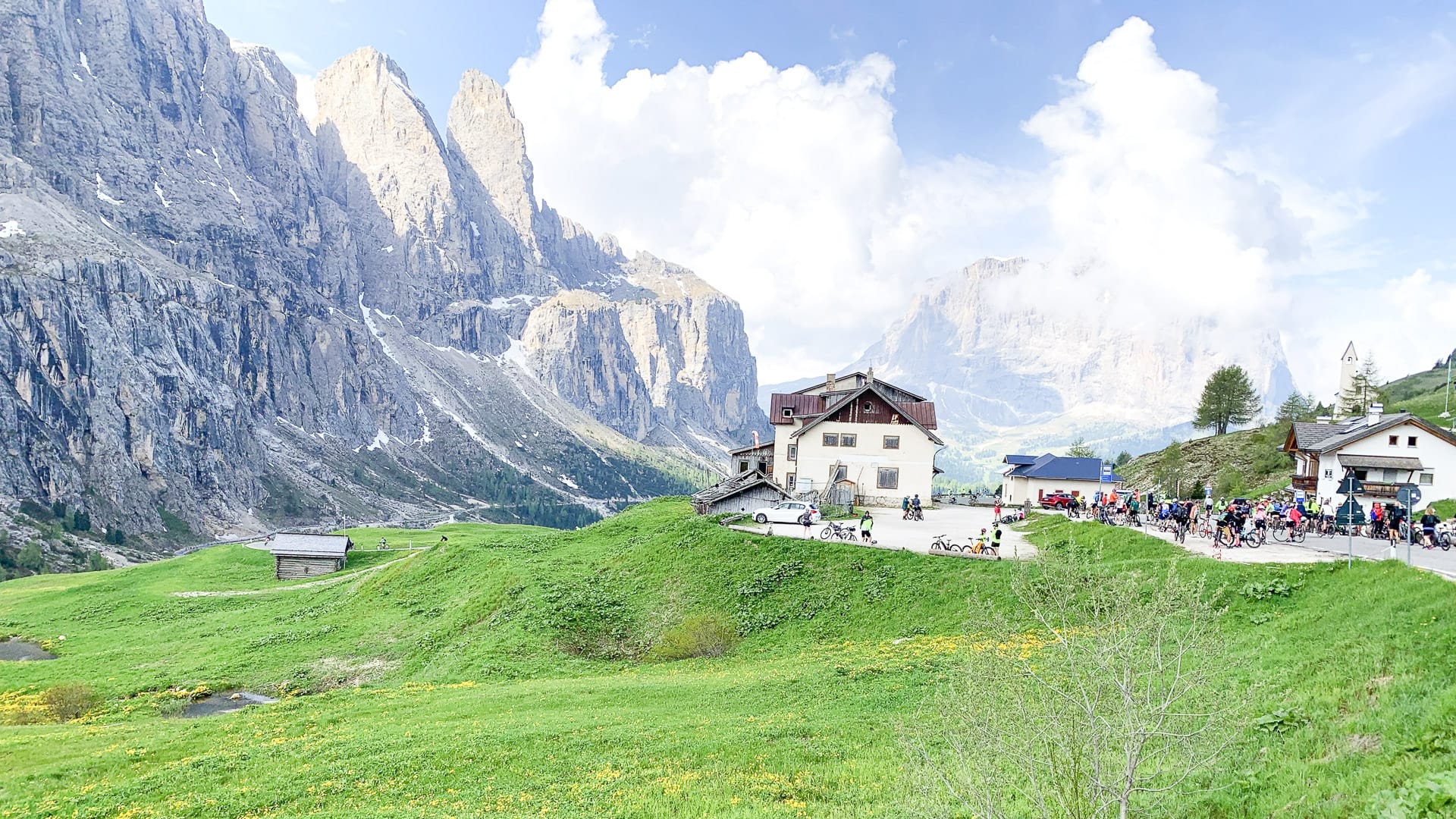
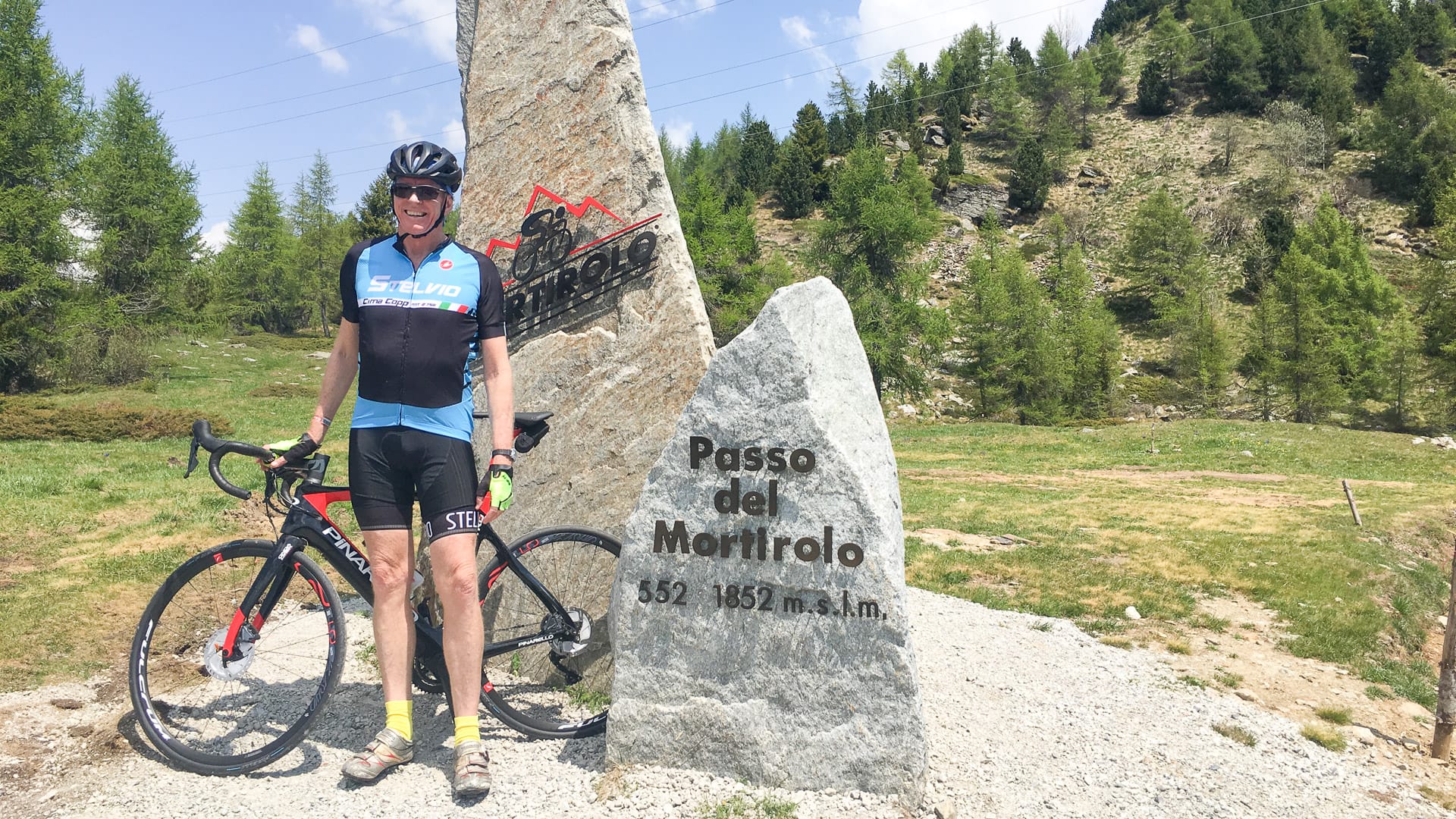
The memorable moments extend well beyond a Strava segment or summit photo. They include the scenery, café stops, local food and the conversations with other cyclists along the way.
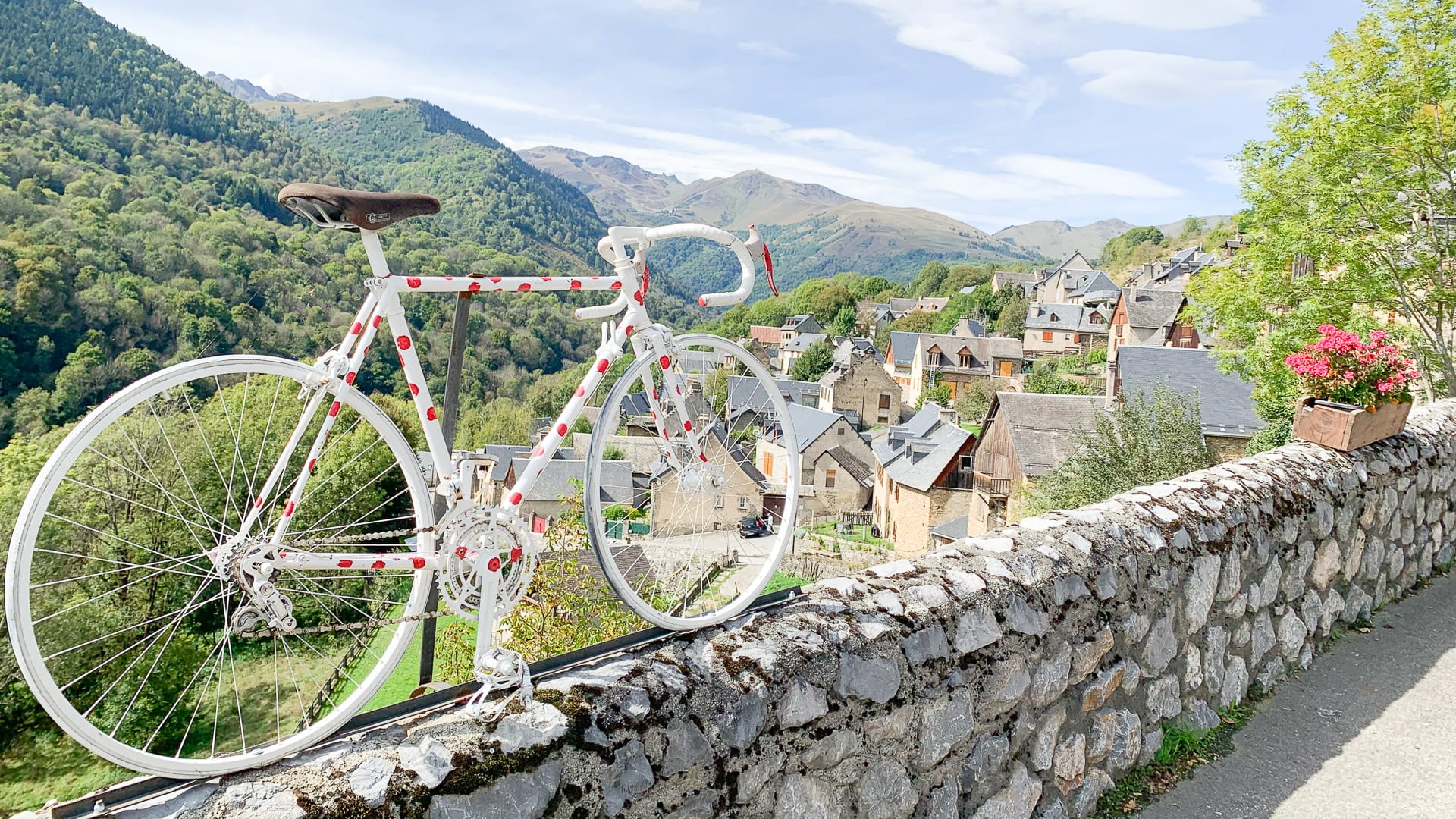
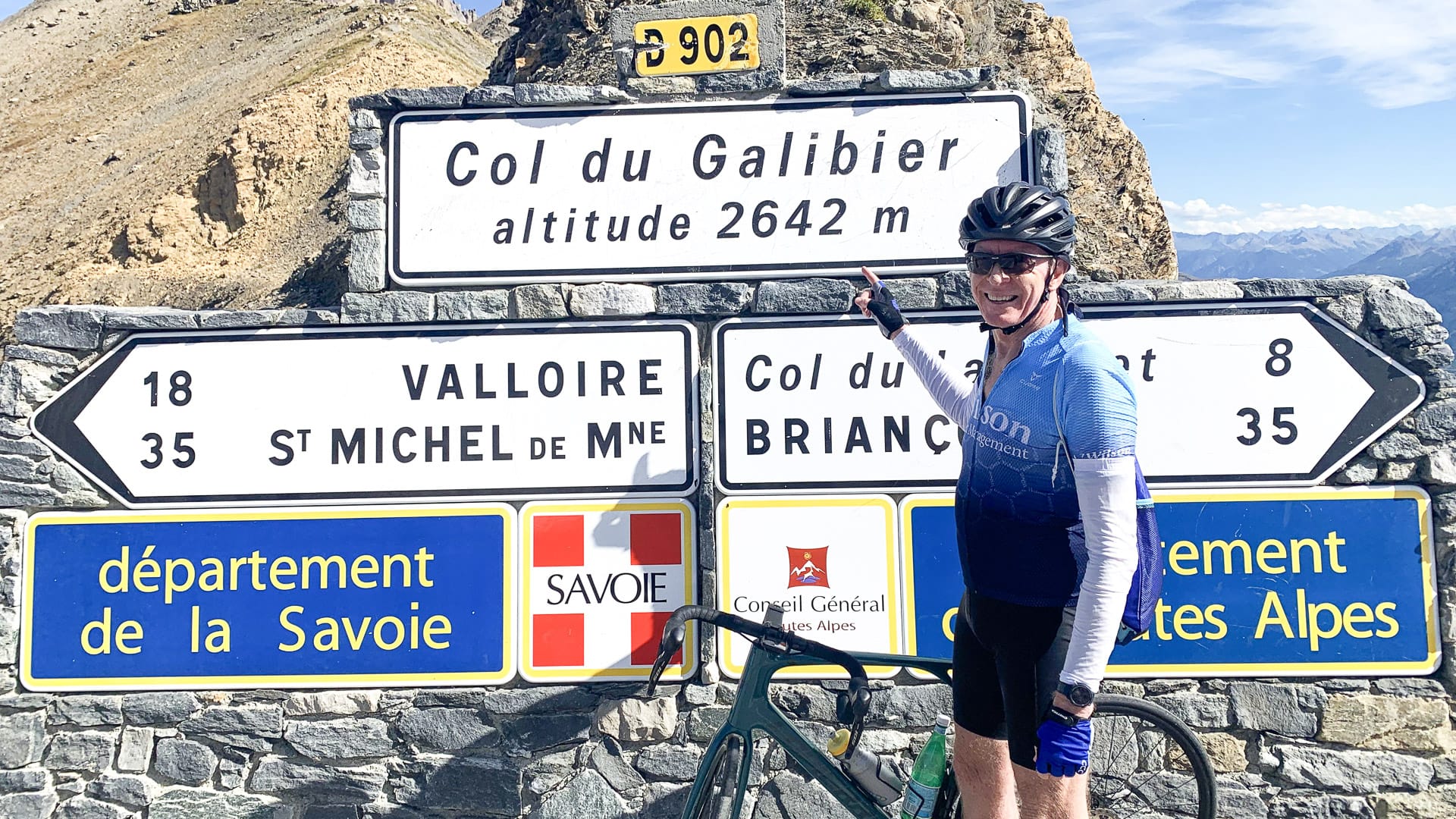
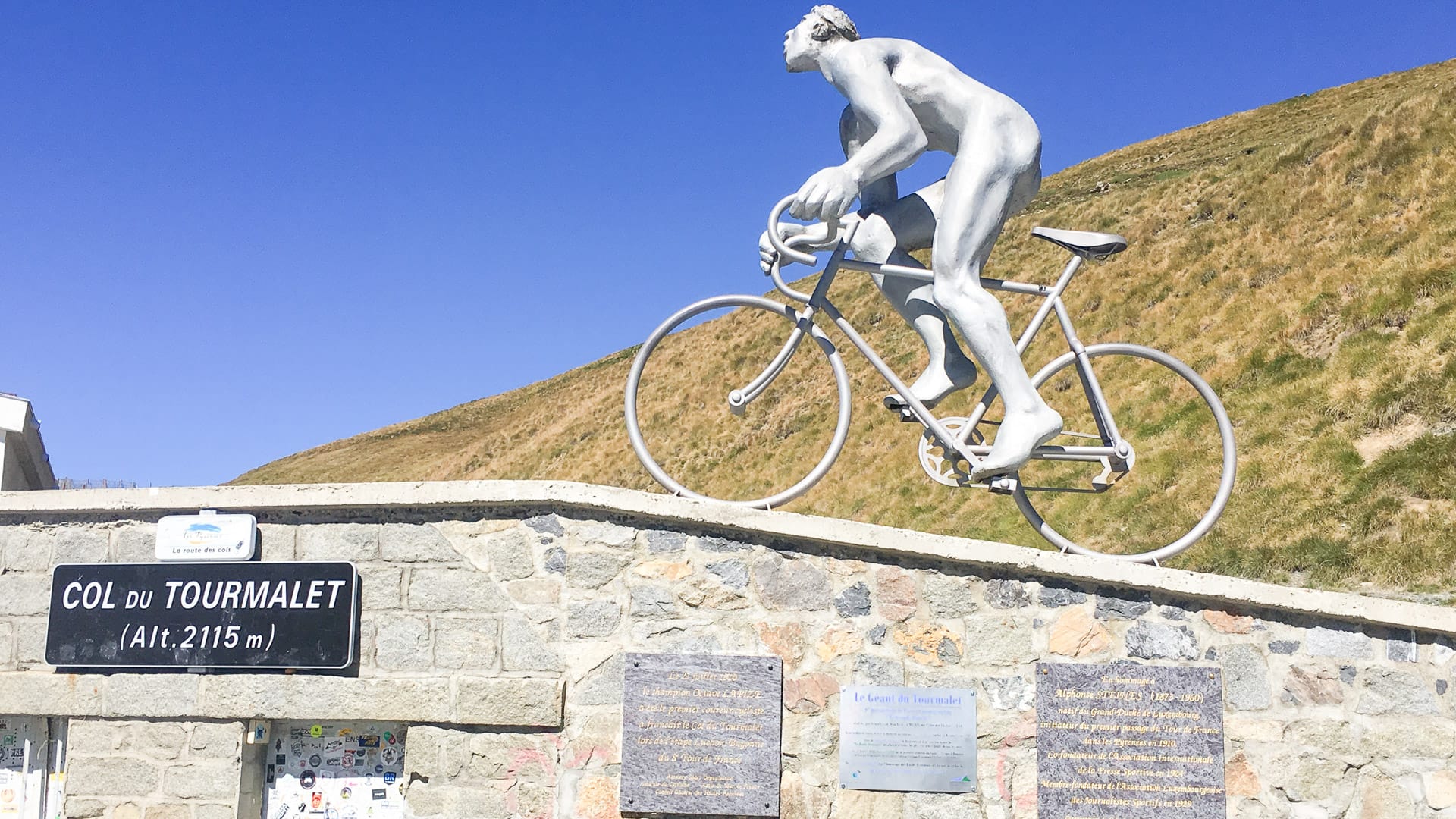
Which type of cycling holiday is right for you?
I’d suggest starting with two questions: where do you want to ride and how much support do you want?
The format of the trip can make as much difference as the destination.
| Trip style | Works well if… | Points to consider |
| Fixed-base | You want flexibility, one unpack and the option to change rides around weather or fatigue. | You see one region in depth. Local transfers or a car may still be useful. |
| Point-to-point | You want changing scenery and to link several major rides or Cols. | Daily riding is more fixed. Luggage transfer and support can make logistics easier. |
| Grand Tour trip | Watching the Tour de France, Giro d’Italia or Vuelta a España is part of the appeal. | Expect crowds, waiting around and a more fixed itinerary. |
| Guided or supported | You want route, mechanical and logistical support, plus a social group. | Less flexibility, group dynamics and usually a higher price. |
| Self-guided | You value independence and want to set your own pace, food stops and daily plan. | You take on navigation and more of the logistics yourself. |
I have tried both guided and self-guided trips, and the difference is not only logistical. Guided trips can bring camaraderie and let you concentrate almost entirely on the riding, but you may spend more time in what I call an organised bubble. Self-guided riding takes more work, but gives you greater freedom over stops, food and pace, and more chance to rub shoulders with local people and other riders.
For a guided trip, look beyond the headline itinerary. Ask about typical group size and pace, daily distance and climbing, how different abilities are managed, and what accommodation and meals are included. The right group can make as much difference as the right route.
Read more: Planning a bike trip, Questions to ask before you book a bike tour and Our pick of the best Alps bike tours.
What should you look for in cycling-friendly accommodation?
For a multi-day trip, comfort and practical details can matter more than star rating. Look for secure bike storage, somewhere to wash or dry kit, a good breakfast, quiet rooms and easy access to your routes. If you plan an early start, check breakfast times too.
If you are booking an organised bike tour and travelling alone, check the room arrangements too. Some trips are priced on the basis of shared rooms, with a single supplement if you want your own room.
Bike hotels and guesthouses
Bike-friendly hotels and guesthouses may offer more than secure storage, with services such as workshops, overnight kit washing, local route advice, guided rides, meals and activities for non-riding partners. They can be particularly useful if you want local support without joining a fully organised tour, so it is worth checking what is available, especially for longer stays.
Self-catering
Self-catering can work well if you value extra space, a washing machine and the freedom to eat when you want. It does add shopping and meal planning, so check how close you are to food shops, restaurants and your planned routes.
Before you book, ask yourself:
- How much distance and climbing can I comfortably repeat for several days?
- Do I want to ride with a group, with friends or independently?
- How much route, mechanical and logistical support do I want?
- Can I shorten a ride or take a rest day if I need to?
- Are e-bikes available, how is the group pace managed, and what is included in the price?
- What support is available if I have a mechanical problem, feel unwell or cannot complete the route?
Read more: What to look for in a bike hote, Self catered accommodation versus bike hotels and Our pick of the best bike hotels
Which country or region should you choose?
If the Grand Tours sparked the idea, France, Italy and Spain are natural places to start. Rather than trying to cover every region here, compare the riding that excites you most, for example: long Alpine climbs, Pyrenean mountain roads, Dolomite passes, Provence, Girona or a hillier coastal base.
Keep the choice simple. Decide where you most want to ride, then choose a trip format that matches your fitness, confidence and appetite for logistics.
I share my thoughts on a few first cycling trip itineraries below.
Read more:
- 4 must-read tips for cycling in the Alps
- Cycling in the French Alps
- Cycling in the Pyrenees
- Cycling in the Dolomites
- Cycling Mont Ventoux and Provence
- Cycling in Girona
- Cycling in Italian Alps
Are e-bikes worth considering?
For some riders, an electric bike is simply another way to make the trip work. It can be particularly useful for mixed-ability couples or groups, or for riders who want more margin on long climbing days. An e-bike can:
- Help a partner or friend join the same cycling holiday even if your fitness levels differ.
- Smooth out differences in climbing speed within a mixed-ability group.
- Open up longer or hillier routes that you might otherwise choose not to ride.
Before booking one, check the battery range, charging arrangements and bike weight, and make sure you are comfortable handling it on long descents.
This flexibility can also be valuable when circumstances change. On one trip, while recovering from a bad case of flu, I swapped my hired road bike for an e-road bike so I could continue to enjoy the riding. It really saved the holiday. I have also ridden a road bike alongside people on e-bikes, and the arrangement worked well.
Read more: Why do an e-bike tour and Our pick of the best e-bike holidays.
Part 2: How should you prepare and train for a mountain cycling holiday?
How fit do you need to be for a cycling holiday when you’re over 50?
Weekly distance on its own doesn’t tell you whether you’re ready. A 40-kilometre day on rolling roads is very different from repeated 80-kilometre mountain days. Look at distance, elevation gain, gradients, time in the saddle and how many days you will ride back to back.
If you are returning to cycling after a long break, give yourself more lead time rather than assuming a mountain holiday is out of reach. Build back gradually and make the preparation fit the trip you want to do.
A week in the mountains is a serious block of cycling. I know there can be tough moments and a bit of suffering; the fitter and better prepared you are, the more likely you are to enjoy the whole trip rather than simply get through it.
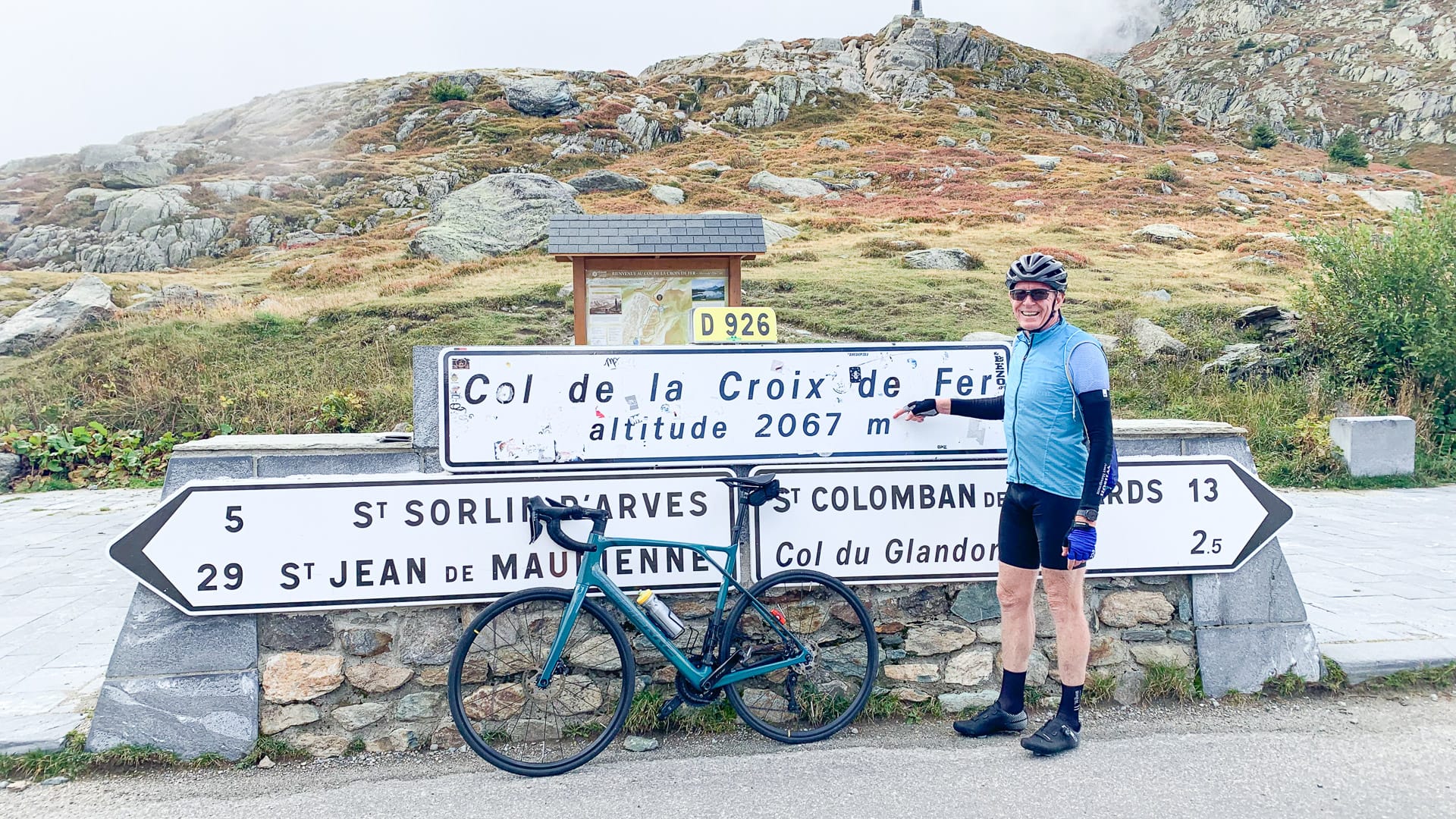
Col de la Croix de Fer in the French Alps (photo credit: Mark Panitz)
How can cyclists over 50 train for a multi-day trip?
Build your riding gradually and include the sort of climbing you expect on the holiday. If you do not live near long mountain climbs, hill repeats can help you practise sustained climbing without needing an Alpine pass on your doorstep.
Practise riding on consecutive days too. This helps you learn how your legs, hands, feet and saddle contact points respond when you are not starting completely fresh. Strength, mobility and flexibility can also support comfortable riding as you get older. According to Cycling UK, cycling is a low-impact activity because the bike supports your body weight, which helps reduce strain on your joints and lowers the risk of injury. This can be particularly valuable as we get older, when injuries may take longer to recover from.
Some additional exercise off the bike is also useful. I will always do stretches and core work to balance out the preparation. Being in the ‘riding position’ for hours on multiple days means that you need to be straightened out. I also include swimming in my training to mix it up a bit.
Read more: Training for cycling holidays
How do I prepare?
I usually give myself around four months to prepare for a mountain trip. I start with a solid base, then progressively add more distance, climbing and consecutive-day riding. When I cannot train on long mountains, I use repeated efforts on a local hill to practise settling into a sustainable climbing rhythm. It is important to build in rest and recovery time during the training block.
Towards the end of my preparation, I want to know how my body responds to several days in a row on the bike – not just whether my legs are fit, but how my hands, feet and saddle contact points cope, and what food and fluid work over longer rides. It is my personal approach rather than a universal prescription, but the underlying principle is useful: train for the holiday you are actually going to ride.
One advantage I see in being an older rider is greater self-awareness. By your 50s and 60s, you may have a clearer sense of what you can sustain, when to back off and what sort of challenge suits your life. There will always be faster and slower riders, so judge your preparation against the trip you have chosen and your own riding.
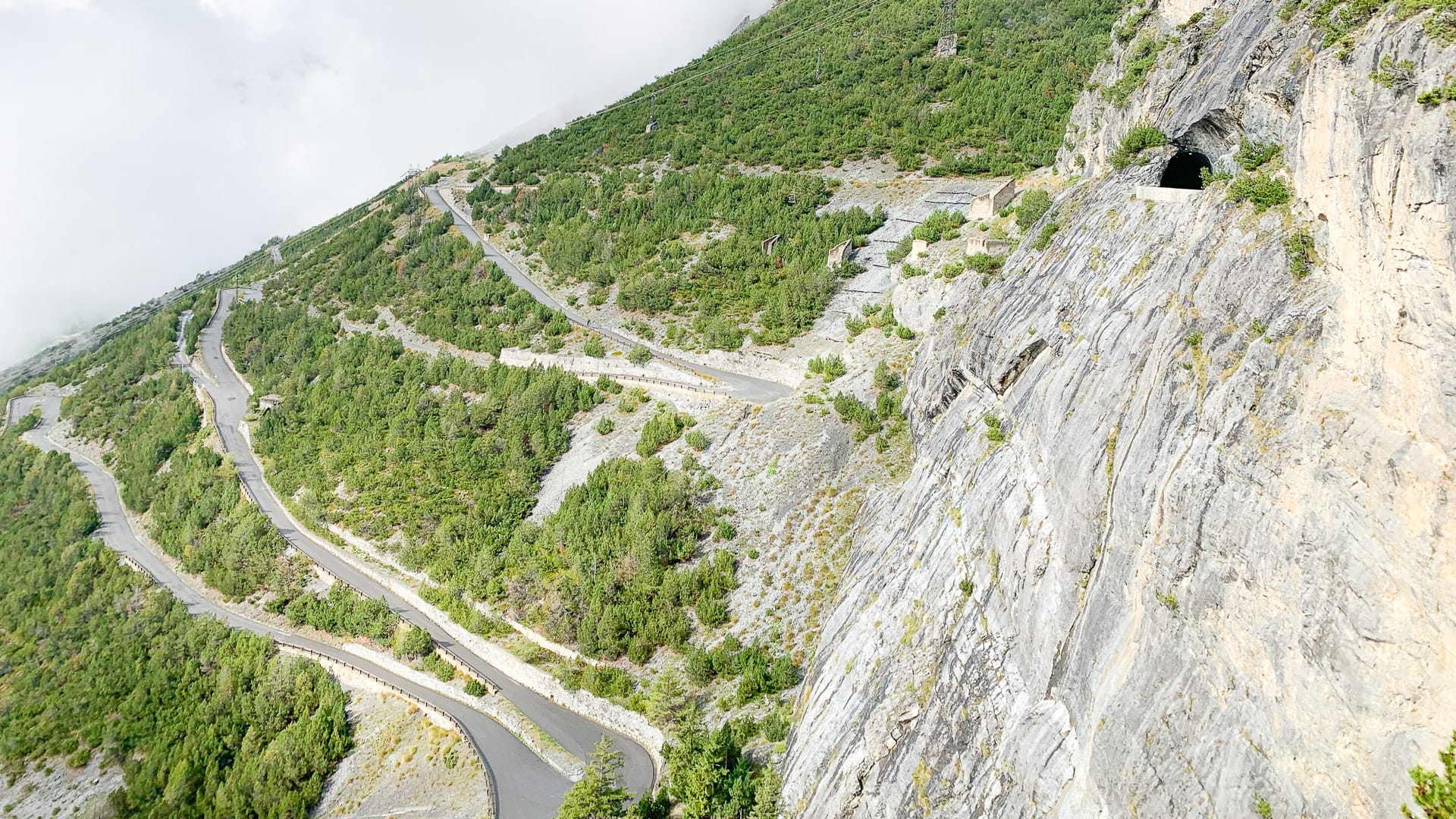
Climb to Lake Cancano from Bormio (photo credit: Mark Panitz)
How do you recover between riding days?
Back-to-back riding is one of the biggest differences between a normal weekend ride and a cycling holiday. Practise it before you travel and avoid treating day one like a one-off sportive.
- Alternate harder and easier days where the itinerary allows.
- Build in a rest or sightseeing day if you need one.
- Where the itinerary includes transfers between bases, use those travel days as time off the bike where you can.
- Eat and drink after the ride and keep hydrating through the evening.
- Prioritise sleep.
- Use massage or gentle mobility if you find it helps.
- Shorten or skip a ride if fatigue is building.
As I have got older, I have found that I need more time to recover between riding days. I now prioritise stretching after each ride and, when possible, having a massage or taking a shorter recovery ride to reduce fatigue. A gentle walk around the village or town where I am staying also helps me loosen up while giving me a chance to see the local sights.
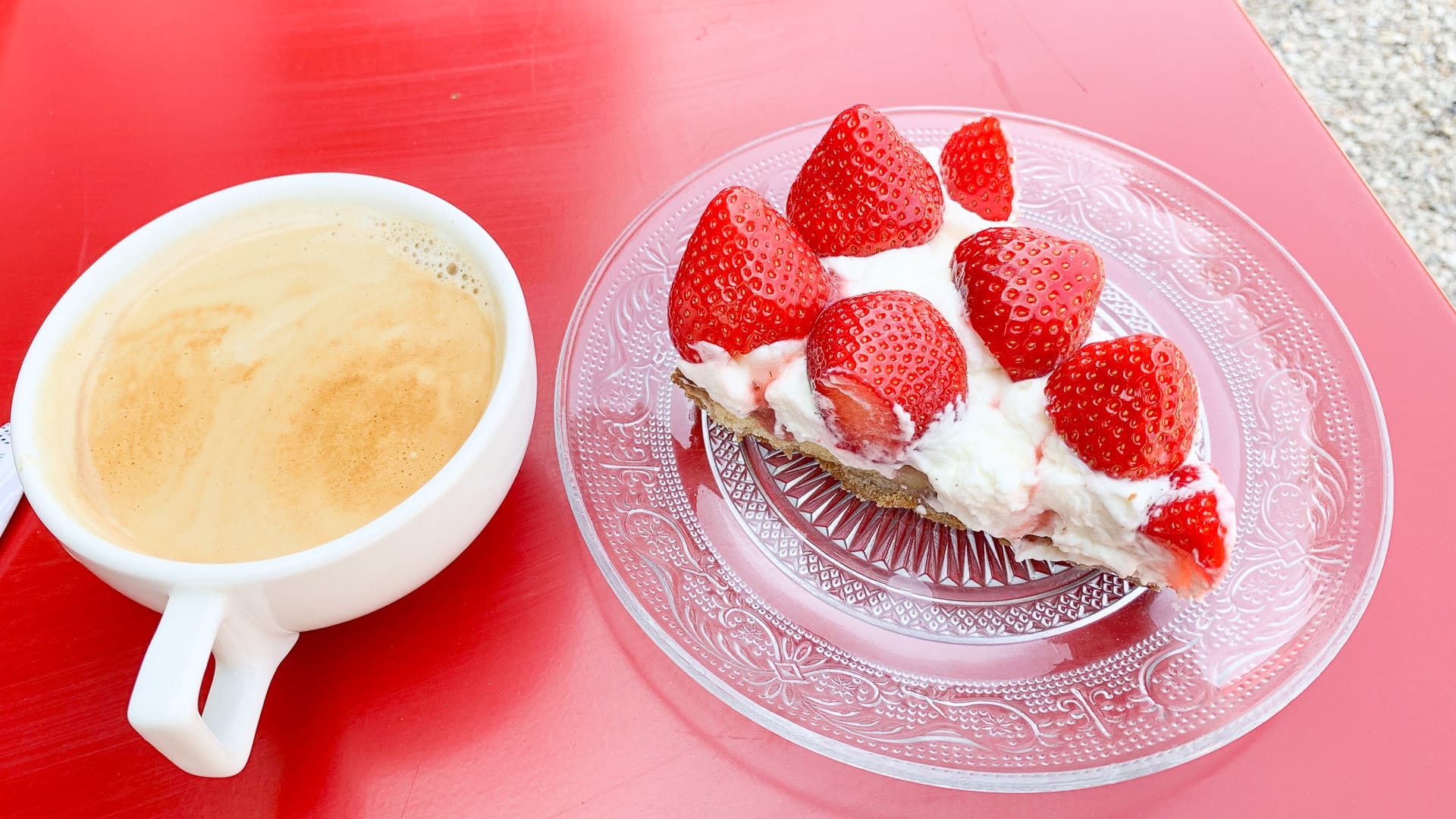
Eat enough to refuel properly after the ride (photo credit: Mark Panitz)
Part 3: How can you manage mountain conditions?
What should you expect on famous mountain climbs?
Long climbs are more about sustained effort than headline distance. The classic Alpe d’Huez ascent from Bourg-d’Oisans is 13.8 kilometres at an average gradient of 8.1 per cent. The Stelvio from Bormio is about 21 kilometres with roughly 1,550 metres of climbing. Start conservatively, use gearing that lets you keep the effort controlled and let faster riders go. I describe this sort of climbing as more marathon than sprint: find a rhythm you can hold, eat and drink, and do not be afraid to stop to take in the view.
No two climbs feel the same. Mountain pastures, flowering meadows, rocky outcrops, snow, waterfalls, medieval villages, livestock, shifting cloud and sometimes an eagle overhead all change the character of the day. Leave yourself enough margin to look around, stop for a photo and enjoy where you are.
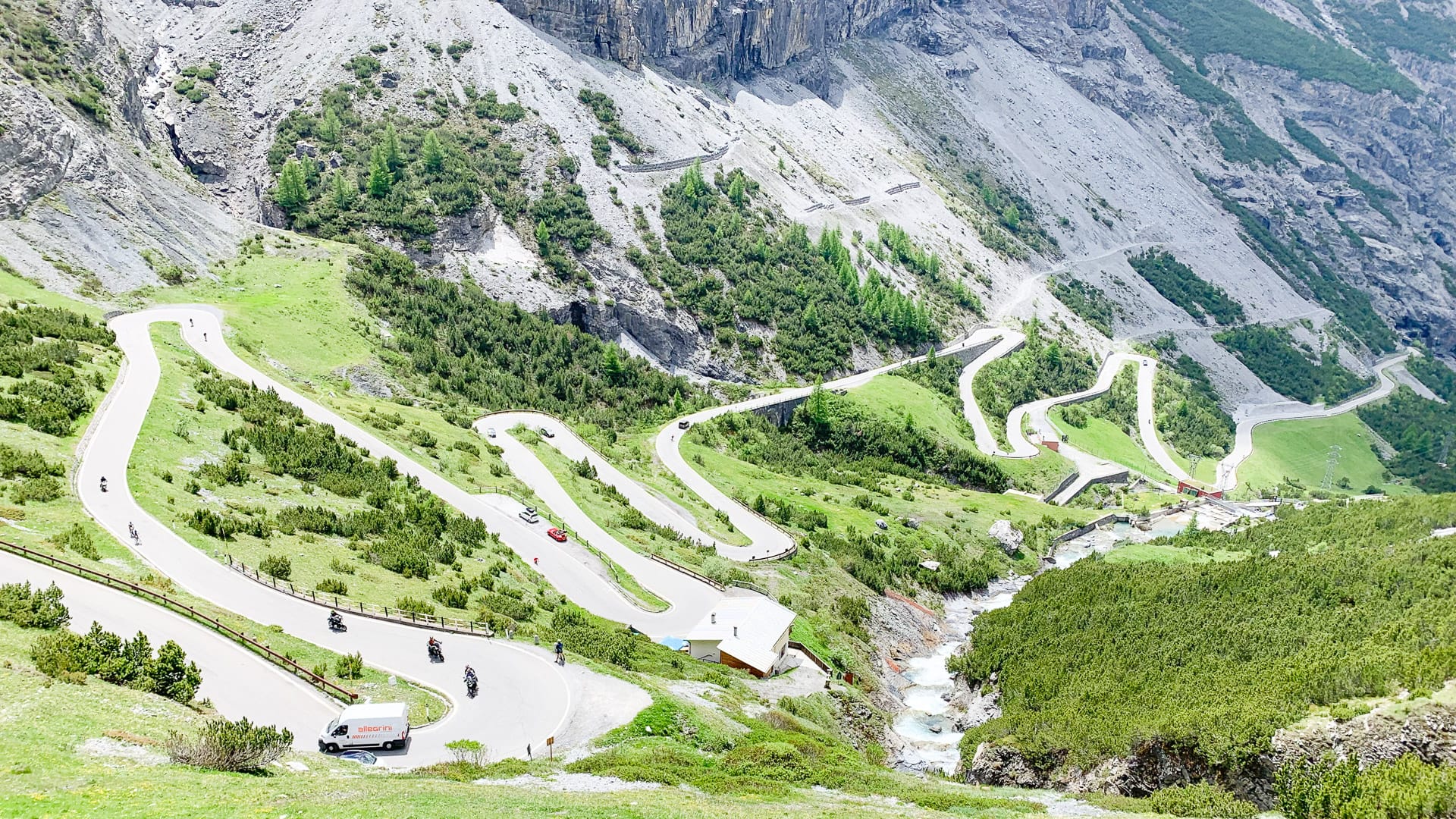
Riding part of the Stelvio Pass in the Italian Alps (photo credit: Mark Panitz)
What does altitude mean for cyclists?
Higher passes can make hard efforts feel harder.
CDC guidance notes that acute acclimatisation develops over the first three to five days and that day trips to high altitude with a return to lower sleeping altitude are less stressful than staying high. Individual responses vary, so keep early high-altitude efforts conservative and pay attention to how you feel.
Read more: Altitude training for cyclists.
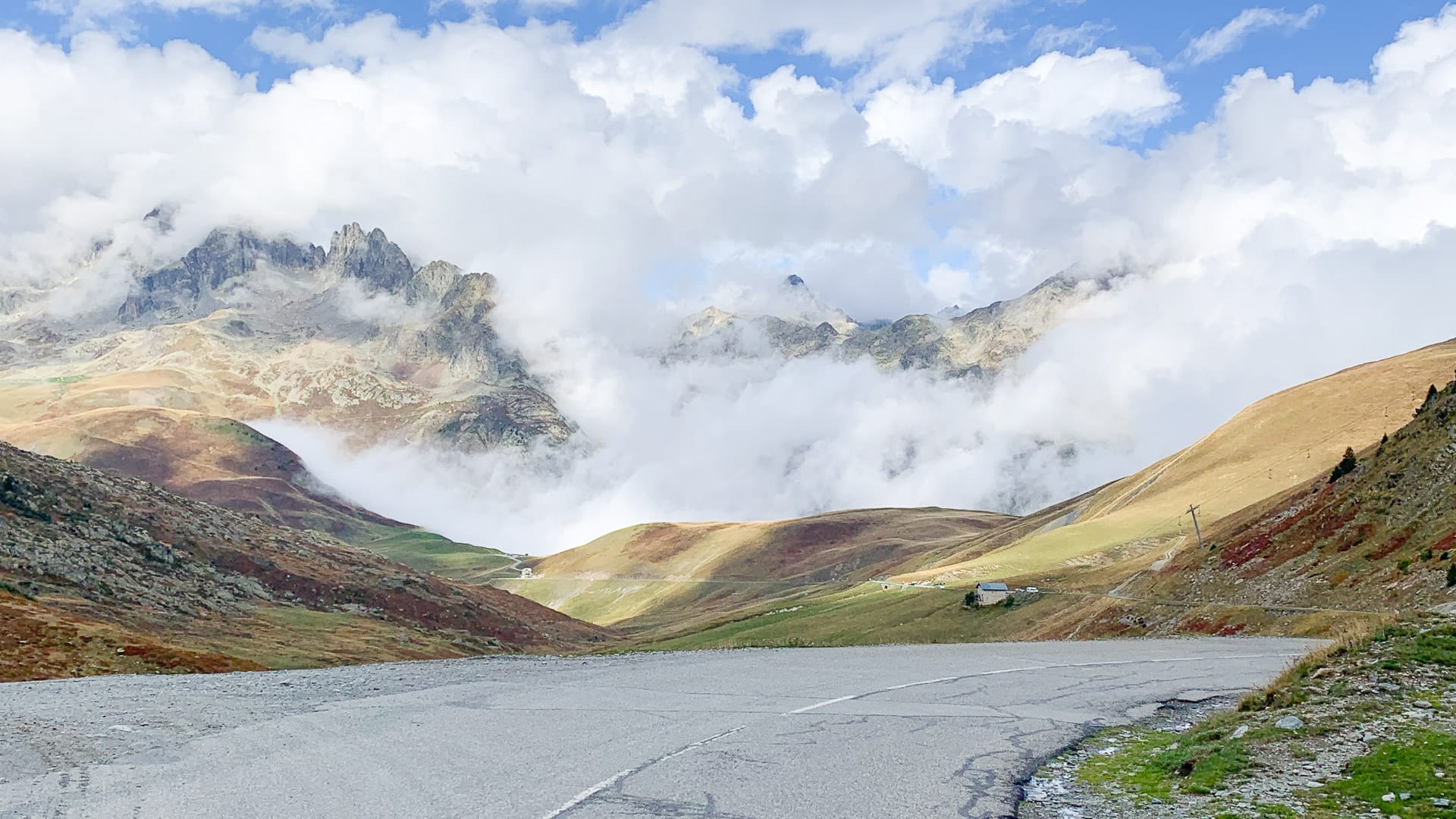
Down to Col du Glandon in the French Alps (photo credit: Mark Panitz)
How can you stay healthy and manage risk on a cycling holiday?
A little preparation can remove many of the worries that come with riding somewhere new.
Before you travel
If you have not exercised for some time, or have medical conditions or concerns, NHS guidance suggests speaking to a GP before increasing your activity. Train appropriately.
If you take regular medication, carry enough for the trip and keep essential details with you.
Travel insurance
Check that your travel insurance covers the kind of cycling you plan to do.
If you are taking your own bike, check the policy wording for theft, loss and damage rather than assuming the bike is automatically covered. If you are hiring a bike, consider whether you can insure it and your liability for theft, loss and damage.
Read more: Our guide to cycling travel insurance
Highway code and local rules
Local road rules vary, so check them before you ride. Do not assume the rules are the same as at home.
On unfamiliar mountain roads, ride predictably, hold your line and use front and rear lights where visibility is poor or tunnels are likely.
Road obstacles
There are several less than glamorous mountain-road hazards to consider. Popular climbs such as Alpe d’Huez and the Stelvio can be busy with cars and motorbikes at peak times, while livestock can wander onto quieter roads and tunnels may be dark or wet under wheel.
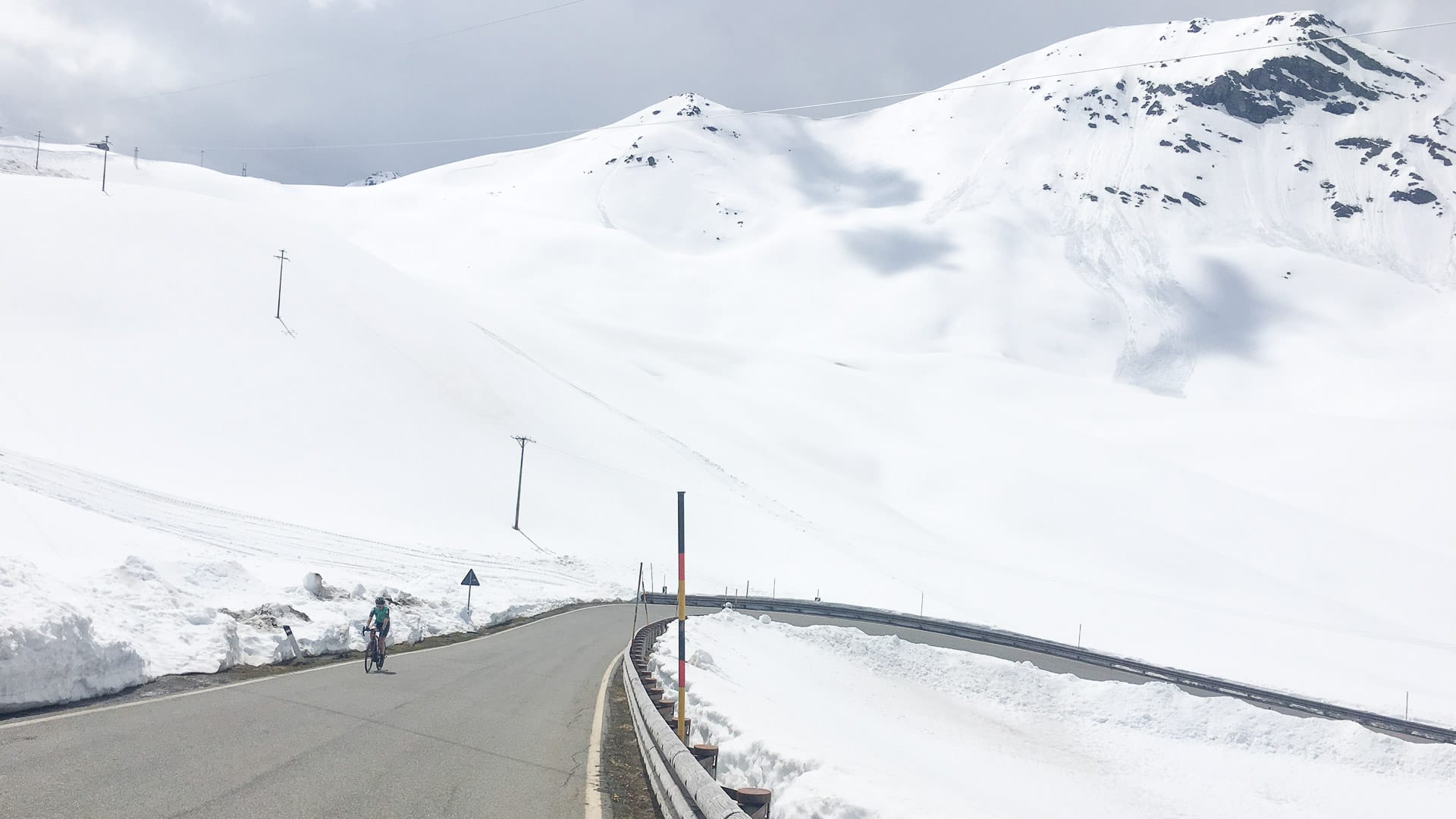
If you encounter unexpected conditions, like snow near the top of the pass, take the sensible option and don’t just keep on going regardless.
Carrying front and rear lights is sensible even on a bright day.
Fatigue
If fatigue is affecting your bike control, stop and reassess. Rest, eat and drink, shorten the ride or turn back if that is the sensible choice. The mountain will still be there another day.
Descents
Long descents deserve as much respect as the climbs. Brake before bends, leave margin for traffic and road hazards, and avoid chasing speed. Tired hands and concentration can become as important as tired legs. If you’re riding an e-bike, be particularly aware of this potential issue since they can be much heavier than a regular bike. Likewise, with a hire bike that you’re not overly familiar with.
On a long descent, tired hands can surprise you. Repeated braking over 20 kilometres can become fatiguing, especially when you are also watching for tight hairpins, traffic and animals. There is no prize for descending fastest: stop for the view, take a photo and arrive at the bottom with some margin left.
Weather
Mountain weather can change quickly. The Met Office notes that air temperature usually falls with height, but the rate varies, and wind and rain can make it feel much colder. Check the forecast and carry layers for the descent.
My practical rule is to be ready for four seasons in one day. A hot valley start can turn into a cold, wet summit and an even colder descent, so the extra layer that feels unnecessary at breakfast may be the one you are most pleased to have later.
Read more: A cyclist’s guide to when to cycle the Alps
Emergency contacts
Carry emergency contact details. If you are riding independently, make sure someone knows your planned route and when you expect to return.
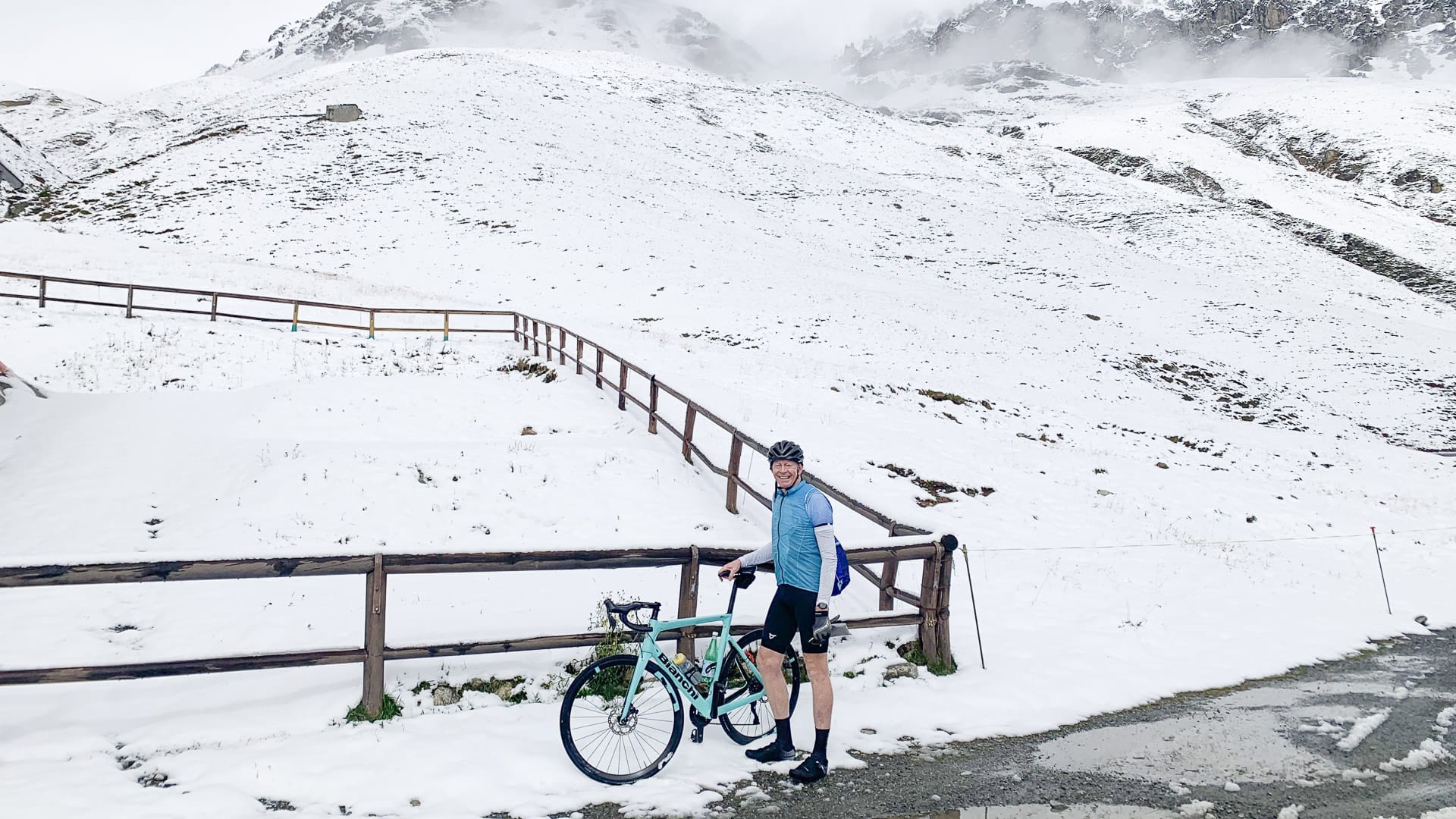
Snow on the way to Stelvio (photo credit: Mark Panitz)
What should you eat and drink on the road?
Do not wait until you are hungry or thirsty. Eat and drink regularly, and practise eating and drinking the foods and drinks you plan to use before the holiday. My usual pre-ride breakfast is cereal, toast and tea or coffee, eaten about an hour before setting off.
On the ride, I carry a banana, an energy bar and one or two gels. If I am riding for more than three or four hours, I will also stop for a sandwich or roll and a drink, with electrolytes particularly useful on hot days.
After the ride, I have something light to eat, followed later by a substantial dinner that includes pasta to replenish carbohydrates.
On a supported tour, a support van may carry snacks and water, but you should still have enough to complete a section independently. On self-guided rides, check where you can refill before setting off. Cafés and shops can be sparse on quieter passes, and opening hours vary, so ask locally and carry enough for the route you have planned.
Read more: What to eat before, during and after a long ride
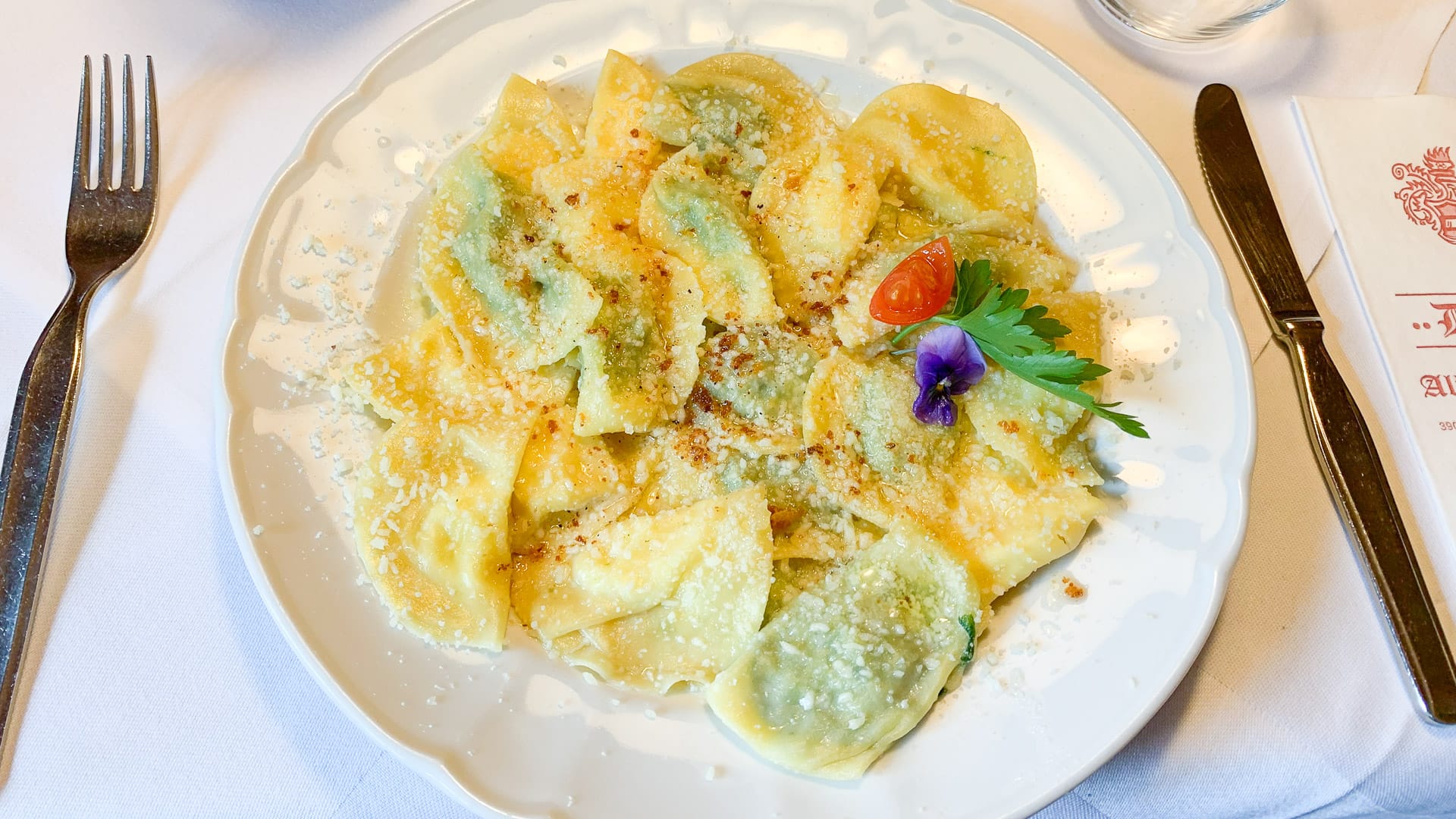
The best local food in the Dolomites (photo credit: Mark Panitz)
Part 4: What are the practicalities to consider before you go?
Will I get lost on a self-guided cycling holiday?
Modern GPS devices, downloadable route files and offline maps make self-guided navigation much easier. Download your routes before you set off and keep them available offline rather than relying on mobile signal.
If you’re relying on a phone for your route, really think about battery life and whether you need to take a power bank.
On guided cycling tours, ask how the group is managed if riders become separated and what support is available for mechanical problems or illness. On self-guided trips, keep your hotel or operator contact details with you and know who to call if you need help.
Local tourist offices, bike shops and bike-friendly hotels can also be useful sources of route information. If a road is blocked, the weather turns, you have a mechanical problem you cannot fix or you need to shorten the day, use your back-up plan rather than pushing on simply because it was the original route.
Local bike shops can be particularly useful for up-to-date route advice and may also have hard-copy maps of the main climbs and rides in the area.
Once you are on a mountain climb the navigation can be reassuringly simple: the way to the col is usually up.
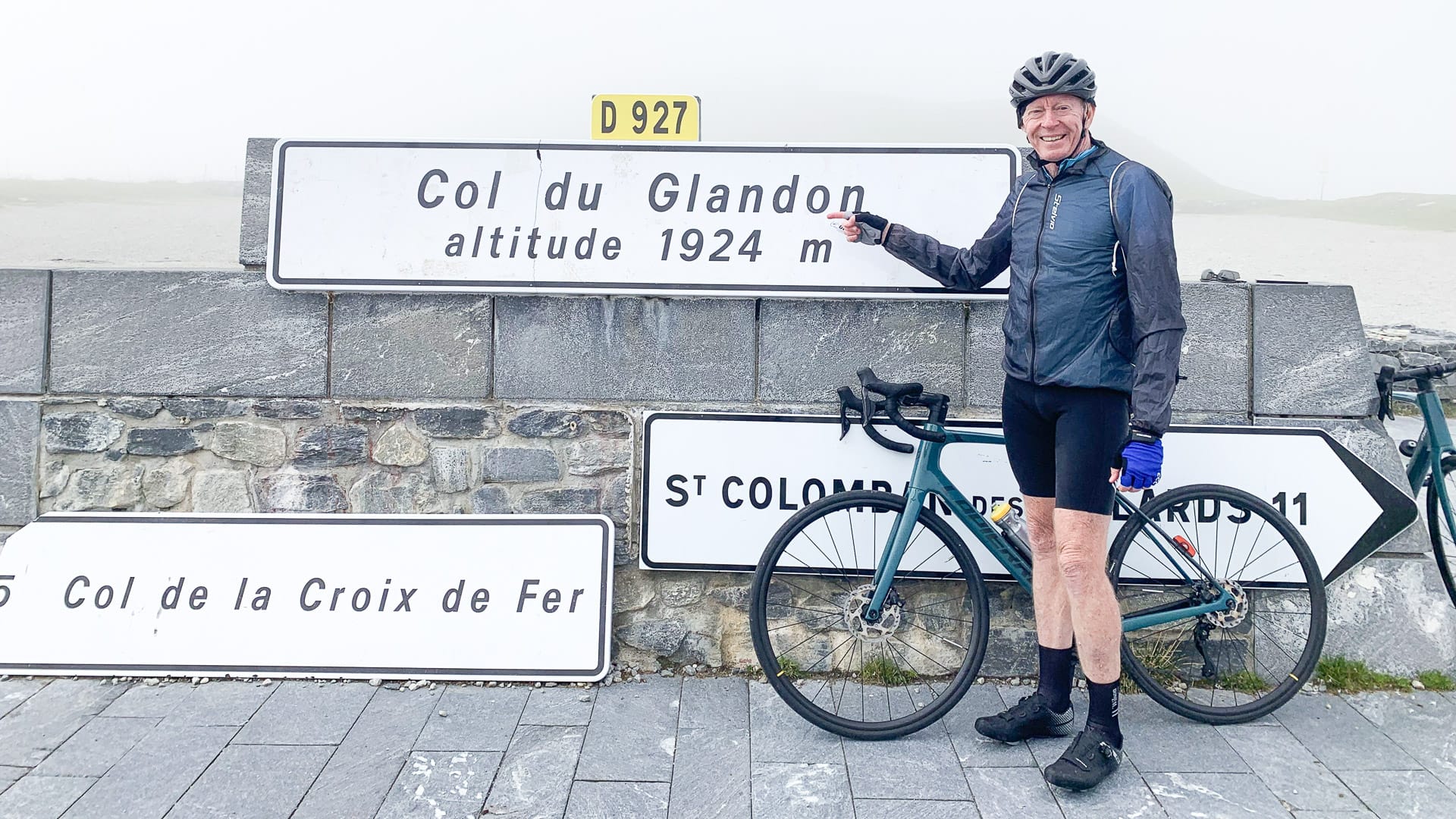
Col du Glandon in the French Alps (photo credit: Mark Panitz)
What should you take on a mountain cycling holiday?
Use kit you already know is comfortable. A multi-day holiday is not the place to discover that new shoes, bib shorts or a saddle become uncomfortable after four hours. For mountain days, carry a waterproof, gilet or warm layer, long-fingered gloves, sun protection, front and rear lights, food and basic repair items. Check that your gearing is suitable for the gradients you expect.
On self-guided days, a small bike-mounted bag or light backpack is useful for spare layers, food and the other essentials you want close to hand.
If you are on a supported tour, have a small bag ready in the support vehicle with an extra layer, gloves and spare food. That makes it much easier to grab what you need when the weather changes rather than hunting through your main luggage.
Read more: our ultimate cycling holiday packing list
Should you take your own bike or hire one?
| Take your own bike | Hire a bike | |
| Fit and familiarity | You know the fit, handling and contact points. | Allow time for set-up and a test ride. |
| Travel logistics | Requires a bike box or bag and extra handling through airports and transfers. | Avoids moving and storing a bike case. |
| Cost and risk | Airline fees and possible transit damage or delay. | Hire cost can be significant on a longer trip. |
| Useful tip | Pack essential spares for your own set-up. | Consider taking your own pedals and, if it matters to you, your saddle. |
If you hire a bike, allow time for the shop to help with the set-up and confirm that the gearing is suitable for the climbs you plan to ride. Also check which sides the front and rear brakes are on as it might not be the same as what you’re used to at home. A short test ride before your first big day is well worth doing.
If the cycling trip is only part of a longer European adventure holiday, also think about what happens to your bike box or bag afterwards. Carrying it on public transport alongside your normal luggage can be awkward, which may tip the decision towards hiring.
Read more: Our guide to bike hire
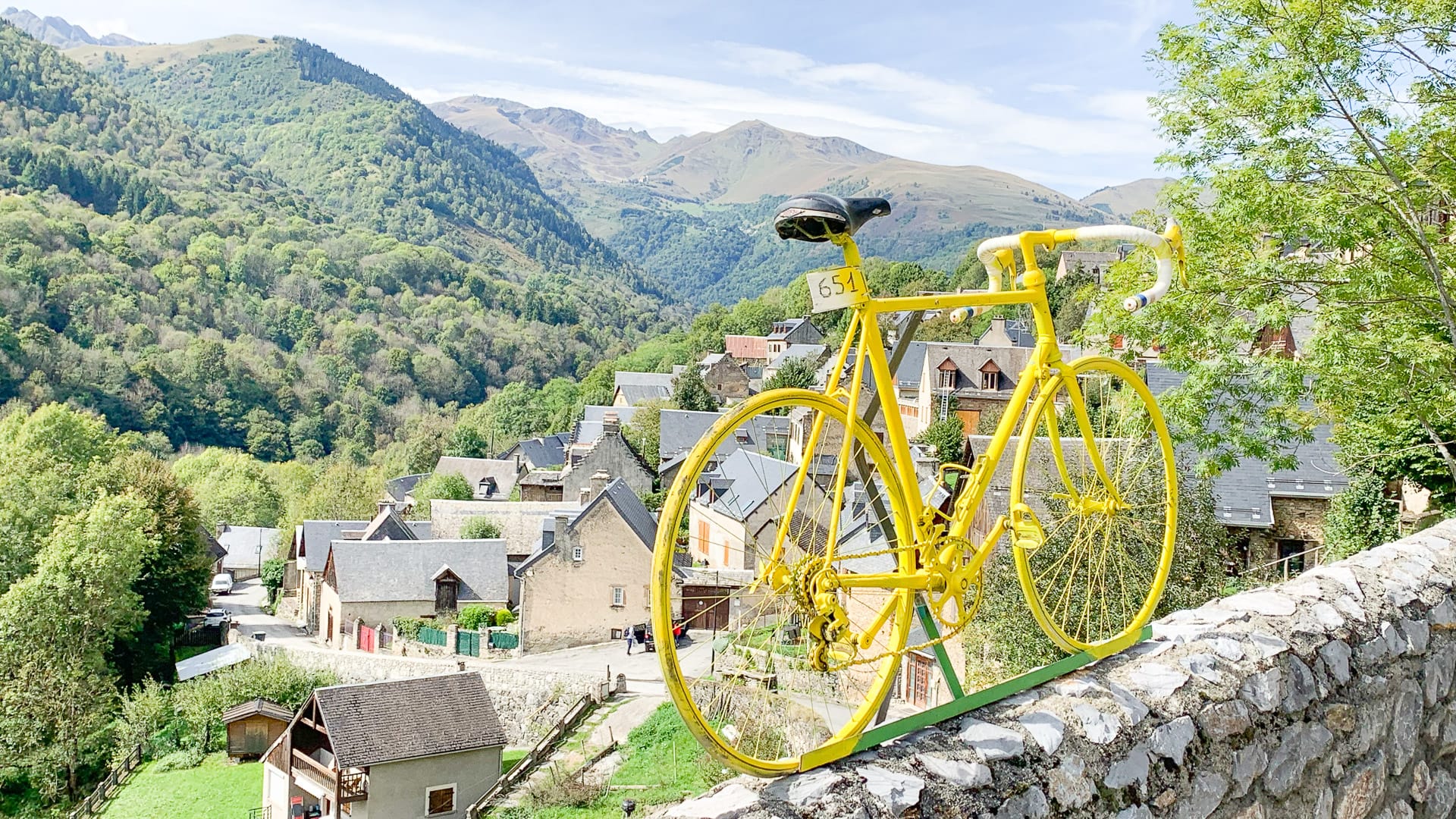
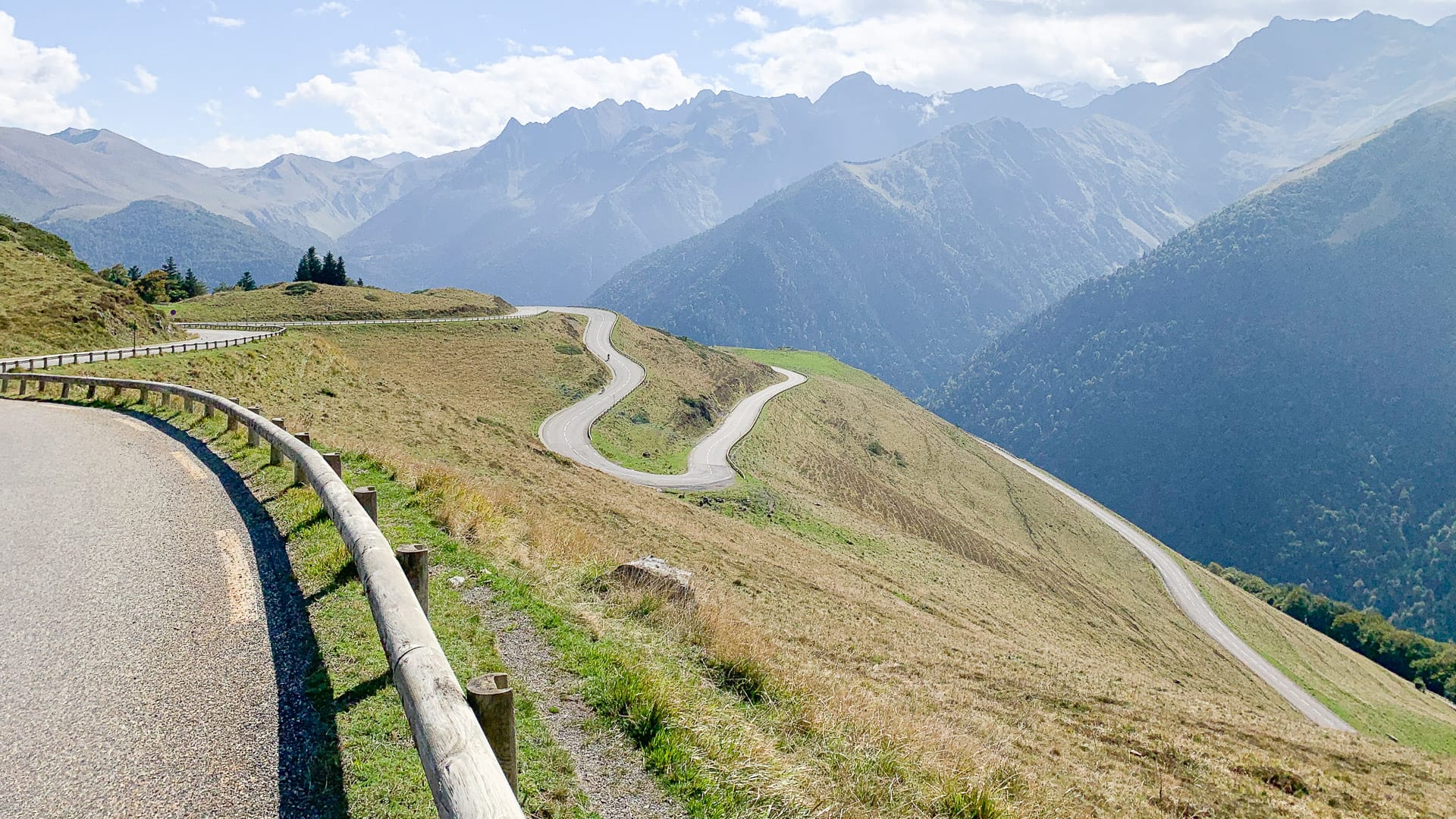
Views overlooking a mountain village in the Pyrenees (photo credit: Mark Panitz)
When should you start planning?
For a first trip, 6 to 12 months can give you useful time to compare routes, book popular dates, organise travel and build fitness. It is not a fixed rule, but earlier planning gives you more options.
- Organise time off work and any family commitments.
- Choose the destination and check the real daily difficulty.
- Set a realistic budget, including bike hire or airline bike fees, transfers, insurance, food and any extras not covered by a tour.
- Book travel and accommodation or confirm your tour place.
- Decide whether to take your own bike or hire one.
- Check insurance, travel documents and transfer arrangements.
- Build a training plan around the riding you expect to do.
- Confirm luggage, route files and emergency contacts before departure.
- Riding seasons vary by destination and altitude. High mountain passes can remain closed by snow early or late in the season, so check local road and weather information for the specific trip.
- Cycling tours linked to Grand Tours and major cycling events or car-free days can fill well in advance, so check dates early if that is central to your plans.
- Give yourself enough time to plan without turning the holiday into another source of stress.
Read more: Our guide to planning a cycling holiday
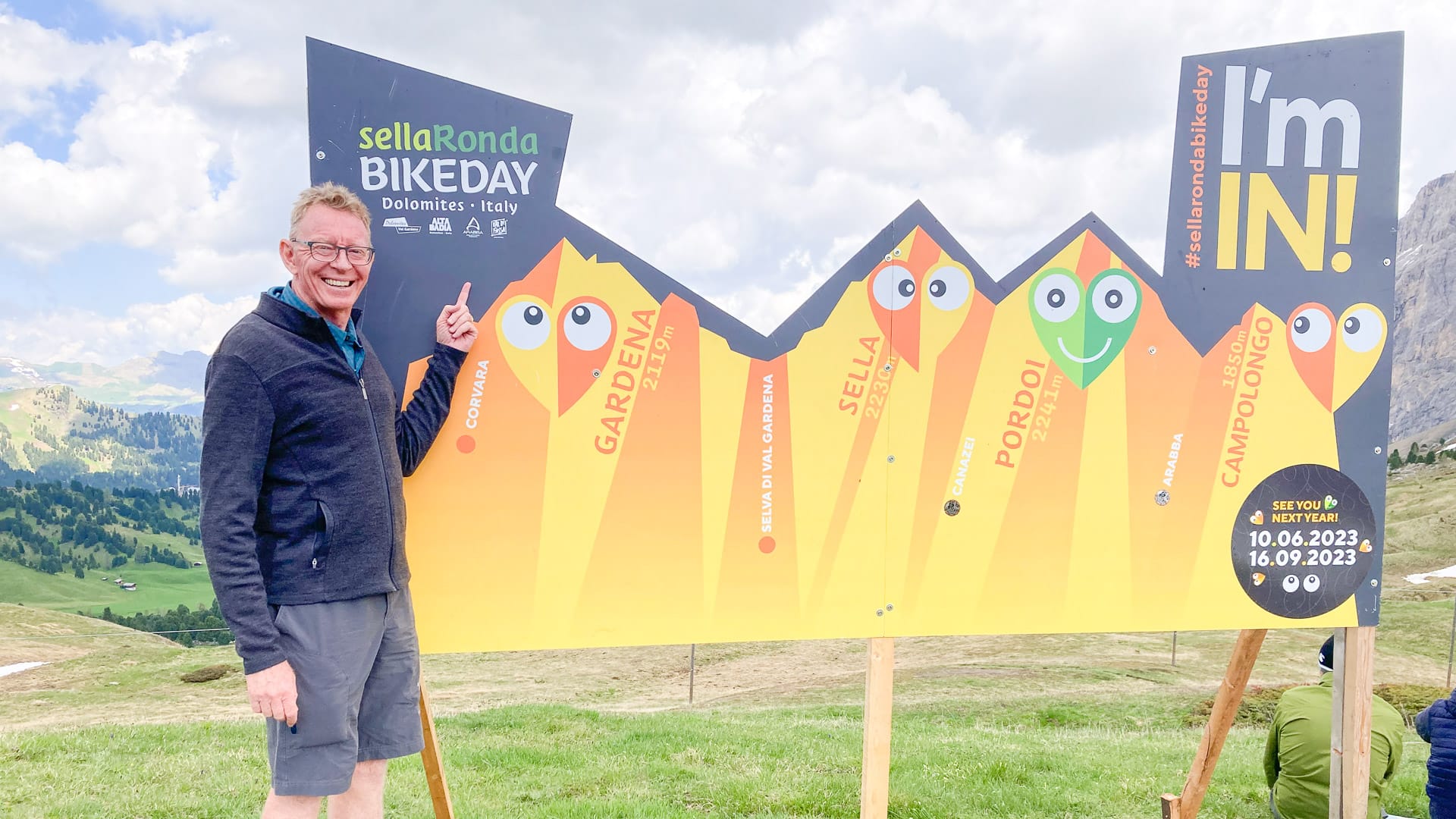
Sella Ronda Bike Day (photo credit: Mark Panitz)
Part 5: How can you make the most of your first mountain cycling holiday?
Remember: it is more than just the cycling!
Legendary climbs may be the hook, but the holiday is bigger than a list of cols. I remember the coffee and homemade cake at mountain cafés, local food and wine, conversations with other cyclists, saying hello to people in villages, trying a few words of the local language and occasionally sharing a high five with a stranger at the top of a climb. Go with an open, inquisitive mind and leave enough time to enjoy the places between the summits.
The summit photo matters, but so do the roads, people and places that got you there.
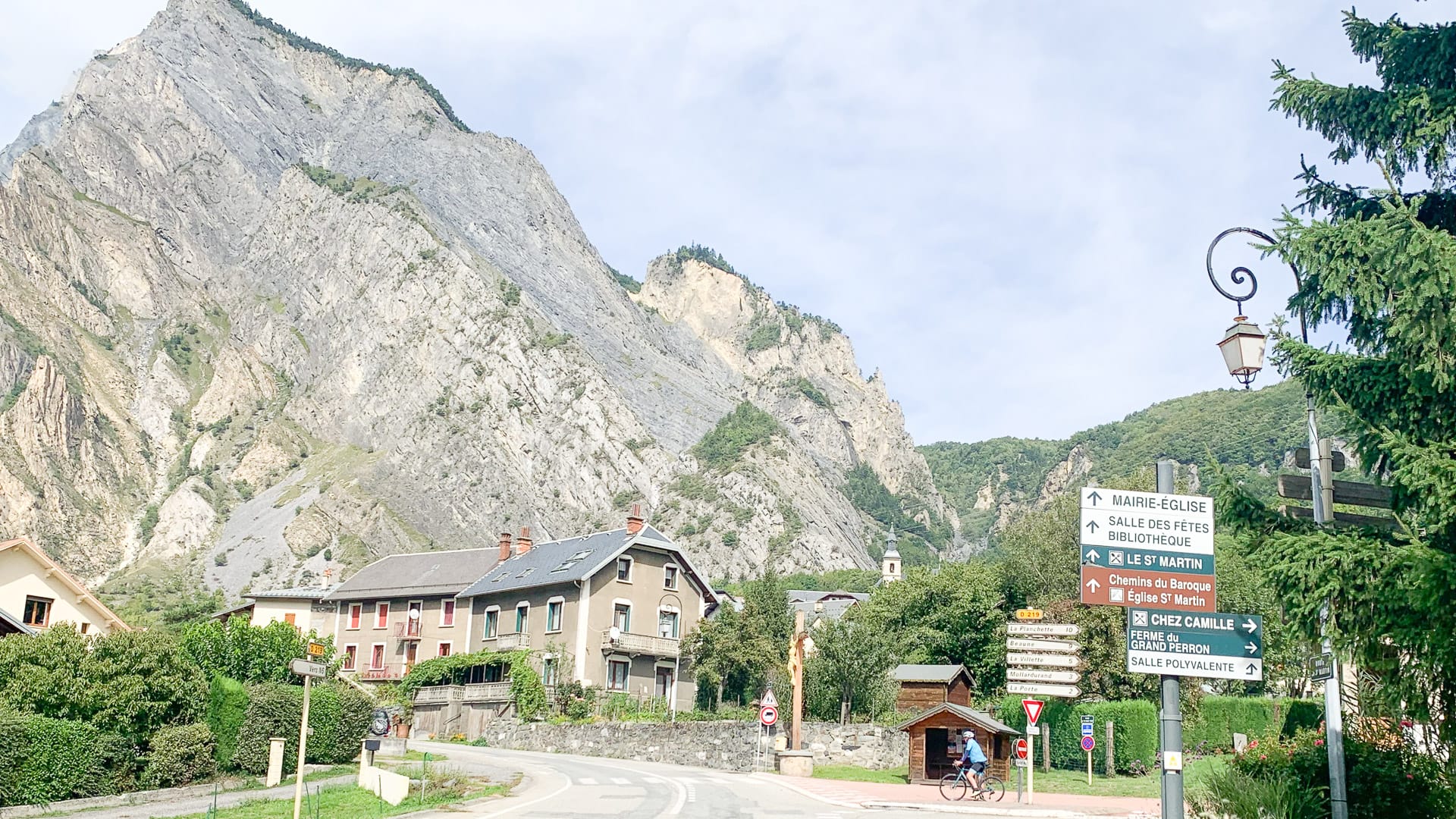
Quiet village in the French Alps (photo credit: Mark Panitz)
First-trip ideas to consider for cyclists over 50?
Based on my experience, there is no single formula for a first mountain cycling holiday. These four ideas range from fixed-base riding to more ambitious multi-region cycling trips. Some suit riders who are happy to organise the logistics themselves and get straight into the mountains; others offer an easier way to build into the experience with more support.
Of course, it also depends on how much time you’ve got!
| First-trip idea | Suits riders who… | What to expect |
| Pyrenees and French Alps | Want a full two-week mountain trip and several legendary climbs. | Big mountain days and more transfer time. A car or organised support can simplify the logistics. |
| Mont Ventoux and Bourg-d’Oisans | Prefer fixed bases, the flexibility to choose rides day by day and less transfer time. | Ventoux, Provence and the classic climbs around Alpe d’Huez and Bourg-d’Oisans. |
| Riccione, Dolomites and Bormio | Like the idea of building from hilly riding towards higher mountains. | A varied trip, but with more location changes and transfers. |
| Girona and the Pyrenees | Want cycling culture, flexible riding and a mountain finish. | A mix of Girona riding and Pyrenean climbs, with guided and self-guided options available. |
Pyrenees and French Alps
My full-immersion option is a week in the Pyrenees followed by a week in the French Alps, or the other way around. A hire car or van makes it easier to travel with bikes and a riding friend or two. If time and legs allow, Mont Ventoux can add some extra spice between the two regions.
Related Epic Road Rides guides
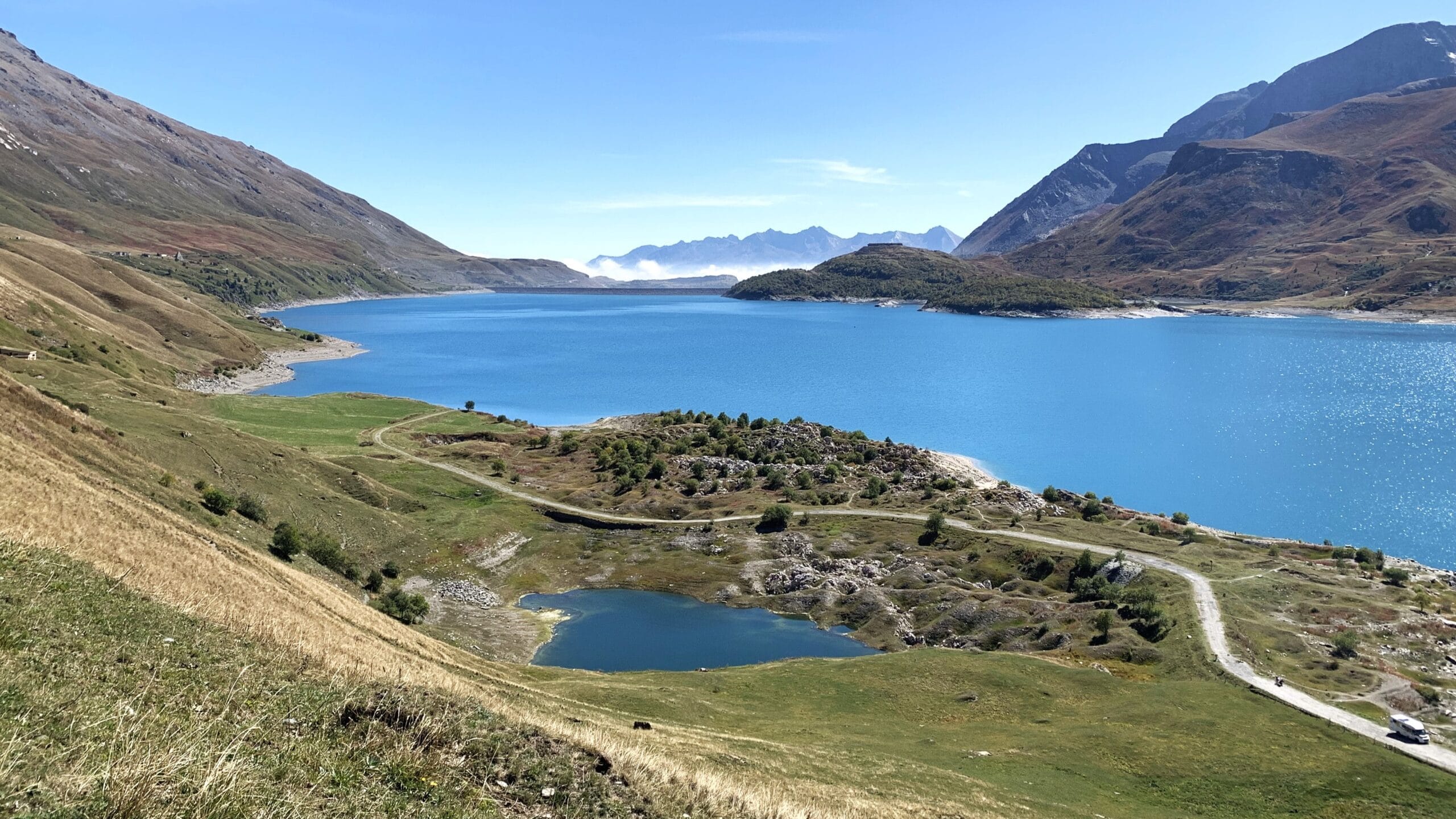
Mont Cenis Lake, a reward for the Col du Mont Cenis Climb, French Alps (photo credit: Mark Panitz)
Mont Ventoux and Bourg-d’Oisans
Use two fixed bases and choose rides day by day. Around Ventoux, mix the three ascents of the Giant of Provence with vineyards, gorges and gentler local roads, then move to Bourg-d’Oisans for Alpe d’Huez, the Col du Galibier, Col du Glandon and other Alpine classics.
Related Epic Road Rides guides
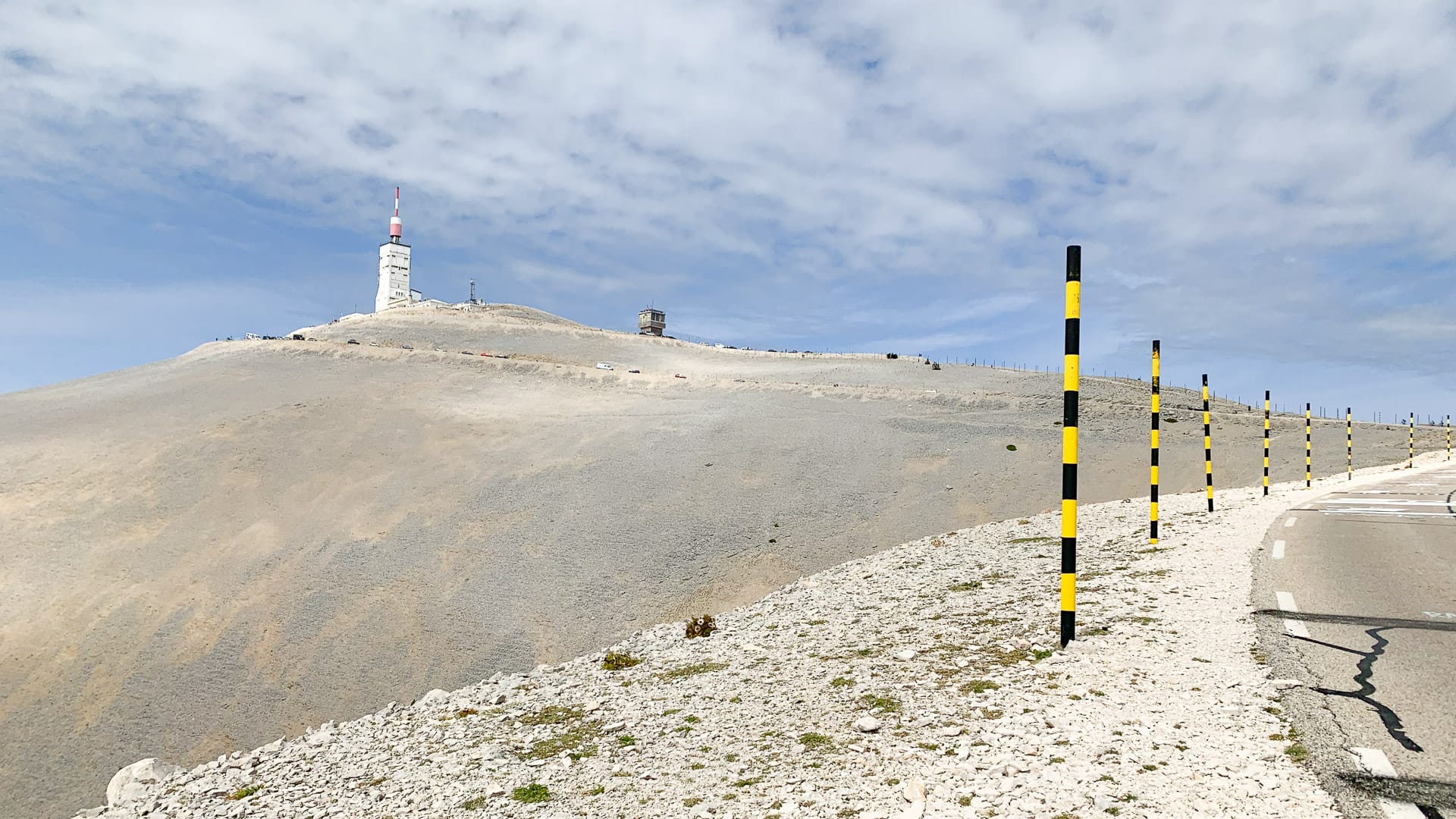
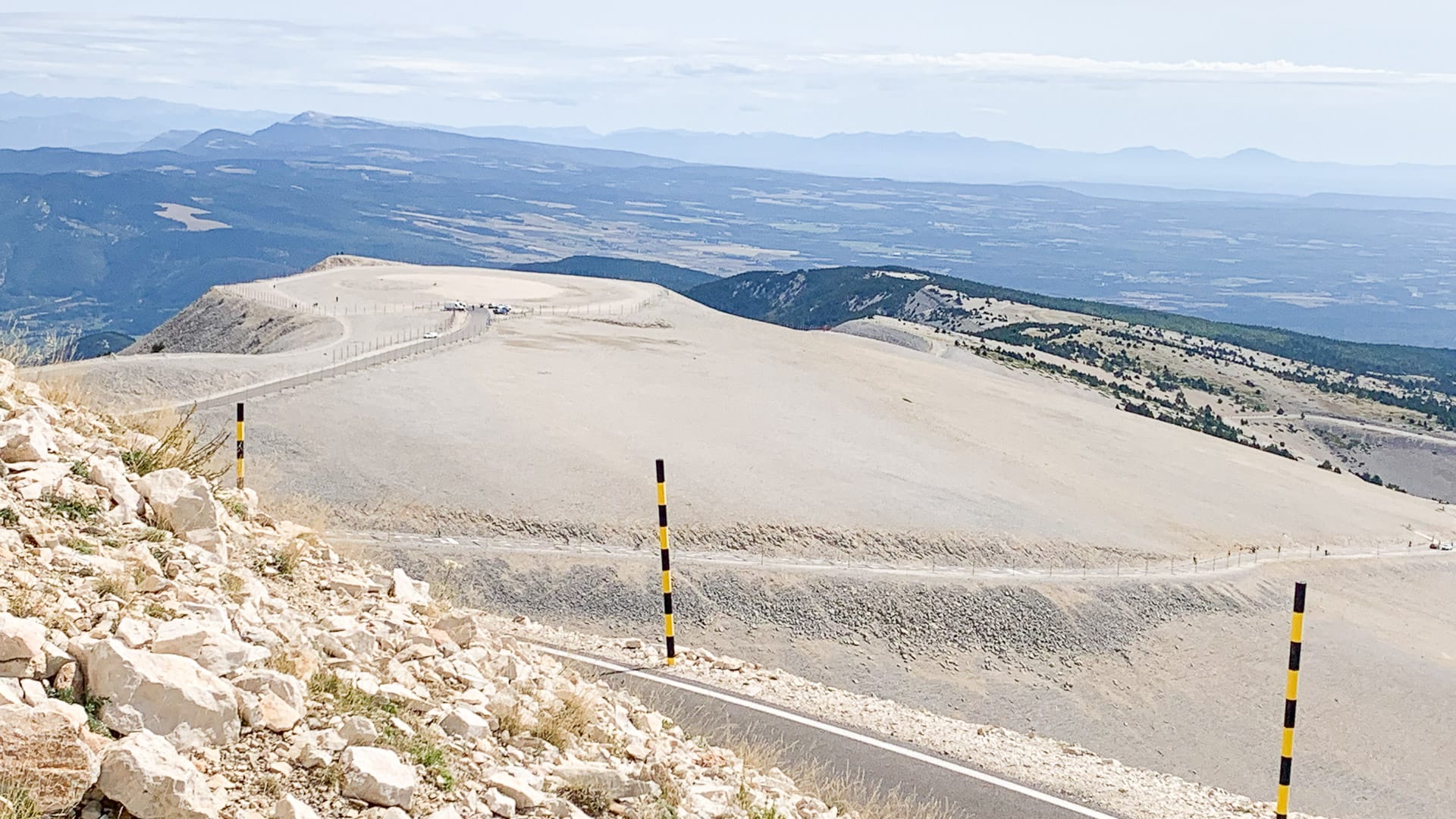
Near the top of Mont Ventoux (photo credit: Mark Panitz)
Riccione, Dolomites and Bormio
This is my build-up option. Begin with hilly riding from a bike hotel in Riccione, where guided riding and activities for non-riding partners can make the trip easier for mixed groups. Then move north for the Sella Ronda and Passo Giau in the Dolomites before finishing around Bormio with the Stelvio and Gavia.
Related Epic Road Rides guides
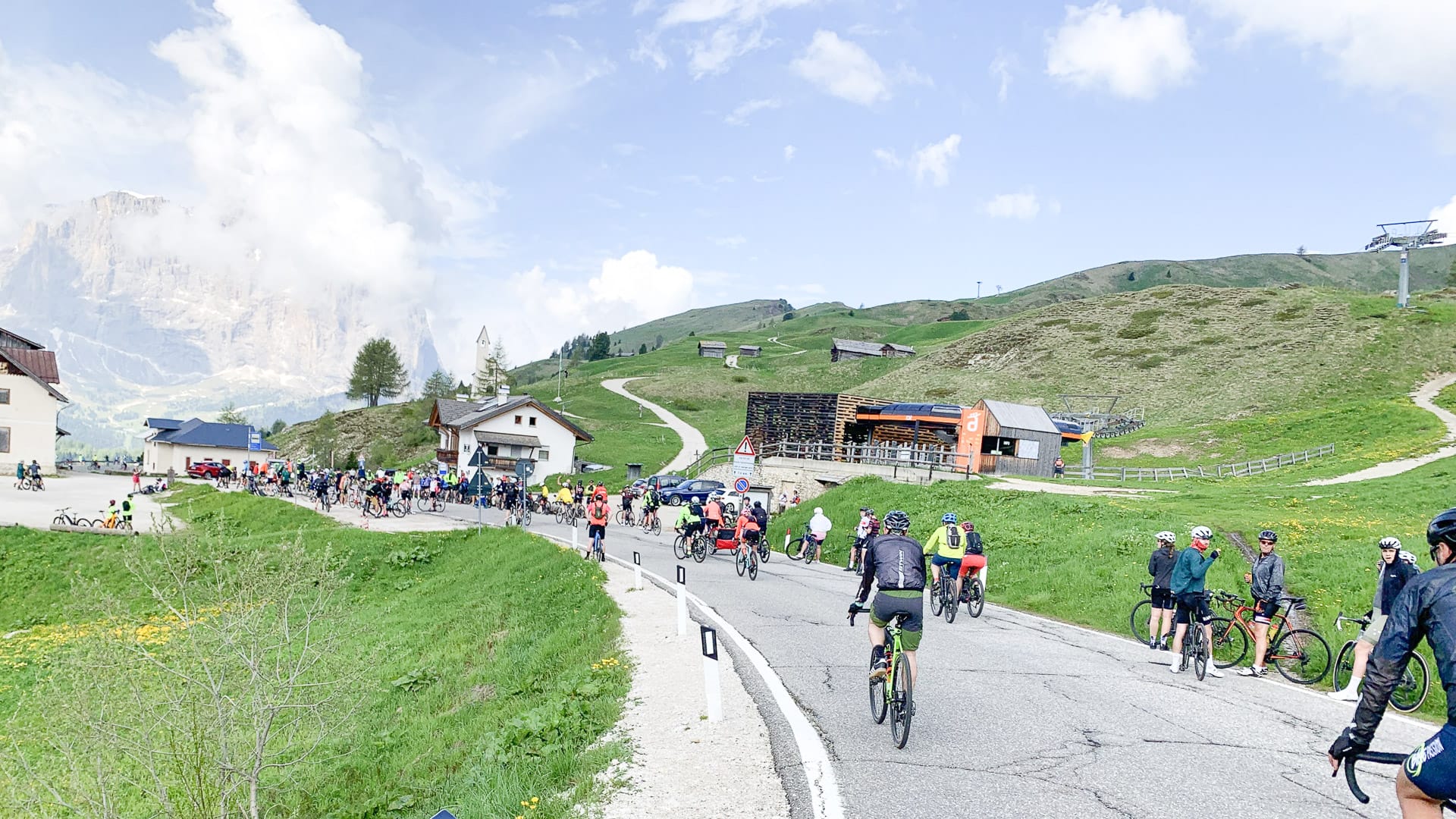
Sella Ronda Bike Day (photo credit: Mark Panitz)
Girona and the Pyrenees
Start in Girona, with its strong cycling culture and plenty of flexibility for riding independently or with support, then cross into France for a week in the Pyrenees. It is a good combination if you want a lively cycling base first and bigger mountain days later.
Related Epic Road Rides guides
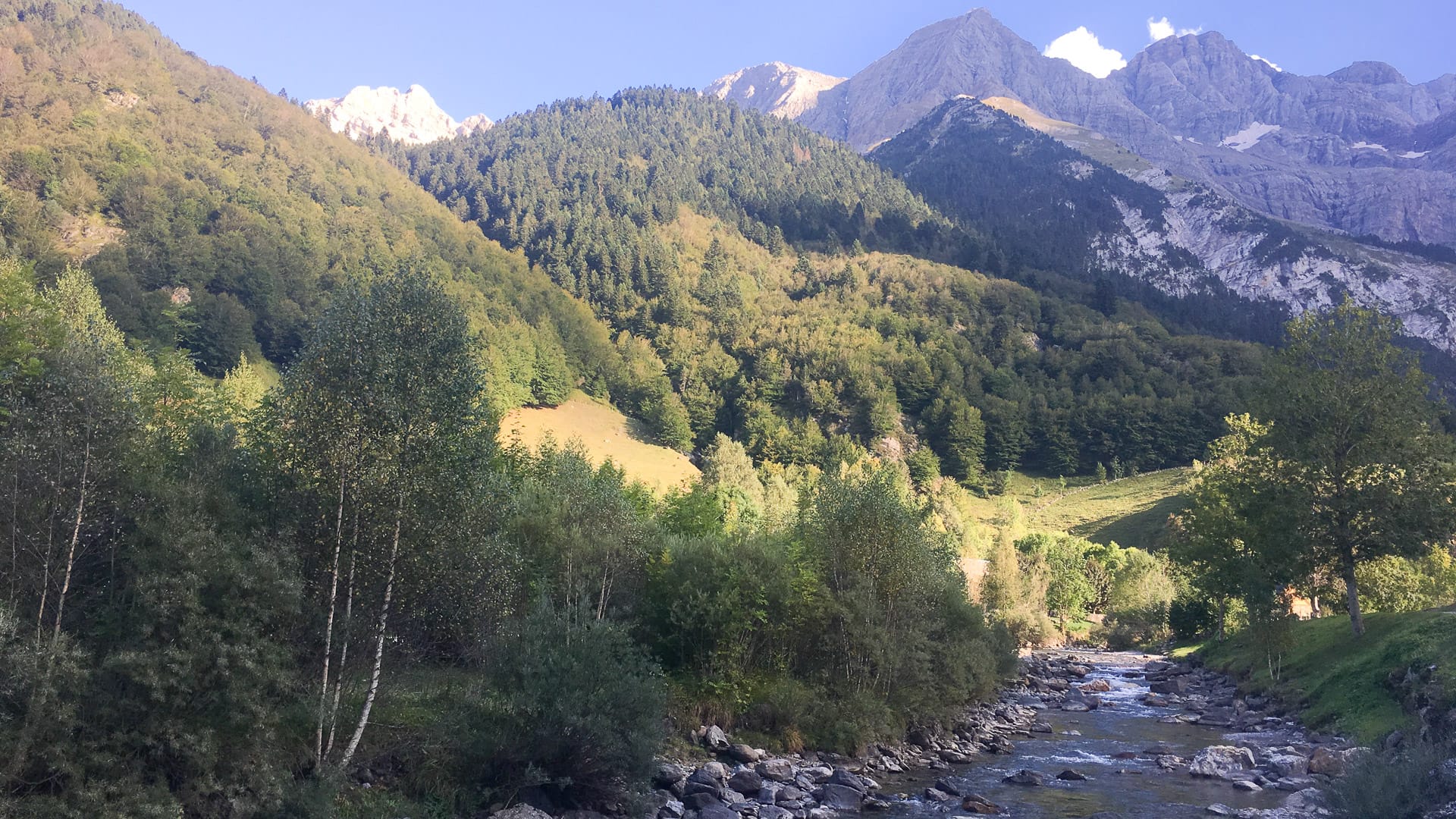
Beautiful mountain view in the Pyrenees (photo credit: Mark Panitz)
What’s next?
Thanks to Mark Panitz for sharing these insights into over 50 cycling and planning mountain cycling holidays.
Looking for more exciting content on cycling holidays in Europe? Don’t miss:
- Bike tours for seniors: the must-ride trips + what to expect
- Choosing the right accommodation in the French Alps
- Cycling the Alps: regions, towns and routes for road cyclists
- Summer cycling holidays – our pick of the best
- Cycling holidays in Autumn: the best places to cycle September + October
Please support Epic Road Rides
A huge amount of time and effort goes into the article you’ve just read, all with the aim of helping you!
If you found what you’ve read useful, I’d really appreciate it if you dropped something in the tip jar here.
It’s a way you can say thank you and help us carry on creating top quality content with no annoying ads and no pay wall.
Got a question for Mark?
Fill out this form and we will send it to Mark. We aim to get you an answer within 24 hours where possible!Mark is a 67-year-old cyclist from Australia who describes himself as an average rider. He started cycling in his 40s and has spent around 15 years taking European cycling holidays, including guided and self-guided cycling trips, riding alone and with friends, and staying in bike hotels, guesthouses and self-catering accommodation.
- Alpe d’Huez: Mark’s first big climb and the ride that got him hooked on mountain cycling.
- Sella Ronda Bike Day: closed roads, Dolomite scenery and thousands of cyclists sharing the route.
- Col du Télégraphe and Col du Galibier: an epic day out.
And he is not done yet - there are always more places to go and more cycling experiences to have. After 15 years of these trips, Mark’s biggest lesson is that you do not need to be an elite cyclist to have the experience. For him, taking on achievable challenges, seeing new places and sharing the road with other cyclists is good for the body and soul.
First Published: 22 September 2026
The contents of this website are provided for general information purposes only. It is not intended to amount to advice and you should not rely on it. You should carry out your own due diligence and risk assessments and take professional advice. Views expressed by interviewees or other users of this website do not necessarily represent our views. We make no representations, warranties or guarantees, whether express or implied, that the content on our website is accurate, complete or up to date. If you use any information or content on this website, download from, or otherwise obtain content or services through our website, it is entirely at your own discretion and risk. Epic Road Rides Ltd disclaims all liability and responsibility arising from any reliance placed on the information and content on this website. Find out more here.
Comments