
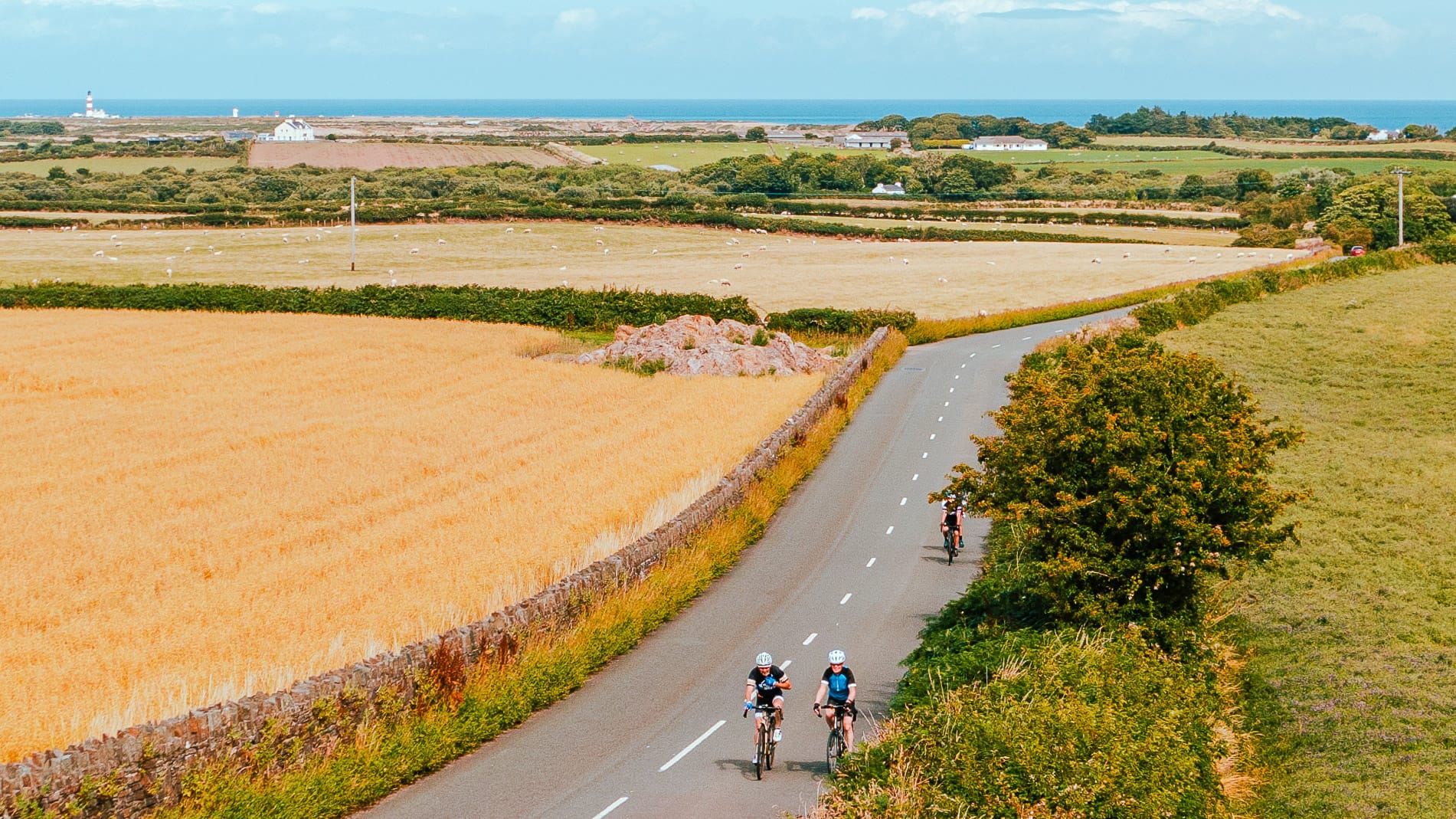
If you’re planning your next cycle trip and want to ride on an island that packs in mountain climbs, dramatic coastal roads, quiet countryside lanes, and some of the richest cycling heritage in the British Isles, then the Isle of Man might be a good fit.
Set in the heart of the Irish Sea between England, Ireland, Scotland and Wales, the Isle of Man is a self-governing British Crown Dependency with a character all of its own. Despite being relatively small, the island delivers an astonishing variety of riding, from sweeping sea-view roads and rolling farmland, to moorland climbs and traffic-free railway trails.
The Isle of Man is particularly well suited to road cyclists but there are also traffic-free trails for easier days and off-road options for gravel and mountain bike riders. You can expect winding coastal roads, rugged upland scenery, traditional fishing villages, mystical hidden glens, Viking heritage, warm Manx hospitality and some of the quietest roads out there. The cycling here is varied, memorable and full of surprises. One minute you’re climbing towards panoramic mountain views, the next you are descending to a harbour town for coffee and cake beside the sea.
In this guide, we hear from the team at Visit Isle of Man, the island’s tourism agency. They share insider tips on why a cycling trip to the Isle of Man appeals to riders who enjoy coastal roads, climbing and a strong sense of place. They also share iconic rides such as the TT Mountain Course and Raad Daawheeyl coastal ride.
Read on for what to expect from cycling in the Isle of Man, including routes, bases, accommodation, bike hire and practical travel tips.
Table of contents
This guide contains a lot of useful information. To help make it more digestible, we’ve broken it down into several parts:
- Part 1: Why visit the Isle of Man?
- Part 2: Overview
- Part 3: Best towns to stay in for cyclists
- Part 4: Cycling routes
- Part 5: Cycling events
- Part 6: Accommodation
- Part 7: Bike hire and shops
- Part 8: Tips
Cycling the Isle of Man: at a glance
| Feature | Details |
| Best for | Road cycling, coastal rides and climbing |
| Difficulty | Moderate to challenging |
| Best months | May to September |
| Signature route | Raad Daawheeyl |
| Highest climb | A18 Snaefell Mountain Road |
| Family cycling | Heritage Trail |
| Cycling heritage | Home of Mark Cavendish and the TT Mountain Course |
| Getting there | Ferry or short flight from the UK and Ireland |
Part 1: Why should cyclists visit the Isle of Man?
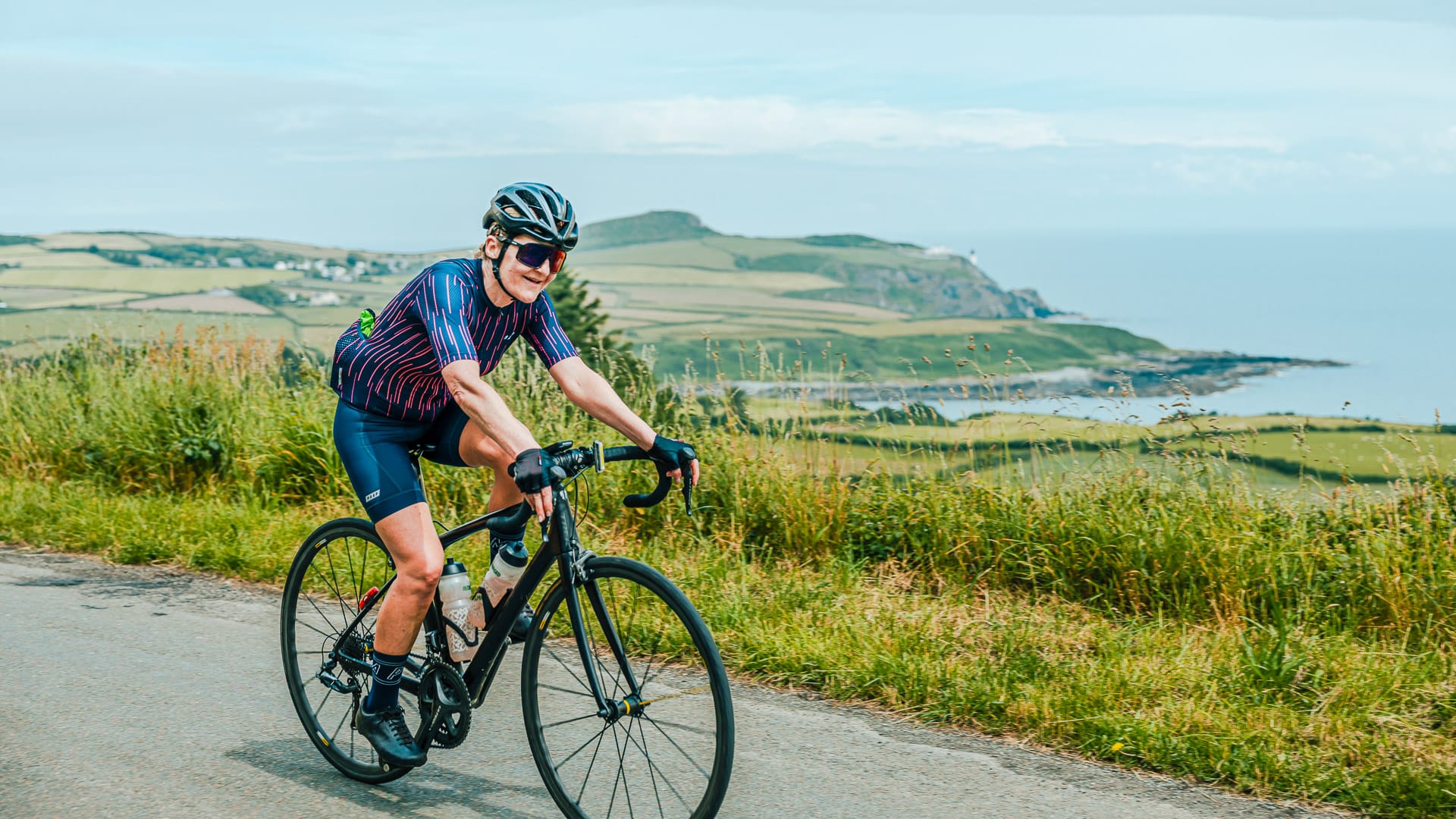
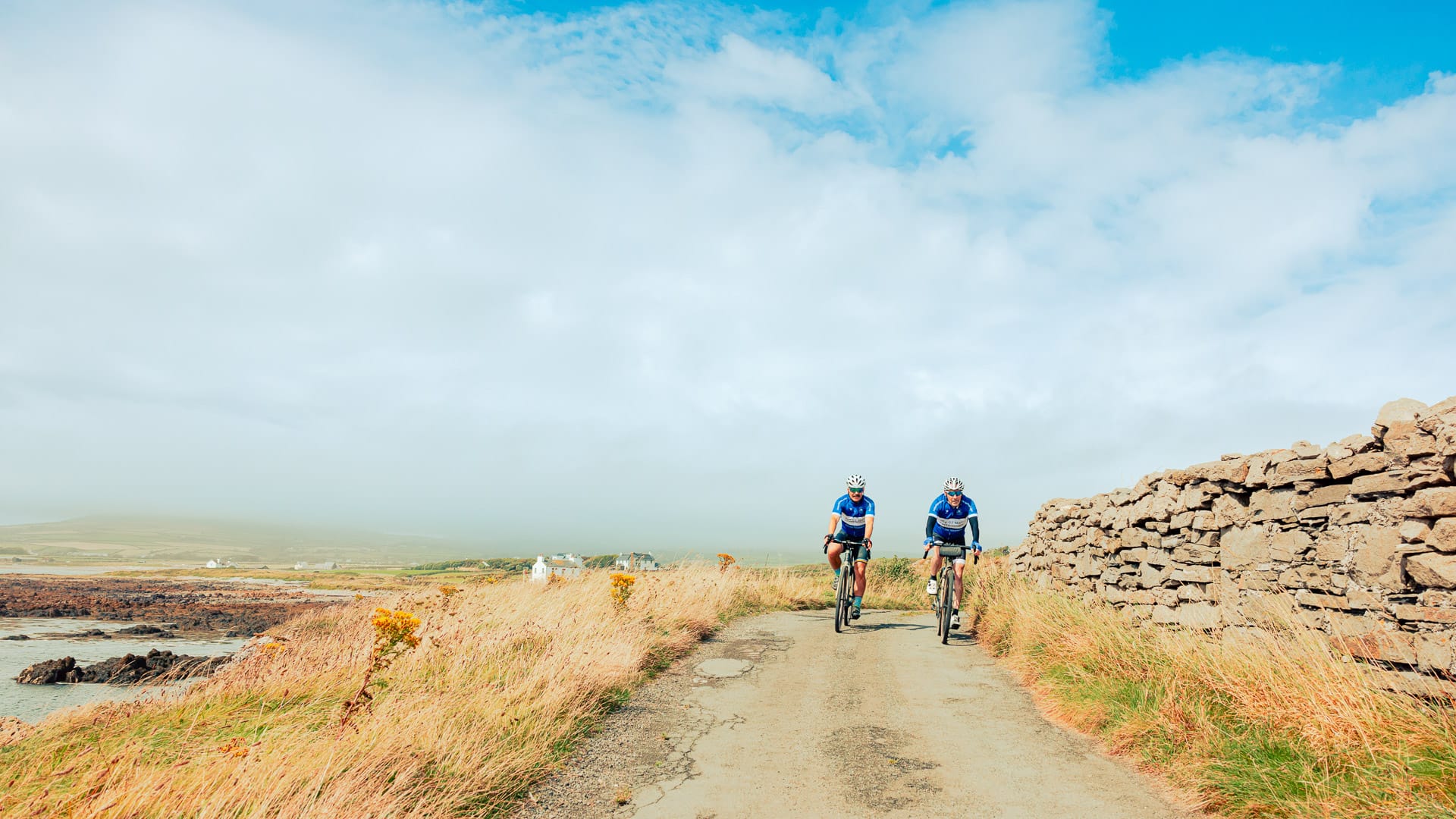
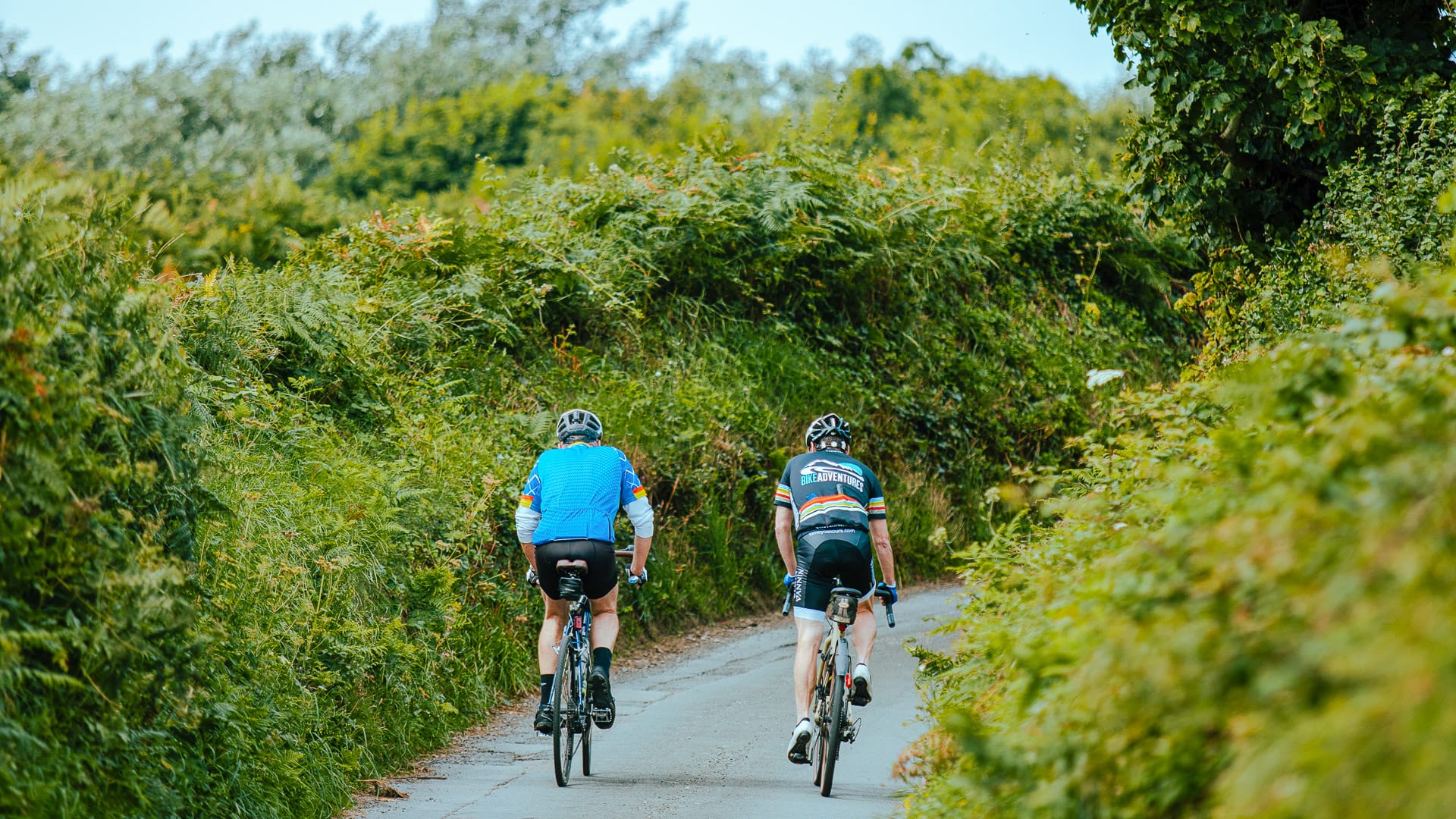
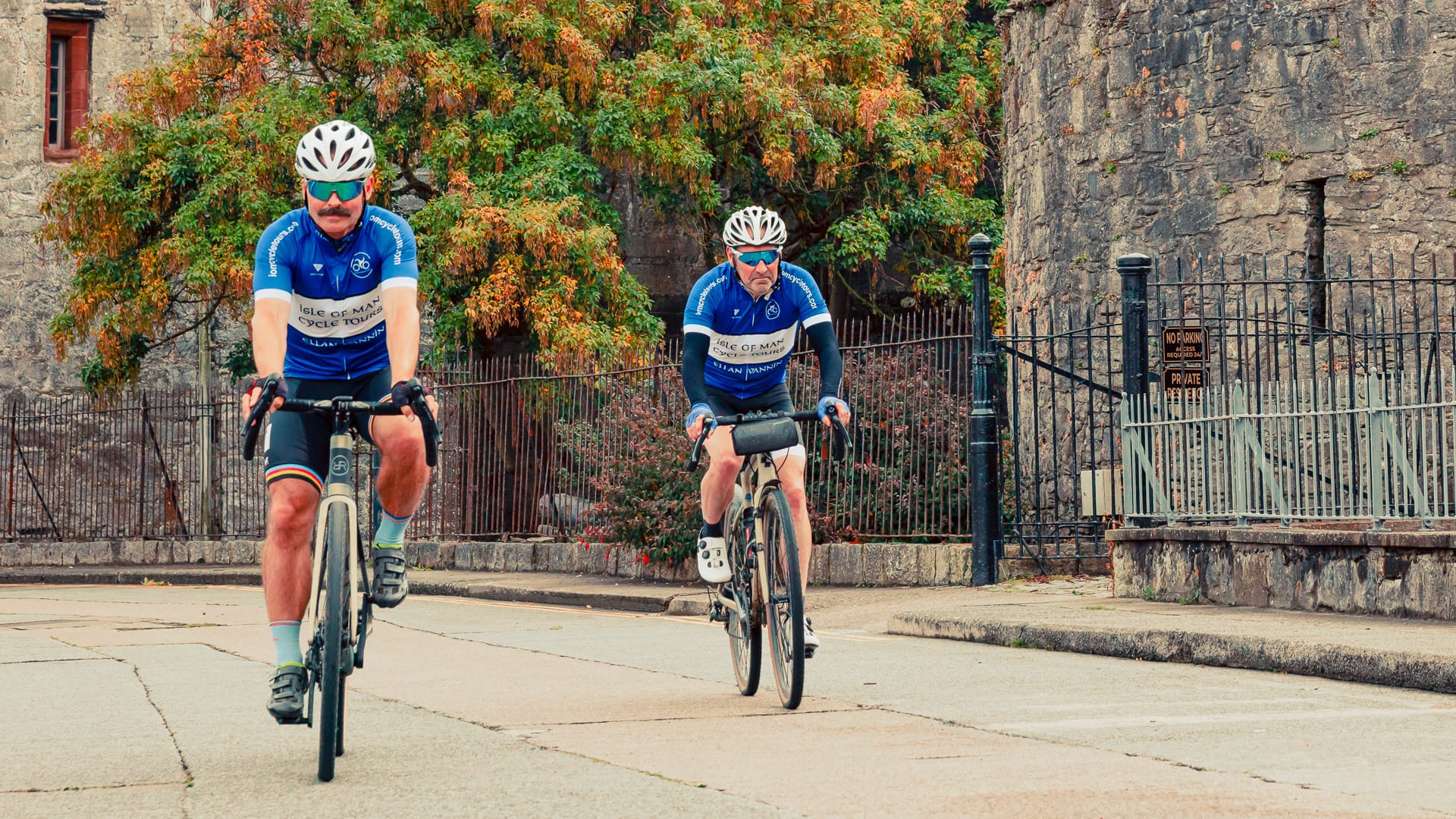
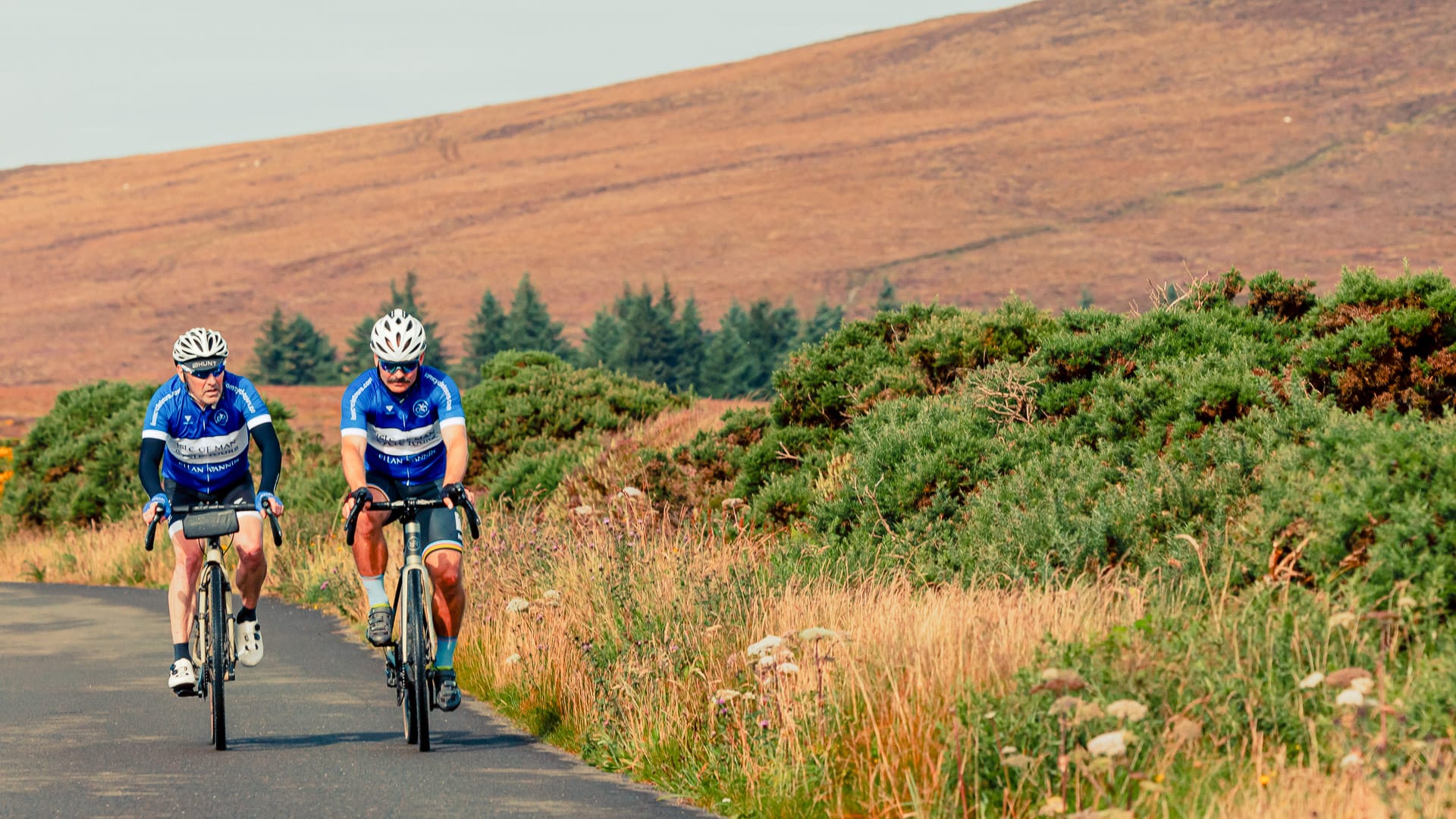
One of the greatest things about riding on the Isle of Man is how quickly the scenery changes. Within a single ride, you can transition from rugged coastline and sea cliffs to rolling farmland, wooded glens, and exposed mountain terrain. The island may only be compact, measuring 21 kilometres wide and 53 kilometres long, but the variety of riding is remarkable, and the landscape delivers far more than some visitors expect.
Cycling here feels adventurous without requiring huge transfers or complicated logistics. Wherever you stay, memorable riding is never far away.
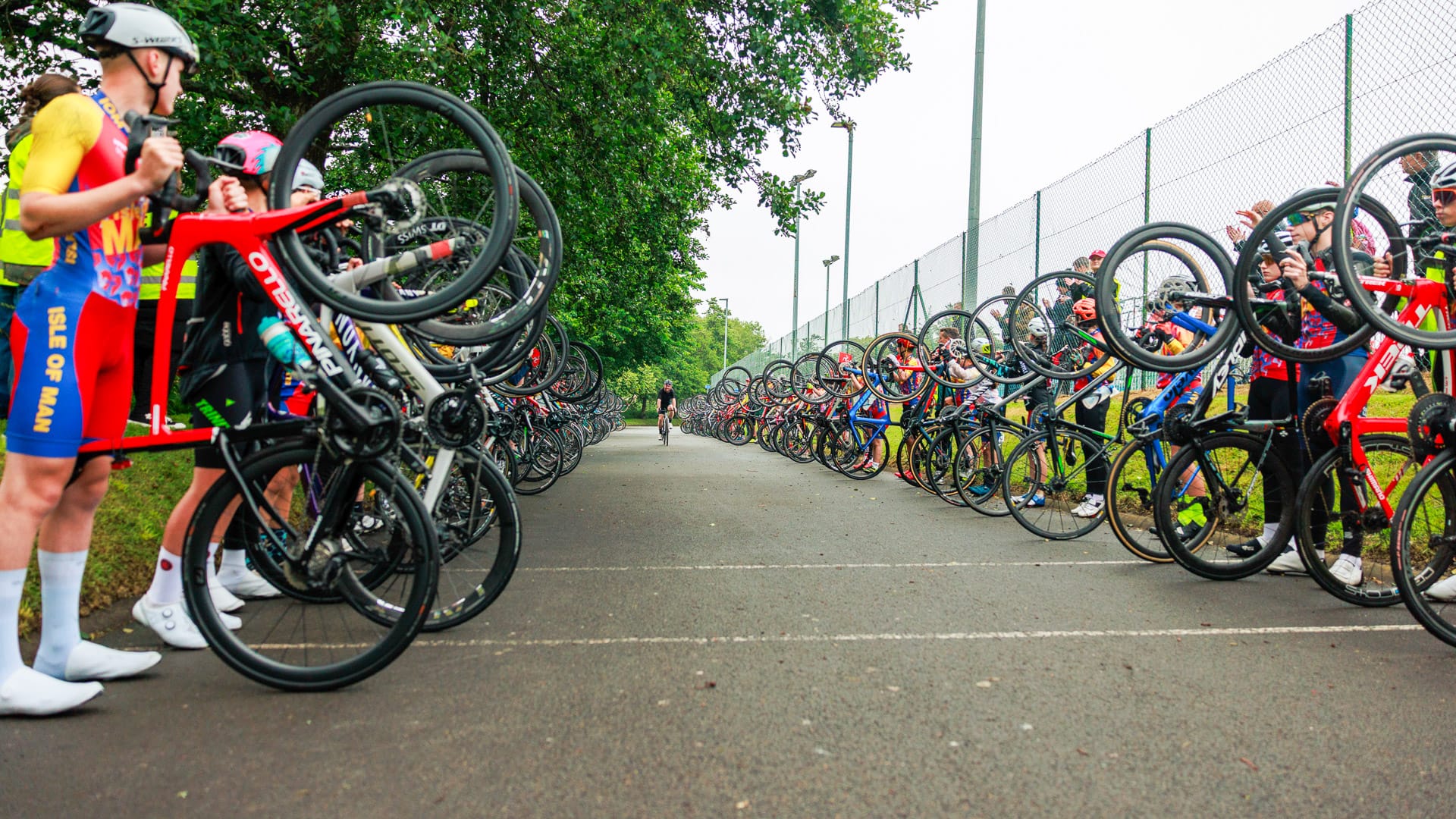
Legendary climbs and iconic roads
The Isle of Man is home to several famous cycling routes and climbs, particularly for cyclists wanting to ride in the tyre-tracks of pro-cycling royalty.
The most iconic route the Isle of Man has to offer is the world-famous TT Mountain Course, used during the motorcycle races (info here). Riding these roads by bicycle outside key motorsport racing dates, including the TT Races, Classic TT and Manx Grand Prix, is an unforgettable experience, combining smooth asphalt, fast descents and panoramic upland scenery.
The island’s most notable climbs include:
- Snaefell Mountain Road: the island’s highest point, topping out at 429 metres, with sea views. However, cyclists should note that the ride only reaches the base of Snaefell on the Mountain Road, rather than the summit itself.
- The Sloc (Round Table): a challenging climb crossing the southern uplands.
A rich cycling heritage
Cycling is deeply woven into Manx sporting culture. The Isle of Man is the birthplace of several professional cyclists, including Peter Kennaugh, Millie Robinson, Lizzie Holden and the Manx Missile himself, Mark Cavendish. There is also a passionate local cycling community that supports regular races, sportives and off-road events throughout the year.
The island’s cycling culture feels authentic and welcoming, and it’s not uncommon to encounter Manx professional cyclists out training on quiet lanes and mountain roads.
UNESCO Biosphere landscapes
The Isle of Man was the world’s first whole jurisdiction to be designated a UNESCO Biosphere Reserve, a recognition that reflects the island’s balance between people, culture and nature.
For cyclists, it means well-preserved landscapes, abundant wildlife and a strong connection between rural life and the environment, from farming and fishing traditions to outdoor lifestyles. When riding, you can expect sea cliffs, heather-covered hills, ancient glens, historic castles and peaceful farmland vistas dotted with Manx sheep and stone cottages.
One of the pleasures of cycling here is how quickly the scenery changes. Within a relatively short distance, you can move from rugged coastline and sea views to open moorland and quiet farmland. For many visitors, this variety is one of the island’s biggest surprises.
Friendly atmosphere and quiet roads
The island is known for its relaxed pace of life and welcoming atmosphere.
Compared with a lot of places in the British Isles, roads are generally quieter, and drivers are considerate towards cyclists.
One of the biggest misconceptions is that cycling on the Isle of Man is only for professional or high-performance riders. In reality, the island offers something for every level, from leisurely coastal routes and family-friendly trails to challenging climbs and world-class road cycling. Visitors are often surprised by the range of cycling experiences available in such a compact destination.
Cyclists on the Isle of Man also benefit from:
- Dedicated off-road routes like the Heritage Trail that follows a former railway line
- Clearly marked routes and graded trails
- Bike-friendly accommodation
- Bike hire and guiding services are available island-wide
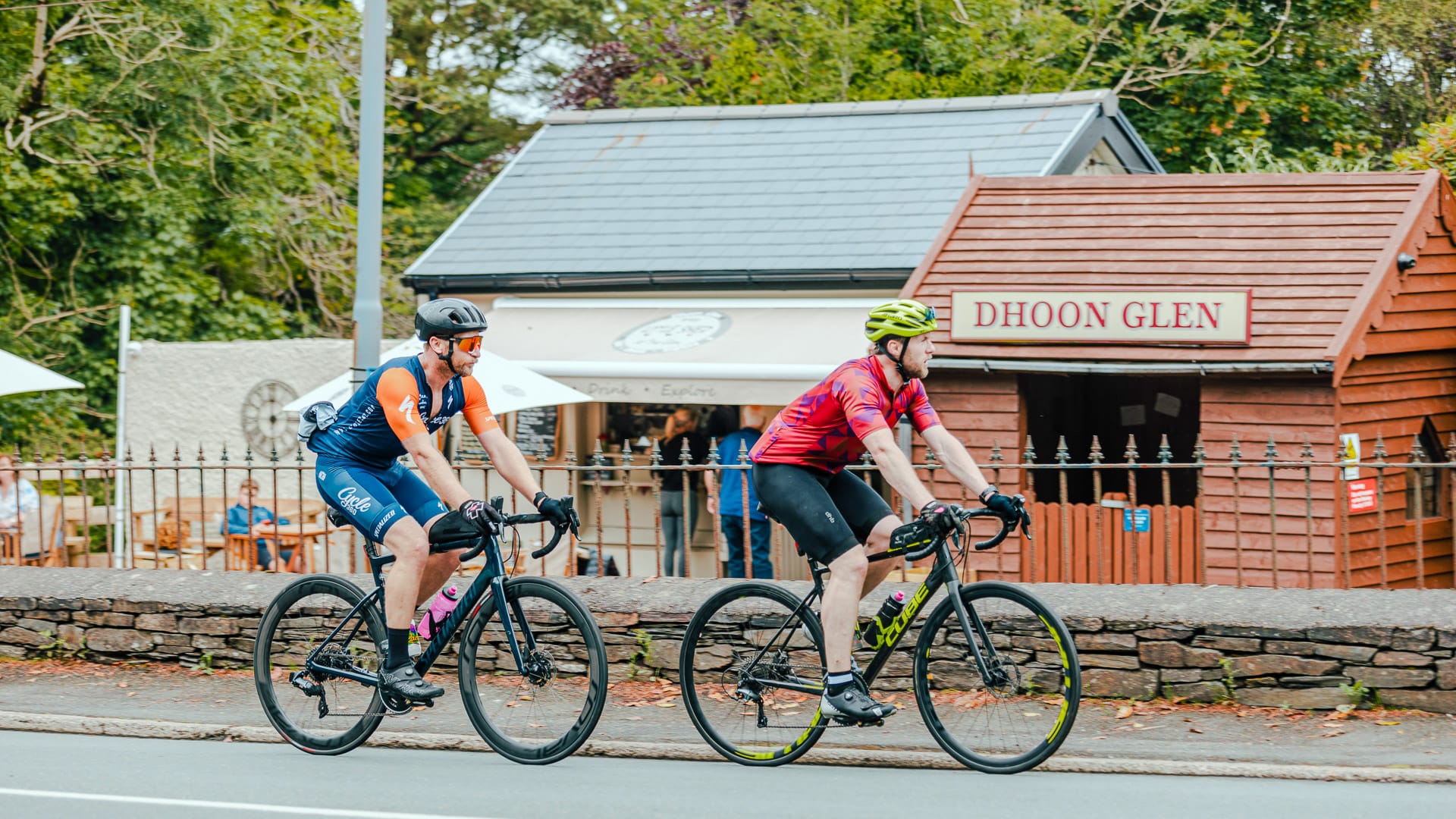
- Plenty of café stops in towns and villages
There’s more information on all these things below.
Part 2: Overview of the Isle of Man from a cyclist’s perspective
Location of the Isle of Man
The Isle of Man sits in the Irish Sea, between England, Ireland, Scotland and Wales. It is an independent nation that is easily accessible from the UK and Ireland. Year-round flights are available from cities including London, Dublin, Manchester and Liverpool. You can also travel by ferry from Liverpool, Heysham or Larne and bring your own bike on board for a standard fee of £10 each way if you are travelling as a foot passenger. If your bike is included as part of a vehicle booking, there is no additional charge, provided it fits within the vehicle’s overall dimensions. Bikes carried on the roof count towards these measurements, so this should be declared when booking.
Terrain of the Isle of Man
From a cyclist’s perspective, the Isle of Man can be divided into three key riding zones that offer a broad range of terrain, elevation, and landscape.
- Mountain and upland interior: Home to Snaefell and more demanding climbing. Climbs here are exposed and scenic, often with expansive views across the Irish Sea.
- Rolling countryside and glens: Peaceful, scenic riding through farmland and valleys. This part of the island is ideal for steady endurance rides and relaxed exploration. The roads here are quiet and peaceful.
- Coastal routes: Sea views, rugged cliffs and sweeping descents towards fishing villages and sandy bays, particularly on the west and south.
The transition between these landscapes is quick, which is one of the island’s biggest strengths for cyclists.
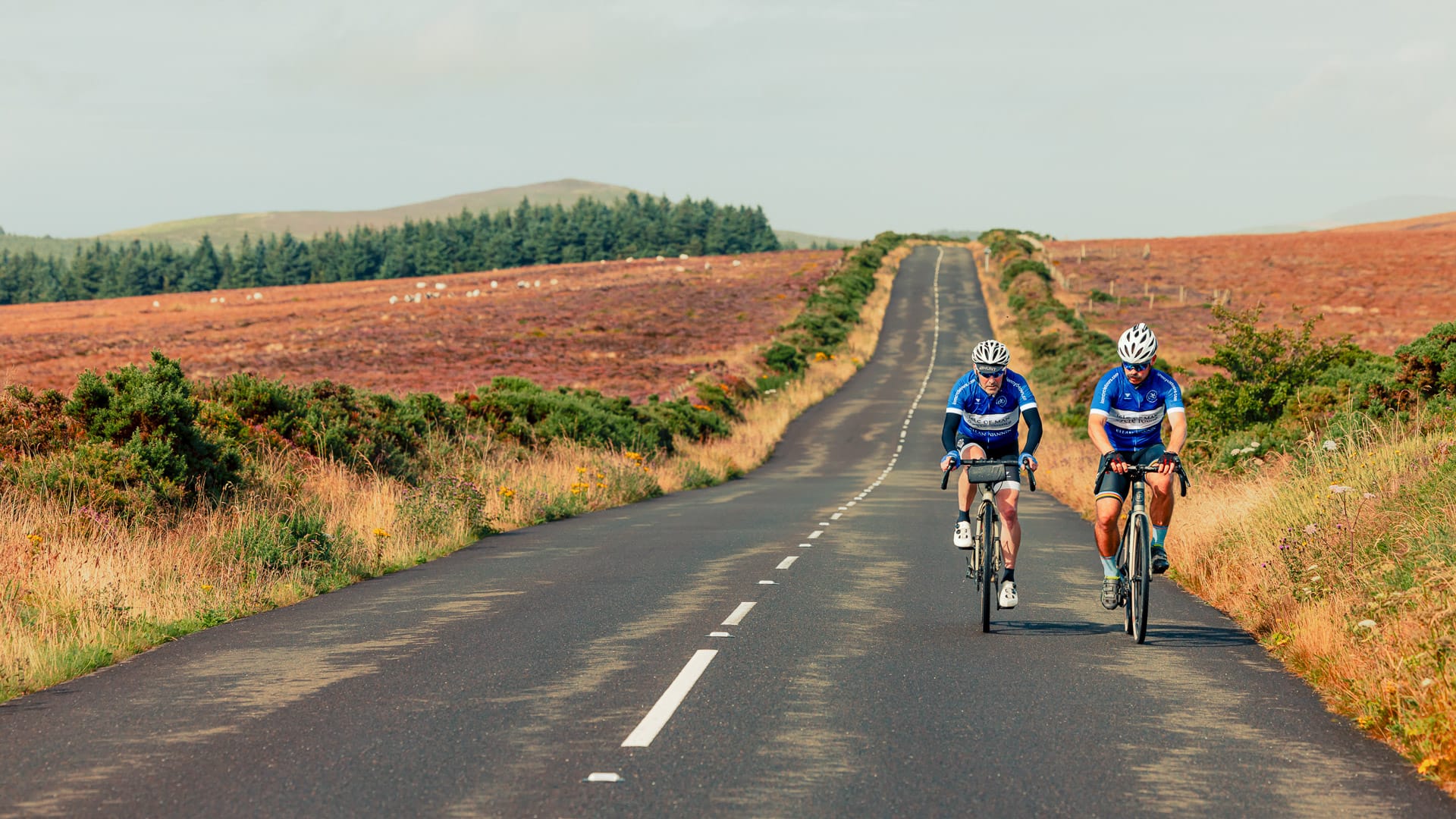
Cycling in the south of the Island (photo credit: Visit Isle of Man)
What are the roads like on the Isle of Man?
Road conditions are generally very good on the Isle of Man. Main roads are well maintained, but rural lanes can occasionally be rougher or narrower, so plan accordingly.
Cyclists are generally treated respectfully by other road users thanks, in part, to a more relaxed pace of life on the island. There is a good mix of on-road routes and traffic-free trails and disused railway routes.
When riding, cyclists should be aware of:
- Technical descents
- Narrow country lanes
- Exposure to strong coastal winds
- Rapidly changing weather conditions. Bring layers and waterproofs, even in summer.
For a first cycling trip to the Isle of Man, Visit Isle of Man suggests allowing at least four to five days. The island may be compact, but this gives you time to experience its mix of famous roads, challenging climbs, coastal routes and glens, as well as its culture, heritage and warm Manx welcome.
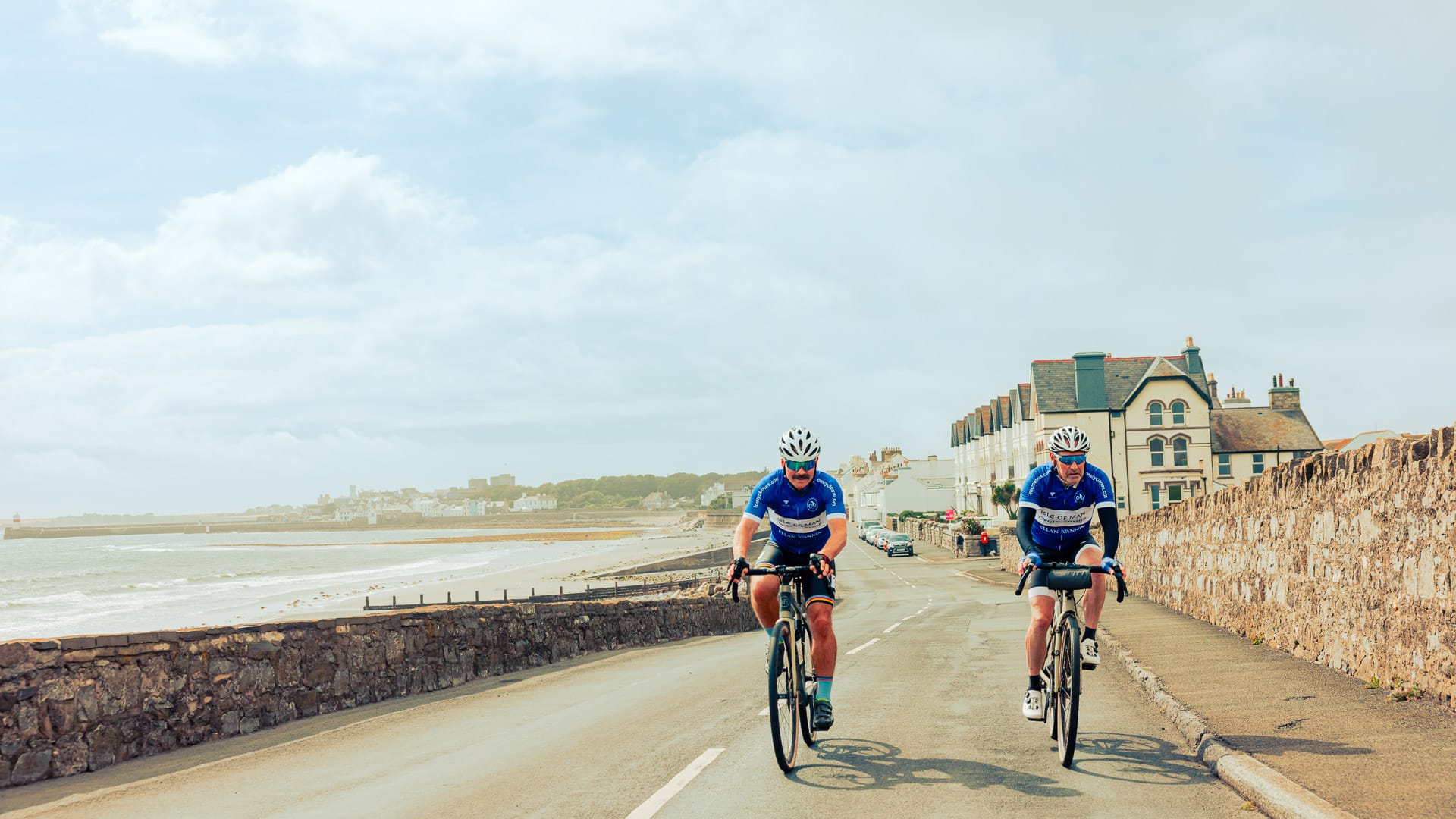
Cycling alongside Castletown Beach, in the south of the Island (photo credit: Visit Isle of Man)
What kind of cyclist is the Isle of Man for?
Road cyclists
The Isle of Man is best known for its road riding. The island offers everything from long coastal loops and fast rolling roads to challenging mountain climbs and the famous TT Mountain Course. Riders looking for quieter roads will find plenty to enjoy here. You can find more route inspiration on Visit Isle of Man’s Road Cycling Routes page.
Gravel and mountain bikers
Off-road riders will also find plenty to enjoy. Forest routes, moorland tracks and dedicated off-road trails provide opportunities for both gravel riding and mountain biking. The compact size of the island also makes it easy to combine road and off-road riding during the same trip.
For a good place to start, South Barrule Mountain Bike Trails near Foxdale offer fully signposted forest trails at the foot of South Barrule, with hand-built single-track sections that suit first-time visitors, newer riders and children. Our Mountain Biking page has more information on gravel and mountain bike routes across the island.
Families and leisure cyclists
Traffic-free routes such as the Heritage Trail make the island suitable for families and more relaxed riders. Following a former railway line, the trail offers easy navigation and gentle riding through attractive countryside. Shorter signed routes around towns such as Peel, Ramsey and Castletown also provide accessible options for less experienced cyclists.
How fit do you need to be?
The Isle of Man caters for a broad range of riders. Cyclists looking for challenging climbing and longer rides will find plenty of opportunities on routes such as the Raad Daawheeyl and Snaefell. Equally, riders seeking gentler days out can stick to shorter coastal routes, traffic-free trails and flatter roads in the north of the island.
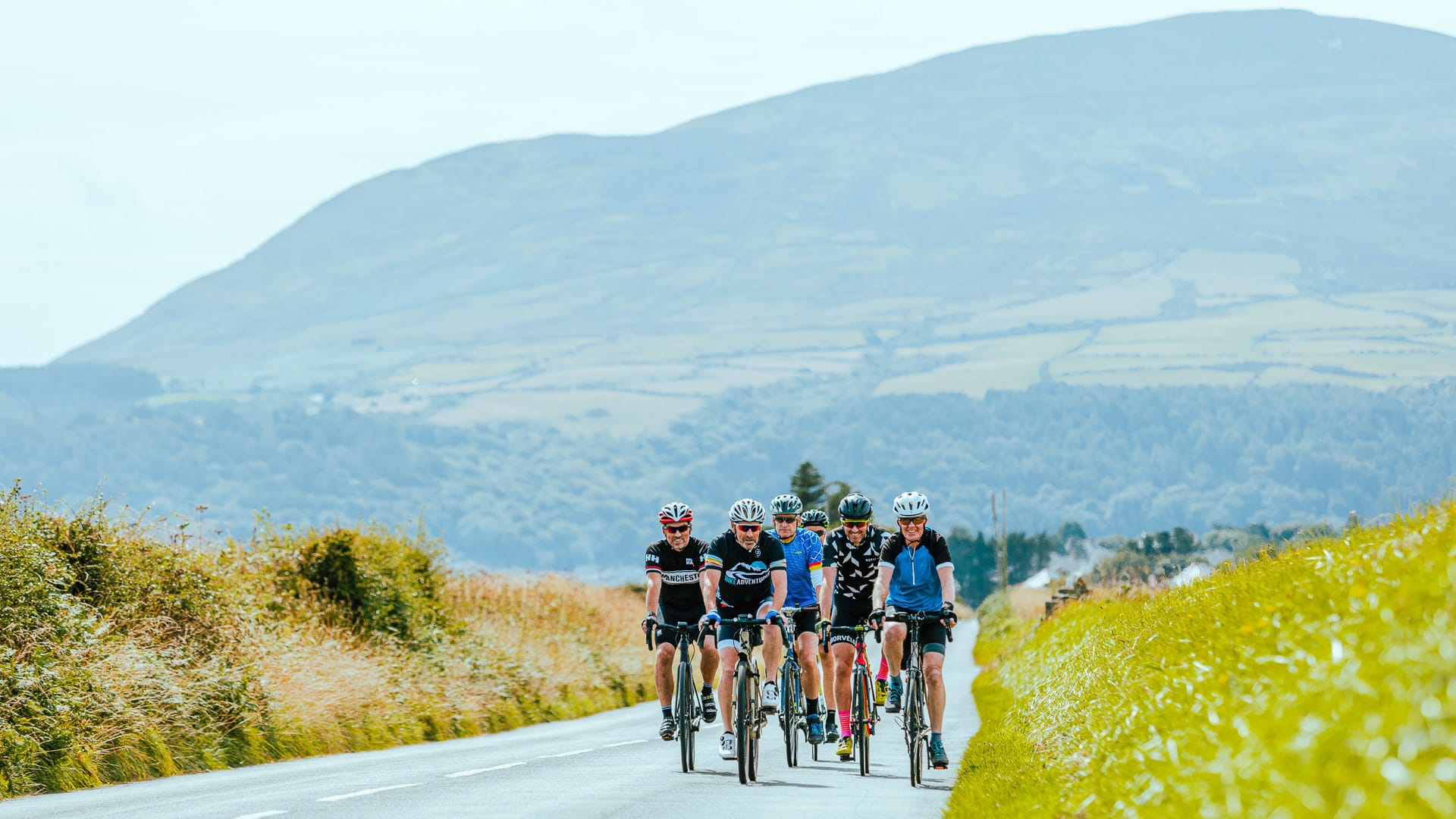
Cycling group in the north of the Island (photo credit: Visit Isle of Man)
Do you need an organised tour to ride the Isle of Man?
Some may want to explore the Isle of Man on a bike tour. A dedicated tour provider, like the ones linked below, gives you the benefit of local route knowledge and having your logistics handled. Of course the flipside is that they will be less flexible and, obviously, incur some cost.
For more route ideas, cycling-friendly places to stay and trip-planning information, Visit Isle of Man’s cycling hub brings together useful resources for cyclists planning a trip to the island.
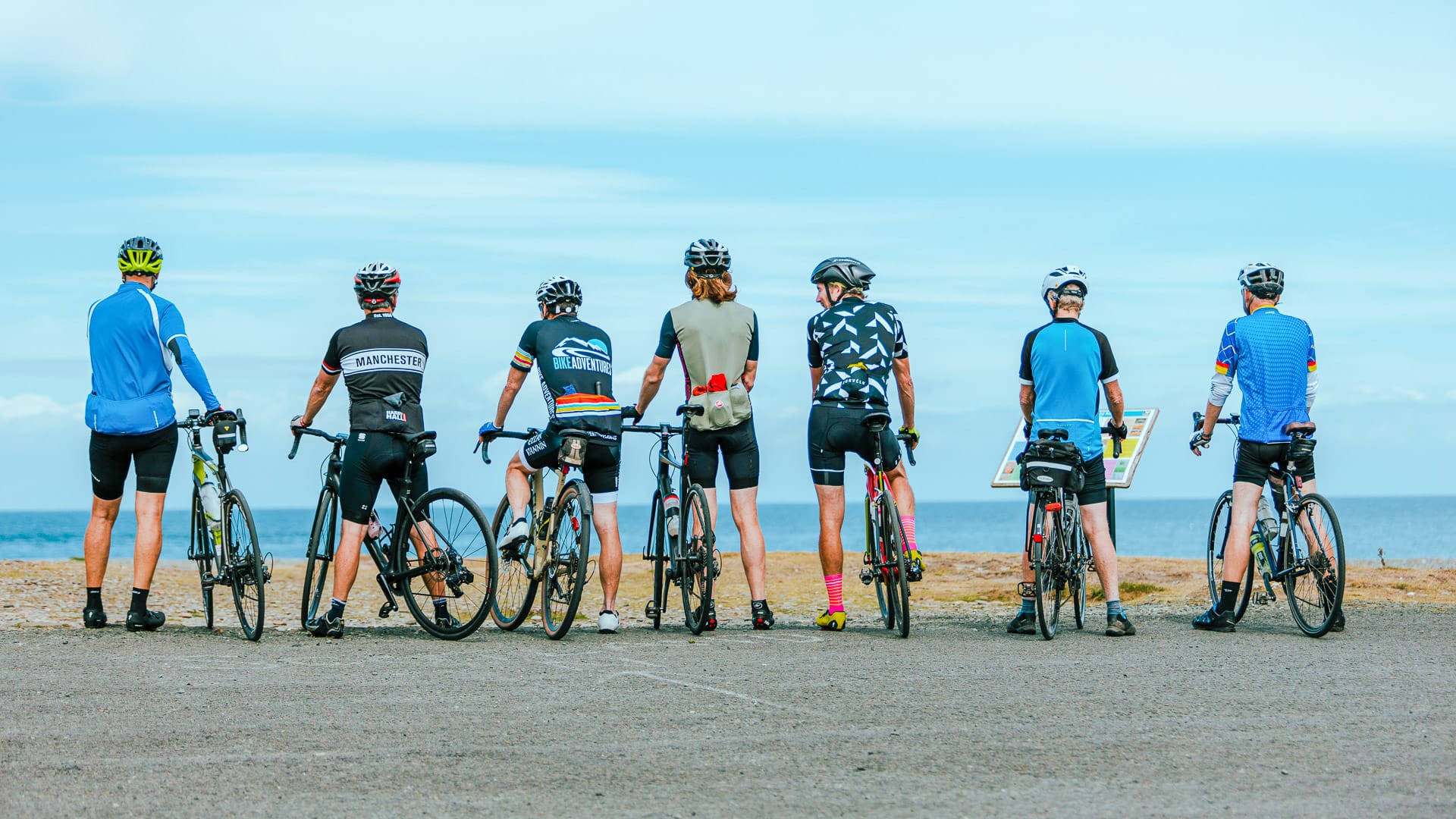
Cycling group at the Point of Ayre, in the north of the Island (photo credit: Visit Isle of Man)
Part 3: Best towns to stay in on the Isle of Man
At a glance
| Base | Best for | Riding style |
| Douglas | First-time visitors | Easy access to all regions of the island |
| Laxey | Climbers | Snaefell, eastern roads and hillier terrain |
| Peel | Coastal riding | West coast roads and seaside scenery |
| Ramsey | Exploring the north | Flatter roads plus mountain access |
| Port Erin | Quieter riding | Southern countryside and coastal routes |
In more detail
Douglas
Douglas is the island’s capital and the most convenient base for exploring all regions of the island. It’s located roughly half way up the east coast.
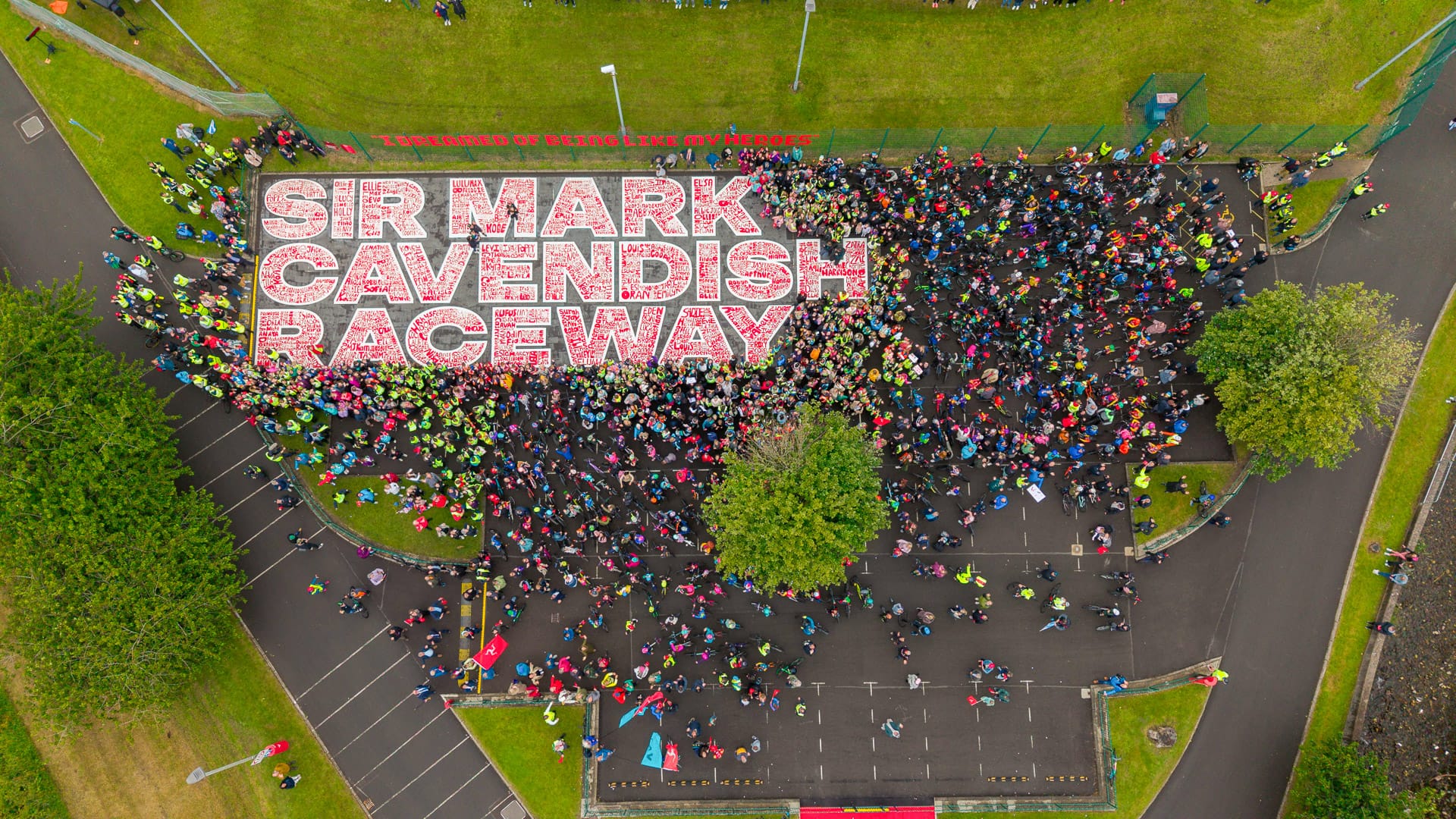
The National Sports Centre is in Douglas and is home to the Sir Mark Cavendish Raceway, renamed in honour of the Manx cyclist.
Douglas is a central hub with great access to many points of the island. It’s also the starting point for many major cycling routes, including the Raad Daawheeyl (more on that below).
Laxey (east coast)
Laxey is a village on the east coast.
From Laxey station, you can transfer to this mountain railway, which is the only electric mountain railway in the British Isles. The train takes you to the summit of Snaefell.
Mark Cavendish grew up in Laxey and has been known to enjoy the roads around here.
Peel (west coast)
Peel is a seaside town and small fishing port on the west coast of the Isle of Man. It’s known for its relaxed atmosphere, harbour sunsets and excellent access to coastal riding. The town is also home to the historic Peel Castle.
Ramsey (north)
Ramsey is the second largest town after Douglas, and is located in the north of the Isle of Man. It’s ideal for riders looking to explore the northern plains and mountain roads.
Port Erin (south)
Port Erin is a seaside village in the southwest of the Isle of Man. It’s a great southern base, providing quick access to countryside routes.
First trip to the Isle of Man
For a first cycling trip to the Isle of Man, Douglas is likely to be the simplest base thanks to its ferry connections, accommodation options and access to routes in all directions. Cyclists staying longer may want to split their trip between Douglas and one of the smaller coastal towns, such as Peel, Ramsey or Port Erin, to experience a different side of the island.
Part 4: Cycling routes on the Isle of Man
There are fantastic rides across the whole island, but the following ones particularly stand out.
You can download Visit Isle of Man’s guide to road cycling here.
Raad Daawheeyl
Raad Daawheeyl is Manx Gaelic and roughly translates to “coast road”. This is the Isle of Man’s signature ride, and ties together historic landmarks with traditional towns and several great cafés.
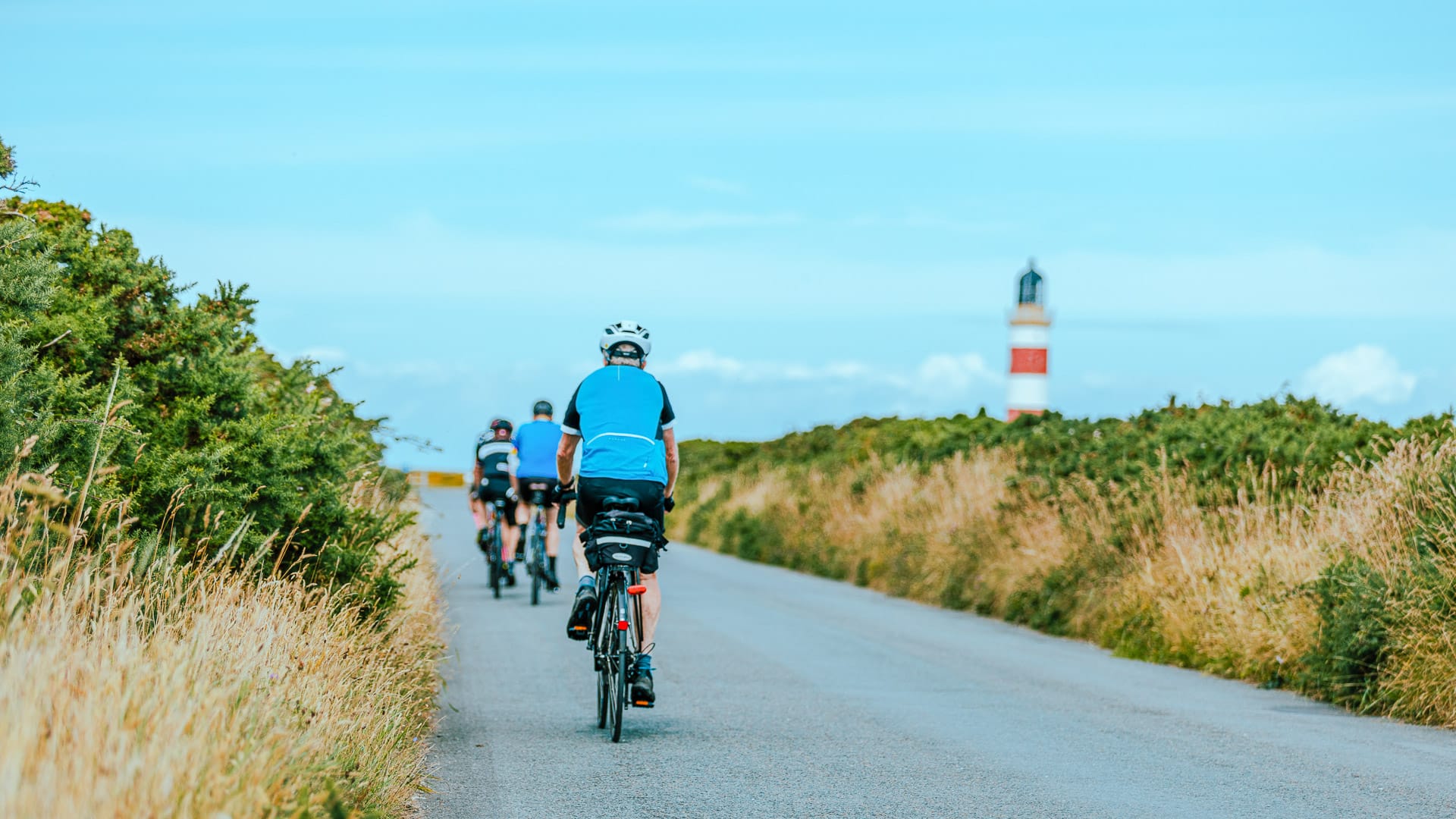
Cycling group at the Point of Ayre, in the north of the Island (photo credit: Visit Isle of Man)
Full route
Route summary
At 149 kilometres with 2,246 metres of climbing, this is a big day out for even the most experienced cyclist. The route officially starts and finishes in Douglas, but as it is a loop of the island, you can pick this up from any coastal location.
Highlights
- Nine refuelling stops available at Noa Bakehouse, The Abbey, Secret Pizza Company, The Fishery, The Boatyard, The Raven, Conrod’s, The Shed, and Cycle 360. More options below!
- .Coastal views the entire way around.
- Out-and-back viewpoint sections to the Sound and Point of Ayre at each tip of the island.
For those riding the full Raad Daawheeyl, there are plenty of natural stopping points along the way, including:
Viewpoints and villages
Here are some additional points of interest to consider stopping at on the route: Douglas Head, The Sound, The Sloc, The Round Table, Dalby, Niarbyl, Peel, Port Erin, Castletown, Point of Ayre and Laxey.
Cafés and places to eat
Here are some additional refuelling options in addition to the nine stops mentioned in the highlights section above: Stanleys, Castletown; The George, Castletown; Smoky Sam’s BBQ, Castletown; The Sound Café, Cregneash; Cregneash Tea Rooms; Cosy Nook, Port Erin; Whistlestop Café, Port Erin; The Creek Inn, Peel; Roots by the Sea, Peel; Black Dog Oven, Peel; The Boatyard, Peel; Green’s Café, St John’s Ballaugh; Bride Tea Rooms, Bride; Milntown Café, Ramsey; White Tiger, Ramsey; The Boathouse, Ramsey; Conrod’s, Ramsey; and Laxey Glen Café.
More information
For more information, including the GPS route, check this page on Visit Isle of Man’s website.
Shorter Raad Daawheeyl routes
Chunks of the full Raad Daawheeyl route have been broken off into shorter rides that are a bit more manageable. While they’re still challenging rides, with long stretches of rolling coastal roads, these routes range from around 64 to 85 kilometres, so are a bit less demanding than the full loop.
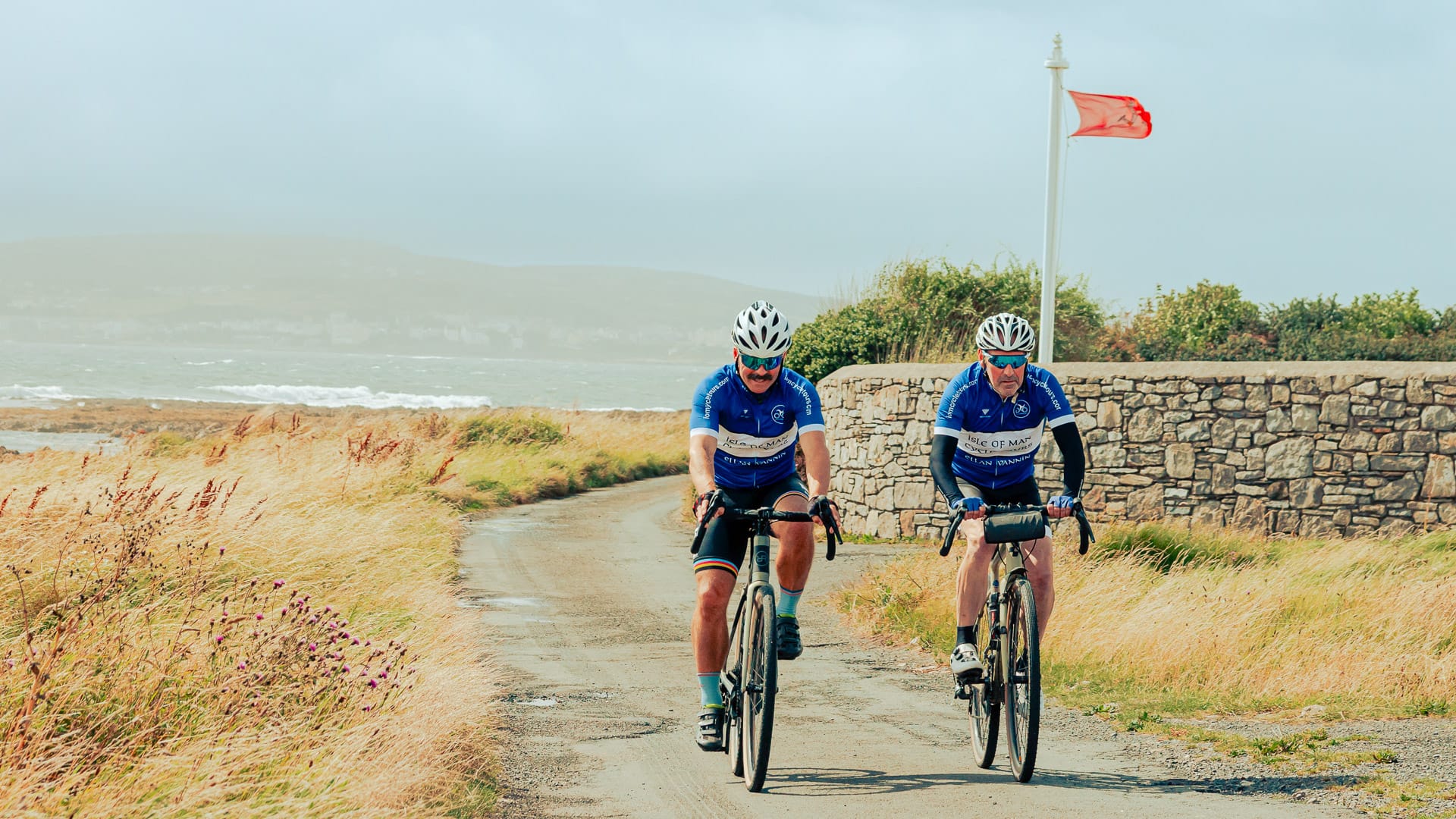
Cycling in the south of the Island (photo credit: Visit Isle of Man)
South-west (82 kilometres)
Route summary
82 kilometres with 1,478 metres of climbing, so still a challenging route, but a bit more digestible than the full loop of the island. Starting in Douglas, this loop takes you around the southern tip of the island and back up to Peel before diverting across the farm lanes through Foxdale and Braaid back to Douglas.
Highlights
- Seven refuelling stops available at Noa Bakehouse, The Abbey, Secret Pizza Company, The Fishery, The Boatyard, Close Leece Farm Shop & Café, and Cycle 360.
- Out-and-back viewpoint at the Sound, and a chance to explore Peel Castle in Peel.
More information
For more information, including the GPS route, check this page on Visit Isle of Man’s website.
North-east (71 kilometres)
Route summary
71 kilometres with 1,309 metres of elevation gain is a tough route by anyone’s measure. This ride starts in Douglas and heads north to Ramsey and back on a slightly different route. The drop out of Laxey to see King Orry’s Grave necessitates an additional climb to get back onto the route, so consider skipping this if you want to reduce the elevation gain.
Highlights
- Pit stop at King Orry’s Grave, the largest known megalithic tomb on the Isle of Man.
- Café stops at Noa Bakehouse, Conrod’s, and The Shed.
- See the Great Laxey Wheel, the largest surviving waterwheel of its kind in the world.
For more information, including the GPS route, check this page on Visit Isle of Man’s website.
North (65 kilometres)
Route summary
This is one of the flatter rides the island has to offer. At 65 kilometres, but with just 372 metres of elevation gain, this is much more manageable. Starting in Ramsey, the route heads out on the famous TT course before cutting inland towards Andreas. These flat plains are ideal for leisurely riding before rejoining the coast road up to the Point of Ayre and dropping back down to Ramsey to finish.
Highlights
- Café stops at Conrod’s, Milntown, and The Raven.
- Chance to see wild wallabies on the Curraghs.
- Visit Fynoderee Distillery for award-winning gins and vodka using Manx grown or locally-foraged botanicals.
More information
For more information, including the GPS route, check this page on Visit Isle of Man’s website.
Other cycling routes
Beyond the Raad Daawheeyl, the Isle of Man has plenty of other road rides that show off different sides of the island.
Cycling in the north of the Island (photo credit: Visit Isle of Man)
Douglas cycle route
Route summary
This demanding route takes you out of the island’s capital and into the tranquil surrounding countryside. At 43 kilometres, it is a good way to explore the small glens, notably Groudle Glen and Molly Quirk’s Glen. The coastal road of Marine Drive provides a memorable end to the ride. Major climbs on this route include Bibaloe Beg, Ellerslie Hill at Crosby, the Braaid and Crogga.
Highlights
- There are various shops, cafés, restaurants and public toilets within the Douglas and Onchan area.
- Points of interest include the Camera Obscura, Manx Museum, Douglas Horse Trams, Manx Electric Railway, Groudle Glen and Railway, Molly Quirk’s Glen, Port Soderick, and Marine Drive.
More information
For more information, including the GPS route, check this page on Visit Isle of Man’s website.
Castletown cycle route
Route summary
An easier figure-of-eight loop can be ridden as a 21-kilometre or 34-kilometre ride. This more relaxed route covers some of the gentler slopes of the island’s south and is suitable for a wide range of ages and fitness levels. St Michael’s Isle and Langness run close to the shore and offer panoramic sea views. The route’s northernmost point at Silverdale Glen is home to woodland, a family park and a café.
Highlights
- Explore the various shops, cafés, and restaurants in Castletown and Ballasalla.
- Points of interest include Castle Rushen, Nautical Museum, Old Grammar School, Hango Hill, Derbyhaven, St Michael’s Fort and Chapel, Steam Railway, St Marks Church, Rushen Abbey, the 14th Century Monks Bridge at Ballasalla, and Silverdale Glen.
More information
For more information, including the GPS route, check this page on Visit Isle of Man’s website.
Peel cycle route
Route summary
An easier 10 kilometre route, starting and finishing at the House of Manannan, this ride around Peel and its surrounding area is a useful option for many Isle of Man cycle plans. As well as giving you an introduction to this historic port and its castle, the trail takes you through the village of St John’s and offers the option of a longer ride to Glen Maye, with views on the climb up to the Snuff the Wind lead mine ruins.
Highlights
Points of interest include Peel Castle, St German’s Cathedral, Leece Museum, House of Manannan, Tynwald National Park and Arboretum, Garey ny Cloie Gardens, Tynwald Hill, Tynwald Mills shopping centre, Snuff the Wind mine, and Glen Maye Waterfall, glen, and beach.
More information
For more information, including the GPS route, check this page on Visit Isle of Man’s website.
Ramsey cycle route
Route summary
A leisurely 26-kilometre loop, this relaxed ride is suitable for many cyclists. Quiet roads set against the backdrop of the Manx hills make this a good cruise around the flatter plains of the north of the island.
Highlights
Points of interest include Milntown Estate and Gardens, The Grove Rural Life Museum, the Point of Ayre and Ayres Visitor Centre, and Andreas Crosses.
More information
For more information, including the GPS route, check this page on Visit Isle of Man’s website.
Port Erin cycle route
Route summary
Starting at Port Erin Steam Railway Station, this 23 kilometre route introduces you to the coastal scenery of the island’s south-west, culminating in an optional ride down to the Sound, with its views over to the Calf of Man. This is also a good place for spotting seabirds and grey seals.
Highlights
Points of interest on this route include Port Erin Railway Museum, Meayll Circle, Cregneash National Folk Museum, Viking ship burial ground at Balladoole, and Milner’s Tower (Bradda Head).
More information
For more information, including the GPS route, check this page on Visit Isle of Man’s website.
Laxey cycle route
Route summary
A 10-kilometre route starting from Laxey station, with a steep first climb past the filling station towards Baldhoon before the gradient eases. The route has several steep climbs and descents into river valleys, where the road is very narrow and demanding.
Highlights
- One of the shorter routes on the island.
- Points of interest on this route include King Orry’s Grave, Laxey Wheel & Mines Trail, Laxey Glen Gardens, Laxey Woollen Mills.
More information
For more information, including the GPS route, check this page on Visit Isle of Man’s website.
Heritage Trail
Route summary
A simple out-and-back trail following the old steam railway line from Douglas to Peel, this is a level route suitable for families. At 18 kilometres each way, it is possible to ride up to 35 kilometres in total, but you can turn around whenever you like. Stop for refreshments in St John’s before finishing your ride on Peel Bay for Manx ice cream.
Highlights
An out and back 18 kilometre (35 kilometres total) trail; ride as far as you like then turn around.
- Simple, easy navigation along the old railway trail.
- Points of interest include a refreshment stop in St John’s and Peel Quayside.
More information
For more information, including the GPS route, check this page on Visit Isle of Man’s website.
Part 5: What are the key cycling events on the Isle of Man?
The Isle of Man hosts an impressive calendar of cycling events across road, gravel and mountain biking disciplines. Highlights include:
Isle of Man Youth Cycle Tour (1 to 3 May 2026)
The Isle of Man Youth Tour has been a staple of the island’s racing culture for years, and forms part of both British Cycling’s Youth Circuit Series and Junior Road Race Series. While racing is only open to riders 16 and under, getting roadside to spectate the talent of the future is a worthwhile day out.
More information
Follow Isle of Man Youth Tour on Facebook for the latest event updates and news.
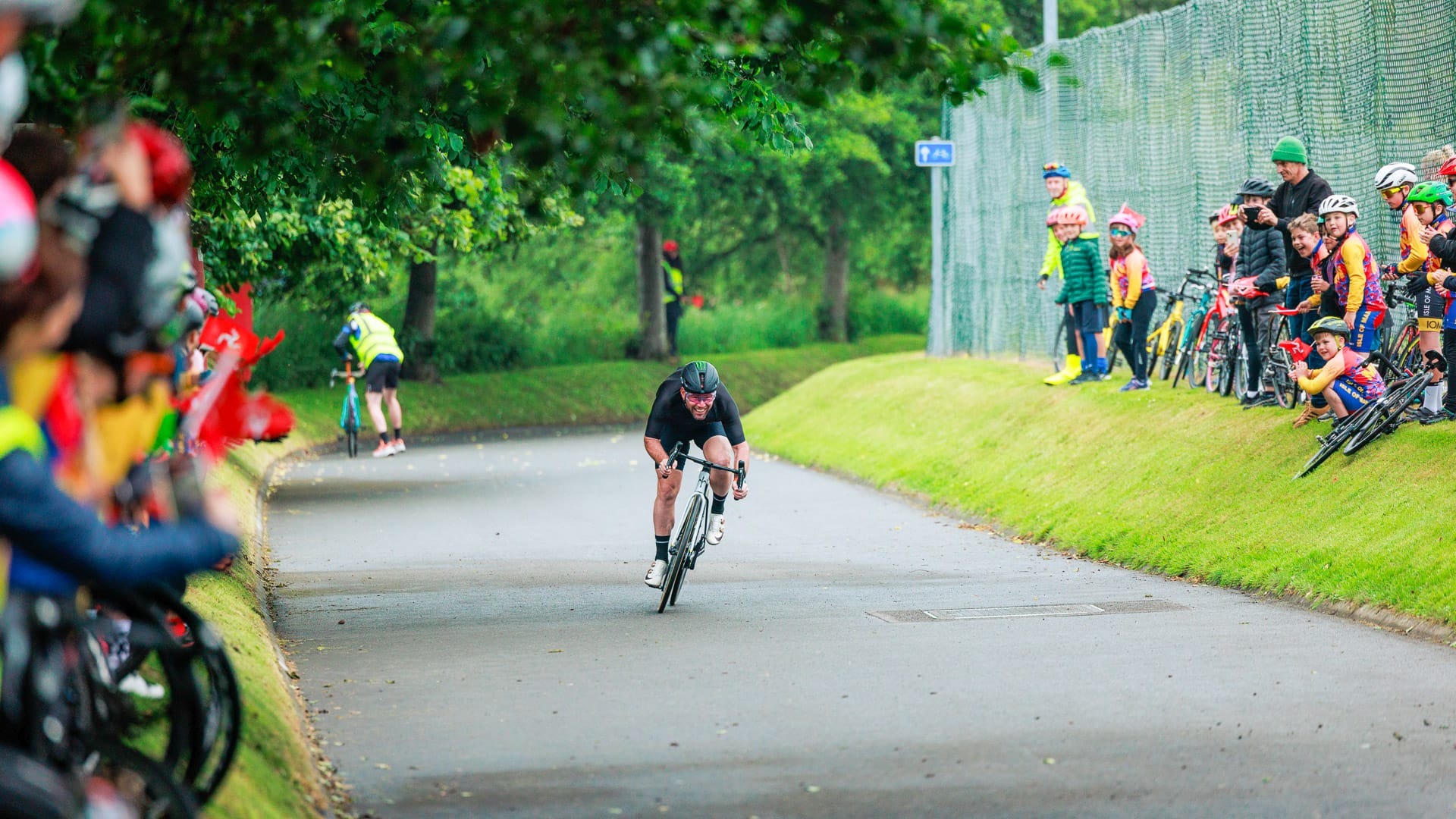
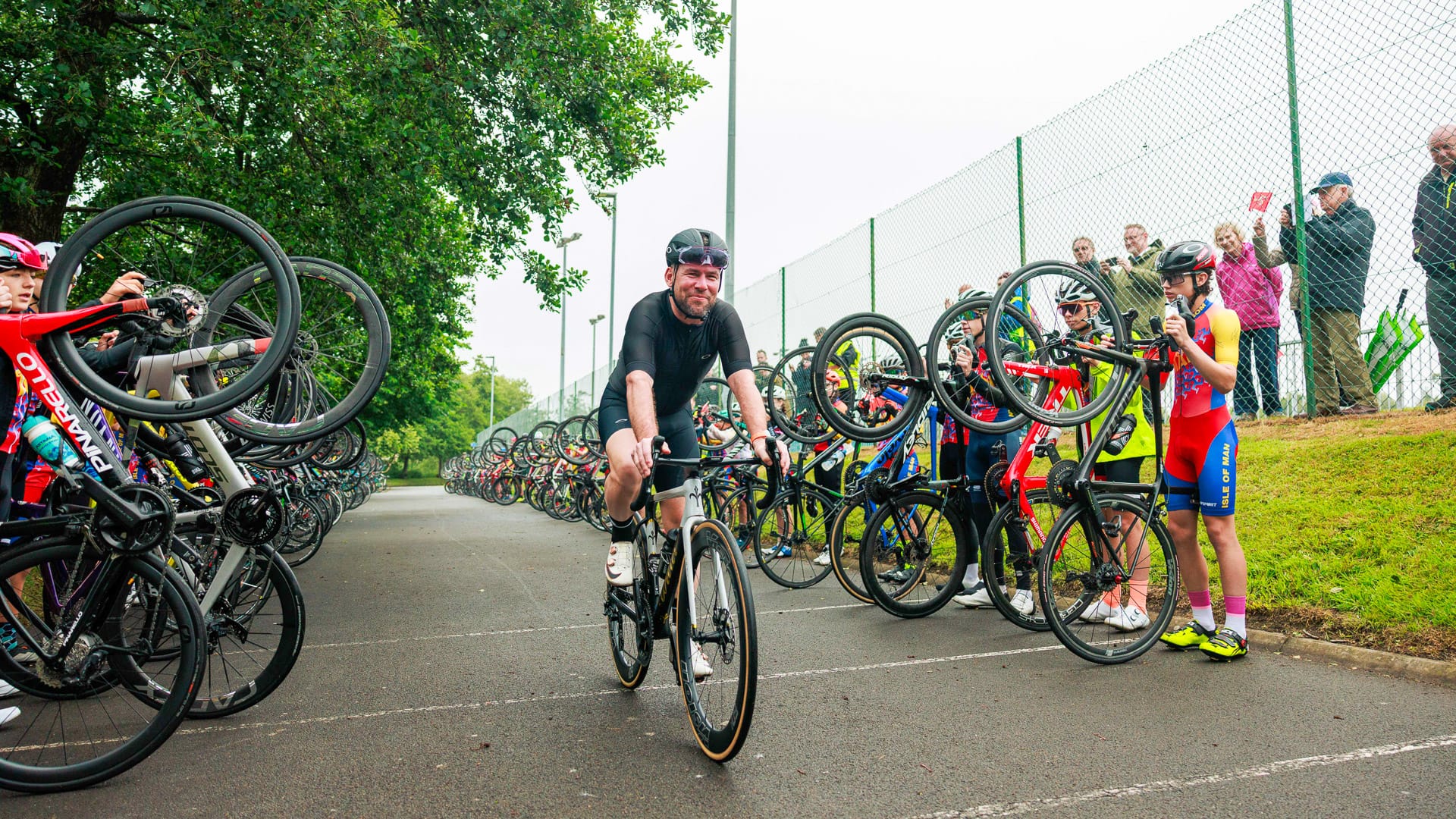
Sir Mark Cavendish MBE, the ‘Manx Missile’, at the opening of the Raceway (photo credit: Visit Isle of Man)
Hospice Tour de Farms Cycle Ride (5 July 2026)
Starting and finishing at the Isle of Man Creamery in Tromode, Douglas at 9am on the 5th July, this micro sportive is capped at just 150 riders, so be sure to book your spot to avoid disappointment. This event is an un-timed fun ride with the opportunity to socialise and achieve some ‘calorie off-set’ while enjoying Manx produce.
More information
Visit the Hospice Isle of Man website for more details on Tour de Farms 2026.
Gran Fondo Isle of Man Gravel and XC MTB Race (25 to 26 July 2026)
A two-day cycling event designed to welcome riders of all ages and abilities, the Gran Fondo Isle of Man XC and Gravel event is a 97 kilometre end-to-end epic covering the length of the island from Ramsey to Port Erin.
More information
Visit Gran Fondo Isle of Man for more details on Gran Fondo 2026.
Manx Mountain Bike 2-Day Enduro: 28 July to 2 August 2026
For the experienced mountain bike looking for the ultimate test of skill and endurance, Manx Mountain Bike Enduro, organised by 360 cycling, consists of a 40 kilometre loop with 1,300 metres of climbing, spread across five stages. Entry costs £45 and the race has a five-hour cut-off time.
More information
Visit Manx MTB Enduro for more details on The Cycle 360 Enduro.
Le Dans 6 Hour and 24 Hour Cycling Event: 1 to 2 August 2026
A unique cycling challenge held on the Jurby racing circuit in the north-west of the island, Le Dans endurance race is held in memory of Dan Kneen for The Dan Kneen Charitable Fund.
More information
Head to the Visit Isle of Man website for more details on Le Dans 2026.
These events reflect the island’s thriving cycling scene and welcoming community atmosphere.
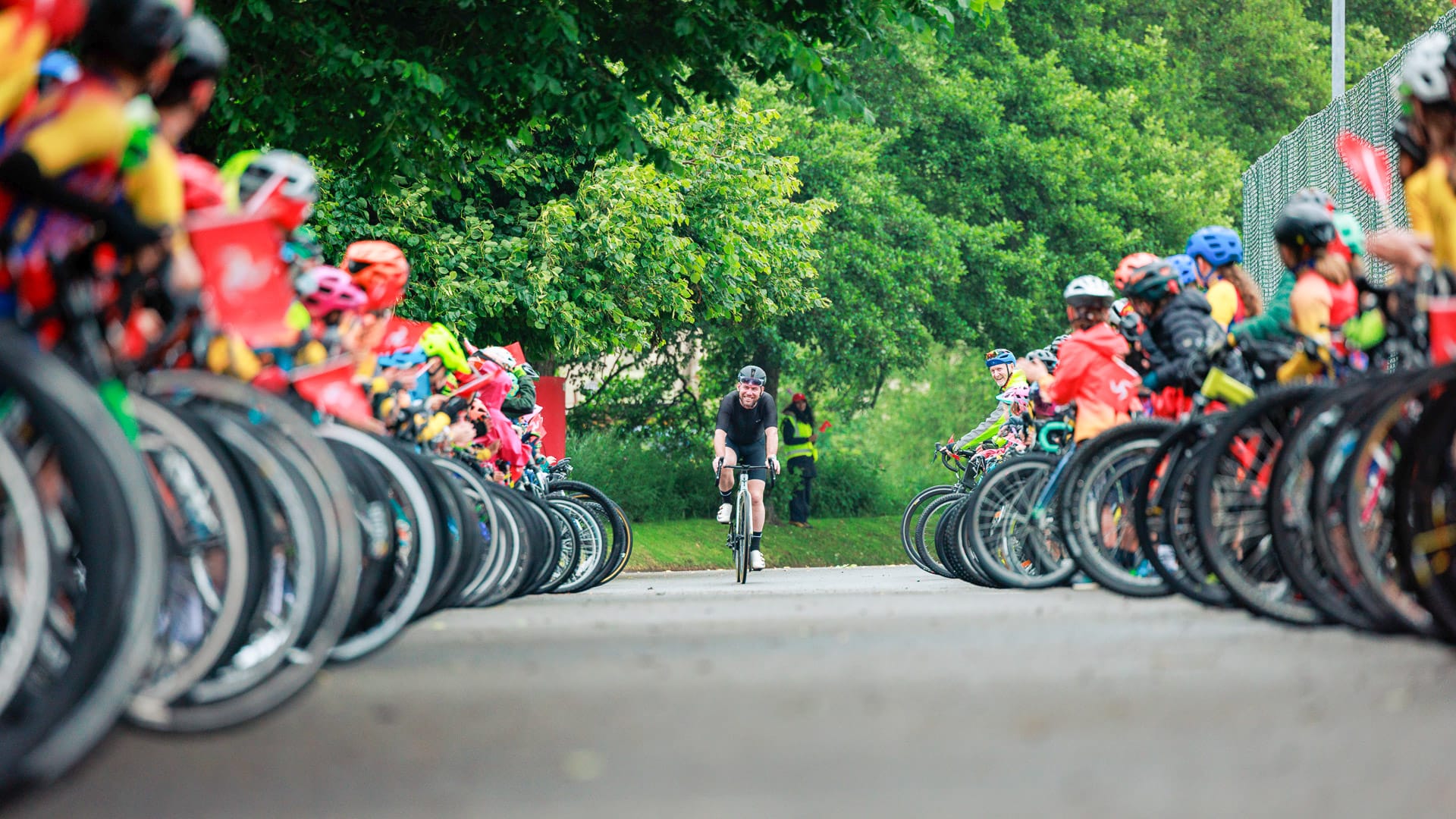
Sir Mark Cavendish MBE, the ‘Manx Missile’, at the opening of the Raceway (photo credit: Visit Isle of Man)
Part 6: What are the best hotels and accommodation options for cyclists on the Isle of Man?
The Isle of Man has an excellent network of cyclist-friendly accommodation.
The Isle of Man has a Cycling Friendly accommodation scheme, with participating properties offering facilities such as secure bike and cycling gear storage. There are also camping and glamping options across the island that are happy to accommodate cyclists.
In most instances, it’s sensible to book in advance to avoid missing out.
You can also use Visit Isle of Man’s cycling pages to explore cycling-friendly accommodation, route ideas and practical information for planning a cycling trip.
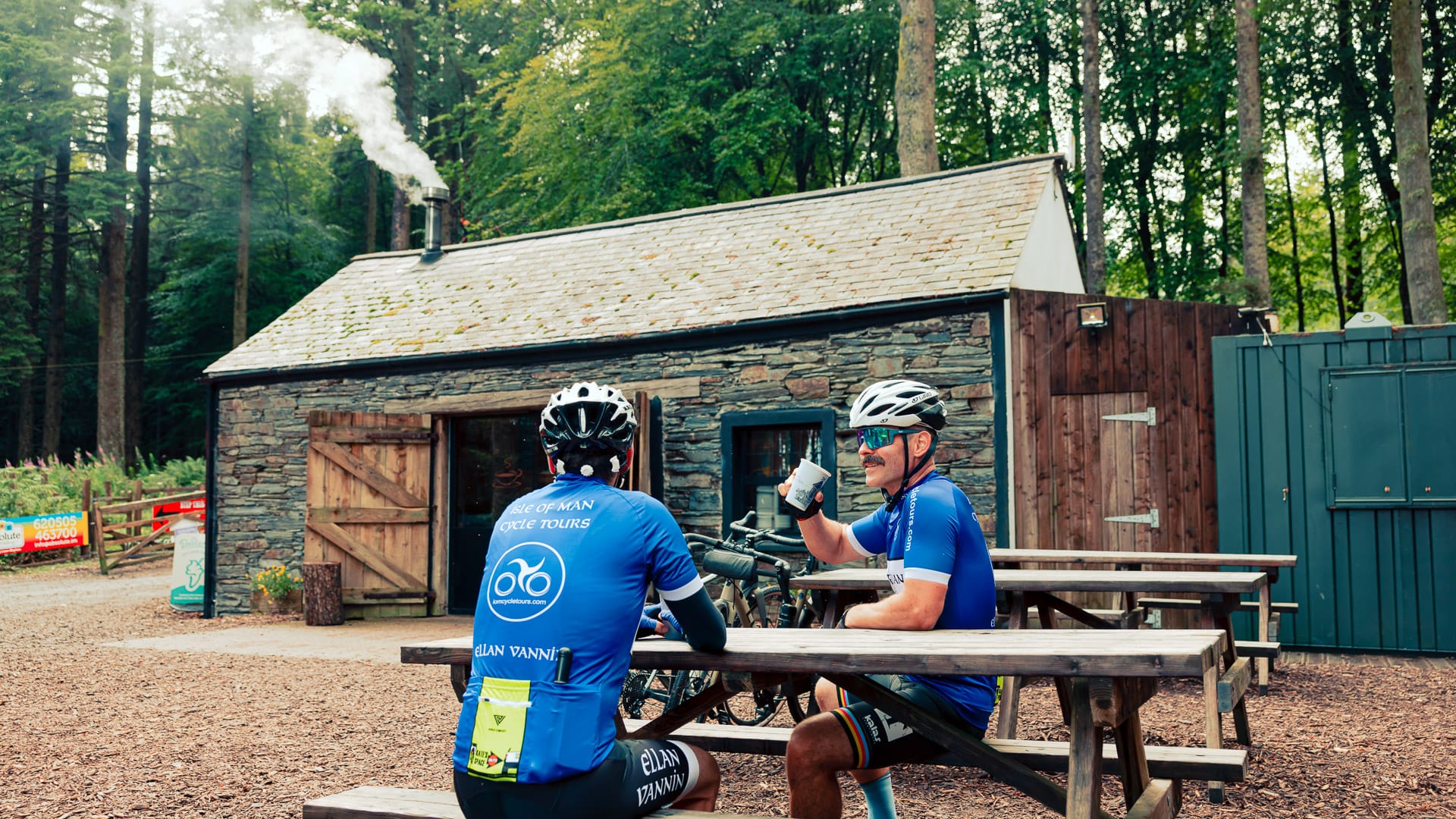
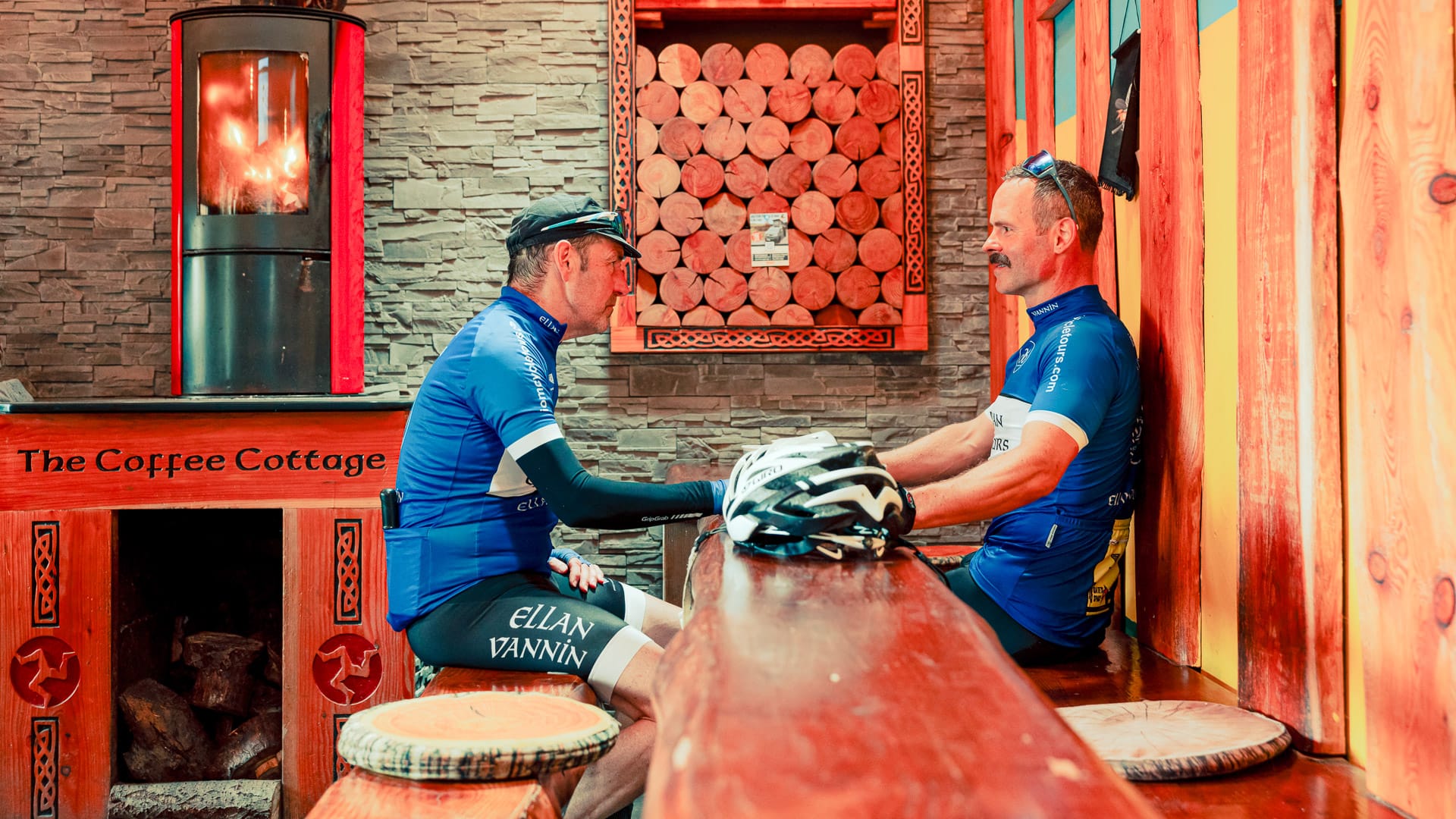
Cyclists enjoying a pit stop at The Coffee Cottage, located in South Barrule Plantation (photo credit: Visit Isle of Man)
Part 7: Are there places for bike hire/bike shops on the Isle of Man?
It is easy to hire bikes on the Isle of Man, although many cyclists still choose to bring their own.
Popular hire providers include:
Cycle 360
Cycle 360 offers road, mountain biking and leisure bikes for hire.
More information
Visit the Cycle 360 website for more details about prices and availability.
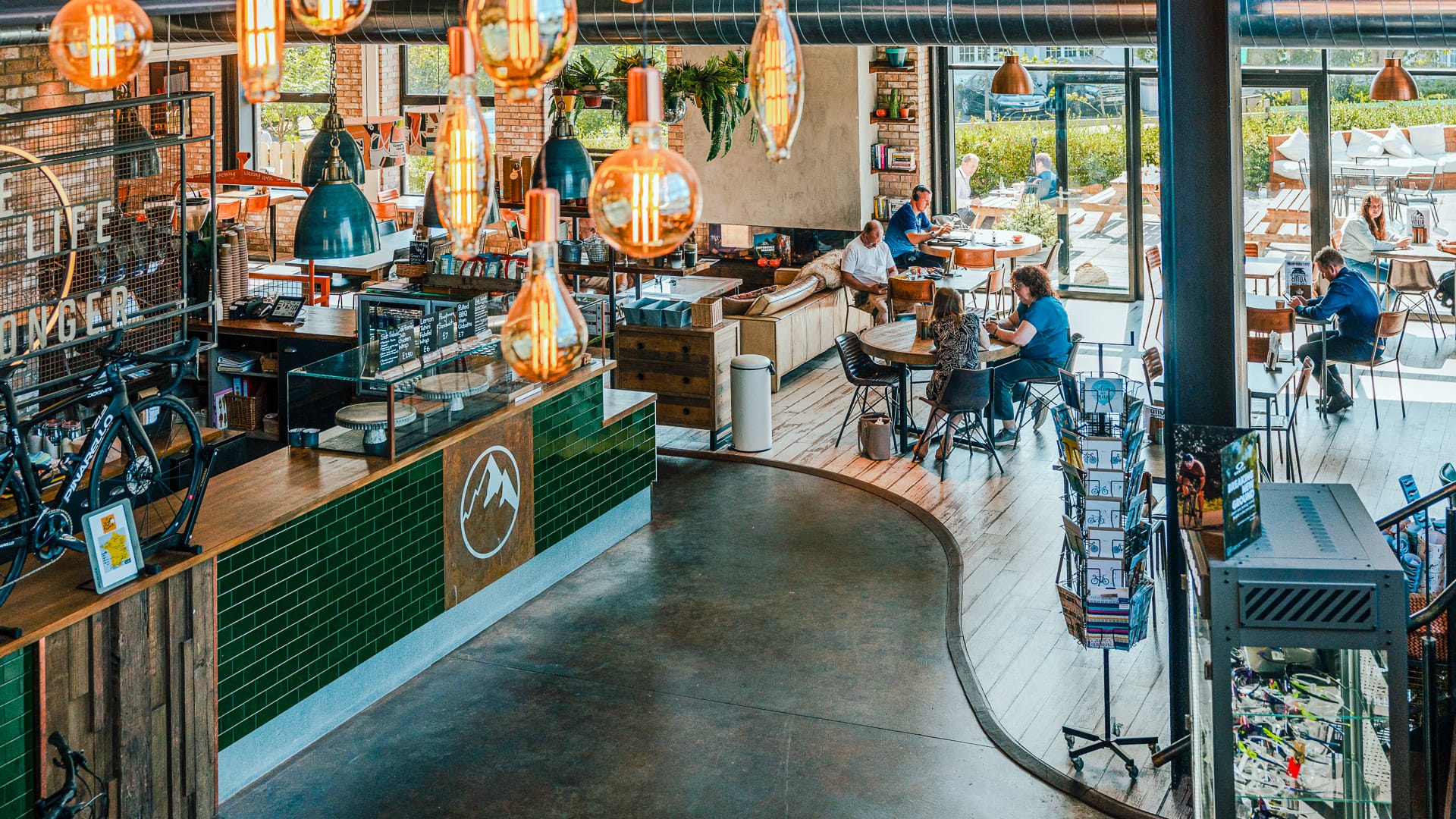
Inside the Cycle 360 café on the Isle of Man (photo credit: Visit Isle of Man)
Erin Bike Hut
Erin Bike Hut is an independent bike shop in Port Erin, on the south coast of the beautiful Isle of Man. They are located on the corner of Station Road and Bridson Street, opposite The Haven pub and within sight of Port Erin railway and bus station. Road and mountain bikes from Orbea are available for hire.
More information
Head to the Erin Bike Hut website for more details on cycle hire in Port Erin.
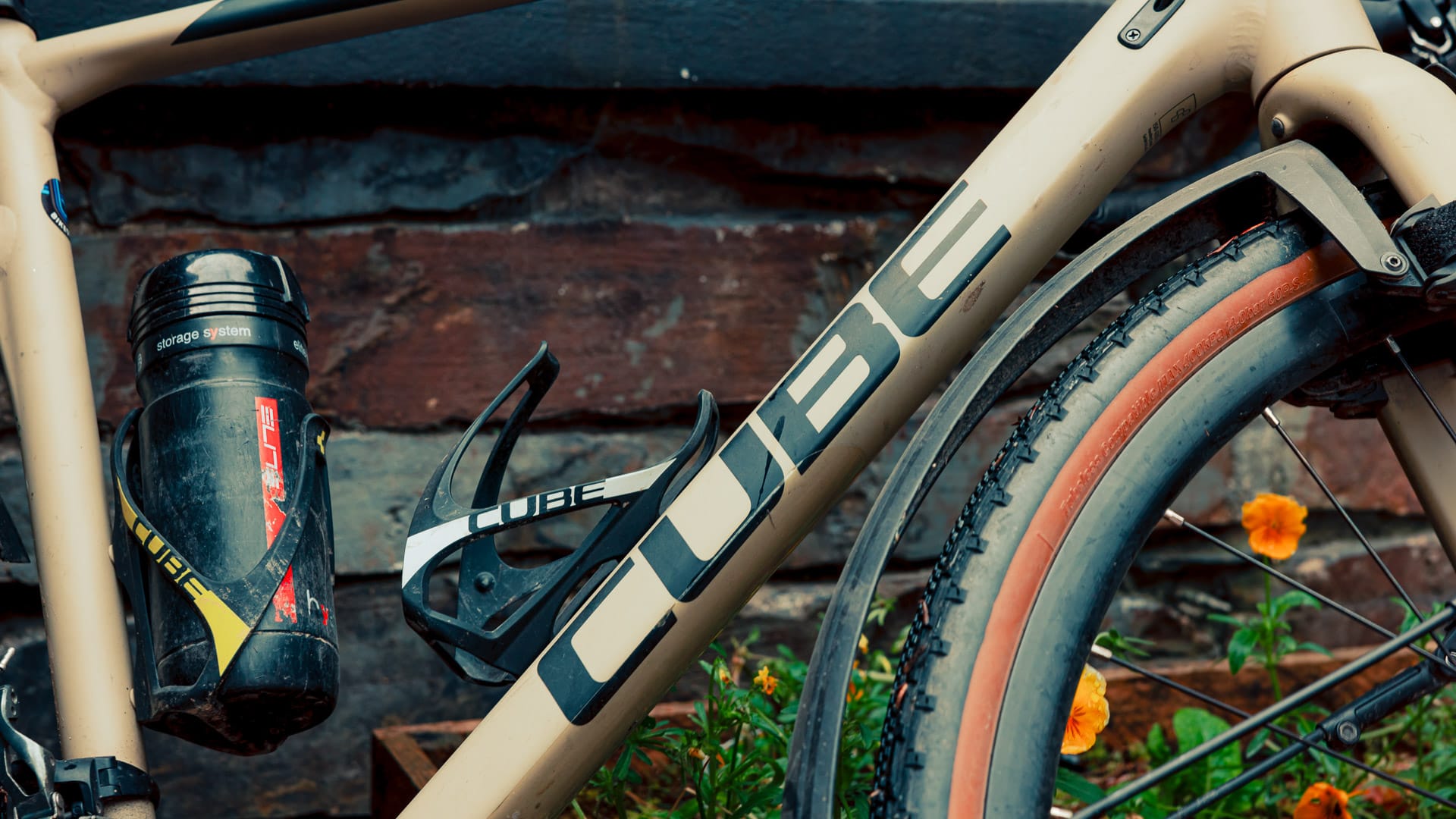
Close-up of a bike on an Isle of Man cycling tour (photo credit: Visit Isle of Man)
Outdoors Ramsey
Outdoors Ramsey offers a wide selection of adult bicycles available for hire. An island-wide collection and delivery service is available at a small additional cost. Children’s cycle rear seats, lights and panniers are also available to hire.
More information
Head to the Outdoors Ramsey website for more details about their bikes available for hire.
Part 8: Any tips for riding on the Isle of Man?
What is the best time of year to go on an Isle of Man cycling trip?
The best months to visit are generally May to September, thanks to the warmer weather and longer daylight hours.
Peak summer will offer the best conditions for longer rides, but coincides with school holidays, so expect slightly busier roads from an increase in tourist traffic.
Cyclists should also be aware that roads can be significantly busier during major motorsport events, particularly the Isle of Man TT Races, which usually take place in the last week of May and first week of June, as well as the Classic TT and Manx Grand Prix, usually held during the last two weeks of August.
The shoulder seasons, April and September, will offer quieter roads, but be prone to slightly more changeable weather in the spring and autumn.
The winter months are best avoided owing to short daylight hours and typically wet conditions.
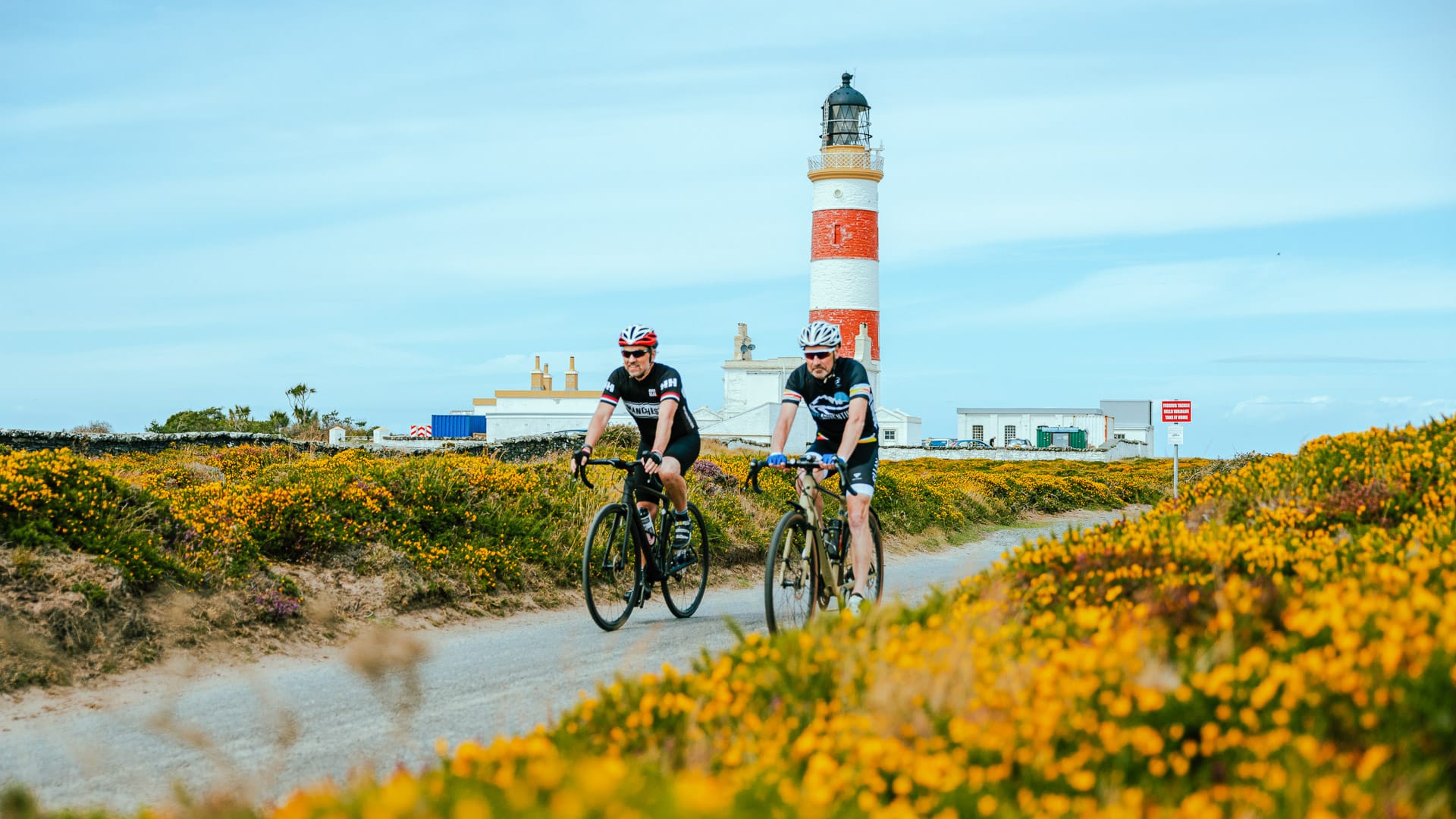
Cycling at the Point of Ayre, the northernmost part of the Island (photo credit: Visit Isle of Man)
What to bring?
Weather conditions can change quickly, particularly on exposed mountain roads.
Even in summer, pack waterproofs, windproof layers, and warm gloves for descents and if you get caught out while riding!
If you do forget something, the Isle of Man has a good range of shops that will be very familiar to those from the UK, together with a wide array of independents. Douglas is your best bet for shopping.
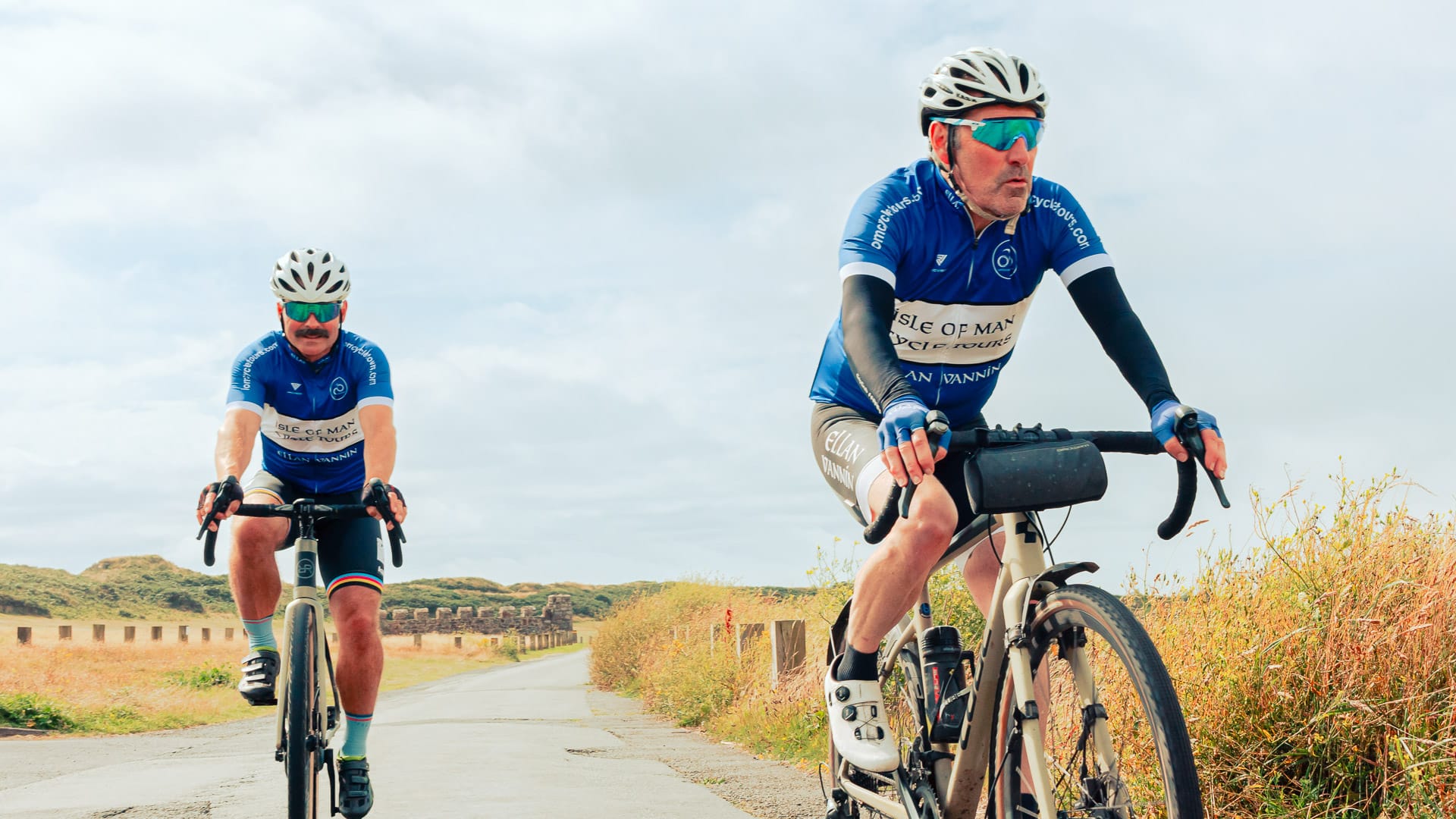
Cycling towards Fort Island in the south of the Island (photo credit: Visit Isle of Man)
Do you need to speak Manx?
Definitely not – but the Manx language remains an important part of island culture. A Celtic language closely related to Irish and Scottish Gaelic, it’s taught in schools, used on signs, and spoken within communities across the island. Useful phrases include:
- Moghrey mie (morr-a my), good morning
- Fastyr mie (fass-ter my), good afternoon
- Kys t’ou? (kiss-tow), how are you
- Braew (brow), fine
- Gura mie ayd (gurr-a-my-edd), thank you
- Hee’m oo (heem-oo), I’ll see you
The last traditional native Manx speaker, someone who grew up in a Manx-speaking household and community, died in 1974. However, Manx Gaelic has since undergone an incredible revival, helped by the fact the language was carefully recorded before those last speakers passed away.
Today, there are new native speakers: children being raised bilingually in Manx and English by parents who learned Manx as a second language. Around 2,200 people on the Isle of Man are estimated to have some level of fluency.
This revival has been driven by adult learning programmes, Manx teaching in schools and the success of Yn Bunscoill Ghaelgagh, the island’s Manx-medium primary school. UNESCO previously classified Manx as extinct in 2009, due to the loss of traditional native speakers, but later revised this to critically endangered after strong protests from the local community highlighted the language’s revival.
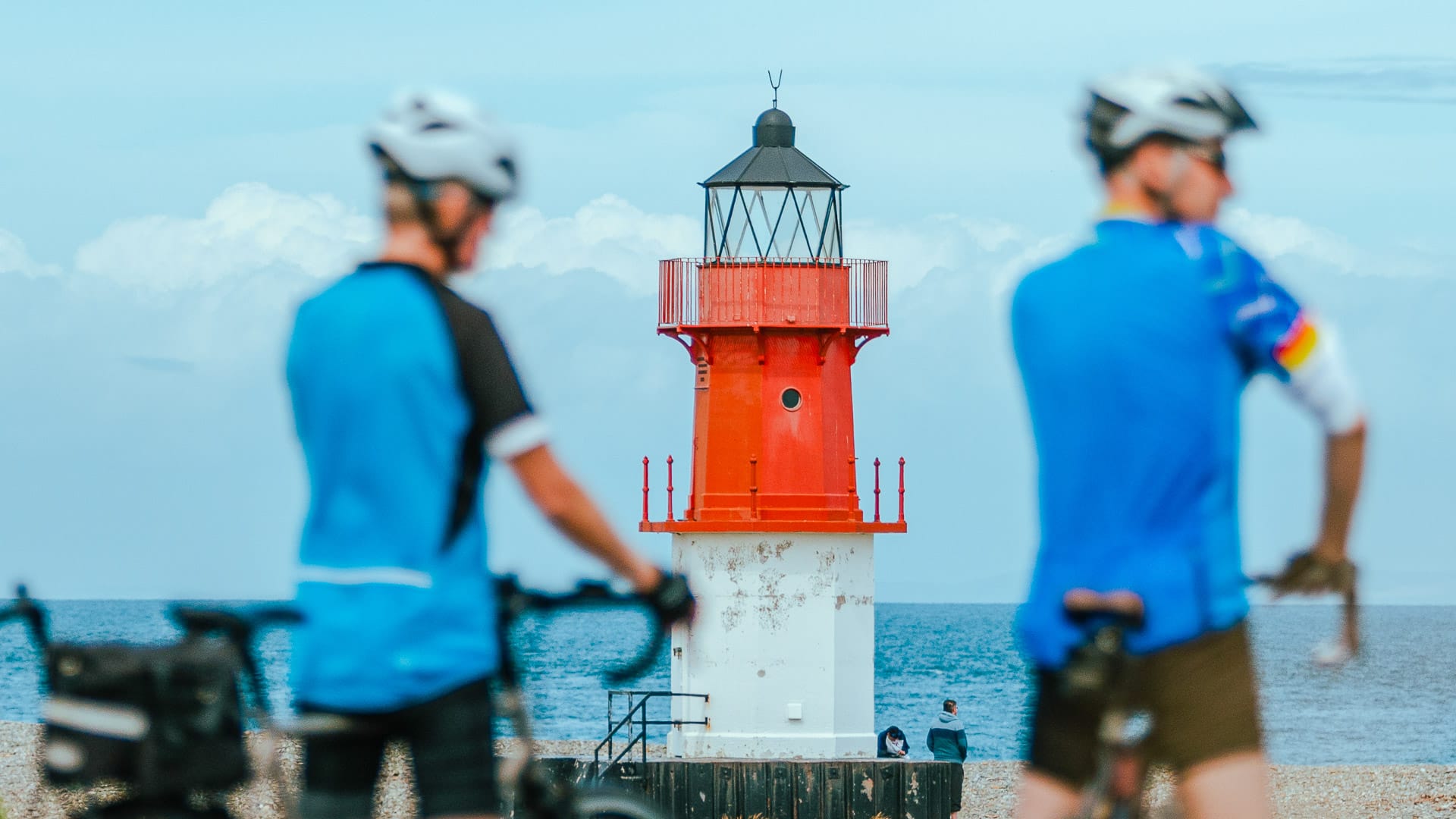
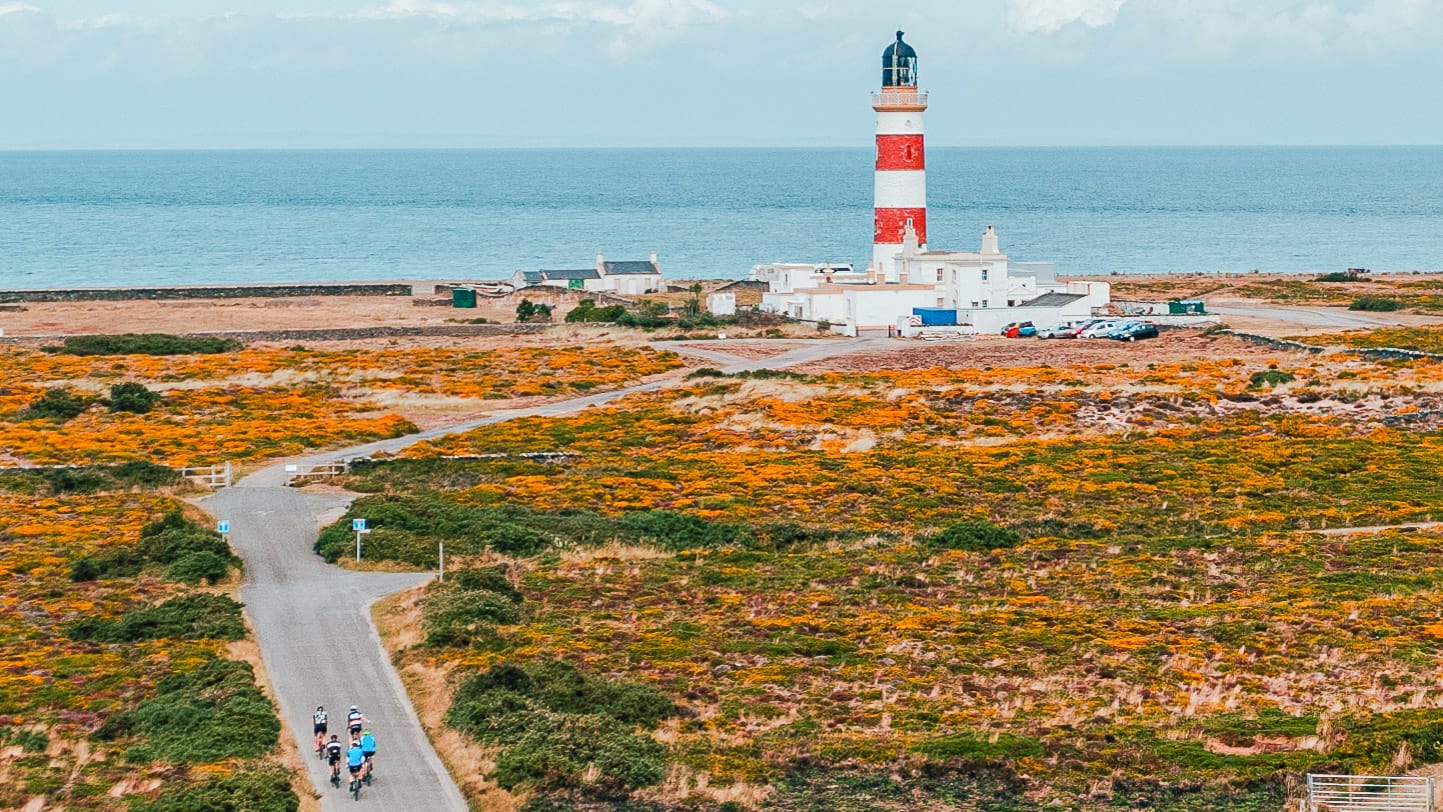
Cyclists at the Point of Ayre with the Winkie lighthouse in the background (photo credit: Visit Isle of Man)
What is a British Crown Dependency?
The Isle of Man is not part of the United Kingdom. It is a self-governing British Crown Dependency, which means it has its own government, laws and tax system (like Jersey or Guernsey). The UK is responsible for its defence and international relations. More info here.
The island’s parliament, Tynwald, is more than 1,000 years old and is often described as one of the oldest continuous parliaments in the world. It makes the island’s domestic laws, including those relating to taxes and work permits.
King Charles III is the island’s Head of State, with the title Lord of Mann. He is represented on the island by a Lieutenant Governor.
People who live on the Isle of Man are British citizens. Travel between the Isle of Man and the UK is generally straightforward, and the island uses pound sterling, though it also issues its own banknotes.
In practice, the Isle of Man runs its own affairs, while the UK acts on its behalf for matters such as foreign policy, external relations and defence. UK laws are not normally extended to the island without its consent.
Tell us more about the Isle of Man’s culture?
The Isle of Man’s location in the Irish Sea has made it a crossroads of cultures for thousands of years.
Early Celtic settlers brought language, myth and tradition. Viking settlers later influenced governance, place names and folklore. You still see this heritage everywhere, from Norse place names like Laxey to the island’s iconic flag; the three legs of Man (triskelion), symbolising resilience and independence.
There is also a strong tradition of storytelling and superstition. Even today, it’s common for locals to greet the fairies when crossing the Fairy Bridge on New Castletown Road in Santon, a memorable example of how folklore remains part of everyday life.
The island’s culture is also deeply connected to its land and agriculture. Native animals such as Manx Loaghtan sheep (known for their multiple horns) and Manx cats (famous for being tailless) are not just curiosities; they are part of the island’s heritage and long-standing rural traditions.
Manx culture is still highly visible through its festivals, traditions, and community life, including Yn Chruinnaght, a Celtic festival celebrating music, dance and storytelling, Hop-tu-Naa, the Isle of Man’s traditional version of Halloween, and Cammag, a traditional Manx sport similar to hurling. These events highlight the island’s strong sense of identity and community.
For visitors on a cycling trip, this heritage is well worth making time for away from the bike too. One particularly good way to experience it is by riding the island’s Heritage Railways, which offer a memorable way to explore another side of the Isle of Man between rides.
Food and drink are another enjoyable part of the island’s culture. After a long ride, many local cyclists enjoy stopping at one of the island’s cafés for coffee and cake, while others might opt for a well-earned pint in a traditional pub overlooking the sea. Visitors looking for a taste of the Isle of Man could also try local produce such as Manx cheddar, queenies, kippers or dishes featuring Manx Loaghtan, paired with a locally brewed beer or spirit.
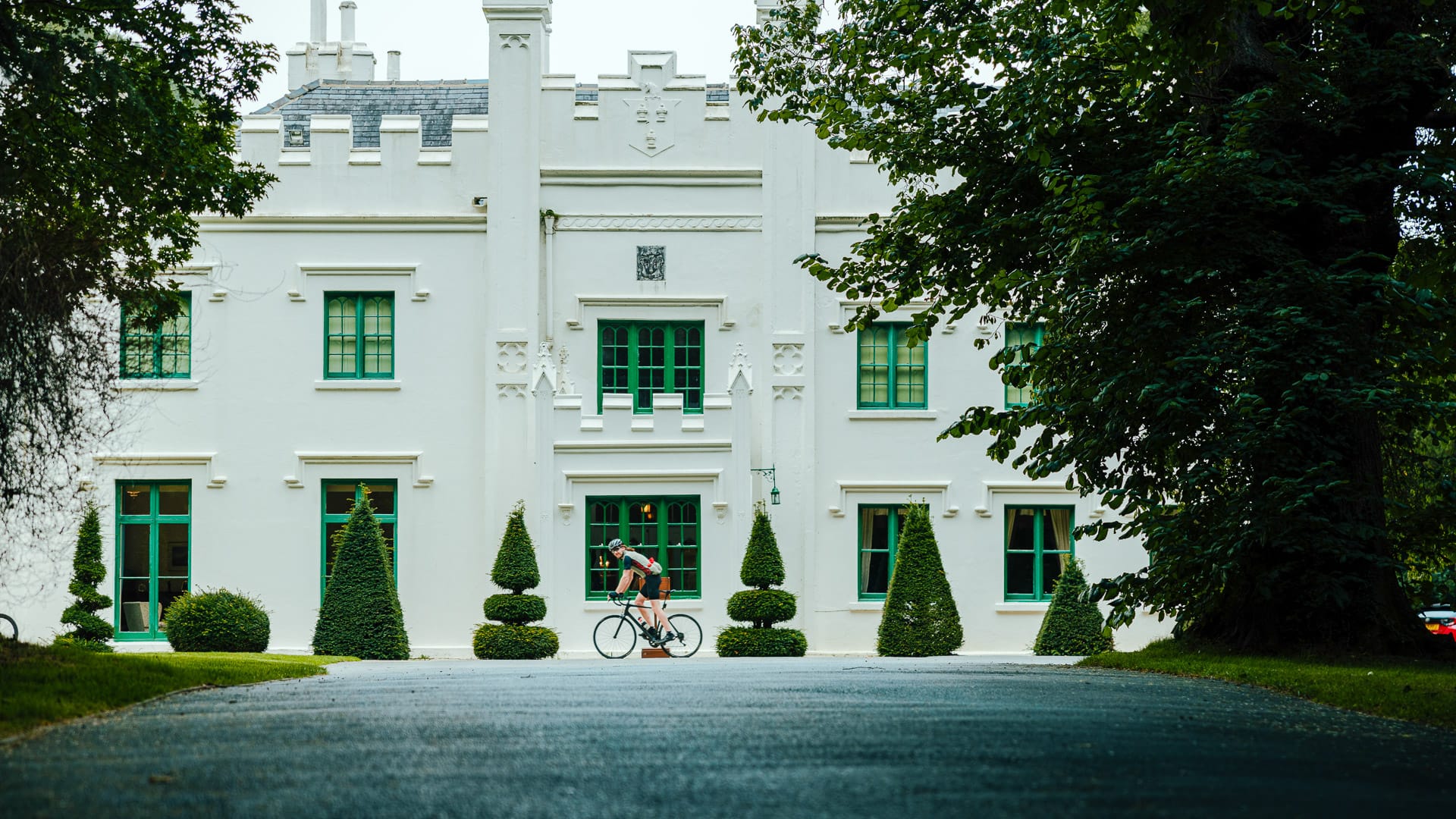
Cyclists at Milntown House in the north of the Island (photo credit: Visit Isle of Man)
How to get to the Isle of Man?
Accessing the Isle of Man can be done by boat or by plane. Year-round flights are available from Birmingham, Dublin, Edinburgh, Liverpool, London City, London Gatwick, London Heathrow, Manchester, and Newquay, with seasonal flights from Bristol and London Luton. Airlines serving the island include Loganair, Easyjet, and Aer Lingus.
The Isle of Man Steam Packet Company, the island’s ferry company, sails from Liverpool, Heysham and Larne.
Do you need to hire a car?
The island is compact enough to explore entirely by bike and public transport. Bikes are also permitted on heritage railways, while foldable bikes are allowed on buses.
Head to the Isle of Man Transport website for more details on travelling with bicycles by bus.
What’s next?
Thanks to the team at Visit Isle of Man for sharing these insights.
Looking for more exciting content on cycling in the United Kingdom?
- Cycling UK, our central hub for the country
- Guide to the UK’s Coast to Coast cycling route, for local tips and practicalities
- 7 best bikepacking routes in the UK, featuring England and Wales, Scotland
- 16 of the best (long-distance) cycling routes in the UK and Ireland, with key statistics and route info
Got a question for Visit?
Fill out this form and we will send it to Visit. We aim to get you an answer within 24 hours where possible!First Published: 02 July 2026
The contents of this website are provided for general information purposes only. It is not intended to amount to advice and you should not rely on it. You should carry out your own due diligence and risk assessments and take professional advice. Views expressed by interviewees or other users of this website do not necessarily represent our views. We make no representations, warranties or guarantees, whether express or implied, that the content on our website is accurate, complete or up to date. If you use any information or content on this website, download from, or otherwise obtain content or services through our website, it is entirely at your own discretion and risk. Epic Road Rides Ltd disclaims all liability and responsibility arising from any reliance placed on the information and content on this website. Find out more here.
Sponsor Message
Considering cycling on the Isle of Man?
Head to the Visit Isle of Man website to find out more about cycling in the region.