
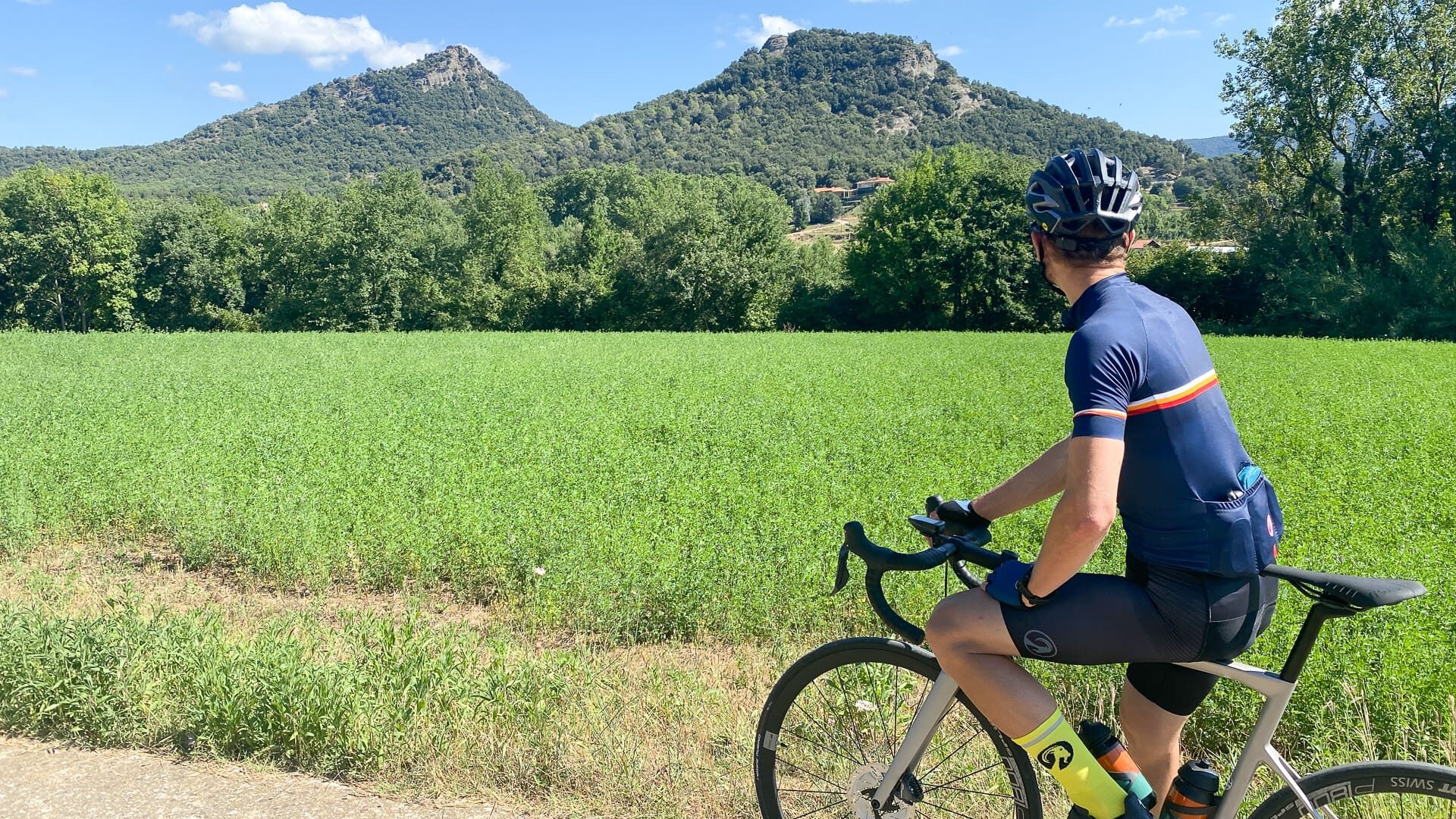
Gravel cycling has taken Girona by storm. To those who know Girona, this comes as no surprise. With its history of pro cycling, endless gravel trails, favourable climate and experienced cycling service providers, Girona’s gravel cycling opportunities are eminently suited to gravel adventures.
But how do you go about planning a gravel bike trip or tour in Girona? Where are the best gravel routes and what do you need to know before you arrive ready to ride?!
In this guide, we look at the background to Girona’s gravel scene and share practical information on where and how to ride. This includes route ideas, gravel events, bike hire and tips for planning your trip.
To give you a sense of the variety available, we also highlight four routes suited to different experience levels and styles of riding:
- Gironès Sud circular route: Best for those who want a shorter route on relatively accessible greenways, cycle paths and rural tracks.
- Les Gavarres: Best for experienced gravel riders looking for a full day of forest tracks, sustained climbing and panoramic viewpoints.
- Rocacorba: Best for cyclists seeking steep climbing, challenging mixed surfaces and a demanding day out.
- Pirinexus: Best for bikepackers and cycle tourers looking for a multi-day, mixed-surface journey through Catalonia and southern France.
Read on to get the details!

Clare Dewey is a cyclist with a passion for travel. She set up epicroadrides.com in 2018 to help make it easy for cyclists to explore the world by bike. Today her mission is still inspiring cyclists to discover new places on two wheels - and doing what she can to make sure they have the best possible time while they're there. Clare has visited 50+ destinations around the world, many of them by bike.
Want to connect with Clare? Find her over on LinkedIn.
Always check current travel information and advice. For visitors from the UK, the UK government travel information pages are here.
Table of contents
This guide contains a lot of useful information. To help make it more digestible, we’ve broken it down into several parts
- Part 1: Why cycle in Girona?
- Part 2: Gravel cycling in Girona
- Part 3: Developments
- Part 4: Best gravel routes
- Part 5: Events
- Part 6: Tips
Part 1: Why is Girona a cycling mecca?
Historically, Girona has been a popular base for the pro peloton, particularly those from outside Europe. There are several reasons they choose Girona.
- The quality of Girona’s roads. In Girona there is an extensive network of secondary roads with low traffic, moderate gradients and flat riding too. Girona’s location also allows for riding in all directions, north, south, east, and west. Within 100 km of the city there are ten to fifteen ascents of medium difficulty, ideal for training and others of high difficulty with more than 1,000 metres of total climbing. Despite being a city, the roads into and out of Girona have relatively little traffic and are very rideable. This allows for varied training close to the city.
- The climate of Girona is very good for training all year round, with temperatures in winter of 5 to 15°C, and in summer of 27 to 33°C at noon.
- The cost of living is relatively affordable to be able to live comfortably on an average budget.
- Girona is located in Europe in the centre of the routes of the three major world cycling competitions, the Tour de France, Giro d’Italia and the Vuelta a España. This allows cyclists to easily travel to the most important routes in just a few hours by car to train there and get to know them in detail. Its long association with professional cycling has also helped create an established network of bike shops, cafés, guiding businesses, hire providers and cyclist-friendly accommodation.
- There is a strong tradition of cyclists who chose the city of Girona as their residence. The first was Johnny Weltz, a good friend of Pere Muñoz, both Fagor team riders, who decided to settle in Olot to train at the end of the 80’s. Later Johnny was the director of the Motorola and US Postal team where he convinced Lance Armstrong to settle in Girona together with George Hincapie. A long list of professional cyclists followed: Christian Vande Velde, Tyler Hamilton, Fred Rodríguez, David Millar, Dan Martin, Christian Meier, Adam Yates, Michael Barry, Dan Craven, Rory Sutherland, Robert Gesink and many more. Some of them settling permanently and founding businesses, cafes and cycling shops. Currently, more than 100 professional cyclists of different levels, regularly live in the city, sharing apartments, training together and in a good environment.
- As Girona is not large, you can feel the buzz of the cycling-focused atmosphere and cycling has a strong presence among the commercial activities in the city.
As a result of these things, as well as word of mouth and the work of different cycling/bike tourism companies in Girona, the city is now seen as a world-class cycling tourism destination.
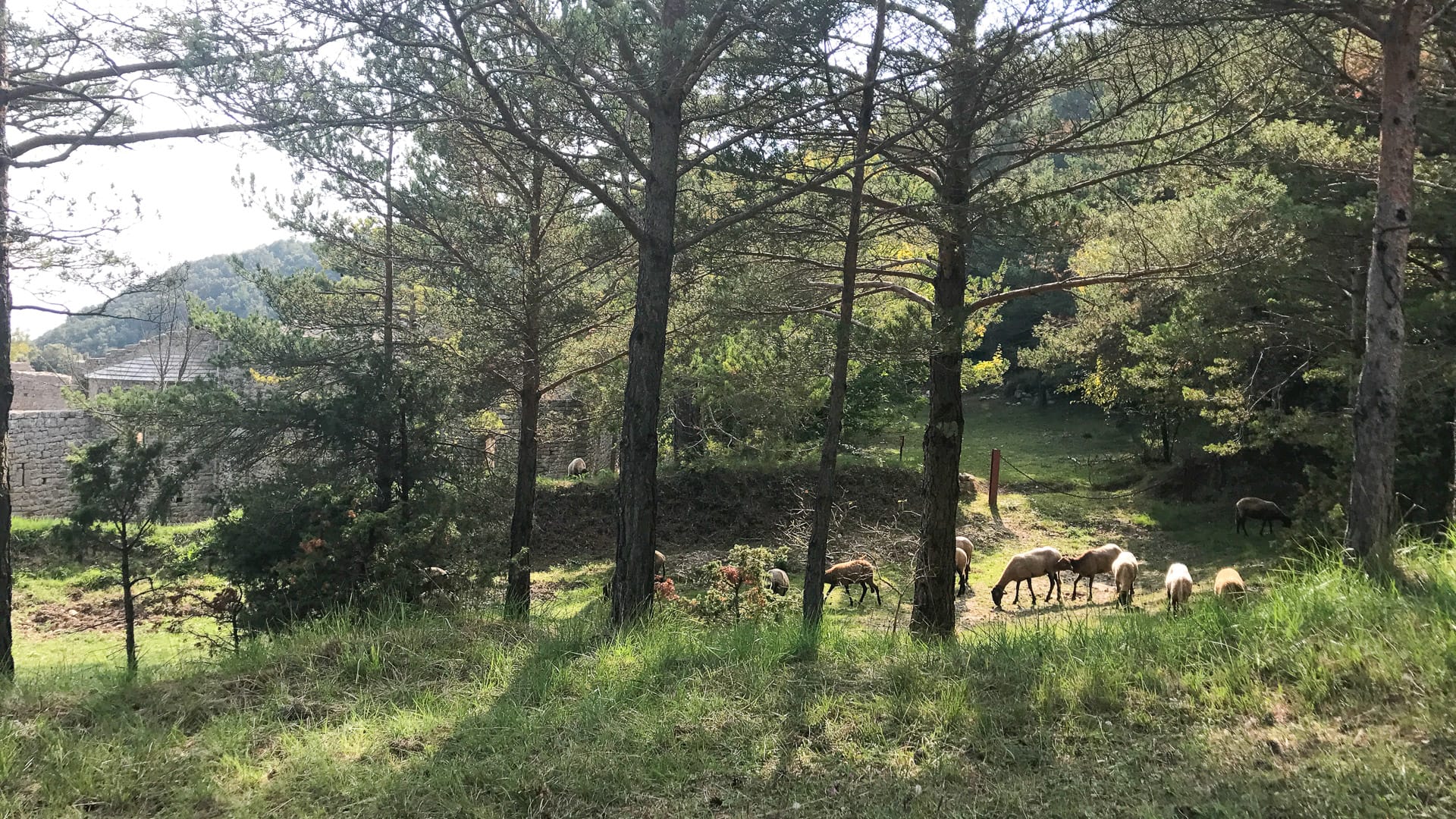
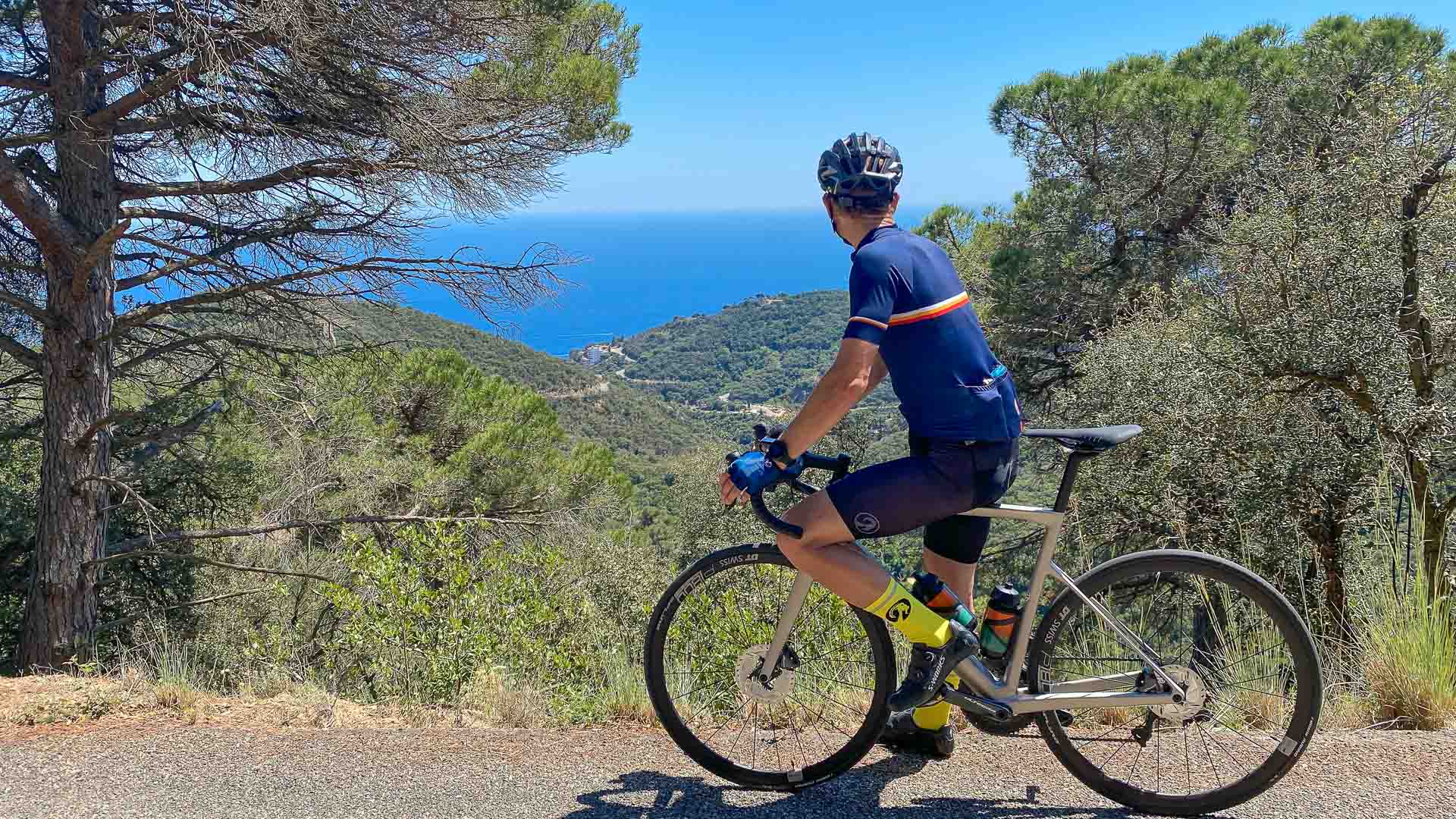
Part 2: What makes Girona a great destination for gravel cycling?
This history of cycling in the city is an important backdrop as it helps explain why Girona is so well placed to cater to all cyclists, including gravel cyclists.
However, the main reason Girona is becoming known as a gravel mecca is that its natural environment means it’s supremely well suited to gravel.
Plains
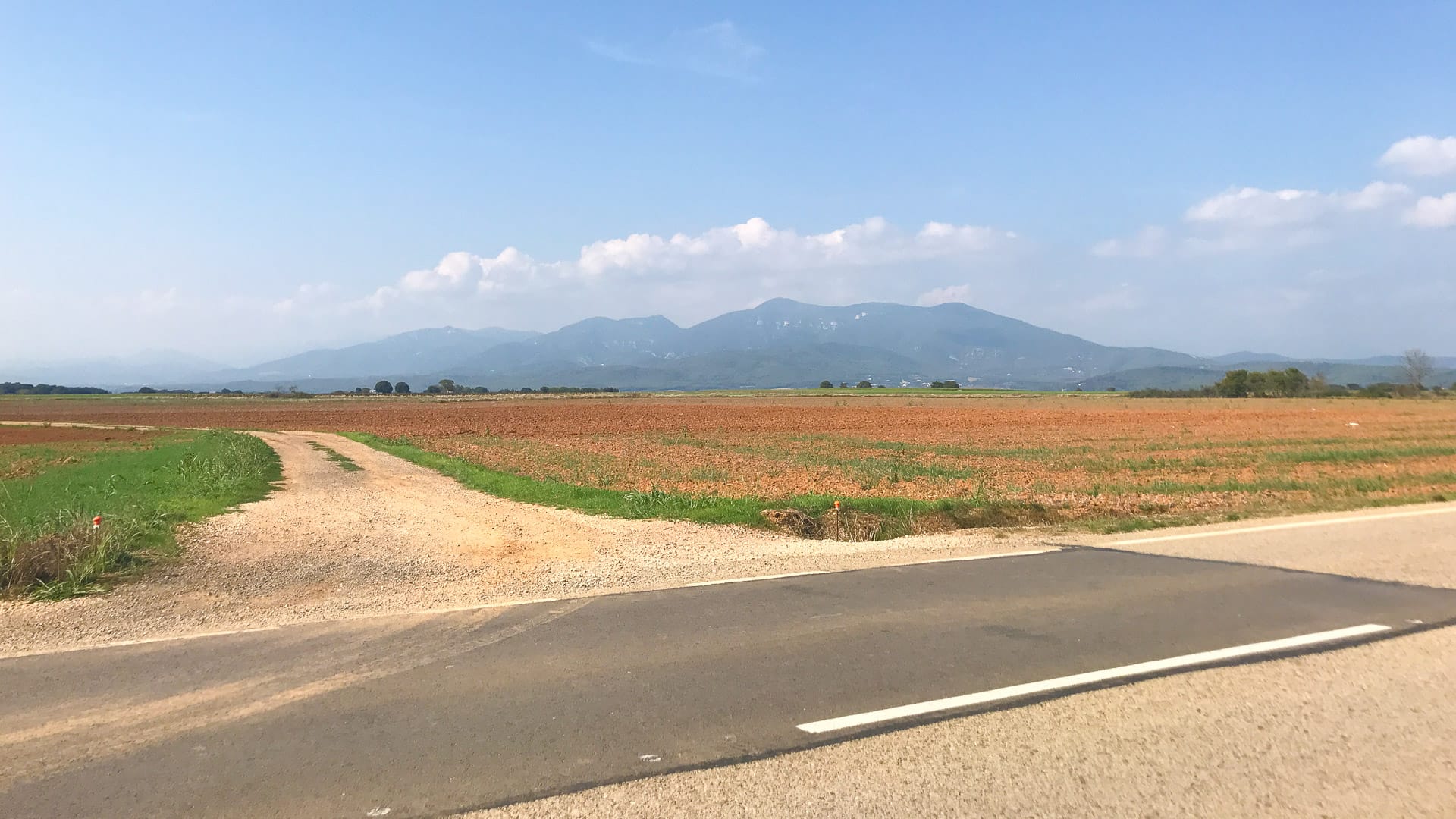
Girona’s agricultural plains include cereal fields, orchards, vegetable-growing areas, vineyards and olive groves. This varied agricultural landscape is dotted with farms, traditional villages and medieval settlements.
This means that there is a very extensive network of historic access “roads” to towns and farms and farmhouses spread throughout every corner of the region. These quiet roads are a mix of farm tracks, sandy/dusty trails, rocky/stony roads and compacted earth.
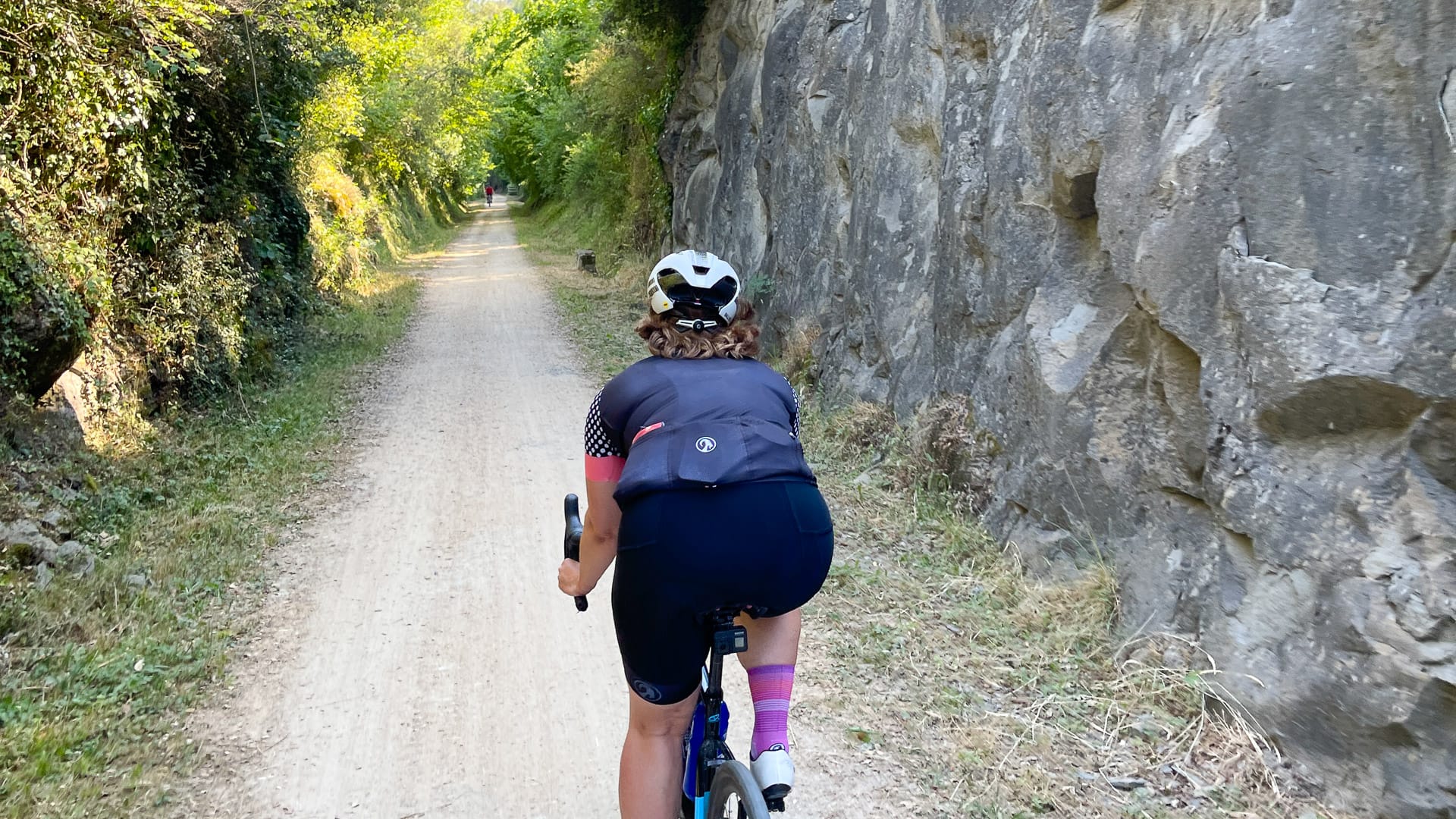
There are also the via verdes, disused railway tracks that have been especially adapted for leisure, and are now joined together to create easy and safe routes that criss-cross the Girona countryside. Well known greenways such as Carrilet I and Carrilet II create routes by linking old railway lines with rural roads and tracks.
Carrilet I stretches for 57 km between Girona and Olot. Carrilet II runs 39.7 km from Girona to Sant Feliu de Guíxols on the Costa Brava. These are Girona’s best-known traffic-free cycling routes. Their gentle gradients and excellent surfaces make them suitable for riders of all abilities, while also providing useful links into Girona’s wider gravel network.
On top of the gravel tracks and roads are the medium-sized asphalt roads with very organic shapes adapting to the soft relief of the plains, very nice to ride.
Mountains
Surrounding the plains are gentle mountain ranges mostly below 500 metres high, which also have a vast network of historical roads generated since ancient times for the agricultural exploitation of forests. These mountains act as watchtowers and give a perspective on the plains (as well as exceptional views). The mountains are also fantastic decorative backdrops, offering inspiration and romance in all directions.
The higher ground provides longer climbs, more demanding surfaces and wide views across the surrounding plains. However, the terrain can vary considerably, and a line shown as a track on a map may be much rougher than expected on the ground.
Sea
Finally, the Costa Brava offers up a contrast, with the glittering sea, charming beaches and rugged, natural coastline. Fortunately, the towns are still pretty small and not very built up and there are many gorgeous small fishing villages of great charm, such as Tossa, Calella, L’Escala or Cadaqués.

Picturesque coastal town on the Costa Brava
Part 3: The development of gravel cycling in Girona
Local passion
Gravel riding burst into Girona with great force and enthusiasm from the beginning. With the terrain so good for gravel, locals have embraced the other benefits
- lower technical level than mountain biking, with less physical demand
- more safety off the public roads
- more social by being able to go in parallel chatting.
Since the beginning of gravel in 2017, Girona has become a magnet for gravel-lovers. However, that does not mean every Girona gravel route is easy. Steep gradients, loose surfaces, erosion and long distances can make some routes extremely demanding.
Gravel races in Girona
The rapid increase in gravel riders in Girona led some mountain bikes competition organisers to begin creating gravel bike races and events. It was a new way of organising the races without marking the routes and only distributing the GPS file for participants. Little by little these competitions developed and grew in distance and participants until they became seen internationally as benchmark gravel competitions.Examples include the Traka, Sea Otter Europe Costa Brava and Sgrail – more details below.
This environment of strong gravel events in Girona, combined with promotions by different companies dedicated to the organisation of specific gravel tours, has boosted Girona’s reputation as a “gravel territory” at an international level.
Current situation
Gravel cycling has become one of Girona’s defining cycling disciplines alongside road cycling. The Costa Brava Girona Pyrenees tourist board now promotes gravel as one of the region’s core cycling experiences, highlighting its extensive network of greenways, rural tracks, quiet local roads and dedicated gravel routes such as the Pirinexus and River Ter Route.
Girona’s reputation has also been strengthened by internationally recognised events such as The Traka, which attracts riders from around the world and has helped establish the city as one of Europe’s leading destinations for gravel cycling.
Today, visitors can choose from everything from gentle gravel rides across the plains to demanding mountain adventures, making Girona an excellent destination whether you’re new to gravel cycling or looking for a multi-day challenge.
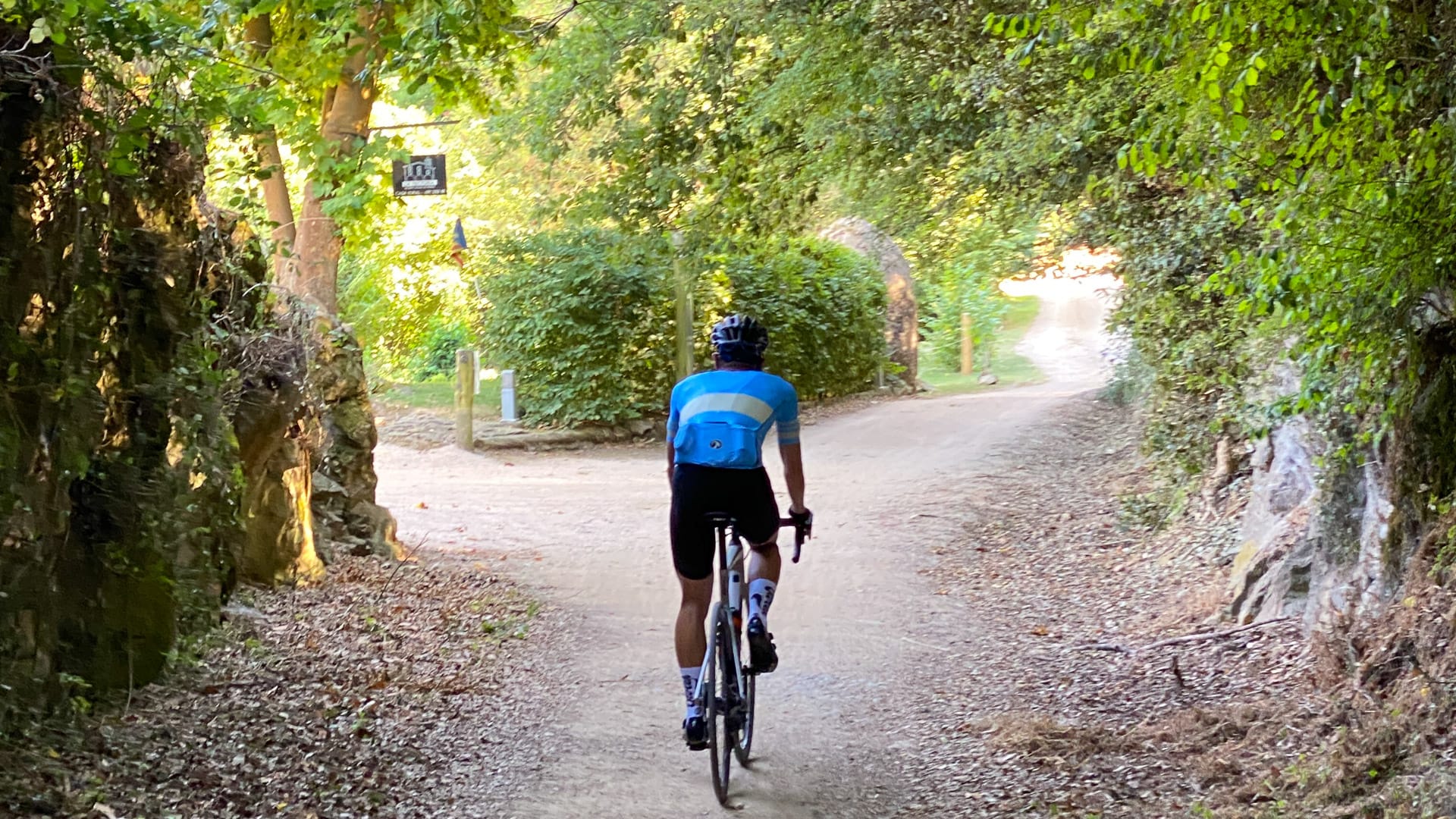
Gravel cycling in Girona
Part 4: Gravel routes in Girona
Girona is fortunate to be able to offer gravel routes to cater to all speeds, abilities and fitness levels.
As any gravel cyclist knows, the difficulty of a gravel route depends on several factors:
- the steepness and frequency of the climbs
- the total distance and climbing
- the type and condition of the surface
- the technical difficulty of the descents
- recent weather
- the amount of food, water and shelter available along the way
Gearing can make a significant difference. Routes with maximum gradients of around 6–7% may suit moderately experienced riders, while gravel bikes with very low gearing can make steeper sections of 12–14% or more achievable for stronger, more experienced cyclists.
Distance is equally subjective. Longer gravel routes of around 100–120 kilometres can be manageable where the surfaces are fast and the climbing is limited, but the same distance will feel much harder on rough tracks or a route with substantial climbing.
It’s also important to acknowledge that routes, especially gravel routes, can change over time. Gravel routes are much more unpredictable than road cycling routes; they can alter with heavy rain that causes trails to be washed away. Some routes may be manageable in dry conditions but significantly challenging after rain.
A route that one experienced cyclist enjoys can be daunting for a newbie. One of the rough roads a roadie finds tough might be ridiculously easy for a mountain biker. It’s important to bear in mind that suggesting gravel roads is difficult because the perfect route varies due to these things.
Bear this in mind as you read the suggestions below (and it’s also a reason to consider getting a local to help you plan your gravel cycling trip!).
Girona gravel cycling routes – beginners
For riders new to gravel, a route of around 50–60 kilometres, with 500–700 metres of climbing and maximum gradients of approximately 6–7%, may provide a suitable starting point.
In Girona, there are two areas of flat terrain that are ideal for this level of gravel route:
- The Girona plain, which allows you to leave Girona to make multiple circular routes to the south, all of them of great quality, with very well-kept agricultural surroundings and mountains such as Les Gavarres, Sant Grau or Les Guilleries.
- The Empordà Plain, larger and with the Costa Brava on one side, is the other area that allows infinite routes, inland and along the coast. The Empordà is also very notable for its large number of very well preserved medieval villages, which allow routes that take in the architecture as well as traditional bars and restaurants where you can enjoy local hospitality.
- The official Gravelera project now brings together more than 20 gravel routes across the Empordà, ranging from easier tracks through open agricultural landscapes to harder coastal and mountain routes.
Example: Gironès Sud circular route
Best for those who want a shorter route on relatively accessible greenways, cycle paths and rural tracks.
The official Gironès Sud routes provide three options of approximately 20, 25 and 37.5 kilometres. They start in Girona and combine the Carrilet II greenway with cycling infrastructure across the Pla del Gironès Sud.
Depending on the route chosen, they pass through places including Quart, Llambilles, Campllong, Cassà de la Selva, Sant Andreu Salou and Fornells de la Selva.
The 20-kilometre route is described as flat, while the two longer options are classified as moderate. The routes use a mixture of shared greenways, cycle tracks, protected cycle lanes and streets with a 30 km/h speed limit, so be prepared to share sections with pedestrians and other road users.
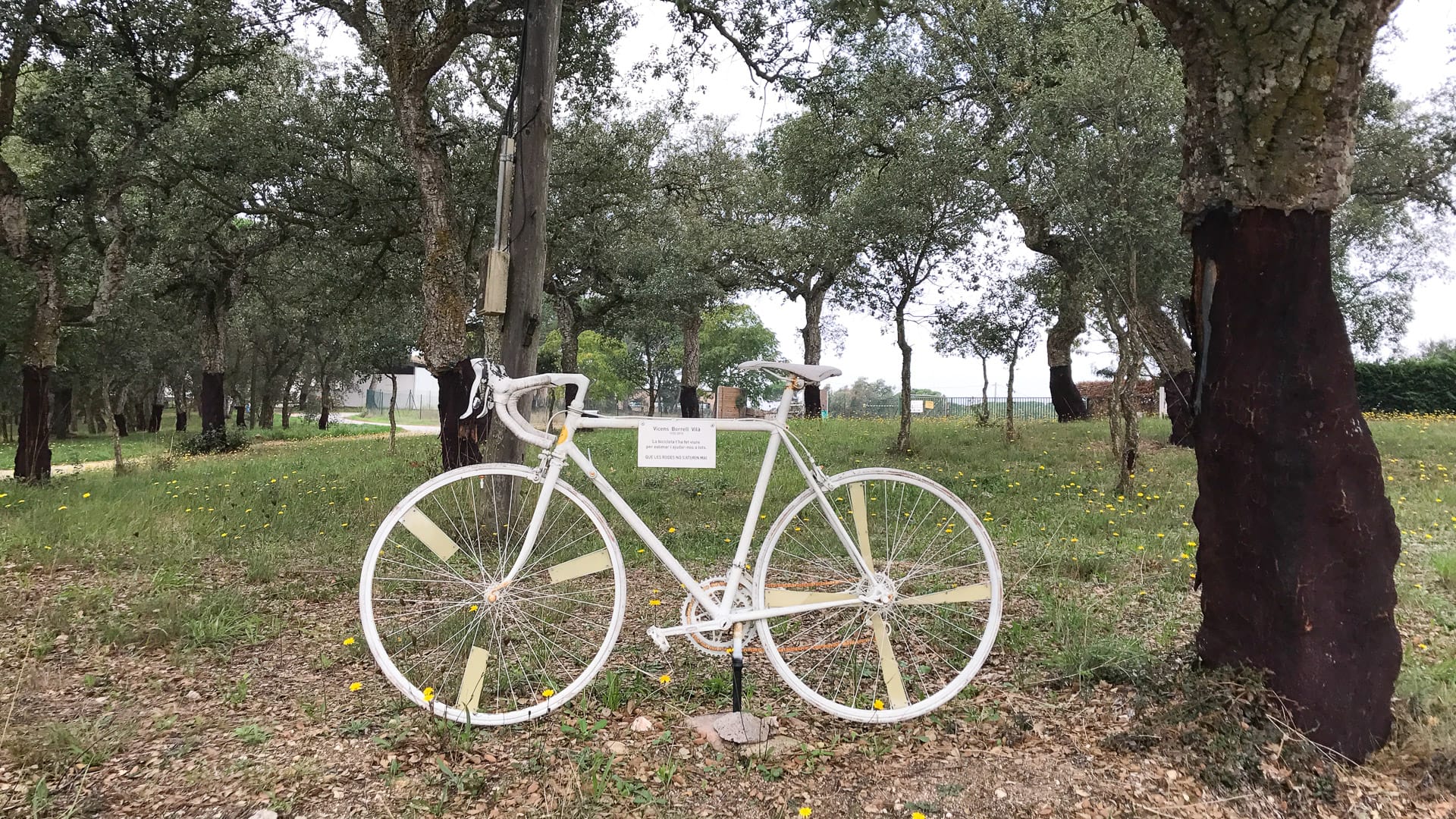
Bike route signage in Sant Andreu Salou
Girona gravel cycling routes – moderate
A moderate Girona gravel route is likely to incorporate more mountainous terrain, with gradients of around 9–10%, distances of up to 100 kilometres and 800–1,000 metres or more of climbing. However, route difficulty will also depend on the surface, weather conditions and the rider’s experience.
From Girona, routes can be planned through the entire Gavarres mountain range, combining the Empordà plain and also the Girona plain. It includes cycling mountain tracks that allow you to climb to panoramic points, such as the Sanctuary of Els Àngels or Puig d’Arques, from where you can appreciate the entire territory with views of great beauty.
These kind of routes will require effort, but how hard the route finally is will be determined by how much you push yourself. These are routes that can be done at cruising speed, or, if you want, on the limit!
Example: Les Gavarres Route
Best for experienced gravel riders looking for a full day of forest tracks, sustained climbing and panoramic viewpoints.
This route combines areas of plain with tracks that go up to the Gavarres mountain range. The network of mountain trails is very old; therefore, they have a very organic layout, with reasonable climbs.
Depending on the route chosen, riders may head towards Els Àngels, Madremanya or Puig d’Arques, the highest point in the Gavarres, with options to continue towards the Empordà before returning to Girona.
This is a demanding route for people used to gravel riding. Allow for a full day’s ride.

Cyclist climbing uphill at dusk on Els Àngels climb Girona
Girona gravel cycling routes – challenging
Challenging gravel bike trails are defined as much by their gradients as by their overall distance. Expect very steep climbs of more than 10%, with some sections reaching 18–20%. These routes are often over 100 kilometres and can extend to 140–150 kilometres, with 1,500–2,000 metres or more of climbing.
From Girona you can climb mountains such as Sant Hilari, Santuari de el Far, Rocacorba, Mare de Deu del Món or even out of the foothills of the Pyrenees and into the “Pyrenees proper”. The ascent of all these mountains can be combined with flat sections on the plain to be able to add kilometres and complete a high-level gravel day.
Another option to raise the level of a gravel outing is to introduce single track routes that could be more suitable for mountain biking; but of course care is needed and this should only be done by very experienced riders. Gravel purists will consider that this is not gravel, and that we are in the terrain of mountain biking.
Example: Rocacorba route
Best for cyclists seeking steep climbing, challenging mixed surfaces and a demanding day out.
Rocacorba is one of Girona’s classic roads, while the surrounding countryside contains a mixture of lanes, tracks and forest roads that can be incorporated into a harder mixed-surface ride.
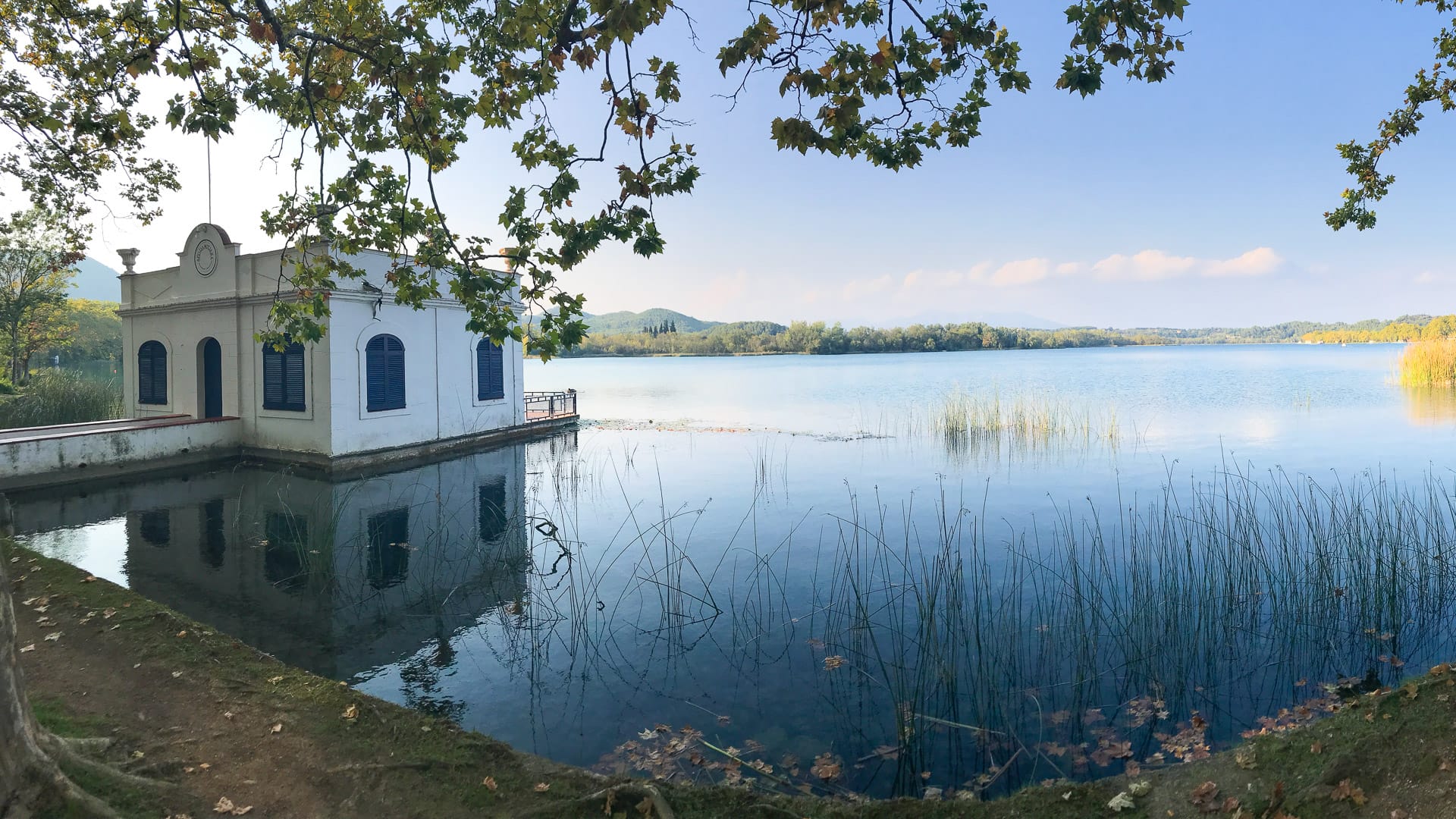
Climbing to the top of Rocacorba, almost 1,000 metres high, mostly off-road on a gravel bike, is a demanding experience and you have to be in shape. The return by Banyoles Lake allows you to relax a little and enjoy the territory in the second part of the tour.
Without a doubt it is a route you’ll need to ride pretty intensely for most of the day, and arrive in Girona with the satisfaction of having climbed one of the highlights of our destination.
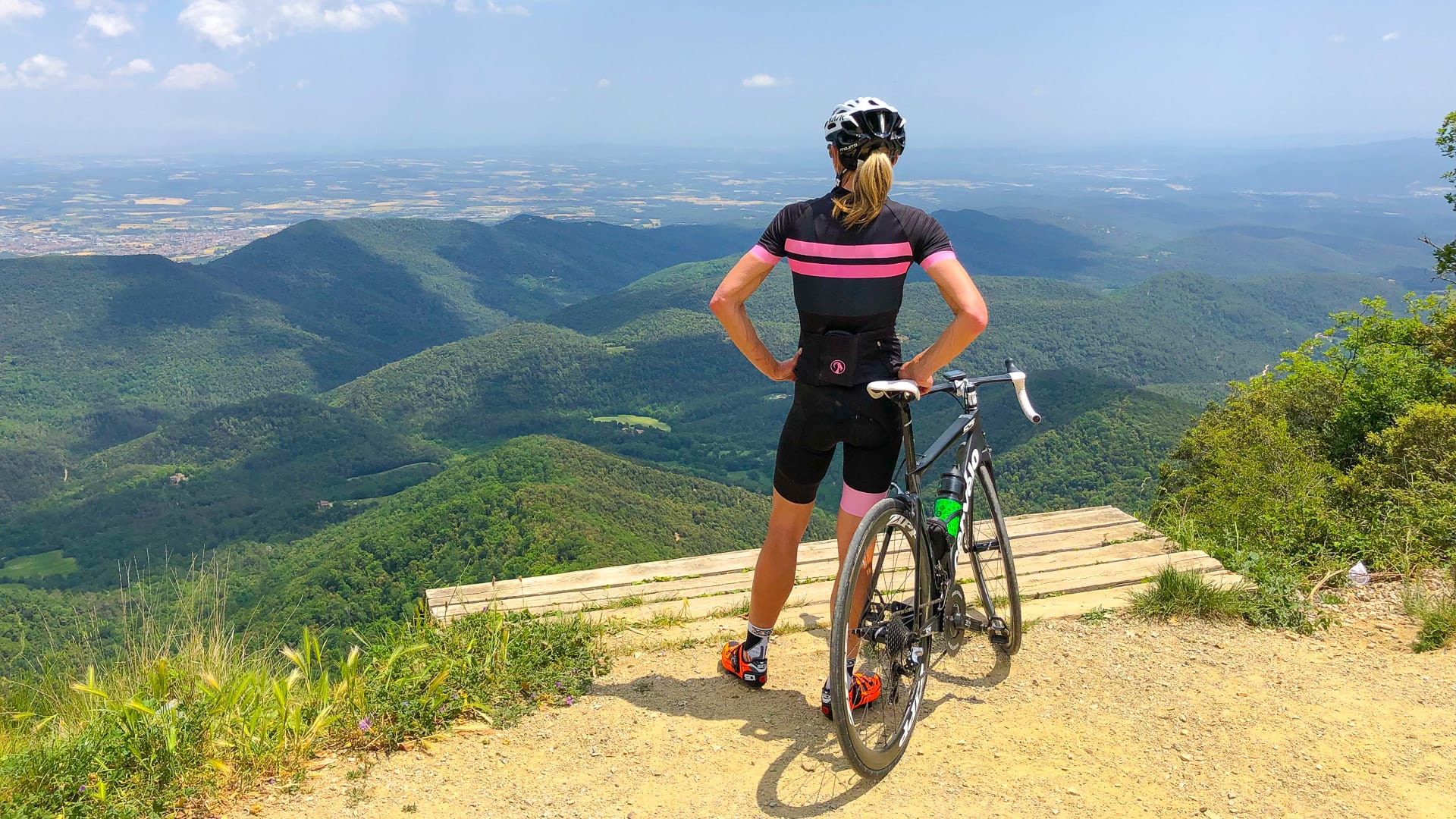
Summit of the legendary cycling climb Rocacorba Girona
Multi-day gravel tour routes and bikepacking
Girona is also well suited to bikepacking and multi-day gravel touring. Rather than returning to the same base each evening, you can link the city with the Empordà, the Costa Brava, Garrotxa, the Pyrenees mountains or neighbouring areas of France.
The ethos is to travel by bike with little equipment that allows you to go very light and thus not limit the kilometres and the ascent of each daily stage. It is not about loading the bike with saddlebags, tents and cooking equipment, but about carrying the minimum equipment. Normally it is combined with sleeping in accommodation of more or less luxury, taking advantage of having local cuisine for dinner, and so discovering a little more about the territory, its customs and its culture.
There’s more about bikepacking v gravel bike touring, here.
Example: Pirinexus route
Best for bikepackers and cycle tourers looking for a multi-day, mixed-surface journey
The Pirinexus is a 340-kilometre circular cycling route linking the Girona Pyrenees, the Vallespir region of France and the Costa Brava. With around 3,200 metres of climbing, it can be completed in two to six days, depending on your fitness and how much time you want to spend exploring along the way.
From Girona, the route follows greenways towards Olot and Camprodon before climbing over the Col d’Ares into France. It then passes through the Tech river valley, returns to Catalonia through the Empordà and continues towards the Mediterranean coast, passing the ancient Greek and Roman site of Empúries before looping back to Girona.
The route includes a mix of surfaces, with a mixture of asphalt, compacted gravel, forest tracks and traffic-free greenways.
A gravel bike is a good choice, but a hybrid or touring bike with suitable tyres can also work.
One of the things we like about the Pirinexus is how much the scenery changes along the route. Over several days, you can ride through volcanic countryside, Pyrenean valleys, vineyards, medieval villages and along the Costa Brava coastline.
For more detailed route information, suggested stages and practical tips from local cycling experts, read our guide to cycling the Pirinexus, created with support from Costa Brava Girona Tourist Board and Ecovies de Girona.
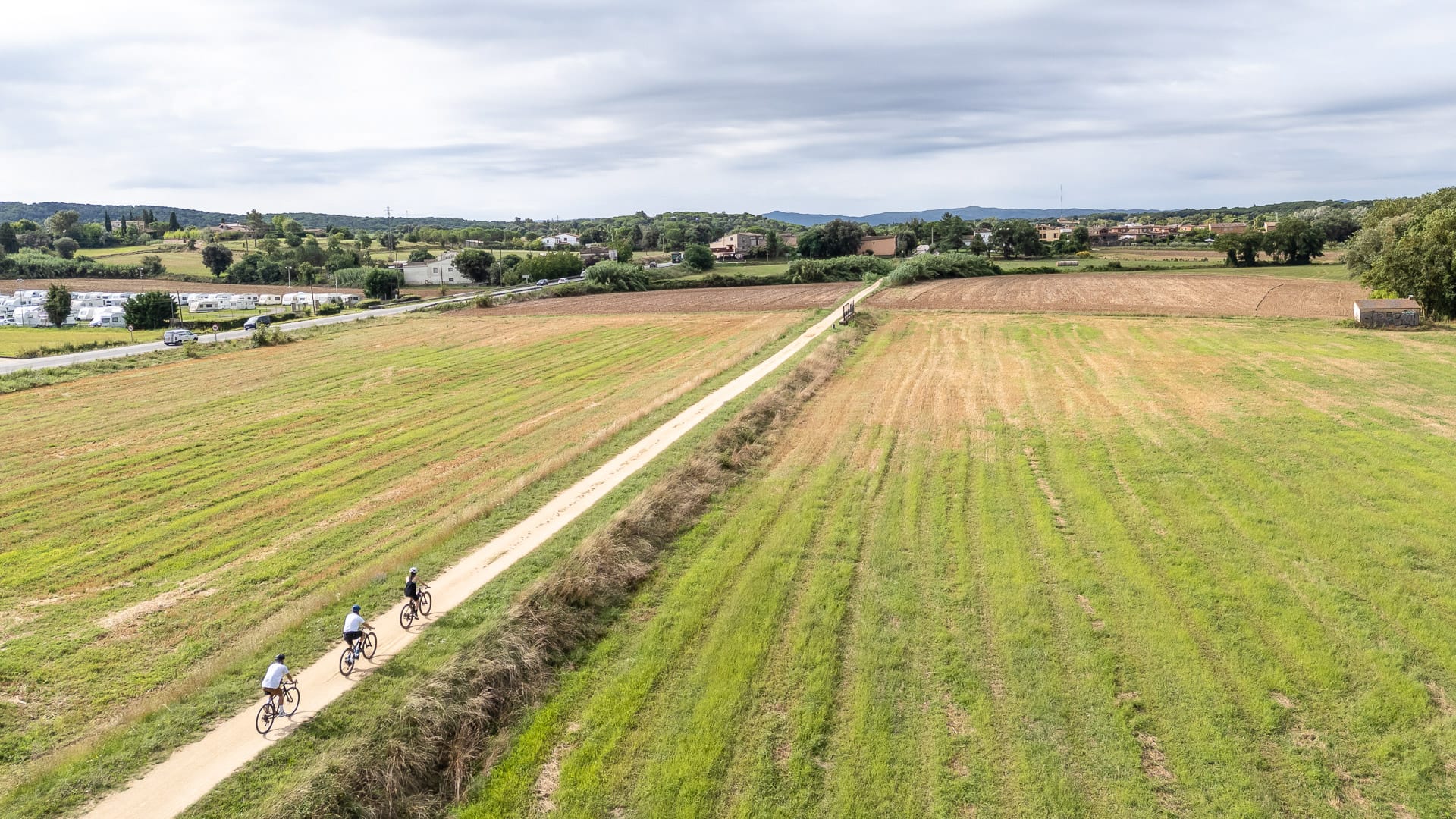
Gravel cycling in Llambilles (photo credit: Les Via Verdes de Girona)
Part 5: Gravel races, events and festivals in/around Girona
Girona has a full calendar of bicycle events. Here we highlight a few of the great gravel races in Girona.
Sea Otter Europe
The largest bicycle event held in Girona is the Sea Otter Europe, which brings together a fair with 250 exhibitors, many competitions, and demonstrations. It is an annual cycling festival that more than 5,000 people attend over the two days. Gravel races are also included with different distances.
The current sporting programme includes the Girona–Costa Brava round of the UCI Gravel World Series. Event dates and the individual races offered can change, so check the official programme before booking travel.
The Traka
The second most important event in Girona is The Traka. It offers several distances, from shorter one-day rides to long-distance and ultra-endurance formats.
Previous editions have included routes of approximately 100, 200, 360 and 560 kilometres, although the available distances can change from year to year. It is accompanied by a wider programme of social rides and activities in Girona.
SGRAIL100
SGRAIL100 is a multisport event combining an open-water swim at Cadaqués, a gravel ride across the Empordà and a trail run finishing in Girona. It’s inspired by three-time Triathlon World Champion Jan Frodeno.
The exact course has changed between editions. The current published format includes a 1,500-metre swim, approximately 86 kilometres of gravel riding and a 10-kilometre trail run, but participants should check the latest route information before entering.
Part 6: Tips for gravel riding in Girona
Do you need help riding gravel in/around Girona?
Girona is a populated region with infinite possibilities for tours, places to stay and places to visit. Organising an excellent route can be within anyone’s power, you will just have to dedicate enough time to select “the best one”, and put it together in the most efficient and pleasant way to have a great experience.
The advantage of working with a local company is that the professionals have already done many hours of work for you. The professionals who organise tours have the knowledge of the territory, and their desire is to organise a tour in the best way so that it is a great experience.
We know several operators in this region, so if you’re looking for support, fill in this enquiry box and we will try and connect you.
What equipment do you need for gravel cycling in Girona?
The most important thing is to have a gravel bike that is suitable for the routes you intend to ride. A lighter gravel bike with faster tyres may be sufficient for the smoother tracks across the plains. Wider tyres, lower gearing and greater puncture protection are likely to be more useful in Les Gavarres, the foothills or on rougher coastal routes.
Alongside your usual cycling kit, consider carrying:
- sunglasses and sunscreen
- enough water for the conditions and planned refill points
- a waterproof or windproof layer
- two spare inner tubes, even if riding tubeless
- tyre plugs, a pump and a multitool
- a chain link and basic first-aid supplies
- offline navigation and a charged phone
- additional food for delays or route changes
The weather forecast should always be checked shortly before setting out. Meteocat provides current conditions, forecasts and weather warnings for Girona and the wider region.

Path around Lake Banyoles
What time of year to go on a cycling tour in Girona?
Any time of year is a good time of year for gravel riding in Girona. Just bear in mind that there are two main temperature extremes in Girona: December-January with temperatures of 5 to 15 degrees, and July-August with temperatures of 27 to 33 degrees.
Rain is also possible throughout the year and can have a significant effect on unpaved tracks. A route that is straightforward in dry weather may become muddy, deeply rutted or impassable after a storm.
Spring and autumn will generally offer the most comfortable conditions for many cyclists.
Where to stay for a gravel cycling tour in/around Girona?
As Girona is a tourist destination in its own right, the region has hundreds of accommodations of all types. You can find luxury hotels, simple hotels, small and large hotels, rural houses or apartments. (Check this article on where to stay in Girona for more.)
For a first trip, Girona city is a convenient base. It provides straightforward access to bike hire, guiding services, restaurants and routes heading in several directions.
Another option is to divide your time between Girona and somewhere in the Empordà or on the Costa Brava. This can provide a more complete view of the Girona region and reduce the distance required to reach coastal gravel roads.
Girona is a great place to spend several days, and there are lots of routes out of the city. However, cycling from a location on the coast also allows you to enjoy a plunge in the sea at the end of each day of cycling!
Another option is to do a self-guided cycling holiday or guided multi-day tour and move from one accommodation to another each night.
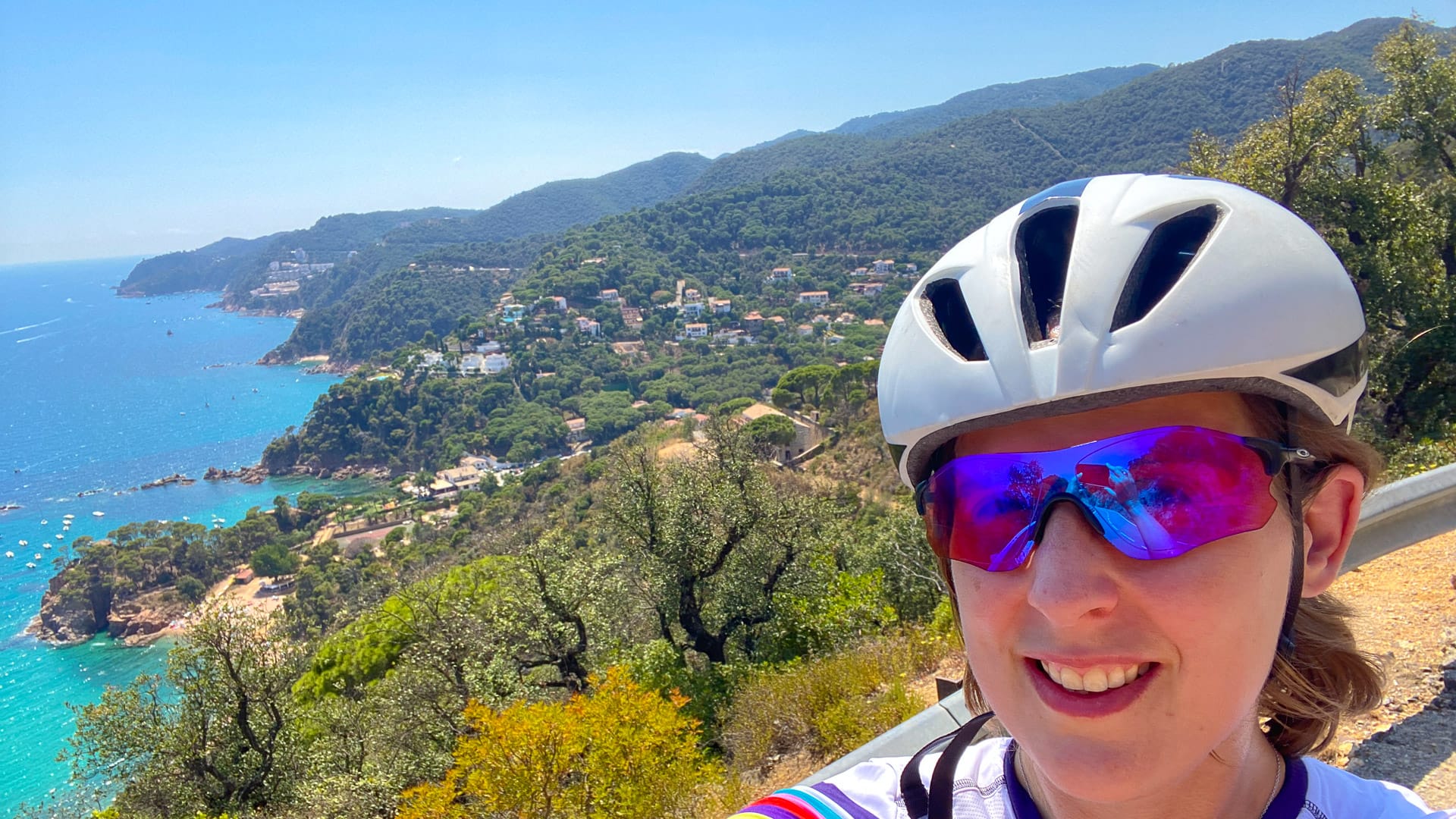
Cracking views along the coast of Costa Brava
Tips for renting gravel bikes in Girona
When renting a gravel bike, an important consideration is the gear ratio. It is always preferable to rent a bicycle with a friendly gear ratio, to be able to best tackle the different slopes that the tracks and roads present.
For example, a single-chainring bike with a 38-tooth chainring and a 44-tooth largest sprocket offers a much lower climbing gear than a bike with a smaller cassette.
It is a good idea to do a short ride before you leave the rental shop to check that the bicycle fits correctly and that everything is in good condition.
Also confirm:
- the tyre width and tread
- whether the tyres are set up tubeless
- what repair equipment is supplied
- whether pedals and bottle cages are included
- what assistance is available in the event of a mechanical problem
- whether the bike is suitable for the routes you intend to ride
Girona has several established bike hire providers, but availability can become limited during popular spring and autumn periods and around major events. Booking the correct size in advance is advisable.
Final thoughts
Girona’s gravel appeal comes from the variety of riding available within the wider region. You can follow accessible greenways south of the city, explore the agricultural tracks of the Empordà, climb through the forests of Les Gavarres or plan a multi-day journey towards the Costa Brava and Pyrenees.
The main challenge is choosing a route that suits your fitness, bike-handling skills and equipment. Study the surfaces as well as the distance and elevation, check recent conditions and leave enough flexibility to change your plans if the weather turns.
Looking for more inspiration for cycling in/around Girona? Don’t miss:
- Cycling Girona and the Costa Brava, for the best regions and routes
- Cycling camps in Spain, including options in and around Girona.
- The best cycling hotels in Girona, with cyclist-friendly places to stay.
- The best cycling climbs in Girona, featuring some of the region’s most rewarding climbs.
- Cycling the Pirinexus route, a 340-kilometre circular route through Catalonia and southern France.
- Easy cycling routes in Girona, for gentler rides and more relaxed days on the bike.
- Planning a cycling holiday in Girona, with practical tips to help organise your trip.
- The best Girona cycling holidays, featuring a selection of guided and self-guided trips.
- Cycling in Catalonia, for more routes, destinations and inspiration across the wider region.
Please support Epic Road Rides
A huge amount of time and effort goes into the article you’ve just read, all with the aim of helping you!
If you found what you’ve read useful, I’d really appreciate it if you dropped something in the tip jar here.
It’s a way you can say thank you and help us carry on creating top quality content with no annoying ads and no pay wall.
Looking for an organised cycling trip?
If you want someone to help you plan and book your cycling holiday, fill out this form. We aren’t a tour operator/agent but we work with lots of people who are and will do our best to put you in touch with someone that can help (within 24 hours where possible)!Clare Dewey is a cyclist with a passion for travel. She set up epicroadrides.com in 2018 to help make it easy for cyclists to explore the world by bike. Today her mission is still inspiring cyclists to discover new places on two wheels - and doing what she can to make sure they have the best possible time while they're there. Clare has visited 50+ destinations around the world, many of them by bike.
Want to connect with Clare? Find her over on LinkedIn.
All metrics in this article are approximate.
Last Reviewed: 28 July 2026
First Published: 04 April 2024
The contents of this website are provided for general information purposes only. It is not intended to amount to advice and you should not rely on it. You should carry out your own due diligence and risk assessments and take professional advice. Views expressed by interviewees or other users of this website do not necessarily represent our views. We make no representations, warranties or guarantees, whether express or implied, that the content on our website is accurate, complete or up to date. If you use any information or content on this website, download from, or otherwise obtain content or services through our website, it is entirely at your own discretion and risk. Epic Road Rides Ltd disclaims all liability and responsibility arising from any reliance placed on the information and content on this website. Find out more here.
Comments