

Some call the Mont Ventoux Sault route “Ventoux-lite”. We prefer to call it the connoisseur’s route. If you’ve ridden Bédoin and are looking to your next ascent of Mont Ventoux, this is the route we’d suggest next.
Sault-Mont Ventoux is longer, and the gradients are much less severe than the Bédoin and Malaucène routes. It averages around 5%, compared with roughly 7–8% on the other main approaches. Easier does not mean easy, though. This is still a long mountain climb that deserves respect and some preparation.
You’ll get less bragging rights if you ride up this way, but on the plus side, you also get far-reaching views and (in season) unforgettable lavender fields. It’s also far quieter; both in the way of cars and other cyclists. Sault and this side of the mountain also tend to feel less touristy than Bédoin, adding to the sense that you’ve chosen the quieter way up Ventoux.

Clare Dewey is a cyclist with a passion for travel. She set up epicroadrides.com in 2018 to help make it easy for cyclists to explore the world by bike. Today her mission is still inspiring cyclists to discover new places on two wheels - and doing what she can to make sure they have the best possible time while they're there. Clare has visited 50+ destinations around the world, many of them by bike.
Want to connect with Clare? Find her over on LinkedIn.
Always check current travel information and advice. For visitors from the UK, the UK government travel information pages are here.
Highlights of Mont Ventoux (Sault)
The road up Ventoux from Sault is awesome as you can get in a steady rhythm and power up; it’s so much fun it almost doesn’t feel like you can be climbing Ventoux!
Much of the climb is through forest. There are steeper sections, but the gradient also eases considerably in places, giving you a couple of kilometres of welcome respite. These flatter stretches can be surprisingly fast too, particularly if you’re lucky enough to have the wind behind you.
So it’s a bit of a shock when you get to Chalet Reynard and hit the multitudes grinding up from Bédoin. You can’t help feeling a bit smug that a) you’ve got to the same point as they have on significantly less effort and b) you still get the benefit of the incredible last six kilometres.
At Chalet Reynard, the Sault and Bédoin routes merge and the whole character of the ride changes. You leave the shelter of the forest and emerge onto Ventoux’s exposed upper slopes, with their distinctive white rock and the summit building sitting above you.
From here, you can see the summit for much of the final six kilometres. It can play tricks on you mentally: it looks close, but bend after bend seems to leave it in the same place. Then, almost suddenly, you’re there.
Route notes
1. The beginning and the middle: 0-20 kilometres
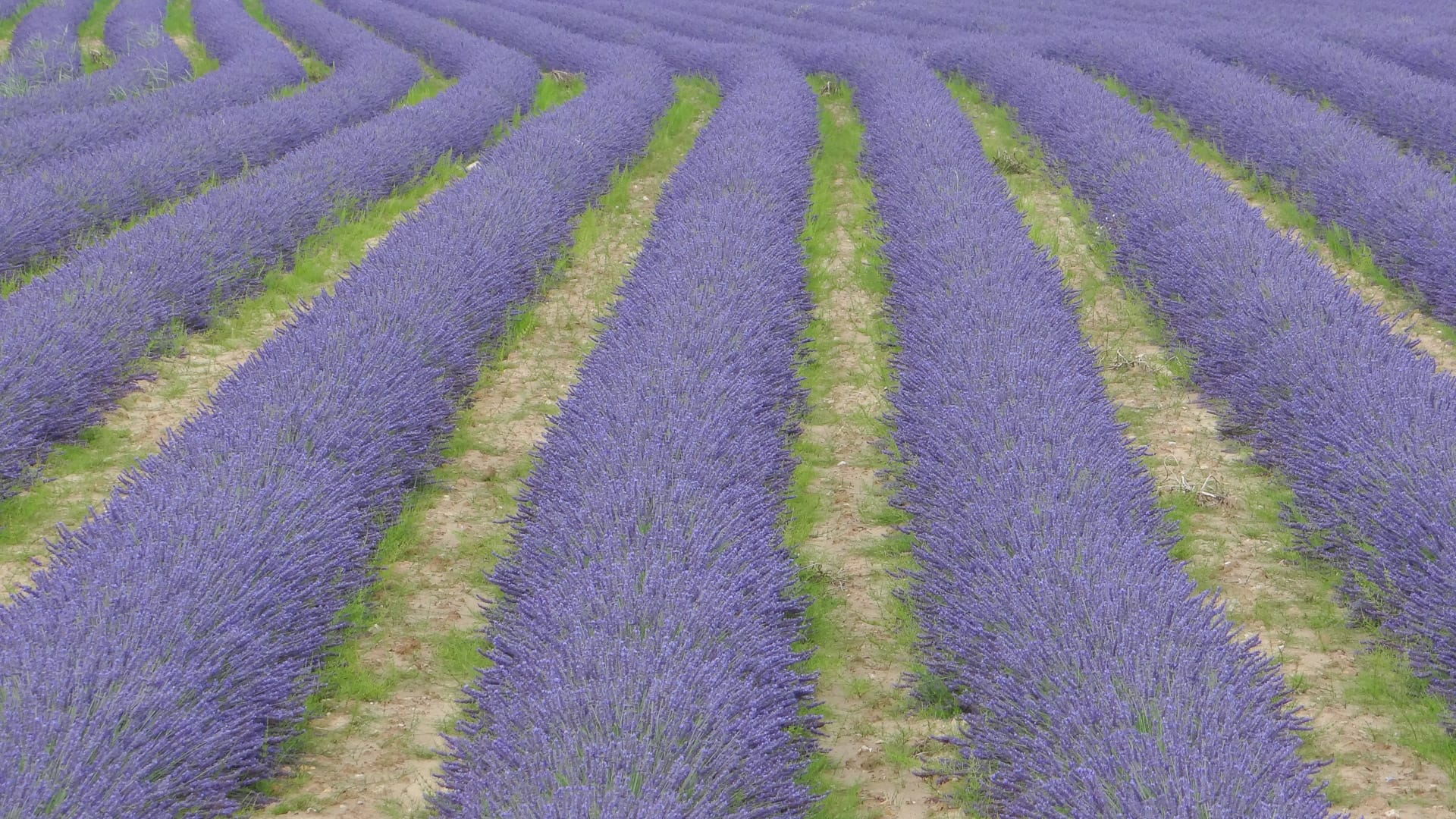
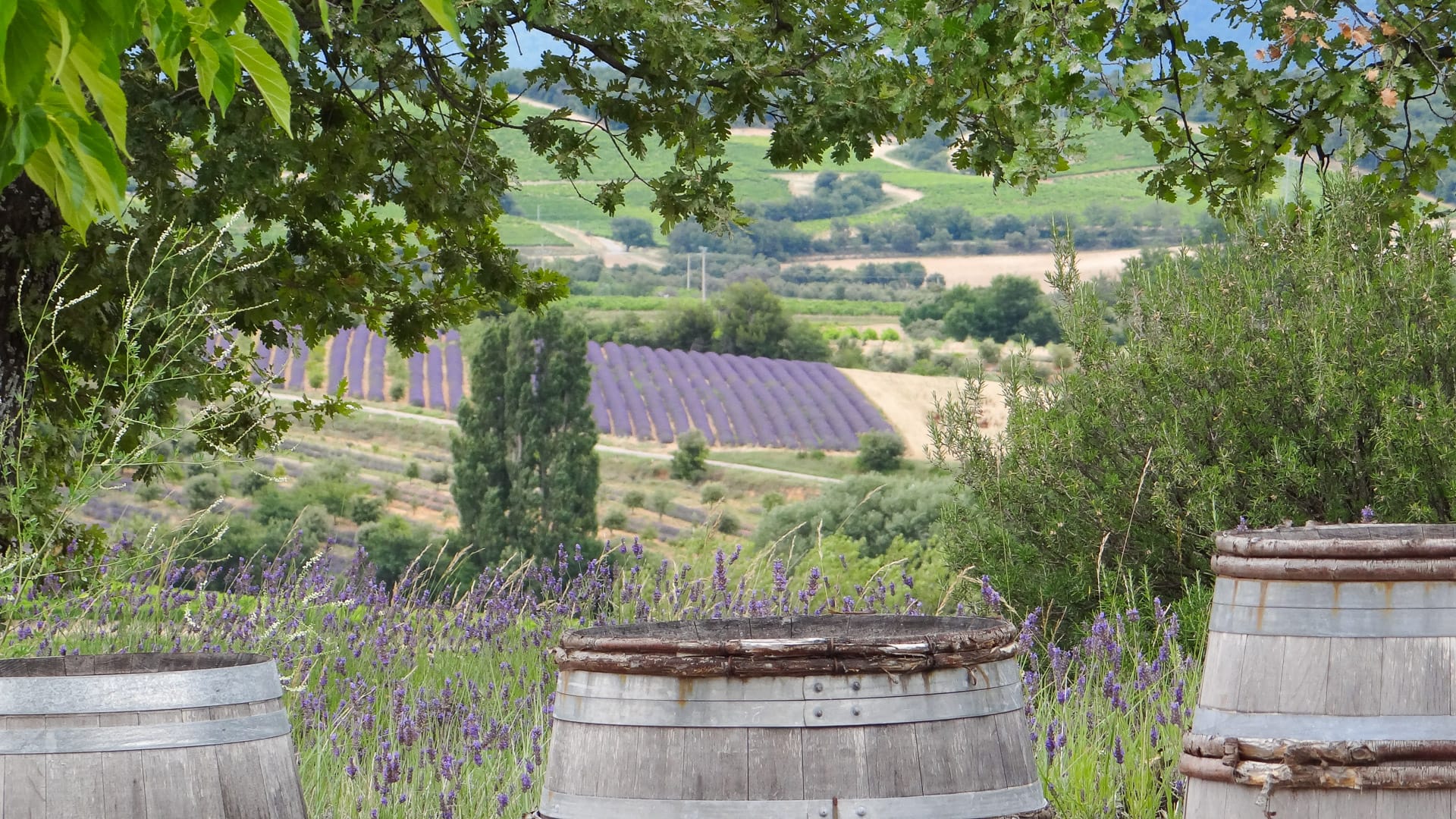
You descend slightly from Sault, down to the valley bottom, and then gently meander upwards, through trees, meadows and lavender fields. This is a gorgeous, gradual ride. It’s peaceful too with few other cyclists or cars to bother you.
The long forest section is an important part of the Sault experience. At times the road gets quite steep, but unlike the more relentless Bédoin approach, the gradient then eases and provides useful opportunities to recover. The trees also give you some shelter and can make the lower mountain feel remarkably calm.
Don’t let that calm fool you. One of Ventoux’s quirks is that you may feel very little wind among the trees only to encounter completely different conditions once you emerge above Chalet Reynard.
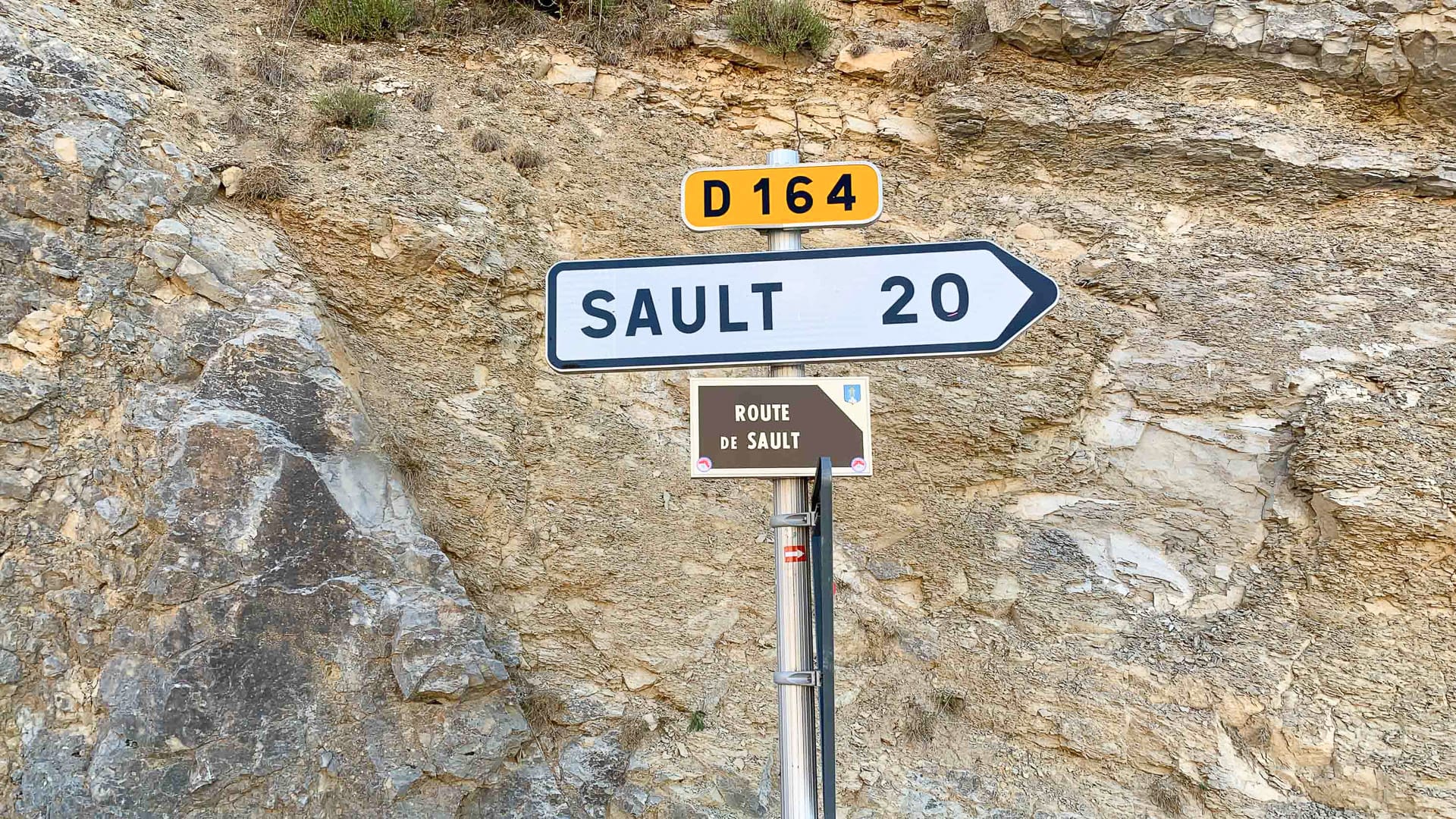
Road sign to Sault on the D164
2. The lunar landscape from Chalet Reynard: 20-26 kilometres
You join the road from Bédoin at Chalet Reynard. It’s then an unforgettable six kilometres through the white rock to the summit. Be prepared for wind; if you don’t get a brutal headwind, you’re lucky!
Chalet Reynard marks the point where the shelter disappears and the mountain becomes fully exposed. This is where the Mistral can have a major impact on your ride, and even conditions that seem manageable farther down can become difficult on the upper slopes.
The summit stays in sight for much of this section, which makes the final six kilometres as much a mental challenge as a physical one. Try to focus on riding from bend to bend rather than continually watching the summit.
3. Descent
The road down can be hair-raising. The gradient is severe, the road is often wet, there are multiple hairpins and strong gusts of wind.
Be particularly cautious above Chalet Reynard. Strong crosswinds and gusts on this exposed section can make descending much harder than conditions lower on the mountain might suggest. Chalet Reynard also provides somewhere to stop if the weather deteriorates and you need to reassess before continuing.
Café stops
In Sault, we suggest the café at Hotel le Nesk (map) – it’s got a great cycling museum and nice terrace looking across at Mont Ventoux.
Once you’ve left Sault on the Sault to Mont Ventoux route, there’s nowhere to stop for water/refreshment between Sault and Chalet Reynard.
Take a look at Ventoux (from Bedoin) for details after Chalet Reynard. In summary:
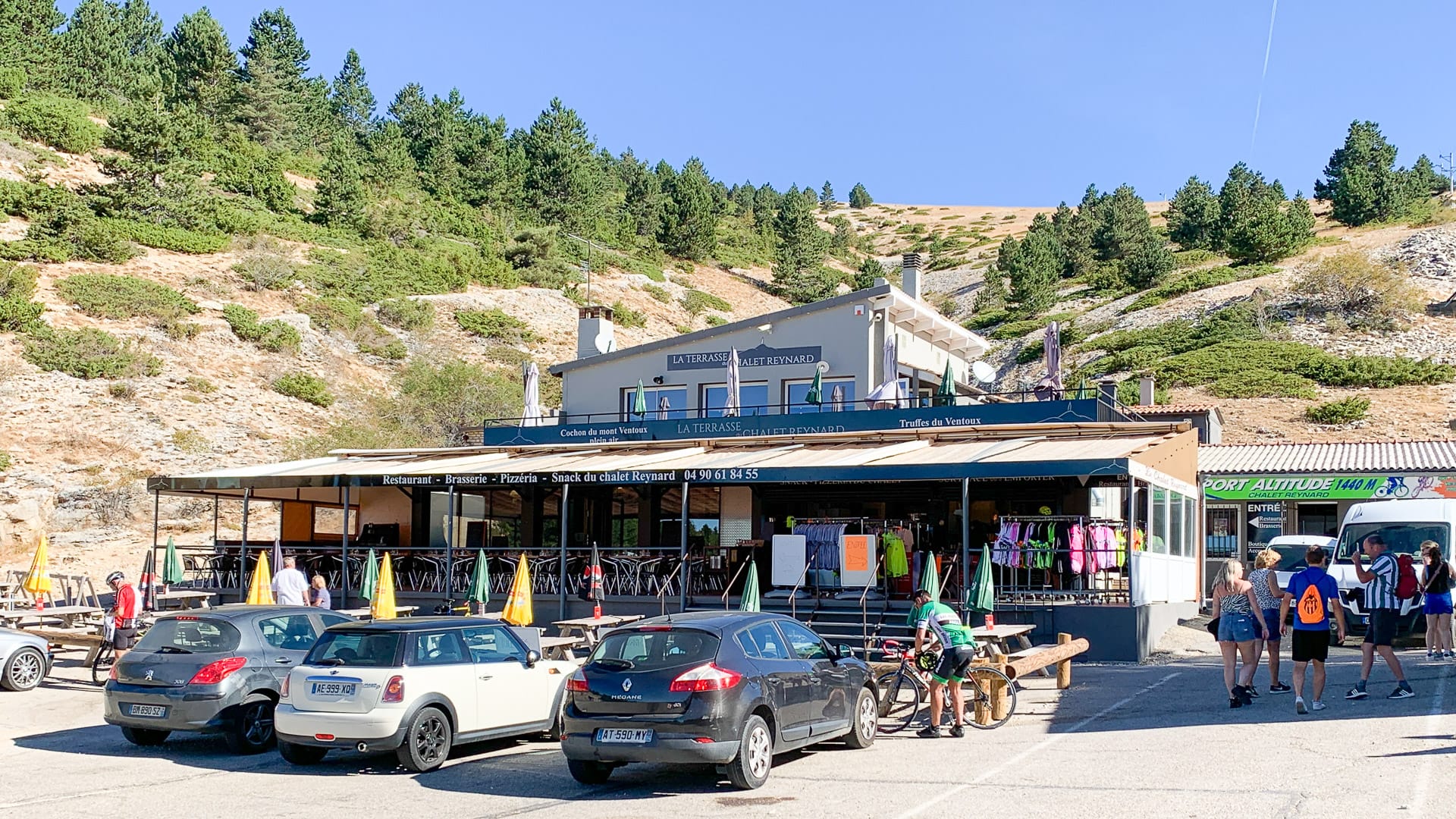
View over Chalet Reynard on Mont Ventoux
Getting there and bike hire
If you’re travelling from London or the southeast of England, one option is to take the Eurostar to Paris and continue by TGV to Avignon. This can make for a long travel day, but it is a practical alternative to flying to Marseille and continuing into Provence.
If you travel by train, hiring a bike locally is worth considering. Eurostar arrives at Gare du Nord, while trains towards Avignon leave from Gare de Lyon, so you need to cross Paris between the two stations. Doing that with normal luggage is straightforward enough, but a large bike box makes the transfer considerably more awkward. Provence also has plenty of high-quality bike hire options.
Accommodation
The village of Sault is the starting point for this route up Ventoux. You can find our suggestions for hotels in and around Ventoux here.
Sault is a particularly good choice if you want somewhere quieter and less visitor-focused than Bédoin. If you’re only staying for a few nights and Ventoux is the main objective, basing yourself close to the mountain makes sense.
Some of the outlying villages around Bédoin are also worth considering as bases as they’re quieter and less touristy. For example, Mormoiron and Villes-sur-Auzon are particularly well positioned as they are a good springboard to the Luberon, Gorges de la Nesque and yet within easy reach of Bédoin, Malaucène and Sault.
Mazan is another option worth considering, particularly for a longer stay. It puts you within reach of Ventoux while giving you more scope to explore the wider riding in Provence rather than building your entire trip around one mountain.

Tips
Our tips for cycling Ventoux are a good starting point. For the Sault route in particular, there are a few extra things worth knowing before you set off, from when to ride and how to prepare to what to expect from the wind and road conditions.
Check the wind forecast
The golden rule for Ventoux is to pay close attention to the wind forecast, not just the chances of rain. The Mistral can affect the mountain throughout the year, and the exposed slopes above Chalet Reynard are particularly vulnerable. When winds become severe, this upper section can be closed for safety.
If you’re staying in Provence for several days, keep your itinerary flexible rather than deciding months in advance which exact day you’ll climb Ventoux. Check the wind conditions locally and use the calmest day for the mountain. If the wind is against you, there are plenty of other rides to enjoy while you wait for a better window.
Gorges de la Nesque is also an excellent alternative if conditions on Ventoux aren’t suitable. Its balcony road follows the gorge on a much gentler gradient, with wide-open views and plenty of opportunity to actually look around rather than concentrating solely on the climb. It is exposed in places, so heat and wind can still play a part, but it makes a very different ride from Ventoux.
Choose the right time of year
For the best chance of suitable riding conditions, aim for late May through September. Strong winds are still possible during this period, but attempting Ventoux earlier in spring brings a greater risk of poor conditions or the upper mountain being closed.
The Mistral can also persist for longer periods earlier in the season, whereas summer spells may be shorter and more localised.
Know what to expect on the Sault route
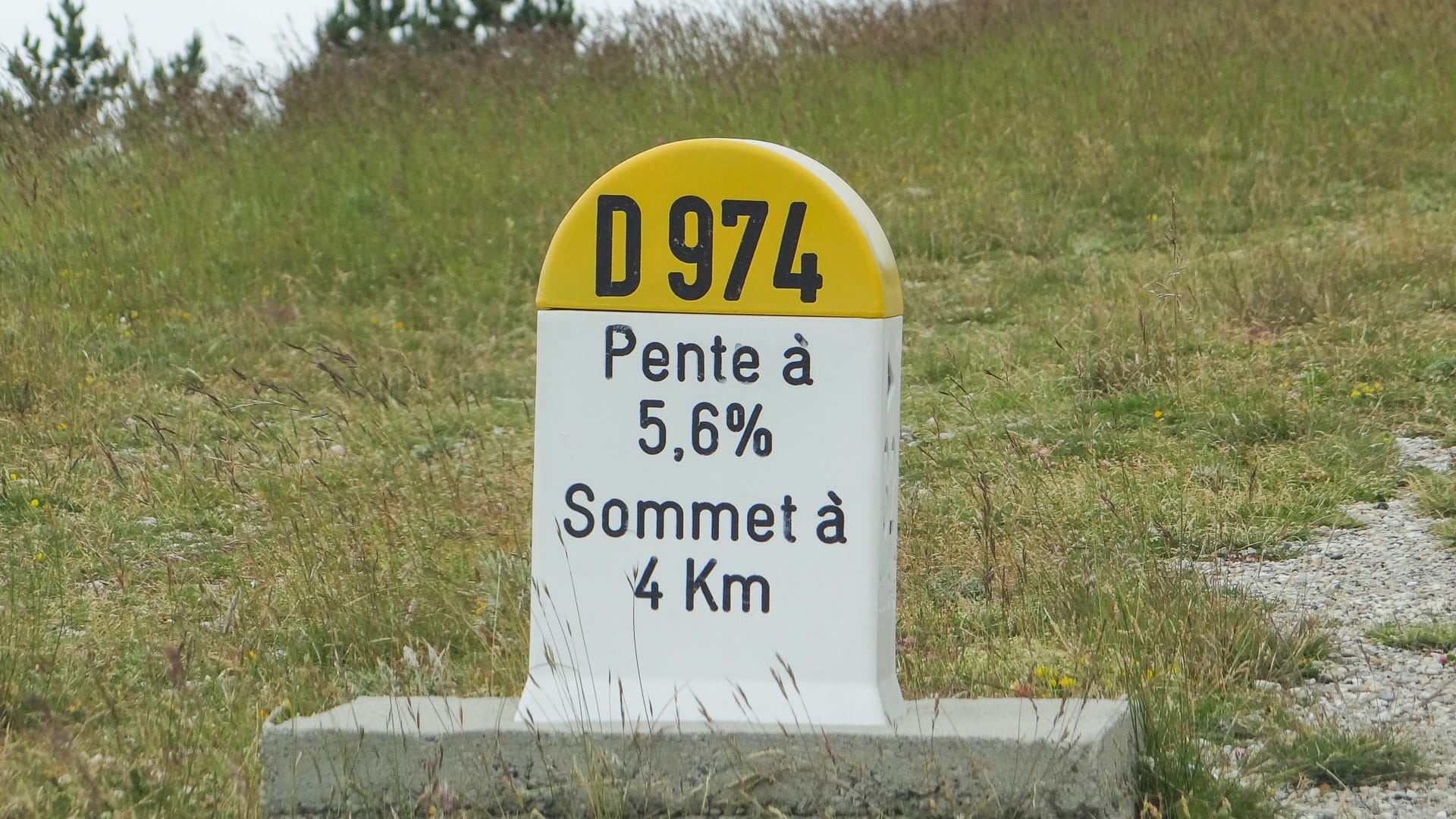
Don’t expect the milestone markers found on the other routes up Ventoux: there are none between Sault and Chalet Reynard. Likewise, there are no barriers at the side of the road.
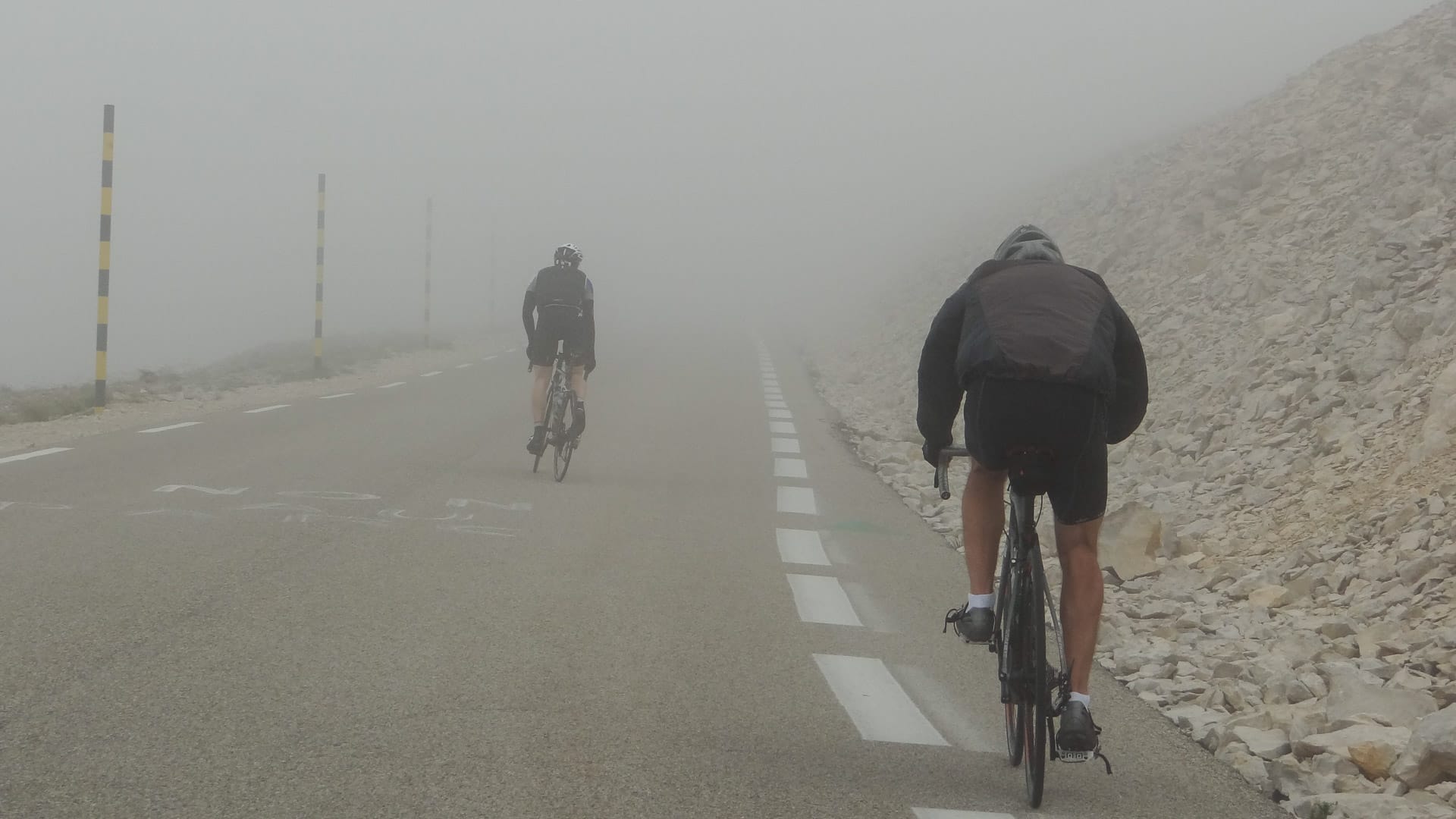
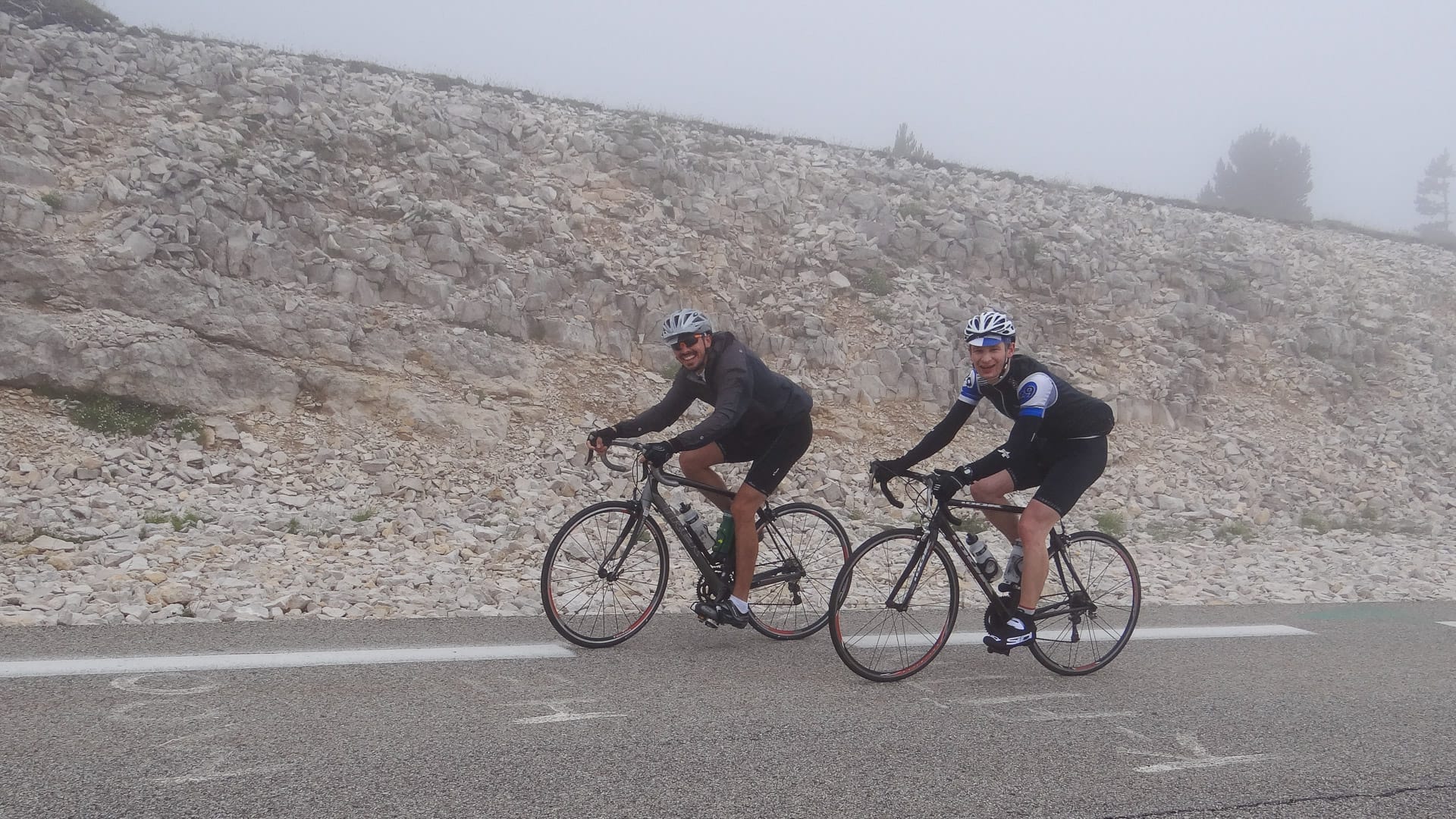
Cycling through thick fog near the summit of Mont Ventoux
Train for the climb
Don’t underestimate the preparation required either. Sault is the gentlest of the three main approaches, but it is still a prolonged mountain effort. If long climbs are not something you regularly ride at home, build sustained climbing into your training, whether outdoors or on the indoor trainer.
If you’re looking for a warm up ride before the Bédoin or Malaucène routes up Ventoux, our favourite climb up Ventoux is the Sault climb – and not just because that is the ‘easy’ side! If you have a chance to ride the Gorges de la Nesque and then do the climb from Sault it sets you in really good stead to take on the more challenging climbs from Bedoin and Malaucène.
Want an even bigger challenge?
If you’re interested in an even bigger challenge – check out our Q&A on the Cinglés du Ventoux: three times up and down Ventoux in 24 hours!
The challenge involves climbing Ventoux from Bédoin, Malaucène and Sault in a single day. Riders collect stamps to document the three ascents, with stamps available from cafés and some local shops around the mountain.
Found this Mont Ventoux via Sault guide useful?
Check out our complete guide to planning a holiday in the Ventoux and Provence region plus other articles on the region, below.
Please support Epic Road Rides
A huge amount of time and effort goes into the article you’ve just read, all with the aim of helping you!
If you found what you’ve read useful, I’d really appreciate it if you dropped something in the tip jar here.
It’s a way you can say thank you and help us carry on creating top quality content with no annoying ads and no pay wall.
Looking for an organised cycling trip?
If you want someone to help you plan and book your cycling holiday, fill out this form. We aren’t a tour operator/agent but we work with lots of people who are and will do our best to put you in touch with someone that can help (within 24 hours where possible)!Clare Dewey is a cyclist with a passion for travel. She set up epicroadrides.com in 2018 to help make it easy for cyclists to explore the world by bike. Today her mission is still inspiring cyclists to discover new places on two wheels - and doing what she can to make sure they have the best possible time while they're there. Clare has visited 50+ destinations around the world, many of them by bike.
Want to connect with Clare? Find her over on LinkedIn.
Last Reviewed: 18 August 2026
First Published: 04 September 2018
All metrics in this article are approximate.
The contents of this website are provided for general information purposes only. It is not intended to amount to advice and you should not rely on it. You should carry out your own due diligence and risk assessments and take professional advice. Views expressed by interviewees or other users of this website do not necessarily represent our views. We make no representations, warranties or guarantees, whether express or implied, that the content on our website is accurate, complete or up to date. If you use any information or content on this website, download from, or otherwise obtain content or services through our website, it is entirely at your own discretion and risk. Epic Road Rides Ltd disclaims all liability and responsibility arising from any reliance placed on the information and content on this website. Find out more here.
Superb and relevant info. Many thanks
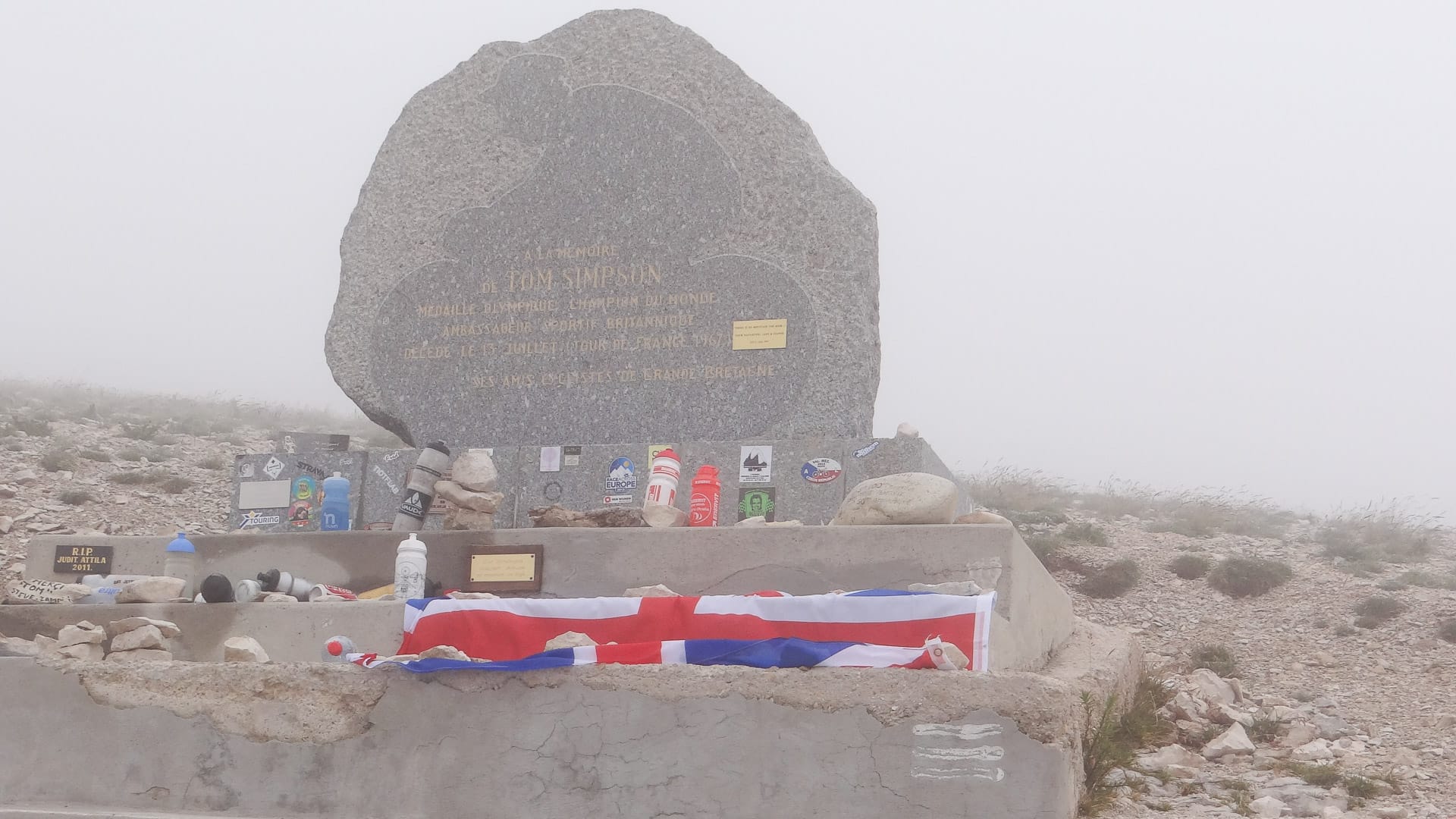
I fulfilled a dream by riding up the Sault route yesterday. The views were splendid, the last 6km were brutal (on these 72 year-old legs pushing a 30lb Bianchi hybrid), but it was well worth the effort. The lunar landscape, the sadness of the Simpson memorial, the sheer exhilaration of standing at the top, are memories that will be with me forever
Congrats! What a ride it is. The sort that stays with you forever. Hope you got some nice weather!