
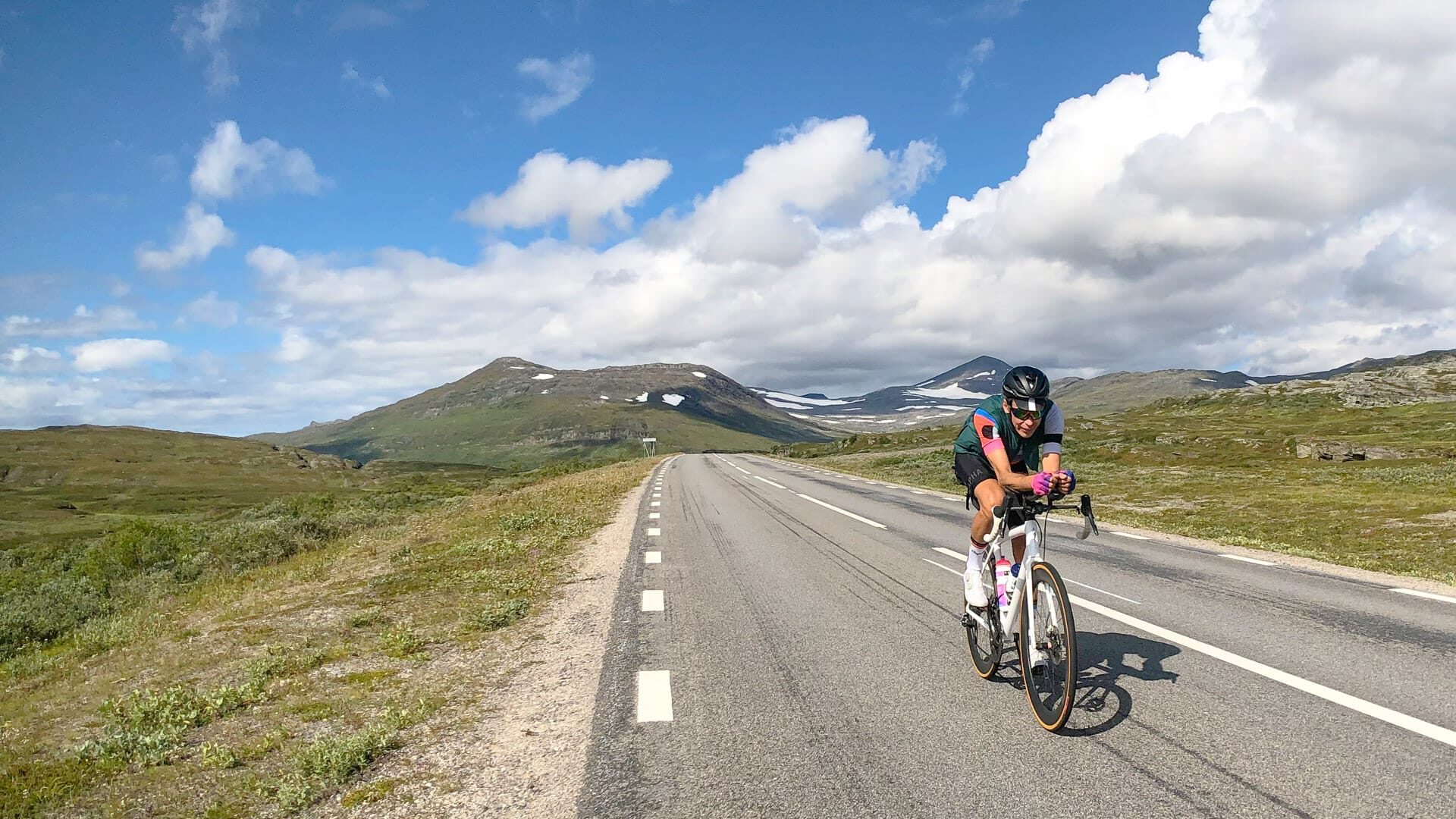
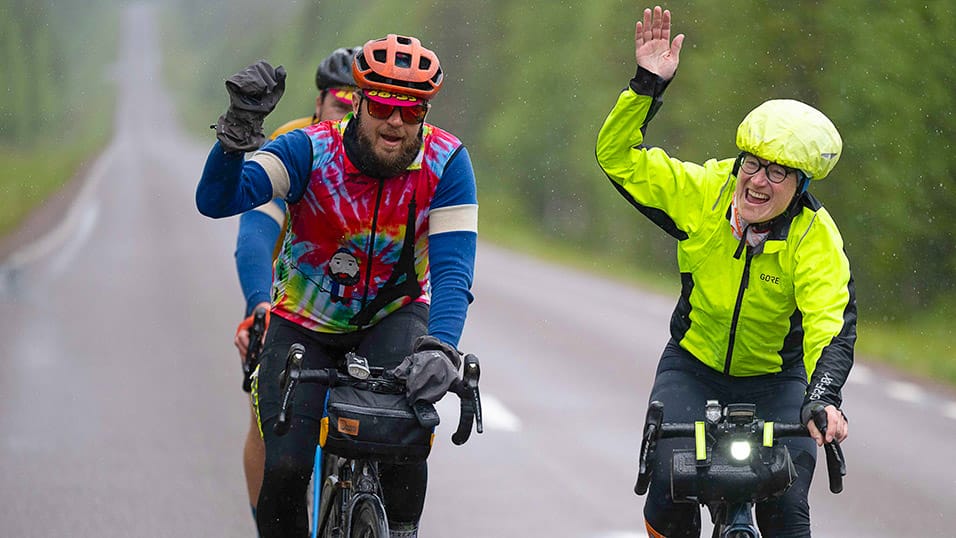
The Midnight Sun Randonnée is a 1,215 kilometre ultra distance event. It takes cyclists through the Arctic Circle, cycling across northern Sweden and Norway.
The first Midnight Sun Randonnée was in 2022 and the event has been organised annually since then.
In this article, Västerbotten Sweden put us in touch with Florian Kynman, a Swedish local and the founder and organiser of the Midnight Sun Randonnée. In this interview, he takes us behind the scenes of the event, which he describes as “an exploration into the arctic wilderness”.
As well as talking about the event, Florian shines a spotlight on the landscapes and cycling you find in this beautiful, remote region. So if cycling holidays are more your thing than ultra endurance events, read on to find out what it’s like to ride in the quiet, stillness of the Arctic Circle in Sweden and Norway.
In this crazy, hectic world we live in, with summers that are gradually getting hotter, this far-flung corner of Scandinavia has never felt more appealing.
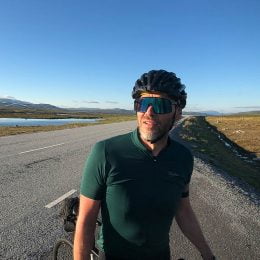
Florian Kynman lives in Umeå in Sweden. He is part of the cycling club Randonneurs Laponia, which was formed in 2024 to organise long-distance cycling events in northern Scandinavia, such as the MSR. The club also promotes cycling tourism in the region.
Contents of this article
The guide is jam-packed with tons of useful information. So, to help break it down, we’ve split this article into multiple parts. Here’s a quick summary:
- Part 1: Overview
- Part 2: MSR route breakdown
- Part 3: The event
- Part 4: Know before you go
- Part 5: Tips for MSR
- Part 6: Visiting outside of MSR
Part 1: Please provide an overview of Sweden’s Midnight Sun Randonnée
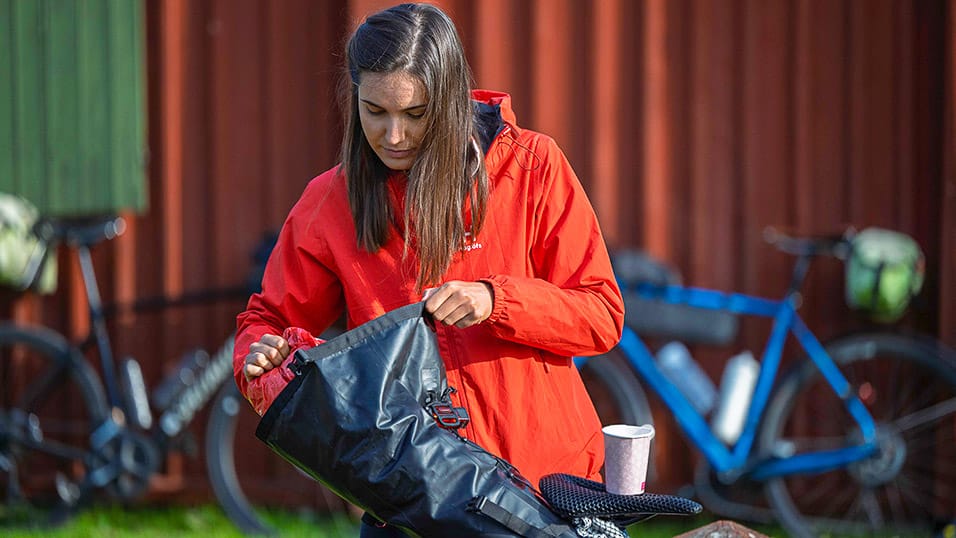
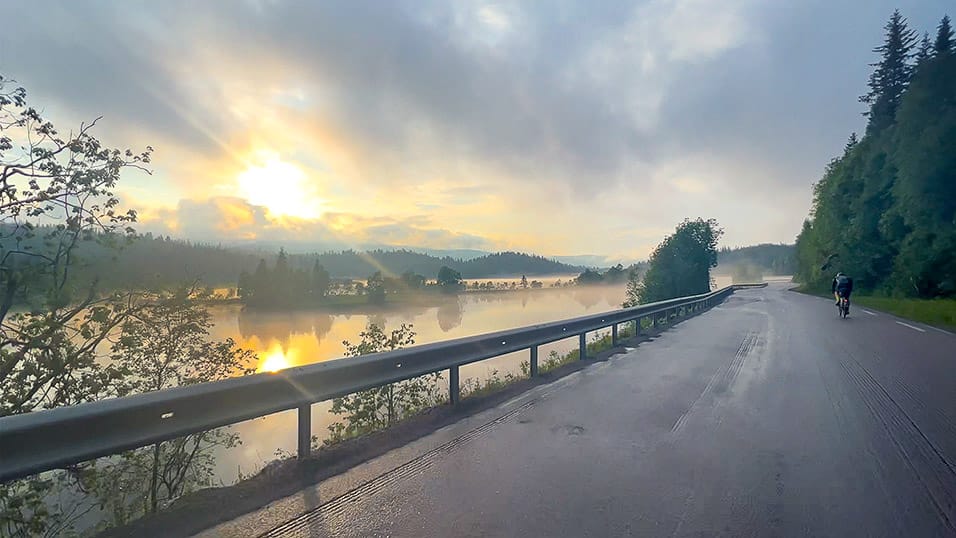

What is a randonnée?
The Midnight Sun Randonnée (“MSR”) is a type of event called a brevet (also known as a randonnée or audax).
These are long-distance cycling events on designated, but unmarked, routes passing through particular checkpoints (also called controls).
- Riders have to complete the course within specified time limits, but there are no prizes for coming first.
- They are expected to ride solo (groups may form spontaneously on route) and be largely self-sufficient.
- Personal support is only allowed at controls.
What is Sweden’s Midnight Sun Randonnée?
The ultra brevet Midnight Sun Randonnnée is a 1,200 kilometre round trip across the Scandinavian peninsula, between the towns of Umeå in Sweden and Mo i Rana in Norway.
The event takes place in the provinces of
- Västerbotten and Lapland in Sweden; and
- Helgeland in Norway.
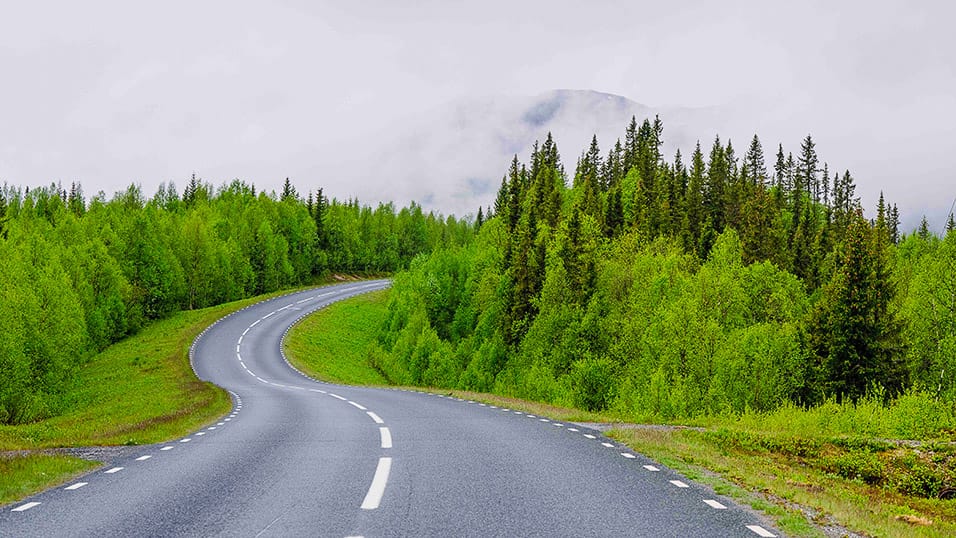
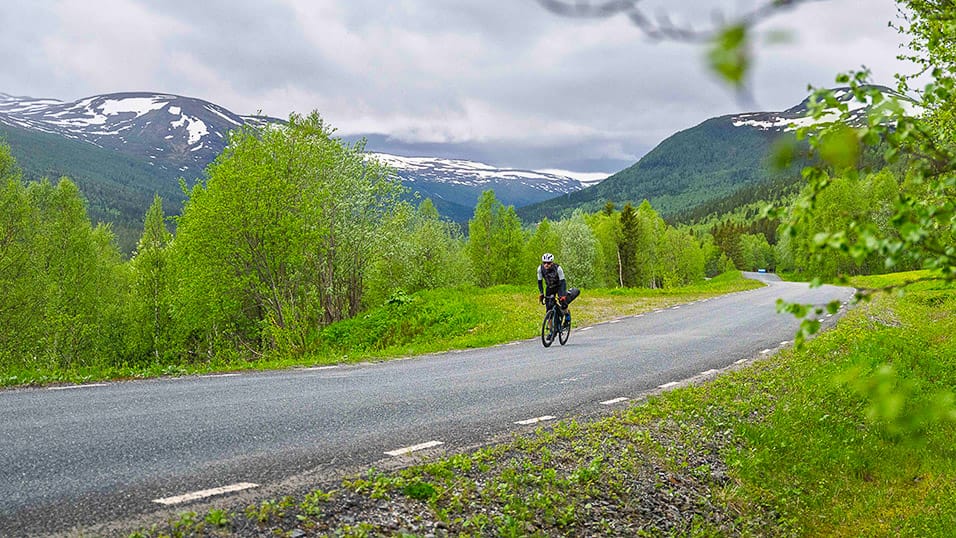
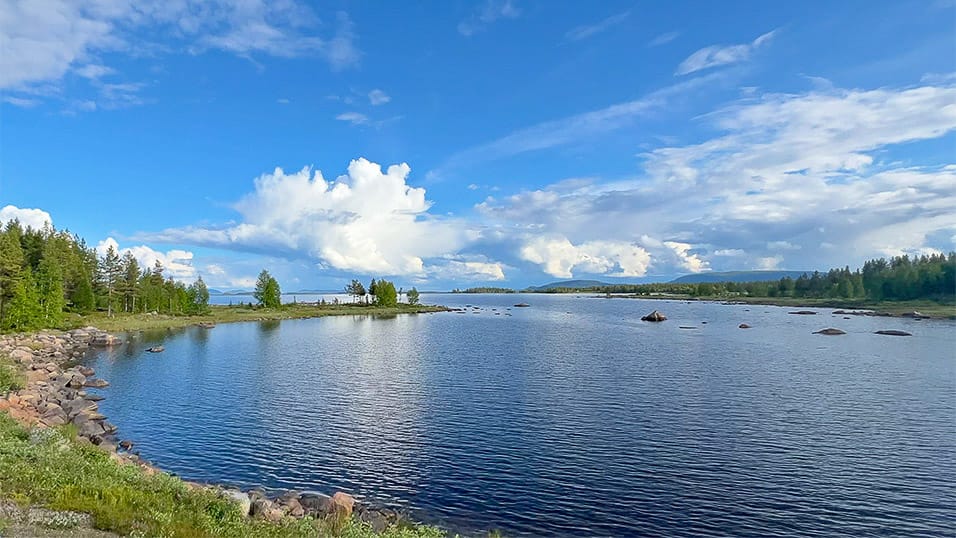
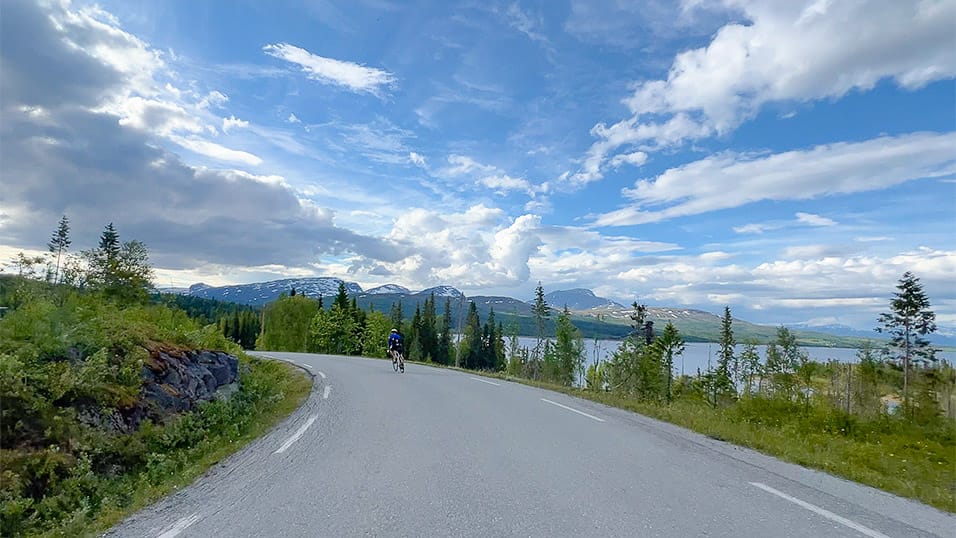
The course leads through glacial river valleys and follows the shores of crystal-clear lakes and emerald-green fjords. It crosses endless coniferous forests, wetlands, and climbs snow-capped mountains. Since the event takes place in mid-June, when the sun never sets above the Arctic Circle, participants will experience 24-hour daylight conditions.
What is the landscape like?
Västerbotten, Sweden is made up of woodland, rivers and lakes. Most of its towns and agricultural areas are spread along the coast. The MSR starts in Umeå, a university town with a population of 135,000. It’s the largest urban area in Västerbotten and also in northern Sweden – which gives you an idea of how quiet this part of the world is! More on this below.
Lapland in Sweden, is commonly described as the last wilderness in Europe. It has vast forests and wetlands, rivers and lakes. The provinces of Lapland and Helgeland share the Scandinavian mountain range, the Scandes, which divides Sweden and Norway.
Helgeland in Norway is known for its mountains, glaciers, fjords and islands. The 6,500 islands that make up the Vega archipelago is a UNESCO World Heritage Site.
This is a region of extremes with temperatures over the year varying between +30°C and -40°C. The daylight also varies considerably at the Arctic Circle, from around two hours of daylight in mid winter to 24 hours of daylight during the summer months.
Why did you create the MSR?
MSR is unusual in that it has both its start and finish close to the Arctic Circle. As such, it’s one of the northernmost ultra brevets in the world.
I wanted to give cyclists from all over the world the opportunity to experience the midnight sun, the wilderness and the timeless landscapes shaped during the ice age in this arctic region.
Whether or not you take part in the MSR, the empty roads of this sparsely populated region offer peace and solitude and a connection with nature. Even if you don’t ride the MSR and come at another time in summer, you can still stay at the same hotels, campsites and lodges we use in the event and travel the same route. There are also many possible detours and extensions to the MSR course if you want to base yourself in one place and make excursions from there.
I think the open landscapes and roads of our region have something special that experienced cyclists will love.
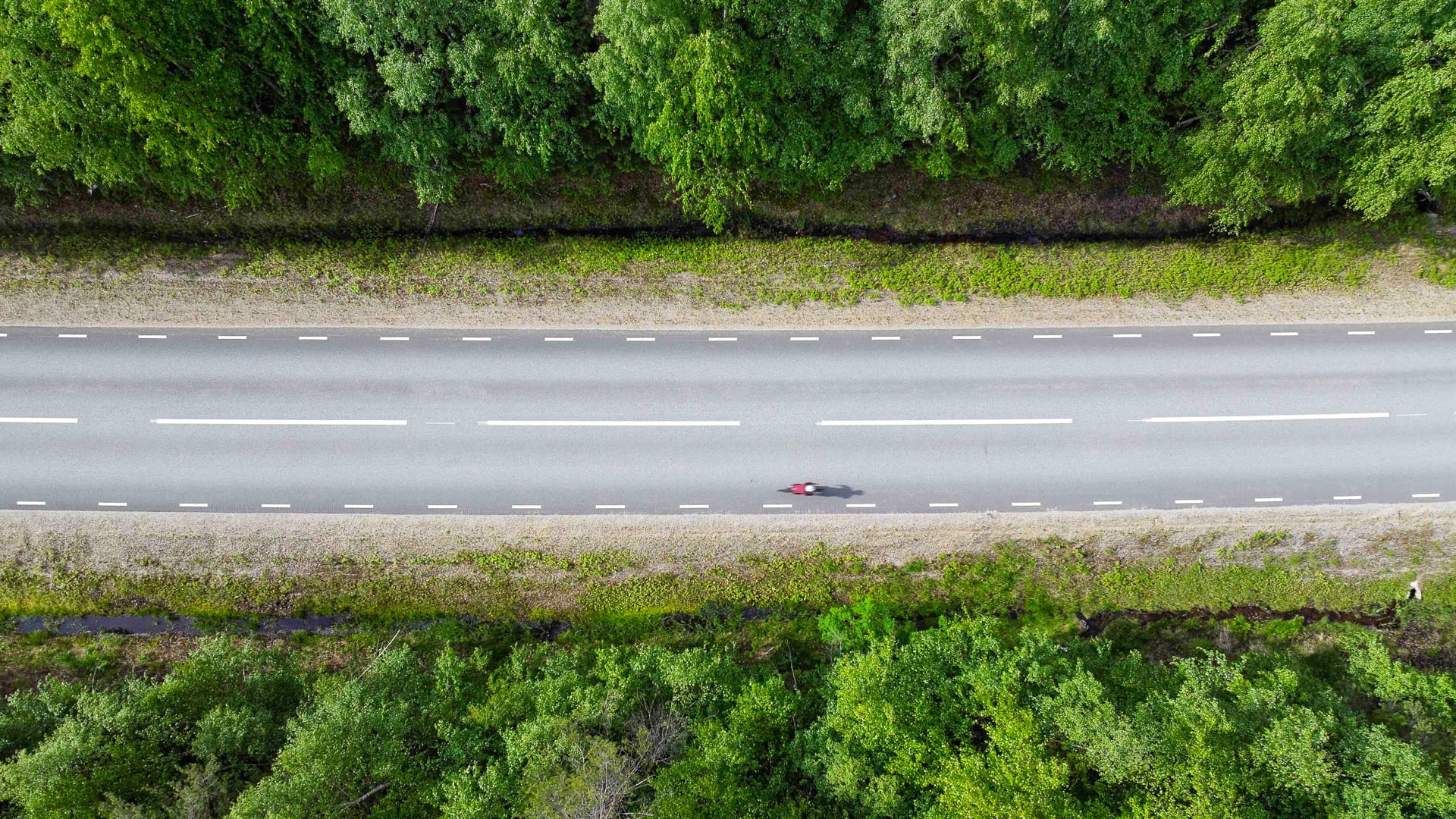
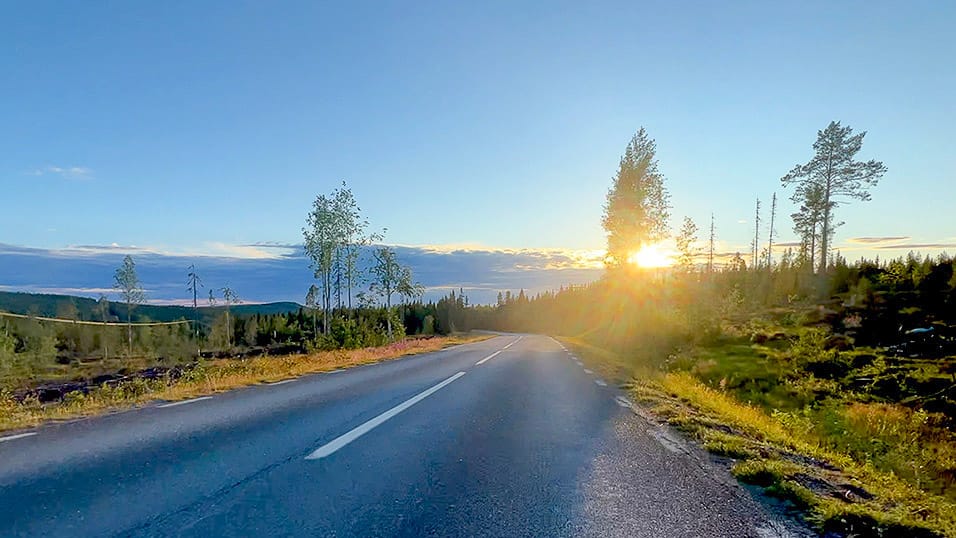
Endless Swedish forest roads (photo credit: Daniel Breece via Västerbotten Sweden)
How do you enter the MSR?
You enter the MSR on the event website.
First, book a starting place, then make your final registration at a date of your choosing, but no later than the 31st of May.
- The initial entry fee of 30 EUR is non-refundable.
- For final registrations made before 23:59:59 on the 31st of December, the registration fee is 270 EUR.
- From the 1st of January until the 31st of March, the registration fee is 320 EUR.
- For registrations made from the 1st of April until the 31st of May, the fee is 370 EUR.
- Reserved starting places that are not converted into final registrations by the 31st of May will be categorised as DNS.
You have a 14-day right of withdrawal from the date of your final registration. But there are some important dates to be aware of:
- If your registration is before the 1st of January, your registration fee is fully refunded until the 31st of March; thereafter, an administration fee of 100 EUR is deducted.
- If your registration is between the 1st of January and the 31st of May, your registration fee is refunded minus an administration fee of 150 EUR.
- Be aware! Registration fees are not refunded after the 31st of May.
Part 2: What is the route across Sweden and Norway?
Here is a RWGPS route file for the Midnight Sun Randonnée route:
GPX DownloadTerms of use reminder
You can find detailed information about the controls on our website.
Below is my summary of the route. I’ve also included a few photos – note that they don’t necessarily match up with the checkpoint information above.
Controls 1 to 2: follow the lake system of Ume River
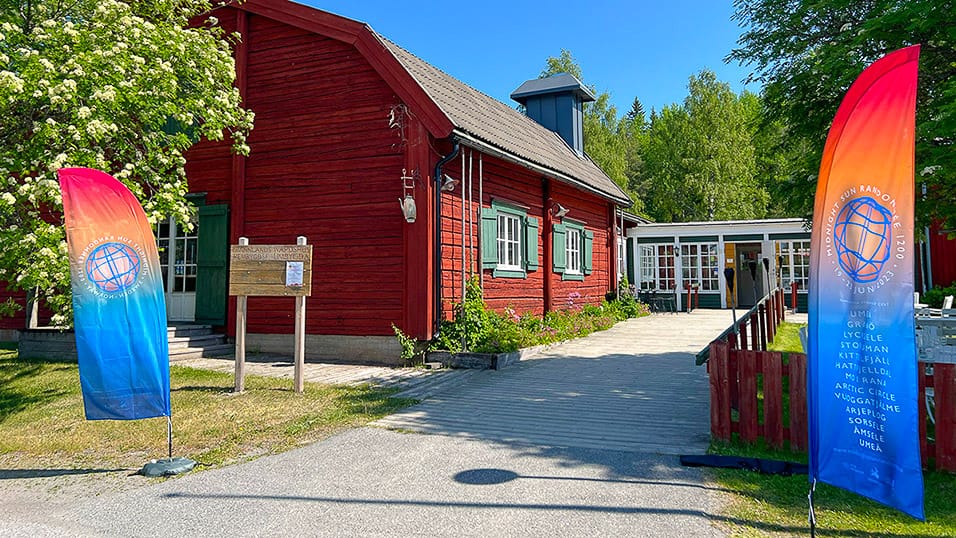
The starting point, Brännland Inn, is located on the outskirts of Umeå about 10 kilometres from the city centre. The initial part of the course follows the E12 (which is also called Blå vägen, The Blue Highway) and the Ume River to Lycksele which is the brevet’s second control.
Having completed the first 123 kilometres of the brevet, cyclists arrive here around 3:00 for an early breakfast!

Ume River as seen from The Old Bridge in the centre of Umeå (photo credit: Florian Kynman)
Controls 3 to 5: cross the Scandinavian mountain range
After Lycksele, the route leaves the Ume River, and the first hilly stage begins. For the most part, the gradients are gentle. But beware! The climbs are sometimes long. The road reaches its highest point at the village of Risträsk before descending again to Vilhelmina and the brevet’s third control at Hotel Wilhelmina. Having completed 240 kilometres of the course, cyclists arrive here just in time for the hotel’s breakfast buffet.
From Vilhelmina, the journey enters the Scandinavian mountain range. You head into the mountains, following the shores of Lake Malgomaj to the village of Stalon. Here, the first real climb begins over the Marsfjället nature reserve, before descending to the lake Dikasjön and the village Dikanäs. From here, the course continues to the fourth control, Fjälltorget. This is located in the centre of the village and ski resort Kittelfjäll.
From Kittelfjäll, participants follow a narrow and very scenic mountain road and reach the Norwegian border after 61 kilometres. Then later, towards the evening, you reach the the fifth control at Hattfjelldal.
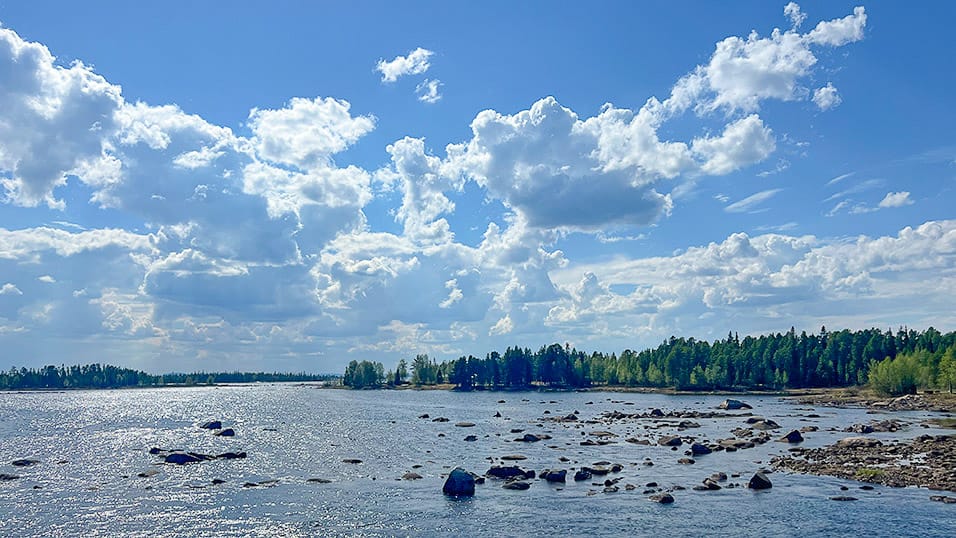
Lake Uddjaur south of Arjeplog (photo credit: Florian Kynman)
Controls 6 to 7: follow Ranfjorden, then head to the Arctic Circle
After Hattfjelldal, the participants are led onto a winding and hilly road which follows the shores of Lake Røssvatnet, Norway’s second largest lake. The road ends with a long but shallow descent to the village of Korgen, where it connects to the European route E6.
About 7 kilometres after Korgen, the course reaches sea level and the shores of the Ranfjord, which it follows 31 kilometres to the sixth control, Hotel Scandic Meyergården in the port city of Mo i Rana.
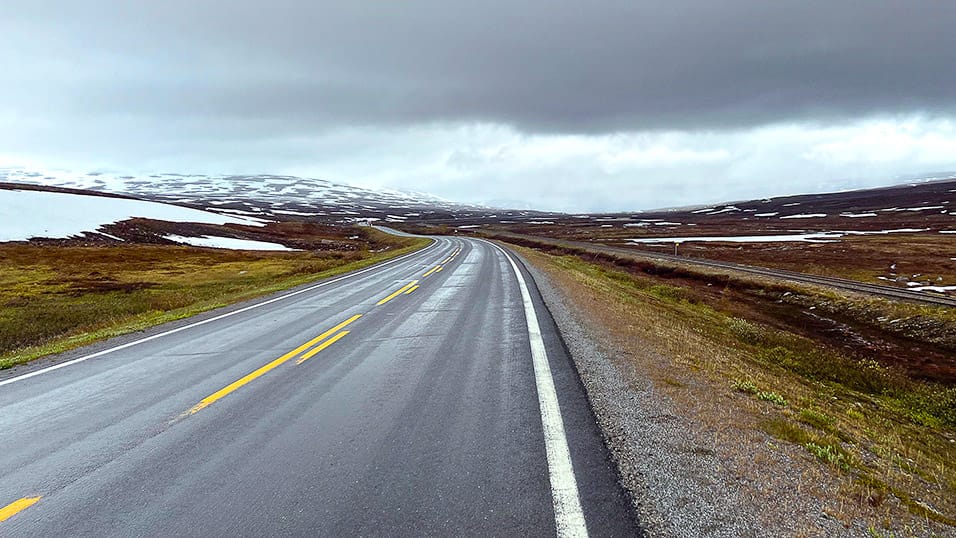
After Mo, the participants leave the sea and the journey continues into the mountains again, on the E6. The course leads the riders through the Dunderland valley above the tree line up on to the Saltfjellet mountain plateau and to the seventh control, which is the Arctic Circle Centre at the Arctic Circle.
Large parts of the highway from Mo to the Arctic Circle Centre has been rebuilt and resurfaced in recent years so the road surface is excellent. The climb from sea level up to the Saltfjell highway’s highest point (692 metres) is very easy, with slope gradients generally between 2-4%.
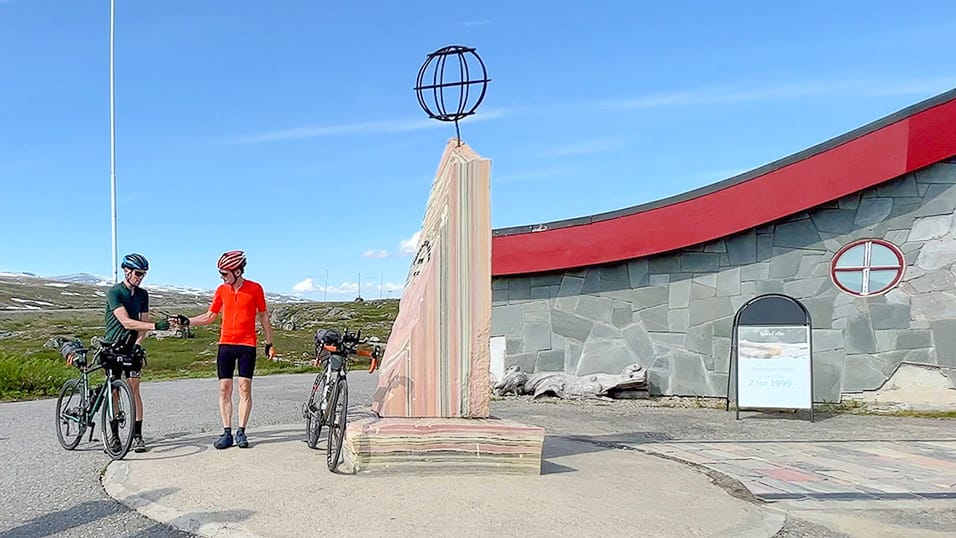
At the Arctic Circle monument (photo credit: Florian Kynman)
Controls 8 to 9: climb the Junkerdal valley to the highest point on the course
After the Arctic Circle, the journey descends to Junkerdal, where cyclists leave the E6 and begin a series of more substantial climbs up to the Swedish border.
Highway 95 (also called Silvervägen, The Silver Road) is the only national highway (A-road) that crosses the Scandes above the tree line, and about 8 kilometres after the border the course reaches its highest point at 740 metres above sea level. From here, the journey continues down to SMHI’s (Swedish Meteorological and Hydrological Institute) weather station in Mierkenis and then further on to Lake Vuoggatjålmjaure and the mountain lodge Vuoggatjålme, which is the brevet’s eighth control.
After Ust’-Shchuger in Russia, the second coldest temperature in Europe has been registered in Vuoggatjålme: -52.6°C. Here, we are still north of the Arctic Circle, so the sun will stay above the horizon all night. If the weather has been bad when crossing the mountains, this control and the next two controls have saunas to warm up in.
From Vuoggatjålme, the course continues down to Arjeplog and the ninth control, Hornavan Hotel, located on Lake Hornavan (426 metres), which is Sweden’s deepest lake with a depth of 221 metres. In Arjeplog, you will find the famous Silver Museum, which exhibits the history and culture of the region, also housing a collection of silver pieces made by Sámi artisans.
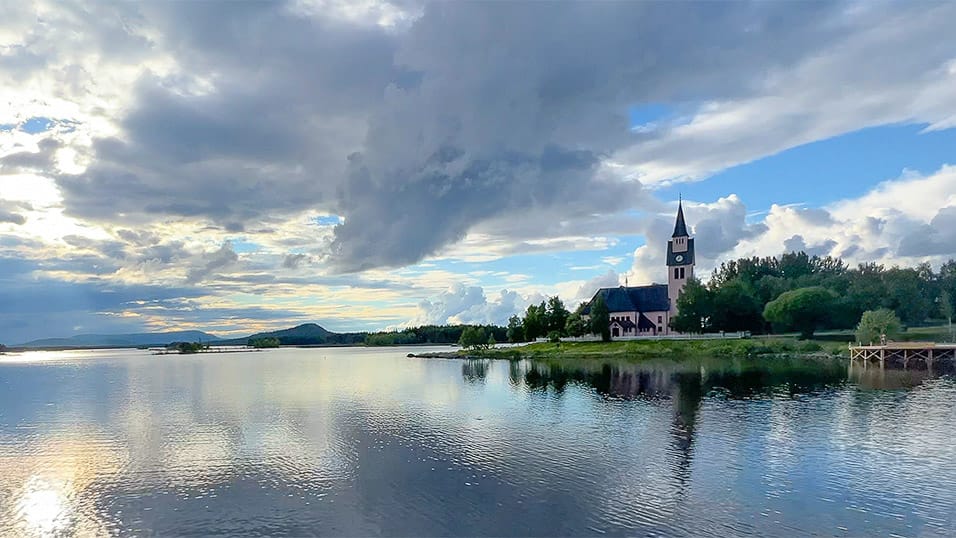
View of the Lake Hornavan (photo credit: Florian Kynman)
Control 10 to 11: follow the Vindel River downstream
After Arjeplog, participants head south on road 609 to Slagnäs, where the course connects to European route 45 (the Inland Road). From Slagnäs, participants will follow the Inland Road to Sorsele and the tenth control at Sorsele Community Centre.
From Sorsele, the course continues 28 kilometres south on the Inland Road and then turns onto road 363, which follows the Vindel River, a tributary to Ume River. This has its source in Vindelfjällen, the Vindel Mountains. Vindelfjällen Nature Reserve is one of the largest protected areas in Europe.
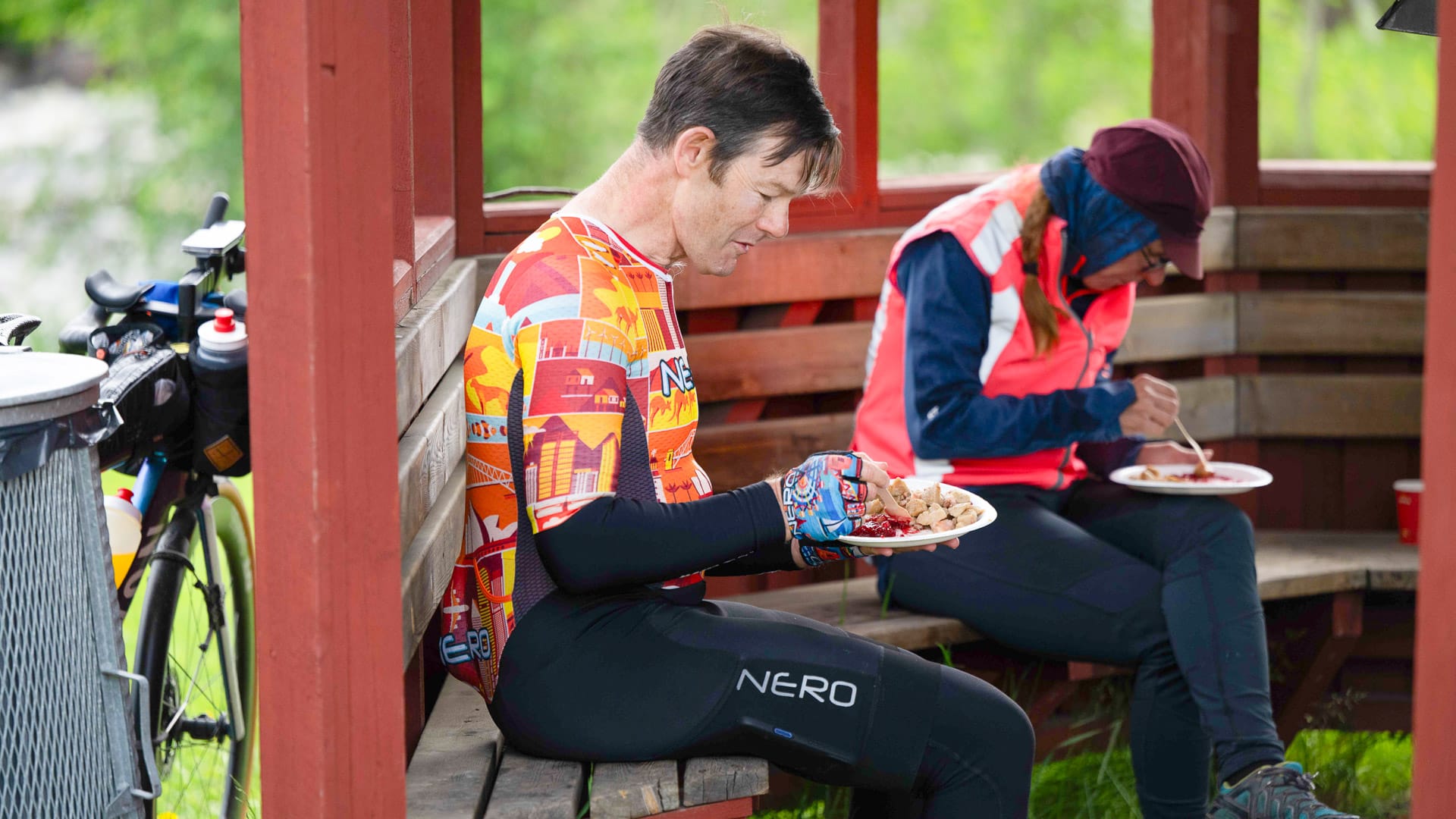
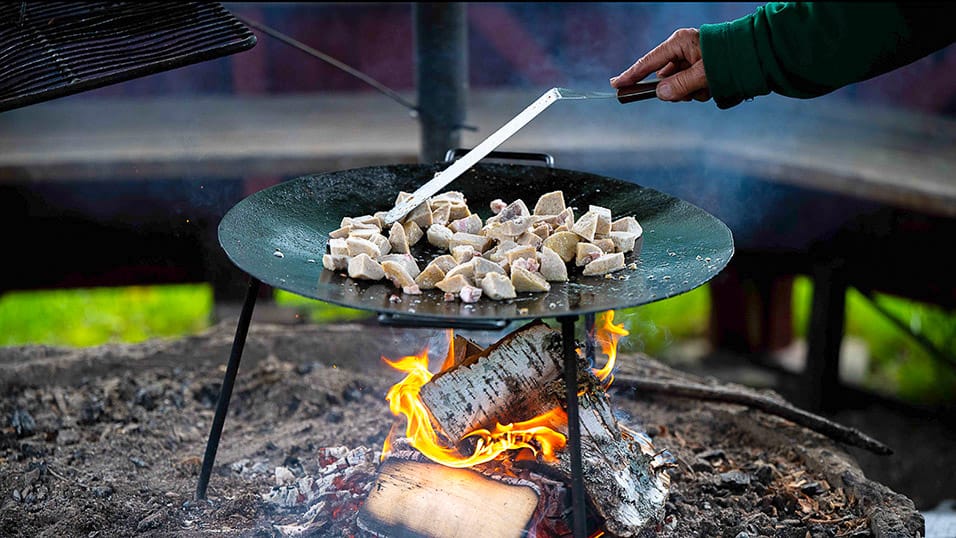
Road 363 leads down to the brevet’s eleventh and final control, which is Åmsele Camping in Åmsele. Here, a famous dish “Palt” is fried over an open fire and served with lingonberries and butter.
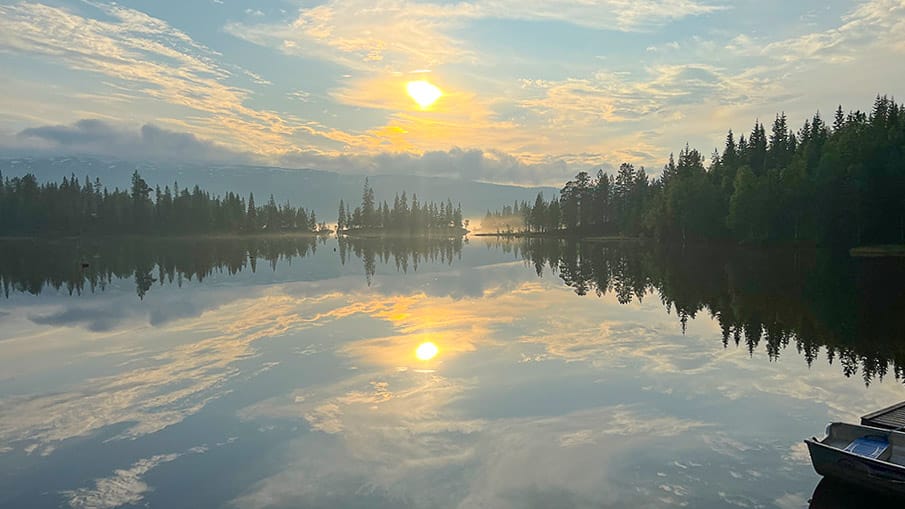
Evening sun over Lake Avan (photo credit: Florian Kynman)
The finish
From Åmsele, the journey continues past Hällnäs and Vindeln on road 363, Sweden’s longest county road, to the village Rödånäs where the course turns off onto road 628 for a brief while, passing through the village of Rödåsel. The route then reconnects with road 363 again and continues on past Lake Tavelsjö and the village Tavelsjö, where the course again turns off road 363 and heads towards the village Brännland and the start location of Brännlands Inn.
Top tip! For participants staying at the Hotel Umeå Scandic Plaza, where the course ends, these last few kilometres will be familiar as they will have taken these roads in reverse order from the hotel to the start location.
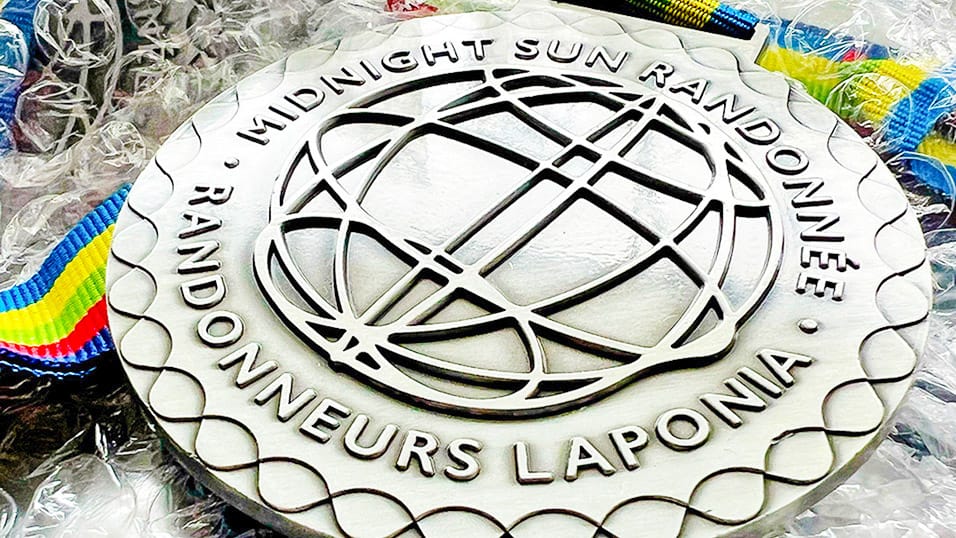
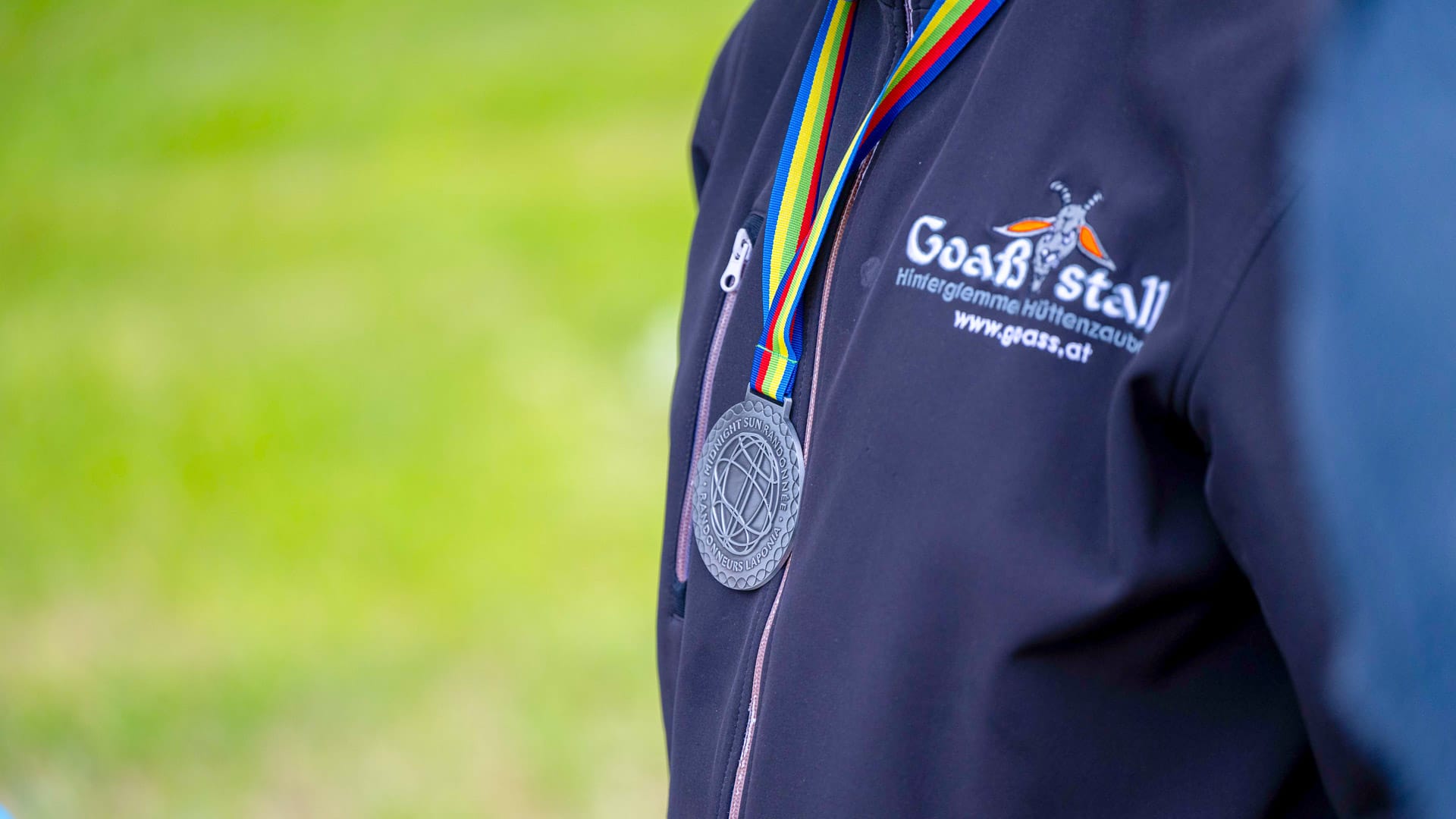
Midnight Sun Randonnée finisher medal (photo credit: Florian Kynman)
Part 3: What can you expect during the event?
What support is provided?
If you have ridden sportives but not brevets/randonnées before, be aware of the difference from a support perspective: sportives are generally organised as supported non-competitive events on well-signposted or closed roads, whereas brevets are normally unsupported.
An exception to this general rule is that ultra brevets do tend to offer support at controls, but the riders still need to find their way to these controls on a course that is normally not signposted. There are no support vehicles or event officials between controls. This is the case for the MSR.
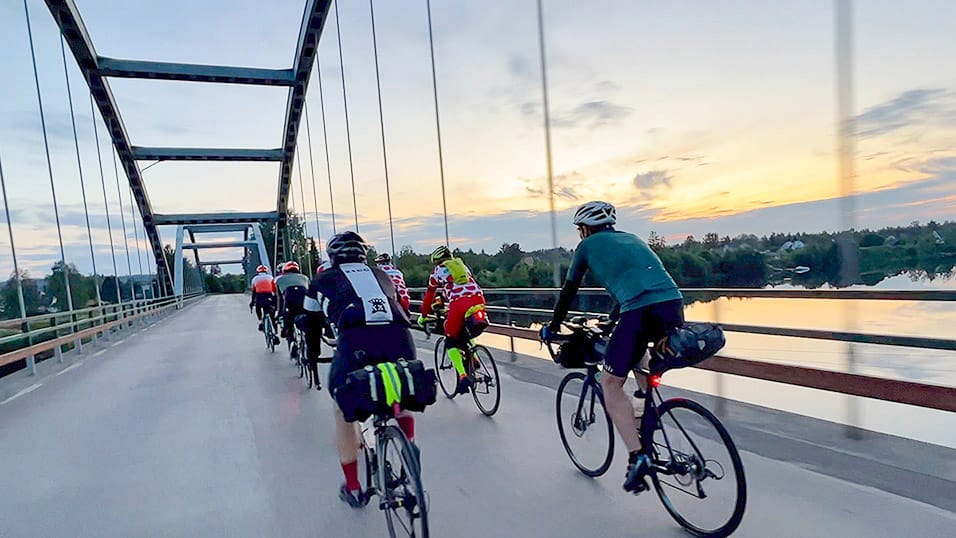
Bridge over Ume River at sunrise (photo credit: Florian)
What can you expect at controls?
The MSR ultra-distance event is an exploration of the subarctic wilderness. It aims to capture the spirit of past expeditions and the solitude of nature. As with exploratory expeditions, riders are expected to carry all requisite equipment themselves, from start to finish. The MSR has no bag drop service.
There are warm and cold meals, snacks and beverages at all controls on route. Meals are also served during the day before the start and after the finish.
In this part of the world, food stores are few and far between, so it is important to refill water bottles and stock up on snacks and food before leaving each control.
Some controls may also offer mechanical services with spare parts for sale. Be aware! Apart from Lycksele and Vilhelmina, the only bike shop with a professional bike mechanic on the course is in Mo i Rana.
The event provides sleeping arrangements at most controls for short naps. Blankets and towels for showers are provided by the facilities. These sleeping arrangements are limited and are not secluded. If you need undisturbed sleep during the ride, we suggest that you book a private room or cabin where you can sleep between sheets. Rooms and cabins can be booked in advance or, subject to availability, upon arrival during the ride.
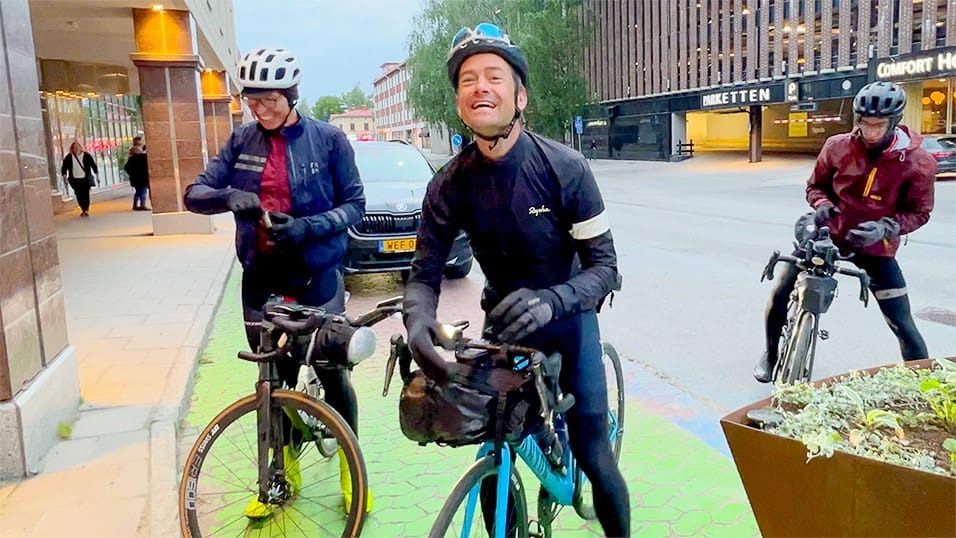
Happy finishers outside Umeå Scandic Plaza (photo credit: Florian)
What food is included in the entry fee?
With a few exceptions, the menus at controls are mainly Scandinavian or local to the region and use locally sourced ingredients. At all controls, there are options for vegans and vegetarians. When registering for the event, you should submit any special food requirements, such as if you are vegan or vegetarian, lactose or gluten intolerant.
Here’s a preliminary overview of the food menu for 2026 (subject to change!):
- For lunch at Brännland Inn on the start day, riders are served Kaiserschmarrn (scrambled pancakes) with blueberry jam. This is an Austrian dish with a Scandinavian twist. Later in the evening, before sign-in at 20:00, riders are served a light buffet dinner.
- At the first control at Granö, riders make a quick stop for coffee and an energy ball made from dates, blueberries, oatmeal and chocolate.
- The second food control in Lycksele has a breakfast buffet where participants make their own sandwiches.
- The third control, Hotel Wilhelmina, has a breakfast buffet.
- The fourth control in Kittelfjäll has a lunch buffet with a choice between three freshly made dishes.
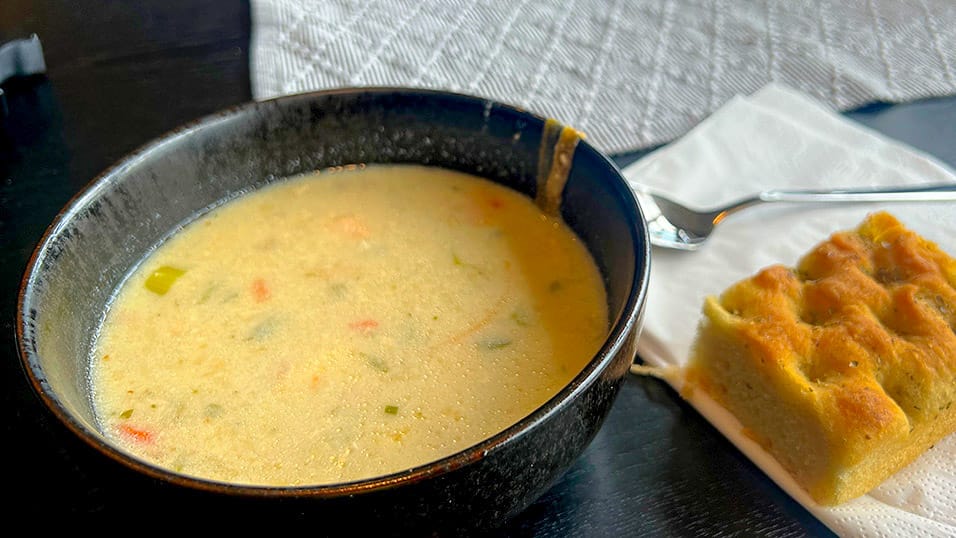
- At the fifth control, Hotel Hattfjelldal, a Norwegian speciality is served: Arctic Char Soup served with focaccia, followed by coffee and cookies.
- The sixth control, Hotel Scandic Meyergården, will serve a light buffet with salad and sandwiches, tea and coffee.
- The seventh control, Arctic Circle Center, will be serving waffles with strawberry jam and cream together with a reindeer meat wrap and coffee.
- The eighth control in Vuoaggatjålme will have a pasta salad with chicken on the menu.
- The ninth control, in Arjeplog, is Hotel Hornavan, which will be serving moose meatballs together with a potato salad.
- Sorsele River Hotel, the tenth control, offers a choice between a variety of different dishes.
- In Åmsele, participants are treated to the local dish, Palt, which is fried over an open fire and served with butter and lingonberries, followed by coffee.
- Finally, at the last control Hotel Plaza Umeå, riders are served a creamy potato salad with beans and chicken.
A delicious local treat for finishers
The registration fee includes the specially designed Midnight Sun Randonnée medal, which will be awarded to riders who finish the ride. Also included is a coffee and a Soleil de minuit, which is a French pâtisserie found at Laure’s Fika, next to Umeå Central Station.
A Soleil de Minuit is the event’s own adaptation of the famous pastry Paris–Brest. It looks like the original, but instead of the traditional hazelnut mousseline cream filling, our crème mousseline contains cloudberries, which are native to cool temperate regions such as Scandinavia. This circular pastry not only represents a wheel but also the midnight sun!

Tell us about the time cut-offs?
The event starts at 23:02 CEST (which is sunset in Umeå) on Sunday, the 14th of June 2026. Riders then depart from Brännland Inn in start groups of 15 at five-minute intervals.
Cyclists who maintain an average speed of 18-20 km/h, including stops, will finish between midday and afternoon on Wednesday, the 17th of June.
Riders maintaining an average speed of 14-16 km/h, including stops, will finish between early morning and midday on Thursday the 18th of June, the day before Swedish Midsummer’s Eve.
The cut-off times are calculated on average speeds between 15 km/h and 13 km/h including stops.
Missing the time cut-offs
Since 2024, cut-off times at intermediate controls no longer apply. The time frames stated in the brevet card are now described as guidelines to help a rider keep a sufficient pace between controls in order to complete the ride within the designated time limit. For MSR 2026, the time limit is 91:08, calculated on a course length of 1,215 kilometres.
Whereas the time frames for controls are guidelines, the time limit for the whole ride is strict. Riders who arrive at the finish line after 91:08 hours are not classified as FIN in the results list, i.e. as finishers, but as OTL (Over the Time Limit).
Abandoning
As in all randonnées, if you abandon the event, you are responsible for your own transportation back to the starting point. However, if needed, due to the lack of public transportation between Norway and Sweden, we will assist with the connection back to the first village in Sweden with a bus stop, free of charge.
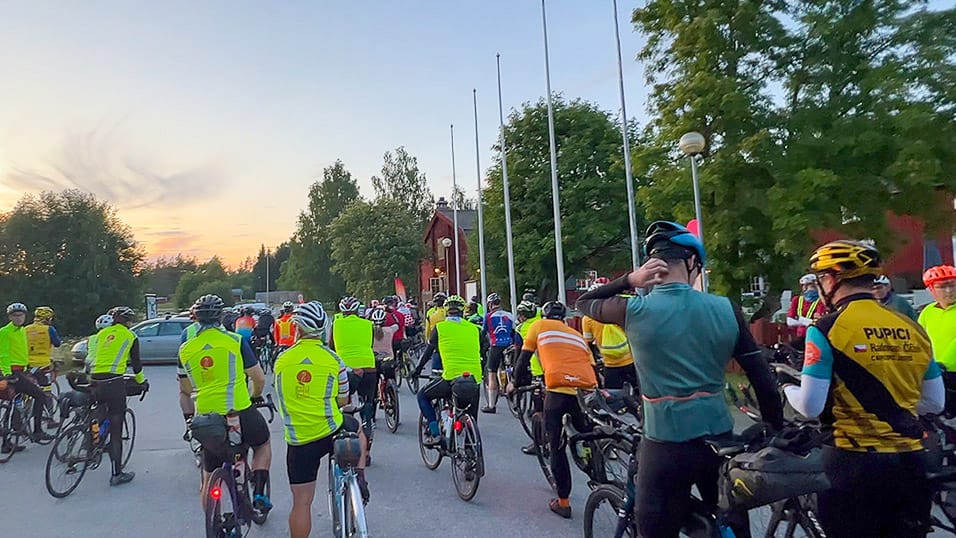
Start line of the Midnight Sun Randonnée (photo credit: Florian)
Part 4: What do you need to know before cycling the Midnight Sun Randonnée?
How fit do you have to be to cycle Sweden’s MSR?
MSR has a demanding course profile. Also, the region’s subarctic climate can be a decisive factor. If you are not an experienced randonneur, it is important that you make a realistic assessment of your chances of completing the brevet before you register.
For cyclists who have completed a brevet series or a corresponding ultra-distance race during the past two years, the chances are high that you will finish this brevet. If you don’t have the above qualifications, it’s advisable to do a 400 km brevet during the spring leading up the event. This will be a good indicator of your chances.
Top tip! Even if the MSR is not for you – I really encourage you to consider a trip here and ride the route of the MSR at your own tempo. More details on this below.
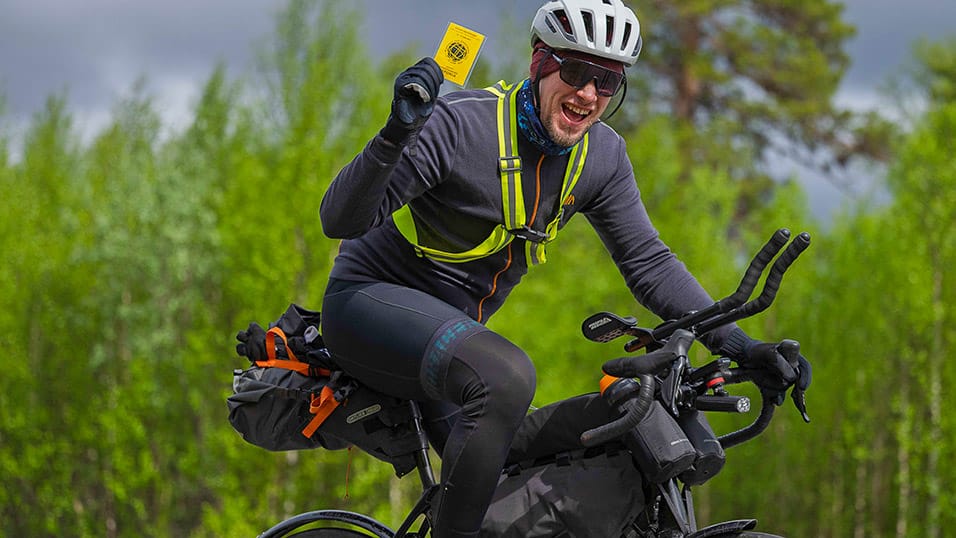
Proudly showing the brevet card (photo credit: Daniel Breece via Västerbotten Sweden)
What kit choices do you suggest for cycling in the Arctic region?
Weather considerations
Here in the Arctic region, the weather is an important consideration when deciding on kit choices. Here is some background information to help you plan:
- The meteorological definition of spring is rising daily average temperatures between 0°C and 10°C for at least seven consecutive days. Due to the latitudes of the MSR, meteorological spring is normally in late April or early May.
- Meteorological summer occurs when the daily average temperature has been at least 10°C for five consecutive days. In the mountains, meteorological spring usually turns into meteorological summer during the event, in mid-June.
- We expect daytime temperatures in the lowlands to be around 15 – 20°C, dropping to 10°C – 5°C at altitudes above the treeline.
- Night temperatures on low-lying terrain are generally 10°C – 5°C in mid-June. Above the treeline, night temperatures stay around 5°C – 0°C.
- In the mountains, the weather remains changeable and unpredictable even in summer.
- As for the chance of rain during the event, I’d estimate about 50%. In June, this will usually be light to moderate rain; however, occasional heavy rainfall can occur. There may also be light snowfall, although this will not tend to settle on the roads.
As you see above, daily temperatures will fluctuate during the event. Temperatures may reach 25°C during the day and drop to 0°C during the night. Add to this the wind chill factor when choosing clothes for the event. An air temperature of 2°C combined with wind speeds of 15 km/h will give a wind cooling temperature of -18°C.
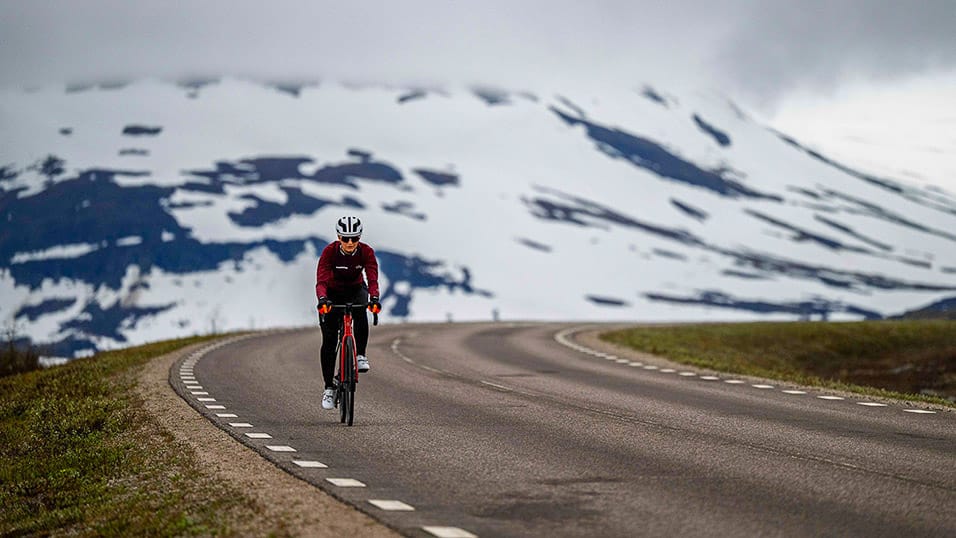
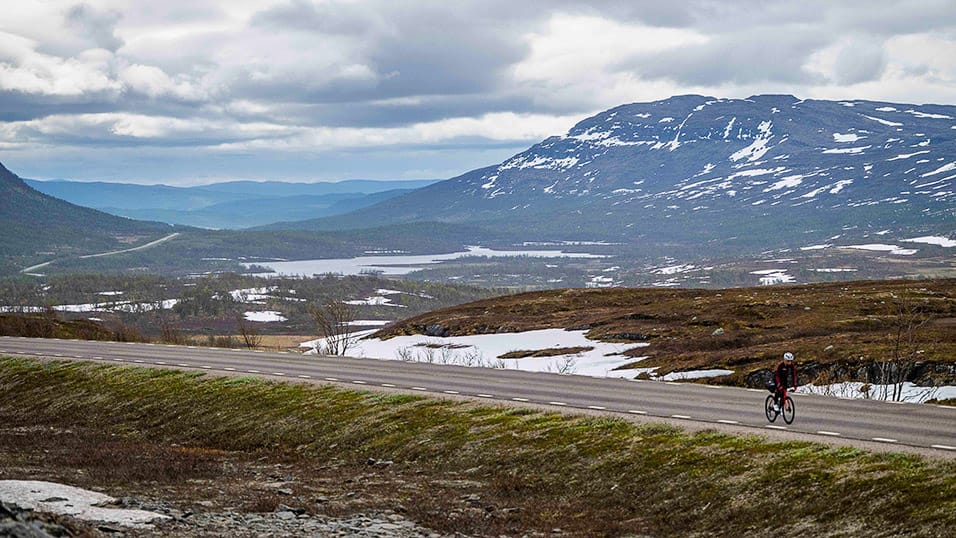
Riding below snowy peaks (photo credit: Daniel Breece via Västerbotten Sweden)
Implications for kit choices
Be aware! The Arctic weather can change dramatically at short notice, and at altitude, even the occasional snow shower is not uncommon in June.
Above the treeline on exposed mountain stages, there are few places to take shelter from wind, rain and snow. Also in forested areas, pine trees will provide limited protection from rain. Temperatures will drop with increased humidity, and the rain will be cold.
Therefore, choose high-quality rain gear and long-finger gloves that will keep you warm and dry, even in the very worst of weather conditions. A wind jacket and leg warmers will not give adequate protection. You will lose a lot of heat if your legs get wet and water trickles down into your shoes. However, rain trousers that overlap your overshoes will prevent this from happening.
This means you should bring a fully waterproof jacket, waterproof trousers, a rain cap, waterproof or neoprene gloves and waterproof or neoprene overshoes. Your rain gear should be able to keep you dry even when standing in a shower.
A reliable layering system is best
The event will not provide a bag-drop service, so the clothes you wear during the brevet must be carried on the bike from start to finish. For this reason, choose clothes that will give you as many combinations as possible, instead of items that you may only use once or not at all.
Top tip! I always find a system with layers of thinner garments that have different properties works best. A base layer of a moisture-wicking fabric, such as merino wool, will keep you warm, even when wet. A functional mid-layer should provide insulation whilst also being breathable. A layering principle will help you regulate your temperature during the day by making short stops to remove or put on a layer that is then stored in your back pocket for later use.
Lined shoe covers, windproof vests, and leg and arm warmers are also good choices.
Additional essentials
Be aware! As mentioned earlier, personal assistance, such as following cars or food depots between controls, is not permitted in brevets.
Since the course crosses mainly sparsely populated areas, the opportunities to refill supplies can quickly become very uncertain, especially in the mountains.
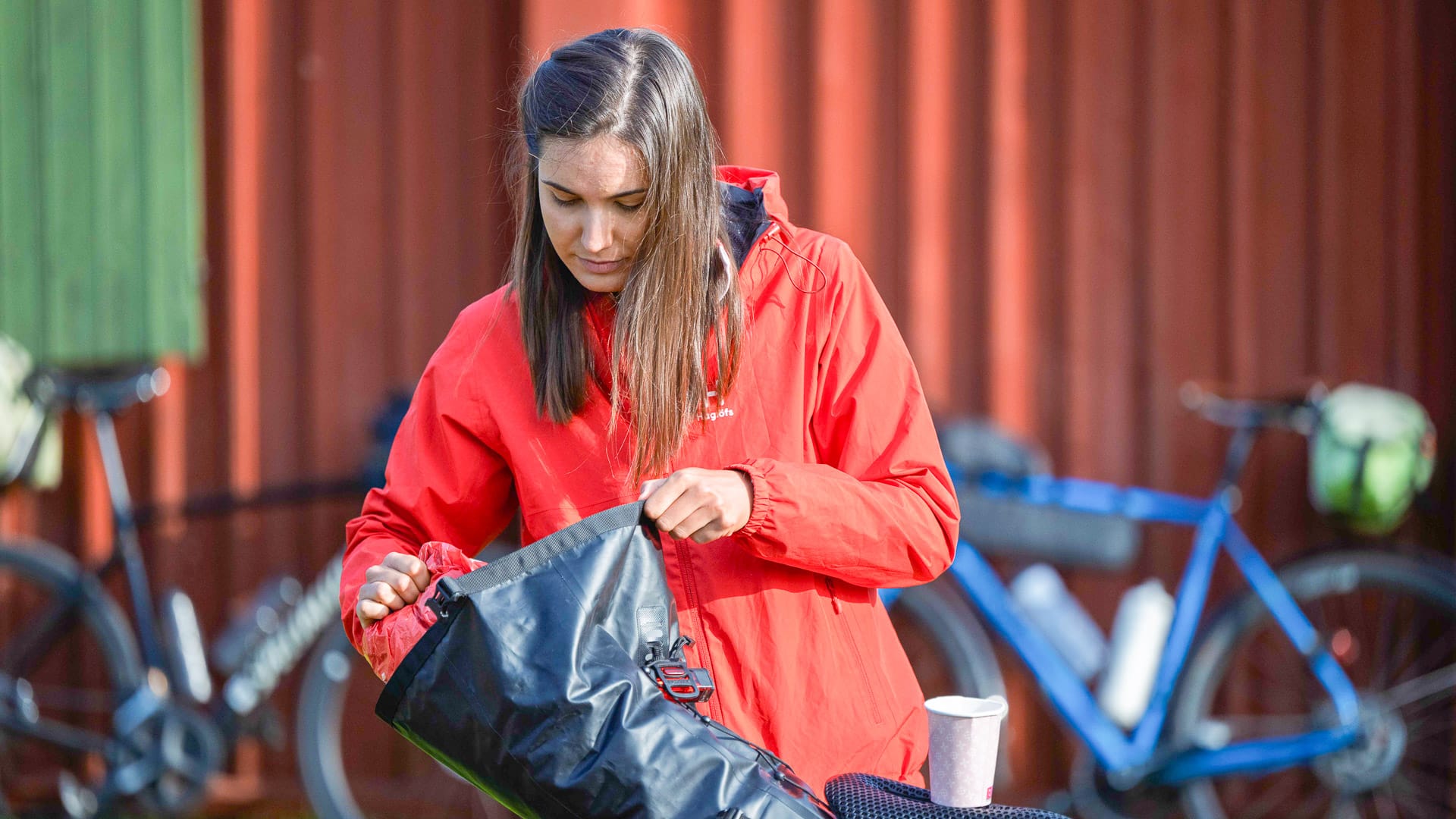
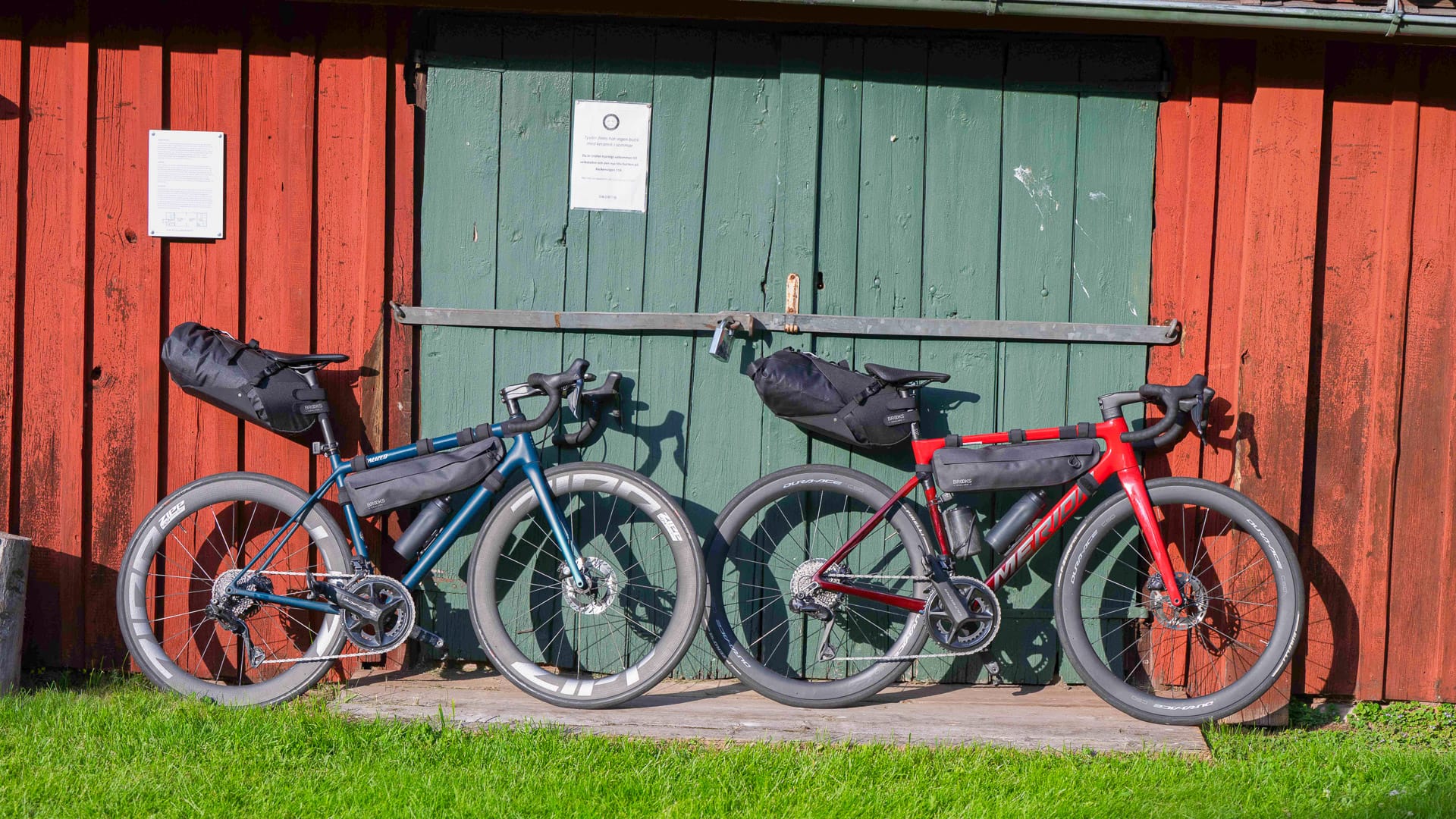
For this reason, it is very important that you carry enough food and drink with you on the bike to get you between controls. Saddle or frame bags are extremely useful.
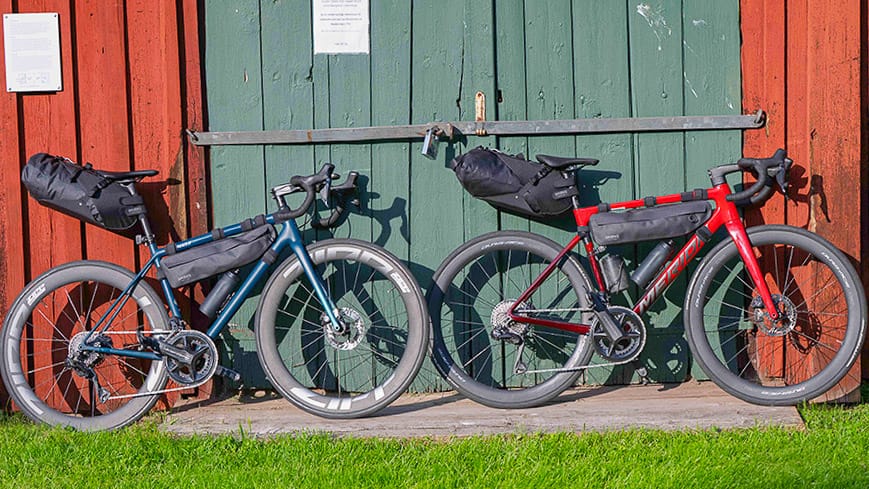
Loaded bikes (photo credit: Daniel Breece via Västerbotten Sweden)
Do you need to know Swedish?
A majority of the population in Sweden and Norway speaks English, but if you want to impress the locals, try saying ”Hej” meaning ”Hello” and ”Tack” meaning ”Thank you”. The words are the same in Norwegian.
Is this region a safe place to explore?
Umeå and the region as a whole are very safe. Being a university town, cycling is a common mode of transport in Umeå (even during winter), and perhaps for the same reason, it’s also easy to lose your bike if you leave it unlocked outside of shops or bars, especially on weekends.
Are bikes allowed on public transport?
Bikes are allowed on regional buses if they have space. If participants abandon the ride on the Swedish side of the border, there are bus connections from all controls. From Kittelfjäll: bus nr 417 to Vilhelmina, then change to bus nr 14 to Umeå. From Vuoggatjålme: (Camp Polcirkeln) take bus 104 to Arjeplog, then bus nr 26 to Skellefteå and from there bus nr 20 to Umeå.
Be aware! Public transportation between Norway and Sweden is limited. For riders who abandon the brevet at the control in Mo i Rana we have arranged a taxi service to Hemavan in Sweden free of charge. From Hemavan, riders can then take a regional bus service (bus nr 31) back to Umeå. The taxi in Mo i Rana departs on Wednesday the 17th of June at 10:00.
How do you get to and from Umea?
Umeå is situated 630 kilometres north of Stockholm. It is roughly halfway between Stockholm and Kiruna, the furthermost town in Sweden.
Arriving by car
Travelling by car from Stockholm it’s an eight hour drive to Umeå on the E4. There are car rental services both at Stockholm Central Station and Stockholm’s Arlanda airport.
Arriving by plane
By plane from Stockholm’s Arlanda Airport the flight time is around fifty minutes. Transfer from Stockholm City to Arlanda Airport with Arlanda Express is roughly twenty minutes.
Arriving by train
By train from Stockholm City to Umeå it will take between six and half and ten hours depending on when you travel. From Stockholm Central Station and Arlanda Airport, there are express or night trains to Umeå. Not all trains have spaces for assembled bikes but most if not all trains and buses will allow disassembled bikes in bike bags if they have space. On SJ X2000 trains, wheelchair spaces may be used for bike bag storage.
Arriving by bus
At Stockholm Central Station there is a daily bus service to Umeå. Buses from Stockholm City to Umeå take around nine hours.

Umeå railway station and the 9 m high glass sculpture ”Green Fire” (photo credit: Florian Kynman)
Highway Code rules for cyclists in the region
As ever, it’s a good idea to check current travel information before you book and travel. For UK visitors, take a look at the UK government travel information pages for Sweden and Norway.
You should also read and follow Sweden and Norway’s highway codes.
Be aware! The traffic in Umeå and the region is calm outside rush hour and cyclists are generally respected. On roads with speed limits over 80 km/h it’s a good idea to use a rear light also during the day.
Part 5: What tips would you give someone wanting to do the Midnight Sun Randonnée?
Google street view
Before the event, study the course in Google street view. In particular, check critical road junctions and the location of the brevet’s controls.
Ride efficiently
When cycling, conserve energy as much as possible. Try to keep a steady heart rate throughout the event. Imagine that you will cycle the second half of the brevet faster than the first.
Don’t stress; it’s also a waste of energy. A brevet is largely a mental test.
Don’t count kilometres. Relax and let the brevet take the time it takes. Subdivide the distance into shorter stage goals and focus on them.
Try to be organised at controls, as time spent here is included in your overall ride time. Plan your stops in advance and be efficient. Over time, you’ll pay for the effort of riding faster in order to make up time spent at controls.
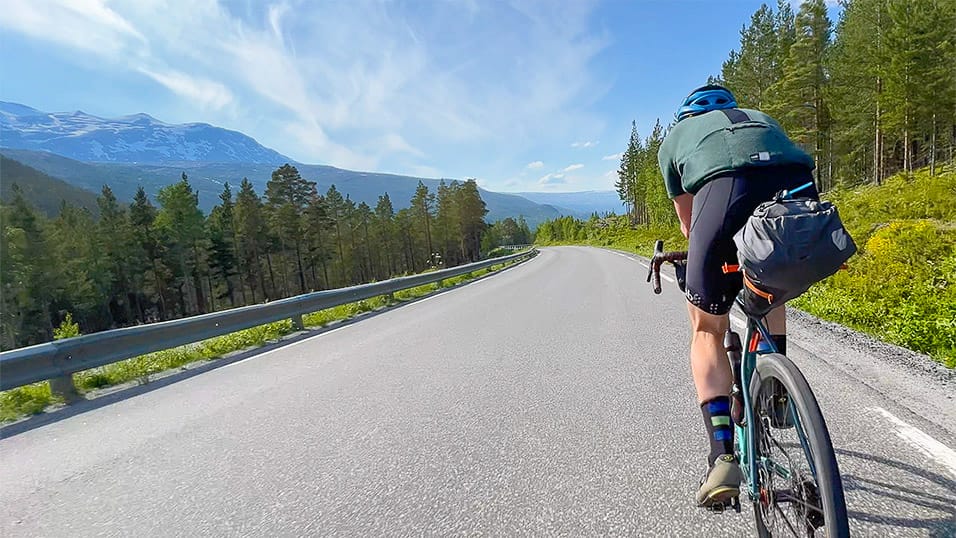
Rapid descent on sunny roads to Junkerdal valley (photo credit: Florian Kynman)
Controls
Don’t forget to register at the controls! Check in at the controls and make sure that your brevet card is signed and/or stamped before you do anything else, for instance, eat or sleep!
In addition to the printed brevet card, we are also using a digital brevet card called eBrevet, which helps us coordinate the event. When checking in and out at controls using the digital brevet; your friends and family can keep track of you on the event website!
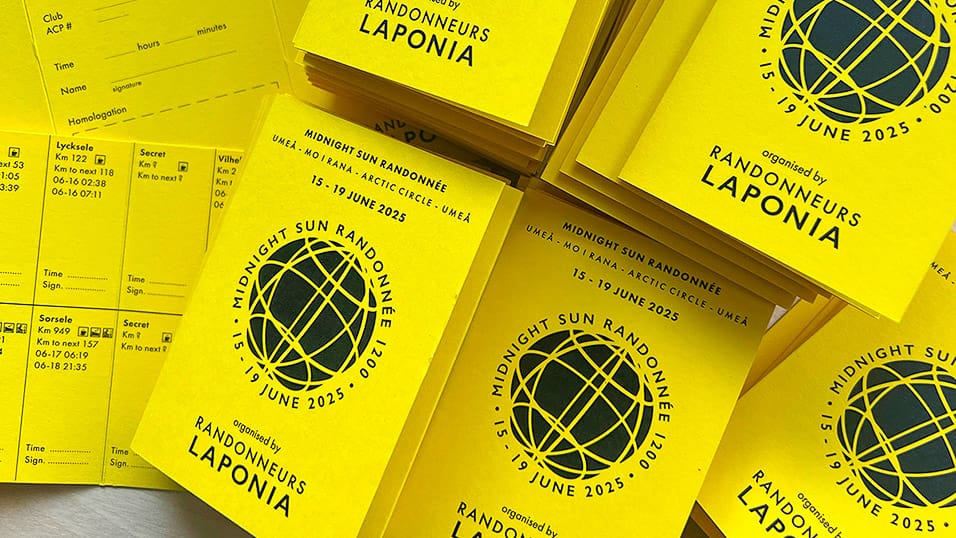
Brevet cards ready (photo credit: Florian Kynman)
Food and drink
Plan your food and fluid intake long-term. Do not leave a control without refilling supplies and water bottles. Always carry reserve supplies in case something unforeseen happens between controls.
While pre-planned personal assistance is not allowed between controls, help from residents along the course is allowed, such as refilling water bottles or repairing a bike.
These tips for food and drink are also important to consider if you’re riding in our region outside of the MSR. You need to expect your ride to be self-supported.
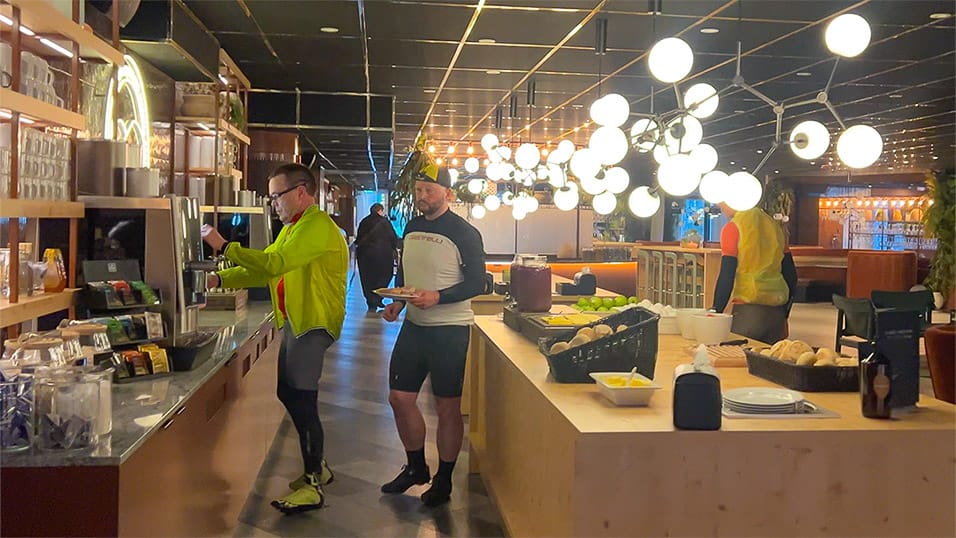
Early breakfast at Hotel Lapland, the control in Lycksele (photo credit: Florian Kynman)
Part 6: Would you encourage cyclists to do the MSR route outside the official event?
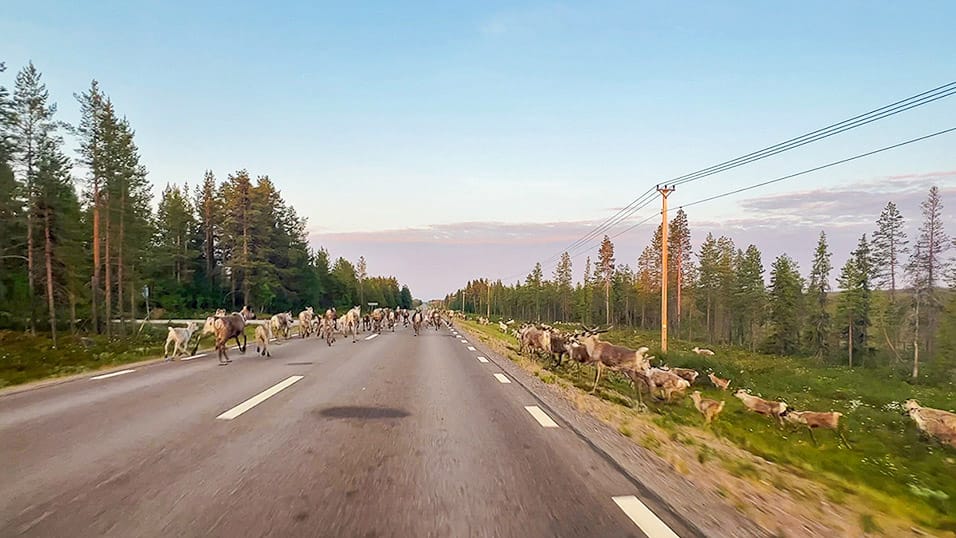
Absolutely. This is a wonderful place to cycle, especially if you want to experience solitude and a sense of the vastness of nature. Do not come here expecting people, cafes and buildings! You’ll probably meet more reindeer than cars on some roads.
From mid-June until late August, the weather should be relatively warm and stable. It is also light most of the day.
If you plan ahead, you can arrange for food and accommodation at the hotels and campsites that are part of MSR. On the event website, you’ll find an overview of options for visitors who want to cycle the Midnight Sun route after the event.
There are also a variety of alternative routes. You can, for instance, choose Vilhelmina as a base and leave your bike bag there before doing a week-long trip to Kittelfjäll and back.
Tip: If you are not participating in the MSR, after arriving to Umeå it is also possible to transport a bike bag on bus or train from Umeå to the mountains and to start your tour there. Suggested locations to start from for mountain stages, which are also easy to reach by bus or train are: Storuman, Vilhelmina, Sorsele and Arjeplog.
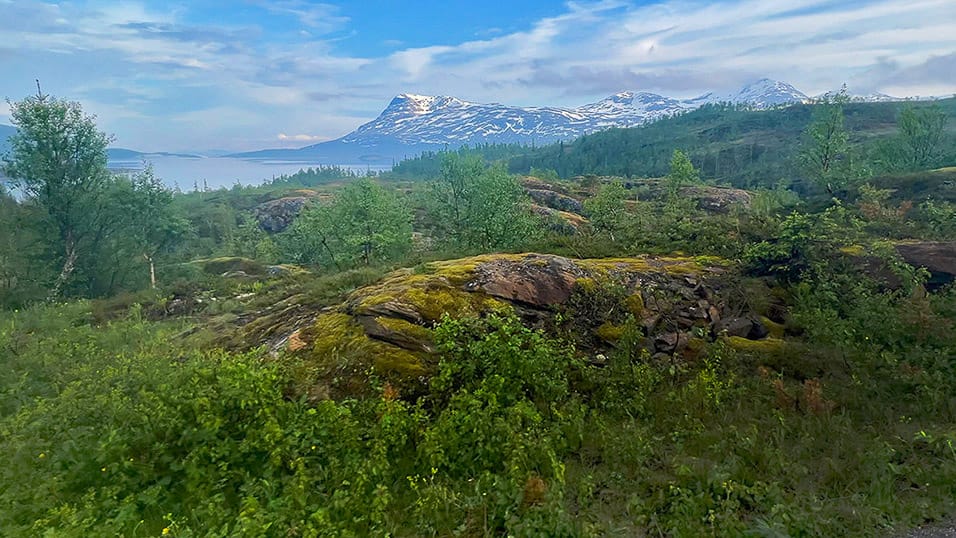
Why is Västerbotten worth visiting?
Many MSR participants express a wish to return to Västerbotten after the event and bring their families and friends. What sets Västerbotten apart from many other regions is the diversity of its natural landscapes and its road network. This means Västerbotten, together with its neighbouring regions, is one of Scandinavia’s most compelling cycling destinations.
With the Midnight Sun Route, we’re using the network of hotels, campsites and lodges that are controls in MSR to facilitate bikepacking holidays to the region. Our cycling holidays are mainly aimed at visitors who prefer to sleep in a bed rather than a tent and to eat well in hotel restaurants, instead of cooking meals in the wilderness on a gas stove. The suggested stages of the Midnight Sun Route are for cyclists who prefer to travel light, like randonneurs, and cover at least 50 – 100 kilometre per day.
For cyclists, Västerbotten offers a combination of pristine nature, a variety of landscapes, low-traffic, well-paved asphalt roads, as well as a huge network of gravel roads and trails. On top of this, motorists are considerate and keep a distance when overtaking.
Quick access to beautiful cycling routes
Routes around Umeå combine the convenience of urban cycling infrastructure with quick access to nature. Within minutes, you can leave the city and find yourself riding through pine and birch forests, river valleys, or agricultural landscapes where the traditional Swedish red-painted farmhouses and meadows in full bloom dominate the view.
Along the coast, cyclists can follow gently undulating roads along the shoreline, passing fishing villages and viewpoints looking out over the Baltic Sea.
Heading inland, the scenery transforms into a world of boreal forest, lakes and wetlands.
Minor roads are, in general, very quiet and especially early in the morning or at dusk, chances are high that you will spot moose or reindeer in front of you on the road.
Gorgeous mountain scenery
Västerbottens mountain terrain, cut and shaped by kilometre-thick ice sheets that covered to landscape during the ice age, has moderate climbs and panoramas dominated by snow-covered mountain slopes, rivers and floodplains.
These open landscapes offer some of Sweden’s most beautiful wilderness for cycling, with long summer days that allow for hours of exploration.
Good amenities for visitors
Practical factors also make Västerbotten a strong choice!
Sweden’s allemansrätten (right of public access) gives cyclists freedom to roam and enjoy nature.
Small towns and villages on the route provide accommodation ranging from simple cabins to comfortable hotels, together with cafés, restaurants, natural attractions and cultural heritage sites.
A summer playground for cyclists
From late June to mid-August, the weather is ideal for long days in the saddle, and the low humidity, moderate temperatures and clean air add to the pleasure of cycling in Västerbotten.
Ultimately, Västerbotten is worth visiting because it offers a destination where cyclists can experience coastal beauty, inland wilderness and mountain grandeur; all within a single region – without crowds, without stress, in continuous daylight conditions which give cyclists the freedom to explore at their own pace.
What is there to do in Umea, Sweden?
Umeå offers a mix of culture, nature, food and northern creativity, all within easy reach. Here are some of the experiences you can enjoy when you visit:
Explore art, culture and history
You can visit Bildmuseet, one of Sweden’s leading institutions for international contemporary art. Alternatively, explore the rich stories presented at the Museum of Women’s History. At Guitars, The Museum, you can see one of the world’s largest privately owned collections of electric guitars.
Umeå also has strong Sámi roots. At Tráhppie, you can discover contemporary handicraft, try traditional flavours and experience living Sápmi culture in a warm and welcoming setting.
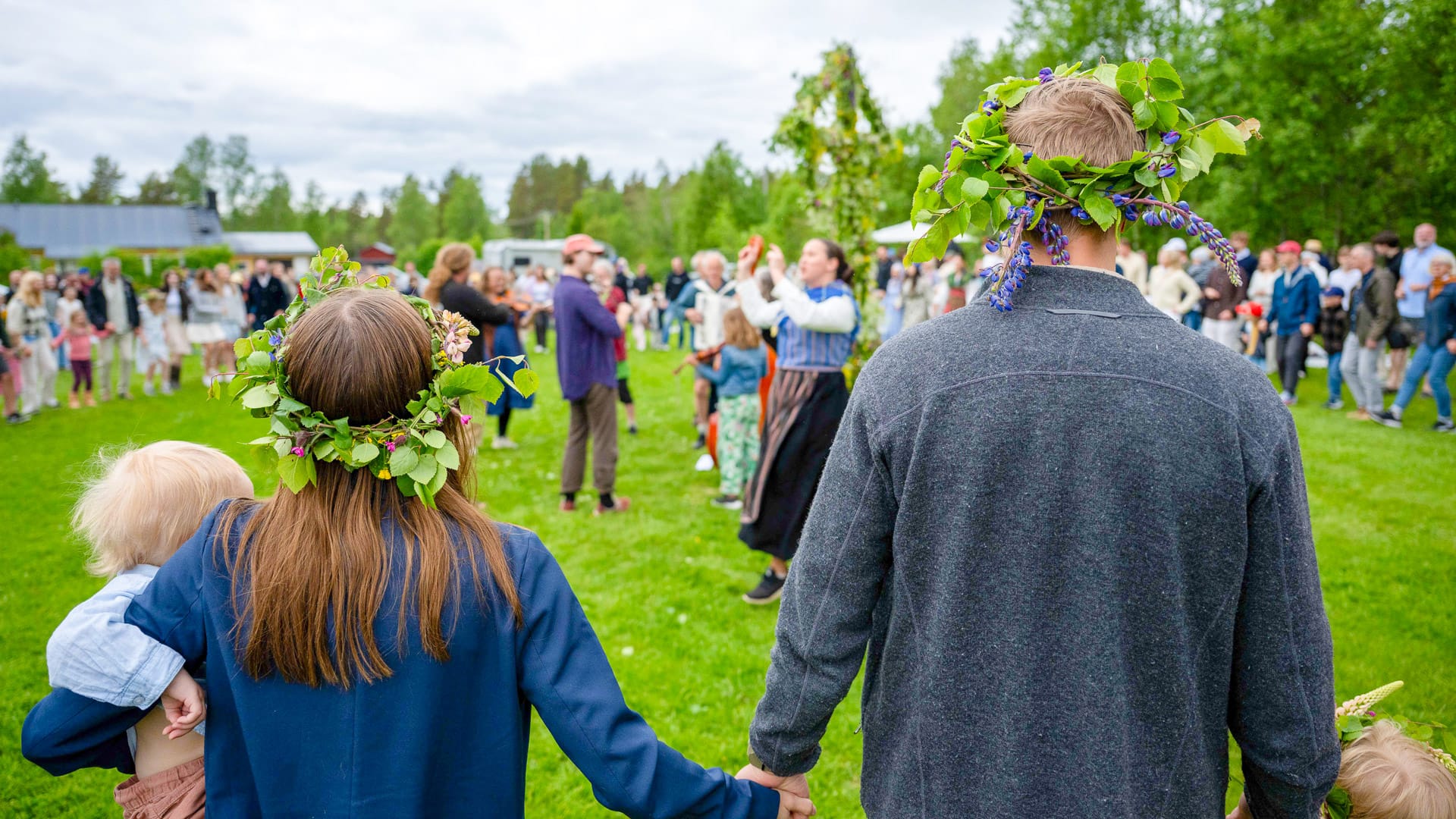
During Midsummer, you can celebrate at Västerbotten’s museum or Umeå Energicentrum, both surrounded by historic buildings, open spaces and scenic environments perfect for families and curious visitors.
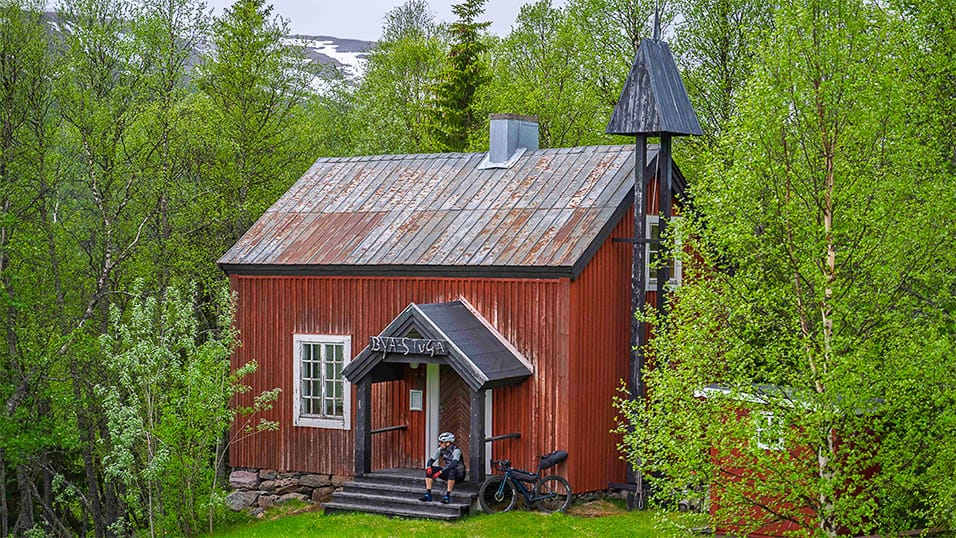
Rest at a red wooden chapel surrounded by spring forest (photo credit: Daniel Breece via Västerbotten Sweden)
Enjoy nature close to the city
Nature is always around the corner in Umeå.
You can spend a day hiking, try trail cycling through forests and open landscapes, or paddle along quiet stretches of river and coastline. Whether you want an easy stroll or an active adventure, nature is always close and accessible.
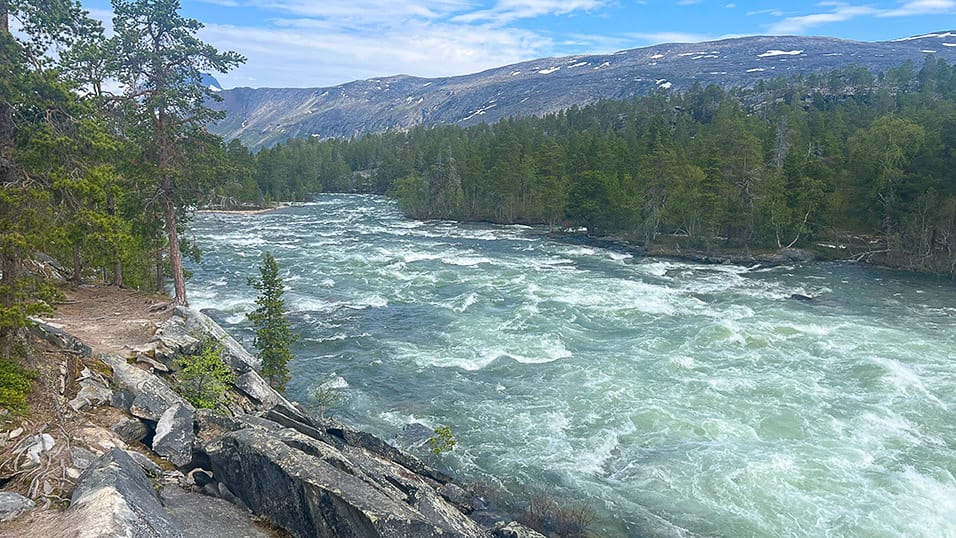
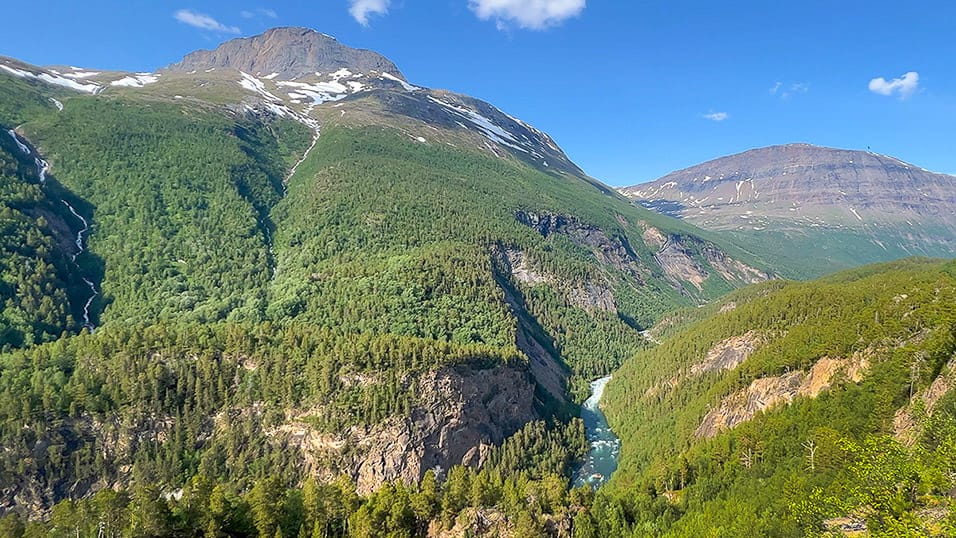
Whitewater rapids of the Lønselva (photo credit: Florian Kynman)
Taste local flavours shaped by the north
Umeå’s food scene is driven by local ingredients, northern seasons and a strong commitment to sustainability. With 130 nationalities represented in the city, influences from around the world blend naturally with regional traditions.
You can:
- Enjoy inventive, all-Swedish cocktails at Facit Bar, led by Emil Åreng.
- Explore three unique restaurants, such as Bröd & Vin, På Taket and Ateljé Vita Duken, which all run by Michelin-starred chef Mathias Dahlgren at Tornhuset.
- Taste handcrafted Nordic chocolate at ChokladJenny.
- Experience northern coffee craftsmanship at Costas Kaffe.
- Dine in a glowing autumn garden during Gotthards Krog’s Greenhouse Dinner.
- Book an open or private tasting at Brännland Iscider and discover Sweden’s internationally recognised ice cider.
Experience festivals, music and sports
Umeå has been named Sweden’s Best Sports City three times (source). You can watch top-level football, floorball or cross-country skiing, or simply enjoy the city’s active, welcoming atmosphere.
Music has a strong presence here. The Umeå Jazz Festival has brought international and local artists together for nearly 60 years. You can also explore Umeå’s music heritage through artists such as Tove Styrke, Deportees and Meshuggah, who all have roots in the city.
Every spring, Brännbollsyran combines live music with one of Sweden’s most playful sporting traditions and draws thousands of visitors.
Cycling in/around Umea
The countryside around Umeå is reasonably flat, consisting mostly of farmland and forests.
If you arrive in Umeå a few days before the event and would like to see the countryside round Umeå try this route.
The route passes Brännland Inn which is the start location for MSR. Here you can make a stop for coffee and a waffle before heading back to the hotel.
Umeå has a good bike infrastructure. Here is a map of cycling paths in Umeå.
What is there to do in Mo i Rana, Norway?
Mo i Rana is the largest town in the Helgeland region, located just south of the Arctic Circle and on the edge of the Saltfjellet-Svartisen National Park. Historically a trading post and later an industrial hub, today Mo i Rana is a vibrant mini-metropolis offering a unique blend of urban culture and spectacular nature. Mo i Rana is accessible by train, bus, car or plane, with a new international airport opening in 2027.
Urban experiences
In town, you’ll find excellent restaurants and cafés, a lively theatre scene, concert venues, and charming shops alongside large shopping centres.
- Families will love attractions such as Vitensenter Nordland, an interactive science museum where visitors of all ages can explore natural phenomena, the human body, and outer space.
- The Helgeland Museum, housed in the same building, adds cultural depth to your visit.
Nature and adventure
Mo i Rana is the perfect base for exploring Helgeland’s dramatic landscapes. The Rana region boasts fascinating limestone and marble caves.
- Grønligrotta is well-lit and equipped with walkways, making it accessible for most visitors.
- Setergrotta offers a raw, authentic experience with helmets and headlamps for those seeking adventure.
- For the truly daring, Plura Cave is Northern Europe’s largest underwater cave system.
- The Saltfjellet and the Arctic Circle Hike across the Arctic Circle can be done in a single day on the historic Telegraph Trail (Telegrafruta).
- The Saltfjellet-Svartisen National Park spans 2,192 km² of mountains, valleys, and lakes, offers endless hiking opportunities. Stop at the Arctic Circle Centre for a memorable photo and cultural insight.
- Svartisen Glacier , Norway’s second-largest glacier, is accessible during the summer season. A boat takes you across a lake, followed by a medium-level hike to the glacier view point. This experience offers breathtaking views and a true sense of Arctic wilderness.
Local food and culture
Gourmet dining at Til Elise fra Marius in Utskarpen, where farm-to-table philosophy meets Nordic flavours. Mo i Rana also offers cosy cafés and bakeries for a taste of local life.
Getting to Mo i Rana
By Plane
The best airports are: Trondheim (TRD), Bodø (BOO), or Mo i Rana (MQN). Most airlines allow bikes as checked baggage if packed in a bike box or bag. Check weight and size limits in advance. Book bike transport early and confirm with the airline about fees and packaging requirements.
By train
You can arrive by train from Oslo, Trondheim, or Bodø via the Nordlandsbanen railway. Norwegian trains often allow bikes, but you need a bike ticket. Space is limited, so reserve early. Dismantling the bike or using a bike bag may be required on some trains. Check ahead of booking to understand requirements. More information here.
By bus
Regional buses connect Mo i Rana with Trondheim and Bodø. Many buses accept bikes if there’s space in the luggage compartment. However, you should confirm with the operator before booking and arrive early to secure space for your bike. Discover timetables and availability here.
What do you need to consider if you plan to ride the route at a different time?
Can you hire bikes?
There are no suitable bike hire options for the route at the moment so bringing your own bike is essential.
Can you get luggage transfers?
There is no luggage transfer service yet.
However, it is possible to leave luggage and park a car long-term at some of the hotels when out on the trip.
Where can you find information about where to stay?
Information about accommodation for cyclists on the Midnight Sun route can be found on the website.
How do you get to some of the alternate start points?
A car is not necessary. From Umeå, there are good bus connections – which allow bikes – to all hotels on the route. Some hotels outside Umeå, for instance Granö Beckasin, also have a transfer service from Umeå Airport.
It’s also possible to travel by train to some alternative start locations, such as Vilhelmina. You can take the Snälltåget train, which accepts bikes from Malmö to Östersund, and then on from there by bus to Vilhelmina.
More information
Check out these sites for tons more useful information:
- The Midnight Sun Randonnée website for more useful details.
- Västerbotten Sweden, for anyone planning a visit by bike
- Cycle the Midnight Sun Randonnée at your own pace, for practical details to start planning your trip.
- Visit Helgeland, for anyone planning a visit by bike
- Visit Umeå, for anyone planning a visit by bike
What’s next?
A big thank you to Florian and the Midnight Sun Randonnée organisers for this insight into this very special part of the world!
Looking for more Scandinavian cycling inspiration? Don’t miss:
Like the idea of taking on an ultra cycling challenge? We think you might find this in-depth article useful.
Got a question for Florian?
Fill out this form and we will send it to Florian. We aim to get you an answer within 24 hours where possible!Florian Kynman lives in Umeå in Sweden. He is part of the cycling club Randonneurs Laponia, which was formed in 2024 to organise long-distance cycling events in northern Scandinavia, such as the MSR. The club also promotes cycling tourism in the region.
Last Reviewed: 01 December 2025
First Published: 16 November 2022
The contents of this website are provided for general information purposes only. It is not intended to amount to advice and you should not rely on it. You should carry out your own due diligence and risk assessments and take professional advice. Views expressed by interviewees or other users of this website do not necessarily represent our views. We make no representations, warranties or guarantees, whether express or implied, that the content on our website is accurate, complete or up to date. If you use any information or content on this website, download from, or otherwise obtain content or services through our website, it is entirely at your own discretion and risk. Epic Road Rides Ltd disclaims all liability and responsibility arising from any reliance placed on the information and content on this website. Find out more here.
Sponsor Message
Midnight Sun Randonnée
| Location: | Brännland, Sweden (near Umeå) |
|---|---|
| Date: | 14 to 18 June, 2026 (Sunday to Thursday) |
| Distance: | 1,215 kilometres (4,200 miles) |
| Where to stay: | Scandic Plaza Umeå |
Our view
Looking for a standout 2026 challenge? The Midnight Sun Randonnée is an ultra-endurance event that takes riders across remote Northern Sweden towards the Arctic Circle and back, under never-ending daylight and roads so quiet you’ll hear your tyres hum.
The setting is classic Sweden: glacial river valleys, crystal clear lakes, emerald green fjords, vast conifer forests, wetlands, high passes and wildlife spotting opportunities (watch out for reindeer on the roads!).
This is a welcoming, non-competitive randonnée capped at around 200 riders. Small waves roll out from 23:02, and you’ve got 91 hours (and 8 minutes!) to complete the route.
Expect eleven official controls plus two surprise checks. Controls are compulsory proof-of-passage stops that are similar to checkpoints. They’re places where you can rest, refuel on hearty local staples like fried palt with lingonberries (potato and pork dumplings, served with jam), and reset before the next section.
Entry sits between €300 and €400, depending on when riders register (register early for better prices!); finishers earn the official event medal, plenty of great stories to share and the opportunity to celebrate Swedish Midsummer with other participants.
Conclusion
This is a true ultra-distance epic that draws riders from across the globe to share a tough, unforgettable adventure in one of Europe’s last wild frontiers. If you crave challenge, big landscapes and the quiet focus of riding in near-solitude, the Midnight Sun Randonnée delivers in bucket loads.
Love the idea of exploring this part of Sweden by bike, but not sure about completing the event? Visitors travelling in the region can also ride the same route as the Midnight Sun Randonnée at their own pace and make stops at the many cultural and natural attractions along the way.
More information
- Guide to the Midnight Sun Randonnée, for an in-depth interview with further details.
- Cycle the Midnight Sun Randonnée at your own pace, for practical details to start planning your trip.
- Västerbotten Sweden website, for more inspiration for anyone planning a visit to the region.
- Sweden by bike, for more useful information!

Comments