
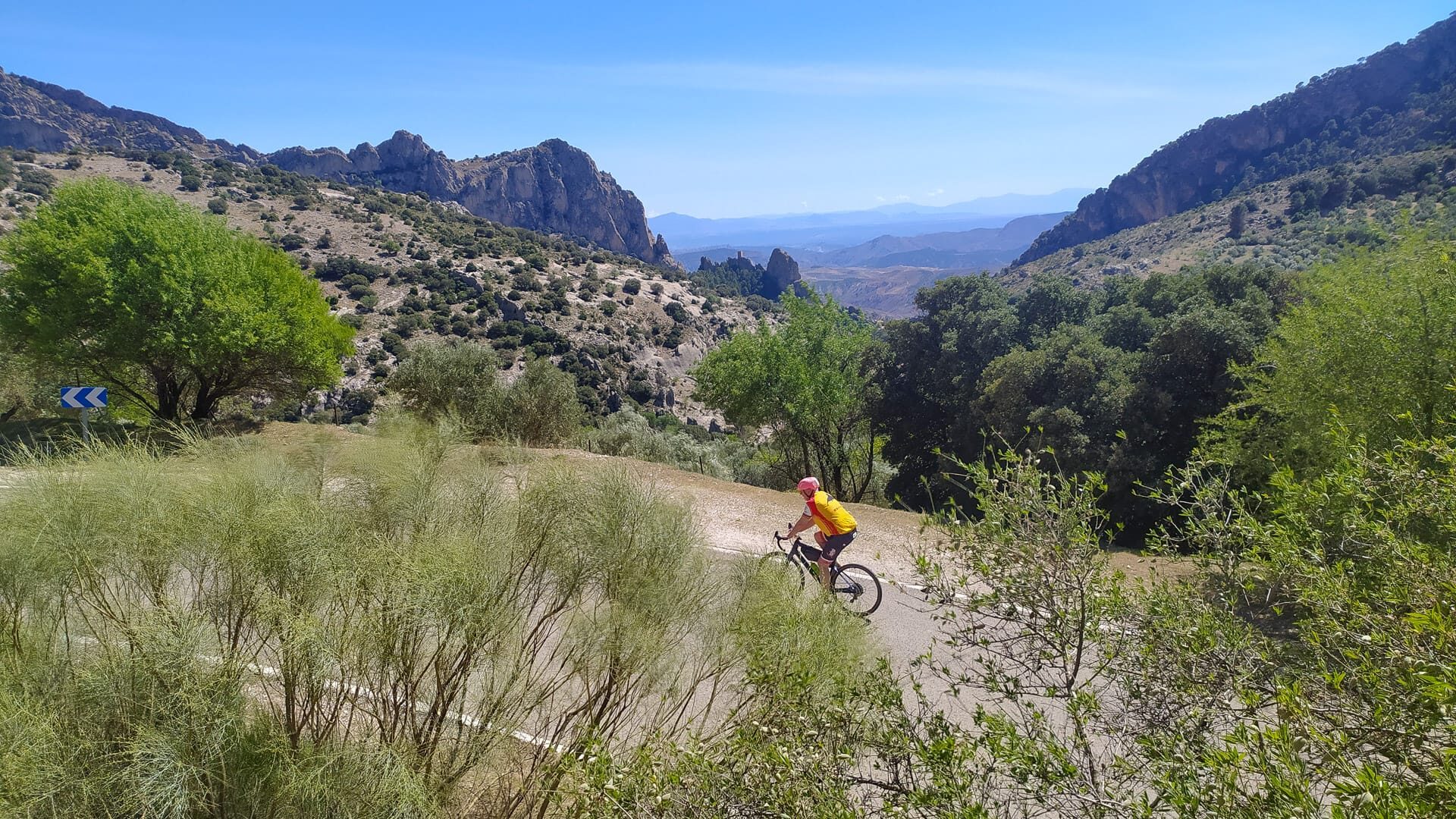

Cycling in Andalucia offers incredible variety. This vast swathe of southern Spain serves up everything from towering mountain ranges and Mediterranean coastline to arid desert landscapes and rolling olive groves.
With countless routes to choose from, Andalucia has long been a backdrop for top-level racing, and its high peaks boast several iconic, bucket-list climbs, including Pico de Veleta and Puerto de las Palomas. But it’s not just a paradise for roadies. The region also hosts the Badlands ultra gravel challenge, giving gravel riders plenty of wild, off-the-beaten-track routes to explore.
Then there’s the culture! Sleepy whitewashed villages basking in the sun, dramatic Moorish architecture, delicious tapas and the sound of flamenco spilling onto the streets in historic cities like Granada. It all adds to Andalucia’s allure. The only downside? This Spanish region is huge, so planning for Andalucian cycling holidays can feel really overwhelming.
That’s where this article comes in! Below, Paul D’Andrea, owner of Sierra Sports & Tours, shares his local insight and practical tips. Paul and his team have been running cycling tours in Andalucía since 2012 and know the region inside out.
Vamos! (Let’s go!)

Paul D'Andrea is the owner and lead guide at Sierra Sports & Tours which, for more than a decade, has been specialising in European cycling tours for beginners through to advanced cyclists.
Born in Australia, Paul and his family have lived in Spain for many years. They have several bases in Spain, including in Girona, Granada and Madrid, allowing them to run trips from these destinations with ease. Paul adores his job and gets a buzz from helping his clients get off the conventional routes and into the most beautiful parts of the country.

We love to introduce our community to cycling businesses, destinations and ideas that we think are genuinely interesting. Sierra Sports & Tours caught our attention because of its focus on these topics, which felt like a natural fit for Epic Road Rides and our readers. We were therefore pleased to work with the Sierra Sports & Tours team on this article.
Sierra Sports & Tours paid for this advertisement feature. Our decision to collaborate reflects our view that the brand is relevant to our readers; it is not a formal approval, audit or guarantee of its services. Unless we expressly say otherwise, we have not personally taken the trip described or independently verified information supplied by Sierra Sports & Tours.
As with any travel purchase, please check the latest trip details, terms and customer protections directly with Sierra Sports & Tours before booking. Any booking is made with Sierra Sports & Tours, not Epic Road Rides.
 There's a Youtube video here!
I'm fine with Youtube cookies
Table of contents
This guide is packed full of detailed insights on the best cycling routes in Andalucia and where to base yourself to experience them. To help you find your way, we’ve split it into several parts. Here’s what’s coming up:
- Part 1: Why visit
- Part 2: Overview
- Part 3: Cycling routes and best bases
- Part 4: Practicalities
- Part 5: Tips
- Part 6: Sierra Tours & Tours
Sponsor Message
Looking for cycling tours in Andalucia, Spain?
Here at Sierra Sports & Tours, we have considerable experience running road bike and gravel bike tours in Andalucia. We'd love for you to experience them on one of our carefully crafted, guided cycling holidays.
Get in touch via our contact form, and let's discuss!
Exclusive discount
Exclusive offer: use the code below and get 200 euros off any guided tour and 75 euros off any self-guided tour* when you book with Sierra Sports & Tours by 31 December 2026. *T&Cs apply
Got a question for Sierra Sports & Tours?
Fill out this form and we will pass it to Sierra Sports & Tours who aim to reply (within 24 hours wherever they can!)
Part 1: Why should you go cycling in Andalucia?
Cycling in Andalucia is hard to beat. Extensive mountain ranges make way for winding valleys of olive fields and expansive kilometres of sweeping coastlines. The hilly terrain might be challenging, but the reward is ‘wow’ moments at every turn.
It’s a region jam-packed with iconic cycling routes you are likely to recognise from some of the major professional cycling races. Add in almost-guaranteed sunshine, and it’s easy to see why an Andalucian cycling experience should be climbing straight to the top of your cycling bucket list.
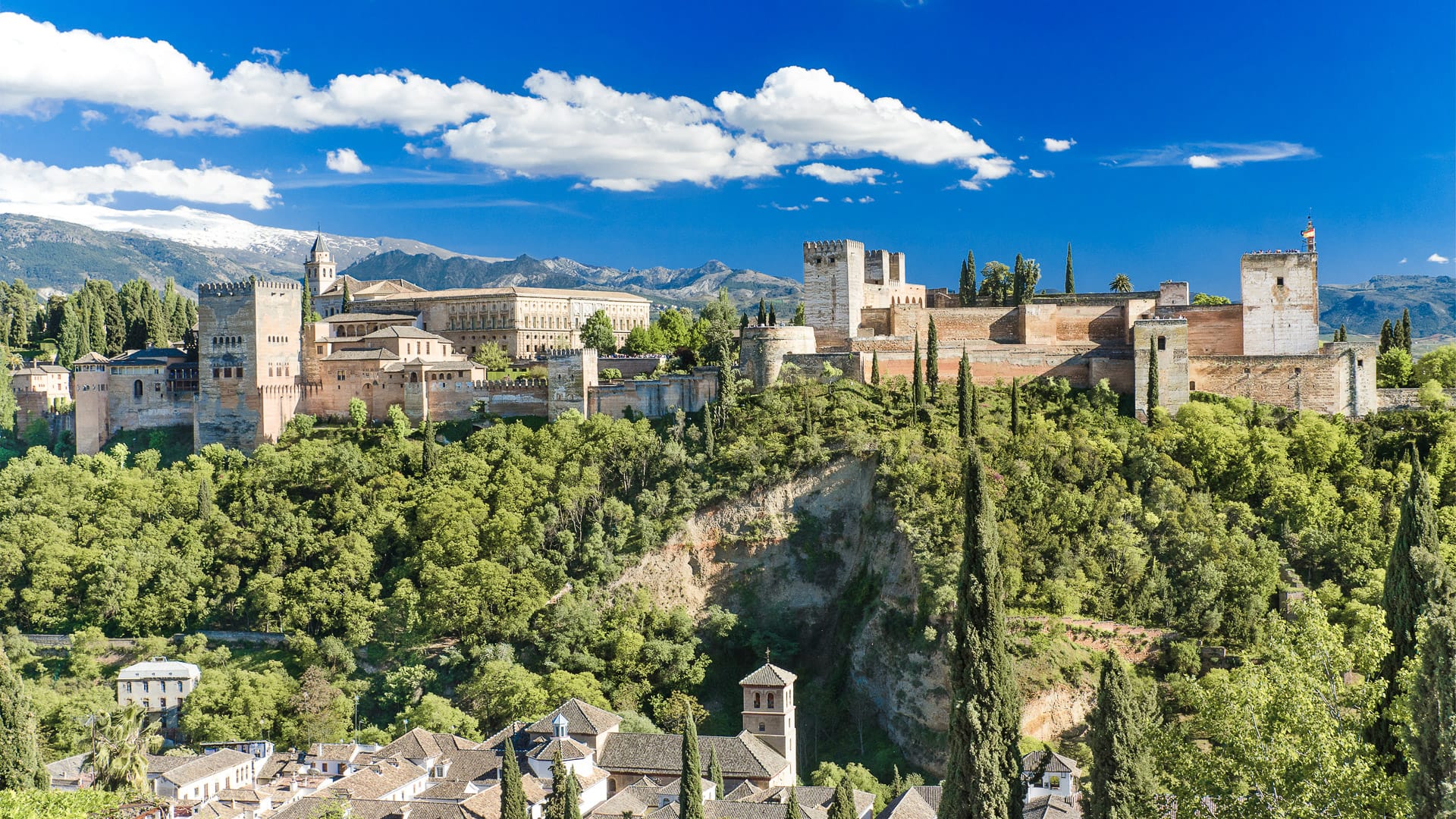
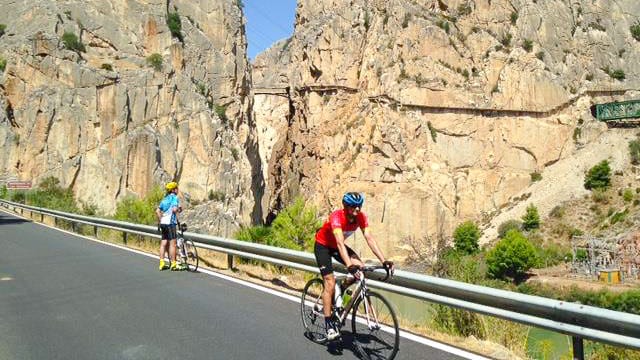
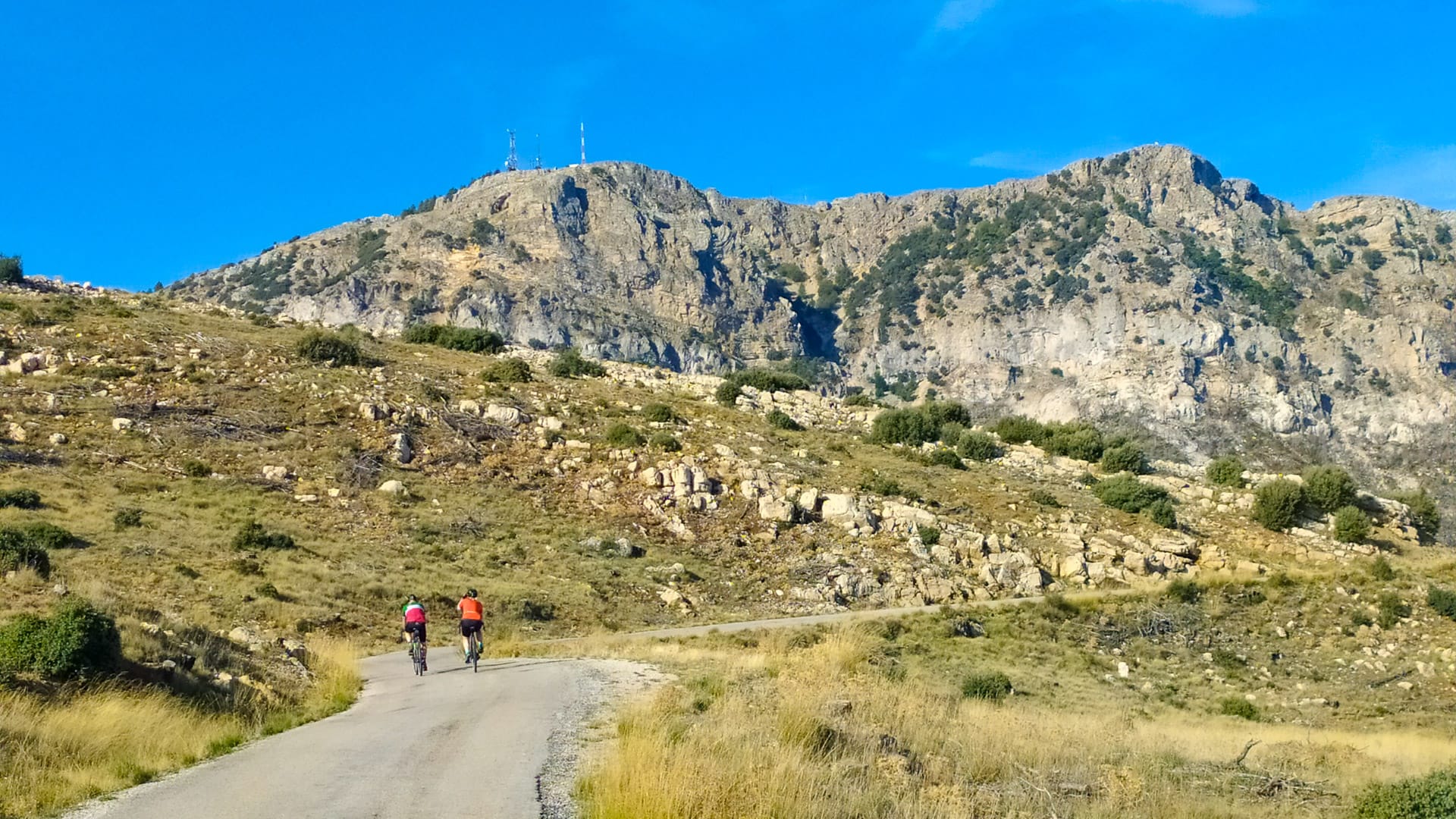
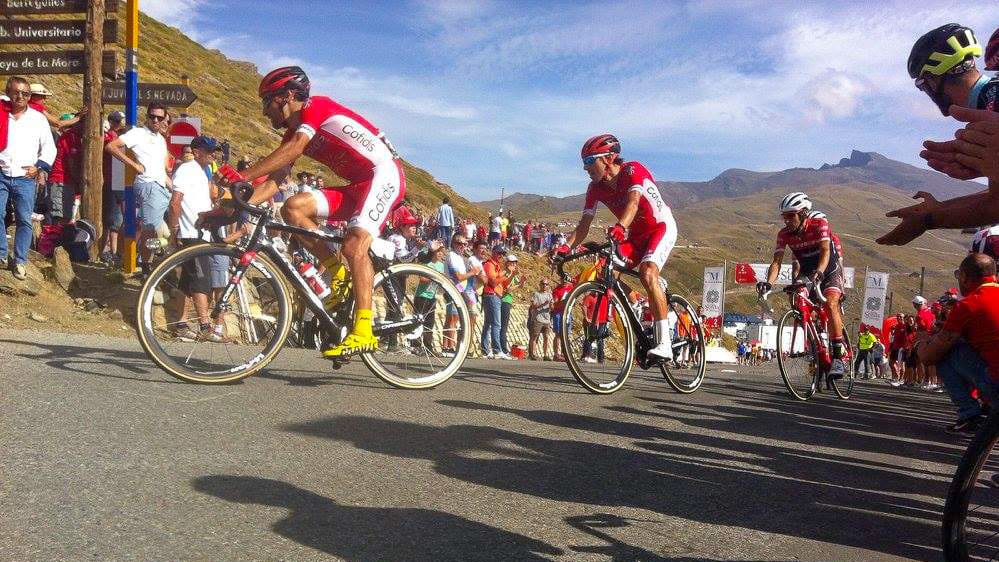
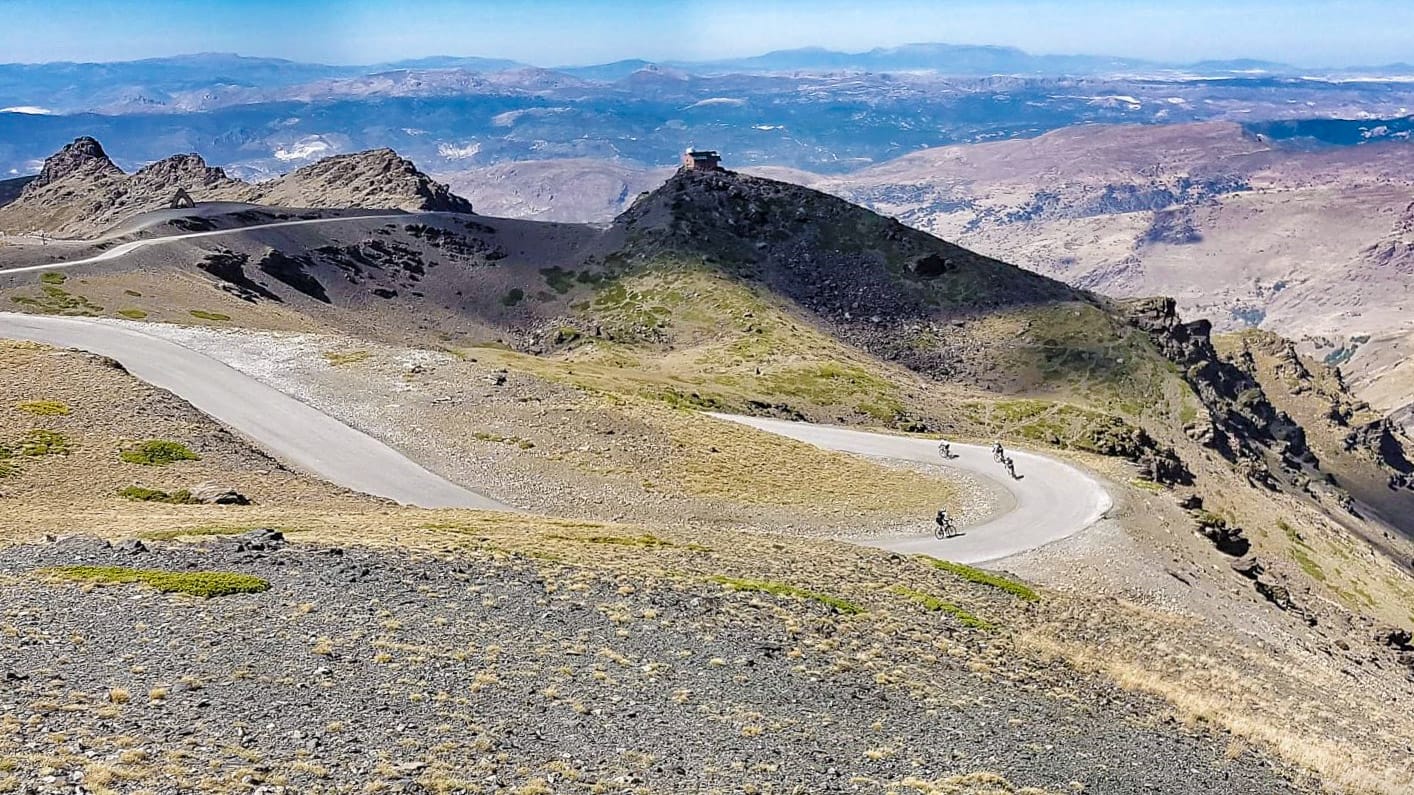
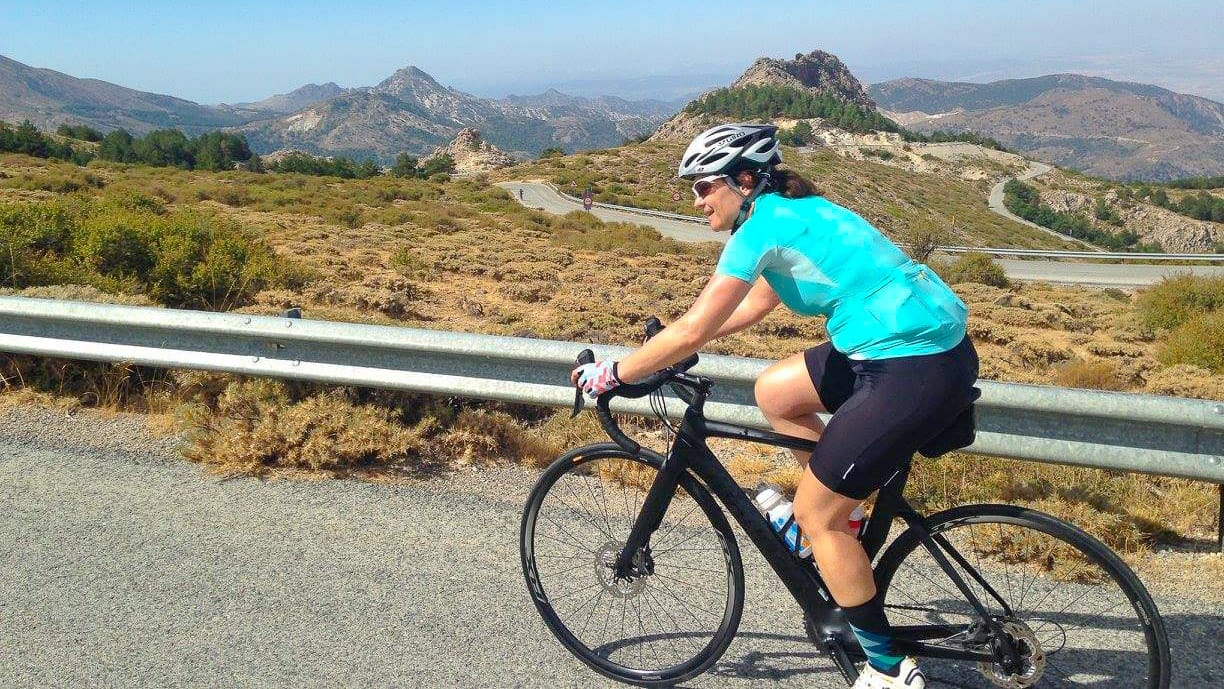
Extensive mountain ranges
Andalucia is a climbers’ paradise! Spain’s southernmost region is home to many famous cycling climbs, including the legendary Pico de Veleta, which is the highest asphalt road in Europe (source). It’s not hard to see why Andalucia is such a popular training destination for professional riders.
With your pick of Sierra Nevada, Cazorla National Park and Sierra de Grazalema, to name a few, cycling in Andalucia has something for everyone! Whether you’re a verified mountain goat or someone looking to find their climbing legs, the incredible mountain scenery you’ll get to experience will prove a worthy reward for all those metres of elevation gain.
Ride in the pedal strokes of the pro peloton
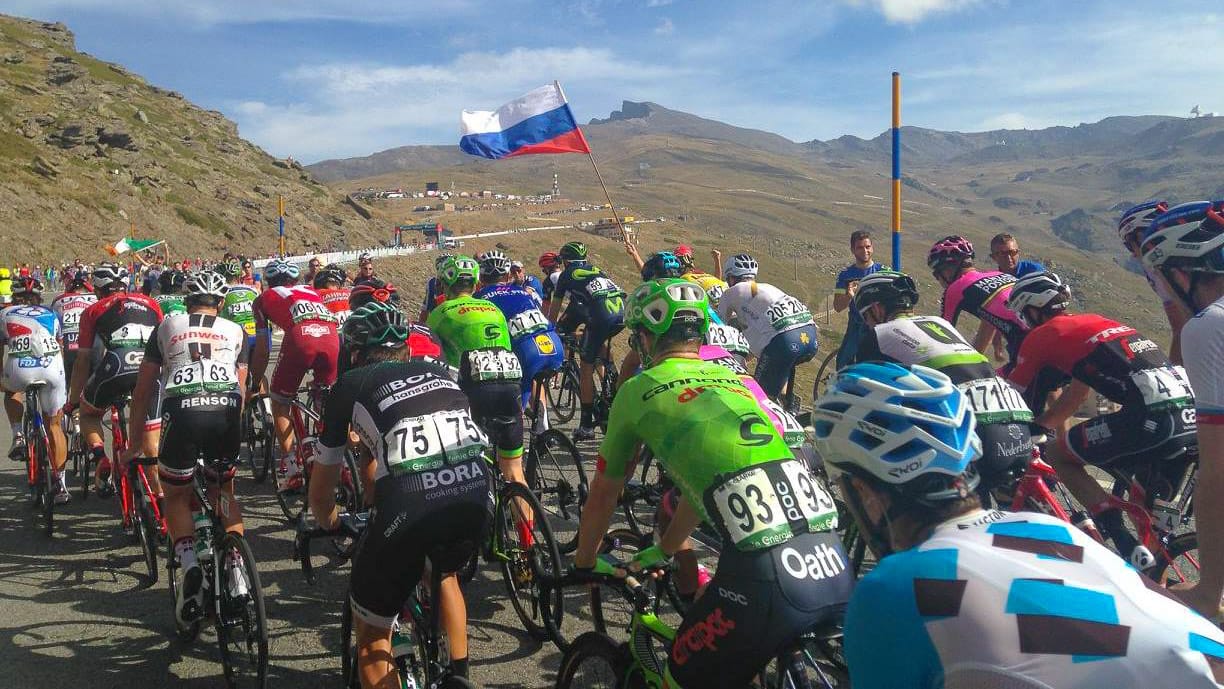
The passion for cycling is strong in Andalucia! The region is host to a number of major professional cycling races. That includes the Clasica Jaen Paraiso Interior, Vuelta a Andalucia and Vuelta a España (Spain’s 21-stage answer to the Tour de France). More on that below.
Granada and Sierra Nevada are often the training ground of choice for the pro tour teams, ticking off their altitude training to get ready for races such as the Giro d’Italia and the Tour de France. And in Ronda, many of the race-defining climbs of the Vuelta are within cycling distance.
Smooth roads
All that pro cycling prestige means Andalucia is a fantastic, cycling-friendly destination.
With so many professional races taking place in Andalucia’s regions, you can look forward to roads that are (generally) smooth and well looked after. Cycling is also popular with the locals, and in my experience, drivers here are exceptionally patient and considerate.
Inspiring scenery and cultural attractions
An Andalucia cycling holiday is the perfect way to truly appreciate the incredible scenery this region of Spain has to offer.
Dotted amongst the backdrop of towering mountain ranges and Mediterranean forests, you’ll ride through many traditional whitewashed villages and beautiful UNESCO World Heritage-listed cities and towns. Cycling in Andalucia is usually a challenge for the legs, and always a feast for the eyes! Here are some standout places:
- Granada: Home to the world-famous Alhambra and the atmospheric Albaicín quarter. Granada effortlessly combines Moorish heritage with lively tapas culture, all framed by the snow-dusted Sierra Nevada. Find out more below.
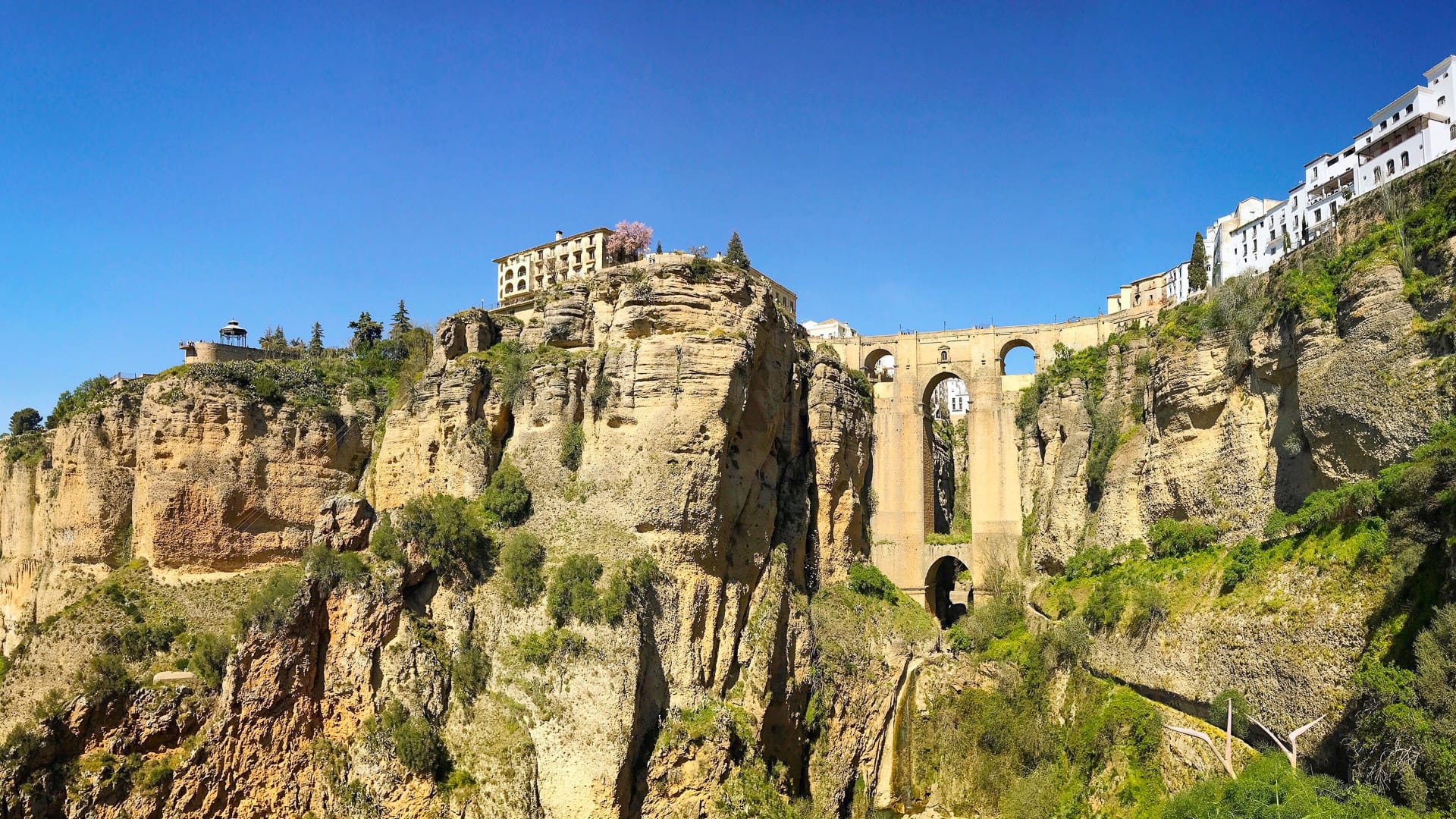
- Ronda: Sitting dramatically above the El Tajo gorge, Ronda is special for its iconic Puente Nuevo bridge and breathtaking cliff-top views over the surrounding countryside. Find out more below.
- Grazalema: Tucked within the Sierra de Grazalema Natural Park, this white-washed village is known for some of Andalucia’s most beautiful mountain scenery and a proud local tradition of handcrafted textiles. Find out more below.
- Baeza: With elegant Renaissance architecture and peaceful, golden-stone streets, Baeza feels like an open-air museum and is celebrated for its beautifully preserved historic centre. Find out more below.
- Úbeda: Also famed for Renaissance splendour, Úbeda stands out for its grand palaces and plazas, especially around the stunning Plaza Vázquez de Molina. Find out more below.
- Cazorla: Gateway to the vast Sierras de Cazorla, Segura y Las Villas Natural Park, Cazorla is known for its whitewashed houses set against dramatic limestone mountains, olive-covered valleys, and some of southern Spain’s most rewarding, traffic-free cycling roads. Find out more below.
- Mojácar: Located beside the Mediterranean, Mojácar is famed for its whitewashed houses tumbling down a hilltop, maze-like streets, and sweeping coastal views where desert landscapes meet the turquoise sea. Find out more below.
Sunshine on tap
Is there a better feeling than riding along some of the world’s best cycling routes with the sun on your back? With almost 300 days of sunshine per year (on average), it’s no wonder Andalucia is such a popular cycling destination.
Off road adventures await
Gravel cycling is growing quickly in Andalucia. The one-day Jaen Classic pro race held each February explores the gravel roads of Renaissance Spain (Baeza and Úbeda).
The Badlands ultra distance gravel race links Granada, Sierra Nevada and Almeria. Even more kilometres of dirt tracks can also be found in the nearby Cazorla National Park. This means there are fantastic opportunities for an Andalucia bike tour that combines road cycling with gravel riding.
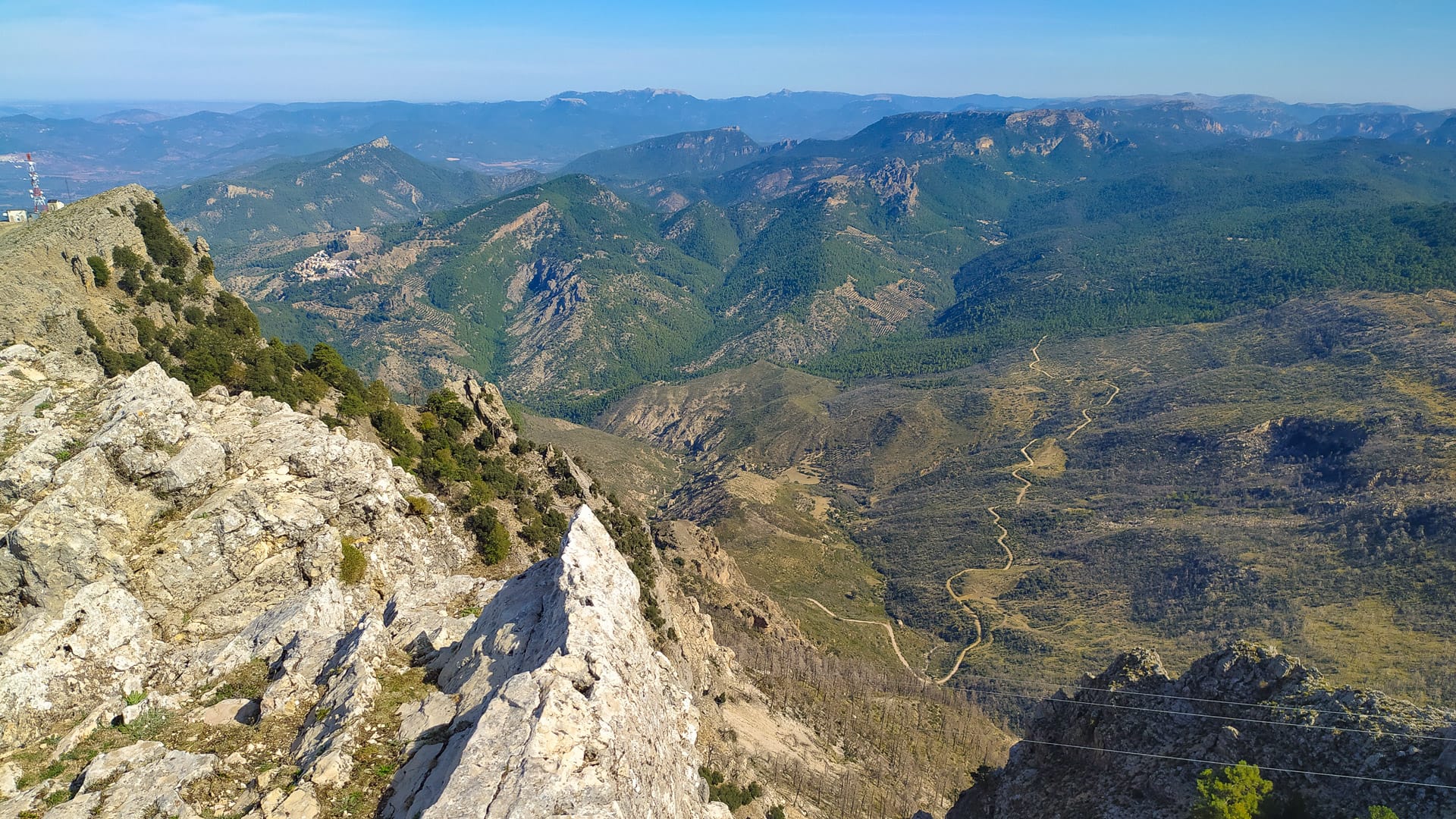
View from the top of ‘El Yelmo’ summit in the heart of the Cazorla National Park (photo credit: Sierra Sports & Tours)
Sponsor Message
Looking for cycling tours in Andalucia, Spain?
Here at Sierra Sports & Tours, we have considerable experience running road bike and gravel bike tours in Andalucia. We'd love for you to experience them on one of our carefully crafted, guided cycling holidays.
Get in touch via our contact form, and let's discuss!
Exclusive discount
Exclusive offer: use the code below and get 200 euros off any guided tour and 75 euros off any self-guided tour* when you book with Sierra Sports & Tours by 31 December 2026. *T&Cs apply
Got a question for Sierra Sports & Tours?
Fill out this form and we will pass it to Sierra Sports & Tours who aim to reply (within 24 hours wherever they can!)
Part 2: What is Andalucia like from a cyclist’s perspective?
Where is Andalucia?
Andalucia is the southernmost region in Spain, located on the Iberian Peninsula. Made up of eight provinces, Andalucia has 500 miles of coastline offering up a multitude of beautiful sandy beaches backed by impressive mountain scenery.
The provinces of Andalucia
Andalucia is the second biggest state in Spain. It includes eight provinces:
- Almeria, known for its rugged and untamed coastlines.
- Cadiz, a diverse province home to whitewashed villages, an extensive Atlantic coastline and the historic port capital city.
- Cordoba, home to mountain ranges, protected national parks and unique heritage architecture.
- Granada, where you’ll find the snowy peaks of the Sierra Nevada mountains.
- Huelva, sweeping from the foothills of Sierra Morena to the Atlantic coast in the west of Andalucia.
- Jaen, known as the gateway to Andalucia the northeastern province of Jaen is a gentle expanse of olive groves and lush countryside landscapes, peppered with historic architecture and monuments in its towns and villages.
- Malaga, a place where old meets new. Malaga’s inland mountains and beautiful coastline make it a vibrant tourist destination.
- Seville, the capital of Andalucia with a varied landscape ranging from the basin of the Guadalquivir river to the Sierra Morena Mountains and the wetlands of the Doñana Nature Reserve.
Covering all eight provinces is beyond the scope of this guide. Instead, we handpick five of the best bases for cyclists looking to explore Andalucia. I’ll share more information on the best bases and cycling routes below, but for now you can find these highlighted on the map below. Hover over the pins to see the names of places.
What is the terrain like for cycling in Andalucia?
Be aware! With all of those iconic climbs and undulating mountain ranges, the terrain in Andalucia is relatively challenging for cycling. Even away from the big mountains, a 50-60-kilometre ride can quite easily hit 1,000 metres of elevation gain.
What are the roads like?
Thanks to the many professional cycling races that take place in Andalucia, the road surfaces here are well-maintained and generally very good for cycling. Alongside the pro races and frequent visits from professional riders for training camps, cycling is also popular with the locals.
In our experience at Sierra Sports & Tours, drivers usually wait patiently behind cyclists to overtake. Our guests often comment on how exceptional the drivers here are compared to where they usually ride back home! In fact, the smooth roads and considerate drivers are just a few of the many reasons I decided to set up the business in this region and make Southern Spain my home.
What kind of cyclist is Andalucia suited to?
Because of the challenging terrain, cycling Andalucia is best suited to intermediate cyclists who can comfortably take on between 1,000 and 2,000 metres of elevation gain on daily rides. Beginner cyclists are likely to find the terrain quite difficult, because even away from the big mountains, the routes are still hilly.
If you’re new to cycling and you still want the full Andalucian cycling experience, you could consider riding an e-bike. Sierra Sports & Tours has a full fleet of carbon e-road bikes for hire. The Orbea Denna e-road bike is a real dream ride for tackling Andalucia’s punchy climbs. On top of that, we have S, M and L size frames available, so it’s easy to find a comfortable fit. See below for price details.
Andalucia isn’t just for road cyclists. There are some brilliant gravel routes to the east of Granada which connect with Almeria through the Gorafe desert. At Sierra Sports & Tours, we offer an eight-night guided gravel adventure which takes you through the best of the Cazorla National Park. The four-wheel drive tracks take you out to amazing lookout points (keep an eye out for vultures!) with incredible views across alpine plateaus and Mediterranean forests.
Of course, keen gravel riders should also consider checking out the legendary Badlands ultra gravel race. More details on some of the best cycling events in Andalucia below.
What are the key cycling events in Andalucia?
Andalucia is home to a number of amateur and professional cycling events. Many are focused on road cycling; however, the gravel scene has arrived and it is growing at a rapid rate. Below you’ll find my pick of some of the best cycling events in Andalucia, including professional racing and opportunities for amateurs to get involved.
Cycling above the Pradollano ski station in the Sierra Nevada mountains (photo credit: Sierra Sports & Tours)
Baeza and Úbeda
- Clasica Jaen Paraiso Interior UCI professional road race: The only race in Spain which combines asphalt and sections of gravel, similar to the Strada Bianche. 2026 is the fifth edition, and previous winners include Alexey Lutsenko and Tadej Pogacar.
- La Clasica amateur gran fondo: The day before the UCI professional race, amateurs can get their wheels dirty and ride the 111-kilometre La Clasica gran fondo through the Baeza/Úbeda olive fields.
Sierra Nevada
- Sierra Nevada Limite gran fondo: Held every May, there’s a 114-kilometre route (3,050 metres elevation gain) or a 146-kilometre route (3,900 metres elevation gain). Both rides start and finish in Cenes de la Vega, a suburb of Granada. The climbs include the Quentar Reservoir, Alto de Blancares and La Sabinas. The long ride also conquers El Purche.
Granada
- Subida al Veleta: A recreational road cycling event in a mountain time trial format. Held every July, this ride includes a 38-kilometre mountain climb from Cenes de la Vega (Granada) to Pico de Veleta. The ride covers 2,250 metres of elevation gain and tops out at 3,100 metres of altitude.
- Badlands ultra gravel race: For amateur gravel cyclists looking for a super tough challenge, there is the non-stop Badlands event. This race is typically held during late August / early September. Starting in central Granada (Paseo de los Tristes, near La Alhambra palace) this non-stop ride takes in the best gravel terrain through Granada and Almeria provinces. The course is 800 kilometres long, with over 16,000 metres elevation gain. It is known as the wildest gravel challenge in Europe. Badlands is a unique landscape which happens to intersect the only deserts in Europe, touch the Med coast and also pass over the highest summit in Europe (Pico de Veleta at 3,396 metres, but this time from the southern side of the Sierra Nevada mountains). The event typically sells out in an instant so many consider riding the route or parts of the route at different times of the year.
Cazorla
- Gran Fondo Sierra de Cazorla: Typically held in late September in the Cazorla National Park, this gran fondo is 145 kilometres long with 2,000 metres of elevation gain. A true adventure, the route includes crossing the dam wall over the highly impressive Tranco Reservoir before taking in the views from the Puerto de las Palomas climb and lookout point. A ride not to miss!
Malaga
- Costa del Sol Gran Fondo: Estepona in Malaga province hosts the Costa del Sol Gran Fondo every October. The 127-kilometre route is stacked with 3,400 metres elevation gain. This ride includes the Peñas Blancas climb which rises straight off the coast, ascending 20 kilometres at a 6.7% average grade. In 2026, Peñas Blancas will actually double as the summit finish of Stage 19 in La Vuelta a España pro race. Here is your chance to ride a queen stage style ride just like the professionals!
Other professional cycling events in Andalucia
When it comes to professional cycling, the area is also blessed with a number of cycling options:
- Vuelta a Andalucia: A five-stage professional cycling race, held in mid to late February, which will enter its 72nd edition in 2026 (18th-22nd February 2026). The 2026 race route passes through the provinces of Malaga, Granada, Jaen, Cordoba and Seville.
- Vuelta a España: Just like the Giro d’Italia and the Tour de France, ‘La Vuelta’ is Spain’s three-week grand tour professional bike race. It’s held in late August to mid-September. The roads surrounding Andalucia will come to life during the final week of the 2026 race program. In fact, a remarkable 10 stages will be battled out in Andalucia during 2026. Mountains stage finishes to really keep an eye out for include Calar Alto (Stage 12 – Almeria), La Pandera (Stage 14 – Jaen), Peñas Blancas (Stage 19, Malaga) and Collado del Alguacil (Stage 20 – Sierra Nevada, Granada).
Part 3: What are the best bases for cyclists and the must-ride Andalucia cycling routes?
Andalucia is a true cyclists’ playground! Below you’ll find information on some of my favourite places to ride in Andalucia, including route suggestions and where to base yourself. We have ordered this list starting with our most popular destinations with guests:
Ronda and Grazalema (Malaga and Cadiz Mountains)
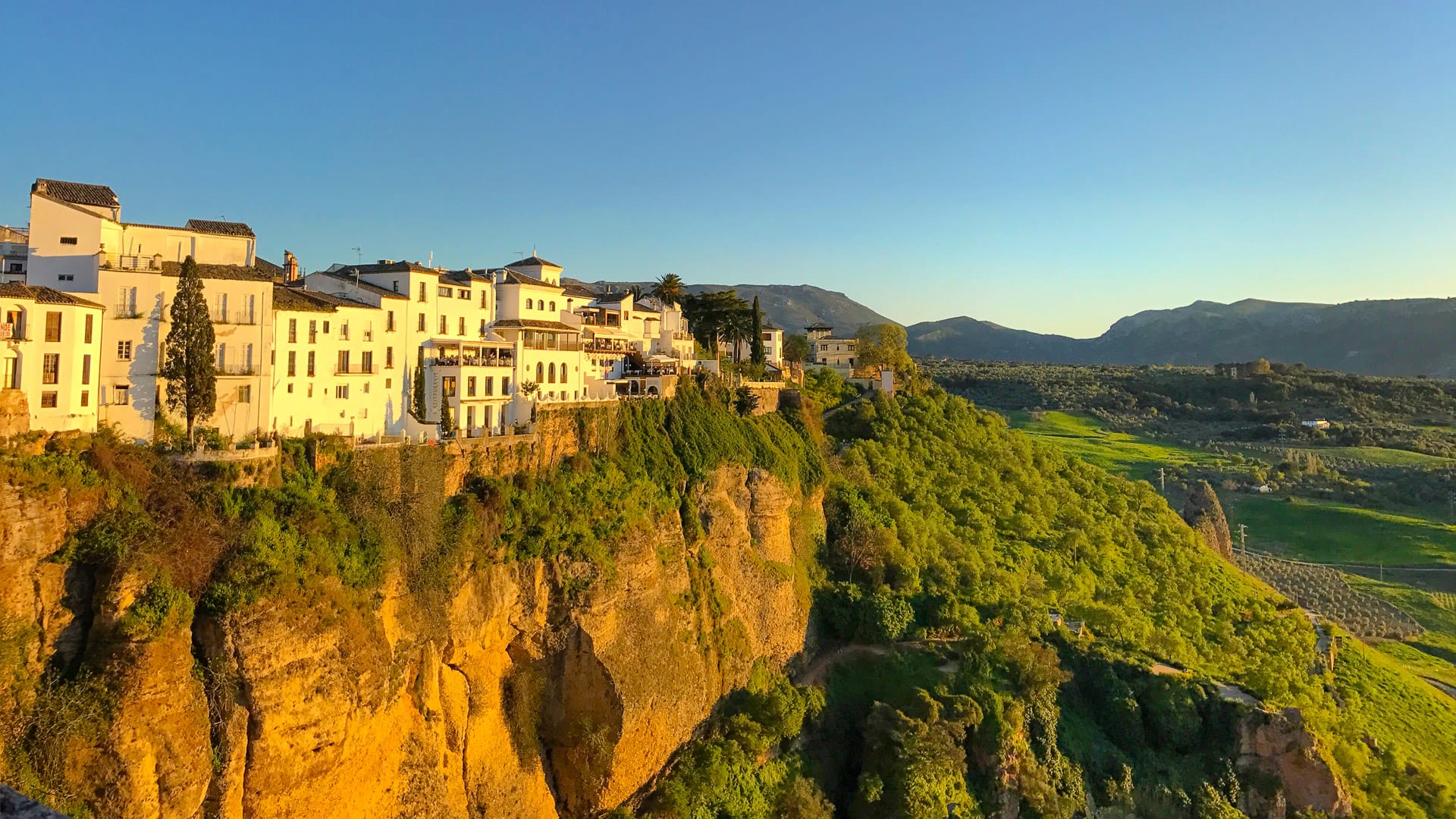
View of Ronda town with its cliffs and historic architecture (photo credit: Sierra Sports & Tours)
Ronda is located in the province of Malaga, in the heart of the Sierra de Nieves Natural Park.
Sitting atop the dramatic fall of the Tajo Gorge, many view Ronda as the jewel of Andalucia! The town might be known for its history and awe-inspiring views, but for cyclists, the main draw is the famous Vuelta cycling climbs all within striking distance. That includes Puerto del Viento, and Peñas Blancas, which will feature in the final week of the 2026 La Vuelta race.
30 kilometres away from Ronda, you’ll come across the mountain town of Grazalema. From here you can ride even more famous La Vuelta a España climbs, including Puerto de las Palomas and Puerto del Boyar.
What are the best cycling bases in Ronda?
Ronda and Grazalema are the best places to base yourself to explore Malaga and the Cadiz Mountains. You can find my tips for the best cyclist-friendly hotels below.
What are the best Ronda cycling routes?
As you can imagine, there are plenty of Ronda bike routes to choose from to tackle all those famous Vuelta climbs. Below you’ll find my suggestions for two of the must-do cycling routes. But wherever you decide to ride near Ronda, be sure to plan your routes so you intersect the whitewashed villages of Andalucia: Setenil de las Bodegas, Zahara de la Sierra and Grazalema.
Ronda and Palomas Climb
GPX DownloadTerms of use reminder
Best for experiencing one of the best cycling climbs in Andalucia!
Key statistics
86 kilometres
1,900 metres of elevation
Overview
This route takes you through the Sierra de Grazalema national park, which is a dream cycling destination. Enjoy the turquoise coloured reservoirs, the whitewashed Andalucian villages and riding up and down quiet mountain roads with epic views! The challenge for the day is the Puerto de las Palomas climb. Palomas is a category one climb that has been used three times during La Vuelta a España. It is a 12 kilometre climb with a constant 6% grade. It’s one of the best climbs in Andalucia!
Ronda to Antequera
GPX DownloadTerms of use reminder
Best for a challenging but incredibly rewarding ride between the two beautiful Andalucian towns of Ronda and Antequera
Key statistics
94 kilometres
1,800 metres of elevation
Overview
A special ride from Ronda on the backroads to Antequera, and including the spectacular cycling route out to the ‘El Chorro Gorge’ in the Malaga Lake District.
Soon after leaving Ronda, you’ll drop down a mountain road descent towards the town of El Burgo, with amazingly rugged cliff landscapes. From there, the route threads into the Malaga Lake District, where you pass by the dramatic El Chorro Gorge. The canyon creates a truly thrilling backdrop and is quickly becoming an epic road ride. As you leave the lakes behind, the roads sweep through rolling terrain all the way to Antequera, finishing at the famous dolmens, prehistoric megalithic tombs.
More information
Our Ronda and Almuñecar Road Bike Tour is a private cycling tour which will take you on a seven-night adventure along some of our favourite Andalucia cycling routes. From famous Vuelta climbs to whitewashed villages and, of course, the awe-inspiring El Chorro Gorge, this tour is a great option to experience Ronda and Granada.
Cazorla National Park, Jaen
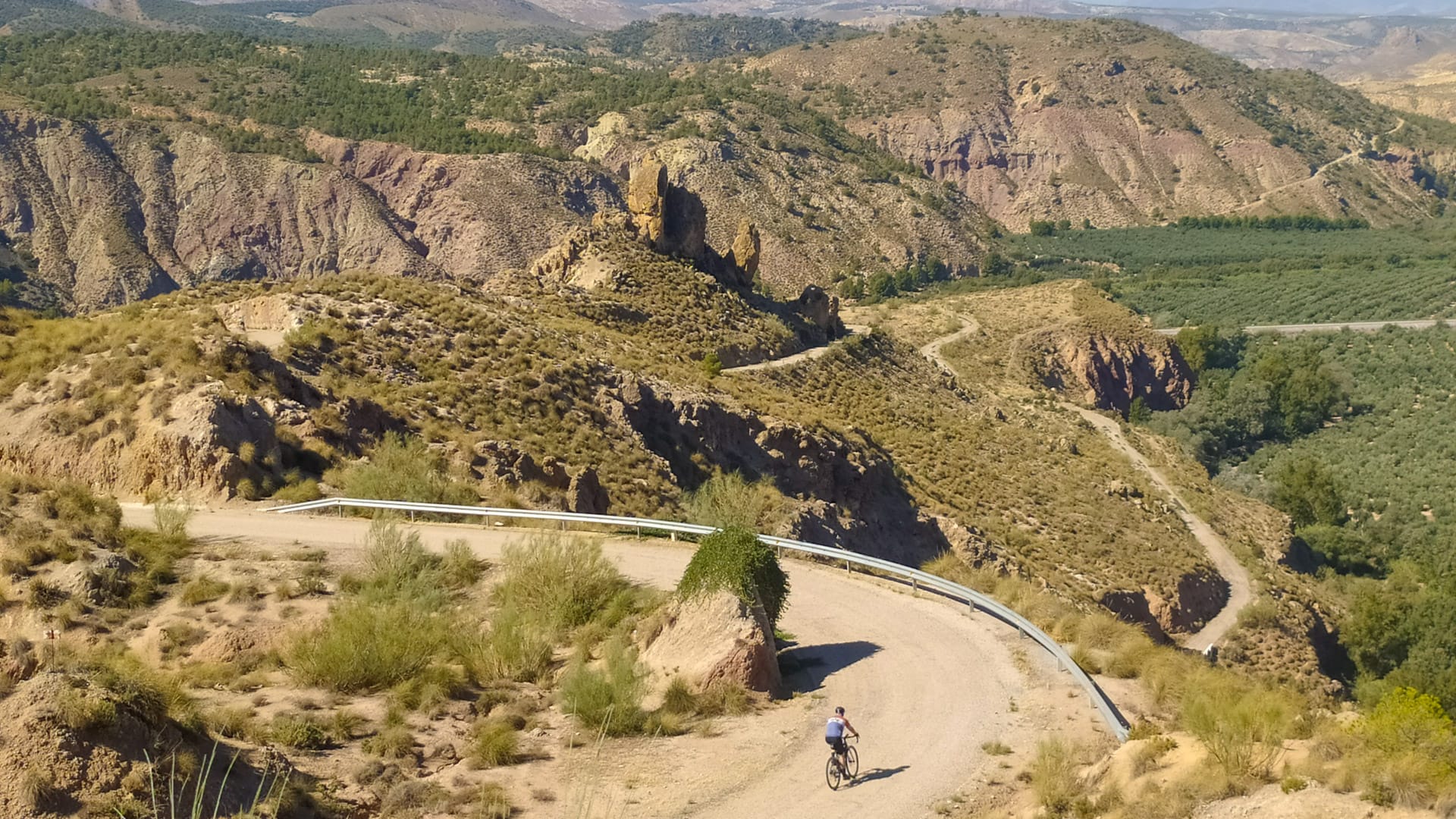
Cycling the Ceal climb in Cazorla (photo credit: Sierra Sports & Tours)
Cazorla is a paradise for outdoor activities. It’s Spain’s largest protected natural space (source), spanning some 200,000 hectares. Located 150 kilometres to the northeast of Granada, Cazorla should be on the bucket list for any cyclists looking for a unique cycling adventure!
The terrain is rolling, though not quite as extreme as the Sierra Nevada. In terms of overall difficulty, we’d rank Sierra Nevada as the toughest riding in Andalucia. Cazorla sits a level below that and feels broadly similar to the Ronda, Almeria and Grazalema areas, while our Renaissance Spain riding is the most forgiving, with gentler rolling hills through the olive fields.
The peaks here sit between 1,000-1,500 metres of elevation gain. Noteworthy cycling climbs in Cazorla include:
- El Yelmo, the most challenging climb, stands at 1,800 metres.
- Palomas climb, which starts just out of the town of Cazorla. It has been featured multiple times in La Vuelta a Andalucia and rewards you with an amazing lookout point at the summit.
- Puerto de Tiscar climb, found between the towns of Quesada and Pozo Alcon.
Where are the best cycling bases in Cazorla?
Cazorla National Park covers a huge area. However, an excellent road and gravel cycling base is the actual town of Cazorla, which has a lively atmosphere. If you’d prefer to stay in the National Park itself, I’d suggest the small town of Segura de la Sierra.
What are the best cycling routes in Cazorla?
Cazorla is the gateway to the Sierra de Cazorla National Park. Below are two of my favourite cycling routes which tackle the Tiscar and Palomas climbs.
Cazorla Tiscar Short (includes the Puerto de Tiscar climb)
GPX DownloadTerms of use reminder
Best for a slightly more moderate ride to experience the beauty of Cazorla Natural Park.
Key statistics
75 kilometres
1,793 metres of elevation gain
Overview
This route takes on the Puerto de Tiscar climb, which will be your main challenge of the ride. This is a category 2 climb, with a constant 6% gradient over the 10-kilometre distance. You’ll enjoy amazing views of the surrounding valleys and peaks on your way up so it’s well worth the effort!
Top tip! On a clear day, this route may even offer impressive views back to the Sierra Nevada mountains towering over Granada.
Cazorla to Segura de la Sierra
GPX DownloadTerms of use reminder
Best for experiencing the incredible scenery of the region
Key statistics
110 kilometres
2,444 metres of elevation
Overview
This point-to-point ride is a dream cycling route which takes you through the heart of the Sierra Cazorla, from Cazorla to the mountain village of Segura de la Sierra.
After departing Cazorla, you’ll immediately tackle the Puerto de las Palomas climb. This 14-kilometre climb features 375 metres of elevation, at an average grade of 2.5%. Fun fact! It has been used on a number of occasions during La Vuelta a Andalucia and La Vuelta a España professional races.
This pass boasts impressive views over the Guadalquivir Valley. What now follows is a flowing descent and favourable terrain, through to the turquoise coloured waters of the Tranco reservoir. A beautiful ride unfolds as from Hornos you climb towards the backroad leading into the mountain village of Segura de la Sierra.
More information
If you like the idea of exploring Cazorla by bike, but you don’t want the added hassle of planning your routes and sorting out luggage transfers, Sierra Sports & Tours can help. We offer self-guided road cycling tours in Cazorla. There are six and nine-night itineraries to choose from. We take care of your hotel bookings and luggage transfers, so you can focus on the riding. And while the tour is self-guided, you’ll have a local guide just a phone call away if you need any assistance.
Those interested in heading off the beaten track could also consider our Cazorla gravel bike tours, taking you through the lunar landscapes and dense forests this region has to offer!
Sierra Nevada, Granada
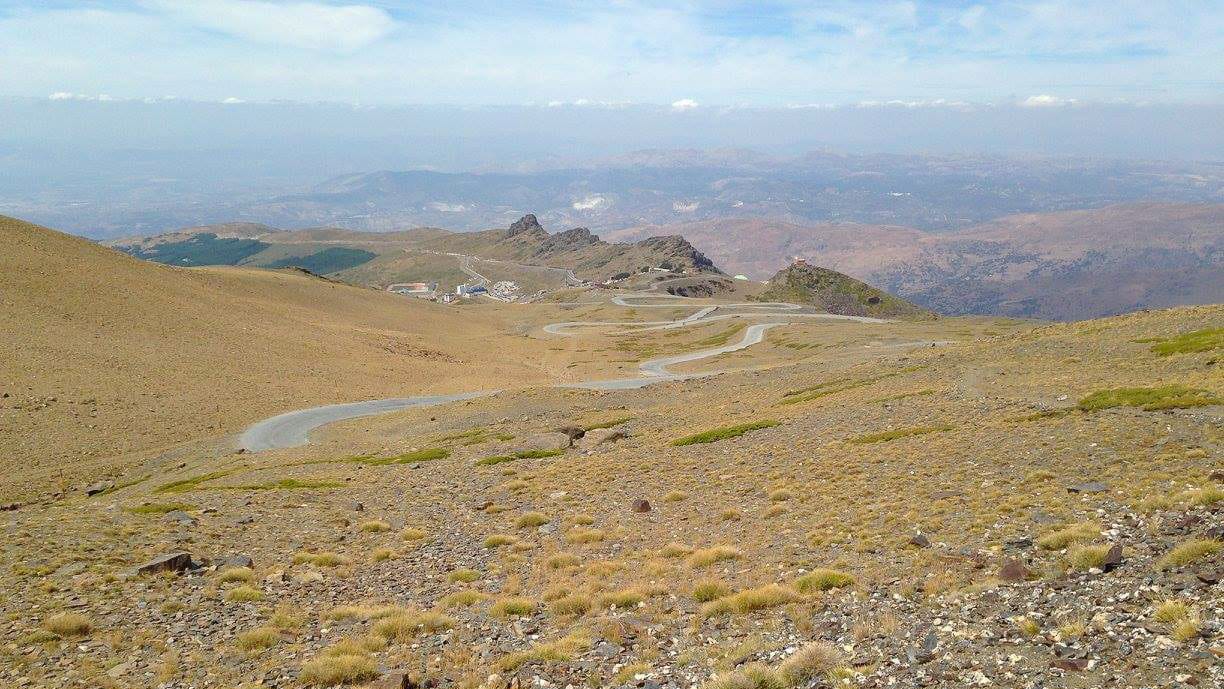
The twisting mountain roads of the Sierra Nevada (photo credit: Sierra Sports & Tours)
Road cycling in Granada gives you the opportunity to experience a number of famous climbs including:
- Haza Llana: An eight-kilometre climb from the town of Guejar Sierra. The climb averages a gradient of 9.6% and includes around 12 ramps with grades ranging between 14-17%. It’s Sierra Nevada’s steepest climb and has been used in many editions of La Vuelta a España.
- El Purche: A ten-kilometre climb from the town of Monachil. Like Haza Llana the climb peaks at 1,492 metres of elevation gain; this makes it one of the lower Sierra Nevada climbs. You can test yourself on the seven ramps, which range between 12-17%.
- Collado de la Sabinas: A 27.5-kilometre climb from the town of Pinos Genil. This climb starts from the valley floor just east of Granada and is long and testing. It also includes the Haza Llana climb featured above.
- Hoya de la Mora: A 31.5-kilometre climb from the town of Pinos Genil. This is the highest point of elevation that a Vuelta stage has ever finished in the Sierra Nevada mountains.
- Pico de Veleta: A 40-kilometre continuous climb with an altitude gain of approximately 2,650 metres and an average grade of 6.5%. The Pico de Veleta climb has everything that the hardened cycling aficionado might look for and is often referred to as ‘The Everest of European Mountain Passes’. It sits 500 metres higher than the Col de l’Iseran in France or the famous Stelvio Pass in Italy! You can learn more about what to expect when cycling at altitude below.
Granada and Sierra Nevada are key destinations for professional cycling teams. Typically between February and June, teams will bring select riders here for altitude training to get ready for the Grand Tours.
Where are the best cycling bases around Granada?
Granada city itself is a great place to base yourself. I’d suggest staying in the southeast of the city centre for the best access to the Sierra Nevada mountains.
Aside from Granada, there are several towns on the outskirts of Granada that you could consider basing yourself in, including Cenes de le Vega, Guejar Sierra and Monachil.
Top tip! My team and I especially like the towns of Guejar Sierra and Monachil. Whilst there is nothing fancy about these two towns, they happen to be located directly below some of the most famous road cycling climbs in Europe.
What are the best cycling routes in Granada?
It’s easy to ride straight into the Sierra Nevada mountains. Below are my suggestions for three epic cycling routes:
Granada to Purullena (via Quentar Reservoir and La Peza)
GPX DownloadTerms of use reminder
Best for a slightly more moderate ride on rolling terrain
Key statistics
97 kilometres
1,838 metres of elevation
Overview
This route initially heads out to the Quentar Reservoir before following rolling terrain out to La Peza. There is a small loop out to Purullena before coming back into La Peza and home to Granada. After the climb to the reservoir, you’ll enjoy winding roads that hug the cliff edge above the turquoise waters. The ride follows a good section of the Sierra Nevada Limite Gran Fondo ride, which is held every May; more details above!
Granada to Pico de Veleta loop
GPX DownloadTerms of use reminder
Best for hardcore cyclists looking for an epic challenge!
Key statistics
95 kilometres
2,995 metres of elevation
Overview
This route is for the hardcore cyclist looking to take on nearly everything that the Sierra Nevada mountains can dish out! During this 95-kilometre cycling route, you’ll take on Haza Llana, Collado de las Sabinas, Hoya de la Mora and Pico de Veleta.
The ride up to Haza Llana sets the tone for the day: seriously challenging. This seven-kilometre climb has an average 9.5% gradient so get ready to start feeling the burn. The Collado de las Sabinas summit is ever so slightly gentler, with an average grade of 6.5%, taking you up to 2,173 metres of elevation. But the best is yet to come!
Be aware! After Sabinas, there is still another 1,000 metres of altitude to cover before reaching Pico de Veleta. Along the way the route first passes by Hoya de la Mora (2,511 metres). Top tip! If the legs are protesting, this can be a good point to turn around and head back to Granada.
If you’re an altitude junky, you can continue your uphill adventure. Ride beyond the military barrier and you’ll have 12 kilometres of traffic-free cycling up to the Pico de Veleta summit. Alongside the views, once you’ve reached the peak you’ll also have a fun descent to look forward to. Cruise back down towards the ski station and then it’s 25 kilometres of speeding descending down the main road. Turn off towards Cenes de la Vega and back into Granada.
Almuñecar
GPX DownloadTerms of use reminder
Best for a ride through Grand Tour history
Key statistics
90 kilometres
2,172 metres of elevation gain
Overview
This route is full of Grand Tour history. What used to be a goat track linking the historical city of Granada with the coast at Almuñecar, now goes by the name ‘Mirador de la Cabra Montes’. From Almuñecar this 17-kilometre climb with a 5.5% average grade takes you up to 1,000 metres of altitude, offering lunar-type landscapes. ‘La Cabra’ climb was last used during Stage Four of the 2018 La Vuelta a España, when Cofidis rider Luis Angel Mate from nearby Malaga led the peloton over his training pass.
More information
Want to take on the famous Vuelta climbs? Sierra Sports & Tours offer a guided road cycling tour of the Granada Vuelta Peaks, taking you from Granada to Cordoba via some of the most epic climbs frequented by the Vuelta. Visit the Sierra Sports & Tours website to find out more.
Want to dig deeper into the best cycling routes in Granada? Learn more in this in-depth guide to road cycling in Granada.
Renaissance Spain, Jaen
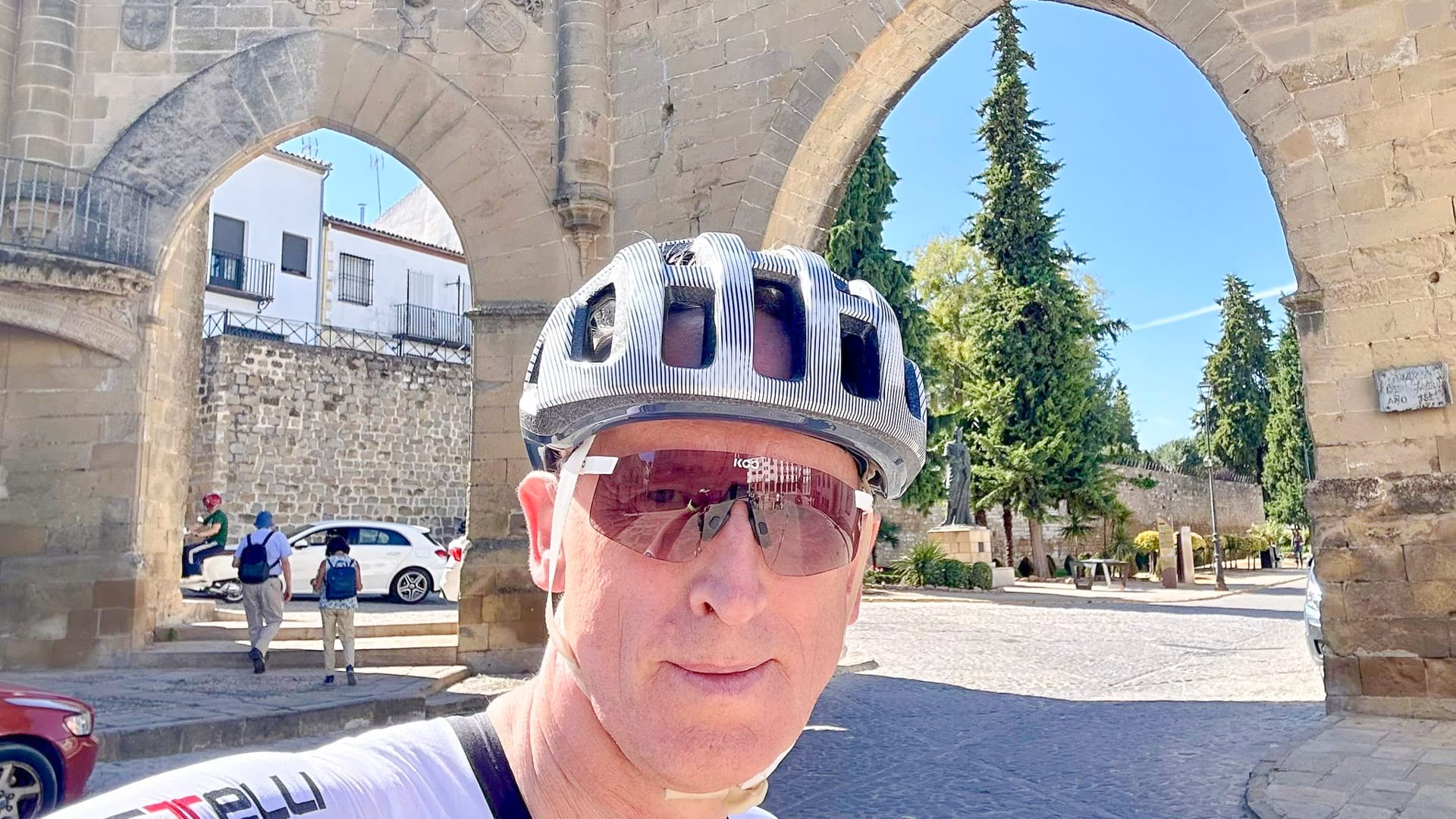
Cycling into the ‘Plaza de los Leones’ in UNESCO Baeza (photo credit: Sierra Sports & Tours)
Immediately to the north-west of Cazorla, you also have the UNESCO World Heritage-listed towns of Baeza and Úbeda(source), also known as ‘Renaissance Spain’, thanks to their historic Renaissance architecture.
They might be known for their history, but when it comes to road cycling, they are also becoming increasingly prominent. This is thanks to the UCI pro race, the Clasica Jaen Paraiso Interior. Every February, the pro riders take on this road cycling race, which includes multiple gravel sectors. The race follows an unforgettable landscape through a sea of olive trees, home to what is the world’s biggest producing region of extra virgin olive oil!
Where are the best cycling bases in Renaissance Spain?
The towns of Baeza and Úbeda are the best places to base yourself to explore the surrounding landscapes while also getting to appreciate the impressive, historic architecture in town!
What is the best cycling route in this area?
Cazorla to Baeza
GPX DownloadTerms of use reminder
Best for those looking for a slightly less hilly ride!
Key statistics
70 kilometres
850 metres of elevation
Overview
Another point-to-point Andalucia cycling route, this link ride takes you from the Cazorla National Park to the UNESCO heritage town of Baeza. While this route does have a little bit of everything, it’s all in small measures making it a good choice for those who don’t want to tackle some of the more hardcore climbs. In fact, our clients absolutely fly along this route between Baeza and Cazorla (or vice versa). After all the climbing they’ve usually done, they love having a faster, more flowing ride.
This route starts with a cruising descent out of Cazorla, followed by a fast, flat time trial-style section. There’s a 2-kilometre stretch of compacted gravel before the final seven-kilometre summit to finish in Baeza. I’ve ridden it at least six times on road tyres with no issues, so it is perfectly manageable on a road bike (just take it steady).
This is a delightful town, awarded its UNESCO Heritage status thanks to the Renaissance buildings and architecture. That heritage extends beyond architecture, too. The professionals race on these roads during La Clásica.
Top tip! You can easily explore Baeza on foot, so park up the bikes and enjoy a stroll around to take in the beautiful plazas, archways, palaces and fountains.
Almeria
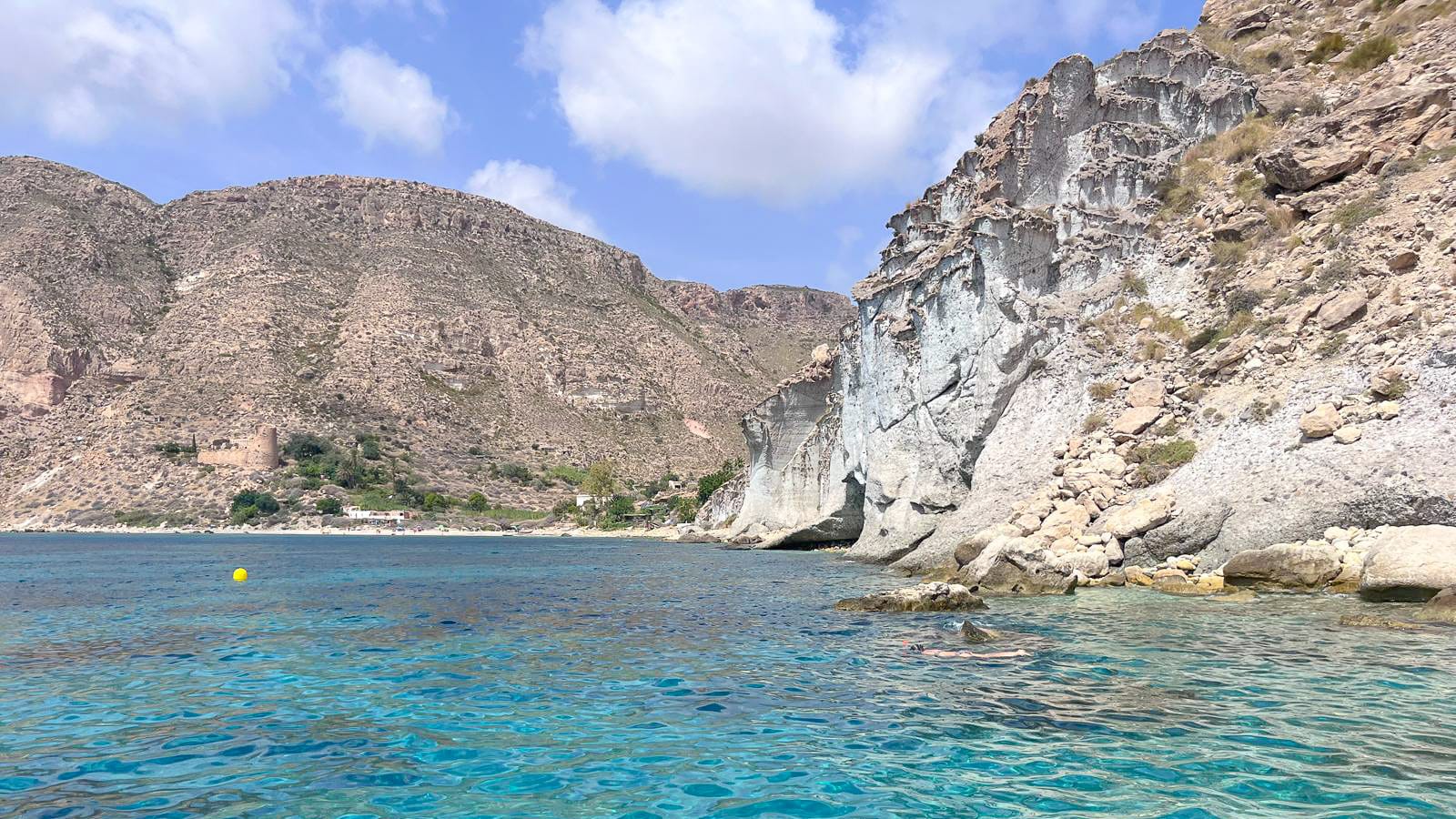
The spectacular coastline of Almeria (photo credit: Sierra Sports & Tours)
Almeria is a coastal region in Andalucia, and a bit of a hidden gem for cyclists! Less well-known by tourists, Almeria is generally very quiet, which means you can enjoy the smooth road surfaces with little traffic to contend with. Put simply, Almeria is one of cycling’s best-kept secrets if you want to discover some Andalucia cycling routes well away from the crowds. It’s also a fantastic choice in the cooler months, thanks to its particularly hospitable winter climate.
The Sierra de Los Filabres mountain range is the largest in the area, spanning just shy of 50 kilometres. In the past, the Vuelta has combined two of the best climbs here, Puerto de Velefique and Calar Alto, with the latter set to make a reappearance in the 2026 iteration. There’s a huge range of routes to choose from here, depending on how far you want to ride and how much elevation you want to tackle. But below you’ll find a couple of suggestions for the Almeria cycling routes that should be on your to-do list!
Where are the best cycling bases in Almeria?
Be aware! Away from the coast, Almeria is quite remote with limited accommodation options. It’s best to stay at one of the coastal resorts, and arrange a rental car if you’d like to head inland to the foothills of the Sierra Filabres.
The coastal resort of Mojácar is a good option for cyclists. Here you’ll have plenty of hotels to choose from, and the mountain climbs are in easy reach.
What are the best cycling routes in Almeria?
Calar Alto climb
GPX DownloadTerms of use reminder
Best for a true test of endurance
Key statistics
58 kilometres
1,539 metres of elevation
Overview
The Calar Alto climb isn’t the most picturesque of climbs. If it’s beautiful scenery you’re after, I’d suggest riding the Velifique climb instead. But while it might be more of the wild, barren variety, what Calar Alto lacks in scenery it more than makes up for in challenge.
The climb itself is 30 kilometres long, with an average gradient of 4.6%. The majority of the climb will take you through wooded areas, with the trees occasionally allowing a glimpse of the valleys beyond. But once you get closer to the top (which sits some 2,000 metres above sea level), the greenery disappears. As you reach the summit, you’ll be greeted with the imposing white domes of the Calar Alto observatory.
Top tip! Temperatures can dip at the top of the climb, so consider packing extra layers.
Be aware! There are few opportunities to refuel on this route, and there isn’t a café at the summit of the climb. The small village of Aulago (approximately 8 kilometres into the climb) offers options for a quick pitstop, but I’d suggest making sure you have enough food and water with you to be self-sufficient.
Interested in this climb? Don’t miss our Calar Alto climb route guide.
Carboneras and Agua Amarga coastal loop
Best for a gentler introduction to cycling in Almeria
GPX DownloadTerms of use reminder
Key statistics
68 kilometres
1,140 metres of elevation
This rolling route is a great way to get to grips with cycling in Andalucia. Skirting around the Mediterranean coast line, this route still has plenty of elevation but it’s more rolling and manageable compared to some of the big mountain climb routes. The small village of Agua Amarga is a real highlight, and the vista from the top of the Mirador de la Granatilla is well worth climbing for!
Take a look at the full route guide for more tips and suggestions!
More information
At present, Almeria hasn’t been a major focus for our scheduled cycling tours. However, with the 2026 La Vuelta heading right into Almeria, we’re very much open to creating private, customised itineraries in the region. These can be arranged as either guided or self-guided tours, tailored to your riding level and preferences. With our Granada base just 1.5 hours from Almeria, it’s an easy area for us to support logistically.
Sponsor Message
Looking for cycling tours in Andalucia, Spain?
Here at Sierra Sports & Tours, we have considerable experience running road bike and gravel bike tours in Andalucia. We'd love for you to experience them on one of our carefully crafted, guided cycling holidays.
Get in touch via our contact form, and let's discuss!
Exclusive discount
Exclusive offer: use the code below and get 200 euros off any guided tour and 75 euros off any self-guided tour* when you book with Sierra Sports & Tours by 31 December 2026. *T&Cs apply
Got a question for Sierra Sports & Tours?
Fill out this form and we will pass it to Sierra Sports & Tours who aim to reply (within 24 hours wherever they can!)
Part 4: What practicalities do you need to know before your Andalucia cycling holiday?
What is the best time of year to go cycling in Andalucia?
Andalucia is famed for its 300 days of sunshine every year. But with towering mountain peaks (which can be snow-covered) and scorching temperatures in the height of summer, it’s important to consider when you’ll visit to get the best Andalucian cycling experience.
Here’s what to expect:
Winter
January is the coldest month in Andalucia, with temperatures dropping to an average of 11°C. March is usually the wettest month of the year.
Be aware! From December to May, most of the +2,000 metre climbs in Sierra Nevada are likely to be under metres of snow! You might be able to cycle some of the lower climbs (1,000-1,600 metres) from late February onwards, but if your heart is set on the highest peaks, you may want to consider waiting until the early summer.
Summer
Summer spans from June to August in Andalucia, with a dry heat. On average, we get 12 hours of sunshine every day during the summer months, so there’s plenty of daylight to explore.
But be aware! The daytime temperatures can be scorching during the height of summer, getting up to 35-40°C. If you prefer to cycle in milder conditions, you might want to avoid these peak summer months.
Spring and autumn
Top tip! For the most temperate conditions, I’d suggest cycling in Andalucia either March to July or between September and November. These windows are especially ideal for Sierra Nevada/Granada, Ronda & Grazalema and Cazorla National Park, where the extra elevation can bring cooler temperatures and, earlier in the year, the chance of lingering snow on the highest roads.
If you’re riding in more temperate areas like Renaissance Spain and Almeria, you can often extend the season a little more, with February to June and September to December also enjoyable.
Either way, we generally recommend avoiding July and August in Andalucia, when the heat can be relentless for weeks at a time.
Is it easy to find cyclist-friendly hotels in Andalucia?
Remember to double-check bike storage arrangements (and any other services you need) before booking your accommodation as policies often change and they may charge for storage.
While some regions for cycling in Andalucia can be fairly remote, I’ve discovered some excellent options for cycling-friendly hotels and accommodation. This is just a sample – if you stay with us we will of course share many more!
Below you’ll find my top suggestions for the various regions.
Where to stay in Granada?
There is a huge selection of hotels in Granada, thanks to it being such a popular tourist destination. But for cycling, we typically like to stay in hotels which give the best access to the Sierra Nevada mountains. The southeast of Granada city centre can be the best place to look. I’d suggest:
- Hotel Macia Real de la Alhambra: Located a short bus ride to the city centre, but only minutes on a bike from the Granada suburb of Cenes de la Vega, which has plenty of facilities.
- Hotel Vincci Albayzin Granada: A good option if you are looking for a hotel closer to the city centre, which still provides good cycling access to the Sierra Nevada. The hotel is located next to El Corte Ingles which is the biggest department store group in Europe. There are also plenty of pedestrian walking strips and plazas in the immediate area with lots of excellent tapas bars and restaurants!
Where to stay in Cazorla?
Cazorla town
Cazorla town is the gateway to the national park. It’s a small town, tucked away in the mountains, but it has a vibrant atmosphere! Hotel Ciudad de Cazorla is good at looking after cyclists in my experience. Staying in the town centre means you’ll be close to many tapas bars and great restaurants.
Be aware! Parking in the town centre can be tricky, but you can usually unload in front of the hotel before finding parking outside of the old town.
Cazorla National Park
The national park covers an extensive area. For amazing cycling, beautiful roads and time to enjoy a quiet, whitewashed village, I’d suggest the small town of Segura de la Sierra.
The Hotel Poeta Jorge Manrique here is a six bedroom, boutique country hotel. It’s well set up with a safe area to store bikes, and a fantastic terrace area to enjoy breakfast and a refreshing cold drink after a long ride. Not to mention the views over El Yelmo summit, which is the highest peak in the Cazorla National Park!
Where to stay in Ronda and Grazamela?
Ronda
Ronda town is an excellent base for exploring Malaga and the Cadiz mountains, with plenty of hotel options. But be aware! It can be a busy tourist town.
For a more peaceful stay in Ronda, I’d suggest the Hotel Catalonia Reina Victoria Wellness and Spa, about a 10-minute walk from the old town. This top-end hotel is used to looking after cycling groups and is positioned on the edge of a dramatic rocky outcrop.
The Spanish national Parador hotel chain also has its hotel strategically positioned on the Puente Nuevo (new bridge). A more affordable three star hotel option includes Hotel El Tajo, which is located in the town centre. The hotel is well set-up to cater for cyclists visiting this amazing region.
Grazalema
Grazalema is just 30 kilometres away from Ronda. If you want to be closer to a couple of epic road cycling climbs (Palomas and Boyar), then a stay at Hotel Fuerte Grazalema could be an excellent option. The hotel is located a couple of kilometres away from the mountain village of Grazalema, with nature all around. This is a wonderful setting to enjoy the best of what Sierra de Grazalema has to offer.
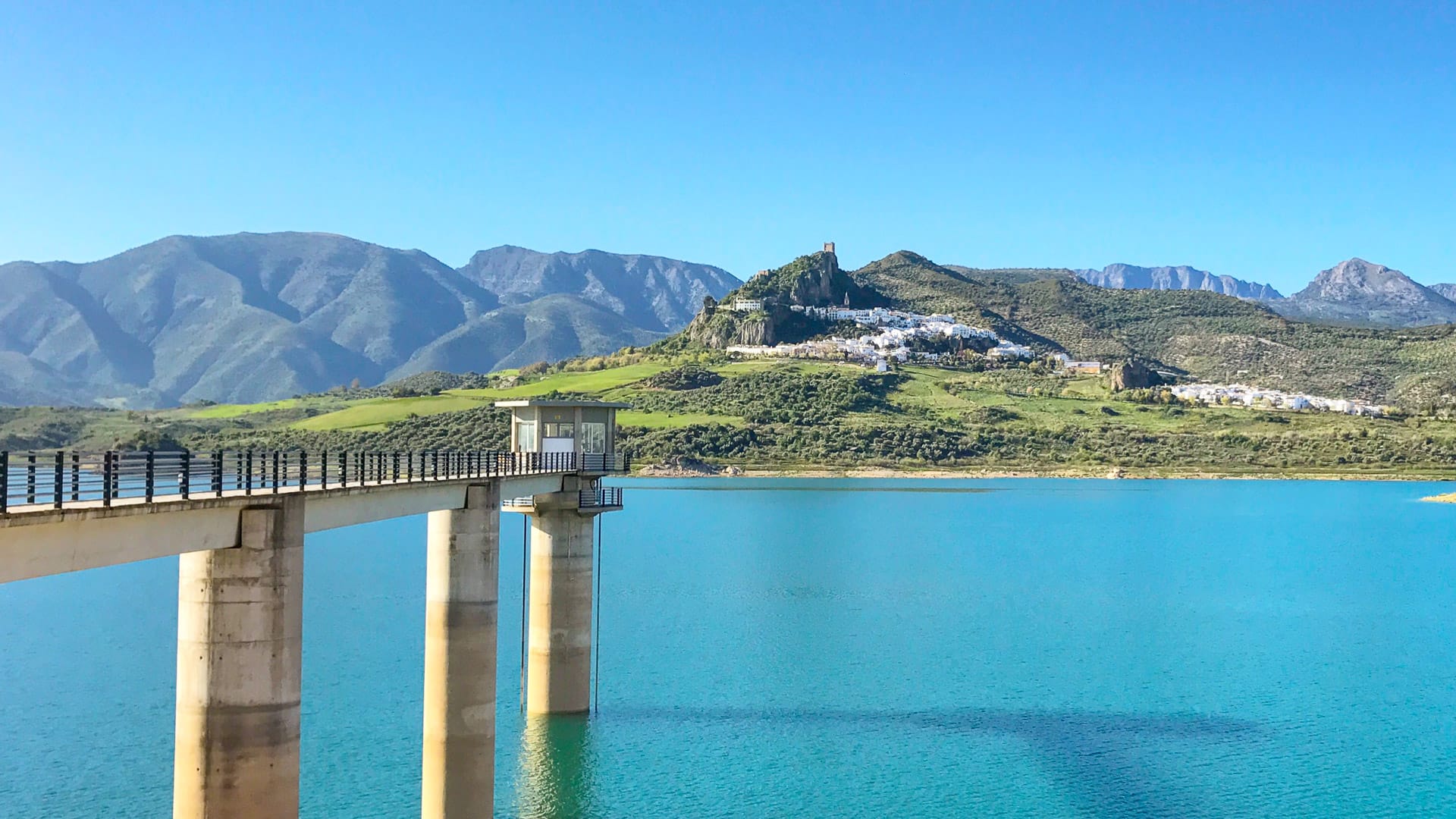
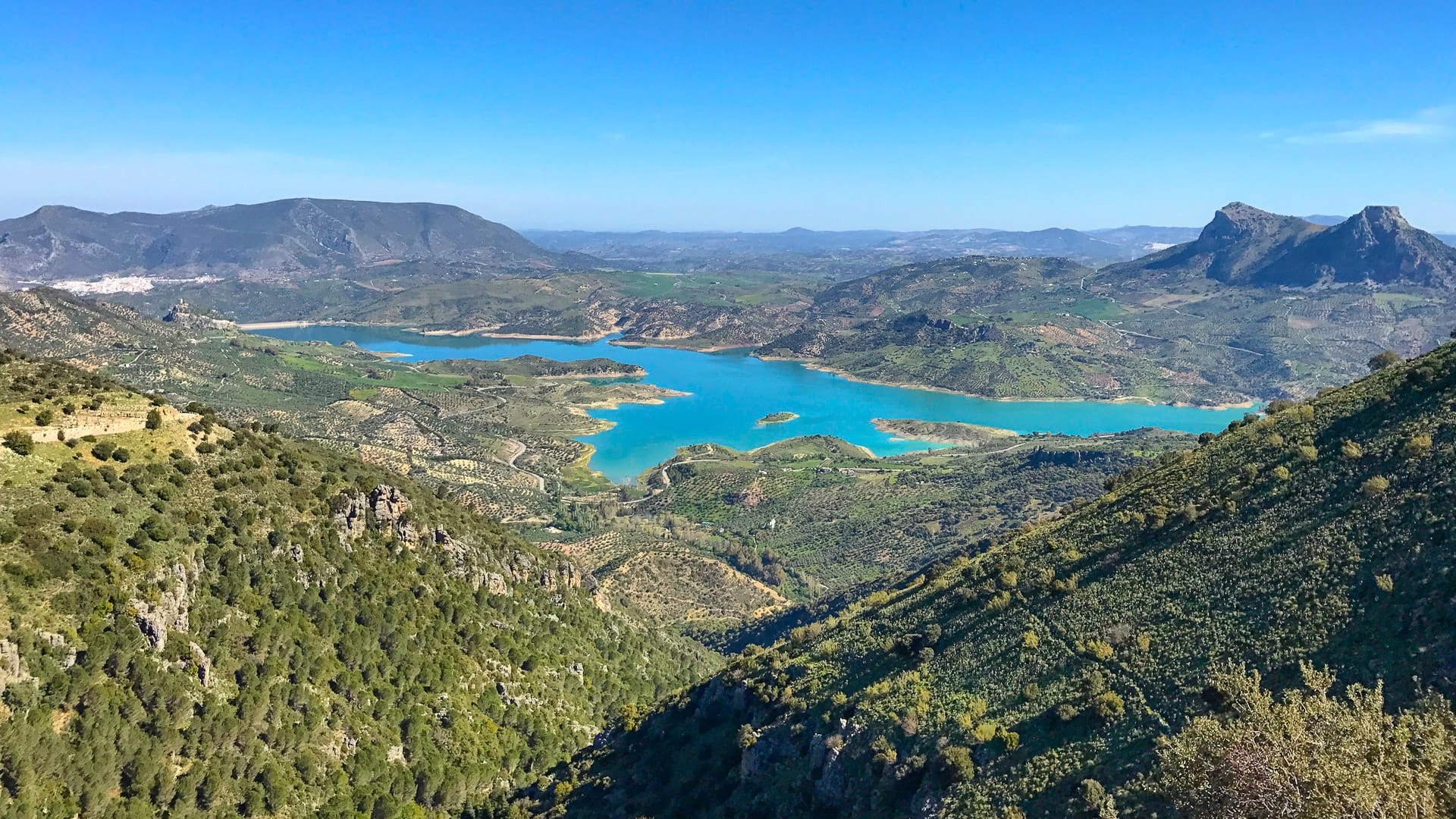
View of Zahara de la Sierra with its hilltop village and reservoir in the Grazalema mountains (photo credit: Sierra Sports & Tours)
Where to stay in Renaissance Spain?
The UNESCO towns of Baeza and Úbeda are great options for experiencing Renaissance Spain. As cyclists, there are a couple of hotels that have always looked after us well.
In Baeza, you have Hotel TRH Baeza, which is located on the edge of the old town and only a two-minute walk from the major sites.
In the adjacent town of Úbeda, one can find Hotel RL Ciudad de Úbeda on the town outskirts. This hotel is well linked with the asphalted bike path, which links Baeza to Úbeda. The hotel is only a 10-minute walk from the old town where all of the UNESCO sites of interest can be found.
Where to stay in Almeria?
Be aware! At the moment, Sierra Sports & Tours hasn’t conducted tours in Almeria, so we don’t yet have a shortlist of tried-and-tested, bike-friendly hotels in the region. If you need help narrowing down options, we can also do some research and suggest suitable places to stay based on your route and budget.
Are there places for bike hire/bike shops in Andalucia?
Prices, services and bike brands often change. Please let us know if anything is incorrect.
There are a few good options for hiring a bike in Andalucia. In Granada, I’d suggest checking out Cycling Sierra Nevada. In Malaga, Bike2Malaga is a good option.
We also offer bike hire on our Sierra Sports & Tours cycling tours. We offer riders the following Orbea bikes:
- Road: Orbea Avant M30 (105, Rim Brakes, Sizes: 49 to 57). Price: €35 per day.
- Road: Orbea Orca M30i (Di2 105, Disc Brakes, Sizes 47 to 60). Price €55 per day.
- E-Road: Orbea Denna (Sizes S, M & L). Price: €70 per day.
Do I need to organise an Andalucia bike tour?
Strong cyclists who are used to riding major European climbs will find it possible to organise a self-guided cycling holiday, especially for rides out of Granada.
However, the weather should always be considered when riding high into the Sierra Nevada mountains. At times, the wind on Pico de Veleta (3,300 metres elevation) can be brutal and similar to Mont Ventoux in Provence. 30-kilometre-plus descents back down to Granada can also be very uncomfortable when you are not wearing the right gear. This is why a cycling tour, either guided or self-supported, can be a good option to help you ride with more confidence.
Likewise in other areas of Andalucia, that are less known amongst cyclists and often very rural, we find that many cyclists like the reassurance of knowing that they are going to be riding great routes and have our support while in Andalucia.
What are the benefits of an organised cycling tour in Andalucia?
Choosing an organised cycling tour for your Andalucia cycling holiday means you get access to the support you need while cycling in the towering mountain peaks. You’ll appreciate the support van if you find yourself needing a rest, running out of food, or you need somewhere dry to escape any inclement weather!
Choosing a cycling tour also means things like your accommodation and luggage transfers can be taken care of, so you can enjoy each day of riding without having to stress about logistics.
How to get to Andalucia?
There are several airports to choose from if you’re planning to fly to Andalucia. The best option will depend on where you’re travelling from and which region you want to cycle in.
- Granada Airport (GRX): Located approximately 15 kilometres west of Granada city centre, approximately a 20-minute taxi ride or you can take the bus. Ideal for heading into the Sierra Nevada mountains.
- Malaga Airport: Typically, there are more flight options into Malaga compared to Granada, and from here it’s relatively easy to get to the Granada and Ronda regions. There are also several car rental companies here.
- Sevilla Airport: An ideal option if you want to ride the big climbs from La Vuelta (Puerto de Las Palomas, Puerto del Boyar), Sevilla Airport is a 1-hour 45-minute drive to Grazalema.
View over the Zahara-el-Gastor reservoir from the summit of the Puerto de las Palomas climb in Grazalema National Park (photo credit: Sierra Sports & Tours)
Can I travel easily from Madrid to Andalucia?
The Granada region is connected with Madrid by train and bus, and for the Renaissance Spain region, there’s a train from Madrid to Linares-Baeza station.
Be aware! This can be quite a cumbersome journey. It’s likely it would take approximately five hours to take the train or bus from Madrid to Granada.
Can I take my bike on public transport in Andalucia?
Yes, it’s generally possible, but the rules vary depending on the service. On Spanish Renfe trains, you can take your bike on the Media Distancia regional services, which cover many routes across Andalucia. These trains are quite standard and usually have a designated carriage with spaces to hang and store bikes.
On the high-speed AVE trains, your bike would need to be boxed up as a minimum. We’ve heard of problems with bike boxes on the high-speed AVE trains between Barcelona and Madrid, but things should be more relaxed in Andalucia. It wouldn’t hurt to ask in advance.
On ALSA bus routes through Andalucia, bikes can be transported in the undercarriage luggage compartments. With both bus and train travel, remember to check whether you need to buy a separate ticket for your bike.
Are private transfers available?
Yes! Sierra Sports & Tours offer private transfers with nine-seater vans. You can contact me (Paul) for a customised quote here.
Any highway code or travel information I need to be aware of?
It’s always a good idea to check current travel information for any destination before you book and travel. For those travelling to Andalucia from the UK, you can find the government travel information pages here.
There are also some specific laws for cycling in Spain to be aware of:
- Cyclists must ride on the right-hand side of the road.
- Never ride against the flow of traffic.
- Don’t cycle in bus lanes.
- Helmets are mandatory for anyone under 16, and over-16s must wear a helmet in non-urban areas. There are exceptions in extreme heat and for professionals.
- There can be a 90 euro fine for not complying to helmet rules (source)
Part 5: Any other tips for cycling in Andalucia?
Is there anything you should be culturally aware of in Andalucia?
Cyclists can expect excellent service from bars, cafeterias, restaurants and hotel/accommodation providers in general. Cycling is a form of travel that’s looked on with great respect by local Andalucians.
One cultural thing to note is that the siesta is a very real part of daily life in Andalucia. Many shops, especially supermarkets and kiosks, will often close between 2:00pm and 5:00pm, so keep that in mind when planning your food and drink stops. Bars and restaurants are typically open during those hours, serving the Spanish late (and often long) lunch. Dinner is also later than many visitors expect, with most places opening from 8:00pm onwards.
What should I pack for an Andalucian cycling holiday?
The weather conditions can vary and change quickly when you’re cycling in the mountains. Therefore, it’s essential to make sure you’ve got easy-to-carry cycling layers so you can adapt to the conditions.
- Breathable, moisture-wicking and quick-drying cycling gear: You’re likely to work up a sweat on the climbs, so make sure your cycling jerseys, bib shorts and other gear will dry quickly. Otherwise, riding in wet gear, you could get extra chilly on any descents.
- Gilet, neck warmer, knee warmers and full-finger gloves: These colder-weather layers are not usually necessary across Andalucia as a whole, but they can be very useful in the winter months (December to March).
- Waterproof jacket: For protection if any rain clouds roll in.
- Cycling sunglasses: Essential to protect your eyes from UV rays, plus any dust, debris or insects.
- Sports sunscreen: Keep in mind UV rays can be stronger at altitude, and you’re likely to be spending long days out in the sun. Use a sports-specific sunscreen which is sweat-resistant, and carry a small bottle with you to reapply during your ride.
Be aware! Temperatures can really drop at the top of the climbs, sometimes even as extreme as a 20°C difference, for example, between the Pradollano ski station and the Granada valley. Additional layers are essential to keep yourself warm and comfortable. Extra cold-weather gear is most relevant when riding in December, January, February and March. At the highest elevations of the Sierra Nevada, you may also want to carry those warmer layers above around 1,500 metres in April, May, October and November.
Looking for more packing essentials? Don’t miss our in-depth guide.
What do I need to know about cycling at altitude?
If you’re usually based at sea level, it’s important to know that altitude can have an impact on how you feel. Everyone is different, but you may find that once you climb higher than 2,000 metres of elevation, you encounter symptoms including:
- Breathing difficulties
- Nausea
- Lethargy
That might sound a little daunting, but rest assured, there are a few things you can do to prepare. All our Sierra Sports & Tours clients who have wanted to climb the full Pico de Veleta have been able to reach the summit. It’s just a case of taking your time so you get there feeling good!
Top tips for cycling at altitude
It’s never possible to fully eliminate the impact of altitude, but there are a few things you can do to reduce the likelihood of feeling unwell.
- Hydrate well: Ensure you start your rides hydrated, and take on fluids (with electrolytes) throughout.
- Stick within your comfort zone: Don’t underestimate the impact of altitude! Use easier gears and pace conservatively to avoid putting any unnecessary strain on your body.
- Consider reducing alcohol intake: If you’re partial to a post-ride beer or glass of wine, keep in mind that alcohol can increase dehydration, so be mindful.
- Consider altitude sickness products: If you’re really concerned, or you’ve suffered from altitude sickness in the past. You could speak to your doctor about altitude sickness products and whether they’re appropriate for you.
- Altitude training: For the ultra keen, you could look into dedicated altitude training centres or even specially-designed altitude tents to get your body adapting to altitude before you travel.
Note: this altitude advice is only relevant for Sierra Nevada and Granada. In the other regions covered in this guide, altitude is generally not a key factor.
Check out this in-depth guide to altitude training for more useful tips.
What training do I need to do before cycling in Andalucia?
As you might have noticed from the route descriptions, cycling in Andalucia means you’re going to be spending a lot of time riding uphill!
I’d suggest ticking off some hilly rides and even specific hill repeat interval sessions in training so you can enjoy your rides while you’re in Andalucia and take in the scenery. It’s not quite as fun when you’re clinging on for dear life!
It’s also a good idea to build your base of cycling endurance with some longer rides so you’re ready to take on some longer days in the saddle.
I also believe it is important that you have good bike handling skills so you can ride safely on the mountain passes. Practice things like cornering, controlling your speed and adopting a stable riding position in training so you can descend with confidence.
You don’t need to be challenging the pro peloton to enjoy cycling in Andalucia, but a solid level of fitness will make your trip much more fun!
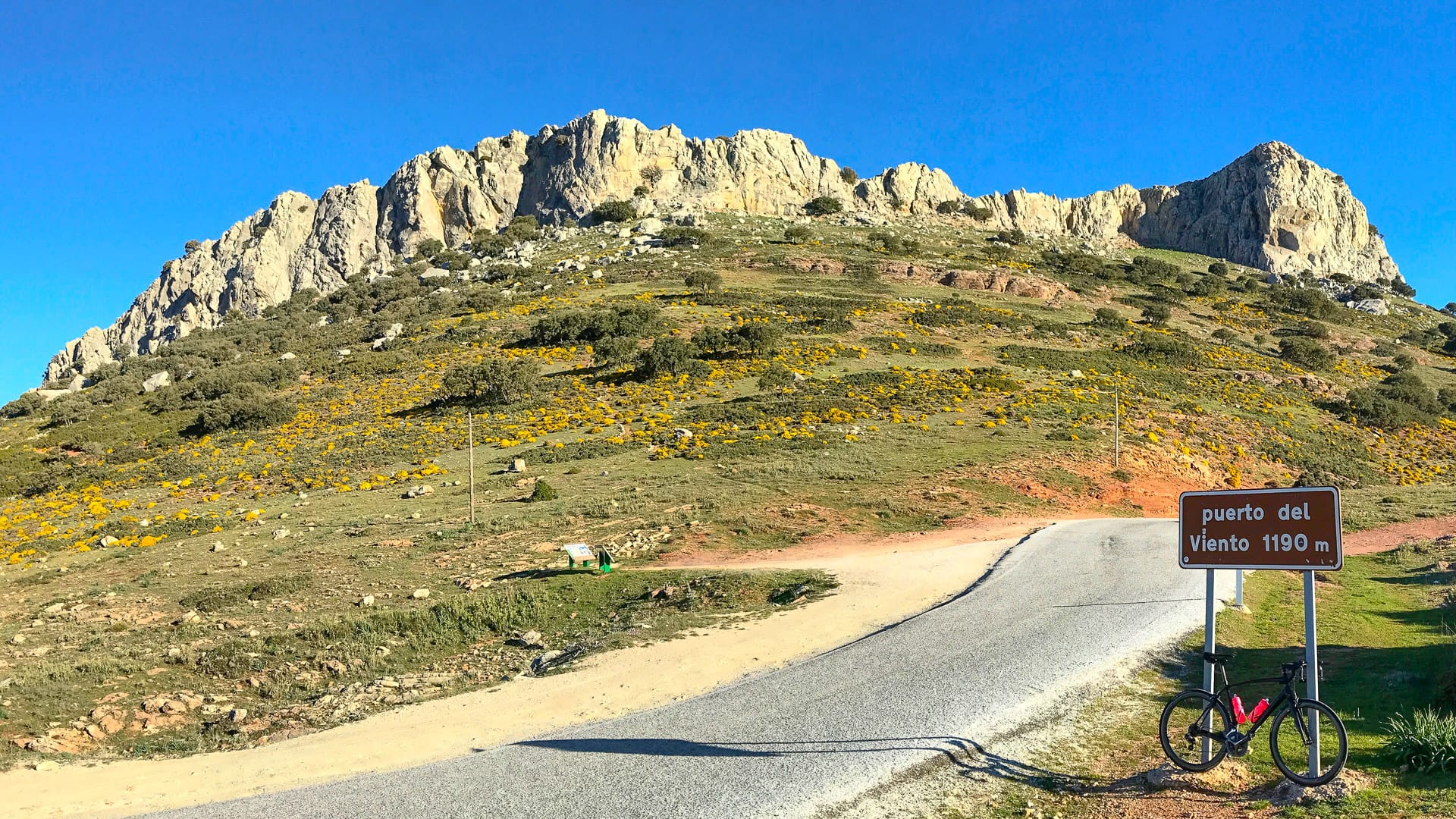
Panoramic view across Puerto del Viento with Ronda’s rugged landscape (photo credit: Sierra Sports & Tours)
What is the must-try local food and drink in Andalucia?
After a day in the saddle, Andalucian food is a real reward, with everything from refreshing cold soups to hearty, traditional plates. Here are some options to try:
- Salmorejo: a tomato-based cold soup that’s especially welcome after warm-weather rides
- Gazpacho: another classic chilled tomato soup, light and refreshing post-ride.
- Pisto: a comforting vegetable dish, similar to French ratatouille.
- Tortilla de patata: a brilliant, quick lunch option from bars when you need an easy energy boost.
- Rabo de toro: a local favourite, best saved for a proper sit-down meal.
- Tartar de atún: tuna tartare, made with excellent tuna from the Cádiz coastline.
- Carne en salsa: a hearty meat-in-sauce dish you’ll often find in restaurants.
- Cocido: a classic slow-cooked stew, ideal when you want something filling.
- Garbanzos: chickpea-based dishes that are common on menus and great for refuelling.
- Fresh fish and seafood: widely available across the region, especially near the coast.
Do you need to speak Andalucian or Spanish?
Andalucia is probably one of the areas in Spain where English is less widely spoken. Younger generations are generally much better at English, but many older locals learned French as their second language instead.
Top tip! You don’t need to be fluent. But learning a few simple Spanish phrases for ordering food goes a long way, and it’s usually met with genuine joy and amazement, especially in smaller villages and more remote areas.
Part 6: What do Sierra Sports & Tours offer?
Sierra Sports & Tours are experts in offering road cycling and gravel cycling holidays in southern Spain. We’ve been running road cycling tours in the region since 2011. In 2022 , we expanded the Andalucia cycling range to add Cazorla gravel biking tours to our schedule.
One of our bases is right here in Andalucia, which is also where I call home. That means we’ve got the local knowledge, expertise and network to support our cycling groups, whether it’s insider tips on the best routes and hotels, support vehicles or mechanical support.
What cycling tours are available in Andalucia?
We currently have four main cycling tours in Andalucia:
All of the below cycling tour itineraries can be organised and modified for private groups, including adding or reducing cycling days:
- Granada Vuelta Peaks, Guided Road Bike Tour from Granada to Cazorla (seven nights)
- Cazorla Self-Guided Road Bike Tours (six night itinerary or nine night itinerary)
- Ronda and Almuñecar Road Bike Tour (seven nights)
- Cazorla Gravel, Guided Gravel Bike Tour (eight nights)
We’re also happy to organise bespoke itineraries in other areas of Andalucia. We’re based here, so if you have a specific region in mind, just tell us what you’re looking for, and we can take it from there.
What’s included
Our tours are designed to make cycling in Andalucia as smooth and stress-free as possible, with the key inclusions outlined below:
- Fully guided tours: All ground transfers, all accommodation, all breakfasts, support vehicle, van drivers/mechanics, lead cycling guides, most dinners, some picnic lunches, commemorative cycling jersey, tour road booklet, friendly guides, expert ride routes.
- Self-guided tours: Tour start/finish transfers (if requested), all accommodation, hotel to hotel luggage transfers, design of GPX routes, detailed tour booklets (one for general tour details and another for ride routes, maps, profiles, points of interest), 24-hour local emergency contact number.
How can I find out more about Sierra Sports & Tours?
Head to the Sierra Sports & Tours website for full details of their Andalucia bike tours, including availability and prices.
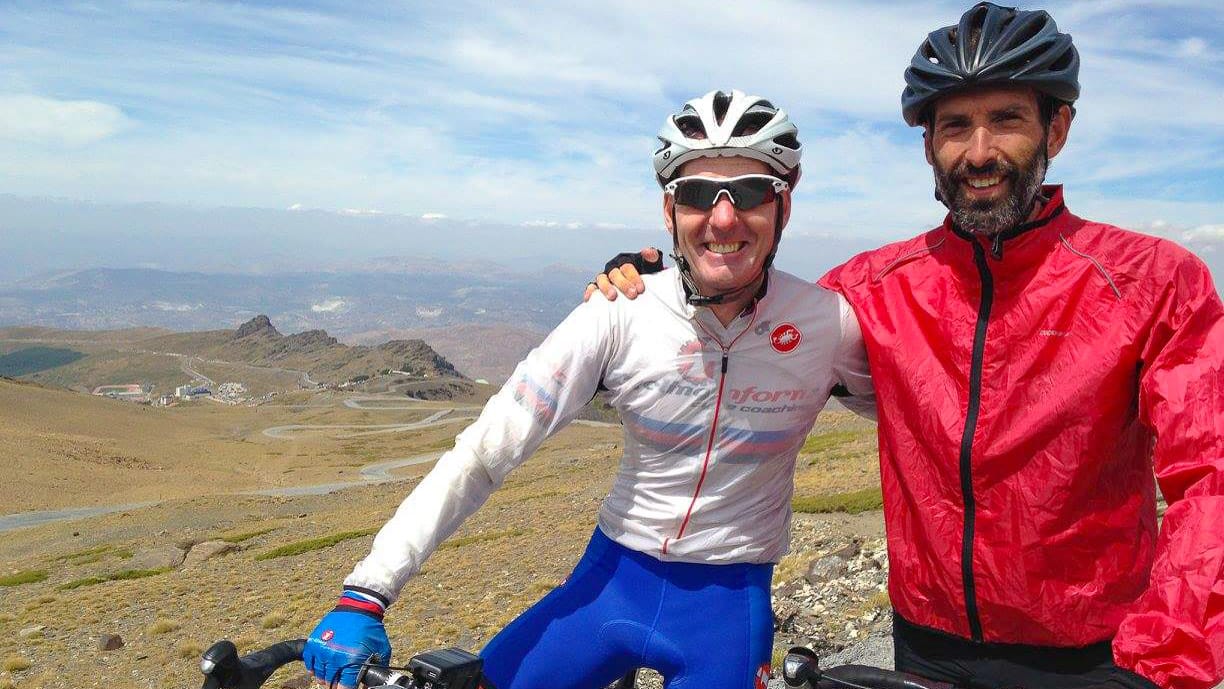
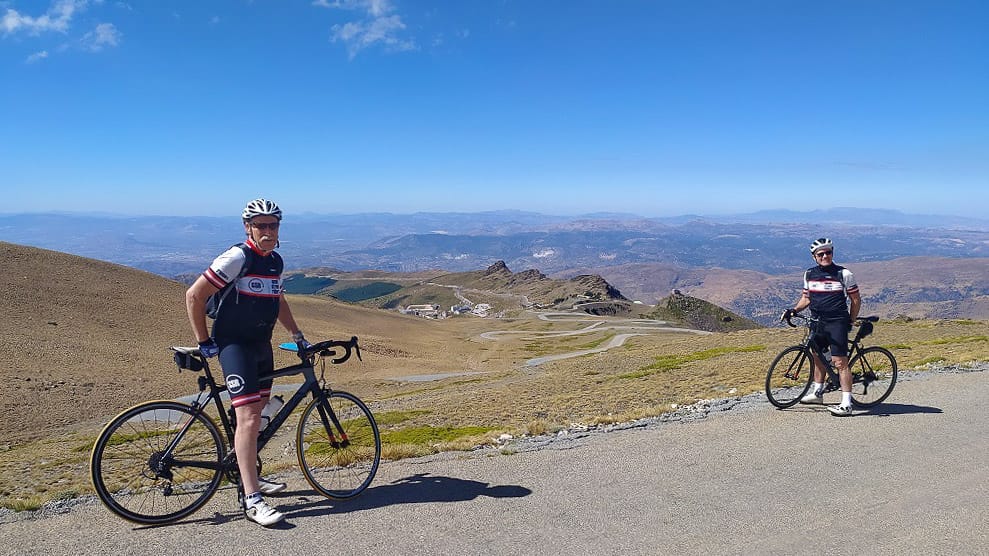
Pausing to take a photo in the Sierra Nevada mountains (photo credit: Sierra Sports & Tours)
Sponsor Message
Looking for cycling tours in Andalucia, Spain?
Here at Sierra Sports & Tours, we have considerable experience running road bike and gravel bike tours in Andalucia. We'd love for you to experience them on one of our carefully crafted, guided cycling holidays.
Get in touch via our contact form, and let's discuss!
Exclusive discount
Exclusive offer: use the code below and get 200 euros off any guided tour and 75 euros off any self-guided tour* when you book with Sierra Sports & Tours by 31 December 2026. *T&Cs apply
Got a question for Sierra Sports & Tours?
Fill out this form and we will pass it to Sierra Sports & Tours who aim to reply (within 24 hours wherever they can!)
What’s next?
A big thank you to Paul fromSierra Sports & Tours for sharing those detailed insights on cycling Andalucia. We’re certainly feeling inspired to fire up our climbing legs and take on some of those iconic climbs!
Have you ticked off an Andalucia bike tour, or are you planning to? Drop us a comment to tell us all about it!
Looking for more inspiration on the best cycling routes and destinations in Spain? You’ll love:
- Cycling in Granada for more in-depth insights from Paul, specific to the region
- An insider’s guide to cycling in Seville
- Ultimate guide to cycling Calpe and Costa Blanca
- The eight most iconic Vuelta climbs that need to be on your bucket list
- Our pick of the best cycling tours in Spain
- The best cycling hotels in Spain, based on our own experiences
- The six best long distance cycling routes in Spain, tried and tested by the Epic Road Rides team
Got a question for Sierra Sports & Tours?
Fill out this form and we will pass it to Sierra Sports & Tours who aim to reply (within 24 hours wherever they can!)
Got a question for Paul?
Fill out this form and we will send it to Paul. We aim to get you an answer within 24 hours where possible!Paul D'Andrea is the owner and lead guide at Sierra Sports & Tours which, for more than a decade, has been specialising in European cycling tours for beginners through to advanced cyclists.
Born in Australia, Paul and his family have lived in Spain for many years. They have several bases in Spain, including in Girona, Granada and Madrid, allowing them to run trips from these destinations with ease. Paul adores his job and gets a buzz from helping his clients get off the conventional routes and into the most beautiful parts of the country.
All metrics in this article are approximate.
First Published: 30 January 2026
This article includes details of products and/or services that we have used ourselves or which we would consider using. Some are paid features or include affiliate links or referral codes which we may earn commission from. As an Amazon Associate we earn from qualifying purchases. Please read our disclosure policy for further information.
The contents of this website are provided for general information purposes only. It is not intended to amount to advice and you should not rely on it. You should carry out your own due diligence and risk assessments and take professional advice. Views expressed by interviewees or other users of this website do not necessarily represent our views. We make no representations, warranties or guarantees, whether express or implied, that the content on our website is accurate, complete or up to date. If you use any information or content on this website, download from, or otherwise obtain content or services through our website, it is entirely at your own discretion and risk. Epic Road Rides Ltd disclaims all liability and responsibility arising from any reliance placed on the information and content on this website. Find out more here.
Sponsor Message
Looking for cycling tours in Andalucia, Spain?
Here at Sierra Sports & Tours, we have considerable experience running road bike and gravel bike tours in Andalucia. We'd love for you to experience them on one of our carefully crafted, guided cycling holidays.
Get in touch via our contact form, and let's discuss!
Exclusive discount
Exclusive offer: use the code below and get 200 euros off any guided tour and 75 euros off any self-guided tour* when you book with Sierra Sports & Tours by 31 December 2026. *T&Cs apply
Got a question for Sierra Sports & Tours?
Fill out this form and we will pass it to Sierra Sports & Tours who aim to reply (within 24 hours wherever they can!)