
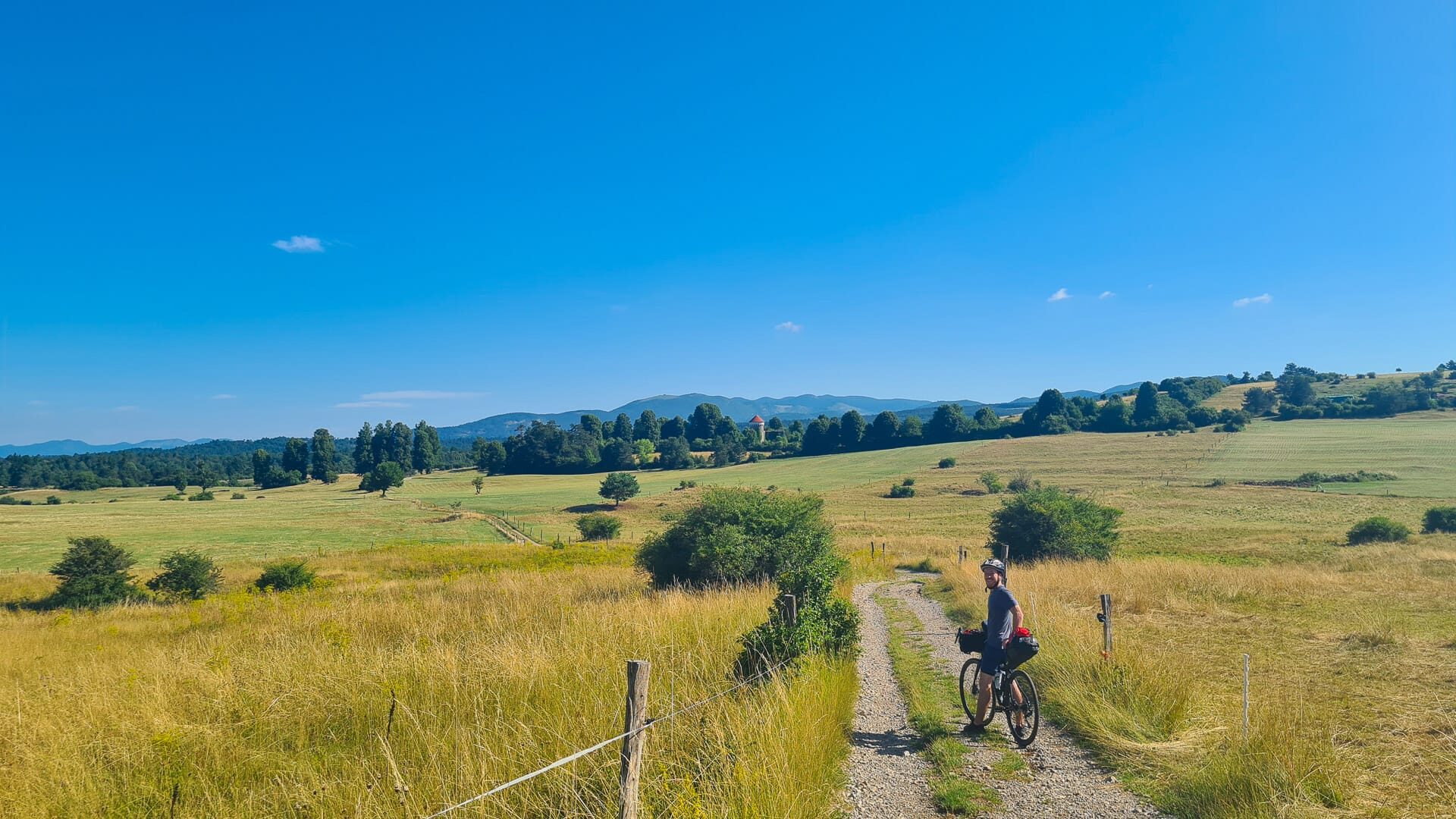
Gravel cycling is booming for a reason: it opens up peaceful landscapes, provides a welcome break from traffic and is perfect for adventurous riders looking for a fun new challenge!
But to enjoy a gravel bike adventure from the moment you start, a few basics help. That’s why we’ve pulled together this beginner-friendly guide that explains what gravel cycling involves, where you can do it and practical tips to help you make the most of the experience.
In July 2025, I rode my first gravel cycling route, the Trans Dinarica in Slovenia. I learnt loads and came home eager to plan my next gravel bike adventure! I’m also lucky that the wider Epic Road Rides team has lots of gravel experience I’ve been able to lean on in preparing this article.
Ready to try your first gravel cycling trip? Read on to start planning!
Fran Wilson is a cyclist based in the North East of England and has a particular passion for cycle touring. Her love for cycling has seen her take on some of the UK and Europe's best-known multi-day cycle routes, including the Hebridean Way, Camino de Santiago, the Via Francigena and the Trans Dinarica.
Fran was a core member of the Epic Road Rides writing team until March 2026. She continues to work in the cycling tourism industry and is excited to join our team of Community Contributors!
 There's a Youtube video here!
I'm fine with Youtube cookies
Table of contents
This article contains lots of information, so we’ve broken it up into several parts:
- Part 1: Overview
- Part 2: Who will love it
- Part 3: Essential gear and skills
- Part 4: Know before you go
- Part 5: Events
- Part 6: Destinations
Part 1: What is gravel cycling?
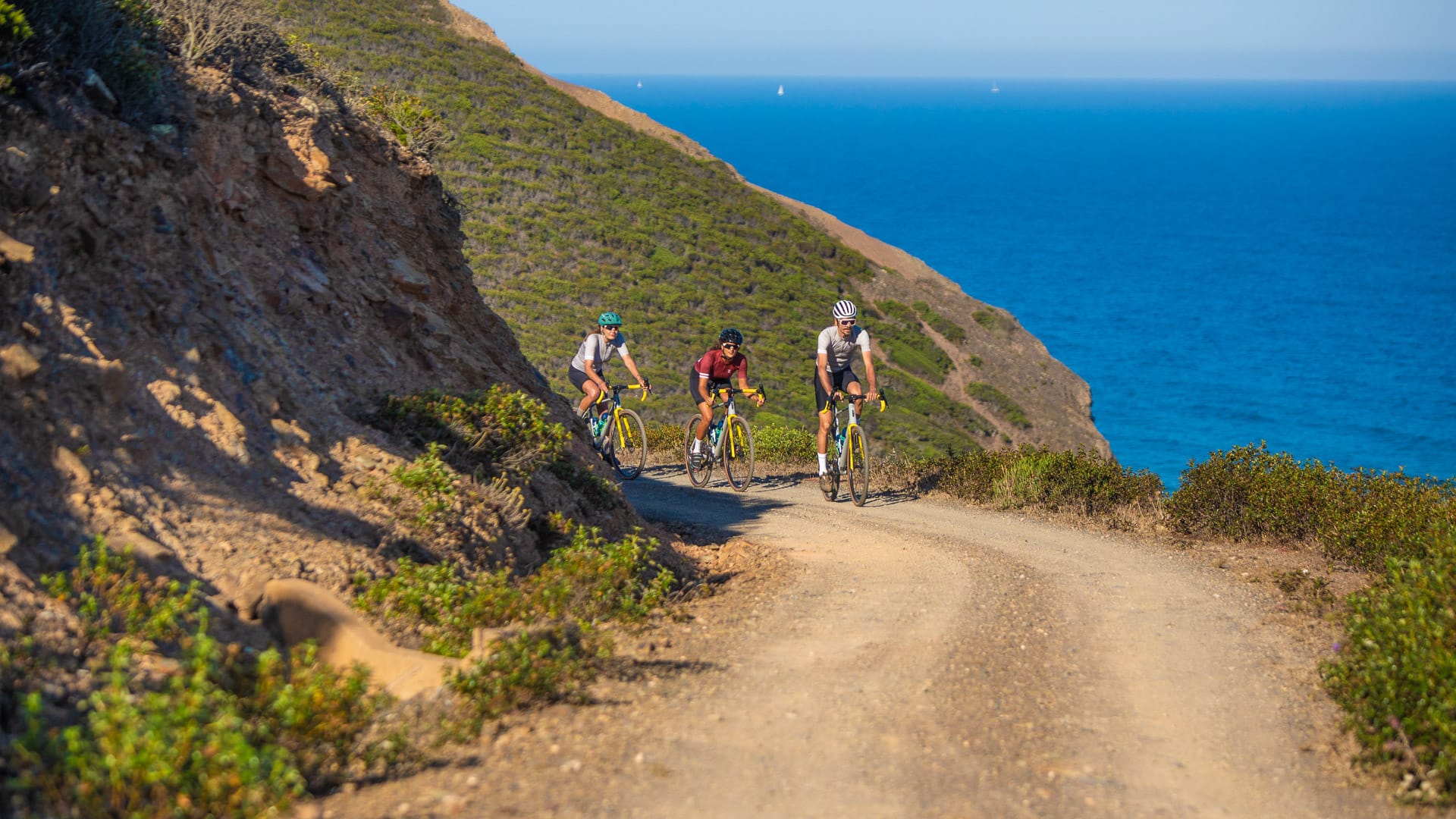
A stunning coastal gravel trail in the Western Algarve (photo credit: Musette.Bike)
Gravel cycling is often seen as the middle ground between the speed of road cycling and the go-anywhere freedom of mountain biking. Gravel bikes are designed to offer comfort and stability across a range of surfaces, without feeling too cumbersome on the roads.
With generous tyre clearance and stable gravel bike geometry, a modern build can handle long stretches of gravel roads yet still roll efficiently on asphalt.
This versatility means gravel cycling could see you encounter a range of surfaces all in one ride, easily switching from asphalt to gravel trails, hard-packed dirt, forest trails and even some of the slightly less technical trails of single track, which don’t warrant a full-suspension mountain bike. On bigger days, you might even link fire roads and bridleways into one flowing route.
Where did gravel cycling come from?
Riding something other than a mountain bike off-road isn’t necessarily a new phenomenon. Just think of the Paris-Roubaix and Liège-Bastogne-Liège riders bumping it out over the cobbles and gravel-covered roads since way back in the 1890s!
But gravel cycling as its own discipline is fairly modern in cycling terms.
The rise of gravel riding as we know it mainly came from the USA. In the mid-2000s, more riders were choosing to adventure off-road on drop bar bikes, and soon race organisers took note with events like Unbound Gravel (at the time named ‘Dirty Kanza’) turbocharging the growth of gravel. Today, mass-participation gravel races sit alongside friendly socials and adventurous off-road cycling routes.
Find out more about popular gravel cycling events and holiday destinations below!
Why has gravel riding become so popular?
In 2023, bicycle retailer Paul’s Cycles reported a 235% increase in interest in gravel cycling and a 60% increase in gravel bike sales (source). A more recent report on the growth of the global gravel bike market suggests that the huge spike of interest is here to stay. The market is estimated to be worth 1 billion USD right now, predicted to rise by $1.37 billion by 2035 (source).
So why are so many cyclists turning to gravel cycling? For many, it comes down to versatility.
The ability to let the ride take you somewhere unexpected, without being limited by your tyre width. The adventure-ready nature of a gravel bike has got plenty of riders hooked on gravel cycling. For some, the relaxed culture around gravel racing is also a big draw, from local gravel races to iconic epics.
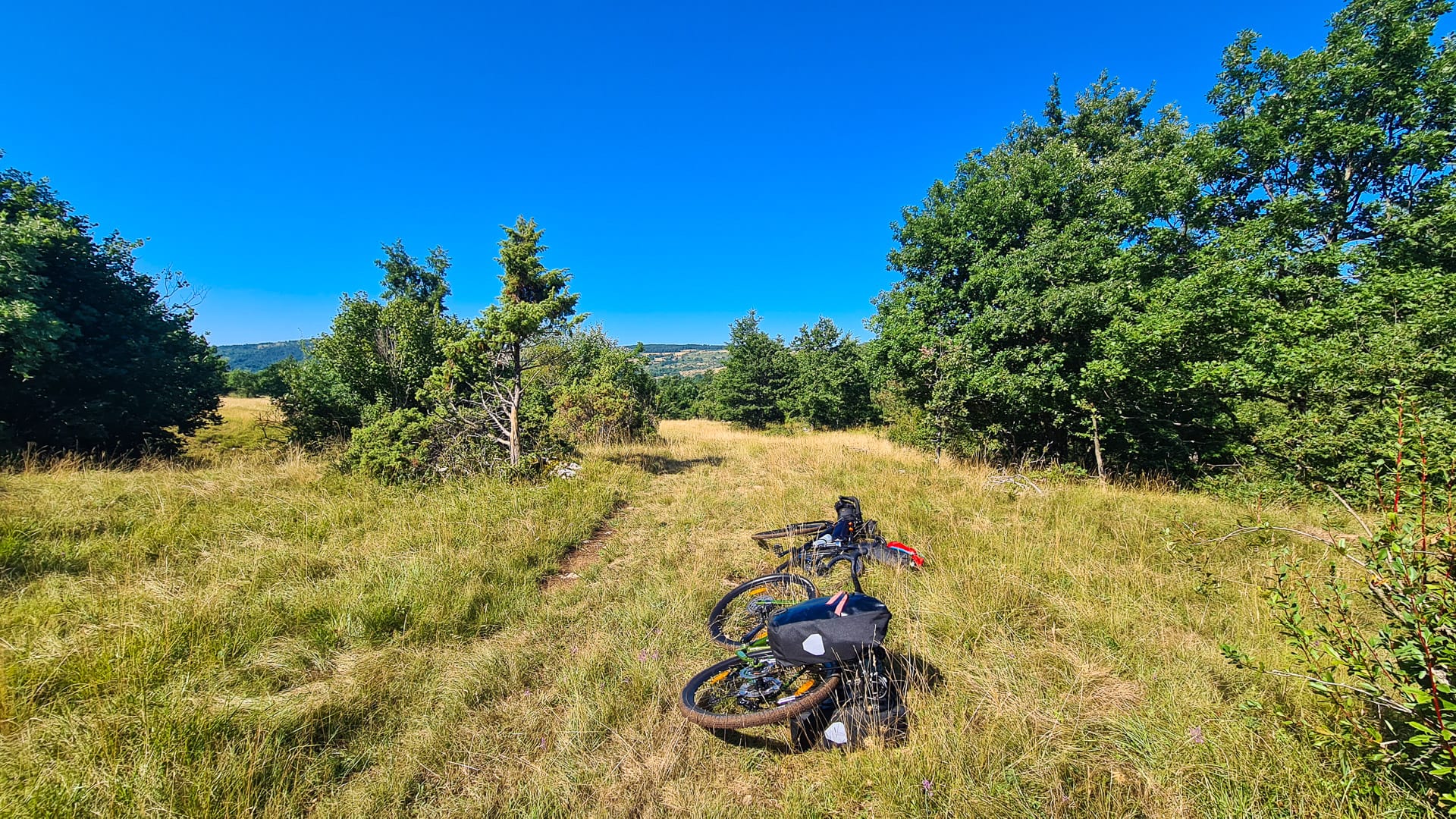
Exploring remote, grassy trails in Slovenia
Part 2: Who is gravel cycling for?
Gravel cycling is for anyone! Road cyclists enjoy the freedom to explore new horizons without the full technicality of mountain biking. Meanwhile, mountain bikers enjoy a spot of gravel to cover ground faster or head off on gravel cycling tours with mixed terrain.
Gravel riding is also accessible for new cyclists, because the wider tyres on a gravel bike offer more traction, a comfier ride and more stability compared to a road bike.
Top tip! You can plan your gravel bike routes to be as technical or as beginner-friendly as you’re comfortable with. If you’re unsure, check the ride’s elevation gain and choose routes that favour well-signed forestry trails and smooth gravel roads to begin with.
Do I need a lot of fitness and cycling experience to go gravel cycling?
Gravel cycling is accessible for a range of ability levels. But if you’re new to off-road riding, or planning your next big gravel adventure, there are a few things to be aware of:
Gravel cycling can be more physically demanding than road cycling.
Off-road terrain increases the rolling resistance you must overcome to make forward progress, especially when surfaces are loose or studded with big rocks. This means it can take longer and feel like harder work to cover the same distance you would on your road bike.
Top tip! Consider planning a few shorter rides at first while you build up your off-road fitness.
Some riding surfaces will require more technical skill than others.
For beginners, canal towpaths and hard-packed trails can provide a good accessible entry point to off-road riding, as they’re not too technically challenging. You can get a few top tips on key gravel cycling skills below.
But be aware! Rocky paths, steep climbs and descents with a lot of loose gravel, or more technical forest routes can require a bit more technical skill, so build up some confidence with the basics first.
Gravel bike holidays and tours will need a solid base of endurance.
A gravel bike holiday can be one of the best ways to explore a new place and feel truly immersed in the landscape. You can get my suggestions on the best gravel cycling destinations for new off-road riders further below.
Just remember that because gravel riding can be a little more physically and technically demanding, you’ll need to spend a bit of time building up your confidence and your base fitness.

Steep descents await in Gravel.Tirol in Austria (photo credit: Andreas Vigil/ Gravelbike Holidays)
Part 3: What gear and skills do I need for gravel cycling?
Inspired to give gravel a go? Let’s dive into the gravel cycling basics to understand before you start exploring.
Gravel bike vs road bike vs mountain bike: what’s the difference?
Key features of a gravel bike
- Drop handlebars rather than flat mountain bike handlebars.
- Frame geometry prioritises stability and comfort, without too much compromise on speed (many gravel-specific models use longer wheelbases and relaxed angles).
- Wider tyres than a road bike, but not quite as wide as a mountain bike
- The riding position is more upright than a road bike.
Gravel vs road bike
At a glance, a gravel bike looks similar to a road bike thanks to the drop handlebars. But there are a few differences which make these all-rounders capable of taking on all sorts of terrain:
- Greater clearance to allow for wider tyres (more on this below)
- Frame geometry gives a shorter reach and higher stack height for improved comfort and stability.
- Drop handlebars maintain some speed and responsive handling for stretches of tarmac.
- Fixing points for frame bags, ideal for bikepacking trips and cycle touring.
Gravel bike vs MTB
Many cyclists think of a gravel bike as your halfway point between a road bike and a mountain bike (MTB), offering the best of both worlds. But what’s the difference?
- MTBs have flat handlebars, creating a much wider arm position.
- Frame geometry on an MTB is more relaxed.
- Tyre clearance is much wider on an MTB compared to a gravel bike.
- MTBs have suspension, whereas most gravel bikes do not.
This means a mountain bike is usually a lot heavier than a gravel bike, and far more focused on tackling rough surfaces than covering ground at pace. When terrain is extra rough, mountain bike tyres remain the best choice.
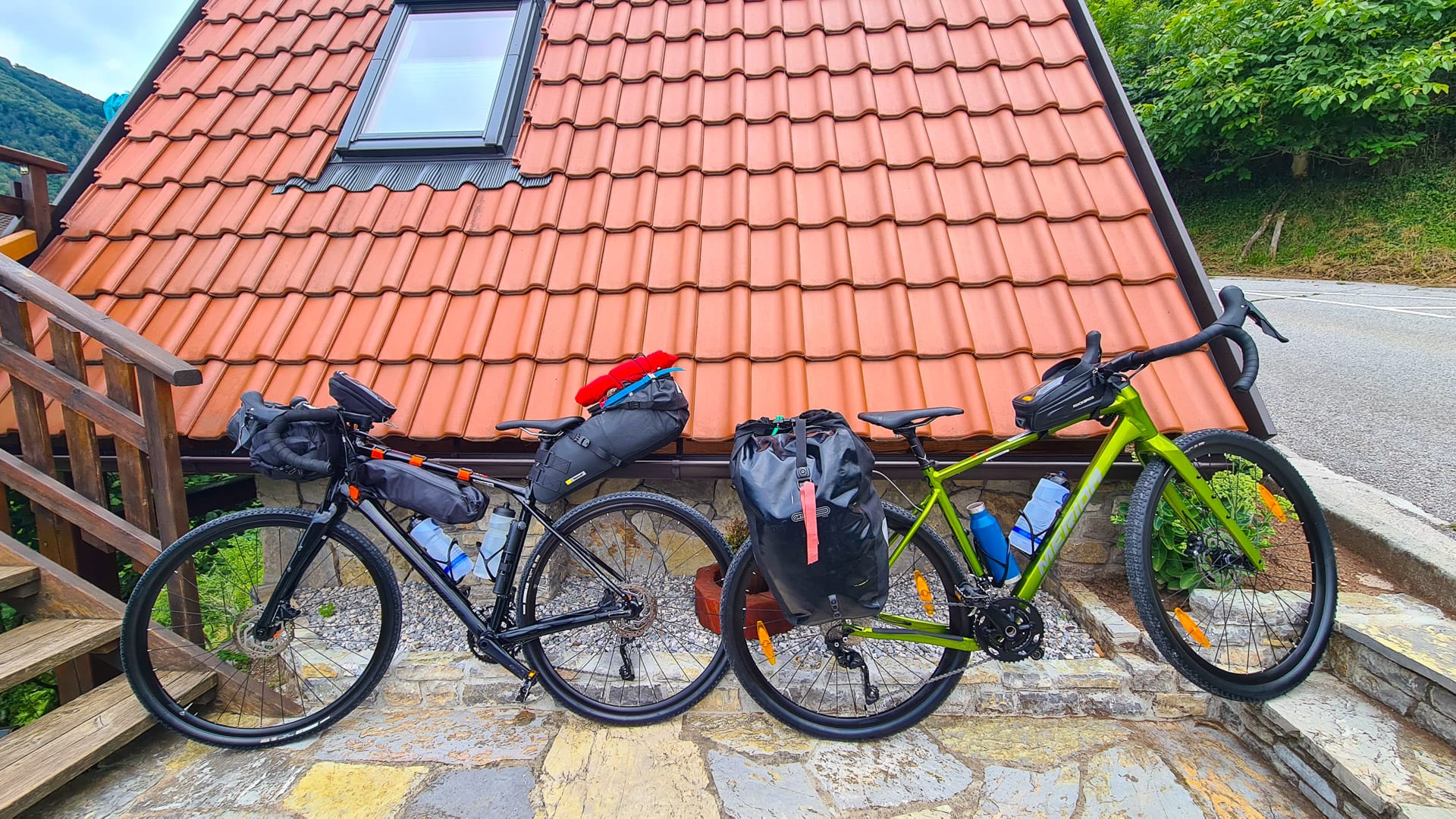
Our gravel bike set up for the Trans Dinarica in Slovenia (pannier bags are less usual on a gravel bike set up, but do what works for you?)
Gravel bike tyres
Gravel bikes have more clearance between the forks and seat stays to allow for wider tyres. This clearance can vary between models, but typically a gravel bike will allow for a minimum 35mm tyre width (compared to the average 28-32mm on a road bike).
Most road tyres have a relatively smooth surface to create as little rolling resistance as possible. The tyres on a gravel bike are knobbly, with the tread pattern designed to offer better grip off road. Popular examples include Schwalbe G-One Bite tyres and race-ready specialized tracers; both balance grip with speed depending on conditions.
Is it worth going tubeless for gravel riding?
Getting a puncture can be more likely when you’re riding off road thanks to debris and the increased likelihood of a pinch flat as you ride over bumpy ground. This is why a lot of gravel cyclists favour a tubeless set up to reduce the amount of time spent changing inner tubes.
Many tyres add puncture protection, and both tubeless tyres and tubeless tires seal small holes quickly so you can keep rolling.
The tyre pressure on a gravel bike will need to be lower than on a road bike. Check the guidelines on your specific tyres before you pump them up.
Top tip! In general, a lower tyre pressure will be more comfortable over bumpy ground, but it will also increase rolling resistance on the roads.
What gravel cycling kit do you need?
There are no rules when it comes to what you should wear for gravel cycling, so prioritise what’s comfortable.
You might want to consider swapping to cargo-style bib shorts with pockets (for extra storage) and a drop seat function (for easy comfort breaks) if you’re planning any gravel tours or bikepacking adventures, but these aren’t essential.
A breathable, waterproof jacket that packs small is a brilliant year-round layer. In cool or unsettled conditions, it pairs nicely with cycling jerseys and performance bike shorts, keeps the chill off in wet forests, and on multi-day rides, it can be worth stashing a spare in your bikepacking system as backup.
Top tip! If you’re a road cyclist, I’d recommend swapping your three-bolt road cycling pedals for a set of SPD mountain bike pedals and cleats. The smaller, metal cleats will last longer on rugged terrain, and they won’t get clogged up with mud and sand. You’ll only need one instance of finding yourself sitting on the side of the trail trying to scrape mud from your cleats with a stick so you can actually clip into your pedals again to realise why making the switch is a good idea!
What’s the difference between gravel cycling and bikepacking?
Bikepacking and gravel cycling are often seen to go hand in hand. After all, they both involve a sense of adventure and a willingness to embrace the unexpected!
Bikepacking is usually a cycling trip which lasts a few days and involves carrying all your gear in bikepacking bags on your frame. It’s popular with gravel riders, but it isn’t exclusively for gravel cyclists, and you can go bikepacking on a road bike or a mountain bike, too, depending on the terrain you’ll be covering.
Gravel cycling, on the other hand, refers to any ride where you’ll mainly be riding on unpaved surfaces. There is also a subset of bikepacking, which is gravel bike touring.
Check out our guide to find out what gravel touring is and why it’s getting so popular!

Secluded gravel paths on the Trans Dinarica in Slovenia
What skills do you need for gravel cycling? Gravel cycling tips for beginners
New to off-road riding and feeling a little nervous? Here are a few top tips to help build up your confidence:
Stay relaxed
Tensing up will make your bike feel twitchier and more unpredictable, so try to stay relaxed. Remember that your elbows are going to be your shock absorbers over the bumps, so if you’re locking out your arms, things are going to get uncomfortable pretty quickly!
Cornering
Try to get all your braking done before you hit the corner to avoid skidding. Take the corners wider than you would out on the road, and if the surface is cambered, take the ‘higher’ line so the turn is shallower. There’s less traction on loose surfaces, so instead of leaning with the bike through corners, let the bike lean but keep your body more upright to maintain a solid centre of gravity.
How to manage loose surfaces
Stick with a slightly bigger gear on climbs to give yourself more traction. Avoid making any sudden changes of direction or sharp braking on loose surfaces, as this can lead to skidding.
Don’t be afraid to use your drops on descents
Your drops are actually the most stable place for descending on bumpy ground because your hands are less likely to get ‘bounced’ off your bars compared to riding on the hoods. This is why many gravel bikes have slightly flared drop bars.
Build up your confidence on familiar routes
Find a beginner-friendly bike trail that you can practice on. Green ways or hard-packed trails are a great option.
Other gravel cycling training tips
There are a few other things you might incorporate into your cycling training to help you get the most out of gravel riding.
- Hill repeats or high resistance-low cadence efforts. These will build up fitness and leg strength to deal with the increased rolling resistance that can make hills feel harder on a gravel bike.
- Long, easy rides. For gravel cycling tours or holidays, build your base of endurance by ticking off plenty of long rides at an easy pace. This will help your body to adapt and become an efficient, endurance machine.
- Back-to-back riding days. Prepare for multi-day gravel trips by incorporating back-to-back days on the bike in training so it’s not a shock to the system.
Part 4: Are there any things to consider before going gravel cycling?
The nature of gravel cycling routes, alongside the impact the different riding surfaces can have on your bike, means there are a few extra things to think about compared to road cycling.
Navigation
Route planning and navigation can be a little trickier on gravel cycling trips compared to road cycling. Trails and byways might not show up on the likes of Google Maps.
Be aware! As you venture off the beaten track, you may also have long stretches of riding with little in the way of facilities for comfort breaks or to top up water and food supplies. It’s all part of the gravel adventure, but it does mean careful planning is key!
Consider using established gravel bike routes to begin with, or book a gravel cycling tour for an adventure where all the planning and logistics are taken care of by local experts.
Once you’ve built up some confidence, you might want to go it alone. Here are a few top tips to stay safe and have fun:
- Research and plan your proposed route carefully. Have a backup plan in case of any “is this even a road” moments where your planned route becomes impassable!
- Invest in a good GPS navigation device with a long battery life.
- Have a good old-fashioned paper map (which covers off-road routes) in case your device fails or you lose signal.
- Carry more nutrition and hydration than you think you’ll need in case of unplanned detours or tough conditions.
- Going it alone? Research and plan your proposed route carefully! Make note of refuelling opportunities and have a backup plan.
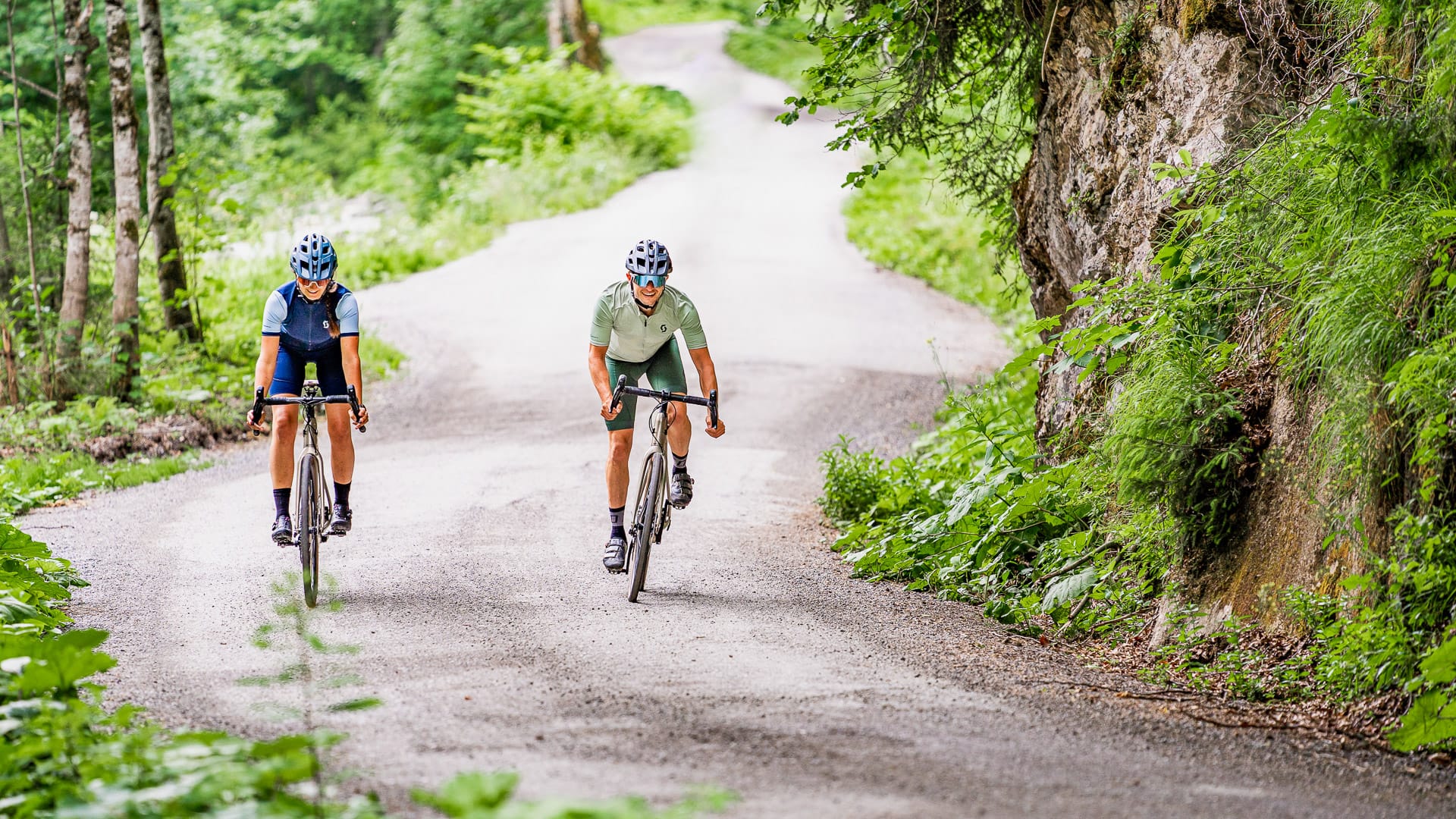
Gravel trails in the Saalbach region in Austria (photo credit: Gravelbike Holidays)
Safety and etiquette
When you’re out on the trails, it’s important to take care of your safety and practise polite etiquette. There are the obvious things like wearing a helmet, ensuring your bike is in good working order (more on that below), taking on adequate nutrition and hydration and riding at a pace suitable for your skill level and the terrain. But there are a few extra considerations to stay safe and share the trails.
- Let someone know your planned route and rough timings – you’re likely to be riding in isolated areas.
- Carry tools and basic bike repair supplies, as rough surfaces can make mechanicals (such as punctures) more likely.
- Respect other trail users by using hand signals, pointing out hazards and communicating clearly.
- Give way to riders coming uphill.
- Give way to pedestrians and horse riders.
- Overtake at a sensible speed and make sure it is wide enough to do so safely.
- Leave no trace! Keep the beauty of nature untamed and take your rubbish with you.
Nutrition and hydration
Fuelling your adventures is essential. ‘Bonking’ (running out of energy to the point where you struggle to turn the pedals) is never fun. But when you’re out in the wilderness, it can be pretty dangerous. Make sure you carry a few different sources of carbohydrate to keep your energy levels topped up. A mix of real food and specific sports nutrition works well.
Be aware! It can be easy to forget to eat when you’re focused on navigating technical riding surfaces, so set an alert on your bike computer to remind you every 30 minutes or so. Stay hydrated and remember you might sweat more as riding on gravel can be more physically intense.
You should also consider electrolytes to avoid pesky muscle cramps! On the Trans Dinarica, we cycled in mid-July with temperatures in the late twenties, and we were sweating a lot! To help keep us well hydrated, we had electrolytes in our water bottles and energy chews to hand for a quick boost on the move.
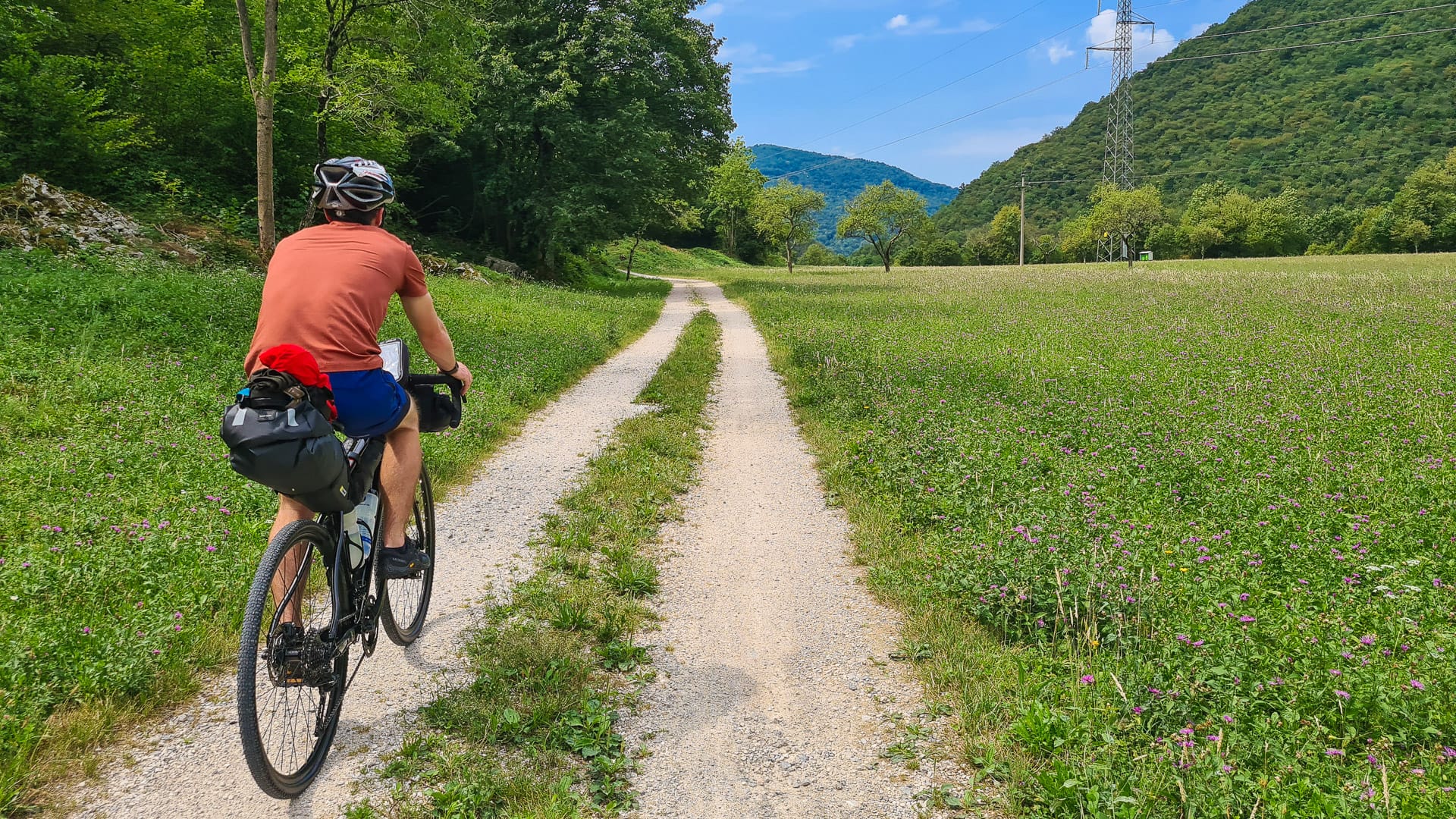
Heading off the beaten track in the Soča River valley in Slovenia
Bike maintenance and post-ride care
During a gravel bike ride, you’re likely to encounter rough riding surfaces, mud, sand and an increased likelihood that you’ll take a bit of a tumble from time to time. This means that gravel cycling can place a bit of extra strain on your bike! So here are some tips on how to keep your bike adventure-ready:
- Check key components such as your derailleur, drivetrain, brakes and tyres for wear and/or misalignment.
- Use a thicker grease on your bearings to protect them from the elements.
- Use a good quality chain lube or switch to a waxed chain to reduce how much grit and dirt hang onto your chain.
- Rinse your bike and wipe off any debris after each ride. Use a hose pipe or pressure washer if it’s really mucky, but try to avoid getting too much water in your bearings.
- Take the time every few months (depending on how often you ride) to clean and degrease your chain and relubricate it to help your drivetrain last longer.
Part 5: What are the best gravel cycling events?
Taking part in a gravel cycling event can be a great way to meet other riders, get some tips from the more experienced gravel cyclists out there, and practice your skills in a supported environment.
Gravel riding is known for its laid-back atmosphere, where it’s more about the adventure than it is about pure competition and often gravel cycling events have a buzzing festival atmosphere.
There’s a growing community of gravel riders and plenty of gravel cycling events out there to suit all abilities.
Here are my top three:
Dirty Reiver, Scottish Borders, UK (April)
Key distances
200, 130, or 65 kilometres
What to expect
The Dirty Reiver is the biggest gravel event in the UK. Based around Kielder Forest in England’s least populated county, Northumberland, the terrain is predominantly hard-packed gravel, and the route tends to change every few years. Expect plenty of climbing and a lot of time spent out in remote forest areas! It’s a brilliant entry into the world of gravel racing and a stepping stone towards longer gravel races.
Unbound Gravel Kansas, USA (May)
Key distances
40, 80, 160, 321 and 563 kilometres
What to expect
One of the early USA ‘gravel grinder’ cycling races, Unbound Gravel is one of the world’s biggest gravel cycling races. It takes place over the space of a week with a wide range of distances on offer, from 40 to over 560 kilometres. Expect a lively atmosphere as riders come from all over the world to take on the challenging terrain of the Flint Hills.
Badlands, Granada, Spain (August)
Key distance
800 kilometres
What to expect
Known as the ‘wildest gravel challenge in Europe’, Badlands is an 800-kilometre unsupported gravel race taking riders through deserts, along the coastline and summiting the highest Col on the continent, Pico Veleta.
Part 6: What are the best destinations for gravel cycling holidays?
Once you get into gravel cycling, there’s quite literally a whole world of gravel bike adventures to add to your bucket list! You can take a look at our pick of the 9 best gravel bike adventures in Europe for some inspiration, including epic bikepacking routes and gravel cycling races to push your limits.
But if you’re new to gravel cycling, or still building up your confidence riding off road, here’s our pick of the best destinations for new gravel riders.
Algarve, Portugal
With year-round sunshine, a vast network of off-road riding routes and a rugged coastline providing dramatic scenery, gravel riding in the Algarve should definitely be on your gravel cycling to-do list. The varied terrain is accessible for new gravel cyclists, with some challenging but enjoyable undulating climbs to take on along the way.
Discover more about gravel cycling in the Algarve in our complete guide.
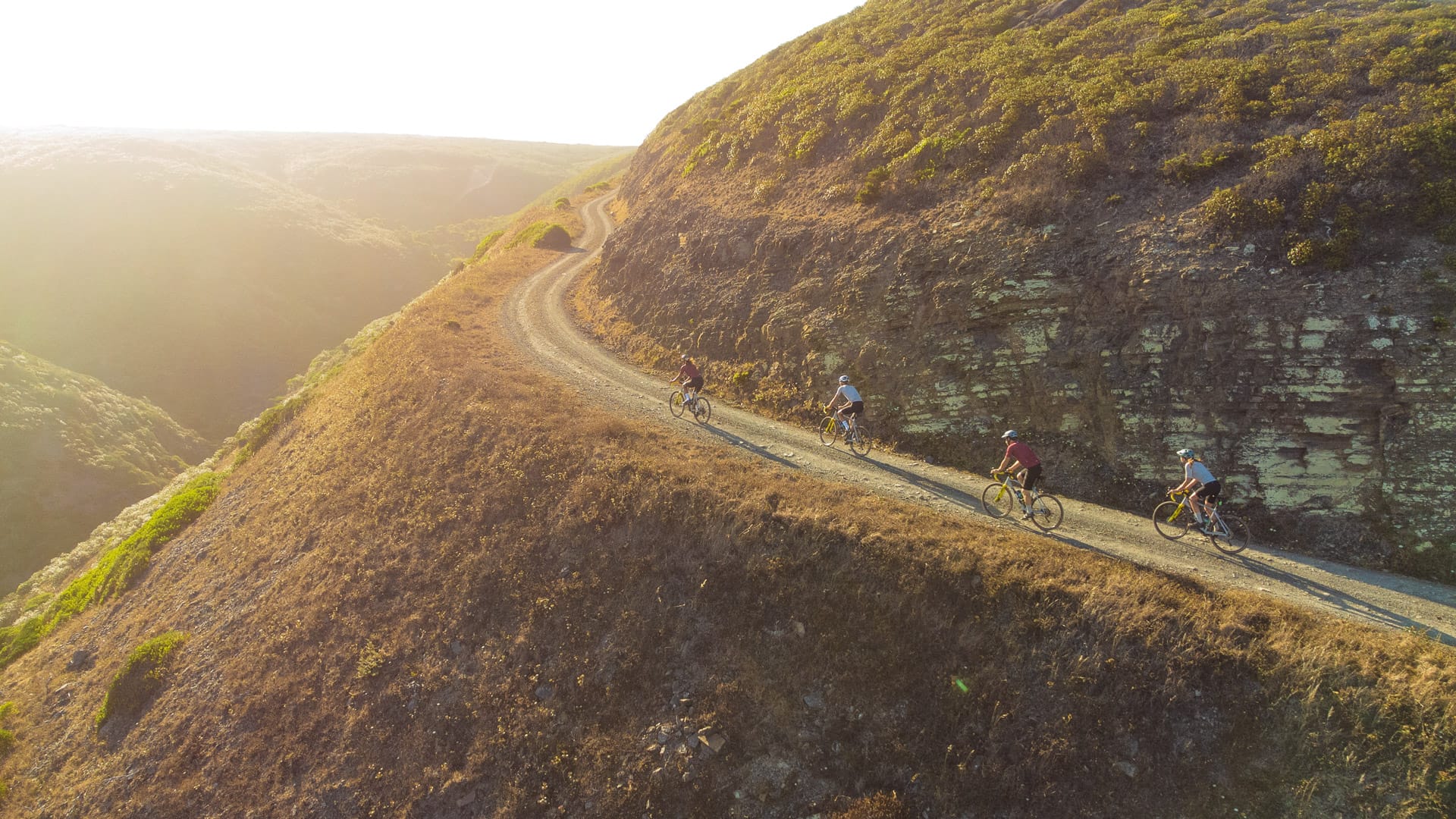
Gravel riders exploring the Western Algarve (photo credit: Musette.Bike)
Girona, Spain
Girona is a road cycling mecca, but it’s also an incredible destination for gravel riding. The region’s agricultural plains provide a network of quiet gravel ‘roads’ and disused railway tracks connecting scenic medieval towns and farms. These easy-to-ride routes which criss-cross the Girona countryside, feature a mix of farm tracks, dusty trails and compacted earth. It’s ideal terrain for gravel riding, and suited to new gravel cyclists.
Read more about gravel cycling in Girona.
Trans Dinarica, Slovenia
Slovenia is a good option to consider for a first-timer’s gravel bike holiday, in particular the Trans Dinarica route. This is the route I rode on my first-ever multi-day gravel tour, and it is the first stage on a multi-country gravel route through the Balkans.
The stage in Slovenia is the easiest, and it jumps seamlessly between non-technical off-road trails, bike paths and quiet secondary roads, spanning just four days (or less). There are a couple of punchy gravel climbs to tackle, though these are manageable for anyone with a good level of fitness and a sense of adventure! If you enjoy it, you can then consider progressing onto the tougher stages in Croatia, Bosnia and beyond.
Discover more about the Slovenia Trans Dinarica route.
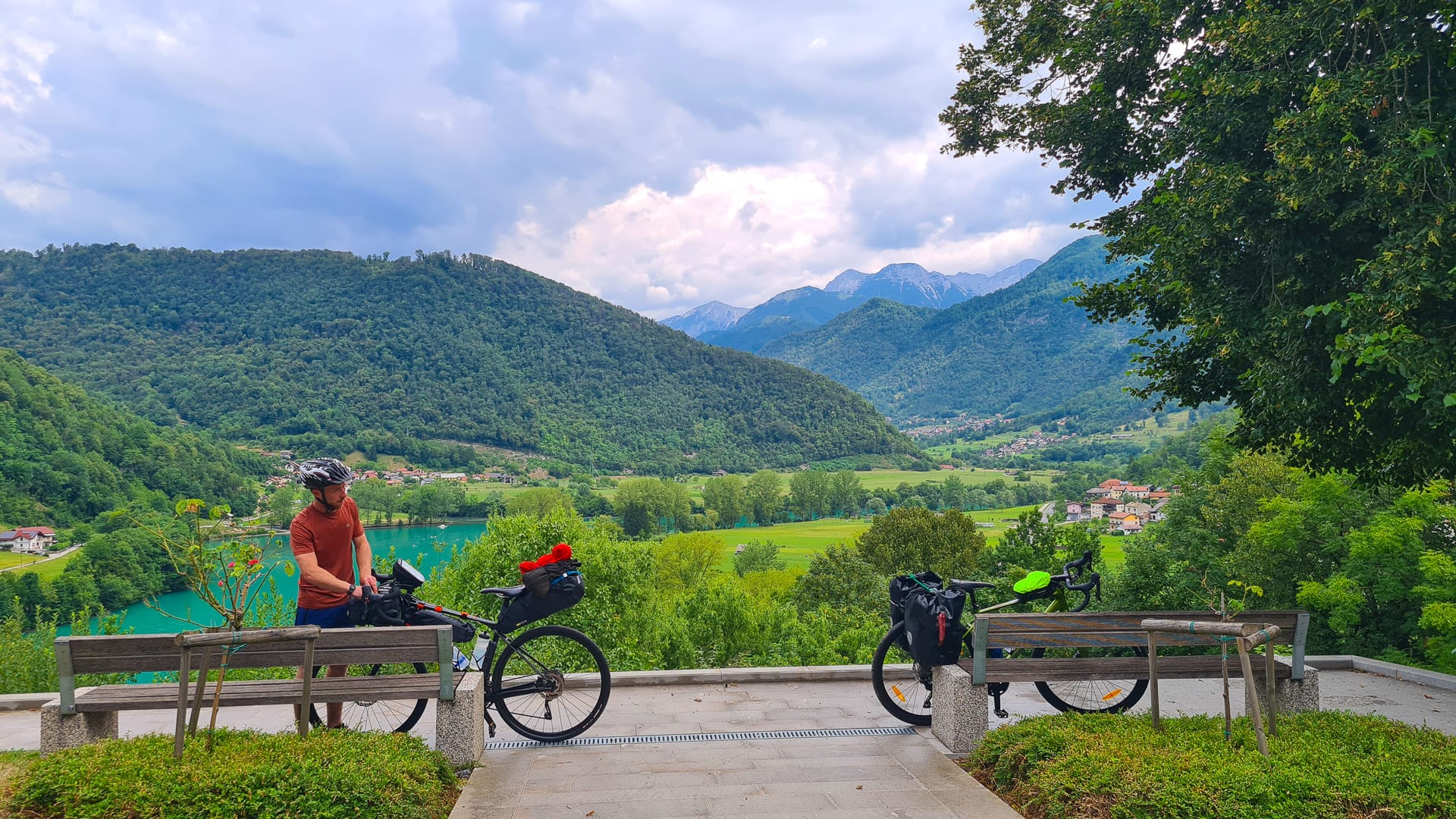
Taking a breather to soak up the beautiful views on the Trans Dinarica in Slovenia
What’s next?
Love the freedom that comes with leaving the road behind? We know the sense of adventure as you explore rugged back roads and embrace the unexpected is hard to beat!
Maybe you’ve already given gravel cycling a go? Drop a comment below and let me know what you’ve enjoyed most about taking your rides off-road, I’d love to hear from you!
Inspired to get planning your next gravel adventure? Don’t miss:
- What is gravel bike touring (and why do it?)
- Gravel bike France: an insiders guide
- Best gravel bike adventures in Europe
- Cuneo’s secret strade bianche, for gravel cycling in Piedmont
- Mont Ventoux from Sault: the must-try gravel cycling tour of Ventoux
- Best bikepacking routes in the UK
- Bikepacking Australia from Melbourne to Sydney
Please support Epic Road Rides
A huge amount of time and effort goes into the article you’ve just read, all with the aim of helping you!
If you found what you’ve read useful, I’d really appreciate it if you dropped something in the tip jar here.
It’s a way you can say thank you and help us carry on creating top quality content with no annoying ads and no pay wall.
Looking for an organised cycling trip?
If you want someone to help you plan and book your cycling holiday, fill out this form. We aren’t a tour operator/agent but we work with lots of people who are and will do our best to put you in touch with someone that can help (within 24 hours where possible)!Fran Wilson is a cyclist based in the North East of England and has a particular passion for cycle touring. Her love for cycling has seen her take on some of the UK and Europe's best-known multi-day cycle routes, including the Hebridean Way, Camino de Santiago, the Via Francigena and the Trans Dinarica.
Fran was a core member of the Epic Road Rides writing team until March 2026. She continues to work in the cycling tourism industry and is excited to join our team of Community Contributors!
First Published: 23 December 2025
The contents of this website are provided for general information purposes only. It is not intended to amount to advice and you should not rely on it. You should carry out your own due diligence and risk assessments and take professional advice. Views expressed by interviewees or other users of this website do not necessarily represent our views. We make no representations, warranties or guarantees, whether express or implied, that the content on our website is accurate, complete or up to date. If you use any information or content on this website, download from, or otherwise obtain content or services through our website, it is entirely at your own discretion and risk. Epic Road Rides Ltd disclaims all liability and responsibility arising from any reliance placed on the information and content on this website. Find out more here.
Comments