
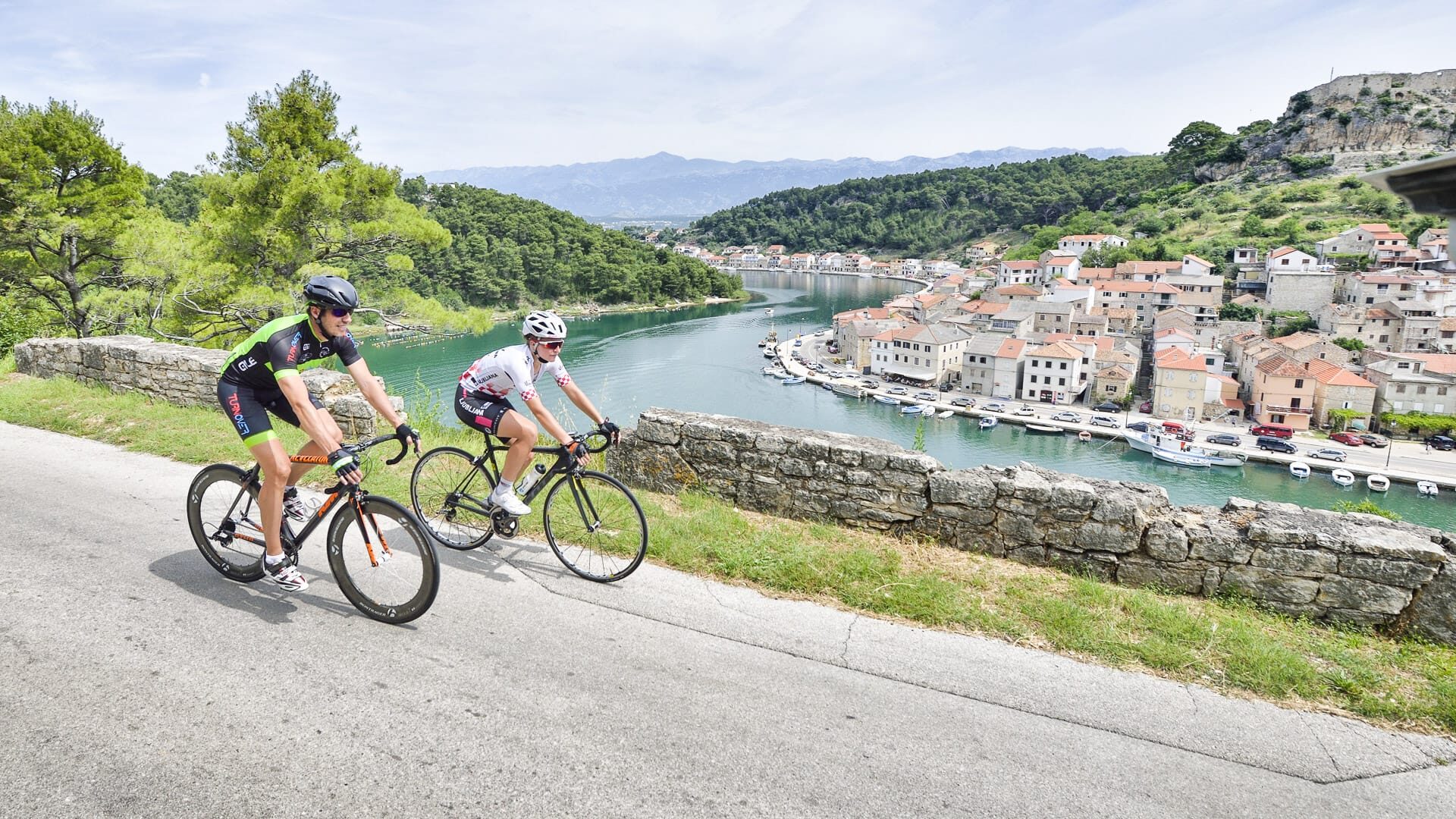

Cycling Zadar means riding through one of Croatia’s most varied coastal regions, where Adriatic roads, island landscapes, inland back roads and the Velebit mountain range all sit within reach of the city.
But the Zadar region is far from just a city-break destination. For cyclists, it offers a mix of road cycling, gravel routes, family-friendly rides and more demanding terrain, depending on where you base yourself. Nin and Biograd are good options for easier riding, while Pag, the islands and Velebit offer a more adventurous feel.
To help us understand the Zadar region properly, Zadar Region Tourist Board connected us with Marko Augustinović from Topena, a Zadar-based destination management company. Marko works on developing and checking cycling routes through Topena’s cycling-focused brand, ridescouts, and brings practical local knowledge of the roads, terrain and riding conditions.
In this guide, Marko shares what cyclists need to know before planning a trip to the Zadar region, including where to stay, what kind of routes to expect, when to visit, how bike hire works and how to approach riding on the coast, islands and inland roads. For readers planning their own Zadar bike tours, the Zadar region Tourist Board’s cycling information also provides a useful next step for official route ideas and inspiration.

Marko Augustinović is a member of the Topena team, a destination management company based in Zadar. Topena has more than 20 years’ experience in tourism, and ridescouts is a cycling brand by Topena. Its routes include local knowledge, GPX files and PDF guides, and the brand offers route planning, local guides, bike rental and support vehicles.
Marko’s work at Topena includes developing and planning cycling routes. He first designs routes digitally, then checks them on the ground for suitability, quality and rider experience. He pays particular attention to routes that combine natural landscapes, cultural heritage and authentic local experiences.
Outside work, Marko is passionate about the outdoors. Whenever possible, he spends his free time cycling or hiking, exploring new areas and looking for new experiences. This personal enthusiasm for active travel is at the heart of his professional approach.
Always check current travel information and advice. For visitors from the UK, the UK government travel information pages are here.
Table of contents
This guide contains a lot of useful information. To help make it more digestible, we’ve broken it down into several parts:
- Part 1: Why cycle in the Zadar region?
- Part 2: Overview
- Part 3: Best bases
- Part 4: Best cycling routes
- Part 5: Topena bike tours
- Part 6: Practicalities and tips
Part 1: Why cyclists should visit the Zadar region?
Is Zadar good for cycling?
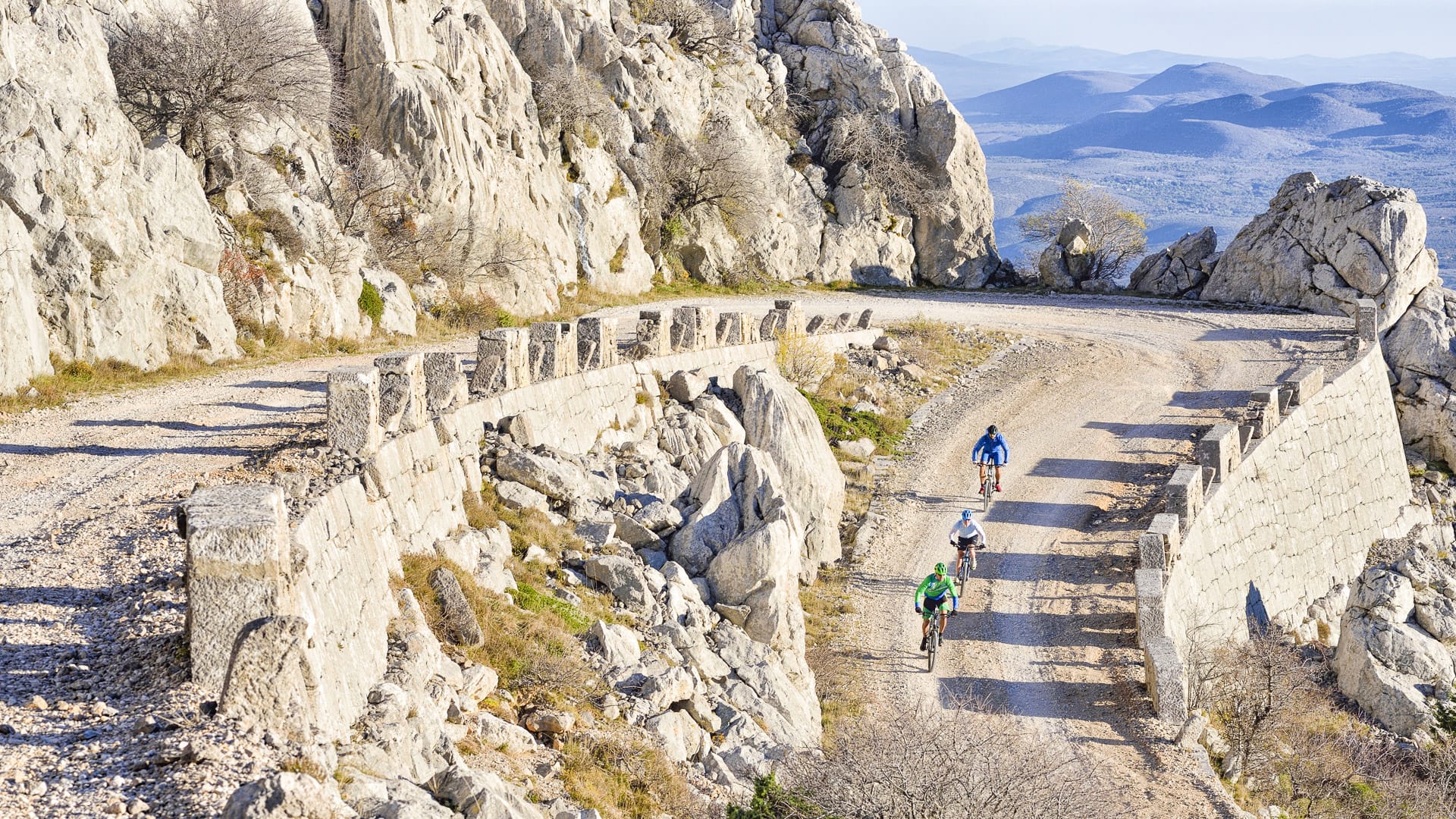
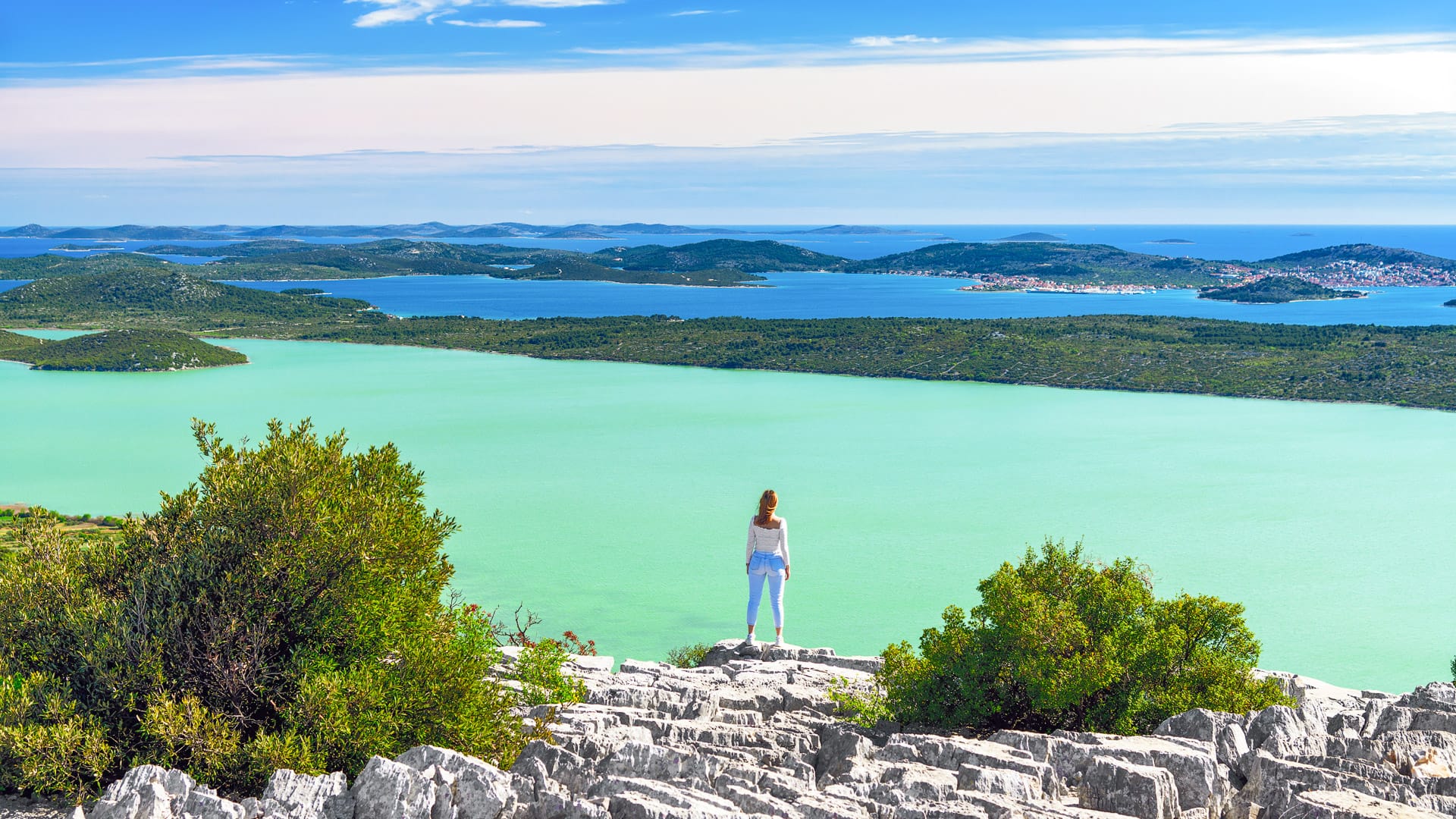
The Zadar region offers cyclists a distinctive combination of coastline, islands, inland roads and access to the Velebit mountain range. It is a varied region, with quieter back roads inland, island routes and climbs such as the Master’s Road (or Majstorska cesta in Croatian) and the ascent to the Kamenjak viewpoint in Vransko Lake Nature Park.
The Zadar region has an active cycling calendar, with professional, recreational and granfondo events taking place during the year. These are covered in more detail later in the guide.
The Zadar region also works well as a holiday destination beyond the bike. It has historic towns and cities, several national parks nearby, and the Zadar archipelago, which is ideal for sailing. Local people are known for their warmth, and English is widely spoken in tourist areas.
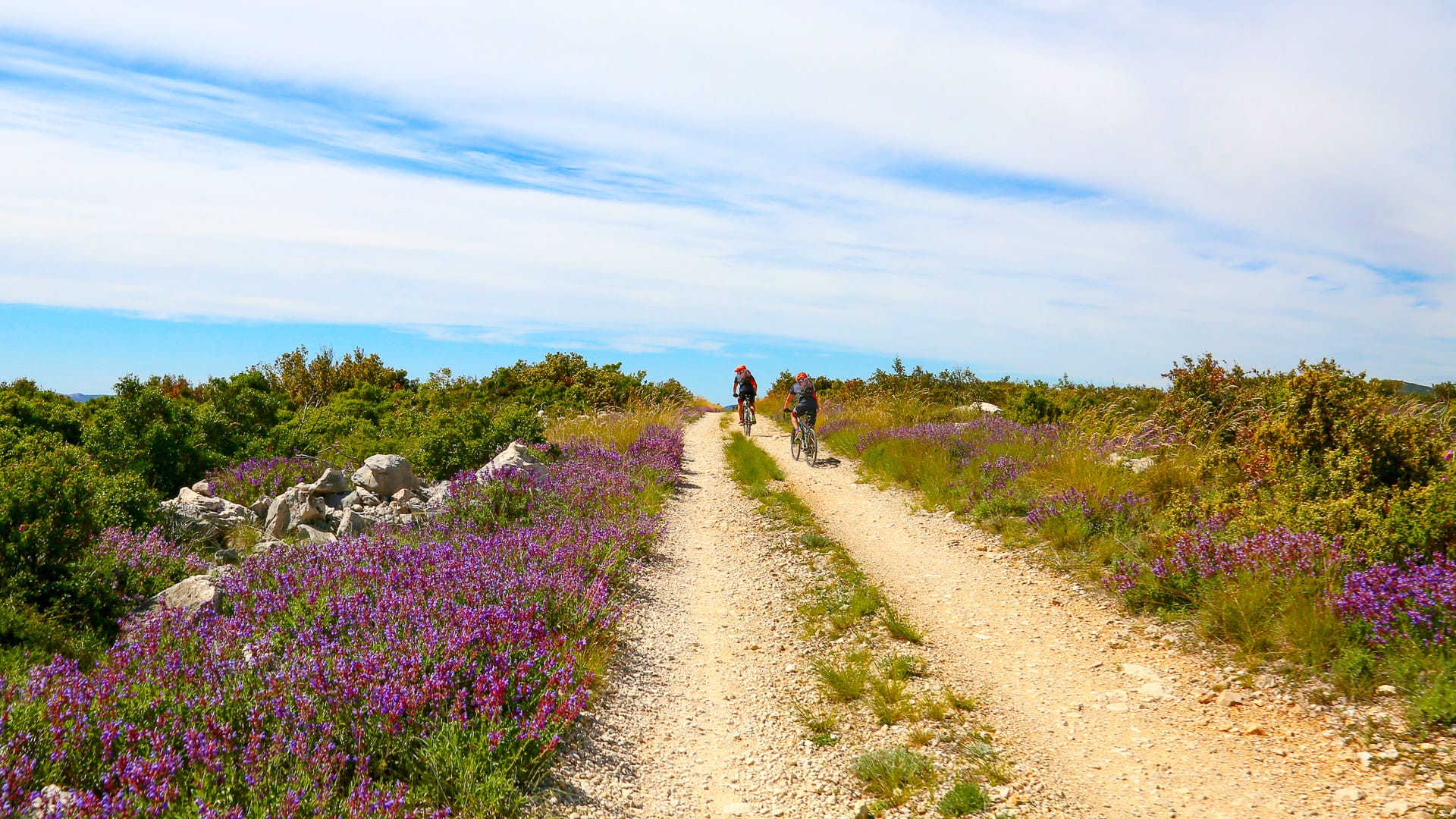
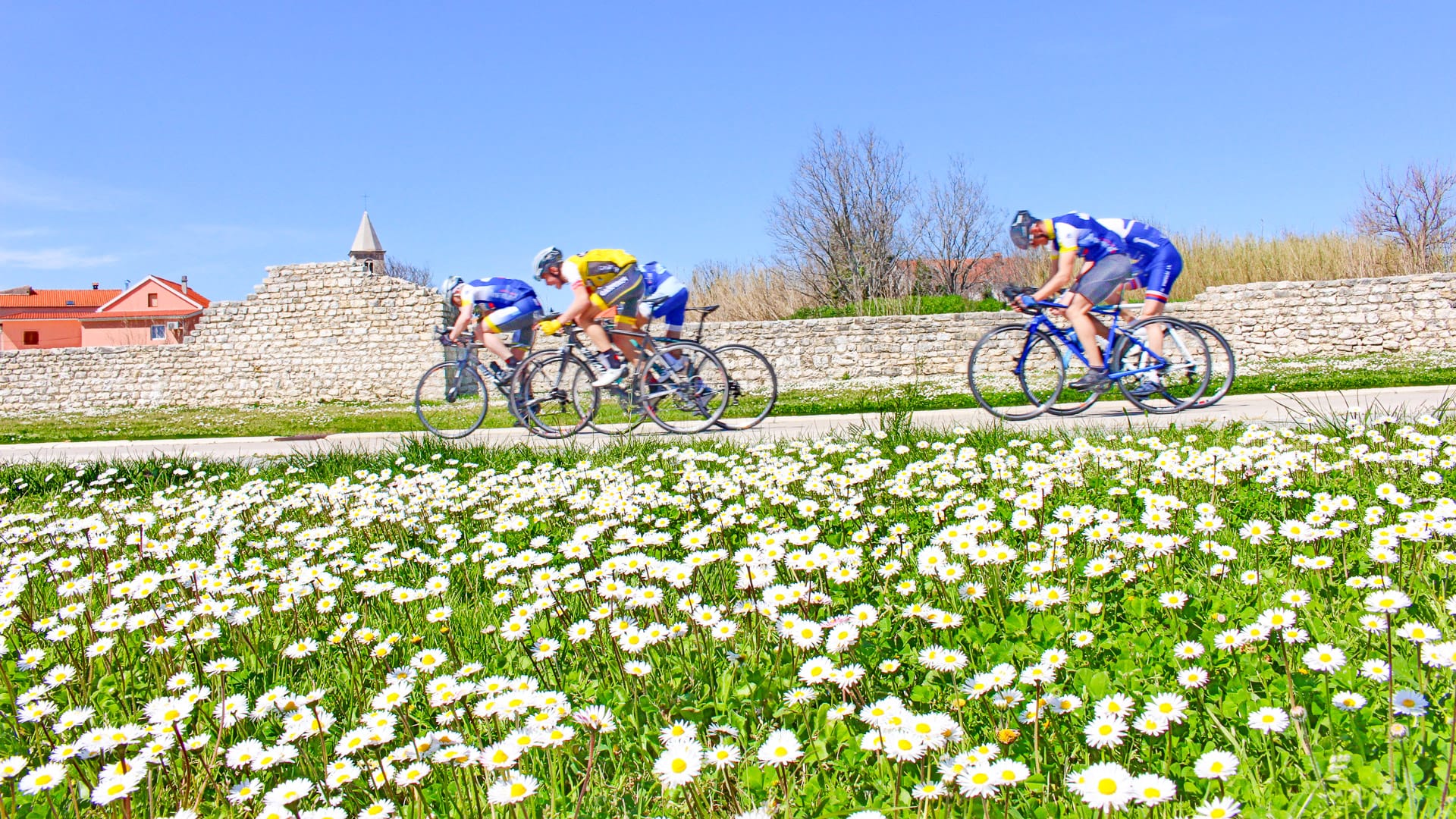
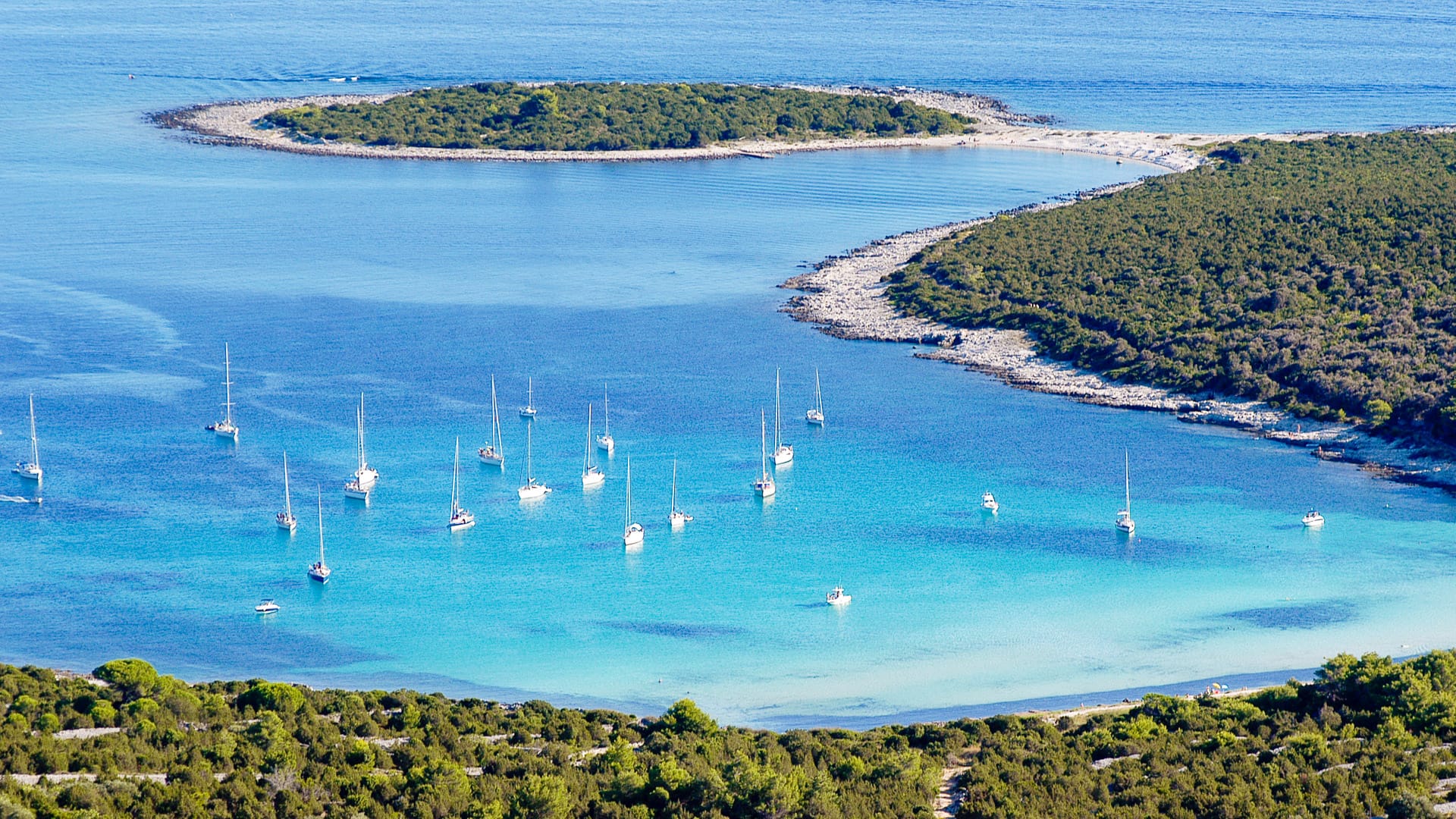
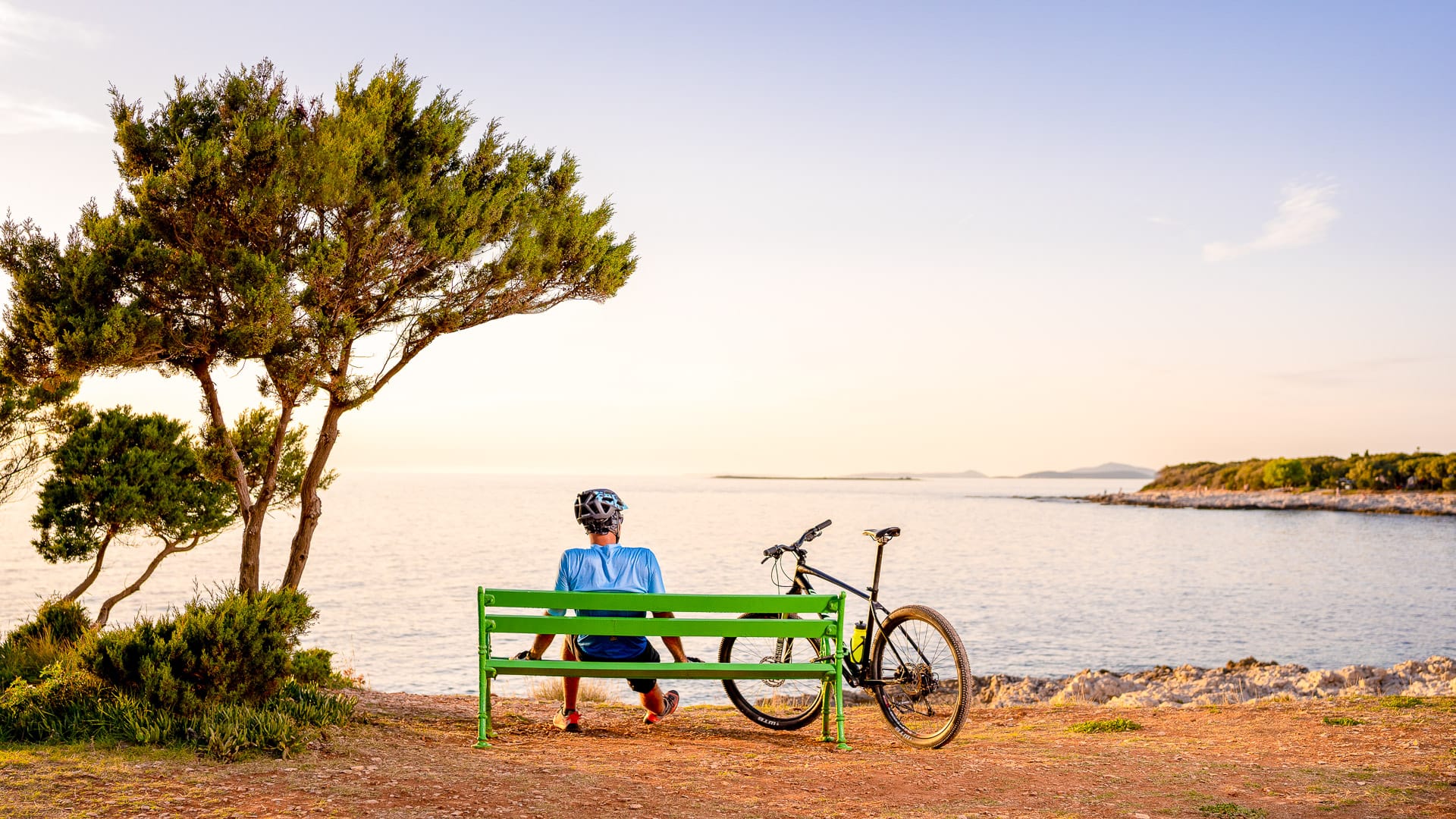


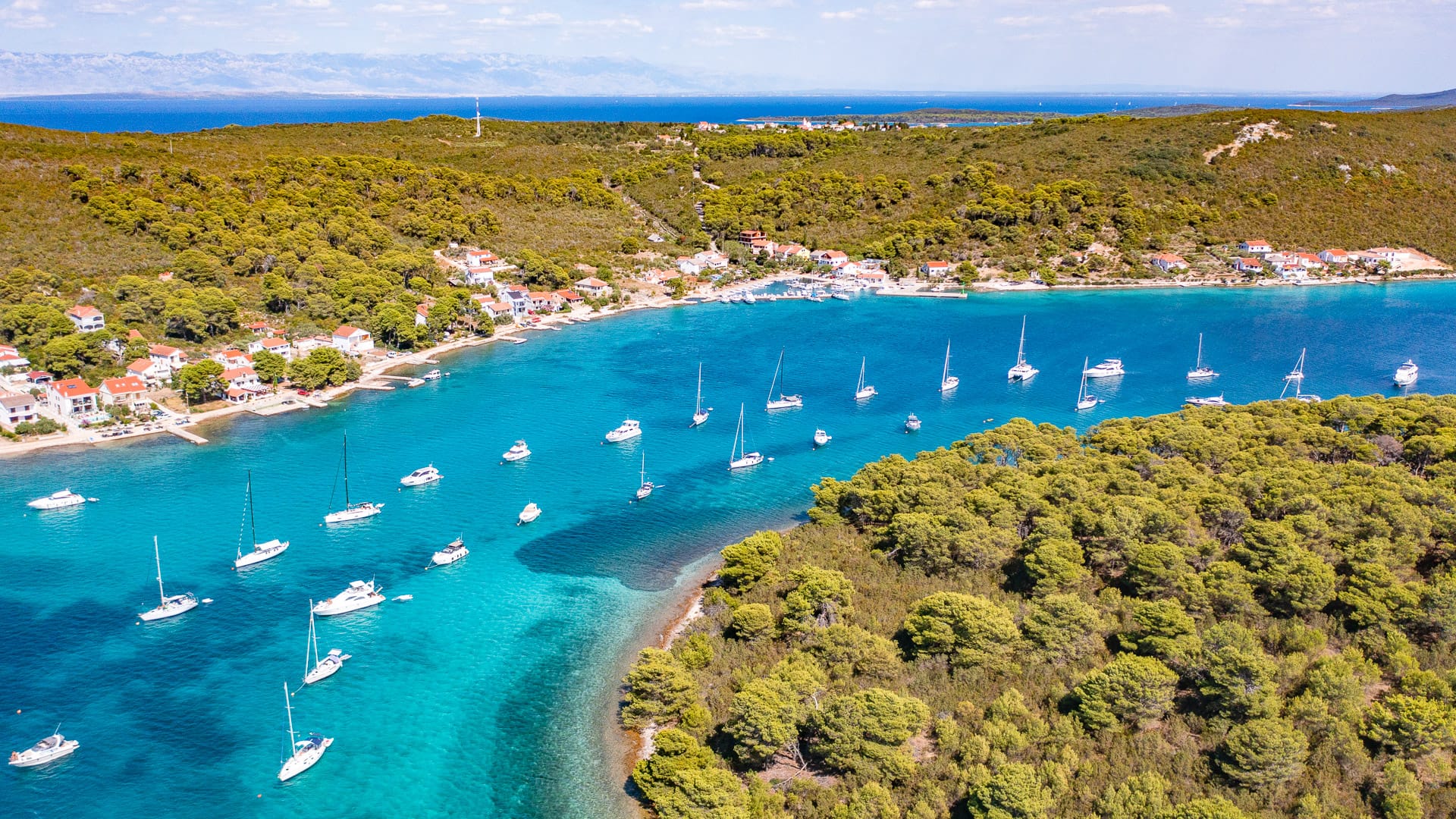
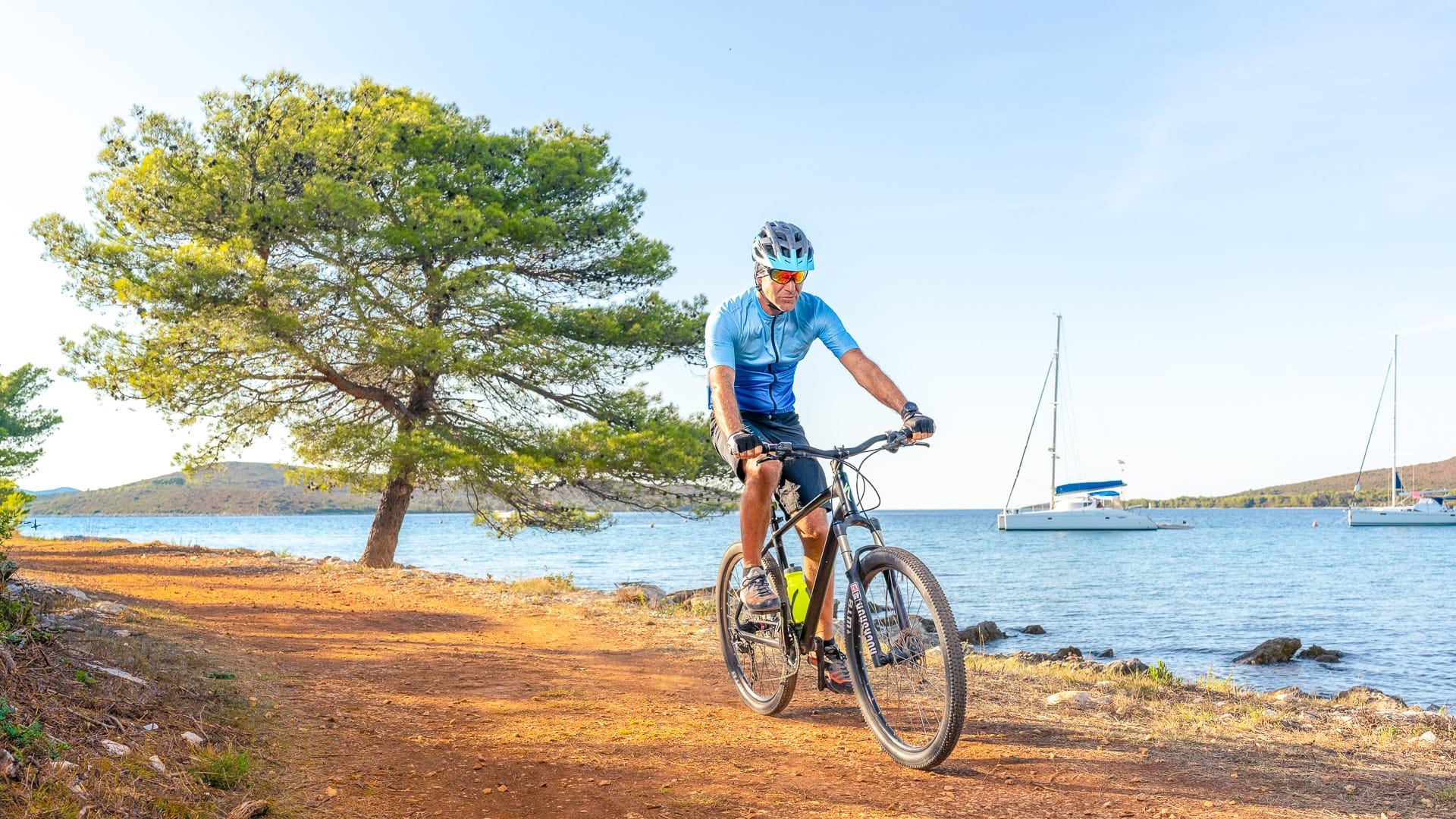
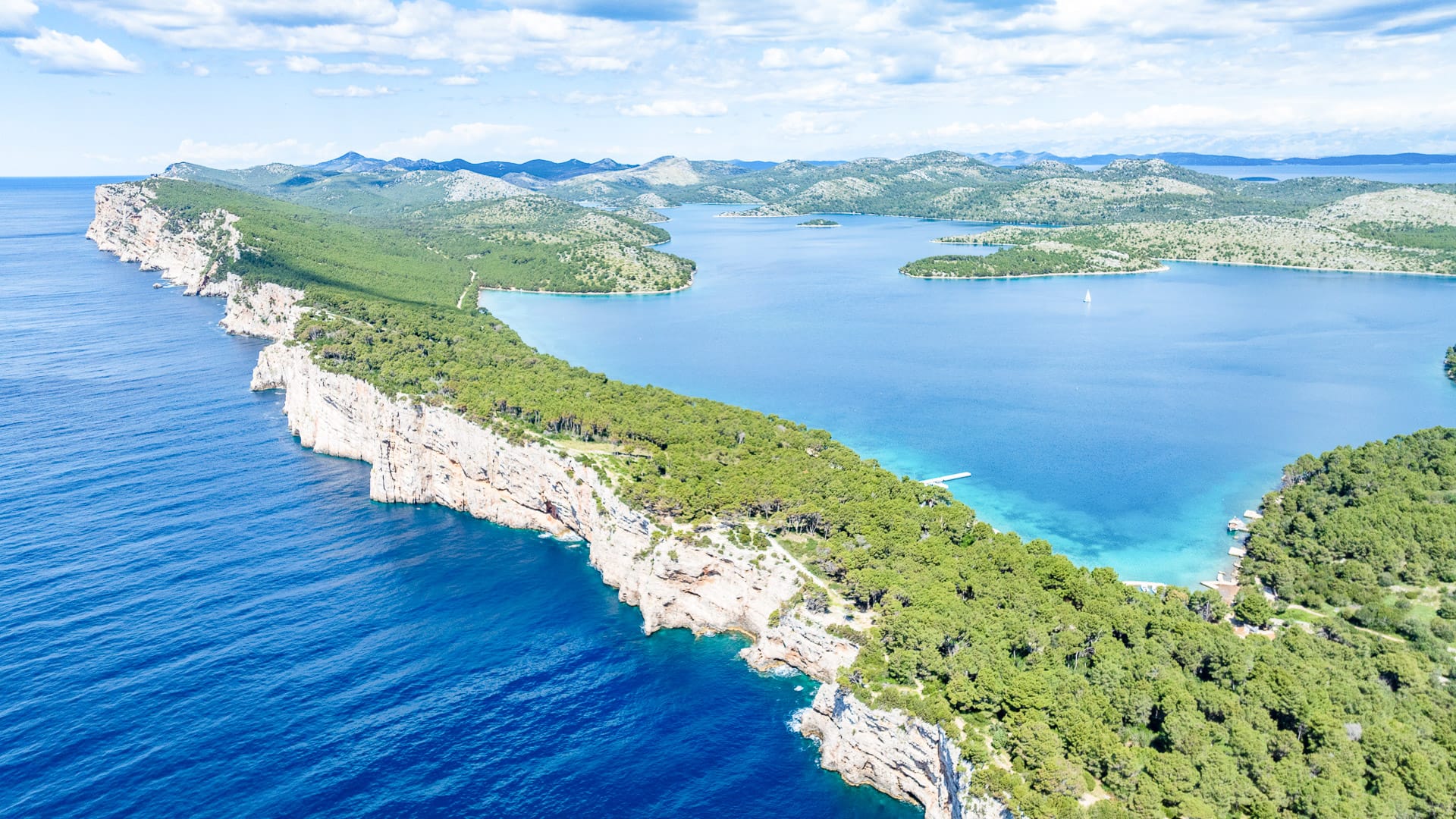
Cycling Zadar at a glance
| Question | Answer |
| Main riding styles | Road, gravel, mountain biking, leisure and family cycling |
| Best bases mentioned in this guide | Zadar, Nin, Biograd, Pag and Starigrad/Paklenica |
| More challenging areas | The islands and Velebit |
| Easier areas | Nin and Biograd na Moru (“Biograd” for short) |
| Notable climbs | Master’s Road and Kamenjak viewpoint |
| Local route support | Topena’s cycling-focused programmes under the ridescouts brand |
| Official cycling information | Zadar Region Tourist Board cycling page |
In short, the Zadar region can work for road cyclists, gravel riders, mountain bikers, leisure cyclists and families, but the right base matters. Nin and Biograd suit easier rides, while Pag, the islands, Ravni Kotari and Velebit give more scope for longer, hillier or more adventurous cycle routes.
If you are planning a cycling trip to the Zadar region, I suggest April, May, June, September and October as the best months to ride.
Here’s a general taster of what the Zadar region looks like and what you can expect:
 There's a Youtube video here!
I'm fine with Youtube cookies
And this gives a sense of the riding:
 There's a Youtube video here!
I'm fine with Youtube cookies
Read on for the detail!
Part 2: Where is the Zadar region, and what is the cycling like?
Where is the Zadar region?
The Zadar region is in the central part of the Croatian Adriatic coast, within the region of northern Dalmatia. It stretches from the coast and islands to the hinterland, and reaches into parts of the Velebit mountain range, one of Croatia’s most striking natural features.
For cyclists, this means short distances between quite different riding environments. For example, from Zadar you can take a ferry to the islands for rides with more climbing, head inland to the flatter roads of Ravni Kotari, or reach the demanding trails of the Velebit mountains, around 35 kilometres away. Around Biograd, cyclists can choose between the island of Pašman, the inland landscapes of Ravni Kotari and the routes around Vrana Lake Nature Park.
Terrain in the Zadar region
The region capital, Zadar, is not the only place that works well as a cycling base. Other good options include the historic town of Nin, the coastal town of Biograd, and the islands of Pag, Ugljan and Pašman. The wider region also includes inland areas such as Ravni Kotari, where quieter rural roads and gentler gradients offer a different experience from the coast and islands. Each area offers a different riding experience and access to a range of Zadar bike routes.
The area around Nin is relatively flat and particularly suitable for leisure cycling. Biograd has family-friendly routes and gentle climbs. The islands and Velebit are more demanding, with longer climbs and more varied terrain. Velebit stretches along the northeastern part of the region, where it forms a natural border between Lika and the coast. This mountain massif dominates the coastal backdrop from the Prezid pass in the north to the Zrmanja canyon and Mali Alan pass in the southeast.
Around Zadar city itself, the rides are partly rolling and partly flat, giving cyclists a mix of gentler sections and slightly more undulating terrain.
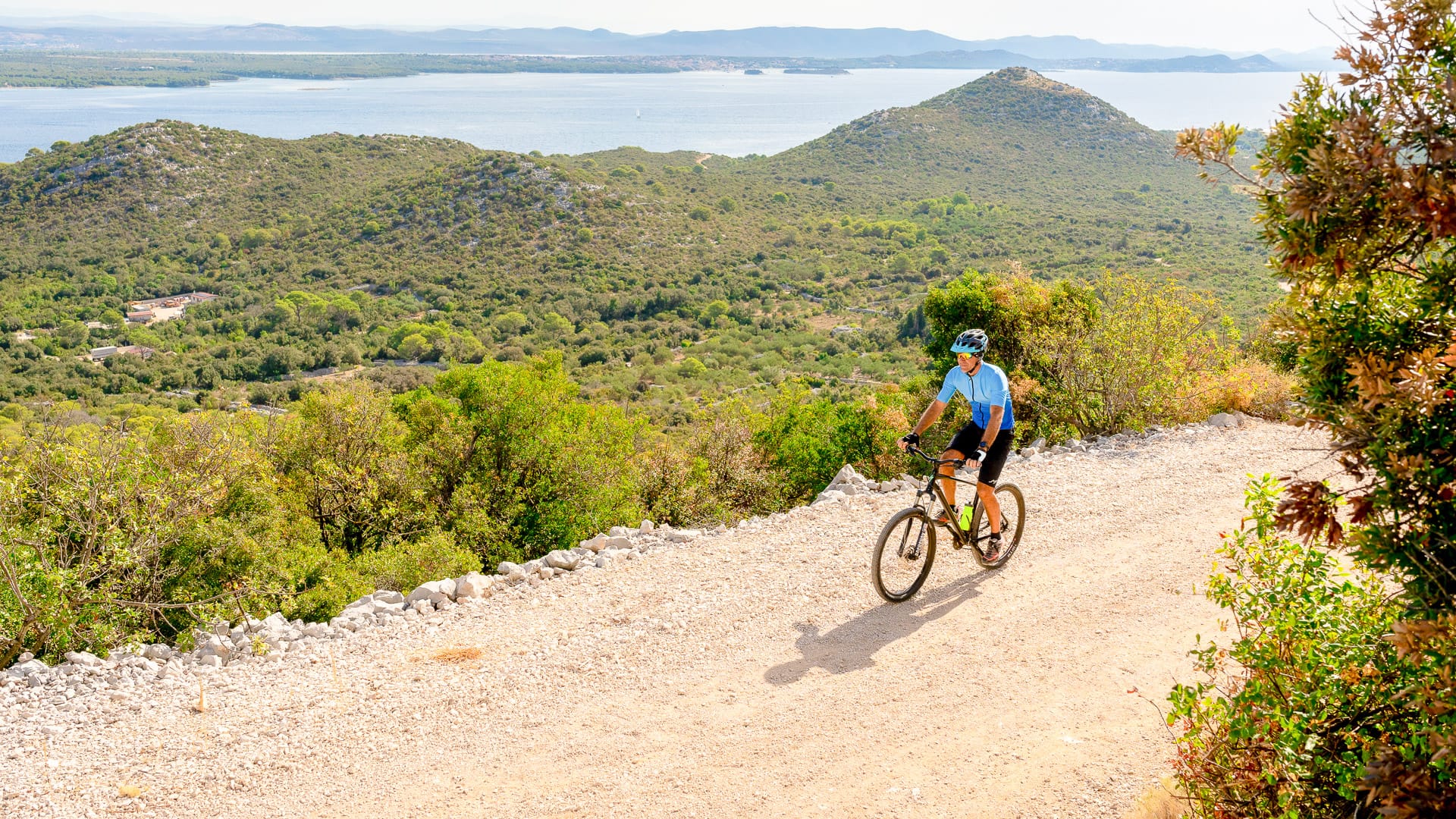
Island cycling in the Zadar region (photo credit: outdoor.level52 via Zadar Region Tourist Board)
Roads and traffic
In general, in our experience, other road users generally behave considerately towards cyclists. However, extra care is needed on narrower roads.
Road conditions are generally good. It is best to avoid main roads where possible (especially ŽC 6007), particularly during the peak summer season, when traffic levels can rise significantly.
There are still relatively few dedicated cycle paths in the Zadar region, but there is an extensive network of quiet back roads that works well for cycling. On the islands, cyclists can also use asphalt roads, which are even quieter and allow for safe riding.
What kind of cyclist is Zadar best for?
Road cyclists
The Zadar region offers a wide range of road cycling experiences.
The Zadar hinterland has rolling terrain and hills, which makes it good for building endurance. The hinterland refers to the parts of the Zadar region that sit away from the immediate coast. For example, from Biograd na Moru, you can ride inland towards places such as Benkovac and Polača. From Zadar, the hinterland includes areas such as Posedarje, Novigrad, Murvica, Zemunik and Škabrnja.
The CRO Race, formerly known as the Tour of Croatia, also passes through the region, which highlights its road cycling credentials.
Routes from Zadar can be extended to include nearby islands, including Ugljan, which is around six kilometres from Zadar by ferry, inland roads and even the Velebit mountain range.
Gravel and mountain biking
Gravel routes can be found on the islands and across the Velebit mountain range. Pag island is particularly suitable for gravel and mountain biking because of its extensive network of gravel roads. It is also one of the most visually distinctive places to ride in the region, with pale limestone, dry-stone walls, salt pans and exposed island landscapes shaped by the bora wind.
The island routes can feel very different from the mainland. They offer quieter riding, more remote landscapes and access to viewpoints across the islands, salt pans and Velebit.
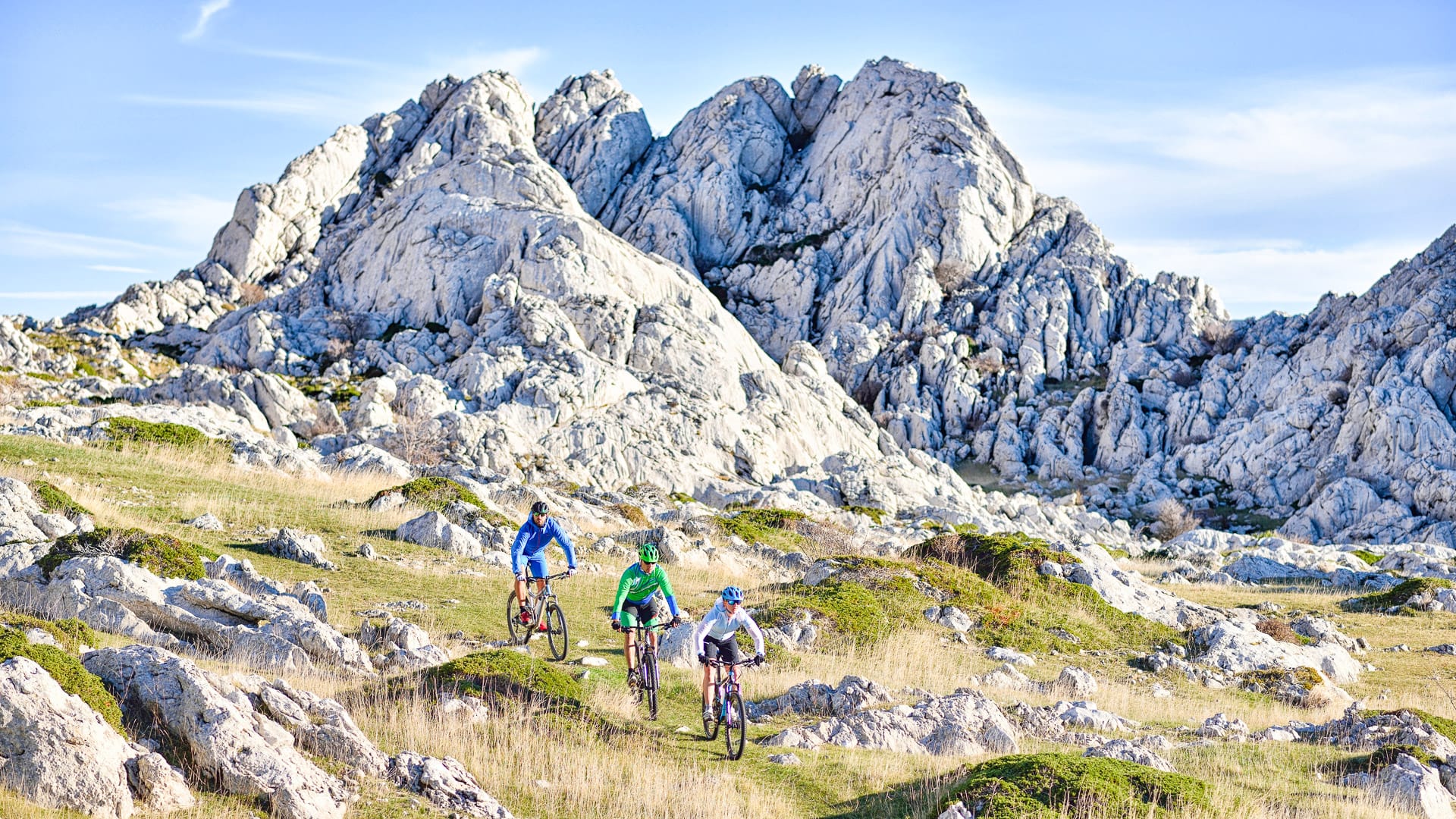
Cycling at Tulove Grede in the Velebit mountain range (photo credit: V Metelko via Zadar Region Tourist Board)
Leisure cycling and families
The Zadar region also has easier, family-friendly cycling. The area around Nin is particularly suitable for leisure cycling because it is relatively flat and has dedicated cycle paths.
Biograd is another good option for gentler riding. It is surrounded by a network of family-friendly cycling routes with gentle climbs, and several routes lead towards Vransko Lake Nature Park.
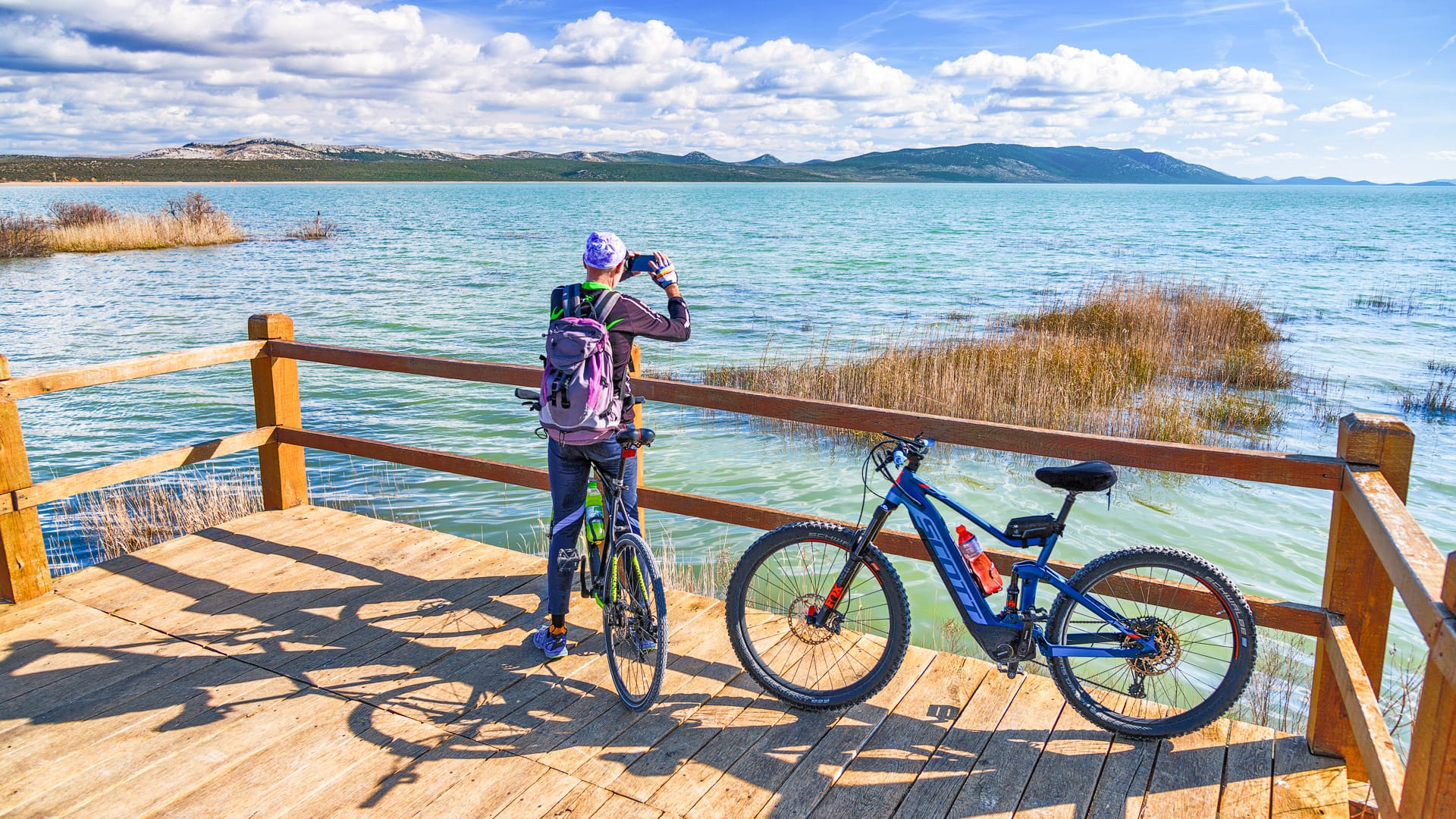
Cycling in the Vransko Lake Nature Park (photo credit: A.Gospic via Zadar Region Tourist Board)
How fit do you need to be?
The level of fitness needed depends on where you ride. Routes on the islands and in the Velebit generally demand a higher level of fitness, due to longer climbs and more demanding terrain.
For easier rides, areas around Nin and Biograd are more suitable. These are better options for relaxed cycling and family-friendly routes.
Part 3: Where should cyclists stay in the Zadar region?
Best bases at a glance
| Base | Best for | Cycling character |
| Zadar | Culture, road cycling variety and wider route access | City base with access to islands, hinterland and Velebit |
| Nin | Families and relaxed rides | Flat terrain, sandy beaches and dedicated cycle paths |
|
Pag
|
Gravel, MTB and distinctive landscapes | Gravel roads, climbs and exposed island scenery |
| Starigrad/Paklenica | Gravel, MTB and distinctive landscapes | Gravel roads, climbs and rugged mountain views |
| Biograd | Families, Vransko Lake and coastal holidays | Gentle climbs and family-friendly routes |
Zadar
Zadar, the region capital, is one of Dalmatia’s main cities and is known for its rich history and cultural heritage. Visitors can explore the old town, Roman forum, historic churches and Venetian fortifications, as well as modern installations along the riva, such as the Sea Organ and Greeting to the Sun.
The wider Zadar area is a good destination for road cycling.
Although the area immediately around Zadar can appear relatively flat, the hinterland has rolling terrain and hills. From Zadar, you can reach places such as Poličnik, around 16 kilometres away, Radovin, around 21 kilometres away, Posedarje, around 25 kilometres away, Novigrad, around 35 kilometres away, and Benkovac, around 39 kilometres away. These places sit within the Ravni Kotari area, and you could base yourself in Zadar, Nin or Biograd to explore them by bike.
Another advantage of Zadar as a base is its proximity to several national parks, including Paklenica, Northern Velebit, Kornati and Krka, as well as its strong transport connections to the surrounding archipelago.
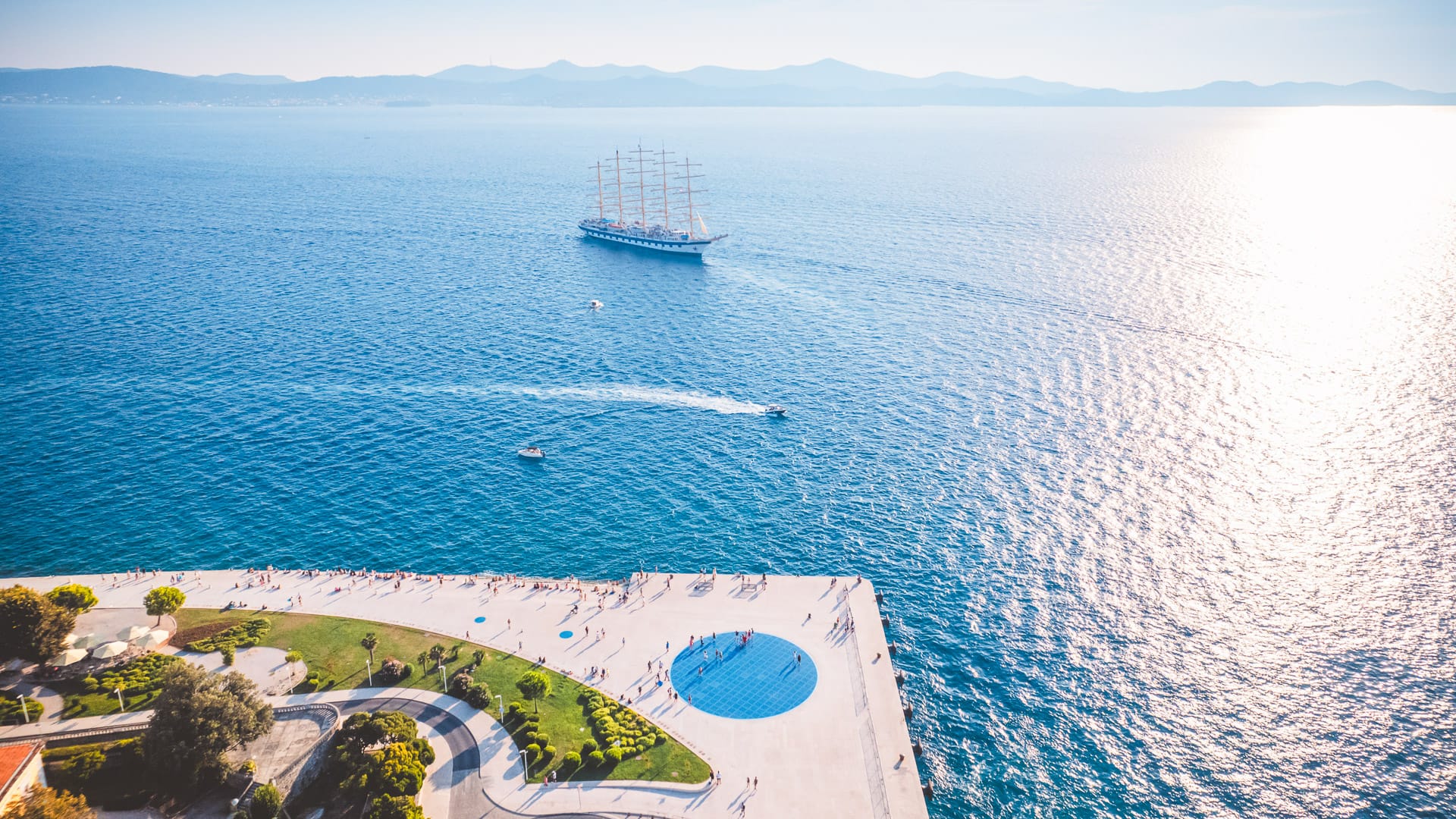
Greeting to the Sun” and the “Sea Organ,” world-famous modern attractions, are located on Zadar’s waterfront promenade (photo credit: Darko Kesnjer via Zadar Region Tourist Board)
Nin
Nin is a historic Croatian royal town near Zadar, best known for its medieval history and sandy beaches. The town sits in a shallow lagoon and the surrounding area is mostly flat, with very few climbs, making it especially suitable for relaxed and family-friendly cycling.
Dedicated cycle paths connect Nin with Zadar and the nearby island of Vir. This makes Nin a convenient base for easier cycling.
Visitors can also explore the Nin Saltworks and its museum, which gives insight into the area’s long salt production tradition.
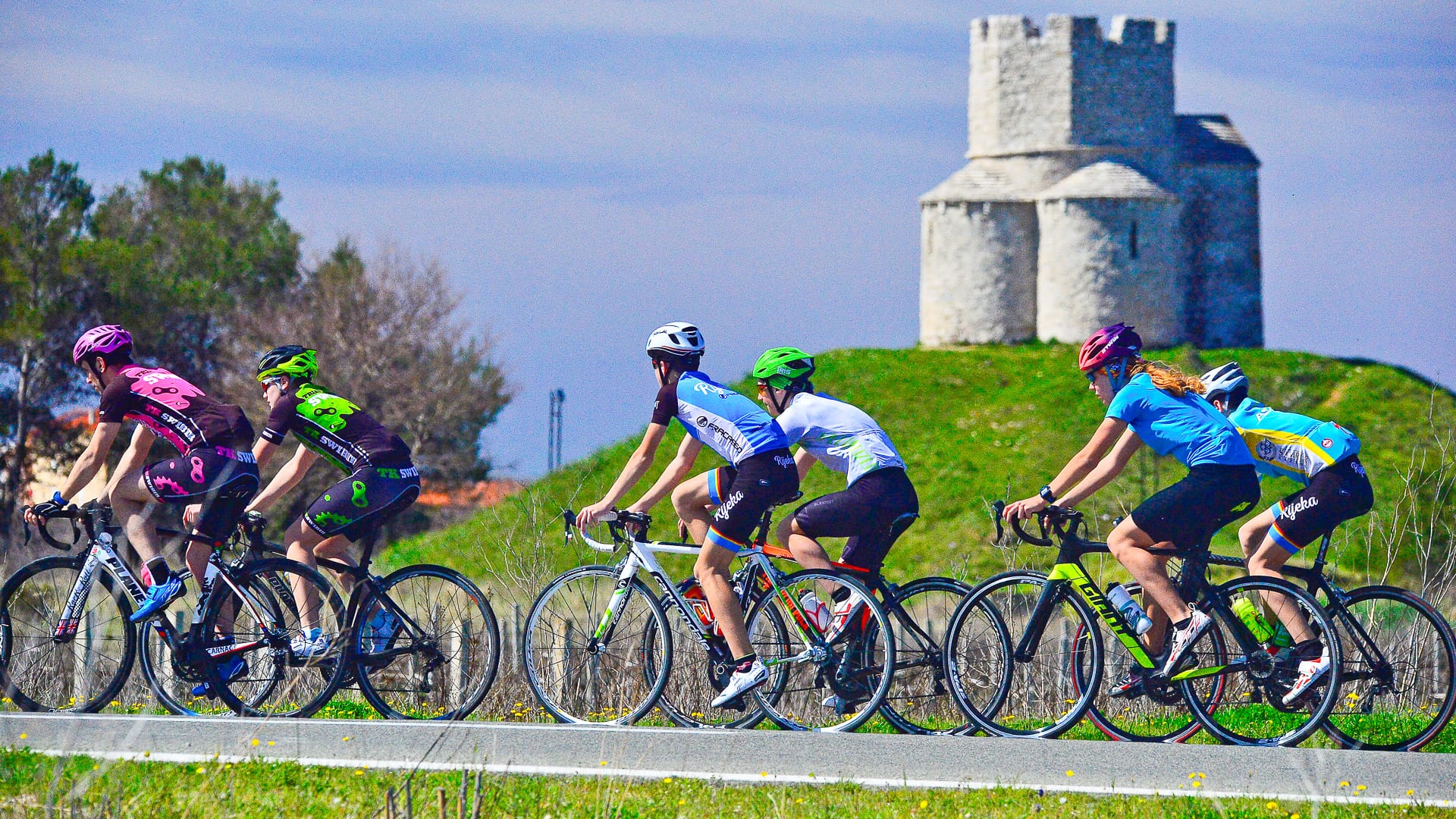
Nin cycling route with historic Church of St. Nicholas (photo credit: Ivo Pervan via Zadar Region Tourist Board)
Pag island
The island of Pag has an extensive network of gravel roads. This makes it particularly suitable for gravel cycling and mountain biking.
Although the highest peak on Pag reaches only around 350 metres, the island has several rewarding climbs and viewpoints. One notable climb leads to Wind Farm Ravna 1, around three kilometres from the town of Pag, where cyclists can enjoy panoramic views of the Velebit mountain range, the island, its salt pans and the surrounding islands.
Pag is known for its striking, almost lunar landscape. The island also has a strong cultural identity, with salt pans, lace traditions and dry-stone landscapes adding interest beyond the riding itself. It also has lesser-known areas, including the Dubrava–Hanzine nature reserve, a protected oak forest, and two wetland zones of ecological importance. Other highlights include the Lun olive groves and the historic town of Pag (yes, the same name as the island as a whole!).
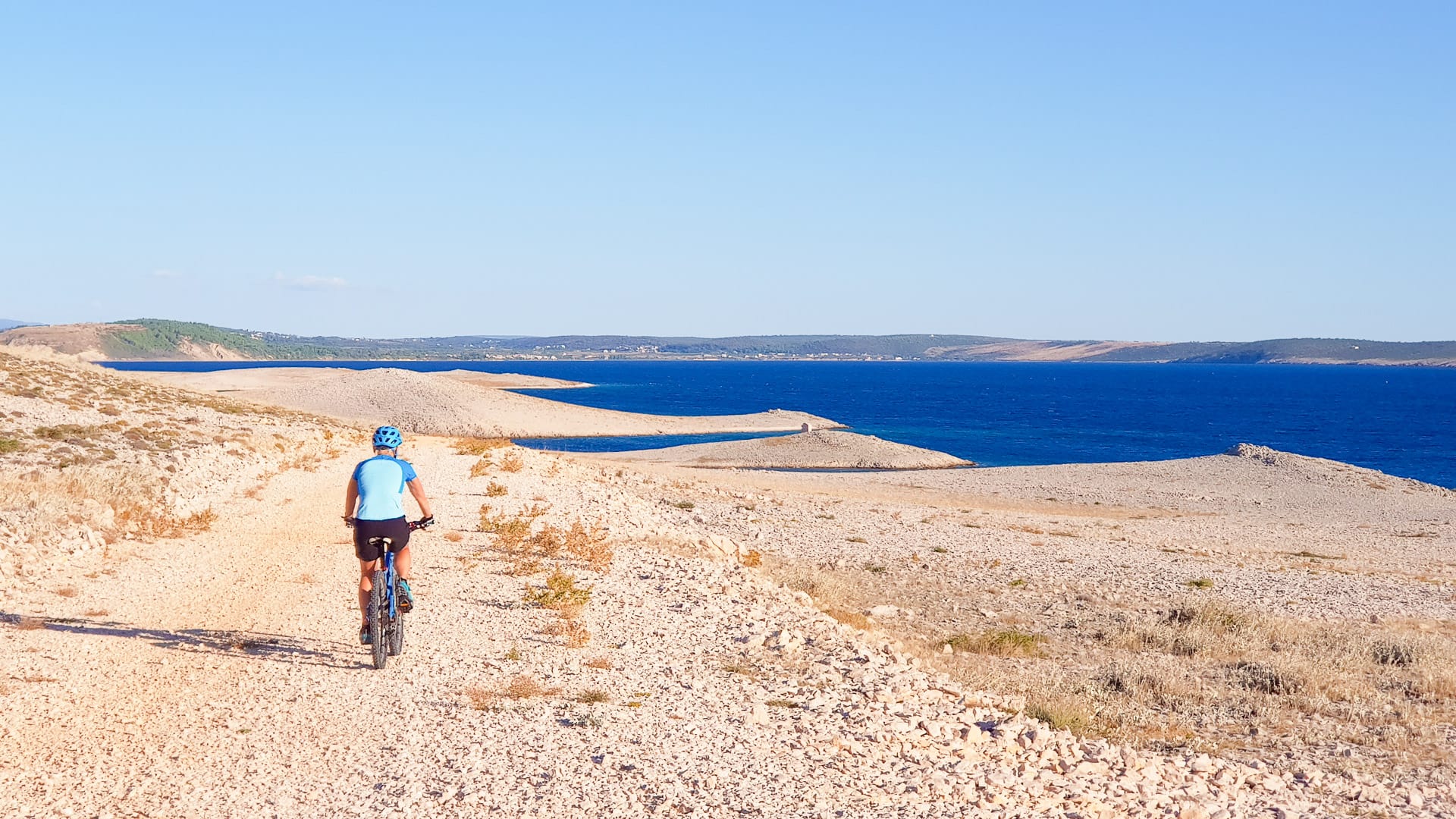
The “moonlike landscape” on the island of Pag (photo credit: Zadar Region Tourist Board)
Starigrad/Paklenica
Starigrad-Paklenica is known for its distinctive landscapes and is particularly appealing for gravel riders and mountain bikers. The area offers gravel roads, climbs and picturesque views, creating a very different riding experience from the flatter parts of the Zadar region.
Two key rides in this area are Velebit Challenge and Velebit & Sea MTB Loop. Velebit Challenge is a 58-kilometre mountain route from Starigrad, Paklenica to Sveti Rok, with 1,360 metres of elevation gain. It connects the Adriatic coast with the mountainous interior beneath the Velebit range, passing through rugged karst terrain, quiet roads, forests, rocky plateaus and traditional rural landscapes.
From Sveti Rok, cyclists are also close to the historic Master’s Road, or Majstorskacesta. This makes it a relevant additional option for riders who want to explore the wider Velebit area.
Velebit & Sea MTB Loop is a 51-kilometre circular mountain bike route from Starigrad, Paklenica, with 870 metres of elevation gain. It combines rugged coastal scenery, Velebit mountain landscapes and off-road riding, using gravel roads, forest tracks and scenic trails through karst terrain, Mediterranean vegetation and quiet mountain foothills.
Both routes are best suited to experienced cyclists with good fitness, due to the demanding climbs, off-road sections and technical terrain. They offer a memorable way to experience the contrast between the Adriatic Sea, nearby islands and the Velebit Mountains.
Biograd
Biograd is a coastal town with a network of family-friendly cycling routes and gentle climbs. Cyclists can also explore Biograd itself or take a ferry to the nearby Pašman Island to discover its cycling routes (read more below!).
Several routes lead towards Vransko Lake Nature Park, including the climb to the Kamenjak viewpoint, which offers views over the Zadar archipelago. One option is the Vrana Lake Loop, which includes this area and is now available in ridescouts.
The Park is around eight kilometres from Biograd and is home to Vransko Lake, the largest natural lake in Croatia, as well as an important ornithological reserve.
On the outskirts of Biograd, Dalmaland Fun and Water Park is popular with families.
From the harbour, visitors can arrange day trips to Kornati Islands National Park, to enjoy dramatic cliffs and swim in clear water.
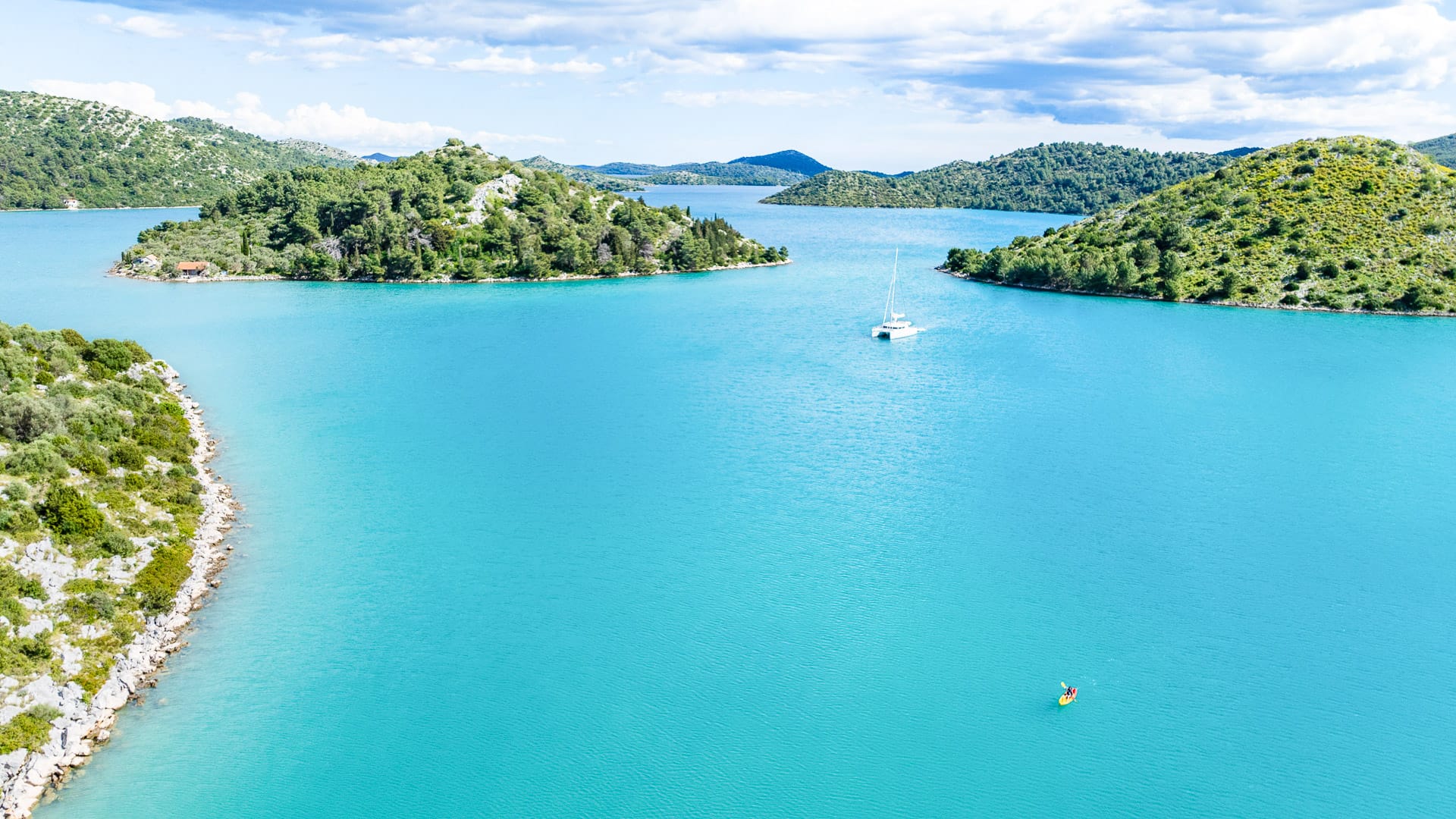
The Zadar Archipelago consists of more than 200 islands and islets (photo credit: Zadar Region Tourist Board)
Part 4: What are the best cycling routes in the Zadar region?
Suggested route links
The route links below come from ridescouts, a cycling brand by Topena. ridescouts routes include GPX files and PDF guides written with local knowledge. They give a practical starting point for exploring the areas covered in this guide.
| Area | Route | Link |
| Zadar | Journey Beyond the Coast | Click here |
| Nin | Vir Island Loop | Click here |
| Pag | Between Salt and Stone | Click here |
| Pag | Lunar Island | Click here |
| Starigrad | Velebit Challenge | Click here |
| Starigrad | Velebit & Sea MTB Loop | Click here |
| Starigrad-Paklenica /Velebit |
The “Master’s Road” | Click here |
| Biograd | Family Discovery Ride | Click here |
| Biograd | Blue Horizon | Click here |
Routes from Zadar
Zadar to Župani
The route starts in Zadar and leaves the coastline for the inland landscapes beyond the city. The route passes rolling fields, olive groves and quiet inland roads, before the scenery becomes more open and rugged, with dry-stone walls, scattered hamlets and karst terrain. It finishes in Župani, a small town in the Kruševo area. It’s a brilliant way to take in the changing character of Dalmatia’s landscapes.
Route overview:
| Start | Zadar |
| Finish | Župani, Kruševo area |
| Distance | 70 kilometres |
| Elevation gain | 870 metres |
| Suitable bike | Touring bike |
| Route character | Inland route, rolling fields, olive groves, quiet roads, dry-stone walls, hamlets and karst scenery |
| ridescouts route | Click here |
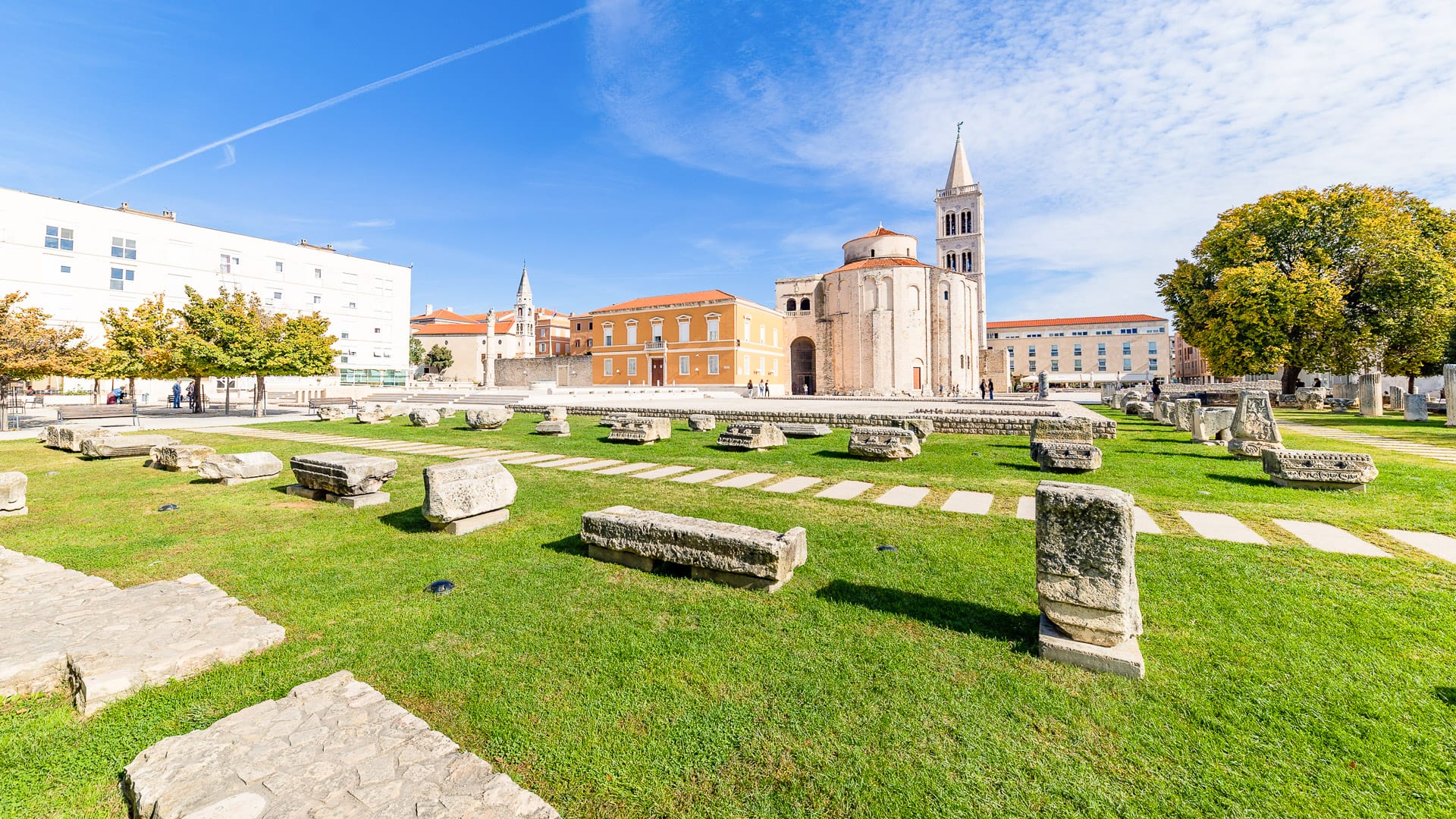
Zadar Old Town Forum and Church of St. Donatus (photo credit: Fabio Simicev via Zadar Region Tourist Board)
Sponsor Message
Exclusive offer: use the code below and get 50% off the ridescouts routes mentioned in this article, including GPX file and PDF guide, when you buy the relevant route from ridescouts before 24 June 2027. *T&Cs apply.
Routes from Nin
From Nin, the suggested route is the Vir Island Loop. Nin’s flatter terrain and cycle path connections make this area especially relevant for easier riding.
Vir Island Loop
Vir Island Loop is a circular route around Vir Island. It uses smaller roads and seaside paths, with regular views of the Adriatic Sea and nearby islands. The route passes rocky shores, small beaches and open stretches shaped by wind and sun. The terrain is mostly gentle, making it suitable for relaxed cycling and sightseeing at a comfortable pace.
Route overview:
| Start | Vir |
| Finish | Vir |
| Distance | 18 kilometres |
| Elevation gain | 160 metres |
| Suitable bike | Road bike |
| Route character | Circular island route, smaller roads, seaside paths, coastal views, beaches and gentle terrain |
| ridescouts route | Click here |
To reach Vir from Nin, you can follow the bicycle path that connects the two.
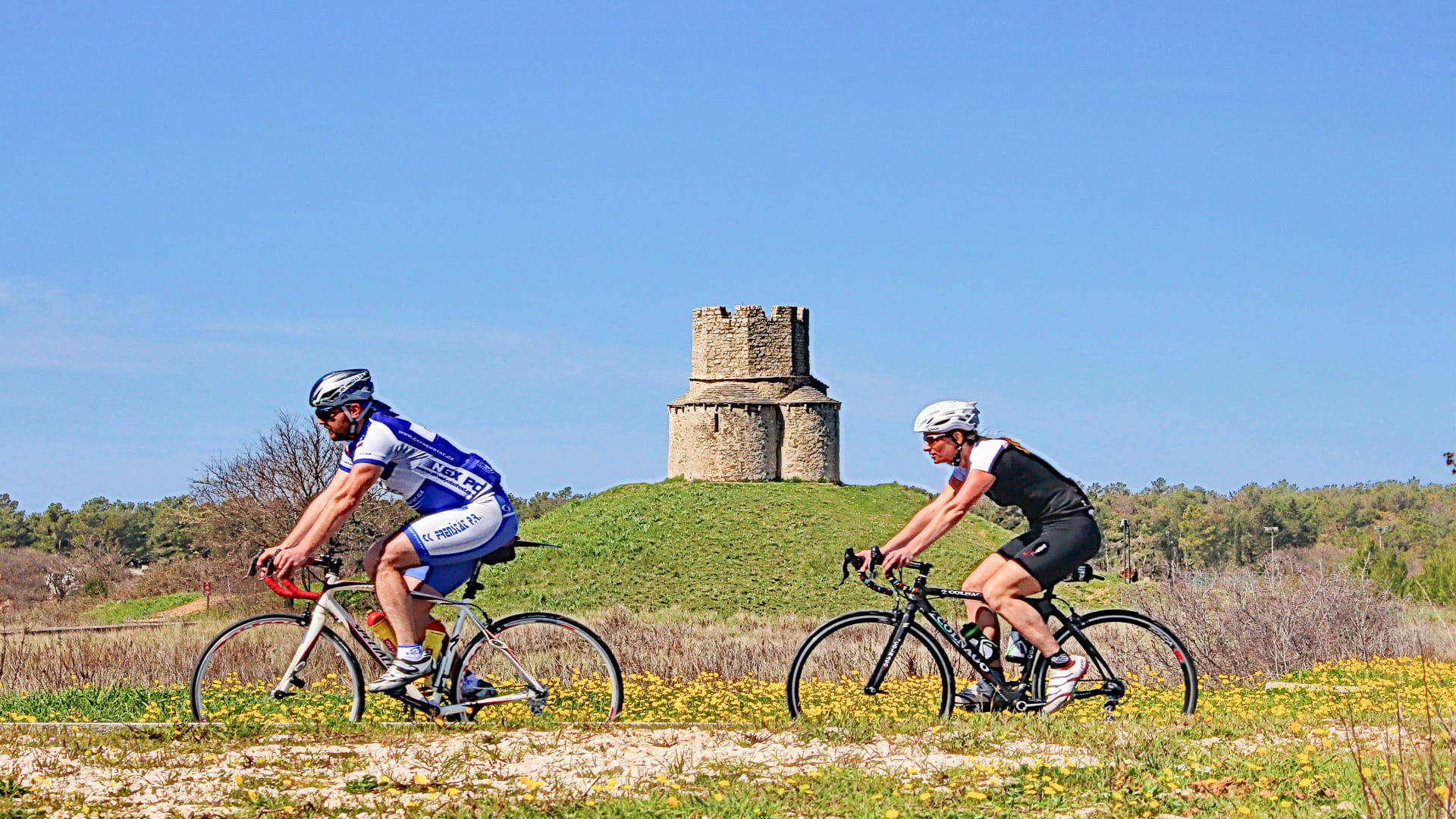
Cycling in Nin, the oldest Croatian royal town (photo credit: Marin Stulic via Zadar Region Tourist Board)
The Roads of Ravni Kotari
The Roads of Ravni Kotari is a circular route that starts and finishes in the historic town of Nin. It heads inland through the fertile landscapes of Ravni Kotari towards Benkovac, following quiet rural roads lined with fields, olive groves and vineyards. Along the way, cyclists pass through traditional villages that offer a glimpse into inland Dalmatia’s rural character.
Route overview:
| Start | Nin |
| Finish | Nin |
| Distance | 114 kilometres |
| Elevation gain | 900 metres |
| Suitable bike | Road bike |
| Route character | Circular inland route, quiet rural roads, olive groves, vineyards, traditional villages, rolling terrain and countryside scenery |
| ridescouts route | Click here |
Sponsor Message
Exclusive offer: use the code below and get 50% off the ridescouts routes mentioned in this article, including GPX file and PDF guide, when you buy the relevant route from ridescouts before 24 June 2027. *T&Cs apply.
Routes on Pag
Novalja – Pag loop
This route connects Novalja and Pag, the two best-known towns on the island of Pag. Starting in Novalja, it follows island roads through karst landscapes, stone walls, dry fields and crystal clear sea views before reaching the historic town of Pag, known for its lace, salt pans and cultural heritage. The route then returns to Novalja, giving cyclists a ride that combines Pag’s natural scenery with its cultural identity.
Route overview:
| Start | Novalja |
| Finish | Novalja |
| Distance | 59 kilometres |
| Elevation gain | 630 metres |
| Suitable bike | Mountain bike |
| Route character | Island roads, karst scenery, stone walls, dry fields, sea views, historic Pag |
| ridescouts route | Click here |
Dinjiška to Kolan
Lunar Island explores Pag’s more rugged inland landscapes. It starts from the coastal village of Dinjiška and follows smaller roads and cycling trails through stone fields, dry-stone walls and sheep pastures. The route includes views of Pag’s barren rocky terrain and the greener valleys around Kolan, an area known for cheese-making. The choice for cyclists who want a mix of natural scenery and authentic island life.
Route overview:
| Start | Dinjiška |
| Finish | Kolan |
| Distance | 43 kilometres |
| Elevation gain | 410 metres |
| Suitable bike | Touring/Mountain bike |
| Route character | Smaller roads and bike trails, stone fields, dry-stone walls, sheep pastures, views towards Kolan |
| ridescouts route | Click here |

Paški sir is a world-famous and highly valued cheese (photo credit: Zadar Region Tourist Board)
Sponsor Message
Exclusive offer: use the code below and get 50% off the ridescouts routes mentioned in this article, including GPX file and PDF guide, when you buy the relevant route from ridescouts before 24 June 2027. *T&Cs apply.
Routes from Starigrad-Paklenica
Velebit Challenge
Velebit Challenge connects the Adriatic coast with the mountainous interior beneath the Velebit range. Starting in Starigrad, Paklenica, the route gradually leaves the Mediterranean landscape behind and climbs through rugged karst terrain, with views of mountains, canyons and the coast. It follows quiet roads through nature, before continuing inland through forests, rocky plateaus and traditional rural landscapes. Theroute finishes in Sveti Rok, in a highland setting shaped by open views and the
distinctive natural character of Velebit. It’s a demanding route for experienced cyclists with good fitness.
Route overview:
| Start | Starigrad, Paklenica |
| Finish | Sveti Rok |
| Distance | 58 kilometres |
| Elevation gain | 1,360 metres |
| Suitable bike | Mountain bike |
| Route character | Coast-to-mountain route, quiet roads, rugged karst terrain, forests, rocky plateaus, rural landscapes, mountain views and coastal panoramas |
| ridescouts route | Click here |
Velebit & Sea MTB Loop
Velebit & Sea MTB Loop is a circular mountain bike route from Starigrad, Paklenica. Starting near the Adriatic coast, the route quickly leaves the waterfront and climbs into the rocky hinterland, where gravel roads and forest tracks show a different side of the region. It follows scenic trails through karst terrain, Mediterranean vegetation and quiet mountain foothills, with views of the Adriatic Sea, nearby islands and the Velebit Mountains. The riding alternates between technical sections, fast gravel descents and peaceful stretches through nature, before returning to the coast. It’s best suited to experienced cyclists looking for a challenging off-road ride.
Route overview:
| Start | Starigrad, Paklenica |
| Finish | Starigrad, Paklenica |
| Distance | 51 kilometres |
| Elevation gain | 870 metres |
| Suitable bike | Mountain bike |
| Route character | Circular MTB route, gravel roads, forest tracks, karst terrain, Mediterranean vegetation, mountain foothills, technical sections, gravel descents and coastal views |
| ridescouts route | Click here |
The “Master’s Road”
The “Master’s Road”, or Majstorska cesta, is a mountain route from Sveti Rok to Posedarje. It follows the historic Majstorska Road, the first modern road across Velebit, built in the 19th century. Starting in the mountain village of Sveti Rok, the route passes through the rugged Velebit landscape, with stone walls, karst valleys and wide viewpoints before descending towards Posedarje on the coast. The route combines history, mountain scenery, nature and views towards the Adriatic Sea and islands.
Route overview:
| Start | Sveti Rok |
| Finish | Posedarje |
| Distance | 52 kilometres |
| Elevation gain | 730 metres |
| Suitable bike | Mountain bike |
| Route character | Historic mountain road, rugged Velebit landscape, stone walls, karst valleys, viewpoints, Adriatic and island views, long descent towards the coast |
| ridescouts route | Click here |
Sponsor Message
Exclusive offer: use the code below and get 50% off the ridescouts routes mentioned in this article, including GPX file and PDF guide, when you buy the relevant route from ridescouts before 24 June 2027. *T&Cs apply.
Routes from Biograd
Pakoštane loop
This is a circular route that begins in Pakoštane, between the Adriatic Sea and Vrana Lake. It first follows the coast towards Drage, with sea views, Mediterranean vegetation and a relaxed seaside feel, before turning inland towards Vrana Lake, the largest natural lake in Croatia. Around the lake, the cycling is mostly flat and pleasant, with reeds, birdlife and wide open views.
Route overview:
| Start | Pakoštane |
| Finish | Pakoštane |
| Distance | 14 kilometres |
| Elevation gain | 130 metres |
| Suitable bike | Mountain bike |
| Route character | Circular route, coast towards Drage, Lake Vrana, quiet village roads, lakeside scenery |
| ridescouts route | Click here |
Biograd and Pakoštane are connected by a bicycle path, making it easy to ride between the two towns. The route is mostly unpaved.
Pašman island to Ugljan Island
This is an island route from Tkon, on the southern tip of Pašman, to Preko on neighbouring Ugljan. It follows quiet island roads and inland passages, passing olive groves, stone-walled fields, hamlets and views over the Pašman Channel. The bridge between Pašman and Ugljan is a key moment in the ride, and the final stretch leads towards Preko with views of Zadar and the surrounding archipelago.
Route overview:
| Start | Tkon, Pašman |
| Finish | Preko, Ugljan |
| Distance | 49 kilometres |
| Elevation gain | 760 metres |
| Suitable bike | Mountain bike |
| Route character | Island-to-island route, quiet roads, olive groves, hamlets, Pašman–Ugljan bridge, views towards Zadar |
| ridescouts route | Click here |
To reach Tkon from Biograd, you can take the ferry across to the island of Pašman.
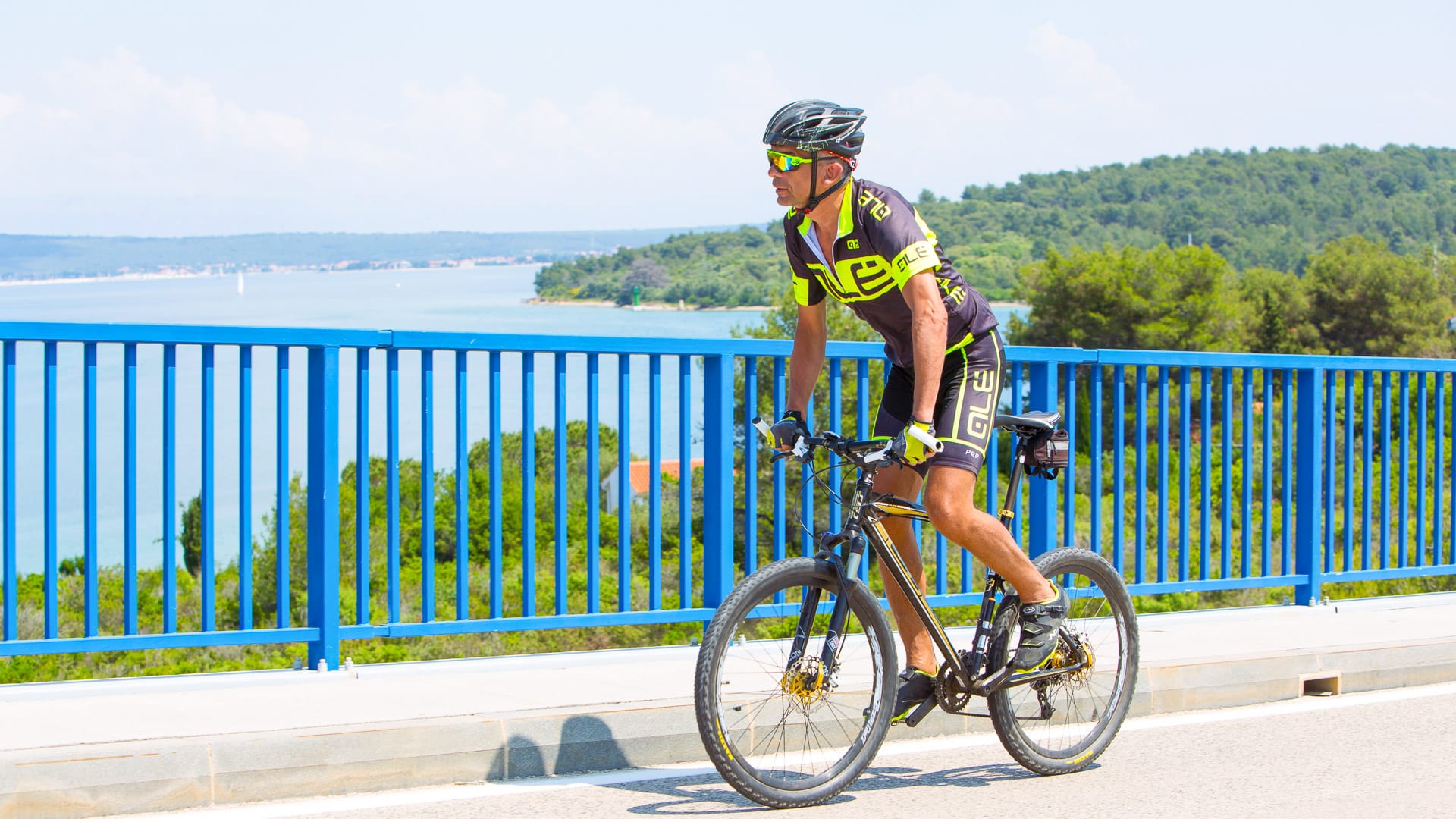
The islands of Ugljan and Pašman are connected by a bridge (photo credit: Jakov Đinđić via Zadar Region Tourist Board)
Sponsor Message
Exclusive offer: use the code below and get 50% off the ridescouts routes mentioned in this article, including GPX file and PDF guide, when you buy the relevant route from ridescouts before 24 June 2027. *T&Cs apply.
Can you cycle EuroVelo 8 through the Zadar region?
EuroVelo 8, the Mediterranean Route, passes through Zadar as part of its Dalmatian coastal stage. The official EuroVelo stage runs from Zadar to Dubrovnik, via the Šibenik and Split regions. You can get a GPS file for the route from the official EuroVelo page, but note that route-development status can vary.
In the Zadar area, the route helps place the region within Croatia’s wider Adriatic cycling corridor. It can be relevant for touring cyclists, as well as riders planning shorter sections around the coast, islands and hinterland.
EuroVelo 8 through the Zadar region shows the diversity of the region. The route enters the region near Gračac, then crosses the southern side of Velebit before passing through Maslenica, Nin and Zadar. From Zadar, it continues across the islands of Ugljan and Pašman to Biograd, before following the Adriatic Highway to Drage and then crossing into Šibenik-Knin Region.
Within a relatively compact area, cyclists can combine coastal riding, island routes, hinterland roads, natural scenery and cultural heritage.
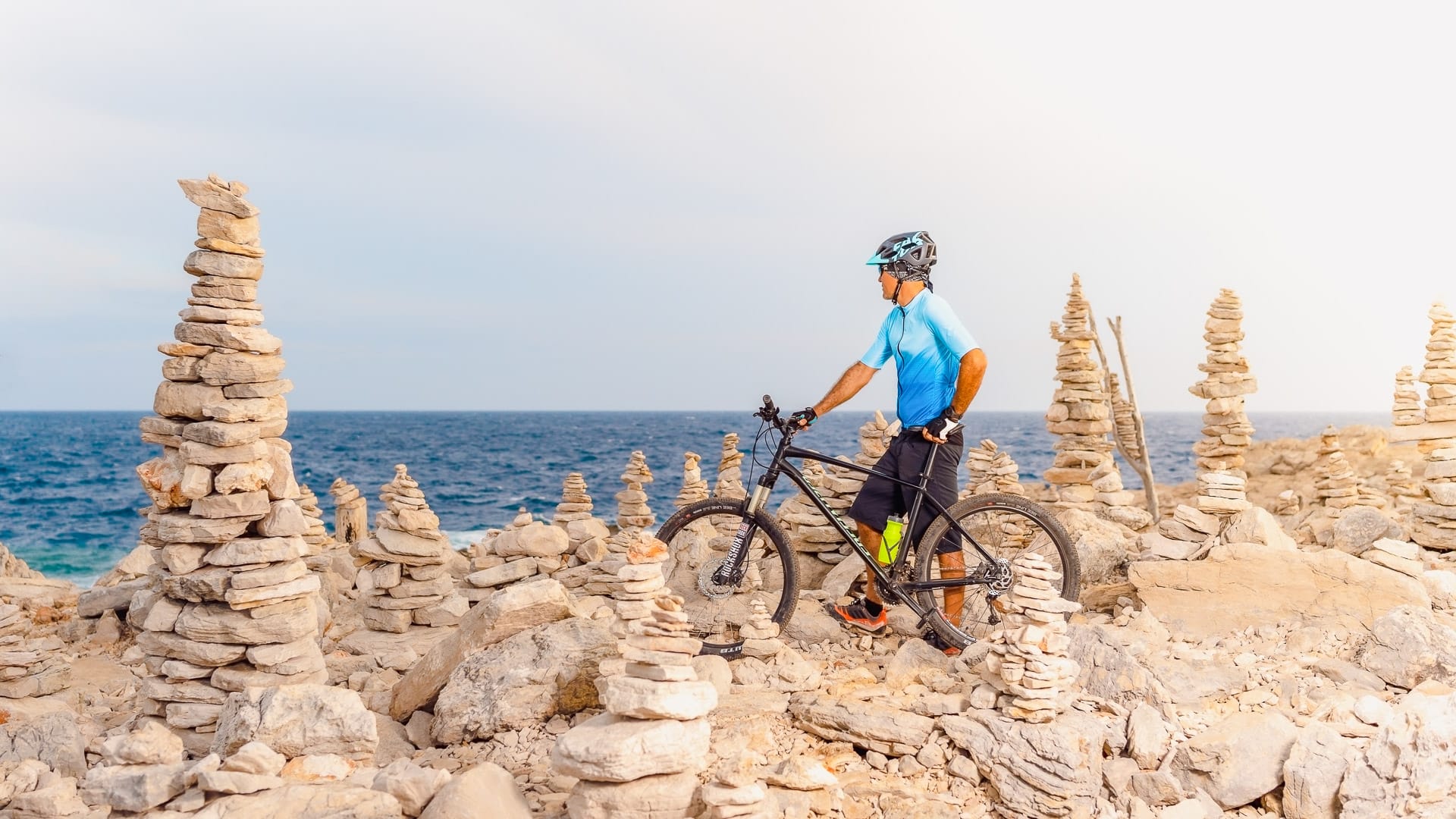
Island cycling in the Zadar region (photo credit: outdoor.level52 via Zadar Region Tourist Board)
Part 5: Do you need a guide or cycling tour in the Zadar region?
Independent cycling
The Zadar region does not yet have an extensive network of dedicated cycle paths. However, it is well-suited to cycling because of its many quiet back roads.
Local cycling support
Tour operators active in the Zadar region include Topena, which offers cycling-focused programmes through its dedicated brand, ridescouts.
Local support can be useful for choosing appropriate routes, understanding the terrain and combining different parts of the region. This is especially relevant for riders who want to include islands, Velebit or quieter inland roads.
- For individual cyclists, we organise self-guided trips, route planning, bike hire, transfers, accommodation, lunches and tastings, as well as tailor-made trips. With these tailor-made trips, we adapt daily or multi-day tours to the needs of each client.
- Topena/ridescouts also organises group tours for clubs and organisations as well as other bike tour operators. Depending on the trip, services may include guides, bike hire, transfers, a support vehicle, tickets to national parks and nature parks, lunches and tastings, and accommodation.
Need help planning your ride? Visit the ridescouts website for details of guided cycling support and tours in the Zadar region.

Cycling at sunset is a unique feeling (photo credit: V Metelko via Zadar Region Tourist Board)
Part 6: What do you need to know before cycling in the Zadar region?
Practicalities of Zadar region cycling holidays
Can you hire bikes in the Zadar region?
If you are planning to hire a bike in the Zadar region, bear in mind that performance road bikes and gravel bikes are not generally available. Hire options are mainly limited to city bikes, mountain bikes and e-bikes.
Bike hire in Zadar
In Zadar, bike hire providers include:
- Hop and Go Bikes, Krešimirova obala 20, 23000 Zadar
- Rent a Bike Zara, Ul. Nikole Strmića 5, 23000 Zadar
- Zadar Bike Rental, Borelli ul. 6, 23000 Zadar
- Calimero Rent a Bike, Ul. II zasjedanja ZAVNOH-a 1, 23000 Zadar
- E-bike Zadar, Ul. Vlatka Mačeka 11, 23000 Zadar
Bike hire in Pag, Biograd and Nin
Pag
800 Sport Rent, Ul. Bartula Kašića 8, 23250 Pag
Biograd
- Biograd Tourist Agency, Ul. Kralja Petra Svačića 19, 23210 Biograd na Moru
- My Way Travel, Ul. dr. Franje Tuđmana 10, 23210 Biograd na Moru
Nin
Rent a Bike Nin, Obrovci ul. 12, 23232 Nin
Note: The listed bike hire providers can typically also deliver bikes, which may be useful if you are staying outside the main towns or do not want to collect bikes in person.
Are there bike-friendly hotels in the Zadar region?
Remember to double-check bike storage arrangements (and any other services you need) before booking your accommodation as policies often change and they may charge for storage.
There is currently no dedicated cycling accommodation accreditation scheme in the Zadar region.
However, many accommodation providers, including campsites, are generally welcoming and well prepared to host cyclists. It’s advisable to book accommodation in advance and check about bike storage before you book.
The following accommodation options are useful bases for cyclists in the Zadar region:
- Hotel Pagus in Pag
- Hotel In in Biograd
- Hotel Rajna in Starigrad/Paklenica
- Zaton Holiday Resort in Nin
- Hotel Mediteran in Zadar
When is the best time to cycle in the Zadar region?
Best seasons for cycling
Cycling in the Zadar region is possible throughout the year. However, it is generally best to avoid the peak summer season, when temperatures can be high and traffic levels increase.
The pre- and post-summer season periods offer more favourable conditions. During these times, the weather is milder, there are fewer crowds and traffic is lower. This makes them ideal for a cycling holiday.
March can also be suitable for cycling, depending on the weather. However, I suggest April, May, June, September and October as the best months for cycling in the Zadar region.
Weather conditions tend to become less stable from November through to March. While it is still possible to cycle during these months, conditions can be more unpredictable than during the main cycling season.
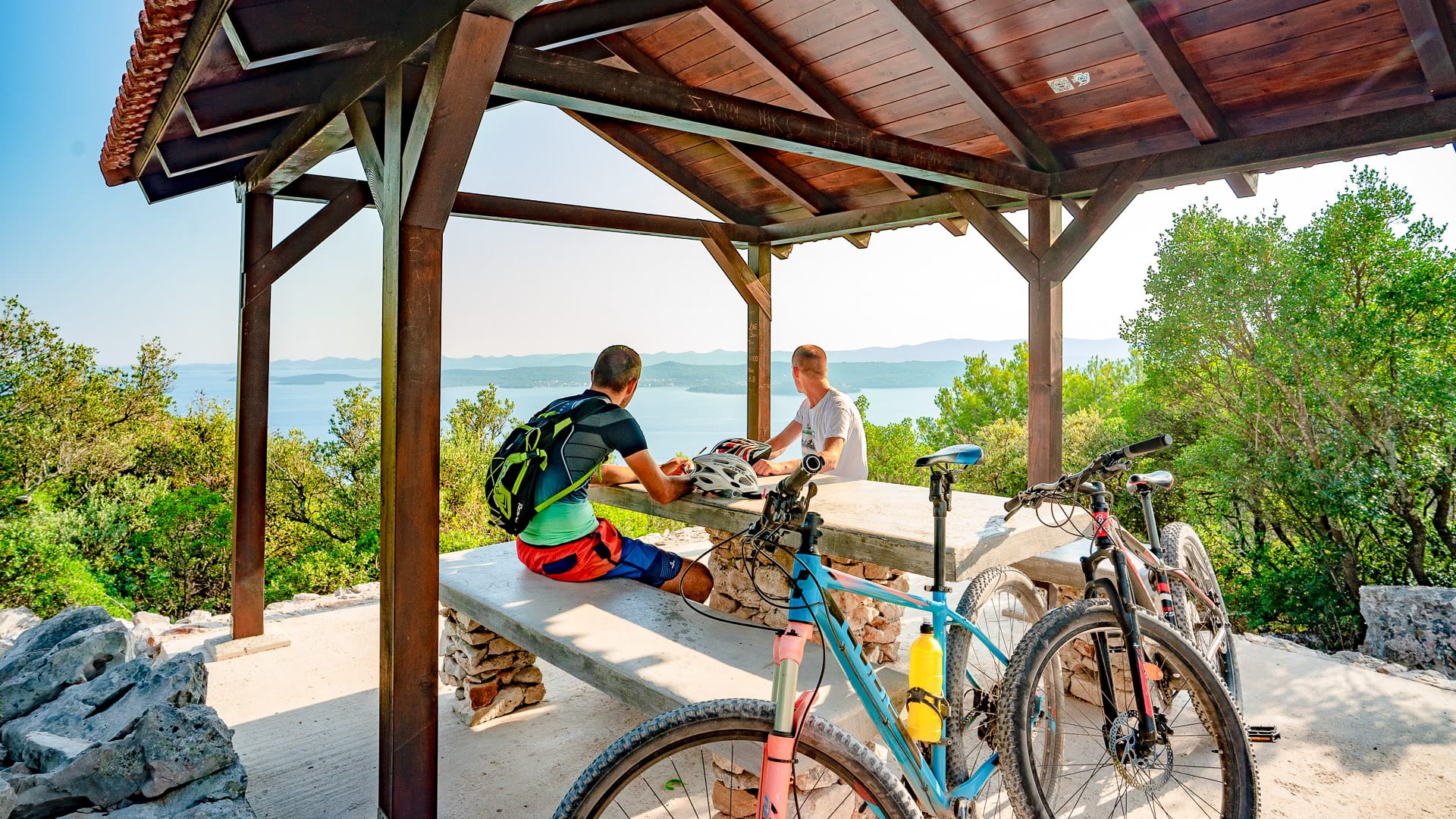
The Željina rest area on the island of Ugljan (photo credit: Pointers d.o.o. via Preko Tourist Board)
Summer and winter considerations
Summer cycling requires particular care because high temperatures can make riding pretty physically demanding. Carry enough water, use sun protection and take regular breaks.
Winter cycling is possible, but be aware that practicalities might be harder as some businesses may well be closed. Ferries run all year round, but some campsites, hotels, restaurants and cafés do not stay open throughout the year. Zadar Airport also has a seasonal flight schedule, with international flights usually operating from mid-March to early November.
What cycling events take place in the Zadar region?
Tour of Croatia
The CRO Race, formerly known as the Tour of Croatia, is a professional men’s road cycling stage race that often passes through the Zadar region. The 2026 edition is due to take place from 22 to 27 September and is a 2.Pro UCI ProSeries stage race. Spanning nearly 1,000 kilometres across six stages, the race is known for its scenic routes and shines a spotlight on the country’s cycling possibilities.
The second stage is set to pass through the Zadar region, starting in Biograd and finishing on the island of Pag.
Od Branimira do Branimira
Od Branimira do Branimira is a recreational Zadar bike tour connecting Zadar with the nearby town of Nin. It is traditionally held in April each year and is known for its strong community spirit and family-friendly atmosphere. Organised by the local administration, it is one of the largest cycling events of its kind in Croatia and does not require an entry fee.
EPIC RIDES
EPIC RIDES Paklenica/Zrmanja is an organised cycling experience that takes participants through some of the region’s most striking landscapes, from the canyons of Paklenica to the Zrmanja River. The route combines quiet roads and gravel paths. It is designed to be enjoyable rather than demanding, making it suitable for recreational cyclists. The focus is on exploring nature and enjoying the ride in a well-organised setting. The event usually takes place in April.
Visitors can register for EPIC RIDES Paklenica/Zrmanja. The trails change each year, but there is usually one shorter route of around 40 kilometres and one longer route of around 50 kilometres.
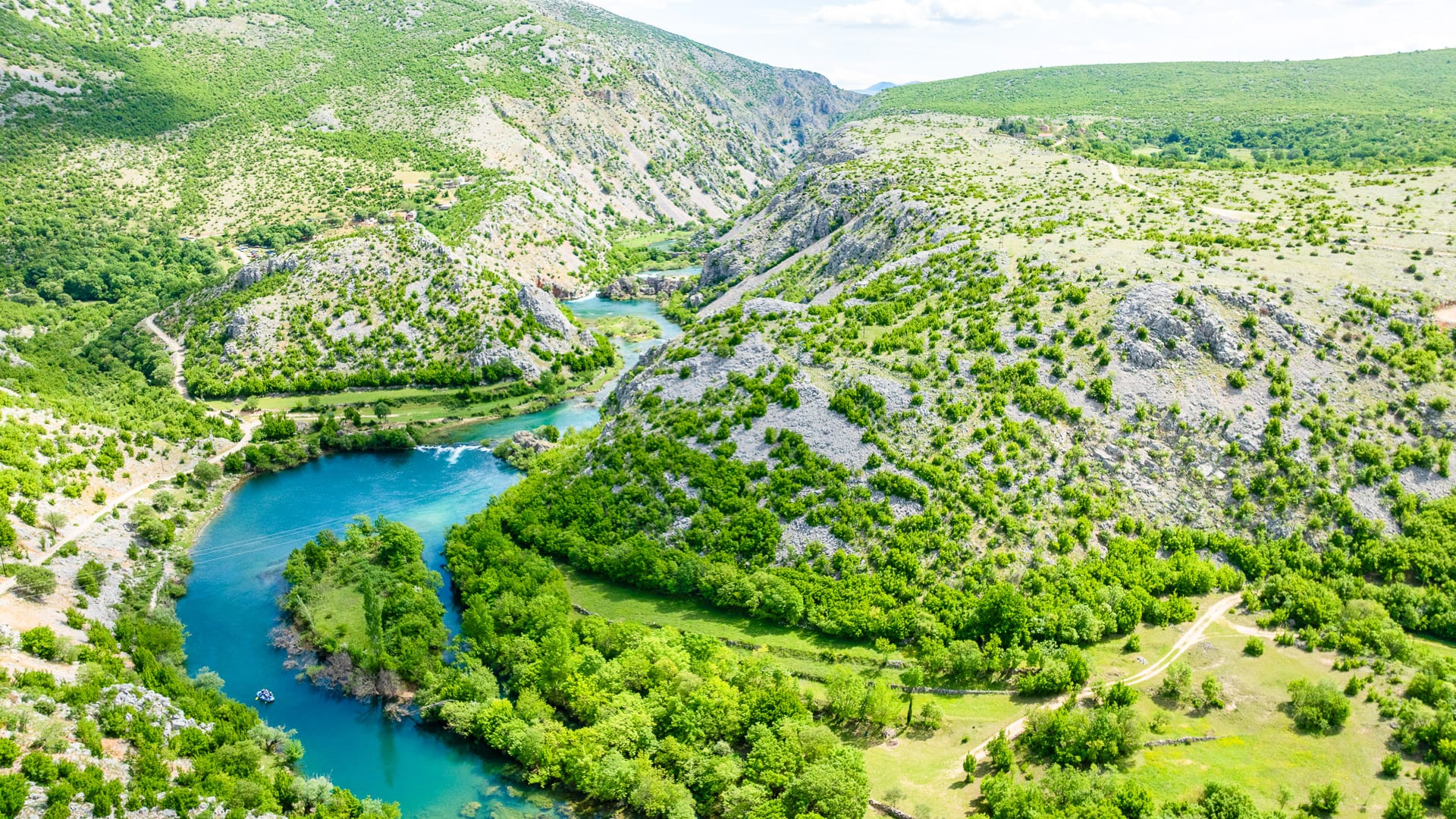
The Zrmanja River is one of the most beautiful rivers in Europe (photo credit: Zadar Region Tourist Board)
Zadar Granfondo
Zadar Granfondo Falkensteiner Borik is a competitive road cycling event that starts and finishes at Falkensteiner Resort Borik. The route leads along the coast and into the hinterland, including a section across the bridge to the island of Vir. Participants can choose between two distances, making it suitable for both recreational and more experienced cyclists. While it is a timed race, it remains accessible and well organised, and showcases the diversity of the local landscape. The event takes place on Sunday, 18 October 2026.
Tips for cycling in the Zadar region
Navigation and road safety
As ever, it’s sensible to plan your biking routes carefully, using reliable cycling maps or GPS. Signage can sometimes be limited outside the main tourist areas.
Croatia follows standard European traffic rules, but there are a few cycling-specific rules and safety points to be aware of:
- You must ride on the right and obey road signs.
- You should ride predictably, in a straight line and stay highly visible, especially on busier coastal roads where traffic can be fast.
- You must use a cycle lane or cycle path where one exists.
- If there is no dedicated cycling infrastructure, you should ride as close as possible to the right-hand edge of the road.
- Children under 14 must wear a helmet. Helmets are also suggested for older cyclists.
- At night, or in conditions of reduced visibility, your bike must have a white front light, a red rear light and reflective markings.
- You must not use a mobile phone while riding unless you are using a hands-free device.
- Drink-driving rules also apply to cyclists, and fines may be issued for serious violations.
- Cyclists should generally ride in single file, except on cycle paths where riding side by side is allowed if there is enough space.
- You should usually dismount at pedestrian crossings, unless there is a marked bicycle crossing.
- Bikes must be roadworthy, particularly in relation to brakes and lights.
Heat, water and supplies
Food and water are generally easy to find in towns and villages. However, longer rural stretches may have fewer services, so planning ahead is important. This is particularly important if you plan to ride the Master’s Road (Majstorska cesta), where services can be limited and you may encounter long stretches without shops, cafés or water.
In summer, carry enough water, use sun protection and take regular breaks. Essential kit includes a helmet, repair kit and navigation tools, especially because some rural areas are quite remote.
Cars, ferries and island cycling
A car is not necessary for exploring the main cycling routes. However, it can be useful for reaching more distant inland or mountainous areas. Biograd, Zadar and Nin are the easiest bases if you do not have a car, while Starigrad and Pag are generally easier with a car or transfer.
The ferries make it straightforward to access the Zadar region’s islands. Ferries are operated by Jadrolinija, and there are no special rules for taking bicycles on board. You just need to buy tickets for both yourself and your bike.
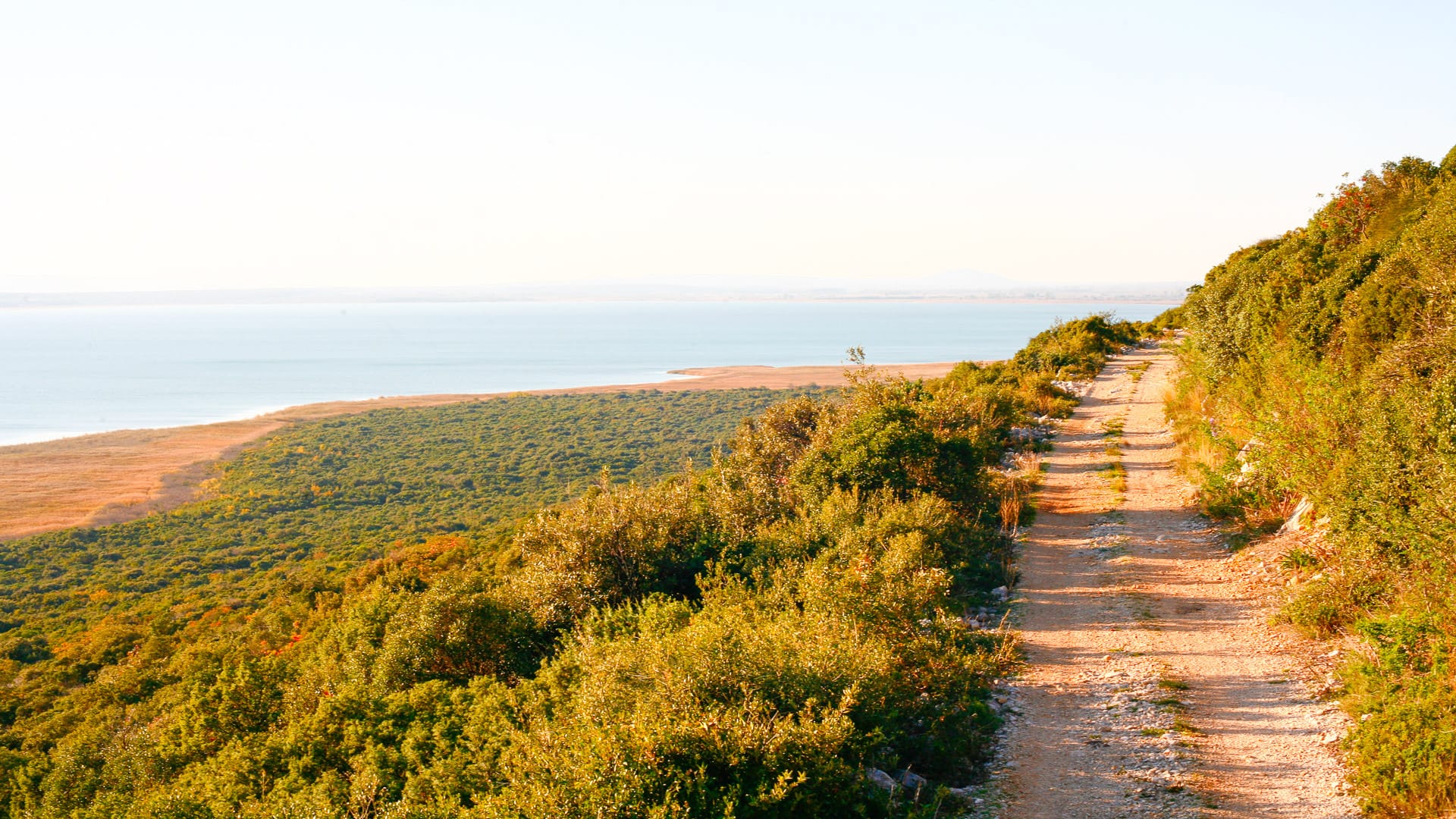
Vransko Lake cycling routes (photo credit: Iva Rogic via Zadar Region Tourist Board)
Language and local culture
English is widely understood in tourist areas. Even so, a few basic Croatian phrases can be helpful, such as hvala, meaning thank you, voda, meaning water, and Gdje je…?, meaning where is…?
Food is an important part of the local culture. Dishes and specialities to look out for include:
- Peka, a meat and potato dish cooked “under the bell”
- Maraschino cherry liqueur
- Prisnac, a simple savoury pie made with thin dough, cheese and eggs
- Pag cheese
- Dalmatian ham
- lamb on a spit
- Novigrad mussels

The gastronomy of the Zadar region is a typical representative of Mediterranean cuisine – one of the healthiest in the world, included on the UNESCO Intangible Cultural Heritage list (photo credit: Zadar Region Tourist Board)
How do you get to Zadar with a bike?
Flying, driving and ferries
The Zadar region is accessible by air, road and sea.
Zadar Airport is the closest international airport, around 10 to 20 minutes by road from Zadar city. In season, it has direct flights from around 60 European cities, though schedules vary by airline and time of year.
Zadar is also well connected to major Croatian cities such as Zagreb, Split, Rijeka and Dubrovnik via the A1 motorway, as well as by regional roads. International links extend across Central and Southern Europe.
The region is also accessible by ferry, with connections to Italy on some routes, depending on the season and operator, as well as a network linking the mainland with nearby islands. Cyclists planning island rides should check current ferry timetables before building a route around a crossing.
Transfers with bikes
Private transfers, including those organised by Topena, are available.
If you are travelling with a bike box, we suggest arranging a private transfer through Topena. Few transfer providers carry bikes or bike boxes, and Topena works with local carriers that are able to offer bicycle transportation.
You cannot get from Zadar Airport into the city with a bike box on public transport. The airport is connected with Zadar by bus, so if you are travelling with a bike box, you should arrange a private transfer instead.
For ferry connections, the only international ferry line to Zadar is the Zadar-Ancona route. Travellers can also use the Split-Ancona ferry and continue to the Zadar region from Split.
Final thoughts
The Zadar region provides coastal roads, islands, quieter inland routes, gravel roads, cultural heritage and access to more demanding terrain near Velebit.
Families and leisure cyclists may find Nin and Biograd especially useful, while gravel and mountain bike riders may be drawn to Pag, the islands and Velebit. For road cyclists, Zadar, and its hinterland, beckons.
For more cycling information and route inspiration, check out the Zadar Region Tourist Board cycling page, which brings together official cycling information for the region.
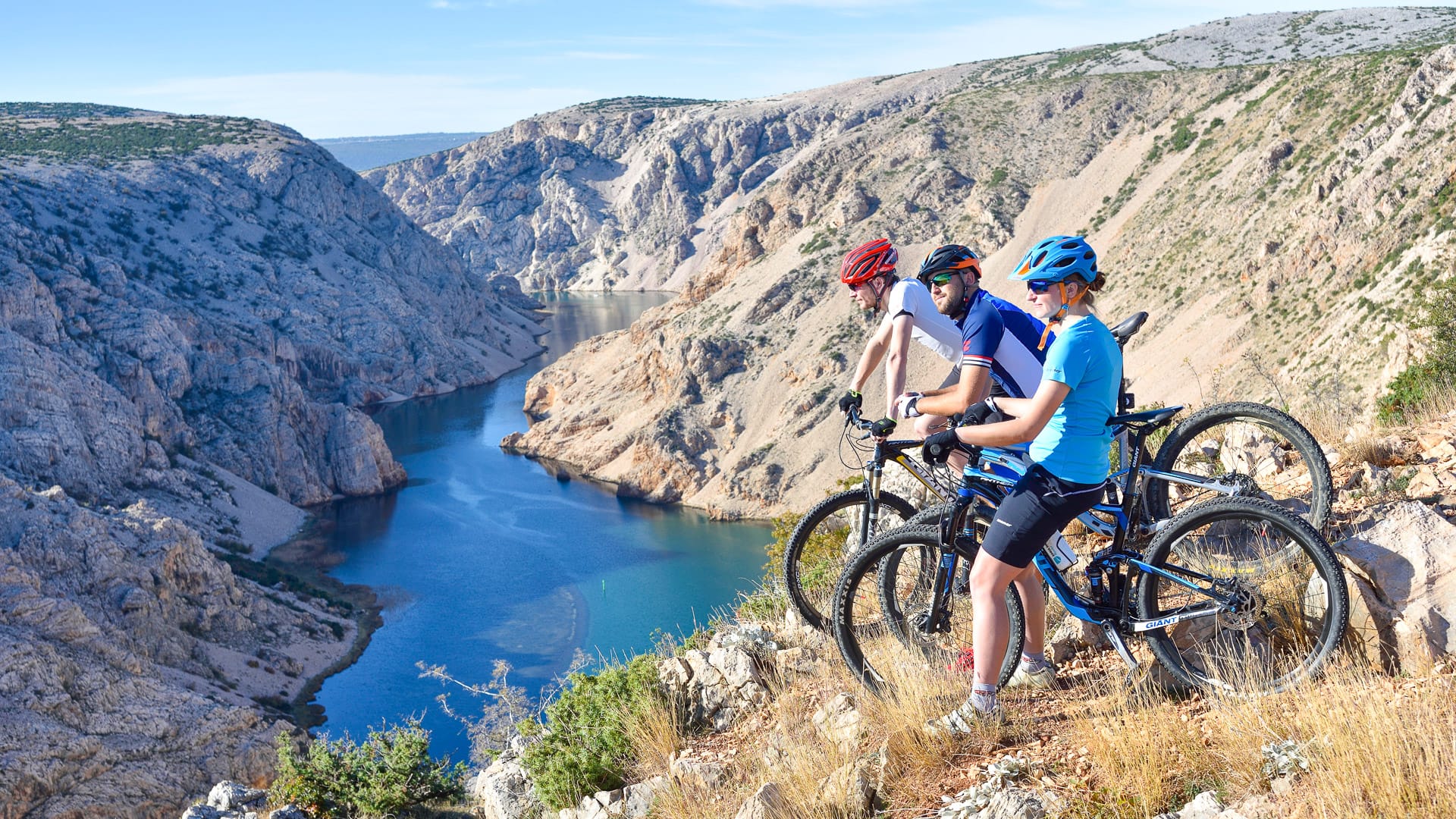
Zrmanja Canyon (photo credit: V Metelko via Zadar Region Tourist Board)
What’s next?
A huge thank you to Marko for sharing these detailed insights about cycling in the Zadar region.
Have you ridden some of the Zadar region cycling climbs featured in this article? We’d love to hear from you! Leave us a comment below.
Looking for more inspiration? Don’t miss:
- Cycling Croatia, our central hub for the country
- Croatia bike and boat tours, for tips, routes and things to consider
- Cycling in Croatia: the inside guide, featuring a network of bike-friendly hotels
- How to pick a Croatia boat and bike tour?, for insights on routes, boats and what to look for before booking
- Self-guided bike tours in Croatia, for tips on how to plan a trip and where to go
- 5 of the best bike tours in Croatia, for our top picks
Got a question for Marko?
Fill out this form and we will send it to Marko. We aim to get you an answer within 24 hours where possible!Marko Augustinović is a member of the Topena team, a destination management company based in Zadar. Topena has more than 20 years’ experience in tourism, and ridescouts is a cycling brand by Topena. Its routes include local knowledge, GPX files and PDF guides, and the brand offers route planning, local guides, bike rental and support vehicles.
Marko’s work at Topena includes developing and planning cycling routes. He first designs routes digitally, then checks them on the ground for suitability, quality and rider experience. He pays particular attention to routes that combine natural landscapes, cultural heritage and authentic local experiences.
Outside work, Marko is passionate about the outdoors. Whenever possible, he spends his free time cycling or hiking, exploring new areas and looking for new experiences. This personal enthusiasm for active travel is at the heart of his professional approach.
First Published: 25 June 2026
This article includes details of products and/or services that we have used ourselves or which we would consider using. Some are paid features or include affiliate links or referral codes which we may earn commission from. As an Amazon Associate we earn from qualifying purchases. Please read our disclosure policy for further information.
The contents of this website are provided for general information purposes only. It is not intended to amount to advice and you should not rely on it. You should carry out your own due diligence and risk assessments and take professional advice. Views expressed by interviewees or other users of this website do not necessarily represent our views. We make no representations, warranties or guarantees, whether express or implied, that the content on our website is accurate, complete or up to date. If you use any information or content on this website, download from, or otherwise obtain content or services through our website, it is entirely at your own discretion and risk. Epic Road Rides Ltd disclaims all liability and responsibility arising from any reliance placed on the information and content on this website. Find out more here.
Sponsor Message
Exclusive offer: use the code below and get 50% off the ridescouts routes mentioned in this article, including GPX file and PDF guide, when you buy the relevant route from ridescouts before 24 June 2027. *T&Cs apply.