

The Porto to Lisbon cycle route follows Portugal’s Atlantic coast south from Porto, towards Lisbon, nearly 500 kilometres away. It links two of Portugal’s best-known cities, with the Atlantic shaping much of the journey.
This is a ride of sea air, fishing harbours, surf towns and old stone streets. The route moves from Porto’s riverfront and wine cellars to dune-backed beaches, pine forests, lagoon landscapes and the medieval walls of Óbidos, before reaching Sintra’s greener hills and the elegant coast before Lisbon.
But what is cycling from Porto to Lisbon actually like? How far is it, how difficult is the riding, and how do you plan a route that feels like a journey through Portugal’s coast, rather than simply a transfer between two cities?
To help answer these questions, we spoke to Sergio from Top Bike Tours Portugal, a local cycling specialist that runs guided and self-guided Porto to Lisbon bike tours. Their route covers approximately 490 kilometres from Porto, through Portugal’s Atlantic coastal regions, before finishing in Cascais, on the edge of Lisbon.
In this guide, Sergio shares what riders can expect from the route, including the landscapes, towns, road surfaces, daily distances and practicalities. He also explains how support with route planning, accommodation and logistics can make the cycling trip easier to enjoy. Whether you are planning your own ride or considering a supported cycling holiday in Portugal, this article should help you decide whether the Porto to Lisbon cycle route is right for you.

Sérgio Marques is the founder of Top Bike Tours Portugal.
He has a background in accounting and a lifelong love of sport, including a particular passion for cycling. The idea for the company came after a life-changing ride with friends to Santiago de Compostela in 2012. From that journey, Top Bike Tours Portugal was born. Sérgio's aim was to share authentic cycling experiences.
Today, Sérgio manages the business and occasionally leads tours himself, especially for larger groups. He speaks Portuguese and English.

We love to introduce our community to cycling businesses, destinations and ideas that we think are genuinely interesting. Top Bike Tours Portugal caught our attention because of its focus on cycling in Portugal, which felt like a natural fit for Epic Road Rides and our readers. We were therefore pleased to work with the Top Bike Tours Portugal team on this article.
Top Bike Tours Portugal paid for this advertisement feature. Our decision to collaborate reflects our view that the brand is relevant to our readers; it is not a formal approval, audit or guarantee of its services. Unless we expressly say otherwise, we have not personally taken the trip described or independently verified information supplied by Top Bike Tours Portugal.
As with any travel purchase, please check the latest trip details, terms and customer protections directly with Top Bike Tours Portugal before booking. Any booking is made with Top Bike Tours Portugal, not Epic Road Rides.
Always check current travel information and advice. For visitors from the UK, the UK government travel information pages are here.
Table of contents
- Part 1: Overview
- Part 2: Highlights
- Part 3: Itinerary breakdown
- Part 4: Planning
- Part 5: Insider Tips
- Part 6: Top Bike Tours Portugal Tours
Sponsor Message
Planning a Porto to Lisbon bike trip?
Top Bike Tours Portugal offers guided and self-guided cycling tours from Porto to Lisbon.
Self-guided includes accommodation, luggage transfers, bike hire and support on the trip. Guided adds local experts to accompany you.
Considering a guided or self-guided trip? Visit the Top Bike Tours Portugal website to find out more about its Porto to Lisbon cycling tour.
Got a question for Sérgio Marques from Top Bike Tours Portugal?
Fill out this form and we will pass it to Top Bike Tours Portugal who aim to reply (within 24 hours wherever they can!)
Porto to Lisbon: At a glance
Top Bike Tours Portugal’s version of the Porto to Lisbon cycle route is an approximately 490 kilometre coastal ride along Portugal’s Atlantic edge, usually ridden over 11 cycling days. It is best for recreational cyclists who are comfortable riding several days in a row on cycle paths, boardwalks, quiet roads and short compact gravel sections. The riding is generally easy to moderate, but wind, navigation and accommodation logistics are the main planning points.
| Question | Answer |
| Start and finish | Porto to Cascais, with onward travel to Lisbon |
| Distance | Approximately 490 km for the full route; around 308 km for the shorter version |
| Typical duration | 13 days / 11 cycling days for the full route |
| Daily distances | Around 27 to 68 km, with most riding days around 40 to 65 km |
| Difficulty | Easy to moderate; best for riders used to consecutive days in the saddle |
| Surfaces | Mainly paved cycle paths, boardwalks and quiet roads, with short compact dirt/gravel sections |
| Best bike | Hybrid, touring, gravel bike or e-bike |
| Best time | Spring and autumn for milder weather and fewer crowds |
| Best for | Couples, small groups and regular leisure cyclists who want a relaxed coastal cycling holiday with culture, food and manageable daily distances rather than long climbs or a performance-focused challenge |
| Main planning points | Navigation, Atlantic winds, luggage transfers, accommodation in peak season and knowing what support is available if something goes wrong |
For riders who like the sound of the route but do not want to manage hotel bookings, luggage transfers, bike hire and GPS planning themselves, Top Bike Tours Portugal offers guided and self-guided Porto to Lisbon tours along this corridor.
Part 1: An overview of the Porto to Lisbon cycle route
Top Bike Tours Portugal’s Porto to Lisbon route follows Portugal’s Atlantic coastline for approximately 490 kilometres over 11 cycling days, within a 13-day itinerary. This is what this article focuses on. Rather than following one single official long-distance trail throughout, the route is designed to combine attractive coastal riding, comfortable daily distances, interesting overnight stops and practical logistics.
A shorter version of the route covers 308 kilometres over six riding days.
See below a map of the route from Top Bike Tours Portugal, highlighting the key stages along the way and the main towns and landscapes passed between Porto and Lisbon.
Where does the route go?
From Porto, the route heads south along Portugal’s Atlantic edge, following a mix of coastal bike lanes, quiet rural roads, and short inland sections that link together fishing villages, beaches and small nature reserves.
It’s a multi-day journey that unfolds along the country’s western coastline, moving through the historic canal city of Aveiro, the open Atlantic landscapes of the Silver Coast, and the pine-fringed cliffs around São Pedro de Moel. The route continues south towards Nazaré, where the coastline becomes more dramatic and exposed, before easing into the quieter lagoons and medieval streets around Óbidos.
From there, the ride continues through Peniche and along the surf coast towards Ericeira, before turning inland towards Sintra’s forested hills and finally descending to the coast again at Cascais, on the edge of the Lisbon region.
How does this relate to the EuroVelo 1 route?
EuroVelo 1, the Atlantic Coast Route, now includes a Portuguese Atlantic route, with stages between Lisbon and Porto/Gaia. This route covers approximately 510 kilometres between Porto and Lisbon.
Top Bike Tours Portugal’s itinerary uses the same broad coastal corridor and some similar towns, but the tour route is designed around hotel locations, ride quality, support logistics and cultural stops rather than simply following EuroVelo signage from point to point.
We deliberately adapt the itinerary for the following reasons:
- EuroVelo 1 includes sections that are less ideal for a multi-day holiday. There are stretches that pass through more urbanised areas, sections with less scenic value, or parts that are perfectly rideable but not the most enjoyable when you’re cycling day after day.
- For example, in several places along the coast, we prioritise boardwalks, secondary roads and quieter inland alternatives instead of busier coastal roads or more direct but less pleasant sections. On parts of the Green Coast and Silver Coast, this means slightly adjusting the line to stay closer to the ocean when it adds value, or moving inland briefly when the coastal road becomes too exposed, repetitive or traffic-heavy. The goal is always to maintain a balance between scenery and ride quality, rather than simply sticking to the line.
- Another important difference is how the route is designed around where people actually stay, eat and stop during the day. Planning independently or following EuroVelo 1 can sometimes lead to stages that end in locations with limited accommodation options or less character. In our case, stages are structured to connect towns that work well for overnight stays, places with reliable hotels, good restaurants and a pleasant atmosphere after the ride. This often means small detours that slightly adjust the official route but improve the overall experience significantly.
- There are also areas where we include intentional detours to enhance cultural or scenic value. Stops like Aveiro, Nazaré or Óbidos are not just along the way, they are integrated into the route because they add variety and let us combine coastal riding with historic towns, local food and different landscapes. These choices are not always the most direct, but they are the most rewarding.
This article is focused on our Top Bike Tours Portugal route, rather than the EuroVelo route 1. Where we refer to the Porto to Lisbon cycle route, we refer to our version of it.
How many kilometres is Porto to Lisbon?
The full Porto to Lisbon cycle route covers approximately 490 kilometres and is usually ridden across 11 cycling days with an additional day in both Porto and Lisbon.
Daily riding distances range from around 27 to 68 kilometres, with most riding days sitting between 40 and 65 kilometres. This makes it a substantial end-to-end journey, but one that is broken into manageable stages.
A reduced version is also available, covering around 308 kilometres over six riding days. The shorter option begins the same, but does not continue all the way south to Lisbon, it finishes near Óbidos.
More details on Top Bike Tours Portugal’s website, here.
What is the scenery like?
The scenery is one of the real highlights of cycling from Porto to Lisbon, and one of the reasons the route doesn’t feel repetitive, despite covering several hundred kilometres.
The early stages south of Porto roll through wide beaches, wooden boardwalks and dune systems, with long stretches of coastline giving the ride an open, relaxed feel. Fishing villages and small seaside towns appear regularly along the route, breaking up the quieter coastal sections with cafés, harbours and local markets.
Further south, the landscape begins to shift between pine forests, lagoons and wider estuary scenery. Around Aveiro and the central coast, the route becomes gentler, with cycle paths weaving beside canals and wetland landscapes before returning to the ocean again.
One of the things that makes Porto to Lisbon feel special is the contrast from one day to the next. One morning might involve riding directly beside the Atlantic on a purpose-built coastal path, the next could take you inland through quieter villages or into the narrow streets of a medieval town such as Óbidos.
Atlantic weather can change quickly, particularly on exposed sections near the coast. Winds are part of the experience here, especially around Nazaré and the more open stretches south of Peniche.
As the route approaches Lisbon, the scenery becomes more dramatic again, particularly around Sintra and the Atlantic cliffs near Cascais. The final days combine ocean views, forested hills and elegant coastal towns before concluding the journey in the capital.
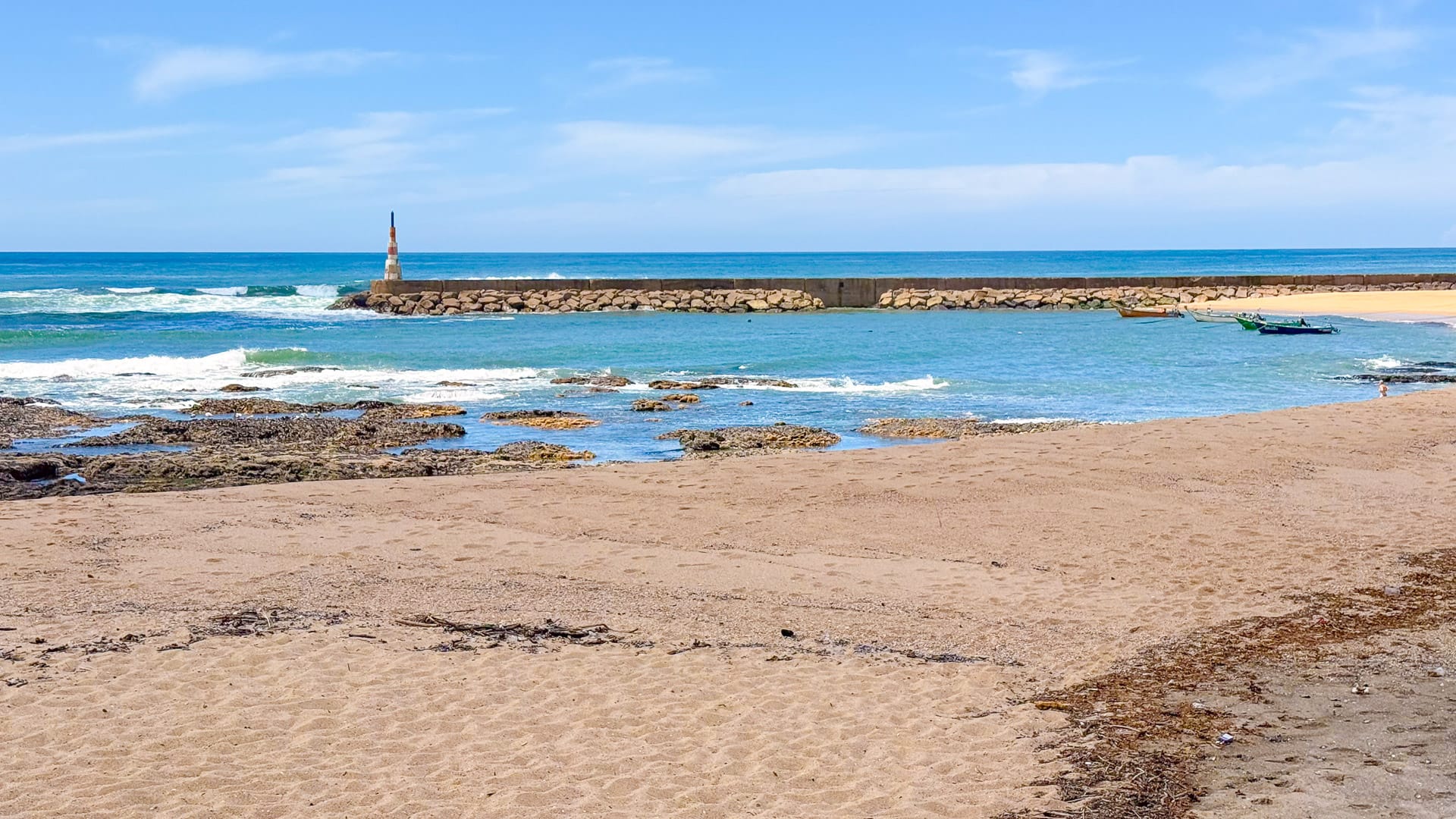
Scenic view on the Atlantic coast (photo credit: Top Bike Tours Portugal)
What are the surfaces like?
The Porto to Lisbon cycle route is designed to prioritise comfort and ride quality over technical terrain. Approximately 60% of the journey follows dedicated cycle paths or boardwalks, around 30% uses quiet paved secondary roads, and roughly 10% consists of compact dirt or gravel sections.
There are also occasional off-road sections, usually near beaches or nature reserves, but these are short, non-technical and included more for the scenery and atmosphere than for any technical challenge.
Overall, the surfaces are accessible for most cyclists and work particularly well for touring bikes, hybrid bikes, gravel bikes and e-bikes.
What is the terrain like?
The terrain is best described as easy to moderate. The first few days south of Porto are among the flattest, while the route gradually becomes hillier and greener further south, particularly around Nazaré and towards Cascais.
Much of the route is relatively flat, especially along the Atlantic coast and around river valleys, although riders should still expect occasional rolling sections and short climbs inland.
Importantly, the route avoids long mountain ascents and climbs tend to be short rather than sustained. This balance makes Porto to Lisbon appealing to cyclists who want a multi-day journey without the demands of alpine-style touring.
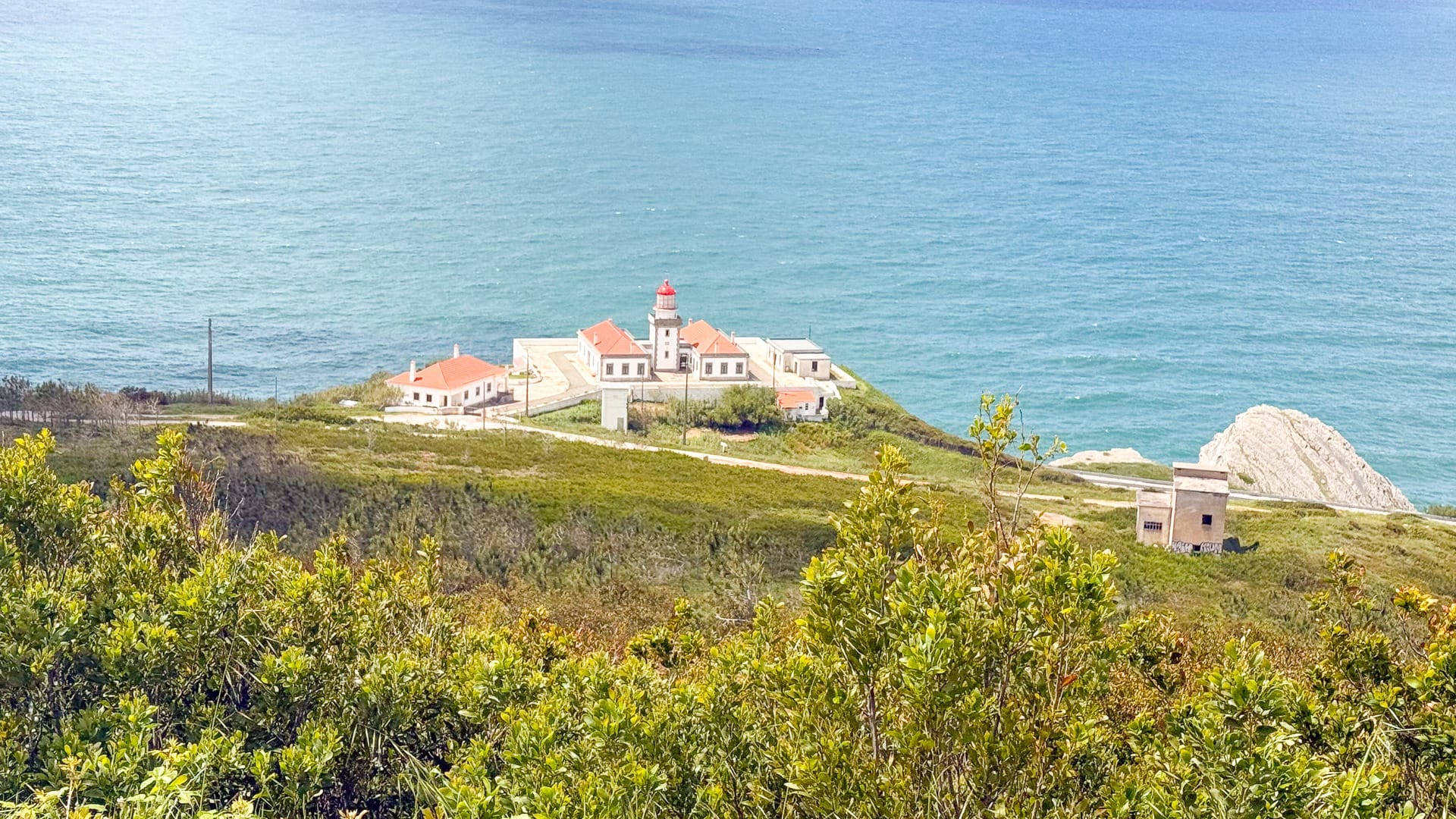
Viewpoint overlooking Figueira da Foz (photo credit: Top Bike Tours Portugal)
What is navigation like?
Signposting can be inconsistent in places. Purpose-built cycle paths are generally well marked, but some of the quieter rural connectors are not always clearly signposted. Because of this, reliable GPS navigation is essential and strongly recommended throughout the route.
How challenging is riding Porto to Lisbon?
A common concern before booking is whether Porto to Lisbon will feel too demanding, especially for riders who have not done a multi-day cycling tour before. In practice, the route is usually very manageable for regular leisure cyclists. You do not need to be performance-focused or used to long climbs, but you should be comfortable riding for several days in a row at a steady pace. It helps to feel comfortable cycling around 40 kilometres in a day before setting off.
Compared with more demanding routes such as the Camino de Santiago, Porto to Lisbon offers a gentler profile, flatter terrain and more relaxed daily distances. For many riders, the challenge is less about climbing or speed and more about getting used to consecutive days in the saddle.
Overall, Porto to Lisbon is a very manageable ride for most recreational cyclists. The route is designed to feel achievable rather than exhausting. Daily stages are comfortable, the terrain is mostly flat or gently rolling, and there are regular opportunities to stop in coastal towns and villages to take an enjoyable break from the bike.
Navigation is straightforward with GPS support and e-bikes have also made the route accessible to a much wider range of riders. The trip works well for families with older children or teenagers, especially on the reduced version of the route.
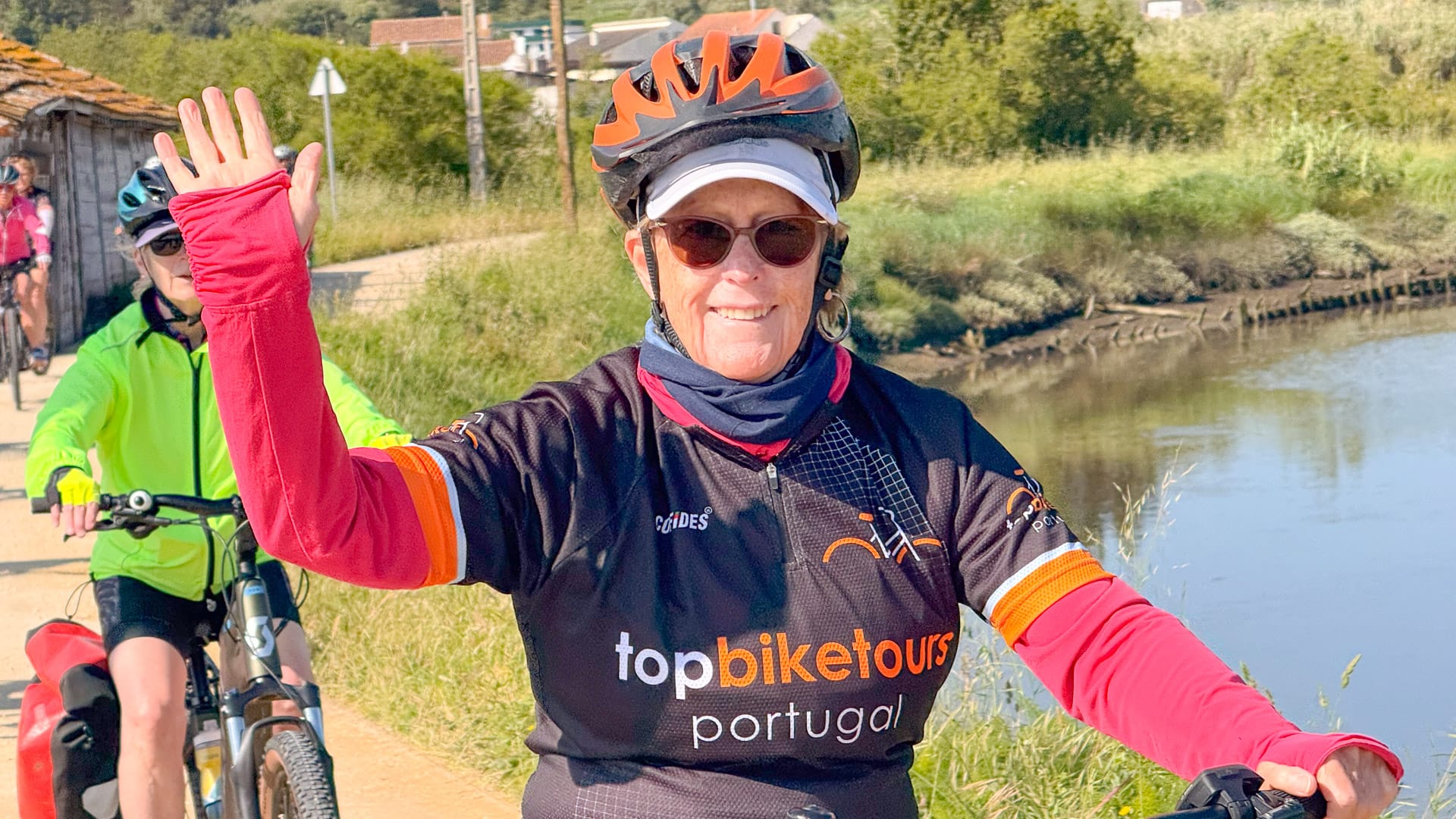
Riverside cycling trail in rural northern Portugal (photo credit: Top Bike Tours Portugal)
Who Porto to Lisbon is suitable for?
| This route is a good fit if… | Think carefully if… |
| You are a regular leisure cyclist who wants a multi-day trip without long, demanding climbs. | You want a fast, performance-focused route with big mileage each day. |
| You want a coastal cycling holiday with culture, food and scenery as important as the riding. | You want a fully signposted, traffic-free route from start to finish or a remote wilderness ride with very few towns or services. |
| You are travelling as a couple or small group of friends and want to ride at a comfortable pace. | You want a technical gravel, mountain biking or endurance challenge. |
| You want the option of luggage transfer, bike hire, GPS support or a guide. | You are planning independently at short notice in peak summer, when accommodation can be busy. |
| You are travelling as a mixed-ability group and may want e-bike options. | You are looking for technical gravel or mountain biking. |
| You like the idea of a gentler alternative to routes such as the Camino de Santiago. | You want the sense of pilgrimage |
This is also where a supported tour can make a big difference. If you are comfortable with the riding but less confident about route planning, accommodation, bike transport or what to do if something goes wrong, a guided or self-guided package can remove much of the uncertainty.
How did Top Bike Tours Portugal choose the route?
The route was designed to combine Portugal’s best coastal cycling with practical daily riding distances and enjoyable overnight stops. Rather than focusing purely on mileage or athletic challenge, the aim was to create a cycling holiday that feels immersive, scenic and relaxed.
We prioritised quiet roads, low-traffic cycle paths and culturally interesting towns. Inland sections are used selectively to avoid overly repetitive coastline riding or exposed windy stretches, while still allowing cyclists to experience traditional Portuguese villages and landscapes beyond the beaches.
The result is a route that we feel balances Atlantic scenery, Portuguese culture and comfortable riding conditions in a way that suits both experienced cyclists and first-time multi-day riders.
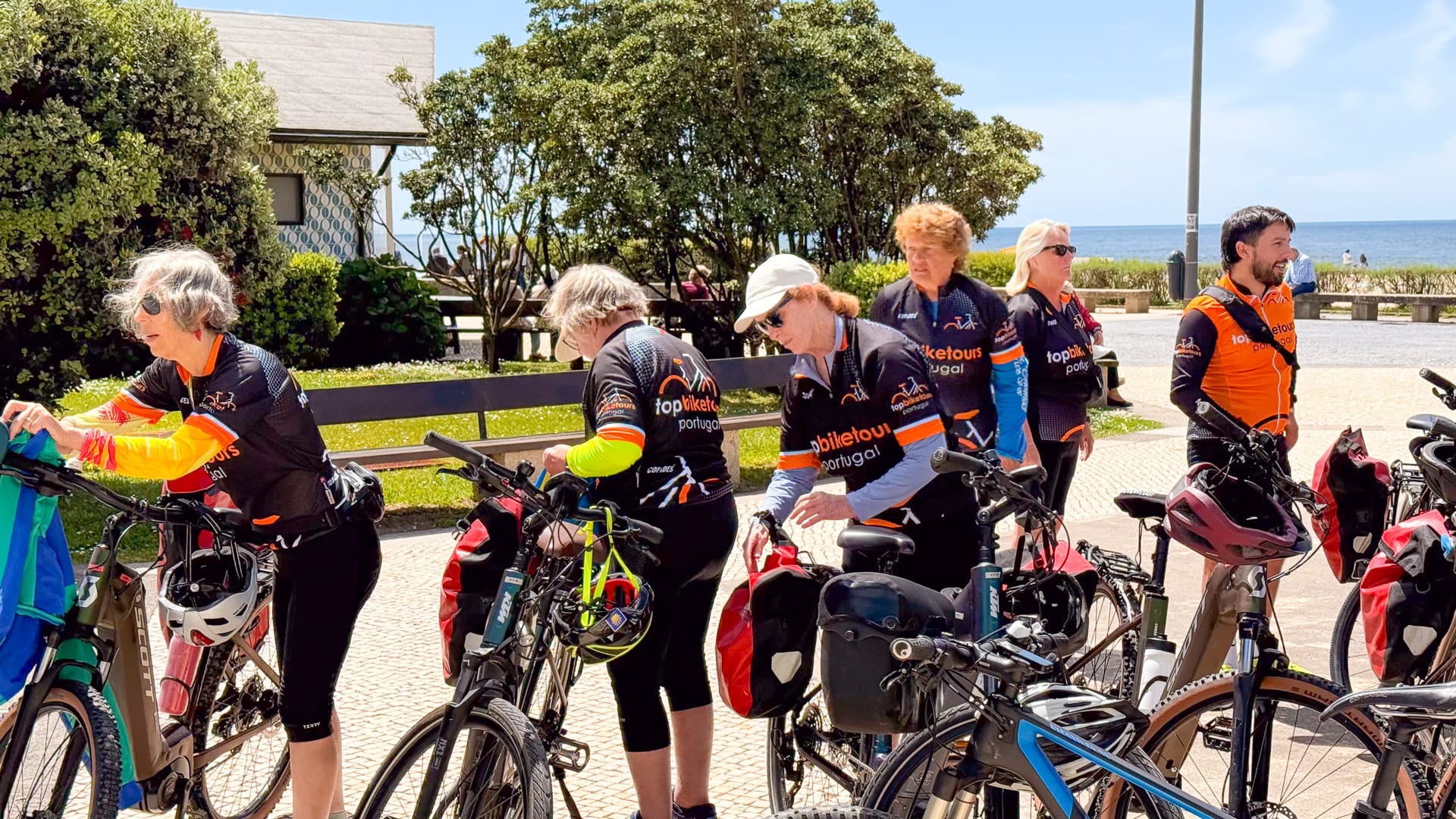
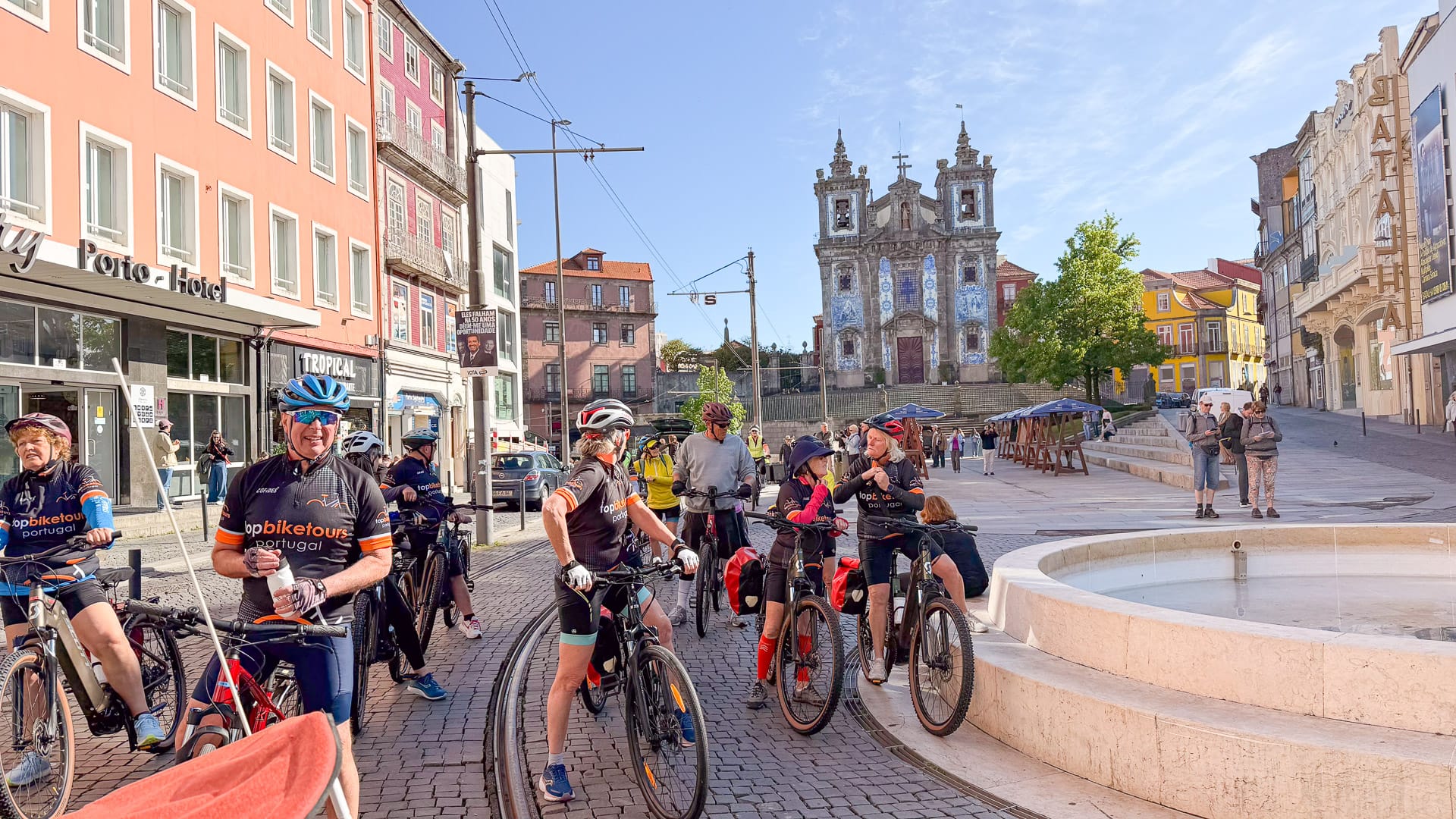
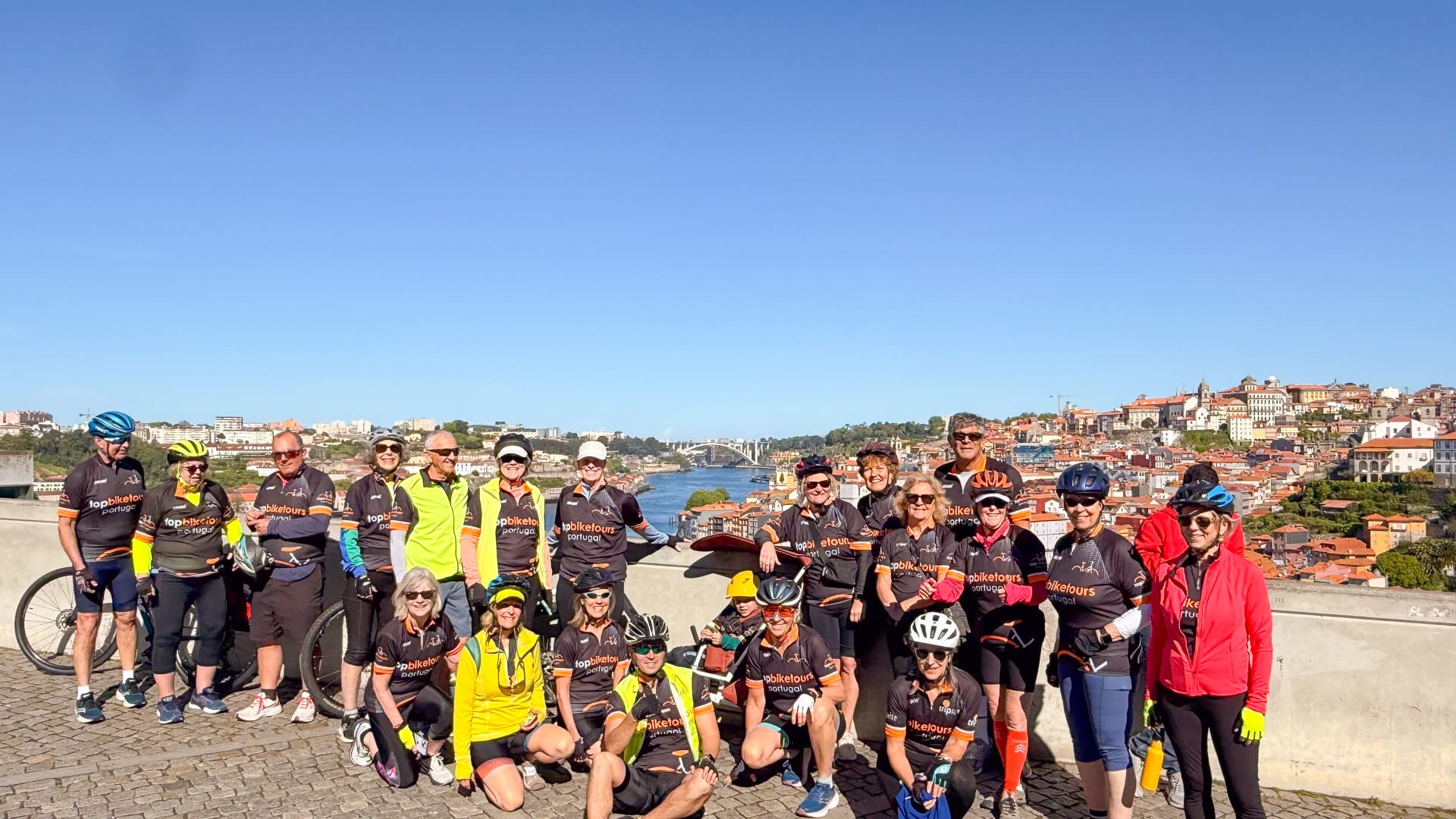
Cyclists taking a rest (photo credit: Top Bike Tours Portugal)
Sponsor Message
Planning a Porto to Lisbon bike trip?
Top Bike Tours Portugal offers guided and self-guided cycling tours from Porto to Lisbon.
Self-guided includes accommodation, luggage transfers, bike hire and support on the trip. Guided adds local experts to accompany you.
Considering a guided or self-guided trip? Visit the Top Bike Tours Portugal website to find out more about its Porto to Lisbon cycling tour.
Got a question for Sérgio Marques from Top Bike Tours Portugal?
Fill out this form and we will pass it to Top Bike Tours Portugal who aim to reply (within 24 hours wherever they can!)
Part 2: Why is Porto to Lisbon by bike a must-do?
There are plenty of coastal cycling routes in Europe, but Porto to Lisbon sits in a special category. It links two of Portugal’s most characterful cities while following the country’s Atlantic edge and taking in the country’s diversity. One day might involve rolling along seaside boardwalks beside the ocean; the next could take you through lagoon landscapes or into the narrow streets of a historic walled town like Óbidos. The scenery changes constantly, but the riding itself remains accessible and relaxed throughout.
Unlike some long-distance rides that are defined by big mountain passes or physical difficulty, Porto to Lisbon is more about rhythm, atmosphere and the experience of travelling slowly through the country. It’s a route where the cafés, beaches, seafood lunches and small coastal towns become just as memorable as the riding itself.
In my opinion, these are the stand-out moments from Porto to Lisbon:
Aveiro: canals, lagoons and Portugal’s maritime history
After the early coastal stages south of Porto, the route gradually leaves behind long beaches and boardwalks before rolling into a landscape of canals and low-lying waterways. Aveiro is often referred to as the ‘Portuguese Venice’, and is known for its colourful moliceiro boats, maritime history and relaxed canal-side atmosphere.
Aveiro is one of the route’s best cultural stops. Arriving by bike makes the transition particularly memorable as pine forests and coastal paths slowly give way to many bridges and narrow streets.
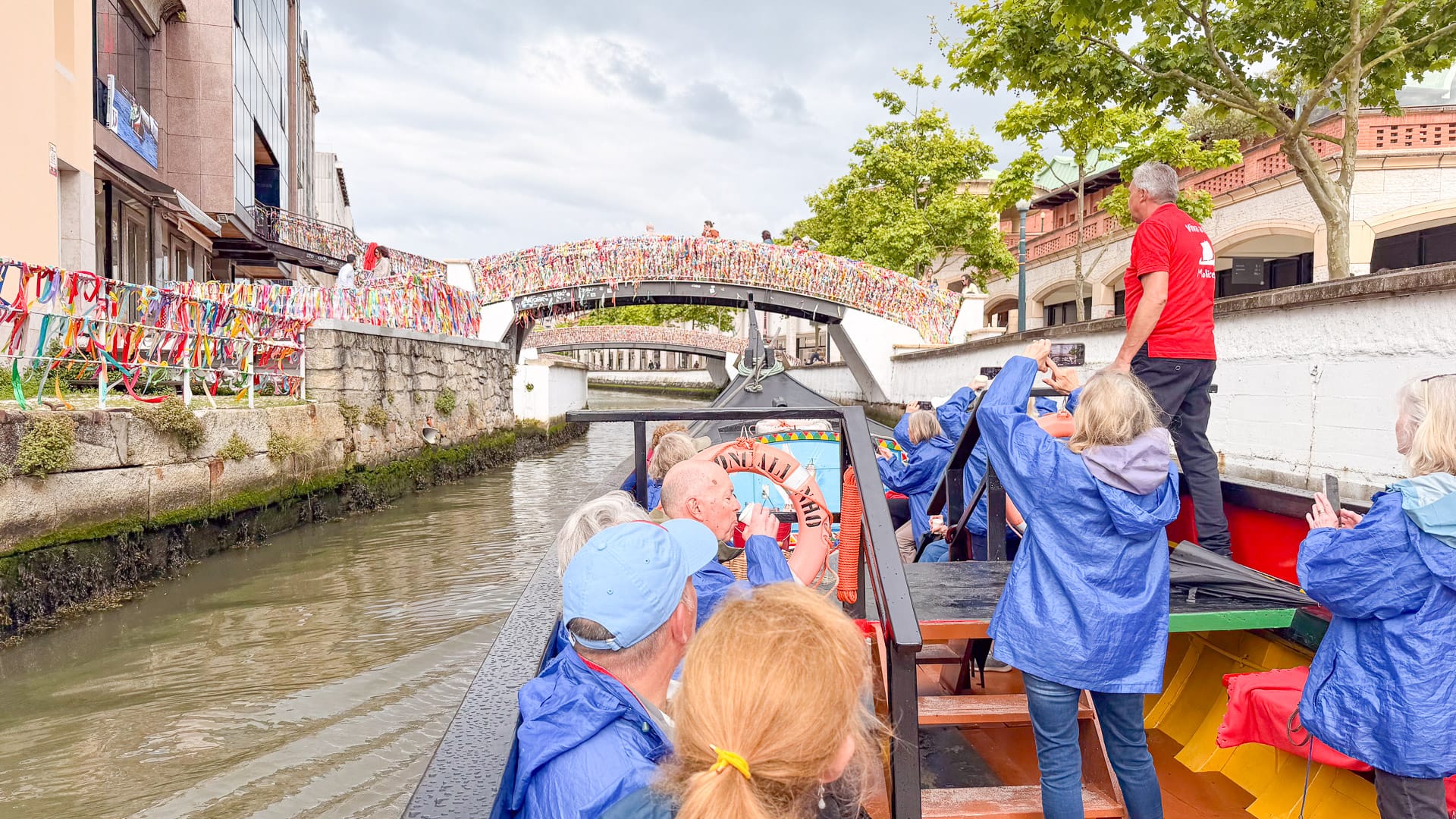
Boat ride in Aveiro (photo credit: Top Bike Tours Portugal)
The wild Atlantic cliffs around São Pedro de Moel
The coastline around São Pedro de Moel is known for its rugged limestone cliffs and heavy Atlantic surf, It also delivers some of the route’s most dramatic scenery. Here, pine forests meet exposed cliffs, creating a stretch of riding that feels more rugged than many of the busier beach towns further south.
The roads here pass through forested sections before emerging beside the Atlantic. This juxtaposition creates one of the most scenic stretches of riding on the journey.
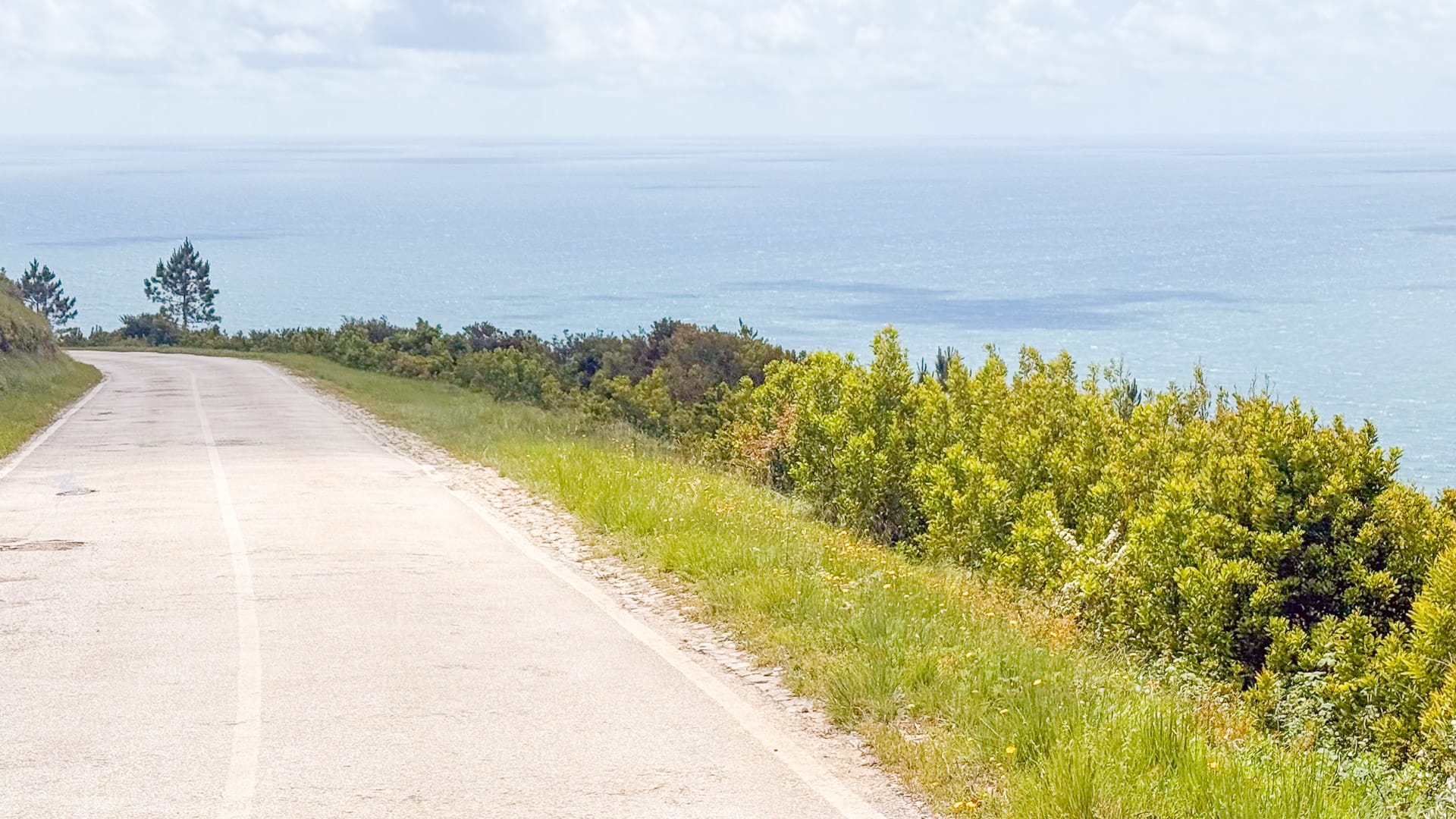
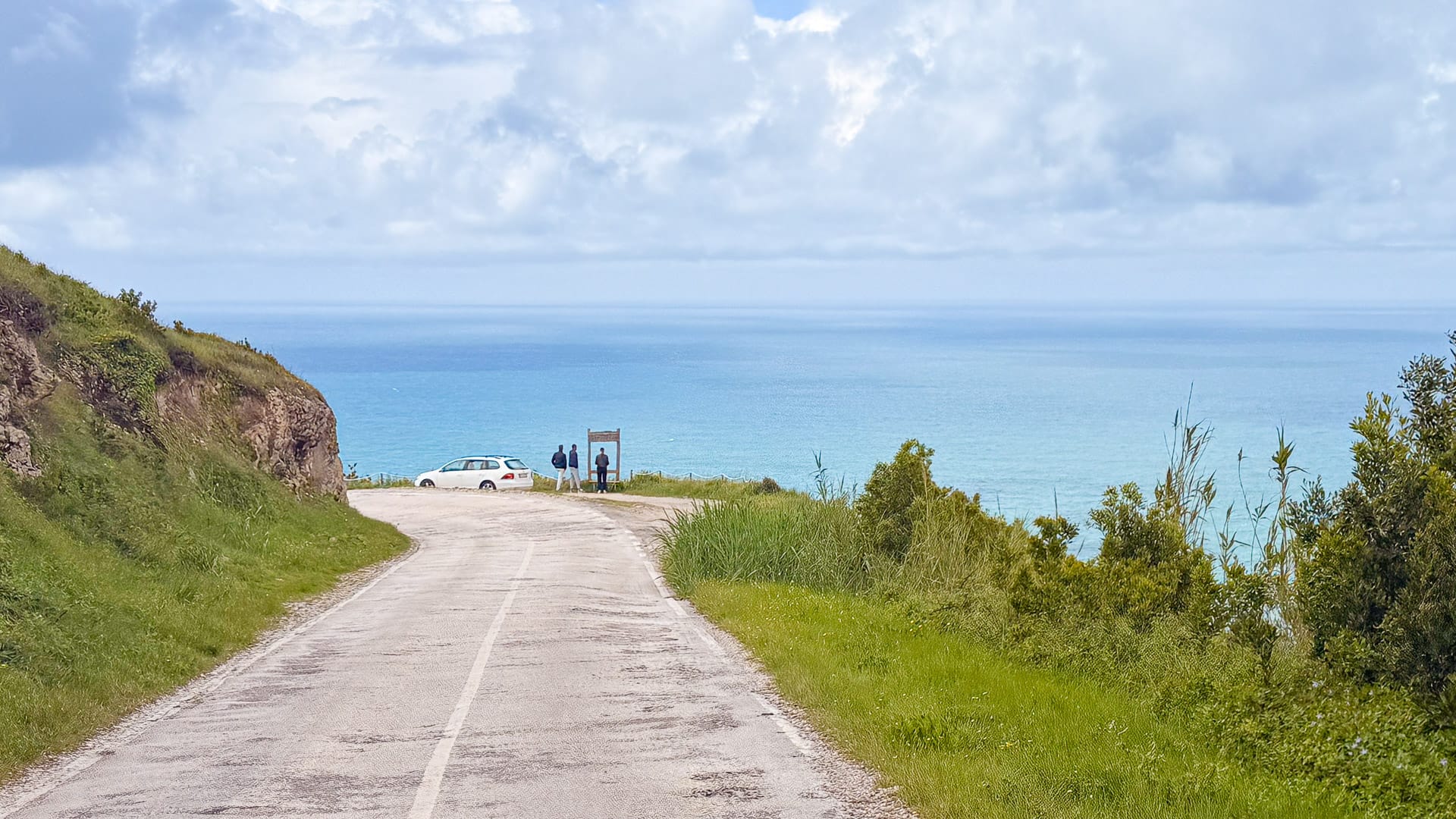
Every viewpoint on the Tour (photo credit: Top Bike Tours Portugal)
Nazaré: giant waves and one of Europe’s most dramatic coastlines
Nazaré is internationally known for its giant Atlantic waves and the town combines traditional fishing culture with one of Europe’s most dramatic ocean landscapes. The coastline here feels steeper, more exposed and more powerful than the gentler sections further north.
Praia do Norte (meaning North Beach) is located in Nazaré, and gives this part of the route a particularly striking atmosphere, especially during periods of larger swell when the Atlantic waves become truly giant.
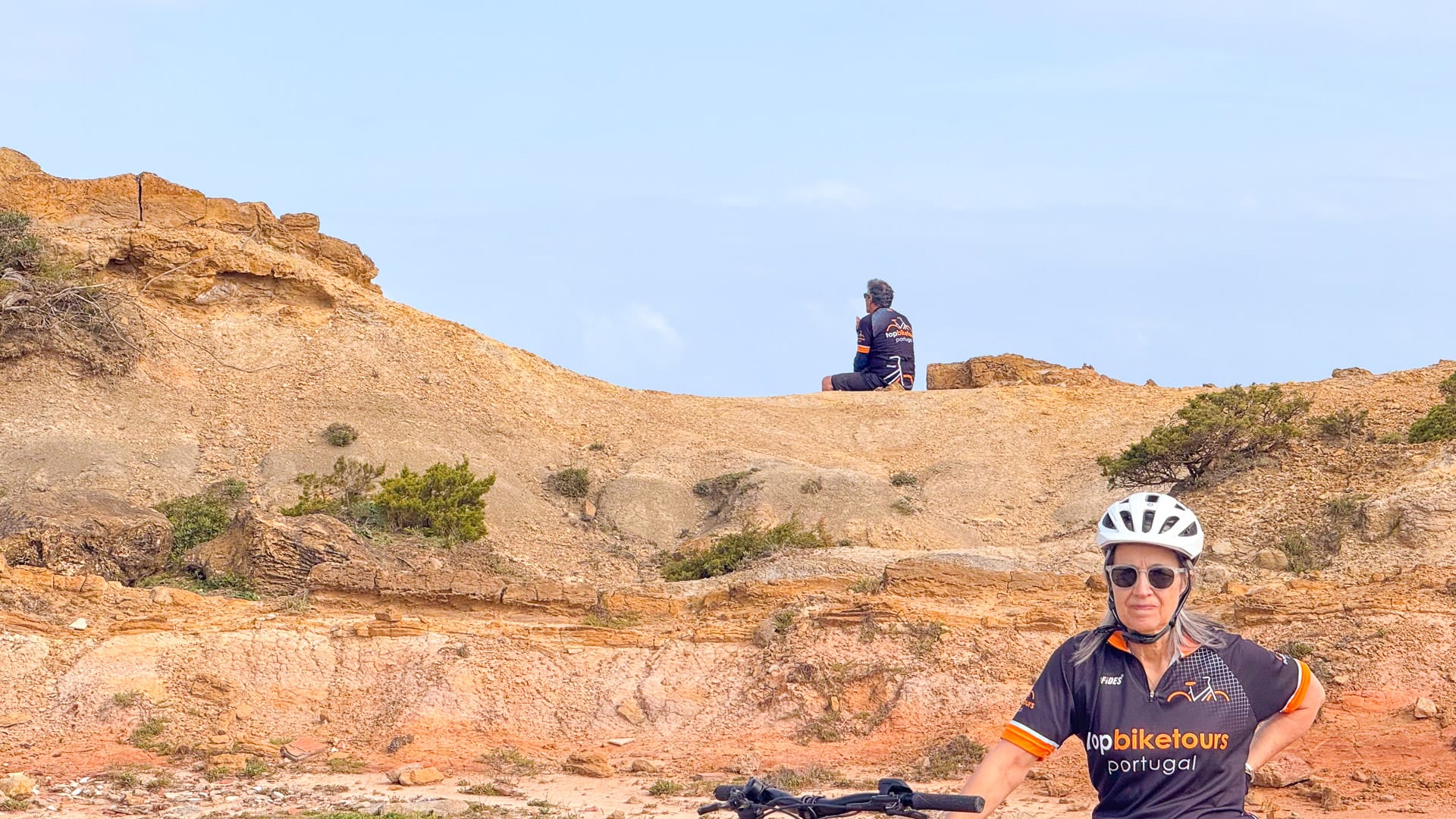
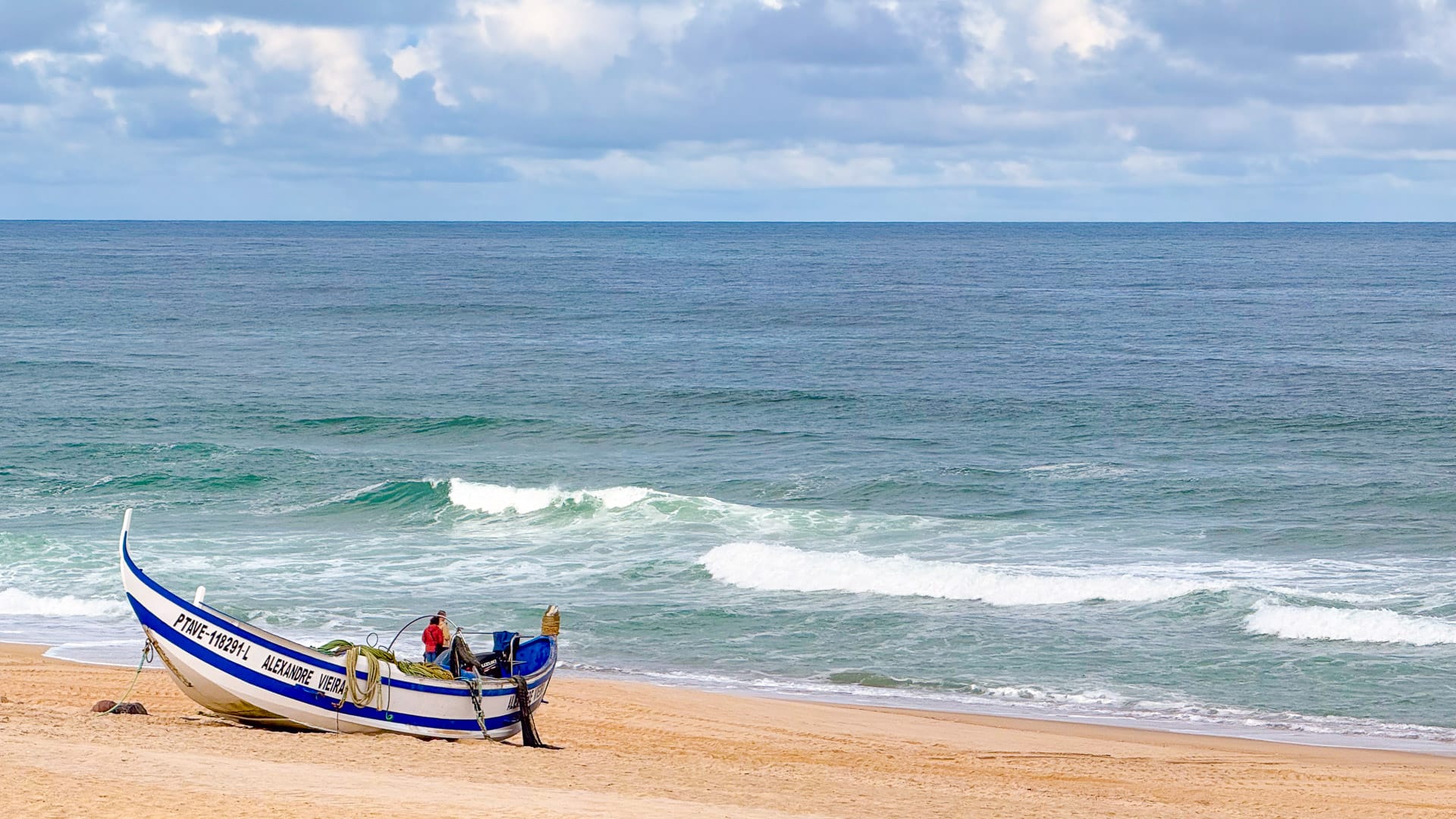
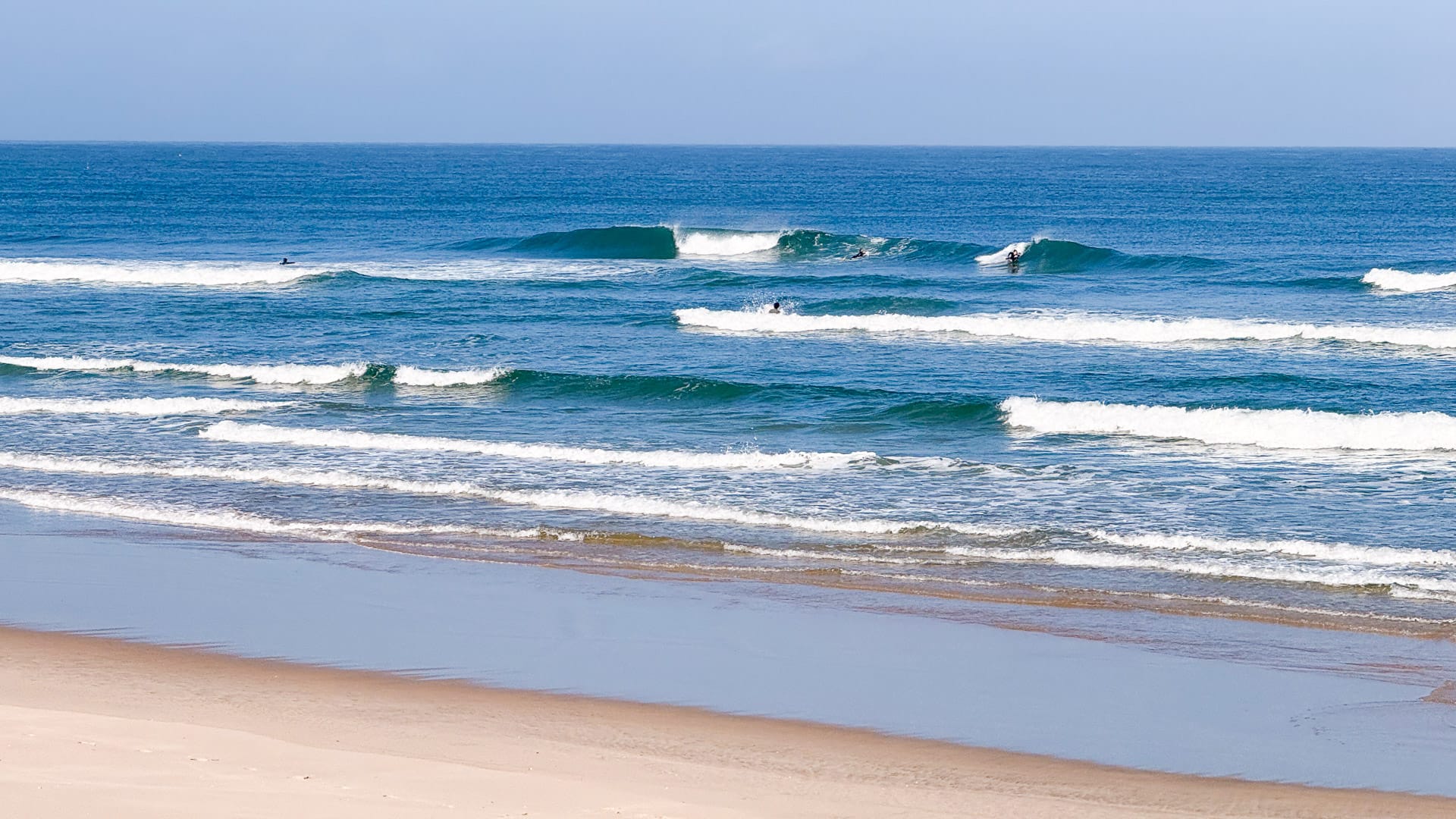
Nazaré beach in Portugal (photo credit: Top Bike Tours Portugal)
Óbidos: a medieval town hidden behind stone walls
After several days dominated by beaches, lagoons and coastal riding, Óbidos provides one of the strongest contrasts anywhere on the route.
Óbidos is widely regarded as one of Portugal’s most picturesque medieval towns. It’s known for its fortified walls, narrow cobbled streets and whitewashed buildings.
Sponsor Message
Planning a Porto to Lisbon bike trip?
Top Bike Tours Portugal offers guided and self-guided cycling tours from Porto to Lisbon.
Self-guided includes accommodation, luggage transfers, bike hire and support on the trip. Guided adds local experts to accompany you.
Considering a guided or self-guided trip? Visit the Top Bike Tours Portugal website to find out more about its Porto to Lisbon cycling tour.
Got a question for Sérgio Marques from Top Bike Tours Portugal?
Fill out this form and we will pass it to Top Bike Tours Portugal who aim to reply (within 24 hours wherever they can!)
Part 3: Porto to Lisbon itinerary breakdown
Before diving into the daily stages, it’s worth noting that the Porto to Lisbon tour is designed as a relaxed coastal journey rather than an endurance challenge. The route follows Portugal’s Atlantic edge through fishing villages, nature reserves, beach towns and historic cities, with daily distances that leave plenty of time to explore and enjoy the atmosphere along the way. Most riding days are comfortably paced, allowing time for coffee stops, seafood lunches and visits to some of the route’s cultural highlights.
Stage summary
| Day | Stage | Distance | Character |
| 1 | Arrive in Porto | No cycling | Reception, bike fit and time in the city |
| 2 | Porto to Furadouro | 47 kilometres | Douro Valley crossing, coast, beaches and fishing towns |
| 3 | Furadouro to Aveiro | 45 kilometres | Wetlands, ferry crossing and canal-side Aveiro |
| 4 | Aveiro to Praia de Mira | 40 kilometres | Ílhavo, Costa Nova and lagoon landscapes |
| 5 | Praia de Mira to Figueira da Foz | 50 kilometres | Lagoons, dunes, pine forest and Silver Coast beaches |
| 6 | Figueira da Foz to São Pedro de Moel | 65 kilometres | Longer day with shoreline, fishing heritage and forest |
| 7 | São Pedro de Moel to Nazaré | 29 kilometres | Shorter coastal stage finishing at Nazaré |
| 8 | Nazaré to Óbidos | 47 kilometres | Bay scenery and inland approach to a walled medieval town |
| 9 | Óbidos to Peniche | 35 kilometres | Lagoon landscapes and surf coast |
| 10 | Peniche to Ericeira | 68 kilometres | Longer Atlantic stage through surf towns |
| 11 | Ericeira to Sintra | 27 kilometres | Shorter, hillier transition into Sintra |
| 12 | Sintra to Cascais | 40 kilometres | Natural park, Atlantic views and coastal finish |
| 13 | Depart for Lisbon | No cycling | Onward transfer or train connection |
Day 1: Porto reception (no cycling)
Arrival in Porto and tour reception. This first evening gives riders time to settle in, explore the riverside districts of the city and prepare for the days ahead. Porto’s historic atmosphere, colourful façades and famous wine cellars provide a memorable starting point for the journey south.
For riders joining the Top Bike Tours Portugal tour, accommodation on the arrival night in Porto is included. The standard tour includes a stay at the 4-star Porto Trindade Hotel, while riders choosing the premium option stay at the 5-star Porto Infante Sagres Hotel.
Day 2: Porto to Furadouro (47 kilometres)
Overview
The first day of riding sees you leave the historic centre of Porto towards the coast and the small village of Furadouro.
Highlights
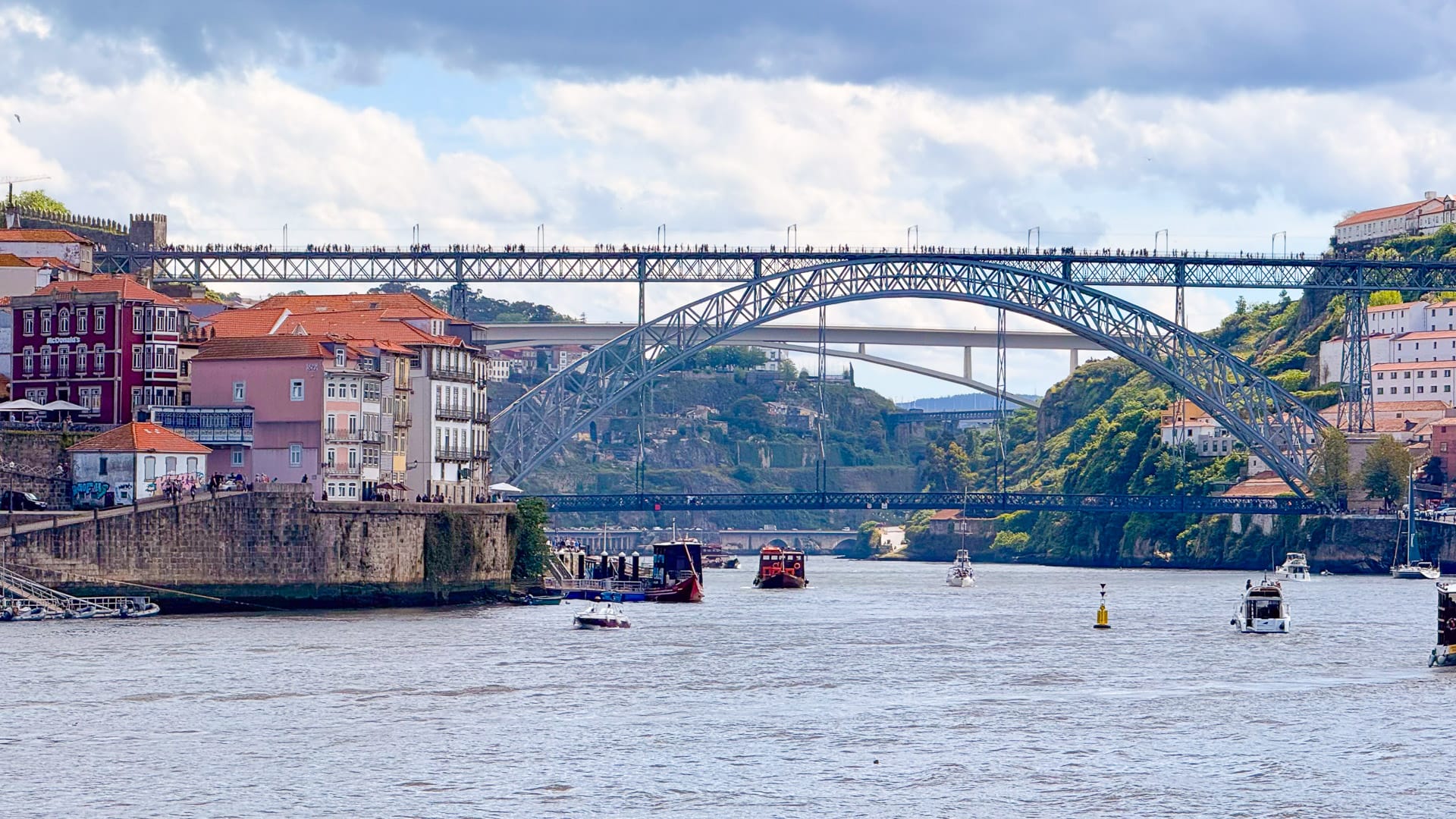
Leaving Porto, the route passes through the historic city centre before crossing the Douro River via the iconic Dom Luís I Bridge, one of Portugal’s most recognisable landmarks. Riders will head towards the small seaside village of Furadouro, passing the famous Porto wine cellars that line the riverbank.
The route passes Miramar Beach, home to the striking Chapel of Senhor da Pedra, one of the most photographed landmarks on Portugal’s northern coastline. There is time to stop for a traditional seafood lunch in Espinho before continuing south through the fishing region around Ovar, known for its convent sweets, bread-cake speciality and rich seafood traditions, including eel and fish stews. Riders also have the opportunity to visit the Chapel of the Steps, a National Interest Monument.
Good to know
This is a day that mixes gentle riding with some significant historical landmarks, setting the tone for the days ahead.
Accommodation
Accommodation in Furadouro is included at the 4-star Moliceiro Hotel, while the 5-star premium option is Hotel Solverde Spa & Wellness Center.
Day 3: Furadouro to Aveiro (45 kilometres)
Overview
Continuing south along the Atlantic coast, day three’s ride follows the N327 towards Aveiro, often referred to as the ‘Venice of Portugal’. Quiet coastal roads and protected wetlands combine to create one of the most scenic and relaxed stages of the journey.
Highlights
The route passes through a series of traditional fishing villages, including the town of Torreira, where the connection between the coast and local life remains strong. Further south, riders travel alongside the São Jacinto Natural Reserve, an important wetland area known for its birdlife and peaceful landscapes.
Arriving in Aveiro, riders can explore the city’s canals and colourful moliceiro boats, visit the historic Jesus Monastery, admire the decorative tiled façades of the railway station or take a boat trip along the Ria de Aveiro.
Good to know
One of the most memorable parts of the day is the ferry ride into Aveiro, which offers beautiful views across the lagoon as you approach the city from the water.
Accommodation
Accommodation in Aveiro is included at the 4-star Moliceiro Hotel, while the 5-star premium option includes a stay at the MS Collection Aveiro, Palacete de Valdemouro.
Day 4: Aveiro to Praia de Mira (40 kilometres)
Overview
This 40km stage continues south through Portugal’s central coast, offering a relaxed ride that blends coastal scenery with cultural highlights
Highlights
The route passes through Ílhavo, a town renowned for its porcelain production and the historic Vista Alegre factory, which has over 200 years of tradition. From here, the landscape opens out towards the coast, as the route reaches Costa Nova do Prado, a pretty stretch where sandy beaches meet lagoon landscapes.
Here, the iconic striped ‘haystack’ houses line the waterfront. They’re instantly recognisable for their bold vertical bands of colour and traditional fishing heritage.
Good to know
This is a relaxed and visually striking stage, with plenty of time to enjoy Costa Nova’s coastal scenery and take in the distinctive architecture along the waterfront.
Accommodation
Accommodation in Praia de Mira is included at the 4-star Maçarico Beach Hotel, with the option to upgrade to a superior room under the premium package.
Day 5: Praia de Mira to Figueira da Foz (50 kilometres)
Overview
Day five’s ride continues south along the Silver Coast, following a scenic route that combines lagoons, pine forests and long Atlantic beaches. The stage is defined by a strong connection to nature, with quiet riding through coastal landscapes shaped by wind, sea and sand.
Highlights
The route passes the beautiful and hidden Barrinha Lagoon, a peaceful stretch of water connected to the wider Ria de Aveiro system. From here, the ride continues through a coastal pine forest set within the dunes. This coastal area is also popular for sailing and windsurfing, with open stretches of water exposed to the Atlantic breeze.
The day finishes in Figueira da Foz, often referred to as the ‘Queen of the Silver Coast’, known for its wide sandy beaches and its position at the mouth of the River Mondego.
Good to know
This is a nature-focused stage, expect lagoon scenery, forest tracks and coastal views.
Accommodation
Accommodation in Figueira da Foz is included at the 4-star Sweet Atlantic Hotel, with the option to upgrade to a superior room under the premium package.
Day 6: Figueira da Foz to São Pedro de Moel (65 kilometres)
Overview
The route offers a varied and scenic ride, with a mix of open shoreline, traditional fishing communities and inland forest landscapes.
Highlights
Leaving Figueira da Foz, riders enjoy long coastal views before reaching Pedrógão, a region with deep agricultural and fishing traditions, including the historic ‘Xávega’ fishing method still visible along the coast today.
The final approach to São Pedro de Moel takes riders through extensive pine forests, where the landscape becomes quieter and more enclosed. This small coastal town is known for its relaxed atmosphere, with the famous ‘Volta dos Sete’ route combining forest trails, beaches, streams and viewpoints.
Good to know
Local cuisine highlights include traditional dishes such as Vidreiro soup (made with salted cod) and rabbit stew.
Accommodation
Accommodation in São Pedro de Moel is included at the 4-star Hotel Mar e Sol, with the option to upgrade to a superior room under the premium package.
Day 7: São Pedro de Moel to Nazaré (29 kilometres)
Overview
Today’s shorter stage continues south along the Atlantic coastline towards Nazaré, a dramatic seaside town world famous for its surf culture and giant waves. The route is relaxed, allowing plenty of time to enjoy the scenery and the atmosphere of the Silver Coast.
Highlights
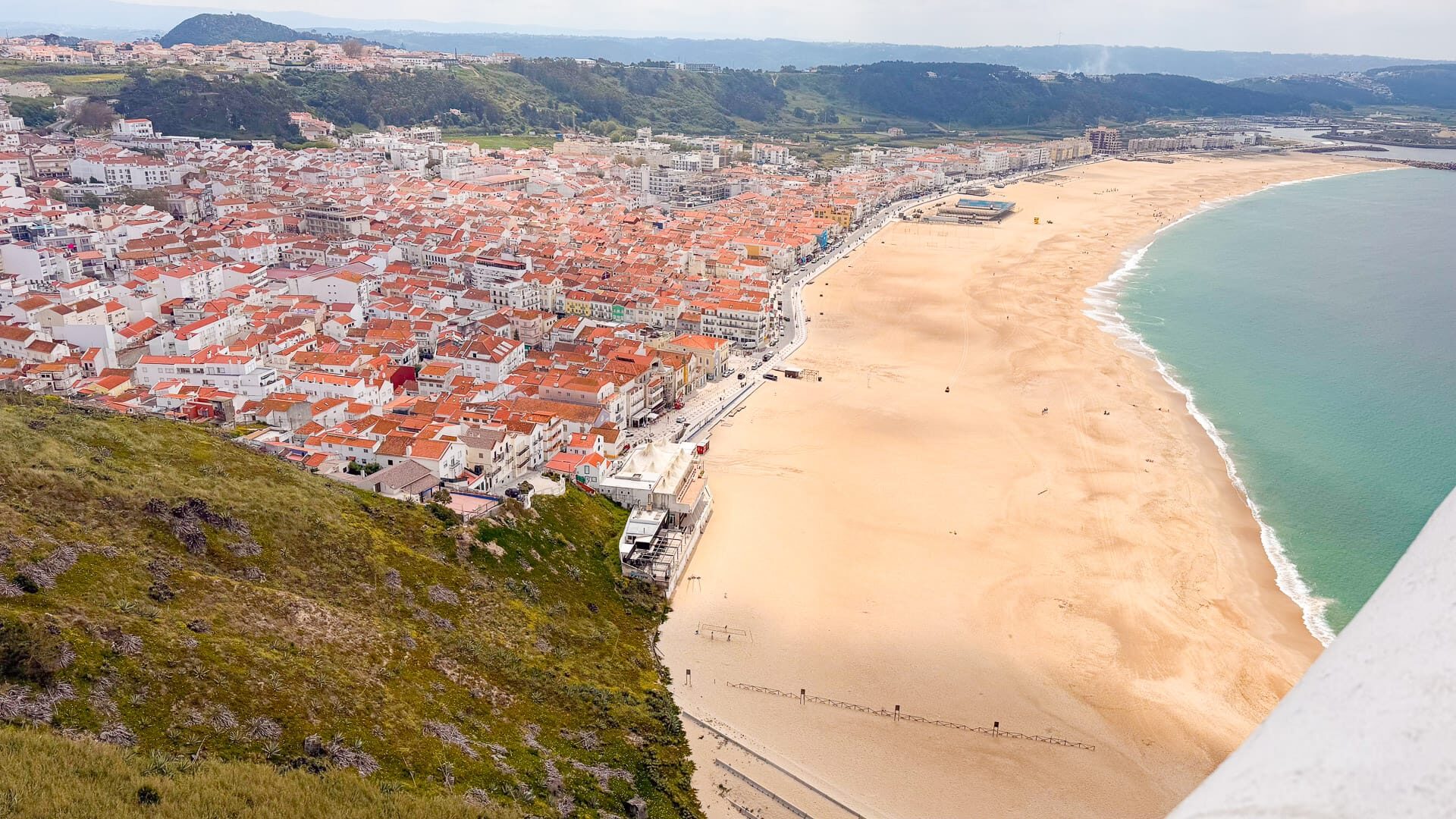
The ride finishes in Nazaré, a beautiful coastal town set beneath a towering cliff that offers panoramic views over the Atlantic. Today, the town is best known for its world-class surfing conditions and powerful ocean waves.
These waves are created by the Nazaré Canyon, a unique underwater geological formation and the largest submerged canyon in Europe. The canyon gained global attention in 2011 when surfer Garrett McNamara rode a record-breaking wave here, placing Nazaré firmly on the international surfing map.
Good to know
This is a shorter and more relaxed riding day, with the dramatic cliffs and surf culture of Nazaré providing one of the most memorable legs of the tour. Check out Praia do Norte to see the biggest waves. You can also take Nazaré’s funicular up to Sítio for views over the beach and coastline.
Accommodation
Accommodation in Nazaré is included at the 4-star Hotel Praia, with the option to upgrade to a superior room under the premium package.
Day 8: Nazaré to Óbidos (47 kilometres)
Overview
Leaving Nazaré, the route continues south along the Silver Coast towards the historic walled town of Óbidos, gradually transitioning from the Atlantic shoreline into one of Portugal’s most iconic medieval settings.
Highlights
The first part of the ride passes through São Martinho do Porto, a sheltered bay known for its calm, shell-shaped shape and is often regarded as one of the best family beaches in Portugal.
From here, the route continues inland towards Óbidos, one of the country’s most beautifully preserved walled towns. Riders are greeted by whitewashed houses, cobbled streets and terracotta roofs enclosed within medieval ramparts, with views over surrounding vineyards and farmland.
Good to know
Óbidos is also known for its vibrant cultural calendar, including the Medieval Market which takes place every July, where the town transforms into a living recreation of medieval Europe. Also the Chocolate Festival, which takes place over one week in Spring, is famous for its creative chocolate sculptures and displays.
Accommodation
Accommodation in Óbidos is included at the 4-star Hotel Josefa de Óbidos, with an alternative 4-star option at Hotel Real de Óbidos available under the premium package.
Day 9: Óbidos to Peniche (35 kilometres)
Overview
Returning to the Atlantic coast, day nine’s ride heads towards Peniche, a rugged peninsula city shaped by the ocean on all sides. The route offers a mix of lagoon landscapes and open countryside before arriving at one of Portugal’s most iconic surf destinations.
Highlights
The first part of the ride includes a stop at Lagoa de Óbidos, a large coastal lagoon that forms a natural barrier between the Atlantic Ocean and the inland waterways of Foz do Arelho. This unique ecosystem, shaped by dunes and tidal movement, is one of the most distinctive natural features of the region.
Continuing south, the route reaches Peniche, a city built on a rocky peninsula. Peniche is best known for its long, exposed beaches and consistent Atlantic winds, making it one of Europe’s prime surfing spots. The coastline supports a wide range of water sports, including surfing, windsurfing, bodyboarding and kite surfing, with powerful waves and famous reef breaks such as Supertubos.
Good to know
This is a coastal and nature-focused stage, combining lagoon scenery and one of Portugal’s most important surf regions.
Accommodation
Accommodation in Peniche is included at the 3-star Star Inn Peniche, with the 4-star MH Peniche available under the premium package.
Day 10: Peniche to Ericeira (68 kilometres)
Overview
The ride follows a scenic coastal route with rugged ocean views and laid-back seaside communities. It heads towards Ericeira, a traditional fishing village turned world-renowned surf destination.
Highlights
The route passes through the Santa Cruz beach area, a long stretch of coastline known for its consistent waves. It is also home to the annual Ocean Spirit festival, which hosts international competitions.
Continuing south, riders reach Ericeira, a charming seaside town and former summer retreat for Lisbon families in the 1940s and 1950s. Today, it is internationally recognised as a surfing hotspot and part of the world’s first World Surfing Reserve. Despite its global reputation, Ericeira has retained its traditional character, with narrow streets, whitewashed houses and a strong fishing heritage.
Good to know
This is a classic Atlantic coastal stage, with surf beaches, cultural heritage and a relaxed vibe, rolling into one of Portugal’s most charming seaside towns.
Accommodation
Accommodation in Ericeira is included at the 4-star Vila Galé Ericeira, with the option to upgrade to a superior room under the premium package.
Day 11: Ericeira to Sintra (27 kilometres)
Overview
The stage offers a noticeable change in landscape, transitioning from coastal roads to rolling hills and lush natural park scenery. Riders will head inland towards Sintra, a UNESCO World Heritage town set within the forested Sintra Mountains.
Highlights
As the ride approaches Sintra, the scenery becomes greener and more dramatic, with the Sintra-Cascais Natural Park providing a backdrop of forested hills and winding roads. Sintra itself is renowned for its extraordinary concentration of Romantic-era architecture and royal estate.
Key sights include the Castelo dos Mouros, a medieval castle set high above the town, the colourful Pena National Palace, and the elegant Sintra National Palace in the historic centre. Together, these monuments have earned Sintra its UNESCO World Heritage status and made it one of Portugal’s most visited cultural destinations.
Good to know
This is a short but rewarding stage that marks a transition from coastal riding to inland cultural exploration, finishing in Sintra, which is one of the most famous and beautiful towns in Portugal.
Accommodation
Accommodation in Sintra is included at the 4-star Sintra Boutique Hotel, with the 5-star premium option at the Tivoli Palácio de Seteais Sintra Hotel.
Day 12: Sintra to Cascais (40 kilometres)
Overview
The final riding stage descends from Sintra towards the Atlantic and finishes in the elegant seaside city of Cascais. The route combines forested mountain scenery with a gradual return to the coast for a fitting finale.
The cycling therefore finishes before central Lisbon, where riders would otherwise encounter a much busier urban environment, including cobbled streets and steep gradients.
Highlights
Leaving Sintra, the ride passes through the Sintra-Cascais Natural Park, where winding roads and forested hills create a scenic descent towards the ocean. Riders are rewarded with sweeping views of the Atlantic and the surrounding coastline.
The stage finishes in Cascais, a cosmopolitan coastal city once favoured by Portuguese royalty in the late 19th and early 20th centuries.
Nearby highlights include Praia do Guincho, a windswept beach popular with surfers and windsurfers, and the surrounding cliffs and viewpoints that line this stretch of coast.
Good to know
Originally a fishing village, Cascais has evolved into one of Portugal’s most popular seaside destinations, known for its marina and relaxed, upscale atmosphere.
Accommodation
Accommodation in Cascais is included at the 4-star Pestana Cascais, with the 5-star premium option at Hotel Cidadela Cascais.
Day 13: Departure to Lisbon (no cycling)
After the final night in Cascais, the tour comes to an end with a short onward transfer to Lisbon. As Portugal’s vibrant capital, Lisbon offers an easy connection for onward travel and international departures.
Travelling between Cascais and Lisbon is quick and easy. The most popular option is the scenic coastal train on the Linha de Cascais, which follows the shoreline and takes around 40 minutes.
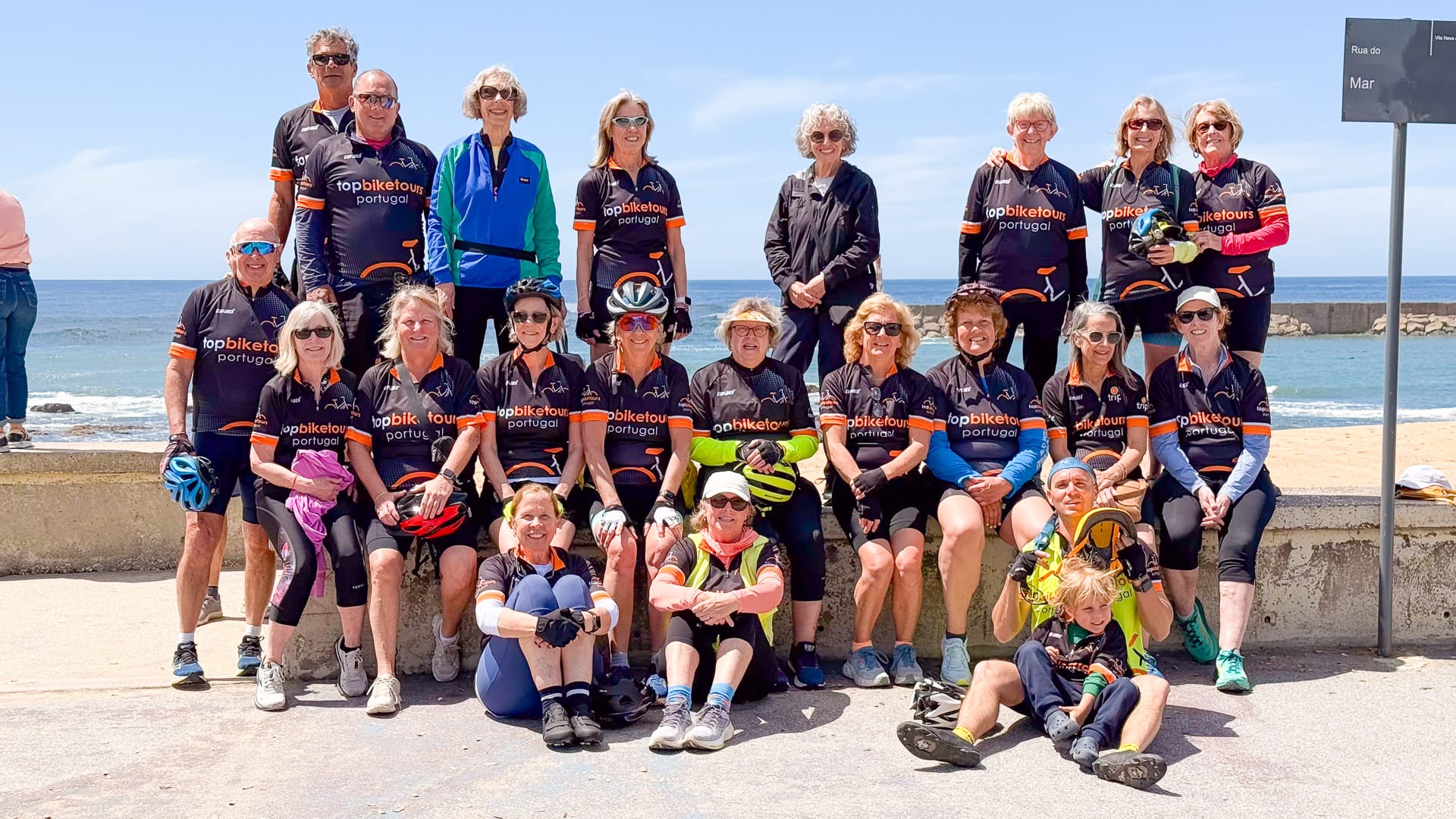
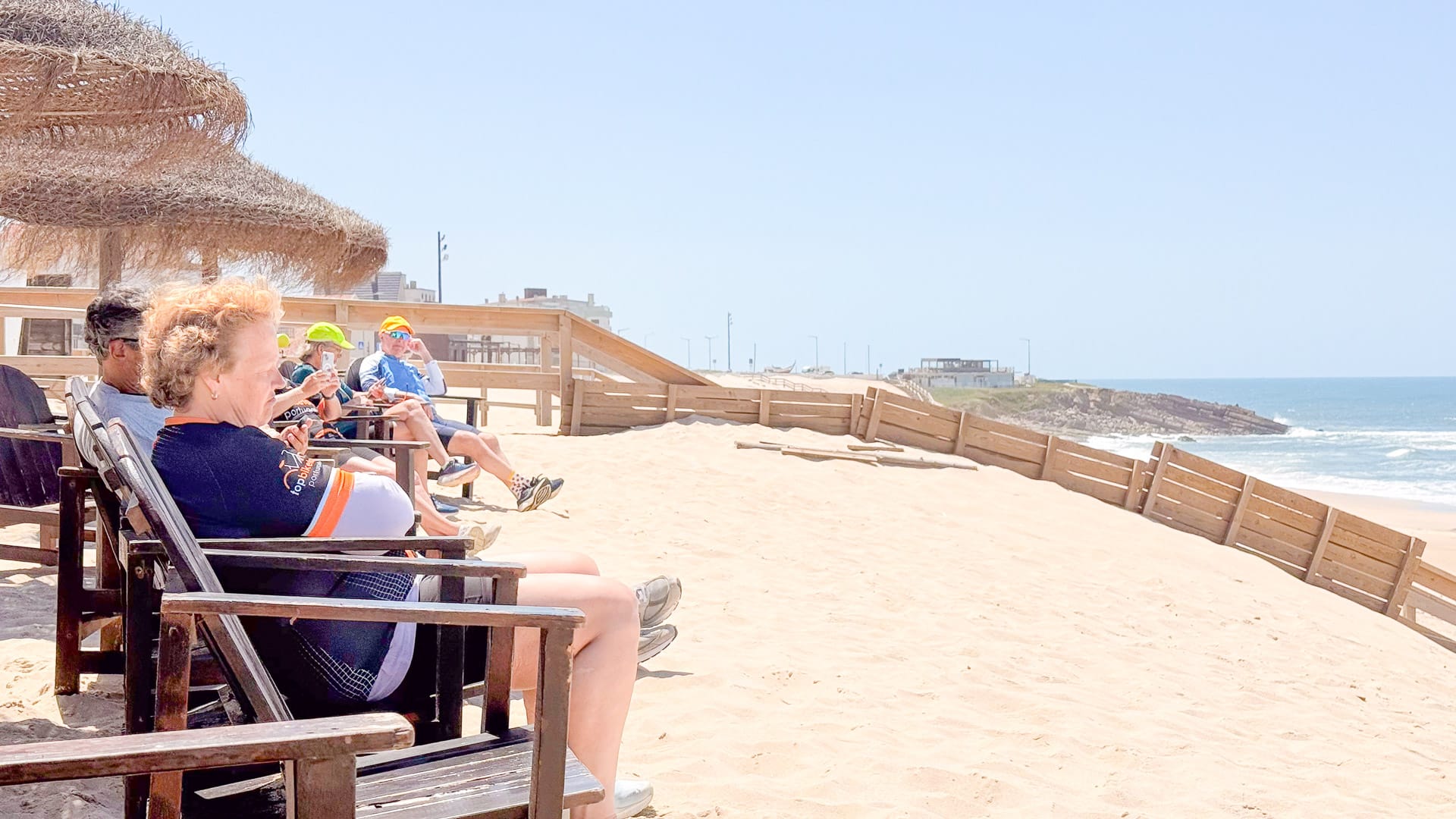
Coastal promenade stop with ocean views (photo credit: Top Bike Tours Portugal)
Sponsor Message
Planning a Porto to Lisbon bike trip?
Top Bike Tours Portugal offers guided and self-guided cycling tours from Porto to Lisbon.
Self-guided includes accommodation, luggage transfers, bike hire and support on the trip. Guided adds local experts to accompany you.
Considering a guided or self-guided trip? Visit the Top Bike Tours Portugal website to find out more about its Porto to Lisbon cycling tour.
Got a question for Sérgio Marques from Top Bike Tours Portugal?
Fill out this form and we will pass it to Top Bike Tours Portugal who aim to reply (within 24 hours wherever they can!)
Part 4: Planning your Porto to Lisbon bike ride
What is the best time of year to ride Porto to Lisbon?
The best time to cycle from Porto to Lisbon is usually spring or autumn. March to June and September to October tend to offer the best balance of mild temperatures, usable daylight and quieter coastal towns. Summer can work, but accommodation is busier and some sections feel hotter, especially away from the immediate shoreline. Winter is possible for experienced riders, but rain, shorter days and Atlantic weather make planning less predictable.
This chart summarises the position:
| Season | What to expect | Best for |
| March to June | Milder temperatures, spring landscapes and generally comfortable riding conditions. | Most riders; first-time multi-day cycling holidays. |
| July to August | Warmer, busier and more expensive in coastal towns; early starts help. | Riders tied to school holidays or confident with heat/crowds. |
| September to October | Often warm but calmer than peak summer, with good light and easier accommodation availability. | Probably the best overall balance. |
| November to February | More rain, shorter days and less predictable Atlantic weather. | Experienced riders who are flexible with plans. |
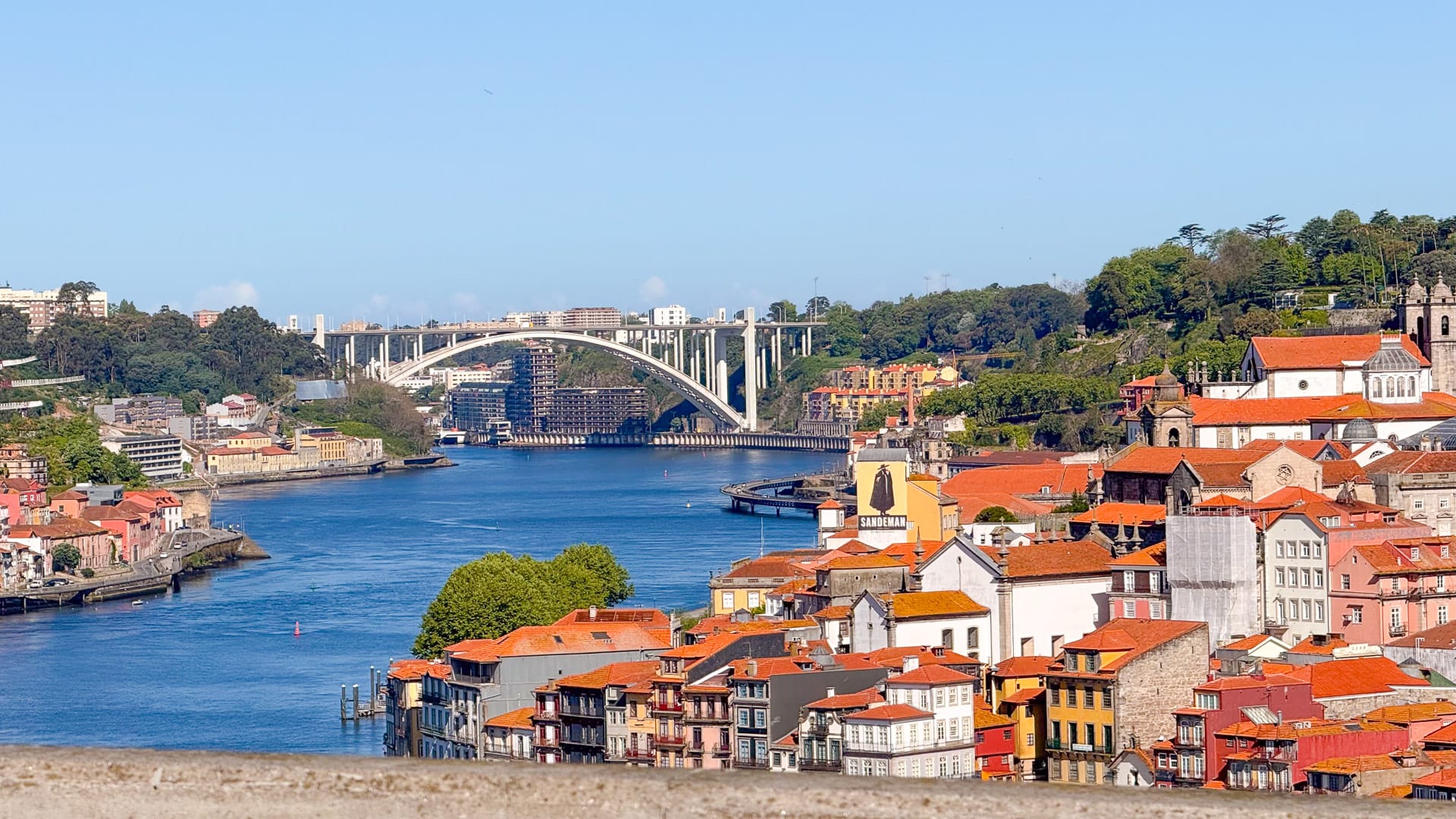
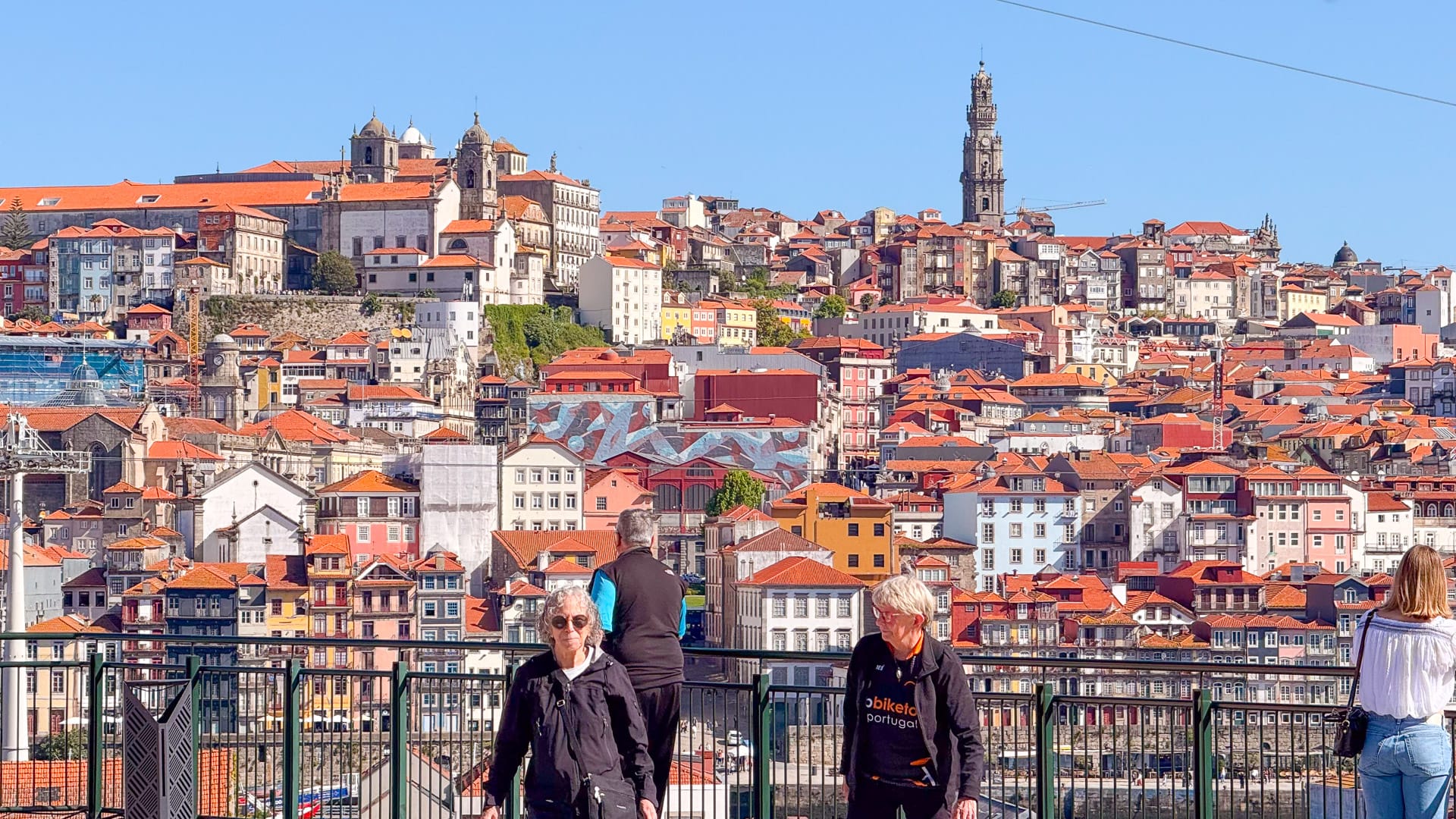
Panoramic view of Porto and the Douro River (photo credit: Top Bike Tours Portugal)
What training do you suggest?
Porto to Lisbon is designed to be achievable rather than extreme, but riders should still arrive with a reasonable level of cycling fitness. A good benchmark is feeling comfortable riding between 40 and 50 kilometres in a day over consecutive days before starting the trip.
The route is less about speed and more about consistency. Cyclists who regularly ride recreationally, even at a relaxed pace, generally adapt well to the demands of the journey.
Because the terrain is mostly flat to gently rolling, endurance matters more than climbing ability. Short practice rides on consecutive days can help prepare riders for the rhythm of multi-day touring, particularly when carrying out longer periods in the saddle.
E-bikes can make the Porto to Lisbon ride accessible to more cyclists, including mixed-ability groups and riders newer to long-distance touring.
Is there bike-friendly accommodation available on the Porto to Lisbon cycle route?
Yes, and it’s one of the reasons this route works so well as a multi-day ride.
Be aware! In peak season (May–September), smaller coastal towns can fill quickly, so booking ahead is important if travelling independently.
For many riders, the riding itself is not the main worry; it is the logistics. Booking the right accommodation in small coastal towns, arranging luggage transfers, choosing a suitable bike and knowing what happens if something goes wrong can all add complexity, especially in peak months. This is where an organised tour can make the experience feel much more relaxed, allowing riders to focus on the journey rather than the administration around it.
Top Bike Tours Portugal stays in carefully selected cyclist-friendly hotels along the way, including city hotels in Porto, seaside stays in places like Furadouro and Praia de Mira, canal-side hotels in Aveiro, and boutique properties in Nazaré, Óbidos, Ericeira, Sintra and Cascais. Each is chosen for location and comfort after a day’s ride.
- Expect a mix of comfortable 3–4 star hotels and boutique coastal stays in small towns and historic centres along the route. These are generally well located for cyclists, close to restaurants, beaches and town centres, with secure bike storage or safe spaces for bikes. Their focus is on comfort, location and local character.
- We also offer a premium tour package which include hotel upgrades and after ride surprises, for those looking to indulge in a little more luxury.
- You can find out more about the hotels we use at Top Bike Tours Portugal in this article.
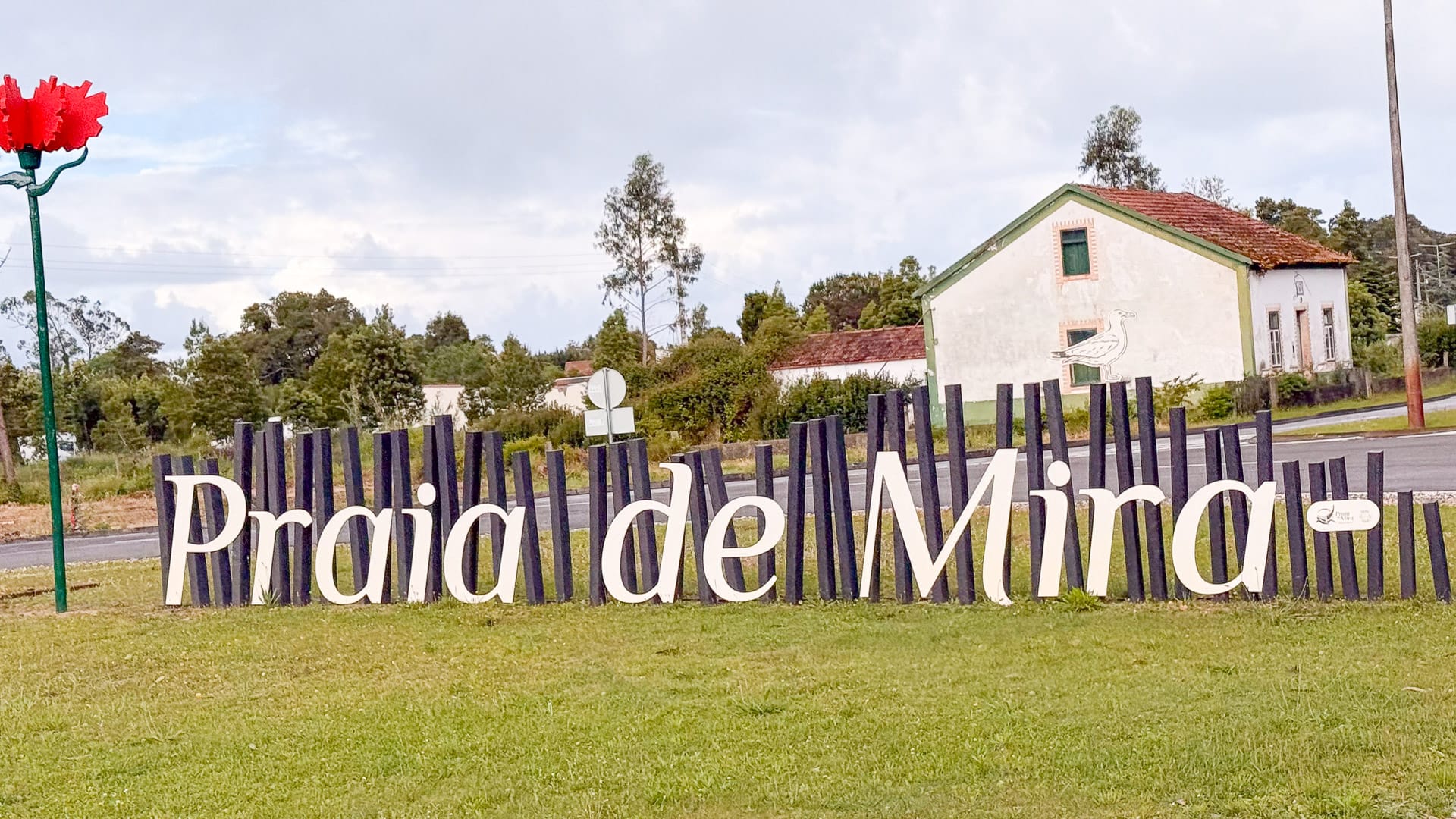
Arriving at Praia de Mira (photo credit: Top Bike Tours Portugal)
What’s the best bike for the Porto to Lisbon route? Can I hire a bike?
Hybrid bikes, touring bikes and gravel bikes all work well on this route. You’ll find a mix of cycle paths, quiet roads and short gravel sections, so comfort and stability matter more than speed. Riders can choose hybrids or touring bikes, while gravel bikes suit those wanting a slightly sportier feel.
E-bikes are also a popular choice and make the route accessible for a wide range of fitness levels.
At a glance:
| Bike type | Suitability for Porto to Lisbon |
| Hybrid / touring bike | Best all-round choice for comfort, luggage-free touring and mixed surfaces. |
| Gravel bike | Good for confident riders who prefer a sportier feel and do not mind firmer handling. |
| E-bike | Excellent for mixed-ability groups, newer long-distance riders and anyone who wants help with wind or rolling sections. |
| Road bike | Possible if tyres are suitable, but less forgiving on boardwalks and compact gravel. |
| Mountain bike | Usable, but unnecessary unless that is the bike you are most comfortable riding. |
Elevated view over Nazaré and its famous beach (photo credit: Top Bike Tours Portugal)
Can I hire a bike?
Top Bike Tours Portugal does not offer standalone Porto to Lisbon bike rental, but bike and e-bike hire is included for guests booking its tours. This can be a major advantage for international riders, since it avoids the hassle of flying with a bike and arranging bike transport at either end of the route.
We provide guests booking tours with us with premium hybrid touring bikes, gravel bikes, and modern e-bikes for all tours and rentals. Every rental includes a helmet, lock, repair kit, and a professional bike fitting at the start of the tour. Mechanical assistance is also available throughout the experience. For guided tours, riders benefit from a support vehicle and on-route assistance to ensure a smooth and comfortable journey. And for self-guided tours, we provide phone support and partner bike shops along the route. Get more information about our tours on our website; our FAQs might also be useful.
Can you ride this route on an e-bike?
Yes. E-bikes work very well on the Porto to Lisbon route and are particularly popular with mixed-ability couples and groups. They help take the pressure off fitness differences, making it easier for riders to stay together and enjoy the journey at a similar pace.
They are also a good option for anyone who is comfortable cycling but unsure about riding several days in a row. The route’s manageable daily distances, gentle terrain and regular overnight stops make charging straightforward, with batteries typically recharged at hotels each evening.
For many riders, choosing an e-bike means they can focus more on the coastal scenery, food stops and towns along the route, rather than worrying about whether the day’s ride will feel too hard.
Should I choose a standard bike or an e-bike?
This depends on your fitness, confidence and who you are travelling with.
A standard hybrid or touring bike is a good choice if you already ride regularly, are comfortable with consecutive days in the saddle and are happy covering around 40 to 65 kilometres on most riding days.
An e-bike is worth considering if you are newer to multi-day cycling, travelling with someone stronger or weaker than you, or simply want the reassurance of extra assistance if the wind picks up or your legs feel tired. E-bikes are especially useful for mixed-ability couples and small groups because they help everyone ride together at a comfortable pace.
There is no need to see an e-bike as “cheating” on this route. Porto to Lisbon is about enjoying the coast, towns, food and culture along the way, not proving how fast or hard you can ride.
Does the route get very busy?
Generally, no, long stretches of the route feel calm and low-traffic, especially on cycle paths and secondary roads.
Be aware! Some coastal towns like Nazaré, Peniche and Cascais can be busier in summer (from July to August), when beach tourism is at its peak. Spring and autumn offer a much quieter riding experience.
Why ride from Porto to Lisbon rather than from Lisbon to Porto?
Most riders choose to ride from Porto to Lisbon because it generally aligns better with the prevailing winds, making the journey more enjoyable as you follow the Atlantic coast southwards. Riding north to south also offers a more natural flow.
Like any great end-to-end ride, there’s something special about beginning and finishing in two iconic cities, but arriving into the Portuguese capital after several days on the bike gives the journey a real sense of completion and achievement.
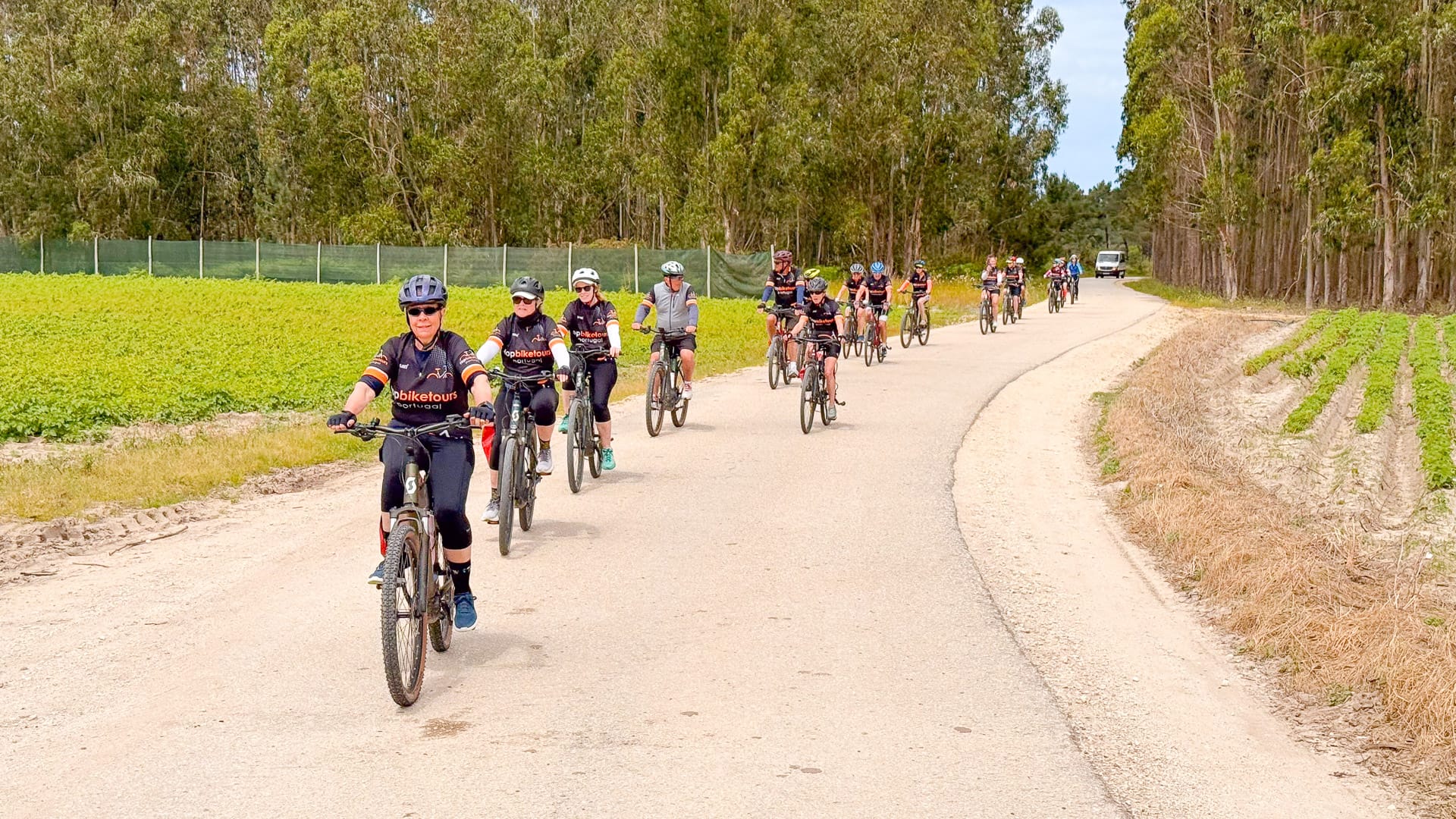
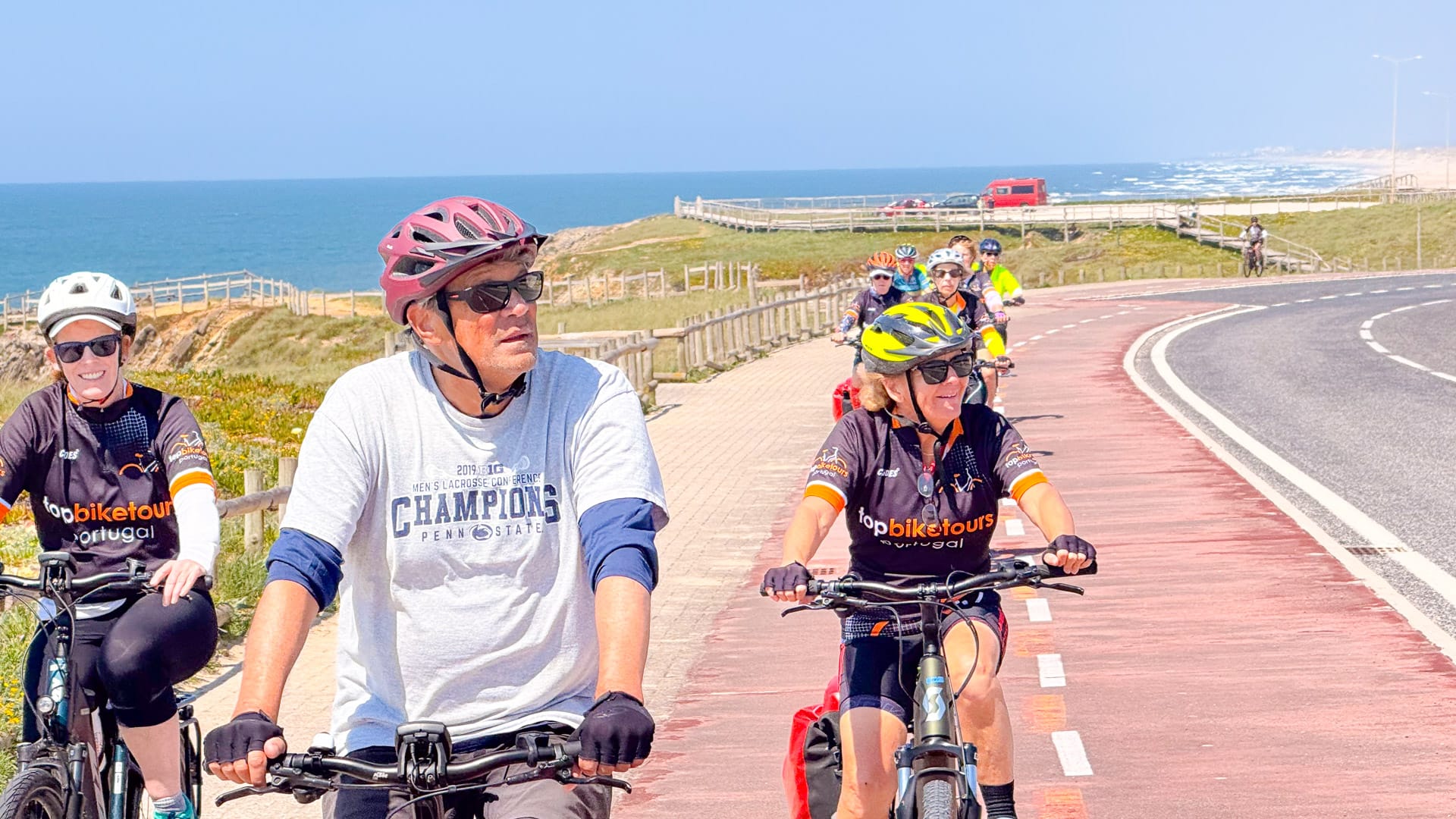
Cycling with Top Bike Tours Portugal (photo credit: Top Bike Tours Portugal)
How do you get there and back? Can you take bikes on public transport?
Porto is served by Porto Airport, while the Lisbon region is served by Lisbon Airport. If you are joiningTop Bike Tours Portugal’s tour, airport transfers and end-of-trip logistics may be included depending on the package, so confirm the latest inclusions before booking.
Independent riders should check current public transportation rules before travel. Visit Portugal states that bikes are permitted on Porto Metro every day on all lines and timetables, provided carriages are not full. Portugal’s train operator, Comboios de Portugal (CP) also allows bicycles on some train services under specific conditions, but rules vary by service and space can be limited. Dismantled and packed bikes are treated as hand luggage. Always check the latest CP bike carriage rules before relying on a train connection.
On the Top Bike Tours Portugal tour, the transfer from Porto airport to the hotel and the Lisbon/Cascais transfer, or Obidos/Lisbon transfer in the shorter route, are all included, but not the ferry on day 3,
Any highway code and travel information I should be aware of?
Before cycling Portugal, read current road rules and travel advice. For UK visitors, the UK government travel information page for Portugal is a useful starting point. Cyclists must follow Portuguese road rules and should carry identification. Helmets are strongly recommended for all cyclists, but Visit Portugal states they are not compulsory for standard bicycles; different rules may apply to higher-powered electrically assisted bikes or motorcycles. Lights are essential in poor visibility or low light.
Be aware: much of the route is calm, but some rural and coastal roads are shared with traffic. Stay alert on narrow sections, use GPS navigation and take particular care where vehicles may turn across cycle lanes or coastal access roads.
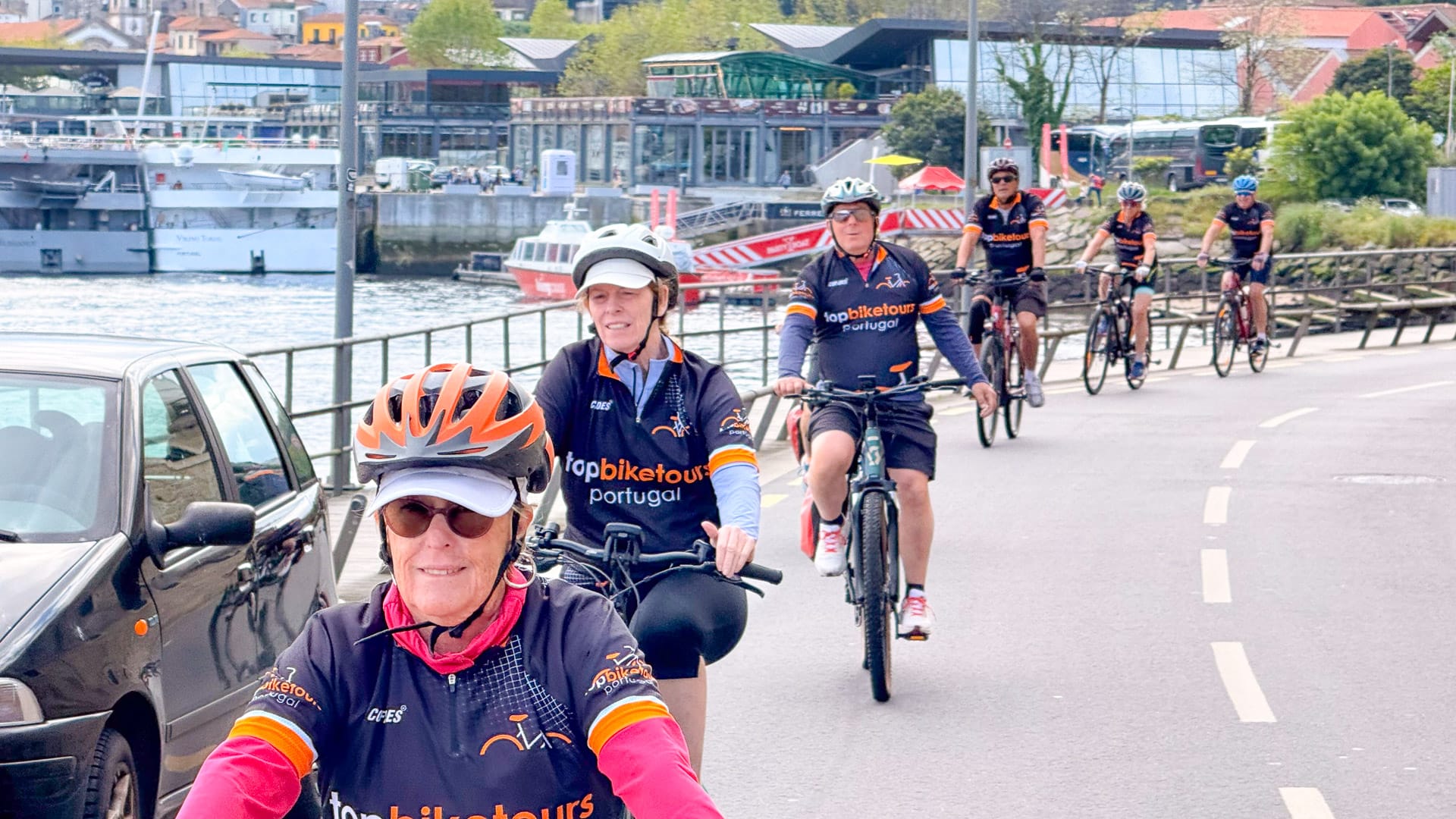
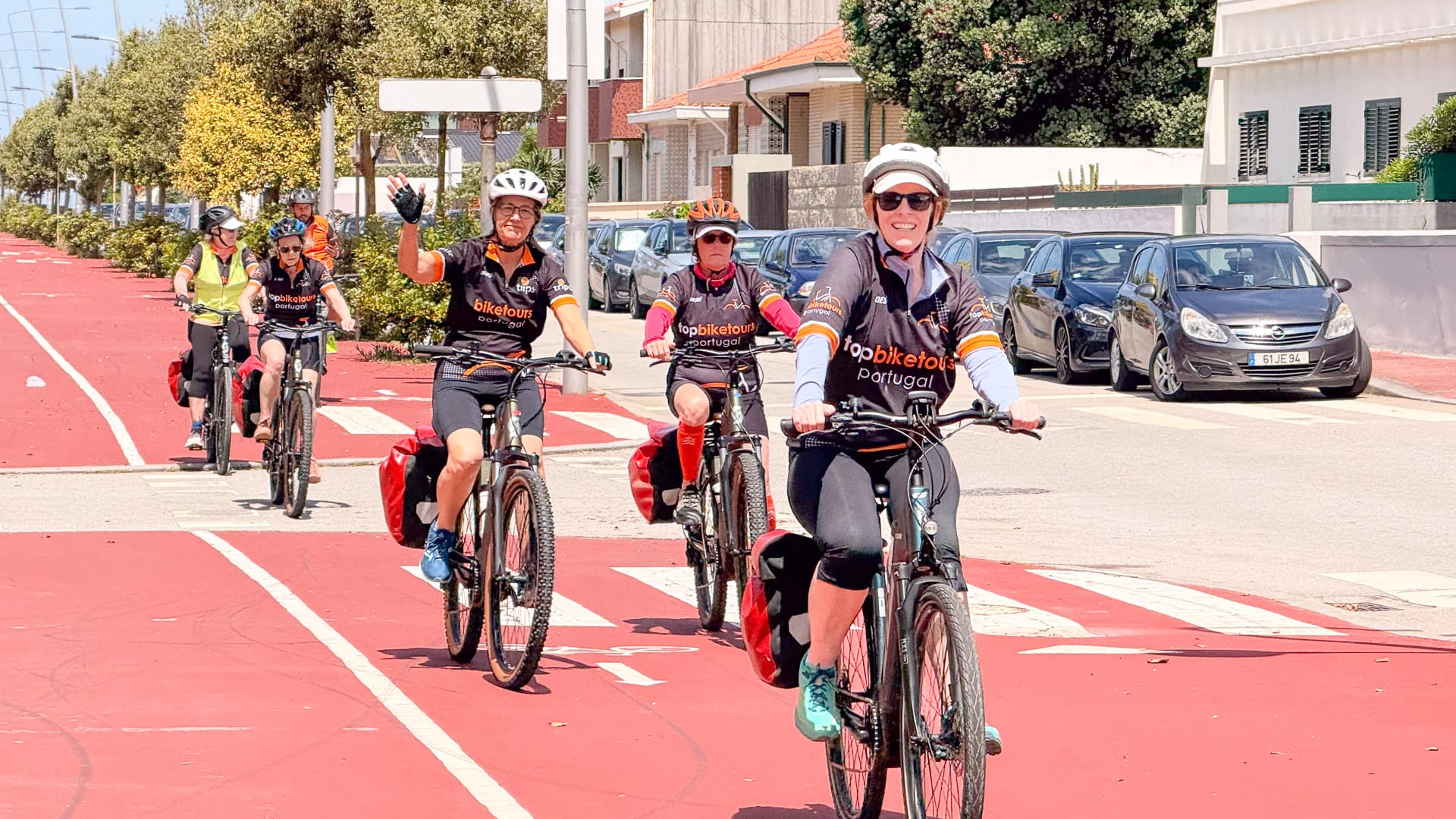
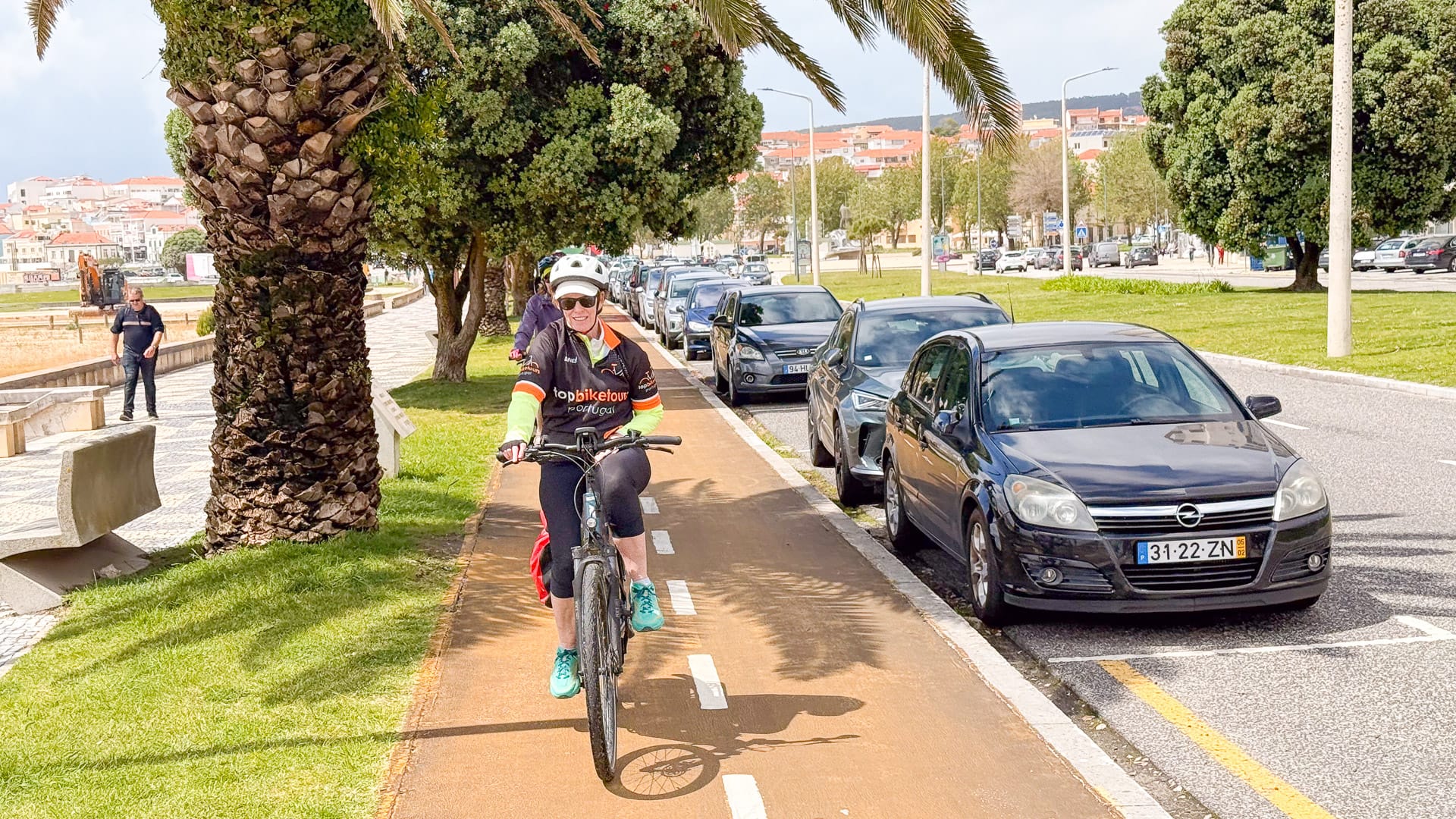
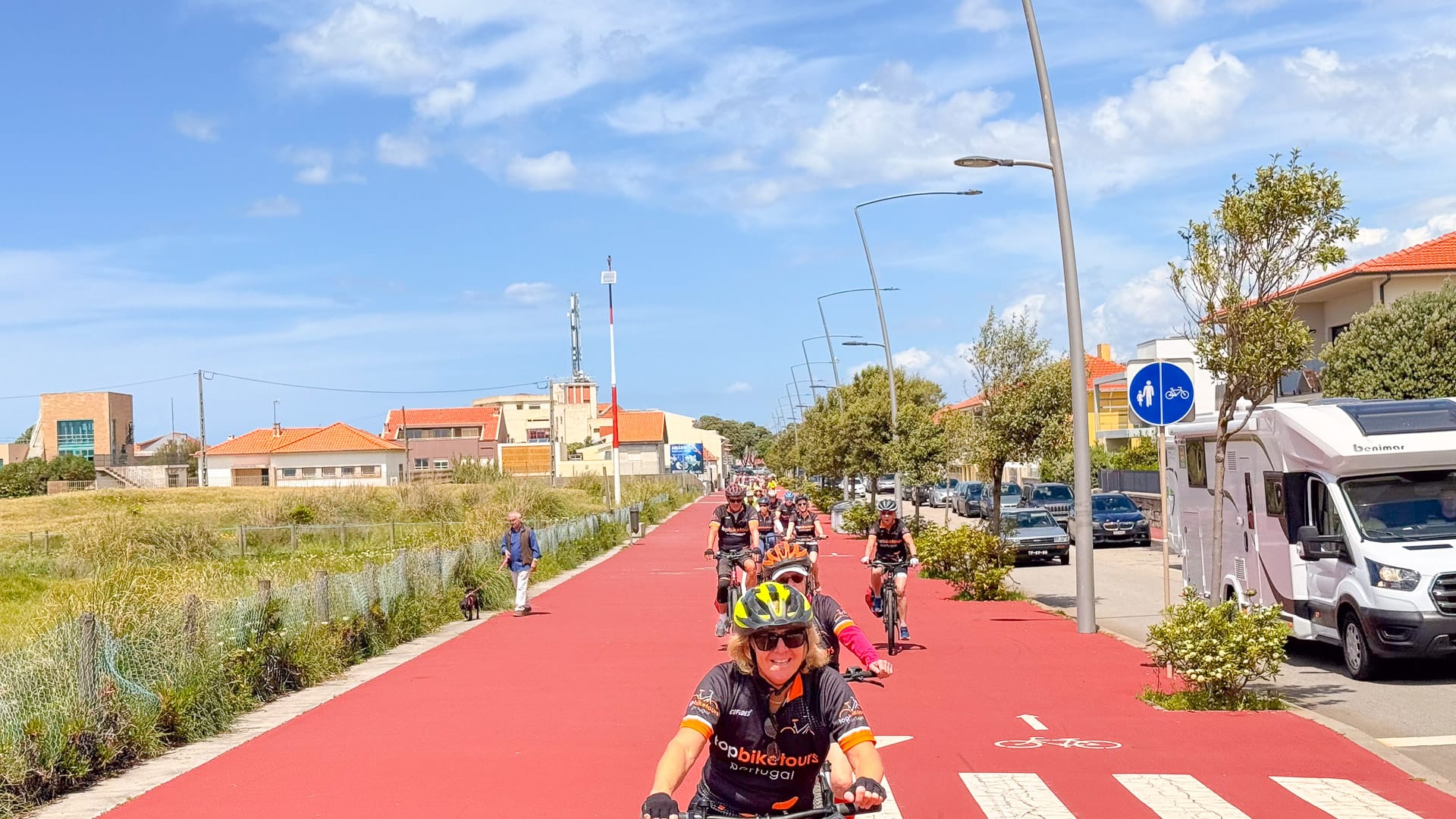
Coastal cycle lane in a seaside town near Porto (photo credit: Top Bike Tours Portugal)
Sponsor Message
Planning a Porto to Lisbon bike trip?
Top Bike Tours Portugal offers guided and self-guided cycling tours from Porto to Lisbon.
Self-guided includes accommodation, luggage transfers, bike hire and support on the trip. Guided adds local experts to accompany you.
Considering a guided or self-guided trip? Visit the Top Bike Tours Portugal website to find out more about its Porto to Lisbon cycling tour.
Got a question for Sérgio Marques from Top Bike Tours Portugal?
Fill out this form and we will pass it to Top Bike Tours Portugal who aim to reply (within 24 hours wherever they can!)
Part 5: Insider tips for anyone looking to cycle Porto to Lisbon
Do you need cash?
Cards are widely accepted, but it’s always a good idea to carry some Euros for smaller shops, coffee machines and toilets, especially in rural areas.
Are there lots of water fountains, shops and cafés on the route?
Yes. One of the strengths of this route is how regularly it passes through towns and coastal settlements. Most bars and cafés are happy to refill your water bottles, and it’s good etiquette to support them by ordering a coffee. You’re rarely far from a café or shop, especially along the Silver Coast, making it easy to ride light and stop often.
Should you spend time in the start and finish cities?
Definitely. Porto and Lisbon both deserve extra time beyond the cycling route. Porto brings riverside history and food culture, while Lisbon offers coastal views, old neighbourhoods and a lively atmosphere. Time allowing, both cities are worth dedicating a bit of extra time on either side of the ride.
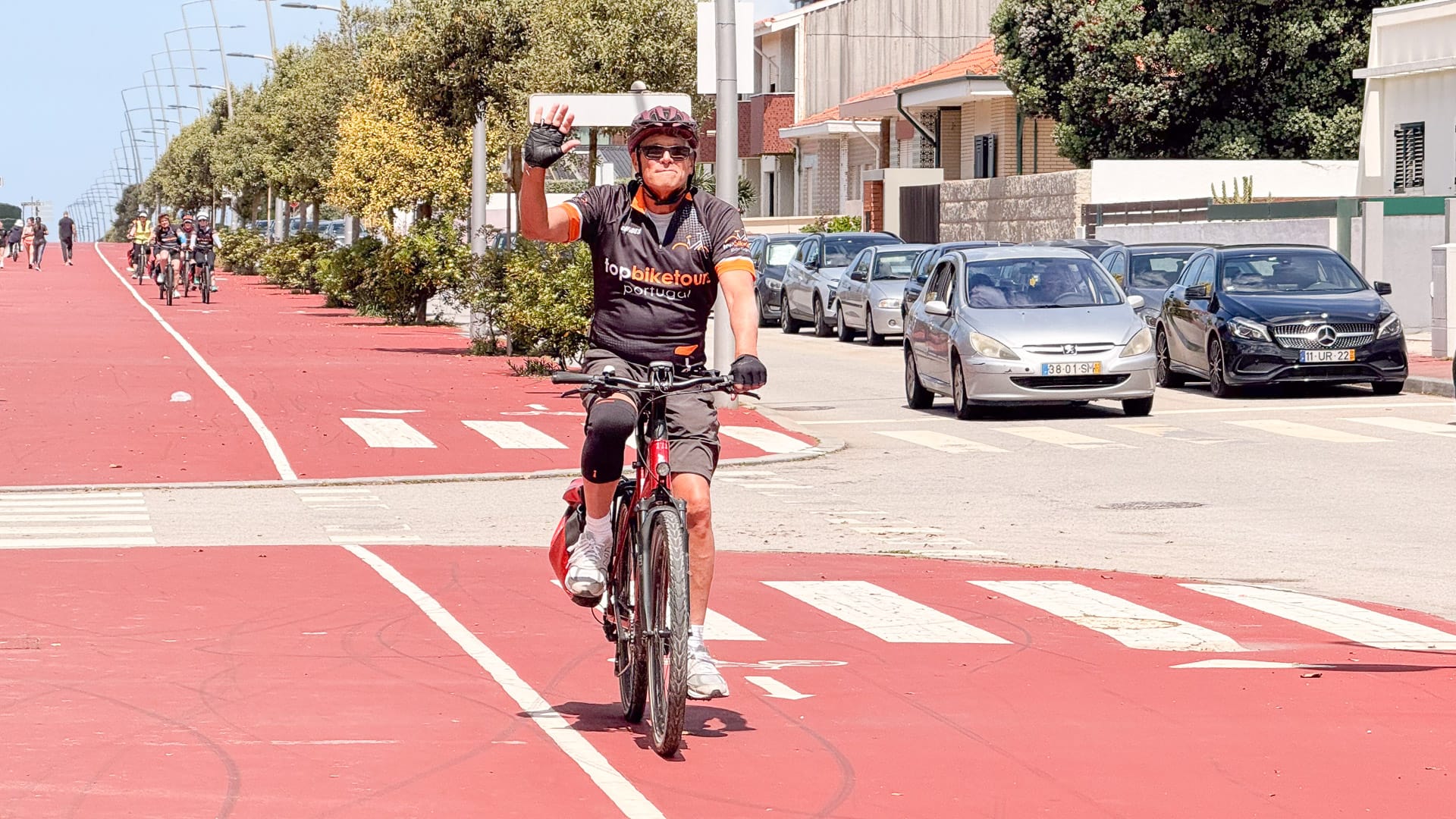
Cycling on the coastal bike lane through a seaside town north of Porto (photo credit: Top Bike Tours Portugal)
Do you need to speak Portuguese?
No, English is widely spoken across Portugal, particularly in hotels, restaurants and tourist areas along the route.
That said, a few simple Portuguese phrases go a long way and are always appreciated. Things like “Olá” (hello), “Bom dia” (good morning), “Boa noite” (good night), “Por favor” (please) and “Obrigado/a” (thank you) are easy to pick up and add a nice touch to the journey.
Are there toilets along the route?
Yes. You’ll find toilets in cafés, restaurants, beaches and town centres throughout the route, with regular stopping points built naturally into each day.
What other transport is involved on the route?
Occasional short ferry rides are part of the coastal experience, and trains or buses are available in Porto and Lisbon if needed for flexibility.
Any safety tips?
Stay hydrated, use sunscreen and be mindful of wind conditions, especially on exposed Atlantic stretches where conditions can change quickly.
Overall, the route is considered very safe for touring cyclists. The usual common sense applies: keep your wits about you and stay aware of traffic, especially vehicles turning right across cycle lanes in front of you. They should check their mirrors, of course, but it’s always best to be vigilant.
On a Top Bike Tours Portugal tour, if a rider becomes very tired, feels unwell, or simply doesn’t want to complete a full stage, the level of flexibility depends largely on the type of tour.
- In a guided tour, there is always the reassurance of a support van. This means stages can be shortened at any point, and riders can take a break from cycling for part or all of the day if needed. The guide and driver can adapt the plan in real time based on weather, group energy levels or any unexpected issues, which makes the experience much more relaxed and accessible.
- In self-guided tours, the structure is different but there is still support in place. If there is a mechanical issue, riders typically have access to technical assistance remotely, with clear guidance on how to resolve common problems or arrange help if needed. The route itself is flexible enough that stages can often be adjusted, for example by taking shorter options, skipping sections or using local transport if necessary, although this requires a bit more independence and decision-making from the rider.
What should you pack?
Bring breathable cycling clothing, a light rain jacket, sunglasses, sun protection, comfortable evening clothes and basic layers for changing coastal weather. Cyclists should always ride with gloves and a helmet.
Be aware! Even in warm months, Atlantic winds can make early mornings and evenings feel cooler than expected.
What about food and nutrition?
Food is one of the real highlights of the ride, with many spots to try grilled fish fresh from the Atlantic and Portugal’s iconic pastries.
Fresh Atlantic seafood, local cafés and traditional Portuguese dishes are never far away, with regular towns and villages along the route making it easy to refuel and eat well throughout the day. It’s a route where you rarely need to think too far ahead about food, with plenty of opportunity to enjoy local meals as part of the journey.
Some dishes and local specialities to look out for include bacalhau à lagareiro, a traditional baked cod dish usually served with olive oil, garlic and potatoes, and polvo à lagareiro, the octopus version of the same style of cooking. Bolinhos de bacalhau, or cod fritters, are another easy-to-find Portuguese classic and make a good snack or starter after a day on the bike.
There are also several destination-specific treats worth saving room for.
- In Porto, try a francesinha, the city’s famously hearty sandwich layered with meat, cheese and sauce.
- Around Aveiro, look out for ovos moles, a sweet made with egg yolk and sugar, as well as tripa de ovos, a soft, sweet local speciality often filled with ovos moles.
- In Óbidos, fried eels are a traditional dish, and the town is also known for ginja de Óbidos, a cherry liqueur often served in small chocolate cups.
- At the Lisbon end of the journey, pastéis de Belém are the classic sweet finish.
Sponsor Message
Planning a Porto to Lisbon bike trip?
Top Bike Tours Portugal offers guided and self-guided cycling tours from Porto to Lisbon.
Self-guided includes accommodation, luggage transfers, bike hire and support on the trip. Guided adds local experts to accompany you.
Considering a guided or self-guided trip? Visit the Top Bike Tours Portugal website to find out more about its Porto to Lisbon cycling tour.
Got a question for Sérgio Marques from Top Bike Tours Portugal?
Fill out this form and we will pass it to Top Bike Tours Portugal who aim to reply (within 24 hours wherever they can!)
Part 6: How Top Bike Tours Portugal can help
Top Bike Tours Portugal has been running cycling tours in Portugal for over thirteen years, since 2013.
We offer two Porto to Lisbon variations that enable guests to bike the Camino and cycle from Porto:
- Porto to Lisbon (13 days)
- Porto to Óbidos with transfer to Lisbon (8 days)
More information on the routes is on the Top Bike Tours Portugal web page.Top Bike Tours Portugal web page.
We offer both guided and self-guided options for each of these two Porto to Lisbon tours. There is also a premium tour package which include hotel upgrades and after ride surprises, for those looking to indulge in a little more comfort and luxury.
Many of Top Bike Tours Portugal’s Porto to Lisbon guests are couples or small groups who like the idea of a multi-day cycling holiday, but want reassurance around difficulty, navigation, bike choice and logistics. The tour is designed with this kind of rider in mind: regular leisure cyclists who want to travel at a comfortable pace, enjoy the coastal scenery and have support in place if they need it.
Local knowledge
What sets our cycling trips apart is the local knowledge, the personal touch, and a genuine passion for cycling, not just tourism!
I (Sergio) started Top Bike Tours Portugal after riding the Camino myself. I’m not from a traditional tourism background, and that’s what makes the experience different. I have invaluable first-hand experience of cycling the route and fully understand the needs of guests. As some of our customers have said, we have our “feet on the ground.”
Our local guides also know the route inside out, from the best detours to the safest paths. Whether it’s a conversation over dinner or a quick roadside tip, we aim to make our guests feel looked after every step of the way.
Every year, we revisit our routes on the ground. We ride key sections ourselves, check road conditions, test alternatives, and fine-tune details that might impact the experience. We also continuously review the routes based on customer feedback and our own experience. This ongoing process ensures that each itinerary balances scenery, safety, and local authenticity.
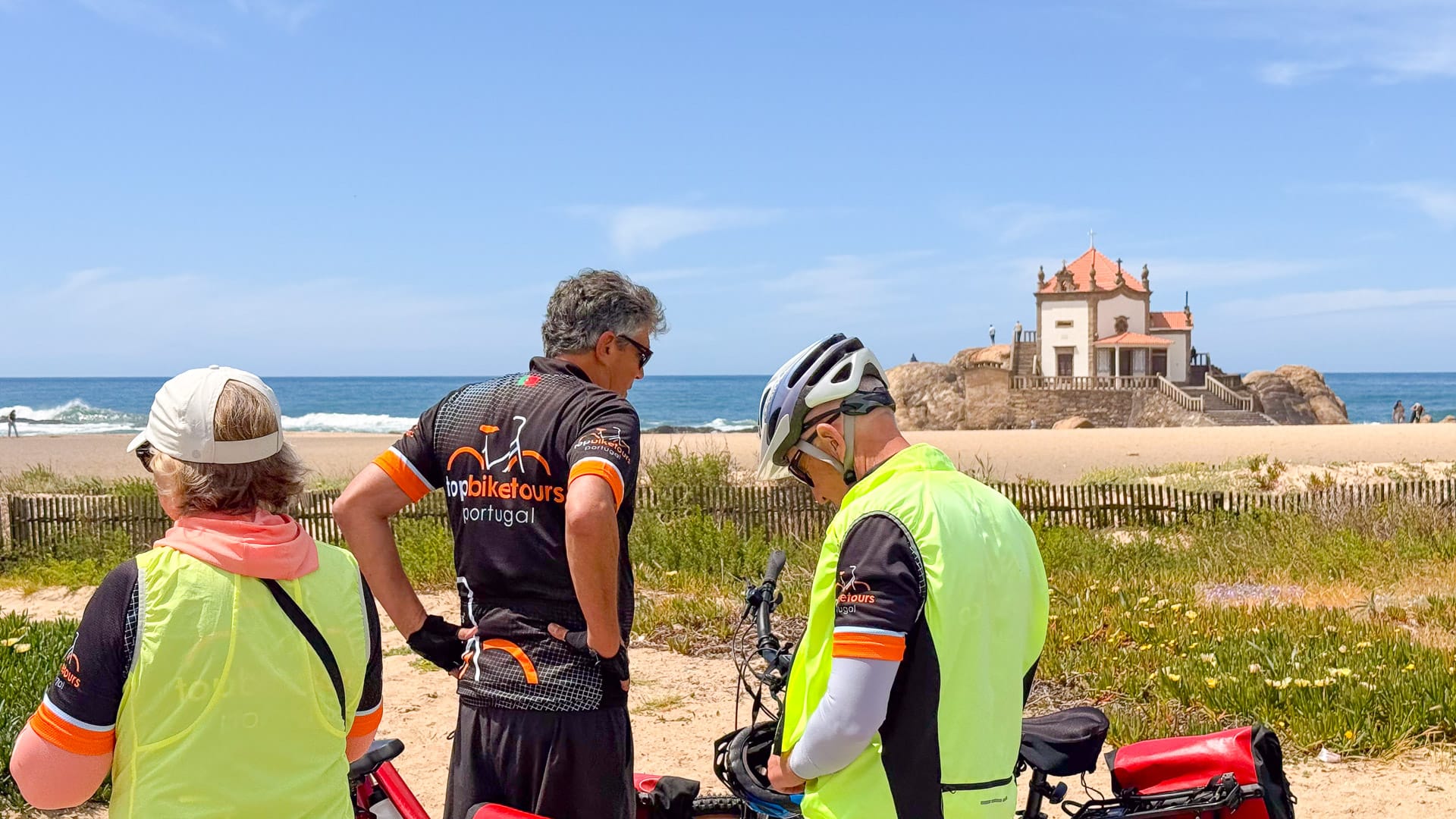
Cyclists stopping near the Capela do Senhor da Pedra, Miramar Beach (photo credit: Top Bike Tours Portugal)
Common concerns before booking
The most common questions we get are not usually about speed or performance. They are practical questions: will the route be too hard, should I choose an e-bike, how easy is navigation, what happens to my luggage, and what support is available if something goes wrong?
These are exactly the areas where a guided or self-guided tour can help. Riders receive a planned route, accommodation, luggage transfers and practical support, while still being able to enjoy the journey at a relaxed pace. For couples and small groups, this can make the difference between a trip that feels complicated to organise and one that feels manageable from the start.
What’s included?
All tours include
- Carefully selected accommodation each night, with breakfast provided to set you up for the day ahead.
- Daily luggage transfers
- Bike or e-bike rental
- Porto Airport transfers, and train and bus tickets.
Guided cycling tours, which run with a minimum of four guests, offer a guide, mechanical assistance, van support (if there are a minimum of eight riders), personal accident insurance and a branded jersey. On guided tours, guests benefit from a high level of day-to-day support.
- There is always a guide accompanying the group, who provides route briefings and practical guidance, as well as on-the- ground assistance throughout each stage.
- Mechanical support is available directly during the ride, and in groups of eight or more riders, a support van is present, allowing anyone to take a break if needed or adapt the stage depending on conditions or energy levels. This setup also ensures quick response in case of fatigue, bad weather or any unexpected situation.
The self-guided cycling tours are provided with GPS route tracks and a detailed roadbook to guide you along the way. On self-guided tours, the experience is more independent, but support is still in place.
- Guests receive GPS tracks and a detailed roadbook, and there is always remote assistance available via phone or WhatsApp.
- In case of a mechanical issue, technical support is provided by phone or WhatsApp, with guidance on how to resolve the issue. Sailing that, we arrange help from a partner bike shop. While there is no accompanying vehicle, stages remain flexible enough to be adjusted using local transport options if necessary.
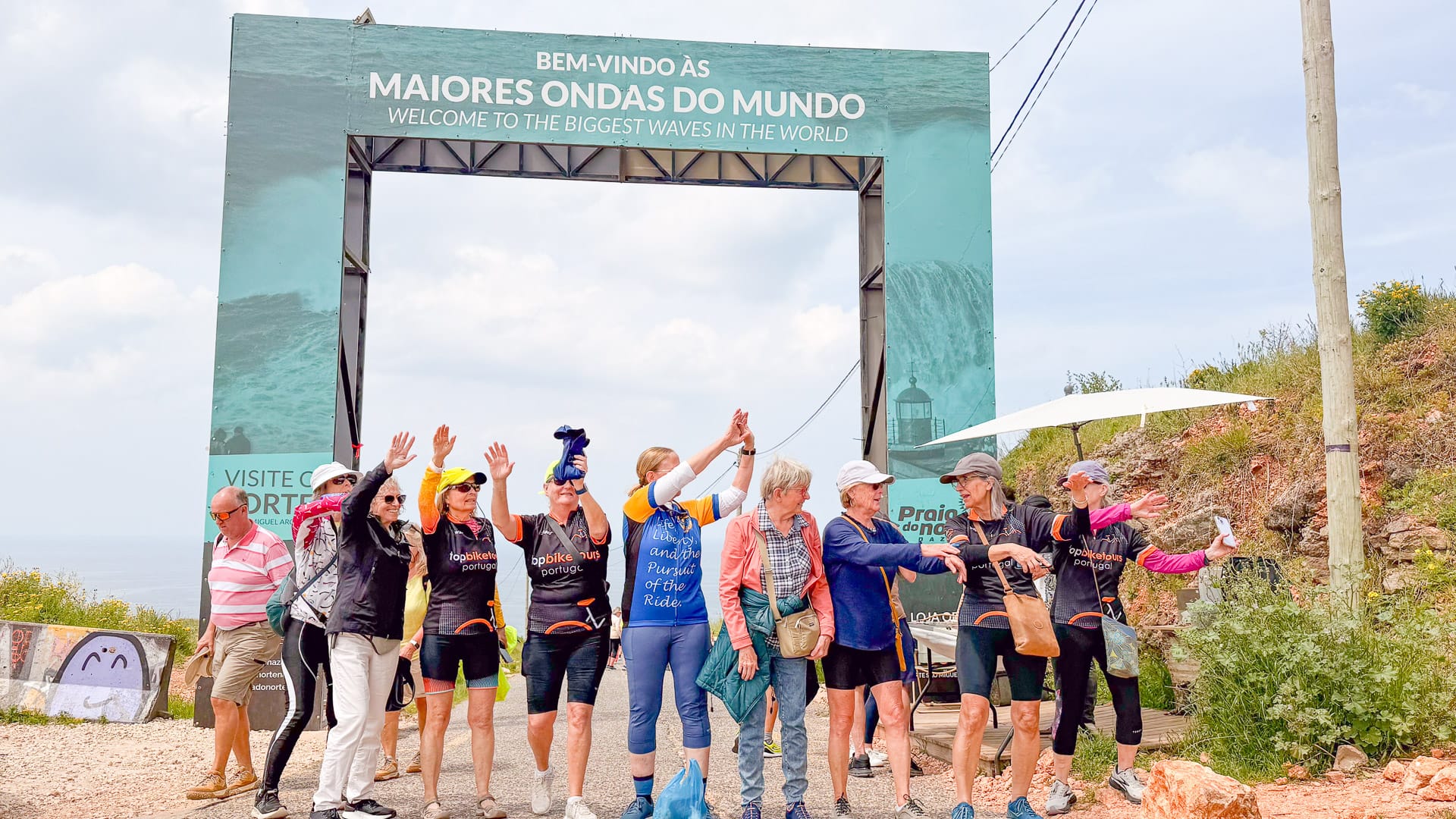
Arriving in Nazaré, famous because of the big waves (photo credit: Top Bike Tours Portugal)
Guided vs self-guided: which should you choose?
Top Bike Tours Portugal offers both guided and self-guided versions of the Porto to Lisbon tour, so the right choice depends on how much independence and support you want.
Overall, for guests who prefer maximum reassurance and flexibility during the ride, especially in case of fatigue, mechanical problems or changing weather, a guided tour is worth considering, due to the presence of continuous on-the-ground support, including the van.
| Choose guided if… | Choose self-guided if… |
| You want a guide with you on the road | You are comfortable riding independently |
| You like group atmosphere and local interpretation | You prefer flexibility and your own pace |
| You want maximum reassurance with logistics and support | You are happy using GPS tracks and a roadbook |
| You are less confident with navigation or mechanical issues | You want the structure of a tour without riding in a group |
There’s a comparison between the guided and self-guided tours on Top Bike Tours Portugal website.
When should you book?
As a general rule, it’s best to book at least 4–6 months in advance for spring and autumn, which are the most popular seasons for cycling in Portugal. These months usually offer the most comfortable riding conditions, so demand is higher and the best hotels along the route can fill up early.
For peak summer, from June to September, it’s worth booking even further ahead. Around 6–9 months in advance is advisable, especially if you are travelling as a group or have particular accommodation preferences. Coastal towns along the Porto to Lisbon route are busy at this time of year, so last-minute availability can be limited. It is also possible to book up to a year in advance.
One of the advantages of the self-guided version of the tour is its flexibility. Self-guided tours are not tied to fixed departure dates, so they can usually be arranged on custom dates throughout the season, subject to hotel availability. This makes them a good option for couples or small groups who want to travel on their own schedule, rather than joining a set group departure.
Happy guests
To date, we’ve helped hundreds of cyclists cycle the Camino. Check out the glowing reviews from previous guests with us here.
Here are some of the things our guests like:
- Strong organisation and attention to detail: guests mention that our tours are well curated, with the logistics thought through carefully.
- Excellent support during the trip: reviewers highlight responsive support when needed, including regular check-ins by text and quick answers via WhatsApp.
- Practical problem-solving: clients like the short videos we send to help answer questions, such as fixing flat tyres
- Good quality accommodation: guests particularly like the hotels, convenient locations and included breakfasts.
- Reliable luggage transport: luggage transfers work smoothly and get specific praise.
- Good bikes and equipment: guests mention “good gear” and being supplied with the tools needed for basic repairs.
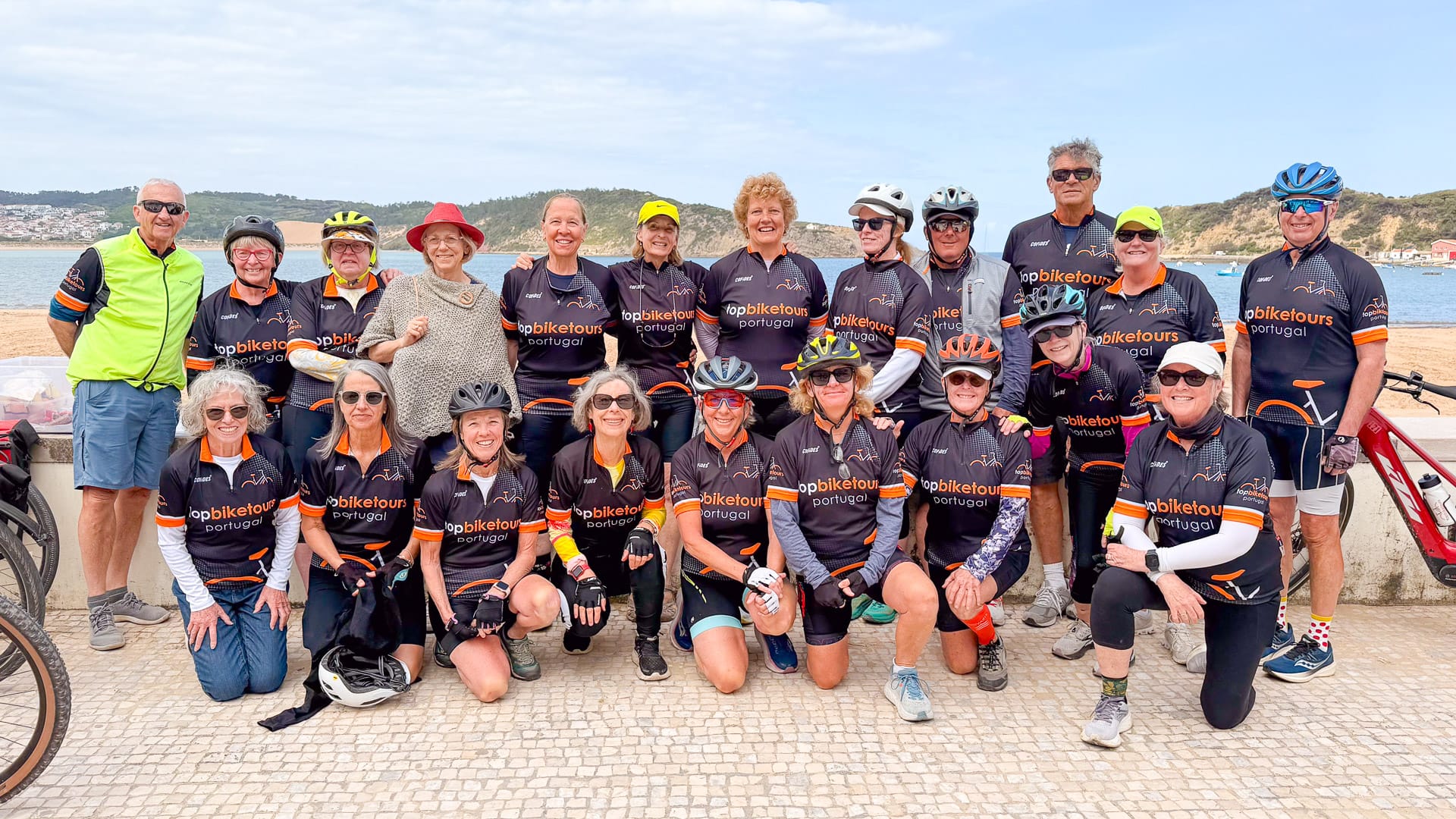
Coastal town of Nazaré with Atlantic Ocean backdrop (photo credit: Top Bike Tours Portugal)
Planning your Porto to Lisbon ride?
If you are a regular leisure cyclist, travelling as a couple or small group, and like the idea of cycling from Porto to Lisbon without having to organise every detail yourself, Top Bike Tours Portugal’s guided and self-guided tours are designed around this kind of journey. Their team can help you choose between a standard bike and an e-bike, understand the daily distances, and decide what level of support is right for you.
Find out more on Top Bike Tours Portugal’s Porto to Lisbon tour page.
What’s next?
A huge thank you to the Top Bike Tours Portugal team for their detailed insights on this route!
For more inspiration, check out:
- Cycling the Portuguese Camino, taking riders from Porto to Santiago de Compostela.
- Cycling the Duroro Valley, exploring the world famous wine region in the north of the country.
- Cycling the Camino Francés, explore the Pyrenees in France to Santiago de Compostela in Spain.
- Our 5 best self-guided cycling routes in Portugal, with tips for planning your own tour.
- How to prepare for long distance cycling, our own tips on training, kit, nutrition and more.
- 18 of the world’s best (long distance) cycling routes, if you fancy trying other multi-day tours.
Got a question for Top Bike Tours Portugal?
Fill out this form and we will pass it to Top Bike Tours Portugal who aim to reply (within 24 hours wherever they can!)
Got a question for Sérgio?
Fill out this form and we will send it to Sérgio. We aim to get you an answer within 24 hours where possible!Sérgio Marques is the founder of Top Bike Tours Portugal.
He has a background in accounting and a lifelong love of sport, including a particular passion for cycling. The idea for the company came after a life-changing ride with friends to Santiago de Compostela in 2012. From that journey, Top Bike Tours Portugal was born. Sérgio's aim was to share authentic cycling experiences.
Today, Sérgio manages the business and occasionally leads tours himself, especially for larger groups. He speaks Portuguese and English.
First Published: 29 May 2026
This article includes details of products and/or services that we have used ourselves or which we would consider using. Some are paid features or include affiliate links or referral codes which we may earn commission from. As an Amazon Associate we earn from qualifying purchases. Please read our disclosure policy for further information.
The contents of this website are provided for general information purposes only. It is not intended to amount to advice and you should not rely on it. You should carry out your own due diligence and risk assessments and take professional advice. Views expressed by interviewees or other users of this website do not necessarily represent our views. We make no representations, warranties or guarantees, whether express or implied, that the content on our website is accurate, complete or up to date. If you use any information or content on this website, download from, or otherwise obtain content or services through our website, it is entirely at your own discretion and risk. Epic Road Rides Ltd disclaims all liability and responsibility arising from any reliance placed on the information and content on this website. Find out more here.
Sponsor Message
Planning a Porto to Lisbon bike trip?
Top Bike Tours Portugal offers guided and self-guided cycling tours from Porto to Lisbon.
Self-guided includes accommodation, luggage transfers, bike hire and support on the trip. Guided adds local experts to accompany you.
Considering a guided or self-guided trip? Visit the Top Bike Tours Portugal website to find out more about its Porto to Lisbon cycling tour.
Got a question for Sérgio Marques from Top Bike Tours Portugal?
Fill out this form and we will pass it to Top Bike Tours Portugal who aim to reply (within 24 hours wherever they can!)
Comments