
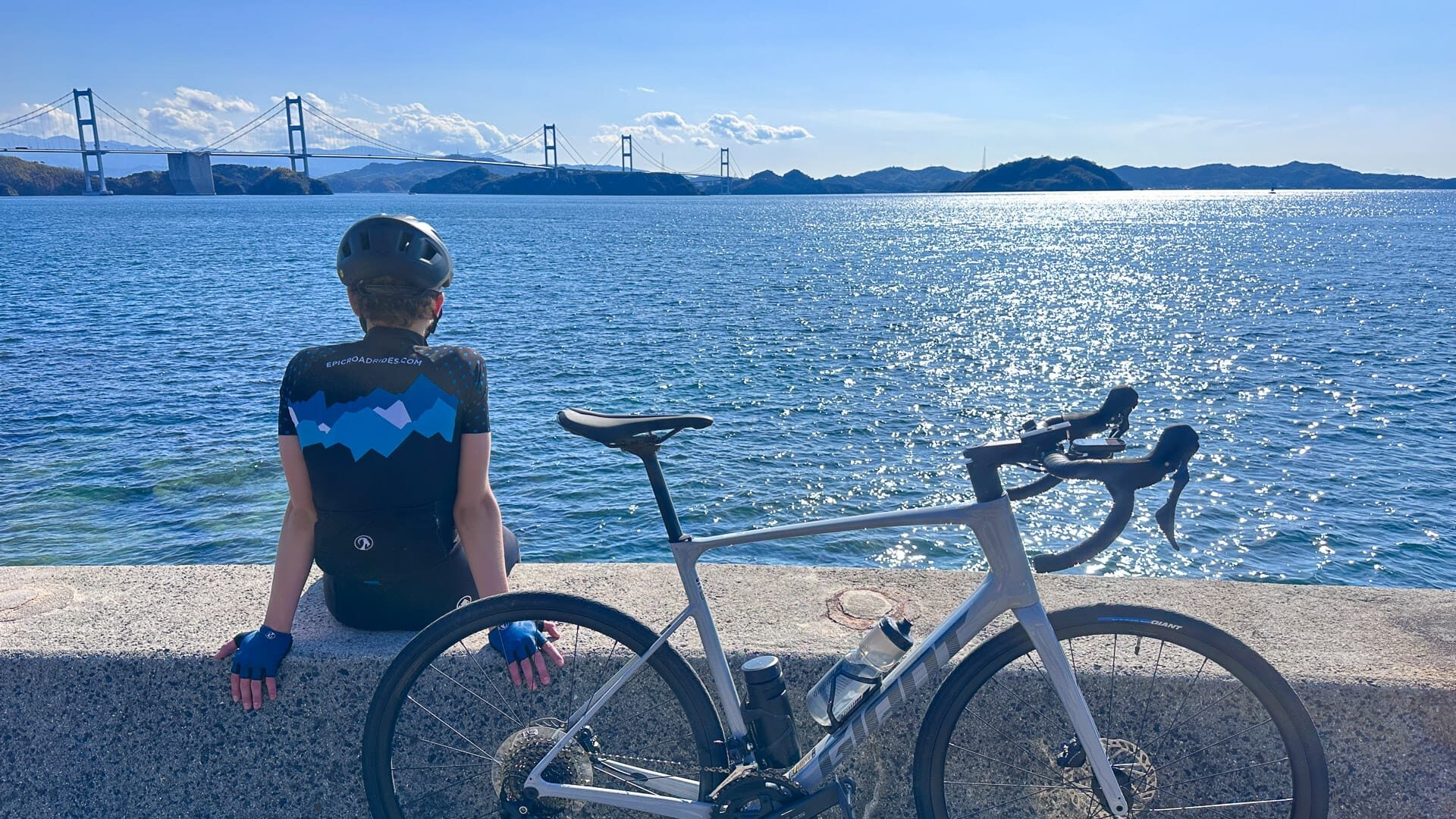

I first wrote about the Shimanami Kaido in 2021 (here) and since that moment, I’ve been wanting to ride it myself.
Why?
For me, the spectacular Seto Inland sea setting is alluring, the juxtaposition of heavy industry (shipbuilding) and beautiful island scenery is intriguing and the incredible infrastructure the Shimanami Kaido route offers reduces the overwhelm of organising your own bike tour in Japan.
In this article I share my experience of our three day Shimanami Kaido bike tour in 2026. I was with my husband and children aged 10 and 13 (both experienced cyclists). We organised it ourselves, but with help from Rindo Bike Tour Japan, who supplied the route. Big shout out to them for this, as the best parts of our tour were on their cycling route rather than the official route (and yes, GPS files are below!).
Here’s the in-depth take on our Shimanami Kaido tour, including itinerary and tips, to help you plan your own.
Looking for info on the practicalities of planning a cycling trip on the Shimanami Kaido? Read this: introduction article on planning a cycling holiday on the Shimanami Kaido and our Shimanami Kaido Cycling FAQs.

Clare Dewey is a cyclist with a passion for travel. She set up epicroadrides.com in 2018 to help make it easy for cyclists to explore the world by bike. Today her mission is still inspiring cyclists to discover new places on two wheels - and doing what she can to make sure they have the best possible time while they're there. Clare has visited 50+ destinations around the world, many of them by bike.
Want to connect with Clare? Find her over on LinkedIn.

We love to introduce our community to cycling businesses, destinations and ideas that we think are genuinely interesting. Rindo Bike Tour Japan caught our attention because of its focus on cycling in Japan, which felt like a natural fit for Epic Road Rides and our readers. We were therefore pleased to work with the Rindo Bike Tour Japan team on this article.
Rindo Bike Tour Japan paid for this advertisement feature. Our decision to collaborate reflects our view that the brand is relevant to our readers; it is not a formal approval, audit or guarantee of its services. Unless we expressly say otherwise, we have not personally taken the trip described or independently verified information supplied by Rindo Bike Tour Japan.
As with any travel purchase, please check the latest trip details, terms and customer protections directly with Rindo Bike Tour Japan before booking. Any booking is made with Rindo Bike Tour Japan, not Epic Road Rides.
Always check current travel information and advice. For visitors from the UK, the UK government travel information pages are here.
 There's a Youtube video here!
I'm fine with Youtube cookies
The Shimanami Kaido cycle route
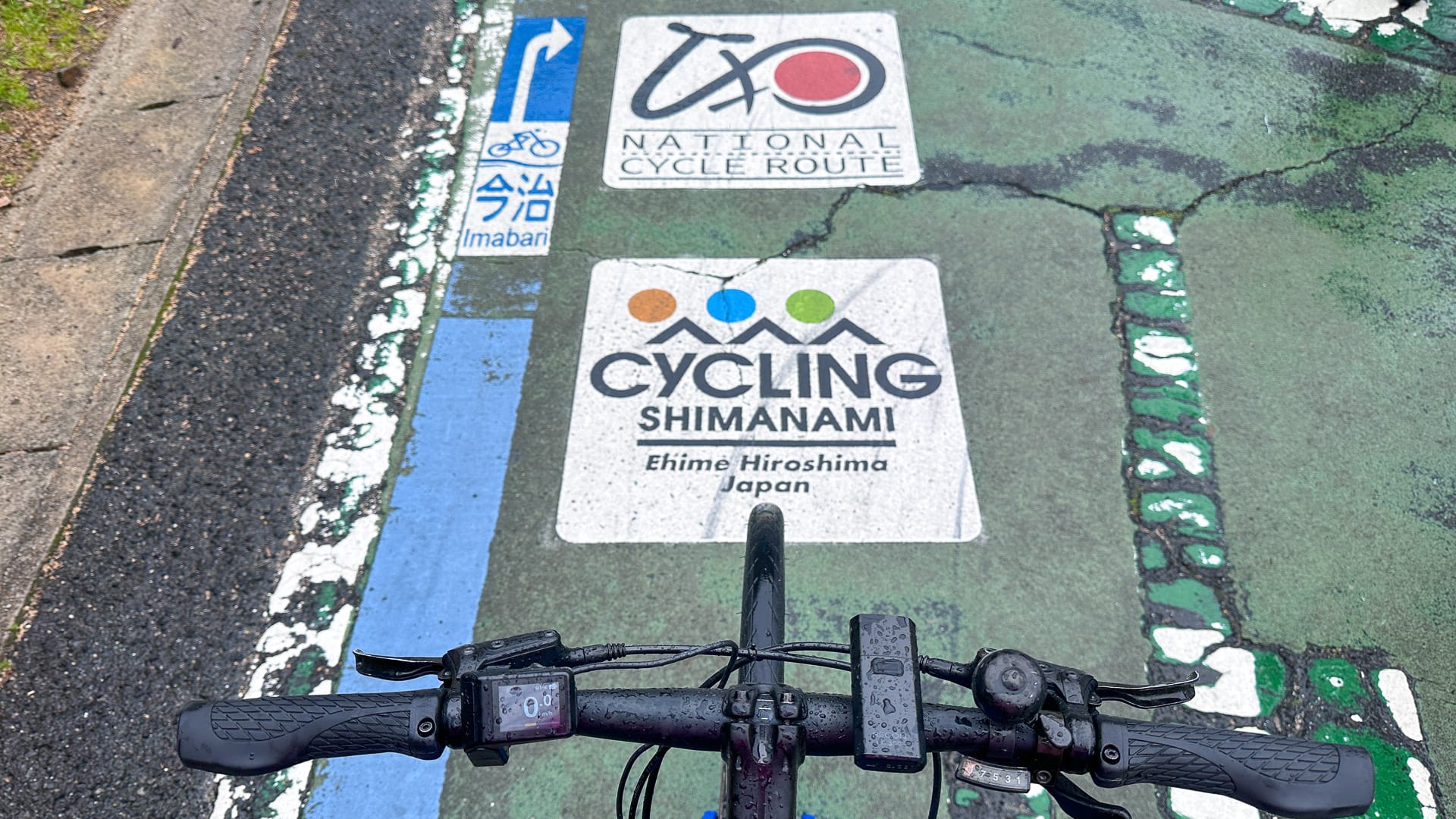
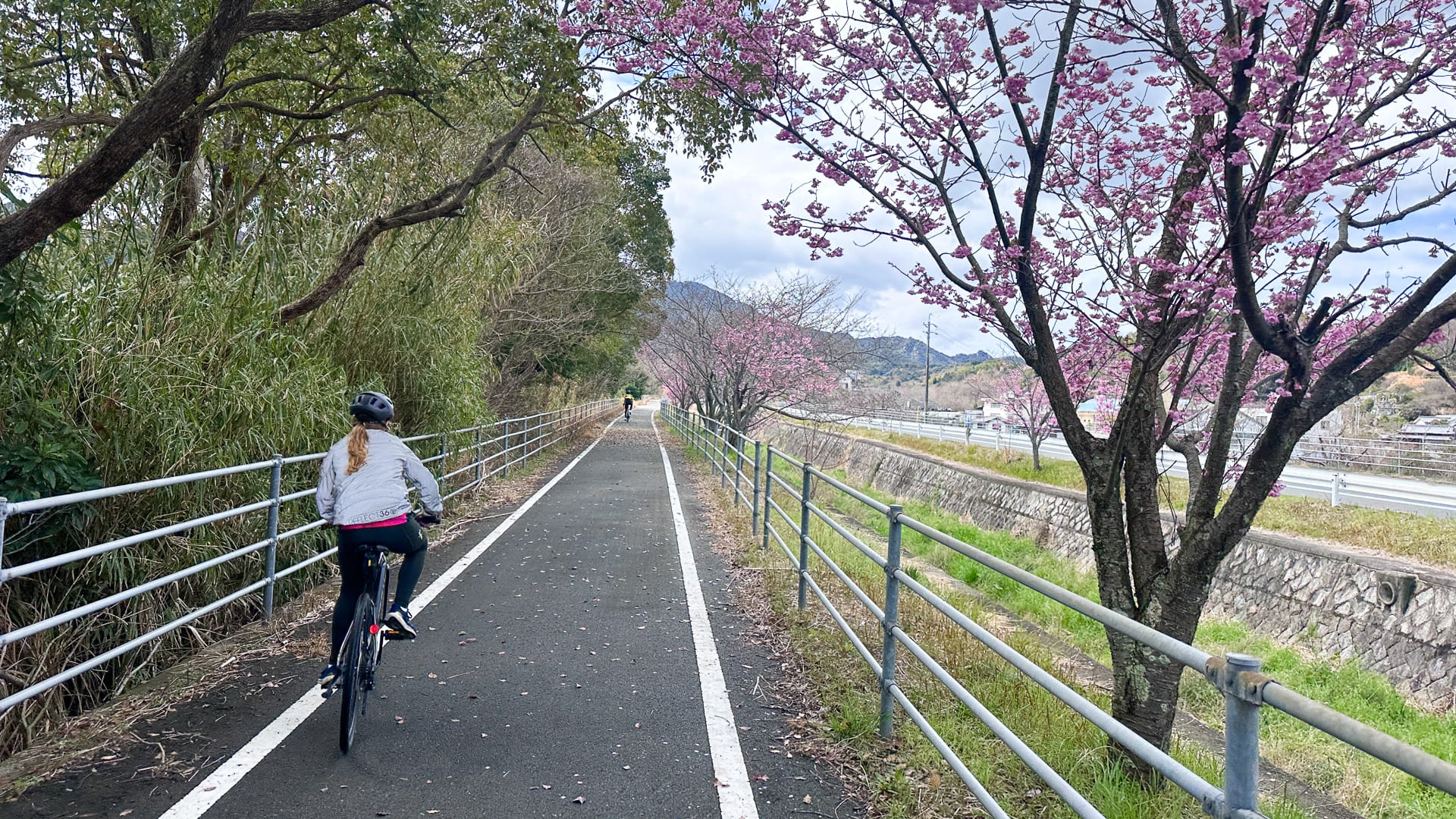
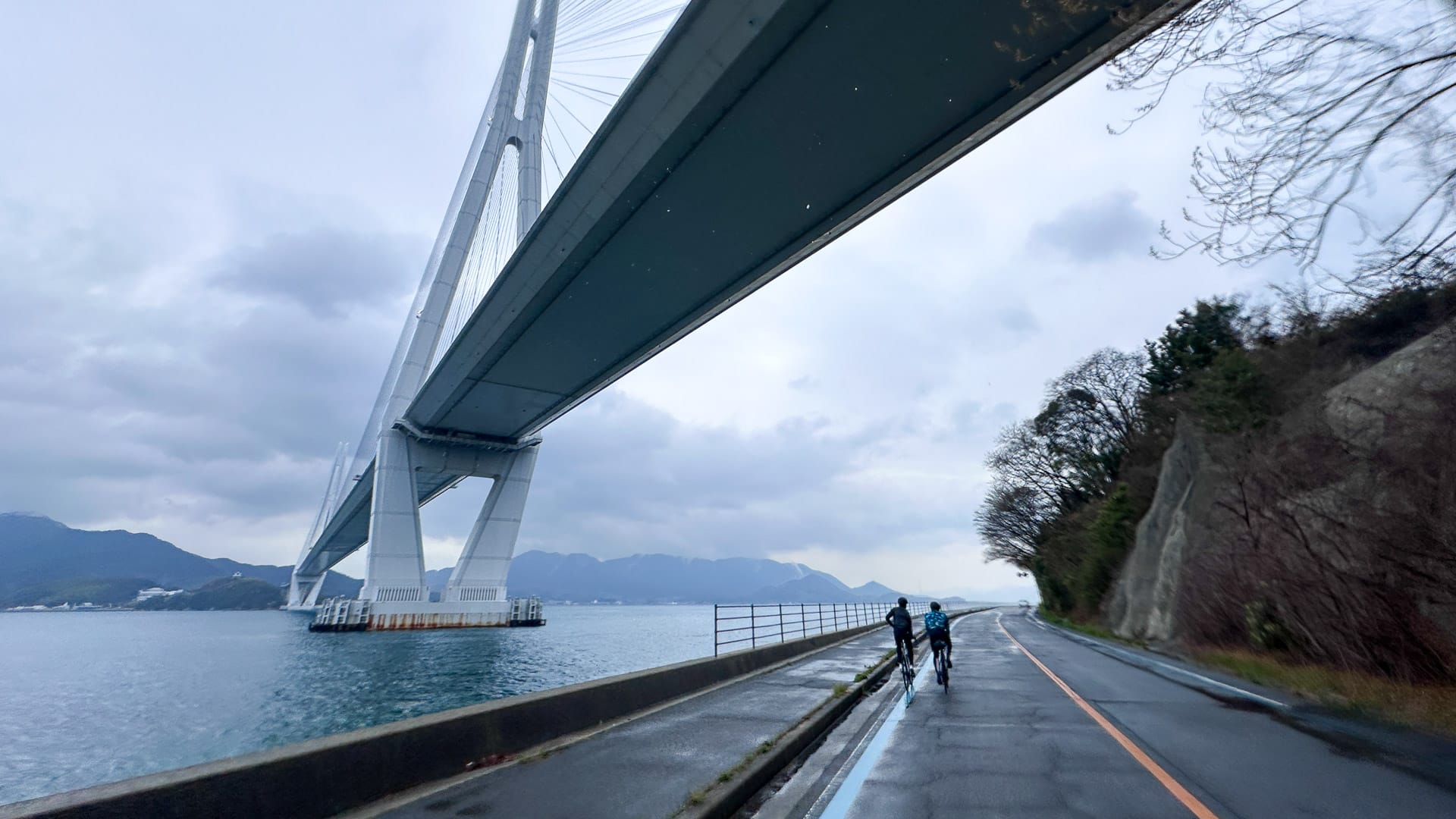
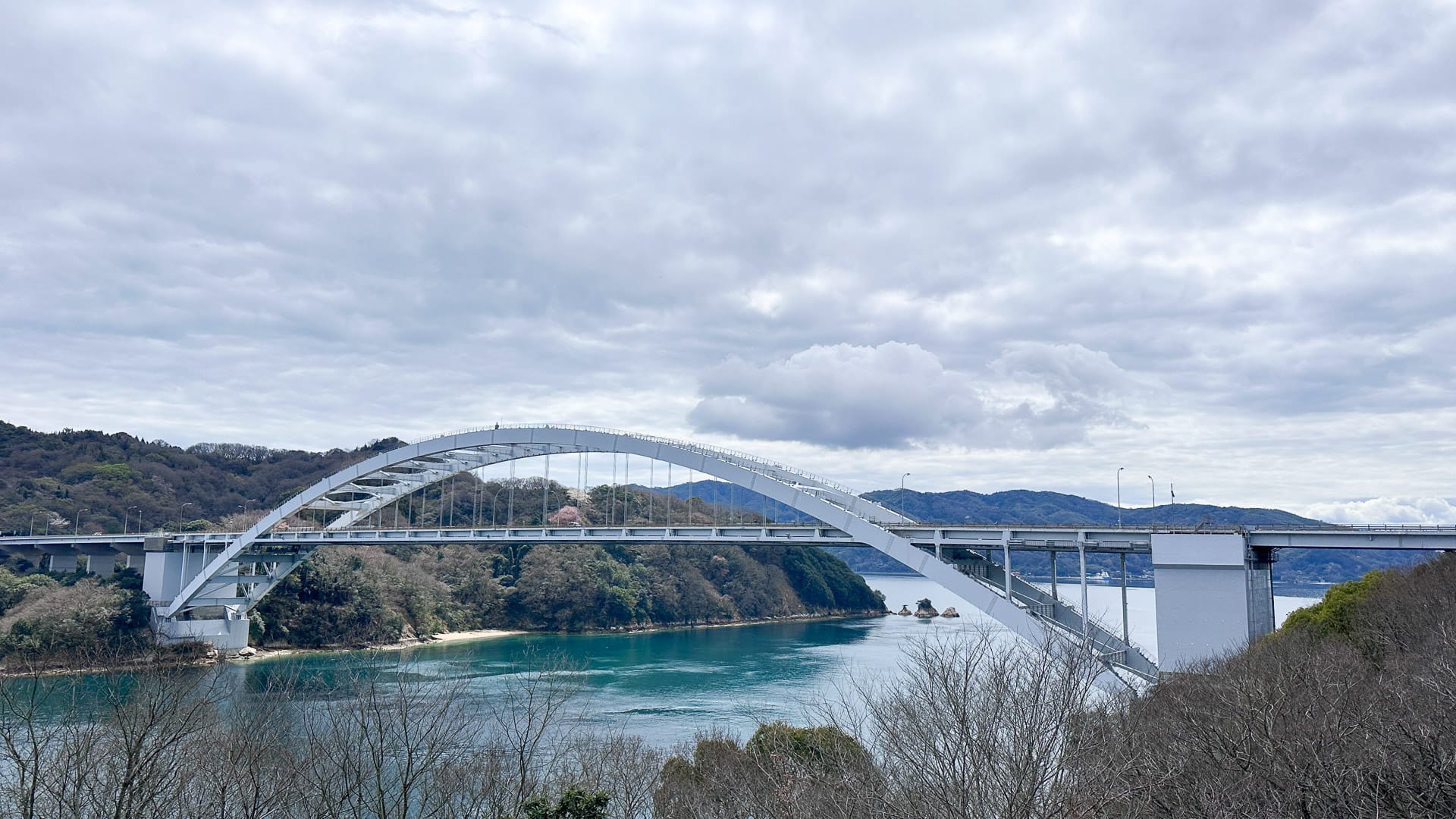
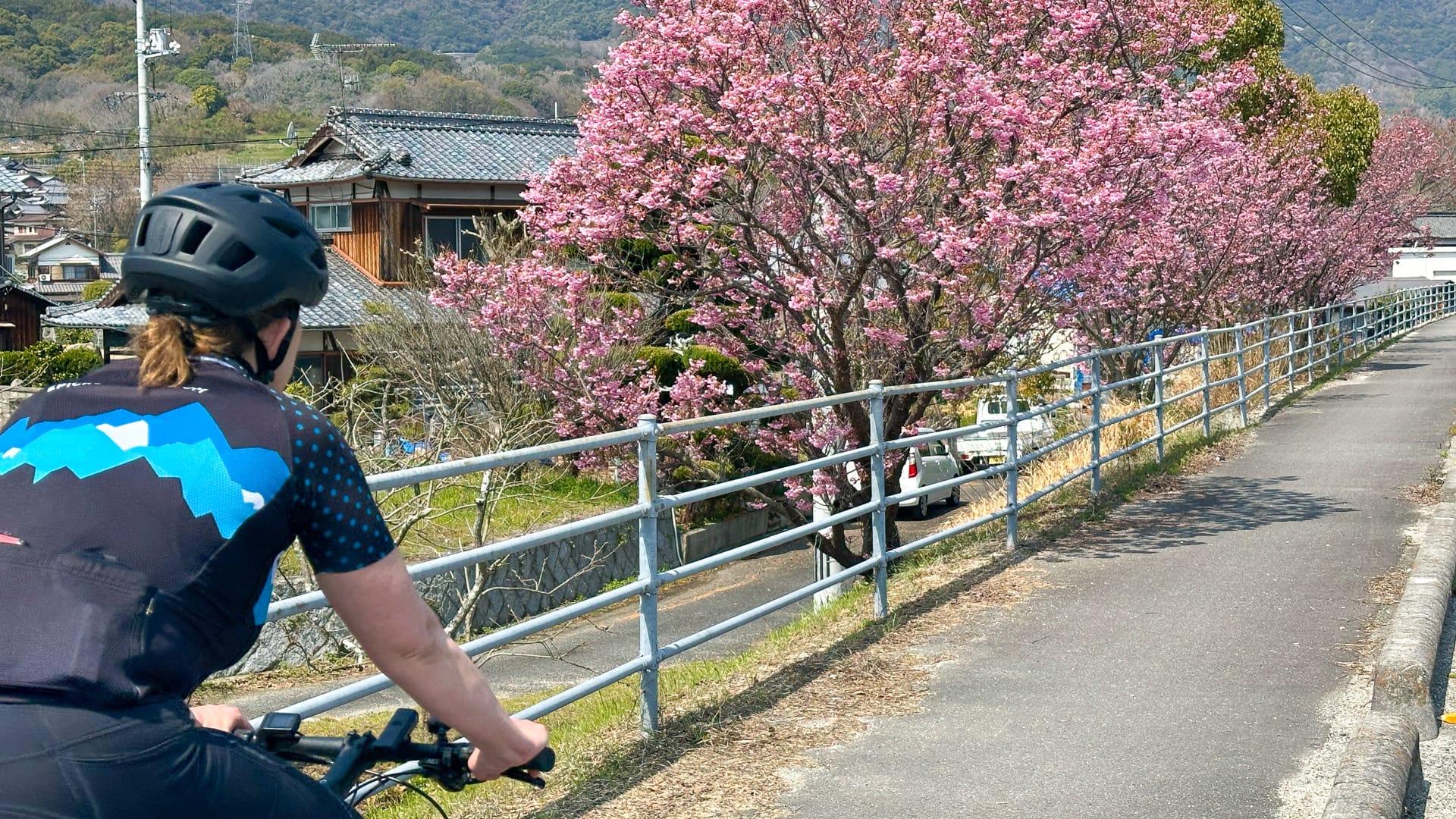
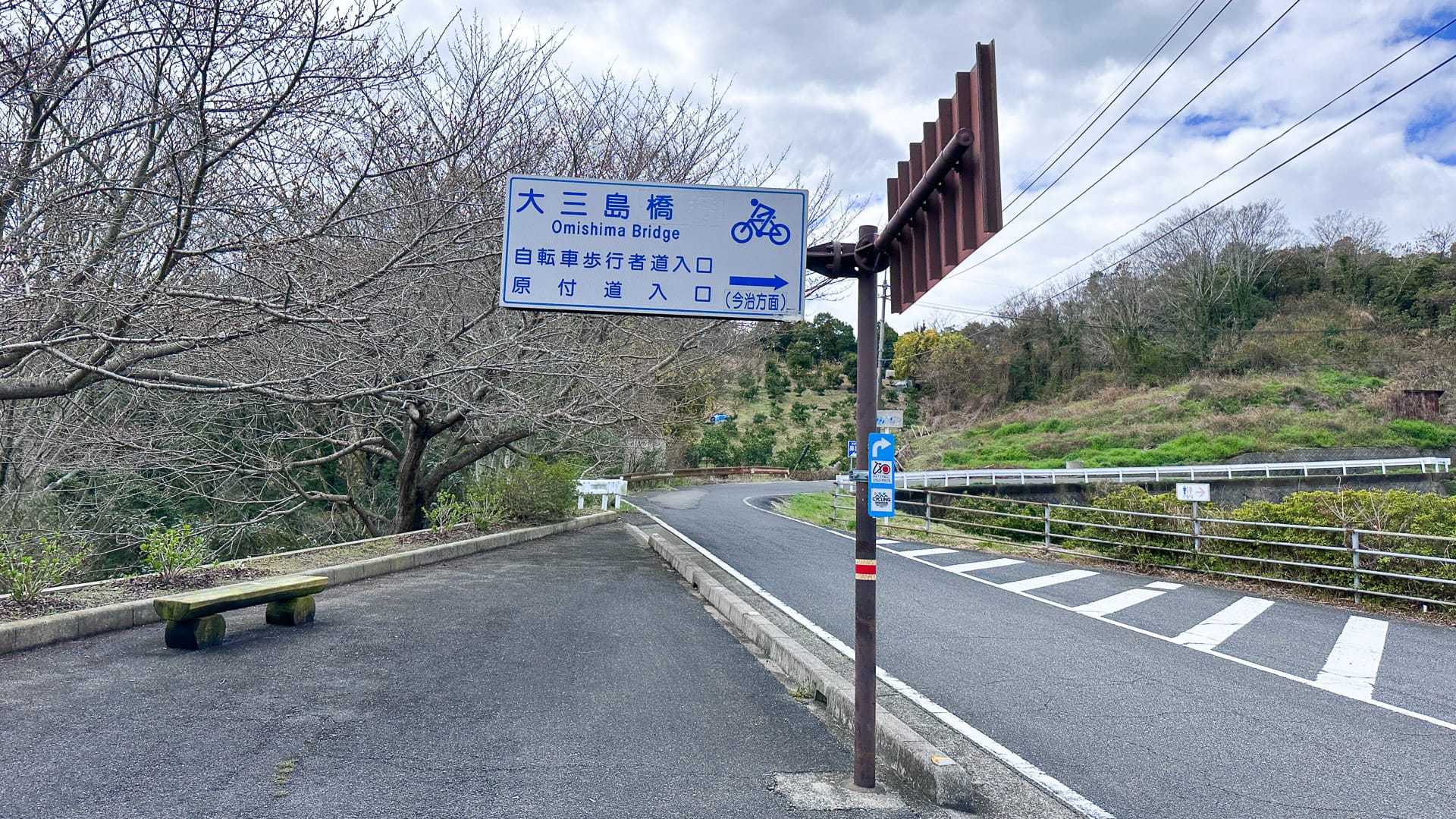
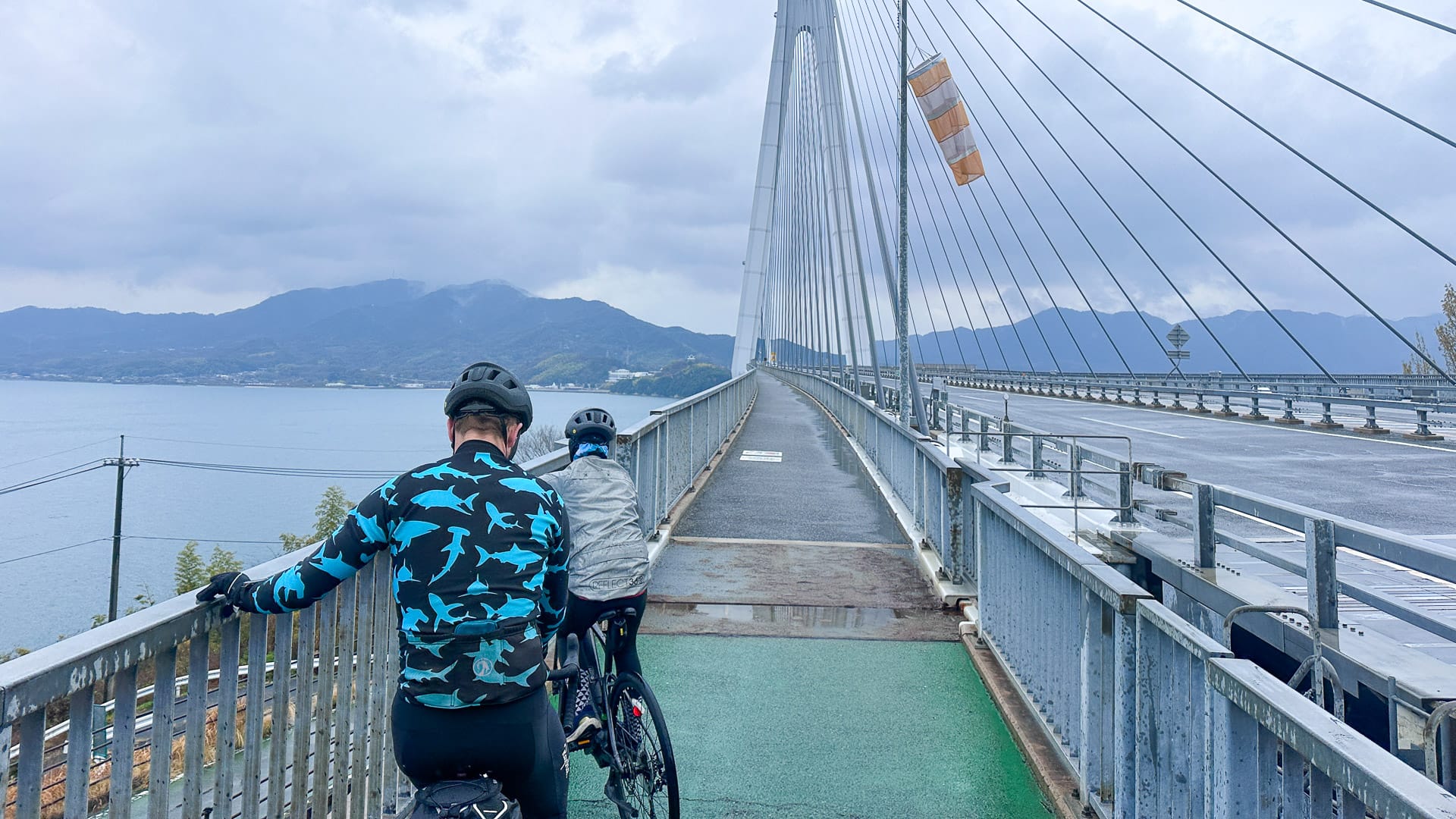
The main Shimanami Kaido route
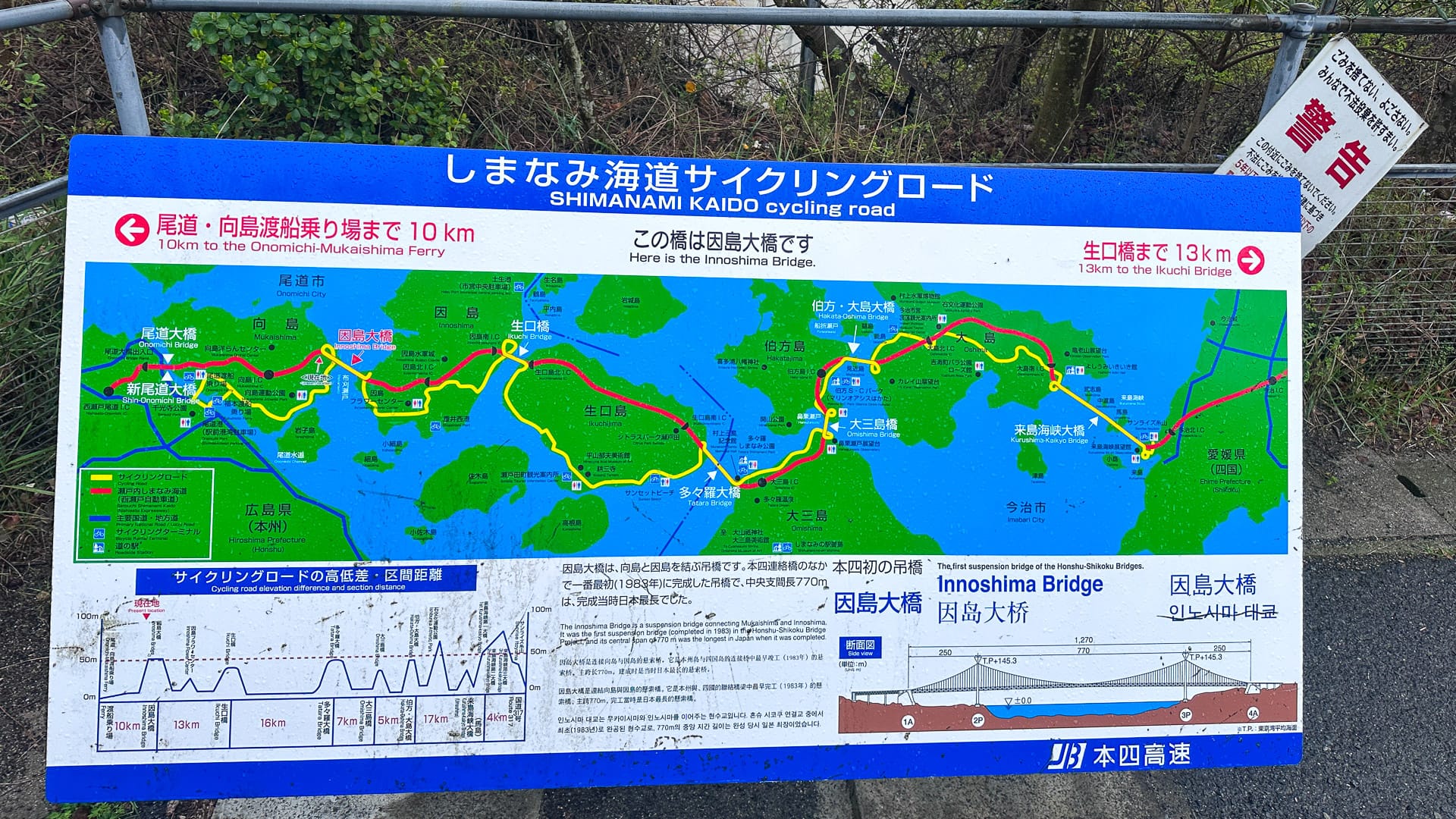
The main Shimanami Kaido “blue route” is 76 kilometres long. It connects six islands, via six bridges, on the Seto Inland Sea, between Onomichi station (served by JR Onomichi Station) in Hiroshima Prefecture and Imabari station (served by JR Imabari Station) in Ehime Prefecture.
What to expect from a Shimanami Kaido bike tour
A few introductory points:
- The Shimanami Kaido is a well organised route. The signposting and cycling services around it are impressive, which simplifies organising a bike tour on the Shimanami Kaido. Just be aware that sticking to the Blue Route won’t necessarily let you see the most beautiful areas; consider investigating the “Island Explorer” routes marked by the authorities or speak to a tour operator if you want support in getting to the quieter, less-visited areas of the Seto Inland Sea.
- The Shimanami Kaido is pretty do-able, it’s relatively flat and while it might be 80 kilometres on the quickest route, you can easily break this up into sections.
- Is the Shimanami Kaido beautiful? As ever, it depends on your definition of beauty! Don’t come expecting classic, palm-fringed island vibes: you’re riding by the water for much of the time, but there aren’t many sun loungers and sandy beaches. Yes, you can find these, but it’s a much more “real” aesthetic. The region’s ship building heritage means that the islands are peppered with vast shipyards and tankers dot the horizon, not yachts. A Shimanami Kaido bike tour gives you a sense of the real Japan.
How we created our 3-day Shimanami Kaido bike tour itinerary
The conundrum
Our dilemma was this: I was in Japan with my husband and two children aged 10 and 13 (but experienced cyclists). We had three days to ride. We wanted to ride the Shimanami Kaido main route but also experience the islands’ quieter side all within 60-80km each day.
The solution
Our friends at Rindo Bike Tour Japan (“Rindo”) came to the rescue and proposed the following itinerary:
- ride two days Onomichi City to Imabari City on their route (we’ll refer to this as the “Rindo Route”) and
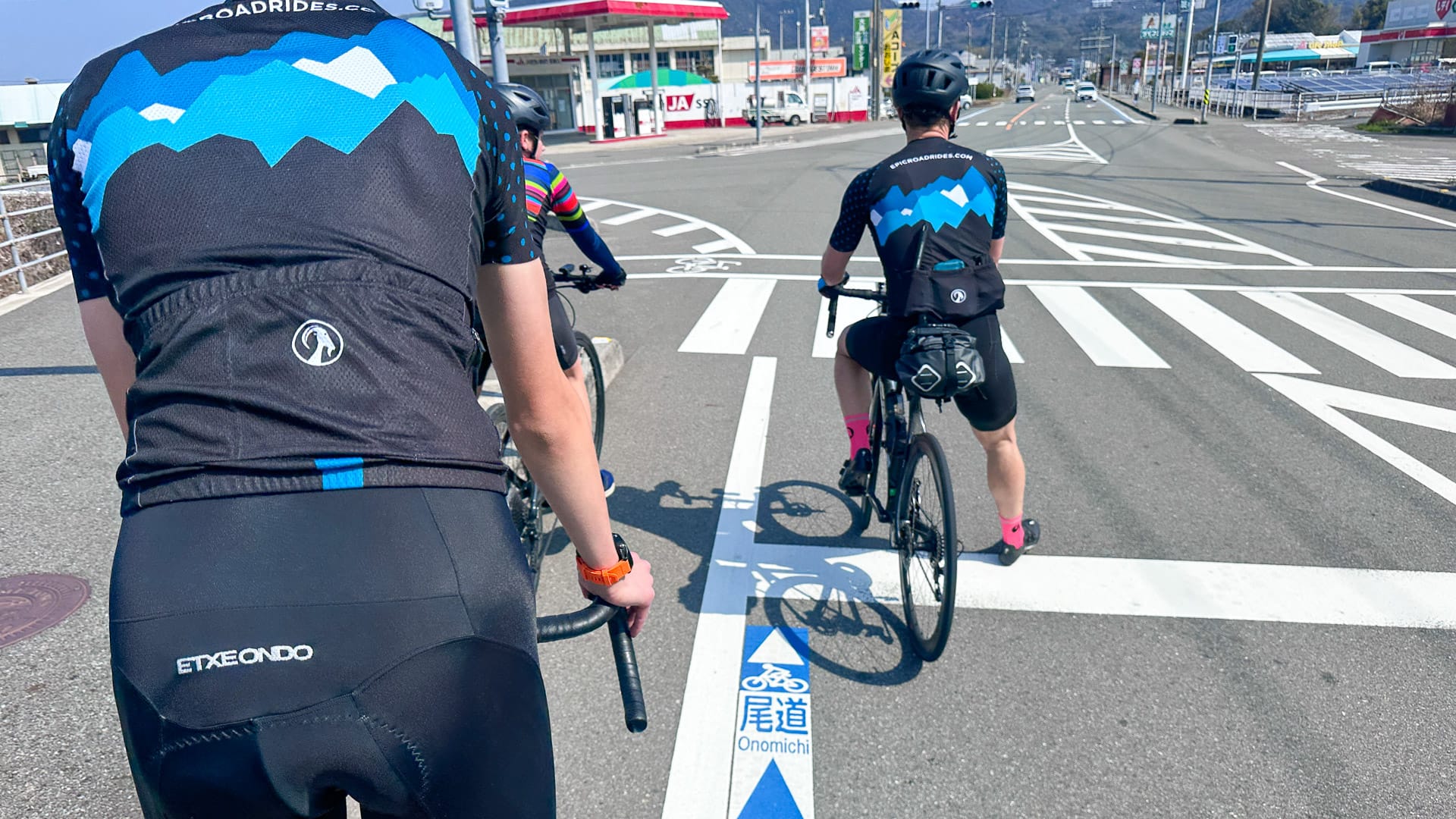
- one day back on the main route (we’ll refer to this as the “Blue Route” since it’s marked by blue signposting and a blue line).
This would give us a taster of the kind of riding Rindo incorporate on their eight day tour itinerary on and around the Shimanami Kaido route.
While their Shimanami Kaido tour (more on that below) sits at around 375 kilometres and takes in many more of the smaller islands off the Blue Route, this sample would let us see a little of what you get if you venture off the Blue Route.
Rindo Route versus the Blue Route
We really enjoyed both the Rindo Route and Blue Route, but spotted significant differences between the two.
- The Blue Route gives you “bang for buck” – it takes you over all six islands in a do-able 80 kilometres-ish of relatively flat riding. It’s doable in one day for many people.
- All the islands (but particularly while on the official route) seem to have embraced cycling tourism, with bike-friendly cafes, restaurants, and I think we counted eight bike service stations along the Blue Route (not including Imabari and Onomichi). There are also ferries along the Blue Route so that you can just ride part of the route and get a ferry back. More detail on that below.
- The downside of the Blue Route is that it felt like we were riding on busier roads for quite a bit of the time. There was typically a hard shoulder or bike lane to ride in, but it wasn’t overly relaxing especially through the towns.
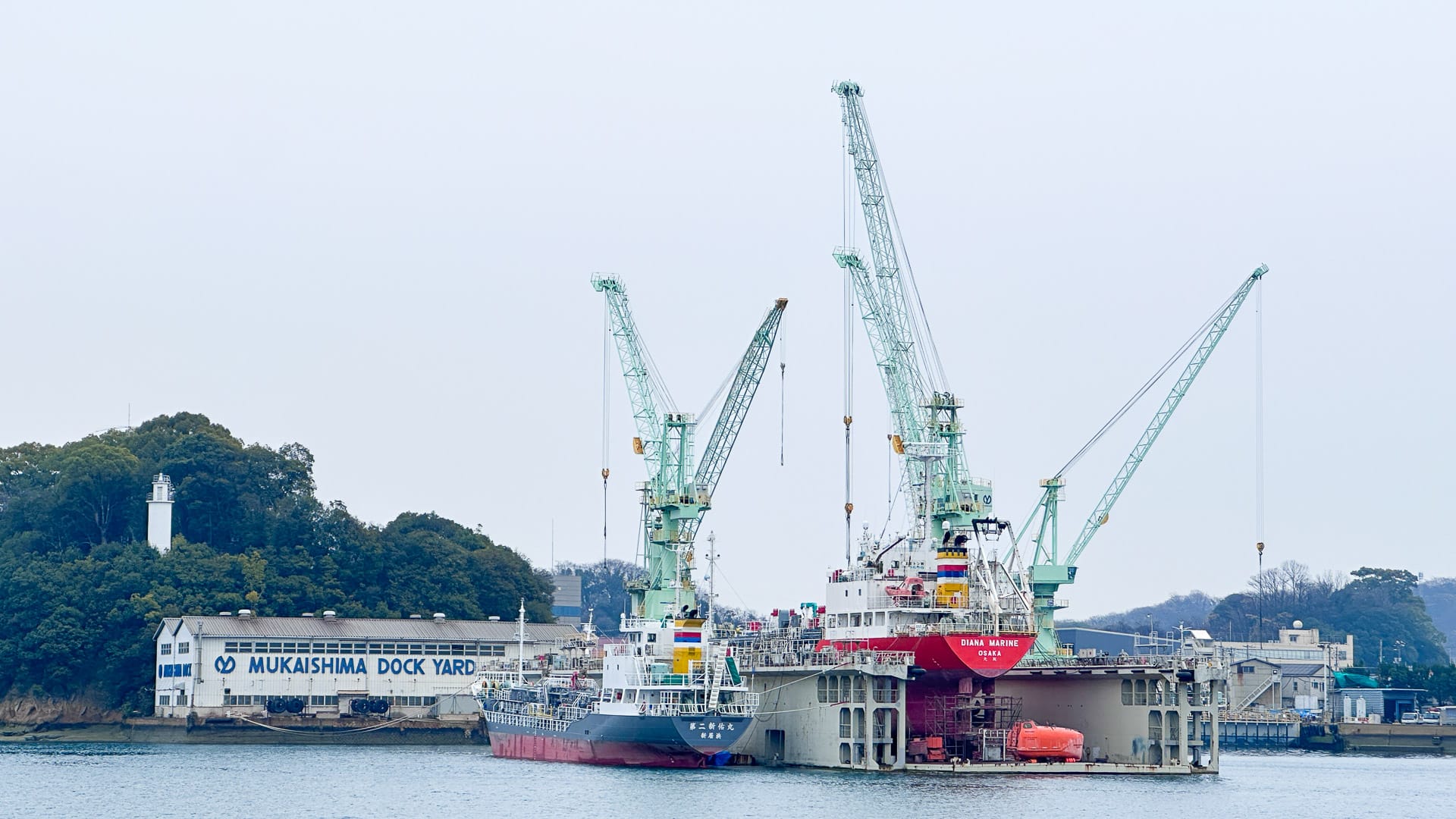
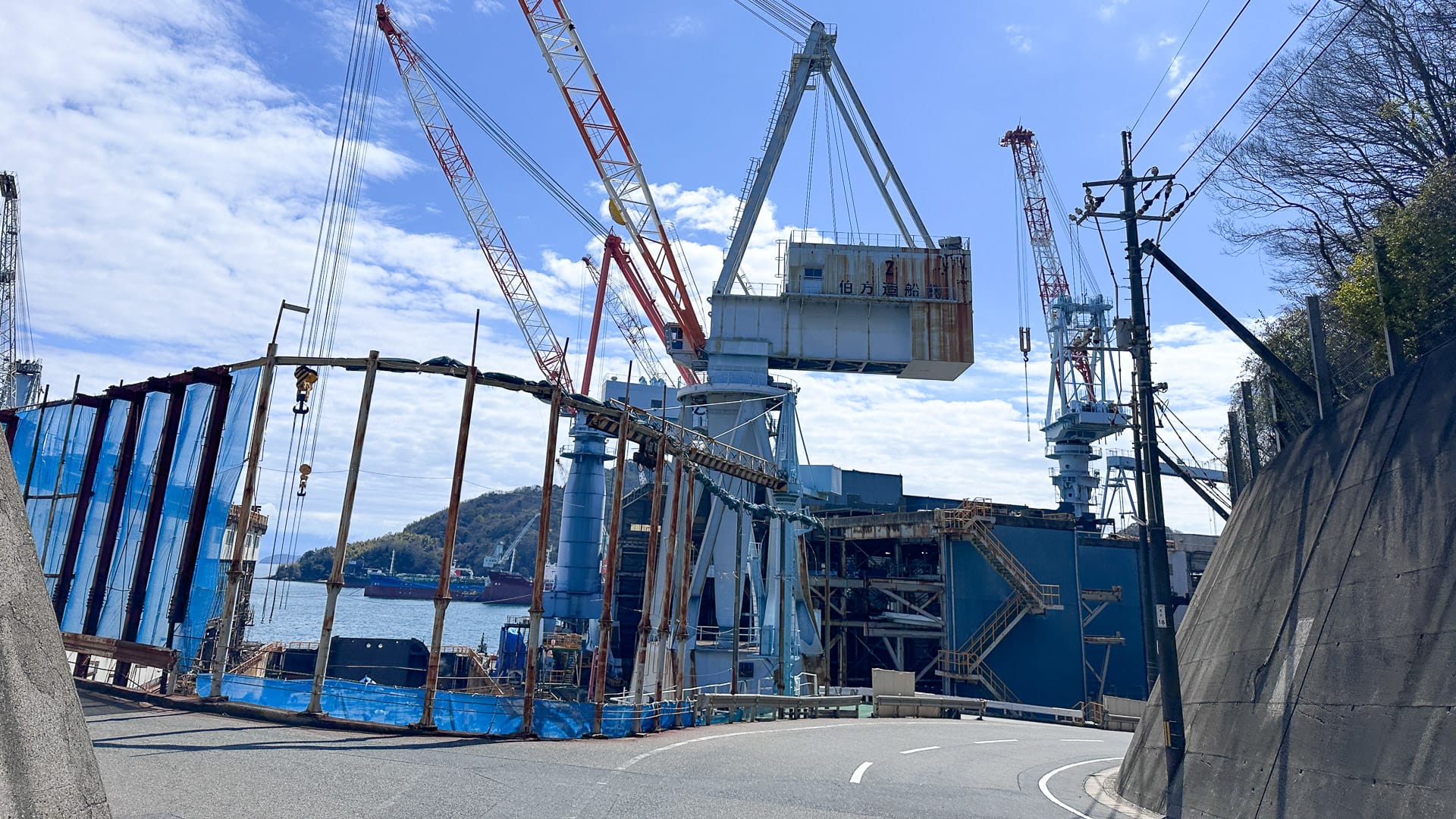
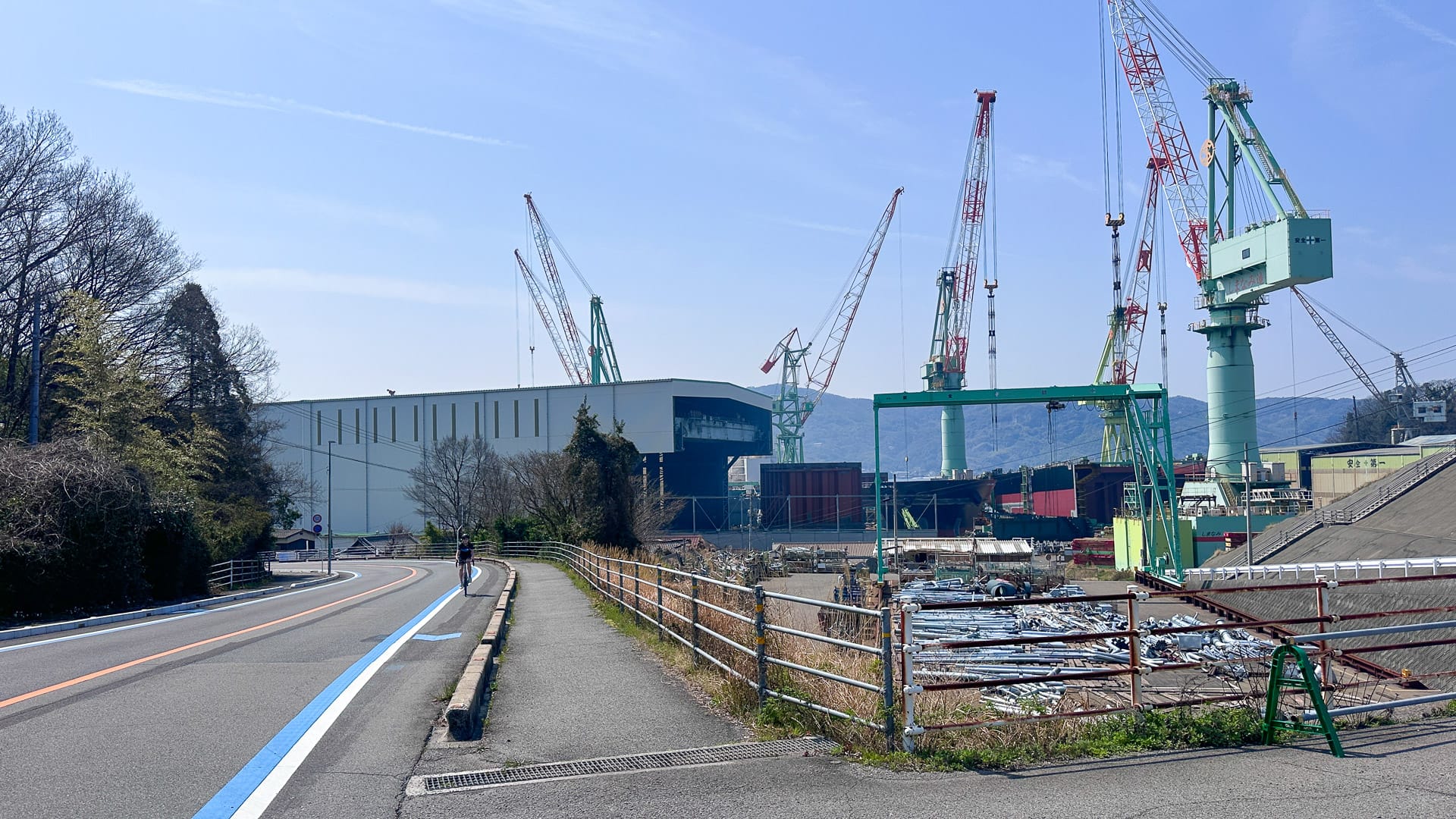
- In comparison, the Rindo Route wound through tiny towns and villages on very quiet roads for most of the time. There were some incredible moments of natural beauty juxtaposed with plenty of memorable moments, such as when we turned a corner and it felt like we were about to ride into the mouth of a giant shipbuilding yard.
- We would have loved a little more time to experience the islands you need to get a ferry to, but which Rindo visit on their tour, such as Mt Sekizen Park on Iwagi Island, which is apparently a riot of colour with 3,000 cherry blossom trees in spring.
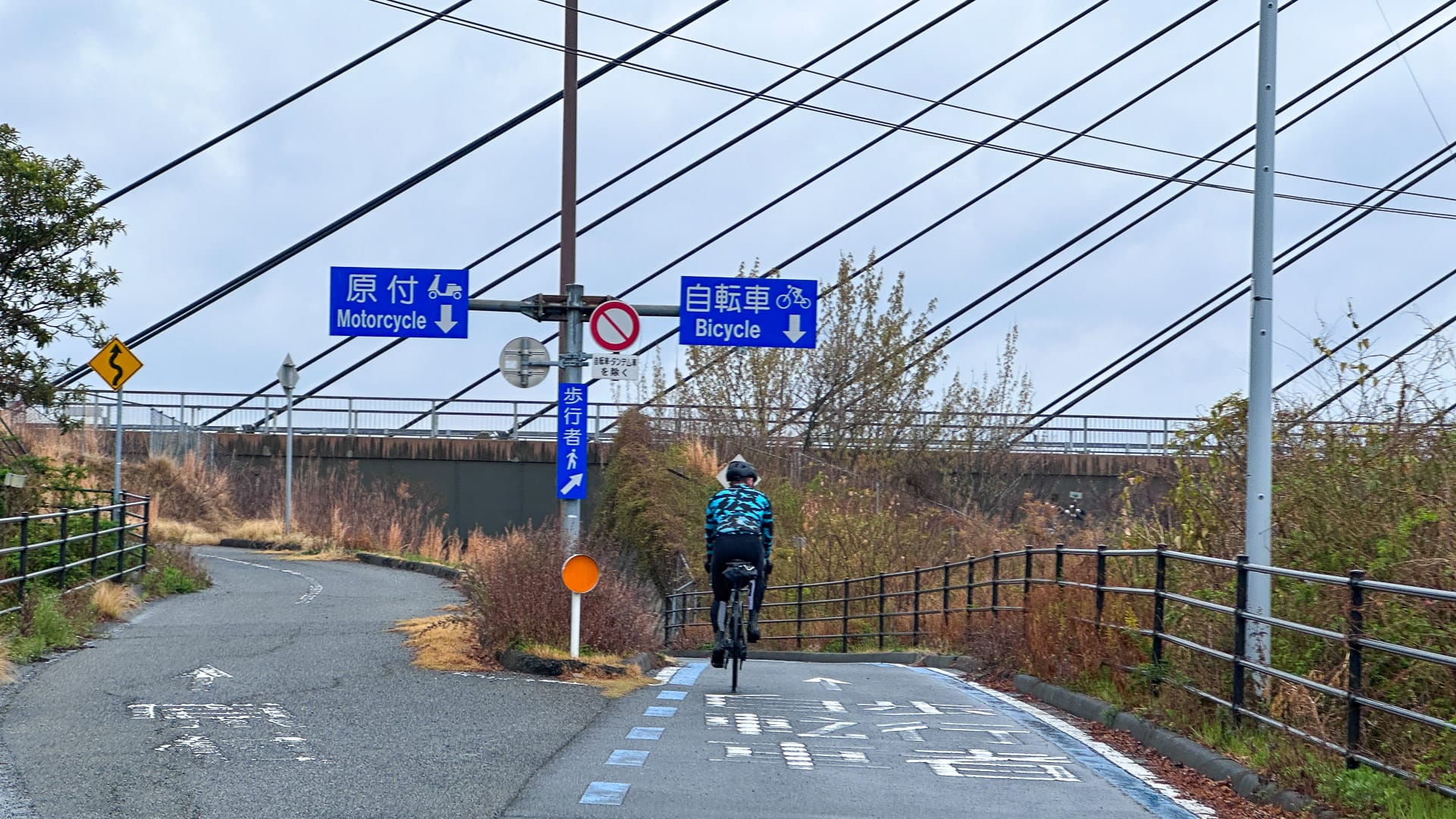
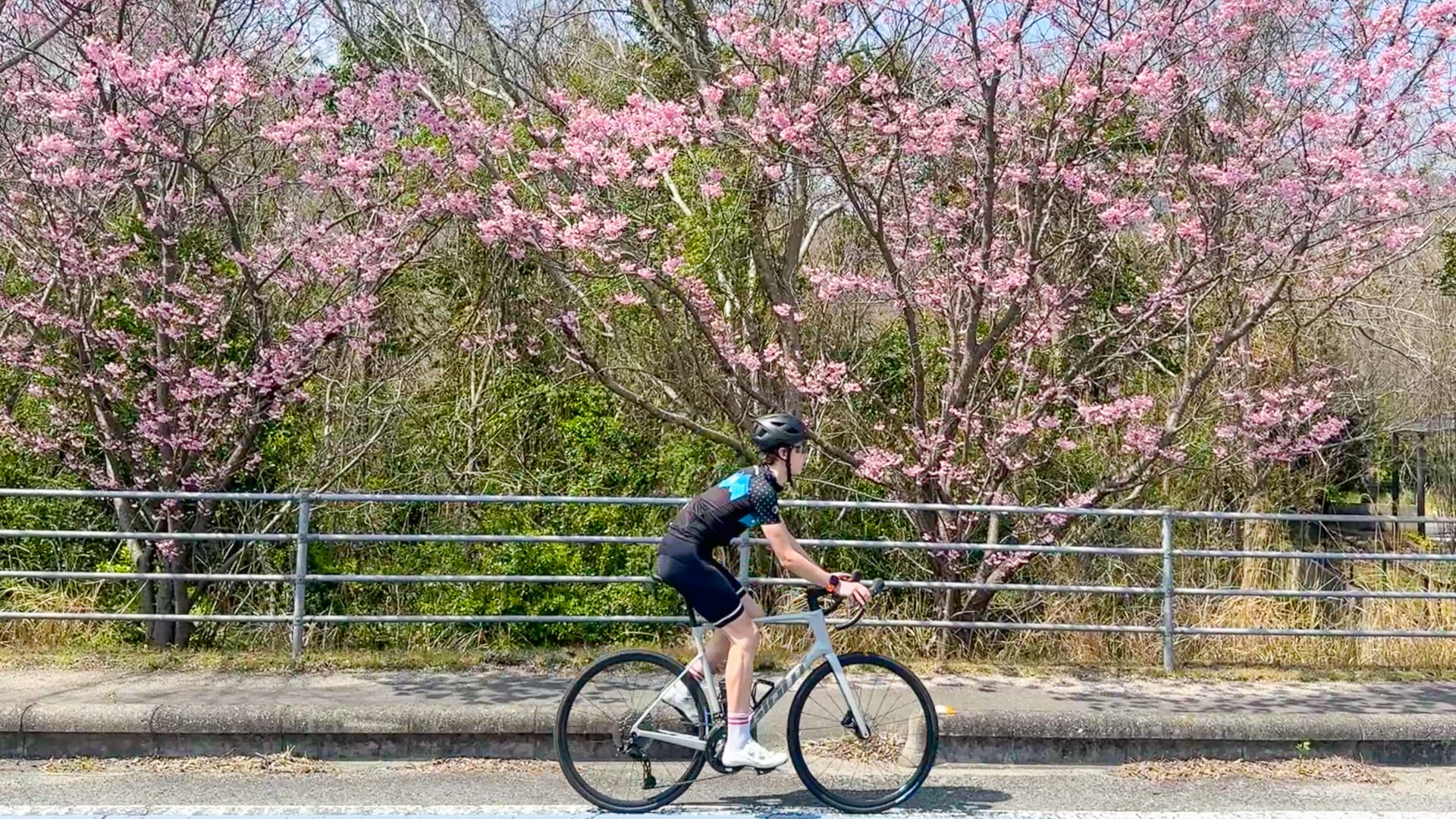
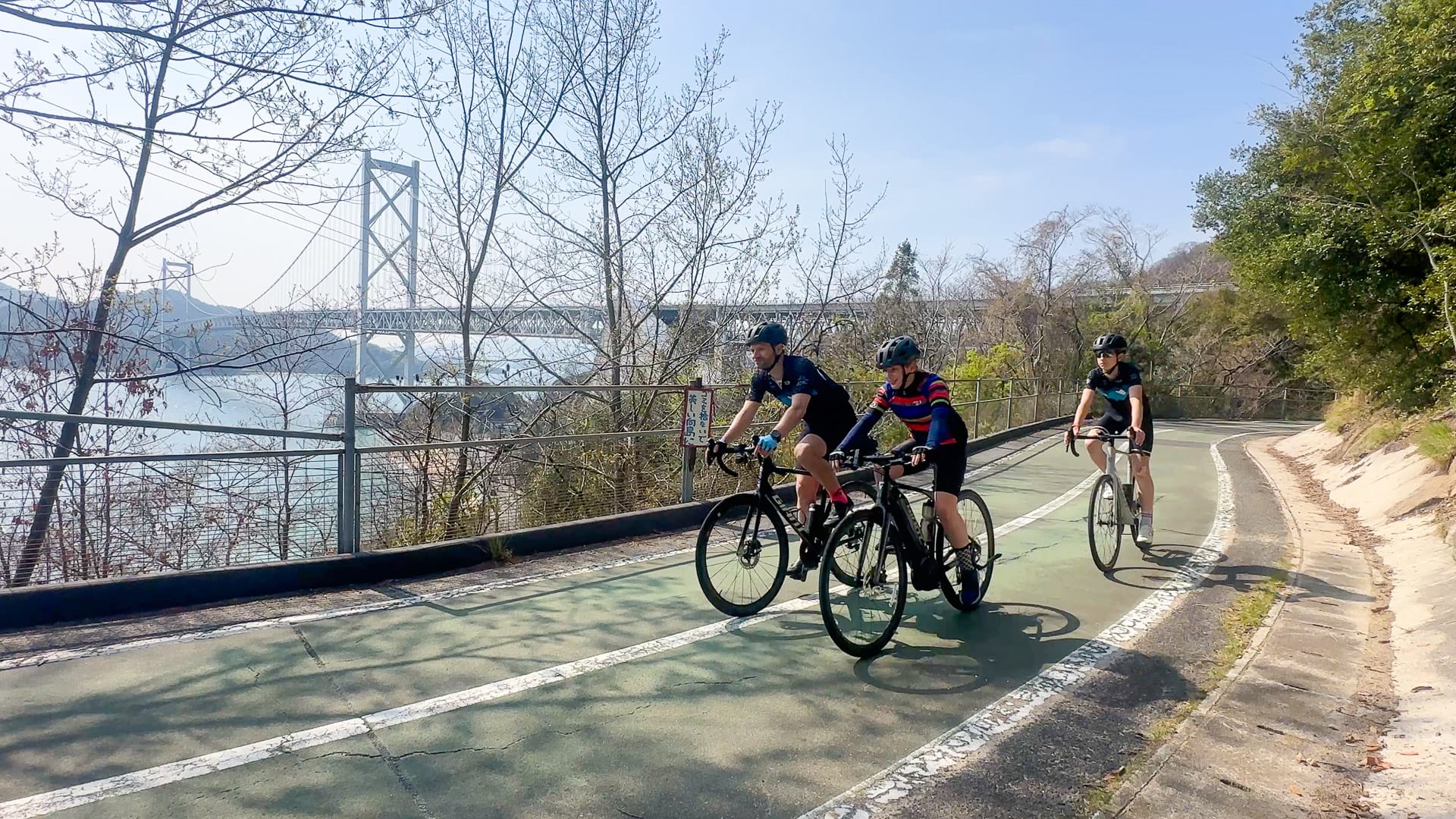
Bike path on Omishima Island
DIY Shimanami Kaido bike tour versus guided Shimanami Kaido bike tour
Even though the islands have embraced cycling tourism, there is still a lot to think about when organising a cycling holiday yourself. Especially in Japan, where English is not widely spoken. Booking the hotels, bike rentals, luggage transfer and thinking about food takes up quite a lot of energy and advance planning. Not everyone has the time or inclination for that.
The Rindo Route was really very quiet, with noticeably less in the way of support for cyclists or tourists generally. My takeaway? If you want to head off the Blue Route, make sure you’re confident being self-sufficient or opt for a guided tour.
We didn’t visit some of the cultural stops I later found out about because we rode right past them! I could have avoided this by doing a bit more planning in advance, but it was a reminder of the difference between DIY and having someone look after you.
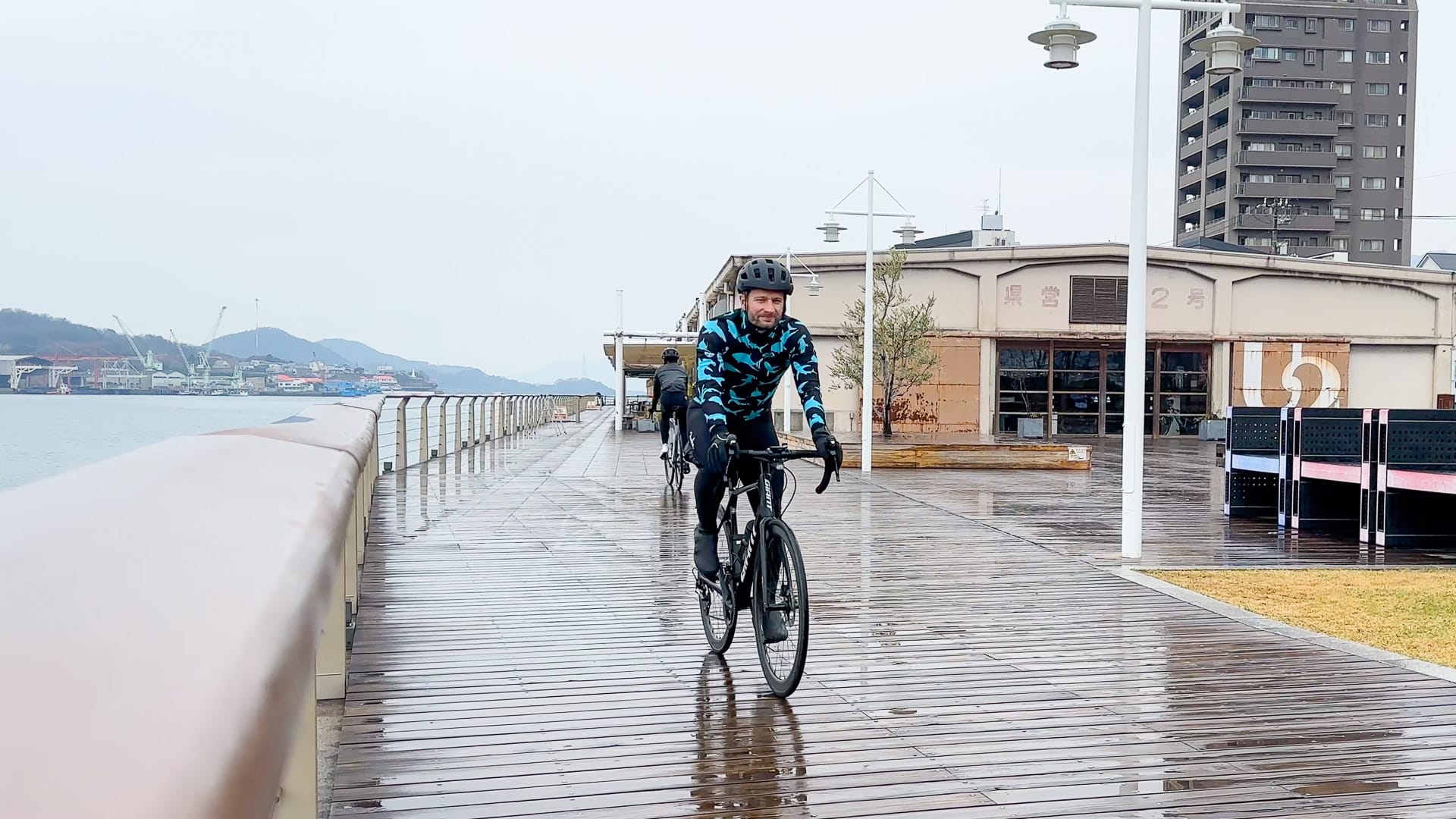
There are also the things you can’t plan for like the weather. For example, on the first day it rained heavily all day. Luckily our kids are used to riding in miserable weather in the UK and we were properly dressed, but the advantage of being on a guide tour would have been that we could have chosen to hop into the support vehicle at some stage if we had wanted!
And then there are the easy mistakes to make. Like the fact I woke up at 4am on the final day with the cold realisation that I hadn’t booked our bags on to the luggage transfer for that day. Would I be able to get them on despite that? Would our whole trip be ruined as a result?! It all worked out, but these are the kinds of stresses you deal with when going DIY.
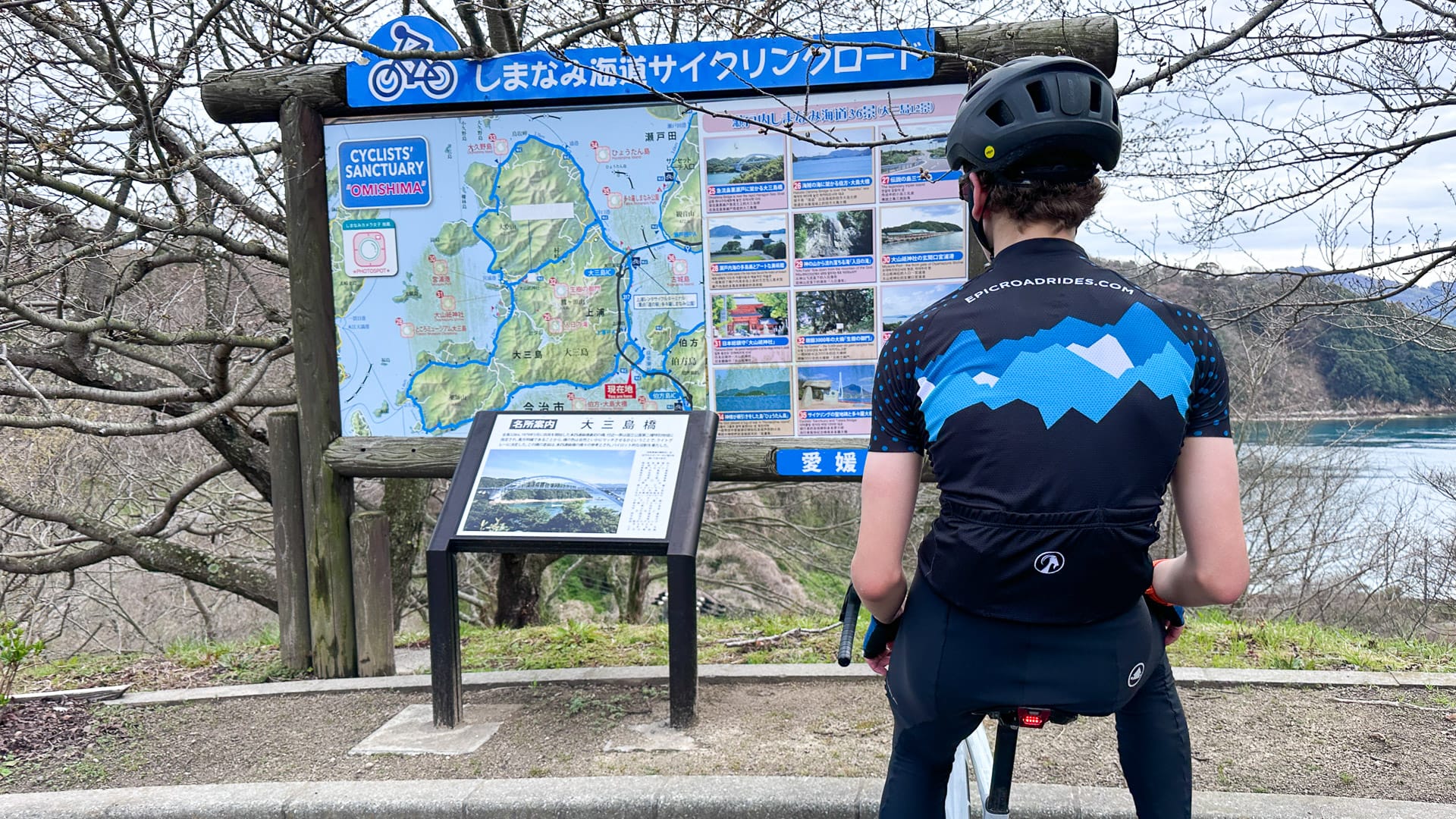
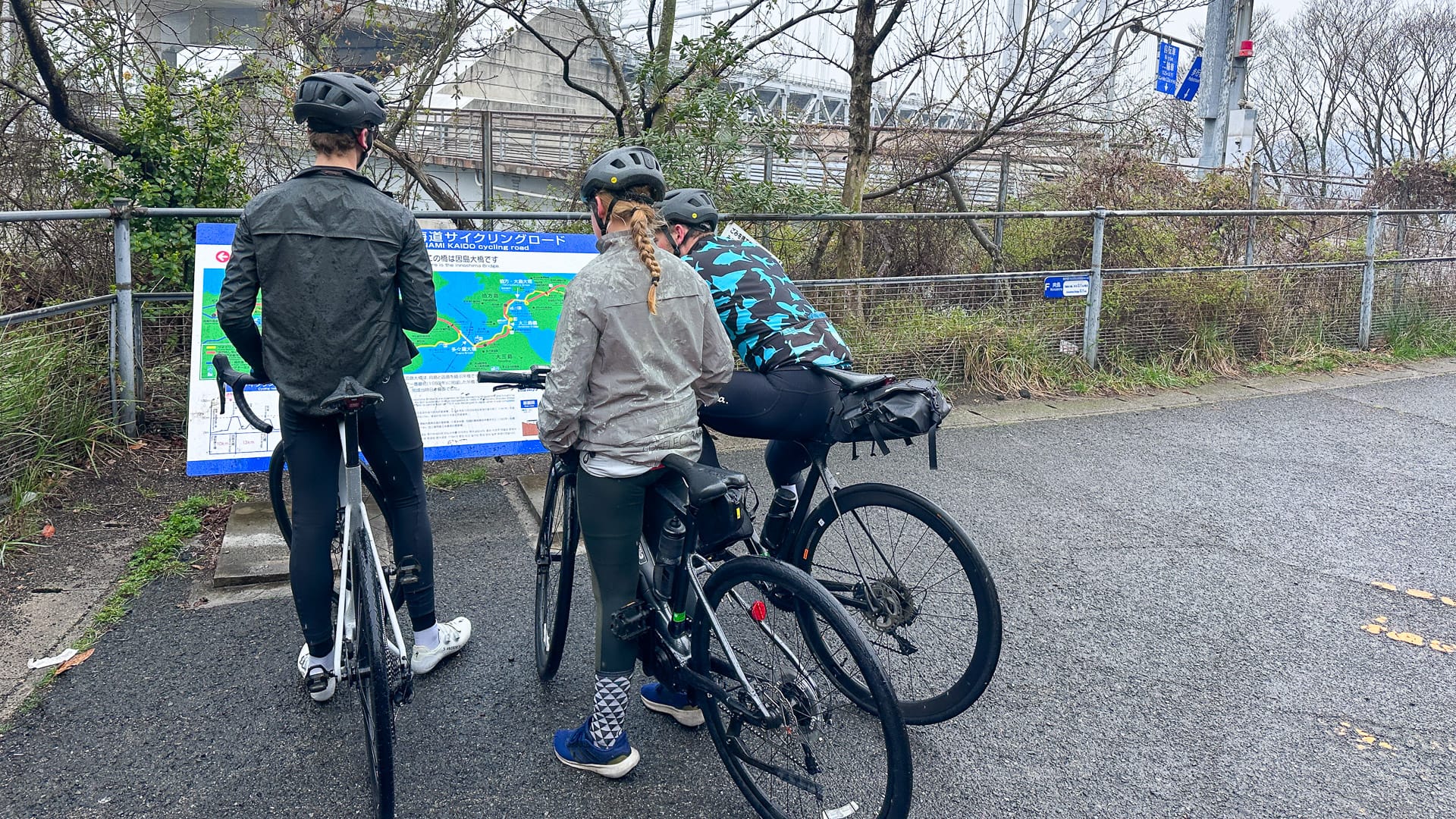
Checking route map at Hakata Bridge
Rindo’s guided Shimanami Kaido bike tour
In case you’re interested in what a guided tour could look like, Rindo offer an eight-day guided, fully supported cycling tour through Japan’s Setouchi Sea region, starting and ending in Onomichi. The main draw is riding the famous Shimanami Kaido, plus quieter island routes such as the Tobishima Kaido, with a mix of coastal roads, bridges, ferries, temples, Buddhist shrines, onsens and ryokan stays. The tour includes:
- a fully serviced road bike or hybrid bike, helmet and accessories
- all accommodation in premium ryokan hotels, with Japanese futon beds, kaiseki-style meals, hot-spring onsen baths and some extraordinary views
- all meals including snack and hydration stops on ride days
- cultural stops such as Senkoji Temple, Oyamazumi Shrine, Sankoji/Kosanji Temple complex
- luggage delivery
- support and gear vehicle
- expert local guides.
More information on their website, here.
Sponsor Message
Want help organising your Japan cycling tour?
We’ve been delivering self-guided cycling holidays since 2017 and would love to help you plan yours.
Get in touch and let's discuss the best holiday for you.
Head over to our website or get in touch so we can start helping you cycle in Japan.
Got a question for Rindo Bike Tour Japan?
Fill out this form and we will pass it to Rindo Bike Tour Japan who aim to reply (within 24 hours wherever they can!)
Our itinerary: day by day
Day 1 Shimanami Kaido bike tour: Onomichi to Kamiuracho Inokuchi
- Distance: 58km
- Elevation gain: 550m
- Ferries: 1
- Bridges: 3
- Islands: 3 (Mukaishima, Innoshima, Ikuchi)
Note: this GPS route is the route we rode, which starts at the Hotel U2 and finishes at the WAKKA Hotel.
GPX DownloadTerms of use reminder
Onomichi, Hiroshima Prefecture
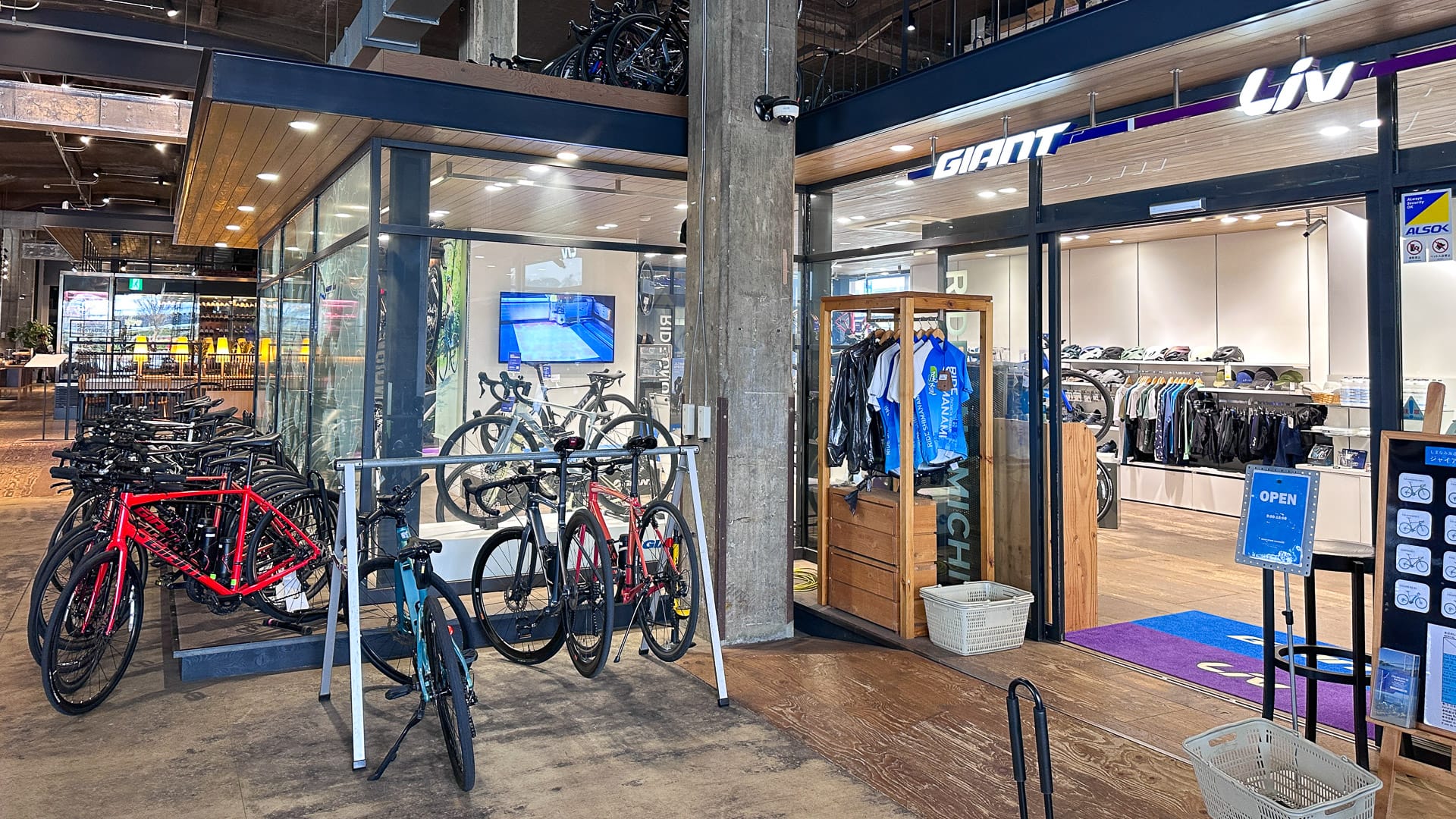
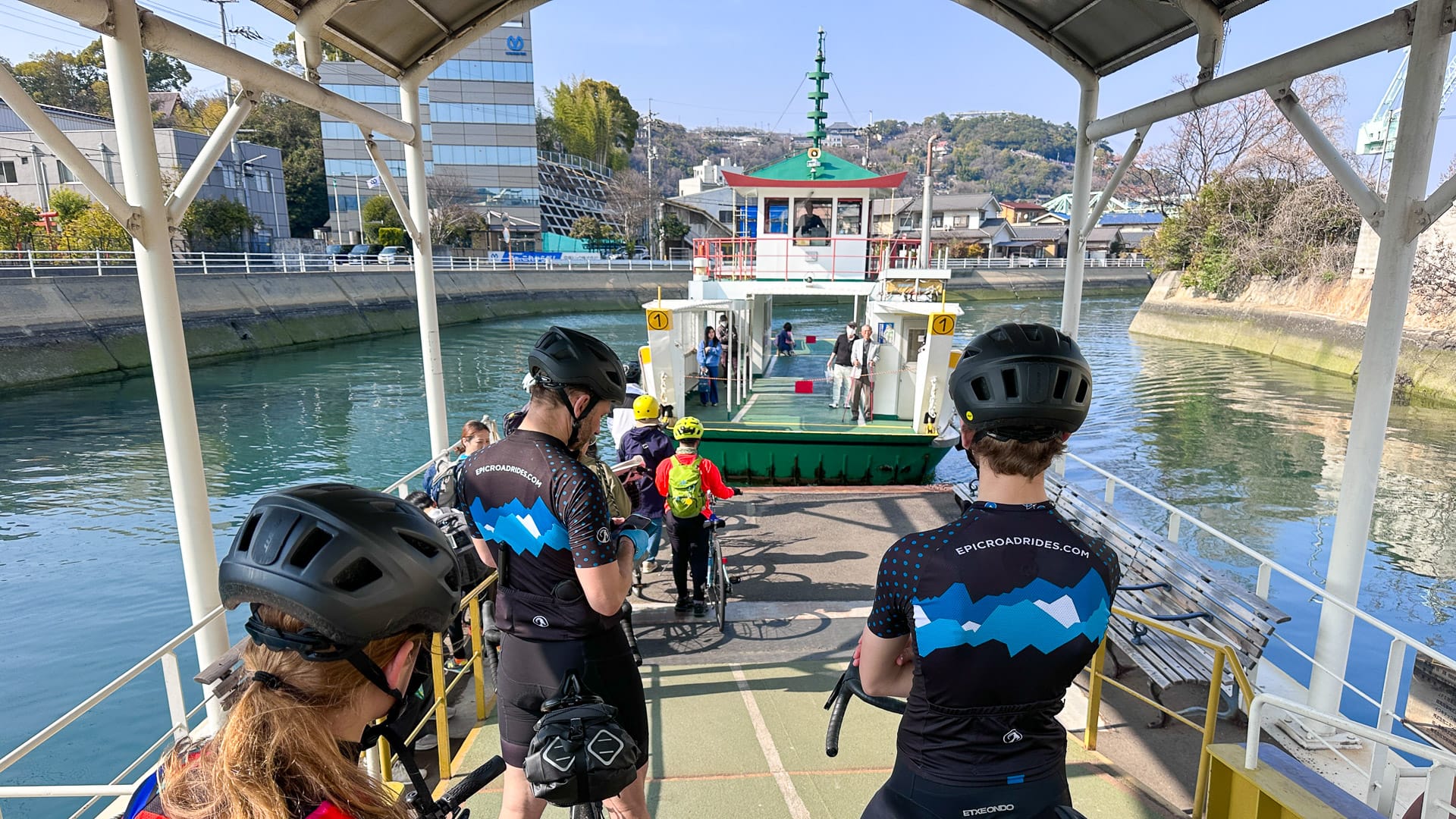
Stormy clouds and heavy droplets of rain greeted us as we left the Giant Store Onomichi heading for a short ferry ride over to the start of the ride on Mukaishima island.
There are (at least) two ferries that run between Onomichi and Mukaishima island. We followed some other cyclists on to the ferry and in a few minutes were getting off the other side on Mukaishima island.
Mukaishima Island
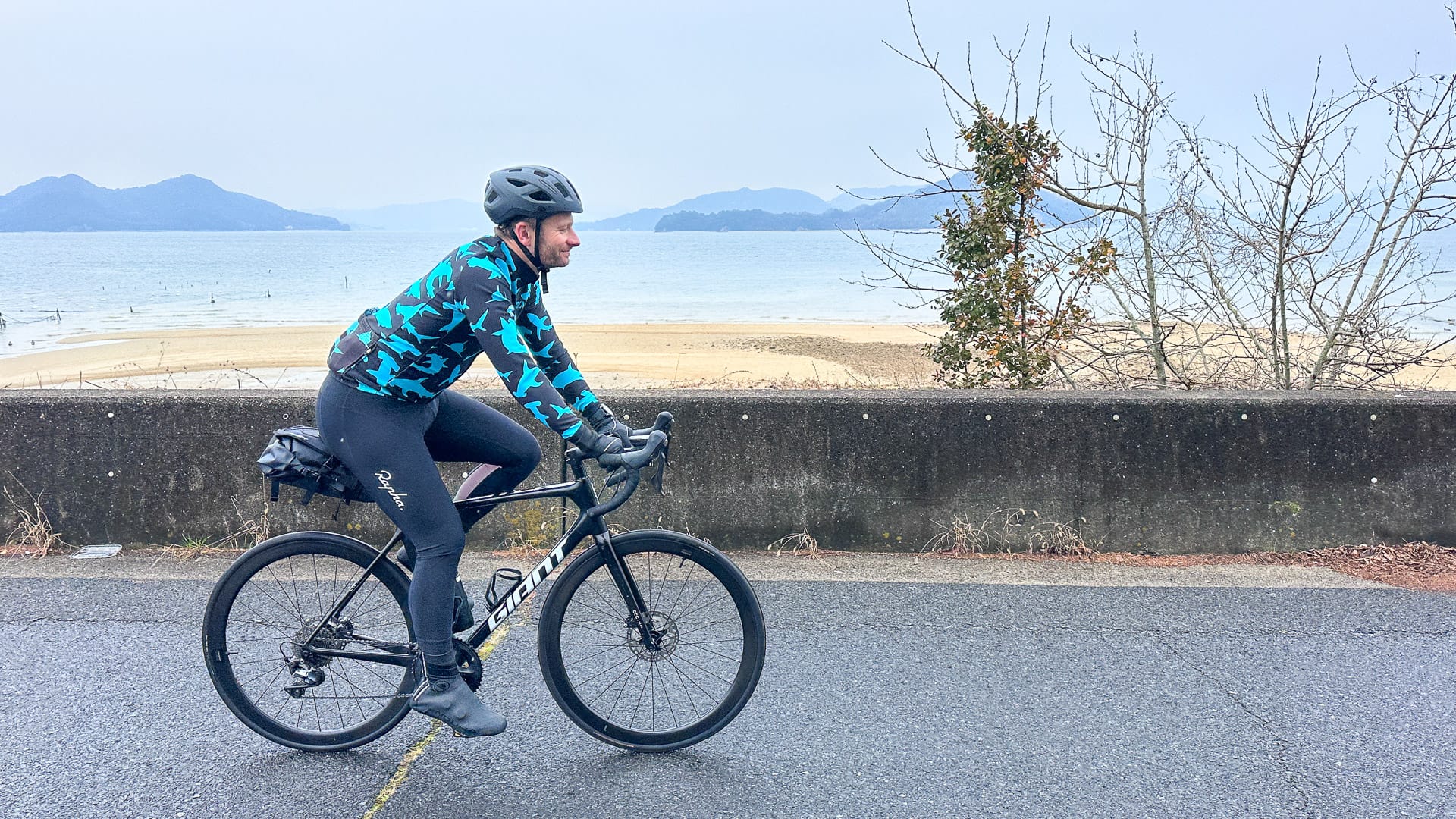
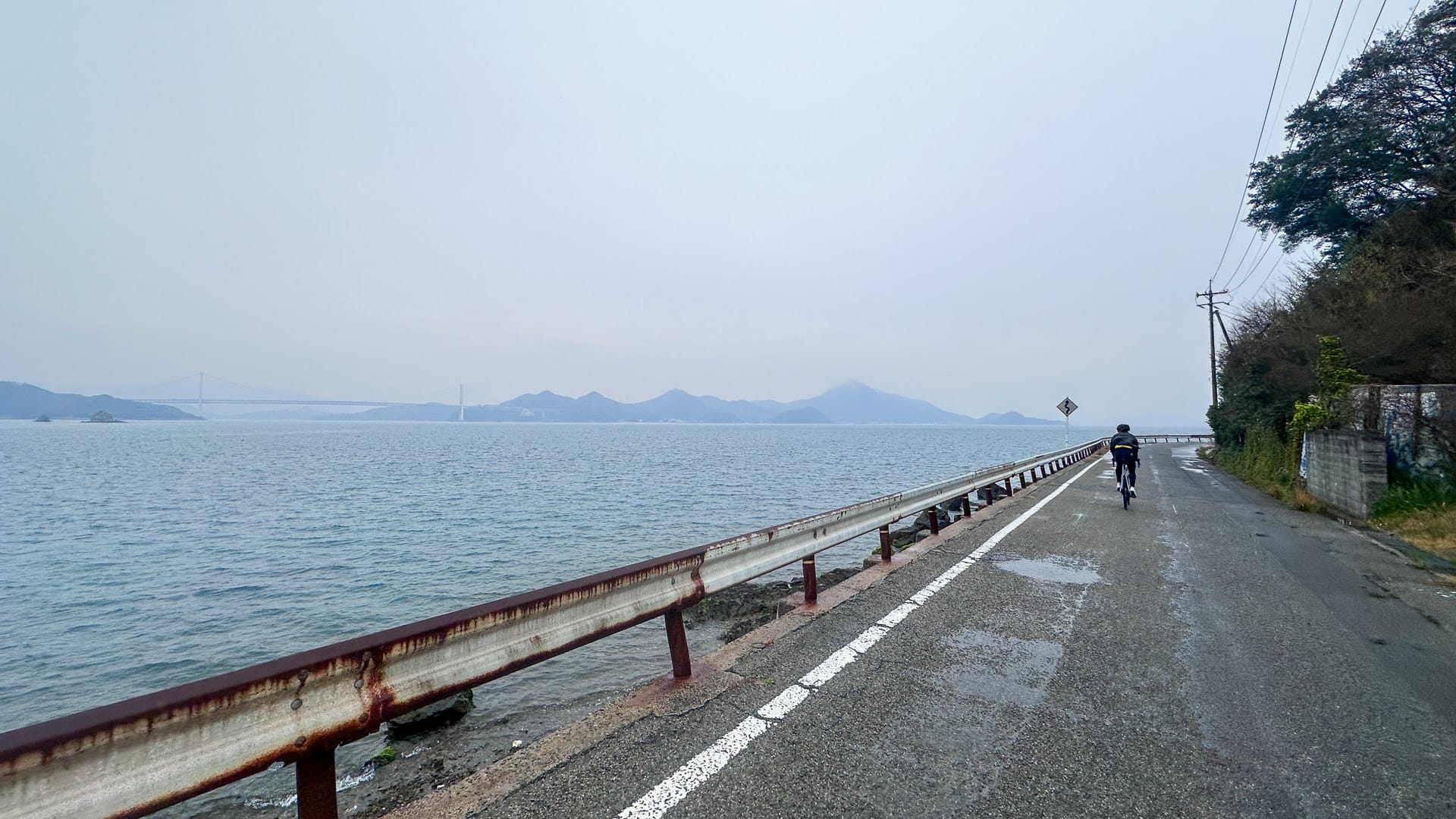
The route skirts the eastern shore of the island and takes you past pretty yellow sand beaches and sleepy hamlets that didn’t look overly affluent despite their incredible outlook, staring out over calm waters of the Seto Inland Sea. We barely passed a shop on the entire route.
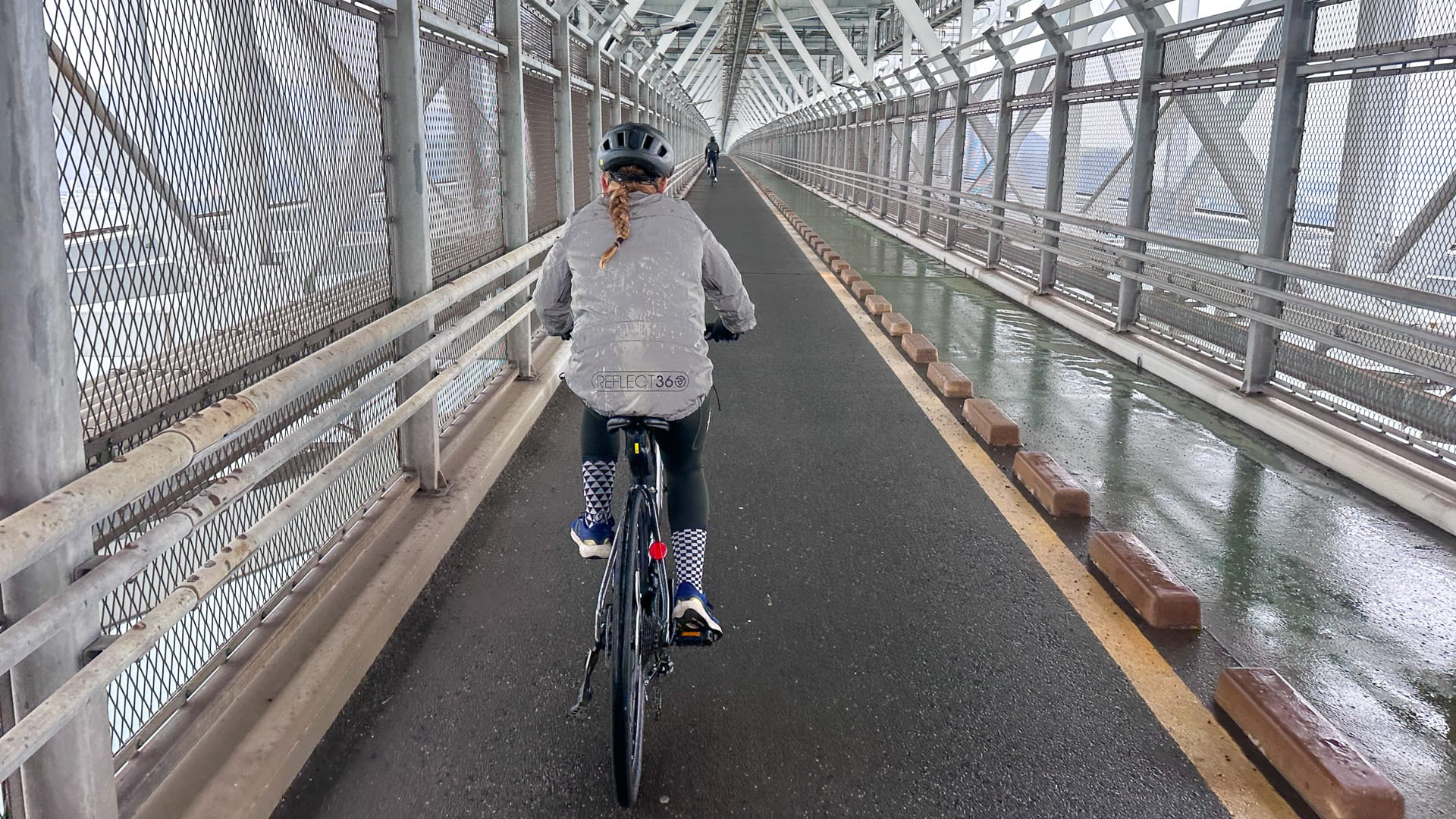
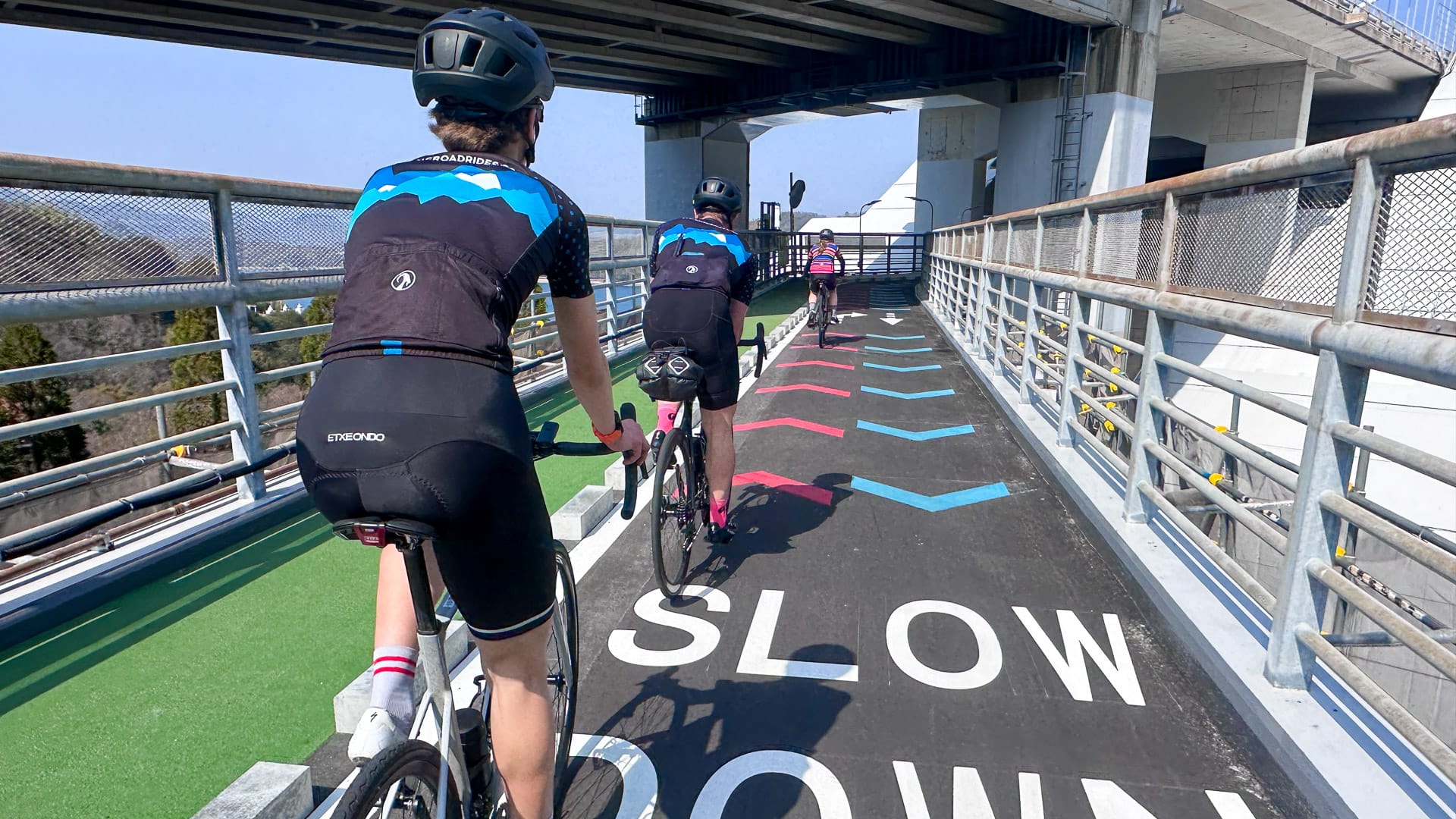
Crossing Innoshima Bridge is very impressive; it was the longest single arch bridge in Japan when it was built and has a very cool bike lane under the main road.
Innoshima Island
More quiet roads and tiny villages, with pockets of massive marine industry including a huge shipyard with what looked like a vast naval vessel and cruise ship in for repair. Quite a bizarre sight especially with the hybrid-position of the very ordinary town surrounding it.
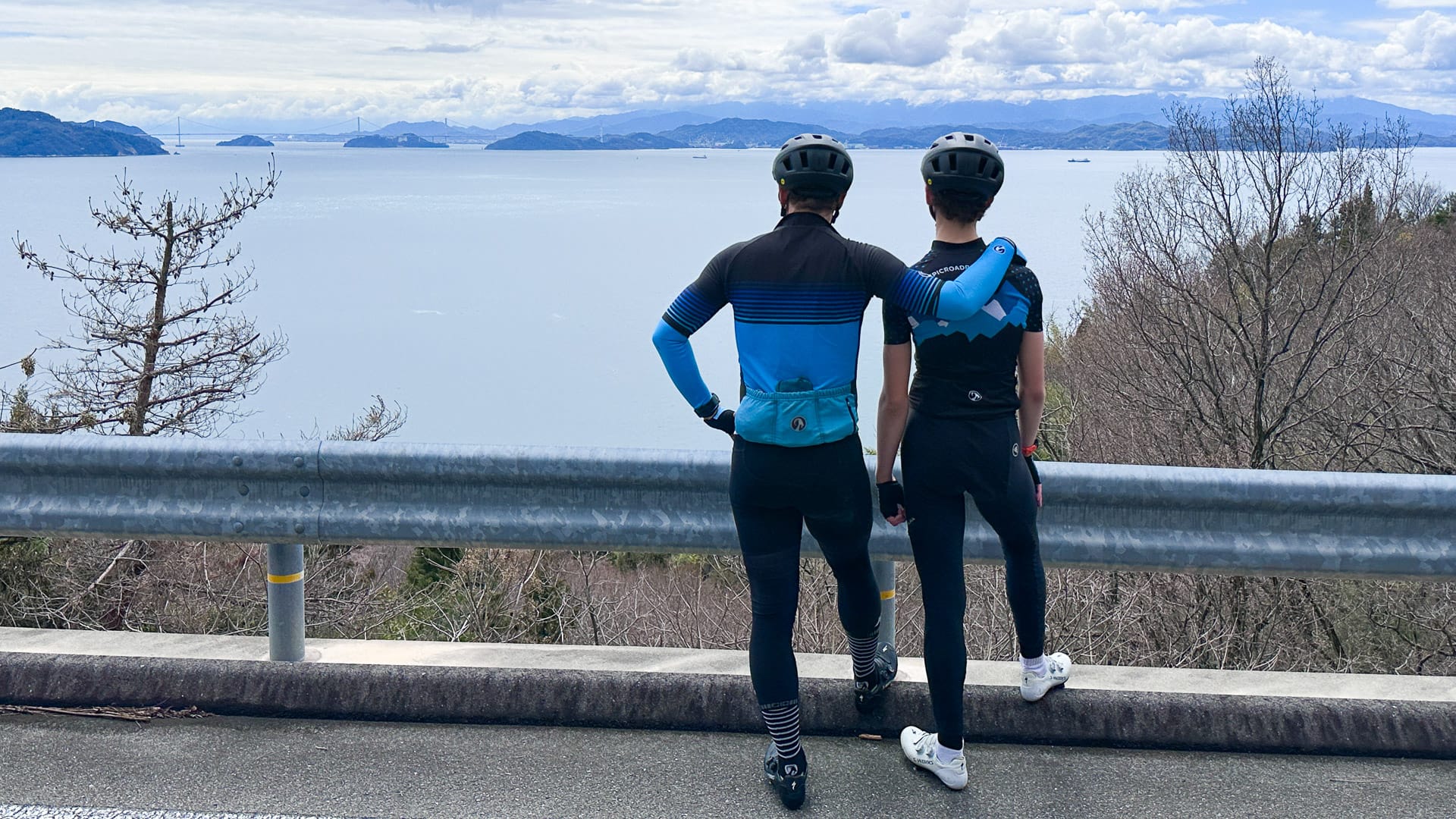
It’s worth a pause at Mukunoura Rest Area for the spectacular views – though the low cloud made our views a bit murky! A little further on, a short tunnel came as a surprise, but thankfully it was lit and free from any other traffic when we road through.
In the lacklustre shipbuilding town of Innoshimahabucho, we chanced upon a tiny Italian resident, Tre Bambini. For less than £10 per person we feasted on a plate of appetisers followed by delicious pizza.
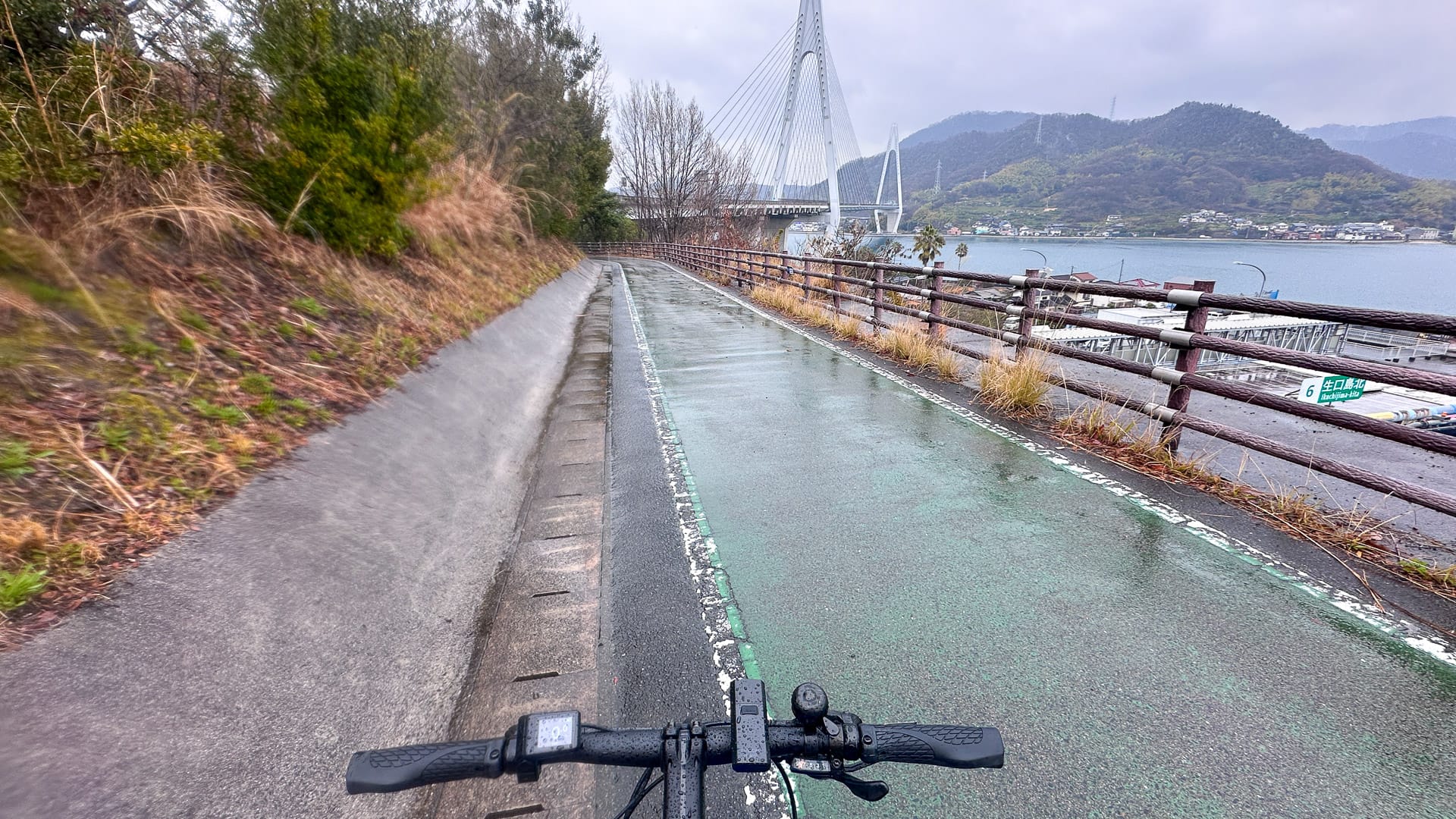
Then another vast suspension bridge, taking us across the glimmering sea, this time with bike path to the side.
Ikuchi Island
The flat, easygoing route again hugs the south and southeastern coasts of the island on calm roads, on the opposite side of the island to the Blue Route, all the way around to the third and final bridge of the day.
Just over the other side of the bridge on Omishima Island, is the fabulous WAKKA Hotel.
Where we stayed in Onomichi: Hotel Cycle
A wonderfully stylish hotel – all the details below!
Where we stayed in Imabari: WAKKA Hotel
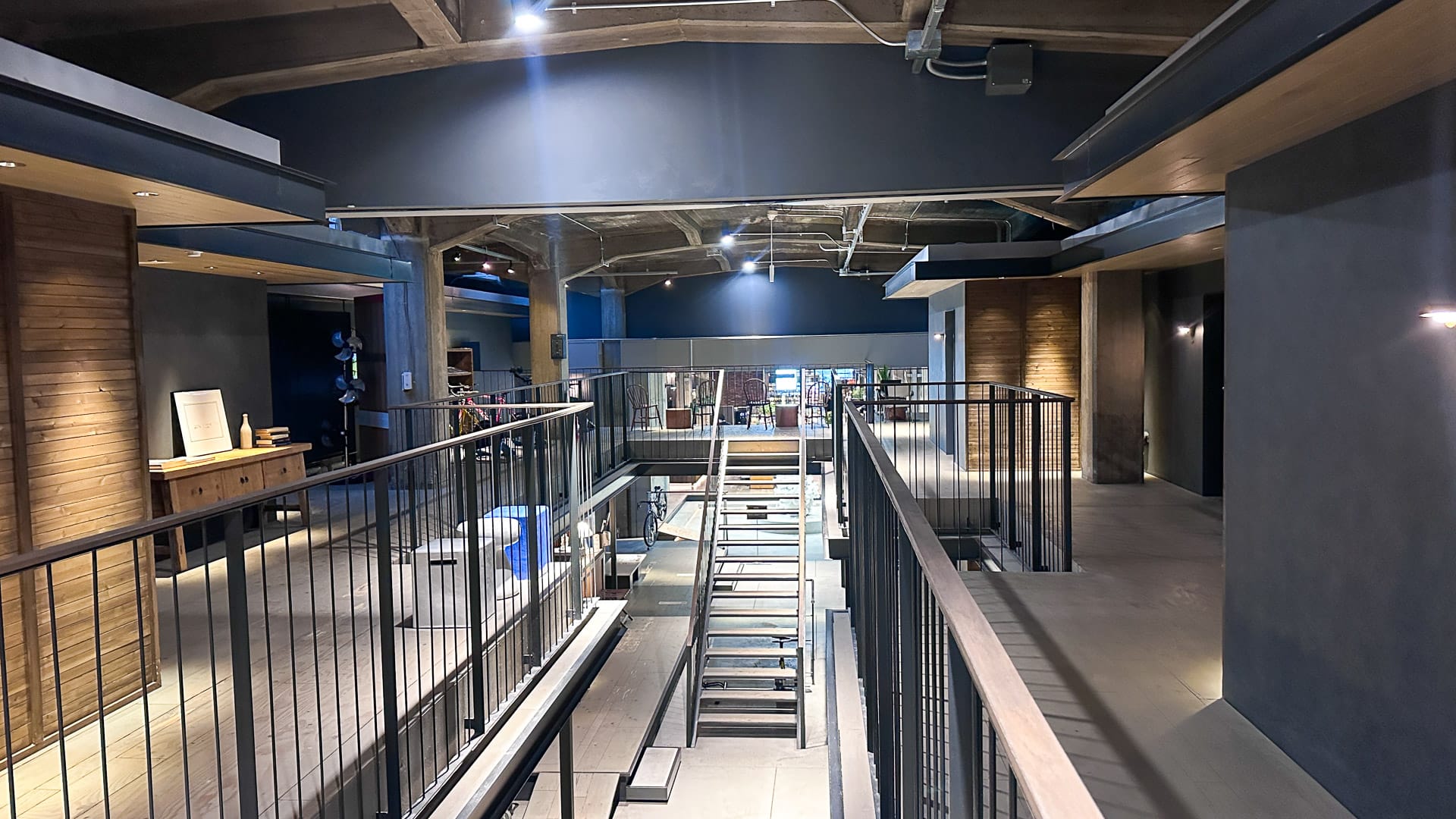
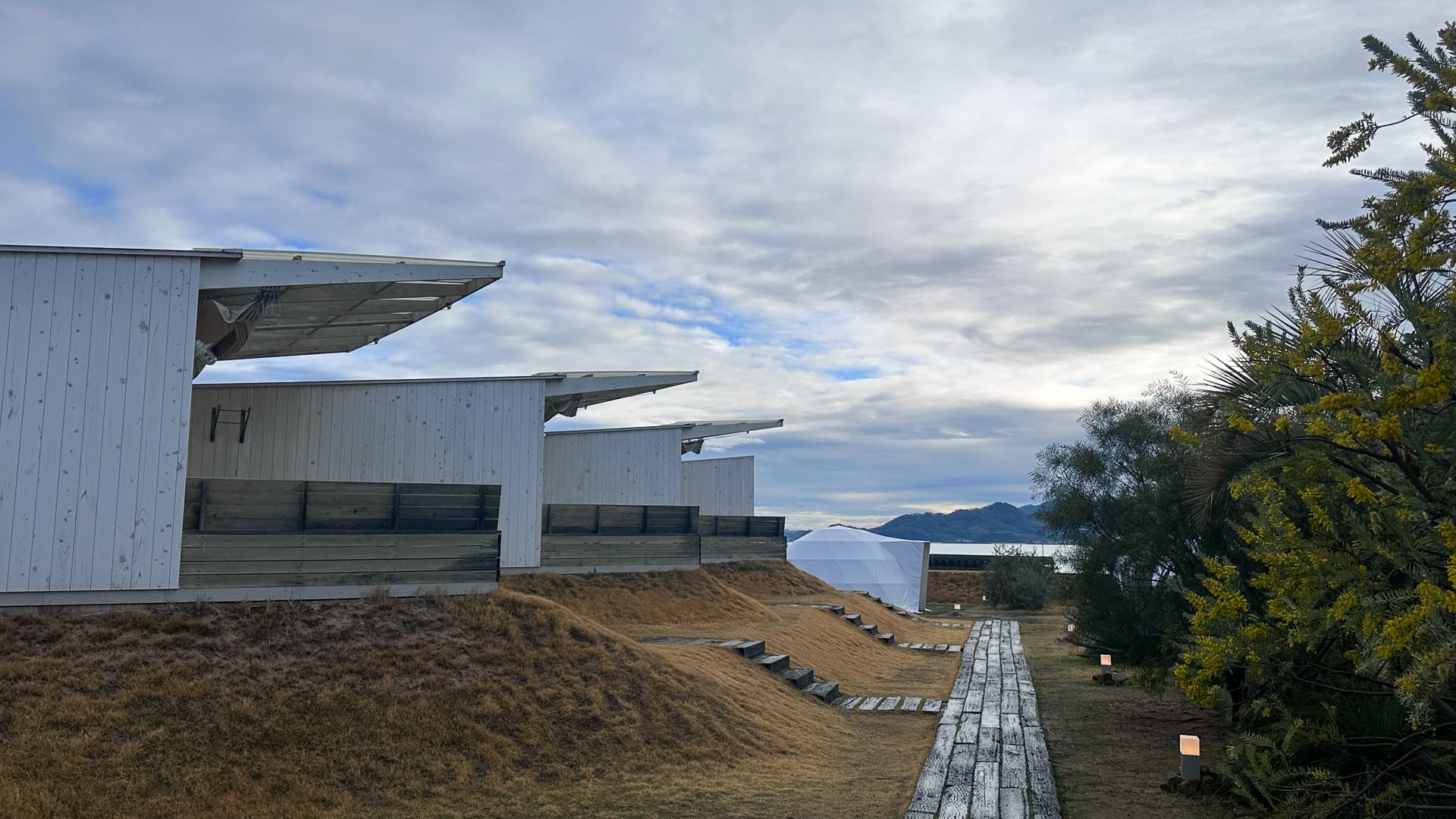
The hotel opened in March 2020 and is built in a simple, natural, modern style. It occupies a wonderful site, with land right down to the water’s edge. A particular feature is the café, with huge windows that frame views back to Ikuchi Island’s mountains, as well as the bridge.
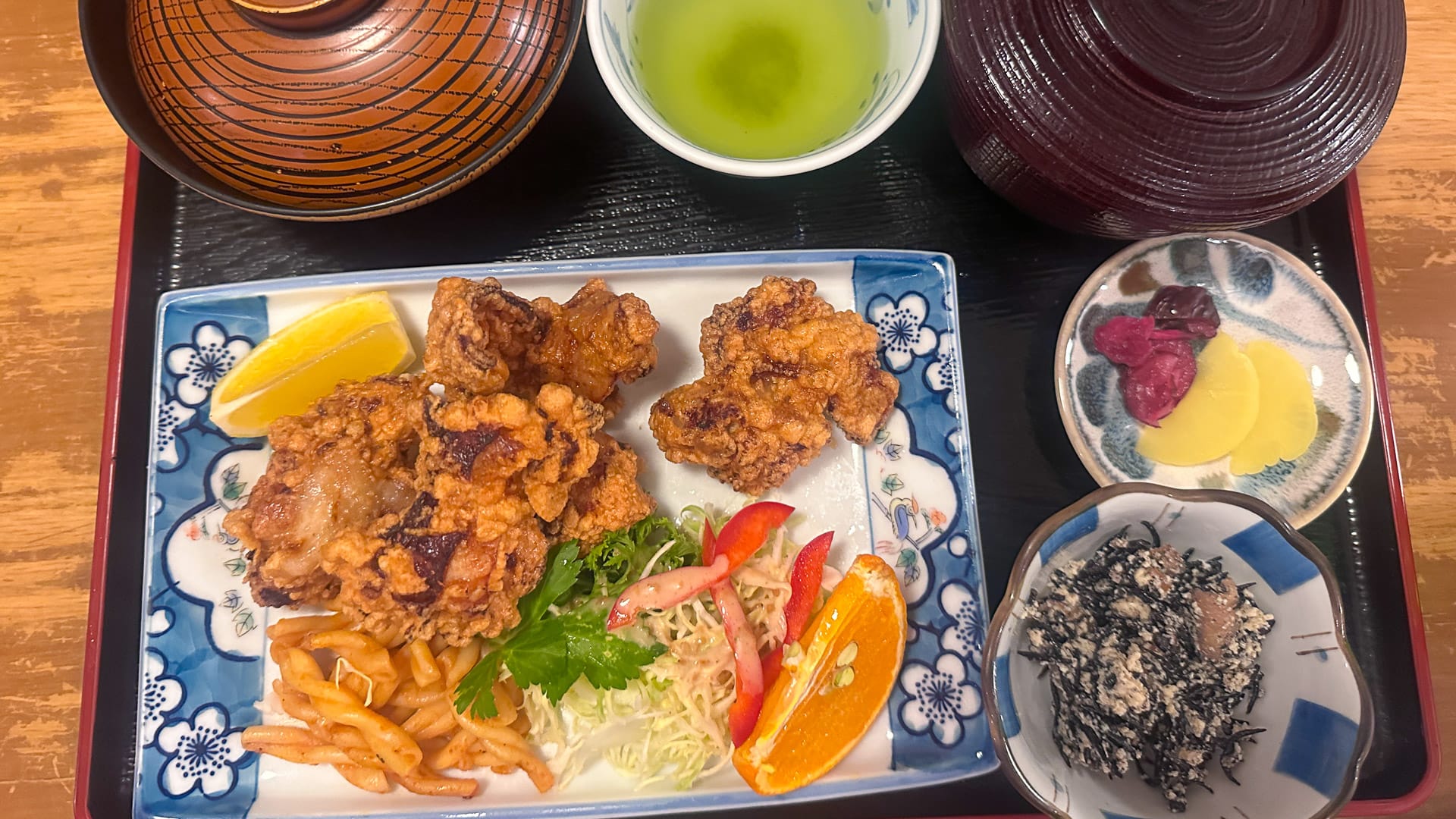
WAKKA is something of a travel agency, hotel and café combined and positions itself as a destination for cyclists. There’s a fantastic variety of accommodation, from awesome looking clear walled pods which must have fantastic views, to the 4-bed dorms we slept in. If you have some extra time, they offer lots of activities to help visitors explore the islands, from cruises to trekking, visits to citrus fields and traditional activities such as weaving, pottery and metal forging.
Day 2 Shimanami Kaido bike tour: Kamiuracho Inokuchi to Imabari
- Distance: 73 kilometres
- Elevation gain: 794 metres
- Ferries: 0
- Bridges: 3
- Islands: 3 (Omishima, Hakta, Oshima)
Note: this GPS route is the route we rode, which starts at WAKKA Hotel and finishes at the Family Mart just after you descend the bridge. We rode from here into Imabari to the Cyclo No Ie Hostel (details below).
GPX DownloadTerms of use reminder
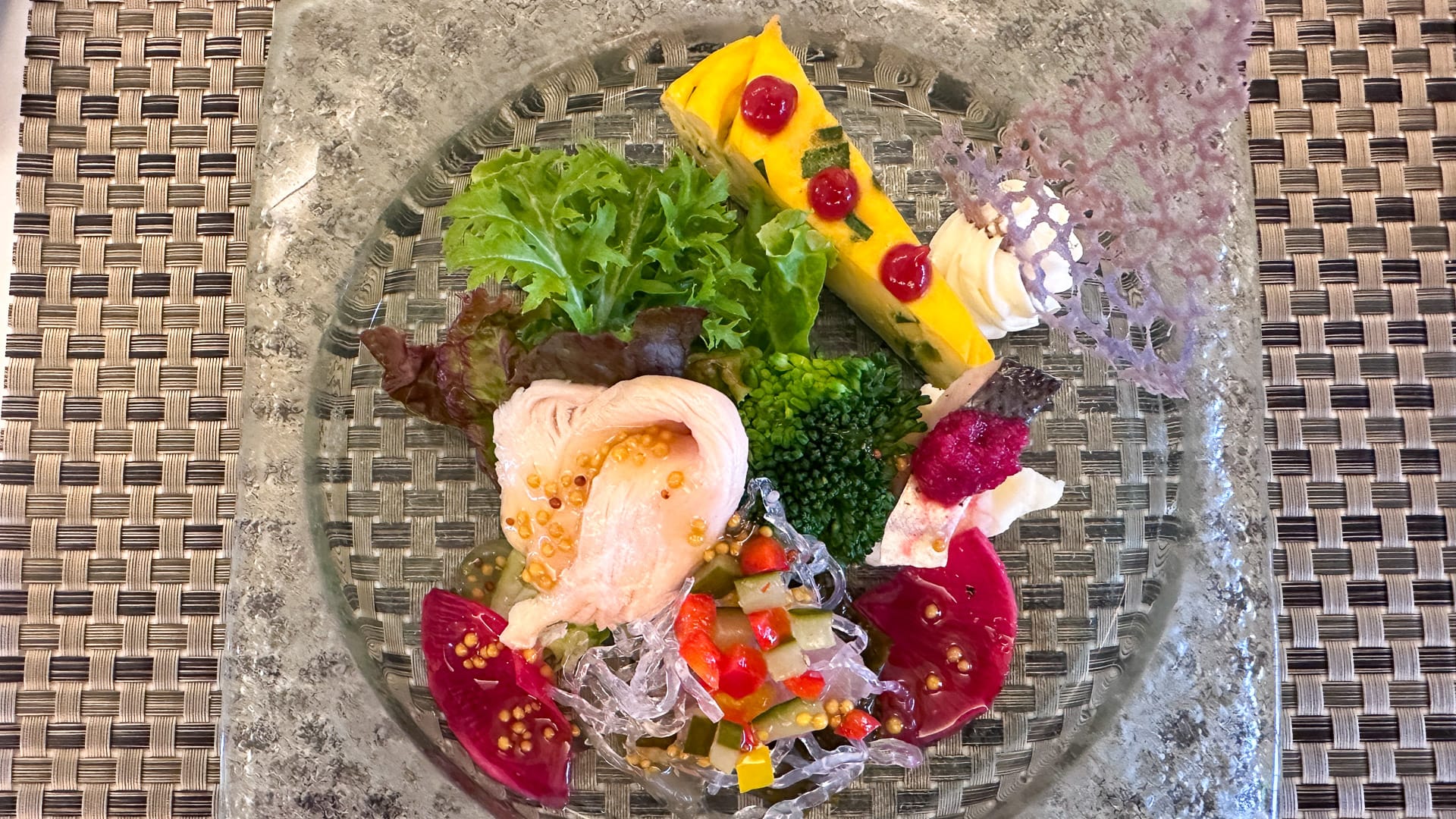
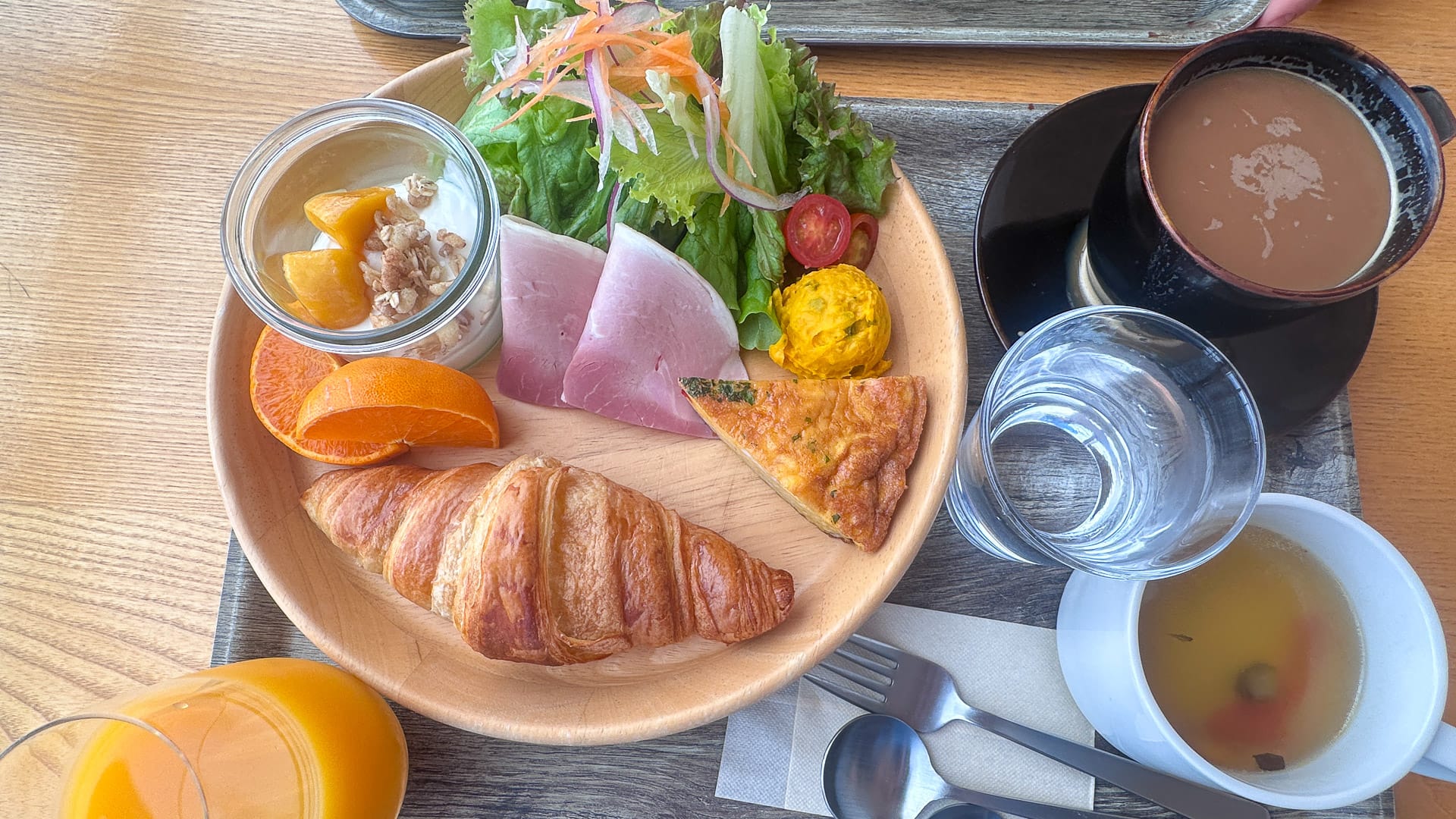
A brighter start boded well and we loved eating a bento style breakfast on the WAKKA Hotel terrace, with picture-postcard views out over the Tatara bridge and Ikuchi Island.
The route today traces a back to front S shape, almost circumnavigating the beautiful, tranquil Omishima and Hakata Islands.
Omishima Island
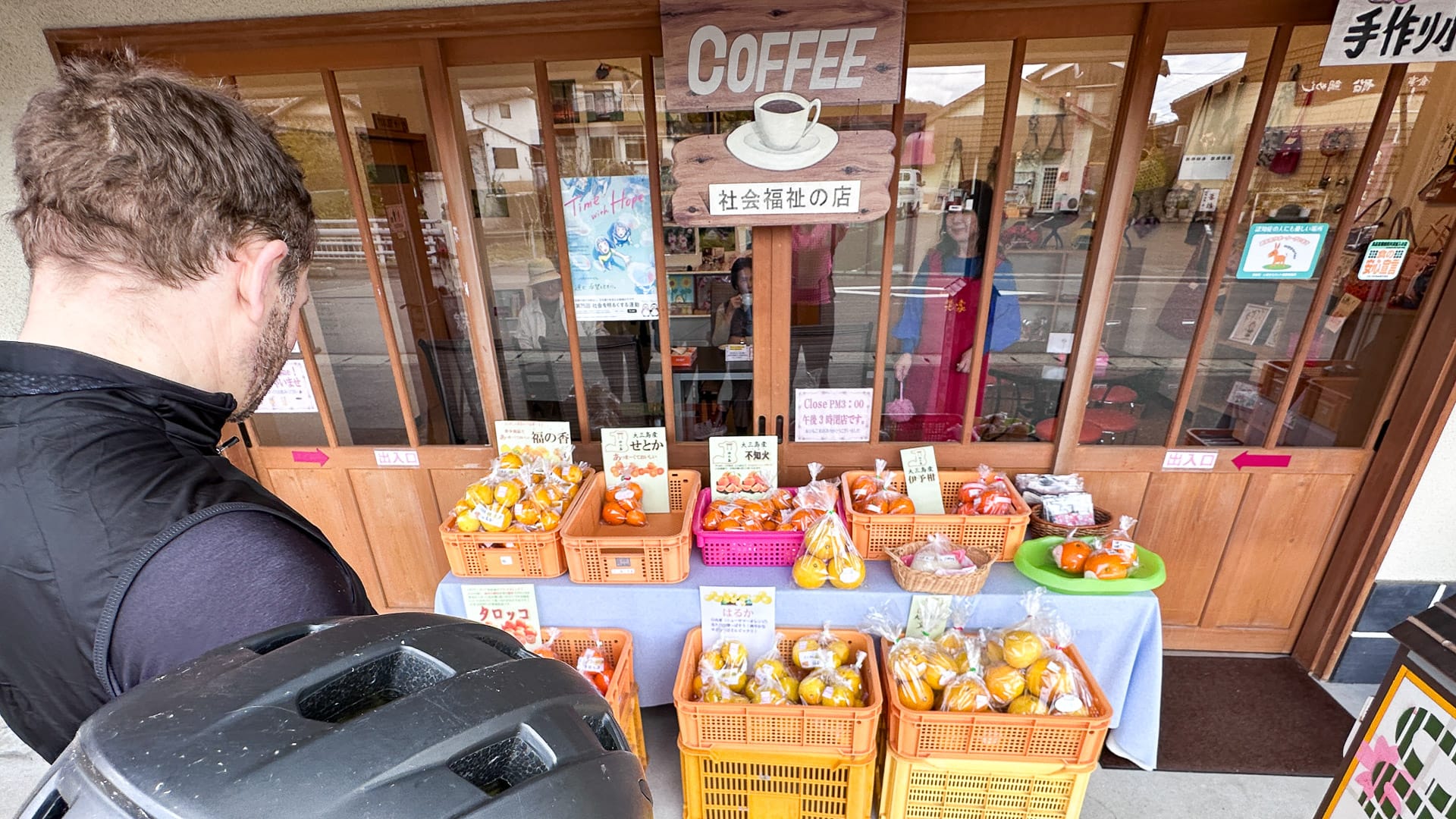
We cut across the middle of the island and found a tiny café for coffee and orange juice. Oranges (and also lemons) were for sale across the island at both an industrial and home-grown level.
We must have had our eyes shut as we managed to miss the Oyamazumi Shrine, which is one of Japan’s oldest shinto shrines and home to some wonderful camphor trees; by all accounts worth a visit…
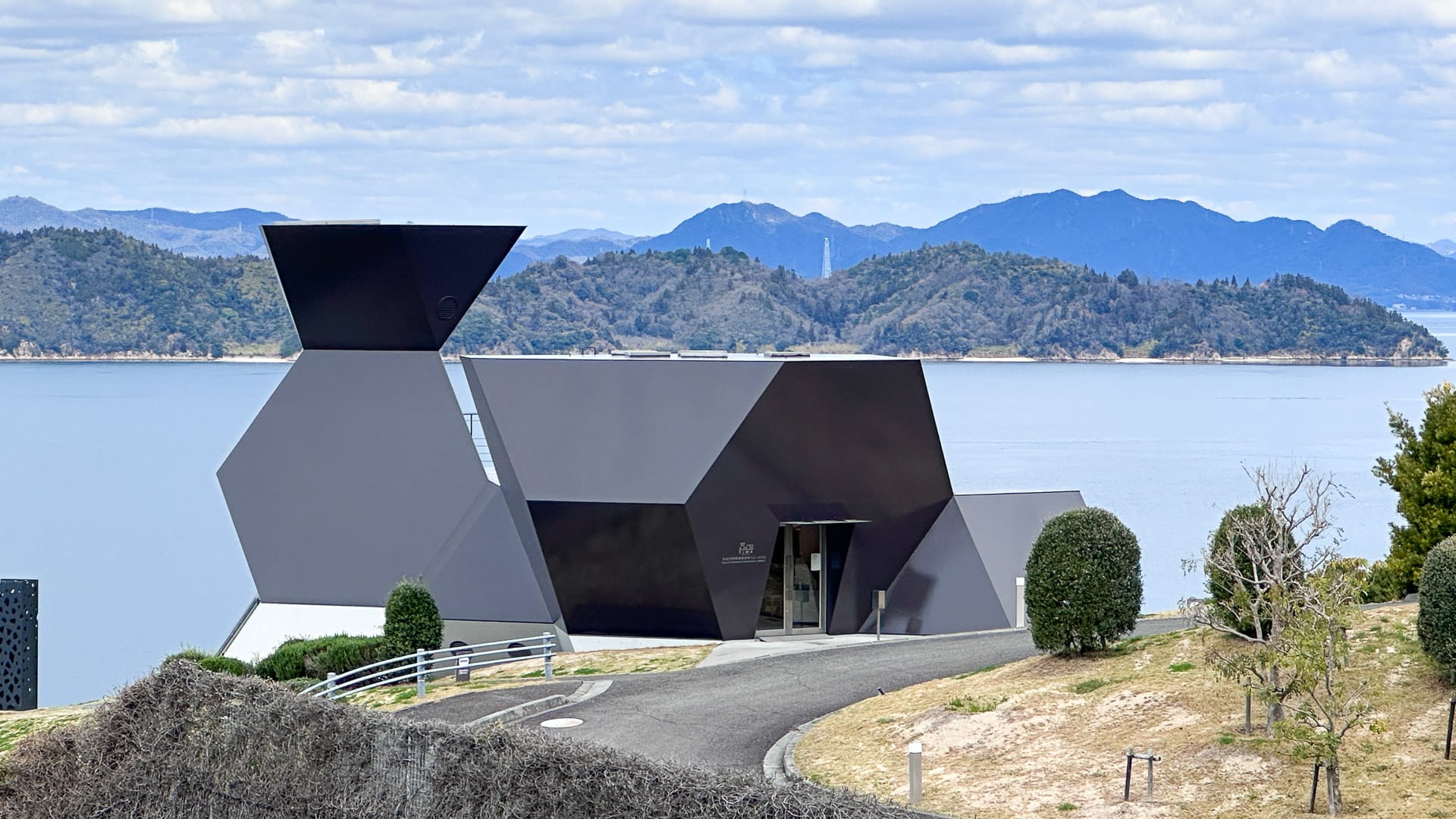
The route turned southwest and the impressive Toyo Ito Museum of Architecture appeared on the skyline, a striking museum with black lines and a jaw-dropping spot on the cliffs. We cycled the southern coastline, which was one of the most lovely parts of the route, with barely anyone around and views over towards Oshima Island.
This is one of the islands where you really get away from the Blue Route and you really sense the solitude.
Hakata Island
Historically known for salt production and as a maritime centre, today it is known for the shipbuilding industry.
Looping around diminutive Hakata Island also offered glorious riding, though almost ended in us all totally running out of fuel! The previous islands had lulled us into a sense of there being regular shops, but after about two hours of riding since the coffee stop on Omishima Island, we hadn’t found anywhere to stop.
Help came in the form of an ancient supermarket with limited stock but yet still the ubiquitous cabinet of steamed pork dumplings! And a few kilometres later, in Hakatachokinoura, we found a fantastic little pizzeria (Pizzeria da Isolani in Hakatachokinoura), where we sampled the joys of a lemon pizza (citrus is definitely a theme on these islands!).
The bridge over to Oshima offered typically wonderful views.
Oshima Island
We loved the ride around the northwest coast of Oshima island; it was beautifully quiet with spectacular views over to the other islands. The island is also known for being the home base of the Murakami Pirates, the most famous pirates in Japanese history; no sign of them today!
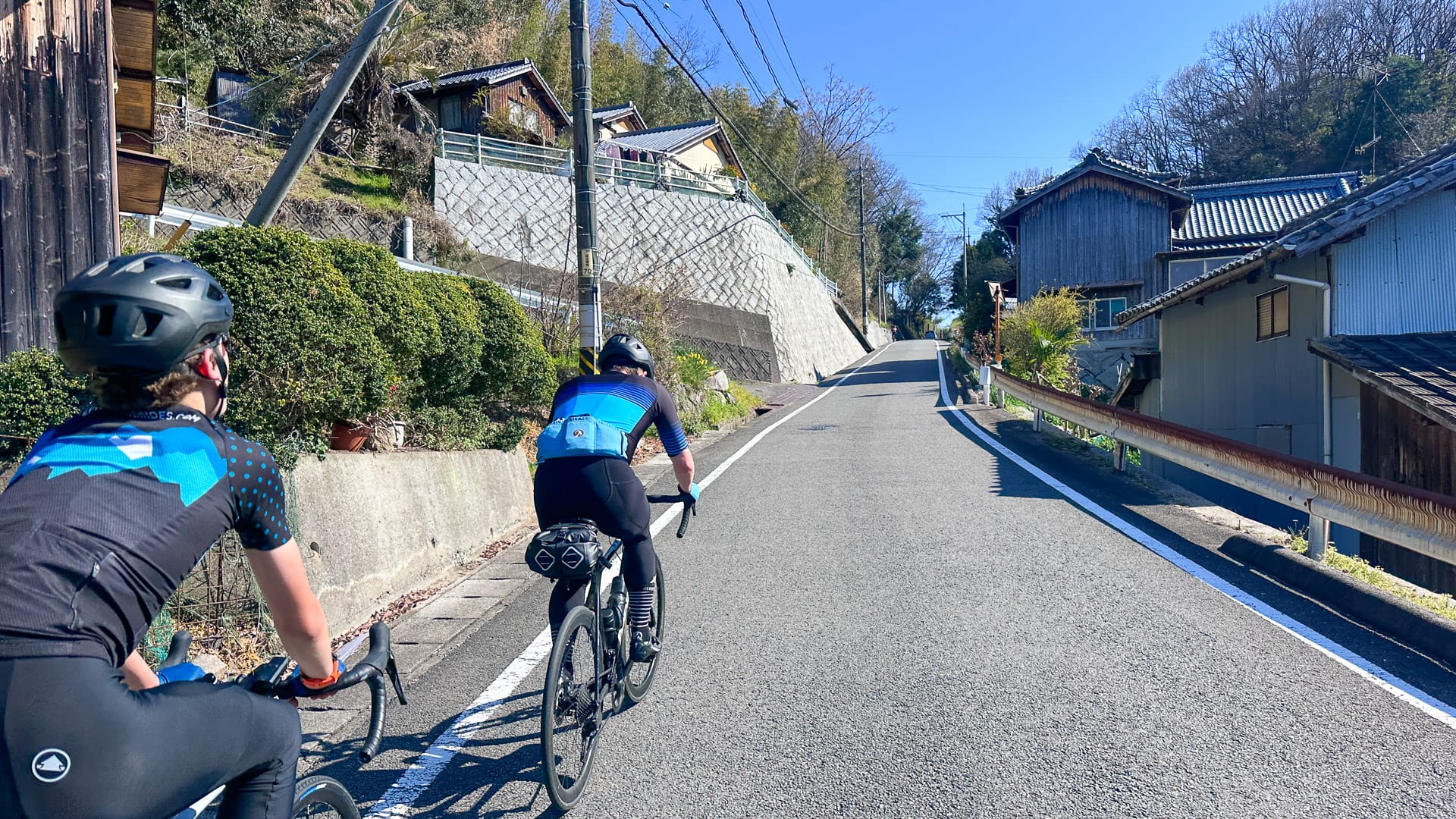
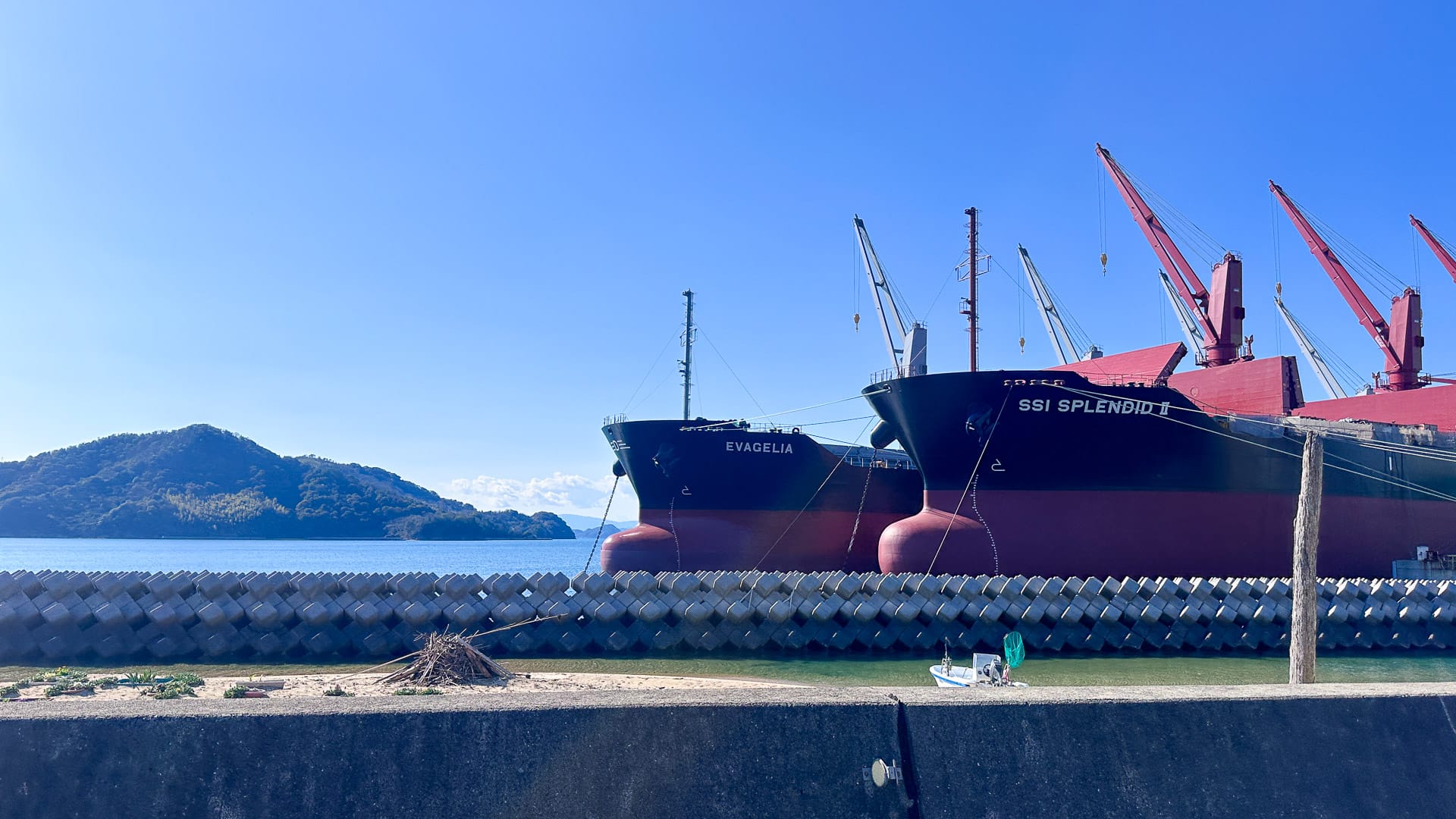
Be warned there’s a sharp stinging climb down the west coast of the island, around Tanoura with gradients hitting 8-10%. A few kilometres further on, you come to the behemoth I-S Shipyard; it feels like you’re going to be swallowed up by the vast buildings.
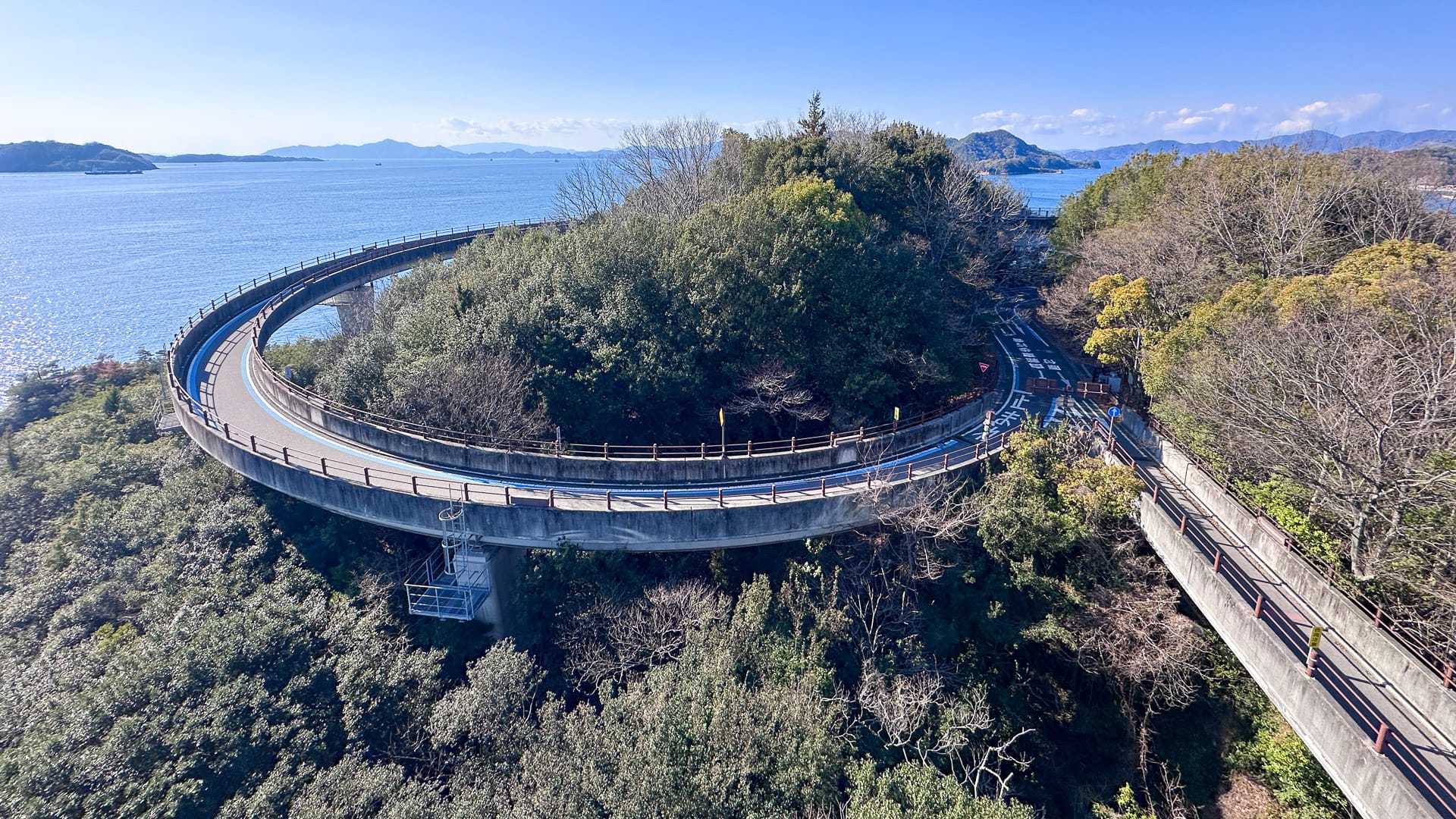
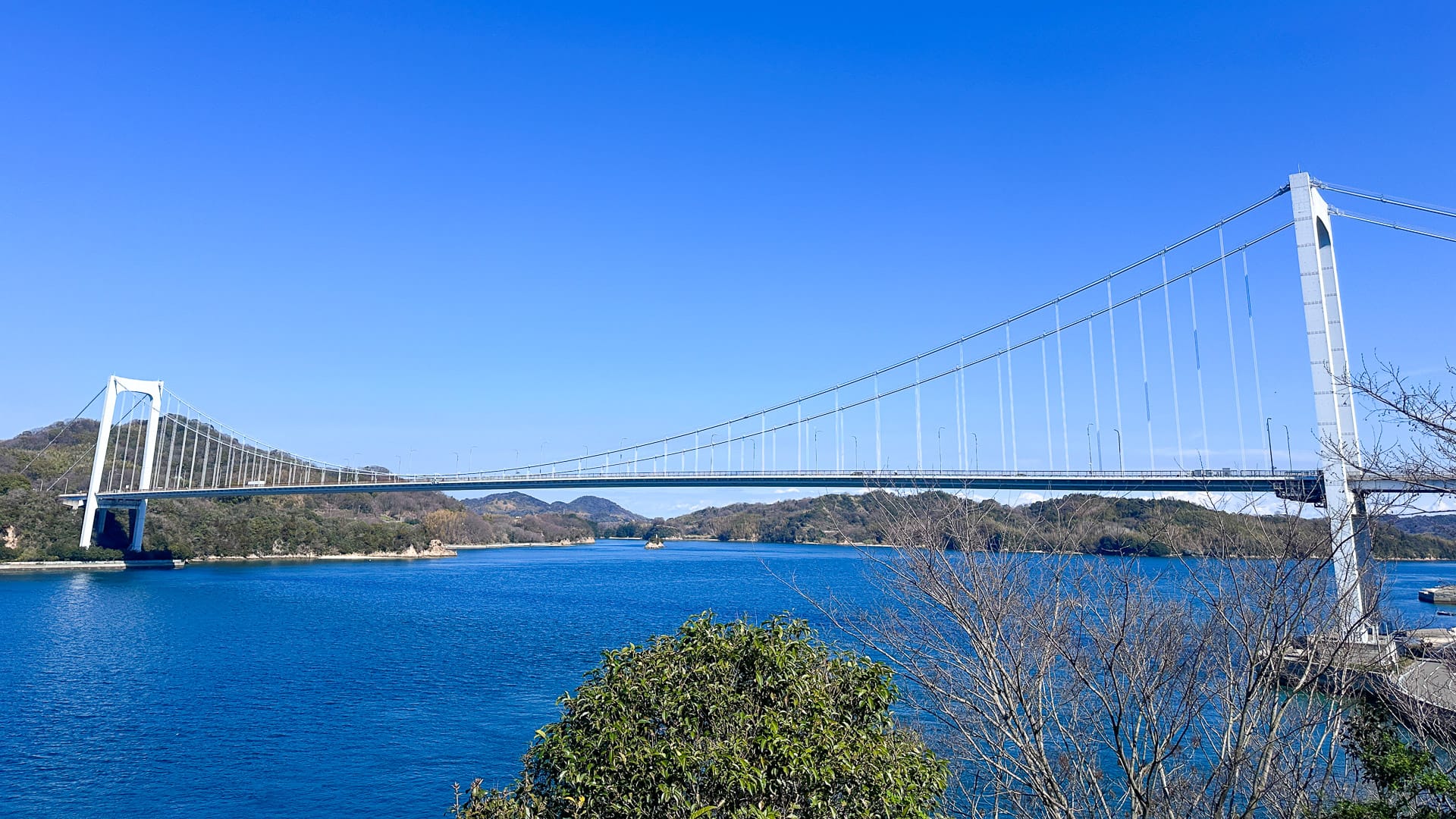
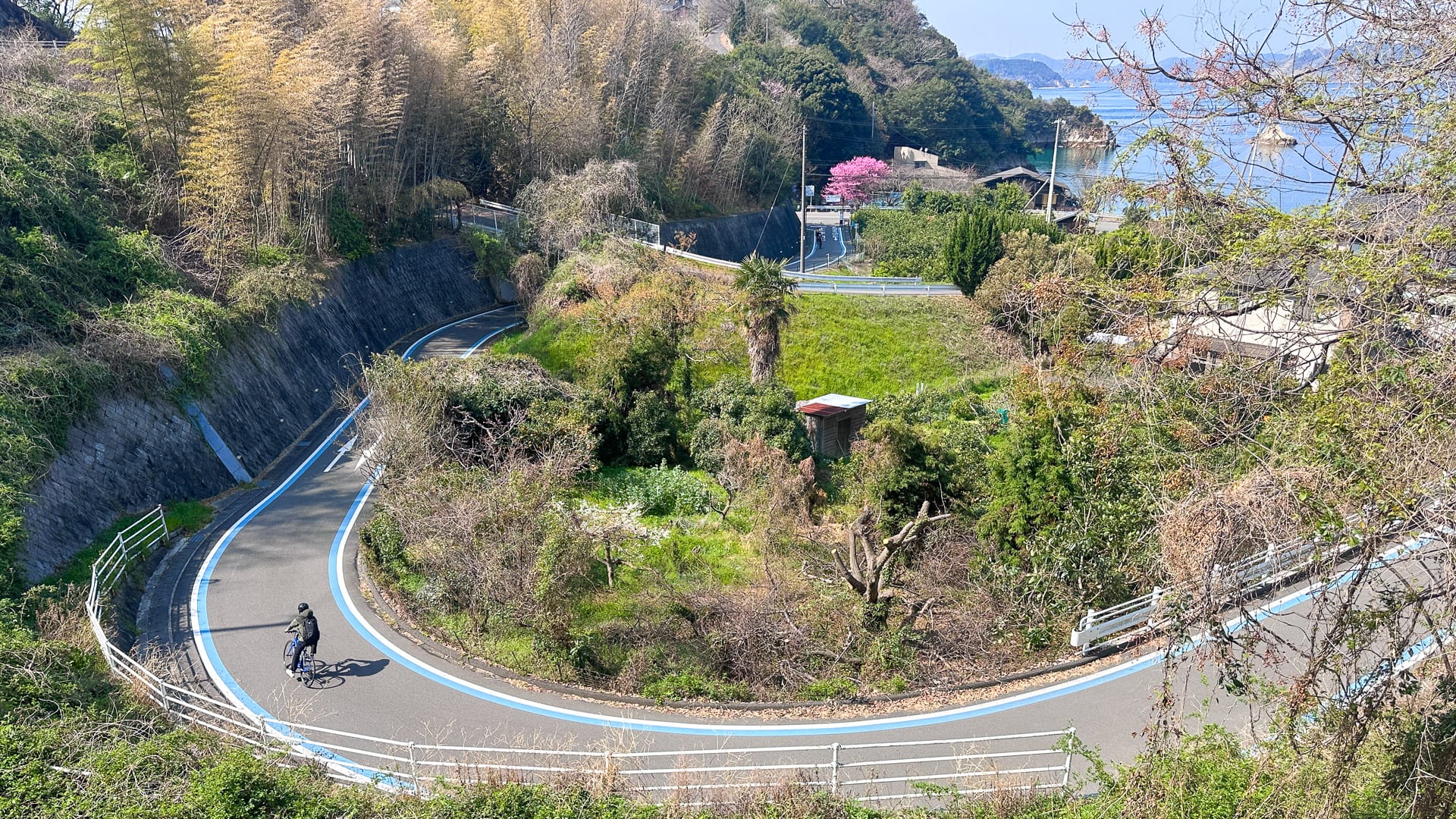
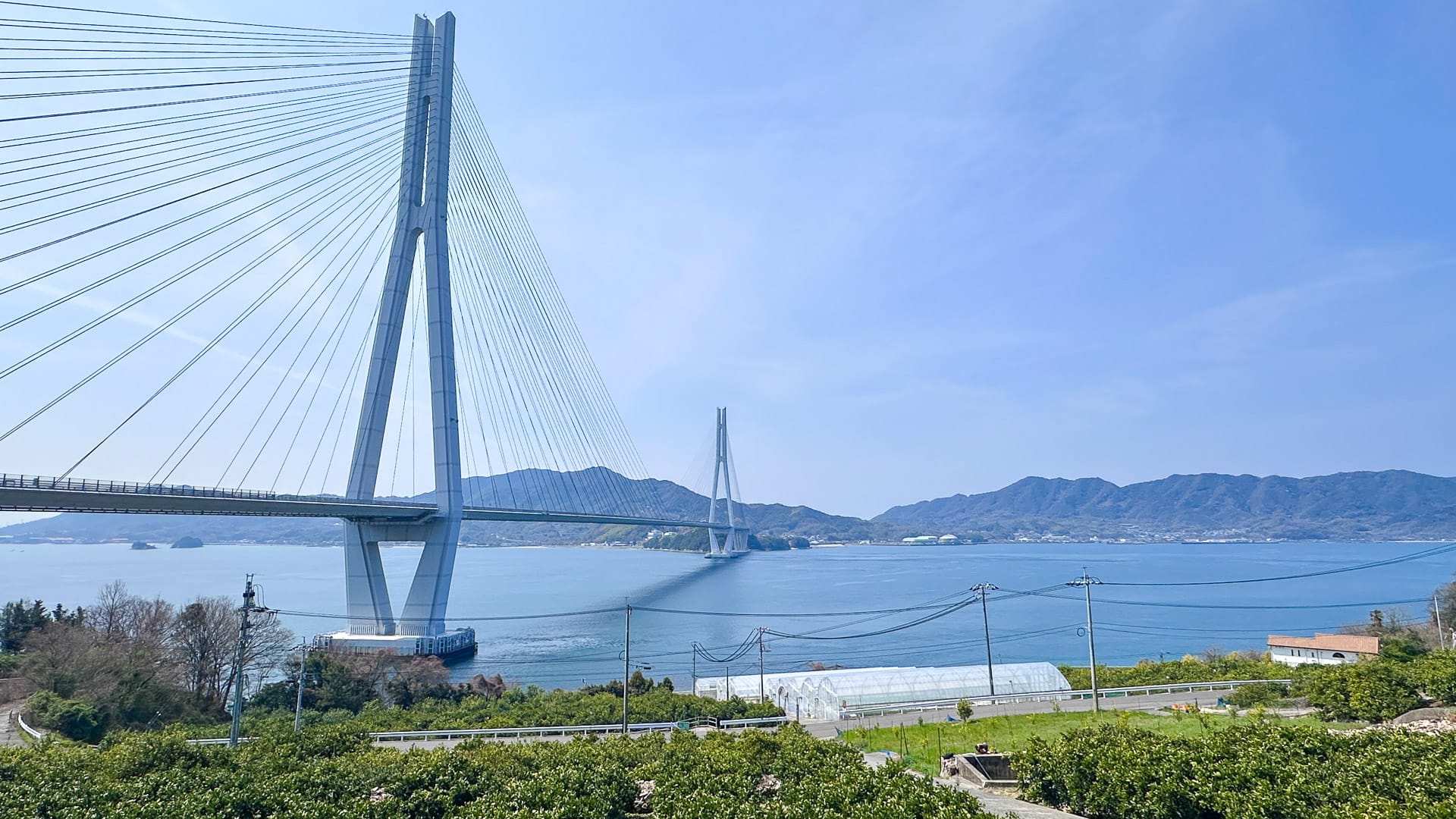
The final five kilometres to the bridge was gorgeous, with the road hugging the coast through quiet villages, fishing harbours, and the Kurushima Kaikyo Bridges on the horizon. The bridges are a feat of magnificent engineering; a series of three suspension bridges over four kilometres long, crossing the Kurushima Strait that is dotted with mountainous islands. What’s brilliant is that they’ve been built with cycling enthusiasts in mind and the infrastructure for the approach to get on to the bridge was quite something, with its looping entrance ramp that keeps gradients easy while winding up to bridge height.
We were feeling pretty exhausted so skipped a stop at Kurushima Strait Observatory, just the other side of the bridge. The views look wonderful so this would be a good place to add in to your route.
Imabari, Ehime Prefecture
Imabari is the second largest shipbuilding hub in Japan and also famous for its towel manufacture. It has been the top producer of towels in Japan for more than 120 years!
It didn’t seem an overly tourist town, but we found several things to love including
- Cyclo No Ie Hostel (details below).
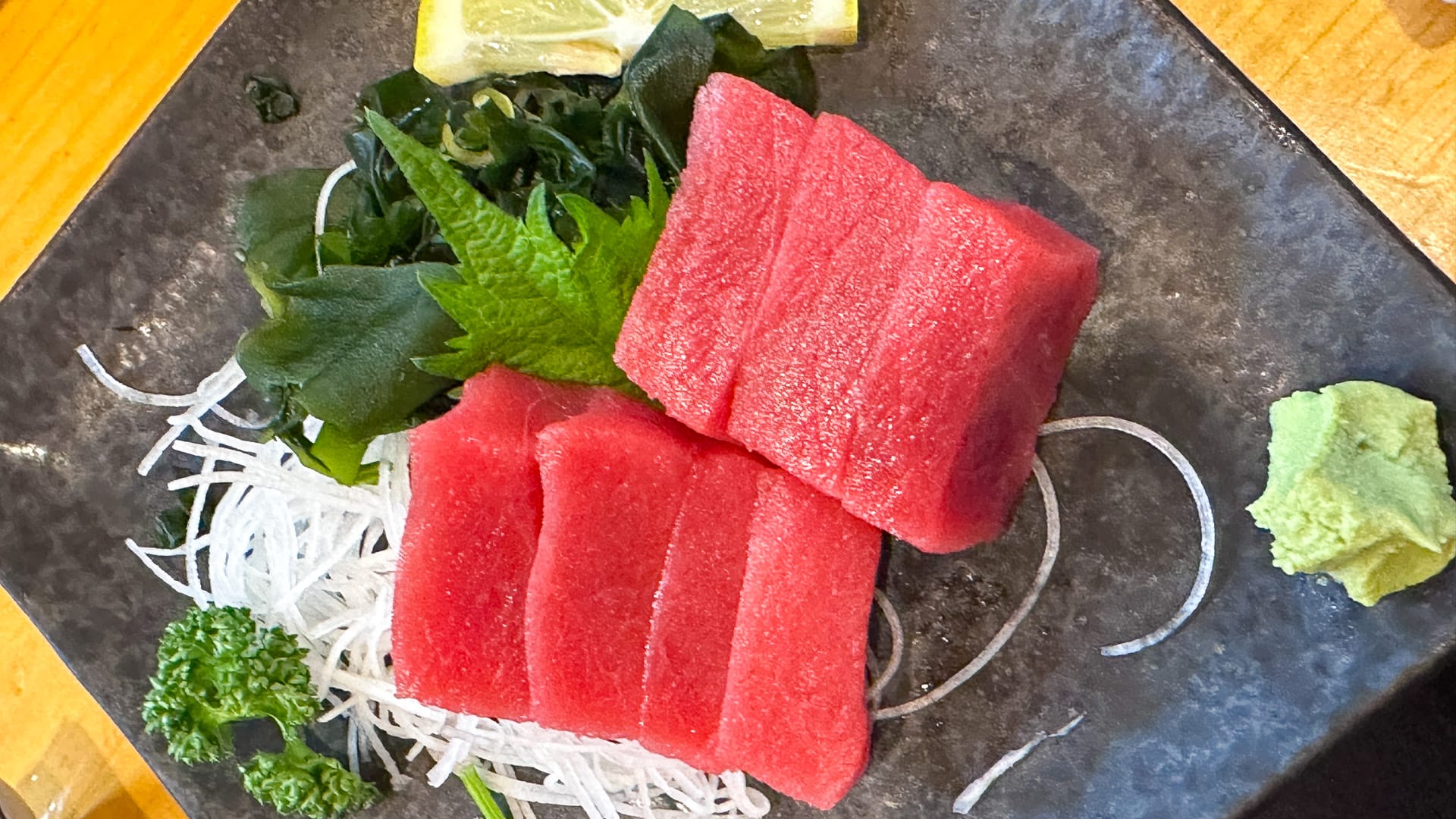
- Dinner at Yorito, a Izakaya Japanese pub: the famous menu here is Imabari Yakitori, comprising chicken skin and fried chicken. Perfect washed down with a beer. The sashimi was also fantastic.
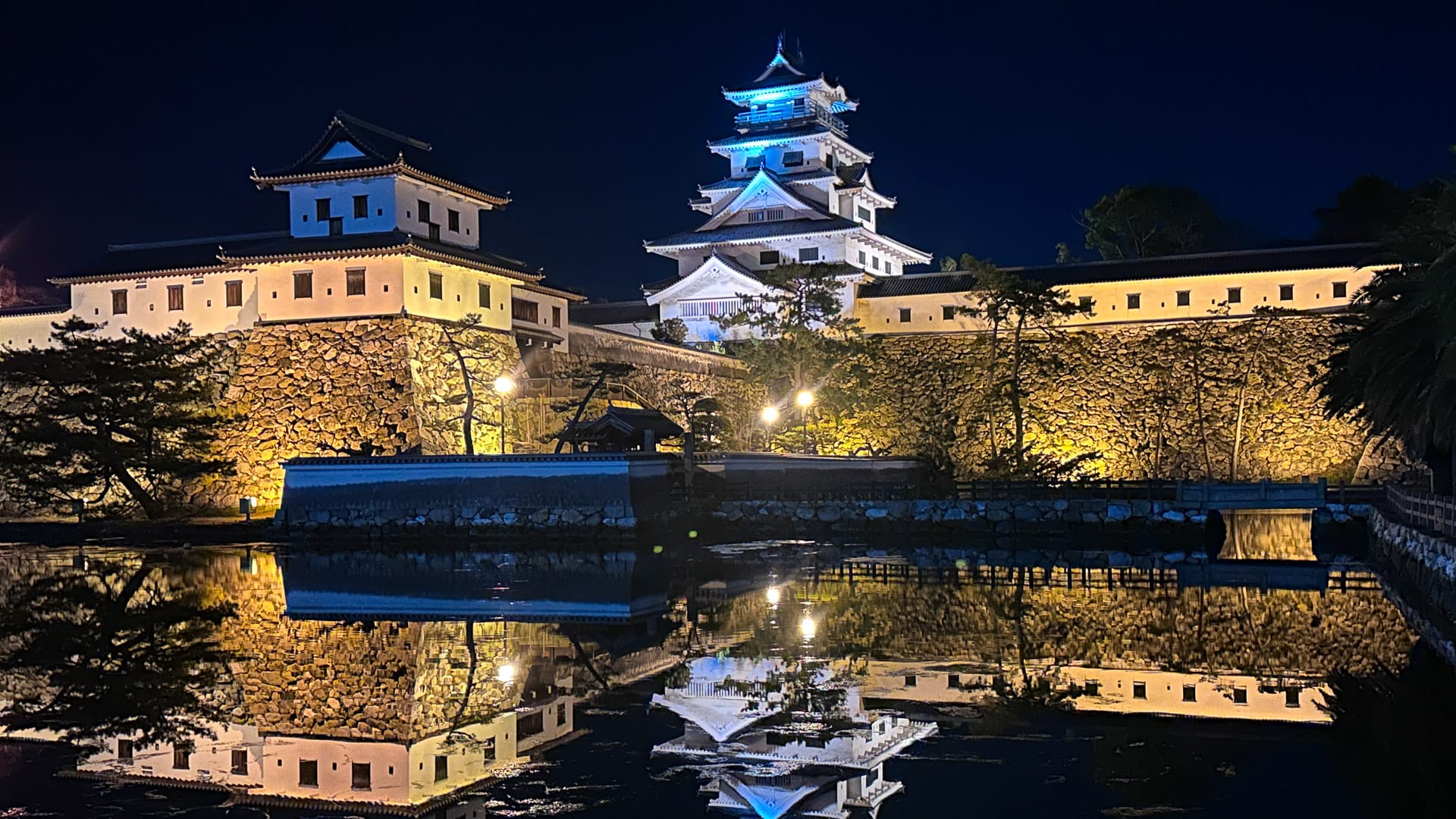
- On an after-dinner stroll came across the Imabari Castle flooded in dramatic lighting; it was also one of those moments you don’t forget quickly.
Where we stayed: Cyclo No Ie hostel
The hostel is totally focused on those cycling the Shimanami Kaido and while diminutive, manages to provide a community pace serving as café, bar and kitchen area, small library with information on the route and city plus a bike garage with room to store bikes, bike tools and washing machines and dryers.
While the accommodation is not luxurious (no ensuite rooms for example), the pricing reflects this and cyclists looking for information on the route are very well served.
Day 3 Shimanami Kaido bike tour: Imabari to Onomichi
- Distance: 78 kilometres
- Elevation gain: 564 metres
- Ferries: 1
- Bridges: 6
- Islands: 6 (Oshima, Hakata, Omishima, Ikuchi, Innoshima, Mukaishima)
GPX DownloadTerms of use reminder
Imabari, Ehime Prefecture
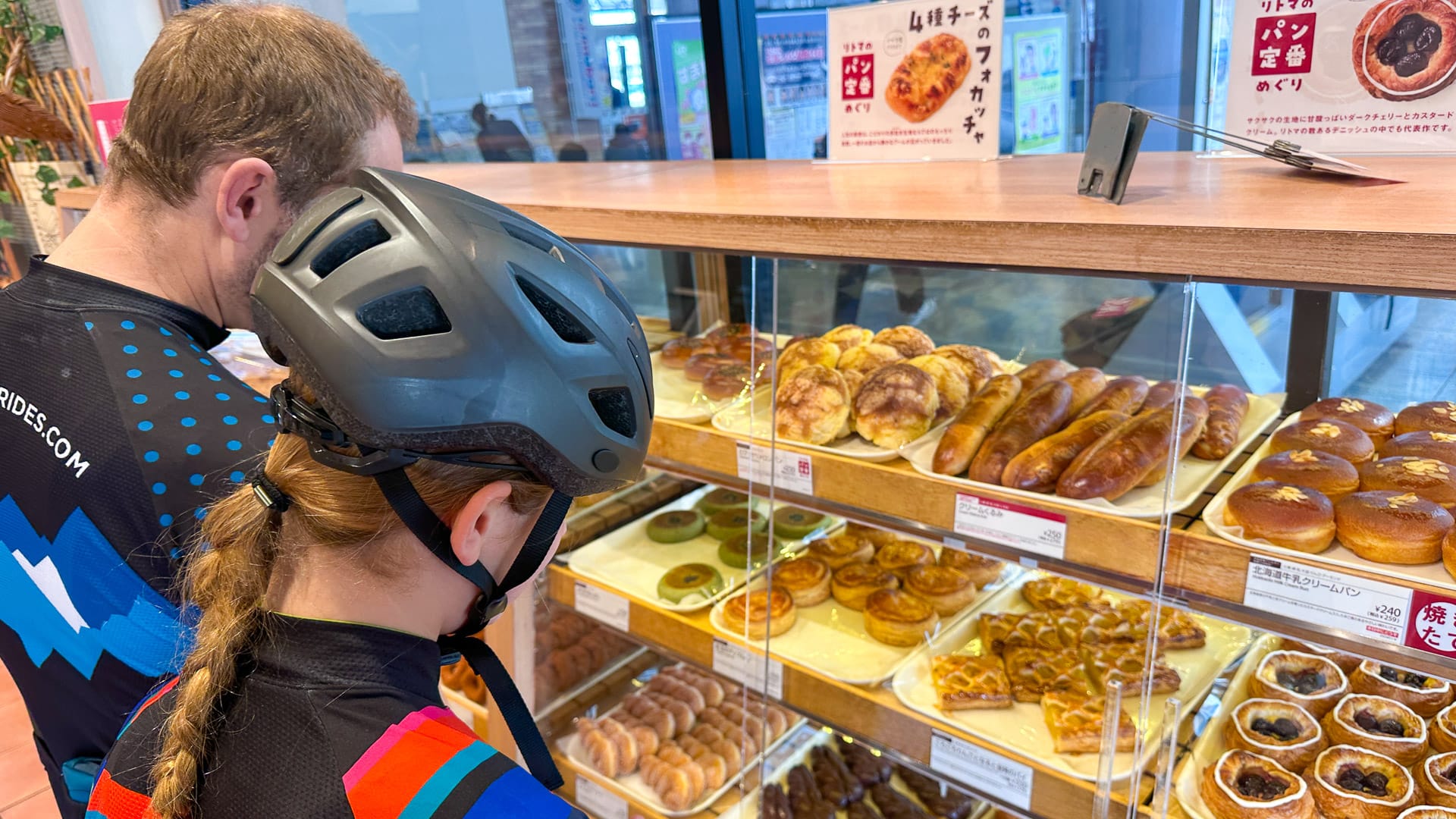
If you’re in need of baked goods, don’t miss the Little Mermaid bakery at Imabari station; it’s a mecca of delicious, very reasonably priced baked goods! The huge and impressive main bike rental set up is located just next door.
The main road back to the bridge is a gentle uphill drag that isn’t overly exciting, but work was ongoing for a segregated bike path, which would be a good addition.
Oshima Island
Rather than cornering the northwest coast, the Blue Route takes you 11.6 kilometres through the centre of the island. There’s a long gradual, two kilometre climb a few kilometres before the bridge (average gradient around 3.7%).
Hakata Island
The Blue Route only spends 3.3 kilometres on this island. But even here, the smallest of the six islands on the route, three ship building companies call this home. If you have time for a diversion, the island is home or the famous salt-producing company, Hakata-no-Shio, a household name in Japan.
Omishima Island
Again, the Blue Route only runs 5 kilometres through this island, just whipping you along the eastern shore before popping you over the Tatara bridge.
Ikuchi Island
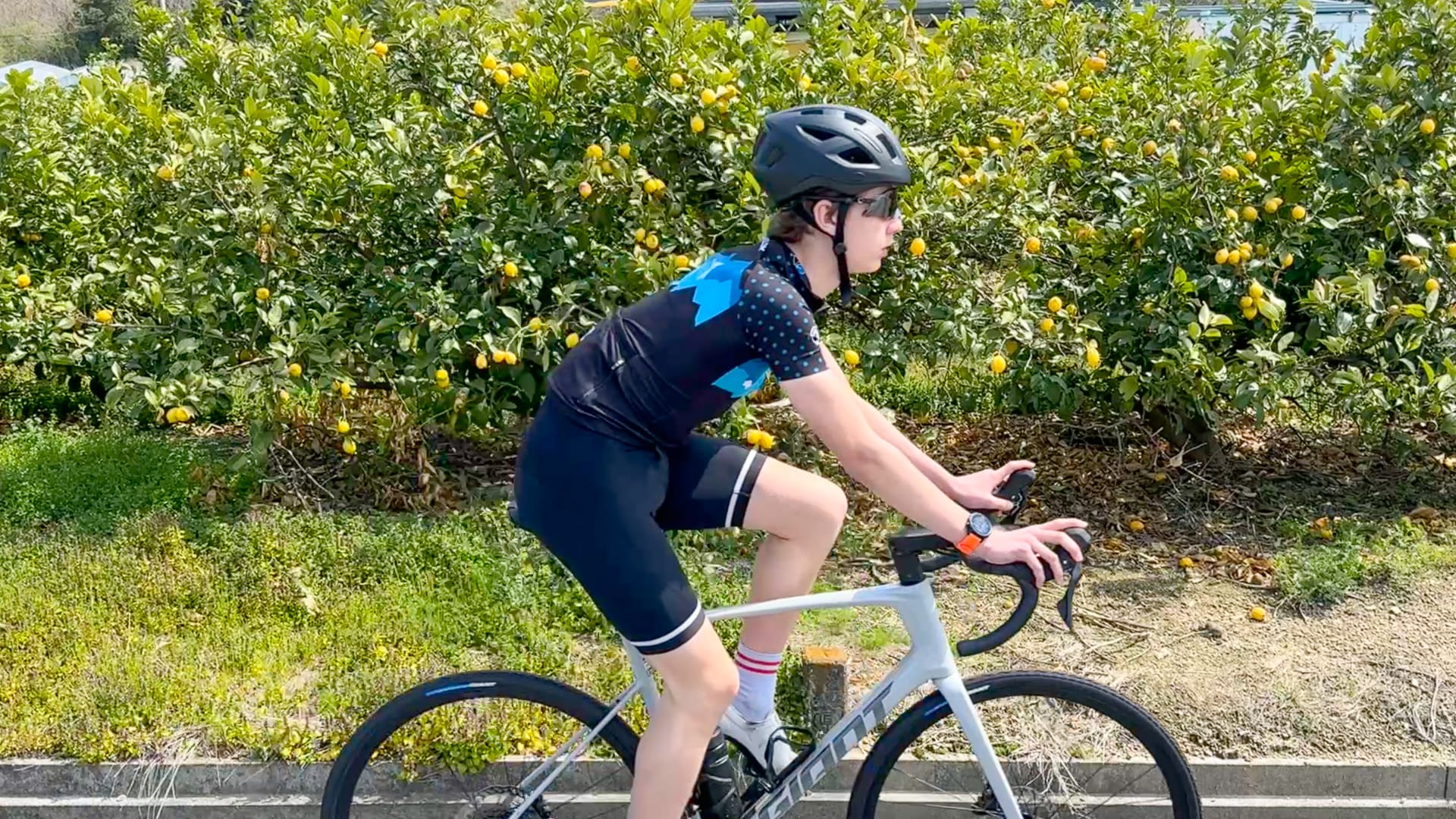
One of the highlights of the 12 kilometres spent on Ikuchi Island is Lemon Valley, which you cycle through as you descend from Tatara bridge on to the Blue Route. Lemon Valley has been the home of Japan’s domestic lemon production for the last 116 years, since 1910.
Innoshima Island
The Blue Route runs 7.4 kilometres on Innoshima Island and it’s quite a different experience to the Rindo Route. A few kilometres after having turned off the bridge, there’s a busy urban section, so take care.
Mukaishima Island
The 9.1 kilometre Blue Route includes the northern stretch of this island which is very urban; it has become a base for those working in Onomichi. It makes quite a contrast with our experience on day 1 of the ride on the south coast of the island which felt very quiet and traditional. As with Innoshima, there were a few kilometres where we were riding with busy traffic and a segregated path would have been welcome.
From here we caught the small ferry back to Onomichi; there were more cyclists with bikes than cars, which was a pleasure to see.
Where we stayed: Hotel Cycle, Onomichi
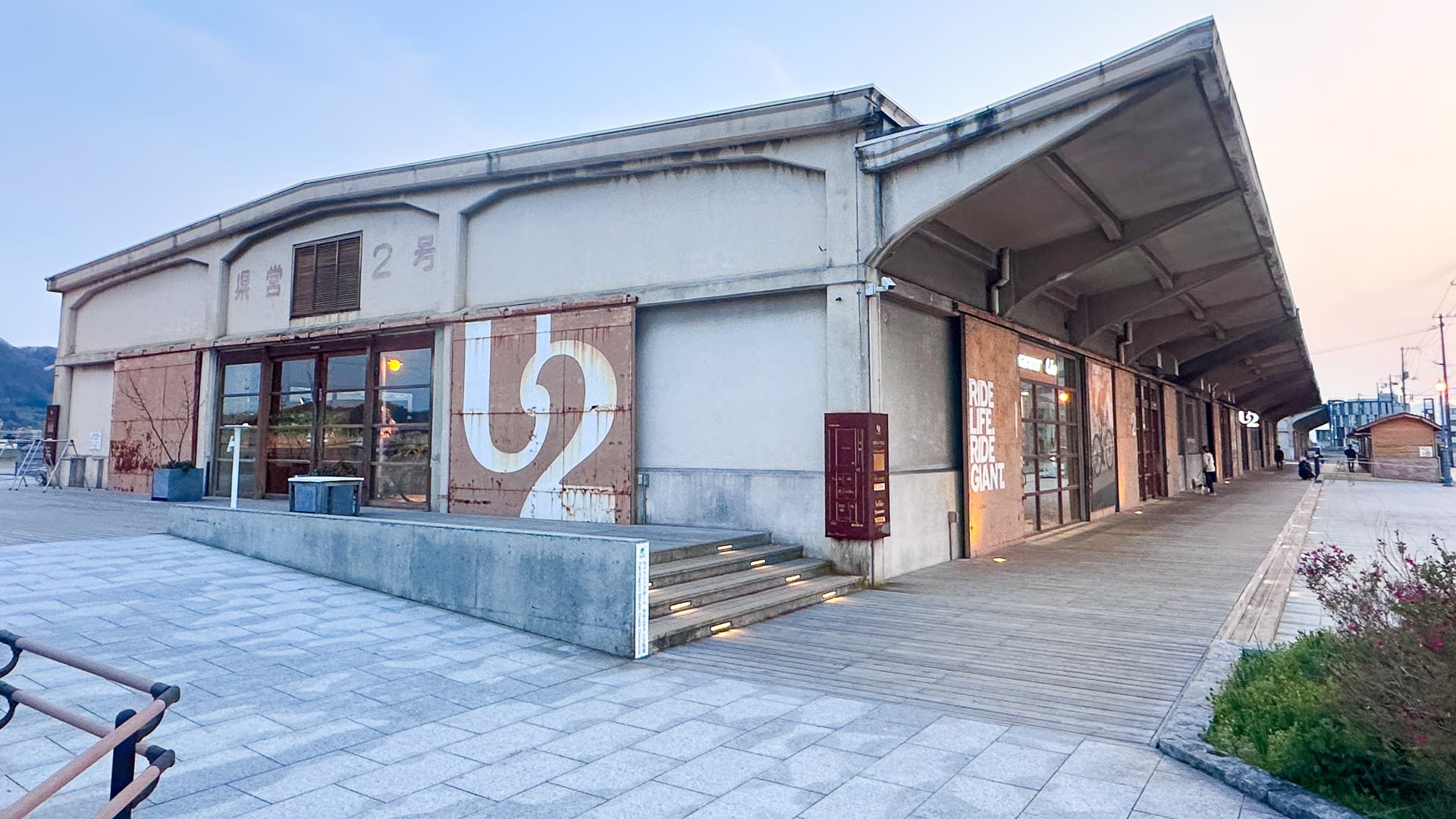
In Onomichi, we stayed again at the Hotel U2, who had stored our bags for us. It’s significantly more luxurious (and expensive) than Cyclo No Ie hostel in Imabari the night before. Dinner in the restaurant housed in the same building provided a nice way to end three days of adventure on the Shimanami Kaido.
Final thoughts on planning a Shimanami Kaido bike tour
Cycling the Shimanami Kaido is a fabulous experience, with awe-inspiring scenery that can be enjoyed on a route suitable for beginners and less experienced Milford. There’s interesting history and industry to explore if that’s your thing, plus impressive cycling bridges and a great set up for cyclists.
The one day Shimanami Kaido Blue Route gives you a taste of the islands, but to immerse yourself, you need to take a bit longer. A guided bike tour of the Seto Inland Sea and Shimanami Kaido region can be a great way to do it to get you to the quieter areas and the special places that most people don’t see.
But if budget doesn’t run to a guided Shimanami Kaido bike tour and you’re someone confident in quiet places, I’d really suggest spending some time on studying the map and plotting a route that gets you off the beaten cycle track and into rural Japan. The people are kind, the roads are great and we found the drivers almost uniformly courteous.
Hopefully this article gives you a great starting point. So, go, explore!
Ready to ride in Japan? These additional articles and guides will help you plan your trip.
- Cycling Japan, our central hub page for the country
- Cycling Japan with Rindo Bike Tours, 6-day intinery and review
- Planning a bike tour in Japan, 14 things you need to know
- Shimanami Kaido cycling route, for tips on riding Japan’s most famous cycling route
- Self guided cycling tours in Japan: what you need to know before you book
- 8 of the best cycling holiday destinations in the world 2026 for more inspiration
- Cycling holidays in Autumn, for the best places to cycle in September + October
Got a question for Clare?
Fill out this form and we will send it to Clare. We aim to get you an answer within 24 hours where possible!Clare Dewey is a cyclist with a passion for travel. She set up epicroadrides.com in 2018 to help make it easy for cyclists to explore the world by bike. Today her mission is still inspiring cyclists to discover new places on two wheels - and doing what she can to make sure they have the best possible time while they're there. Clare has visited 50+ destinations around the world, many of them by bike.
Want to connect with Clare? Find her over on LinkedIn.
First Published: 01 May 2026
This article includes details of products and/or services that we have used ourselves or which we would consider using. Some are paid features or include affiliate links or referral codes which we may earn commission from. As an Amazon Associate we earn from qualifying purchases. Please read our disclosure policy for further information.
The contents of this website are provided for general information purposes only. It is not intended to amount to advice and you should not rely on it. You should carry out your own due diligence and risk assessments and take professional advice. Views expressed by interviewees or other users of this website do not necessarily represent our views. We make no representations, warranties or guarantees, whether express or implied, that the content on our website is accurate, complete or up to date. If you use any information or content on this website, download from, or otherwise obtain content or services through our website, it is entirely at your own discretion and risk. Epic Road Rides Ltd disclaims all liability and responsibility arising from any reliance placed on the information and content on this website. Find out more here.
Sponsor Message
Want help organising your Japan cycling tour?
We’ve been delivering self-guided cycling holidays since 2017 and would love to help you plan yours.
Get in touch and let's discuss the best holiday for you.
Head over to our website or get in touch so we can start helping you cycle in Japan.
Got a question for Rindo Bike Tour Japan?
Fill out this form and we will pass it to Rindo Bike Tour Japan who aim to reply (within 24 hours wherever they can!)
Comments