
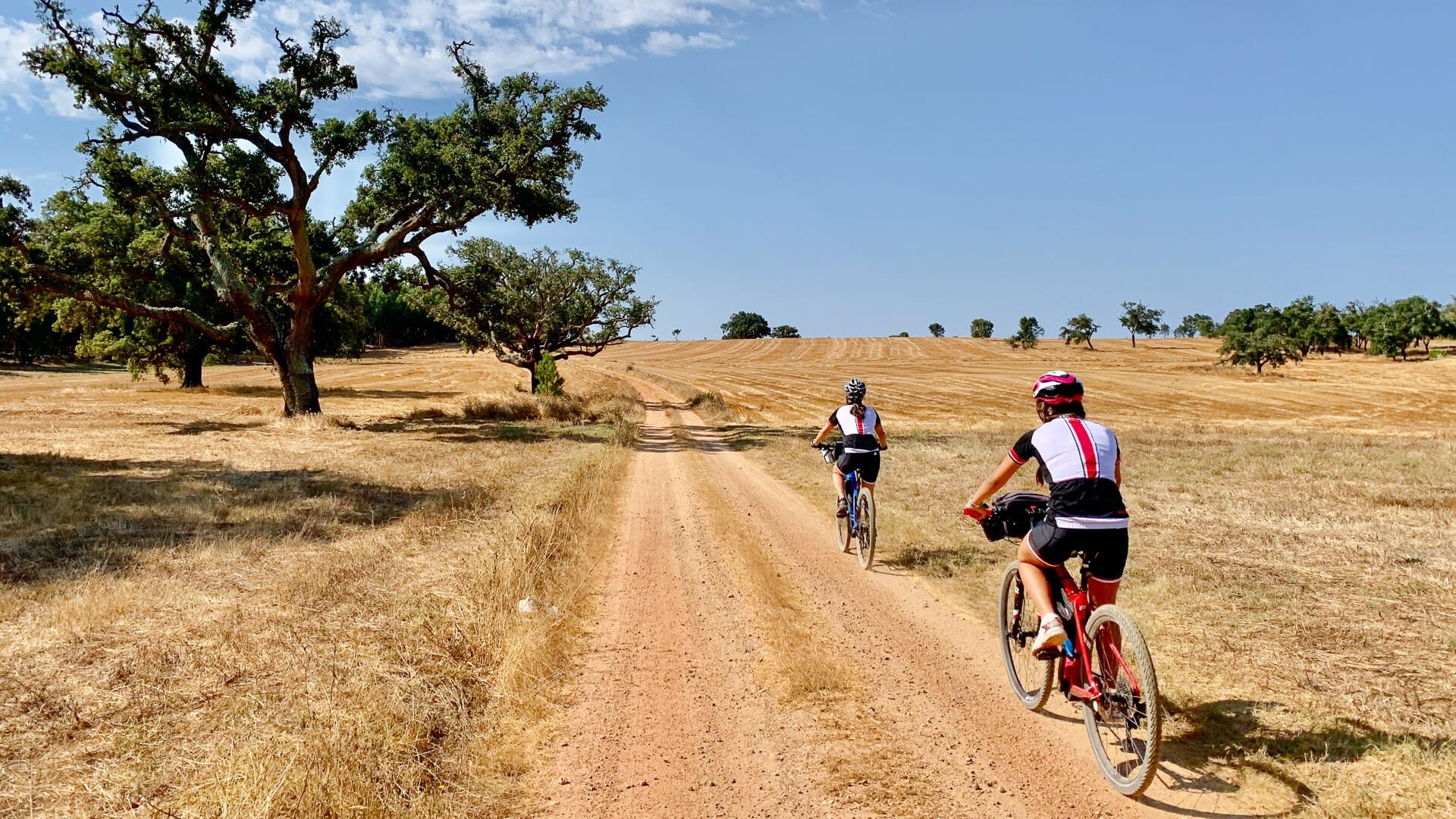

Self-guided bike tours in Portugal might just be the best way to truly experience the huge amount of variety and rich culture this country has to offer.
Whether you’re looking for relaxed coastal vibes, challenging mountain climbs or an off-road adventure, Portugal has it all! Cyclists can enjoy meandering along the Atlantic coast, tackling the climbs (and sampling the local produce) of the Douro Valley and cruising along smooth gravel in Alentejo. Or if you want a real adventure, you can head to the limestone massifs of Serra de Aire e Candeeiros Natural Park, where you’ll find thrilling terrain for mountain biking!
When you choose a self-guided bike tour in Portugal, you’ve got the freedom to explore at your own pace and immerse yourself in the landscapes and local culture. But with such variety depending on the region and the routes you visit, knowing where to start when it comes to planning your self-guided cycling trip in Portugal might feel tricky.
In this article, we hear from António Gavinho, the Founder and Chief Adventure Creator of Portugal Nature Trails. António is a lifelong cyclist and an experienced cycling guide who spends much of his spare time exploring Portugal on two wheels, using his own experiences to plan tours for visiting cyclists. Below, he shares his expert tips and local expertise to help you plan the best self-guided bike tour in Portugal!
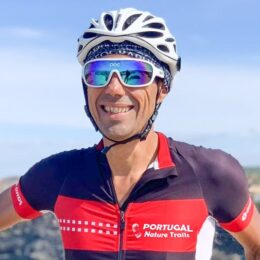
António Gavinho is the Founder and Chief Adventure Creator of Portugal Nature Trails, an incoming tour operator specializing in self-guided and guided hiking and cycling experiences across Portugal, with a strong emphasis on cultural and culinary immersion.
Born in Lisbon in 1968, António spent almost twenty years working in management before choosing to realign his professional life with his long-held passion. Travel, sport, and the outdoors have always been central to his identity, particularly cycling and mountain landscapes. In 2005, together with his wife Elsa, he founded Portugal Nature Trails as a way to create journeys shaped by real experience rather than abstract planning.
A lifelong cyclist, António rides almost every day. His riding ranges from long-distance efforts to short exploration loops, from historically driven routes to more technical and adrenaline-focused terrain. Cycling is both his daily practice and his primary way of understanding territory.
In addition to designing self-guided programs, António is also a highly experienced guide on multi-day guided tours. One of the most emblematic is the Bike Madrid–Lisbon journey, where his deep knowledge of route flow, logistics, and cross-border riding comes together with a strong ability to read the group and the terrain.
Even in his free time, the bike remains central. When travelling, António often chooses to travel to destinations by bike, sometimes combining long rides with visits to family and friends. His philosophy is simple. Ride the route, understand the place, and only then design an experience worth sharing.

We love to introduce our community to cycling businesses, destinations and ideas that we think are genuinely interesting. Portugal Nature Trails caught our attention because of its focus on cycling in Portugal, which felt like a natural fit for Epic Road Rides and our readers. We were therefore pleased to work with the Portugal Nature Trails team on this article.
Portugal Nature Trails paid for this advertisement feature. Our decision to collaborate reflects our view that the brand is relevant to our readers; it is not a formal approval, audit or guarantee of its services. Unless we expressly say otherwise, we have not personally taken the trip described or independently verified information supplied by Portugal Nature Trails.
As with any travel purchase, please check the latest trip details, terms and customer protections directly with Portugal Nature Trails before booking. Any booking is made with Portugal Nature Trails, not Epic Road Rides.
To get a feel for what self-guided bike tours in Portugal are like, take a look at this short video:
 There's a Youtube video here!
I'm fine with Youtube cookies
Table of contents
- Part 1: Why visit?
- Part 2: Five top self-guided bike tours in Portugal
- Part 3: Practicalities
- Part 4: Tips
- Part 5: Portugal Nature Trails
Sponsor Message
Considering a self-guided bike tour in Portugal?
Portugal Nature Trails has been running cycling holidays in Portugal since 2004.
They offer a range of guided and self-guided bike tours across the country that take care of all the logistics, including accommodation, cycling routes, and bike hire.
Interested? Head to the Portugal Nature Trails website for further details.
Got a question for António Gavinho from Portugal Nature Trails?
Fill out this form and we will pass it to Portugal Nature Trails who aim to reply (within 24 hours wherever they can!)
Part 1: Why consider a self-guided bike tour in Portugal?
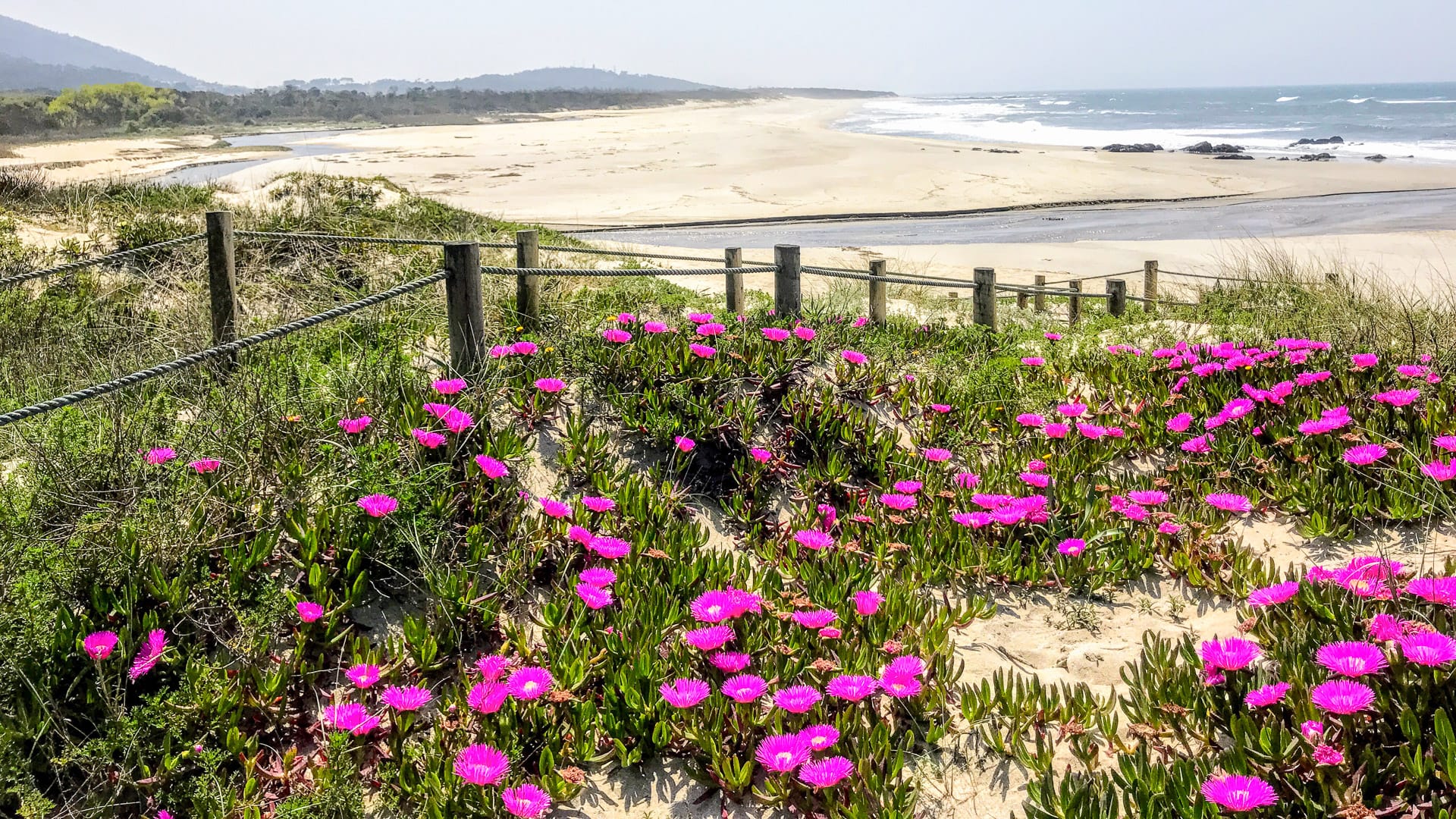
Why is cycling in Portugal a must-do?
Portugal is sometimes overlooked as a cycling destination in Europe. But this small country on the Iberian Peninsula is a bit of a hidden gem for cyclists of all abilities!
Varied terrain
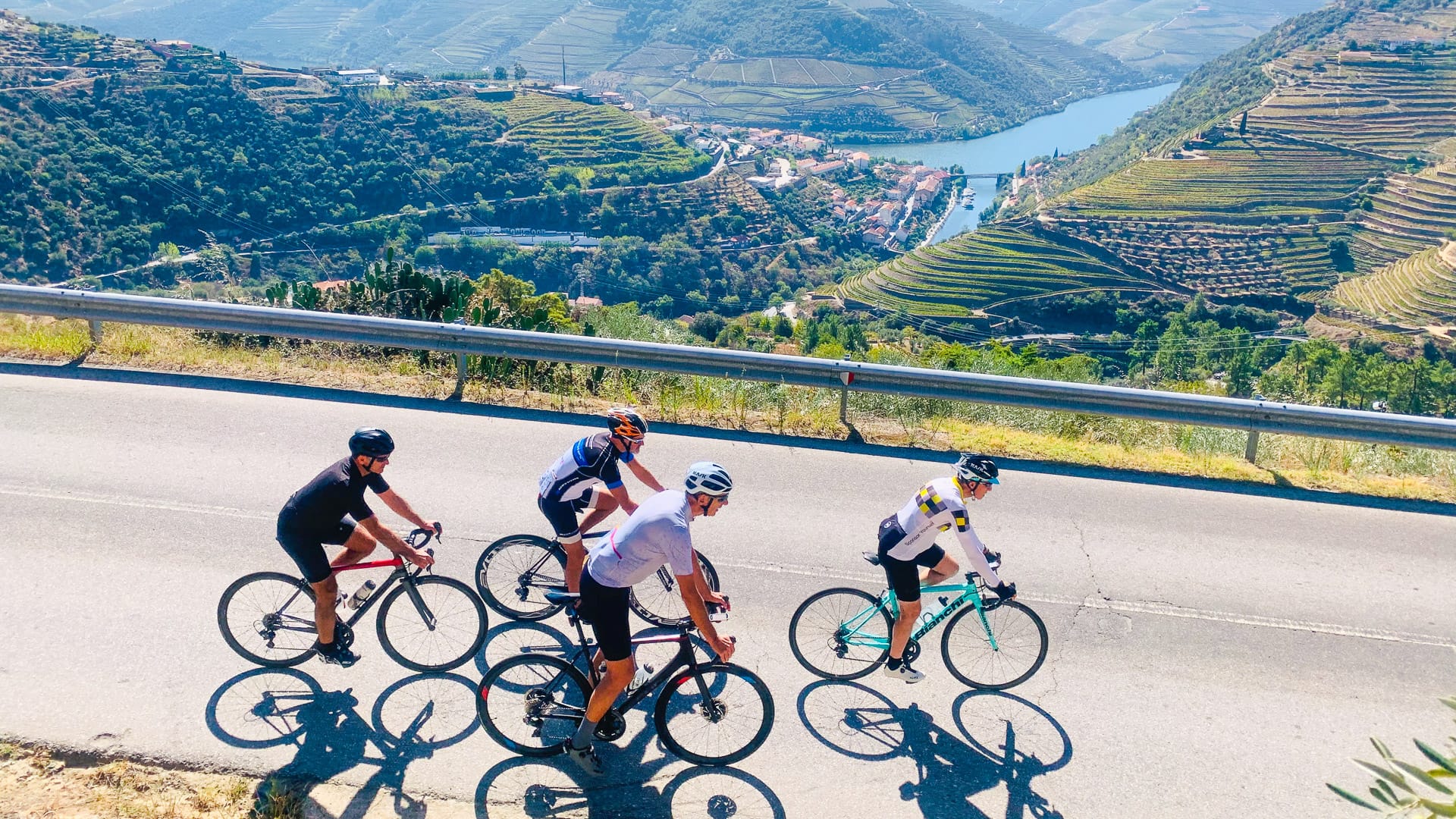
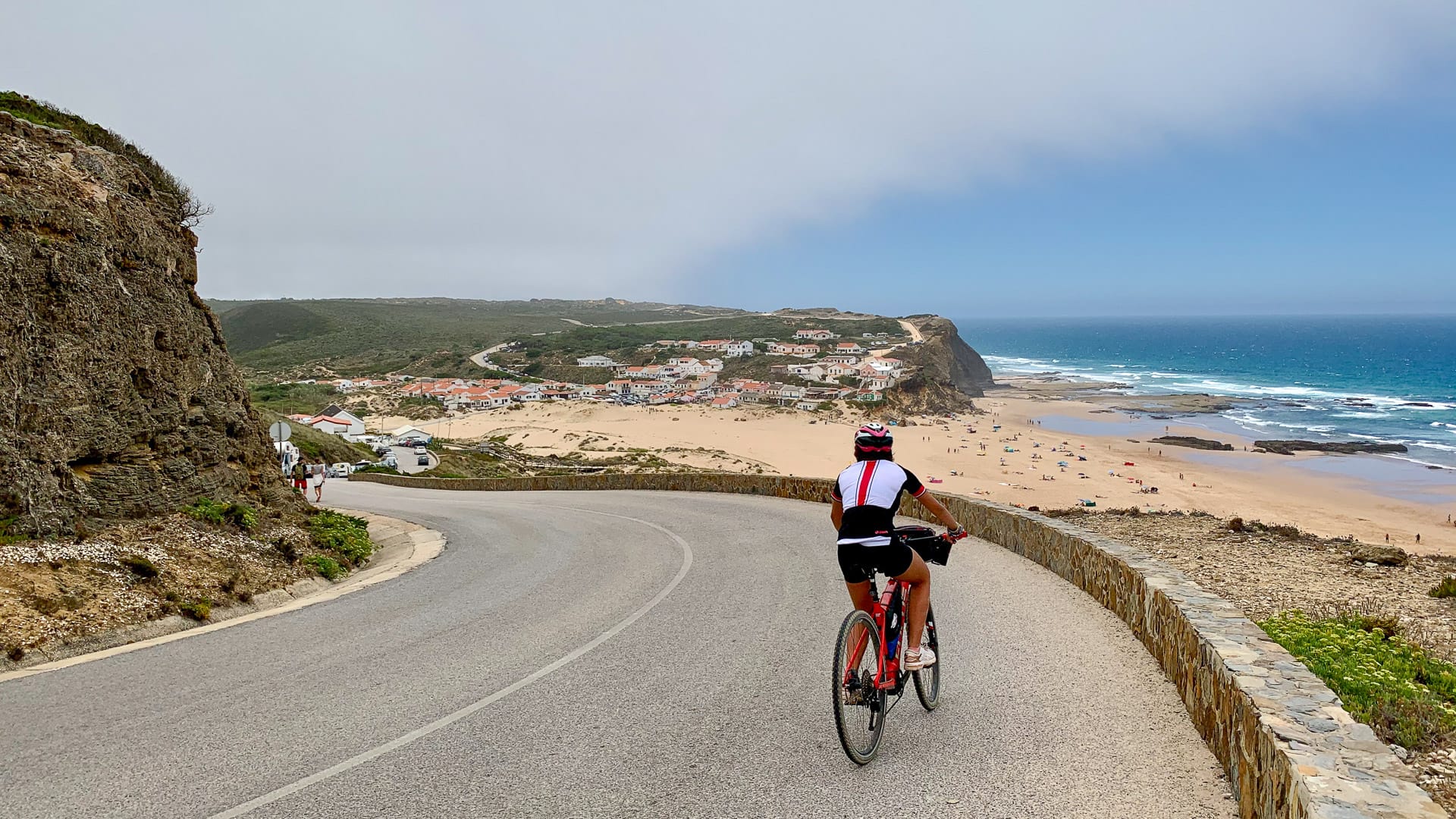
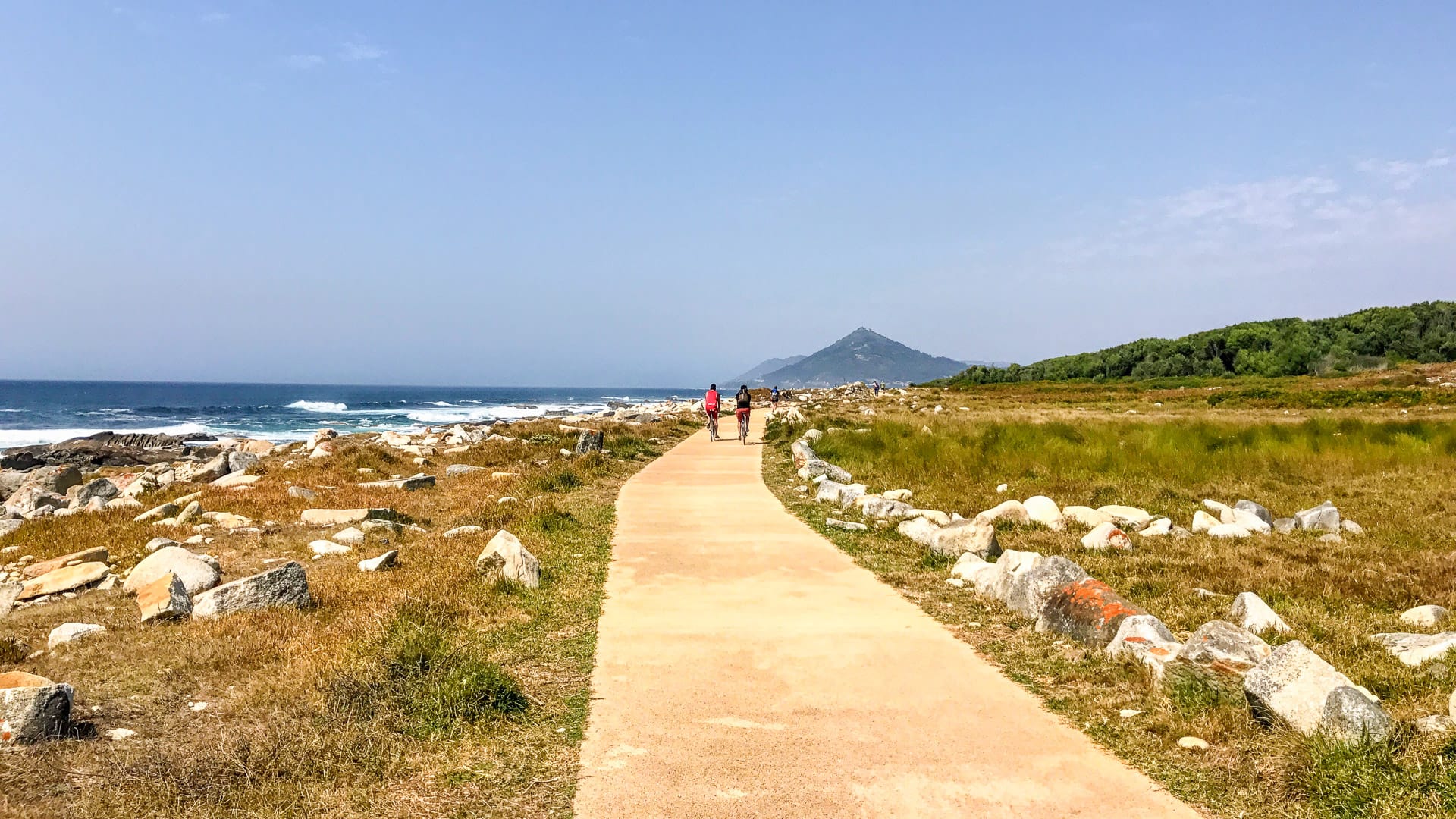
The quiet roads alongside the Atlantic coast offer up sea views and flatter terrain, perfect for those looking for a more relaxed cycling holiday in Portugal. Or head inland to regions such as the Douro Valley, and you’ll be treated to testing climbs, rolling vineyards and towns steeped in culture and history.
Off-road adventures
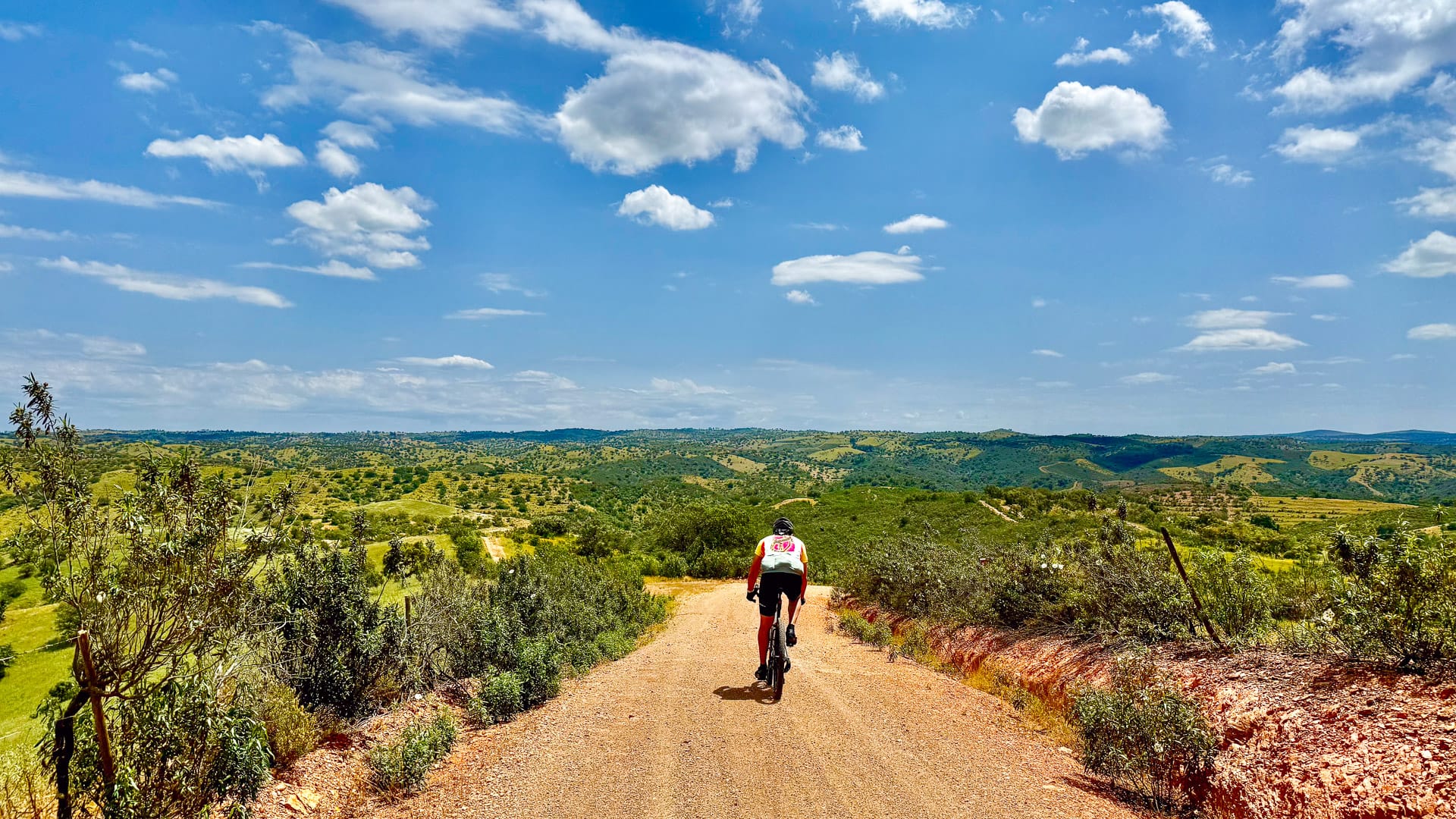
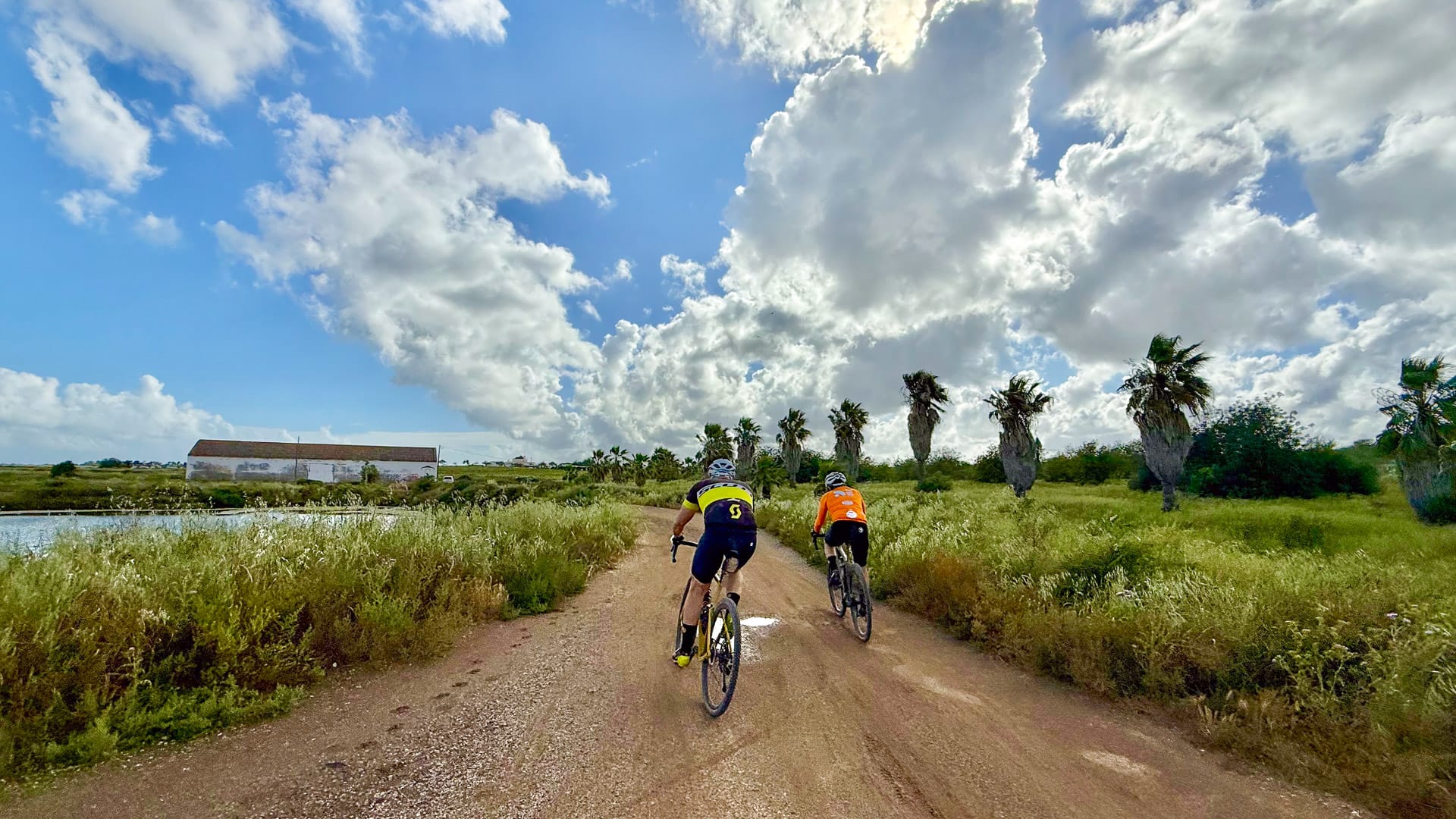
Cycling in Portugal isn’t just for road cyclists either! For gravel cycling, the Alentejo region is a mass of wide-open landscapes and easy-to-ride dirt tracks that let you switch off and enjoy the journey. Meanwhile, central Portugal is a hit with mountain bikers looking for more challenging terrain.
Put simply, cycling through Portugal offers something for every style of rider and a well-planned tour gives those who relish the thought of variety the chance to experience all sorts of terrains without having to cover unattainable distances.
You can find out more about cycling in Portugal in our in-depth insider’s guide, including the best regions, long-distance routes and other practicalities.
Why go on a self-guided bike tour in Portugal?
With so many incredible regions to explore and so much cycling variety on offer, an organised cycling tour can be one of the best ways to truly experience cycling in Portugal to its full potential.
Freedom and flexibility
Choosing a self-guided bike tour gives you the freedom, independence and flexibility to explore this beautiful country at your own pace. There’s no fixed schedule to follow, and none of the pressure that some riders can feel on a structured group cycling tour. You can shape each day according to how you feel and take the time to stop in local towns and connect with local people for a more authentic experience.
Local support
Planning a self-guided cycling holiday in Portugal doesn’t mean you have to be an experienced traveller prepared to go it totally alone, either.
At Portugal Nature Trails, our self-guided bike tours give riders the best of both worlds: you get the freedom and the sense of adventure that comes with cycling through Portugal self-guided, with the confidence that we’re on hand to support with everything from route planning to luggage transfers and other logistics.
Below, you can find my pick of the best self-guided bike tours in Portugal, plus more details on the practicalities for planning your tour and my top tips to get the most out of your trip.
Sponsor Message
Considering a self-guided bike tour in Portugal?
Portugal Nature Trails has been running cycling holidays in Portugal since 2004.
They offer a range of guided and self-guided bike tours across the country that take care of all the logistics, including accommodation, cycling routes, and bike hire.
Interested? Head to the Portugal Nature Trails website for further details.
Got a question for António Gavinho from Portugal Nature Trails?
Fill out this form and we will pass it to Portugal Nature Trails who aim to reply (within 24 hours wherever they can!)
Part 2: What are the best self-guided bike tours in Portugal?
There are so many options when it comes to planning a self-guided bike tour in Portugal. Below you’ll find my pick of the top five self-guided bike tours we offer at Portugal Nature Trails.
1. Douro Valley by Bike
Best for: cyclists seeking challenging climbs (and wine lovers!)
Key statistics
- 232 kilometres (Approx. 17-55 kilometres each day)
- +3.900 metres total elevation gain (approx. +400 to +900 metres per day)
- 8 days and 7 nights
Start/ finish
Vidago to Peso da Régua, northern Portugal
Terrain
Mountainous
Surfaces
Road
Level of challenge
The Douro Valley region is mountainous, and each day will involve sustained climbs with notable elevation gain. Therefore, a good level of cycling fitness is required, alongside confidence for climbing and descending.
Later in the tour, you can choose between longer and shorter routes each day, depending on how you’re feeling. For example, between Pinhão and Peso da Régua, you can either ride 46 kilometres by starting in Pinhão or take a short (and scenic) train ride to start in Covelinhas and reduce the distance to 26 kilometres.
Overview
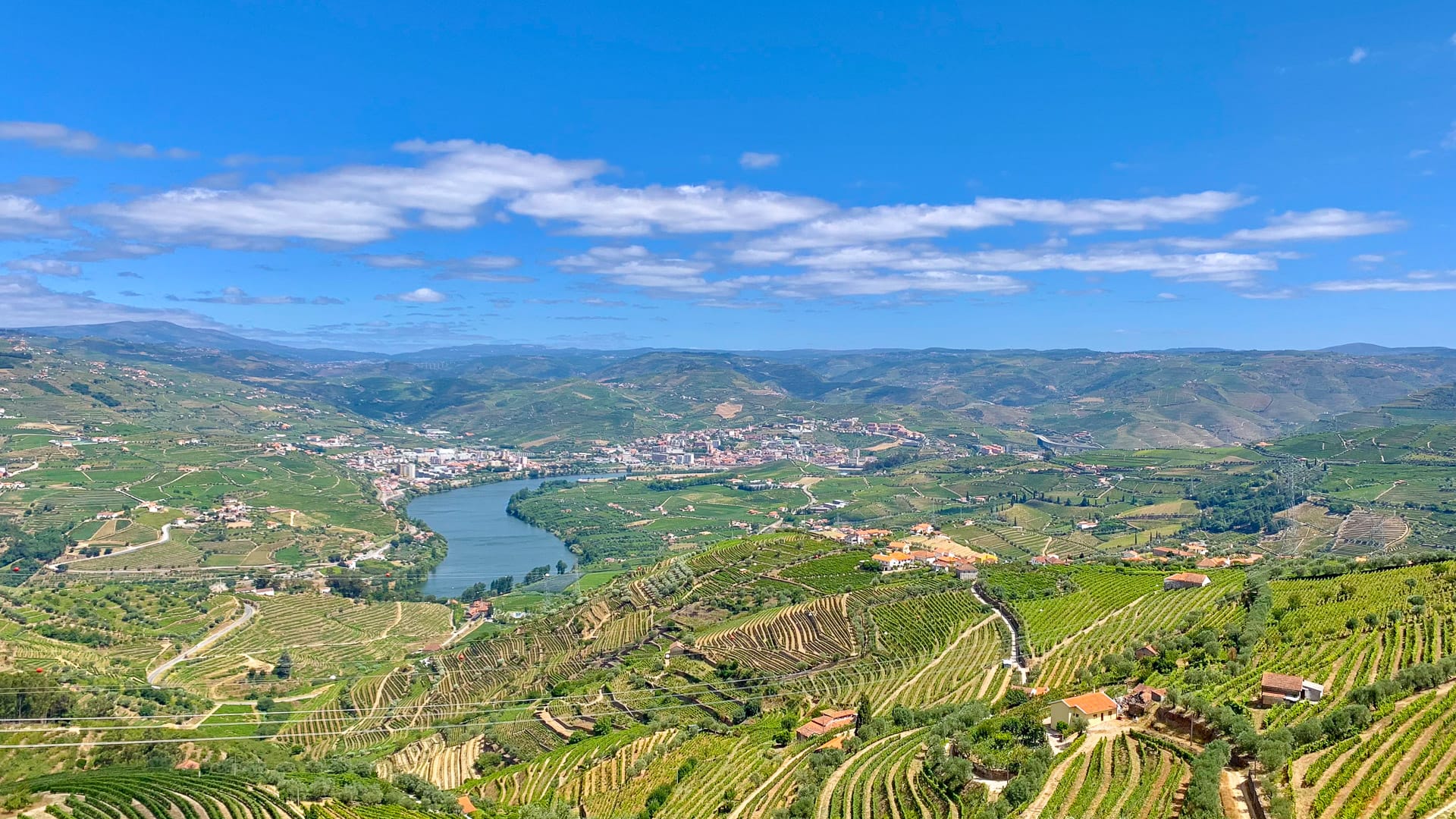
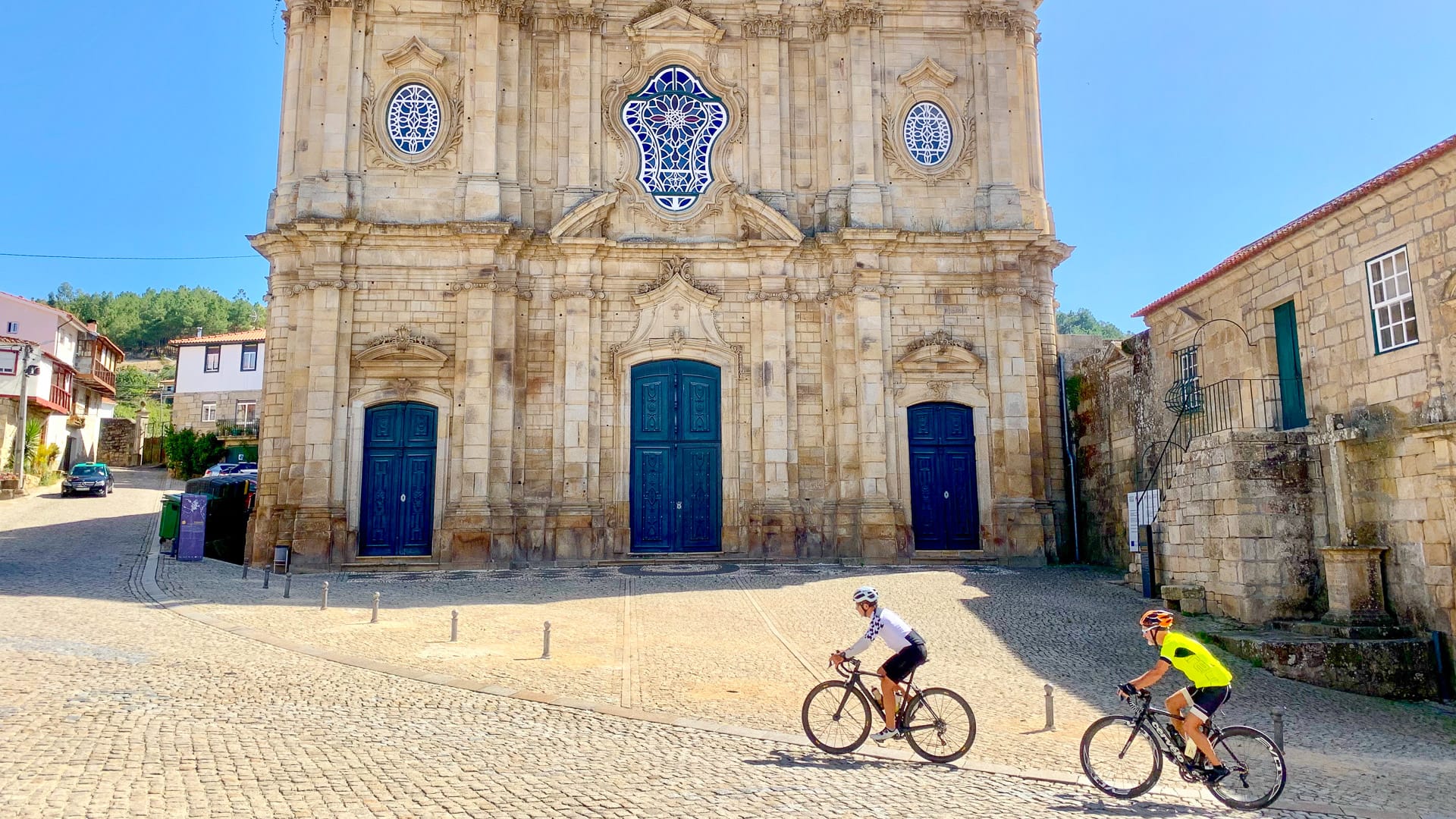
Head away from the coastline in northern Portugal, and you’ll find the mountainous landscape of the UNESCO-recognised Douro Valley. Known as one of Europe’s most iconic wine regions, this bike tour is a great option for those looking to take on some challenging climbs and experience some amazing road cycling in Portugal!
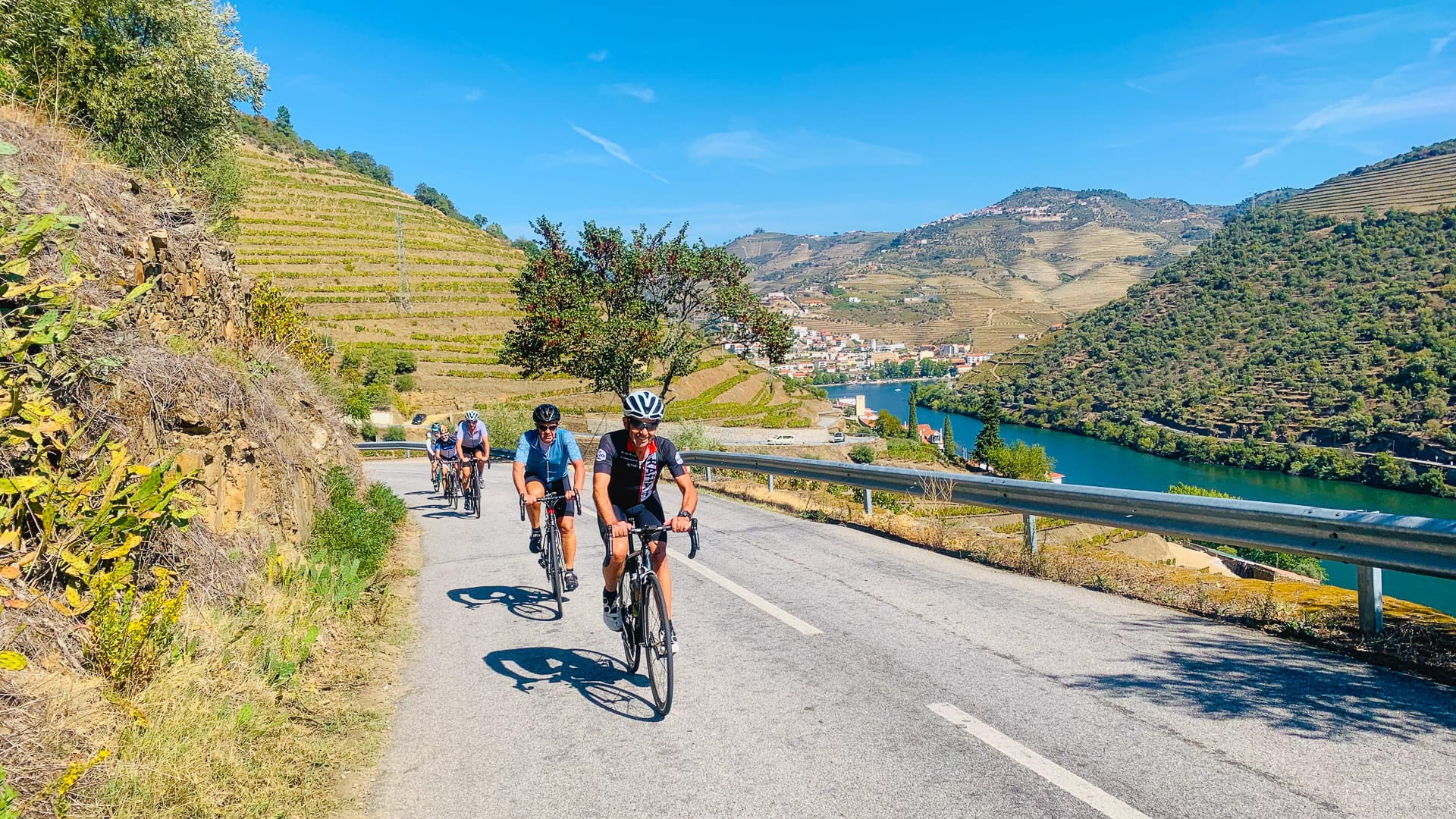
After arriving in Porto, you’ll transfer to the historic spa town of Vidago. As your adventure begins, you’ll pass through Vila Real before winding into the heart of the Douro Valley. Here, the roads wind continuously through the hills, following the contours of the valleys. The endless elevation might feel challenging, but the reward is captivating views and quiet roads.
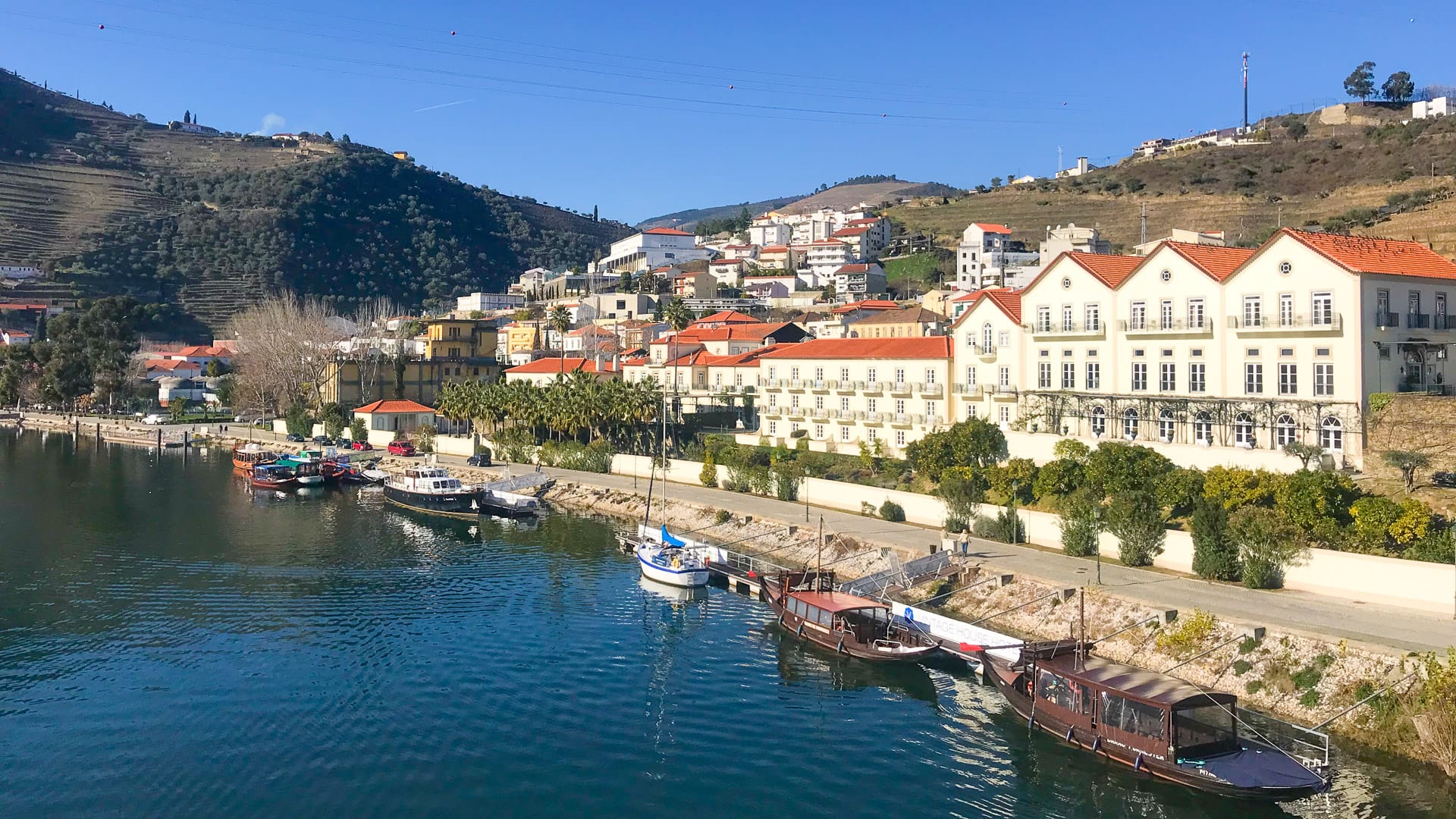
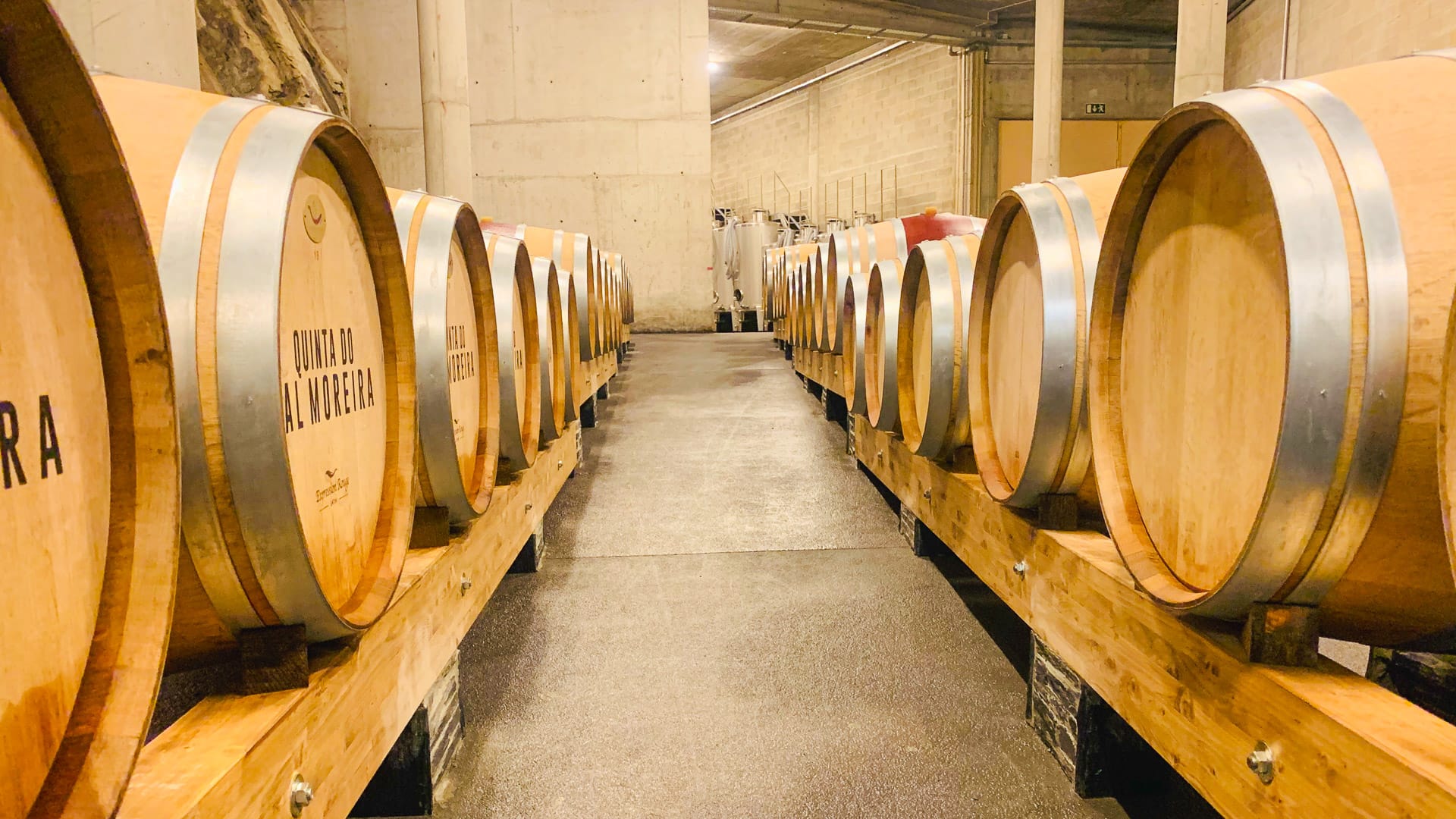
For wine lovers, there’ll be plenty of opportunity to sample the produce of the valleys you’ve been riding through. The Douro Valley itself is a great spot for a rest day, so you can take your time to enjoy the local food and wine. And you’ll also explore wine towns such as Vilarinho along the way before you finish your tour in Peso da Régua.
While this is one of our more challenging self-guided Portugal bike tours, there’s always flexibility to shorten or extend stages without missing out on the highlights of the tour.
Highlights
Challenging but enjoyable climbs
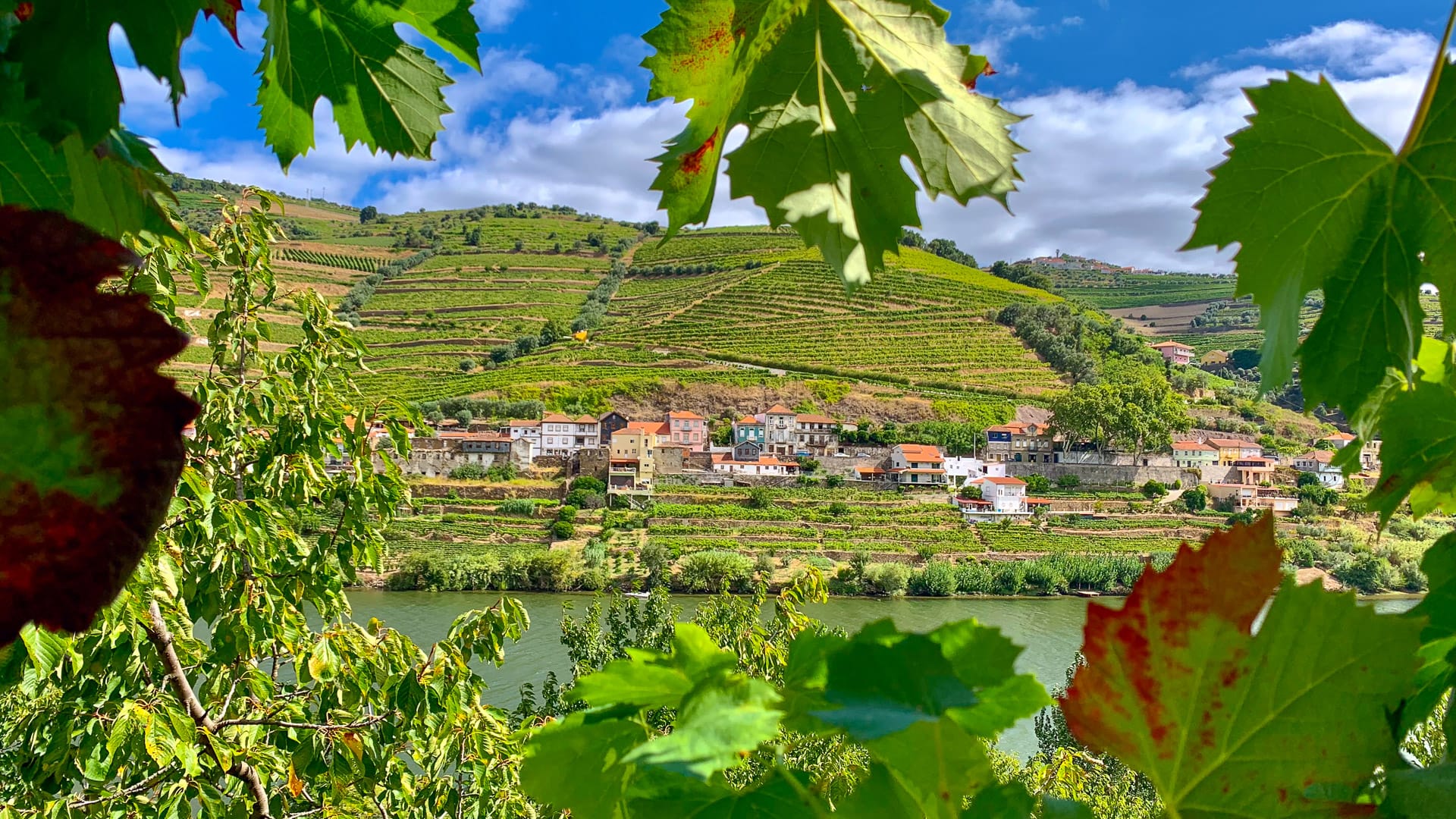
Climbers will love this Portugal bike tour! The Douro Valley is a great destination for road cyclists who want to experience challenging climbs on quiet, winding mountain roads. The landscape is shaped by steep vineyard terraces, with far-reaching views over the river. It’s the perfect balance of demand versus reward.
Iconic wine region
Alongside the epic climbs, the Douro Valley is also one of Portugal’s most distinctive and internationally recognised wine regions. This is where Port wine is produced, and wine experiences can be woven into your journey… once you’re off the bike, of course! The route passes close to several estates, cellars and small producers, so there are frequent opportunities for wine tastings at the end of a ride.
More information
If the ultimate combination of wine and cycling in a beautiful region of Portugal sounds appealing, find out more about Portugal Nature Trail’s eight day self-guided bike tour through the Douro Valley on the website.
2. Gravel Alentejo and Algarve Villages
Best for: Gravel cycling in Portugal
Key statistics
- 382 kilometres (Approx. 50-85 kilometres each day)
- +3.500 metres total elevation gain (approx. +400 to +900 metres per day)
- 8 days and 7 nights
Start/ finish
Évora to Tavira, southern Portugal
Terrain
Moderately hilly
Surfaces
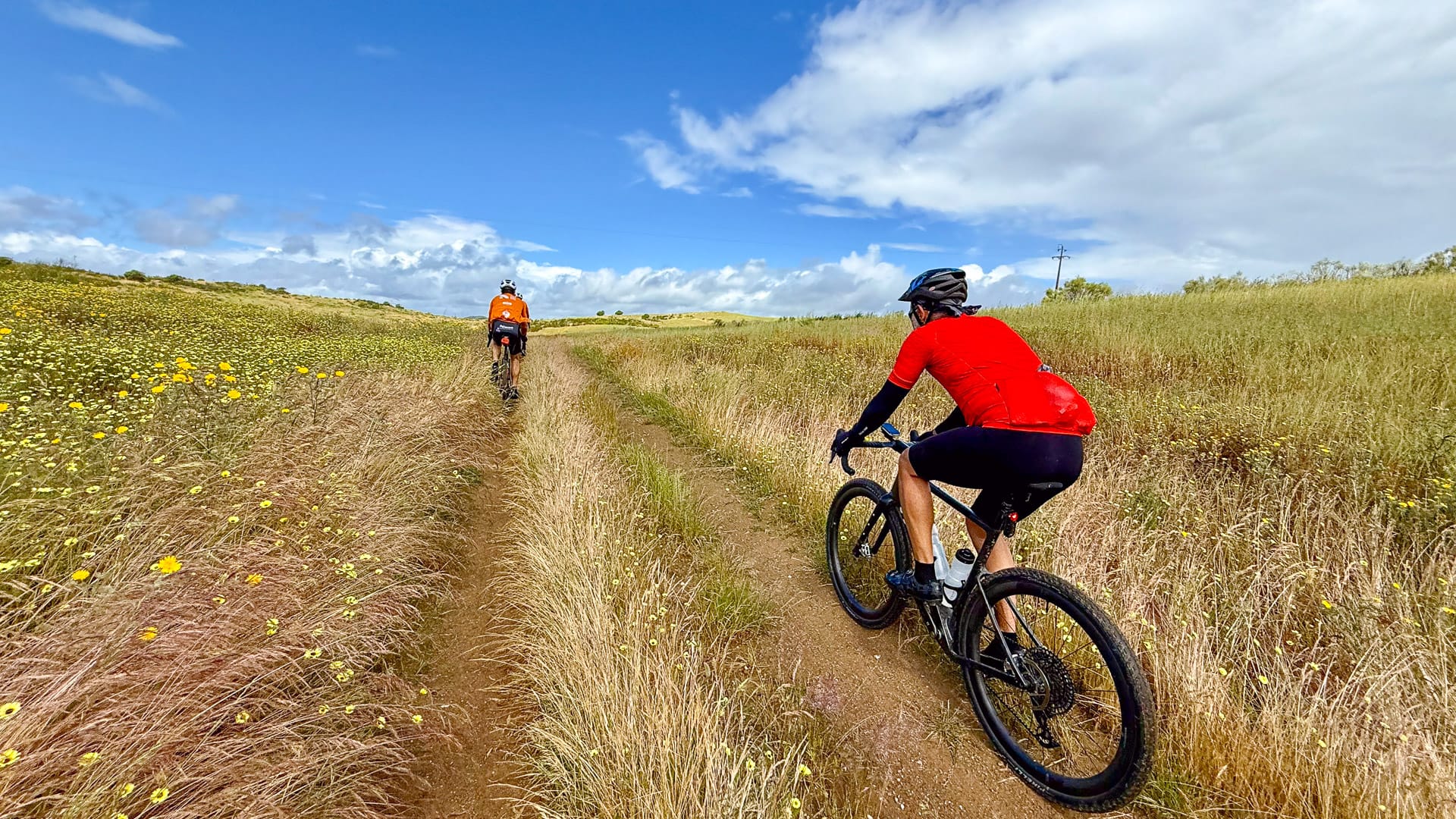
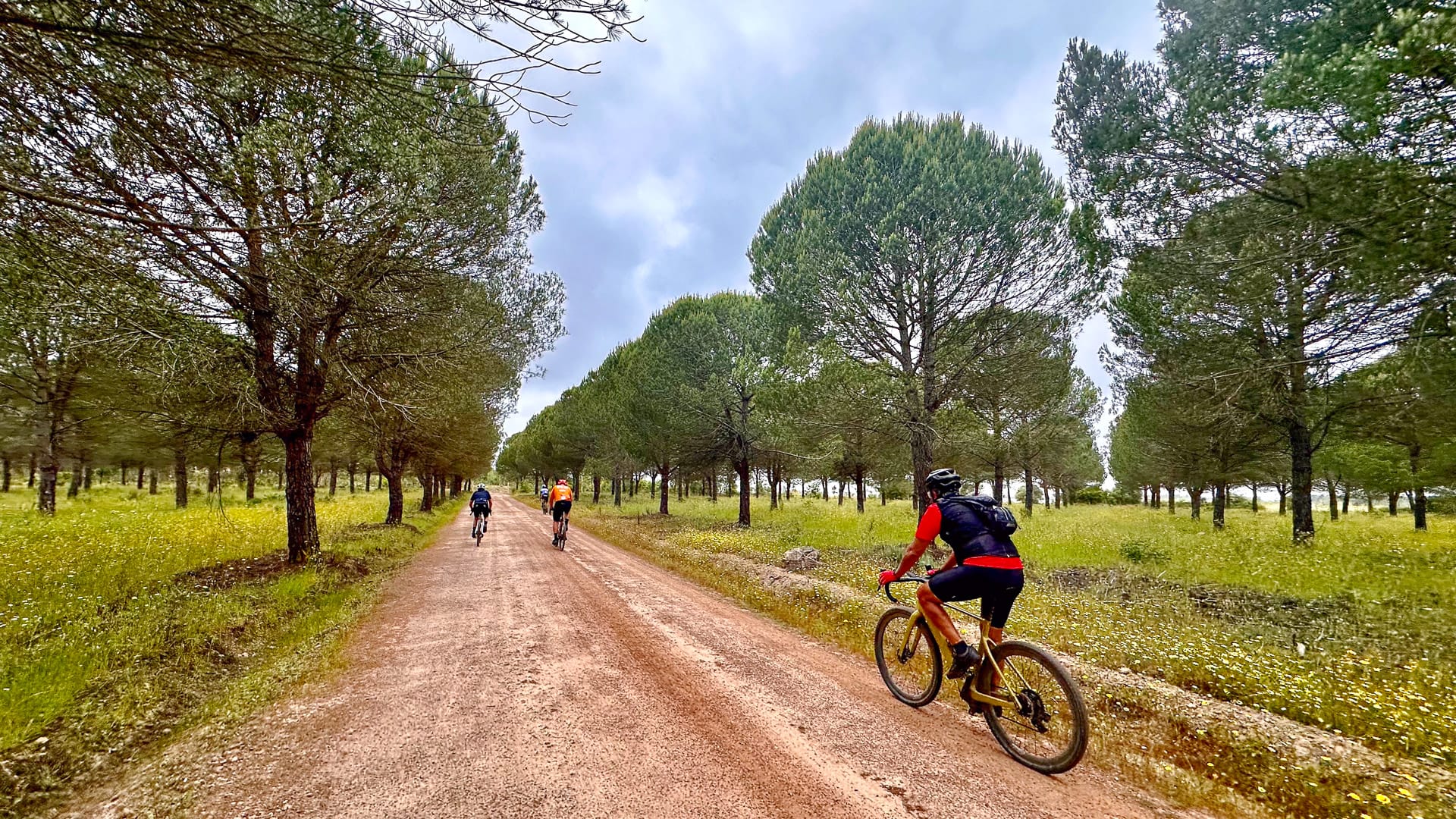
A variety of gravel routes, including dirt tracks, grassy paths, and forested trails
Level of challenge
This tour is moderately hilly, with a mixture of smooth asphalt, hard-pack dirt and loose gravel. It’s best suited to riders who are comfortable riding on a mixture of terrain and have a good level of endurance.
The route is generally quiet, which, alongside the mild and stable weather of southern Portugal, makes for several enjoyable days of riding!
Be aware! This route is best suited to gravel bikes due to the mixed terrain.
Overview
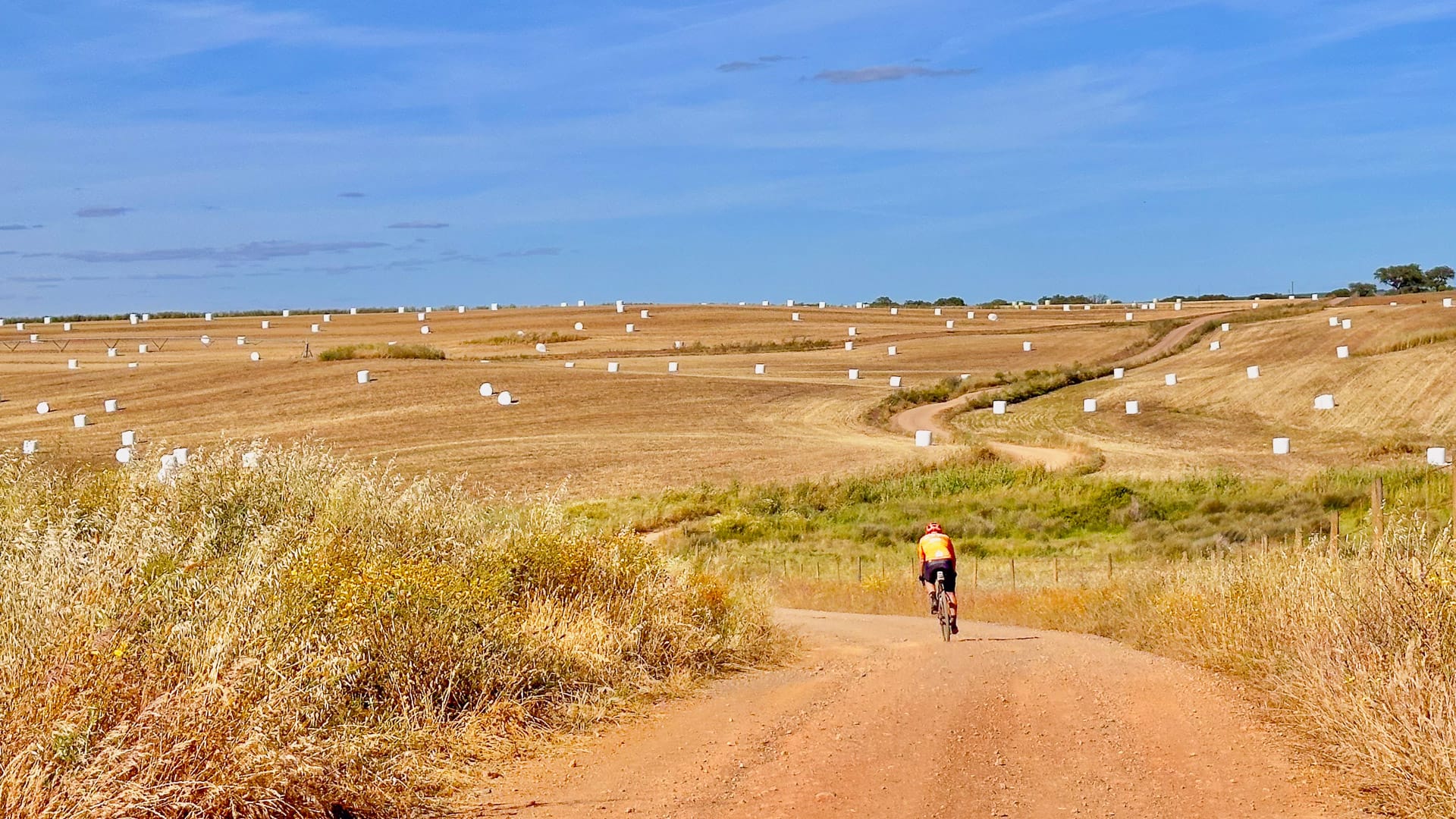
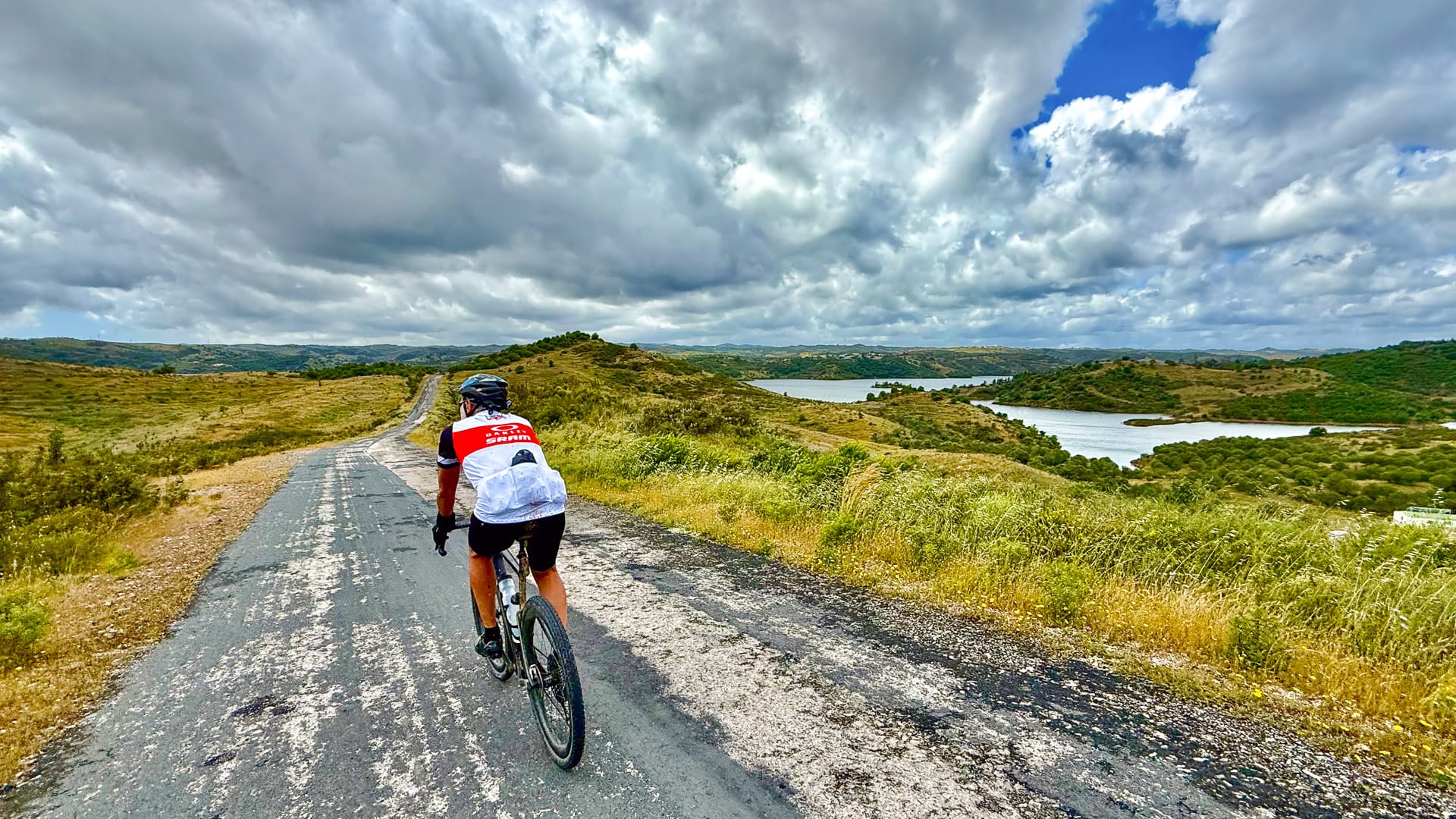
Alentejo and Algarve Villages are the ideal self-guided Portugal bike tour for riders who want to experience the essence of gravel cycling in Portugal. Get ready for long days in the saddle, with quiet tracks, varied riding surfaces and the sense of freedom that comes with riding through one of the most remote and untouched regions of Portugal!
The tour begins in the UNESCO World Heritage city of Évora before heading south into the vast golden plains, rolling forests and sweeping farmland of Alentejo. The open landscape is punctuated with small towns, such as Beja and Mértola – each bringing a unique flavour and a sense of history. Follow the thread of the Guadiana River before you transition into the Algarve.
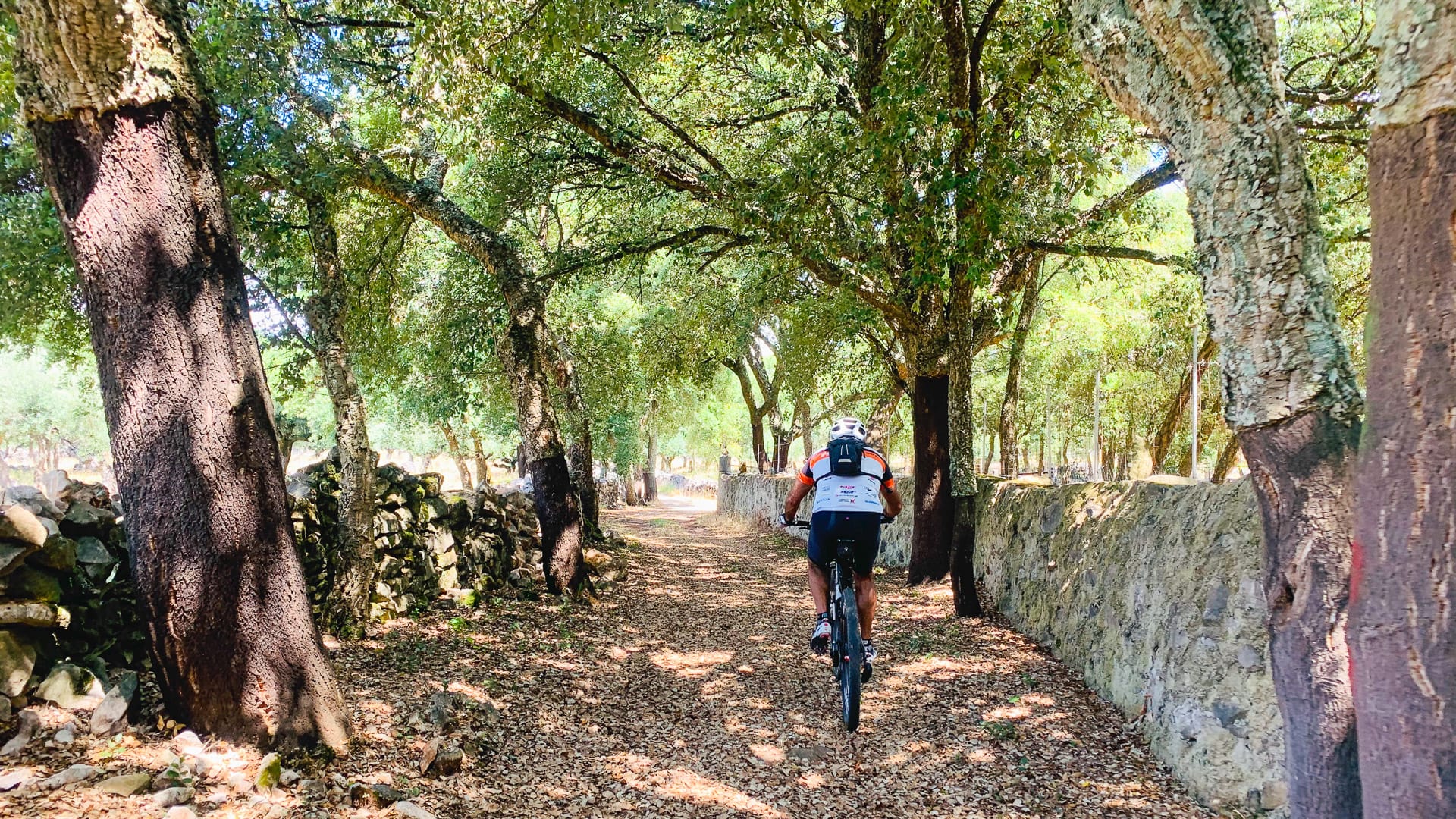
As you move south, the landscape begins to change noticeably in light, colours and atmosphere. The vast open plains of Alentejo gradually give way to a more rugged and mountainous landscape along the border between the two regions, where quiet roads and gravel tracks wind through rolling hills, cork forests and remote villages. Further south, the scenery becomes greener and more Mediterranean in character, with citrus orchards, warmer light and the subtle influence of the nearby Atlantic.
Your adventure finishes near the Ria Formosa, a protected coastal lagoon known for its biodiversity, calm waters, and wide-open skies. Ending in Tavira brings the journey to a relaxed and refined close, close to the sea but far from the typical coastal crowds.
This bike tour offers up gravel riding at its finest!
Highlights
Every gravel tour has something special about it. The dust on your legs, tired muscles at the end of the day, and the quiet satisfaction of covering real ground are all part of the appeal. This route elevates that feeling by taking place in one of the most remote and least populated regions of Portugal. Here are a few of the top highlights to look forward to!
A true road less ridden adventure
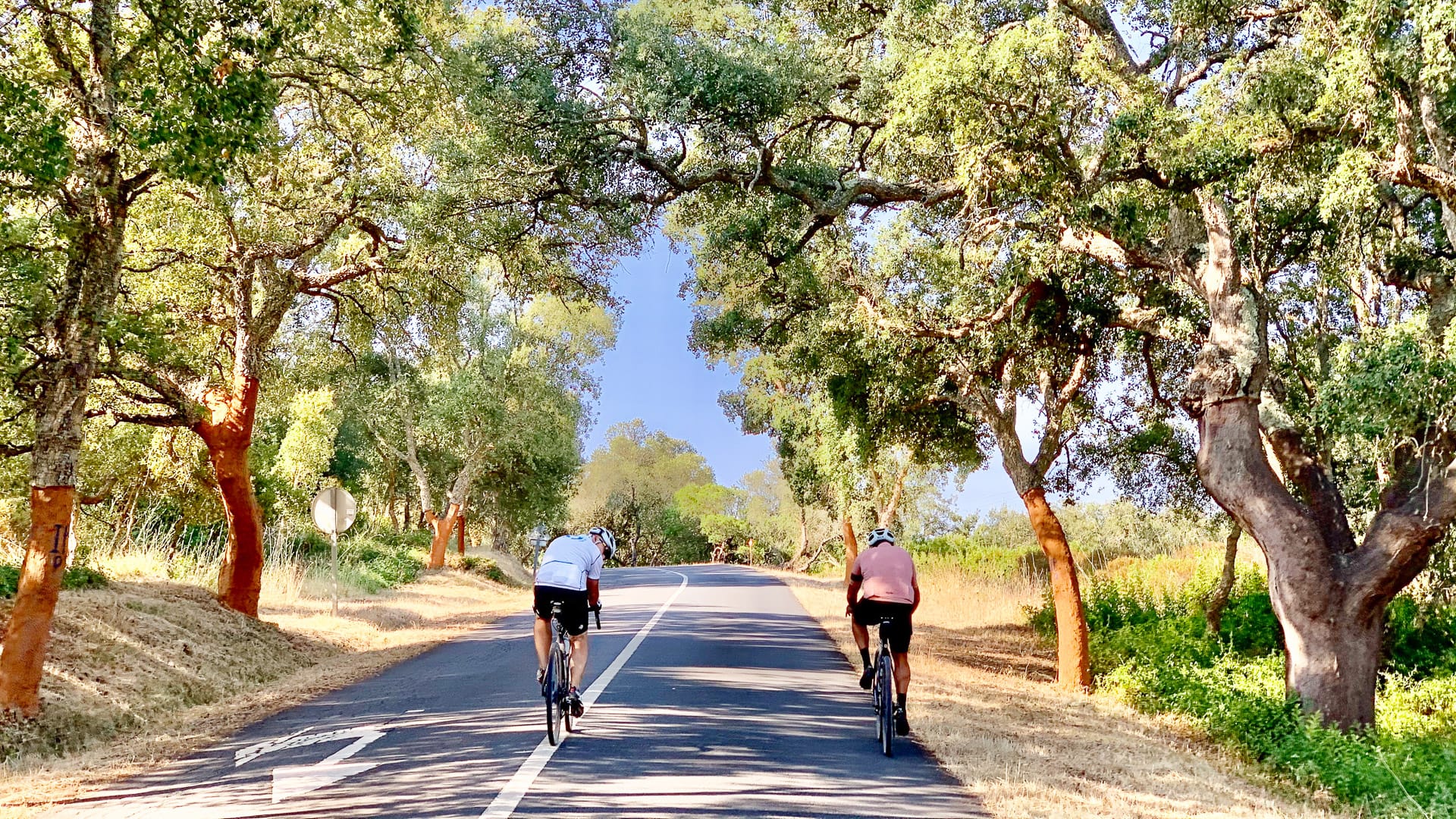
This gravel cycling tour in Portugal gives you a chance to head off the beaten track and experience the country from a new perspective. You’ll cross wide, golden plains, ride through cork oak forests and tick off the kilometres on long stretches of quiet roads where you can truly get into a rhythm. It’s common to cycle for hours without passing through any villages or settlements. It’s a real chance for escapism and to connect with the raw, uninterrupted landscape.
Top tip! Keep an eye out for rare wildlife, including the Iberian lynx – a powerful symbol of the region’s wild nature.
Historical towns and cities
While much of your time will be spent riding uninterrupted through nature, this route passes through historical towns. Take your time to explore Beja, Serpa and Mértola. Each has its own architecture, traditions and local flavour to enjoy!
The following towns offer particularly worthwhile stops:
- Beja: Visit the imposing Castle of Beja, whose medieval keep offers panoramic views over the surrounding Alentejo plains and the historic town below.
- Serpa: Explore the Castle of Serpa and its well-preserved walls overlooking the countryside. In town, visit the Clock Museum, the only museum of its kind in the Iberian Peninsula, or stop by the Casa do Cante, where you can learn about and listen to the traditional Cante Alentejano, which is recognised by UNESCO as Intangible Cultural Heritage.
- Mertola: Set dramatically above the Guadiana River, Mértola is rich in history. Key places to visit include the Church of Nossa Senhora da Anunciação (the former mosque), the Castle of Mértola, the archaeological remains of the Alcáçova, as well as the town’s historic Clock Tower.
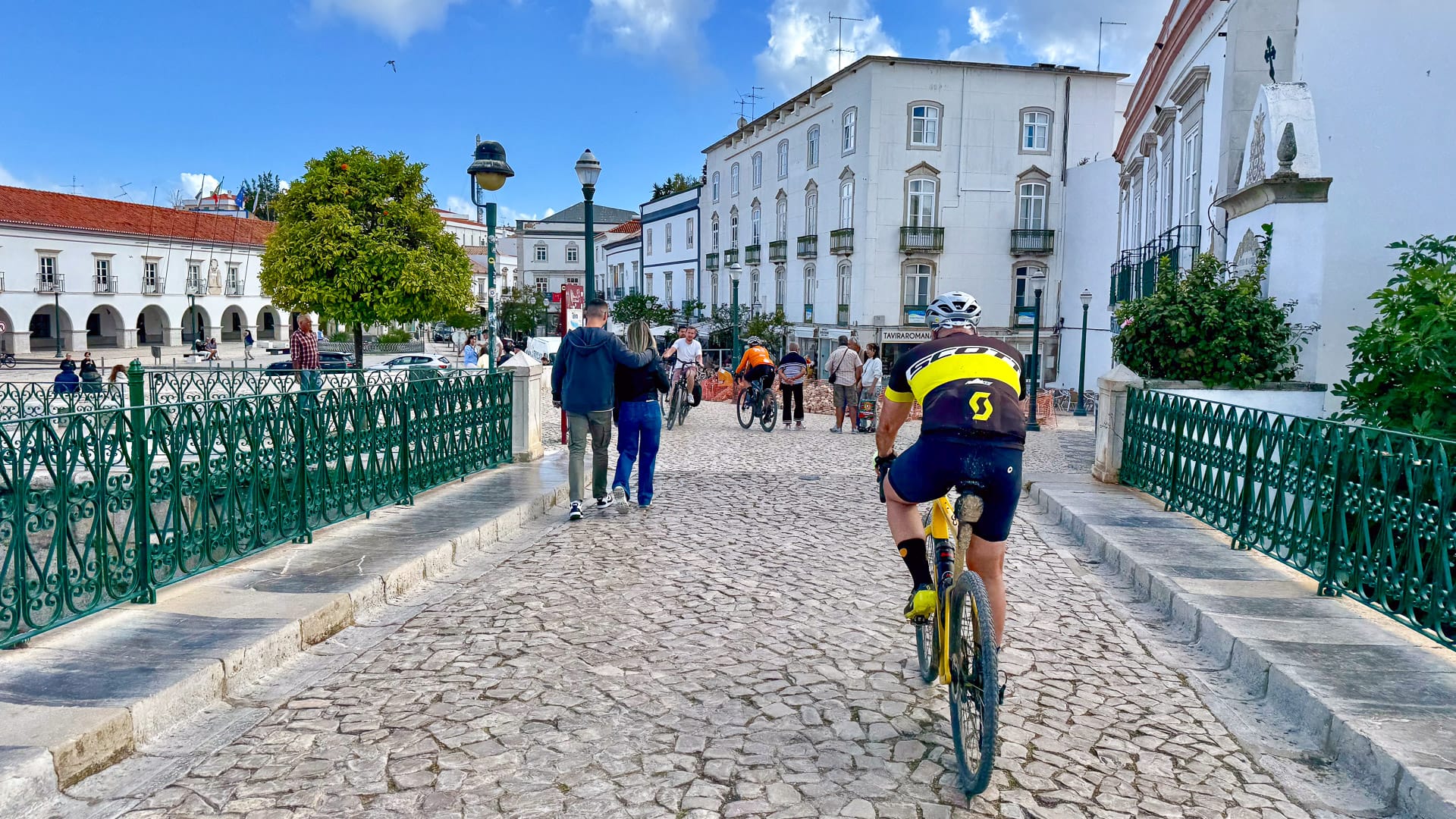
- Tavira: One of the Algarve’s most beautiful towns, Tavira offers several highlights, including the Roman Bridge, the lively Praça da República, the Castle of Tavira, and the Convent of Nossa Senhora da Graça. Nearby, visitors can explore the salt pans and barrier islands of Tavira, part of the protected Ria Formosa Natural Park.
More information
If you’re interested in a gravel cycling tour in Portugal, you’ll love our eight-day Alentejo and Algarve self-guided bike tour for gravel riders!
3. Portugal Wild Coast
Best for: cycling along one of Europe’s most impressive coastlines
Key statistics
- 239 kilometres (Approx. 40-55 kilometres each day)
- +1.900 metres total elevation gain (approx. +300 to +600 metres per day)
- 7 days and 6 nights
Start/ finish
Vale das Éguas to Sagres, south-west Portugal
Terrain
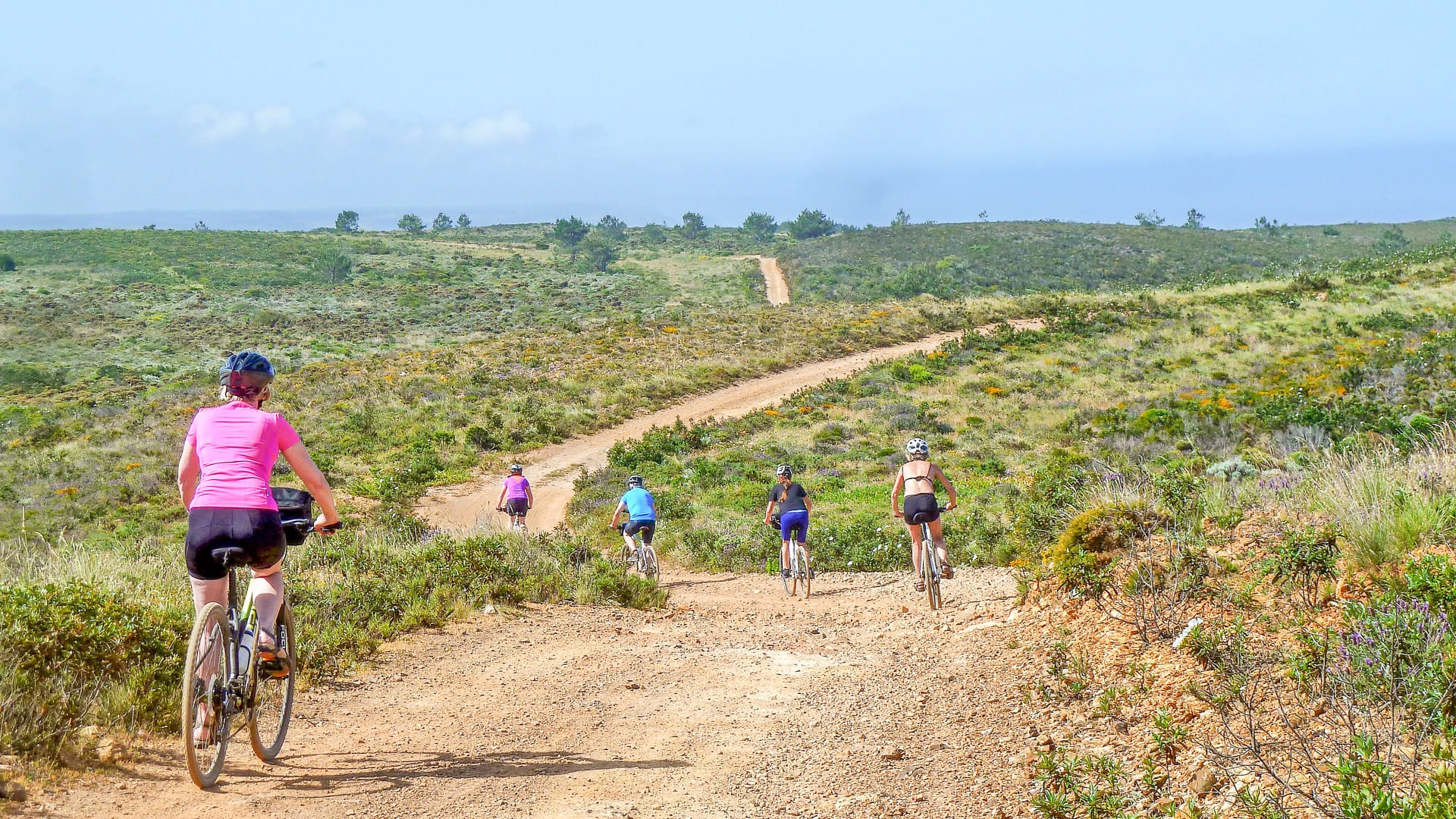
The route mainly follows quiet secondary roads and dirt tracks, with no dedicated cycle paths. The earlier stages tend to include more paved sections, while the later stages feature a higher proportion of off-road riding. Riders will encounter a mix of compact dirt roads, rural tracks and occasional sandy trails, particularly closer to the coast.
The terrain is generally rolling rather than mountainous. There are several short and sometimes steep climbs when leaving the small valleys that cut through the coastline, but overall, the tour does not involve significant elevation gain.
Surfaces
50% asphalt, 50% gravel (option to adapt to a fully paved version)
Level of challenge
The Portugal Wild Coast bike tour route is slightly more challenging compared to the Porto and Green Coast route. Overall, the route is relatively flat, but there are some climbs which are fairly short but can be quite steep. This tour is best suited to riders with a good level of endurance and some experience of consecutive days in the saddle. However, the stages can be shortened for less experienced cyclists (or extended for those looking to up the difficulty level).
The Wild Coast region is perfect for mixed-surface riding. Half of the route is paved, with the other half a mixture of dirt roads and gravel tracks. A road bike is not suitable for this tour. A gravel bike is recommended, as the route includes several unpaved and occasionally sandy sections. Alternatively, a hybrid can also be used to comfortably handle the mixed terrain. However, the route can be adapted into a fully paved version for pure road cyclists with just a few small adjustments without sacrificing the sense of remoteness or the coastal scenery.
Overview
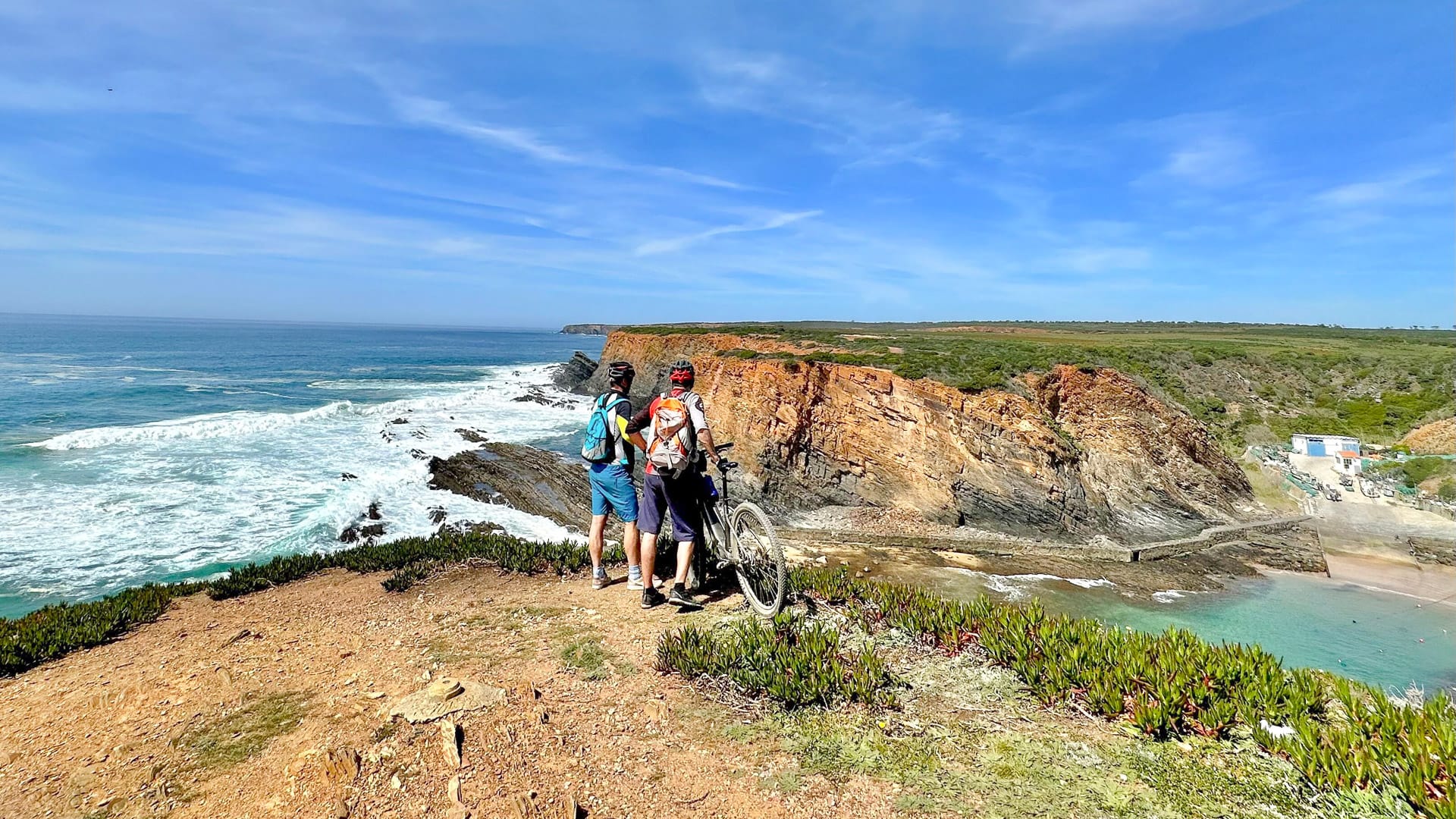
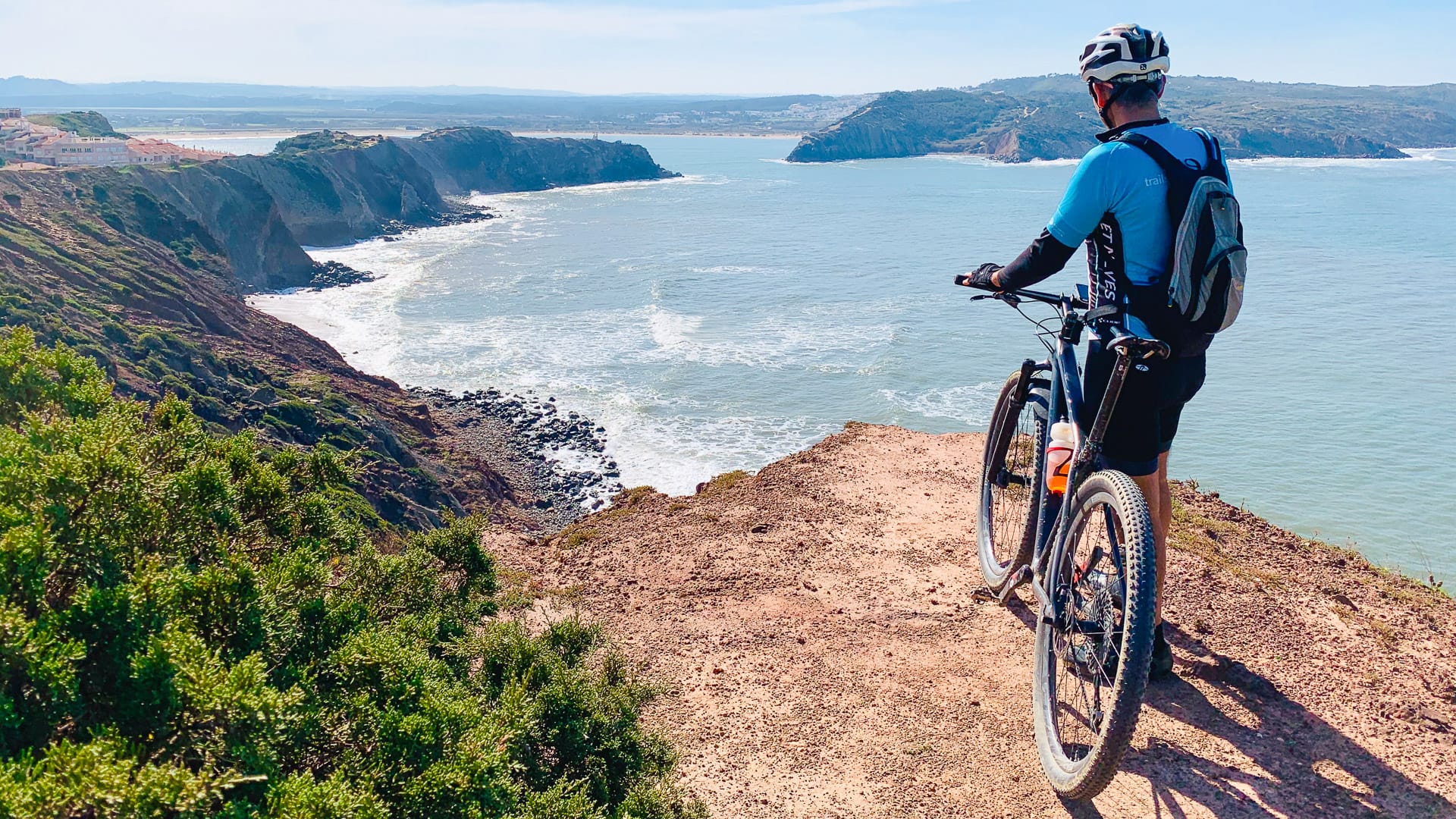
The Portugal Wild Coast is one of Europe’s most impressive and untouched coastal landscapes along the Rota Vicentina. Located within the Southwest Alentejo and Vicentine Coast Natural Park, the dramatic Atlantic cliffs, rich birdlife and traditional fishing villages define the wild beauty of Portugal’s southwest coast.
Starting in Vale des Éguas this route crosses the regions of Alentejo and Vicentina Coast and takes you to Cape São Vicente, the south-westernmost point of Europe, before finishing in Sagres. Expect dramatic cliff faces, all sorts of wildlife in untouched natural habitats and long stretches of deserted beaches, peppered with small fishing villages and abandoned fortresses. This tour is a chance to really immerse yourself in nature and connect with the local landscape!
The route is 50% asphalt, 50% gravel, so it’s a perfect mix of adventure and comfort. But for those who prefer to ride purely on the road, it’s easy to adapt the route to stick to the asphalt. More details below on the terrain and difficulty level of this cycling tour!
Highlights
This bike tour gives you the chance to enjoy one of Portugal’s most remarkable regions. Here are just a few of the highlights you can look forward to along the way!
Vicentina Coast Natural Park
This protected area is considered one of the most important coastal habitats in Europe, with a wide range of landscapes, flora and wildlife. Riders follow dramatic cliff lines overlooking the Atlantic, pass long stretches of wild and often deserted beaches, and move through areas where nature remains largely undisturbed.
Top tip! The region is known for its birdlife, including osprey and white storks that uniquely nest on sea cliffs, a phenomenon found nowhere else in the world. Keep your camera handy!
Cape St Vincent
This headland is the south-western most tip of mainland Europe (source) and played a central role in maritime navigation and exploration. Cape St Vincent was once known as the ‘end of the world’ before the seas beyond were explored. It has a rich cultural and religious history. The rocky plateau offers up awe-inspiring views across the Atlantic Ocean. There’s also a lighthouse and maritime museum you can visit, and in high season a terrace bar.
Be aware! Cape St Vincent has its own unique climate so be prepared for strong winds!
Odeceixe
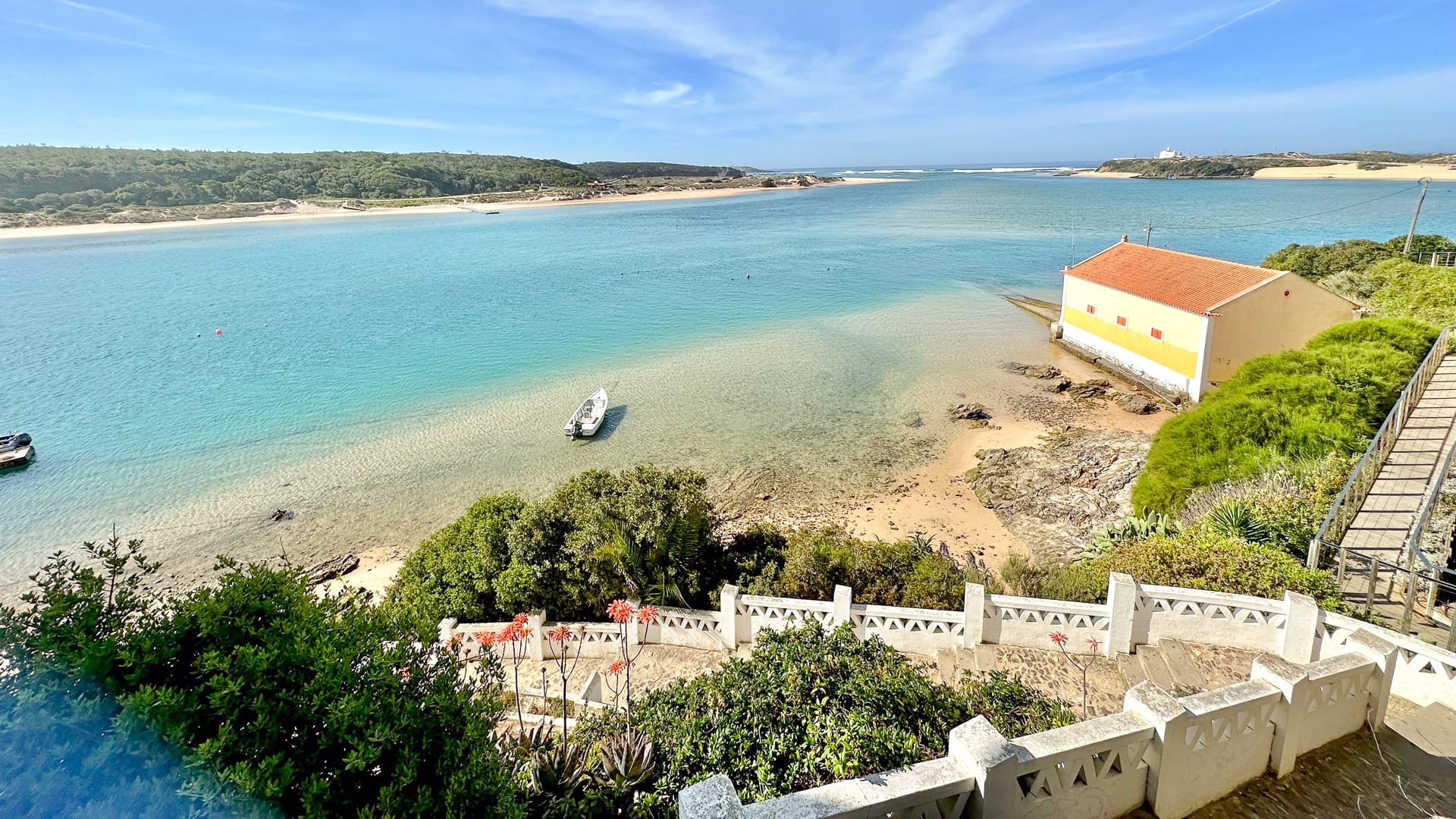
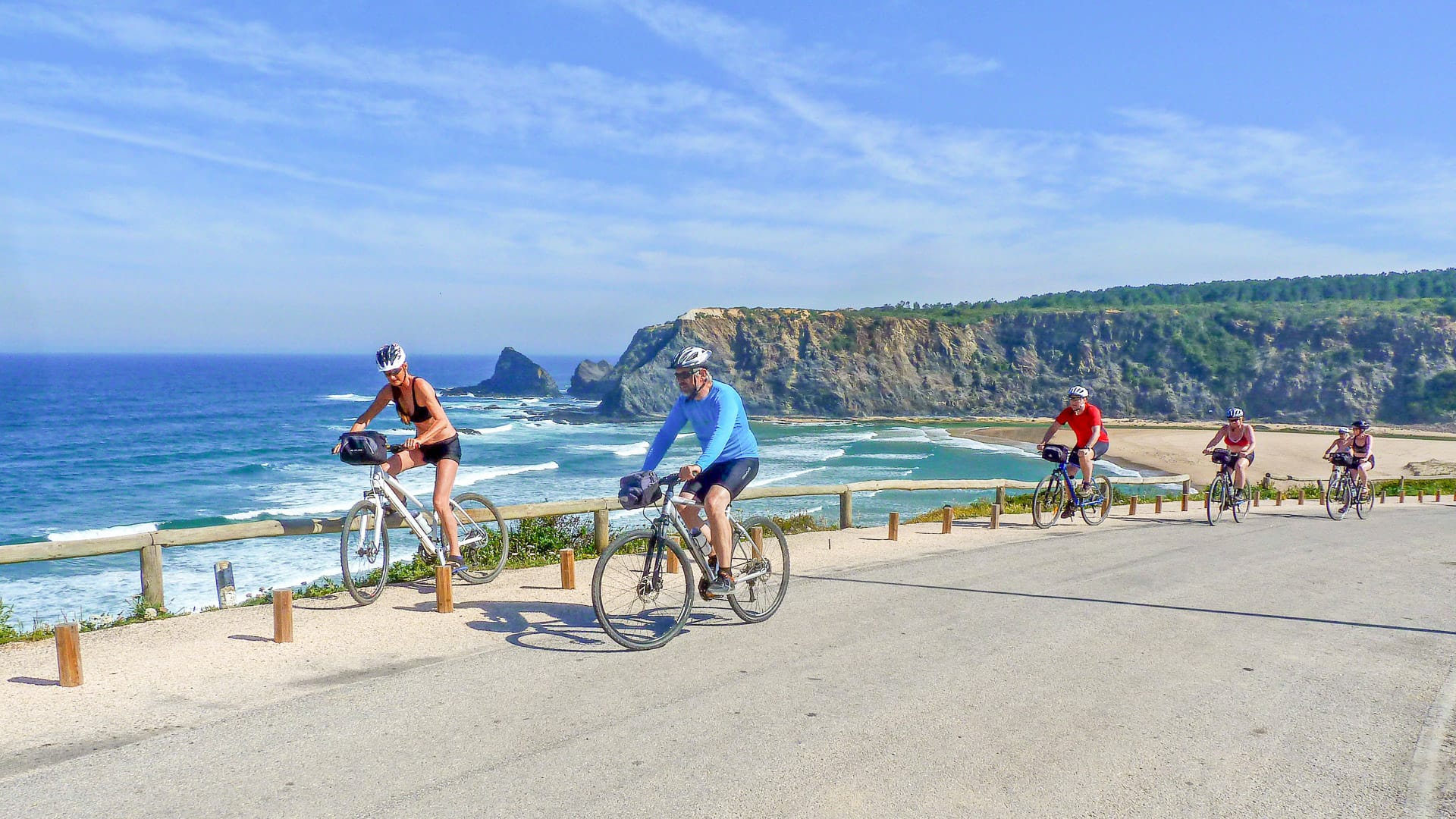
This is one of Portugal’s most distinctive beaches, where the river Ribeira de Seixe meets the Atlantic Ocean in a horseshoe-shaped bay. Here you’ll find amazing scenery and plenty of beachside cafes – a great place for a photo stop and a cooling dip!
Porto das Barcas
This small and traditional fishing harbour remains largely unknown among tourists. It’s a great spot to get a taste of the local flavour, with amazing fresh seafood, or to enjoy the calm of the beach.
More information
Want to experience the Portugal Wild Coast without having to worry about the logistics? At Portugal Nature Trails, we offer this route as a seven day (six night) self-guided tour with all the support you need to enjoy the ride at your own pace.
4. Porto and the Green Coast
Best for: cyclists seeking flat routes and relaxed vibes
Key statistics
261 kilometres (Approx. 30 – 68 kilometres each day)
+1.700 metres total elevation gain (approx. +300 to +500 metres per day)
7 days and 6 nights
Start/ finish
Tui to Porto, northern Portugal
Terrain
Mainly flat
Surfaces
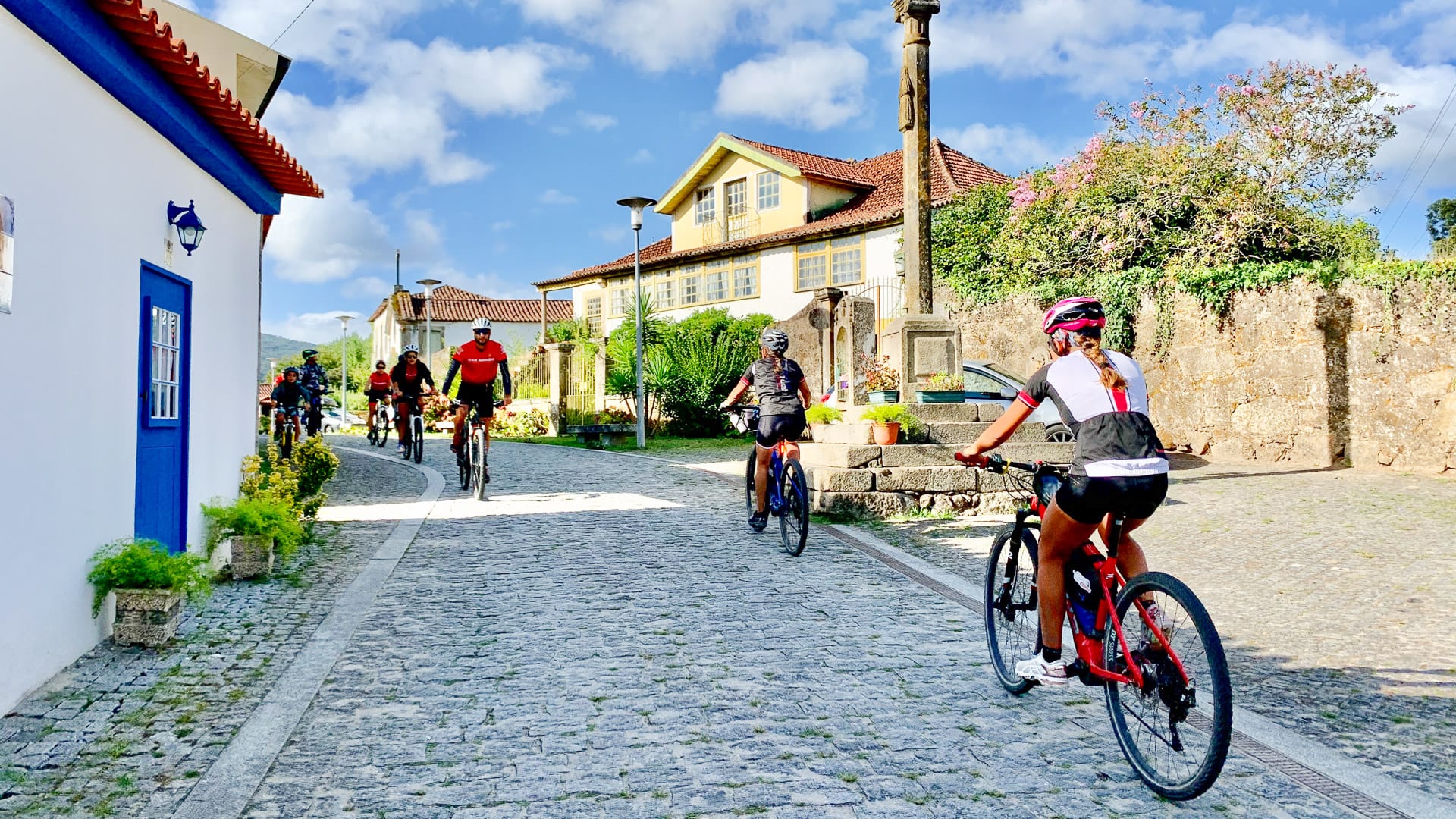
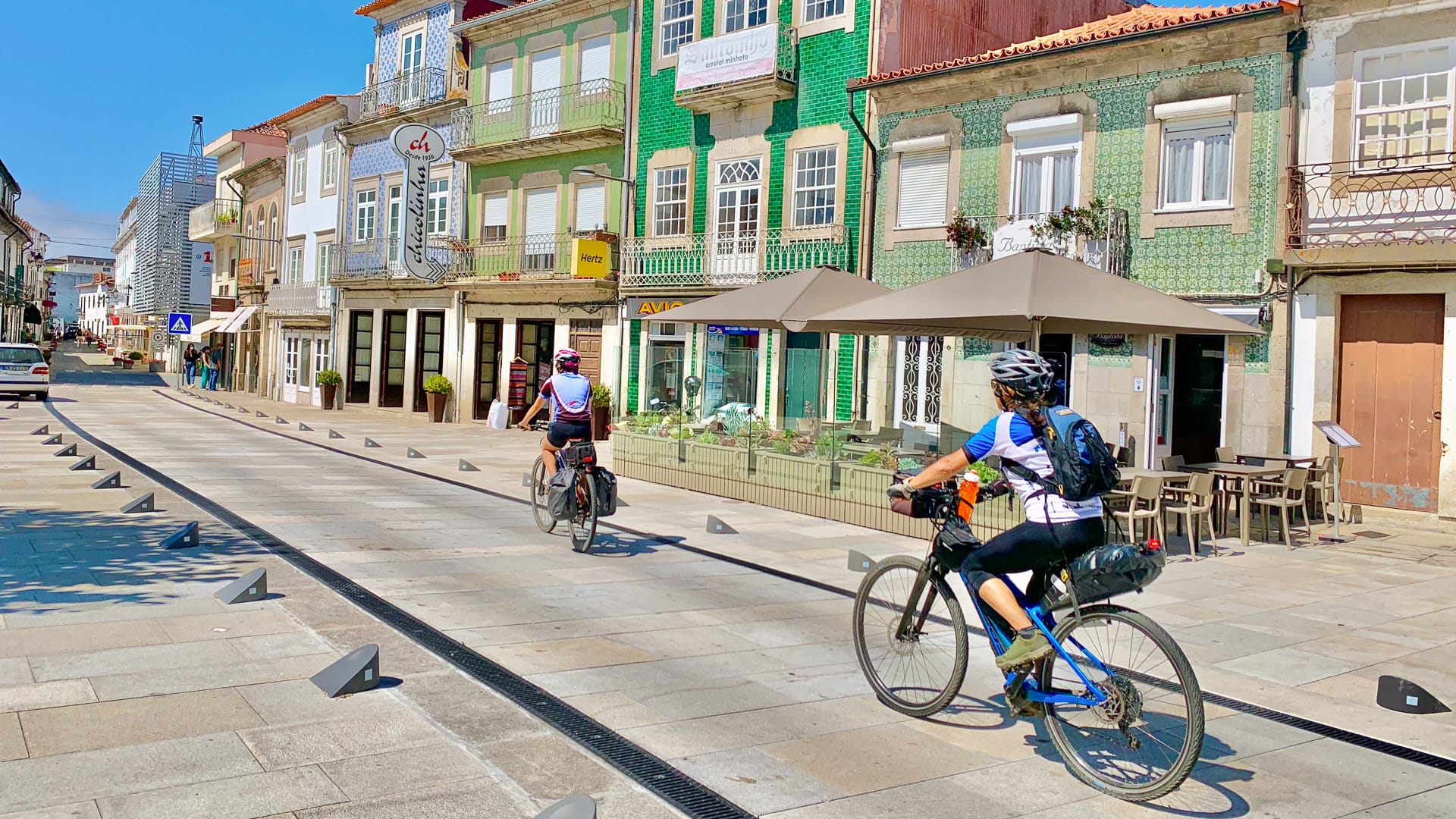
Cyclists can expect a varied mix of surfaces throughout the route, and because of this, it is not suitable for road bikes. A large portion of the riding takes place on dedicated cycle paths, including both paved bike lanes and compact dirt cycle tracks. There is also a notable presence of traditional cobbled roads in historic towns and villages, along with some quiet secondary roads connecting the different sections of the route.
Level of challenge
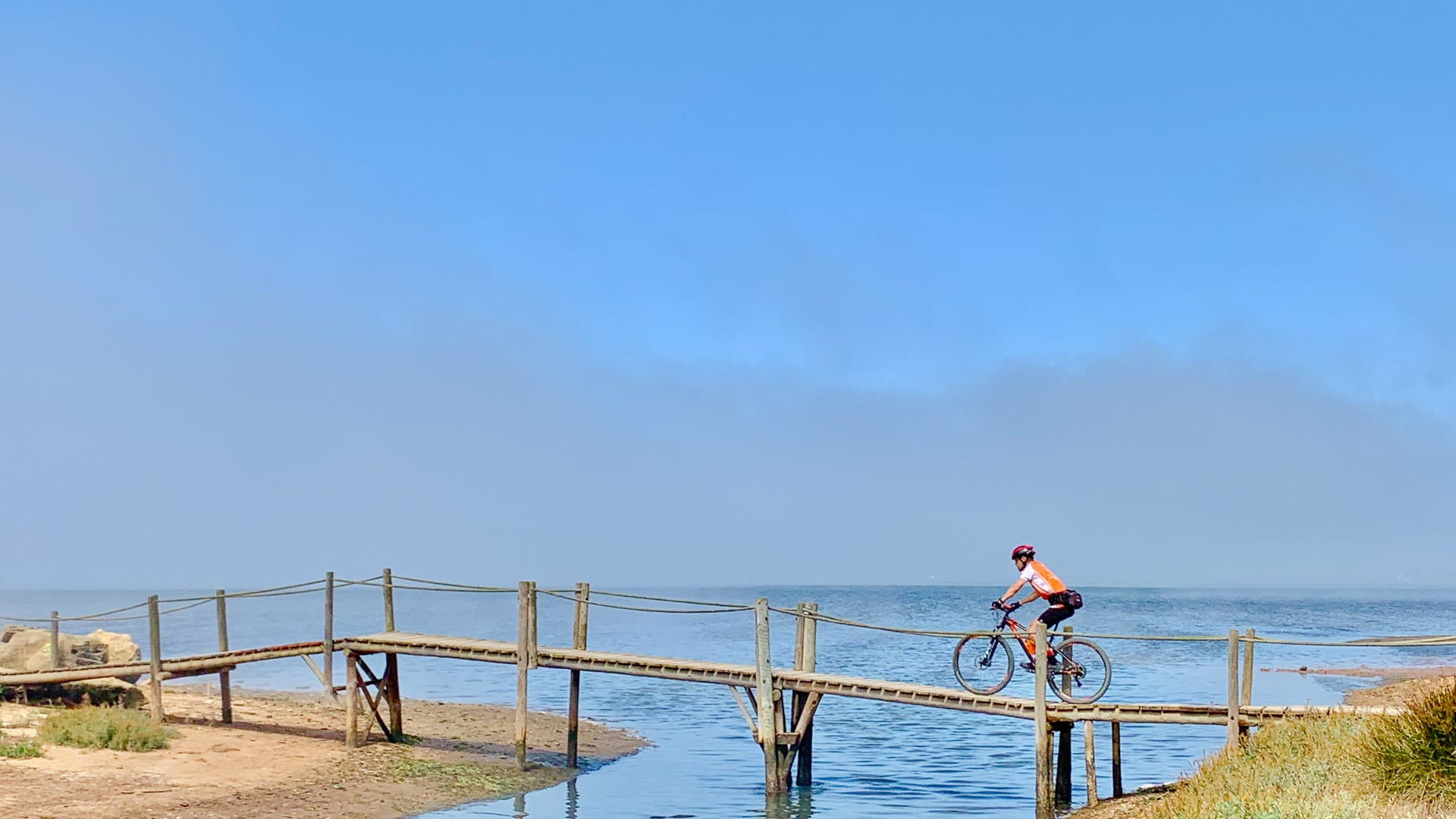
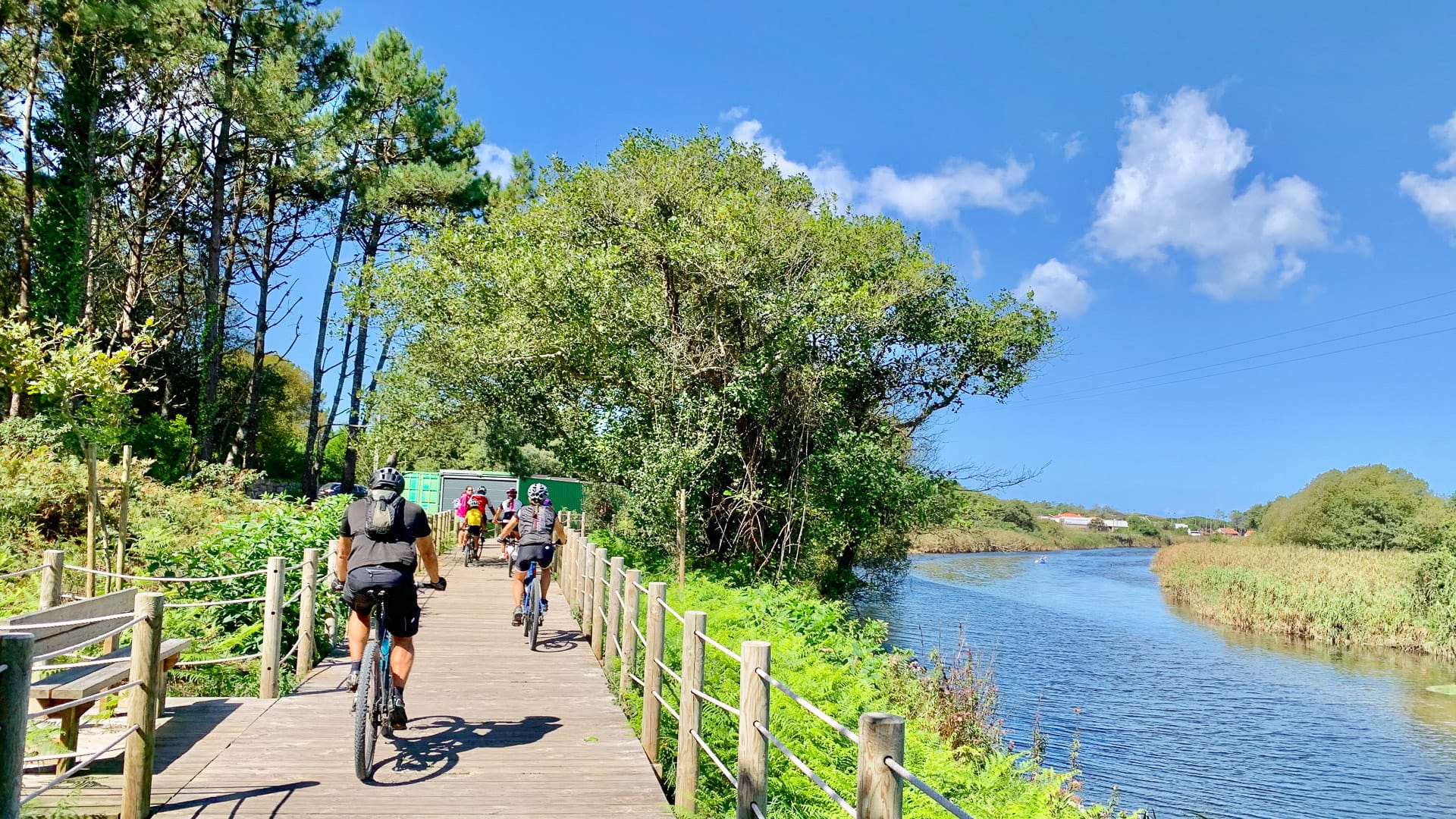
This tour is designed to be accessible to a wide range of cyclists; however, this tour is not designed for road bikes. On average, you’ll cycle between 30 and 68 kilometres per day. The route combines dedicated bike lanes, paved secondary roads, gravel roads, and double tracks. Riders also experience wooden walkways along the beaches and some cobblestone sections, a few of which can be quite rough. Overall, the tour is very flat and therefore accessible, with the cobblestones representing the main technical challenge rather than climbing.
What makes this self-guided tour special is the way these elements are balanced. The variety of surfaces keeps the riding engaging, while careful route planning ensures the days feel smooth, achievable, and enjoyable, without unnecessary difficulty or disruption.
Overview
Porto and the Green Coast is a great choice for cyclists looking for a self-guided bike tour which is tranquil and accessible. With little in the way of elevation gain to worry about, this route allows cyclists to focus on enjoying the changing landscapes and scenery of northern Portugal.
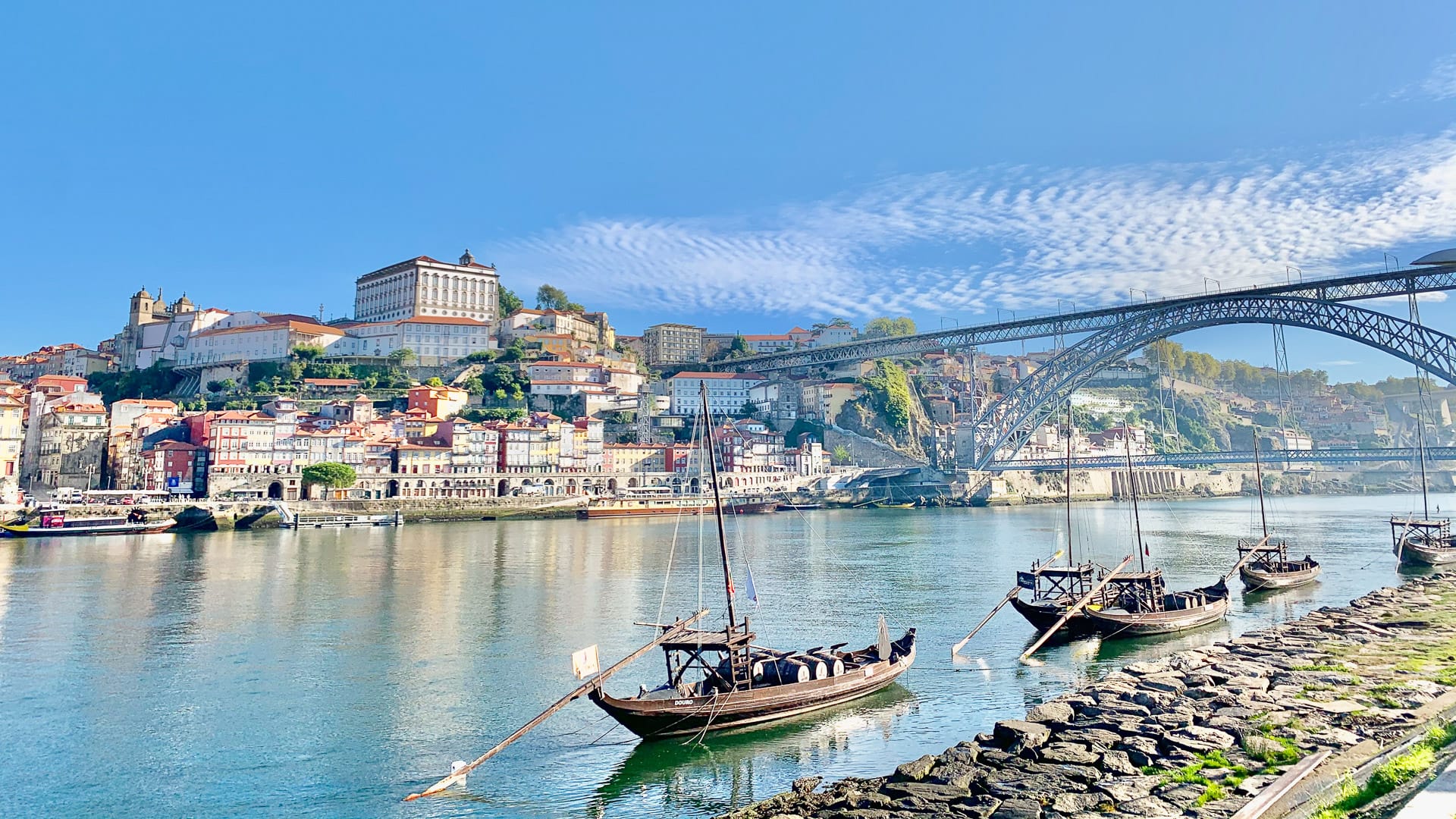
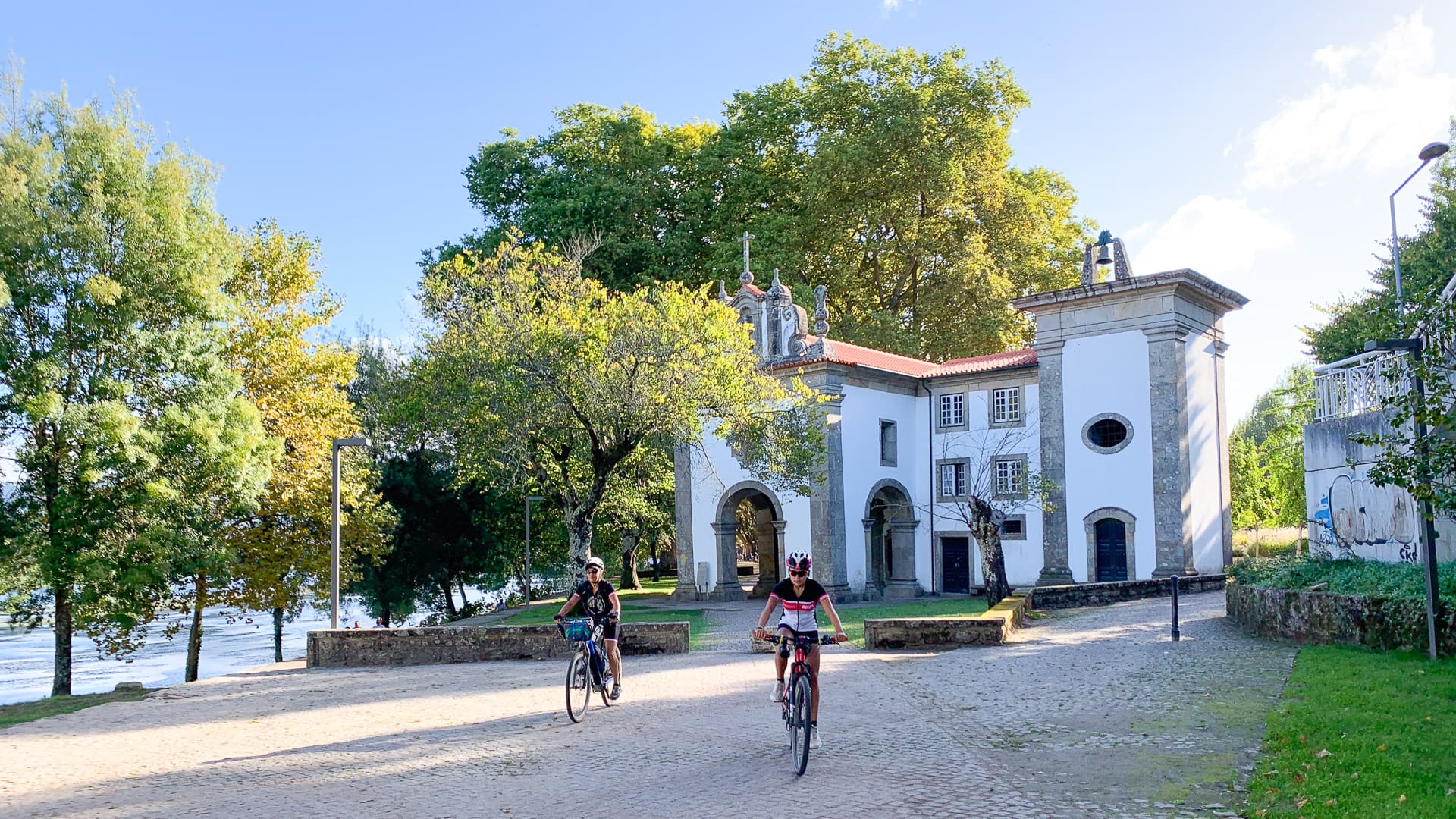
The route begins in Tui, on the Spanish border, following the Minho River along a scenic cycle path through riverside villages, vineyards and green farmland. Once you reach the small town of Caminha, you swap the inland greenery for coastal views as you travel south – often riding just metres from the ocean! You’ll experience the natural beauty of the Northern Littoral Natural Park and ride through historic towns as you make your way to Porto.
Highlights
The Porto and the Green Coast self-guided cycling tour combines the beautiful scenery of northern Portugal with the strong sense of place that comes with travelling through traditional towns, meeting local communities and of course – sampling some of the best regional cuisine! Here are some of the highlights you can look forward to on this tour:
Ever-changing scenery
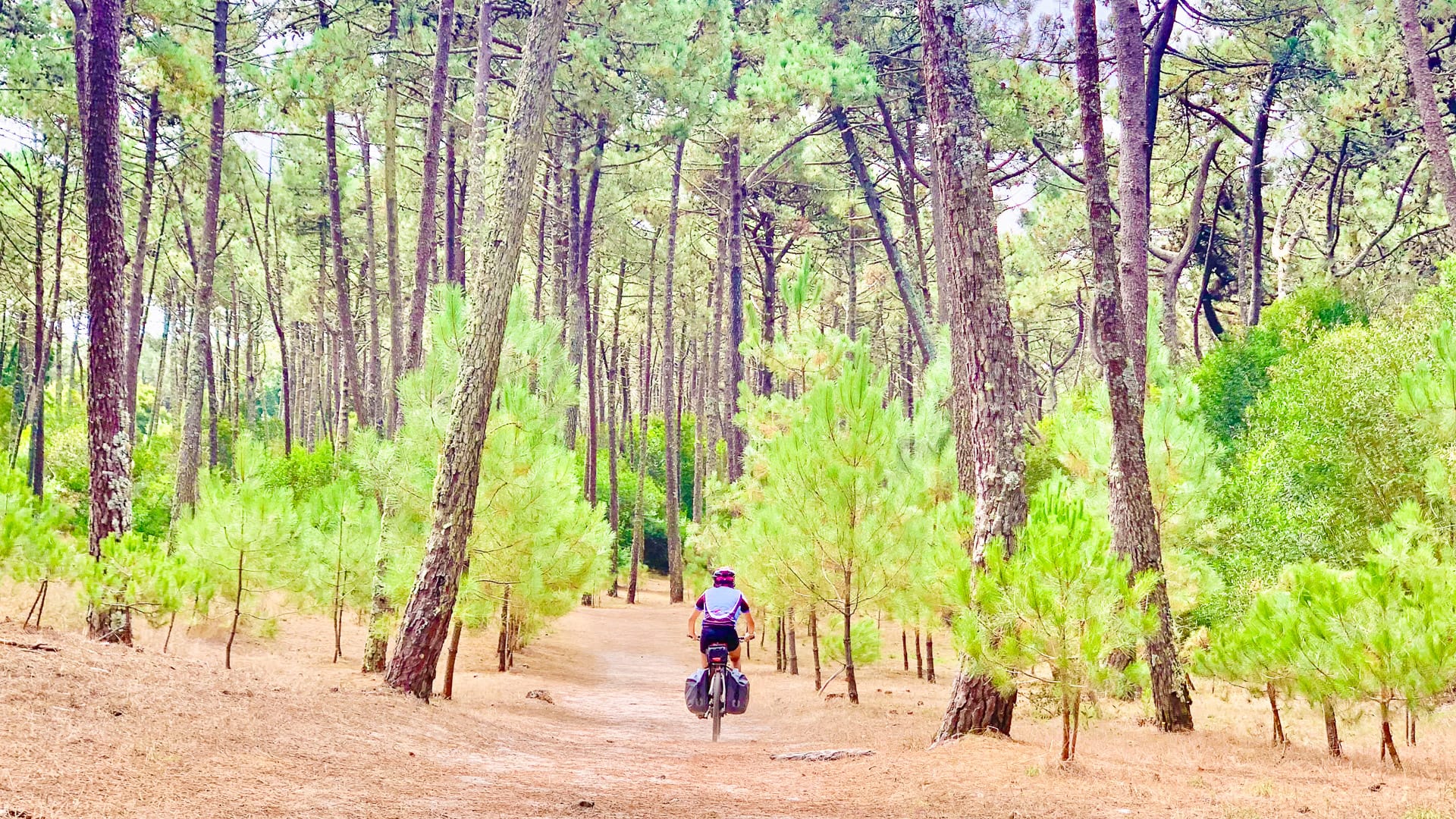
The terrain may be relatively flat, but this route is never monotonous! You’ll experience quiet riverside paths and green farmland inland, contrasted with glittering coastal views and distinctive historic towns as your journey continues south to Porto. Highlights include the expansive dunes and wetlands of the Northern Littoral Natural Park and the winding small-scale vineyards of the Vinho Verde region.
Historic towns and cities
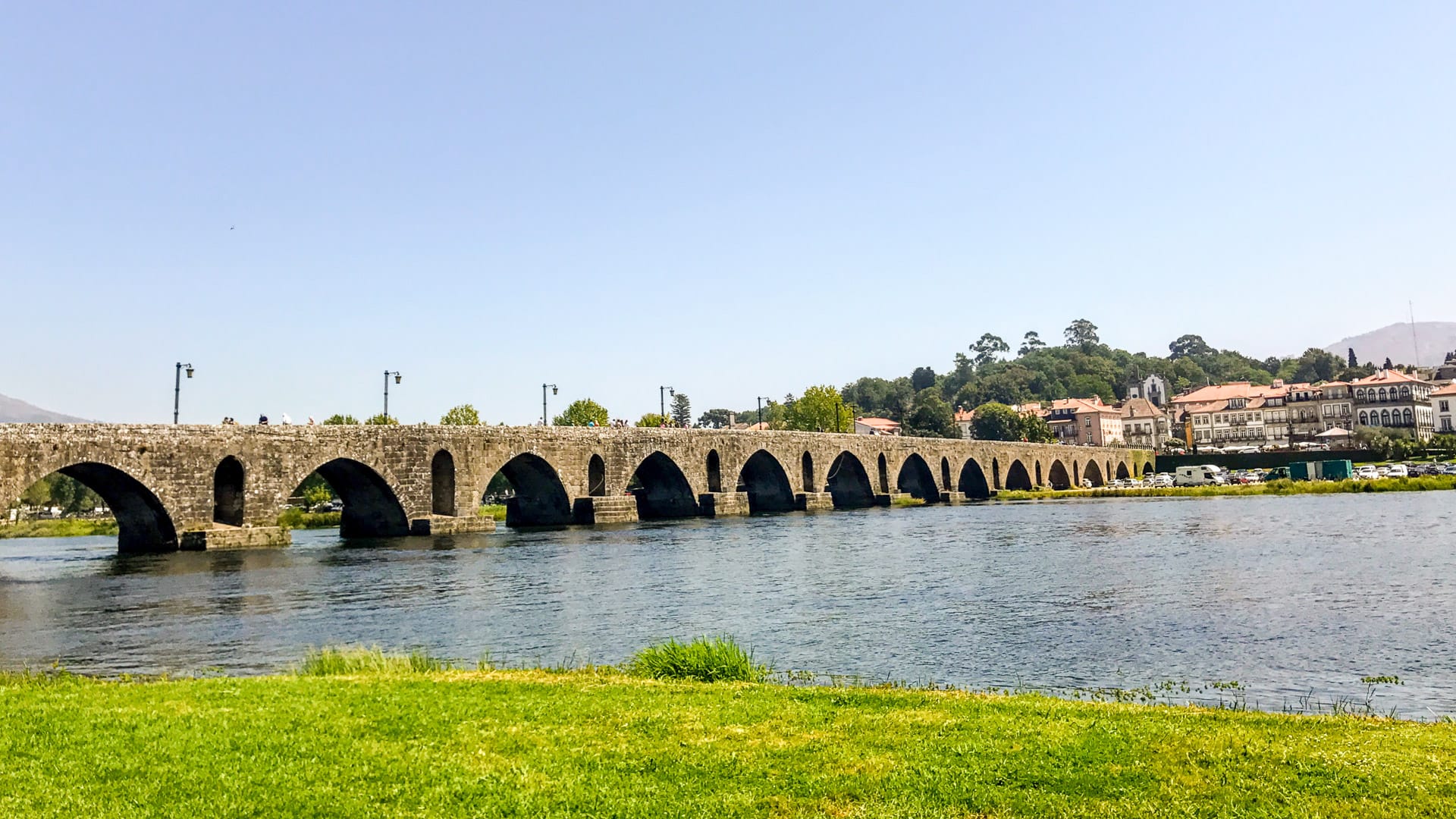
This self-guided tour will give you the chance to explore several traditional towns before you reach Porto. After leaving Tui, you’ll ride through Valença do Minho with its star-shaped fortress overlooking the river border with Spain. Caminha is a small town, marking the shift from the inland greenery to expansive Atlantic views as you leave the Minho River and make your way along the coastline. Viano de Castelo is one of the most distinctive stops on the journey, take your time to explore the harbour and the historic centre. Further south, you’ll pass through Ponte de Lima, Portugal’s oldest town (source). The imposing medieval bridge crossing the Lima River will make for some great photos! Finally, you’ll arrive in Porto – a UNESCO World Heritage city with a vibrant atmosphere that will contrast with the quiet coastal and rural stages of the tour.
Fresh seafood and local delicacies
Food is an integral part of the experience throughout the tour. Fresh Atlantic fish and seafood dominate along the coast, while inland stages introduce simple regional dishes and Vinho Verde wines.
Here are some standout regional dishes to try along the route:
- Caldo Verde: One of Portugal’s most iconic soups, Caldo Verde is a comforting dish made with potatoes, finely shredded kale, olive oil and garlic, traditionally served with slices of smoked chouriço.
- Caldeirada de peixe: A traditional fisherman’s stew prepared with a variety of fresh fish, potatoes, onions and tomatoes, slowly cooked with olive oil, herbs and white wine, creating a rich and aromatic coastal dish.
- Bacalhau à minhota: A beloved Minho speciality where salted codfish is lightly fried and served with sautéed onions, garlic and peppers, accompanied by golden potatoes.
Local restaurants and café stops
If you’re looking for cyclist-friendly places to refuel, these restaurants and cafés are excellent choices:
More information
Portugal Nature Trails offers the Porto and the Green Coast route as a seven-day self-guided bike tour. See more information below on what our self-guided tours include!
5. Karst Country to the Sea
Best for: Mountain bikers looking for an off-road adventure in Portugal
Key statistics
- 254 kilometres (Approx. 34 – 58 kilometres each day)
- +3.600 metres total elevation gain (approx. +400 to +1.000 metres per day)
- 7 days and 6 nights
Start/ finish
Tomar to Óbidos, west Portugal
Terrain
Hilly
Surfaces
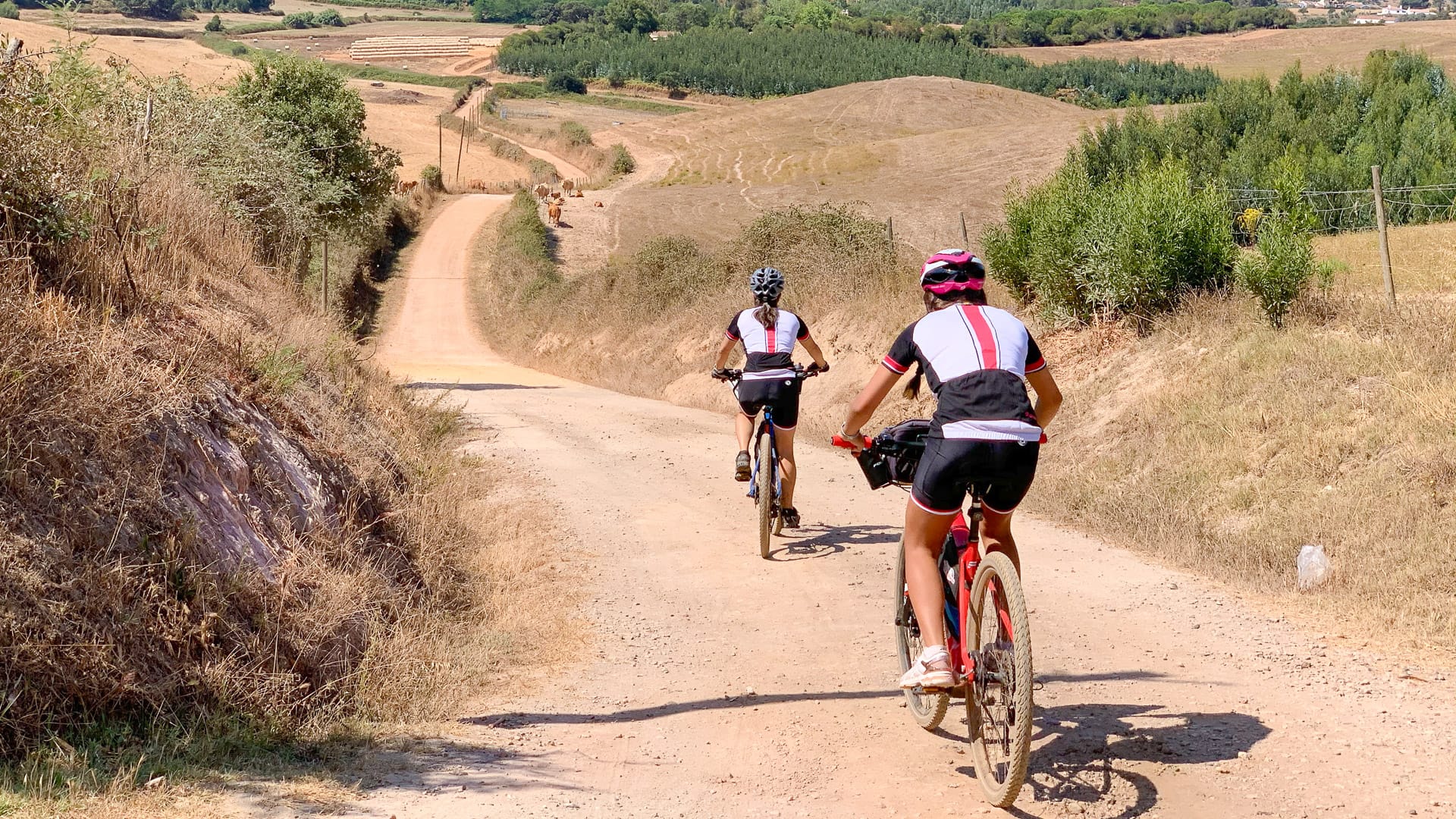
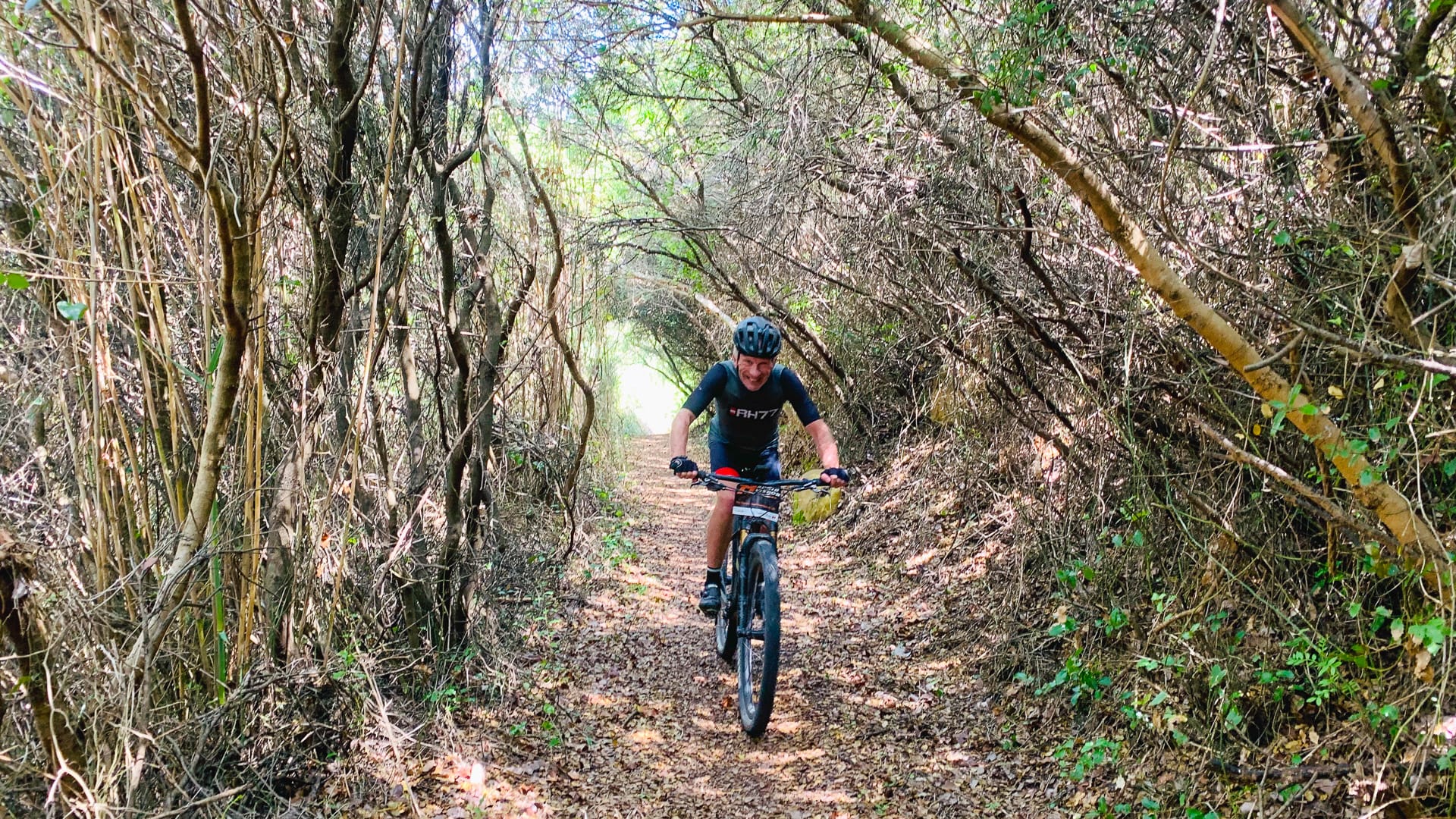
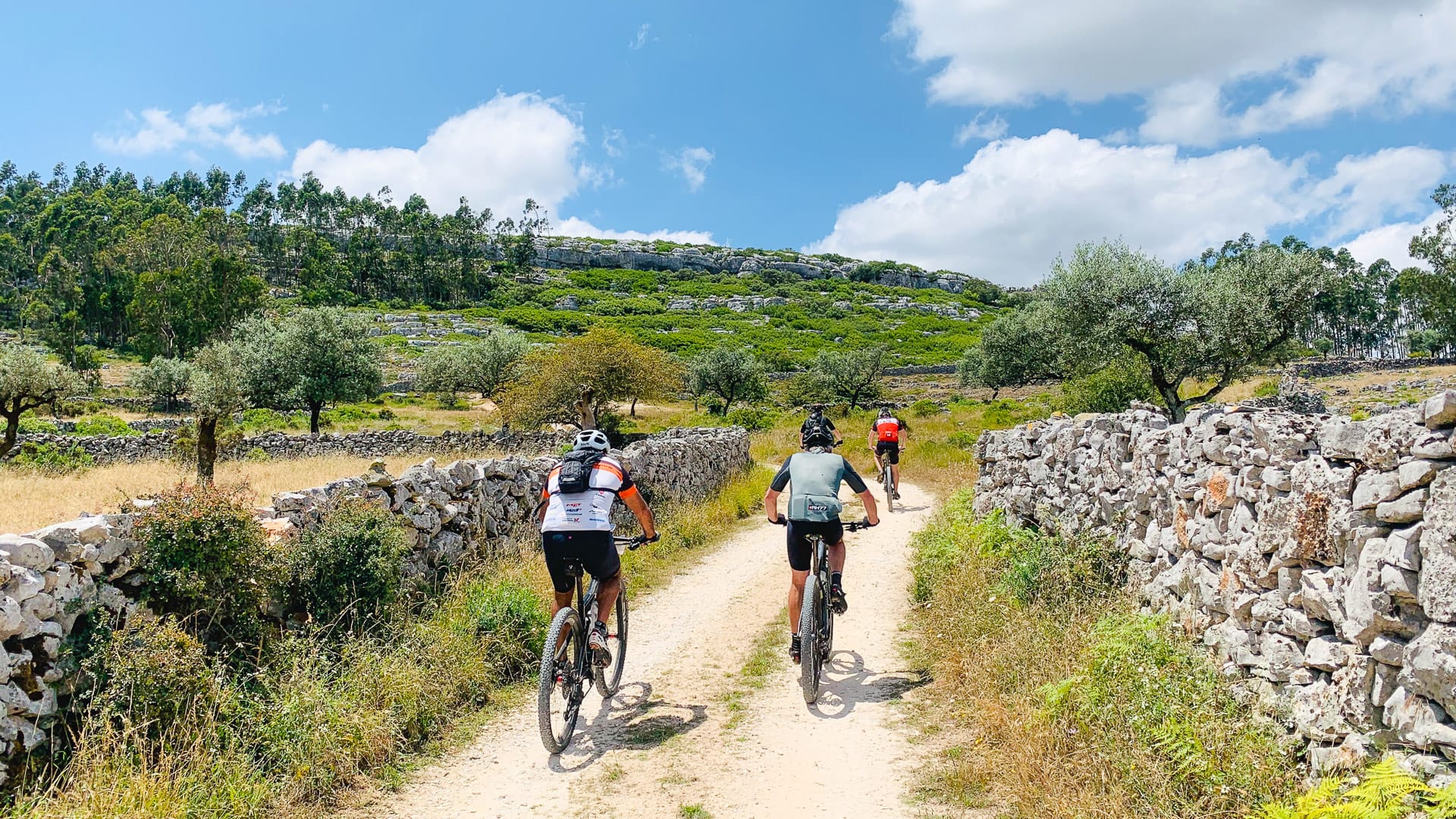
Riders can expect hard-packed dirt trails, loose gravel sections, and rural farm tracks. Some stretches follow narrow single tracks through dry fields and woodland, while others run along sandy coastal paths or slightly rougher terrain with small rocks and uneven surfaces.
Level of challenge
This is one of the more challenging self-guided bike tours in Portugal, best suited to experienced off-road cyclists who are confident handling their bike over technical terrain.
The route includes a mixture of rocky and sandy singletracks, challenging climbs and some fast downhill sections across remote landscapes.
Overview
The Karst Country to the Sea route is a challenging cycling tour in Portugal for mountain bikers with a strong sense of adventure! Be prepared for technical terrain and tough climbs as you make your way across remote landscapes on a mix of thrilling single track, exposed plateaus and rugged valleys. This is a fantastic way to explore some of the lesser-known regions of Portugal by bike.
The route is inspired by the legacy and symbolism of the Knights Templar in Portugal. You’ll start in Tomar, once the headquarters of the Order of the Temple and shaped by medieval architecture. Next is the limestone massif of the Serra de Aire e Candeeiros Natural Park, a rugged karst region defined by dry valleys, exposed plateaus, and dramatic viewpoints. Experience exciting singletrack on the approach to Alcobaça, where the monastery brings a strong sense of history.
As you head west towards the Atlantic, the landscape gradually opens up. You’ll pass through Porto de Mós and reach the coast near São Martinho do Porto, where the calm bay and ocean views create a striking transition to the mountainous terrain that has defined the journey!
You’ll finish your ride in Óbidos, one of Portugal’s most emblematic medieval towns. Its walled centre, narrow streets, and strong local traditions provide a memorable and characterful conclusion to the route.
Highlights
This tour won’t be for every cyclist as it’s both physically and technically challenging. But for those looking to push their limits, it’ll be one of the most memorable mountain biking experiences you’ll have! Here are the top highlights.
Serra de Aire e Candeeiros Natural Park
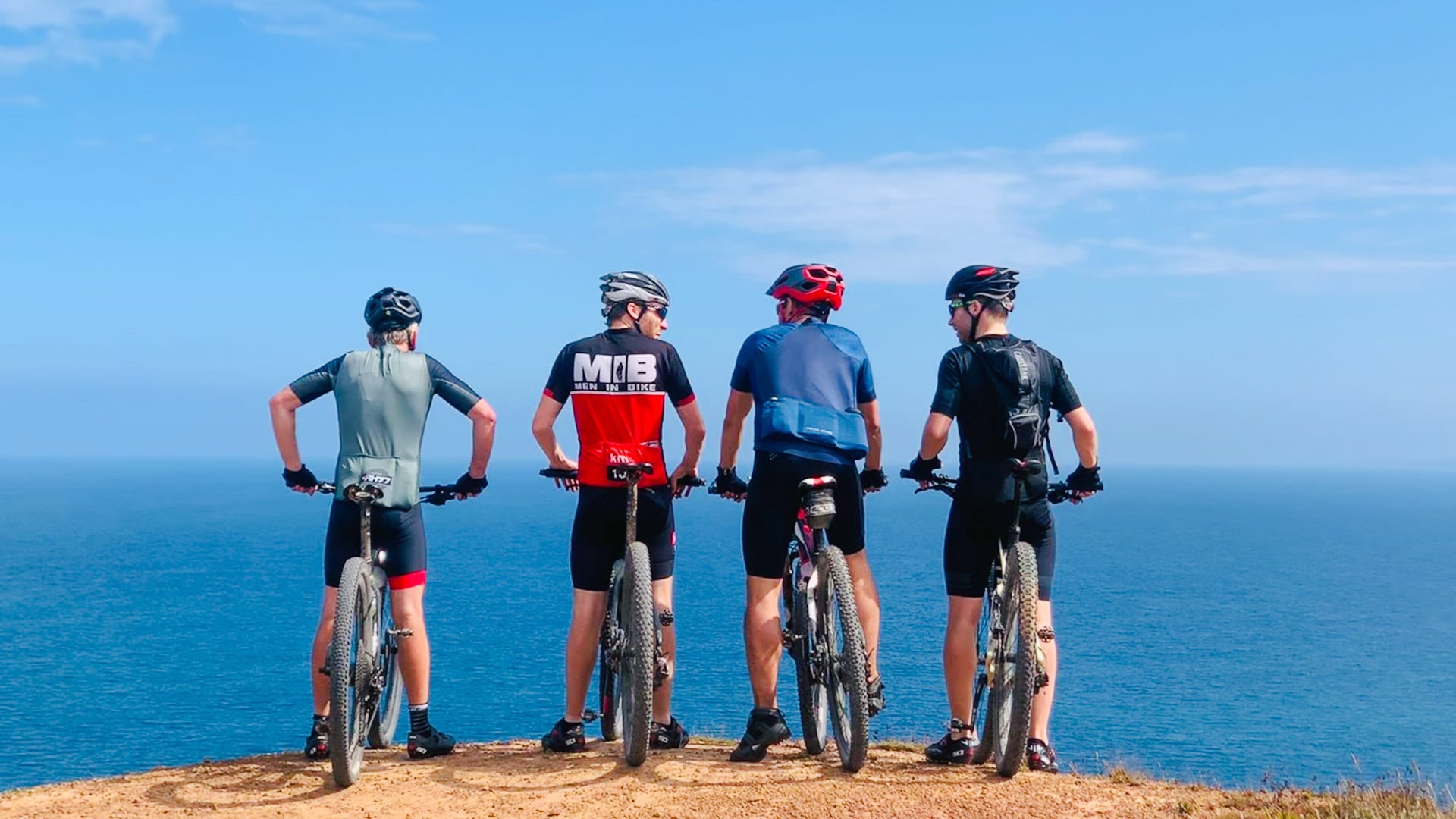
This is classic mountain biking terrain, technical and physical, with a mix of climbs, descents, and engaging off-road sections. The dramatic viewpoints will make it worth the challenge!
Thrilling singletrack riding
The raw landscape offers up exciting singletrack, one of the defining highlights of this tour! Several flowing and demanding sections cut through the karst landscape, culminating in an outstanding singletrack of around eight kilometres on the approach to Alcobaça. This stretch is a standout moment for mountain bike enthusiasts. It’s fast and incredibly fun. It’s often remembered as one of the best riding sections of the entire journey!
Óbidos
This tour is an immersive journey through raw landscapes and historic towns. Óbidos is a striking medieval town, and the perfect place to finish your journey. After all those days of effort and exploration, ending within the medieval town walls with a glass of traditional ginjinha (a traditional Portuguese liqueur) feels like a fitting reward.
More information
At Portugal Nature Trails, we offer the Karst Country to the Sea route as a seven night self-guided tour. Rest assured, we make sure all those tough kilometres in the saddle are rewarded with comfortable accommodation and plenty of delicious local food to refuel!
Sponsor Message
Considering a self-guided bike tour in Portugal?
Portugal Nature Trails has been running cycling holidays in Portugal since 2004.
They offer a range of guided and self-guided bike tours across the country that take care of all the logistics, including accommodation, cycling routes, and bike hire.
Interested? Head to the Portugal Nature Trails website for further details.
Got a question for António Gavinho from Portugal Nature Trails?
Fill out this form and we will pass it to Portugal Nature Trails who aim to reply (within 24 hours wherever they can!)
Part 3: What do you need to know before your self-guided Portugal bike tour?
When is the best time of year for a self-guided bike tour in Portugal?
Portugal is a year-round cycling destination. However, the best time to ride depends less on the calendar and more on the region, the type of riding, and the experience you are looking for. With the right regional choice, cycling is possible throughout the year. Here’s what you can expect through the different seasons:
Spring (March to May)
Best for: Visiting the Douro Valley and central Portugal
Spring is one of the best times to cycle in Portugal. Temperatures are mild, landscapes are green and flowering, and traffic levels are generally low. This season works particularly well for inland regions such as the Douro Valley and central Portugal, where summer heat can later become intense.
For gravel and mountain bike tours, spring offers excellent trail conditions, with firm ground and comfortable riding temperatures. It is also a wonderful time for road cycling through vineyard landscapes, such as on the Douro Valley by Bike, when the valleys are especially lush and vibrant.
Spring is also when the Vicentine Coast is at its most impressive. Wildflowers cover the coastal cliffs, temperatures are ideal for riding, and the Atlantic landscapes feel especially vibrant. Routes such as the Portugal Wild Coast showcase this dramatic coastline at its finest during this time of year.
Be aware! Coastal routes are also very enjoyable during the spring, but the wind can occasionally be more noticeable than at other times of the year.
Summer (June to August)
Best for: Cycling routes along Portugal’s Atlantic coast
Summer brings long daylight hours and dry conditions, but regional choice becomes essential.
Be aware! Inland areas and the south of Portugal can be very hot during this period, especially for climbing heavy road tours or demanding off road routes.
Top tip! If you do want to visit these regions during the summer, consider planning early starts and shorter stages to avoid the heat of the day.
In contrast, summer can be an excellent time to ride the Atlantic coast, particularly between Minho and Lisbon. Sea breezes and cooler coastal temperatures help offset the heat, making coastal routes such as Porto & Green Coast especially enjoyable during this time of year.
Autumn (September to November)
Best for: all regions, if you prefer a quieter trip
Autumn is another outstanding season for cycling in Portugal. Temperatures remain pleasant, the light softens, and landscapes shift to warmer tones. Harvest season adds cultural interest, particularly in wine regions such as the Douro Valley.
This period works extremely well across road, gravel and mountain bike tours, with stable weather conditions and fewer visitors. It is also a wonderful time to ride scenic coastal routes such as Portugal Wild Coast, when the Atlantic landscapes remain dramatic, but the temperatures are more comfortable for longer days on the bike.
Top tip! Sea temperatures often remain warm in early autumn, so if you’re riding the coastal routes, you can still enjoy a refreshing dip.
Winter (December to February)
Best for: Visiting coastal and southern regions
Winter cycling in Portugal is highly region-dependent, but temperatures are generally moderate and rarely extreme. While it can feel cooler, especially in inland and mountainous areas, Portugal does not typically experience harsh winter conditions.
Coastal and southern areas often remain mild and rideable, especially for road and gravel cycling. Regions such as the Alentejo and Algarve are particularly appealing in winter, making tours such as Gravel Alentejo & Algarve Villages an excellent option during the colder months.
Be aware! Inland and mountainous regions can be colder and wetter, with shorter daylight hours. Conditions are usually manageable, but a flexible approach is recommended.
How to choose the best region for cycling in Portugal?
Choosing where to ride in Portugal starts with understanding what kind of experience you are looking for on the bike. Despite its relatively small size, Portugal offers a wide range of landscapes, terrain, and riding styles. Each region delivers a very different feel!
Below, you’ll find a summary of each region based on the typical riding terrain. But culture also plays a key role. Some regions feel deeply rural and timeless, others more maritime or vineyard-focused. Food, architecture, and daily life change noticeably from north to south and from the coast to inland regions.
In the north, particularly in Minho and the Douro Valley, the landscape is shaped by vineyards, river valleys and historic stone villages, with a strong wine culture and traditional gastronomy. Moving south into Alentejo, the scenery opens into vast plains dotted with cork oak forests, whitewashed villages and a slower rural rhythm. Along the Atlantic coast, fishing traditions, dramatic cliffs and fresh seafood define daily life, while in the Algarve, the Mediterranean influence becomes more evident, with citrus orchards, Moorish heritage, warmer light and a strong connection to the sea.
Atlantic Coast
For riders who enjoy coastal scenery, open horizons, and flatter terrain, the Atlantic coast offers long stretches of quiet roads, sea views, and a strong connection to fishing villages and coastal culture. These routes tend to suit riders looking for a relaxed rhythm, with frequent opportunities to stop, explore, and enjoy local food. Take a look at our Atlantic coast cycling tour above.
Douro Valley
Cyclists drawn to climbing and more structured road riding often gravitate toward inland regions such as the Douro Valley. Here, elevation is part of the experience, with winding secondary roads, vineyard terraces, and longer climbs. These areas appeal to riders who enjoy a physical challenge. But the Douro Valley region also offers cultural depth with its wine regions and historic towns. Take a look at our Douro Valley cycling holiday above.
Alentejo
Gravel riders are well served in regions like Alentejo. Here, the low traffic roads, dirt tracks, and wide-open landscapes create ideal conditions for long, flowing days. This part of the country suits cyclists who value space and simplicity rather than technical difficulty. Take a look at our Alentejo cycling tour above.
Central Portugal
Mountain bikers looking for more demanding terrain often prefer central Portugal. Limestone massifs, forests, and coastal transitions offer technical off-road riding, significant elevation, and a huge range of different landscapes within a single trip. Take a look at our central Portugal cycling holiday above.
Top tip! Don’t be tempted to try to ride through every region at once while you’re cycling in Portugal. You don’t need to plan a huge cross-country route. Instead, choose a region based on your current riding preferences. With thoughtful route design, Portugal allows riders to experience strong contrasts even within a single region, making it easier to choose depth over distance and enjoy a cycling holiday in Portugal. Besides, you can always come back a few times to experience each region!
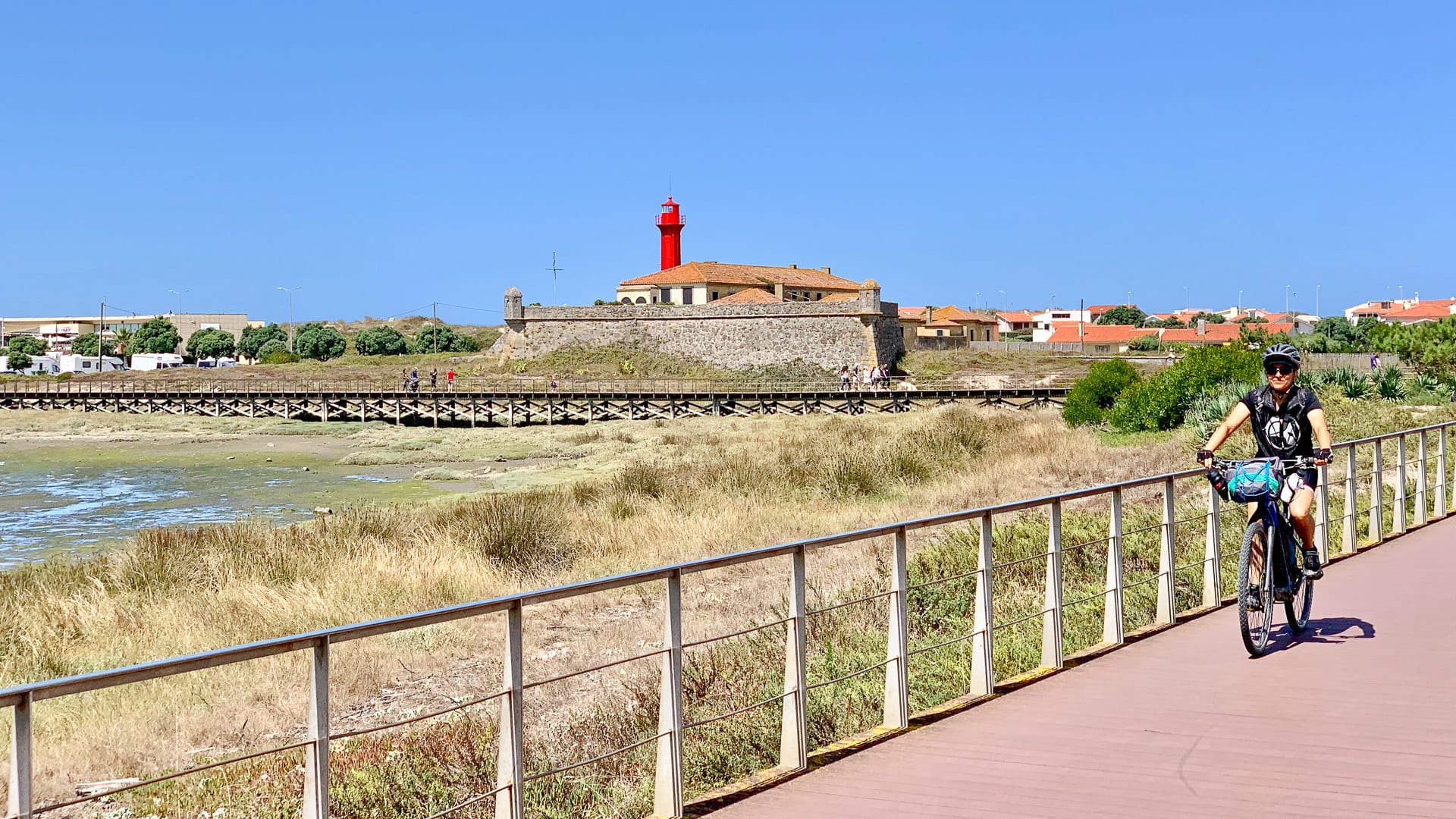
Self-guided cycling tour exploring Porto and the Green Coast (photo credit: Portugal Nature Trails)
What are the best accommodation options for cyclists in Portugal?
For each region, there are several excellent towns where cyclists can base themselves, depending on the type of experience they are looking for.
Larger cities tend to offer a wider range of services, restaurants, and cultural attractions, while smaller towns and villages often provide a quieter and more authentic atmosphere, allowing visitors to experience the local character of each region.
On our self-guided tours, we carefully select high-quality accommodation that offers comfort, style and a welcoming environment for cyclists, ensuring a proper rest after each day on the bike. Most nights are spent in premium hotels, often located in historic buildings or scenic settings that reflect the character of the region.
Travelling self-guided with us also means that all logistics are taken care of, allowing you to focus entirely on the riding experience. Whenever possible, we also maintain the flexibility to adjust stages if there is a specific town or hotel that you would particularly like to include in your journey.
What are the key considerations to be aware of before booking a self-guided Portugal bike tour?
Before you book your Portugal self-guided bike tour, it’s important to think carefully about what you want from the experience and what your current riding ability is to ensure you choose the right tour for you.
Be honest with yourself about your current fitness and ability level
While routes are carefully designed and can often be adjusted, each tour has a clear character in terms of distance, terrain, and difficulty. Choosing a tour that matches your fitness, bike handling skills, and expectations is key to enjoying it fully.
Be prepared to navigate independently
Riders should be open to navigating independently. Navigation is provided through tested routes and a dedicated app, and at the start of the tour, riders receive guidance from experienced local guides who explain the basics clearly. This makes the process straightforward even for those experiencing a self-guided tour for the first time, while preserving the sense of freedom that independent riding offers. But remember, these are not guided rides! You won’t have a group leader riding alongside you each day.
Consider the terrain
Terrain is another important factor to consider. Many routes combine different surfaces, including gravel, cobblestones, or off-road sections. Tours are organised by bike type, making it easy to choose an option that suits your riding style. At the same time, flexibility is a core part of the approach, and routes can be adapted or tailored to better match individual preferences, whether that means more gravel, more road, or a different balance altogether.
Approaching the trip with realistic expectations and an open mindset helps ensure a smooth and memorable experience. With the right preparation and support in place, self-guided tours offer a confident and enjoyable way to explore a destination by bike!
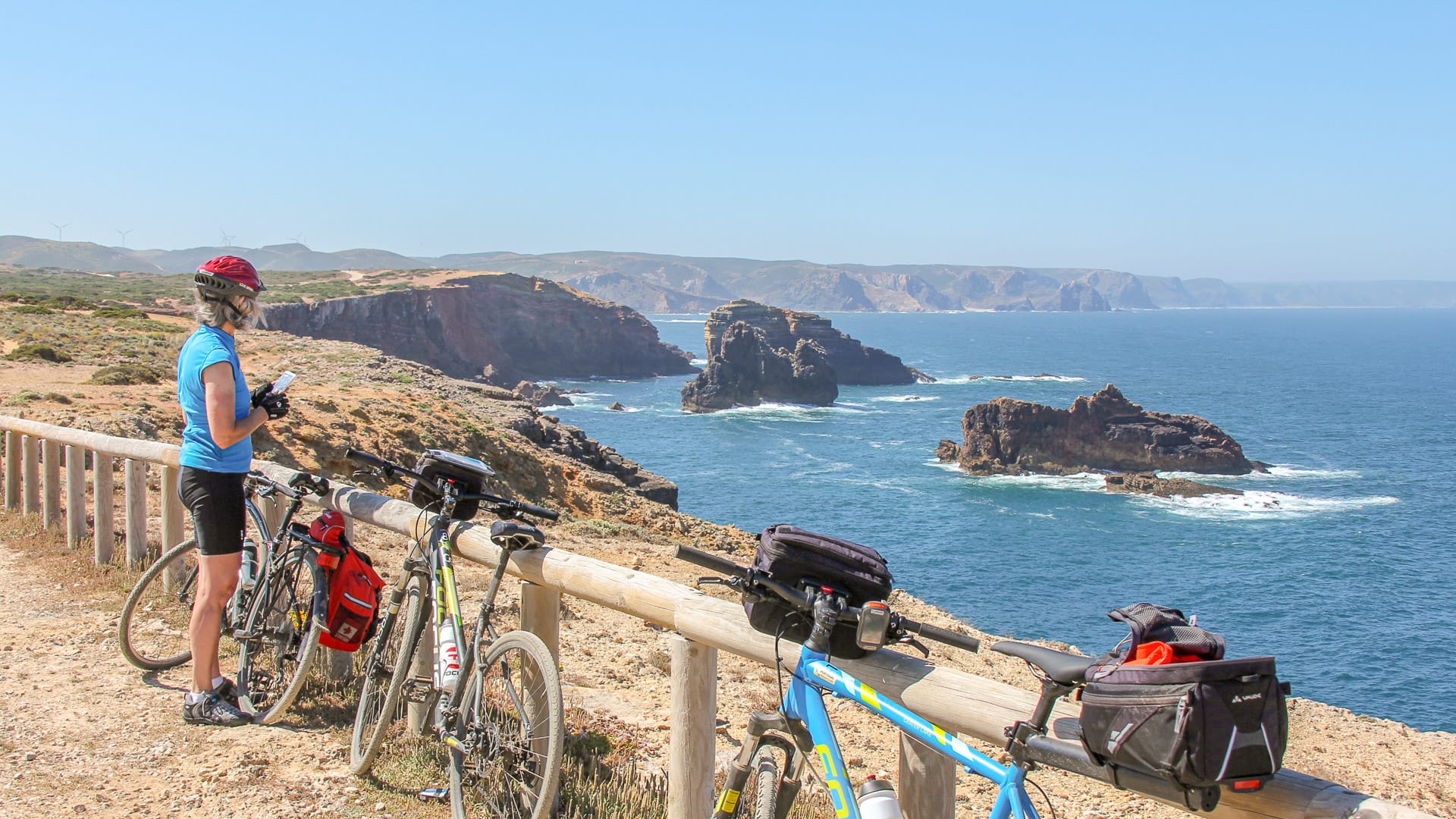
Sea-view stop on the Wild Coast (photo credit: Portugal Nature Trails)
How to plan routes and tour itineraries?
To get the most out of your self-guided bike tour in Portugal, researching routes and itineraries carefully is key.
Be aware! You can find lots of information on cycling routes in Portugal online through forums and mapping platforms. But use them with caution! Not all of them are verified, up to date or suitable for planning a multi-day, self-guided bike tour. Often, details such as surface conditions, traffic volume, access restrictions and accommodation logistics can be missing or outdated. Relying solely on this information may have an impact on the quality and safety of your trip!
Instead, for self-guided cycling holidays in Portugal (especially if it’s your first time travelling here), I’d suggest contacting local specialists so you can benefit from their on-the-ground expertise. At Portugal Nature Trails, we design our routes based on firsthand riding experience, not just digital mapping. This means we know how the roads connect, what the terrain is like, how challenging the route will be and what facilities are available along the way.
Getting your route planning and itinerary advice from a local expert will help you to choose the right type of tour for your preferences and fitness levels. Online resources are helpful for inspiration, but utilising local guides may help you to avoid the common planning pitfalls so you can enjoy the experience to its full potential!
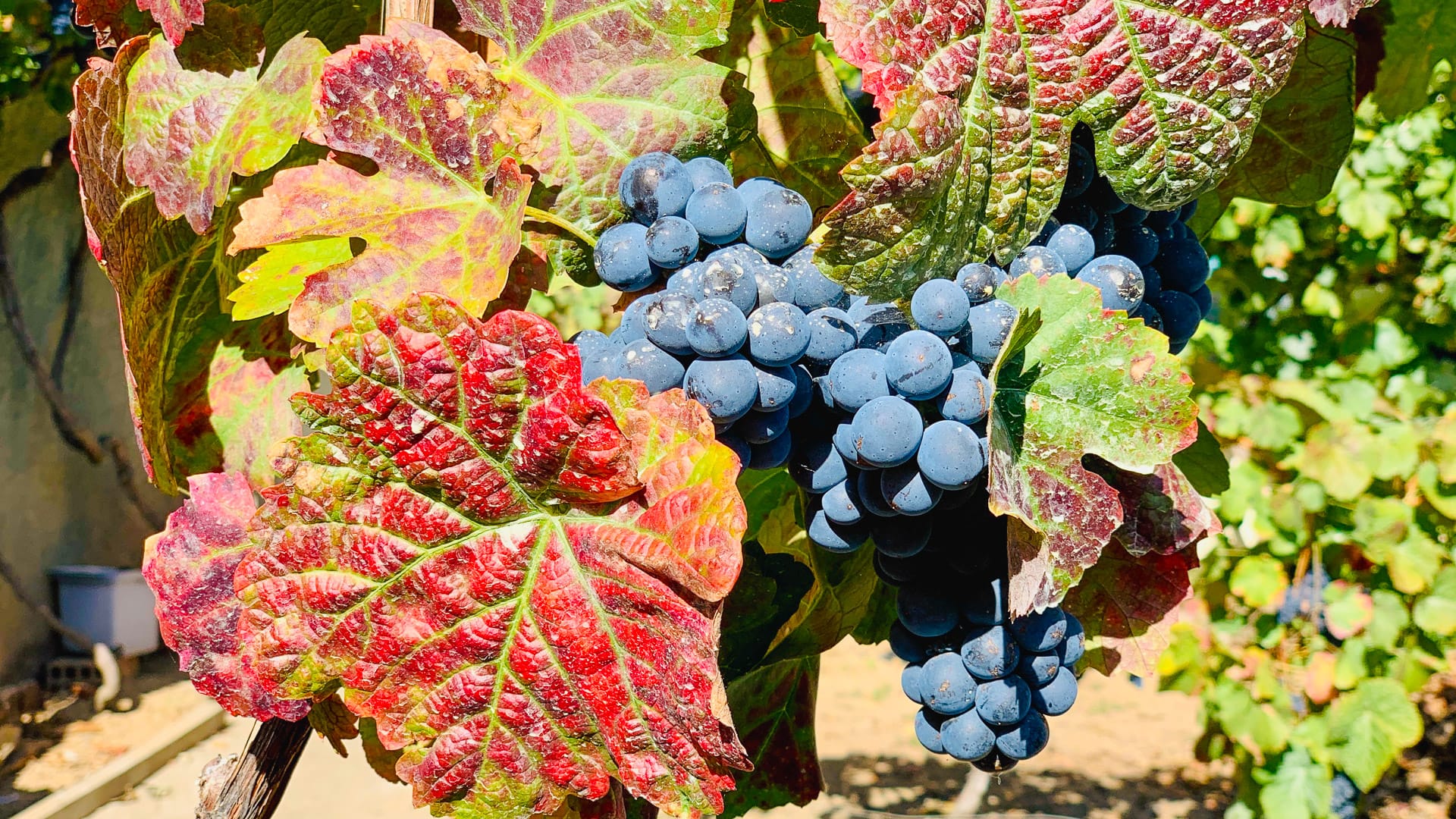
Douro Valley’s red wine grapes during the growing season (photo credit: Portugal Nature Trails)
How long should a self-guided bike tour in Portugal be?
The best duration for a self-guided cycling tour in Portugal really depends on your current fitness level, what you want to get out of the tour and how much time you can spend exploring a destination.
Four-to-five-day tours
A shorter tour is ideal for those limited on holiday days, or riders trying self-guided bike touring for the first time. A short tour is a great introduction to self-guided cycle touring, without too much physical overload.
Top tip! Choose a route with flatter terrain for a more relaxed experience.
Seven-to-nine-day tours
A longer tour gives you the opportunity to have a more immersive experience. You have enough time to settle into a rhythm, recover properly between stages, and engage more deeply with the landscape, local culture, and food. Many riders find that once they adapt to the flow of a multi-day trip, longer journeys feel more natural and enjoyable.
Top tip! From my own experience, around six to eight days on the bike often provides the best overall balance. It feels like a complete journey, without becoming physically overwhelming!
How fit do you need to be for self-guided cycling in Portugal?
The fitness level and experience required for a self-guided bike tour depend largely on the type of tour chosen, the terrain, and the daily distances involved. Portugal offers routes suited to a wide range of cyclists, from relaxed coastal rides to demanding mountain and off-road journeys. With appropriate preparation and the right tour choice, self-guided cycling in Portugal is accessible, memorable, and adaptable to different levels of experience.
Here are the key considerations around cycling fitness when it comes to planning your self-guided tour:
- Ensure you have a good level of endurance: Cyclists should be comfortable riding on consecutive days. Even on easier routes, riding several days in a row places different demands on the body than single-day rides. A basic level of endurance and familiarity with spending time in the saddle is important.
- Research the terrain in the region you plan to visit: For road tours, riders should feel confident riding on varied terrain. Some regions include rolling roads, while others have longer climbs. Gravel and mountain bike tours require additional bike handling skills and comfort on uneven surfaces, including dirt, gravel, rocky sections, or single track.
- Be realistic about your fitness and experience level: What matters most is being realistic about your current fitness and experience. Choosing a tour that aligns with your abilities will make the experience far more enjoyable than aiming for distances or terrain that feels overwhelming.
- Have a flexible approach: It is also worth noting that routes are designed with flexibility in mind. Distances can often be adjusted, rest days added or support increased to better match individual needs. For riders new to multi-day cycling or self-guided travel, clear guidance, route planning, and on-tour support help bridge the gap between ambition and comfort.
What should I pack for a Portugal self-guided bike tour?
If you’re planning to carry your luggage with you on the bike, it’s important to pack light but ensure you still have all the essentials! This is where planning a supported self-guided tour is useful, as luggage transfers can be handled for you.
What you’ll need depends on the time of year you’re planning to visit Portugal, and how long your bike tour will be. As a general guide, I’d suggest:
- Lightweight cycling jerseys for warm weather.
- Comfortable padded cycling shorts.
- A gilet and arm warmers for cooler starts or chilly mountain descents
- Consider bringing a rain jacket if you’ll be cycling in the mountains and/or you’re visiting in the shoulder seasons, where conditions may be more changeable.
- Cycling helmet.
- Bike lights and some reflective gear for visibility.
- Essential bike repair tools (multi-tool, inner tubes, pump).
- Comfortable off-the-bike clothing.
- During the warm months, sunscreen and sunglasses are important, as the sun can be quite strong, particularly in open landscapes such as Alentejo or along the coast.
- Lightweight gloves and a buff can also be useful for comfort and protection from wind or sun.
- A pair of comfortable sandals or flip flops can be very practical for relaxing after the ride, especially if your hotel has a pool or spa.
- A reusable water bottle or hydration pack is essential, as some rural stretches between towns can be quite remote.
Want some more packing tips? Check out our ultimate cycling holiday packing list!
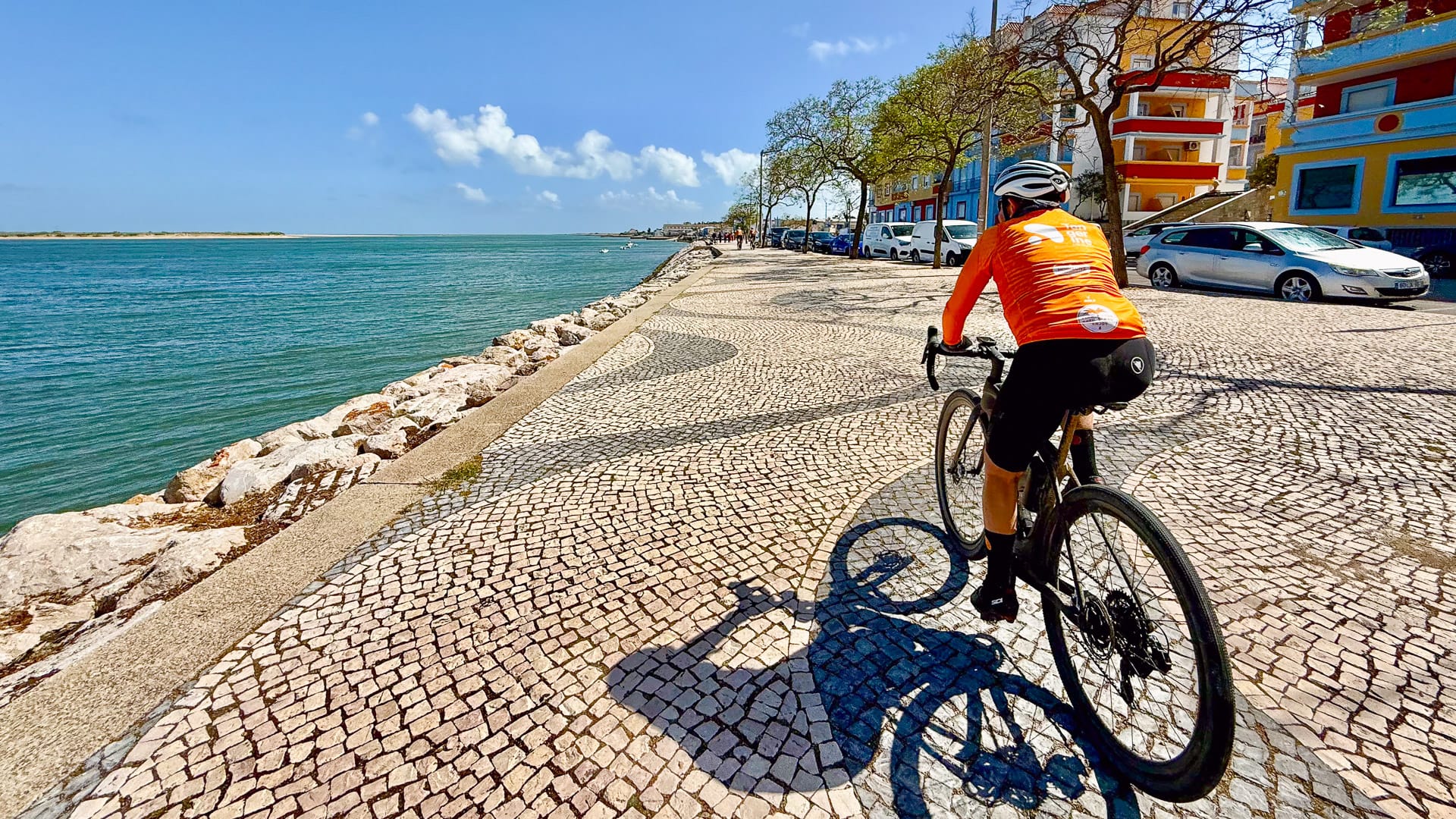
Cycling a cobblestone path in Tavira (photo credit: Portugal Nature Trails)
Is it easy to find places to eat while cycling in Portugal?
In towns, you’ll find plenty of local cafés and bakeries which are very cyclist-friendly. These are ideal stopping points to refuel during your rides.
Here are some local delicacies to look out for as you cycle through each area:
- Minho and Porto: Try the famous Francesinha, Porto’s iconic sandwich layered with steak, ham and sausage, covered with melted cheese and a rich beer-based sauce. In Minho, Caldo Verde is a classic and comforting soup made with potatoes, kale and chouriço.
- Douro Valley: The region is known for hearty dishes such as Posta à Mirandesa, a thick-cut grilled steak traditionally served with potatoes and vegetables, perfectly paired with local Douro wines.
- Central Portugal: A must-try dish is Leitão da Bairrada, slow-roasted suckling pig with crispy skin, one of the most celebrated dishes in Portuguese cuisine.
- Alentejo: In Alentejo, cyclists should try Migas Alentejanas, a rustic dish made with bread, garlic and olive oil, often served with pork. For dessert, Sericaia, a traditional egg-based pudding typically served with Elvas plums, is a regional favourite.
- Algarve: Along the southern coast, grilled fresh fish, often simply seasoned with olive oil and sea salt, is a staple of local cuisine. The region is also known for its traditional almond sweets, such as marzipan-based desserts and almond cakes that reflect the Algarve’s Moorish culinary heritage.
But be aware! Shops and cafes in smaller villages may close during the afternoons, particularly in more rural areas. I’d suggest carrying water and food with you in case you get caught out.
What if I need to find a bike shop or get mechanical support?
Prices, services and bike brands often change. Please let us know if anything is incorrect.
The availability of bike shops and mechanical support in Portugal can vary significantly depending on the region where you are cycling. In larger towns and cities, it is usually relatively easy to find bike shops or repair services. However, in many of the most scenic and authentic cycling areas, such as rural Alentejo, remote coastal regions or small inland villages, professional bike services can be limited and sometimes difficult to access.
This is one of the advantages of joining a self-guided tour with Portugal Nature Trails. Our team includes experienced mechanics and a dedicated operational support team available 24 hours a day, ensuring that you are never on your own if an issue arises during your ride. We closely monitor each tour and are always ready to help or provide solutions when needed, allowing you to enjoy the journey with complete peace of mind.
Is there any local etiquette I need to be aware of, and do I need to speak Portuguese?
In terms of local etiquette, a relaxed and respectful approach goes a long way. A simple greeting when entering cafés or shops is always appreciated. Cyclists are generally welcomed, especially in rural areas where bike tourism is well-regarded!
You don’t need to speak fluent Portuguese, but knowing a few simple phrases can go a long way in having friendly interactions along the route:
- Olá – Hello: A simple and friendly greeting you can use when entering a café, hotel or shop.
- Obrigado / Obrigada – Thank you: “Obrigado” is used by men and “Obrigada” by women. You will likely use this word many times during your trip.
- Bom dia – Good morning: A polite way to greet people in the morning, commonly used when arriving at cafés or bakeries.
- Por favor – Please: A useful word when ordering food, asking for directions or requesting assistance.
- Uma cerveja, por favor – One beer, please: A phrase many cyclists enjoy using at the end of a day on the bike.
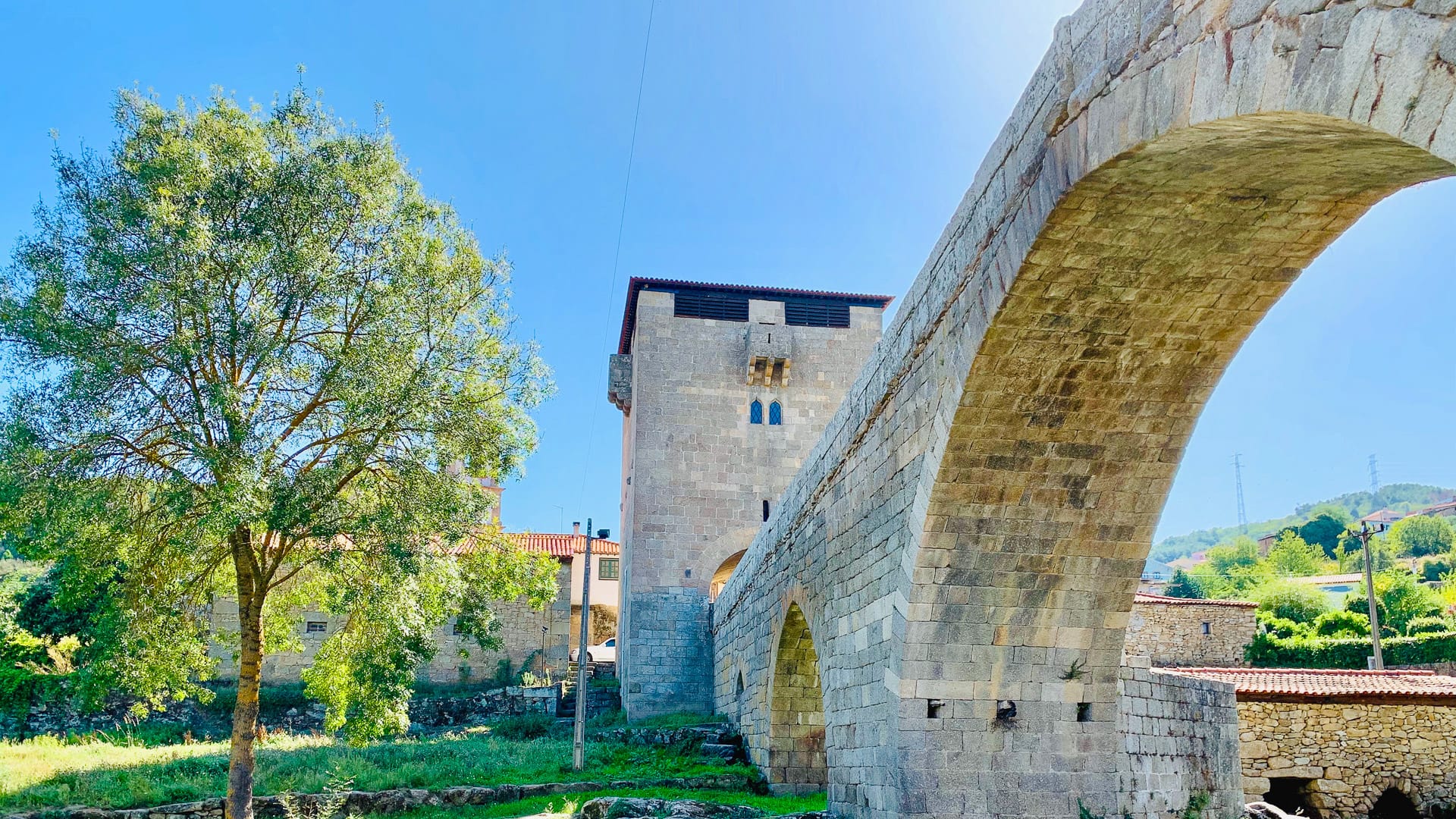
Historic stone bridge and tower in the Douro Valley (photo credit: Portugal Nature Trails)
Is a self-guided bike tour for you?
Self-guided cycling tours in Portugal are the ideal choice for cyclists who value independence, flexibility and the freedom to ride at their own rhythm.
But a self-guided bike tour in Portugal doesn’t mean you have to go it completely alone, and they’re not exclusively for experienced touring cyclists. By choosing an organised/supported self-guided tour, you have the freedom of being in charge of your own adventure but the confidence that all the logistics (such as accommodation and luggage transfers) are taken care of, and the access to local expertise to ensure you have the best possible ride.
What are the benefits of a supported self-guided cycling tour in Portugal?
A supported self-guided bike tour allows riders of all abilities and experience levels to explore Portugal independently, but confidently. Here are some of the key benefits:
- Set your own pace. Choosing a self-guided tour means you don’t have to stick to a group pace or feel any pressure to perform. You can stop when you want to, take ownership of the journey and shape each day depending on how you feel.
- Logistics taken care of. A supported, self-guided tour gives you independence without the stress of logistics. Accommodation is carefully chosen and arranged for you, and luggage transfers mean you don’t have to carry everything with you. This frees you up to sit back and enjoy the ride!
- Expert local knowledge and support. A great self-guided tour provider ensures you’re independent yet never ‘on your own’. You can get help with route planning and navigation from experienced local riders who know the best roads/tracks to take. And you’ve got the confidence that if you need support, it’ll be there when you need it.
- Connect with the places you travel through. Alongside the sense of freedom and independence, another key benefit of choosing a self-guided tour is that you can connect with the places you pass through. Riding independently makes it easier to stop in small cafés, interact with local people, and explore towns at a relaxed pace, creating a more authentic travel experience.
Any highway code or other travel information I need to be aware of?
As ever, it’s a good idea to check current travel information before you book and travel. For UK visitors, the UK government travel information pages for Portugal are here.
Portugal is generally a cyclist-friendly country, but there are a few local rules and practical considerations worth knowing before you ride:
Highway code and traffic tips
- Cyclists must ride on the right-hand side of the road.
- You are required to obey the same traffic rules as other vehicles.
- Helmets are not legally mandatory for adult cyclists, but they are strongly suggested and widely used.
- Reflective gear and good bike lights are important. Tunnels are common in some regions of Portugal, and on a bike tour you may be riding in low light conditions.
- Motorists in Portugal are generally respectful toward cyclists, particularly on secondary roads but it’s important to maintain awareness.
- Rural and inland routes tend to have very little traffic, but busier coastal and urban areas can be busier, especially during peak tourist seasons so pay attention!
Terrain and riding surfaces
The terrain can vary significantly, so it’s important to ensure you choose the right bike and tyres for the route you’ve planned. Cobblestones are common in historic towns and villages. They can be rough, and it’s important to ride with caution when they’re wet. Gravel and dirt sections may include loose stones, sand or rutted tracks depending on the region and the season.
Insurance
Ensure you have comprehensive travel insurance that covers all the activities you plan on undertaking.
Sponsor Message
Considering a self-guided bike tour in Portugal?
Portugal Nature Trails has been running cycling holidays in Portugal since 2004.
They offer a range of guided and self-guided bike tours across the country that take care of all the logistics, including accommodation, cycling routes, and bike hire.
Interested? Head to the Portugal Nature Trails website for further details.
Got a question for António Gavinho from Portugal Nature Trails?
Fill out this form and we will pass it to Portugal Nature Trails who aim to reply (within 24 hours wherever they can!)
Part 4: Any other tips for a self-guided bike tour in Portugal?
Once all the planning is done, there are just a few things left to keep in mind to make sure you get the most out of your Portugal bike tour!
Choose the right tour for your riding style
Portugal offers very different experiences depending on the region and terrain. Be realistic about distances, elevation, and surface type, and select a route that matches how you like to ride. A well-matched tour will always feel more memorable than one that looks impressive on paper but feels forced on the road.
Trust local expertise
Riding in a new country is very different to riding at home. Routes designed by local specialists consider traffic patterns, surface quality, wind exposure, and daily flow. These details are hard to judge from maps alone. Leaning on local expertise instead of trying to go it completely alone allows you to focus on enjoying the ride rather than stressing about the logistics or missing out on the best cycling routes!
Pace yourself and ride with flexibility
One of the biggest advantages of a self-guided tour is freedom. Start each day at your own rhythm and take breaks when you want. Give yourself time to enjoy cafés, viewpoints, and small towns. Leaving space in the day often leads to the most memorable moments.
Be prepared for varied terrain
Portugal’s cycling routes often include mixed surfaces, especially in historic towns and rural areas.
Be aware! Even road-focused tours may include cobblestones or rougher sections.
Respect local rhythms
Village life follows its own pace. Shops and cafés may close during midday, particularly inland, while evenings tend to start later. Carry water and snacks, but also enjoy the opportunity to stop in local cafés, which are generally very welcoming to cyclists.
Use support when you need it
Self-guided does not mean unsupported. If questions or issues arise, using on-tour support early helps keep the experience smooth and stress-free. The goal is to enjoy the journey, not to solve problems on your own. Find out more below.
Focus on the experience, not just the ride
Some of the best moments happen off the bike. Take time to enjoy local food, talk to people, and explore the places you pass through. Portugal rewards curiosity, and a self-guided tour offers the perfect balance between riding and discovery.
Approached with the right mindset, a self-guided bike tour in Portugal becomes less about covering distance and more about experiencing the country at your own pace.
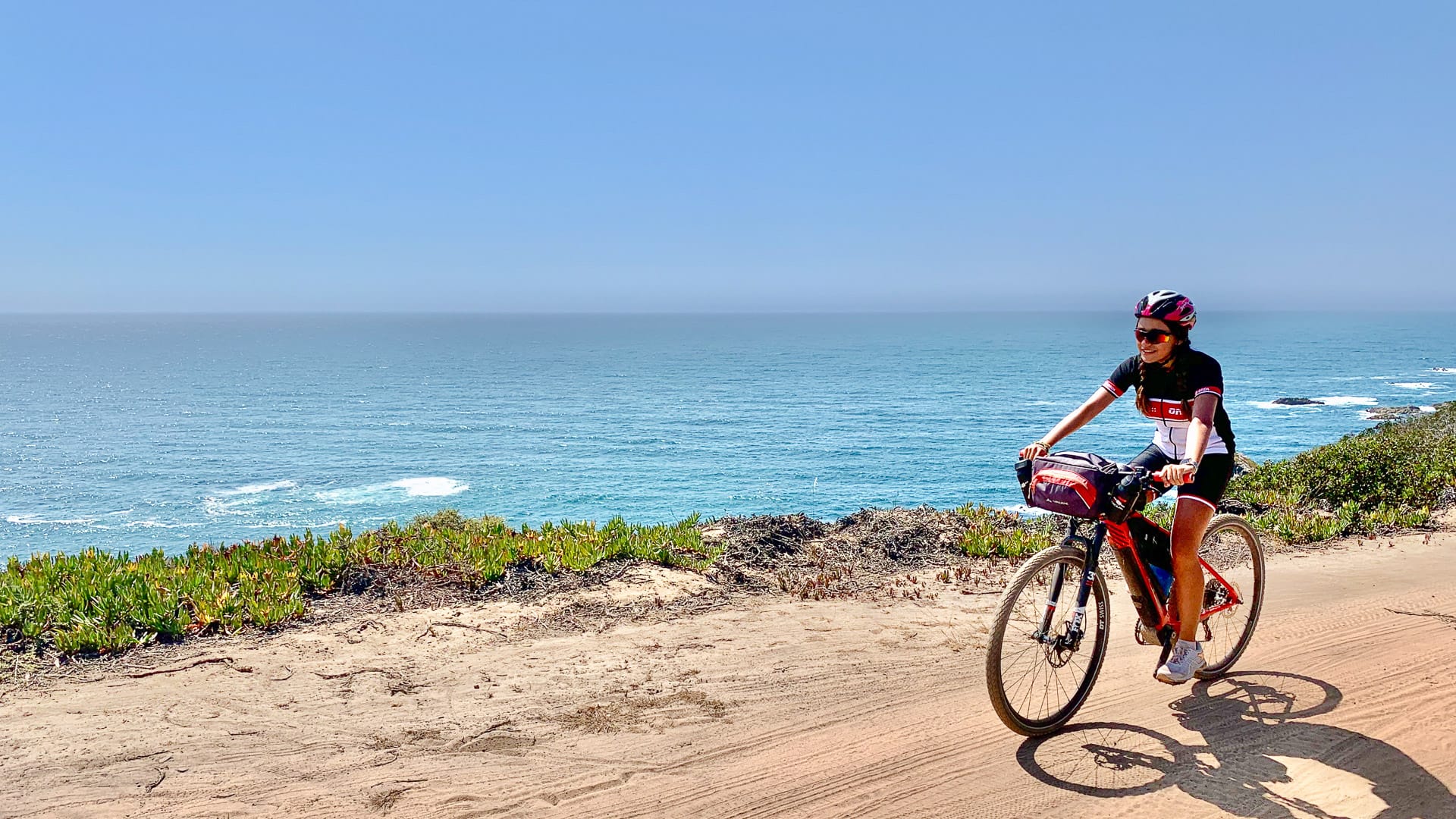
Cycling beside the Portugal Wild Coast with ocean views (photo credit: Portugal Nature Trails)
Part 5: What do Portugal Nature Trails offer?
Portugal Nature Trails has been offering guided and self-guided bike tours and hiking trips in Portugal since 2004. With our in-depth local knowledge and passion, we ensure you can immerse yourself in the local culture and truly experience the best of Portugal!
At Portugal Nature Trails, flexibility and customer care are at the core of everything we do. While we offer carefully designed self-guided tours across Portugal, including the mainland as well as the islands of Madeira and the Azores, we are always happy to tailor each experience to match your specific goals. Whether you would like to adjust the number of riding days, include additional transfers, adapt the daily stages to make them more relaxed or more challenging, or even design a completely bespoke itinerary, our team is ready to help make it happen.
Our tours are supported by a highly experienced local team, including professional mechanics and a dedicated operations team available 24 hours a day. Even though you are travelling independently, you are never truly on your own. We closely monitor each journey and are always ready to assist whenever needed, ensuring a smooth, safe and enjoyable experience from start to finish.
All of our routes are carefully verified on the ground and continuously reviewed to ensure the highest quality of information and riding experience. Each tour is accompanied by personalised travel information, including a detailed travel guide and navigation support to help you make the most of every stage. Our guides include recommendations for local experiences, restaurants and cafés, along with practical tips, cultural insights and interesting stories about the places you will pass through along the way.
At the start of the tour, we provide a personal briefing where one of our guides introduces the route, answers any questions and makes sure your bike is perfectly adjusted through a bike fitting.
We also offer high-quality bike rentals, including road, gravel and mountain bikes, as well as electric bikes, ensuring that every rider can enjoy the experience in comfort.
We believe that a cycling trip should be more than just a memory. It should be an experience that makes you want to return and explore even more of Portugal.
What’s included
On our self-guided Portugal bike tours, we take care of all the logistics so you can enjoy the ride.
- Accommodation is arranged for each night, with daily luggage transfers.
- We can also assist you with transfers on arrival and departure if required.
- Before your trip, you’ll receive a comprehensive digital booklet with all the information you need about your route. This includes our top restaurant suggestions, points of interest, local curiosities you won’t want to miss and optional experiences to enhance your journey.
- All our routes are tried and tested to make sure you’re going to have a great experience!
- On arrival, you’ll have a detailed briefing from an expert local guide and a bike fitting session.
- You also have access to a personalised app to help you navigate. Local support is available, so while you’ve got the freedom to ride independently, you’ve also got the confidence that help is never far away.
- We can also offer bike rental, and there’s flexibility to add additional nights to your trip if you want to stay a little longer.
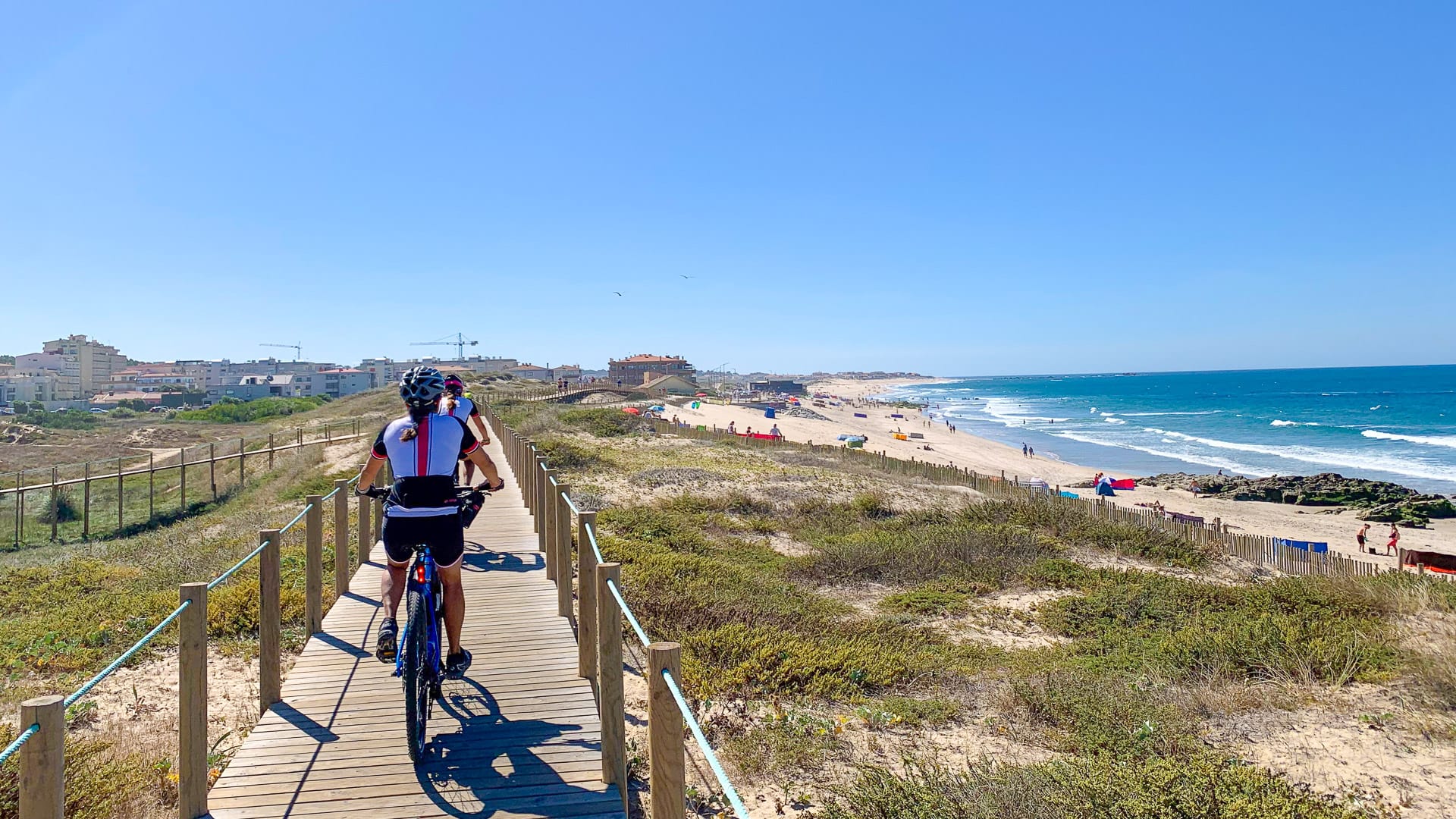
Self-guided cycling tour exploring Porto and the scenic Green Coast (photo credit: Portugal Nature Trails)
How can I find out more about Portugal Nature Trails?
Head to the Portugal Nature Trails website for full details of their self-guided bike tours in Portugal, including pricing and availability.
What’s next?
Thank you to António Gavinho from Portugal Nature Trails for sharing those helpful tips for planning a self-guided bike tour in Portugal. Every tour sounds incredible, with such variety to choose from!
Have you experienced a self-guided Portugal bike tour? Or maybe this article has you considering one? Leave us a comment to let us know!
If you’d like more Portugal cycling inspiration, don’t miss:
- Insider’s guide to cycling in Portugal
- Guide to cycling Portugal’s Atlantic Ring Route, a 350-kilometre ride through central Portugal
- Five reasons to cycle off-season in Portugal
- Portugal’s N2 cycle route behind the scenes
Got a question for António?
Fill out this form and we will send it to António. We aim to get you an answer within 24 hours where possible!António Gavinho is the Founder and Chief Adventure Creator of Portugal Nature Trails, an incoming tour operator specializing in self-guided and guided hiking and cycling experiences across Portugal, with a strong emphasis on cultural and culinary immersion.
Born in Lisbon in 1968, António spent almost twenty years working in management before choosing to realign his professional life with his long-held passion. Travel, sport, and the outdoors have always been central to his identity, particularly cycling and mountain landscapes. In 2005, together with his wife Elsa, he founded Portugal Nature Trails as a way to create journeys shaped by real experience rather than abstract planning.
A lifelong cyclist, António rides almost every day. His riding ranges from long-distance efforts to short exploration loops, from historically driven routes to more technical and adrenaline-focused terrain. Cycling is both his daily practice and his primary way of understanding territory.
In addition to designing self-guided programs, António is also a highly experienced guide on multi-day guided tours. One of the most emblematic is the Bike Madrid–Lisbon journey, where his deep knowledge of route flow, logistics, and cross-border riding comes together with a strong ability to read the group and the terrain.
Even in his free time, the bike remains central. When travelling, António often chooses to travel to destinations by bike, sometimes combining long rides with visits to family and friends. His philosophy is simple. Ride the route, understand the place, and only then design an experience worth sharing.
First Published: 18 March 2026
The contents of this website are provided for general information purposes only. It is not intended to amount to advice and you should not rely on it. You should carry out your own due diligence and risk assessments and take professional advice. Views expressed by interviewees or other users of this website do not necessarily represent our views. We make no representations, warranties or guarantees, whether express or implied, that the content on our website is accurate, complete or up to date. If you use any information or content on this website, download from, or otherwise obtain content or services through our website, it is entirely at your own discretion and risk. Epic Road Rides Ltd disclaims all liability and responsibility arising from any reliance placed on the information and content on this website. Find out more here.
Sponsor Message
Considering a self-guided bike tour in Portugal?
Portugal Nature Trails has been running cycling holidays in Portugal since 2004.
They offer a range of guided and self-guided bike tours across the country that take care of all the logistics, including accommodation, cycling routes, and bike hire.
Interested? Head to the Portugal Nature Trails website for further details.
Got a question for António Gavinho from Portugal Nature Trails?
Fill out this form and we will pass it to Portugal Nature Trails who aim to reply (within 24 hours wherever they can!)
Comments