
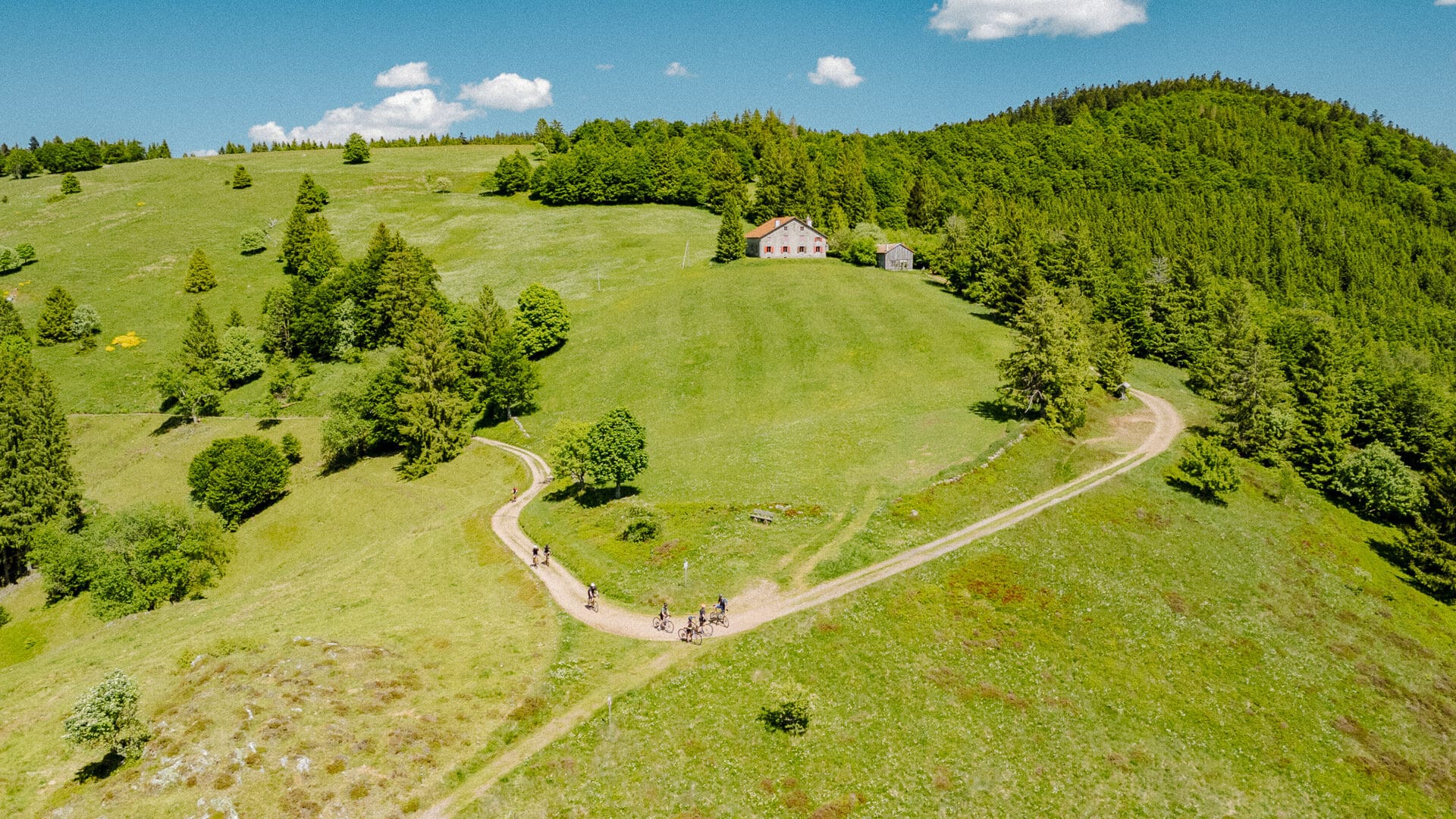

Gravel cycling in France is a treat for curious riders: forgotten farm lanes, quiet forest roads and ancient tracks that slip between villages and ridgelines.
You’ll find fast chalk in the north, vineyard connectors in the centre, limestone and lavender in the south, and big mountain passes out east and west.
The joy is freedom – linking off-grid segments, avoiding traffic and settling into steady climbing with big views. The tricky part is working out the regions and routes that are best for the kind of gravel you’re looking for and stitching it all together. Rights of way vary, forestry closures pop up, and not every dotted line rides well. Good tyres, low gears and reliable local intel make the difference between a slog and a standout day.
That’s why in this article, we’re interviewing gravel cycling enthusiast Olivier Heissler, co-founder of GravelUp. Since 2022, GravelUp have been curating gravel bike tours in France, keeping groups small and logistics simple. Their guides pre-ride the terrain and know when to go, what to avoid and how to unlock the best gravel bike trails while you focus on the riding.
Interested in gravel cycling Mont Ventoux? Don’t miss this in-depth guide for further information.
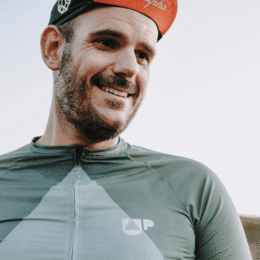
Olivier Heissler is the co-founder of Gravel Up. A Frenchman born and raised in Paris, he spent 13 years travelling the world with a major hotel group before his perspective on tourism shifted towards more authentic, local experiences.
Olivier properly got into cycling while living in Shanghai, where he also raced triathlon and competed widely across Asia. Through gravel riding and cycling adventures, he discovered a new form of performance that combines his two passions: exploring the world and surpassing oneself through sport. Today, he channels that ethos into designing and sharing routes that connect riders with real places and people.

We love to introduce our community to cycling businesses, destinations and ideas that we think are genuinely interesting. GravelUp caught our attention because of its focus on cycling in France, which felt like a natural fit for Epic Road Rides and our readers. We were therefore pleased to work with the GravelUp team on this article.
GravelUp paid for this advertisement feature. Our decision to collaborate reflects our view that the brand is relevant to our readers; it is not a formal approval, audit or guarantee of its services. Unless we expressly say otherwise, we have not personally taken the trip described or independently verified information supplied by GravelUp.
As with any travel purchase, please check the latest trip details, terms and customer protections directly with GravelUp before booking. Any booking is made with GravelUp, not Epic Road Rides.
Part 1: Tell us about the rising trend of gravel cycling in France
The Covid-19 pandemic brought nationwide lockdowns in France and forced regular riders to chase adventure closer to home.
With flying off-limits, cyclists began to discover France’s endless forest tracks and farm lanes. These trails were often only a short train ride away.
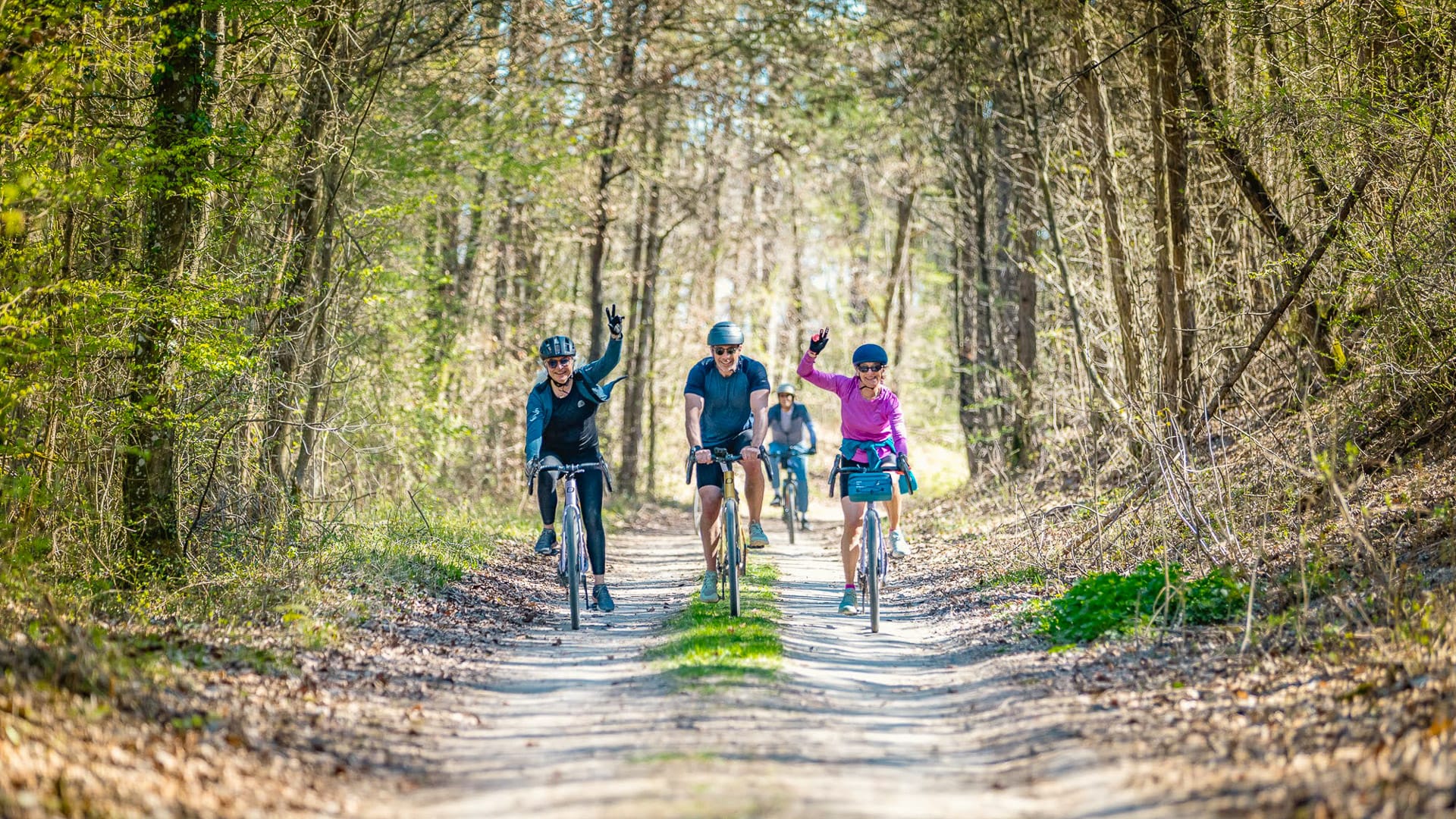
Gravel cycling appealed to cyclists with a growing appetite for nature and wellbeing. Gravel bike adventures felt like freedom to many!
How popular is it now?
The growth of gravel riding in France has been rapid.
Thanks to bike industry developments, cyclists can now use the same bike for day trips and lightweight bikepacking, opening up quick escapes and longer adventures alike. This convenience is reflected in gravel bike sales have shown strong year-on-year growth (source).
Cycling events are also showing this shift. New gravel-focused events have popped up across the country, including the Nature is Bike event in the Loire Valley. Even the once-MTB-only Roc d’Azur now showcases gravel in a big way (source).
Why riders are switching to gravel
Gravel offers exploration without the stress of traffic.
It’s accessible, social and less technical than mountain biking, so it works well for mixed-ability groups and families.
A third of GravelUp’s riders are women, and many prefer cycling on quiet paths instead of busy roads. On a gravel cycling tour, it’s less about watts and more about discovering a place, and France’s varied landscapes mean there’s always another region to explore!
The origins of GravelUp
GravelUp was founded in 2021, and we spent eight months building routes and launching the website. Our first trips launched in April 2022.
Early scouting focused on Corsica, the Vosges and the Grands Causses. We ran a test ride in November 2021 to make sure our gravel experience hit the mark. We invited 10 people from our network to ride our Grands Causses itinerary. It was the first trip we ever sold and operated, and everyone paid for their place. The aim was to check that the concept we had been working on for months worked smoothly in real life and to gather honest, constructive feedback from real customers so we could refine the experience. Since then, we have kept this habit of running a test trip for every new destination launch, and it remains incredibly valuable.
Since those first departures, we’ve helped over 2,000 riders discover gravel routes across France and have over 300 five-star Google reviews.
This demand has led us to add three new destinations each year across France and into Europe, including Norway, Spain and soon Switzerland. We favour lesser-known mountain ranges you’d be unlikely to stumble upon alone. Find out more about what we offer below.
Sponsor Message
Considering a gravel bike adventure in France?
GravelUp have run gravel bike tours in France since 2021. Their extensive range includes several regions, including Brittany, the Pyrenees, Provence and beyond!
Interested? Head to their website for full details.
Got a question for Olivier from GravelUp?
Fill out this form and we will pass it to GravelUp who aim to reply (within 24 hours wherever they can!)
Part 2: Why is France a great gravel cycling destination?
Cycling solitude
Come summer, France’s legendary mountain roads like Mont Ventoux and the Col du Tourmalet can be heaving. This is especially the case in mid-July to mid-August, or if the Tour de France decides to visit.
If you are seeking a more tranquil riding experience, gravel is a great option to consider. Beyond France’s famed network of roads lies a vast web of rural tracks and farm lanes. There are hundreds of thousands of kilometres (source) that stitch villages, vineyards and forests together.
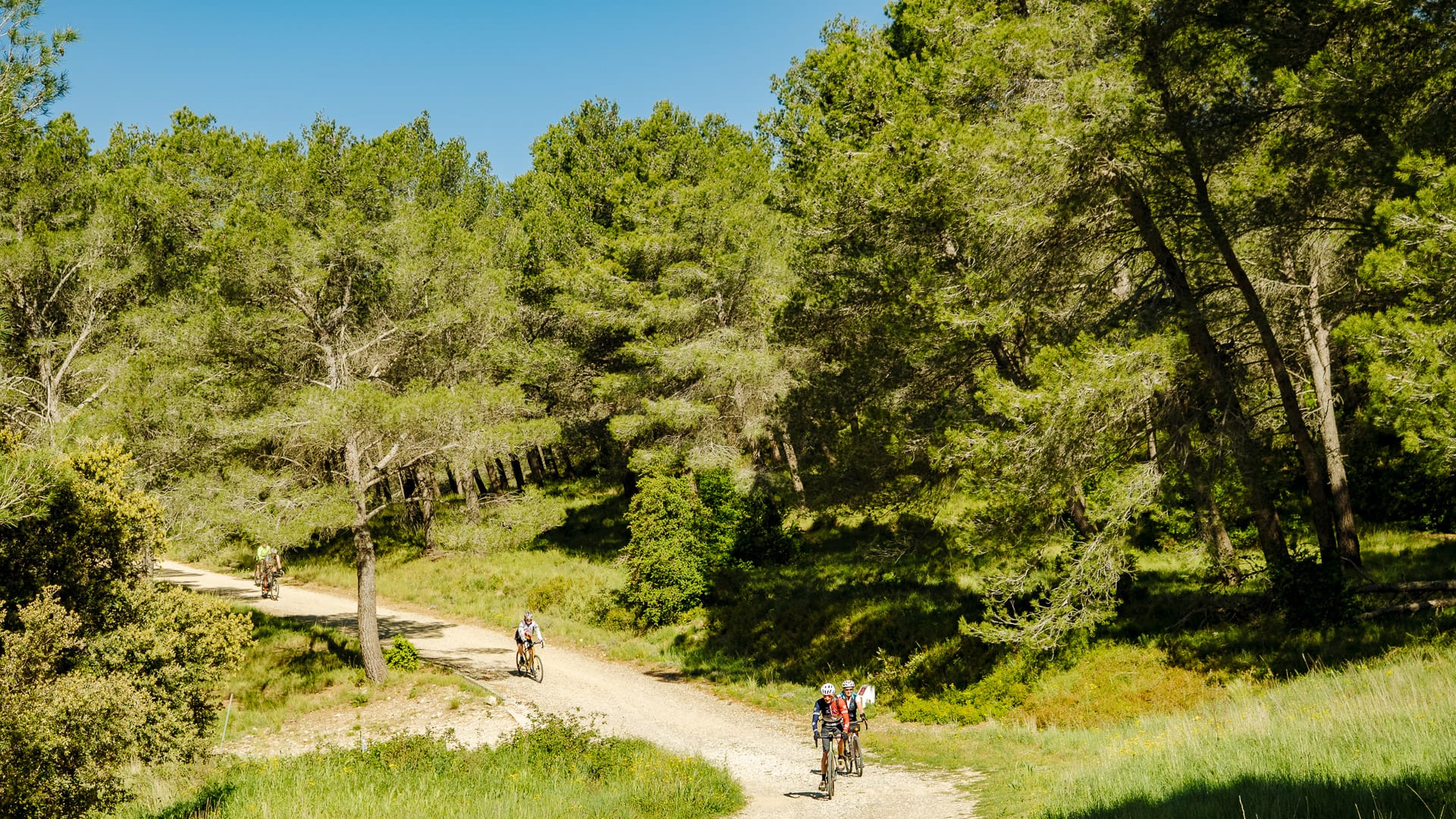
Many are classed as chemins ruraux, which are public rights of way usually on unpaved tracks. In some regions, you’ll also find extensive fire roads threading through peaceful pine forests for mile after mile.
On these gravel routes it’s not uncommon to ride for hours with just birdsong for company!
A playground of surfaces and scenery
France is a gift for gravel: Alpine and Pyrenean foothills, mid-mountain massifs, rolling vineyards, Atlantic pine forests and Mediterranean garrigue(dry scrubland).
Gravel riders can expect long ribbons of farm track, forest trails and quiet lane connectors that keep you off the main roads and take you deep into the natural landscapes.
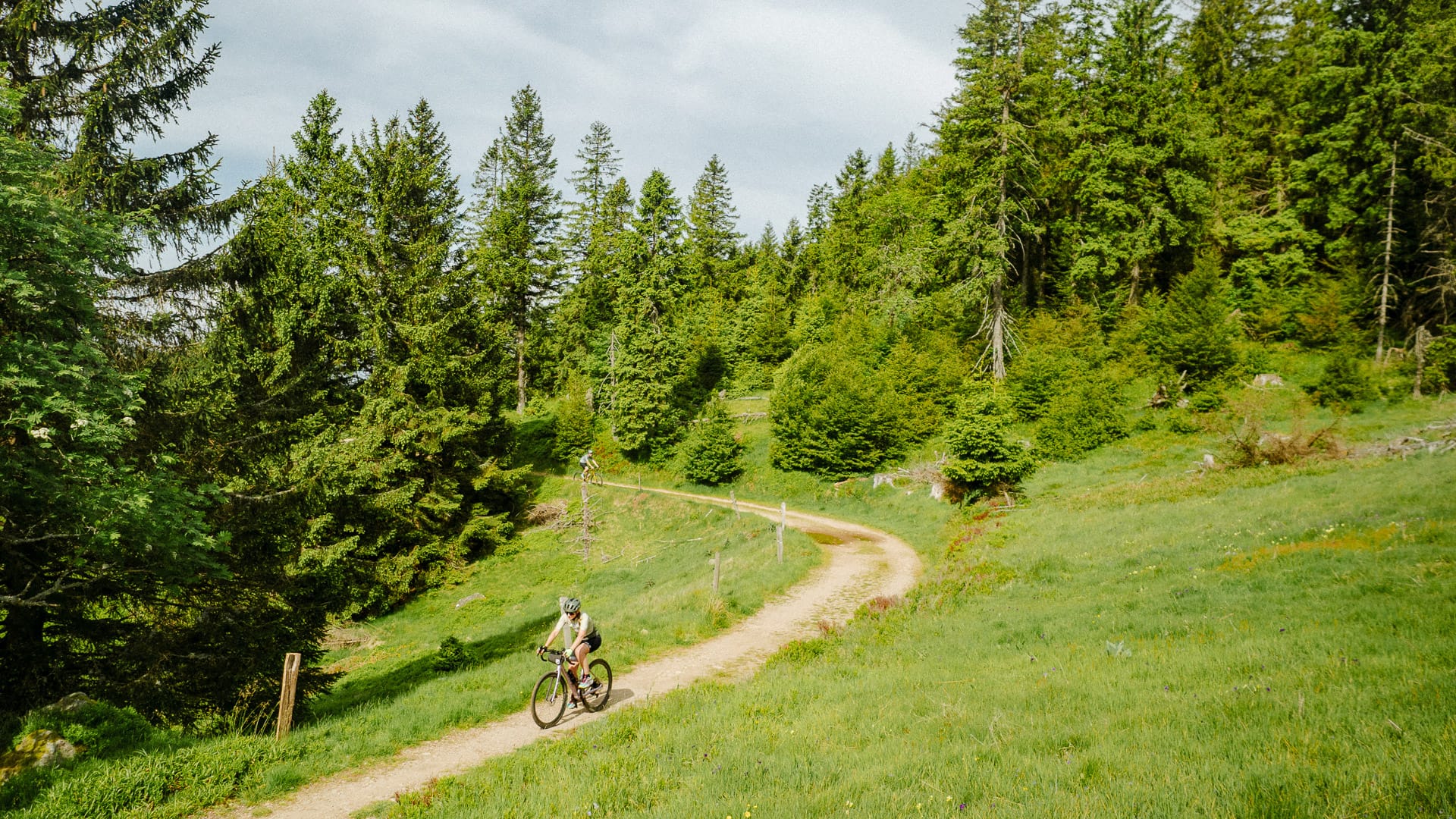
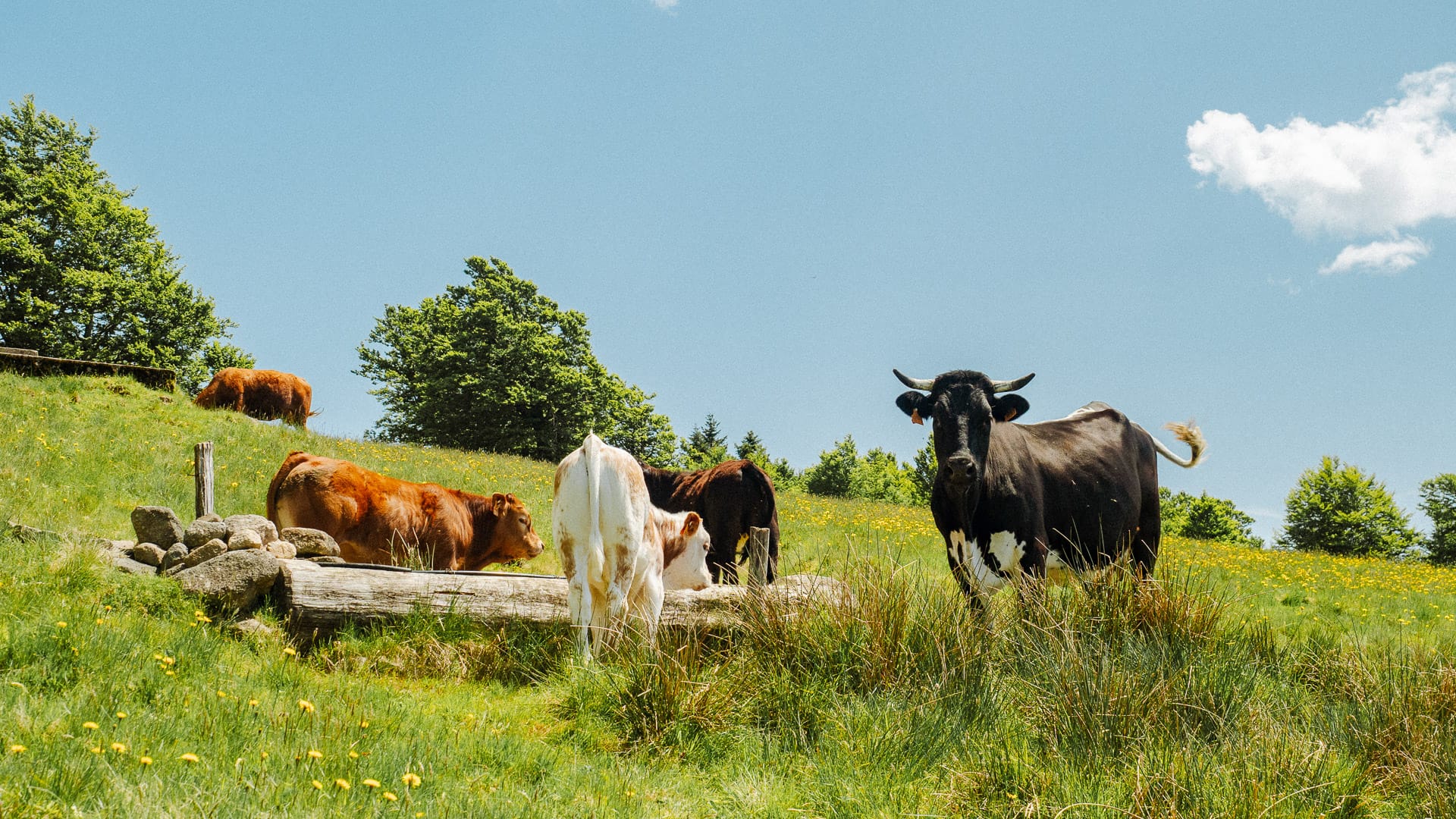
Some of my favourite forest riding is in the Vosges, where we follow the ridgelines above high-altitude lakes on flowy trails that weave through the trees and open out into mountain pastures. It is a region that feels challenging yet accessible, and every pedal stroke is rewarded. A real highlight is reaching the summit of Grouvelin, with its wide panoramic views over the surrounding peaks and forests. Find out more below.
Food and drink that reward riders
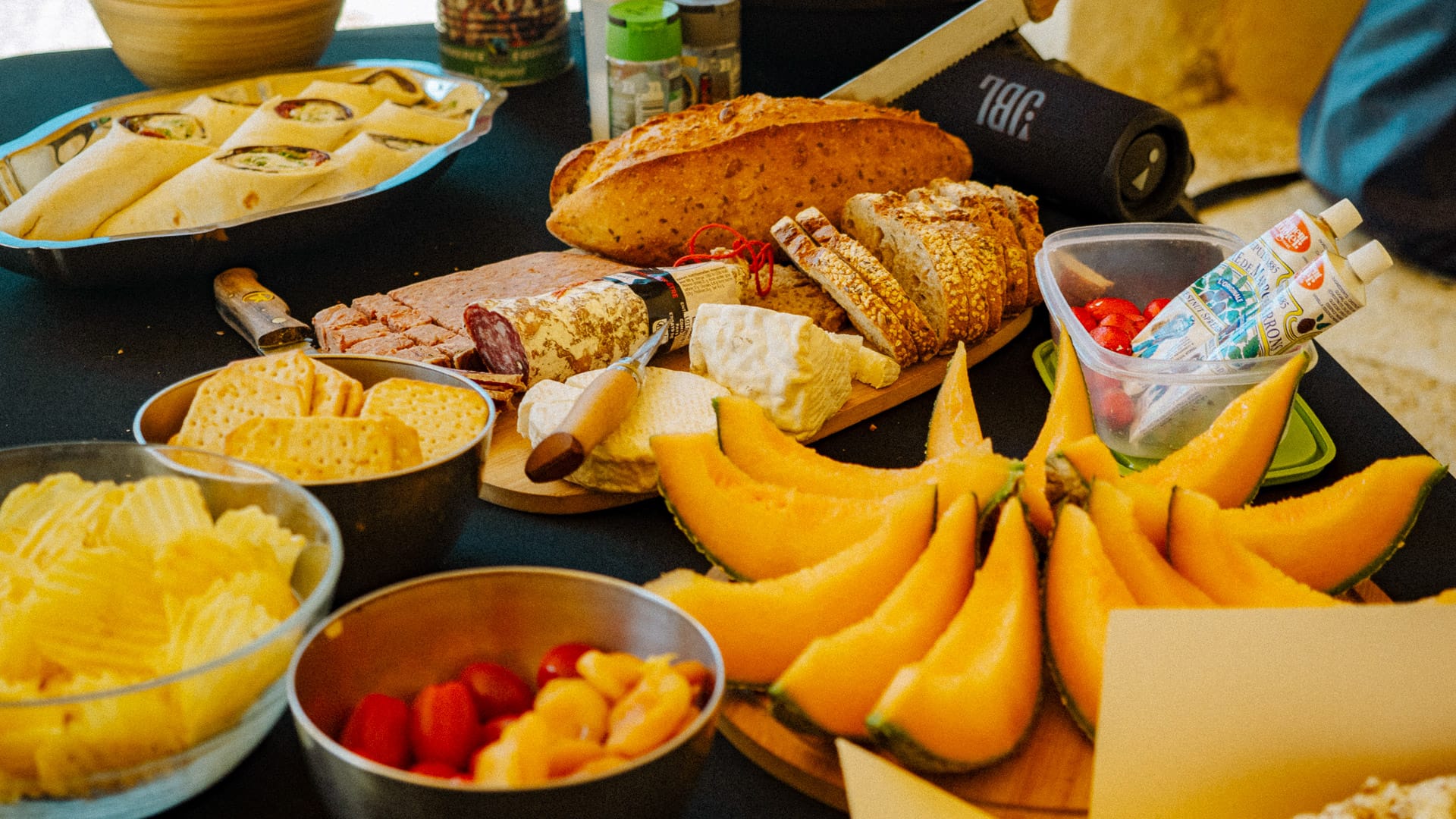
Every region brings something to the table. Delicious local delicacies cyclists can savour include tartiflette (a creamy oven-baked potato dish with cheese), gateaux Basques (a traditional French pastry dessert usually filled with black cherry jam) and Breton crêpes (sweet and savoury pancakes).
Here are my favourite specialities in the 3 regions, which our riders can enjoy during our trips:
Vosges
Best for: hearty mountain cuisine that is generous and comforting. Don’t miss:
- Tofailles, slow-cooked potatoes with smoked bacon and onions
- Blueberry tart, made with wild mountain blueberries
Alpilles
Best for: the taste of Provence, sunny and aromatic:
- Provence lamb, often cooked with herbs
- Ratatouille and other sun-ripened vegetables
- Tapenade, black olives, anchovies and capers with some Local wines, reds and rosés from Les Baux-de-Provence
Champagne
Best for: elegant gastronomy, balancing tradition and refinement.
- Andouillette de Troyes AAAAA, a renowned tripe sausage
- Champagne wine, central to the region’s identity
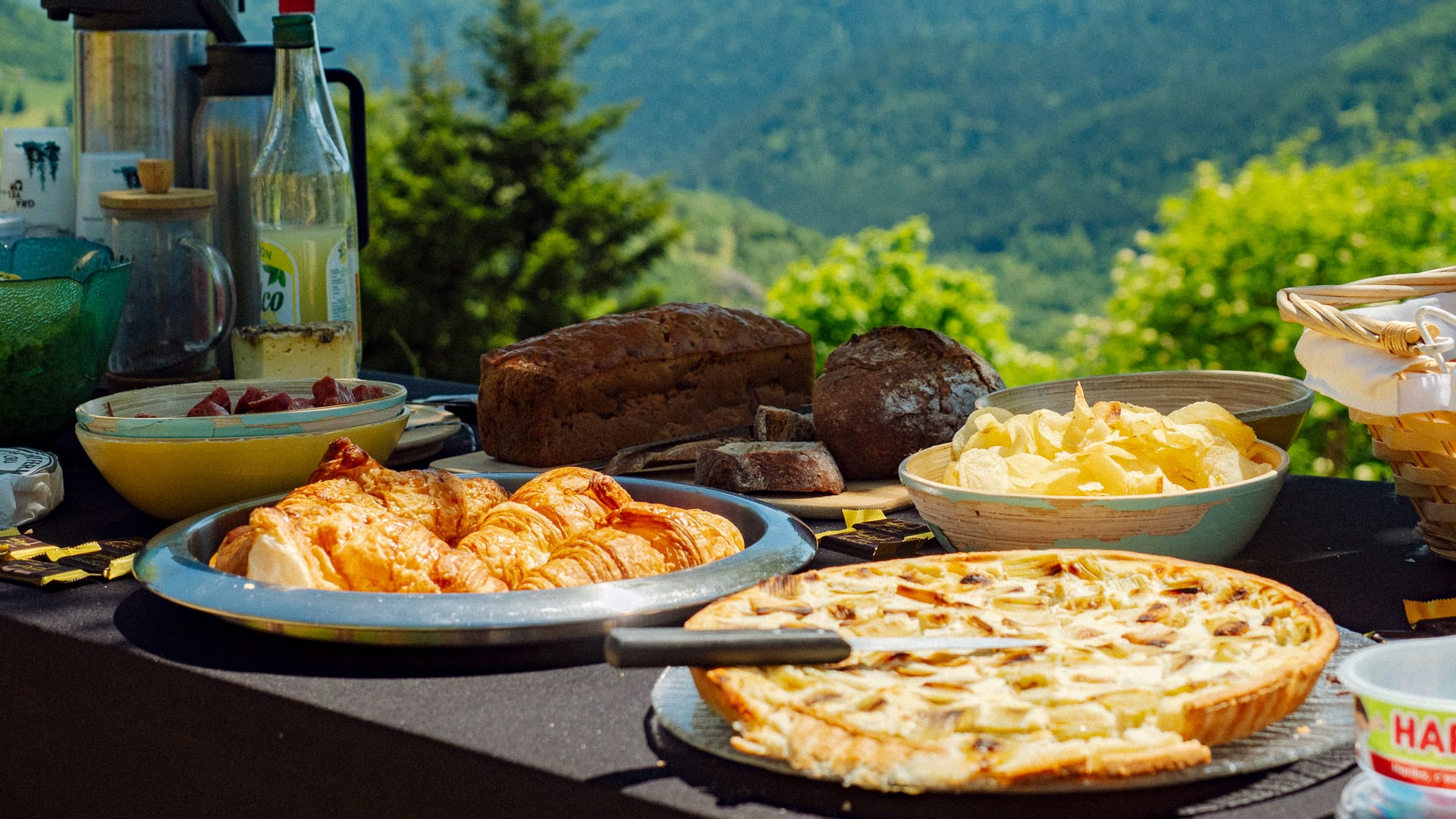
Plus, you can indulge in world-class wine and enjoy France’s growing craft-beer scene. Post-ride recovery also tastes better when the boulangerie is your final checkpoint!

Built for cyclists
Most regions in France have well-developed cycling facilities. Many areas publish signed routes, paper maps and downloadable GPX, so linking big days and short spins is easy.
The national “Accueil Vélo” accreditation also flags accommodation that understands riders: secure bike storage, basic tools and spares, wash-down areas and early breakfasts.
France aims to be the number one cycling holiday destination in the world by 2030, and it’s investing to make this happen (source).
Part 3: What are the best places (and routes) in France for gravel cycling?
GravelUp offers gravel bike tours across France, from Brittany to the Pyrenees and even on the island of Corsica. Take a look at GravelUp’s website for the full range of options.
Of all of these, here are three of my favourite gravel destinations in France. I chose them because each one has a very different type of terrain, so the riding experience feels completely different from one region to the next. They are also all easy to reach by train from Paris, in roughly one to three hours, which makes planning a trip much simpler.
The map below highlights some of the key destinations mentioned in this article. Hover over the map pins to see the names of places.
Champagne
Best for: a wine and bike tour with a gravel twist
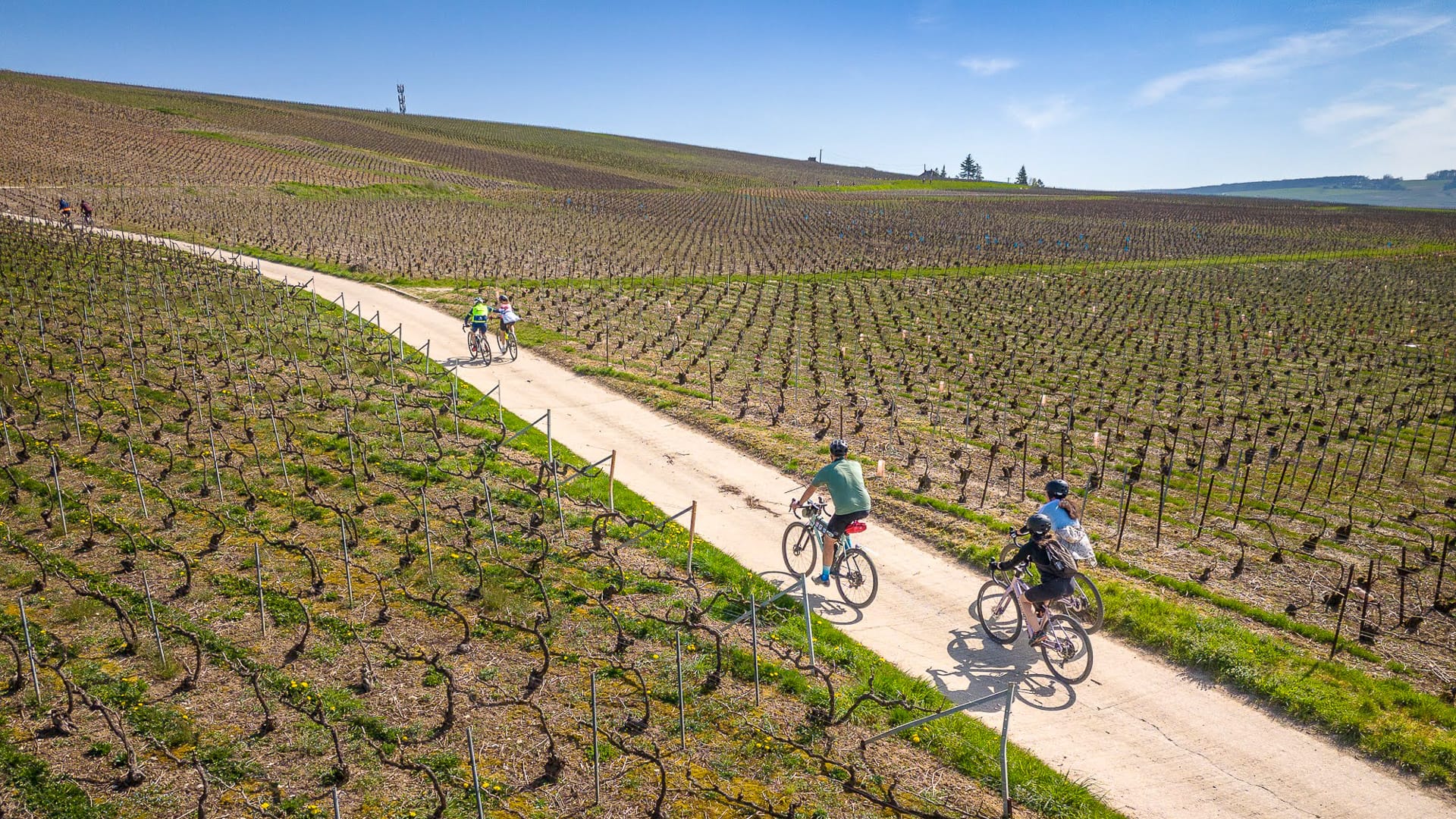
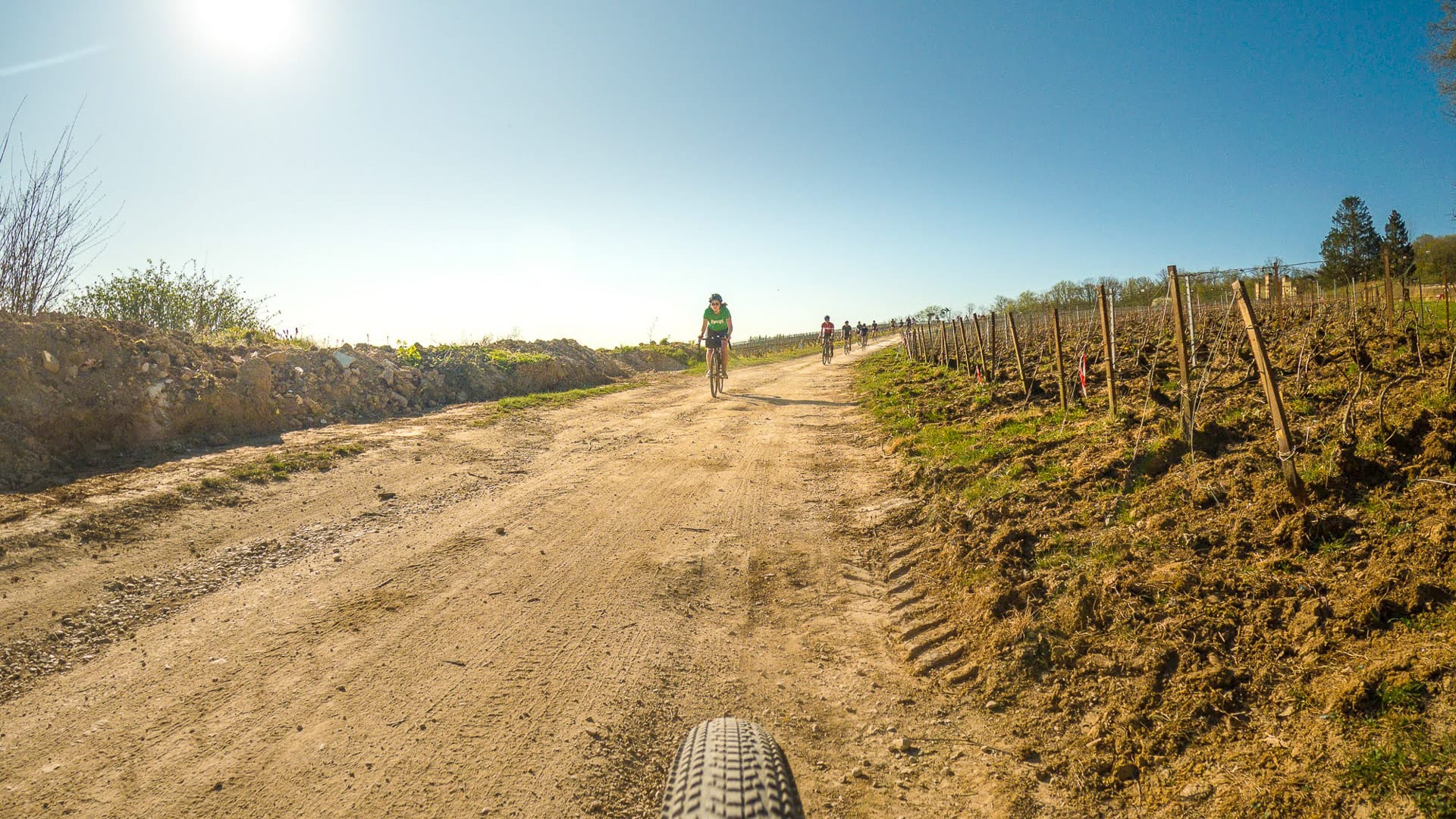
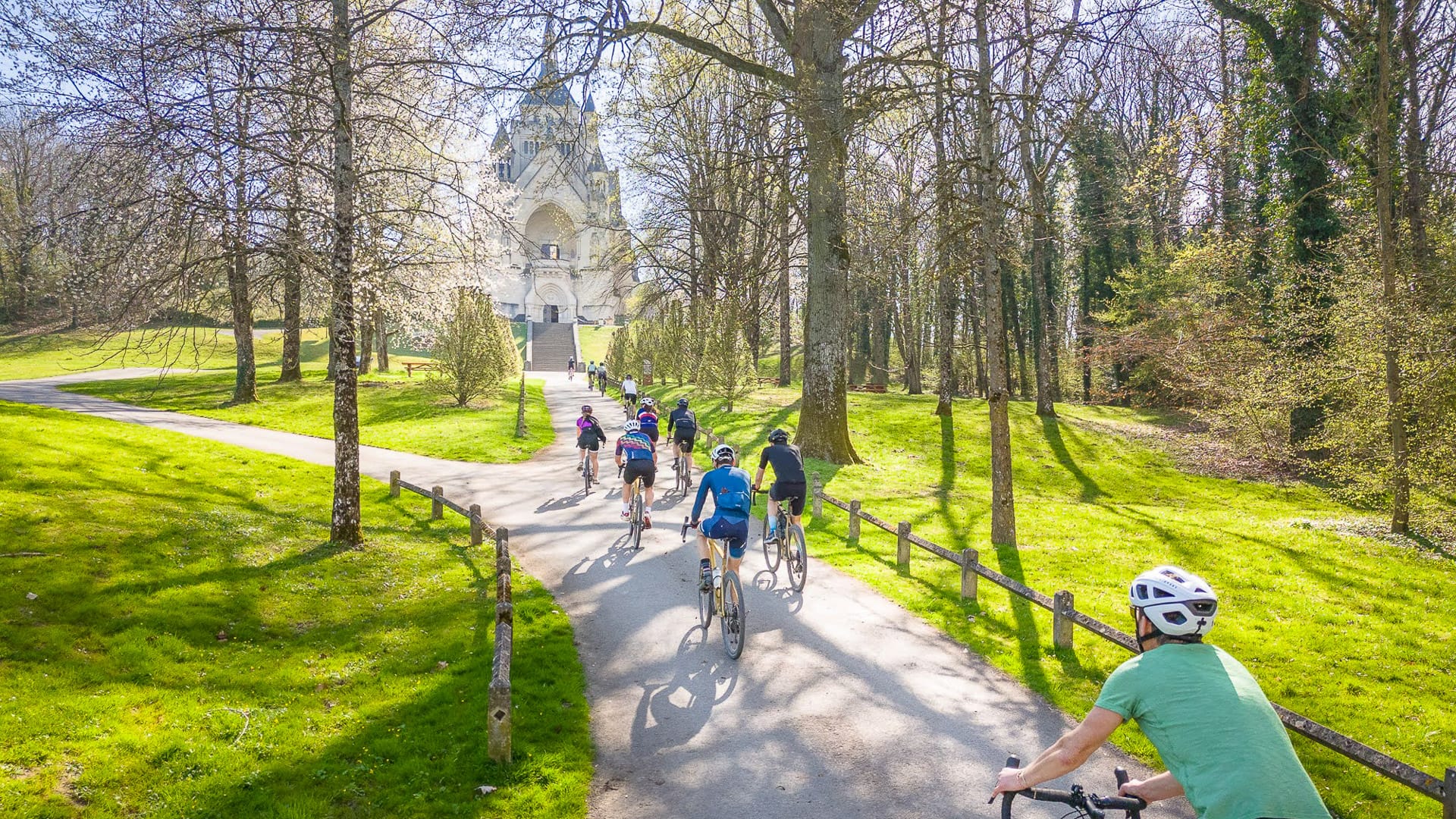
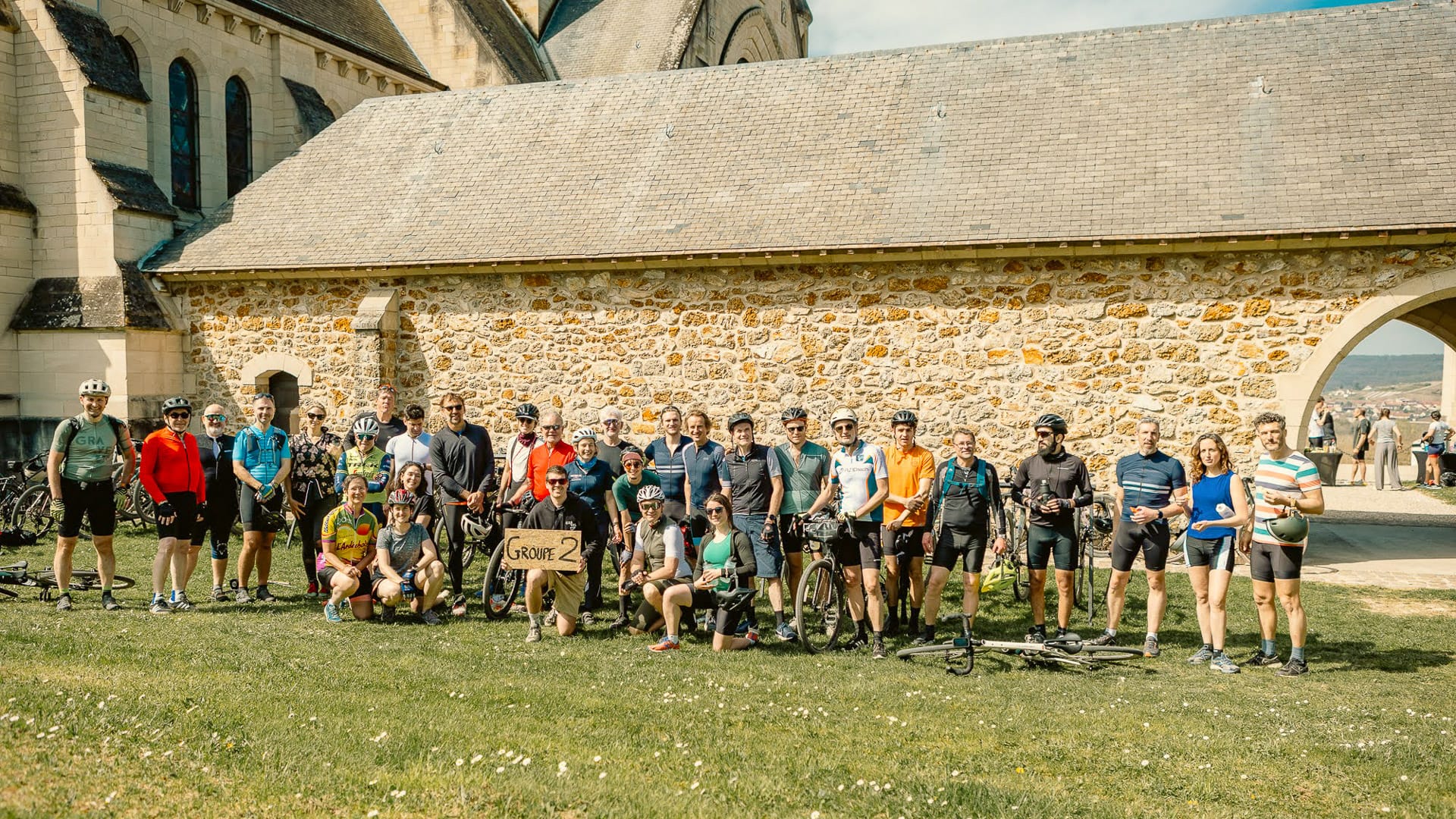
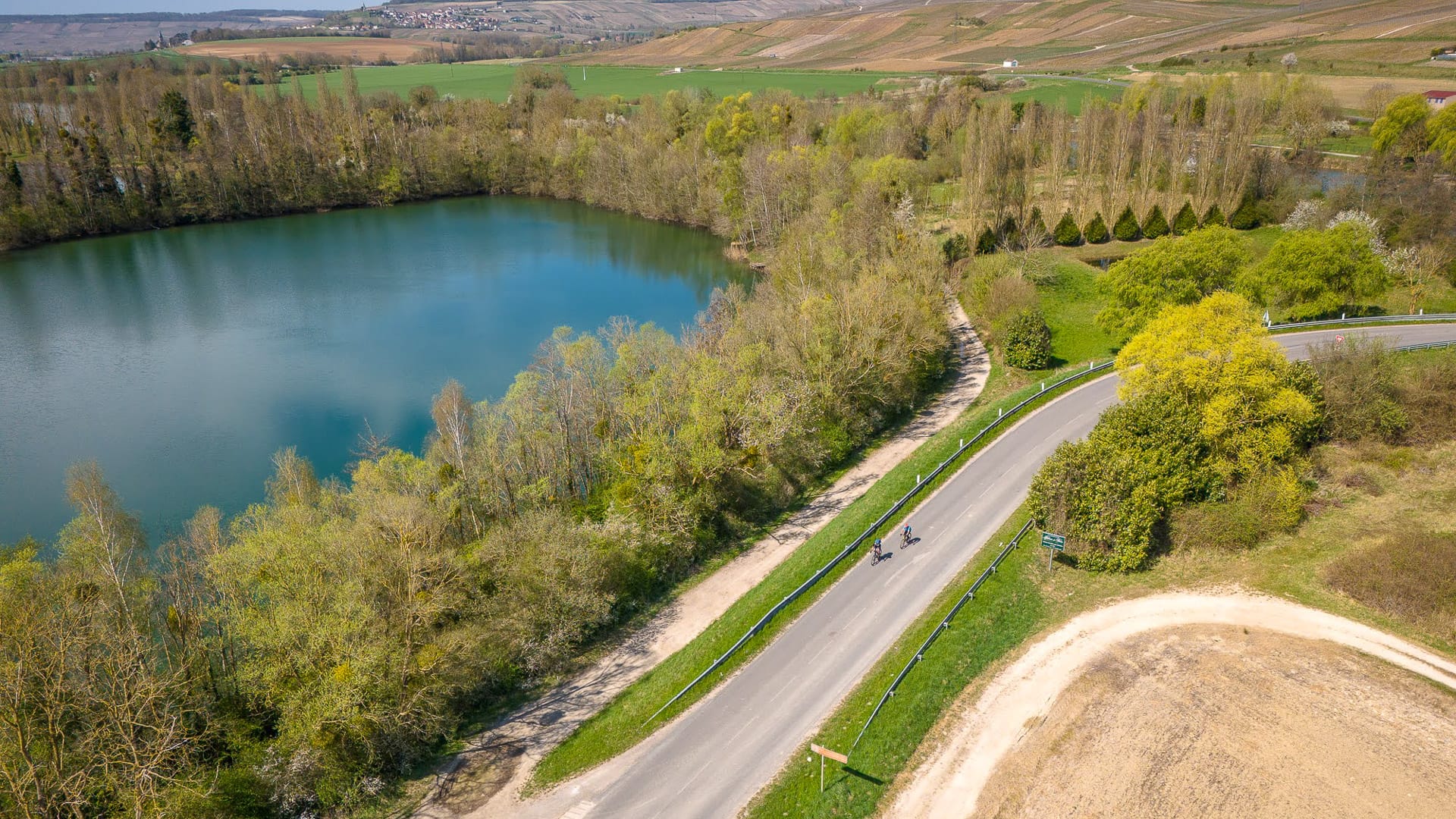
Champagne sits in Northeast France and is a quick train hop from Paris. Riders can expect rolling vineyard slopes, chalky white farm tracks and quiet lanes across three distinct valleys: the Montagne de Reims, the Marne Valley and the Côte des Blancs.
For cyclists, Champagne feels very different from big mountain areas or more famous wine regions. The scenery is less dramatic but also less crowded, which makes it ideal for long, immersive rides. You can link valleys, vineyards, forests and canal paths in a single day without needing extreme fitness or technical skills.
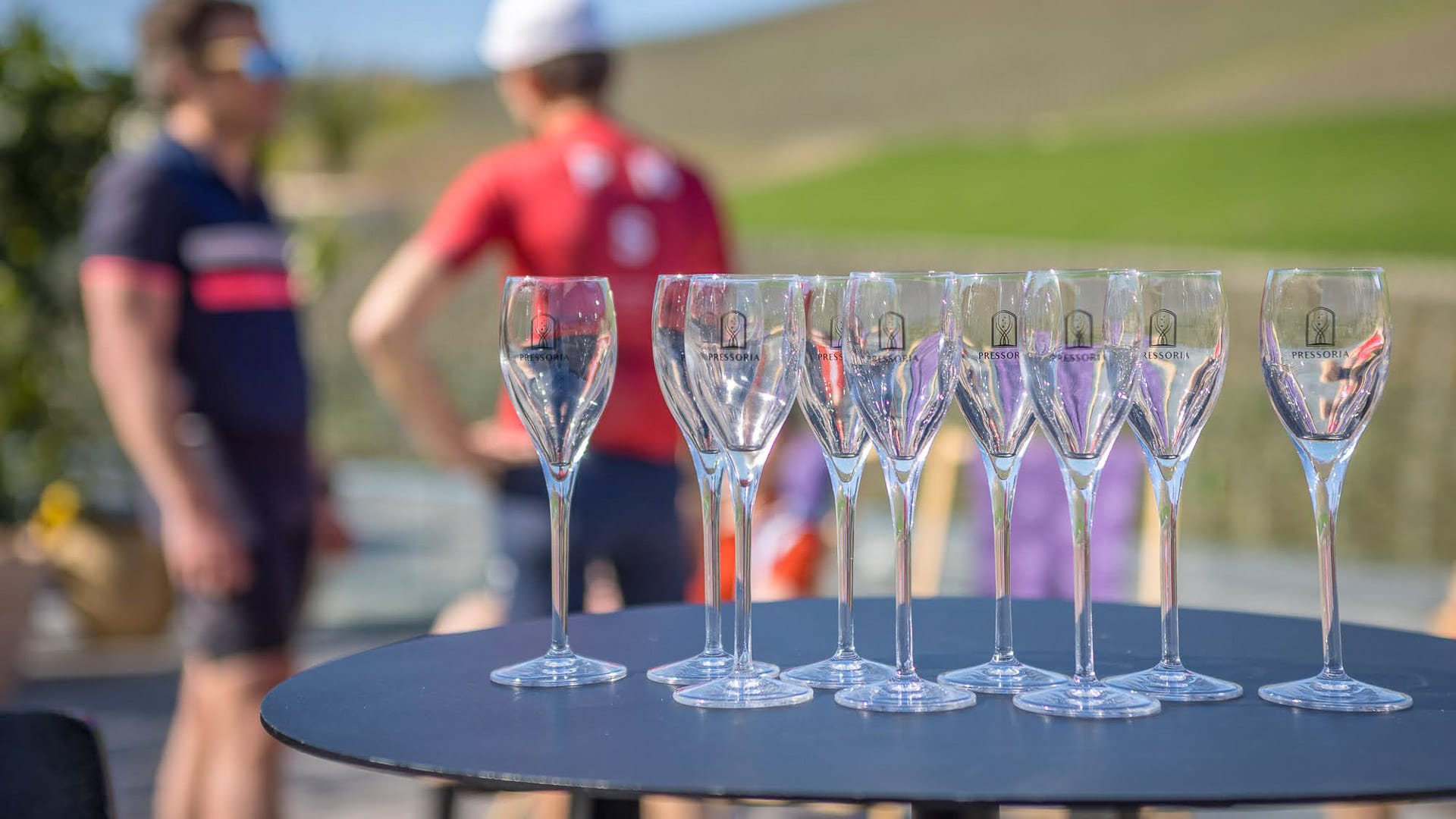
One of the main draws of the region is the opportunity to ride through world-famous wineries and sample the delicious locally grown wine!
Our Champagne gravel bike tour
Just 90 minutes from Paris, the Montagne de Reims Natural Park is Champagne’s gravel playground! Over two full days, you’ll cover around 105 kilometres with around 1,600 metres of elevation gain on the region’s trademark chalky white trails that sweep through vineyards, forests and rolling hillsides.
Routes are carefully designed to link the prettiest villages, including Épernay and Hautvillers, with panoramic viewpoints across Grand Cru vines.
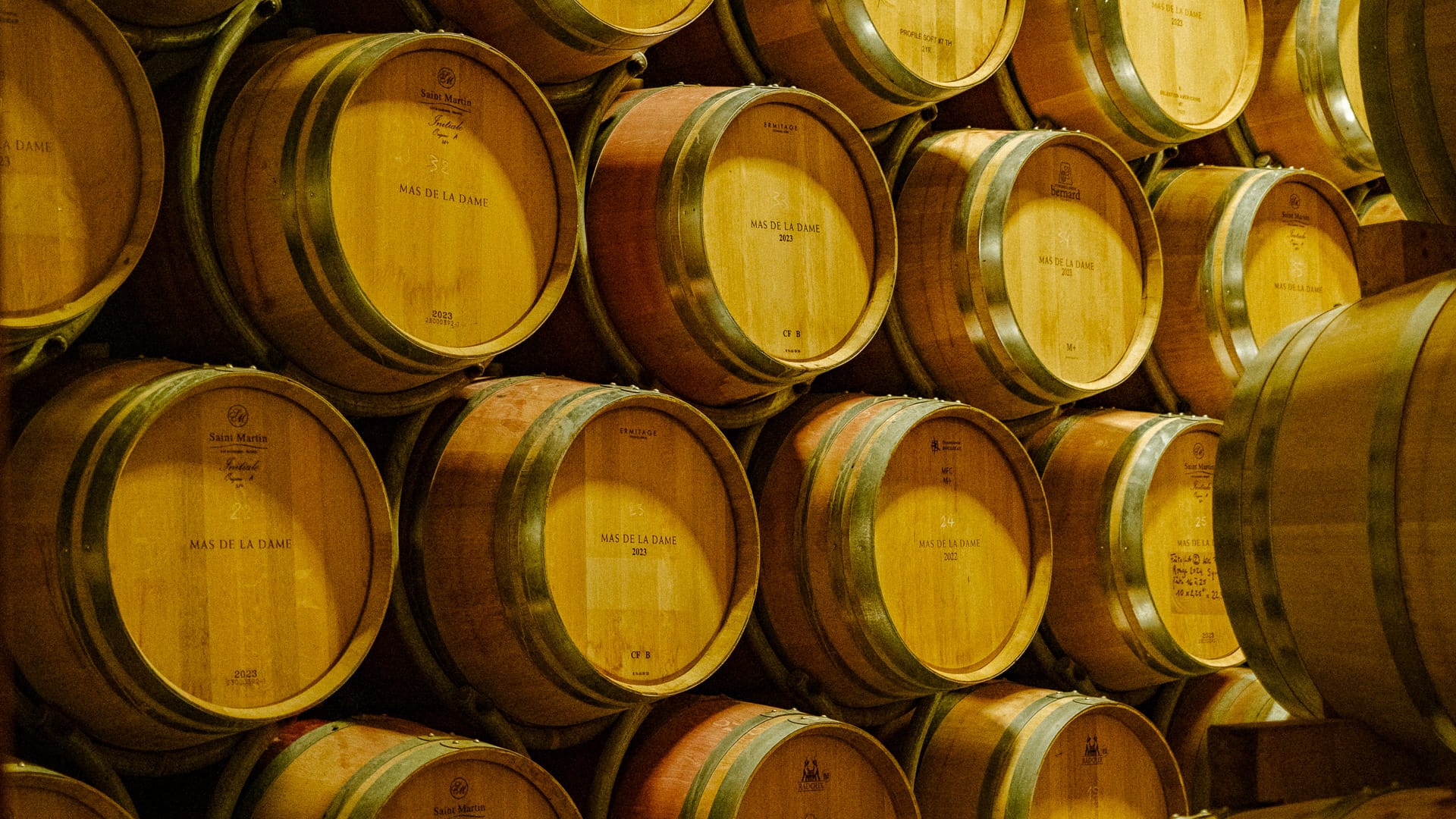
Culture and flavour matter too: think social dinners, vineyard picnics and a Champagne tasting with a passionate local winemaker.
More information
Interested? Head to GravelUp’s website for full details of this gravel bike tour in France.
Vosges mountains
Best for: calm trails in a natural wonderland
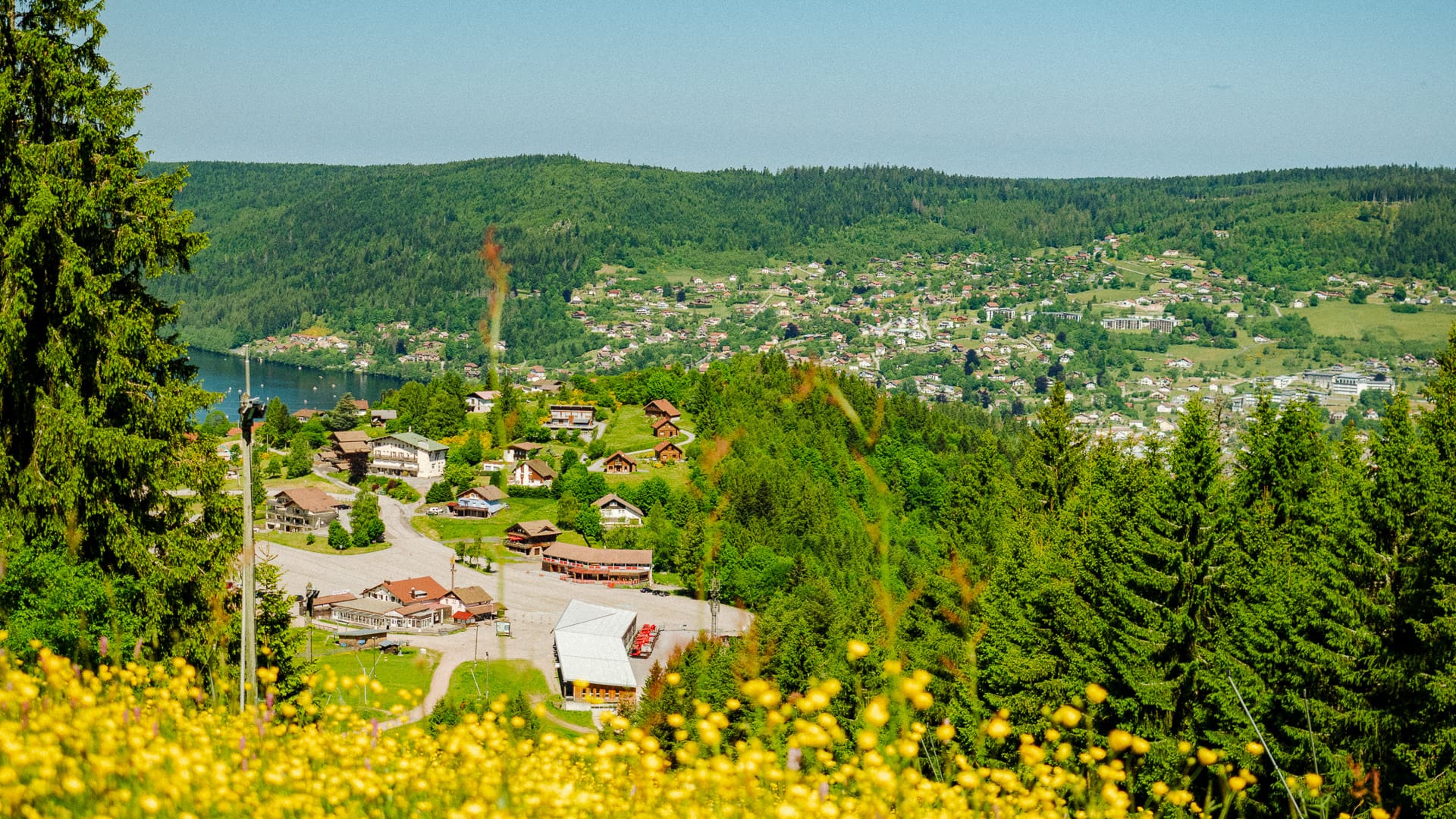
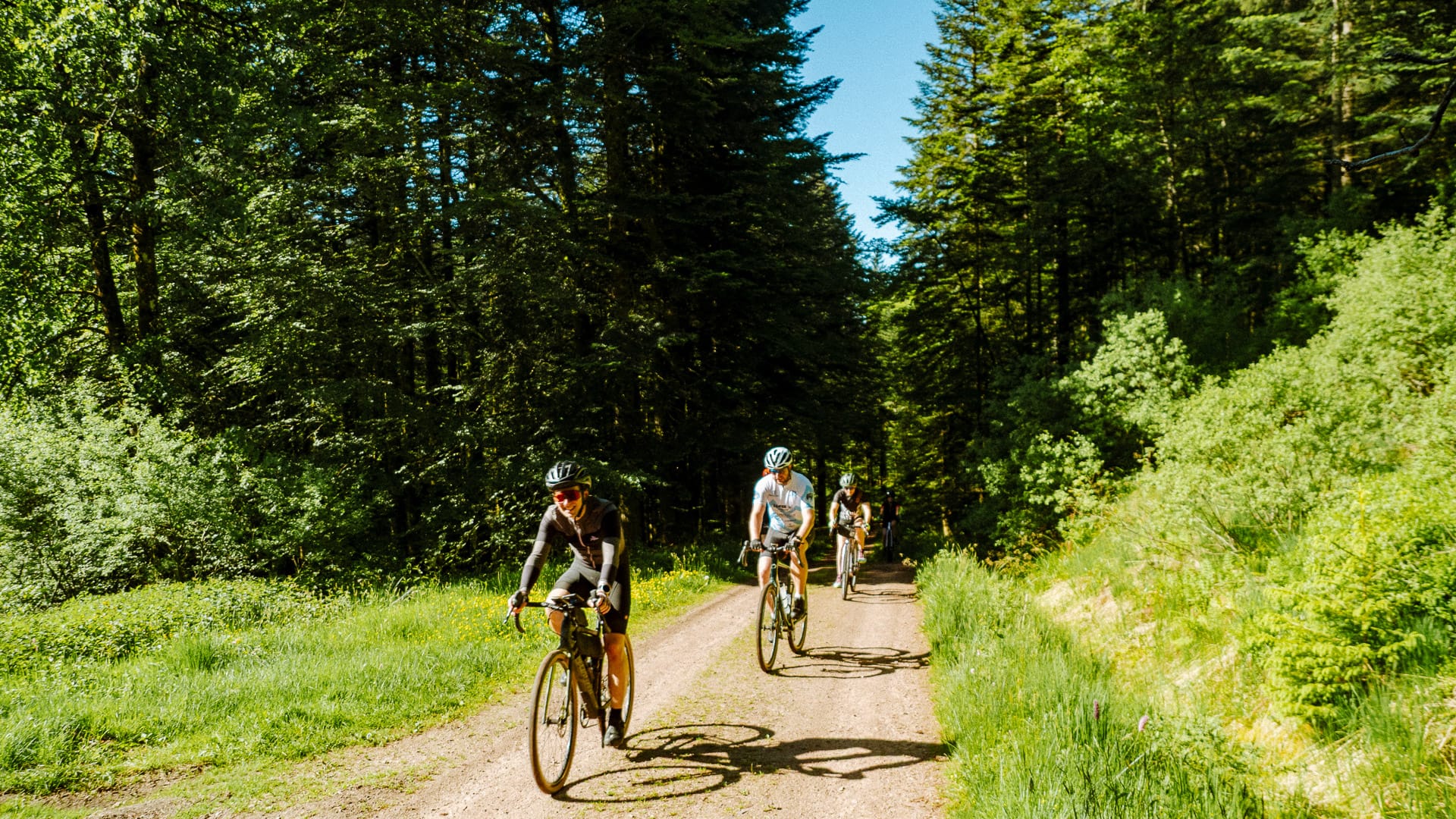
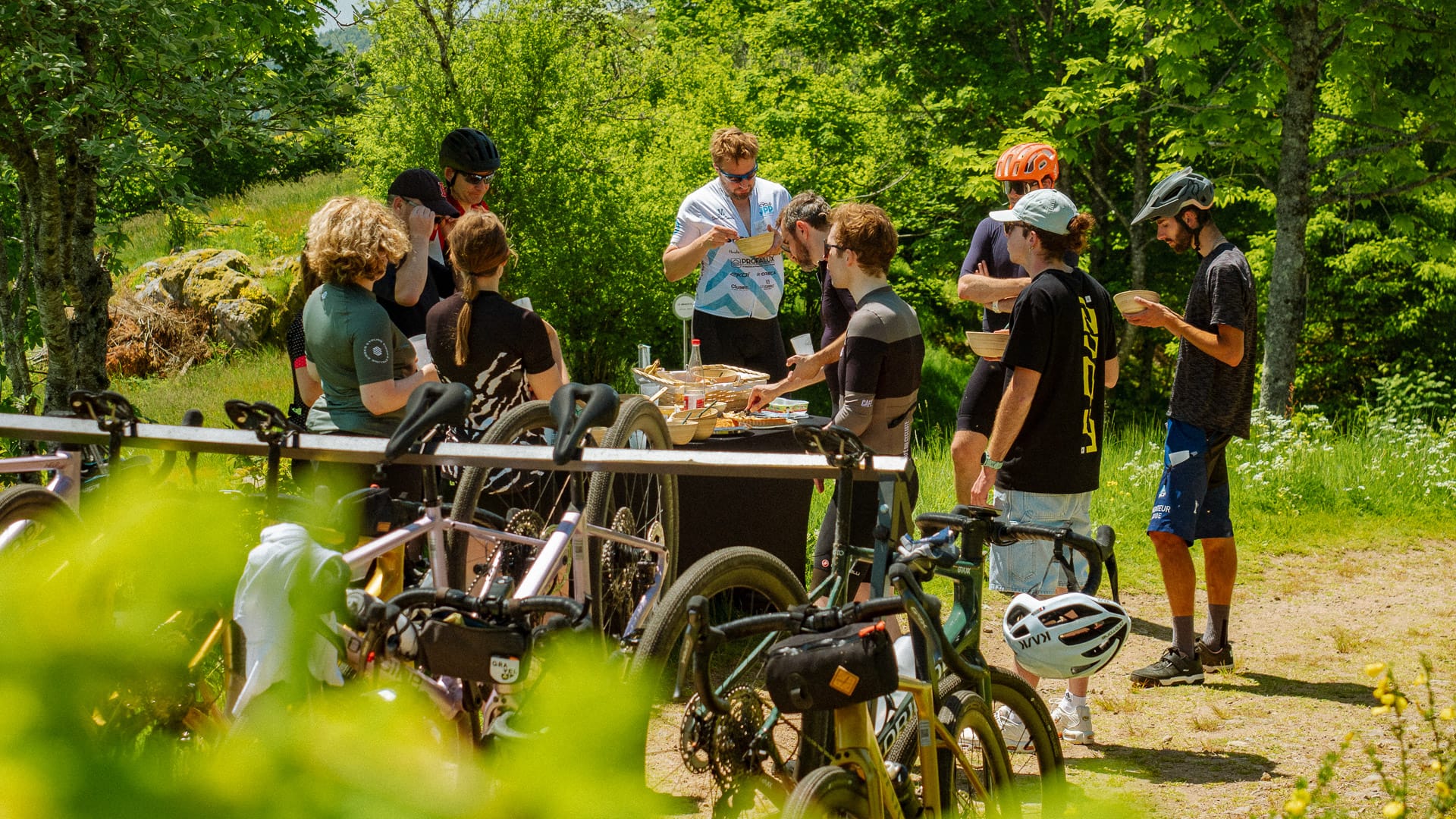
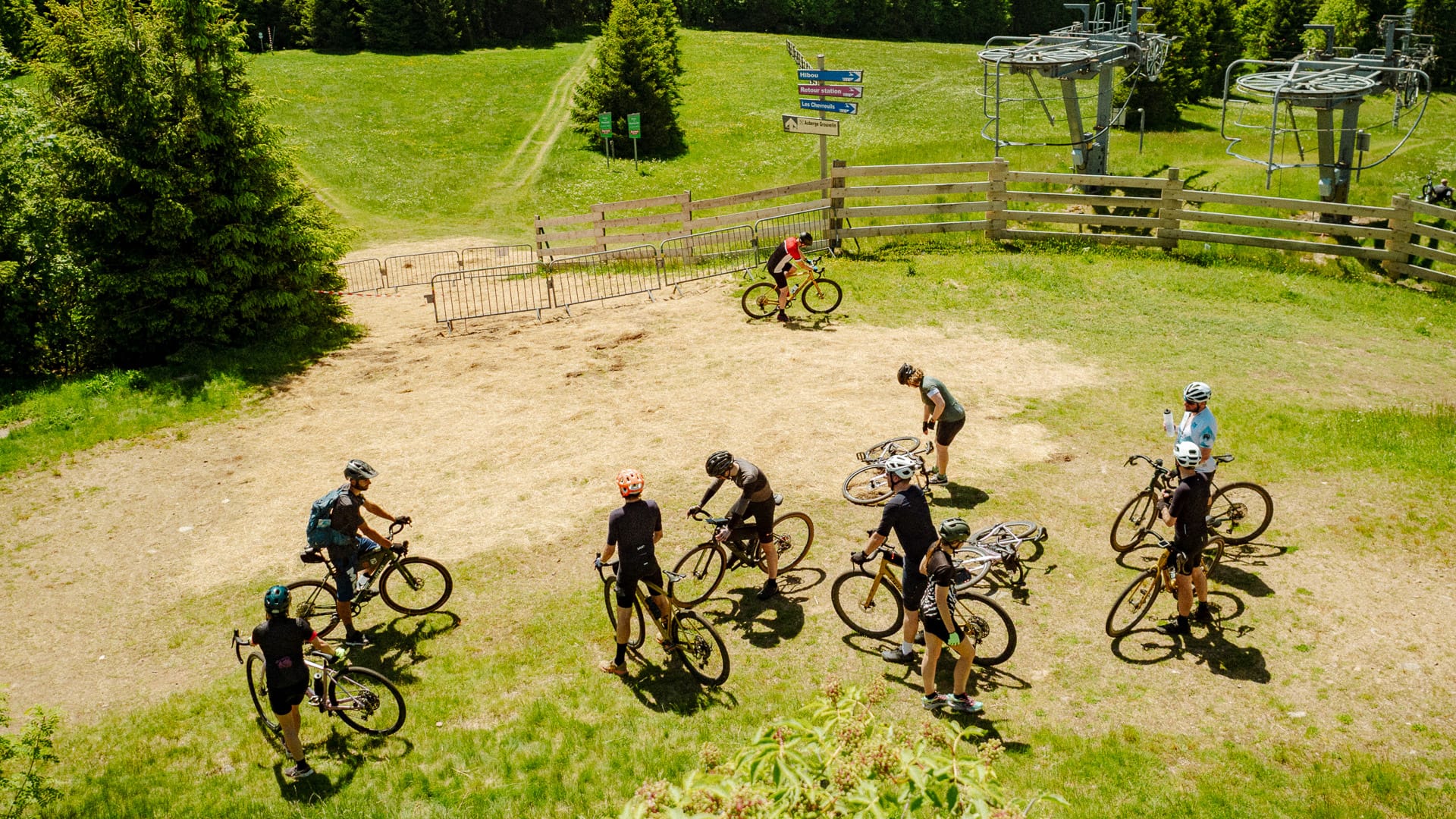
The Vosges sit in Northeast France, between Alsace and Lorraine, near the border with Germany. On our trips, we are based in the mountain town of La Bresse, with the lakeside resort of Gérardmer close by, so you are right in the heart of the range.
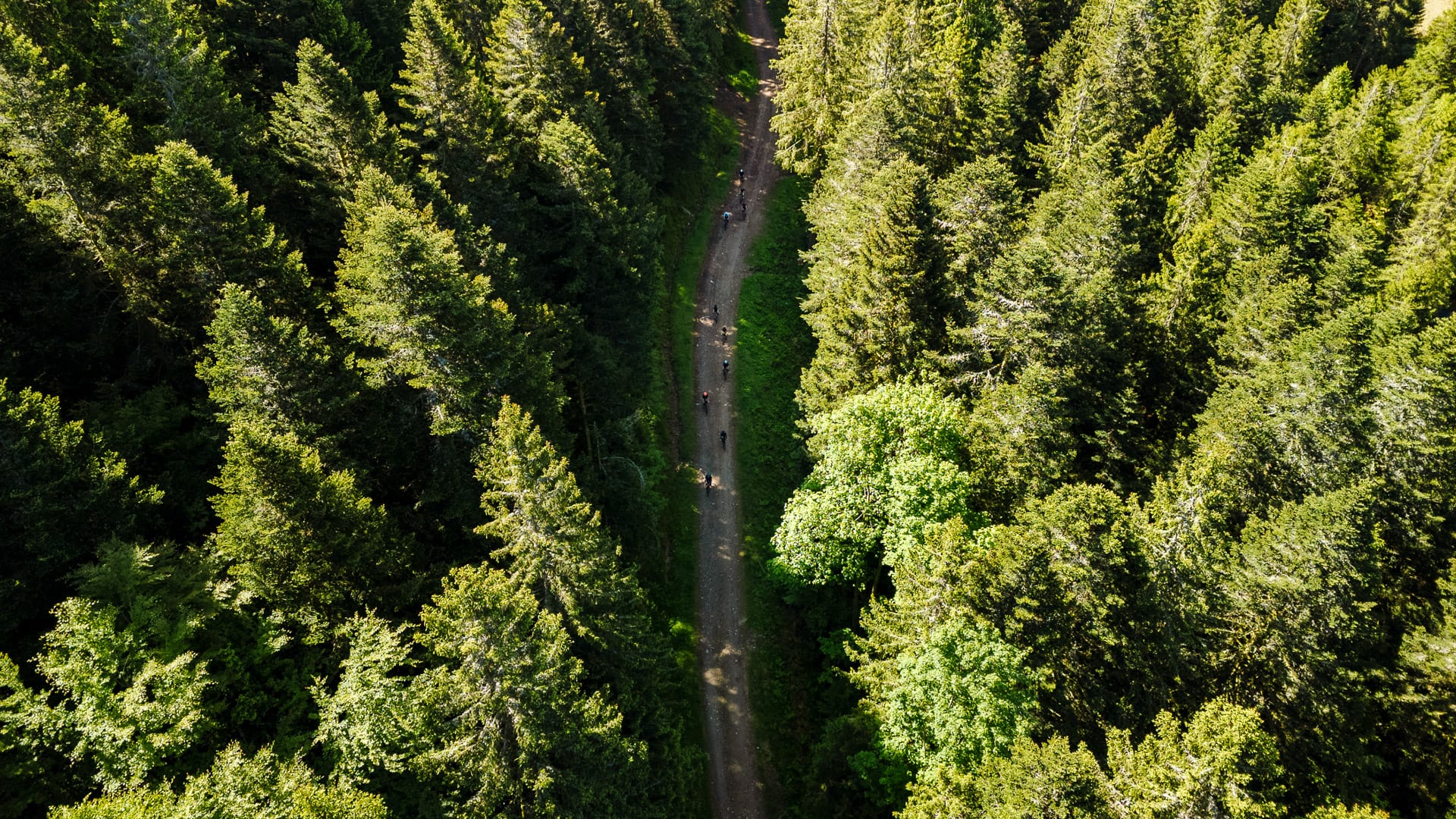
Riders can expect a less famous mountain playground home to peaceful pine forests, mirror-calm lakes and deserted gravel tracks. Refuelling is also a real highlight, including strong Munster cheese, hearty charcuterie and bilberry pie.
It’s the perfect option for big, quiet days where the only company is the endless trees!
Our Vosges gravel bike tour
The Vosges are a natural fit for a gravel bike adventure in France. Think flowy forest trails, high-altitude lakes, shaded switchbacks and open mountain pastures stitched together over a long weekend!
With GravelUp handling the logistics, all that’s left is to ride: about 150 kilometres with roughly 3,000 metres of climbing, spread over three rewarding days.
During the day, the trails take you through gorgeous scenery, whilst evenings are spent unwinding in a cosy cabin. There’s local flavour too! When conditions play ball, you’ll drop in on a beekeeper for a glimpse at rural life.
More information
Interested? Head to GravelUp’s website for full details of this gravel bike tour in France.
Alpilles, Provence
Best for: exploring Provence by gravel over three sun-soaked days
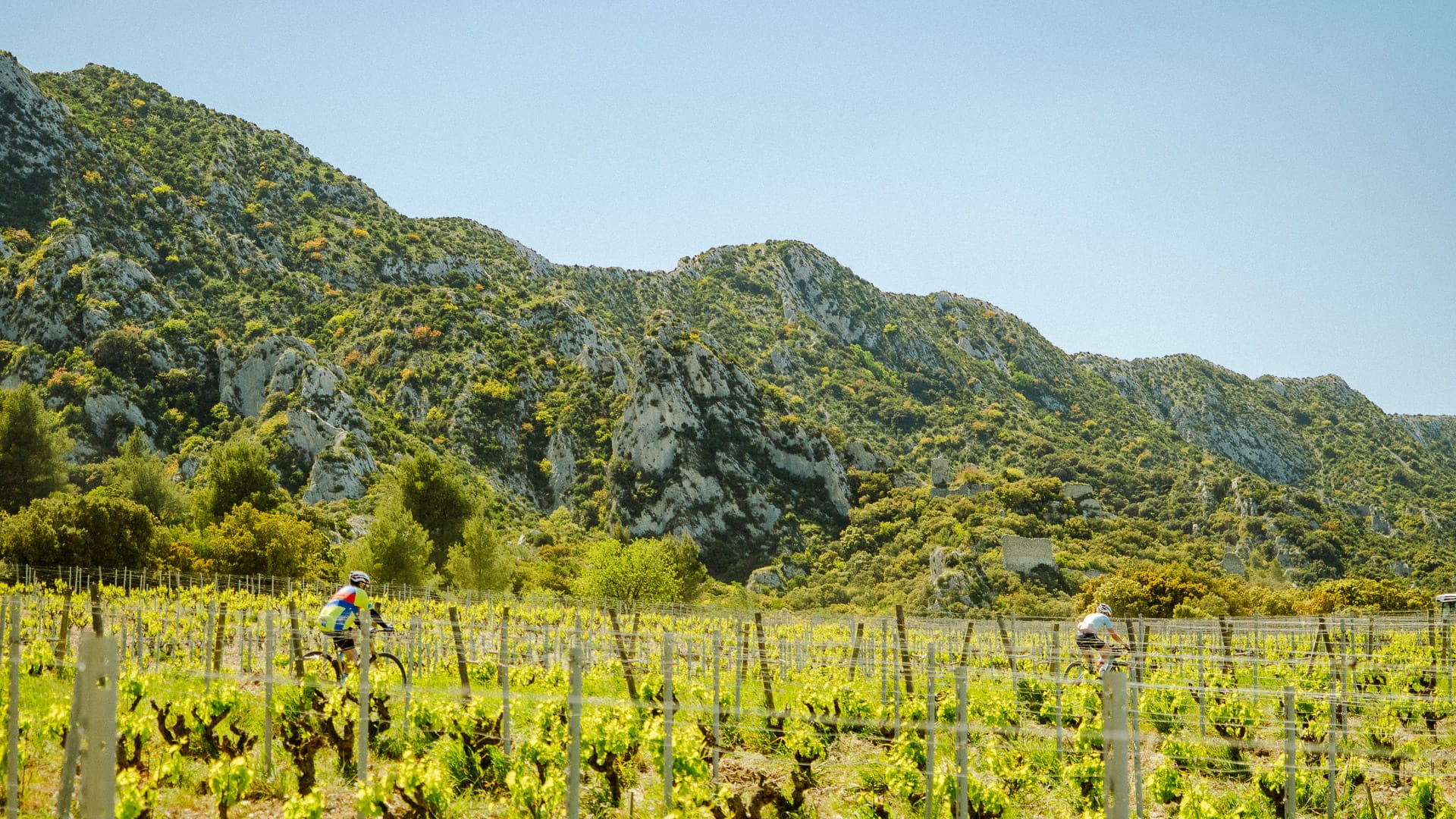
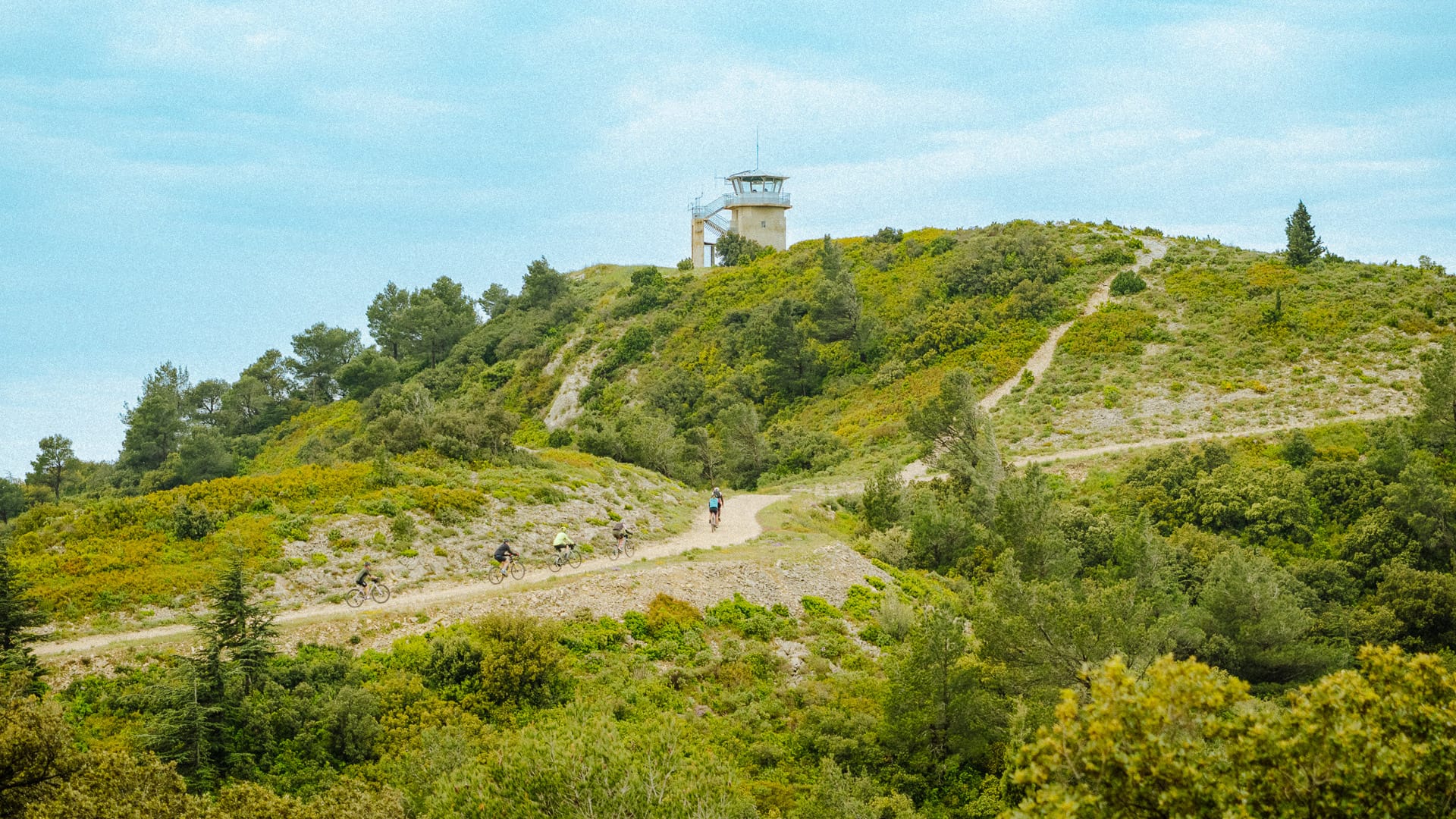
The Alpilles are a low limestone range in Provence, just south of Avignon and Saint-Rémy-de-Provence. They are within easy reach of the legendary Mont Ventoux.
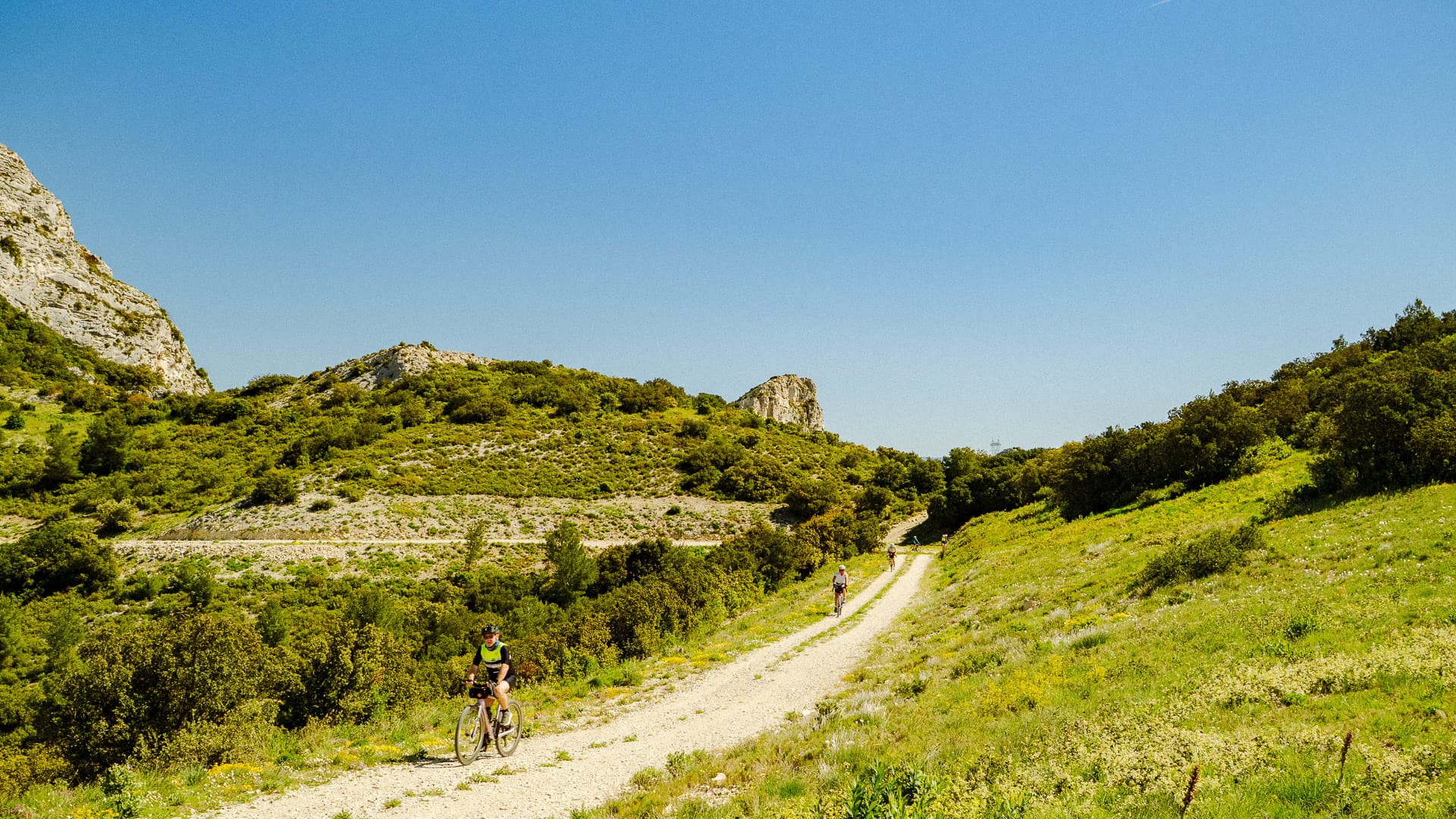
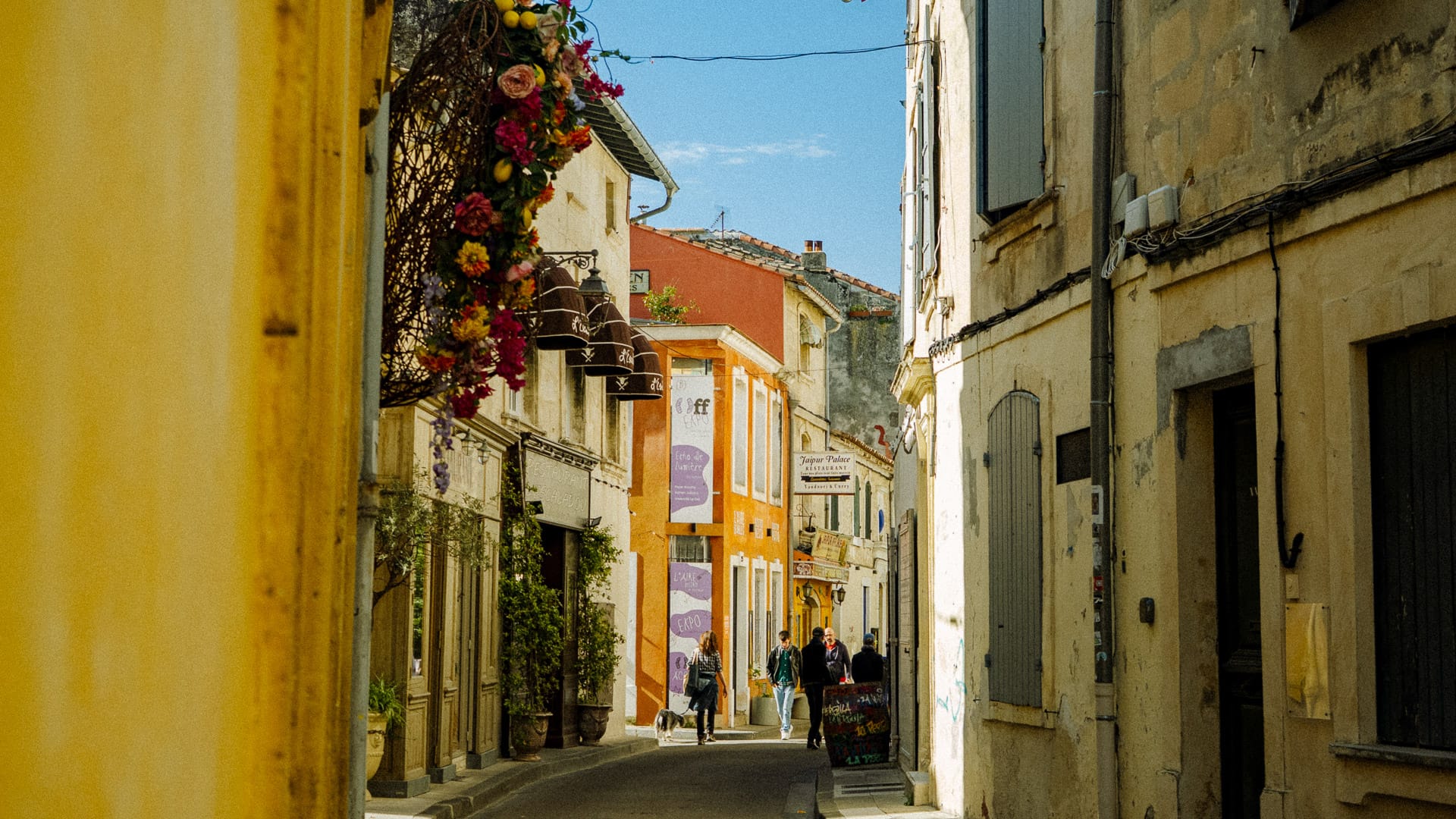
Cyclists can expect warm, honey-coloured villages, endless lavender fields and vineyard lanes linked by pale limestone farm tracks and garrigue paths. These gentle mountains are great for a range of gravel abilities!
The region is also home to several gorgeous villages, including Baux de Provence and Eygalières (and just beyond to Gordes in the Luberon), with plenty of places to refuel on delicious locally grown food.
Our Alpilles gravel bike tour
Riders can expect fast gravel routes on chalky farm lines, pine-scented forest hardpack and pale limestone ridges. Over three days, riders will cover about 225 kilometres with roughly 2,000 metres of elevation gain. Short punchy climbs and big-sky views over olive groves and vineyards are also never far away.
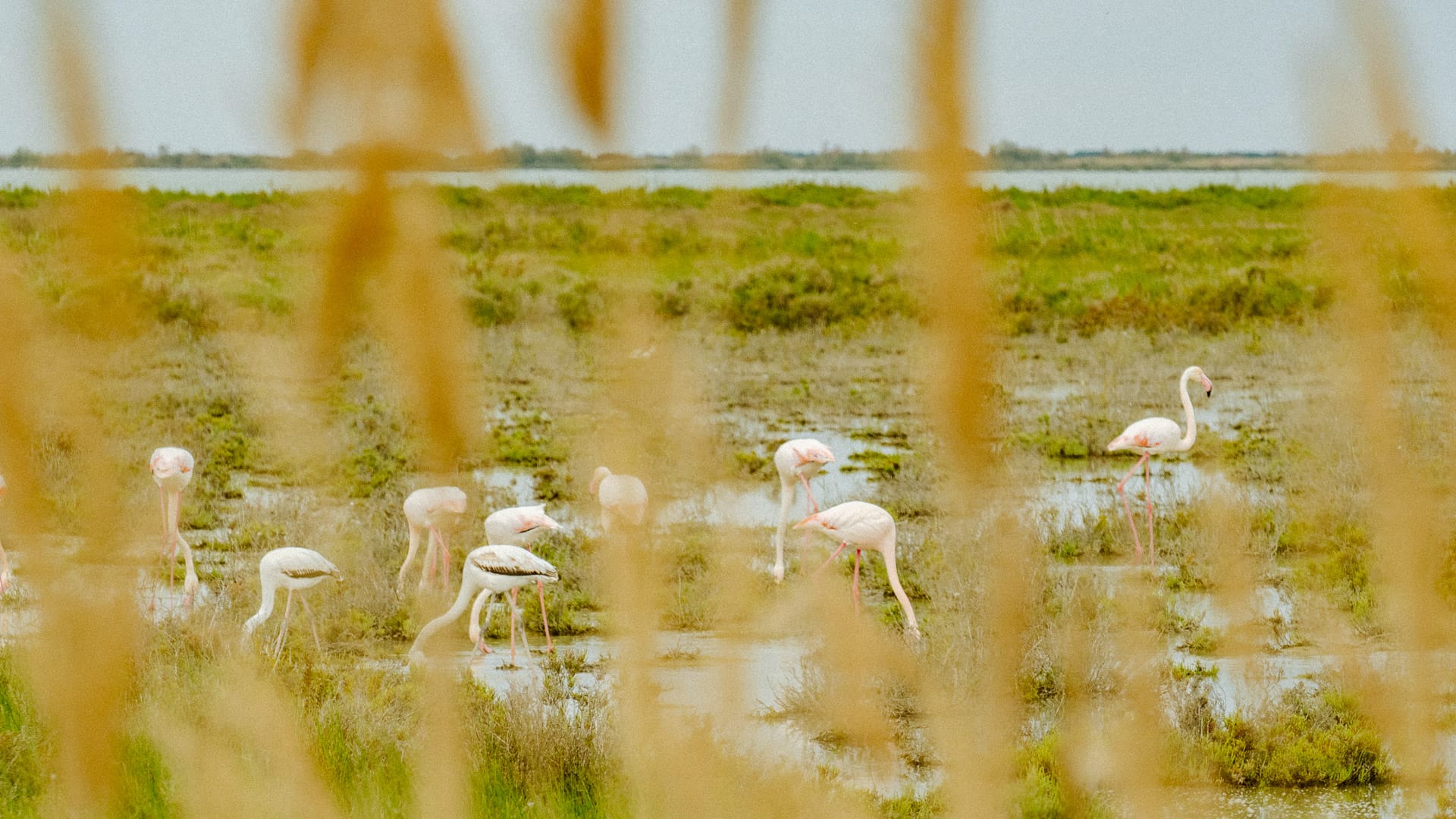
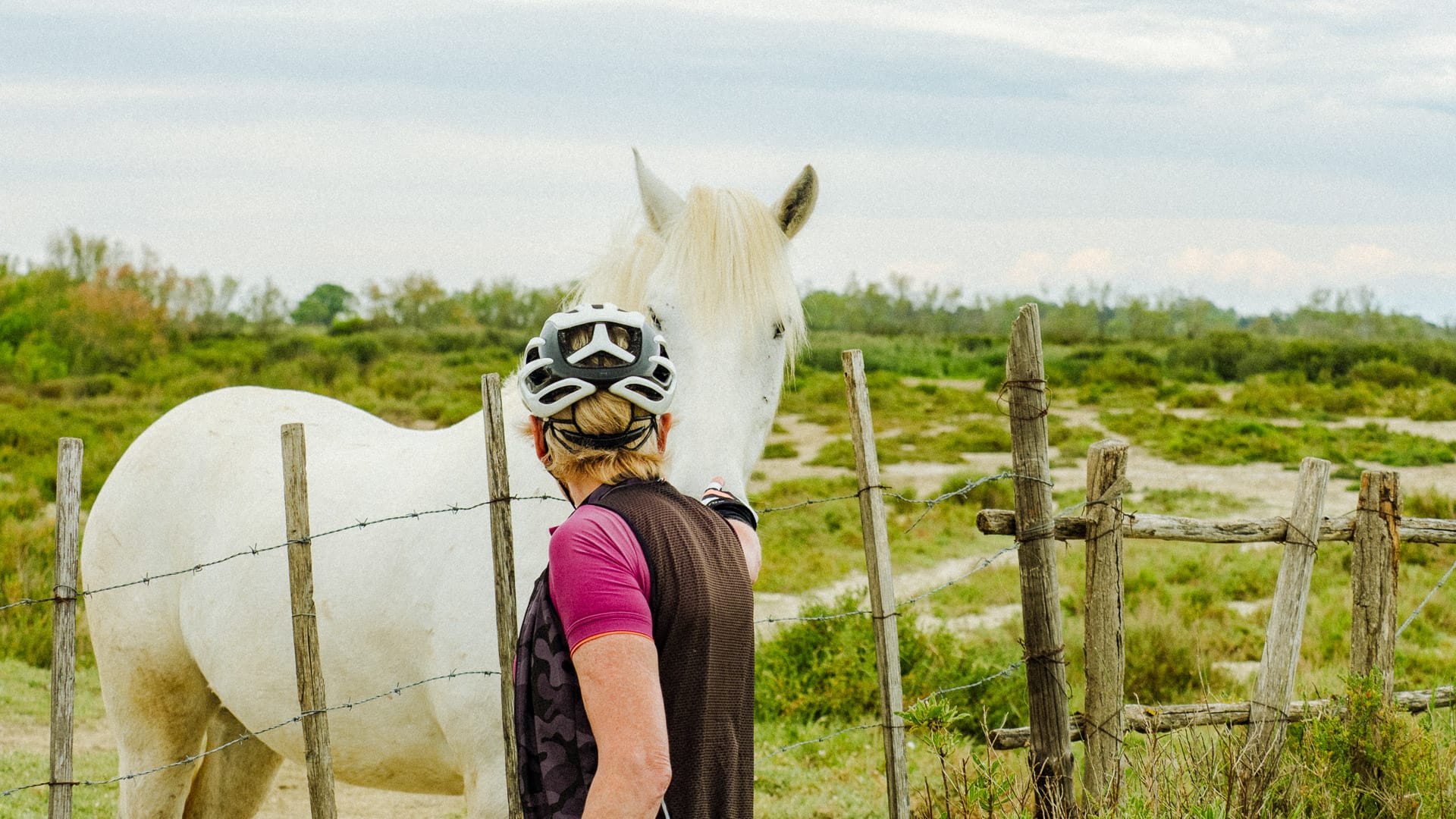
Classic villages like Les Baux and Eygalières sit perfectly for coffee and pastry stops, while optional yoga helps reset tired legs. For a change of tempo, there’s a flat, dreamily scenic Camargue option on the last day, enabling riders to explore shimmering lagoons and a wheels-in-the-sand finish!
More information
Interested? Head to GravelUp’s website for full details of this gravel bike tour in France.
Sponsor Message
Considering a gravel bike adventure in France?
GravelUp have run gravel bike tours in France since 2021. Their extensive range includes several regions, including Brittany, the Pyrenees, Provence and beyond!
Interested? Head to their website for full details.
Got a question for Olivier from GravelUp?
Fill out this form and we will pass it to GravelUp who aim to reply (within 24 hours wherever they can!)
Part 4: Things to know before booking a gravel cycling tour in France
Practicalities of gravel cycling in France
What time of year is best to visit?
For most riders, spring (April–June) and early autumn (September–October) are the sweet spot and typically feature cooler temperatures, longer daylight hours, and fewer tourist crowds in towns.
Peak summer brings heat and holiday crowds in France, with popular mountain roads heaving from mid-July to mid-August. However, this is another reason to try gravel cycling then – to escape the people!
Be aware! In wine regions such as Champagne, early autumn overlaps with the grape harvest. This adds extra buzz (and farm traffic) on vineyard lanes. In Provence and the Med, forest access can also be restricted on high fire-risk days from mid-June to mid-September, so check local alerts.
Whilst winter riding is doable on the French Riviera’s milder coast, higher passes often aren’t.
What are the best bike hotels for gravel bikers to stay in?
Remember to double-check bike storage arrangements (and any other services you need) before booking your accommodation as policies often change and they may charge for storage.
France does bike hotels brilliantly. Start with places carrying the national Accueil Vélo badge, they understand riders and usually offer secure bike storage, basic tools and repair kits, hose-down areas, laundry, and early, cyclist-friendly breakfasts.
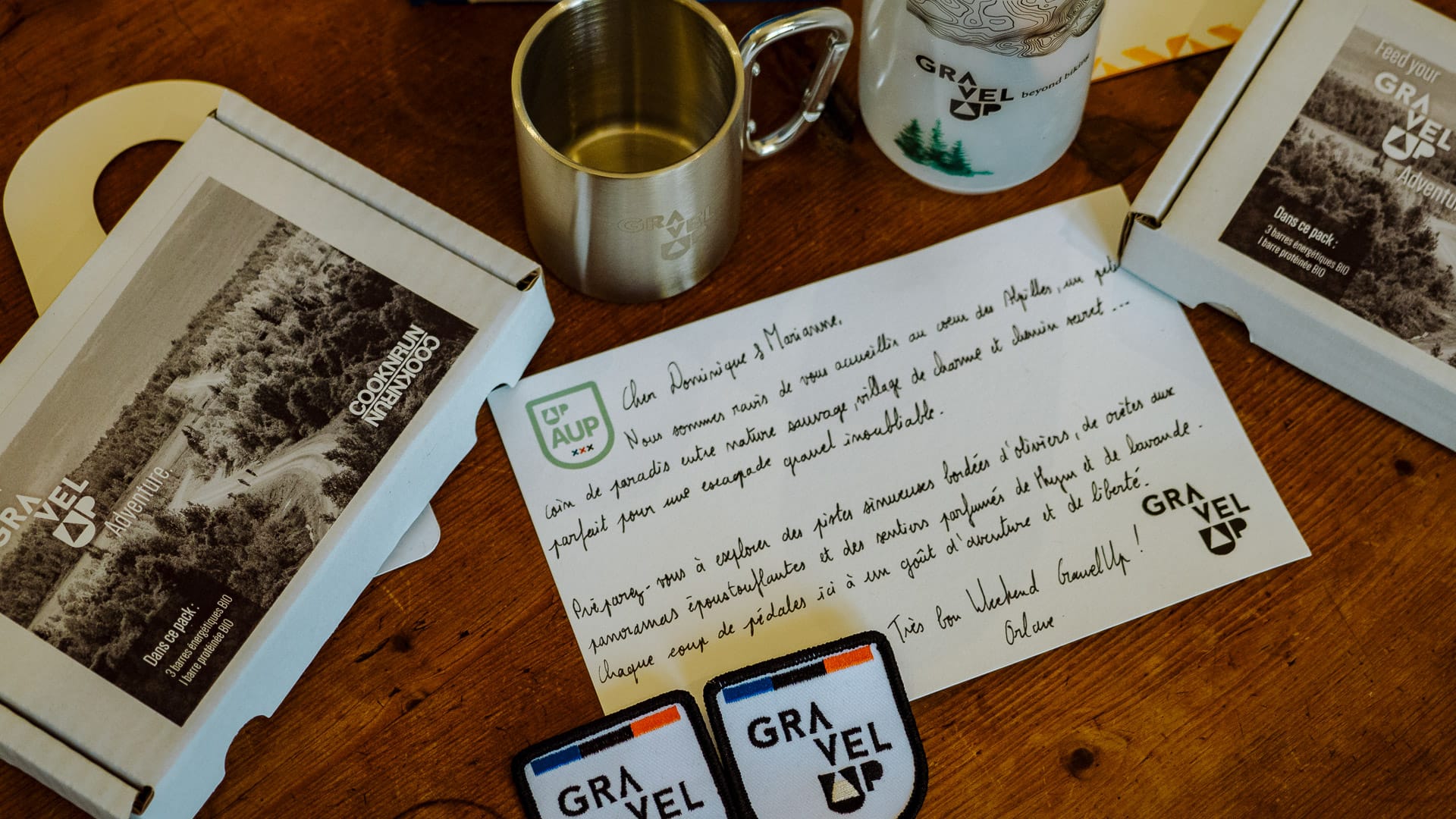
GravelUp handpicks premium small hotels and B&Bs in great ride locations, chosen for comfort and rider-ready facilities such as secure storage. We want you to recover well and for your bike to sleep safely, too.
Do you need support for gravel riding in France?
You can absolutely explore France’s gravel network on your own. With GPX files and a good head for navigation, self-guided riding brings freedom and flexibility.
But beware! It’s not without challenges: chemins ruraux aren’t always well mapped, phone signal drops in the hills, and refuelling spots can be few and far between. Some forest trails get shut due to wildfire risks or hunting season. This is where support makes life easier.
With GravelUp, routes are pre-scouted, logistics handled, and a guide is on hand to keep you on track. Add in local meals, tastings and basecamp camaraderie, and you get far more than a ride. You get a complete experience, stress-free from the start. Find out more below.
What are the best gravel races, events and festivals in France?
France is fast becoming a hotspot for gravel events.
Highlights include Gravel Fever in Châtellerault (less than two hours from Paris), held annually in September. In 2025, it hosted the first official FFC Gravel Championships, with timed and untimed formats alongside a lively festival vibe.
In the Pyrenees, the 66 Degrés Sud – Pyrénées Catalanes Gravel Tour is also held in September and is part of the UCI Gravel World Series.
Another great option is the Nature is Bike event held in Angers in June, a vibrant gravel and cycling festival offering fun gravel rides of differing lengths and a celebration of local cycling culture.
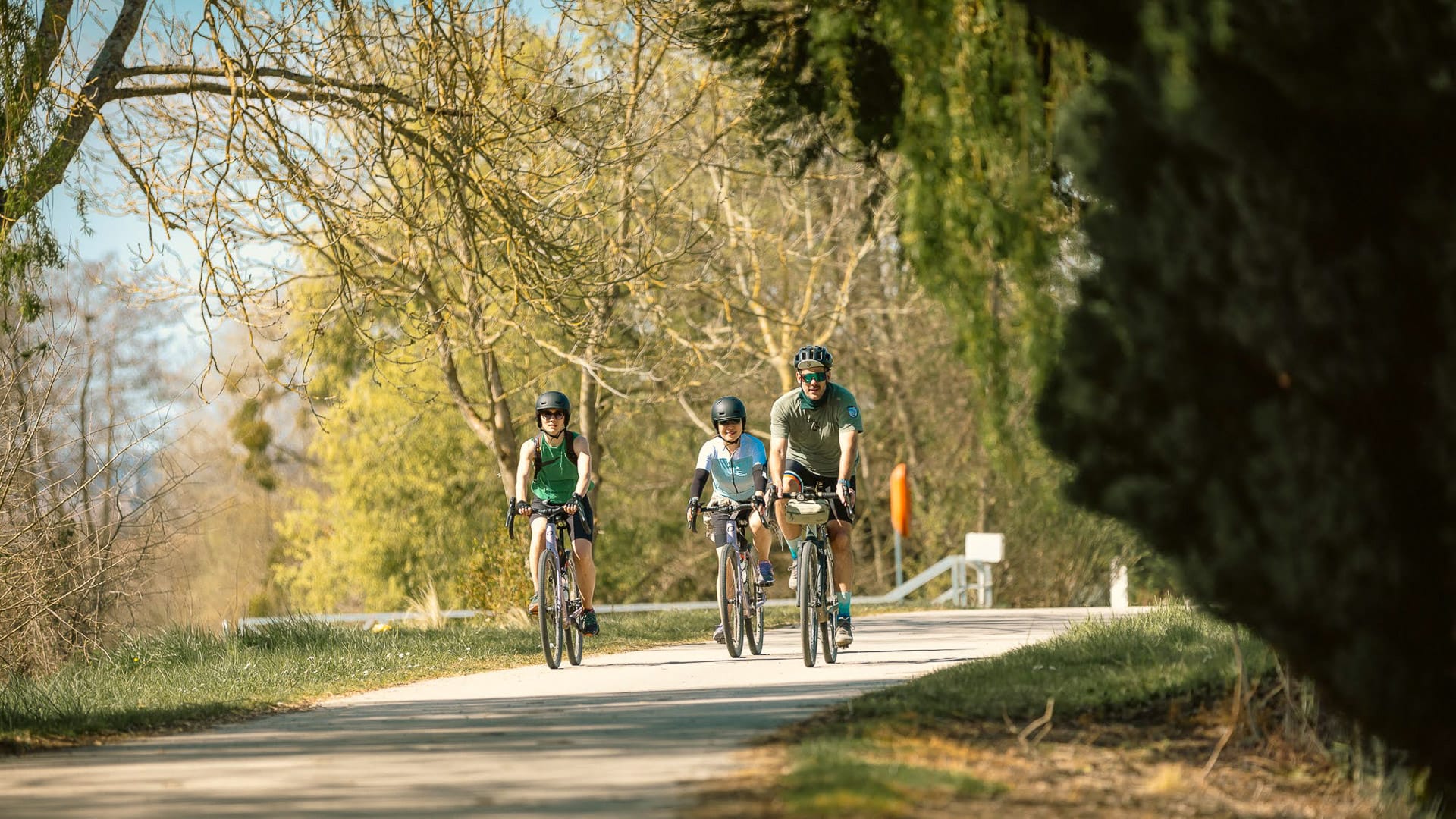
Early season riding in France (photo credit: Stefano Borghi via GravelUp)
Tips for gravel riding France
Are there safety issues to be aware of when gravel cycling in France?
Gravel riding in France is usually straightforward, but there are a few things to prepare for. Trails often cut through remote countryside where mobile coverage drops out, so carry a GPS with offline maps, plus a paper backup. Food and water stops can also be few and far between, so plan accordingly and pack extra supplies.
Surfaces range from chalky lanes to rocky forest descents. This makes punctures and mechanicals likely if you’re unprepared! Spare tubes and tools are a must.
Be aware! In summer, be mindful of wildfire risk, especially in the south and in pine forests. Some forest fire roads may be closed when risk is high, so check local guidance and never ride through restricted areas. Between September and February, you may also encounter hunters. Bright kit helps you stand out during this time.
Top tip! For riders who’d rather not worry about logistics or safety, a guided GravelUp trip provides local knowledge, support and reassurance.
What equipment do you need for gravel bike trips in France?
A gravel bike with 38–45 mm tyres is a safe all-rounder, giving enough grip for loose descents while staying quick on hardpack. Tubeless set-ups also cut puncture risk.
Top tip! Pack a few key spares: two tubes, tyre levers, plugs, a multitool and a mini-pump.
Navigation is also essential: a GPS computer with offline maps, plus a paper map as backup in case of signal loss. Carry two bottles or a hydration pack; water sources can be scarce on longer stretches.
In summer, a lightweight wind or rain shell is wise; in shoulder seasons, extra layers and gloves are essential.
Finally, keep weight low with a frame bag or seatpack. On a guided GravelUp trip, you can travel lighter each day, with basecamps and support handling most logistics.
Looking for more gravel packing essentials? Don’t miss this in-depth article.
Can you hire gravel bikes in France?
Prices, services and bike brands often change. Please let us know if anything is incorrect.
If you don’t want the hassle of travelling with your own bike, renting can be a great option. But a little preparation goes a long way.
First, book ahead, especially in popular cycling hubs like the Alps, Provence, or near Champagne. This is important as gravel fleets are usually smaller than other types of bike. When reserving, ask about tyre size and gearing: 38–45 mm tyres and a wide cassette (ideally 1x with a 40–42T ring) will keep you comfortable on France’s mix of chalk, forest tracks and mountain gravel.
Top tip! Bring your own pedals, helmet and shoes to ensure fit and comfort. It’s also worth packing your preferred saddle or a good multitool for fine adjustments at pick-up. Check whether spares, a pump and a multitool are included, or bring your own.
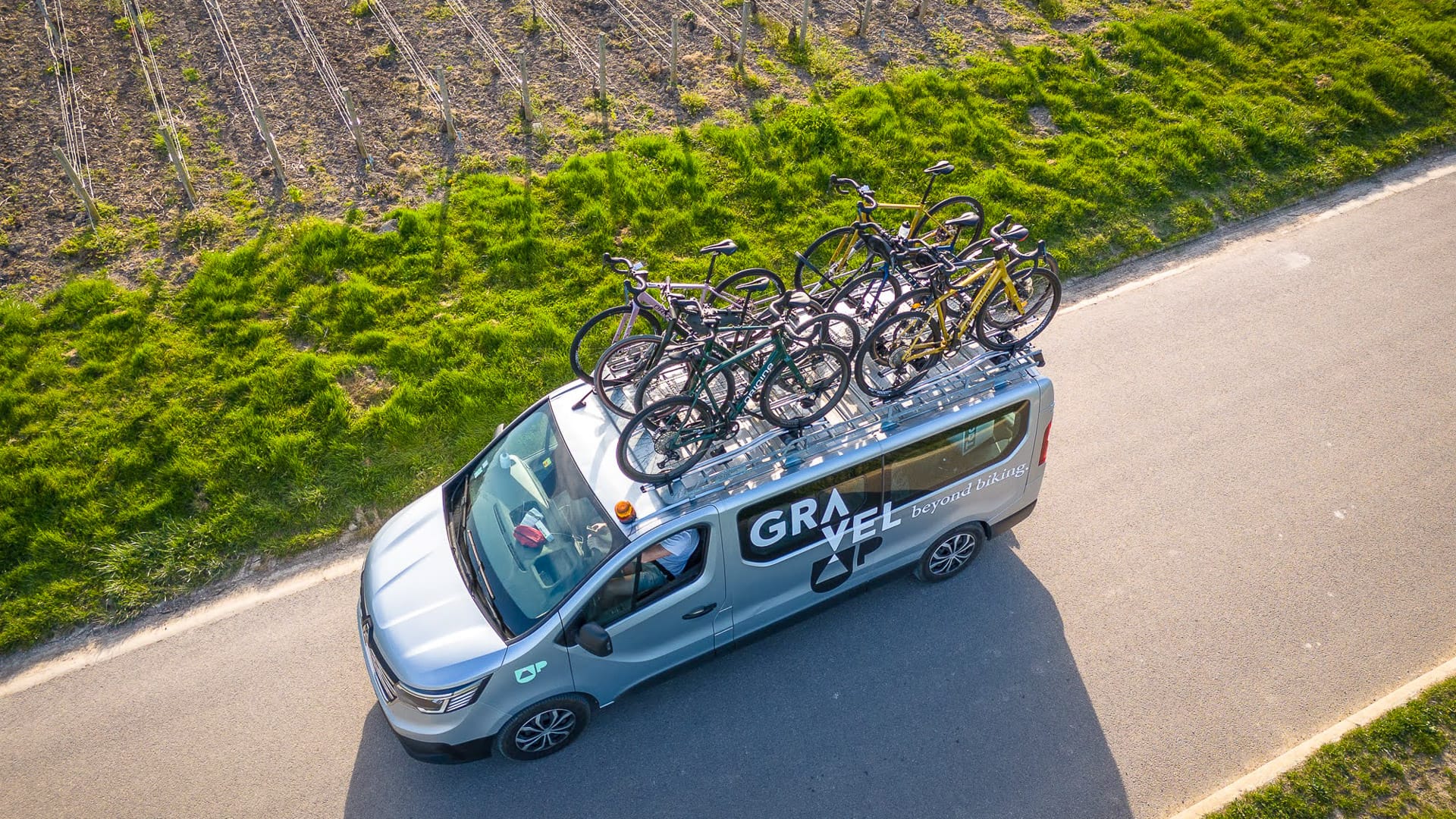
GravelUp include high-quality gravel bike rental as part of their packages, so everything is ready from day one.
Highway code and travel information
As ever, it’s a good idea to check current travel information before you book and travel. For UK visitors, the UK government travel information pages for France are here.
You should also read and follow France’s highway code.
Sponsor Message
Considering a gravel bike adventure in France?
GravelUp have run gravel bike tours in France since 2021. Their extensive range includes several regions, including Brittany, the Pyrenees, Provence and beyond!
Interested? Head to their website for full details.
Got a question for Olivier from GravelUp?
Fill out this form and we will pass it to GravelUp who aim to reply (within 24 hours wherever they can!)
Part 5: Where to find out more about gravel biking in France?
GravelUp has been running gravel tours in France since 2022 and refining every detail with each season.
What began with a launch in the Grand Causses has grown into an impressive gravel collection of routes across multiple European hotspots, all chosen for their hidden trails and beautiful scenery.
Before that launch, our very first test ride took place in the Grands Causses in November 2021. We invited a small group from our network to ride the full itinerary as paying guests so we could prove the concept in real life and fine-tune the experience based on their feedback.
More than 2,000 riders have joined our trips so far, and the five-star feedback says it all: thoughtful routes, slick logistics and a team that genuinely cares. If you want off-the-beaten-track adventure without the stress of figuring out the logistics, this is where to start.
Wild routes, zero stress
We offer proper off-the-beaten-track adventures, combined with the support you need to keep you smiling when things get challenging!
Groups start as strangers and finish as ride mates. Shared climbs, big views and local tables create the kind of bond you can’t manufacture.
The team’s value is in the details: route choices that dodge traffic, picnic spots you’d never find solo, and seamless support that lets you focus on the gravel riding and the place, not the planning.
What’s included
- Expert local guide who knows the quiet lines, weather quirks and best viewpoints.
- Handpicked stays in premium small hotels and B&Bs with secure bike storage.
- Great food and coffee en route, plus an end-of-ride beer, with all meals included.
- High-spec gravel bikes available to hire, including the latest Origine Graxx III with a quality, ride-ready set-up.
- Destination manager on the ground for tech support, on-trial picnics and smooth logistics, taking care of everything off the bike so you can just focus on riding.
- Beyond-the-bike extras tailored to the place, for example, yoga sessions or winery visits.
How to find out more about GravelUp
Head to the GravelUp website to find out more.
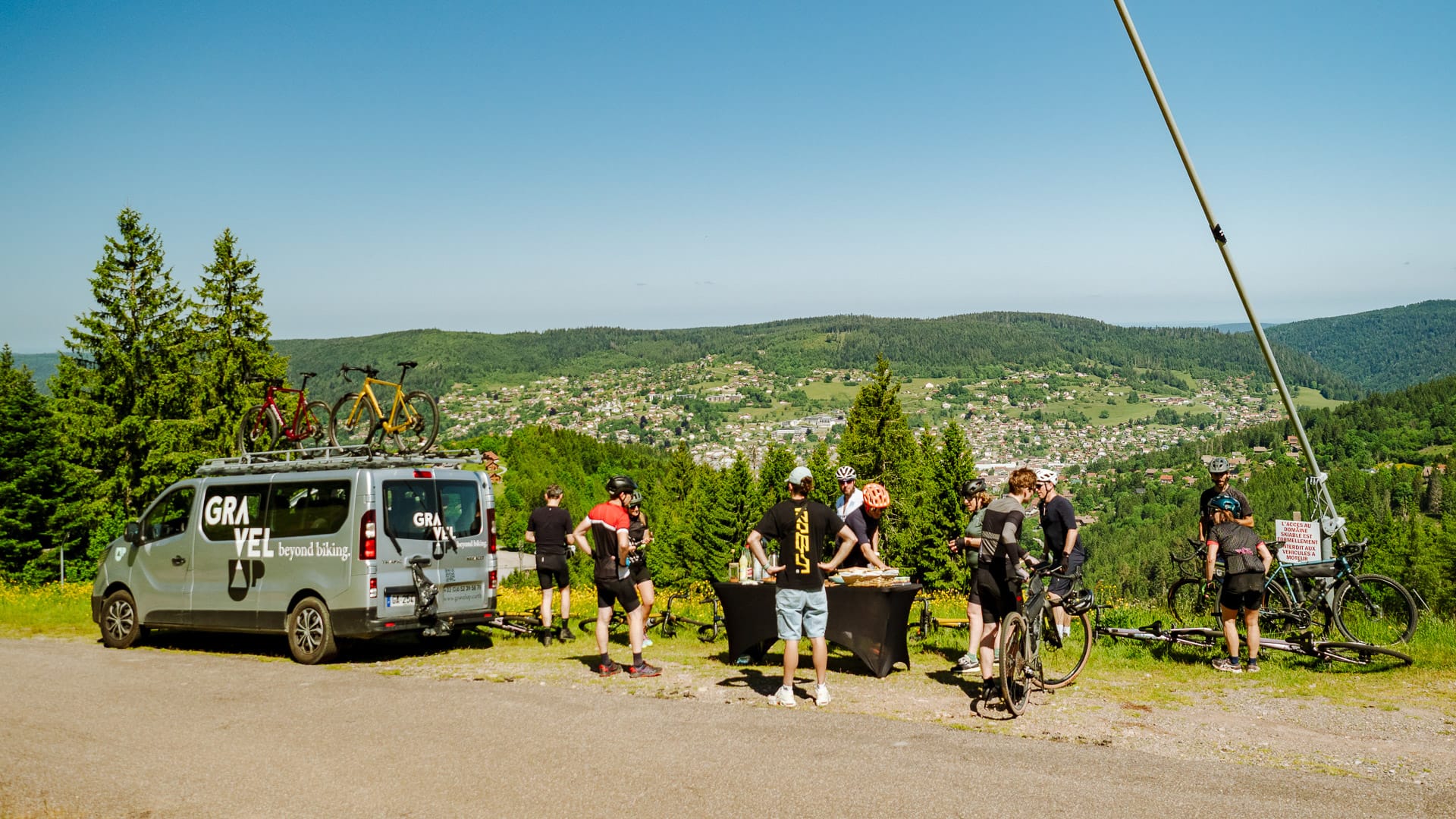
Support stop with views over villages in Vosges (photo credit: GravelUp)
What’s next?
A huge thanks to Olivier Heissler for these detailed insights about GravelUp’s gravel bike tours in France.
Have you explored gravel routes in France before? Perhaps you have some great gravel cycling tips for anyone considering an outdoor adventure on France’s impressive network of gravel roads? Or maybe you love road cycling on France’s paved climbs and want to try an exciting new challenge? We’d love to hear from you in the comments below!
Looking for more gravel cycling ideas and inspiration? Don’t miss:
- Gravel cycling in the Algarve
- Gravel cycling in Austria
- Gravel cycling in Girona
- Gravel cycling in the Pyrenees
- Cuneo’s secret strade bianche
- The best gravel bike adventures in Europe
- What is gravel bike touring (+ why do it)?
- French Alps cycle tours (featuring Mont Ventoux)
- Gravel cycling holidays: our pick of the best
- Guide to cycling the Pirinexus route
- Guide to cycling the Val Susa Gravel Loop
Got a question for GravelUp?
Fill out this form and we will pass it to GravelUp who aim to reply (within 24 hours wherever they can!)
Got a question for Olivier ?
Fill out this form and we will send it to Olivier . We aim to get you an answer within 24 hours where possible!Olivier Heissler is the co-founder of Gravel Up. A Frenchman born and raised in Paris, he spent 13 years travelling the world with a major hotel group before his perspective on tourism shifted towards more authentic, local experiences.
Olivier properly got into cycling while living in Shanghai, where he also raced triathlon and competed widely across Asia. Through gravel riding and cycling adventures, he discovered a new form of performance that combines his two passions: exploring the world and surpassing oneself through sport. Today, he channels that ethos into designing and sharing routes that connect riders with real places and people.
Last Reviewed: 10 January 2026
First Published: 13 October 2025
The contents of this website are provided for general information purposes only. It is not intended to amount to advice and you should not rely on it. You should carry out your own due diligence and risk assessments and take professional advice. Views expressed by interviewees or other users of this website do not necessarily represent our views. We make no representations, warranties or guarantees, whether express or implied, that the content on our website is accurate, complete or up to date. If you use any information or content on this website, download from, or otherwise obtain content or services through our website, it is entirely at your own discretion and risk. Epic Road Rides Ltd disclaims all liability and responsibility arising from any reliance placed on the information and content on this website. Find out more here.
Sponsor Message
Considering a gravel bike adventure in France?
GravelUp have run gravel bike tours in France since 2021. Their extensive range includes several regions, including Brittany, the Pyrenees, Provence and beyond!
Interested? Head to their website for full details.
Got a question for Olivier from GravelUp?
Fill out this form and we will pass it to GravelUp who aim to reply (within 24 hours wherever they can!)
Comments