

La Marmotte granfondo is a one-day event held in the French Alps at the end of June each year. In 2026, La Marmotte will be on 28 June 2026.
La Marmotte was first held in 1982, which makes it one of the oldest granfondos/sportives in the world. It is also one of the most popular amateur cyclist events in Europe. The Marmotte gran fondo has a maximum of 7,500 spaces available each year, and they tend to sell out within hours.
While I haven’t ridden La Marmotte myself, I have ridden in the region and know it well, and I’ve spoken to several local experts about the event too so that I can give you as much information about what it involves as possible.

Clare Dewey is a cyclist with a passion for travel. She set up epicroadrides.com in 2018 to help make it easy for cyclists to explore the world by bike. Today her mission is still inspiring cyclists to discover new places on two wheels - and doing what she can to make sure they have the best possible time while they're there. Clare has visited 50+ destinations around the world, many of them by bike.
Want to connect with Clare? Find her over on LinkedIn.
This guide provides an overview of the event that is to be held on 28 June 2026. Please read the rules, entry conditions and information on the official website if you want to take part. In the event of any discrepancy between this guide and information on the official website, please rely on the official website. We are not the organisers of the event (and nor are we connected with them).
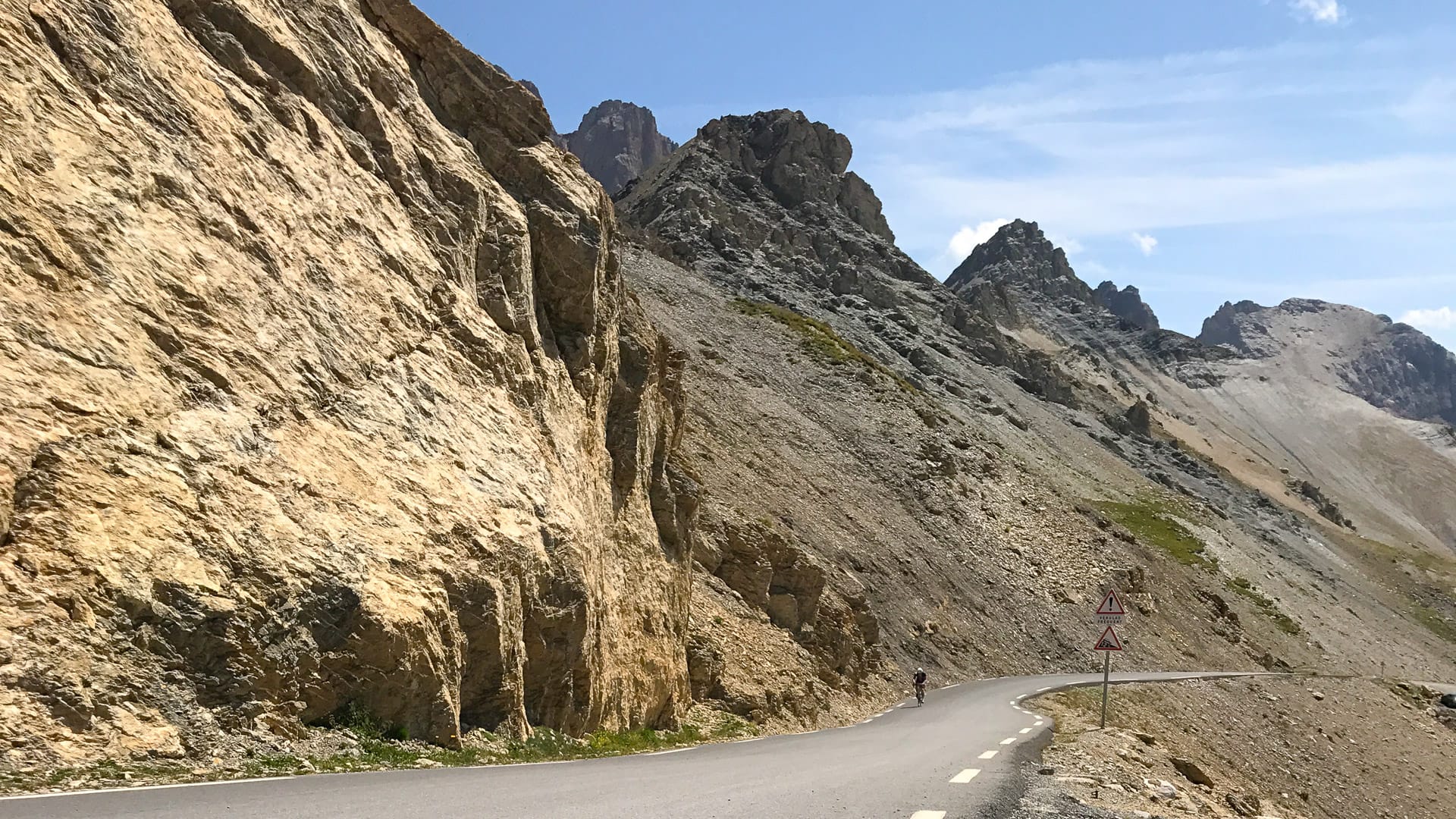
The Marmotte is so famous because of its brutal but attractive Alpine course, which takes in four of the Alps’ most iconic climbs.
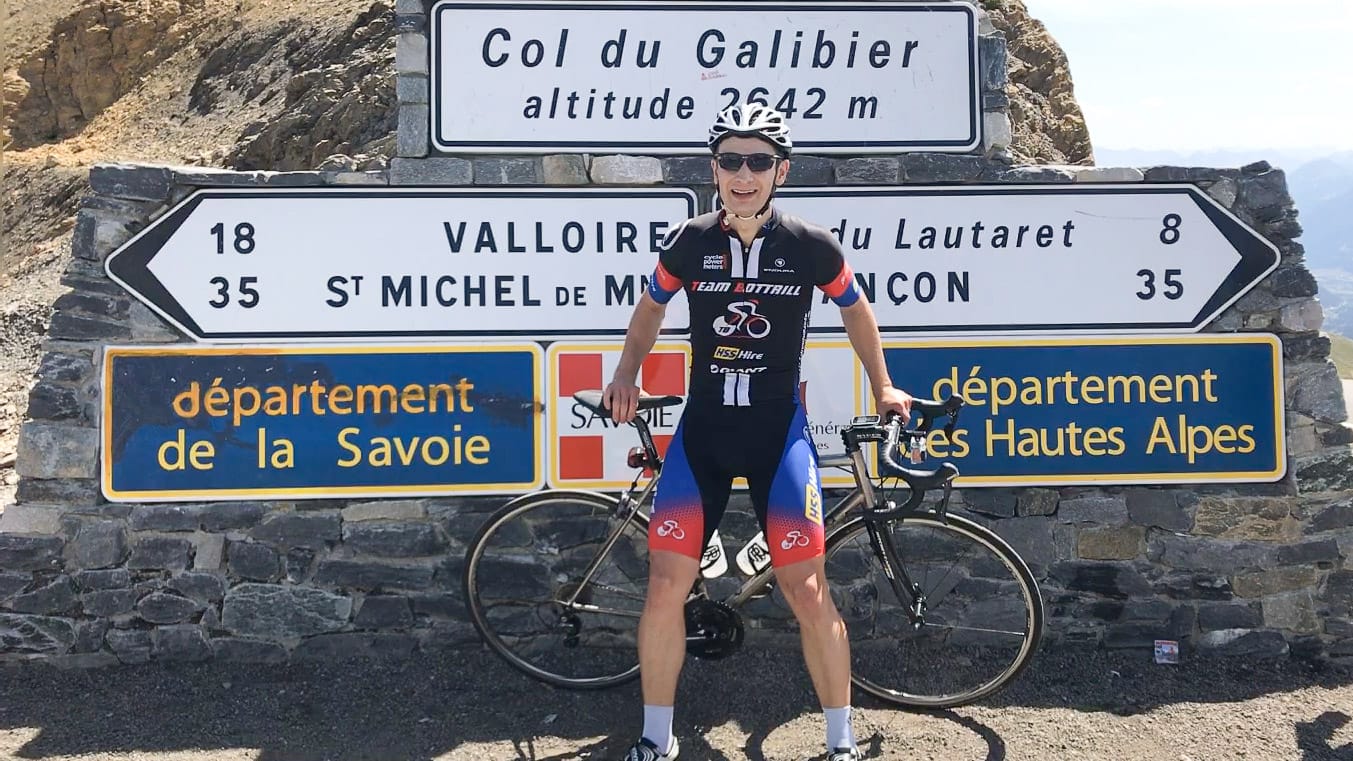
The Marmotte route is 177 kilometres long and includes 5,000 metres of climbing, including Col du Glandon, Col du Télégraphe, Col du Galibier and Alpe d’Huez. The event starts in Bourg d’Oisans and finishes at the top of cycling’s most famous mountain, Alpe d’Huez.
What is the Marmotte route for the 2026 Marmotte Gran Fondo?
After leaving Bourg d’Oisans, the first challenge is the Col du Glandon, a 21-kilometre climb with steep sections, especially in the final two kilometres where gradients reach up to 12%. The descent to the Maurienne valley is neutralised, to avoid unnecessary risks.
There’s then a flat-ish 25 kilometres along the main road of the valley floor, to Saint Michel de Maurienne and the base of the Télégraphe.
The real test begins here, with the back-to-back climbs of the Télégraphe and the Galibier. This gruelling 35-kilometre sees riders climbing 2,000 metres against a magnificent mountain panorama.
Descending the Galibier leads riders to the Col du Lautaret, heading towards Bourg d’Oisans for the final challenge of the day; the mighty Alpe d’Huez.

What are the highlights of La Marmotte?
Completing the La Marmotte sportive is a huge deal for everyone that does it and we just love being able to help competitors succeed in their personal challenges, whether that’s to finish within a particular time or just within the cut-off.
There’s always a fantastic atmosphere, particularly at our feed stations and at the end. This is a very international event; in previous years around 90% of participants have come from abroad.
La Marmotte versus L’Étape: which is better?
La Marmotte and L’Étape are probably the two most famous cycling events in Europe. They might both be held in the Alps, but the truth is that they’re both so iconic that if you’re a serious cyclist, you’ll probably feel the need to do both at some point in your life!
A lot of people would say that the Marmotte course is usually harder than the Étape, so it’s probably best to start with the Étape and then try the Marmotte.
Here are some key differences:
- La Marmotte is at the end of June whereas L’Étape usually happens after La Marmotte, in early or mid- July. In 2026, L’Étape will take place on 19 July.
- La Marmotte has a maximum 7,500 riders, whereas L’Etate usually has around 16,000 riders.
- La Marmotte’s course tends to remain roughly 95% the same year to year, whereas the L’Etape course changes every year (and isn’t announced until mid October the year before).
- La Marmotte always includes four of the most famous climbs in cycling; L’Étape usually covers less cols and often less iconic ones than La Marmotte (though of course this does depend year-to-year).
- La Marmotte is permanently very long and hard whereas some iterations of L’Étape are easier than others (relatively speaking!) but in any event, usually shorter and less elevation gain than La Marmotte. It’s worth noting that the 2026 iteration of L’Étape is considered by many to be one of the more difficult ones in recent years.
- La Marmotte is on partially closed roads whereas L’Étape is on closed roads.
Read our full article on L’Étape du Tour.
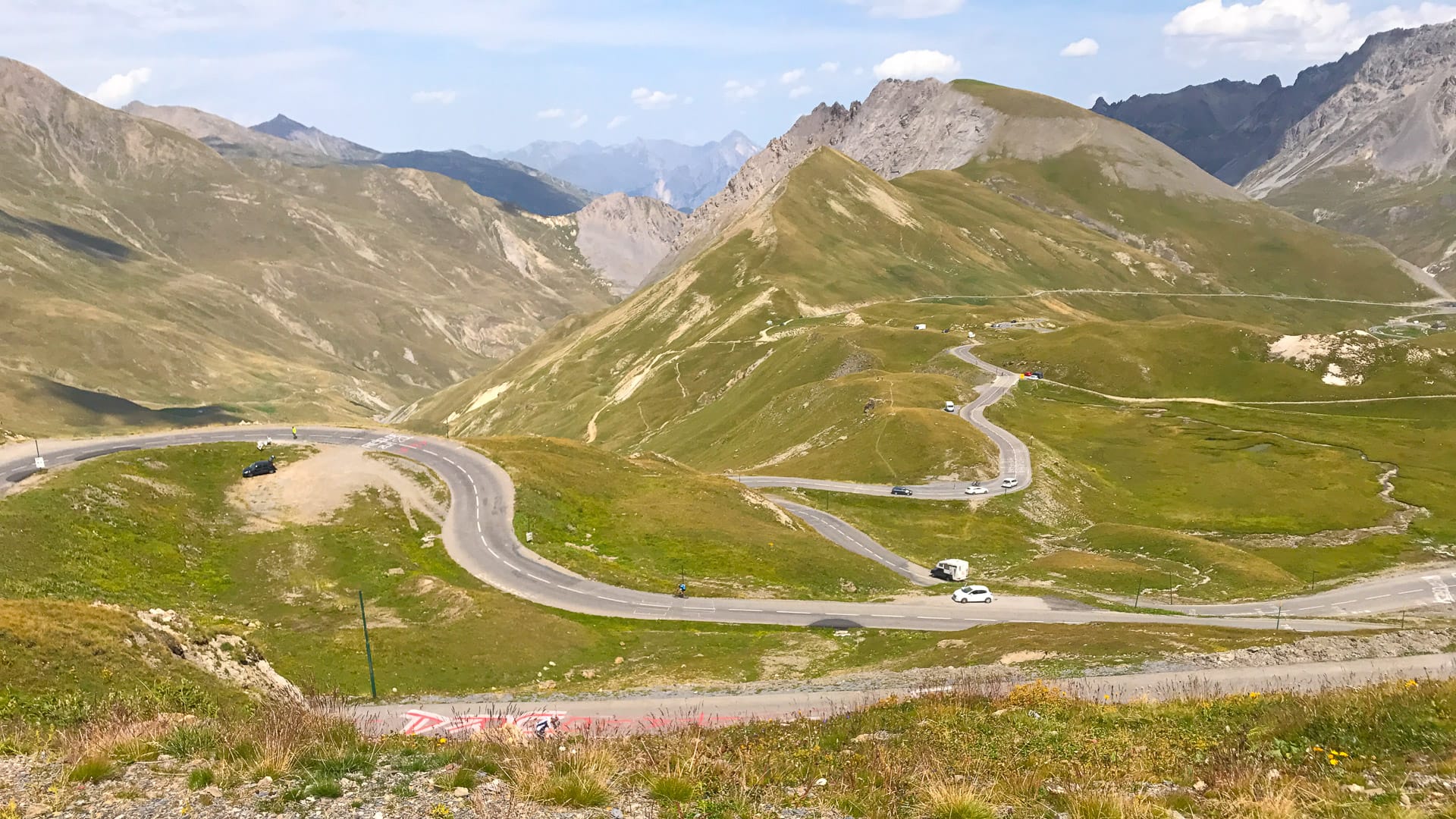
View north of Col du Galibier, towards Valloire
Part 2: Practicalities of taking part in La Marmotte
How long does it take to complete La Marmotte?
In our experience, the fastest riders take around 5 hours 45 minutes. The slowest riders take up to 13 hours. You’re going very well indeed if you manage it in under 7 hours.
What are the cut-off times for the Marmotte?
The cut-of times change and you should carefully check the information below remains correct when you get the 2026 Marmotte information.
In previous years, there have been two cut off times to keep in mind:
- 16:15 at the Galibier summit
- 18:30 at the foot of L’Alpe d’Huez
Strategies and tips for avoiding cut-off
The most obvious tip is of course to do your training and be in a good place coming into the event! More on that below. Don’t forget to make sure your bike is in perfect condition too.
Other than that…
- The first 10 kilometres of the event are flat, and the pace can be frenetic, with people trying to fight their way to the front. If you’re slower, stick to the righthand side. There’s a big risk of using up too much energy at this stage and making some silly decisions that might result in a crash, so keep it cool and remember you need to conserve energy for the real challenges of the day. Using a power meter can help with this.
- The need to not overdo things is even more important when you get to the start of the Galibier climb; set your own pace, keep to your own rhythm and ignore the fact that people might be overtaking you.
- At the tops of the climbs you may well find you need to pull on a jacket before the descent. For the neutralised descents, there’s no need to rush this, but it is best not to lose too much time because you don’t want to stiffen up or to lose touch with a good group to ride with in the valley.
- Remember the Galibier descent is neutralised, so unless you are confident downhill, take it easy.
- When you reach the bottom of the Galibier descent, it’s best not to cross the timing mat on your own. Wait for a group to form and go together so you can help each other along the 25 kilometres of the Maurienne Valley. if you’re not in a good group you might find yourself wasting too much energy on pedalling. Plus there’s likely to be a good amount of car traffic rather than awe-inspiring mountain top views in these sections.
- The Télégraphe is probably the easiest climb of the day (relatively speaking) but don’t take it too hard; there’s not much recovery time on the short descent between here and the Galibier. Make sure you eat and drink on the descent as the Galibier is a real beast.
- Keep something in the tank for the final two climbs of the day. The last four kilometres of the Galibier are brutal and will feel particularly punishing when you’ve already got 2,000 metres plus in your legs.
- You’ll get a rest on the long descent back to the bottom of the valley, but be aware that the first section of the descent is very steep; extreme care is needed. At the Col de Lauteret, your turn onto the D1091 which has several tunnels; remember to have your lights on and remove your sunglasses to avoid crashing. Also be warned that about 37 kilometres into the descent, there are two kilometres of climbing (not too steep but still a shock if you weren’t expecting it). It’s good to be in a group for this descent back to Bourg d’Oisans as much of it is gentle descent which needs you to pedal to keep a good pace.
- The final 1,000 metres up Alpe d’Huez’s 21 switchbacks is just cruel after what’s come before, so you need to be mentally tough at this stage, knowing you’ve got around 50-90 minutes of hard climbing ahead. One of the toughest challenges is getting through the first four bends – oh, and the fact there’s no shade until the top! You can read more about climbing Alpe d’Huez here.

Cycling Alpe d’Huez climb
What happens if you don’t make the time cut off?
The broom wagon consists of a coach with a bike trailer or follow truck. You wait for it, get in and it will take you to the finish village at Alpe d’Huez.
Alternatively, if you can, you can cycle to the finish, but this is at your own risk as you’ll be on your own, outside the event. If you decide to finish early, rather than get caught by the time cut-offs, and are closer to the start than the finish, then you can of course cycle back the other way home – just be careful of cyclists behind you on the course.
Is the Marmotte a closed road event?
No, it’s not. There are volunteers marking the route and indicating turns but the course is not free of traffic. However, this does not mean you’re allowed a motorised support vehicle – these are forbidden.
How hard is La Marmotte? How do you train?
Here are the vital statistics for each of the climbs in the event, taken from the official website:
- Col du Glandon 21.3 kilometres 6.9% average gradient
- Col du Télégraphe 11.8 kilometres 7.3% average gradient
- Col du Galibier 18.1 kilometres 6.9% average gradient
- Alpe d’Huez 13.8 kilometres 8.1% average gradient
Each of these climbs would be a good day out in itself, so put together they make for a huge challenge that should not be underestimated.
Can beginner cyclists enter La Marmotte?
If you’re new to cycling, we’d suggest starting with shorter, easier events before attempting the Marmotte. Ride at least 5,000 kilometres and climb at least 50,000 metres+ in the year leading up to it. Most participants have years of experience and ride even more than that. Keep pushing yourself and you’ll get there!
You could also consider riding the Rando des Marmottes as a warm-up. It breaks the Marmotte route up into two days of 98 kilometres and then 79 kilometres the next day.
Or if you just want a taste of the event, with some of the intense challenge preserved, the Grimpée Alpe D’Huez is a 13.8 kilometre course taking place on 26 June which lets you try the famous 21 hairpins in an impressive time trial event. You could even use this as a warm up for the main event if you’re feeling super-prepared!
Do you need a training plan for La Marmotte?
The short answer is yes. However, what your training plan will look like will be very different depending on your situation and objectives.
Someone likely to finish in less than 7 hours needs a very different plan to someone who will take 10-12 hours to finish. The closer to the front, the more like a race your Marmotte will be; the closer to the back, the more like a pure endurance ride. The training is not the same.
Marmotte training plans are well outside the scope of this article, but consistency, commitment, hill climbing practice and developing your aerobic and fat-burning capabilities will be key.
These two videos explain techniques for climbing and descending and may be useful:
 There's a Youtube video here!
I'm fine with Youtube cookies
 There's a Youtube video here!
I'm fine with Youtube cookies
What support is there on the route?
Marmotte event support
The feed stations are stocked with water and basic nutrition like nuts and bananas.
Private feed stations
If you book your place in La Marmotte via a cycle tour operator, they will often have private feed stations for you to use. These give you more options for nutrition along the route, and you’ll likely benefit from a bike mechanic at these locations too.
Private feed stations are very useful since access is much quicker and quieter than the public ones, but of course they’re only open to those who’ve booked with select tour operators.
How to plan your nutrition?
Remember to fuel properly and keep drinking too, even if it’s not sunny.
If you ride on a hot edition of the Marmotte, take your fluid intake especially seriously and if you find yourself over-heating, take opportunities to cool down if and when they present themselves.
For example, choose the shaded part of the road, if possible, make use of any roadside water troughs to dunk yourself in and on Alpe d’Huez there is often someone about halfway hosing down riders; there are also mountain streams you can stick your head under. Make sure your phone is protected before you get soaked!
The official feed stations are at Col du Glandon, Valloire, Col du Galibier and Bourg d’Oisans.
A few points to note
- The Valloire feed station tends to be very busy.
- For 2026, the Galibier feed station will be 2 kilometres from the summit (at the tunnel). The organisers’ reason for this is that there has been too much littering at the summit and on the descent in previous years.
What kit choices are suggested for riding La Marmotte?
The weather is unpredictable and can make a difficult event even more challenging if you’re not prepared. Extreme heat or cold can pose risks, such as hypothermia, but even without rain, temperatures can range from 0°C to 30°C throughout the day. It’s important to have the right clothing and be ready for any weather conditions.
We always suggest that riders have a jacket and arm warmers with them for the descents. If the forecast is foreboding, you may also want to pack gloves and possibly knee warmers and overshoes.
Gearing-wise, a compact 50-34t chainset is a good idea. It’s always better to have more gears than less on an event like this. If you’re changing your set up from what’s normal for you, make sure you have time to get used to it before event day.
Make sure all your equipment is in good condition. Get a service if your bikes needs it. Put on new tyres and bring a spare just in case. Make sure you’ve got insurance that’ll cover you if you (or your bike) breaks.
Don’t forget the usual saddle bag essentials like tubes, CO2 canisters, a chain splitter, multi-tool, and money. We suggest fitting two bottle cages to your bike – if you aren’t a fan of CO2, you could also put your pump on the frame to leave your jersey pockets free for food and your phone.
Remember that the event rules say that all participants must take the start with the mandatory front and rear lights as well as a reflective piece of clothing.
And finally, some like to make a note of their event plan – or at least the key summits, distances and feed/water stops on their bars, to keep them focused as the long day progresses.
La Marmotte accommodation: where should people stay?
Many tour operators suggest it’s best to stay at the summit of Alpe d’Huez. Staying here is great because you can just crawl back to your room at the end of the ride, there’s no long transfer! The event expo and registration are also in Alpe d’Huez village and there’s a great atmosphere over the weekend, with lots of people and events taking place.
This does mean you have to cycle down to the start of the Marmotte, but tour operators will typically offer a bag drop there so you won’t have to carry all your cold weather gear with you all day!
The hotels in this area know what to expect; they fully understand the needs of cyclists and provide services you need. There’s the early 5am breakfast on the day of the event, you can leave your bike in your room or in their secure bike storage and they can also arrange massages for you.
If you’re not booking a Marmotte tour, you should consider your Marmotte accommodation very early on as places to get fully booked on the Alpe d’Huez summit. If you can’t find anywhere there, consider places off the mountain, either in Bourg d’Oisans or in the other direction, on or near the other way off the summit, the Col de la Sarenne
Can people hire bikes for La Marmotte?
Yes, you can hire bikes for the event if you don’t want to bring your own. It’s important to book this at the same time as (or as close as possible to) the time you get your tickets as obviously demand is very high in this period, and you want to be sure you get the bike with the specification you require.
How should cyclists get to Bourg d’Oisans?
If you’re coming from the UK or Europe, many people just drive over. For those who want to fly, Geneva is the best option as there are plenty of flights. If you book via tour operators, they will usually offer transfers from Geneva airport although these might be an additional cost.
Tips for someone wanting to do this event
Start of La Marmotte
Riders are batched by race number. Those with lower numbers depart first. The first riders (green and orange numbers) leave at 0630 local time, blue numbers start at 0650 and red numbers are released at 0710. Elite riders with impressive times in previous attempts or evidence of their ability are given priority race numbers. Non-elite riders with good times in the past are also batched in the lower number range.
Timing starts when the rider crosses the start line, so technically, there is no disadvantage to starting from the back. However, being in the earlier groups is viewed as positive as faster riders leave first and pelotons move at greater speeds. Also, the high number of participants can lead to congestion on the roads and at feed stations, so if you’re in a later wave you may get stuck behind other cyclists.
We would always encourage riders to be honest about their times as having riders in inappropriate waves is a frequent cause of accidents on the roads.
Given the early start times, you’ve got to expect it’s going to be an early alarm call. Even earlier if you’ve got to ride down from the top of Alpe d’Huez to the start in Bourg d’Oisans. If you’re in the 6:30 am start, you’re going to want to leave Alpe d’Huez around 5:30 am. For most that means an alarm wake-up call no later than 4 am to give time to eat, hydrate and let your body do it stuff before you head off (last thing you want is to have to do a Doumalin!).
Live tracking
Live tracking is available so spectators can dot watch their rider(s) throughout the day. More information on the organiser’s website.
Paperwork
Note the event age requirements and requirement for a medical certificate or cycling licence; these are not negotiable.
The medical certificate/cycling licence must be uploaded to your Marmotte registration account before registration.
Photos
Stopping for photos is unlikely to be high on your list of priorities, but Photo Breton are along the course and at the finish line and you can buy photos after the event. They tend to hang out at particularly scenic or important points of the course so make sure you try and look like you’re loving it rather than hating every second as you pass them by!
La Marmotte results
You can find the La Marmotte results here. If you look through previous years results, this will help give you a sense of the kinds of times you might want to aim for.
What’s it called anyway?!
La Marmotte, La Marmotte des Alpes, La Marmotte Alpes, Granfondo Marmotte, Marmotte Granfondo, La Marmotte Alpes Granfondo, La Marmotte Granfondo Alpes or LEPAPE Marmotte Granfondo Alpes?! Confused? Don’t worry, they’re all the same thing!
La Marmotte is named after the large marmot ground squirrel that lives on the slopes of Alpe d’Huez.
Highway code and travel information
As ever, it’s a good idea to check current travel information before you book and travel. For UK visitors, the UK government travel information pages for France are here.
You should also read and follow France’s highway code.
What is there to do before/after the event?
Event weekend is always buzzing and a great time to experience Alpe d’Huez.
A lot of cyclists like to book some extra nights after the event, when things are more relaxed, and you can explore the excellent riding in the area at a more leisurely speed.
For those that want to keep up the tempo though, there are also those that go on to ride the Étape straight after! It can be done, but it’s clearly a massive challenge to do both!
The dates are a little spread out in 2026 but you could enjoy a relaxed couple of weeks between the events as part of a longer tour.

Road to Alpe d’Huez
Have you ridden La Marmotte?
We’d love to hear from you. Share your experiences in the comments below!
Want to read more? These articles might also be of interest
Please support Epic Road Rides
A huge amount of time and effort goes into the article you’ve just read, all with the aim of helping you!
If you found what you’ve read useful, I’d really appreciate it if you dropped something in the tip jar here.
It’s a way you can say thank you and help us carry on creating top quality content with no annoying ads and no pay wall.
Looking for an organised cycling trip?
If you want someone to help you plan and book your cycling holiday, fill out this form. We aren’t a tour operator/agent but we work with lots of people who are and will do our best to put you in touch with someone that can help (within 24 hours where possible)!Clare Dewey is a cyclist with a passion for travel. She set up epicroadrides.com in 2018 to help make it easy for cyclists to explore the world by bike. Today her mission is still inspiring cyclists to discover new places on two wheels - and doing what she can to make sure they have the best possible time while they're there. Clare has visited 50+ destinations around the world, many of them by bike.
Want to connect with Clare? Find her over on LinkedIn.
Last Reviewed: 19 January 2026
First Published: 24 November 2023
The contents of this website are provided for general information purposes only. It is not intended to amount to advice and you should not rely on it. You should carry out your own due diligence and risk assessments and take professional advice. Views expressed by interviewees or other users of this website do not necessarily represent our views. We make no representations, warranties or guarantees, whether express or implied, that the content on our website is accurate, complete or up to date. If you use any information or content on this website, download from, or otherwise obtain content or services through our website, it is entirely at your own discretion and risk. Epic Road Rides Ltd disclaims all liability and responsibility arising from any reliance placed on the information and content on this website. Find out more here.
Comments