
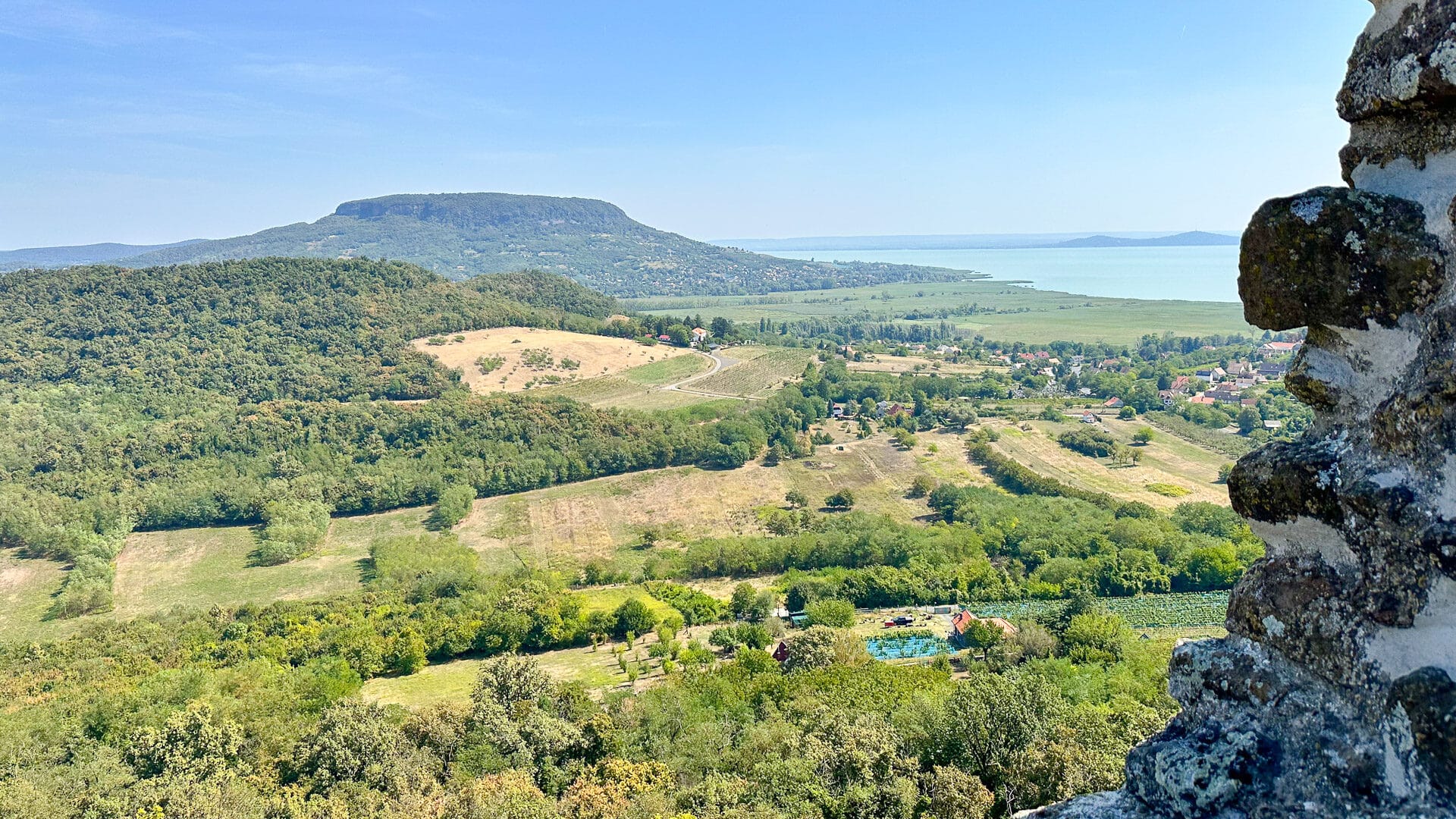

Hungary might not be the first place that comes to mind for a cycling holiday – but look a little closer and you’ll soon be seduced.
The country is full of places that suit life on two wheels: Lake Balaton, the Danube, wine regions, spa towns and quiet rural roads. It is not a destination for huge Alpine climbs (a bonus for many of us!); instead expect steady days in the saddle, rolling countryside and plenty to enjoy when you stop riding.
Hungary is less famous amongst cyclists than some of its neighbours. But for those on multi-country European cycling adventures, cycling here is often a highlight, and there’s a lot to love.
We were therefore delighted to speak with Peter Illés from Wiredonkey Cycling Tours and get his insight on cycling in Hungary. Peter was born in Transylvania and now lives in Budapest. Wiredonkey Cycling Tours have been offering fully supported, small-group cycling holidays in Hungary since 2023. You can find out more about their tours below.
In this guide Peter shares his favourite places to ride in Hungary, what the roads are like, when to go and what cyclists should know before planning a trip.

Peter Illés was born in Transylvania, Romania, and is now based in Budapest. Before starting Wiredonkey Cycling Tours, he built an IT consulting firm but found himself wanting to spend more time away from screens and out on the road.
Travel planning and cycling have long been two of Peter’s biggest interests. On trips with friends and family, he was often the person planning the places to visit, the food to try and the experiences worth making time for.
Wiredonkey Cycling Tours brings those interests together: cycling, local travel, food and sharing Hungary and Romania from the saddle.
The name Wiredonkey comes from “drótszamár”, a playful Hungarian word for bicycle.

We love to introduce our community to cycling businesses, destinations and ideas that we think are genuinely interesting. Wiredonkey Cycling Tours caught our attention because of its focus on cycling in Hungary, which felt like a natural fit for Epic Road Rides and our readers. We were therefore pleased to work with the Wiredonkey Cycling Tours team on this article.
Wiredonkey Cycling Tours paid for this advertisement feature. Our decision to collaborate reflects our view that the brand is relevant to our readers; it is not a formal approval, audit or guarantee of its services. Unless we expressly say otherwise, we have not personally taken the trip described or independently verified information supplied by Wiredonkey Cycling Tours.
As with any travel purchase, please check the latest trip details, terms and customer protections directly with Wiredonkey Cycling Tours before booking. Any booking is made with Wiredonkey Cycling Tours, not Epic Road Rides.
Always check current travel information and advice. For visitors from the UK, the UK government travel information pages are here.
To get a feel for what cycling in Hungary can look like, take a look at this short video:
 There's a Youtube video here!
I'm fine with Youtube cookies
Table of contents
- Part 1: Why should cyclists visit Hungary?
- Part 2: Overview of Hungary from a cyclist’s perspective
- Part 3: Five of the best cycling regions and routes in Hungary
- Part 4: Things to know before cycling in Hungary
- Part 5: Tips for cycling in Hungary
Sponsor Message
Considering a cycling holiday in Hungary?
Wiredonkey Cycling Tours have been offering fully supported, small-group cycling holidays in Hungary since 2023. They also offer day rides and custom tours.
Head to their website to find out more.
Got a question for Peter Illés from Wiredonkey Cycling Tours?
Fill out this form and we will pass it to Wiredonkey Cycling Tours who aim to reply (within 24 hours wherever they can!)
Cycling Hungary: at a glance
Short on time? Take a look at our at a glance table:
| Question | Short answer |
| Best for | Touring, leisure cycling, e-bikes, gravel and relaxed road riding |
| Main hub | Budapest |
| Classic cycling destination | Lake Balaton |
| Hillier riding | Eger, Bükk, Mátra, Buda Hills and Balaton Highlands |
| Best months | September and October |
| Good for families? | Yes, especially around lake routes and gentler touring areas |
| Need a guide? | Check out Wiredonkey Cycling Tours |
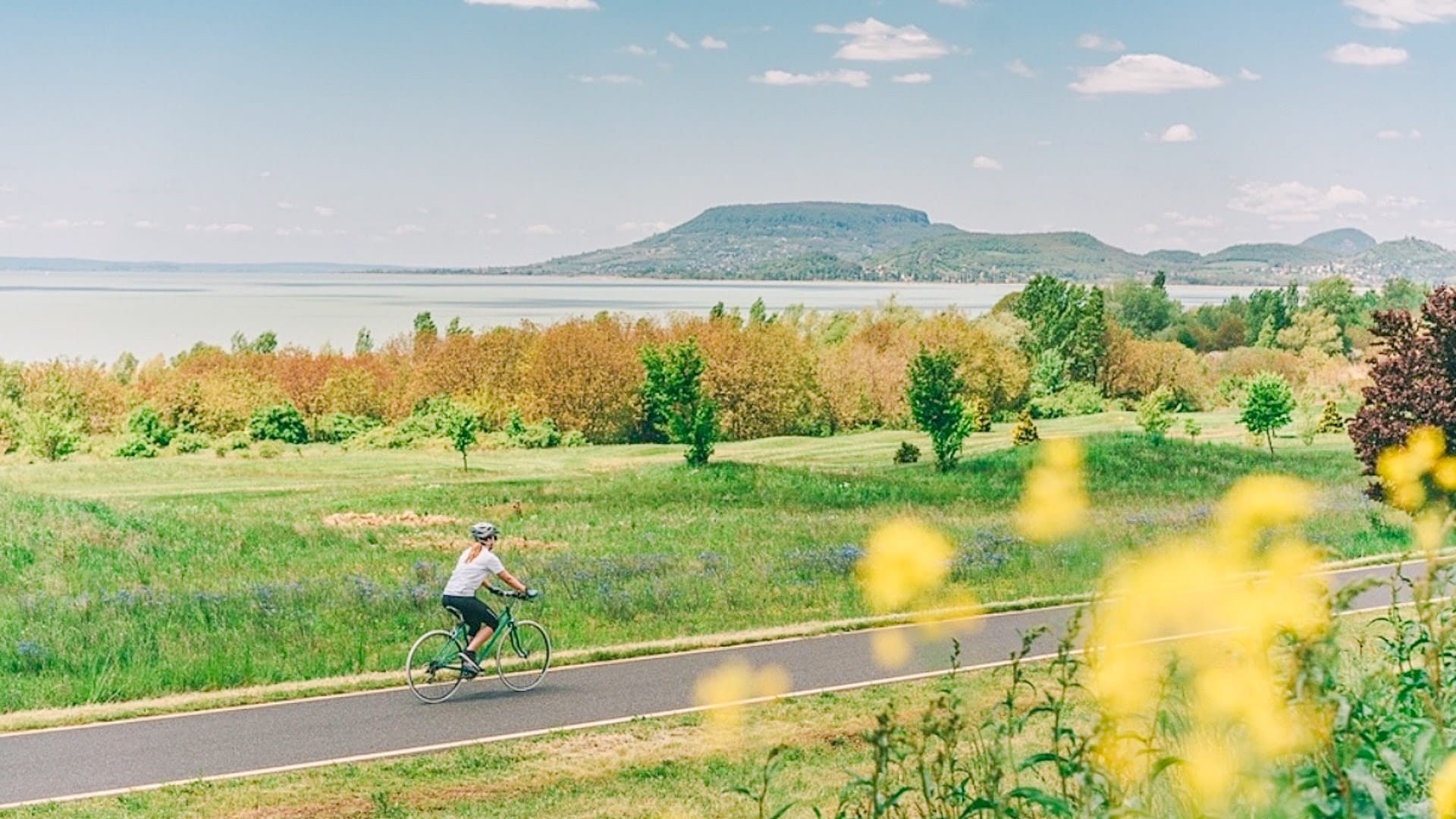
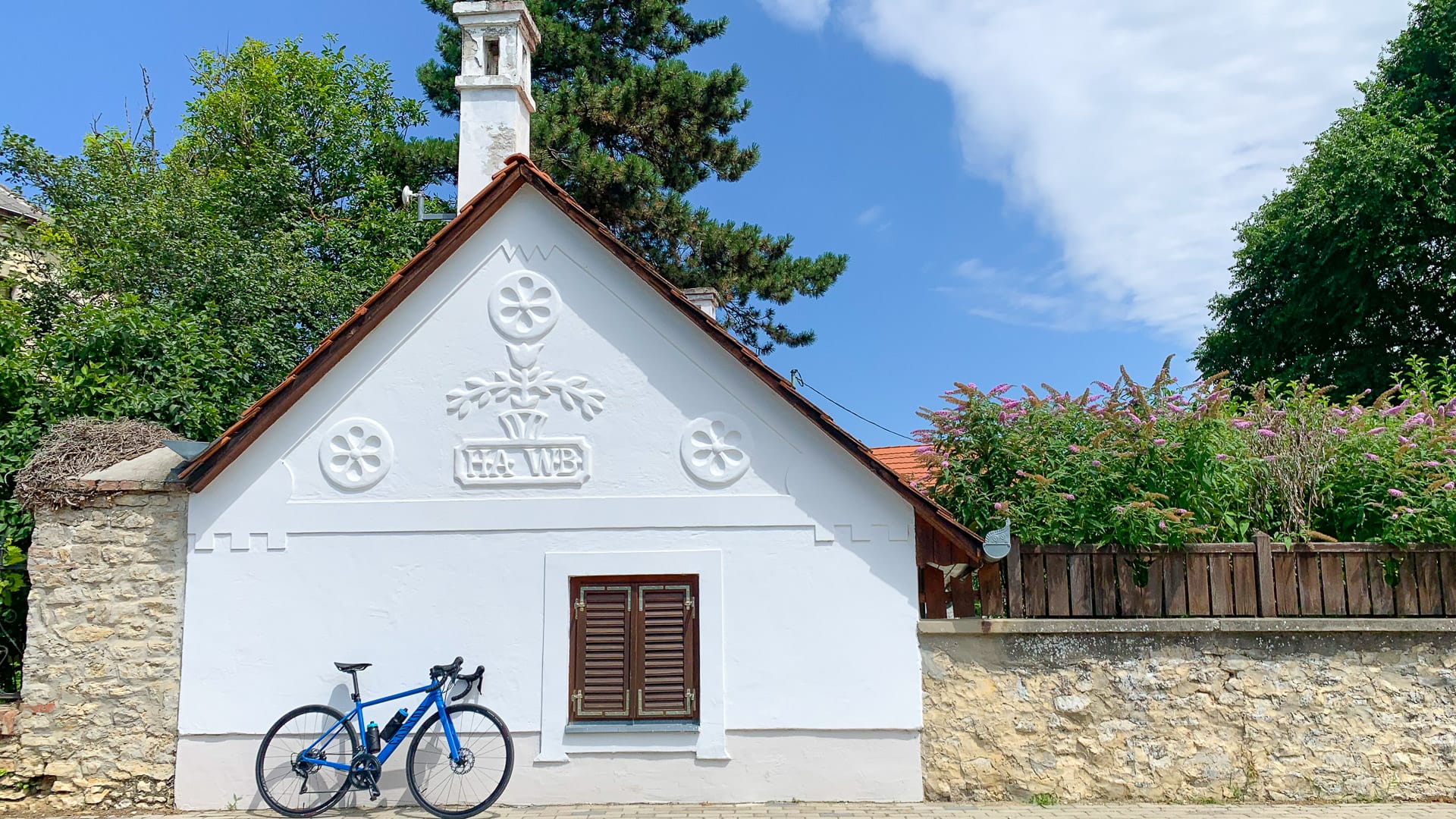
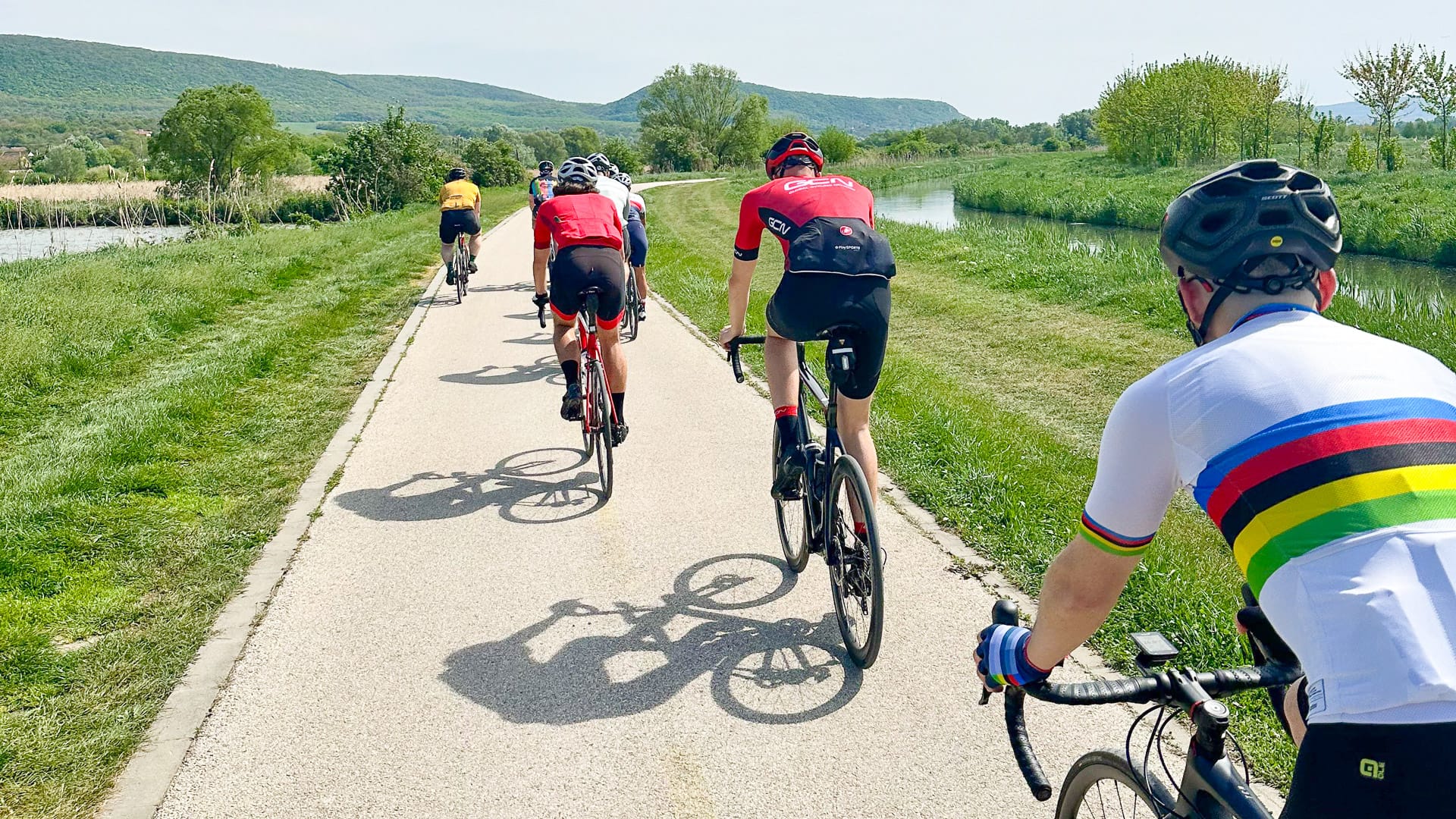
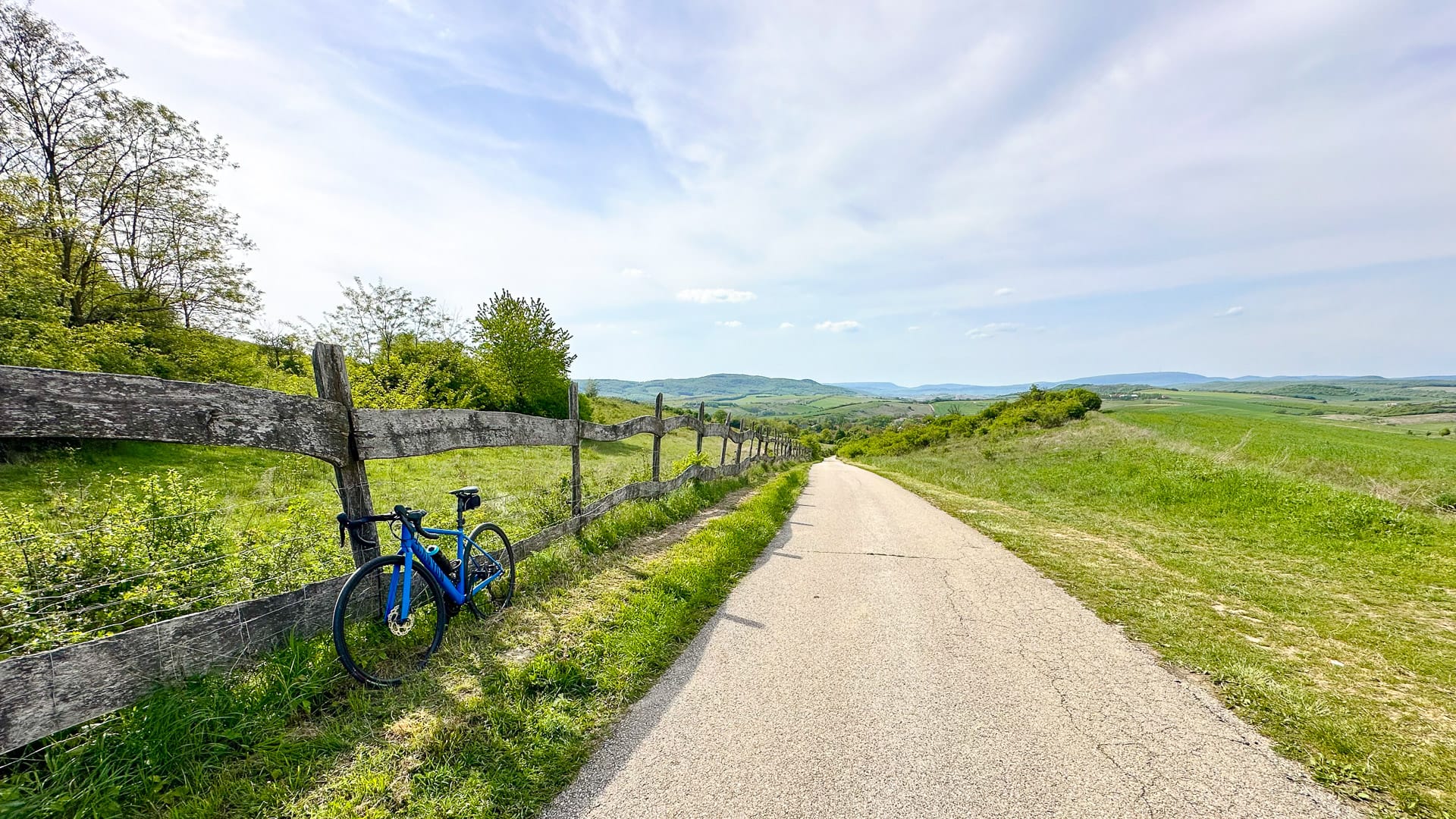
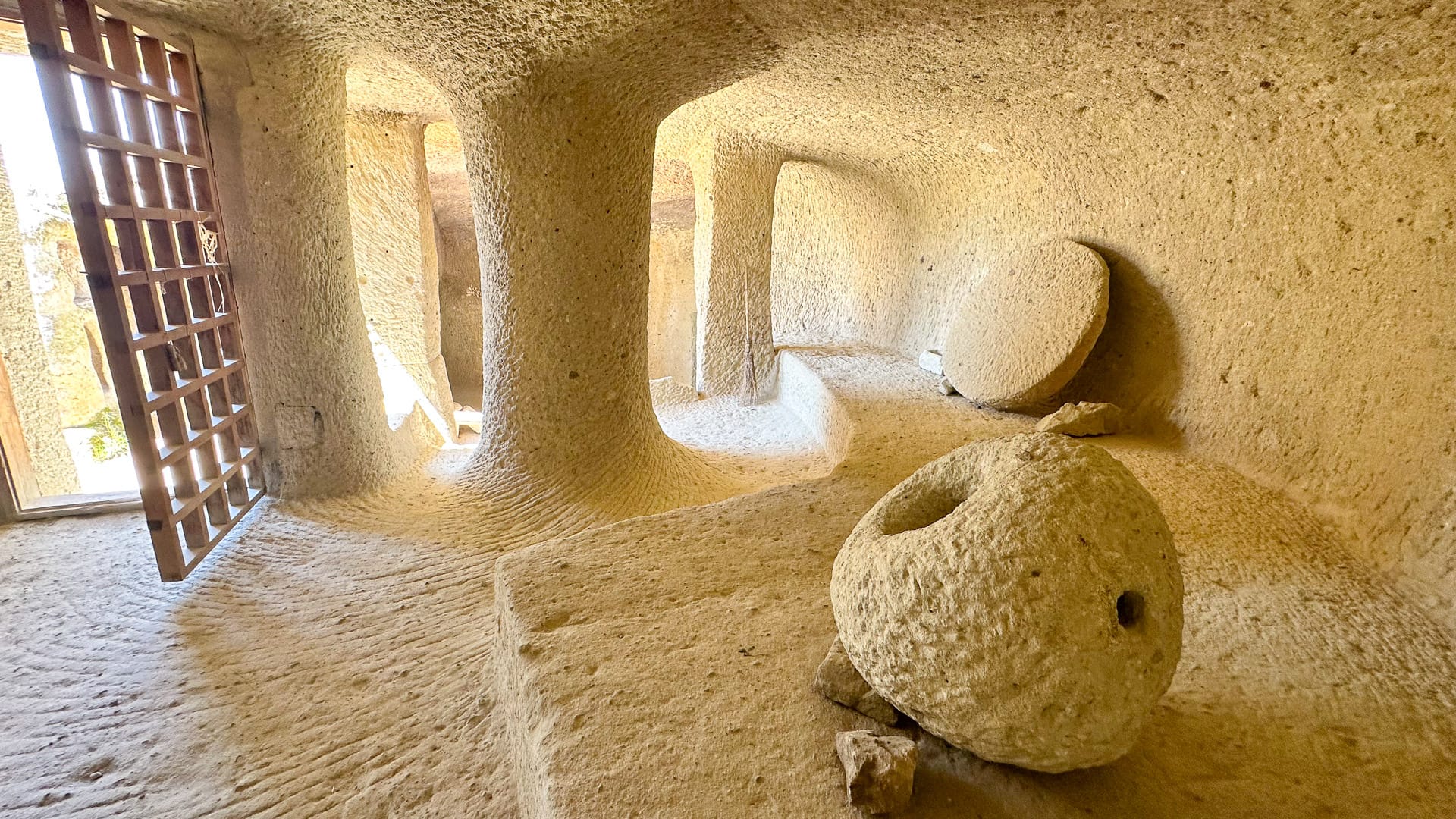
Part 1: Why should cyclists visit Hungary?
Hungary is more bike-friendly than many riders expect
A little-known fact about Hungary is that it ranks just behind the Netherlands and Denmark when it comes to the percentage of trips made by bike (source).
In many rural areas, cycling is not just a leisure activity. It is part of everyday life, with people riding between small towns and nearby villages.
As a result, Hungary has a surprisingly decent cycling infrastructure beyond its major cities. While the different regions are not always perfectly connected, with a bit of ingenuity, it’s possible to tour much of the country without having to deal with heavy traffic.
The terrain is accessible but varied
Hungary is also accessible by bike because of its terrain. The eastern part of the country is pretty flat, while west of the Danube the landscape becomes hillier. This makes it particularly good cycling country: gentle gradients, rolling hills, vineyard roads and flatter sections around the lakes and plains.
Riders looking for long Alpine-style passes may prefer other destinations. However, Hungary has plenty to offer cyclists who like steady days, open countryside, quiet backroads and time to enjoy the places they pass through.
Cycling pairs naturally with wine, spas and historic towns
A day on the bike might take you between lakes and riverbank scenery, into a historic town for lunch, on to a thermal spa in the afternoon and finally to a glass of crisp white wine as the sun drops over the hills.
This combination is one of Hungary’s main strengths. Cycling here is not only about the ride. It is also about spa towns, wine cellars, castles, small villages, lake swimming and local food.
Hungary suits relaxed cycling holidays
Hungary is especially appealing for cyclists who want more than a finish line. It works well for touring, e-bikes, relaxed road riding, family-friendly routes and gravel riders who enjoy linking together lesser-known cycle tracks.
It can also suit cycling clubs and stronger road riders, especially in hillier areas such as the Mátra, Bükk, Buda Hills and Balaton Highlands.
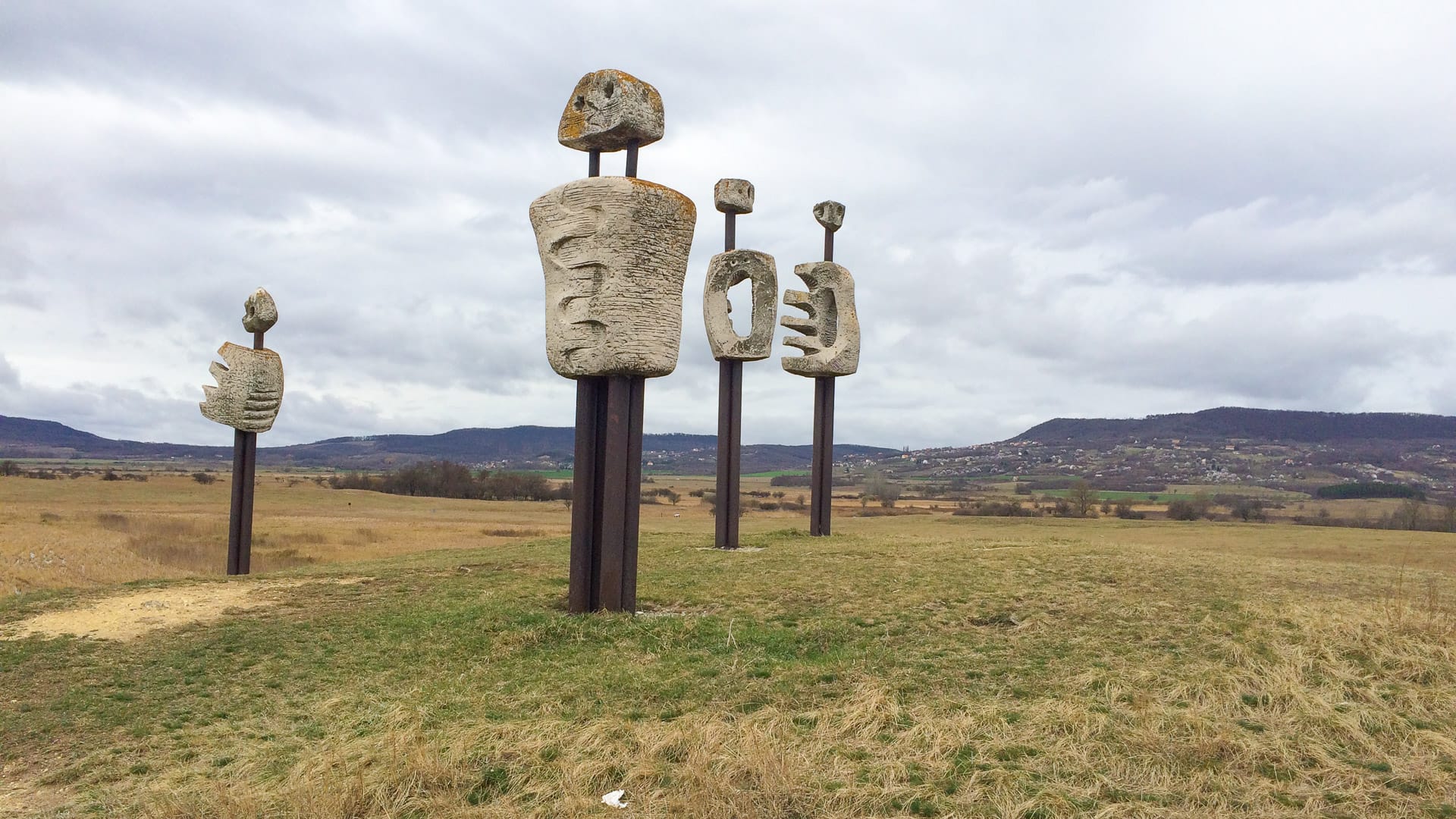
The Káli Basin keeps surprising you, this time with a roadside art installation (photo credit: Peter Illés via Wiredonkey Cycling Tours)
Sponsor Message
Considering a cycling holiday in Hungary?
Wiredonkey Cycling Tours have been offering fully supported, small-group cycling holidays in Hungary since 2023. They also offer day rides and custom tours.
Head to their website to find out more.
Got a question for Peter Illés from Wiredonkey Cycling Tours?
Fill out this form and we will pass it to Wiredonkey Cycling Tours who aim to reply (within 24 hours wherever they can!)
Part 2: Overview of Hungary from a cyclist’s perspective
Where is Hungary?
Hungary sits in Central Europe, in the Carpathian Basin, enclosed by the Carpathian, Alpine, and Dinaric mountain ranges. Hungary is bordered by seven European countries. Its longest land borders are with Slovakia (679 kilometres) to the north, Romania to the east (443 kilometres) and Austria to the west (366 kilometres).
The Danube River runs through the country and splits it broadly down the middle.
From a cyclist’s perspective, the Danube is an important reference point. It divides the country and also provides one of Hungary’s most important long-distance cycling corridors.
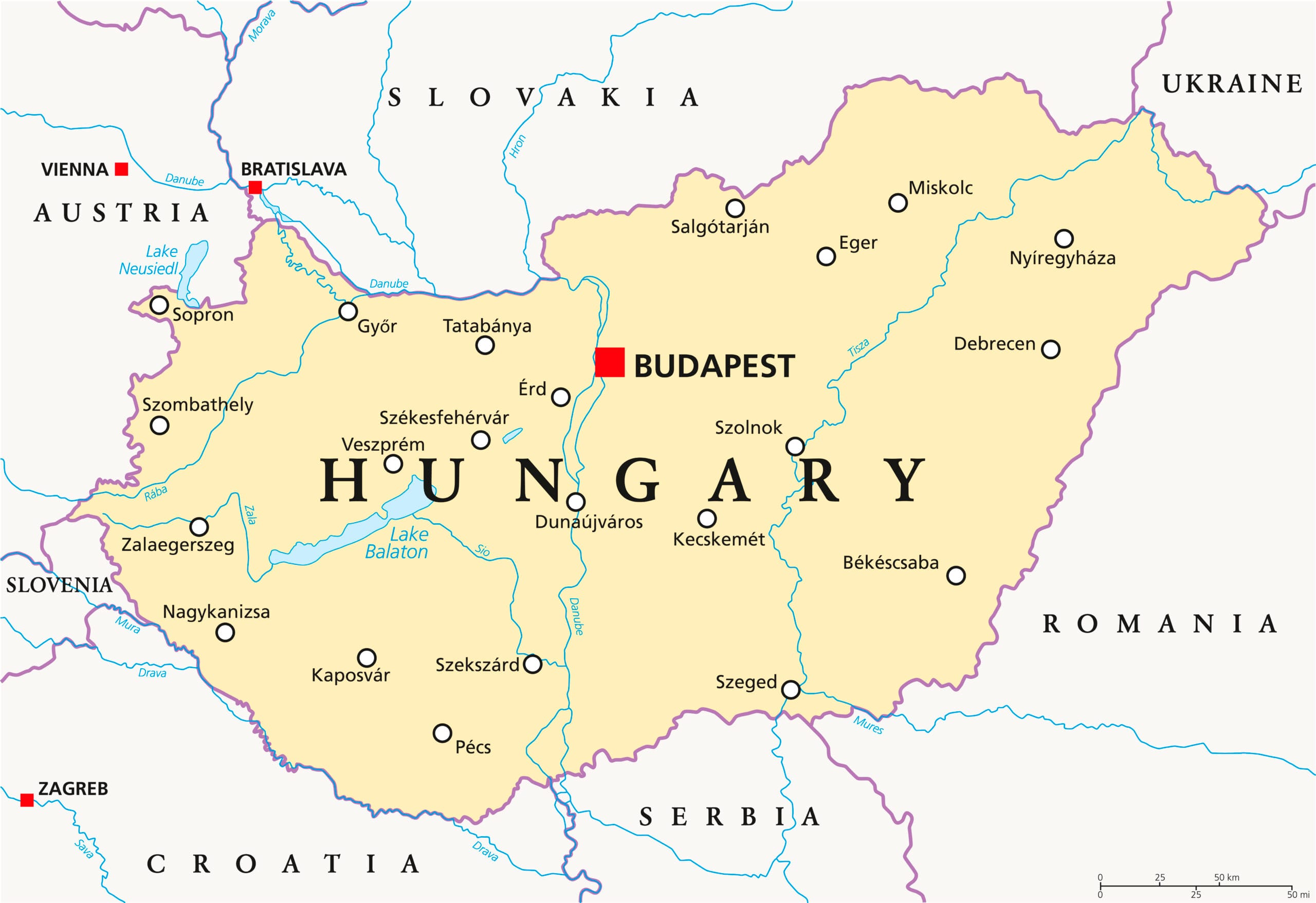
Map of Hungary
What is the terrain like for cycling?
Hungary is not especially mountainous. Its highest peak, Kékestető in the Mátra Mountains, stands at 1,014 metres. But because the Mátra rises directly from the Great Hungarian Plain, it feels higher than that number suggests. From the base, you can still gain around 800 metres of elevation.
For cyclists, the terrain varies by region:
- Budapest offers flatter riverside routes along the Danube, as well as short climbs in the Buda Hills and forest roads in the Pilis.
- Eger is one of the most useful bases for hillier riding. The Mátra and Bükk mountains are close by, with most of Hungary’s mountains being located in the north of the country.
- West of the Danube, the riding becomes more rolling. Around Lake Balaton, cyclists can combine easier lake routes with hillier rides in the Balaton Highlands.
- Further west, Western Transdanubia offers rolling borderland countryside, forest trails and quieter rural roads around Sopron, Kőszeg and Őrség.
- To the south, Pécs gives riders a mix of culture, hills and wine country. North of Pécs, you climb into the Mecsek hills; ride south and the landscape opens towards the vineyards of Villány and Palkonya.
- Hungary’s most popular cycling destinations include its three major lakes: Lake Balaton, Lake Fertő and Lake Tisza. All three have dedicated cycling routes around the lakes, the Balaton circle measuring 204 kilometres, Lake Fertő loop around 110 kilometres and Tisza Lake Cycle Circuit at 65 kilometres respectively.
You can find out more on each region below.
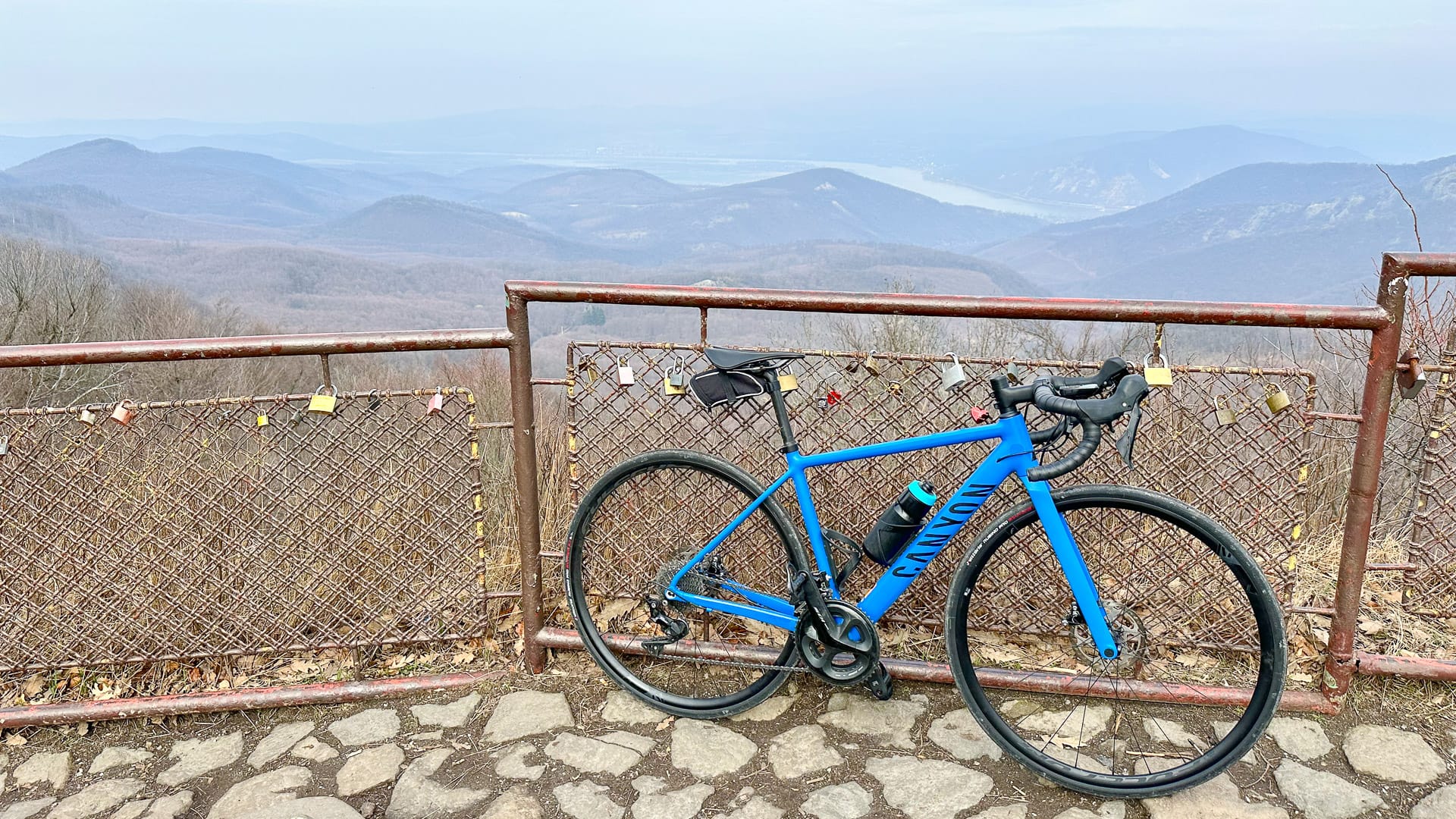
The Pilis Mountains and Danube Bend are a favourite getaway for Budapesters (photo credit: Peter Illés via Wiredonkey Cycling Tours)
What are the roads like for cyclists?
Hungary’s roads are mixed, but they are generally more manageable than many first-time visitors might expect. Drivers do not always wait patiently for a perfect passing point, but most will slow down and give riders what room they can.
The main thing to watch is consistency. Surfaces vary, signage can be limited and a bike lane may suddenly end with the main road as the only option.
Road choice matters. Single-digit roads are Hungary’s main highways and are usually best avoided unless you know the section well. Two- and three-digit roads are secondary roads, but some can still be busy, especially near larger towns and cities. Of course, this is where getting the expert input of an operator like us helps!
Before committing to a route, it is worth checking Google Street View to get a feel for the road width, shoulder, traffic and surface.
Be aware A bike lane or signed cycle route may end suddenly. Be prepared to join the road, and check the route in advance where possible.
Top tip Download GPX files before you ride and make them available offline. Signage can be inconsistent, even on routes that look straightforward on paper.
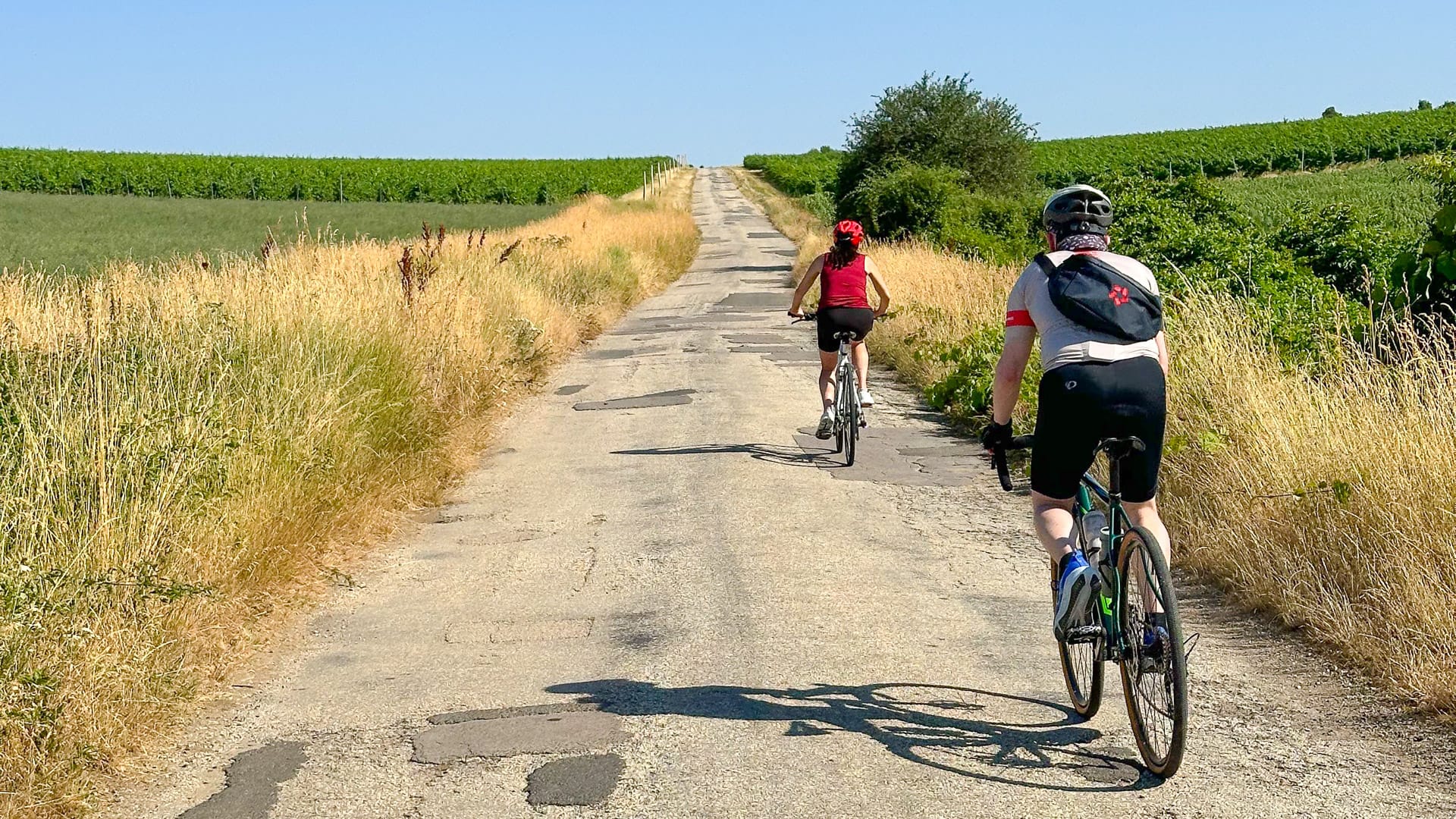
Road surfaces can get bad, but they take you through beautiful vineyards near Etyek (photo credit: Peter Illés via Wiredonkey Cycling Tours)
What kind of cyclist is Hungary best for?
Hungary’s gentle terrain makes it an easy country to enjoy by bike, including for families and less experienced riders. You are rarely far from a spa town, wine cellar, lake or decent place to stop for lunch, which makes it especially good for relaxed cycling holidays.
As a broad guide, Hungary is a good fit for:
- Leisure cyclists looking for lake routes, spa towns and relaxed distances.
- Road cyclists who enjoy rolling terrain rather than high mountains.
- Gravel riders who are happy to plan carefully and use GPX files (as while there is a large network of gravel roads and trails, the catch is that many are unsigned).
- Families and e-bike riders especially around the main lake routes.
- Touring cyclists linking Hungary with Austria, Slovakia, Croatia, Serbia or Romania.
Do you need a guided bike tour in Hungary?
You don’t need to take a guided tour to enjoy Hungary by bike. The terrain is often gentle and many of the best places to visit sit naturally along good cycling routes: Lake Balaton, the Danube Bend, Lake Tisza, the Bükk and Mátra hills, Tokaj, Eger, Pécs, Sopron and the thermal spa towns.
However, a guided or supported trip can make the logistics easier. Local knowledge is useful for avoiding dull or busy stretches, finding good lunch stops, choosing cyclist-friendly accommodation and linking the riding with Hungarian wines , spas, small towns and relaxed days in the saddle.
This is the kind of trip Wiredonkey designs: routes with local character, quiet roads where possible and a focus on the things Hungary does particularly well.
Sponsor Message
Considering a cycling holiday in Hungary?
Wiredonkey Cycling Tours have been offering fully supported, small-group cycling holidays in Hungary since 2023. They also offer day rides and custom tours.
Head to their website to find out more.
Got a question for Peter Illés from Wiredonkey Cycling Tours?
Fill out this form and we will pass it to Wiredonkey Cycling Tours who aim to reply (within 24 hours wherever they can!)
Part 3: What are the best cycling regions and routes in Hungary?
The regions below start with Hungary’s best-known cycling bases, then move into areas that offer more climbing, quieter roads, gravel and wine country.
| Region | Best for | Terrain |
| Budapest | Short breaks, city sightseeing and the Danube | Riverside routes, hills and forest roads |
| Lake Balaton | Classic cycling holidays and wine rides | Lake routes and rolling highlands |
| Eger | Hillier riding and wine country | Mátra and Bükk hills |
| Western Transdanubia | Rural roads and gravel | Rolling borderlands and forest trails |
| Pécs | Culture, hills and red wine | Mecsek hills and Villány vineyards |
Budapest
Budapest is Hungary’s capital and the country’s most obvious city-break base. It is also a useful base for cycling. You can keep things easy with a riverside ride along the Danube to Szentendre or further into the Danube Bend, the famously scenic curve of the river north of Budapest, or make the day tougher with a loop to the vineyards of Etyek, the climbs of the Buda Hills or the forest roads of the Pilis Mountains, a hilly forest area north-west of Budapest.
For a capital city, Budapest gives cyclists a useful mix: easy riverside rides, short climbs, wine-country day trips and access to forest roads beyond the city. Road cyclists get short, steady climbs and quiet forest roads. Gravel riders can link together trails and backroads. Mountain bikers also have downhill trails within reach of the city.
Suggested route: Budapest to Lake Velence
GPX DownloadTerms of use reminder
Route summary
- Distance: 67 kilometres
- Elevation gain: 451 metres
- Start: Budapest
This is one of my personal favourites. The route follows the BuBa (Budapest-Balaton) route out of Budapest towards Etyek, where a glass of crisp white wine makes a reasonable mid-ride pause. From there, it continues through rolling hills towards Lake Velence, where many local riders finish with gelato by the water.
One of the route’s more unusual stops is the railway viaduct in Biatorbágy, the site of Hungary’s worst train disaster. It is a sombre moment, but a memorable part of the ride.
Tour with Wiredonkey
This route is available as a guided tour, with a wine tasting included in Etyek.
For more information, our in-depth guide to Budapest will help answer your questions on the city’s capital.
For riders interested in following the river beyond Budapest, our separate guide to the Danube Cycling Path covers this famous long-distance route in more detail.
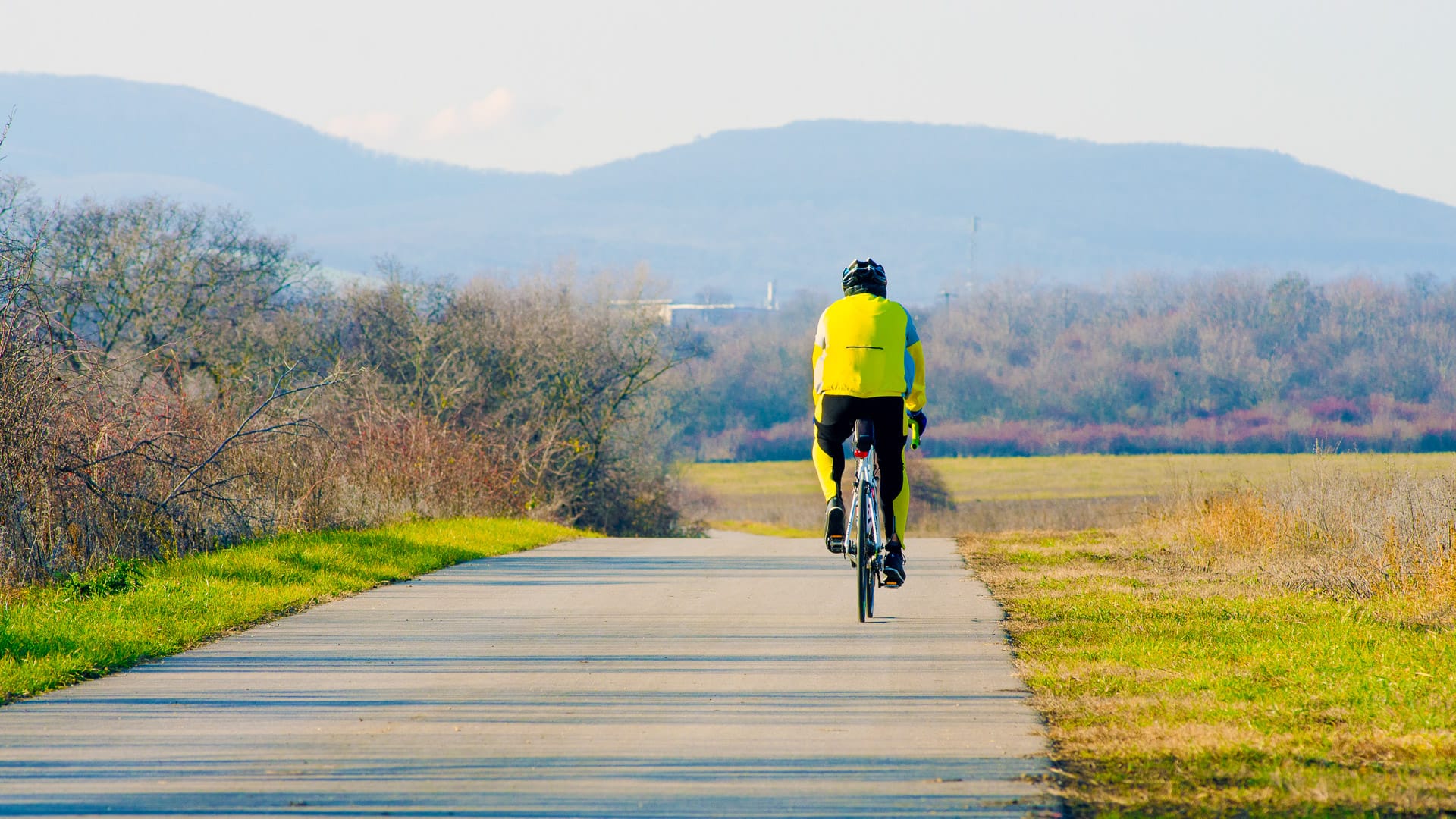
The Budapest-Balaton bike path just outside Budapest (photo credit: Peter Illés via Wiredonkey Cycling Tours)
Lake Balaton
About 100 kilometres south-west of Budapest, Lake Balaton is Hungary’s classic cycling destination. Nicknamed the “Hungarian Sea”, it is the largest lake in Central Europe and offers beaches, medieval castles, lookout towers, vineyards, hillier highland rides and easier lakeside bike paths.
As a cycling holiday destination, Balaton is one of Hungary’s strongest options. You could easily spend a week or more around the lake and still find something different to do each day. One unusual experience is a boat ride through the underground Cave Lake in Tapolca.
The lake is also useful for riders who want flexibility. You can keep to easier lakeside sections, head into the Balaton Highlands for hillier riding or combine cycling with swimming, wine villages and ferry crossings.
Suggested route: Balaton Highlands Route
GPX DownloadTerms of use reminder
Route summary
- Distance: 68.9 kilometres
- Elevation gain: 669 metres
- Start: Balatonalmádi
This is a tougher ride through the hills above the lake, linking quiet villages, vineyards and wide views across western Hungary. Start in the resort town of Balatonalmádi, then head into the rolling roads of the Balaton Highlands. The route crosses the Káli Basin and finishes beneath the volcanic cliffs of Badacsony.
This is a ride where stopping is part of the point. Leave time for viewpoints, villages and a post-ride glass of local wine.
Tour with Wiredonkey
For a guided version of the best Lake Balaton has to offer, take a look at our Balaton Cycling Holiday in Hungary.
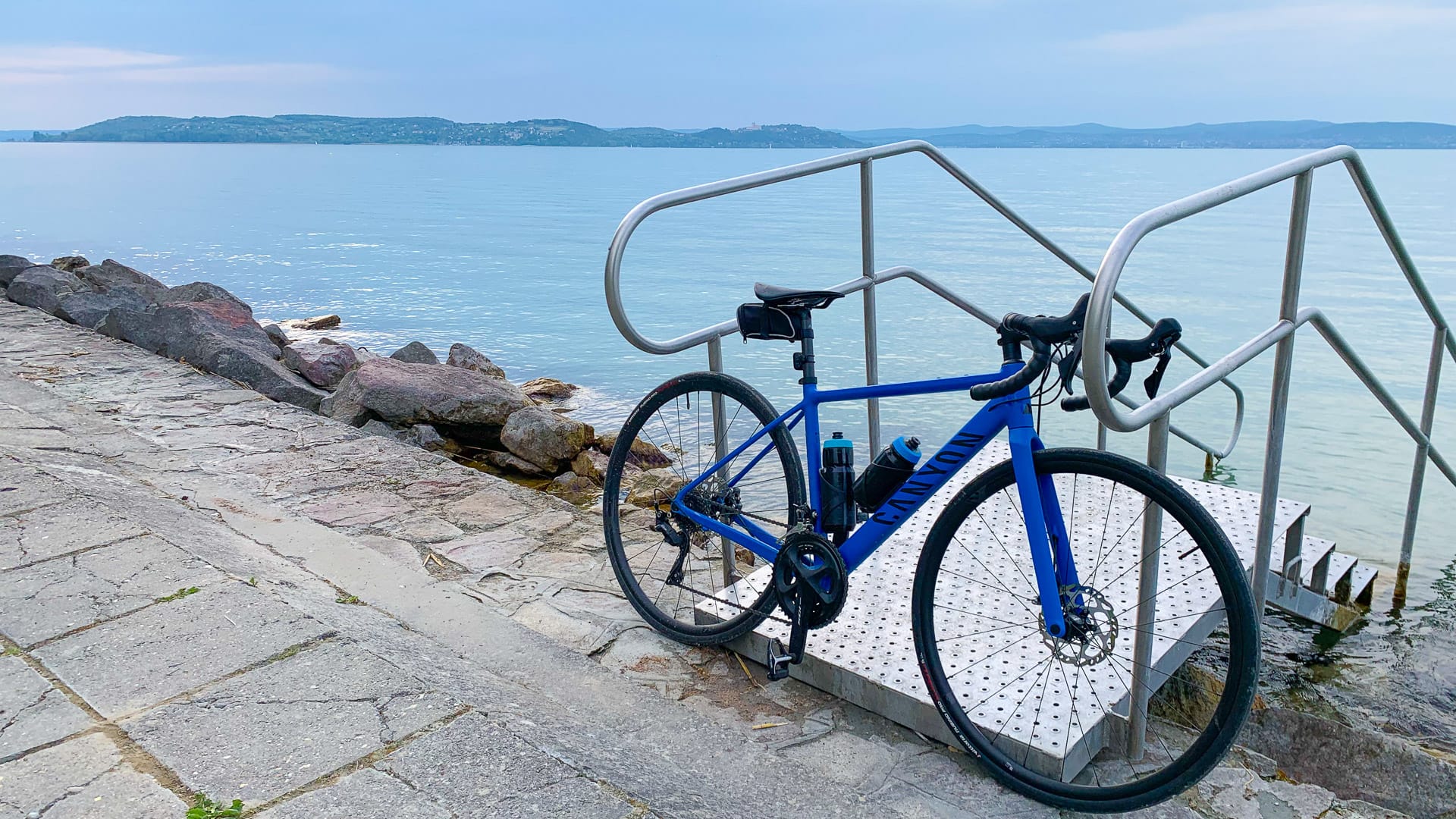
Hungarians jokingly say the best part of the southern shore is that you can see the beautiful northern shore (photo credit: Peter Illés via Wiredonkey Cycling Tours)
Eger
Eger lies around 140 kilometres north-east of Budapest, close to the Mátra and Bükk mountains. Hungary is not famous for high mountains, but if you want more elevation, Eger is one of Hungary’s strongest cycling bases, giving riders access to some of the country’s longest and most interesting climbs. Eger is also a strong base off the bike. It is a wine town with a historic centre, castle and baroque streets, as well as nearby day trips such as the salt hill of Egerszalók, the narrow-gauge railway and waterfalls of the Szalajka Valley, and the old cave homes of Noszvaj.
Suggested route: Kékestető from Eger
GPX DownloadTerms of use reminder
Route summary
- Distance: 112 kilometres
- Elevation gain: 1,496 metres
- Start: Eger
If you want to ride to the top of Hungary, this loop is a good way to do it. It is also a useful reminder that Hungary is not entirely flat. One ride can still include a serious amount of climbing.
Tour with Wiredonkey
We visit all of these places on our Tour de Bükk guided cycling tour, with riding through the Bükk hills, wine country, and some of the northern Hungary’s hills, wine country and quieter roads.
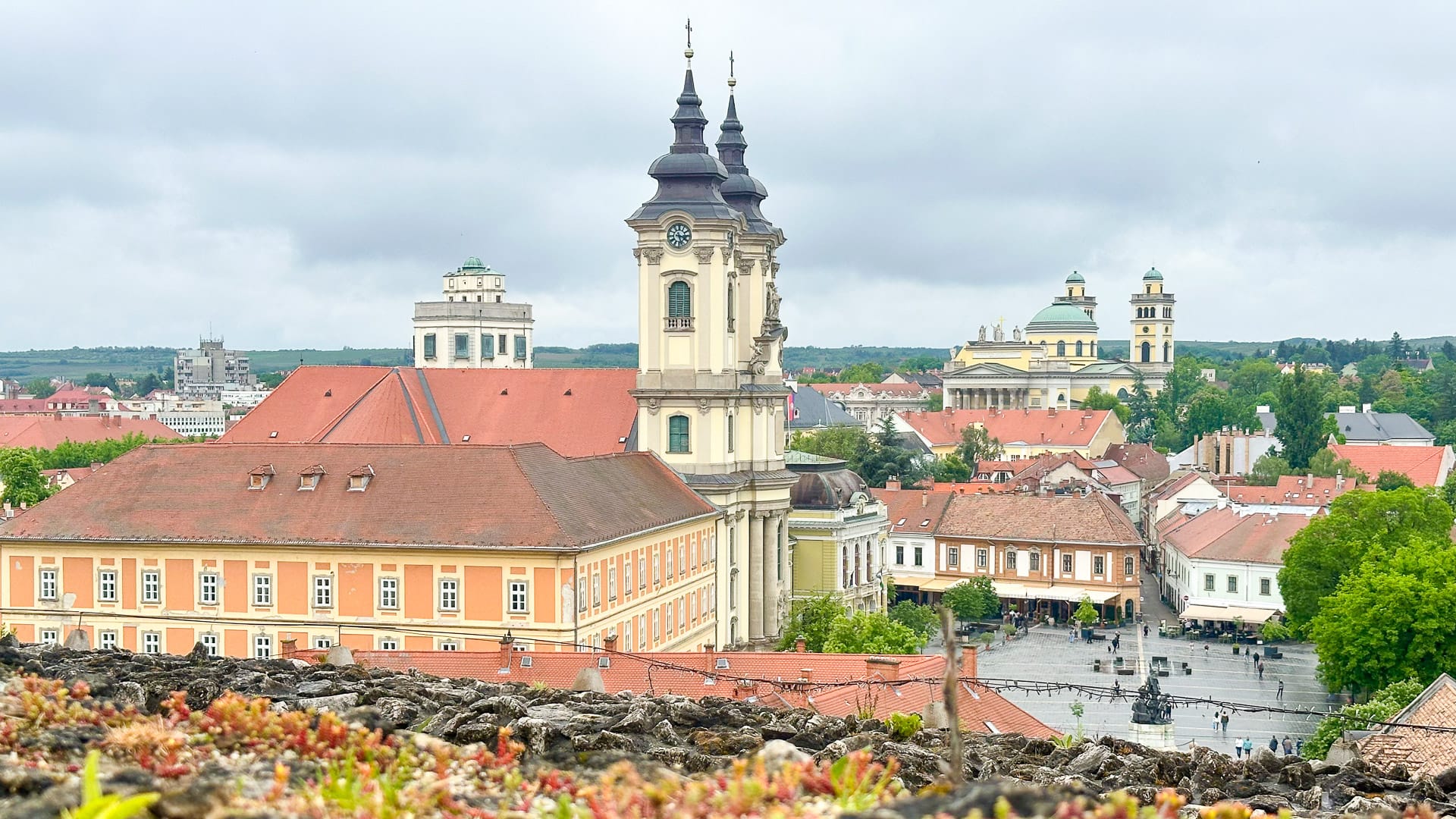
Eger city is a great starting point to explore the nearby mountains (photo credit: Peter Illés via Wiredonkey Cycling Tours)
Western Transdanubia
Western Transdanubia, 220 kilometres west of Budapest, offers a wide mix of riding, especially in the north of the region. You can ride from the reed beds of Lake Fertő to the vineyards around Sopron, then on to Kőszeg, one of the country’s most characterful small towns.
Above Kőszeg, the forest around Írott-kő is one of Hungary’s lesser-known gravel areas. There are more than 100 kilometres of trails here, criss-crossing in a dense pattern with plenty of chances to get lost in the right kind of way.
Further south, the borderland of Őrség has a slower, rural feel: whitewashed houses, thatched roofs, geese in courtyards, quiet rolling hills and, on clear days, views towards the Alps.
Suggested route: Őrség Bagel
GPX DownloadTerms of use reminder
Route summary
- Distance: 80.7 kilometres
- Elevation gain: 604 metres
- Start: Őriszentpéter
This route squeezes the best of the Őrség into one punchy day. Expect quiet villages, gentle climbs, open views and the kind of rural calm that makes average speed feel less important.
Tour with Wiredonkey.
Our Hungary’s Great Western Trail guided tour explores the best of Western Transdanubia, taking in quiet roads, scenic landscapes and many of the region’s lesser-known highlights. If you’d like to experience this part of Hungary with local guides, please visit our tour page.
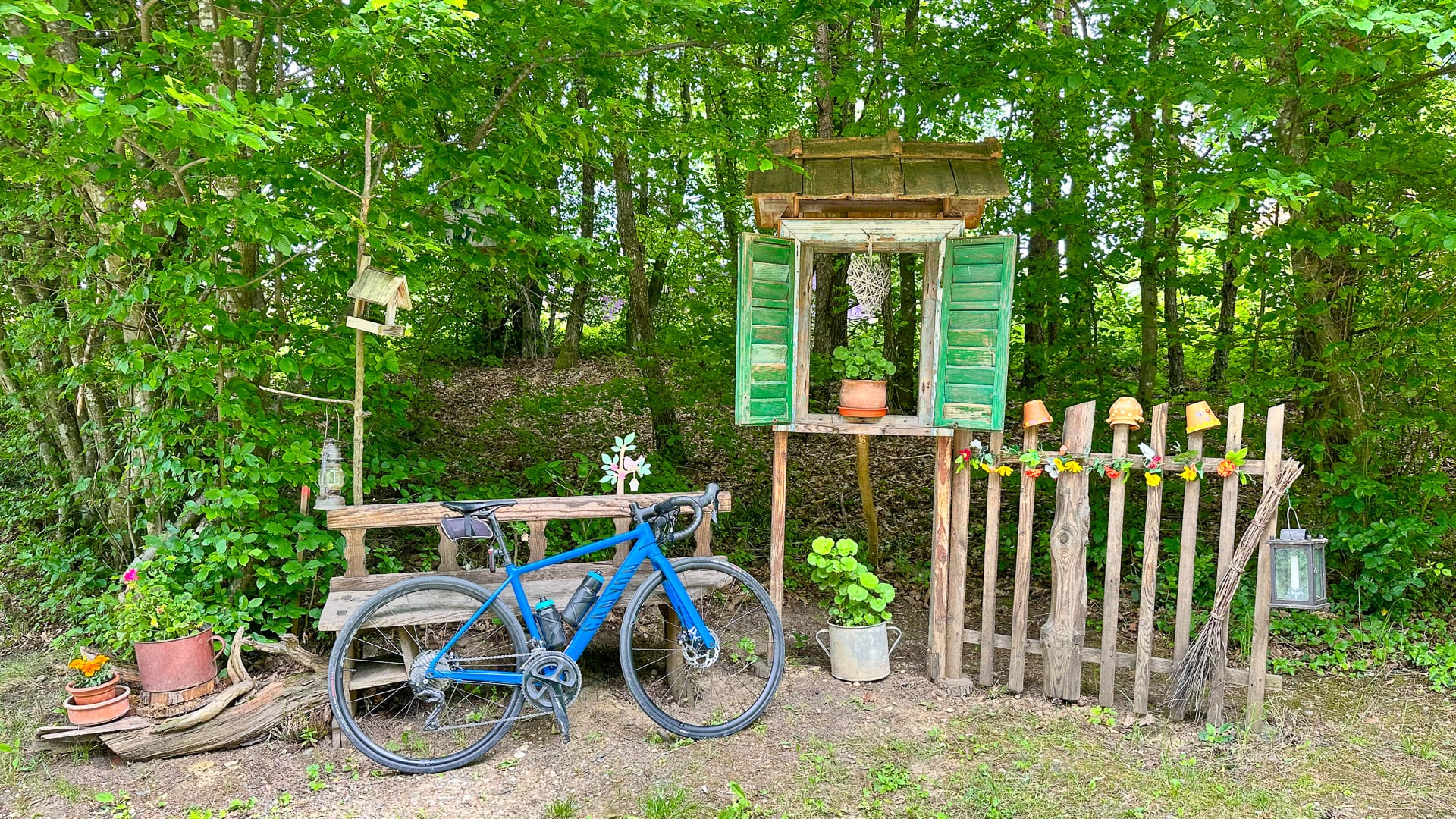
Őrség is Hungary’s living traditional region, where potters still ply their trade today (photo credit: Peter Illés via Wiredonkey Cycling Tours)
Pécs
Travelling 200 kilometres south-west of Budapest, leads you to Pécs. First, there is the historic centre, shaped by the Mosque of Pasha Qasim and the four-towered cathedral. Then there is the Zsolnay Quarter, a former porcelain factory turned cultural district, now home to galleries, cafés, concerts and festivals.
The riding around Pécs is similarly varied. Head north and you climb into the cool forests of the Mecsek, with Lake Orfű as a natural target. Head south and the landscape opens towards the vineyards of Villány and Palkonya, one of Hungary’s well-known red wine areas.
Suggested route: Villány loop from Pécs
GPX DownloadTerms of use reminder
Route summary
- Distance: 85.6 kilometres
- Elevation gain: 544 metres
- Start: Pécs
This route heads south from Pécs into the Villány wine region, looping through vineyards, small villages and red wine country. A stop at Siklós Castle is worth building into the day.
Tour with Wiredonkey
We are happy to offer this as a tour on request. Please contact us if you are interested in finding out more.
Long-distance cycling routes in Hungary
Summary
Hungary is crossed by four EuroVelo routes, which gives cyclists several options for longer-distance touring.
The Sultan’s Trail pilgrimage route, a long-distance cycling route from Vienna to Istanbul, also passes through Hungary. For cyclists, some sections may overlap with or sit close to the EuroVelo 6 corridor, but it is best treated as a specialist touring route rather than one of Hungary’s main visitor cycling routes.
Horizont is also worth mentioning. It is developing gravel routes which, once complete, could become one of Central Europe’s more interesting adventure cycling trails. See below for more information on Horizont.
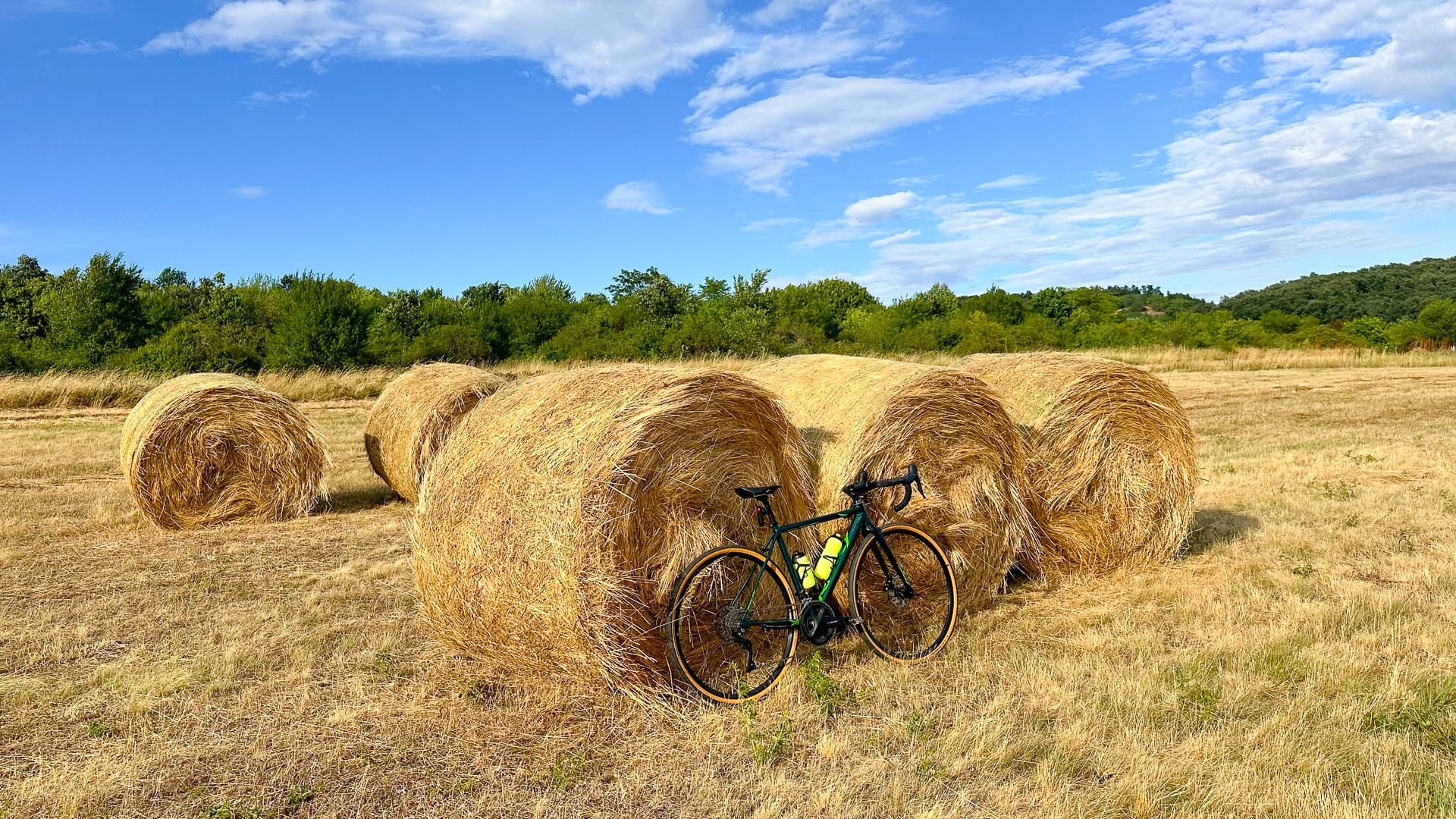
Hungary is an underrated gravel destination (photo credit: Peter Illés via Wiredonkey Cycling Tours)
EuroVelo routes
Hungary is home to four EuroVelo routes:
- EuroVelo6 sees the most cycling traffic. It enters the country at the Slovak border in the north and follows the Danube for around 420 kilometres before continuing towards Serbia.
- EuroVelo11 follows the Tisza River through the Great Hungarian Plain, linking the Tokaj wine region in the north with Lake Tisza and the university town of Szeged in the south. The Hungarian section is roughly 430 kilometres long.
- EuroVelo13 is part of the Iron Curtain Trail. It runs just under 500 kilometres in Hungary and loosely traces Hungary’s western, southwestern, and southern borders, often dipping close to Austria, Slovenia, Croatia, and Serbia.
- EuroVelo14 is particularly relevant for cycling holidays in Hungary because it links several of the country’s strongest cycling themes: lakes, rivers, spas, wine regions and rural landscapes. The route spans around 710 kilometres in Hungary and threads together three of Hungary’s major lakes: Fertő, Balaton, and Velence, with a natural continuation towards the fourth, Lake Tisza.
On all of these EuroVelo routes, some sections are better developed than others. Signposting and surfaces can vary, so it is worth downloading GPX files rather than relying on signs alone. You’ll spend a lot of time on quiet backroads and bike paths, but surfaces vary. The EuroVelo route tries to keep you away from traffic. That is usually a good thing, but it can also mean finding yourself on a dirt road in the middle of nowhere…
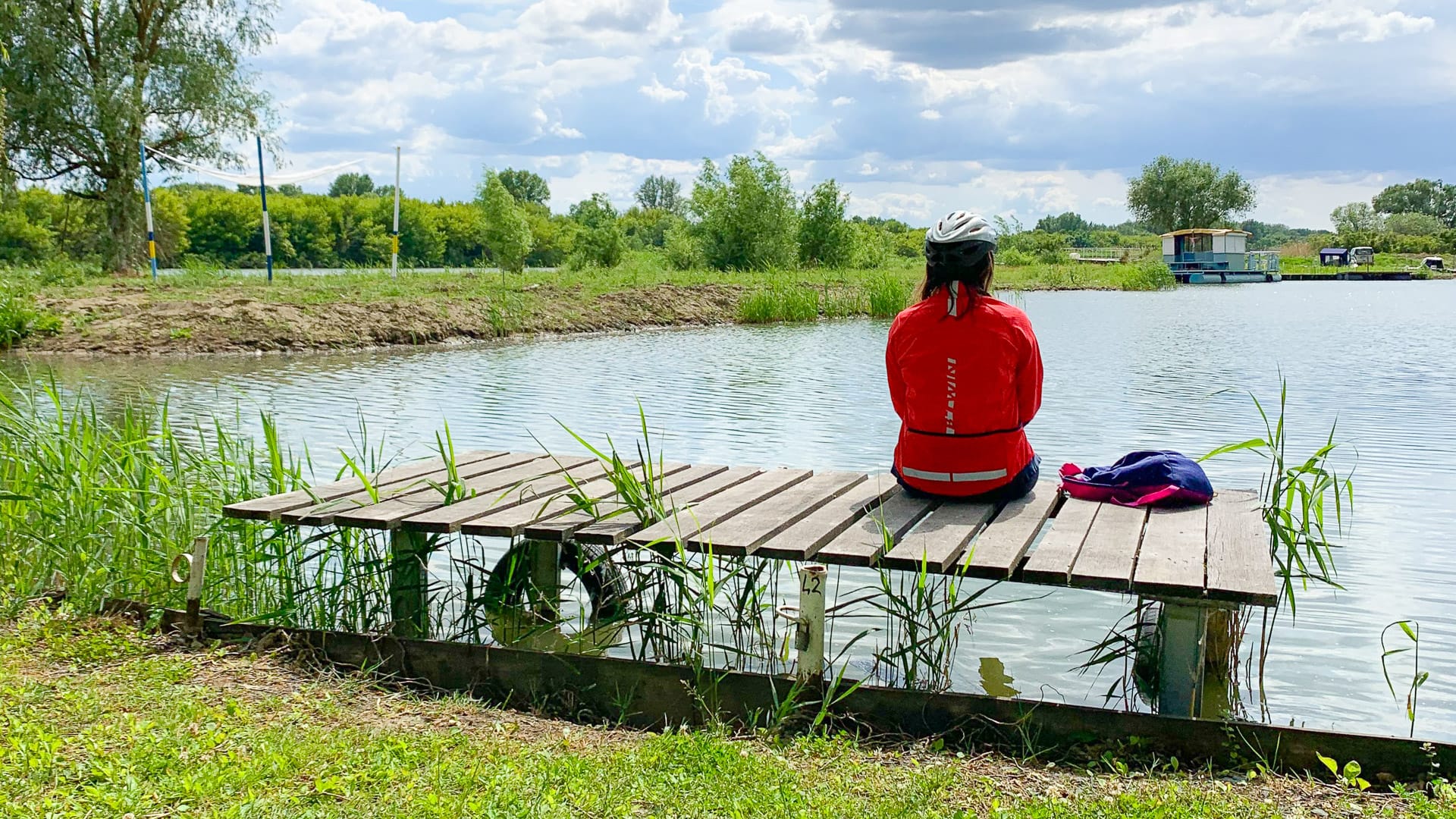
Lake Tisza offers great cycling infrastructure and serenity (photo credit: Peter Illés via Wiredonkey Cycling Tours)
Horizont
Horizont calls itself Hungary’s national cycling adventure trail. It runs mostly off-road between Tokaj and Szentgotthárd, linking forests, hills, mountain landscapes, and plenty of natural and cultural sights along the way.
The full route is planned to be more than 1,500 kilometres long, split into 27 stages of roughly 50 to 70 kilometres each. Every stage has its own flavour, from hidden forest tracks and big viewpoints to old villages, castles, and historic towns.
One of the nice touches is that the route is designed to be fully signposted and marked in both directions. There are also 117 virtual stamping points along the way, so riders can collect digital stamps as they move across the country.
At the moment, 17 of the 27 stages are complete, with the full route expected to be finished by spring 2027. When it is done, Horizont could become one of the most interesting gravel and adventure cycling routes in Central Europe.
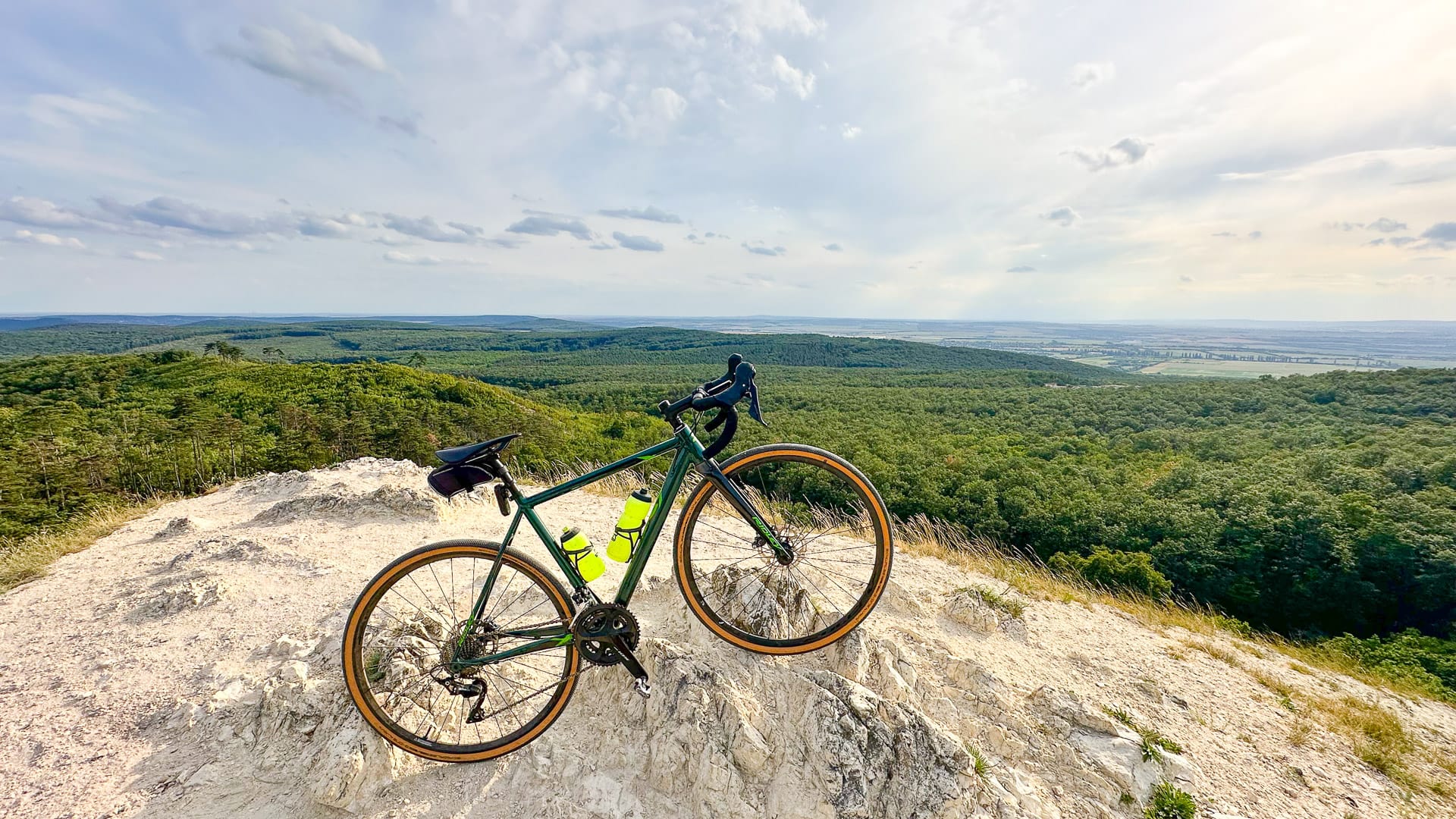
Horizont is Hungary’s premier gravel route (photo credit: Peter Illés via Wiredonkey Cycling Tours)
Sponsor Message
Considering a cycling holiday in Hungary?
Wiredonkey Cycling Tours have been offering fully supported, small-group cycling holidays in Hungary since 2023. They also offer day rides and custom tours.
Head to their website to find out more.
Got a question for Peter Illés from Wiredonkey Cycling Tours?
Fill out this form and we will pass it to Wiredonkey Cycling Tours who aim to reply (within 24 hours wherever they can!)
Part 4: Things to know before cycling in Hungary
When is the best time to cycle in Hungary?
Hungary can be windy in spring, hot in summer and close to ideal in autumn. September and October are among the best months for cycling here. The weather is still warm, the light is softer and the big lake destinations are much quieter than in July or August.
The trade-off is that water temperatures start to drop in autumn, so post-ride swims in Balaton or Lake Tisza may require a little more bravery.
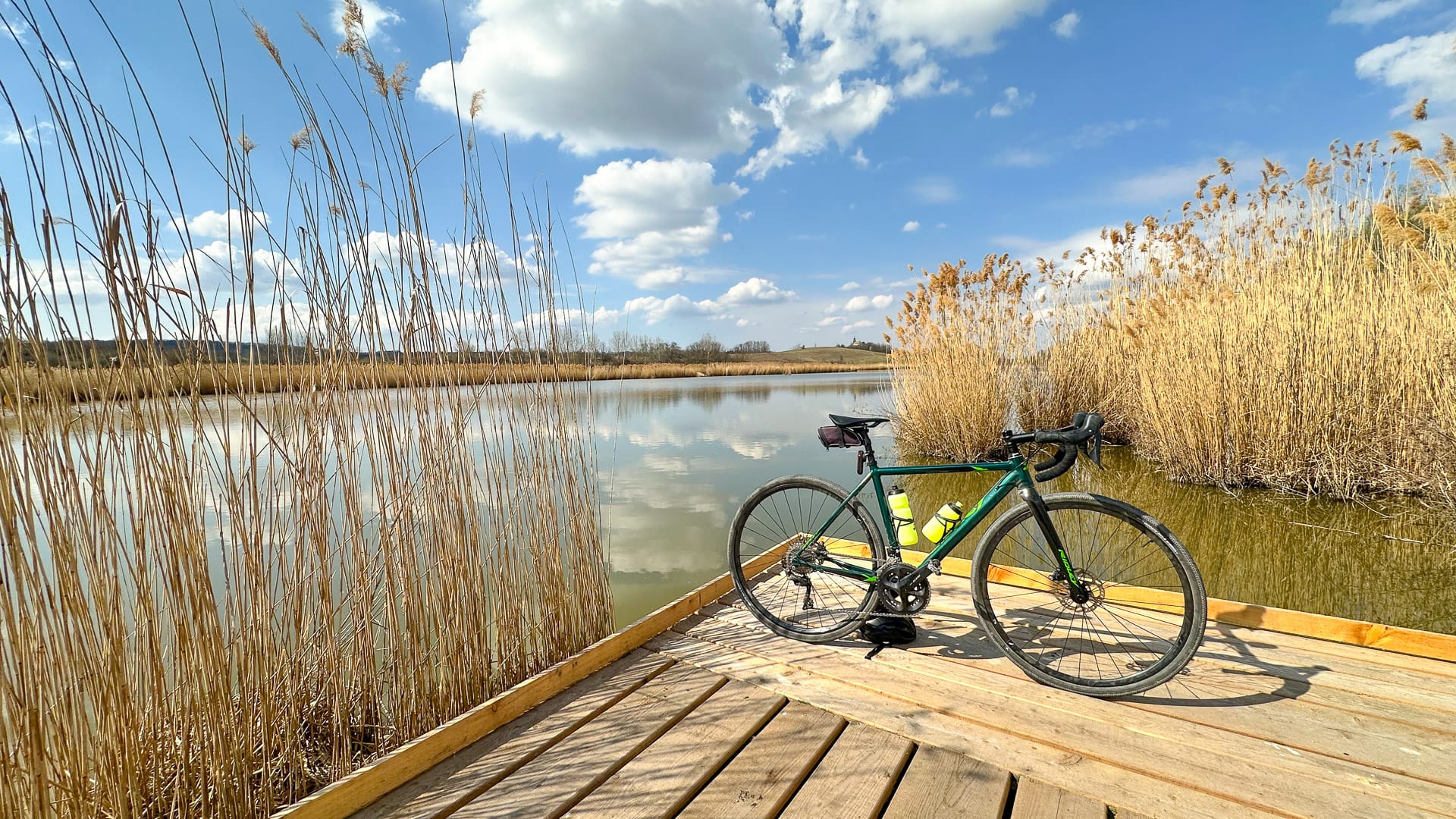
In Hungary, you are never far from water (photo credit: Peter Illés via Wiredonkey Cycling Tours)
What are the key cycling events in Hungary?
Hungary’s recent claim to cycling fame came in May 2022, when the Giro d’Italia’s Grande Partenza took place here.
There is also a good range of other events in Hungary:
- The Tour de Hongrie is also held every year and is part of the UCI ProSeries.
- For amateur riders, Balatonfondo is an annual sportive in the Balaton Highlands.
- Hungary also has a gravel and bikepacking scene, with KLND organising races and sportives during the year.
- At the demanding end of the spectrum is the Hungarian Divide, a 1,500 kilometre self-supported ultra-endurance challenge across Hungary.
- For something shorter, though still substantial, the Balaton Gravel Derby offers a 370 kilometre gravel adventure around Lake Balaton.
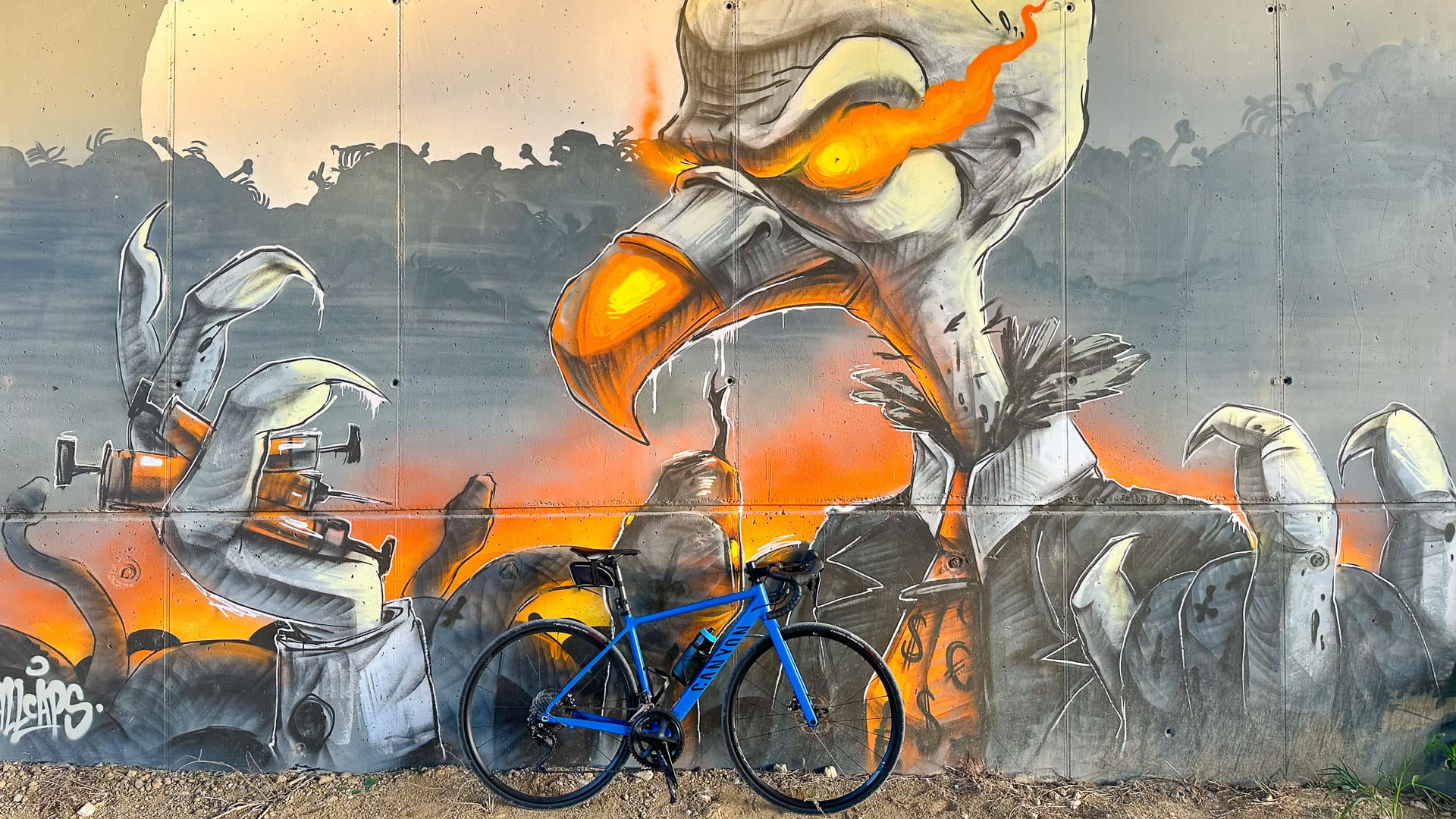
Urban gravel adventure in Budapest (photo credit: Peter Illés via Wiredonkey Cycling Tours)
Where should cyclists stay in Hungary?
Hungary’s Bike Touring Association runs a cyclist-friendly accreditation scheme for accommodation providers and attractions. It lists guesthouses, campsites, hotels and places of interest that meet basic bike-friendly criteria.
Accommodation on the list should offer secure overnight bike storage, e-bike charging, free water refills, a first-aid kit, basic repair tools and often somewhere to wash your bike. It is a useful starting point when planning a self-supported trip.
Booking accommodation in advance is highly suggested during peak season, especially around Hungary’s lakes and in Budapest.
On Wiredonkey tours, we take a slightly different approach. We use carefully chosen three-star or four-star family-run guesthouses where the welcome feels personal. This might mean an owner greeting guests with homemade pálinka, joining the group by bike for the first few kilometres the next morning, or serving breakfast with vegetables from the garden and fruit from the orchard.
It is not five-star luxury, but it can be local hospitality at its warmest.
Is camping an option in Hungary?
Hungary can work well for bikepacking and touring cyclists who want to use campsites. Wild camping is more complicated. The general position is that short stays may be possible in some places, but there are important exceptions, including protected natural areas, nature parks and areas near caves, springs or marshland.
If you are planning to camp, check the latest local rules before you travel and use official campsites where possible. Be especially careful in protected landscapes and national parks.
Can you hire bikes in Hungary?
Bike hire is easiest in the main cycling and tourism areas, especially Budapest and Lake Balaton. In quieter regions, it is worth arranging bikes in advance or travelling with your own bike.
For bike hire around Lake Balaton and western Hungary, Balaton Bike Tour is a useful starting point. They have several pick-up points around the lake and can arrange delivery for a fee.
In and around Budapest, there are more rental options. Bringaland and the Merida Concept Store are two names to look at. As a backup, Decathlon stores often rent basic entry-level bikes at affordable prices, which can work for short, easy rides.
OnWiredonkey tours in Hungary, we use mid- to high-end road bikes, such as the Scott Addict or similar, and gravel bikes, such as the Scott Speedster Gravel or similar.
Can you take bikes on public transport in Hungary?
Buses are generally not useful for travelling with bikes in Hungary, as you generally cannot take bikes on. Trains are much more helpful, but they still require planning.
Bikes can often be carried on local and regional trains, but long-distance and InterCity services need checking carefully. Most slower trains, including SZ, GY and Z services, have a limited number of bike spaces. This is usually around seven or eight spaces, and these can fill quickly during rush hour and at weekends.
Some trains have dedicated bike compartments or bike carriages, while others have limited space. There is no simple rule for which services have dedicated bike carriages, so check the MÁV app before travelling. The app is regularly used by local cyclists the day before their journey to confirm if they have a dedicated bike carriage. It also helps you check train ticket options for you and your bike. Bike spaces generally cannot be booked or reserved in advance, except on international trains.
Top tip Check bike spaces before travelling by train using the MÁV app . Spaces can be limited, especially at weekends, during rush hour and on popular summer routes.
How do you get to Hungary with a bike?
Hungary’s main international airport is in Budapest, with good connections across Europe and beyond. The awkward part, especially with bikes, is that the airport has no direct rail link into the city. If you are travelling with a bike box, getting to your accommodation can be a puzzle.
One workaround is the MOL Limo car sharing app, which can allow users to hire larger vehicles for short journeys within Budapest. This may be easier than trying to fit a bike box into a taxi or onto public transport.
Uber operates as a regular taxi service in Hungary rather than a ridesharing platform. Uber XL vehicles are available, but these may be either minivans or SUVs.
Transfers are included within Wiredonkey tours, taking the stress out of travelling.
Budapest also has good international rail connections to cities such as Vienna, Salzburg, Munich, Prague and Zürich. Bikes can usually be carried on these trains with prior reservation, which makes Hungary easy to combine with a longer European cycling trip.
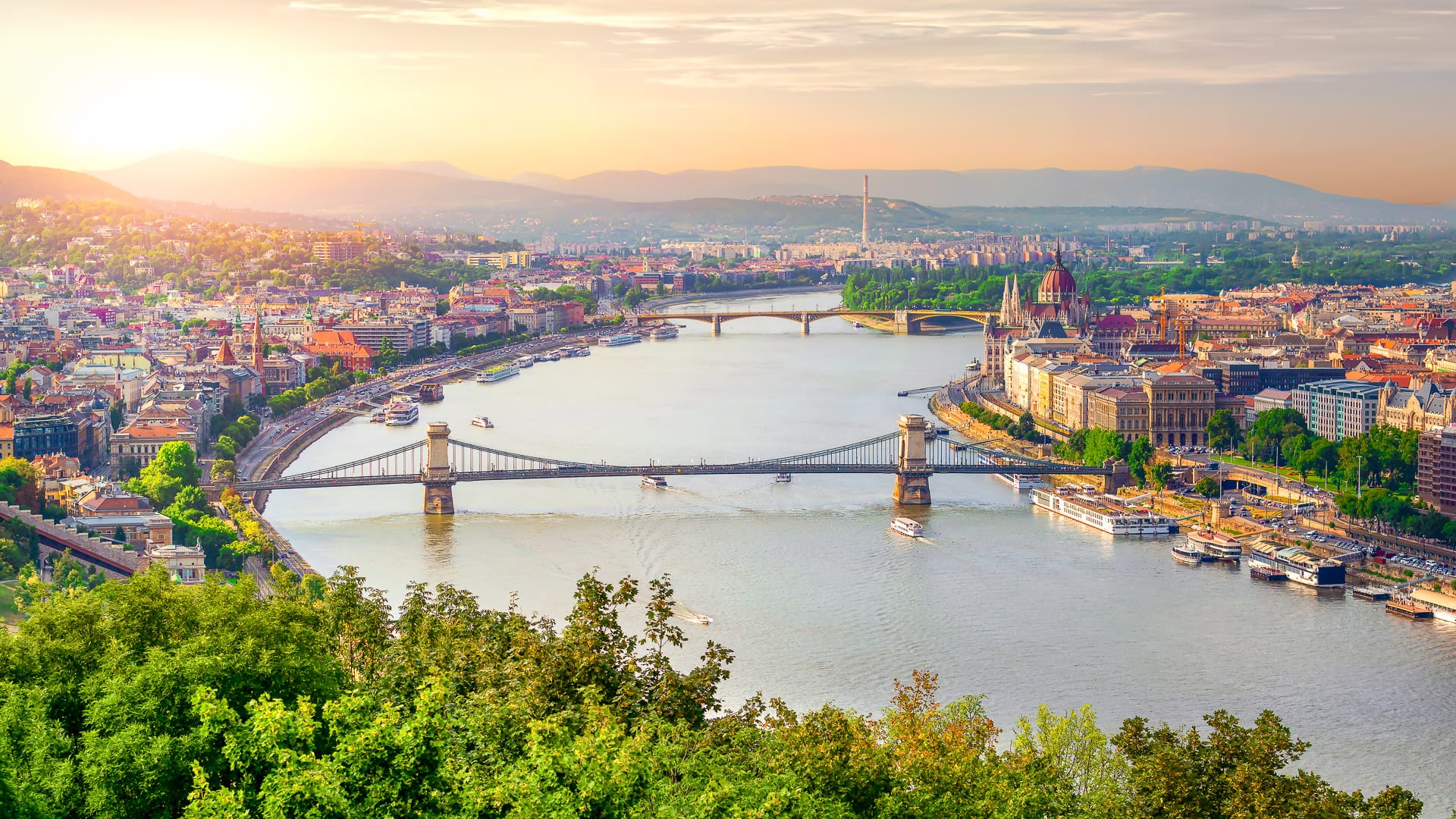
Panoramic view of Budapest at sunset
Sponsor Message
Considering a cycling holiday in Hungary?
Wiredonkey Cycling Tours have been offering fully supported, small-group cycling holidays in Hungary since 2023. They also offer day rides and custom tours.
Head to their website to find out more.
Got a question for Peter Illés from Wiredonkey Cycling Tours?
Fill out this form and we will pass it to Wiredonkey Cycling Tours who aim to reply (within 24 hours wherever they can!)
Part 5: Tips for cycling in Hungary
If you join a Wiredonkey tour, many of these practical details are taken care of for you. If you are planning your own cycling trip in Hungary, these tips should help you ride with more confidence.
Download route files before you ride
Do not rely only on signs. Cycling infrastructure and waymarking can be inconsistent, even on routes that look straightforward on paper. Download GPX files before you ride and make them available offline.
Check road choice carefully
Use Google Street View or similar tools to check road width, surface and traffic levels. Single-digit roads are usually best avoided unless you know the section well. Some two- and three-digit roads can also be busy near larger towns and cities.
Carry the required bike kit
Hungarian cycling rules have some quirks. Bikes need front and rear lights, wheel reflectors and a bell. A small bell is the simplest solution, though some riders use the bell function on a bike computer in practice.
Helmets are not compulsory unless you are riding above 40 km/h. Even so, wearing a helmet is a sensible precaution.
Pack for exposed roads and hot days
It’s very important to carry sunscreen. Many roads are exposed, especially across the plains and around the lakes, and UV levels regularly climb above 6 between May and September. You may not feel it while riding, especially with a breeze, but your arms may notice by dinner.
On hotter days, carry more water than you think you will need, especially on open rural sections.
For more help deciding what to bring, check out our cycling holiday packing list.
Plan food and water stops
Most Hungarian villages have a small grocery shop, and many are open at weekends, though often with shorter hours. Tobacco shops can also be useful for cyclists, as they often sell water, soft drinks and snacks, and may stay open longer.
Hungary has a useful network of public drinking fountains, and many are marked on Strava maps. Most work, but not all, so do not rely on them as your only water source on a hot day.
Use local food as part of the ride
Food is one of the pleasures of riding in Hungary. Classics include chicken paprikash, goulash and fish soup, alongside comfort foods such as plum dumplings and lángos.
Try töltöttkáposzta, a home-style dish of sour cabbage stuffed with pork and rice, usually served with sour cream. It is hearty food, so perhaps one for after the ride rather than before a long climb.
Expect less English in rural areas
Younger Hungarians often speak enough English to help with directions, bookings or basic problems. In rural areas, especially in smaller villages, English is less common and the population tends to be older.
That said, Hungarian hospitality can go a long way. If people understand what the problem is, they will usually try to help, even if the conversation involves pointing, guessing and a little pantomime.
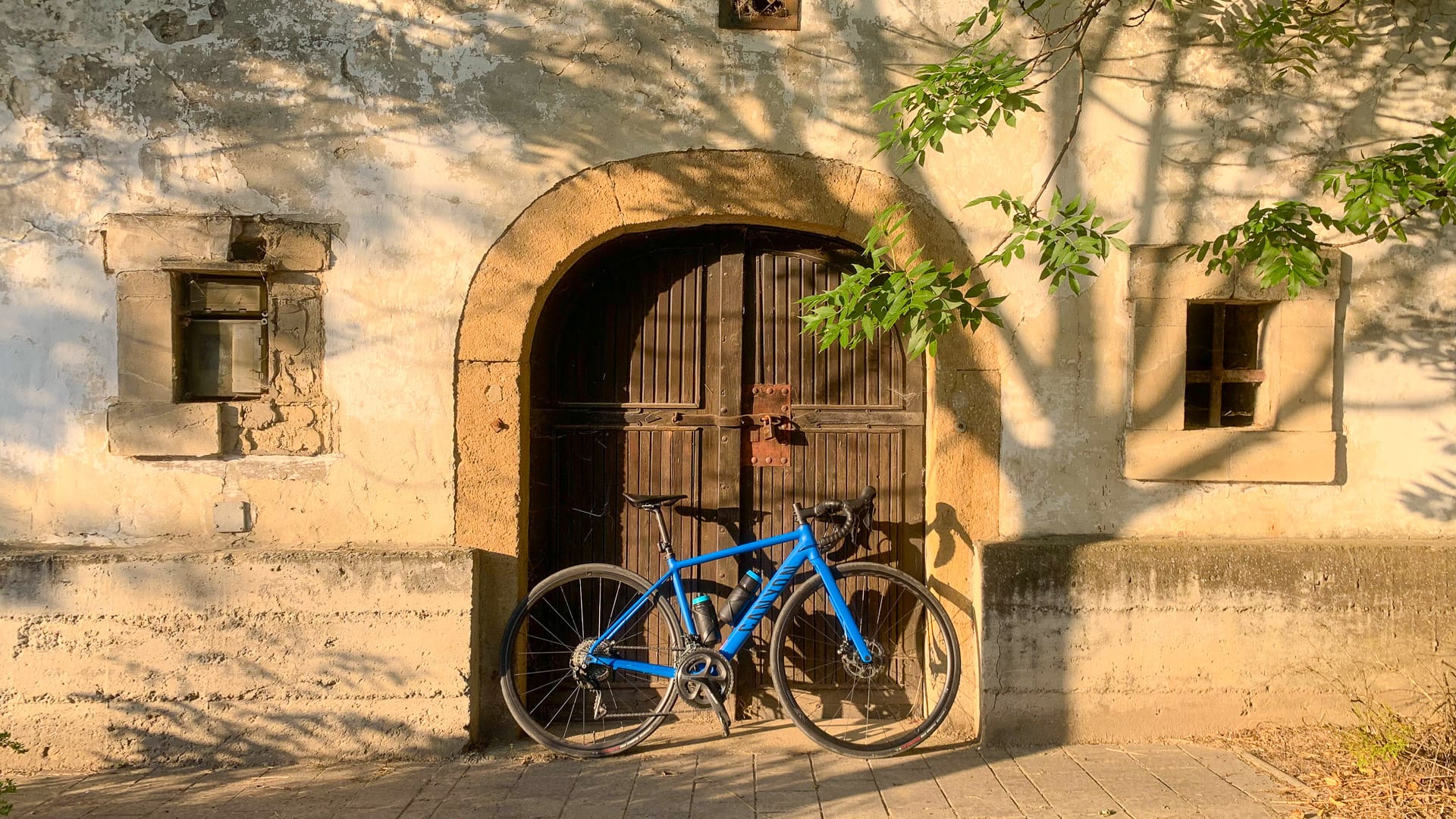
In Hungary, you are never far away from a wine cellar (photo credit: Peter Illés via Wiredonkey Cycling Tours)
Sponsor Message
Considering a cycling holiday in Hungary?
Wiredonkey Cycling Tours have been offering fully supported, small-group cycling holidays in Hungary since 2023. They also offer day rides and custom tours.
Head to their website to find out more.
Got a question for Peter Illés from Wiredonkey Cycling Tours?
Fill out this form and we will pass it to Wiredonkey Cycling Tours who aim to reply (within 24 hours wherever they can!)
Part 6: What does Wiredonkey Cycling Tours offer?
Guided cycling holidays in Hungary and Romania
Wiredonkey Cycling Tours is a small, locally based operation led by me, with support from two drivers and two additional guides who work with us on a freelance basis. Everyone in the team is local to Hungary, bringing first-hand knowledge of the roads, regions and places we visit.
We deliver small-group cycling holidays in Hungary and Romania. Our trips are built around local roads, regional food, family-run places to stay and routes we know well. The aim is to help riders experience Hungary in a way that feels personal, practical and rooted in the places they ride through.
Our Hungary trips are designed for cyclists who want more than a route file. We help with the riding, but also with the logistics around the trip: where to stay, how to move luggage, where to eat, what to see, and how to adapt if the weather, roads or group energy change.
What types of Hungary cycling tours do we offer?
We offer several ways to cycle in Hungary, depending on how much time you have and how much support you want.
Some guests join us for a one-day ride from Budapest. Others come for a fully supported week around Lake Balaton or through the Bükk. We also build custom trips for private groups, cycling clubs, families, friends and corporate teams.
Our current Hungary tours include:
- Sailboats, Bikes and Wines: Around Lake Balaton
- Tour de Bükk: Cycling Holiday from Eger to Lillafüred
- Etyek Wine Region: Cycling Day Trip from Budapest
- Szentendre: Cycling Day Trip from Budapest
- Hungary’s Great Western Trail
To help you pick between them:
- The Lake Balaton tour is our easier Hungary cycling holiday. It is designed around Hungary’s best-known lake, with lakeside riding, wine, sailing and small towns.
- The Tour de Bükk is hillier and better suited to riders who want to explore northern Hungary’s mountain landscapes, forest roads, wine cellars and spa towns.
- Great Hungarian Western Trail is a 2-week grand tour of Hungary, especially designed for cycling clubs, companies and larger private groups exploring the vineyards, volcanic hills, abbeys and lakes of Western Hungary.
The Etyek and Szentendre day trips are well suited to visitors spending a short break in Budapest, including those visiting on a city break, river cruise or stag or hen weekend. They offer a different way to spend a day beyond the city centre.
Bike hire is available as part of our guided or custom tour, rather than as a standalone service.
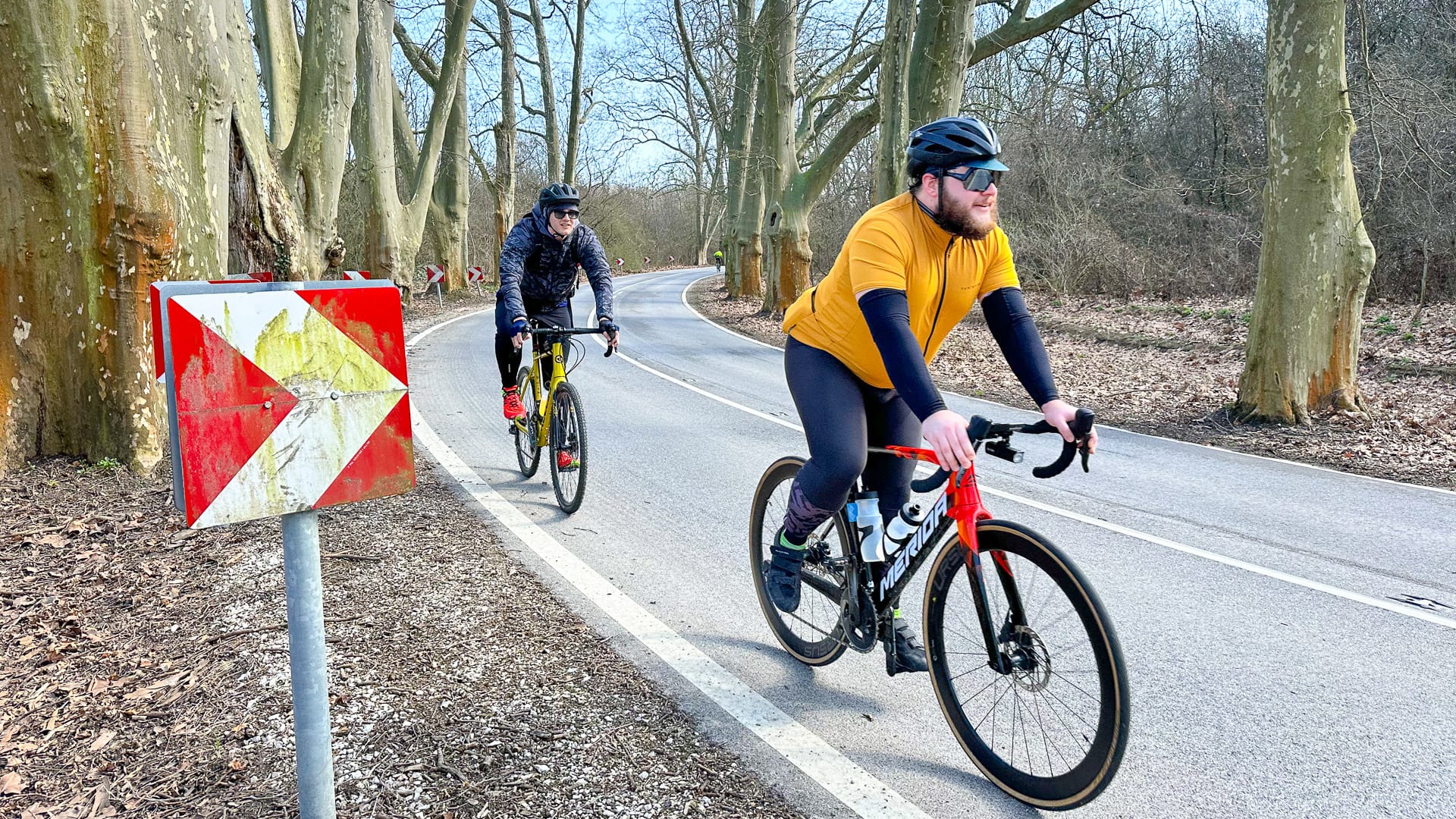
Cycling among 200-year-old plane trees (photo credit: Peter Illés via Wiredonkey Cycling Tours)
Guided multi-day cycling holidays
Our multi-day Hungary tours are guided and fully supported. This means riders do not need to organise every hotel, luggage transfer, food stop or route detail themselves.
On our guided trips, the guide is there to do more than point out the route. The guide also leads the ride, manages the group’s pace, helps with navigation, translates at stops, shares local and cultural context, assists with mechanical issues and adapts the route when needed. This is especially useful in Hungary, where the best riding is not always obvious from a map.
We have a maximum of eight riders per guide. Guided rides can be offered in English, Hungarian, Romanian and German. Both private tours and scheduled group departures are available.
One-day rides from Budapest
If you only have a short time in Hungary, a one-day ride from Budapest can be a good way to see beyond the city.
- Our Etyek wine region day trip is a moderate ride from Budapest into one of Hungary’s wine areas, better suited to riders who want enjoy local wine, an easy escape from the city and a hillier route through rolling countryside.
- Our Szentendre day trip follows the Danube towards one of the most popular riverside towns north of the capital, better suited to riders who want an easier riverside route.
Choosing between them depends on the kind of riding you prefer. Etyek is for people who want its hills and lovely rolling landscape, while Szentendre is likely to appeal more to riders who prefer an easier route beside the Danube.
Both day trips include bike hire, a helmet, guide, lunch, transfers and entry fees. Wine tasting is also included on the Etyek tour. We do not use a support vehicle on one-day rides, but assistance can be called if anything goes wrong.
These rides can work well for visitors on a Budapest city break, cyclists travelling with non-riders, or anyone who wants one supported day on the bike before or after a longer holiday.
Both tours can run with just one guest and can usually be booked up to 48 hours before departure, subject to availability.
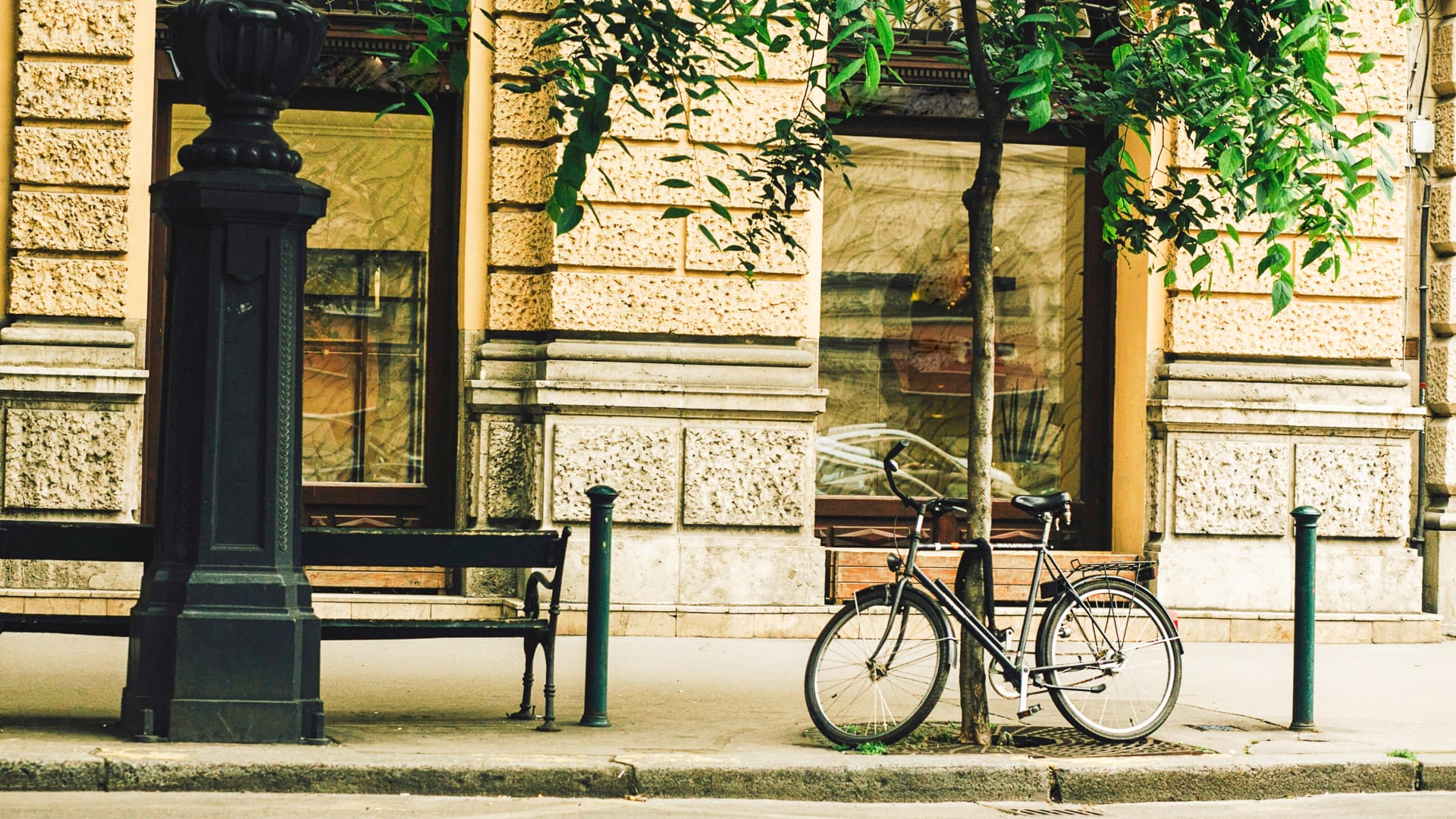
Old street and parked bicycle in Budapest
Custom cycling tours
We also design custom cycling trips in Hungary. These can work well for private groups, cycling clubs, families, friends and corporate teams.
A custom trip can be shaped around how far you want to ride, how much climbing you want, what kind of bike you prefer and what else you want from the holiday. Some groups might want an easier food-and-wine trip around Lake Balaton. Others might want a hillier route through Eger, Bükk and the Mátra, or a quieter road or gravel trip in Western Transdanubia.
The most commonly requested custom tour is a longer-distance version of our Lake Balaton trip. The standard tour on our website is very easy, with around 30 to 40 kilometres of riding per day, and is designed with older and more leisurely riders in mind. Gravel tours are also popular, particularly around Lake Balaton.
Custom tours can include Western Transdanubia, Őrség, Pécs, Villány, EuroVelo routes or sections of the Horizont trail. Given enough planning time, we can create almost any combination of regions and routes.
Most custom trips last five or six nights, while cycling clubs sometimes book tours of up to two weeks. One-day trips, weekends and longer holidays can also be arranged.
We can design tours for almost any type of rider, from leisure cyclists and e-bike riders to experienced road and gravel cyclists. Hungary is relatively flat, so elevation is usually the main limitation. Reaching more than 2,000 metres of climbing in one day is difficult, even for stronger riders.
Custom trips are also useful for mixed groups. Some riders may want e-bikes, some may want road or gravel bikes, and some partners may not want to ride every day. In those cases, we can build the trip around the whole group rather than forcing everyone into the same format.
We can also support non-riding partners and groups using a mix of e-bikes, road bikes and gravel bikes.
What is included?
Our tours are designed to remove much of the planning burden from guests. Depending on the trip, this can include accommodation, meals, bike rental, helmets, luggage transportation, entrance fees, vehicle assistance and an English-speaking local guide.
The exact inclusions vary by trip, so riders should always check the relevant tour page before booking. This is especially important for one-day rides, custom trips, e-bike upgrades, airport transfers, wine tastings and extra nights.
Bikes and equipment
Bike rental is available on our tours, and the type of bike depends on the style of trip. On our Hungary tours, we use mid- to high-end road bikes, such as the Scott Addict or similar, and gravel bikes, such as the Scott Speedster Gravel or similar. Our e-bikes are also Scott models, with the exact bike depending on the route and availability.
Helmets and lights are included with rental bikes. Riders should check before travelling if they want a specific pedal system, saddle, pannier, phone mount or other equipment.
Accommodation and food
Accommodation is an important part of the trip. Where possible, we use family-run guesthouses, bed and breakfasts or small local places to stay rather than large anonymous hotels.
Food is also part of the experience. On Hungary tours, that might mean local restaurants, guesthouse meals, cafés, wine tastings or regional dishes that help riders understand the places they are cycling through.
Support on the road
Support matters when you are cycling in a country you do not know well. In Hungary, route choice, train rules, surfaces and bike-friendly services can vary by region, so local help can make a big difference.
On our supported tours, we help with the practical side of the ride as well as the route. This can include luggage transportation, vehicle backup, local tips and help adapting the plan if needed.
On one-day tours, a support vehicle does not travel with the group, but assistance can be called if needed. On multi-day tours, the support vehicle stays nearby. On gravel tours, it will often travel ahead to the next village or valley rather than follow directly behind the group.
All routes are checked and ridden by Wiredonkey before they are used with guests.
How does booking work?
For multi-day tours, it is best to enquire well in advance, especially if you want to travel in the main cycling months of May, June or September. One-day tours may be possible at shorter notice, depending on availability.
When you first get in touch, it helps to share your dates, group size, riding level, preferred bike type and the kind of experience you want. It is also useful to say whether you are interested in wine, food, thermal spas, culture, gravel, climbing or easier touring.
If you are thinking about a cycling trip to Hungary, get in touch, and we would love to help you plan a trip that suits you. Visit the Wiredonkey Cycling Tours website for more information on tours, availability and pricing.
What’s next?
Thanks to Peter Illés of Wiredonkey Cycling Tours for sharing these insights into cycling in Hungary.
Looking for more exciting content on cycling in Hungary? Don’t miss:
- Guide to bike tours on the Danube cycling path (Europe’s must-ride river route)
- Danube bike and boat tours: the best way to cycle the Danube?
- 11 of the best bike tours across Europe
- River cycling: 8 of the most beautiful river cycling routes
- 9 most bike friendly cities (for cycling holidays + city breaks)
Have you cycled in Hungary? How was it?
Got any tips to share? Comment below.
Got a question for Wiredonkey Cycling Tours?
Fill out this form and we will pass it to Wiredonkey Cycling Tours who aim to reply (within 24 hours wherever they can!)
Got a question for Peter?
Fill out this form and we will send it to Peter. We aim to get you an answer within 24 hours where possible!Peter Illés was born in Transylvania, Romania, and is now based in Budapest. Before starting Wiredonkey Cycling Tours, he built an IT consulting firm but found himself wanting to spend more time away from screens and out on the road.
Travel planning and cycling have long been two of Peter’s biggest interests. On trips with friends and family, he was often the person planning the places to visit, the food to try and the experiences worth making time for.
Wiredonkey Cycling Tours brings those interests together: cycling, local travel, food and sharing Hungary and Romania from the saddle.
The name Wiredonkey comes from “drótszamár”, a playful Hungarian word for bicycle.
First Published: 05 September 2026
The contents of this website are provided for general information purposes only. It is not intended to amount to advice and you should not rely on it. You should carry out your own due diligence and risk assessments and take professional advice. Views expressed by interviewees or other users of this website do not necessarily represent our views. We make no representations, warranties or guarantees, whether express or implied, that the content on our website is accurate, complete or up to date. If you use any information or content on this website, download from, or otherwise obtain content or services through our website, it is entirely at your own discretion and risk. Epic Road Rides Ltd disclaims all liability and responsibility arising from any reliance placed on the information and content on this website. Find out more here.
Sponsor Message
Considering a cycling holiday in Hungary?
Wiredonkey Cycling Tours have been offering fully supported, small-group cycling holidays in Hungary since 2023. They also offer day rides and custom tours.
Head to their website to find out more.
Got a question for Peter Illés from Wiredonkey Cycling Tours?
Fill out this form and we will pass it to Wiredonkey Cycling Tours who aim to reply (within 24 hours wherever they can!)
Comments