
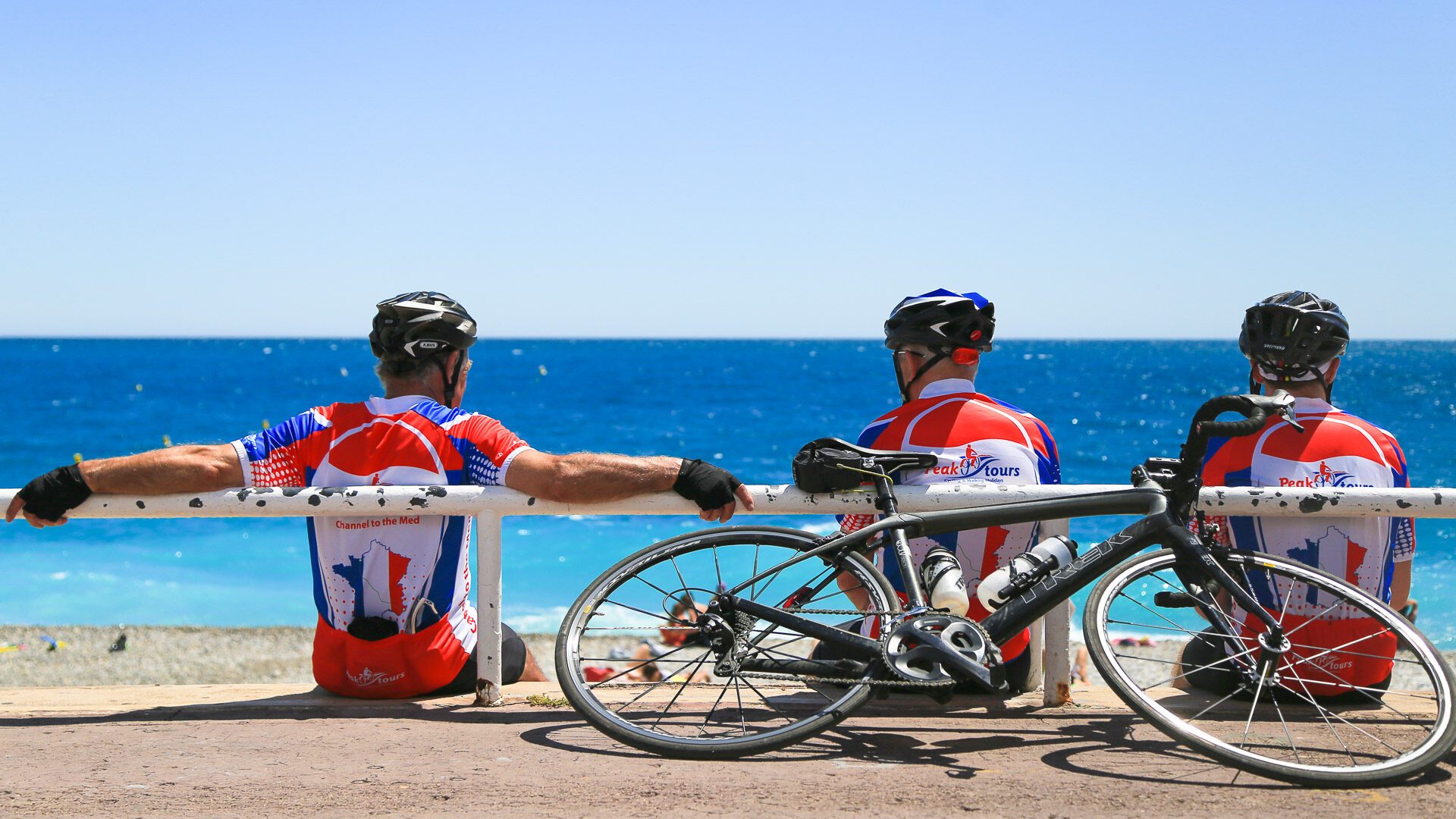
From wine villages to famous mountain climbs, there’s no shortage of options when it comes to where to ride on a guided bike tour in France.
You might follow canals in Alsace or cycle through the Dordogne’s river valleys. In the Alps, you can tackle climbs you recognise from the Tour de France. Off the bike, there are historic towns and local food to enjoy.
But which holiday will suit you? The amount of climbing, time for sightseeing and support along the way can all make a big difference.
To help, we spoke to Steve Coackley, company director and owner of Peak Tours. Steve planned and checked all six routes featured here. In this guide, he shares six of their guided cycling holidays in France and explains who each tour suits:
- Brittany by Bike: Best for riders comfortable with longer days who prefer less climbing than the mountain tours.
- A Week in Provence: Best for riders who want route choices, hilltop villages and the option of time off on loop days.
- Dordogne and the Lot Valley: Best for history lovers and friends who want different daily distances.
- Alsace and the Vosges Mountains: Best for regular cyclists who want mountain riding alongside wine villages and historic towns.
- Channel to the Med: Best for cyclists seeking a longer tour, with 10 or 14 days riding north to south through France.
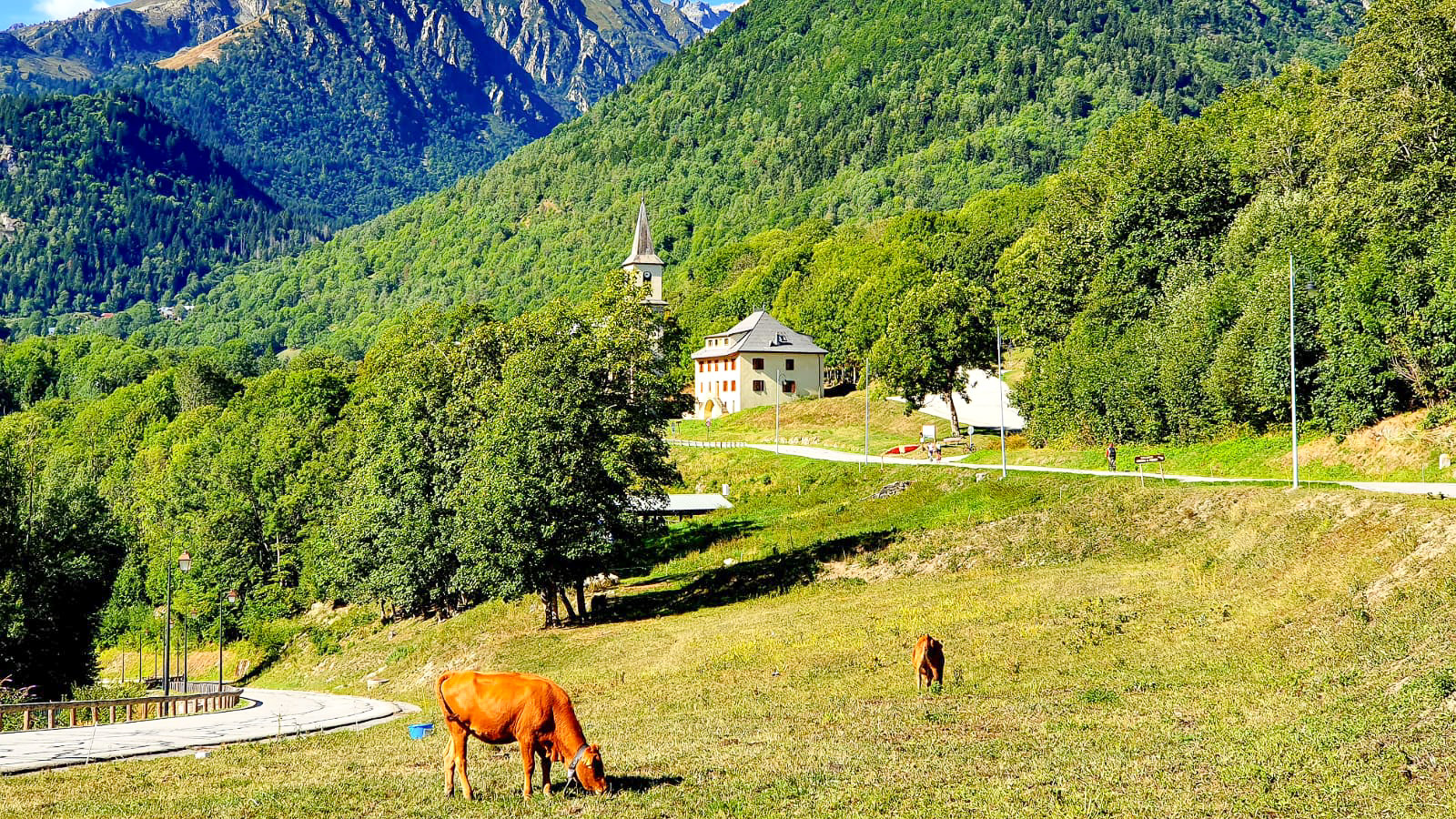
- French Alps Classic Cols: Best for experienced climbers drawn to the Col du Galibier, Alpe d’Huez and other Tour de France climbs.
Below we go into more detail on each.
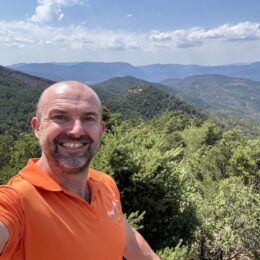
Steve is the founder of Peak Tours. He is based in Hadfield, near Glossop, on the edge of the Peak District National Park between Manchester and Sheffield. He oversees Peak Tours’ holidays, researches new routes and manages the team and business.
In 2004, Steve completed a self-funded, self-supported cycle journey around the world through Europe, Russia, Kazakhstan, China and the USA. He later led tours for Explore Worldwide in India, Bulgaria, Ukraine, Turkey, Macedonia, Greece, Finland and China. Steve set up Peak Tours in 2006.
We love to introduce our community to cycling businesses, destinations and ideas that we think are genuinely interesting. Peak Tours caught our attention because of its focus on cycling in France, which felt like a natural fit for Epic Road Rides and our readers. We were therefore pleased to work with the Peak Tours team on this article.
Peak Tours paid for this advertisement feature. Our decision to collaborate reflects our view that the brand is relevant to our readers; it is not a formal approval, audit or guarantee of its services. Unless we expressly say otherwise, we have not personally taken the trip described or independently verified information supplied by Peak Tours.
As with any travel purchase, please check the latest trip details, terms and customer protections directly with Peak Tours before booking. Any booking is made with Peak Tours, not Epic Road Rides.
Always check current travel information and advice. For visitors from the UK, the UK government travel information pages are here.
Table of contents
To make this article more digestible, it is broken up into five parts:
- Part 1: Why choose a guided tour?
- Part 2: Best guided bike tours
- Part 3: Which tour suits you?
- Part 4: Practicalities
- Part 5: Peak Tours
Part 1: Is a guided cycling holiday in France right for you?
How does a guided cycling holiday differ from a self-guided trip?
On a guided cycling holiday, a team travels with you and provides support throughout the trip. The level of support can vary between operators, with different approaches taken on things like whether your guide rides with you or not and whether there’s a support vehicle.
On self-guided cycling tours, you follow the route independently, but an operator still helps with the organisation. They may book your accommodation, transfer your luggage, provide route notes and help by phone.
This differs from organising your own trip, where you plan the route, book places to stay and arrange any support yourself.
At Peak Tours, we offer guided cycling holidays where we organise the route, accommodation and luggage transfers. Our guides give a morning briefing, arrange food stops and provide mechanical help along the way. The social side is a large part of the experience. You meet other cyclists at refreshment stops, lunch and in the evenings.




Do you have to ride with the group all day?
This depends on the tour operator. Some guided holidays require you to stay together as a group, while others offer more flexibility.
On our tours, one of the main things we tell guests is to cycle at their own pace. We provide route notes and GPX files to allow riders to navigate the route solo. This means you can ride with people cycling at a similar speed, rather than staying in one large group.
Our usual arrangement includes a guide cycling at the back. You meet the support team at planned stops, and smaller riding groups naturally form during the day. This means you can enjoy the company and climb at a pace that suits you.
Note: Some of our shorter alternatives have less support. You’ll find more about the support available on these wonderful cycle routes below.
What does a typical day on a Peak Tours guided cycling holiday look like?
We look after you!
We organise the route, luggage transfers and food stops so you can concentrate on the riding. Our guides and support vans help keep the day running smoothly.
Each day starts with breakfast and a morning briefing. The lead guide talks through the route, weather and places of interest. They also explain the food stops and evening plans. Before setting off, you can use the tools and track pump at the support van to check your bike and pick up some snacks.
You ride at your own pace, using the route notes and GPX files provided before the tour. We also share route notes through WhatsApp. A cycling guide normally stays at the back of the group.
Meanwhile, the brew van goes ahead to prepare the morning refreshment stop. The second van carries your luggage and collects supplies.
Lunch is provided each riding day. On most days, the brew van prepares another refreshment stop during the afternoon. Shorter days may have just one brew stop.
At the hotel, a guide helps with room keys, bike storage and plans for the evening.
We arrange group dinners on the first and last nights, plus some nights in between. On other evenings, you are free to explore and choose where to eat. All evening meals are paid for separately, including those we arrange.
Can you join a guided cycling holiday as a solo traveller?
Yes. Solo travellers are very welcome, and many do come alone. Our tours have between eight and 25 riders, with a mixture of people travelling alone, couples, friends, family members and people who met on previous tours. When you book, check the room options to see whether you’d prefer to share or have a room to yourself, and whether a single supplement applies.
If you choose a shared room and are travelling alone, we arrange for you to share with another guest of the same sex. You can also choose a single room or sole use of a double room at an additional cost, subject to availability.
We set up a WhatsApp group about a month before departure so guests can introduce themselves.
Riding at your own pace also gives you opportunities to get to know different people during the holiday.
Sponsor Message
Explore France by bike, with a team to support you
Planning a cycling holiday in France? Peak Tours offers guided bike tours for different abilities, from exploring the countryside and historic towns to tackling famous Tour de France climbs.
They'll take care of accommodation, luggage transfers, route planning and refreshments, with guides and mechanical support available throughout the trip.
Not sure which tour to choose? Use the form below to tell the team about your cycling experience, preferred routes and travel dates. They'll help you find a tour that suits your interests and ability.
Got a question for Steve from Peak Tours?
Fill out this form and we will pass it to Peak Tours who aim to reply (within 24 hours wherever they can!)
Part 2: Which six guided bike tours in France should you consider?
Why have you chosen these six tours?
These six tours show the range of cycling holidays we offer in France. There are easy-going cycling trips with opportunities to explore between rides, mountain holidays for people who enjoy climbing, and our longer Channel to the Med challenge.
Channel to the Med is our longest French tour and our most popular holiday overall. This tour surprises me every year: some guests come back to ride it two, three or even four times!
The other tours explore individual regions, each with its own riding, food and places to discover.
The tours below start in north-east France, move south through the Alps to Provence, then west to the Dordogne and north-west to Brittany. We finish with the journey across France. This is a geographical order rather than a ranking.
How do the six tours compare?
Our grades run from one to ten, with higher numbers indicating harder tours for different levels of ability. I’d suggest using the grading to narrow the choice, then look at the daily riding. Brittany and Provence are lower-graded than Alsace and the Alps, but they still require preparation.
Some tours also have shorter and longer route options, which can make a difference to the overall difficulty. For example, the Dordogne and Lot Valley tour is graded four if you take the shorter routes, or six if you choose the longer options.
The table is a quick guide to the commitment and character of each holiday. Distances and climbing sit with the individual profiles below.
| Tour | Difficulty (out of 10) | Who it suits |
| Brittany by Bike | 4 | Riders comfortable with longer days who prefer less climbing. |
| A Week in Provence | 5 | Riders who want route choices and time to explore. |
| Dordogne and the Lot Valley | 4 or 6 | History lovers and friends choosing different daily distances. |
| Alsace and the Vosges Mountains | 7 | Regular cyclists who want vineyards, historic towns and mountain riding. |
| Channel to the Med | 7 or 9 | Cyclists seeking a longer journey across France over 10 or 14 days; the 10-day version is more demanding. |
| French Alps Classic Cols | 8 | Experienced climbers drawn to famous Alpine Cols. |
You can hover over the map icons below to see the starting points of each tour mentioned in this article:
1. Brittany by Bike
Best for riders who enjoy longer days, coastal scenery and historic towns, with less climbing than the mountain tours.
Overview
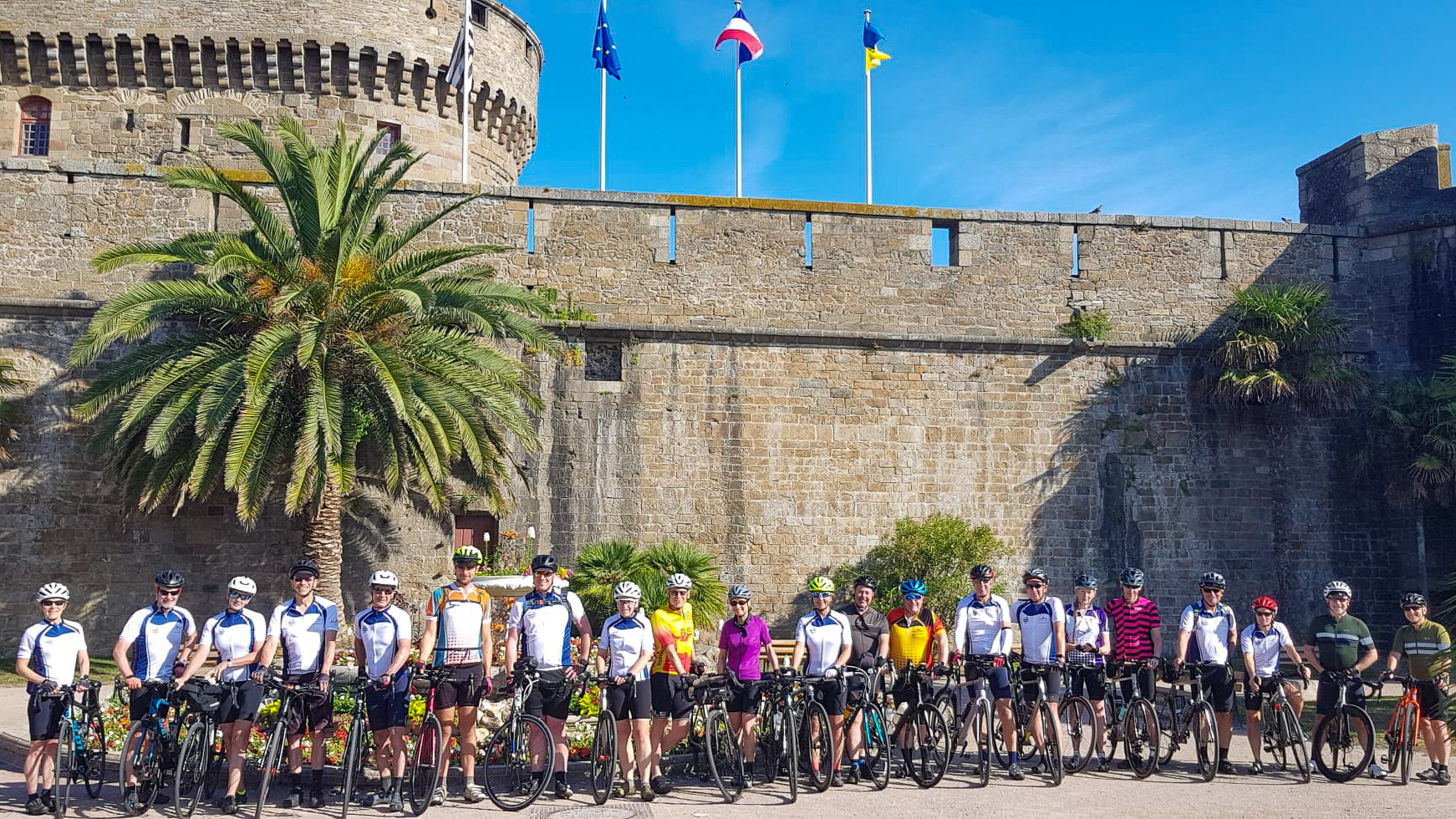
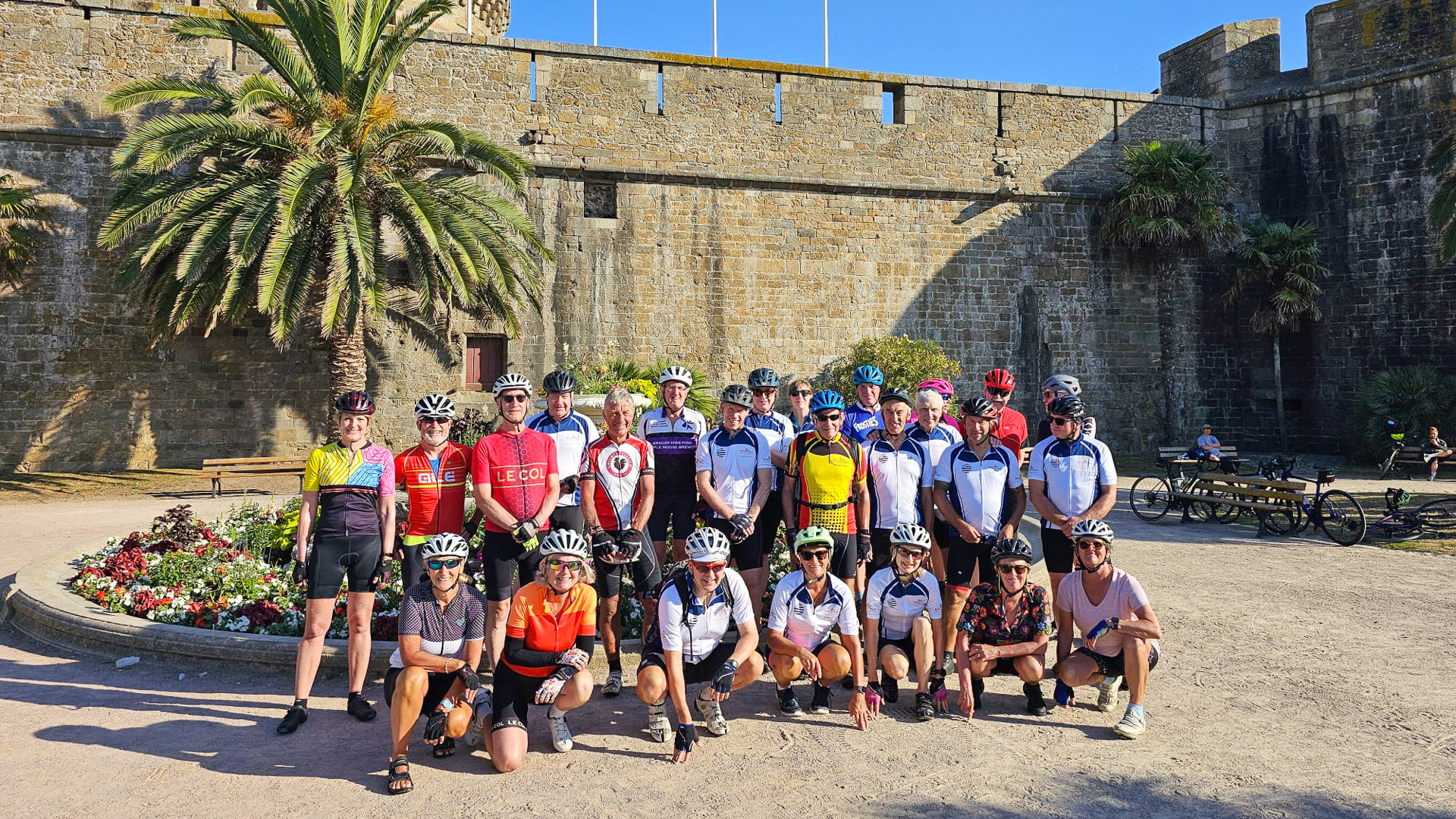
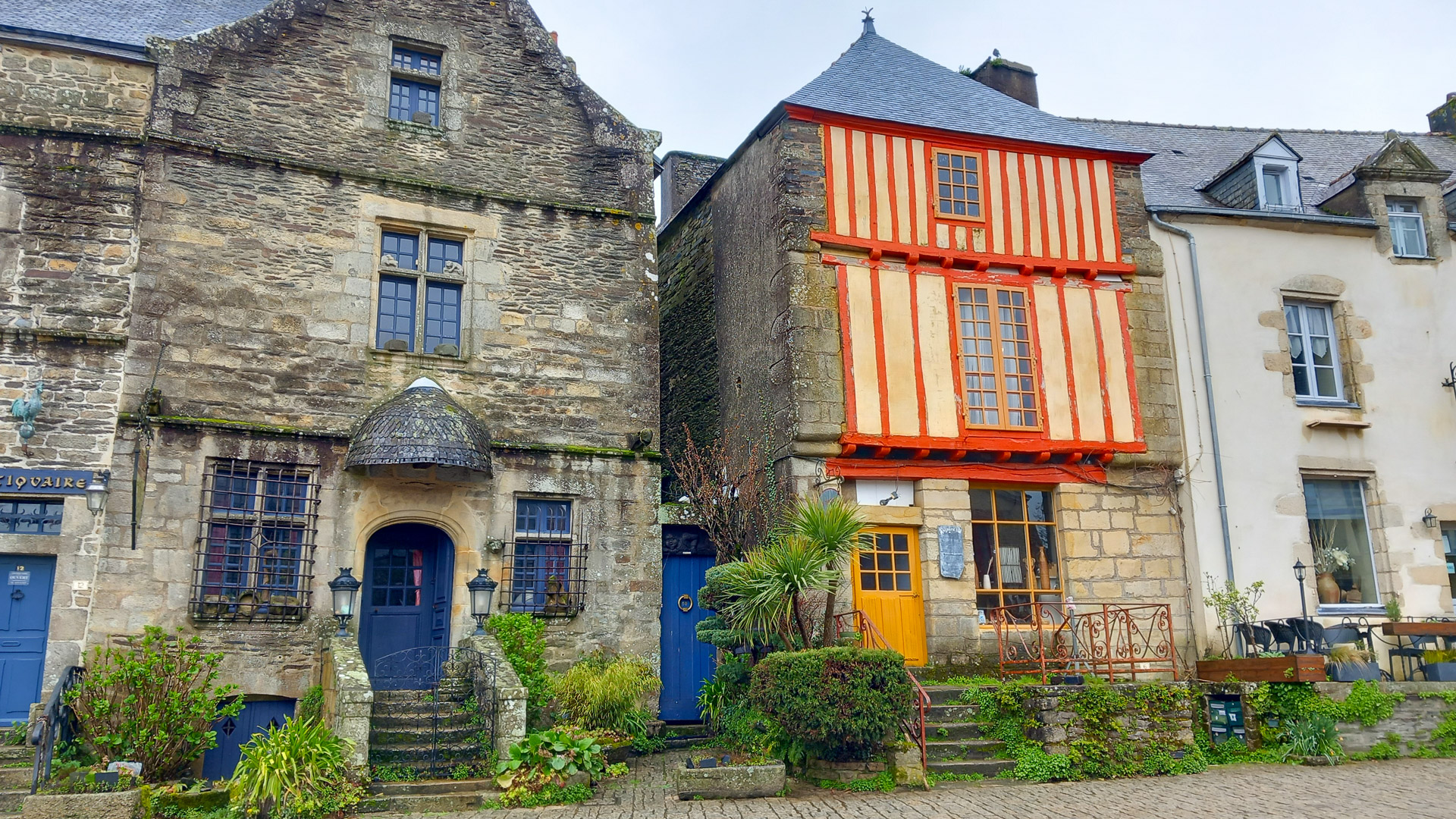
Our Brittany by Bike tour starts in Saint-Malo on the Emerald Coast and finishes in Dinan. Over six cycling days, you explore coastal scenery, country lanes and historic towns.
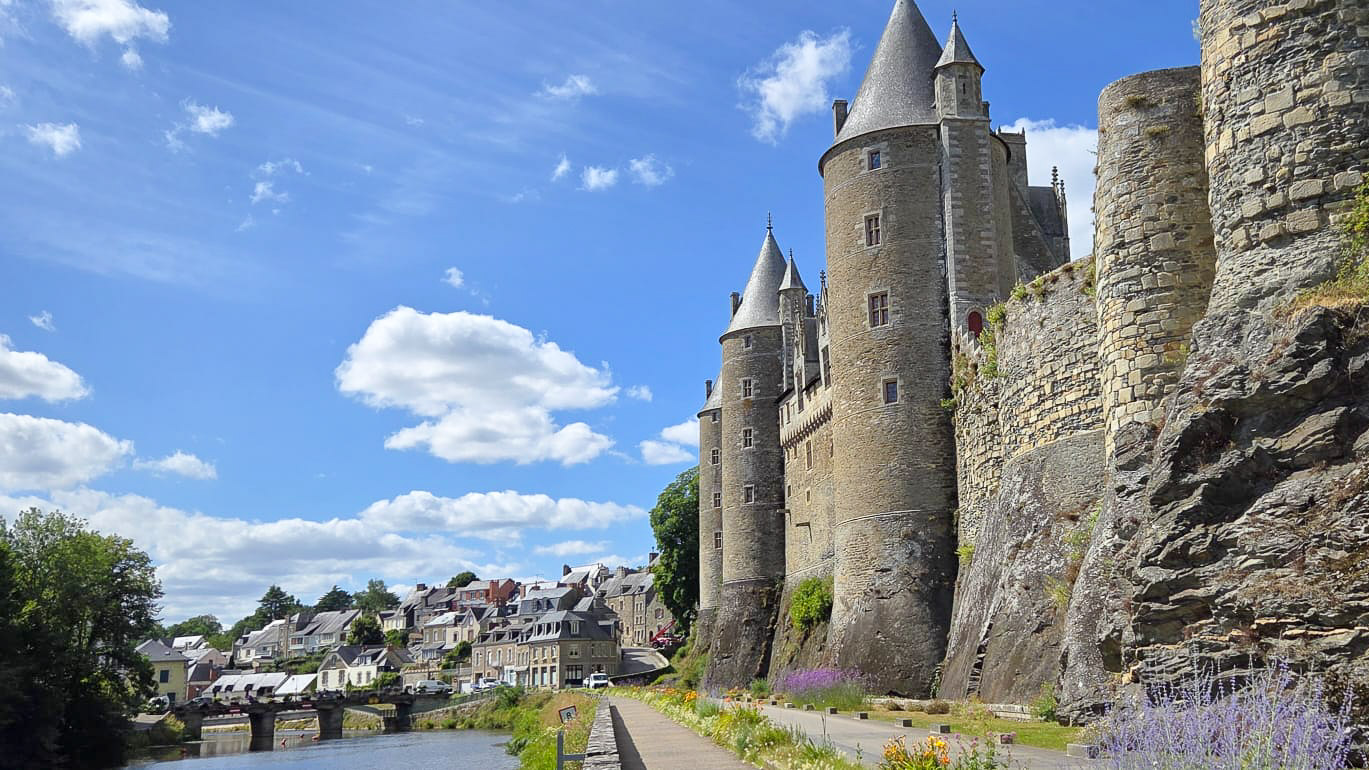
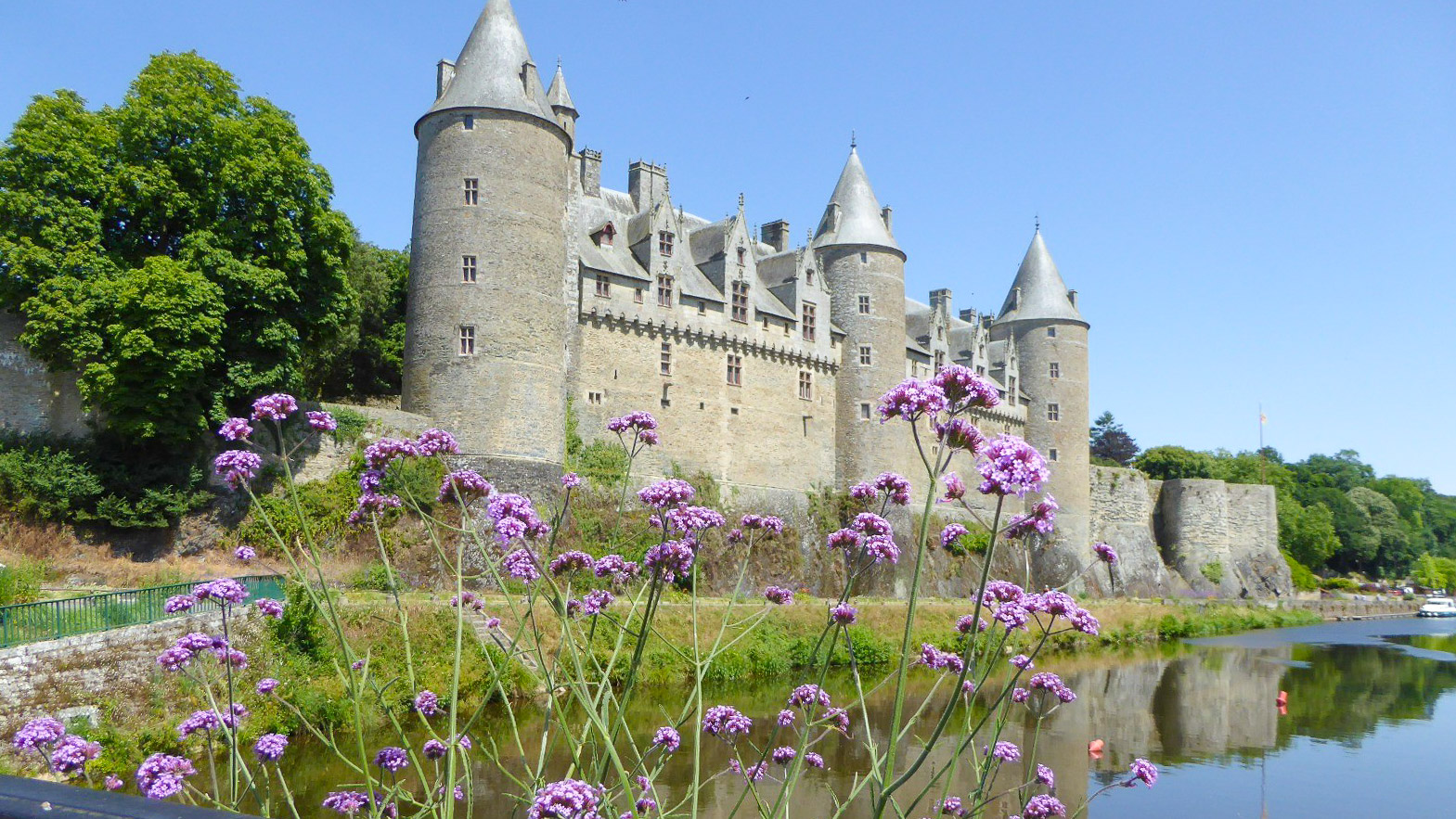
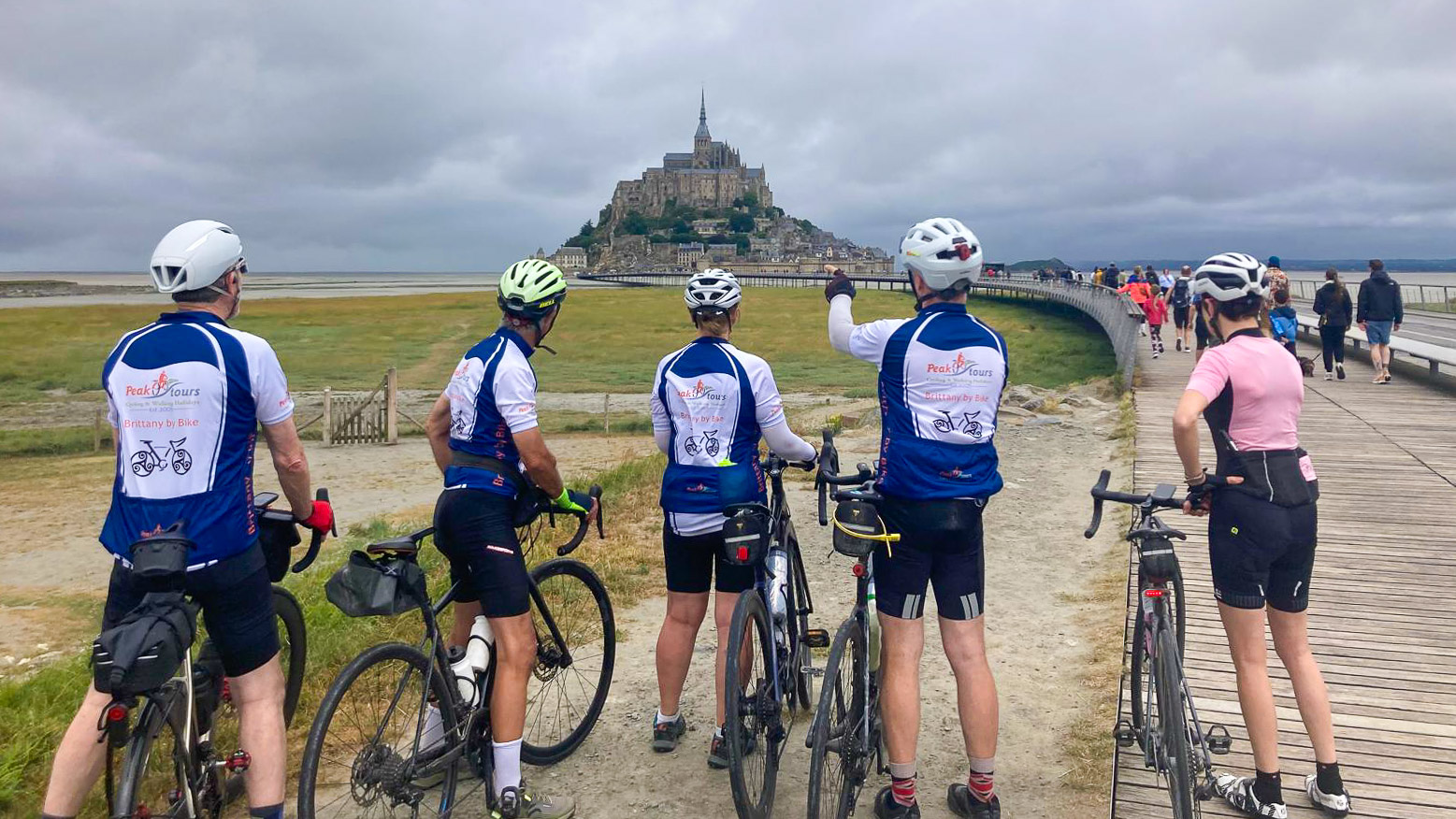
The opening ride heads towards Mont-Saint-Michel before turning inland. Later days take you through places such as Combourg, Josselin and Moncontour.
Two-night stays in Josselin and Dinan give you a choice of riding or time off the bike.
Key information
- Region: Brittany, with the opening ride heading towards Mont-Saint-Michel in neighbouring Normandy.
- Route: Seven nights with six cycling days, from Saint-Malo to Dinan.
- Distance: 483–555 km, depending on route choices.
- Climbing: 3,310m–3,750 m
- Difficulty: 4 out of 10
- Surfaces: Country roads and cycle paths, including some traffic-free sections.
- Tour: Brittany by Bike with Peak Tours.
What’s the riding like?
Brittany has less climbing than the mountain tours, but the days are not necessarily short.
The published stage from Combourg to Josselin is 104 kilometres. You need to be comfortable riding that distance and getting back on the bike the following morning.
The route combines quieter roads with some traffic-free sections. Expect hills and undulating countryside as well as coastal riding.
What makes this tour special?
You experience Brittany’s Emerald Coast and inland countryside within the same week.
The tour begins in the fortified coastal town of Saint-Malo known as the Corsair City because it was once a legendary base for royal privateers (government-authorised pirates) who raided enemy ships. From there, the scenery changes as you head towards magnificent castles, villages and the inland towns of Josselin and Dinan.
The two-night stays give you time to explore these places beyond a brief stop during a ride.
Highlights
- The fortified town of Saint-Malo.
- Views towards Mont-Saint-Michel and its bay.
- Combourg and its castle.
- The historic towns of Josselin and Moncontour.
- Country lanes and coastal scenery.
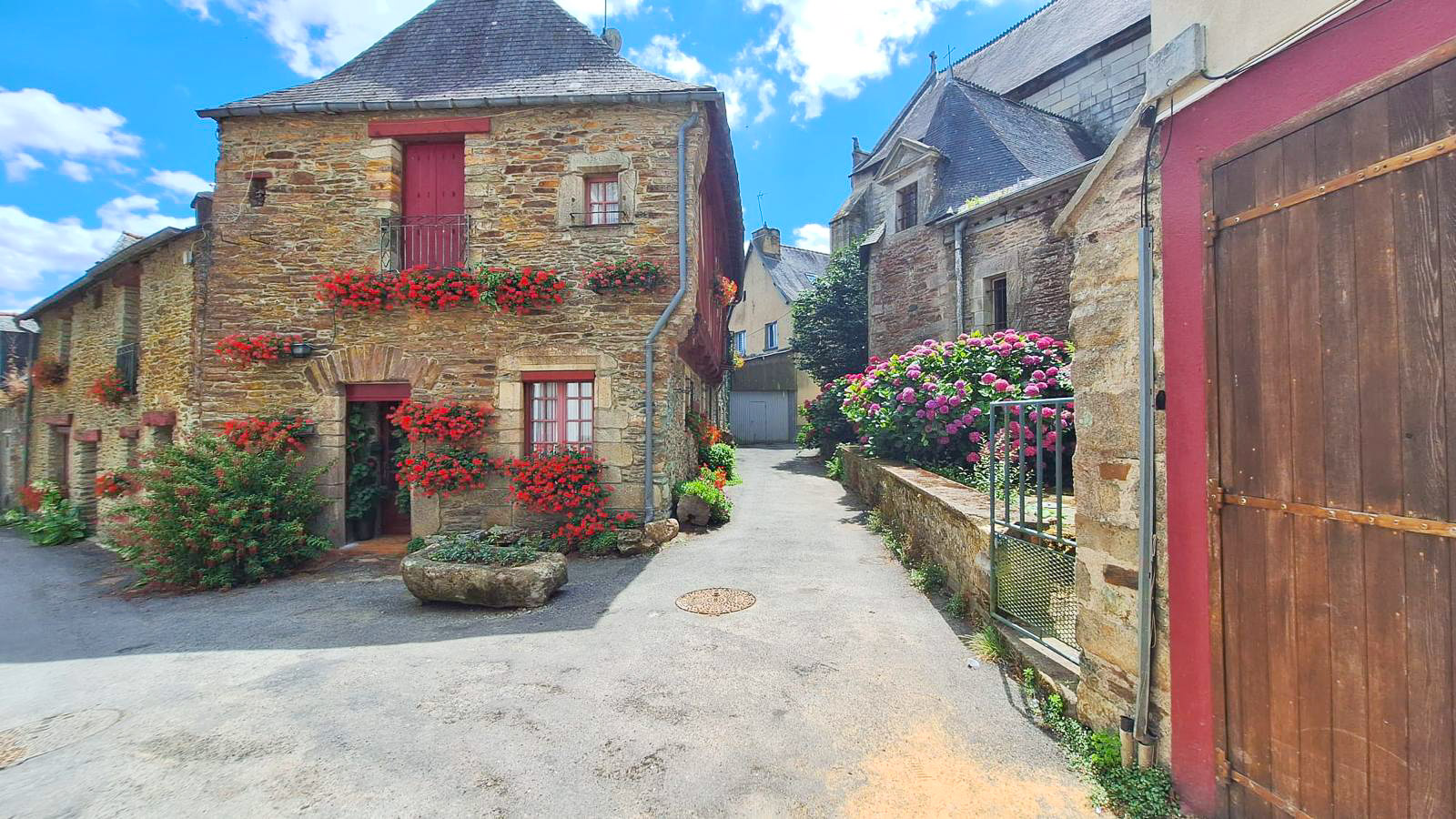
- Dinan at the end of the tour, with its medieval streets, half-timbered houses and picturesque port on the River Rance.
Tips before you book
Look at the longest stages as well as the grade. This tour suits riders who prefer less climbing but are still happy spending several hours in the saddle.
Some loop days offer shorter rides or the option to rest. Some shorter routes are unsupported, so check the arrangements before choosing them. Part 4 explains more.
Our tour runs June, July and September.
More information
Visit Peak Tours’ Brittany by Bike tour page for the itinerary, departure dates and booking details.
2. A Week in Provence
Best for riders who want to explore Provence with a choice of distances and time off the bike.
Overview
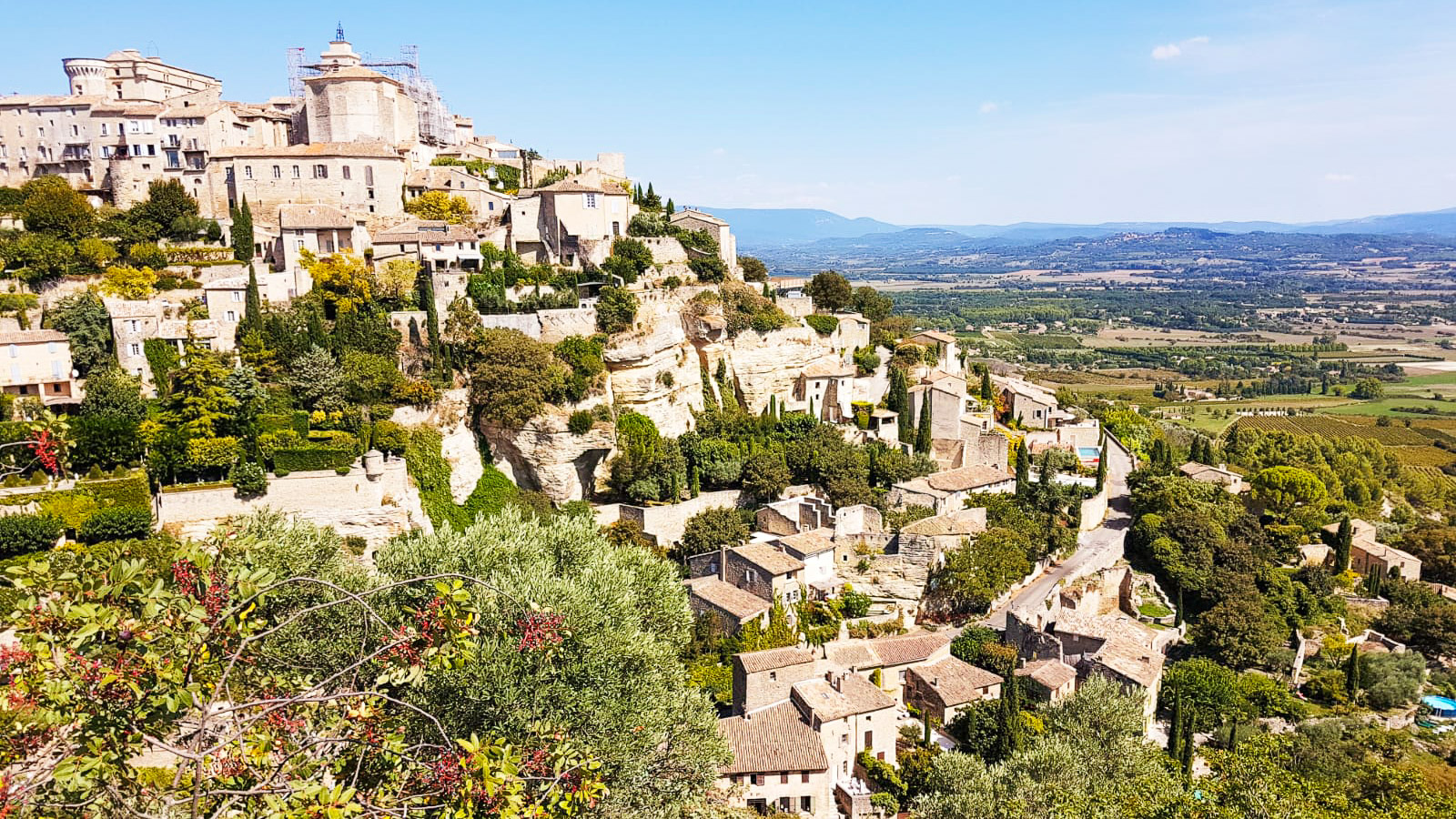
Our A Week in Provence tour combines amazing ‘perched’ hill-top villages, vineyard roads and historic towns. It starts in Arles and finishes in Sault, with six cycling days along the way.
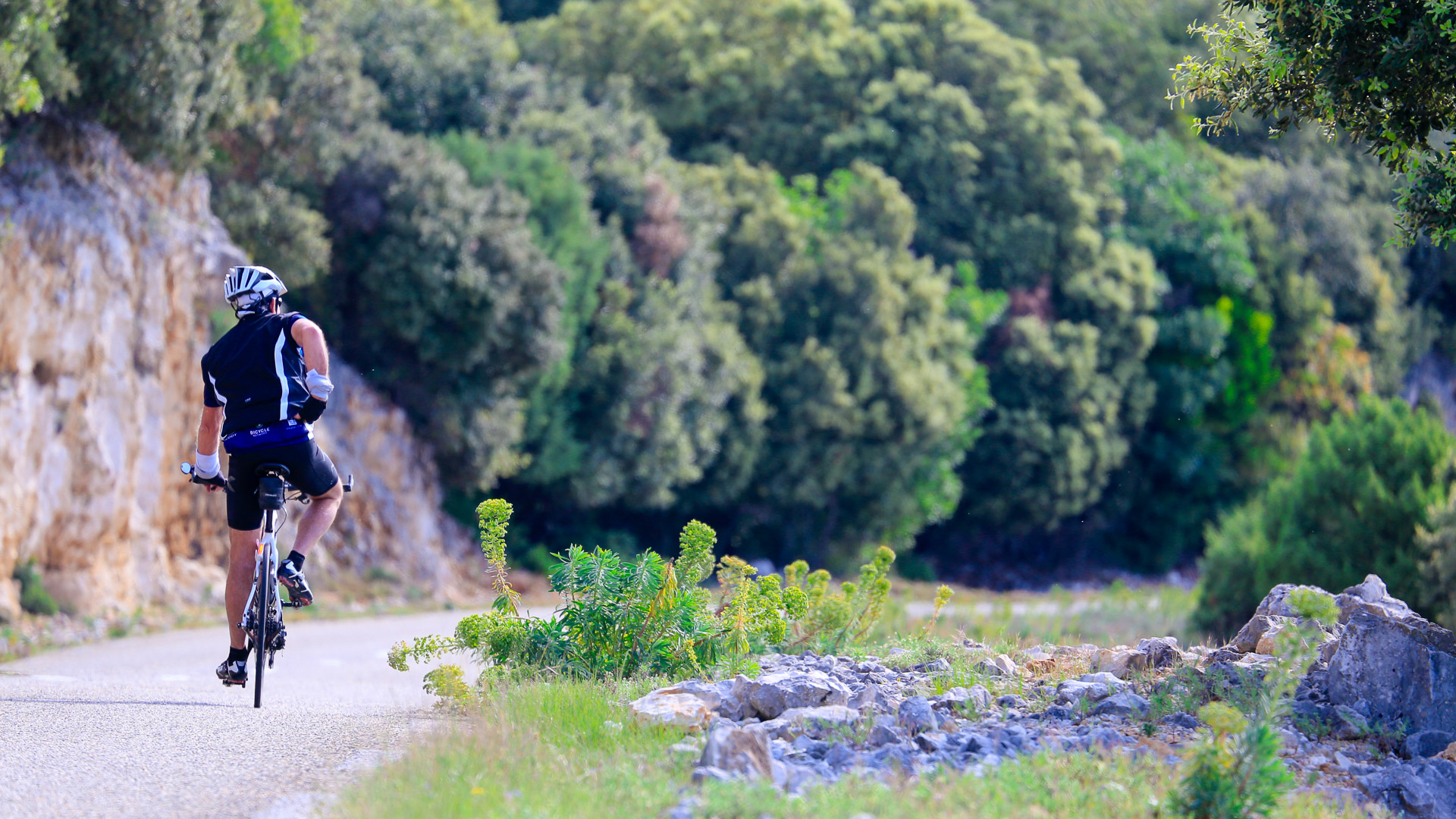
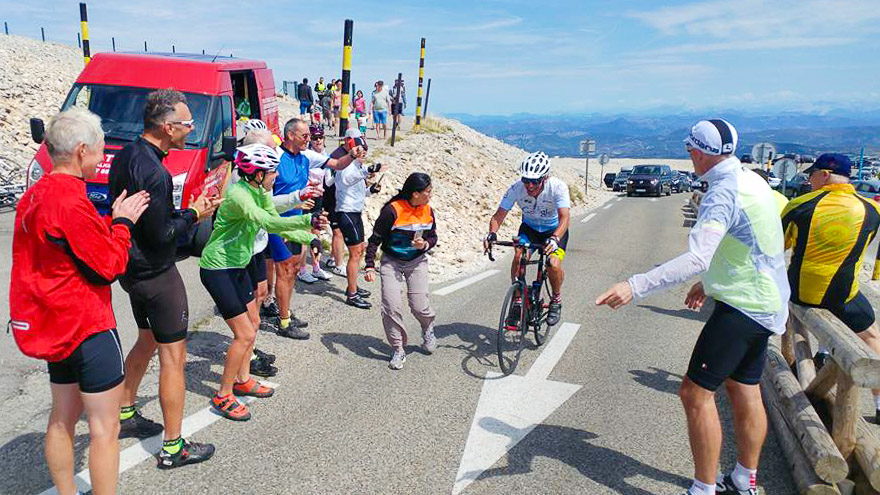
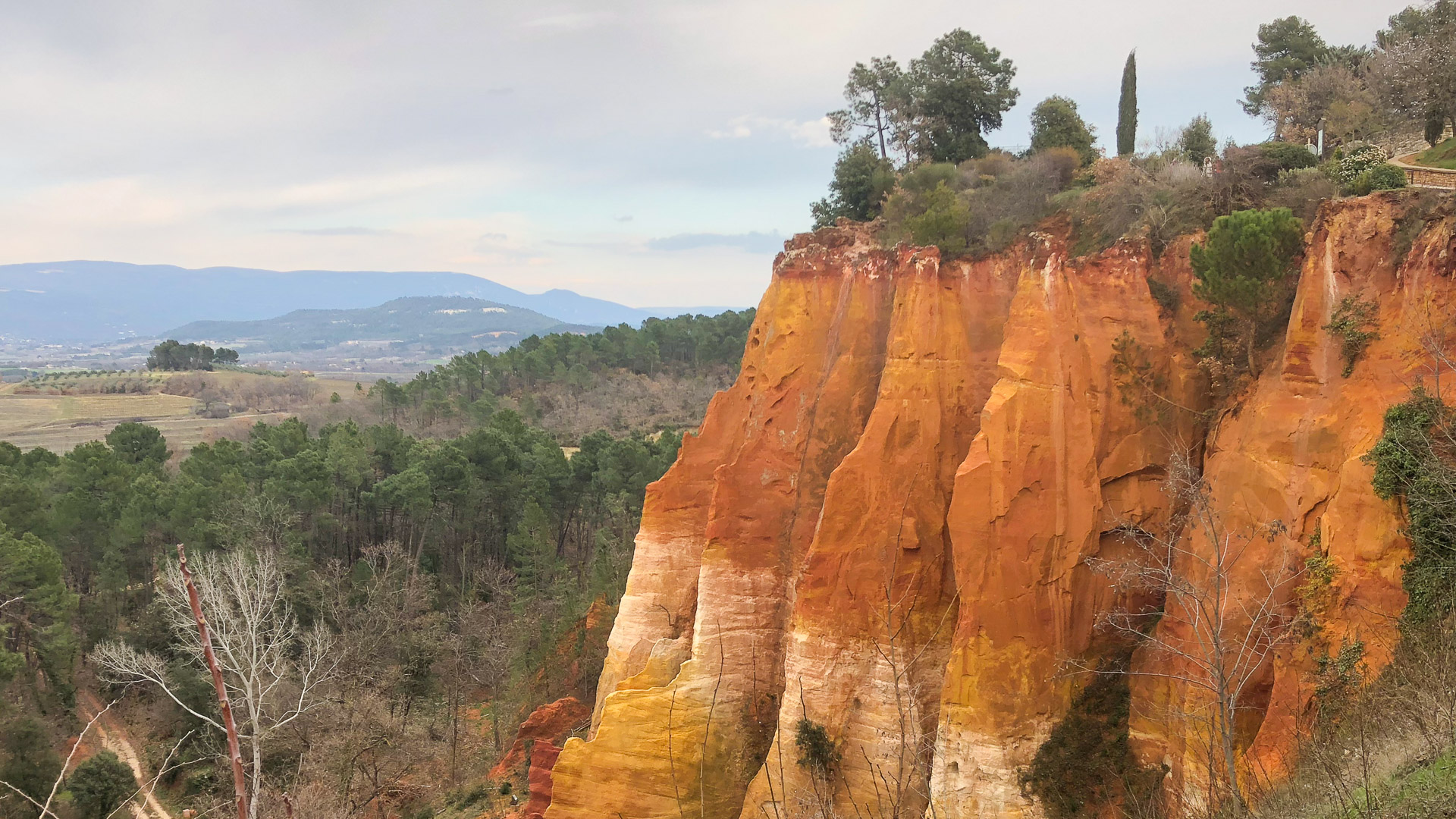
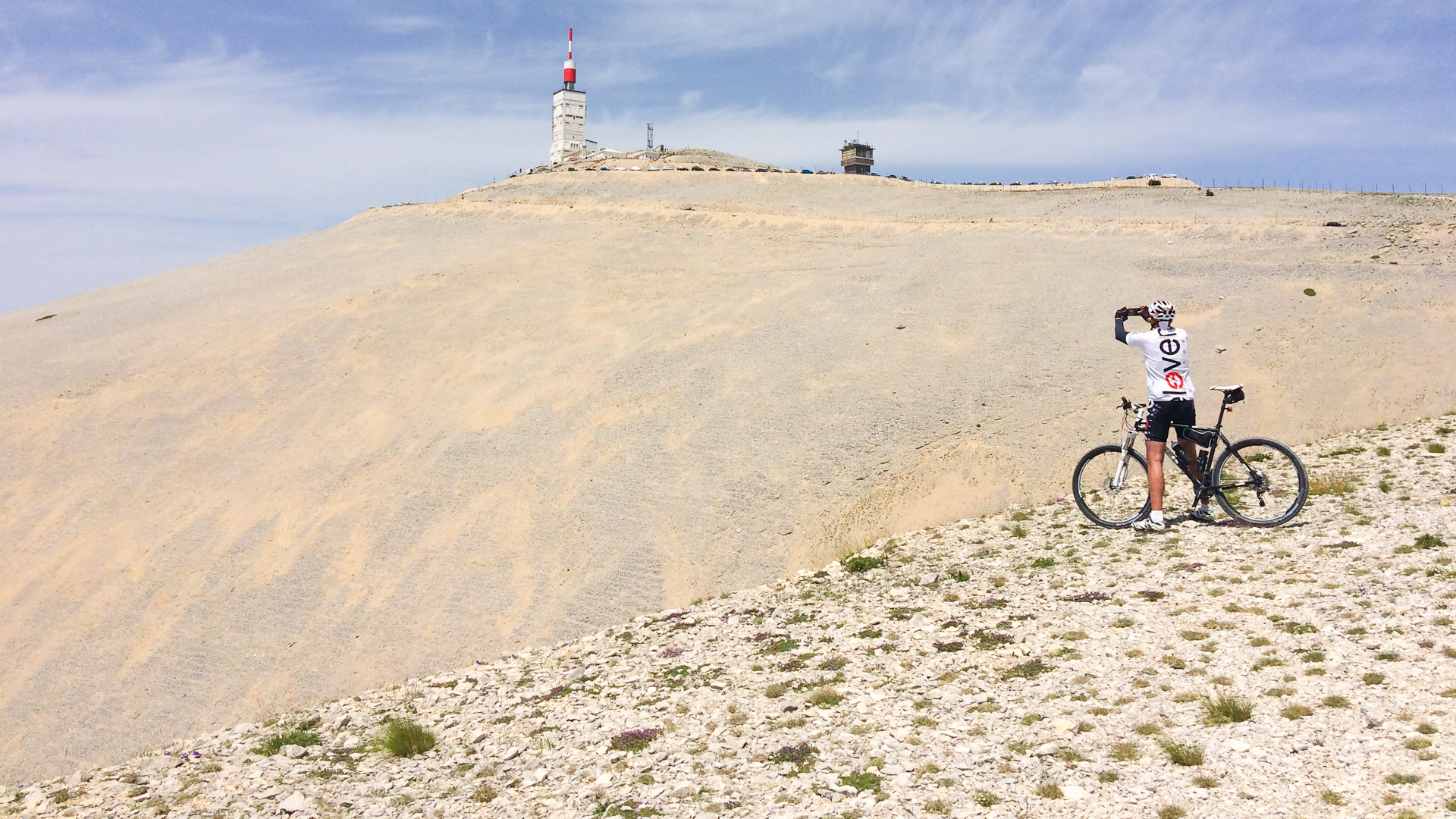
The route visits Avignon, Gordes and Roussillon before continuing through the Gorges de la Nesque. The final riding day offers the climb of Mont Ventoux from Sault.
Two-night stays in each hotel gives you opportunities to explore between rides. You can choose a longer day on the bike or leave more time for sightseeing.
Key information
- Region: Provence, southern France.
- Route: Seven nights with six cycling days, from Arles to Sault.
- Distance: 390km–488 km, depending on route choices.
- Climbing: 4,230m–6,555 m.
- Difficulty: 5 out of 10
- Surfaces: Country roads, including hilltop approaches and the road through the Gorges de la Nesque.
- Tour: A Week in Provence with Peak Tours.
What’s the riding like?
Expect hills throughout the week, with different distances available on several days. Shorter options can leave more time to explore. Longer routes add riding and visits such as the Pont du Gard, an ancient Roman aqueduct bridge and UNESCO World Heritage Site.
The overall grade does not tell the whole story. Mont Ventoux is a demanding mountain climb, so consider that day separately when judging whether the tour suits you.
What makes this tour special?
This tour gives you time to enjoy Provence beyond the riding.
You stay for two nights in Avignon, Apt and Sault. On those loop days, you can cycle or spend time exploring without moving to another hotel.
The route also gives you a real taste of Provence through Roman history, pretty towns, hilltop villages, vineyards and the mountain roads around Ventoux.
Highlights
- The historic centres of Arles and Avignon.
- The Pont du Gard, a Roman aqueduct, on the longer first-day route.
- The hilltop villages of Gordes and Roussillon.
- Cycling through the Gorges de la Nesque.
- The climb of Mont Ventoux from Sault.
- Two-night stays in Avignon, Apt and Sault.
Tips before you book
Compare the daily options before choosing your rides. A shorter route may suit your plans for sightseeing, but this may affect your support arrangements.
Our tour runs in May and September.
More information
Visit Peak Tours’ A Week in Provence tour page for the itinerary, departure dates and booking details.


3. Dordogne and the Lot Valley
Best for friends or couples who want different daily distances, with time for beautiful river towns and prehistoric sites.
Overview
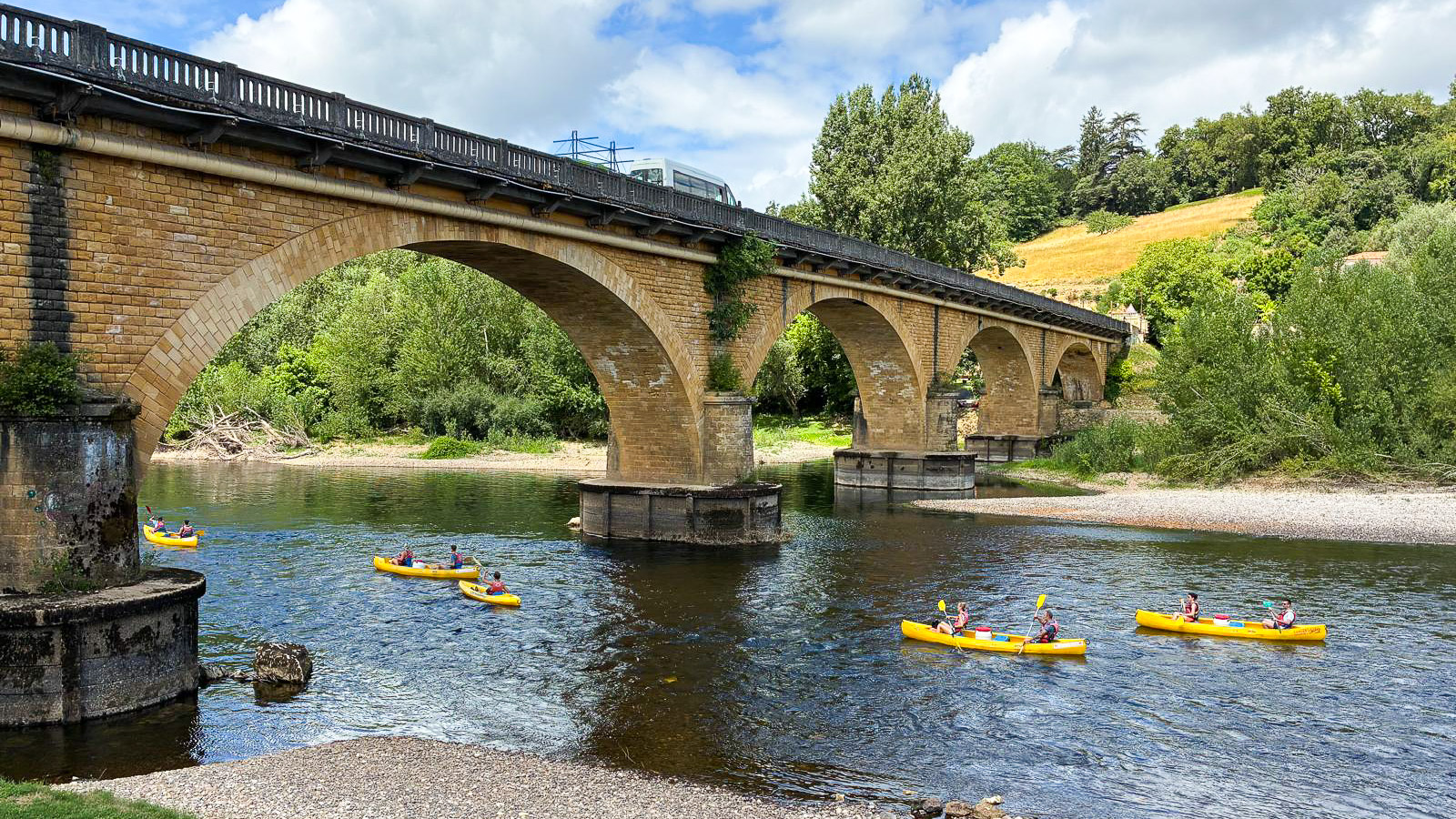
Our Dordogne and the Lot Valley tour explores a region of river valleys, hillside villages, prehistoric sites and natural heritage in south-west France.
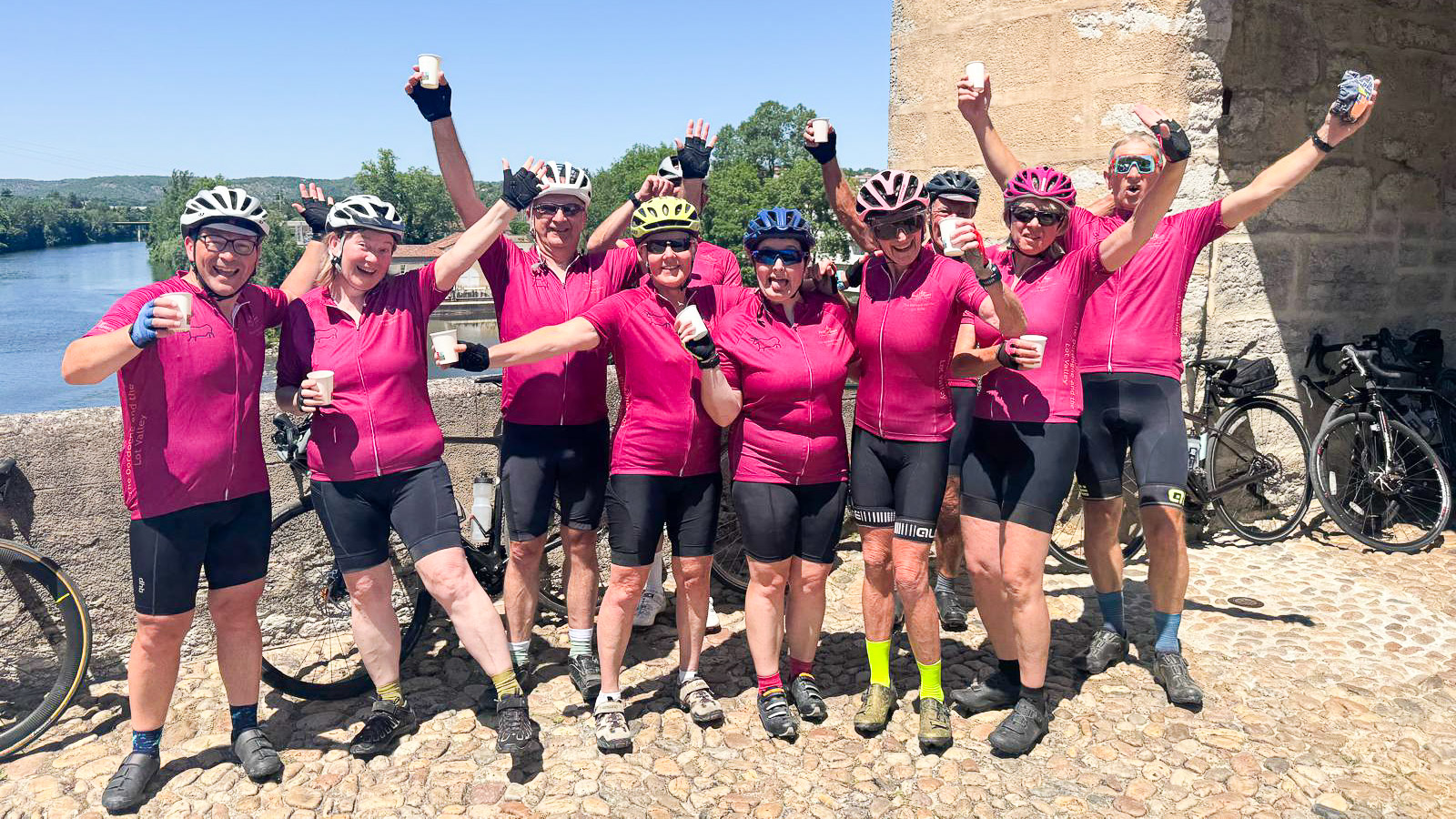
Starting in Bergerac, the route visits Les Eyzies and Sarlat-la-Canéda before finishing in Cahors. Along the way, you discover places such as Rocamadour and Saint-Cirq-Lapopie.
Shorter and longer routes let you choose how much cycling to do on several days. Two-night stays also give you opportunities to rest or explore.
Key information
- Region: Dordogne and the Lot Valley, south-west France.
- Route: Seven nights with six cycling days, from Bergerac to Cahors.
- Distance: 390km–526 km, depending on route choices.
- Climbing: 4,800m–7,150 m
- Difficulty: 6 out of 10
- Surfaces: Roads and cycle paths, including traffic-free greenway sections.
- Tour: Dordogne and the Lot Valley with Peak Tours.
What’s the riding like?
There are hills on both the shorter and longer routes. Although the route follows river valleys, it doesn’t mean the whole week is flat.
The shorter options are graded four. Taking all the longer routes makes this a grade-six holiday. You can also mix the options across the week.
Some riding follows a voie verte, or greenway, away from traffic. Other sections use roads between the towns and medieval villages.
What makes this tour special?
The history gives you plenty of reasons to stop.
Around Les Eyzies, the Vézère Valley contains numerous prehistoric sites. There is an opportunity to visit the Lascaux International Centre for Cave Art, which presents replica caves and a museum.
The shorter routes can help you make time for these visits. Two nights in Les Eyzies and Cahors also mean you can explore without packing up each morning.
Highlights
- Bergerac and its historic centre, with winding streets to explore.
- The prehistoric sites of the Vézère Valley.
- The opportunity to visit the Lascaux International Centre for Cave Art.
- The historic streets of Sarlat-la-Canéda.
- Rocamadour, built against a cliff.
- Saint-Cirq-Lapopie above the River Lot.
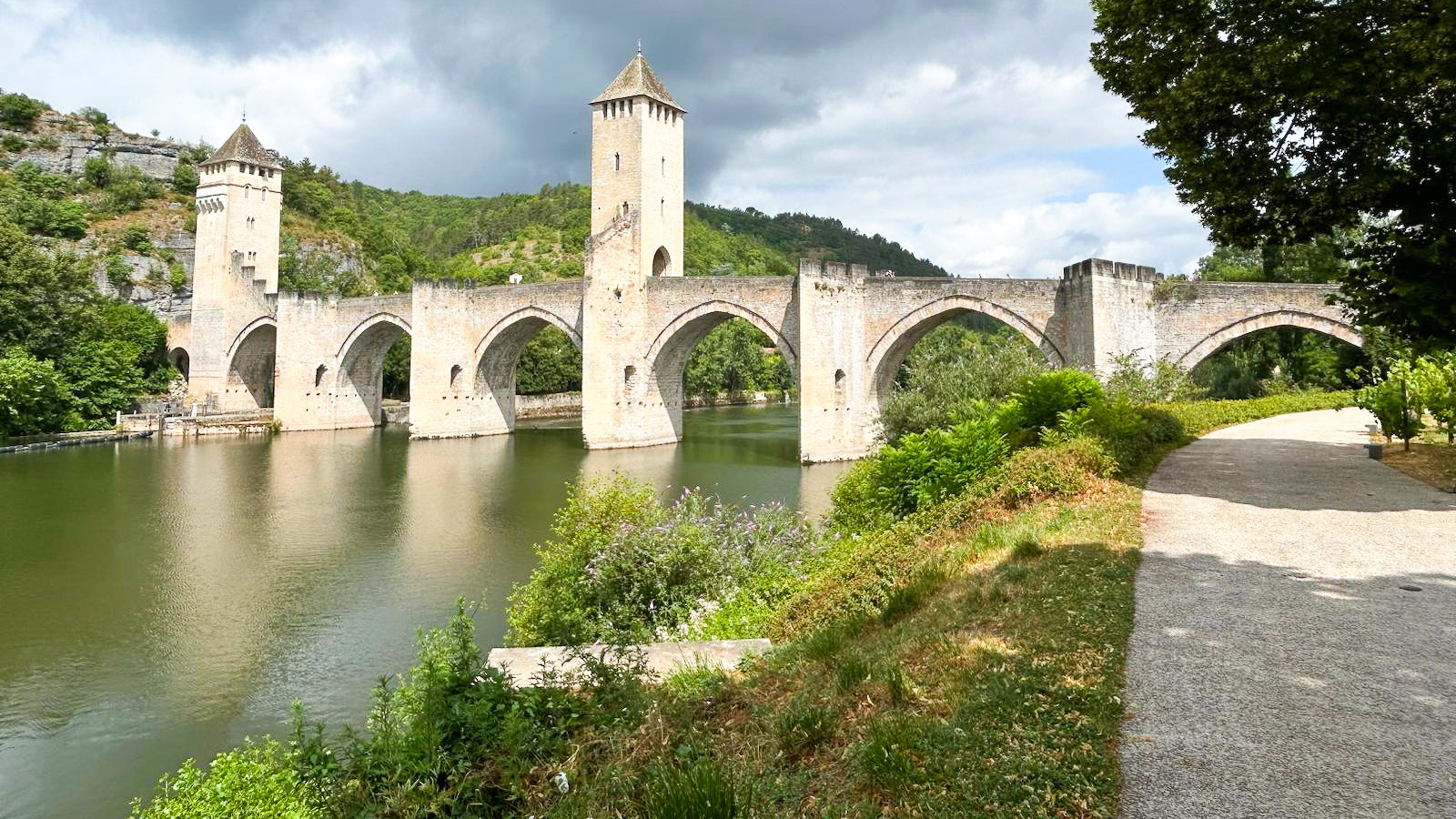
- Two nights in Cahors, home to the 14th-century Pont Valentré bridge, a symbol of the town.
Tips before you book
Think about the visits you want to make before choosing your daily routes. A shorter ride can give you more time at a historic site.
Book ahead if you want to visit the Lascaux International Centre for Cave Art. Check the visit timing against your ride for that day.
More information
Visit Peak Tours’ Dordogne and the Lot Valley tour page for the itinerary, departure dates and booking details.


4. Alsace and the Vosges Mountains
Best for regular cyclists who want mountain riding, wine villages and time to explore historic towns.
Overview
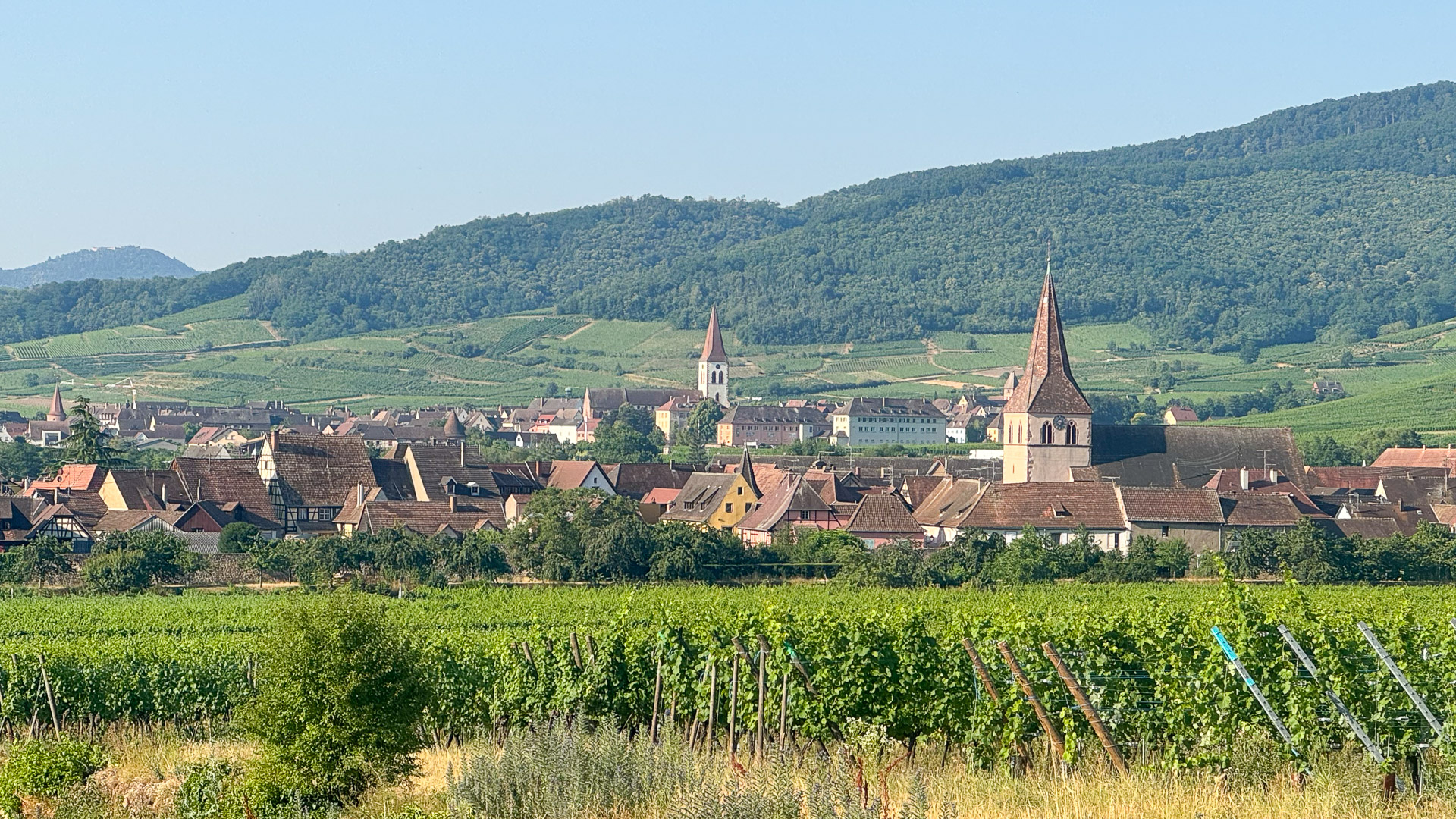
Our Alsace and the Vosges Mountains tour combines vineyard roads, forested climbs and historic towns over six cycling days.
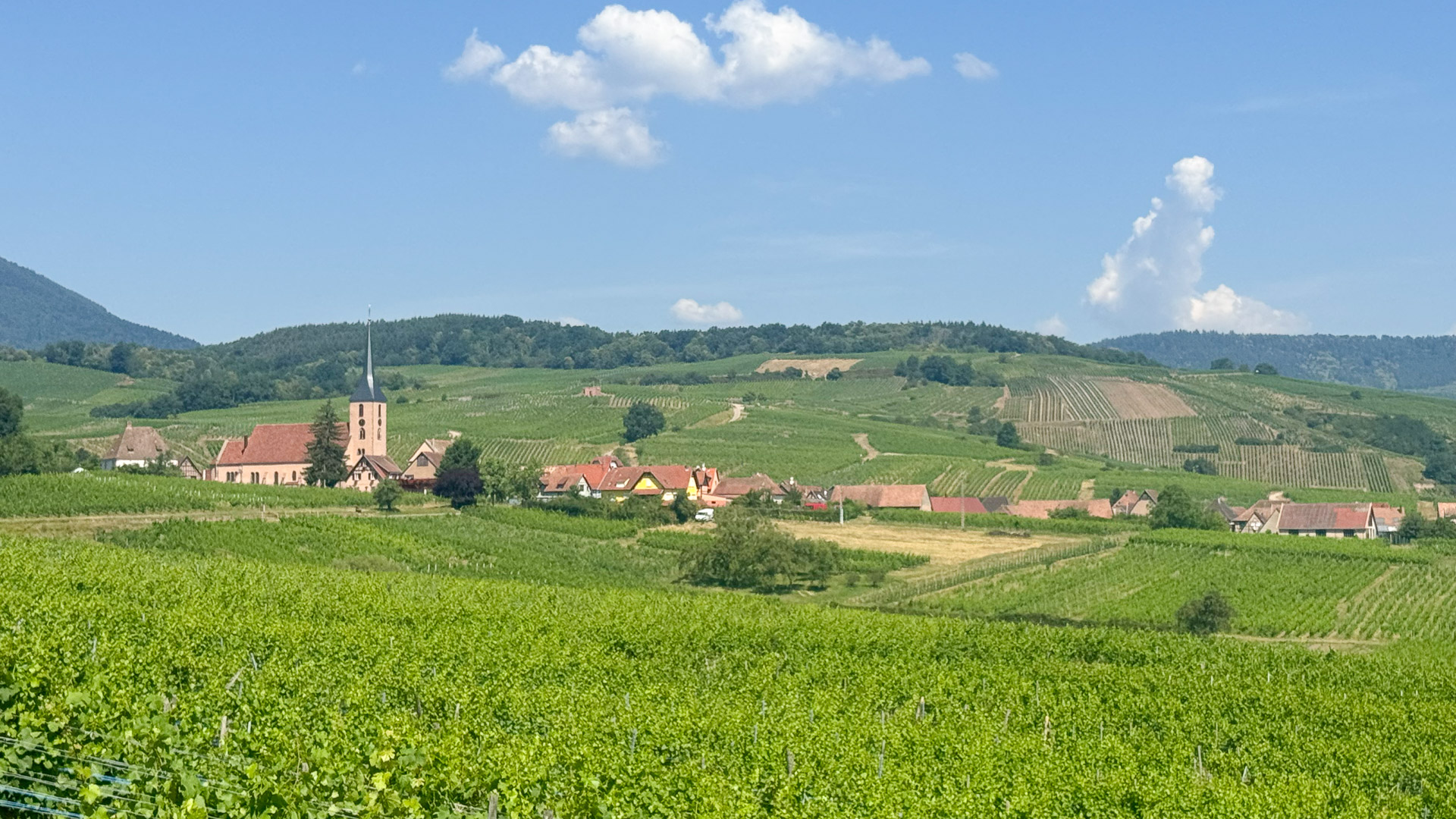
The route starts in Obernai and finishes in Strasbourg. It explores Alsace in north-east France, between the Vosges Mountains and the Rhine plain. Along the way, you visit wine villages such as Riquewihr and Kaysersberg before continuing to Colmar.
Two night stays in each hotel give you time to get to know the overnight towns. They also offer the option of a day off the bike.
Key information
- Region: Alsace and the Vosges Mountains, north-east France.
- Route: Seven nights with six cycling days, from Obernai to Strasbourg.
- Distance: 532 km
- Climbing: 8,800 m
- Difficulty: 7 out of 10
- Surfaces: Country roads, mountain roads and cycle paths, including traffic-free sections.
- Tour: Alsace and the Vosges Mountains with Peak Tours
What’s the riding like?
This is a mountain and vineyard tour, with sustained climbing on several days. Expect climbs through the forests of the Vosges, followed by descents towards the villages below.
The riding changes as the week progresses. The final stage follows flatter roads and cycle paths towards Strasbourg, finishing beside the canals.
The grade-seven rating is important. There are sightseeing opportunities, but you still need good fitness and experience of riding hills on consecutive days.
What makes this tour special?
You experience two sides of Alsace: the wooded Vosges Mountains and the wine villages below.
The route takes you through places with half-timbered houses, vineyards and medieval streets. It also visits Château du Haut-Kœnigsbourg, a castle overlooking the surrounding countryside and part of Alsace’s cultural landscape.
Staying for two nights in Obernai, Riquewihr and Colmar gives you more time to explore than a tour that moves on every day.
Highlights
- Wine villages, including Riquewihr and Kaysersberg.
- Forested climbs and mountain descents in the Vosges.
- Château du Haut-Kœnigsbourg above the vineyards.
- Riding through the Munster Valley.
- Two nights in Colmar, which is celebrated for its architecture and blend of French and German cultures.
- Canal-side cycling into Strasbourg.
Tips before you book
Prepare for the climbing as well as the distance. A flatter final day does not make this an easy week.
The loop rides from Obernai, Riquewihr and Colmar are optional. You can use these days to rest or explore the town instead.
Our tour runs in June and July.
More information
Visit Peak Tours’ Alsace and the Vosges Mountains tour page for the itinerary, departure dates and booking details.



5. Channel to the Med
Best for cyclists who want the challenge of riding across France, with a new overnight stop each day.
Overview
Our Channel to the Med holidays take you from Ouistreham, near Caen, to the Mediterranean near Nice.
You travel through several regions, including Normandy, the Loire, the Massif Central (which is an upland region in central France) and Provence.
There are two versions. The 14-day tour spreads the journey over more riding days. The more demanding 10-day tour suits experienced cyclists who are comfortable with longer daily distances.
Key information
- Regions: Normandy, the Loire, the Massif Central and Provence.
- Route: From Ouistreham on the Channel coast to the Mediterranean near Nice.
- 14-day version: 1,400 km and 19,000 m elevation, 7 out of 10
- 10-day version: 1,350 km and 18,400 m elevation, 9 out of 10
- Surfaces: Country lanes and roads, with some cycle-path riding.
- Tours: 14-day Channel to the Med and 10-day Channel to the Med
What’s the riding like?
This is a journey with consecutive riding days. You move on each day, so there are no loop-day rest opportunities like those on several of the regional tours.
Both versions include substantial climbing. The route takes you through upland areas and gorges, with the option of climbing Mont Ventoux.
On the 14-day tour, you ride approximately 99 kilometres and climb 1,350 metres per day on average. The 10-day version increases this to around 135 kilometres and 1,840 metres of climbing per day. The routes are very similar, but the daily demands are different.
The 10-day tour requires a minimum average speed of approximately 21 kilometres per hour. Riders must finish each day by 7pm. Choose this version only if you are prepared for the daily distances and repeated effort.
What makes this tour special?
The appeal is the journey from one end of France to the other.
You see the unspoilt countryside change as you head south. Normandy and the Loire Valley give way to the uplands of the Massif Central, then the gorges and villages of Provence.
The 14-day version gives you more days to complete that journey. The 10-day version offers a greater daily challenge.
Highlights
- Setting off from the Channel coast at Ouistreham.
- Riding through Normandy and the Loire Valley.
- Crossing the Massif Central.
- The Ardèche and Verdon gorges.
- The option of climbing Mont Ventoux.
- Reaching the Mediterranean near Nice.
Tips before you book
Choose between the versions based on your recent riding and preparation. The 14-day tour is still a substantial challenge, even though it has a lower grade.
There is an alternative route around Mont Ventoux if you don’t want to ride up it. The vans concentrate on supporting riders on the climb, so check your food, water and support arrangements before taking the alternative.
If you arrive the day before cycling starts, that night’s accommodation is charged as an additional cost. Allow for it when comparing the total cost and time away.
More information
Find out more about Peak Tours’ 14-day Channel to the Med and 10-day Channel to the Med tours, including their itineraries, departure dates and booking details.

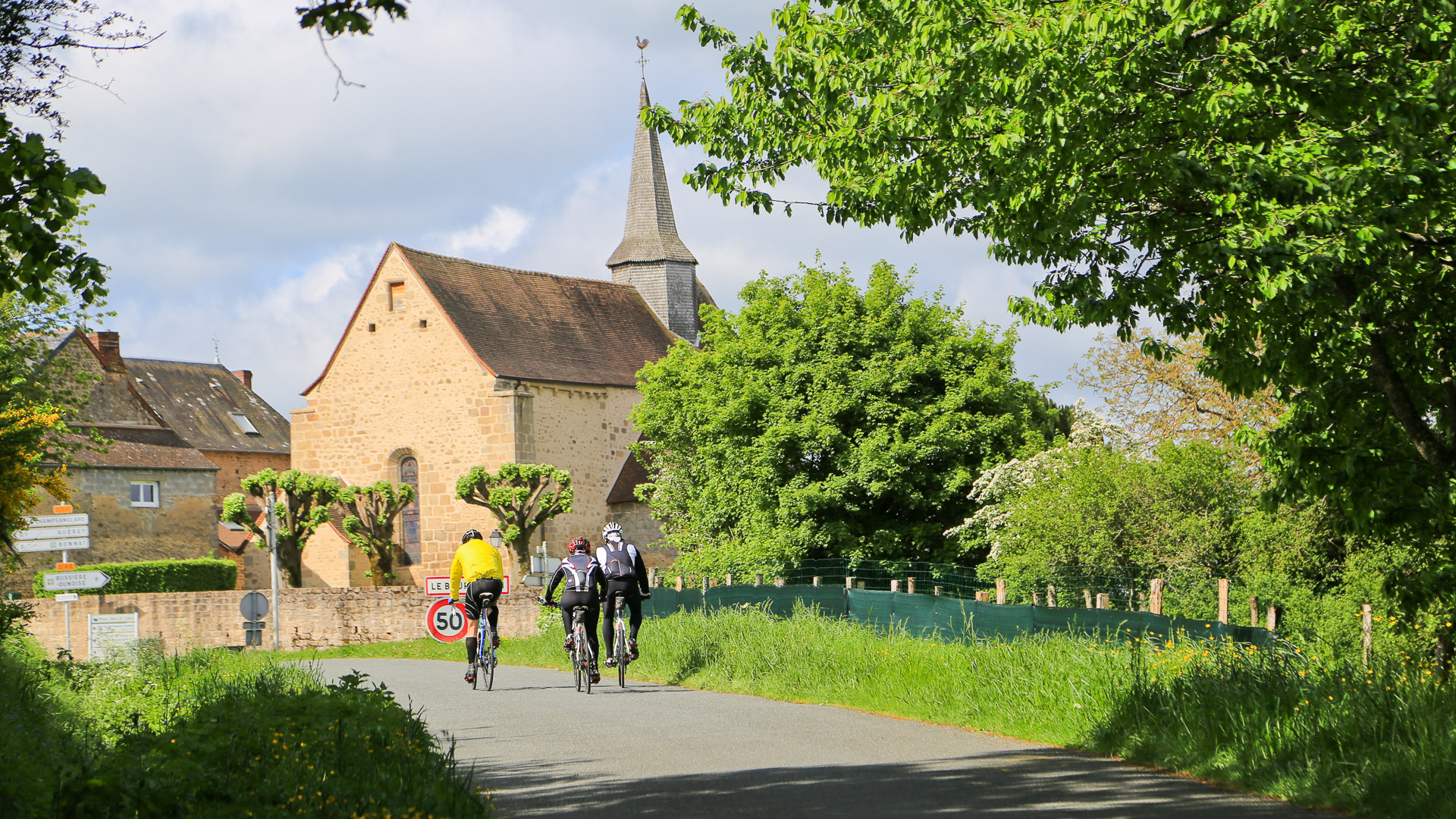
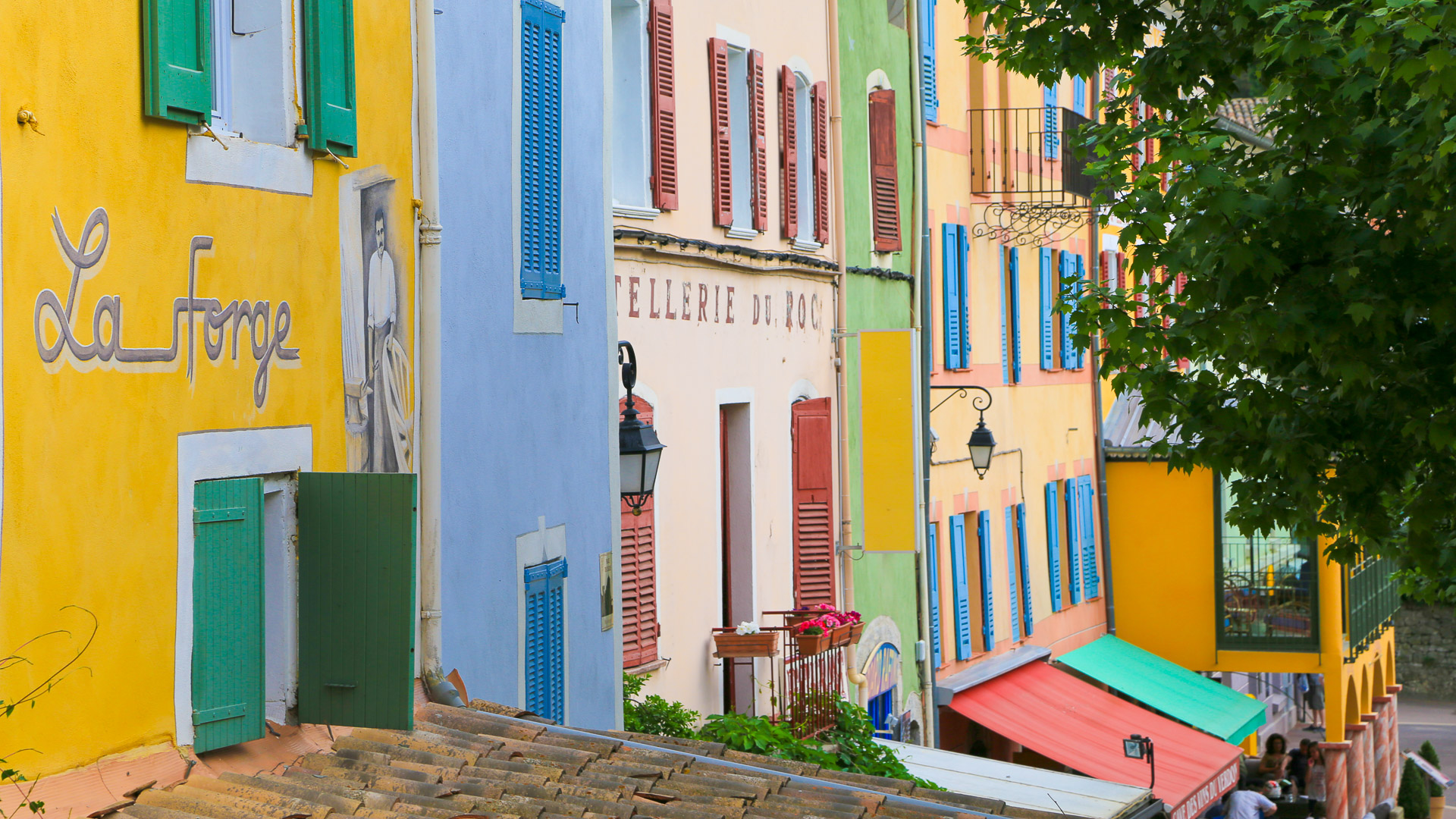

To get a feel for what cycling the Channel to the Med route is like, take a look at this video showcasing the route, scenery and experience:
6. French Alps Classic Cols
Best for experienced riders who want to spend a week tackling famous Alpine climbs.
Overview
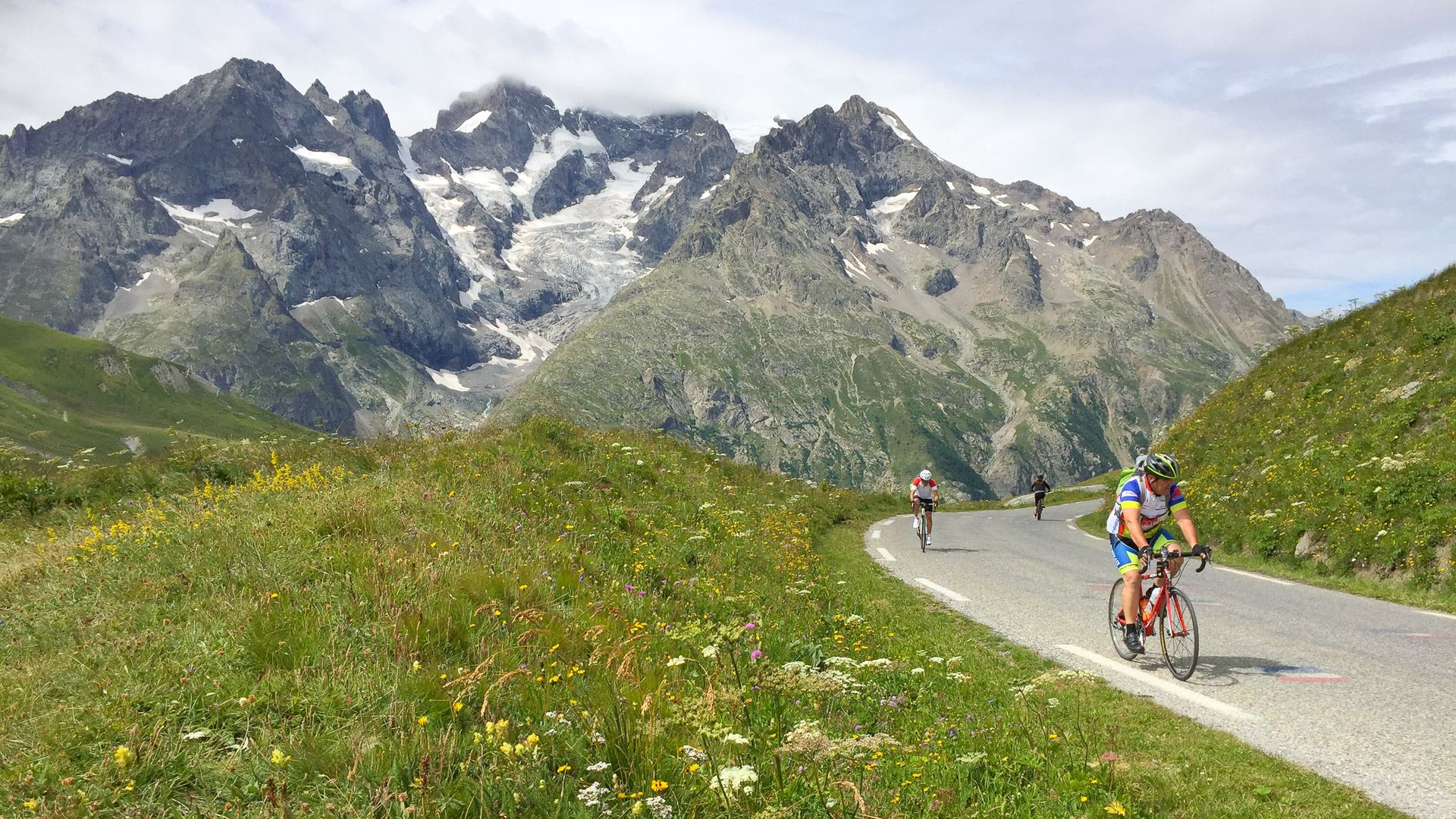
Our French Alps Classic Cols tour brings together climbs you may recognise from the Tour de France.
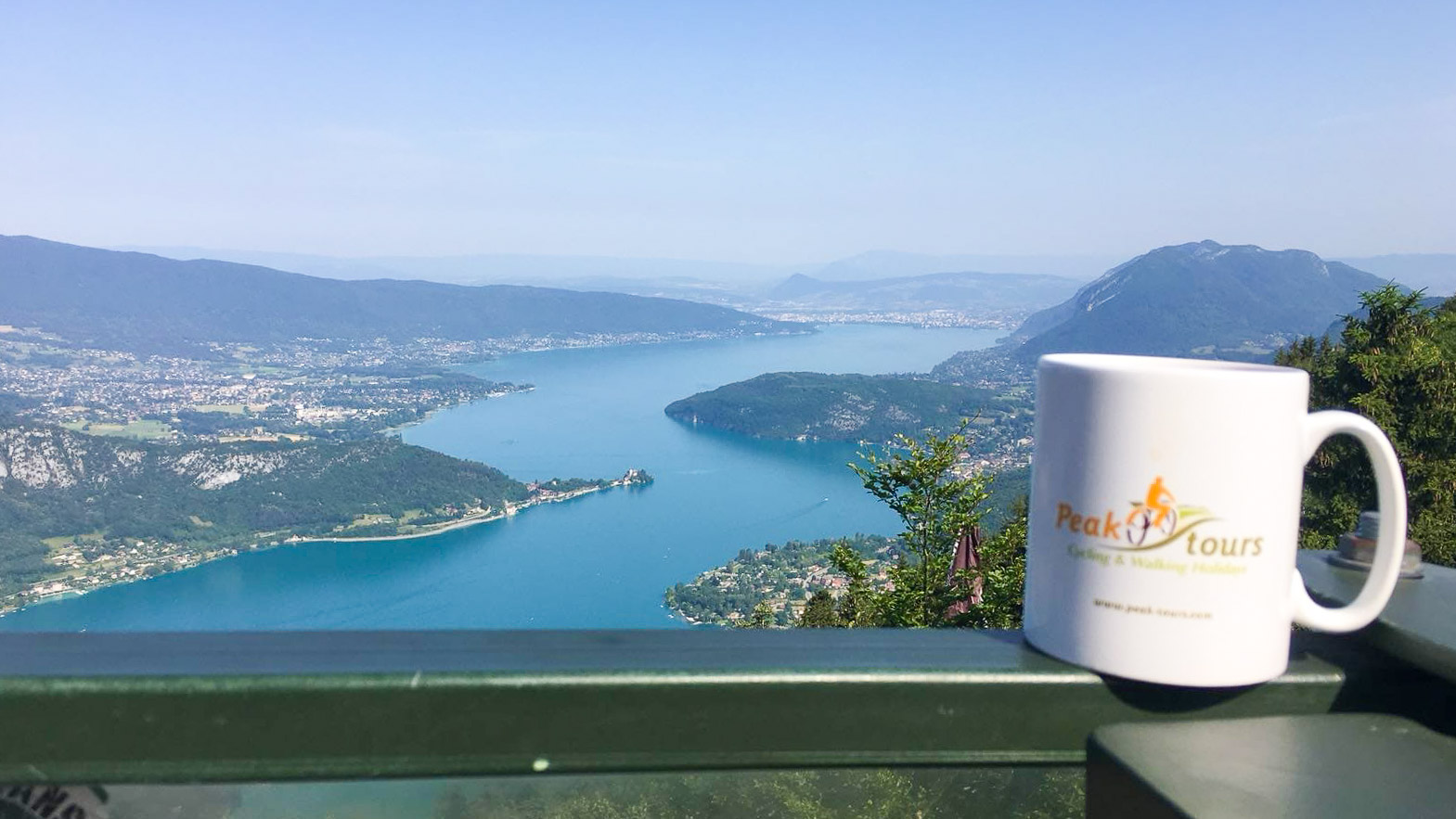
Starting in Annecy, you spend six cycling days exploring the French Alps. The route builds towards the Col de la Madeleine, Col du Galibier and Alpe d’Huez. There are mountain descents between the climbs and opportunities to explore the overnight towns.
This is a holiday for cyclists who enjoy climbing. The distances may look manageable, but the elevation makes this a demanding week.
Key information
- Region: French Alps.
- Route: Seven nights with six cycling days, starting in Annecy.
- Final cycling stage: Alpe d’Huez, followed by a descent to Bourg-d’Oisans. Final overnight location awaiting confirmation.
- Distance: 377km–406 km, depending on route choices.
- Climbing: 10,700m–11,000 m.
- Difficulty: 8 out of 10
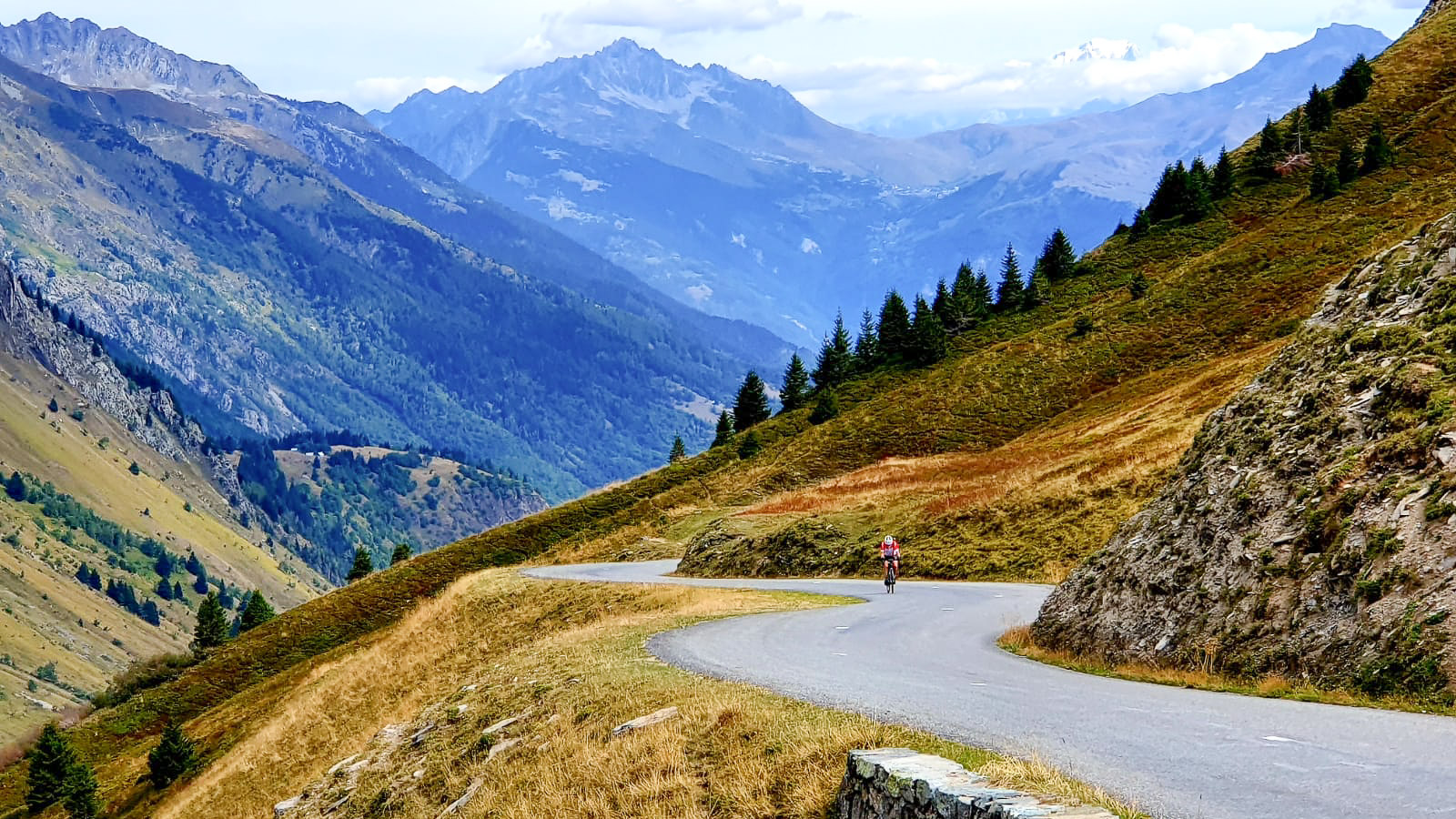
- Surfaces: Mountain roads, with sustained climbs and winding descents.
- Tour: French Alps Classic Cols with Peak Tours
What’s the riding like?
Expect long climbs followed by mountain descents. Be aware that shorter distances do not necessarily mean easier days!
The stage to La Grave combines the Col du Télégraphe and Col du Galibier. You descend between the two climbs before beginning the next ascent. It is a day that calls for steady pacing and enough energy for the second climb.
Other days offer route choices. These include a shorter opening ride near Lake Annecy and an optional extension via the Lacets de Montvernier.
What makes this tour special?
The climbs are the main attraction. You ride roads associated with the Tour de France across several consecutive days.
The climb selection includes the Col de la Madeleine, Col du Glandon and Col de la Croix de Fer. Later in the week come the Col du Galibier and Alpe d’Huez. It suits cyclists who want the climbs themselves to be the focus of their holiday.
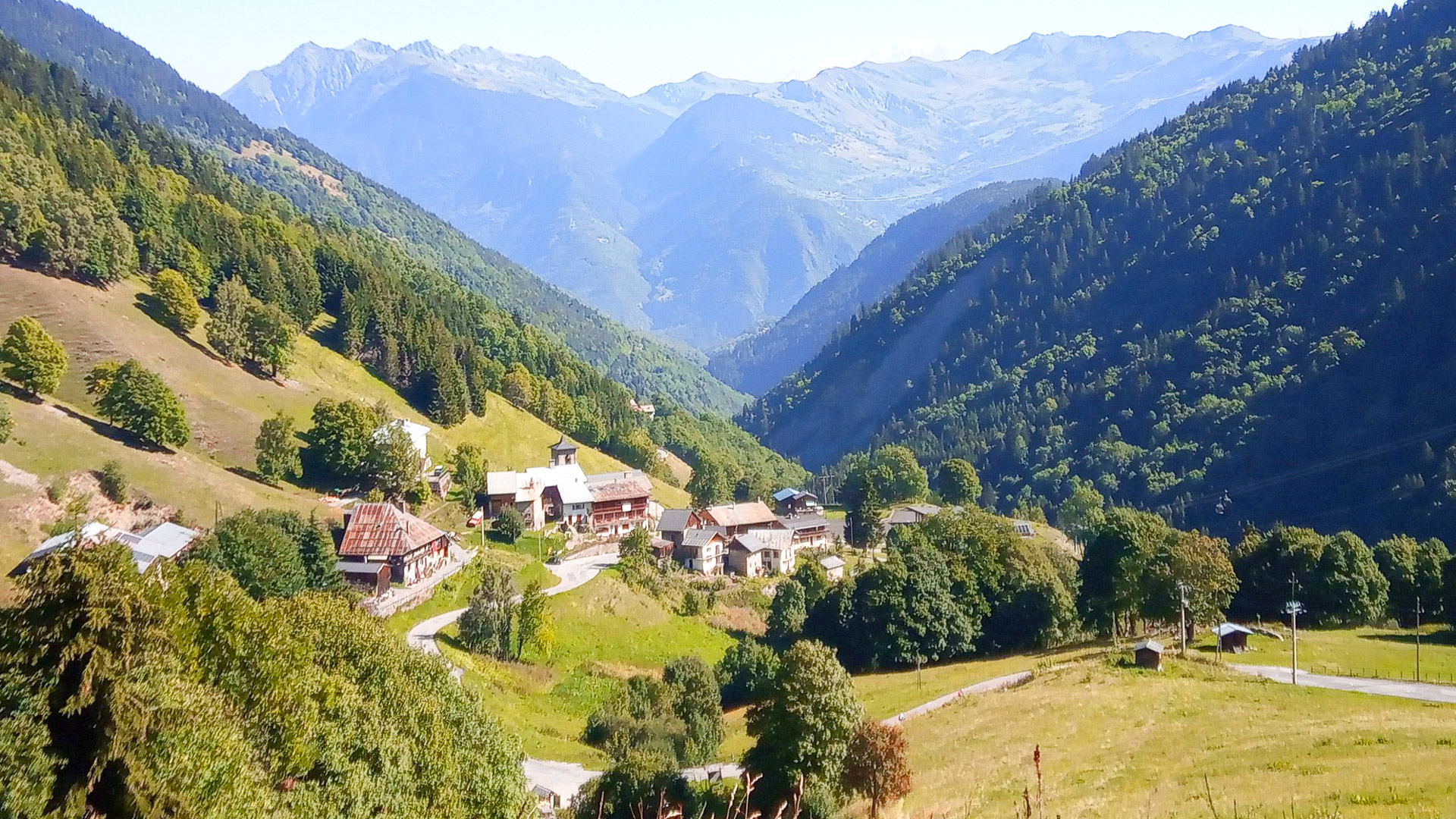
The overnight stops also give you opportunities to explore the Alps off the bike. You start with two nights in Annecy, known for its lake and medieval old town. The route then takes you to La Léchère and Saint-Jean-de-Maurienne, where you stay for two nights. Later, you spend a night in La Grave, a small Alpine village surrounded by mountains. On the final day, there is time to explore Bourg-d’Oisans after descending Alpe d’Huez.
Highlights
- The beautiful town of Annecy and its lake.
- Col de la Madeleine.
- Col du Glandon and Col de la Croix de Fer.
- Col du Télégraphe and Col du Galibier.
- Alpe d’Huez on the final cycling day.
- The optional Lacets de Montvernier extension.
Tips before you book
Prepare for the climbing and descending, rather than judging the tour by distance alone. You should already be comfortable riding hills on consecutive days.
Check the shorter and longer options before choosing your route. Adding additional kilometres in the alps adds climbing as well as extra distance.
This tour runs in June, July and September.
More information
Visit Peak Tours’ French Alps Classic Cols tour page for the itinerary, departure dates and booking details.
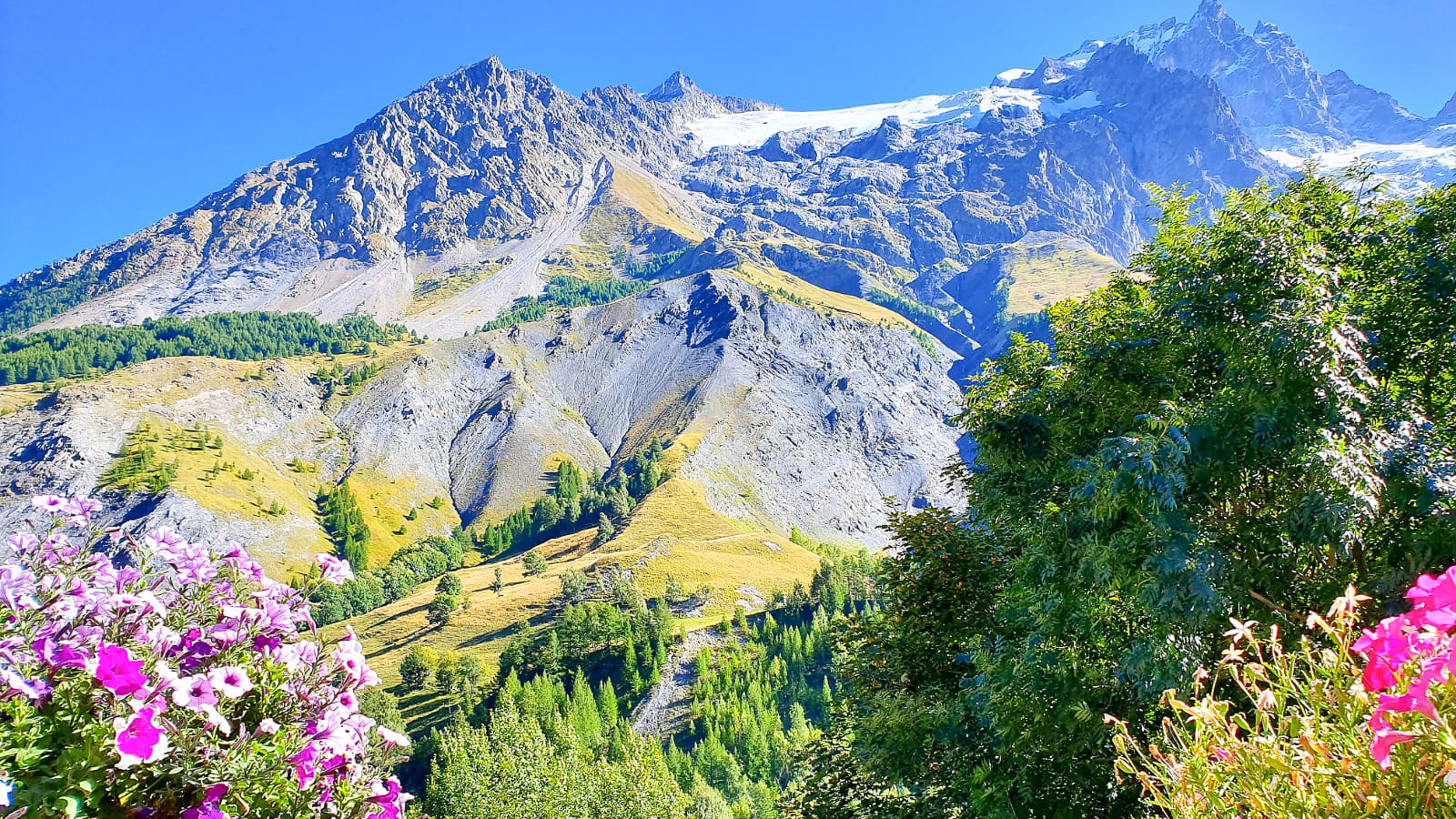
Sponsor Message
Explore France by bike, with a team to support you
Planning a cycling holiday in France? Peak Tours offers guided bike tours for different abilities, from exploring the countryside and historic towns to tackling famous Tour de France climbs.
They'll take care of accommodation, luggage transfers, route planning and refreshments, with guides and mechanical support available throughout the trip.
Not sure which tour to choose? Use the form below to tell the team about your cycling experience, preferred routes and travel dates. They'll help you find a tour that suits your interests and ability.
Got a question for Steve from Peak Tours?
Fill out this form and we will pass it to Peak Tours who aim to reply (within 24 hours wherever they can!)
Part 3: How do you choose the right guided cycling holiday in France?
How do you judge whether a tour suits your fitness?
Start with the operator’s grading, then read the daily itinerary. Think about your recent riding and how you feel the morning after a long or hilly day. Then consider repeating that effort for several days.
A tour with modest distances can still be hard if it has sustained climbing, as on Peak Tours’ Alps holiday. Being new to guided holidays does not necessarily mean being new to demanding cycling, so choose according to your riding experience.
Our Peak Tours suggestion
For a first guided trip, I suggest looking at Provence because it offers different route options. This is a good option for someone new to guided holidays who already has some cycling experience. It isn’t necessarily suitable for someone completely new to multi-day cycling, as there are still hills and longer riding days to consider.
For a major challenge, consider the Alps or Channel to the Med.
How much riding do you want to do each day?
Look at the longest and hilliest stages, then compare them with rides you already do. A familiar distance may feel different when it includes a long mountain climb or comes late in a multi-day trip.
Check the surfaces too. A road holiday can include cycle paths, while quieter roads still have traffic.
Support helps with the organisation, but choose a holiday whose planned rides you can complete.
Our Peak Tours suggestion
Most of our guests choose suitable cycling trips once they have read the grading information and daily itinerary.
The 10-day Channel trip, in particular, is a very different undertaking from a week with optional loop rides.
Would a regional holiday or a journey across France suit you better?
The regional trips concentrate on a smaller area. Several include two-night stays, so you can spend longer in individual towns and you get the opportunity to take a rest day if you need it.
A point to point cycle trip across France, like Channel to the Med, gives you the experience of travelling across the country, with a new overnight stop each day.
When deciding what’s right for you, compare the style of trip, how much sightseeing you want to do as well as the full holiday duration, including arrival and departure, rather than counting cycling days alone.

Overlooking the historic village of Rocamadour in south-west France (photo credit: Peak Tours)
How much time do you want for sightseeing or rest?
If sightseeing matters to you, look for two-night stays and check the length of the loop rides. Don’t assume the riding will be easy just because there is sightseeing built into the schedule.
If you don’t want to be riding all day, check the distance, climbing and sightseeing: time for sightseeing does not necessarily mean rest!
Our Peak Tours suggestion
For more sightseeing time, I suggest the Alsace and the Vosges Mountains trips.
On trips such as Provence, Dordogne and Brittany, a two-night stay can let you take a day off without missing a move to the next hotel. On moving-on days, plan your timings around reaching the next overnight stop.
Allow time for the visits you care about: on our Dordogne and Lot Valley tour, for example, you can visit the Lascaux International Centre for Cave Art, which features replicas of prehistoric cave paintings and a museum. You’ll need to book ahead.
Which trips suit friends or couples of different abilities?
Before booking together, compare the options day by day. Check where the routes separate, whether you finish at the same accommodation and what support accompanies each option. There may still be moving-on days that both riders need to be comfortable completing.
Our Peak Tours suggestion
I suggest the Provence or Dordogne trips for friends or couples with different levels of ability. Their route choices can let one rider do more distance or climbing while another chooses a shorter day.
When would you like to cycle in France?
Consider climate when booking your trip, as it makes a big difference to your riding experience. Of course, it’s impossible to say that a particular area will be optimal at a particular time of year, but you’ll see the trends for the region you want to visit.
You may also need to prepare for different conditions throughout the trip. Mountain passes can be much colder than the valleys, and a holiday covering several regions can encounter changing weather. Choose dates alongside the route and your likely preparation time.
Our Peak Tours suggestion
We generally run southern France trips in shoulder-season months such as May and September, with northern France trips often in June and July.
We do our best to avoid August due to the weather and busier roads.

Cycling through the Gorges de la Nesque in Provence, France (photo credit: Peak Tours)
Sponsor Message
Explore France by bike, with a team to support you
Planning a cycling holiday in France? Peak Tours offers guided bike tours for different abilities, from exploring the countryside and historic towns to tackling famous Tour de France climbs.
They'll take care of accommodation, luggage transfers, route planning and refreshments, with guides and mechanical support available throughout the trip.
Not sure which tour to choose? Use the form below to tell the team about your cycling experience, preferred routes and travel dates. They'll help you find a tour that suits your interests and ability.
Got a question for Steve from Peak Tours?
Fill out this form and we will pass it to Peak Tours who aim to reply (within 24 hours wherever they can!)
Part 4: What should you know before booking a guided cycling holiday in France?
How much do guided bike tours in France cost?
Of course there’s huge variation between operators and you need to be careful to ensure you’re considering “like for like” when it comes to inclusions and exclusions.
With Peak Tours
Our seven-night regional cycling holidays in France start from £1,795 per person sharing a room for 2027. The 10-day Channel to the Med starts from £2,495, while the 14-day version starts from £2,895.
Prices include accommodation, breakfasts, riding-day lunches, refreshments, luggage transfers, route information and support from our guides.
You’ll need to budget separately for evening meals and optional extras such as bike hire, Garmin hire and bike transport from the UK. Single rooms and sole use of a double room also cost more.
Check the individual tour pages for the latest prices and what’s included.
What support will you have?
Think about what you’ll need during each ride. Carry water, a snack, spare tubes and suitable layers, even if a support van carries your main luggage. You may be some distance from the next stop when you need them.
On a guided holiday, check whether a guide cycles with the group or support comes from vehicles at planned stops. Save the team’s phone number before setting off. If you choose a shorter route, check whether it has the same food stops and support.
Choose daily distances and climbs you feel comfortable completing. Treat a lift in the van as help if something goes wrong, rather than part of your riding plan.
With Peak Tours
Our usual team has three guides, including a lead guide who knows the route, a mechanic and a linguist. They rotate between cycling, driving the brew van and driving the luggage van. We hope you’ll always find our guides to be proactive, approachable and helpful.
The cycling guide normally stays at the back, while the brew van prepares stops and the luggage van handles bags and other tasks. If someone is struggling, we encourage them and can help with van assistance when needed. You meet the vans at planned stops, and our guides are contactable by phone during the day.
On smaller departures, our guide arrangements can differ. There may be fewer guides, and support may come from vehicles rather than having someone cycling at the back of the group.
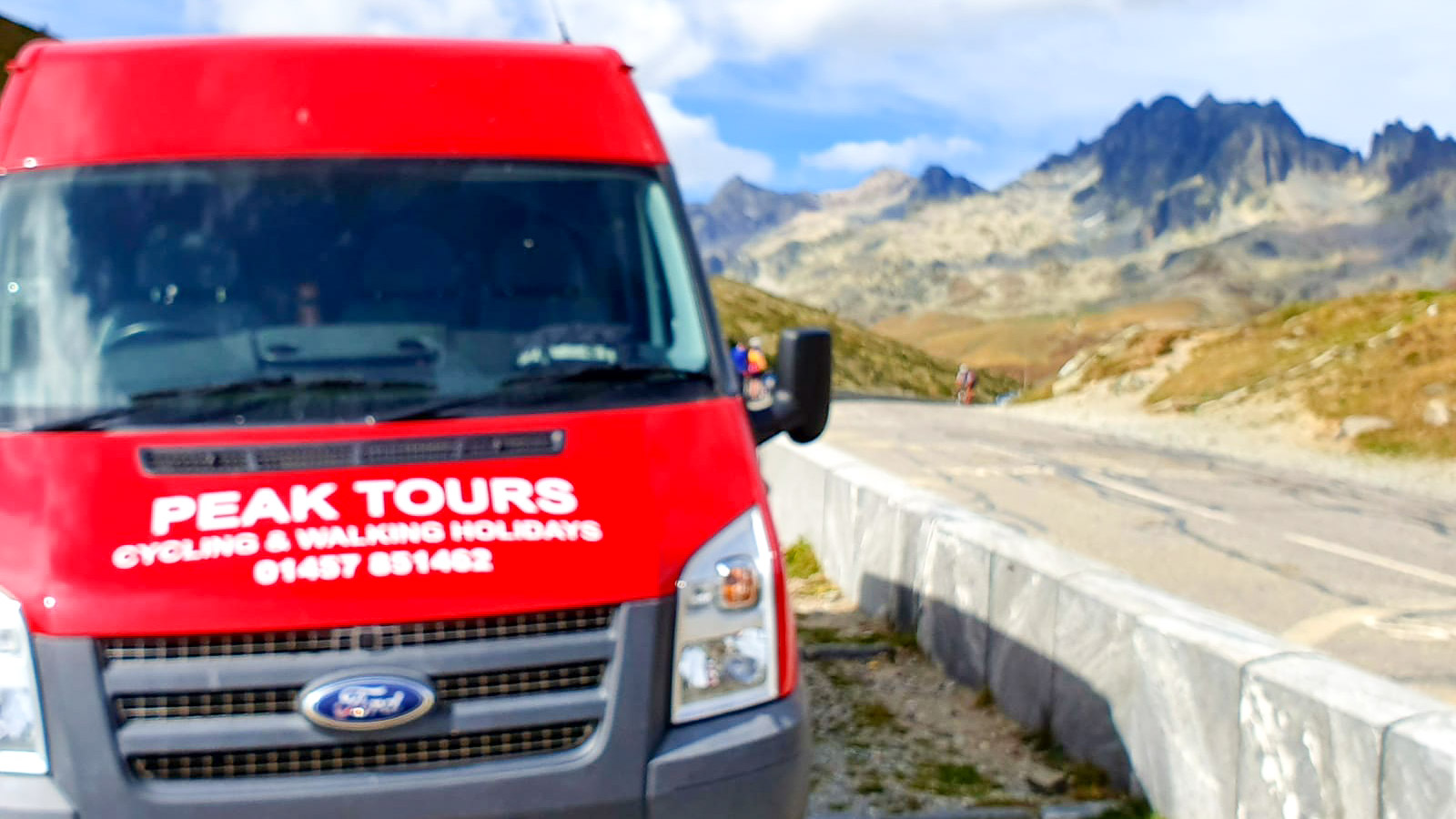
Peak Tours support van on a guided cycling holiday (photo credit: Peak Tours)
What kind of bike will you need, and should you bring your own or hire?
Several days in the saddle will test whether your bike is comfortable. Choose gearing for the climbs and tyres suited to the surfaces, with enough life left for the whole trip. If considering bike rental, settle the size, setup and cost before travelling.
With Peak Tours
Most of our France guests ride road bikes. Touring bikes can also work; the important point is using a bike you are comfortable riding for several days. Gravel bikes and hybrids are more common on some of our shorter UK trips.
We generally favour bringing your own bike because you know its saddle, fit and setup. Most guests do. Bike rental or hire is an optional service, often useful for overseas guests. Our road fleet includes Cannondale Synapse bikes and is moving towards Specialized; our touring bikes are Dawes Super Galaxy. Giving us more notice improves the chance of finding the right bike, although we can sometimes arrange hire a few days before departure.
For gearing, we suggest an 11-34 cassette at the rear and 50/34 at the front. This gives you a good range of gears for tackling the climbs on our France tours.
We also suggest bringing gearing appropriate to the climbing and durable tyres with plenty of wear left. Gatorskin and Schwalbe Marathon are examples we suggest. Guests can bring their own e-bikes, but we do not provide e-bike hire. Tell us whether your battery is removable or the bike needs charging in place, so we can plan the arrangements.
For more tips on choosing the right gearing and preparing for mountain climbs, see Epic Road Rides’ guide to cycling in the Alps.
How will you get your bike to France and home again?
Decide how you’ll get your bike to France before booking your travel. If you’re flying, check the airline’s bike charges and packing requirements. For train journeys, check whether each service carries bikes and whether you need a reservation.
Allow time to move between stations or reach your accommodation with a packed bike and luggage. Check that any airport transfer can carry your bike bag or box too.
Some tour operators can transport your bike for you. Ask where to drop it off, when you’ll get it back and what the service costs. Check that your insurance covers the bike during transport.
With Peak Tours
We offer return bike transport for all these tours to avoid guests handling a bike alongside luggage on planes or trains. You can leave your bike with us near Glossop, arrange a motorway service-station handover as our vans travel towards the port, or post it to us beforehand.
We pack and pad bikes in our vans. Customers don’t need to do anything to prepare their bikes before handing them over to us for transport to Europe. In many cases, we’ll need to remove the wheels, although some bikes can be transported with the wheels in place. If your bike requires a specific tool to remove the wheels, we’ll need you to provide this for transport to Europe and back.
Our current quoted charge is £60 for return European transport. This covers our post-Brexit paperwork, including the ATA carnet used for our bike transport. We need the bike details at least a few weeks before departure and require the bike to travel with us both ways.
At the end, you can collect from us or arrange an agreed handover on the return journey. Courier delivery can also be arranged, with a separate quote. Helmets and water bottles can stay with the bike, but luggage should not.
We can transport e-bikes and extra batteries, we just need the relevant cost and serial-number information for the paperwork. If you have an e-bike, you’ll need to bring its charger. Likewise, if you have Di2 gears, you’ll need to bring a charger for those too.
If you plan to fly with your bike, Epic Road Rides’ guide to flying with a bike explains booking a bike space and packing. Check your own airline’s current requirements before travelling.
What happens if your bike develops a mechanical problem?
Before a cycling holiday in France, have your bike serviced and leave time for a few rides afterwards. This gives you a chance to spot any problems before travelling.
Carry spare inner tubes, tyre levers, a puncture kit and a pump. Practise fixing a puncture so you can get moving again without waiting for help. A spare derailleur hanger for your bike is useful too, as a local shop may not stock the right one.
With Peak Tours
We have a mechanic on every tour. The rear cycling guide carries a limited set of tools and spares, with a more comprehensive toolkit in the vans. We carry at least four spare bikes in different sizes.
If a bike needs a shop, the luggage van can take it while the brew van continues supporting the riders. Being able to fix a puncture is useful, even with help available. We also offer bike servicing as an additional service before a trip.
Let Peak Tours help organise your cycling holiday. Discuss the route, bike arrangements and support you need before choosing your trip.
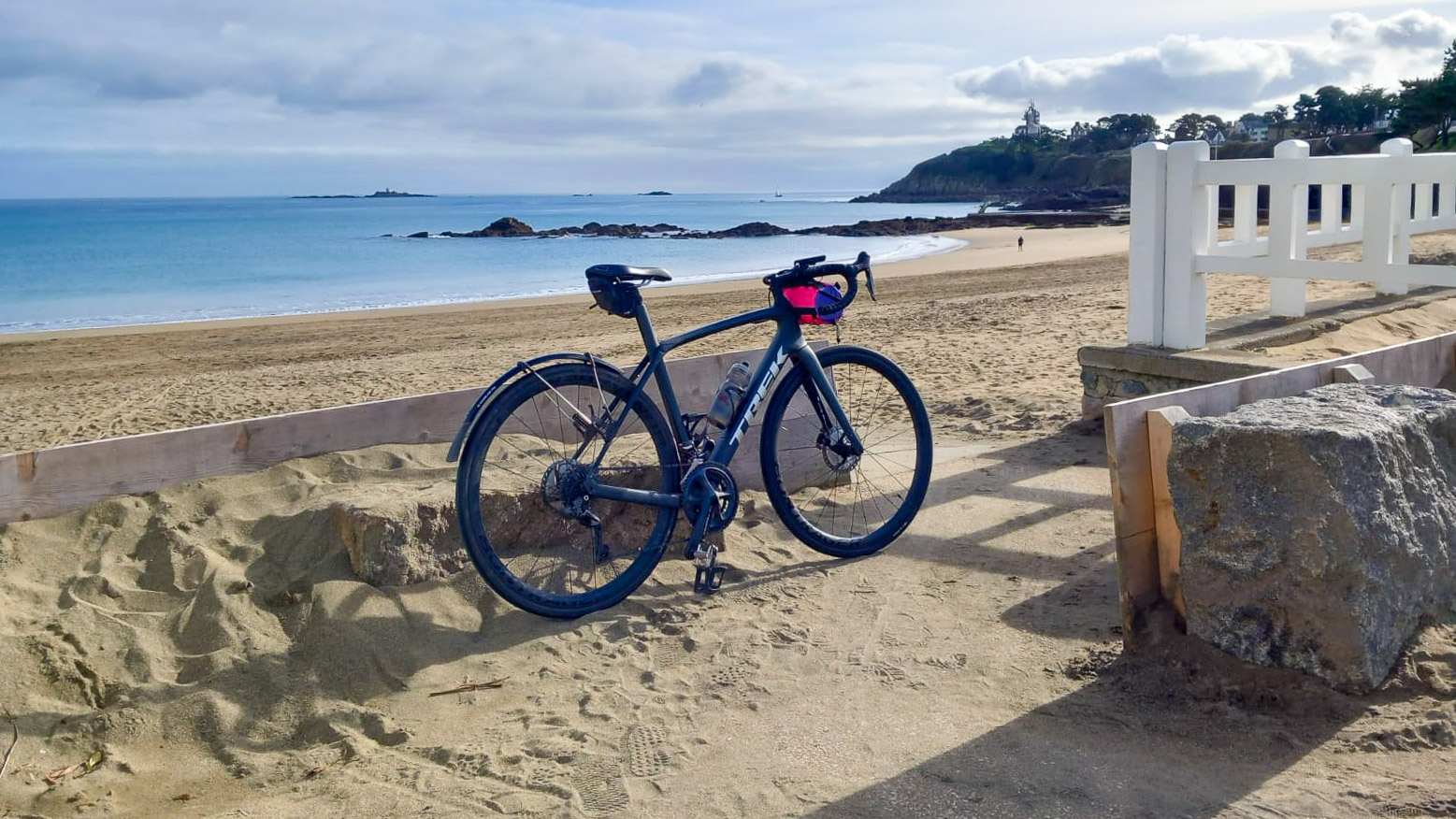
Bike with views of the Brittany coast in France (photo credit: Peak Tours)
What accommodation and bike storage can you expect?
Think about where you would like to stay after a day in the saddle. A hotel in the town centre makes it easier to explore and find somewhere for dinner. Check whether breakfast is available early enough for your planned start.
Your bike needs somewhere suitable overnight too. Ask whether you can keep it in a locked room or garage, and whether you need to bring a lock. If you ride an e-bike, check where you can charge the battery.
With Peak Tours
We usually choose good-quality three- and four-star accommodation with character. Breakfast and bike storage are important parts of our selection. The regional holidays include seven nights; the Channel versions include ten or fourteen, with the pre-riding arrival night treated separately.
Room prices depend on whether you share or have a room to yourself. Check the option you book rather than assuming that joining alone means a private room.
How do luggage transfers and day bags work?
Luggage transport means you can ride without carrying your suitcase, but your layers and spares still need a home. Keep anything you may need between stops on the bike. A day bag in a support van is useful only when you meet that van.
With Peak Tours
Guests can bring one large suitcase and a day bag. The day bag stays in the brew van for items they want during the day. Our guides transfer the main bags when we move hotels and aim to have them ready when guests arrive.
How are meals, drinks and dietary requirements handled?
Carry enough water and a few snacks to keep you going between stops. Check where you can refill your bottles, especially before a long climb or a stretch through rural countryside.
Plan your lunch stop before setting off. Check café and shop opening times, and take food with you if options are limited.
With Peak Tours
Breakfast, riding-day lunches and brew-van refreshments are included. The team organises the main stops, so you can concentrate on the ride. At the stops we provide hot drinks and snacks such as fruit, dried fruit and jelly babies. We ask guests to sanitise their hands before using the refreshment tables and try to include local specialities.
Lunch may be in a café or restaurant, with picnics on some European days. Our guests usually love the picnics. We organise group meals on selected evenings, leaving other nights free and suggesting places to eat. Evening meals and their drinks are paid separately.
Tell us your dietary needs so we can brief the places where we eat. Bring two water bottles and a few snacks if you like something to eat between stops. If choosing an alternative route, establish your lunch and refill plan with the guides first.
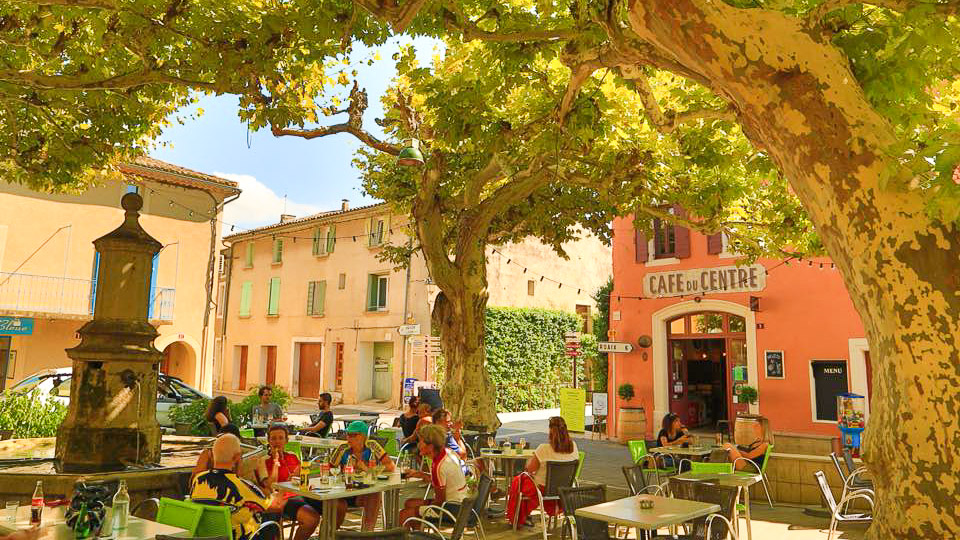
Enjoying a refreshment break at Café du Centre (photo credit: Peak Tours)
How will you reach the start and leave the finish?
Plan your journey to the start and home from the finish before booking your travel. On a route across France, you may arrive at one airport or station and leave from another.
Allow extra time if you are travelling with your bike. Changing trains or crossing a city takes longer with a bike bag and luggage. Check that any taxi or transfer has room for both.
If travelling by train, check the bike arrangements for every service on your route. You may need to reserve a bike space or pack your bike in a bag. SNCF’s bike-on-train guidance explains the options.
With Peak Tours
For some holidays, we arrange certain transfers between the tour accommodation and specified airports or stations. These vary by holiday, so check the joining instructions before booking your travel. You’ll still need to arrange your main journey to and from France.
The arrival points for our regional tours are:
- Alsace: Basel airport.
- French Alps: Geneva airport.
- Provence: Marseille airport.
- Dordogne: Bergerac airport or train station.
- Brittany: Saint-Malo. At the end of our Brittany tour, we arrange a transfer from Dinan back to Saint-Malo for your ferry or train journey home.
Check the meeting point and transfer times for your departure before booking travel. The Dordogne itinerary also lists a return transfer to Bordeaux via Bergerac. Confirm which option suits your journey home.
Our Channel to the Med tours start in Ouistreham and finish near Nice. You arrange your own travel to the start and home from the finish.
The price includes ten or fourteen nights, depending on your chosen tour. If you arrive in Ouistreham the day before cycling starts, you’ll need to book and pay for that extra night separately.

The green Petit Train Touristique de Colmar (photo credit: Peak Tours)
What should you know about riding on French roads?
Feel comfortable riding on the right and handling junctions and roundabouts before joining a road tour.
Make sure your bike is also equipped with a bell, as this is a legal requirement in France. Compact bells are available that take up very little space on your handlebars.
For mountain trips, think about descending as well as climbing. The equipment on your usual bike may also need checking against French rules. Read the current French cycling equipment requirements.
With Peak Tours
We provide a cycling guide to France and information about each day’s route. Our briefings explain points to look out for, and our tours require riders to wear helmets.
Will language be a problem?
Find out which language is used for briefings and who can help with a hotel or restaurant query.
A few French greetings can be useful to help make connections with locals when you stop independently, even where the tour team handles the main arrangements.

Cycling through Rocamadour in south-west France (photo credit: Peak Tours)
With Peak Tours
Guests do not need to speak French. We have a French-speaking guide on our French tours, who can help with translation and provide local information in the material sent out and the morning briefings.
What preparation and kit will you need?
Prepare for the tour you have chosen: its climbing, daily distance and consecutive days in the saddle. Pack layers you can use on a cold descent as well as in a warm valley. Test your bike and kit on training rides before taking them away.
With Peak Tours
We provide training guides and suggest starting at least three months ahead. We also offer Peak District training weekends as a separately booked service, so guests can check their fitness and experience how we operate.
We recommend packing a helmet, padded cycling shorts, cycling tops, waterproofs, warmer layers, gloves and casual clothes. Other useful items include:
- Your phone, chargers and a European plug adaptor.
- A navigation device if using one; we also provide route notes.
- Two spare inner tubes, tyre levers, a puncture kit and a suitable multitool.
- A spare derailleur hanger, or unusual brake pads that may be difficult to obtain.
- A day bag, water bottles and a working set of lights.
Have your bike serviced in time to ride it again before the holiday. Navigation-device hire is an optional service if you prefer a preloaded unit.
Load the route files before travelling and make sure you know how to follow them on your device. Take its charger and a backup way to read the route. For sightseeing days, pack shoes you can walk in comfortably; protruding road cleats make a long wander around town awkward.
For a more detailed checklist, see Epic Road Rides’ cycling holiday packing list, adapting it to the support and conditions on your trip.
How can you get the most from your guided cycling holiday?
Take your time and look around. Ride at your own pace; the holiday will be more enjoyable if you are comfortable with the effort you are making.
Enjoy the food and get to know people at the stops and in the evenings. The brew stops and shared lunches are part of the holiday, as well as a chance to refuel.
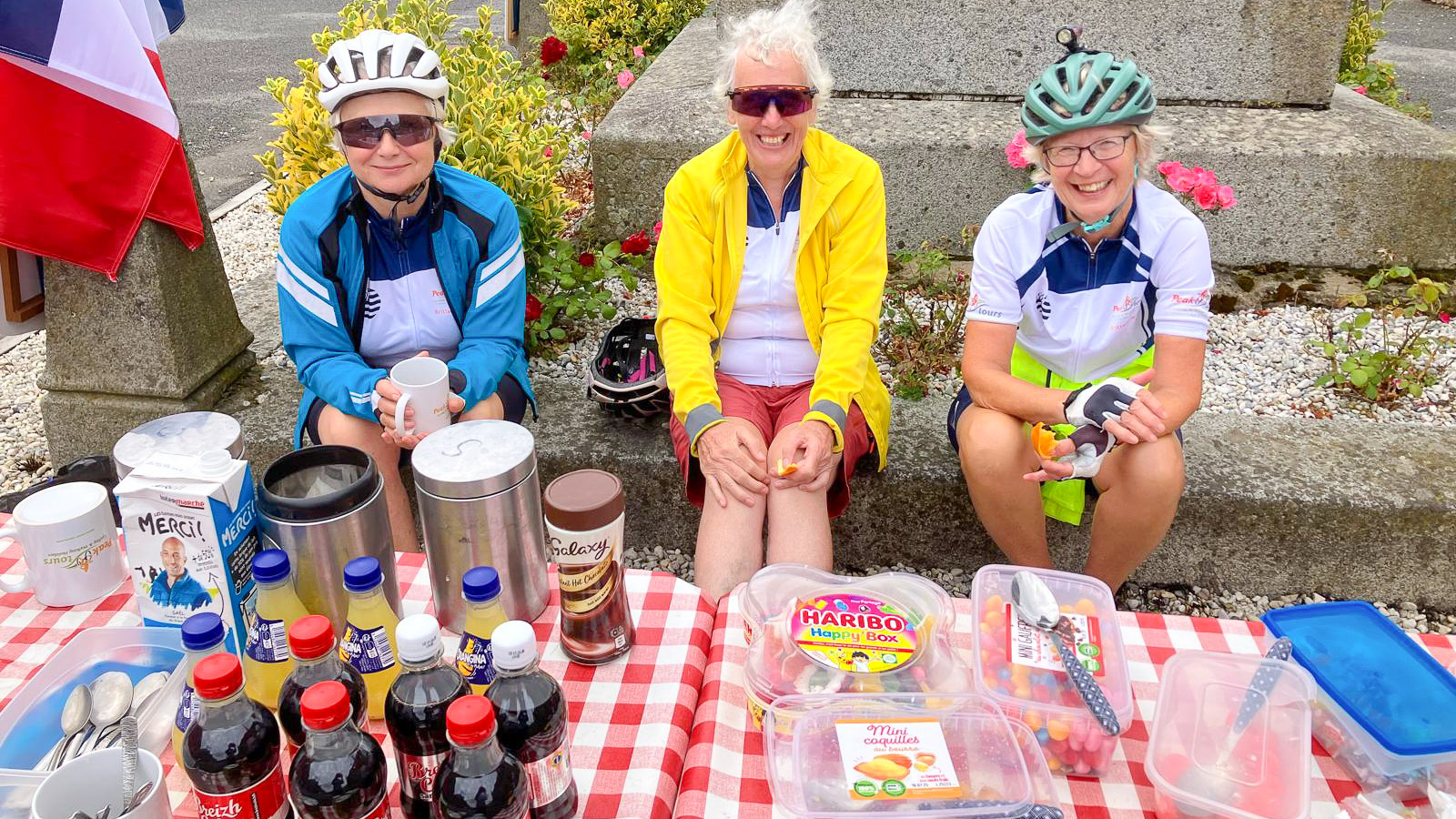
Enjoying a refreshment stop during a cycling holiday in Brittany (photo credit: Peak Tours)
Sponsor Message
Explore France by bike, with a team to support you
Planning a cycling holiday in France? Peak Tours offers guided bike tours for different abilities, from exploring the countryside and historic towns to tackling famous Tour de France climbs.
They'll take care of accommodation, luggage transfers, route planning and refreshments, with guides and mechanical support available throughout the trip.
Not sure which tour to choose? Use the form below to tell the team about your cycling experience, preferred routes and travel dates. They'll help you find a tour that suits your interests and ability.
Got a question for Steve from Peak Tours?
Fill out this form and we will pass it to Peak Tours who aim to reply (within 24 hours wherever they can!)
Part 5: What should you know about Peak Tours?
How did Peak Tours begin?
I set up Peak Tours in 2005 and still oversee the tours and research new routes, alongside managing the staff and business.
We are based in Hadfield near Glossop, on the edge of the Peak District, and organise guided, supported cycling holidays in the UK and Europe. Our French holidays include both regional trips and the longer Channel to the Med journey.
How does Peak Tours design and check its routes?
We start with research, then look at roads on Street View. We usually make the first reconnaissance by car so we can change the route easily. We then ride it to check the route notes and GPX files.
We consider traffic, surfaces and scenery alongside places to stop, accommodation, climbs and daily distance. The routes are checked each year and reviewed as they are ridden. Guides report changes that may be needed; if there is a closure, we reroute and update the group through WhatsApp.
What makes the Peak Tours experience distinctive?
The brew stops, lunches and evening meals give guests time to get to know one another. Because people ride at their own pace, smaller groups form naturally and guests meet others with similar riding preferences.
People often leave having made lasting friends, and some book future tours together. Around 85% of our bookings are from returning customers. We want a relaxed, friendly atmosphere, with guides who are approachable, helpful and bring a personal touch to each tour.
Guests also receive a Peak Tours cycle shirt and a completion certificate. Massage is offered on a few tours as an additional service; check whether it is available on the French tour you are considering.

Enjoying a refreshment stop during a cycling holiday (photo credit: Peak Tours)
How can you find out more or enquire about a holiday?
Explore our guided bike tours in France to find a holiday that suits your riding. You can compare routes, daily distances and climbing, check departure dates and read the detailed trip notes.
We’d love to welcome you on a tour. If you’re unsure which one to choose, tell us about your usual rides, preferred dates and who you’ll be travelling with. We’ll help you find a suitable option.
Contact Peak Tours to enquire about availability and booking. Share your preferred dates, route, group size and usual riding distances so the team can discuss the best options for you.
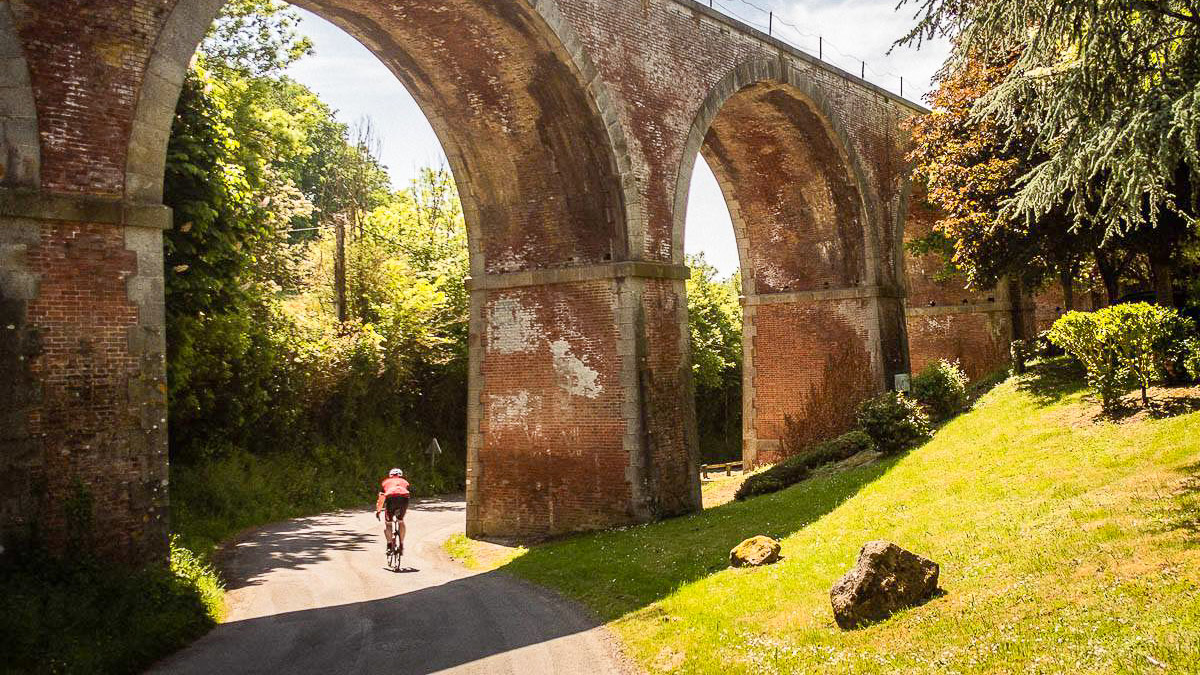
Cycling beneath the Mesnil-Villement Viaduct along the Vélo Francette route in Normandy (photo credit: Peak Tours)
Sponsor Message
Explore France by bike, with a team to support you
Planning a cycling holiday in France? Peak Tours offers guided bike tours for different abilities, from exploring the countryside and historic towns to tackling famous Tour de France climbs.
They'll take care of accommodation, luggage transfers, route planning and refreshments, with guides and mechanical support available throughout the trip.
Not sure which tour to choose? Use the form below to tell the team about your cycling experience, preferred routes and travel dates. They'll help you find a tour that suits your interests and ability.
Got a question for Steve from Peak Tours?
Fill out this form and we will pass it to Peak Tours who aim to reply (within 24 hours wherever they can!)
What’s next?
Big thanks to Steve for sharing his insights into guided cycling holidays in France and what makes each of Peak Tours’ routes different. We hope this guide has helped you find a suitable tour and provided a source of inspiration for your next cycling adventure.
Have you cycled any of these routes, or do you have a favourite cycling route in France? Let us know in the comments below!
Looking for more inspiration for your next cycling holiday in France? Don’t miss our other articles:
- Guide to the ViaRhôna cycle route
- Guide to cycling Mont Ventoux and Provence
- Guide to cycling Corsica
- Cycling the Loire Valley
- Easy cycling holidays in France
Got a question for Peak Tours?
Fill out this form and we will pass it to Peak Tours who aim to reply (within 24 hours wherever they can!)
Got a question for Steve?
Fill out this form and we will send it to Steve. We aim to get you an answer within 24 hours where possible!Steve is the founder of Peak Tours. He is based in Hadfield, near Glossop, on the edge of the Peak District National Park between Manchester and Sheffield. He oversees Peak Tours’ holidays, researches new routes and manages the team and business.
In 2004, Steve completed a self-funded, self-supported cycle journey around the world through Europe, Russia, Kazakhstan, China and the USA. He later led tours for Explore Worldwide in India, Bulgaria, Ukraine, Turkey, Macedonia, Greece, Finland and China. Steve set up Peak Tours in 2006.
First Published: 09 November 2026
The contents of this website are provided for general information purposes only. It is not intended to amount to advice and you should not rely on it. You should carry out your own due diligence and risk assessments and take professional advice. Views expressed by interviewees or other users of this website do not necessarily represent our views. We make no representations, warranties or guarantees, whether express or implied, that the content on our website is accurate, complete or up to date. If you use any information or content on this website, download from, or otherwise obtain content or services through our website, it is entirely at your own discretion and risk. Epic Road Rides Ltd disclaims all liability and responsibility arising from any reliance placed on the information and content on this website. Find out more here.
Sponsor Message
Explore France by bike, with a team to support you
Planning a cycling holiday in France? Peak Tours offers guided bike tours for different abilities, from exploring the countryside and historic towns to tackling famous Tour de France climbs.
They'll take care of accommodation, luggage transfers, route planning and refreshments, with guides and mechanical support available throughout the trip.
Not sure which tour to choose? Use the form below to tell the team about your cycling experience, preferred routes and travel dates. They'll help you find a tour that suits your interests and ability.
Got a question for Steve from Peak Tours?
Fill out this form and we will pass it to Peak Tours who aim to reply (within 24 hours wherever they can!)
Comments