



Looking for the best Flanders cycling routes? You’re in the right place!
Belgium’s love affair with cycling is legendary, and at its heart is the region of Flanders. It’s a region steeped in cycling heritage, made famous by icons such as Eddy Merckx, Sven Nys and Remco Evenepoel.
Today, several dedicated cycling routes allow riders to follow in their tyre tracks and ride the terrain that shaped these revered cycling pros! This includes:
- Sven Nys cycling route, launched in 2017 and revamped in 2025
- Eddy Merckx cycling route, launched in 2017 and revamped in 2025
- R.EV 1703 cycling route, launched in 2021
To find out all about these routes, VISITFLANDERS kindly put us in touch with Pieter Geens, the route designer at the Sven Nys Cycling Center in Baal, Belgium. Pieter has played a key role in creating and curating Belgium cycling routes that showcase the country’s landscapes and its deep cultural connection to the sport.
Let’s dive in to discover Pieter’s insider tips…

Pieter is the route designer at the Sven Nys Cycling Center in Baal (Belgium) and works at the home of former cyclocross legend Sven Nys.
The centre is the hub for off-road cycling, featuring a cyclocross track, expo, bike rental, shop and restaurant. It is a dream role for Pieter, as outside of work he can often be found on his road, gravel or mountain bike, exploring new routes or clocking up miles on his favourite climbs and gravel sections.
Beyond ensuring the facilities at the centre are running smoothly, Pieter has a passion for designing new routes for visitors. He is dedicated to offering options for every type of cyclist, from beginners to seasoned riders, solo adventurers to groups, and across road, gravel and mountain bike terrain.
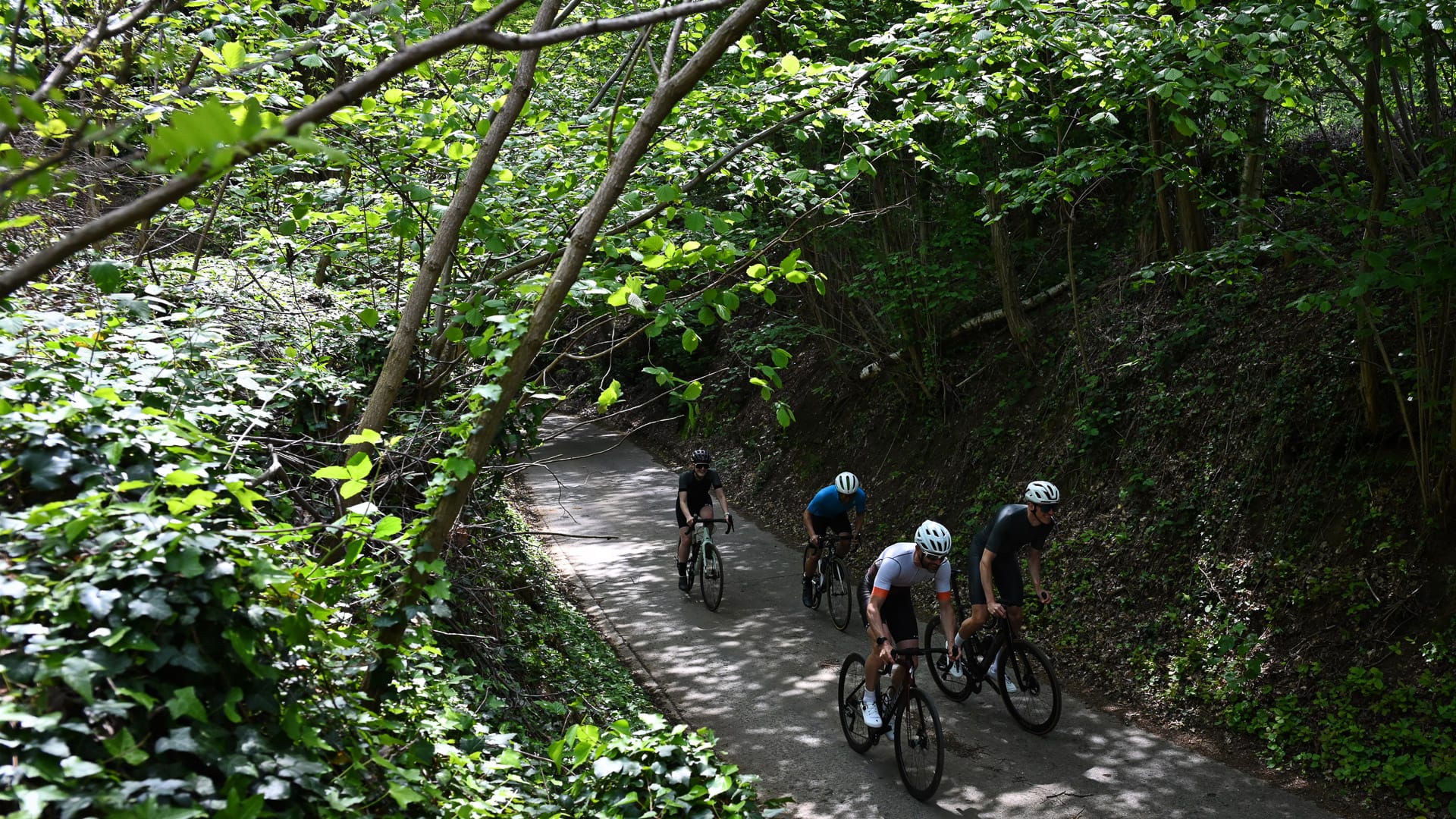
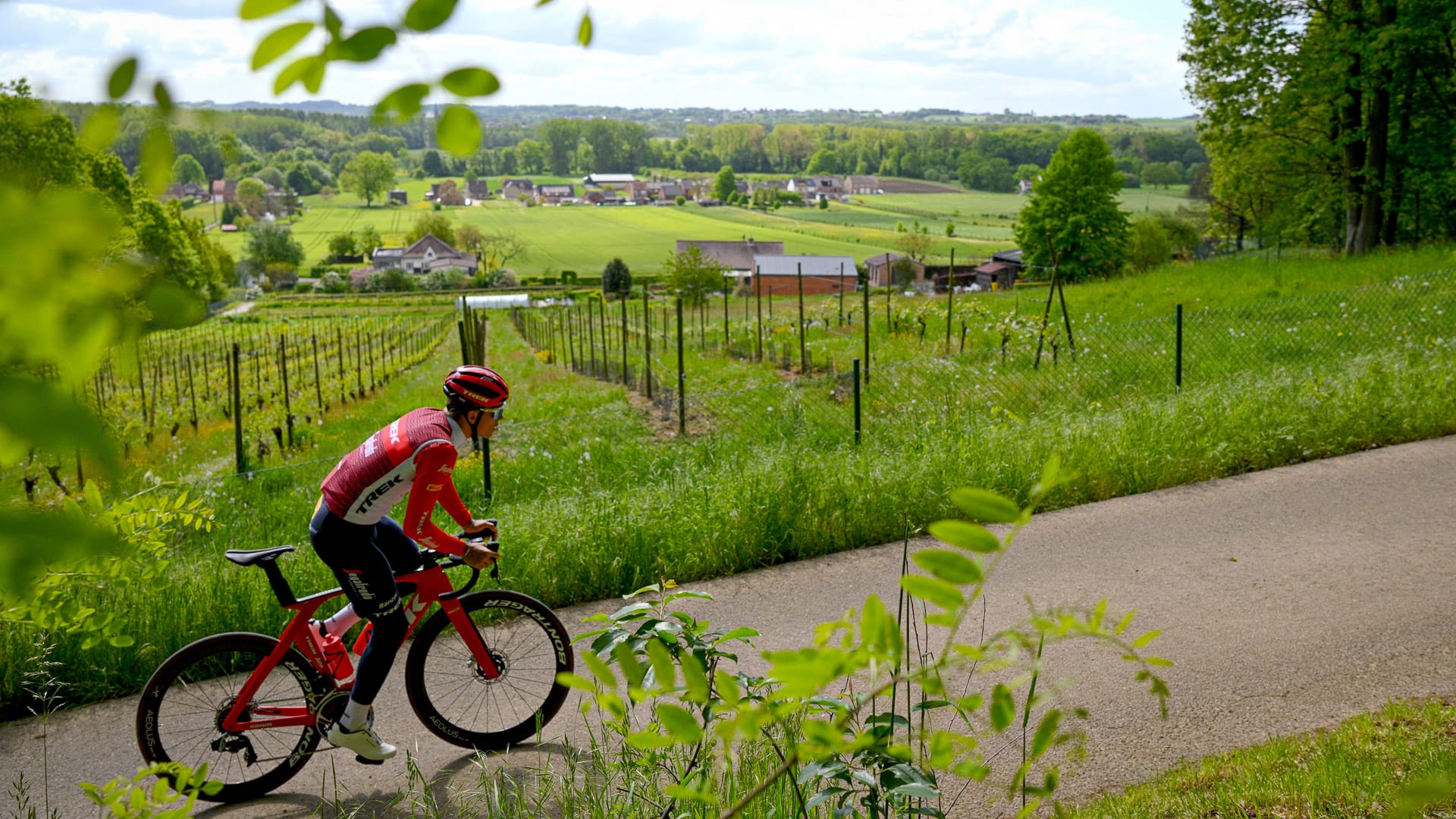
Pieter is also the designer of the Sven Nys Cycling Route, which was personally approved by Sven Nys himself. His aim was to create a route showcasing the diverse landscapes of the Flemish Brabant region, forests, climbs, sunken lanes, cobbles, vineyards, fruit orchards and even cycling street art. The result is a ride that highlights why Flemish Brabant is such a fantastic cycling destination.
 There's a Youtube video here!
I'm fine with Youtube cookies
Table of contents
To try and make this more digestible, the article is broken up into three parts:
- Part 1: Why are these Flanders cycling routes special?: Reasons to try these routes and why we think you will love them.
- Part 2: Three of the best Flanders cycling routes: Information on each of the three cycling routes (Eddy Merckx cycling route, Sven Nys cycling route and R.EV 1703 cycling route), including GPX files and highlights.
- Part 3: Things to know when planning your Flanders cycling routes: Delving into the practical side of what to expect, plus handy tips.
Part 1: Why are these Flanders cycling routes special?
The Flanders cycling routes featured in this article are all located in the Vlaams-Brabant province of Flanders and offer some of the region’s finest journeys through the heart of Belgian cycling culture.
By riding these themed cycle routes, you’re tracing the footsteps – or rather, tyre tracks – of cycling history! More on that below.
Discover a region steeped in cycling culture
Belgium is cycling-mad, and the Vlaams-Brabant region of Flanders is at the core of it.
The province of Vlaams-Brabant lies in the heart of Flanders, encircling Belgium’s capital Brussels, with Leuven as its main hub and other key cycling hubs including Tremelo, Meensel-Kiezegem and Schepdaal. The town of Oudenaarde lies further west, in East Flanders, at the foot of the Flemish Ardennes.
Riding here means soaking up the same landscapes where legends trained and raced.
The routes connect with Flanders’ living cycling heritage, cobbles, climbs and iconic backdrops that feature in the region’s biggest races.
Top tip! Given the relatively small size of the region, it is possible to tick off all the Flanders cycling routes in one long weekend. You just need a car to enable you to easily access the start of each route. More on this below.
See the map below to see where some of the key places mentioned in this article are located. Hover over the map pins to see the names of places.
Tracing the tyre tracks of legends
Eddy Merckx, Sven Nys, and Remco Evenepoel each represent a different era of Belgian cycling greatness.
- Merckx, the legendary “Cannibal,” dominated world cycling in the 1960s and ’70s, becoming a national hero through his Tour de France victories and Classics wins. Find out more about the Merckx cycling route below.
- Sven Nys, the undisputed king of cyclo-cross, inspired generations of Flemish fans with his consistency and technical brilliance. Find out more about the Sven Nys cycling route below.
- Today, Remco Evenepoel carries the torch for modern Belgian cycling, winning Grand Tours and a World Championship while reigniting international excitement. Find out more about the R.EV 1703 cycling route below.
Together, these three icons embody Belgium’s deep-rooted passion for cycling. The three cycling routes honour their legacies, inviting riders to explore the landscapes that shaped their careers.
Scenic routes of varied length
Vlaams-Brabant offers a surprising range of cycling experiences within a relatively small province.
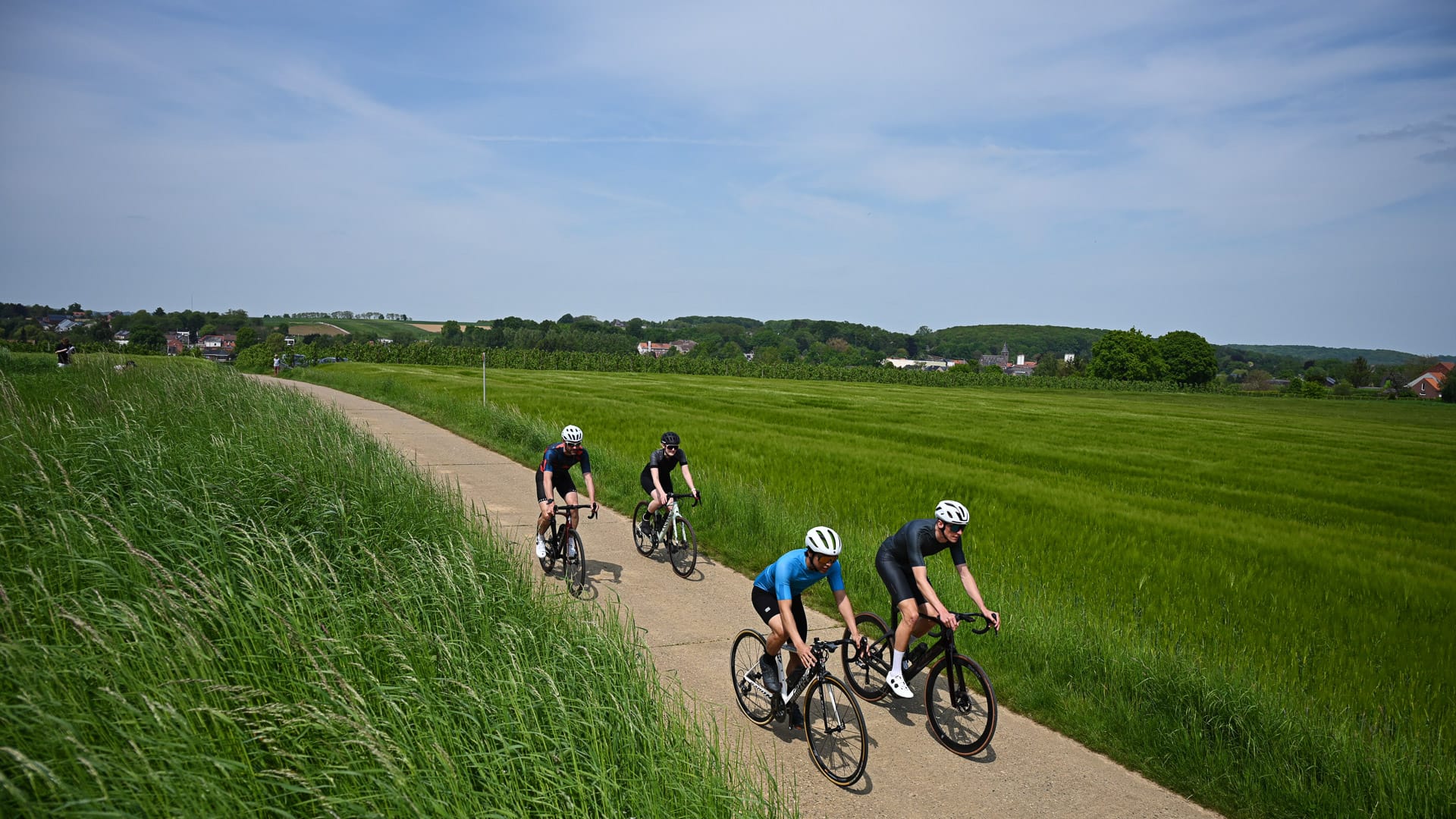
For example, the Sven Nys and Merckx routes incorporate the gently rolling hills of the Hageland, perfect for scenic road rides and steady training.
Importantly, all the featured routes in this article also have shorter versions available, some of which are suitable for families. For example, the 95-kilometre R.EV1703 cycling route can also be tackled as a 25-kilometre version. See more information about this below.
Great food, drink and cultural stop-offs
Cycling in Flanders is about more than just riding! Along the way, you’ll encounter vineyards, abbeys, castles and breweries, ideal for mid-ride refreshment or a well-earned post-ride treat. Highlights include:
- Famous for its cycling heritage, the Flemish town of Geraardsbergen is equally renowned for a small pastry known as the mattentaart. Steeped in history, it remains a unifying source of pride and is prominently featured on signs, in shops, and in local conversation.
- Speciality cycling beers: did you know that some beers are named and drunk in many cycling cafes? A well-known one is Kwaremont, a Flemish beer named after the Oude Kwaremont, a famous climb in cycling’s Tour of Flanders. But speciality cafes along the routes are numerous, and this is a popular one to quench the thirst of many a cyclist!
- The town of Oudenaarde, close to all the routes, has a rich history. It grew prosperous in the Middle Ages as a centre of tapestry weaving and cloth production, exporting luxury works across Europe. In the 16th century, it became known for its richly decorated town hall and for silver craftsmanship. Today, some of the town’s wealth and fame are shown at its fascinating museum MOU. Visitors can explore Oudenaarde’s history through its impressive tapestries, silver and Flemish art.
This blend of cycling, culture, and cuisine makes the experience uniquely Flemish – and fun!
Looking for a flavour of what to expect? Take a look at this video:
Video credit: VISITFLANDERS
Part 2: Three of the best Flanders cycling routes
Each of these three routes is located in the province of Vlaams-Brabant, Belgium, near the cities of Brussels and Leuven. See below a map of the three featured Flanders cycling routes.
Sven Nys cycling route
Best for: Cyclists wanting a mix of Hageland hills, punchy short climbs, and Sven Nys’s own training terrain.
Key statistics
107 kilometres
897 metres of elevation gain
Start/ finish
Sven Nys Cycling Center, Tremelo
Getting to the start
Easiest by car. Free parking is available at the Sven Nys Cycling Center.
Duration
Approximately 4-5 hours, depending on your fitness level.
Navigation
The route is well signposted, usually tackled clockwise.
Surfaces
Mainly asphalt roads, with some short stretches on cobbles (approx. 1.3 kilometres) and gravel tracks (approx. 1.8 kilometres).
Overview of the route
The Sven Nys cycling route is a scenic 107-kilometre loop through the rolling Hageland hills of Flemish Brabant. It was designed by cyclo-cross legend Sven Nys as his go-to training ride.
Starting and finishing at the Sven Nys Cycling Center in Tremelo, Sven’s home town, the route takes place mostly on smooth paved roads with just a few cobbled and gravel stretches. This makes it ideal for experienced riders looking for a sustained challenge without many technical off-road sections.
Along the way, cyclists weave past orchards, vineyards and villages that are full of character. See more highlights below.
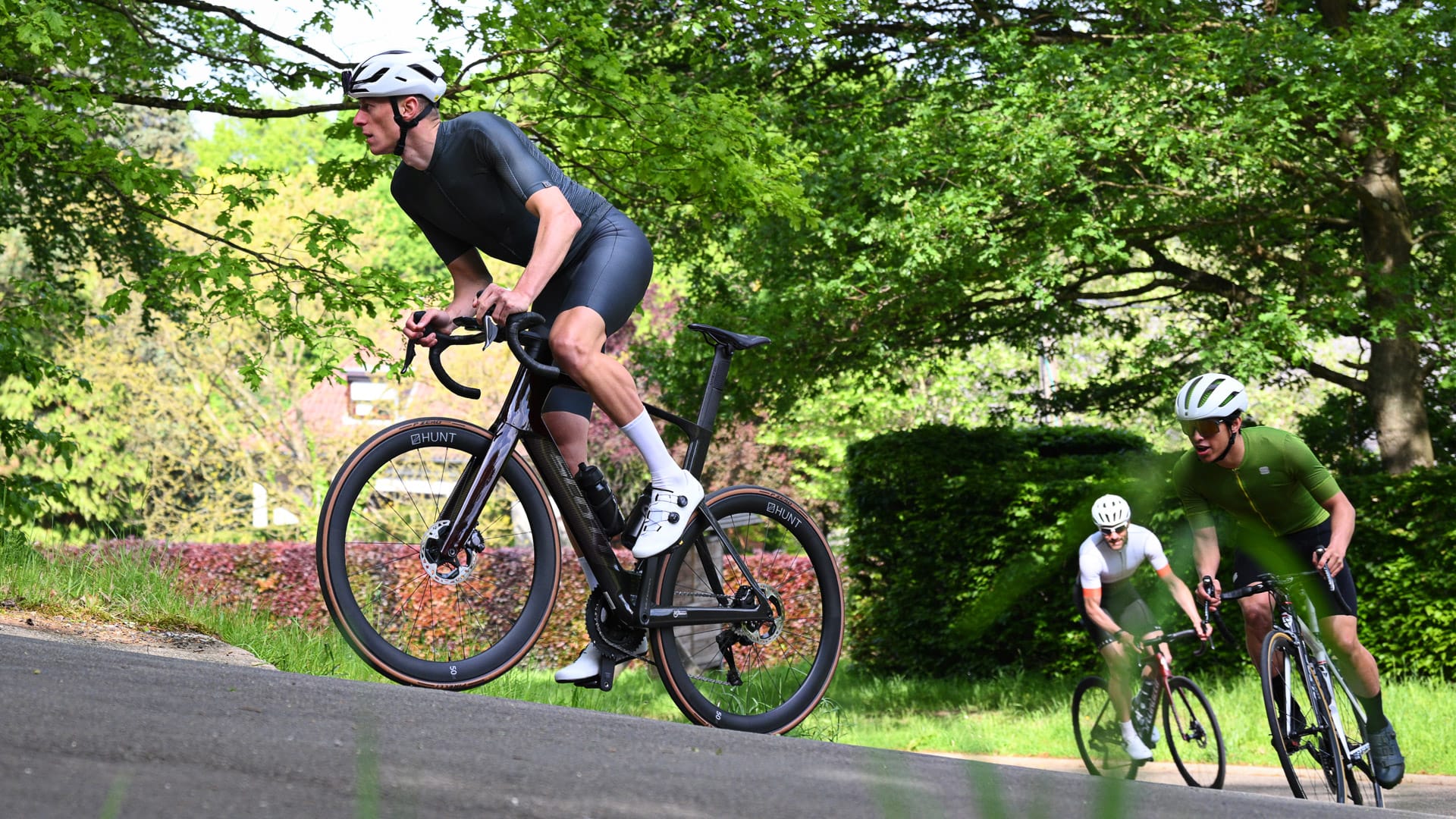
The climbing is punchy rather than long, with short ascents such as Panoramalaan in Wezemaal (0.5 kilometres and 34 metres of elevation gain) and the Chartreuzenberg near Holsbeek (0.73 kilometres and 41 metres of elevation gain), plus sharp ramps on Walebroekstraat and Kerkstraat.
Back at the Sven Nys Cycling Center, you’ll find exhibitions, a café, bike hire, showers, a shop and even views of the on-site cyclo-cross course; it’s a great place for both pre-ride preparation and post-ride recovery. The result is a route that blends sport, scenery and heritage in the very landscape that shaped Sven’s career.
Highlights
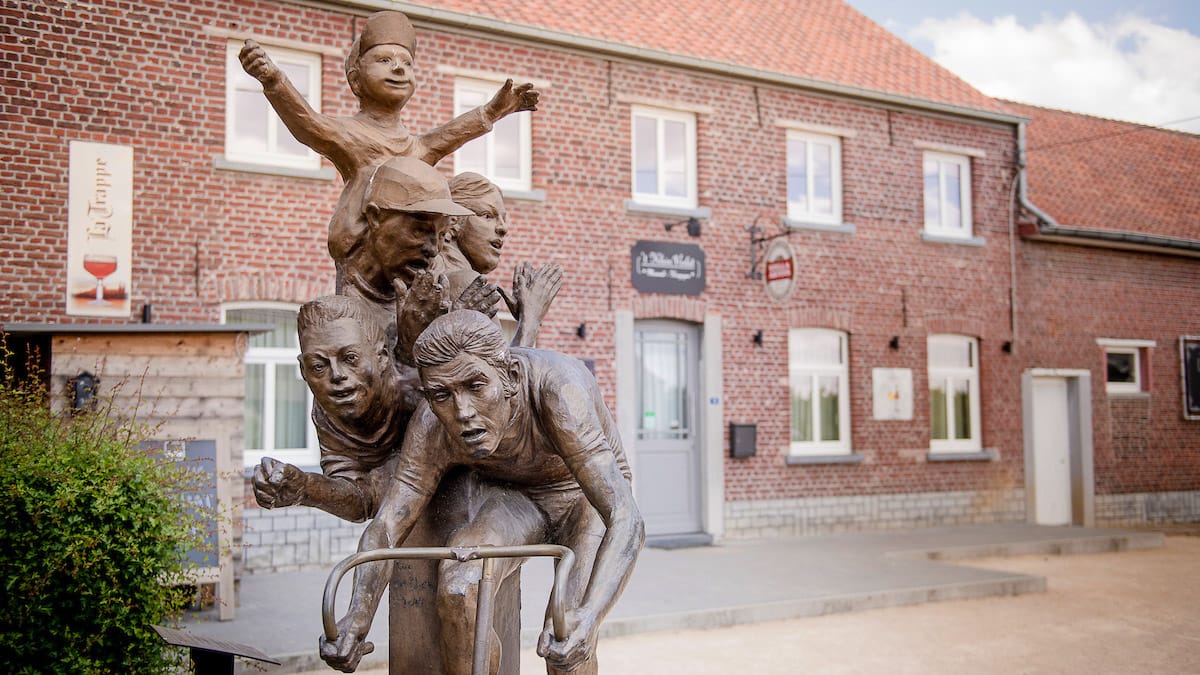
- Eddy Merckx statue: A bronze tribute in Meensel-Kiezegem to another of Belgium’s greatest cyclists, the legendary “Cannibal.”
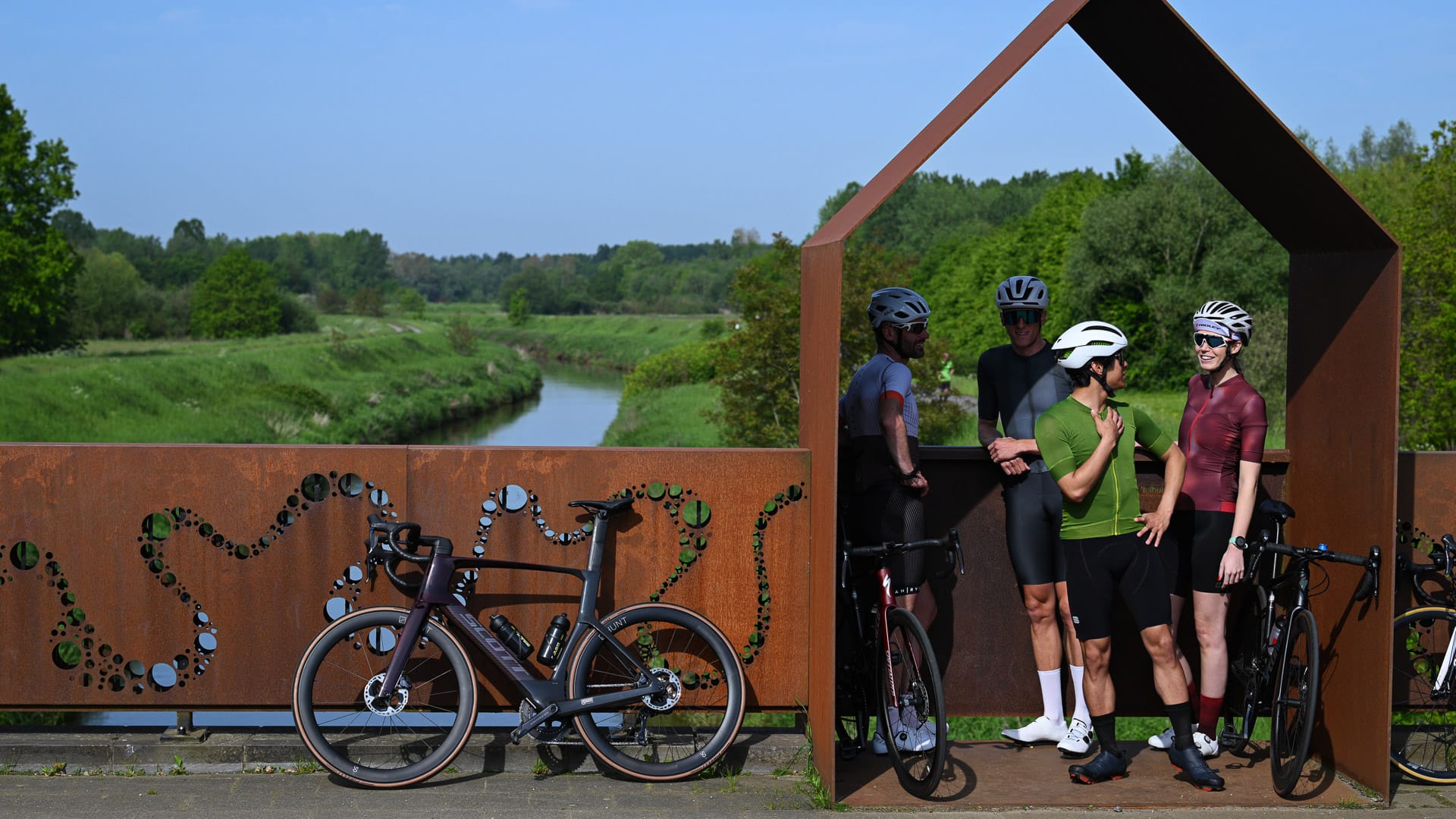
- Hageland Wine Visitor Center: Showcasing one of Belgium’s oldest wine regions with exhibits and tastings of tasty local wines.
- Horst Castle: A 14th-century castle with a moat, famed as the home of Flemish comic hero “The Red Knight” and set within tranquil countryside.
- Vlooybergtoren viewpoint: A striking steel skywalk offering panoramic views over the Hageland’s rolling vineyards and orchards.
More information
For further details about the Sven Nys cycling route, take a look at this website.
Looking for a shorter version of this route that is suitable for families? Take a look at this website for details about the 46-kilometre Sven Nys route here.
Eddy Merckx cycling route
Best for: Riders who want a road loop that is rich in Merckx history and packed with seasonal landscapes.
Key statistics
148 kilometres
1,129 metres of elevation gain
Start/ finish
Café Boerenhof, Binkomstraat 12, 3391 Tielt-Winge
Getting to the start
Easiest by car. Free parking is available at Café Boerenhof.
Duration
Approximately 6 hours, depending on your level of fitness.
Navigation
The route is signposted.
Surfaces
Entirely on paved, low-traffic country roads.
Overview of the route
Starting and finishing at Café Boerenhof in Tielt-Winge, this Flanders cycling route offers experienced riders a steady but rewarding challenge, with over 1,100 metres of climbing spread across a series of short, punchy hills. A shorter 75-kilometre version is also available for those looking for a more moderate day in the saddle.
The route leads through Meensel-Kiezegem, Merckx’s birthplace, where a statue and colourful mural mark his legacy, before winding into the Hageland with its patchwork of vineyards, orchards, forested stretches and open plateaus. It immerses riders in the tranquillity of the Flemish countryside.
Signature climbs include the vineyard-lined Wijngaardberg near Houwaart, the gradual Strostraat near Ransberg, and the sharp Pinoutsstraat in Pellenberg, which rears up to 12% after the 120-kilometre mark.
Be aware! While there are no long alpine ascents or cobbled bergs (a berg is a short, steep climb) on this route, the constant undulation, especially beyond 100 kilometres, makes this feel like a demanding ride.
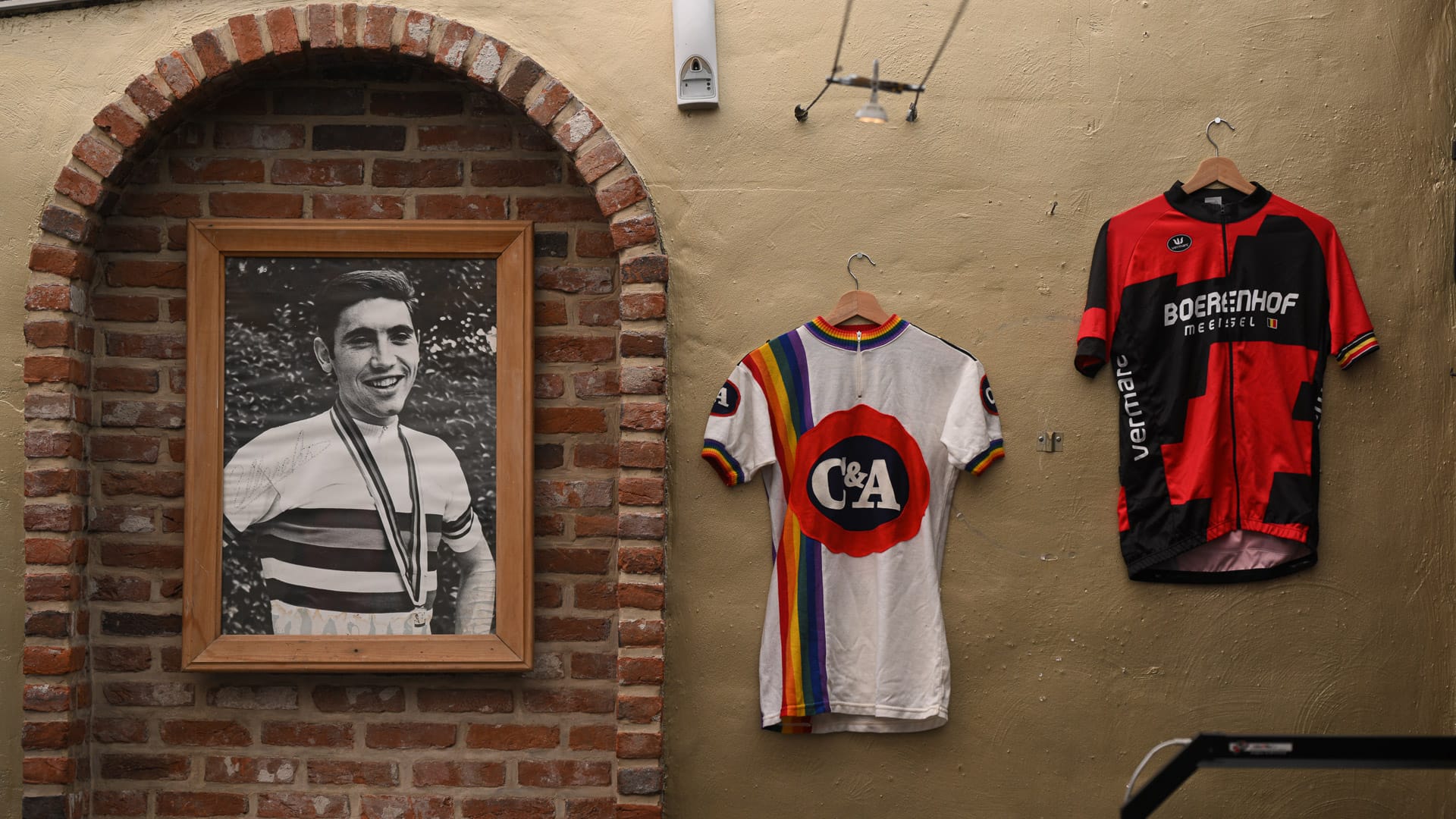
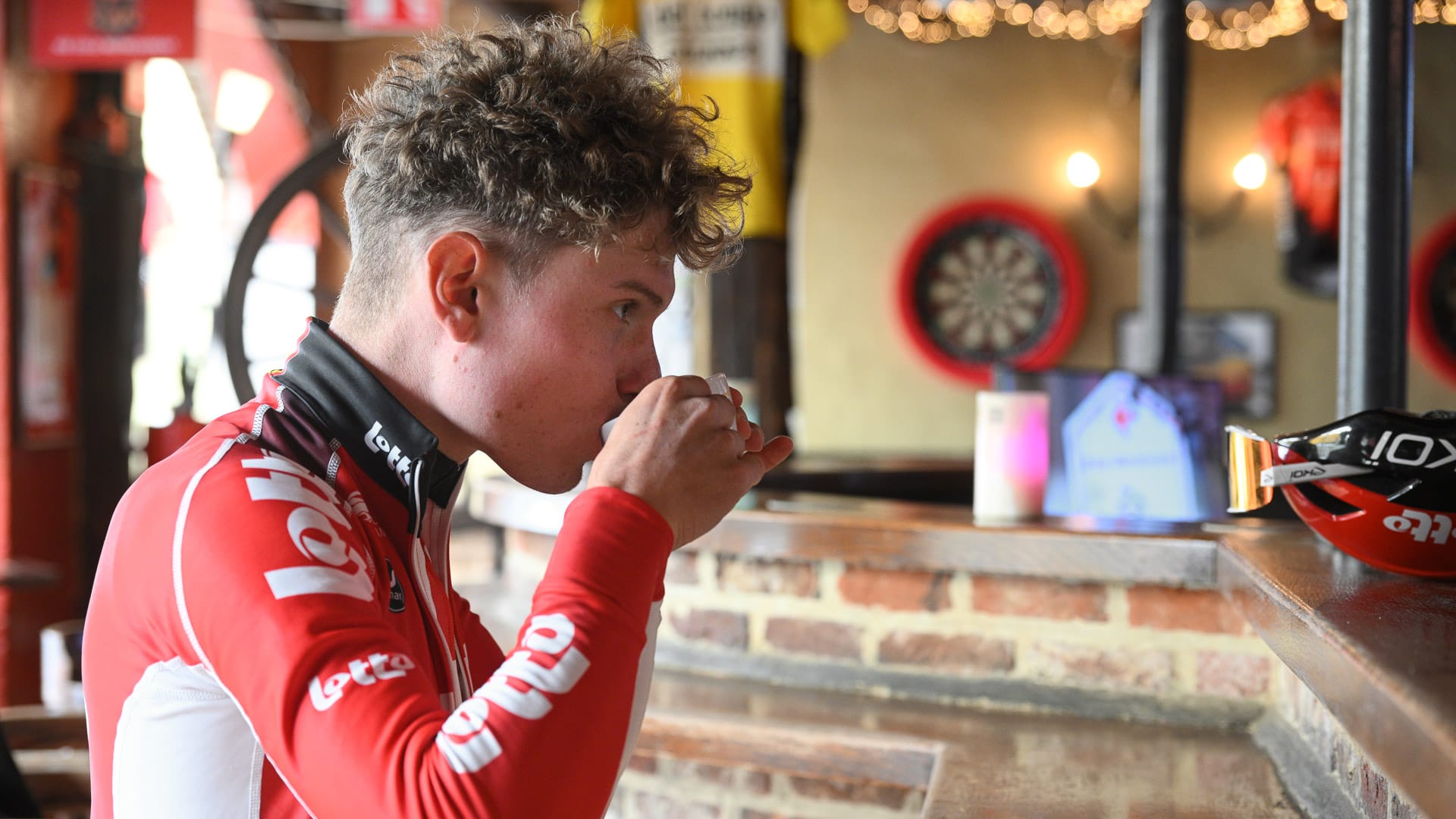
The ride ends back at Café Boerenhof, a lovely spot for a post-ride drink surrounded by rare Merckx photos and jerseys. Facilities en route are modest but sufficient, with a handful of cafés and shops.
Highlights
- Café Boerenhof: The official start of the route is located at a welcoming café that displays unique Eddy Merckx memorabilia, including rare photos and vintage jerseys. It’s the perfect spot for cyclists to fuel up, soak in cycling history, and chat with fellow riders.
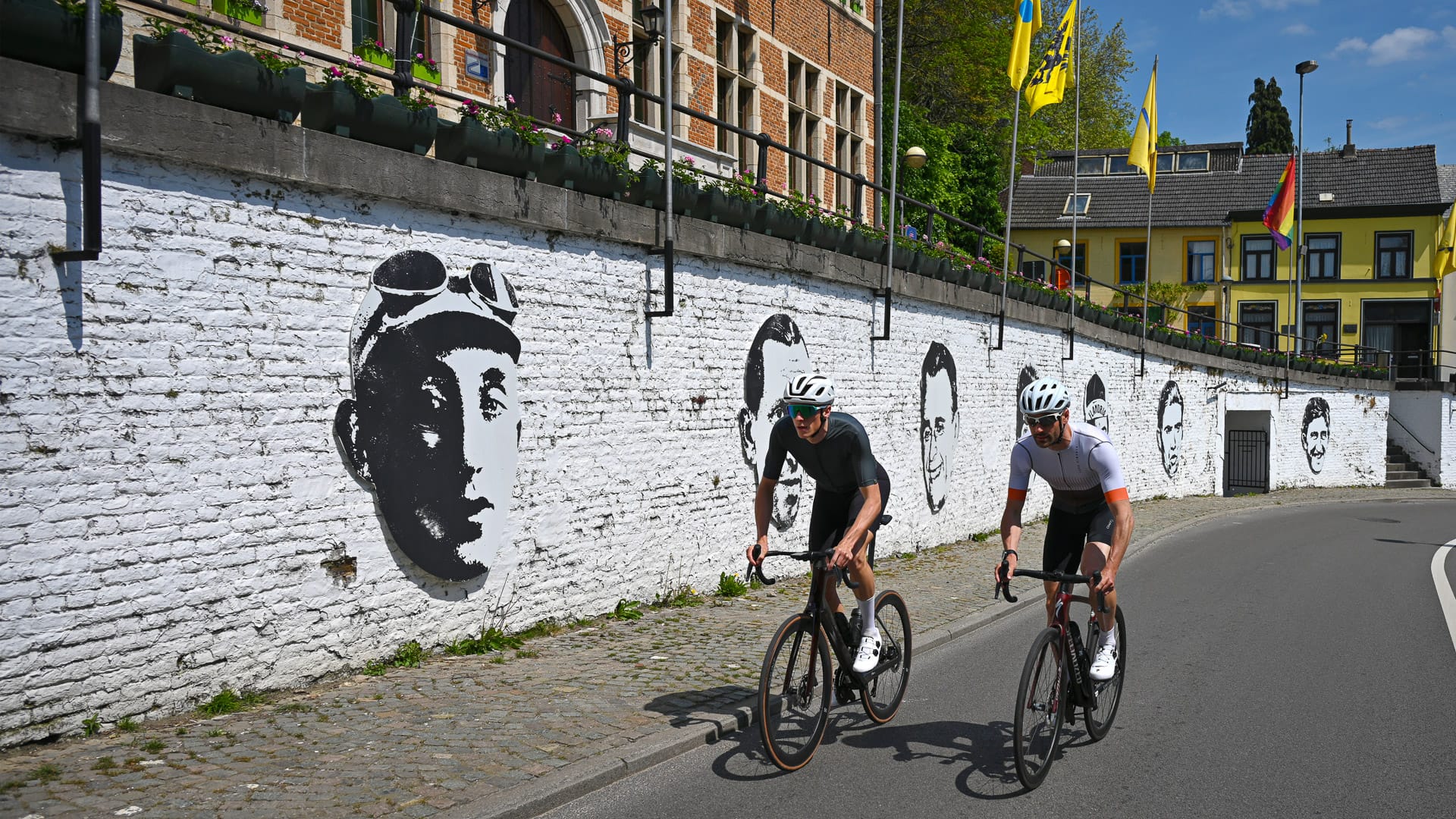
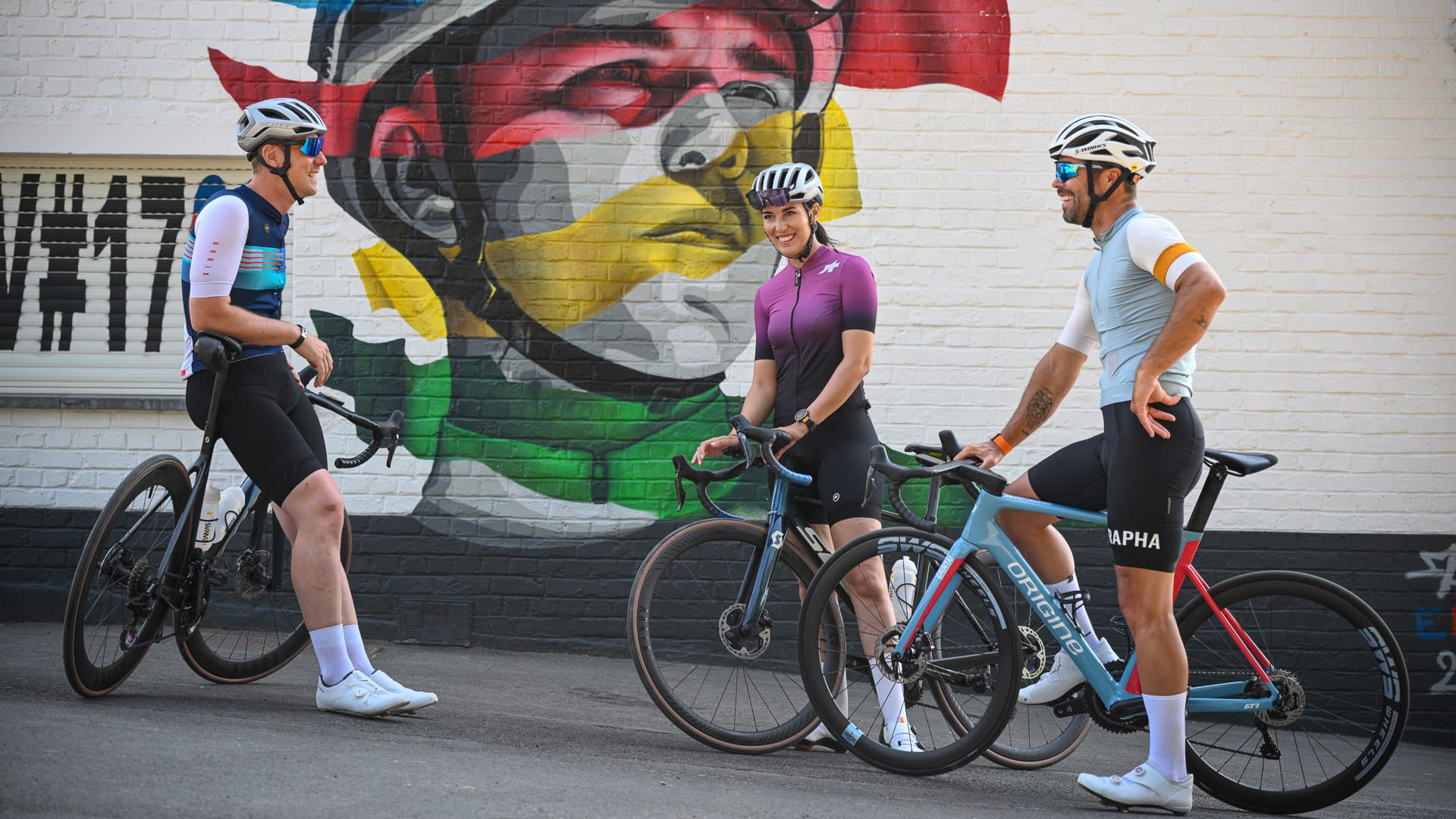
- Eddy Merckx statue and street art, Meensel-Kiezegem: Right beside Merckx’s birthplace, a bronze statue and vibrant mural celebrate Belgium’s greatest cyclist. Riders can pause here to reflect on his legacy and capture a photo before continuing their journey.
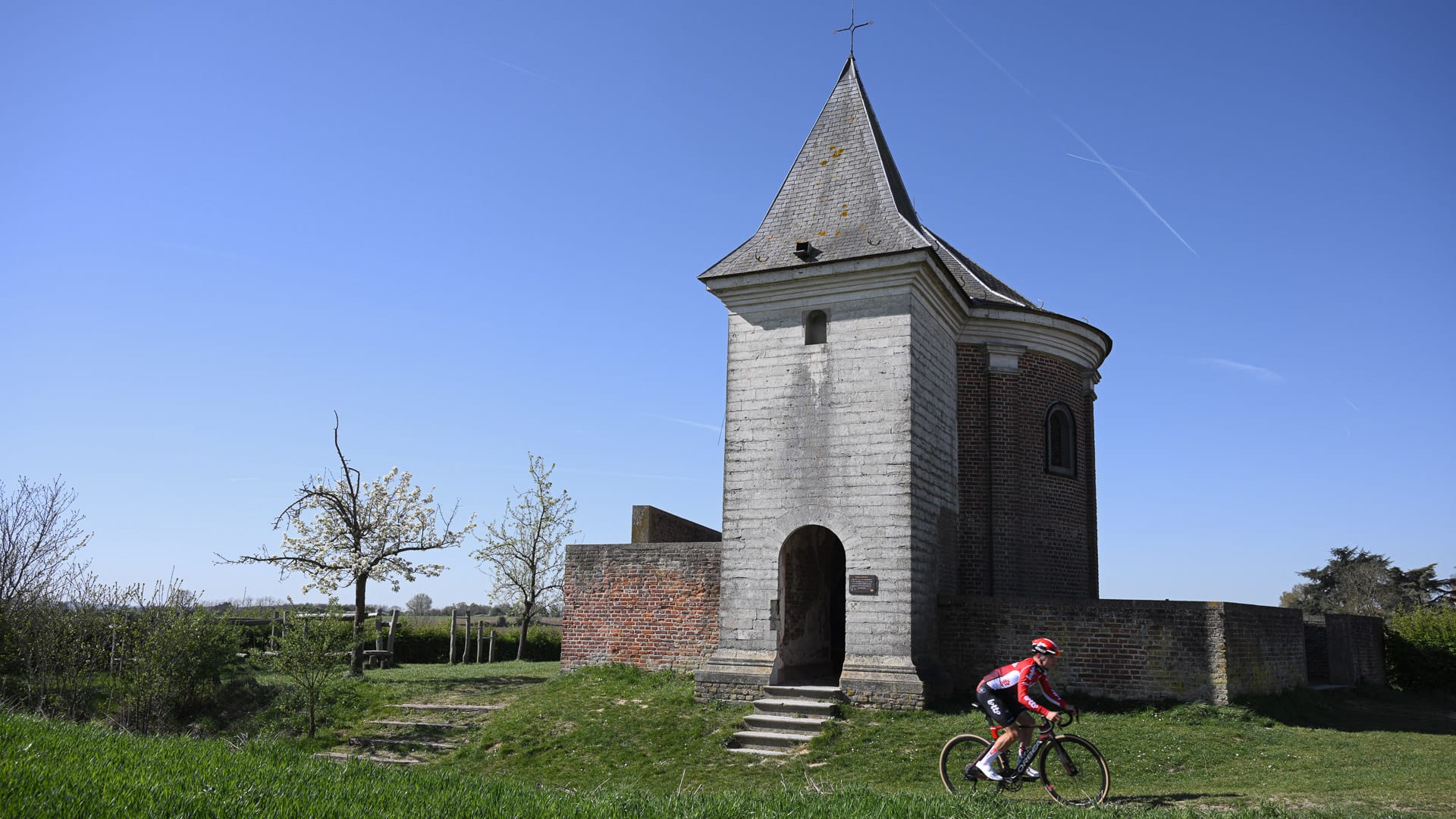
- Marollen Chapel, Hoegaarden: Tucked away on a quiet hilltop, this charming white chapel offers a peaceful pit stop after climbing to reach it. Cyclists are rewarded with sweeping views of the surrounding countryside.
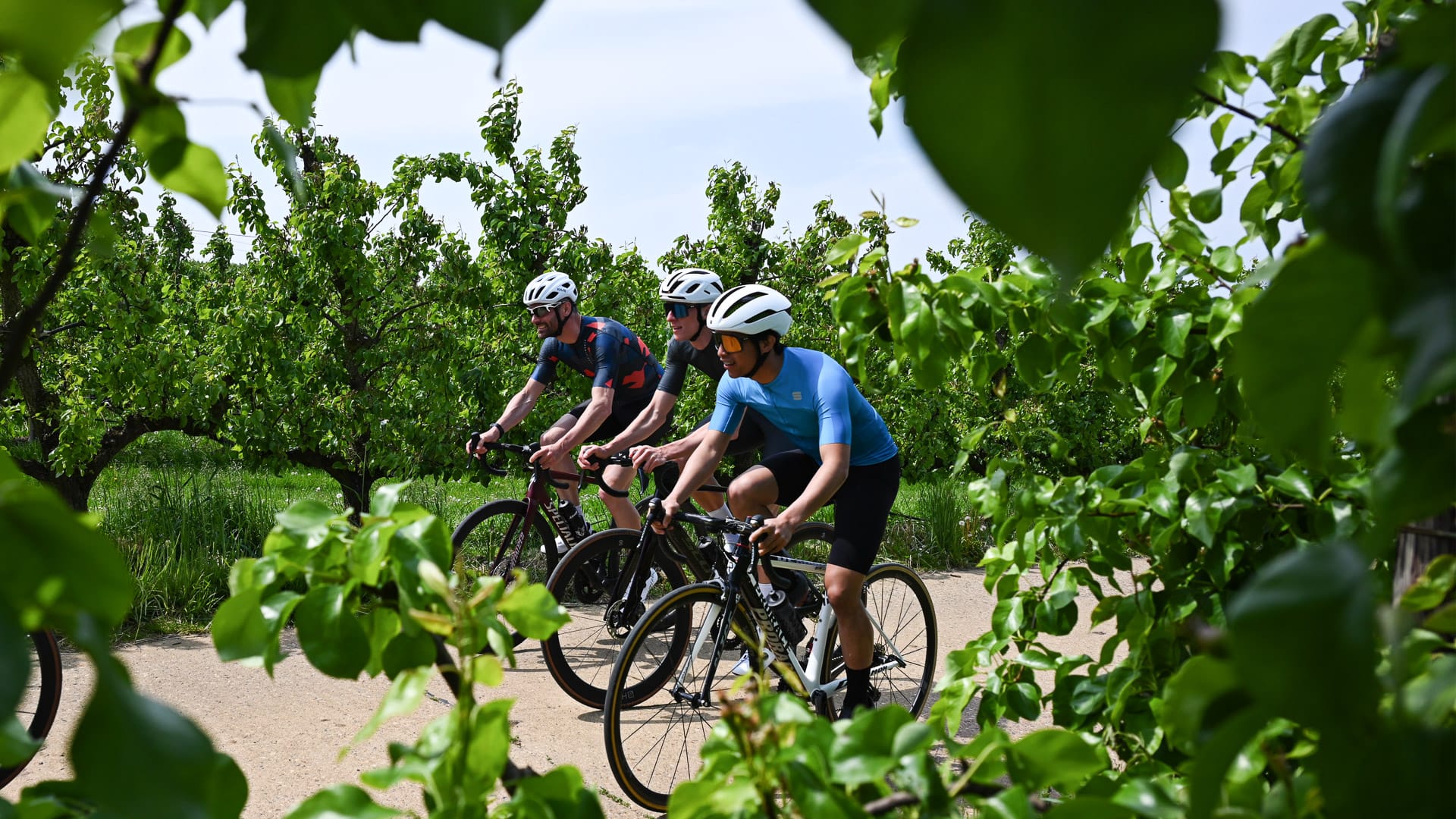
- Seasonal fruit orchards: The route winds through endless rows of apple, pear and cherry orchards, which are especially vibrant when they are in spring blossom and during the autumn harvest.
More information
For further details about the Eddy Merckx cycling route, take a look at this website.
Looking for a shorter version of this route? Take a look at this website for details about the 70-kilometre Eddy Merckx route here.
R.EV 1703 cycling route
Best for: Cyclists who want a serious challenge that tackles iconic cobbled climbs while exploring the roots of Belgium’s newest cycling star.
Key statistics
95 kilometres
1,012 metres of elevation gain
Start/ finish
R.EV shop, E. Eylenboschstraat 9, 1703 Schepdaal
Getting to the start
Easiest by car. Free parking is available at Schepdaal Church.
Duration
Approximately 4 to 5 hours, depending on your level of fitness.
Navigation
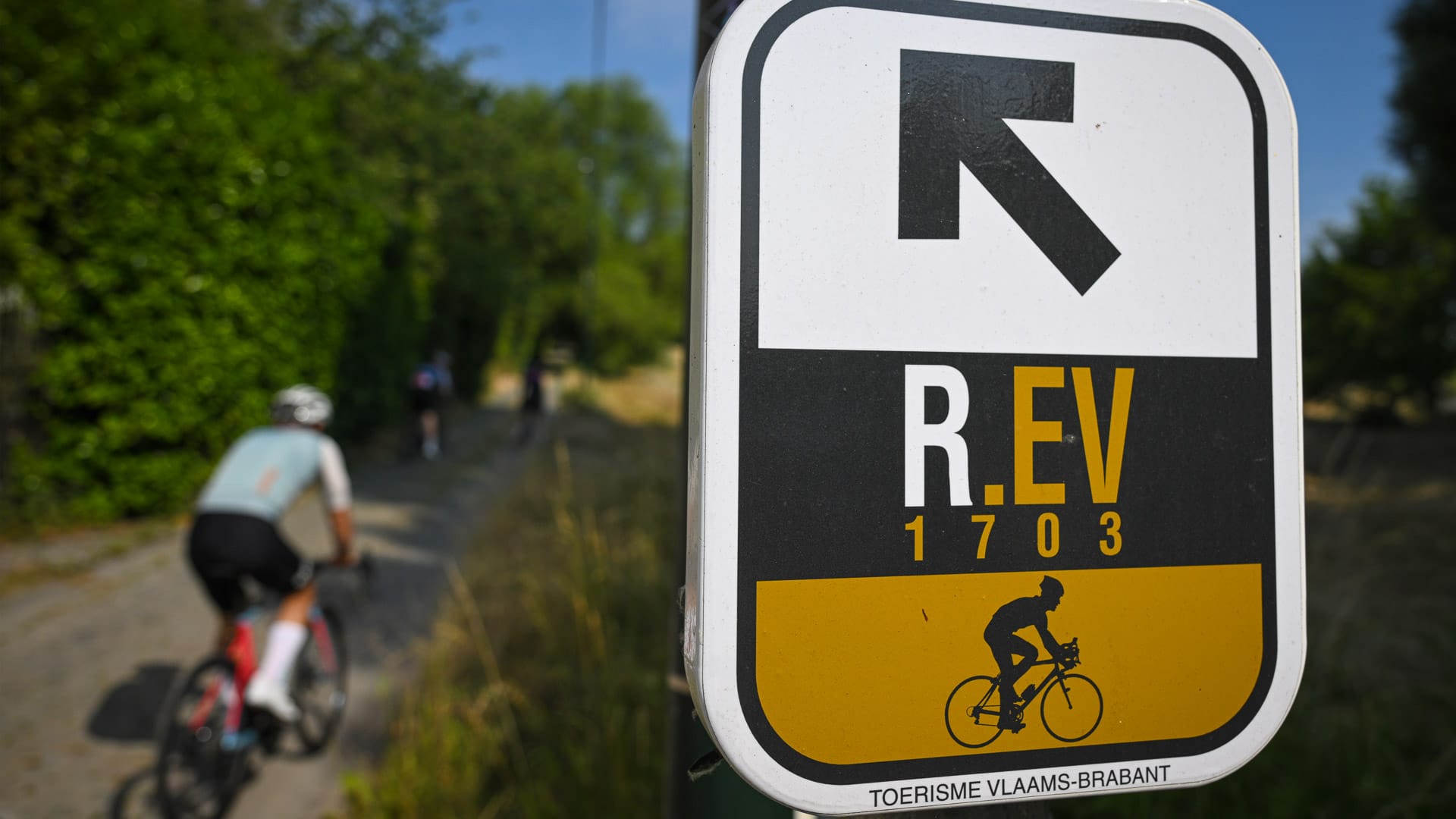
Route signposts and downloadable GPX files (see below).
Surfaces
Mainly asphalt, with approximately 5 kilometres of cobbles.
Overview of the route
This demanding loop takes riders through the Pajottenland region of Flanders and has been created as a tribute to Belgian cycling star Remco Evenepoel.
Following many of his favourite training roads, the route combines short, sharp climbs, cobbled sections, sweeping countryside views and the authentic atmosphere of Flemish cycling heritage.
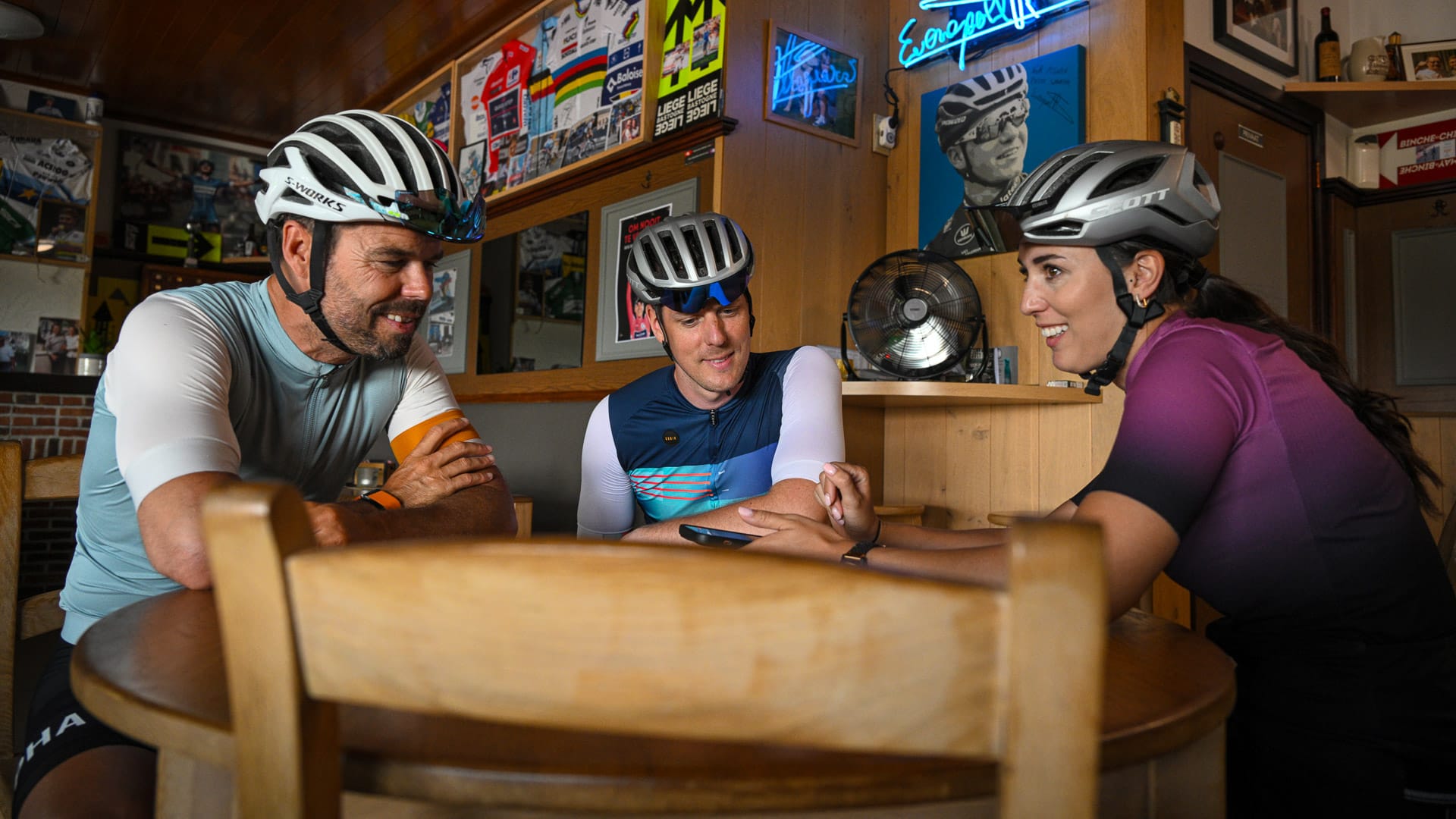
It begins and ends at the REV shop, a coffee bar run by Remco’s father. After about one kilometre, you pass In de Rustberg, Remco’s supporter café. The café has many striking murals, jerseys and trophies showcasing local pride and his remarkable rise.
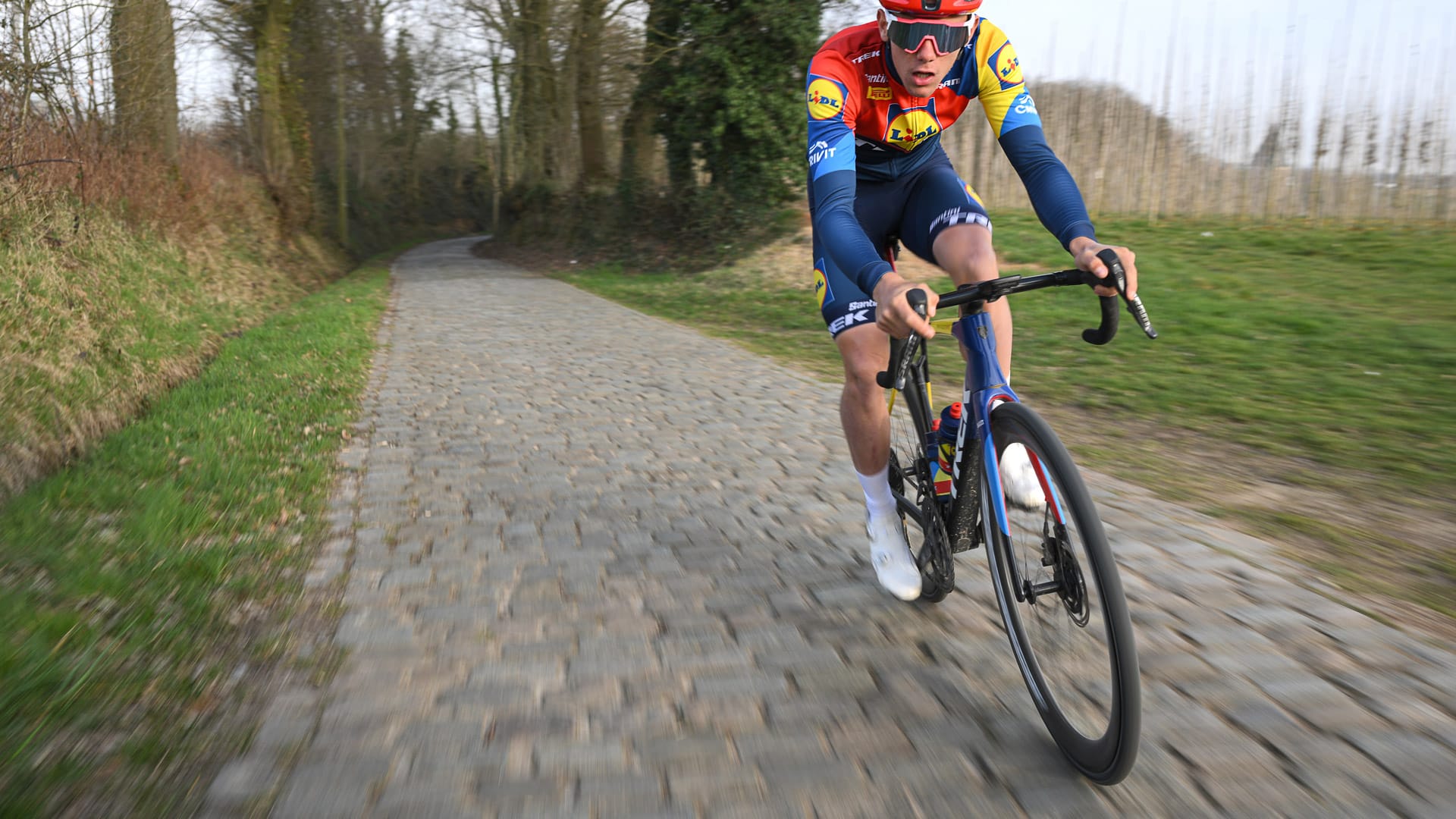
The ride starts gently, before you tackle the first taste of Flemish pavé on Opperstebosstraat. Soon after, the climbing begins with the shaded Steenhoutberg (490 metres at approximately 7%), before the route hits its iconic centrepiece at around 40 kilometres: the legendary Muur van Geraardsbergen. This 910 metre cobbled wall maxes out at a gradient of 20%, and is followed quickly by the Bosberg, a decisive feature in countless editions of the Tour of Flanders.
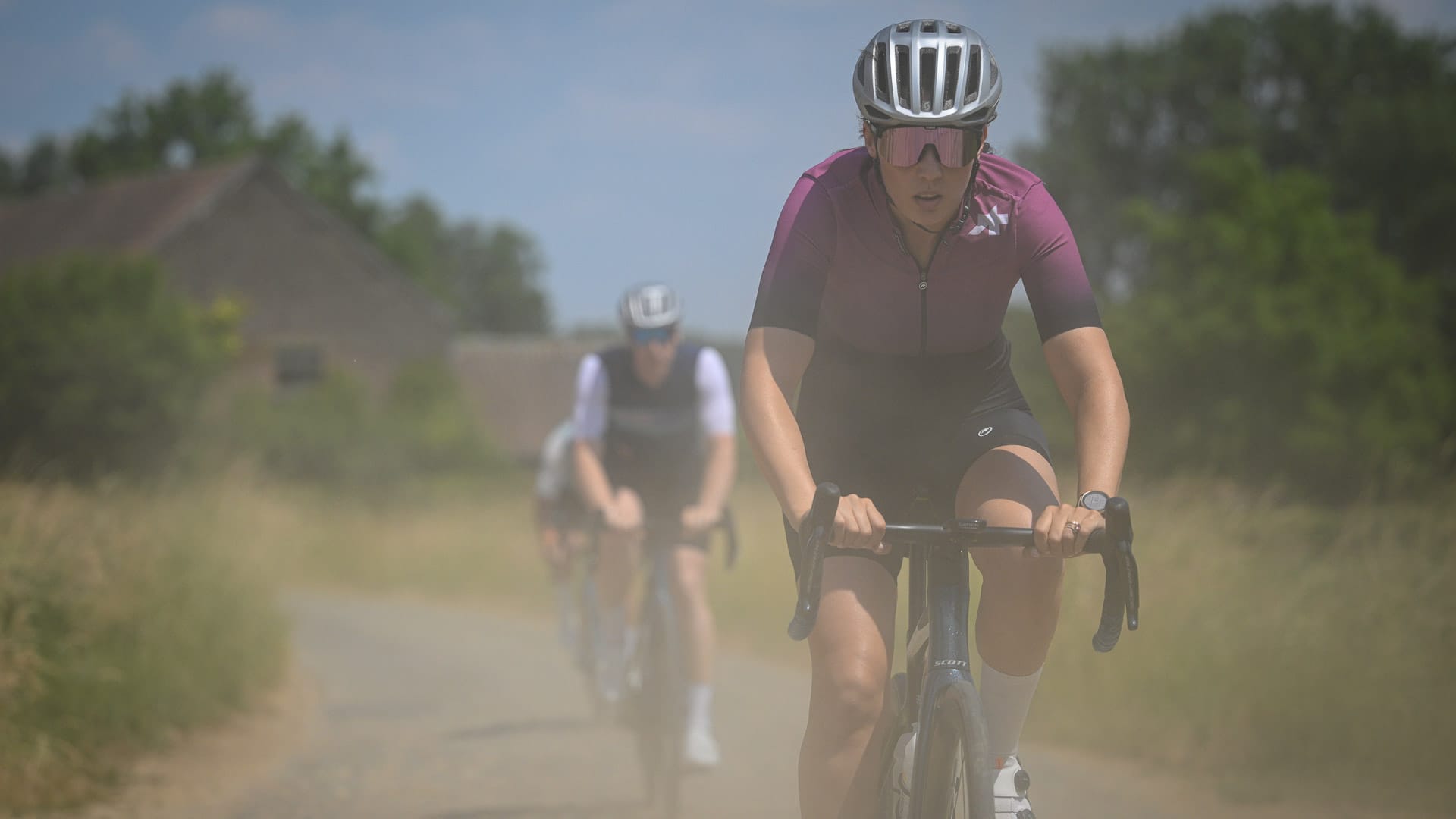
The middle section balances challenge with scenery, most memorably on the Congoberg, where the road rises to give sweeping views as far as Brussels. Soon after comes the punishing Schavolliestraat: 1.57 kilometres of exposed cobblestones across open farmland that test both bike handling and resilience. The closing kilometres add bite, with steep ramps and rough cobbled stretches like Lennikseweg and Vlazendaalstraat, forcing one last effort from tired legs.
Highlights
- R.EV Shop: More than just a bike shop, this cosy coffee bar is run by Remco’s father, Patrick Evenepoel. Cyclists can enjoy a quality espresso, browse Remco-inspired kit, and connect with the family roots of Belgium’s latest cycling superstar.
- Muur van Geraardsbergen: Perhaps the most famous cobbled climb in Belgium! The Muur combines steep gradients with legendary status in races like the Tour of Flanders. Tackling its narrow, twisting cobbles offers cyclists a taste of true Flemish cycling history.
- Congoberg: A memorable hill climb that rewards efforts with sweeping views over the Flemish countryside. Its gentle switchbacks and open panoramas make it both a physical challenge and a scenic highlight of the route.
- De Rustberg: Known as Remco’s fan café, this lively spot features a striking mural on the outside walls and an impressive collection of his jerseys and trophies inside. It’s a must-visit pilgrimage stop where cyclists can soak up the atmosphere of local pride and Remco’s meteoric rise.
More information
For further details about the R.EV 1703 cycling route, take a look at this website.
Looking for a shorter version of this route that is suitable for families? Take a look at this website for details about the 26-kilometre version of the R.EV 1703 cycling route here.
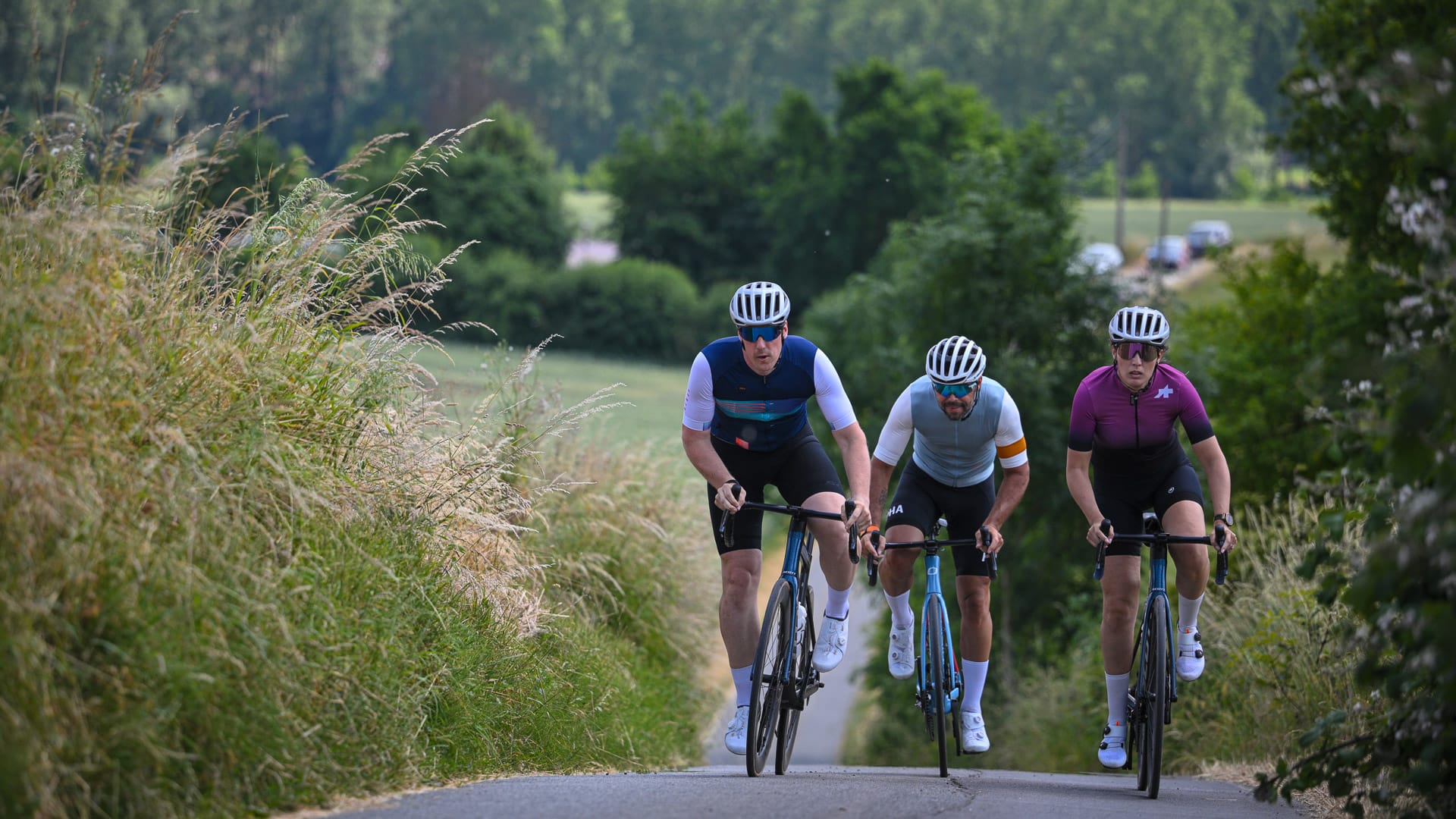
Part 3: Things to know when planning your Flanders cycling routes
Practicalities of Flanders cycling
What is the best time of year to cycle in Flanders?
The best time to ride in Flanders is from April to October, when conditions are generally most favourable.
April is especially beautiful, with orchards and trees in full blossom. The region also hosts the famous Spring Classics, including the Tour de Flanders and Brabantse Pijl. Temperatures can still be chilly and rain showers are frequent. However, riding here at this time means experiencing the same climbs and cobbles that test the pros, against a backdrop of colourful orchards and lively local cycling culture.
Throughout the summer, the weather is milder, but still changeable. So, it’s always wise to pack warm layers and a reliable lightweight waterproof. More on that below.
By autumn, the orchards turn golden with fruit, adding another layer of seasonal charm to the landscape.
How challenging is the riding?
Cycling in Flanders is rarely about long alpine-style ascents.
Instead, the challenge lies in its relentless succession of short, steep climbs and cobbled sections. For example:
- The Sven Nys cycling route packs in almost 897 metres of elevation gain over 107 kilometres, with sharp ramps such as Panoramalaan and Chartreuzenberg demanding repeated efforts.
- The Eddy Merckx cycling route extends to 148 kilometres with more than 1,129 metres of climbing, where constant undulation keeps riders on their toes long after the 100 km mark.
- The R.EV 1703 cycling route raises the bar with iconic tests like the Muur van Geraardsbergen (featuring gradients up to 20% on cobbles), the Bosberg, and the long, bone-rattling Schavolliestraat cobbled stretch.
Top tip! All of the routes offer shorter GPX alternatives, such as the 95-kilometre R.EV route, which can also be ridden as a 25-kilometre loop. This means both seasoned cyclists and even families can enjoy the same landscapes and cycling heritage, choosing the level of challenge that suits them best.
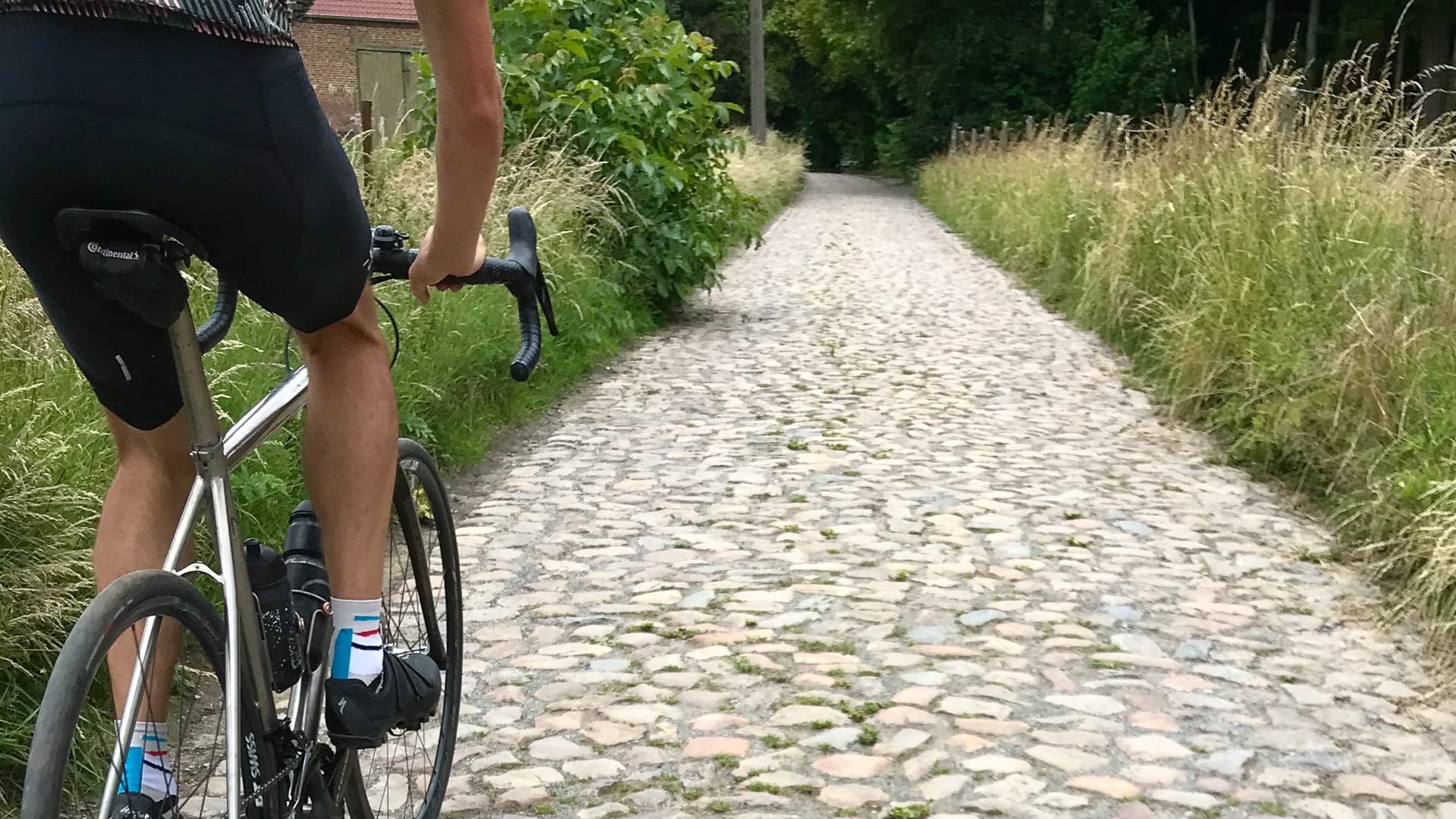
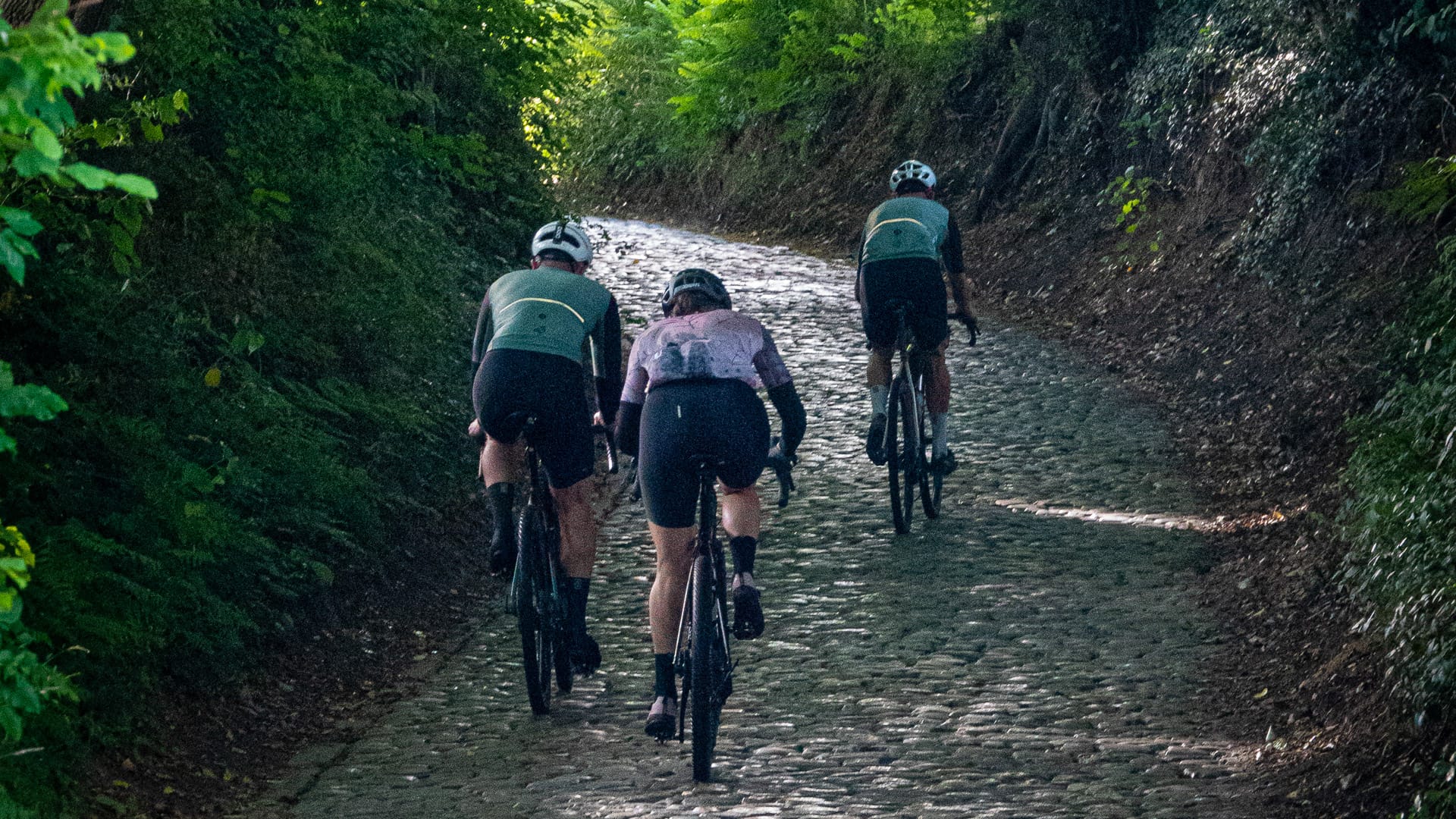
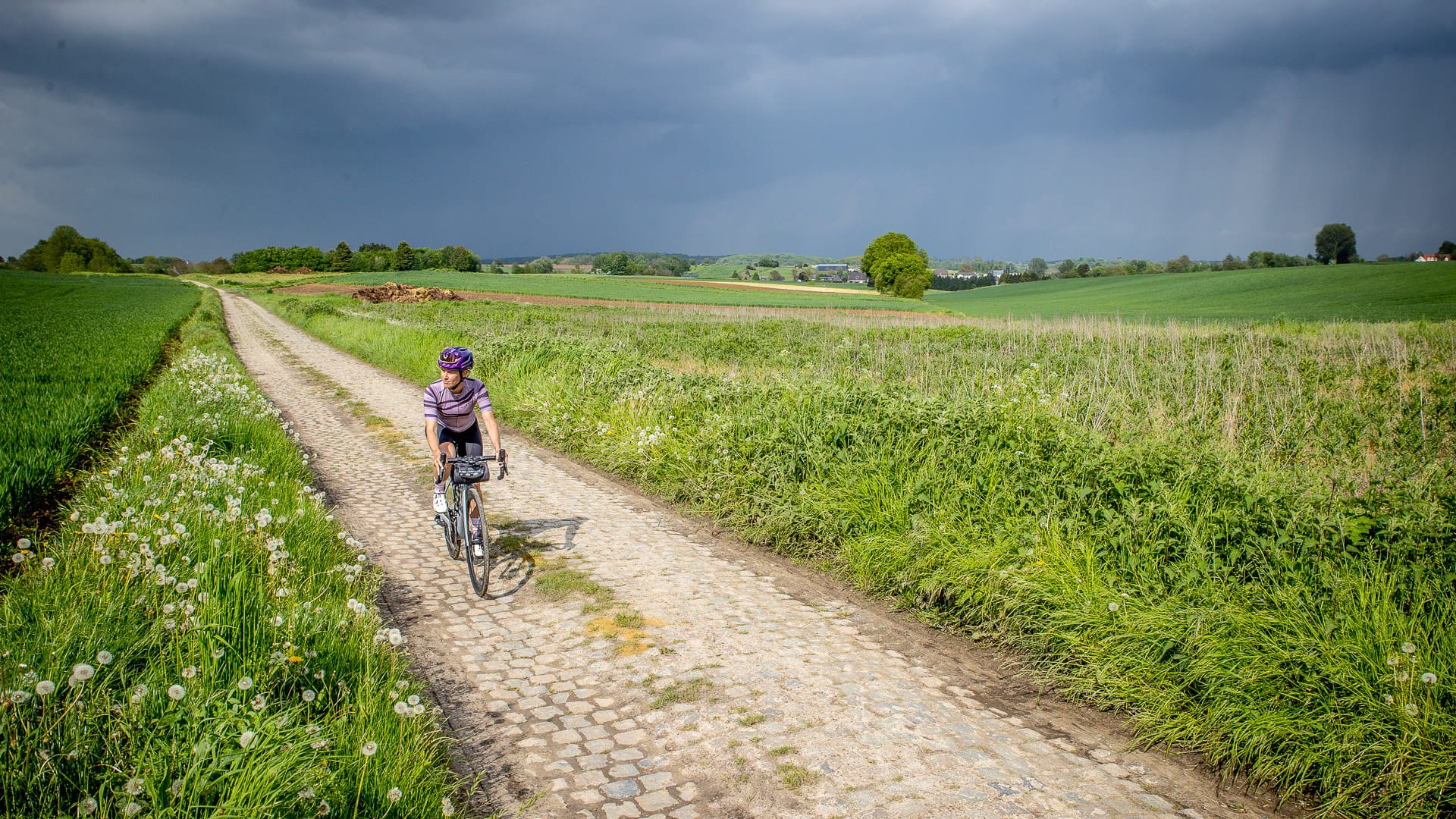
Cobbles are all part of the fun in Flanders! (photo credit: VISITFLANDERS)
What is the most suitable bike for Flanders cycling routes?
The routes through the Vlaams-Brabant region of Flanders are largely on paved roads, with a mix of smooth asphalt, rural lanes and the occasional cobbled stretches. For that reason, a road bike is the most suitable choice for tackling the Sven Nys, Eddy Merckx and R.EV1703 cycling routes. A lightweight road bike with gearing that allows for short, steep climbs will make the rolling Hageland hills and bergs much more enjoyable.
Cobbled sections are a feature of Flemish riding. Wider tyres (25–28 mm) with slightly lower pressure can add comfort and grip over the cobbles, without compromising speed. Many local riders opt for an endurance road bike setup, which offers a balance of efficiency and stability on mixed surfaces.
If you prefer a more relaxed ride or want to cover longer distances without the same level of effort, e-bikes are a popular and practical option.
Gravel bikes can work too, especially if you’d like a little more versatility on rougher farm lanes. However, they’re not essential for these routes.
What are the best options for renting bikes?
There are plenty of bike rental options in the region, making it easy to explore the routes without bringing your own bike. Many local bike shops offer road, gravel and e-bike rentals, though it’s worth noting that most shops are closed on Sundays, so plan ahead if you’re riding over the weekend.
Specialist providers, like Kortweg Cycling in Deinze, can also arrange rental bikes and even support vehicles for groups, which is ideal if you’re planning longer rides or travelling with a club. For further suggestions, the Cycling in Flanders website lists rental locations across the region.
The closest rental points to the routes described in this article are in Tremelo, Leuven and Korbeek-Dijle, and are all within easy reach of the Sven Nys, Eddy Merckx and R.EV1703 cycling routes. Here you can find everything from high-performance road bikes for tackling the bergs and cobbles to a comfortable e-bike for a more leisurely experience.
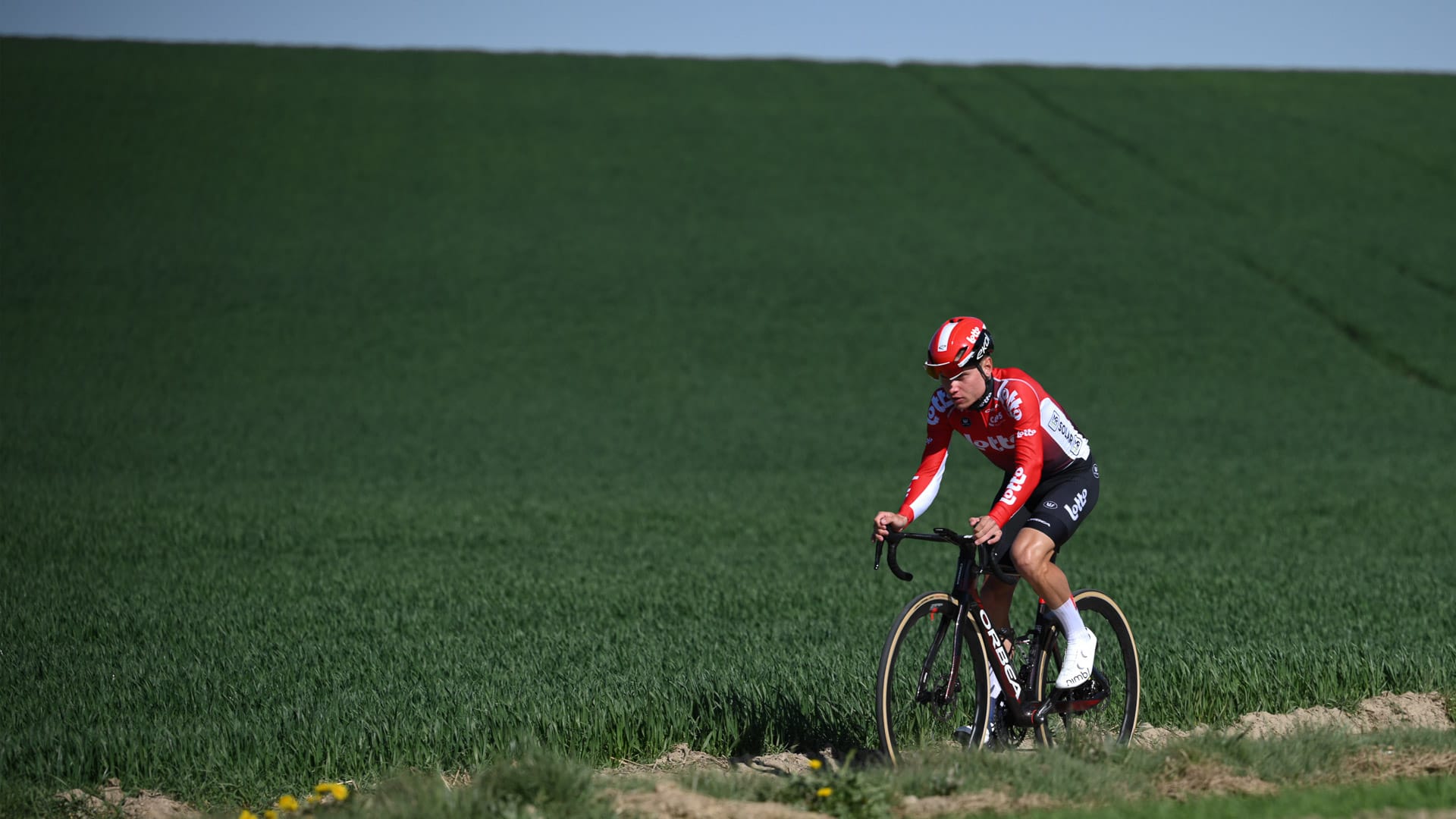
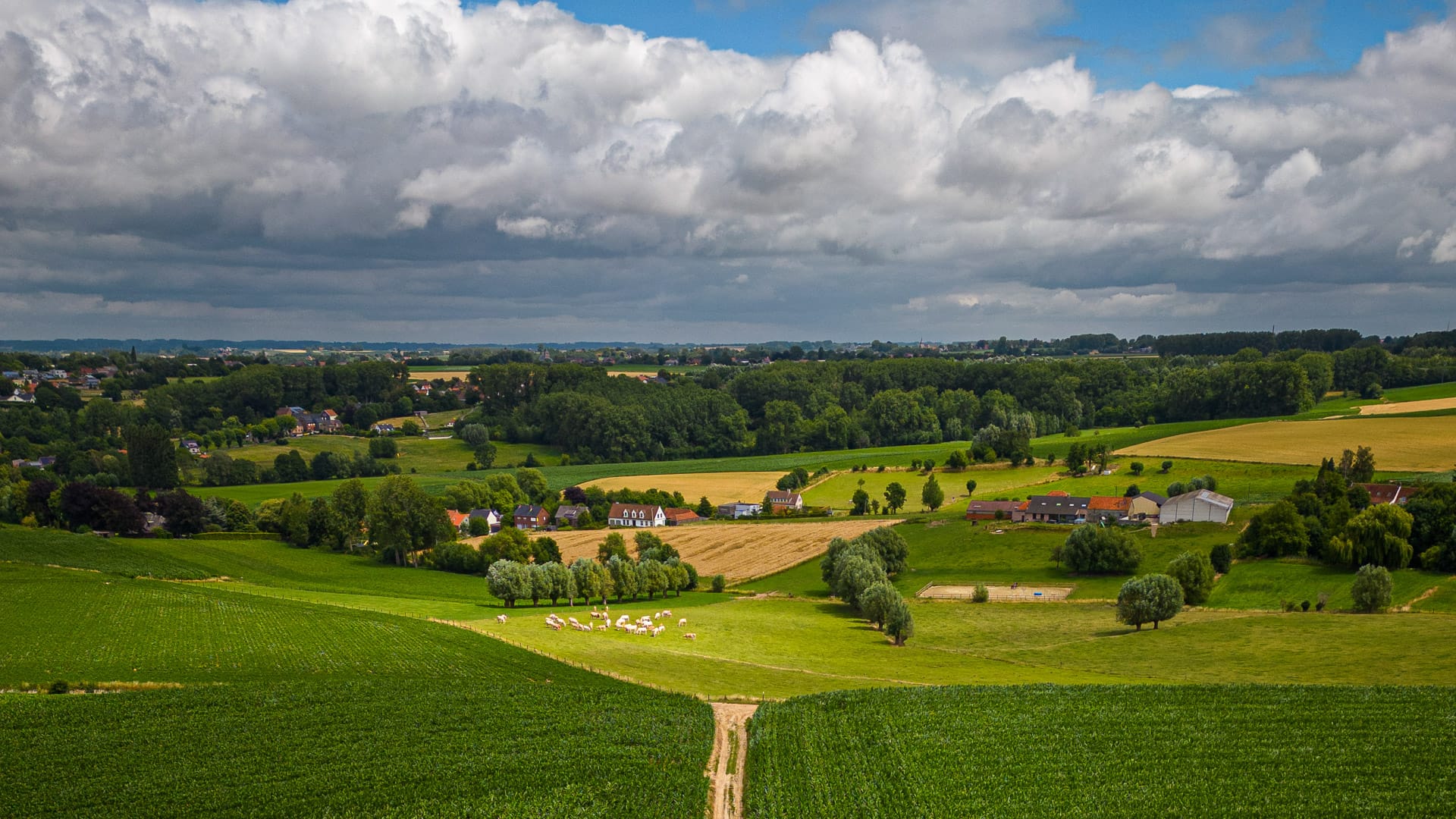
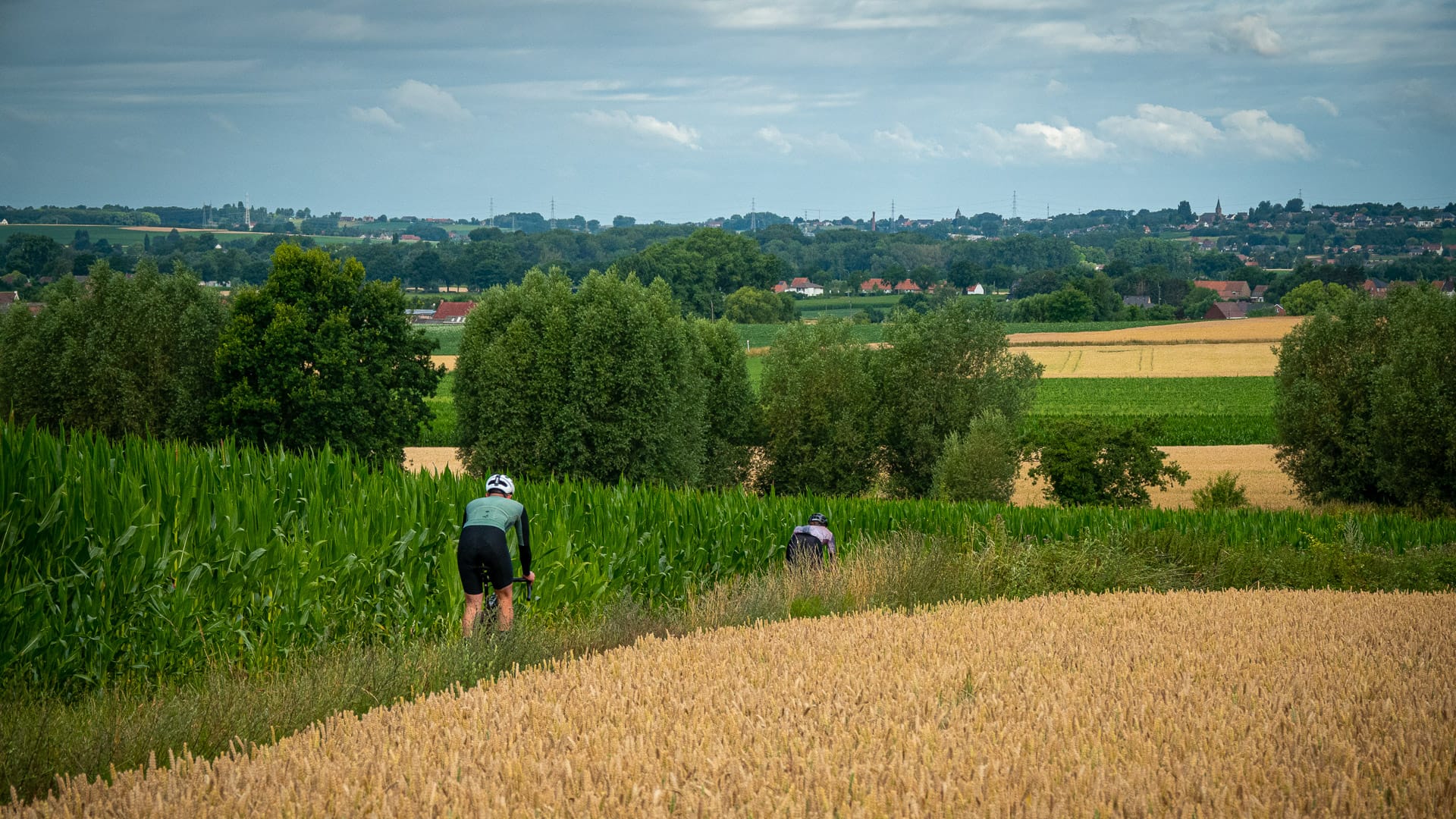
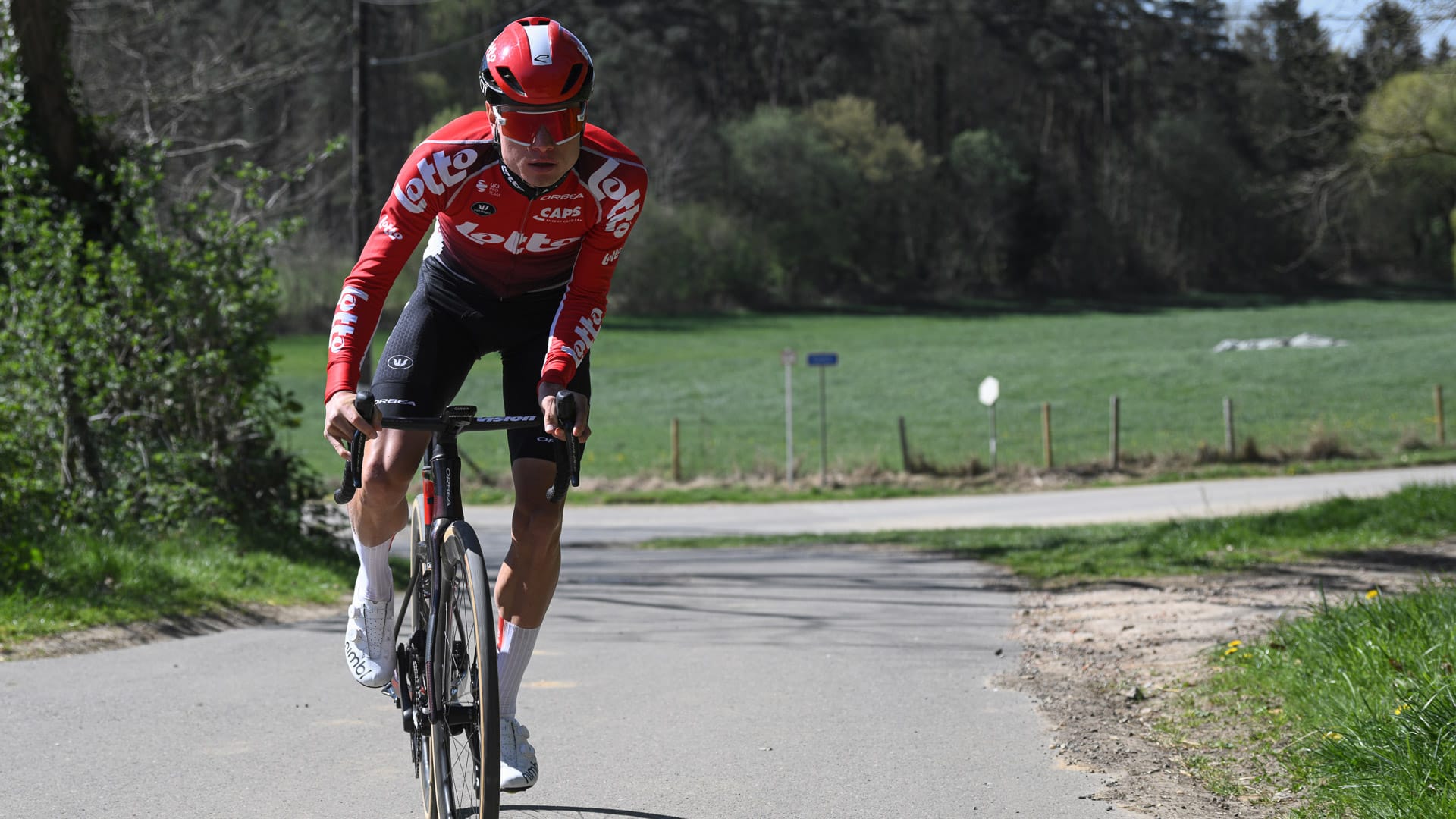
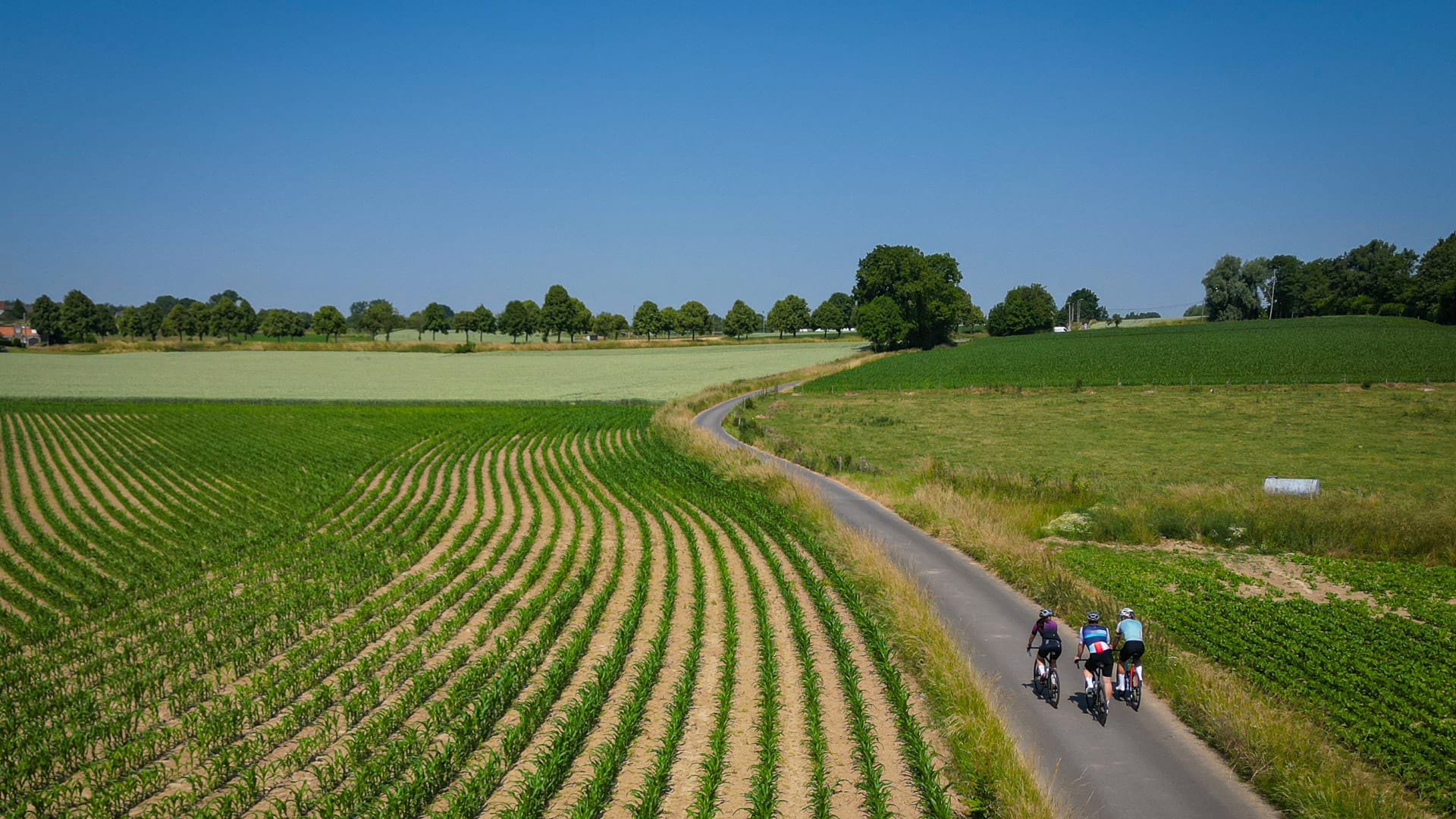
Green fields on the Eddy Merckx route (photo credit: David Stockman via VISITFLANDERS)
Tips for cycling in Flanders
Do you need a car?
Yes, having a car is the best way to access these routes. Each of the main rides we’ve highlighted starts outside a major city centre, and while public transport can get you part of the way, it rarely takes you directly to the start. Driving is the most convenient option, giving you flexibility with timing and post-ride logistics.
Conveniently, there are free car parks at the start of each Flanders cycling route featured in this article. For more precise details on parking locations, see the individual route sections above.
Do you need any specific training to cycle in Flanders?
If you’re planning to ride in Flanders, the most important preparation is simply being comfortable with the distance. Most of the classic routes, such as those dedicated to Eddy Merckx, Sven Nys and Remco Evenepoel, range between 90 and 150 kilometres. This means that it’s important to build up your endurance to ensure you can ride for several hours at a steady pace.
You don’t need specialist training for the bergs or the cobbles. The climbs are usually less than one kilometre long, but they can be sharp and there can be lots in quick succession.
Practising steady efforts and developing the ability to recover quickly between efforts will help. Similarly, while cobbled sectors can feel rough and energy-sapping, they are usually short; good bike handling and relaxed upper-body strength will go a long way.
What Flanders cycling kit essentials should I bring?
Be aware! Flemish weather can be unpredictable, so come prepared for everything from warm sunshine to cold, wet rain. Layering is key. Essentials include a lightweight waterproof jacket, sun cream, sunglasses, and of course a helmet.
Don’t forget gloves for cooler days and breathable kit for warmer rides.
For the latest forecast, check this website before setting out on your ride.
Looking for more useful packing tips? Don’t miss our in-depth guide to what to pack.
Are there many places to refuel and refill your water bottle?
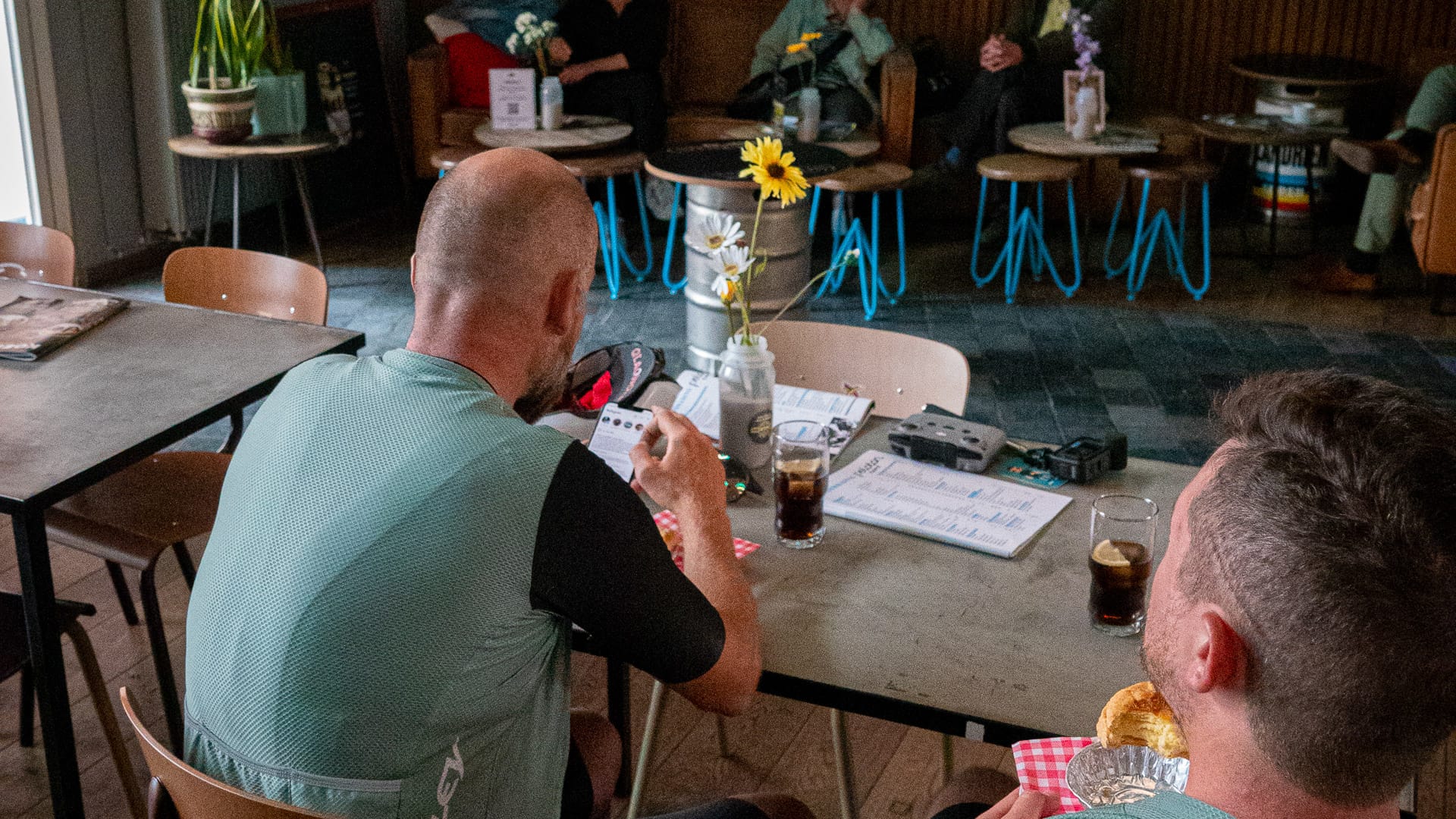
In towns and villages, there are shops, bakeries, cafés and restaurants where you can stock up on snacks, sit down for a coffee, or enjoy a well-earned meal. Many of the cafés along the cycling routes are accustomed to riders dropping in mid-ride, so you’ll often see bikes lined up outside.
Be aware! Public water fountains are less common in Belgium than in some countries, but you’ll still find them in larger towns and at some key landmarks.
One of the great aspects of cycling in Belgium is the local hospitality. If you’re caught out and in need of water, it’s widely accepted practice to ring the doorbell of a house and ask for your bottle to be filled with tap water. Locals are used to cyclists passing through and are usually happy to help!
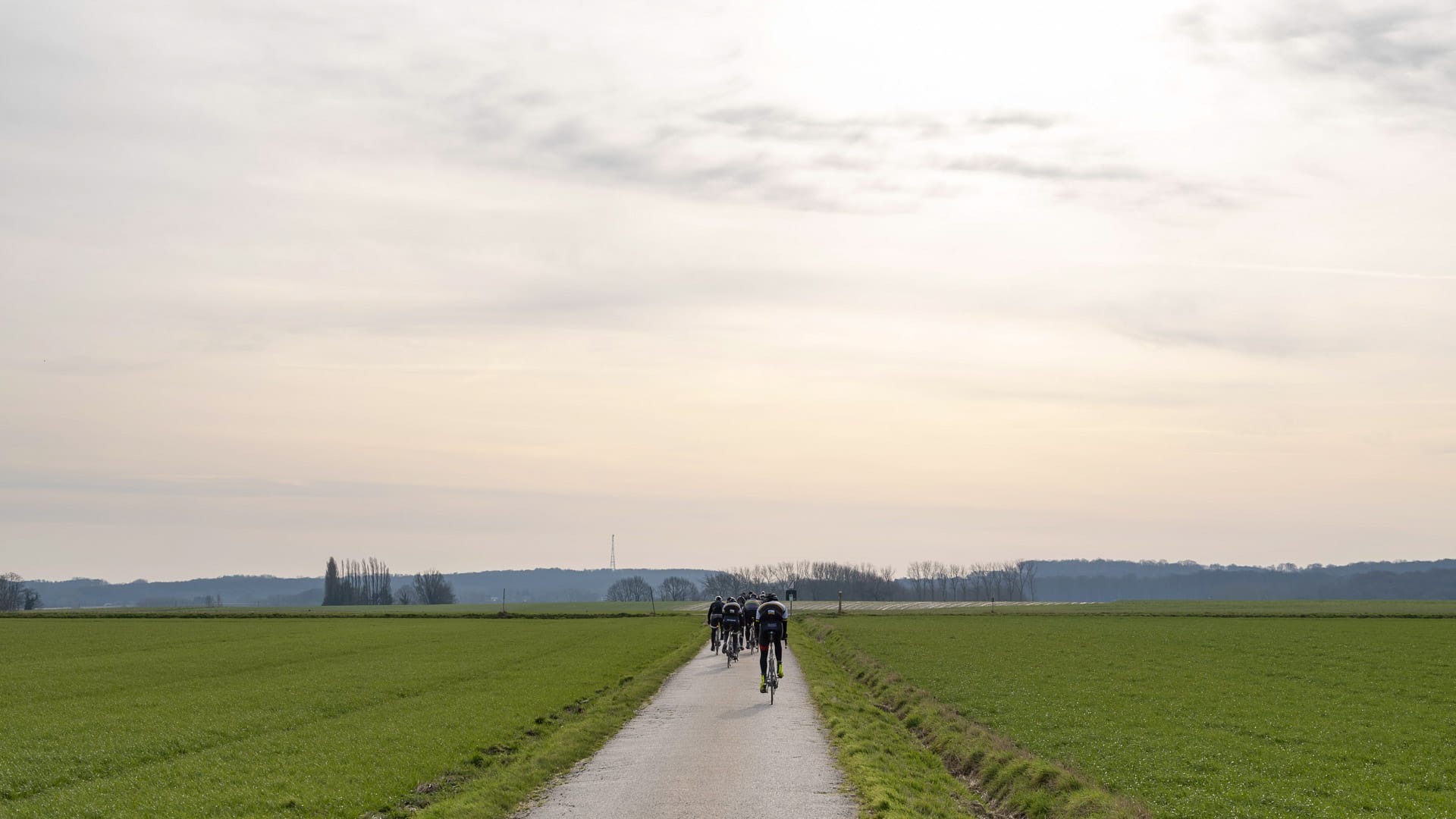
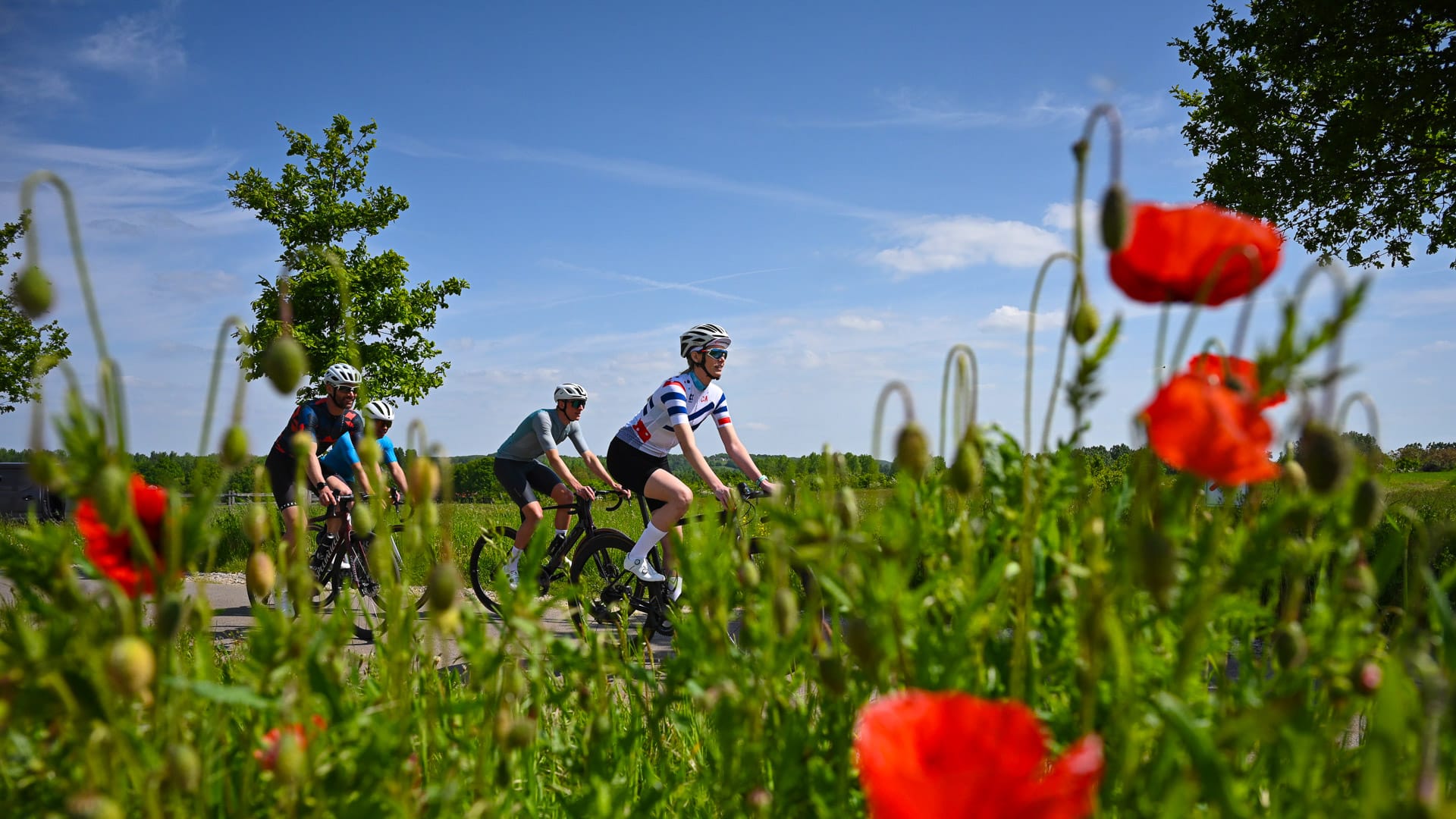
Exploring Flanders’ countryside (photo credit: Too Soon Too Late via VISITFLANDERS)
Can you take your bike on public transport?
In Belgium, it’s generally straightforward to take your bike on public transport, making it easier to link rides or travel to the start of a route. On trains operated by NMBS/SNCB, bikes are allowed outside of peak commuter times, and you’ll need to buy a bike ticket supplement (around €4). Dedicated spaces are usually marked with a bike symbol, though at busy times these can fill quickly.
On trams and buses, rules are more limited: folding bikes are usually allowed, but full-sized bikes are only permitted at the driver’s discretion and when space allows.
If you’re travelling in or out of Brussels or Leuven, the train is often the most reliable option for cyclists.
Do you need to speak Flemish?
No, you don’t need to speak Flemish to enjoy cycling in Flanders. English is widely spoken, especially in cafés, shops, hotels, and by people involved in cycling. Most signs, menus, and tourist information are available in both Flemish (Dutch) and English, so navigating and ordering food or drinks is straightforward.
That said, locals always appreciate it when visitors make a bit of effort with the language. Even just a few basic phrases can go a long way in making connections and showing respect for the local culture:
- Hallo – Hello (hah-loh)
- Dank u wel – Thank you (dahnk oo vell)
- Alsjeblieft – Please / Here you go (ahl-sheh-bleeft)
- Een pintje, alstublieft – A small beer, please (uhn pin-chuh, ahl-stoo-bleeft)
- Waar is de route? – Where is the route? (vahr iss duh roo-tuh)
Is there anything cyclists should be aware of during the Spring Classics?
In Belgium, cycling isn’t just a sport, it’s a national passion! During the Belgian Cycling Classics, or even the Tour de France, the atmosphere is electric, and you’ll quickly notice pubs and cafés with bikes lined up outside as locals gather to watch the races. Joining them for a beer while cheering on the peloton is part of the authentic Flemish cycling experience.
Several stops along the cycling routes featured in this article make it easy to soak up the atmosphere. The Sven Nys Cycling Center, Café Boerenhof (on the Eddy Merckx Cycling Route), and De Rustberg in Schepdaal (on the R.EV1703 Cycling Route) all show live coverage of the big races. They are great places to finish your ride and enjoy the races like a local.
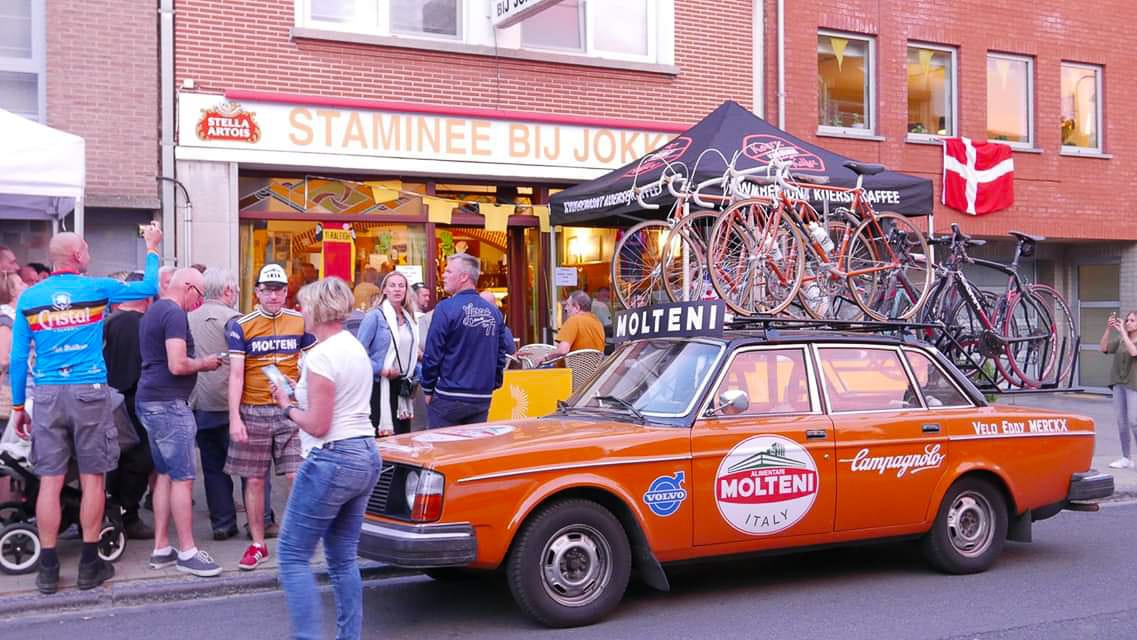
A cycling café during the Brabantse Pijl is a one-day professional cycling race in Belgium, held each spring in the Brabant region. It is known for its hilly course with numerous short, sharp climbs (photo credit: VISITFLANDERS).
Highway code and travel information
As ever, it’s a good idea to check current travel information before you book and travel. For UK visitors, the UK government travel information pages for Belgium are here.
You should also read and follow Belgium’s highway code.
Here are some things to be aware of, to keep your ride safe and enjoyable:
- Use cycle paths: If there’s a designated bicycle path, you are required to use it.
- Group riding: Only pelotons of 15 riders or more may ride two abreast on the road.
- Wear a helmet: This is strongly advised for safety, and essential on these routes.
- Respect the environment: Don’t drop litter; carry your rubbish until you find a bin.
- Be considerate: Share the road and trails with other cyclists and pedestrians.
- Use a bell: A bicycle bell is very useful (and courteous) for alerting walkers and slower riders.
- Enjoy it: Cycling is part of Flemish culture, so don’t forget to smile and soak up the experience.
What’s next?
A huge thanks to Pieter Geens for these detailed insights on the best cycling routes in Belgium.
Have you experienced cycling across Flanders before, or taken part in a cycling tour of Flanders? Perhaps you have tried one of the local cycle loops featured in this article? We’d love to hear from you in the comments below!
Whether you’re looking for fun road cycling weekends in Belgium or to take on a lengthier cycling adventure in the country, these routes are certainly on our wish list!
Looking for more inspiring cycling holidays in Belgium? Don’t miss:
- Cycling Flanders: your ultimate guide takes you straight to Belgium’s legendary cobbled climbs.
- Planning a Belgium cycling tour is a must-read if you want tips for planning your trip.
- 5 reasons to cycle in Belgium (especially when it’s NOT the Classics) show why it’s worth riding here year-round.
- 8 best bike hotels in Belgium shares our independent pick of the top cycling-friendly places to stay.
- Planning a Spring Classics bike tour walks you through important things you need to know.
- Cycling in Belgium: 30 tips for tackling Flanders and the famous cobbled climbs offers practical tips from start to finish.
- Belgium cycling destination hub page brings together all our articles in one place.
Got a question for Pieter?
Fill out this form and we will send it to Pieter. We aim to get you an answer within 24 hours where possible!Pieter is the route designer at the Sven Nys Cycling Center in Baal (Belgium) and works at the home of former cyclocross legend Sven Nys.
The centre is the hub for off-road cycling, featuring a cyclocross track, expo, bike rental, shop and restaurant. It is a dream role for Pieter, as outside of work he can often be found on his road, gravel or mountain bike, exploring new routes or clocking up miles on his favourite climbs and gravel sections.
Beyond ensuring the facilities at the centre are running smoothly, Pieter has a passion for designing new routes for visitors. He is dedicated to offering options for every type of cyclist, from beginners to seasoned riders, solo adventurers to groups, and across road, gravel and mountain bike terrain.
Pieter is also the designer of the Sven Nys Cycling Route, which was personally approved by Sven Nys himself. His aim was to create a route showcasing the diverse landscapes of the Flemish Brabant region, forests, climbs, sunken lanes, cobbles, vineyards, fruit orchards and even cycling street art. The result is a ride that highlights why Flemish Brabant is such a fantastic cycling destination.
All metrics in this article are approximate.
First Published: 15 October 2025
The contents of this website are provided for general information purposes only. It is not intended to amount to advice and you should not rely on it. You should carry out your own due diligence and risk assessments and take professional advice. Views expressed by interviewees or other users of this website do not necessarily represent our views. We make no representations, warranties or guarantees, whether express or implied, that the content on our website is accurate, complete or up to date. If you use any information or content on this website, download from, or otherwise obtain content or services through our website, it is entirely at your own discretion and risk. Epic Road Rides Ltd disclaims all liability and responsibility arising from any reliance placed on the information and content on this website. Find out more here.
Sponsor Message
Got a question for VISITFLANDERS?
Fill out this form and we will pass it to VISITFLANDERS who aim to reply (within 24 hours wherever they can!)
Sponsor Message
Got a question for Cycling in Flanders?
Fill out this form and we will pass it to Cycling in Flanders who aim to reply (within 24 hours wherever they can!)
Comments