
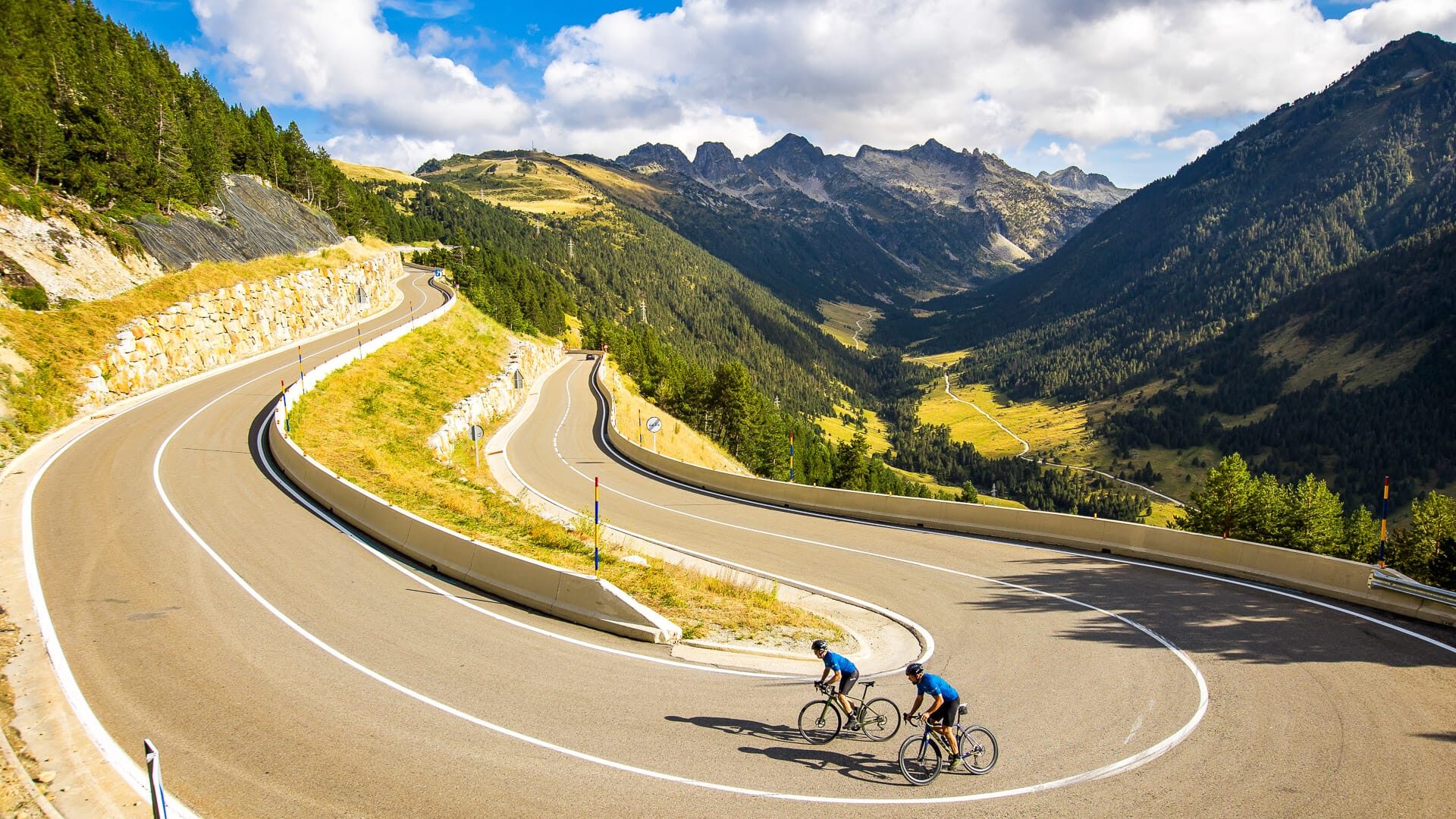
Want to ride the most iconic Vuelta climbs? You’re in the right place.
Spain’s Grand Tour may not get quite the same global fanfare as the Tour de France or Giro d’Italia, but when it comes to dramatic climbs, the Vuelta a España is in a league of its own. Famous for short, sharp summit finishes, brutal gradients and unpredictable weather, the Vuelta has carved out a reputation for high drama and serious suffering in the mountains.
Between us, we have tons of experience cycling many of Spain’s sensational climbs. We also love this last Grand Tour of the season and think it showcases some of Europe’s lesser-known cycling gems.
So in this guide, we’ve pulled together some of the most iconic Vuelta climbs, often used as summit finishes or providing key moments in Vuelta history.
If you’re planning to chase Vuelta climbs and want to ride where legends have suffered, read on!

Clare Dewey is a cyclist with a passion for travel. She set up epicroadrides.com in 2018 to help make it easy for cyclists to explore the world by bike. Today her mission is still inspiring cyclists to discover new places on two wheels - and doing what she can to make sure they have the best possible time while they're there. Clare has visited 50+ destinations around the world, many of them by bike.
Want to connect with Clare? Find her over on LinkedIn.
The top Vuelta a España climbs (by region)
Just looking for a quick summary of the climbs?
We’ve ordered these climbs roughly by mountainous region, starting in the green north and high-altitude climbs of the Pyrenees, working our way down through the central and eastern mountains, ending in the dramatic southern peaks of the Sierra Nevada, home to Europe’s highest paved road.
See below a map of the key Vuelta climbs mentioned in this article. Hover over the map pins to see the names of places.
Picos de Europa
This includes the Asturias region.
- Alto de l’Angliru
- Lagos de Covadonga
Pyrenees
This incorporates the Lleida and Catalonia regions.
- Port de la Bonaigua
- Port del Cantó
Eastern Spain
This incorporates the regions of Calpe and Costa Blanca.
- Xorret de Cati
- Puerto de Tudons
Sierra Nevada
This incorporates the Granada and Andalucia regions.
- Haza Llana
- Hoya de la Mora
1. Alto de l’Angliru
Key statistics
- Length: 12.5 kilometres
- Average gradient: 9.9% (max gradient 23%)
- Elevation gain: 1,266 metres
- Summit elevation: 1,570 metres
Route notes
The Alto de l’Angliru is a climb of two distinct halves. The opening six kilometres lull you into a false sense of security, with gradients hovering around 7-8% on a smooth, quiet road that winds through Asturian greenery. But don’t get too comfortable.
After the Mirador del Pando, the road narrows, the tarmac turns patchy, and the real challenge begins. From here, brutal ramps hit one after another with barely a break, often exceeding 20%. The notorious Cuena les Cabres section reaches a leg-breaking 23.5% and requires careful pacing and the lowest gearing you’ve got. Many riders report having to zigzag or even walk sections.
As the trees thin out near the top, views open up towards Oviedo and the northern coast – assuming the often-present fog doesn’t roll in. At the final summit parking area, you’ll know why this climb is so feared: it’s a raw, unrelenting test of fitness, gearing and mental grit.
Alto de l’Angliru in the Vuelta a España
Since its dramatic debut in 1999, the Alto de L’Angliru has become one of the Vuelta a España’s most feared and iconic climbs. Its brutal gradients and often unpredictable weather have produced some of the race’s most memorable moments.
The inaugural appearance saw José María Jiménez take a storming victory, setting the tone for future drama. In 2002, the climb gained notoriety when torrential rain caused team cars to stall on the steepest ramps, blocking riders and creating chaos on the road.
David Millar, who crashed multiple times, famously once dismounted just before the finish in protest, refusing to cross the line and handing in his race number. He later apologised, but the moment cemented Angliru’s reputation as one of cycling’s most punishing ascents.
Since then, the climb has continued to shape GC battles. Alberto Contador conquered it in 2008, strengthening his hold on the red jersey, while Chris Froome’s ride in 2017 was a masterclass in pacing and control on unforgiving terrain.
More information
- Alto de l’Angliru features on our list of the hardest cycling climbs in the world – with good reason!
- Find out more about the region with our guide to cycling northern Spain
2. Lagos de Covadonga
Key statistics
- Length: 14 kilometres (from Covadonga)
- Average gradient: 7.4%
- Elevation gain: 948 metres
- Summit elevation: 1,102 metres
Route notes
The climb to Lagos de Covadonga from Cangas de Onís is one of Spain’s most iconic ascents, and for good reason. It begins under the trees, winding through woodland with steep but manageable gradients around 7-8%. Don’t be fooled by the profile, though. While the average may look friendly, it conceals a mid-climb descent that skews the numbers. The steeper sections reach well over 15% and hold for long stretches.
After the wooded opening, the scenery opens dramatically into classic Picos de Europa terrain: rolling meadows, rocky outcrops, and panoramic views. The road surface is excellent throughout, and in summer months, it’s largely closed to regular traffic, though official buses and taxis still use the route, so expect occasional company (and the odd impatient horn).
You’ll often ride among grazing cattle, with the bells and mountain sounds creating an unforgettable atmosphere. If the weather holds, the views at the summit lakes – Lago Enol and Lago Ercina – are nothing short of spectacular. But even in fog, the sense of drama remains. A must-do for anyone cycling in northern Spain.
Lagos de Covadonga in the Vuelta a España
Lagos de Covadonga is a regular fixture in the Vuelta a España and a favourite among fans and riders alike. While Angliru is feared, Covadonga is revered: a climb that invites attacks, punishes weakness, and often plays a decisive role in the GC (general classification) battle.
The climb made its Vuelta debut in 1983, when Marino Lejarreta claimed the first summit finish. Since then, it has become a proving ground for some of the sport’s biggest names. Stage wins here have gone to the likes of Pedro Delgado (1985 and 1992), Robert Millar (1986), Lucho Herrera (1987 and 1991), Laurent Jalabert (1994 and 1996), Nairo Quintana (2016), Thibaut Pinot (2018), and Primož Roglič (2021).
Roglič’s 2021 victory was a modern classic, launching clear with Egan Bernal on Collada Llomena before dropping him on Covadonga and soloing to the win. The climb has seen both brave attacks and tactical battles, but it always delivers drama.
More information
- Again, you can learn more about the Asturias region with our guide to cycling in northern Spain
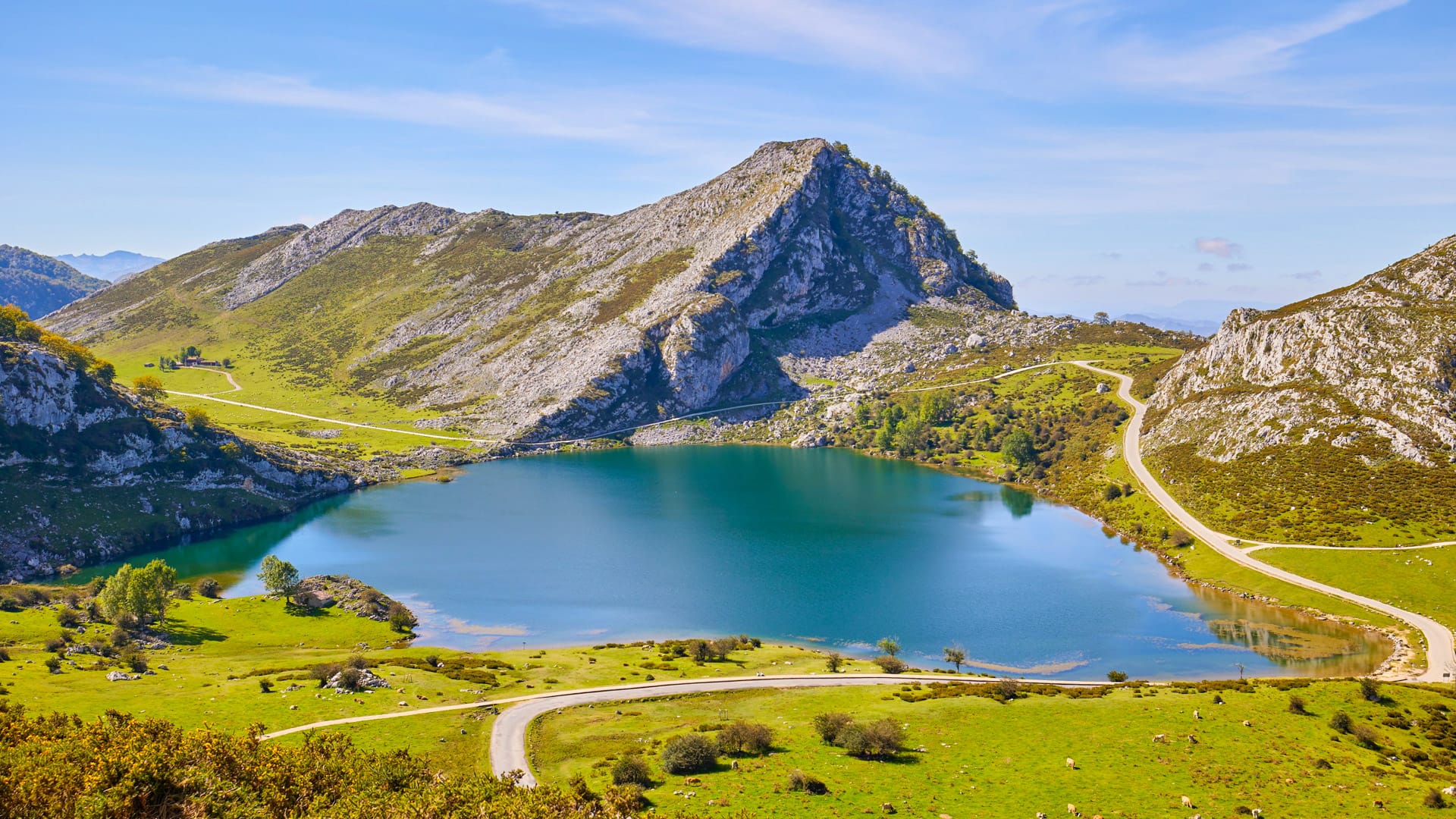
Lagos de Covadonga
3. Port de la Bonaigua
Key statistics
- Length: 22 kilometres (from Vielha)
- Average gradient: 5.6%
- Elevation gain: 1,125 metres
- Summit elevation: 2,072 metres
Route notes
Port de la Bonaigua is the highest paved pass in Catalonia, topping out at 2,072 metres. It can be tackled from either side, Vielha in the west or Esterri d’Àneu in the east, and both offer contrasting experiences.
The climb from Vielha is longer and more gradual, with an open feel and a wide road featuring a generous hard shoulder for cyclists. The gradients here are mostly steady, allowing you to settle into a rhythm, though exposed stretches and traffic can make it feel less remote than other climbs in the Pyrenees.
In contrast, the climb from Esterri d’Àneu is slightly shorter but steeper and more scenic. The gradients fluctuate more, with sections reaching 8-9%, and the road winds through a quieter landscape with increasingly dramatic mountain views. The final hairpin section is particularly beautiful and satisfying to ride.
Whichever side you choose, the summit rewards with far-reaching views!
Port de la Bonaigua in the Vuelta a España
Despite its stature as the highest paved mountain pass in Catalonia, Port de la Bonaigua has only appeared a handful of times in the Vuelta a España. Its most notable inclusion came in the early 2000s, often serving as a long and steady climb in the high Pyrenees rather than a decisive summit finish.
While not known for explosive attacks or famous stage wins, its presence adds altitude and prestige to any Vuelta stage that includes it. The climb typically features early or mid-stage, helping to break up the peloton and soften the legs before more brutal climbs later in the day. Its open slopes and alpine scenery make it one of the most visually impressive climbs on the route.
More information
- Check out our guide to cycling in Lleida, Catalonia, for more information on the route.

Spectacular views on the Bonaigua Pass (photo credit: Torisme Val d’Aran)
4. Port del Cantó
Key statistics
- Length: 20 kilometres (from Sort)
- Average gradient: 5.5%
- Elevation gain: 1,061 metres
- Summit elevation: 1,720 metres
Route notes
Port del Cantó is a long, steady climb in the Catalan Pyrenees that links the regions of Pallars Sobirà and Alt Urgell. It can be approached from either Sort or Adrall, with the climb from Sort being the more commonly ridden side.
This climb rarely delivers extreme gradients; it’s the sheer length and the exposure to summer heat that make it challenging. The road climbs gradually through forests and open terrain, offering sweeping views over the valleys of the Serra Seca and surrounding ridgelines.
Traffic is usually light, and the wide N-260 road allows for a relatively relaxed climb. While the asphalt is serviceable, there are patches where the surface could be better, especially on the descent, so some caution is needed. Despite its scale, Port del Cantó is a forgiving climb and a great introduction to long mountain efforts in the Pyrenees.
Port del Cantó in the Vuelta a España
Port del Cantó is a regular feature in the Pyrenean stages of the Vuelta a España. While it rarely plays host to summit finishes, it’s often used as a springboard for attacks, thanks to its steady gradients and long length.
Notably, the climb is set to appear again in the 2025 edition, on Stage 7, confirming its ongoing relevance to the race. The road from Sort offers long, exposed stretches and can become brutally hot in summer – a factor that has made it decisive in breakaway attempts or the attrition of weaker GC riders.
Though it may not have the notoriety of the Vuelta’s steeper icons, Port del Cantó is one of those strategic climbs that adds difficulty and character to the mountain stages, and rewards riders who can maintain tempo for long durations.
More information
- Port del Cantó gets a mention in our guide to cycling the Spanish Pyrenees, so be sure to check that out.
- You can also ride this route, plus several other regular Vuelta mountain climbs, on this five-day Spanish Pyrenees itinerary.
5. Xorret de Catí
Key statistics
- Length: 4 kilometres
- Average gradient: 11.5%
- Elevation gain: 439 metres
- Summit elevation: 1,097 metres
Route notes
Don’t be fooled by the short length of Xorret de Catí, this is one of Spain’s toughest climbs. After a brief warm-up from Castalla on a scenic approach through pine forest and olive groves, the road tips up abruptly. The first 1.5 kilometres are tough but manageable, then the real punishment begins.
The next 2 kilometres average around 15%, with ramps regularly spiking above 20%. These brutally steep pitches come in quick succession, often on a dead-straight road, giving riders nowhere to hide. It’s not uncommon to see cyclists zigzagging just to stay upright.
What makes it bearable, and even enjoyable, depending on your gearing, are the peaceful surroundings. The road is remarkably quiet, with only the sound of your breath and the occasional cowbell. Views through the trees open up as you gain altitude, and while the summit itself is unremarkable, the sense of satisfaction at the top is immense.
This is a pure test of strength and determination, and one every serious climber should experience at least once.
Xorret de Catí in the Vuelta a España
Xorret de Catí has quickly earned a place among the most recognisable climbs in La Vuelta. Since its debut in 1998, when José María “Chava” Jiménez took a dazzling solo win, this brutally steep ascent has been thrilling fans and breaking legs.
Its wall-like ramps and unpredictable racing have made it a Vuelta favourite. Past winners include Eladio Jiménez (2000, 2004), Gustavo César (2009), and David Moncoutié (2010). In 2017, Julian Alaphilippe attacked decisively in the final kilometre to distance Rafal Majka and Jan Polanc, securing a signature stage win.
While it hasn’t been used every year, its appearances always deliver excitement. The steep gradients, regularly topping 20%, make it ideal for explosive climbers and late-stage drama.
More information
- Learn more with our guide to cycling Calpe and the Costa Blanca.
6. Puerto de Tudons
Key statistics
- Length: 17 kilometres
- Average gradient: 4.5%
- Elevation gain: 847 metres
- Summit elevation: 1,024 metres
Route notes
Puerto de Tudons from Sella is one of the Costa Blanca’s classic climbs – scenic, steady, and deceptively long. It begins gently from the outskirts of the village, winding through olive groves and farmland with low gradients that let you ease into the rhythm.
The road begins to rise more sharply around Sella, a dramatic mountain village backed by cliffs and crags. It’s a good spot for a short pause – cafés on the main street have sweeping views from their balconies. Beyond the village, the gradients creep upwards and the trees begin to close in, hemming the road as it curves through forested slopes.
The final kilometres are more enclosed, but the reward comes near the top, where the pass opens out with panoramic views over rolling hills and distant valleys. The road surface is excellent, traffic is minimal, and the climb’s steady nature makes it one of the most enjoyable in the region – a perfect training climb with a Grand Tour pedigree.
Puerto de Tudons in the Vuelta a España
Puerto de Tudons may not be the most famous name on the Vuelta map, but it’s long been a valuable part of the race’s route-building arsenal – especially for shaping stages in the Valencia Community. While it’s rarely used as a summit finish, its steady gradients and scenic setting make it a reliable feature in early or mid-stage climbing sequences.
The climb has appeared several times across different editions of the Vuelta, helping soften legs before bigger efforts later in the stage. Though not often decisive, it has still featured in stages won by some of the biggest names in cycling, including Nairo Quintana, who fended off an attack from Chris Froome during the 2016 Vuelta a España.
More information
- Our in-depth guide to cycling both Puerto de Tudons and Coll de Rates has plenty more information on one of our favourite Costa Blanca rides.
- Or read more about the region in general with our guide to cycling Calpe and the Costa Blanca.
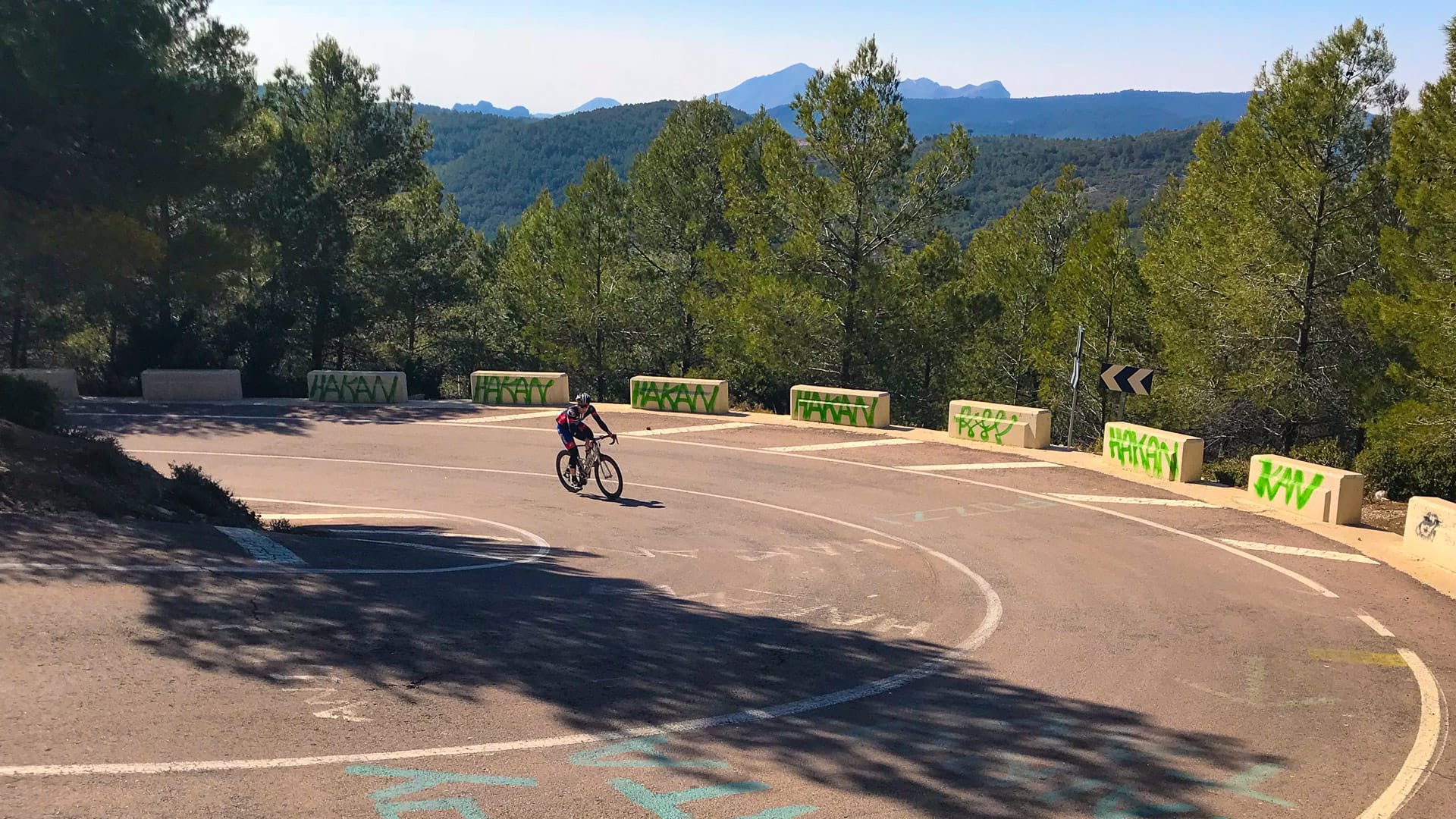
Climbing Puerto de Tudons
7. Haza Llana
Key statistics
- Length: 8 kilometres
- Average gradient: 9.6%
- Elevation gain: 1,679 metres
- Summit elevation: 2,851 metres
Route notes
Starting from the town of Güéjar Sierra, this is a short but brutally steep climb that demands respect from the very first pedal stroke.
The road kicks up immediately after a sharp bridge crossing on the outskirts of town, a sudden shift that catches out the unprepared. From there, it rarely relents: a series of punishing ramps, many between 14% and 17%, come thick and fast, testing legs and gearing alike. The surface is generally good, though narrow and at times exposed.
There are no switchbacks to soften the gradients, and the roadside scenery – scrub, rock and the occasional olive grove, does little to distract from the effort. But at the summit, you’re rewarded with wide views across the lower flanks of the Sierra Nevada.
Haza Llana in the Vuelta a España
Although the Vuelta a España had already ventured into the Sierra Nevada as early as 1979, the Alto de Haza Llanas didn’t make its debut until 2013. That year, it featured as a Category Especial climb and served as the summit finish on Stage 10. American rider Chris Horner took the stage victory and seized the red jersey from Vincenzo Nibali, laying the groundwork for his overall triumph. At 41 years old, Horner became the oldest winner of a Grand Tour.
The climb returned in 2017, where it was classified as a first-category ascent and again in 2022. On this latter inclusion, Haza Llanas featured this time as part of the early slopes of the longer Sierra Nevada ascent on Stage 15. Most recently, it appeared in dramatic fashion during Stage 9 of the 2024 edition, where riders climbed it twice. Adam Yates broke away on the first ascent and went on to claim both climbs and a commanding solo stage win into Granada.
More information
- Our Sierra Nevada cycling guide has a lot more information about this part of Andalusia.
8. Hoya de la Mora
Key statistics
- Length: 32 kilometres
- Average gradient: 5.5%
- Elevation gain: 1,840 metres
- Summit elevation: 2,511 metres
Route notes
Climbing to Hoya de la Mora from Pinos Genil is a long and steady effort that builds gradually over more than 30 kilometres. While not as brutally steep as Haza Llana, the sheer length and altitude make this one of Spain’s toughest sustained climbs, and a true high mountain test.
The early kilometres wind gently out of the village along a wooded valley before the gradients increase near the village of Güéjar Sierra. From here, the climb begins to open up, revealing wide, panoramic views as you ascend through the treeless upper slopes of the Sierra Nevada.
The gradients remain manageable for most of the climb, generally hovering around 5-7%. But the real challenge comes from the altitude. The air noticeably thins above 2,000 metres, and the final few kilometres past the Pradollano ski resort to the summit can feel much harder than the gradient suggests. If you’ve got anything left in the tank, this is the place you’ll need it.
Fun fact! This climb is also part of the legendary climb to Pico Veleta, Europe’s highest paved road.
Hoya de la Mora in the Vuelta a España
Hoya de la Mora holds the distinction of being the highest finish in Vuelta a España history, sitting at an elevation of 2,511 metres. It was first used as a summit finish in 2017, where the effects of altitude made it a punishing finale to Stage 15. That day, Miguel Ángel López launched a fierce attack in the final kilometres to take a solo victory above the ski resort of Pradollano.
In 2022, the climb featured this time in Stage 15, as part of a long and gruelling ascent from Granada. The day was notable for its high altitude and exposed terrain. Thymen Arensman of Team DSM claimed the stage win with an impressive long-range effort that saw him solo to the top, while Remco Evenepoel defended the red jersey, surviving pressure from his GC rivals on the steep final ramps.
Though not used frequently, Hoya de la Mora is a true test of endurance and altitude resilience, a Vuelta summit finish that rivals any of the great climbs in Europe.
More information
- Read more about the area with our cycling guide to Sierra Nevada
- We also discuss Hoya de la Mora in our broader guide to Spanish cycling holidays.
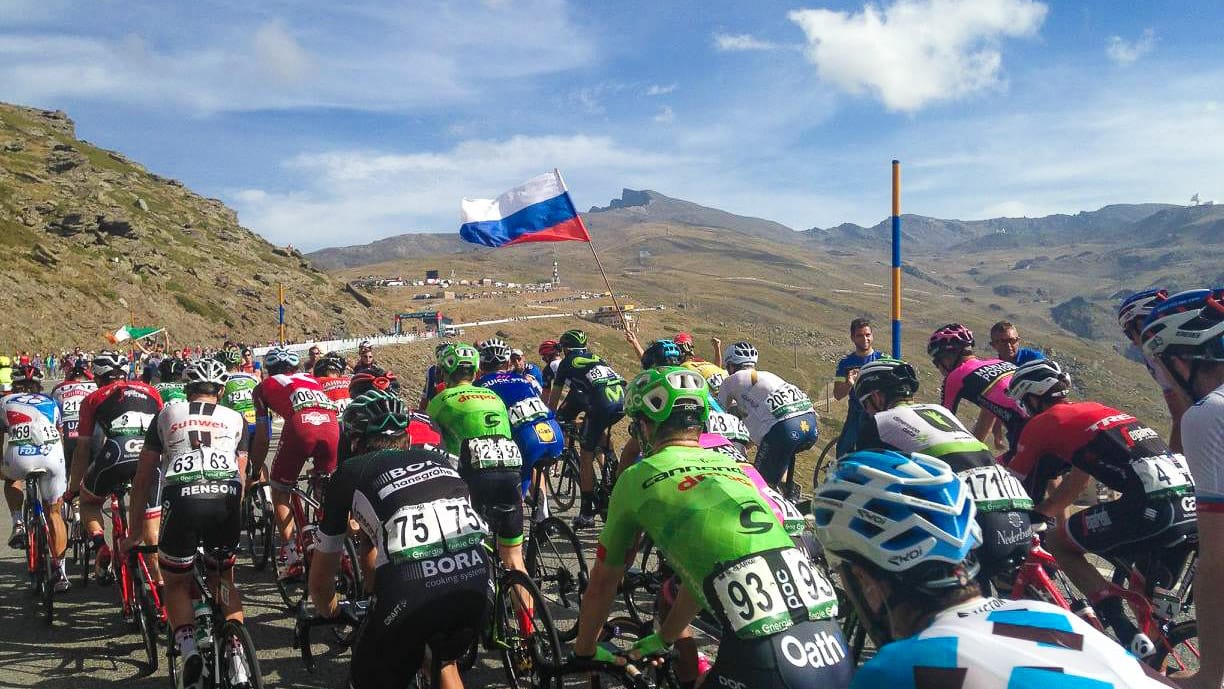
The pro peloton on the Hoya de la Mora climb in the Sierra Nevada mountains (photo credit: Sierra Sports & Tours)
What’s next?
- Check out our guide to the best cycling climbs in Girona and see why this region is so highly regarded in the cycling world.
- If you prefer island cycling, read up on the best cycling climbs Mallorca has to offer.
- Endurance cyclists who like a challenge will love some of the best long-distance cycling routes in Spain.
- You can get help planning a trip with our unbiased guide to 10 top Spain bike tour companies.
- Or plan your own trip and check out the best bike hotels in Spain where you can rest between rides.
- Get expert advice on cycling training camps in Spain including those used by many pro teams.
Please support Epic Road Rides
A huge amount of time and effort goes into the article you’ve just read, all with the aim of helping you!
If you found what you’ve read useful, I’d really appreciate it if you dropped something in the tip jar here.
It’s a way you can say thank you and help us carry on creating top quality content with no annoying ads and no pay wall.
Looking for an organised cycling trip?
If you want someone to help you plan and book your cycling holiday, fill out this form. We aren’t a tour operator/agent but we work with lots of people who are and will do our best to put you in touch with someone that can help (within 24 hours where possible)!Clare Dewey is a cyclist with a passion for travel. She set up epicroadrides.com in 2018 to help make it easy for cyclists to explore the world by bike. Today her mission is still inspiring cyclists to discover new places on two wheels - and doing what she can to make sure they have the best possible time while they're there. Clare has visited 50+ destinations around the world, many of them by bike.
Want to connect with Clare? Find her over on LinkedIn.
All metrics in this article are approximate.
First Published: 15 August 2025
The contents of this website are provided for general information purposes only. It is not intended to amount to advice and you should not rely on it. You should carry out your own due diligence and risk assessments and take professional advice. Views expressed by interviewees or other users of this website do not necessarily represent our views. We make no representations, warranties or guarantees, whether express or implied, that the content on our website is accurate, complete or up to date. If you use any information or content on this website, download from, or otherwise obtain content or services through our website, it is entirely at your own discretion and risk. Epic Road Rides Ltd disclaims all liability and responsibility arising from any reliance placed on the information and content on this website. Find out more here.
Not Vallter 2000?
https://climbfinder.com/en/climbs/vallter-2000-camprodon
A great climb for sure! It gets a shout out in our Girona climbs article: https://epicroadrides.com/cycling-blog/best-girona-cycling-climbs/#toc-49