
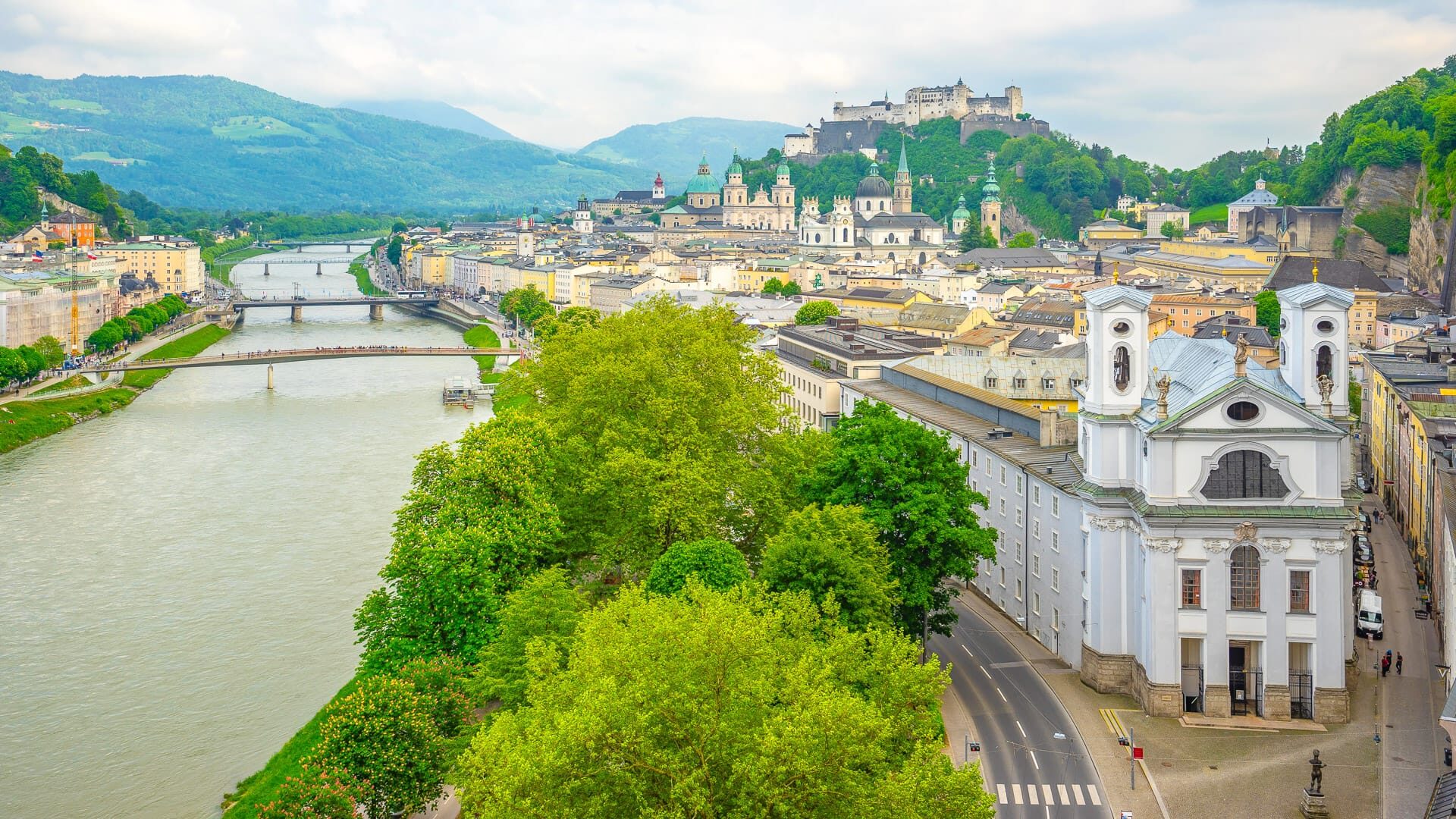
The Alpe Adria cycling route is a long-distance cycling adventure in Europe that is a must-do for cyclists that love picturesque landscapes and beautiful towns.
The journey takes you from the Austrian Alps to the Adriatic Sea in Italy; the full Alpe Adria Cycle Path from Salzburg winds through towering mountain peaks, passing green hills covered in forests, wildflower meadows, vineyards, and many noteworthy medieval towns and UNESCO cities, before finishing on the alluring Italian coast in Grado.
In this guide, we share highlights of the Alpe Adria route, including a suggested itinerary and essential tips.
Get ready for a rewarding cycling challenge through Austria and Italy…

Clare Dewey is a cyclist with a passion for travel. She set up epicroadrides.com in 2018 to help make it easy for cyclists to explore the world by bike. Today her mission is still inspiring cyclists to discover new places on two wheels - and doing what she can to make sure they have the best possible time while they're there. Clare has visited 50+ destinations around the world, many of them by bike.
Want to connect with Clare? Find her over on LinkedIn.
Always check current travel information and advice. For visitors from the UK, the UK government travel information pages are here.
Table of contents
This article contains a lot of useful information. To help make it more digestible, we’ve broken it down into several parts:
Part 1: Alpe Adria cycling route
Give us an overview of the Alpe Adria cycling route
The Alpe Adria bike route is a border-hopping cycling route that connects the mountains of Austria with the Adriatic Sea in Italy. In Austria, it is known as the Alpe Adria Radweg and in Italy the Ciclovia Alpe Adria.
This long-distance cycling journey spans 410 kilometres; it starts in the Austrian city of Salzburg and finishes in the port town of Grado on Italy’s Adriatic coastline.
However, the route length can be shortened if you choose to ride just part of the route. More information on this is below.
The map below shows the Alpe Adria cycling route:
 This Mapy route contains cookies...
I'm fine with Mapy cookies
Terrain
The magical journey that is the Alpe Adria begins in the Austrian Alps near Salzburg. It climbs into the alpine peaks of the High Tauern before heading through the valleys of the Möll and Drava rivers and the Villach basin. The route passes between the Julian and Carnic Alps. It briefly touches the alluvial plains of the Fella and Tagliamento rivers. Finally, it reaches the eastern edge of the Venetian Plain and the Adriatic coast.
Some of the cycling paths included on the route are sections of the popular Drava Cycle Path in Austria, which is considered one of the best cycle paths in Europe. As well as a section of the scenic Glockner Radweg Cycle Path from Möll, also found in Austria.
Surfaces
The Alpe Adria Cycle Path features a mix of asphalt surfaces and gravel paths; it takes place on a range of traffic-free cycle paths and low-traffic roads. Approximately 10% is on asphalt roads, 10% off-road and the rest of the route takes place on cycle paths.
Signposting
The Alpe Adria Cycle Path is a signposted cycle route; the signs use the German name for the route, Ciclovia Alpe Adria Radweg (CAAR) and its logo. But you might want to use a GPS file too.
What is the difference between the Alpe Adria Trail and the Alpe Adria Cycle Path?
Be aware! There are two variations of the Alpe Adria, one is a trail for walkers and the other is a cycle route for cyclists. In this article we focus on the cycle route.
The Alpe Adria Cycle Path was initially developed in the 2000s and launched in 2012. The project sought to connect existing cycle paths and old, unused infrastructure to create a long-distance cycling route through Austria and Italy.
Why is the Alpe Adria cycling route a ‘must do’?
The Alpe Adria is a varied place-to-place journey that combines nature with fascinating cultural gems.
Below are a few more reasons to add the Alpe Adria to your cycling wishlist.

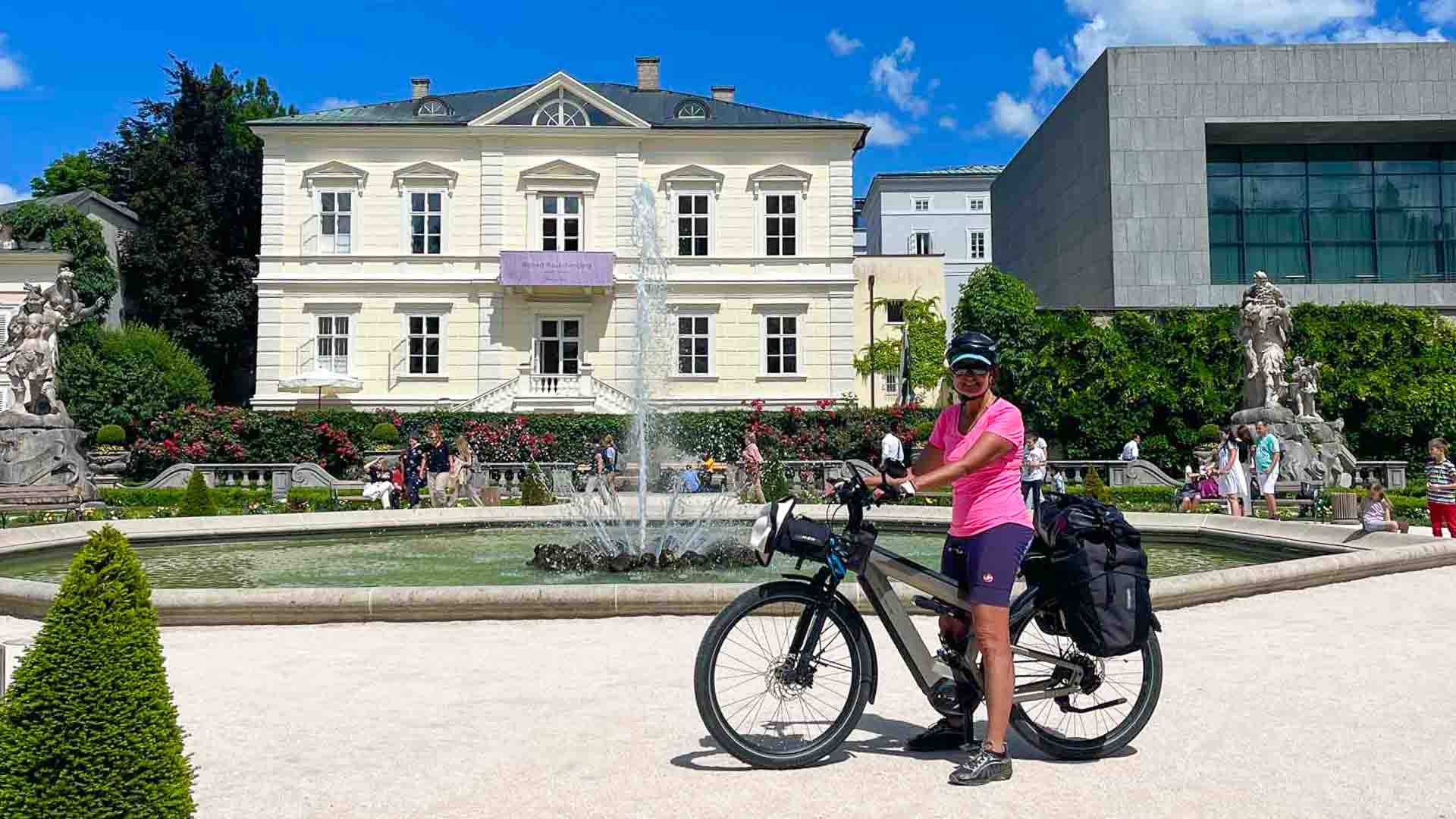
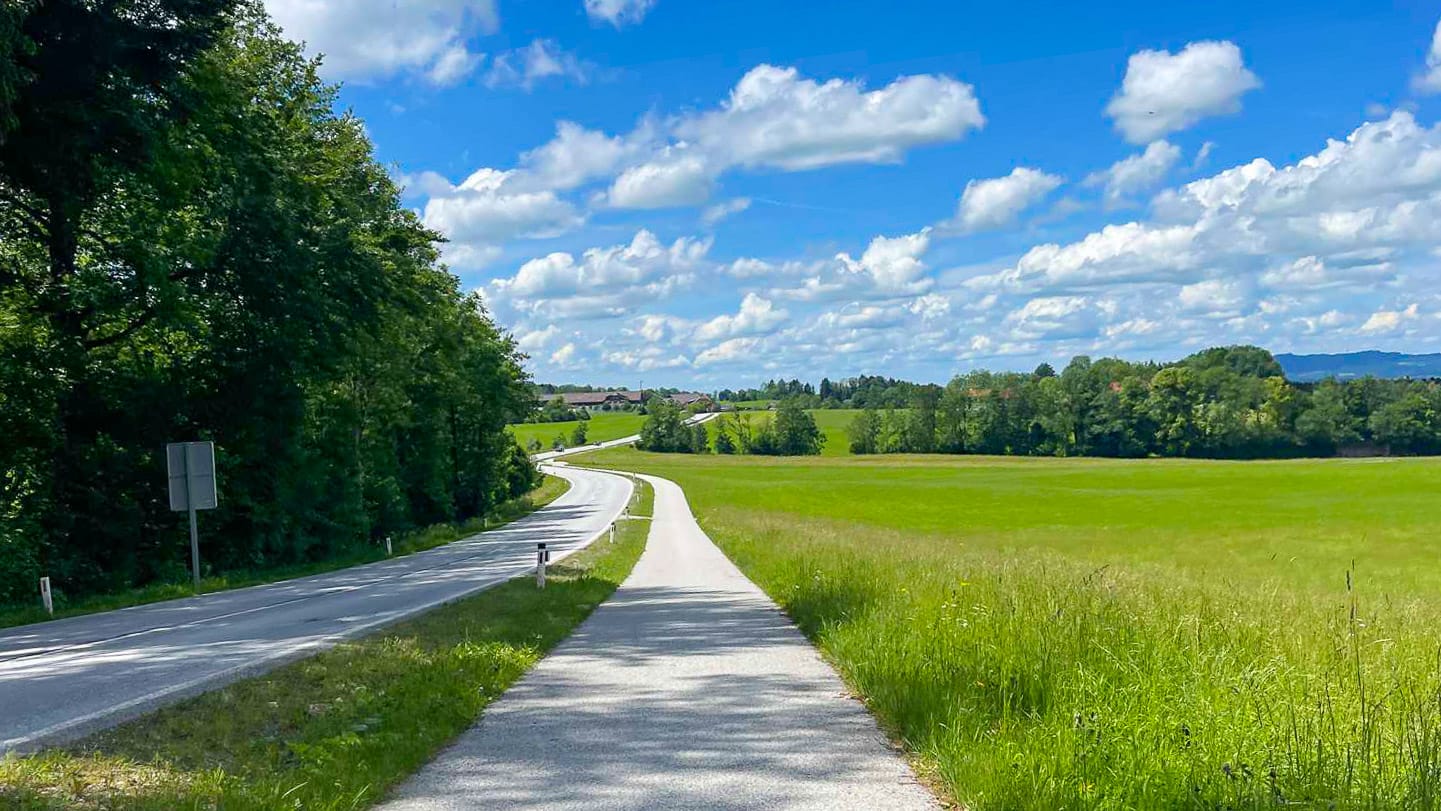

A border-hopping adventure
There’s something hugely enticing about a cross-border adventure.
Cycling the Alpe Adria involves cycling through both Austria and Italy, enabling cyclists to experience two different cultures in one ride; it’s an ever-changing journey with new landscapes, heritage and architecture to experience every day. The food is also notably different between the two countries.
The contrast from the start of the route surrounded by the Alpine scenery of Austria’s Salzburgerland, versus the end in Italy at the Adriatic coastline is vast and adds to a sense of completing a unique adventure.
UNESCO cities and towns
The Alpe Adria cycling route kicks off in style from the historic city of Salzburg.
The city’s fairytale-like old town has been a UNESCO World Heritage site since 1996 and is packed with beautiful Baroque buildings that are overlooked by the impressive medieval castle, the Hohensalzburg Fortress.
Other gems on the Alpe Adria cycle route include the Italian city of Palmanova. This unique star-shaped fortress city was built in 1593 by the Republic of Venice as a utopian military settlement. It’s widely considered a masterpiece of Renaissance urban planning. To enter Palmanova you’ll cycle through impressive city gates, such as the Porta Aquileia.
The ancient Roman city of Aquileia is also a site of significant historical importance. In its heyday, it was one of the largest and wealthiest cities in the Roman Empire and played a crucial role in religion and trade.
Today it’s a much smaller, quiet town but remnants of its grand past remain. If you have time, the Basilica of Santa Maria Assunta is worth a visit; it boasts a beautiful fourth-century mosaic floor. You’ll also find a treasure trove of Roman artefacts in Aquileia’s Archaeological Museum.
Alpine scenery
Leaving Salzburg, the first section of the Alpe Adria bike route cycles through the imposing mountain landscapes of the Alps.
You’ll cycle through peaceful valleys home to wildflower meadows, forests, waterfalls and picturesque Alpine villages such as Dorfgastein.
Highlights include cycling the gorgeous Gastein Valley surrounded by the Hohe Tauern mountains and the scenic stretch along the Glockner Radweg Cycle Path through the Hohe Tauern National Park.
Beer and wine
In Austria, the route takes you very close to the Hofbräu Kaltenhausen brewery. It was founded in 1475 and it is the oldest brewery in Salzburger Land. Up until 2010, Kaiser and Edelweiss were brewed here before their production was moved elsewhere.
Once the route crosses into Italy, cyclists cycle through the Friuli Venezia Giulia region. This corner of Italy is home to one of Italy’s most productive wine regions, the Collio.
From Venzone to Udine, you’ll cycle through many vineyards producing local wines including the light and zesty Friulano white wine.
Train journeys
The Alpe Adria bike route includes a mandatory train ride from Böckstein train station to Mallnitz in Austria. There is no other option for cyclists due to the lack of roads here. Cyclists have a dedicated bike carriage on the train with many bike racks; this train takes you through the eight-kilometre Tauernbahn Tunnel and takes approximately 11 minutes.
You can also make use of the local railways to help reduce daily mileage and provide more flexibility. There are trains from Tarvisio or Ugovizza in Italy to Venzone that some cyclists use to shorten the day. Find out more below.
Are there any variations you can make to the Alpe Adria cycling route?
The Alpe Adria cycling route can be tackled in several ways to suit your cycling needs, timescales and fitness abilities.
This article specifically focuses on the long-distance route from Salzburg to Grado, but there are other options to consider. For example, you could just choose to ride one of the following:
- From Salzburg to Villach (200 kilometres): The most challenging stretch of the route takes in the Alps mountainsIt is suitable for more experienced cyclists with a good level of fitness.
- From Villach to Grado (210 kilometres): This is the easiest section of the journey and is most suitable for leisure cyclists looking for a more relaxing ride, or families. You can also consider adding on an extra 40 kilometre extension to the port city of Trieste.
It’s also worth noting that there are tons of places you can stop off at along the route, or make small diversions for. If you have the time, these can be great fun.
How challenging is the Alpe Adria cycling route?
The Alpe Adria trail starts with roughly two days of gentle climbing. There’s then a nice descent to the Villach basin, another climb and finally a couple of days on a gently descending path down to Grado.
The first section in Austria from Salzburg to Villach covers 200 kilometres and features more challenging, mountainous terrain, including some sharp, short climbs, especially before Bad Gastein. A bit of training beforehand should help ensure you are comfortable tackling the multiple days in the saddle and tougher climbs.
However, the route features more gentle terrain and less elevation from the Austrian town of Villach and through the Italian region of Friuli-Venezia Giulia. This makes riding from here a good option for leisure cyclists and families with older children looking for a more gentle cycling tour with packed with sightseeing opportunities.
What is the best bike for the Alpe Adria?
The Alpe Adria Cycle Path is suitable for gravel bikes and leisure-style touring bikes with tyres that are suitable for off-road terrain.
Gravel bikes are better suited than road bikes due to the mix of gravel and asphalt terrain found on the route.
E-bikes are, of course, also an option.
Give us a feel for what each day is like
The sample itinerary below is for a classic eight-day Salzburg-to-Grado ride. Of course you can also spread the route over longer or shorter timeframes depending on fitness, train use and sightseeing plans.
Day 1: Arrival in Salzburg
Distance: 0 kilometre
Notes
Spend the day settling in and discovering Salzburg, one of Austria’s most attractive historic cities. There is plenty to fill your time here, from Mozart-related sights and The Sound of Music locations to elegant squares, riverside walks and café stops.
Salzburg is a memorable place to begin your Alpe Adria cycling tour. It is also worth considering an extra night here if your schedule allows.
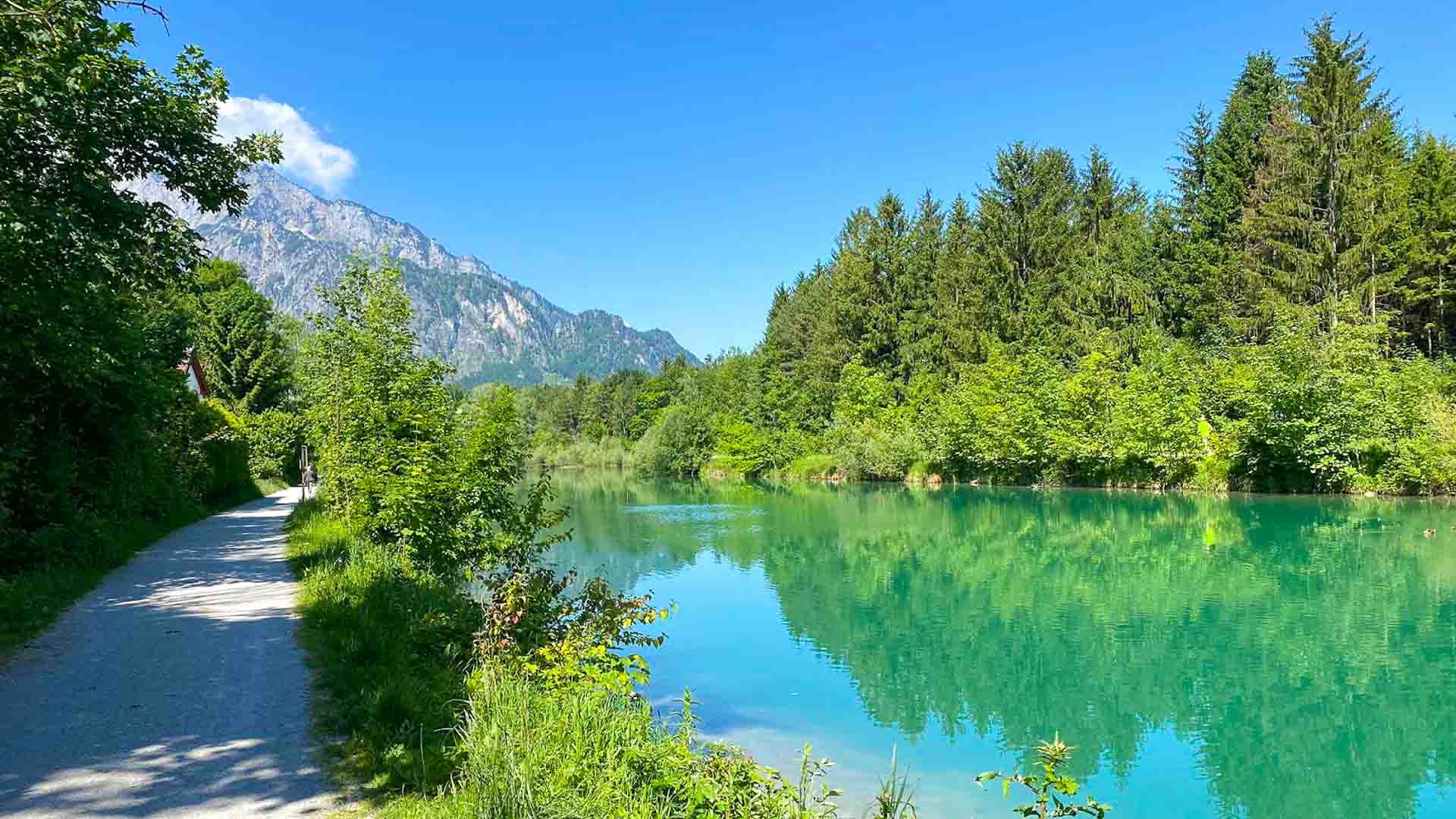
Salzach river (photo credit: John Vincent)
Day 2: Salzburg to Bischofshofen/ St.Johann
Distance: 60 kilometres
Notes
Leaving Salzburg, the route follows the Salzach River, with views towards Hellbrunn Palace and its impressive gardens. You then join the Tauern Cycle Path, gradually making your way towards the High Tauern mountains.
Hallein makes a good place to pause along the way. The town is known for its distinctive crooked houses and its long association with salt mining.
The day finishes in the Alpine town of Bischofshofen/St. Johann. Set in the heart of Austria’s ski region, Bischofshofen is a popular winter sports destination and is known for its large ski jump. From town, there are also fantastic views of the surrounding mountain peaks.
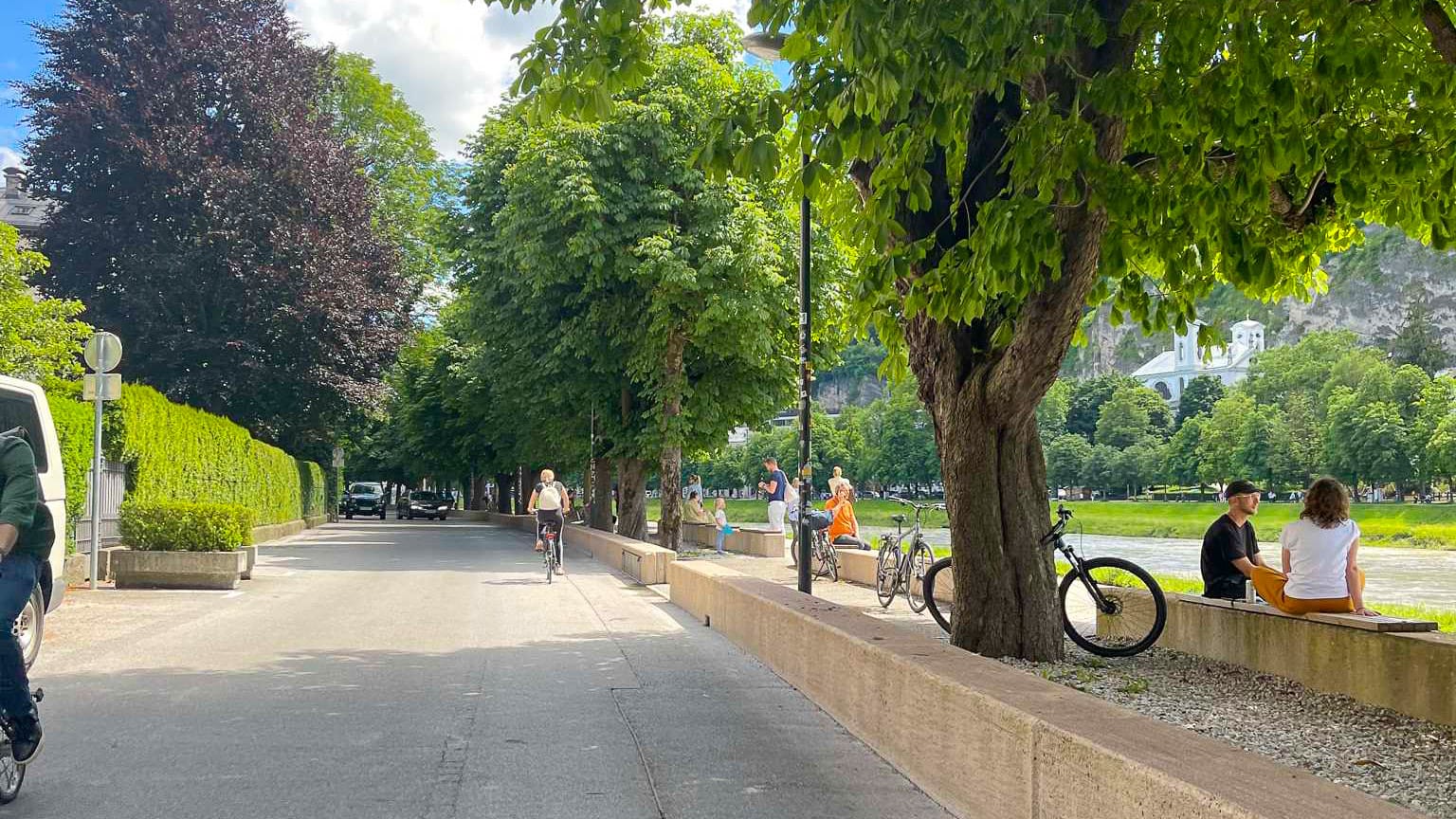
Path along the Salzach River (photo credit: John Vincent)
Day 3: Bischofhofen/ St. Johann to Bad Gastein
Distance: 55 kilometres
Notes
Today’s ride takes you from Bischofshofen through the green Gastein Valley, following the Gasteiner Ache River. The route passes wooded hillsides, Alpine chalets and views towards the snow-capped Hohe Tauern mountains.
Dorfgastein and Bad Hofgastein both make useful places to stop for food or a drink before continuing towards Bad Gastein. The final approach includes a notable climb, as the town sits high in the valley.
Bad Gastein is known for its mountain setting, Belle Époque buildings and the waterfall that drops through the centre of town.
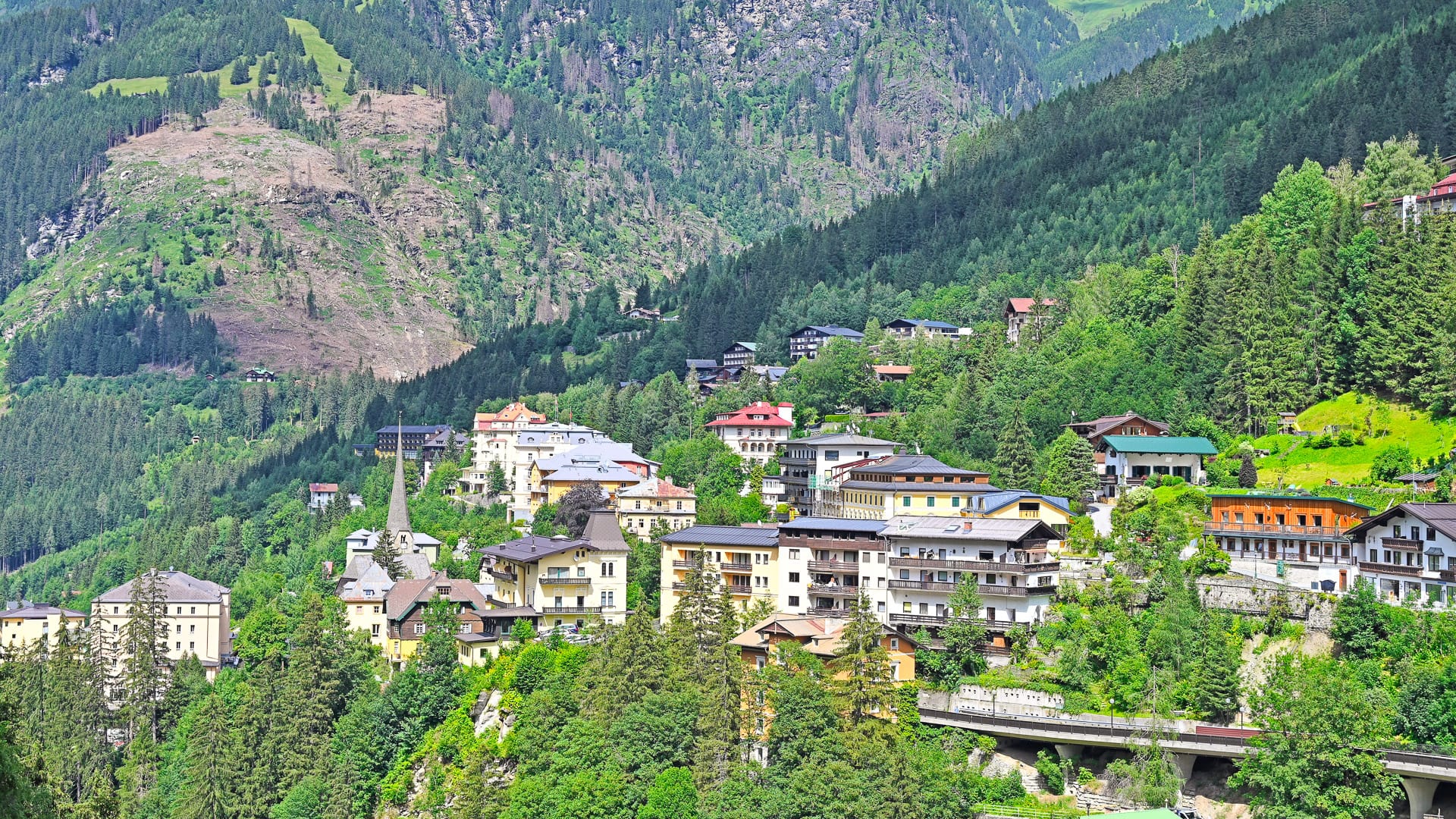
A wide-angle scenic view of Bad Gastein, the famous “vertical city” in the Austrian Alps
Day 4: Bad Gastein to Villach
Distance: 79 kilometres
Notes
The day begins with a short ride to Bockstein, where you take the train through the eight-kilometre Tauernbahn Tunnel to Mallnitz.
From Mallnitz, the route continues towards Möll and takes in one of the most scenic parts of the Alpe Adria route: the Glockner Radweg Cycle Path in Austria’s Carinthia region.
You then descend gently through Hohe Tauern National Park before joining the Drava Cycle Path towards Spittal an der Drau. This historic Austrian town is home to the Renaissance Castle of Porcia and is worth a short stop.
From Spittal, you continue to Villach. Villach is a lively city and also has a thermal spa, Kärnten Therme, which is a good option for a relaxing post-ride soak.
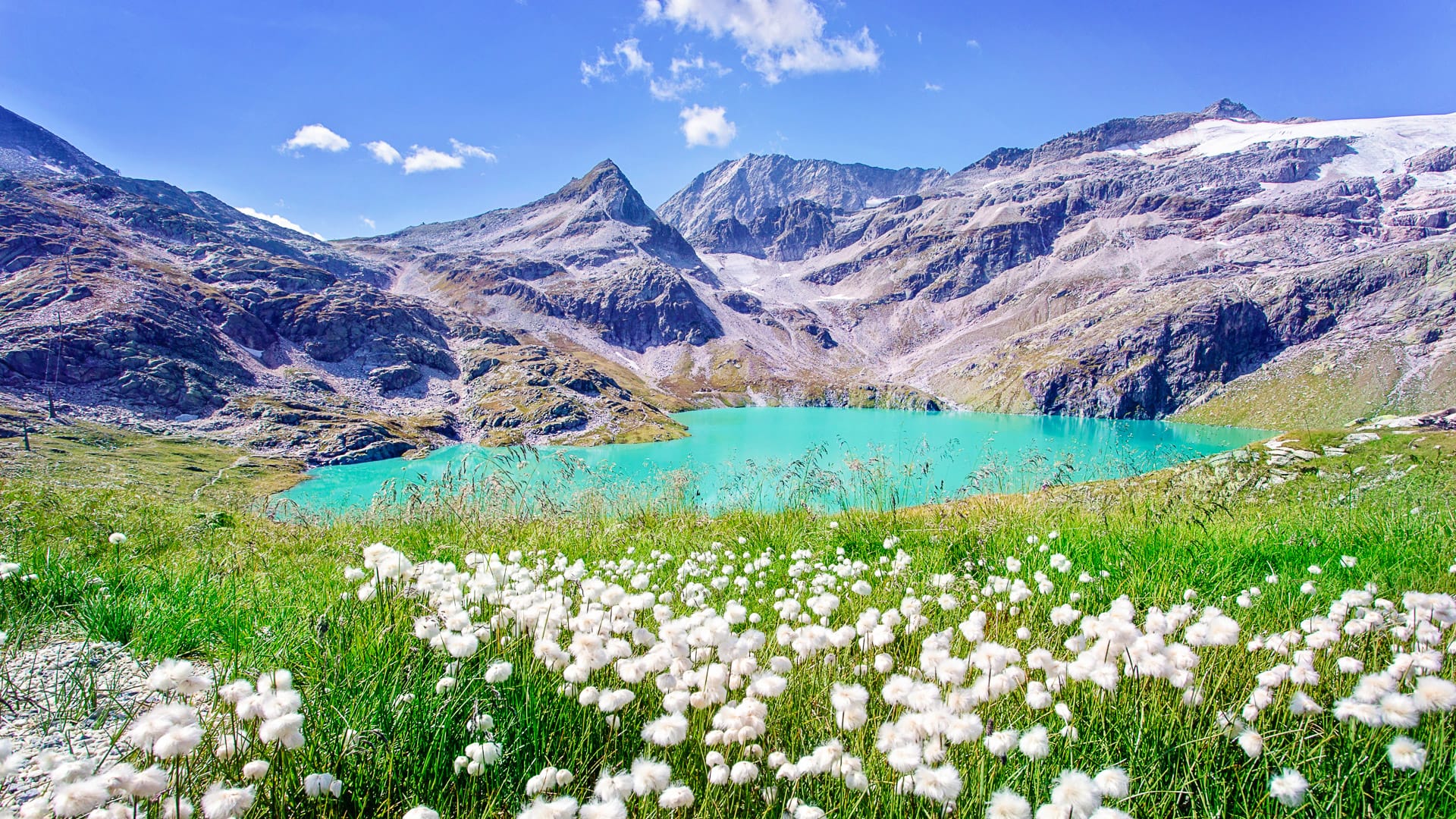
Lake in the High Tauern National Park, Austria
Day 5: Villach to Venzone
Distance: 40-60 kilometres circa or 85-90 kilometres (dependant on if train travel is used)
Notes
Leaving Villach, you follow the Gail River before crossing the border into Italy. There are usually no border checks, but you may be asked to show your passport if stopped by police.
Once in Friuli Venezia Giulia, the route heads towards Tarvisio. This mountain town sits close to the meeting point of Italy, Austria and Slovenia and is surrounded by wide valleys and forests.
From Tarvisio, or slightly further on at Ugovizza, you can choose to take a train to Venzone. This is a useful option if you want to save time or prefer a shorter ride. Those continuing by bike follow the old Pontebbana railway line, which has been converted into a cycle path.
Your destination is Venzone, a beautiful medieval town enclosed by 13th century walls. Its cobbled streets, historic centre and mountain backdrop make it a memorable overnight stop.
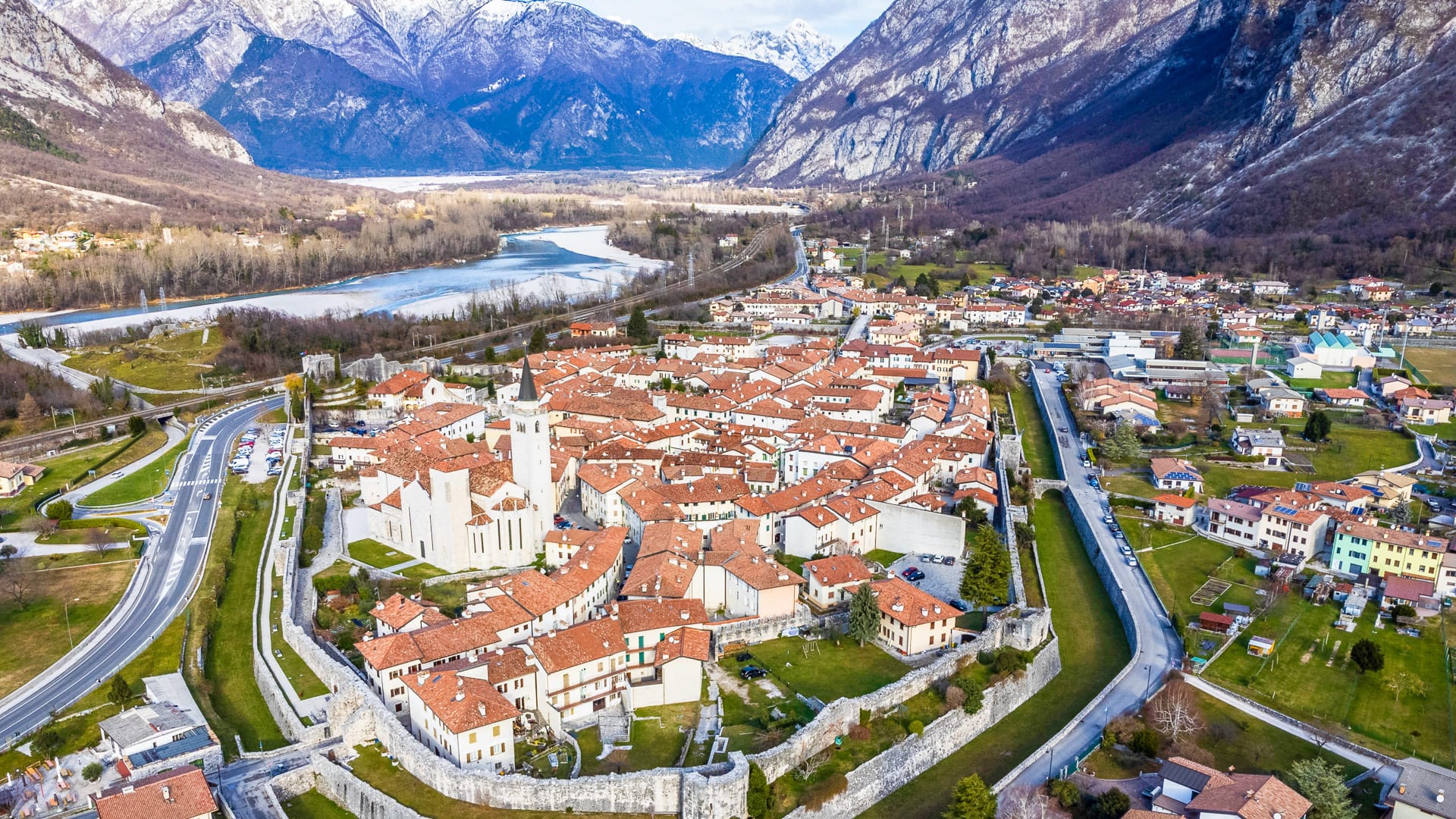
Ancient Venzone town surrounded with stone walls
Day 6: Venzone to Udine
Distance: 55 kilometres
Notes
The day starts with a ride to Gemona del Friuli. From here, the route gradually leaves the Alpine scenery behind and enters the rolling hills of Friuli’s wine country, passing vineyards along the way.
There may be the chance to try local wines today, including Friulano white wine, as well as Pinot Grigio, Sauvignon Blanc, Refosco and Merlot.
Your end point for the day is Udine, a city with strong Venetian influences and a handsome medieval centre. Piazza della Libertà is one of its highlights, with Greek-style statues, Roman columns and elegant architecture. It is a lovely place for an evening walk, and Udine is worth an extra day if you have time.
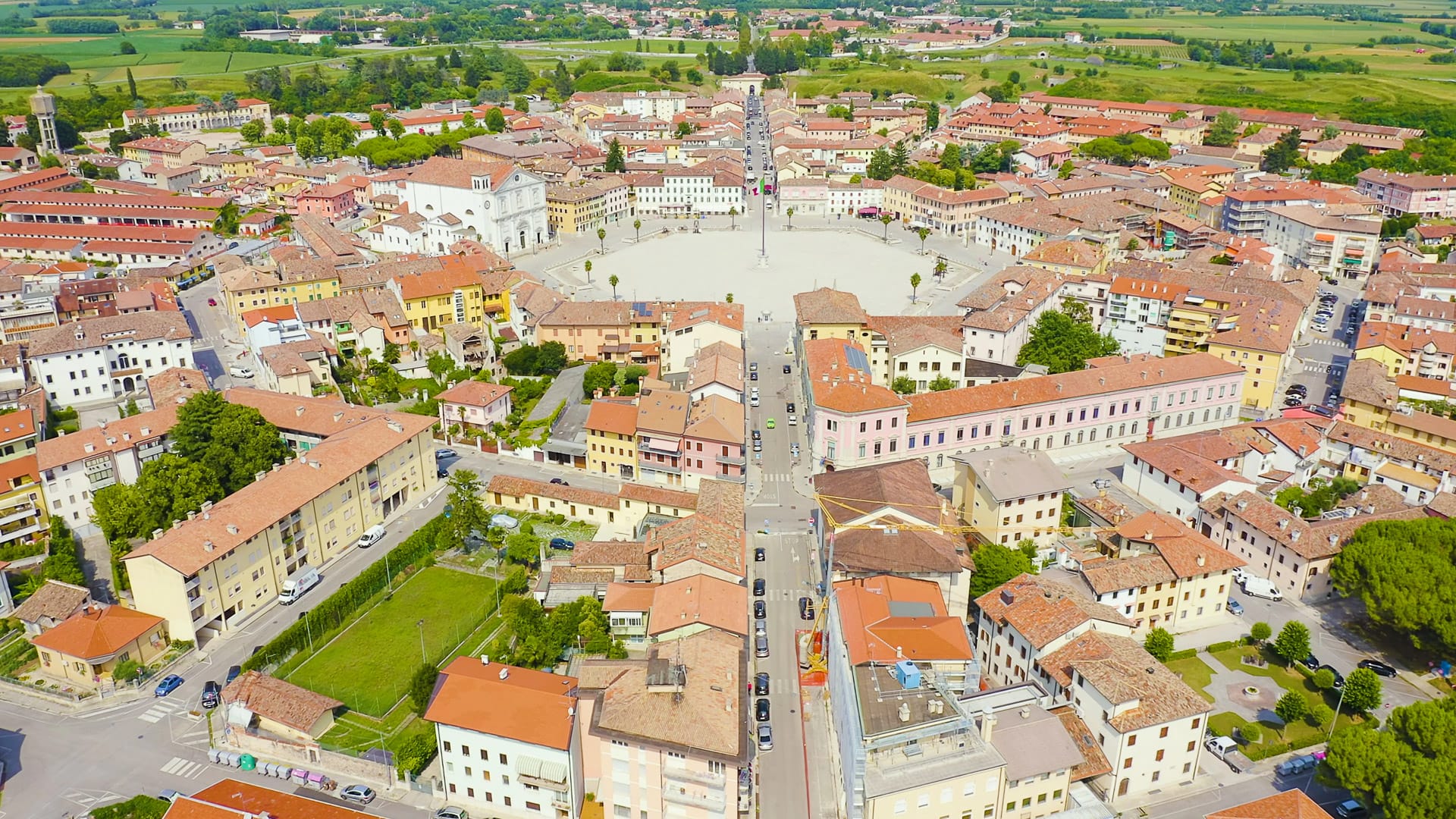
An exemplary fortification project in Udine, Italy
Day 7: Udine to Grado
Distance: 60 kilometres
Notes
The final stage of the Alpe Adria cycling route takes you through picturesque Italian countryside towards Grado. Before reaching the coast, the route passes two UNESCO World Heritage sites: Palmanova and Aquileia. Both are worth allowing time for if your schedule permits.
After time for history, and perhaps a gelato stop, the route continues towards the seaside town of Grado. The final approach crosses a five-kilometre causeway over the Adriatic lagoons.
Grado makes a fitting finish to the journey, with sandy beaches, a Roman-rooted old town and the Nazario Sauro promenade for a final walk by the sea.
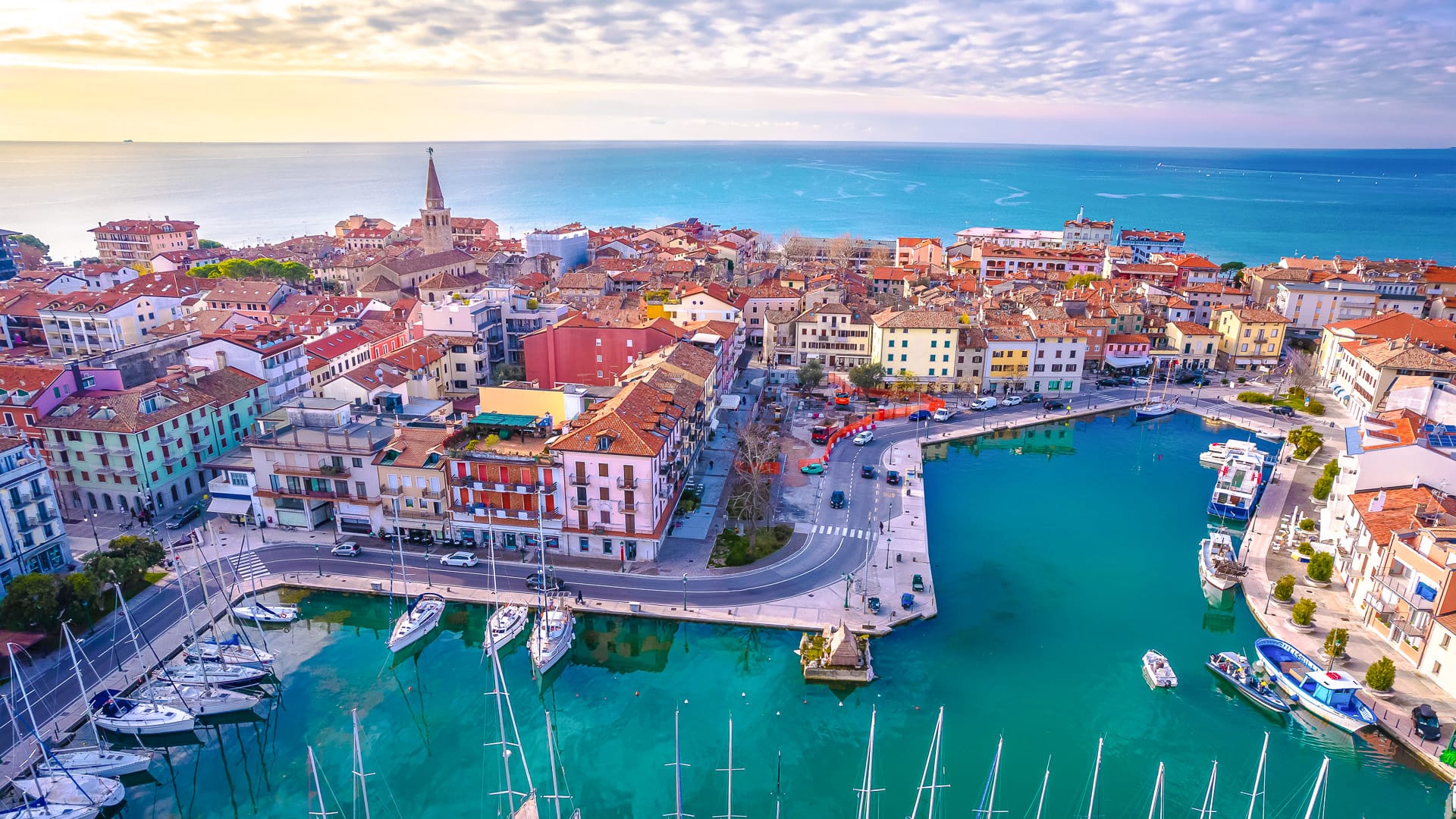
Town of Grado colorful central channel harbor aerial sunset view, Friuli-Venezia Giulia region of Italy
Part 2: Practicalities of cycling the Alpe Adria
What is the best time to cycle the Alpe Adria?
The best time to experience the Alpe Adria Cycle Path is from mid-summer to autumn (July to October).
Although summers can be hot and more crowded in the popular tourist hotspots, this is the best time to explore the Alpine landscapes by bike. Any earlier and you risk wetter conditions or even snow in the mountain resorts.
Early autumn is a particularly lovely time to enjoy Alpe Adria cycling, with the wine region in Friuli-Venezia Giulia in full harvest and pleasant temperatures ranging from 12°C to 22°C.
Where to stay on the Alpe Adria cycling route?
Remember to double-check bike storage arrangements (and any other services you need) before booking your accommodation as policies often change and they may charge for storage.
Accommodation along the route ranges from simple guesthouses to three and four-star hotels, plus occasional agriturismos on the Italian side.
If you’re travelling with a bike, prioritise places with secure bike storage (or a locked bike room), and check whether e-bikes can be charged safely overnight.
Getting to Salzburg
You can fly into Salzburg airport (SZG).
From the airport, Salzburg’s centre is easy to reach by public transport or taxi. If you’re starting a point-to-point ride, some cyclists also book a private transfer to the first overnight stop outside the city.
Getting home from Grado
There are a couple of airport options to fly home from, including Trieste (TRS) and Venice Marco Polo (VCE).
You could get a transfer from here, or there is a train you can take to Trieste that allows bikes on. Check ahead of booking to see if a reservation is needed.
Austrian-Italian border
Crossing the border into Italy is simple and there are no passport checks involved.
Public transport
If you plan to use public transport as part of your Alpe Adria cycling trip, do some planning in advance to check about the rules and regulations regarding bikes.
Trains are generally the best option in this region and most have space for bikes, but some will require a reservation in advance that will come with an additional cost, this includes high-speed trains like Frecciarossa, Frecciargento, Frecciabianca and intercity trains.
What to pack
Be aware! Temperatures in the Austrian Alps tend to be cooler than in the Italian region of Friuli Venezia Giulia, especially in May. Even in the summer months, the weather can change quickly in the mountains, with heavy rain showers possible. Pack warm layers for the evening and a lightweight, packable waterproof.
Alternatively, hot weather is common particularly the further south you cycle in the summer and can be equally challenging. Light, breathable layers, sunglasses and suncream are essential to keep you comfortable in these conditions.
Take a look at this article for more detailed cycling holiday packing suggestions.
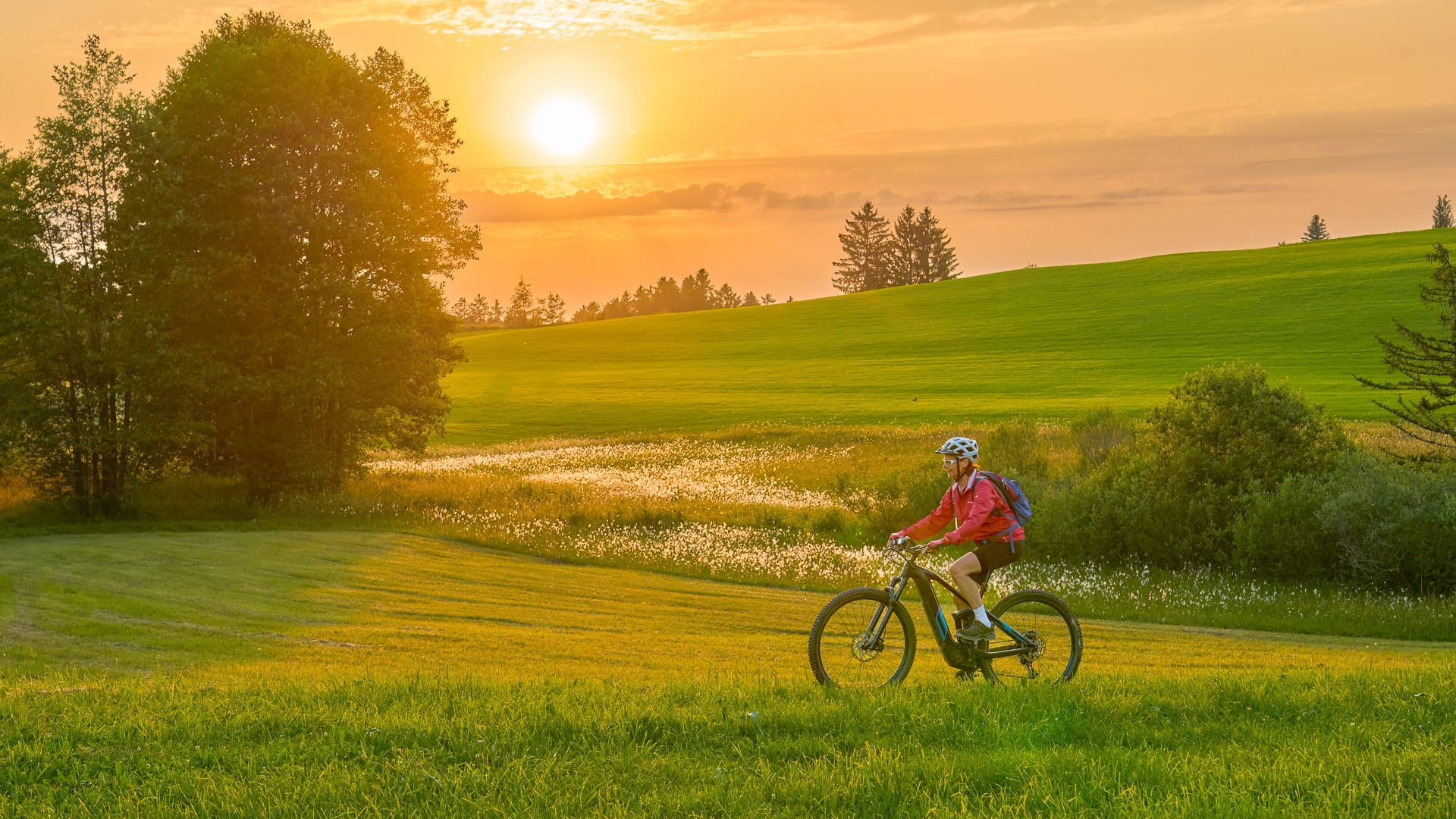
Cycling at sunset in the Bregenz Forest mountains near Sulzberg, Vorarlberg
Language
English is widely spoken throughout the regions you cycle through.
It’s always nice to learn the local language so you can say hello and thank you whilst exploring. It’s also worth noting that Austria’s official language is German.
Here are the basics:
German
- Good morning: Guten morgen
- Goodbye: auf Wiedersehen
- Hello: hallo
- Thank you: danke
Italian
- Hello/ goodbye: Ciao
- Good morning: Buongiorno
- Thank you: Grazie
Highway code and travel information
As ever, it’s a good idea to check current travel information before you book and travel. For UK visitors, the UK government travel information pages for Austria are here, you can also see these for Italy here.
You should also read and follow Austria and Italy’s highway code.
Part 3: Do you need an organised Alpe Adria tour?
Tour operators typically offer multiple bike tours along the Alpe Adria Cycle Path, catering to a variety of cycling abilities, goals and needs. Whether you want to experience the full 410-kilometre journey, or would prefer to sample a gentler section, they’ve got something to suit everyone.
We know several operators along this route, so if you’re looking for support, fill in this enquiry box and we will try and connect you.
Will you cycle the Alpe Adria Trail?
We think this Alps to sea adventure sounds like a beautiful route and have added it to our cycling wishlist!
Looking for more cycling inspiration for cycling in Italy? Don’t miss these articles:
- How to plan a cycling holiday in Northern Italy
- Guide to Friuli Venezia Giulia
- The Parenzana bike trail
- 4 best cycling routes in the Dolomites
- Guide to gravel cycling in Austria
Please support Epic Road Rides
A huge amount of time and effort goes into the article you’ve just read, all with the aim of helping you!
If you found what you’ve read useful, I’d really appreciate it if you dropped something in the tip jar here.
It’s a way you can say thank you and help us carry on creating top quality content with no annoying ads and no pay wall.
Looking for an organised cycling trip?
If you want someone to help you plan and book your cycling holiday, fill out this form. We aren’t a tour operator/agent but we work with lots of people who are and will do our best to put you in touch with someone that can help (within 24 hours where possible)!Clare Dewey is a cyclist with a passion for travel. She set up epicroadrides.com in 2018 to help make it easy for cyclists to explore the world by bike. Today her mission is still inspiring cyclists to discover new places on two wheels - and doing what she can to make sure they have the best possible time while they're there. Clare has visited 50+ destinations around the world, many of them by bike.
Want to connect with Clare? Find her over on LinkedIn.
All metrics in this article are approximate.
Last Reviewed: 18 June 2026
First Published: 03 January 2025
The contents of this website are provided for general information purposes only. It is not intended to amount to advice and you should not rely on it. You should carry out your own due diligence and risk assessments and take professional advice. Views expressed by interviewees or other users of this website do not necessarily represent our views. We make no representations, warranties or guarantees, whether express or implied, that the content on our website is accurate, complete or up to date. If you use any information or content on this website, download from, or otherwise obtain content or services through our website, it is entirely at your own discretion and risk. Epic Road Rides Ltd disclaims all liability and responsibility arising from any reliance placed on the information and content on this website. Find out more here.
Comments