

L’Étape du Tour de France is (probably) the most famous mass participation bike ride in the world. Each year, thousands of amateur cyclists gather to ride one of the toughest and most spectacular stages of the Tour de France.
2026 will be the 34th edition of L’Étape du Tour. It will be held on 19th July 2026 on the route of the 20th stage of the Tour de France 2026, between Le Bourg d’Oisans and Alpe d’Huez, incorporating the Cold de la Croix de Fer, Col de Télégraphe, Cold du Galibier, and Col de Sarenne.
While I haven’t ridden this event before, I have ridden the region. Plus I’ve interview local experts to learn more about the event, and get a deeper understanding of what taking part involves to share that with you.

Clare Dewey is a cyclist with a passion for travel. She set up epicroadrides.com in 2018 to help make it easy for cyclists to explore the world by bike. Today her mission is still inspiring cyclists to discover new places on two wheels - and doing what she can to make sure they have the best possible time while they're there. Clare has visited 50+ destinations around the world, many of them by bike.
Want to connect with Clare? Find her over on LinkedIn.
This guide provides an overview of the 34th edition of the Étape du Tour to be held on 19th July 2026. Please read the rules, entry conditions and information on the official website if you want to take part. In the event of any discrepancy between this guide and information on the official website, please rely on the official website. We are not the organisers of the event (nor are we connected with them).
Part 1: What is L’Étape du Tour and is it for you?


What is L’Étape?
L’Étape du Tour is an annual bike ride organised by Amaury Sport Organisation (“A.S.O.”), the same people that organise the Tour de France.
First held back in 1993, today it sees around 16,000 amateur cyclists ride a stage of the Tour de France on closed roads. The Étape takes place in July, usually a few days before the professional peloton rides the same route. This lets riders experience the same challenges and a very similar atmosphere as the professional riders.
A.S.O. usually choose one of the queen stages of the Tour de France for L’Étape; the queen stage is always one of the spectacular mountain stages. This means that the Étape course changes every year. In recent years it has tended to be in the Alps, so you can expect big mountain climbs and spectacular scenery.
Why is L’Étape so famous?
L’Étape piggybacks on the fame of Le Tour and is set apart from other European sportives and granfondos by that connection. It’s made special by the fact the route is different every year and that the route will always be a nearly identical copy of a stage of the Tour de France that the pros will ride just a few days later. Riding the Étape du Tour is a unique opportunity to challenge yourself and ride in the footsteps of cycling legends. It’s the way to get a true taste of the Tour de France.
The L’Étape route takes riders to new areas every year, but the things you can always be assured of are magnificent mountain panoramas and excellent organisation. Small things make it special – for example, the level of support from spectators, the vibrant expo at the race village, official classifications and an official podium ceremony with Tour de France jerseys.
Especially if the Étape finishes on one of the famous passes, you can expect amazing support from the crowds. On sections of the course, you’ll find roads with thousands of people cheering you on to the finish. The reason? Many of them will be there “bagging” their place for the pro race in a few days’ time. You are the warm-up act!
Another thing that’s special about the Étape are the medals; they’re usually really nice and different every year. Many of our guests that come back year after year like to collect them.
It’s a sign of quite how popular L’Étape du Tour is that A.S.O. have created international versions of L’Étape. The Étape series is marketed under the name Étape by Tour de France series. The events are held around the world to give local riders a taste of the Étape du Tour and the Tour de France.
An overview of the Étape 2026 course
The exact Étape du Tour date and location are announced in October each year. There’s always a sense of excitement as to what the route will be.
The 2026 edition of L’Étape du Tour de France is considered one of the toughest in recent years, as it includes 5,400 metres of climbing over 170 kilometres.
La Marmotte v L’Étape: which is better?
Many would say that L’Étape and La Marmotte are the two most famous amateur cycling events in Europe. They are both held in the breathtaking Alps, and many serious cyclists feel compelled to tackle both in their lifetime (albeit maybe not the same year, given they’re often only a few days apart!).
Many people believe that the Marmotte course is more challenging than the Étape, so we’d probably suggest starting with the Étape and then taking on the Marmotte.
Here are some important distinctions:
- L’Étape usually takes place in July, while the Marmotte takes place at the end of June.
- L’Étape limits participants to around 16,000 riders, while La Marmotte allows a maximum of 7,000 riders.
- L’Étape is held on fully closed roads, while the Marmotte is on partially closed roads.
- L’Étape course changes annually and is unveiled in mid-October of the previous year, while the course for La Marmotte tends to remain roughly 95% the same year after year.
- L’Étape usually covers fewer, and sometimes less iconic, cols than La Marmotte’s four unchanging iconic cols. That’s not the case in 2026 as L’Étape has four tough climbs of its own.
- Some iterations of L’Étape are easier than others (relatively speaking!) but in any event, they’re usually shorter and have less elevation gain than La Marmotte. Again, less so in 2026…
Want to know more about riding La Marmotte? Read our article on La Marmotte.
Part 2: L’Étape 2026 route
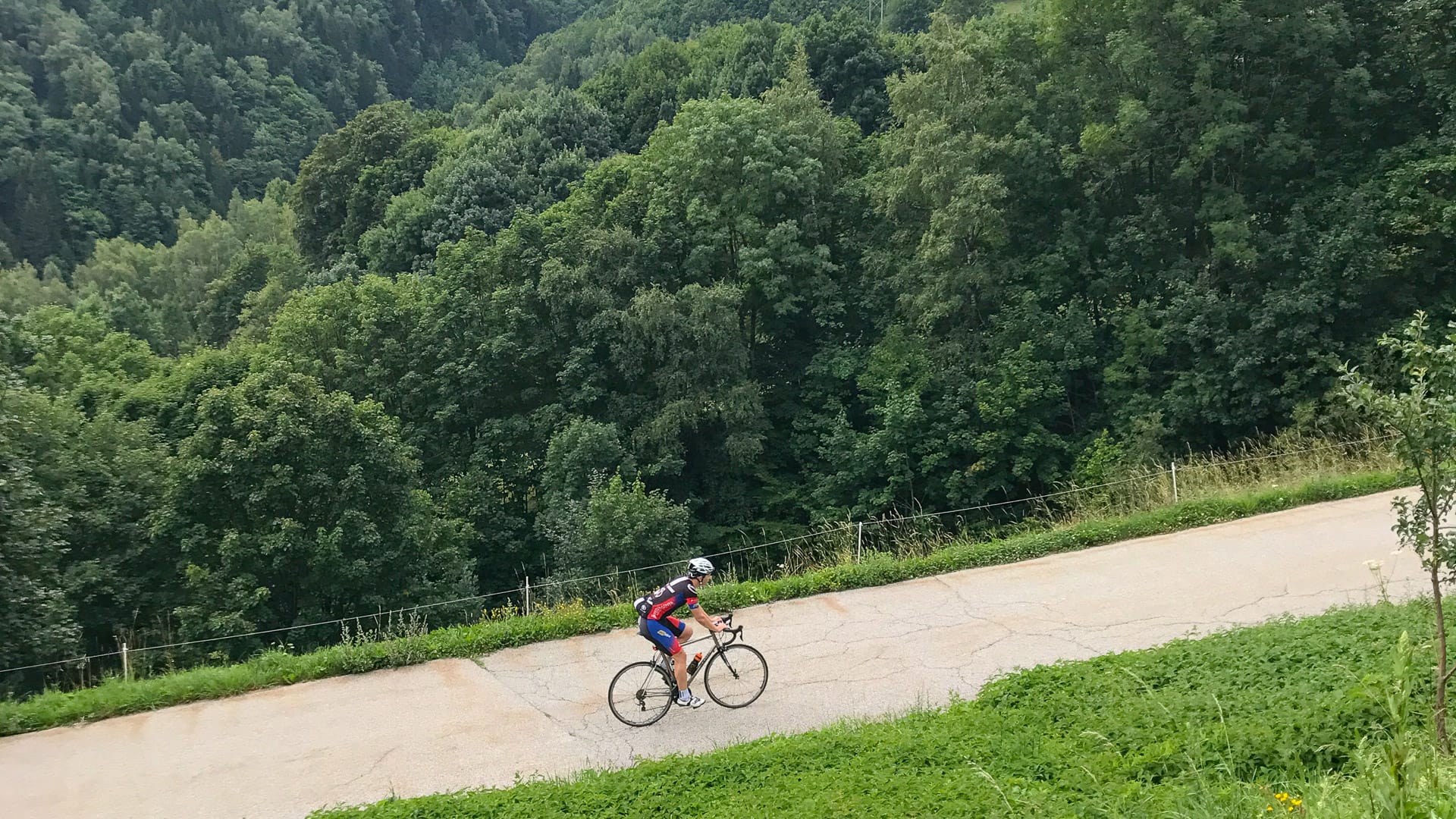
Quiet mountain ascent
L’Étape du Tour 2026 takes riders deep into the high Alps on a route that mirrors one of the most demanding stages of the Tour de France. Starting in Le Bourg-d’Oisans and finishing on Alpe d’Huez, the course links together a series of iconic climbs that have shaped Tour history for decades.
This is a classic Alpine challenge. Long climbs, high altitude and relentless elevation gain mean that pacing, fuelling and patience will matter just as much as fitness. The sting in the tail is a rarely used approach to Alpe d’Huez that adds a final layer of difficulty to an already brutal day.
There are four major climbs on the 2026 Étape route:
Col de la Croix de Fer
24 kilometres at 5.2% average gradient
The opening climb begins not long after the start and sets the tone for the entire day. The Col de la Croix de Fer is long rather than steep, but its irregular profile makes it deceptively hard. Short flatter sections interrupt tougher ramps, which can tempt riders into pushing too hard early on.
This is a climb where restraint pays off. Riding it smoothly and conservatively is far more valuable than chasing time, especially with three major climbs still to come.
Col du Télégraphe
11.9 kilometres at 7.1% average gradient
After the descent and valley roads into Saint-Jean-de-Maurienne, the road rises again for the Col du Télégraphe. It is a steady, no-nonsense climb that gradually wears you down rather than delivering any dramatic ramps.
The Télégraphe is best thought of as preparation rather than a standalone challenge. Cresting the summit does not bring true relief, only a short transition before the Galibier begins.
Col du Galibier
17.7 kilometres at 6.9% average gradient
Ridden immediately after the Télégraphe, the Col du Galibier is the defining climb of the day. The scale of the mountain becomes more apparent with every kilometre, and the upper slopes are fully exposed to the elements.
As altitude increases, the effort required for each turn of the pedals rises with it. Weather can be unpredictable here, even in midsummer, and energy management becomes critical. Reaching the summit is a genuine milestone, but it comes at a significant physical cost.
Col de Sarenne and the finish at Alpe d’Huez
12.8 kilometres at 7.3% average gradient
After the long descent from the Galibier, many riders will be expecting the famous final climb. Instead, the route turns onto the Col de Sarenne, a quieter and more rugged ascent that feels very different to the big Tour passes.
The road is narrower and the gradients are consistently demanding, especially given how deep into the ride it appears. Fatigue is unavoidable at this point, and the climb can feel surprisingly unforgiving.
From the summit of the Sarenne, the finish is not immediate. A section of descending and rolling terrain follows before the final approach back to Alpe d’Huez. The last kilometres are still uphill, and although the gradients are more manageable than the classic 21 bends, they come when the legs are already empty.
Crossing the line here is less about celebration and more about survival. It is a fitting end to one of the toughest Étape routes in recent years.
Part 3: Practicalities of taking part in L’Étape
How to get a place on Étape du Tour
To enter the Étape du Tour, you need to register on the official Étape website. Entry registration usually opens in October and spaces are limited, so it’s important to secure your spot early. You will need to provide personal details, sign a waiver, and pay the entry fee.
If you don’t get a spot, don’t worry, as official operators get a generous allocation of tickets and usually still have places available after the ticket-only options have sold out.
Remember your medical certificate
Before participating in the Étape du Tour, you will need to obtain a medical certificate. This requirement ensures that you are fit to take part in the event. The Étape website provides a detailed template for the certificate, which needs to be completed and signed by a doctor. It must be dated within one year of the event.
What are the cut-off times for L’Étape du Tour 2026?
These are not yet known. We will update the article once they are published.
Is L’Étape du Tour on closed roads?
Yes, it is. However, note that Étape regulations incorporate a number of safety requirements including a reminder that you’ll still be sharing the road with the event organisation vehicles, e.g. safety and medical vehicles. More information on their site, here.

The avalanche tunnels
How hard is L’Étape du Tour? How do you train?
The Étape du Tour is a challenging ride, designed to replicate the difficulty faced by the professionals. Expect demanding climbs and technical descents. It is essential to train and prepare hard to ensure you can complete the distance within the time cut-offs.
The event attracts the best amateur riders from the world over, and especially towards the front of the field, competition is fierce. Only the best cyclists can hope to finish anywhere near the podium. Simply to finish is something to be proud of; literally thousands of riders abandon every year.
Can beginner cyclists enter L’Étape?
Technically they can – but it’s not a great idea. It would be much more sensible to start with an easier event, get yourself confident with cycling in big groups and cycling in the mountains, and then attempt the Étape.
Do you need a training plan for L’Étape du Tour?
Yes!
However, what your Étape training plan looks like will vary considerably depending on how experienced you, how fit you and your objectives for the event.
L’Étape training plans are well outside the scope of this article, but consistency, commitment, hill climbing practice and developing your aerobic and fat-burning capabilities will be key.
An Étape d’Tour training plan is outside the scope of this article, but here are some key points to consider
- Cycling the challenging Étape requires physical fitness and specific cycling conditioning. Don’t underestimate the level of fitness needed, even if you’re fit from another sport.
- Developing the ability to climb all the hills is crucial. Descending skills are important for safety, whether you’re a professional or amateur. Learn good technique to stay safe.
- It sounds basic, but it’s also really important to know how to properly fuel your ride and take on food and drink even when exhausted. Without this ability, finishing is unlikely.
- Mental strength is key as L’Étape will probably be one of the toughest challenges you’ve ever faced.
- Give yourself a good taper in the last two weeks to make sure you’re fresh for the event.
- Remember to pace yourself. It’s better to start easy and finish fast than it is to start fast and finish past your limit.
On the topic of mental strength, this video has tips for tackling L’Étape.
 There's a Youtube video here!
I'm fine with Youtube cookies
What support is there on the route?
L’Étape event support
The event provides a mechanical assistance service with a neutral support car and Shimano fixed mechanical service points positioned along the route. However, of course you might not find assistance the exact moment you need it, so be prepared (more on that below).
L’Étape feed stations will be found along the course. The feed stations are stocked with water and basic nutrition like nuts and bananas.
Private feed stations
If you book your place via a tour operator, you may have the benefit of private feed stations on the course, with abundant food and drink options. These stations are less crowded than the official ones, allowing for easier access. Each station is usually equipped with a bike mechanic and basic first aid for your convenience. By using these private stations, you can save valuable time as they are quicker to enter and exit compared to the public stations.
How to plan your nutrition?
Make sure to fuel your body properly and stay hydrated, even if the weather isn’t sunny.
If you’re participating in a hot edition of L’Étape, it’s crucial to pay extra attention to your fluid intake. If you start feeling overheated, take advantage of any opportunities to cool down.
For instance, try riding in the shaded part of the road whenever possible. You can also use roadside water troughs to cool yourself off.
A final practical point, Étape hotels that operators use typically provide an early breakfast, with a great selection of food (and coffee!) but feel free to check with them exactly what time that will be and what food will be available. If it doesn’t match your needs, consider taking your own breakfast and eating it in your room.
This article has more tips for cycling nutrition for long events.
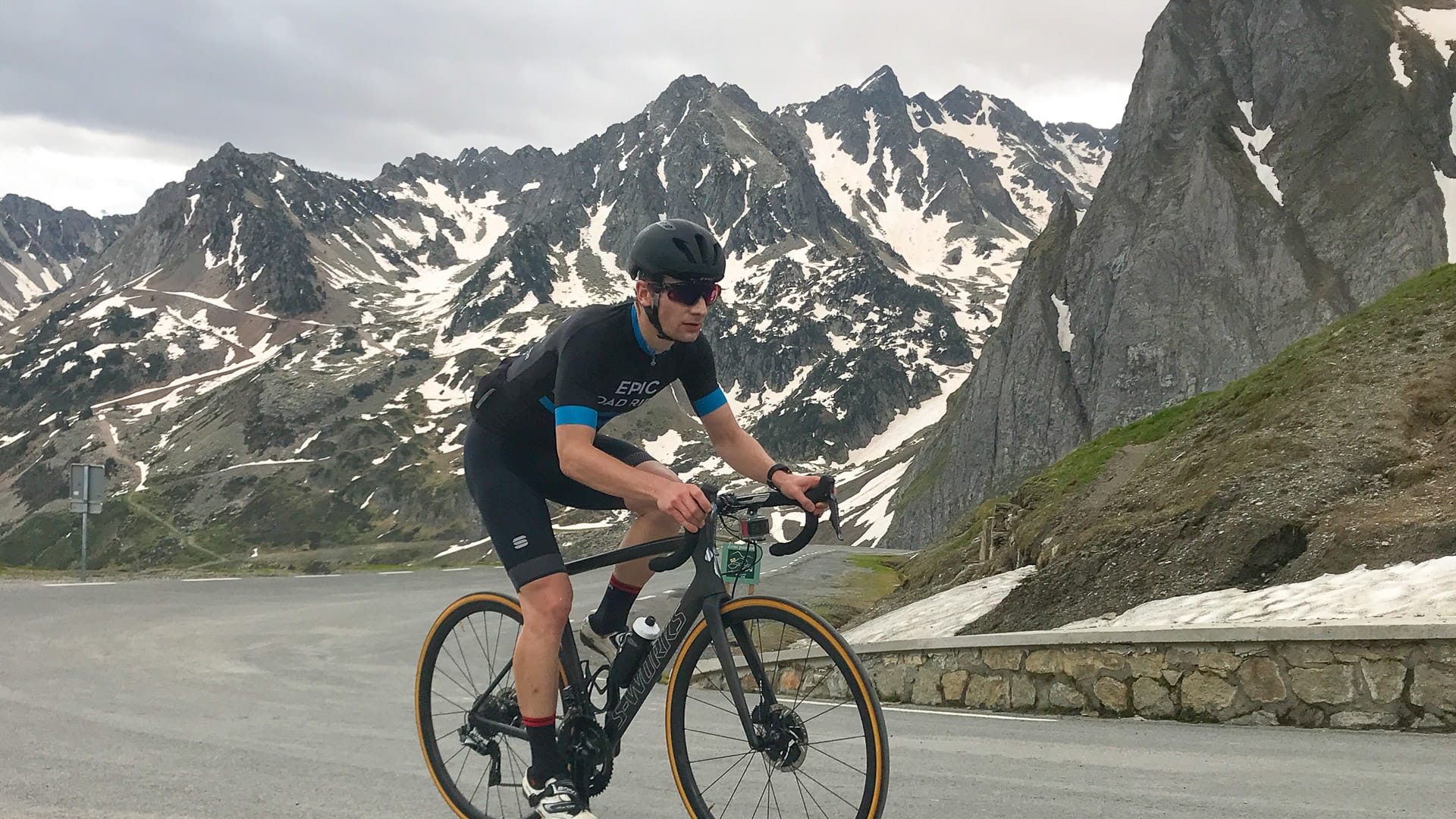
Riding past rocky peaks and lingering mountain snow
What kit choices do you suggest for riding L’Étape?
Compulsory kit
Étape regulations state that the following items are compulsory: “helmet, water bottle, repair kit with two spare inner tubes or a specific tubular tyre or tubeless tyre puncture repair kit as well as a in the event of a puncture.”
And also…
Be prepared. Take spares of everything, including riding kit.
Thoroughly prepare your bike or have a bike shop do it for you. Take the time to research the course carefully and ensure you have appropriate gearing
Make sure you bring a good supply of preferred gels/bars, electrolyte tablets, 2 x spare tubes, Co2 canisters or frame pump. Don’t forget the sunscreen – or zinc if you prefer it. The packing list here may also assist.
The weather can change at short notice, even in July. The minimum you’d want to have with you is arm warmers and a gilet; a light rain jacket may also be a good idea. The temperature can drop on higher elevations and fast descents can get chilly. More tips on weather in the Alps, here.
If it’s looking likely to rain, overshoes, long finger gloves, and knee warmers may be in order. Pack everything you may need and check the forecast when you arrive. Leave anything unnecessary in your hotel room. Stay ready for any weather and enjoy your ride!
Make sure you’ve got appropriate bike and travel insurance that’ll cover you if you (or your bike) in case of emergencies.
And finally, how about jotting down the key summits, distances and feed/water stops on your bars. By the halfway mark, you might find your brain isn’t functioning at top speed and a reminder of the key milestones could come in handy!

Mountain cycling landmark
L’Étape accommodation: where should people stay?
Accommodation for the Étape du Tour varies depending on the route and stage towns each year.
If you’re going DIY, this can be one of the biggest headaches as so much accommodation gets booked up ahead of time by the Tour de France and other operators! The best suggestion is to book as early as you possibly can. Looking for small, bike-friendly B&Bs and hotels in the area is a good way to go as they can provide local advice and support. There is often useful accommodation information the Étape du Tour website.
Tour operators have built up relationships with the best hotels for many years; they fully understand the needs of cyclists and provide services you need. There’s the early 5am breakfast on the day of the event, you can leave your bike in your room or in their secure bike storage and they can also arrange massages for you.
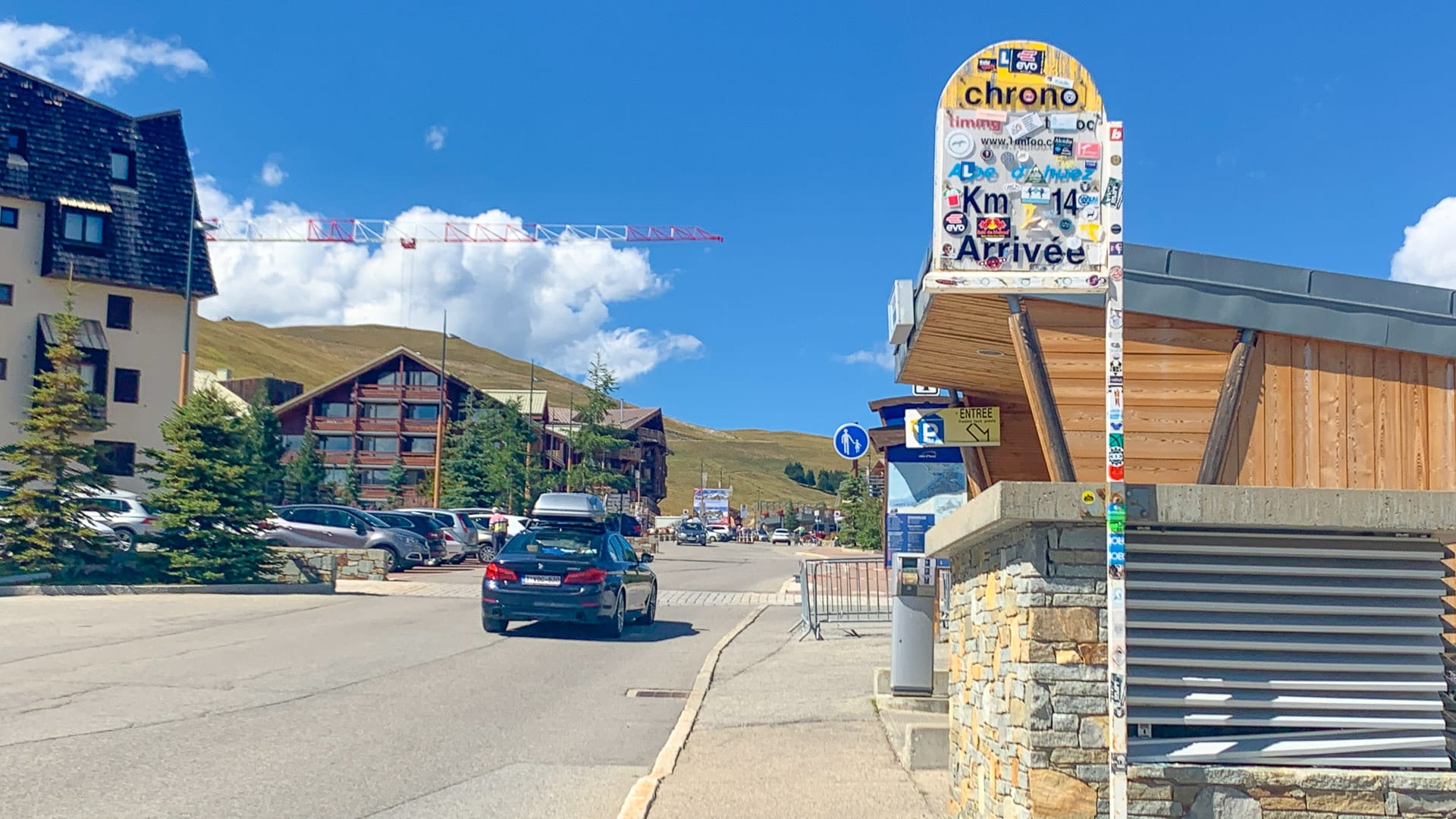
Alpine village
Can you hire bikes for L’Étape?
If you don’t have access to a suitable bike, you can take advantage of the bike hire service offered by the Étape du Tour organisers. However, it’s important to plan ahead as there may well be limited availability.
Tour operators can also typically arrange bike hire, but it’s best to request that when you make your booking, and not leave it too late. As you can imagine, demand for rental bikes is extremely high during this period.
How should cyclists get to L’Étape du Tour 2026?
For those that can drive rather than fly, there are certain advantages: it allows you to avoid bus transfers. You can also bring more equipment and spare parts for your bike and reduce the risk of your bike getting lost or damaged during transportation or assembly. It also makes it easier to check out the course and explore more of the surrounding area.
For flying into L’Étape 2026, the nearest airport is Grenoble-Isere Airport, although you may find it easier to get a flight to Lyon.
If you fly as arranged by a tour operator, they will typically arrange regular airport transfers from the most convenient airport to the event.
Tips would you give to someone wanting to do this event
Start of L’Étape
In previous years, riders have been put in groups of about 1,000. The fastest riders have set off first and those pens typically have the lower number pens.
Respect your starting pen and don’t drop litter
Since 2019, the organisers have started disqualifying people that begin from a starting zone in front of the one they were allocated. The official website notes that in 2025, 160 people were disqualified for this.
Likewise rules have been introduced to disqualify anyone disposing of waste outside the refuse disposal area. In 2025, 28 people were disqualified for this.
Other riders
This is such a big ticket, famous event that it attracts riders of all levels, many of whom will be nervous and inexperienced. Prepare to ride confidently and decisively; your attitude will greatly impact your ability to stay out of trouble. Expect some stop-start riding; be ready to brake if needed.
Many L’Étape participants struggle with descending. If it’s something you’re good at, this gives you the chance to make up some time on the descents and improve your position; if that’s important to you. Just remember to always ride sensibly and don’t take unnecessary risks.
David Millar prepared these tips on descending, which might help:
 There's a Youtube video here!
I'm fine with Youtube cookies
Spectators
Every year the Tour de France prepares a map which shows the best points for spectators to spectate from. It’s worth looking at the official site.
There’s also a live tracking app so you can follow your rider(s).
Some useful French
These are the key phrases to know for the Étape!
- Merci: thanks
- Désolé: sorry
- Arrête: stop
- À gauche: on the left
- À droite: on the right
Highway code and travel information
As ever, it’s a good idea to check current travel information before you book and travel. For UK visitors, the UK government travel information pages for France are here.
You should also read and follow France’s highway code.
What is there to do before/after the Étape du Tour?
It’s always exciting to be in France during Le Tour, it’s the annual party that sweeps through the country.

Cyclist on a mountain climb
Have you ridden L’Étape du Tour de France?
We’d love to hear from you. Share your experiences in the comments below!
Looking for more articles inspired by the Tour de France? These might also be of interest:
- Tour de France cycling holidays
- Cycling in France hub page
- Nice Tour de France 2024
- Watching the Tour de France in person
- Best cycling tours in France
Please support Epic Road Rides
A huge amount of time and effort goes into the article you’ve just read, all with the aim of helping you!
If you found what you’ve read useful, I’d really appreciate it if you dropped something in the tip jar here.
It’s a way you can say thank you and help us carry on creating top quality content with no annoying ads and no pay wall.
Looking for an organised cycling trip?
If you want someone to help you plan and book your cycling holiday, fill out this form. We aren’t a tour operator/agent but we work with lots of people who are and will do our best to put you in touch with someone that can help (within 24 hours where possible)!Clare Dewey is a cyclist with a passion for travel. She set up epicroadrides.com in 2018 to help make it easy for cyclists to explore the world by bike. Today her mission is still inspiring cyclists to discover new places on two wheels - and doing what she can to make sure they have the best possible time while they're there. Clare has visited 50+ destinations around the world, many of them by bike.
Want to connect with Clare? Find her over on LinkedIn.
Last Reviewed: 19 January 2026
First Published: 01 July 2024
The contents of this website are provided for general information purposes only. It is not intended to amount to advice and you should not rely on it. You should carry out your own due diligence and risk assessments and take professional advice. Views expressed by interviewees or other users of this website do not necessarily represent our views. We make no representations, warranties or guarantees, whether express or implied, that the content on our website is accurate, complete or up to date. If you use any information or content on this website, download from, or otherwise obtain content or services through our website, it is entirely at your own discretion and risk. Epic Road Rides Ltd disclaims all liability and responsibility arising from any reliance placed on the information and content on this website. Find out more here.
Comments