
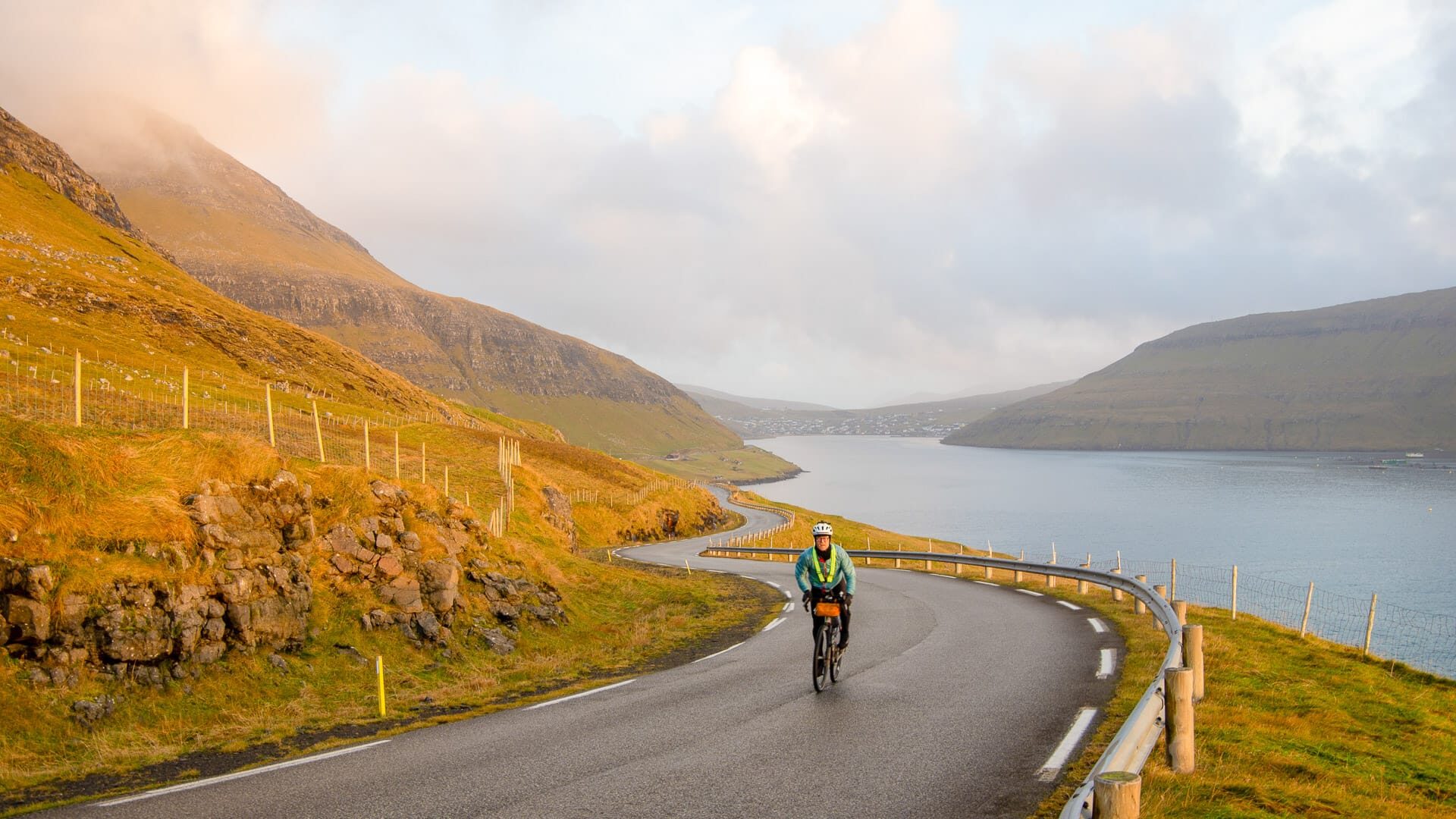


Perched between Iceland, Norway and Scotland, the Faroe Islands are a remote, rugged and unforgiving scattering of land in the wild, cold seas of the North Atlantic.
They’re not the most obvious place to head for a cycling holiday – and yet they hold a mysterious allure: a rare chance to ride smooth, paved roads through one of the North Atlantic’s most distinctive island landscapes.
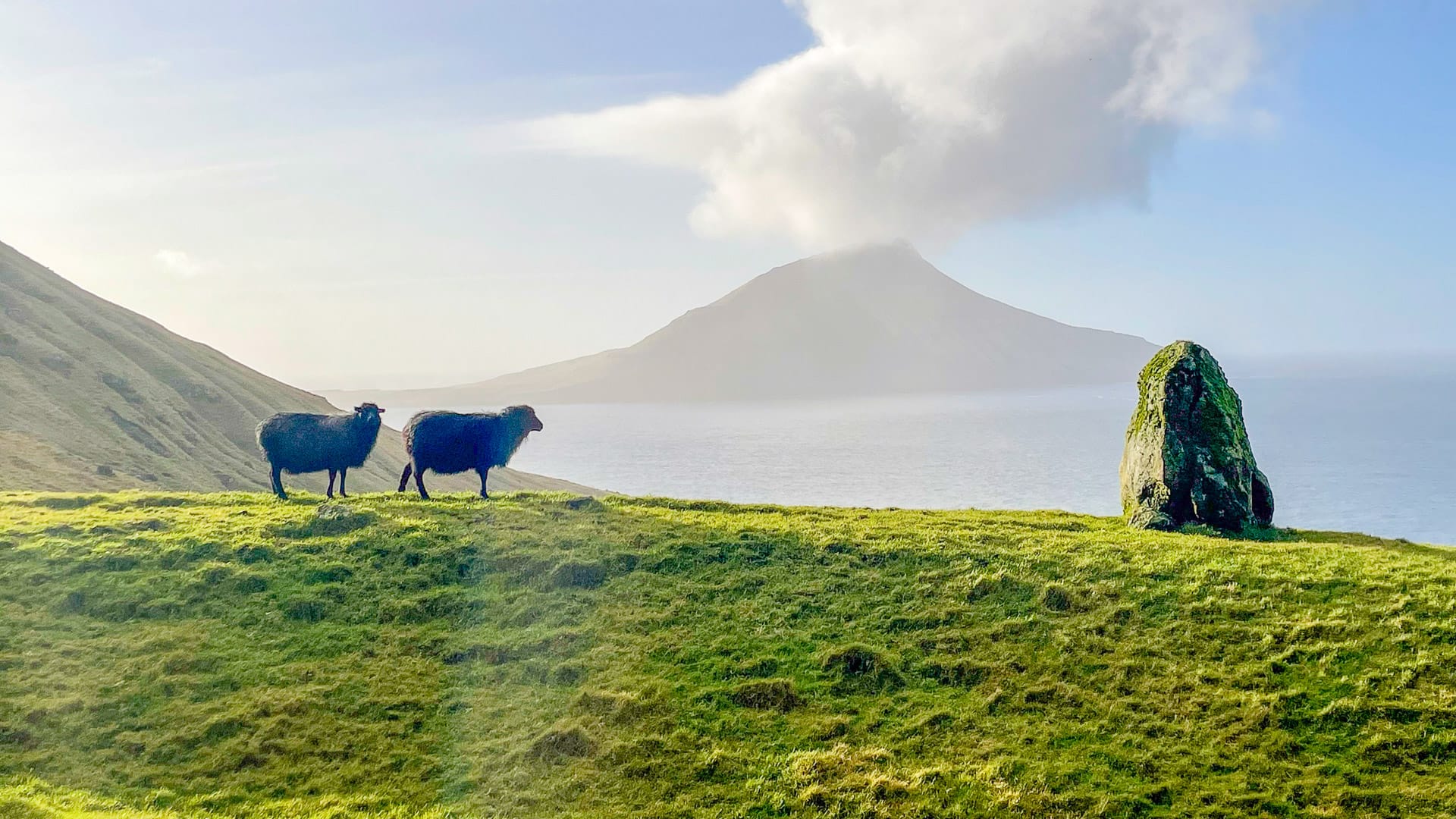
Their landscapes feel elemental: sheer sea cliffs, turf-roofed villages, deep fjords and green mountains rising straight from the ocean, all sharpened by weather that can turn from sunlight to mist in minutes.
So, while the distances can be short, cycling in the Faroes is rarely easy. Hills, wind, fast-changing weather, ferries and undersea tunnels all shape the experience. Cycling the Faroe Islands is best for confident road cyclists and adventurous touring cyclists who are comfortable with wild weather and some careful tunnel planning. Or those happy to book a guide.
Here, we speak to Tyler, owner of Bikepacking Iceland. In autumn 2025, Tyler rode from Iceland to the Faroe Islands on the Smyril Line ferry, taking his bike and gear with him. He then spent a week riding across the islands to understand the roads, tunnels, weather and logistics from a cyclist’s point of view.
We’ve also worked with Rent A Bike Faroes, a Tórshavn-based cycling business offering bike hire, guided rides, repairs, storage and transport support. Their local knowledge is useful for visiting cyclists who want help with cycling routes, bike hire or the practical side of riding in the Faroes.
In this guide, Tyler shares what to expect from cycling in the Faroe Islands, including who it suits, where to base yourself, which routes to consider, how to think about tunnels and what to know before planning a multi-day trip.
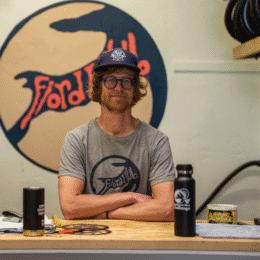
Tyler Wacker is the owner of Bikepacking Iceland, which operates the Fjord Hub and Keflavík Hub, supporting cyclists exploring Iceland by bike. Tyler's focus is on long-distance and self-supported cycling, and he is always looking to understand how different destinations work from a rider’s perspective.
In autumn 2025, Tyler cycled from his home in Iceland to the Faroe Islands via the Smyril Line ferry, bringing his bike and gear with him. He spent a week riding across the islands to research them as a cycling destination, experiencing the roads, tunnels, weather and logistics firsthand.
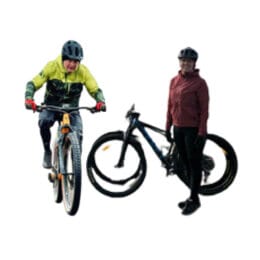
Berit Unn Petersen and Bartal í Gongini are the founders and owners of Rent A Bike.
Berit oversees the administration and day-to-day organisation of the business, while Bartal works as a mechanic and D-MTBing guide.
Both are passionate cyclists and share the aim of providing unique and memorable bike experiences on the Faroe Islands since 2018.

We love to introduce our community to cycling businesses, destinations and ideas that we think are genuinely interesting. Bikepacking Iceland caught our attention because of its focus on these topics, which felt like a natural fit for Epic Road Rides and our readers. We were therefore pleased to work with the Bikepacking Iceland team on this article.
Bikepacking Iceland paid for this advertisement feature. Our decision to collaborate reflects our view that the brand is relevant to our readers; it is not a formal approval, audit or guarantee of its services. Unless we expressly say otherwise, we have not personally taken the trip described or independently verified information supplied by Bikepacking Iceland.
As with any travel purchase, please check the latest trip details, terms and customer protections directly with Bikepacking Iceland before booking. Any booking is made with Bikepacking Iceland, not Epic Road Rides.
Always check current travel information and advice. For visitors from the UK, the UK government travel information pages are here.
Table of contents
This guide contains a lot of useful information. To help make it more digestible, we’ve broken it down into several parts:
- Part 1: Why cycle in the Faroe Islands?
- Part 2: Overview
- Part 3: Best bases
- Part 4: Practicalities and tips
- Part 5: Bikepacking Iceland tours
Sponsor Message
Need bike hire or guided tours in the Faroe Islands?
Rent A Bike has helped locals and visitors enjoy cycling in the Faroe Islands since 2018.
Today, they offer bike rentals, guided tours and a bike shop in Tórshavn, with a range of bikes, equipment and clothing available.
Interested? Head to their website to find out more, including prices and availability.
Got a question for Berit and Bartal from Rent A Bike?
Fill out this form and we will pass it to Rent A Bike who aim to reply (within 24 hours wherever they can!)
Cycling in the Faroe Islands: at a glance
| Question | Short answer |
| Best for | Adventurous road cyclists, confident e-bike riders and touring cyclists |
| Main riding | Paved road cycling |
| Best base | Tórshavn |
| Best time to go | Late May to early September |
| Main challenge | Hills, wind, weather and tunnels |
| Tunnels | Cyclists can use some tunnels, but some are prohibited and others are best avoided unless you are confident |
| Ideal trip length | Three to seven days |
| Local cycling services | Rent A Bike Faroes |
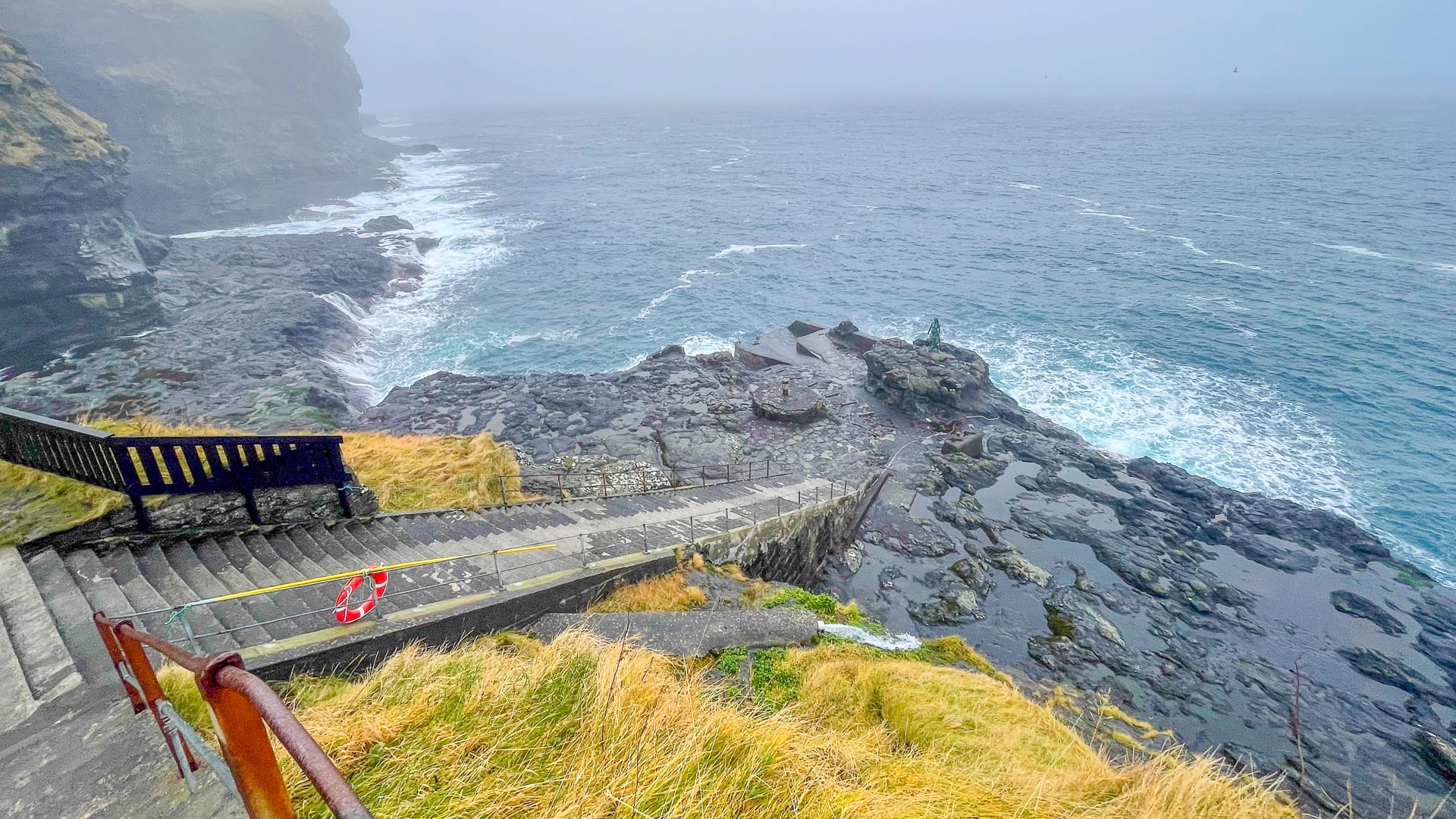
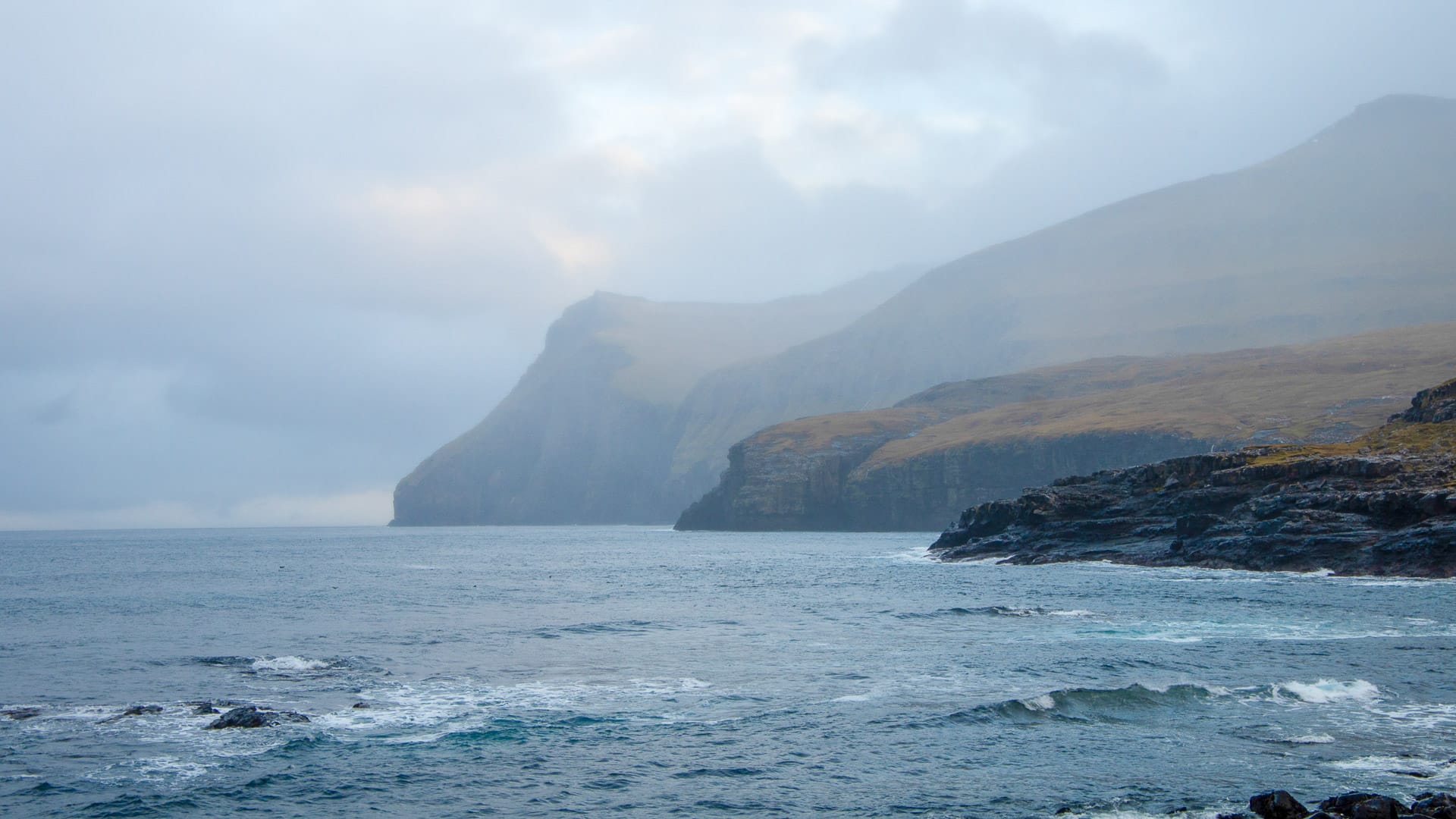
Part 1: Why should cyclists visit the Faroe Islands?
Is the Faroe Islands good for cycling?
For the right cyclist, yes!
For multi-day trips, the Faroes are best for experienced riders. There are also great options for those just looking for a few hours riding, thanks to short tours offered by Rent A Bike Faroes.
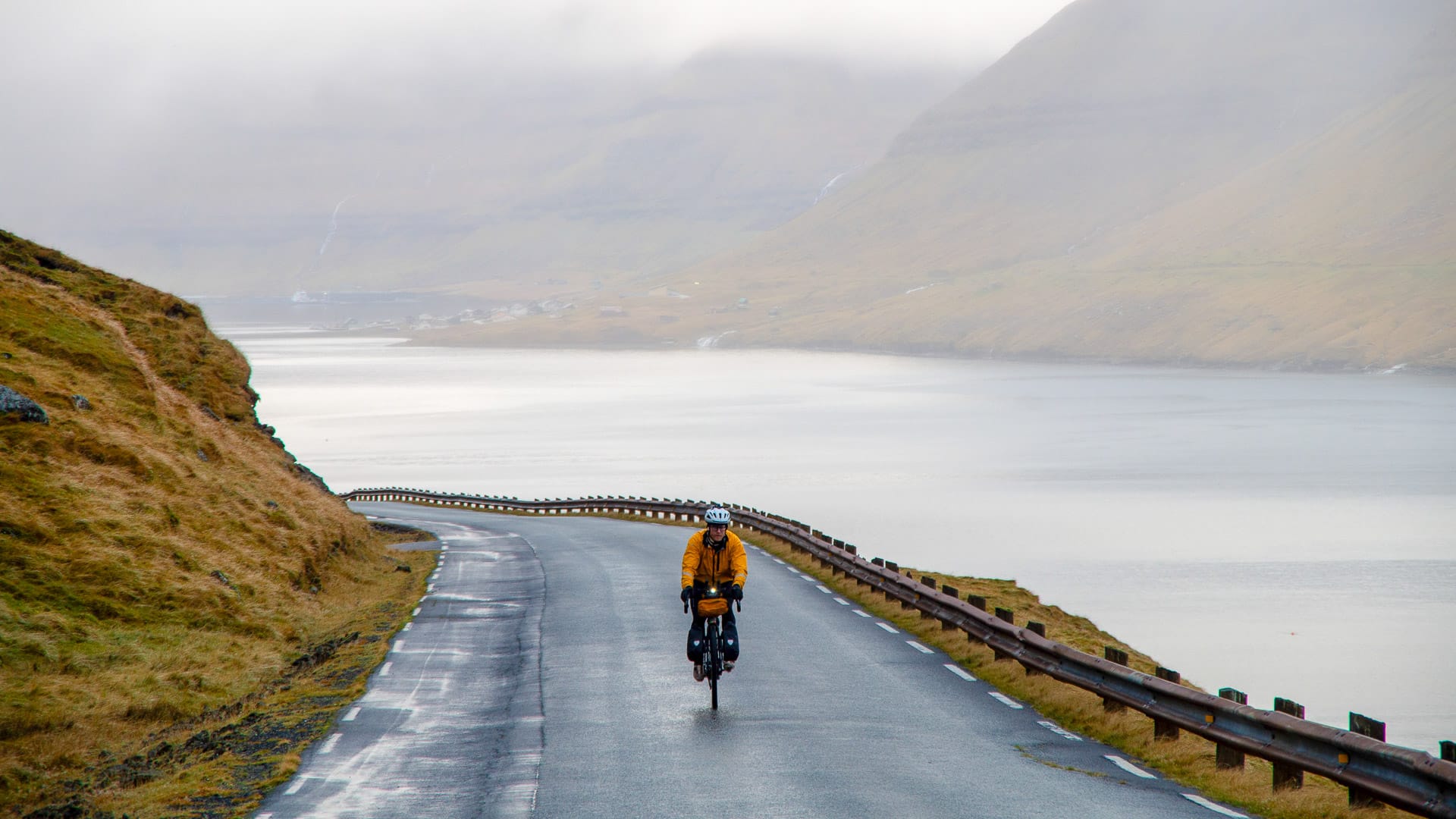
Expect smooth roads, short distances, steep climbs, strong wind and route planning shaped by tunnels and ferries.
Also expect beauty.
The Faroe Islands are one of the most visually powerful places I’ve ever ridden a bike.
The Faroe Islands are tiny compared with the UK: the whole 18 island archipelago covers around 1,399 square kilometres, less than one per cent of the UK’s land area. However, they pack a lot into that compact space. Expect steep coastal cliffs, green hills, narrow fjords and remote villages linked by smooth, well-maintained roads.
What makes the riding special?
From a cycling perspective, this is mainly road-based riding.
The full road network is paved.
While that may not appeal to gravel riders, the quality of the asphalt and the constant changes in terrain make it a road cyclist’s dream.
Rides rarely feel repetitive. Think of the Faroes as a paved-road adventure destination.
Off-road riding is generally not allowed unless permission has been granted by the landowner. Much of the land is used for farming, so cyclists should stick to roads and tracks, and respect private land.
What makes the Faroe Islands different?
Cycling here is not about long, relaxed days on flat roads. It is about short, intense rides, fast-changing weather and island logistics.
The islands also offer a strong sense of identity and culture. The Faroese take pride in preserving their traditions, while welcoming visitors to their towns and villages. I really felt that in the small towns and villages across the islands.
What is there to do off the bike?
There are lots of ways to combine cycling with time off the bike. Hiking, waterfalls, villages, food and remote landscapes can all form part of the trip.
The people are typical of the Nordic region. They can seem reserved at first, but are warm and helpful once you engage with them. Even in the shoulder season, local people were open and generous with advice.
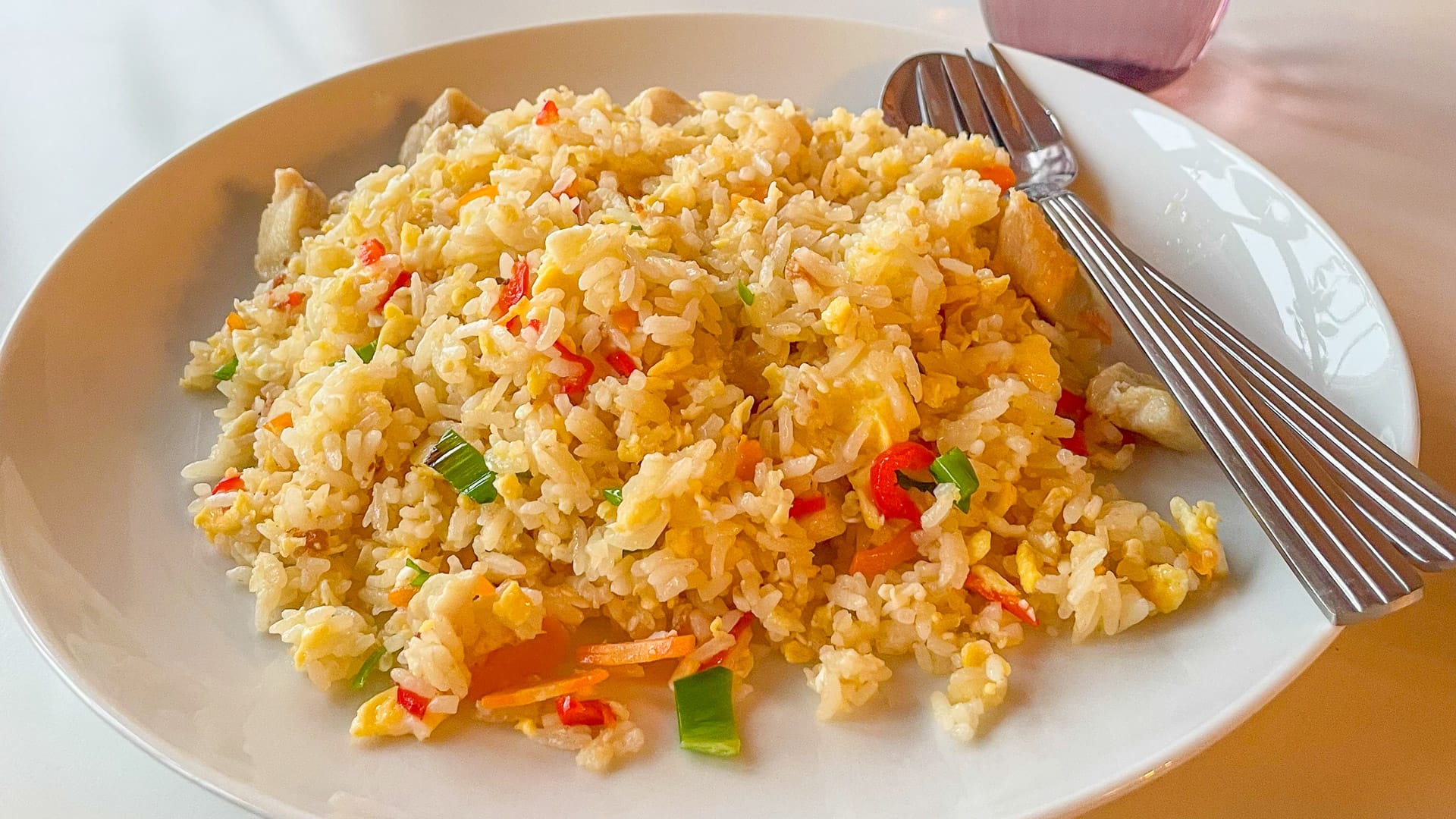
Thai food at the end of Kalsoy Island. Must try! (photo credit: Tyler Wacker via Bikepacking Iceland)
Sponsor Message
Considering cycling in the Faroe Islands?
Bikepacking Iceland has helped cyclists explore Iceland and the North Atlantic by bike since 2020.
Alongside offering self-supported, semi-supported and fully-supported cycling trips in Iceland, they also offer bike rentals.
Interested? Head to their website to find out more.
Got a question for Tyler Wacker from Bikepacking Iceland?
Fill out this form and we will pass it to Bikepacking Iceland who aim to reply (within 24 hours wherever they can!)
Part 2: Give us an overview of the Faroe Islands from a cyclist’s perspective
Location of the Faroe Islands
Where are the Faroe Islands?
The Faroe Islands are an archipelago of 18 islands in the North Atlantic Ocean. They sit roughly halfway between Iceland and mainland Europe. They are located at around 62 degrees north, close to the Arctic Circle.
While technically within the Kingdom of Denmark, the Faroe Islands operate with a high degree of self-government.
Why does the location matter for cyclists?
The islands are fully exposed to North Atlantic weather systems. This has a major impact on the cycling experience.
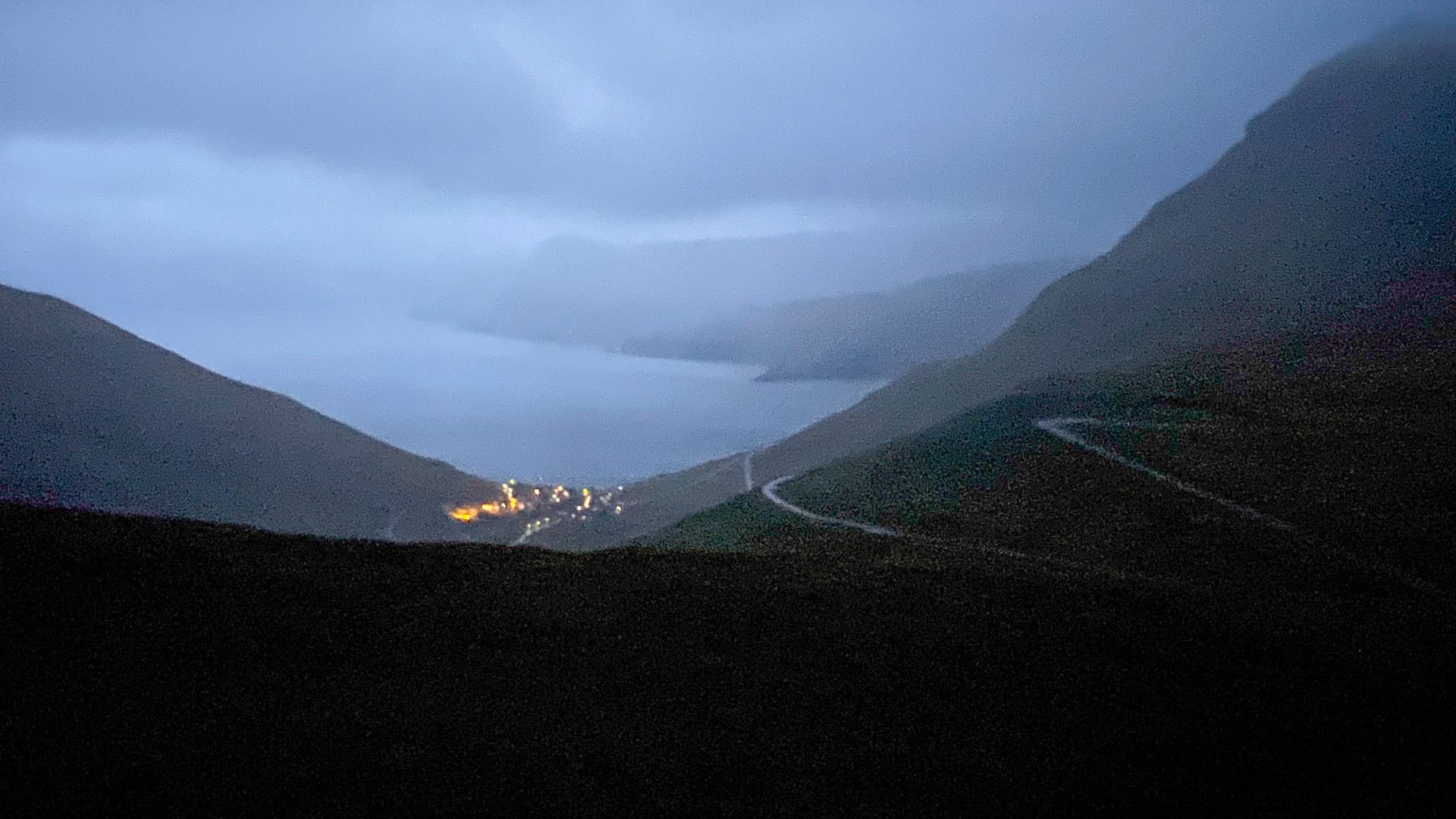
Wind, rain, fog and sunshine can all appear in a single ride. Flexibility is essential.
Terrain of the Faroe Islands
How hard is cycling in the Faroe Islands?
From a cyclist’s perspective, the Faroe Islands are defined by short distances and constant elevation changes. The terrain is mainly coastal, with rolling hills that quickly turn into steep climbs.
There are very few flat sections. Even shorter rides can feel demanding because the roads are almost always going up or down.
Short distances, big effort
The road network is compact by UK standards. There are around 500 kilometres of paved roads across the islands, so a week of riding can give you a good feel for several of the main cycling areas. However, tunnels, ferries, weather and out-and-back routes mean this does not translate into simple point-to-point touring.
Plus, the riding is harder than the distances suggest. Wind, weather, gradients and tunnels all add to the effort.
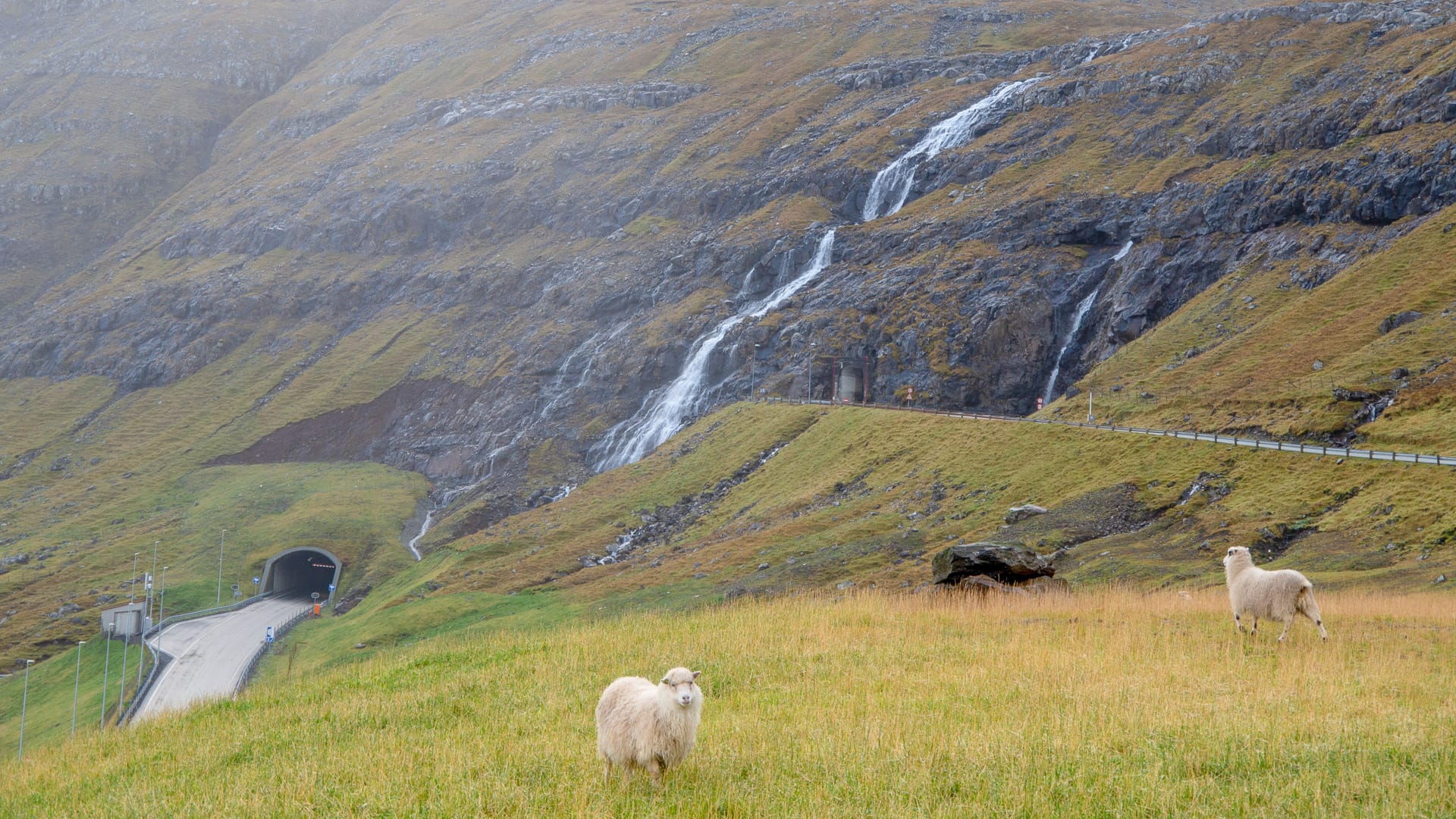
Sheep grazing outside of Tunlar norður um Fjall (photo credit: Christoph Pfülb via Bikepacking Iceland)
Tunnels, bridges and ferries shape route planning
One of the most distinctive features of cycling in the Faroe Islands is how the islands are connected. Major cycle routes often involve subsea tunnels (there are currently four of these), mountain tunnels (there are currently 17 of these), bridges and ferries.
This makes planning more important than in many other cycling destinations. You need to understand which links are suitable for cyclists and when public transport may be useful.
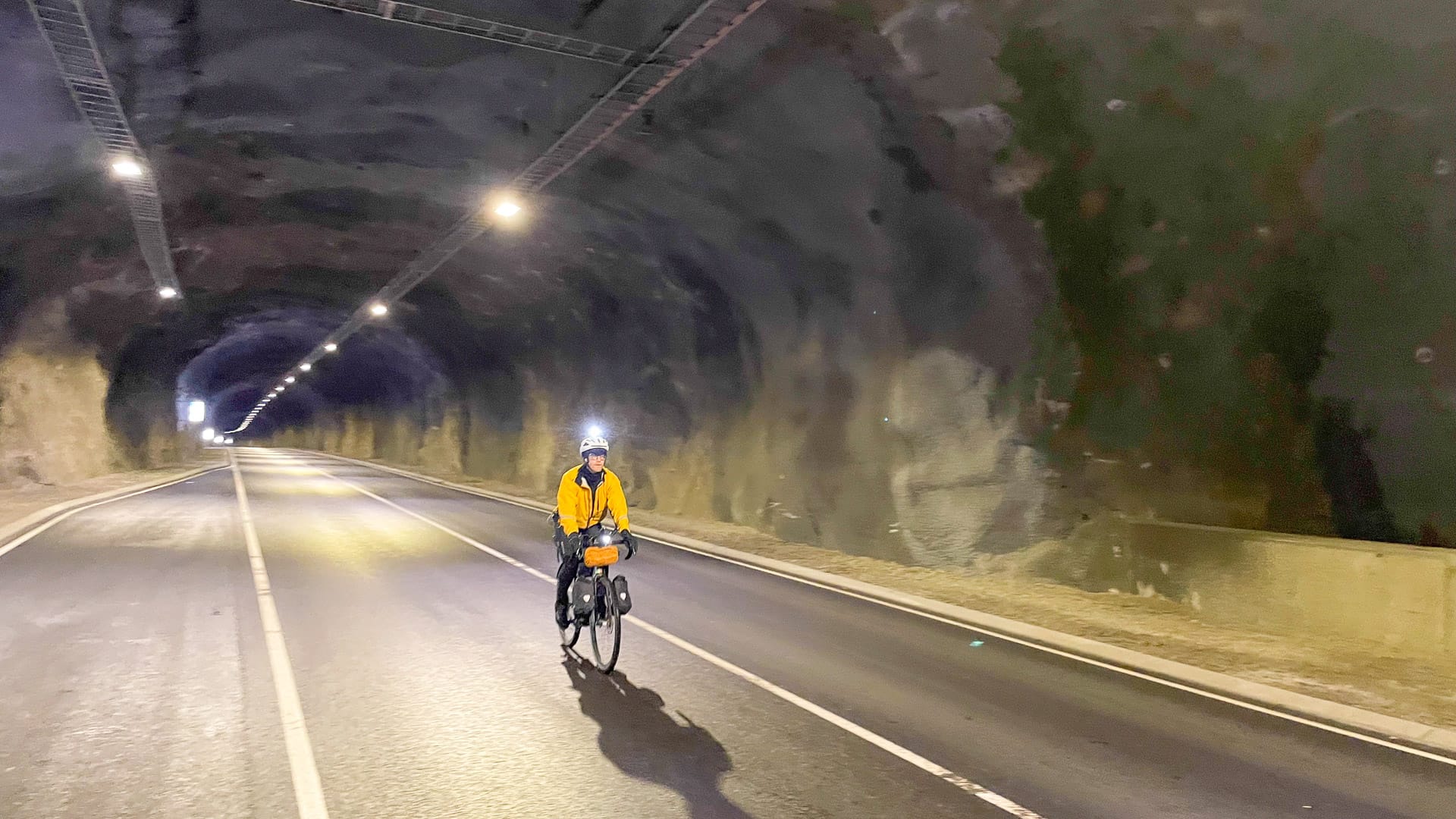
Typical mountain tunnel. This is Viðareiðistunnilin (photo credit: Christoph Pfülb via Bikepacking Iceland)
What are the roads like?
Road surfaces and traffic
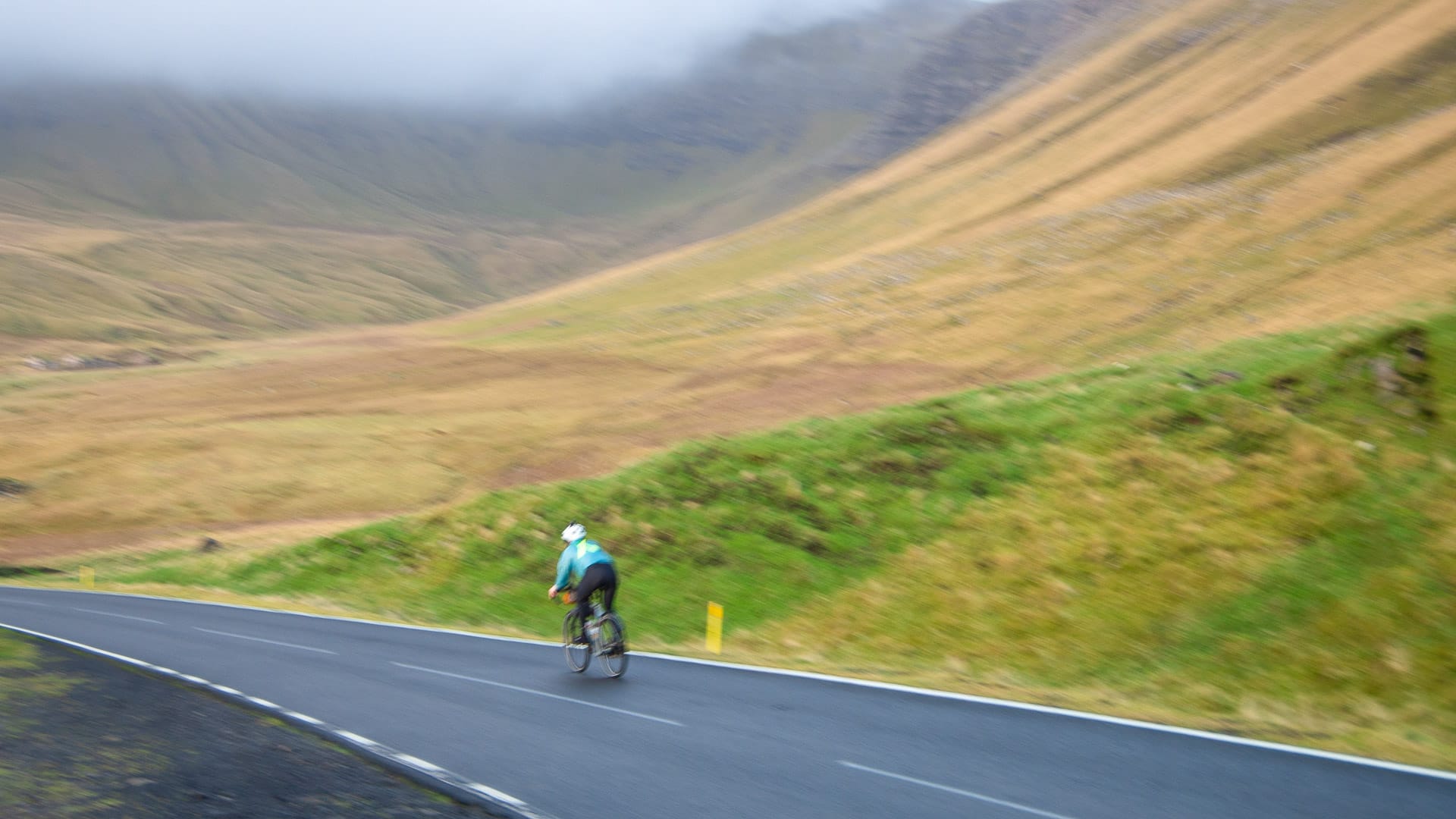
Road conditions in the Faroe Islands are excellent. The surfaces are some of the smoothest and best maintained I’ve ridden anywhere.
Cyclists are generally treated with respect. However, one notable difference is how drivers overtake. Cars often pass within the same lane, rather than moving fully into the oncoming lane.
For a calmer ride, it is worth avoiding peak traffic times, especially early morning and late afternoon.
Around Tórshavn, there is some cycling infrastructure, including bike trails. This includes shared paths and bike-priority roads. Outside the capital, most riding is on main roads with little dedicated space for cyclists.
Can cyclists use the tunnels in the Faroe Islands?
Tunnels are one of the most important factors when planning a cycling route in the Faroe Islands. As at May 2026, there are four subsea tunnels and 17 mountain tunnels across the islands. The Eysturoyar tunnel even includes a roundabout (a world first).
Local cycling guidance says cyclists may ride through the Vágar and Norðoy subsea tunnels, but not through Eysturoyar or Sandoyar tunnels. Even where cycling is permitted, long subsea tunnels are serious undertakings and local visitor guidance strongly advises caution for safety reasons.
Tunnel rules and access can change, so check the latest information before planning a route that depends on riding through a tunnel.
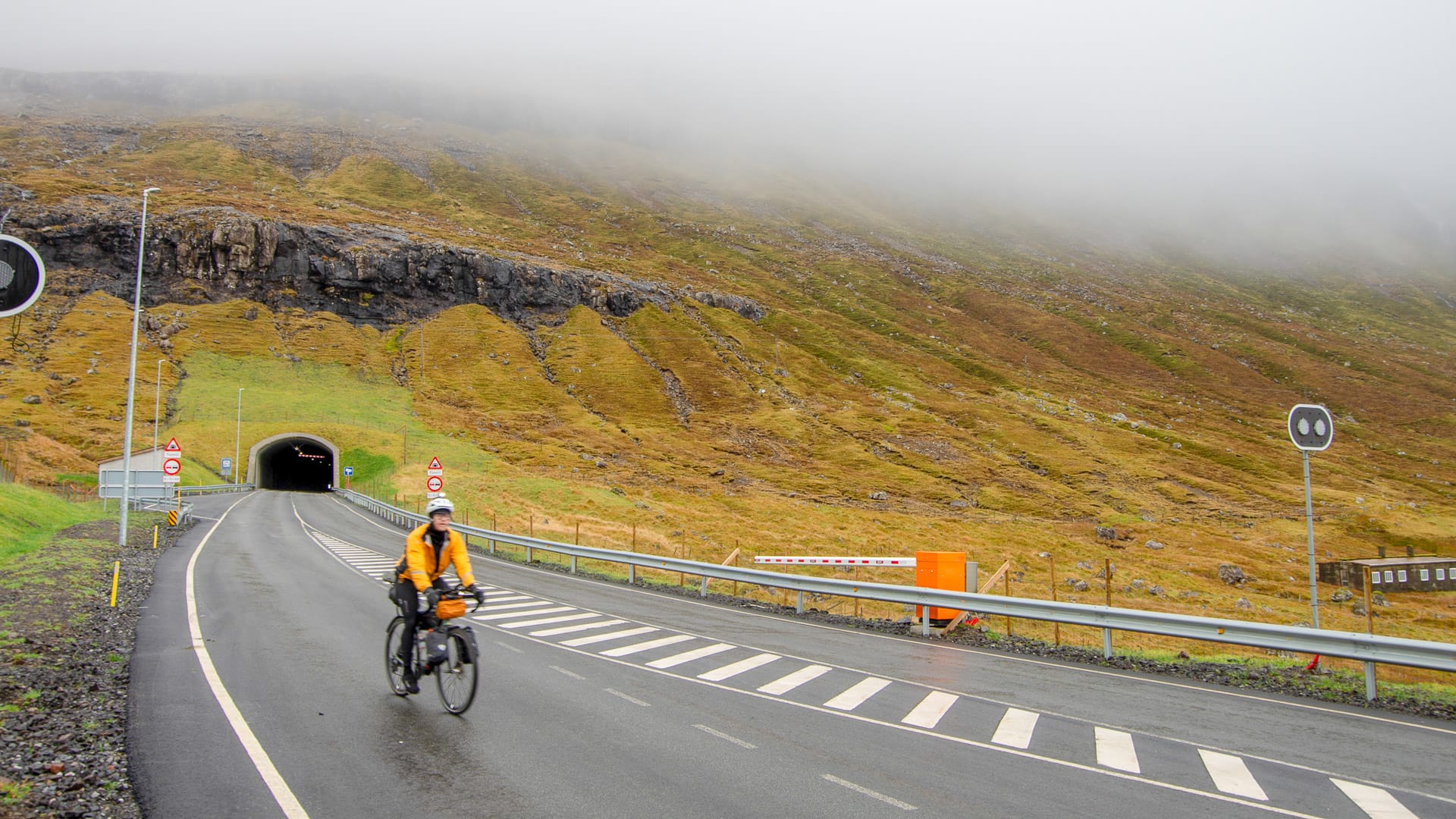
In between tunnels in Ánarfjørður (photo credit: Christoph Pfülb via Bikepacking Iceland)
Subsea tunnels
Sea tunnels run beneath the ocean. The four subsea tunnels involve a long descent to the lowest point, followed by a sustained climb back out (the Eysturoyar tunnel is 187 metres deep!).
They are well built, with wide lanes and ventilation. However, they can feel intense because of their length, traffic and enclosed setting.
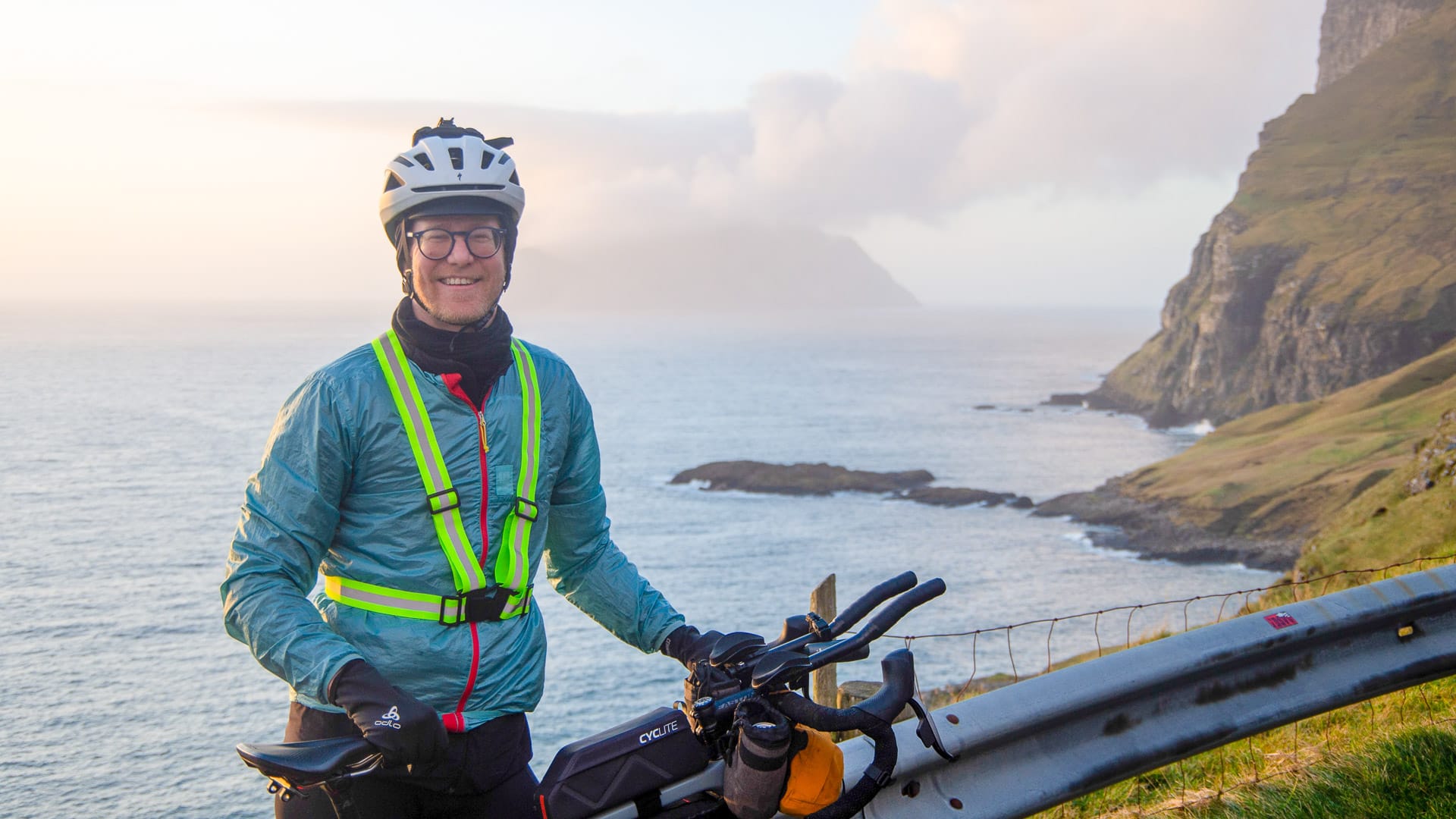
Cyclists should always use strong front and rear lights, wear a helmet and use a reflective vest when riding through the tunnels. It is also sensible to carry extra lights, particularly for the longer or darker tunnels.
Subsea tunnels at a glance
| Tunnel | Cyclist access | Planning note |
| Vága | Yes | 4.9 kilometres long |
| Norðoya | Yes | 6.2 kilometres long |
| Eysturoyar | No | Not open to cyclists |
| Sandoyar | No | Not open to cyclists |
Mountain tunnels
The 17 mountain tunnels are usually shorter and cut through the islands, rather than going under the sea. Many require a climb to reach the tunnel, but gradients inside are usually mild.
Some are fully lit and two-way. Others, especially on smaller islands such as Kalsoy, can be narrow, dark and single-lane. This adds to the sense of adventure, but also means good preparation is important.
Tunnel safety tips for cyclists
Good front and rear lights are essential. A reflective vest or jacket is also strongly suggested.
It is also worth knowing the length and character of a tunnel before riding into it.
Some tunnels are long, dark or unlit. They can feel intimidating at first, but taking them steadily and confidently makes them more manageable. If a tunnel feels beyond your comfort level, buses, ferries or transfers may help with route planning.
There are pullouts throughout the subsea tunnels. These can provide a safer place to stop and make changes. While there are pullouts throughout the subsea tunnels, cyclists should not stop in them unless necessary. Tunnels can be narrow and busy, so it is safer to keep riding and stop once you are outside the tunnel.
Is there any way to avoid the tunnels on the Faroe Islands?
Sometimes, yes. Certain mountain tunnels can be avoided by using older roads, and some subsea links can be bypassed with buses, ferries, transfers or alternative road connections – see the notes below.
However, avoiding every tunnel is difficult if you want to explore several islands by bike, so decide in advance which tunnels you are comfortable riding and which you would rather skip.
Notes about the tunnels
Subsea tunnels
- For Eysturoyar, note that cycling is not permitted in Eysturoyartunnilin. There is an alternative: the road/bridge route between Streymoy and Eysturoy.
- For Sandoyar, you also can’t cycle through Sandoyartunnilin. There are public transport or transfer options.
- Cyclists can use Vágatunnilin and Norðoyatunnilin, but both are long subsea tunnels. If you would rather avoid them, consider taking the bus or using older roads where possible.
Mountain tunnels
- Some tunnels are two lanes, others are one lane.
- Kollfjarðar is heavily trafficked.
- The tunnels on the islands Kunoy and Kalsoy are single-lane, narrow, dark but typically low-trafficked.
- You can bike on the old roads and avoided going through these tunnels: “Kollafjarðartunnilin”, “Leynatunnilin”, “Norðskálatunnilin”,”Leirvíkstunnilin”, “Sumbiartunnilin” and “Dalstunnilin”.
- For ordinary road tunnels, cyclists should plan their route carefully, use lights and reflective clothing, and avoid busy times where possible.
More information
- Always check the current information on tunnels, here.
- There’s a map of all the tunnels here.
- The subsea tunnels are warmer at the bottom than at the top. Be prepared to adjust layers before climbing back out.
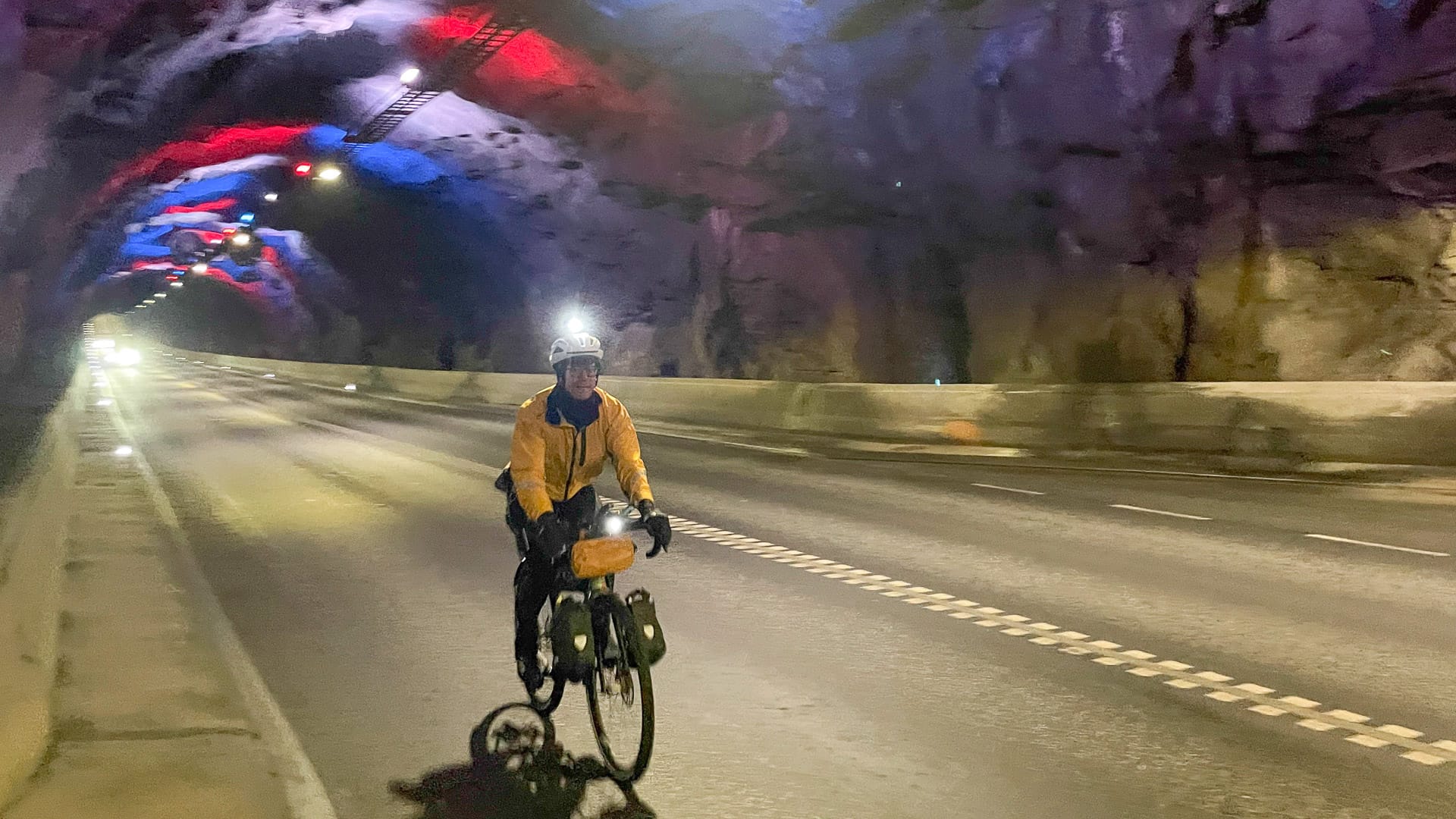
Typical subsea tunnel, the Norðoyatunnilin (photo credit: Christoph Pfülb via Bikepacking Iceland)
What kind of cyclist is the Faroe Islands for?
Best for road cyclists
The Faroe Islands are best suited to road cyclists and adventurous riders looking for a distinctive experience.
There are some mountain biking opportunities around Tórshavn. However, off-road riding is not generally permitted without landowner permission. Cyclists should respect farmland, sheep, gates and local rules. Most cycling in the Faroes takes place on paved roads.
Good for e-bike riders and touring cyclists
Shorter guided rides and e-bike rides can work well for visitors who want a taste of the landscape without committing to a full multi-day tour.
The islands can also suit touring cyclists and bikepackers who are comfortable with weather, limited services and logistics. This is not a destination where you can rely on frequent bike shops or cafés outside larger settlements.
Less suitable for beginners and families
The Faroe Islands are not the best fit for a purely relaxed or flat cycling holiday.
Families may find riding around Tórshavn manageable. A multi-island or multi-day tour with children would be more difficult because of traffic, terrain, weather and tunnels.
How fit do you need to be?
A reasonable level of fitness is needed. This is not because the distances are especially long, but because climbs, wind and weather all add up.
Experienced riders may find the short, high-quality days rewarding. Less confident riders may prefer guided rides, e-bikes or shorter routes.
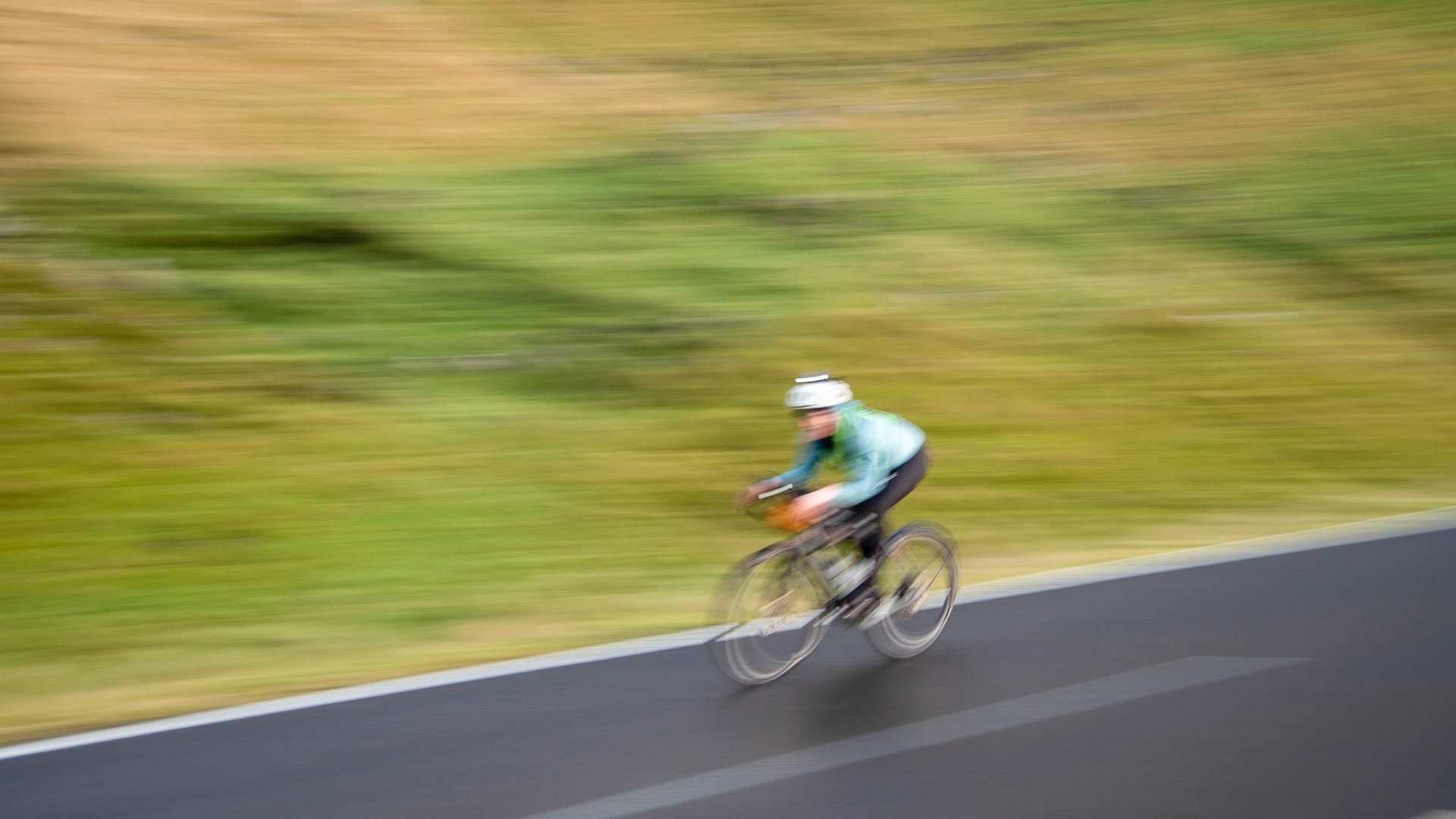
The descents are fast and smooth! (photo credit: Christoph Pfülb via Bikepacking Iceland)
Do you need to do a tour of the Faroe Islands?
Can you cycle independently?
You do not need to join an organised tour to cycle in the Faroe Islands. It is possible to plan and ride independently.
However, the logistics need thought. Tunnels, transport connections and limited services can make extra help with route choice useful.
Guided, supported or independent: what works best?
| Option | Best for | Main point |
| Independent riding | Confident cyclists | Flexible, but needs planning |
| Guided day ride | Confident cyclists | Local knowledge and easier logistics |
| Self-supported bikepacking | Experienced touring cyclists | Maximum flexibility, but more responsibility |
The islands are well-suited to shorter multi-day trips or bikepacking-style itineraries. Daily distances can be manageable, with time to explore off the bike.
Where route and logistics support can help
Route and logistics support can be helpful for route choice, bike hire, transfers and mechanical support.
Rent A Bike Faroes can assist with:
- Bike hire
- E-bike hire
- Guided rides
- Private guided tours
- Delivery/pick-up of rental bikes in selected locations
- Bike repair/workshop service
- Bike box storage when possible
- Basic guidance on routes and practical cycling logistics
For enquiries, please use Rent A Bike Faroes’ contact form or email: rentabike@rentabike.fo.
Bikepacking Iceland contributes the first-hand bikepacking and self-guided cycling perspective behind this guide.
Are there any cycling events in the Faroe Islands?
There are not many large international cycling events in the Faroe Islands.
This adds to the sense that the islands are still an undiscovered cycling destination with a small but growing cycling culture.
There are occasional local sportives and community rides, usually in summer.
These are smaller and more informal than events in mainland Europe. For most visitors, the main reason to cycle in the Faroe Islands is the riding itself, rather than an event calendar.
Sponsor Message
Need bike hire or guided tours in the Faroe Islands?
Rent A Bike has helped locals and visitors enjoy cycling in the Faroe Islands since 2018.
Today, they offer bike rentals, guided tours and a bike shop in Tórshavn, with a range of bikes, equipment and clothing available.
Interested? Head to their website to find out more, including prices and availability.
Got a question for Berit and Bartal from Rent A Bike?
Fill out this form and we will pass it to Rent A Bike who aim to reply (within 24 hours wherever they can!)
Part 3: What are the best places for cyclists to base themselves in the Faroe Islands?
Best cycling bases
Tórshavn: best all-round base
Tórshavn is by far the best base for cyclists in the Faroe Islands. It is the capital and has the best access to accommodation, food, bike services and transport connections.
It is also a good starting point for exploring several islands in different directions.
- From Tórshavn, cyclists can ride south towards Kirkjubøur for coastal riding. They can also head north via Oyggjarvegur, a high mountain pass. There are also connections towards Eysturoy and Vágar by tunnel, ferry or bus.
- The terrain around Tórshavn is immediately hilly. There is no easy flat warm-up, but climbs are steady and views come quickly.
The town has a range of food, grocery stores and accommodation. Most accommodation in Tórshavn is within easy reach of Rent A Bike Faroes’ shop. It is walkable, and the accommodation I used was bike-friendly. As always, it is worth asking in advance before bringing bikes inside.
From a tourism perspective, Tórshavn is also the cultural heart of the Faroes. The old town of Tinganes, the harbor, and the food scene make it a great place to spend time off the bike.
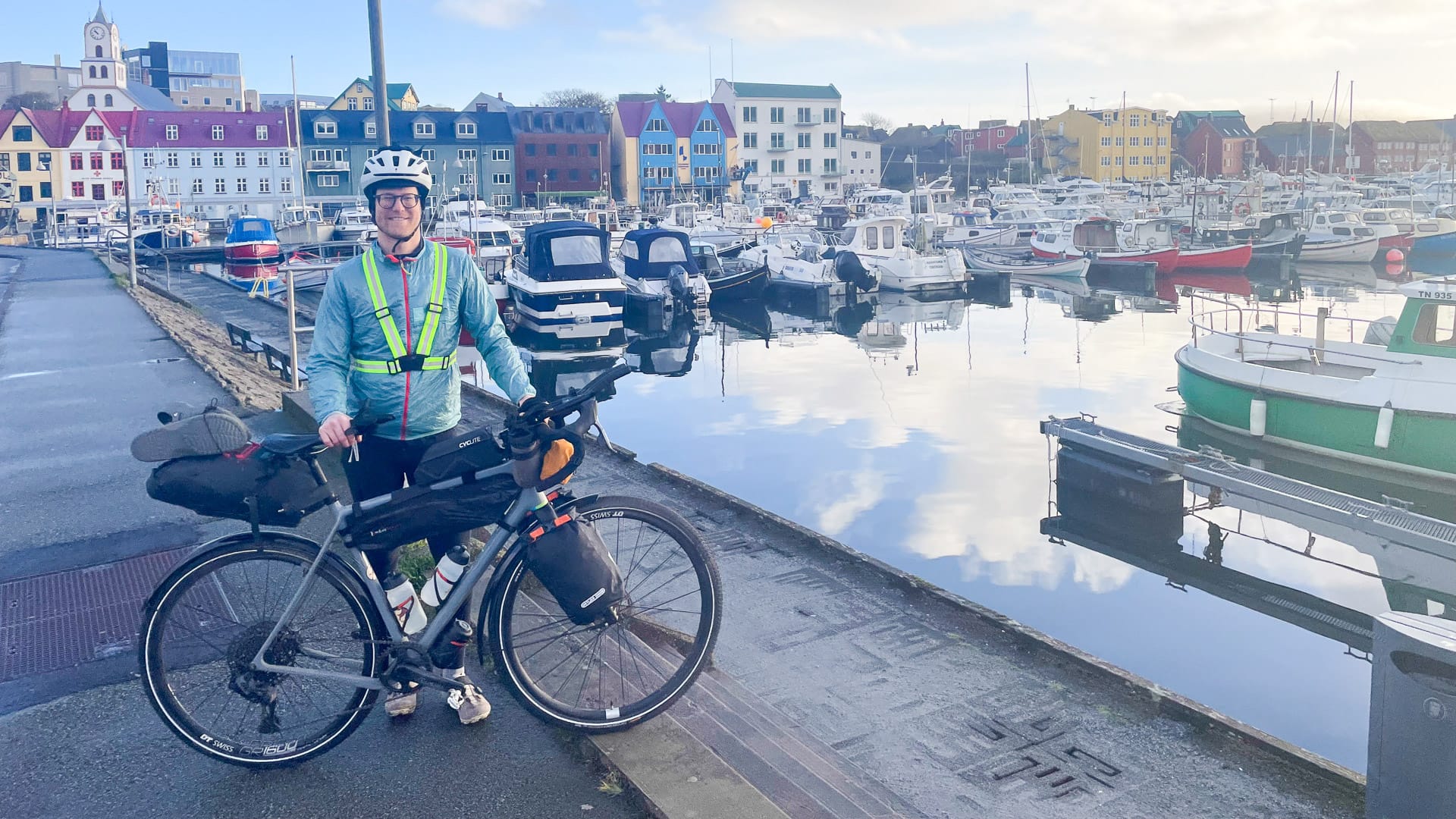
The starting point in Tørshavn harbor (photo credit: Christoph Pfülb via Bikepacking Iceland)
Klaksvík: best for the northern islands
Klaksvík is the second-largest town in the Faroe Islands. It is a good base for exploring the northern islands.
Cycling here feels more remote than around Tórshavn. The terrain is steeper and the scenery more rugged, with fewer services once you leave town.
In terms of bike-friendly services, it is worth asking your accommodation in advance if you want to bring your bike inside. The Klaksvík Hotel was kind enough to let me store my bike indoors, but I would suggest checking directly with wherever you are staying. I also enjoyed Kafé Friða.
- From Klaksvík, riders can use the Norðoyatunnilin if they are comfortable with long tunnels. They can also explore Borðoy and Viðoy.
- Klaksvík is also the access point for the ferry to Kalsoy. This is one of the most distinctive cycling experiences in the Faroe Islands. The ferry ride gives the tour a real sense of adventure, taking you out to a remote island where you can ride quiet roads, see the Seal Woman statue and, rather unexpectedly, finish with Thai food.
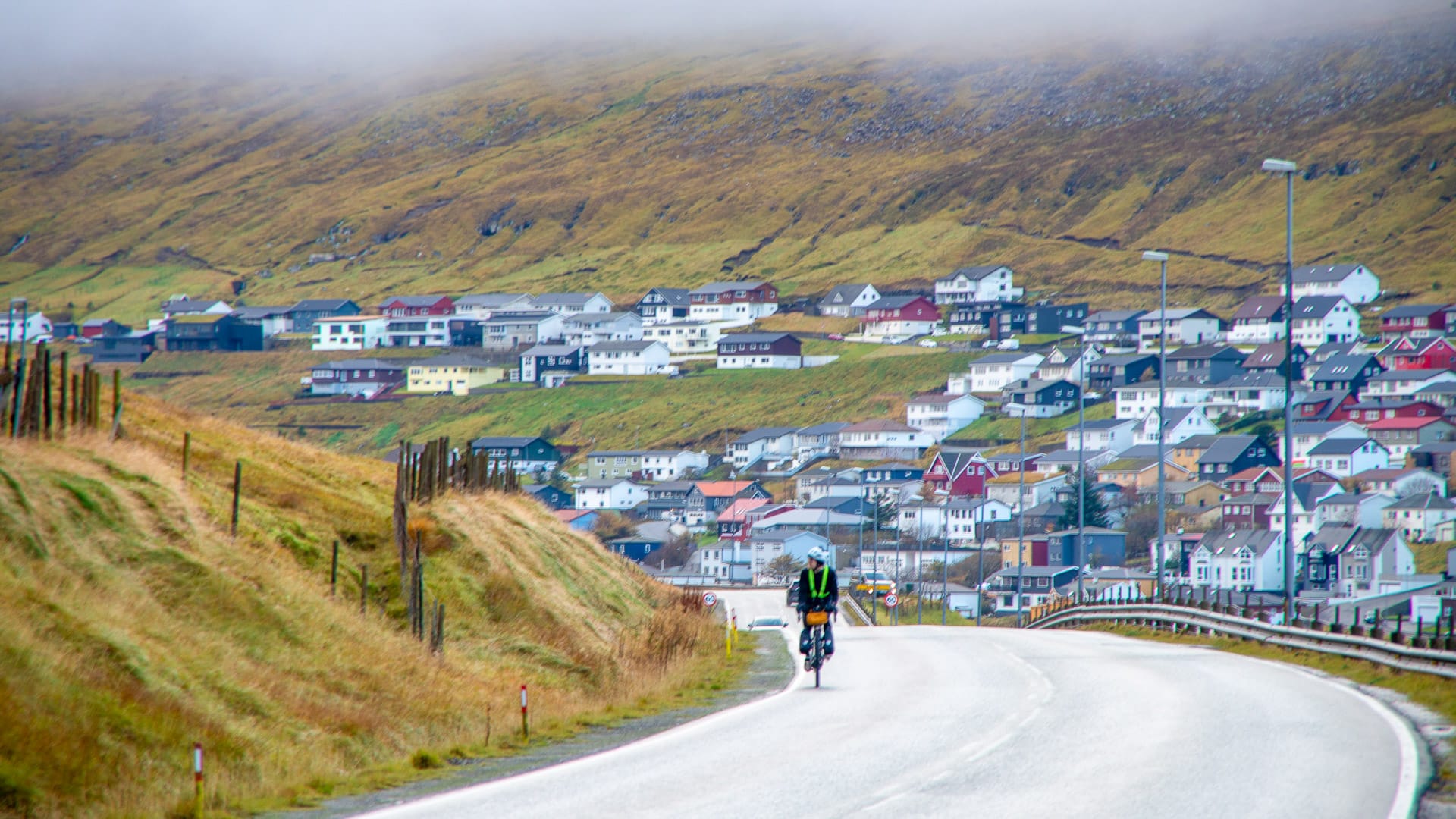
Riding out of Klaksvík village (photo credit: Christoph Pfülb via Bikepacking Iceland)
Vágar: useful for arrival and iconic scenery
Vágar is useful for cyclists arriving by air, because Vágar Airport is on the island.
It also gives access to some of the most recognisable landscapes in the Faroes, including Bøur, Gásadalur and Múlafossur waterfall.
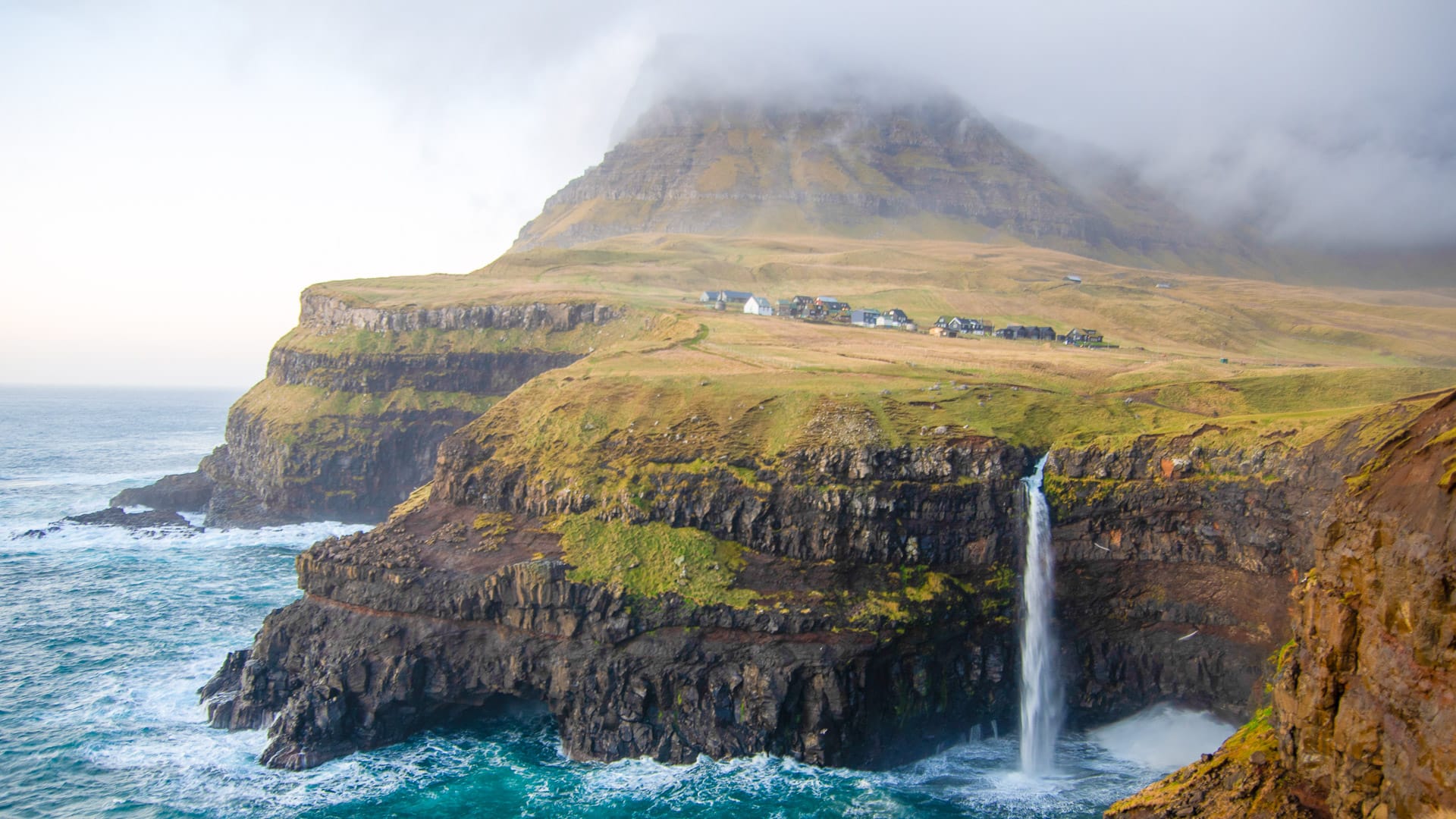
Beautiful waterfall called Múlafossur (photo credit: Christoph Pfülb via Bikepacking Iceland)
Which base should you choose?
| Base | Best for | Cycling character |
| Tórshavn | Most first-time cycling trips | Hilly, varied and best connected |
| Klaksvík | Northern islands | Remote, steeper and more rugged |
| Vágar | Airport and short scenic rides | Compact rides and iconic views |
Must-do cycling routes
Best cycling routes in the Faroe Islands
These rides show the range of cycling in the Faroe Islands. They include coastal roads, high views, island logistics, tunnels and short but demanding climbs.
The distances are modest, but the elevation and weather can make them feel much bigger.
| Route | Route | Best for |
| Tórshavn to Kirkjubøur | 30 kilometres/ 657 metres climbing | First ride, coast and history |
| Tórshavn to Norðadalur | 27 kilometres/ 684 metres climbing | Climbing and views |
| Sørvágur, Bøur and Gásadalur | 25 kilometres/ 520 metres climbing | Vágar Island and Múlafossur |
| Klaksvík to Viðoy | 43 kilometres/ 520 metres+ climbing | Remote northern riding |
| Kalsoy Island ride | 42 kilometres/ 1,090 metres climbing | Confident riders and tunnels |
Tórshavn to Kirkjubøur
This is one of the most accessible and rewarding rides in the Faroe Islands. It starts in Tórshavn and follows the coast towards the historic village of Kirkjubøur.
The route has sweeping views towards Hestur and Koltur. Kirkjubøur is also one of the most important cultural sites in the islands, so this ride combines cycling and history.
The route returns the same way to Tórshavn. It is around 30 kilometres with 657 metres of elevation gain. It is suitable for e-bikes, mountain bikes and road bikes.
Rent A Bike offers this as a guided tour, with more details available on their website.
Tórshavn to Norðadalur and Norðadalsskarð
This ride goes from Tórshavn to the small farming village of Norðadalur and back.
The route stops at the mountain pass of Norðadalsskarð, 225 metres above sea level. From here, there are wonderful views towards the one-family settlement island of Koltur.
The ride is around 27 kilometres with 684 metres of elevation gain. The maximum gradient is 18.6 per cent. It is suitable for e-bikes, mountain bikes and road bikes.
Rent A Bike offers this as a guided tour, with more details available on their website.
GPX DownloadTerms of use reminder
Vágar: Sørvágur, Bøur and Gásadalur
 This komoot route contains cookies...
I’m fine with komoot cookies
This ride starts near the airport on Vágar Island. It passes through some of the best-known landscapes in the Faroe Islands.
The climb to Gásadalur is steady and rewarding. It leads to views of Múlafossur waterfall.
The roads are quiet, which makes this a good shorter ride for a full Faroese experience. The route is around 25 kilometres with 520 metres of elevation gain.
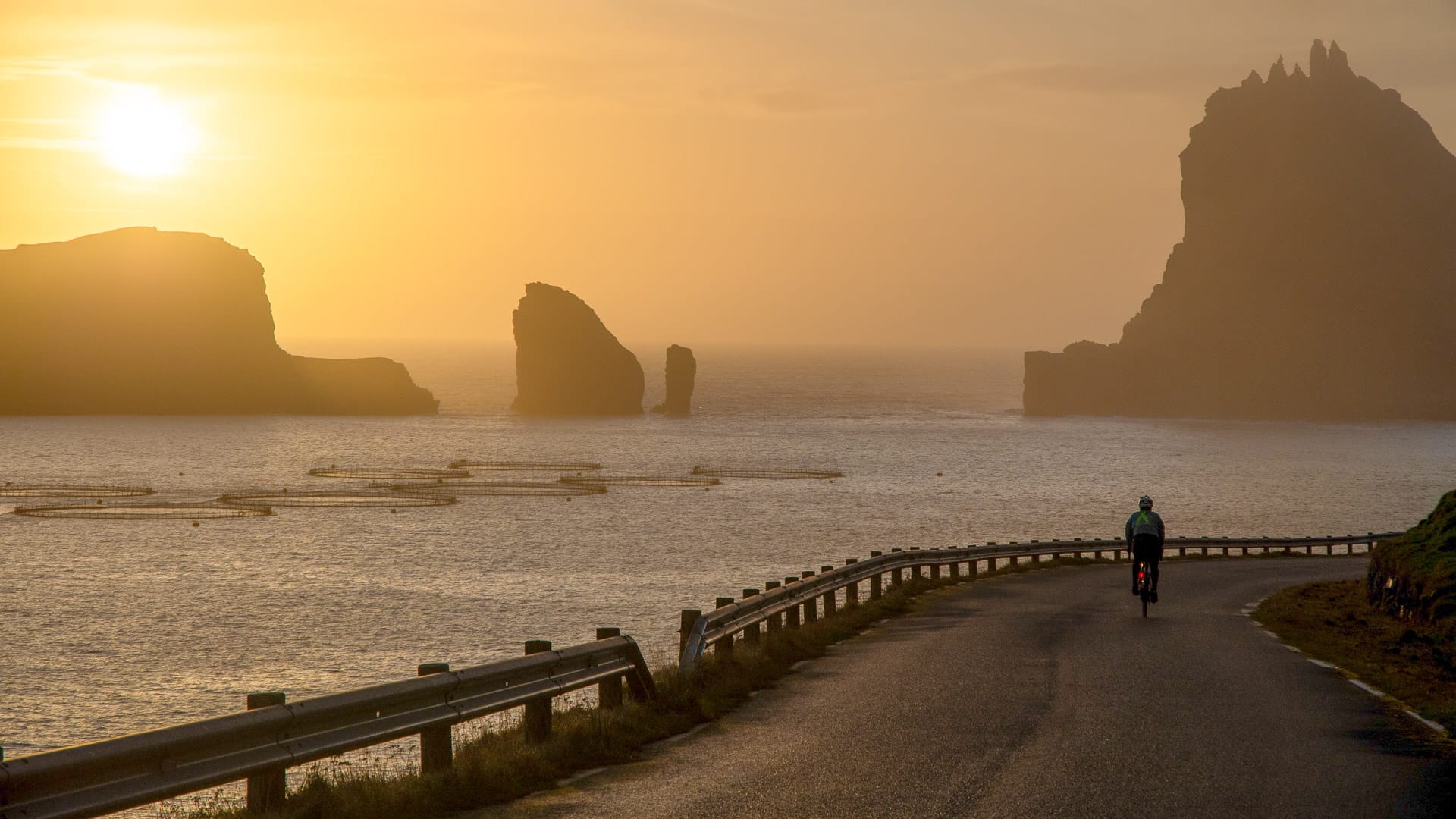
Sunset overlooking Drangarnir on the southern coast of Vágar Island (photo credit: Christoph Pfülb via Bikepacking Iceland)
Klaksvík to Viðoy
This komoot route contains cookies...
I’m fine with komoot cookies
This route heads north from Klaksvík into the more remote northern islands.
The terrain is steeper and more rugged than around Tórshavn. There is also very little traffic, which gives the ride a more isolated feel.
The route is around 43 kilometres with more than 520 metres of elevation gain. It is a good option for riders looking for a deeper sense of adventure.
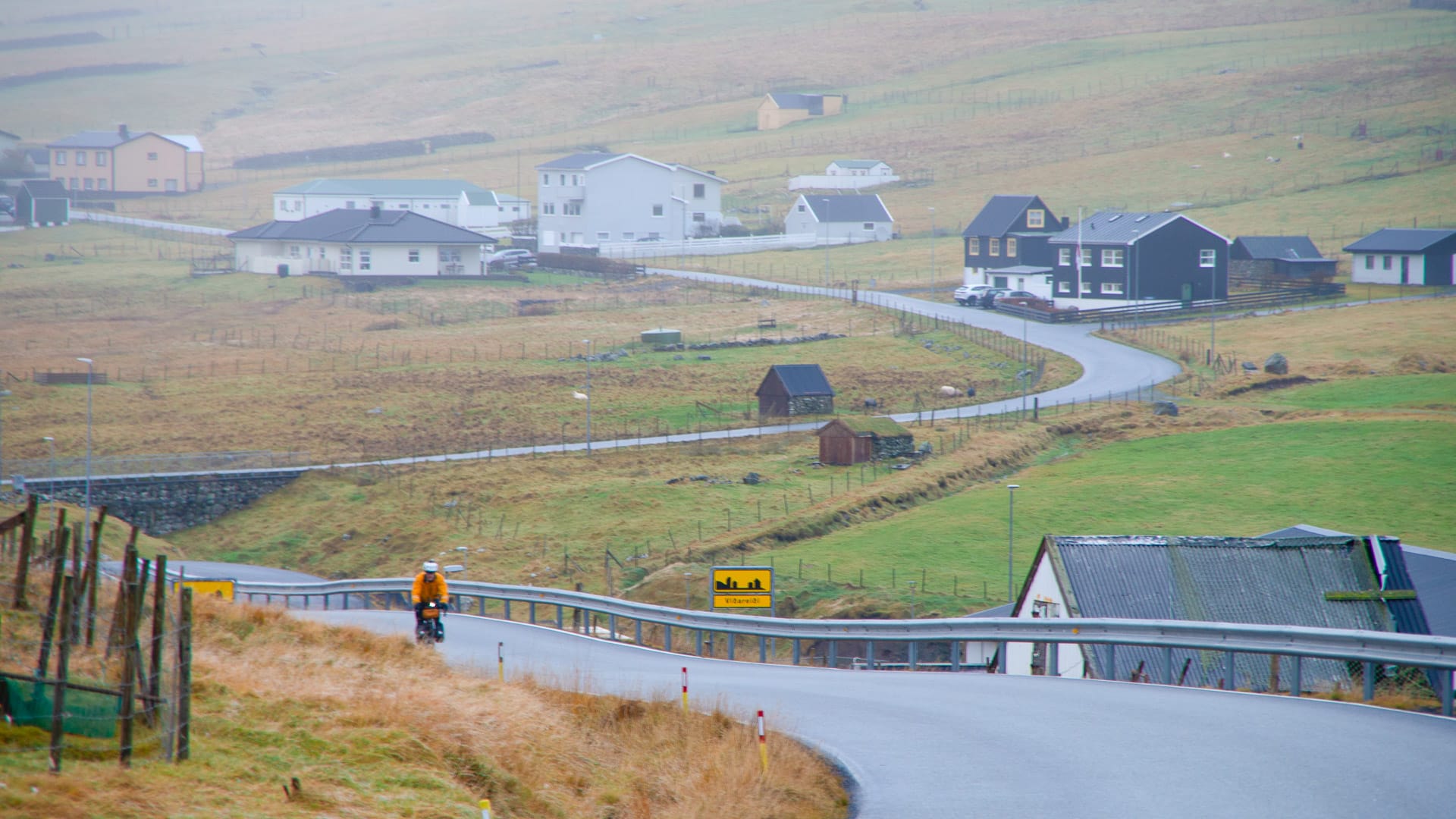
End of the Viðareiði loop (photo credit: Christoph Pfülb via Bikepacking Iceland)
Kalsoy Island ride
This komoot route contains cookies...
I’m fine with komoot cookies
Kalsoy offers one of the most distinctive cycling experiences in the Faroe Islands.
After taking the ferry from Klaksvík, the ride follows a narrow road through a series of tunnels linking small villages. Some tunnels are unlit and single-lane, which adds to the challenge.
Traffic is minimal, but the combination of ferry access, tunnels and remote landscapes makes this a memorable, and distinctly Faroes, ride for confident cyclists. The route is around 42 kilometres, depending on the turnaround point, with 1,090 metres of elevation gain.
Cyclists should check the current ferry timetable and conditions with SSL before travelling. Bikes are generally possible on ferries when there is space, but capacity and practical conditions can vary.
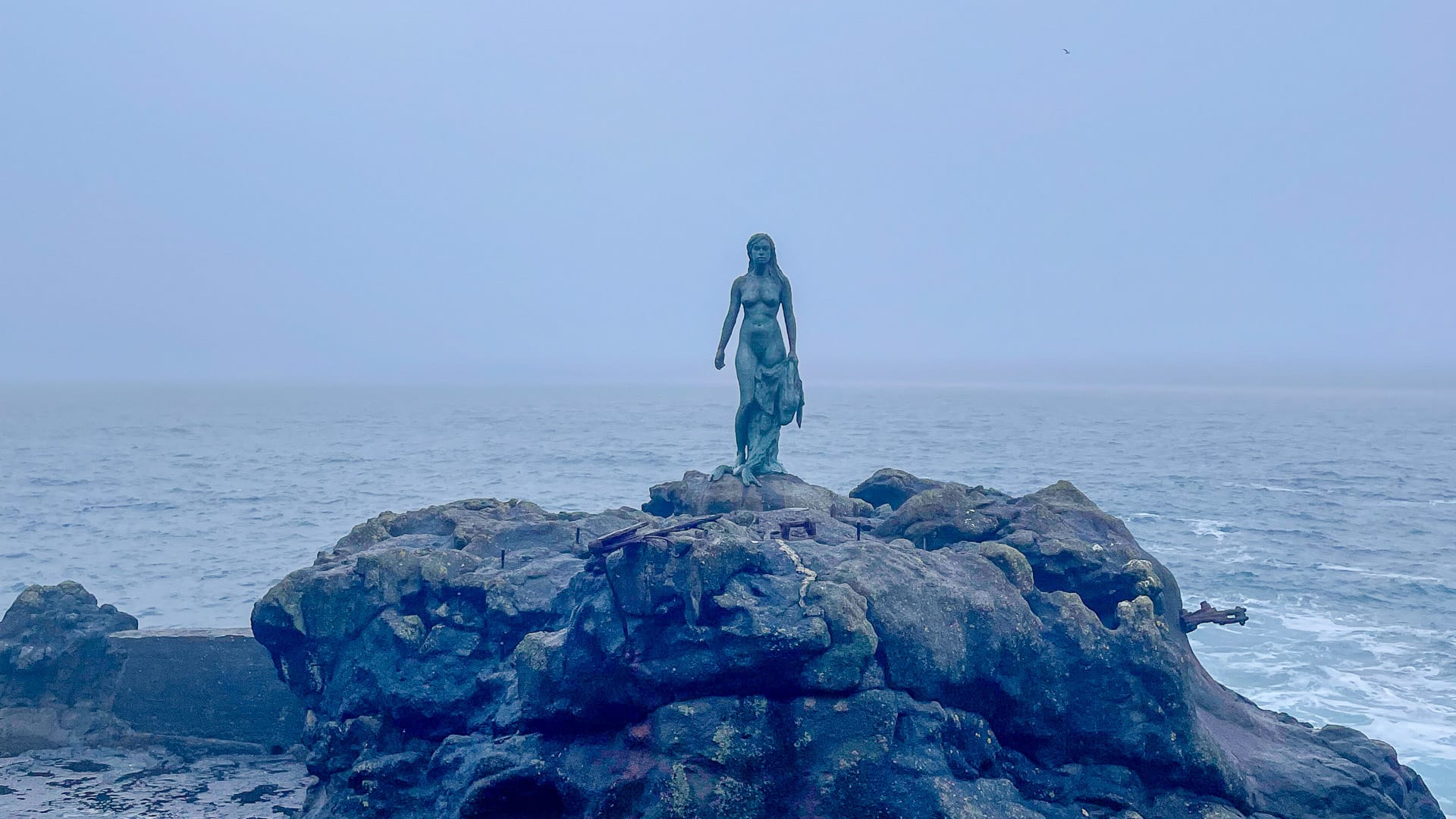
Kópakonan, also known as The Seal Woman, in Mikladalur on the island of Kalsoy (photo credit: Tyler Wacker via Bikepacking Iceland)
Are there any multi-day routes in the Faroe Islands that cyclists should know about?
Can you do a multi-day cycling trip?
There is no single defined long-distance cycling route in the Faroe Islands.
A Faroe Islands cycling trip is usually built as a modular itinerary rather than a signposted end-to-end route.
That said, it is easy to create a five to seven day island-hopping itinerary that combines riding, tunnels, ferries and buses.
What a six-day itinerary can look like
My suggested six-day Faroe Islands cycling itinerary combines several of the best rides in the islands. While this is not the exact route I rode, I have modified it to include the best of the Faroes, using information I collected during my own ride.
The route starts from the airport, but it could be adjusted to start in Tórshavn for riders arriving by ferry. Daily distances range from 22 kilometres to 83 kilometres.
You can access Bikepacking Iceland‘s route collection here.
This komoot route contains cookies...
I’m fine with komoot cookies
Accommodation and logistics
The itinerary is designed around hotel accommodation at the end of each day. These usually offer private bathrooms and, often, breakfast the next morning.
This allows riders to focus more on the cycling and less on carrying camping equipment or arranging every detail during the trip.
Tunnels and transport
The itinerary includes subsea tunnels on days two, three, five and six.
Bus connections are available if riders do not want to ride through these tunnels. Cyclists can also contact Rent A Bike Faroes to explore guided or assisted options.
What to consider before planning a multi-day trip
Before planning a multi-day ride, it is worth thinking about:
- accommodation availability.
- tunnel access.
- ferry and bus connections.
- food and water between towns.
- spare parts and tools.
- weather flexibility.
- whether local help would make the trip easier.
On multi-day routes, services become much more limited once you leave Tórshavn and the larger villages. Smaller villages and some islands may have few options for food, water, accommodation or onward transport, so plan each stage carefully and check opening times, ferry times and overnight options in advance.
Sponsor Message
Considering cycling in the Faroe Islands?
Bikepacking Iceland has helped cyclists explore Iceland and the North Atlantic by bike since 2020.
Alongside offering self-supported, semi-supported and fully-supported cycling trips in Iceland, they also offer bike rentals.
Interested? Head to their website to find out more.
Got a question for Tyler Wacker from Bikepacking Iceland?
Fill out this form and we will pass it to Bikepacking Iceland who aim to reply (within 24 hours wherever they can!)
Part 4: What do you need to know before cycling in the Faroe Islands?
Practicalities of Faroe Islands cycling holidays
What are the best hotels and accommodation options for cyclists in the Faroe Islands?
There are no dedicated cycling-specific hotels in the Faroe Islands or formal cycling accommodation accreditation scheme.
Many places are informally cyclist-friendly. In Tórshavn in particular, it is often possible to store bikes indoors if you ask in advance.
Most accommodation is in small hotels, guesthouses and short-term rentals. These can work well for cyclists, but facilities are usually simple.
Bike storage and cyclist facilities
Cyclists should not expect dedicated bike rooms, repair stations or mechanical support at most accommodation.
It is best to be self-sufficient and to check bike storage before booking.
Camping and booking ahead
If you want to camp, you must use designated campsites or obtain explicit permission from a local landowner. Wild camping is strictly forbidden.
Booking ahead is strongly suggested, especially in summer. Accommodation across the islands is limited. This is especially true outside Tórshavn and the larger villages, where places to stay may be scarce during high season.
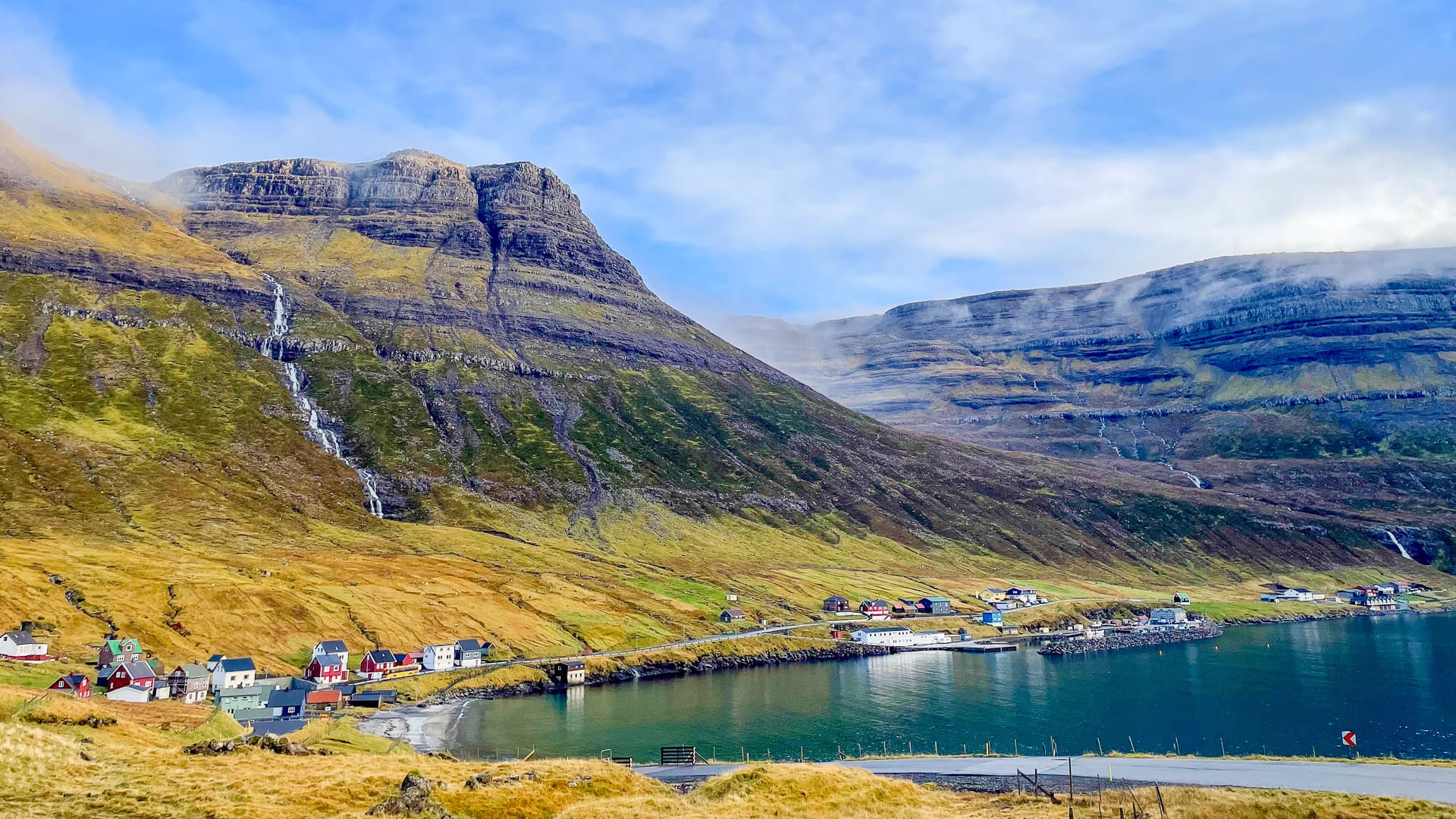
When the sun comes out, it’s absolutely stunning! (photo credit: Bikepacking Iceland)
Are there places for bike hire/bike shops in the Faroe Islands?
Bike hire and bike shop options in the Faroe Islands are limited. Most services are concentrated in Tórshavn.
The main provider is Rent A Bike, which offers bike rentals, guided tours and mechanical support.
Other relevant bike hire and repair contacts include ARA Tours and Súkkluverkstaðið hjá Gunnari. As always, it is worth checking current services, availability and opening times before travelling.
Rent A Bike Faroes in Tórshavn
Rent A Bike is based at Sverrisgøta 20 in Tórshavn. They offer rental of e-bikes (both touring and gravel e-bikes), mountain bikes, road bikes, gravel bikes and hybrid bikes, as well as guided and private guided tours.
They can also assist with practical logistics such as airport transfers, bike box storage, and basic repairs, making them a useful contact point for visiting cyclists.
Should you hire or bring your own bike?
For more serious or longer trips, bringing your own bike can make sense. This is especially true if you have a preferred set-up or specific bikepacking gear.
For shorter rides, renting locally can work well. It is especially useful if paired with local knowledge or guided support.
Spares and repairs
Outside Tórshavn, bike shop options are sparse. Do not rely on finding parts elsewhere in the islands.
Rent A Bike can help with repairs for bikes that have not been hired from them, depending on capacity and the type of repair needed.
If bringing your own bike, also bring along essential spare parts and tools (extra derailleur hanger!), as access to replacements can be limited.
Useful spares include:
- a spare derailleur hanger.
- tubes or a tubeless repair kit.
- a tyre boot.
- a pump or CO2.
- a multi-tool.
- a chain quick link.
- bike-specific brake pads.
- chargers for electronic gears or e-bikes.
What is the best time of year to go on a Faroe Islands cycling trip?
The best time to cycle in the Faroe Islands is between late May and early September.
During this period, temperatures are milder, daylight hours are long and the chances of more settled weather are at their highest.
June to August
June to August usually offers the most reliable conditions. Even so, don’t read this as “good” weather necessarily; everything is relative in the Faroes! For example, the average summer temperature sits around 13ºC!
However, at this time of year, the long daylight makes it easier to plan flexible riding days. It can also make evening riding possible, when traffic is quieter.
May and September
May and September can also be good months to visit, especially if you prefer fewer tourists.
However, riders need to be prepared for colder temperatures and more variable conditions.
Winter cycling
Winter is generally not suggested for most cycling trips. Daylight is limited, the weather is harsher and conditions are more difficult.
That said, I rode in November and enjoyed it – though I did benefit from some luck with the weather!
Wind and changing weather
The biggest factor is often wind, rather than temperature.
The wind can be strong and unpredictable. It can have a bigger impact on the ride than the terrain itself. It is also common to experience sun, wind, fog and rain in a single ride.
These weather forecast sites should come in useful: Vedur and Yr.
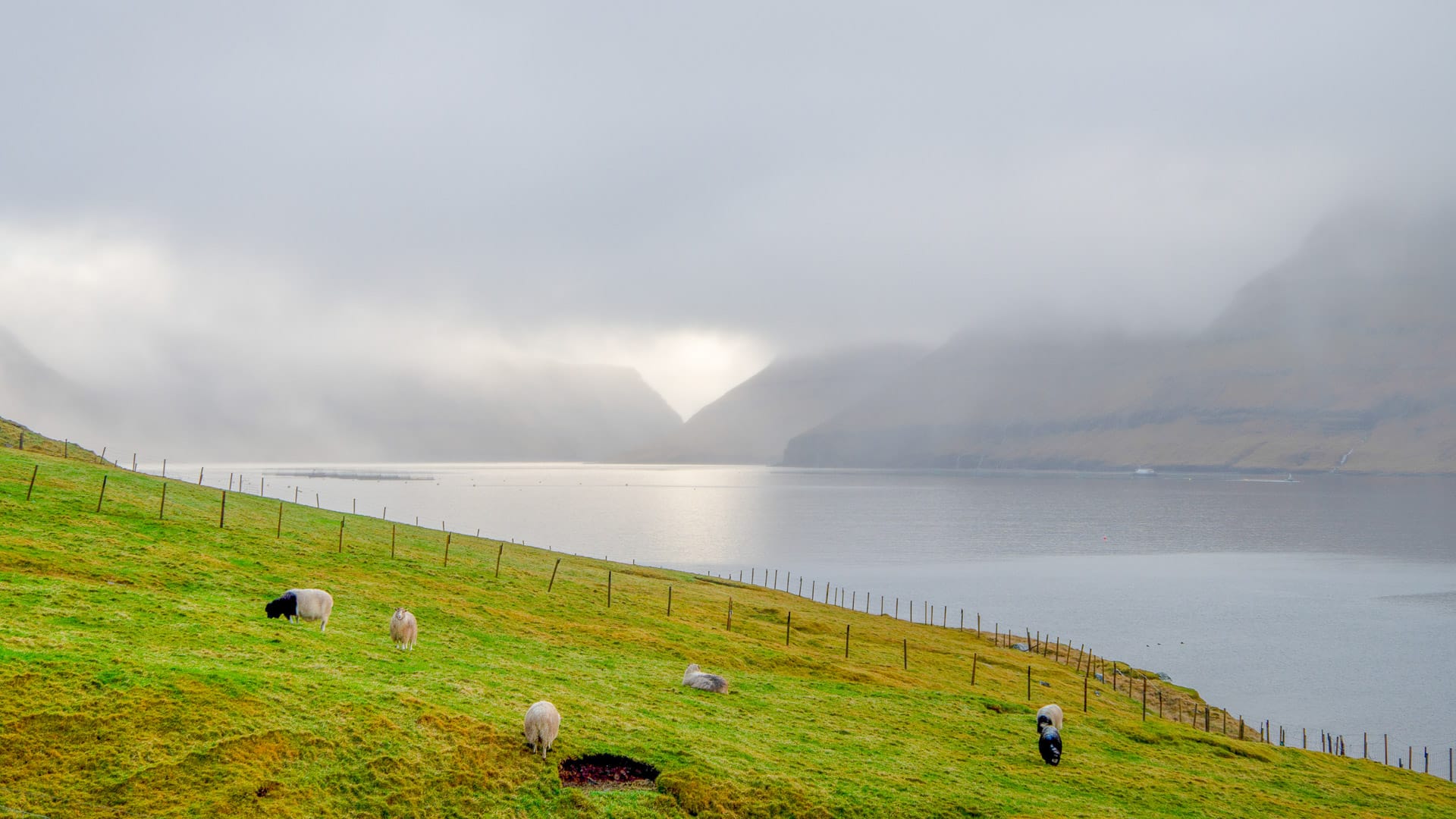
Sheep grazing over Hvannasund (photo credit: Christoph Pfülb via Bikepacking Iceland)
Any tips for riding in the Faroe Islands?
What to pack for a Faroe Islands cycling trip?
Cycling in the Faroe Islands is as much about preparation and mindset as fitness.
Useful kit includes:
- good front and rear lights
- a reflective vest or jacket
- waterproof layers
- waterproof valuables bag
- warm layers
- gloves
- snacks
- water bottles
- offline maps
- a power bank
- spare tubes or plugs
- a multi-tool
- a spare derailleur hanger
Food, water and services while riding
Planning ahead for food and water is important. Services can be limited once you leave larger towns, particularly outside the larger villages and on some of the smaller islands.
It is worth carrying water, extra snacks and basic repair equipment for longer rides.
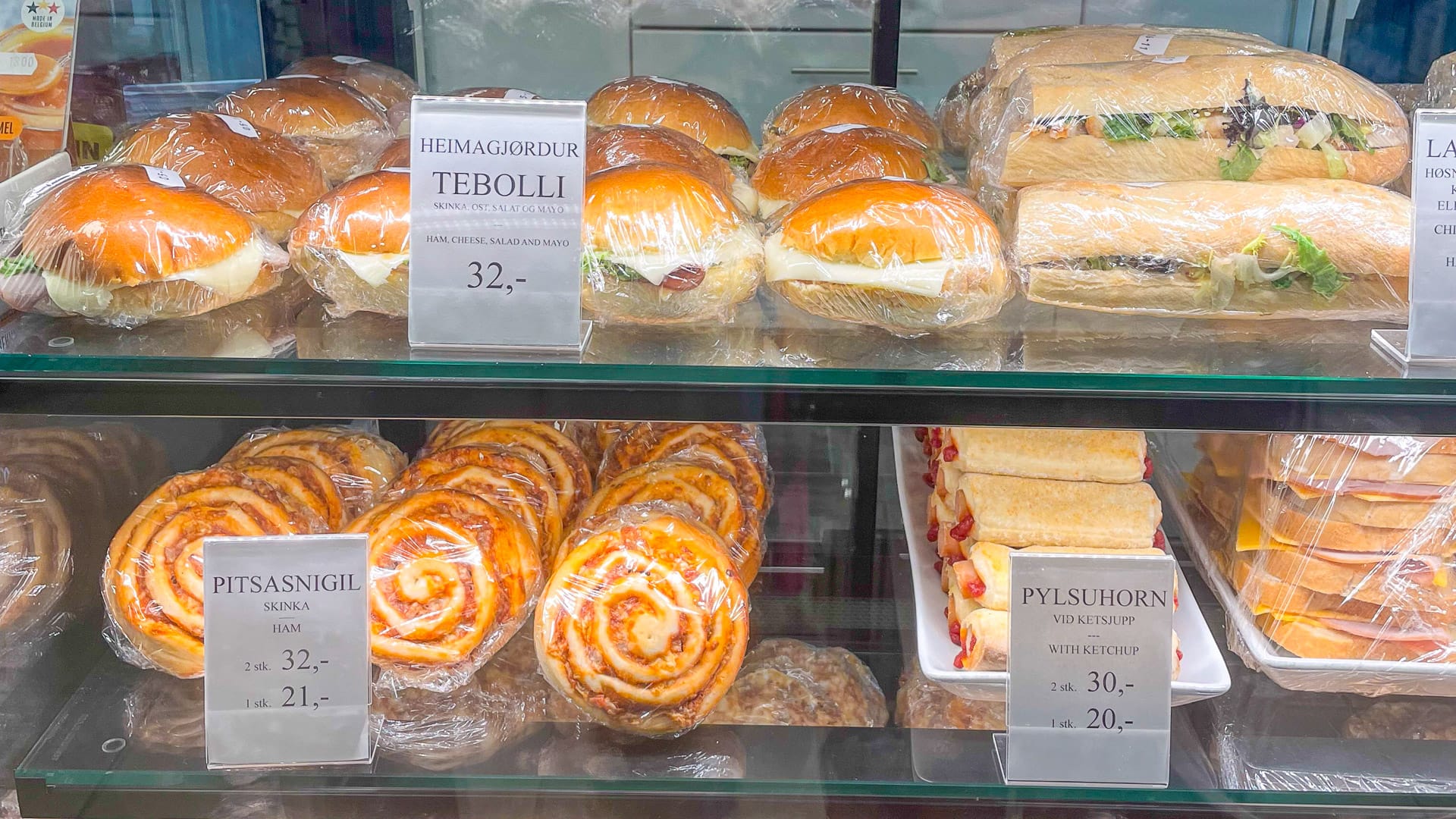
Gas station snacks in Norðskáli (photo credit: Tyler Wacker via Bikepacking Iceland)
Public transport with bikes
Public transport, including buses and ferries, can be a useful part of a Faroe Islands cycling trip.
It can help riders skip certain tunnels or connect between islands. Bikes can generally be taken on SSL buses and ferries if there is space, but this is not always guaranteed. Smaller buses and busy departures may have limited capacity, so always check directly with SSL before travelling with a bike.
SSL is the public bus company.
- The large buses have the place to transport 1-2 bikes.
- You need to notify the small buses of the bike the day before the trip starts, on +298 343030.
- Passengers taking the bus to the island of Sandoy, can enter the bus at the tunnel start, Gomlurætt, and on the way back at the opposite tunnel start, Inni í Dal. You need to call the bus on tel. +298 770000, +298 225900 or +298 293083.
Timing your rides
Traffic is generally light, but riding outside peak commuting hours can make the experience more relaxed.
As a general guide, riding after 9am and before late afternoon can help. In summer, long daylight hours also make later rides possible.
Language and culture
English is widely spoken, so there is no need to learn Faroese before visiting.
Still, engaging with local people and experiencing everyday Faroese life can add a lot to the trip.
Mindset: stay flexible
Flexibility is key. The weather may change your plans, but that unpredictability is part of what makes cycling in the Faroe Islands memorable.
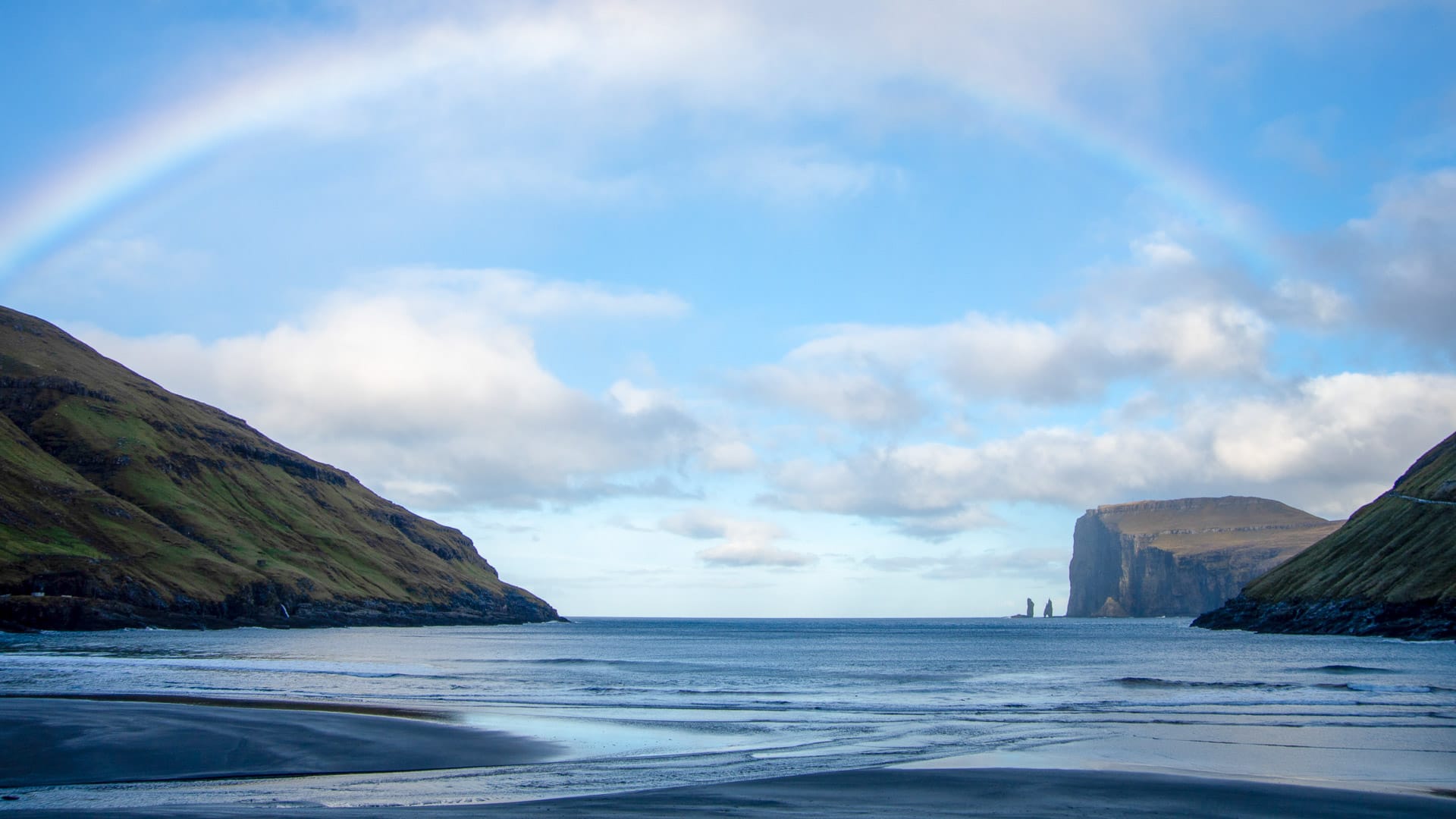
A rainbow over Tjørnuvík (photo credit: Christoph Pfülb via Bikepacking Iceland)
How to get to the Faroe Islands?
Flying to Vágar Airport
Getting to the Faroe Islands is relatively straightforward, despite their remote location.
As of May 2026, likely direct routes for UK readers include Edinburgh for much of the season and London Gatwick in the summer, alongside regular connections via Copenhagen and other Nordic/European hubs. Because routes change seasonally, check current schedules before booking.
Starting from the airport
The airport is on Vágar Island. From there, cyclists can start riding straight away or take a bus through the Vágatunnilin to reach Tórshavn.
Tórshavn is the main hub for cyclists and has the best range of services.
Travelling by ferry with a bike
Another option is to arrive by sea on the Smyril Line Norröna ferry.
This connects the Faroe Islands with Denmark and Iceland. At the time of writing, this ferry is bike-friendly and allows cyclists to travel with loaded touring or bikepacking set-ups, without boxing the bike.
Complete bikes can be taken on Smyril. I would make sure you have a good lock with you, and possibly some rope or bungee cords too. My bike was on a bike rack on a car, but those travelling without a car had their bikes leaning against the wall of the boat and locked to the boat.
Getting around once you arrive
Once in the Faroe Islands, transport between islands is well organised.
Buses and ferries link the main regions. They can make it easier to work around tunnels or build more flexible routes. Check out the details above for more information.
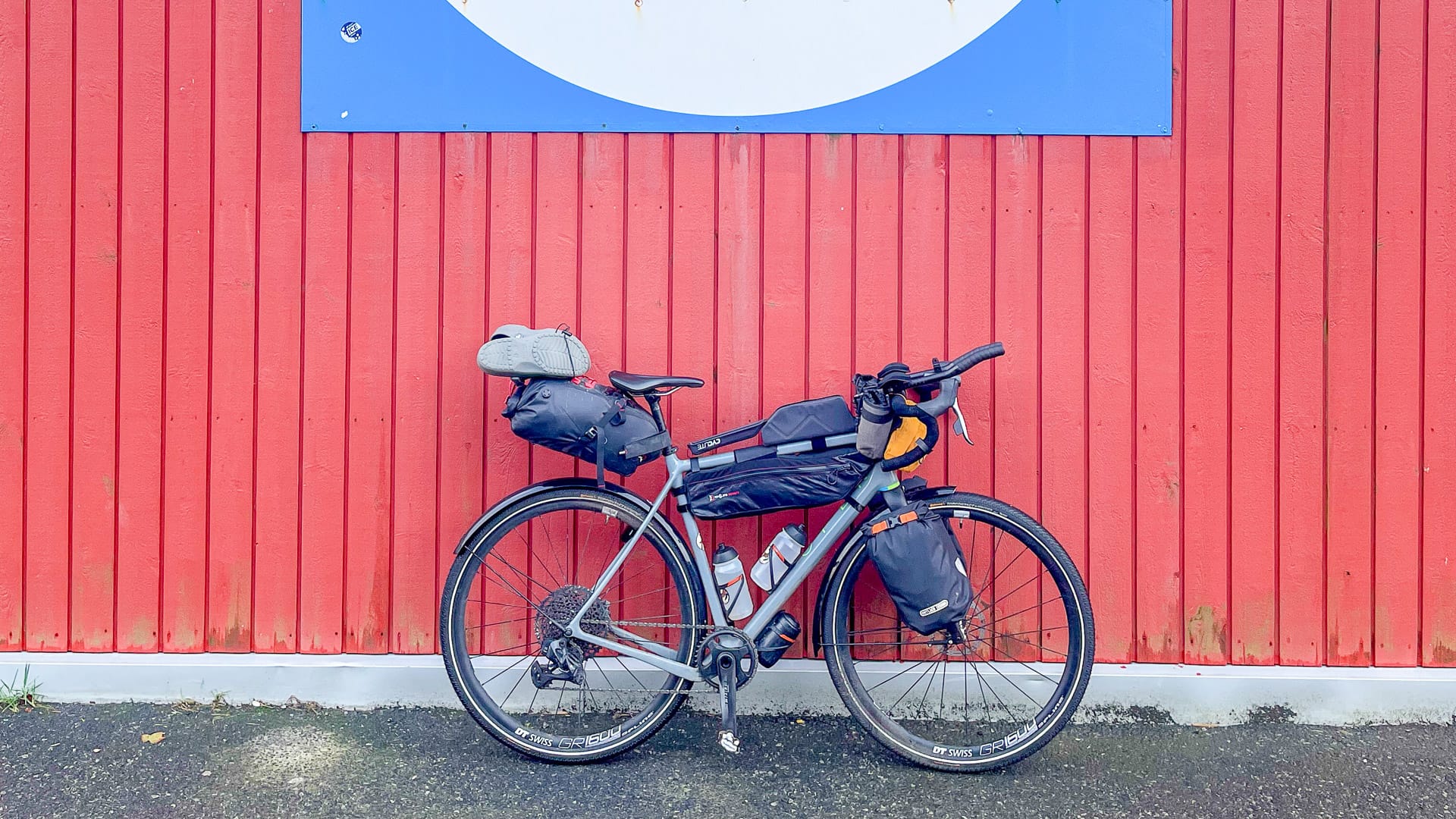
Find it all at fk grocery stores (photo credit: Tyler Wacker via Bikepacking Iceland)
Where to go once you finish in the Faroes?
If you are going on to Iceland, you could bike the north or south Ring Road and make your way to Keflavík International Airport to fly out from there. Bikepacking Iceland has a new Keflavík location and can help with any logistics you need for getting on the plane, including bike boxes, transport and mobile mechanics.
Sponsor Message
Need bike hire or guided tours in the Faroe Islands?
Rent A Bike has helped locals and visitors enjoy cycling in the Faroe Islands since 2018.
Today, they offer bike rentals, guided tours and a bike shop in Tórshavn, with a range of bikes, equipment and clothing available.
Interested? Head to their website to find out more, including prices and availability.
Got a question for Berit and Bartal from Rent A Bike?
Fill out this form and we will pass it to Rent A Bike who aim to reply (within 24 hours wherever they can!)
Part 5: Tell us more about what you offer
About Bikepacking Iceland
Bikepacking Iceland focuses mainly on Iceland-based cycling experiences.
Its work includes self-supported bikepacking trips, Fjord Hub and Keflavík Hub services, route planning and logistics.
My experience of riding from Iceland to the Faroe Islands and exploring the islands by bike gives me useful insight into how the Faroes work as a cycling destination.
Bikepacking Iceland does not currently run tours in the Faroe Islands. Our role here is as the expert contributor.
For bike hire and guided rides in the Faroe Islands: Rent A Bike Faroes
For tours, bike hire or bike-related help in the Faroe Islands, Rent A Bike is a useful local contact. They can also help with repairs for non-hire bikes when possible.
Rent A Bike offers bike hire, guided rides, private tours, bike workshop support and practical cycling logistics in the Faroes. If you need support while out riding, or have a mechanical, Rent A Bike have a number you can call; they will help you arrange transport to your hotel (whether by public transport, taxi or Rent A Bike pick up).
Need bike hire, a guided ride or local cycling logistics in the Faroe Islands? Contact Rent A Bike Faroes before you travel so they can advise on the right bike, route choice and practical support for your plans. Use their contact form or email rentabike@rentabike.fo.
Final thoughts on cycling in the Faroe Islands
The Faroe Islands are a distinctive cycling destination. They suit riders who like smooth roads, short but demanding cycling routes, big scenery and the practical challenge of island travel.
They are not the obvious choice for a relaxed flat cycling holiday. But for cyclists who enjoy weather, hills, tunnels and logistics, they offer a truly memorable North Atlantic riding experience.
And you can be sure you’ll earn some bragging rights; the Faroes are not a place many have cycled! When will you go?
Got a question for Tyler and Berit?
Fill out this form and we will send it to Tyler and Berit. We aim to get you an answer within 24 hours where possible!Tyler Wacker is the owner of Bikepacking Iceland, which operates the Fjord Hub and Keflavík Hub, supporting cyclists exploring Iceland by bike. Tyler's focus is on long-distance and self-supported cycling, and he is always looking to understand how different destinations work from a rider’s perspective.
In autumn 2025, Tyler cycled from his home in Iceland to the Faroe Islands via the Smyril Line ferry, bringing his bike and gear with him. He spent a week riding across the islands to research them as a cycling destination, experiencing the roads, tunnels, weather and logistics firsthand.
Berit Unn Petersen and Bartal í Gongini are the founders and owners of Rent A Bike.
Berit oversees the administration and day-to-day organisation of the business, while Bartal works as a mechanic and D-MTBing guide.
Both are passionate cyclists and share the aim of providing unique and memorable bike experiences on the Faroe Islands since 2018.
First Published: 18 June 2026
The contents of this website are provided for general information purposes only. It is not intended to amount to advice and you should not rely on it. You should carry out your own due diligence and risk assessments and take professional advice. Views expressed by interviewees or other users of this website do not necessarily represent our views. We make no representations, warranties or guarantees, whether express or implied, that the content on our website is accurate, complete or up to date. If you use any information or content on this website, download from, or otherwise obtain content or services through our website, it is entirely at your own discretion and risk. Epic Road Rides Ltd disclaims all liability and responsibility arising from any reliance placed on the information and content on this website. Find out more here.
Sponsor Message
Considering cycling in the Faroe Islands?
Bikepacking Iceland has helped cyclists explore Iceland and the North Atlantic by bike since 2020.
Alongside offering self-supported, semi-supported and fully-supported cycling trips in Iceland, they also offer bike rentals.
Interested? Head to their website to find out more.
Got a question for Tyler Wacker from Bikepacking Iceland?
Fill out this form and we will pass it to Bikepacking Iceland who aim to reply (within 24 hours wherever they can!)
Sponsor Message
Need bike hire or guided tours in the Faroe Islands?
Rent A Bike has helped locals and visitors enjoy cycling in the Faroe Islands since 2018.
Today, they offer bike rentals, guided tours and a bike shop in Tórshavn, with a range of bikes, equipment and clothing available.
Interested? Head to their website to find out more, including prices and availability.
Got a question for Berit and Bartal from Rent A Bike?
Fill out this form and we will pass it to Rent A Bike who aim to reply (within 24 hours wherever they can!)