
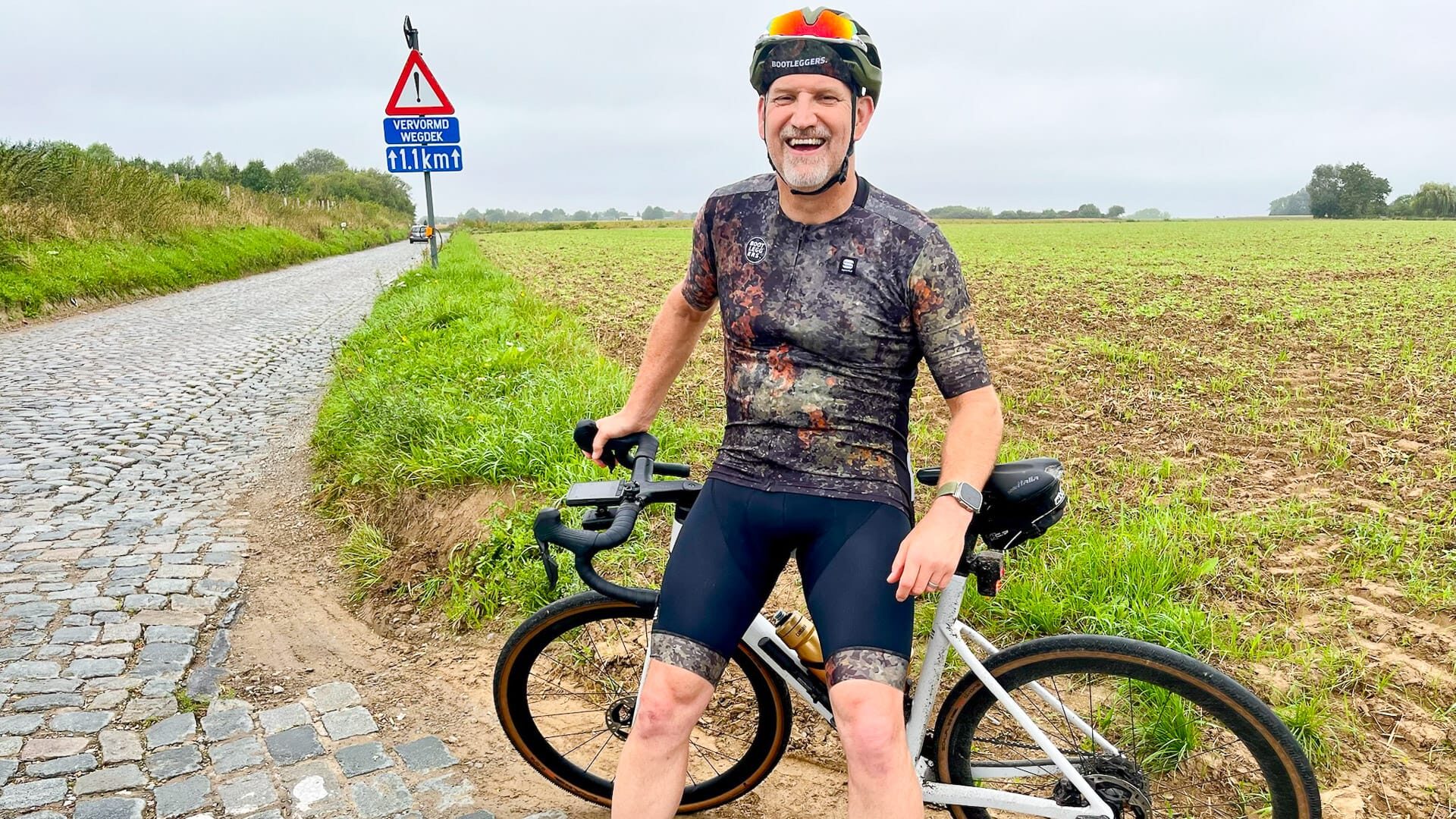

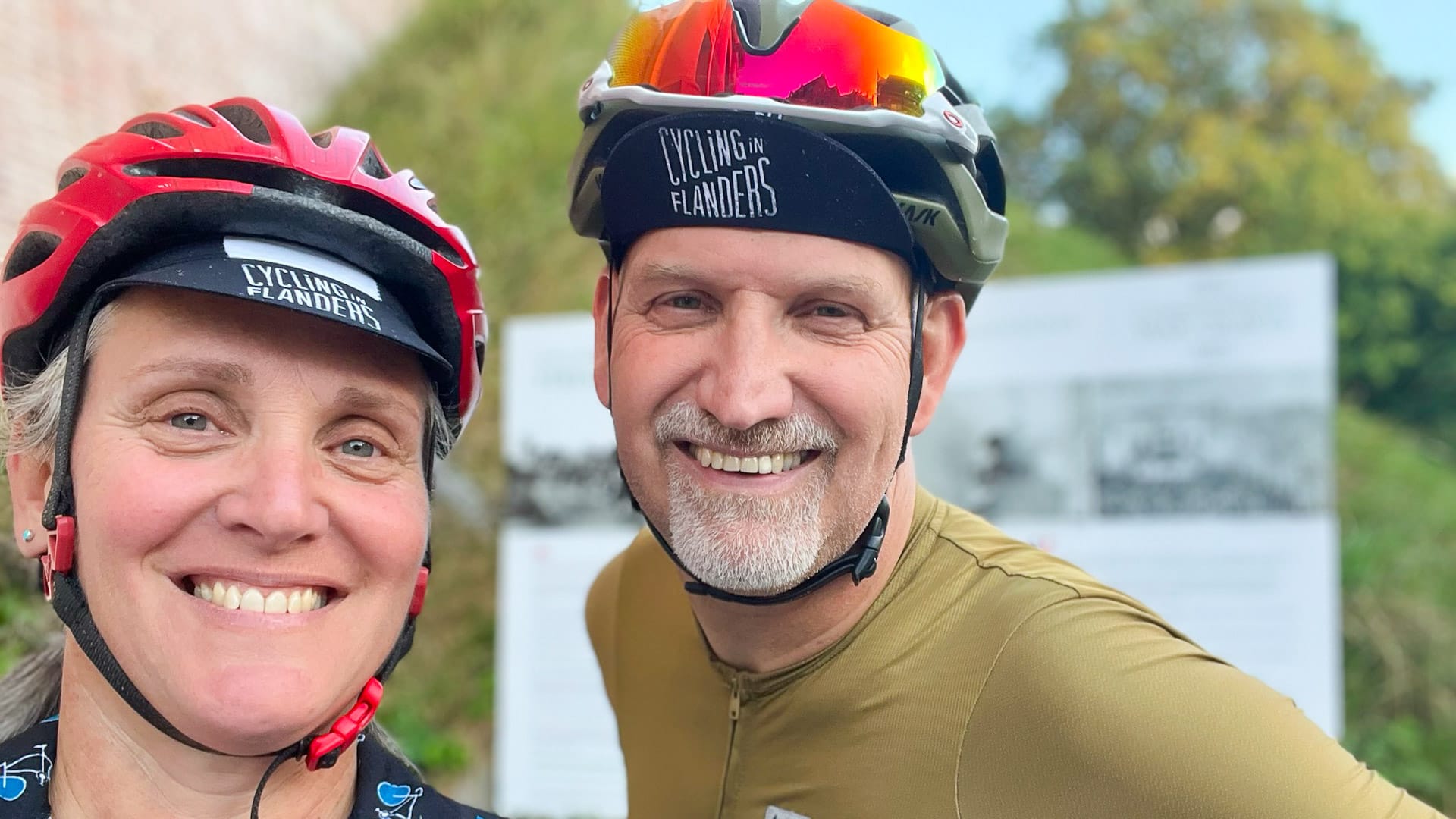
In September 2026, my brother John and I travelled to Belgium to take on the Flandrien Challenge, an initiative from Visit Flanders through its cycling brand, Cycling in Flanders.
The task: ride 59 climbs and cobbled segments within 72 hours. We spread our attempt over four days (Friday lunchtime, to Monday lunchtime), riding the roads of the Spring Classics and hoping to earn personalised cobbles on the Wall of Fame in Oudenaarde.
I’d first heard about the challenge during a visit to Flanders in March. After a day riding some of its famous bergs (Belgian hills), I loved it so much that I knew I wanted to return for more. John loves cycling too, and this seemed like it would be a fun challenge to share.
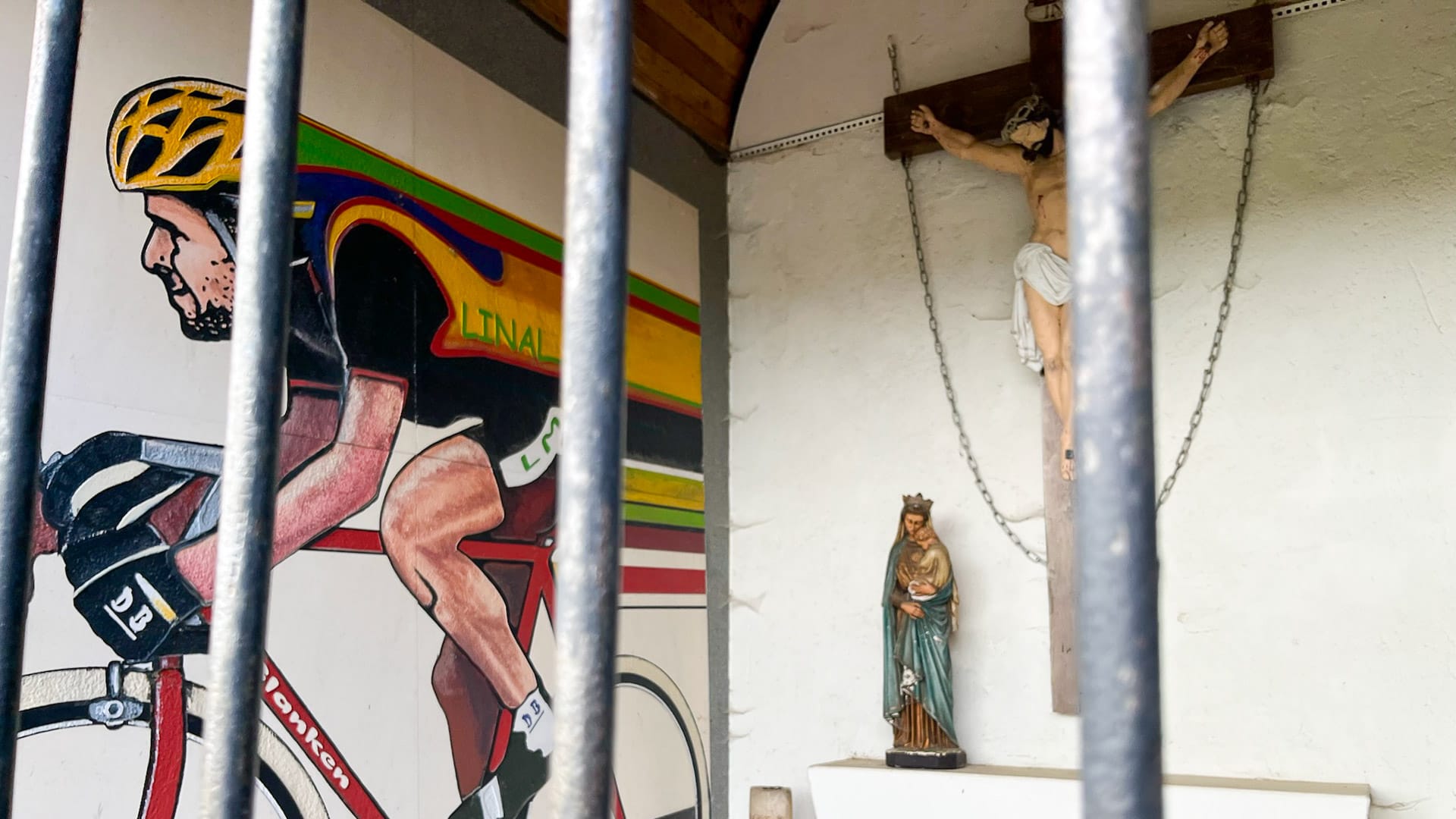
From the saddle, Flanders offered much more than its famous racing names. Narrow lanes crossed fields of sunflowers and (slightly smelly) Brussels sprouts. Climbs led into woodland, war memorials invited a pause and a moment to reflect on so many lives lost in the First World War, and cafés displayed cycling memorabilia in abundance. Then another stretch of bone-rattling cobbles would demand our attention.
Our days revolved around riding, fuelling, obsessively checking recorded segments and then trying to get enough recovery time before starting all over again the next day. By our final morning my legs felt heavy and the cobbles seemed even more unforgiving. But there were quieter pleasures over the weekend too: the unexpected opportunity to witness the Last Post ceremony in Ieper, being stopped mid-route by marshalls for an exciting cycling race flying past, a warm welcome over dinner at Liefmans, the deep sleep that comes from a day of hard exercise and a comfy bed, John discovering local beers and, finally, placing our names on the Flandrien Wall of Fame.
This article shares how our four days unfolded, what made the riding demanding and what I would want to know before setting off. It covers the routes, preparation and practical details. We travelled as guests of Visit Flanders.
I hope you find it useful!
Kate is a passionate cyclist who has explored the world by bike, including Europe, central America and South East Asia. Kate is a key member of the Epic Road Rides team; when she's not busy commissioning articles for Epic Road Rides, you'll find her busy writing and editing articles herself.
Always check current travel information and advice. For visitors from the UK, the UK government travel information pages are here.
Table of contents
- Part 1: What is the challenge?
- Part 2: Which routes can you ride?
- Part 3: How should you prepare?
- Part 4: What happens on the day?
- Part 5: What did I learn?
- Part 6: How do you plan your trip?
- Part 7: How could you extend your stay?
- Part 8: How do you qualify and claim your cobble?
Part 1: What is the Flandrien Challenge?
How does the challenge work?
The Flandrien Challenge is a permanent, free challenge from Cycling in Flanders. You choose when to ride. There’s no mass start or closed-road sportive: you organise your own attempt and record it through Strava.
Depending on how many days you plan to ride it over, the route is around 400km, with around 5,300m of ascent.
A berg is a hill; in Flanders, that often means a short, steep climb, often cobbled. Complete all 59 qualifying segments within the time limit and you earn a personalised stone (like a mini cobble, engraved with your name) on the Wall of Fame at the Centrum Ronde van Vlaanderen in Oudenaarde. This allows you to become a True Flandrien: “A True Flandrien is a man or woman of steel. A heroic cyclist who never gives up, relishes a challenge and eats pain for breakfast.”
What is the history of the challenge?
Route creator, Ewoud Lagring from Cycling in Flanders, is an expert in the area and explained that his colleague Dries had the idea for the Flandrien Challenge before Covid, with international visitors in mind. They launched during the pandemic: Belgians welcomed an activity they could still do, and overseas promotion increased as restrictions eased.
Ewoud worked with East and West Flanders to identify famous climbs and their racing history. Permissions ruled out some larger roads, leaving 59 segments. He used maps of three Tour of Flanders routes, plotted the connections on RouteYou, then repeatedly rode and revised them. The result is a route that looks like the work of a genius (or the scribblings of a 2-year-old who’s been let loose with a map and a crayon!).
The three-day version came first. A four-day option followed after a rider spotted that it could still fit within 72 hours. There’s also a 2 day and, for the few who might entertain it, 1 day.
Who is it for?
The Flandrien Challenge suits fit cyclists who enjoy long days and repeated steep climbs. Audax experience may help; previous sportive participation isn’t essential. If you’re a lover of the Spring Classics, or a sadist who can’t get enough of cobbles and steep climbs, then you’re going to love this!
When I rode the challenge, 3,362 people had been awarded the coveted True Flandrien title, from over 30 countries.
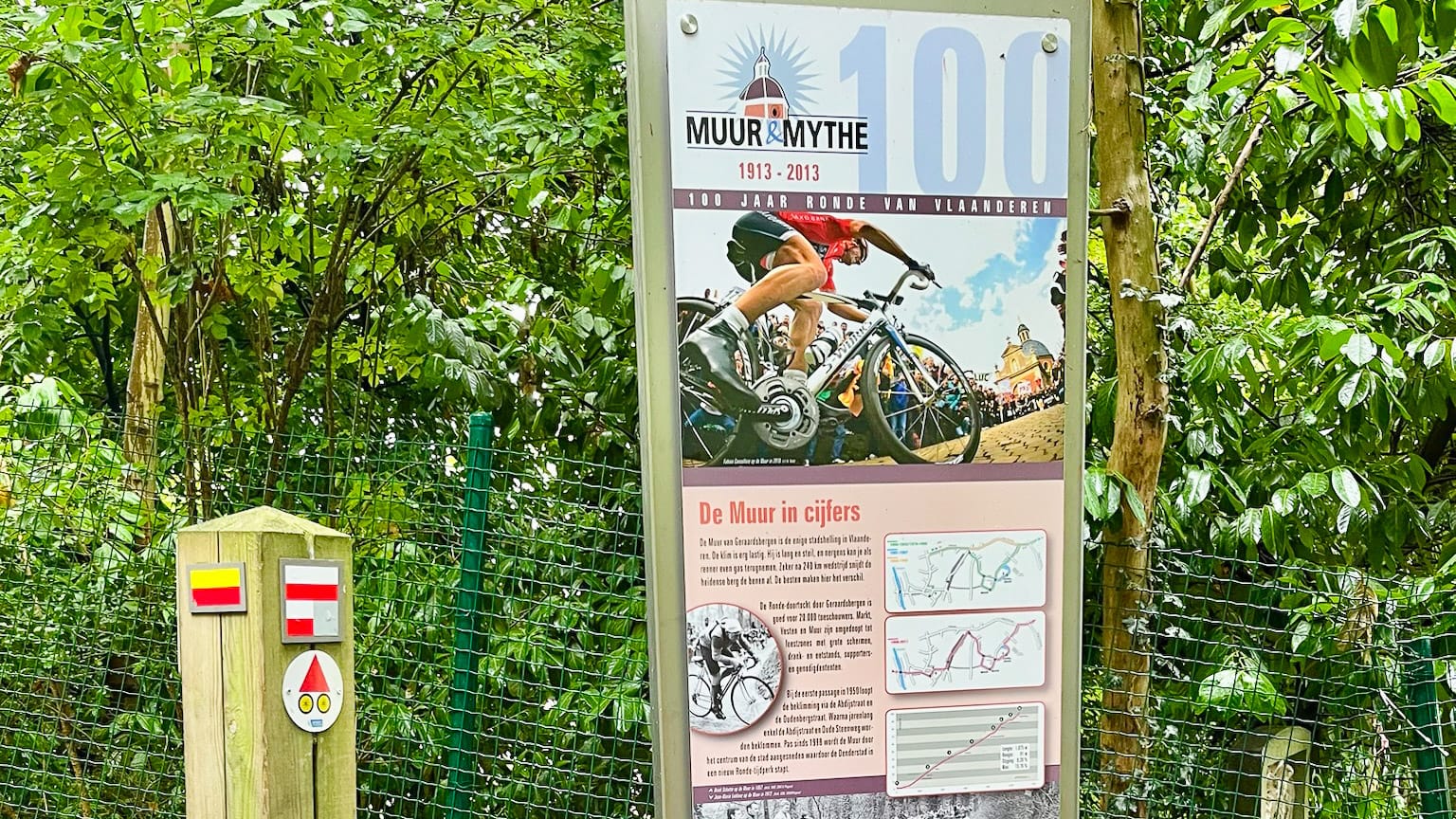
Part 2: Tell us about the route?
What routes are available?
The official Flandrien Challenge page links to suggested itineraries and downloadable route files for each. Click through to each segment page and you’ll find maps, downloadable GPX route files and descriptions for each segment. The descriptions explain each segment’s racing history, something about its nature and a photo.
Top tip! We really enjoyed reading the description for the next segment ahead of time, before we got to it. It helped us to appreciate each segment more and anticipate the challenge. Plus, there are some great little stories that add to the interest and fun.
| Option | Who it might suit |
| 1 day | Ultra-endurance riders prepared for a very long ride and riding in the dark. |
| 2 days | Very fit riders comfortable with two demanding consecutive days. |
| 3 days | Fit road cyclists with time for three focused riding days. |
| 4 days | Riders wanting shorter first and final days, within the same 72 hours. |
We chose four days to give ourselves more time, including for photographs and video. Starting on Friday afternoon meant finishing before the corresponding time on Monday, giving us the Friday morning and Monday afternoon for travel from and back to the UK.
The two-day option links Ieper to Oudenaarde on its first day then uses an Oudenaarde loop for the remaining segments. It includes almost 400 kilometres in total.
Top tip! I’d recommend starting with the suggested route files: connecting every required segment is a substantial planning job. Tinkering with the route a bit is possible, (we added on 5 segments from day 4 to our shortest day to make our final day a bit less time-pressured since we needed to catch trains home) – but you need to be hyper-vigilant to be 100% sure that you don’t mistakenly miss a segment.
What distances are involved?
| Day | Distance | Climbing |
| Day 1: Ieper | 75 kilometres | 890 metres |
| Day 2: Geraardsbergen | 94 kilometres | 1,262 metres |
| Day 3: Oudenaarde | 142 kilometres | 2,149 metres |
| Day 4: Oudenaarde | 82 kilometres | 905 metres |
Note: the figures above exclude any extra distance to your accommodation. Also note we adapted things, so we rode the day 3 route on day 2 and the day 2 route on day 3 – details below!
What is the route actually like to ride?
It’s a route that wiggles and winds all over this part of Flanders. It isn’t designed to be a linear route showcasing the loveliest roads and villages (though it does include many of these!) – its purpose is to hit all 59 segments. You often find yourself passing through the same junctions and even sections of the same roads making you question your own sanity – so if you’re someone who prefers a journey with a beginning and an end, this perhaps isn’t for you. That’s not what it’s trying to be.
The result is a constant feeling of deja-vu, but also a sense that you’re toughing it out in the footsteps of your cycling heroes. The sense of being part of a cycling culture that is deeply rooted in this region is palpable.
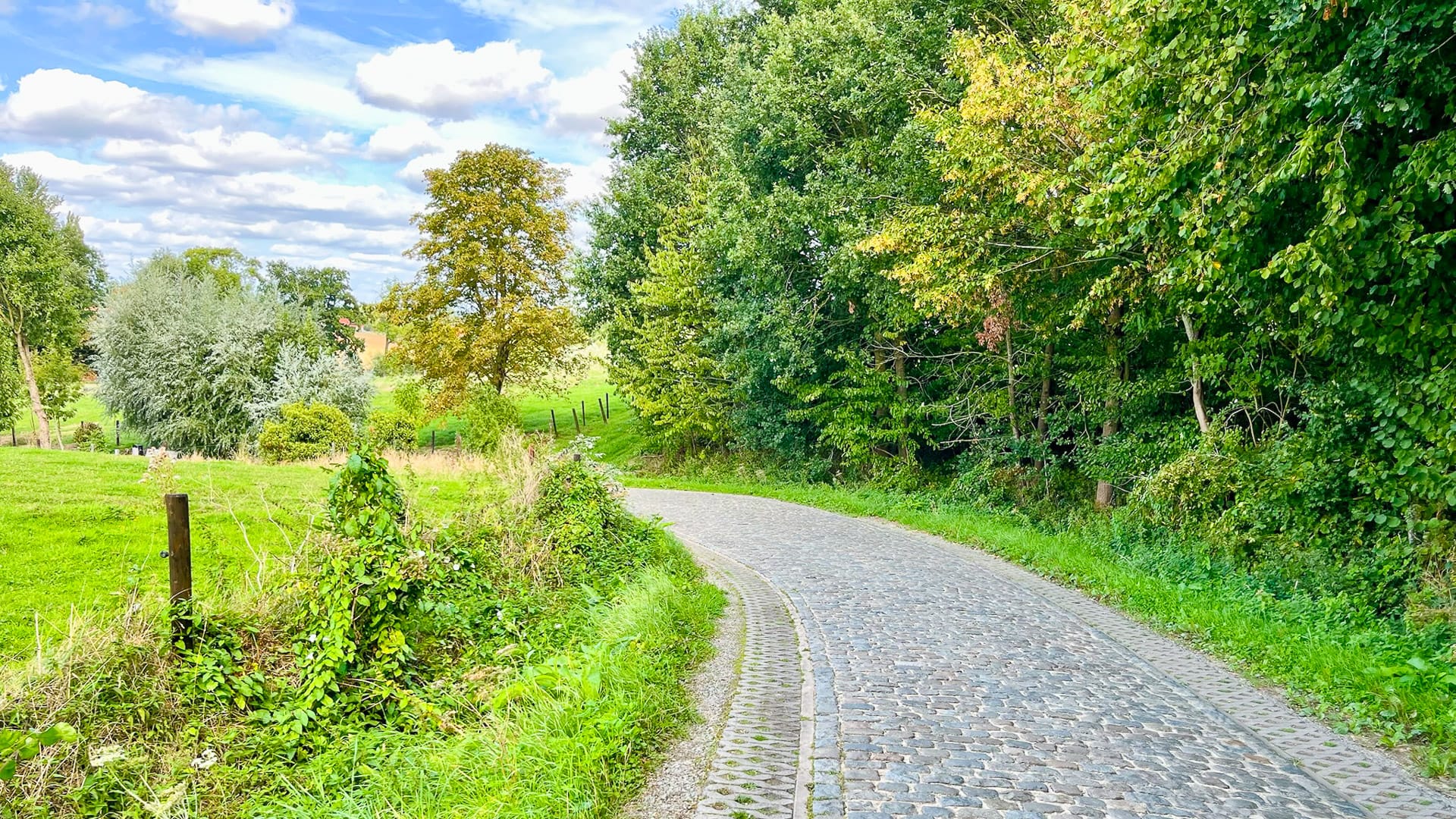
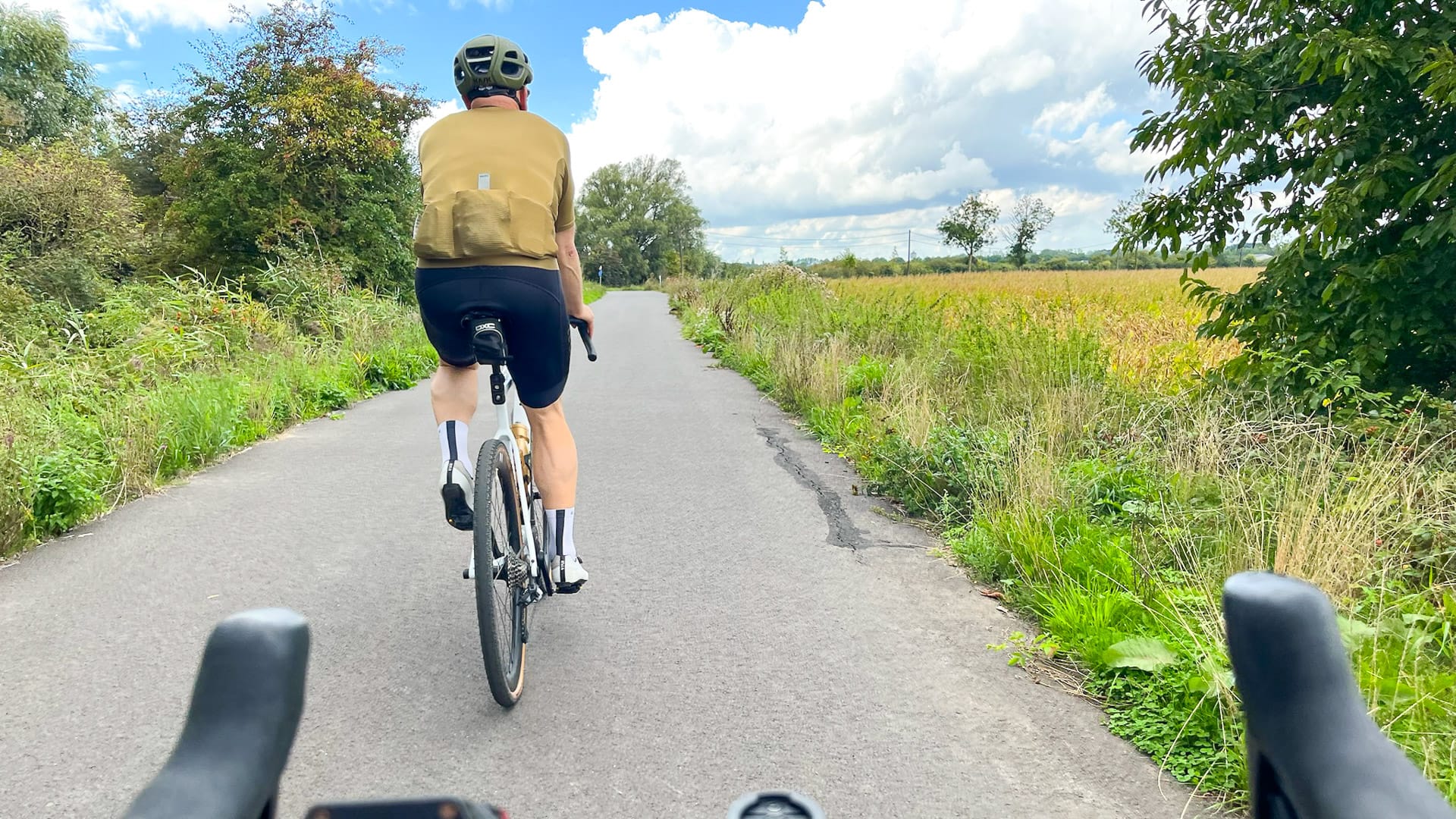
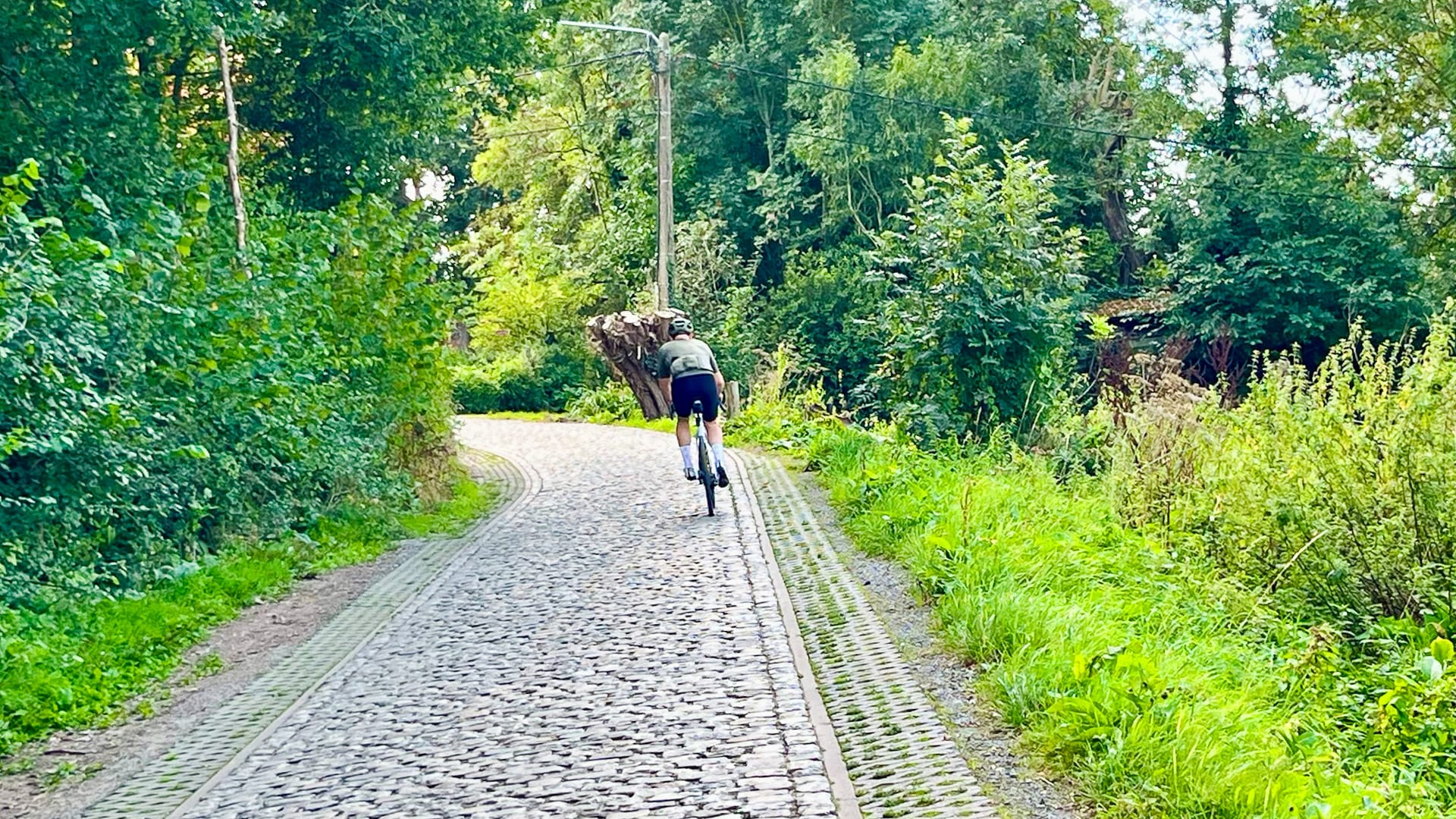
In terms of road surfaces, some cobbled sections were relatively new; others are old with sunken holes, ridges and awkward gaps. We rode a few sections alongside major roads, but the majority of the time we were riding quiet roads through lovely Belgian countryside. This is an agricultural region, so mud and farm traffic added to the need for care. Concrete roads are common, as are dual use walking/cycling paths and even occasional gravel. It’s hugely varied which is all part of the fun.
On the particularly narrow lanes, passing traffic is necessarily very close to you but we noticed that it doesn’t necessarily slow down much. It feels like there is an assumption that you have the bike-handling skills to keep to your own very narrow patch of road while they pass switfly. But local traffic was generally very light and there is a fantastic array of cycling paths and road priorities for cyclists in Flanders that keep you well away from the traffic on any fast road sections.
Friday: how did we fit in travel and riding?
Overview
The logistics of riding the Flandrien Challenge, particularly if you’re trying to do this over a long weekend from the UK, are not for the faint-hearted. It’s not difficult exactly, but it does require careful planning, paying particular attention to timings given the 72-hour window for cycling.
We’re both based in the North of the UK, so we travelled to London by train on the Thursday night and stayed in a hotel as close to St Pancras as possible. We left London on a 7am Eurostar and reached Oudenaarde around 11.15am, after changing trains in Lille and one more change between Lille and Oudenaarde. We collected our hire bikes, dropped our luggage at our hotel and jumped back onto a train to Ieper, which took a little over an hour. The Menin Gate, which is the official starting point for the route was a 5 minute ride from the train station.
We rode the nine segments around Ieper from about 3pm to 7pm.
Route highlight
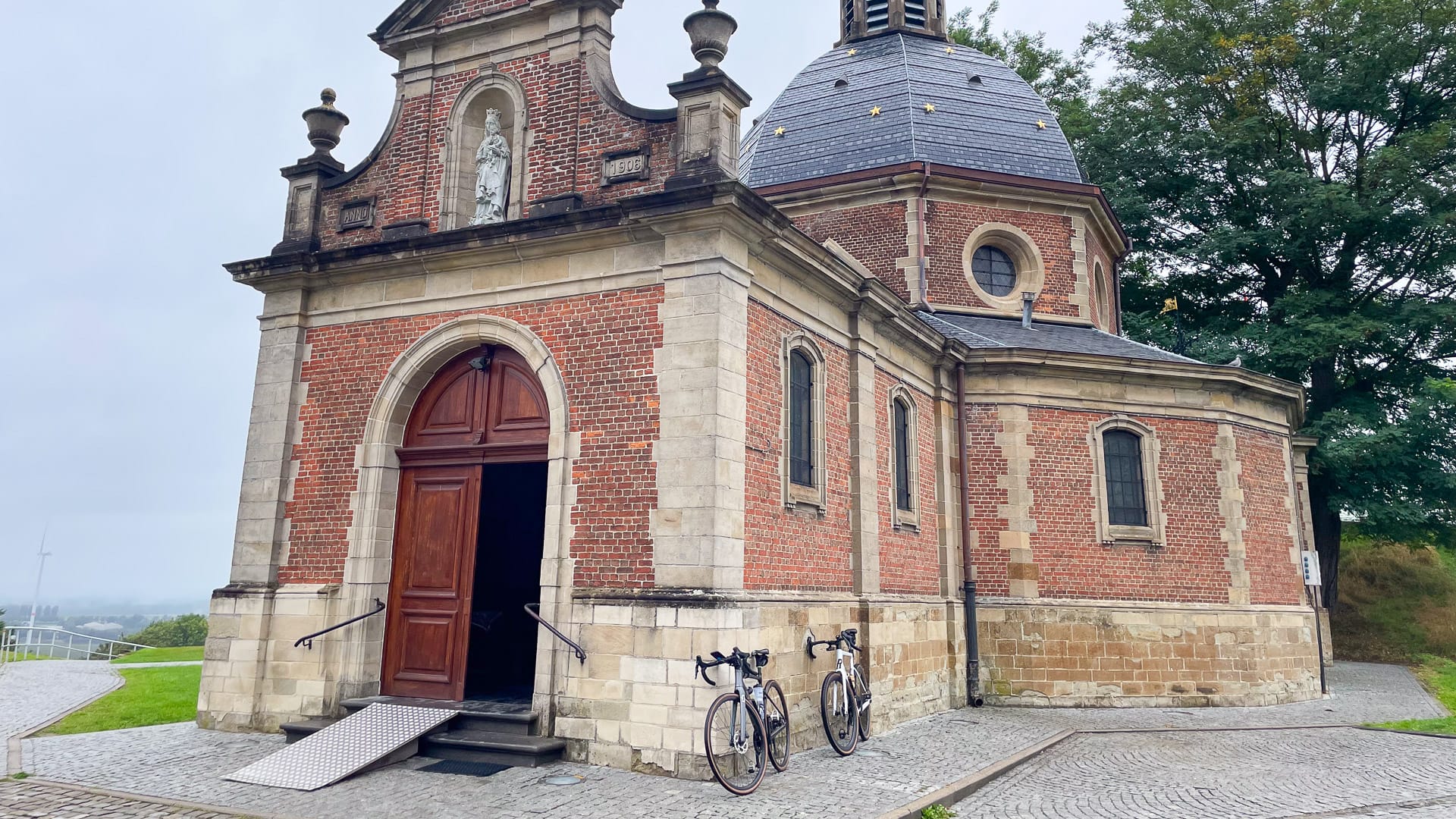
Kemmelberg Ossuaire: This wooded, cobbled climb hits 20% in places on very uneven cobbles with some treacherous gaps. But at the top you’re rewarded with the beautiful and imposing Ossuaire monument which reminds you that this isn’t real suffering, compared with what so many soldiers went through in the First World War. Humbling.
Evening
We decided that given we had another 1 hour+ on trains to get back to Oudenaarde, we’d eat dinner in Ieper. Leo’s Burgers provided an excellent quick dinner near the Menin Gate (friendly, efficient service since we explained we only had an hour before we needed to be on our train). This had the unexpected added bonus that we were able to catch the opening minutes of the daily Last Post memorial ceremony before heading for our train. It was a moving experience.
Back in Oudenaarde around 9.45pm, it was time for a shower and bed. It had been a long day, but a superb and exciting first day of cycling.
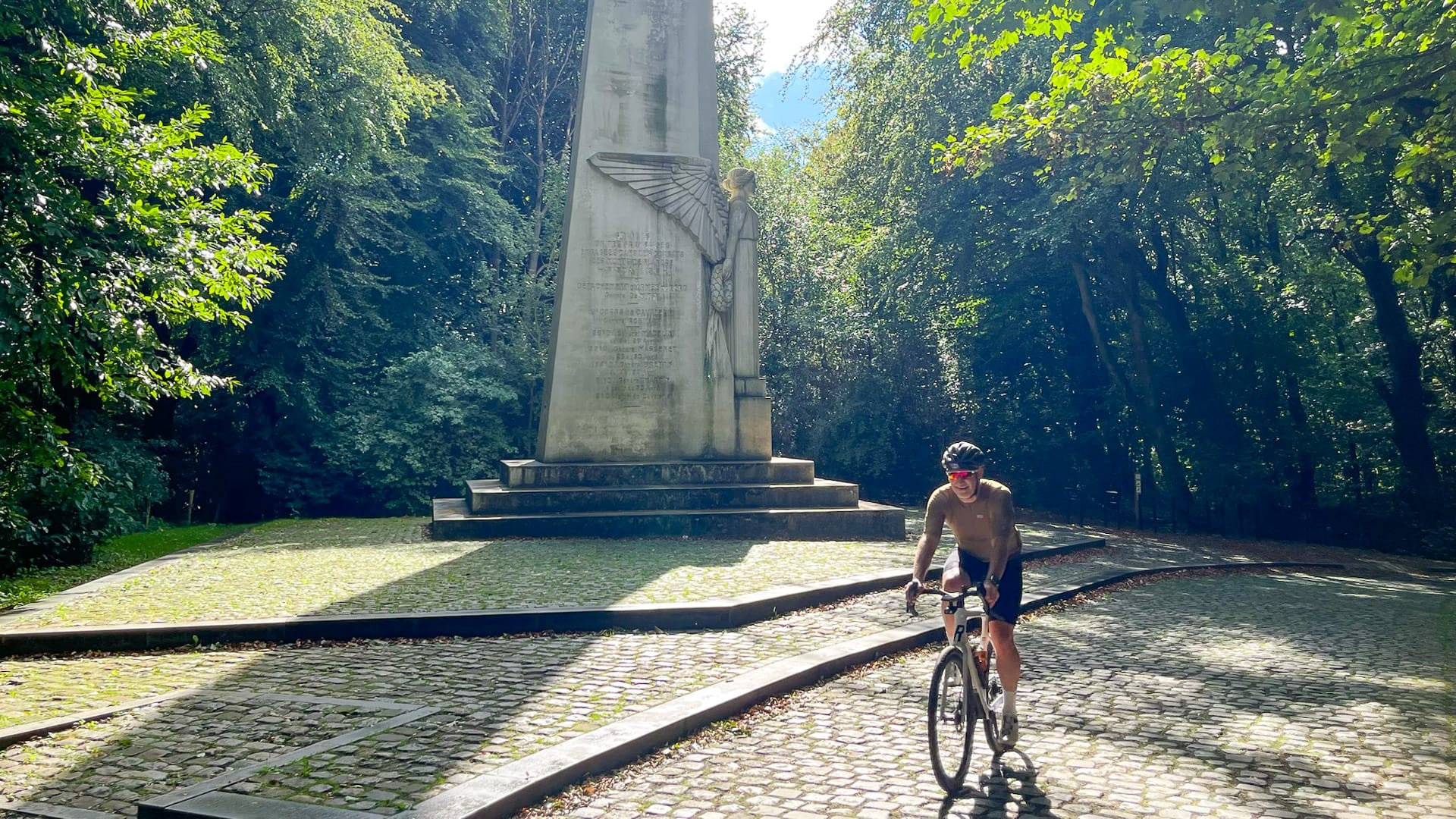
The Angel, Kemmelberg
Saturday: how did we tackle the longest day?
Overview
Sunday’s forecast looked wet, so we swapped the two middle days of the official route around and tackled the longest one (day 3) on Saturday (our day 2) instead. I’d been worrying about the longest day. Getting it done early was appealing for more than just the weather!
We headed out at 8am. The first 50km were incredibly slow going due in part to the sheer number of climbs – the first being within the first kilometre from our hotel! Despite riding constantly, we made desperately slow progress – not helped by our route-finding anxiety (we double checked constantly) and photo/video stops.
Gradually we picked up the pace and made more tactical decisions over how much stopping for photos and videos we could afford to do. We fuelled from cafes as and when we could and just kept pushing on until we finally arrived back at the Centrum Ronde van Vlaanderen and our nearby hotel. We were happy but exhausted and very conscious that we had another big day ahead.
Route highlights
- Paterberg: Hitting 20.3% and averaging 12% it’s definitely going to make you gasp for air. I rode this back in March and was excited to ride it again. You feel like a bit of a hero by the top.
- Koppenberg: Known as ‘the bump’ of Melden locally, it’s actually been listed as a national monument. With very uneven, slippery cobbles and again hitting 20%, this strikes fear into most cyclists. By this stage of the day, your legs will be drained, but dig deep if you want to avoid stopping, and having to work out how on earth to get going again without walking to the top.
Evening
Eating dinner at the hotel kept things simple, and we were in bed by 9.30pm to maximise recovery time.
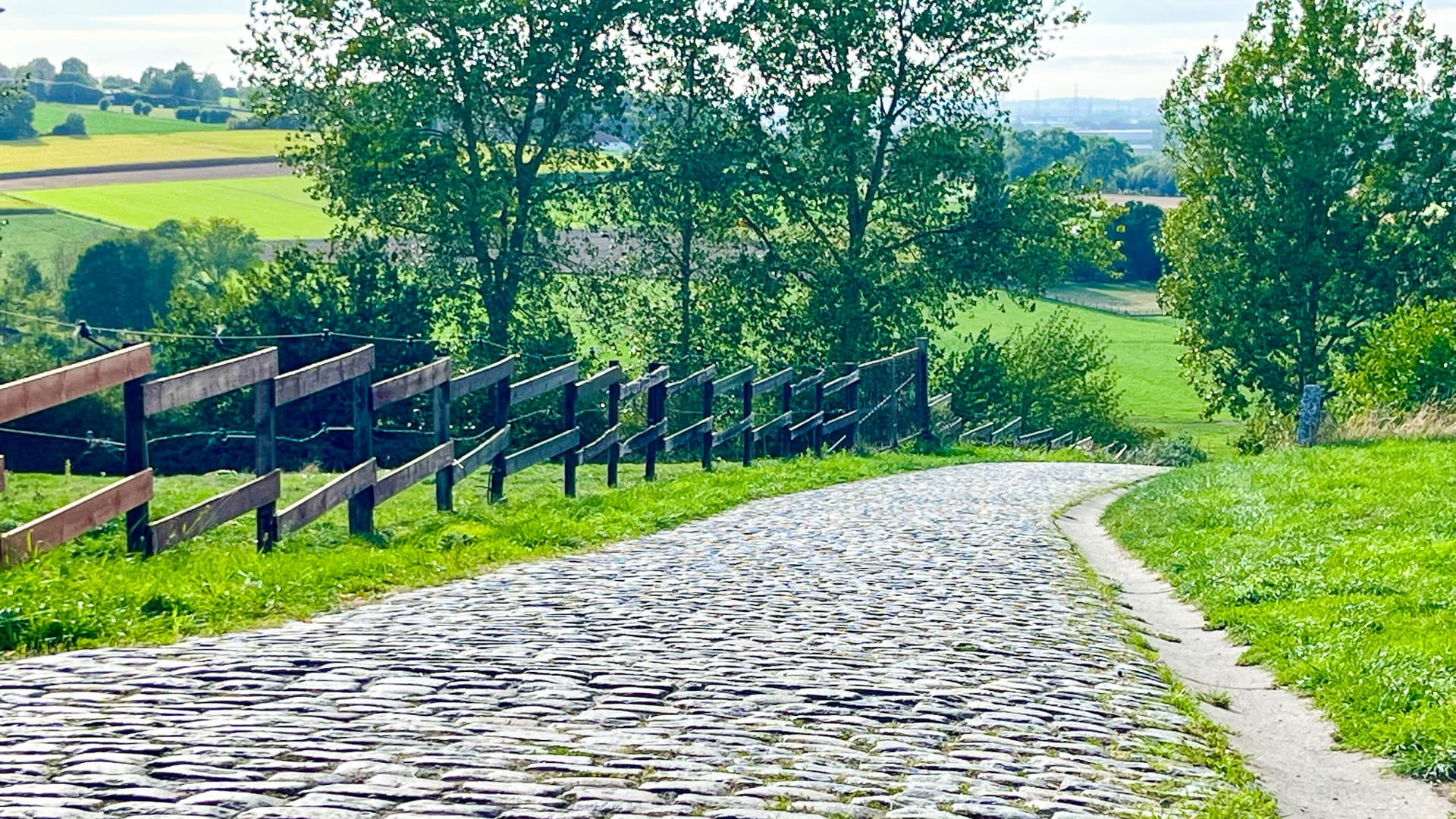
The Paterberg
Sunday: how did we find our way and unwind?
Overview
The official ‘day 2’ is a loop out to the east of Oudenaarde. Most days of the week you can catch a train out to the official start location at Geraardsbergen, but not on a Sunday morning. So we decided to ride out to hit the route at the nearest point, in the village of Elst.
That connection was roughly an additional ten kilometres each way from Oudenaarde. Joining there put Geraardsbergen around halfway through our ride, which worked really well for lunch.
Top tip! If you’re going to tinker with the route in this way, you do have to keep your wits about you. The crucial thing of course is to make sure that you don’t miss a segment. John used a combination of Google, Strava and his Wahoo to map the connecting route. I would have struggled to do that alone.
This day felt much easier. We were better organised with navigation, photographs and video. We also moved several final-day segments forward, reducing the pressure on Monday’s ride before our journey home. These fell fairly naturally along our route to and from Elst where we joined and finished the stage.
In spite of quite a lot of rain forecasted, most of the day was a gentle, atmospheric mizzle that helped to keep us cool. A downpour at lunchtime coincided with us arriving in Geraardsbergen so we dived into a simple cafe in the main square halfway up De Vesten and De Muur for a hearty bowl of spaghetti bolognese (with total disregard for any Strava times!).
We had plenty of energy left to tackle the extra segments we’d planned for the route home and despite a puncture in the final 10 kilometres, we arrived back to our hotel feeling remarkably good and excited to know that the end was in sight. It started to feel like we might actually be able to pull this off!
Route highlights
- Paddestraat: I love a bit of Roman history, and this segment was once part of a Roman ‘via’ between Boulogne-sure-Mer and Cologne. This is another segment that has earned the title of National Monument. I’m not a fan of cobbles, but I enjoyed cycling over all the names of the Ronde winners since 1973.
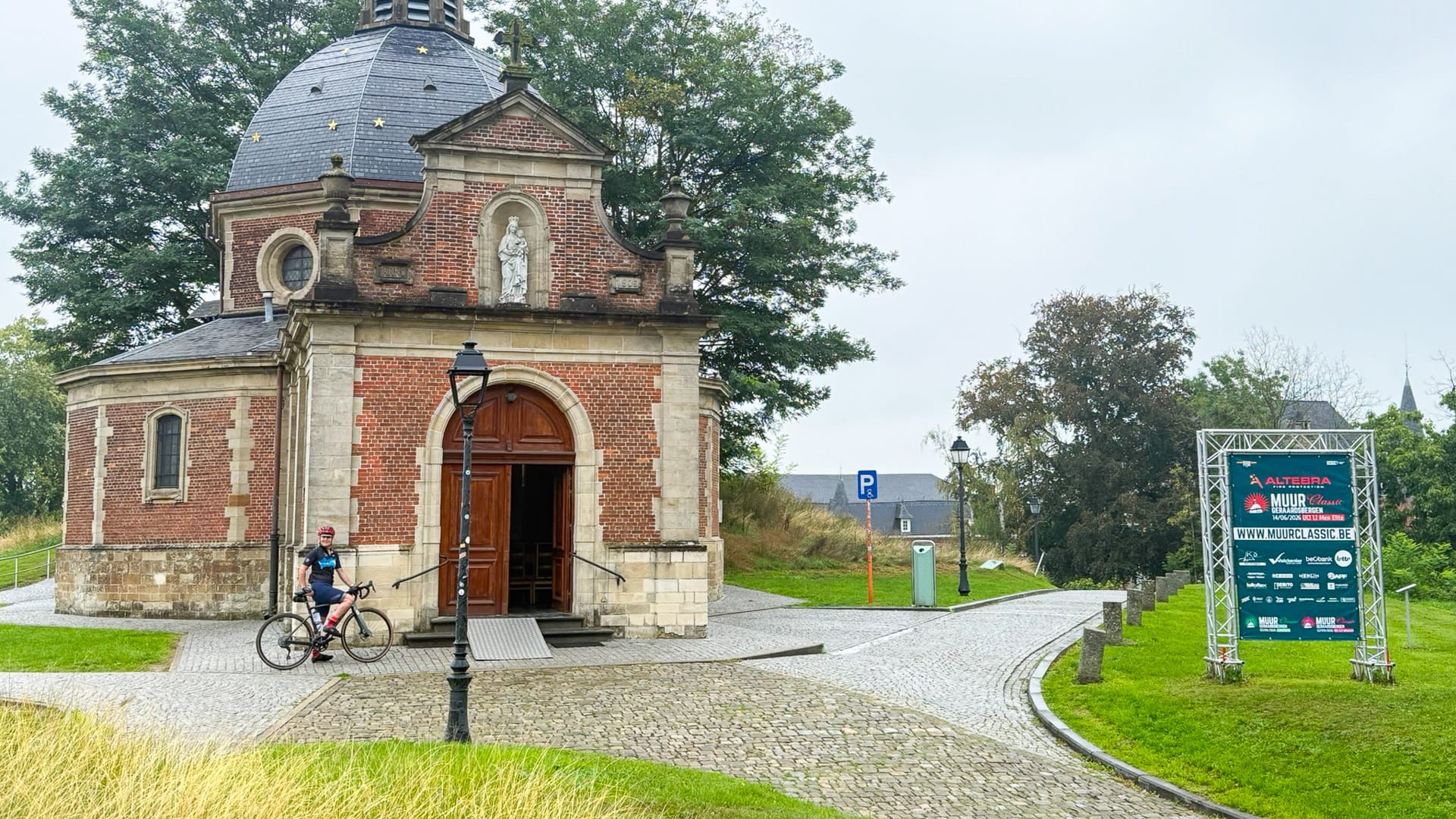
- De Vesten and De Muur: Averaging 9% and hitting 20% at its steepest, you’ll be pulling hard on your handlebars by the top. Surprisingly, this didn’t feel too tough – possible because it was powered by a huge carb-hit over lunch! The lovely neo-baroque church on the top is worth a quick look inside.
- Watching a race: Towards the end of the day we were stopped by race marshalls for a cycle road race to fly past, adding to that feeling of immersion in the cycling culture of this region (and giving us a lovely break!).
Evening
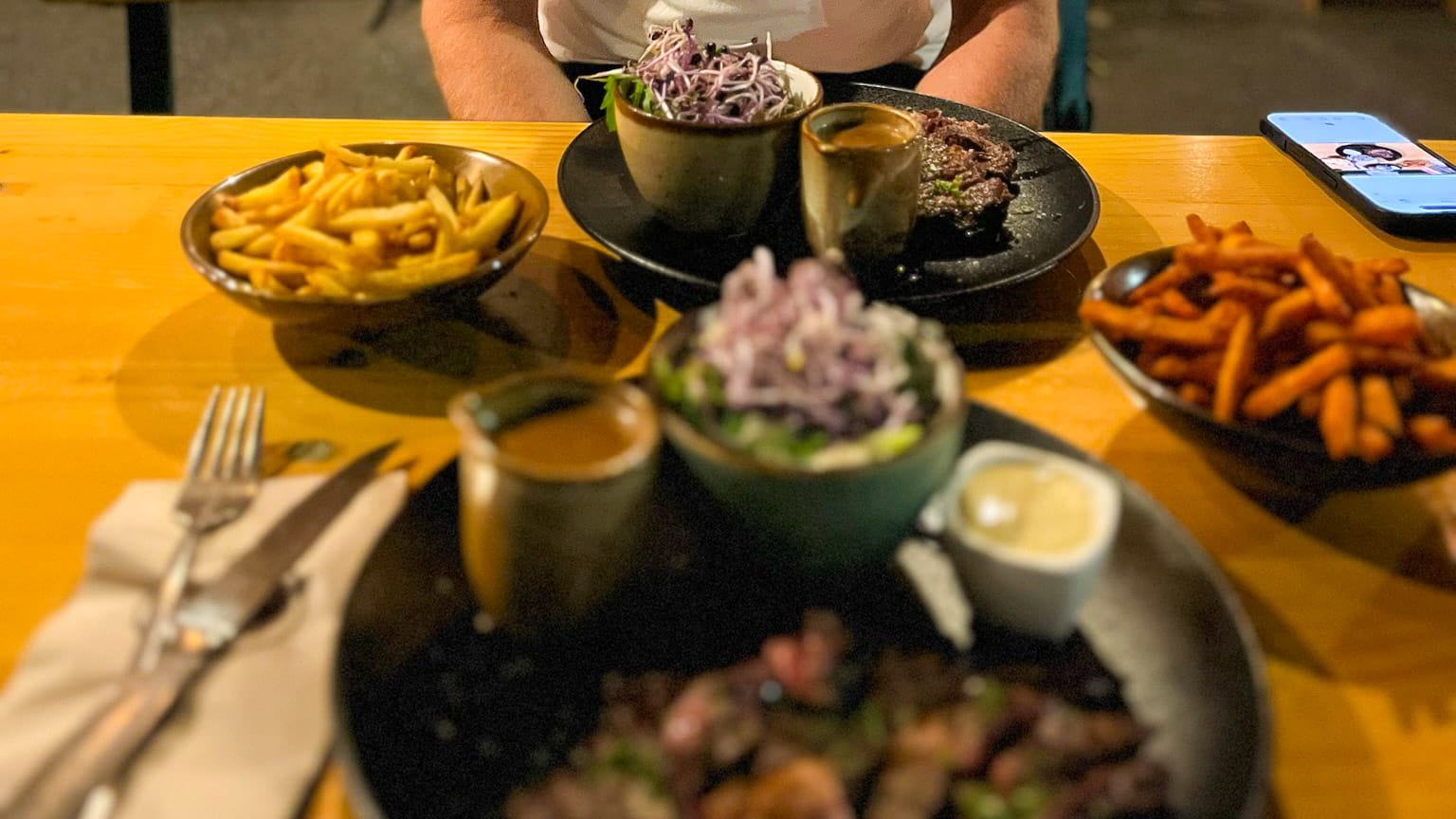
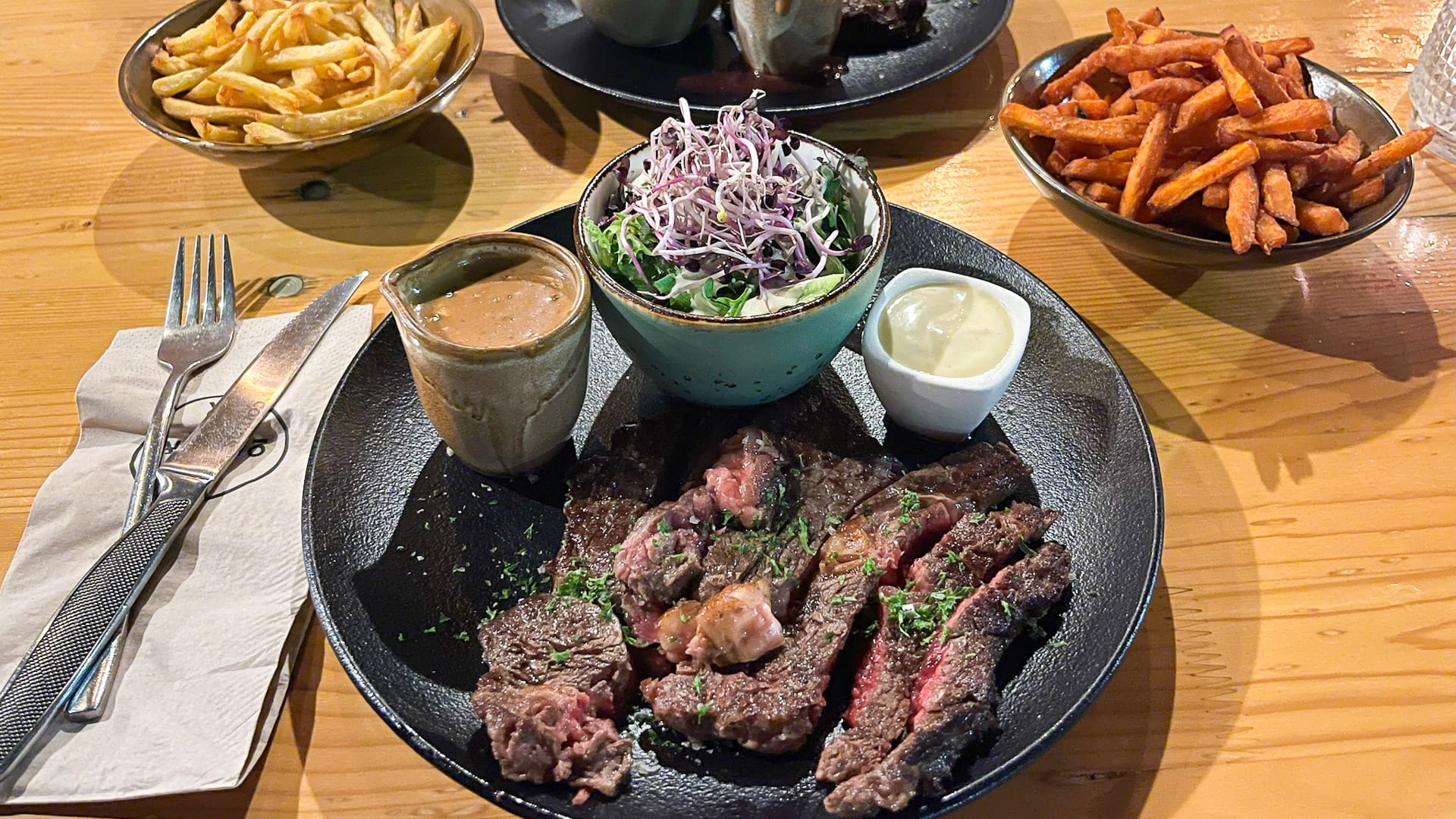
We agreed that we had enough energy left to head out for dinner and we arrived at Liefmans around 8.30pm. Liefmans is a wonderful 300 year old brewery by the river in Oudenaarde, that opens to serve dinner over weekends. The kitchen was about to close (it was a quiet night), but the team warmly welcomed us anyway and we devoured fantastic steak, chips and salad, plus indulgent puddings.
John loves beer, and manager Martin talked him through three unusual beers brewed and blended on site. It was a highlight for him, and the welcome made the evening a memorable experience for us both.
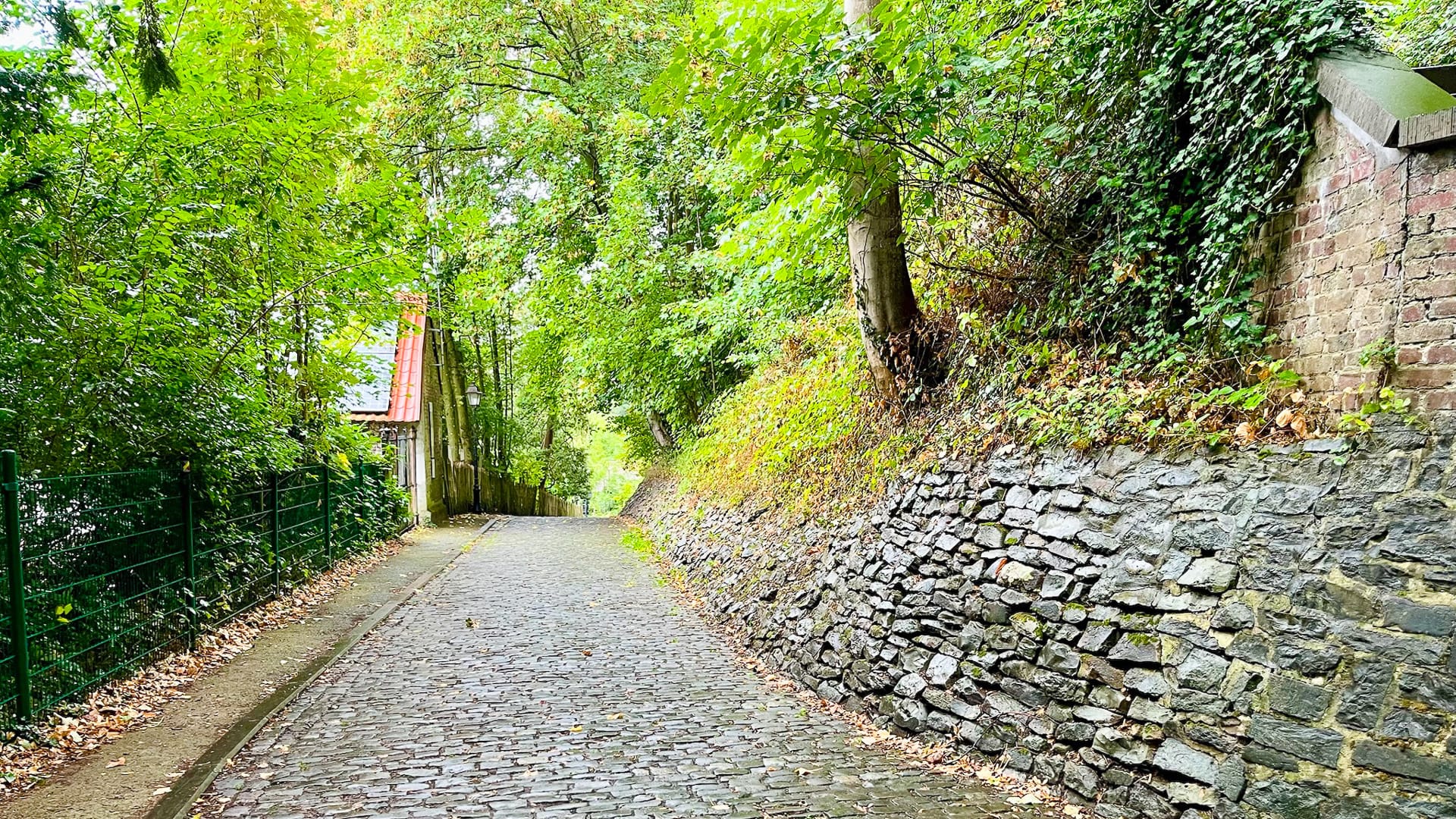
The Muur, Geraardsbergen
Monday: how did we manage the final segments?
Overview
We set off at 7am in near-darkness. Having already ridden five of the segments scheduled for day 4, we’d taken the pressure off, but we still needed everything to go smoothly for us if we wanted to complete the day’s segments before we needed to catch our train. The earlier start felt like a sensible move. I felt faintly queasy for the first hour or two. My legs were heavy on every climb, and the cobbles felt particularly unforgiving. My body definitely no longer had the same bounce as on Friday.
Sitting on the saddle had also become uncomfortable at the start of Sunday’s ride, although that had eased as I continued. By Monday morning it felt worse. I never doubted I could finish, but I knew the final day would hurt. It became a day of counting off the kms and segments. But ultimately, I was pleasantly surprised that I managed the climbs, despite their steepness.
To our delight, the kilometres passed quickly and we made really good time. At last, we were really getting the hang of this! The ride along the long flat cobbles of Kerkgate marked our final, 59th segment and we whooped with delight as we approached the segment finishing line. It was a fantastic feeling! All that remained was a few kilometres back to Oudenaarde to claim our cobble. Finished by 11:30, in plenty of time to get showered, changed and eat some lunch before our train home.
Route highlights
- Kerkgate – because this was our LAST stretch of cobbles (oh the relief!) AND the last segment of the entire challenge.
- Arriving back at the Centrum Ronde van Vlaanderen with a colossal feeling of relief and accomplishment.
- Claiming our cobble from lovely Liam Punnewaert – a young Belgian pro cyclist who also works at the Centrum. He’d just got home from riding the Tour of Romania where he’d won a podium finish on stage 2. He was rightly just as excited by his win as we were by our completing the Flandrien Challenge. It was a real privilege and great fun to meet him – the perfect end to a brilliant few days of cycling in Flanders.
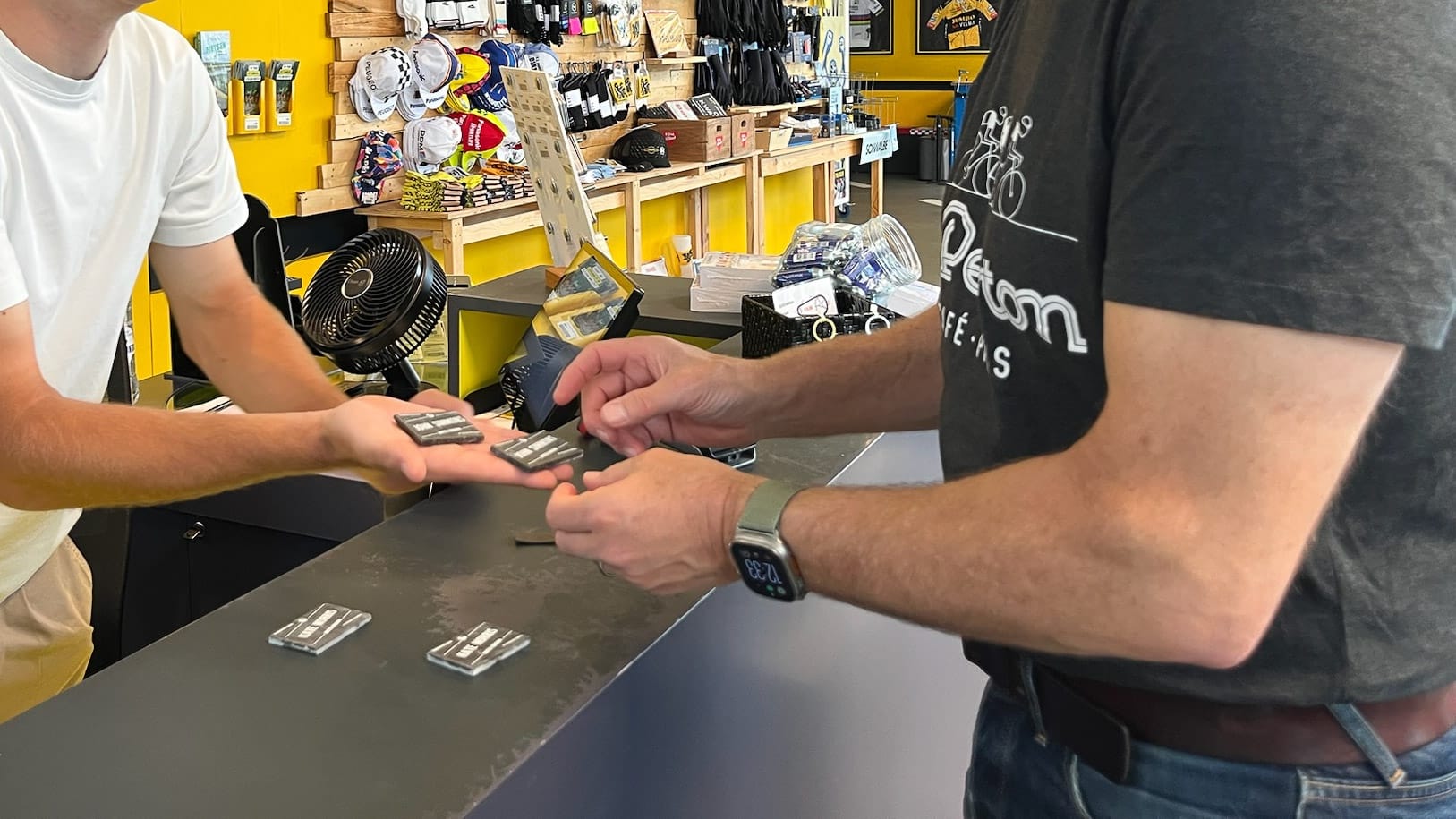
Receiving a cobble after completing the Flandrien Challenge
How difficult is it?
It’s tough! It’s meant to be. But it turns out that with sensible training and good planning it’s definitely achievable. Your cobble will sit alongside your race trophies and medals in pride of place. You’ll have earned it!
The repeated efforts matter more than any single climb. Cobbles demand concentration and shake your body as well as your bike. The insane profile of each segment illustrates just how incessant the climbs are. If you’re used to long Alpine climbs, you’ll notice the difference!
Exposed farmland adds another potential challenge when the wind picks up. Luckily for us we didn’t have that issue, but we could well-imagine how much tougher that would make some sections.
Leave enough energy for the following day; a distance you normally find manageable can feel very different here. I started riding thinking ’well that’s not too far – surely’, but finished thinking ‘how on earth did that take me so long?’.
Ewoud says the published ride times are estimates based on roughly 23–24 kilometres per hour, not averages from recorded finishers. Let’s just say that most days took me significantly longer!
Part 3: How should you prepare?
What preparation does a rider need?
Ideally get used to consecutive long rides, including five hours or more in the saddle. I already had experience of long days and climbing, but the repeated steep efforts still tested me.
Practise steep hills and rough surfaces where possible. On cobbles, choose a speed you can control and keep a secure but relaxed grip. Staying seated helped me maintain traction uphill; look ahead for deep gaps and uneven stones. Good bike handling skills will serve you well.
What bikes did we use, and how did they cope?
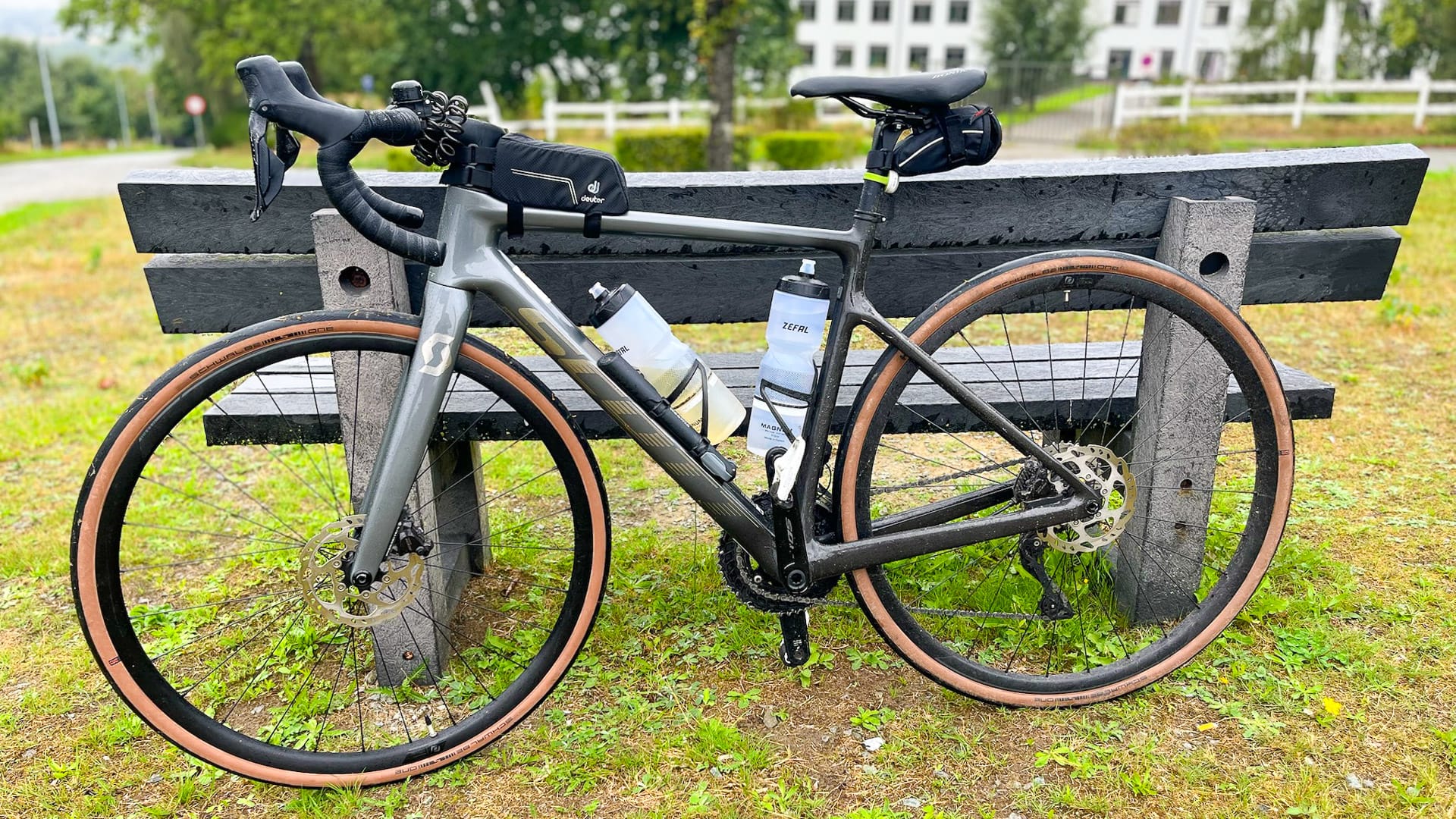
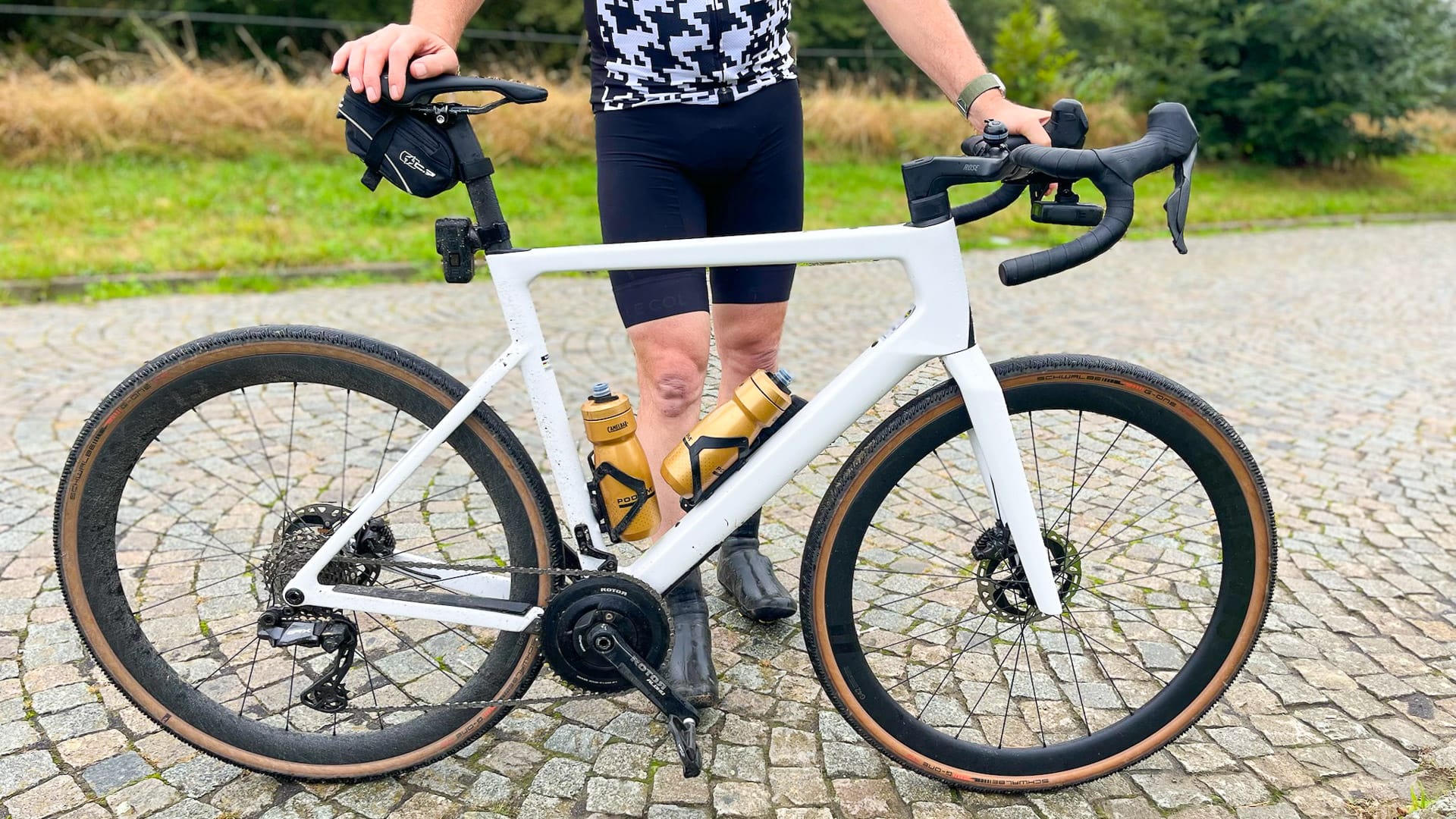
My Scott Addict road bike was comfortable for long distances, but its 28-millimetre tyres were less forgiving on cobbles. John’s Rose Backroad gravel bike, with tyres of 35 millimetres or more, handled the rough sections more comfortably.
Learn your gearing before setting off. John only discovered his Powershift hub’s lower gear range after tackling Kemmelberg!
Top tip! Choose wide tyres for improved comfort on the cobbles
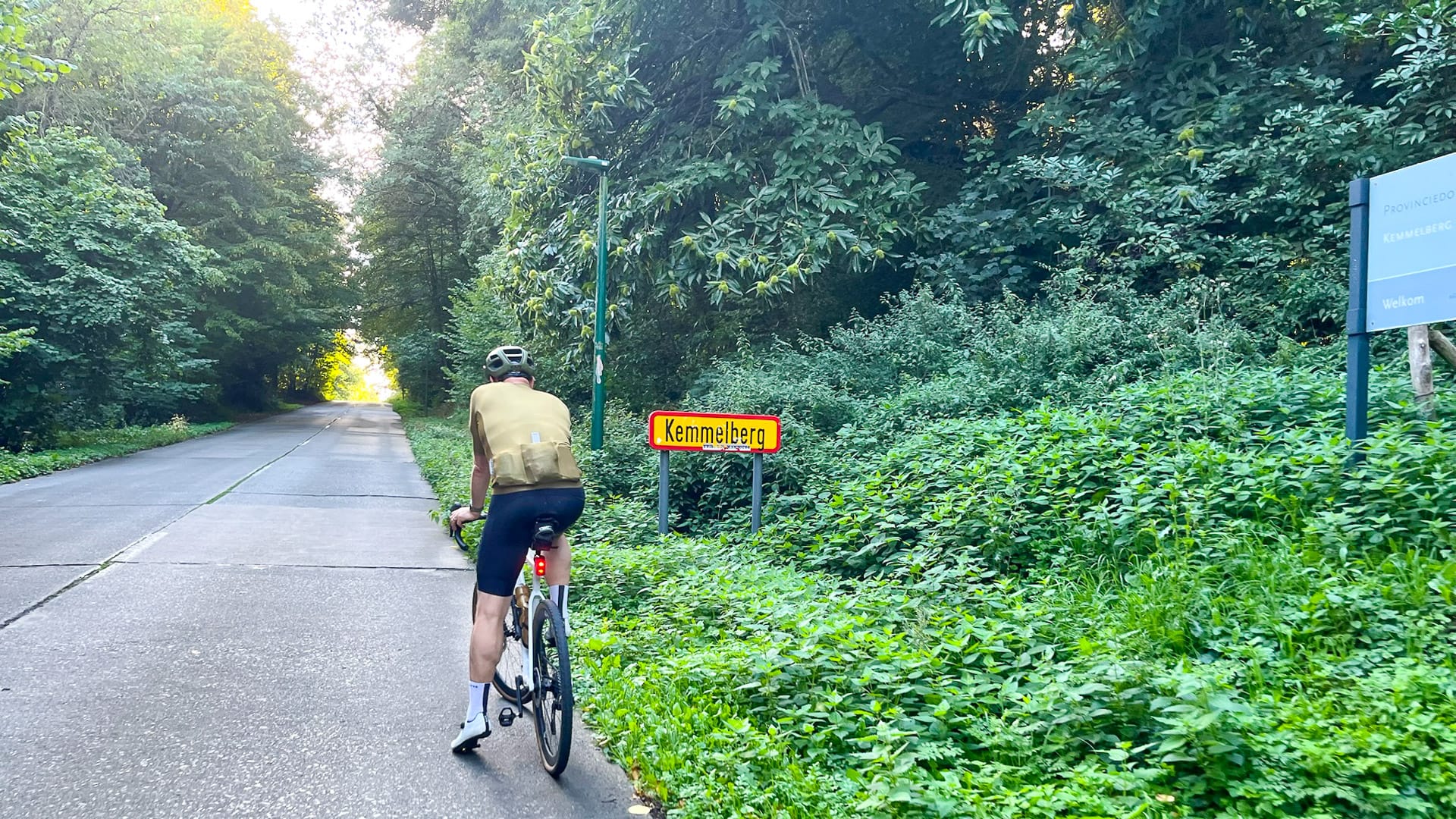
John on the Kemmelberg
What equipment checks would I suggest?
Service your bike and secure everything firmly. I brought two phone mounts: one kept rattling free on the cobbles, while the other stayed put. Cushion hard items inside bags with a bit of thin padding to stop them rattling together.
If you’ve rented your bike locally, you can expect it to be in good mechanical condition. One of our supplied saddle bags was missing its CO₂ adapter so it’s worth double checking the contents before you leave the shop.
We also brought our own saddle bags with us to Belgium just to make sure we had what we needed. We had one puncture, fixed with a replacement tube that we patched back at the hotel in the evening.
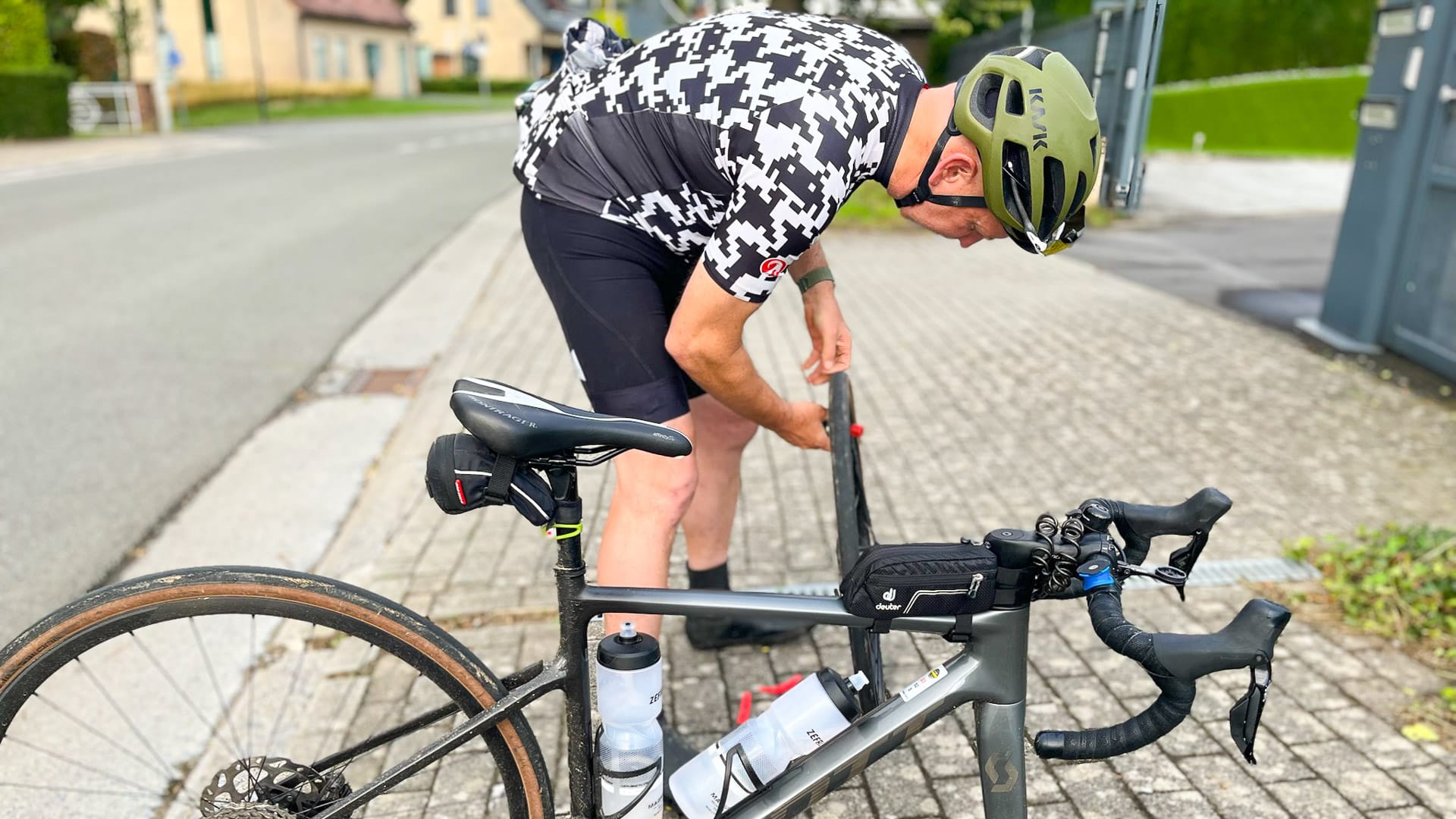
Fixing a puncture with a spare inner tube
What should you wear and carry?
We carried waterproof jackets, arm warmers and bike lights. Pack for colder, wetter conditions outside summer, and remember that wooded climbs can be gloomy.
Carry puncture supplies, a pump or complete inflation kit, a multi-tool, food, two large water bottles and a power bank.
Our biggest fear was losing power and not tracking the full ride on Strava. Remember (for these purposes at least!) – if it’s not on Strava, it doesn’t count!
Use our cycling holiday packing list to check the rest of your kit.
What is the best time to cycle?
September was a great time to ride the Flandrien Challenge. The days were warm and humid, without being too hot or cold, and there was plenty of daylight, from around 7.30am until 8pm. If it rains, the cobbles can become slippery and slimy, making them tricky both uphill and downhill, so take extra care on the descents.
How should you plan food and hydration?
I expected cafés whenever I needed them. In practice, some places we encountered didn’t open until 10am or 11am especially on a Sunday. Working out where to stop while comparing our route with another map was irritating and time-consuming. It wasn’t a shortage of cafés; they simply weren’t where we needed them, when we needed them.
After that, I carried pastries, bananas and cheese and ham rolls. I prefer ordinary food to gels, and having it available meant I could eat when I needed to. We refilled bottles at cafés – we didn’t spot any village fountains like you’d expect in France.
Taverne’t Hoekske near Brakel provided one lunch. In Geraardsbergen, De Grondeling’s friendly owner served us excellent spaghetti bolognese.
Top tip! Plan possible stops using Cycling in Flanders’ food and drink map, then check opening times.

Part 4: What happens on the day?
What happens before the start?
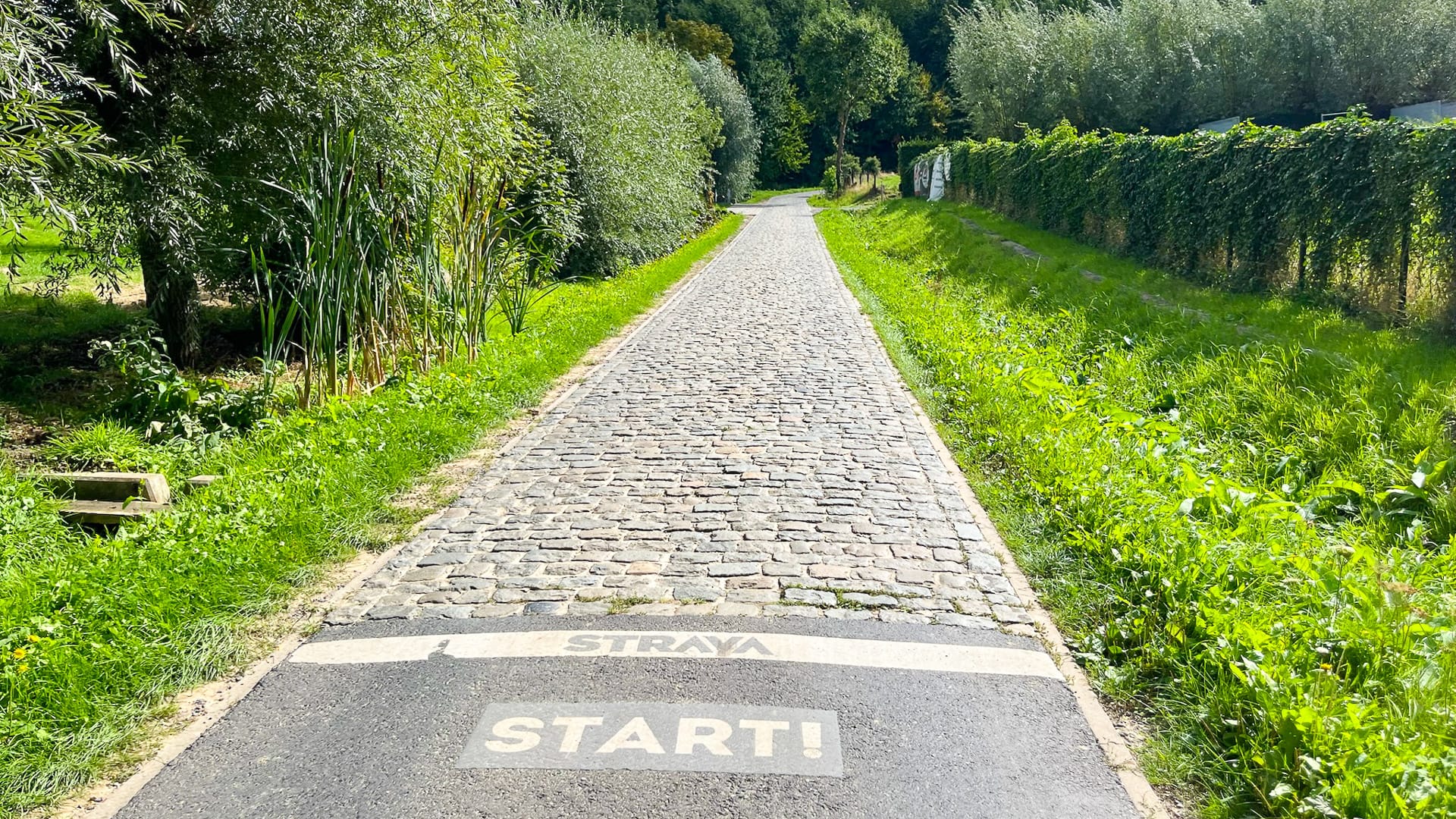
Download your routes and test recording and turn-by-turn navigation. Painted segment names and lines on the road help, but some were worn or missing when we rode.
The Centrum Ronde van Vlaanderen has toilets, showers and lockers. Its usual opening hours are 10am–6pm, with Wednesday closures outside school holidays. Check current centre opening hours before planning bike collection or leaving luggage. We started well before opening on several mornings and finished after closing on three days.
Sort out bikes and supplies beforehand, rather than depending on facilities that may be shut when you need them.
What support is available on the route?
There are no organised feed stations, roadside mechanics, marshals or recovery vehicle. Arrange your own food, repairs and a way back if you cannot continue.
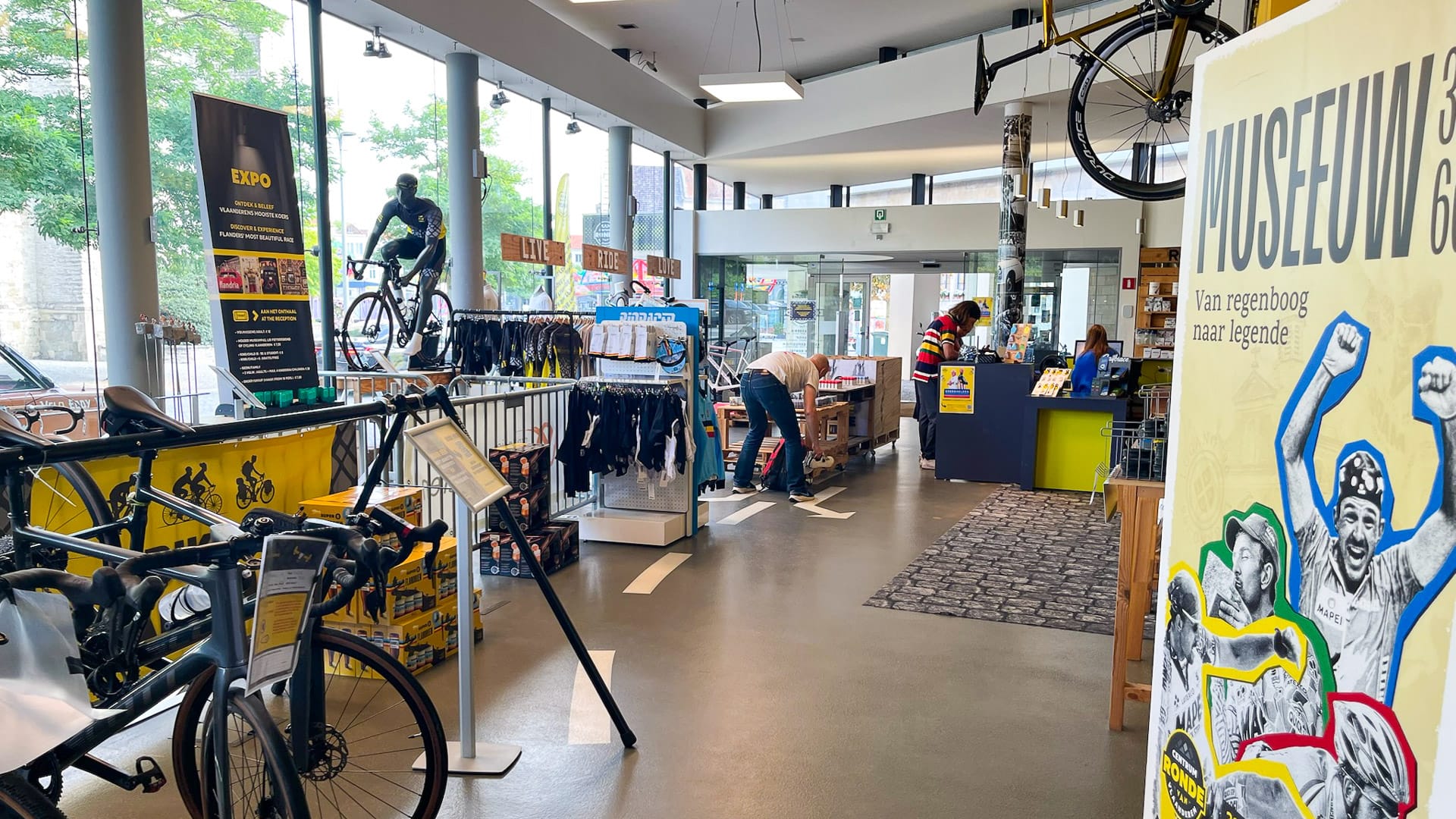
Centrum Ronde van Vlaanderen, Oudenaarde
Part 5: What did I learn?
What were your favourite parts?
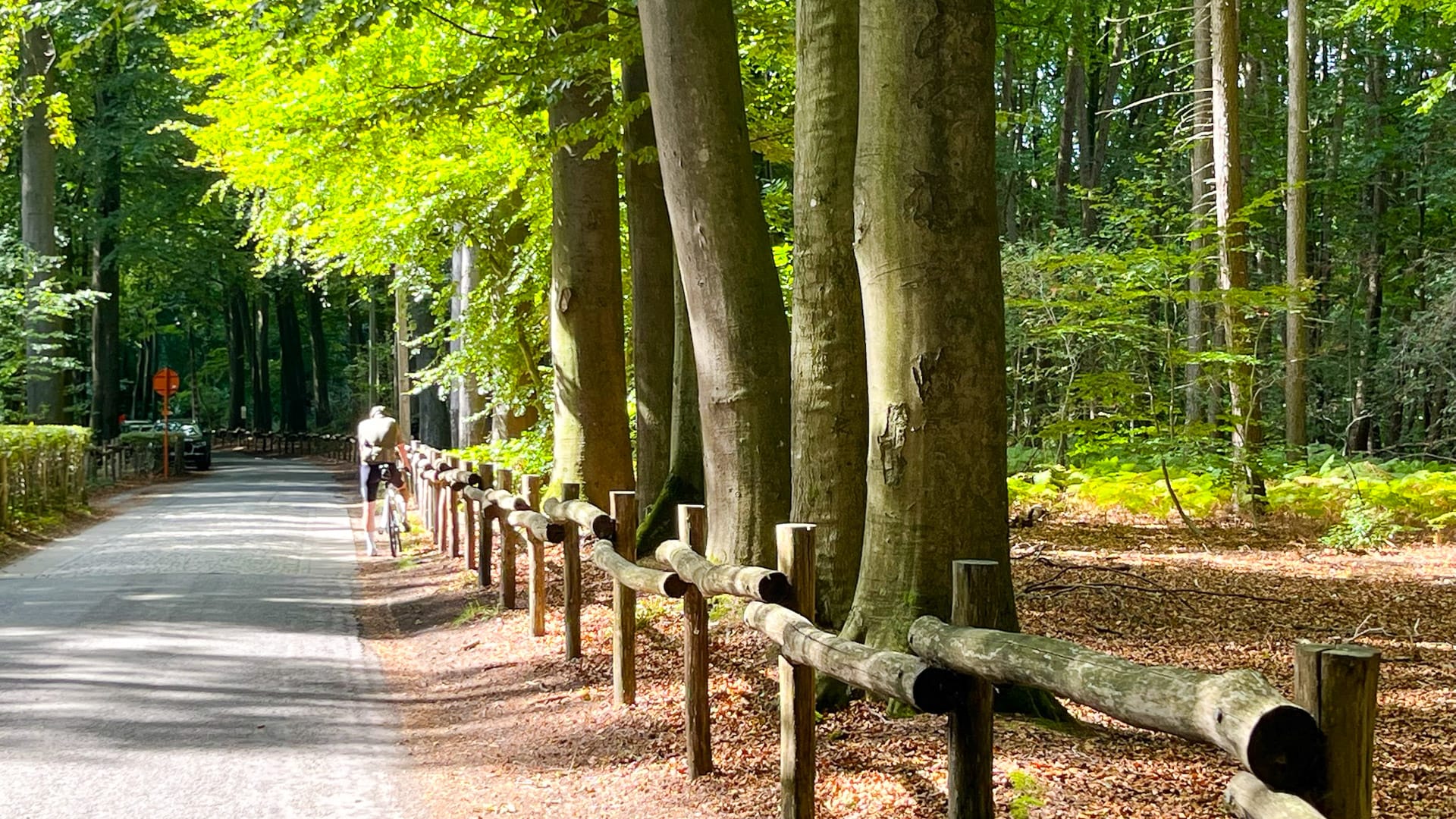
I loved the wooded sections and Sunday’s light drizzle. It was warm, and the rain cooled us down pleasantly.
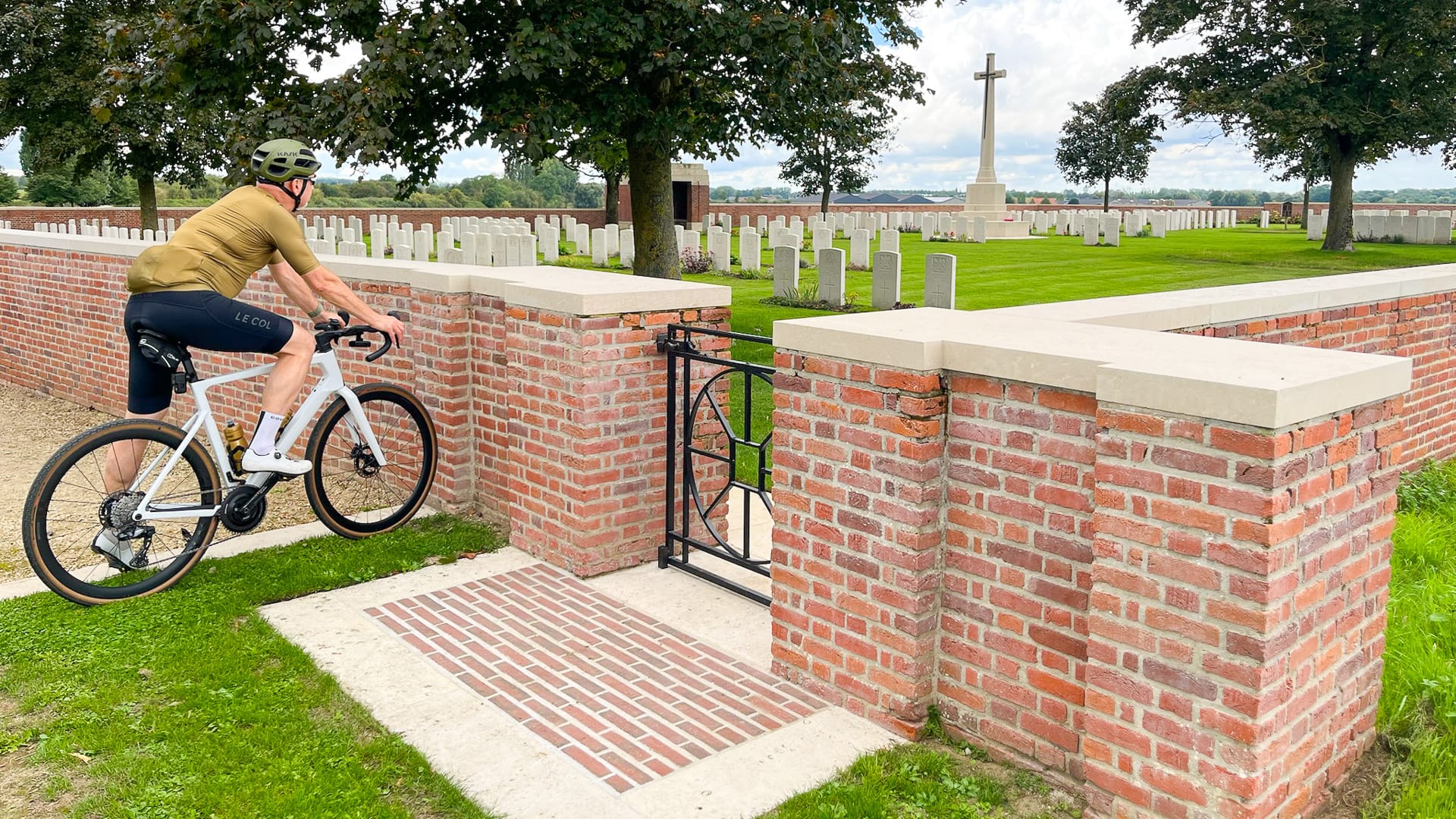
The war memorials around Kemmelberg also stayed with me.
Fast groups of keen roadies passed us regularly. This made us feel part of the cycling landscape and made us appreciate how cycling is such a huge part of the region’s culture.
Riding the climbs I’d watched in the Spring Classics gave me a stronger appreciation for those familiar television images.
Away from the climbs, I noticed the carefully tended gardens and the contrasts between traditional brick houses and modern buildings. John was largely oblivious, but he really loved the opportunity to try more Belgian Beers each evening!
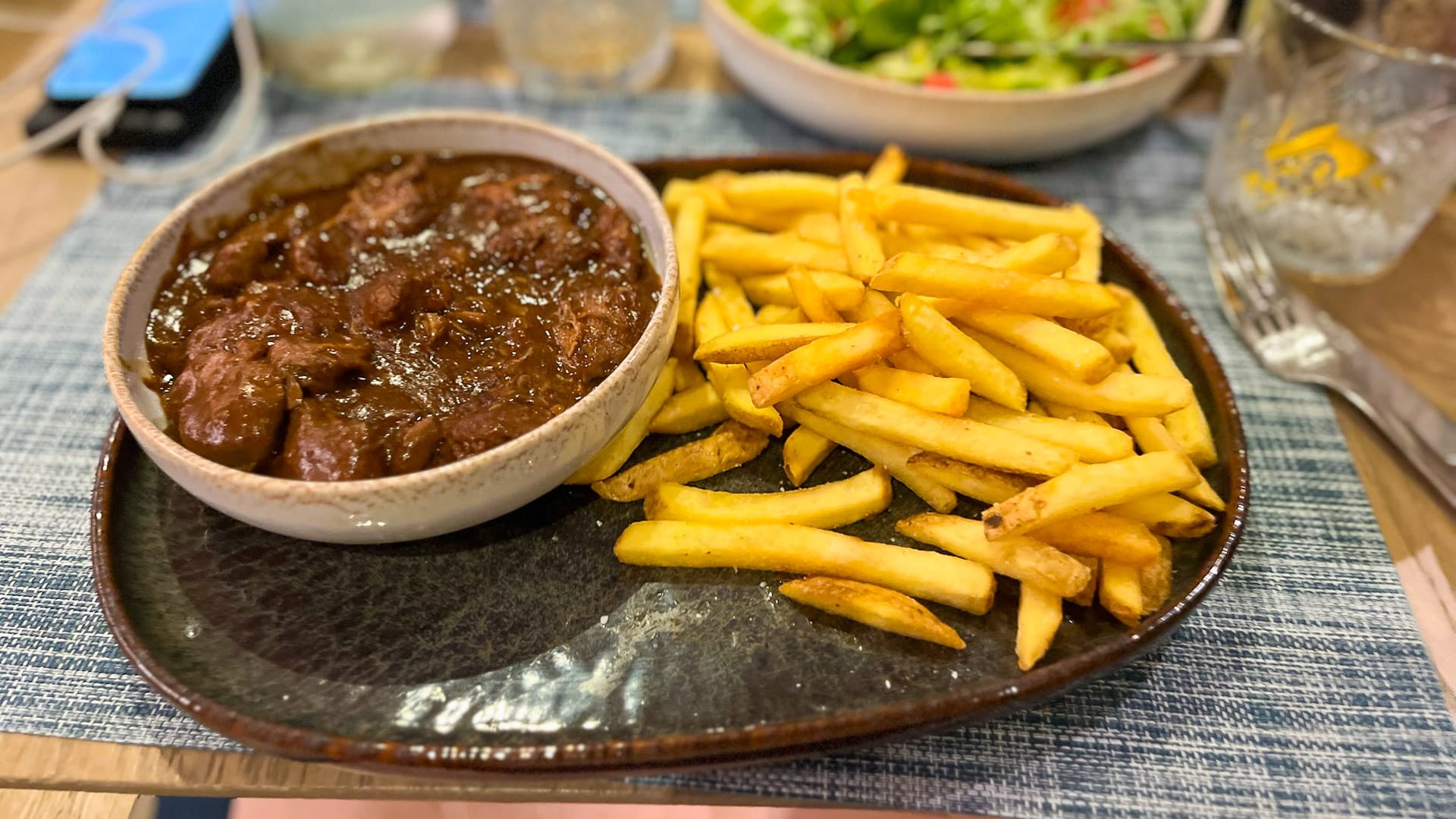
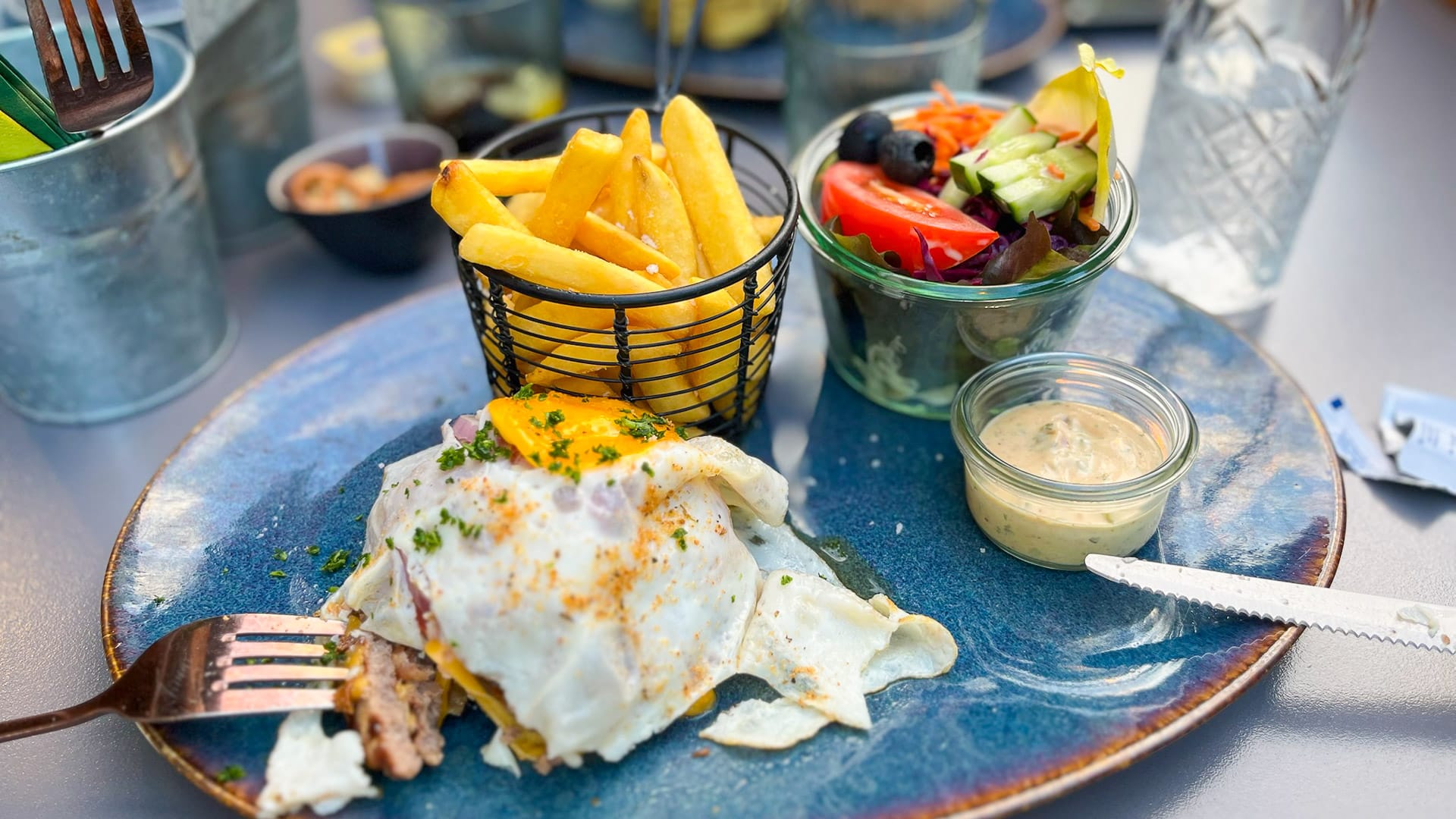
The evening meals were a highlight of the trip. Leo’s Burgers in Ieper were really good, and the service was friendly and efficient, even though we were in a rush to catch our train back to Oudenaarde. The food at the Leopold Hotel, was also very good, and we enjoyed trying their excellent Belgian stew. Our final dinner at the Liefmans brewery was fantastic, with delicious steak, chips and salad, indulgent puddings and, of course, beer.
What do you wish you’d known beforehand?
I hadn’t appreciated how much I would rely on navigation. John was confident with it; I wasn’t. The routes repeatedly returned to familiar junctions from different directions. With fatigue, we couldn’t always remember whether we’d been there earlier that day or the day before.
We were so concerned about missing a segment that we repeated a couple to be certain. Two cyclists we met at our hotel had failed an earlier attempt after missing just one segment near Ieper. They couldn’t get back there within their 72 hours. Don’t let that be you!
Next time, I’d map food stops in advance and allow more recovery time.
My other practical lessons:
- Practise following routes, recording and uploading rides before travelling.
- Carry euros in cash. Some cafés used payment apps we couldn’t access as international visitors. I usually carry emergency cash at home and regretted forgetting it here.
- Be aware that quite a few shops, cafés and restaurants are closed on a Sunday, especially a Sunday afternoon.
- Check that your route recording continues. Mine stopped once, fortunately between segments. We both carried power banks, particularly as we were taking photographs and video.
- After uploading your ride each day, check that every expected segment has turned blue on the challenge website. A distance total alone won’t show whether you missed a segment.
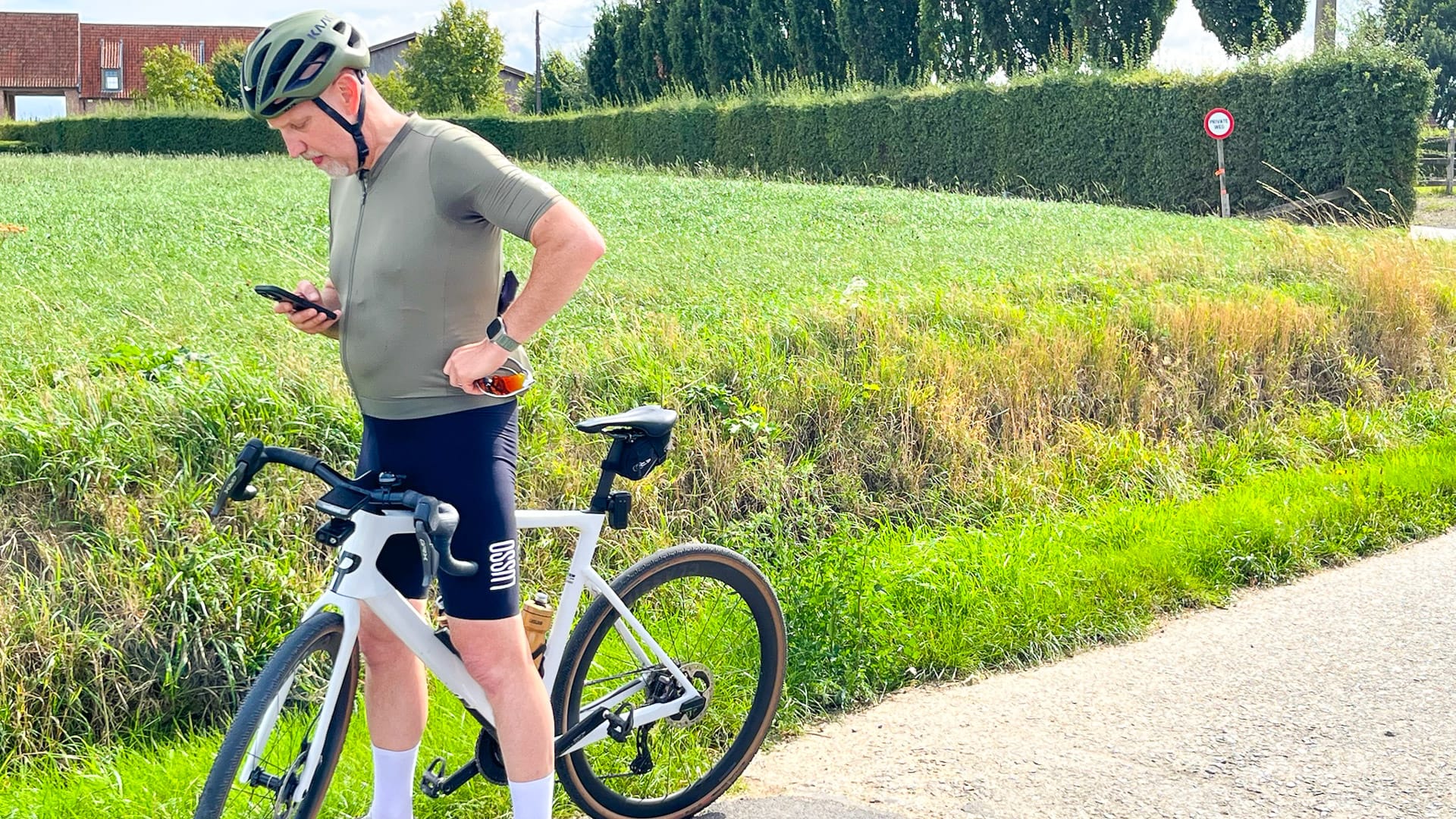
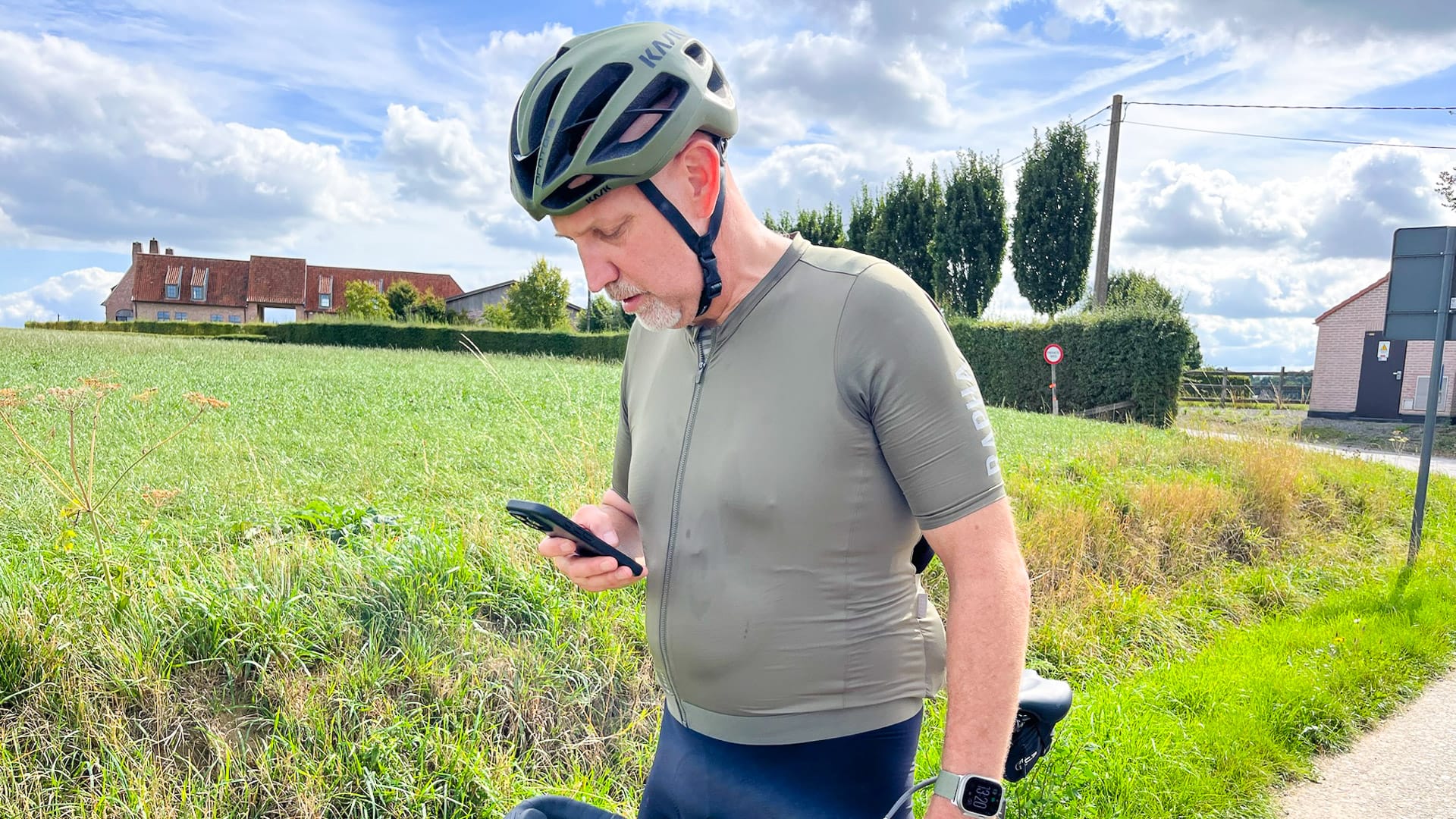
John checking the route
Part 6: How do you plan your trip?
Where should cyclists stay?
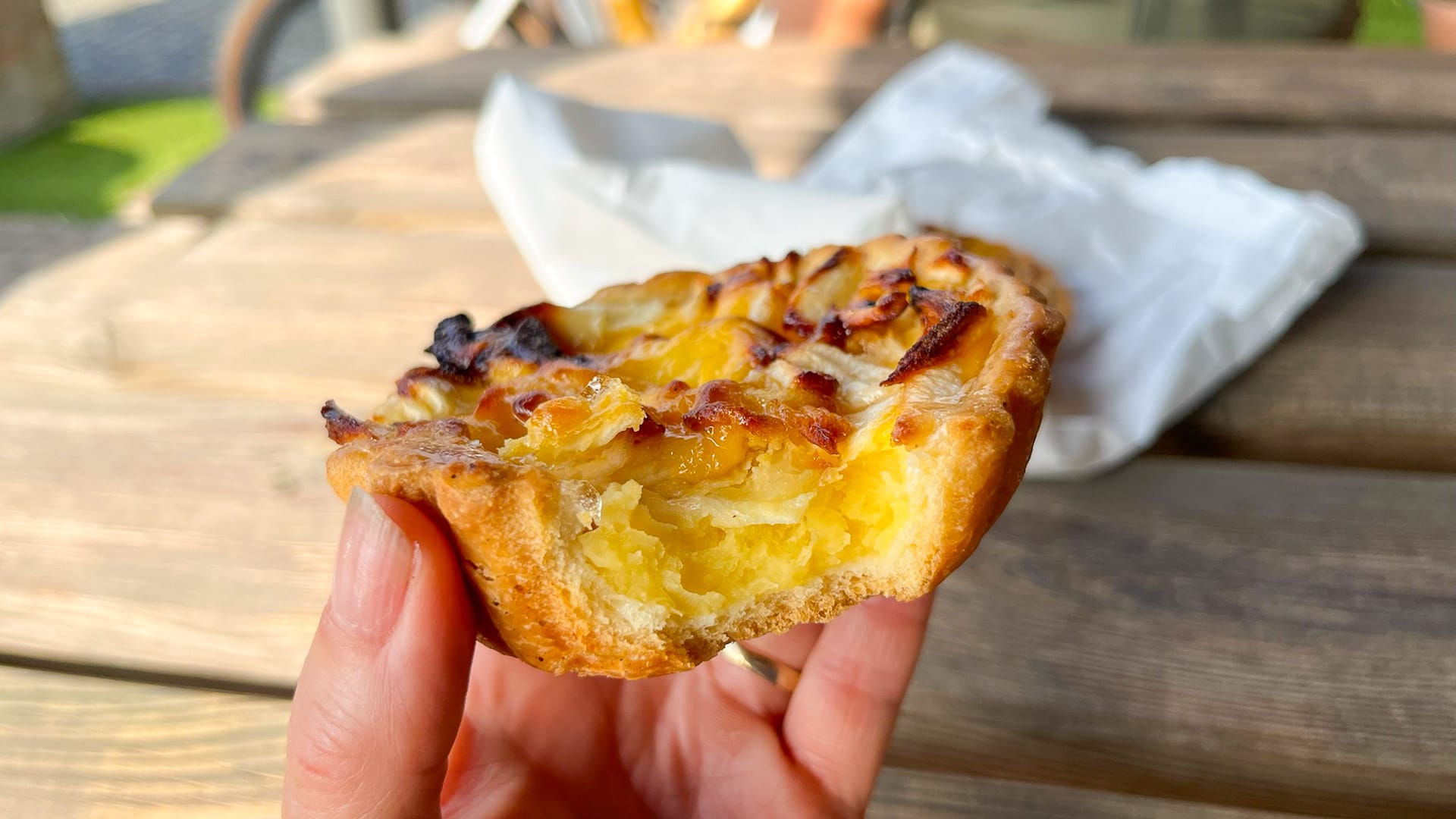
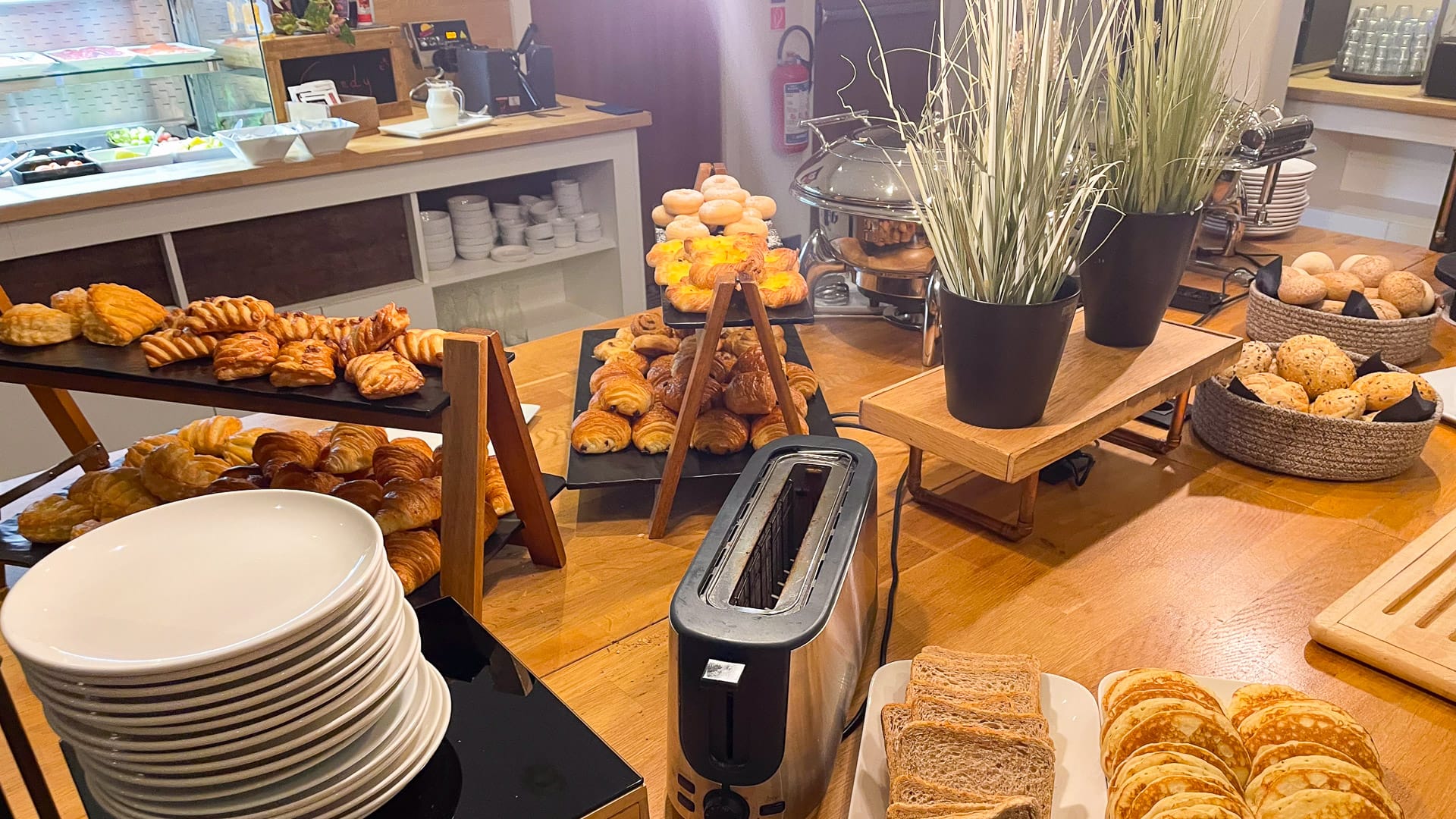
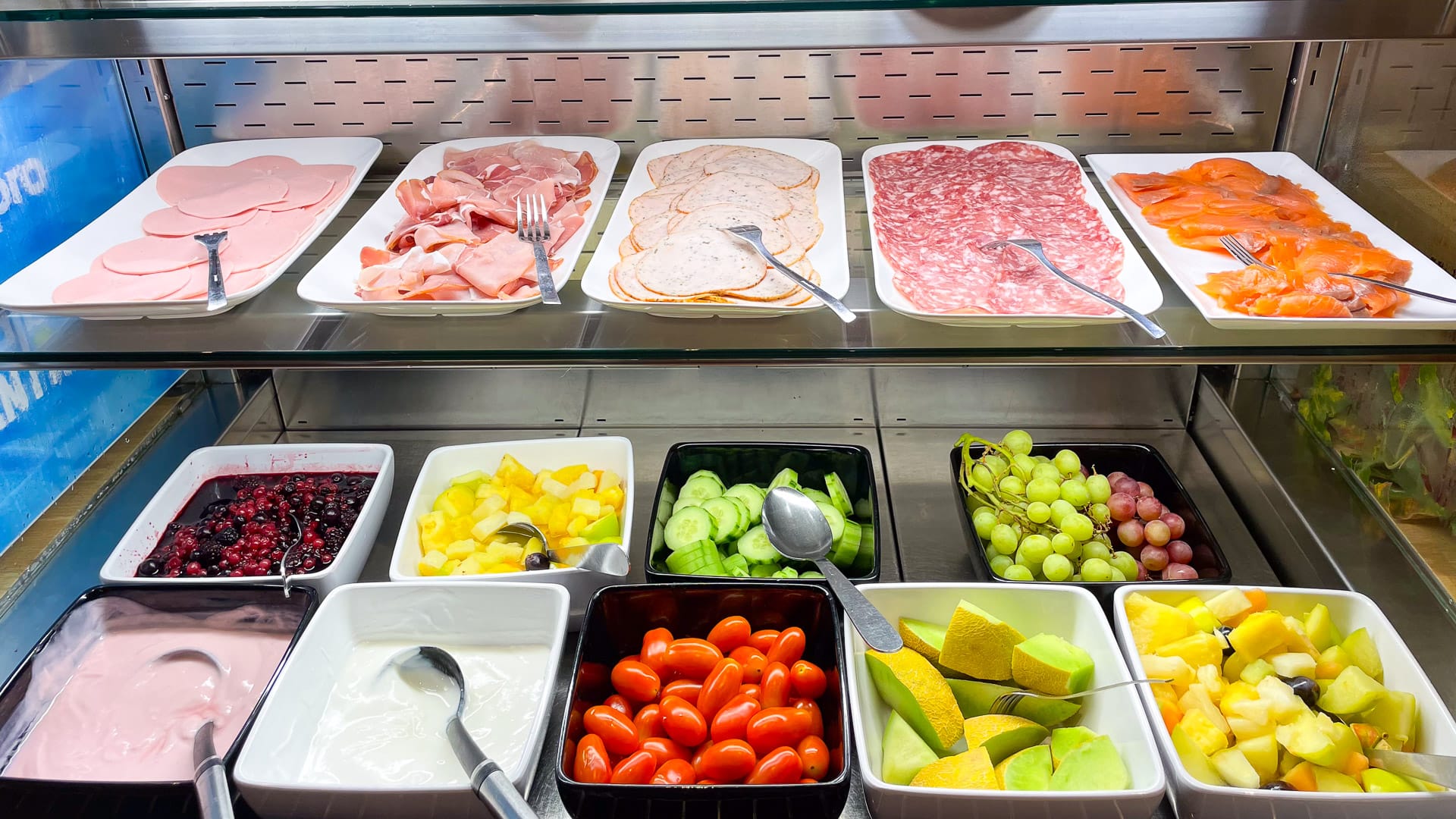
We stayed at the Leopold Hotel in Oudenaarde, about two minutes’ walk from the Centrum Ronde van Vlaanderen which was a huge bonus. The staff are lovely – friendly and accommodating – and you’ll find lots of other cyclists staying there over any weekend. Its basement bike store had bike racks and room-key access. A substantial breakfast worked well for us too. The Belgian stew at dinner was delicious and very welcome after our longest day.
Oudenaarde made a useful base, although the Ieper segments needed a separate journey. Staying in Ieper for that part is another option but will add to your logistical considerations
How should cyclists get there?
We travelled via Lille and hired bikes from the Centrum Ronde van Vlaanderen. At the time of our trip, Eurostar’s bike transport service was unavailable to or from Lille. Check Eurostar’s bike arrangements before booking with your own bike.
In Lille, we walked between the Eurostar and onward railway stations, which took about five to ten minutes. Our Oudenaarde–Ieper journey involved a change at Kortrijk. The SNCB app is useful for planning journeys and buying tickets; check your specific dates. On Belgian domestic trains, a bike supplement is separate from your passenger ticket; space is subject to availability, with no reservation. See SNCB’s bike-on-train guidance.
Top tip! There’s plenty of very good advice on travel on the Flandrien Challenge website.
Can you hire a bike?
Yes. We collected ours at the Centrum Ronde van Vlaanderen. Book ahead for the right size, and check gearing, tyres, pedals, equipment and collection/return arrangements.
Cycling in Flanders lists the centre’s bike hire options. Confirm the current fleet and inclusions directly before booking.
Part 7: How could you extend your stay?
What else is worth riding or visiting?
I wouldn’t rush to add another hard ride, on top of riding the Flandrien Challenge!
For a shorter taste of the Flandrien Challenge, the nine Ieper segments offer a great taster and a lovely ride without committing to all 59.
For rides designed around exploring the region, see our Flanders cycling routes article.
Note that completing only part of the challenge doesn’t qualify you for its cobble but you would still have a great ride and a taste of the infamous bergs and cobbles
Allow time for the cycling museum in Oudenaarde, Ieper’s First World War sites or a walk around your base. Ghent is another possible extension; Visit Flanders has ideas for exploring beyond the bike.
How many days would you allow for the whole trip?
We fitted travel and riding into four days, taking Friday and Monday off work. It worked, but the logistics were tight.
For three full riding days, I’d allow four nights: arrive the day before you start riding and stay after finishing. An extra night leaves time to celebrate (you’ll have earned it!). A car can simplify transfers, but wasn’t essential for us.
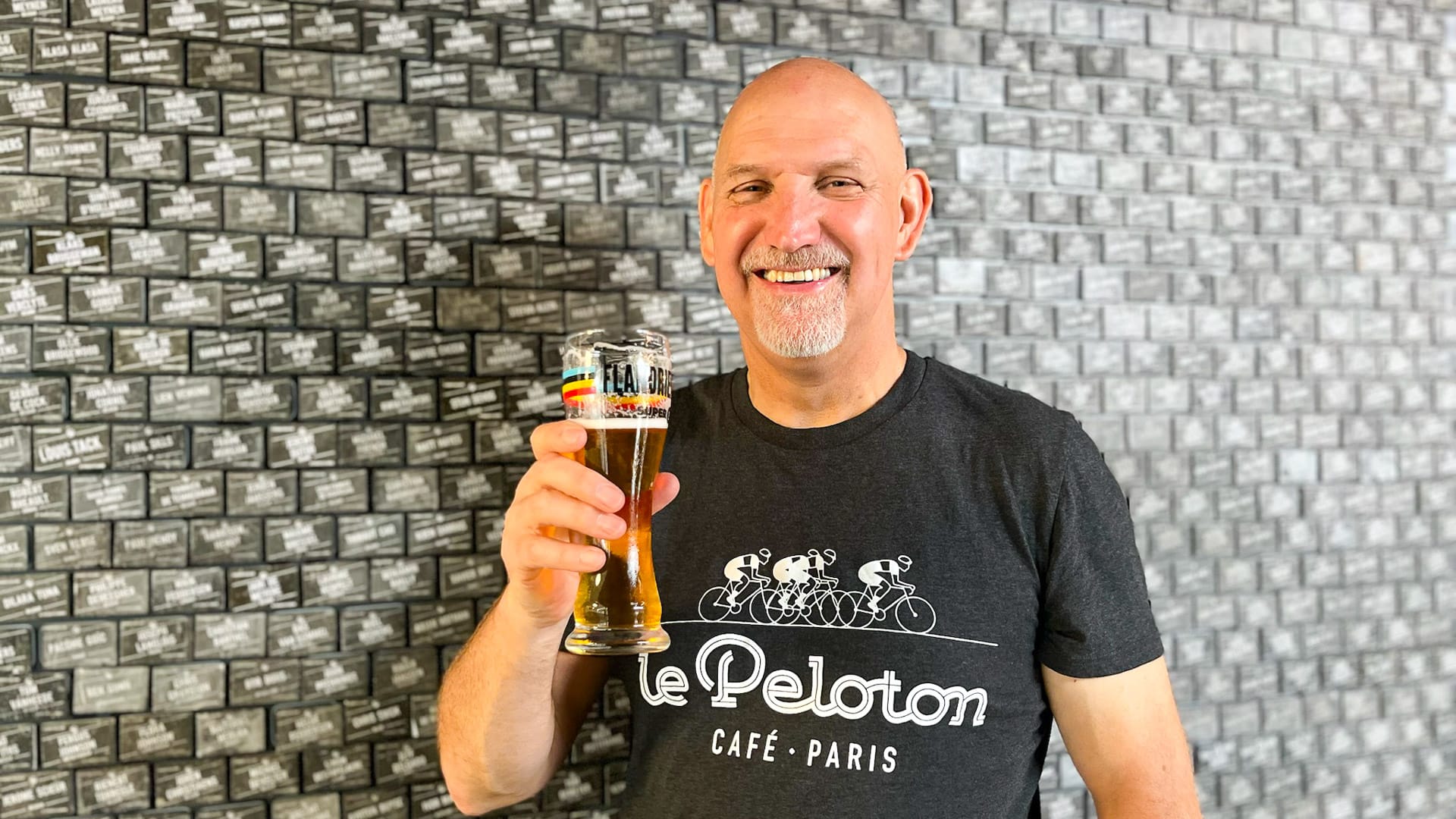
Free pint on completion of the Flandrien Challenge
Part 8: How do you qualify and claim your cobble?
How do you enter?
Use “Connect with Strava” on the challenge website. There’s no fixed entry date or entry fee. The website checks your recent activities; its FAQ says rides must be public. Your Strava screen name and profile photo appear on the leaderboard.
At the end of every day we uploaded our ride to Strava. This triggered a blue tick on all the segments on that we’d completed on the Flandrien Challenge website. You could wait and load them all up at the finish, but by doing it daily, you can double check that you haven’t missed any (leaving you potentially with time to remedy the error).
What rules or requirements should riders know about?
The clock starts at your first qualifying segment. Finish the last within 72 hours of that start: meals, sleep and transfers all count. Four calendar days don’t mean 96 hours.
You can change the segment order or create your own route, but be very careful – missing a segment means you haven’t completed the challenge.
Check current roadworks notices and respect closures (two sections were mentioned on the Flandrien Challenge website when we rode). If a ridden segment hasn’t registered, retain your activity and contact Cycling in Flanders through its challenge FAQ. Don’t leave that problem until your departure.
More and more riders are asking about e-bikes, and they’re becoming a common way to ride. So we asked Ewoud about using one for the Flandrien Challenge. He told us: “We deliberately leave this open. If people for some reason need the extra support of an e-bike to be able to still ride such a challenge, why not? We’re not the cycling police.” We love that open-minded attitude.
What happens when you finish?
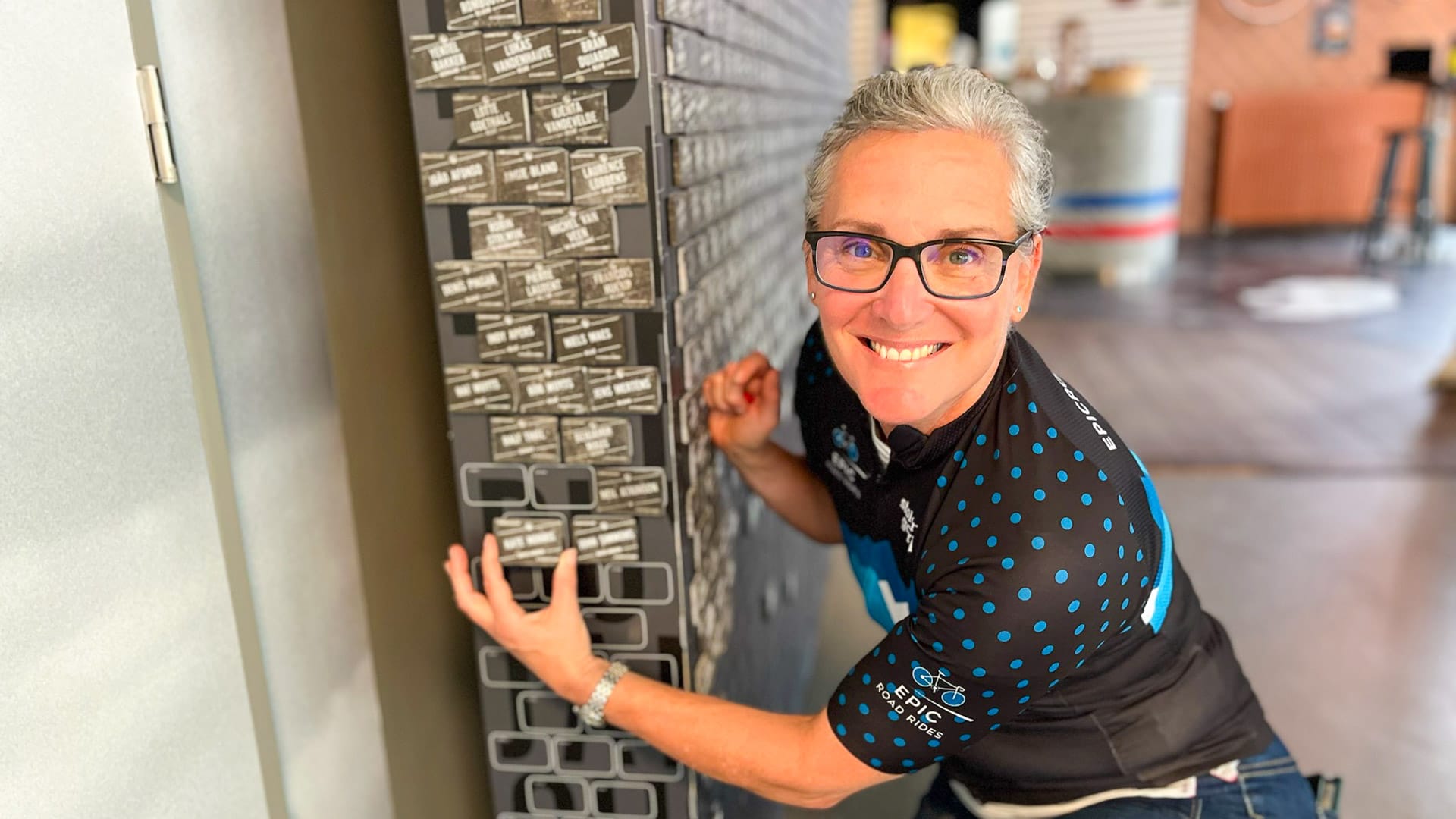
After days of checking segments, it was finally time to press “claim your cobble” on the website (a blue button that will appear when you’ve uploaded your final ride, always assuming you HAVE completed all 59 segments in the allotted 72 hours of course). This notifies the staff at the Centrum Ronde van Vlaanderen that you’ve completed the challenge. If you’re having any technical difficulties with this, the staff at the Centrum will always help you out. We collected our personalised stones and put them on the Wall of Fame. Our name are now on the website’s Hall of Fame too.
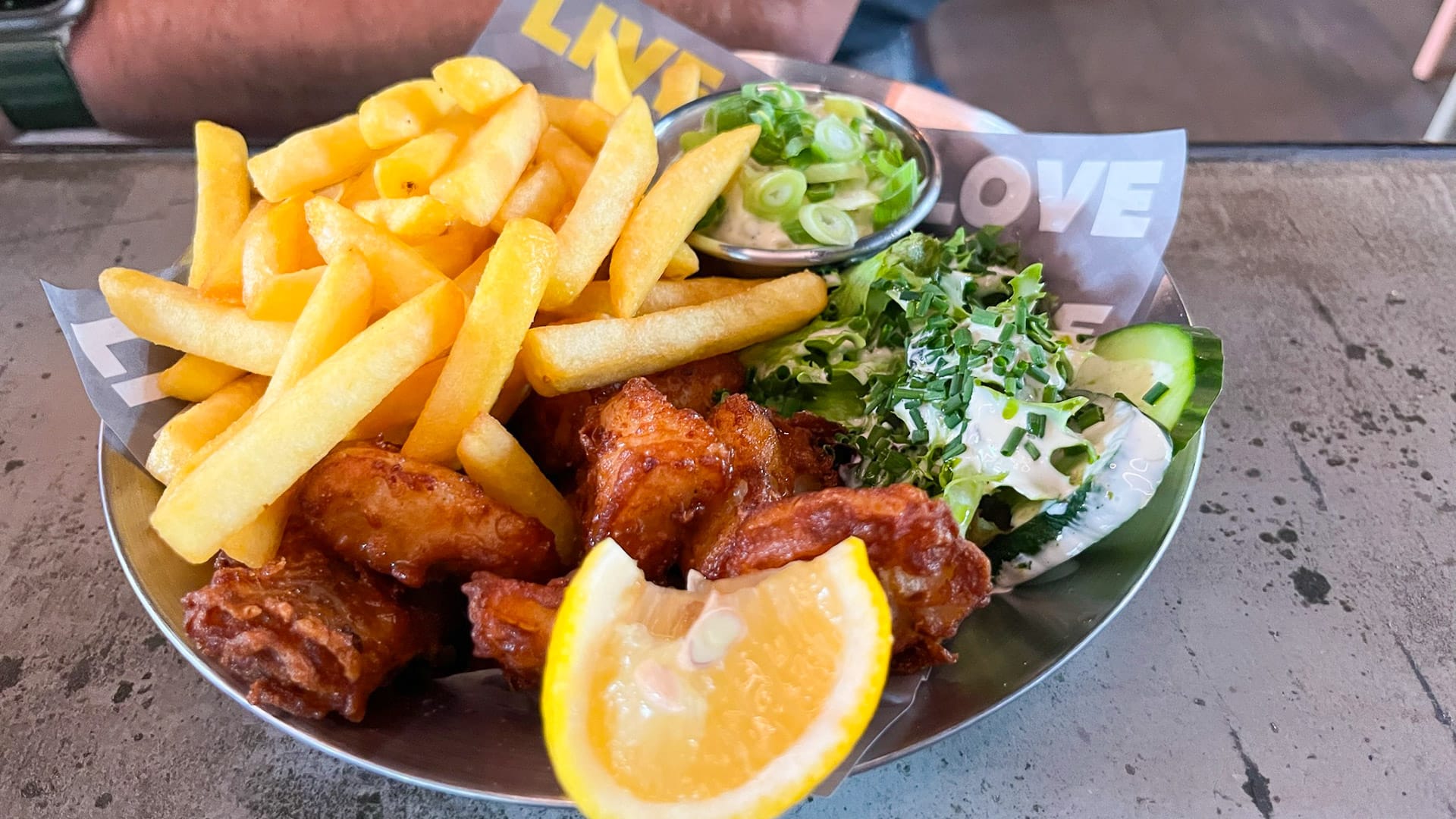
We arranged a late hotel check-out, so that we could go back to shower and grab our luggage for the journey home There was also time for lunch at Peloton Café in the Centrum Ronde van Vlaanderen: fish and chips for John and a goat’s cheese salad for me – both were excellent. Our names were on the wall, and all 59 segments were done.
Being awarded your own named cobble is a brilliant reward. Adding it to the growing Wall of Fame makes for a great photo opportunity, and we felt as though we were joining an elite group of amateur cyclists. It marked the end of a fun adventure we’d ridden together and thoroughly enjoyed: a shared experience for brother and sister that we’ll never forget.
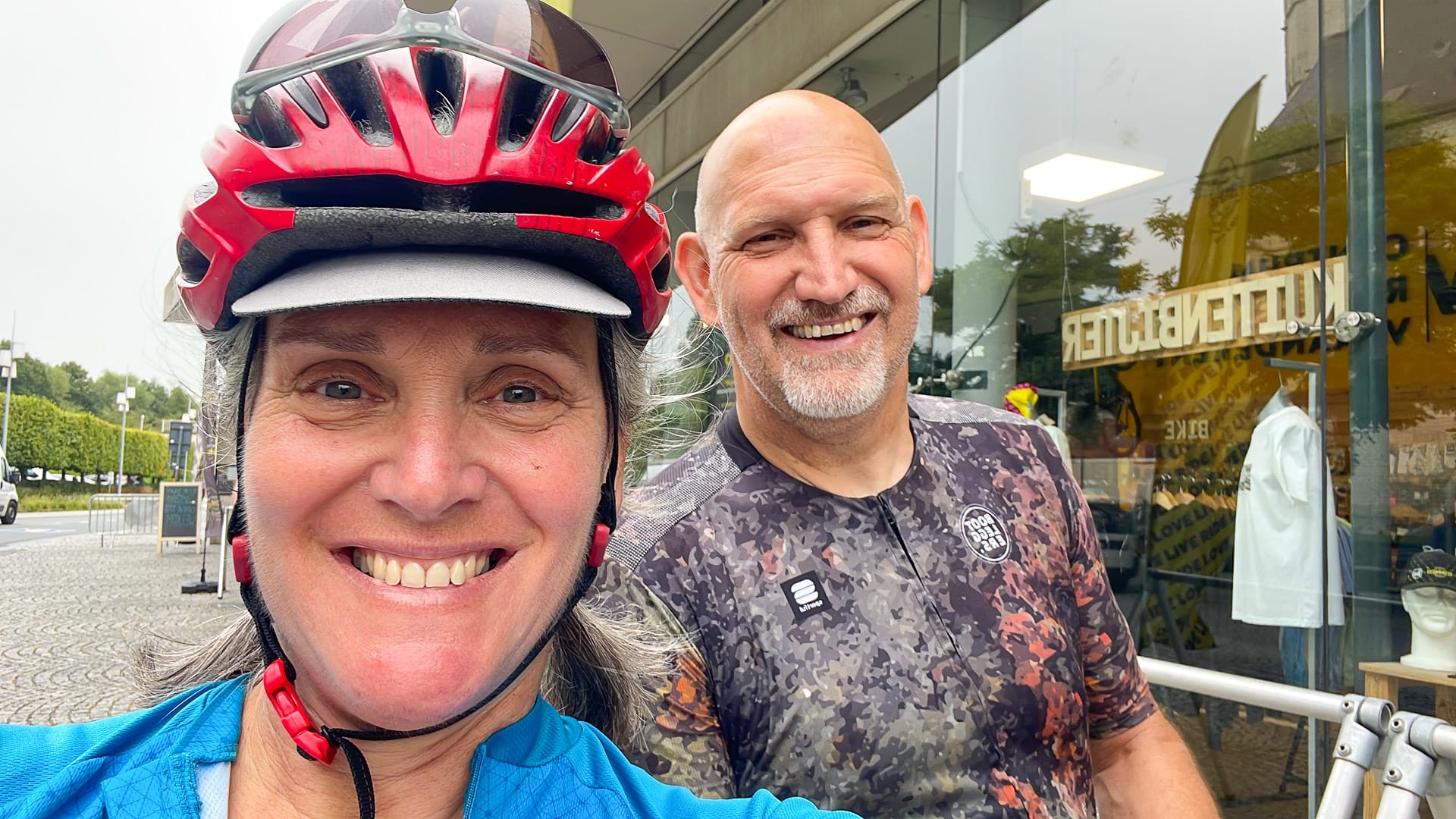
Finished and back at the Centre
How do you collect your stone?
Check your Strava name and country first, as these go on it. Allow time for the website to update and staff to prepare the stone. The FAQ asks riders to claim before 5pm. Finishers can enjoy a complimentary ‘True Flandrien’ shower and a coffee, soft drink or beer, which you can claim by showing them your new cobblestone. A second stone (that you can take home with you) costs €5 and comes with a magnetic strip for your fridge.
Explore the Flandrien Challenge routes and segment information to plan your attempt, and find ideas for a longer stay through Visit Flanders.
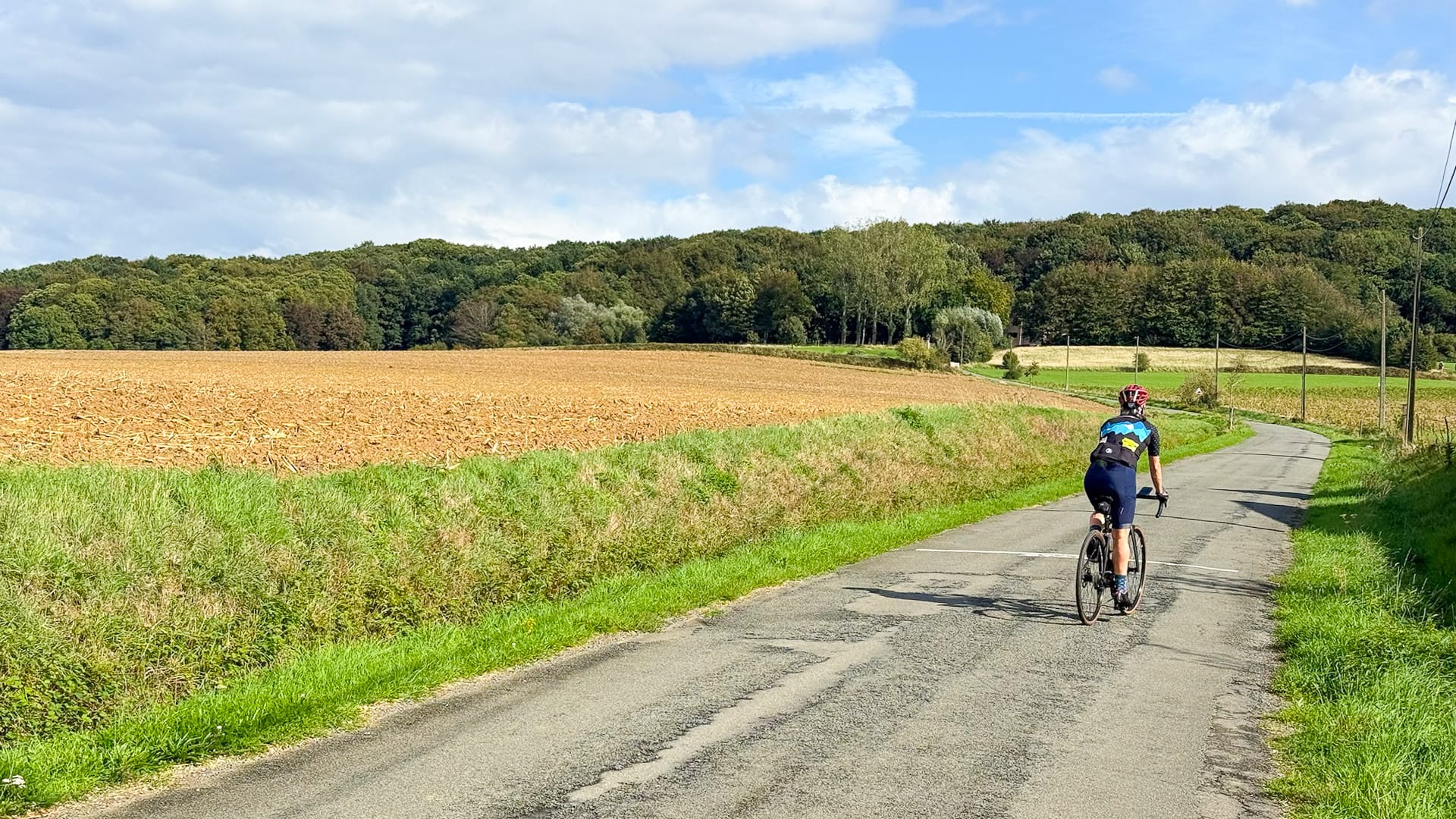
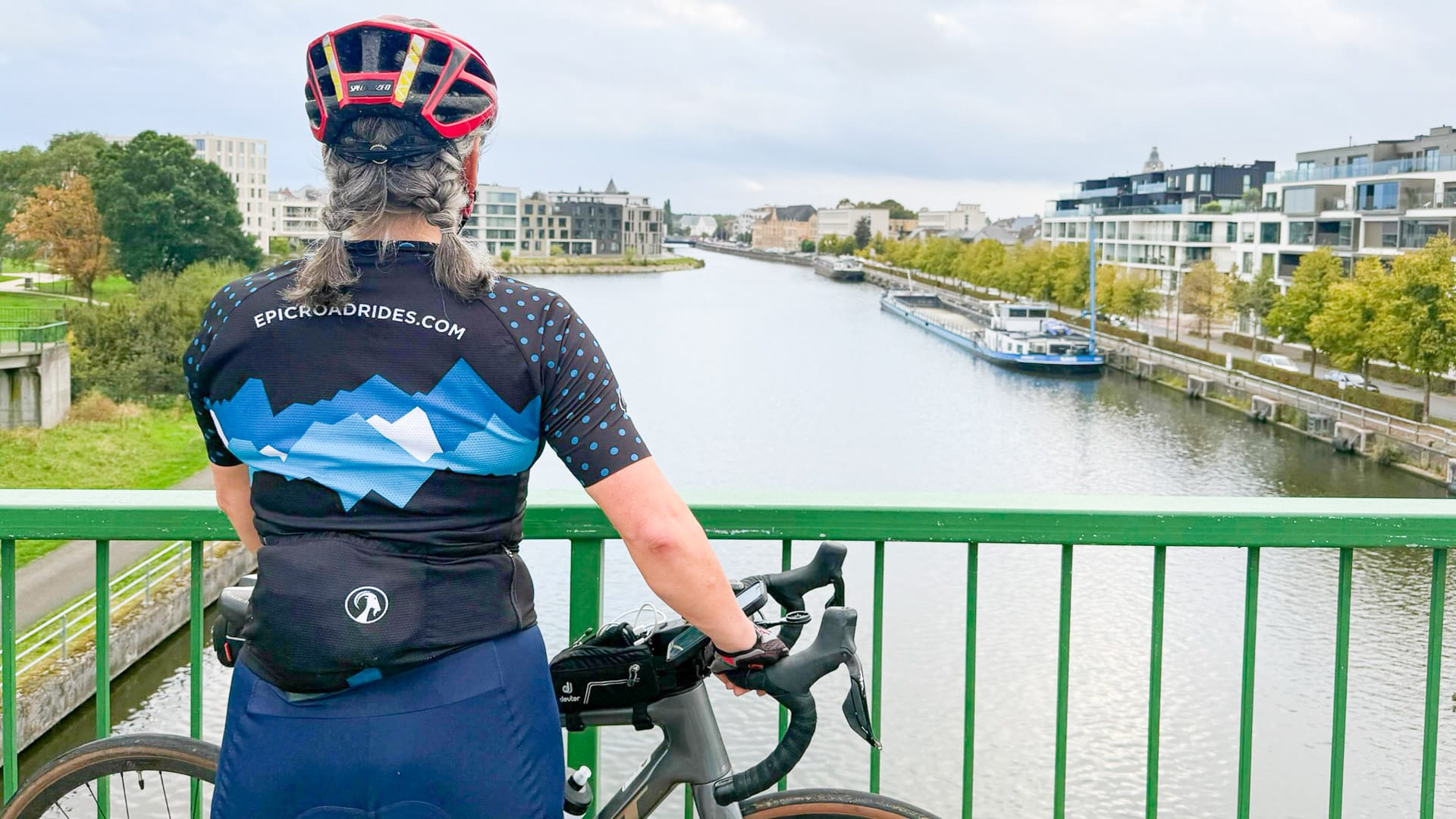
Kate riding the Flandrien Challenge in Flanders
Final thoughts
The Flandrien Challenge was just as tough as I expected. The long days, repeated climbs and route navigation asked a lot of us, and we had to adapt when plans changed.
But I’ll remember more than the 59 segments. I loved the wooded roads, riding climbs I’d watched in the Spring Classics, and the quiet moment at the Kemmelberg memorial. Finishing also earned me a named cobble on the Wall of Fame in Oudenaarde: a lasting reminder of what we achieved.
If you’re thinking of taking on the challenge, plan carefully, carry food and leave room to change your plans. It’s a demanding way to see Flanders, but it brings you close to the climbs and places that make the region special.
Inspired to take on the Flandrien Challenge yourself? Let us know in the comments below!
Looking for more inspiration for cycling in Belgium?
- 3 must-try Flanders cycling routes, including GPX files and some of Flanders’ famous cobbled climbs.
- Tips for cycling in Belgium, covering everything from cobbles and gearing to fuelling and route planning.
- Belgium cycling holidays, with practical information for planning a cycling trip to Flanders.
- Best time to cycle Belgium, including five reasons to visit outside the Spring Classics.
Got a question for Kate?
Fill out this form and we will send it to Kate. We aim to get you an answer within 24 hours where possible!Kate is a passionate cyclist who has explored the world by bike, including Europe, central America and South East Asia. Kate is a key member of the Epic Road Rides team; when she's not busy commissioning articles for Epic Road Rides, you'll find her busy writing and editing articles herself.
First Published: 15 October 2026
The contents of this website are provided for general information purposes only. It is not intended to amount to advice and you should not rely on it. You should carry out your own due diligence and risk assessments and take professional advice. Views expressed by interviewees or other users of this website do not necessarily represent our views. We make no representations, warranties or guarantees, whether express or implied, that the content on our website is accurate, complete or up to date. If you use any information or content on this website, download from, or otherwise obtain content or services through our website, it is entirely at your own discretion and risk. Epic Road Rides Ltd disclaims all liability and responsibility arising from any reliance placed on the information and content on this website. Find out more here.
Sponsor Message
Got a question for Cycling in Flanders?
Fill out this form and we will pass it to Cycling in Flanders who aim to reply (within 24 hours wherever they can!)
Comments