
Cycling in Ethiopia is for anyone looking for a “road less travelled” destination. Think imposing mountains, dramatic waterfalls and captivating local culture. Oh, and did we mention the coffee?!
The dramatic, rugged landscape found in this corner of Africa also offers riders the rare opportunity to explore unique heritage and ancient archaeological history. Thanks to political tensions, you’ll need to have an eye on where its safe to travel, but for cyclists who are prepared to embrace their sense of adventure, Ethiopia is a fascinating, off-the-beaten-track destination for the bucket list.
If you’ve wondered about an Ethiopian cycling trip, it’s likely you’ve got a range of questions on everything from safety to logistics.
So in this article, we speak to British-born, Ethiopia-based, Mark Chapman, the spokesperson for Ride the Rift, a consortium formed by Tesfa Tours, SimienEcoTours and Dynasty Ethiopia Tours in 2020, following the impact of COVID-19 on the country. The initial aim was to raise money for guides and tourism professionals who had not had any income as a result of the pandemic. Together, the team bring years of experience to operating cycling and hiking tours in the country, with a strong focus on responsible tourism.
Mark has plenty of experience exploring Ethiopia on two wheels. It was brilliant to chat with him to get his insights on why cyclists should visit Ethiopia, and what the must-ride cycling routes are. Enjoy!
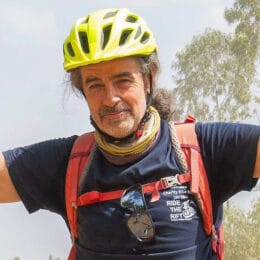
Mark Chapman is the founder of Tesfa Tours and a spokesperson for Ride the Rift, with more than three decades of on-the-ground experience in Ethiopia. He first arrived in 1992 as a backpacker and never really shook the feeling that this was a country worth coming back to.
He returned in 1997 and went on to set up a charity helping rural communities create simple guesthouses in remote areas, linked by walking trails designed to share the benefits of tourism more widely. That work later evolved into Tesfa Tours, which Mark founded in 2010 to keep building and championing community-based travel in Ethiopia.
In 2018, a recce in the Simien Mountains sparked his shift from road riding in Europe to off-road cycling in Ethiopia, drawn by the freedom of dirt roads, the absence of traffic and the sheer depth of the countryside. Since 2020, alongside the Ride the Rift team, he’s spent years exploring lesser-known regions, scouting rewarding routes through dramatic landscapes and culturally rich villages.
Mark is based in Addis Ababa with his two children and loves escaping the city whenever he can, usually with a bike, a plan, and a curiosity for what’s around the next bend!
We have one overriding rule at Epic Road Rides: would we suggest this to our friends? This means we don’t work with every brand that wants to work with us. We may not have personally used or been on a trip with every brand we collaborate with, but after many years in the industry, our team knows a lot of people, and we only say yes to the brands we would be happy to use ourselves or that we’d share with a friend.
Always check current travel information and advice. At the time of writing this article, in late January 2026, there are no security issues affecting UK FCDO travel advice for the area Ride the Rift operates in. But it is important to check the latest advice before you travel, as it can change regularly, and there is advice against travelling to other areas of Ethiopia. For visitors from the UK, the UK government travel information pages are here.
Table of contents
The guide is jam-packed with tons of useful information. So, to help break it down, we’ve split this article into multiple parts. This includes:
- Part 1: Why visit
- Part 2: What to expect
- Part 3: Best bases and routes
- Part 4: Practicalities and tips
- Part 5: Why book with Ride the Rift
Sponsor Message
Considering cycling in Ethiopia?
Ride the Rift offer a number of Ethiopian cycling holidays enabling you to experience this extraordinary destination by bike.
Head to their website to find out more, including dates and prices.
Got a question for Mark Chapman from Ride the Rift?
Fill out this form and we will pass it to Ride the Rift who aim to reply (within 24 hours wherever they can!)
Part 1: Why should cyclists visit Ethiopia?
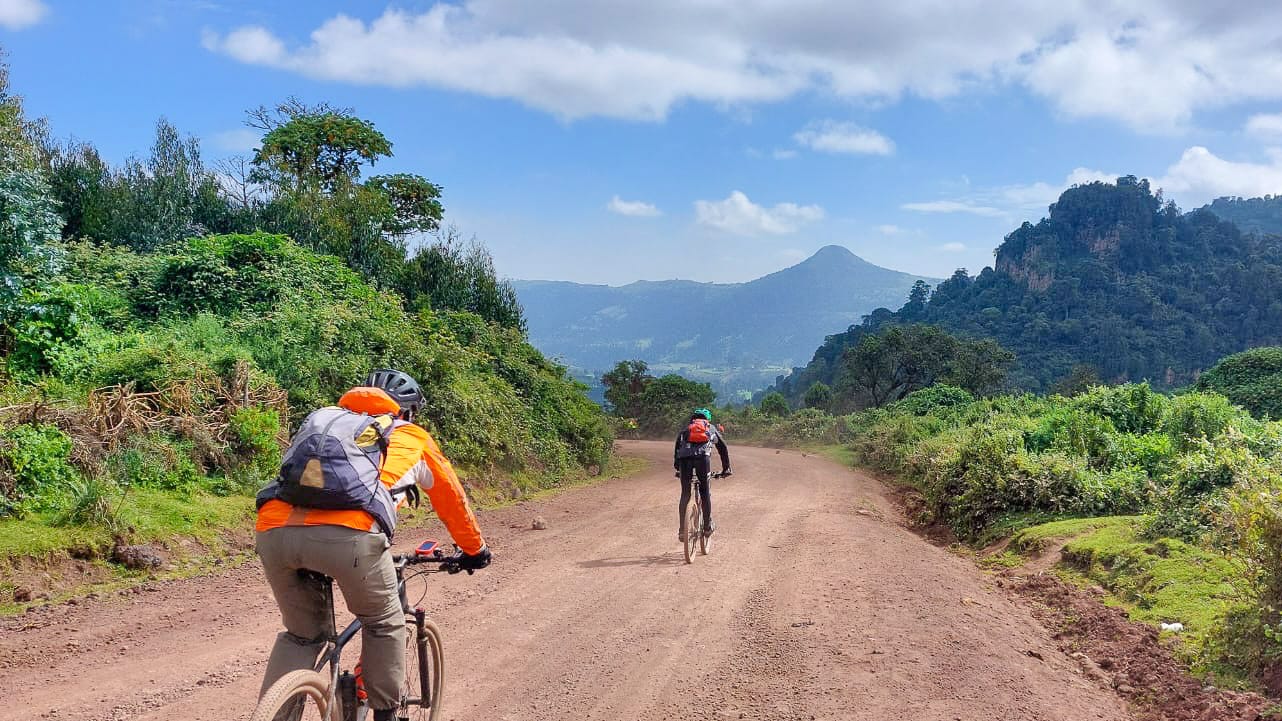
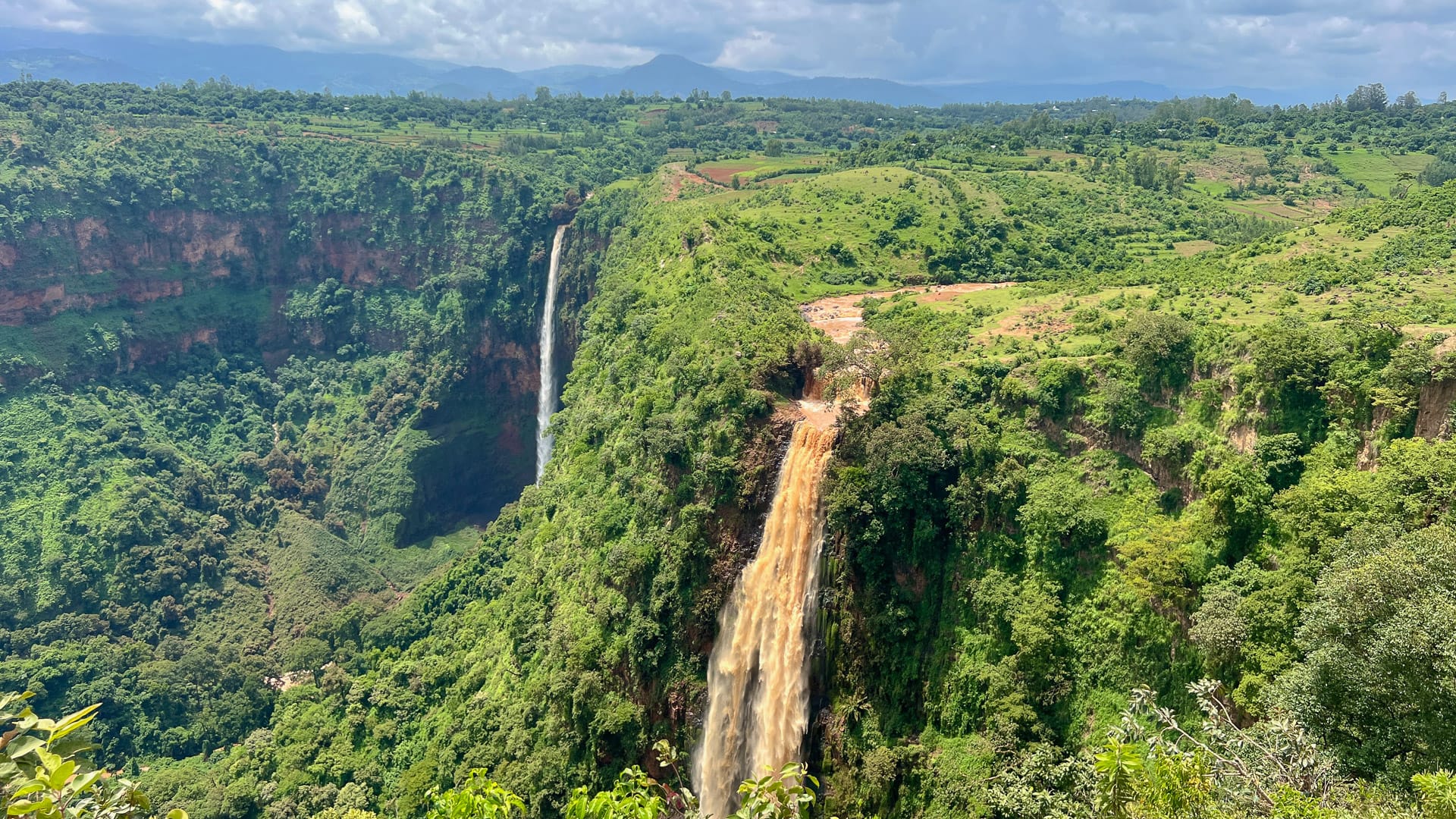
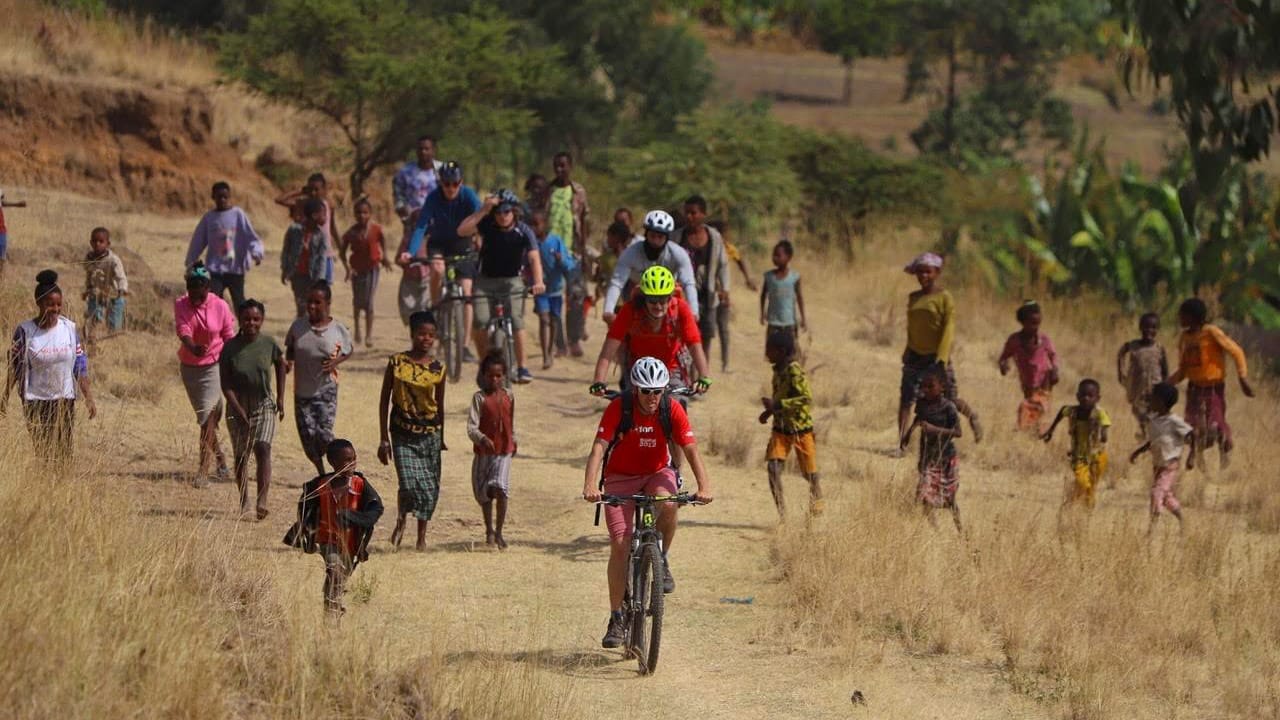
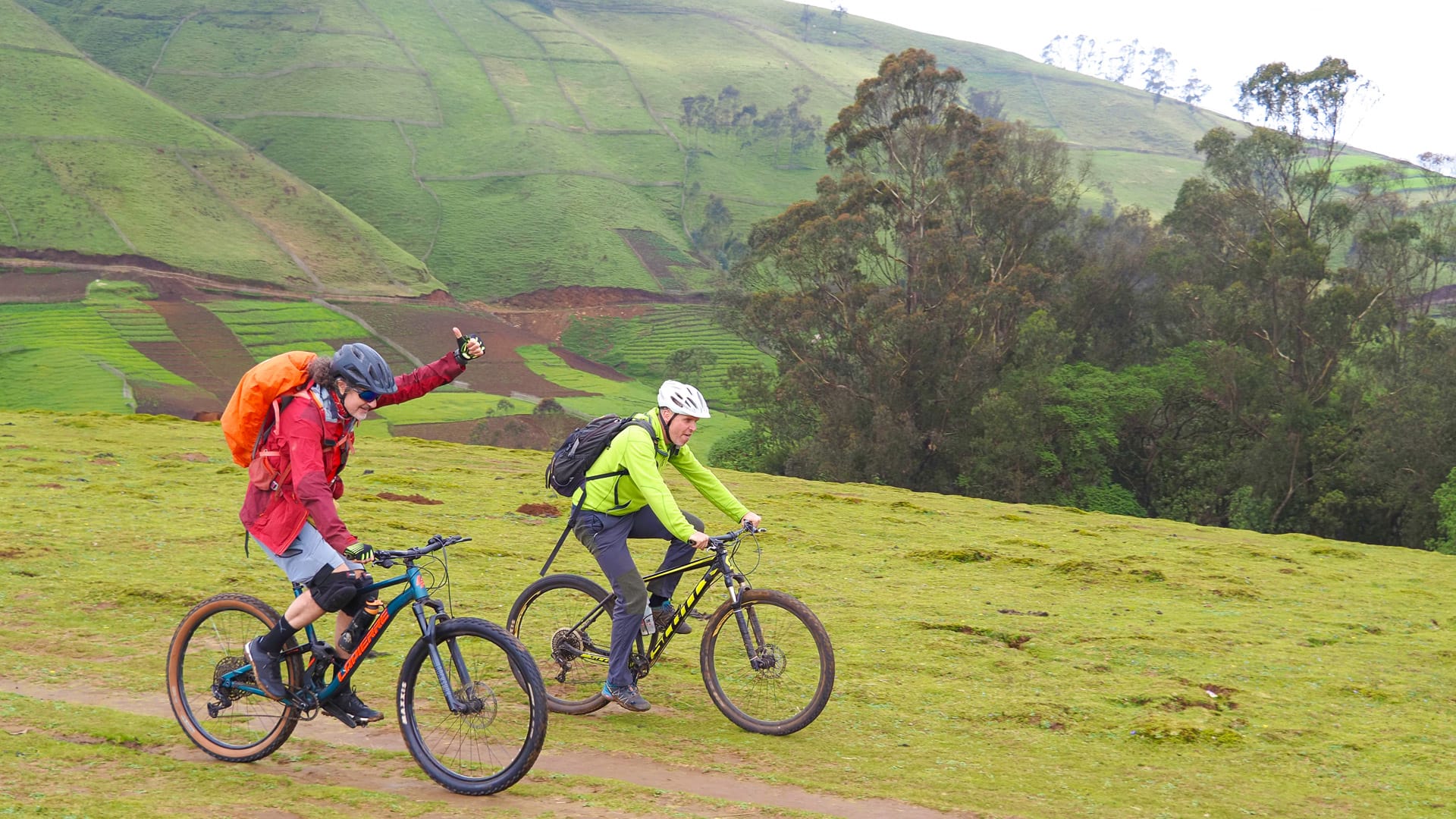
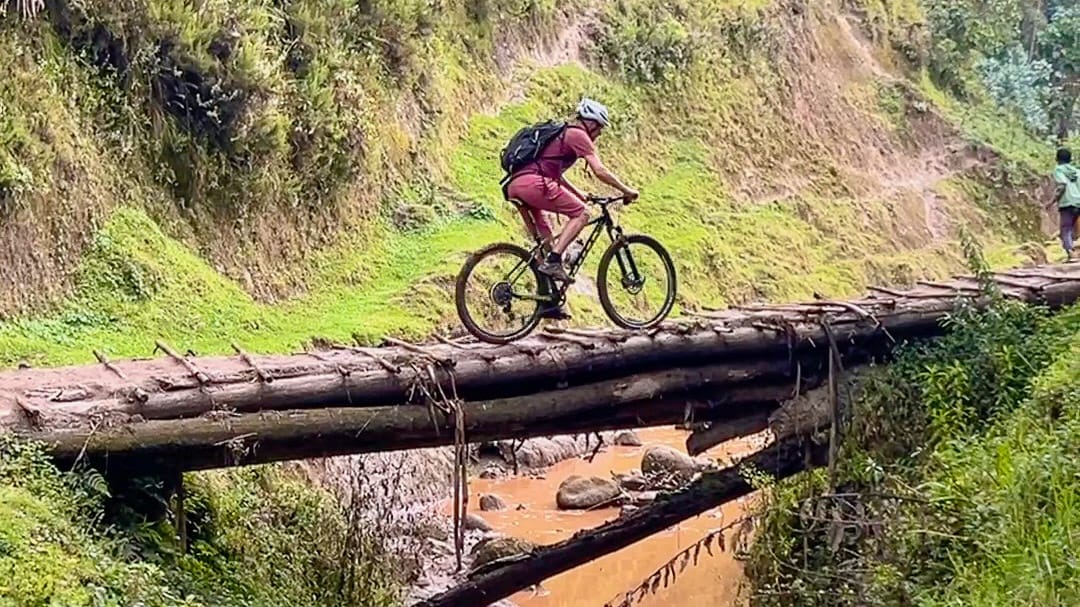
Remarkable landscapes
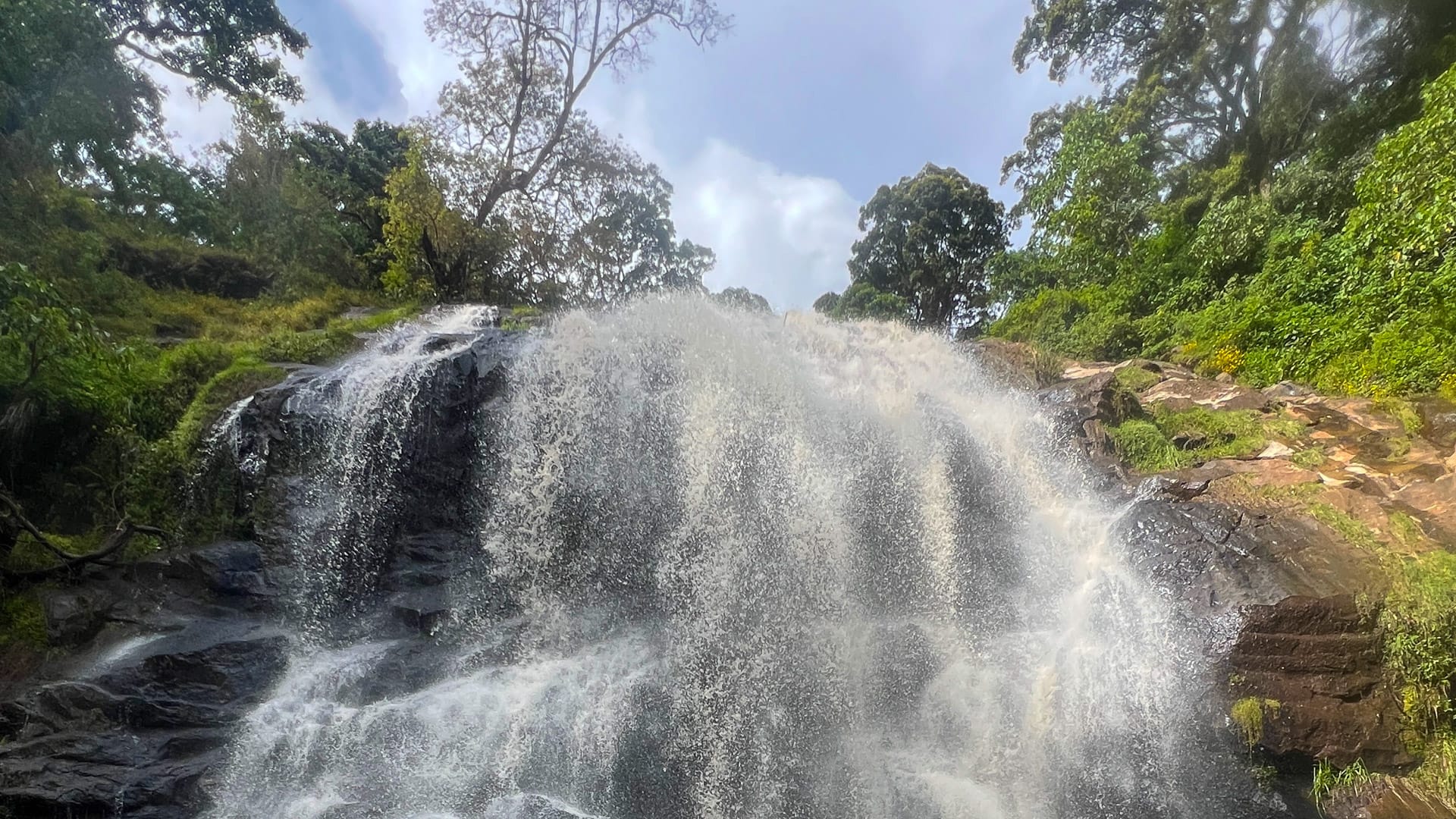
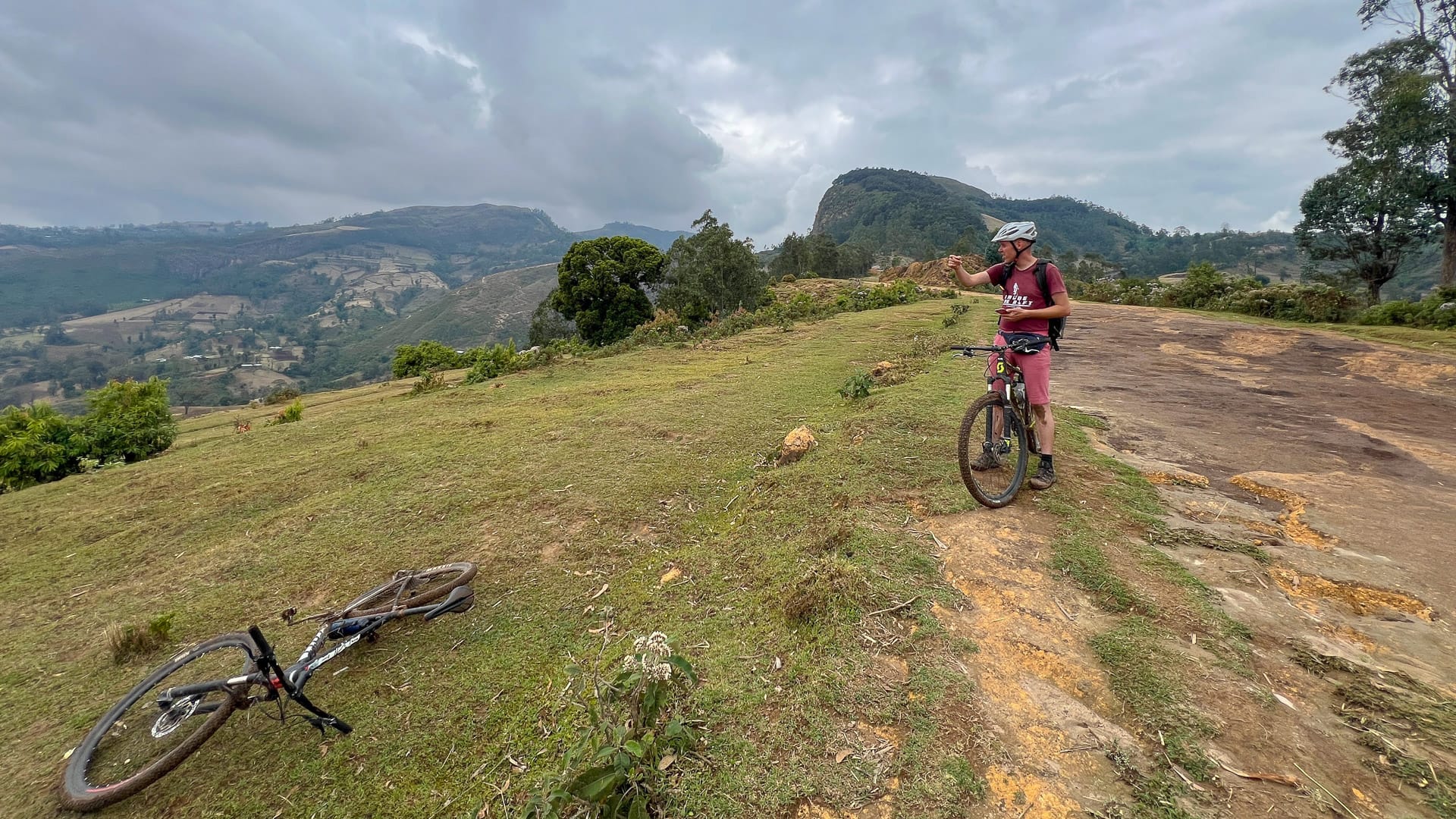
Cycling through Ethiopia allows intrepid riders to explore rarely touched parts of this extraordinary landscape, where rugged mountains and winding rivers meet to create dramatic waterfalls. Some of the standout scenery our guests love include:
- The twin Ajora waterfalls: These two cascading waterfalls are located in the Rift Valley and are surrounded by lush foliage. More info below.
- Lamu Falls: Lamu Falls is in Hadiya Zone, part of the new Central Ethiopian Region. It’s very much an unknown waterfall that is just off the trail we ride on, with water cascading out of the forest.
- The Bale Mountains National Park: This high-altitude region is a UNESCO World Heritage Site, home to wildlife, including Ethiopian wolves. More info below.
- Lake Hawassa: One of the Rift Valley lakes. We reach it at the end of the trip.
- Wagabeta Caldera: An extinct volcanic crater in the Hadiya and Tembaro zones of the Central Ethiopia Region.
- Kotoro Caldera: A smaller extinct caldera west of Wagabeta. It sits in the same area of the Central Ethiopia Region.
- Omo Valley: Parts of the valley are flooded by the Gilgel Gibe III dam. The scale of the landscape here is striking.
- Rift Valley escarpment near Terega: A steep section of the escarpment above Butajira.
- Mount Mugo: A prominent peak on the southern edge of Gurage.
- Waterfall near Ha Unta camp: This waterfall does not have a known name. A stream drops into the jungle below. There is a short scramble to reach it, but it is worth the effort.
- Senkele Wildlife Sanctuary: A protected area that adds a different feel to the riding day.
Rich heritage
Ethiopia is Africa’s oldest independent country (source), giving it a unique culture and a rich history.
On a bike tour, you’re likely to encounter millennia-old traditions. In the central and southern highlands, culture is closely tied to the cultivation of enset, often called the false banana tree. The stem and root are made into a staple food called Q’otcho. It is most often eaten as a pancake or flatbread. Enset leaves are used to wrap food and serve as plates. The fibres are used to weave mats and other materials. Enset is drought-resistant and is a key part of the diet for many people in these areas.
In many communities, there is a strong belief in spirits that exist in nature, including forests and trees. Village elders may meet beneath towering old trees in the centre of a village to resolve disputes. This is often done over cups of thick, brewed coffee. The coffee may be drunk with salt and butter. There is also a deep respect for life; for example, if a driver kills even a chicken crossing the road, compensation must be paid.
Local encounters
On our bike rides, we often encounter local villagers and become immersed in their culture, whether they’re dancing around a campfire or sharing a cup of their legendary ginger tea. Or as we like to call it, rocket fuel!
The riding can be challenging, but at the end of each day, there’ll always be a cold beer or a cup of thick, rich coffee to enjoy.
A coffee lover’s paradise
Known as the origin of coffee (source), arabica bushes grow wild in the forests.
Coffee is widely drunk in Ethiopia. You can expect to find locally roasted and brewed coffee served throughout the trip, including at meals. This means caffeine-obsessed cyclists are well catered for!
Part 2: Ethiopia (from a cyclist’s perspective)
Where is Ethiopia?
Ethiopia is located in the north-east of Africa, sometimes known as the ‘Horn of Africa’. It’s a landlocked country, sharing borders with Sudan, Somalia, Djibouti, Eritrea and Kenya.
It’s part of the East African Rift System, a huge tectonic crack running from the Red Sea through Ethiopia down towards Mozambique, where the African plate is slowly splitting in two, creating valleys, volcanoes and a long chains of lakes.
Give us an overview of Ethiopia’s geography
The geography in Ethiopia has a huge amount of variety, particularly in terms of altitude. On the one hand, you’ve got the Danakil Depression, which sits 125 metres below sea level and is known as one of the hottest places on the planet. On the other, the Ras Dashen mountain, which towers 4,533 metres above sea level.
Most of the country, and the best areas for cycling, sit somewhere between the two extremes at altitudes ranging from 1,000 to 3,000 metres. More on that below. This leads to a pleasant climate for cycling, with warm temperatures during the day and cooler temperatures at night.
See below a map of Ethiopia, including key places mentioned in this article. Hover over the map pins to see the names of places.
Is it safe to cycle in Ethiopia?
Tourism has been tricky in Ethiopia in recent years, due to disruptions and conflicts which affect many parts of the country. But that doesn’t mean getting to experience the intriguing landscape and natural beauty of Ethiopia is a complete no-go. You just need to check exactly where you’re going and be aware of current travel advice before booking and travel – see the notes above the Table of Contents above for more detail.
You also need to ensure your insurance covers you to travel to the planned regions. There is detailed information on what each region is like for visitors on the ground on the Tesfa Tours website, based on our firsthand experiences.
Alongside planning the regions you visit carefully, there are also a few other safety considerations to be aware of when cycling in Ethiopia:
Stone throwing
This is often seen as a problem for biking in Ethiopia. However, it’s not something we have really experienced because it tends to happen on the main roads that connect cities – and we stay off these. We also tend to call out greetings to people in their local languages, as we feel that stone throwing may be linked to frustration that a ‘curiosity’ is passing with no way to communicate! More on this below.
Rabies
We would suggest travellers get a rabies shot, as it is a risk in Ethiopia. In the areas of South West Ethiopia where we cycle, we have rarely had any instances of dogs barking at us or chasing us. But it does happen very occasionally.
Malaria
While Malaria risk depends on the altitude, we would still suggest following medical advice for Malaria-prevention. Use a reliable repellent and wear long-sleeved (but thin) clothing in the evenings.
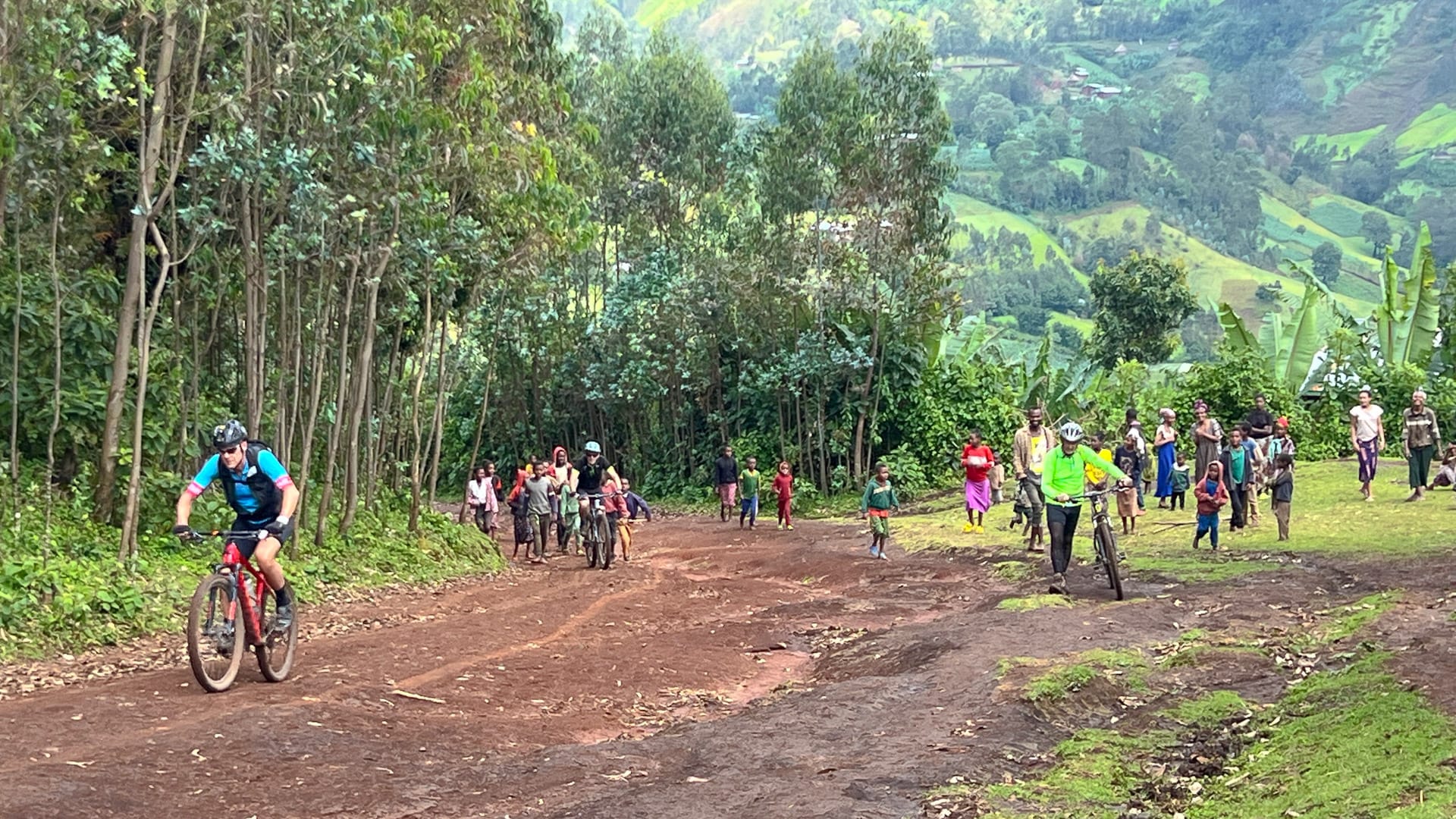
Uphill with the kids (photo credit: Ride the Rift)
What is the terrain like?
Ethiopia is a mountainous country, so expect plenty of climbing and descending on a real mix of surfaces. For this reason, you might want to bring your own mountain bike (learn more about hiring a bike on arrival below).
The varied altitudes in Ethiopia create a landscape of striking contrasts for cyclists to experience:
- The Rift Valley dissects the south of Ethiopia. You’ll ride through a continuous highland area on the western rim of the Rift Valley. It starts in Gurage and runs through Hadiya, Tembaro and Wolaita, then down to the Gamo Highlands. Much of the landscape is similar, with enset cultivation, lots of red soil, mixed woodland and forest, plus rivers and waterfalls.
- In Gurage, where many trips begin, rivers run west from the higher areas and create valleys. The land is also dissected by Jafoure paths. These are rural routes on often grassy common land. They are used for travel on foot, horseback, by bike, and by vehicles that can reach that far.
- As you head south, the Jafoure roads end, but the lush landscape remains. Volcanic peaks and craters create challenging climbs and thrilling descents.
- In Wolaita, the look of the land and the organisation of villages changes. There is a lot of woodland, with settlements and fields tucked in amongst the trees. Villages are set back off the red dirt roads. The land becomes more undulating and less challenging, which makes for more relaxing biking.
- Cycling down into the Rift Valley towards Lake Hawassa, the landscape becomes drier and somewhat less wooded. Near the lake, there is quite a bit of vegetable farming.
- The Bale Mountains further east are very different. One main gravel road winds up from the town of Goba, set just below 2,800m, and climbs to around 4,100m. After crossing the plateau, it descends into the forest belt to Delo Meno at just over 1,200m. Any trip in the park would most likely need a combination of vehicle and biking.
- The Gamo Highlands are filled with lush green mountains.
You can find out more about the road surfaces and the best cycling regions below.
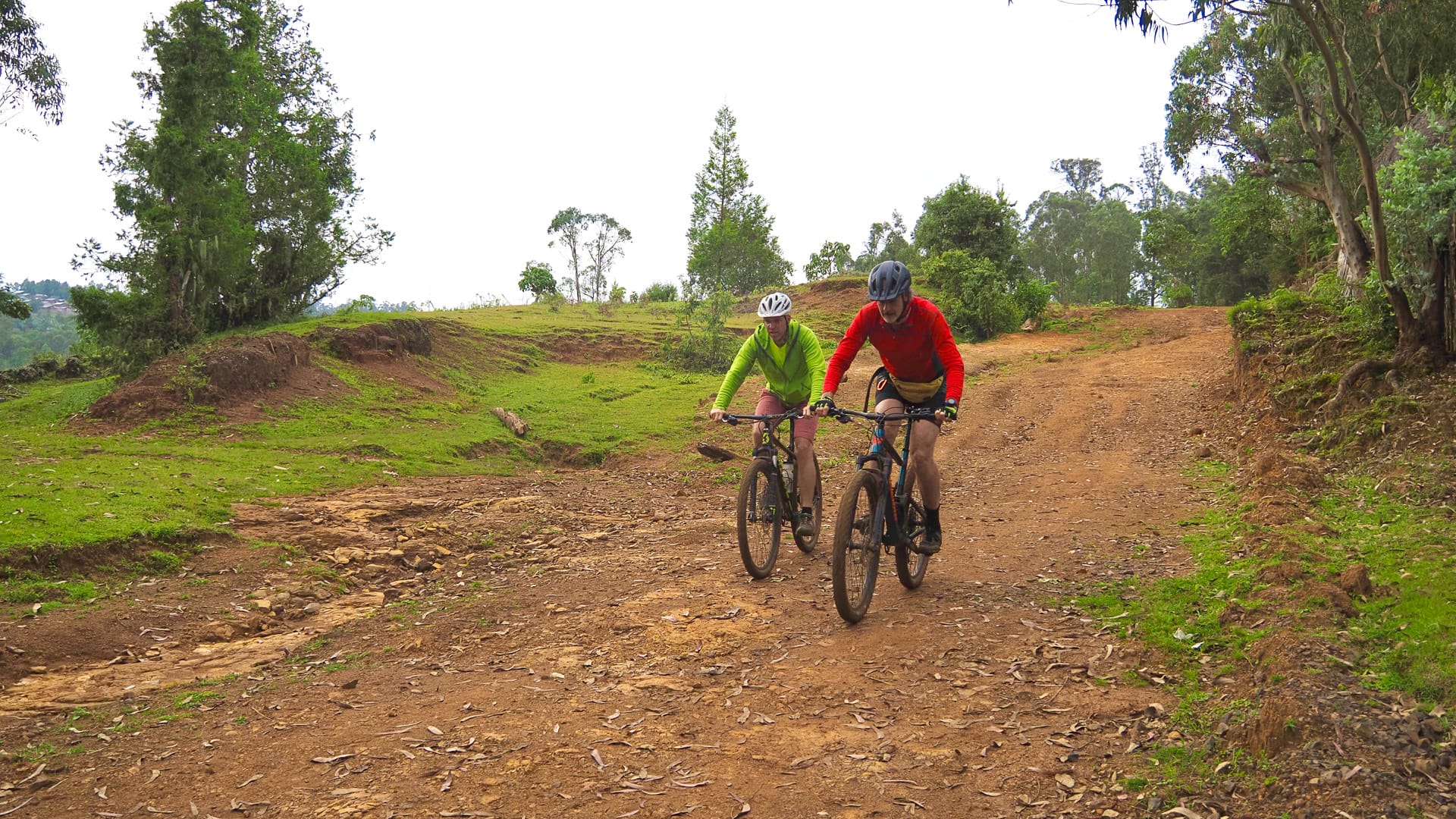
Exploring the Gamo Highlands (photo credit: Ride the Rift)
What are the roads like for cycling in Ethiopia?
Cycle paths are beginning to be built in the capital (Addis Ababa) and might expand into some of the major towns soon. However, in the countryside, cycling isn’t that common.
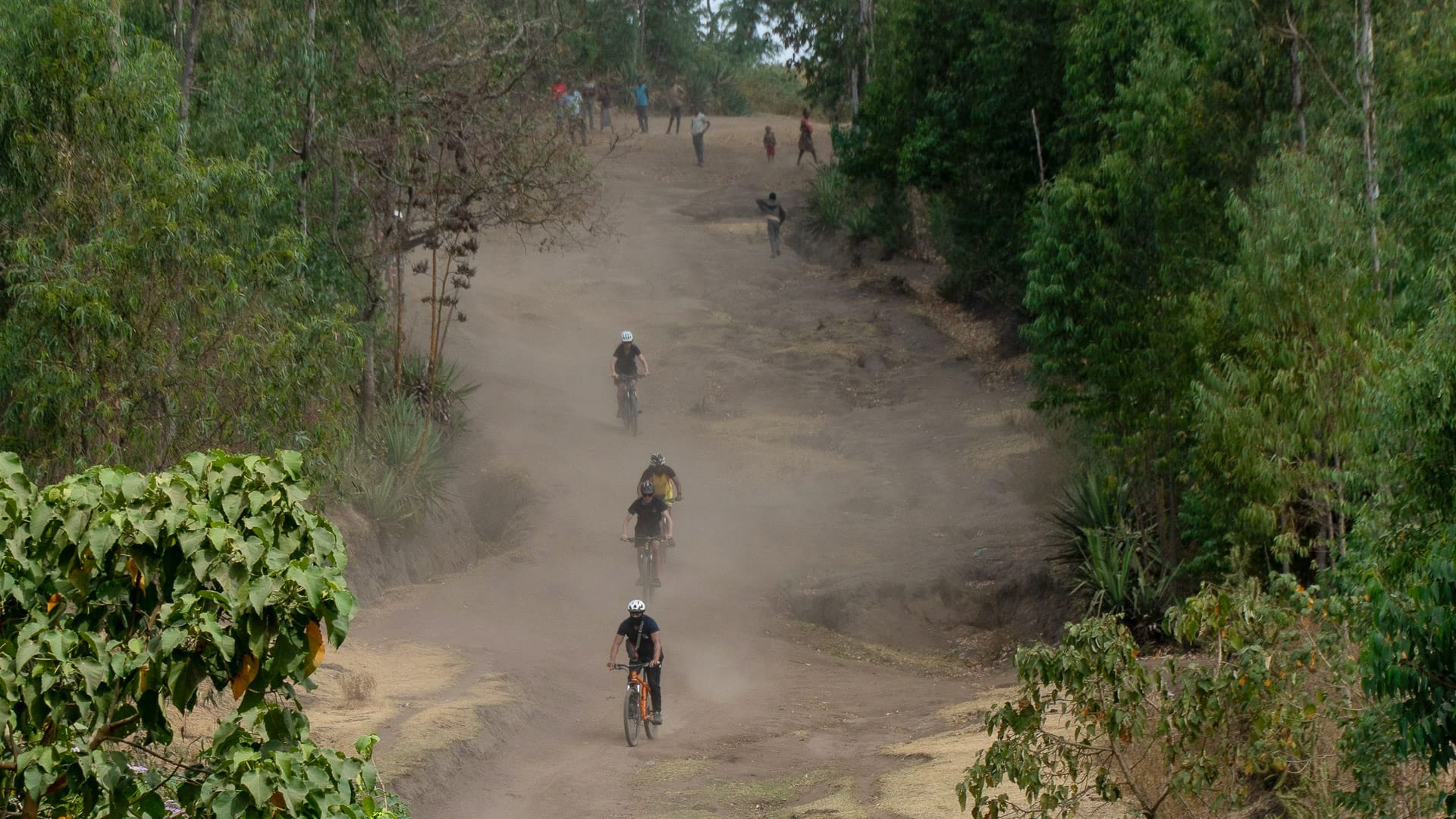
The road surfaces are mixed. Sometimes there will be short stretches of asphalt. On the routes we offer through Ride the Rift, these are usually empty roads with little traffic. Most of the time, the routes are a mix of gravel roads, dirt roads and trails (which are sometimes narrow). The surfaces can vary between smooth, rocky, muddy or eroded. It’s a real mix of everything, and if it has rained recently, then the surfaces can get muddier.
Be aware! Not many people are used to seeing bikes like ours. We’re usually the centre of attention when we stop in villages. Kids love to try the bikes, and we often get filmed by local people – there’s huge excitement. Motorbikes are also commonly used for transport in Ethiopia, and often people drive alongside us and try to have a chat.
Top tip! Following on from the stone throwing mention above, you might find bikepacker blogs that report stone throwing and other hostile behaviour. However, these cyclists often ride on the busy trunk roads to cross the country quickly as part of their trip. We suggest avoiding these busy roads where the reception can be a bit inhospitable. Instead, we engage with people as we ride, and we’ve found that on the back roads, we typically encounter hospitality and curiosity, not hostility.
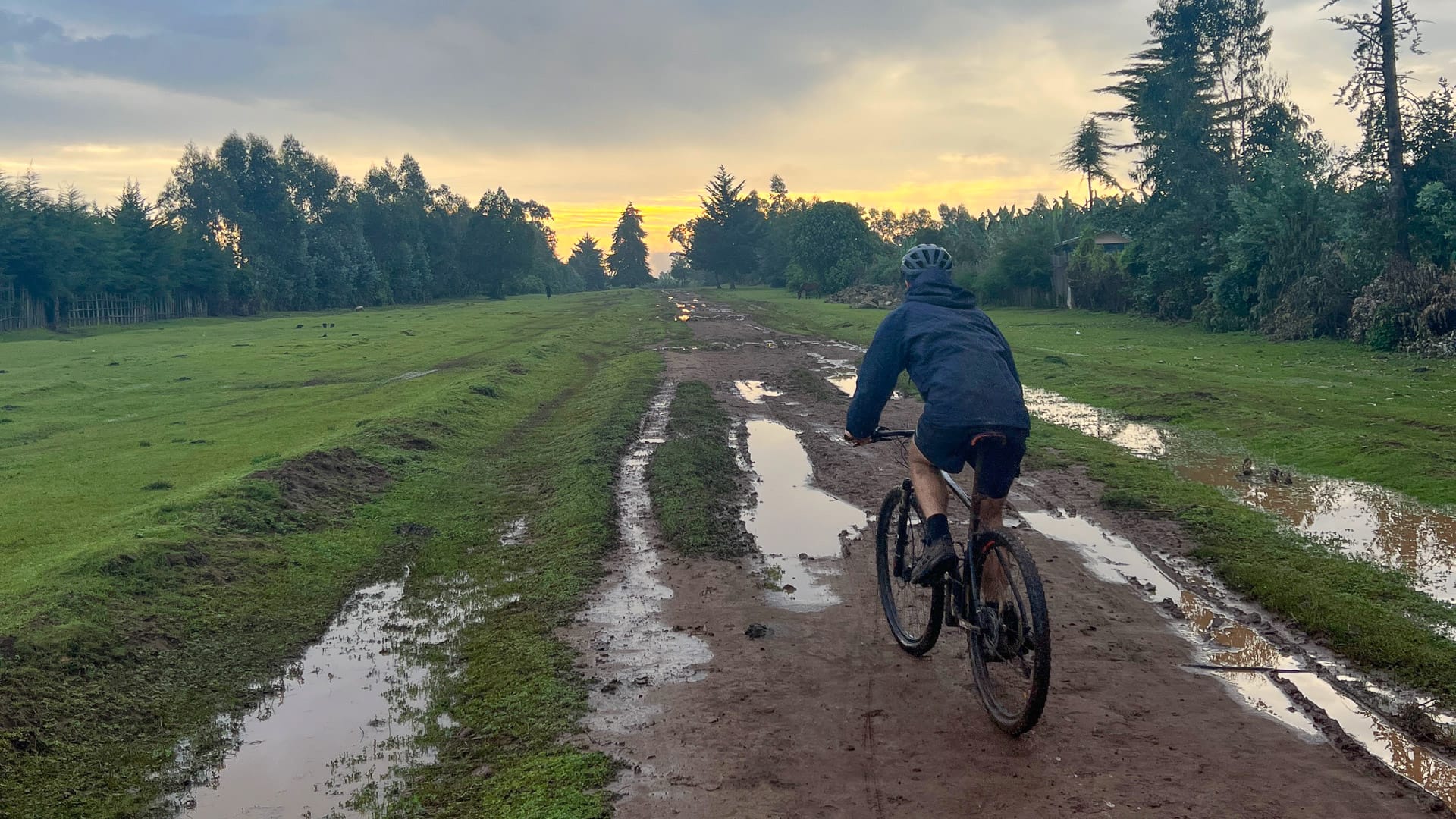
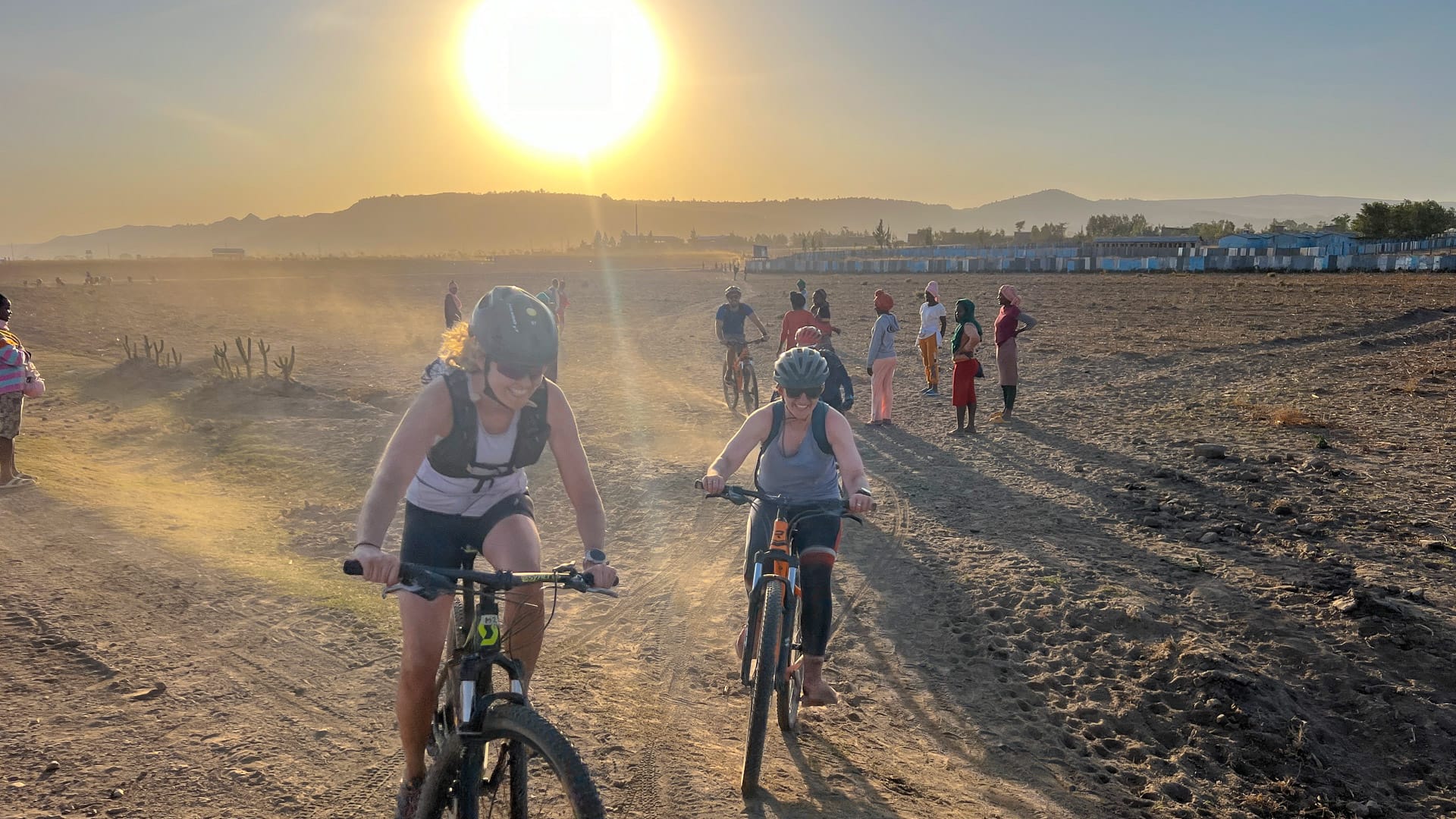
Dusk in Gurage Highlands after a rain shower (photo credit: Ride the Rift)
What kind of cyclist is Ethiopia best for?
Ethiopia is a true adventure cycling destination, suited to riders who are ready to get out of their comfort zone and explore somewhere different. We really are off the main grid, and cycling here is a great way to experience an unspoilt country. It will feel like a completely different world.
Seasoned mountain bikers can enjoy some fun, challenging stretches. But you don’t have to be an experienced mountain biker to enjoy riding here. You can always walk the technical sections, and on our Ride the Rift tours, we ensure there’s time to take the downhills at a moderate pace.
Be aware! The mountainous terrain in Ethiopia means you’ll be riding at a significant altitude, which can make cycling feel like harder work. You’ll need a moderate level of fitness, especially for a multi-day trip. But you don’t need to be a superhuman to enjoy Ethiopia by bike.
What are the key cycling events in Ethiopia?
Cycling hasn’t become mainstream yet in Ethiopia.
But there are several cyclists from Tigray who are pushing to put Ethiopian cycling on the map – for example Tagabu Grmay who was a pro cyclist for around 10 years and the first Ethiopian to ride the Tour de France. Given the country’s reputation for long and middle distance runners, we think more Ethiopian cyclists could make it in pro cycling, helping inspire future generations and make cycling far more prevalent here.
Ride the Rift aims to showcase the potential Ethiopia has as a host for world-class mountain biking events. The terrain is perfect, with the combination of mountains, gorges and rivers setting an incredible stage for cross-country and enduro style events.
Do you need to do a tour of Ethiopia?
An organised cycling tour is a really good idea if you want to safely explore Ethiopia by bike.
The country is beautiful and offers so much to experience. But we have to acknowledge that there are several areas where conflicts and disruption present a challenge to tourism. Therefore, it’s important to understand the areas where you can cycle safely. For the most part, tourists are not the targets in areas experiencing disruption. But even so, logistical issues like road closures and militarised areas can make planning a DIY trip pretty tricky!
Ride the Rift’s cycling holidays take care of the planning and logistics using our extensive local knowledge. Our ethos is that we’d never advise clients to travel somewhere we wouldn’t take our own families. An organised tour is the best way to enjoy the incredible scenery and culture in Ethiopia, with far less stress.
Sponsor Message
Considering cycling in Ethiopia?
Ride the Rift offer a number of Ethiopian cycling holidays enabling you to experience this extraordinary destination by bike.
Head to their website to find out more, including dates and prices.
Got a question for Mark Chapman from Ride the Rift?
Fill out this form and we will pass it to Ride the Rift who aim to reply (within 24 hours wherever they can!)
Part 3: What are the best regions for cyclists in Ethiopia?
The unique geography of Ethiopia means the terrain and scenery you’ll get to explore can really vary depending on which region you visit. Whether you’re interested in volcanic mountains, dramatic waterfalls or remote highlands, as long as you remember to pack your sense of adventure, you can experience it all!
Be aware! Some of the best regions we suggest for cyclists right now are in the central and southern highlands. This is largely due to UK FCDO travel advice. The Amhara region is currently marked red, so areas like the Simien Mountains and Lalibela are not okay for biking at this time. Insecurity in the country has pushed us to explore new places, and it has led us to some amazing riding.
The Simien Mountains and the highlands of Amhara have basalt escarpments, and tracks there can become rocky and hard to bike on. In the south, there is more red soil, which makes wonderful terrain for biking. Our clients also feel they have got off the beaten track and are riding in unexplored places.
Rift Valley
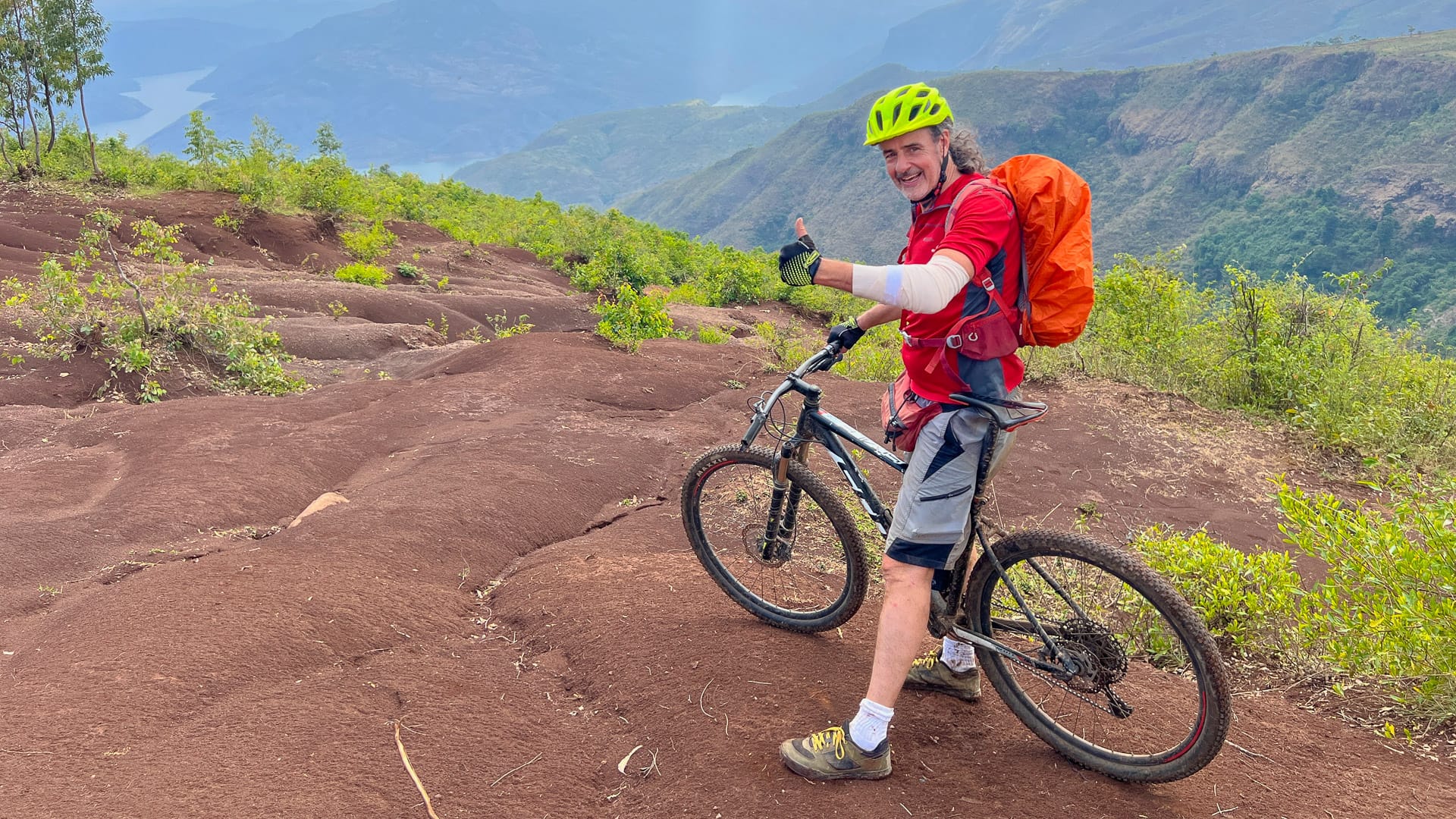
Mark, in Hadya, first good view of impressive Gilgil Gibbe lake, formed by a dam on the Omo River (photo credit: Ride the Rift)
Ethiopia’s Rift Valley sits in the country’s south-west, running from just beyond Addis Ababa towards Hawassa and Arba Minch, threading a chain of volcanic lakes between high escarpments. It’s a broad, warm basin with fertile farmland, coffee smallholdings and roadside fruit – think avocados and mangos – plus short rivers that tumble as waterfalls after rain.
Riding here is flatter and faster across the valley floor, with longer descents and punchier climbs when you pop up to the plateaus. Compared with Ethiopia’s high, cool uplands, the Rift feels a lot greener and warmer.
Suggested tour: Ride the Ethiopian Rift Valley (Volcanoes and Waterfalls)
Distance: approx. 400 kilometres total (around 56 kilometres per day on average)
Elevation gain: approx. 6,100 metres total (around 870 metres per day on average)
Descent: approx. 8,700 metres total (around 1,170 metres per day on average)
Ride the Rift offers a seven-day cycling trip which begins on the Rift Valley escarpment (west of Butajira) and ends near Hawassa. This trip starts with a few days riding through lush green countryside, punctuated by small villages. Evenings can be spent getting to know the local villagers and joining them for a dance around the campfire.
The tour is a true adventure! Expect to wade through rivers and see several waterfalls along the way. Highlights include the twin Ajora waterfalls and the vast lake formed by the Dam (Gil Gil Gibbe) on the Omo River. Towards the end of the trip, there’s an exciting descent down the Otoro volcano.
Example daily distances and elevation (first four days from my Strava records):
- Day 1: 95 kilometres, around 800 metres elevation gain, around 1,650 metres descent
- Day 2: 50 kilometres, around 1,070 metres elevation gain, around 880 metres descent
- Day 3: 50 kilometres, around 850 metres elevation gain, around 1,700 metres descent
- Day 4: 65 kilometres, around 1,180 metres elevation gain, around 1,100 metres descent
More information
Ride the Rift’s website has further details of this Ethiopian cycling tour, including dates and how to book.
Gurage Highlands
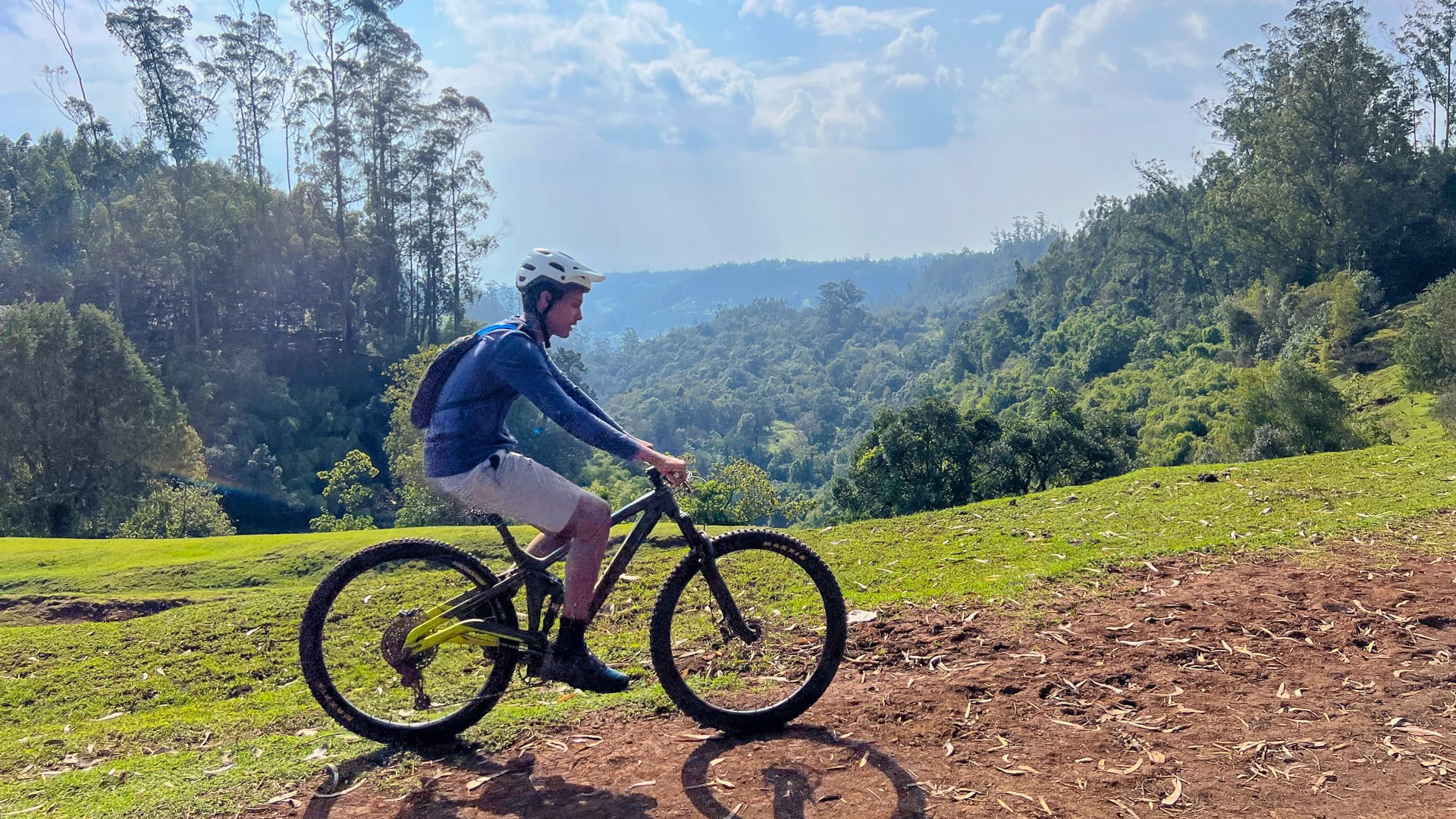
Idyllic Gurage (photo credit: Ride the Rift)
A little south of Addis Ababa is the Gurage region. This is a great area for cycling, as you’ll find plenty of red dirt tracks and grass ‘roads’ which connect the villages. It’s also famous for its culture and cuisine, which is renowned across Ethiopia. The hospitality is legendary! You may be invited into a home for food or a drink, especially if your trip includes the opening days in Gurage or the 3 to 5-day Gurage trip.
The Gurage Highlands are dissected by west-flowing rivers. The terrain is a mixture of heavily wooded areas and gorges with deep forestry. The grassy roads connecting the villages are known as ‘Jafoure Roads’. These run through the heart of the villages and form social spaces for the villagers to gather together.
Suggested tour: Gurage adventure
Our seven-day Rift Valley Adventure tour starts in this region, but Ride the Rift also offers shorter three to five-day trips which stay in Gurage. We use a mix of hotels and homestays in the villages, so you can be immersed in the famous local hospitality and cuisine.
Example distances and elevation (4 days / 3 nights in Gurage):
- Day 1 (Ridge ride, down to river and climb up): 40 kilometres, 380 metres elevation gain, 600 metres descent
- Day 2 (Basic ride to camp, with a hike in the morning before the bike ride): 30 kilometres, 532 metres elevation gain, 200 metres descent
- Day 3 (Loop ride): 32 kilometres, 660 metres elevation gain, 660 metres descent
- Day 4 (Climbing higher into the highlands): Potentially 55 kilometres, 1,000 metres elevation gain, 1,250 metres descent
For Day 4, there is the option to transport bikes up some of the ascent. Day 4 can include an asphalt descent dropping 1,000 metres in 10 kilometres.
This is an example loop route through Gurage. It can be designed to suit the group, and it can be made tougher if you want more of a challenge.
More information
Ride the Rift’s website has further details of this Ethiopian cycling tour, including dates and how to book.
Gamo Highlands
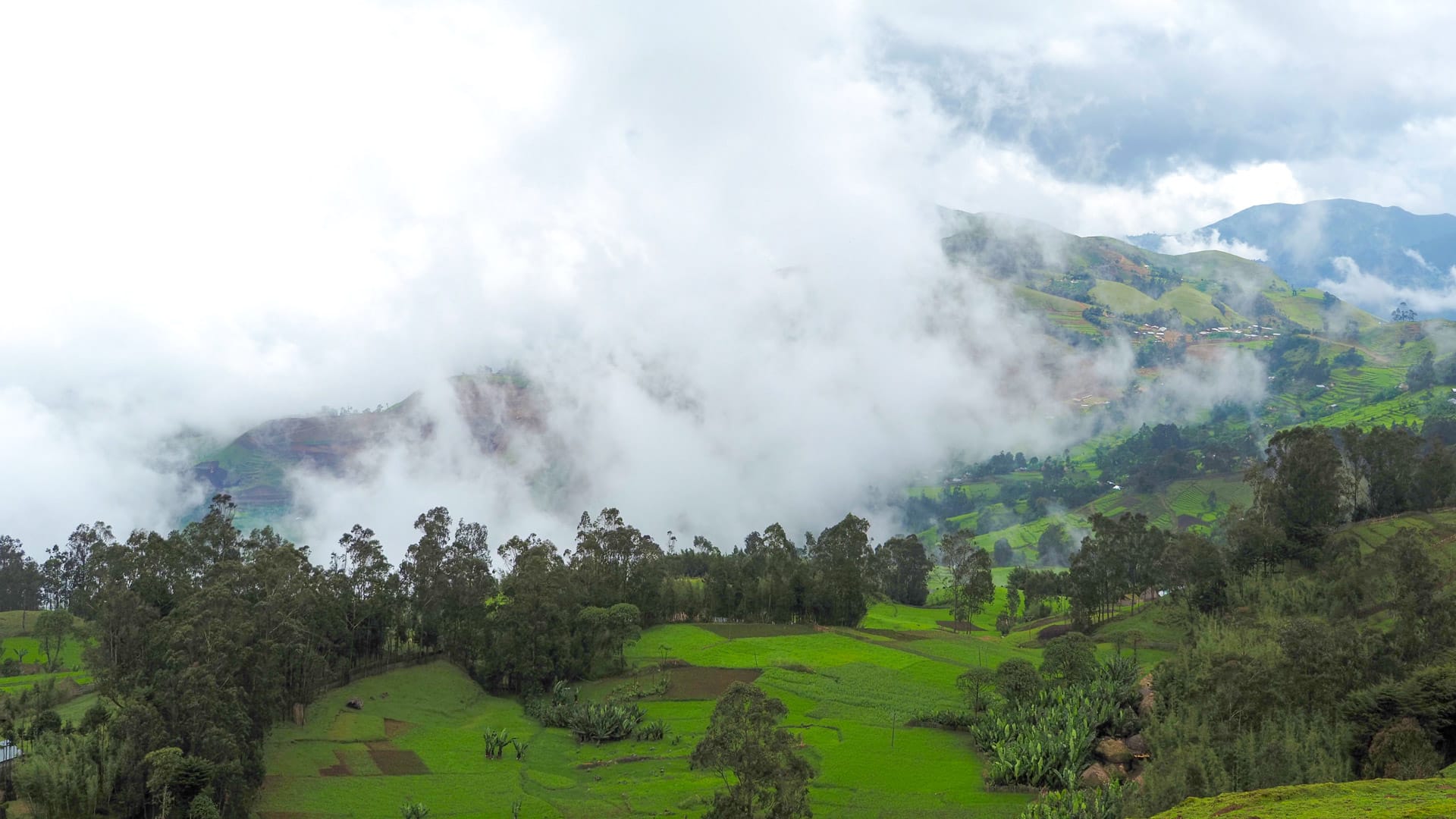
Scenic view of the Gamo Highlands (photo credit: Ride the Rift)
The Gamo Highlands sit in Ethiopia’s south-west, rising above the western side of the Great Rift Valley in the Gamo Zone of the South Ethiopia Regional State. The Highlands lie immediately northwest of Arba Minch. You can expect mountains, woodlands and more waterfalls, and this highland region offers up some challenging climbs and exciting downhill sections. Look out for riding around the small towns of Dorze, Bonke and Chencha.
Be aware! The highest mountain in the region, Mount Guge, is perhaps best explored on foot – we’ve discovered the trails along the peak are not made for mountain bikes!
We are currently working on a bike tour in this region. We plan to extend the existing Rift Valley tour to reach Arba Minch. We are also planning a shorter three-day excursion starting from Arba Minch.
Bale Mountains
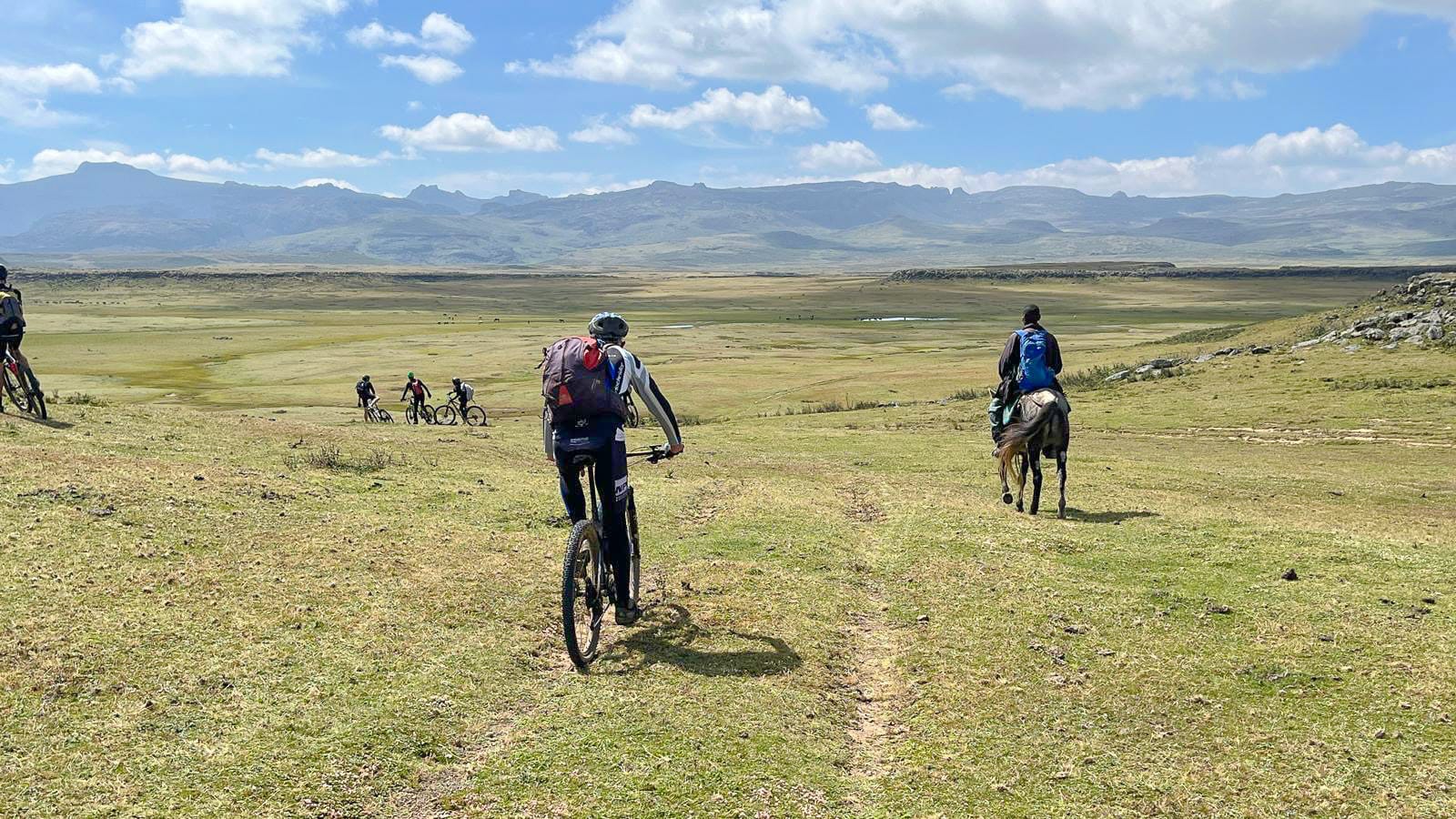
Riding across flat grasslands in the Bale Mountains (photo credit: Ride the Rift)
The Bale Mountains rise in Ethiopia’s south-east, about 400 kilometres from Addis Ababa.
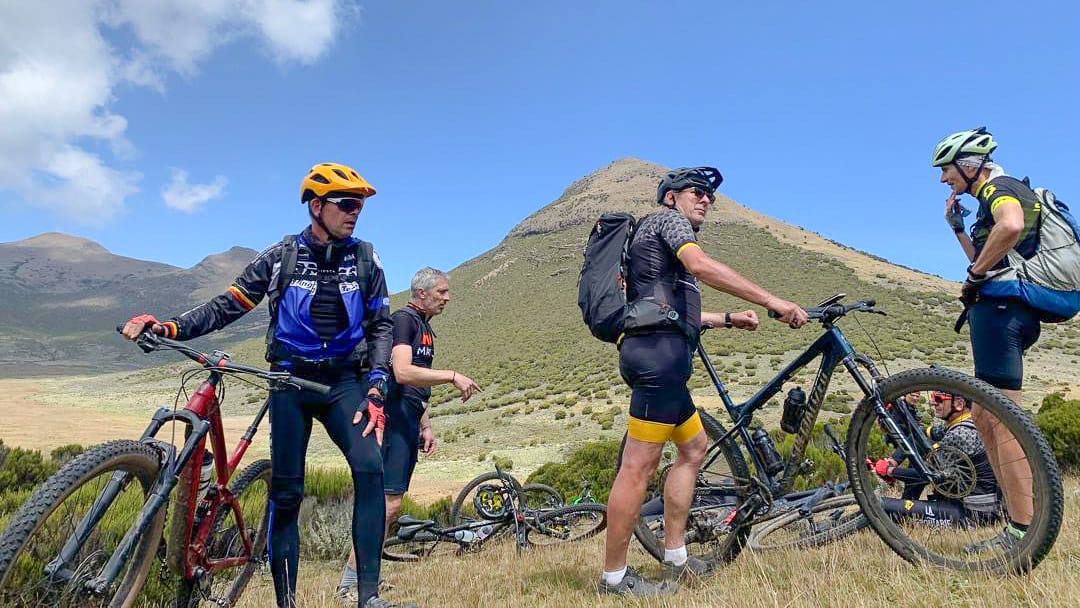
Be aware! Cycling in the Bale Mountains is not for the faint of heart! This vast National Park is one of Ethiopia’s remote highland moorlands. Much of the region is at over 4,000 metres of altitude, which can make cycling feel like harder work. But the views over the vast open plateaus that stretch for miles make it more than worth the effort.
The Bale Mountains are a great region to visit to spot some wildlife. In the higher areas, you might see Ethiopian wolves who stalk furry little rodents as they scuttle between the tufts of grass – though they have competition from the raptors! A little lower down in the forested slopes, you can see several species of buck, antelopes, warthogs and perhaps even a hyena. Leopards and lions roam the southern slopes, but these are a rare sight to see.
Scenery and wildlife aside, cycling in the Bale Mountains will give you the chance to experience what must be one of the longest descents in the country. There’s a gravel road that goes all the way down through the forest. It’s very exciting to ride!
More information
Ride the Rift doesn’t have a bike tour you can book for this region yet. But we do offer a bespoke itinerary in this region as a camping trip. You’ll cycle on the small horse tracks that criss-cross the plateau, with your mobile camp following you on horseback.
Sponsor Message
Considering cycling in Ethiopia?
Ride the Rift offer a number of Ethiopian cycling holidays enabling you to experience this extraordinary destination by bike.
Head to their website to find out more, including dates and prices.
Got a question for Mark Chapman from Ride the Rift?
Fill out this form and we will pass it to Ride the Rift who aim to reply (within 24 hours wherever they can!)
Part 4: What you need to know before cycling in Ethiopia
Practicalities for an Ethiopian cycling trip
When is the best time of year to cycle in Ethiopia?
The best time of year for exploring Ethiopia by bike is between October and May, because this is the country’s dry season.
From October to December, expect warm temperatures and plenty of sunshine. This is just after the rainy season, so the landscapes are particularly lush and green. Late November and December is also the start of the harvesting season. December to February is the driest, coolest season. Harvesting is usually finished by mid-January, and this is when festivals usually happen.
Temperatures begin to rise between March and May, and there can be some shorter spells of rain, which we call the ‘Belge Rains’. The monsoon season usually starts in June in Addis Ababa, but as you travel further north, it tends to start a little later.
What are the best hotel and accommodation options for cyclists in Ethiopia?
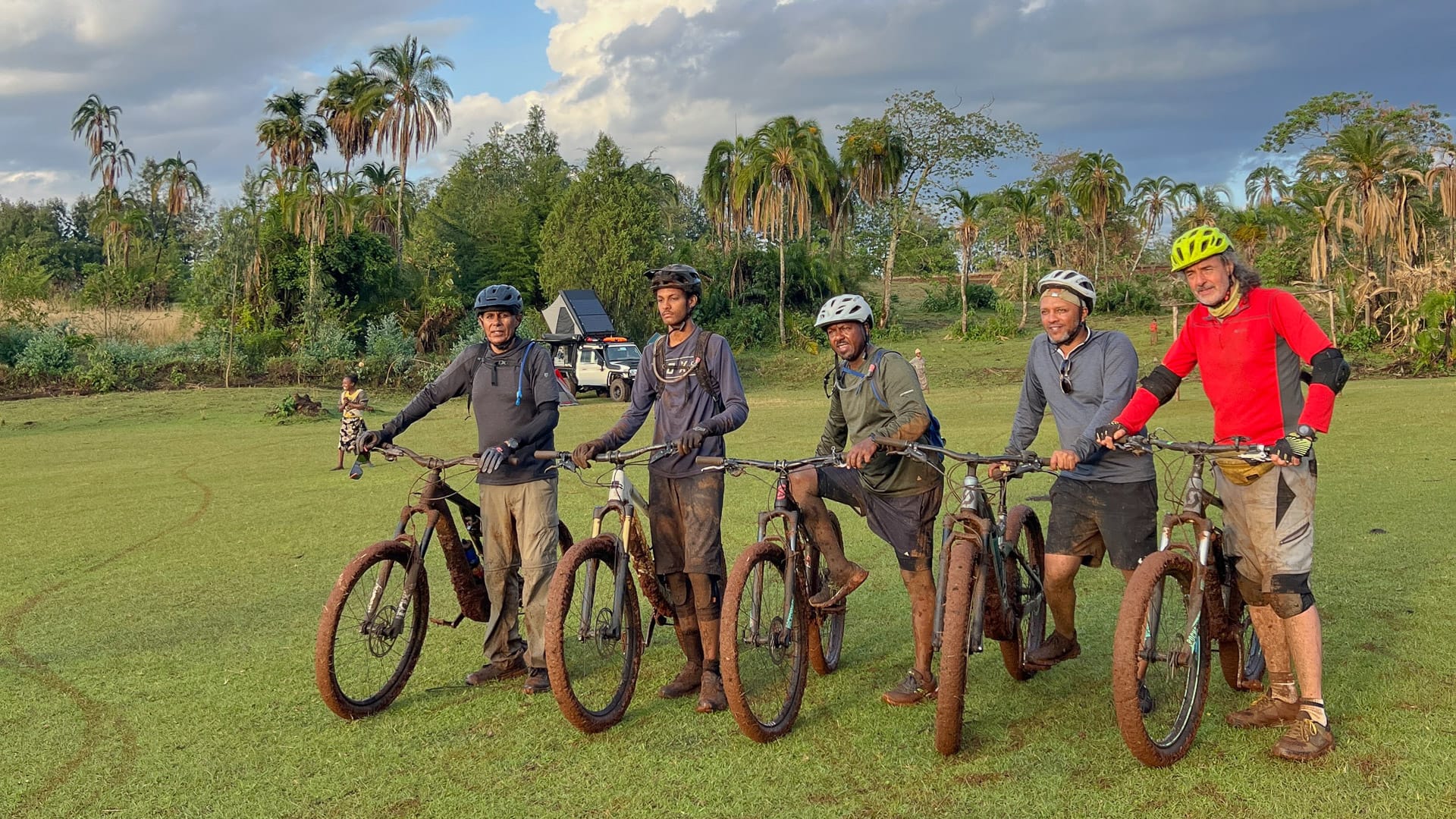
It probably comes as no surprise that there isn’t a cycling accommodation accreditation scheme in Ethiopia! But in our experience, most hotels have been very welcoming to cyclists, and they haven’t minded us arriving muddy with our bikes in tow.
Top tip! Hotels can be a mixed bag outside the major cities and tourist destinations, so once you head off the beaten track, you do need to roll with the punches a little. There can sometimes be power cuts, so we’d suggest bringing power banks with you. And sometimes the showers don’t work, so we have to improvise. But whatever happens, we can always find a cold beer (or other refreshing beverage of your choice!) in town.
Be aware! Because cycling isn’t widely adopted in Ethiopia, bike maintenance and storage facilities at hotels can be limited. This is why we suggest booking a hotel rather than trying to do a DIY Ethiopia cycling trip. On our Ride the Rift tours, we manage things like bike storage and mechanical assistance for you.
Are there bike rental and repair shops?
Be aware! Options are limited for DIY cyclists. There is a good bike mechanic in the capital city of Addis Ababa called Amsalu. However, he only speaks Amharic, so you may struggle to communicate.
This means you’ll need to bring all the relevant spares for the rest of your trip. If you plan to bring your own bike, check with your airline what the size and weight restrictions are. You may have to pay an additional baggage charge at the airport.
Ride the Rift has some bikes to hire. These include hardtail Scott mountain bikes (in sizes medium – extra large), Scott e-bikes and a few full suspension bikes.
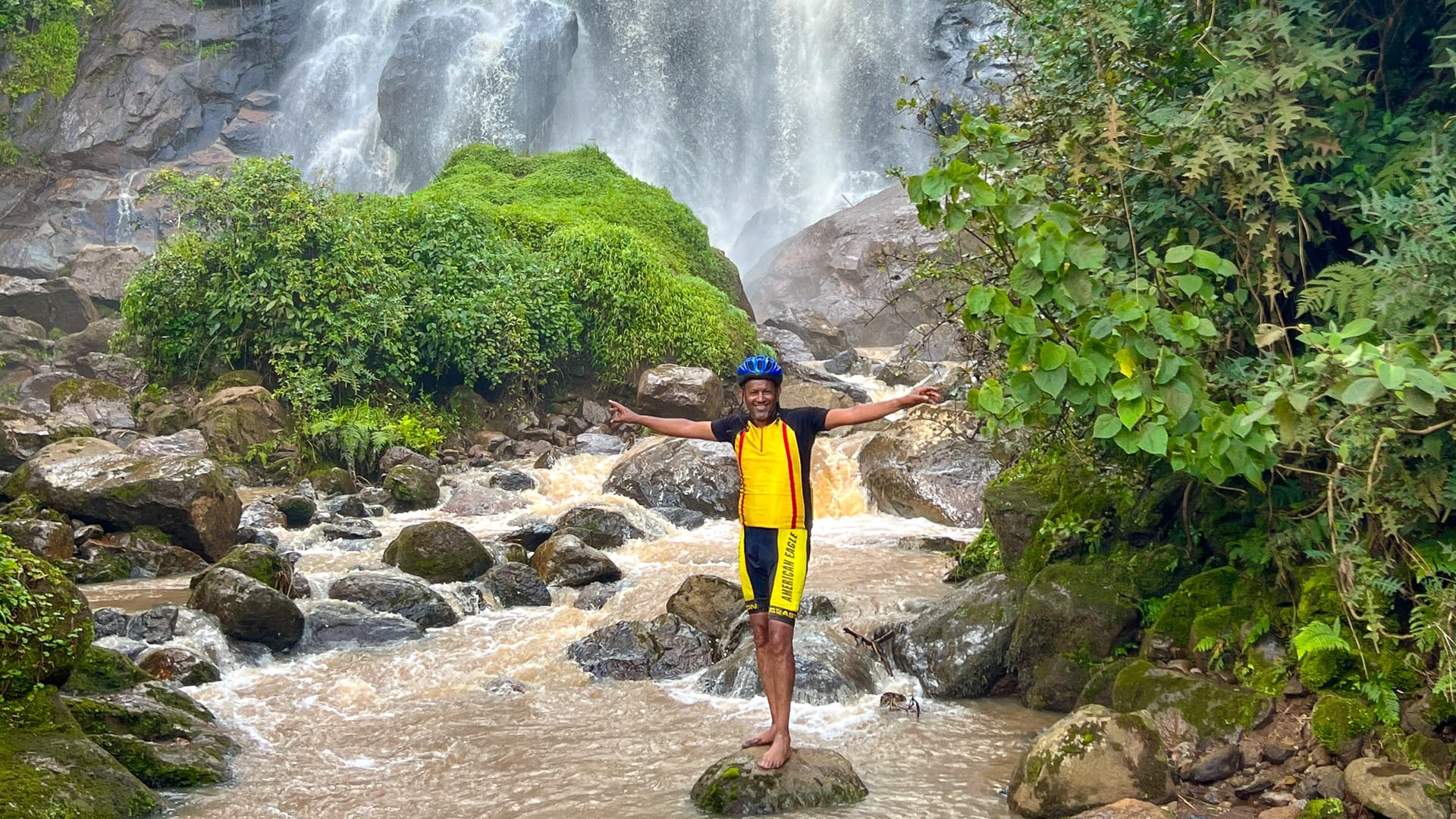
Lamu falls on the Ride the Rift adventure (photo credit: Ride the Rift)
How to travel to Ethiopia?
Addis Ababa Bole International Airport is one of the busiest airports in the country, acting as a major international hub. There are numerous flight options, including with Ethiopian Airlines, Etihad and Qatar Airways so there are options to fly from many cities in Europe.
Do you need a visa?
Most visitors need to get a visa to enter Ethiopia. You can get an e-Visa online through the official Ethiopian Government website. Check your local government travel advice for specific entry requirements.
Any highway code and travel information I should be aware of?
As mentioned earlier, it’s important to check current travel information before you book and travel. For UK visitors, the UK government travel information pages for Ethiopia are here.
You should also read and follow Ethiopia’s highway code.
Do you need any travel vaccinations and insurance?
Make sure you have all the recommended travel vaccinations and consider whether malaria precautions are necessary.
Ensure you have comprehensive travel insurance that covers all the activities you plan on undertaking.
Tips for cycling in Ethiopia
How can I best prepare for an Ethiopian cycling trip?
Part of the fun of cycling in Ethiopia is that you never know what will be on the trail or around the next corner. It could be an ox cart stacked with hay, or cattle coming back from a river. A teenager galloping on a horse, or an overloaded three-wheel tuk-tuk. Expect the unexpected and lean into your sense of adventure.
Is there anything I need to be aware of culturally?
Out in the countryside, no one is used to seeing bikes like ours, so there’s always huge excitement.
Expect to be the centre of attention and to have lots of interactions with local villagers. The children, in particular, love to interact with us, and some even want to have a go on the bikes. Be ready to play!
We also think learning a few basic phrases before you arrive goes a long way with locals. For example:
- Salaam: Means “peace”. It is widely used as a greeting and understood across much of Ethiopia.
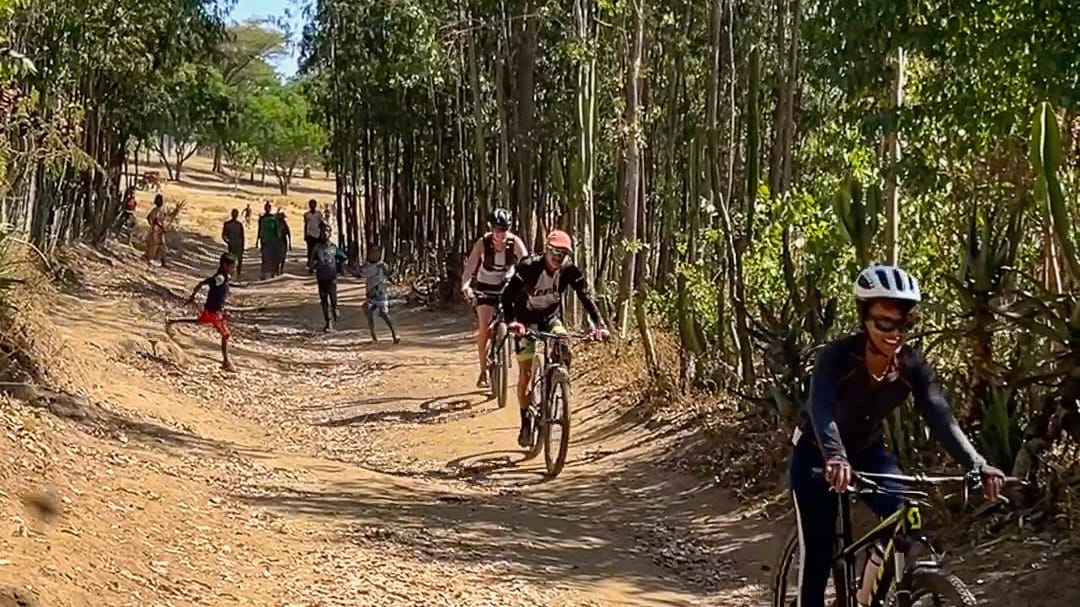
Riding on the West Sidama hills, near lake Hawassa (photo credit: Ride the Rift)
Should I avoid the busy trunk roads?
As mentioned, many of the bikepackers who have experienced hostility while cycling in Ethiopia have been travelling on the busy trunk roads. We find that sticking to the quieter back roads is better and you’re likely to have a much warmer welcome.
Do I need to be prepared to ride on mixed surfaces?
Yes, on an Ethiopian bike tour you can encounter anything from gravel trails and dirt roads to grassy tracks and rugged mountain paths.
So be ready for anything, including the odd bit of hike-a-bike as we wade through rivers or check out some of the steeper mountain passes on foot.
What should I pack for an Ethiopian cycling holiday?
Aside from the usual comfortable, breathable clothing for cycling every day, you’re going to have so many memories to capture, so I’d strongly suggest bring having something you can capture good photos with.
You don’t know what will be around the corner. It could be monkeys in the trees, or amazing scenery you want to remember forever. Keep your camera to hand so you can capture it all.
Take a look at our in-depth packing guide for more useful suggestions.
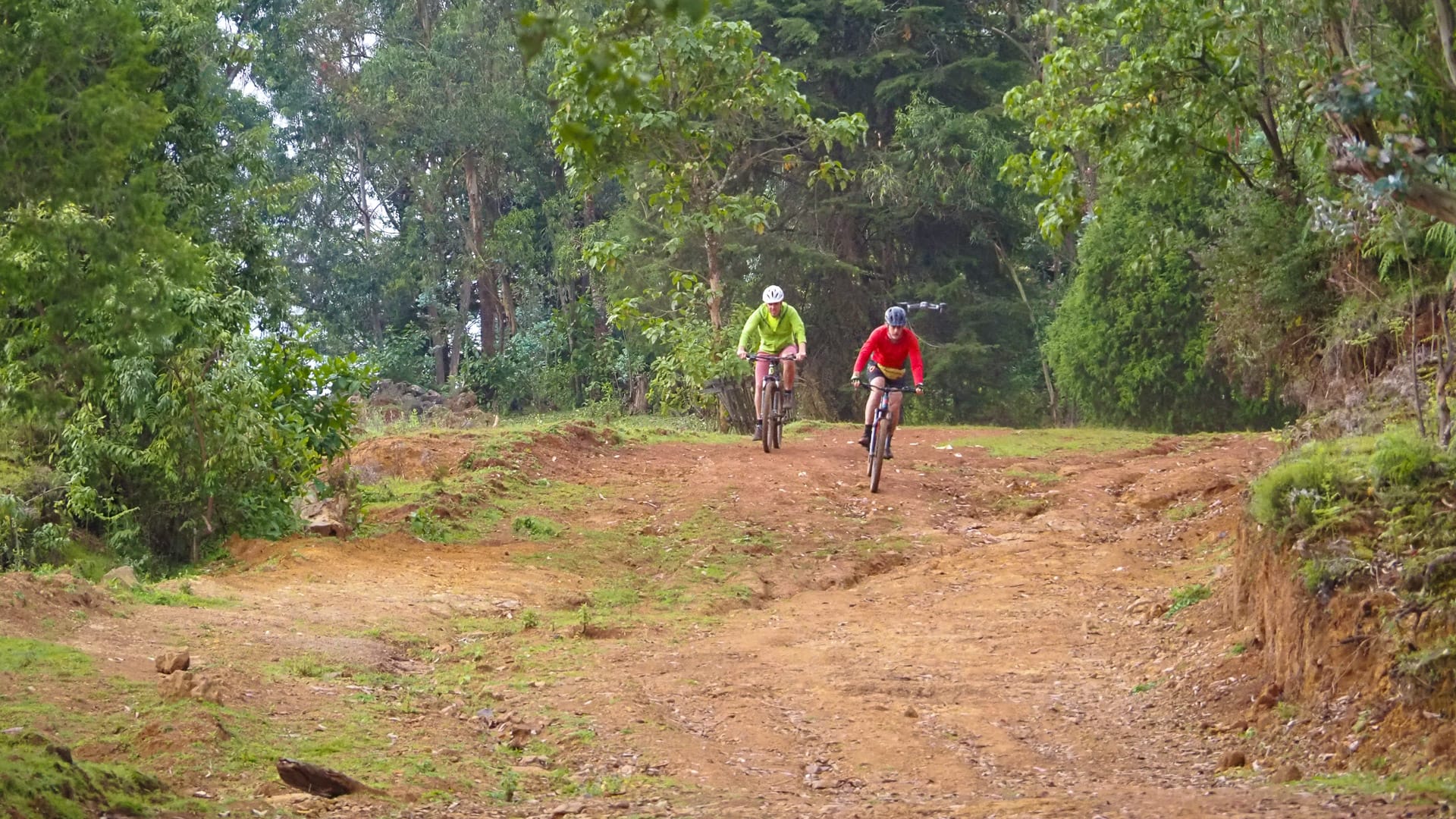
Descending through the rugged terrain of the Gamo Highlands (photo credit: Ride the Rift)
Part 5: What does Ride the Rift offer?
Ride the Rift was formed from a consortium of tour operators in Ethiopia in 2022. But between us, we have decades of experience helping travellers to experience the beauty of the country through cycling, running and hiking.
We love Ethiopia, and we will take you on a deep dive into this magical country. You will love the people and the culture, as well as the landscapes. As for cycling, anyone who guarantee anyone who loves to be out on a mountain bike will be thrilled, excited and challenged!
 There's a Youtube video here!
I'm fine with Youtube cookies
What’s included
- Accommodation
- Daily cycle routes and researched bike trails
- Guides – we typically run one guide for every six guests. For groups of more than six, we add a second guide. For exceptionally large groups, we may use three guides
- Meals and drinks – you might need to pay for a few beers or glasses of wine in town (we’ll cover a few!), but that will be it.
- Day-to-day transfers are included, from Addis to Addis. If this falls on your arrival or departure day, we can collect you from the airport. Otherwise, transfers are from your hotel
Top tip! We can also support you with your arrival in Addis, including airport pick up, recommending a good hotel and giving you a tour of the capital. Usually, we arrange a B&B so you can explore the different places to get dinner in the city.
Be aware! Ethiopia is at a high altitude, so it’s a good idea to arrive at least a day early. This gives you time for a full day and a good night’s sleep after what is often a night flight. We can also arrange a pre-trip bike ride on roads out of Addis Ababa. It’s a loop of around 22 kilometres and a great way to get used to your bike. This ride costs $20 per person, plus $10 for bike hire ($30 for an e-bike).
While you’re in Ethiopia, you can also add on a trip to the Danakil Depression and see the rock-hewn churches in the north.
Sustainable tourism at its core
We prioritise responsible tourism, and we aim to support the communities we visit through partnerships which enable sustainable improvements to local livelihood while protecting both the physical and cultural environments.
You can read more about our stance on responsible tourism here.
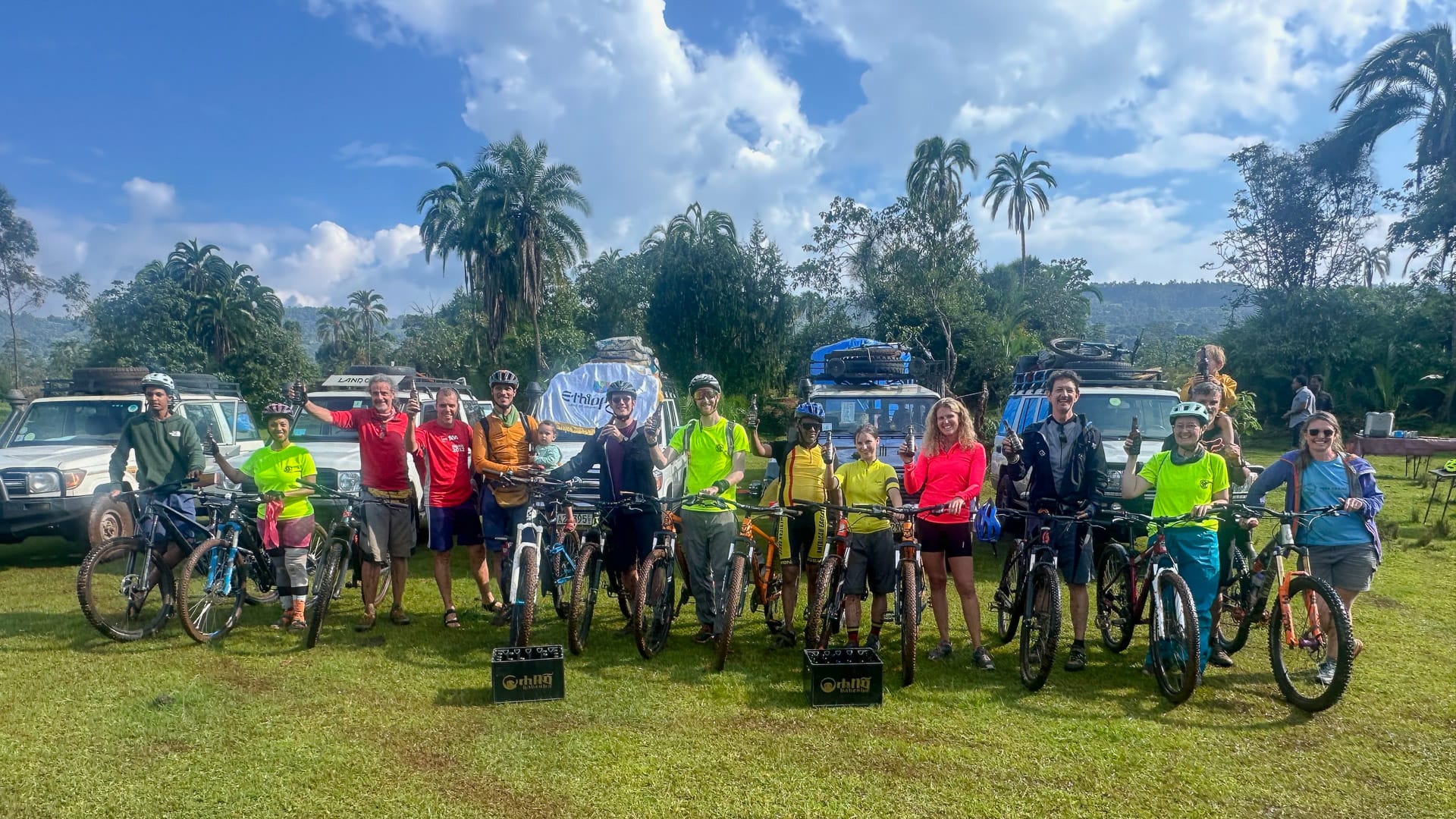
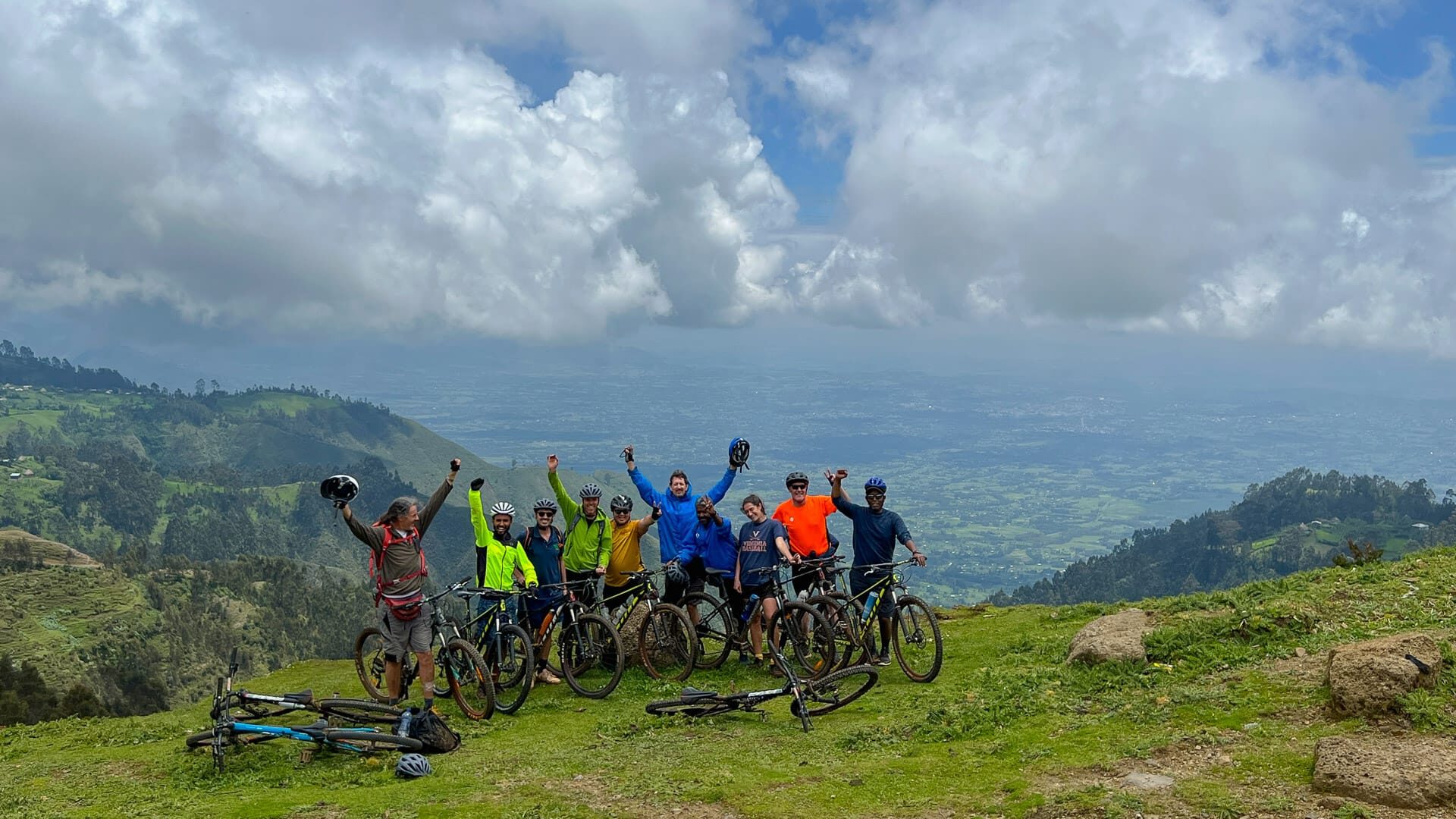
Riders and crew ready to roll in Ethiopia (photo credit: Ride the Rift)
Where can cyclists find out more about what Ride the Rift has to offer?
To find out more, you can visit our website, where you can check out some of our videos. You can also have a chat with Mark (in English), Marco (also speaks Italian & German), and Bogale (who can add Amharic to the mix). We can all be reached on WhatsApp, just send us a message to make sure we are not halfway down a mountain!
If it helps, here is who to contact for what. I am the native English speaker. Marco also speaks Italian and German. Marco and I are the most experienced with the biking in these locations. Bogale has the government and many in-country contacts.
What’s next?
A big thank you to Mark for sharing his insights on cycling in Ethiopia, it sounds like a fascinating country to explore! Have you cycled in Ethiopia, or are you considering it? Comment below to tell us about your experience or ask any questions.
Looking for more inspiration? Don’t miss:
- Guide to cycling in Namibia, for more inspiring cycling in Africa.
- Guide to cycling in South Africa, for more bike tours in South Africa.
- Bucket list bike rides, for an epic cycling across Africa adventure.
- Best destinations for cycling safaris, for more African cycling, if wildlife spotting is your thing.
- Best bike tours in Africa, for other must places to cycle in Africa.
Got a question for Ride the Rift?
Fill out this form and we will pass it to Ride the Rift who aim to reply (within 24 hours wherever they can!)
Got a question for Mark?
Fill out this form and we will send it to Mark. We aim to get you an answer within 24 hours where possible!Mark Chapman is the founder of Tesfa Tours and a spokesperson for Ride the Rift, with more than three decades of on-the-ground experience in Ethiopia. He first arrived in 1992 as a backpacker and never really shook the feeling that this was a country worth coming back to.
He returned in 1997 and went on to set up a charity helping rural communities create simple guesthouses in remote areas, linked by walking trails designed to share the benefits of tourism more widely. That work later evolved into Tesfa Tours, which Mark founded in 2010 to keep building and championing community-based travel in Ethiopia.
In 2018, a recce in the Simien Mountains sparked his shift from road riding in Europe to off-road cycling in Ethiopia, drawn by the freedom of dirt roads, the absence of traffic and the sheer depth of the countryside. Since 2020, alongside the Ride the Rift team, he’s spent years exploring lesser-known regions, scouting rewarding routes through dramatic landscapes and culturally rich villages.
Mark is based in Addis Ababa with his two children and loves escaping the city whenever he can, usually with a bike, a plan, and a curiosity for what’s around the next bend!
First Published: 29 January 2026
The contents of this website are provided for general information purposes only. It is not intended to amount to advice and you should not rely on it. You should carry out your own due diligence and risk assessments and take professional advice. Views expressed by interviewees or other users of this website do not necessarily represent our views. We make no representations, warranties or guarantees, whether express or implied, that the content on our website is accurate, complete or up to date. If you use any information or content on this website, download from, or otherwise obtain content or services through our website, it is entirely at your own discretion and risk. Epic Road Rides Ltd disclaims all liability and responsibility arising from any reliance placed on the information and content on this website. Find out more here.
Sponsor Message
Considering cycling in Ethiopia?
Ride the Rift offer a number of Ethiopian cycling holidays enabling you to experience this extraordinary destination by bike.
Head to their website to find out more, including dates and prices.
Got a question for Mark Chapman from Ride the Rift?
Fill out this form and we will pass it to Ride the Rift who aim to reply (within 24 hours wherever they can!)
Comments