

Cycling endurance training is a rewarding challenge. Long days in the saddle, shifting conditions and big, ambitious goals all combine to make it a uniquely demanding discipline, and one that’s incredibly satisfying when it all comes together. Incorporating concepts like heart rate, Zone 2, and endurance training early in your approach can help you understand how your body responds as the kilometres accumulate.
Across long hours on the bike, you learn how your body and mind respond to fatigue, weather and terrain. Developing strong aerobic endurance and paying attention to training zones such, from easy base efforts to sweet spot intensities, can help improve how you manage those long stretches of road.
Community Contributor for Epic Road Rides and ultra cyclist Geneviève Healey rides close to 10,000 kilometres every year. She’s pushed her limits at BikingMan Corsica, Race Across Québec and on countless solo missions, using each effort as a chance to experiment, adapt and learn. Next up, in 2026, she’s taking on Bright Midnight, a 1,100-kilometre self-supported mixed-terrain bikepacking challenge in Norway.
Read on to discover the training principles Geneviève relies on for ultra cycling, and how you can use them to shape your own preparation for long-distance events.
Like the idea of endurance cycling but not sure what to expect? Don’t miss Geneviève’s in-depth guide to ultra cycling for beginners.

Geneviève is a passionate cyclist from Québec City, Eastern Canada.
She loves to travel by bike and thrives on long hours in the saddle, having participated in several ultra cycling events around the world, including in Canada, Portugal and France. Most recently she completed the BikingMan Corsica race and has also taken part in Race Across Québec, a 500 kilometre road cycling event that was held in the Laurentian's, just north of Montreal.
Alongside regularly found riding around Québec City, Geneviève contributes to Vélo Mag and Nature-Humaine. She also runs a personal blog, PinteuseBlogueuse, which highlights cycling routes that connect local microbreweries and artisanal food shops!
1. Why is training for ultra cycling important?
Ultra cycling means covering very long distances over many hours and sometimes many days. Yes, the mental side is crucial, but you still need a solid physical training plan if you want your body to hold up when things stretch out. That’s why building a foundation through endurance training for cycling or even targeted interval training becomes essential.
Finding a dedicated coach who really understands the ultra cycling world isn’t something you see every day, but it can be a valuable way to get started. It’s a first step towards longer distances and towards understanding what your body actually needs, no matter if you’re following a simple routine or a more organised ultra cycling training plan.
Training also means testing your gear and learning exactly where your limits are. And because those limits are deeply personal, no one can do that part for you. Of course, reading up on others’ experiences (as you’re doing now) can give you a good foundation. From there, you can shape a cycling endurance training approach that genuinely fits you, as you are testing what works for you.
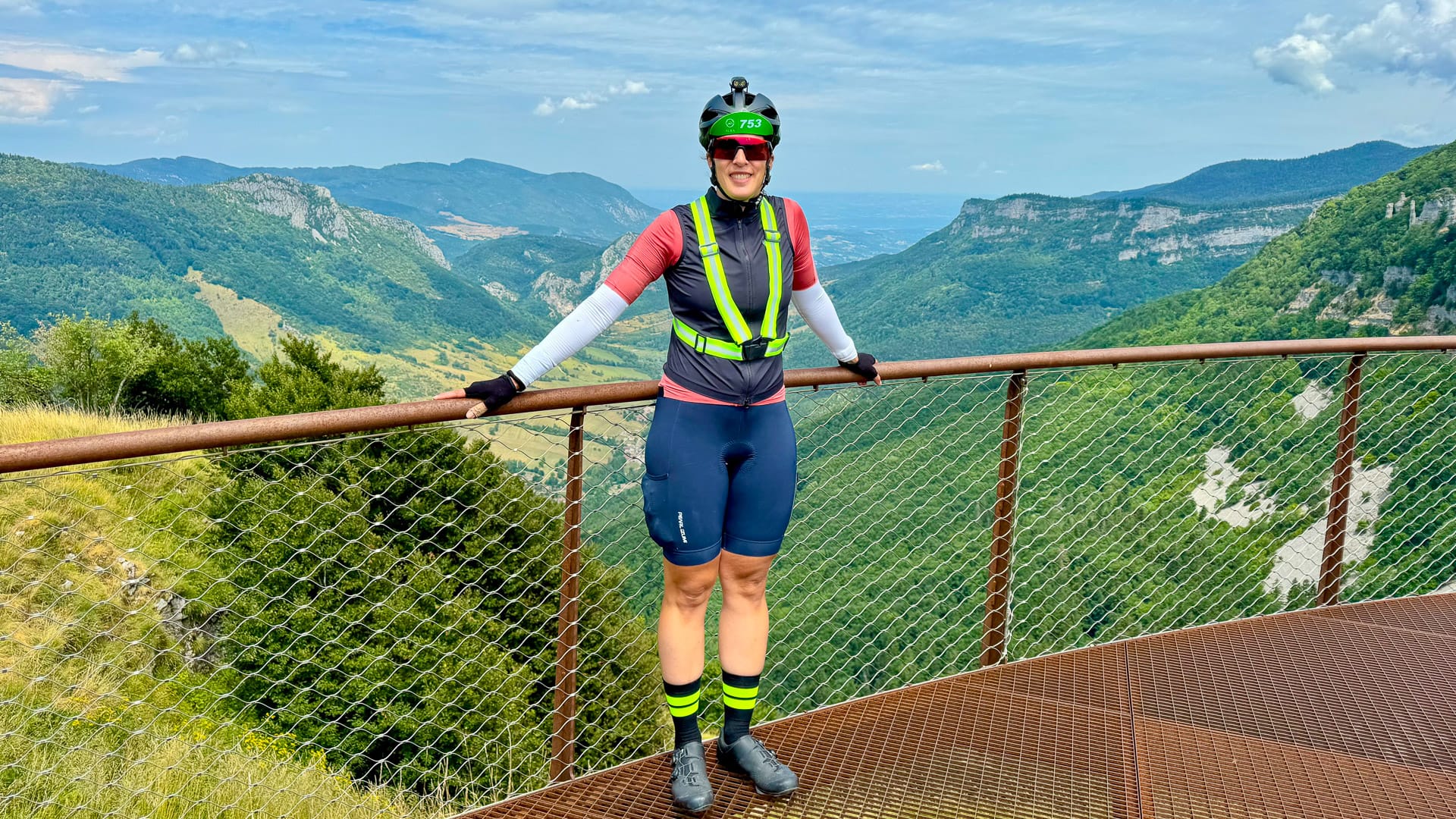
2. What are the core demands of ultra cycling?
Mindset is a huge part of ultra cycling, but expecting yourself to stay cheerful the whole time would be a mistake. Tough moments are inevitable; weather turns, fatigue creeps in, motivation drops, and the goal isn’t to avoid them but to be ready for them.
It may sound cliché, but the idea is to welcome those hard times. They always pass. What really helps when your mood tanks is the ability to shift your focus. Rumination is your worst enemy. Naming what you’re feeling, on the other hand, keeps you from getting stuck in that unproductive spiral.
Learning to recognise your own threshold heart rate or how your body handles efforts near lactate threshold can also help you predict dips in energy and mood. That’s why riding in every possible context: bad weather, good weather, early mornings, late nights, fresh legs, tired legs, is so valuable. It exposes you to the full spectrum of situations you’ll meet in an ultra. It trains your mind to stay in “solution mode” and makes it easier to redirect your focus when things get rough. This mental aspect is just as important as long rides, aerobic base building, or structured endurance training cycling workouts.
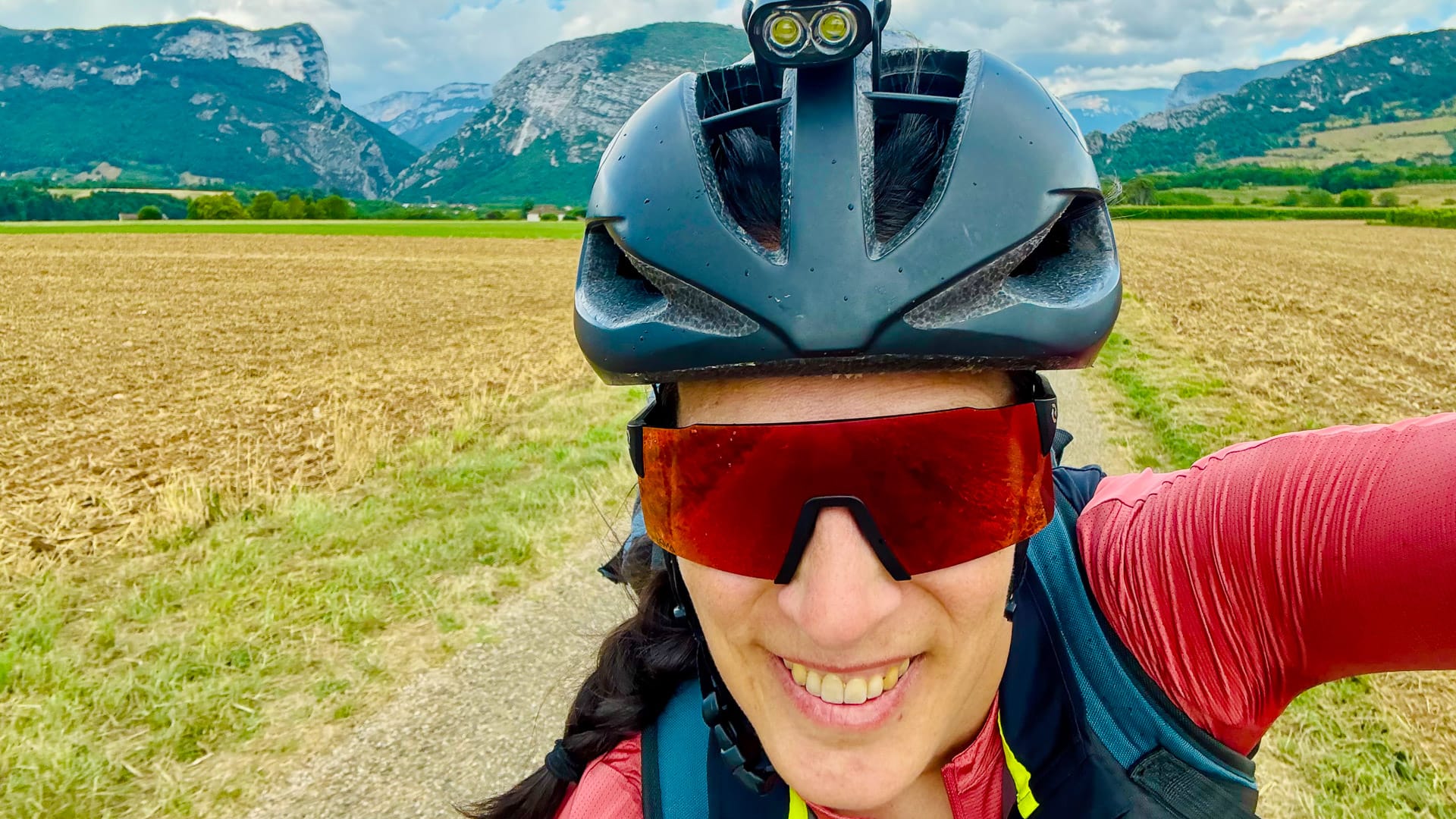
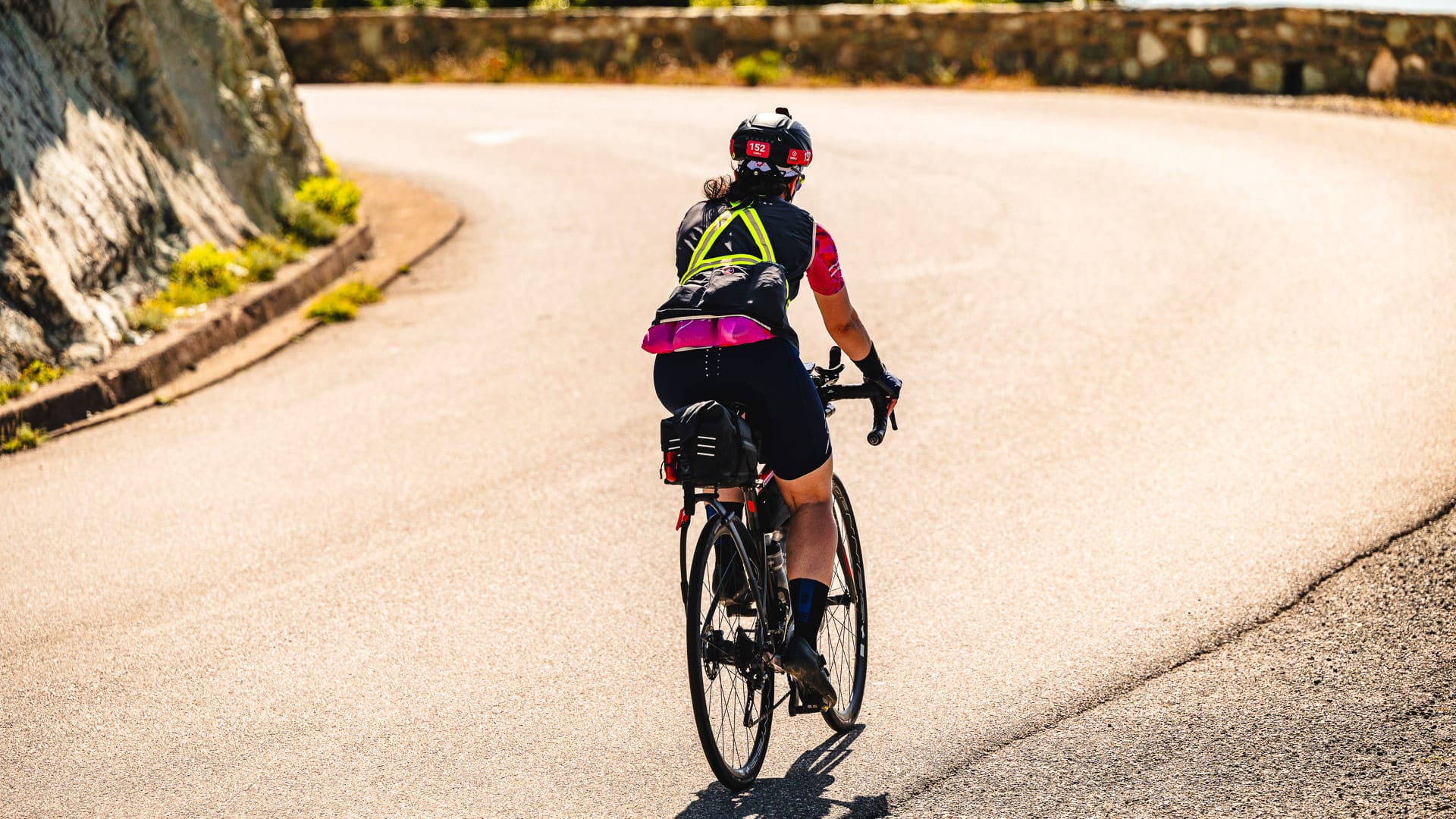
Cycling near Gorges de la Bourne (photo credit: Geneviève Healey)
3. What should the best cycling endurance training plan include when preparing for ultra cycling events?
Goal setting
Your goals should progress through the season and from year to year. They need to be tough enough to stretch you, but not so ambitious that you’re walking into something impossible.
Choose objectives that challenge you and match what you can realistically develop with consistent training, whether that includes threshold work, sessions to build aerobic threshold, or improving your VO2 intervals capacity. This applies even if you’re only loosely training or following a more specific endurance cycling training plan.
It’s normal to feel a bit scared on the start line, but you should also feel confident you’ve got what it takes to reach the finish. Personally, I’m usually terrified and thrilled in equal measure. But once the race starts, the terrified part fades quickly.
Customising plans per event
It helps a lot to train in the same context as your event will take place.
For example, if you’re signed up for a gravel race, spend a good chunk of your training on gravel. A road event won’t require the same preparation, and a multi-day race demands something altogether different from a 24-hour effort.
Matching your training to the event’s terrain and rhythm makes a huge difference. This approach is exactly what many riders would consider a practical cycling endurance training program, especially those incorporating training zones, Zone 2 ( staying at 60-70% of your maximum heart rate) or even high-intensity interval training at the right moments.
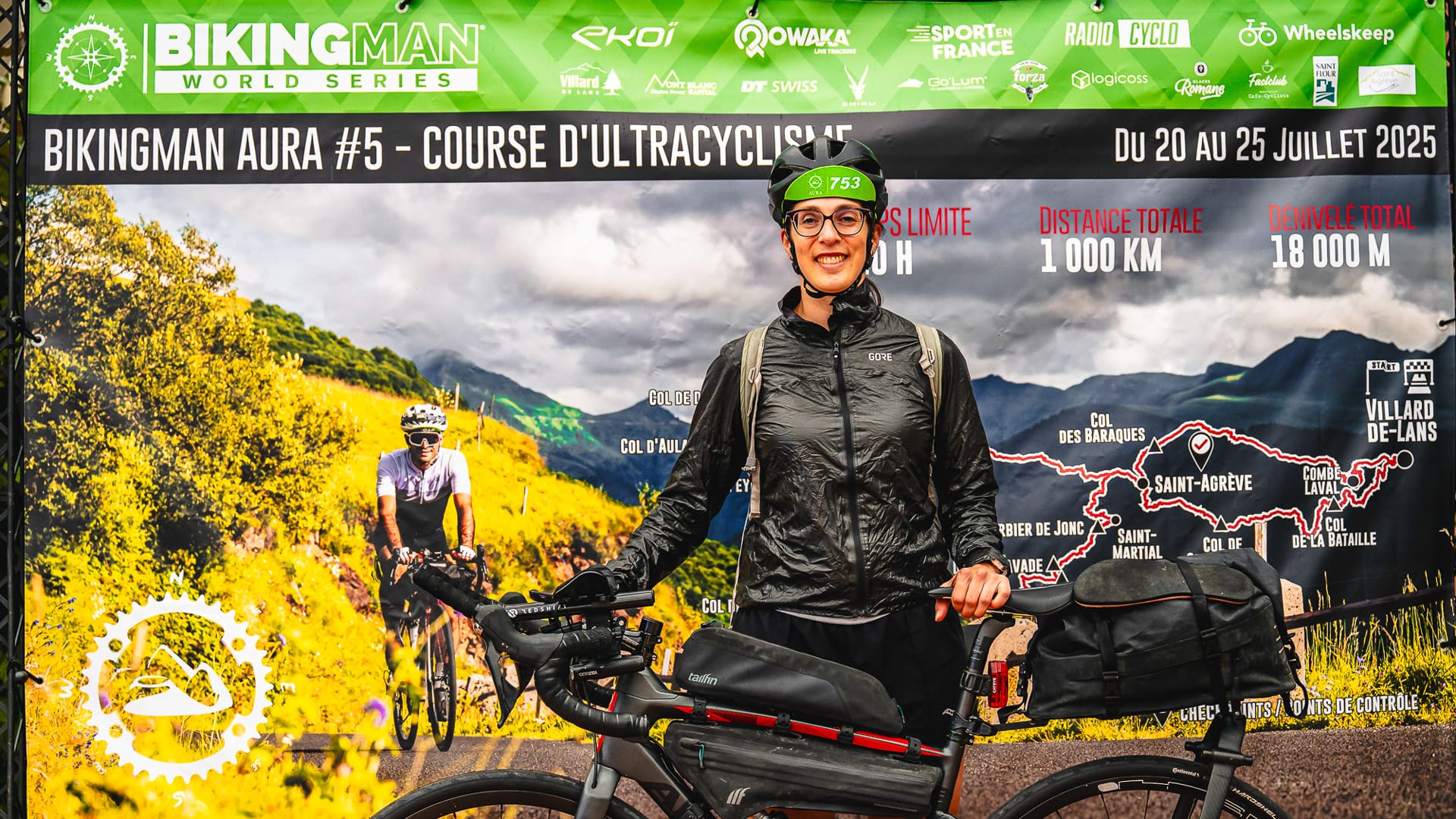
Bike and gear check-in at BikingMan AURA (photo credit: David St Yves)
Mindset training
Your mental strength matters just as much as your physical conditioning. Seek out conditions that push you a bit (weather, fatigue, odd hours), so you build a mindset that can adapt instead of shutting down when things get uncomfortable. This is often overlooked but an essential part of endurance cycling training.
Adding structured Sweet Spot training (workouts typically performed around 89 to 93% of your Functional Threshold Power (FTP)), or even sessions that target aerobic adaptations, can help make those tough moments more manageable as your freedom to pace increases.
Training with the gear you will use during the event
This part is essential. Use your race setup during training: bags, lights, clothing, fuelling system, even your sleep kit if you’ll need one. The more you train exactly as you’ll race, the fewer surprises you’ll have out there. This habit is a core element of any effective ultra-endurance cycling training plan. Many riders track these sessions by monitoring heart rate, power output, or endurance time to understand how their setup affects performance.
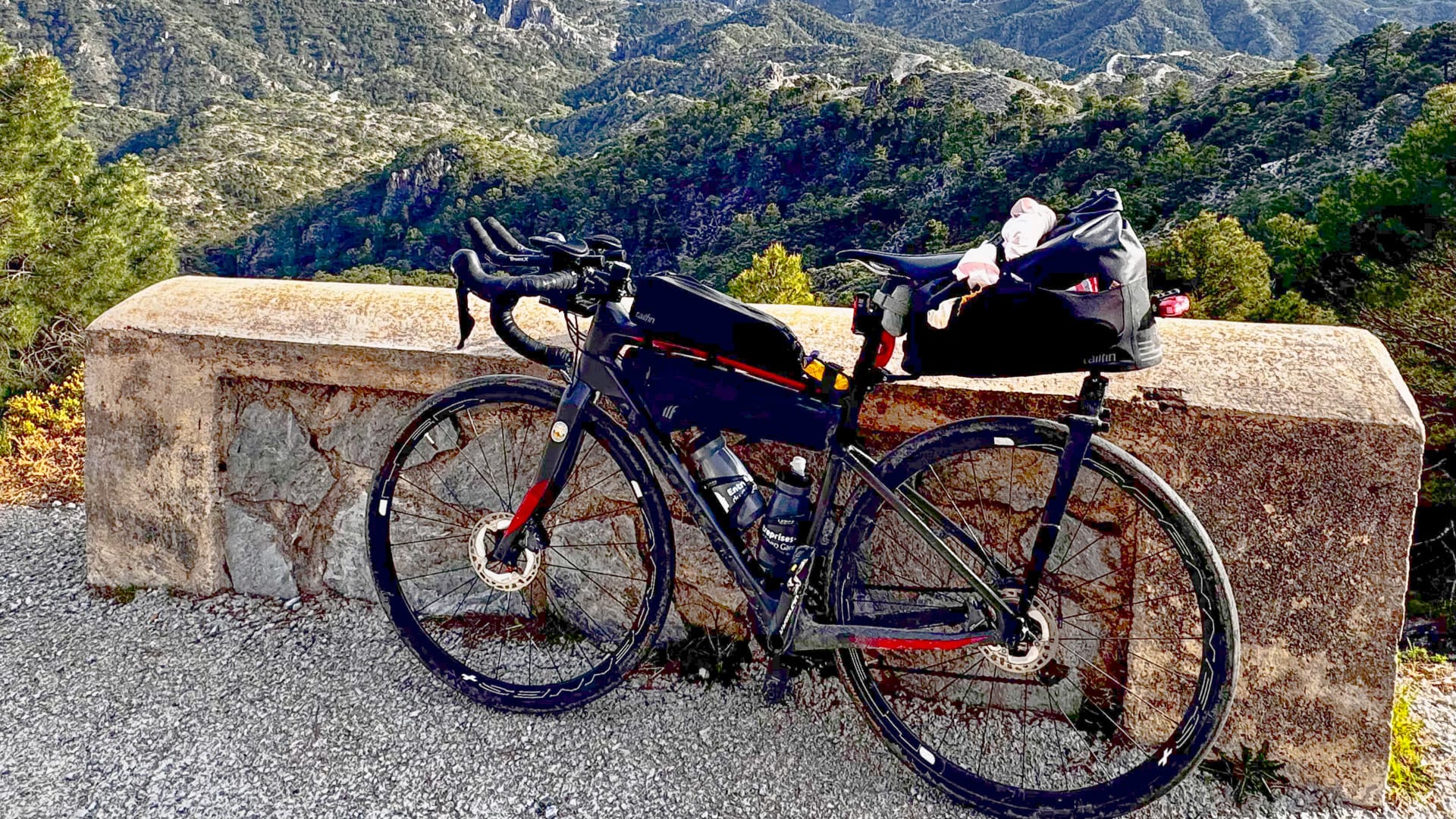
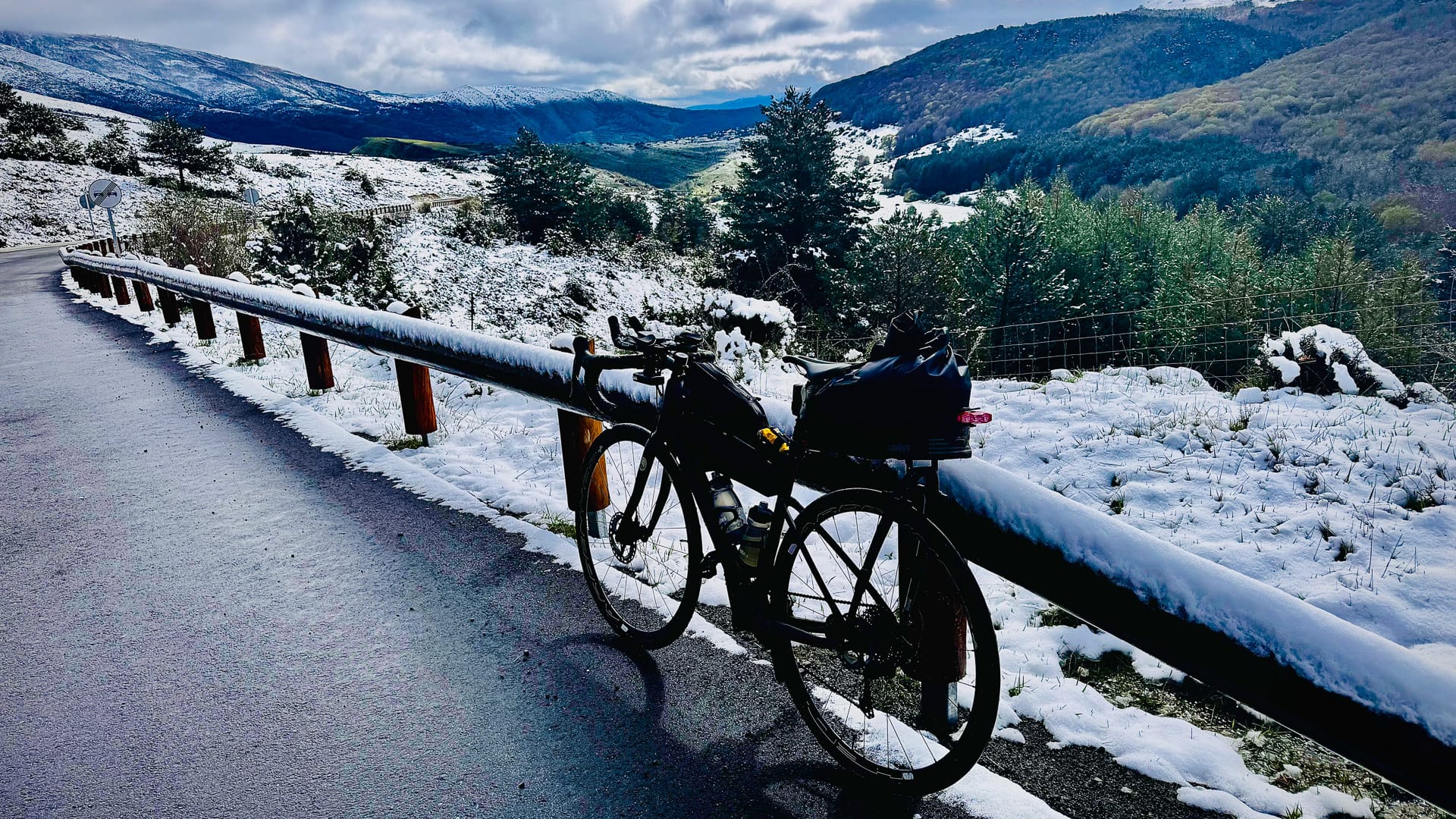
Fully loaded ultra cycling bike resting by a stone wall overlooking the valley in Otivar, Spain (photo credit: Geneviève Healey)
Off-bike strength exercises, mobility and recovery
Never skip upper-body strength work. Your back and neck take a beating during long days on the bike, and reinforcing them a few months before the event pays off massively.
Add mobility work, such as yoga, and a structured recovery routine; they’re not optional if you want to stay functional deep into an ultra.
Many riders incorporate strength endurance training cycling sessions into their plans to better handle long climbs and reduce late-race fatigue. I try to do two to three short strength sessions a week.
In addition to these sessions, some athletes also include heavy strength training, workouts that support neuromuscular efficiency, or even resistance training to handle fatigue late in the race.
4. Why is nutrition and hydration important in ultra cycling training?
Ultra cycling is obviously physical, but it’s equally a mental challenge. Nutrition plays a major role in both.
Because the effort stretches over many hours (or days), you need more than just a steady stream of carbs. Carbohydrates are essential, of course, but you also need to think about managing both the short-term effort and the long haul. That’s where adding some protein becomes important: it supports longer efforts and helps keep you stable over time. You also need to think about your glycogen stores, managing both short-term and long-term effort, and even understanding how enzyme production affects your ability to process energy over time.
The mental side also ties closely to what and how you eat. When motivation drops, and it will, food often helps break the negative spiral. When your mindset turns dark, that’s usually the moment to pause, take a breath, and eat something real. Eat what you’re actually craving. A proper meal can reset your head almost instantly. For me, it’s genuinely my “reset button.” I often feel (almost) fresh again afterwards. But everyone has their own version of this.
If you know you struggle with eating during long distances, or if you’ve experienced nausea or calorie deficits in past events, it might be worth speaking with a nutritionist. Being able to fuel properly during an ultra isn’t optional; it’s something you should train and prepare for using clear nutrition strategies just as seriously as everything else. This aspect is another core part of a well-rounded endurance cycling training programme.
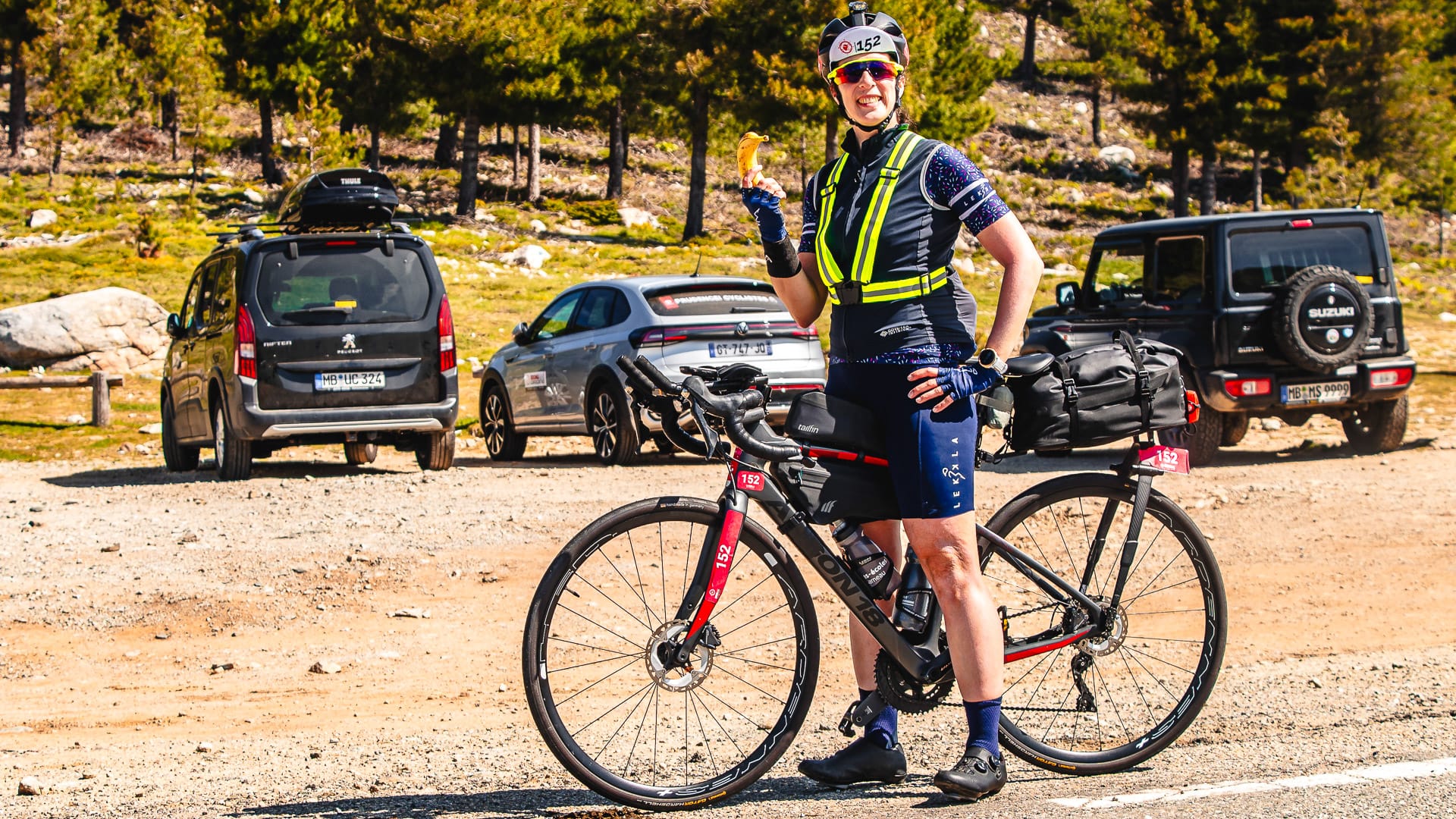
Snacking on the top of Vergio pass (photo credit: David St Yves)
5. Do you need a training coach?
This is a very personal topic. In my case, because I used to train with a long-distance running club, I tend to carry over what I learned from running and apply it to cycling. It’s probably not as specific as it could be, but it works for me. What I really want to underline is this: just because I haven’t needed a coach doesn’t mean others won’t. Ultra cycling is still a relatively young discipline, and coaches don’t exactly grow on trees.
If you’re brand new to endurance sports, whether running or cycling, some guidance from someone well-known in the ultra cycling world can be extremely helpful. It gives you structure, confidence, and a clearer sense of how to train cycling endurance without overdoing it.
6. How should you adjust your cycling endurance training if you experience fatigue or injury during your preparation for an event?
Flexibility is a big part of ultra cycling. We talk a lot about goals, segmentation, structure and planning, but the truth is that you always need space to adjust. You need a plan, yes, but you also need backup plans. That way, if you have to shift something during training (or during the event), it doesn’t crush your morale.
The same applies when you hit fatigue or injury during your training. If your schedule is too busy, for example, focus on what you can control: keep the key sessions, prioritise the longer rides, and make rest and recovery non-negotiable. Quality over quantity becomes the rule in any endurance training program for cycling.
If it’s an injury and you can’t ride for a while, shift your focus to the mental side. Work on everything you can do instead of fighting what you can’t. Staying engaged mentally, without forcing your body, keeps you in the game without making things worse.
Above all, don’t be afraid to adapt. Flexibility is what keeps your goals achievable… and keeps you from adding an extra injury on top of the first one.

Walking a steep cobble road during BikingMan Portugal (photo credit: David St Yves)
7. How else can you enhance your training plan?
Dot watching
One great way to learn is to watch ultras unfold in real time.
Dot-watching is incredibly useful: follow as many events as you can through their live-tracking apps. You’ll get a feel for what’s really happening out there: how long riders stop, how quickly things can change, and how unpredictable an ultra can be. It gives you an insider’s view of what successful athletes do in their own training for ultra-endurance cycling, without having to be on the bike yourself, and it’s one of the best ways to build instinct and understanding long before you’re on the start line.
Social media
Another great way to learn more about ultra cycling and stay connected to what’s happening in the community is to follow events and riders on social media.
Instagram and Facebook are full of updates, insights, race reports, and behind-the-scenes moments. It’s an easy way to understand how different athletes prepare, what gear they use, and how they handle the highs and lows of long-distance events.
Books
- Endurance: How to Cycle Further, from Mark Beaumont
- Ultra-Distance Cycling: An Expert Guide to Endurance Cycling, from Simon Jobson and Dominic Irvine
- Le monde à vélo, from Axel Carion
- Ultra Cycling & Bikepacking: All you need to know!, from Stephen Barth
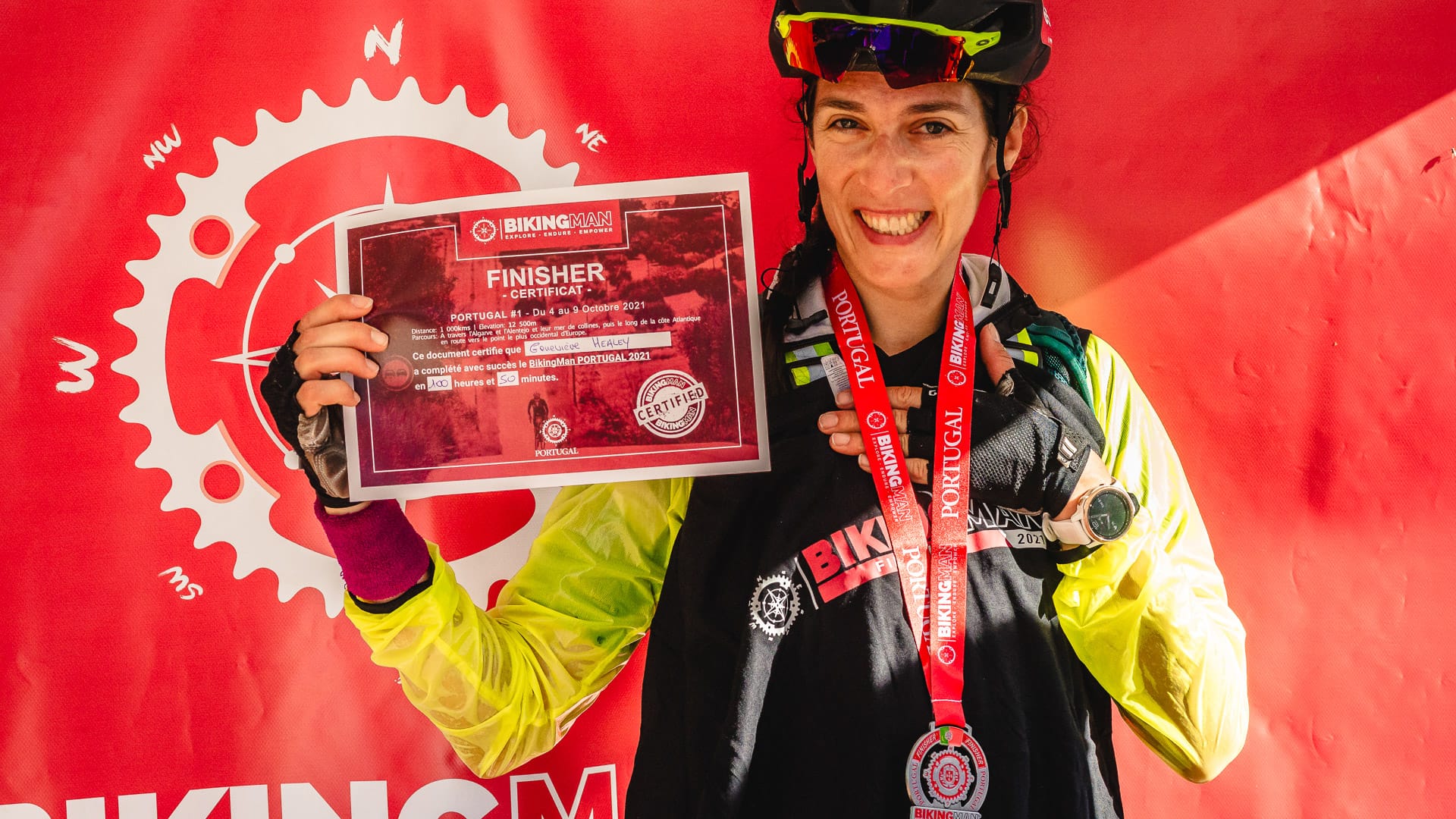
Holding a finisher certificate at the BikingMan Portugal finish line (photo credit: David St Yves)
8. What are your top tips for anyone training for an ultra cycling event?
Bad moments never last; let them come
You’ll hit rough patches, no matter how well you’ve trained. This is true in any training for ultra cycling. Instead of fighting them, accept them. They always pass, and wasting energy resisting them only makes things worse.
One stroke at a time
Break everything into small, manageable pieces. Segments, climbs, hours… whatever works. The old saying is true: you eat the elephant one bite at a time. Thinking too far ahead is the quickest way to overwhelm yourself.
Don’t stop for too long
Efficient stops are one of the biggest keys to progress. Rest when you need to, but keep a clear focus on your daily goal. Long pauses make it harder to get moving again, and they add up faster than you think.
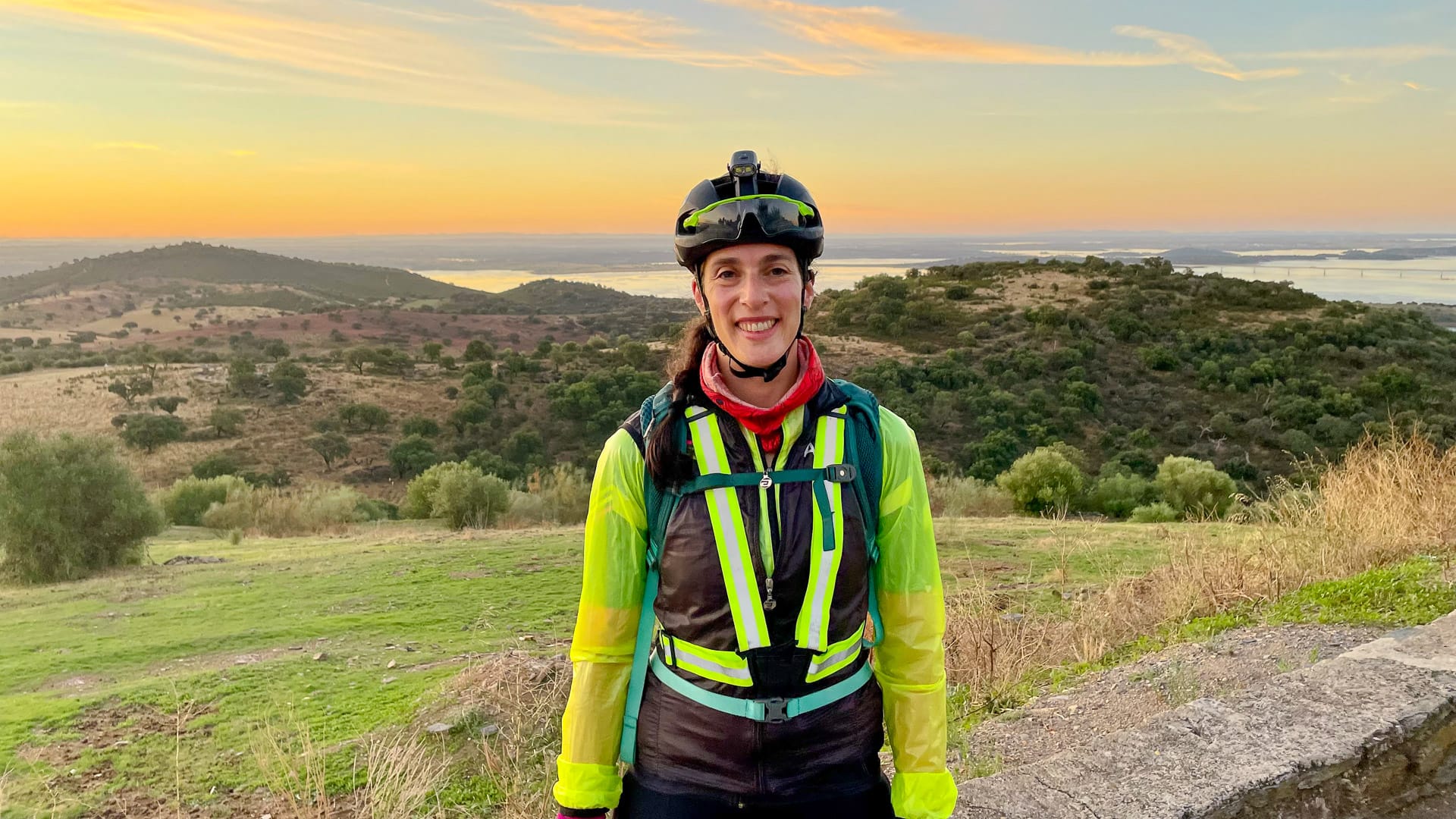
Sunrise in Evora (photo credit: Geneviève Healey)
What’s next?
A huge thanks to Geneviève for sharing her experience and the practical insights that shape her approach to cycling endurance training.
We hope this guide helps you feel more confident about preparing for your next ultra challenge.
Are you considering your first ultra-endurance event? Or perhaps you’ve already completed one and have your own lessons to share? We’d love to hear from you. Let us know in the comments below.
Looking for more long-distance cycling inspiration? Don’t miss:
- How to get into ultra cycling
- Training for long distance cycling: training plans, tips + more
- Altitude training for cyclists: what, why + how?
- How to prepare for long distance cycling: tips, training, what to eat + more
- What to eat (and drink) when cycling long distances
- 6 best snacks for cyclists (for before, during + after your ride)
- How to choose cycling coaching (including online cycle coaching + cycling camps)
- Cycling Power Meters: what you need to know before you buy
Please support Epic Road Rides
A huge amount of time and effort goes into the article you’ve just read, all with the aim of helping you!
If you found what you’ve read useful, I’d really appreciate it if you dropped something in the tip jar here.
It’s a way you can say thank you and help us carry on creating top quality content with no annoying ads and no pay wall.
Got a question for Geneviève?
Fill out this form and we will send it to Geneviève. We aim to get you an answer within 24 hours where possible!Geneviève is a passionate cyclist from Québec City, Eastern Canada.
She loves to travel by bike and thrives on long hours in the saddle, having participated in several ultra cycling events around the world, including in Canada, Portugal and France. Most recently she completed the BikingMan Corsica race and has also taken part in Race Across Québec, a 500 kilometre road cycling event that was held in the Laurentian's, just north of Montreal.
Alongside regularly found riding around Québec City, Geneviève contributes to Vélo Mag and Nature-Humaine. She also runs a personal blog, PinteuseBlogueuse, which highlights cycling routes that connect local microbreweries and artisanal food shops!
First Published: 20 January 2026
The contents of this website are provided for general information purposes only. It is not intended to amount to advice and you should not rely on it. You should carry out your own due diligence and risk assessments and take professional advice. Views expressed by interviewees or other users of this website do not necessarily represent our views. We make no representations, warranties or guarantees, whether express or implied, that the content on our website is accurate, complete or up to date. If you use any information or content on this website, download from, or otherwise obtain content or services through our website, it is entirely at your own discretion and risk. Epic Road Rides Ltd disclaims all liability and responsibility arising from any reliance placed on the information and content on this website. Find out more here.
Comments