
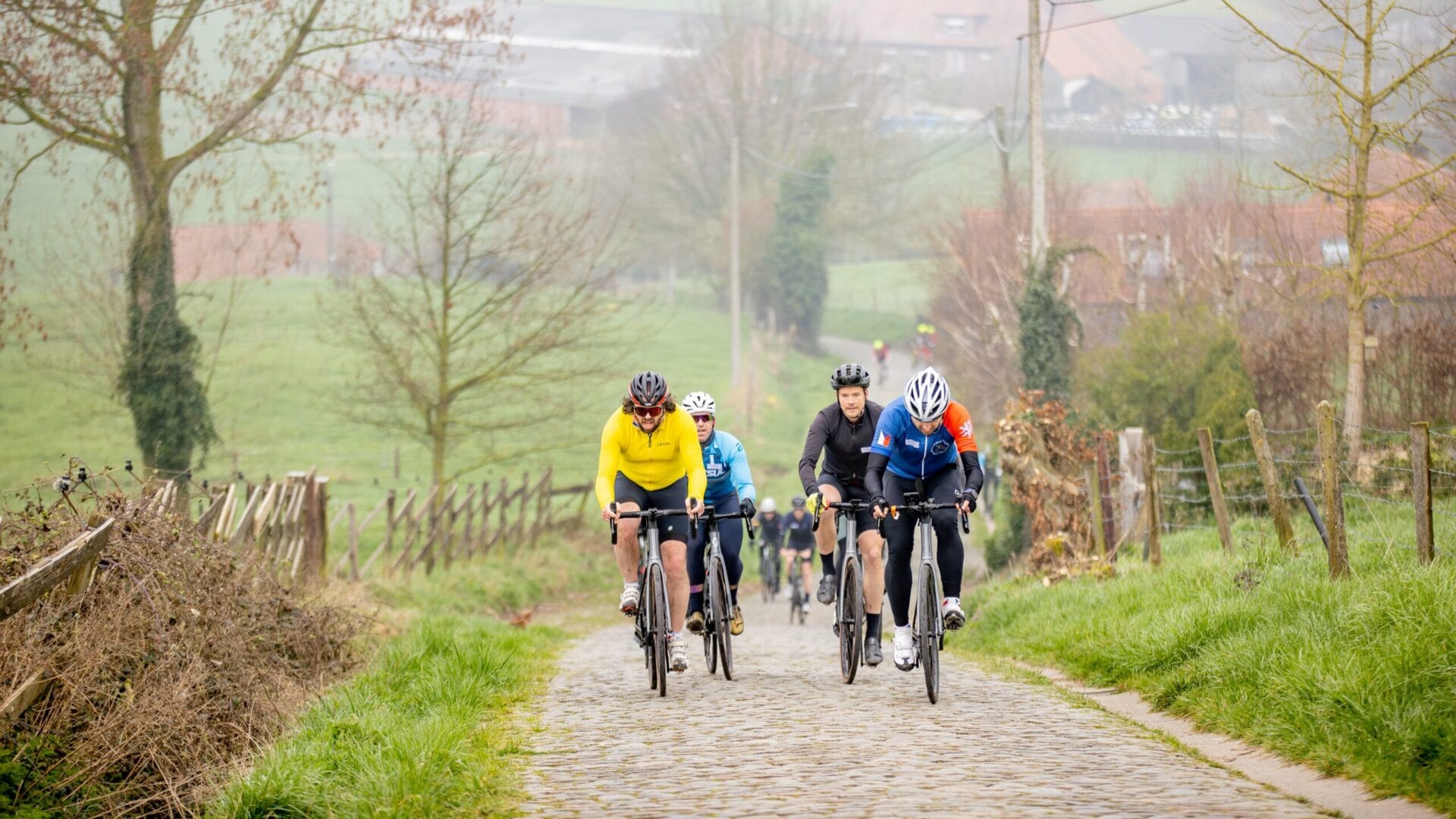
Cycling in Flanders is tough. Or is it?
Belgium is a country defined by bikes and cycling culture. Many Belgians live and breathe cycling – both the professional races and as a part of day-to-day life.
If you’re a bike racing fan, you’ll know it best for Spring Classics like De Ronde Van Vlaanderen – The Tour of Flanders. Punchy cobbled climbs, exposed crosswind sections, tight and twisting farm tracks with hundreds of riders strung out in a line desperately fighting for every corner.
But, there’s another side to cycling in Flanders that isn’t all about suffering. Beautiful car free canal paths, robust cycling infrastructure everywhere you look, and a host of mystical Medieval cities crammed with quaint cafes, bustling bars, and a rich culture waiting to be explored by bike.
If it’s the famous Belgian bergs you’re after, then the small town of Oudenaarde (pronounced Ow-den-arder) tops our list of places to stay. Positioned around 30 kilometres south of Ghent, it’s the gateway to the Flemish Ardennes, and is the perfect base for any rider looking to pay homage to their Flandrien heroes.
This guide focuses predominantly on cycling from Oudenaarde in the heart of Flanders.
Want to go on a Spring Classics cycling tour? Read this. Looking for tips on how to plan a Belgium cycling holiday? Read this.
John Vicars divides his time between England and Spain and, together with his wife, clocks in around 10,000 miles each year searching out Europe's finest roads. John loves to share his experiences (good and bad) from the saddle and has a particular loathing for double digit gradients, sub-zero temperatures and red traffic lights!
Ollie Smith has been riding bikes his whole life. Aside from racing on the road, gravel, and cyclocross circuit across the UK and Europe, Ollie has tried his hand at ultra racing and plenty of long distance bikepacking trips.
Ollie’s passion for cycling extends to his working life, too, carving a career as a cycling writer, journalist, and film maker - as well as co-producing Mitch Docker’s ‘Life In The Peloton’ podcast. When he’s not in the saddle, you can probably find him thinking about bikes, cycling, and his next two wheeled adventure.
 There's a Youtube video here!
I'm fine with Youtube cookies
Always check current travel information and advice. For visitors from the UK, the UK government travel information pages are here.
Table of contents
This guide contains a lot of useful information. To help make it more digestible, we’ve broken it down into several parts:
- Part 1: Overview
- Part 2: Cycle routes
- Part 3: Where to stay
- Part 4: Bike hire
- Part 5: When to visit
- Part 6: Tips
Part 1: Have you ridden the Flanders cobbles?
Cobbled roads are what define Belgian racing. Each spring, we see professional riders rattling across old farm tracks on their road bikes. The cobbled lanes and climbs in this region are where Flemish bike races are won or lost. To experience the ultimate challenge in this sport, you need to have ridden these cobbles.
The locals refer to these cobbled climbs as Hellingen. The first four letters of that word are an apt description.
Where is Flanders?
It’s worth knowing that Belgium is split into two regions. In the north is Flanders (where they speak Flemish). In the south is Wallonia (where they speak French). It’s also worth noting that the Belgian capital of Brussels, despite being within the boundary of Flanders, is its own ‘Brussels-Capital Region’ and is predominantly French speaking.
Though “Belgian cycling” and “Flanders” go hand in hand, there’s also excellent riding and a huge amount of race history in the Belgian Ardennes, within the Wallonia region (but we’ll save that for another guide!).
To confuse things further, Flanders is then subdivided into 5 provinces: West Flanders (West-Vlaanderen), East Flanders (Oost-Vlaanderen), Antwerp (Antwerpen), Flemish-Brabant (Vlaams-Brabant), and Limburg.
To make a rather large generalisation, in cycling parlance when people refer to Flanders, they are typically talking about West-Vlaanderen and Oost-Vlanderen, which stretches from the North Sea to near the city of Antwerp. This area encompasses the vast majority of cobbled climbs you know and love, historic cities like Brugge, Ghent, and Ypres, and represents some of the best bike riding in Europe. It’s also where you’ll find the town of Oudenaarde, which is a great place to stay for any cyclist on a pilgrimage to discover more about the historic Flandrien Cobbles.
What’s cycling in Flanders like?
As you arrive in Flanders you realise that you have arrived somewhere special. This is the land of the Spring Classics, Wout van Aert, Eddy Merckx, Lotte Kopecky, and Tom Boonen. If you think of a famous Belgian cyclist, there’s a good chance they were born here (apart from Philippe Gilbert who, despite winning both Flanders & Roubaix, is Walloon) The iconic yellow flag bearing the Lion of Flanders is omnipresent in a region proud of its heritage and its cycling.
At the centre of East and West Flanders is the city of Oudenaarde (pronounced Ow-den-arder). Base yourself here, and you’re perfectly located to access the cobbled climbs and narrow lanes that have been made famous by the Spring Classics.
Since 2012, Oudenaarde has played host to the finish of The Tour of Flanders, and is home to the world renowned Centrum Ronde Van Vlaanderen – the Tour of Flanders Museum – where you can learn about the history of the race, ogle over race winning bikes (in some cases still caked in Belgian dirt), or enjoy a beer at their bar. They also run the Flandrien Challenge; a series of routes to complete within 72 hours that cover every single berg and cobbled road in Flanders. Complete the challenge, return to the CRVV with your Strava files as evidence, and you get your name engraved on a small cobblestone on their Wall of Fame – forever a Flandrien.
Flanders is very well connected by a vast network of bike lanes and canal paths, so it’s easy to get around by bike wherever you choose to stay. However, if you plan on focussing your trip on the bergs of Flanders, Oudenaarde is right on their doorstep, so they’re easily accessible from here.
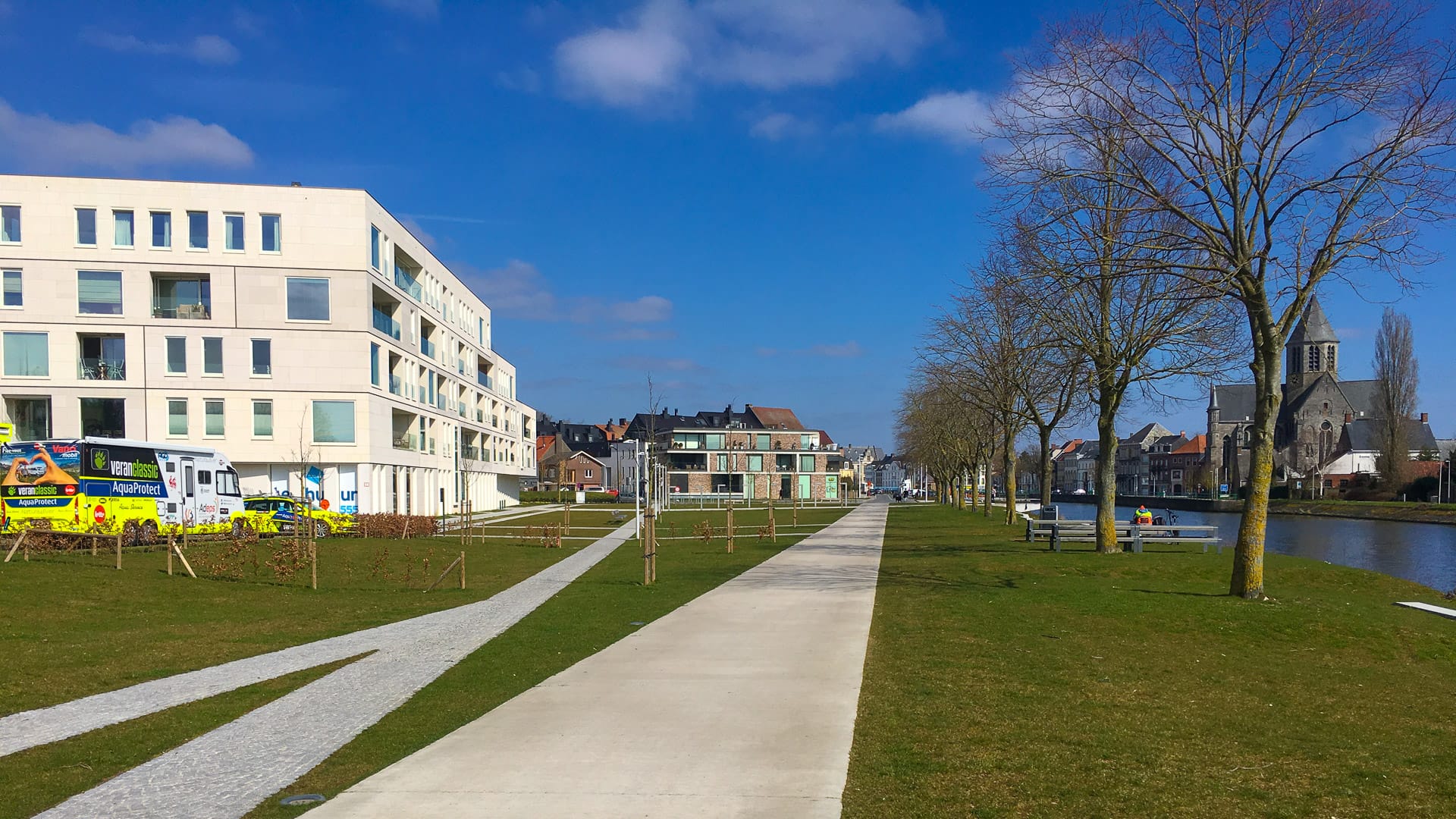
Canal bike path near Oudenaarde, Flanders, Belgium
Flanders, Belgium: cycling pilgrimage for the road bike fanatic
Flandrian cycling is a test against the terrain and the elements . Once you ride here, you begin to appreciate what the professionals endure during the Belgian cycling Classics as they grind their way up the bergs and along the narrow twisting lanes for hours on end.
Picture the Koppenberg. If you’ve never seen it in person, it’s a short, steep cobbled climb that has defined the Tour of Flanders for generations. It’s so hard that, for a short while, it was actually removed from the route after a rider fell over on the steepest section and had his bike crushed by a camera motorbike (source).
With an average gradient of 11% and a maximum pinch of 20%, rutted, worn cobbles and a constantly greasy surface, this is a climb that even brings pro cyclists to a standstill. To reach the top without having to stop is a genuine achievement for any bike rider.
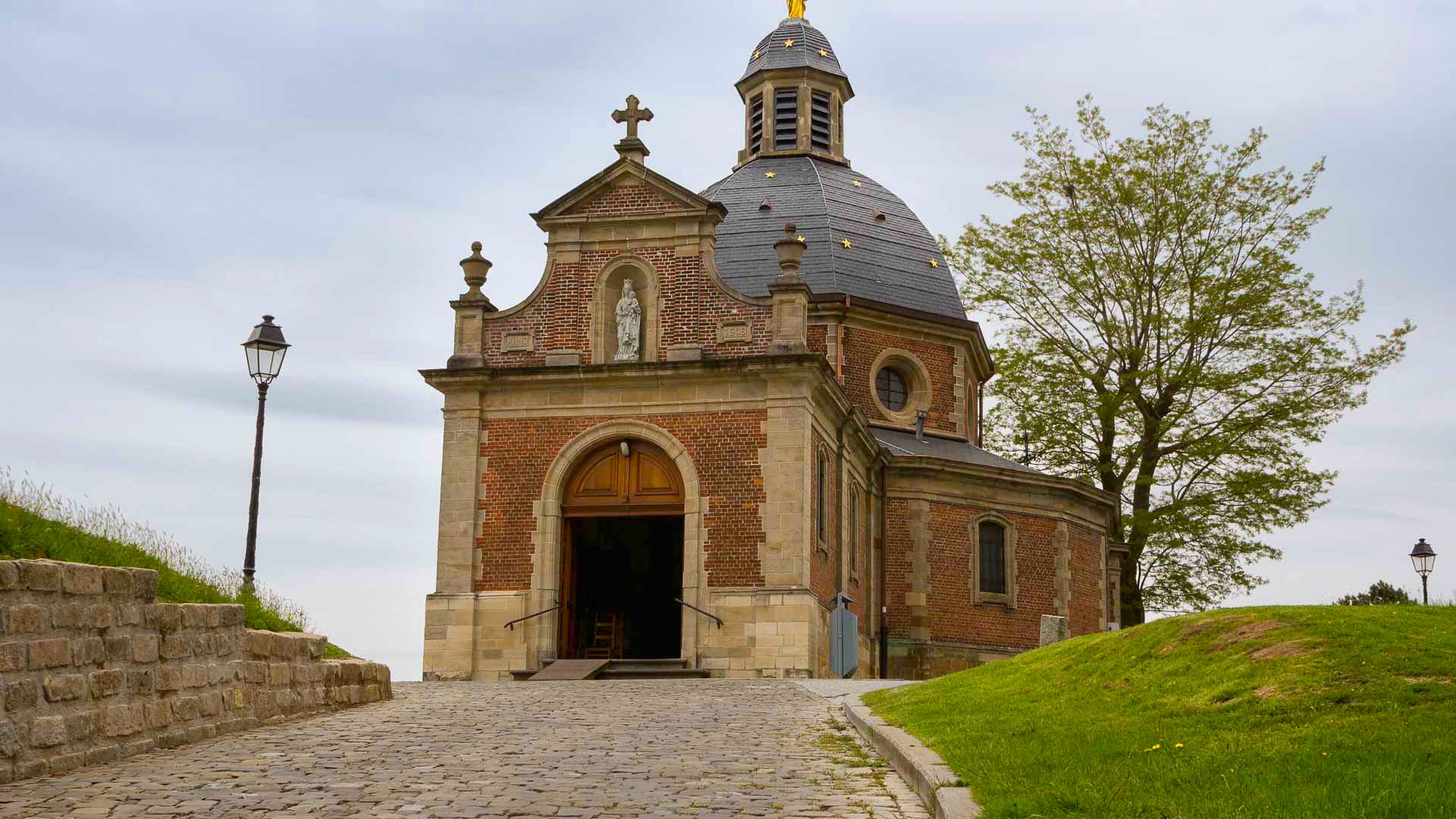
Sounds like fun? Well you’re in luck, because climbs like the Koppenberg are everywhere in this region, The Kwaremont, the Paterberg, the Taaienberg, the Muur Van Geraardsbergen (literally translates to ‘The Wall of Geraardsbergen), and dozens of others – all just a stones throw away from Oudenaarde. So come and test yourself in the cycling heartland of Flanders and ride across the hallowed ground where legends are made.
Want to know more about Flanders cycling?
In this guide, you’ll find everything you need to plan unforgettable cycling holiday in Belgium: we’ve got detailed information on the best Belgium cycle routes plus where cyclists should stay, when to visit and where to rent a bike in Oudenaarde.
Read on and plan your next cycling adventure.
Part 2: Flanders cycle routes
As you look around the Flandrien landscape, you could be forgiven for momentarily mistaking it for the flatlands of Norfolk or Suffolk in the UK.
Of course, the big difference is that here, the benign topography is interspersed with very steep bergs (i.e. hills).
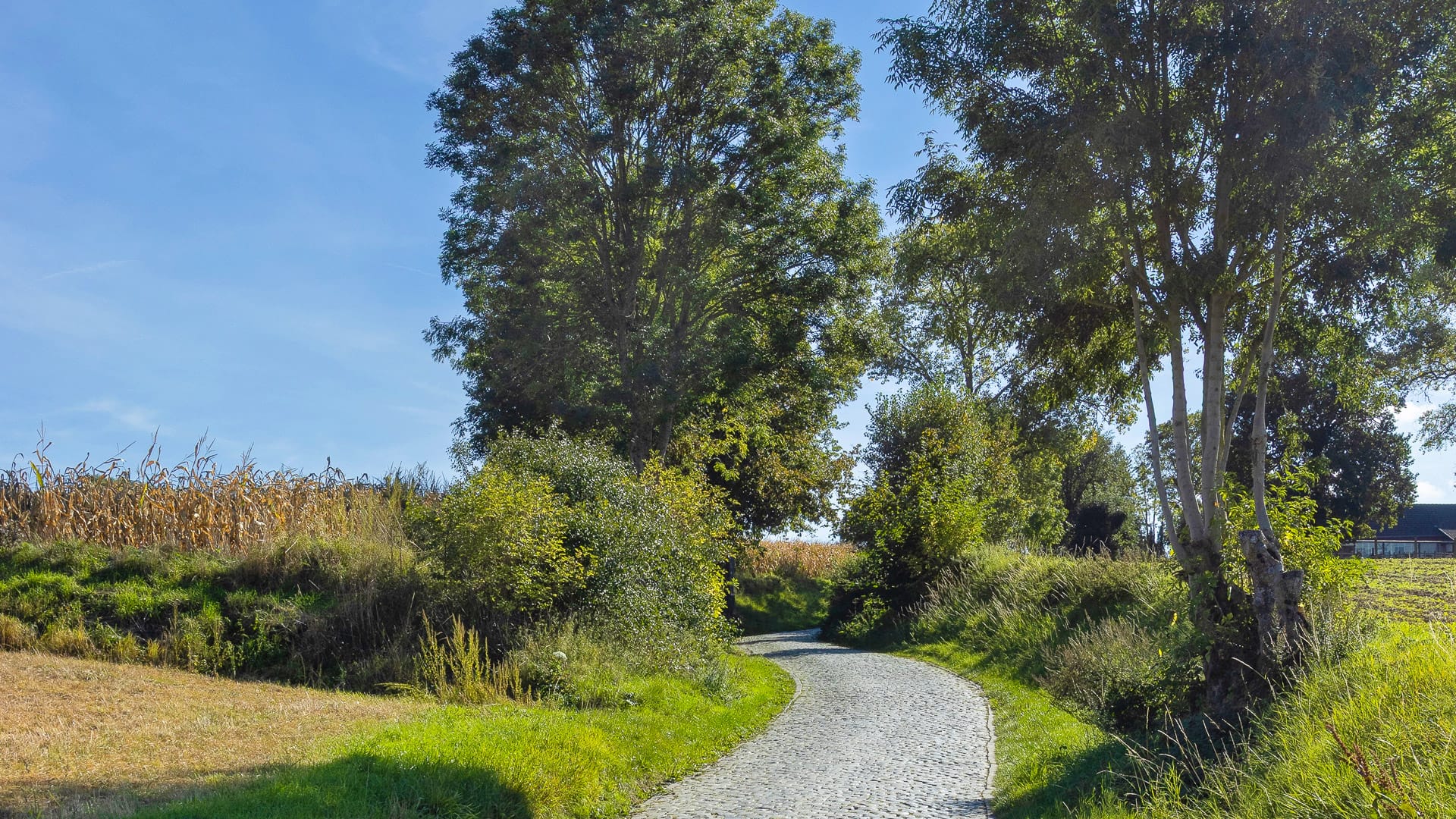
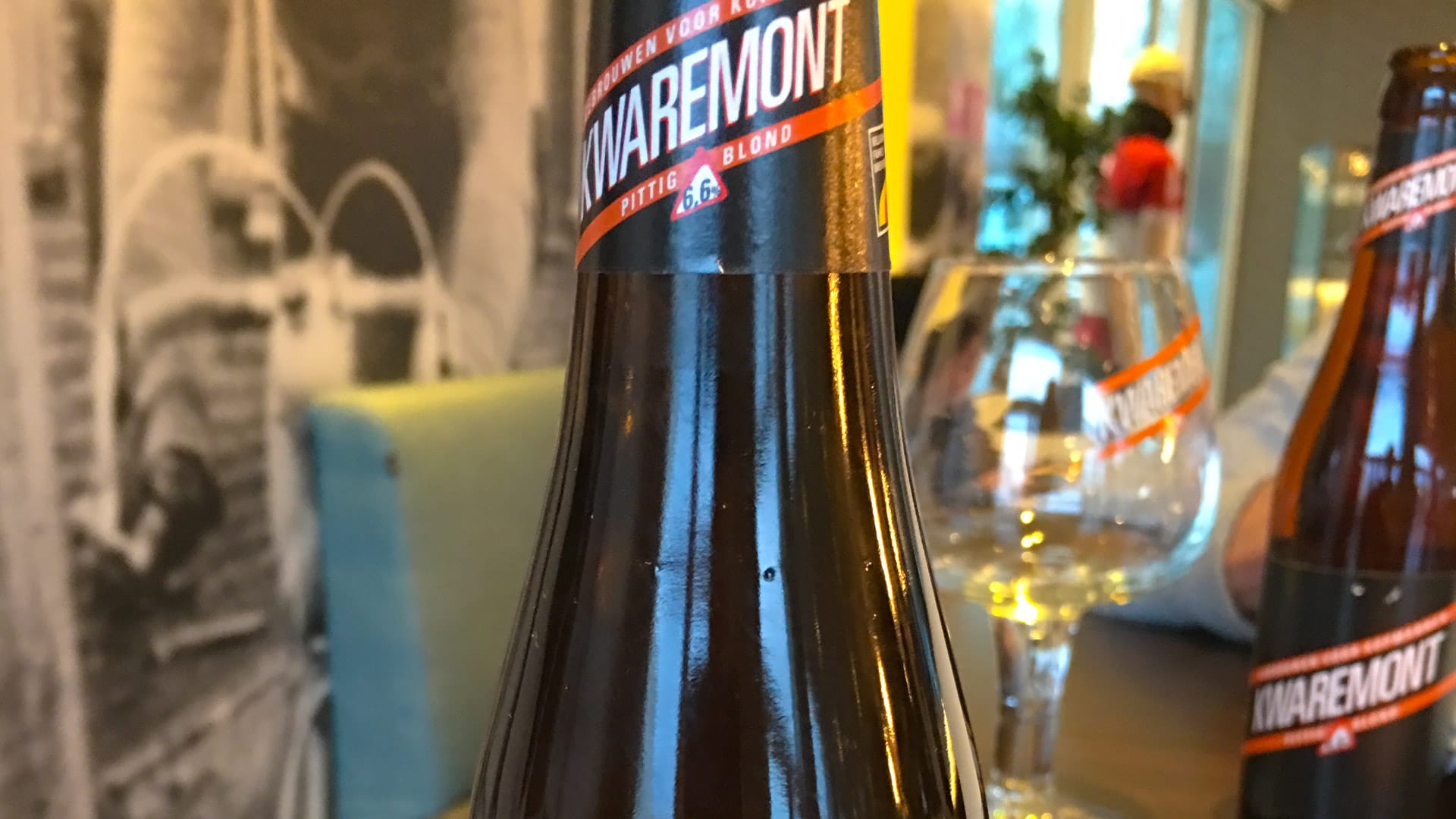
Generally speaking, the bergs (mostly cobbled) are not long in length; the Paterberg is only 340 metres long but the steep gradient provides the added difficulty as bike wheels struggle to find traction on the lumpy cobblestones, particularly so when wet. Even the longer climbs such as the famed Oude Kwaremont (which even has a local beer named after it!) is only 2.5 kilometres in length.
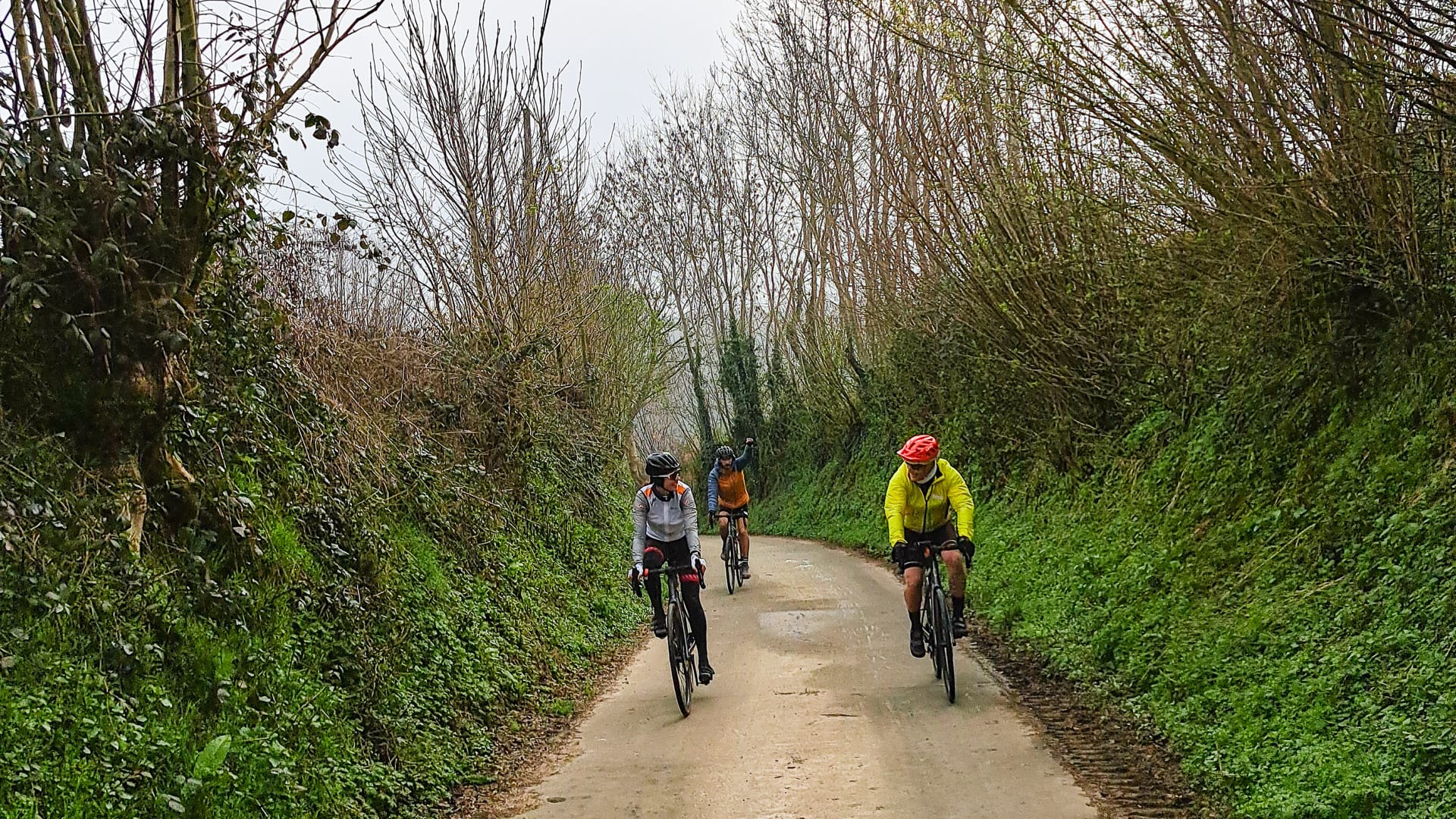
Country lanes in Oudenaarde, Flanders, Belgium (photo credit: VISITFLANDERS)
How to master riding cobbles?
To ride the cobbles you need character, Or rather, to enjoy riding cobbles you need character. The practicalities are fairly straightforward.
Just like riding off-road, the name of the game is traction. As a lot of these cobbles happen to be on roads of double digit gradients, your instinct might be to stand up out the saddle and attack the climb. Do this, and – whilst you may feel like you’re able to put out more power – you’ll quickly find your rear wheel spinning, your speed decreasing, and a potentially embarrassing topple as you stall and fall over.
If you watch the pros, or indeed any Belgian, you’ll see the best course of action is to remain seated to keep the weight over your rear wheel whilst bending your elbows to bring your torso closer to the bars and stop the front wheel lifting up. Shift into an easier gear to keep the cadence high and momentum forthcoming and – before you know it – you’ll have mastered the art of climbing steep, cobbled roads. Confidence is key here, so trust in your legs and really push; the feeling of accomplishment in conquering even just 1 of these Bergs – let alone 10s of them in the same ride – is euphoric.
Check our Tips for riding the cobbles article for more information on the experience!
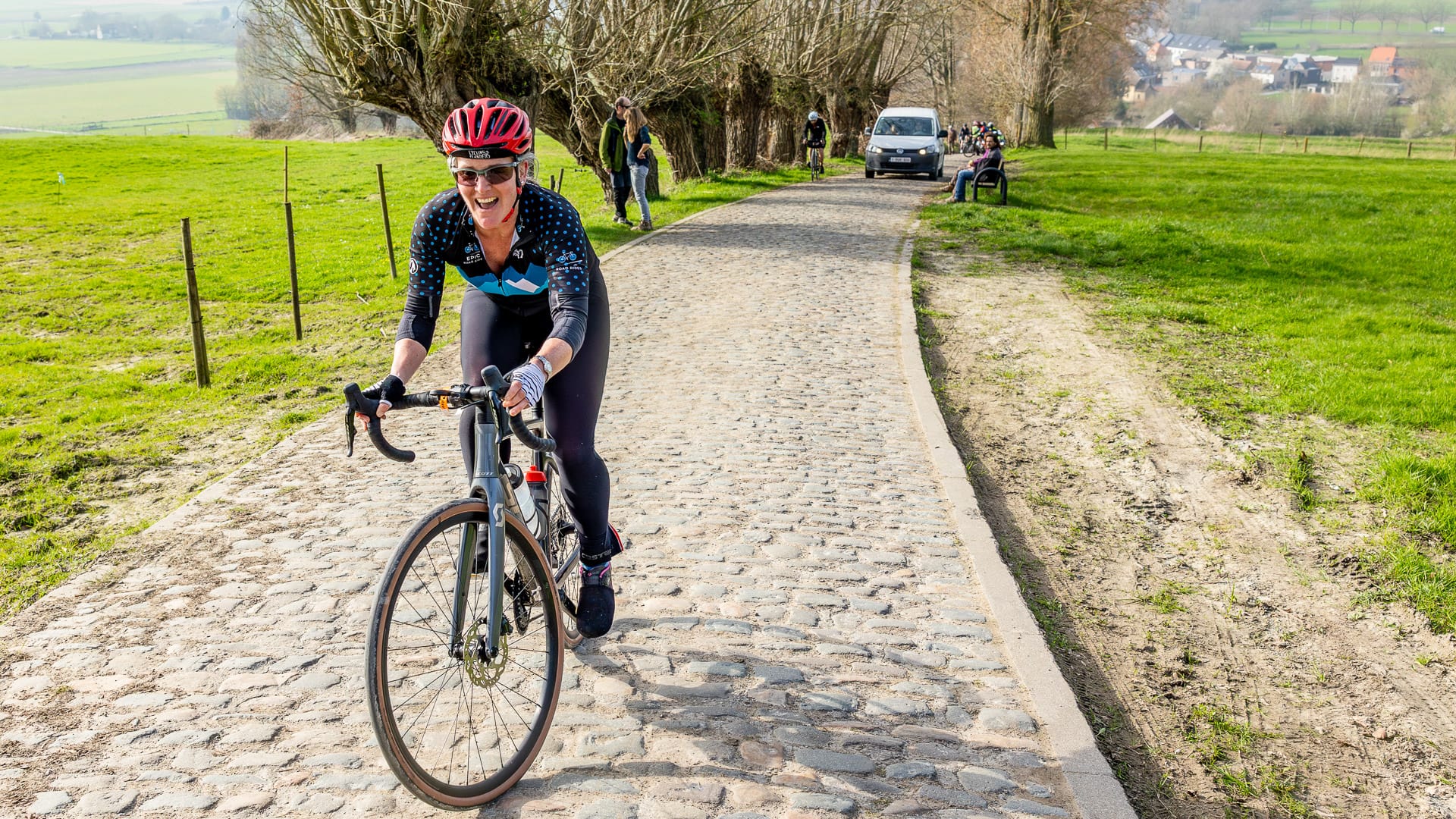
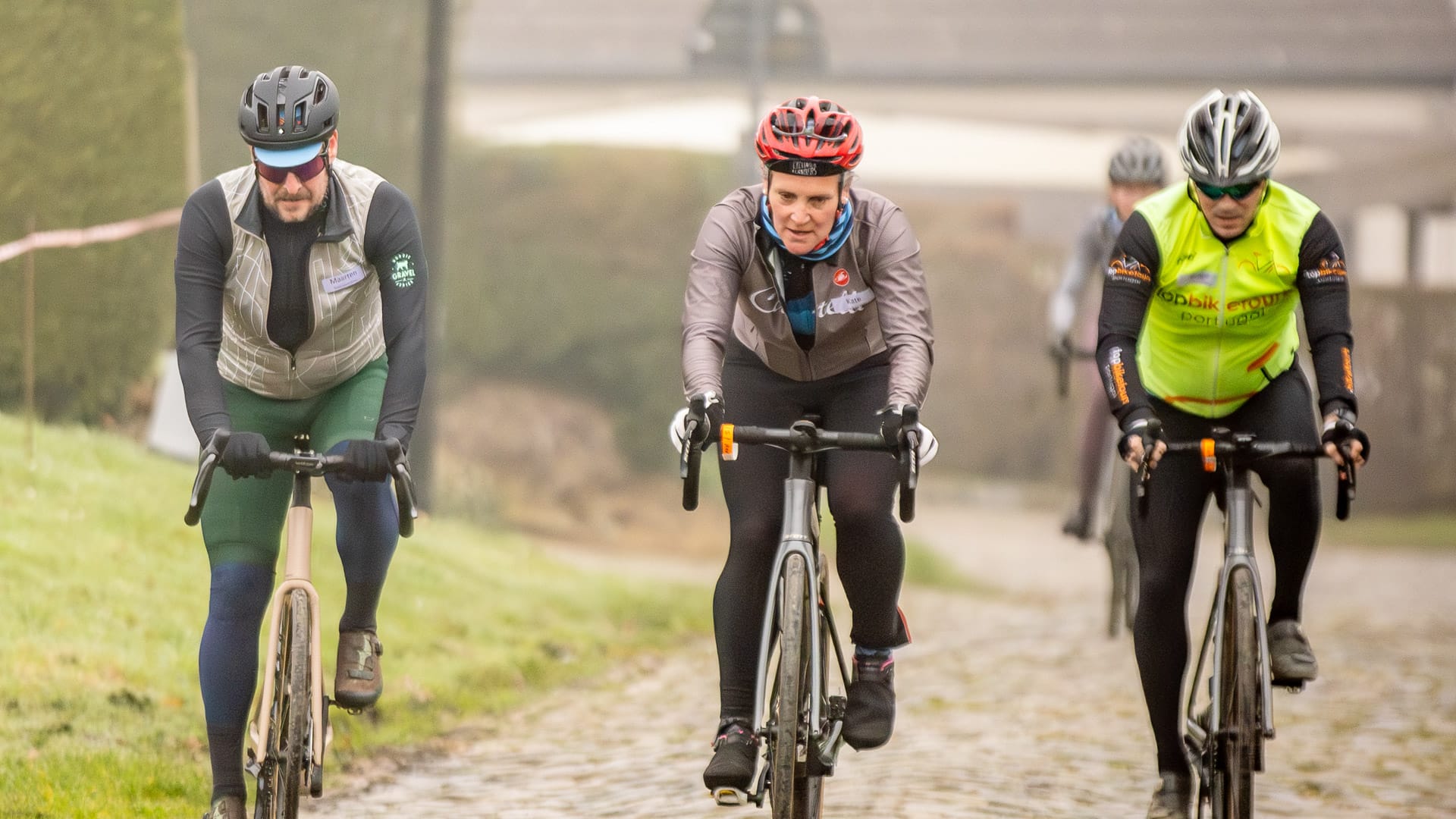
Kate riding the cobbles of the Koppenberg (photo credit: VISITFLANDERS)
How to find the best road cycling in Flanders?
Where should you base yourself in Flanders?
As we mentioned previously, Oudenaarde is our pick of the bunch in terms of bases to sample the roads of De Ronde from.
But, of course, there is more to Flanders than Oudenaarde. You can stay in the beautiful cities of Ghent or Brugge – which are really interesting and have a bit more going on – but you’ll need to tack on some flat canal path riding to get you in and out of the ‘Hill Zone’. Not necessarily a bad thing if you’re after some longer days in the saddle and don’t mind whiling away a few hours on some beautiful, albeit monotonous, car free canal paths – but something to keep in mind.
You can also stay near Oudenaarde in one of the many other towns like Kortrijk, Waregem, Ronse, or Zottegem. You could even nip across the border to France (passport permitting) and stay in the equally hallowed Roubaix – which is a little further out but significantly cheaper than Belgium.
How easy is it to follow signposted cycling routes?
If you choose to stay in Oudenaarde, you’ll find a number of very well signposted routes that take you on your very own Tour of Flanders and sample some of the legendary bergs that are steeped in Ronde history. These routes are curated by the Centrum Ronde Van Vlaanderen, and are either colour coded or named on regular signposts. They are just about regular enough to follow without a map or headunit, but I would consider taking one anyway.
The other benefit is that a lot of head units can now show you upcoming climbs and gradients, which will help you prepare yourself for the next climb and pace yourself up it – always keep a bit in reserve for the steepest sections!
Belgium truly is a maze. Even locals get lost on occasion thanks to the intricate network of roads, farm tracks, bergs, and bike paths that criss-cross the countryside. Take a look at a cycling heatmap of Belgium, and you’ll see what I mean; it looks a bit like a spider’s web but much more complex.
Which is best: the Red, Blue or Yellow route?
As I mentioned earlier, the Centrum Ronde Van Vlaanderen (CRVV) in Oudenaarde has absolutely loads of routes available. In this instance, I would suggest checking them out if you want to knock off some bergs whilst you’re in Flanders.
The red, yellow, and blue routes are a great starting point and cover off all the best bits of Flanders – starting and finishing in Oudenaarde. We thought the Red route was the hardest of the three rides due to the additional distance and elevation when compared to the Blue and Yellow.
The Blue route is the shortest, has (just!) least elevation gain and offers bang for your buck since it includes the Oude Kwaremont, Paterberg and Koppenberg.
The Yellow route is all about flat cobbled roads (but does include steep hills too!).
What is the Flandrien Challenge?
CRVV also hosts the Flandrien Challenge – 72 hours to complete every climb and cobbled sector in the Tour of Flanders. As the name suggests, these routes are pretty challenging, packing in a lot more distance and climbing by the more flowing, accessible coloured routes. There’s a lot of looping back on yourself, repeating stretches of road, and periods of consecutive climbs in quick succession. Take my word for it, it’s three tough days out on a bike of 75 kilometres, 190 kilometres, and 142 kilometres – but very rewarding to complete.
Last thing to note on the Challenge is that one of the days starts out in Ypres (Ieper), so you’ll either need to get the train, drive, or ride across and back to complete this day. Alternatively, you can do what I did and bikepack to Oudenaarde from the UK – stopping off in Ypres on the way over and making day 1 part of your journey.
Rides


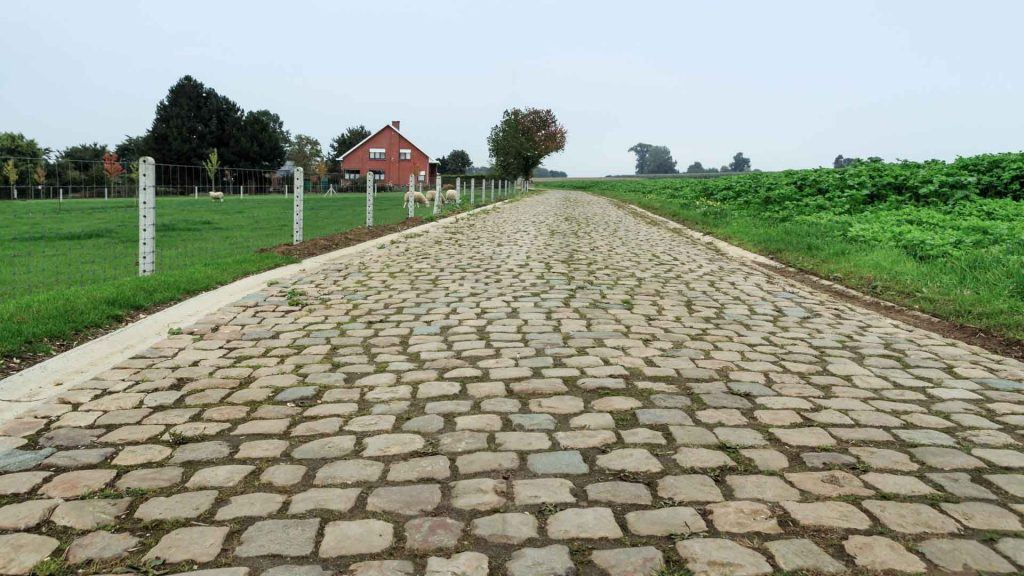
Family cycle routes/easy rides
The Leopold Hotel, like Oudenaarde itself, sits on the banks of the River Schelde. Walk out of the main entrance of the hotel, turn left and some 25 metres later you are on a cycle path network that runs either side of the river.
- Ride to the north and you will eventually reach the Belgian city of Ghent (approx 35 kilometres away) famous for its velodrome which hosts the annual Ghent six-day track cycling competition.
- Or venture to the south and cross the border with northeastern France where another famous velodrome is situated: none other than the one in Roubaix (approx 40 kilometres away) which is always used to conclude another cycling classic, the legendary Paris-Roubaix.
- Our trip took us north for 15 kilometres on very flat asphalted terrain before we crossed the river and rode into the quaint little village of Gavere stopping off at the De Post Brasserie for lunch and then returning on the eastern bank back to the hotel. If you don’t want a hilly ride or just want to take things gently then this is a very easy route along a very pleasant river path up and down the river. There are numerous crossing points along the way so you can shorten or lengthen your ride as you wish.
- If you have more time on your hands, you can head north to Brugge – which is about 60 kilometres away. You’ll ride through small towns and rural farm tracks through the mostly flat countryside, crossing the river Leie after about 20 kilometres. When you approach Beernem you’ll hop onto the Ghent-Brugge canal for the last 15 kilometres or so into the city. If you’ve watched the film ‘In Brugge’, you’ll know the city is “a fairytale town”, and – as angry as he is – I don’t think Harry’s wrong. The architecture, the network of quaint canals, the market square, the Belfry – it really is charming, and definitely worth a visit.
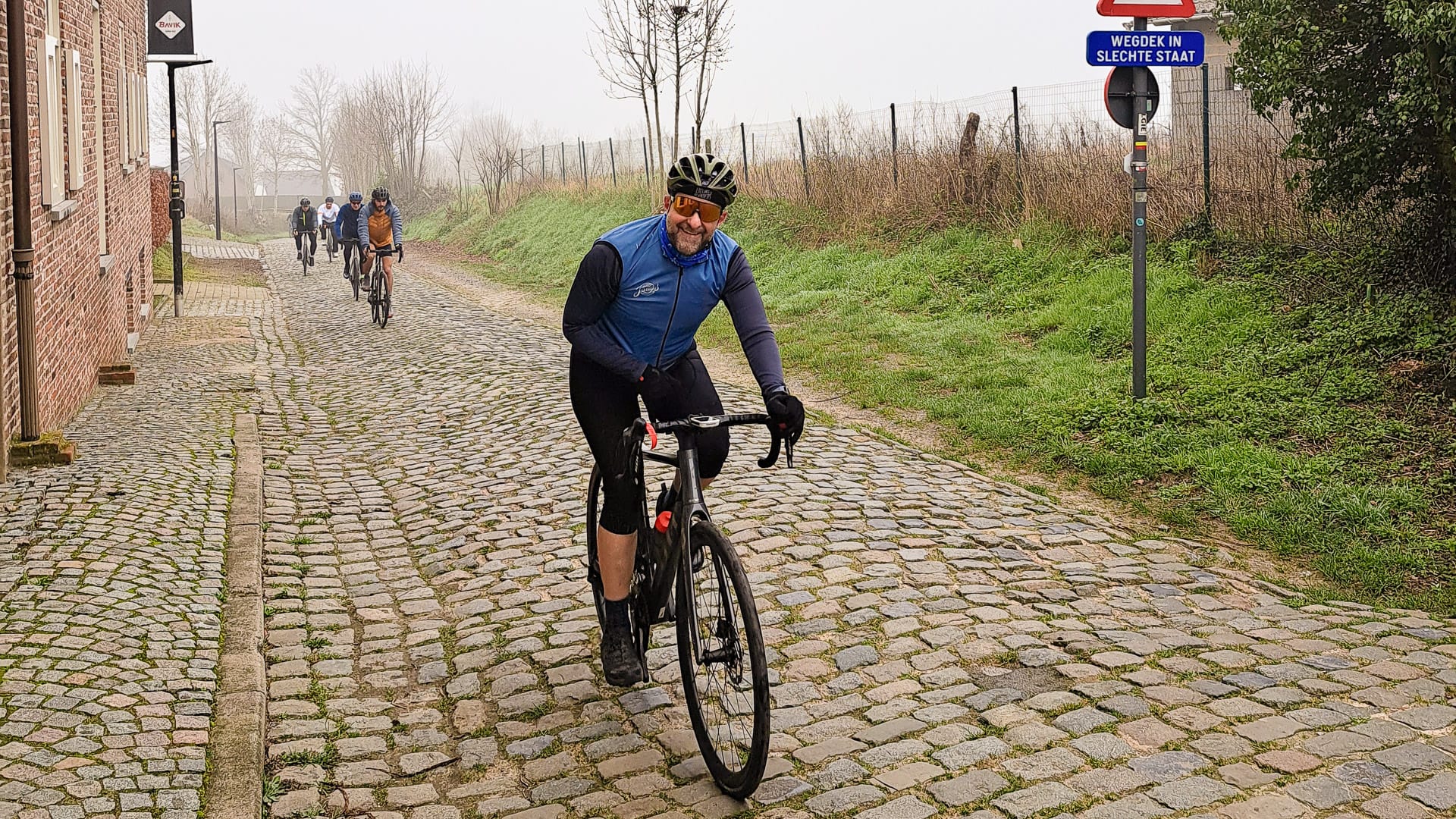
Cycling near Oudenaarde (photo credit: Ewoud Langring via VISITFLANDERS)
Pro races, Tour de Flanders sportive and other Flanders cycling events
The Belgian cycling classics
For many bike racing fans, the season officially starts in late February of each year, as attention focuses upon northwestern Europe and a series of races known as the classics, many of which are on cobbled roads.
Staying in Oudenaarde, which has a train station, it’s feasible to access the starts and finishes of these races using public transport. Of course, the best way to watch live bike racing in Flanders is to ride out to the course and watch the riders race past on the key climbs or cobbles. The key races on the Belgium cycling race calendar run something like this:
Omloop Nieuwsblad
The first Belgium race of the season is traditionally Omloop Nieuwsblad which historically starts in Ghent and finishes in Ninove. The men race for over 200 kilometres, whilst the Women race for nearer 140 kilometres across Flanders and cover well-known climbs such as the Muur van Geraardsbergen and the Bosberg. Along with Kuurne-Brussels-Kuurne which follows the next day, these two races are referred to as “Opening Weekend” and kick off the Spring of racing in Flanders and northern France.
Kuurne-Brussels-Kuurne
Despite what the name suggests, Kuurne-Brussels-Kuurne doesn’t actually get as far as Brussels. The east most point is just past Brakel which – geographically – is actually closer to Kuurne than Brussels. But Kuurne-Kuurne-Kuurne doesn’t sound as good, and tradition rules the roost in bike racing. The race actually doesn’t even start in Kuurne but nearby Kortrijk…so Kortrijk-near Brakel-Kuurne then? Around 200 kilometres in length and a flatter affair than Omloop – although still tackling the fierce Kemmelberg – this is one traditionally for the Sprinters.
E3 Saxo Classic
Towards the end of March, we see the dress rehersal for the Tour of Flanders in the form of E3 Saxo Classic (previously known as E3 Harelbeke). It starts and finishes in the town of Harelbeke about 25 kilometres to the west of Oudenaarde and features many of the climbs and bergs associated with De Ronde including the Taaienberg and the Kwaremont /Paterberg double header that form the final of The Tour of Flanders.
In Flanders Fields – From Middelkerke to Wevelgem (formally known as Ghent-Wevelgem)
E3 is quickly followed by the snappily named In Flanders Fields – From Middelkerke to Wevelgem, a race around 240 kilometres which features a handful of with cobbles and climbs, as well as some gravel ‘Ploegsteerts’ – but is more traditionally a race for the tougher sprinters.
Dwars door Vlaanderen
This is the last warm-up race before De Ronde and it takes the riders over much of the Tour of Flanders route including climbs such as the Paterberg and Oude Kwaremont.
Tour of Flanders (De Ronde)
On a Sunday in early April each year, the Flanders area stages the biggest and most famous of the races in Belgium. The men’s race leaves the Belgian city of Antwerp and head for Oudenaarde across nearly 280 kilometres of gruelling terrain, whilst the women start in Oudenaarde and ride for 165 kilometres. De Ronde is one of the 5 cycling monuments and is of huge importance to Flanders. It is played out in front of big crowds who line the route and brings massive economic benefit to the region as well as preserving the culture of Belgian cycling. To win De Ronde is enough to make a career and become a national hero.
Tour of Flanders Sportive route/Ronde van Vlaanderen Cyclo
The world-famous Tour of Flanders Sportive (Ronde van Vlaanderen Cyclo) takes place each year on the day before the professional riders race on the same roads for the prestigious title.
The event sees 16,000 cyclists from all over the world set off over bergs and cobbles on the same Flemish roads where history has been written for over a century.
Amateurs completing the Tour of Flanders sportive can choose between distances of 79, 133, 163 and 247 kilometres. The longest route will largely mirror the course of the professionals and start from Antwerp, the other three courses start and finish in Oudenaarde.
They ride in order to conquer the famous climbs and bergs that are unique to this part of the world and so that, for at least a day, they can call themselves a Flandrien.
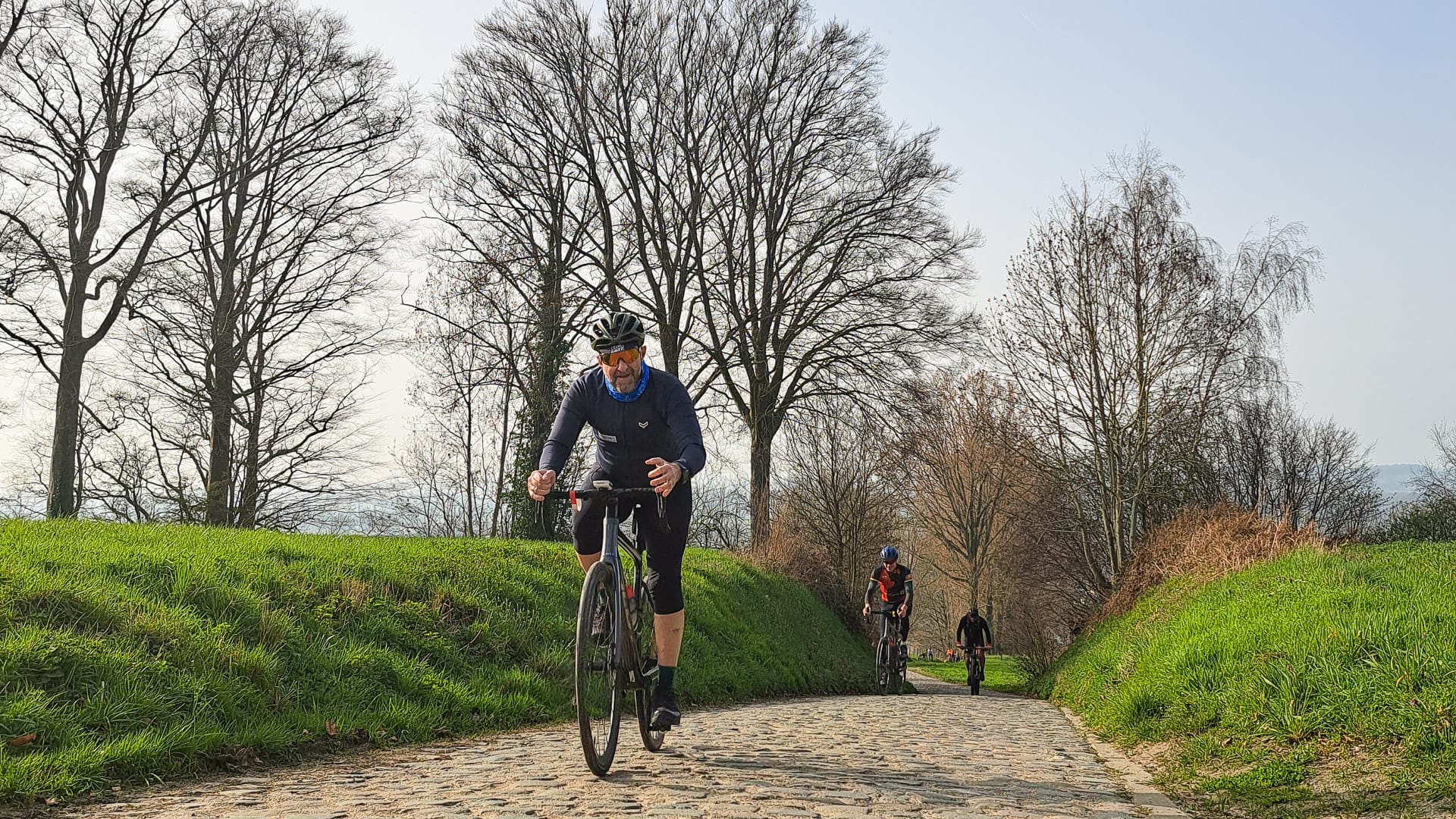
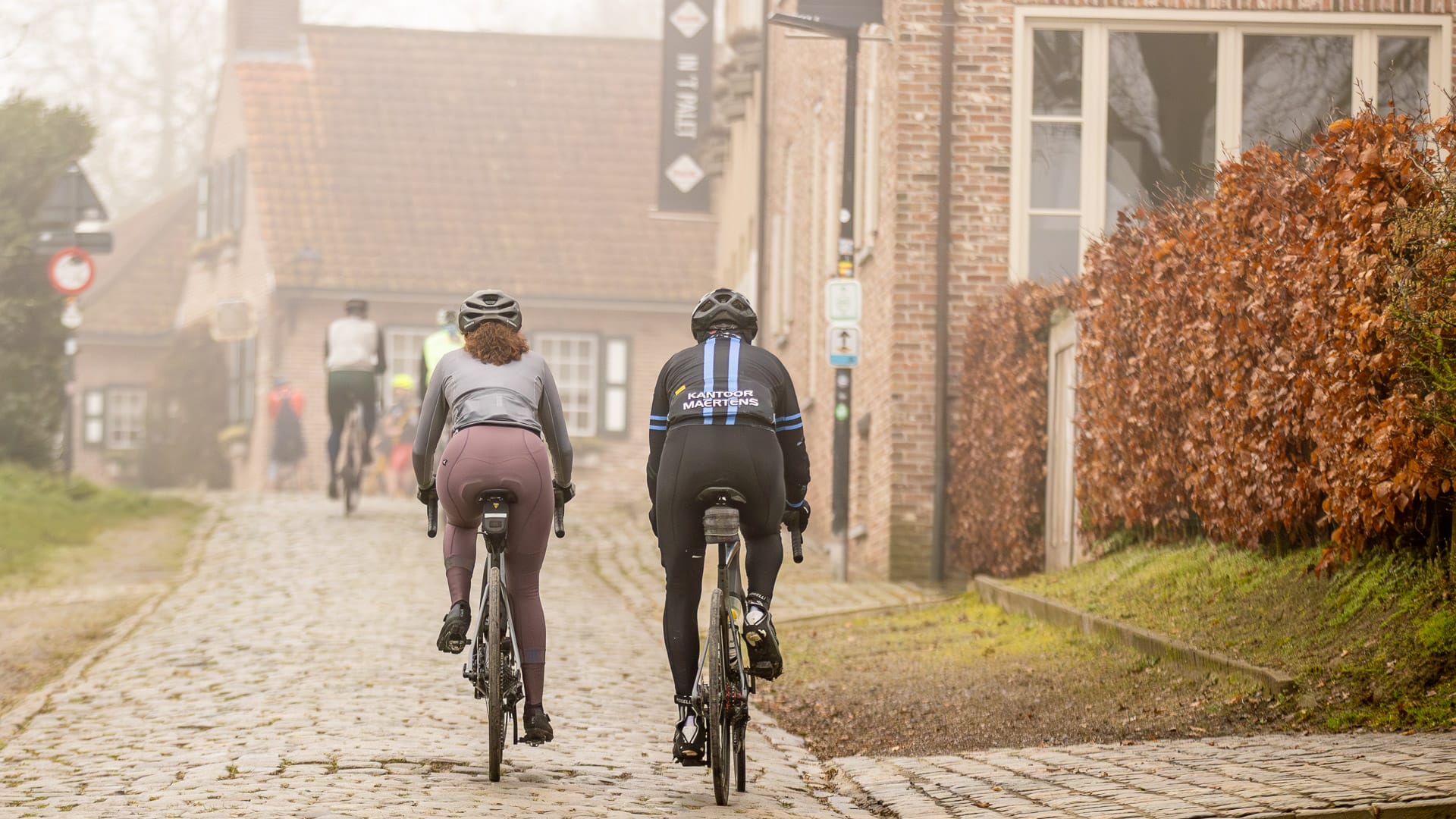
Cyclist reaching the top of the Koppenberg (photo credit: VISITFLANDERS)
Part 3: Where to stay in Flanders (for cyclists)?
Remember to double-check bike storage arrangements (and any other services you need) before booking your accommodation as policies often change and they may charge for storage.
Below we share tips on staying around Oudenaarde, but for other locations, you might like this article sharing some top bike hotels in Belgium.
Oudenaarde: the perfect base to explore the main cycling routes in Flanders
Oudenaarde is a small city in the Flemish province of East Flanders. Sitting on the banks of the River Schelde, the town is a very compact conurbation centred around a beautiful market square which is home to the Sink-Walburgakerk Cathedral, the town hall (see photos in the introduction) and the Tour of Flanders Museum.
On the perimeter of the square are old-fashioned guild houses interspersed with a good selection of bars, restaurants and cafes. The Leopold Hotel (more on that below) is a stone’s throw away from the market square and is ideally situated for meals and the museum.
If any location deserved the title of ‘capital of the cobbles’ then Oudenaarde would surely win hands down. The Tour of Flanders race has finished there since 2012, and within a handful of kilometres, you will find the famous climbs of Achterberg, Edelareberg, Kattenberg, Ladeuze, Volkegemberg, Wolvenberg and the iconic Koppenberg.
There are cycling-friendly hotels in this (small) city or, if you prefer a more rural location, in the villages surrounding it. This region is also only an hour or so’s drive from Brussels Airport and there are also good connections from Brussels-Midi train station.
Everything about the cobbles and the bergs seems to revolve around Oudenaarde.
We’d highly recommend a stay in this lovely small city that feels more like a large town.
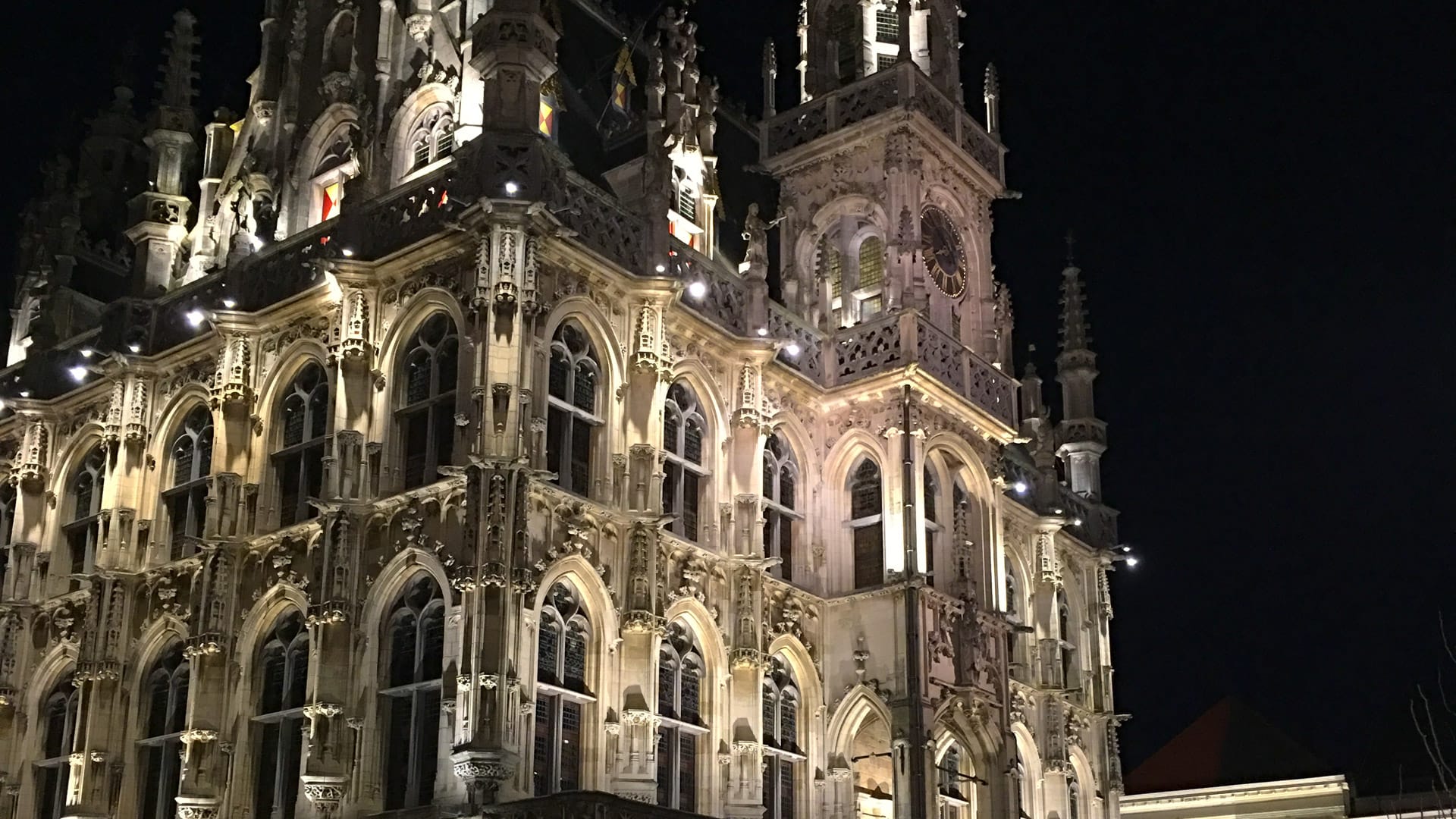
Town Hall, Oudenaarde, Belgium
Our choice: Leopold Hotel
We stayed at the 4-star cycling themed Leopold Hotel. Its boutiquey 58 rooms are situated just 250 meters from the Tour of Flanders Museum (which is where all three colour coded, and signposted cycling routes start and finish).
There’s plenty of car parking and bike storage is also available together with track pumps and power washers. The breakfasts are exceptional (buffet style), the public areas are tastefully adorned with cycling murals and the bar is well stocked with Belgian beers. What more could you want?!
What we liked
- Focused on cyclists: we were impressed with the facilities available for cyclists. Access to the bike storage room is via room key and there’s CCTV for extra reassurance. Within the bike room, there are bike hangers and you can take your own lock if you feel the need. There are also bike wash facilities you can use and they offer discounted entry to The Tour of Flanders Museum.
- Location: the hotel is really well located for the main cycling routes as well as the town centre restaurants.
- Modern: the hotel feels stylish and contemporary.
- Service is friendly and attentive.
- They offer a 24-hour turnaround service on laundry.
- It is handily placed for the nearby Delhaize supermarket (500 meters away).
- The choice of the professional teams: Astana were there when we visited. It always makes you feel you’ve picked well if the pros have chosen it!
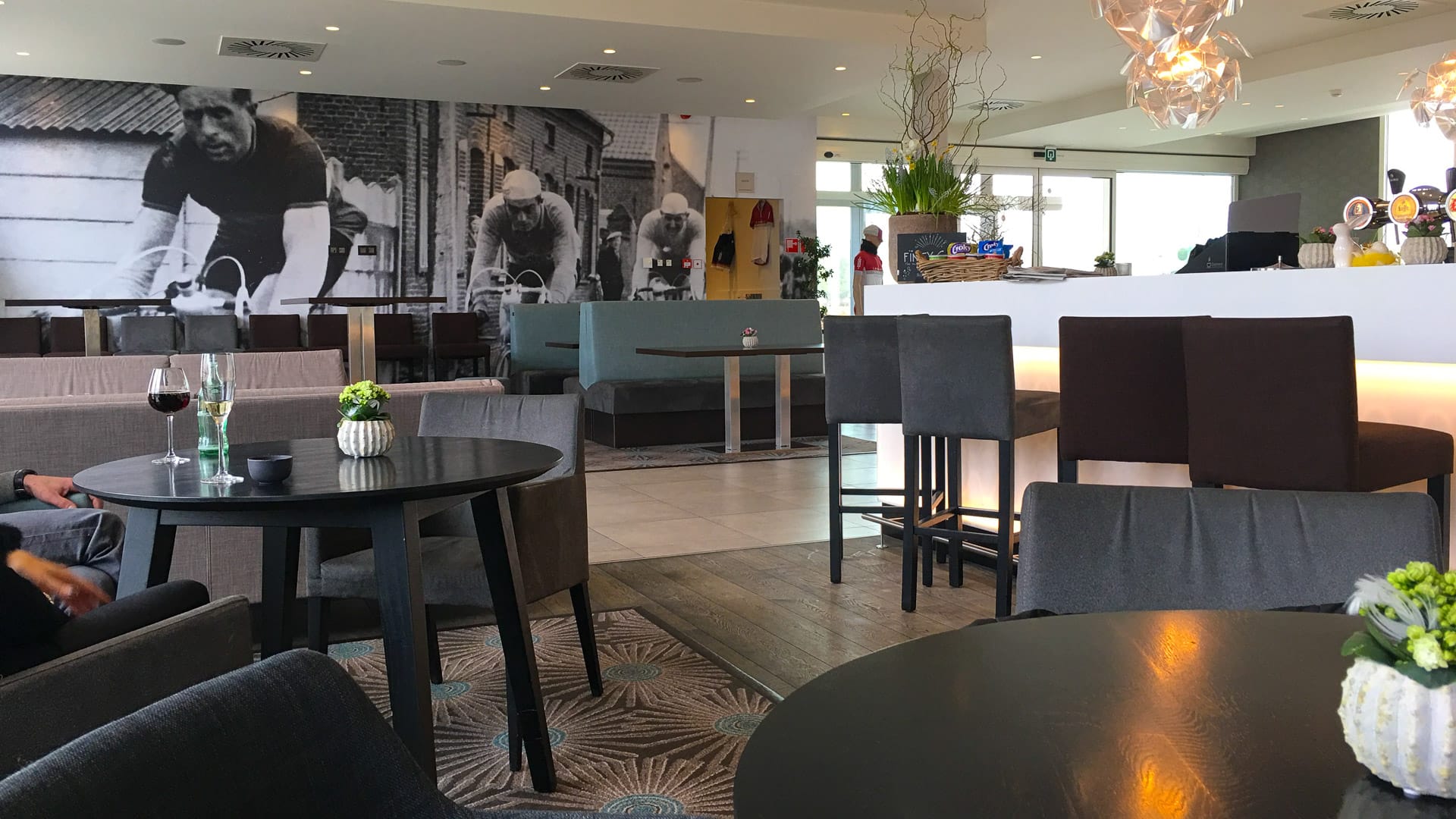
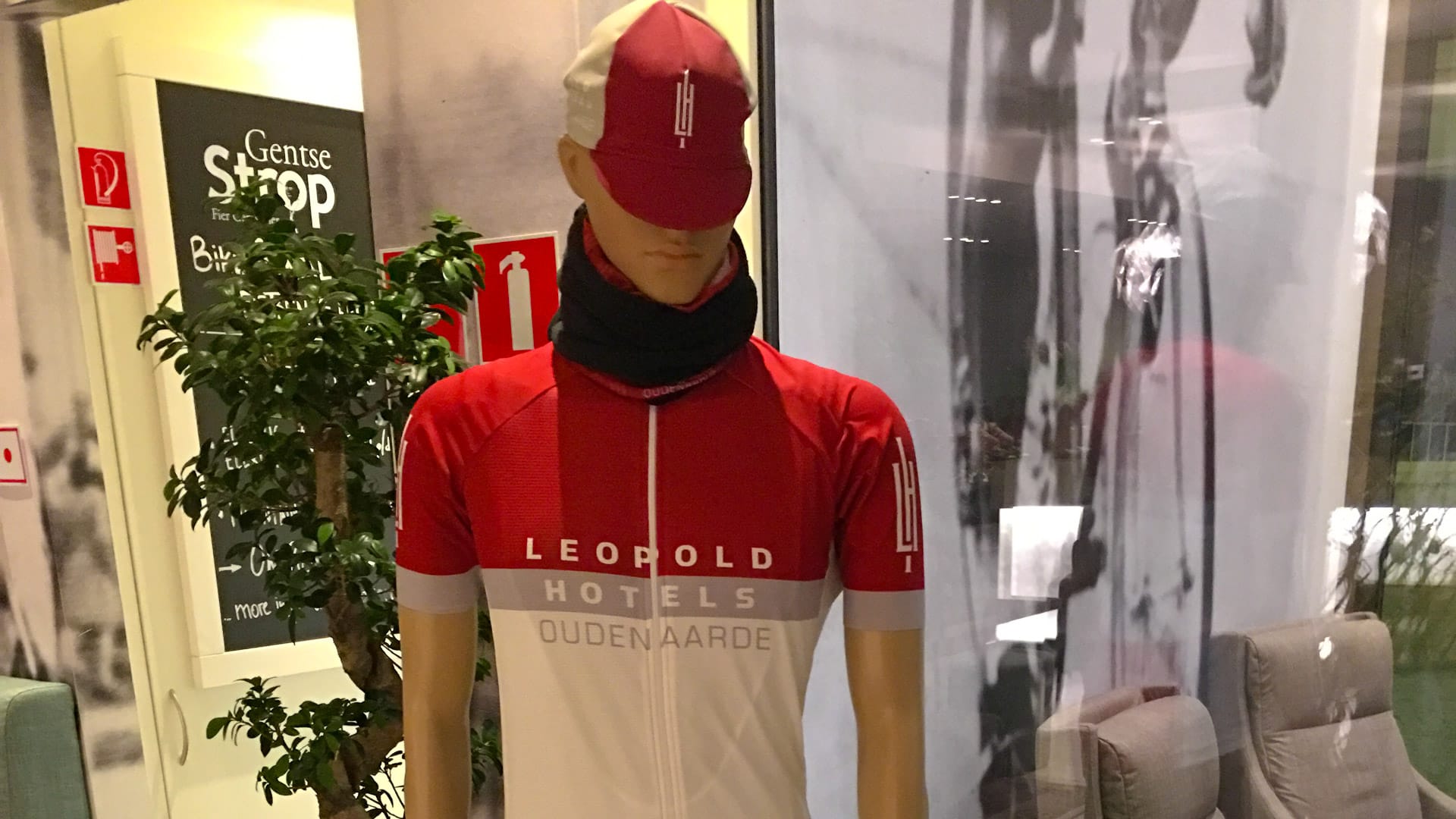
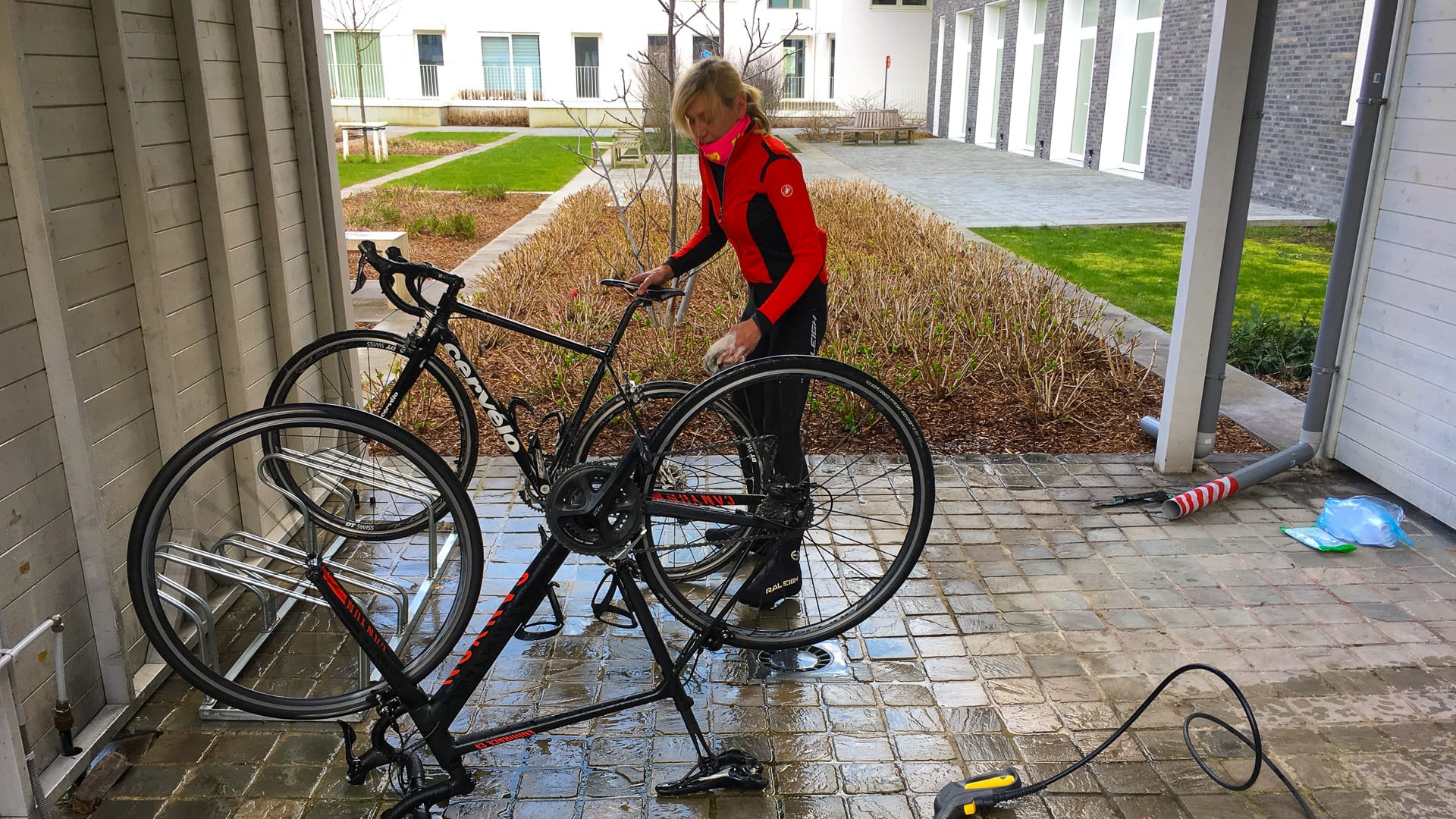
Other hotels
Flandrien Hotel
The Flandrien Hotel is a restored 19th Century farmstead in a rural area between Oudenaarde and Geraardsbergen. The hotel is focused on cyclists and boasts secure storage, rental bikes, and an SOS service. It opened in 2021 and attracts both cycling enthusiasts and pro teams.
Country Lodge Hotel Moriaanshoofd
The Lodge Hotel is known as being a cycling-friendly establishment located around 8 kilometres away from Oudenaarde and the start of the three colour coded Ronde van Vlaanderen routes. It’s a 20-minute drive away from Ghent. It’s set in picturesque and well-manicured grounds and we’ve heard it’s used by Quickstep and other World Tour teams when they’re in town. Secure bike storage is available on site.
More ideas
We’re often asked for tips on where to stay in Flanders and beyond, so we’ve written this article sharing some top bike hotels in Belgium. We hope it helps.
Part 4: Bike hire Oudenaarde
Bike rental is available from a number of different cycling specific shops in the Oudenaarde area. We have always taken our own bikes and so haven’t tried these firsthand.
If you have hired bikes in Oudenaarde, please comment below to tell us your experiences.
Bike rental Oudenaarde
Flandrien Hotel
Hollebeekstraat 6
9661 Parike, Brakel
Cannondale and Canyon race, gravel and e-bikes fitted with wide tyres suitable for riding the cobbles.
Delivery offered to non-guests. Can provide pedals, helmets, SOS pickup.
Asfra Flanders Cycling
Bergstraat 75
9700 Oudenaarde
Carbon bikes with Shimano 105 or Ultegra from €30/day.
Can rent GPS, repair kit, pump.
Tour of Flanders Museum
Markt 43
9700 Oudenaarde
Specialized Roubaix with Shimano Ultegra from €75/day.
Includes GPS unit, helmet, pedals, shoes and a shower afterwards!

TOF Museum team car
Bike rental Ghent area (north of Oudenaarde)
Het Verzet
Nieuwstraat 41
9800 Deinze
Specialized aluminium and carbon bikes from €24/day.
Can rent pedals, helmet, lock and repair kit.
Veloloft
Begoniastraat 6C
9810 Eke-Nazareth
BMC bikes including Ultegra Di2, Ultegra and disc brakes. From €50/day. €150 deposit.
MTB and e-bikes also available.
Kortweg Cycling Travel
Gaversesteenweg 81 3B
B-9800 DeinzeMerckx bikes supplied with saddle bag. Prices on request.
Fietsen Fieless
Zuidlaan 150
9630 Zwalm
Electric bikes only from €30/day.
Can also rent bike travel cases and towbar carriers.
Tips:
- A word of warning – many of the websites in Belgium do not offer an English translation facility though the vast majority of the staff do speak English. Either use google translate or (a better bet), ring ahead and verbally place your order.
- The Leopold Hotel told us that they will pre-book your requirements with Het Verzet and have the bikes delivered to the hotel before your arrival. Again, we haven’t tried this service ourselves.
- Whilst Belgium is a cycling paradise, the car drivers – in my experience – can be hit and miss. Whilst they will afford you the right of way at junctions, and ensure to keep a safe distance when passing in urban areas – this is mainly due to the strict laws. In more rural areas, you’ll find drivers will squeeze past on narrow lanes; not because they’re impatient or aggressive, but because they’re experienced in doing so.
- Stay on the bike path! If there’s a bike path available, you’re obliged to use it. Eschewing the purpose built infrastructure and staying on the road will quickly see you beeped at by disgruntled car drivers, and a fine if you’re caught doing so.
- Likewise, you’re obliged to have a bell, and can be fined for not having one. This sounds frivolous, but it’s something they’ve really started to crack down on.
- Carry some cash. Lots of places don’t have card machines, but instead rely on a Belgian payment app (Payconiq) that only works on Belgian phones, so carry some cash with you wherever you go or you might get caught out.
- Remember to bring your own pedals, shoes and helmet. This packing list may help!
- Check which way around your brakes are set before you ride away (i.e. whether the front brakes are on the right hand (as is usual in the UK) or on the left (as is usual elsewhere in Europe)). Also take a look at our list of things to check before hiring a bike.
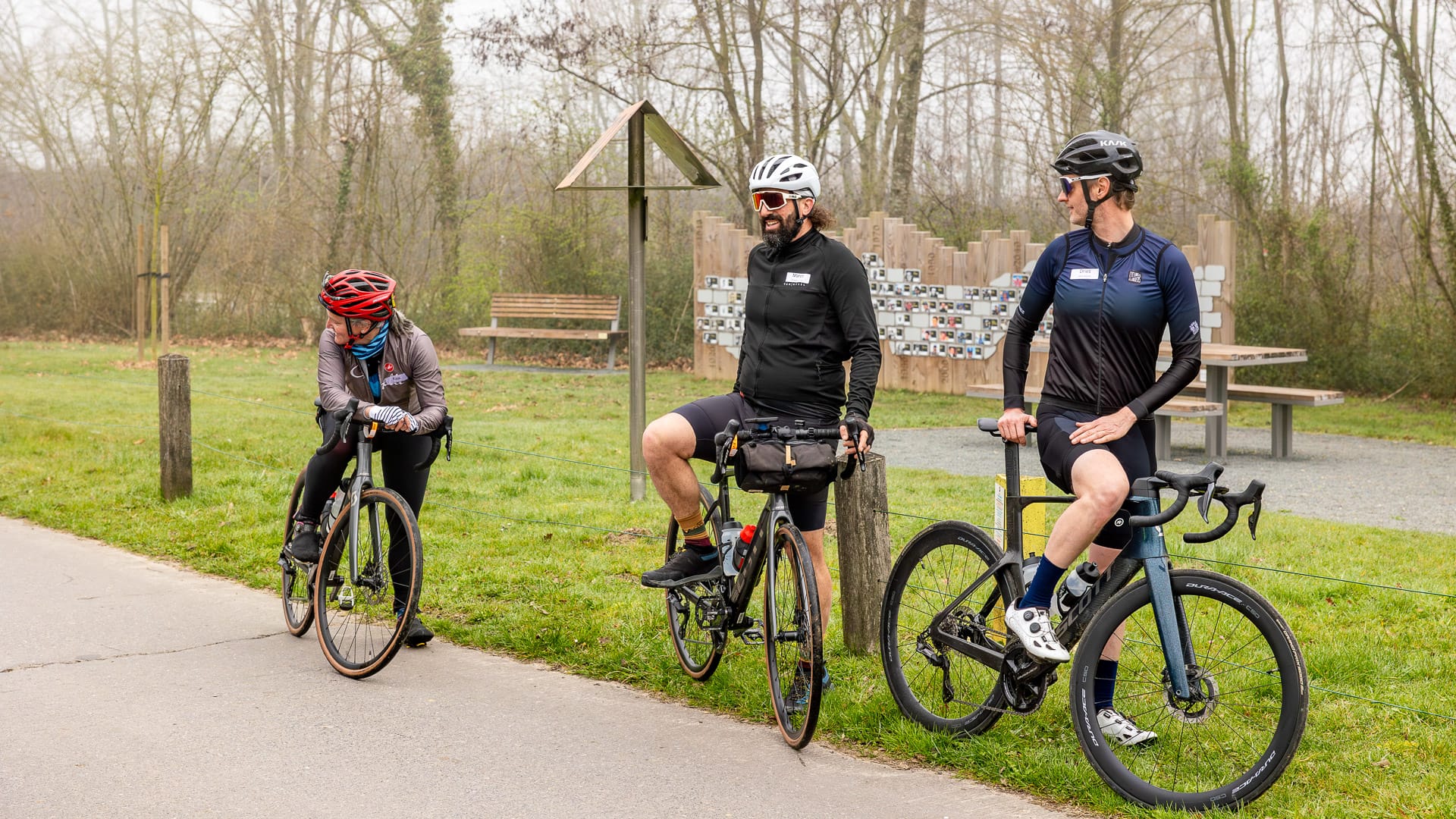
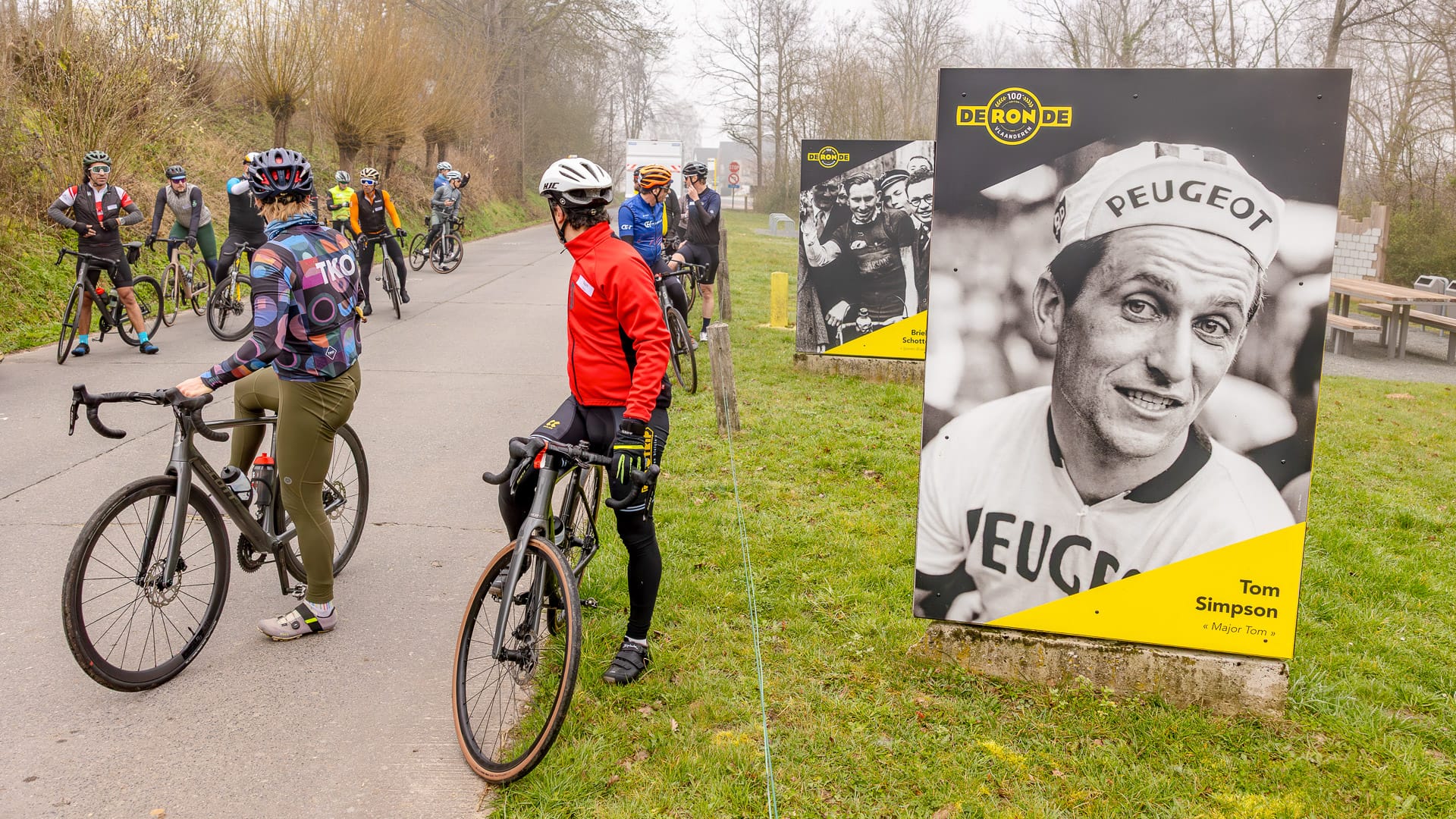
Waiting for the group during a ride in Oudenaarde (photo credit: VISITFLANDERS)
Part 5: Best time to visit Flanders
With a similar climate to the UK, in purely weather terms, the best time to plan a cycling trip to Flanders is from late April to September.
However, whilst average high temperatures in early Spring only range from between 11 and 15 degrees, many cycling fans visit Belgium at that time of the year to combine their cycling trip with watching the famous cobbled races (more on those above).
This article shares more info on the best time of year to cycle in Belgium.
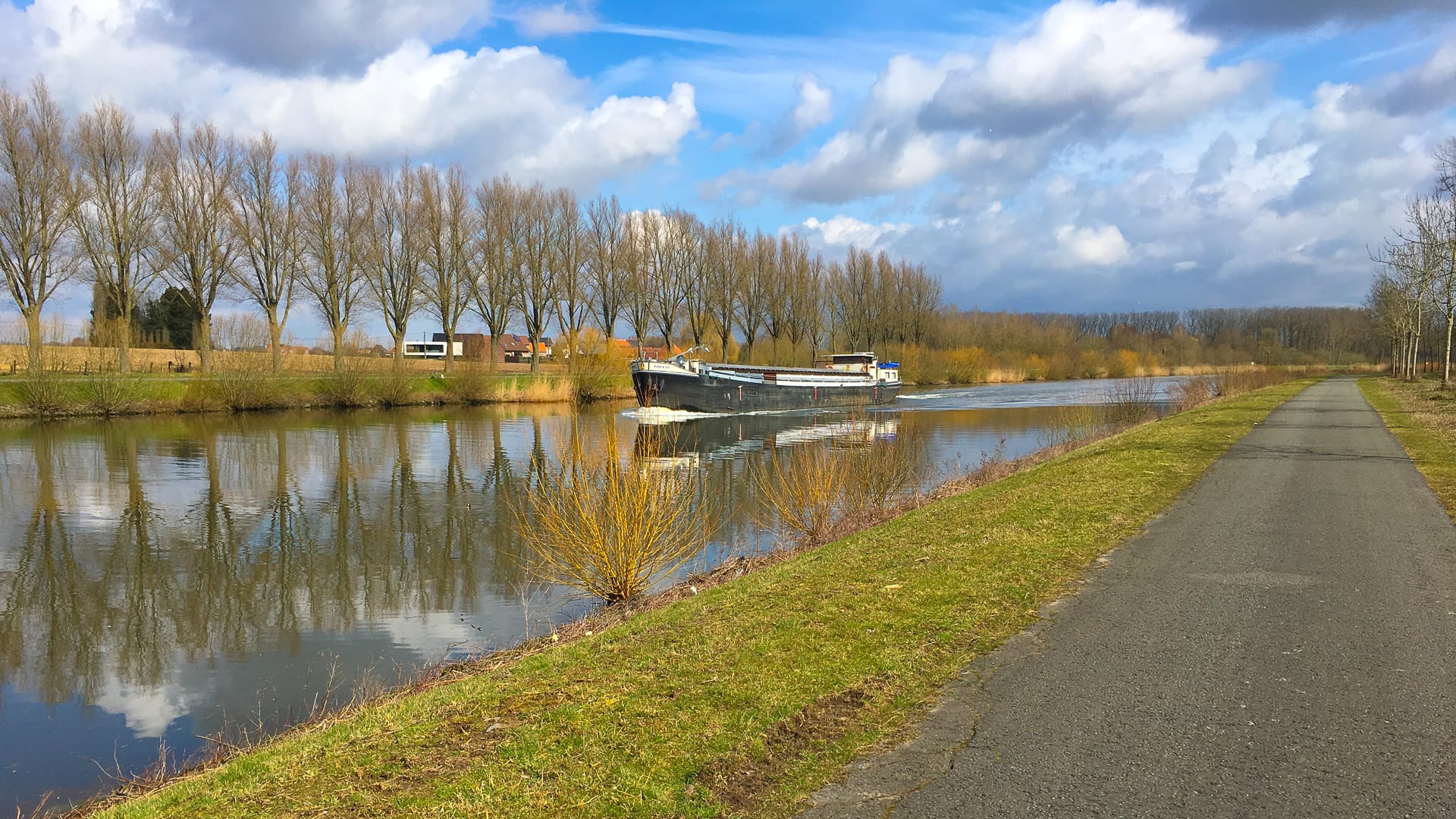
Peaceful bike path in Oudenaarde, Belgium
Part 6: Tips
The expansive town square (‘Markt’), 300 metres from the Leopold Hotel, is lined with cafés and bars. We enjoyed excellent evening meals here, at Wine and Dine and Brasserie de Cridts . Both served very good quality European style food at reasonable prices. There was a good mix of local customers and tourists and the staff were very friendly and welcoming, speaking good English. The steaks and frites were delicious.
The Centrum Ronde van Vlaanderen (AKA Tour of Flanders) Museum was a highlight of our trip. Read this article to find out all about it.
Books
A good read before any trip to the area is Edward Pickering’s terrific book entitled ‘The Ronde’ which takes the reader behind the scenes of the race.
Simon Warren’s “HELLINGEN A road cyclists guide to Belgium’s greatest cycling climbs” is also a useful reference book to the specific climbs and cobbles of the area. You might want to check out the Hellingen app too.
I would also recommend ‘The Beast, The Emperor, and The Milkman’ by Harry Pearson. Harry is a British sports writer who based himself in Belgium for the entirety of the Spring Classics back in 2018. It’s a great insight into just how much bike racing means to the people who live here, and a real cross section of the cultural nuance that makes Belgium so great.
Belgium cycling maps
A wealth of information about cycling in the area and an assortment of cycling route maps can be obtained from the reception area of the Tour of Flanders Museum.
Good to know
Read our tips for cycling in Flanders before you go. This includes our suggestions for how to ride the cobbles and the sort of kit you should think about bringing with you to ensure you are in the best possible position to fare well on them.
Belgium is not known for sunshine – horizontal rain and howling wind is more it’s kind of thing. Pack accordingly.
The area of Flanders is very rural (not dissimilar to the Lake District in the UK) and shops, cafés and restaurants are relatively few and far between. Some do not open during the early part of the week or in the winter. Make sure you take plenty of food etc with you and make the most of the towns that you pass through on the various routes such as Ronse (Blue), Geraardsbergen (Red) and Zottegem (Yellow). There’s more information on these in our ride guides.
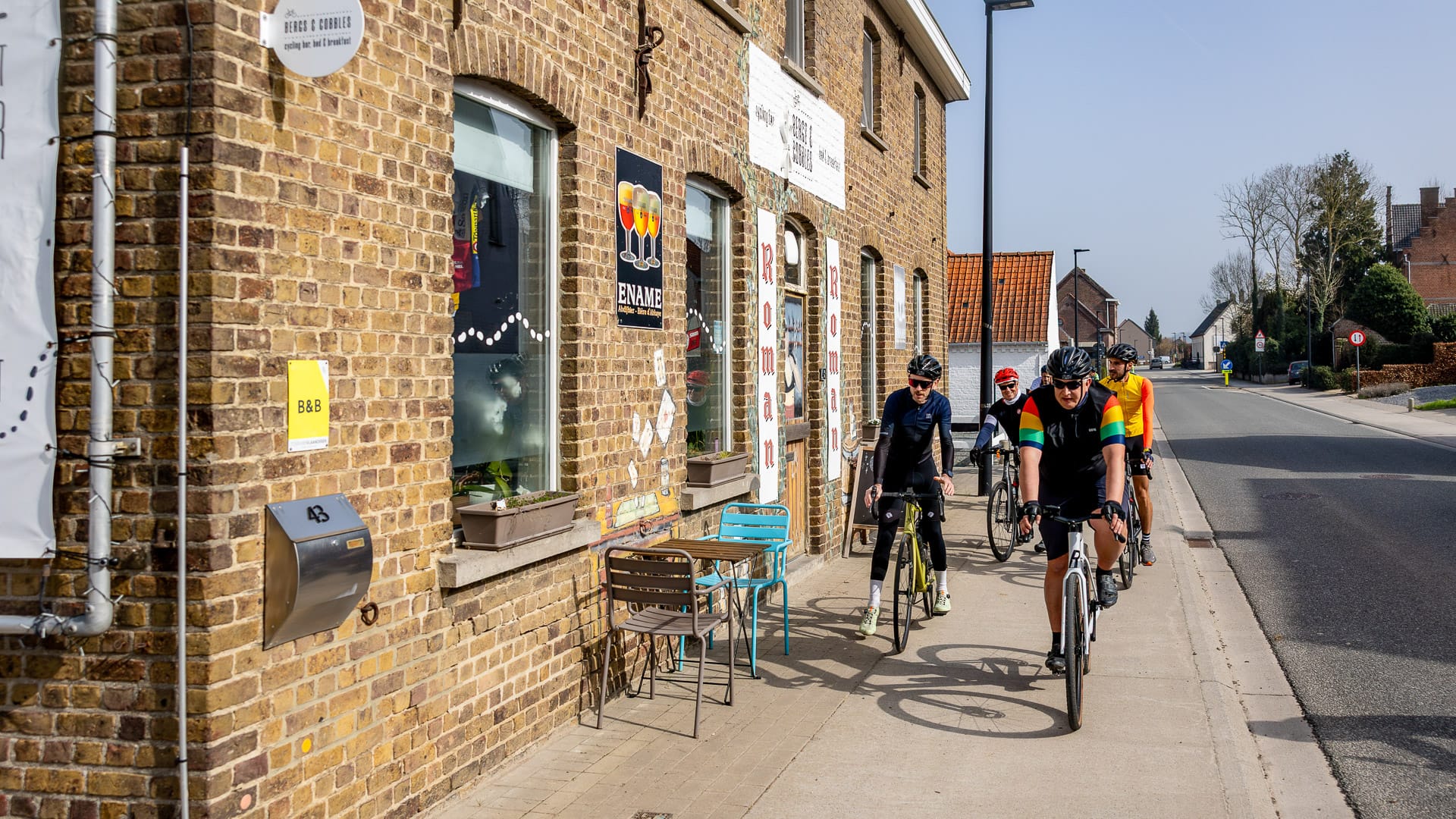
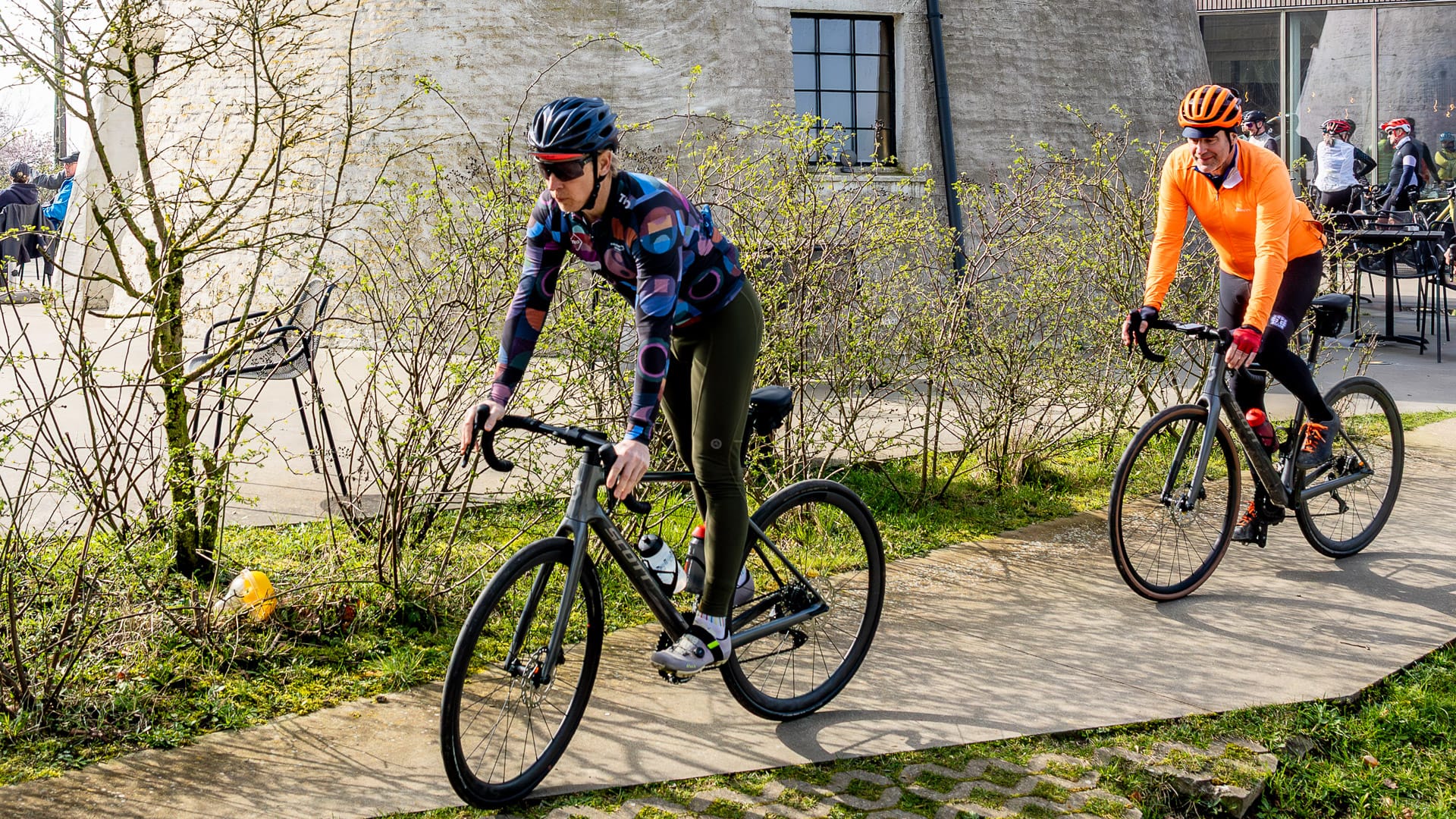
Plenty of cafe stops for cyclists in Flanders (photo credit: VISITFLANDERS)
Enjoyed our guide?
We’d love to hear from you – please comment below!
Looking for more on cycling in Belgium?
- Cycling in Belgium: 30 tips for tackling Flanders and the famous cobbled climbs
- Belgium cycling holidays: Must-read tips for the best Belgium cycling tours
- Our review of the Tour of Flanders Museum in Oudenaarde
- Cycling in and around Brussels, if you’re considering an alternative base
- 3 of the best Flanders cycling routes for 2025/2026
Want to check out some other destinations? Search by the month you want to travel or cycling destination you want to visit, here.
Please support Epic Road Rides
A huge amount of time and effort goes into the article you’ve just read, all with the aim of helping you!
If you found what you’ve read useful, I’d really appreciate it if you dropped something in the tip jar here.
It’s a way you can say thank you and help us carry on creating top quality content with no annoying ads and no pay wall.
Looking for an organised cycling trip?
If you want someone to help you plan and book your cycling holiday, fill out this form. We aren’t a tour operator/agent but we work with lots of people who are and will do our best to put you in touch with someone that can help (within 24 hours where possible)!John Vicars divides his time between England and Spain and, together with his wife, clocks in around 10,000 miles each year searching out Europe's finest roads. John loves to share his experiences (good and bad) from the saddle and has a particular loathing for double digit gradients, sub-zero temperatures and red traffic lights!
Ollie Smith has been riding bikes his whole life. Aside from racing on the road, gravel, and cyclocross circuit across the UK and Europe, Ollie has tried his hand at ultra racing and plenty of long distance bikepacking trips.
Ollie’s passion for cycling extends to his working life, too, carving a career as a cycling writer, journalist, and film maker - as well as co-producing Mitch Docker’s ‘Life In The Peloton’ podcast. When he’s not in the saddle, you can probably find him thinking about bikes, cycling, and his next two wheeled adventure.
Last Reviewed: 02 April 2026
First Published: 26 February 2019
The contents of this website are provided for general information purposes only. It is not intended to amount to advice and you should not rely on it. You should carry out your own due diligence and risk assessments and take professional advice. Views expressed by interviewees or other users of this website do not necessarily represent our views. We make no representations, warranties or guarantees, whether express or implied, that the content on our website is accurate, complete or up to date. If you use any information or content on this website, download from, or otherwise obtain content or services through our website, it is entirely at your own discretion and risk. Epic Road Rides Ltd disclaims all liability and responsibility arising from any reliance placed on the information and content on this website. Find out more here.