
Boat and bike tours in India offer a very different way to experience the country. The bicycle takes you beyond the major sights and into villages, plantations and farming landscapes. The boat then slows things down among Kerala’s canals, lakes and rice fields. Together, these experiences reveal some of India’s natural and cultural diversity.
Boat Bike Tours‘ tour of India does not follow the usual bike and boat model where you sleep on the same vessel every night. It is a 15-day cultural journey from Delhi to Kerala, combining guided cycling, hotels, a train journey, a domestic flight and three nights aboard a traditional houseboat.
The route links the Golden Triangle in northern India with Kochi, Munnar, Thekkady and the Kerala backwaters. Along the way, riders experience the Taj Mahal, Jaipur’s palaces, tea plantations, spice country, village roads and the Arabian Sea.
This article delves into the tour and has been created with Jacob Ketel, director of the Islandhopping office in Konstanz. Islandhopping has been part of the Boat Bike Tours family since 2024, and Colours of India is a project Jacob is particularly proud of.
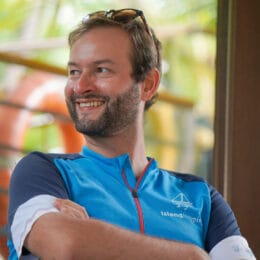
Jacob Ketel is director of the Islandhopping office in Konstanz.
He travelled to India during the development of Colors of India, testing possible routes, hotels and experiences with his colleague Sil. He was initially unsure whether the bike and boat concept would work here. The research trip convinced him that Kerala's roads and houseboats had real potential, but also that the journey needed to show more of the country.
He is particularly proud of the resulting itinerary, which combines northern India's cultural landmarks with cycling and houseboat travel in Kerala.
We love to introduce our community to cycling businesses, destinations and ideas that we think are genuinely interesting. Boat Bike Tours caught our attention because of its focus on cycling in India, which felt like a natural fit for Epic Road Rides and our readers. We were therefore pleased to work with the Boat Bike Tours team on this article.
Boat Bike Tours paid for this advertisement feature. Our decision to collaborate reflects our view that the brand is relevant to our readers; it is not a formal approval, audit or guarantee of its services. Unless we expressly say otherwise, we have not personally taken the trip described or independently verified information supplied by Boat Bike Tours.
As with any travel purchase, please check the latest trip details, terms and customer protections directly with Boat Bike Tours before booking. Any booking is made with Boat Bike Tours, not Epic Road Rides.
Always check current travel information and advice. For visitors from the UK, the UK government travel information pages are here. Visa information should be checked through the Government of India e-Visa portal.
Table of contents
This guide is divided into four parts:
- Part 1: Is a boat and bike tour in India right for you?
- Part 2: Boat Bike Tours’ India itinerary
- Part 3: Things to know before booking a boat and bike tour in India
- Part 4: What does Boat Bike Tours offer?
Sponsor Message
Looking for bike and boat tours in India?
Colors of India takes you from the palaces and monuments of northern India to the hills, villages and backwaters of Kerala.
Our 15-day itinerary mixes guided cycling with time in Delhi, Jaipur and Agra, before heading south for rides around Munnar and through rural Kerala. Later in the journey, you spend three nights aboard a houseboat, cycling between the waterways and villages of the backwaters.
If this mix of cycling, culture and time on the water sounds like your kind of trip, we’ve been running bike and boat holidays since 2002 and would love you to join us in India.
See the full route, current dates and prices on the website or send Boat Bike Tours a question using the form below.
Got a question for Boat Bike Tours?
Fill out this form and we will pass it to Boat Bike Tours who aim to reply (within 24 hours wherever they can!)
Part 1: Is a boat and bike tour in India right for you?
What is a boat and bike tour in India?
Our Colors of India tour is a guided cultural cycling holiday with a three-night houseboat section.
You stay in hotels while travelling through Delhi, Rajasthan, Agra and the first part of Kerala. Once we reach the backwaters near Alleppey, the houseboat becomes your floating base for three nights.
Houseboats are available in different configurations, ranging from one to six cabins, so multiple vessels can be combined to accommodate the group. Currently we have two five-cabin houseboats. However, 10-cabin houseboats are also currently being built, which could provide another option for the tour in future.
During this section, you leave the boat for guided rides and rejoin it later for meals and cruising. The vessel is an important part of the experience, but it is only one element within a much wider journey through India.
This makes the trip different from our European bike and boat tours. Flights, trains and road transfers cover the large distances between regions. We use the bicycle where it adds most to the experience, while the houseboat opens up Kerala’s waterways.
Why go on a boat and bike tour in India?
Experience northern and southern India in one trip
India is too large and varied to be represented by one region.
In the north, you experience Delhi’s spice stalls, rickshaws and mosques, Jaipur’s Hawa Mahal and Amber Fort, rural Rajasthan and the Taj Mahal. In the south, the pace changes among rubber plantations, tea country, coconut palms, villages and Kerala’s waterways.
The order of the journey matters too. You can begin trips with busy cultural days and some of India’s most famous landmarks. Then move towards quieter roads, tropical landscapes and three nights on the water. This can feel like visiting two countries in one trip.
See everyday India at cycling pace
Vehicles move efficiently between attractions. But when you ride, the bicycle allows you to notice what lies between them.
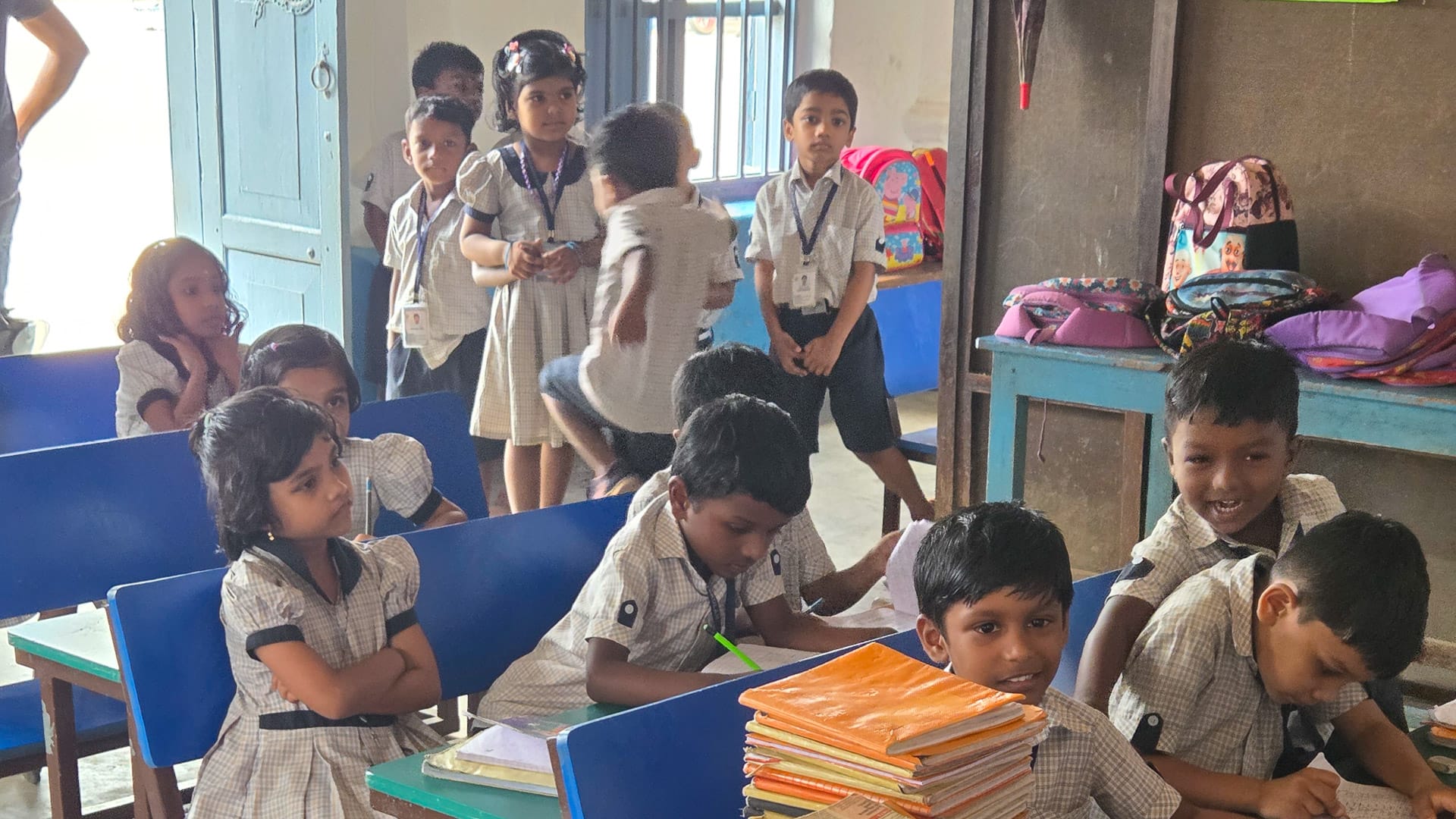
You pass farms, schools, tea shops, temples, churches and small communities. The road may also be shared with tuk-tuks, motorcycles, schoolchildren, cattle, water buffalo and the occasional camel.
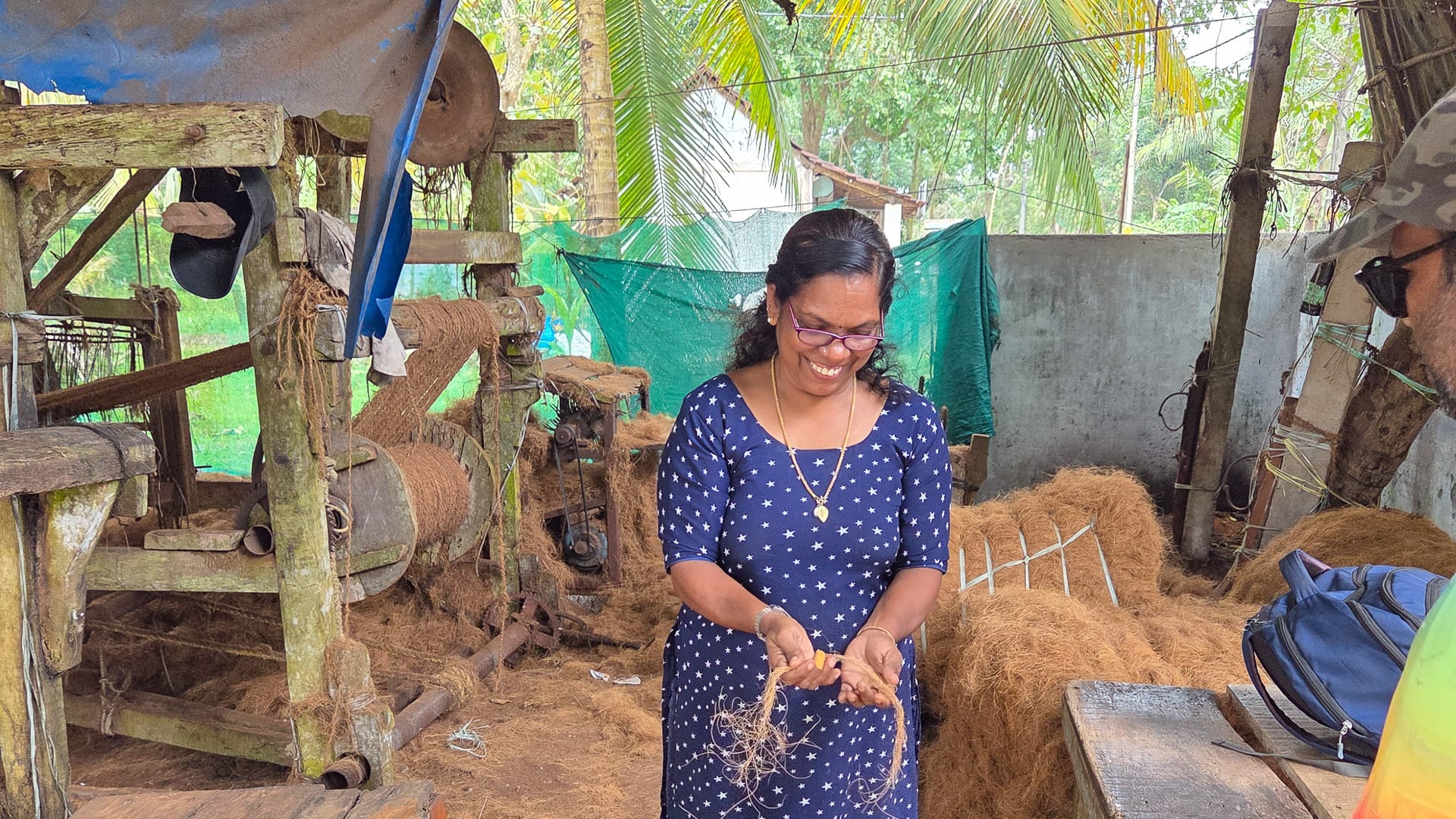
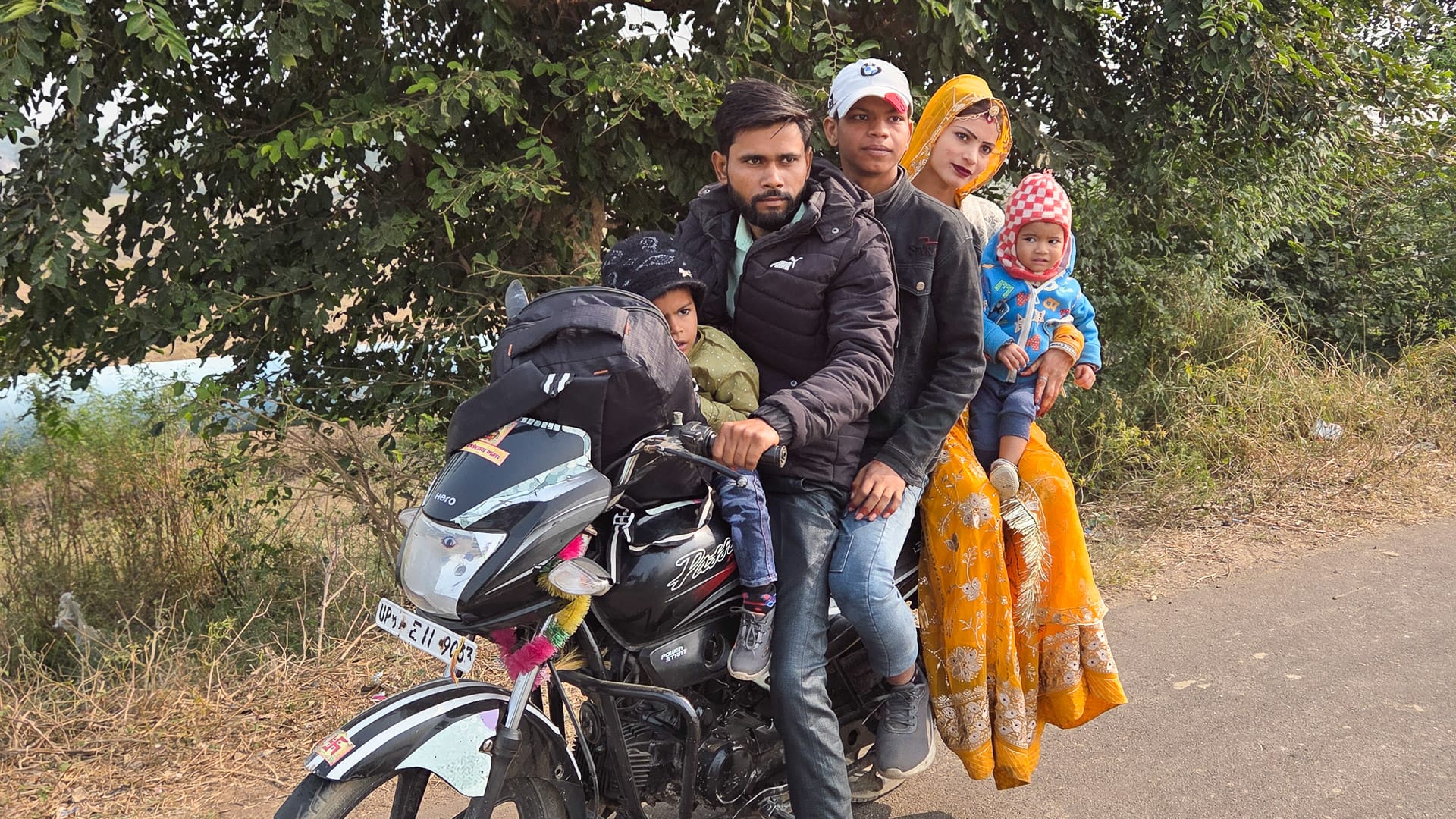
Some of the strongest memories come from encounters rather than landmarks. Curious schoolchildren that come to greet you. Local people that stop to talk. On our trip, a wedding party invited the group to join them for photographs.
These travel stories often become as memorable as the headline sights and cannot be planned. The bicycle simply makes them more likely. If you only want to experience India through the window of a tour bus, this probably is not the right holiday. The bike asks you to engage with the country, its warmth, sounds, movement and people.
Explore Kerala from road and water
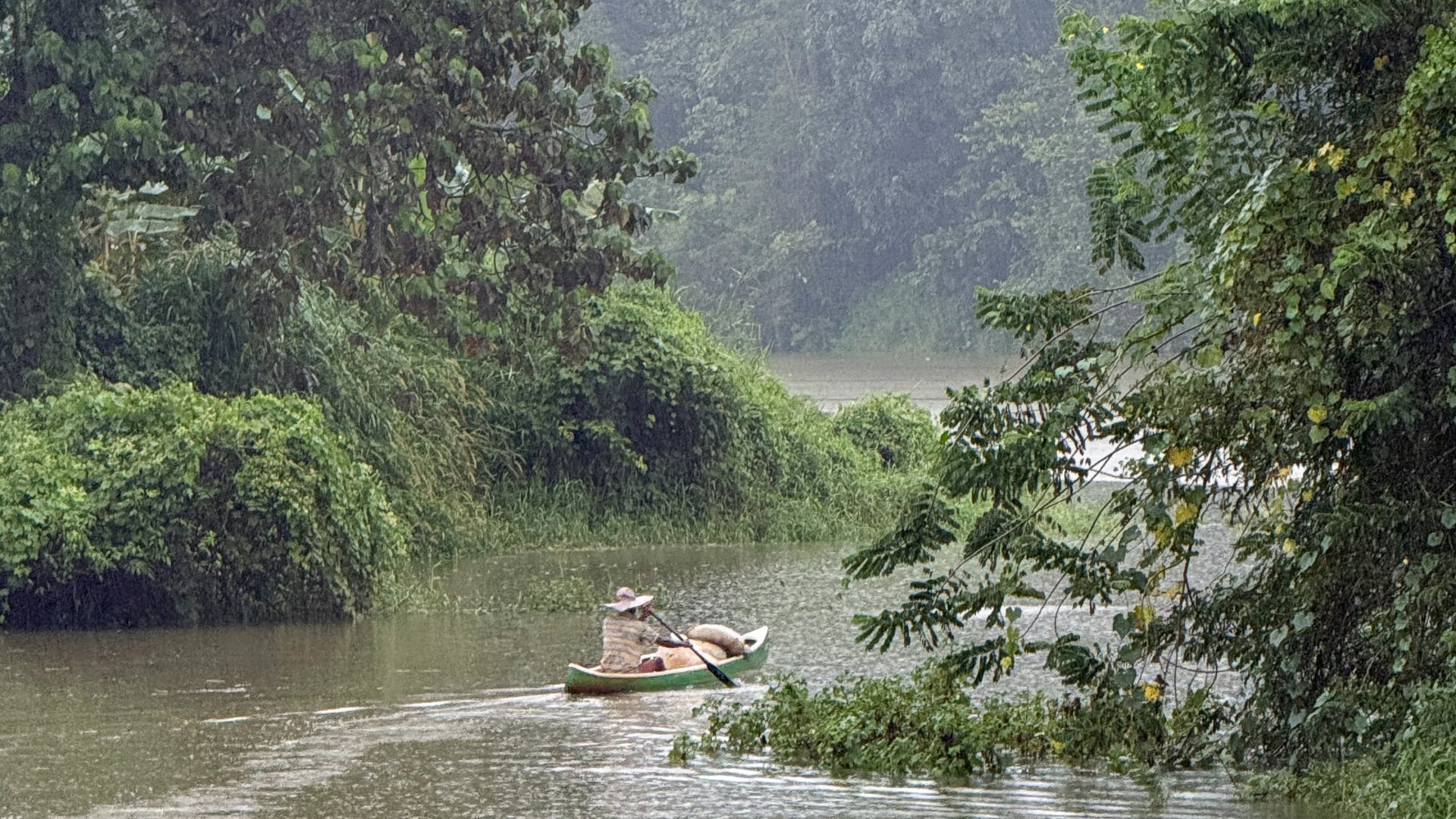
The backwaters around Kumarakom and Lake Vembanad form a network of canals, rivers and lakes. Rice paddies, palms and villages sit close to the water, and travelling by bike and houseboat reveals different parts of this landscape.
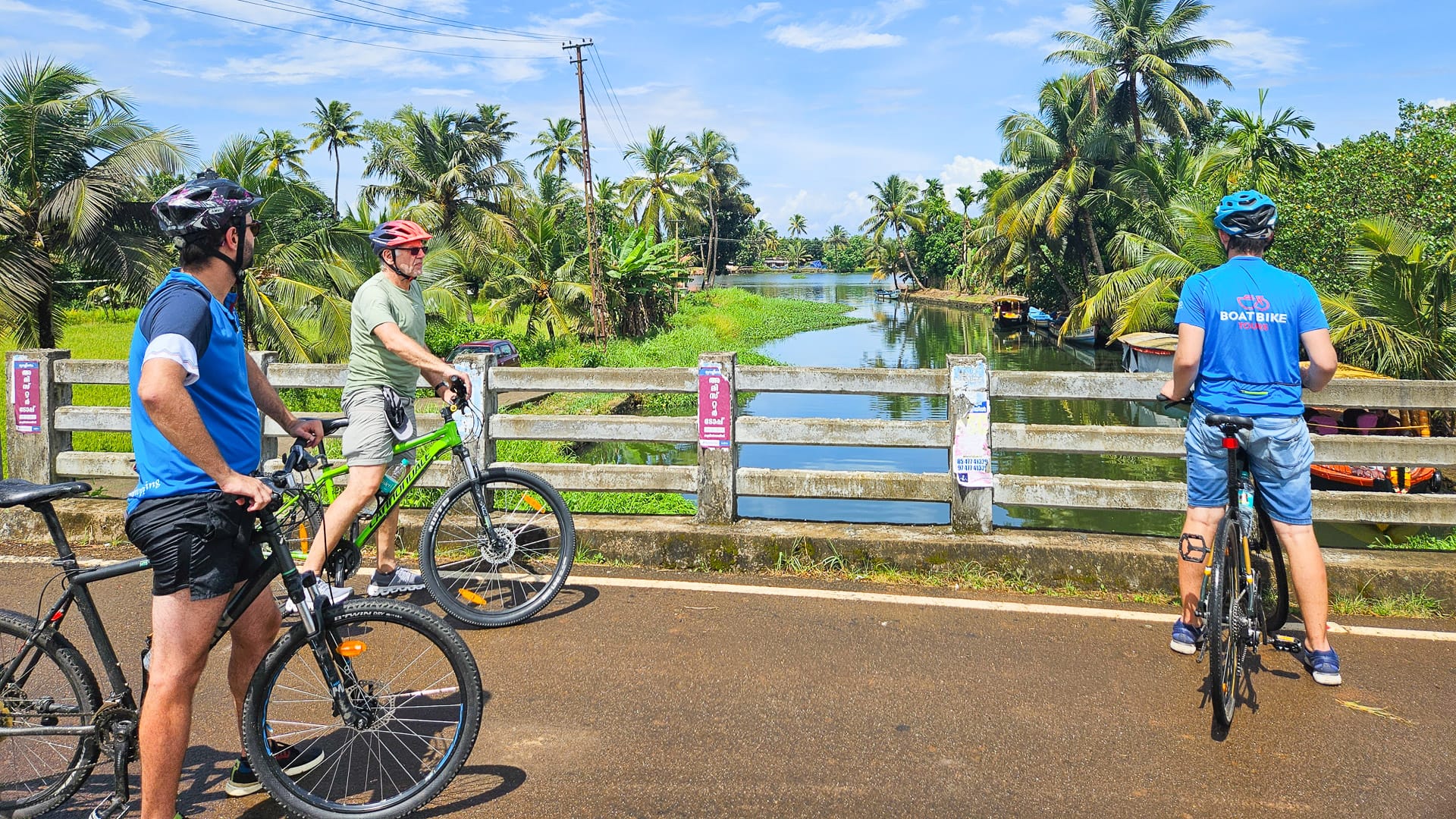
The bicycle follows village roads and narrow paths.
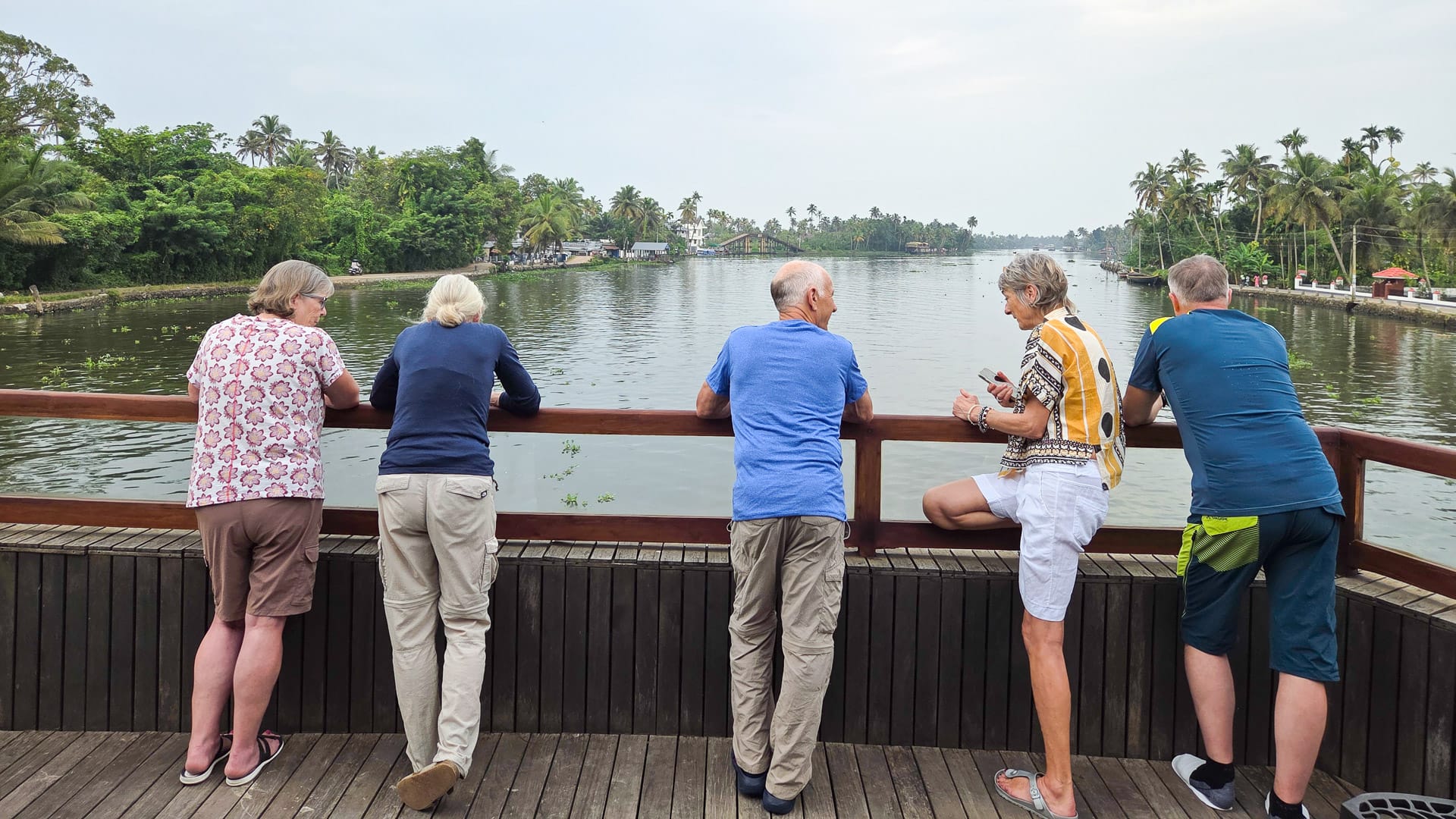
The houseboat then gives you time to sit outside and watch fishing boats, homes, palms, birdlife and flocks of ducks pass.
Combine cycling with culture
This is not a distance-focused cycling holiday.
Cycling is important, but it is not the only purpose of the journey. The programme includes palaces, markets, temples, textiles, spices, birdlife, tea plantations, villages, food and local encounters.
The riding creates a link between these experiences rather than becoming the sole focus. Cyclists who measure a holiday only by kilometres may find the daily distances short. Travel-loving cyclists who want to understand the places they ride through are more likely to appreciate the format.
Why is India a strong destination for boat and bike tours?
India offers striking contrasts at almost every stage.
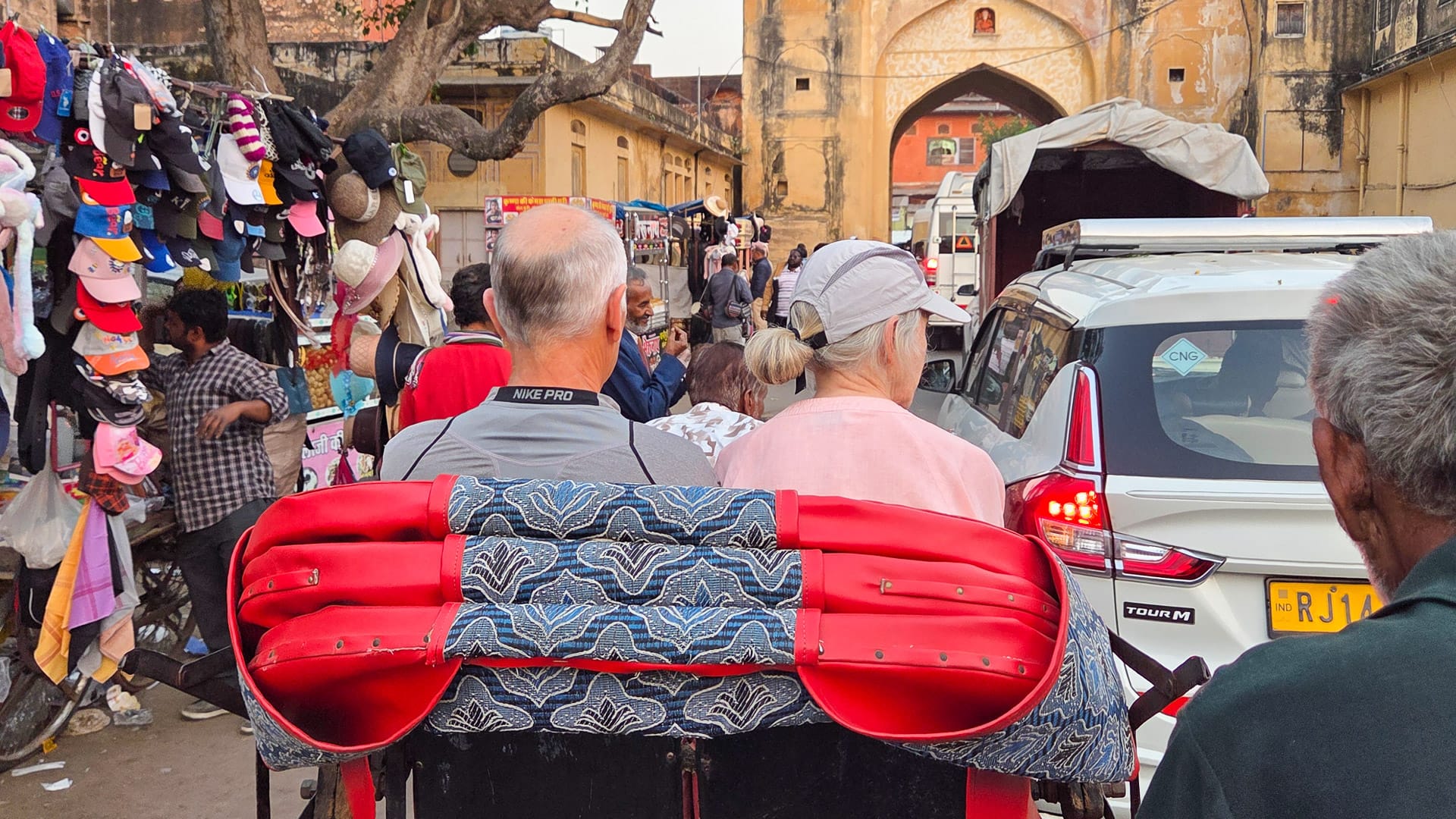
In northern India, the Golden Triangle provides some of the country’s most recognised cultural experiences. You can move from Old Delhi’s markets and spice stalls to Jaipur’s palaces, then watch the Taj Mahal change colour at sunset and return at sunrise.
The cycling reveals quieter places between these landmarks. Keoladeo National Park provides a traffic-free introduction to riding, while the roads around Bharatpur pass agricultural landscapes and villages.
Kerala has a close relationship with water. Canals, rivers and lakes connect villages, rice paddies and Lake Vembanad. The houseboat therefore feels relevant to the landscape rather than simply being another form of accommodation.
Each type of transport has a clear purpose. Trains, flights and road transfers deal with India’s scale. The bicycle brings you closer to local life. The hotels provide comfort after full cultural days, while the houseboat offers a slower final chapter.
We have not tried to transfer a European bike and boat holiday unchanged to another continent. We have adapted the concept around India’s distances, infrastructure and character.
Who does the tour suit?
Colors of India is likely to suit:
- Curious travellers who want to see more than India’s headline attractions.
- Confident leisure cyclists who are comfortable on public roads.
- Couples and friends interested in culture, food and local encounters.
- Cyclists who enjoy changing landscapes rather than long daily distances.
- Travellers who are open to stepping outside their comfort zone from time to time.
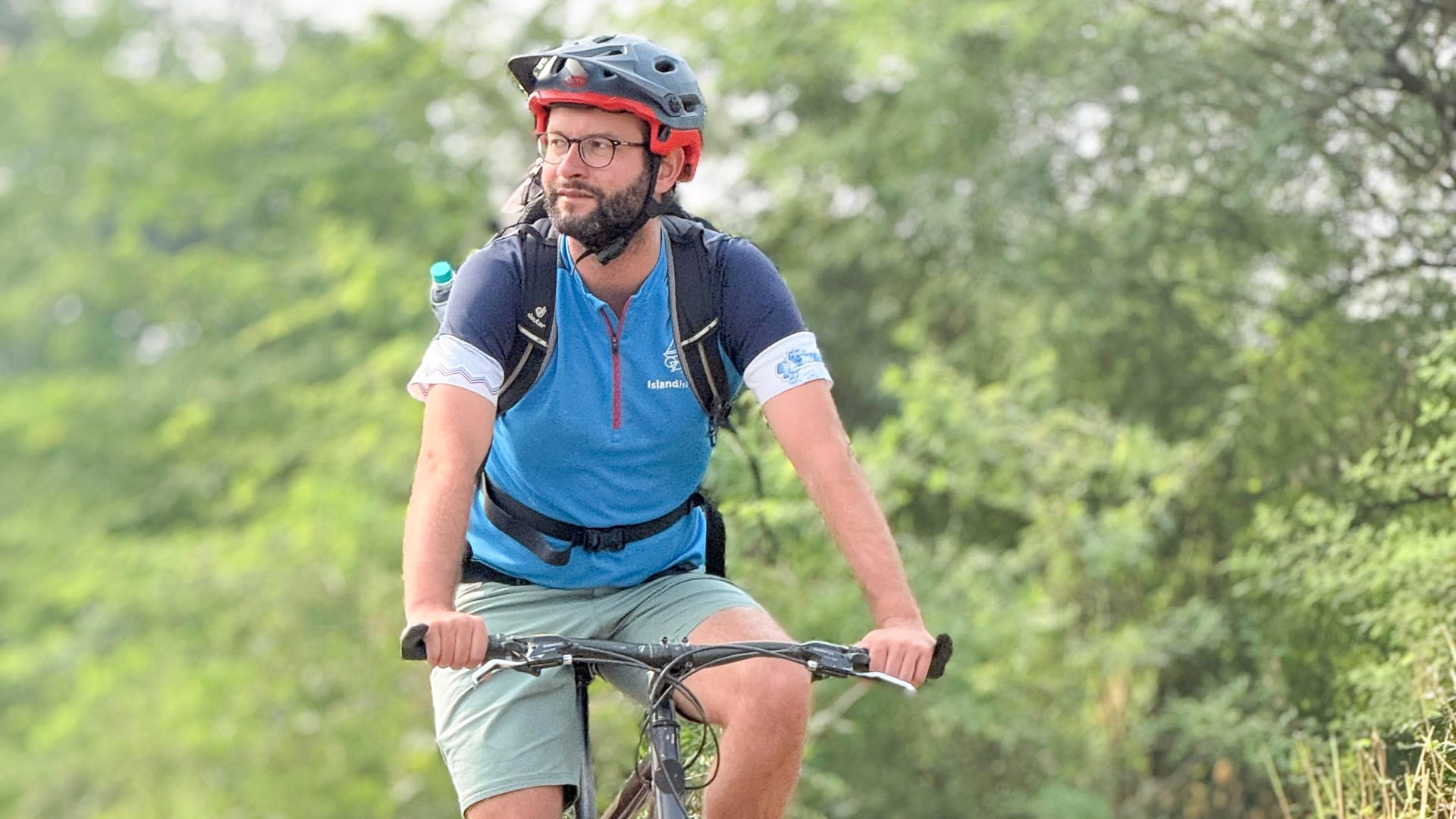
You do not need to be a fast or highly sporty rider. Most stages are relatively short, and much of the terrain is flat or rolling. However, you should be comfortable controlling a bicycle, riding on mixed surfaces and staying alert around other road users.
India is not a classic cycling destination in the European sense. Dedicated cycle lanes are rare. Road surfaces, traffic behaviour and equipment may feel unfamiliar, and daily life can spill into the road around you.
An e-bike can reduce the physical effort, but it cannot replace safe bike handling. The locally sourced e-bikes are sturdy and suitable for the tour, but riders used to premium Bosch or Shimano systems should expect simpler technology.
This trip may not suit someone looking for a polished, predictable cycling environment. For the right traveller, the surprises are exactly what make India memorable.
Guests can skip a ride and can be transported to the next accommodation with a transfer, or ride along with the support vehicle for the duration of the tour. On houseboat days, guests can remain on board and enjoy the cruise to the next pick-up location. Rides can be shortened in emergency situations by jumping into the support van.
Be aware the tour is built around the cycling programme, although there may occasionally be limited flexibility for a small number of guests who choose not to ride.
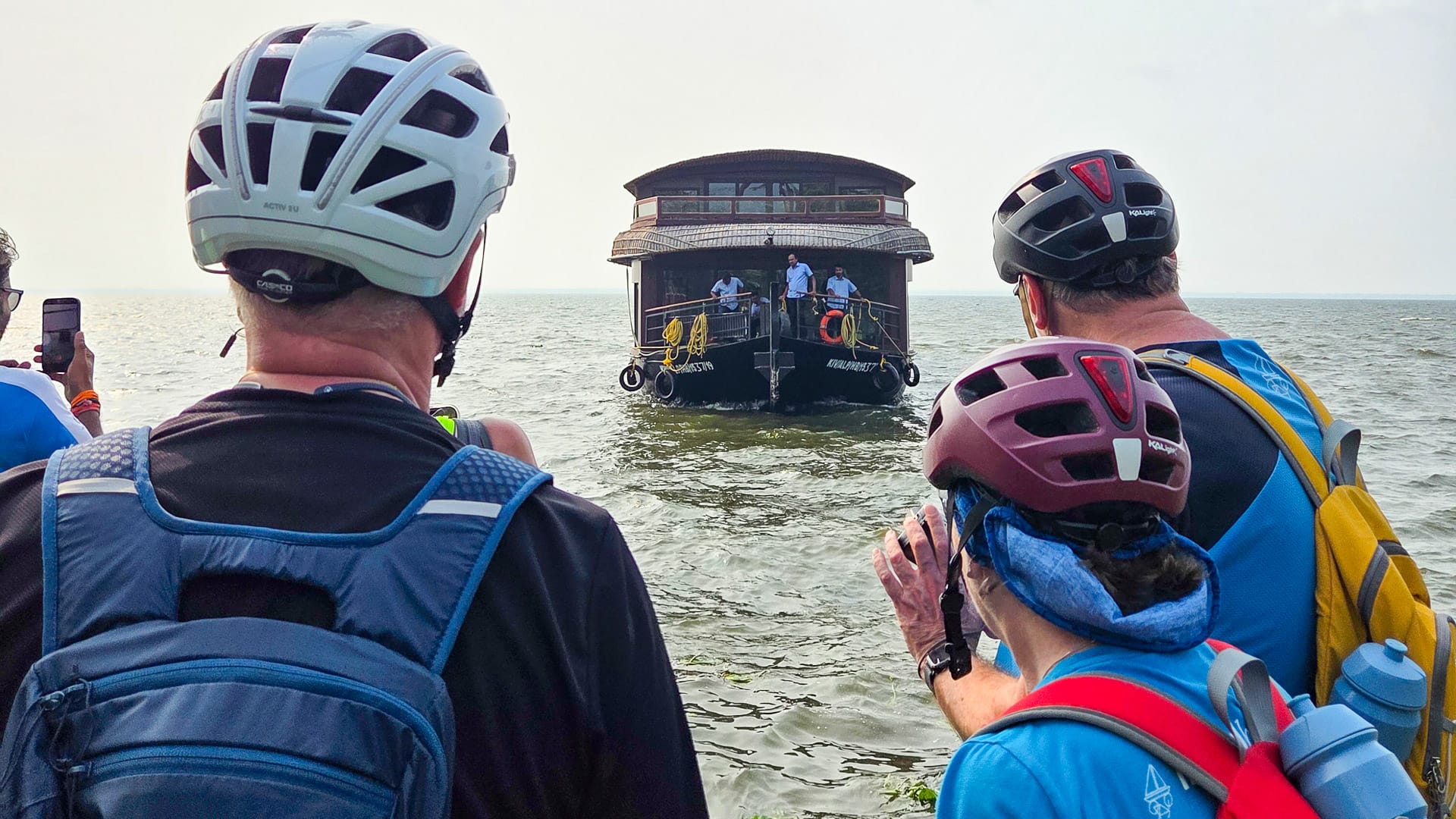
Waiting to board a houseboat in the Kerala Backwaters (photo credit: Boat Bike Tours)
India versus Egypt versus Vietnam
We also offer long-haul boat and bike tours in Egypt and Vietnam. All three combine short or moderate rides, recognised sights, lesser-known places, regional food and time on the water, but the atmosphere and riding are very different.
| India | Egypt | Vietnam |
| Strongest for: regional contrasts, food and local encounters. | Strongest for: ancient history and specialist interpretation. | Strongest for: green scenery, waterways and gentler riding. |
| Cycling: Level 3/5, with mixed surfaces, unfamiliar traffic and group riding. | Cycling: Level 3/5, with structured group riding and extensive support. | Cycling: Level 2/5, mainly short and flat stages. |
| Boat stay: three nights on a Kerala houseboat. | Boat stay: seven nights on a Nile ship. | Boat stay: two nights on a traditional junk. |
| Swimming: beach time near Marari. | Swimming: Red Sea time at El Gouna. | Swimming: several beach and bay opportunities. |
Choose India for people, food and regional contrasts
India is the most human and sensory of the three journeys. One day you are looking at the Taj Mahal or Jaipur’s palaces. The next, you may be cycling through a village where children wave from a schoolyard and families stop to speak to the group.
The food also changes considerably between regions. North Indian breads and curries are followed by Kerala dishes using coconut, curry leaves, seafood and local spices.
At Marari Beach Hotel, swimming is possible at the beach and in the pool. Swimming is not possible from the houseboat.
Guests often remember India’s people as strongly as its monuments. You should choose it if you enjoy culture, conversation and the contrast between busy cities and quiet backwaters.

A beautiful butterfly at Marari Beach Resort in Kerala (photo credit: Boat Bike Tours)
Choose Egypt for ancient history and structured support
Egypt is centred on the Nile and the country’s archaeological sites. Licensed Egyptologists travel with us, helping to interpret temples, tombs, symbols and religious history.
The cycling is highly organised. We ride as one group, supported by guides, vehicles and local traffic arrangements. The Egypt tour also includes a standby doctor and ambulance during the cycling days.
It is a strong fit for history lovers who value a clear group structure. It is less suited to cyclists who want to ride independently.
Choose Vietnam for landscapes and easier cycling
Vietnam is more landscape-led. Rice fields, limestone islands, tropical coastlines and the Mekong Delta provide a constant backdrop, while cities, temples and imperial history add cultural depth.
The cycling is easier overall, with short to moderate rides on mainly flat roads and paths. Kayaking, traditional boats and regular swimming opportunities add more time on the water.
As with India, Vietnam only offers a fully guided riding experience. We don’t offer self-guided tours here, nor do we suggest riding self-guided.
Conclusion
In simple terms, India often stays with guests because of its people, colours and traditions. Vietnam is more likely to stay with them because of its landscapes and waterways. The tours complement one another rather than compete.
They are similar in concept, combining cycling and non-cycling days to allow time to visit more renowned cultural sites.
Sponsor Message
Looking for bike and boat tours in India?
Colors of India takes you from the palaces and monuments of northern India to the hills, villages and backwaters of Kerala.
Our 15-day itinerary mixes guided cycling with time in Delhi, Jaipur and Agra, before heading south for rides around Munnar and through rural Kerala. Later in the journey, you spend three nights aboard a houseboat, cycling between the waterways and villages of the backwaters.
If this mix of cycling, culture and time on the water sounds like your kind of trip, we’ve been running bike and boat holidays since 2002 and would love you to join us in India.
See the full route, current dates and prices on the website or send Boat Bike Tours a question using the form below.
Got a question for Boat Bike Tours?
Fill out this form and we will pass it to Boat Bike Tours who aim to reply (within 24 hours wherever they can!)
Part 2: Boat Bike Tours’ India itinerary
India boat and bike tour at a glance
| Tour detail | Information |
| Duration | 15 days and 14 nights |
| Cycling days | 9 days |
| Start and finish | Delhi to Kochi, finishing near Marari Beach |
| Main regions | Delhi, Rajasthan, Uttar Pradesh and Kerala |
| Cycling | Guided rides on asphalt, gravel paths and rural tracks |
| Difficulty | Level 3 out of 5 (requires a higher level of exertion, medium hilly terrain) |
| Daily riding distance | Individual stages range from 10 to 50 kilometres |
| Accommodation | 11 hotel nights and three houseboat nights |
| Standard bike | Cannondale Trail 6 or similar |
| E-bike | Available for a supplement, subject to availability |
| Travel dates | 21 November to 5 December 2026 |
Route map and tour materials
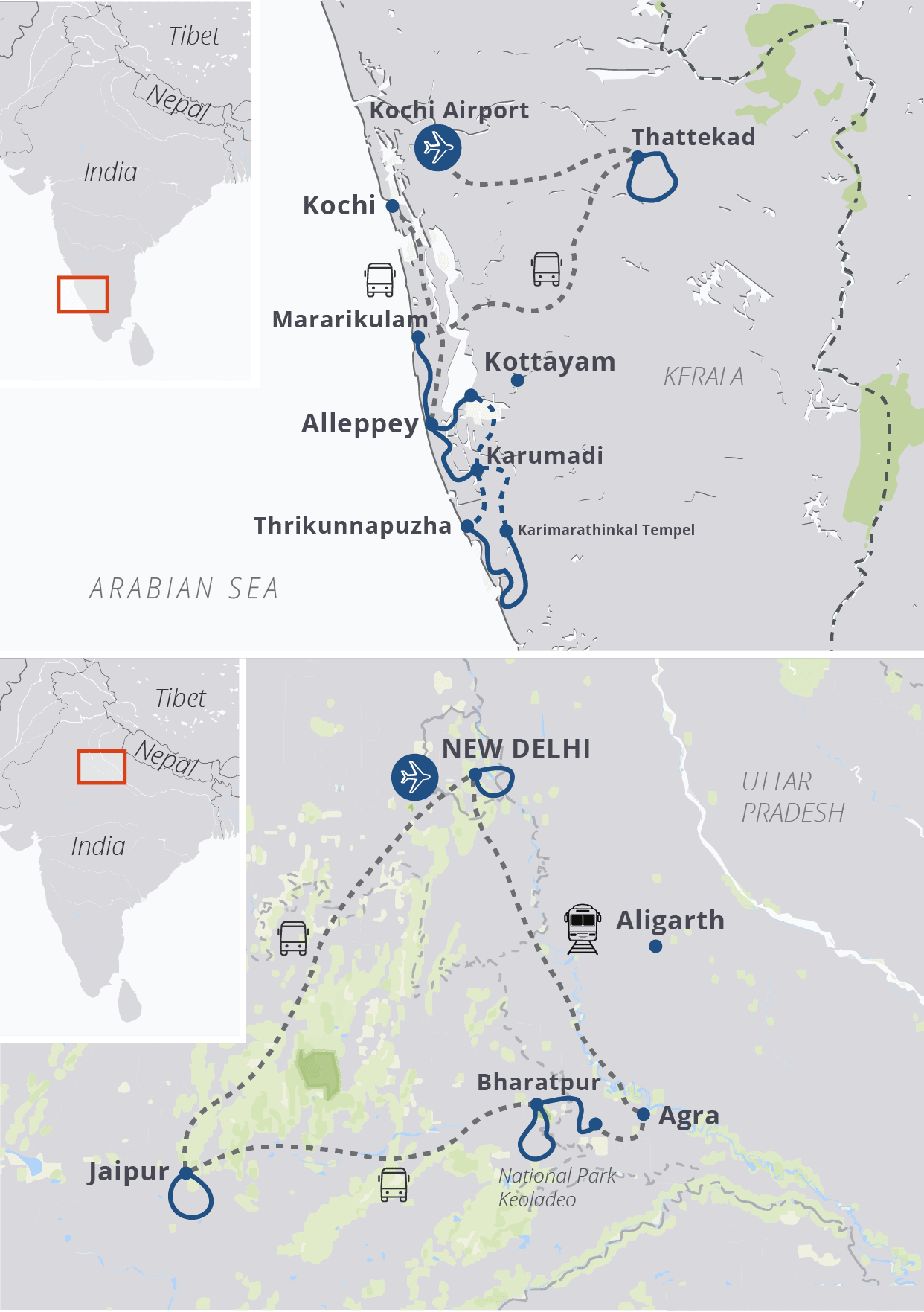
Route map of the Colors of India tour (map credit: Boat Bike Tours)
Tour highlights
- Exploring Jaipur’s Amber Fort and City Palace.
- Cycling through Keoladeo National Park.
- Seeing the Taj Mahal at sunset and sunrise.
- Riding among Munnar’s tea plantations.
- Crossing Kerala’s village and backwater landscapes.
- Spending three nights aboard a traditional houseboat.
- Watching fishing boats return to shore near Mararikulam.
Day-by-day itinerary
Check the current itinerary before booking. Note that the exact order and itinerary can change because of weather, traffic and local operating conditions.
Day 1: Arrival in Delhi
We meet you at Delhi Airport and transfer you to the hotel, where the local team helps with check-in.
The welcome dinner introduces the guides, the group and the journey ahead. There is no scheduled cycling today.
Day 2: Delhi to Jaipur
We transfer to Jaipur, a city in Rajasthan and the state capital, known as the Pink City for the distinctive colour of its historic centre.
A stop at Jal Mahal, also known as the Lake Palace, introduces Rajasthan’s architecture before a visit to a textile workshop. You learn about traditional block printing and may have the chance to try on a saree.
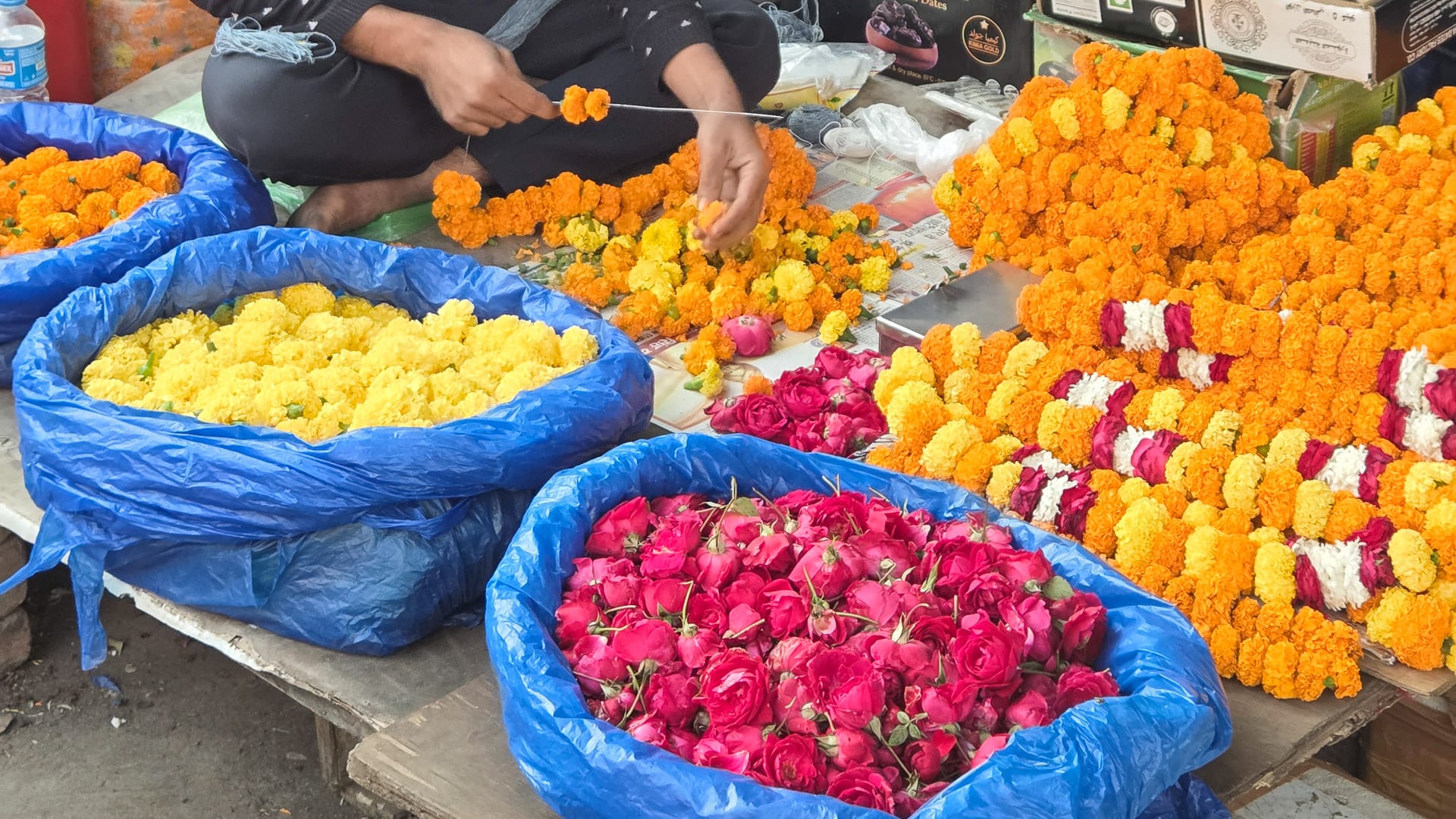
Passing by a flower market in New Delhi, India (photo credit: Boat Bike Tours)
Day 3: Jaipur
This is a full cultural day.
Visits include Hawa Mahal, Amber Fort, Sheesh Mahal, the Hall of Mirrors, and the City Palace. The afternoon is free for the bazaars or time at the hotel, followed by dinner at a selected restaurant.
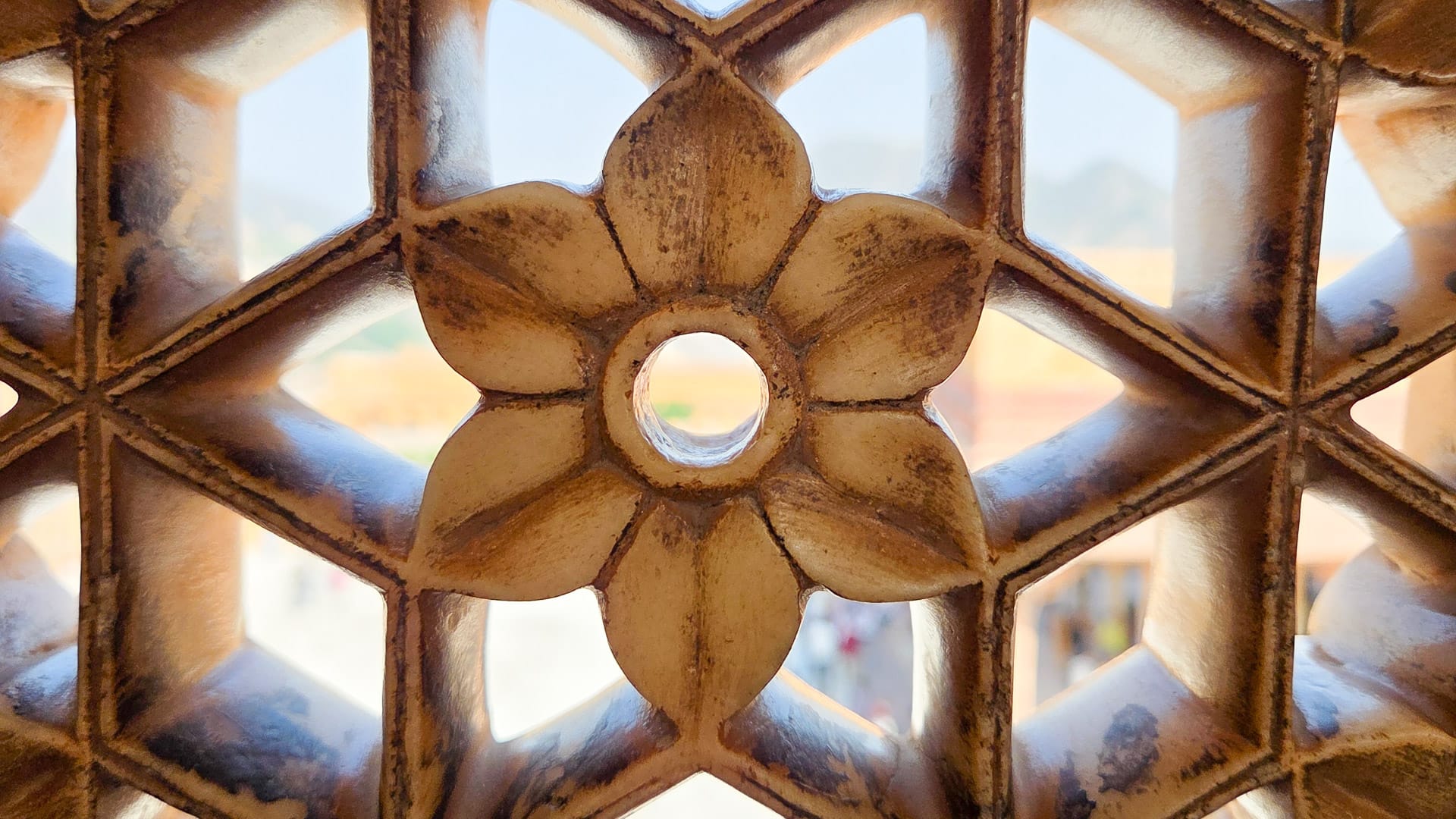
Flower-shaped stone carving and latticework at Amber Fort (photo credit: Boat Bike Tours)
Day 4: Jaipur to Bharatpur
Distance: Around 10 kilometres.
The transfer to Bharatpur, a city in eastern Rajasthan and the gateway to Keoladeo National Park, includes Chand Baori, a vast stepwell in Abhaneri.
The first ride takes place in Keoladeo National Park. Its traffic-free paths provide a gentle introduction to the bicycles and climate. Monkeys and exotic birds can be spotted within the park’s calm environment.
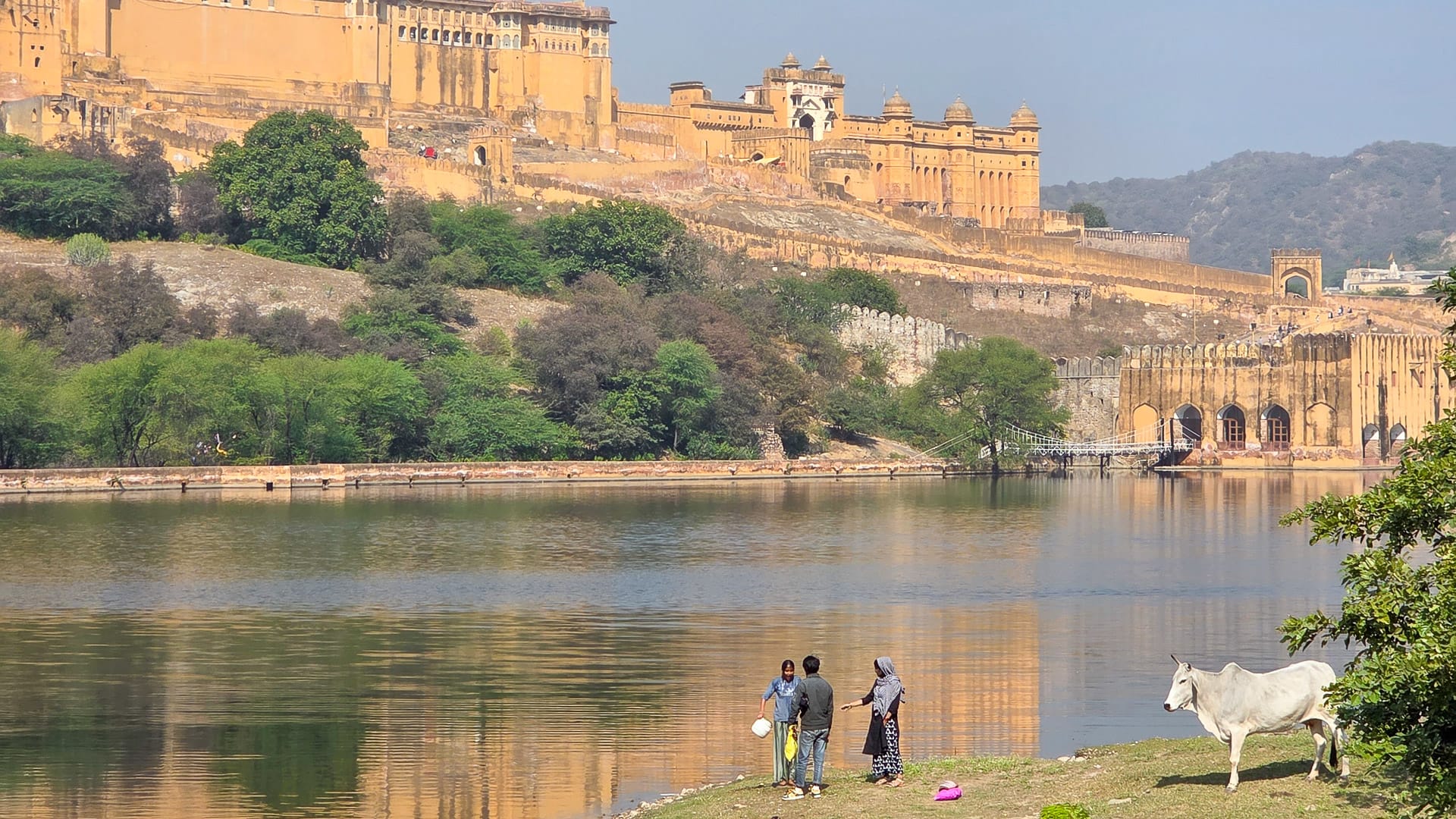
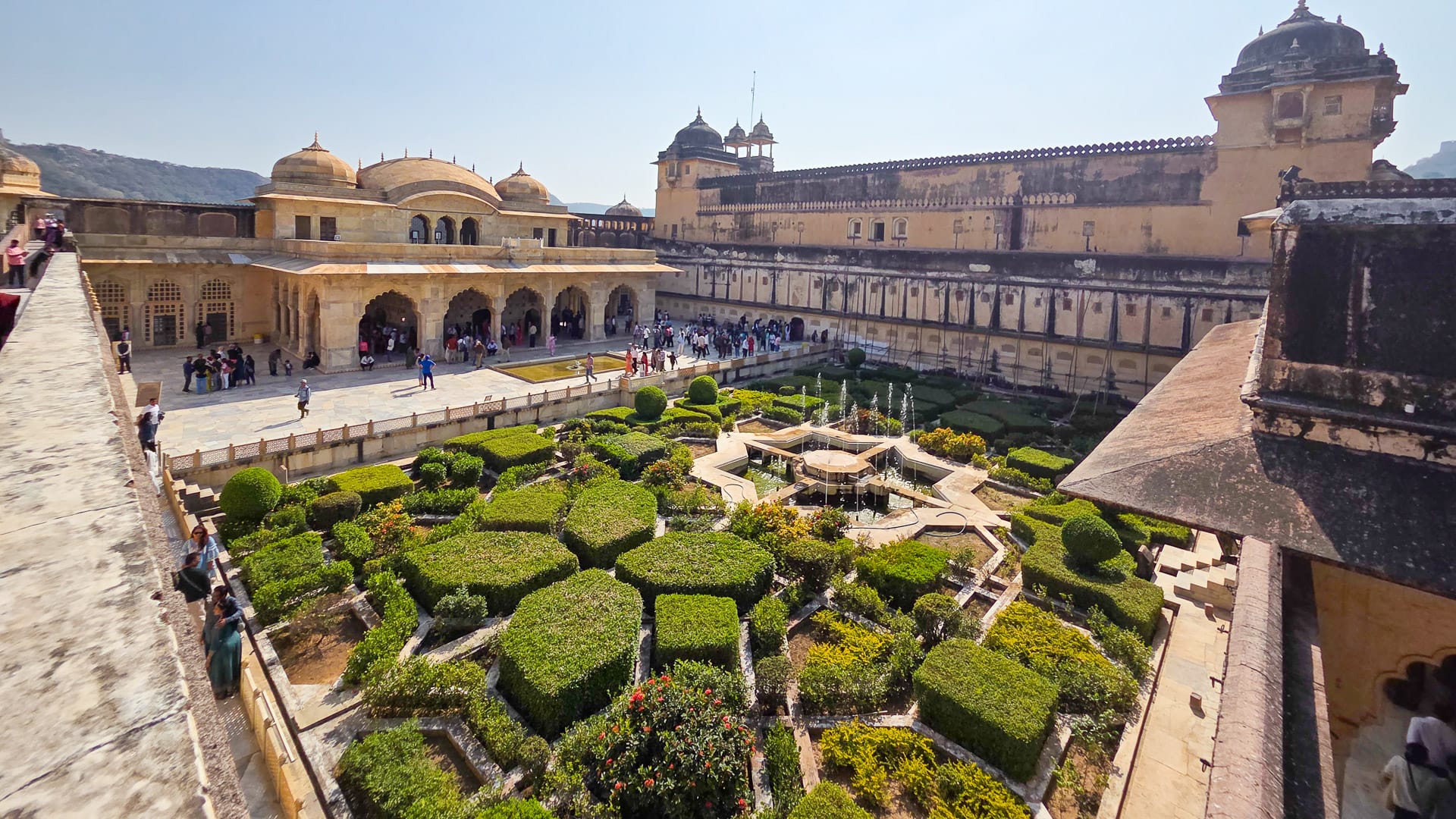
View from Amber Fort in Jaipur, India (photo credit: Boat Bike Tours)
Day 5: Bharatpur to Agra
Distance: Around 30 kilometres.
You ride through agricultural landscapes and villages before lunch and a transfer to Agra, an inland city in Uttar Pradesh on the banks of the Yamuna River and home to the Taj Mahal.
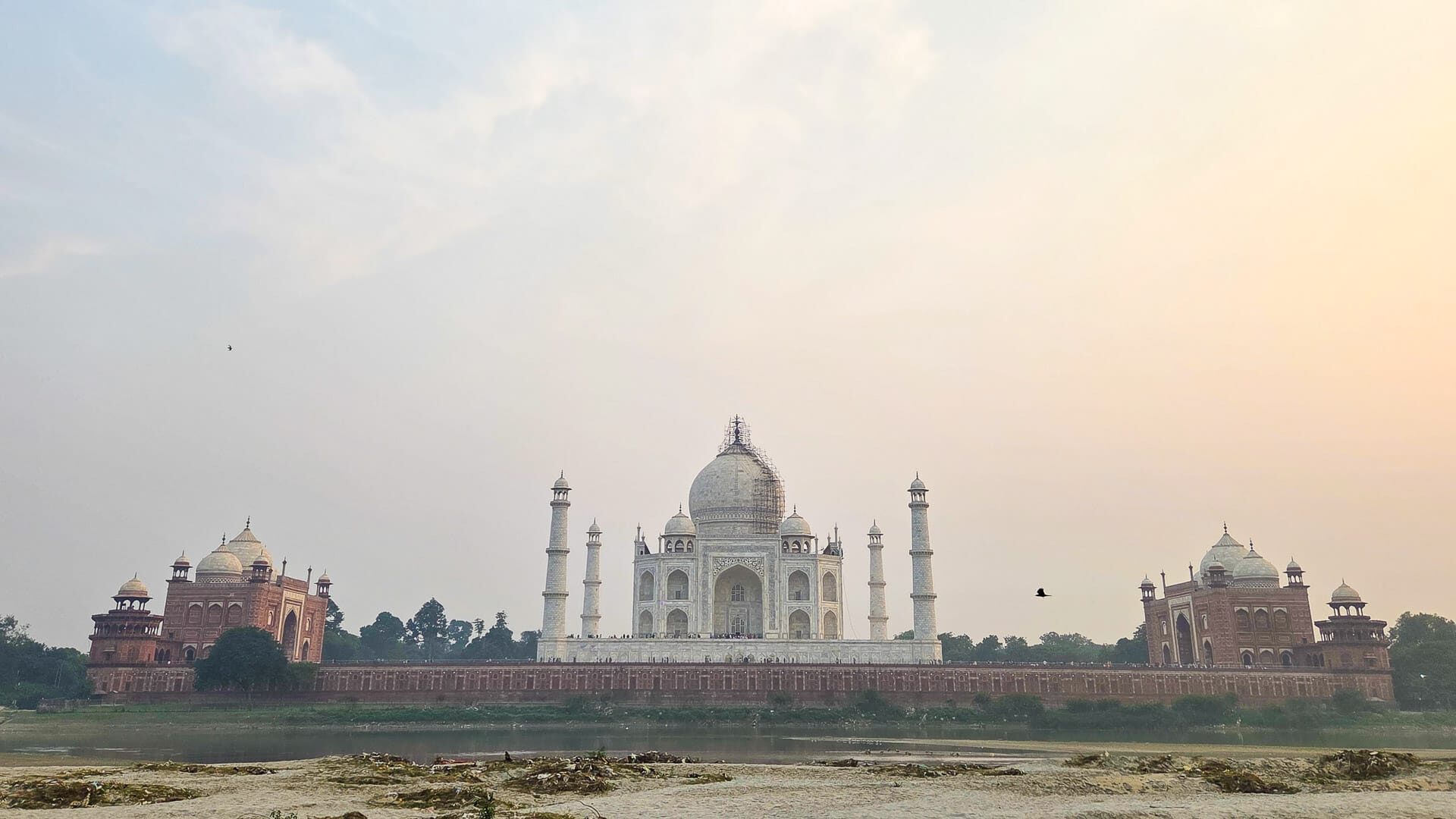
Later, we visit Mehtab Bagh, the Moonlight Garden, on the far side of the Yamuna River. From here you can see the sunset view spread across the Taj Mahal.
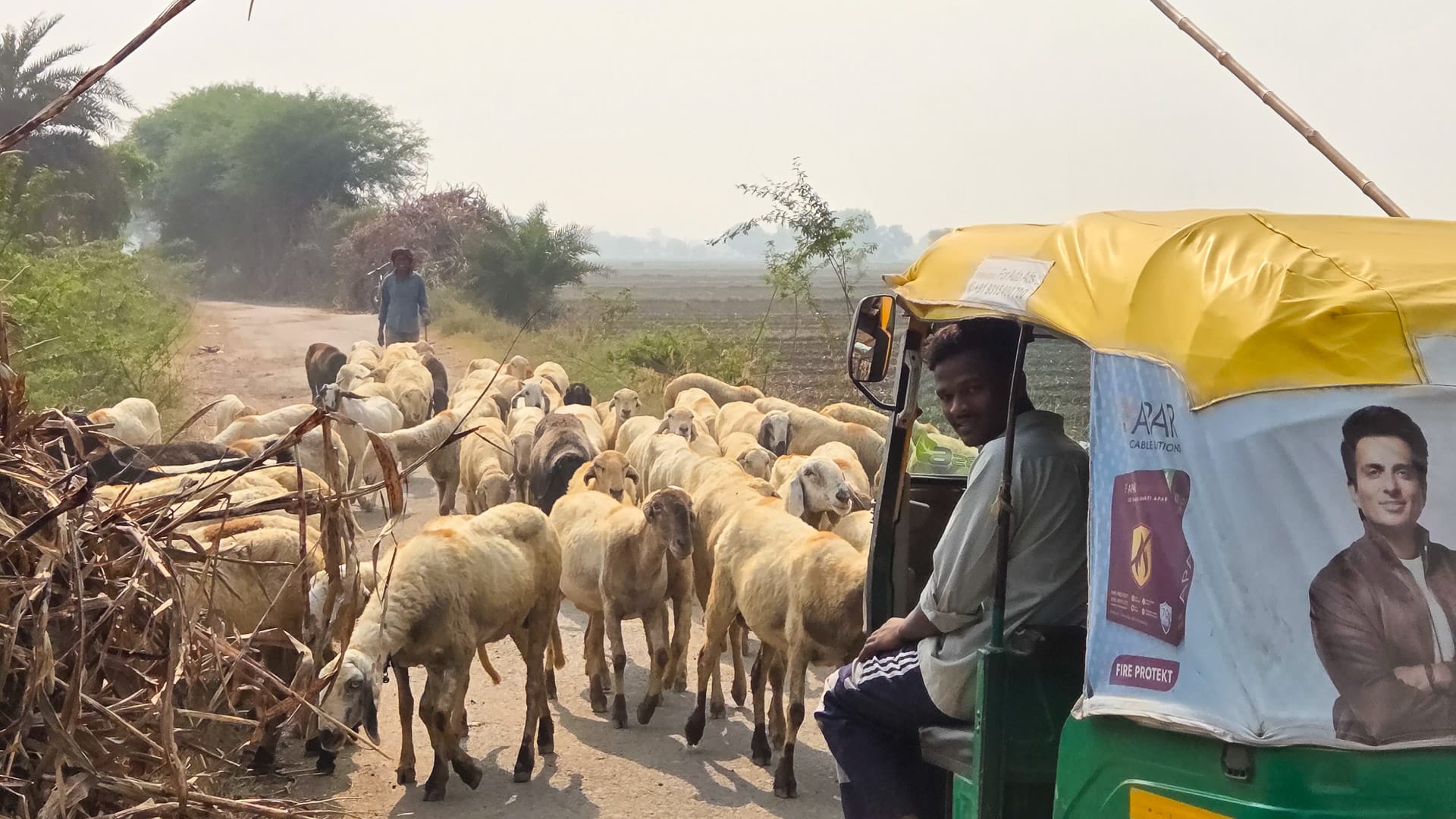
Tuk-tuk passing a flock of sheep on the road in Bharatpur (photo credit: Boat Bike Tours)
Day 6: Taj Mahal and Delhi
We visit the Taj Mahal at sunrise, before returning to the hotel for breakfast.
You then travel to Delhi by train. On arrival, your luggage is taken to the hotel while you continue into Old Delhi, with its markets, rickshaws, spice stalls and mosques.
We explore both New and Old Delhi on foot, by air-conditioned vehicle or by tuk-tuk. We can also customise visits to the interests of the group, with options such as shopping, a tea-making presentation or a visit to the spice market.
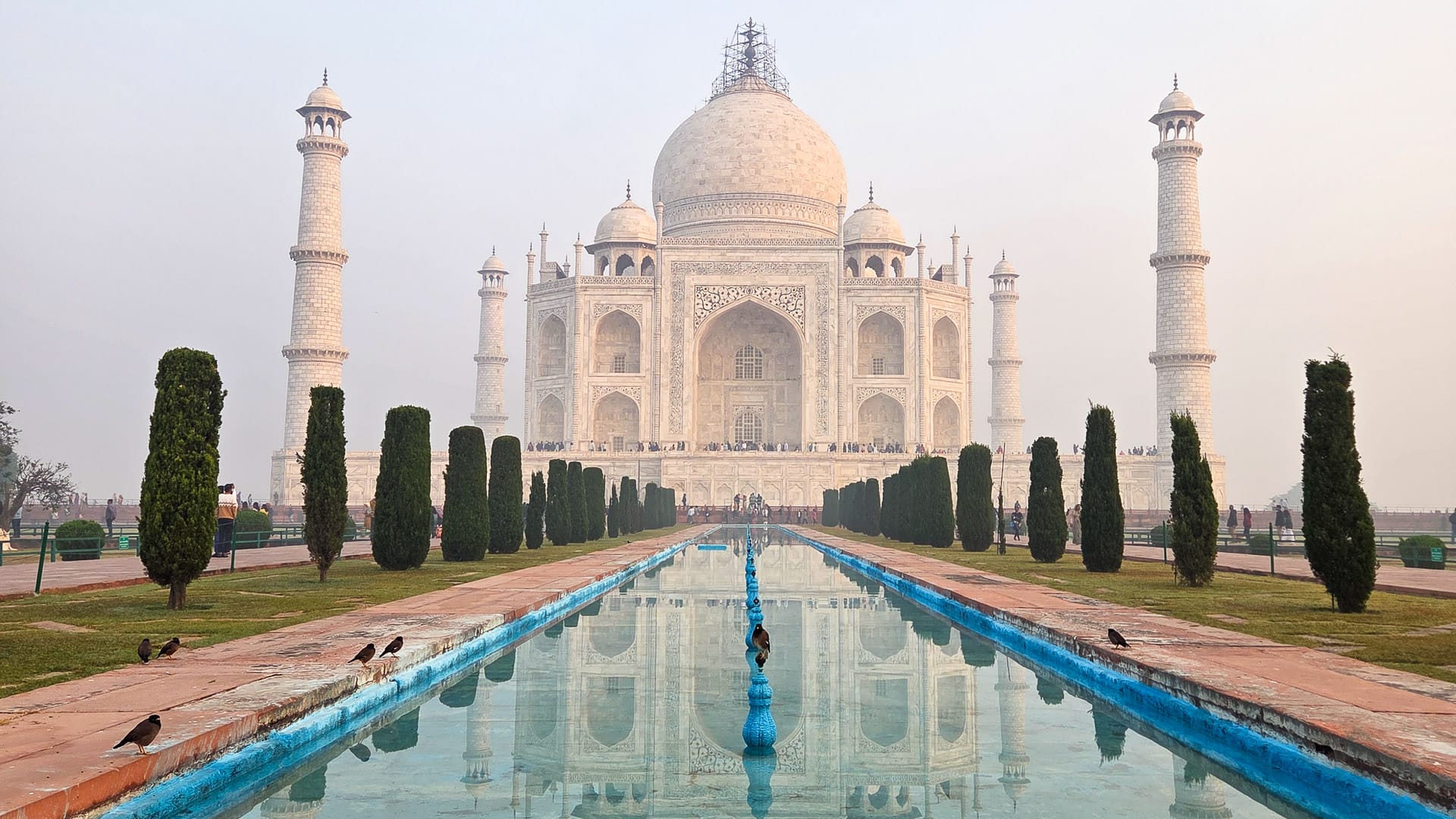
One of the highlights of the tour is the magnificent Taj Mahal in Agra (photo credit: Boat Bike Tours)
Day 7: Delhi to Kochi
A domestic flight carries us from northern India to Kochi, a historic port city on Kerala’s Arabian Sea coast and the gateway to the southern part of the tour.
A guided visit to Fort Kochi includes the Chinese fishing nets, the historic synagogue and St Francis Church, once the original burial place of Vasco da Gama. The coastal setting and colonial history make this a clear turning point in the trip.
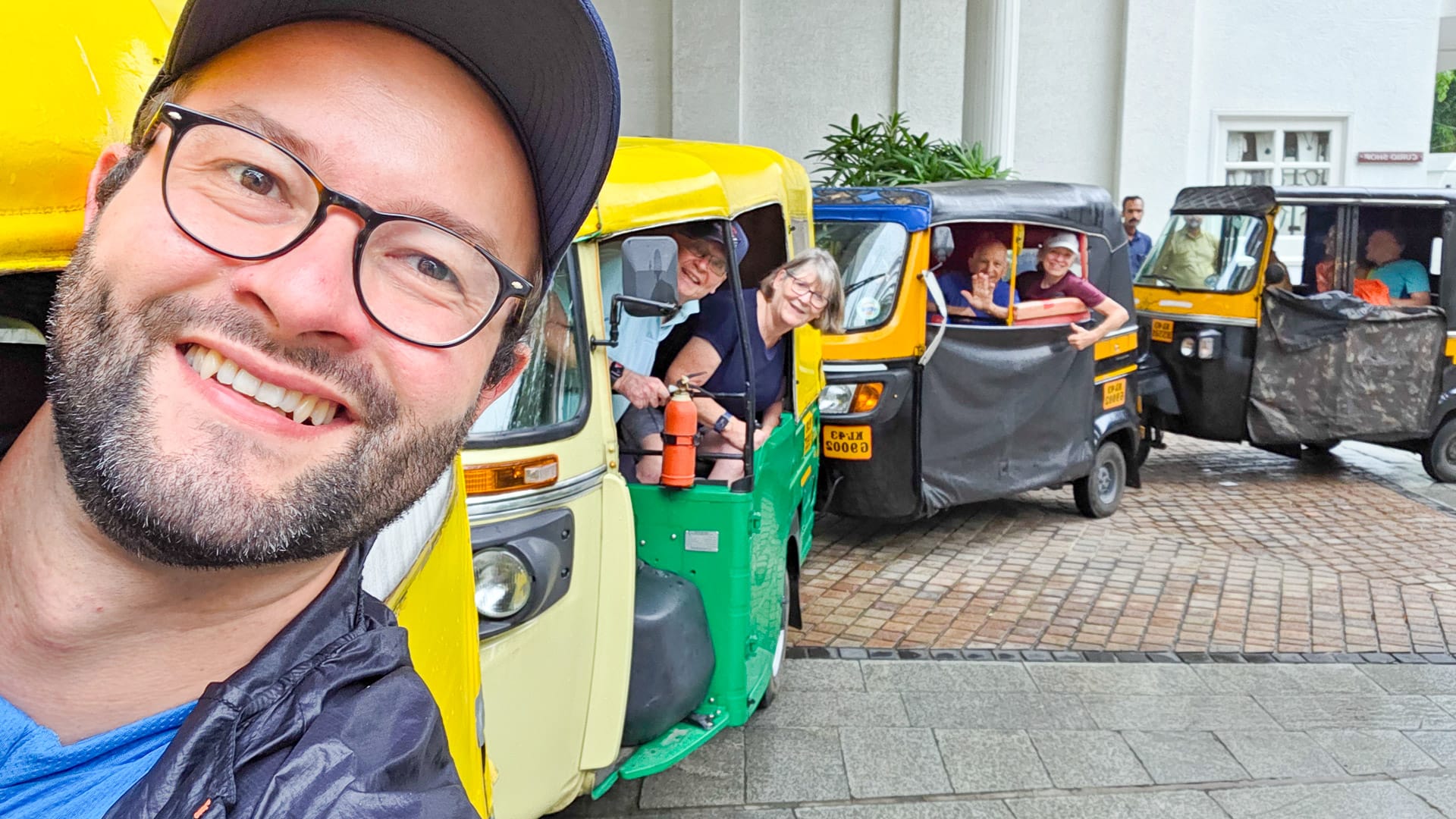
Exploring Kochi by tuk-tuk (photo credit: Boat Bike Tours)
Day 8: Kochi to Munnar
Distance: Around 20 or 25 kilometres.
The first Kerala ride follows canal roads and back lanes past rubber plantations, pineapple groves and villages.
After the ride, we transfer into the Western Ghats to Munnar, a hill town surrounded by tea plantations and known for its cooler mountain climate. The flat coastal landscape gives way to the cooler hills around Munnar.
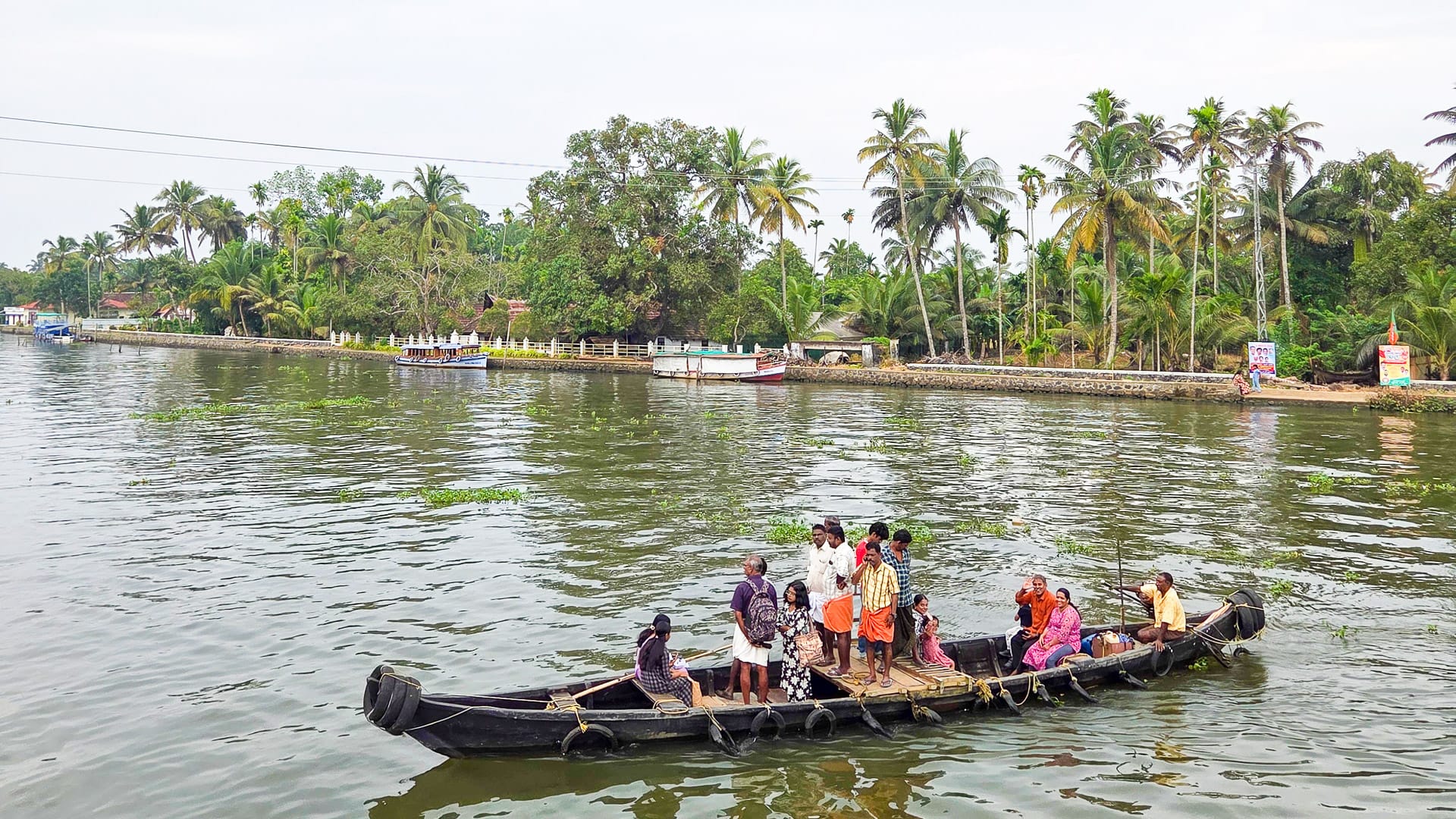
A ferry travelling through the Kerala Backwaters (photo credit: Boat Bike Tours)
Day 9: Munnar
Distance: Around 30 or 40 kilometres.
This panoramic ride starts from the hotel and follows Lockhart Road into tea-growing country. The route continues through rolling plantations and the Pallisaval Valley.
The afternoon includes experiences connected with tea, spices and local religious traditions.
Elsewhere on the tour, cultural and historical visits include a drive past Jaipur’s Wind Palace, guided visits to Amber Fort, City Palace and Jantar Mantar Observatory, as well as the Taj Mahal and Mehtab Bagh in Agra. In Fort Kochi, we take a guided city tour that includes the Dutch Palace, Jewish Synagogue, St Francis Church and the Chinese Fishing Nets. We also visit Keoladeo National Park Bird Sanctuary with an ornithologist. Along the way, there are many further well-known and lesser-known historical sites and opportunities for local interactions.
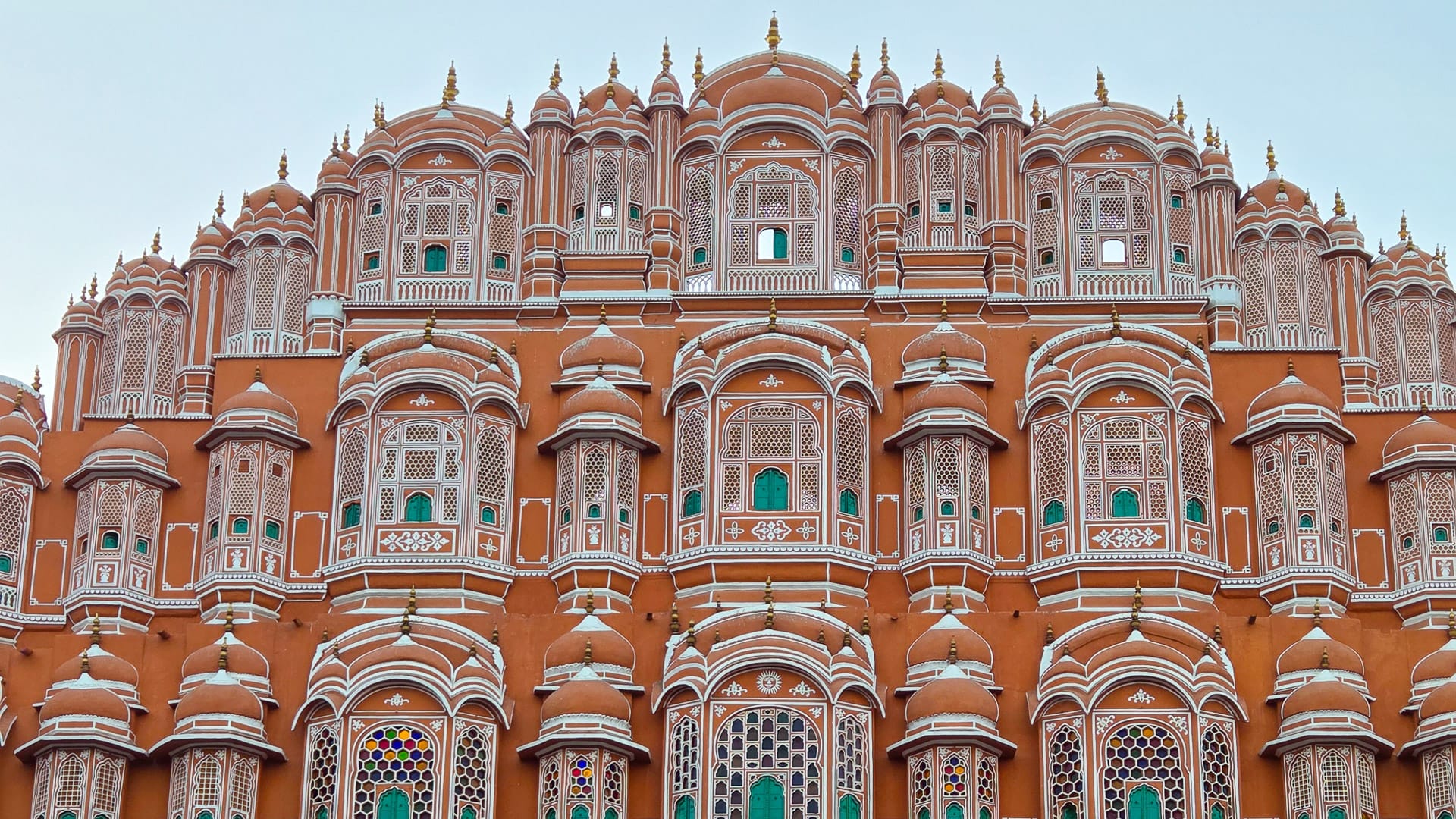
Wind Palace in Jaipur (photo credit: Boat Bike Tours)
Day 10: Munnar to Thekkady
Distance: Around 40 or 50 kilometres.
This is the queen stage of the tour. The route passes tea plantations, mountain landscapes and the Anayirangal Reservoir.
After riding, we transfer to Thekkady, a highland destination near Periyar National Park, known for its forests, wildlife and spice-growing country. We visit a spice plantation near Kumily.
There may also be the option to see an evening Kalaripayattu performance. This is an optional activity and is not included in the tour price.
Day 11: Thekkady to Alleppey
Distance: Around 20 kilometres.
You ride along quiet country roads through villages, coconut groves, rice paddies and waterways.
We then transfer to Alleppey, also known as Alappuzha, a low-lying waterside town and one of the main gateways to Kerala’s backwaters, where we board the houseboat. From here, the houseboat cruises through the backwaters towards the starting area for the following day’s ride. You settle into your cabin before dinner and the first night on the water.
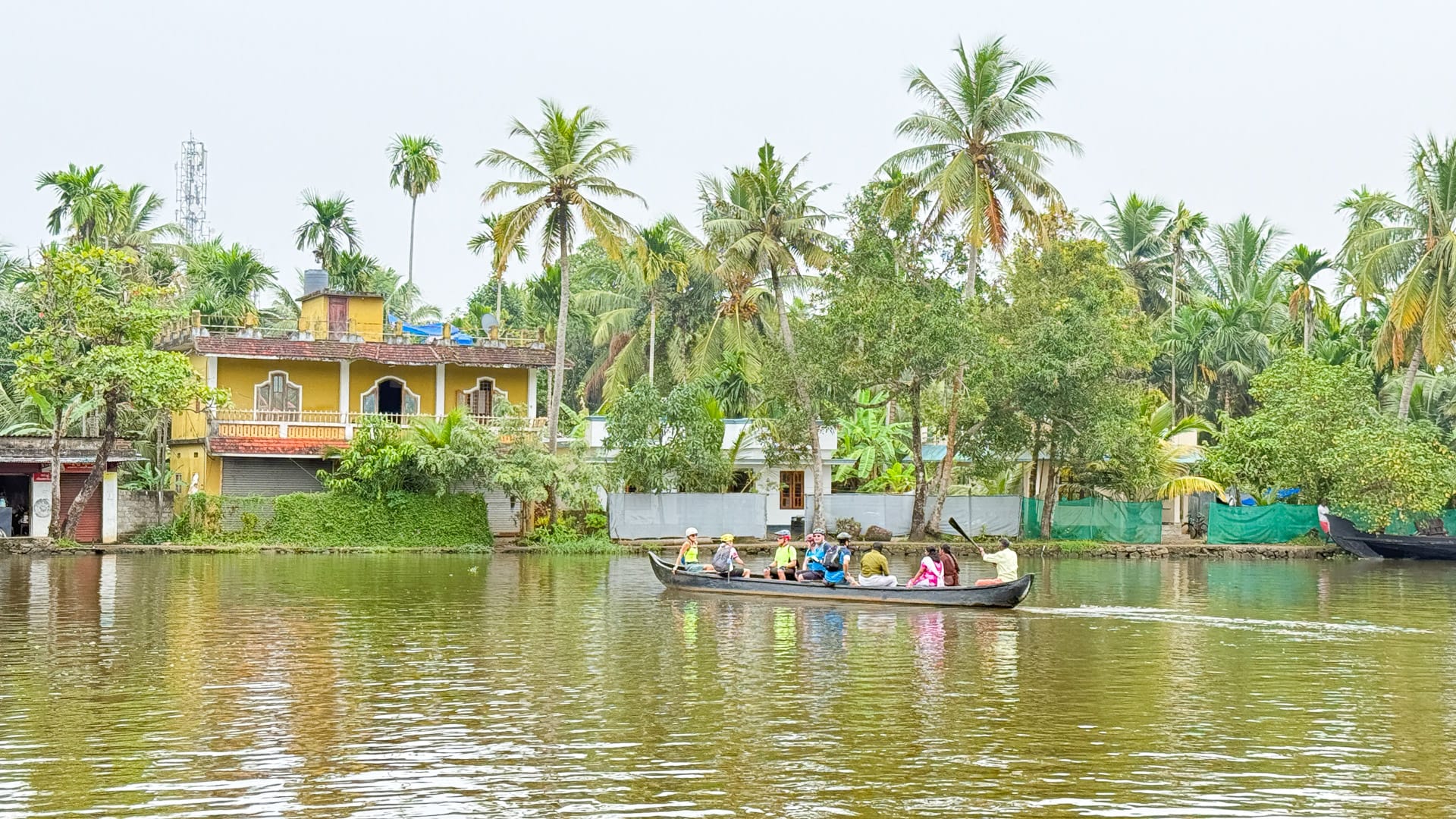
A local ferry boat in Kerala (photo credit: Boat Bike Tours)
Day 12: Ramankary to Kumarakom
Distance: Around 28 kilometres.
After sunrise and breakfast aboard, you disembark near Ramankary, a village surrounded by canals, waterways and rice-growing land in Kerala’s backwater region, for the day’s ride towards Kainakary and Kumarakom. The route passes canals, rice fields, palms and village homes.
Stops include a Catholic church, a local tea café and Ambalapuzha Temple. You then rejoin the houseboat for lunch and an afternoon cruise through the backwaters.
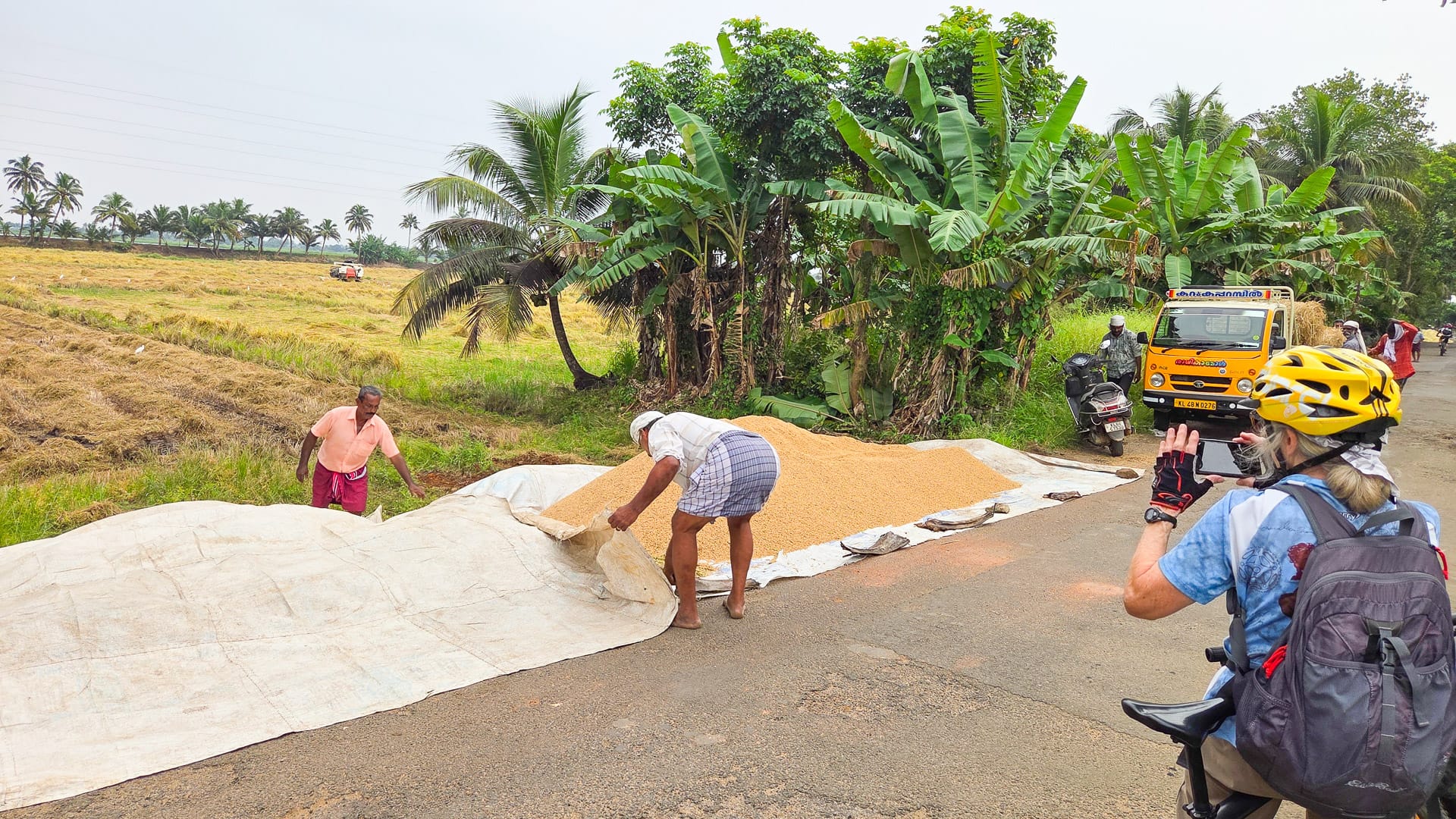
Riding past rice fields during harvest in the Kerala Backwaters (photo credit: Boat Bike Tours)
Day 13: Kumarakom to Nazrath Church
Distance: Around 40 kilometres.
After the houseboat has carried you to the next starting point, the ride begins around Kumarakom beside the waterways before turning farther inland, with a few gentle climbs.
A picnic is served in tropical surroundings. You later return to the boat for tea or coffee and a cruise to the next anchorage.
Day 14: Alleppey to Mararikulam
Distance: Around 25 kilometres.
After the houseboat returns to the Alleppey area, you disembark for the final ride to Mararikulam, a coastal village beside the Arabian Sea and home to Marari Beach. The final ride follows village roads and narrow waterfront paths. You stop at Alleppey Beach for views across the Arabian Sea before continuing to Marari Beach.
The afternoon is free for time beside the sea or an introduction to Ayurveda. Ayurveda is a traditional Indian system of wellbeing that uses diet, lifestyle, herbs and treatments to support balance in the body and mind. A one-hour basic Ayurveda massage is included in the tour price, and this can be extended on request to a longer or more advanced session.
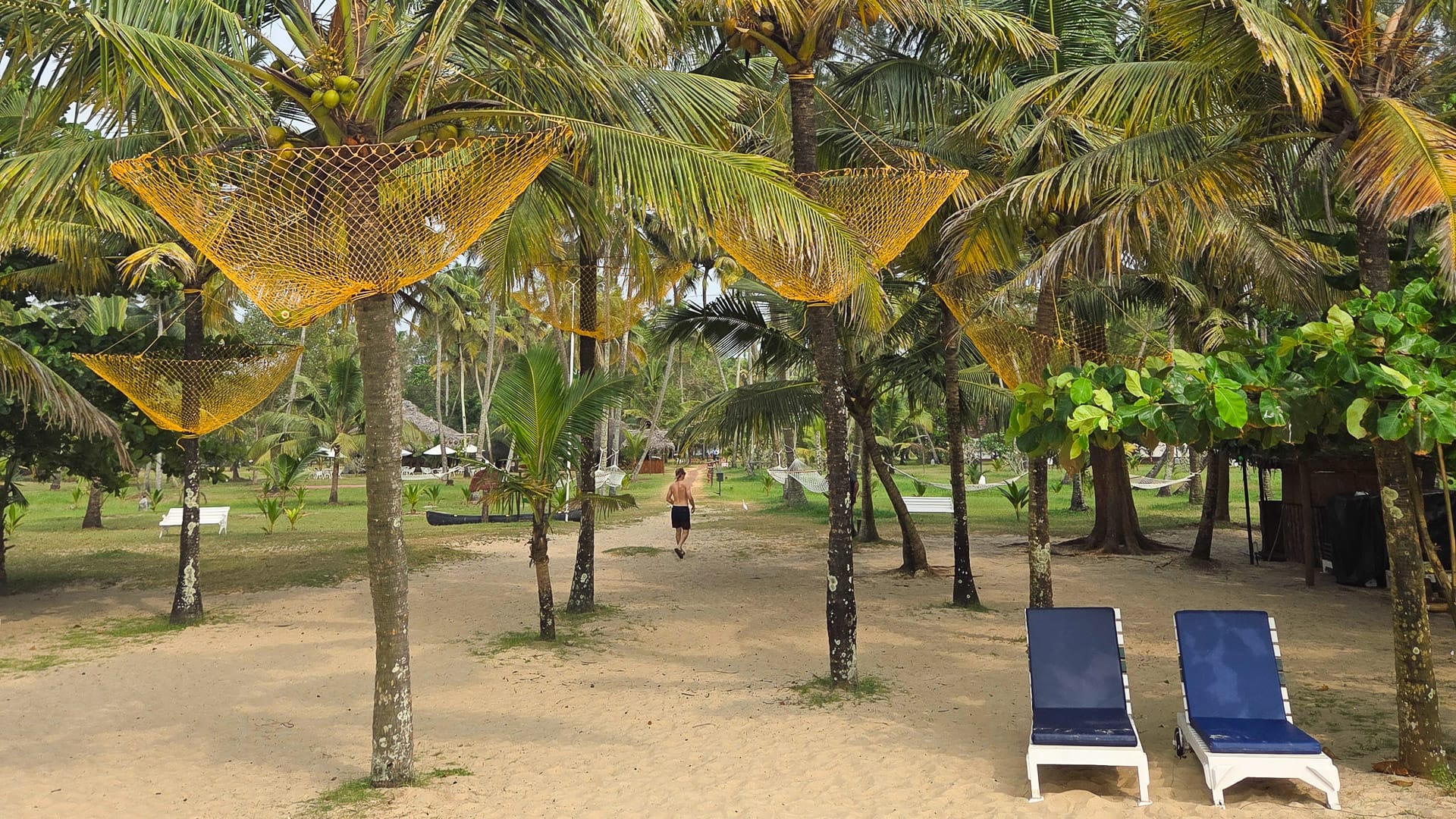
The beach at Marari Beach Resort in Kerala (photo credit: Boat Bike Tours)
Day 15: Fishing village and departure
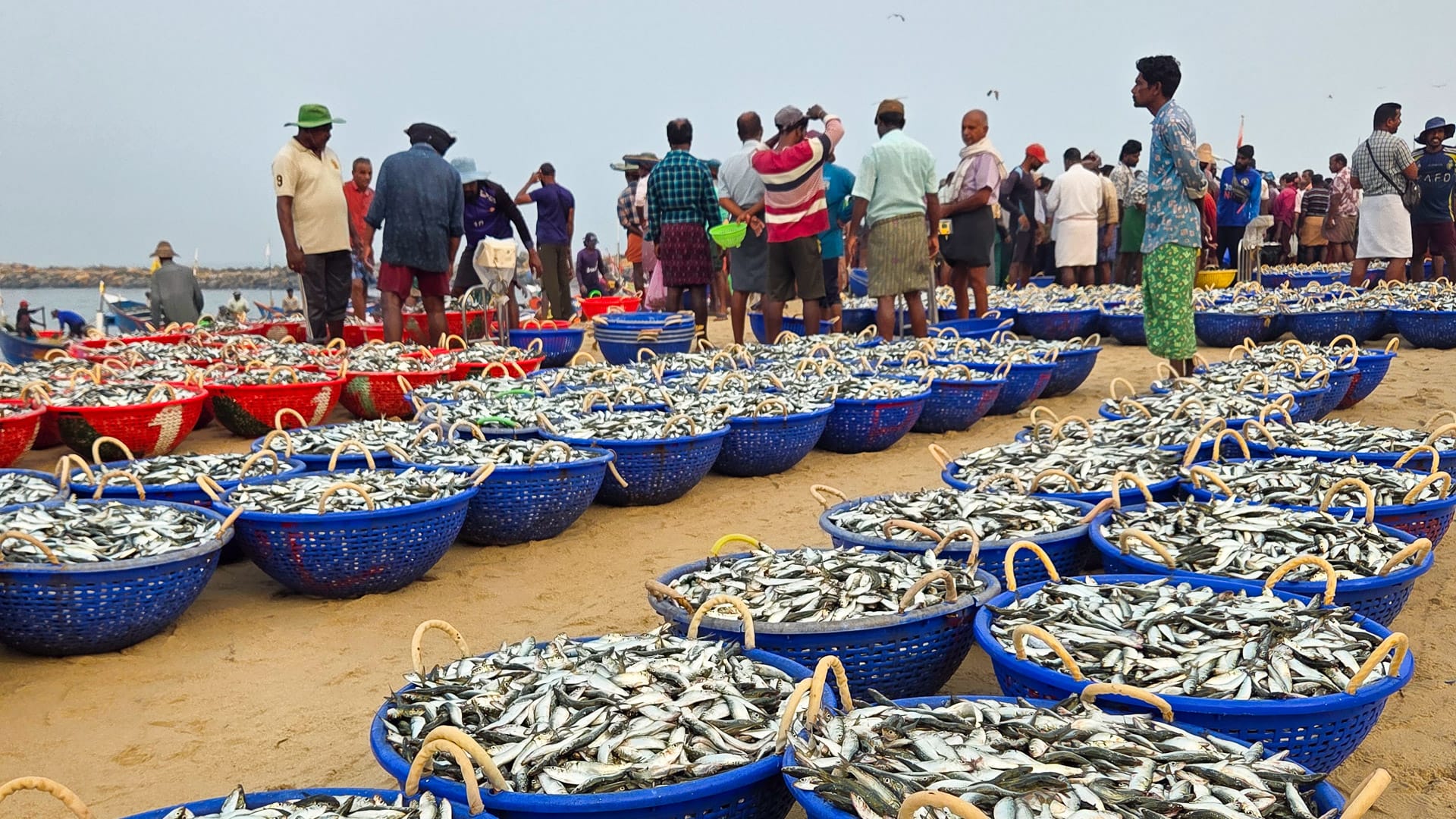
The final morning begins at around 6:30am with a tuk-tuk trip to a nearby fishing village.
You watch the fishermen return at sunrise, see the fresh catch sorted on the beach and experience the morning fish auctions. After breakfast, we transfer you to Kochi Airport. Extra beach nights can be arranged.
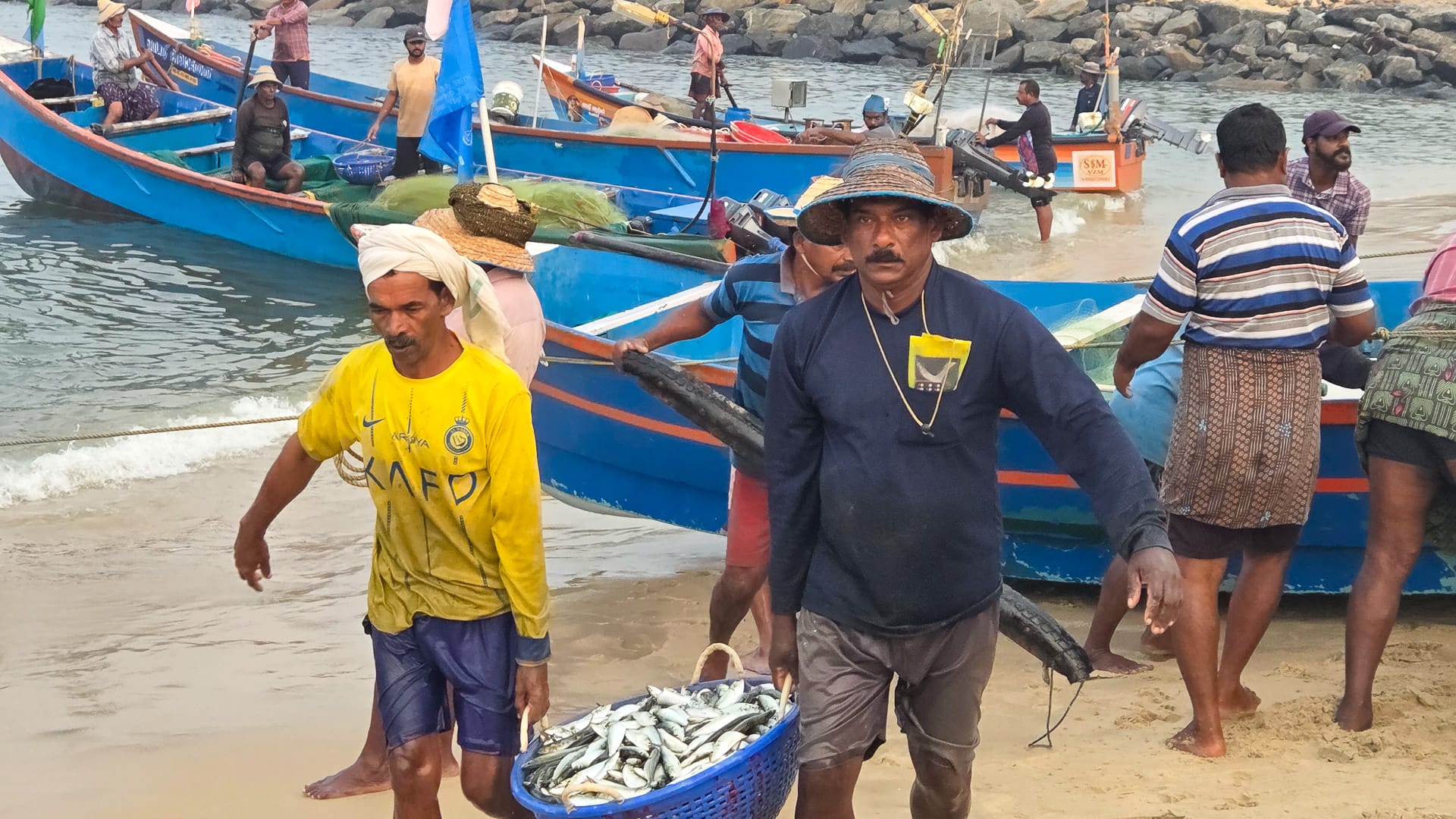
Fishermen returning at sunrise (photo credit: Boat Bike Tours)
What is a typical day like?
There is no single daily pattern because the cycling tour changes considerably between northern India and Kerala.
In the north, breakfast may be followed by a transfer, sightseeing and a shorter ride. The days can be full, with forts, markets, national parks or the Taj Mahal forming the main focus.
In Kerala, we usually ride in the morning before the strongest heat. The guides explain the route, surfaces and planned stops. The pace leaves time for photographs, tea, fresh fruit and conversations along the way.
Lunch might be served in a hotel, a carefully selected local restaurant, a picnic setting or aboard the houseboat. Bottled water is provided during cycling days, with regular opportunities to rest and refill.
On houseboat days, you rejoin the vessel after cycling. The afternoon may then be spent eating, cruising or sitting outside as villages and rice fields pass. Dinner is served aboard before the boat remains at its overnight mooring.
The evenings are quieter than the first part of the trip. You can sit in the cosy lounge or outside, talk through the day and watch the light fade over the waterways.
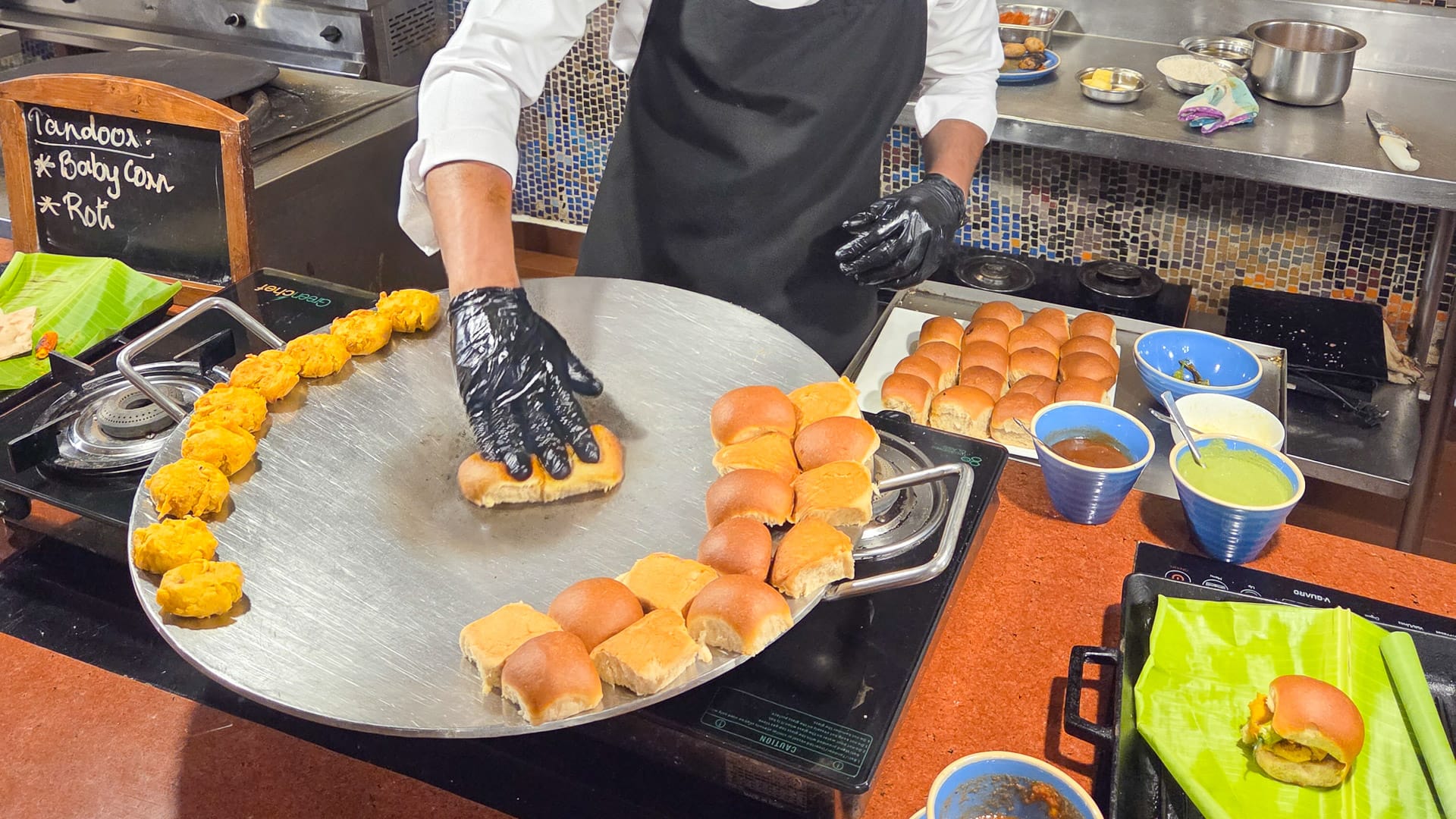
A cooking demonstration at Marari Beach Resort in Kerala (photo credit: Boat Bike Tours)
What is the houseboat like?
Our traditional thatched-roof houseboats provide three nights of accommodation in the Kerala backwaters.
You’ll find spacious cabins with large windows and air conditioning. Each individual houseboat carries up to ten guests, creating a more familiar atmosphere than a large cruise vessel. We also provide private facilities, a lounge, outdoor seating and good onboard cuisine.
All rooms throughout the tour, including those on the houseboats, have private en-suite bathrooms, 24-hour air conditioning, free Wi-Fi and at least two power sockets. On board, there is a small indoor living room, a larger dining and living area and an outdoor terrace.
The bikes are stored on land overnight, and our guides take care of charging the e-bikes. The hotels and houseboat cabins are well insulated, so guests should not experience significant noise during the night. You can hear the houseboat engine while cruising, but we moor by 6pm each evening and remain there overnight.
Once moored, guests can go for an evening walk, or the crew can explain what optional activities are available nearby. There is often not a great deal happening in the immediate surroundings in the evening, but by this point in the day many guests are happy to relax in the lounge areas and socialise on board.
For many European bike and boat guests, parts of the experience will feel familiar: a comfortable cabin, a cosy communal space and meals aboard. However, the view outside is very different: rice fields, villages, fishing boats, ducks and birdlife replace Europe’s rivers and canals.
Most hotels used on the tour have wellness areas or pools, while all listed hotels have en-suite bathrooms and air conditioning. Breakfast buffets include local specialities.
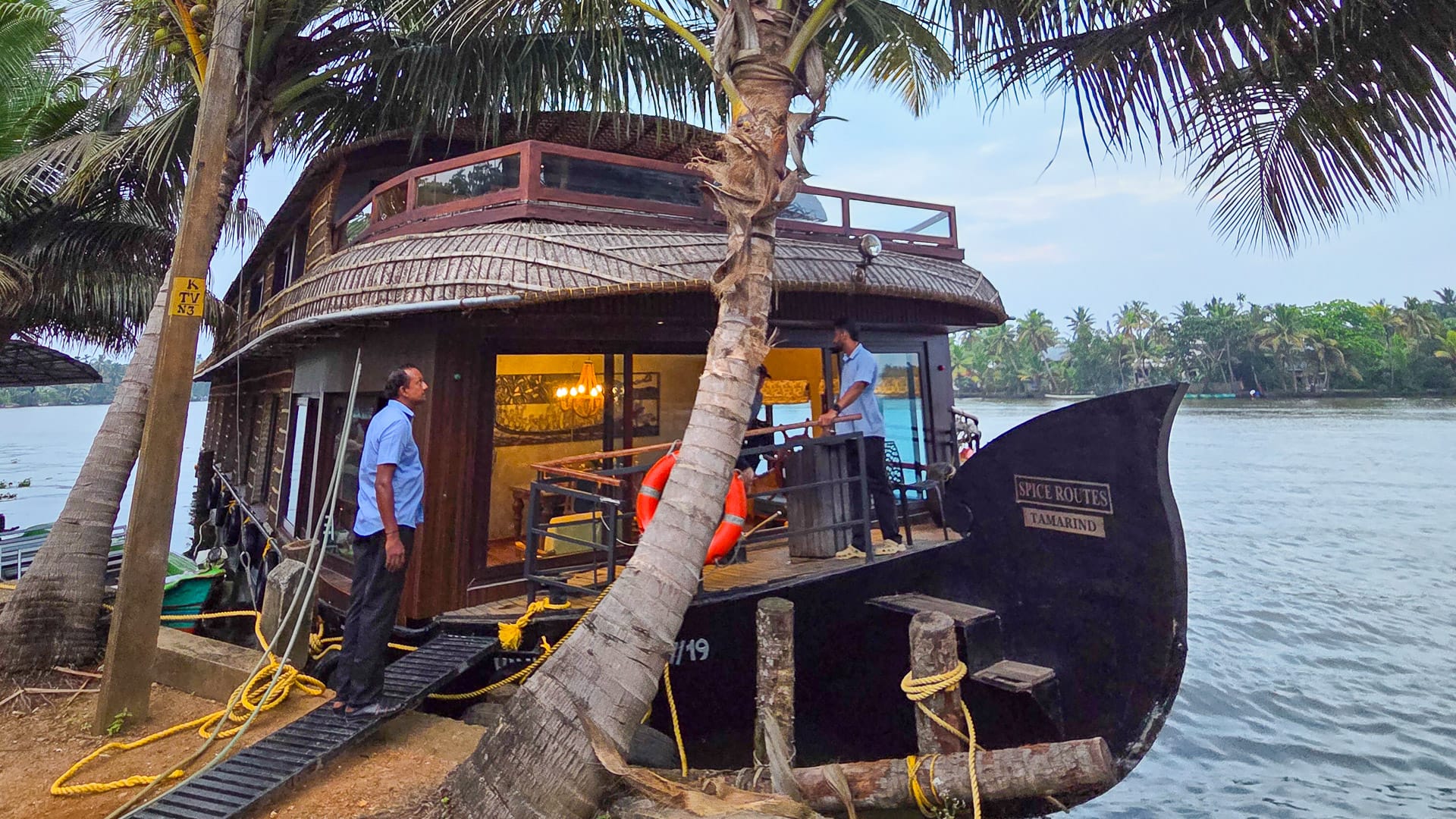
A traditional houseboat in the Kerala Backwaters (photo credit: Boat Bike Tours)
Sponsor Message
Looking for bike and boat tours in India?
Colors of India takes you from the palaces and monuments of northern India to the hills, villages and backwaters of Kerala.
Our 15-day itinerary mixes guided cycling with time in Delhi, Jaipur and Agra, before heading south for rides around Munnar and through rural Kerala. Later in the journey, you spend three nights aboard a houseboat, cycling between the waterways and villages of the backwaters.
If this mix of cycling, culture and time on the water sounds like your kind of trip, we’ve been running bike and boat holidays since 2002 and would love you to join us in India.
See the full route, current dates and prices on the website or send Boat Bike Tours a question using the form below.
Got a question for Boat Bike Tours?
Fill out this form and we will pass it to Boat Bike Tours who aim to reply (within 24 hours wherever they can!)
Part 3: Things to know before booking a boat and bike tour in India
When to go
The tour crosses two climate zones.
For the Golden Triangle in northern India, November to February generally brings daytime temperatures of around 15 to 25°C, with cooler mornings and evenings. From April to June, temperatures can exceed 40°C.
Kerala is warmer. November to March generally brings temperatures of around 25 to 32°C, with lower humidity and less rain than during the main southwest monsoon period. From June to September, heavy rain and slippery roads can make cycling more difficult.
Even during the main tour season, you should expect strong sun and humidity in the south. A light layer may be useful for cooler mornings in northern India.
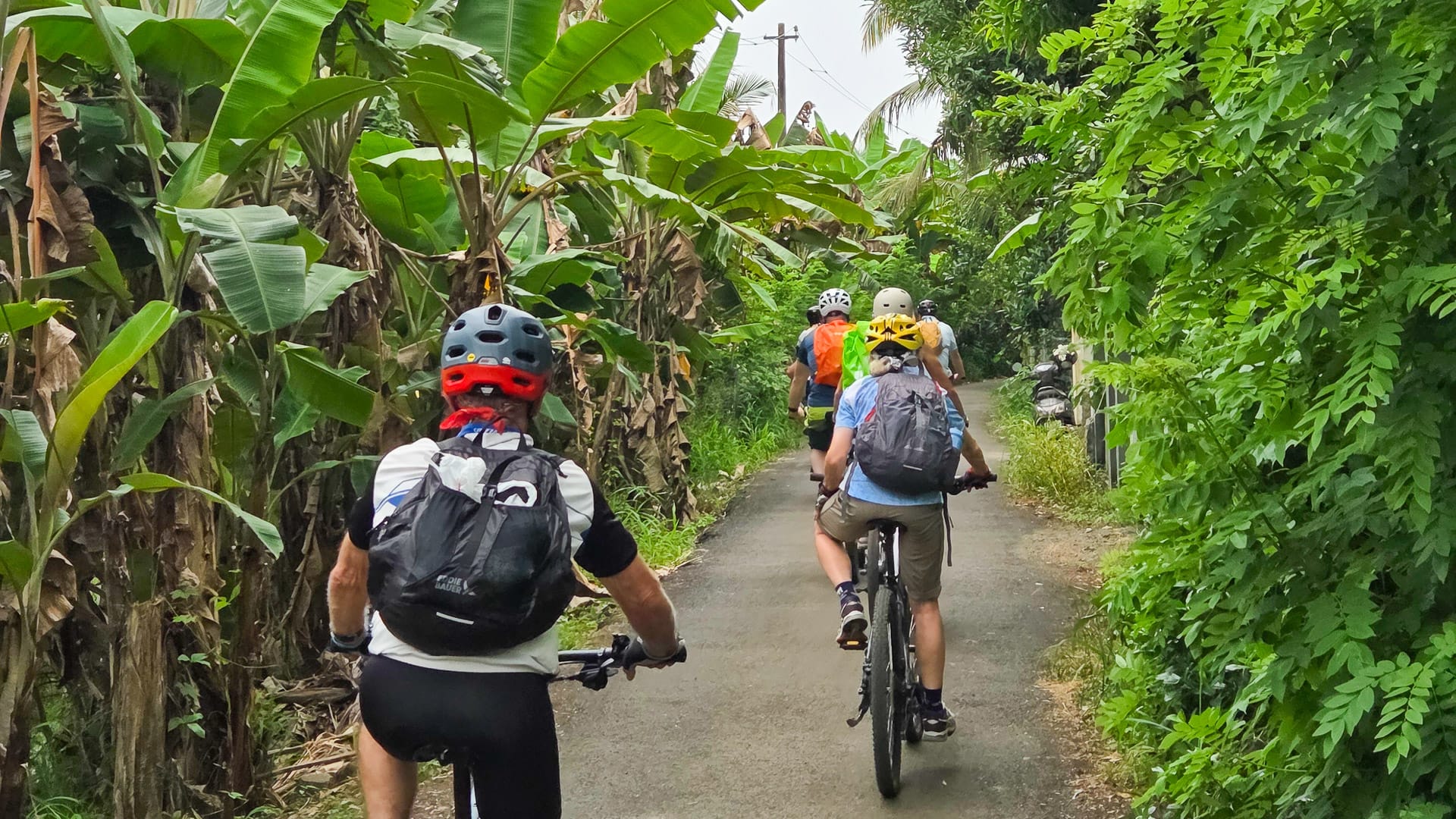
Cycling along a village road in Kerala (photo credit: Boat Bike Tours)
How difficult is the cycling?
Colors of India is rated level three out of five. It requires a higher level of exertion, with medium hilly terrain.
The distances are not extreme, and much of the terrain is flat or rolling. The hillier riding comes in Kerala, particularly around Munnar on Days 9 and 10, before the route continues towards Thekkady.
The challenge is broader than distance or elevation. Heat, humidity, rough asphalt, gravel, public roads and unfamiliar traffic all add to the effort.
You do not need to train like a racing cyclist, but you should ride regularly before the trip. It helps to be comfortable spending several days in succession on a bicycle, looking behind without swerving and braking on uneven surfaces.
This tour is aimed at confident cyclists rather than fast cyclists.
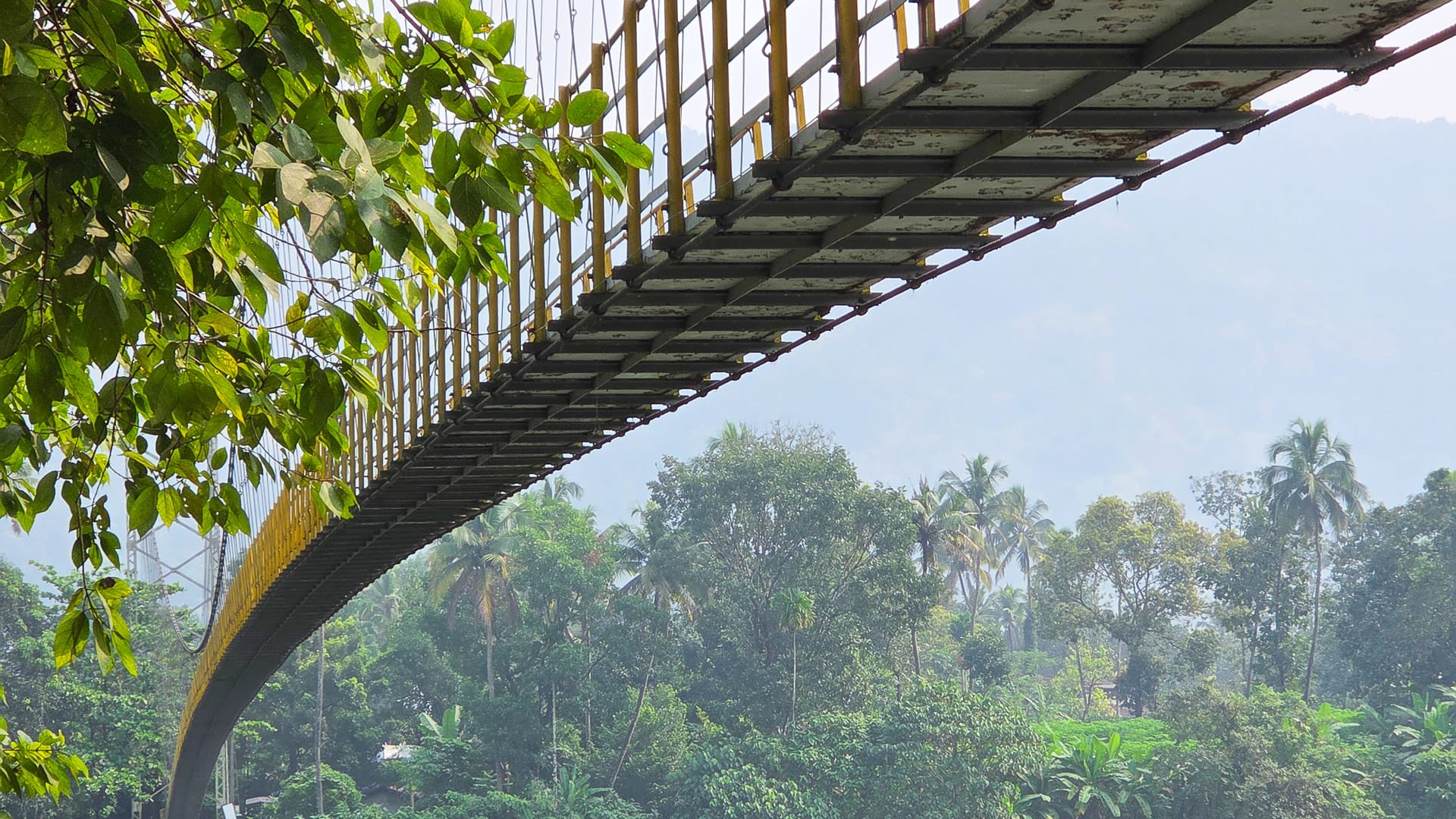
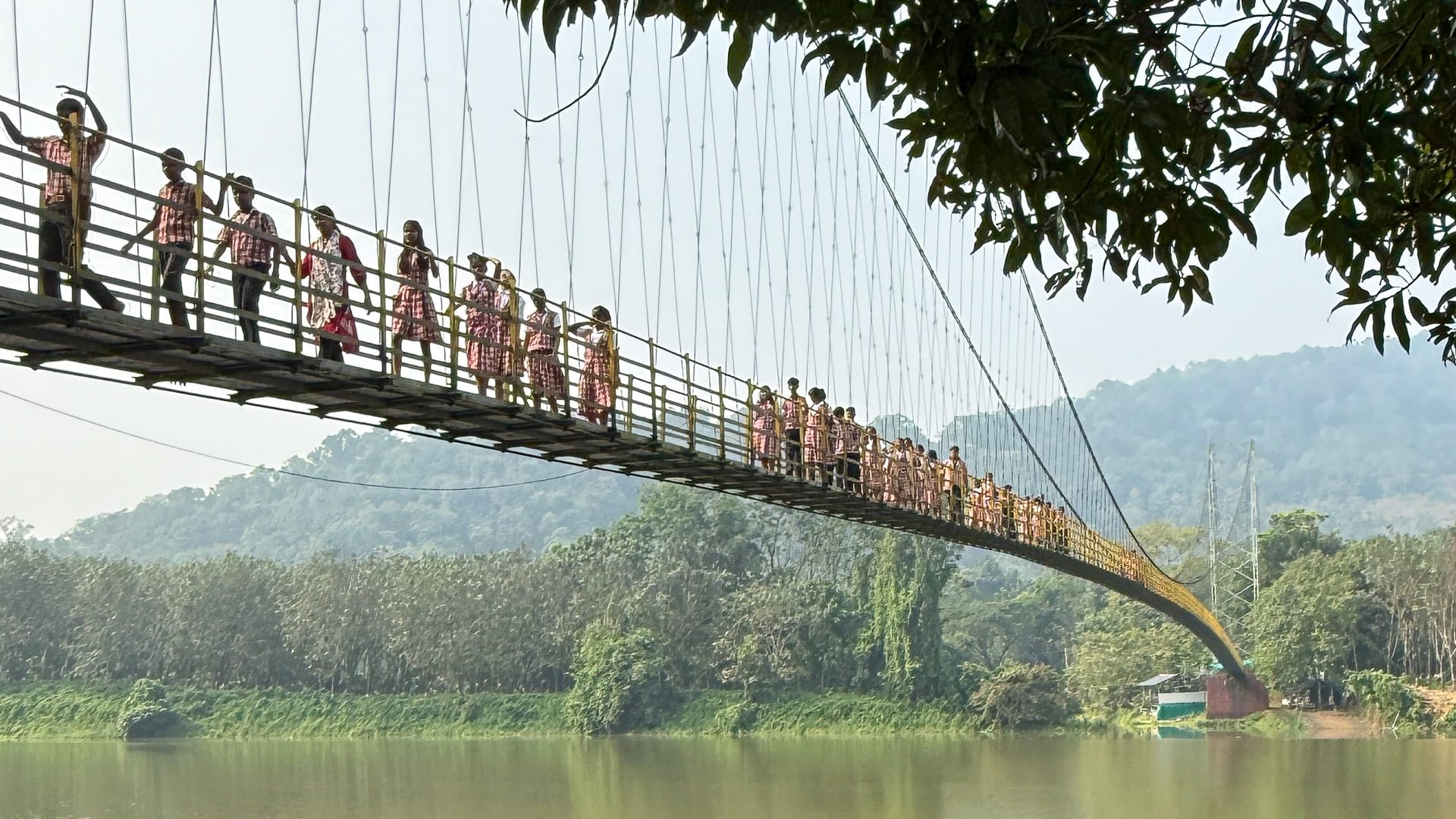
Inchathotty Suspension Bridge in Kerala (photo credit: Boat Bike Tours)
What are the roads like?
Most routes use quieter back roads through villages, farms, rice fields and plantations.
Surfaces include asphalt, gravel paths and rural tracks. Small potholes, loose chippings and rough road edges are possible, which is why the rental bicycles have suitable tyres and suspension.
Dedicated cycle lanes are rare. You share the road with local traffic, including cars, motorcycles and tuk-tuks. Pedestrians, schoolchildren and animals may also move into the road.
This is a fully guided tour and we don’t offer a self-guided option. We guide the group throughout, so you do not need to navigate. Most of the rides are flat, so the group generally stays quite close together. We also include breaks at several points along the route, giving everyone a chance to reconvene if riders have spread out. You do need to listen to the guides, hold a predictable line and stay alert.
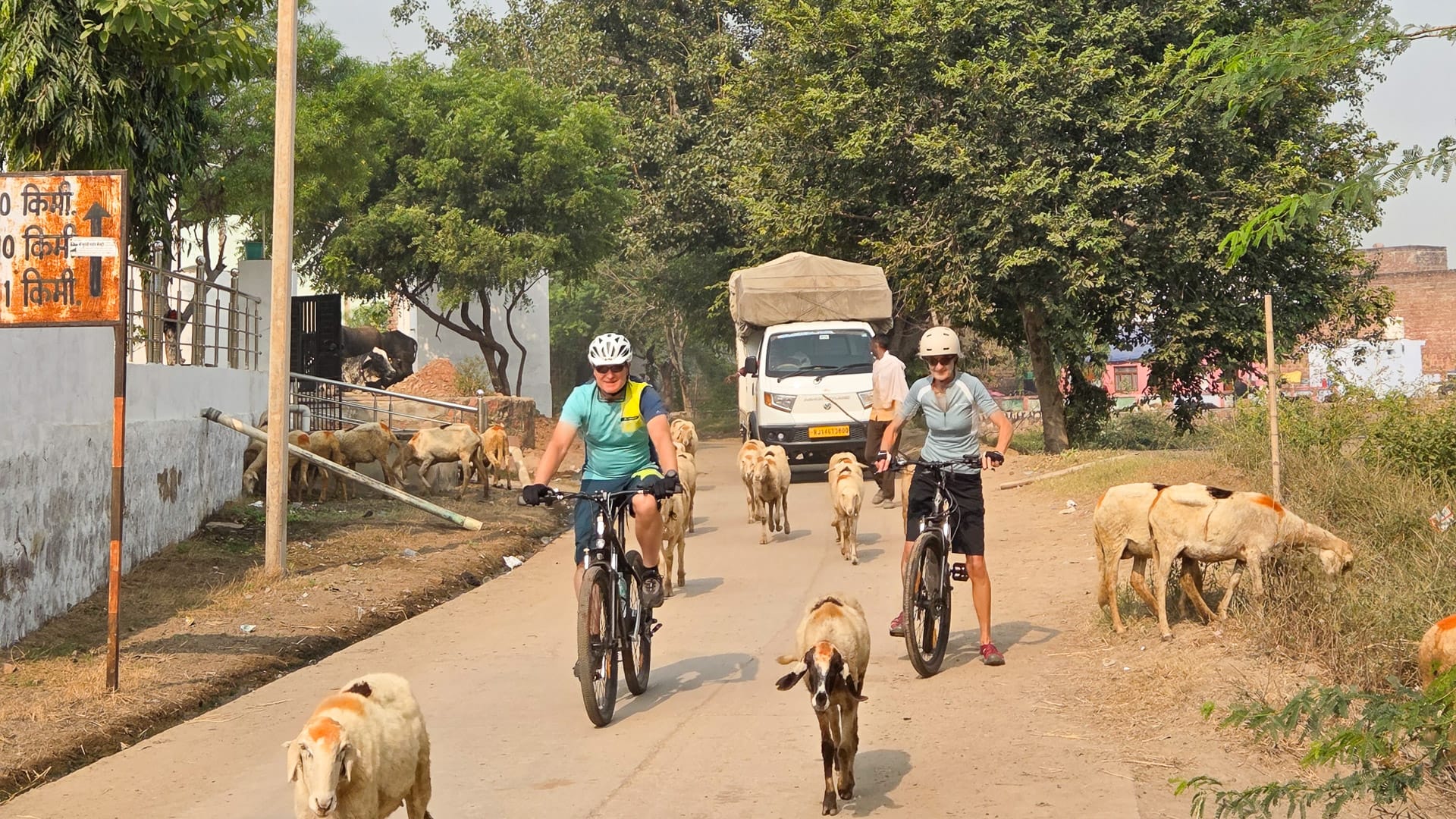
An encounter with sheep on the road while cycling Bharatpur (photo credit: Boat Bike Tours)
What bikes are used?
The standard rental bicycle is a Cannondale Trail 6 or similar.
A mountain-bike style set-up is well suited to the mixed surfaces. Wider tyres and suspension provide more control and comfort than a road bike would offer.
E-bikes are available for an additional charge, but numbers are limited. They are reliable local models chosen for the route, although they are simpler than premium European systems.
Helmets are compulsory. We ask guests to bring a well-fitting helmet, although a limited number of rental helmets can be reserved.
Safety and group support
India’s road environment is one reason the tour is guided.
Our local guides understand the roads, customs and junctions. This allows you to concentrate on the experience rather than navigation or local traffic.
The typical group size is 12-18 guests. The group is accompanied by an Islandhopping representative and a local guide, as well as a team of at least two cycling guides for the daily rides. We have one cycling team in the north of India and another in the south, so there is always a lead guide and a back-marker with the group.
A support vehicle also accompanies us and provides refreshment stops along the way. Our guides and support vehicle carry first-aid and mechanical supplies. If a rider cannot finish a stage, they can be transported by the support vehicle.
Follow the guide’s instructions, signal clearly and avoid sudden changes of direction. Leave enough space around motorcycles, tuk-tuks, pedestrians and animals, and do not assume another road user has seen you.
We currently suggest a minimum age of 15, with previous multi-day cycling experience and suitable fitness. The minimum height for a hybrid rental bicycle is 1.50 metres.
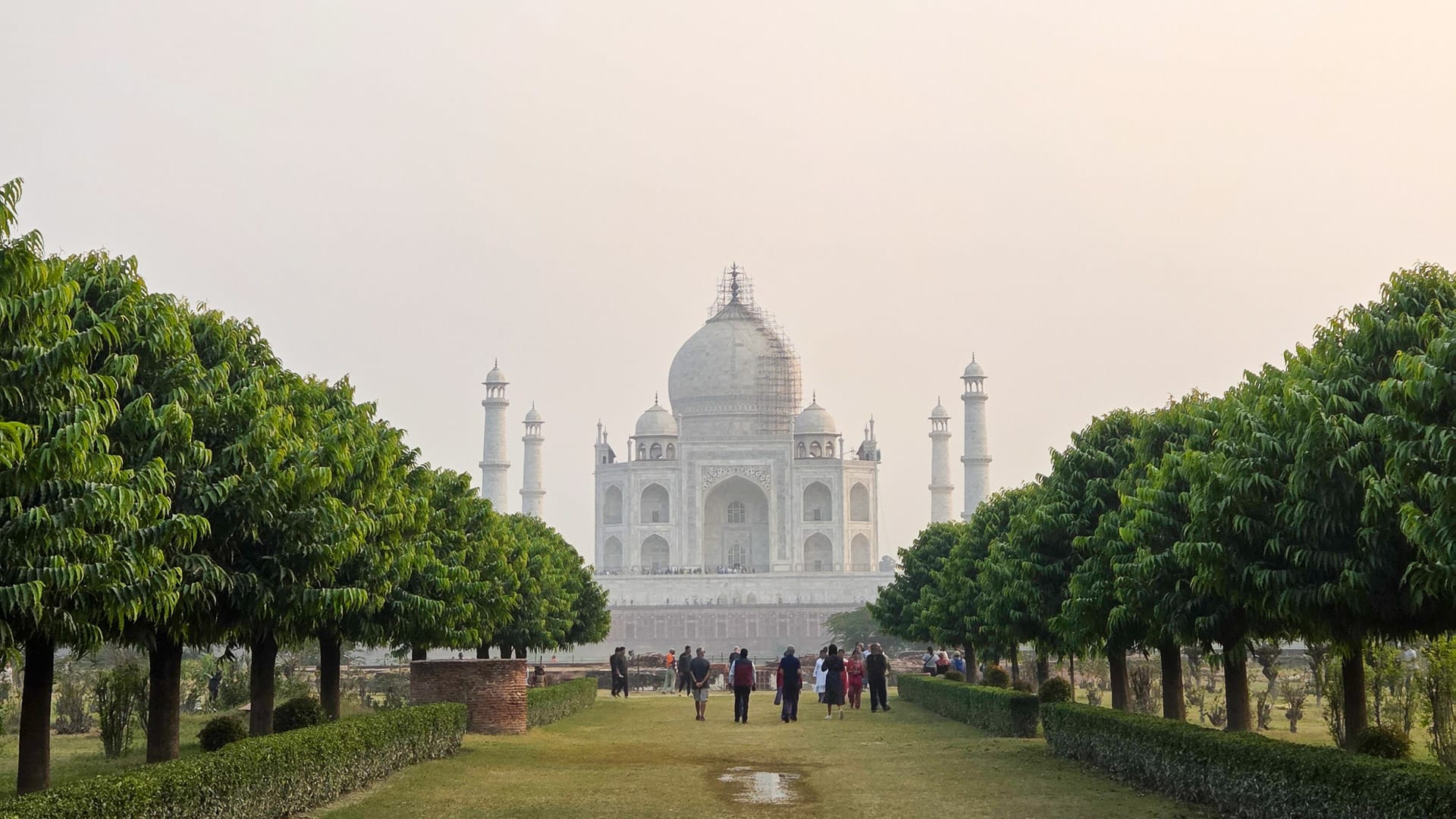
The Taj Mahal viewed from Mehtab Bagh in Agra (photo credit: Boat Bike Tours)
What should you pack?
Bring light cycling clothing that dries quickly. Padded shorts, gloves and sunglasses will make consecutive riding days more comfortable.
Other useful items include:
- A well-fitting cycling helmet.
- High-factor sunscreen.
- Insect repellent.
- A light rain jacket.
- Comfortable walking shoes.
- Modest clothing for religious sites.
- Your own water bottle. We provide water bottles, but we suggest bringing your own if you have one you prefer to ride with.
- A backpack for carrying water, money and other essentials while riding. We don’t provide bike panniers.
- Personal medication and basic first-aid items.
Our guides and support vehicle carry basic first-aid supplies. We don’t provide electrolytes, so bring your own if you normally use them while riding. We do provide snacks during the cycling tours.
Food and water
There is no single Indian cuisine. Food changes considerably between regions.
In northern India, you can expect rich curries, freshly baked naan and Rajasthani flavours. Kerala cooking makes greater use of coconut, curry leaves, seafood and local spices. Vegetarian food is widely available.
Masala chai, fresh fruit, street snacks where appropriate and coconut water can turn refreshment stops into part of the cultural experience. A cooking class near Mararikulam introduces local ingredients and techniques.
Bottled water is provided during cycling days and at meal stops. Drink regularly, particularly in Kerala’s warmer conditions, and use bottled or properly filtered water rather than tap water.
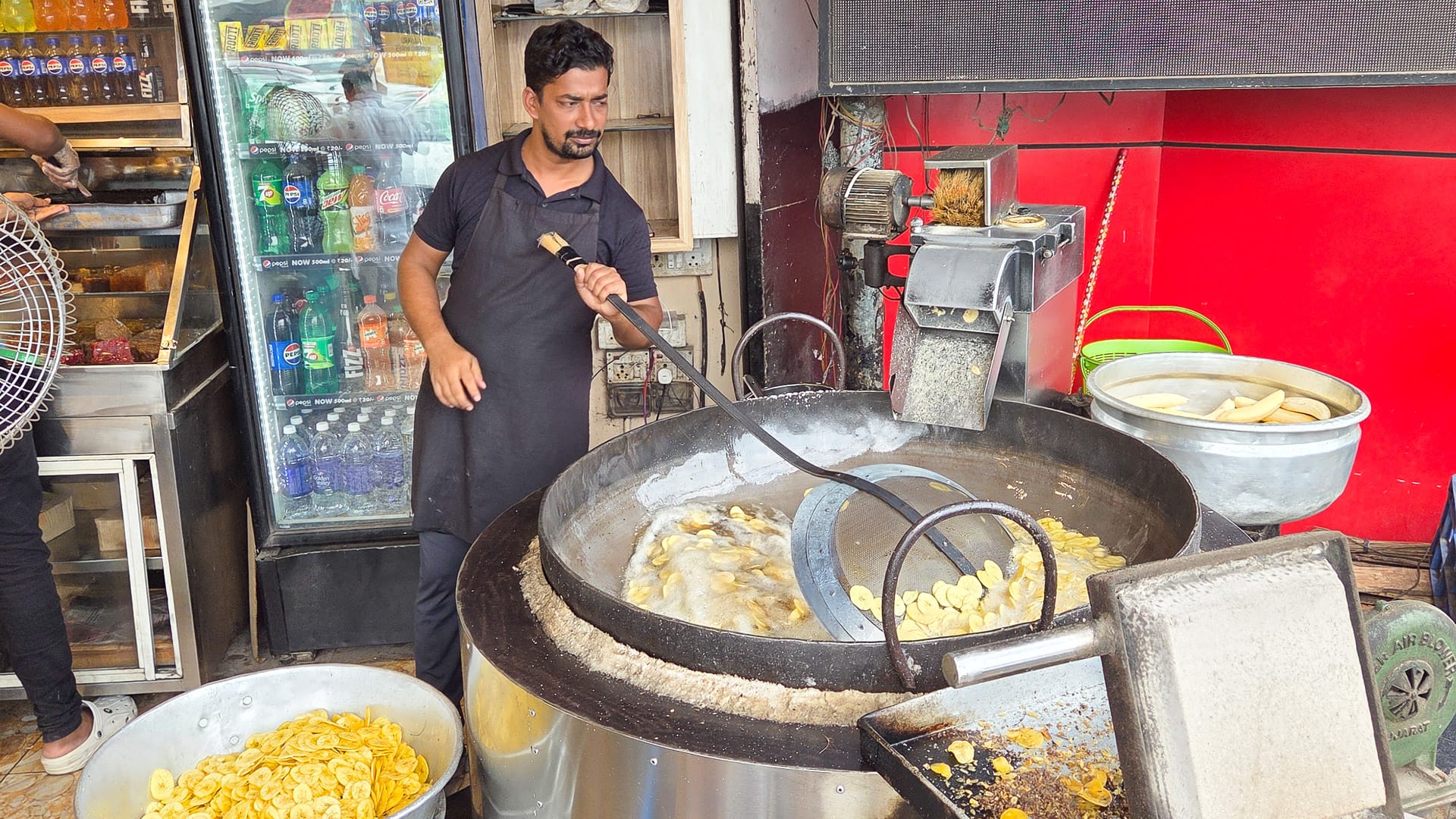
Potato crisps being fried in Kochi, India (photo credit: Boat Bike Tours)
Culture and language
India is not one uniform culture. Language, religion, food and local customs can change between regions and sometimes between neighbouring towns.
Hospitality is an important part of the experience, and visitors are often welcomed with warmth and curiosity. Many memorable moments come from everyday interactions rather than famous landmarks.
Modest clothing is appreciated at temples and other religious sites. If we visit religious sites, our guides provide any necessary coverings for the group. This means Lycra and other active wear are fine to wear while riding, even on days when a religious site is included.
Shoes often need to be removed before entering. Ask before taking close photographs of people or ceremonies, and follow the guide’s instructions.
English is used by the tour team, so you do not need to learn Hindi. A few words are still appreciated. Namaste is a widely recognised greeting, while dhanyavaad means thank you in Hindi.
Malayalam, rather than Hindi, is the principal language in Kerala.
Perhaps the most useful thing to bring is an open mind. India can feel busy, colourful and overwhelming, but those differences are also central to the experience.
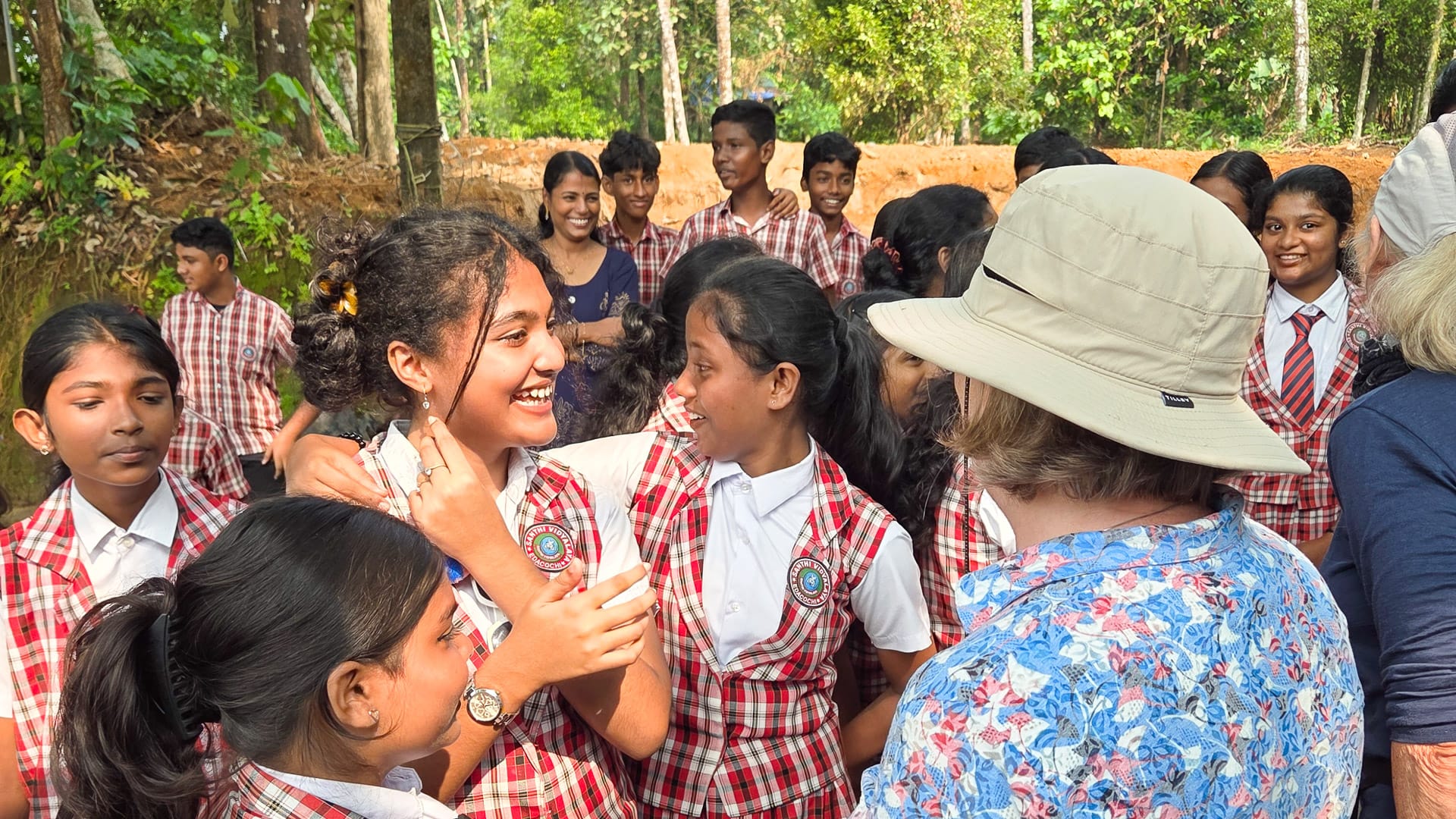
A school class in Thattekad, Kerala, India (photo credit: Boat Bike Tours)
Money and connectivity
Cash and ATMs
It is always useful to carry some local currency for spontaneous purchases, tips or refreshments. Having the equivalent of around £40 in your pocket is a good fallback. ATMs are readily available, and our tour guides can suggest the best options for international visitors. We have found,, SBI ATMs seemed to be the most compatible and reliable with guests’ international credit cards.
Tipping
We provide detailed tipping guidance in our trip notes. Tipping is not mandatory in India, but it is expected for good service in restaurants, hotels and for services such as taxis and tour guides. A lot of people are involved in making the tour happen, including our guides, houseboat crew and transfer drivers. If you are pleased with the service, a tip is a way to show your appreciation.
For South India, we suggest allowing around £50 – £55 per person in total for tips.
For Northern India, we suggest allowing around £40 per person in total.
In restaurants and cafés, around 7–10% of the bill is appropriate if the service is good. If a service charge is already included, there is no need to add another tip.
At hotels, we suggest around £3 for breakfast in the name of the group and around £4 for dinner, plus approximately £1 per person per night for room staff. Some hotels also have a central tip box where guests can leave something for the wider team when they depart.
On multi-day tours, tips are generally handed over at the end of the trip. We suggest giving them discreetly in cash in an envelope, with a brief thank you or handshake.
Wi-Fi and mobile reception
Wi-Fi on board the houseboat is generally good enough for messaging, emails and standard online services, although it may not always be strong enough for video calls or streaming.
Mobile reception is generally very good in the backwaters because the area is well populated.
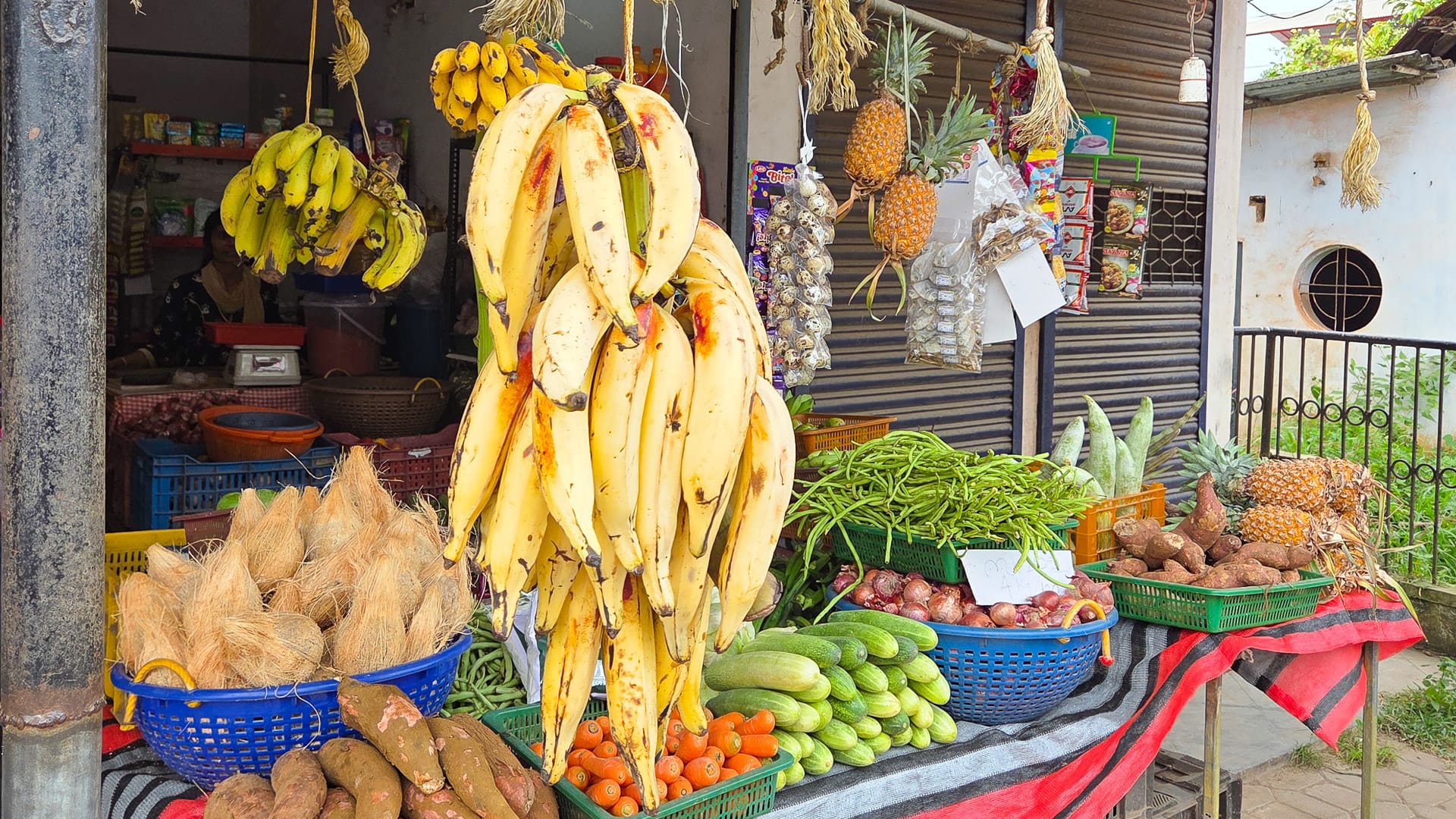
A local vegetable store in Kerala (photo credit: Boat Bike Tours)
Solo travellers, families and non-cyclists
We limit the number of double cabins for single use to one per trip, charged at 1.75 times the trip price.
Additional double rooms for single use can be booked at twice the tour price. This is because hotel rooms are charged per room rather than per person, while cabins on the houseboat are limited and the boat has a fixed charter price.
Extra nights can also be requested.
We don’t suggest this tour for anyone under the age of 15. Parents are solely responsible for their children throughout the tour.
Non-cycling guests can be transported to the next accommodation by transfer, or travel with the support vehicle for the duration of the tour. On houseboat days, they can remain on board and enjoy the cruise to the next pick-up location. This is not the main concept of the tour and is only possible for a small number of guests on each departure. We therefore suggest the tour primarily for people who want to take part in the cycling programme.
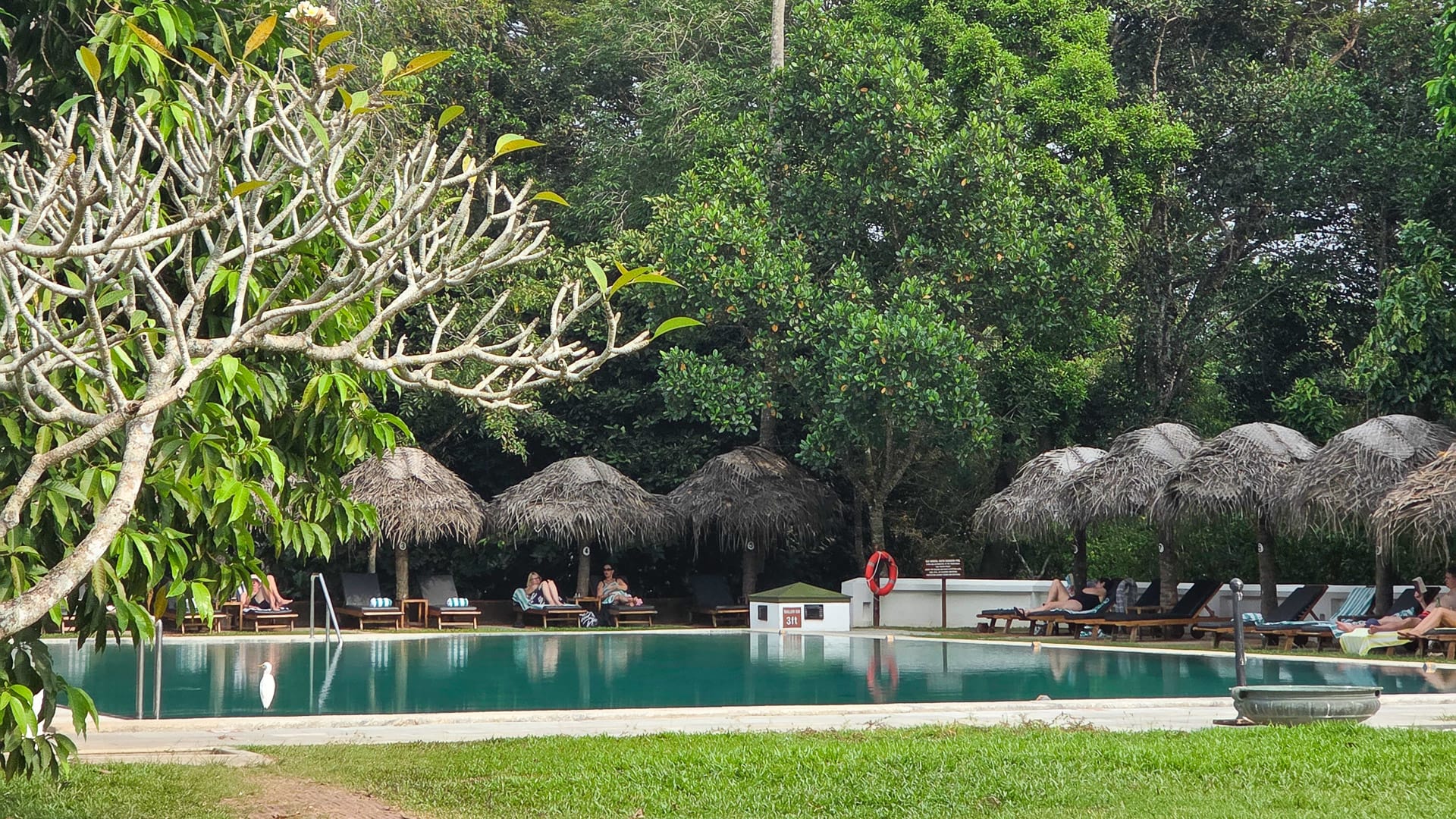
The swimming pool at Marari Beach Resort in Kerala (photo credit: Boat Bike Tours)
Sponsor Message
Looking for bike and boat tours in India?
Colors of India takes you from the palaces and monuments of northern India to the hills, villages and backwaters of Kerala.
Our 15-day itinerary mixes guided cycling with time in Delhi, Jaipur and Agra, before heading south for rides around Munnar and through rural Kerala. Later in the journey, you spend three nights aboard a houseboat, cycling between the waterways and villages of the backwaters.
If this mix of cycling, culture and time on the water sounds like your kind of trip, we’ve been running bike and boat holidays since 2002 and would love you to join us in India.
See the full route, current dates and prices on the website or send Boat Bike Tours a question using the form below.
Got a question for Boat Bike Tours?
Fill out this form and we will pass it to Boat Bike Tours who aim to reply (within 24 hours wherever they can!)
Part 4: What does Boat Bike Tours offer?
Boat Bike Tours and Islandhopping
At Boat Bike Tours, we specialise in holidays that combine cycling with travel by water. Islandhopping has decades of experience creating guided cycling and boating trips and has been part of the Boat Bike Tours family since 2024.
The basic idea is simple. You explore actively by bicycle, while we organise accommodation, luggage transfers, route planning and many meals. Time aboard provides regional food, comfort and space to unwind.
In India, we adapt this concept to the country rather than copying a European format. Hotels, flights and trains connect distant regions, while bicycles and the houseboat are used where they provide a closer view of local life.
What makes the tour different?
For me, the defining feature is the decision to include both northern India and Kerala.
Our itinerary is quite unusual because it combines northern and southern India in 14 days, including both sightseeing and cycling. We haven’t found a comparable tour online, and none of the other tours we found include a multi-night stay on a houseboat.
The trip does not rely only on famous landmarks. Cycling stages take you through villages, plantations and farming areas where everyday encounters become part of the journey.
Carefully selected hotels provide comfort after culturally rich days. The houseboat then offers a completely different view of the country, passing rice paddies, coconut groves, fishing communities and birdlife.
Experienced local guides help explain not only what you are seeing, but also the stories, customs and traditions behind it. All of our accompanying teams speak fluent English. The Islandhopping representative stays with the group throughout the tour, while the cycling team and local representative change between northern and southern India.
Our aim is not simply to show you India. We want you to experience it at a pace that leaves room for conversation, food and unexpected moments.
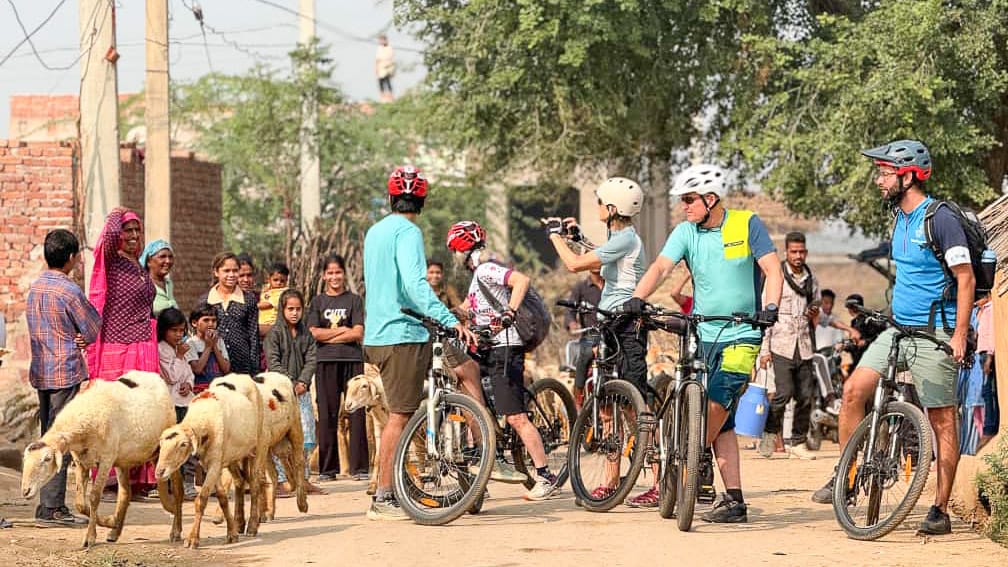
Meeting local people in villages in Bharatpur (photo credit: Boat Bike Tours)
How did we develop the India tour?
The itinerary is the result of exploratory travel, work with local teams and a pilot departure.
Our first proposal focused only on Kerala. My 2023 research trip convinced me that the backwaters worked well for cycling and houseboat travel, but did not show enough of India.
We added the Golden Triangle to create a broader journey. The pilot then revealed that the programme was too ambitious, with too much packed into some days.
Guest feedback led to a longer tour with more breathing room. We also shaped the direction so that the journey starts with northern India’s cultural intensity and finishes more slowly in Kerala.
For me, this process is one of the tour’s strengths. We did not simply join a list of famous sights. We tested the trip and changed it around what guests actually experienced.
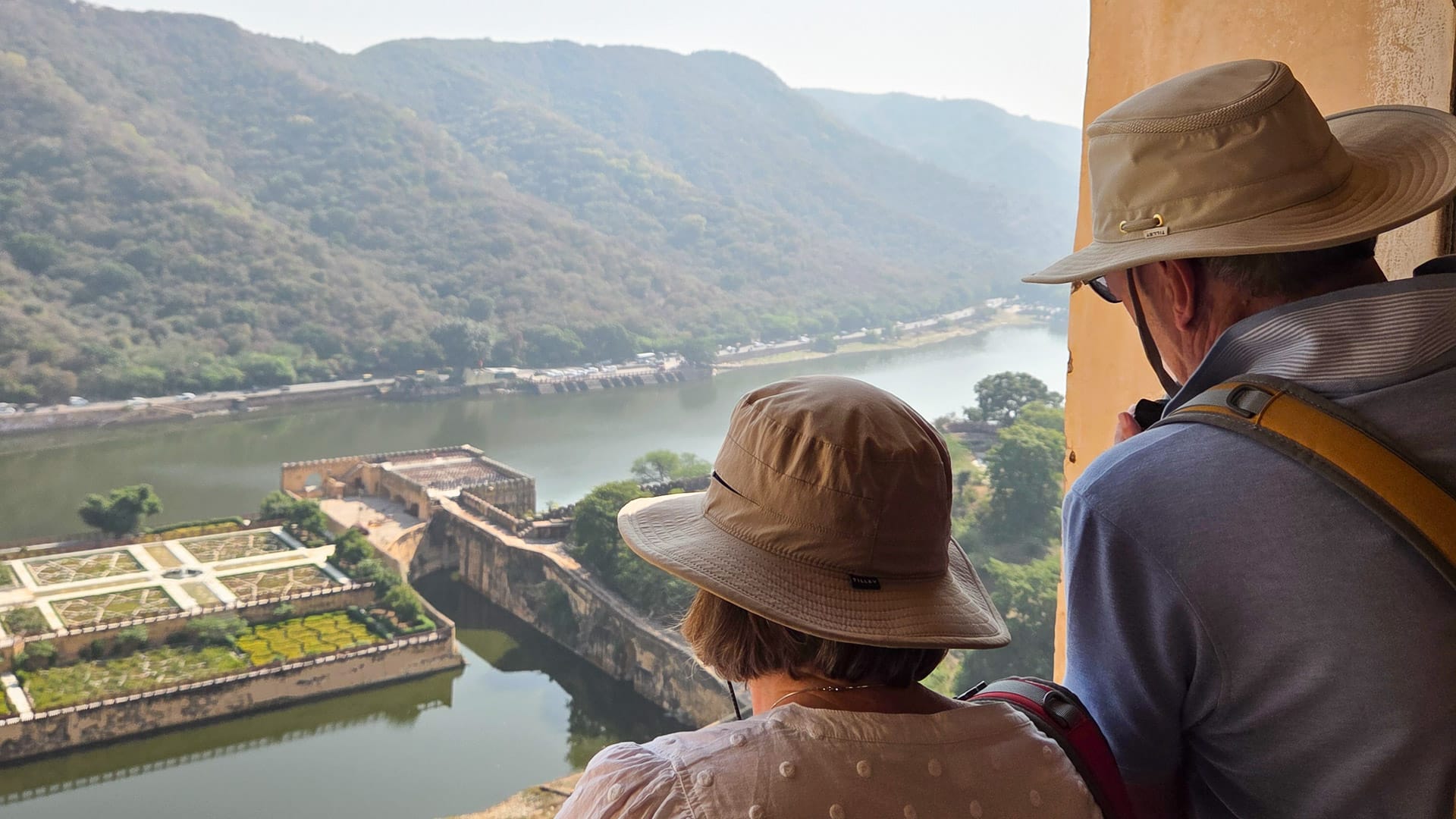
Boat Bike Tours guests admiring the view from Amber Fort (photo credit: Boat Bike Tours)
Dates, prices and availability
We have a guaranteed departure from 21 November to 5 December 2026, priced from €4,250 per person.
We have departure dates from 13 to 27 February 2027 and 27 February to 13 March 2027. Dates, prices and availability can change, so check our live tour page.
Our current e-bike supplement is €320. Limited-liability protection costs €28 for an e-bike or €14 for a hybrid bicycle. A mandatory SGR insolvency-protection contribution of €5 per person is added separately. SGR (Stichting Garantiefonds Reisgelden) is the Dutch travel guarantee fund that provides financial protection if a participating travel company becomes insolvent. Before making a payment, read the service agreement and booking conditions carefully.
What is included?
Check the tour page for full information – but here’s a summary as at the date of writing:
Included
- 15 days and 14 nights
- 11 nights in carefully selected three to five-star hotels
- Three nights in air-conditioned twin cabins aboard the houseboat
- Full board aboard and half board in hotels
- Domestic flight from Delhi to Kochi
- Agra to Delhi train
Guided rides and walks - City tours
- Entrance fees for scheduled sites, including national parks and the Taj Mahal
- English-speaking guides
- Standard rental bicycle
- Airport transfers
- Tourist taxes and port charges
Not included or optional
- International flights
- Camera fees at monuments
- Drinks aboard and in hotels
- Meals not listed in the itinerary
- Tips
- Personal travel insurance
- E-bike upgrade
- Rental-bike protection
- SGR contribution
- Extra nights
- Some optional activities
The hotels have en-suite bathrooms and air conditioning. Most also have pools or wellness areas, and breakfast buffets include local specialities. The rooms on the houseboats are comparable with a hotel room: they are all air-conditioned and have a private en-suite bathroom. We send the final hotel list shortly before departure.
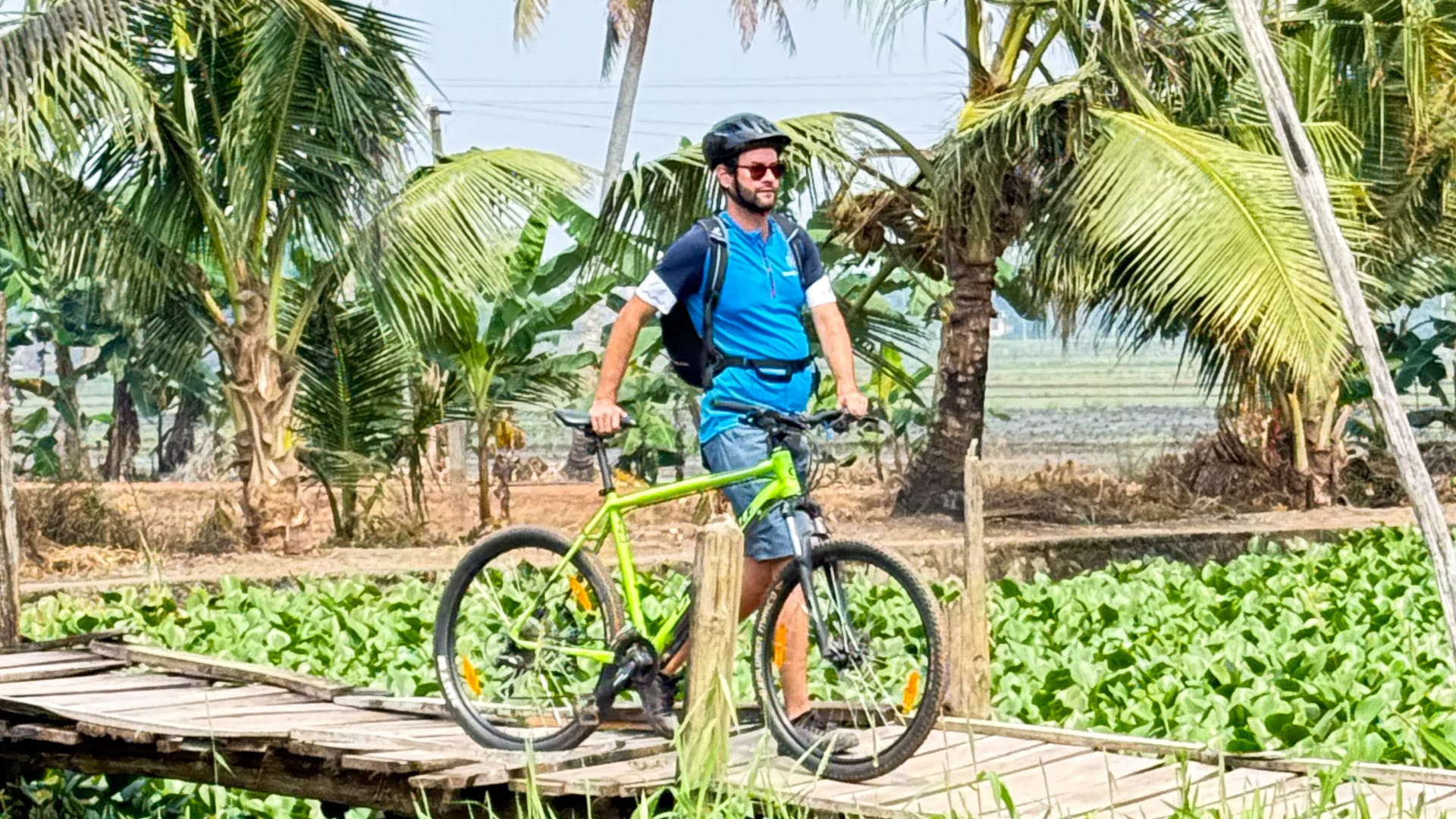
Exploring the Kerala Backwaters on foot with his bike (photo credit: Boat Bike Tours)
How to find out more
If the idea of combining cycling with India’s history, food, local communities and Kerala backwaters appeals to you, this tour offers an unusual way to experience both the north and south of the country in one journey.
Check the latest departure details to see whether Colors of India could be the right trip for you.
Sponsor Message
Looking for bike and boat tours in India?
Colors of India takes you from the palaces and monuments of northern India to the hills, villages and backwaters of Kerala.
Our 15-day itinerary mixes guided cycling with time in Delhi, Jaipur and Agra, before heading south for rides around Munnar and through rural Kerala. Later in the journey, you spend three nights aboard a houseboat, cycling between the waterways and villages of the backwaters.
If this mix of cycling, culture and time on the water sounds like your kind of trip, we’ve been running bike and boat holidays since 2002 and would love you to join us in India.
See the full route, current dates and prices on the website or send Boat Bike Tours a question using the form below.
Got a question for Boat Bike Tours?
Fill out this form and we will pass it to Boat Bike Tours who aim to reply (within 24 hours wherever they can!)
What’s next?
Huge thanks to Jacob for sharing these insights into boat and bike tours in India.
Have you been on a bicycle tour in India before? We’d love to hear from you! Drop us a comment below.
Looking for more exciting cycling inspiration in India? Don’t miss:
- Cycling India, our hub page for the country
- Cycling in India: the inside guide, for the best regions and tours
- 12 tips for cycling tours in India: what to know before you go
- 8 of the best cycling holiday destinations in the world 2026, featuring India
- Bike and Boat tours in Egypt: what to know before cycling the Nile.
Got a question for Boat Bike Tours?
Fill out this form and we will pass it to Boat Bike Tours who aim to reply (within 24 hours wherever they can!)
Got a question for Jacob?
Fill out this form and we will send it to Jacob. We aim to get you an answer within 24 hours where possible!Jacob Ketel is director of the Islandhopping office in Konstanz.
He travelled to India during the development of Colors of India, testing possible routes, hotels and experiences with his colleague Sil. He was initially unsure whether the bike and boat concept would work here. The research trip convinced him that Kerala's roads and houseboats had real potential, but also that the journey needed to show more of the country.
He is particularly proud of the resulting itinerary, which combines northern India's cultural landmarks with cycling and houseboat travel in Kerala.
First Published: 25 August 2026
The contents of this website are provided for general information purposes only. It is not intended to amount to advice and you should not rely on it. You should carry out your own due diligence and risk assessments and take professional advice. Views expressed by interviewees or other users of this website do not necessarily represent our views. We make no representations, warranties or guarantees, whether express or implied, that the content on our website is accurate, complete or up to date. If you use any information or content on this website, download from, or otherwise obtain content or services through our website, it is entirely at your own discretion and risk. Epic Road Rides Ltd disclaims all liability and responsibility arising from any reliance placed on the information and content on this website. Find out more here.
Sponsor Message
Looking for bike and boat tours in India?
Colors of India takes you from the palaces and monuments of northern India to the hills, villages and backwaters of Kerala.
Our 15-day itinerary mixes guided cycling with time in Delhi, Jaipur and Agra, before heading south for rides around Munnar and through rural Kerala. Later in the journey, you spend three nights aboard a houseboat, cycling between the waterways and villages of the backwaters.
If this mix of cycling, culture and time on the water sounds like your kind of trip, we’ve been running bike and boat holidays since 2002 and would love you to join us in India.
See the full route, current dates and prices on the website or send Boat Bike Tours a question using the form below.
Got a question for Boat Bike Tours?
Fill out this form and we will pass it to Boat Bike Tours who aim to reply (within 24 hours wherever they can!)
Comments