

Tucked high in the Pyrenees between France and Spain, cycling in Andorra offers world-class mountain climbs, smooth roads, and jaw-dropping alpine scenery.
This tiny principality is becoming one of Europe’s most sought-after destinations for serious cyclists looking for must-ride mountain challenges! Andorra’s high altitude climbs are steeped in Grand Tour heritage; both the Tour de France and La Vuelta a España pelotons have visited the country to conquer these impressive mountains on many occasions.
To learn more about the country, we spoke to #TeamEpic contributor Ellie Green, a cycling coach who lives and trains in Andorra year-round.
Ellie combines her professional experience with local insight to share the best Andorra cycling routes, climbs, and practical tips for planning your own Andorra cycling holiday.
Enjoy!

Ellie is a qualified cycling coach passionate about helping riders of all levels discover the joy of cycling. Originally from the UK, she now calls Andorra home and spends her days exploring its valleys and high-mountain roads. When she’s not out riding, Ellie enjoys hiking with her dog or relaxing in one of the many bike-friendly cafés. Her local knowledge and enthusiasm make her a great guide to this stunning mountain nation.
To try and make this article more digestible, we have broken it up into four parts:
- Part 1: Why visit
- Part 2: What cyclists can expect
- Part 3: Cycling bases and must-try routes
- Part 4: Practicalities and tips
Part 1: Why cyclists should visit Andorra?
Andorra is a fantastic destination for cyclists who love a mix of challenge, staggering scenery and warm hospitality.
With its dramatic mountain landscapes, famous climbs and cyclist-friendly facilities, it’s no wonder this tiny country has earned a big reputation.
In recent years, it has become home to over 120 professional cyclists and is set to overtake Mallorca, Girona and Monaco (source).


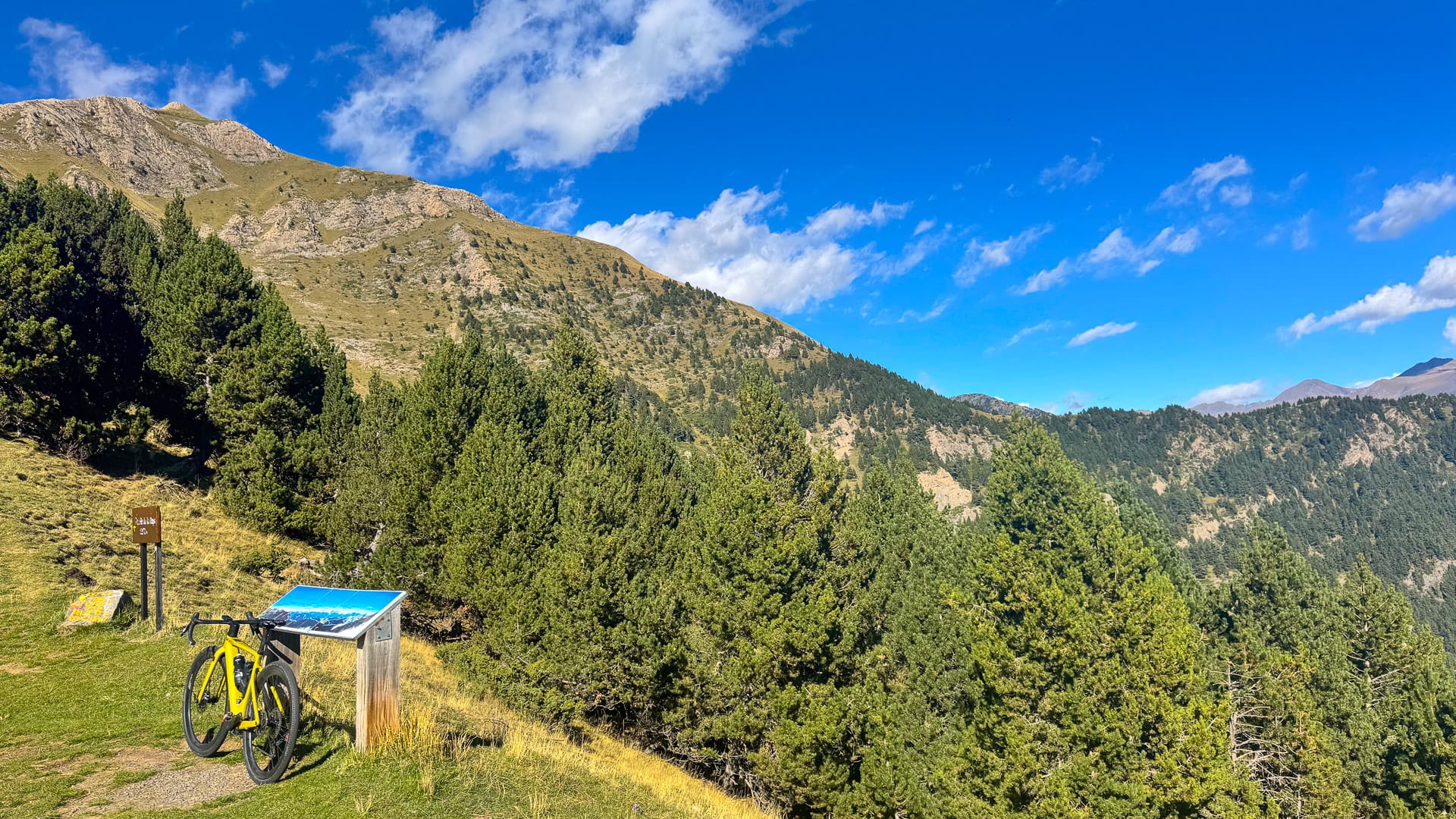



Andorra’s terrain – a playground for climbers
The terrain here is shaped by its ski resorts and high peaks. The capital, Andorra la Vell is the highest capital in Europe (source); this means almost every ride comes with a climb!
The climbs are sometimes steep, sometimes steady, but always rewarding. They have been featured in the Tour de France and La Vuelta a España, most recently in August 2025 (source). This only adds to the riding, as just tackling the same routes as the pros adds an extra thrill.
Roads typically wind through forests, past gorgeous, glittering lakes and up to panoramic viewpoints that make every turn of the pedals worthwhile.
The cycling culture of Andorra
Cycling is deeply rooted in Andorra’s sporting culture. Many big-name professional riders live and train here, such as Tom Pidcock, Sepp Kuss and both Adam and Simon Yates. They’re here to take advantage of the altitude and quiet mountain roads.
For visiting cyclists, the infrastructure is also excellent; bike hire shops are easy to find, hotels and cafés often cater specifically to riders, and there are dedicated on-road lanes as well as off-road tracks in bike parks.
It’s a country that understands cyclists and makes you feel welcome on two wheels.
Exploring Andorra as a visitor
It’s worth taking a moment to enjoy Andorra beyond the roads. This is a country with its own distinct character, shaped by centuries of being sandwiched between two distinct cultures. The mix of Catalan traditions, mountain life and modern European energy makes it a special place to visit.
Its mountain towns are full of charm, with a mix of Catalan, French and Spanish influences that show up in everything from the food to the languages spoken. Wandering through Andorra la Vella’s lively streets, relaxing in a mountain spa, or stopping at a café where bike pumps and racks are as common as good coffee, you’ll feel right at home.
All of this makes Andorra more than just a training ground; it’s a place to enjoy cycling in beautiful surroundings while soaking up a unique blend of culture, cuisine and mountain life.
Part 2: What can you expect from Andorra (a cyclist’s perspective)?
Where is Andorra located?
Andorra is a tiny, landlocked country located in the heart of the Pyrenees, tucked between France and Spain. It borders France’s Occitanie region (the departments of Ariège and Pyrénées-Orientales) to the north and east, and Spain’s Catalonia region to the south and west.
One of the joys of riding here is that on a single ride, you can cross multiple international borders, an experience few other places in the world can offer!
Top tip! Whilst passports are not needed when crossing the border, taking ID is always a good idea if you are planning on crossing the border during a ride.
See below a map of Andorra, including key places mentioned in this article. Hover over the map pins to see the names of places.
What is Andorra’s terrain like?
Andorra’s terrain is made for adventure. Two main valley roads dominate the country: one stretches across Andorra from Spain to France, while the other climbs to a dead-end at the Port de Cabús.
From these valley roads, countless winding roads peel off into the mountains, offering climbs and descents that are both challenging and incredibly scenic.
See below my pick of the best roads to ride in Andorra.
What sort of cyclist does Andorra appeal to?
Road cyclists will love the iconic climbs, while gravel enthusiasts and mountain bikers can explore former smuggler trails that now make for incredible off-road adventures.
Families and leisure riders are well catered for too, with scenic paths around lakes like Engolasters or gentle trails in bike parks such as Pal Arinsal.
Top tip! While the terrain is challenging, the climbs are often gradual, and e-bikes make many routes more accessible for those worried about the terrain.
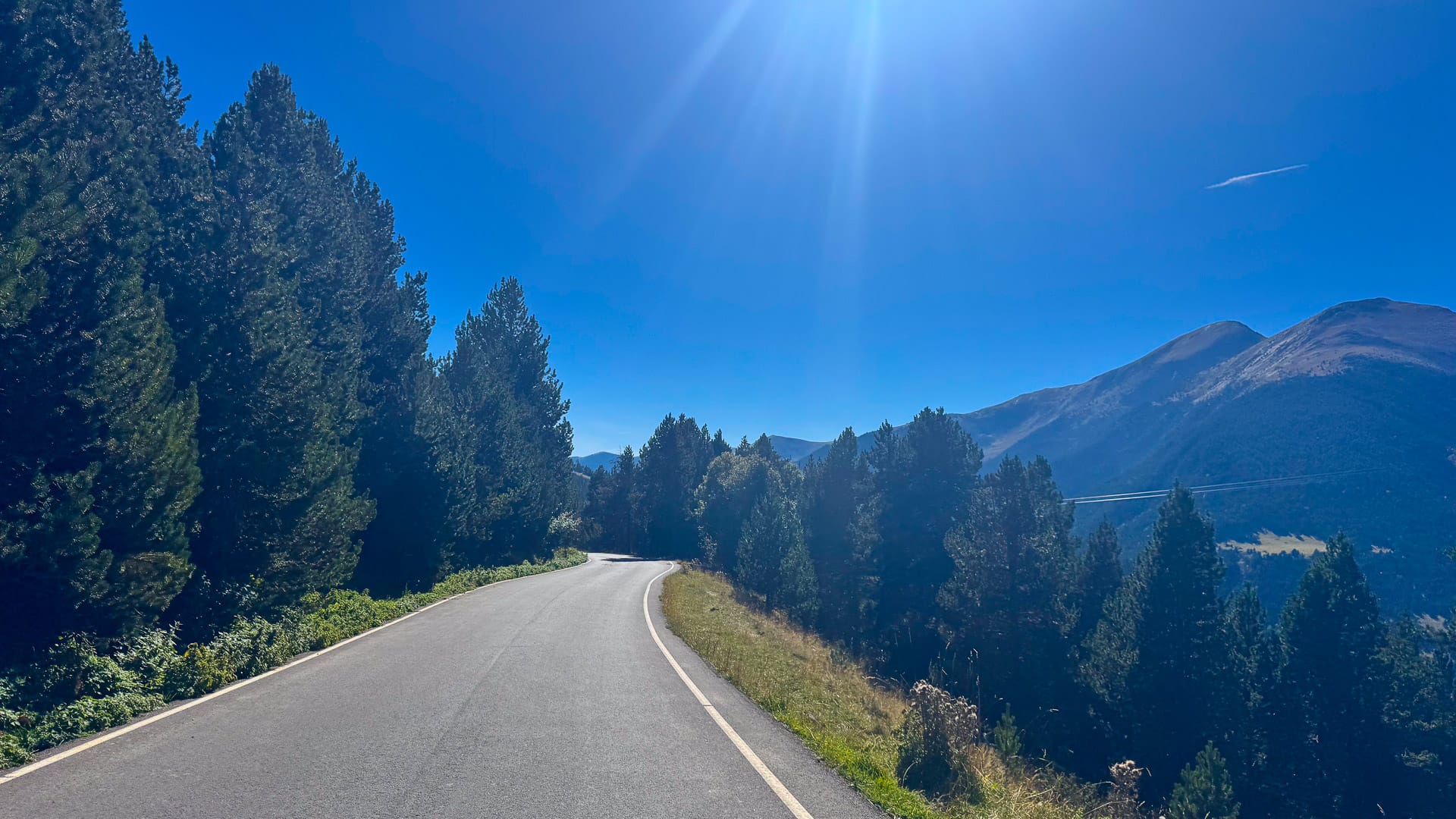
One of the many quiet asphalt roads in Andorra (photo credit: Ellie Green)
How welcoming is Andorra to cyclists?
Cyclists in Andorra are (generally) welcomed warmly. Drivers show a refreshing respect for cyclists and usually give plenty of space. Cafés and most towns are equipped with bike racks, and petrol stations and bike shops make it easy to refill bottles, grab spares, or clean your bike.
Roads are typically well-maintained, with smooth asphalt even on steep climbs. Tunnels generally include bike paths or clearly signed alternatives (such as the one between La Massana and Andorra la Vella, where cyclists must follow a signed detour).
The people are open and multilingual, with English spoken widely, making it easy to connect with locals.
Do you need an organised tour?
Andorra is compact enough that a formal multi-base tour isn’t essential.
Staying in a single well-located base like La Massana, Encamp, or Ordino allows you to explore most of the country on several day rides. Find out more below.
Moving between bases can offer a change of scenery and a wider taste of Andorra’s landscapes. But for most riders, a central hub is all you need to enjoy the best of what this cycling-focused country has to offer.
What are the key cycling events in Andorra?
Andorra has hosted some of the biggest names in the sport, with stages of the Tour de France and La Vuelta a España making it easy to ride the same roads as the pros, including the Port de Cabús or Coll d’Ordino.
These events bring a real buzz to the valleys, with spectators lining the roads and creating a sense of shared excitement that you can almost feel as a visiting cyclist.
In October 2025, the country also hosted the Andorra Cycling Masters, a new, unique event that brought together four of the world’s biggest cycling professionals, including Tadej Pogačar, Jonas Vingegaard, Primož Roglič and Isaac Del Toro (source).
But Andorra isn’t just for the pros. The country hosts a fantastic range of sportives and gran fondos that welcome amateur riders from around the world.
- La Purito Andorra, founded by former pro Joaquim Rodríguez, offers routes that range from tough climbs for experienced riders to shorter, more approachable options.
- Other events, like the Volta als Ports d’Andorra or Gran Fondo Encamp Pas de la Casa, let cyclists challenge themselves in a friendly, supportive atmosphere.
- For mountain bikers, the Andorra Epic offers multi-day stage races through rugged trails, showcasing the country’s dramatic landscapes from a different perspective. Even if you’re not racing, simply spectating this one is a must.
Part 3: What are the best bases for cyclists and must-do cycling routes in Andorra?
Andorra is packed with valleys and climbs that make it a real playground for cyclists!
Each area has its own character, so where you choose to base yourself can shape the riding experience.
La Massana and Ordino Valley

Road above La Massana (photo credit: Ellie Green)
The western valleys are the cycling heart of Andorra.
La Massana is a popular base for many cyclists, thanks to its warmer microclimate and easy access to mountain bike trails via the gondola. It also offers quick access to the Pal Arinsal Bike Park and climbs like Port de Cabús and Arinsal!
Ordino sits slightly higher and is also a little quieter. This makes it perfect for serious climbers seeking challenges like Coll d’Ordino or the Ordino-Arcalís climb.
These valleys both offer convenience, variety, and some of the most beautiful scenery in the country, making them favourites for both road and mountain bike riders.
You will also find some great cycling cafés, including Grupetta in La Massana and Hors Categorie in Ordino. These are both firm favourites of the pros!
Port de Cabús
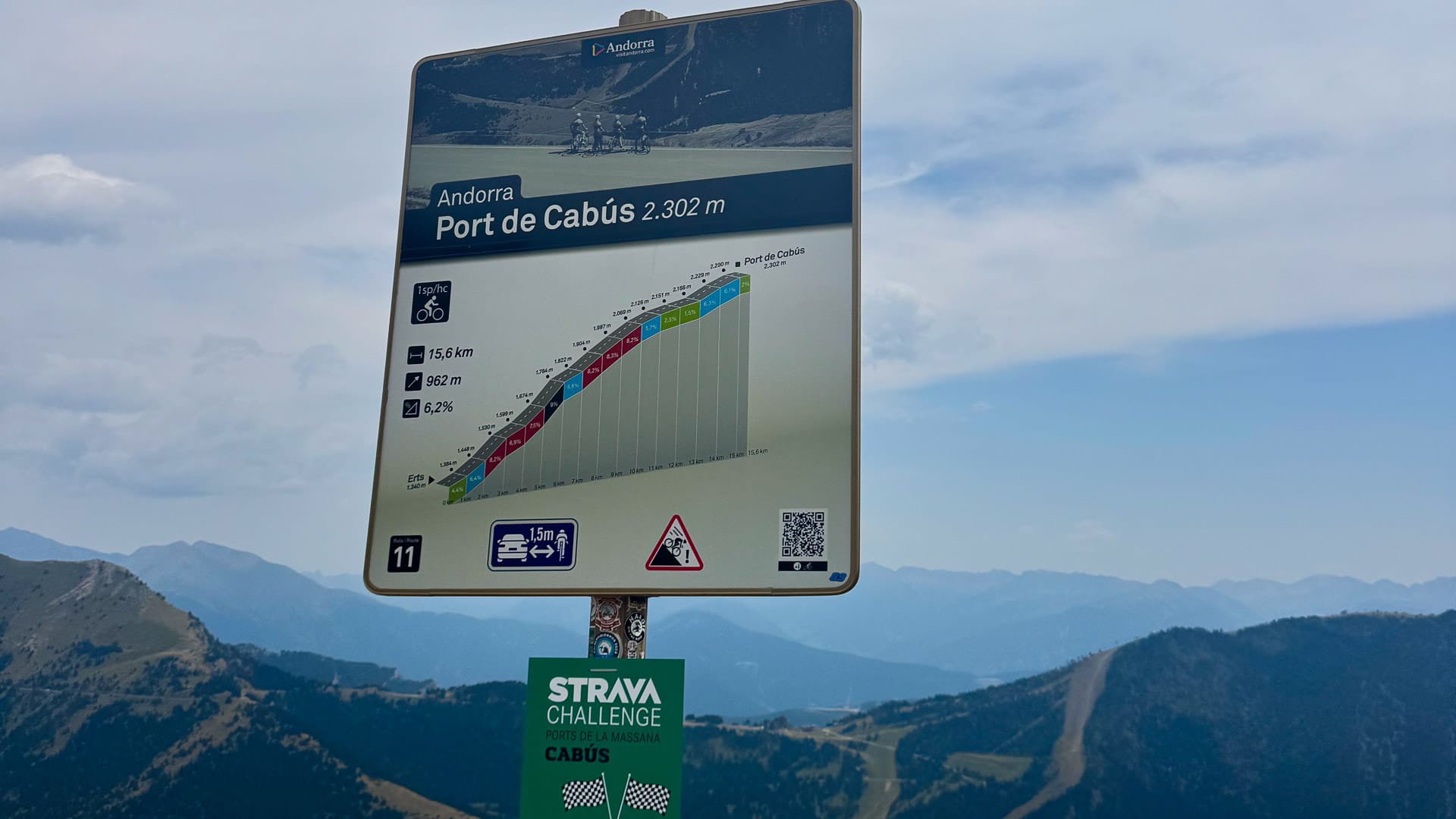
This one’s a climber’s delight. Port de Cabus sits at about 2,302 metres on the Andorra-Spain border.
The climb from La Massana runs roughly 15 kilometres at an average of 6.2%, with ramps over 10% in places. It’s a proper high-mountain climb with quiet roads, sweeping views, and the thrill of topping out at serious altitude.

Climb to Port de Cabús (photo credit: Ellie Green)
Col d’Ordino loop
One of Andorra’s most classic passes, Col d’Ordino reaches 1,980 metres. From Ordino it’s 9.8 kilometres at 7.1%, shaded and steeper, while from Canillo it’s 8.9 kilometres at 5.4–5.6%, more open and steady.
Either way, it’s a scenic, rewarding climb that tests the legs without being overwhelming and is the easiest climb to make connecting the two valleys possible if you want to develop your ride and reach multiple peaks on one route.
Encamp and Canillo Valley
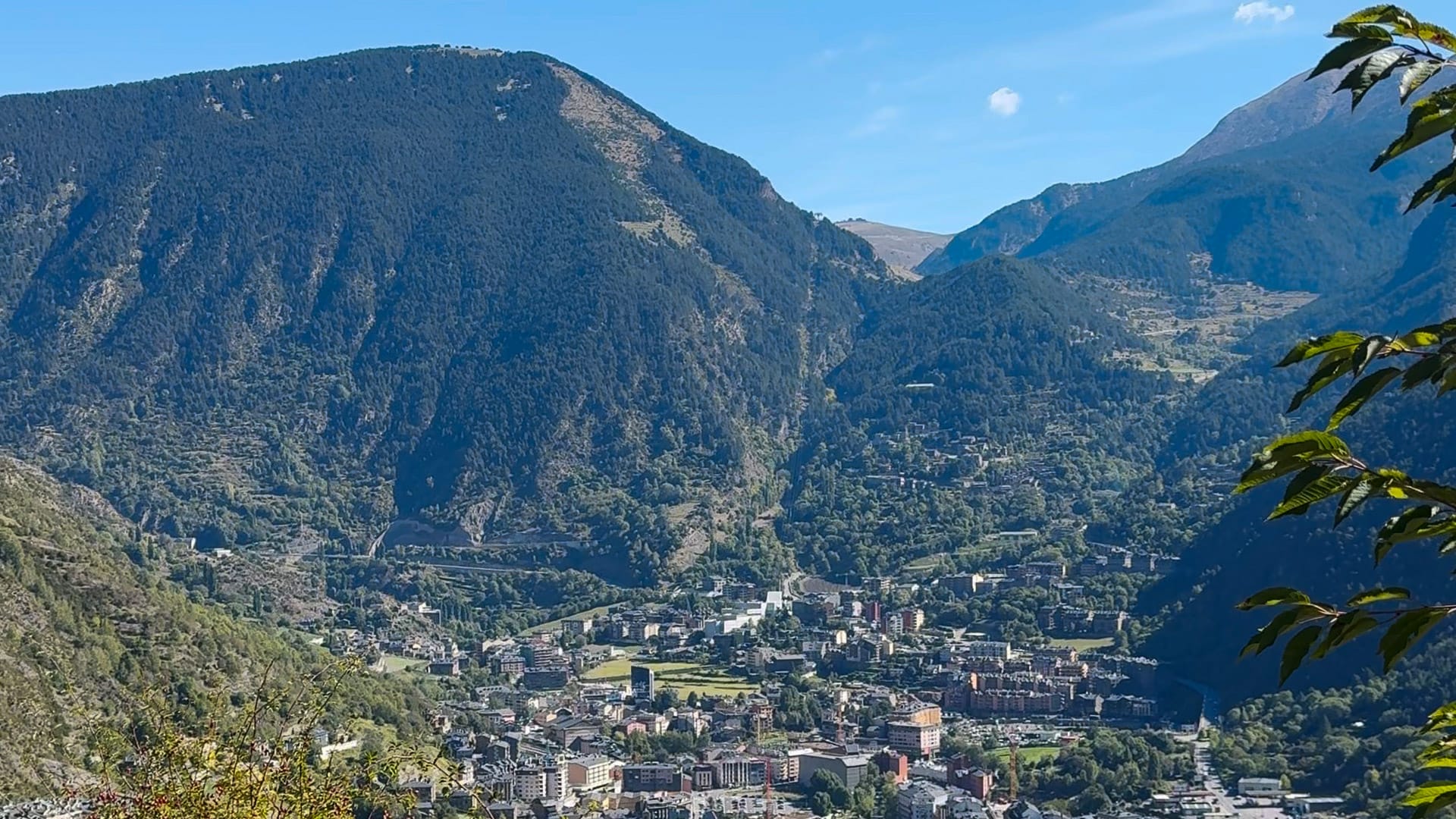
View of Encamp (photo credit: Ellie Green)
The central and eastern valleys are perfect for riders who want a mix of accessibility and quiet roads.
Encamp gives quick access to a variety of climbs, including the rewarding Cortals d’Encamp.
The Canillo Valley offers longer, peaceful climbs, such as the Collada de Beixalis.
Together, these valleys provide a balance of flexibility, scenic routes, and tranquil riding away from the busier western areas.
Top tip! Staying here also means you can link multiple climbs into a single epic ride without spending too much time transferring between valleys. Encamp is also home to the top-rated cycling cafe Gir, a must-stop for cakes, breakfasts and lunch on a ride.
Be aware! Staying too high, such as above Canillo, can make returning to your accommodation more of a workout than you might want. So it’s worth planning your base carefully to allow you to explore more efficiently.
Collada de Beixalis
Collada de Beixalis is a classic climb out of La Massana. You climb over the mountain into Encamp in the Canillo Valley. It’s a good way of connecting the two sides!
The ride is about 28 kilometres round-trip with over 880 metres of climbing. It starts gently enough before steepening into sections around 6-8%, with ramps up above 10% in parts.
The road winds up through pine forests, drops into open high meadows, and rewards you with sweeping views over Ordino and beyond. It’s not the longest climb in Andorra, but it’s perfect for testing legs, enjoying changing scenery, and getting a sense of elevation without going all-day.
Sant Julià de Lòria
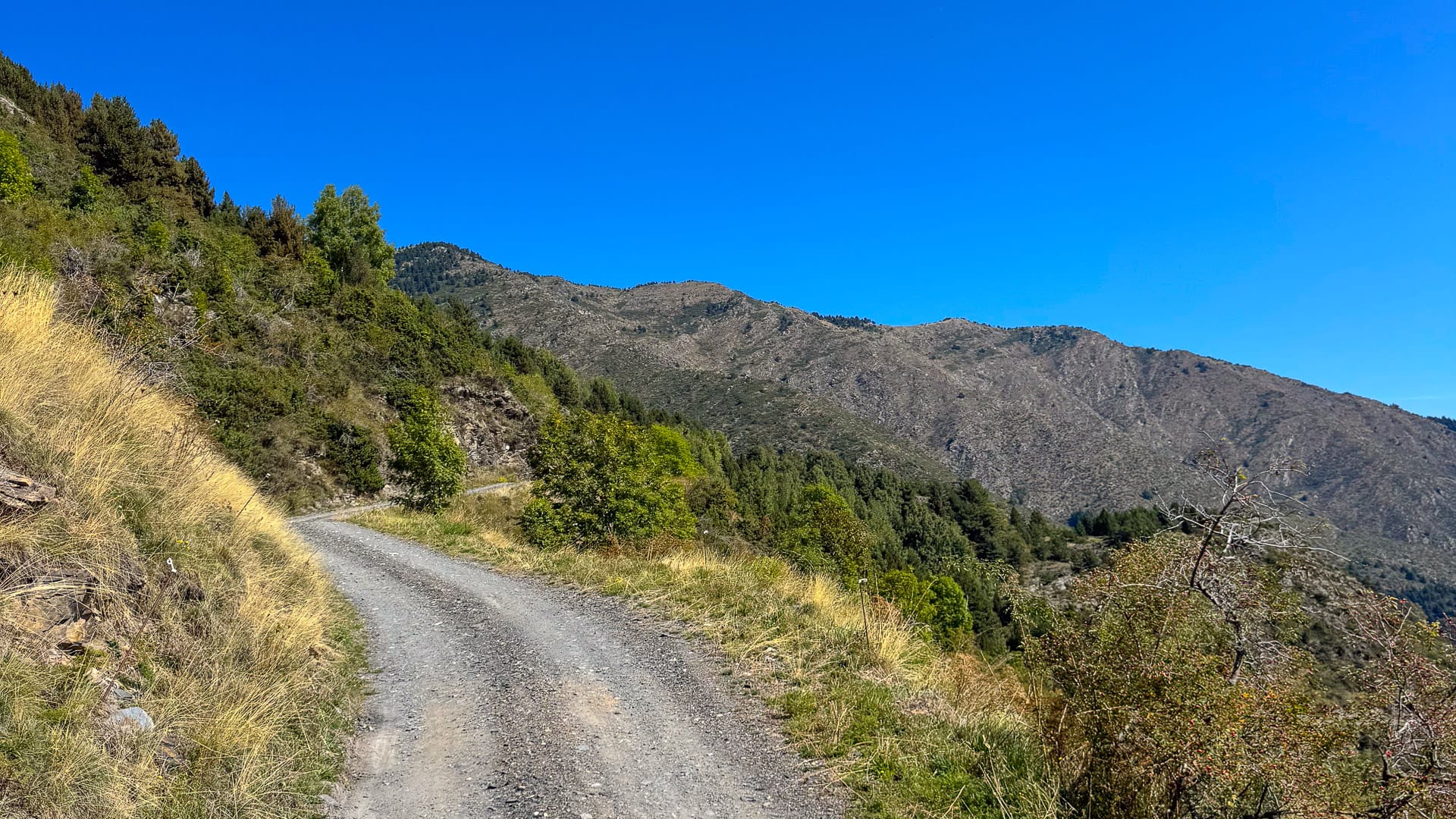
Peaceful gravel climb on the border of Andorra (photo credit: Ellie Green)
At the southern tip of Andorra, Sant Julià de Lòria is quieter but has a strategic advantage; it has easy access into Spain for border-crossing rides!
Classic climbs such as Coll de la Gallina are nearby, and the combination of steep climbs and flowing descents makes it a great choice for riders who want challenge and variety, plus the option to extend beyond Andorra’s borders. This is especially popular with gravel riders as the borders are where you find the famous smuggler trails.
The Three Nations Loop
The Three Nations Loop is one of the most memorable rides in Andorra. At around 137 kilometres with over 2,170 metres of climbing, it crosses into both Spain and France before looping back home.
Big mountain passes like Port d’Envalira and Col de Puymorens make it a true endurance challenge, while the changing scenery and multiple border crossings give it a unique sense of adventure. It’s a long day in the saddle, but one you’ll never forget.
Smuggler Trail Gravel
This gravel adventure combines tough riding with history, following old smuggling tracks across Andorra’s high borders. Expect rougher sections mixed with smoother trails, long climbs and some truly wild scenery.
The route often tops out around 2,300 metres, so expect a challenge! The route can be ridden on a gravel bike or an e-mountain bike (if you want a little boost!)
Fun fact! For those interested, the smugglers’ trails of Andorra are a network of steep mountain paths that were once used to secretly move goods across the Pyrenees.
For many years, Andorra’s isolated location between France and Spain made it a key route for trading items like tobacco, cloth, salt, and later, during times of conflict, weapons and even people seeking safety. During the Spanish Civil War and World War II, these trails became especially important as escape routes for refugees, resistance fighters, and downed pilots. The difficult terrain and the knowledge of local guides helped smugglers and escapees avoid authorities and travel safely through the mountains.
Part 4: What do you need to know before cycling in Andorra?
Practicalities of Andorra cycling holidays
When is the best time to visit Andorra?
Choosing the right time of year for an Andorra cycling trip can make all the difference.
The season really begins in late May, once the high passes are clear of snow and the days grow longer.
From then until September, the country feels made for riding; all the climbs are open, the cafés are buzzing with cyclists, and the weather is warm, without being overwhelming.
June and September are particularly rewarding months. The roads are quieter than in the height of summer, yet the conditions are just as good, with crisp mornings and long sunny afternoons.
July and August bring warm sunshine and the longest days, though the mountains sometimes remind you of their power with a thunderstorm or two.
Is Andorra suitable for cycling in the off-season?
Be aware! Outside the June to September window, Andorra changes character. From November through April, the country belongs to skiers. Snow blankets the higher climbs and temperatures drop well below freezing; however, the sun still shines and roads are maintained and kept in pristine condition, allowing cycling all year round, as long as you wrap up.
The timing of this transition into winter conditions also varies a little between Andorra’s regions.
- La Massana Valley, with its gentler microclimate, often opens up earlier in the spring and stays rideable later into the autumn. This makes it a favourite for those hoping to stretch out the season.
- Encamp and Ordino, being higher, are typically cooler at the edges of the season.

High mountain road basking in blue skies and sunshine (photo credit: Ellie Green)
Where should you stay for cycling in Andorra?
Remember to double-check bike storage arrangements (and any other services you need) before booking your accommodation as policies often change and they may charge for storage.
Many hotels and accommodation options in Andorra go the extra mile to make sure your stay is smooth and stress-free, including providing secure bike storage, workshops, cleaning areas and route guidance.
Below is a list of bike-friendly hotels that I have selected because they all have good reviews, are in areas I know well, or are hotels suggested by fellow cyclists in Andorra:
Located in Encamp, this hotel offers a full bike workshop and spa facilities.
Located in Escaldes-Engordany, and includes bike storage, workshops, e-bike rentals, and proximity to both road and mountain biking trails.
Located in La Massana, this is another popular option which includes bike storage, workshops, e-bike rentals, and access to both road and mountain biking trails.
Even though most people would prefer to be in the busy and well-connected towns, some of us head to Andorra for the altitude training!
If this is your goal, I suggest that you join the pros at the Pic Maià Mountain Hotel. The hotel sits at about 2,408 metres on the Port d’Envalira, just a few kilometres from Pas de la Casa. This gives your training a head start by allowing you to adapt to high elevation whilst you sleep. This also helps riders later in the week when they ride up the big climbs.
Do Andorra hotels welcome cyclists?
In general, cyclists in Andorra can expect early breakfasts, flexible departure times, clean drinking water and easy access to tools for basic maintenance.
Beyond these specialist hotels, many guesthouses, hostels and Airbnbs are happy to welcome cyclists. Camping is another popular choice for touring riders, with sites like Camping Valira in Andorra la Vella and Camping Encamp providing simple but bike-friendly facilities.
Be aware! Booking ahead is needed during peak season (spring and summer), especially for hotels catering specifically to riders.
How easy is it to find bike shops when planning Andorra cycling holidays?
Prices, services and bike brands often change. Please let us know if anything is incorrect.
For many riders, renting locally is a great option, especially if you want to travel light or avoid the hassle of transporting your own bike.
Finding a bike in Andorra is easier than you might think. There are plenty of shops and rental services catering to all types of cyclists, whether you want to rent a lightweight road bike, a mountain bike or an e-bike.
Most shops suggest you pre-book your bike; however, you can book as late as 24 hours online with most shops. Even if you do bring your own bike and sadly have a mechanical, or forget to pack something, Andorra is well equipped to get you back on two wheels, ready to carry on riding and exploring what the country has to offer.
What are the best shops for Andorra bike rental?
Top tip! La Massana is home to some of the country’s best bike shops.
- Viladomat Rental in La Massana is a favourite for road cyclists and mountain bikers alike, offering a wide range of bikes that you can book online.
- Jorma Bike in Andorra La Vella is another go-to spot, with expert servicing and high-quality road bikes. This is perfect if you want to make sure your bike is tuned to perfection before heading into the mountains.
- Other reliable options in La Massana include Couloir, Esports Elit, and Pic Negre, all offering rentals, repairs and in some cases even delivery to your accommodation.
How do you get to Andorra?
Getting to Andorra is easier than it might seem, even though the country doesn’t have its own airport or train station.
Most visitors arrive via nearby airports in Spain or France.
Barcelona-El Prat in Spain is the most popular choice. It’s about a three-hour drive from Andorra la Vella. Toulouse-Blagnac in France takes roughly three and a half hours.
Does public transport accept bikes?
The big positive for Andorra is that it’s very well serviced with its own bus company, Andbus. On the Andbus website or app you can book direct bus transfers from the airport directly to your accommodation, whether that be a hotel, Airbnb, or campsite. You just enter the address you’re going to when booking.
The service runs at regular intervals, usually every two hours and allows for bikes to be booked at just six euros (as of October 2025). This removes the hassle of needing to hire a car and navigate the drive. Buses are also fully equipped with Wi-Fi, toilets and air conditioning, making the journey comfortable and stress-free.
Train-wise, Andorra is served indirectly. From France, trains stop at L’Hospitalet-près-l’Andorre, just a few kilometres from the border, and from Spain, Lleida Pirineus connects with high-speed AVE trains from Barcelona or Madrid. From either station, buses or transfer services can bring you straight into the heart of Andorra for an alternative to flying.
Be aware! Bikes can be taken on the AVE high-speed trains in bike boxes or bags on the standard trains. Or fully built bikes can be booked at bike spots. Check in advance.
Can you book cycle-friendly transfers?
Several companies specialise in transfers for cyclists, including those carrying bike boxes if you prefer a private hire transfer over the main Andbus. Services like Singletrack Safari, Andorra Transfers and Andorra Bike Tracks can pick you up from Barcelona or Toulouse airports and ensure your bike arrives safely.
Within Andorra itself, buses connect the main towns and valleys, and taxis are friendly, reliable, and often bookable via WhatsApp.
Do you need to hire a car?
For transport, a car isn’t essential if you base yourself in one of the main towns like Andorra la Vella, La Massana, or Encamp.
If you do want to hire a car for your trip, there are a couple of additional points to remember:
- If hiring from airports in Spain and France, you will need to make sure to add an additional border crossing. This is because you will need to leave the hire car country to enter Andorra. This often carries additional charges.
- Be aware! Because of the ski resorts and potential wintery weather in Andorra, between 1st November and 15th May, you’re legally required to have either winter tyres (marked with a snowflake symbol) or carry snow chains. These are not usually included as standard with car hire from Toulouse or Barcelona airports. There are significant fines for non-compliance.
Any highway code and travel information I should be aware of?
As ever, it’s a good idea to check current travel information before you book and travel. For UK visitors, the UK government travel information pages for Andorra are here.
You should also read and follow Andorra’s highway code. You should also ensure you have comprehensive travel insurance that covers all the activities you plan on undertaking.
Note that Andorra is not part of the European Union.

Autumn foliage in Andorra (photo credit: Ellie Green)
Tips for cycling in Andorra
Be aware! The country’s mountains are beautiful but demanding, and knowing what to expect makes the difference between a tough day out and a truly great ride.
How easy is it to navigate?
Maps and route planning are a good starting point. The best way to familiarise yourself with Andorra’s climbs is to look at detailed cycling maps or guidebooks before you arrive.
There are also plenty of GPS routes available online (in addition to the ones included in this guide!). Having a look at these in advance will help to educate on how the valleys connect, where the border passes lead, and which climbs link together into a full day out.
Are there any safety and road rules to be aware of?
When it comes to rules of the road, most are the same as in the UK. One important difference is that cyclists in Andorra are required to have both a front and rear light fitted at all times, even in daylight. So it’s worth packing a set of lightweight rechargeable lights.
Safety-wise, the roads are generally quiet, and drivers are respectful of cyclists. But be aware! The descents can be long and fast, so always check your brakes before heading out each day; you can wear through brake pads quickly in the Andorran mountains.
Off the bike, Andorra is a very safe and welcoming country. Though, as with any mountain region, you must keep an eye on the weather and be ready to adjust your plans if conditions change suddenly.
Can you get wifi in Andorra?
Be aware! Andorra is not part of the European Union, so the usual EU “roam like at home” rules don’t apply. That means your regular UK data, calls, and texts can trigger high roaming charges. Even making a simple call or sending a message can be much more expensive than in Spain or France, and some UK SIMs don’t even connect to receive a signal in Andorra.
Top tip! I suggest purchasing an e-SIM or a local Andorra telecom SIM when you arrive.
Even though most villages and local amenities are equipped with WIFI, for cyclists and travellers, the easiest way around this is to either buy a local SIM card on arrival.
Most towns have shops where you can pick up a SIM with data for the duration of your stay, and mobile coverage is generally good across the valleys and even on many climbs with a travel or e-SIM. This way, you can stay connected for maps, route planning and keeping in touch without worrying.
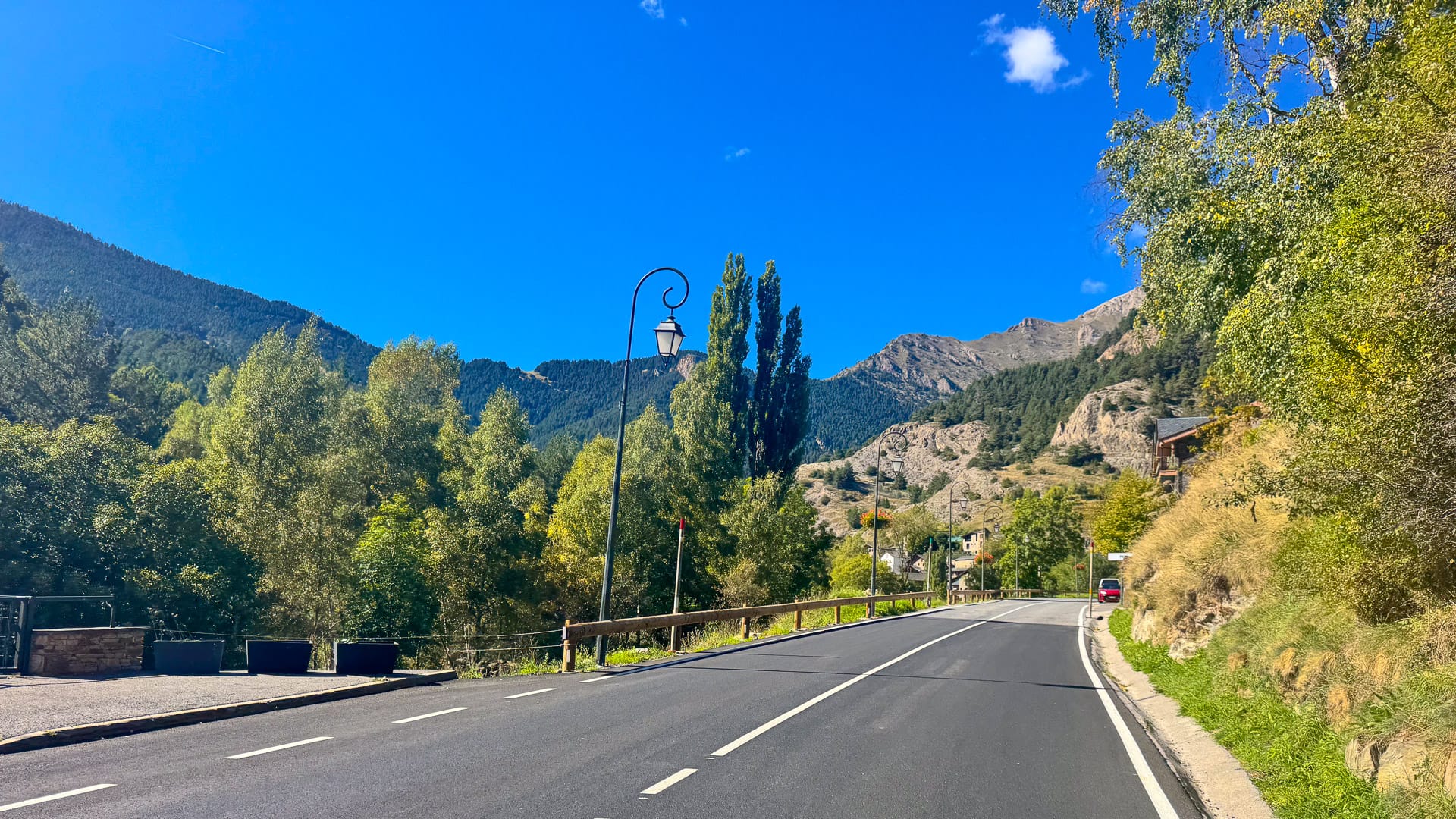
Road into the village of PAL (photo credit: Ellie Green)
What packing essentials should cyclists bring to Andorra?
When packing your kit, layers are essential. You’ll often find yourself working hard and overheating on the climb, only to feel the chill quickly once you start descending, especially if you overheat on the climb up.
A lightweight wind jacket or gilet makes a huge difference. Gearing is another consideration, even though an extra-large cassette isn’t 100% necessary, having a 32 or 34 tooth option is helpful for the longer climbs, especially when fatigue sets in after a few days of riding.
Looking for more useful packing information? Don’t miss this in-depth guide.
What level of fitness is needed?
It’s wise to think about training before you arrive in Andorra. Most rides in Andorra involve sustained climbs, sometimes lasting over an hour.
Building endurance at home and mixing in some longer intervals (where possible) will prepare you well for the reality of riding here. Top tip! If you’re lucky enough to live in a hilly area, focus on getting some uphill efforts in if you want to get the most from your riding here.
How can cyclists prepare for cycling at altitude in Andorra?
Most rides in Andorra begin at altitude, with the valley towns themselves sitting around 1,000 metres above sea level. This means climbs quickly take you much higher.
Training beforehand with sustained climbs will help. But nothing quite prepares you for the added challenge of altitude! The thinner air can make efforts feel tougher, especially on long climbs.
Top tip! It’s worth easing into your first rides, rather than pushing too hard straight away. This will give your body a little time to adapt on the first day or two. I suggest starting with a shorter route, such as Collada de Beixalis.
You could also consider basing yourself at the high altitude hotel Pic Maià Mountain Hotel, located at about 2,408 metres above sea level. See more above.
Other useful things to consider include increasing your hydration and fuelling rides more as your metabolic rate increases at altitude.
Is it easy to find food and water?
Food and culture are another part of the experience in Andorra.
You should try some traditional fondue (cheese or meat) and visit the many highly rated restaurants such as Babek and Angelos in La Massana.
On the road, there are water fountains in most towns and villages, so refilling bottles is easy.
Supermarkets carry plenty of ride-friendly snacks, with good bread, fruit, and chocolate for jersey pockets.
Be aware! Do keep in mind that once you leave the main valleys, options for refuelling become limited. So carrying food is essential until you get to an organised café.
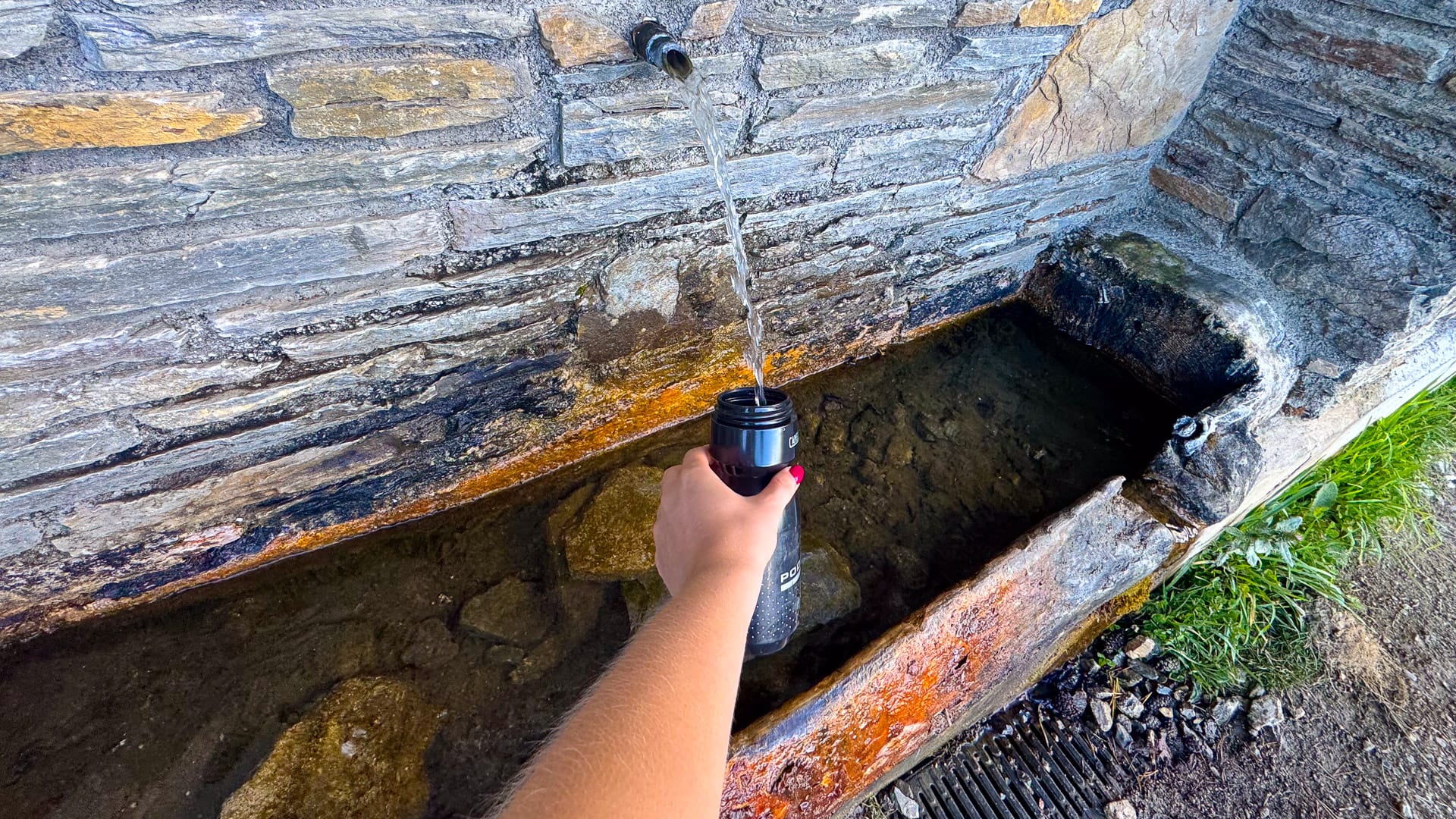
Water fountain in Andorra (photo credit: Ellie Green)
Do you need to speak the local language?
Andorran Catalan is the official language. But most people also speak Spanish or French, and you’ll find English widely understood in bike shops, hotels, and restaurants.
However, learning a few simple words, gràcies (thank you), hola (hello), or bon dia (good morning) is always appreciated by locals.
How can cyclists travel more responsibly in Andorra?
Cycling is one of the best ways to explore Andorra’s valleys and high passes. It’s low-impact and helps you reach smaller regions beyond the capital, Andorra la Vella. Here are some things to consider:
- Ride the shoulder seasons: Andorra’s peaks are busiest in winter (ski) and late July to August. Aim for May to June or September to October for quieter roads, stable weather.
- Mix iconic passes with quieter routes: Tick off a classic like Ordino-Arcalís or Coll de la Gallina, then balance it with lesser-ridden options such as the lovely Ransol climb in the Canillo Valley – it’s a dead end, but a nice, quiet road. The Smuggler’s Trails are also a hidden gem!
- Keep groups small on narrow lanes: Many valley and balcony roads can be tight with drainage grates and short tunnels; smaller groups are safer, easier to pass, and kinder to local traffic and bus routes.
- Respect protected areas: If you’re planning on gravel cycling or riding an MTB, stick to marked trails. Don’t shortcut switchbacks, and avoid riding through meadows above the tree line.
- Be a considerate visitor: Park bikes so you don’t block pavements or café terraces, observe quiet hours in small villages, and follow local rules where you encounter them.
- Support local: Refuel at local shops, cafés and markets in places like Ordino or Arinsal.
What’s next?
A huge thank you to Ellie for sharing these detailed insights about cycling Andorra.
Have you ridden some of the Andorra cycling climbs featured in this article? We’d love to hear from you! Leave us a comment below.
Looking for more mountain inspiration? Don’t miss:
- Thinking of cycling in the Pyrenees? Our overview of road cycling in the Pyrenees offers a lot more information for the region.
- Cycling the Spanish Pyrenees specifically? Read these insights.
- Get tips on Spanish cycling holidays, including more on the best times and places to visit.
Please support Epic Road Rides
A huge amount of time and effort goes into the article you’ve just read, all with the aim of helping you!
If you found what you’ve read useful, I’d really appreciate it if you dropped something in the tip jar here.
It’s a way you can say thank you and help us carry on creating top quality content with no annoying ads and no pay wall.
Got a question for Ellie?
Fill out this form and we will send it to Ellie. We aim to get you an answer within 24 hours where possible!Ellie is a qualified cycling coach passionate about helping riders of all levels discover the joy of cycling. Originally from the UK, she now calls Andorra home and spends her days exploring its valleys and high-mountain roads. When she’s not out riding, Ellie enjoys hiking with her dog or relaxing in one of the many bike-friendly cafés. Her local knowledge and enthusiasm make her a great guide to this stunning mountain nation.
First Published: 09 December 2025
This article includes details of products and/or services that we have used ourselves or which we would consider using. Some are paid features or include affiliate links or referral codes which we may earn commission from. As an Amazon Associate we earn from qualifying purchases. Please read our disclosure policy for further information.
The contents of this website are provided for general information purposes only. It is not intended to amount to advice and you should not rely on it. You should carry out your own due diligence and risk assessments and take professional advice. Views expressed by interviewees or other users of this website do not necessarily represent our views. We make no representations, warranties or guarantees, whether express or implied, that the content on our website is accurate, complete or up to date. If you use any information or content on this website, download from, or otherwise obtain content or services through our website, it is entirely at your own discretion and risk. Epic Road Rides Ltd disclaims all liability and responsibility arising from any reliance placed on the information and content on this website. Find out more here.
Comments