

Cycling tourism is an important and growing market. In this article, we share how to boost cycling tourism in your destination via effective marketing.
- There are an estimated 2.3 billion cycling tourism trips within the EU each year (2024, State of the Cycling Tour Operators Industry).
- In June 2024, France also created a national strategy to ensure it’s the no. 1 cycling destination by 2030 (2024, Destination France à vélo Cap Vers 2030).
- Meanwhile, in April 2025 it was reported that cycling tourism represents 10% of all tourism in Italy (2025, Viaggiare Con la Bici 25).
So how will your destination differentiate itself and ensure cyclists visit?
We have worked with many tourist boards to help them do just this; we focus on promoting what makes their destination special and create campaigns to encourage cyclists to to visit.
In this article, we share some of the marketing strategies we see our clients adopting to maximise their cycling investments.
Read on to discover how to market a tourist destination to cyclists and increase your potential visitors.
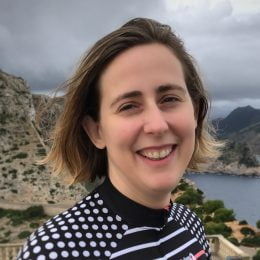
Clare Dewey is a cyclist with a passion for travel. She set up epicroadrides.com in 2018 to help make it easy for cyclists to explore the world by bike. Today her mission is still inspiring cyclists to discover new places on two wheels - and doing what she can to make sure they have the best possible time while they're there. Clare has visited 50+ destinations around the world, many of them by bike.
Want to connect with Clare? Find her over on LinkedIn.
Why should tourism boards consider cycling tourism
According to the European Cyclists’ Federation, cycling produces global benefits of 150 billion euros per year (2018, The Benefits of Cycling: Unlocking their potential for Europe). Striking cycling tourism statistics like this show the huge commercial value of attracting cyclists to destinations.
But that’s only the beginning. Here are more reasons to consider maximising cycling investments in your region.
- Commercial benefits for the economy
- Rural development and helping to reduce overtourism in major cities
- Health benefits, including reduced mortality and morbidity
- Sustainable travel benefits, including reduction of air and noise pollution
- Easing of road congestion
- A reason for travellers to visit during shoulder seasons

Wonderful bike paths in Copenhagen
Steps to creating a cycling-friendly destination
So, you want to attract more cyclists to your region. What’s next?
Good news! Launched by Vélo et Territoires in 2021, the informative guide “Developing Cycling Tourism in Territories” defines the key concepts and knowledge needed to make bicycle tourism more accessible in destinations. In the report, it outlines six key steps which can be summarised briefly as:
1. Develop high quality cycling infrastructure and plan for its long-term maintenance
2. Make the destination accessible and promote cycle mobility in the area. Take ownership of the challenges of intermodality.
3. Develop services for cycling tourists.
4. Develop a communication strategy that promotes your cycling destination, including digital marketing
5. Diversify your local network and link this to broader governance
6. Monitor, evaluate and measure tourism development to inform further decision-making
These are set out in far greater detail in the report here.
Below we focus on step four specifically. We often feel like this vital communication step can get overlooked. Here we share our experience of practical tips and strategies to enhance the creation of your destination marketing strategy.
9 effective destination marketing strategies to convince cyclists to visit
Step 1: help cyclists understand your destination’s brand and market position
1. Nail your positioning statement
Make what’s unique about your destination absolutely clear in all your messaging – nail your positioning statement
We find this formula useful when trying to prepare a positioning statement:
For [cyclist type] [destination/route] is the place to ride for [payoff] because [proof]
Of course, you don’t have to stick to precisely this wording, but we think this captures the key elements a destination needs to address.
Once you’ve agreed your positioning – and what makes you special – make sure this message is consistent across your communications. This makes it easy for people to understand why they should visit.
Be granular about your descriptions, don’t resort to vague adjectives.
To get you started, here are a list of possible payoffs – but be specific with your examples, don’t just use the words “food” or “culture” – what precisely is special?
- Low traffic
- Scenery
- Climate
- Climb character
- Food
- Culture
- Value
Example
The Alpe Adria cycle route explains succinctly explains what to expect from their route. We also like Visit Outer Hebrides’ positioning of cycling the Hebridean Way.
2. Speak to the target market
There are many kinds of cycling tourists with different motivations and pain points – use messaging that resonates with your target segment
For example, a road cyclist or gravel rider will typically want to be on their bikes every day on challenging rides. These rides tend to utilise the best-paved roads, cycling trails, or dirt tracks.
In comparison, a casual holidaymaker may only want to rent a bike for one day of their visit. They generally prefer gentle, leisurely cycling on bicycle lanes that connect iconic landmarks in a destination.
Take some time to understand the individual needs of the kinds of cyclists your destination is best suited to.
Start by talking to some of these cyclists or conducting a wider survey. Mapping these target demographics into clear persona profiles will help you work out how best to communicate with them.
Example
Verbier Tourisme is the marketing company for the Verbier – Val de Bagnes/ La Tzoumaz region in Switzerland. They have a dedicated ‘on two wheels’ section on their website that clearly communicates the various cycling available in the region, including ‘road bike, mountain bike, e-bike and BMX’.
They also have tailored landing pages for these different types of cycling options, showing their breadth of knowledge for the various cyclists they are trying to attract to Verbier.

Taking a breather on the Verbier sign…
Step 2: build confidence amongst cyclists by giving them the detail they need
3. Share routes including day rides + longer
Cyclists visiting the region want easy access to cycling routes – give cyclists the route they need
To enable cyclists to explore by bike in your destination, they need to know what cycling routes are available. They also need access to useful information to help them make the most of these bike rides.
Day trip cycling routes from popular bases in your destination are a good place to start. These should be suitable for the range of riders outlined in your target audience profiles, including beginner routes and rides for more experienced cyclists.
Top tip! Work with experts to design the routes and add them to your website, including route information and a GPS map. You should also include any useful stats to help cyclists understand more about what they can expect. Things like distance, elevation, difficulty and terrain are all useful to know.
An enticing bundle of easily accessible, one day cycle routes that use a particular town or towns as a base, or which link with a nearby long-distance route, can really entice cyclists to stay for more than one night in a destination.
Example
Costa Brava Pirineu de Girona has created cycle routes on its site. These typically include two maps, one to display the route and another to show you where the ride is located within the wider region. They also provide a useful breakdown of stats, including the average time needed to complete the route, gradient and altitude. GPS files are also available so that the routes can be downloaded and used by cyclists on the move.

Admiring the stunning Costa Brava coastline near Girona, Spain
4. Highlight essential services for cyclists
Cyclists need dedicated facilities to help them make the most of their stay – make this info easy to find
Put yourself in a cyclist’s shoes and you will quickly realise they have several specific needs when visiting any destination.
In addition to routes (mentioned above), things that are particularly important to them include:
- Bike friendly hotels with cycling facilities
- Bike shops with bike hire and repair services
- Public transport that allows bikes, including buses and trains
- On the ground details like toilets, food shops and points of interest
Top tip! Think about how you can make the services and facilities available to cyclists easy to find. Have you considered a dedicated page for cyclists on your site? Depending on how much your destination has to offer, perhaps you could have multiple dedicated landing pages to store this cycling information.
Examples
If a cyclist is bringing a bike with them, ensuring they have a hotel with secure cycle storage is essential. So how can you easily highlight which hotels in the region offer this facility? Introducing an accreditation scheme to easily indicate bike friendly accommodation options and services – and then marketing this – can be a great help. Acceuil Vélo in France is a good example of this.
Intermodality – i.e. having public transport that connects with bike routes and allows cyclists to easily bring their bike onto the public transport – is a more complex issue. However, there are pockets of good practice, such as the Loire à Vélo Train. This train connects major hubs in the Loire Valley, including Orléans, Tours, Angers, Nantes and Le Croisic. It also provides easy boarding for bikes and more space for cyclists during the busy summer season.
Cycling events and local cycling culture can also be motivational factors for visiting. For example, the Col de la Loze Gran Fondo was created by the Mayor in Brides-les-Bains to help encourage tourism after the difficulties of Covid. The event aims to promote the town’s proximity to the Col de la Loze climb.

We love the bike friendly Hotel Genzianella in Bormio, Italy
5. Develop compelling content as part of your marketing materials
Images and videos should showcase authentic cycling experiences – they build trust and confidence
Have you got media that highlights cycling in the region?
We all know that visual media and content marketing can have a powerful effect on influencing decision making. For cyclists, it’s about helping them visualise what sort of cycling and scenery they can expect if they choose to visit.
This imagery helps to provide assurance to cyclists that the region is rideable. It can also make it more appealing to them!
Video is also worth investing in. Current trends show that short-form videos are increasingly popular on social platforms and can quickly reach a wider audience. Video marketing also provides an immersive experience that gives a great insight into your destination’s cycle routes.
Top tip! Consider hiring a specialist adventure photographer who knows how to capture movement well. It can make a huge difference to the quality of the imagery produced. Make sure you have cycling imagery on your website that appeals to your target audiences. Capture your best local routes, climbs and points of interest that will make cyclists go ‘wow’.
 There's a Youtube video here!
I'm fine with Youtube cookies
6. Communicate any cycling updates in your destination
Regularly talking about improvements to cycling infrastructure and services will reinforce the message that your destination is serious about cycling – keep investing and communicating!
Alongside updating your website, you should make sure this messaging is distributed across your key channels, including social media and emails.
For even greater reach, consider how you could use PR to maximise the messaging. Working with people like us can help you reach a large audience of engaged cyclists quickly. More on that below.
Top tip! Don’t be afraid to cross-promote cycling on other relevant sections of your website. Cyclists are active people who will typically dabble in other active sports, such as hiking, running and swimming. If you are talking about these other kinds of activities on your channels, try wherever you can to mention or link to your cycling pages and information.
Example
Nice Cote d’Azur is a great example of using a cycling event to create a legacy of cycling in the region.
The Tour de France 2024 marked a historic end to the race in Nice. To maximise the opportunity, the tourist board wanted to better highlight the local routes the pros would be taking on.
They worked with us to develop a dedicated article on the historic event, including high-quality photos of cyclists on the routes and information about how to take them on for yourself.

Nice’s stunning coastline
Step 3: build awareness by investing in paid and earned media
Building a great website and social assets for your cycling route or destination – as described above – is really important. But don’t forget to invest in paid and earned media. This is vital for growing awareness and ensuring visibility.
7. Paid media
Investing in paid promotion can drive awareness, fast
Paid promotion comes in many forms, so here’s a quick breakdown for those who may be less familiar with each type.
Be aware that paid media can get quick results, with guaranteed visibility. But it can often be very “one-off”, i.e. it disappears once you stop paying for the specific advertisement. Consider more ongoing relationships – of the sort we at Epic Road Rides strive to build. These can be great for ensuring earned media too. More on that below.
PPC (e.g. Google Ads)
PPC, or Pay-Per-Click advertising, allows you to pay for your site to appear at the top of Google search results. You are charged each time a user clicks on your ad.
This online advertising method lets you target specific keywords and tailor demographics to align with your audience insights. It’s an effective way to quickly attract new customers to your website. These users tend to be ‘warmer,’ sitting further down the sales funnel and closer to the point of purchase, making them more likely to be ready to commit to booking a cycling holiday.
However, the more competitive a keyword is, the higher the cost per click. This can be a downside of PPC, as the advertising expenses can be substantial and are often dominated by larger companies with bigger budgets.
Social advertising (e.g. Meta ads)
Social advertising involves promoting your services on platforms like Facebook, Instagram, and LinkedIn. Similar to PPC, you can target specific demographics and interests and you pay when you appear in feeds.
Generally, advertising on social media is less costly than PPC. However, keep in mind that you may be reaching potential customers who are higher up in the sales funnel, making them less likely to be ready to go on a holiday immediately.
Social media ads can be highly visual, incorporating images and videos, making it a great opportunity to showcase some of your best content and inspire a cycling audience.
Sponsored long-form features
Long-form features allow you to go in-depth about what is special bout your destination.
You can work with national publications to create these features as paid long-form advertorials. However, like Google and Meta ads, these fall into what we consider as “one-off” – once the newspaper or magazine is published, the article is no longer visible. Even where you buy a package that includes digital publication, the outlet often puts very little effort into ensuring evergreen traffic.
That’s where working with Epic Road Rides is different. Our business is built on ensuring long-term visibility for our clients. We have worked with many clients for multiple years because we put a huge amount of effort into search optimisation and using our various channels to drive months and years of visibility; not just days. Drop us a line to request a media pack or have a conversation about how we can help; there’s also more information (and examples of our work) below.
8. Earned media
Earned media wins credibility and trust
Earned media involves collaborating with trusted external sources to promote your destination services and cycling routes via editorial features. This means that you do not pay to feature.
In the travel industry, popular outlets include national publications and specialised magazines or digital platforms (like us!) that already connect with a substantial portion of your target audience.
A key advantage of this kind of earned PR over paid media is its long-term nature and the absence of fluctuating costs. You feature on merit rather than payment and cyclists understand this.
Effective earned media can enhance visibility on well-known platforms and drive measurable traffic to your website.
Example
We worked with Algarve tourist board to create this sponsored guide to cycling the Algarve in 2021. Since then we have worked on an additional five connecting sponsored articles with them, building on this starting point to create a multi-layered approach to raising their profile with cyclists. We love what is on offer in the Algarve and have chosen to feature them editorially (i.e. as earned media) in a range of articles including, for example, our editorial feature on where to cycle at Christmas.
9. Work with us
Connect with more travel-loving cyclists
Do you want to increase your cycling visitors and boost your marketing efforts to reach them?
Let us help.
At Epic Road Rides, we collaborate with tourism boards to create in-depth features that showcase your cycling routes and services.
Our articles are meticulously optimised for SEO, targeting key phrases that consistently rank high in organic Google searches. This ensures greater visibility for your destination at the top of search results. Additionally, our comprehensive internal linking strategy helps cyclists discover your offerings while browsing our site.
In the articles we develop together, we include links to your website, often achieving an impressive 20% click-through rate. This strategy ensures a steady stream of qualified leads for your businesses.
We also amplify our content through our social media channels and email campaigns, further broadening your reach.
Where we really get to know your destination and feel it’s a good fit for our editorial content, we love to also feature it in that.
Ultimately, we help you connect with a larger audience of cyclists who are actively planning their next bike adventure.
Examples
Here are some examples of feature content we’ve created with clients. This has all been supported by social media and email campaigns.
Each feature is driving evergreen, targeted leads to our clients’ destinations. Please drop us a line to request detailed case studies.
- 3 must-ride routes in Flanders with VISITFLANDERS
- Guide to cycling Catalonia with Catalonia – Catalan Tourist Board
- Guide to cycling Corsica with Corsica Tourism Agency
- Cycling the Loire Valley: why you should include Angers in your itinerary with Destination Angers
- 12 best cycling climbs in Girona, Costa Brava with Patronat Girona Costa Brava
- Guide to cycling in Poland with Poland National Tourist Organisation
- Cycling in Taiwan with Taiwan Tourism Administration
How to boost cycling tourism: next steps…
We hope this article has provided you with valuable insights into essential tourism marketing for cycling.
Are you a tourism board seeking to attract more cycle tourists to your region? Get in touch. We’re here to help you communicate that you are a cycling-friendly destination with our engaged audience of cyclists. Discover more reasons to work with us here.
Clare Dewey is a cyclist with a passion for travel. She set up epicroadrides.com in 2018 to help make it easy for cyclists to explore the world by bike. Today her mission is still inspiring cyclists to discover new places on two wheels - and doing what she can to make sure they have the best possible time while they're there. Clare has visited 50+ destinations around the world, many of them by bike.
Want to connect with Clare? Find her over on LinkedIn.
First Published: 11 October 2024
The contents of this website are provided for general information purposes only. It is not intended to amount to advice and you should not rely on it. You should carry out your own due diligence and risk assessments and take professional advice. Views expressed by interviewees or other users of this website do not necessarily represent our views. We make no representations, warranties or guarantees, whether express or implied, that the content on our website is accurate, complete or up to date. If you use any information or content on this website, download from, or otherwise obtain content or services through our website, it is entirely at your own discretion and risk. Epic Road Rides Ltd disclaims all liability and responsibility arising from any reliance placed on the information and content on this website. Find out more here.
Hey guys. I’d love to chat about promoting our tours in Mexico.
Thanks.
Thanks Dave; we’ve been in touch by email.