
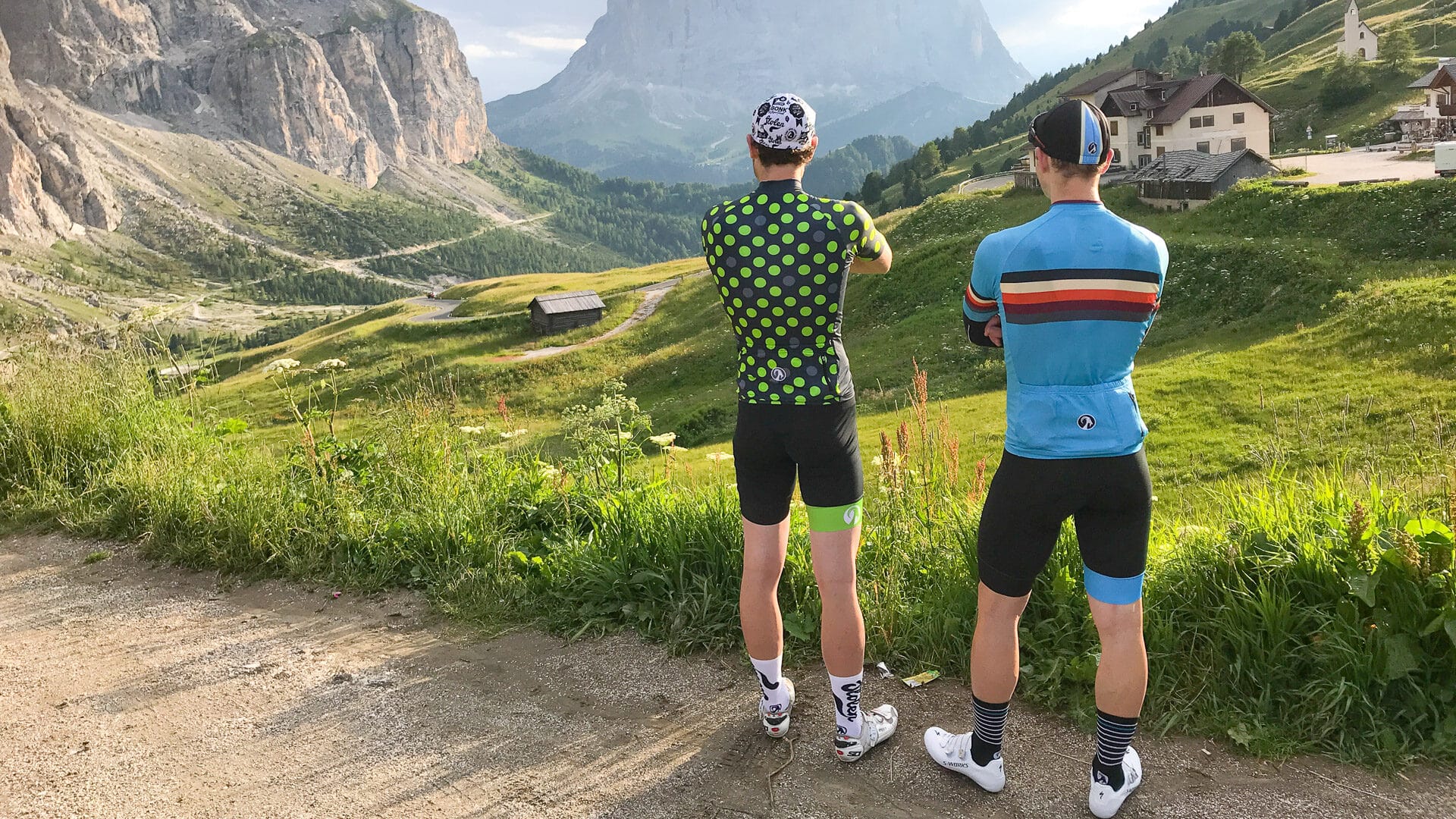

Cycling in the Dolomites of Italy is unlike cycling anywhere else in the world.
If you’re fit and can climb, you need to visit, end of story.
In this guide, you’ll find everything you need to plan an unforgettable Dolomites cycling holiday: detailed information on the best rides in the Dolomites plus where to stay in the Dolomites, information on weather in the Dolomites and the best time to visit for cyclists plus Dolomites bike hire.
Read on to plan your Dolomites cycling holiday…
To add more local insight to this guide, we spoke to Bob Rogers, co-founder of CyclingHero. He has spent years cycling and skiing in the Dolomites and personally designs CyclingHero’s routes in the region. He runs the company alongside his wife and co-founder Caterina, who grew up in the Dolomites. CyclingHero has been running trips here in its current form since 2021 and, since 2022, has run close to 30 Dolomites departures.
CyclingHero also has a 5.0 average from guests on WeTravel. Read CyclingHero’s guest reviews here.
We hope you’ll find this guide useful; read on and plan your next cycling holiday in the Dolomites.
The most beautiful natural architecture worldwide
Le Corbusier
 There's a Youtube video here!
I'm fine with Youtube cookies
Clare Dewey is a cyclist with a passion for travel. She set up epicroadrides.com in 2018 to help make it easy for cyclists to explore the world by bike. Today her mission is still inspiring cyclists to discover new places on two wheels - and doing what she can to make sure they have the best possible time while they're there. Clare has visited 50+ destinations around the world, many of them by bike.
Want to connect with Clare? Find her over on LinkedIn.

We love to introduce our community to cycling businesses, destinations and ideas that we think are genuinely interesting. CyclingHero caught our attention because of its focus on these topics, which felt like a natural fit for Epic Road Rides and our readers. We were therefore pleased to work with the CyclingHero team on this article.
CyclingHero paid for this advertisement feature. Our decision to collaborate reflects our view that the brand is relevant to our readers; it is not a formal approval, audit or guarantee of its services. Unless we expressly say otherwise, we have not personally taken the trip described or independently verified information supplied by CyclingHero.
As with any travel purchase, please check the latest trip details, terms and customer protections directly with CyclingHero before booking. Any booking is made with CyclingHero, not Epic Road Rides.
Always check current travel information and advice. For visitors from the UK, the UK government travel information pages are here.
Table of contents
This guide contains a lot of useful information. To help make it more digestible, we’ve broken it down into several parts:
- Part 1: Overview
- Part 2: Cycling climbs and routes
- Part 3: Cycling events
- Part 4: Where to stay
- Part 5: Bike hire
- Part 6: When to go
- Part 7: Getting around the Dolomites
- Part 8: Tips
- Part 9: CyclingHero
Sponsor Message
Want to ride the Dolomites with local support?
CyclingHero’s supported self-guided tours give you the flexibility to choose your route and ride at your own pace, backed by local route knowledge, live tracking and nearby on-road support. The team has run close to 30 Dolomites departures since 2022 and has a 5.0 average on WeTravel.
Explore CyclingHero’s Dolomites cycling tours to learn more.
Exclusive Dolomites offer
Get €100 discount (approx $110) on any Dolomites tour when you book directly with CyclingHero before 24 July 2027.
Got a question for CyclingHero?
Fill out this form and we will pass it to CyclingHero who aim to reply (within 24 hours wherever they can!)
Cycling the Dolomites at a glance
Short on time? Take a look at our at a glance table:
| Best for | Experienced road cyclists, climbers and confident gravel riders. The classic road routes require a good level of fitness and confident bike handling. |
| Riding | Sustained climbs, steep ramps, snaking switchbacks, technical descents and gravel tracks. There is very little flat terrain in the main mountain areas. |
| Key climbs | Passo Gardena, Passo Sella, Passo Pordoi, Passo Campolongo, Passo Giau, Passo Fedaia, Passo Falzarego and Passo Valparola. The Gardena, Sella, Pordoi and Campolongo passes form the classic Sellaronda loop. |
| Bases | Corvara, La Villa, Cortina d’Ampezzo and Val Gardena. |
| Main riding season | June to September |
| Bike options | Road bikes, gravel bikes and e-bikes |
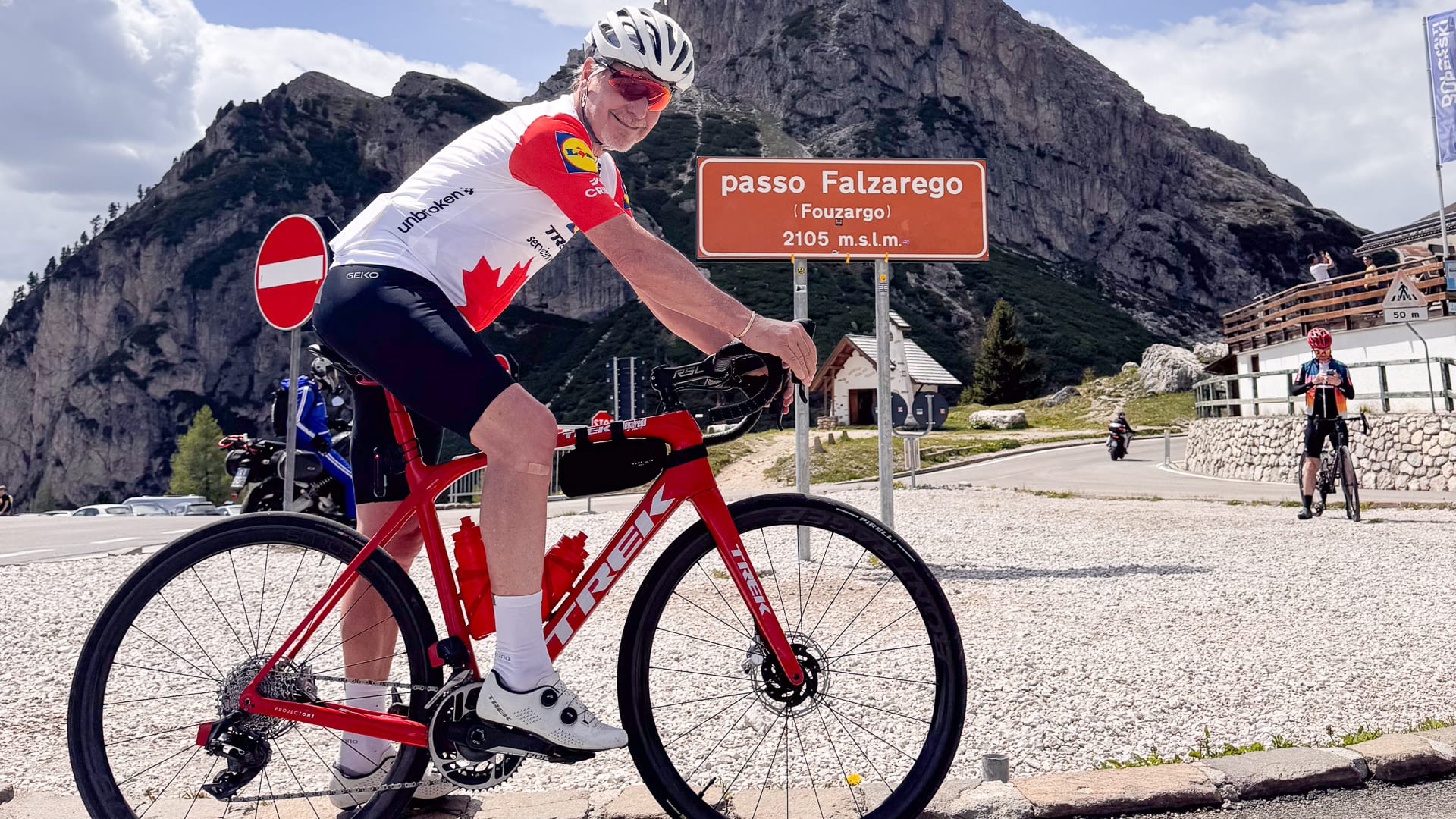
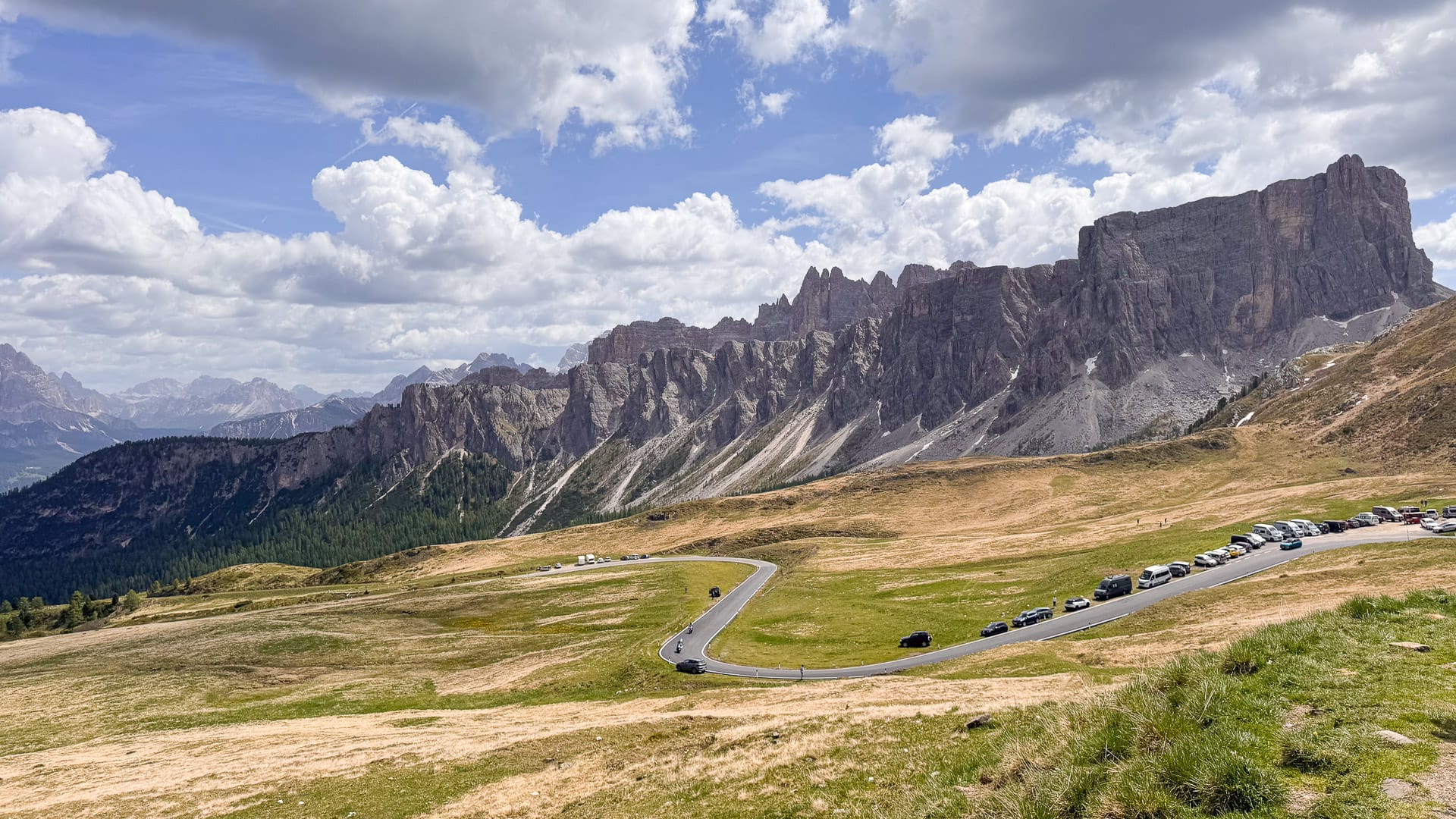
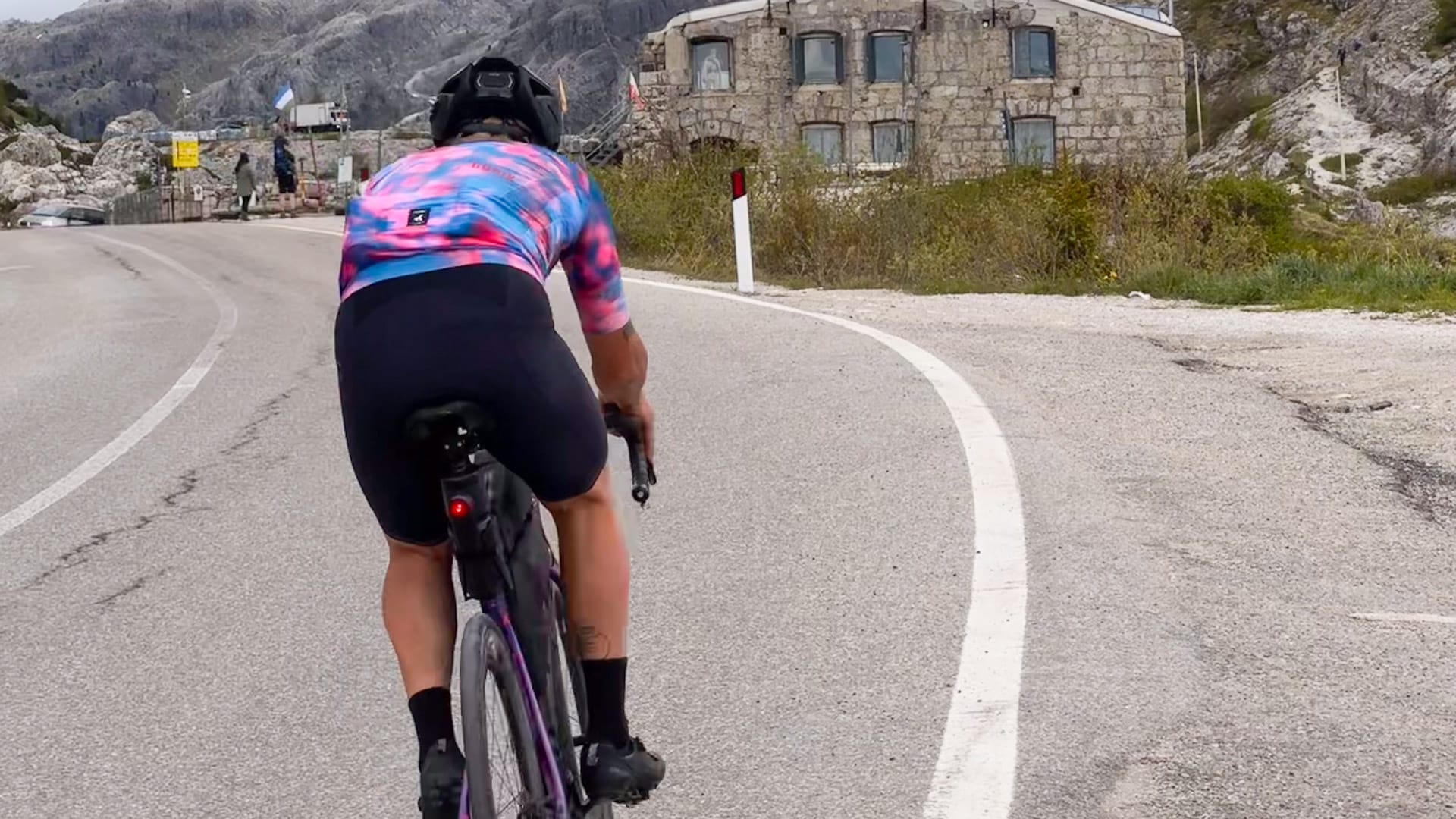
Part 1: Overview of the Dolomites (for cyclists)
What’s so special about cycling the Dolomites?
1. The scenery
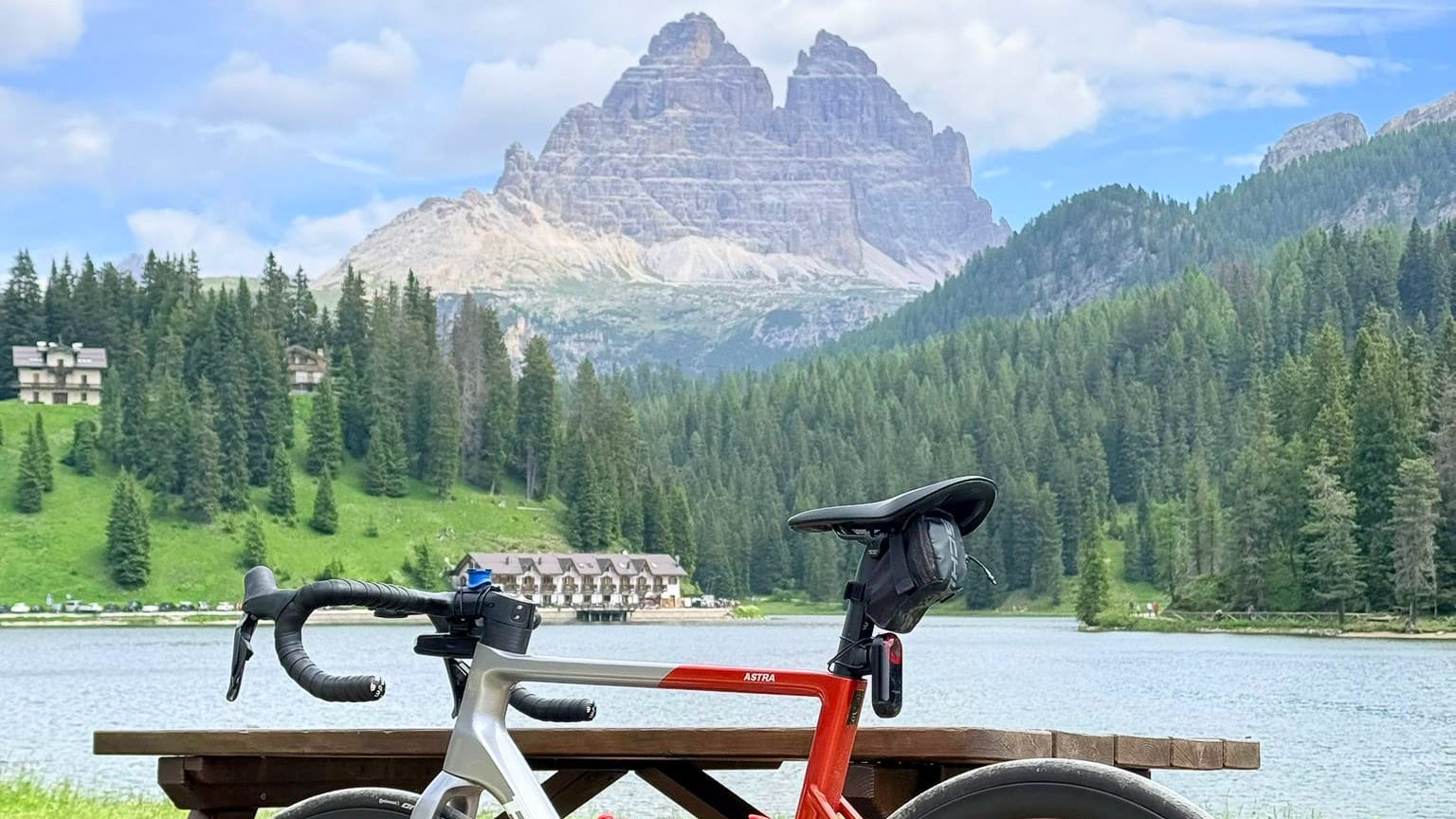
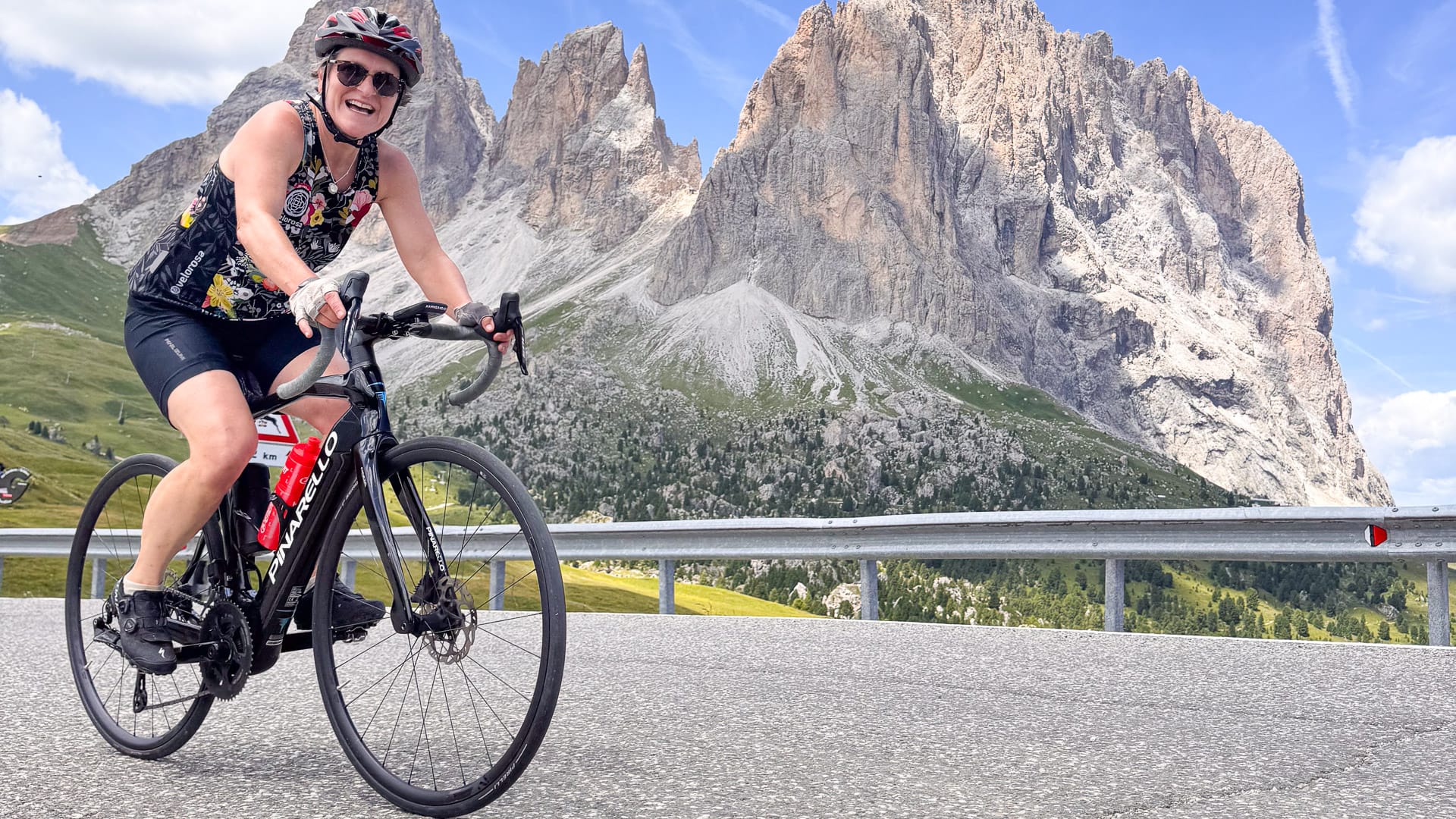
When cycling in the Dolomites, you’ll soon discover that the UNESCO-protected scenery is mind-blowing. Vast limestone peaks rise up vertically around you, with the roads weaving their way through the steep-sided valleys flanked by towering turrets of rock.
The scenery here has an intensity we haven’t seen anywhere else we’ve ridden. It’s as if the mountains are on steroids. Yes the French and Italian Alps also have massive mountains, but here it feels like you could just spread out your arm and touch them. It’s almost otherworldly. No surprise then that road cycling in the Dolomites is number 1 in our pick of the best places for cycling in Italy.
Bob from CyclingHero describes the Dolomites as “vast, labyrinthine and perpetually mesmerising”. Years of cycling and skiing here have given him an intimate knowledge of the region, but its sheer scale means there is always somewhere else to explore.
2. The climbs
Expect to suffer on many of the classic Dolomites climbs. While the distances of some of the climbs we’ve written about below might not sound earth-shattering, conquering a 2.7 km stretch of the Passo Fedaia with a 10-15% gradient will feel like a pretty huge feat while you’re struggling through it.
3. The heritage
The Dolomites mountains are also alive with road cycling heritage. The Giro d’Italia first included Dolomite passes in 1937, when Passo Rolle and Passo Costalunga featured on the route and Gino Bartali showed his strength as a climber. In 1940, the Giro introduced major Dolomite passes including Falzarego, Pordoi and Sella, helping establish the region as an important part of the race’s mountain history. That edition also played a key role in the emergence of Fausto Coppi and his famous rivalry with Bartali.
Since then the Dolomites have become a regular feature of the Giro d’Italia.
Unsurprisingly, the Dolomites are no undiscovered gem. The region is hugely popular with cyclists and each year there are two famous Dolomites cycling events: the Sella Ronda Bike Day (20,000 cyclists, closed roads) and Maratona dles Dolomites (July, 9,000 cyclists, closed roads).
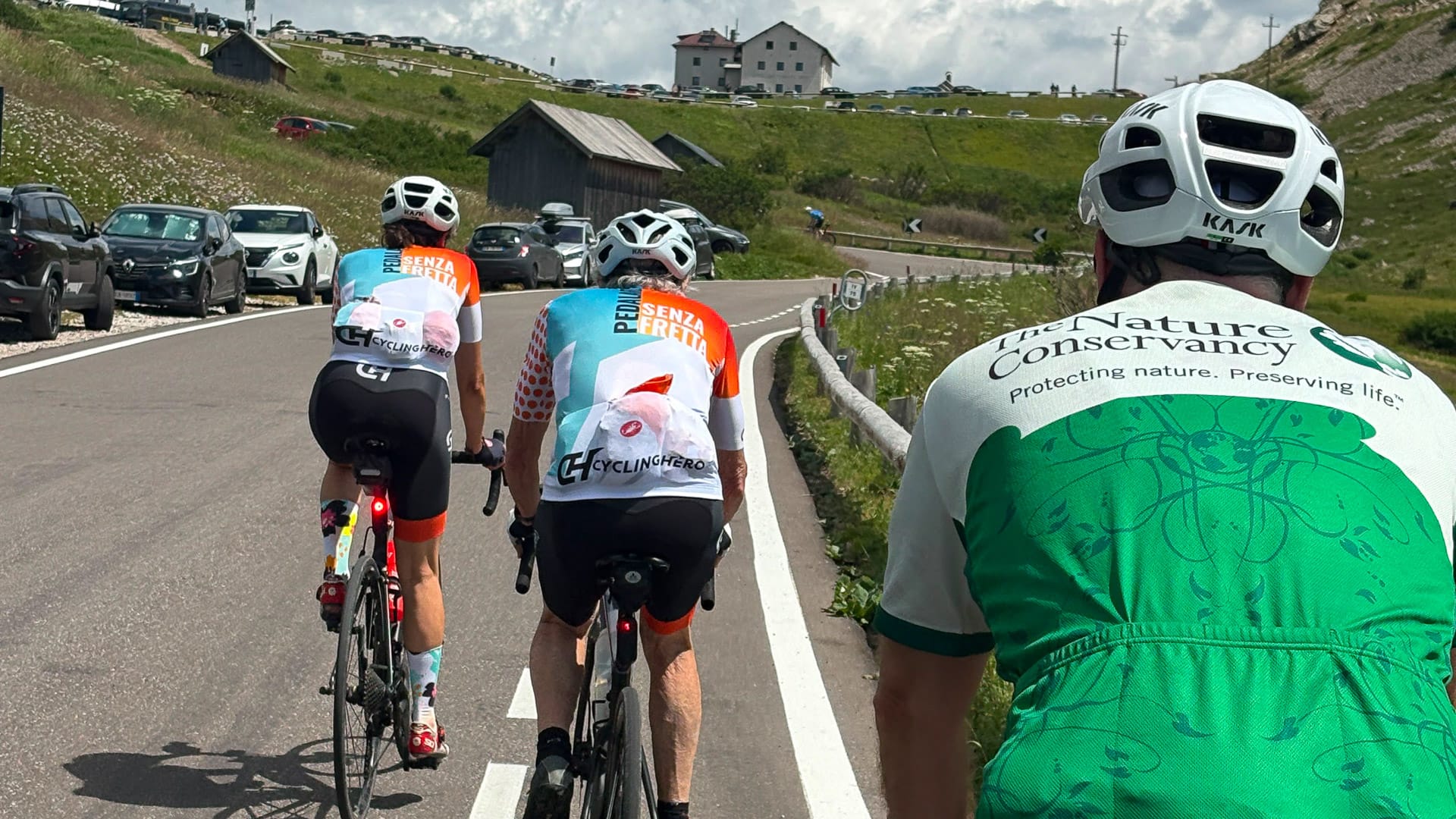
Cycling the Dolomites on closed roads isn’t something we’ve had the opportunity to sample firsthand – but we think it would be fantastic. The narrow, twisting roads get very busy in the short summer months when the passes are open to cyclists. A few of the passes now have bike paths (the Passo Gardena and Passo Sella have a few sectors in the anti-clockwise direction and the Valparola Pass from San Cassiano has a bike line much of the way). But nonetheless, biking in the Dolomites on closed roads, without cars, would be amazing. There’s more on the Sella Ronda Bike Day and Maratona dles Dolomites below.
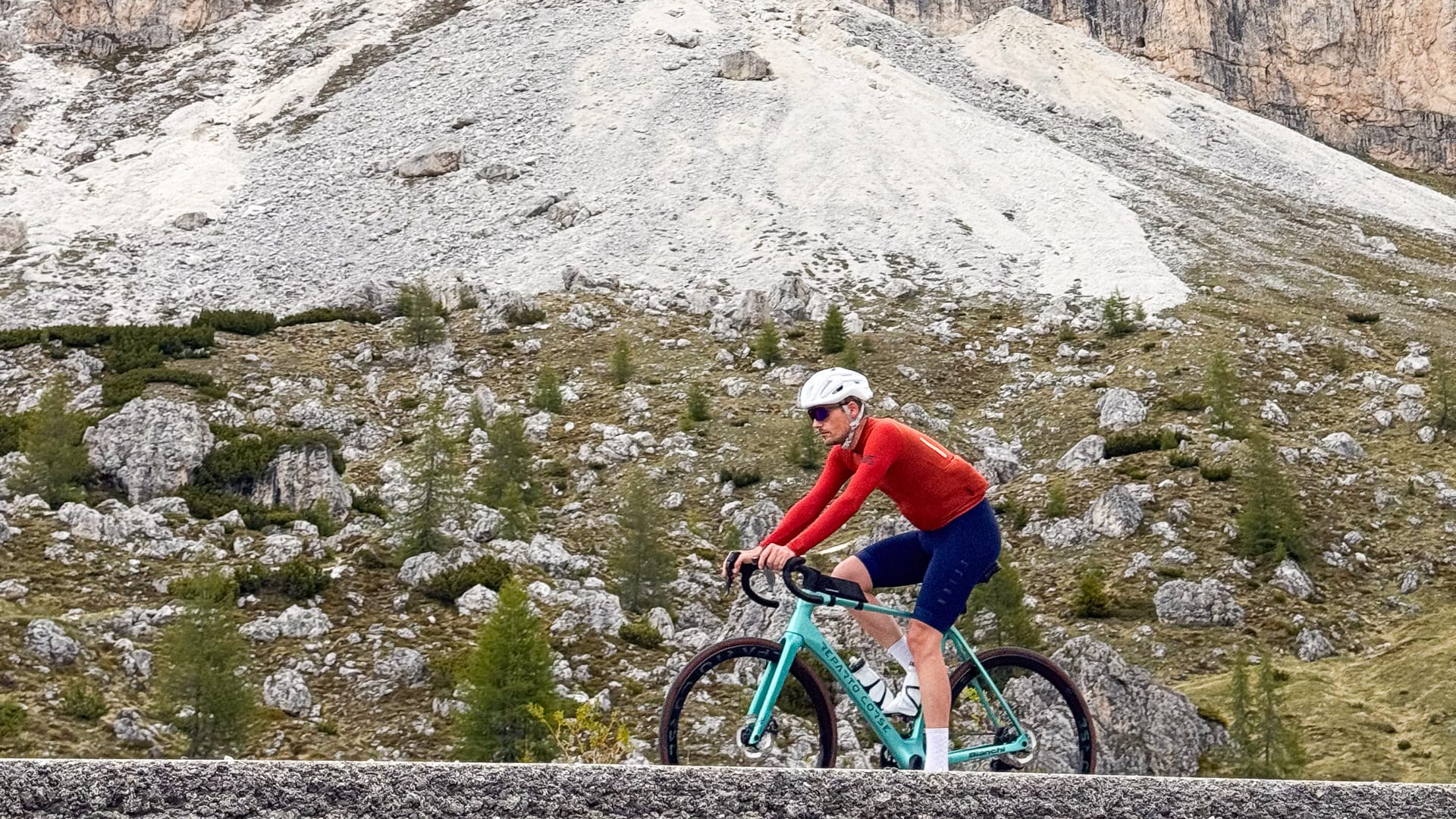
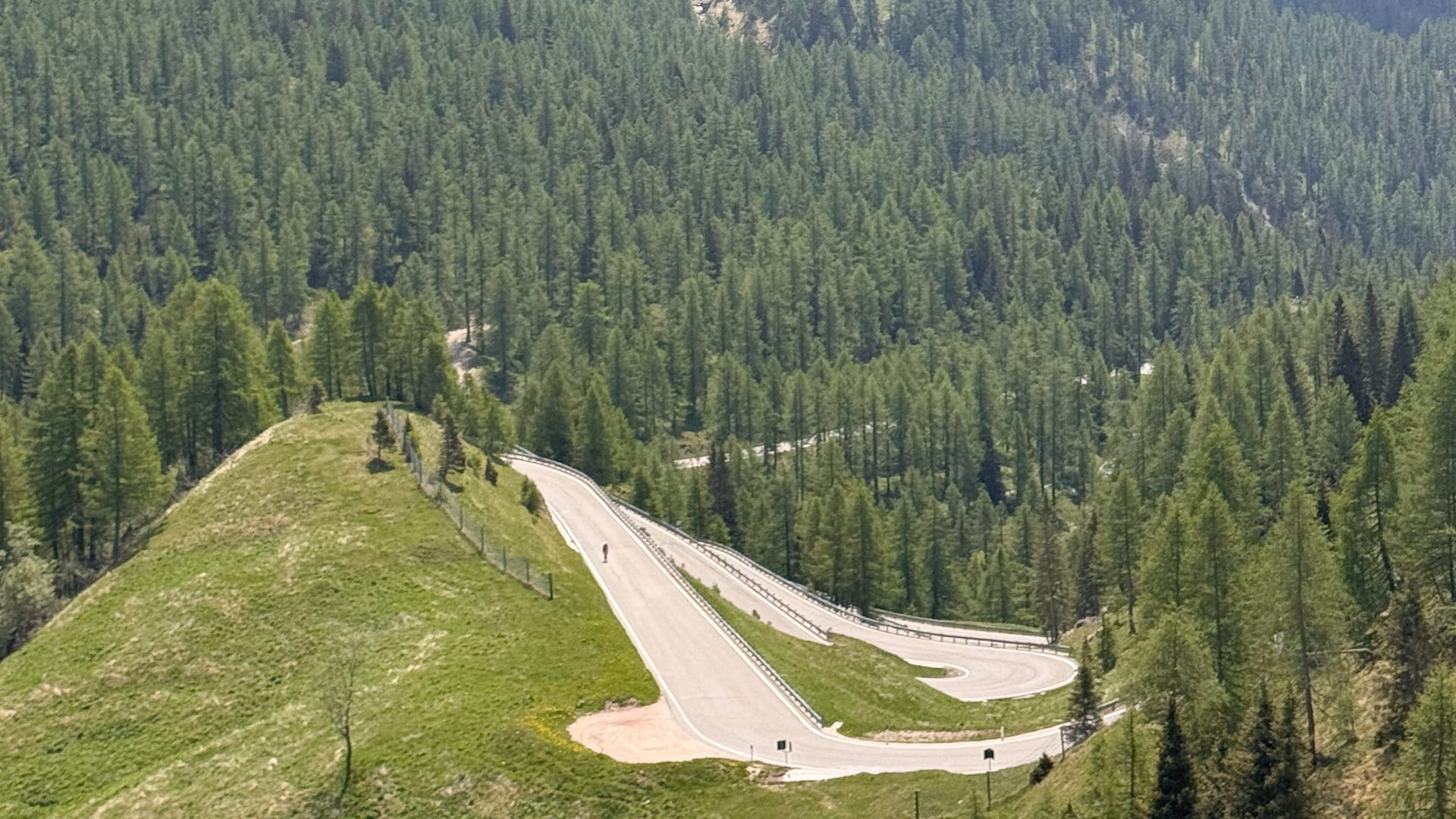
Solo cyclist riding Passo Valparola in the Dolomites (photo credit: CyclingHero)
Where are the Dolomites?
The Italian Dolomites are found in northern Italy. The border with Austria is to the north and the Venetian plain lies to the south. The mountains – part of the Southern Limestone Alps – are spread across three Italian regions: Trentino, Veneto and Alto Adige. They are part of the provinces of Belluno, Bolzano, Trento, Udine and Pordenone.
The mountains cover an area of about 90 km north to south and 100 km east to west. They are made up of 15 different ranges, each of which is at around 3,000 metres high. In this guide we concentrate on the best cycling routes in the Dolomites. This covers a relatively small part of the area – the part that has been made famous to cyclists via the Giro d’Italia and the Maratona dles Dolomites.
For details on how to get to the Dolomites, see the Tips section below. For information on the best places to stay in the Dolomites for cyclists, see the Where to Stay section.
The Dolomite Alps in the Italian Alps
It’s worth mentioning that while the Dolomites are in the Italian Alps, they are separate to the Bormio region (with the famous Stelvio, Mortirolo and Gavia climbs). That region is 200km to the west of the Dolomites, in the Italian province of South Tyrol.
Confusingly, you’ll often come across people referring to the Stelvio, Mortirolo and Gavia as being in the Dolomites – but they’re not! So don’t come to cycle the Dolomites if you’re expecting to conquer those passes. Though you could always join CyclingHero’s itinerary that covers both areas!
What to expect from the Dolomites
Scenery
We mentioned in the introduction that the scenery is quite different to other mountainous areas we’ve visited. Likewise, the names of the climbs have a rolling beauty that’s quite distinctive: there’s a lyrical elegance to the Passo Campolongo, Passo Falzarego, Passo Valparola for example.
Big climbs
There really isn’t much flat terrain around here. If you look at a Dolomites road map, you’ll soon see that the mountains are so steep, and most of the valleys are so narrow, that there aren’t a huge number of roads to choose from. As such, road cycling in the Dolomites is not a good choice for beginners – or those that haven’t done much training!
Gravel cycling in the Dolomites
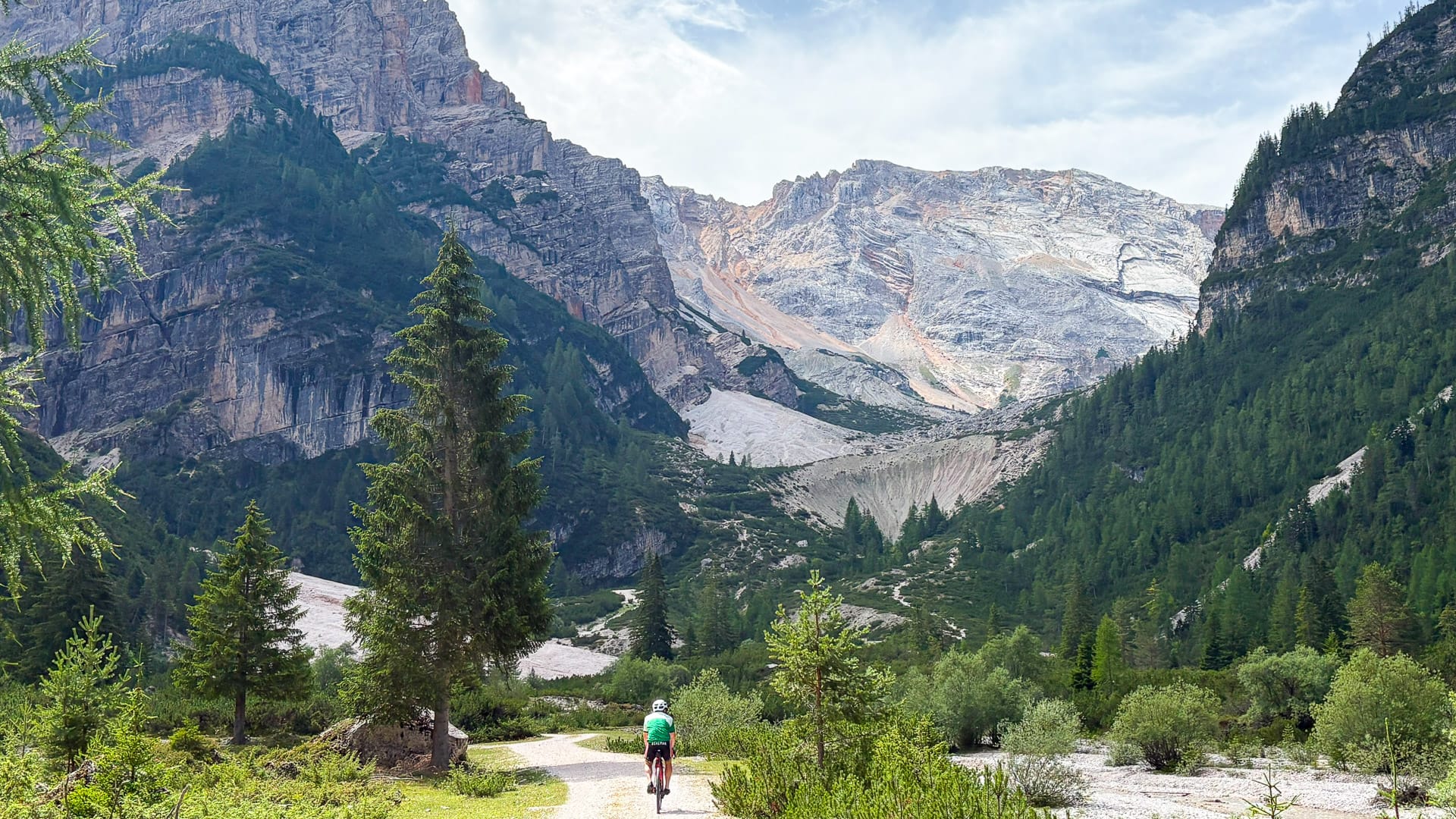
The Dolomites are not only a road cycling destination. Gravel tracks and quieter mixed-surface routes offer another way to explore the mountains, particularly around Cortina, Brunico and Corvara.
Gravel riding may take cyclists away from some of the busier pass roads, but it is not necessarily an easier option. Riders still need good climbing fitness, confident handling skills and suitable gearing for loose or uneven surfaces.
There can, however, be more scope to tailor the day to how much riding you want to take on. Bob from CyclingHero explains “Although the Dolomite passes require a certain base level of fitness, there is still the possibility to make shorter or longer versions of a certain ride, or choose a more or less challenging pass. And on our gravel and Dolomite valley trips we offer an even wider spectrum of route options.”
Visit CyclingHero’s website to learn more about their gravel cycling trips in the Dolomites. There are also further details below.
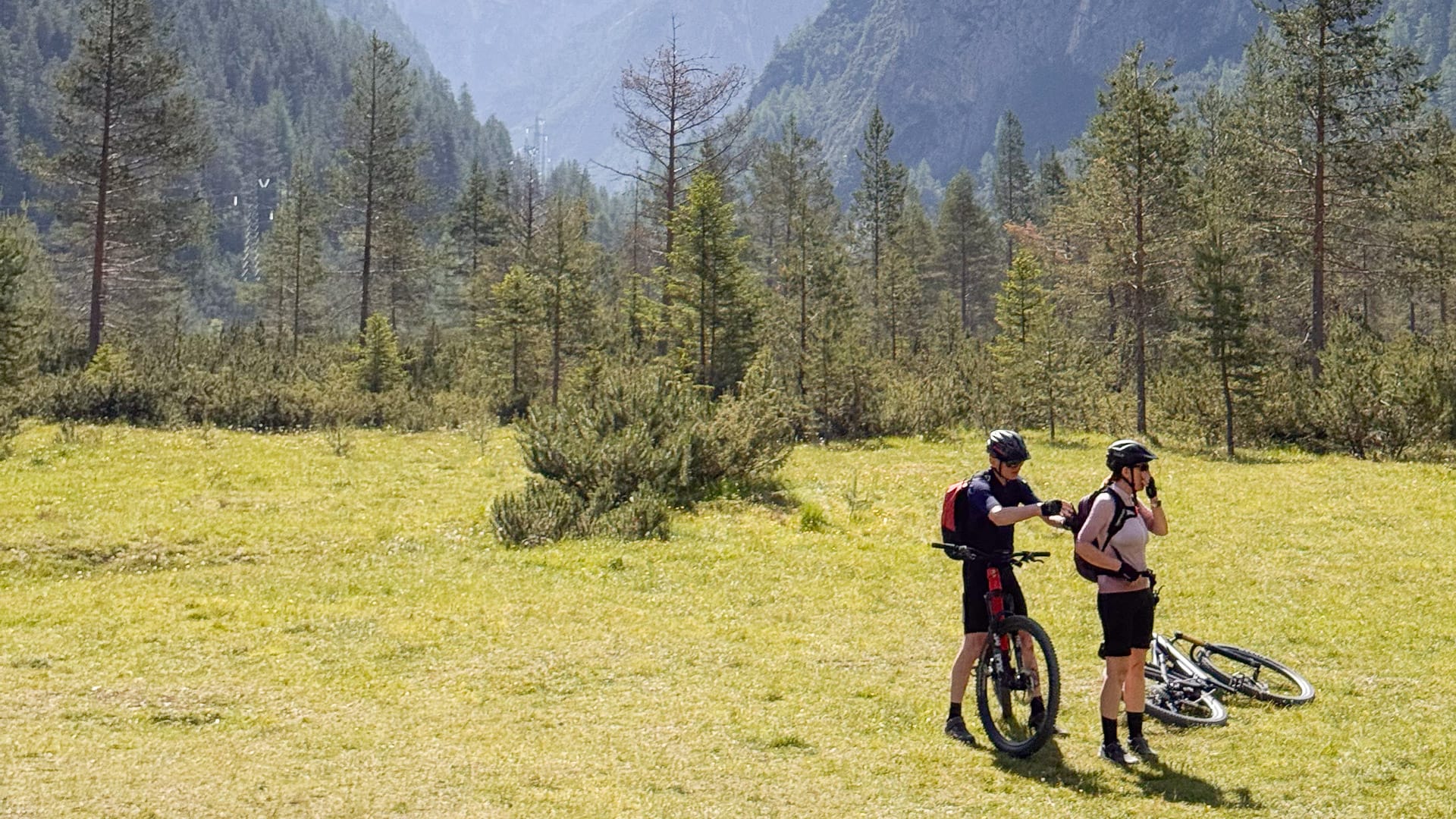
Gravel cycling near Tre Cime di Lavaredo (photo credit: CyclingHero)
Sponsor Message
Want to ride the Dolomites with local support?
CyclingHero’s supported self-guided tours give you the flexibility to choose your route and ride at your own pace, backed by local route knowledge, live tracking and nearby on-road support. The team has run close to 30 Dolomites departures since 2022 and has a 5.0 average on WeTravel.
Explore CyclingHero’s Dolomites cycling tours to learn more.
Exclusive Dolomites offer
Get €100 discount (approx $110) on any Dolomites tour when you book directly with CyclingHero before 24 July 2027.
Got a question for CyclingHero?
Fill out this form and we will pass it to CyclingHero who aim to reply (within 24 hours wherever they can!)
Part 2: Dolomites cycling climbs and routes
Dolomites cycling climbs
Here are our reviews of the classic Dolomite climbs. The most famous climbs of the area are probably those on the Sella Ronda (the Gardena, Sella, Campolongo and Pordoi).
The additional climbs that make up the Maratona course are the Giau and Falzarego/Valparola.
Finally you could include the Fedaia as part of your Dolomites Italy cycling holiday. It’s famous for its fearsome gradients.
Rides
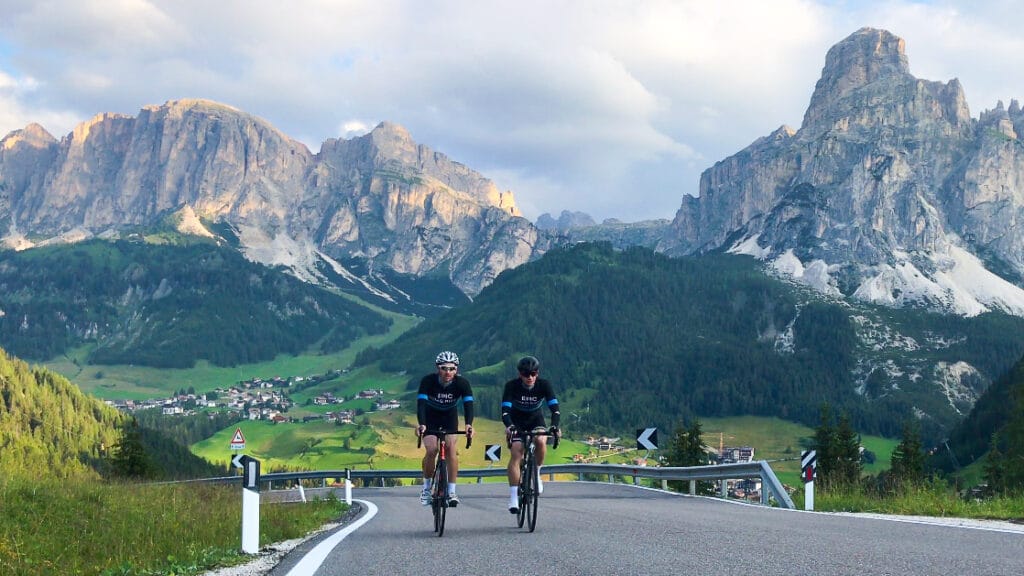


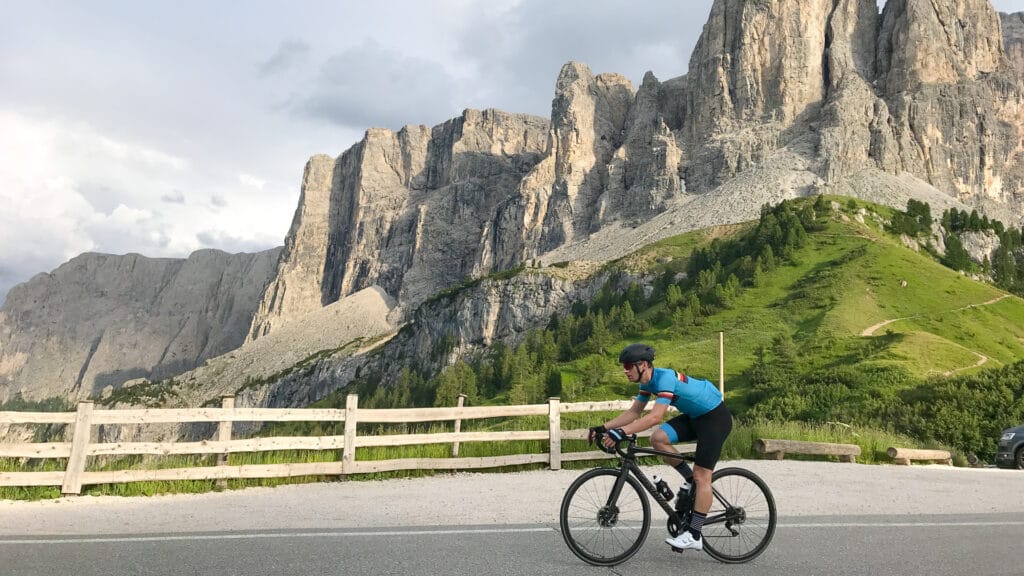
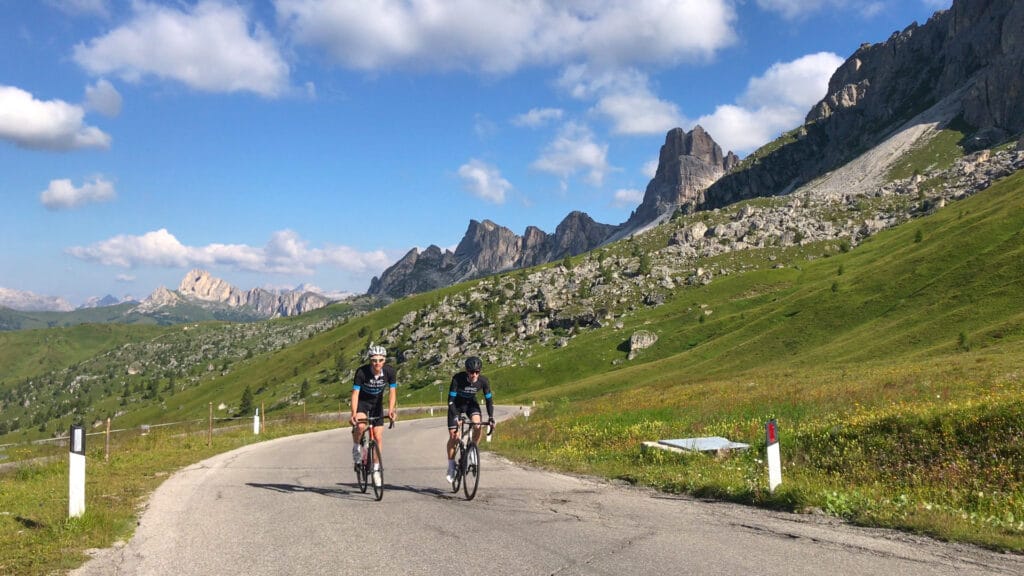
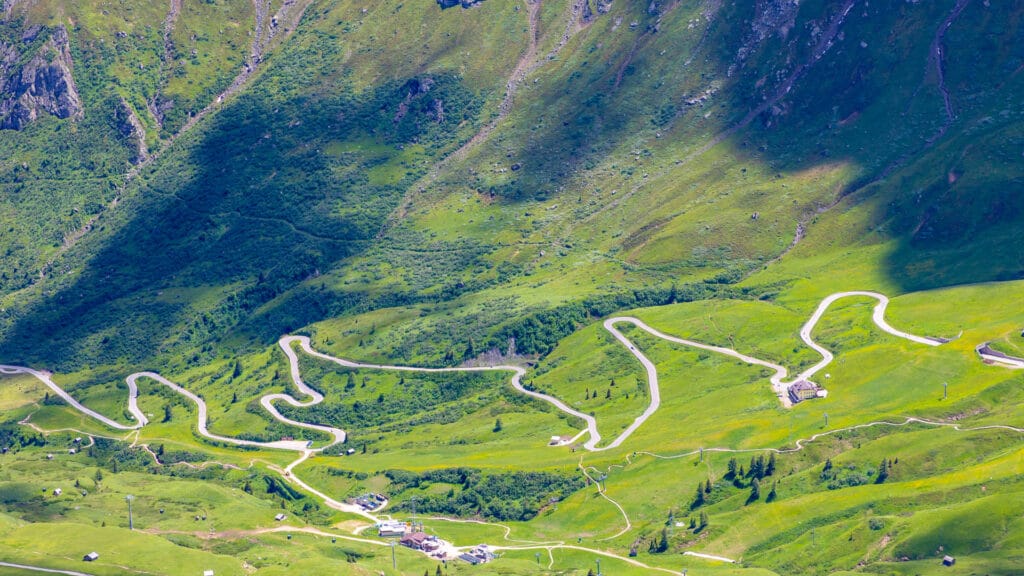
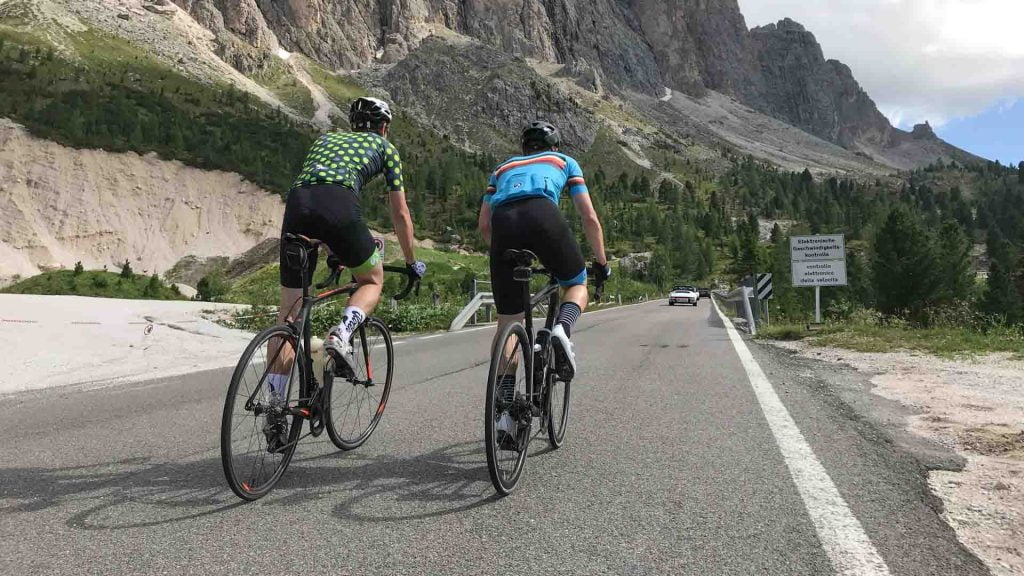
Want to ride these climbs with CyclingHero?
Several of these famous passes feature on CyclingHero’s Dolomites road cycling tours.
From the Dolomites to the Stelvio includes route options taking in Campolongo, Gardena, Sella, Pordoi, Giau, Falzarego and Valparola before continuing west towards the Stelvio region.
Dolomites Cycling Exploration is a climber’s dream, beginning with a short prelude in the Prosecco Hills before stays in Cortina and Corvara. The tour features a long list of bucket-list climbs, including Passo San Boldo, Tre Cime di Lavaredo, Passo Fedaia, Passo Giau and all of the Sellaronda passes.
You can compare CyclingHero’s Dolomites cycling tours on their website to see which trip includes the climbs you most want to ride.
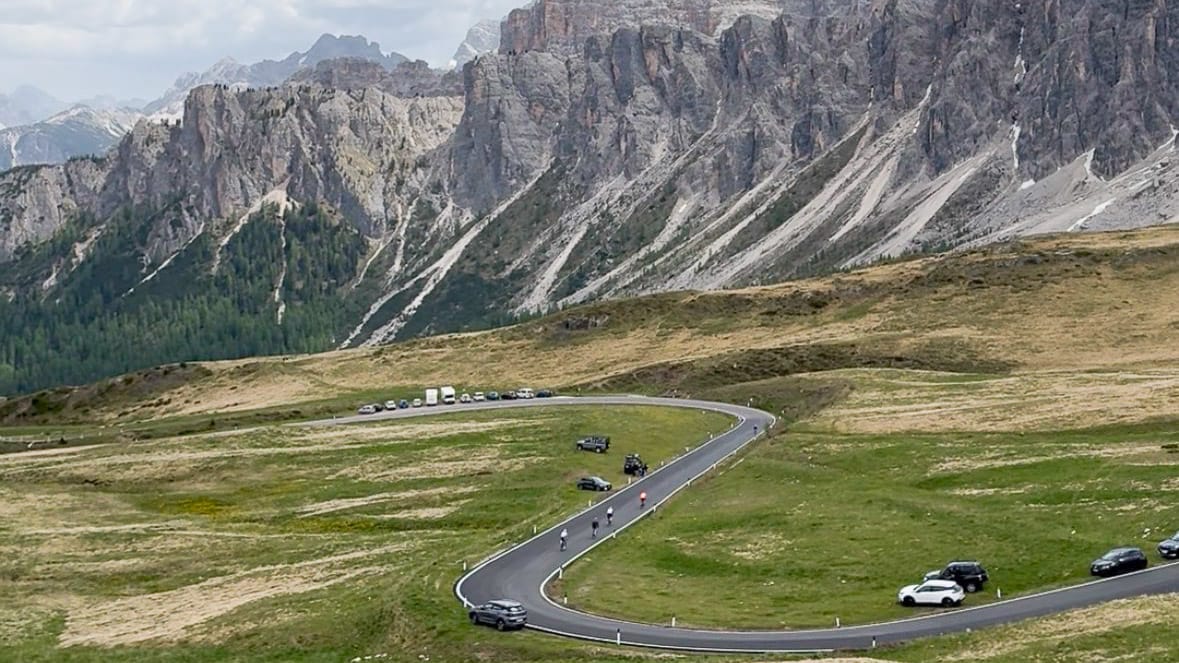
Panoramic view from Passo Giau (photo credit: CyclingHero)
Dolomites cycling routes
Sellaronda
When biking in the Dolomites, we would suggest giving the Sella Ronda route a go. The Sellaronda is one of the classic Dolomites cycling routes. It circles the Sella massif and crosses four passes without requiring a long transfer to the start.
The loop can be joined from Corvara, Arabba, Canazei or Val Gardena. This makes it relatively easy to access from several of the region’s main cycling bases.
Direction can make a difference to the experience, particularly when it comes to traffic. Bob from CyclingHero suggests: “Ride the Sellaronda counterclockwise.
There is generally less traffic, and the route in this direction has recently been upgraded, with bike lanes on the Passo Gardena and Passo Sella.”
Traffic and road layouts can change, so check current conditions before setting out.
Want to ride the Sellaronda with CyclingHero? The route features on both From the Dolomites to the Stelvio and Dolomites Cycling Exploration, with route options incorporating the classic Sella, Pordoi, Gardena and Campolongo passes.
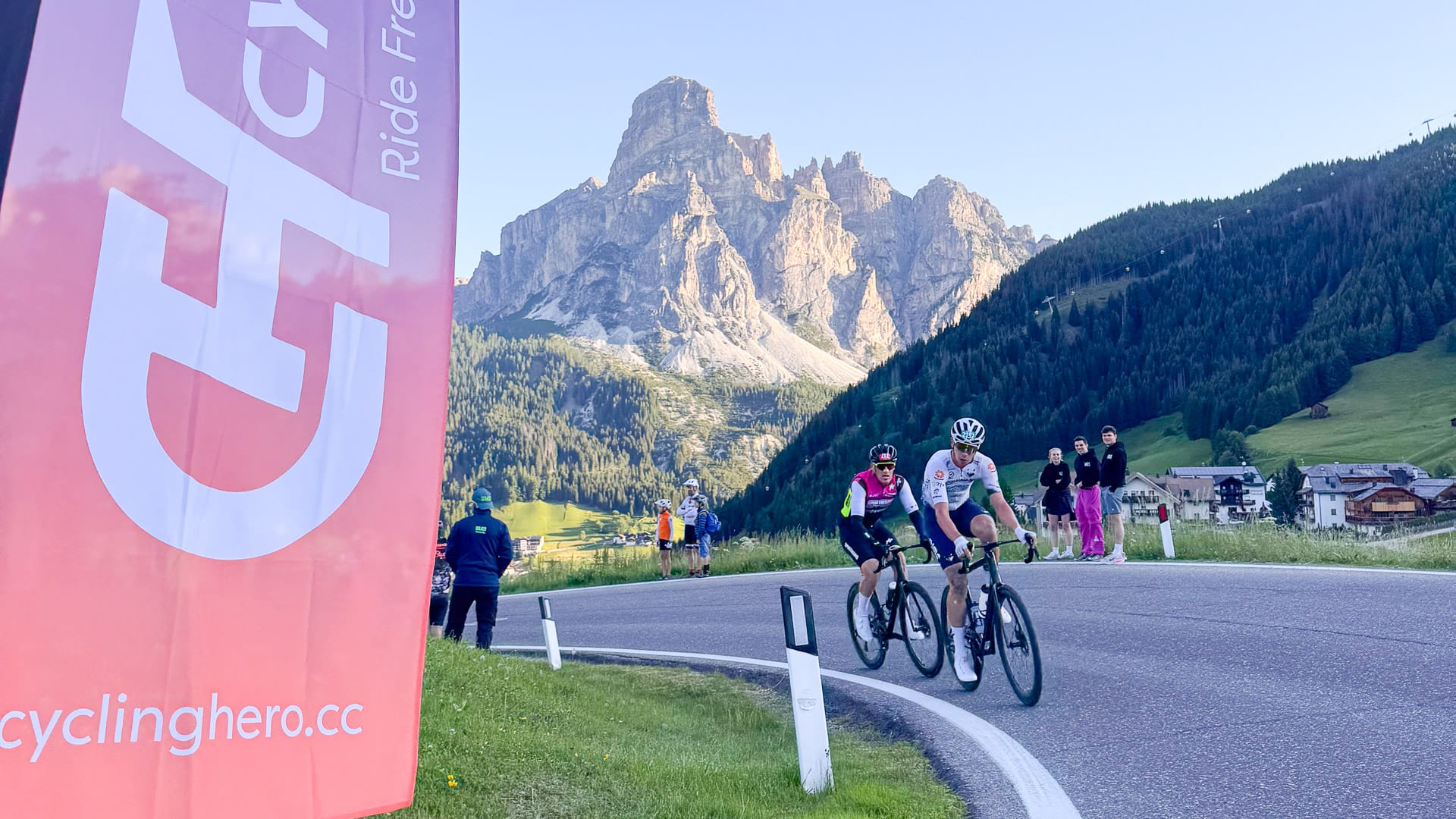
Maratona branding at Passo Campolongo, with Sassongher and Corvara beyond (photo credit: CyclingHero)
Maratona dles Dolomites routes
Taking on the Maratona loop is a more audacious challenge. If you’re based somewhere convenient, you could always split this loop over two days.
Several of the Maratona’s key climbs also feature on CyclingHero’s From the Dolomites to the Stelvio tour, including the Sellaronda passes, Giau, Falzarego and Valparola.
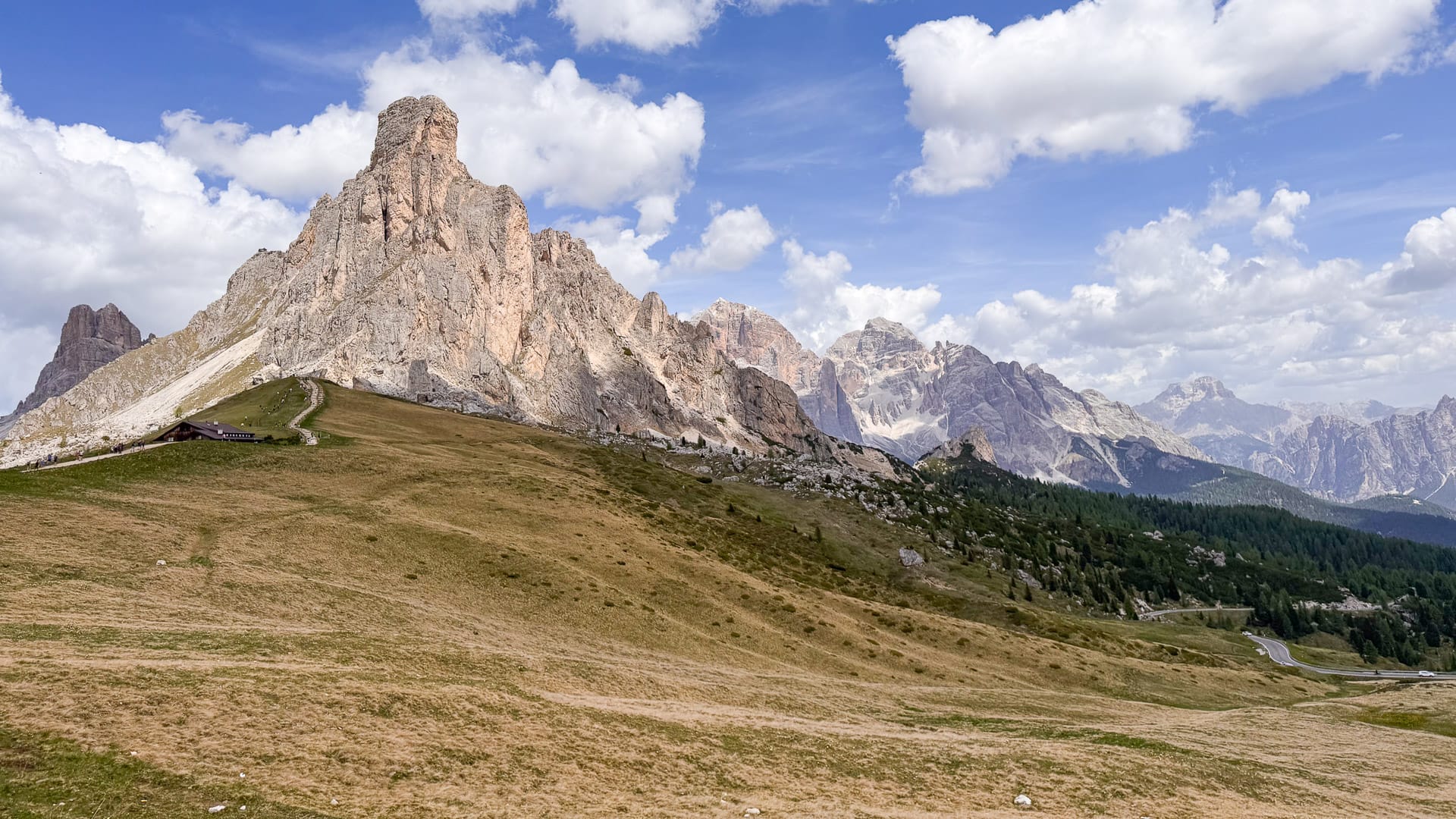
View of Nuvolau above Passo Giau (photo credit: CyclingHero)
Passo delle Erbe and Val di Funes
Finally, this loop of Passo della Erbe and the Funes Valley is among the best bike rides in the Dolomites, but we haven’t yet had a chance to write a full guide to it. Once you’re away from the main SS244 at San Martino, it’s a stunning ride and much less known than other roads in the area. We found it beautifully quiet when we rode it.
Looking for more ways to ride beyond the best-known Dolomites passes? Explore CyclingHero’s Dolomites cycling tours and compare its current road and gravel itineraries.
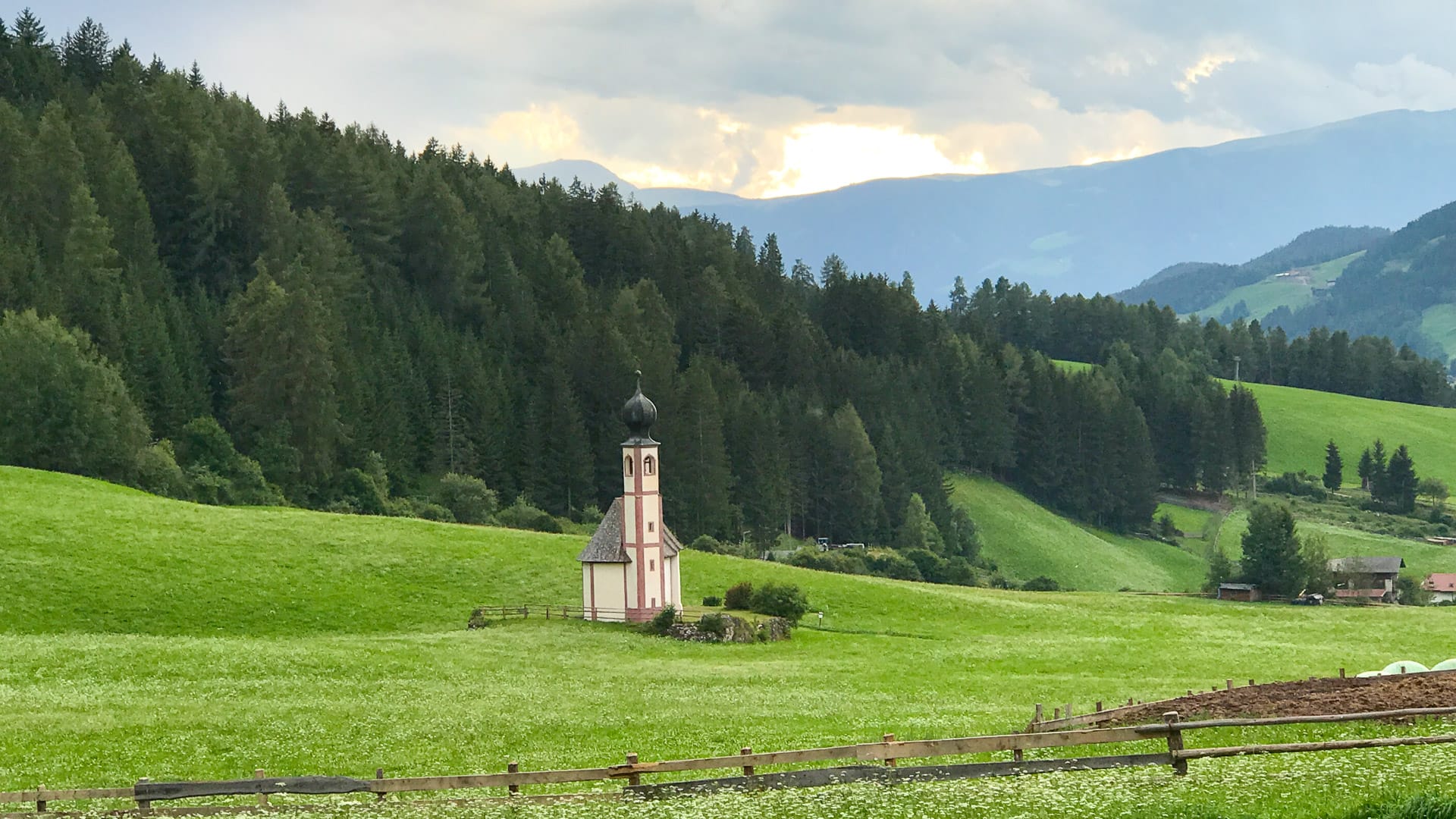
Church of San Giovanni in Val di Funes, South Tyrol
Sponsor Message
Want to ride the Dolomites with local support?
CyclingHero’s supported self-guided tours give you the flexibility to choose your route and ride at your own pace, backed by local route knowledge, live tracking and nearby on-road support. The team has run close to 30 Dolomites departures since 2022 and has a 5.0 average on WeTravel.
Explore CyclingHero’s Dolomites cycling tours to learn more.
Exclusive Dolomites offer
Get €100 discount (approx $110) on any Dolomites tour when you book directly with CyclingHero before 24 July 2027.
Got a question for CyclingHero?
Fill out this form and we will pass it to CyclingHero who aim to reply (within 24 hours wherever they can!)
Part 3: Dolomites cycling events
Dolomites bike day
The Dolomites Bike Day is a newer event than the better-known Sella Ronda Bike Day and Maratona dles Dolomites. It takes place in mid June and, like the Sella Ronda Bike Day, it is a non-competitive bike event that’s free of charge. There’s no requirement to register and the roads are traffic free until early afternoon. The 51km route takes you over the Passo Campolongo, Passo Falzarego and Passo Vaparola.
Sella Ronda Bike Day
This is the biggest Dolomites cycling event on the amateur calendar. Each year, in June and again in September, the roads are closed to traffic and more than 20,000 riders take on the Sella Ronda route. The Sella Ronda Bike Day takes in the four passes of Campolongo, Pordoi, Sella and Gardena.
Want to experience Sella Ronda Bike Day with CyclingHero? You can join either the spring edition or the autumn edition, with both trips combining riding in the Prosecco Hills and Dolomites before the traffic-free Sellaronda.
Maratona dles Dolomites
The Maratona dles Dolomites is a Dolomites cycling tour that comes a month later, in July each year. It attracts around 9,000 cyclists and there are three courses, from 55-138km. There’s a week-long lead up to the event with many riders arriving early for parties and training. Read our Cyclist’s FAQs about the Maratona dles Dolomites for lots more info.
CyclingHero’s Maratona dles Dolomites-Enel 2027 trip is scheduled to run from 30 June to 5 July 2027. You can read more about it on the Maratona page of their website.
Giro delle Dolomiti
The Giro delle Dolomiti is a five-day amateur cycling event that winds its way 400+ kilometres through the dramatic scenery of the Italian Dolomites in northern Italy. This annual event takes place every July and starts and finishes in the city of Bolzano. The route takes in many Giro d’Italia classics, including the Sellaronda and the Passo dello Stelvio.
Sponsor Message
Want to ride the Dolomites with local support?
CyclingHero’s supported self-guided tours give you the flexibility to choose your route and ride at your own pace, backed by local route knowledge, live tracking and nearby on-road support. The team has run close to 30 Dolomites departures since 2022 and has a 5.0 average on WeTravel.
Explore CyclingHero’s Dolomites cycling tours to learn more.
Exclusive Dolomites offer
Get €100 discount (approx $110) on any Dolomites tour when you book directly with CyclingHero before 24 July 2027.
Got a question for CyclingHero?
Fill out this form and we will pass it to CyclingHero who aim to reply (within 24 hours wherever they can!)
Part 4: Best places to stay in the Dolomites (for cyclists)
To be absolutely honest, we really struggled when it came to finding somewhere nice to use as a base in the Dolomites, Italy.
The main reason for this was probably that we left it too late (we were booking in January for our visit in July) and we were looking for somewhere quite big – a self-catering chalet with four bedrooms. As a result, we ended up staying in the little village of Santa Cristina Val Gardena. The accommodation was fine, but the location was not ideal. As a result, and unusually for us, we aren’t sharing the details of where we stayed in this guide.
In terms of the kind of accommodation you can expect to stay in, our experience was that it’s more rustic Alpine chalet than boutique hotel. So we’d suggest setting your expectations accordingly and you won’t be disappointed.
In this article we share our pick of the best bike hotels in the Dolomites.
Corvara
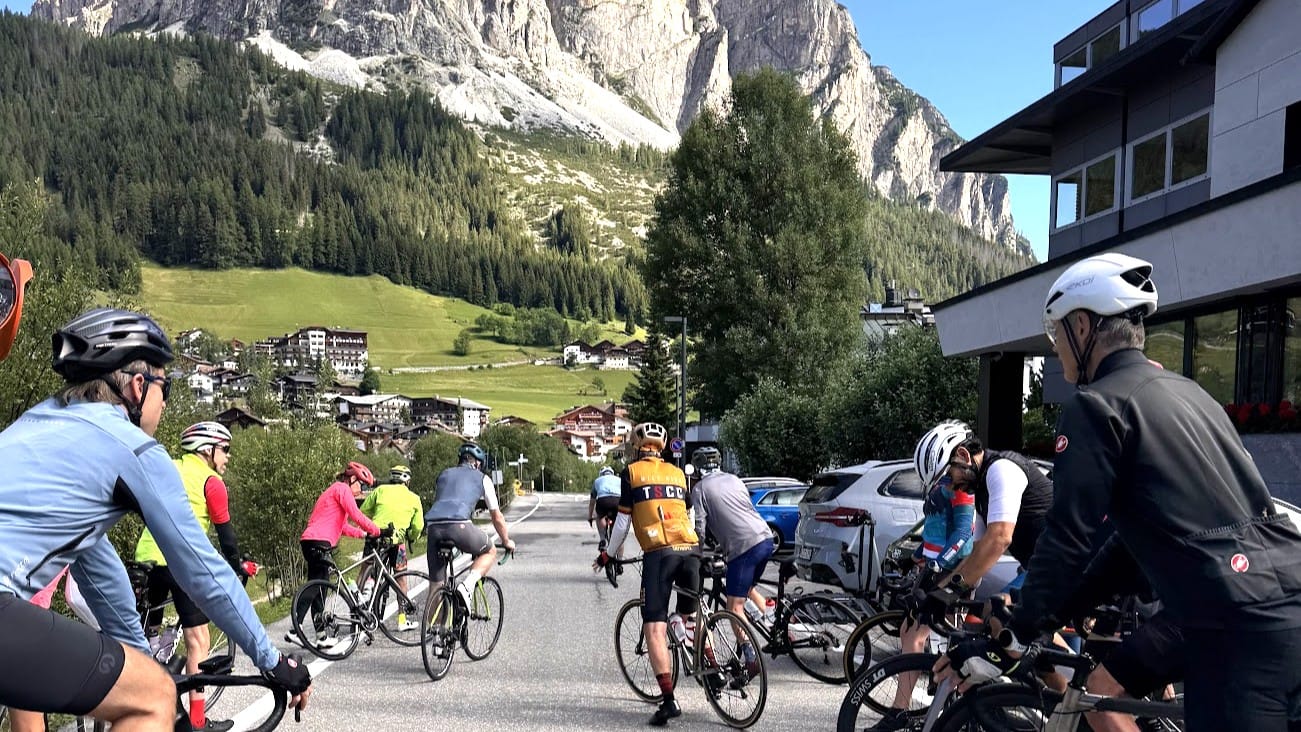
If we were to visit again, we would base ourselves in one of the Dolomites bike hotels in Corvara. Corvara is a decent sized town at the bottom of the Passo Gardena, and on the loop of the Sella Ronda.
It is also a key base on CyclingHero’s Dolomites trips. Bob says: “All CyclingHero trips to the Dolomites include stays in Corvara, as it provides the best combination of multiple ride options, great hotels and restaurants, and is also the perfect starting point for walking and hiking in the area.”
Focus on the routes…
A point to note: while the core area of the Dolomites looks relatively small on a map, it takes ages to get anywhere by car or public transport due to the fact there are no flat or straight roads in the region. So picking the right location is really important when it comes to planning Dolomites cycling trips – more so than many other destinations.
Our tip is to focus on how and where you want to ride the Dolomites, and make sure you’re going to be able to access them relatively easily from your accommodation. Otherwise, you’ll run the risk of not doing the rides you wanted – or having to drive to the start of the route.
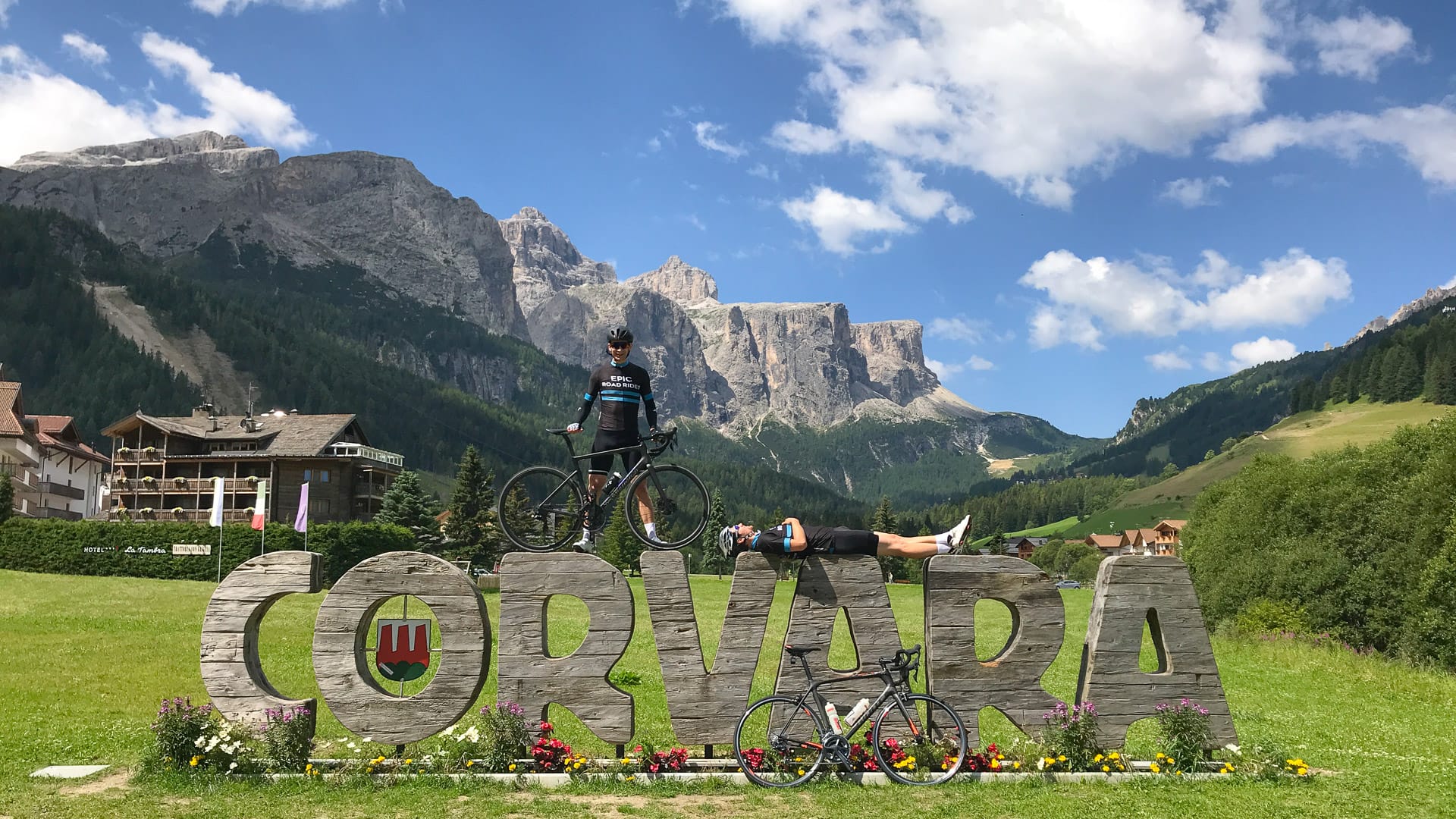
Lots of routes start and finish from Corvara
Staying with CyclingHero
If you would prefer accommodation to be organised as part of your trip (and not encounter the kind of frustrations we found!), Bob and the team at CyclingHero would be happy to help. Bob says CyclingHero tends to favour smaller properties rather than large hotels: “Our accommodations are generally smaller, family-run boutique properties with modern facilities and a high level of comfort.”
The properties are also chosen with cyclists in mind. Bob adds: “Our hotels in the Dolomites are very familiar with the needs of cyclists, with facilities such as secured bike rooms and spas. They are also spectacularly located and offer a warm welcome.”
For riders who would rather have accommodation organised alongside their routes and trip logistics, explore CyclingHero’s Dolomites tours.
View from our hotel in Corvara (photo credit: CyclingHero)
Sponsor Message
Want to ride the Dolomites with local support?
CyclingHero’s supported self-guided tours give you the flexibility to choose your route and ride at your own pace, backed by local route knowledge, live tracking and nearby on-road support. The team has run close to 30 Dolomites departures since 2022 and has a 5.0 average on WeTravel.
Explore CyclingHero’s Dolomites cycling tours to learn more.
Exclusive Dolomites offer
Get €100 discount (approx $110) on any Dolomites tour when you book directly with CyclingHero before 24 July 2027.
Got a question for CyclingHero?
Fill out this form and we will pass it to CyclingHero who aim to reply (within 24 hours wherever they can!)
Part 5: Bike hire in the Dolomites
If you’re looking to hire a road bike in the Dolomites, you should be able to find what you’re looking for. However, be aware that there aren’t loads of hire shops so if you’re visiting at a busy time of year or for the Maratona or Sella Ronda bike day, you’ll definitely need to book ahead of your Dolomites road cycling trip. It’s also worth noting that the shops are scattered throughout the local towns, so if you want to hire, bear that in mind when deciding where to stay (it’s always much easier if your bike hire is close to where you’re staying).
While we haven’t done an exhaustive study, we felt hire prices here were quite expensive compared to many destinations. That’s probably due to the fact there isn’t an oversupply of shops that offer it.
We hired a bike from Ski Adolf and were pleased with both the bike and service.
A final point: if you’re looking at the websites for some of the operators below, it may look at first glance as if they’re just a ski hire company. Look a bit closer: most of them offer ski hire in winter and bike hire in summer. The information you’re looking for should be somewhere there – or you can of course always drop them an email. They may also offer Dolomites bike tours.
This information is offered as an indicative guide only: we periodically update it but prices, services and bike brands may change. Please let us know if you find anything that is incorrect.
| Dolomites bike hire shop | Info | Cost |
|---|---|---|
|
Alta Badia Bike Rental
12 bike rental services across Corvara, Colfosco, La Villa, San Cassiano, Badia and La Val |
They hire road bikes, mountain bikes and e-bikes, depending on the rental outlet. You can book online, and may have the option of paying to hire a helmet, GPS and GoPro. | Prices vary by rental outlet |
|
Ski & Bike Armin Via Dursan 108 39047 St. Christina di Val Gardena |
They have e-bikes, mountain bikes and carbon road bikes, with online booking. Equipment including helmets is also available to hire. | Hardtail e-bikes from €64 per day; carbon road bikes from €57 per day; hardtail mountain bikes from €40 per day. |
|
Edoardo Sport Str. Pecei 12 Colfosco |
They offer road bikes, e-gravel bikes, e-MTBs, mountain bikes and children’s bikes, plus equipment including helmets, bike trailers and child seats. Online booking is available. | Road bikes from €75 per day; e-MTB hardtails from €65 per day; MTB full-suspension bikes from €69 per day. At the time of checking, discounted online rates reduced these to €67.50, €58.50 and €62.10 respectively. |
|
Breakout Sport Str. Col Alt, 61 39033 Corvara |
They have road bikes, front- and full-suspension mountain bikes, e-bikes, e-road bikes, children’s bikes and accessories. Current rental models include bikes from Specialized, Cube and Amflow. | Adult bike prices start from around €65 per day, with premium road bikes up to €125 per day. |
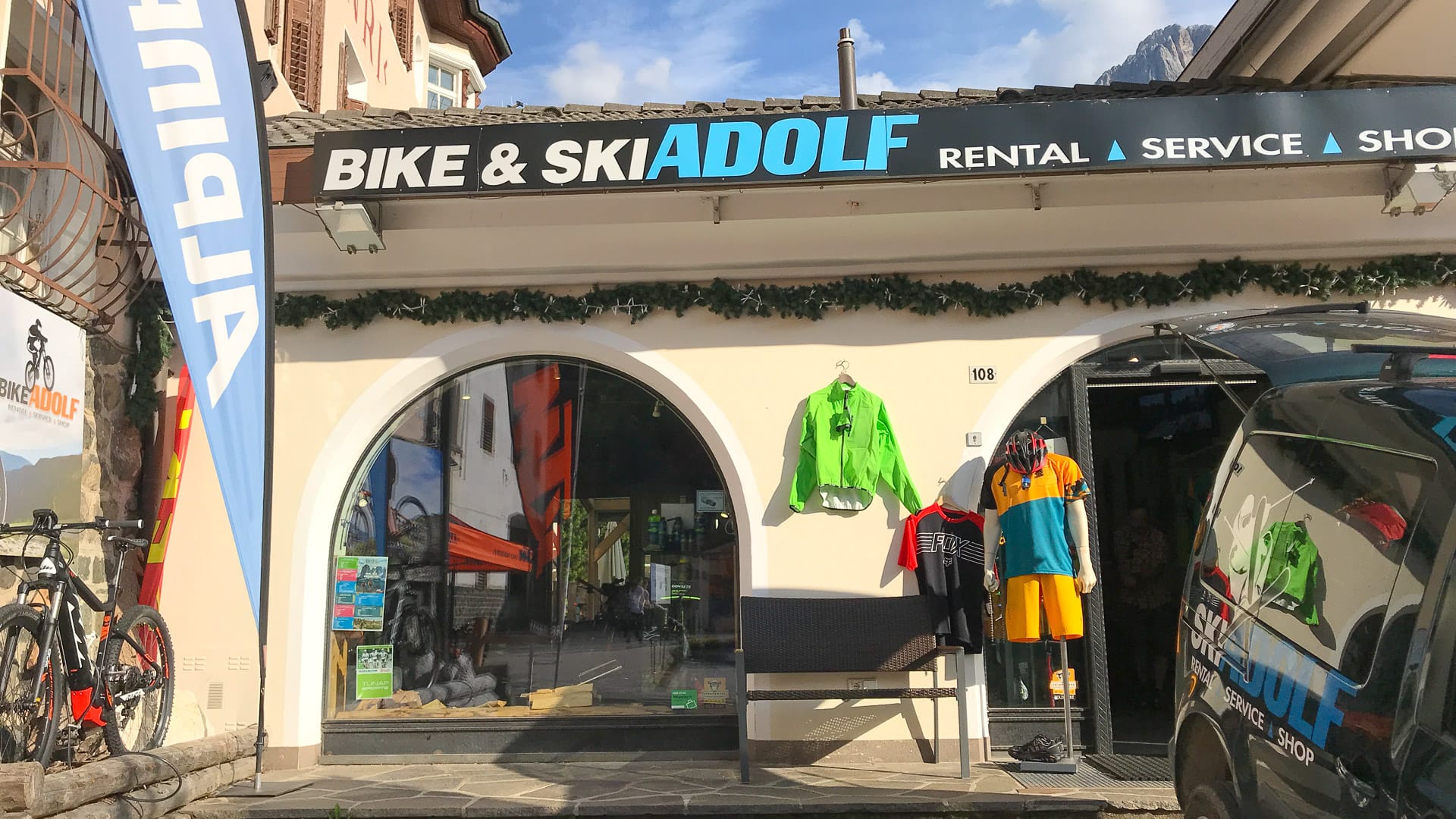
Front of Bike and Ski Adolf
Bike hire with CyclingHero
CyclingHero works with nearby Basso Bikes and can provide high-end road and gravel bikes, as well as road and gravel e-bikes. Riders can also bring their own bikes, and CyclingHero provides facilities for storing bike boxes during the trip.
Gearing is particularly important if you are bringing your own bike. Bob from CyclingHero says “If you bring your own bike, have adequate gearing. It makes all the difference.”
CyclingHero equips its road bikes with a 1:1 easiest gear. Its gravel bikes use a 38-tooth chainring with a 10–44 cassette.
Tips for hiring a bike in the Dolomites:
- Book your bike in advance, particularly in peak season.
- If you’re particular about them, remember to bring your own pedals, shoes and helmet. This packing list may help!
- Check your brakes are set before you ride away (i.e. are the front brakes on the right hand (as is usual in the UK) or on the left (as is usual elsewhere in Europe)?). Also take a look at our list of things to check before hiring a bike.
Undecided on whether to hire a bike or bring your own? Read this.
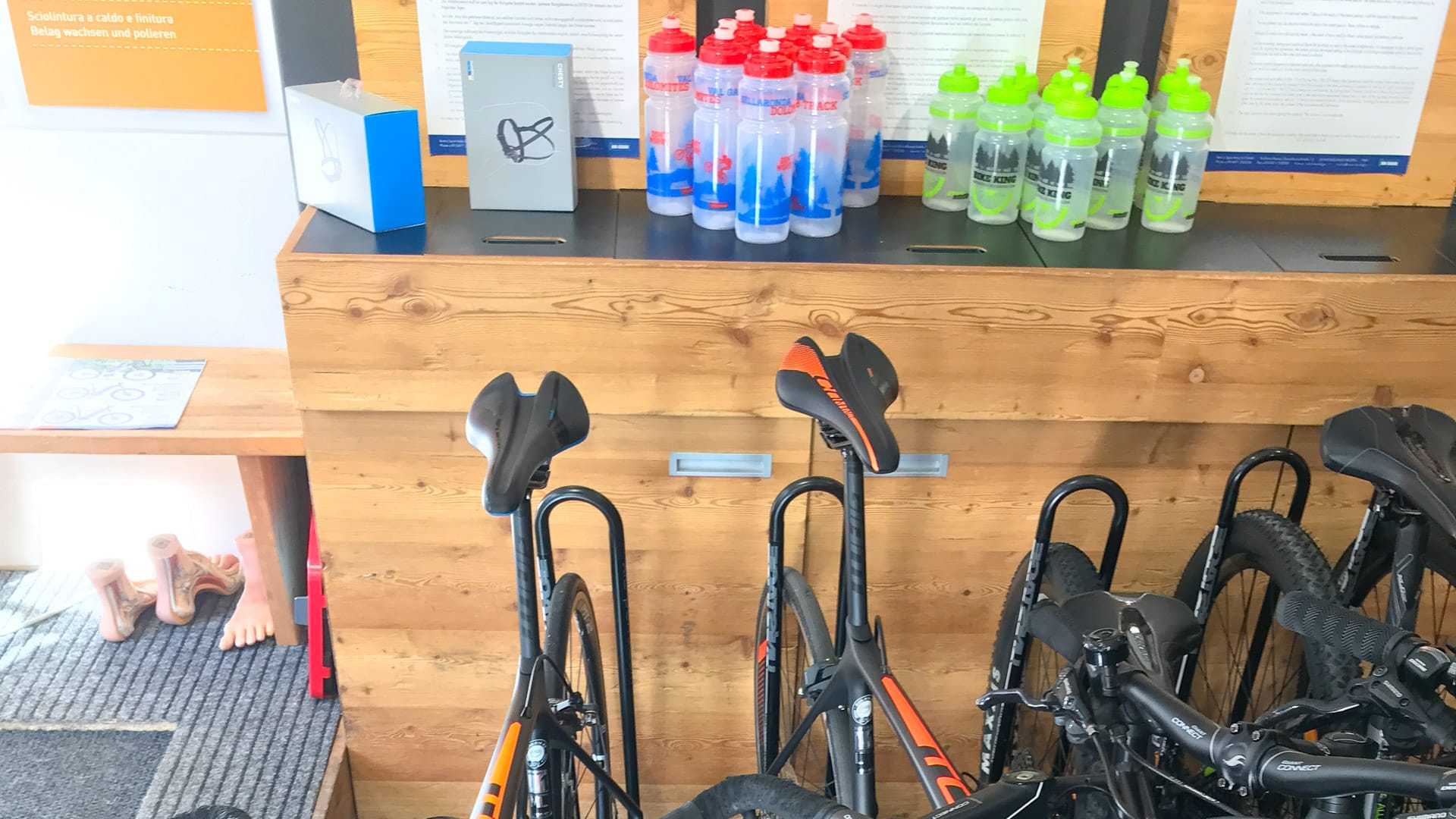
Bikes at Bike and Ski Adolf
Sponsor Message
Want to ride the Dolomites with local support?
CyclingHero’s supported self-guided tours give you the flexibility to choose your route and ride at your own pace, backed by local route knowledge, live tracking and nearby on-road support. The team has run close to 30 Dolomites departures since 2022 and has a 5.0 average on WeTravel.
Explore CyclingHero’s Dolomites cycling tours to learn more.
Exclusive Dolomites offer
Get €100 discount (approx $110) on any Dolomites tour when you book directly with CyclingHero before 24 July 2027.
Got a question for CyclingHero?
Fill out this form and we will pass it to CyclingHero who aim to reply (within 24 hours wherever they can!)
Part 6: When to go
Choosing the right month can make a noticeable difference to both traffic and the overall experience.
Bob from CyclingHero says “June and mid-September are the best periods, as there are less visitors and the weather is generally good.”
He also considers July a good time to ride, although CyclingHero suggests avoiding the first week if you are not taking part in the Maratona dles Dolomites. Bob suggests avoiding the first three weeks of August where possible, when more people head to the mountains and roads, restaurants and hotels become busier.
Bob further reminds riders to plan around summer weather. He says “Late afternoon thunderstorms are common in the Dolomites in summer. Another reason to get going earlier in the day.”
As ever in the high mountains, remember that the weather can be unpredictable.
| January | The towns you ride through in summer are all ski resorts come winter, so these months are best avoided for those on road bikes. The snow clears by the end of April, marking the transition back to clear roads and cyclists!
|
| February | |
| March | |
| April | |
| May | May can still feel cold and wet, and many villages remain very quiet at this time of year. A lot of hotels, restaurants and other seasonal businesses may still be closed, so the atmosphere can feel subdued compared with summer.
|
| June | From the second week of June, the Dolomites start to come alive for summer. More hotels and restaurants reopen, while the roads are still relatively quiet compared with the busier summer months. This makes June a particularly good time to visit. |
| July | Temperatures should be warm and schools are out. The narrow roads that weave between the vertical peaks are busy with holidaymakers and local tourist traffic. You may also encounter rain, typically in the form of late afternoon thunderstorms. If you’d prefer quieter roads and have the flexibility, avoid these months.
|
| August | |
| September | These months offer a good chance for a late summer adventure, with some great autumn colours. The weather is often stable and clear, though there may be snowfall on the highest slopes when the weather is bad.
|
| October | The first half of October can still be rideable, but conditions change quickly later in the month. From around mid-October, the experience becomes more like May, with many hotels, restaurants and seasonal businesses closed. Temperatures at the top of the passes can hover around 0°C, so riding is still possible, but you will need warm cycling kit. |
| November | Snow starts to fall and resorts are moving into ski season. Most of the towns are quiet, other than Cortina, but the weather is often far from ideal. These months are best avoided by cyclists.
|
| December |
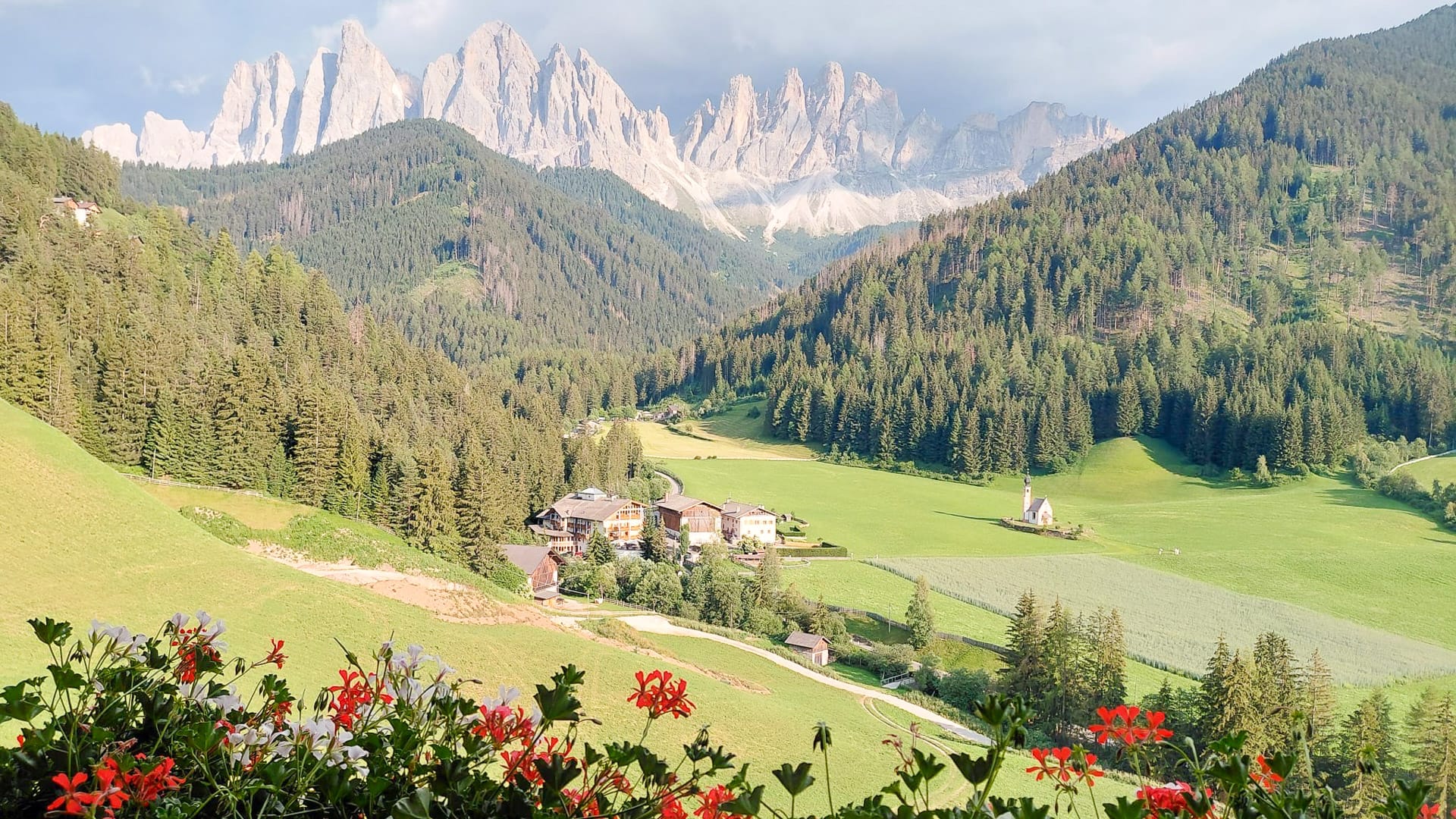
Panoramic view of the Odle mountains near Santa Magdalena in the Dolomites (photo credit: CyclingHero)
Sponsor Message
Want to ride the Dolomites with local support?
CyclingHero’s supported self-guided tours give you the flexibility to choose your route and ride at your own pace, backed by local route knowledge, live tracking and nearby on-road support. The team has run close to 30 Dolomites departures since 2022 and has a 5.0 average on WeTravel.
Explore CyclingHero’s Dolomites cycling tours to learn more.
Exclusive Dolomites offer
Get €100 discount (approx $110) on any Dolomites tour when you book directly with CyclingHero before 24 July 2027.
Got a question for CyclingHero?
Fill out this form and we will pass it to CyclingHero who aim to reply (within 24 hours wherever they can!)
Part 7: Getting around the Dolomites
We found it essential to have a car when exploring the Dolomites independently. It makes getting to the start of a ride significantly more convenient.
Riders travelling with CyclingHero do not need to hire a car. Bob explains “There is no need for a hire car on our trips. We pick you up from the airport or train station with or without your bike.”
CyclingHero offers transfers from Venice and Treviso airports for its Dolomites trips, as well as from nearby railway stations. Visit the official website for more details.
Sponsor Message
Use the search box below to search, compare and book the best car rental deal for your trip.
Part 8: Tips
Check out our tips for cycling in the Dolomites here.
Fitness and preparation
The Dolomites demand a solid level of cycling fitness, even when the daily distances do not look especially long. Bob from CyclingHero says “a good base level of fitness and riding skill is necessary for these tours. You should be comfortable with riding in zone 3 (challenging yet manageable pace) for 1 hour.”
Preparation should therefore include sustained climbing where possible. Bob suggests “Train in the hills before you come, if you can. Otherwise, train on the hills in Zwift or Rouvy. It definitely helps.”
That does not mean every day needs to be spent entirely in the saddle. Asked what kind of rider CyclingHero’s Dolomites trips suit, Bob says: “Riders interested in a challenge, but not wanting to fill their whole day with only riding. There is still plenty of time to enjoy the area, as the daily distances are almost all under 100 km, and most are under 70 kilometres.”
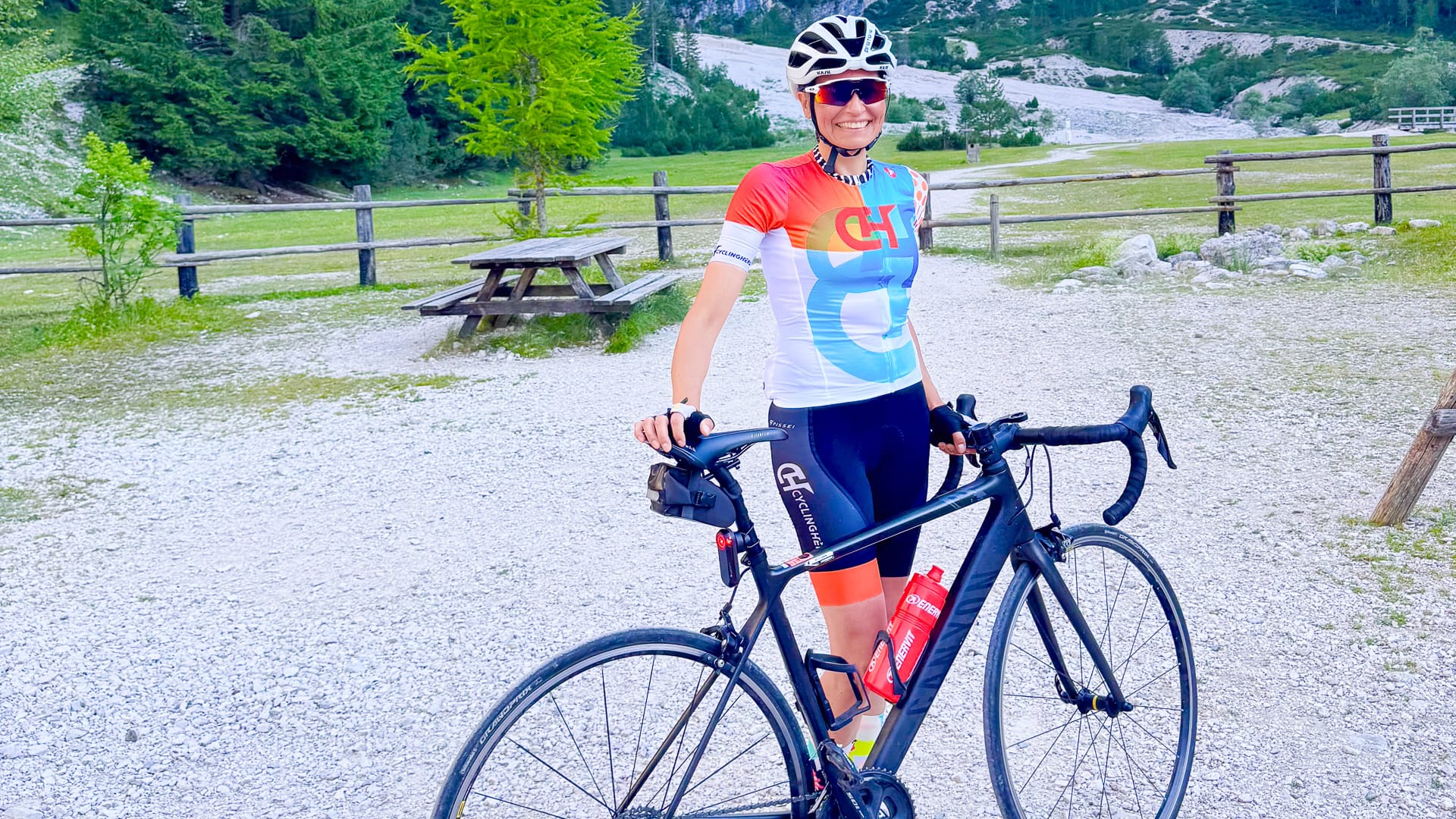
Pausing to take a photo while riding through Fanes-Pederü (photo credit: CyclingHero)
Roads and traffic
Many of the classic routes use narrow mountain roads shared with cars, motorbikes, coaches and other cyclists. Traffic levels vary by road, time of day and season.
Bob from CyclingHero says “Traffic is lightest in the morning (before 9 am), and between the hours of 12:30 and 2 pm.”
July and August are usually busier, particularly around popular resorts and the main Sella passes. June and mid-September can offer a quieter experience, although mountain weather and pass openings always need checking.
Descending
The descents are often fast and technical, with repeated switchbacks and limited visibility around bends. Ride within your limits and be prepared for vehicles, cyclists or changes in the road surface ahead.
Bob from CyclingHero reminds riders to “keep it sane on the descents. There are a lot of switchbacks and you don’t know what might be coming up.”
Temperature is another factor to consider before starting a descent. Asked what riders most often underestimate, Bob says ”how cold it can be at the top of the climbs, especially the highest passes.”
He also urges riders not to linger too long at the summit of the passes and to bring a windproof jacket or long sleeve for the cooler temperatures at altitude.
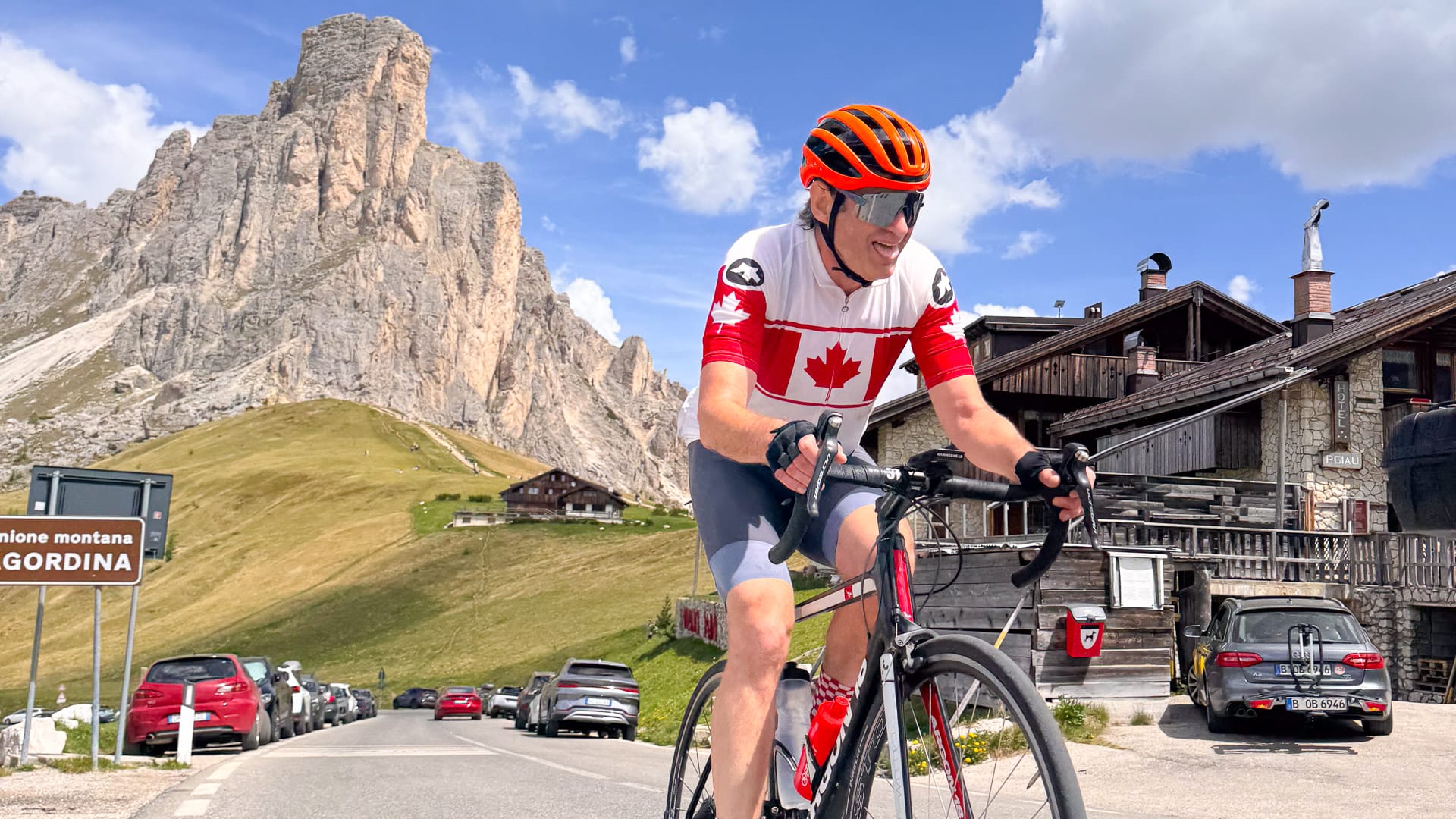
Bucket-list climb on Passo Giau; take care on the descent back down (photo credit: CyclingHero)
Be prepared for tunnels
Bright sunshine followed by a darker tunnel can make the change in visibility surprisingly abrupt. Bob says “Most tunnels are short and well lit, but lower your glasses as you enter so you can adapt more quickly.”
Highway code and travel information
As ever, it’s a good idea to check current travel information before you book and travel. For UK visitors, the UK government travel information pages for Italy are here.
You should also read and follow Italy’s highway code.
Cycling books about the Dolomites
A lot has been written about the Dolomites.
We are fans of Daniel Friebe and Pete Goding’s “Mountain High”, which includes write-ups on Passo Fedaia, Passo Giau and Passo Pordoi. You can read our review of Mountain High, here.
We also love browsing Michael Blann’s beautiful “Mountains” coffee table book. There is a section on the Dolomites and you could lose many an hour drooling over the photography and enjoying the stories.
For focus on the Giro d’Italia, Herbie Syke’s Maglia Rosa is the book for you. It’s a weighty tome, but the tales of the Giro really take you behind the scenes and the grainy photos of yesteryear’s cycling legends are incredibly evocative.
At the time of writing, Mountain High and the revised edition of Mountains are still available to buy new, while Maglia Rosa is not readily available new but can still be found second-hand.
Dolomites cycling map
We bought a copy of the Dolomites cycling map sold by Cycling Dolomites, which is now sold through the Holimites online shop. It’s nicely printed (though it’s not laminated so might not last that long if it’s destined for your back pocket), and helpfully includes details of where you can find water fountains. On the back of the map are climb profiles and it comes with five route cards showing the route of the Maratona dles Dolomites over the years. At the time of writing it cost 9,50 euros (plus postage if you have it sent to you).
If you like physical maps and having an overview of the whole area, you’ll like this – but (in our humble opinion), our route guides and GPX files are more useful for planning your Dolomites bike trail discoveries!
How do you get to the Dolomites?
The closest international airport to the Dolomites is the one in Venice. From Venice to the Dolomites (Corvara to be precise), it’s just under 200km, and a 3 hour drive. There are some public transport options, but you’ll need to have time at your disposal.
Many people do what we did before bicycling in the Dolomites. Which was fly into Venice airport, hire a car and then drive. You could then drive on to Bormio, followed by the Italian Lakes, before heading home via the international airport in Milan. Of course, it’s just as feasible to follow this kind of tour in reverse too.
A final note on access: there are other airports near the Dolomites in Italy. Check out flying via the smaller airports of Innsbruck, Verona and Treviso, just in case they work better for you. In particular, Innsbruck is only just over the border in Austria – but if you do take this option and hire a car, make sure the terms of your rental agreement allow you to cross the border!
For riders travelling with CyclingHero, transfers are included from Venice and Treviso airports, as well as from nearby train stations. Bob explains “There is no need for a hire car on our trips. We pick you up from the airport or train station with or without your bike.”
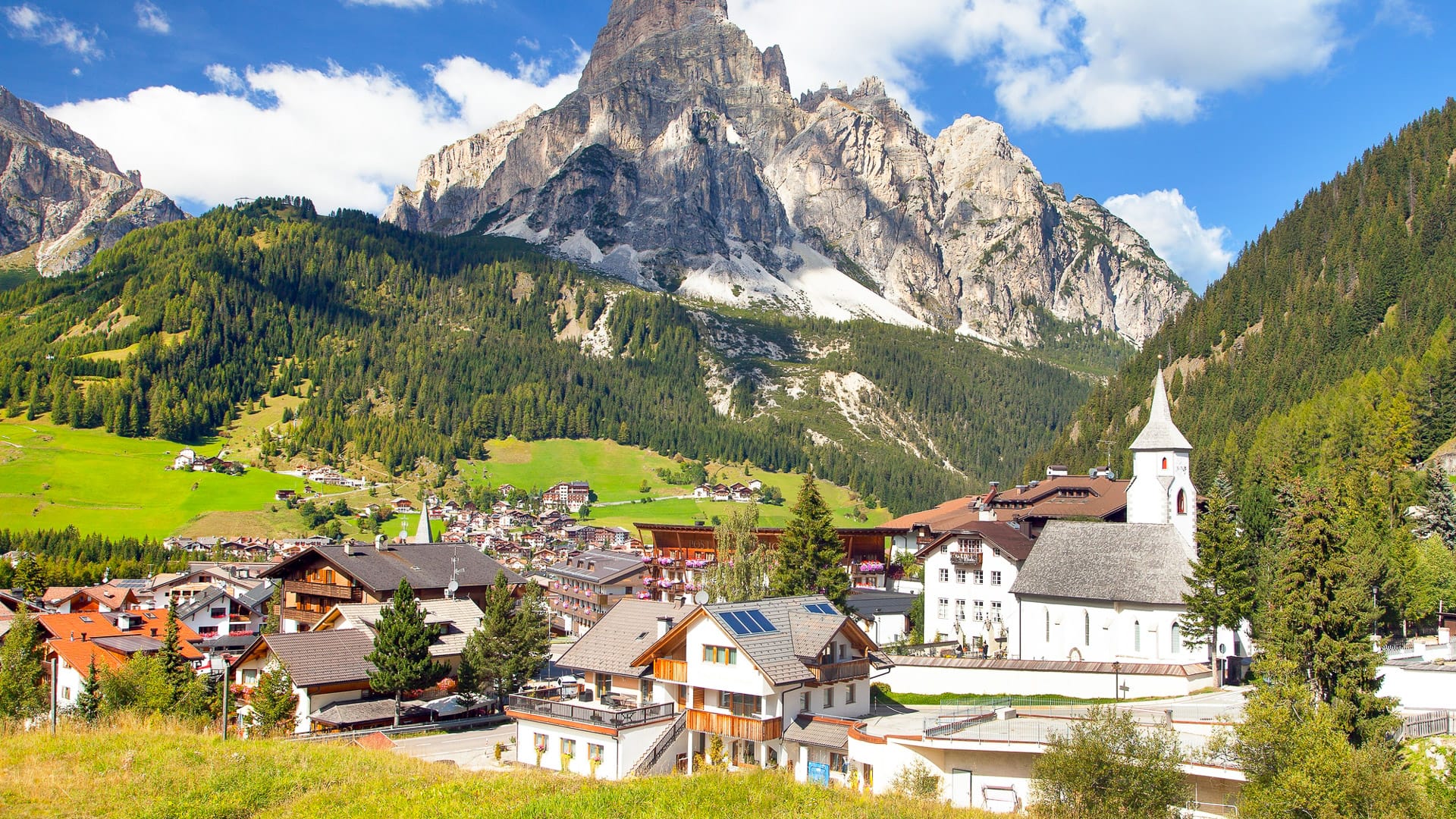
Corvara in Badia (known as Corvara) in the Dolomites
Evening in the Dolomites
Don’t miss seeing the evening in the Dolomites. At the end of a sunny day, the evening sun catches the imposing faces of the mountains and paints them in a pink, rosy hue. It’s quite spectacular – and a highlight of cycling in northern Italy.
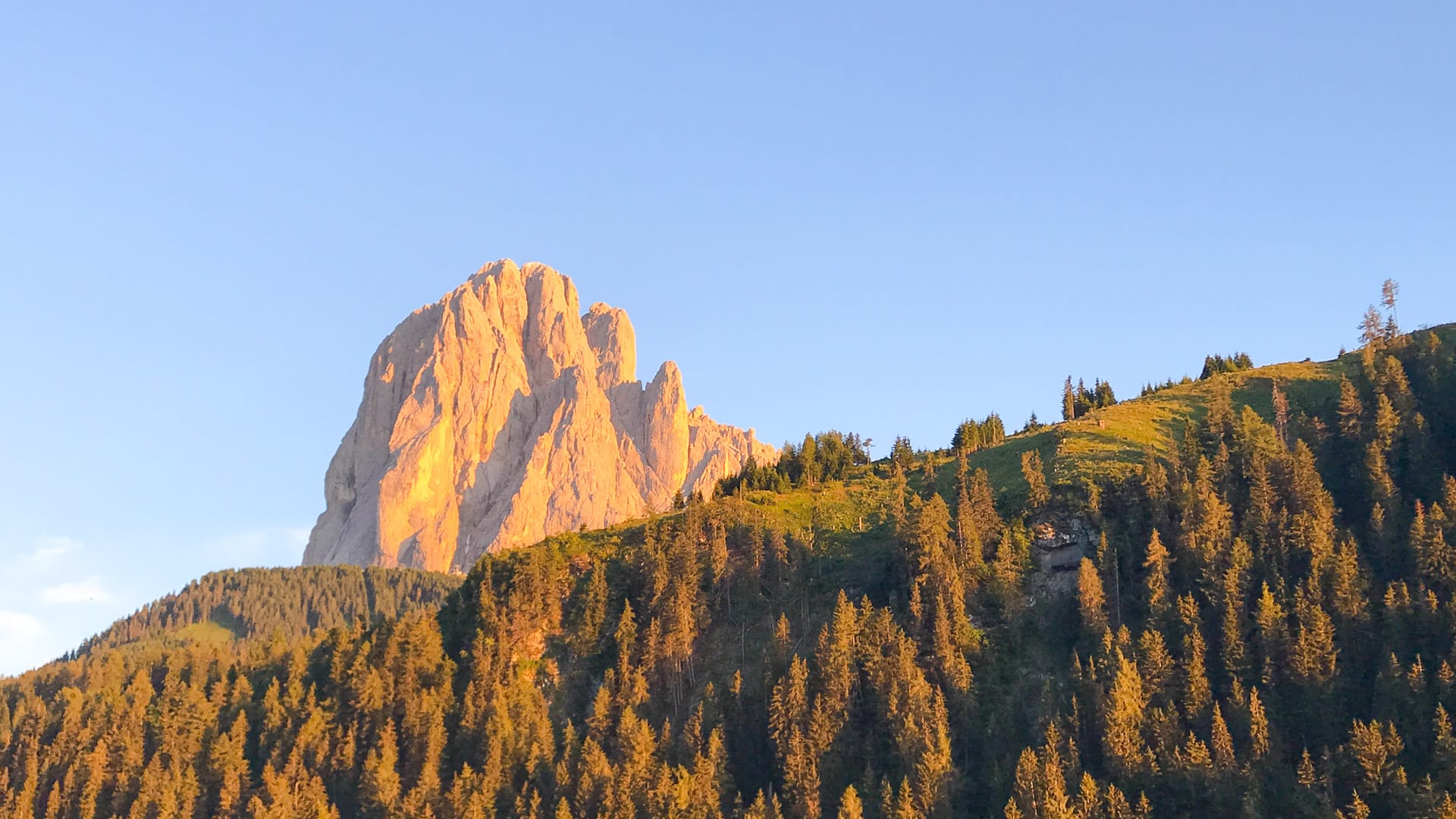
Magical evening light in the Dolomites
Things to do off the bike
A Dolomites trip does not have to revolve entirely around riding. Bob suggests making time for a hike. The Dolomites’ summer ski-lift infrastructure makes it possible to reach walking routes higher in the mountains without another long climb by bike or on foot. CyclingHero provides several suggestions for guests, and many lifts operate from around mid-June into early October.
This pass can also be useful for those wanting to access the lift system.
If you’re not too pushed for time, while you’re in this part of the world you might like to take a day trip to Treviso, which is home to big cycling industry names including Pinarello. Or head further afield; Sidi and Sella Italia are near Asolo, Wilier and Basso are naer Bassano dl Grappa, and Campagnolo and Fizik are near Vcenza.
Language in the Dolomites
There is a real mix of ethnic groups and languages in the area. It’s quite common to see signs in Italian, German and sometimes Ladin too. There’s more information on the reasons for this below.
Many of the towns, and sometimes even the mountains, have two names, one in Italian and one in German. Confusingly, they’re usually very different names! For example Corvara is the Italian name, but you may also see it referred to as Kurfar. Likewise it’s Val Gardena in Italian or Gröden in German. We stick with the Italian names in our guides, but it’s worth knowing about this quirk when planning Dolomites cycling holidays!
History of the Dolomites
250 million years ago the Dolomites were part of a coral reef – similar to what you’d see if you were diving in the Maldives or the islands of Polynesia. Later, tectonic movements pushed together the areas of today’s Africa and Europe with violent volcanic eruptions and folding that uplifted the area. The sea withdrew exposing the sea bed and the Dolomites emerged. The Ice Age took its hold and sharpened the valleys with glaciers 1,500 metres thick covering the area.
If you look carefully at the rock, in many areas, you can see the horizontal layers of limestone, heavily stratified and folded. These are in fact thick layers of seaweed, coral and tiny organisms that lived in the ancient seas.
The name “Dolomites” comes from the rock’s first official scholar, the French geologist Deodat-Guy-Sylvain-Tancre de Gratet de Dolomieu. He sent samples to Switzerland for classification in 1789. The verdict was that the rock was of an unknown composition and warranted its naming after the “founder”.
Until the First World War, much of the area was Austrian. During the war, the area was a theatre of battle and on the Marmolada and Cinque Torri there are traces of old trenches. The war resulted in Italy’s annexation of regions, in which Italians and Austrians had previously lived together under the Austrian flag. On 10 September 1919 the people that lived here officially changed from being Austrian citizens to Italian citizens.
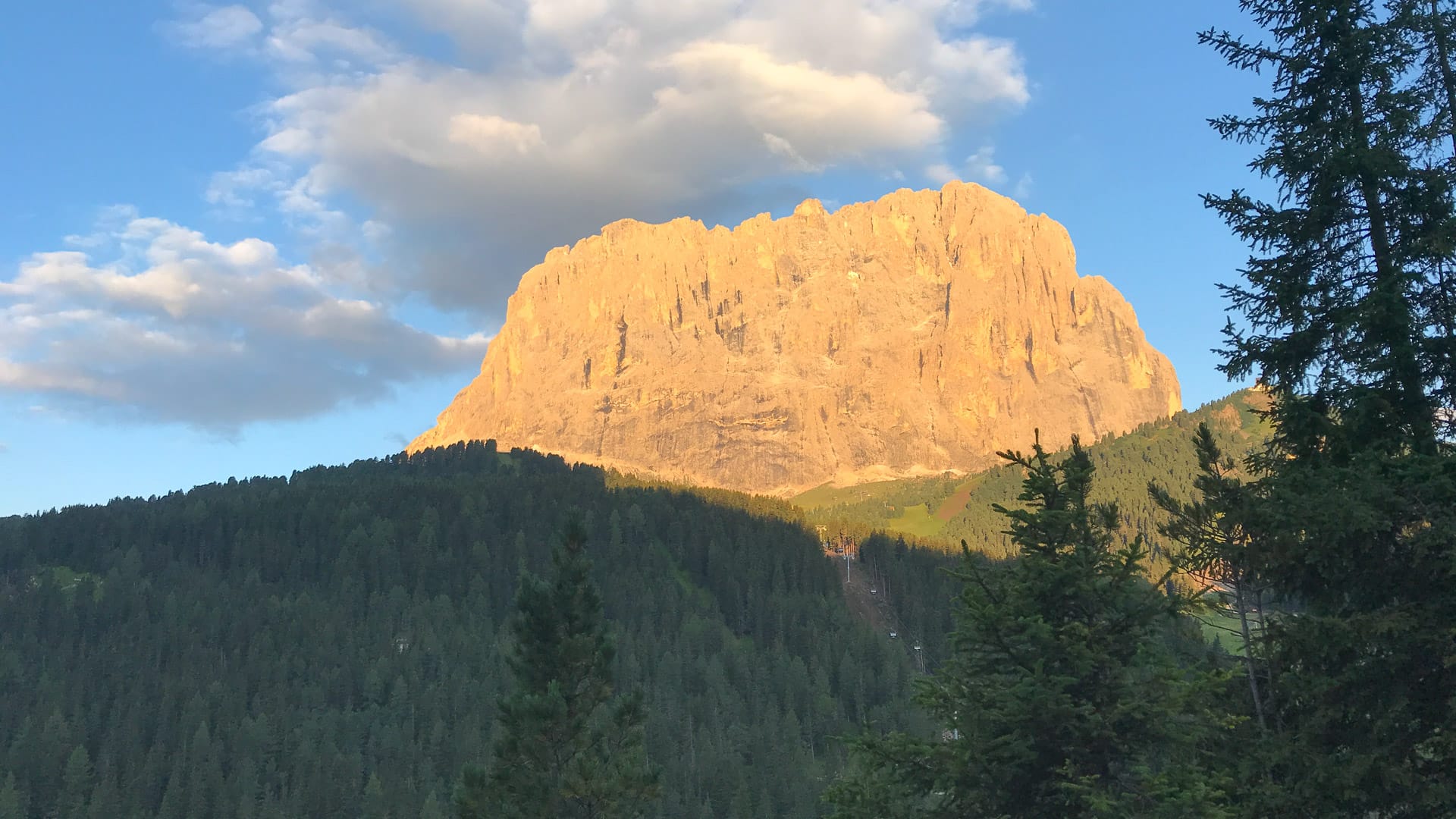
More spectacular light in the Dolomites
The Ladin influence
You’ll see the Ladin (not Latin) influence in everything from the food to the architecture – steep slatted roofs and wooden chalets.
The Ladin language was the major language of the mountains for centuries. It’s still officially spoken by 30,000 people of the four valleys: the Sella, the Val Badia, Val Gardena, the Val di Fassa, the Valle di Livinallongo and the Valle d’Ampezzo.
There’s been a bit of a revival of Ladin recently, and in La Villa in Val Badia, the population is trilingual and even the youngest children speak Italian, German and Ladin. If you want to get a taste of the local culture, don’t miss the Gardena folk festival on the first Sunday in August, with a parade, local bands and the traditional costumes of the various towns. The costumers reflect the Tyrolean influence of the inhabitants.
Legends of the Dolomites
The Dolomites are known to some as the “Monti Pallidi”. This means “the pale rocks”. Legend has it that in ancient times, the dolomitic rocks were the same colour as the Alps, with flower meadows, lakes and forests.
Then one day the King’s son married the moon princess – but unfortunately the King’s son couldn’t stand the intense moon light and the princess couldn’t stand the shadowy woods, so they were destined to be kept apart.
One day the prince ran into a magical gnome who offered to sort things out. He wove moonlight around the Dolomites so that the princess could come down from the moon to live in the Dolomites with the prince.
From then on the Dolomites were named Monti Pallidi and people say the white edelweiss flowers in the meadows are the princess’ gifts from the moon.
There’s more on legends of the Dolomites here.
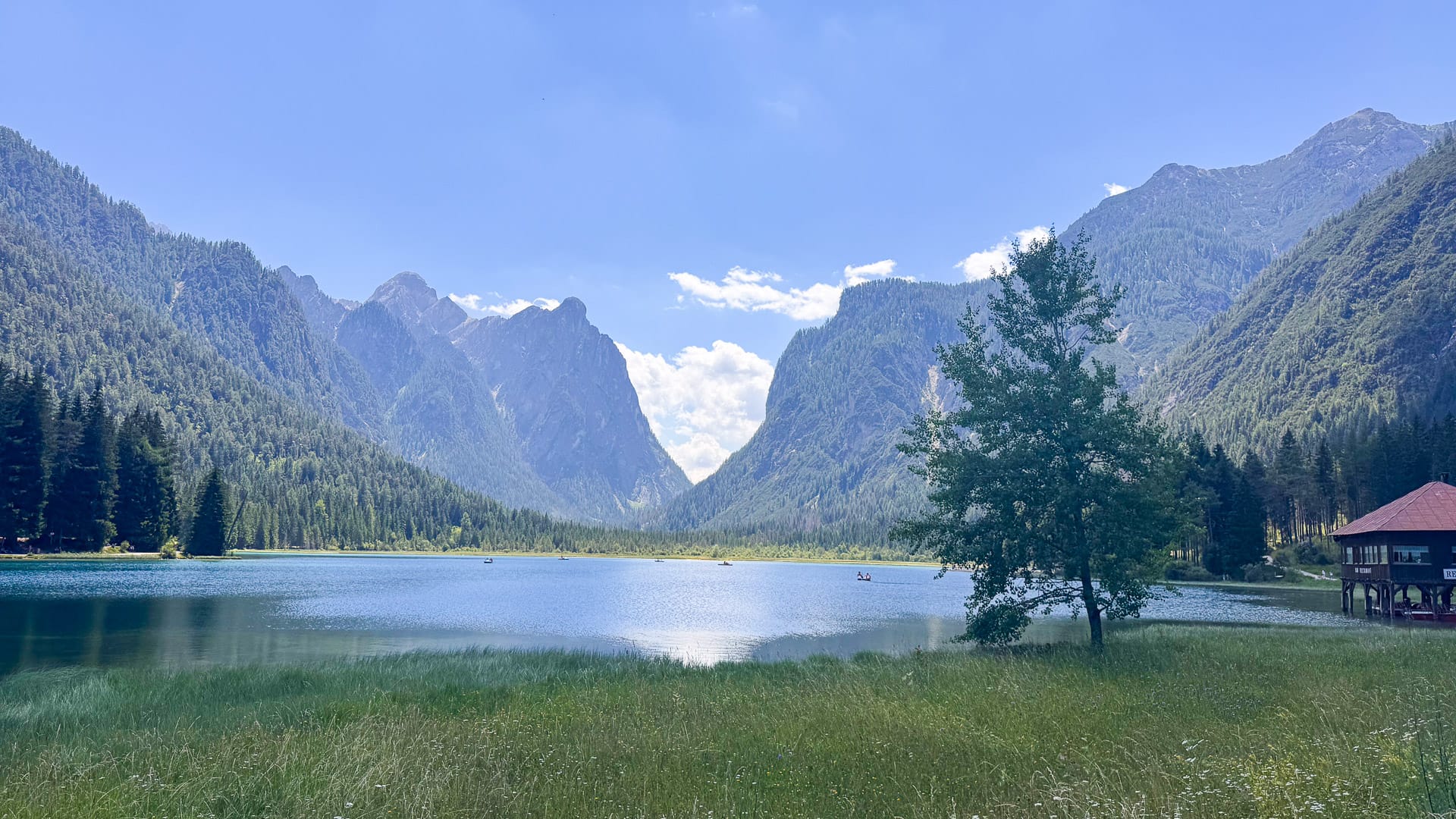
The beautiful Lago di Dobbiaco (photo credit: CyclingHero)
Sponsor Message
Want to ride the Dolomites with local support?
CyclingHero’s supported self-guided tours give you the flexibility to choose your route and ride at your own pace, backed by local route knowledge, live tracking and nearby on-road support. The team has run close to 30 Dolomites departures since 2022 and has a 5.0 average on WeTravel.
Explore CyclingHero’s Dolomites cycling tours to learn more.
Exclusive Dolomites offer
Get €100 discount (approx $110) on any Dolomites tour when you book directly with CyclingHero before 24 July 2027.
Got a question for CyclingHero?
Fill out this form and we will pass it to CyclingHero who aim to reply (within 24 hours wherever they can!)
Part 9: Cycling tours in the Dolomites with CyclingHero
CyclingHero has been running trips in the Dolomites in its current form since 2021, having organised informal training camps here before the pandemic. Bob says “Between summer 2022 and 2026, we’ve run close to 30 Dolomites departures – deliberately kept to a number where our team can personally support every day of every trip.”
You can read CyclingHero’s guest reviews on WeTravel.
Supported self-guided riding
CyclingHero’s cycling tours sit between a traditional guided tour and planning and supporting every ride independently. Riders choose from the available routes, decide when they want to leave and ride at their own pace, while the CyclingHero team remains nearby throughout the day.
Bob explains “You ride your preferred route at your own pace each day, while our support van stays nearby the whole time, tracking your progress live and only one message away if you have a mechanical, get caught in bad weather or need a lift home.
Our supported self-guided format means that you have the best of both worlds: flexibility to ride at your own pace, together with daily support and face-to-face interaction with our team to ensure your trip runs smoothly and you can take full advantage of our local knowledge and experience.”
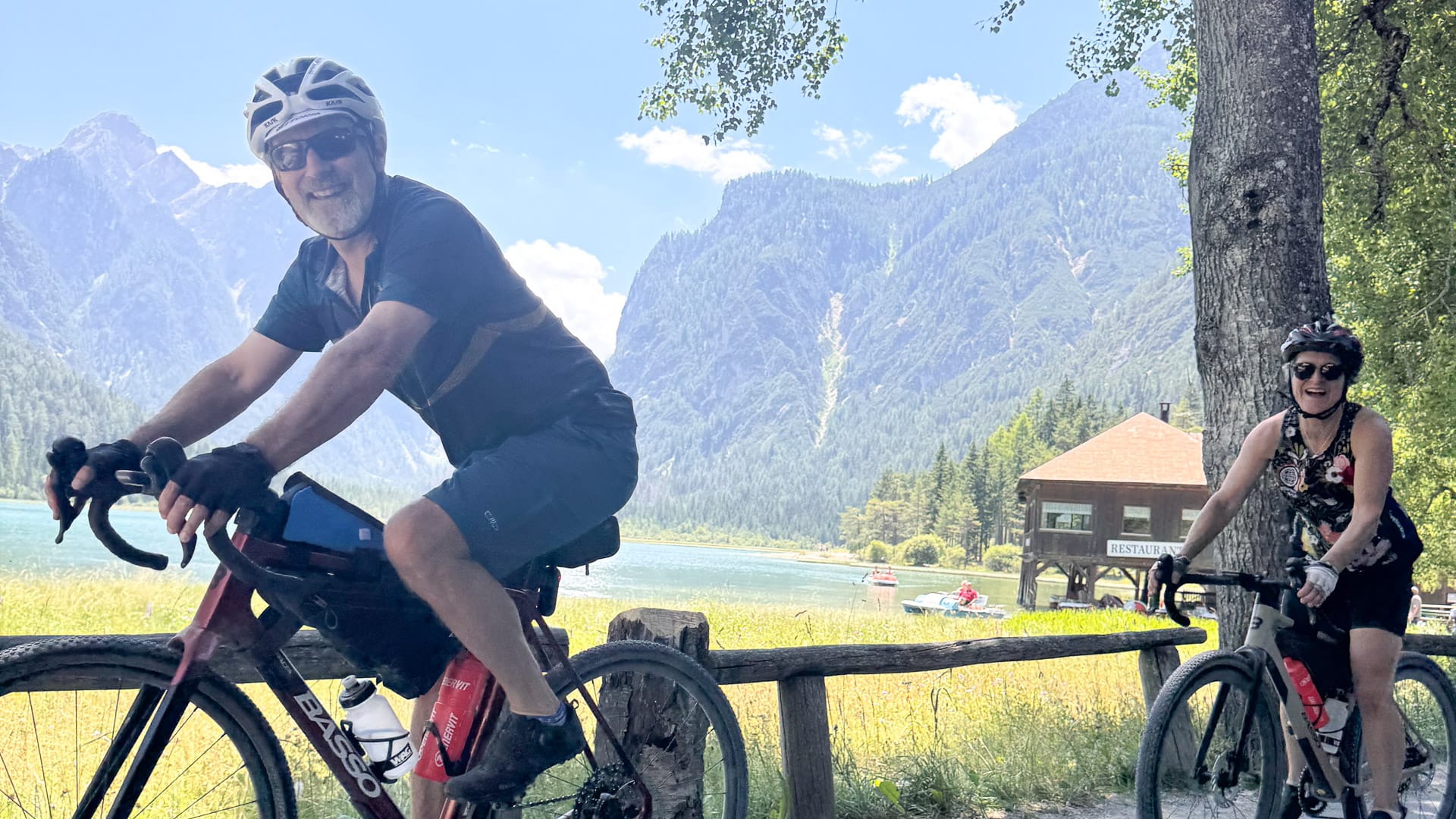
Gravel cycling near Lago di Dobbiaco (photo credit: CyclingHero)
How does this differ from a fully guided tour?
Ride at your own pace without a guide
Rather than riding as one guided group, you can choose your route from the CyclingHero Companion app, decide when you want to leave and ride at your own pace. The app contains GPX files, climb profiles, points of interest and ideas for things to see and do after your ride. The routes also include climb-by-climb notes written by CyclingHero’s local tour designer.
Support van is always on hand
Live group location sharing allows CyclingHero to follow riders’ progress and plan its support, while riders can also see where the support van is. Except on the Maratona gran fondo departure, CyclingHero supplies a Hammerhead bike computer with the available daily routes pre-loaded. Daily route briefings take place either in person or by instant message.
Orientation calls and support
Before booking, CyclingHero offers an orientation call to go through the trip and answer questions, followed by another call after booking to cover the details. During the trip, the team aims to meet riders at least once each day and remains nearby if a mechanical problem, poor weather or fatigue means a rider needs assistance or wants to shorten the route.
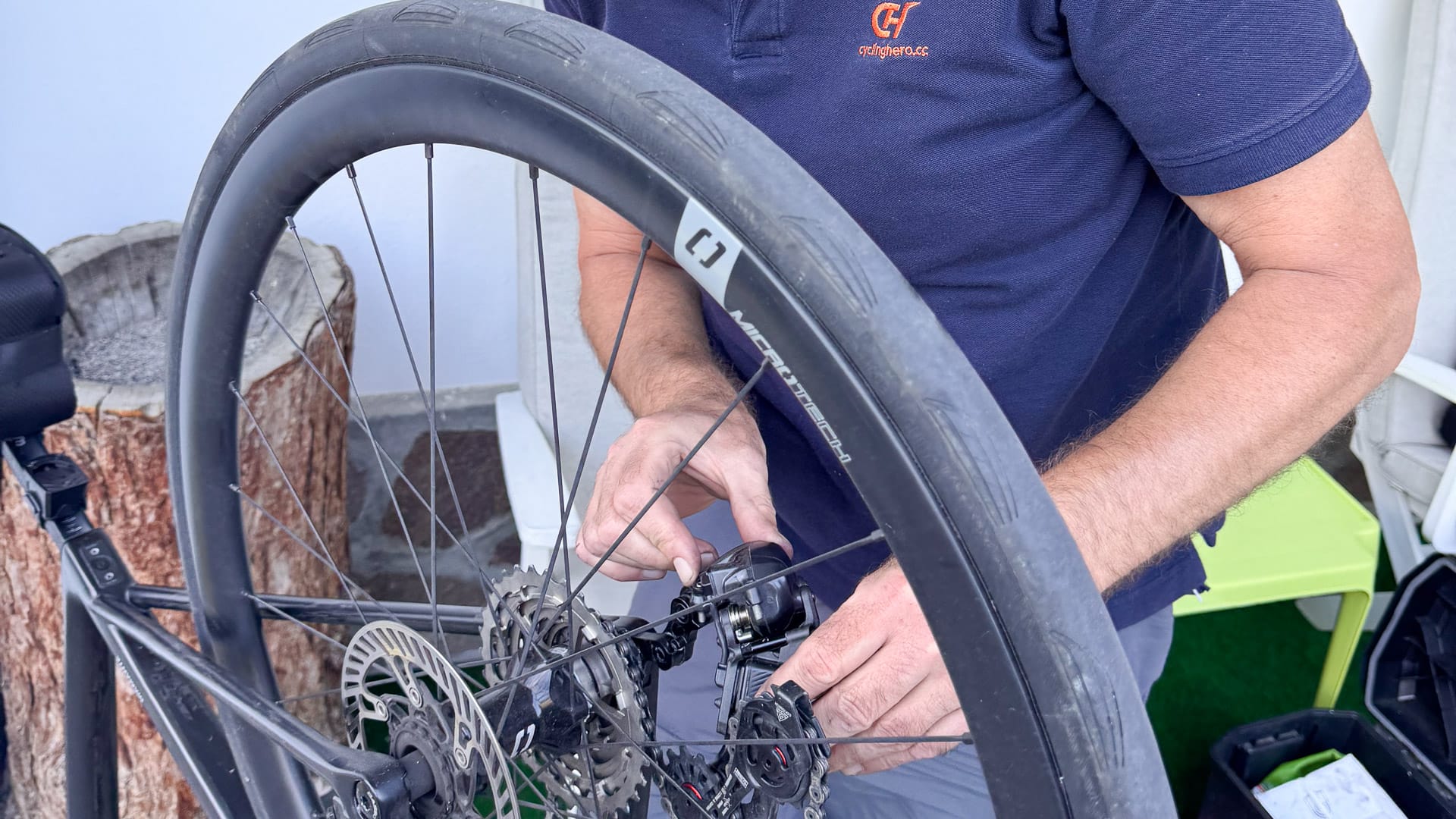
Mechanical assistance from the CyclingHero team in Cortina d’Ampezzo (photo credit: CyclingHero)
CyclingHero’s three bestselling Dolomites tours
Bob selected the following as CyclingHero’s three bestselling Dolomites tours to highlight in this guide.
From the Dolomites to the Stelvio
Key info
Duration: 6 days / 5 nights
Price: From €2,499, approximately $2,949 USD
Distance: Up to 468 kilometres, with shorter route options available on most days
Elevation: 4,950–11,552 metres
Main climbs: Passo Campolongo, Passo Giau, Passo Gardena, Passo Sella, Passo Pordoi, Passo Falzarego, Passo Valparola, Passo dello Stelvio, Passo Gavia and Passo Mortirolo
Pick-up/drop-off: Venice/Venice or Brescia
Overnights: Corvara ×2, Merano ×1, Bormio ×2
Difficulty: Challenging to very challenging
The tour links the Dolomites with the famous Stelvio region, giving riders the chance to tackle major passes across both areas in one journey. Bob says it is best suited to “strong, experienced climbers chasing bucket-list Alpine passes, including Giau, Stelvio, Gavia and Mortirolo.”
Visit CyclingHero’s website to learn more about the From the Dolomites to the Stelvio tour.
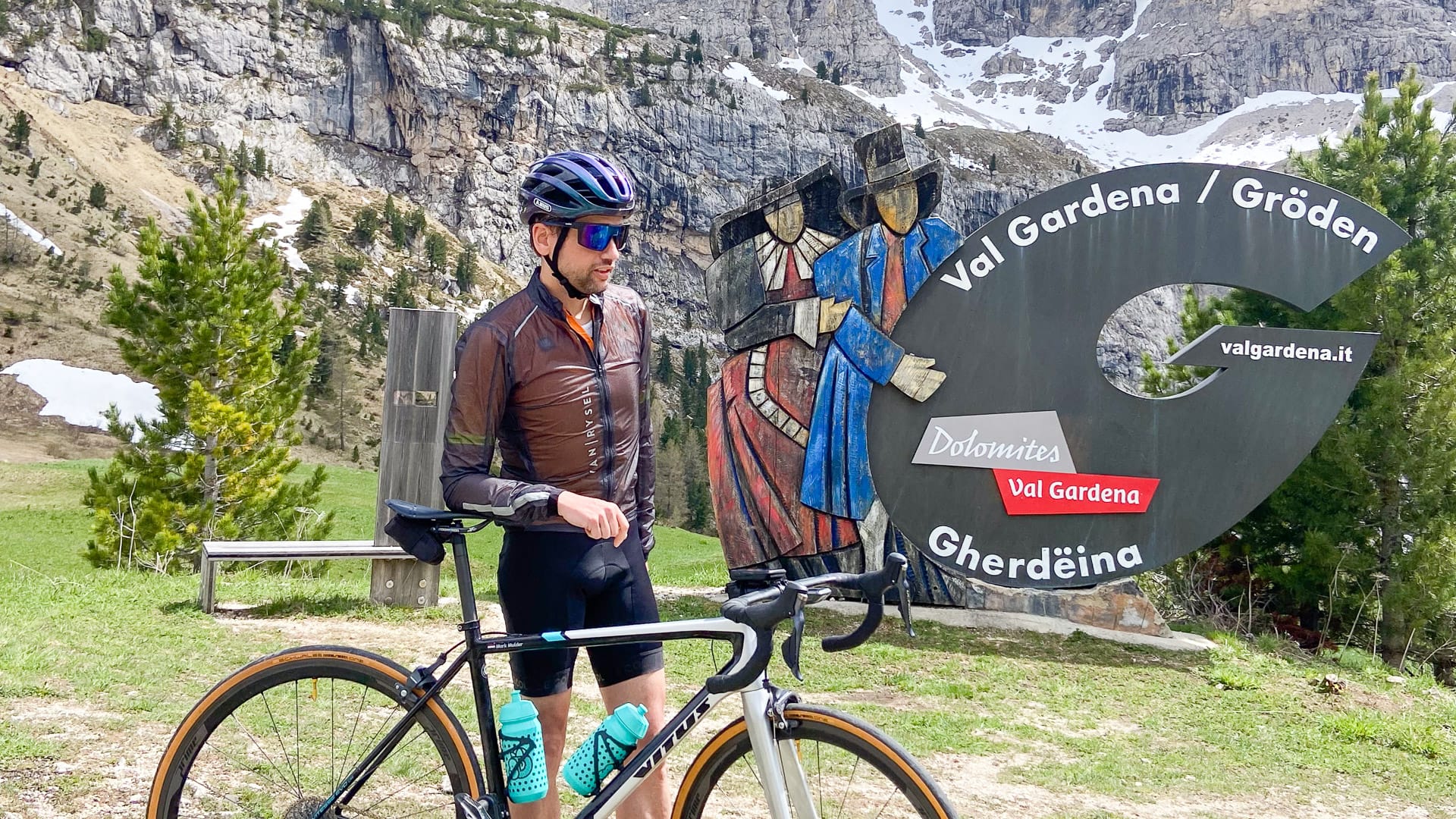
Cycling souvenir at Passo Gardena in the Dolomites (photo credit: CyclingHero)
Gravel and Glory: Dolomites
Key info
Duration: 7 days / 6 nights
Price: From €3,149, approximately $3,749 USD
Distance: 225–345 kilometres
Elevation: 3,902–8,251 metres
Terrain: Mostly gravel
Pick-up/drop-off: Venice/Venice
Overnights: Cortina ×2, Brunico/Bruneck ×2, Corvara ×2
Difficulty: Medium to challenging
This trip offers a different way to experience the Dolomites, focusing on gravel rather than the main road-climbing routes. Bob says it suits “those comfortable with riding on gravel who want Dolomites scenery via quieter, less-trafficked tracks rather than pure road-climbing volume.”
You can also browse CyclingHero’s gravel trips in the Dolomites by visiting their website.
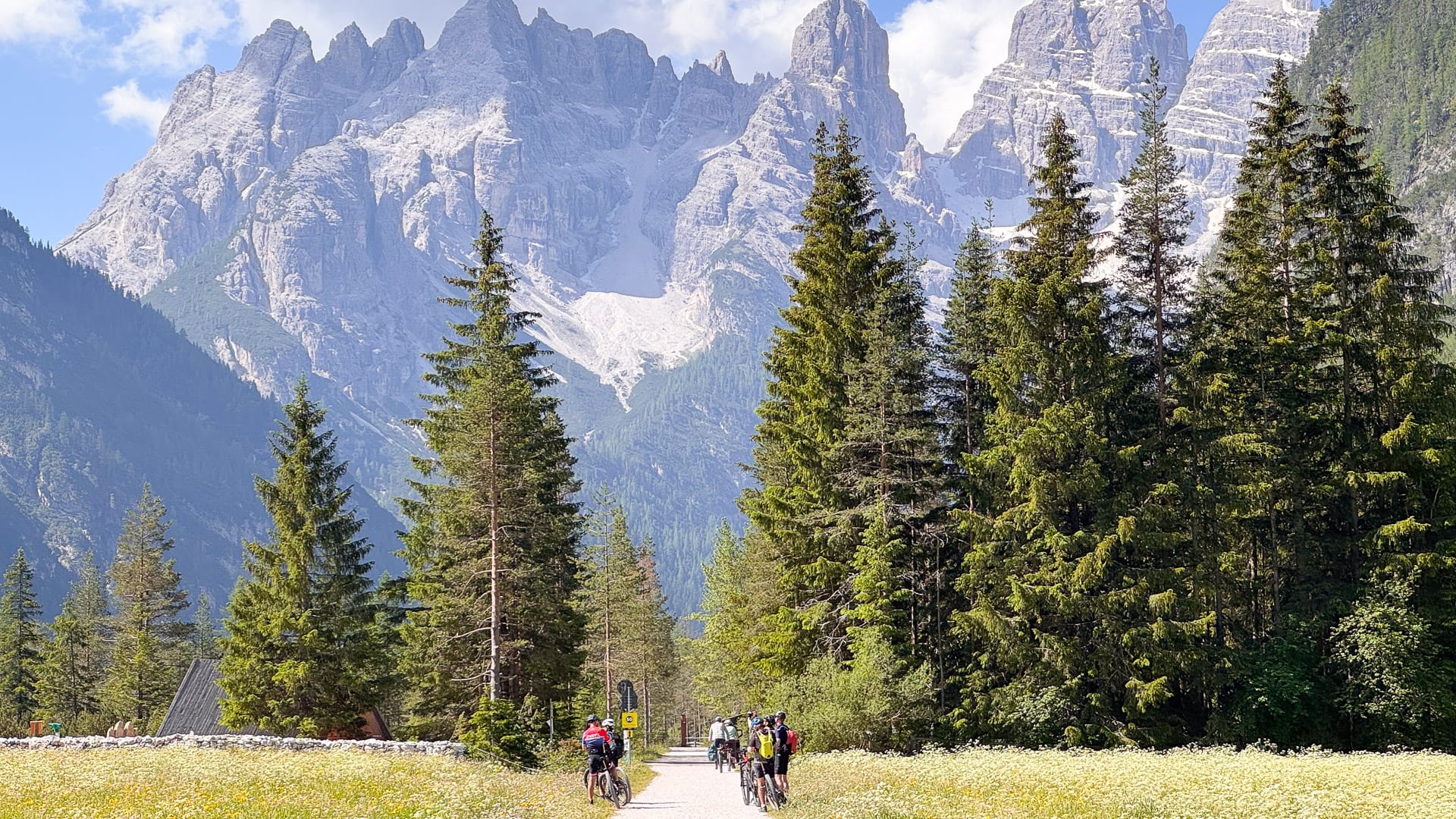
Gravel cycling near Cristallo and Cortina d’Ampezzo (photo credit: CyclingHero)
Dolomites Cycling Exploration
Key info
Duration: 7 days / 6 nights
Price: From €2,799, approximately $3,349 USD
Distance: 266–520 kilometres
Elevation: 5,270–12,420 metres
Main climbs: Passo San Boldo, Tre Cime di Lavaredo, Passo Fedaia, Passo Pordoi, Passo Gardena, Passo Sella, Passo Falzarego and Passo Giau
Pick-up/drop-off: Venice/Venice
Overnights: Soligo, in the Prosecco region, ×2; Cortina d’Ampezzo ×2; Corvara ×2
Difficulty: Challenging to very challenging
The itinerary begins with a gentler introduction in the Prosecco Hills before moving into the higher mountains of the Dolomites. Bob says it is designed for “riders wanting a broad variety of riding experiences; a gentler Prosecco Hills warm-up followed by the best riding available in the Dolomites.”
If you would prefer local route planning and on-trip support, take a look at CyclingHero’s cycling tours in the Dolomites on their website, including road and gravel options.
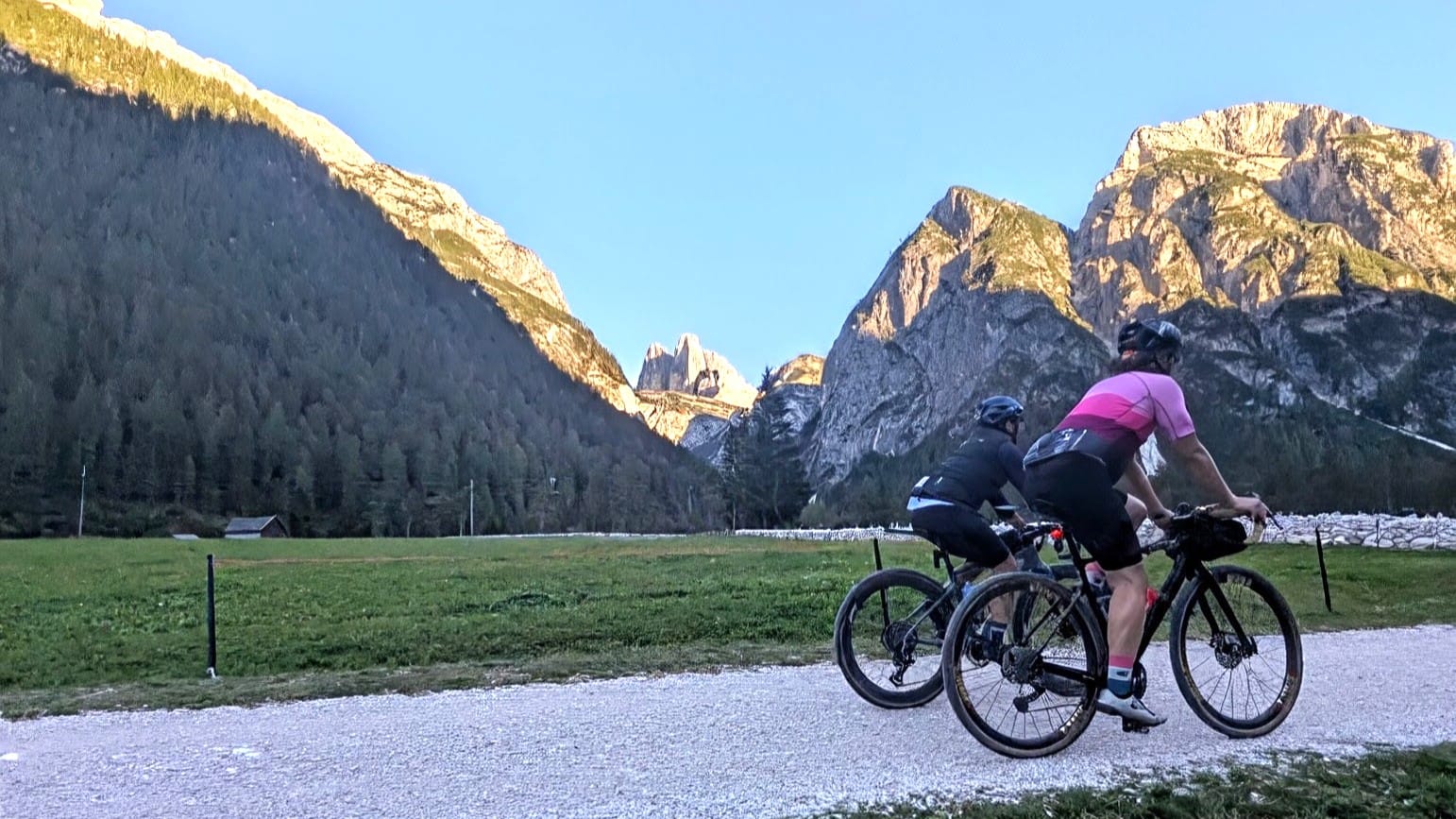
Cycling Tre Cime di Lavaredo (photo credit: CyclingHero)
Why trust CyclingHero with your Dolomites cycling tour?
Being an American company, but with Italian roots in the Dolomites, we understand what’s special about our region but also the kind of standards, questions and expectations that guests travelling from the States are looking for. We speak your language.
Our local experts’ knowledge of each region is built into everything we do. Every route comes with climb-by-climb notes written personally by the local expert who built it, so you get our judgment on timing, difficulty, and hidden gems at any moment of your trip.
Live group location sharing means you’re always connected to the team and your group, while at the same time having complete freedom to ride at your own pace. This format is not typical in Europe but we find it works really well – and our guest feedback confirms this! Read CyclingHero’s guest reviews here.
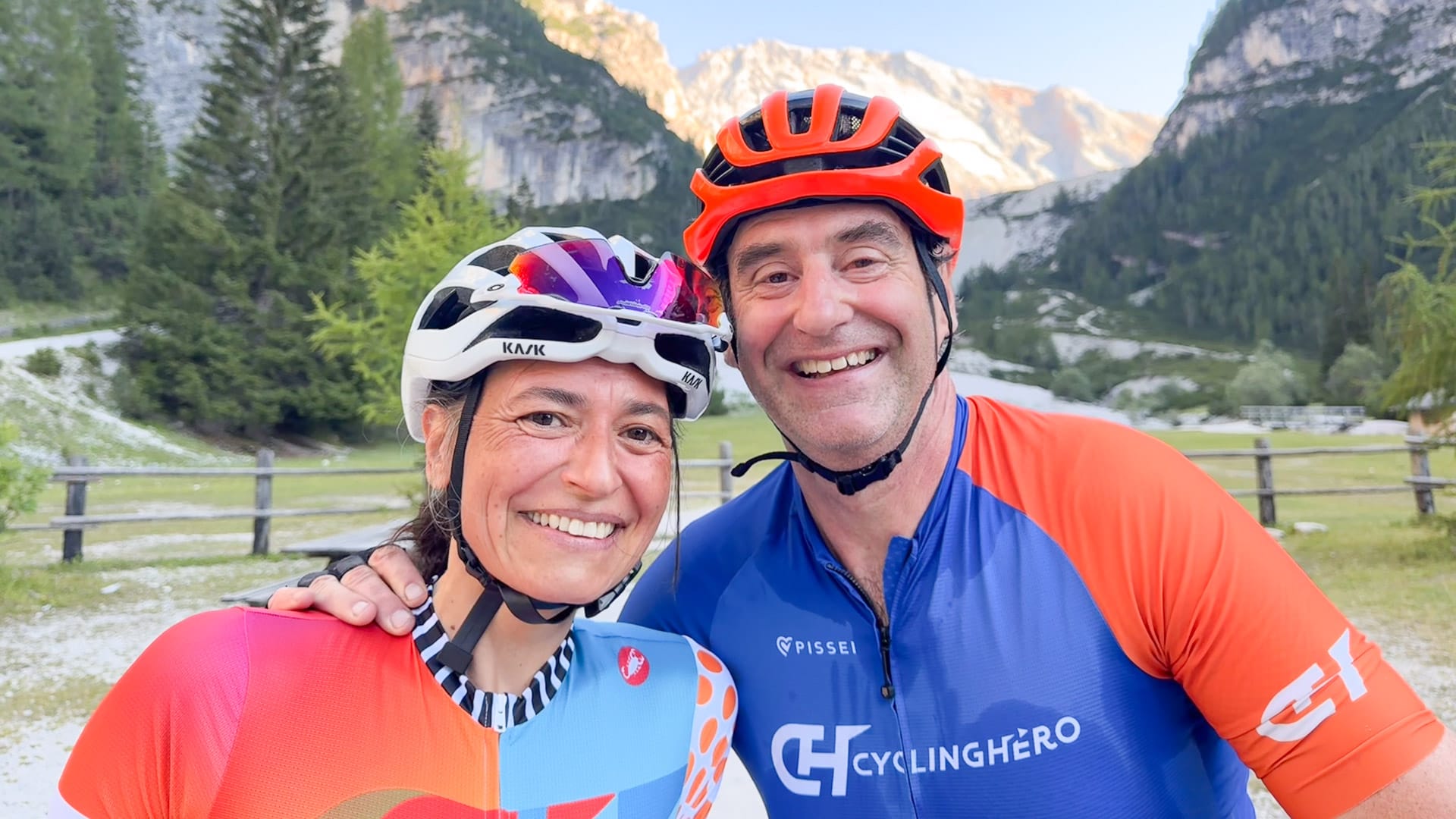
CyclingHero founders taking a photo in Fanes-Pederü in the Dolomites (photo credit: CyclingHero)
Where you can find out more about CyclingHero?
Inspired to ride the Dolomites yourself? Visit CyclingHero’s website to discover its supported road, gravel and event-based cycling tours.
Enjoyed our guide to cycling the Dolomites?
Thanks to Bob Rogers from CyclingHero for sharing his insights and practical tips for cycling in the Dolomites.
Looking for more Dolomites cycling inspiration? Don’t miss:
- Maratona dles Dolomites: route info, climbs + more for 2026!, if you feel tempted by this legendary event
- Cycling Northern Italy: how to plan a cycling holiday in Northern Italy, for the best bases and routes
- 4 best cycling routes in the Dolomites, for tips on bike shops, accommodation and more
- Cycling Stelvio Pass region, Italian Alps: your ultimate guide, for an alternative option that’s only a couple of hours away from the Dolomites.
Want to check out some different destinations?
How about…
- Cycling in the Alps: an overview of the best Alpine cycling destinations
- Cycling Slovenia, our hub page for the country
- Cycling Austria, for why you must include the country in your bucket list
- Cycling holidays in summer, for the best places to cycle during these months
- 3 of the best bike tours in Italy, for our pick of the best Italian cycling holidays
You can also search by the month you want to travel or cycling destination you want to visit, here.
We’d love to hear from you – comment below or drop us a line.
Got a question for CyclingHero?
Fill out this form and we will pass it to CyclingHero who aim to reply (within 24 hours wherever they can!)
Got a question for Clare?
Fill out this form and we will send it to Clare. We aim to get you an answer within 24 hours where possible!Clare Dewey is a cyclist with a passion for travel. She set up epicroadrides.com in 2018 to help make it easy for cyclists to explore the world by bike. Today her mission is still inspiring cyclists to discover new places on two wheels - and doing what she can to make sure they have the best possible time while they're there. Clare has visited 50+ destinations around the world, many of them by bike.
Want to connect with Clare? Find her over on LinkedIn.
First Published: 24 July 2026
This article includes details of products and/or services that we have used ourselves or which we would consider using. Some are paid features or include affiliate links or referral codes which we may earn commission from. As an Amazon Associate we earn from qualifying purchases. Please read our disclosure policy for further information.
The contents of this website are provided for general information purposes only. It is not intended to amount to advice and you should not rely on it. You should carry out your own due diligence and risk assessments and take professional advice. Views expressed by interviewees or other users of this website do not necessarily represent our views. We make no representations, warranties or guarantees, whether express or implied, that the content on our website is accurate, complete or up to date. If you use any information or content on this website, download from, or otherwise obtain content or services through our website, it is entirely at your own discretion and risk. Epic Road Rides Ltd disclaims all liability and responsibility arising from any reliance placed on the information and content on this website. Find out more here.
Sponsor Message
Want to ride the Dolomites with local support?
CyclingHero’s supported self-guided tours give you the flexibility to choose your route and ride at your own pace, backed by local route knowledge, live tracking and nearby on-road support. The team has run close to 30 Dolomites departures since 2022 and has a 5.0 average on WeTravel.
Explore CyclingHero’s Dolomites cycling tours to learn more.
Exclusive Dolomites offer
Get €100 discount (approx $110) on any Dolomites tour when you book directly with CyclingHero before 24 July 2027.
Got a question for CyclingHero?
Fill out this form and we will pass it to CyclingHero who aim to reply (within 24 hours wherever they can!)