
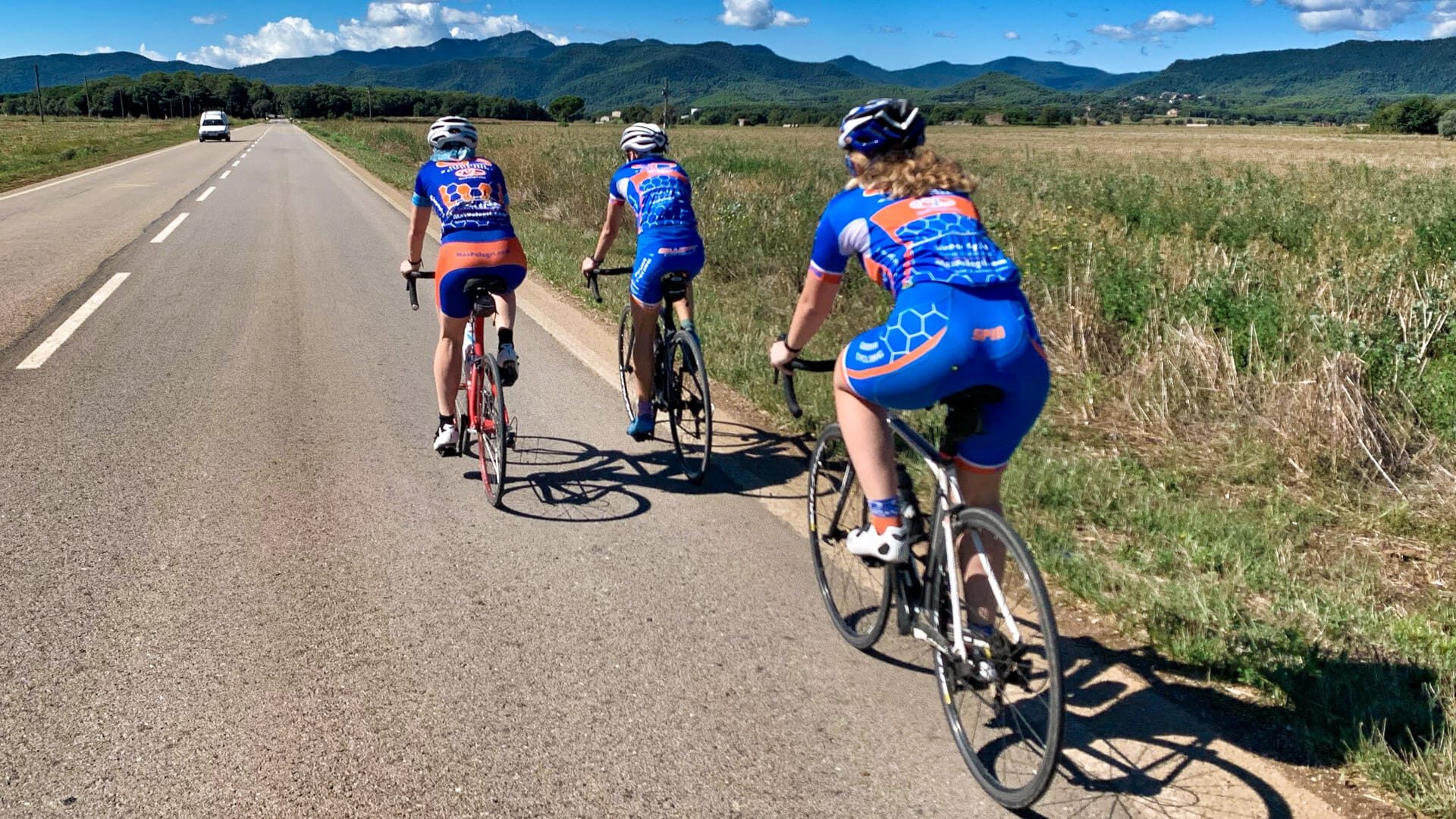

When you’re planning a cycling camp to do a block of training, sharpen your fitness and technique, or simply escape for a healthy two-wheeled adventure, choosing the right location is one of the most important decisions you’ll make. The roads you ride, the terrain you tackle, the climate you train in, and the environment you recover in all shape the quality of your time away.
But it’s not always easy to decide where to go.
In this article, we speak to Fiona Smart from Girona Cycling. Fiona and her husband Gareth have been running cycling camps from their base near Girona since 2006. They have hosted pro cycling teams, the British Triathlon and the Belgian National team – as well as countless indiviudals, groups and families.
Fiona takes us on a deep dive about cycling training camps in Spain – from the best places to train in, to whether to stay in a hotel or a specific training centre and what terrain to look for. She also shares:
- seven questions cyclists should ask to ensure they pick the training camp that’s right for them; and
- takes us on a behind the scenes tour of Girona Cycling’s training camps.
Girona Cycling S.L. is run by a husband and wife team, Fiona Smart Ph.D and Gareth Speechley.
They have each been involved in competitive sports for well over 40 years. Fiona is an expert on neurophysiology, as well as being a qualified sports massage and sports injury therapist and yoga instructor. She has a passion for yoga and sustainability. Gareth is a USA cycling qualified Expert Level Cycling Coach and International bike set up guru (Accredited by the International Bike Fitting Institute). He also has a thorough understanding of bike mechanics.
They formed Girona Cycling S.L. in 2005, as they wanted to support cyclists and live and work in a sustainable manner. They hosted their first clients in 2006. In 2008 they opened Hotel Mas Pelegri, their 3* Eco Hotel and training centre. They have been looking after everyone with all manner of cycling abilities, from top pros to cycling training camps for beginners, ever since. Everyone is welcome, including individuals, families, groups, cycling clubs and teams.
Fiona says “We are the Girona experts. When other training camp companies plan a camp in this area, they ask for our help and guidance. We also have supported young athletes making their way in the sport. We are here to help. This is a vocation not a job for us.”

We love to introduce our community to cycling businesses, destinations and ideas that we think are genuinely interesting. Girona Cycling caught our attention because of its focus on cycling in Girona, which felt like a natural fit for Epic Road Rides and our readers. We were therefore pleased to work with the Girona Cycling team on this article.
Girona Cycling paid for this advertisement feature. Our decision to collaborate reflects our view that the brand is relevant to our readers; it is not a formal approval, audit or guarantee of its services. Unless we expressly say otherwise, we have not personally taken the trip described or independently verified information supplied by Girona Cycling.
As with any travel purchase, please check the latest trip details, terms and customer protections directly with Girona Cycling before booking. Any booking is made with Girona Cycling, not Epic Road Rides.
To get a feel for what cycling training camps in Spain are like, take a look at this short video:
 There's a Youtube video here!
I'm fine with Youtube cookies
Find out about Girona Cycling’s hotel and cycling camps at Part 4 below or head straight to their website here.
Table of contents
The guide is jam-packed with tons of useful information. So, to help break it down, we’ve split this article into parts:
- Part 1: Where in Spain is best for a training camp?
- Part 2: What type of accommodation to pick?
- Part 3: How to find the best routes on your training camp
- Part 4: Girona Cycling training camps (at Hotel Mas Pelegrí)
- Part 5: Any other tips for cycling camps in Spain?
Part 1: Where in Spain is best for a training camp?
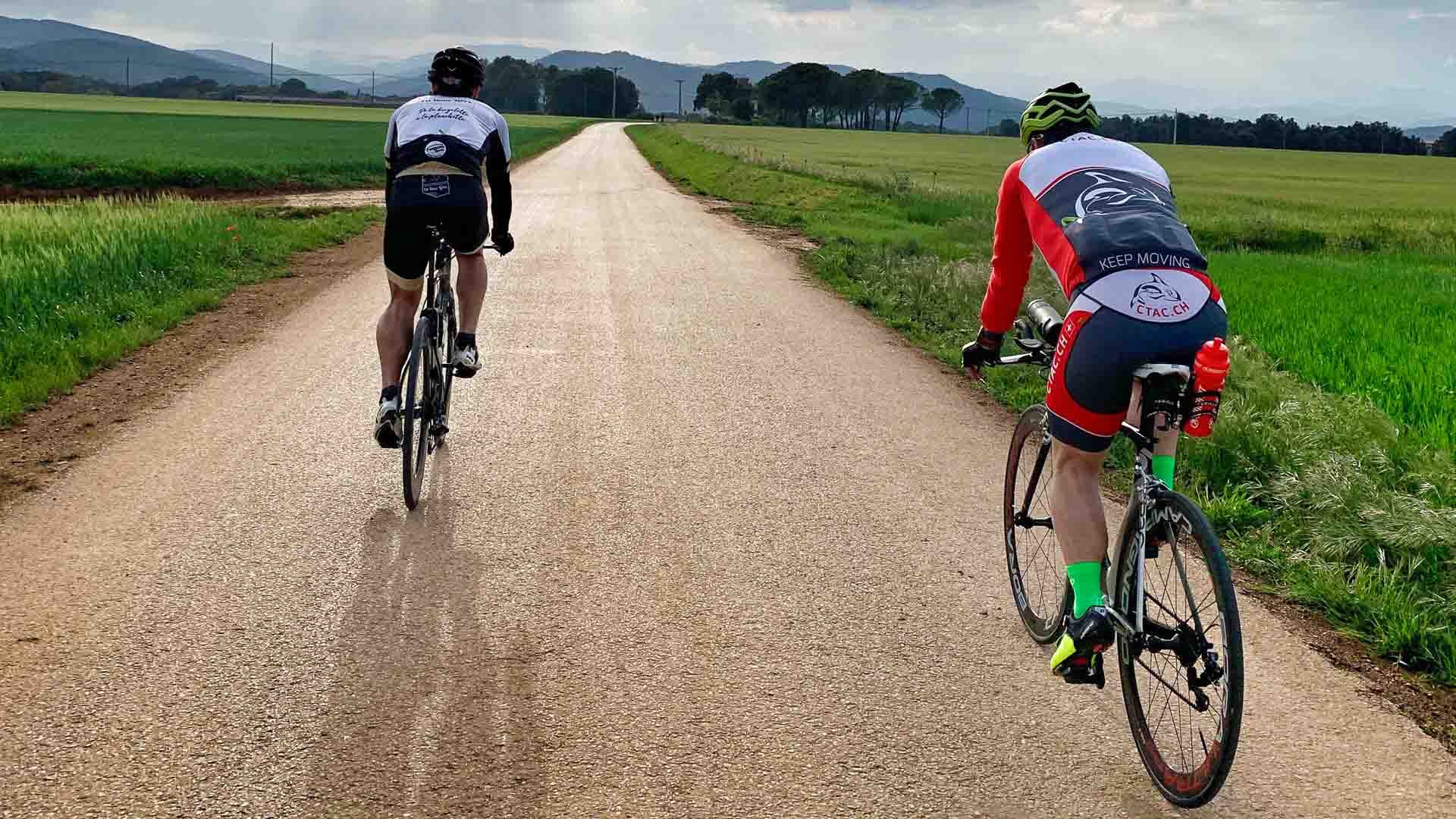
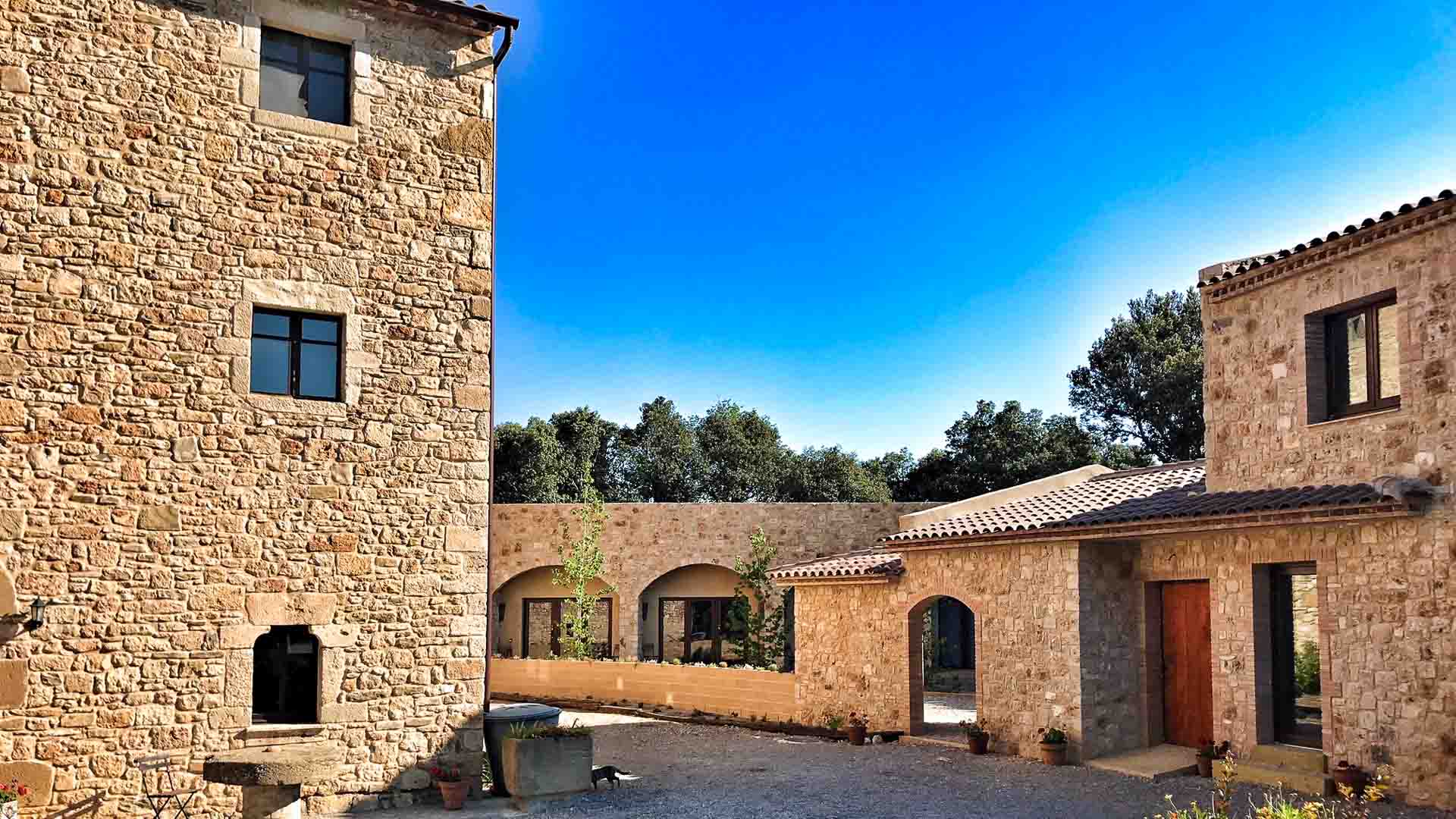
1. Why does location matter?
One of the most fundamental questions to answer when picking a cycling camp is where to go.
Even more than when you’re looking for a pure cycling holiday, location plays a crucial role in achieving the best training outcomes. The right destination allows you to ride consistently, recover well, and make the most of your time away.
You’ll want a location with reliable weather, easy access to a wide range of cycling routes, and good transport links so you’re not wasting valuable training time, or energy, on travel logistics. Just as importantly, it helps to choose a place where cyclists are genuinely welcomed by the local community, making every ride feel relaxed, safe, and enjoyable.
2. Why are cycle training camps in Spain a great choice?
Spain is the first choice for many pro team cycling camps for a number of reasons.
Variety of options
Spain offers cycle training camp options for all budgets, rider abilities and secondary interests. Whether your focus is structured training, relaxed riding, sustainability, or combining cycling with sightseeing and culture, there are options to match your goals and travel style.
Expertise
Spain is used to hosting cyclists and you’ll find pockets of expertise throughout the country. For example in Girona province, where we’re based, we’re used to hosting teams of pro cyclists from across the world. More on that below.
Easy access
There are frequent low-cost flights to get to Spain, with short flight times, as well as sustainable public transport options, including trains that are now required across the EU to accommodate bike boxes. Once in Spain, an extensive network of high-quality trains, buses, and motorways makes getting around straightforward and stress-free for cyclists.
Good road surfaces and driver etiquette
Many of Spain’s roads have been resurfaced in recent years, and the milder winters mean they suffer far less damage than roads in northern Europe. This makes training camps (and cycling holidays) in Spain a joy for cyclists.
Spain also has a strong cycling culture, supported by clear road laws that protect cyclists. Drivers are required to leave a minimum 1.5-metre gap when overtaking, and cyclists are legally allowed to ride two abreast. With many Spaniards cycling regularly, drivers are accustomed to sharing the road, creating a safer and more relaxed riding environment for cyclists of all abilities.
Spain welcomes tourists
Spain warmly welcomes cycling tourists. Tourism is a vital part of the Spanish economy, making travel easy and well supported for visitors. Cycling is also a national sport, and this is reflected in road laws designed to protect cyclists.
In recent years, some cities such as Barcelona and Girona experienced pressure on housing availability due to an increase in short-term tourist apartment licences in 2020 and 2021. Local councils have since taken action to reduce the number of tourist apartment licences, helping to return more housing to local residents while maintaining a sustainable and well-managed tourism sector.
Sustainable tourism is important to keep both the tourist and the local residents happy and excited to share this beautiful country.
Weather and culture
Spain offers good, healthy, fresh cuisine and good health care. You’ll also find good year-round training weather with dry sunny days even in the winter, especially in the Province of Girona. But watch out for the Tramuntana (Mistral in Southern France) winds if staying on the east coast of mainland Spain or Northern Mallorca in the Winter.
This is why we set up Girona Cycling 40 kilometres inland from the Costa Brava coast, with the protection of Mare de Déu del Mont mountain. The warm sunny weather makes pre-season training camps in Spain a very popular option.
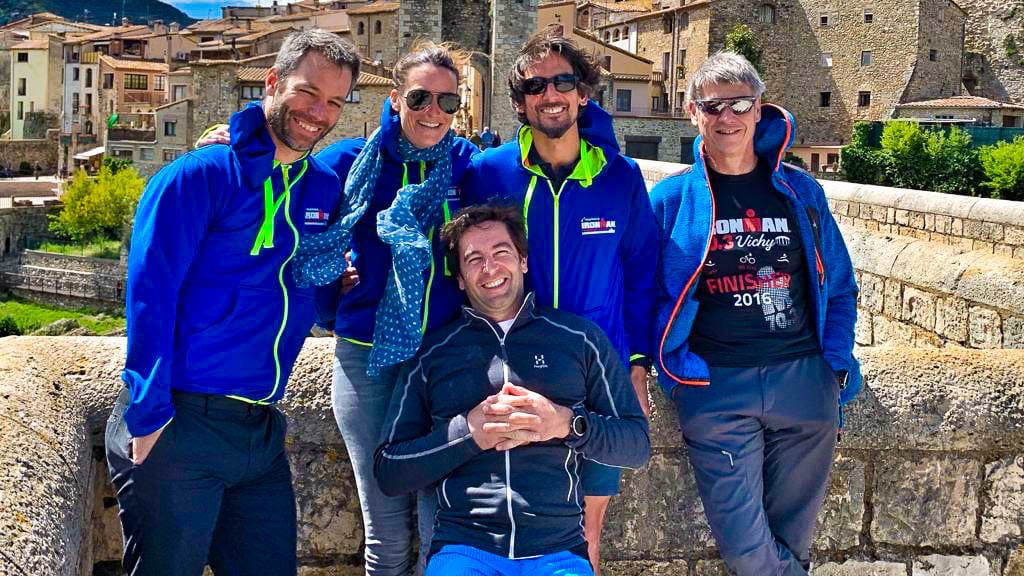
A group of travellers have come to the cycling camps in Spain (photo credit: Girona Cycling SL)
3. What are the best regions for cycling in Spain?
So if you’ve decided a road cycling training camp in Spain is for you, the next question is: which part of Spain?!
Canary Islands
The Canary Islands are a popular destination for winter cycling training camps, but it’s important to choose your location carefully, as these islands can be windy. Tenerife, home to Mount Teide, Spain’s highest peak, offers dramatic climbs, while Gran Canaria is favoured for its less touristy, protected interior and challenging climbs. For the best experience, avoid the major tourist hotspots and enjoy the quieter roads and scenic landscapes that make these islands a top winter cycling destination.
Majorca, Balearic Islands
Majorca offers a wide range of accommodation and stunning Mediterranean views on many rides. The weather is usually good between April and October. Majorca is also a tourist hotspot with many beaches, so cyclists should be aware that roads can be busy during peak holiday periods.
Costa Blanca, including towns like Denia and Calpe
The Costa Blanca is a great winter cycling destination, offering affordable accommodation, mild weather, and hilly, quieter inland routes. It’s particularly popular for road cycling from December to March (Calpe is popular with pros, Denia is more authentic and quieter). Cyclists should be aware that coastal roads and tourist hotspots can be busy during the main tourist season from April through September.
Andalucia, including Malaga and the Sierra Nevada
Come for the punishing climbing on the Sierra Nevada. You’ll find mild winters if you’re by the coast, for instance in Malaga, but snow in the mountains. You can find remote cycling away from the popular tourist resorts.
Province of Girona
The pros live here year-round to benefit from mild dry winters (drier than further south, though you’ll find snow on the high Pyrenees in winter). They’re also attracted by the fact the region offers the easiest access to the rest of Europe and a huge variety of terrain. It’s less touristy than some of the areas mentioned above, which means less traffic and quiet roads (except in the city of Girona). There’s also award-winning cuisine. High altitude training camps are also possible during the summer in Puigcerda/Font Romeu/Andorra.
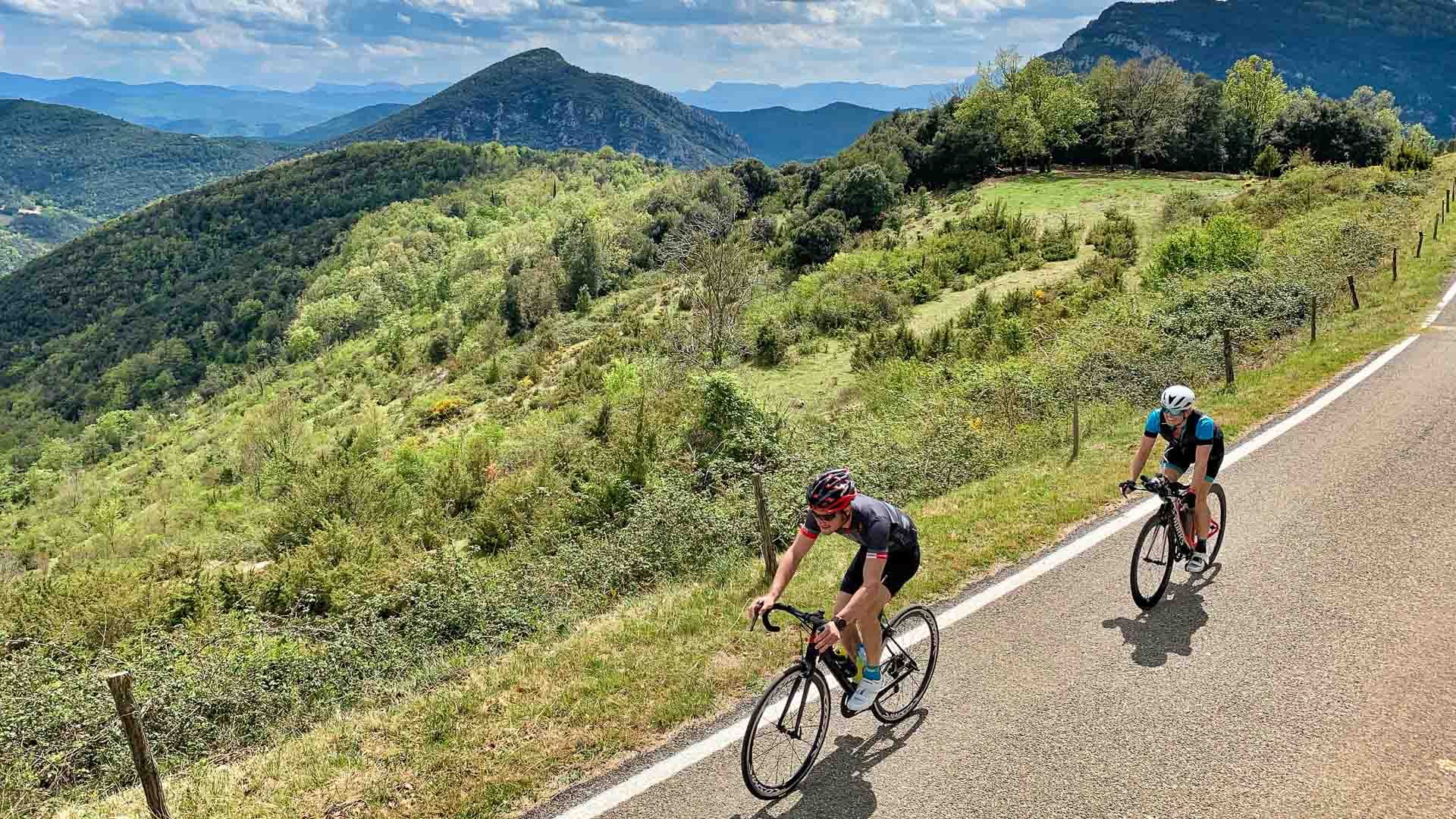
Oix (photo credit: Girona Cycling SL)
4. Please share more on Girona province
So why did we pick Girona for our cycling training base? And why do the pro teams head to Girona province to live and for their bike training camps?
Weather
The province of Girona enjoys a true year-round cycling season, making it one of Europe’s most reliable training bases. Thanks to its position next to the Mediterranean and with the Pyrenees to the North, the region benefits from a uniquely balanced microclimate that keeps conditions consistently rideable throughout the year.
In the winter unlike parts of Italy and Greece, Girona does not typically receive harsh easterly cold fronts. The Mediterranean moderate’s temperatures, while the Pyrenees act as a natural barrier, shielding the majority of the province from the Tramuntana northerly blasts. The prevailing westerly systems tend to lose much of their moisture after crossing Spain and the Pyrenees, meaning rainfall is relatively low. Even in the depths of winter, you’ll regularly find dry, sunny days.
In the height of summer, the Mediterranean and the Pyrenees once again play a defining role in shaping the riding conditions in Girona. While inland Spain can experience extreme heat, the Province of Girona benefits from the sea’s moderating influence. As the day warms, afternoon breezes roll in off the Mediterranean and swirl creating natural evening cooling from the high Pyrenees. This daily thermal rhythm keeps temperatures from lingering at their peak and helps reset conditions ahead of the following morning.
Summer night-time lows typically settle around 18–20°C, allowing for comfortable sleep and proper recovery – a crucial but often overlooked component of a successful training camp. Quality rest means you can absorb the workload rather than simply accumulate fatigue. The result is beautifully fresh early-morning rides, even in the height of summer, making warm-weather training not only possible but deeply enjoyable – followed, of course, by a well-earned, relaxed recovery in or by the pool post-ride.
Terrain
You’ll find all types here: from the high mountains of the Pyrenees descending to the Cap de Creus on the coast, to the foothills over to Ripoll with Mare de Déu del Mont in the middle. There are steep short climbs in the volcanoes or up onto the Collascabra Escarpment past Olot. There’s quiet, beautiful rolling countryside around where we’re based near Lake Banyoles (more on that below). There are flatter coastal route options in Alt Emporda or hillier coastal cycle routes of the Baix Emporda from Begur going South to Tossa De Mar in La Selva.
Transport links
There are high speed train links from Girona to all over Europe. For example, Paris is just 5 hours by train.
There are also airports at Barcelona, Girona and Perpignan and great motorway access from France and all over Spain.
This all makes Girona easy and less stressful to get to than a cycling training camp in the Balearics or Canary Islands.
Good access to cycling services year around
Because Girona province is so popular with cyclists, it offers year-round a huge range of options for bike shops, bike hire, mechanics, coaches, sports injury treatments and other facilities required for a good cycling camp.
Cuisine
Finally, you’ll find fresh, natural, varied produce, which makes for great and healthy cuisine.
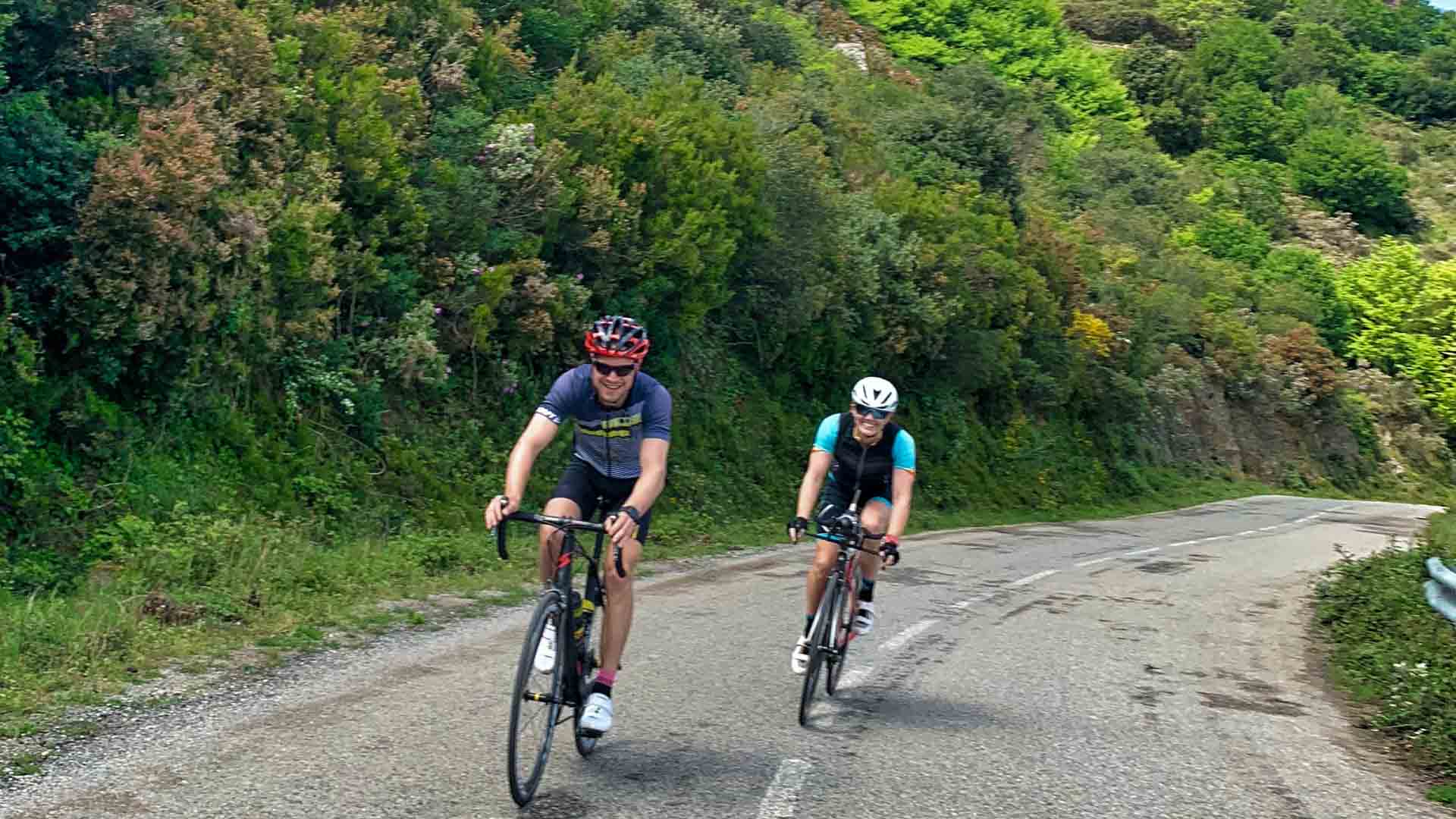
St Pere de Rodes (photo credit: Girona Cycling SL)
5. Where to go in Girona province?
The exact location for your road cycling camp depends on your goals and where you are in your racing or sportive build-up. If you want access to every type of ride, choosing a central base within Girona province is ideal. From one location you can reach: long climbs and mountain routes, rolling, quiet inland roads, as well as flatter rides towards the coast.
For example, we’re based more centrally in the Pla de l’Estany region, near Lake Banyoles. This is 25 kilometres north of the city of Girona, giving you flexible access to all the best riding Girona has to offer.
More on why this area is so great below!
Sponsor Message
Got a question for Fiona and Gareth from Girona Cycling?
Fill out this form and we will pass it to Girona Cycling who aim to reply (within 24 hours wherever they can!)
Part 2: What type of accommodation to pick?
Wherever you decide to go, whether it’s Spain or elsewhere, the tips below will help you decide what kind of accommodation to book: whether to go for a cycling-friendly hotel, a training provider that sets up shop in a “normal” hotel or enjoy a self-guided training camp in a dedicated training centre, hotel or tourist apartment.
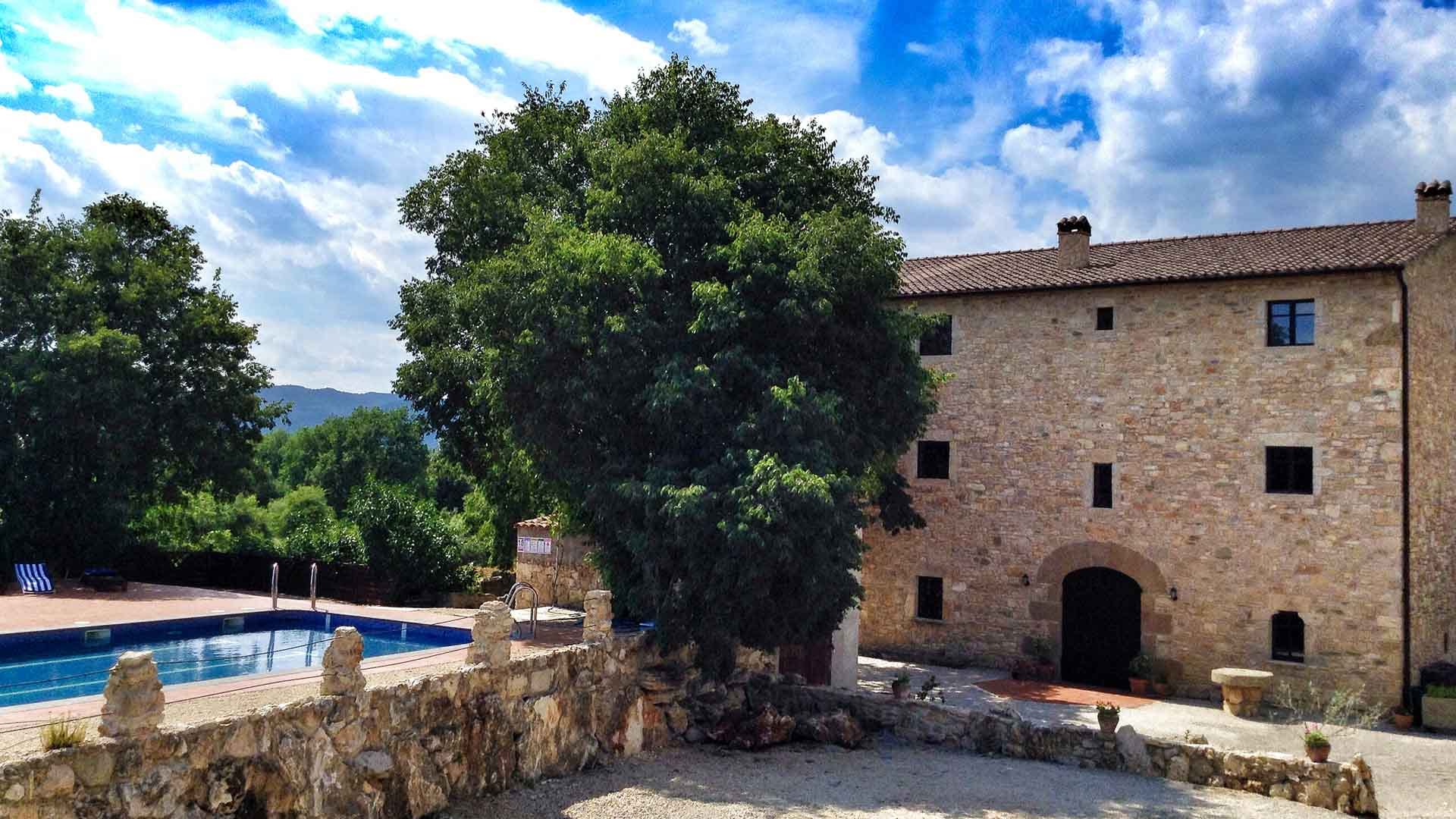
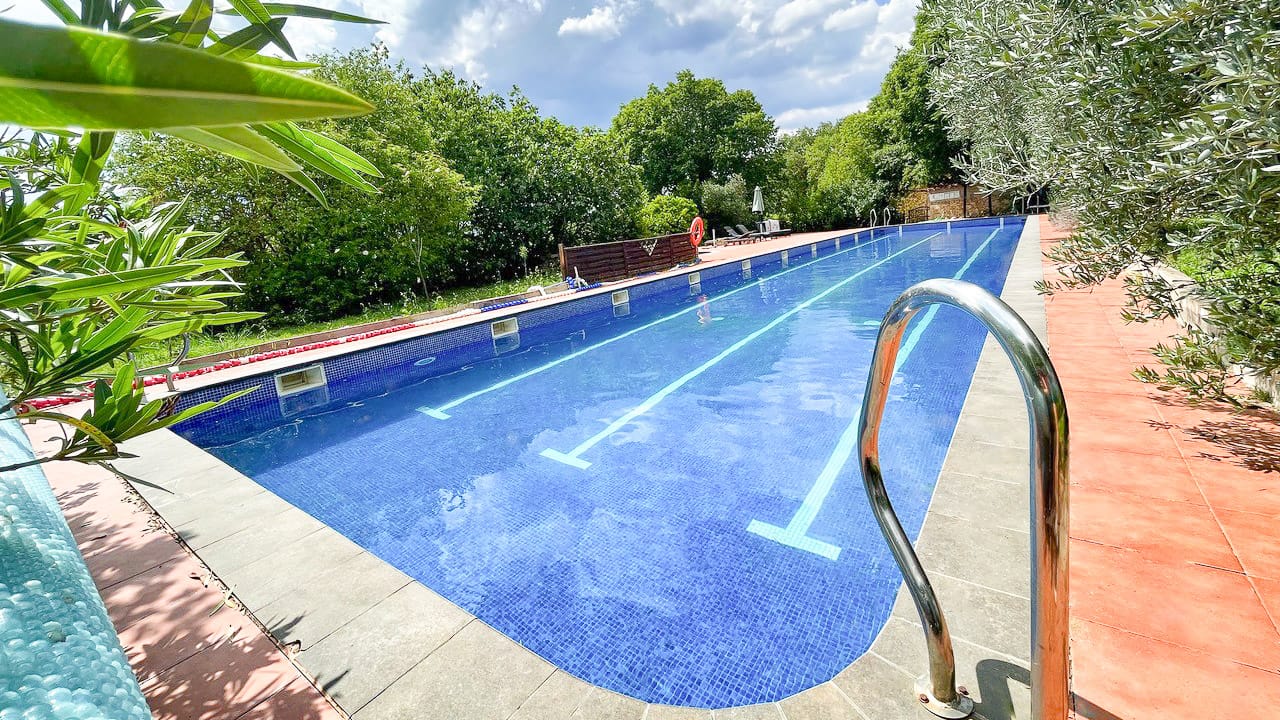
Our hotel (Mas Pelegri) and pool (photo credit: Girona Cycling SL)
6. Cycling hotel v cycling camps
Once you’ve decided where to go, the next question is what kind of camp to book: hotel or rented house/apartment or specific cycling training camp?
What’s the difference between what they offer?
Cycling hotel
A cycling hotel should offer secure indoor bike storage, track pump, tools, mechanic, cycling kit and bike and bottle washing, healthy complete breakfast and evening dinner – as well as access to bike routes, sports masseur and emergency backup while cycling. As Girona Cycling, we offer all of this from the hotel we run (Hotel Mas Pelegrí) – but not every cycling hotel does. Check before you book!
Due to the fact cycling is so popular here in the province of Girona, you’ll find many hotels will have a bike room/store for your precious road bike (though some will just use a meeting room as a store when required). Hotels here will also usually put on a more complete breakfast and may allow an earlier breakfast or supper time such as 8am rather than starting breakfast at 9am.
However, there are some hotels that will not allow bikes, will not change mealtimes or food on offer, so always confirm the details you require before you book a hotel.
Rental house or apartment
Renting a house or apartment will allow you flexible meal times, and can be cheaper for a group cycling trip. There are quite a few of these run as specialist cycling rentals and you can arrange for a private chef. They may also have bike tools and route information.
But beware that in Spain, owners need a license to offer a tourist rental and some properties do not have good access.
My tip is to always ask questions: an apartment on the 5th floor without a lift or a damp house 5 kilometres along a rutted dirt road are possible tourist rentals that are not going to be good options for a road cyclist.
Cycling training camp
A dedicated cycling training camp can either be achieved by staying at a specialist cycling centre/hotel or joining a camp at a non-specialist centre that’s organised on specific dates by a cycling company which brings all the extra help you need for the training camp.
Emergency back up and help with routes is key when on a self-guided camp and this is possible at a specialist cycling training centre/hotel. Not surprisingly, this is something we offer our guests (details here)!
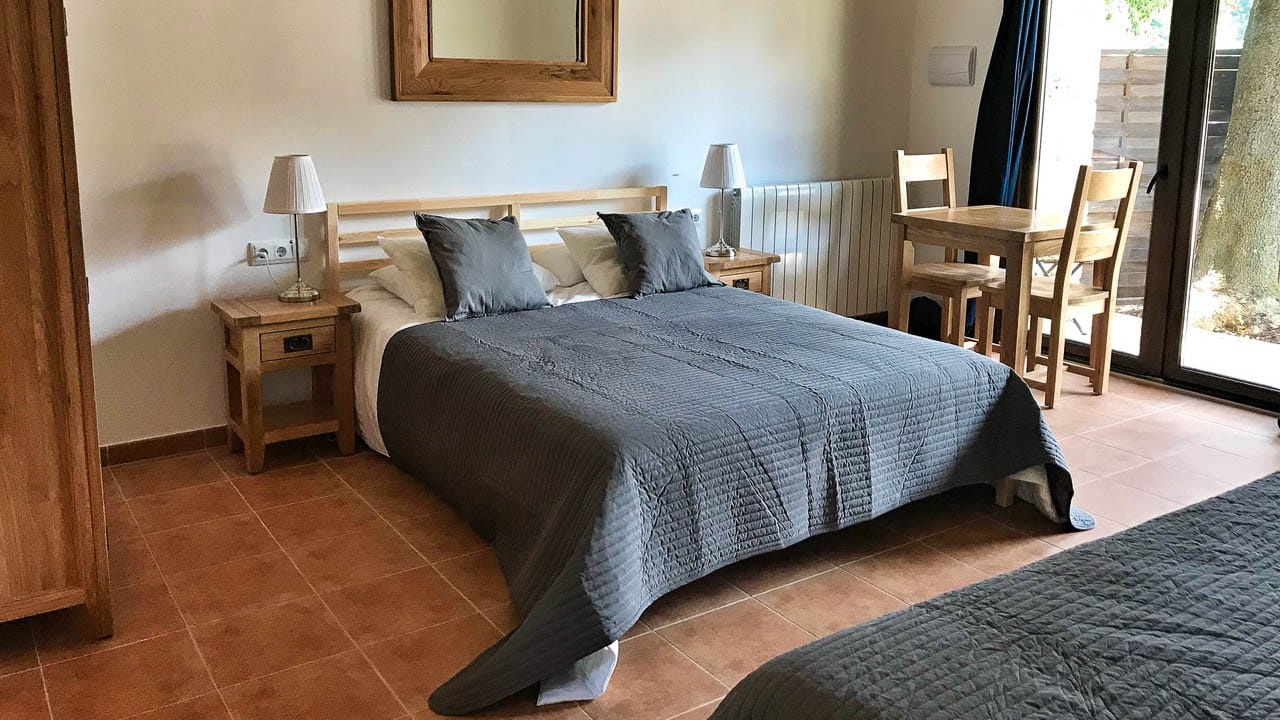
One of the suites in our hotel (photo credit: Girona Cycling SL)
7. Questions before booking a cycling hotel or cycling training camp
I’d recommend you always consider and get answers on the questions below before booking a cycling camp. I’ve answered these for our Girona Cycling camp below!
1. What’s your location (and does it work for your training)?
Inland or coastal?
The exact location that you stay in any area defines your possible routes with respect to the distance of your rides. For example, staying on the coast limits your ride direction by 180˚; you can’t ride in the sea.
You get more routes from a location where you can ride in every direction: think of somewhere that is based at the centre of a star. Another analogy is a base that’s at the centre of a flower, with routes coming out like petals of a flower.
City or country?
Are they located in a city or the countryside? Staying in a city means you will always have a slow start and finish to your ride, with busy streets and traffic lights. Plus, there may well be more pollution, affecting your lungs.
Terrain?
Does the terrain match your training requirements? Your training plan dictates the terrain required – for example do you need long hill climbs or rolling routes?
If you need to train on long mountain climbs and it is a 60 kilometres ride from your training camp to the start of the climb, you are not going to be doing your planned training.
Variety?
Is there a variety of routes? More variety stimulates you, as a new route each day helps you get out there and ride. A positive, happy mind gives you motivation.
Do they offer GPS files for Strava, Komoot, RdewithGPS, Wikiloc? Are there real maps for those that like that kind of thing?!
Coaches?
Are there coaches to help you plan your ride routes to fit your training plan?
2. Will I get good sleep and relaxation?
When choosing a cycling training camp, it’s important to look closely at the accommodation details. For example, are all rooms en-suite? Is the property located near busy or noisy roads? Will there be non-cyclist guests who may stay up late and disturb your rest? What is the quality of the mattresses and overall sleeping environment like?
Recovery is just as important as training, so make sure the cycling camp is in a quiet location where you can enjoy uninterrupted sleep and get the best possible rest between sessions.
More information about sleep and relaxation at Girona Cycling, here.
3. What facilities do you have? Are they at an additional cost?
Are coaching, sports massage, injury therapy and a bike fitting available?
Is there any emergency support available if you have a problem out training?
Is there a gym for stretching and rollering or even yoga for the cyclist offered every morning?
Is there a pool and/or sauna for post ride recovery and relaxation?
Are guides/group rides available? If so, what level of fitness is required? Are there daily rides? At what ride levels?
When are meals served and what are they? You’ll want good healthy food available when you need it, large breakfasts, three course evening dinners and perhaps picnic lunches. Also availability of bottled or drinking water is really important.
Where are bikes stored? Is it secure?
What tools are available? Are there charging points for Di2?
Is there an on-site mechanic? Can you buy spare inner tubes and simple spares? Bike shops may only be open normal hours and not on Sundays all day or Monday mornings and you want to be out riding not waiting for them to open.
What if your bike arrives damaged? Are there extra bikes available for rental if your bike arrives damaged? If your bike is damaged, will they help with getting it fixed?
More information about facilities at Girona Cycling, here.
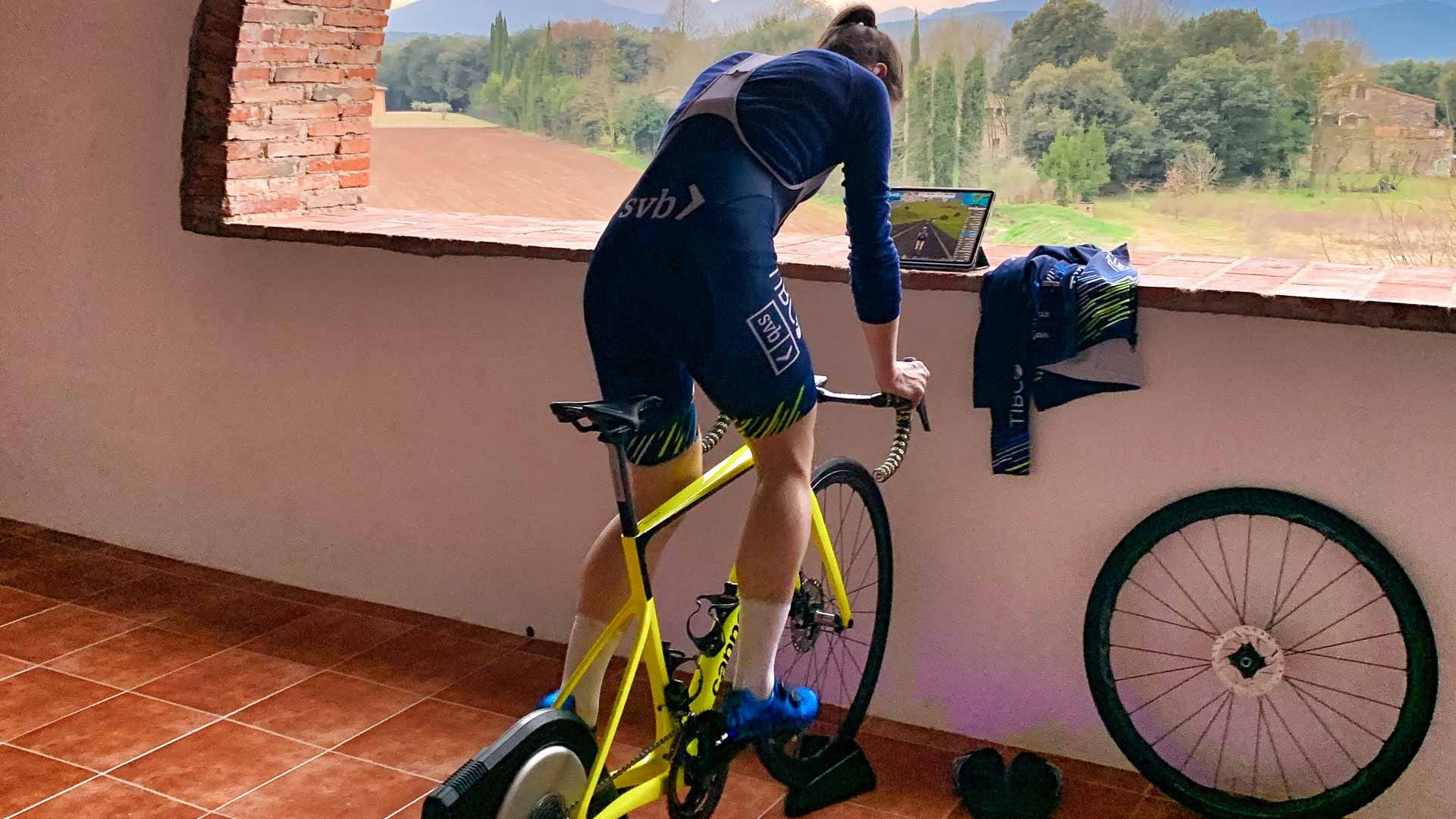
Tanja Erath training with us (photo credit: Girona Cycling SL
4. What is the best time to come?
Ideally, you’ll want your camp to coincide with reliable cycling weather.
The best approach is to ask your training centre or hotel directly what conditions are typically like at that time of year. Online weather averages can be misleading – they’re often recorded some distance from where you’ll actually be staying, and local geography can significantly affect conditions.
Also, many weather apps simply show whether it may rain at some point in a 24-hour period. That could mean a short evening thunderstorm rather than all-day rain – something that makes a big difference when planning your rides. Speaking to people on the ground will always give you a clearer, more practical picture of what to expect.
More information about the best time of year to visit us at Girona Cycling, here.
5. What is the food like?
You’ll probably be looking for fresh, healthy cuisine. Buffets tend to be cheap but are more likely to be poor quality, reheated food with more chances of food poisoning to ruin your training camp.
Also is your trip combined as a holiday with food, drink and culture or is the main focus the cycling? Does this match with what you are looking for?
More information about the food at Girona Cycling, here.
6. What are your cancellation policies?
We always suggest taking out a good travel insurance policy. Most travel insurance policies cover cancellation. Check your travel insurance policy and what the cycling camp provider’s policy is if you’re not able to travel due to an illness or an emergency.
Spain requires liability road cycling insurance when cycling on the road. You can usually get that insurance from your national federation if your travel insurance does not include it.
More information about cancellation policies at Girona Cycling, here.
7. How do you get to the cycling hotel/camp?
It’s important to know whether you’ll need to hire a car before you book, as this will add to the cost of your trip. Are there public transport or transfer options that can cope with your bike box, these are good to know about.
More information about getting to Girona Cycling, here.
Sponsor Message
Got a question for Fiona and Gareth from Girona Cycling?
Fill out this form and we will pass it to Girona Cycling who aim to reply (within 24 hours wherever they can!)
Part 3: How to find the best routes on your training camp?
8. Why is terrain important?
Check out our comments on the importance of choosing the right terrain to match your training, above.
However, it’s worth repeating that coastal areas can be limiting because you have less directions you can head out in.
Finding somewhere with a great variety of terrain is ideal, including flat, rolling, short climbs and long climbs.
That’s the beauty of our location in Girona province.
9. Why is the road network important?
The quality of the roads is really important to a great riding experience, whether you’re on a camp or cycling holiday. We cyclists are all looking for that perfect combination of silky smooth surfaces, low traffic and beautiful vistas!
It’s also important to have enough roads; in some parts of the world, particularly islands, you can find yourself having to plough up and down the same roads time and again, which can get repetitive and boring. Fortunately that’s rarely a problem in mainland Spain where there are loads of sparsely populated small towns and villages, which means a good system of quiet roads.
The question is then – which are the best roads to ride. Which leads us on to…
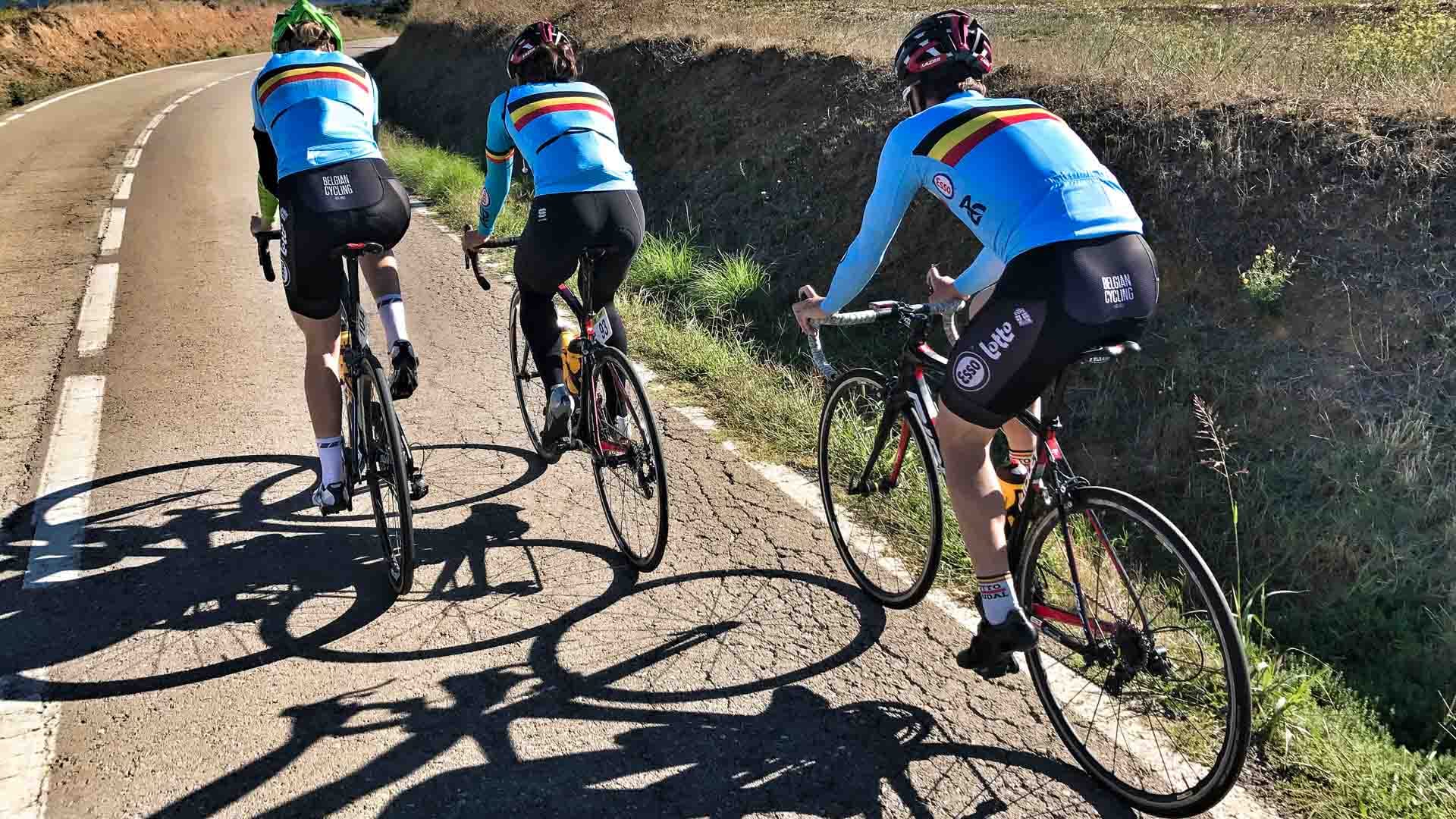
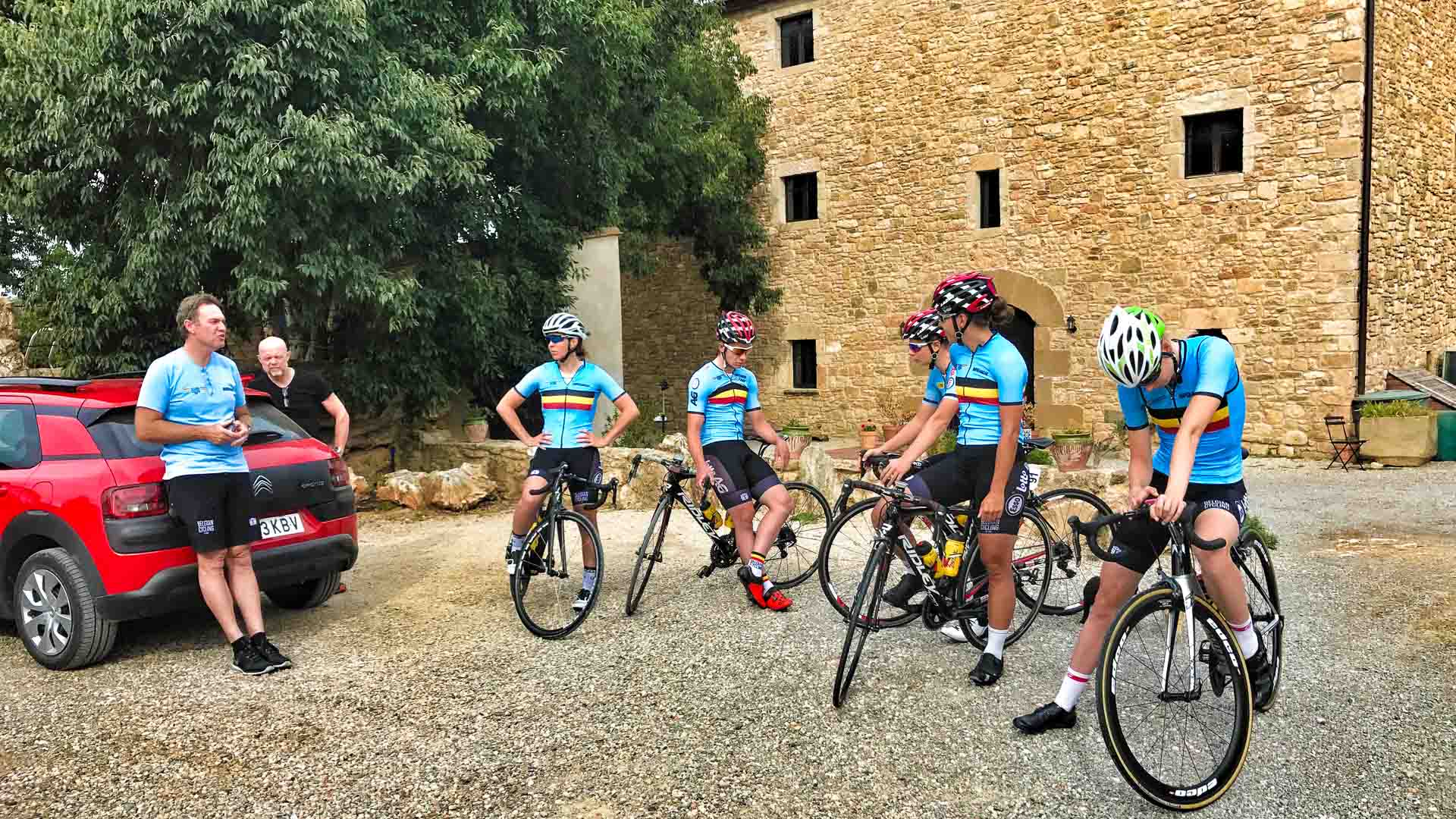
Belgian cycling team staying with us and training on the roads around us (photo credit: Girona Cycling SL)
10. Will your cycling camp provider help with route planning?
In your list of questions, it would be worth clarifying the point about route variety and GPS files. As we’ve mentioned before, this is a key part of what you’re paying for with a cycling camp – their expertise in selecting and providing the right routes to match your training needs.
We’ve built up a library of over 200 routes from our base, and we share these GPS routes with all cyclists who stay with us. The idea is that you don’t need to worry about planning – you simply choose the type of ride you want (endurance, climbing, recovery, intervals, etc.) and we provide the appropriate route.
Route planning and local knowledge are a core part of the service (more on that here).
Sponsor Message
Got a question for Fiona and Gareth from Girona Cycling?
Fill out this form and we will pass it to Girona Cycling who aim to reply (within 24 hours wherever they can!)
Part 4: Girona Cycling training camps (at Hotel Mas Pelegrí)
11. What do we offer?
Our Girona Cycling camps are based at Hotel Mas Pelegrí, a dedicated cycling hotel and training centre.
We rebuilt Mas Pelegrí and opened in 2006 with the goal of looking after teams, individuals, couples, families and small groups. While we offer Spanish 4* hotel comfort, we are officially listed as 3* internationally.
We are proud to run our hotel with a fraction of the carbon footprint of typical hotels – without most guests even noticing!
Continuous experience since 2006: We’ve been running training camps every year, including 2020 and 2021, so as long as you can get here, we’ll run your cycling training camp.
Pro team base
Professional teams and national teams have been training at Hotel Mas Pelegrí since we opened. These include, Orica Scott, BMC, Cervelo-Bigla, Raleigh, Leopard, Plussbank Cervelo and Endura. National teams include Scotland Cycling Triathlon & MTB, Belgium Cycling and Triathlon, Austria Triathlon, Abu Dhabi Cycling, South Africa Cycling, British Triathlon and USA triathlon.
Multiple Olympic and World champions have stayed with us.
We have also helped young riders find their way here in the province of Girona.
Cycling teams say they pick us because of the quality and variability of our training routes, our healthy food, mattresses, tranquillity and privacy, support and space to look after the bikes.
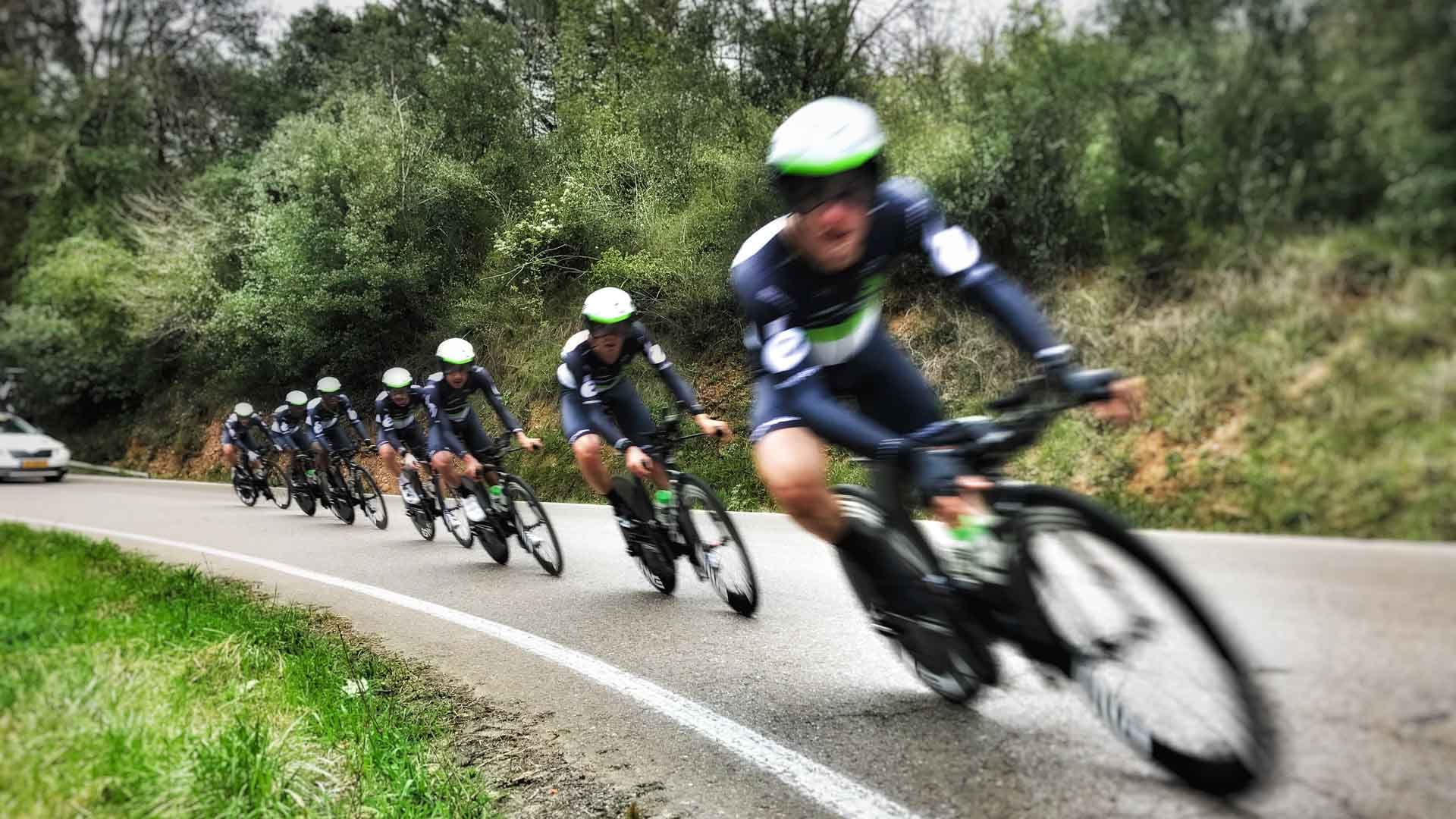
The Volta Catalunya TTT on roads near us (photo credit: Girona Cycling SL)
What’s our location (and does it work for your training)?
Hotel Mas Pelegrí is two kilometres from the small town of Serinya, which is home to the oldest prehistoric caves in the Iberian Peninsular. We are seven kilometres (five miles) from both beautiful Lake Banyoles and medieval Besalu, which is a historic gem. We are 25 kilometres north of the city of Girona.
Routes
Our location lets us access all of the best routes of the province of Girona. You can choose which direction to go in depending on the weather and your training, so you always get the training you require.
We are only 80 kilometres from the 2,000 metres ski station Val Ter, 40 kilometres from the Mediterranean coast and 10 kilometres from the foot of both of the major 1,000m pro test climbs (Rocacorba to the south and Mare de Déu del Mont to the north).
Access to the routes
The best Girona cycling routes are right from our door. You can enjoy the full range of terrain and distances the province has to offer. We provide GPS routes, route maps, smart phone app routes and emergency backup while riding with every stay.
We also provide help with designing your week’s training by qualified coaches.
Weather
Our location offers the best access to good year-round weather, without the possible high winds on the coast or the fog banks further south around the city of Girona.
The area is still warmed by the Mediterranean so does not suffer from the colder temperatures of the higher altitudes to the west of the province in the winter.
Towns
We are close enough to local towns to have a great road network and good restaurants on your doorstep without 30 minutes of city traffic on each ride.
Many people talk about going to Girona, but end up staying in the city rather than in the midst of the province of Girona and therefore missing out on what are, in my opinion, the best rides and best weather.
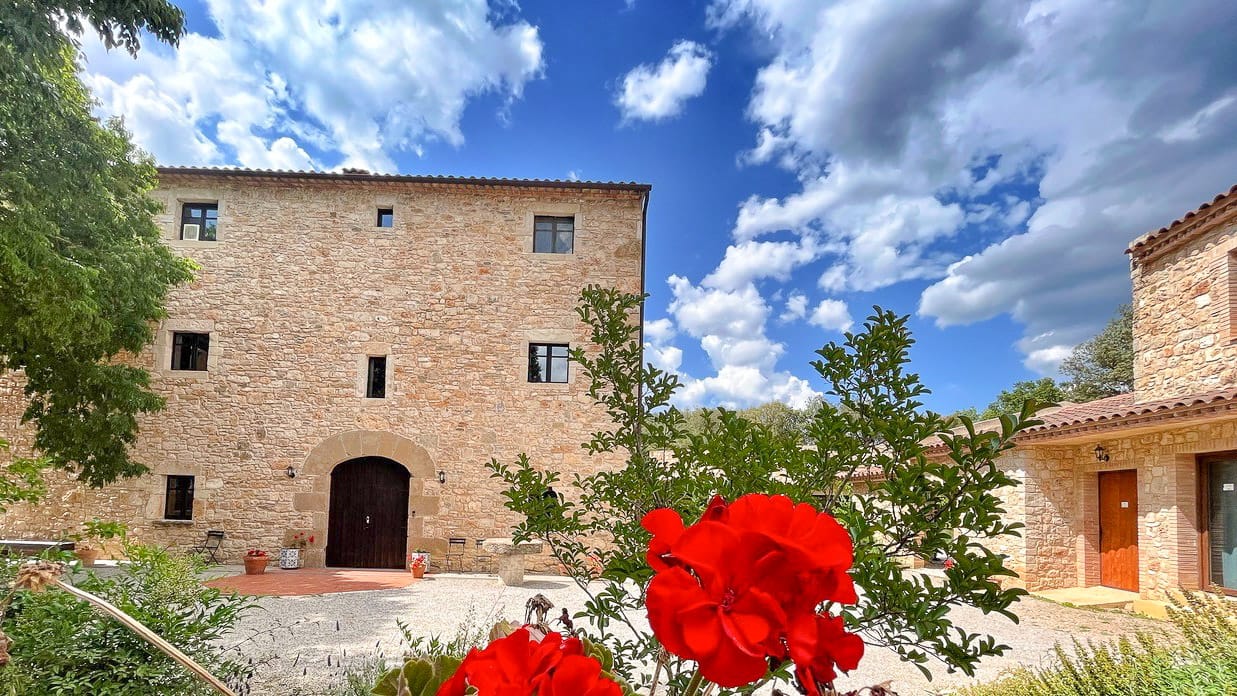
Exterior view of Hotel Mas Pelegri (photo credit: Girona Cycling SL)
Will guests get good sleep and relaxation?
Yes! Just take a look at the glowing testimonials on TripAdvisor!
What facilities do we have?
Our cycling hotel offers 17 en-suite rooms and suites. The suites have fridges as well as BBQ and cooking facilities.
Meals
We provide hearty breakfasts, three-course dinners, and picnic lunches, all made with fresh, seasonal ingredients. We cater to special diets and offer sports nutrition planned meals. Our menus feature a large variety of vegetables and fruits to boost your health and performance.
Stretching, flexibility and relaxation for the cyclist
We include morning yoga before breakfast for the cyclists with every stay. There’s a gym/yoga studio, sauna and a 25m long pool. We also offer onsite sports massages as an extra.
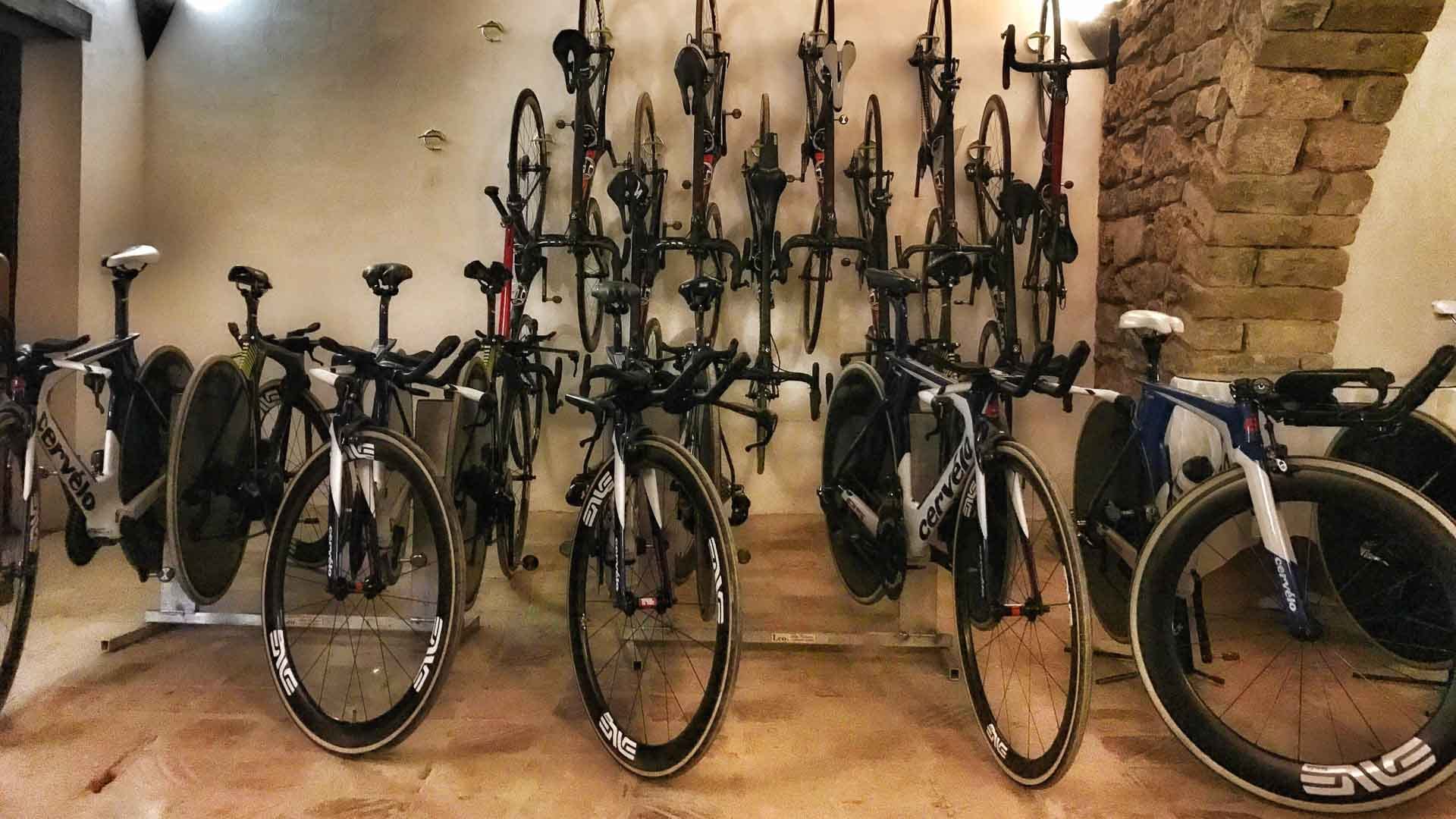
Secure bike storage
There’s a proper bike room inside the main building on the ground floor. It’s possible to lock your bikes inside it and there’s a keypad entry system. There’s also a bike tool case, track pumps and power points for charging. There’s a bike wash and cleaning area and bike rental with BH SL1 Di2 Disc brakes.
Coaches and support team
We have been coaching everyone of all ages and abilities since 2006.
Gareth has been coaching since 1997. He is a USA Cycling trained expert level cycling coach, bike fitter and mechanic.
I am a neurophysiologist with a PhD from the University of Cambridge. I am also a trained sports injury therapist and sport masseur and have worked with many pro cyclists and other athletes. I am a yoga and yoga trapeze instructor and specialise in strength, flexibility and breathing for cycling.
Guides/group rides
We offer coaches or guides by the hour, half day, full day or full week. Self guided includes emergency back up should you have a problem while out training.
Or you can book a guided or coached camp. We also have discounted small group Girona cycling camps on specific dates.
Guests are all like-minded so many people meet up and ride together.
Other activities available for the non-cycling partner or children or family
We have quite a few guests whose partner prefers activities like horse riding, kayaking, rowing or hiking. They can all enjoy a fantastic trip with us. Our goal is to help people get healthy, fit and happy in the outdoors in a sustainable way.
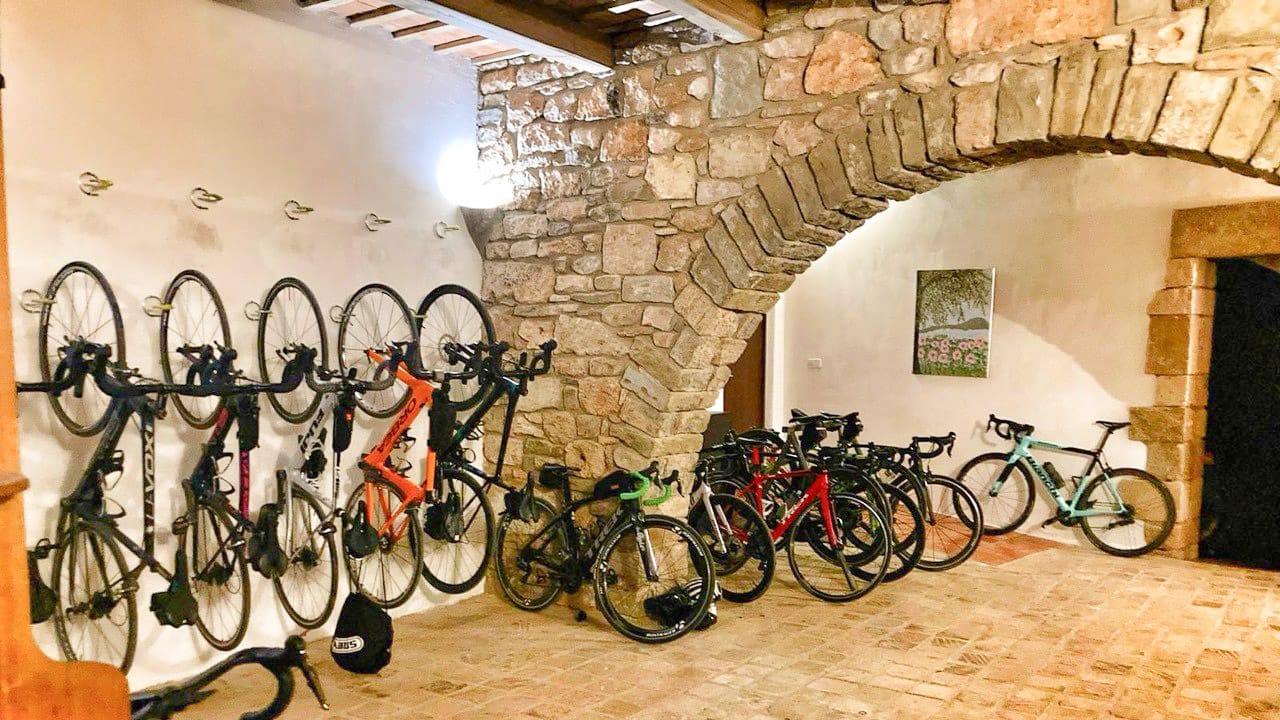
Spacious bike storage (photo credit: Girona Cycling SL)
What’s the best time to visit?
Our region is fantastic all year round.
Winter here is a short season (December through to the end of February) with dry sunny days with amazing views of the snowy mountains. In the past we even have had 21˚C on the 1st of January! In the winter it can be cooler first thing, but by 10am the sun is up and everything warms up.
February or March are great months for an early season training camps and you can still ride up to the ski station, Val Ter, at 2000m.
At the end of March you can enjoy the Volta Catalunya, one of the oldest stage races or come and enjoy the famous Spring calcotadas, a local organic speciality menu straight from the fields to the BBQ.
April and May are great for warmer spring training camps and there are local cyclotourist events to enjoy.
From June to mid-September, Girona enjoys warm summer days. Early mornings are perfect for cycling, with temperatures around 20°C—comfortable for long rides. By late afternoon (4pm), temperatures can reach the 30s, so make sure you’re back in our 25m pool by 2 pm to cool off and relax!
From mid-September to the end of November, Girona transforms with vibrant autumn colours. Enjoy warm, sunny dry days, local food festivals, and swim in the onsite 25m pool, Mediterranean or nearby lake, still pleasantly warm for a refreshing dip.
What is the food like?
The Province of Girona is a foodies paradise. You’ll find Michelin star restaurants, tapas and local rural hearty cuisine. There are also local organic providers so we can source fantastic local produce.
Here at Hotel Mas Pelegrí, we are all about freshly cooked healthy authentic Mediterranean cuisine, with vegan and vegetarian options available. We offer a large breakfast with fresh local eggs, yoghurts, cereals, oats, fresh home cooked bread and freshly squeezed juice and fruits. Three course evening dinners are offered using in-season kilometre zero produce were possible. Everything is freshly cooked onsite from individual ingredients. This means special diets are absolutely no problem.
You’ll find espresso coffee, teas, oat milk, bottled water, local wines and artisan beers. Also enjoy picking the figs, mandarins, plums, pomegranates from the onsite trees.
What are our cancellation and booking policies?
We suggest travel insurance for all guests at the time of booking. A 25% deposit is required when booking, with the balance due at the end of your stay. For full details, please see our Terms and Conditions on our website.
How do you get to us?
Most guests arrive by public transport, pre-booked airport or train transfers, or by car. We have a 9-seater vehicle with a bike trailer for small groups and partner with a local company for larger group transfers. Free transfers are available from the Serinyà bus stop. Guests arriving by sustainable transport (train) from elsewhere in Europe can enjoy a discounted stay.
You can find out more information about Girona Cycling at Mas Pelegrí on our website. Alternatively, feel free to drop me an email at info@gironacycling.com.
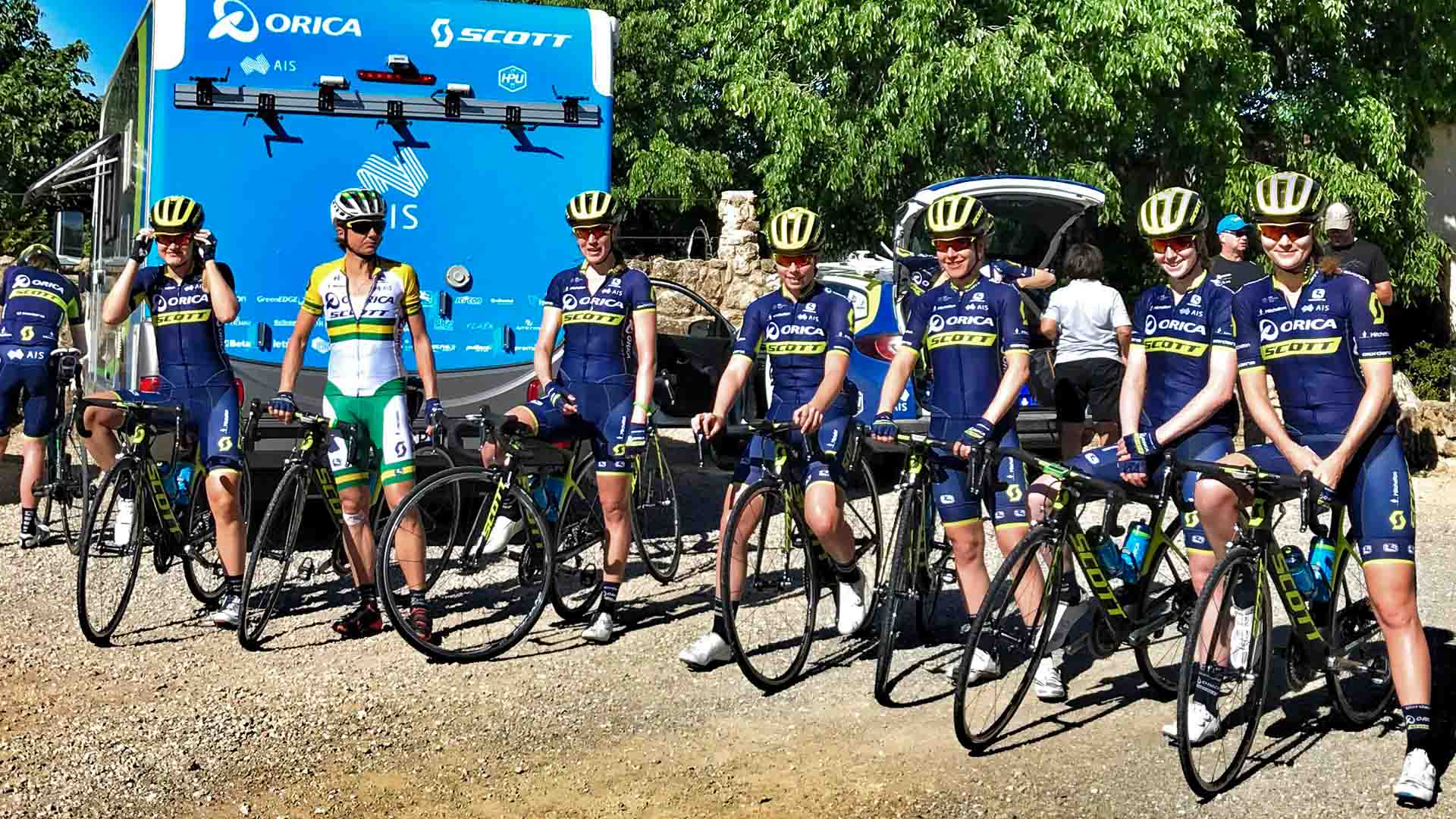
Team Orica Scott staying with us (photo credit: Girona Cycling SL)
12. Example Girona cycling routes from Hotel Mas Pelegrí
At Girona Cycling, we have 200 routes planned and available for our guests to use.
Access to our routes
We’re a small centre run by cyclists for cyclists, so we have time to chat with you about your preferred rides – whether at breakfast, dinner, or before arrival. Some guests like to plan their whole cycling camp in advance, while others decide day by day.
- Customised routes: Before you arrive, we ask about your desired distance and terrain and send the files in advance.
- Autonomous riding: Guests who prefer independence can access our two Strava accounts and RideWithGPS.
- Maps on site: We provide A4 printouts for take-away and large maps for use at the centre.
Whether you train by plan or by feel, we make sure you have everything you need to enjoy Girona’s spectacular cycling routes.
Seven routes below
Below we have given a small selection of possible routes, to try to give the idea of the different terrain that you can cover from Mas Pelegrí and also as a possible plan for a one week camp of mixed routes.
As you’ll see, a range of different route lengths and climbing are available, all with beautiful scenery and great coffee shops and restaurants.
1. Galliners route
Key statistics
Length: 38 kilometres
Climbing: 470 metres
Terrain: Rolling countryside
Overview
This makes for a great shake down ride at the start of the camp, to make sure the bike is ready.
Allows you to loosen up after travel.
2. Volcanoes 8 route
Key statistics
Length: 66 kilometres
Climbing: 803 metres
Terrain: Rolling countryside
Overview
Could be used as an active recovery ride. It takes in the gentle hills of the famous Garroxta volcanic national park, great scenery and little traffic.
Or add on Rocacorba to make a 92-kilometre ride with 1,800m of climbing.
3. Mare de Deu del Mont route
Key statistics
Length: 62 kilometres
Climbing: 1,393m
Terrain: Includes steep 1,000m climb
Overview
The focus of this route is El Mont, a long testing pro climb.
There’s a 9 kilometres warm up and then 21 kilometres climb summiting at over 1,000m with amazing views from the top along the Pyrenees across the province of Girona to the Med.
There’s a monastery and restaurant at the top of the climb.
4. Els Angels Girona
Key statistics
Length: 100 kilometres
Climbing: 1,208 metres
Terrain: rolling country into the city (and back)
Overview
Rolling countryside into the city, enjoy a specialty coffee with local tapas in one of the famous cycling coffee shops.
5. Cap de Creus route
Key statistics
Length: 152 kilometres
Climbing: 2,171 metres
Terrain: Foothills to coast
Overview
Foothills of the Pyrenees to the coast, visit Dali country and enjoy an amazing paella or pizza overlooking Cadeques Bay.
6. Val Ter route
Key statistics
Length: 172 kilometres
Climbing: 3,474 metres
Terrain: High Pyrenees
Overview
This route makes great Etape du Tour or sportive preparation.
Lots of climbing on good quality, quiet roads with small mountain villages and hearty cuisine.
7. Pyrenees loop into France
Key statistics
Length: 195 kilometres
Climbing: 3,998 metres
Terrain: High Pyrenees
Overview
The massive day!
Cross the High Pyrenees into France, descend into a river valley for a quick French baguette lunch in a fortified village before the 13 kilometres 750 metres climb up over the Pyrenees and back over into Catalonia, Spain.
You can find out more information about Girona Cycling at Mas Pelegrí on our website. Alternatively, feel free to drop me an email at info@gironacycling.com.
Sponsor Message
Got a question for Fiona and Gareth from Girona Cycling?
Fill out this form and we will pass it to Girona Cycling who aim to reply (within 24 hours wherever they can!)
Part 5: Any other tips for cycling camps in Spain?
To help ensure you get the most from your cycling camp, here are my top tips:
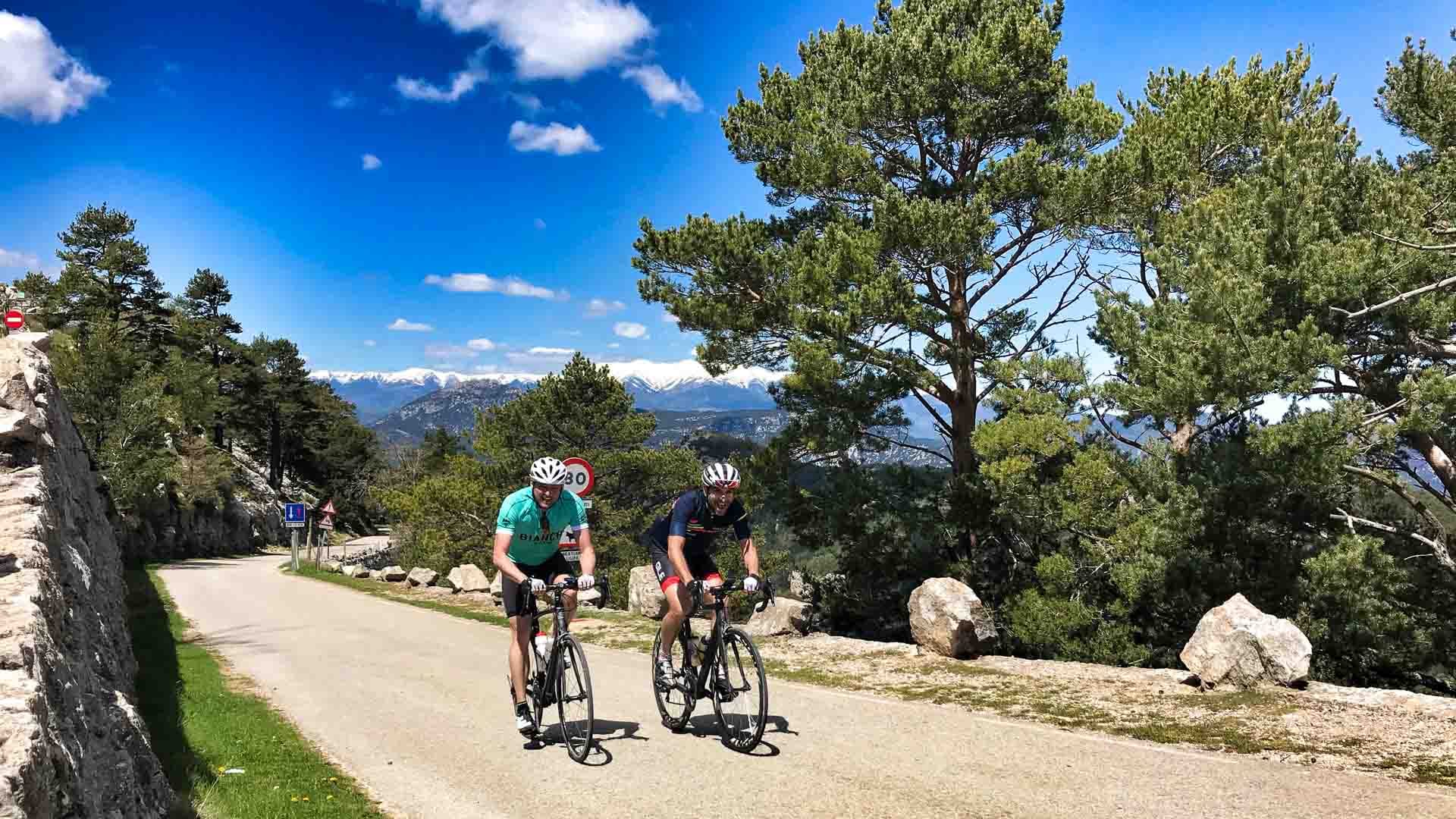
Cycling El Mont (photo credit: Girona Cycling SL)
Rest in the week before coming
Try not to have a manic last few days of work and stress before coming away. Do not try to get fitter for the camp in the week before going, arrive well rested.
Have a plan – preparing for your training camp
Before your week with us, you can plan a training schedule to work towards your key events or simply get fit and ready to make the most of your stay.
- Customised plans: On our small group coached weeks, we can provide periodised, personalised training plans prior to your arrival tailored to your goals.
- Flexible approach: Whether you want structured sessions or a general season plan, we’ll help you maximise your time and performance.
Get your bike serviced
Make sure your bike is serviced by you or a mechanic at least a week or so before, then ride it again before coming away.
Pack well
Pack your bike well assuming it will be handled poorly. When you arrive, build your bike and go on a short shake down ride to check everything works well.
If you have a special derailleur hanger, then bring a spare. Sometimes these can get bent or broken in transit.
In many European countries bike shops are shut on a Sunday and Monday morning. Going somewhere that has a spare bike just in case something happens means you still get a week of training in. Pros will always train, whatever the bike, as long as it is safe to ride and is a good fit.
Be flexible
Adjust the training to what works best for you in terms of training. Many training centres have coaches on hand to help you devise the best plan for you for the camp. But also be sensible. If it looks like there will be a gale on a mountain on one planned long ride day, adjust, change the day or change the ride route. Staying accident and injury free is crucial for your long-term training goals.
A big thank you to Fiona for sharing so many valuable insights and tips on planning a bike training camp both generally and specifically in Spain. We hope it inspires you to get planning!
Where will you head for your spring cycling training camp?
Let us know in the comments below!
Got a question for Fiona?
Fill out this form and we will send it to Fiona. We aim to get you an answer within 24 hours where possible!Girona Cycling S.L. is run by a husband and wife team, Fiona Smart Ph.D and Gareth Speechley.
They have each been involved in competitive sports for well over 40 years. Fiona is an expert on neurophysiology, as well as being a qualified sports massage and sports injury therapist and yoga instructor. She has a passion for yoga and sustainability. Gareth is a USA cycling qualified Expert Level Cycling Coach and International bike set up guru (Accredited by the International Bike Fitting Institute). He also has a thorough understanding of bike mechanics.
They formed Girona Cycling S.L. in 2005, as they wanted to support cyclists and live and work in a sustainable manner. They hosted their first clients in 2006. In 2008 they opened Hotel Mas Pelegri, their 3* Eco Hotel and training centre. They have been looking after everyone with all manner of cycling abilities, from top pros to cycling training camps for beginners, ever since. Everyone is welcome, including individuals, families, groups, cycling clubs and teams.
Fiona says “We are the Girona experts. When other training camp companies plan a camp in this area, they ask for our help and guidance. We also have supported young athletes making their way in the sport. We are here to help. This is a vocation not a job for us.”
Last Reviewed: 23 February 2026
First Published: 01 March 2023
The contents of this website are provided for general information purposes only. It is not intended to amount to advice and you should not rely on it. You should carry out your own due diligence and risk assessments and take professional advice. Views expressed by interviewees or other users of this website do not necessarily represent our views. We make no representations, warranties or guarantees, whether express or implied, that the content on our website is accurate, complete or up to date. If you use any information or content on this website, download from, or otherwise obtain content or services through our website, it is entirely at your own discretion and risk. Epic Road Rides Ltd disclaims all liability and responsibility arising from any reliance placed on the information and content on this website. Find out more here.
Sponsor Message
Got a question for Fiona and Gareth from Girona Cycling?
Fill out this form and we will pass it to Girona Cycling who aim to reply (within 24 hours wherever they can!)
See my questions noted online.
Kind Regards,
Bill
Hi Bill, we’ve been in touch by email. Best wishes, Clare