
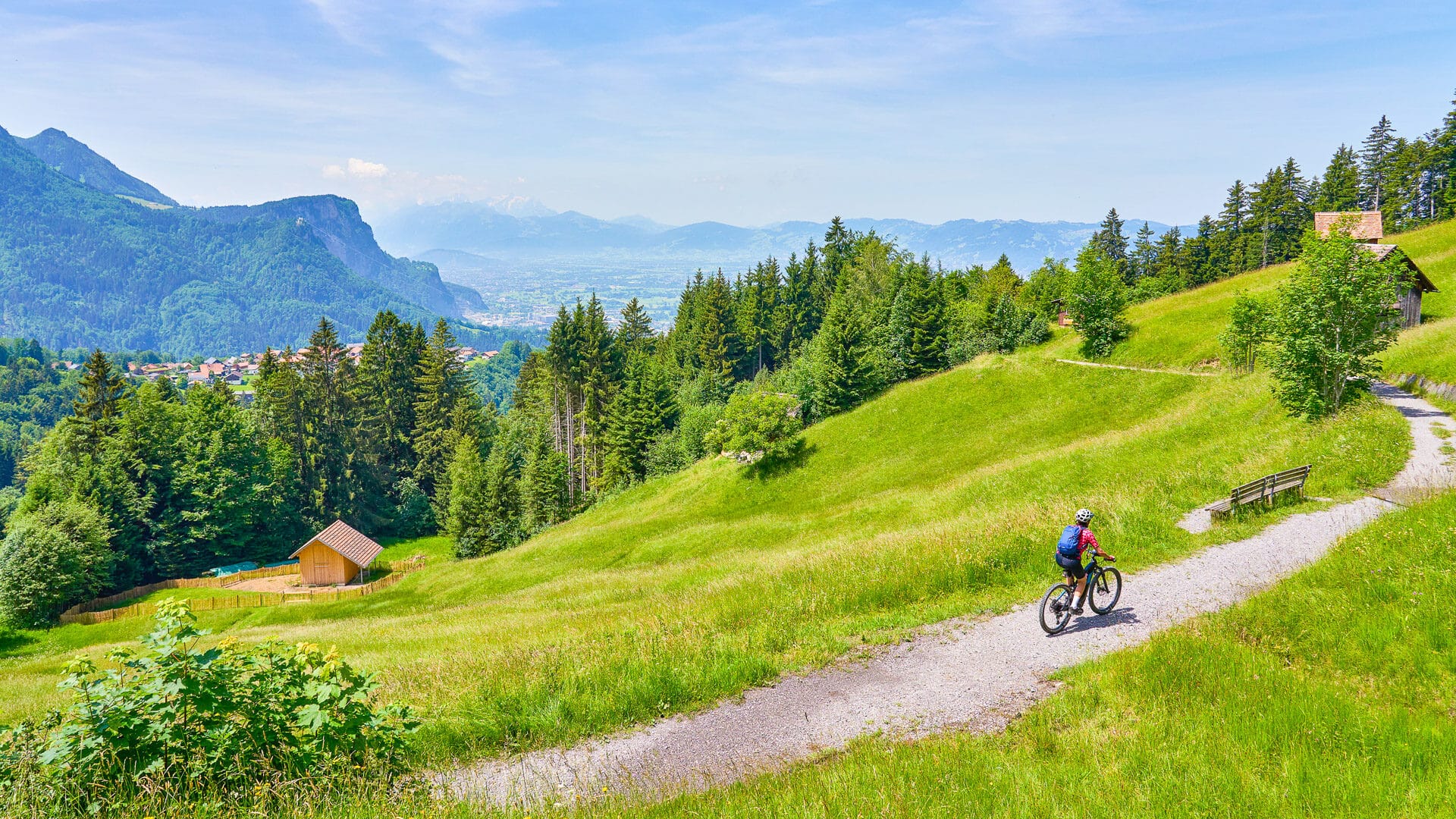
The 2018 Innsbruck World Championships thrust road cycling in Austria into the hearts and minds of the cycling world. Since then, Austria has remained firmly on the cycling map, helped by Anna Kiesenhofer’s shock Olympic road race victory at the Tokyo 2020 Games, held in 2021, and by major races such as the Tour of Austria and Tour of the Alps.
Austria has us wowed by the majestic mountains and the vicious gradients we see the pros riding in such races – and inevitably our thoughts turn to planning a cycling holiday in Austria.
But when it comes to finding information on the best areas and cycling routes in Austria, there doesn’t seem to be that much available for English-speaking cyclists. Our theory is that Austria has been such a popular cycling destination for Austrian and German cyclists, that they haven’t felt it necessary to share the secret with us!
To try and help, Epic Road Rides community manager Bas Kragt shared his first-hand knowledge of riding in Austria. Bas first rode in Tyrol in 2006. He returned in 2022 for a cycling trip that took him through Vorarlberg and back into Tyrol. His insights helped shape this guide, including the best regions to ride and what you can expect in each:
- Vienna and the Bucklige Welt: Best for gentler riding, rolling hills, vineyards and combining cycling with a city break in Vienna.
- Salzburg and SalzburgerLand: Best for lakeside rides, rolling climbs, swimming stops and combining cycling with culture in Salzburg.
- Grossglockner, SalzburgerLand and Pinzgau: Best for experienced cyclists looking for Austria’s most famous climb and serious high-mountain riding.
- Nauders am Reschenpass, Tyrol: Best for riders who want big Alpine passes, cross-border routes and challenging mountain days.
- Bregenzerwald: Best for quiet Alpine riding, wooden villages, tough climbs and a less obvious base for mountain cycling.
Read on to get the details!
Bas Kragt is a passionate advocate for cycling in South Korea. Originally from the Netherlands - a country where cycling is part of everyday life - he has been based in and around Busan since 2017, exploring the country’s varied terrain on two wheels.
He plays an active role in South Korea’s cycling community, helping to organise events with the Korean Audax Federation (Korea Randonneurs). He also founded Routes Busan, a platform aimed at improving cycling safety and quality in the region, and supports visiting cyclists and expats through the Korea Cycling Community Facebook group.
With his deep local knowledge and enthusiasm for every aspect of the cycling world, Bas is passionate about helping others experience South Korea’s incredible cycling potential – from quiet coastal roads to challenging mountain climbs.
You might also recognise Bas from our social media community, as Bas supports Epic Road Rides with this.
(Photo credit: Garett L. Smith)
Always check current travel information and advice. For visitors from the UK, the UK government travel information pages are here.
Overview of cycling in Austria
Austria’s cycling scene isn’t as well-known as some other European cycling destinations. Yet it offers many of the advantages that they do – and more.
One big advantage is that Austria is a relatively small country, which means that the distances between places aren’t huge. This makes multi-stop trips quite feasible – and a good idea, since there is a huge variety of landscapes to explore.
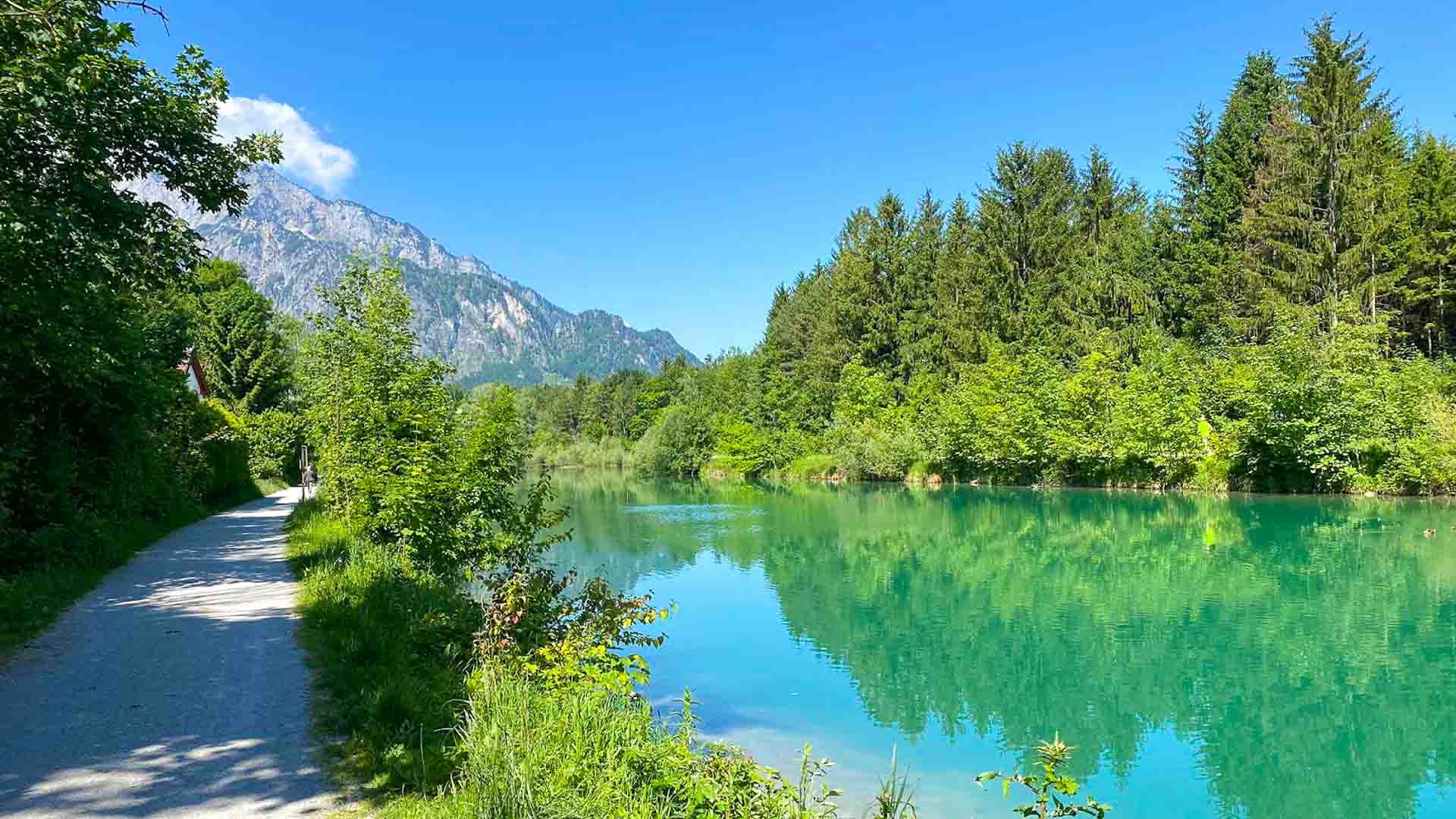

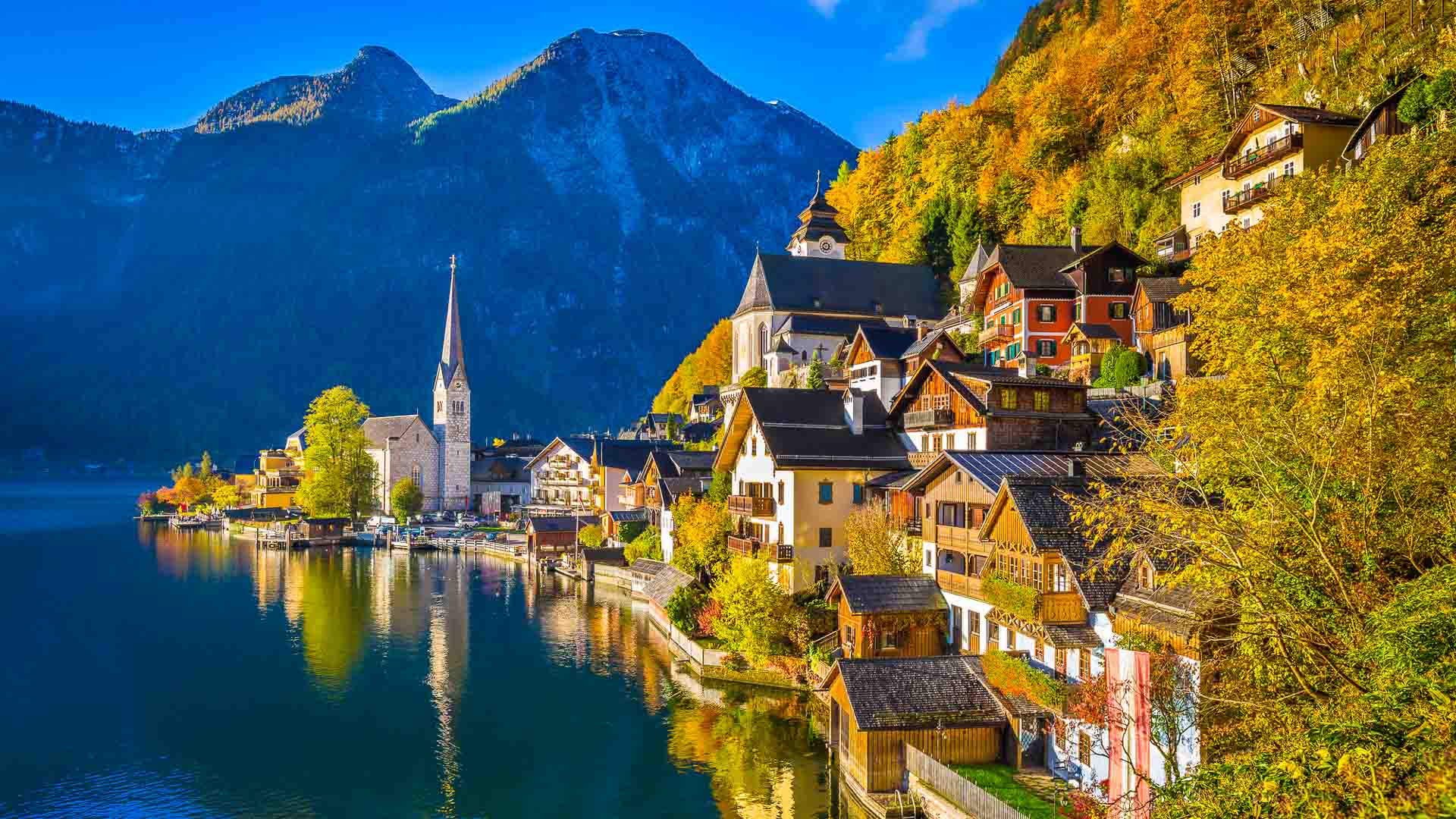
Terrain
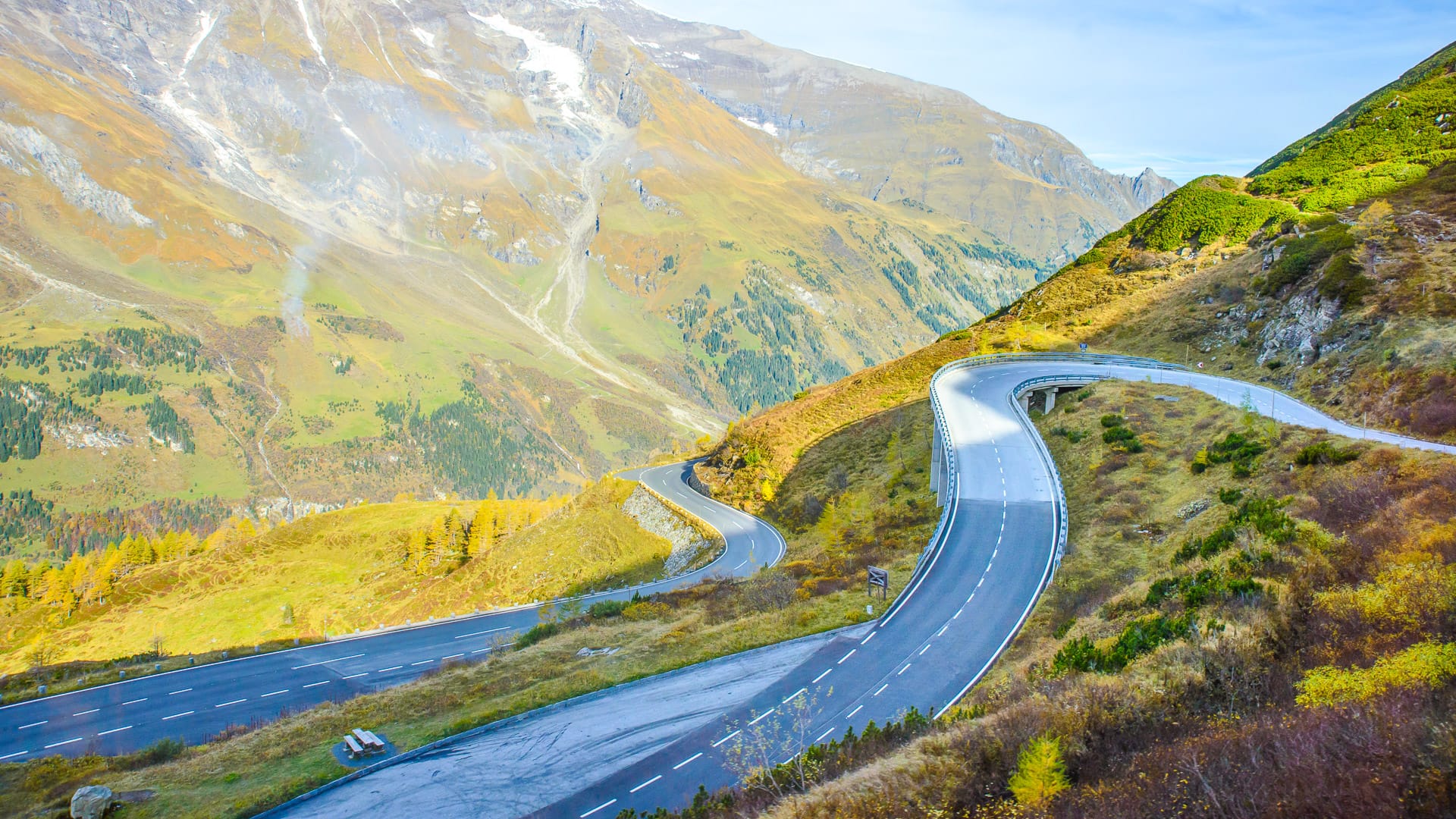
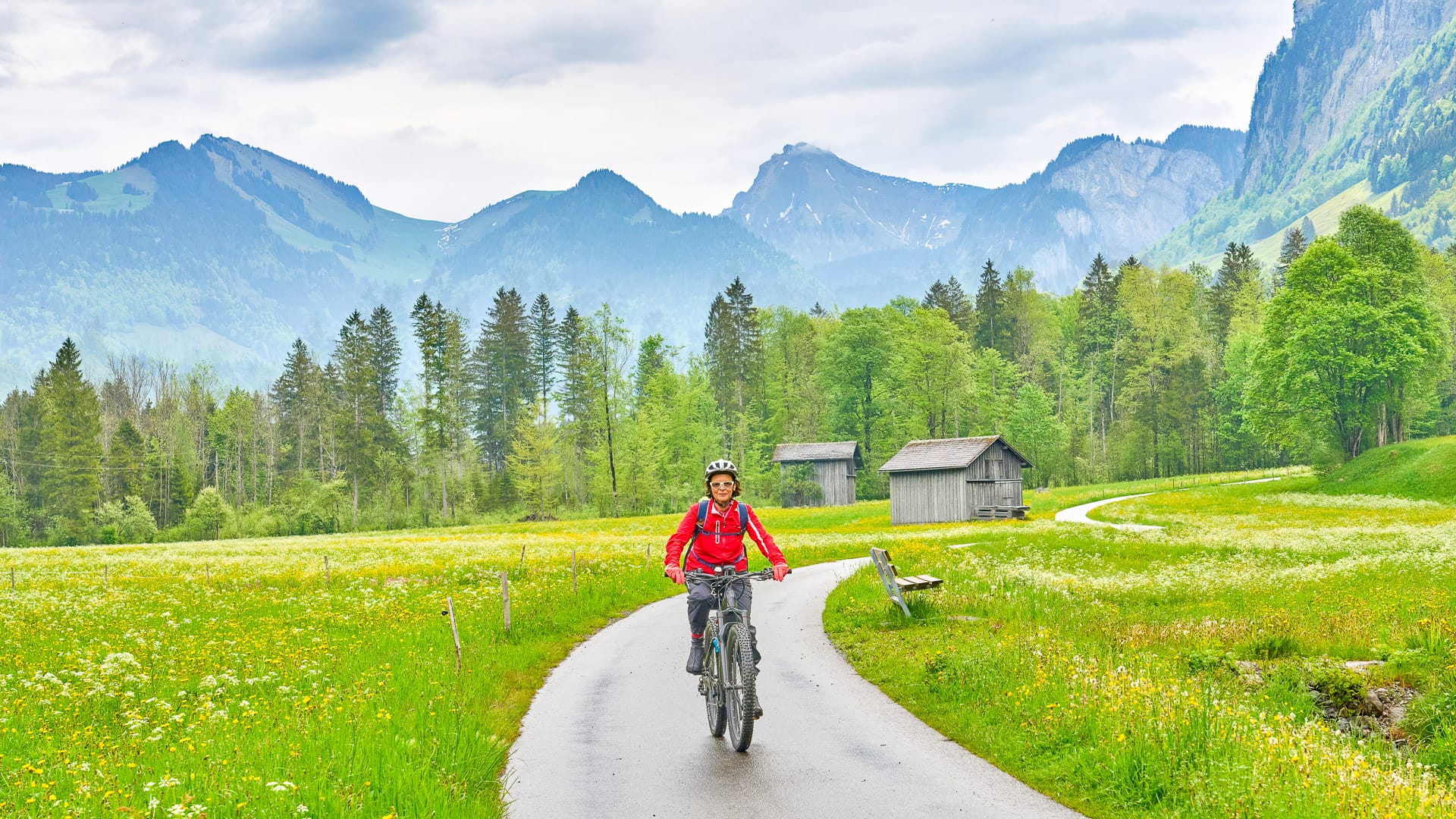
In Austria you’ll find everything from flat, easy riding in the east of the country, near Vienna, to high mountains in the west that are really spectacular and easily comparable with many of the best-known Alpine cycling destinations in France, Italy and Switzerland.
The Grossglockner climb is the most famous cycling climb in Austria, but there are also others like the very demanding Rettenbachferner and the Kitzbühl climb, which is known as the toughest climb in Europe! I share some of the famous climbs and regions below.
Cycling events
Cycling in Austria has benefited from pro racing exposure via Anna Kiesenhofer’s victory in the Tokyo 2020 Olympics as well as the 2018 Innsbruck World Champs, the annual Tour of Austria and Tour of the Alps. There are also cycling events for amateur cyclists in Austria that are a really big deal here and in neighbouring countries, even if they aren’t so well known in the UK. For example, the extremely popular Ötztaler Radmarathon has a maximum of 4,000 participants in 2026 or the Dreiländergiro in Nauders am Reschenpass. There’s more information below.
Cycling culture
The popularity of these amateur events reflects the fact that cycling as a sport is very popular amongst Austrians. Like in Italy, cycling is really part of the culture. It’s also had a boost as a result of Covid and there’s a great cycling community here.
You’ll find plenty of bike shops in Austrian towns and there is also a strong Austrian cycling hotel scene, particularly in the main cycling regions. Many hotels are owned and run by passionate cyclists.
Austria’s cycling regions
Geography of Austria
The basic rule of thumb is that everything east of Salzburg is flat or rolling terrain. Everything west of Salzburg is more or less mountains. That’s not 100% accurate, but it’s probably 95% true!
Novice riders, or those looking for more a leisurely ride, will typically find the most suitable riding in the east of the country; Austria’s Tyrol and Bregenz Forest regions are best for the more experienced cyclists.
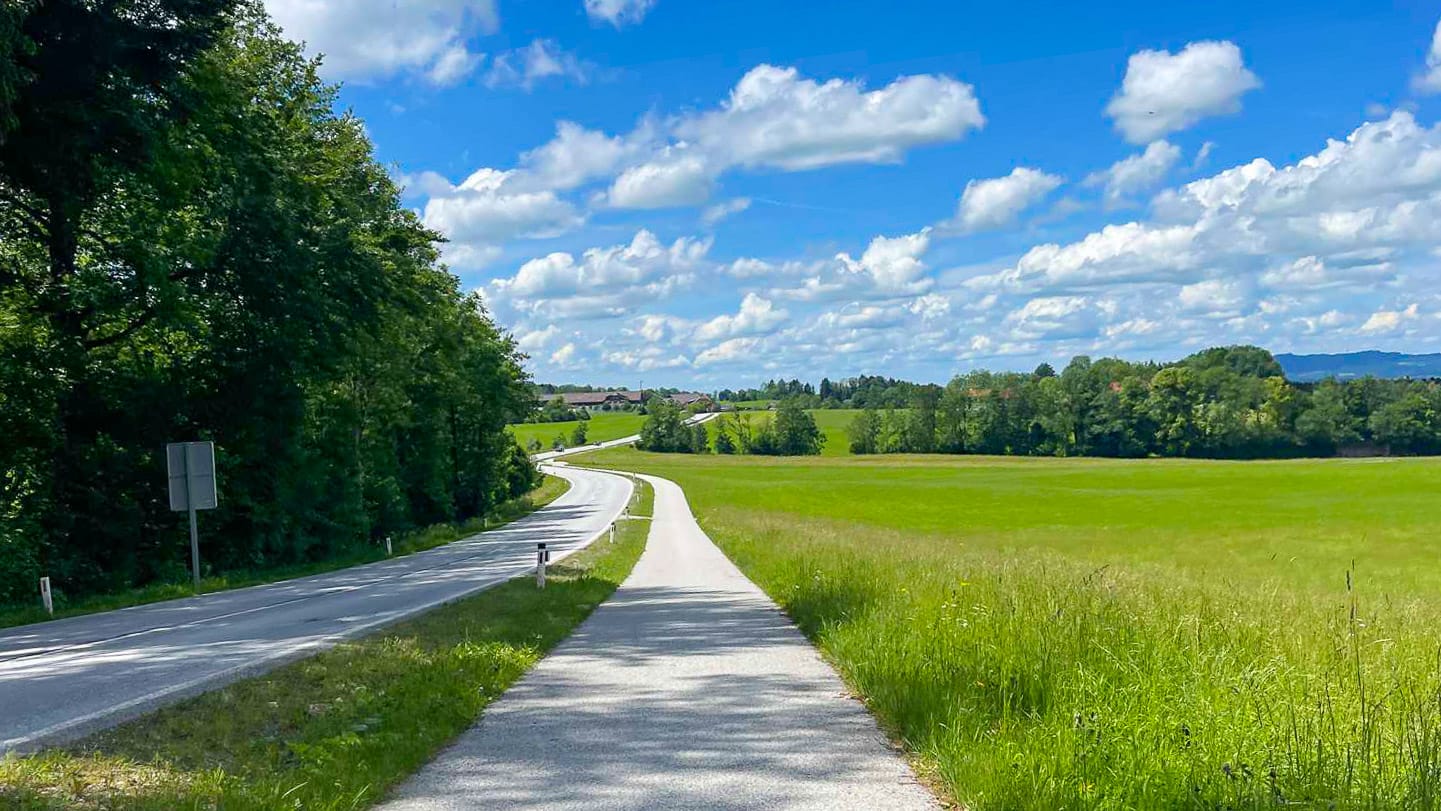
Trail to Mondsee, Salzburg (photo credit: John Vincent)
What are the roads like in Austria?
The paved roads in Austria are mainly in very good condition and (by and large) cyclists are respected.
There’s an extensive network of roads in Austria. Of course, they’re more limited in the high mountains, but even here there are a lot of narrow farm roads; they may be dead ends but they can still be spectacular. This road network means that at busy times of year, like the summer, you’ve got choices when it comes to which roads you ride. Check out the When to Visit section below for more tips on this.
There’s also a great network of cycle paths. Anyone that’s ever done two minutes of research on the most popular leisure cycling in Europe, will have come across the Danube cycle path/bike trail. It’s regularly voted one of the best cycling routes in Europe.
French Alps vs Austrian Alps
In both France and Austria, you find classic long, twisting climbs.
The French Alps are better known as a cycling destination, but the stunning scenery of the Austrian Alps has a huge amount to offer, and there’s the joy of being a little further from the high-season tourist trail. Think flower-filled meadows, craggy snow-peaked mountains and glassy, blue lakes.
The roads in the mountains of Austria are a bit steeper, but perhaps not quite as long. For example, comparing the Col du Galibier and Grossglockner, the Grossglockner is shorter but it’s a bit steeper.
Austrian road engineers have a reputation for being frugal with the asphalt; and that reputation is justified! When you’re riding in the mountains, it feels like the engineers were anti-switchback… it’s not an issue in the east of the country since there the terrain is hills rather than mountains – but when it comes to the mountains, expect steep gradients!
Best regions for cycling in Austria
Below is an overview of some of Austria’s best road cycling regions, together with examples of the kind of riding you can expect in each area.
1. Vienna, Bucklige Welt region
Best for gentle riding, rolling hills, vineyards and combining cycling with a city break in Vienna.
In the east of Austria, you find Vienna and the Bucklige Welt of Lower Austria. There are a lot of vineyards, lakes and very stable climate conditions. The landscape is gently hilly and there are exquisite country roads through orchards and past quaint villages. It’s well-suited to beginner level and intermediate cyclists who prefer to avoid the mountains.
The region is located on the outskirts of Vienna, so a trip here means you could also spend a rest day sightseeing in Vienna and cycling along the Danube cycle path (which is in fact paved, so suitable for road bikes – as well as family cycling holidays).
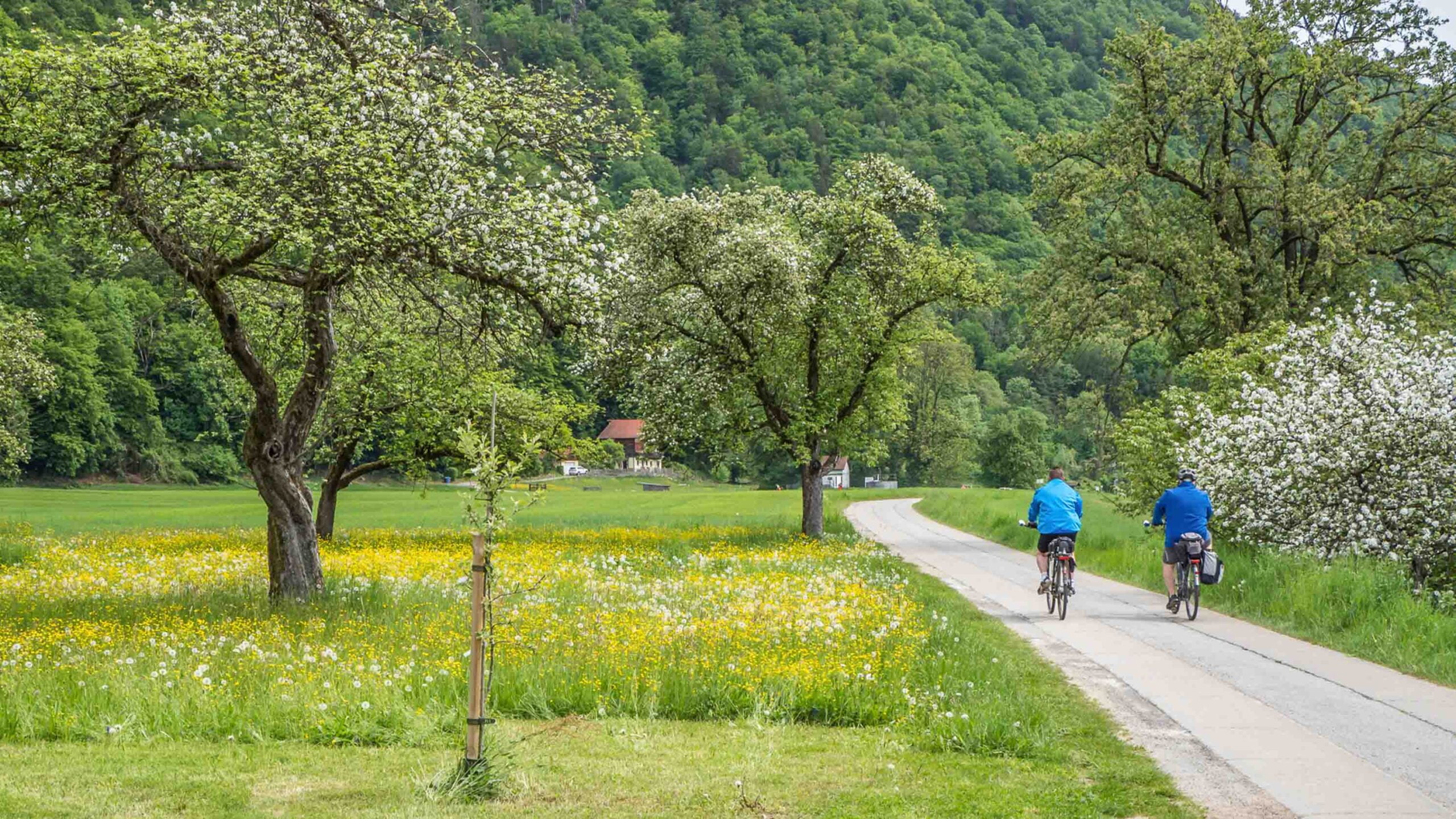
The Danube cycle path in spring
2. Salzburg region, SalzburgerLand region
Best for lakeside rides, rolling climbs, swimming stops and combining cycling with culture in Salzburg.
Moving west from Vienna, you come to the Salzburg region.
It’s got a distinctive mixture of sparkling lakes, impressive mountains and culture that promise a road bike experience you won’t forget. There are lakes, and small hills around the lakes, which give the possibility for some nice rolling tours.
But you can also do rides with 3,000+ metres of elevation gain if you want them – because it’s not so far from the mighty Grossglockner (more on that below) – and there are flat areas too, so perfect if you want some sprint training.
You can combine your cycling holiday with some sightseeing in the spectacular city of Salzburg (most famous for being home to Mozart). The lakes in this region are also brilliant for summer holidays.
This article has information on touring the Salzkammergut region by bike.
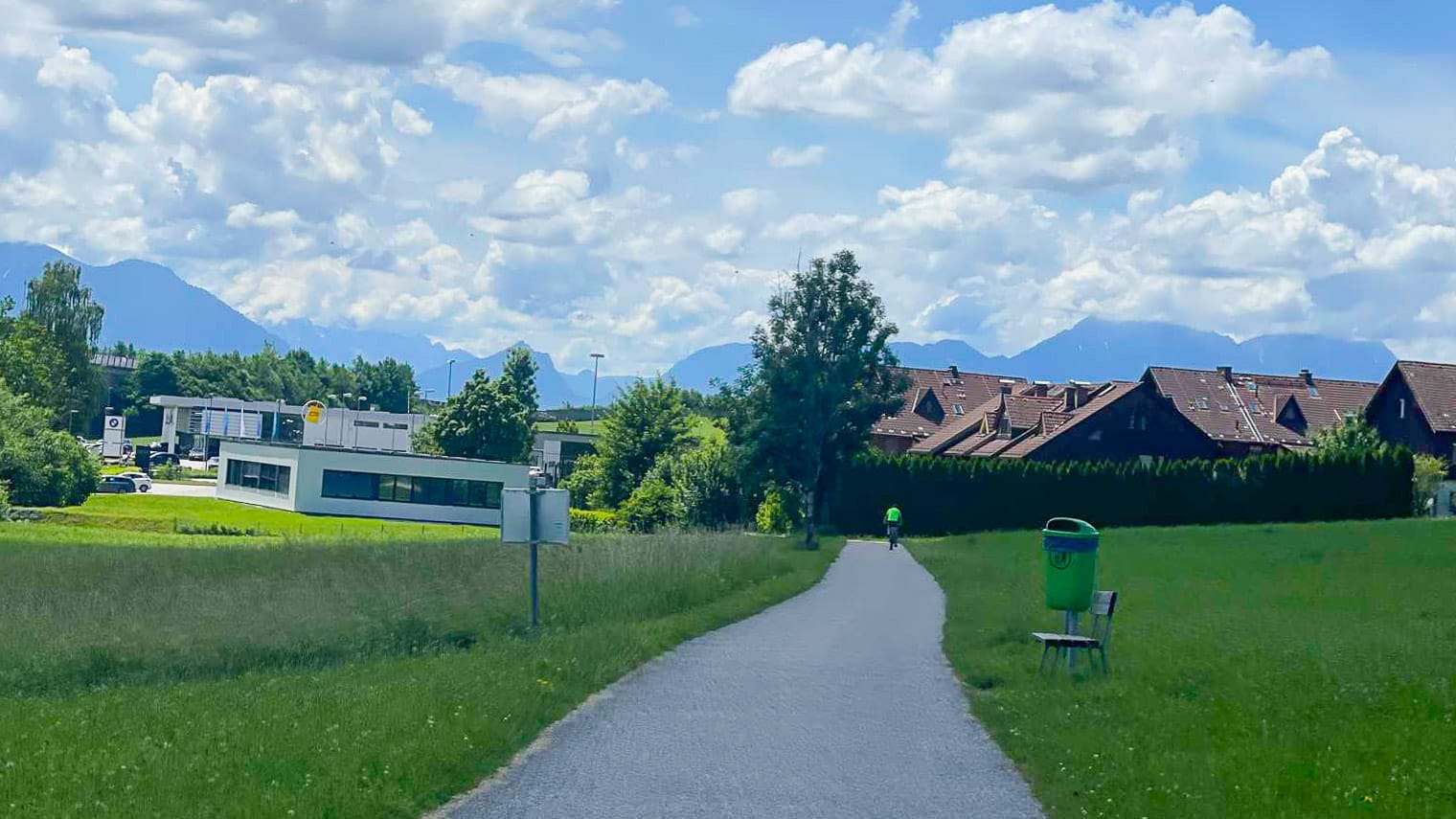
Trail through a Salzburg suburb (photo credit: John Vincent)
3. Grossglockner region, SalzburgerLand – Pinzgau
Best for experienced cyclists looking for Austria’s most famous climb and serious high-mountain riding.
The Grossglockner cycling climb is the longest and most famous climb in the country for cyclists.
It’s 16 kilometres of climbing with 10% of average incline. So cycling Grossglockner is a challenge and you shouldn’t underestimate that steep gradient! It takes you on a journey up the highest mountain peak in Austria.
Every year the Glocknerkonig event attracts about 3,000 cyclists from all over the world; they race from the bottom to the top.
Riding around this destination offers a nice variety. You can go really flat in the valley and even though the main roads are quite busy the cycle paths are perfect for road biking. Additionally you can do the Ironman tour which offers a nice climb to the mountain range Hochkönig. The highlight and the reason why cyclists come here is of course the Großglockner. It is the longest and most spectacular climb in Austria.
4. Nauders am Reschenpass, Tyrol region
Best for cyclists who want big Alpine passes, cross-border routes and challenging mountain days.
Going west again, you come to the Tyrol in Austria. It’s an area known for its ski resorts and the scenery here is classic Alpine. This is a destination for experienced cyclists; there are no easy rides here!
Just past Nauders on the Reschen Pass, a sunken church tower stands like a picturesque landmark in the middle of the lake. It is also lined with the most beautiful Alpine passes and panoramic roads. Tucked between the Finstermünz Pass to the north and the Reschen Pass to the south, Nauders offers cyclists as many passes as their legs can handle. The village of 1,500 inhabitants is the ideal starting point for country hopping par excellence; in the border triangle, you are spoilt for choice on the main Alpine ridge. Which direction should you take today? From Nauders, you can cycle in any direction, regardless of national borders.
This unique location between Tyrol, South Tyrol and the Swiss Engadine, enables road cyclists to discover some of the most beautiful mountain pass routes that provide the opportunity to experience dramatically contrasting landscapes. Here, the Tyrolean glacier meets the Mediterranean climate of Italy. Whether you prefer to cycle on alpine asphalt, or on gravel roads over mountain pastures, it’s an ideal starting point for high-quality cross-border tours.
2,200 racing bike kilometres, 80,000 metres of altitude difference and more than 20 passes within a radius of 100 kilometres in three countries will make road cyclists and gravel bikers grin – and sweat – in Nauders am Reschenpass. Prepare to push to your limits. All that’s left is to choose which direction to cycle each day!
5. Bregenzerwald, Vorarlberg region
Best for quiet Alpine riding, wooden villages, tough climbs and a less obvious base for mountain cycling.
Bregenzerwald, also known as Bregenz Forest, sits in the Vorarlberg region of Austria – it’s close to the border with Switzerland and about as far west as you can go in Austria. For those that like to border hop, you can take in Germany, Liechtenstein and Switzerland from here! There are also a great range of bike routes leading from beautiful Lake Constance.
The region combines enchanting villages, interesting architecture with lots of houses made from wood and impressive mountain scenery. It feels very remote and rural, well and truly away from everything. There are some huge Alpine passes around here including Hochtannberg Pass, the Flexen Pass and the Faschinajoch.
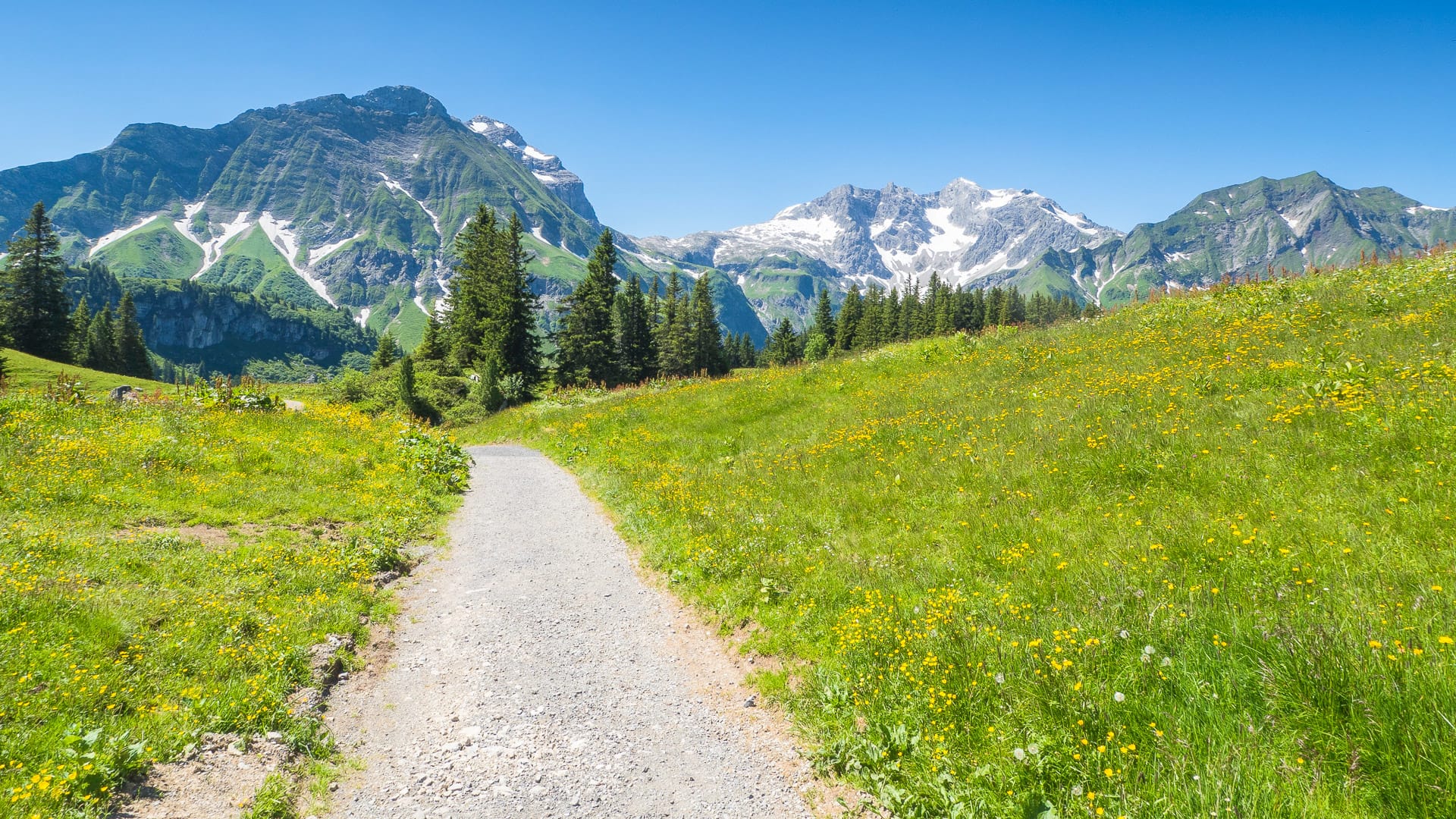
A view of Alpine mountains surrounding the village Schroecken in Bregenzerwald
What are the key road cycling events in Austria?
Pro racing in Austria
Austria’s pro cycling scene was badly affected by the 90s doping scandals. Fortunately, the country still has some exposure to World Tour racing – the Tour of Austria takes place here every year and of course there were the very successful World Road Championships in 2018.
The early season Tour of the Alps also takes place in mid to late April each year. Half of the race is held in Austria (within the state of Tyrol) and half in Italy. The Tour of the Alps is thought of as a last preparation race for the Giro d’Italia, which usually starts around two weeks after the Tour of the Alps finishes. This year, it took place from 20 to 24 April 2026. Meanwhile, the 2026 Tour of Austria is scheduled to take place from 8 to 12 July 2026.
Amateur cycling events in Austria
The two most famous amateur road cycling events in Austria are the Ötztaler Radmarathon, which takes place in the Tyrol region, while the Glocknerkonig is hosted in the SalzburgerLand region.
Ötztaler Radmarathon
The Ötztaler Radmarathon is by far the biggest amateur cycling event in Austria. It’s considered a “must-do” by most Austrian, German and Swiss cyclists, on the same level as the Maratona dles Dolomites and Marmotte. As a result, it can be really difficult to get a place. On 30 August 2026, the 45th edition of the legendary Ötztaler Radmarathon takes place in Sölden with a maximum of 4,000 participants.
The fastest cyclists complete the Ötztaler Radmarathon in around 7 hours, while many participants are on the road for 13 hours or more. This gives a sense of the huge range of abilities taking part, as well as the scale of the challenge.
One of the things that makes the event special is the atmosphere. Supporters line sections of the route, particularly around Innsbruck, and the refuelling stations are well organised, with food and drinks available at key points, including on the mountain sections.
The final climb is one of the toughest parts of the day. The last 30 kilometres are basically 30 kilometres uphill (and you’re already at 1,800 meters of elevation!). By this point, riders have already spent many hours in the saddle, but still face a long uphill section towards the finish. For many cyclists, reaching the line after such a demanding route is a major achievement.
Glocknerkonig (King of the Glockner)
This is a really tough race! The classic version takes you 27 kilometres uphill, with 1,694 of elevation gain and gradients up to 12%. It’s basically just 1.5 hours all-out effort from the bottom to the top.
It feels much more competitive than the Ötztaler Radmarathon. Everyone’s trying to get their best possible time, rather than just complete the course.
The 2026 Glocknerkönig attracted around 3,000 cyclists from more than 37 nations.
What are the best bike hotels in Austria?
Austria has a strong cycling hotel scene, especially in the main road cycling regions. Rather than looking for one particular hotel brand or network, it’s worth checking whether your accommodation offers the facilities that make a cycling holiday easier.
In summary, look for places that offer things like:
- Secure bike storage
- Individual bike locks or lockable storage
- Drying and laundry service
- Repair area or basic tools
- Route information and GPS files
- Help with transfers or pick-up if you have a mechanical
- Breakfast buffet and afternoon snack
- Knowledgeable staff who understand the needs of cyclists
The best places to stay often depend on the type of riding you want. For high mountains, look at areas such as Nauders, the Grossglockner region, Bregenzerwald and the Tyrol. For rolling countryside, wine regions and easier riding, consider the Bucklige Welt and areas east of Salzburg. For a mix of riding, lakes and sightseeing, the Salzburg and Salzkammergut region is a strong option.
If you’re planning a trip around a particular climb or event, it’s worth contacting your accommodation before booking to ask about bike storage, route insights, hire options, mechanical support and whether they are used to hosting road cyclists.
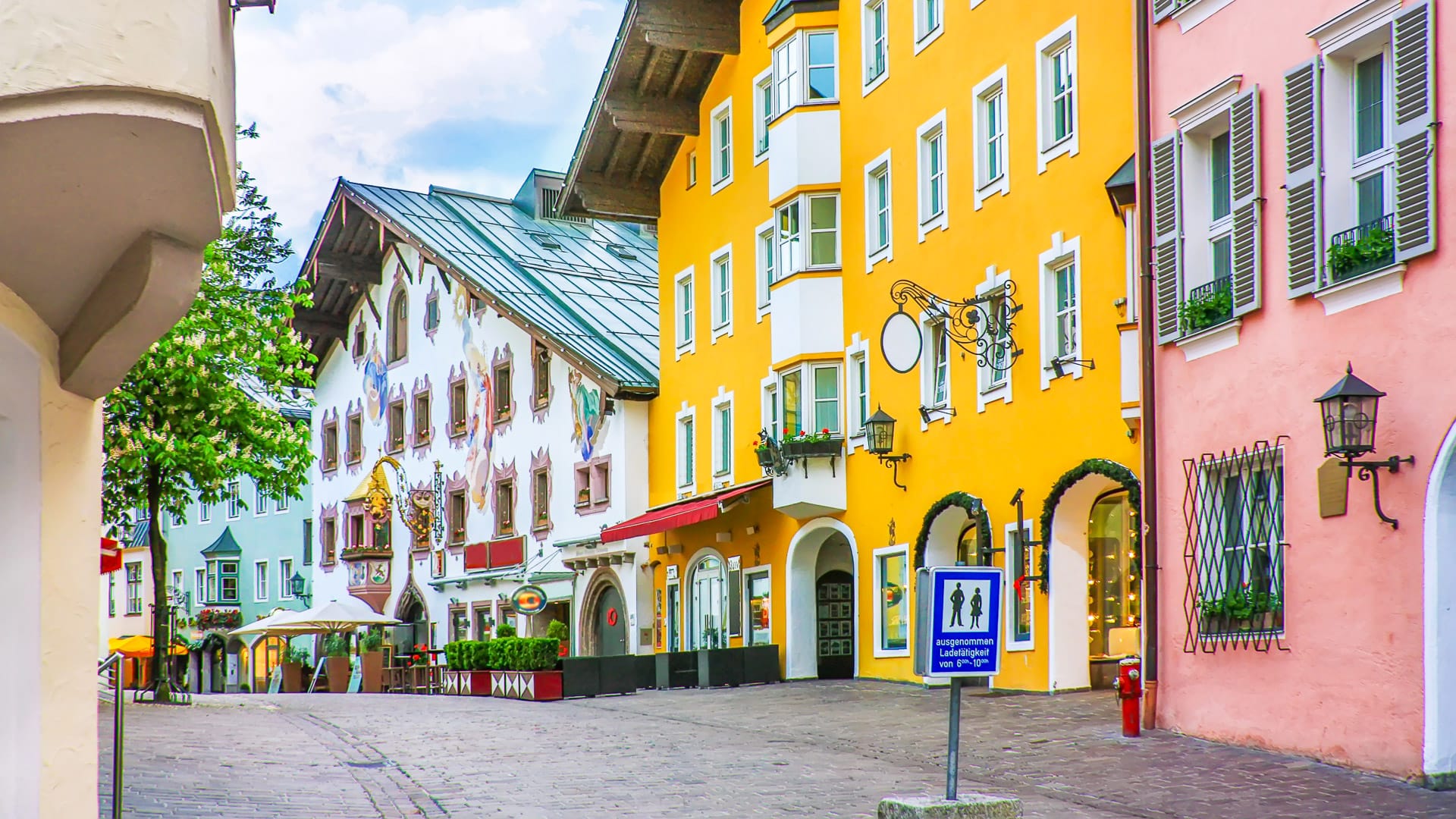
Street with historical houses in Kitzbuhel city center, Austria
Do you suggest booking an organised cycling tour in Austria?
You don’t necessarily need to book a fully organised cycling tour in Austria, especially if you are confident planning routes and riding independently. Many regions have good cycling infrastructure, and there are plenty of GPS routes, cycling maps and local tourist offices that can help.
That said, a local guide can be helpful, particularly on the first or second day of a trip. A guide can help you get a feel for the roads, understand local riding etiquette, find quieter lanes and learn more about the region’s culture, history and traditions. After that, you may feel more confident exploring on your own.
Alternatively, if you’d like someone to organise your holiday for you, you could consider going on an organised tour, whether guided or self-guided.
We know several operators in the country, so if you’re looking for support, fill in this enquiry box, and we will try and connect you.
Bike hire
Are there many places for bike hire in Austria?
Historically, many cyclists to Austria have come from Germany, since it’s not far away. Such cyclists are usually driving, so it’s easy for them to bring their own bikes. This means that you don’t tend to find road bike rental in every town; mountain bike rental is pretty common, but road bike rental less so.
That said, in the main cycling regions, some hotels, bike shops and local rental providers can help with road bike hire. Availability varies, so book early and check the exact bike model, gearing, pedals, helmet hire and delivery arrangements before you travel.
What about bike shops?
In terms of bike shops, plenty of towns and villages still have local bike shops. If you’re staying in a remote area, check in advance where the nearest bike shop is and whether your accommodation can help with small repairs, spare parts or emergency pick-up if you have a mechanical while out riding.
When to visit Austria
From a weather perspective, the most reliable time of year to visit Austria’s mountains is between June and September. The season is a bit longer in the lower areas in the east of Austria; there the season is April to the end of October.
The eastern part of Austria is known as being the warmest, so if sunshine and warm temperatures are important to you, head there rather than the high mountains in the west of the country.
As with most places, July and August are the busiest months due to school holidays, so expect more traffic on the roads then.
In particular, bear in mind that the narrow valleys in the western part of Austria can get very busy in the peak summer months. The Grossglockner has started charging vehicles using the road, in an effort to reduce the numbers in the summer months. The Bregenzerwald region is known for being quieter than the Öztal Valley if you’re travelling in July and August in the western mountains. September and October can be better months if you’re keen on riding these high mountain passes.
The eastern regions, like Bucklige Welt near Vienna, as well as the Salzburg region, can be less busy in summer.
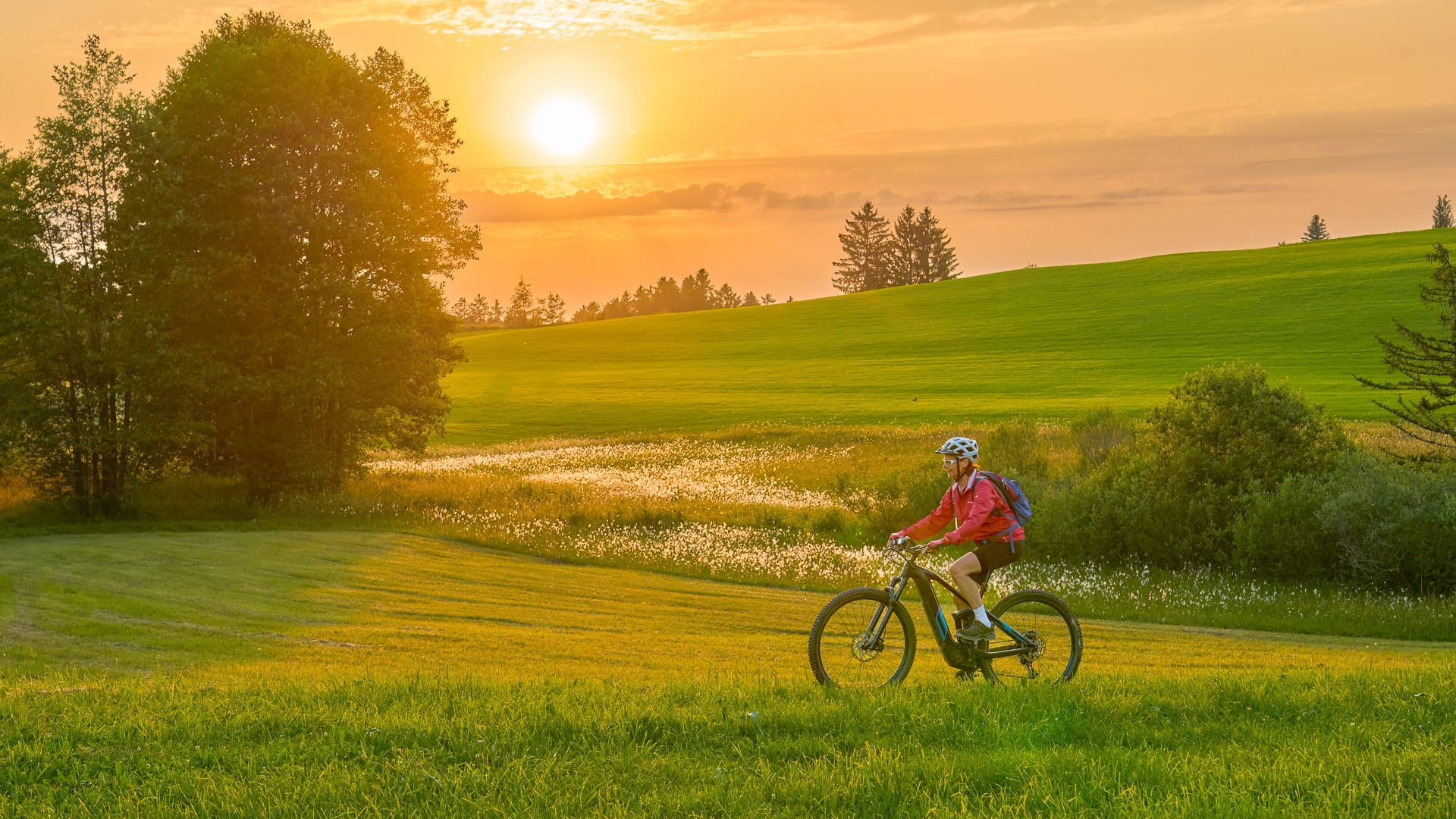
Cycling at sunset in the Bregenz Forest mountains near Sulzberg, Vorarlberg
Tips for biking in Austria
Books and maps about Austria
If you’re looking for an Austrian cycling map, the Kompass map series are excellent.
Kit to bring to Austria
Always bring a rain jacket when cycling in Austria, because the weather can change quickly, especially in the mountains. Even in summer, thunderstorms are possible.
Gearing
If you’re planning on cycling the Austrian Alps, compact gearing is a good idea. A 50-34 chainset with an 11-30 or 11-32 cassette will suit many riders better than a harder racing set-up, especially on steeper climbs such as the Grossglockner. More experienced riders may be comfortable with harder gearing, but Austria’s mountain roads can be very steep.
Rest days on a road bike tour of Austria
If you’re coming on a seven-day cycling trip, It’s worth putting in a rest day after the third day. It’ll allow you to enjoy the last three days again. This is especially true if you’re not used to steep Alpine climbs. There’s little point going out hard every day without a break if it means your legs are gone by the second half of the week.
Training for a cycling trip to Austria
On a training front, you don’t need to be particularly fit for most destinations in Austria – but you should train properly if you’re heading to the Ötztal Valley, Grossglockner region, Nauders or Bregenzerwald. These are serious mountain areas, and you’ll enjoy your trip much more if you arrive with some climbing fitness.
Car hire
Car hire can be useful in Austria, especially if you’re staying in a smaller village or remote mountain area. Public transport can work well between larger towns and cities, but a car gives you more flexibility for reaching accommodation, getting to the start of rides and dealing with any mechanical issues.
If you don’t want to hire a car, check train and bus connections carefully before booking accommodation, particularly if you’re travelling with a bike box.
Rules of the road
You can’t ride on the highway in Austria. It’s compulsory for children under 12 to wear helmets and cycling on pavements is forbidden unless signs specifically allow it.
By law, the drivers or the car drivers are obliged to keep at least 1.5 metres when overtaking cyclists in built-up areas and at least two metres outside built-up areas.
Read up on Austria’s Highway Code, as well as information for cyclists in Vienna here.
When do the cols open?
High mountain passes in Austria usually open seasonally, depending on snow and weather conditions. Opening dates vary from year to year, so always check the latest status before booking a trip around a specific pass.
This site is useful as it lists some of the main passes and whether they are open or closed. If you’re waiting to book a trip, you could always try asking the local tourist office for information before you book/travel.
Austrian cuisine you have to try
When you’re in Austria, you have to try one of the country’s culinary delights: the delicious Kaiserschmarrn. These are Austrian pancakes, and they are really tasty. They’re full of sugar and will power you through the last kilometres of your ride!
Of course the country’s Wiener Schnitzel, Apfelstrudel and Sachertorte are also must-eats!
What to see when you’re not cycling
If you haven’t been to Austria before and have any interest in art and culture, you should definitely consider a little sightseeing in the famous cities. The Salzburg and Vienna regions above are probably the most obvious places these are relevant, but Innsbruck is also a beautiful city and Bregenz is really nice because it’s on Lake Constance. Check out the tips for family cycling holidays above.
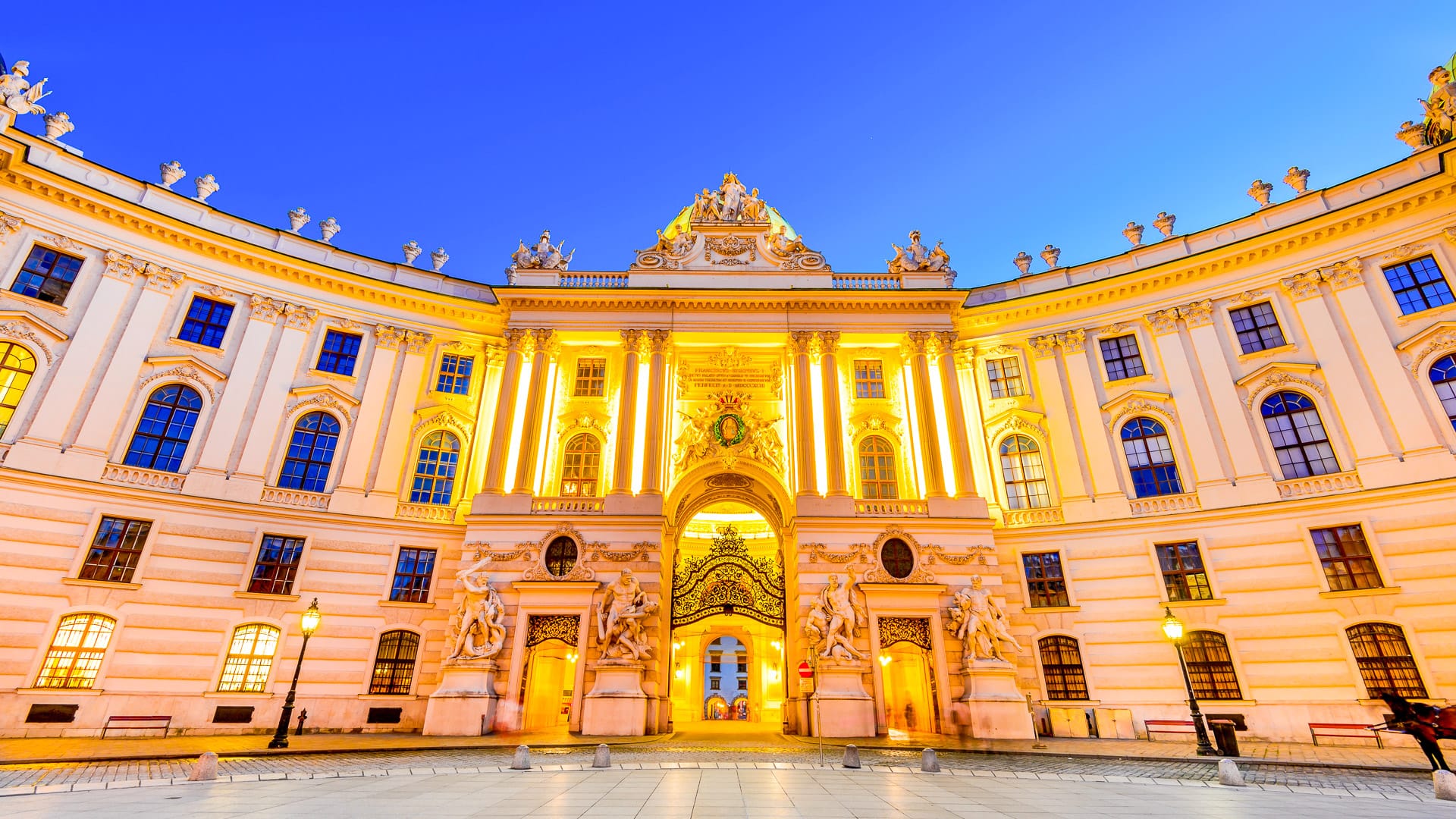
Hofburg Palace seen from Michaelerplatz at dusk, a Habsburg Empire landmark in Vienna, Austria
Do you need to speak German?
German is the official language, but lots of people speak English in the towns and cities. Rural Austria can be a bit more patchy so some German would come in handy.
How to get to Austria?
The main airports are Vienna, Salzburg and Innsbruck, which work well for many of the cycling regions covered in this guide! It’s around a two-hour drive from Innsbruck to Bregenz, depending on traffic and your final destination.
If you’re travelling with a bike box, check airline rules, train luggage policies and airport transfer options before you book. Some transfer companies can carry bike boxes, but you should confirm this in advance.
What’s next?
Austria is a fantastic destination for road cyclists, whether you want gentle rides through vineyards, lakeside routes with swimming stops or big days in the high mountains. With well-maintained roads, a strong cycling culture and plenty of variety between regions, it’s well worth considering for your next European cycling holiday.
If you’re looking for more Austria cycling inspiration, don’t miss:
- Cycling Austria, our central hub for the country
- Guide to gravel cycling in Austria, for the best gravel routes and practicalities
- Cycling the Salzkammergut region, Austria, with cycling tour itinerary and tips
- A guide to the Alpe Adria cycling route in Austria and Italy, for more insights on this long-distance cycling adventure
- Danube bike and boat tours, including tips on the best way to cycle the Danube
- 6 of the world’s safest countries for 2025/2026, featuring Austria with its immaculate roads and big mountain views
How about visiting Hungary? Don’t miss our in-depth guide to Hungary. Alternatively, take a look at our in-depth guide to Budapest!
Have you cycled in Austria? How was it?
Got any tips to share? Comment below.
Please support Epic Road Rides
A huge amount of time and effort goes into the article you’ve just read, all with the aim of helping you!
If you found what you’ve read useful, I’d really appreciate it if you dropped something in the tip jar here.
It’s a way you can say thank you and help us carry on creating top quality content with no annoying ads and no pay wall.
Looking for an organised cycling trip?
If you want someone to help you plan and book your cycling holiday, fill out this form. We aren’t a tour operator/agent but we work with lots of people who are and will do our best to put you in touch with someone that can help (within 24 hours where possible)!Bas Kragt is a passionate advocate for cycling in South Korea. Originally from the Netherlands - a country where cycling is part of everyday life - he has been based in and around Busan since 2017, exploring the country’s varied terrain on two wheels.
He plays an active role in South Korea’s cycling community, helping to organise events with the Korean Audax Federation (Korea Randonneurs). He also founded Routes Busan, a platform aimed at improving cycling safety and quality in the region, and supports visiting cyclists and expats through the Korea Cycling Community Facebook group.
With his deep local knowledge and enthusiasm for every aspect of the cycling world, Bas is passionate about helping others experience South Korea’s incredible cycling potential – from quiet coastal roads to challenging mountain climbs.
You might also recognise Bas from our social media community, as Bas supports Epic Road Rides with this.
(Photo credit: Garett L. Smith)
First Published: 22 June 2026
The contents of this website are provided for general information purposes only. It is not intended to amount to advice and you should not rely on it. You should carry out your own due diligence and risk assessments and take professional advice. Views expressed by interviewees or other users of this website do not necessarily represent our views. We make no representations, warranties or guarantees, whether express or implied, that the content on our website is accurate, complete or up to date. If you use any information or content on this website, download from, or otherwise obtain content or services through our website, it is entirely at your own discretion and risk. Epic Road Rides Ltd disclaims all liability and responsibility arising from any reliance placed on the information and content on this website. Find out more here.
Comments